Category: News

Latest breaking news and updates

  • Cherry Hill’s new PGA Tour Superstore is set to open. Here is a look inside.

    Cherry Hill’s new PGA Tour Superstore is set to open. Here is a look inside.

    Clearing a golf ball past the 250-yard mark into the sunlit fairway of California’s Titleist Performance Institute is getting easier for a whole lot of people in the region.

    All they have to do is stop by the virtual golf simulators at Cherry Hill’s PGA Tour Superstore. The Georgia-based chain is opening store No. 80 in South Jersey. It already has an outlet in the Metroplex Mall in Plymouth Meeting, and is looking to expand to Ocean Township, N.J., soon.

    The company has undergone a significant growth spurt in the last six years with new brick-and-mortar locations and a 200% jump in e-commerce, a company spokesperson said.

    The sprawling 40,000-square-foot superstore in Cherry Hill will open at 9 a.m. Saturday with $30,000 worth of giveaways, including a full set of iron golf clubs to the first two customers.

    It will house dozens of aisles of the latest golf clubs, balls, apparel, and other gear, among six practice and play hitting bays, virtual golf simulation stations, and an expert club fitting area. Store sales manager Lexi Humbert, a golfer of 16 years, said she added 10 yards to her drive after a new club head suggestion.

    Store general manager Lisa-Jo Donnelly reacts as she sinks a putt on the practice green at the PGA Superstore.

    The real draw is the golf simulation bay, where customers can cycle through world-famous golf courses projected onto a screen, and drive balls nearly 100 mph into them, receiving analytics on each swing.

    The putting green is lined with the most popular putters from classics like Taylor Made Spiders and Scotty Cameron Phantoms to the fresh lineup of L.A.B. brand putters. Golfers can explore clubs and then test them out in the golf simulation bays, or get hands-on fittings with the experts. Regripping and repair services are available, too.

    Golf, historically associated with wealthier, white men, is a growing sport — especially “off-course golf.” It was made popular by TopGolf — a trend PGA Tour Superstore hopes to capitalize on with recurring Saturday events, inviting youth groups (like First Tee) in for lessons, and providing a social space for those looking to get some swings in outside of the green.

    “The average golfer is now down to their early 40s‚” said the store’s general manager, Lisa-Jo Donnelly. The goal is to create a space that will become part of the Cherry Hill golfing community, within a region that is home to 70 courses and a local high school team that likes bringing home trophies, she said.

    The store has an expansive women’s and juniors’ sections. Humbert, who said she has been to golf stores all over the country, said the selections will be refreshing for many, as stores tend to skimp on women’s and junior equipment.

    “When I go to other stores, I already know that I’m not going to have nearly the selection that I need. I always get frustrated,” Humbert said. “The biggest thing for me is for those just wanting to get into golf and see a PGA shirt at other places for $150, whereas here you can go into the back of the store and find something for $20 to $30.”

    Store sales manager Lexi Humbert reacts after a great drive on a virtual golf simulation at the PGA Superstore.

    Saturday’s opening day is likely to lure hundreds to the store for giveaways, but they may have to contend with the dozens of people who will camp out for days to be first.

    “These opening giveaways are so popular that we had, for quite a few openings, the same person in the front of the line. He was traveling around the country and getting there first,” Donnelly said.

    The store will provide campers with pizza on Friday night and coffee and Krispy Kreme doughnuts on Saturday. The new PGA Tour Superstore CEO, Troy Rice, and Cherry Hill Mayor David Fleisher will also be in attendance Saturday, alongside members of the township council.

    📅 Opening Oct. 25, at 9 a.m.📍2232 N.J. Route 70, Suite C, Cherry Hill Township, N.J. 08002, 🕒 Monday to Friday 10 a.m. to 8 p.m., Saturday 9 a.m. to 8 p.m., Sunday 10 a.m. to 6 p.m. 🌐 pgatoursuperstore.com

  • Prosecutors hid evidence in 1988 murder case that sent Michael Gaynor to prison, lawyers say

    Prosecutors hid evidence in 1988 murder case that sent Michael Gaynor to prison, lawyers say

    After 37 years in prison, Michael Gaynor — who was convicted of killing a 5-year-old boy in a Southwest Philadelphia candy store — could soon be released.

    Lawyers from the McEldrew Purtell firm on Oct. 15 filed a petition under Pennsylvania’s Post-Conviction Relief Act (PCRA), saying that police and prosecutors suppressed crucial evidence pointing to another suspect, coerced witnesses, and relied on false testimony to convict Gaynor in 1988.

    Gaynor is “wholly innocent,” lawyer Daniel Purtell told The Inquirer on Tuesday. “We request speed and transparency toward his exoneration.”

    The District Attorney’s Office Conviction Integrity Unit (CIU) has also been investigating the case since late last year. The office is expected to file a brief with the court in response to the petition.

    The petition to free Gaynor relies on information detailed in The Inquirer’s six-part investigative series “The Wrong Man,” published late last year. The stories uncovered evidence that Gaynor was not the gunman or even in the store where a shootout between two men took the life of little Marcus Yates. The Inquirer’s investigation was based on thousands of pages of court transcripts and police paperwork, 21 witness statements, and interviews with more than four dozen people.

    For more than a year, Gaynor, now 58, has had the most unlikely supporter: Marcus’ family.

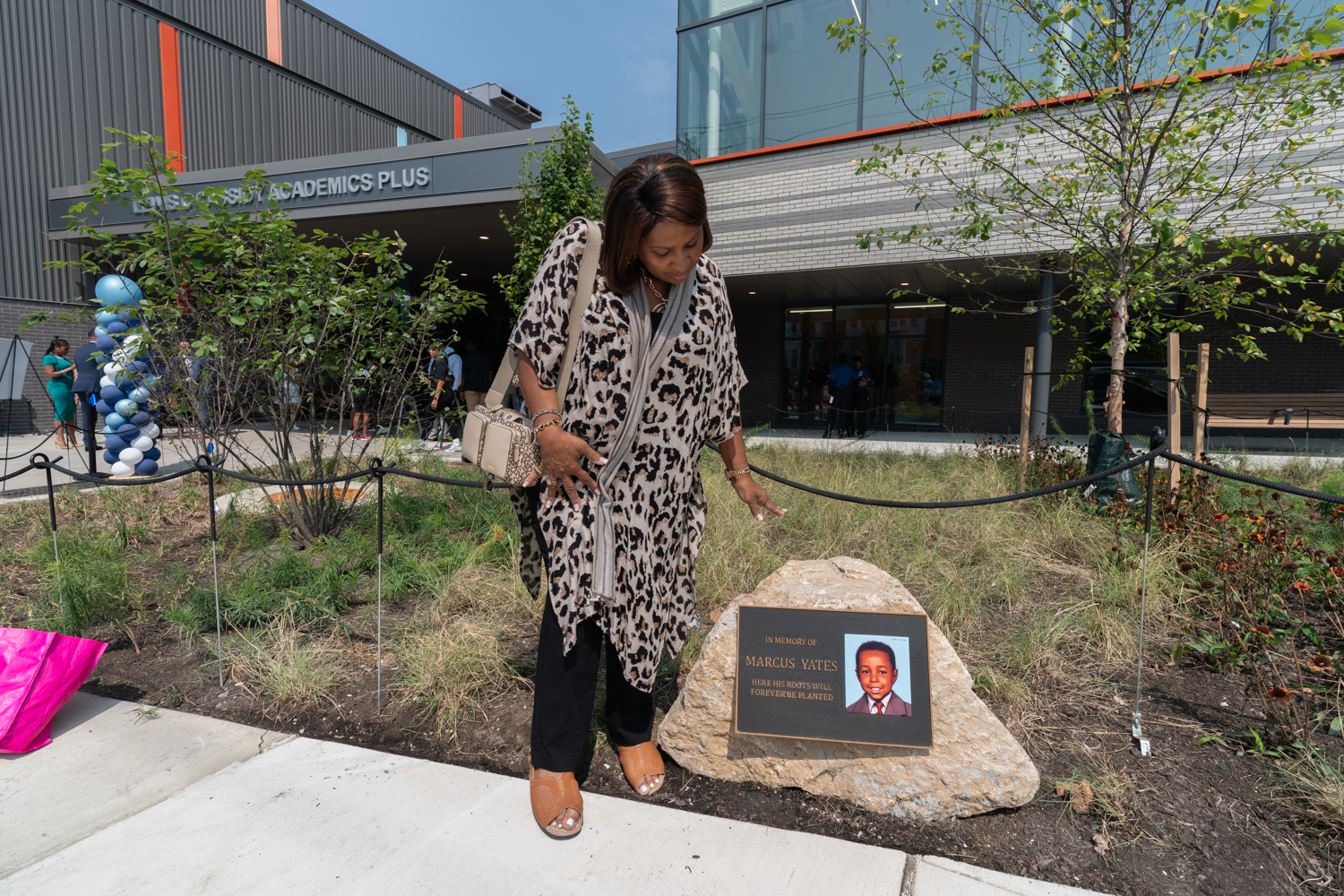
    Marcus’ mom, Rochelle Yates-Whittington, remained tormented by the tragedy decades later. She said she could find peace only by telling Gaynor and Ike Johnson, who was one of the convicted gunmen, that she forgave them.

    Rochelle Yates- Whittington, mother of Marcus Yates, at the new memorial for Marcus, at the .Lewis C. Cassidy Elementary Academics Plus School, in Philadelphia in 2024.

    But after speaking with each of them in prison video calls last year, she said, she no longer believed the police and prosecutors’ account of the crime and told her family Gaynor was not guilty.

    “I am just so overwhelmed with happiness,” Yates-Whittington said this week after hearing about the court filing. “I just want to let Michael know I’ll be there for him once he’s released. I really hope this moves fast and his release is expedited.”

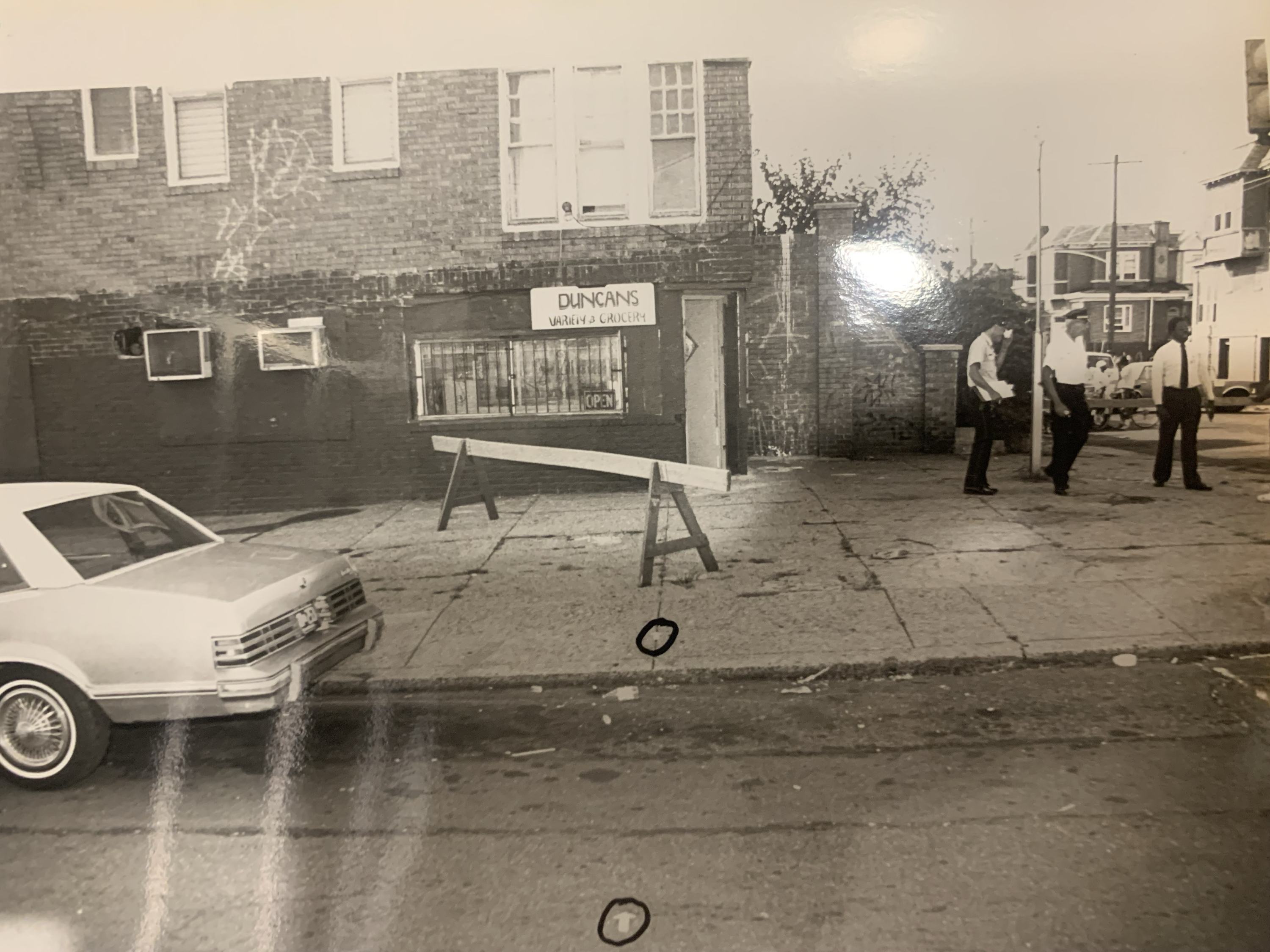
    On the afternoon of July 18, 1988, Marcus, his two older brothers, and seven other children were crammed inside the tiny Duncan’s Variety & Grocery store, where they played three video games and eyed penny candy. Suddenly, two men blasted guns at each other, and the children were caught in the crossfire.

    On the afternoon of July 18, 1988, police gather outside Duncan’s Variety and Grocery store in Southwest Philadelphia to start investigating the shooting death of 5-year-old Marcus Yates, and his brother and another boy, who were shot, yet survived.

    Marcus, who took a bullet to the head, died at the hospital later that day. His brother Malcolm survived being shot, as did another boy.

    Gaynor lived around the corner from the store and was a low-level crack dealer. He was from Jamaica, and witnesses had told police that both shooters were Jamaican.

    As part of the investigation, police seized a number of cars parked near the store, including Gaynor’s 1988 Nissan 300ZX. Four days after the shooting, he called the police to claim his car and spoke to Paul Worrell, lead investigator on the case. Worrell told Gaynor to come to Police Headquarters.

    Gaynor said Worrell took him into an interrogation room, placed him in handcuffs, sat him in a chair bolted to the floor, and accused him of killing the 5-year-old boy. Worrell put a plastic bag over his head, Gaynor said, held it tight, and told him he had to admit to the killing. Gaynor said he told him he would talk but wouldn’t confess to a crime he didn’t commit.

    Worrell has been linked to seven murder cases in the 1980s and 1990s in which defendants allege he and his partners coerced false confessions, falsified statements, slapped suspects while handcuffed to chairs, kicked their genitals, and threatened witnesses with criminal charges if they didn’t testify. Four men in those cases have since been exonerated, and another conviction was vacated.

    Worrell, now retired, declined to comment.

    In an interview last year,he told The Inquirer: “I hope Michael Gaynor rots in jail.”

    Gaynor and Johnson, also known as Donovan “Baby Don” Grant, were convicted of first-degree murder and sentenced to life without parole. Johnson and other witnesses had always maintained Gaynor was not the other shooter.

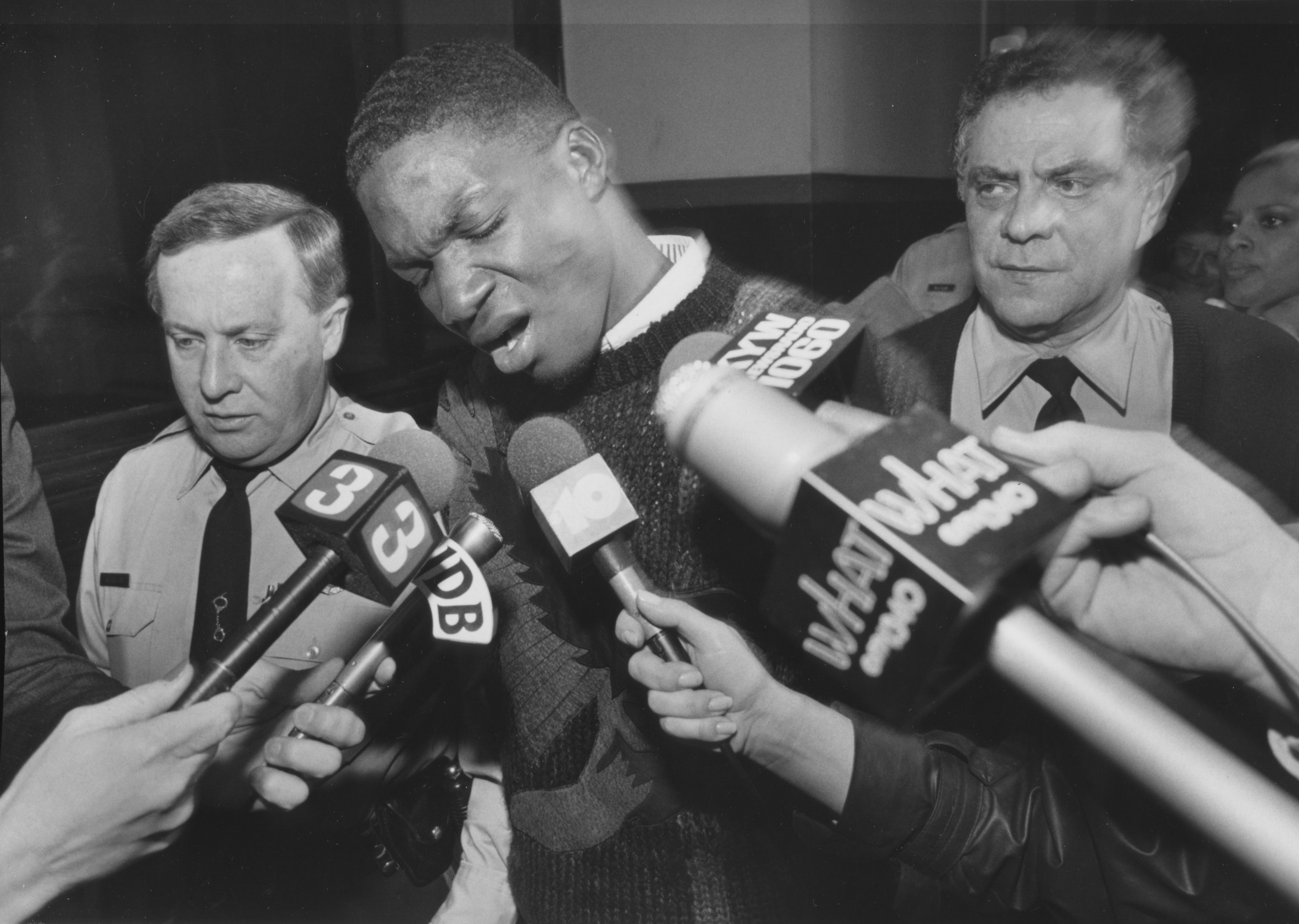
    In this Feb. 20, 1990 Daily News file photograph, Michael Gaynor is escorted by sheriff deputies after receiving a life sentence from the jury.

    In fact, witnesses had told police the other shooter was a man known on the street as “Harbor.” But detectives did not properly or substantively investigate Harbor.

    When asked during the murder trial why police had not tried to find Harbor, Worrell replied: “I had investigated that name early on in the investigation, in the fall of 1988. …That name was a nickname. That name has never been attached to any human being that is in my capability to find nor within the New York Police Department’s capability to find. Our determination was that that person did not exist.”

    The Inquirer determined that he was Paul Jacobs, also known as Peter J. Jacobs, a career criminal who was born in Jamaica and had lived in New York and Los Angeles.

    Years after Gaynor and Johnson were locked up, Jacobs was shot dead on March 12, 1996, in a small ramshackle home in a South Los Angeles neighborhood wrought with street gangs and drug wars. He was 34.

    Investigators knew Jacobs had faced criminal charges in New York and had an associated address that was part of the investigative records, according to the petition. Those details were concealed from the defense, the document says.

    “The Philadelphia District Attorney’s Office has recently produced previously undisclosed documents confirming that Jacobs was identifiable through the New York prison system,” according to the petition.

    Gaynor’s lawyers contend that suppressing that evidence amounted to misconduct that undermines the integrity of the conviction. Had it been disclosed, the petition said, “there is a reasonable probability the outcome of the trial would have been different.”

    During the trial, the prosecution relied heavily on the testimony of traumatized children who identified Johnson and Gaynor in court. But three of the five children, now adults, said detectives and prosecutors had directed or coached them to do so, The Inquirer found. And police coerced Christopher Duncan, the son of the candy store owner, into recanting his original statement and adopting a false account implicating Gaynor, the petition said.

    In this Feb. 6, 1990 Daily News file photograph Toney Yates, 12, and brother Malcolm Yates, 8, walk through the hall at City Hall outside of the hearing for the shooting of their brother Marcus Yates.

    No forensic or physical evidence linked Gaynor to the murder.

    “This was not a major lapse in judgment but a conscious decision to ignore leads that pointed away from Gaynor and toward the actual perpetrator,” his lawyers said in the court filing.

    Since District Attorney Larry Krasner took office in January 2018, the convictions of 48 people have been overturned, according to data compiled by his office.

    Many of the overturned cases date to the 1980s and 1990s, and police misconduct, fabricated statements, coerced confessions, and the withholding of exculpatory evidence were later cited as key factors in the wrongful convictions.

  • The Pa. Senate GOP approved a budget bill that Democrats say won’t even cover the state’s obligations

    The Pa. Senate GOP approved a budget bill that Democrats say won’t even cover the state’s obligations

    HARRISBURG — The Republican-led Pennsylvania Senate sent a $47.9 billion spending plan to the state House on Tuesday, but the proposal was dead on arrival and deemed “unserious” in the Democratic-controlled chamber, marking the latest chapter of the nearly four-month-long budget impasse in the state’s bitterly divided legislature.

    The Senate GOP plan, which passed the chamber by a 27-23 vote along party lines, included a $300 million, or 0.6%, total increase over last year’s budget that is intended to cover the state’s debt service and pension obligations, in addition to cutting operational spending for the legislative body by 5%, said Senate Majority Leader Joe Pittman (R., Indiana).

    The Republican senators’ spending plan amended a bill that passed with a narrow bipartisan majority in the House earlier this month to spend $50.25 billion for the 2025-26 fiscal year, allow for significant increases in public education spending, and cover increased Medicaid expenses.

    The House Democrats’ $50.25 billion spending bill was a slight decrease from the $51.5 billion budget proposal Democratic Gov. Josh Shapiro pitched in February. And it was an attempt by House Democrats at reaching a compromise — decreasing their proposed spending by 2.4% over Shapiro’s initial pitch — after encouragement from Senate President Pro Tempore Kim Ward (R., Westmoreland) for legislative leaders to bring the usually closed-door budget negotiations into the public eye.

    But the Senate GOP’s counteroffer passed Tuesday included little compromise and little increase in spending. However, it is a budget that would fund Pennsylvania’s needs rather than wants, several top GOP senators said during floor debate on the bill.

    “All it takes is one day and one vote to end this ‘Shapiro Shutdown,’” Pittman said in his floor remarks in support of the GOP budget bill.

    Several GOP senators noted the state’s fiscal outlook as the reason lawmakers cannot afford to spend much more over last year, as Pennsylvania is on track to bring in $46.4 billion during the 2025-26 fiscal year, which is significantly less than Shapiro and House Democrats want to spend.

    Pennsylvania is sitting on approximately $10 billion in reserves, from its leftover balance from the 2024-25 fiscal year and its hefty Rainy Day Fund. Democrats want to tap into those reserves and reinvest them in the state, while Republicans believe it is critical to protect those funds to maintain the state’s bond rating or cut taxes as a way to reinvest those surpluses back into taxpayers’ pockets.

    Top Senate Republicans on Tuesday urged the state House to return to session and pass their $47.9 billion spending plan as the most responsible way to protect Pennsylvania taxpayers in future years. And some offered criticism of Shapiro, who has continued to host news conferences around Pennsylvania during the 113-day budget impasse, accusing the governor of failing to lead in Harrisburg on budget negotiations.

    “If you want to have an honest conversation about how to get this budget done, a governor gallivanting across the state taking potshots at members of this caucus doesn’t help,” Pittman said.

    What was not mentioned Tuesday among Senate Republicans was that $47.9 billion is the highest number that the most conservative members of the GOP Senate caucus have pledged to spend. Sen. Dawn Keefer (R., Cumberland), who led the House Freedom Caucus before her election to the state Senate last year, even went as far as to take a flamethrower to a replica of Shapiro’s budget proposal in a social media video earlier this year while promising viewers through a rhyme that she would “hold the line at $47.9″ billion.

    Sign posted by the PA Senate at the Pennsylvania State Capitol in Harrisburg Aug. 26, 2025, reminds visitors of the state’s “multi-billion dollar structural deficit.”

    Senate Democrats firmly rejected the GOP plan as a farce that would not cover the state’s obligations for this fiscal year or make critical increases to public education funding needed to improve Pennsylvania’s school funding system. The top Senate Democratic leader, Sen. Jay Costa (D., Allegheny), tried several legislative maneuvers to try to get the Senate to vote on the House Democrats’ bill instead of the GOP proposal, all of which failed.

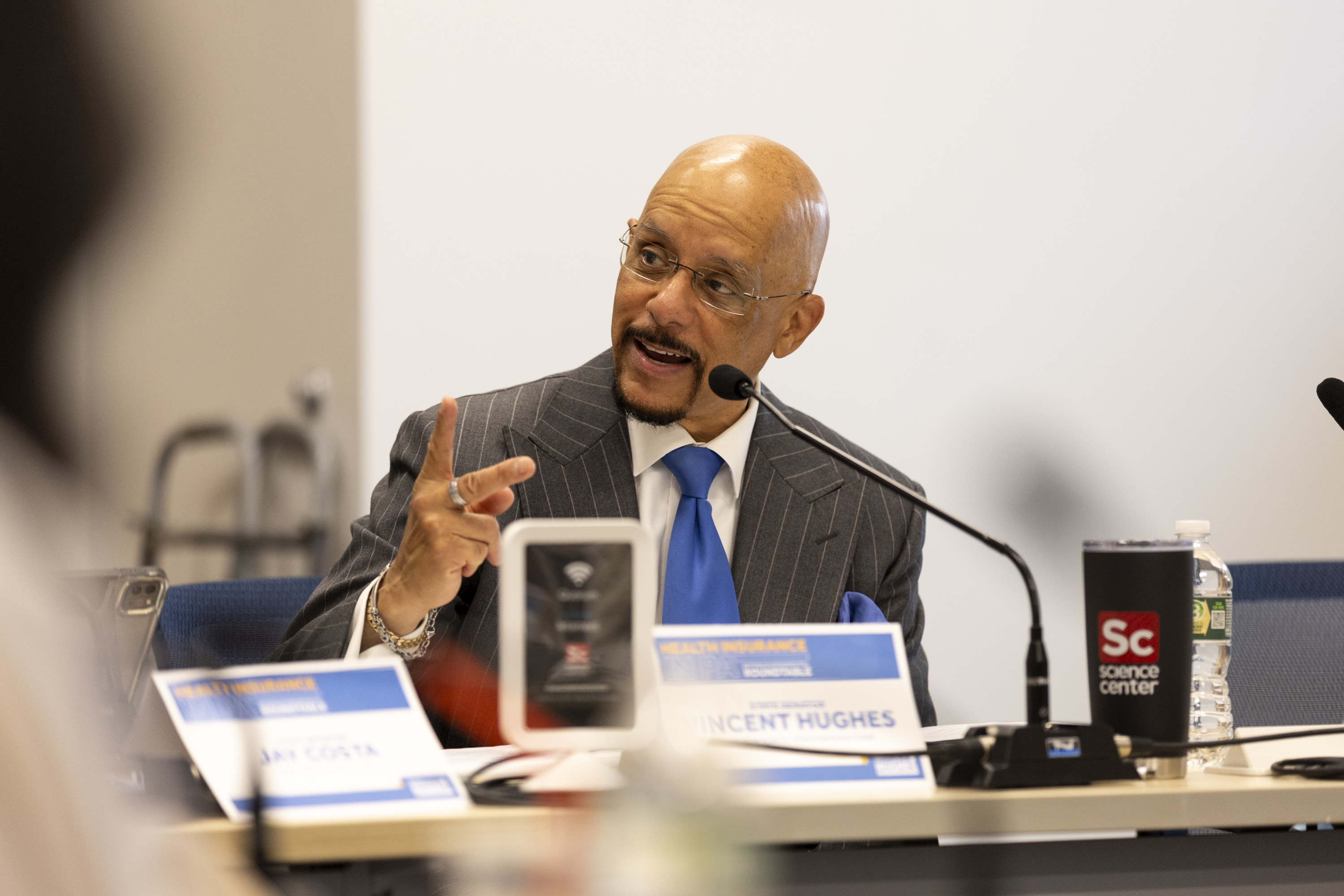
    “They thumbed their noses and they said, ‘Go to heck,’” State Sen. Vincent Hughes (D., Philadelphia), the minority chair of the Senate Appropriations Committee, said of his GOP colleagues’ response to the House bill ahead of Tuesday’s vote.

    Senator Vincent Hughes, speaks at the Round table with Pennsylvania lawmakers, stakeholders, health systems to discuss potential cuts to Medicaid and ACA at the University City Science Center in Philadelphia, Pa., on Tuesday, April 22, 2025.

    Shapiro, following a news conference in Allegheny County on Tuesday, voiced a similar sentiment when he told reporters the Senate’s proposal was “a joke” and “not designed to be serious or get the job done.” He again urged top GOP Senate leaders to begin meeting with top House Democrats to finalize a budget deal.

    Budget talks have largely stalled since August, when the urgency for a deal seemed to dwindle after Shapiro and Democrats agreed to remove mass transit from the negotiation table, a top Democratic priority.

    “I’m sorry transit didn’t get funded. But just because your top priority didn’t get addressed doesn’t mean that our priorities are no longer relevant, and that’s a hard truth,” Pittman, who has been critical of Pennsylvania’s mass transit systems and was a major roadblock in finalizing a deal, said Tuesday.

    And, as evidenced by Tuesday’s vote, leaders still do not agree on how much Pennsylvania should spend for the current fiscal year, now almost in its fifth month. Pennsylvania is the only state in the nation without any spending plan. North Carolina, which passed a six-month budget in early summer, returned to session this week to finish budget negotiations.

    During the stalemate, schools, counties, and service providers have had to lay off staff or take out significant loans to stay afloat in the absence of any state payments. School districts have had to make up more than $3 billion in expected payments from the state during the monthslong impasse.

  • Trump hosts Senate Republicans at renovated White House as the shutdown drags into fourth week

    Trump hosts Senate Republicans at renovated White House as the shutdown drags into fourth week

    WASHINGTON — Head Start programs for preschoolers are scrambling for federal funds. The federal agency tasked with overseeing the U.S. nuclear stockpile has begun furloughing its 1,400 employees. Thousands more federal workers are going without paychecks.

    But as President Donald Trump welcomed Republican senators for lunch in the newly renovated Rose Garden Club — with the boom-boom of construction underway on the new White House ballroom — he portrayed a different vision of America, as a unified GOP refuses to yield to Democratic demands for healthcare funds, and the government shutdown drags on.

    “We have the hottest country anywhere in the world, which tells you about leadership,” Trump said in opening remarks, extolling the renovations underway as senators took their seats in the newly paved over garden-turned-patio.

    It was a festive atmosphere under crisp, but sunny autumn skies as senators settled in for cheeseburgers, fries, and chocolates, and Trump’s favored songs — “YMCA” and “You Can’t Always Get What You Want” — played over the new sound system.

    And while Trump said the shutdown must come to an end — and suggested maybe Smithsonian museums could reopen — he signaled no quick compromise with Democrats over the expiring healthcare funds.

    Later at another White House event, Trump said he’s happy to talk with Democrats about healthcare once the shutdown is over. “The government has to be open,” he said.

    Shutdown drags into record books

    As the government shutdown enters its fourth week — on track to become one of the longest in U.S. history — millions of Americans are bracing for healthcare sticker shock, while others are feeling the financial impact. Economists have warned that the federal closure, with many of the nearly 2.3 million employees working without pay, will shave economic growth by 0.1 to 0.2 percentage points per week.

    The Democratic leaders Sen. Chuck Schumer and Rep. Hakeem Jeffries had outreached to the White House on Tuesday, seeking a meeting with Trump before the president departs for his next overseas trip, to Asia.

    “We said we’ll set up an appointment with him anytime, anyplace before he leaves,” Schumer said.

    With Republicans in control of Congress, the Democrats have few options. They are planning to keep the Senate in session late into the night Wednesday in protest. The House has been closed for weeks.

    The Republican senators, departing the White House lunch with gifts of Trump caps and medallions, said there is nothing to negotiate with Democrats over the healthcare funds until the government reopens.

    “People keep saying ‘negotiate’ — negotiate what?” Senate Majority Leader John Thune said after the hour-long meeting. He said Republicans and the president are willing to consider discussions over healthcare, “but open up the government first.”

    Missed paychecks and programs running out of money

    While Capitol Hill remains at a standstill, the effects of the shutdown are worsening.

    Federal workers are set to miss additional paychecks amid total uncertainty about when they might eventually get paid. Government services like the Special Supplemental Nutrition Program for Women, Infants and Children, known as WIC, and Head Start preschool programs that serve needy families are facing potential cutoffs in funding. On Monday, Energy Secretary Chris Wright said the National Nuclear Security Administration is furloughing its federal workers. The Federal Aviation Administration has reported air traffic controller shortages and flight delays in cities across the United States.

    At the same time, economists, including Goldman Sachs and the nonpartisan CBO, have warned that the federal government’s closure will ripple through the economy. More recently, Oxford Economics said a shutdown reduces economic growth by 0.1 to 0.2 percentage points per week.

    The U.S. Chamber of Commerce noted that the Small Business Administration supports loans totaling about $860 million a week for 1,600 small businesses. Those programs will close to new loans during the shutdown. The shutdown also has halted the issuance and renewal of flood insurance policies, delaying mortgage closings and real estate transactions.

    Rising healthcare costs

    And without action, future health costs are expected to skyrocket for millions of Americans as the enhanced federal subsidies that help people buy private insurance under the Affordable Care Act, come to an end.

    Those subsidies, in the form of tax credits that were bolstered during the COVID-19 crisis, expire Dec. 31, and insurance companies are sending out information ahead of open enrollment periods about the new rates for the coming year.

    Most U.S. adults are worried about healthcare becoming more expensive, according to a new Associated Press-NORC Center for Public Affairs Research poll, as they make decisions about next year’s health coverage.

    Members of both parties acknowledge that time is running out to fix the looming health insurance price hikes, even as talks are quietly underway over possible extensions or changes to the ACA funding.

    Democrats are focused on Nov. 1, when next year’s enrollment period for the ACA coverage begins and millions of people will sign up for their coverage without the expanded subsidy help. Once those sign-ups begin, they say, it would be much harder to restore the subsidies even if they did have a bipartisan compromise.

    What about Trump?

    Tuesday’s White House meeting offered a chance for Republican senators to engage with the president on the shutdown after he had been more involved in foreign policy and other issues.

    But senators left the meeting, some saying it was more of a luncheon than a substantial conversation. They said they could hear, but not see, the ballroom construction nearby.

    Trump had previously indicated early on during the shutdown that he may be willing to discuss the healthcare issue, and Democrats have been counting on turning the president’s attention their way. But the president later clarified that he would only do so once the government reopens.

  • Warner Bros. Discovery confirms it has received buyout interest and is considering its options

    Warner Bros. Discovery confirms it has received buyout interest and is considering its options

    NEW YORK — Warner Bros. Discovery — the home of HBO, CNN and DC Studios — has signaled that it may be open to selling all or parts of its business, just months after announcing plans to split into two companies.

    In an announcement Tuesday, the entertainment and media giant said it had initiated a review of “strategic alternatives” in light of “unsolicited interest” it had received from multiple parties, for both the entire company and Warner Bros. specifically.

    Warner Bros. Discovery did not specify where that interest was coming from, and a spokesperson said the company couldn’t share additional information when reached by The Associated Press. But its review arrives after growing reports of a potential bidding war — including from Skydance-owned Paramount, which closed its own $8 billion merger in early August.

    Citing anonymous sources familiar with the matter, The Wall Street Journal recently reported that Paramount approached Warner Bros. Discovery about a majority-cash offer in late September — but that Warner Chief Executive David Zaslav had rebuffed those first overtures. According to the outlet, Paramount Skydance CEO David Ellison later considered taking a more aggressive approach, such as going directly to shareholders.

    CNBC has also reported that Netflix and Comcast are among other interested parties, citing unnamed sources. Comcast declined to comment Tuesday. Paramount and Netflix did not immediately respond to the AP’s requests for statements.

    If a sale of all or part of Warner Bros. Discovery arrives, it would mark a considerable shift in the U.S. media landscape that is “already trending towards a concerning level of consolidation,” said Mike Proulx, a VP research director at Forrester.

    He pointed to the streaming space in particular — noting that, on one hand, a potential transaction could help scale the company’s streamers to better compete with other platforms. But on the other hand, consumers could see fewer choices controlled by just a handful of corporate giants.

    “When just a few conglomerates, like Skydance, increasingly control the lion’s share of some of the most popular platforms, it raises all sorts of questions around the future of content diversity and expression,” Proulx said over email Tuesday. “Bigger is better might be good for shareholders but will consumers ultimately benefit with better quality content, lower prices, and accessibility?”

    Still, he added, much of that will depend on if a sale happens and who ends up buying Warner Bros. Discovery.

    Back in June, Warner Bros. Discovery outlined plans to split its cable and streaming offerings — with HBO, HBO Max, as well as Warner Bros. Television, Warner Bros. Motion Picture Group, DC Studios, to become part of a new streaming and studios company; while networks like CNN, Discovery and TNT Sports and digital products such as the Discovery+ streaming service and Bleacher Report would make up a separate cable counterpart.

    Warner expected the split to be complete by mid-2026 — and said Tuesday that continuing to advance this separation was still among the options it’s considering.

    “We took the bold step of preparing to separate the Company into two distinct, leading media companies, Warner Bros. and Discovery Global, because we strongly believed this was the best path forward,” Zaslav said in a statement. Still, he added, “it’s no surprise that the significant value of our portfolio is receiving increased recognition by others in the market.”

    The company said that there’s no definite timeline for its review process — and noted that, beyond the separation that is already underway, “there can be no assurance” that a transaction will emerge.

    Shares of Warner Bros. Discovery, headquarted in New York, were up nearly 10% by Tuesday afternoon trading.

    Warner Bros. Discovery was created just three years ago when AT&T spun off WarnerMedia, which was merged with Discovery Communications in a $43 billion deal. An even bigger transaction could attract antitrust scrutiny — but like other recent mega-mergers and proposed transactions, could find success under the Trump administration.

  • Vance expresses optimism about the ceasefire in Gaza while noting ‘very hard’ work to come

    Vance expresses optimism about the ceasefire in Gaza while noting ‘very hard’ work to come

    KIRYAT GAT, Israel — Vice President JD Vance on Tuesday called progress in Gaza’s fragile ceasefire better than anticipated but acknowledged during an Israel visit the challenges that remain, from disarming Hamas to rebuilding a land devastated by two years of war.

    Vance noted flare-ups of violence in recent days but said the ceasefire between Israel and Hamas that began on Oct. 10 is going “better than I expected.” The Trump administration’s Middle East envoy, Steve Witkoff, added that “we are exceeding where we thought we would be at this time.”

    They visited a new center in Israel for civilian and military cooperation as questions remain over the long-term plan for peace, including when and how an international security force will deploy to Gaza and who will govern the territory after the war.

    Vance tried to downplay any idea that his visit — his first as vice president — was urgently arranged to keep the ceasefire in place. He said he feels “confident that we’re going to be in a place where this peace lasts,” but warned that if Hamas doesn’t cooperate, it will be “obliterated.”

    Jared Kushner, President Donald Trump’s son-in-law and one of the architects of the ceasefire agreement, noted its complexity: “Both sides are transitioning from two years of very intense warfare to now a peacetime posture.”

    Vance is expected to stay in the region until Thursday and meet with Israeli Prime Minister Benjamin Netanyahu and other officials.

    On Tuesday, Netanyahu fired his national security adviser, Tzachi Hanegbi, but gave no reason for the decision. Israeli media said Hanegbi had opposed the renewal of Israel’s Gaza offensive in March, and Israel’s failed attempt to assassinate Hamas’ leadership in an airstrike in Qatar in September. In a statement, Hanegbi noted “times of disagreement” with Netanyahu.

    Hamas hands over remains of 2 more hostages

    Late Tuesday, Israel’s military said the remains of two more Gaza hostages had been returned to Israel, where they would be identified.

    Since the ceasefire began on Oct. 10, the remains of 15 hostages have been returned to Israel. Another 13 still need to be recovered in Gaza and handed over.

    On his visit to Israel Tuesday, Vance urged a “little bit of patience” amid Israeli frustration with Hamas’ pace of returning the hostages.

    “Some of these hostages are buried under thousands of pounds of rubble. Some of the hostages, nobody even knows where they are,” Vance said.

    Israel is releasing 15 Palestinian bodies for the remains of each dead hostage, according to Gaza’s Health Ministry. It said Tuesday that Israel had so far transferred 165 bodies since earlier this month.

    As he faced journalists’ questions over the ceasefire’s next steps, he said “a lot of this work is very hard” and urged flexibility.

    “Once we’ve got to a point where both the Gazans and our Israeli friends can have some measure of security, then we’ll worry about what the long-term governance of Gaza is,” he said. ”Let’s focus on security, rebuilding, giving people some food and medicine.”

    Although some 200 U.S. troops were recently sent to Israel, Vance emphasized that they would not be on the ground in Gaza. But he said officials are beginning to “conceptualize what that international security force would look like” for the territory.

    He mentioned Turkey and Indonesia as countries expected to participate. The flags of Jordan, Germany, Britain, and Denmark were on the stage where he spoke. Britain said late Tuesday it would send a small contingent of military officers to Israel to assist in monitoring the ceasefire.

    While the ceasefire has been tested by fighting and mutual accusations of violations, both Israel and Hamas have said they are committed to the deal.

    Aid into Gaza increases, while prices rise

    International organizations said they were scaling up humanitarian aid entering Gaza, while Hamas-led security forces cracked down against what it called price gouging by private merchants.

    The World Food Program said it had sent more than 530 trucks into Gaza in the past 10 days, enough to feed nearly half a million people for two weeks. That’s well under the 500 to 600 that entered daily before the war.

    The WFP also said it had reinstated 26 distribution points across Gaza and hopes to scale up to its previous 145 points as soon as possible.

    Residents said prices for essential goods soared on Sunday after militants killed two Israeli soldiers and Israel responded with strikes that killed dozens of Palestinians. Israel also threatened to halt humanitarian aid.

    At a market in the central city of Deir al-Balah, a 55-pound package of flour was selling for more than $70 on Sunday, up from about $12 shortly after the ceasefire. By Tuesday, the price was around $30.

    Mohamed al-Faqawi, a Khan Younis resident, accused merchants of taking advantage of the perilous security situation. “They are exploiting us,” he said.

    On Monday, Hamas said its security forces raided shops across Gaza, closing some and forcing merchants to lower prices. Hamas also has allowed aid trucks to move safely and halted looting of deliveries.

    Nahed Sheheiber, head of Gaza’s private truckers’ union, said there was no stealing aid since the ceasefire started.

    But other significant challenges remain as Gaza’s financial system is in tatters. With nearly every bank branch and ATM inoperable, people pay exorbitant commissions to a network of cash brokers to get money for daily expenses.

    On Tuesday, dozens of people in Deir al-Balah spent hours in line at the Bank of Palestine hoping to access their money but were turned away.

    “Without having the bank open and without money, it does not matter that the prices [in the market] have dropped,” said Kamilia Al-Ajez.

    Gaza doctors say bodies returned with signs of torture

    A senior health official in Gaza said some bodies of Palestinians returned by Israel bore “evidence of torture” and called for a United Nations investigation.

    Muneer al-Boursh, the health ministry’s general director, said on social media late Monday that some had evidence of being bound with ropes and metal shackles, and had deep wounds and crushed limbs.

    It was not immediately clear if any of the bodies had been prisoners; they are returned without identification or details on how they died. The bodies could include Palestinian detainees who died in Israeli custody or bodies taken out of Gaza by Israeli troops during the war.

    The Israel Prisons Service denied that prisoners had been mistreated, saying it had followed legal procedures and provided medical care and “adequate living conditions.”

    Israeli hostages released from Gaza have also reported metal shackles and harsh conditions, including frequent beatings and starvation.

    In the 2023 attack on Israel that started the war, Hamas-led militants killed around 1,200 people, mostly civilians, and abducted 251 people as hostages.

    The Israel-Hamas war has killed more than 68,000 Palestinians, according to Gaza’s Health Ministry, which does not distinguish between civilians and combatants in its count. The ministry maintains detailed casualty records that are seen as generally reliable by U.N. agencies and independent experts. Israel has disputed them without providing its own toll.

  • CHOP lawyers defend transgender care in blistering response to Trump administration seeking patient information

    CHOP lawyers defend transgender care in blistering response to Trump administration seeking patient information

    The Children’s Hospital of Philadelphia called new evidence presented by President Donald Trump’s administration weak and untrustworthy in a blistering legal response to federal efforts to investigate its doctors providing gender-affirming care.

    CHOP’s response, filed late Monday in federal court in Philadelphia, came in defense of accusations by the U.S. Department of Justice that it’s investigating “fraudulent billing practices“ at the hospital. Federal officials say they’re looking into whether CHOP doctors were fudging or lying about diagnoses to get private and public health insurance companies to cover off-label drug prescriptions used to treat patients with gender dysphoria — a medical condition in which a person’s body does not match their gender identity.

    In its filing, CHOP lawyers called the DOJ’s allegations “unreliable,” and urged U.S. District Court Judge Mark A. Kearney to disregard claims that are “threadbare, of dubious origin, and so heavily qualified and caveated as to offer the court no meaningful information.”

    CHOP and the DOJ are locked in a legal battle over a sweeping federal subpoena sent to the hospital in June. The subpoena seeks patient names, Social Security numbers, addresses, diagnoses, and treatment notes, in addition to doctor emails and encrypted text messages.

    In July, CHOP filed a motion to limit the scope of the subpoena to protect patient privacy. Judge Kearney is now weighing CHOP’s motion.

    In the latest filing, CHOP’s lawyers argued the DOJ’s “new evidence” against the hospital was unfairly “shoehorned” into a separate but related case filed last month by a group of CHOP patients and their families who also want Kearney to block the release of private medical records to the DOJ.

    “That new evidence should not be considered because it is not before the Court in this case and is unreliable in any event,” CHOP lawyers wrote in the filing. “The government (still) cannot establish that its need for extraordinarily sensitive and personal patient information outweighs the highest-order privacy interests on the other side of the ledger.”

    The DOJ did not immediately respond Tuesday to a request for comment.

    Feds seek patient information from CHOP

    In April, U.S. Attorney General Pam Bondi issued a memo, entitled “Preventing the Mutilation of American Children,” in which she tasked the DOJ with enforcing measures targeting gender-affirming care for youth.

    About two months later, the DOJ sent subpoenas to CHOP and at least 19 other hospitals nationally that are under scrutiny for treating transgender youth. The subpoenas sparked legal opposition playing out in federal courts in Pennsylvania and across the nation.

    The DOJ’s key focus is how doctors are prescribing puberty blockers and hormones “off-label,” meaning for a condition not specifically approved by the U.S. Food and Drug Administration.

    Once a drug is approved by the FDA, it is legal for doctors to prescribe it to treat other conditions that could benefit from the medication. Off-label prescribing is a common and widely accepted medical practice, especially in pediatrics.

    Gender-affirming care for children and adolescents has been deemed medically appropriate by the American Academy of Pediatrics and other major medical and mental health organizations. Research shows young people with gender dysphoria suffer higher rates of suicide, self-harm, depression, and anxiety.

    CHOP’s Gender and Sexuality Development Program, created in 2014, is one of the nation’s largest such clinics and provides medical care and mental health support to hundreds of new families each year.

    CHOP’s legal fight for patient privacy

    Late last month, families and patients joined in CHOP’s fight against the federal subpoena by filing a separate motion to protect their privacy rights. That motion was filed on behalf of five parents with transgender children and one adult who received care at CHOP.

    In response to that case, the DOJ filed a “Declaration,” or sworn statement, from Lisa Hsiao, acting director of the DOJ’s Enforcement and Affirmative Litigation Branch, formerly known as the Consumer Protection Branch. In it, Hsiao said the government has new evidence “particular to CHOP that raises concern that federal healthcare offenses may be occurring there.”

    Hsiao said the government analyzed CHOP’s insurance claims and found that between 2017 and 2024, CHOP providers diagnosed 250 minors with central precocious puberty at age 10 or older, “including numerous teenagers aged 14 to 18.”

    “This is well beyond the age at which children are typically diagnosed with precocious puberty,” Hsiao stated. The government, she said, suspects doctors are improperly using the precocious puberty diagnosis to get insurance coverage for treatment of gender dysphoria.

    In Monday’s court filing, CHOP lawyers accused the DOJ of attempting to “shoehorn its new evidence into CHOP’s case” through the other case.

    CHOP also argued Hsiao’s declaration provides nothing to support its contentions surrounding precocious puberty diagnosis.

    “Moreover, the government fails to contextualize the findings of its rudimentary analysis, offering no comparator for the use of the code for precocious puberty at peer hospitals, let alone hospitals that, like CHOP, have providers who specialize in treating endocrine disorders,” CHOP lawyers wrote.

    The source of “the data set is entirely unknown,” CHOP’s lawyers noted, adding the declaration never says how many patients were treated for gender dysphoria during that time frame.

    The CHOP lawyers also criticized Hsiao for writing in her sworn declaration that the government was aware of a lawsuit filed against CHOP that alleges doctors hastily prescribed puberty blockers and hormones to a minor who later regretted it.

    Hsiao later refiled the declaration to remove any reference to a lawsuit after learning that it hadn’t been filed.

    CHOP lawyers wrote they believe the lawsuit reference came from a news article about a former CHOP patient. The article said the patient “was suing the hospital.” However, CHOP was unaware of any such lawsuit.

    “The similarities between the report and the allegations in the Hsiao Declaration — including the reference to a lawsuit — raise suspicions that, in looking to justify its investigative interest in CHOP, the government simply searched the internet for stories fitting its narrative and presented the one it found as fact without adequately scrutinizing its veracity.”

  • The Shapiro administration has posted messages blaming Republicans for the government shutdown, impacts to SNAP benefits

    The Shapiro administration has posted messages blaming Republicans for the government shutdown, impacts to SNAP benefits

    As nearly 2 million Pennsylvanians brace for the loss of their food assistance next month due to the federal government shutdown, the Pennsylvania Department of Human Services is pinning the blame on Republicans on Capitol Hill.

    States administer the federally funded Supplemental Nutrition Assistance Program, which provides support to low-income people, including families with children. But as the standoff in Congress prevents federal funding from flowing to states, Democratic Gov. Josh Shapiro’s administration entered the messaging battle over the cause of the disruption to benefits.

    “Because Republicans in Washington D.C., failed to pass a federal budget, causing the federal government shutdown, November 2025 SNAP benefits cannot be paid,“ reads a pastel orange banner on the DHS website from Friday, alerting recipients of the Supplemental Nutrition Assistance Program to the impending changes.

    The message reflects the mounting impacts of the government shutdown, which is in its third full week, and the growing political tensions between Republicans and Democrats on the state and national levels after lawmakers failed to pass funding to avert a government shutdown by Oct. 1.

    Shapiro has frequently gone head-to-head with the Trump administration, but the use of a state government website is a notable escalation.

    The governor said in a news release Monday that Congress already had kicked off hundreds of thousands of Pennsylvanians from Medicaid and SNAP when it passed President Donald Trump’s One Big Beautiful Bill Act in July.

    “Now, Republicans are once again threatening vital support for Pennsylvania families and children — it’s time for them to pass a federal budget and end this shutdown.”

    Pennsylvania Human Services Secretary Val Arkoosh added that “Inaction from Republicans in Congress” jeopardizes the well-being of Pennsylvanians.

    A significant impact will be felt next month in Philadelphia, where half a million people will not receive SNAP benefits. The program, which is funded by the U.S. Department of Agriculture, serves households including elderly people, individuals with disabilities, and children.

    Another Democratic-led state, Illinois, also referred to the lapse in funding as the “Republican federal government shutdown” on its benefits webpage. Other Democratic-led states near Pennsylvania, New Jersey and Delaware, have not posted political messages on their states’ SNAP benefits pages.

    Republicans in Pennsylvania criticized the use of the DHS website for a partisan message.

    “Public service isn’t a political weapon and using a government website to fuel your partisan agenda is indefensible,” the Pennsylvania GOP wrote Monday in a post on X.

    However, the Trump administration has also been using its official government websites for partisan rhetoric on the national level, potentially raising red flags related to federal ethics laws.

    The shutdown is “Democrat-led,” says the Trump administration’s State Department website.

    “The Radical Left in Congress shut down the government,” declares a bright red banner on the U.S. Department of Housing and Urban Development homepage.

    The rising political pressure comes as the Trump administration began rolling out highly politicized messaging to the public and federal employees after the government shutdown began earlier this month.

    Last week, Philadelphia International Airport and other airports refused to play a video from Homeland Security Secretary Kristi Noem that inculpates Democratic members of Congress for the shutdown.

    And some federal workers — nonpartisan civil servants who have been coping with plummeting morale and either being furloughed or working without pay during the shutdown — have been on the receiving end of politicized messaging, too.

    A message to federal employees ahead of the Oct. 1 funding deadline proclaims that Trump “opposes a government shutdown.”

    Any lapse in appropriations, the message continues, is “forced by Congressional Democrats.”

  • The ‘six-seven’ meme originated in Philly (probably). We explain.

    The ‘six-seven’ meme originated in Philly (probably). We explain.

    “Is it funny?” “Am I just old?” “What does it actually mean?”

    Those are common questions you’ll come across while searching for “six-seven” (or “6-7”), a phrase that has eclipsed internet obscurity and made its way into everyday speech, filling timelines, classrooms, and group chats in a way only the chronically online could understand.

    The numbers, said out loud together, are really just that. It’s not code, or sexual innuendo. In reality, it’s just a lyric lifted from a song by Kensington-based rapper Skrilla.

    Still confused? We’re here to break it all down.

    Who is Skrilla?

    The 27-year-old rapper, whose legal name is Jemille Edwards, has over 130 million streams across platforms and continues to rise in popularity.

    In 2023, he signed with Priority Records — a Los Angeles-based label significant within the rap scene that worked with N.W.A and Ice Cube. Last year, his album Zombie Love Kensington Paradise earned praise in the industry.

    The 19-track album, which he rereleased this year as a deluxe version with eight additional songs, underlines Edwards’ “affinity for the neighborhood while displaying his vocal flexibility and off-kilter delivery,” Pitchfork said in its mostly positive review, calling him likely “on the road to rap stardom.”

    Philly rapper Tierra Whack has repeatedly shouted out Skrilla’s work while North Philly’s Lil Uzi Vert has collaborated with him.

    In August, Edwards was arrested by Philadelphia Police during a music video shoot where he used a toy gun filled with gel pellets to shoot at an officer. He was charged with assaulting a police officer and related offenses.

    One particular single by Skrilla has raised the rapper’s internet prominence.

    Where did ‘six-seven’ come from?

    Skrilla raps the lyric “six-seven” in his song “Doot Doot (6 7),” a track from the deluxe version of Zombie Love Kensington Paradise about life on the streets, fast cars, money, violence, and loss.

    It’s a high-energy track that nods to Skrilla’s drill-rap style. The song’s chorus includes the lines, “6-7, I just bipped right on the highway,” and “pull up, doot-doot.”

    What does ‘six-seven’ mean?

    Philadelphia Eagles offensive tackle Laekin Vakalahi smiles while taking the field during the first day of Eagles Training Camp at the NovaCare Complex on Wednesday, July 23, 2025 in Philadelphia.

    Well, it’s ambiguous. And Skrilla has said in interviews that he kind of likes it that way.

    Meme lovers and unofficial lyric decoders have theories. Many think it refers to 67th Street in Philly, where Skrilla grew up (that’s what the Washington Post went with).

    Owen Carry with Know Your Meme believes the Philadelphia ties are “largely speculative.”

    Others think that it’s a nod to 67th Street in Chicago, where he has family. Taylor Jones, a linguistics and African American English expert, suggested it might be a nod to police radio code, where 10-67 is used to notify of a death. A contributor on Genius, a site dedicated to annotating song lyrics, theorized it was a reference to burial plots, six feet under and seven feet apart.

    “Everybody else got their own different meaning,” Skrilla told Complex recently. “But for me, it’s just ‘negative to positive.’”

    The most important part here is that it doesn’t really matter.

    “Six-seven” has taken on a life of its own in recent months due to the pedestal it’s been placed on across TikTok and other social media platforms.

    Why is ‘six-seven’ so popular?

    The meme’s origins date back to late last year when Skrilla unofficially released “Doot Doot (6 7)” via Instagram as a leftover track from Zombie Love Kensington Paradise. It quickly started making the rounds on TikTok.

    Content creators were using the line from the chorus in different, playful, extremely unserious ways: edits of a 6-foot-7 basketball player, lip dub memes, and scenarios that force someone to say the two numbers together. The creators are often nonsensical and copy Skrilla’s vocal pattern, a singsong “six-seven,” usually coupled with an open-palmed hand gesture.

    @ag.trippin 6 7 edit #skrilla #67 #ote #nbaedits #jordy #taylenkinny #eliellis ♬ original sound – Top 5

    Experts at Know Your Meme, who have been tracking the phenomenon since its inception, say videos surrounding “six-seven” have been viewed millions upon millions of times.

    “The trend started with a series of bait-and-switch LaMelo Ball (of the Charlotte Hornets) edits late last year, which would intro with a random clip that included someone saying, ‘six-seven,’ and then switch to a Ball highlight reel,” said Carry, associate editor at Know Your Meme. “Skrilla’s ‘6-7′ lyric was used to queue the transition (Ball is 6 feet, 7 inches, which is relevant to why he was chosen).”

    In turn, Carry said, young boys especially have been saying the numbers on camera in hopes of becoming the next NBA TikTok edit star.

    As these things go, the meme’s popularity has made its way into classrooms — much to the dismay of math teachers everywhere.

    “Six is a perfect number, and seven is a prime number, but only a glutton for punishment would put them together in front of a bunch of 13-year-olds,” the Wall Street Journal wrote in a piece about how the meme is wreaking havoc across campuses.

    It’s safe to say the phrase has officially made its way into the mainstream.

    “South Park” continued a buzzy season with its latest episode, “Twisted Christian,” on Oct. 15.

    “Six-seven” was mentioned in a recent South Park episode where the kids can’t stop using the phrase, leading to an assembly about the Antichrist and satanic numerology.

    Pro wrestler Je’Von Evans wore a “67″ jersey during his walk-in entrance last week, Shaq has given the trend his blessing (though he admits he doesn’t totally get it), and Skrilla claims the song will be included in the Grand Theft Auto VI soundtrack, though that hasn’t been made official yet.

    Skrilla also performed the track in Philly last month when millennial icon Natasha Bedingfield, who was performing at the Theatre of Living Arts, pulled him on stage for a guest appearance. Bedingfield told Complex she’s a fan of the rapper and would like to get on a remix of “Doot Doot (6 7).”

    Skrilla will be back in town at the Fillmore on Nov. 30.

    What has Skrilla said about it?

    In an interview this week with the Washington Post, he suggested the song referred to 67th Street in Philly, a block where a lot of his friends lived. It’s worth noting there isn’t a 67th Street in Kensington.

    “We just rode by a truck that had ‘6-7’ written on it in dust, in Arizona, all the way out here,” the rapper said, speaking from a gas station on the way to Los Angeles.

    The Inquirer couldn’t reach Skrilla for additional comment.

    Will ‘six-seven’ still be cool by the time I start saying it?

    Probably not.

    With its place solidified in the mainstream — being analyzed by linguistic experts, printed on merch, and reported on by multiple newspapers (including this one), it’s safe to say the trend is likely on its way out the door.

    But at least, for a fleeting moment, you can say you know what it means — which is nothing.

  • Joe Biden completes radiation treatment for prostate cancer at Penn

    Joe Biden completes radiation treatment for prostate cancer at Penn

    Former President Joe Biden completed a round of radiation therapy at a Penn Medicine cancer center in Philadelphia Monday as part of his treatment for prostate cancer, according to a family representative.

    Biden, 82, announced in May that he had been diagnosed with an aggressive form of the disease that had spread to his bones.

    A spokesperson for the Bidens, Kelly Scully, said that following his treatment over the course of several weeks, Biden “rang the bell” at Penn, alongside his wife, Jill Biden, his daughter Ashley Biden and grandchildren, Hunter and Finnegan.

    Ringing the bell at Penn typically signifies that a patient has completed cancer treatment, according to the health system.

    But Biden has not yet made a statement on his treatment, and it wasn’t immediately clear if the former president would need additional treatment.

    Ashley Biden posted a story on her Instagram of the bell-ringing moment alongside a woman who Scully confirmed was Biden’s doctor at Penn. Another photo showed the doctor with a bouquet of flowers standing with Biden.

    “Dad has been so damn brave throughout his treatment,” Ashley Biden wrote in her post. “Grateful.”

    A Penn spokesperson directed questions to the Biden family.

    Prostate cancer is among the most common forms of cancer in men. It affects the prostate, a walnut-sized gland located beneath the bladder.

    The prostate naturally grows as the body ages, but when cells begin growing too quickly, a tumor can form.

    Prostate cancer is graded on a scale of six to 10, called a Gleason score.

    A high Gleason score means the cancer is growing quickly and may have already spread to other parts of the body.

    Biden’s cancer was graded a nine on the Gleason scale.