Asylum denials in Philadelphia’s immigration court have spiked through the first seven months of President Donald Trump’s administration, according to an Inquirer analysis of the latest available government data.
The court has denied 74% of asylum claims in the first seven months of Trump’s second term, compared with a 61% denial rate during the last seven months of the Biden administration, mirroring national trends.
The data were published by the Transactional Records Access Clearinghouse (TRAC), a data gathering and research organization that regularly acquires and analyzes such data from the Executive Office for Immigration Review (EOIR), the agency responsible for overseeing the nation’s immigration courts system.
window.addEventListener(“message”,function(a){if(void 0!==a.data[“datawrapper-height”]){var e=document.querySelectorAll(“iframe”);for(var t in a.data[“datawrapper-height”])for(var r,i=0;r=e[i];i++)if(r.contentWindow===a.source){var d=a.data[“datawrapper-height”][t]+”px”;r.style.height=d}}});
And it’s not just that denials are up: The volume of cases has risen substantially as well. The Philadelphia court heard twice as many cases over Trump’s first seven months, compared with Biden’s final seven: 1,059 vs. 513.
Local immigration attorneys say that’s no coincidence.
“Absolutely. They’re pushing cases to go forward,” said Brennan Gian-Grasso, founding partner of Philadelphia’s Gian-Grasso & Tomczak Immigration Law Group, when asked whether the two trends may be connected. “Additionally — and I think this is probably the big difference — prosecutorial discretion.”
Under the Biden administration, Gian-Grasso said, immigration officials often gave asylum seekers who may not have necessarily qualified for asylum the opportunity to remain in the United States by putting a case on hold or otherwise allowing individuals to continue to stay in the United States so long as they did not have a criminal record or other derogatory characteristics.
“That’s gone,” said Gian-Grasso. “Every case is going forward now.”
The administration has been open about its efforts to push cases through the system. Last month, EOIR issued a news release trumpeting a shrinking backlog of immigration court cases — claiming a decrease of 450,000 pending cases since Trump’s inauguration.TRAC data indicate a slight decrease for Philadelphia’s backlog since the start of the current fiscal year last October.
Emma Tuohy, a partner at Philadelphia’s Landau, Hess, Simon, Choi & Doebley and a recent past president of the American Immigration Lawyers Association’s Philadelphia chapter, suggested the rising number of decisions and denial rates wereconnected to another recent trend: surging arrests and detentions by Immigration and Customs Enforcement (ICE).
“Denials in detained settings have always been higher,” Tuohy said, explaining that attorneys face particular obstacles when representing detained clients.
The Inquirer reported in August that the number of people detained in ICE custody in New Jersey and Pennsylvania was up about 68% in July compared with figures at the start of Trump’s administration.
Historically, asylum denial rates are vastly higher for those individuals who were in custody at the time a decision was rendered in their cases. Since the start of the 2000 fiscal year, about 99% of detained individuals in Philadelphia’s immigration court were denied asylum, compared with 63% of individuals who were detained at some point but later released and 58% of those who were never detained since the start of fiscal 2000. Similar, though smaller, gaps exist nationally.
window.addEventListener(“message”,function(a){if(void 0!==a.data[“datawrapper-height”]){var e=document.querySelectorAll(“iframe”);for(var t in a.data[“datawrapper-height”])for(var r,i=0;r=e[i];i++)if(r.contentWindow===a.source){var d=a.data[“datawrapper-height”][t]+”px”;r.style.height=d}}});
“[Cases] move much, much quicker — within just a couple months — as opposed to non-detained cases which can take a few years. It’s a much shorter timeline to put together extensive documentation and it’s obviously quite a bit harder to work with clients, given they are not as accessible as normal,” said Tuohy. “It’s much harder for individuals in detention to collect documents, to call people they need to speak with, to prepare their statements, to request letters from witnesses. We’re relying mostly on families that are outside and they may not have all the information nor access.”
Officials at EOIR did not respond to requests for comment.
A flurry of policy changes have made winning cases tougher
The substantial increase in denial rates since Trump’s inauguration has been accompanied by a succession of policy changes at EOIR.
The first came in a February memo issued by Sirce Owen, the Trump-appointed acting director of EOIR. Unlike typical federal judges, immigration court judges are not independent judicial branch officials but executive branch employees within EOIR. The directive rescinded a 2023 memo meant to better ensure that individuals in asylum proceedings are provided with adequate interpretation and translation services.
Gian-Grasso explained that access to interpretive services can be critical to an asylum seeker’s ability to properly plead their case.
“Just in my own experience, I’ve had clients who could not speak a word of English — and were illiterate even in their own language — but in translation during testimony could very, very effectively and intelligently articulate their fear of return to their country and their asylum case,” he said.
Gian-Grasso worried the policy shift would put some asylum seekers at a severe disadvantage.
“Limiting that kind of access dooms asylum cases because if you can’t tell your story, what does the judge have to go on?” he said.
Historically, asylum denial rates are significantly higher for those individuals who don’t speak English. In Philadelphia’s immigration court, about 62% of non-English speakers were denied asylum, compared with 51% of English speakers, since the start of fiscal 2000.
window.addEventListener(“message”,function(a){if(void 0!==a.data[“datawrapper-height”]){var e=document.querySelectorAll(“iframe”);for(var t in a.data[“datawrapper-height”])for(var r,i=0;r=e[i];i++)if(r.contentWindow===a.source){var d=a.data[“datawrapper-height”][t]+”px”;r.style.height=d}}});
Attorneys have cited a second memo, issued in April, as likely to have an even greater effect on asylees.
That memo essentially encouraged immigration judges to order an asylum seeker removed before providing them with an opportunity for a full hearing of their case — an action known as pretermission — if a judge believes that an applicant has failed to present sufficient corroborating evidence at the outset of their proceedings.
Tuohy described the practical effect of the policy as telling judges to throw out cases over paperwork errors.
“These [cases] are not being pretermitted because there’s not corroborating evidence or there’s not an affidavit or there’s a credibility issue where they don’t believe a person’s story on the merits,” Tuohy said. “This is just because someone has not fully filled out a form.”
Gian-Grasso said the new memo will likely be particularly difficult on individuals navigating the immigration system without an attorney.
“Asylum is highly technical. It’s very difficult to put together an asylum case,” Gian-Grasso said. “You can have a valid asylum case, but if you don’t know how to put it together legally — now judges are being told to look to pretermit in these situations.”
Historically, asylum denial rates are markedly higher for those individuals who don’t have access to an attorney. In Philadelphia’s immigration court, about 82% of asylum applicants without representation were denied asylum, compared with 57% of those who did. An even larger gap exists nationally.
window.addEventListener(“message”,function(a){if(void 0!==a.data[“datawrapper-height”]){var e=document.querySelectorAll(“iframe”);for(var t in a.data[“datawrapper-height”])for(var r,i=0;r=e[i];i++)if(r.contentWindow===a.source){var d=a.data[“datawrapper-height”][t]+”px”;r.style.height=d}}});
Denial rates vary by president, and, locally, by judge
While recent denial rates are the highest on record, increases and decreases in the rate of asylum denials are nothing new.
While Philadelphia’s recent denial rate marks the highest since data became available a quarter century ago,rates have fluctuated over time, with notable shifts depending on who’s in the White House.
window.addEventListener(“message”,function(a){if(void 0!==a.data[“datawrapper-height”]){var e=document.querySelectorAll(“iframe”);for(var t in a.data[“datawrapper-height”])for(var r,i=0;r=e[i];i++)if(r.contentWindow===a.source){var d=a.data[“datawrapper-height”][t]+”px”;r.style.height=d}}});
In addition to notable partisan gaps, the data reveal another factor in success for an asylum speaker: the judge assigned to the case.
From the 2019 through 2024 fiscal years, the Philadelphia judge with the lowest denial rate denied asylum in 33% of cases, compared with the judge with the highest denial rate, 85%.
Tuohy expressed frustration over that chasm in case outcomes.
“There’s just absolutely no way that those judges are being assigned such fundamentally different cases that their grant rates should be so different so unfortunately yes, it makes a huge difference what judge you get assigned to,” Tuohy said.
Gian-Grasso agreed, arguing it’s one more reason that asylees without an attorney are penalized.
“You know as an attorney what you’re getting when you go in with these judges and how to structure your case,” said Gian-Grasso. “But, again, that goes back to our [unrepresentedasylum seekers]. They have no idea and they’re similarly disadvantaged for having this lack of knowledge at the end of the day.”
Voters will decide whether the Pennsylvania Supreme Court should be transformed for years to come when they are asked next month whether they should retain three justices for another 10-year term or oust them.
Now the justices will appear individually on Pennsylvania ballots, where voters will be asked “yes” or “no” on whether each should be retained for another 10-year term.
The GOP has spent millions to try to oust the three justices, while Democrats have spent even more to try to keep them on the bench. As of Friday, Republicans had spent or reserved nearly $2.5 million in ad buys, while Democrats had spent more than $7 million.
The Inquirer spoke with the justices about their last 10 years on the bench, what it has been like to campaign in a hyper-partisan environment for what is intended to be a nonpartisan election, and more.
Kevin Dougherty
A small group of volunteers gathered in aNortheast Philadelphia parking lot on a gloomy Saturday afternoon in early September to knock on doors and urge residents to retain the current members of the Pennsylvania Supreme Court.
Milling among the volunteers was Dougherty. Despite having been on the ballot for local or state office three times, Dougherty, of Philadelphia, never knocked on voters’ doors until this year.
And he was disgusted by the fact that it was necessary.
“Judges shouldn’t have to canvass,” Dougherty said several times over the course of the afternoon.
Justice Kevin Dougherty talks with volunteers before they head out the canvass in Fox Chase Sunday Sept. 7, 2025. Dougherty is one of three Pennsylvania Supreme Court justices up for retention.
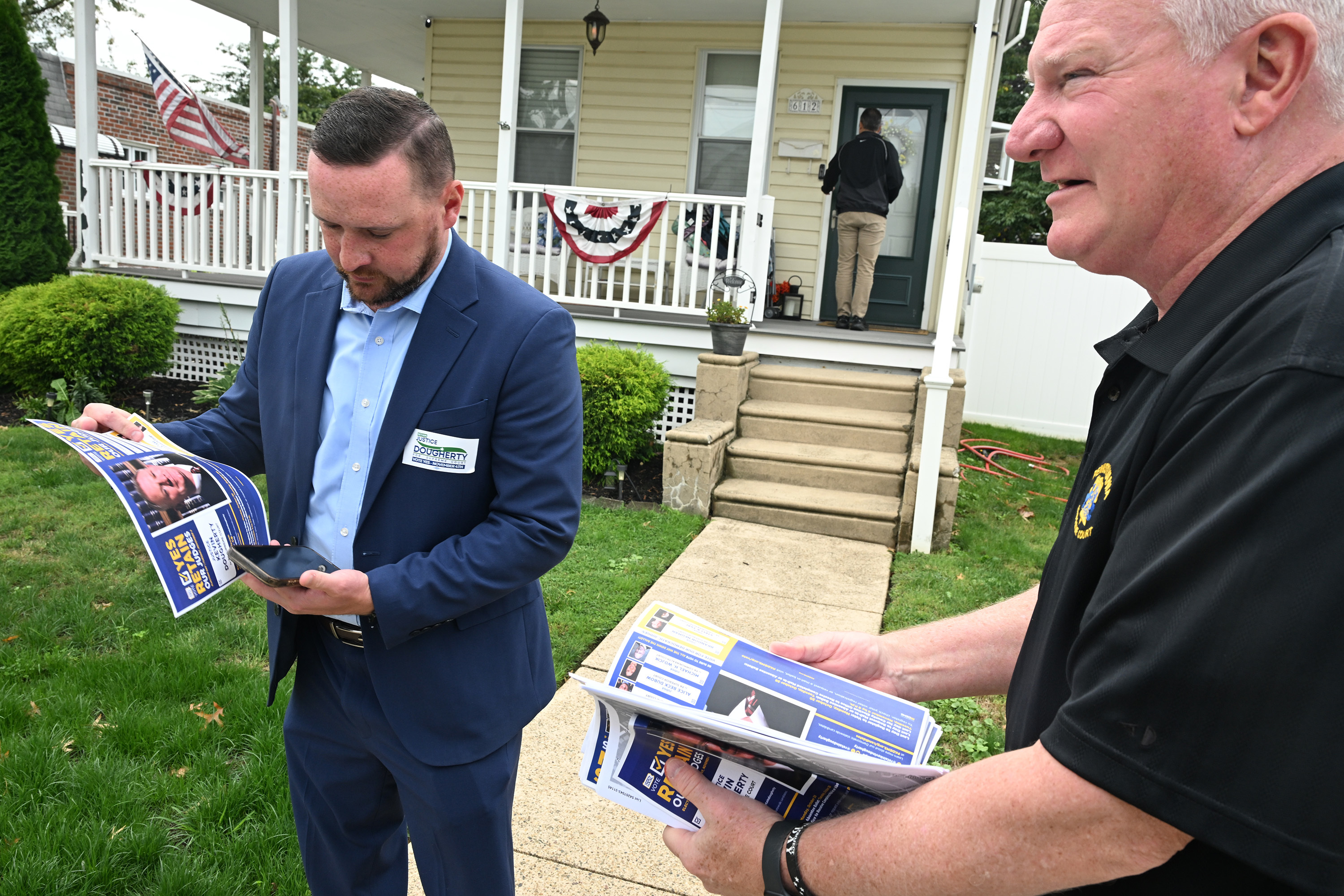
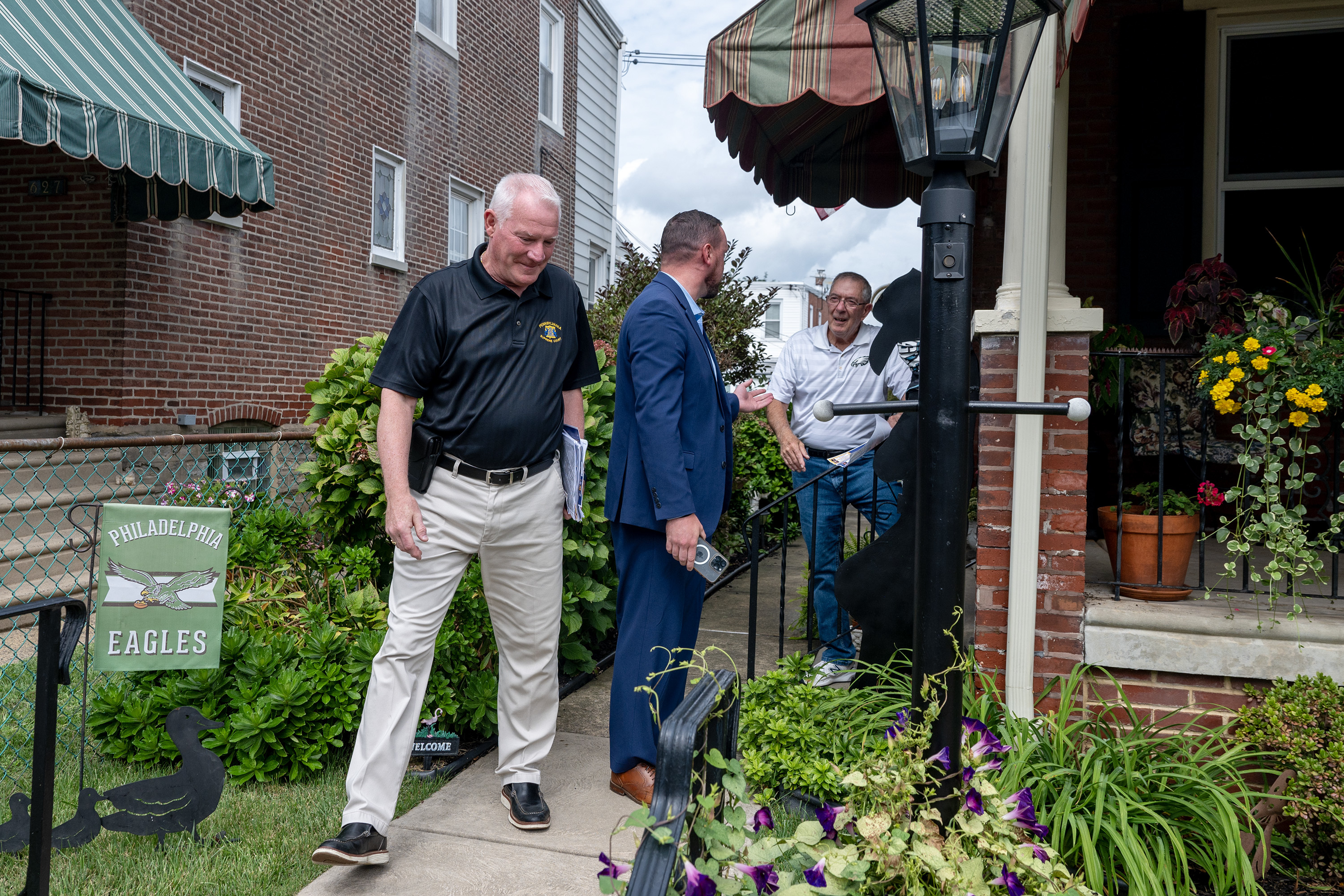
He then proceeded to walk a Northeast Philly neighborhood alongside his son, State Rep. Sean Dougherty, a first-term Democrat who represents the area, and a family friend.
Before running for the Pennsylvania Supreme Court, Dougherty spent nearly 15 years on the Common Pleas Court bench in Philadelphia, with much of that time spent serving in the family division.
Justice Kevin Dougherty (right) canvasses with his son, State Rep. Sean Dougherty (left), in Fox Chase Sunday Sept. 7, 2025.
As a Supreme Court justice, Dougherty has highlighted his work on the autism in courts initiative as a key accomplishment. This program works to educate judges about the particular challenges people with autism spectrum disorder may face when dealing with the justice system, and has grown further into sensory-friendly courtrooms in more than a dozen counties.
The program, Dougherty said, was inspired by his own experience on the bench when a child stood in his courtroom for a delinquency case showing “all the signs of an incorrigible person.” Then, Dougherty said, the child’s mother pulled him aside and told him her son was on the autism spectrum.
“It was like a punch in my mouth because I had never been exposed,” Dougherty said. “You’re only ignorant once.”
Dougherty said he self-educated and began working in Philadelphia to reform the way the court interacts with individuals with autism and brought those efforts to a statewide focus as a justice.
Justice Kevin Dougherty (left) canvasses with his son, State Rep. Sean Dougherty (center), in Fox Chase Sunday Sept. 7, 2025, stopping at the home of voter Skip Nelson (right).
“You need to make the system fair,” Dougherty said.
On the court, Dougherty has often sided with the liberal majority. He recently wrote the majority opinion in a case that allowed local governments to use zoning law to limit where gun ranges could be located. In oral arguments, when attorneys get a chance to argue their cases before the Supreme Court’s seven justices, Dougherty often presses lawyers to refine their arguments.
Christine Donohue
Donohue is often the first justice to ask questions during oral arguments.
Her quick interjections are because of her 27 years as a trial attorney prior to her career on the bench, she said. She cannot help but be inordinately prepared when she puts on her judicial robes and sits on the state’s highest court.
“Thoroughness is one of my ‘things,’” she said, with a laugh.
Justice Christine Donohue speaks during a fireside chat at Central High School.
Donohue, 72, would be able to serve for only two years of another 10-year term. But it wasn’t even a question to her whether she should step aside sooner. She believes she has fulfilled her duty as a justice, and she is prepared to do so until she hits the voter-set maximum age for a justice, 75.
Donohue authored the court’s ruling last year that signaled some members of the court are prepared to find that the Pennsylvania Constitution secures the right to an abortion. But less discussed from that same opinion, Donohue said, she is proud to have shored up the state’s Equal Rights Amendment.
Pennsylvania was the first state in the nation to amend its constitution to enshrine that every person has equal rights that cannot be “denied or abridged” because of an individual’s sex in 1971, and the first state to show support for amending the U.S. Constitution to guarantee the same.
But a 1984 ruling by the state Supreme Court “diluted” the ERA in Pennsylvania, Donohue said. It wasn’t until the justices decided the Allegheny Reproductive Health case 40 years later that the court revisited the state’s Equal Rights Amendment to make it “perfectly clear that a biological difference cannot serve as the basis for a denial or an abridgment of a right,” she said.
“To me, I’m very proud of many of the decisions I’ve been able to be involved with, but that one really sort of sets the record straight,” Donohue said.
Outside her legal work on thestateSupreme Court, she has been an advocate to offer more young lawyers the opportunity to try a case before a jury, which has become less and less frequent in recent years. Ensuring that the next generation of lawyers knows how to try a case before a jury is critical to guaranteeing the right to a fair trial, and would prevent a potential competency gap for future lawyers.
David Wecht
Like many of the justices on the Pennsylvania Supreme Court, Wecht spends much of his free time thinking about legal questions or ethical dilemmas. Or going on walks and listening to podcasts that deal with the same issues. (He recommends Amarica’s Constitution by Yale Law professor Akhil Amar or any of the podcasts by Jeffrey Rosen at the National Constitution Center, among others.)
He works from his chambers in Pittsburgh each day, unless the court is at one of the state’s many satellite courtrooms for oral arguments. There are times when he is in his chambers reading and writing all day long, which he described as “very, very fun, and very, very interesting and exciting.”
Justice David Wecht speaks with moderator Cherri Gregg during a fireside chat on retention at Central High School.
“The work is interesting. It is varied, It is never stagnant. We deal with all areas of the law,” Wecht said. “I’m very grateful that the voters gave me this job 10 years ago, and I hope they’ll see fit to provide me an additional term.”
Wecht is a true student of the law and said he enjoys probing attorneys’ arguments and the back-and-forth between justices on the bench.
He sees his role on the court as to decide cases. “Nothing grander, and nothing more,” he said.
He and the whole court, he said, operate under a “philosophy of judicial restraint.”
The court’s liberal majority has faced criticism from Republicans during the last 10 years — especially during the COVID-19 pandemic — for decisions they claimed were made by an “activist court.”
But those rulings, Wecht said, were the justices’ best attempts at deciding what a law passed by the General Assembly means when the lawmakers left it ambiguous, or their best attempt to understand what the framers of the state constitution intended, even if he doesn’t agree with it.
“It’s not our business whether we like them,” he said.
Early Vote Action, a Republican group, urges voters to vote against retaining the justices at a Republican rally in Bucks County on Sept. 25, 2025 at the Newtown Sports & Events Center. The event was headlined by Treasurer Stacy Garrity, a Republican running for governor.
Republican groups have attempted to mislead voters in mailers, Wecht has said, about the justices’ role in a 2018 decision that found Pennsylvania’s congressional maps were unconstitutionally gerrymandered. The GOP groups have had similarly misleading ads about the court’s actions on abortion and voting rights, even recently invoking the anti-Trump “No Kings” language to try to sway voters to vote “no.”
Wecht is a professor at Duquesne School of Law and the University of Pittsburgh, where he has been teaching for years. He is also a visiting professor at Reichman University in Israel each year, and regularly teaches continuing legal education courses for attorneys, which are courses that all lawyers must complete on an annual basis to maintain their active attorney’s license in Pennsylvania.
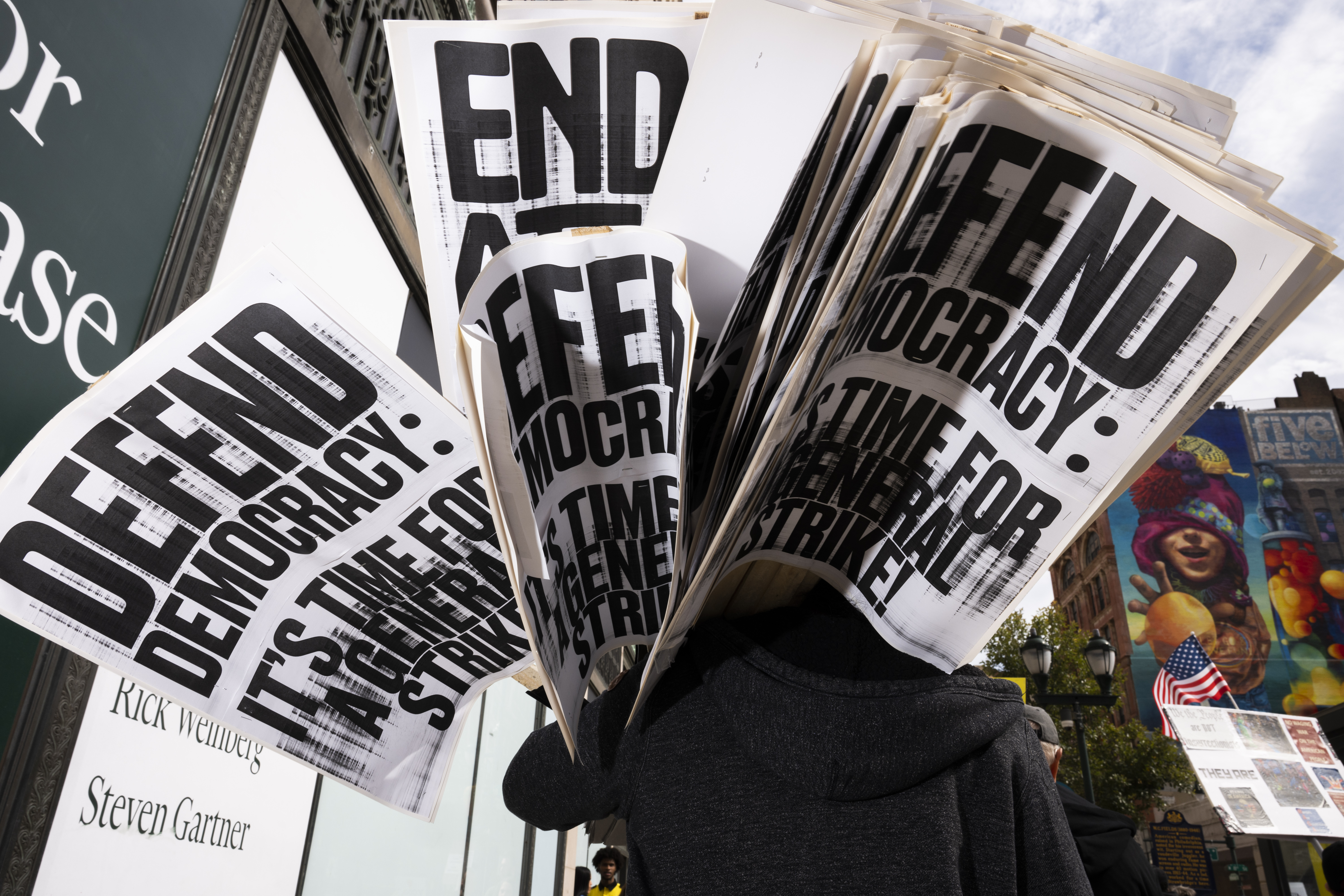
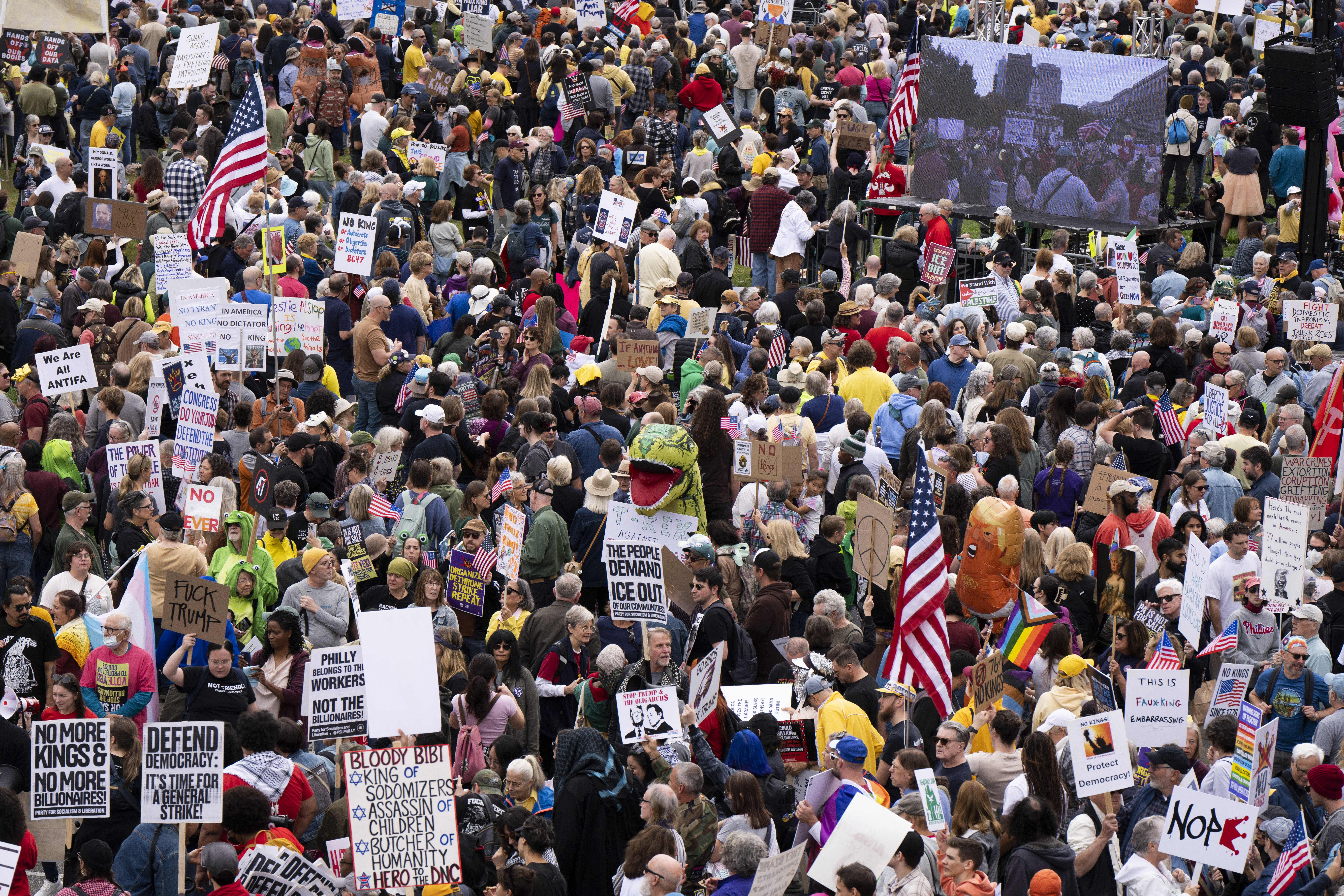
Joining demonstrators around the country, thousands gathered Saturday in Philadelphia to protest President Donald Trump’s actions that they contend are threatening to undermine 250 years of the nation’s democratic traditions.
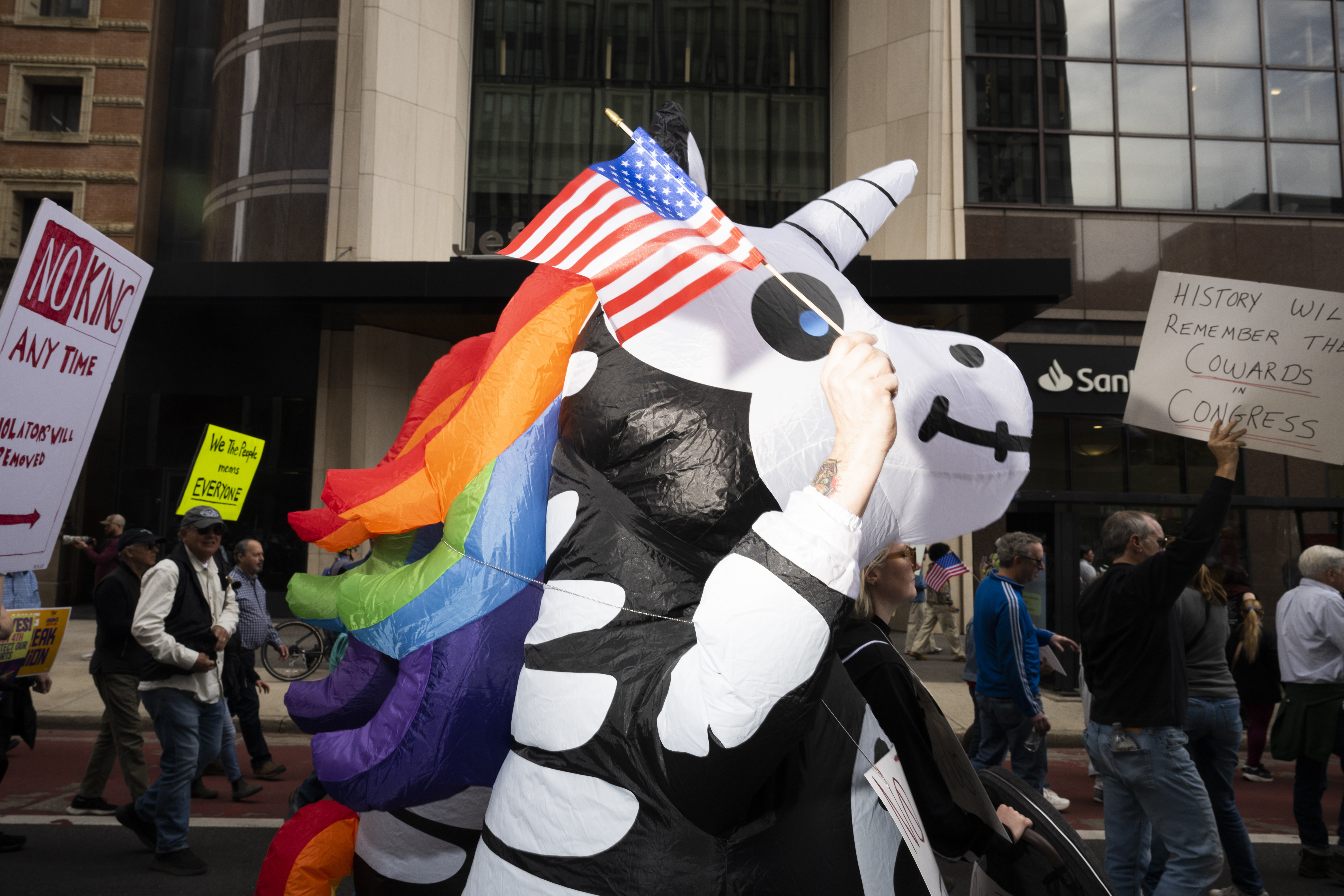
“I think everybody needs to know that we’re not going to just sit back,” said Sherri King, who arrived at the “No Kings” rally in Center City wearing an inflatable chicken costume.
On a mild October afternoon when the weather was drawing no protests, the event began in a festive atmosphere with the sounds of clanking bells as participants gathered at City Hall — some, like King, wearing pre-Halloween regalia — and marched to Independence Mall.
Demonstrators gather for a’ No Kings’ rally in Philadelphia on Saturday, Oct. 18, 2025.
“It’s a very large, orderly crowd,” said Police Capt. Frank Palumbo. The three-hour march and rally, which began at noon, actually ended on time.
Said Thomas Bacon, a 72-year-old Vietnam veteran from North Philadelphia: “It’s peaceful. No division. Just opposition.”
Under Trump, he said, “the whole world is turned upside down.”
Organizers of the more than 2,500 demonstrations nationwide say the shutdown in particular is a dangerous move toward authoritarianism.
Trump and congressional Republicans are blaming Democrats for refusing to vote on a reopening.
For his part, Trump spent the day of what fellow Republicans were calling “Hate America” rallies at his Florida mansion.
Demonstrators gather for a’ No Kings’ rally in Philadelphia on Saturday, Oct. 18, 2025.
At the Philadelphia protest, Laura Murphy, a 74-year-old retiree, said she was struggling with the “Hate America” concept. “It’s ridiculous,” she said. “What could be more American than being against kings?”
Along with demonstrators, Democratic politicians were evident at events in Philly and elsewhere.
With Democrats hoping to make significant gains in the 2026 election, the presence of party elected officials was evident at rallies in Philly and elsewhere. Among those who showed up in Philadelphia were area U.S. Reps. Mary Gay Scanlon, Madeleine Dean, and Brendan Boyle, along with U.S. Rep. Jamie Raskin of Maryland.
Rallies were being held all over New Jersey, Pennsylvania, the region, the nation — even Spain, where a few hundred gathered in Madrid. About 5,000 people jammed the streets of West Chester.
In Philly, Jerry Lopresti, who said he never had attended a protest in his 64 years, said: “There has to be a show of numbers. It’s important to show up.”
Demonstrators gather for a ’No Kings’ rally in Philadelphia on Saturday, Oct. 18, 2025.
Among those who showed up conspicuously was Michael Noonan, 48, of Northern Liberties. He was wearing a Tinky-Winky Teletubby costume as he walked off a Market-Frankford Line subway car.
He said his outfit was a counterpoint to suggestions that the demonstrations might turn violent. “Nobody’s here to fight anyone,” he said, “nobody’s here to kill anyone.”
Not everyone who showed up had issues with Trump.
Patrick Ladrie, 20, who lives in Camden County, stood out in his Trump hat and “ultra MAGA” T-shirt that proclaimed “I love our king.”
He said he crossed the Delaware River to “get a good viewpoint of what the American left is.”
After engaging in debate with three protesters on matters that included Christianity and conservatism, Ladrie reported that the environment was not so bad.
In fact, he said, it was one of the “most peaceful” debates he could recall. As one of his adversaries jogged away to meet up with his friends, Ladrie said, “Keep out of trouble.”
The protest was a decidedly intergenerational affair, with some parents describing the event as a teachable moment, while others said it was their progeny who came up with the idea to attend. Danielle Pisechko, 38, carried her youngest, who wore orange butterfly wings, on her shoulders.
Their sign read: “The only monarchs we want are butterflies.”
Demonstrators gather for a’ No Kings’ rally in Philadelphia on Saturday, Oct. 18, 2025.
The participants included Center City resident Reed Oxman, 66. Although his disability limited his movement, he and his husband sat on a ledge near City Hall as evidence of the diversity of the crowd. “It’s [about] representation and clearing all the lies about who is coming to this,” Oxman said.
Lana Reckeweg, who lives at a North Philly women’s shelter, said her resources were seriously limited, but that didn’t stop her from finding cardboard and getting markers to make signs to give to other demonstrators.
She said that over the last several months a handful of undocumented women have found sanctuary in the place she calls home, and seeing their struggles made her want to attend the protest on their behalf.
“I have done a lot of crying. I see how it’s affecting them every day,” said Reckeweg, trying to keep her handwriting steady on a moving bus.
“I am here because they can’t be. People need to wake up and realize it’s getting a lot more serious more quickly than expected.”
As for what effect the rallies might have, “I would tend to doubt that the protests will have any immediate direct impact on the administration’s policies,” said David Redlawsk, chair of the political science and international relations department at the University of Delaware, but “they may work to embolden those who are opposed to Trump’s actions to continue to organize and respond.”
Sam Daveiga, 15, attended her first protest, the Women’s March, when she was 7 years old. This time, she brought along her father, Ed. “Every voice counts,” the Philly teen said.
“You can have a small voice, but the second you put it with everyone else who’s come out, it amplifies.”
Staff writers Emily Bloch, Scott Sturgis, and Rob Tornoe contributed to this article, which contains information from the Associated Press.
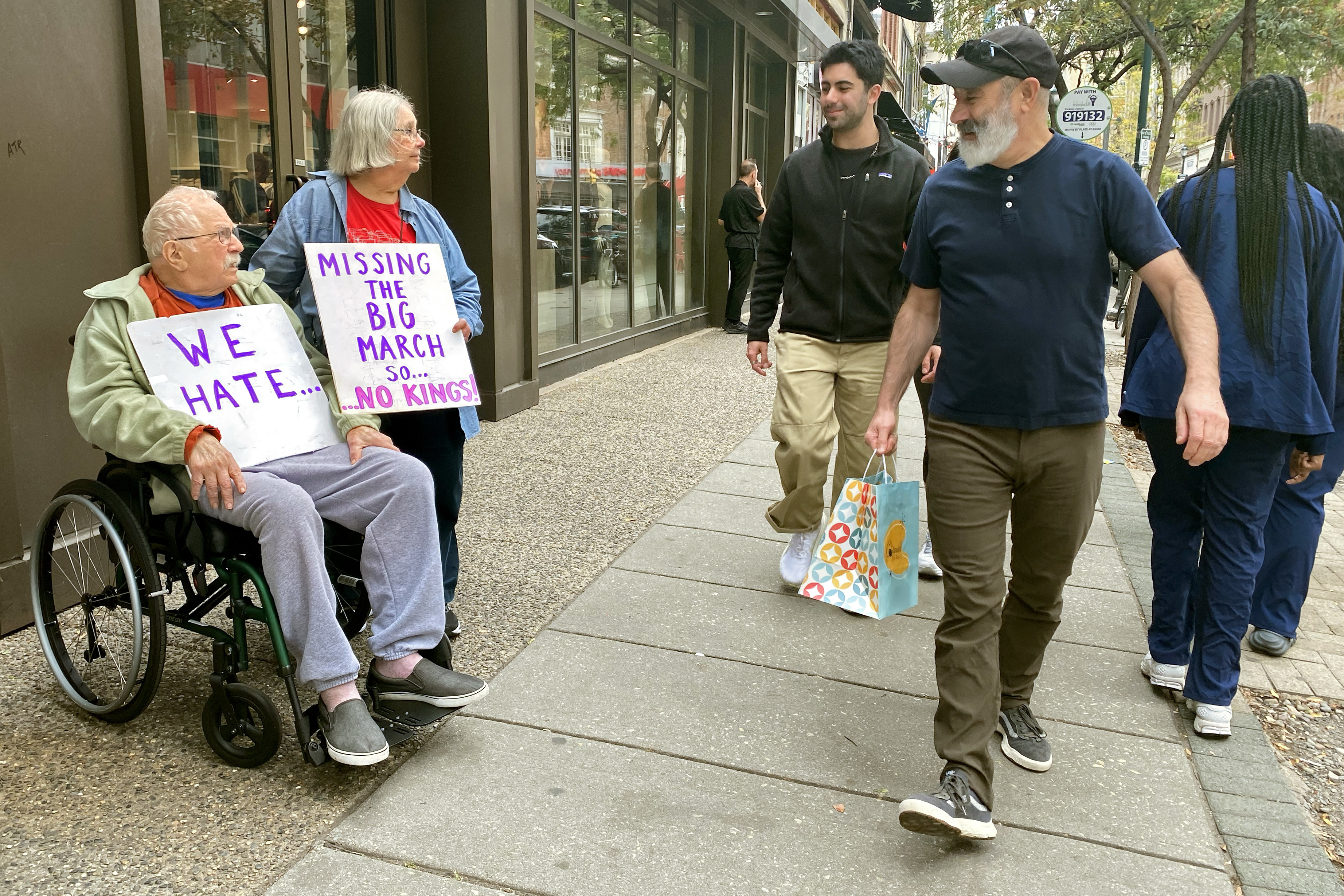
Fourteen blocks away from the “No Kings” rally on Independence Mall, Bert and Lynne Strieb stand (and sit) in silent protest Saturday, Oct. 18, 2025 outside their apartment building in the 1900 block of Chestnut Street, vicariously joining thousands of others in Philadelphia and in cities across the country in response to Trump’s masked ICE agents and the deployment of troops in American cities. The Striebs, both in their 80s, could not attend the June “No Kings” march as Bert was in the hospital, and Lynne said they “did not want to miss this one.”
There was a time — back when The Inquirer had multiple suburban bureaus — that photographers like myself who were assigned to the main newsroom on North Broad Street worked only in the city. (We’re now more like ride share drivers, going everywhere.)
So I walked a lot more to cover news and events in Center City, and more often stumbled into things and sights that piqued my curiosity.
Things like a long line.
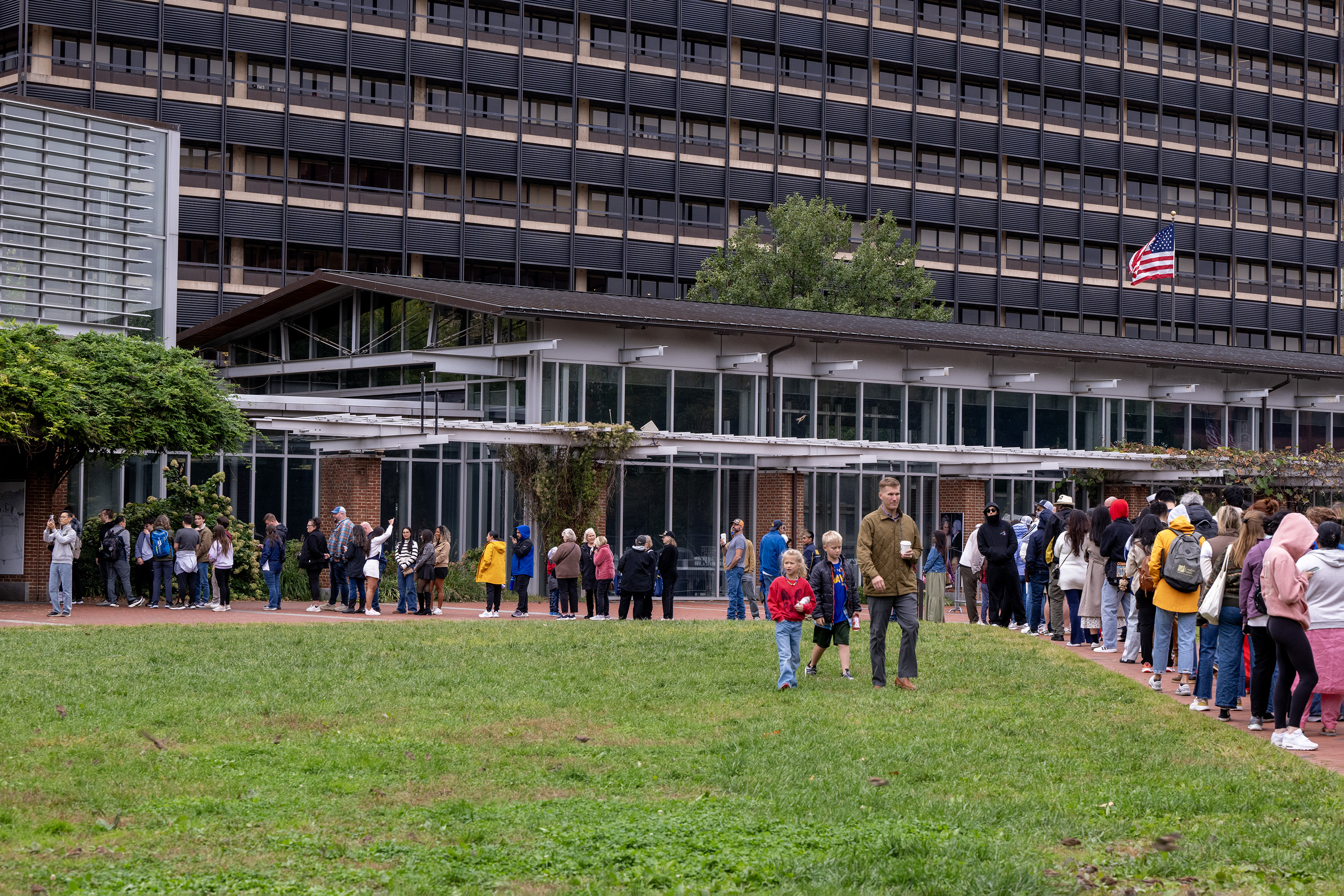
Visitors queue up to get a glimpse through a single window in the Liberty Bell Center Oct. 12, 2025 while the building is closed due to the federal government shutdown.
Years ago seeing one likely meant unhoused people were waiting as church folks or outreach advocates served dinner on the street. Or they were waiting for concert tickets or movie premiers (Beanie Babies?).
I remember once questioning someone standing in a blocks-long line along Walnut Street and was flabbergasted to learn a new sneaker was dropping.
Or for a device that combined a portable media player, a cell phone, and an internet communicator.
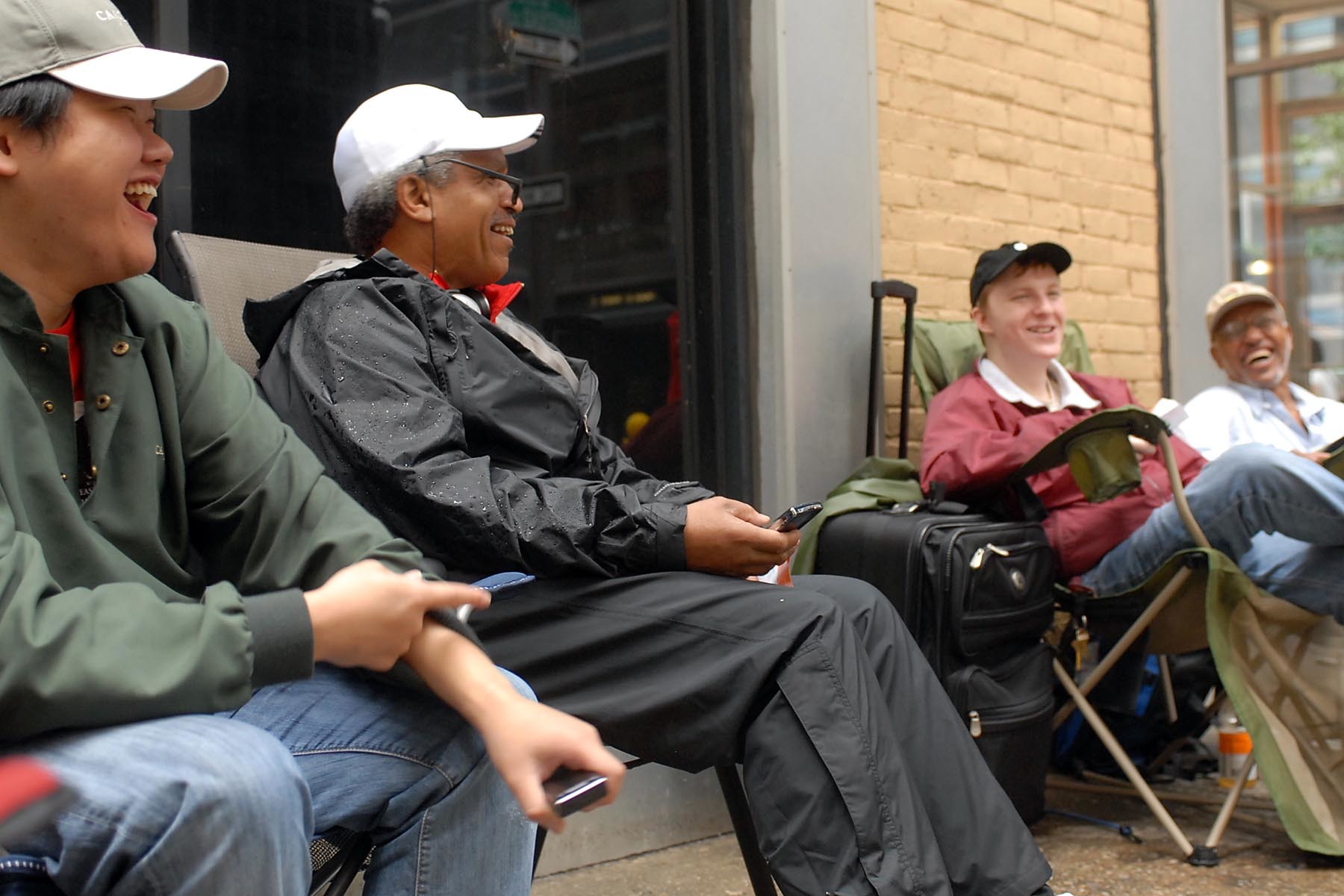
Mayor John F. Street reads jokes aloud from his Blackberry as he waits with fellow technology enthusiasts in an alley off 16th Street to purchase an iPhone at the At&T store Jun. 29, 2007. There were two models available that day: a 4GB for $499 and the 8GB for $599.
Mayor Street was the third in line to buy the first-generation iPhone 2G launched that day. He said he arrived around 3:30 a.m. Leonard F. Johnson (far right) at the front of the line, arrived 36 hours ahead of the 6:00 p.m. official release.
Hizzoner defended the time he spent in line, saying he got work done and kept in touch with city officials on the issues of the day using his Blackberry to send emails and make phone calls.
I had no idea what the yellow shipping container was when I saw it next to City Hall last weekend. Even after I walked over and watched those at the front of the long line take their selfies inside a retro Philly diner-esque booth tableau.
I watched it all unfold, along with others, asking ourselves what was going on. Nobody knew. Except those in line.
It was the last stop on the Pleasing Express Line that ended its nation-wide tour in Philadelphia.
Followers on social media were invited to, “Climb on to immerse yourself in the worlds of Pleasing Fragrance, Big Lip, and exclusive treasures,” including a spin of the “Freebie Wheel,” for products of the unisex lifestyle brand Pleasing, created by former One Direction singer Harry Styles.
A spontaneous walk around Center City can build for me the same kind of excitement felt by those waiting in lines. Except they know their eventual reward. Mine comes from the anticipation of not knowing what’s around a corner.
And that is exactly what makes street photography worth the walk – and sometimes even the wait.
Since 1998 a black-and-white photo has appeared every Monday in staff photographer Tom Gralish’s “Scene Through the Lens” photo column in the print editions of The Inquirer’s local news section. Here are the most recent, in color:
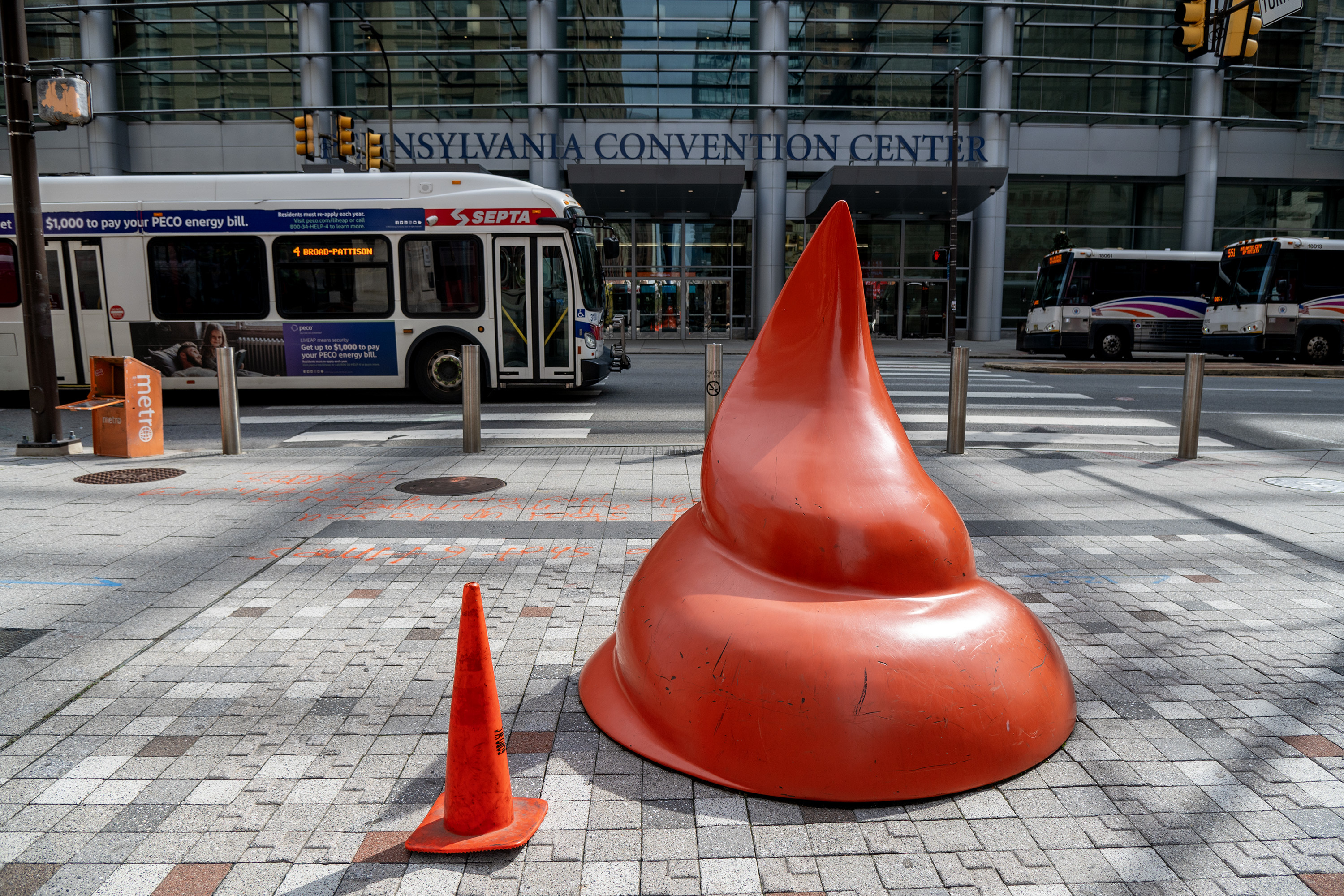
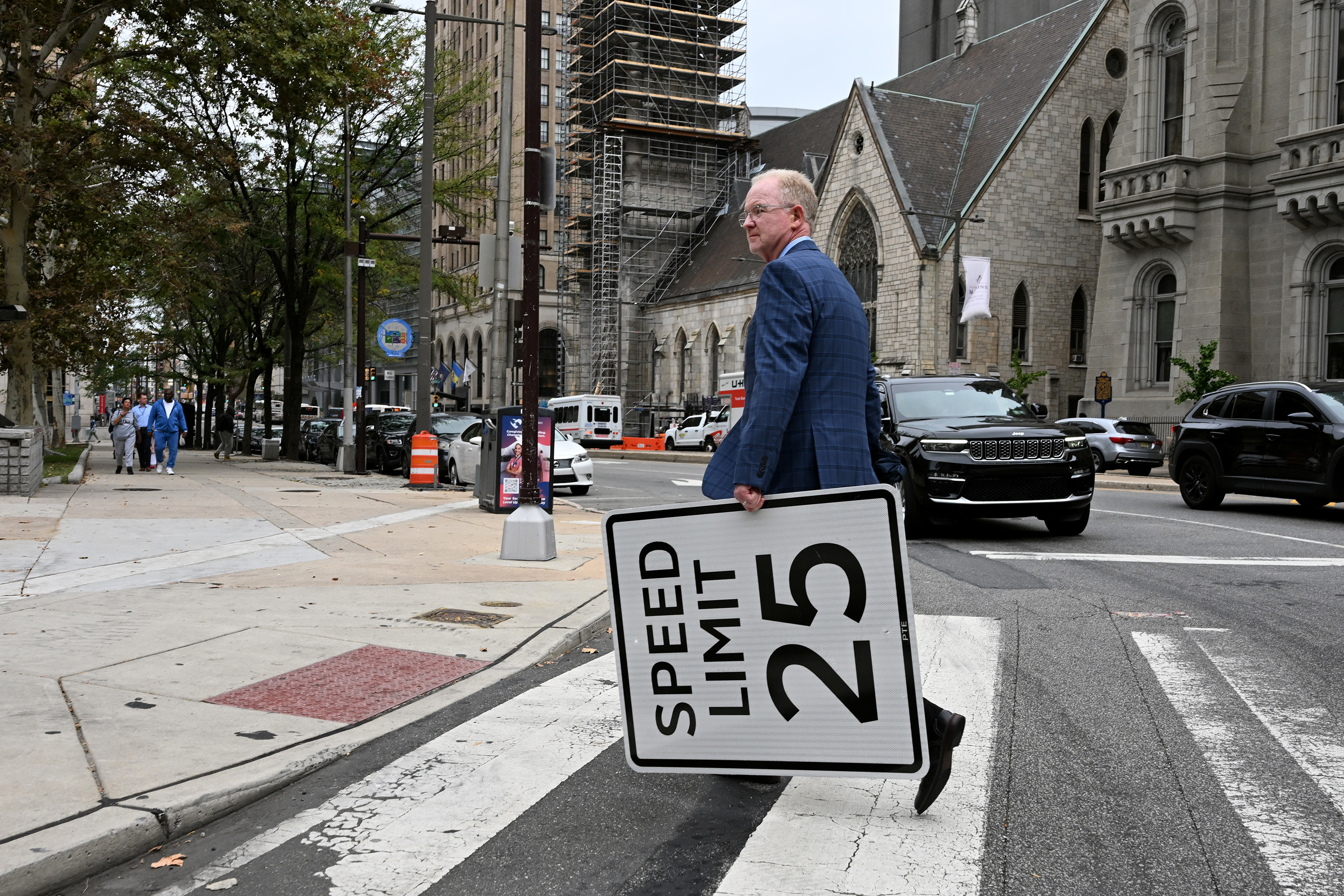
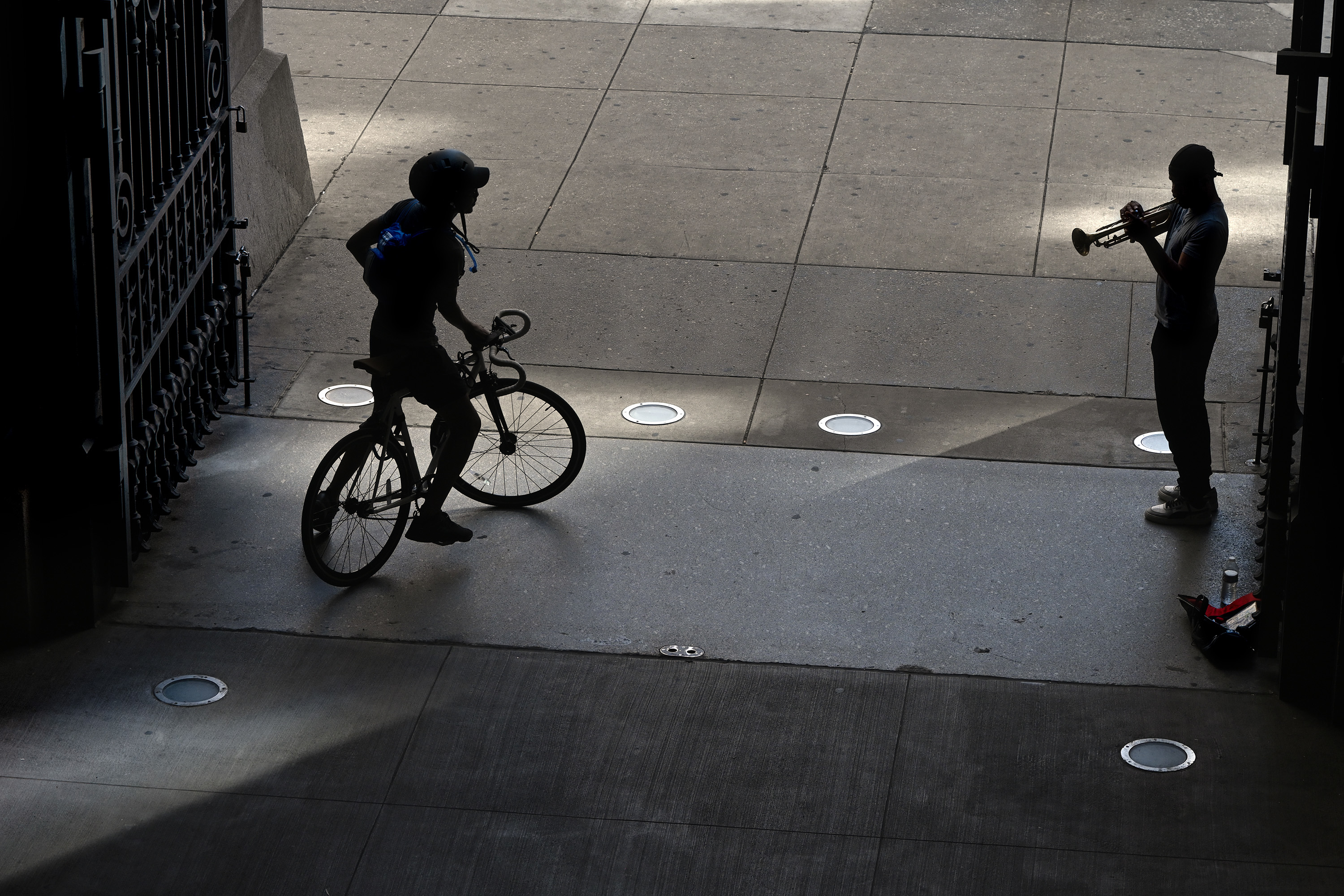
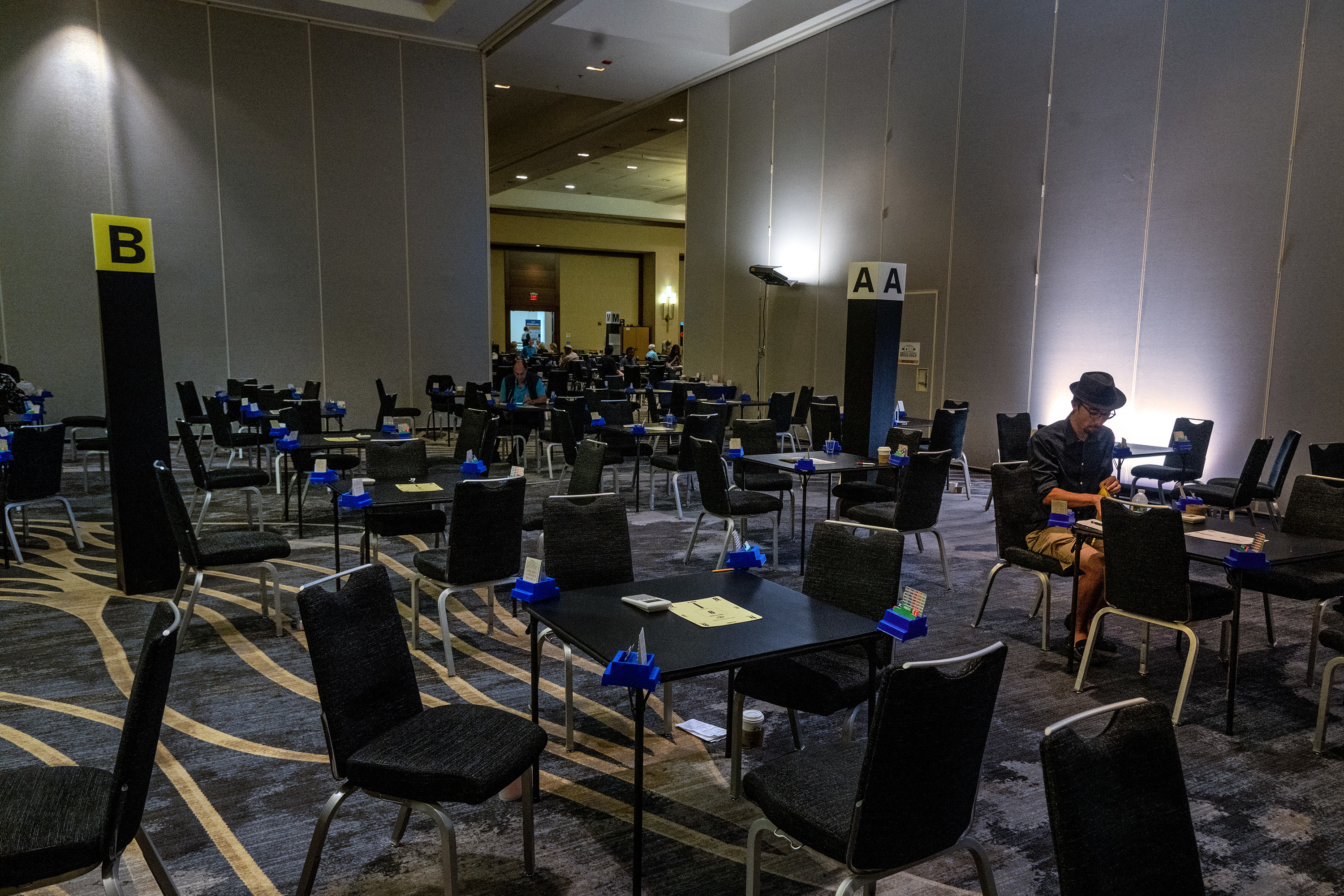
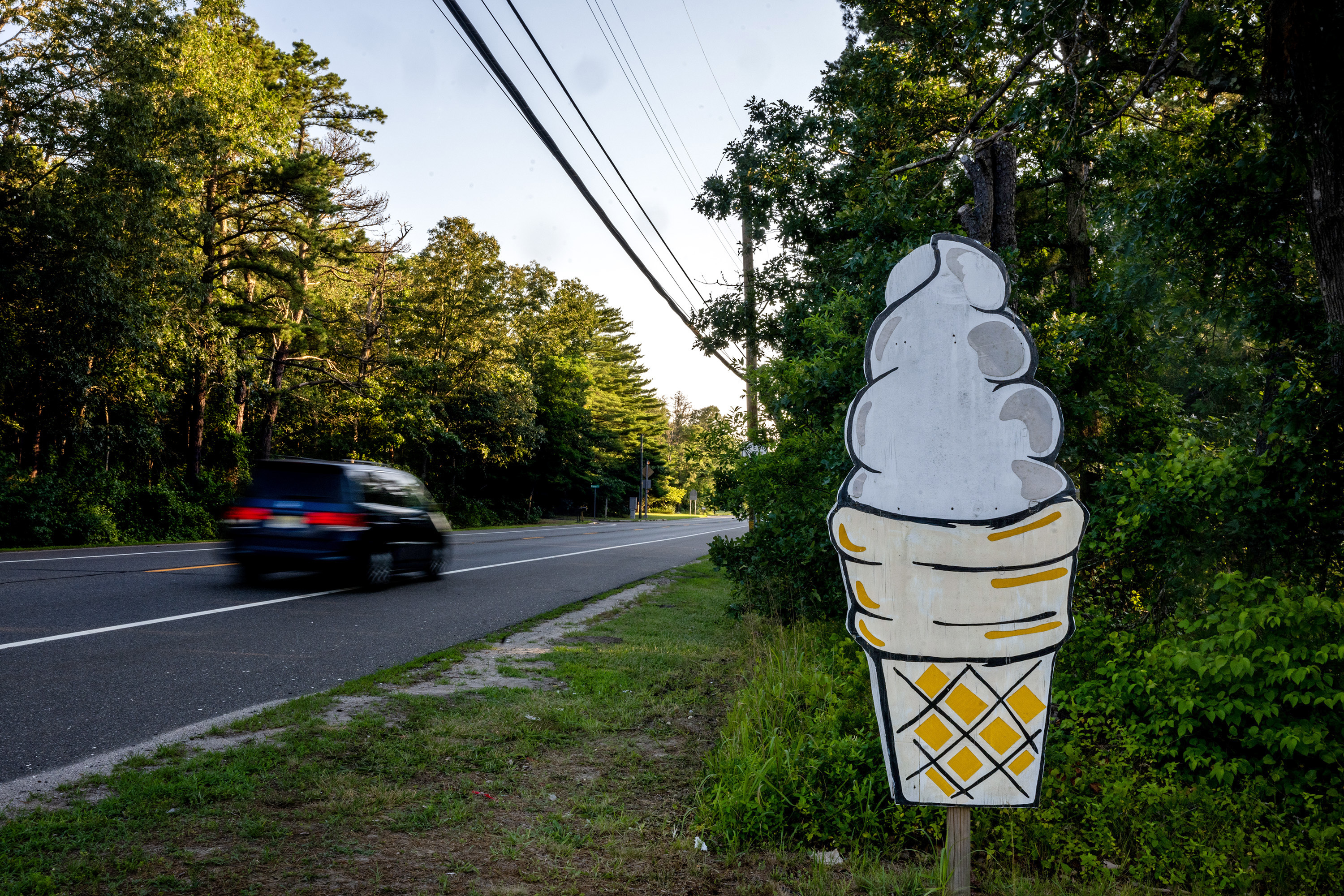
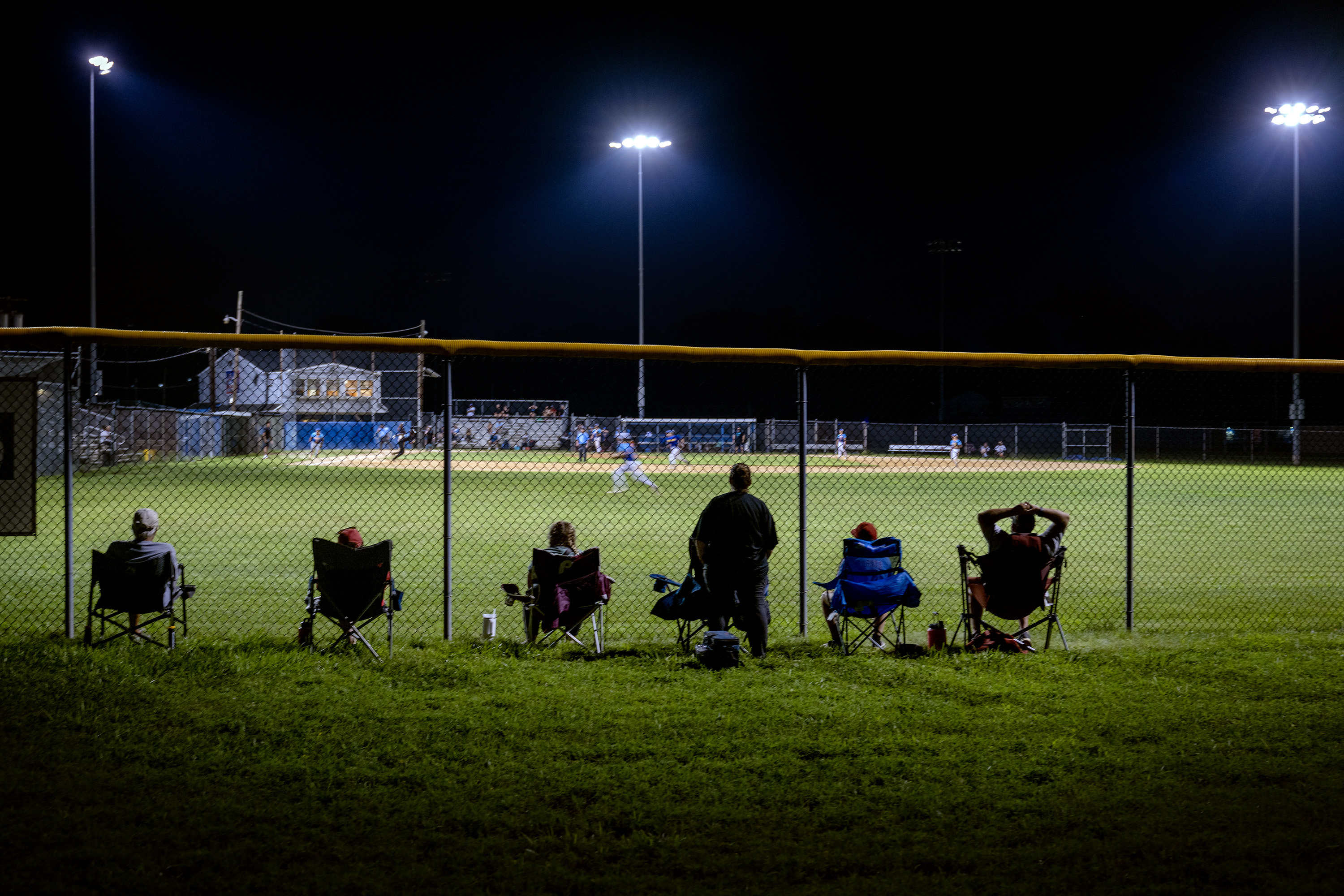
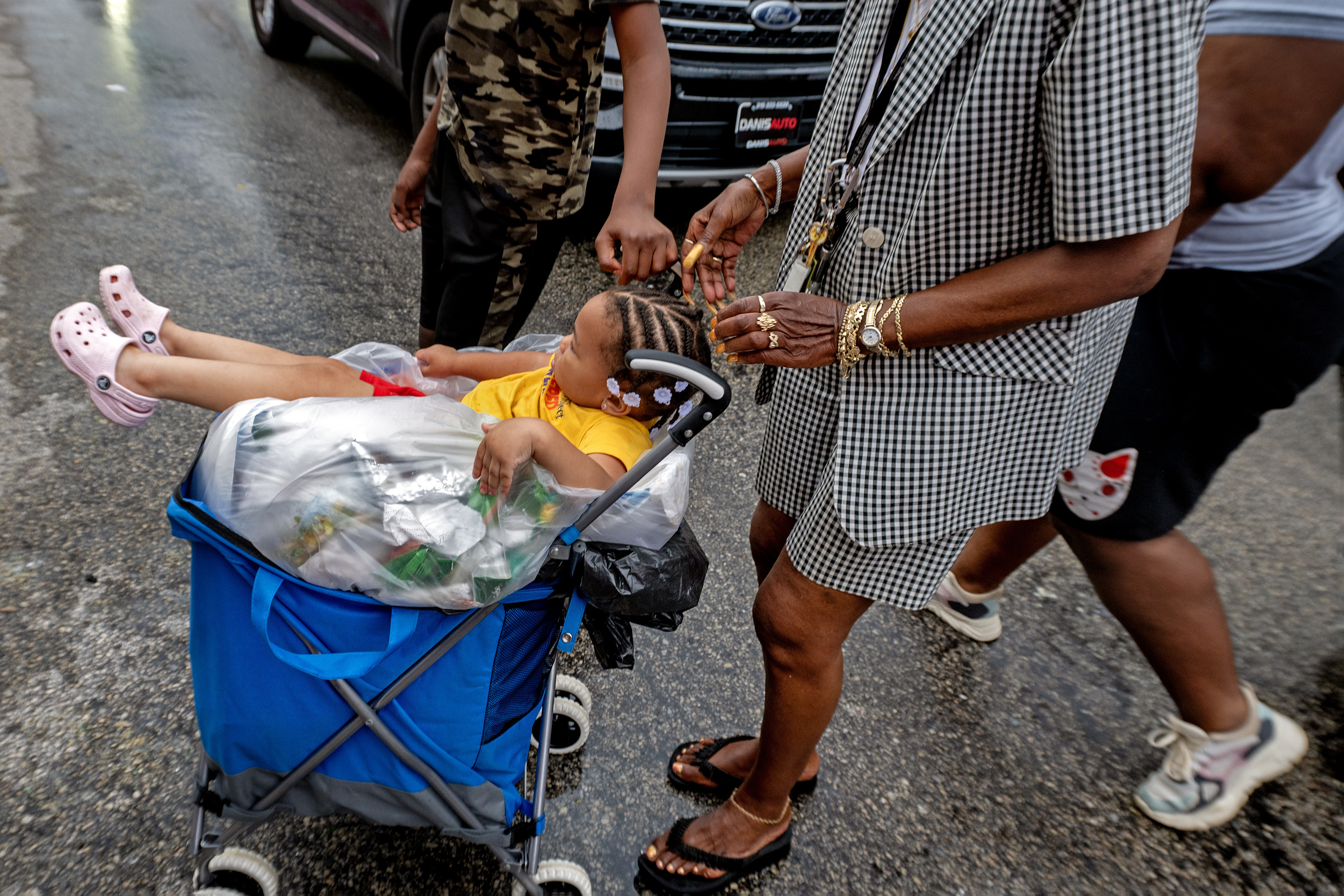
October 11, 2025: Can you find the Phillie Phanatic, as he leaves a “Rally for Red October Bus Tour” stop in downtown Westmont, N.J. just before the start of the NLDS? There’s always next year and he’ll be back. The 2026 Spring Training schedule has yet to be announced by Major League Baseball, but Phillies pitchers and catchers generally first report to Clearwater, Florida in mid-February.October 6. 2025: Fluorescent orange safety cone, 28 in, Poly Ethylene. Right: Paint Torch (detail) Claes Oldenburg, 2011, Steel, Fiberglass Reinforced Plastic, Gelcoat and Polyurethane. (Gob of paint, 6 ft. Main sculpture, 51 ft.). Lenfest Plaza at the Pennsylvania Academy of the Fine Arts on North Broad Street, across from the Convention Center.September 29, 2025: A concerned resident who follows Bucks County politics, Kevin Puls records the scene before a campaign rally for State Treasurer Stacy Garrity, the GOP candidate for governor. His T-shirt is “personal clickbait” with a url to direct people to the website for The Travis Manion Foundation created to empower veterans and families of fallen heroes. The image on the shirts is of Greg Stocker, one of the hosts of Kayal and Company, “A fun and entertaining conservative spin on Politics, News, and Sports,” mornings on Talk Radio 1210 WPHT.September 22, 2025: A shadow is cast by “The Cock’s Comb,” created by Alexander “Sandy” Calder in 1960, is the first work seen by visitors arriving at Calder Gardens, the new sanctuary on the Ben Franklin Parkway. The indoor and outdoor spaces feature the mobiles, stabiles, and paintings of Calder, who was born in Philadelphia in 1898, the third generation of the family’s artistic legacy in the city.September 15, 2025: Department of Streets Director of Operations Thomas Buck leaves City Hall following a news conference marking the activation of Automated Speed Enforcement (ASE) cameras on the Broad Street corridor – one the city’s busiest and most dangerous roads. The speed limit on the street, also named PA Route 611, is 25 mph.September 8, 2025: Middle schoolers carry a boat to the water during their first outing in a learn-to-row program with the Cooper Junior Rowing Club, at the Camden County Boathouse on the Cooper River in Pennsauken. September 1, 2025: Trumpet player Rome Leone busks at City Hall’s Easr Portal. The Philadelphia native plays many instruments, including violin and piano, which he started playing when he was 3 years old. He tells those who stop to talk that his grandfather played with Billie Holiday, Duke Ellington, Nina Simone, and Dizzy Gillespie. August 25, 2025: Bicycling along on East Market Street.August 18, 2025: Just passing through Center City; another extraterrestrial among us. August 11, 2025: Chris Brown stows away Tongue, the mascot for a new hard iced tea brand, after wearing the lemon costume on a marketing stroll through the Historic District. Trenton-based Crooked Tea is a zero-sugar alcoholic tea brand founded by the creator of Bai, the antioxidant-infused coconut-flavored water, and launched in April with former Eagles defensive end Brandon Graham as a partner.August 4,2025: Shanna Chandler and her daughters figure out their plans for a morning spent in Independence National Historical Park on the map in the Independence Visitor Center. The women (from left) Lora, 20; Shanna; Lenna, 17; and Indigo, 29, were stopping on their way home to Richmond, Virginia after vacationing in Maine. The last time they were all in Philadelphia Shanna was pregnant with Lenna. July 28, 2025: Louis-Amaury Beauchet, a professional bridge player from Brittany, France, takes a break between game sessions in an empty ballroom during the North American Bridge Championships at the Center City Marriott with some 4000 people in town over week of the tournament. The American Contract Bridge League is hosting the week of meetings and tournaments with bridge players from all over the world. The ACBL is the largest bridge organization in North America, with over 120,000 members (down from around 165,000 before COVID). Bridge draws players of all ages and walks of life – fictional characters James Bond and Snoopy both played as do billionaires Bill Gates and Warren Buffett (who sometimes play as partners).July 21, 2015: Signage for the Kustard Korner in Egg Harbor City, on the way to the Jersey Shore. President Ronald Reagan designated July as National Ice Cream Month and the third Sunday of the month.July 14, 2025: Fans watch a game at the Maple Shade Babe Ruth Field, part of the 20th Annual Franny Friel Summer Classic, on a cool(er) night with a refreshing breeze, the weekend before the MLB All-Star Game (with Kyle Schwarber the lone Phillies representative).July 7, 2025: Caroline Small wheels her two year-old great-granddaughter atop a bag of garbage as she carts it to a drop-off site at the Tustin Playground at 60th St. and W Columbia Ave. as residential trash collection stopped when a strike was called by District Council 33. Small lives just around the corner and said of the toddler, “she was just walking too slow.”
The FBI on Friday announced criminal charges against two men in connection with an attempted robbery of an armored truck on Oct. 3 that led to school lockdowns and a shelter-in-place order in Lower Merion Township.
Dante Shackleford, 26, also was charged by indictment with two attempted robberies of armored trucks in Philadelphia in July and an armored truck heist in Elkins Park in August in which $119,100 was stolen.
Mujahid Davis, 24, and Shackleford were charged with the Oct. 3 attempted robbery of an armored truck on the Philadelphia side of City Avenue that led to a pursuit and an hours-long incident. Several suspects were finally arrested in Lower Merion.
The FBI announcement came just hours after another attempted robbery of an armored truck, this time outside a Wawa store in Philadelphia.
Shortly before 8 a.m. on the 7700 block of Frankford Avenue, two male suspects attempted to rob a Loomis truck when the driver fired two shots at the suspects, who then fled. Police reported no injuries or arrests.
The indictment against Shackleford and Davis filed in federal court on Thursday provided few details about the prior armored truck crimes.
On July 15 and on July 22, Shackleford and others allegedly attempted to rob Brink’s trucks in Philadelphia, according to the indictment.
On Aug. 12, Shackleford and others allegedly robbed a Brink’s truck in Elkins Park and got away with approximately $119,100 and the Brink’s employee’s gun.
Then on Oct. 3, Shackleford and Davis allegedly attempted to rob a Brink’s truck in Philadelphia, which reportedly occurred in the area of City Avenue.
Davis also is charged in Montgomery County Court with multiple counts related to what happened on Oct. 3, including fleeing law enforcement and evading arrest.
Former President Barack Obama endorsed U.S. Rep. Mikie Sherrill, the Democratic nominee for New Jersey governor, who is locked in a tight race with Republican Jack Ciattarelli.
Obama’s announcement just weeks ahead of the Nov. 4 election came in the form of an ad paid for by Sherrill’s campaign that Sherrill shared on X Friday morning.
“Mikie is a mom who will drive down costs for New Jersey families,” Obama said in the ad, echoing her campaign’s core message. “As a federal prosecutor and former Navy helicopter pilot, she worked to keep our communities safe.”
“Mikie’s integrity, grit, and commitment to service are what we need right now in our leaders,” he adds.
I'm honored to have President @BarackObama on Team Mikie.
This movement is about delivering something better for New Jersey — lower costs, more opportunity for our kids, and a government that's truly accountable to the people. pic.twitter.com/A0f5mHr0GI
Sherrill maintains a single-digit leadin polls over Ciattarelli, a former Assembly member who also ran for governor in 2017 and 2021 and has the endorsement of President Donald Trump.
In a statement, Sherrill praised Obama for leading “historic efforts to lower healthcare costs” and criticized Ciattarelli for defending cuts to Medicaid in Trump’s “big beautiful bill.”
“There’s so much at stake in this election, so President Obama and I are mobilizing New Jerseyans to make a plan to vote on or before November 4,” Sherrill added.
Sherrill last week appeared in South Jersey last week with Sens. Cory Booker (D., N.J.) and Amy Klobuchar (D., Minn.) and in her hometown of Montclair with former U.S. Rep. Gabby Giffords, an Arizona Democrat. She will appear in this weekend with Maryland Gov. Wes Moore.
Ciattarelli appeared on Wednesday with Ohio gubernatorial candidate Vivek Ramaswamy, who co-founded Trump’s DOGE and who appeared at a GOP summit in Atlantic City earlier this year to garner enthusiasm ahead of the gubernatorial primary.
Trump does not currently have plans to appear in the state with Ciattarelli, Axios reported. While New Jersey shifted more in support of Trump in 2024 he still lost the state by 6 percentage points.
It always figured to be an emotional day when the Alter family gathered at Har Jehuda Cemetery in Upper Darby. They were commemorating their mother’s first yahrzeit, the anniversary of death in the Jewish tradition.
But when the family arrived at her grave, they found it in devastating condition.
Beatrice Reina Alter, 93, was buried last year next to her husband, Milton Alter, in plots that the couple bought in the Jewish cemetery in the 1990s. When their family came together for her yahrzeit in August, they expected there to be a new headstone to match Milton’s.
Instead, her grave was covered in a fresh mound of dirt. The corner of a plywood board stuck out. And there was no headstone to be seen.
“We were shaken and appalled,” said Daniel Alter, one of the couple’s five children.
Yet issues at the cemetery — and for the burial industry — extend beyond placing headstones on time. Har Jehuda reflects an industry facing serious challenges to its longevity, where sometimes small, antiquated businesses must reinvent themselves. The country’s relationships with cemeteries and burials are changing, putting a seemingly timeless business at risk.
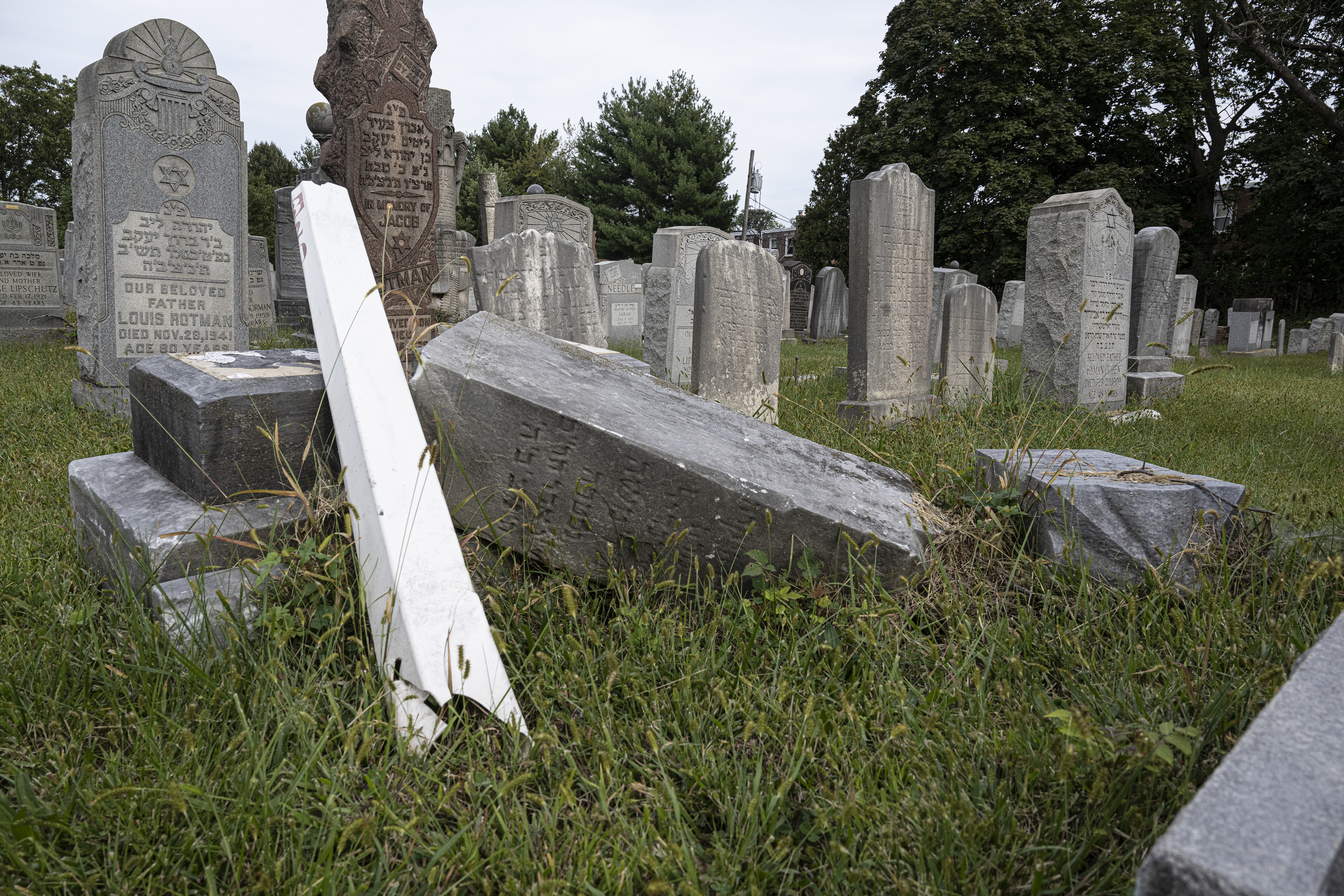
Har Jehuda, for instance,has been an important institution for the region’s Jewish community since its founding in the 1890s, holding more than 20,000 graves. But today, its grounds are largely overgrown and unkept, and numerous gravestones have fallen into disrepair. A volunteer group has stepped in to cover some of the maintenance and landscaping costs but fears it cannot sustain the cemetery for long.
Overgrown weeds and displaced headstones at Har Jehuda Cemetery in Upper Darby.
“The reality is that there are not enough staff or funds to maintain the cemetery, and there hasn’t been for years,” Randi Raskin Nash, a member of the Friends of Har Jehuda Cemetery group, said by email.
The cremation boom
A hundred years ago, cremation was an unusual choice in the United States. Things started to shift in 1963, when the Catholic Church lifted its prohibition of the practice and Jessica Mitford’s book The American Way of Death, an exposé of the death industry, was published. Before then the cremation rate was reported to be in the single digits, and even as it rose, by 1999 only about 25% of Americans were cremated. But that is changing.
Cremations are expected to double the number of burials in 2025, according to a report from the National Funeral Directors Association. By 2045, the cremation rate in Pennsylvania is projected to reach over 82%, with burials dropping to just under 14%.
Several factors appear to be driving the shift, according to Christopher Robinson, the president of the association’s board of directors. Those include costs, environmental concerns, declines in religious affiliation, and growing cultural acceptance of cremation.
window.addEventListener(“message”,function(a){if(void 0!==a.data[“datawrapper-height”]){var e=document.querySelectorAll(“iframe”);for(var t in a.data[“datawrapper-height”])for(var r,i=0;r=e[i];i++)if(r.contentWindow===a.source){var d=a.data[“datawrapper-height”][t]+”px”;r.style.height=d}}});
But that is not the business model that most cemeteries were built upon.
When folks secure a plot for interment, they are really buying an easement for burial rights, or essentially a license to use the cemetery’s land. Plots can cost thousands of dollars and areoften nonrefundable.
Once it comes time for a person to be buried, the cemetery may charge for other parts of the process, like digging and closing the plot, creating a headstone monument, or supplying a vault for the casket.
Most cemeteries sustain themselves for the future by putting a portion of that revenue into an endowment fund, where the return on investment can be used for maintenance and repairs. Friends of Har Jehuda estimates that it requires roughly $50,000 to$75,000 just to cover lawn mowing and weeding per season.
Cremations are much less profitable, particularly if a cemetery does not actually perform it — a walled recess with an engraved cover for a loved one’s urn may cost only a few hundred dollars.
It’s unknown exactly how many cemeteries have formally closed or been abandoned in recent years, since the statistic does not appear to be widely tracked. What is clear is that cremation trends and dwindling space for future burials have left cemeteries struggling.
“There’s going to be a lot of cemeteries going out of business in the next 20 years,” said Tanya Marsh, a law professor at Wake Forest University who teaches funeral and cemetery law, in an episode of The Economics of Everyday Things podcast last year.
Would you get married at a cemetery?
Some cemeteries have embraced the changes and creatively diversified their offerings.
“We’re an outdoor museum. We’re a sculpture garden, we’re an arboretum … we’re more than just a cemetery,” said Nancy Goldenberg, CEO of Laurel Hill Cemeteries in Philadelphia.
Laurel Hill uses its combined 265 acres on both sides of the Schuylkill to its advantage. On a given day at the historic cemetery, you might see visitors on a history tour, stretching out to watch a movie screening, attending a wedding, or meeting with the official book club, Boneyard Bookworms.
The 49 Burning Condors singer Kimber Dulin, Christopher Tremogile on guitar and Jason Gooch on drums play as folks shop for unusual antiques, vintage items, artwork and handmade wares at the Market of the Macabre at the Laurel Hill Cemetery in 2021.
Goldenberg said the extensive offerings are meant to build connections between people and the cemetery: They will be more likely to contribute money, or when they eventually need a resting place for their loved ones, they will look therefirst.
This all used to be more common — the first U.S. cemeteries in the mid-19th century also served as the country’s first public parks, with open grassy fields fit for a picnic. Before then, people buried their dead in smaller graveyards that eventually became overcrowded and sources of disease.
Laurel Hill is readying itself for a changing death industry, too. Goldenberg said she anticipates a rise in “green burials,” in which a person is buried without embalming or a casket, and said the cemetery was designating a section for them.
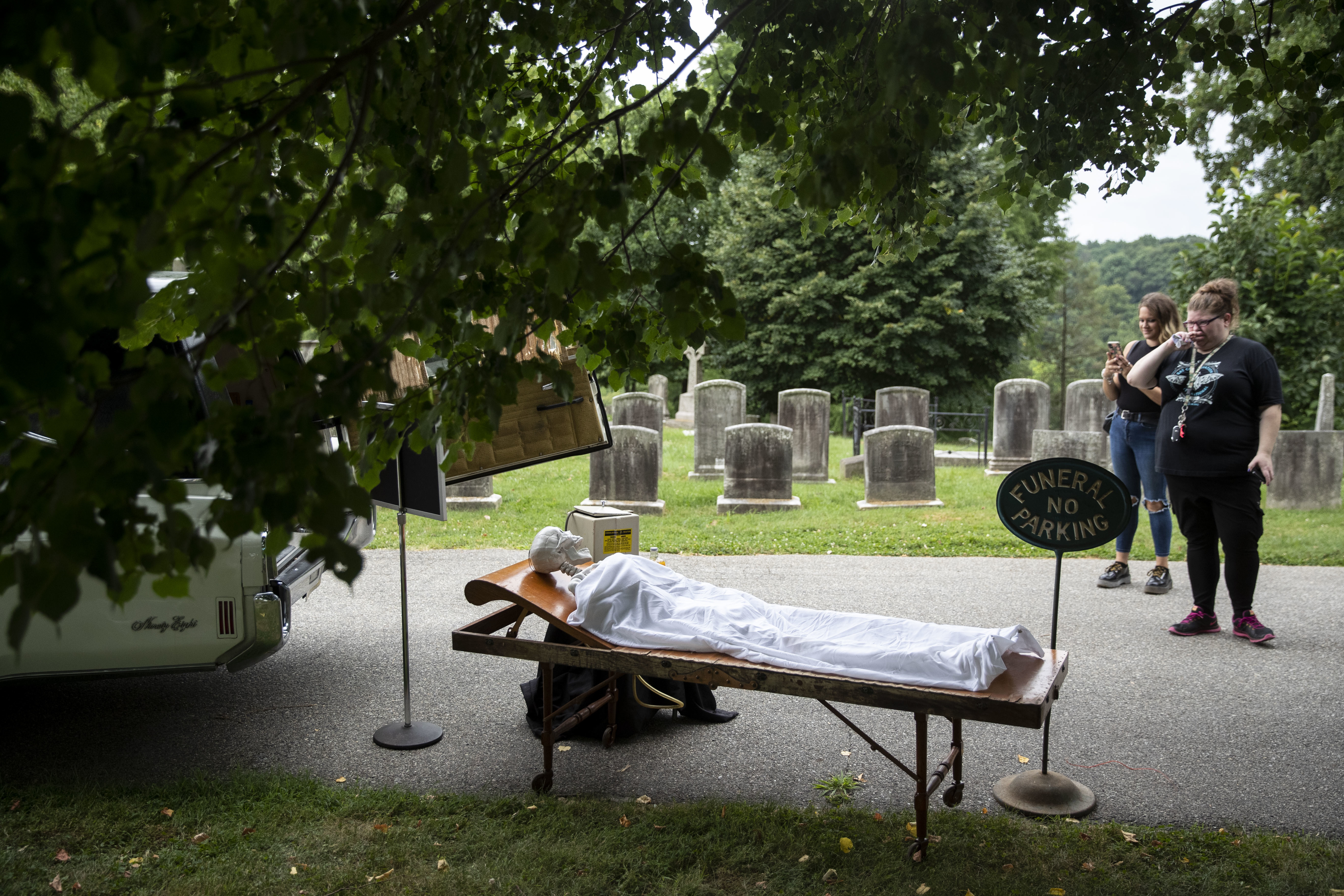
Visitors view a display behind a hearse during the 13th Car & Hearse Show presented by the Mohnton Professional Car Club at Laurel Hill Cemetery in 2021.
And while Goldenberg said she would be long gone before the cemetery runs out of space for new burials, it is a reality officials are planning for.
Laurel Hill is adding space for an additional 225 niches for cremated remains.
“There are small cemeteries, and once they fill up, that’s the revenue stream. … You have to be prepared for that,” she said.
“If you don’t, that’s when you fall on hard times.”
If a cemetery reachesthe point of closure or abandonment, it’s not alwaysclear what would happen to it. Last year, Gov. Josh Shapiro signed into law a bill sponsored by StateRep. Tim Brennan (D., Bucks) that would give financial relief to municipalities that take over abandoned cemeteries, since doing so can be a costly burden that local governments want to avoid.
Uncertain futures for cemeteries
Days after the Alter family made it through the prayers and memorial they planned, the emotional weight of the experience hit them even harder.
Daniel Alter later confirmed with Har Jehuda that a fresh grave had been dug where he believed his mother was buried. Recently, he hired a ground-penetrating radar company to examine the burial site, which determined the freshly dug grave was directly adjacent to where his mother was buried. While Alter was relieved to learn his mother’s grave had not been disturbed, he said Har Jehuda could have prevented the anguish he and his family have felt over the last few months.
Har Jehuda Cemetery’s owner, Larry Moskowitz, declined to comment for this article. Moskowitz was previously prosecuted by the state attorney general’s office over allegations that his other business, Wertheimer Monuments, had failed to deliver headstones to people who had paid for them. Complaints like these against the burial industry happen occasionally — the attorney general’s office also sued another Philadelphia monuments company in 2023 for failing to deliver headstones. There are multiple organizationsdedicated to protecting consumers against predatory burial providers.
The Alters, like other families, continue to visit and bury their loved ones at Har Jehuda, but they hope that no one else goes through their experience.
“Our collective wish is that it never, ever, ever happens again to anyone in the Philly area,” Daniel Alter said.
Think you know your news? There’s only one way to find out. Welcome back to our weekly News Quiz — a quick way to see if your reading habits are sinking in and to put your local news knowledge to the test.
Question 1 of 10
After decades as the Mann Center for the Performing Arts, Philadelphia's arts center in Fairmount Park is getting a new name. What is it called now?
CorrectIncorrect. XX% of other readers got this question right.
The Pittsburgh-based Highmark insurance company will join the Mann nameplate starting immediately under the terms of a 12-year deal. The arts center will use the moniker "Highmark Mann" for short, and its new name comes with a renovation slated for completion in the spring.
Question 2 of 10
This Eagles player announced his retirement Monday on social media after 11 seasons in the NFL:
CorrectIncorrect. XX% of other readers got this question right.
Smith, 33, wrote that he “knew this day would come — but now that it’s here, I’m feeling so many emotions I never expected." The 6-foot-4, 270-pound outside linebacker signed with the Eagles on Sept. 5, one day after their season-opening victory over the Dallas Cowboys.
Subscribe to The Philadelphia Inquirer
Our reporting is directly supported by reader subscriptions. If you want more journalism like this story, please subscribe today.
How many of the eateries on The 76, The Inquirer's annual list of the most vital restaurants in the Philadelphia area, are fresh additions this year?
CorrectIncorrect. XX% of other readers got this question right.
More than half of the list is fresh — classics that Inquirer scouts felt deserved their time in the spotlight, or new and new-to-us spots that reflect the shifting energy of the dining scene.
Question 4 of 10
A plan to convert Chester County's Pennhurst State School and Hospital into one of these facilities is drawing outrage from local residents:
CorrectIncorrect. XX% of other readers got this question right.
A plan to convert Pennhurst into a massive data center has outraged and mobilized local residents, as well as people in neighboring communities in an area known for rolling hills, farms, and an overall rural character. The pushback comes as both President Donald Trump and Pennsylvania Gov. Josh Shapiro champion data center development.
Question 5 of 10
The Philadelphia Zoo is adding a new attraction that will serve as the first of its kind on the institution’s campus in its more than 150-year history. What is it?
CorrectIncorrect. XX% of other readers got this question right.
The 10-story amusement ride — dubbed the “Pherris Wheel” by zoo officials — will open Nov. 20 and sit just past the zoo’s main entrance, offering a gondola’s-eye view of the animal park below, Boathouse Row, the Philadelphia Art Museum, and the skyline below.
story continues after advertisement
Question 6 of 10
How much money did Temple University get as part of a record-making gift it recently received from an alumnus who almost didn't get accepted into the school?
CorrectIncorrect. XX% of other readers got this question right.
Christopher Barnett, who made his money in real estate and healthcare, has donated $55 million to the school, surpassing the $27.5 million given by philanthropists Sidney and Caroline Kimmel in April. Barnett was rejected from Temple nearly two decades ago, but he talked his way in after showing up unannounced at the office of the director of transfer admissions.
Question 7 of 10
A Delco-based tattooer won a scrapple sculpting contest at Reading Terminal Market late last week. His scrapple-fied sculpture depicted:
CorrectIncorrect. XX% of other readers got this question right.
Patrick Moser was crowned champion for his version of the Eagles’ Tush Push, which he called the “Mush Push.” The sculpture, judges said, was advanced, ambitious, and pushed scrapple “to its absolute limits.” Moser was awarded a pig trophy named “Scrappy” and a $100 Reading Terminal Market gift card.
Question 8 of 10
Following the Phillies' tragic knockout in game four of the National League Division Series, where is team manager Rob Thomson going next season?
CorrectIncorrect. XX% of other readers got this question right.
With one year left on his contract, Thomson will be back to manage the Phillies next season. Questions arose about Thomson’s job security last week after the Phillies lost in the divisional round of the playoffs for the second year in a row.
Question 9 of 10
Iron Hill Brewery abruptly closed all its stores and filed for liquidation bankruptcy earlier this month. That leaves one question: What happens to all their beer now?
CorrectIncorrect. XX% of other readers got this question right.
The final destination of Iron Hill's beer will play out during the bankruptcy process, which could take several months to just over a year. If the beer is able to be sold, proceeds would go toward paying the company's debts.
Question 10 of 10
This dive bar made The Inquirer's list of the 20 happiest places in Philly, thanks in part to its welcoming bartenders:
CorrectIncorrect. XX% of other readers got this question right.
Money can’t buy happiness, but it can buy good food and a fun beverage, which is a pretty neat shortcut. Dirty Franks, one reader wrote, not only has $2 beers but bartenders so warm that they sometimes think of them as "additional mothers."
Your Results
You have skipped .
You scored XX out of 10.
The average reader scored XX out of 10
Seems like you’ve been skimming more than reading there, buddy. There’s always next week.
You’ve read some articles (or made some educated guesses) but we wouldn’t come to you first for our local news recaps. Better luck next week!
Do you work here? You’re a local news stan with the latest updates on Philly happenings. Your friends definitely ask you for summaries on what’s going on and it shows.
The homicide clearance rate this year has hovered between 86% and 90% — the highest since 1984, when the department recorded a 95% clearance rate.
The change is a welcome improvement from the challenges of 2015 to 2022, when the rate of solved homicides hovered around 50% or less and dropped to a historic low of 41.8% in 2021, according to police data.
Just as there’s no single explanation for the drop in shootings, there’s no simple answer to why detectives are closing cases more quickly this year. And a higher arrest rate doesn’t account for whether a defendant is convicted at trial.
But interviews with law enforcement officials and a review of police data and court records suggest a few likely factors: the overall decline in violence, which gives officers more time to investigate, and recent investments in technology that give detectives faster access to evidence.
Here are five things contributing to the improved clearance rate:
!function(){“use strict”;window.addEventListener(“message”,function(a){if(void 0!==a.data[“datawrapper-height”]){var e=document.querySelectorAll(“iframe”);for(var t in a.data[“datawrapper-height”])for(var r,i=0;r=e[i];i++)if(r.contentWindow===a.source){var d=a.data[“datawrapper-height”][t]+”px”;r.style.height=d}}})}();
Simple math
The clearance rate is calculated by dividing the number of homicide cases solved in a given year — regardless of when the crime occurred — by the number of homicides that occurred in that same year.
And so the apparent improvement partly comes down to simple math: with dramatically fewer killings this year, even fewer total arrests can boost the clearance rate.
Through August, police had solved about 60% of the killings in 2025, but because they’ve cleared nearly 50 others from previous years — and because there are a third as many homicides as three years ago — the rate goes up.
Still, that number is notable. Only about a third of killings that occurred in 2021 and 2022 were solved that same year, according to an Inquirer analysis of court records and police data.
!function(){“use strict”;window.addEventListener(“message”,function(a){if(void 0!==a.data[“datawrapper-height”]){var e=document.querySelectorAll(“iframe”);for(var t in a.data[“datawrapper-height”])for(var r,i=0;r=e[i];i++)if(r.contentWindow===a.source){var d=a.data[“datawrapper-height”][t]+”px”;r.style.height=d}}})}();
Time
The significant reduction in violence this year has given detectives the time to solve their cases, both old and new.
During the pandemic — as the city recorded about 2,000 homicides in just four years — detectives were handling 10 to 15 cases each year, more than twice the workload recommended by the U.S. Department of Justice.
This year, it’s half that.
That’s making a difference. Detectives this year appear to be solving cases more quickly than years past, according to an Inquirer analysis.
Through August, police arrested a suspect within a week in about 31% of cases — up from just 15% three years ago.
A video camera at Jasper and Orleans Streets in Philadelphia.
Cameras are everywhere
Just in the last year, police have doubled the number of “real-time crime” cameras on Philadelphia’s streets. In 2024, police said there were 3,625 of the ultrahigh-resolution cameras across the city. This year, there are 7,309.
And there are tens of thousands of other cameras through SEPTA, private businesses, and residents’ home-surveillance systems that give detectives leads on suspects.
Police have also recently installed hundreds of license plate readers — 650 for every patrol vehicle and another 125 on poles across the city.
The department also subscribes to a software that taps into a broader network of millions of other plate readers — on tow trucks, in parking garages, and even private businesses across the region.
Police said the tools are helping them track shooters’ movements before and after a shooting and locate getaway cars more quickly, by searching a vehicle’s license plate or even by its make and model.
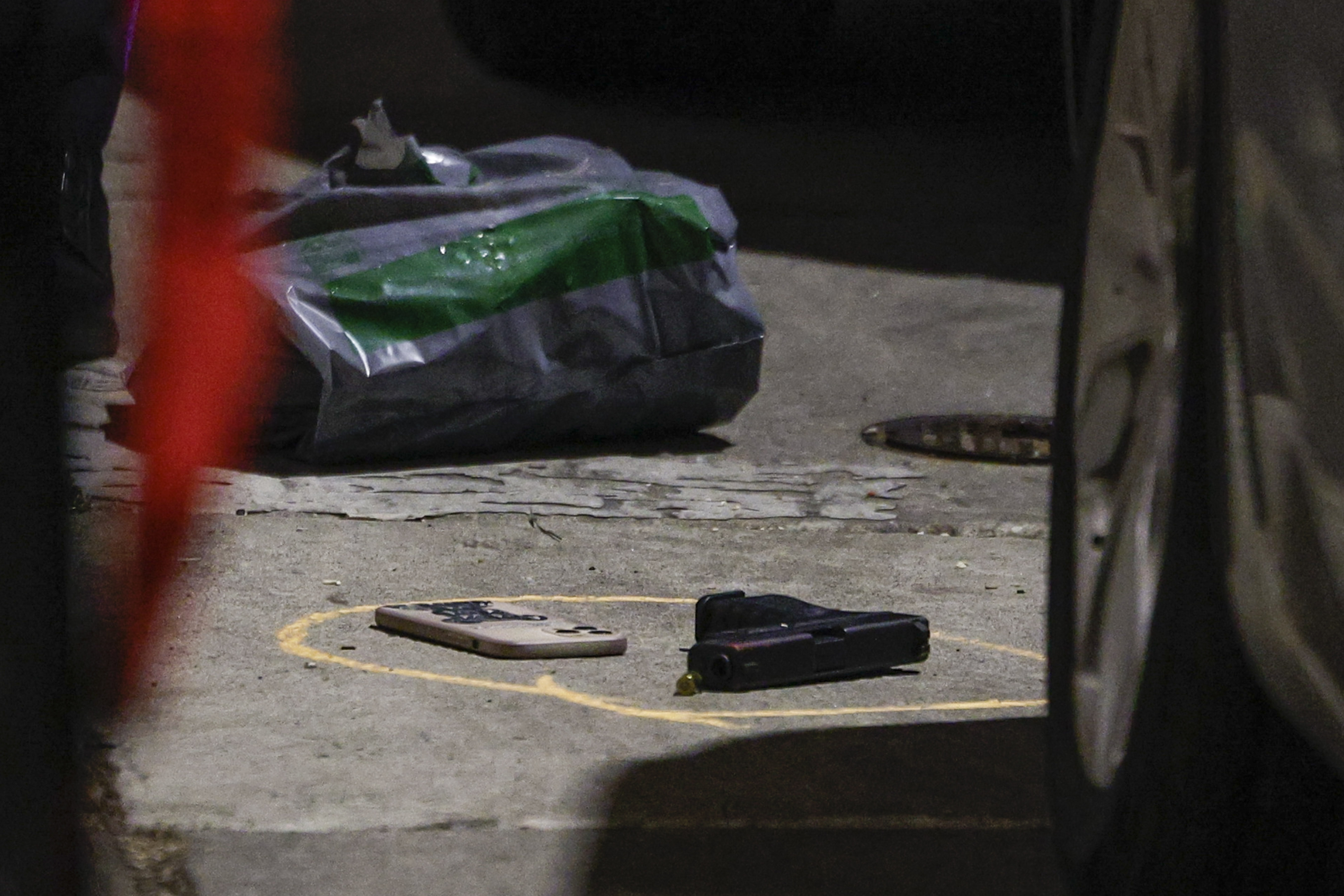
Police locate a gun and a cell phone on the 700 block of East Willard Street, where a man in his 20s was fatally shot in December 2024.
Phones and social media
Philadelphia police and the district attorney’s office have greatly expanded their digital evidence tools in the past two years.
Where cases once relied on grainy video and often-reluctant witnesses, detectives now have high-definition video footage, partial DNA processors, and cell phone location data — evidence that “never goes away” and doesn’t lie, said Deputy Police Commissioner Frank Vanore.
Getting access to a suspect’s — and victim’s — phones and social media can often tell the story behind a crime.
The Gun Violence Task Force, which investigates gang violence and works closely with homicide and shooting detectives, had just two cell phone extraction devices two years ago. Now, it has 14, plus a host of advanced software that helps investigators track and map gang networks.
Between the homicide unit and the task force, nearly 2,000 phones were processed last year — often giving detectives crucial evidence and information about crimes beyond the one they were initially investigating.
Improved morale
Some detectives, who asked not to be identified to speak frankly about their work, said morale in the homicide unit — and across the department — has improved.
During the pandemic, when shootings surged, tensions in the unit went unchecked, and conditions at the Roundhouse headquarters were dire. The office was overcrowded and infested with vermin, and investigators shared just 15 computers among nearly 100 detectives.
Since moving in 2022 to new offices at 400 N. Broad St., each detective now has a desk and computer, and that has boosted productivity, they said.
The detectives also said that patrol officers seem more empowered than during the height of the gun violence crisis to engage with their neighborhoods and gather information that ends up being important to their investigations.