Category: News

Latest breaking news and updates

  • What Joe Khan, Bucks County’s first Democratic DA, says he’ll do when he takes office in January

    What Joe Khan, Bucks County’s first Democratic DA, says he’ll do when he takes office in January

    With the election behind him and the top law enforcement job in Bucks County ahead, Joe Khan says he’s ready for his next challenge.

    In January, Khan, a former federal prosecutor and onetime Bucks County solicitor, will become the first Democrat to serve as district attorney in the county since the end of the Civil War. (That’s not counting Ward Clark, a Republican who switched parties to run as a Democrat in 1965 and immediately switched back to his GOP roots after he won.)

    Khan, 50, is also the first candidate from outside the district attorney’s office to win the top post after several decades in which voters routinely replaced outgoing district attorneys with successors from among inside the ranks of the office.

    To claim that mantle, Khan decisively beat Jen Schorn, the Republican incumbent and a career prosecutor in the district attorney’s office, winning 54% of the vote in the November election, which broke a 20-year record for voter turnout.

    County political leaders say Khan’s victory signals voters’ desire for regime change in the once GOP-dominated suburb.

    They point to Khan’s win, along with fellow Democrat Danny Ceisler’s victory over controversial Republican Sheriff Fred Harran — whose plan to have his deputies assist federal authorities in immigration enforcement sparked protests and a lawsuit — as a rebuke to President Donald Trump.

    “Democrats came out because they felt like it was necessary to push back on what Trump was doing,” said State Sen. Steve Santarsiero, the chair of the Bucks County Democratic Party. “And in the case of Joe, they recognized him as someone who is going to stand up to an administration that has shown it’s willing to flout the law.”

    Khan, for his part, says politics is in the rearview mirror as he prepares for his new job.

    “I don’t care what political party you’re from, I don’t care who you voted for president or for district attorney,” he said in a recent interview. “What I care about is that you’re here to support the mission of keeping Bucks County safe and seeking justice every day.”

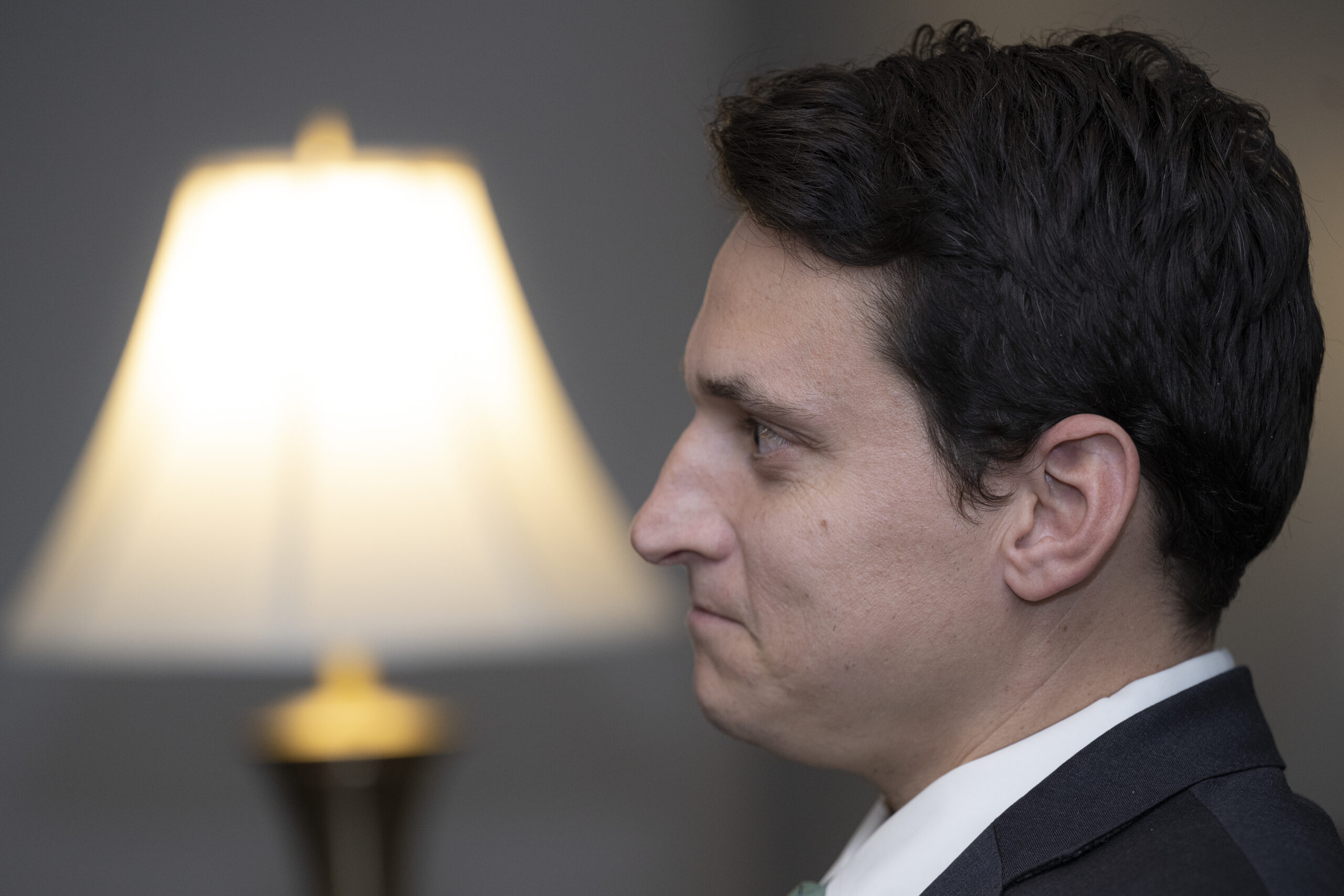
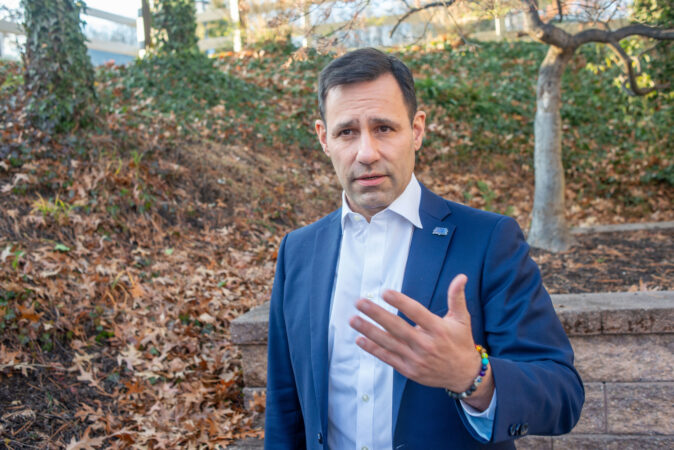
    Joe Khan greets and signs a poster for supporter Phyllis Rubin-Arnold as he waits for a meeting with the Buckingham Township Police chief. Khan says that politics has no role in his plans for the district attorney’s office.

    He said he respects Schorn’s work and that of her colleagues in the office, winning prosecutions in high-profile cases, like the trial and conviction of Justin Mohn, who beheaded his father and displayed his severed head in a YouTube video that went viral. Khan also praised the improvement Schorn and her colleagues have made to diversionary programs like drug and veterans courts.

    And he said he would expand that work — Khan tapped Kristin McElroy, one of Schorn’s top deputies, to serve as his first assistant.

    Drawing on his experience in the U.S. Attorney’s Office in Philadelphia, Khan said he would pursue environmental crimes and prosecute cases involving violations of workers’ rights.

    “We have seen all kinds of advances in terms of the powers that DAs have in Pennsylvania, so I think it’s great to have an opportunity to look at things with fresh eyes,” he said.

    Khan grew up in Northeast Philadelphia, where his father settled after emigrating from Pakistan. Like his brother, State Rep. Tarik Khan (D, Philadelphia), he took an early interest in public service. He followed those aspirations to Swarthmore College and, later, the University of Chicago Law School.

    Khan said he was drawn to Bucks County later in his career, and has made it his home in the 14 years he has lived with his sons, Sam, 14 and Nathan, 11, in Doylestown Township. He and the boys’ mother are divorced but co-parent amicably, he said, and live a few doors down from each other.

    After stints in the Philadelphia District Attorney’s Office and the U.S. Attorney’s Office — where he specialized in prosecuting gun crimes and locking up child predators — Khan ran for the top prosecutor’s job in Philadelphia in 2017, losing the race to Larry Krasner.
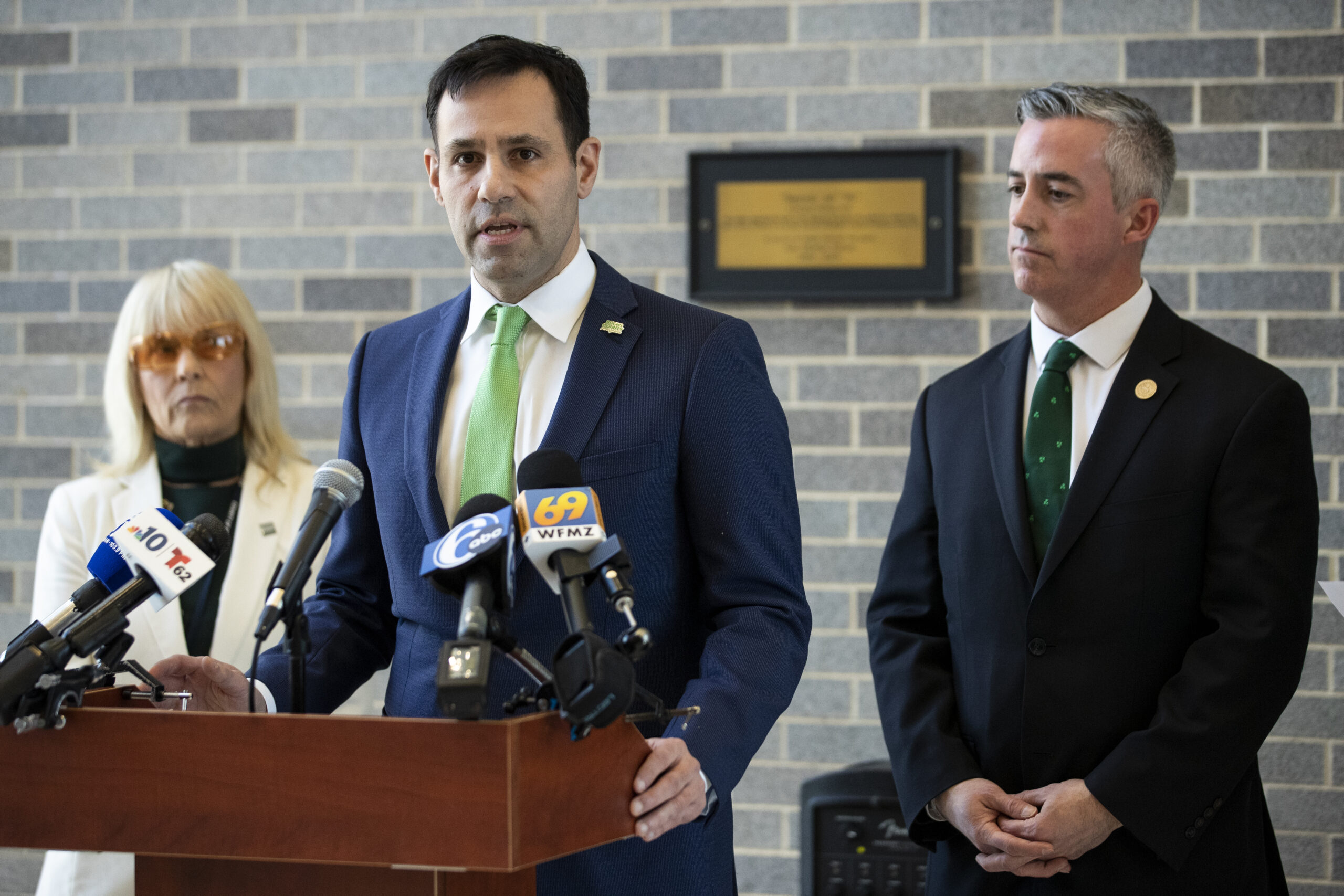
    Joe Khan (center) is seen here in March 2023 alongside County Commissioners Diane M. Ellis-Marseglia and Robert J. Harvie Jr. as they announced a lawsuit filed against multiple social media companies for “fueling a mental health crisis among young people.”

    Three years later, Khan took over as Bucks County solicitor. He developed an interest in local politics, he said, after watching the culture-war debates over library books and allegations of abuse that embroiled the Central Bucks School District, where his kids are enrolled.

    “It’s really central to my view of what parents need from their government,” he said. “They need people in roles like this that are going to make life easier, not harder, and that are going to help them with the challenges that they’re facing.”

    Not long after taking over the office, Khan challenged Trump’s efforts to dismiss mail-in ballots during the 2020 election. He also waged legal battles, taking on companies including 3M, DuPont, and Tyco by filing lawsuits over the “forever chemicals” that had leached their way into residents’ water supplies.

    And he made headlines for joining a national lawsuit against social media giants like TikTok, bidding them to address the mental health of their young users.

    When now-Gov. Josh Shapiro left the state attorney general’s office, Khan stepped down to join a crowded primary to replace him, running in 2023 on a platform to “continue what has been a lifelong fight to keep people safe.”

    After losing that race, Khan set his sights on the top law enforcement job in his new home, challenging the long-standing Republican machine that had controlled it for decades.

    “I think that if you do a good job and you let people know why you’re doing the things that you’re doing, whether or not they agree with you on every political position, if they know that you’re honest, you got a pretty good shot at earning their vote,” he said.

    “And I think that’s a big part of how we won this election.”
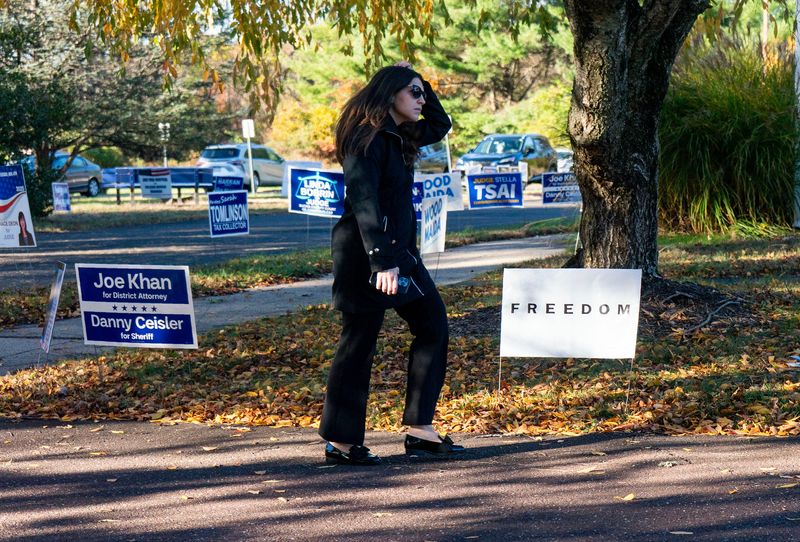
    A voter walks past the election lawn signs, including one for Joe Khan and his running mate, Danny Ceisler, outside the Bucks County Senior Citizens polling location in Doylestown on Nov. 4.

    Santarsiero, the county Democratic Party chair, said he was confident that Khan would make a fine district attorney.

    Winning the post required political prowess, of course, but he said that is a dichotomy unique to the office: Politics are required every four years to secure a position that is apolitical.

    Party affiliation aside, he said, Khan would work for the good of the county.

    Khan, for his part, says he is ready to give it his all.

    “We are here to keep people safe, and we’re going to do that in new and exciting ways,” he said. “I have my values, I wear them on my sleeve, and I’m very clear about the direction that we’re going to go to make sure that people who deserve a healthy environment for their families are getting a higher level of service than they’re used to.”
  • Philly’s new U.S. attorney has largely avoided the chaos swirling around other parts of Trump’s Justice Department

    Philly’s new U.S. attorney has largely avoided the chaos swirling around other parts of Trump’s Justice Department

    When President Donald Trump announced earlier this year that he was nominating David Metcalf to be Philadelphia’s U.S. attorney, it initially seemed as if the move was in line with Trump’s chaotic and contentious attempt to upend the nation’s justice system.

    The decision was abrupt, apparently made without advanced input from Sen. Dave McCormick (R., Pa.), who’d set up a commission to identify candidates to serve as the region’s top federal prosecutor.

    Metcalf was 39 and, unlike many of his predecessors, didn’t have deep roots in the region — but did have some reported ties to officials who’d sought to help Trump adviser Roger Stone years earlier.

    And the appointment was announced as Trump was openly pledging to “clean house” in the Justice Department and pull the agency more directly in line with the White House.

    But in the months since Metcalf has assumed control over the office and its 140 lawyers, what has stood out so far has been the serious temperament the veteran prosecutor has brought to the role, and the relative lack of drama he’s overseen — particularly in comparison to nearby jurisdictions, where U.S. Attorney’s Offices have been embroiled in controversies over leadership appointments and whether to indict Trump critics.

    During a recent interview with The Inquirer at his Center City office, his first since being appointed in March, Metcalf said his deliberate approach toward his first few months in the job has been influenced by his decade-plus career as a Justice Department lawyer — one that included stints in Baltimore, Philadelphia, and Washington, D.C.

    He has met with a host of other local stakeholders since taking over — including Police Commissioner Kevin J. Bethel, District Attorney Larry Krasner, and federal judges — and has avoided ushering in drastic upheaval within his office.

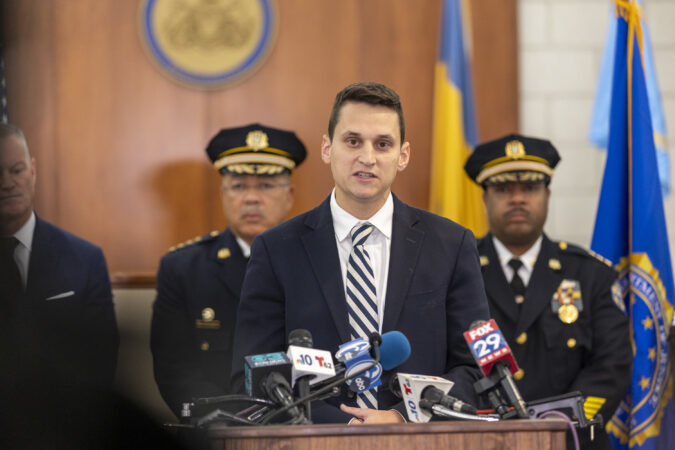
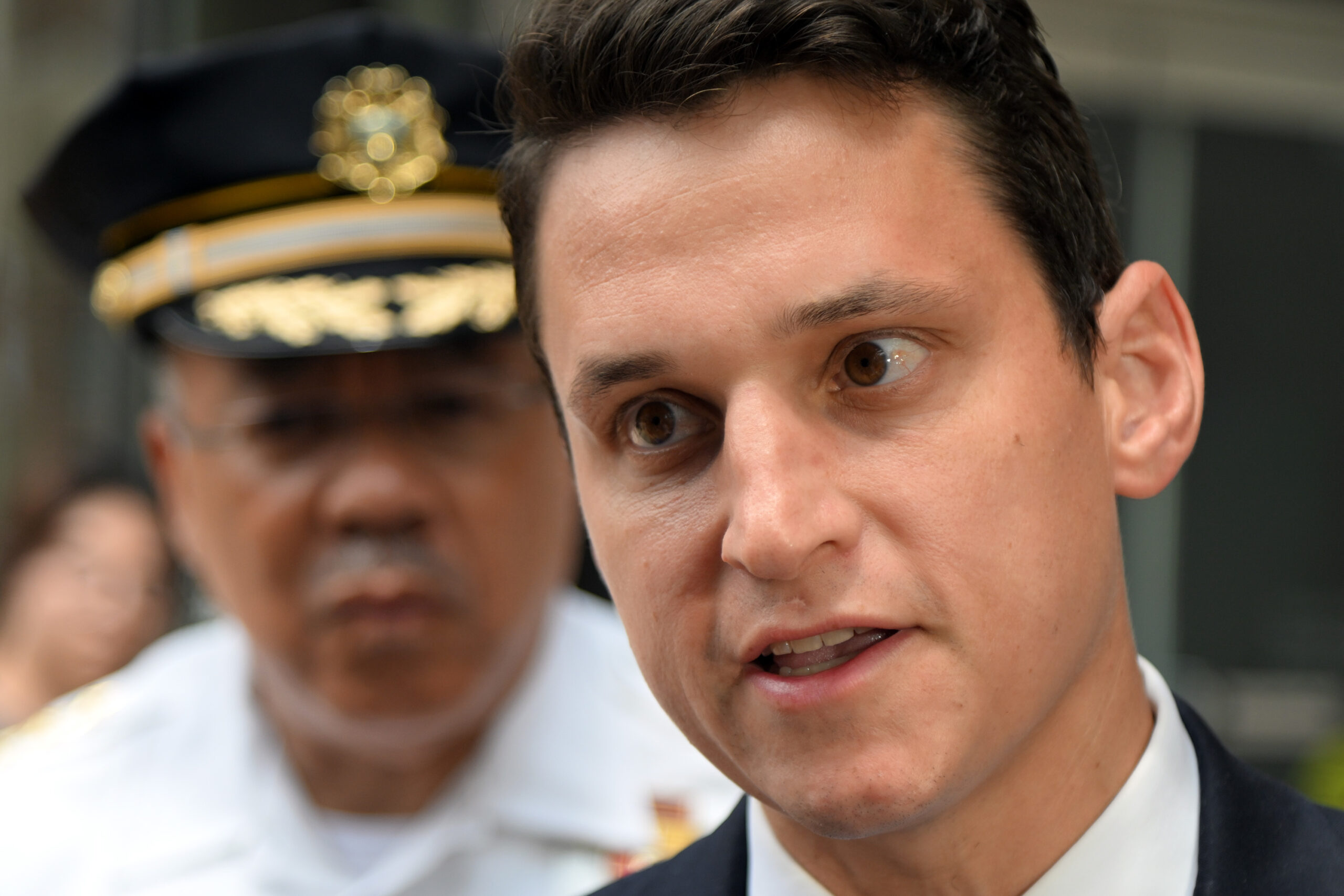
    U.S. Attorney David Metcalf outside the federal courthouse in July, with Police Commissioner Kevin Bethel standing behind him.

    Instead, he said, a key focus has been to encourage his prosecutors to pursue large, ambitious, complex investigations targeting violent crime, synthetic opioid abuse, and healthcare fraud — subjects he said were critical to public safety in the Philadelphia region.

    “I do not feel some personal impulse to burn my brand on this office by restructuring and reorganizing it,” he said, later adding: “The greatest offices and the greatest cases come from prosecutors who are hunting them down and competing for them … and that’s the breed of prosecutor we’re trying to create here.”

    Composed and self-assured, Metcalf was uninterested in commenting on the broader political landscape surrounding his job. He instead concentrated on the work of his office, whose lawyers prosecute matters including drug trafficking, political corruption, and terrorism across nine counties from Philadelphia to Allentown and west past Reading. They also litigate civil matters on behalf of the federal government.

    “I don’t want to say that I’m … bound by precedent or a devotee to the status quo,” he said. “But I do believe in stability, and I’m certainly not going to change things just for the sake of changing them.”

    That approach has been generally well-received by many lawyers in his office, particularly given the volatile environment across other parts of the Justice Department.

    Even Krasner — an outspoken progressive Democrat who rarely misses an opportunity to criticize Trump, and who was engaged in a long-running feud with a Trump-appointed U.S. attorney four years ago — said he had a “professional and pleasant lunch” with Metcalf earlier this year.

    “We have always worked well with the career prosecutors at the U.S. Attorney’s Office, and our teams seem to be continuing to work well together,” Krasner said in an interview.

    Rod Rosenstein, who was the deputy attorney general during Trump’s first term, said in an interview that he hired Metcalf a decade ago, when Rosenstein was the U.S. attorney in Maryland. And their paths continued to intersect over the years as their careers wound through the Justice Department.

    Rosenstein said Metcalf had “superb legal skills” and “excellent judgment” — two qualities he views as critical for leading a U.S. attorney’s office.

    “I think people recognize he’s got the right qualifications,” Rosenstein said.

    U.S. Attorney David Metcalf in his Center City office.

    ‘An exhilarating vocation’

    Metcalf grew up in northern Virginia and graduated from The Wakefield School, a private prep school about an hour west of Washington, D.C. His father was once an Army colonel, he said, and his grandfather was Joseph Metcalf III, the Navy vice admiral who led the 1983 invasion of Grenada.

    Metcalf was a standout soccer player in high school, and was recruited to play by more than 80 college teams, the Washington Post reported in 2003. He used the situation to his advantage, the paper reported — making a deal with his mother that he could let his hair grow down past his shoulders once Division I colleges started sending him letters.

    He ended up attending Princeton — playing soccer all four years — and then went on to graduate from the University of Virginia’s law school.

    After clerking for U.S. Circuit Judge Albert Diaz, Metcalf spent a few years in private practice before becoming an assistant U.S. attorney in Maryland under Rosenstein.

    Metcalf said he didn’t have a single epiphany that made him realize he wanted to become a prosecutor. But he said he was quickly drawn to the work, which he found more interesting and important than other legal jobs.

    “I thought it was really just an exhilarating vocation in a profession that doesn’t always have the most glamorous applications,” he said.

    High-profile connections

    From 2015 through 2022, Metcalf worked as a line prosecutor in Baltimore and, later, in Philadelphia — the office he now leads. The two years he spent here were unusual, he said, because they unfolded during the peak of the pandemic, when many aspects of the court system were disrupted and most people were working from home.

    Metcalf also spent time during the first Trump administration in Washington, D.C. While there, he worked closely with prominent Justice Department officials including Rosenstein; Deputy Attorney General Jeffrey A. Rosen; Timothy Shea, the onetime U.S. Attorney for Washington, D.C.; and then-Attorney General William Barr.

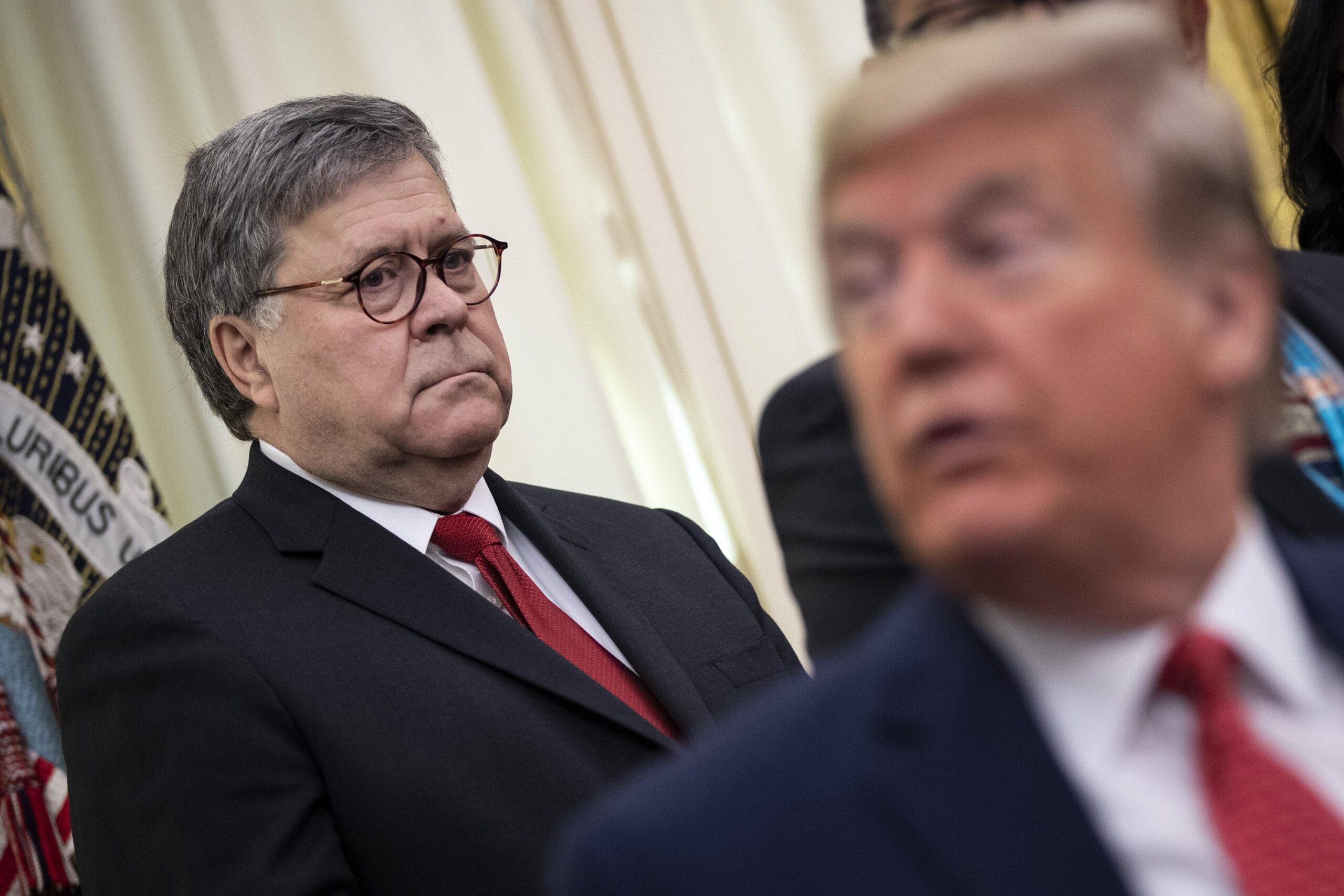
    Attorney General William Barr and President Donald Trump in the Oval Office of the White House on Nov. 26, 2019.

    Metcalf’s name was briefly in the news in 2020, when Barr and Shea, Metcalf’s then-boss, intervened in the prosecution of Stone, Trump’s longtime ally, who had been convicted of lying to Congress. After the trial prosecutors wrote in court documents that Stone should be sentenced to at least seven years in prison, Barr and Shea ordered them to walk that back and reduce their recommendation.

    Some assigned to the case viewed that as political interference and an attempt to placate Trump. A Justice Department investigation later faulted “ineffectual” leadership by Shea for how the episode unfolded, not politics.

    In 2022, Metcalf left the public sector and went to work as a corporate counsel for Amazon. But this March — after Trump was reelected for a second term — Metcalf was suddenly thrust back into the Justice Department, as the White House announced it was nominating him to be Philadelphia’s U.S. attorney.

    From nominee to confirmation

    The decision came as something of a surprise.

    McCormick, Pennsylvania’s newly elected GOP senator, had made a point of publicly announcing that he’d formed a committee to review and vet potential candidates for federal law enforcement positions across the state. And other GOP-connected lawyers in the region had been jockeying for months to try to figure out who might be able carve a path toward the coveted position.

    When the White House named Metcalf its permanent nominee, the process was effectively short-circuited.

    Metcalf said he couldn’t speak to how or why the process played out the way it did. He said he applied for the job, and “had relationships with folks in the Trump administration” due to his time in Washington during Trump’s first term.

    He didn’t specify who those people were. And some of his former bosses — particularly Barr — had fallen out of favor with Trump after his first term.

    But Rosenstein said “it’s a mistake to think that people are the people they work for. It’s a big government, and not everyone agrees all the time.”

    And in any case, Rosenstein said, he believed Metcalf was nominated “on merit, not on connections.”

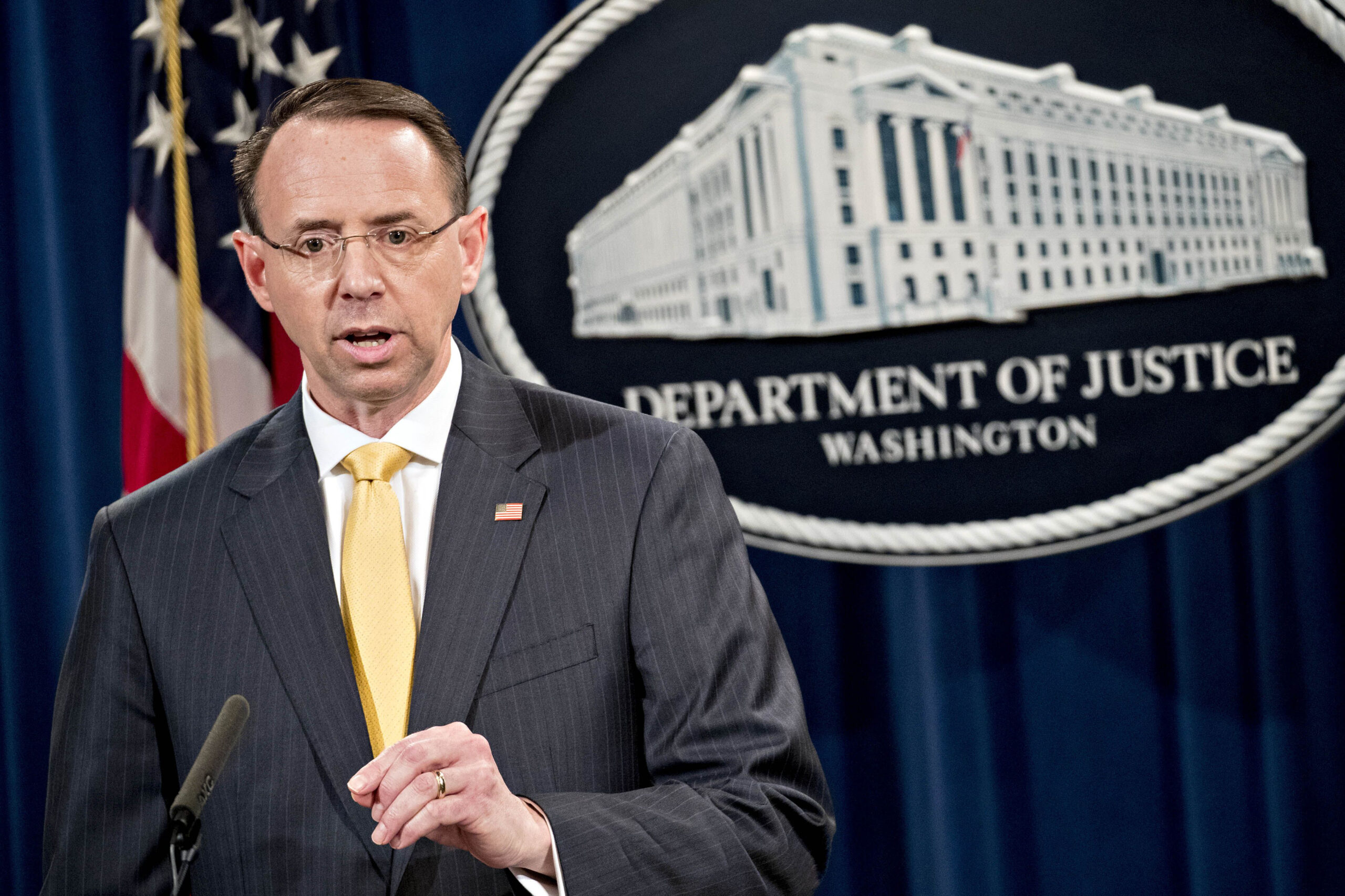
    Rod Rosenstein, deputy attorney general during President Donald Trump’s first term, says Metcalf has “superb legal skills” and “excellent judgment.”

    William McSwain, who served as U.S. attorney during Trump’s first term, said he believed Metcalf was “extremely well-qualified for the position.”

    It took the U.S. Senate six months to vote to confirm Metcalf along with a host of other Trump nominees, but by then, the Philadelphia region’s federal judges had already voted to extend Metcalf’s appointment indefinitely while the process played out.

    That move stood in contrast to several other jurisdictions, including New Jersey, where the judiciary declined to extend the tenure of Trump’s nominee, Alina Habba. For months afterward, that office was thrust into turmoil as questions swirled about who could legally serve as its leader.

    Pursuing notable cases

    During his tenure so far, Metcalf said, he’s been seeking to focus his prosecutors on finding what he called “nationally significant” cases, particularly those targeting violence, drugs, and healthcare fraud, which he views as priorities for the region.

    One of the first big indictments he announced was in October when FBI Director Kash Patel visited Philadelphia to help reveal that 33 people had been charged with being part of a Kensington-based drug gang. Metcalf said the case was the largest single prosecution in the region in at least two decades.

    FBI Director Kash Patel helping announce the arrest of dozens of suspects in a Kensington drug case.

    He also helped create a new program dubbed PSN Recon, an initiative designed to help Philadelphia Police more readily share intelligence with state and federal agencies about which groups or suspects should be investigated.

    Prosecutions overall have increased on his watch, according to the Transactional Records Access Clearinghouse (TRAC), a research organization that collects federal courts records.

    So far this fiscal year, prosecutions in the Eastern District of Pennsylvania were up 32% compared to last year, TRAC found, and were on their highest pace since 2019. The most common types of cases charged this year were immigration violations, drug offenses, and illegal firearm possession, according to TRAC.

    Earlier this year, Metcalf was reportedly involved in one particularly significant case: an investigation into former CIA Director John Brennan and his role in producing an intelligence assessment about Russian interference in the 2016 election. Brennan went on to become a prominent Trump critic.

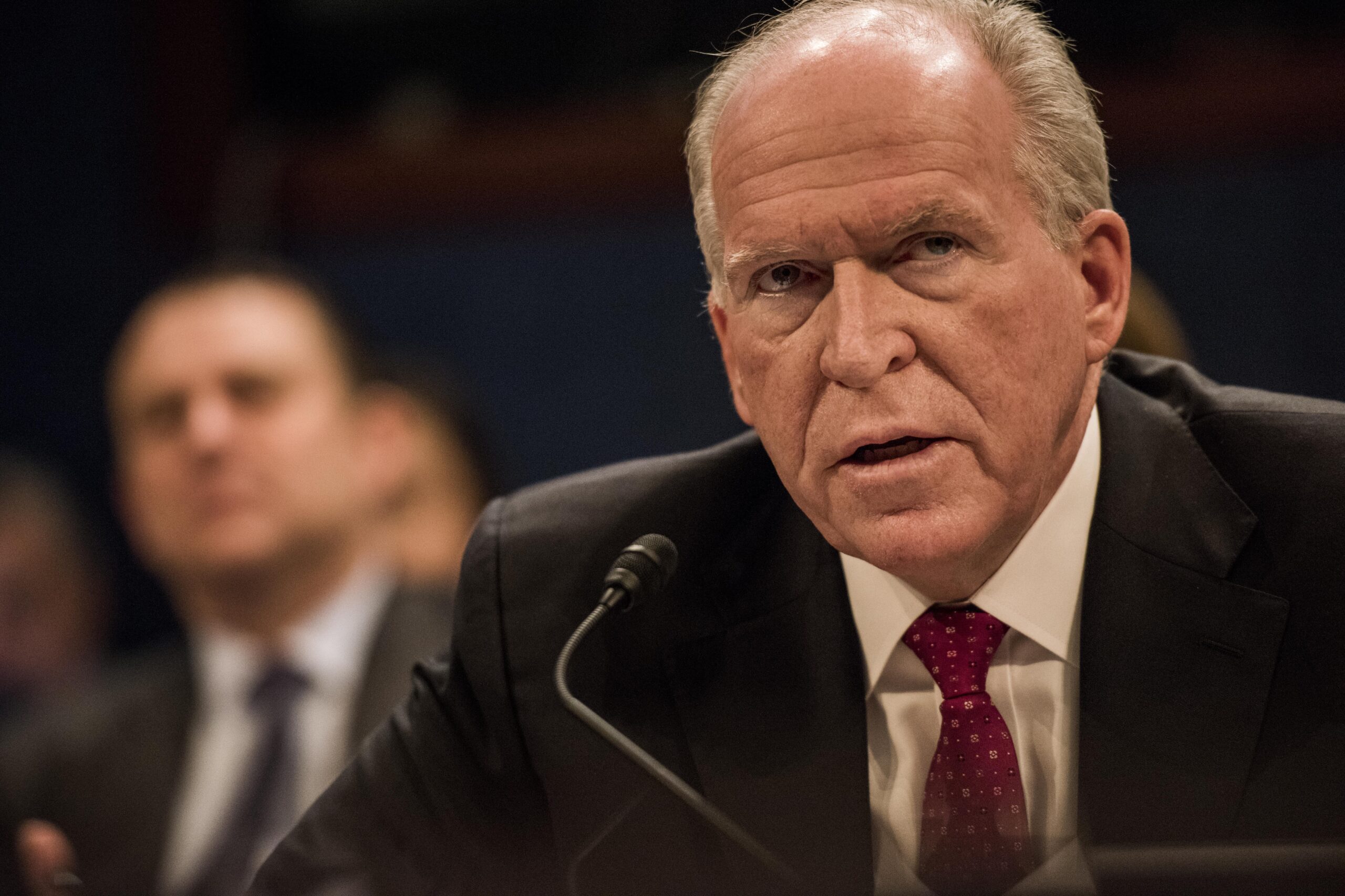
    Former CIA director John Brennan testifies before the House Intelligence Committee in 2017.

    National outlets including Axios and the New York Times reported that Metcalf had been leading the probe, and that he had concerns about its viability — a notable development given Trump’s public demands to prosecute other adversaries, including former FBI Director James Comey.

    Metcalf never commented publicly on his purported involvement in the Brennan case, and declined to do so again during his interview with The Inquirer. The investigation is now reportedly being handled by federal prosecutors in Florida.

    Metcalf did allow a short peek into his professional mindset when he was asked more broadly if he’d ever felt pressure from Washington to sign off on a decision he didn’t agree with.

    After declining to comment on any discussions he may or may not have had with Justice Department leaders, he paused for a moment and added one final point.

    “I will also say that I would be very surprised if that ever happened to me,” he said. “I don’t see it as a problem here.”

  • Why Trump’s EEOC wants to talk to white men about discrimination

    Why Trump’s EEOC wants to talk to white men about discrimination

    In mid-December, the nation’s leading workplace civil rights enforcer took to social media to pose a question: “Are you a white male who has experienced discrimination at work based on your race or sex?”

    Andrea Lucas, chair of the Equal Employment Opportunity Commission, appeared in the video, urging those who have to contact the agency “as soon as possible.”

    “You may have a claim to recover money under federal civil rights laws,” she says in the video, which has amassed nearly 6 million views on X.

    It was an unusual move, because the EEOC does not typically solicit complaints. But it underscores the sea change at an agency central to President Donald Trump’s civil rights agenda — one that began with executive orders gutting the last vestiges of affirmative action, and buttressed by his purge of the EEOC board and a newly installed Republican majority.

    Now “fully empowered,” the agency will focus on stamping out “illegal discrimination” stemming from diversity, equity, and inclusion (DEI) programs and “anti-American bias,” Lucas said recently in written responses to questions from the Washington Post. Enforcement, including a heightened emphasis on pregnancy and religious bias, will stress “individual rights over group rights,” she said, and eschew identity politics.

    The EEOC’s new priorities come during a year of regulatory uncertainty — it lacked a quorum most of the year, limiting its functions — fueling confusion and uncertainty for employers, workplace experts say. And civil rights advocates contend this pivot detracts from its mission.

    “Chair Lucas has chosen to elevate an asserted concern that lacks empirical support as a significant and widespread problem,” a group called EEO Leaders said in a statement Dec. 23, “diverting scarce enforcement resources from well documented and pervasive forms of workplace discrimination that harm millions of workers in America today.” The group comprises former EEOC and Department of Labor officials.

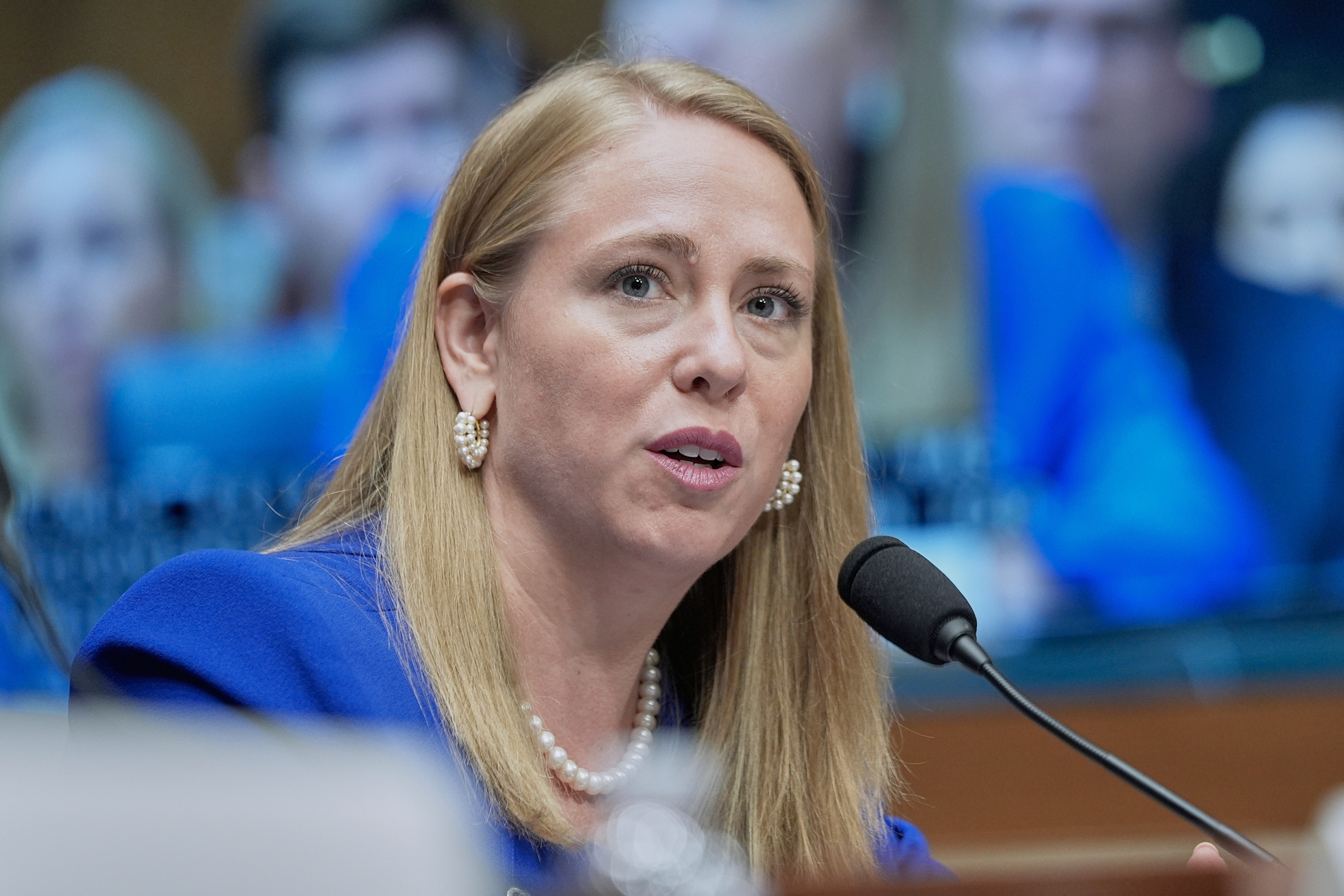
    Andrea Lucas, testifying at a June hearing on Capitol Hill, was designated chair of the Equal Employment Opportunity Commission in November, after a 10-month stint as acting chair.

    Lucas said her X post reflects the agency’s effort to “correct underreporting” of forms of discrimination that were neglected by the past administration, adding that “for too long, many employees thought they weren’t the ‘right’ kind of plaintiff, that our civil rights laws only protected certain groups, rather than all Americans.”

    A restrained year

    Founded in 1964 at the height of the Civil Rights Movement, the EEOC is charged with enforcing federal laws that make it illegal to discriminate against a worker or job applicant on the basis of race, sex, religion, age, disability, and other factors. Most employers with at least 15 employees are bound by EEOC regulations, which apply to such workplace practices as hiring, firing, promotions, and wages. The agency has recouped billions in monetary rewards for victims of workplace bias and harassment during the last decade.

    Days into his second term — in a break from precedent — Trump dismissed two Democratic members of the independent commission. As a result, it lost the quorum needed to pursue certain cases and overhaul guidance. That changed in October with the appointment of Commissioner Brittany Panuccio, who with Lucas gave the panel a 2-1 GOP majority and a quorum. Commissioner Kalpana Kotagal, a Democrat, rounds out the commission.

    In past administrations, the EEOC typically filed 200 to 300 merit lawsuits — those in which the agency determined discrimination exists — a year, said Christopher DeGroff, an employment attorney with the firm Seyfarth Shaw. The 93 merit suits the agency filed in fiscal 2025 marked one of its lowest tallies in three decades, he noted in an analysis of its activity.

    Still, the agency’s new priorities were evident in the cases that reached a public resolution or culminated in a lawsuit, DeGroff said. Merit suits alleging discrimination based on race or national origin — historically one of the EEOC’s busiest enforcement areas — hit a decade low in 2025, his research noted. And two of the three cases filed revolved around anti-American bias.

    Meanwhile, 37 of the 93 merit lawsuits the EEOC brought pertained to sex or pregnancy discrimination. Of those, 10 were filed under the Pregnancy Discrimination Act and/or the newly enacted Pregnant Workers’ Fairness Act, and included lawsuits against Delta Air Lines and meat processor Smithfield alleging they denied accommodations to pregnant employees.

    Religious bias lawsuits were another focus in 2025, with the agency filing 11 merit suits asserting religious discrimination or failure to accommodate religious beliefs. One case was against Apple, over allegations it failed to accommodate a Jewish employee’s request not to work on the weekend due to his faith.

    Apple declined to discuss the case but “strongly denied” the claims in a statement to the Post.

    Disparate impact

    One of the EEOC’s biggest pivots under Trump is to abandon cases filed under disparate impact, a legal theory holding that seemingly neutral policies — such as height or lifting requirements — can have discriminatory outcomes. It stems from the U.S. Supreme Court’s landmark 1971 decision in Griggs v. Duke Power, where attorneys used statistical evidence to show how standardized tests prevented Black employees from advancing at a North Carolina energy company.

    Disparate impact is central to civil rights litigation and a key lens though which the EEOC has tackled systemic discrimination, said Jenny Yang, who served as EEOC chair during the Obama administration and worked to expand the agency’s tool kit for addressing systemic discrimination.

    In 2020 for example, Walmart settled a nationwide discrimination lawsuit brought by the EEOC over a “physical ability test” it used for grocery workers that “disproportionately excludes female applicants.” Walmart agreed to stop using the test and to pay $20 million into a settlement fund for women who were denied grocery order-filler positions because of the testing.

    Disparate impact “advances the core principle that removing unjustified barriers to opportunity helps all Americans thrive,” Yang said.

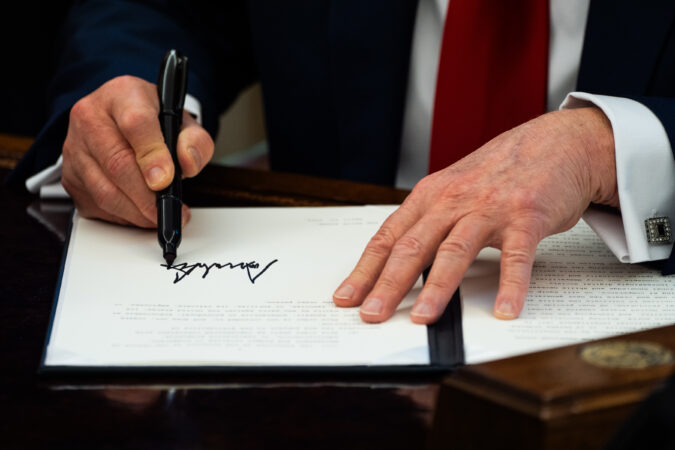
    In April, Trump signed an executive order barring use of disparate impact by agencies, calling it a “pernicious movement” that ignores “individual strengths, effort or achievement.” Dan Lennington, deputy counsel at the Wisconsin Institute for Law and Liberty, a conservative think tank specializing in workplace issues, said the debate reflects the broader ideological divide on how to best protect workers’ civil rights.

    “The minute you start saying all Black people this, all Hispanic people this, all women this, you’re just stereotyping,” he added. “The only thing that matters is the individual in front of you.”

    Yang said it’s been “challenging” to see the Trump administration make such changes to an agency that historically ” really valued its bipartisanship and its independence to interpret antidiscrimination laws.” By moving away from disparate impact and targeting corporate diversity efforts, Yang said, the EEOC has been “weaponized to intimidate employers, to retreat from efforts designed to promote equal opportunity, and to really abandon its historic mission to protect some of our most vulnerable workers.”

    ‘Illegal’ DEI

    Shawna Bray, general counsel at the Center for Equal Opportunity, a conservative think tank, said that Lucas’ EEOC is correcting for past administrations that “used the tools in the toolbox to push things up to, and even over, the line because of their goals,” especially with DEI and other social issues.

    DEI refers to practices companies use to ensure equal opportunity in their ranks, from recruiting and mentorship programs to antibias training and employee resource groups. Many companies began reconsidering such policies after the Supreme Court’s 2023 decision rejecting the use of affirmative action in college admissions.

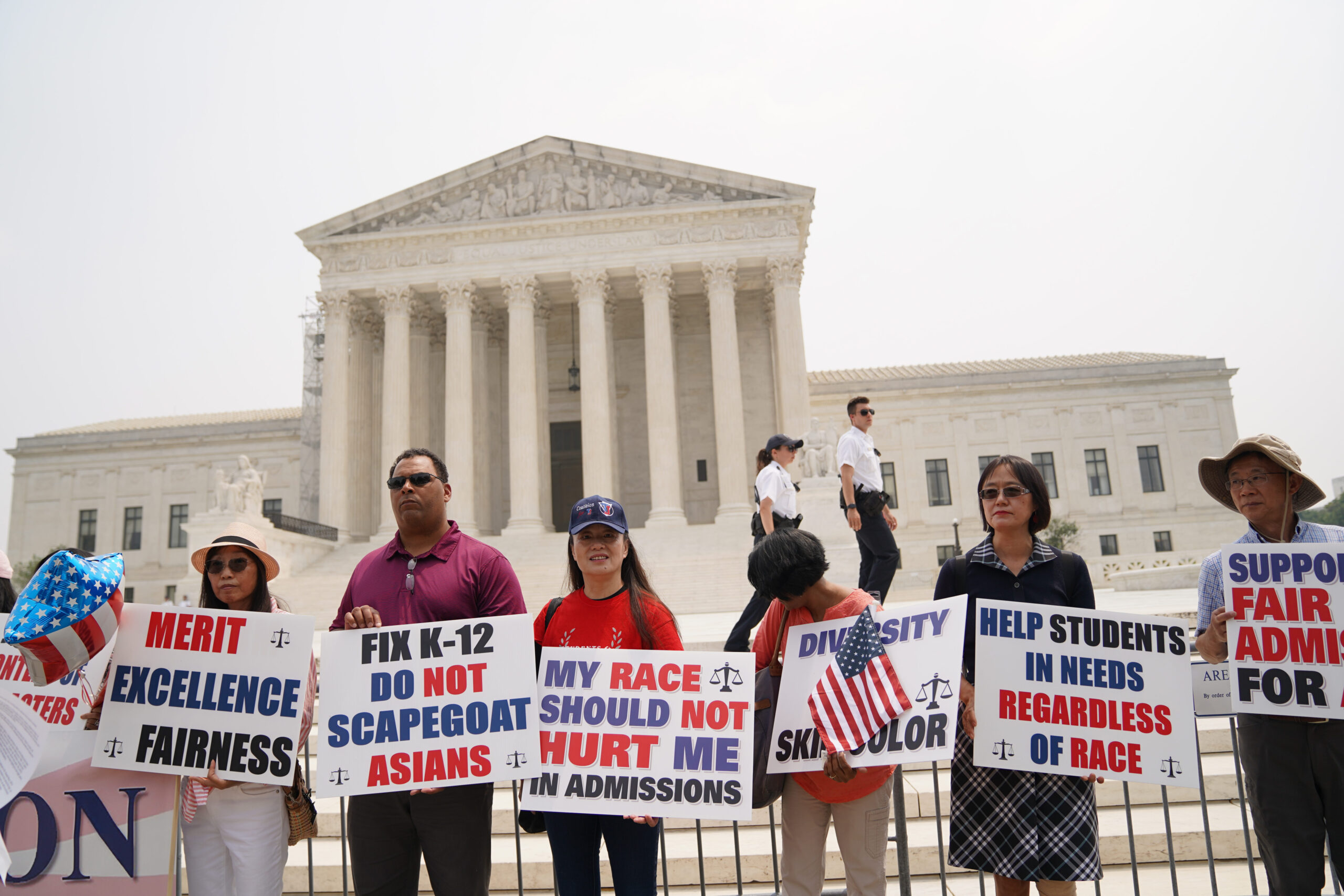
    After the Supreme Court struck down the use of racial considerations in college admissions in June 2023, many companies reassessed their diversity, equity and inclusion (DEI) programs.

    The ruling sparked a wave of activist lawsuits aiming to replicate the order in the employment sphere. Much of corporate America has since opened identity-based programs, such as fellowships and employee resource groups, to people of all backgrounds, ended efforts like antibias training, and rebranded DEI programs with a focus on “belonging.”

    Lucas and others in the Trump administration often refer to “illegal DEI,” but Bray said that she finds the term “a little frustrating” given that such programs only break the law if they show identity-based preference. She also thinks the phrasing has created confusion.

    The EEOC should “have in mind an even application of our civil rights,” regardless of factors such as race, gender, and religious background, Bray said. “The desire to put a thumb on the scale was never consistent with that.”

    While the agency has yet to file a lawsuit over a workplace DEI program under Lucas, DeGroff expects to see such “cases hit the docket” in 2026.

    Valerie Wilson, director of EPI’s Program on Race, Ethnicity, and the Economy, said that priorities like dismantling DEI have “turned the mission of the EEOC on its head, in a way that weaponizes it against the people that it was intended to protect, given the long history of racial discrimination and exploitation” in the United States.

    Lucas contends the EEOC is making up for past administrations that “went hunting for activist matters while closing [their] eyes to overt widespread discrimination occurring against groups it disfavored.” Earlier this year, it issued guidance encouraging workers to challenge DEI policies by their employers.

    Among possible targets are 20 law firms from which the EEOC said it has requested information about their DEI and hiring practices going back nearly a decade.

    Jason Solomon, director of the National Institute for Workers’ Rights, a think tank focusing on private workplace law, wonders whether there is much more for the EEOC to target, given that companies have largely gotten rid of identity-based programs.

    “They may look at the changed landscape and say, ‘We can declare victory because we’ve gotten employers to change a lot of what they’ve done,’” Solomon said.

    Backing away

    Race-discrimination complaints are historically among the most common lodged with the EEOC — 29,000 a year on average since 1997, according to a report from EPI — but 2025 marked “the lowest number of race/national origin-based filings by the EEOC in at least a decade,” Seyfarth’s report states.

    Two of the lawsuits it pursued alleged bias against U.S.-born workers in favor of foreign ones, DeGroff said. One case involved a hotel and resort in Guam, LeoPalace Guam Corp., which agreed to pay $1.4 million to resolve claims that it favored Japanese workers over those from other countries, including the U.S.

    The EEOC also has dismissed cases filed on behalf of transgender workers and stopped processing new gender-identity complaints to comply with Trump’s executive order that prohibits agencies from using federal funds to support gender-identity issues. It also removed “X” as a gender marker option on its discrimination charge intake form, making it harder for workers whose gender identity does not match their sex at birth to file complaints.

    Over the summer, the agency resumed processing some transgender discrimination cases, although the complaints will be subject to a heightened level of review.

  • European and Canadian leaders discuss U.S.-led peace efforts in Russia-Ukraine war

    European and Canadian leaders discuss U.S.-led peace efforts in Russia-Ukraine war

    KYIV, Ukraine — Leaders from Europe and Canada held talks Tuesday on U.S.-led peace efforts to end the nearly four-year war between Russia and Ukraine, as Moscow and Kyiv sparred over Russian claims, denied by Ukraine, of a mass drone attack on a lakeside residence used by President Vladimir Putin.

    The virtual meeting included European leaders as well as Canadian Prime Minister Mark Carney, heads of European institutions, and NATO Secretary-General Mark Rutte, according to Polish Prime Minister Donald Tusk.

    “Peace is on the horizon,” Tusk told a Polish cabinet meeting. But he added: “It is still far from a 100% certainty.”

    It was the first meeting of European leaders since President Donald Trump hosted Ukrainian President Volodymyr Zelensky at his Florida resort on Sunday. Trump insisted that Ukraine and Russia are “closer than ever before” to a peace settlement, although he acknowledged that outstanding obstacles could still prevent a deal.

    Zelensky on Tuesday announced plans for forthcoming meetings with officials from about 30 countries, dubbed the Coalition of the Willing, that support Kyiv’s effort to end the war with Russia on acceptable terms.

    National security advisers from those countries aim to meet in Ukraine on Jan. 3, followed by a meeting of the countries’ leaders on Jan. 6 in France, he said on social media. He thanked Trump administration officials for their readiness to participate but provided no further details.

    “We are moving the peace process forward,” German Chancellor Friedrich Merz, who attended Tuesday’s talks, said in a post on X. ”Transparency and honesty are now required from everyone — including Russia.”

    His pointed reference to Russia came after Russian and Ukrainian officials exchanged bitter accusations over Moscow’s allegations that Ukraine attempted to attack the Russian leader’s residence in northwestern Russia with 91 long-range drones almost immediately after Trump’s Sunday talks with Zelensky.

    The claims and counterclaims threatened to derail peace efforts. “I don’t like it. It’s not good,” Trump said Monday after Putin told him by phone about the alleged attack.

    Ukrainian Foreign Minister Andrii Sybiha noted Tuesday that Russia “still hasn’t provided any plausible evidence” to support its allegations.

    Moscow won’t do so because “no such attack happened,” he wrote on X.

    “Russia has a long record of false claims,” he added, referencing the Kremlin’s denials that it intended to attack Ukraine ahead of its Feb. 24, 2022, all-out invasion of its neighbor.

    Zelensky, speaking Monday, also branded the allegation as “another lie” from Moscow designed to sabotage peace efforts.

    Kremlin spokesperson Dmitry Peskov countered Tuesday that the alleged Ukrainian attack is “aimed at thwarting President Trump’s efforts to promote a peaceful resolution” to the war.

    Russia and Ukraine have throughout the war exchanged accusations about attacks that cannot be independently verified because of the fighting.

    Peskov did not say whether Moscow would present physical evidence of the attack, such as drone wreckage, saying that such a step would be a matter for Russia’s military. “I don’t think there needs to be any evidence here,” he said.

    The rural Novgorod region is home to one of the Russian presidency’s official residences, Dolgie Borody, close to the town of Valdai, about 250 miles northwest of Moscow. The area has been used to host a vacation retreat for high-ranking government officials since the Soviet era.

    The Institute for the Study of War, a Washington think tank, said that since Trump launched a diplomatic push at the start of the year to end the war, “the Kremlin has sought to delay and prolong peace negotiations in order to continue its war undisturbed, prevent the U.S. from imposing measures intended to pressure Russia into meaningful negotiations, and even to extract concessions about bilateral U.S.-Russian relations.”

  • China flexes blockade capabilities near Taiwan on second day of military drills

    China flexes blockade capabilities near Taiwan on second day of military drills

    TAIPEI, Taiwan — China’s People’s Liberation Army staged a second day of large-scale military drills around Taiwan on Tuesday, unleashing a live-fire show of force as part of what it called “Justice Mission 2025” to demonstrate its ability to deter any external support for the island it claims as part of its sovereign territory.

    Taiwanese officials said some of China’s live rounds landed closer to the island than before.

    The maneuvers increased tension around the Taiwan Strait as 2025 drew to a close, but the impact extended beyond military pressure into everyday life. Taiwan’s Civil Aviation Administration was notified that seven temporary “dangerous zones” had been set up around the strait. The schedules of Taiwan’s four international airports on Tuesday afternoon showed over 150 international and domestic flights had revised times, delays, or cancellations.

    Xinhua, China’s official news agency, posted a commentary late Monday saying the drills sent an unequivocal message: that Beijing is always ready to prevent anything that tries to split Taiwan from China. Each escalation, it said, would be met with stronger countermeasures.

    “By currying favor with the United States through obsequious loyalty gestures and promoting arms purchases, the DPP is binding the entire island of Taiwan to its catastrophic secessionist chariot, disregarding public opinion,” it wrote, referring to Taiwan’s ruling Democratic Progressive Party.

    The PLA’s Eastern Theater Command sent destroyers, frigates, fighters, and bombers to the waters to the north and south of the island to test its ability in sea-air coordination and blockading. Its ground forces carried out long-range, live-fire drills in the waters to the island’s north. They also organized live-fire training alongside a simulated long-range joint strike with air, navy, and missile units in the waters to Taiwan’s south, achieving what command spokesperson Li Xi called “desired effects.”

    Hsieh Jih-sheng, deputy chief of the general staff for intelligence at the Taiwanese Defense Ministry, said some of the 27 rockets detected in the waters near Taiwan fell within its 24-nautical-mile line. “The landing points of rounds definitely were closer to Taiwan compared to the past,” he said. “This is a message it deliberately wants to convey.”

    Aircraft, vessels, and a Chinese balloon detected

    Taiwan President Lai Ching-te said Tuesday his territory would act responsibly by neither escalating conflict nor provoking disputes. He condemned the drills.

    Taiwan’s Defense Ministry said it had detected 130 aircraft, including fighters and bombers; 14 military ships; and eight other official ships around the island between 6 a.m. Monday and 6 a.m. Tuesday. Its forces kept monitoring and deployed aircraft, navy ships, and coastal missile systems in response. Ninety of the Chinese aircraft crossed the median line of the strait. A Chinese military balloon was also spotted, it said.

    The ministry later said it detected 71 aircraft, 13 military ships, and 15 coastal guard and official vessels as of 3 p.m. Tuesday, in addition to four other warships in the western Pacific. A total of 941 flights were affected by the drills, it said.

    “The military power is not necessarily the strongest, but the scale of the drills has become larger each time compared to the last,” Hsieh said. He accused Chinese forces of trying to influence public morale and undermine trust in the Taiwanese military and government.

    China has vowed to seize the island, by force if necessary. Beijing sends warplanes and navy vessels toward the island on a near-daily basis.

    Chinese Defense Ministry spokesperson Zhang Xiaogang said the drills served as a stern warning to “Taiwan independence” separatist forces and external forces, without naming any countries.

    He criticized Lai’s administration for what it called pandering to external forces and pursuing independence, saying that was the root cause of disrupting the status quo in the strait and escalating tensions.

    Last week, Beijing imposed sanctions against 20 defense-related U.S. companies and 10 executives, following a Washington announcement of large-scale arms sales to Taiwan valued at more than $10 billion.

    Under U.S. law, Washington is obligated to assist Taipei with its defense, a point that has become increasingly contentious with China over the years.

    Beijing slams Japan

    On Monday, President Donald Trump said that while he had not been informed of the military exercise in advance, neither was he particularly worried about it. He touted his “great relationship” with Chinese President Xi Jinping and suggested he did not think Xi was going to attack Taiwan.

    The Taiwan issue also heightened China-Japan tensions. Beijing has expressed anger at a statement by Japan’s prime minister, Sanae Takaichi, saying its military could get involved if China takes action against the democratically ruled island. There remains widespread overall suspicion in China about Japan that goes back generations to when imperial Japan brutally took over parts of China in the years before World War II.

    Chinese Foreign Minister Wang Yi slammed both Japan and Taiwan’s “pro-independence forces.”

    “Japan, which launched the war of aggression against China, not only fails to deeply reflect on the numerous crimes it committed, but its current leaders also openly challenge China’s territorial sovereignty, the historical conclusions of World War II, and the postwar international order,” he said Tuesday during an event in Beijing. China, Wang added, “must be highly vigilant against the resurgence of Japanese militarism.”

    China and Taiwan have been governed separately since 1949, when the Communist Party rose to power in Beijing following a civil war. Defeated Nationalist Party forces fled to Taiwan, which later transitioned from martial law to multiparty democracy.

    Stoking the tensions, China’s Eastern Theater Command posted a series of online images and videos carrying provocative language throughout the exercises. It posted a video of live rounds being fired from ships and a ground-based launcher on Tuesday.

    Chen Wen-chin, chairman of the Keelung District Fishermen’s Association in Taiwan, said the group started radio broadcasting every hour starting Monday to inform anglers about where China’s exercises took place, urging them to avoid danger.

    “The Chinese military exercises have prevented fishermen from fishing, which is their livelihood,” Chen said. “The inability to fish has had a significant impact on them and caused economic losses.”

  • Trump administration says it’s freezing childcare funds to Minnesota after series of fraud schemes

    Trump administration says it’s freezing childcare funds to Minnesota after series of fraud schemes

    President Donald Trump’s administration announced on Tuesday that it is freezing childcare funds to Minnesota after a series of fraud schemes in recent years.

    Deputy Secretary of Health and Human Services Jim O’Neill said on the social platform X that the step was in response to “blatant fraud that appears to be rampant in Minnesota and across the country.”

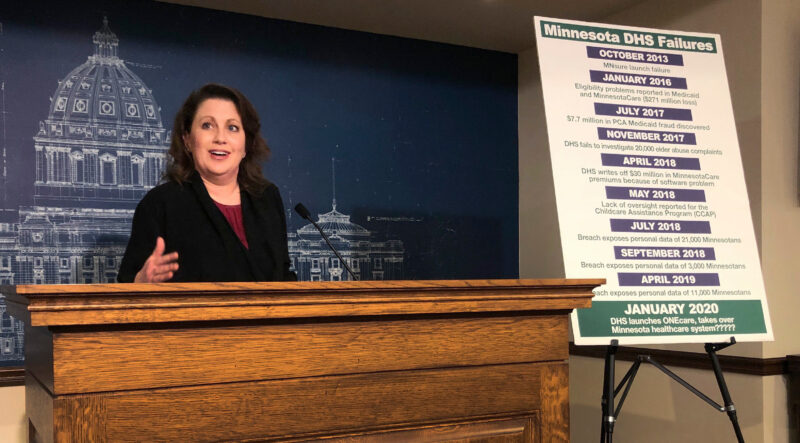
    Minnesota Gov. Tim Walz pushed back in a post on X, saying that fraudsters are a serious issue that the state has spent years cracking down on but that this move is part of “Trump’s long game.”

    “He’s politicizing the issue to defund programs that help Minnesotans,” Walz said.

    O’Neil called out a right-wing influencer who had posted a video Friday claiming he found that daycare centers operated by Somali residents in Minneapolis had committed up to $100 million in fraud. O’Neill said he has demanded that Walz submit an audit of these centers that includes attendance records, licenses, complaints, investigations, and inspections.

    “We have turned off the money spigot and we are finding the fraud,” O’Neill said.

    The announcement came one day after U.S. Department of Homeland Security officials were in Minneapolis conducting a fraud investigation by going to unidentified businesses and questioning workers.

    There have been years of fraud investigations that began with the $300 million scheme at the nonprofit Feeding Our Future, for which 57 defendants in Minnesota have been convicted. Prosecutors said the organization was at the center of the country’s largest COVID-19-related fraud scam, when defendants exploited a state-run, federally funded program intended to provide food for children.

    A federal prosecutor alleged earlier in December that half or more of the roughly $18 billion in federal funds that supported 14 programs in Minnesota since 2018 might have been stolen. Most of the defendants are Somali Americans, they said.

    O’Neill, who is serving as acting director of the Centers for Disease Control and Prevention, also said in the social media post Tuesday that payments across the U.S. through the Administration for Children and Families, an agency within the U.S. Health and Human Services Department, will now require “justification and a receipt or photo evidence” before money is sent. Officials have also launched a fraud-reporting hotline and email address, he said.

    Walz, the 2024 Democratic vice presidential nominee, has said fraud will not be tolerated and his administration “will continue to work with federal partners to ensure fraud is stopped and fraudsters are caught.”

    Walz has said an audit due by late January should give a better picture of the extent of the fraud. He said his administration is taking aggressive action to prevent additional fraud. He has long defended how his administration responded.

    Minnesota’s most prominent Somali American, Democratic U.S. Rep. Ilhan Omar, has urged people not to blame an entire community for the actions of a relative few.

  • Saudi Arabia bombs Yemen port city over weapons shipment from UAE for separatists

    Saudi Arabia bombs Yemen port city over weapons shipment from UAE for separatists

    DUBAI, United Arab Emirates — Saudi Arabia bombed Yemen’s port city of Mukalla on Tuesday after a weapons shipment from the United Arab Emirates arrived for separatist forces in the war-torn country, and warned that it viewed Emirati actions as “extremely dangerous.”

    The bombing followed tensions over the advance of Emirates-backed separatist forces known as the Southern Transitional Council. The council and its allies issued a statement supporting the Emeratis’ presence, even as others allied with Saudi Arabia demanded that Emirati forces withdraw from Yemen in 24 hours’ time.

    The Emirates called for “restraint and wisdom” and disputed Riyadh’s allegations. But shortly after that, it said it would withdraw its remaining troops in Yemen. It remained unclear whether the separatists it backs will give up the territory they recently took.

    The confrontation threatened to open a new front in Yemen’s decade-long war, with forces allied against the Iranian-backed Houthi rebels possibly turning their sights on each other in the Arab world’s poorest nation.

    It also further strained ties between Saudi Arabia and the Emirates, neighbors on the Arabian Peninsula that increasingly have competed over economic issues and regional politics, particularly in the Red Sea area. Tuesday’s airstrikes and ultimatum appeared to be their most serious confrontation in decades.

    “I expect a calibrated escalation from both sides. The UAE-backed Southern Transitional Council is likely to respond by consolidating control,” said Mohammed al-Basha, a Yemen expert and founder of the Basha Report, a risk advisory firm.

    “At the same time, the flow of weapons from the UAE to the STC is set to be curtailed following the port attack, particularly as Saudi Arabia controls the airspace.”

    Airstrike hits Mukalla

    A military statement carried by the state-run Saudi Press Agency announced the strikes on Mukalla, which it said came after ships arrived there from Fujairah in the Emirates.

    “The ships’ crew had disabled tracking devices aboard the vessels, and unloaded a large amount of weapons and combat vehicles in support of the Southern Transitional Council’s forces,” the statement said.

    “Considering that the aforementioned weapons constitute an imminent threat, and an escalation that threatens peace and stability, the Coalition Air Force has conducted this morning a limited airstrike that targeted weapons and military vehicles offloaded from the two vessels in Mukalla,” it added.

    It was not clear if there were any casualties.

    The Emirati Foreign Ministry hours later denied it shipped weapons but acknowledged it sent the vehicles “for use by the UAE forces operating in Yemen.” It also claimed Saudi Arabia knew about the shipment ahead of time.

    The ministry called for “the highest levels of coordination, restraint and wisdom, taking into account the existing security challenges and threats.”

    The Emirati Defense Ministry later said it would withdraw its remaining troops from Yemen over “recent developments and their potential repercussions on the safety and effectiveness of counterterrorism operations.” It gave no timeline for the withdrawal. The Emirates had broadly withdrawn its forces from Yemen years earlier.

    Yemen’s anti-Houthi forces not aligned with the separatists declared a state of emergency Tuesday and ended their cooperation with the Emirates. They issued a 72-hour ban on border crossings in territory they hold, as well as entries to airports and seaports, except those allowed by Saudi Arabia. It remained unclear whether that coalition, governed under the umbrella of Yemen’s Presidential Leadership Council, would remain intact.

    The Southern Transitional Council’s AIC satellite news channel aired footage of the strike’s aftermath but avoided showing damage to the armored vehicles.

    “This unjustified escalation against ports and civilian infrastructure will only strengthen popular demands for decisive action and the declaration of a South Arabian state,” the channel said.

    The attack likely targeted a ship identified as the Greenland, a vessel flagged out of St. Kitts. Tracking data analyzed by the Associated Press showed the vessel had been in Fujairah on Dec. 22 and arrived in Mukalla on Sunday. The second vessel could not be immediately identified.

    Jens Laerke, a spokesperson for the U.N. humanitarian office, urged combatants to protect civilians and civilian infrastructure, like the port, saying any disruption to its operations “risks affecting the already dire humanitarian situation and humanitarian supply chains.”

    Strike comes as separatists advance

    Mukalla is in Yemen’s Hadramout governorate, which the council seized in recent days. The port city is about 300 miles northeast of Aden, which has been the seat of power for anti-Houthi forces after the rebels seized the capital, Sanaa, in 2014.

    Yemen, on the southern edge of the Arabian Peninsula off East Africa, borders the Red Sea and the Gulf of Aden. The war there has killed more than 150,000 people, including fighters and civilians, and created one of the world’s worst humanitarian disasters.

    The Houthis, meanwhile, have launched attacks on hundreds of ships in the Red Sea corridor over the Israel-Hamas war in the Gaza Strip, disrupting regional shipping. The U.S., which earlier praised Saudi-Emirati efforts to end the crisis over the separatists, has launched airstrikes against the rebels under both Presidents Joe Biden and Donald Trump.

    Tuesday’s strike in Mukalla came after Saudi Arabia targeted the council in airstrikes Friday that analysts described as a warning for the separatists to halt their advance and leave the governorates of Hadramout and Mahra.

    The council had pushed out forces there affiliated with the Saudi-backed National Shield Forces, another group in the anti-Houthi coalition.

    Those aligned with the council have increasingly flown the flag of South Yemen, which was a separate country from 1967 to 1990. Demonstrators have been rallying to support political forces calling for South Yemen to secede again.

    A statement Tuesday from Saudi Arabia’s Foreign Ministry directly linked the council’s advance to the Emiratis for the first time.

    “The kingdom notes that the steps taken by the sisterly United Arab Emirates are extremely dangerous,” it said.

    Allies of the council later issued a statement in which they showed no sign of backing down.

  • Police seek hit-and-run driver who killed e-bike rider in South Jersey

    Police seek hit-and-run driver who killed e-bike rider in South Jersey

    Police were seeking the public’s help in locating the driver of a white SUV that fatally struck a 49-year-old man riding an e-bike early Monday in Burlington County and then fled the scene.

    Just before 12:15 a.m. Monday, Mount Laurel Township police were dispatched to the 1100 block of Route 73 southbound to respond to a crash involving an e-bike and an unknown vehicle.

    Police said they located Anthony Caprio III, who was pronounced dead.

    The striking vehicle fled the scene.

    Sgt. Kyle Gardner on Tuesday said the e-bike was equipped with lights, which were on at the time of the crash. The vehicle dragged Caprio at least a quarter-mile and then continued south on Route 73 into Evesham Township, Gardner said.

    Michele Caprio, 71, Anthony’s mother, said he had taken his e-bike to a Wawa on Sunday night from his mother’s house in Mount Laurel. At some point, he called his mother to say he had trouble with the bike, but had fixed the problem, she said.

    Then around 3 a.m. Monday, two police officers came to her house to inform her of the crash and his death, she said.

    Anthony Caprio III and his mother, Michele Caprio, in photo from the mid-1990s.

    His mother said he was very skilled at fixing anything mechanical. He briefly was employed at SEPTA, which he highlighted in several photos on his Facebook account. “He loved trains and worked for SEPTA fixing trains,” she said.

    He had a love for aircraft that developed when he was a kid because his father had a plane and took him flying, his mother said.

    His 50th birthday was coming on Jan. 4, she said.

    She also said he had struggled for many years with mental illness and alcohol abuse. He recently found himself homeless and moved back in with his mother, she said.

    The Mount Laurel Police Department released images from surveillance video of the white SUV and asked anyone with information to call the department at 856-234-8300 or the confidential tip line at 856-234-1414 ext. 1599.

    <iframe src="https://www.facebook.com/plugins/post.php?href=https%3A%2F%2Fwww.facebook.com%2Fmountlaurelpd%2Fposts%2Fpfbid02ZkxsKV7oAHNYYJQiis98cKtordbs4QuRhVv7KTvEyDSe11bFjRk3Q2kLETvvTgMPl&show_text=true&width=500" width="500" height="711" style="border:none;overflow:hidden" scrolling="no" frameborder="0" allowfullscreen="true" allow="autoplay; clipboard-write; encrypted-media; picture-in-picture; web-share"></iframe>
  • SNAP bans on soda, candy, and other foods take effect in five states Jan. 1

    SNAP bans on soda, candy, and other foods take effect in five states Jan. 1

    Starting Thursday, Americans in five states who get government help paying for groceries will see new restrictions on soda, candy, and other foods they can buy with those benefits.

    Indiana, Iowa, Nebraska, Utah, and West Virginia are the first of at least 18 states to enact waivers prohibiting the purchase of certain foods through the Supplemental Nutrition Assistance Program, or SNAP.

    It’s part of a push by Health Secretary Robert F. Kennedy Jr. and Agriculture Secretary Brooke Rollins to urge states to strip foods regarded as unhealthy from the $100 billion federal program — long known as food stamps — that serves 42 million Americans.

    “We cannot continue a system that forces taxpayers to fund programs that make people sick and then pay a second time to treat the illnesses those very programs help create,” Kennedy said in a statement in December.

    The efforts are aimed at reducing chronic diseases such as obesity and diabetes associated with sweetened drinks and other treats, a key goal of Kennedy’s Make America Healthy Again effort.

    But retail industry and health policy experts said state SNAP programs, already under pressure from steep budget cuts, are unprepared for the complex changes, with no complete lists of the foods affected and technical point-of-sale challenges that vary by state and store. And research remains mixed about whether restricting SNAP purchases improves diet quality and health.

    The National Retail Federation, a trade association, predicted longer checkout lines and more customer complaints as SNAP recipients learn which foods are affected by the new waivers.

    “It’s a disaster waiting to happen of people trying to buy food and being rejected,” said Kate Bauer, a nutrition science expert at the University of Michigan.

    A report by the National Grocers Association and other industry trade groups estimated that implementing SNAP restrictions would cost U.S. retailers $1.6 billion initially and $759 million each year going forward.

    “Punishing SNAP recipients means we all get to pay more at the grocery store,” said Gina Plata-Nino, SNAP director for the anti-hunger advocacy group Food Research and Action Center.

    The waivers are a departure from decades of federal policy first enacted in 1964 and later authorized by the Food and Nutrition Act of 2008, which said SNAP benefits can be used for “any food or food product intended for human consumption” except alcohol and ready-to-eat hot foods. The law also says SNAP cannot pay for tobacco.

    In the past, lawmakers have proposed stopping SNAP from paying for expensive meats like steak or so-called junk foods, such as chips and ice cream.

    But previous waiver requests were denied based on U.S. Department of Agriculture research concluding that restrictions would be costly and complicated to implement, and that they might not change recipients’ buying habits or reduce health problems such as obesity.

    Under the second Trump administration, however, states have been encouraged and even incentivized to seek waivers — and they responded.

    “This isn’t the usual top-down, one-size-fits-all public health agenda,” Indiana Gov. Mike Braun said when he announced his state’s request last spring. “We’re focused on root causes, transparent information, and real results.”

    The five state waivers that take effect Jan. 1 affect about 1.4 million people. Utah and West Virginia will ban the use of SNAP to buy soda and soft drinks, while Nebraska will prohibit soda and energy drinks. Indiana will target soft drinks and candy. In Iowa, which has the most restrictive rules to date, the SNAP limits affect taxable foods, including soda and candy, but also certain prepared foods.

    “The items list does not provide enough specific information to prepare a SNAP participant to go to the grocery store,” Plata-Nino wrote in a blog post. “Many additional items — including certain prepared foods — will also be disallowed, even though they are not clearly identified in the notice to households.”

    Marc Craig, 47, of Des Moines, said he has been living in his car since October. He said the new waivers will make it more difficult to determine how to use the $298 in SNAP benefits he receives each month, while also increasing the stigma he feels at the cash register.

    “They treat people that get food stamps like we’re not people,” Craig said.

    SNAP waivers enacted now and in the coming months will run for two years, with the option to extend them for an additional three, according to the USDA. Each state is required to assess the impact of the changes.

    Health experts worry that the waivers ignore larger factors affecting the health of SNAP recipients, said Anand Parekh, chief policy officer at the University of Michigan School of Public Health.

    “This doesn’t solve the two fundamental problems, which is healthy food in this country is not affordable and unhealthy food is cheap and ubiquitous,” he said.

  • She held a dying pilot’s hand while rescuers raced to the crash site of two helicopters in N.J.

    She held a dying pilot’s hand while rescuers raced to the crash site of two helicopters in N.J.

    Caitlyn Collins thought the grinding metal sounds and subsequent bang outside her Hammonton home Sunday were coming from her heater.

    It would take a moment to realize the loud crash came from a helicopter that had landed just beyond her backyard around 11:25 a.m., minutes after taking off from Hammonton Municipal Airport. Unable to get through to 911 — many people were already calling to report the crash— she, her husband, and a neighbor drove past a “giant fireball” in her backyard to the open field and took in the grim scene.

    A trail of mechanical parts, which federal investigators said spanned about the length of a football field, was scattered in the open space.

    Collins later learned the fireball was actually another helicopter, which video captured engulfed in flames and spinning out of control before it crashed in her backyard.

    “It was unidentifiable as anything at that point,” she said. “It never even crossed our minds that that could have been a whole other vessel.”

    The Hammonton police chief called it one of the worst aviation crashes in recent memory, killing pilots Kenneth Kirsch, a 65-year-old from Carneys Point, Salem County, and Michael Greenberg, a 71-year-old resident of Sewell, Gloucester County.

    As federal authorities continue their investigation into what could have led to the crash, a South Jersey town has begun to process the harrowing scene and tragic deaths of two pilots who were described as good friends known for making an effort to fly every few weeks.

    Collins takes some comfort in knowing she and her husband did everything they could to help.

    “He actually was running paramedics back and forth on our golf cart because it was so muddy back there that cars were getting stuck,” she said.

    Collins, meanwhile, stayed by the second helicopter, a red Enstrom model F-28A. It was on its side with Kirsch still held by his seat belt, but his body partly on the grass.

    Collins, who is not a medical professional, did the only thing she could think of at the moment. She held Kirsch’s hand and offered lighthearted conversation. She asked him if he could hear the sirens, explaining they were the first responders on their way to help. Collins even tried to joke with Kirsch, saying this is probably not how either of them envisioned spending their Sunday.

    “I wanted to make sure he knew that he was not alone, that he wasn’t in the middle of a field by himself, or in the woods or anything,” she said.

    Police would show up within minutes.

    Greenberg, who was in an Enstrom model 280C, was pronounced dead at the scene.

    Hammonton Police Chief Kevin Friel, who has been in the department for 33 years, said he’s responded to about five air collisions during his tenure, Sunday’s crash being among the worst.

    In addition to Hammonton police and the Hammonton Volunteer Fire Department, various neighboring first responders and partner agencies rushed to the scene or remained on standby, including AtlantiCare EMS, Waterford Township Fire Department, and Collings Lakes Fire Department.

    The New Jersey Forest Fire Service was there in case a fire broke out in the nearby tree line and the New Jersey Department of Transportation helped reroute traffic.

    The parcel of land where the helicopters crashed was close to U.S. Routes 30 and 206.

    Friel said first responders worked quickly to secure both crash sites, which is of the essence when compromised aircraft are involved. First responders were worried the helicopter, which was already ablaze, could lead to an explosion. Meanwhile, there was a concern the helicopter Kirsch was in could catch fire.

    Neither of those scenarios panned out.

    Firefighters extinguished the helicopter in Collins’ backyard and EMS was able to get Kirsch out of the helicopter and airlift him to Cooper University Hospital. He would later die from his injuries.

    The Federal Aviation Administration and the National Transportation Safety Board continue investigating. The NTSB said the helicopters were slated to be taken from the crash site to a secure location Tuesday. A preliminary report is expected to be made available in about 30 days.

    For now, Friel continues to check in with people who were on the scene. That same night, personnel who were part of the initial response held a debriefing.

    “It helps people to deal with the traumas and things that they see, instead of compartmentalizing it and stuffing it down and having them become either physically or mentally ill from dealing with the traumas,” he said.

    Collins was devastated to learn Kirsch died. She remembers the corners of his mouth turning upward after she told her joke.

    “I thought he was going to be a miracle,” she said. “There was no doubt in my mind that he was a fighter, that this was going to be just one of those stories that he could tell again and again and again.”