The 42-year-old man in addiction who died inside a Philadelphia jail days after his arrest in Kensington had been flagged as an “emergency” case by an intake worker at the jail, and should have received one-on-one supervision in the hours before he collapsed, according to records from the Department of Prisons.
But that didn’t happen, and instead, Andrew Drury died alone inside the holding cell, without having received a formal behavioral health evaluation by the prison staff, according to the records obtained by The Inquirer. His cause of death remains under investigation, though when he was jailed in the fall, he had been hospitalized multiple times from withdrawal-related health complications.
A spokesperson for the Philadelphia Department of Prisons declined to comment Friday.
Drury had been picked up by Philadelphia police on the night of March 6, after officers encountered him at Kensington Avenue and Somerset Street, and learned he had outstanding bench warrants related to a drug case in Maryland and a 2022 violation of a protection-from-abuse order filed in Philadelphia.
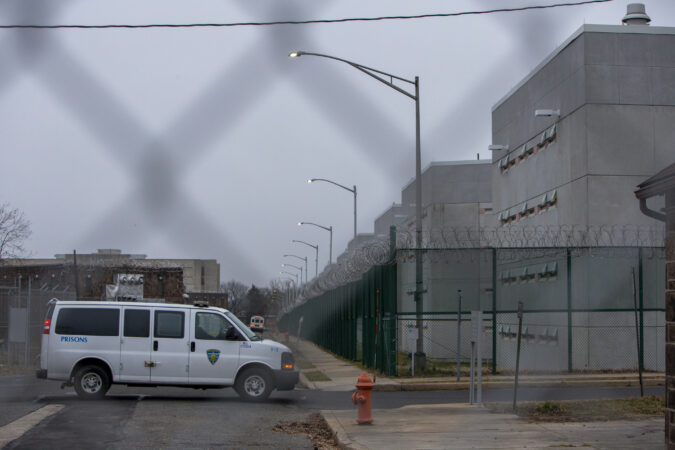
Police said Drury received off-site medical treatment over the next day before he was transferred to Curran-Fromhold Correctional Facility around 2:15 a.m. on March 8. Police declined to say what kind of treatment he received, where he was treated, or how he was cleared for transfer to the jail.
Drury remained in an intake room at the jail until the next afternoon, waiting to be medically evaluated and assigned to a cell block. On March 9, around 9:30 a.m., an intake worker for the prisons assessed Drury and wrote that he was experiencing a range of physical and behavioral health issues and described him as extremely agitated and confused, according to the records.
Andrew Drury, left, and Jennifer Barnes had been homeless and struggling with addiction in Kensington for about two years. Drury died on March 9 inside a Philadelphia jail.
The employee labeled Drury as an emergency case, which, according to the records, should have required that he receive one-on-one supervision until he could be evaluated by a behavioral health worker.
Instead, Drury remained in his intake cell for another six hours. A jail guard walking through the area found him unresponsive at 1:45 p.m., and despite administering two doses of Narcan and other lifesaving measures, he was pronounced dead at 2 p.m., according to a spokesperson for the prison.
The Philadelphia Medical Examiner’s Office said Wednesday that doctors are awaiting toxicology results to determine his cause of death.
Drury had long struggled with an opioid addiction, and had been experiencing homelessness in Kensington for about two years, said his longtime girlfriend, Jennifer Barnes.
In an interview this week, Barnes, 44, said she believes he died from health complications related to withdrawal — something that he has been hospitalized for in the past.
When Drury was arrested in October on bench warrants related to the same cases, he was hospitalized multiple times, including for more than a week, after suffering a mild heart attack and other issues while going through withdrawal in jail, according to Barnes and a source familiar with Drury’s care at the time.
After Drury was released in November, Barnes said he was in and out of the hospital because of ongoing chest pains and shortness of breath.
Barnes said she worried about his health as she watched police arrest him that night.
“The withdrawal, it’s not good for him,” she said she told the officers. “He needs medical attention.”
Jennifer Barnes, whose fiancee Andrew Drury died while in jail, shown here in Philadelphia on Tuesday.
Drury’s death comes as the city ramps up enforcement efforts in Kensington, a section of the city that has long experienced concentrated violence, homelessness, and drug use in and around its massive open-air drug market. Mayor Cherelle L. Parker has said her administration would shut down the drug activity in the area and return a quality of life to the neighborhood’s residents.
But some advocates have warned city and law enforcement officials that the withdrawal effects for people who use opioids can be life-threatening, and that the understaffed jails might struggle to respond to people’s health needs in those circumstances.
Barnes said she and Drury were both from South Philadelphia, and had been dating since 2012 after meeting in a luncheonette in the neighborhood. They were not married, she said, but wore rings as if they were.
Andrew Drury and Jennifer Barnes in a photo before they became homeless in Kensington.
Barnes said she has struggled with addiction since about 2008. Drury also used drugs by the time they had met, she said, his troubles beginning after he underwent a weight loss surgery and got hooked on pain killers. For many years, they were both able to hold jobs and hide their addiction.
They bounced between friends’ and families’ homes, she said, until they were kicked out of Drury’s mother’s house in 2021 and she got a Protection From Abuse order against him. They’ve been on the streets of Kensington since about the summer of 2023, she said.
Drury was funny and loving, she said, and helped protect her from the dangers of living on the streets. They had both recently talked about wanting to go to rehab and getting their lives back on track.
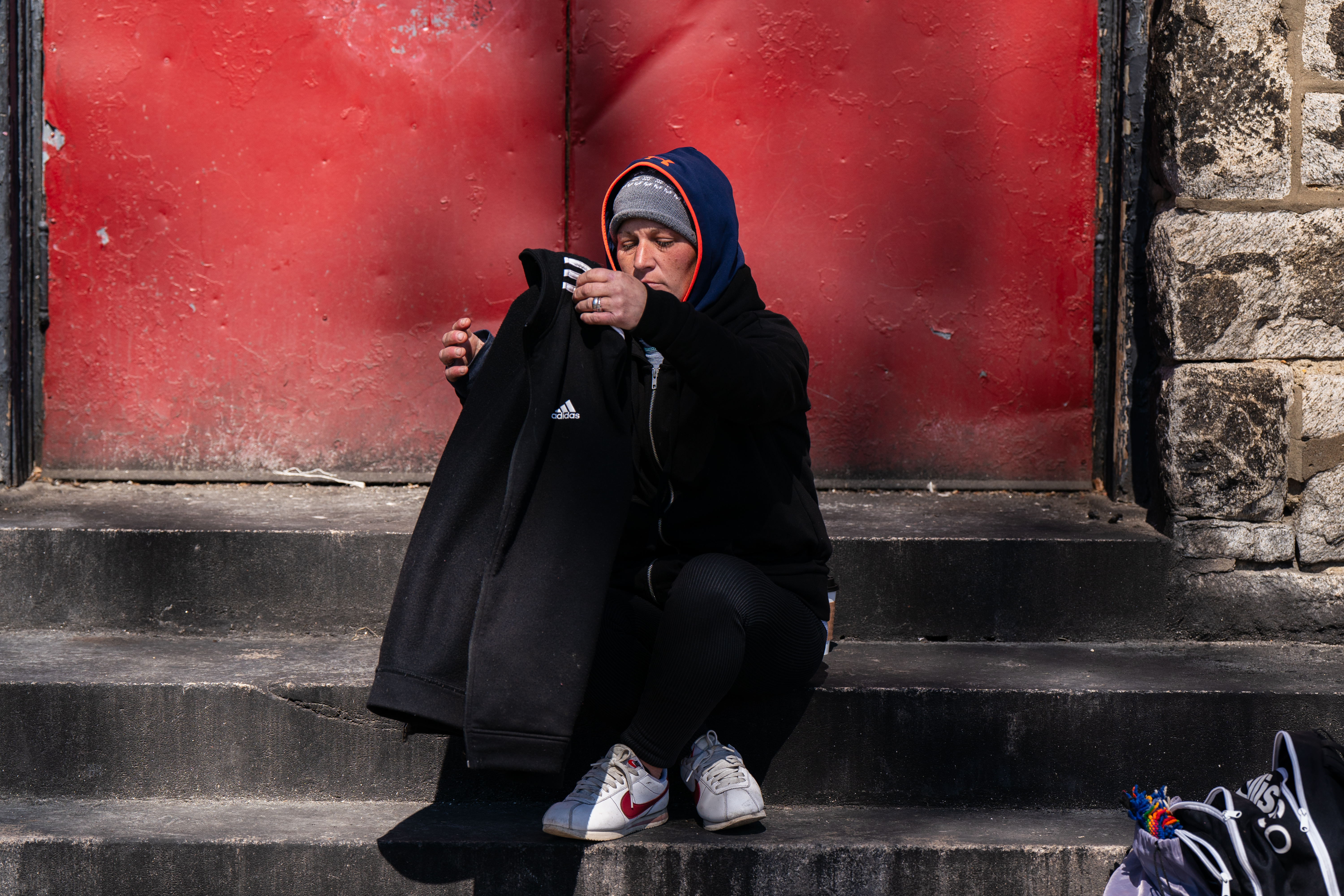
Jennifer Barnes holds the sweatshirt of her longtime boyfriend, Andrew Drury, who died in jail on March 9.
Since his death, she said, she feels in a fog. She has connected with a friend who found a bed for her at a recovery house in South Jersey, and she hopes to go next week.
“For myself, and for him, it’s the best thing to do,” she said. “This way he won’t have to worry anymore.”
A 42-year-old man with a history of addiction died inside a Philadelphia jail over the weekend just days after he was arrested in Kensington, officials said.
Andrew Drury was picked up on a bench warrant by Philadelphia police near Kensington and Lehigh Avenues on Thursday night and was found collapsed inside the intake room at Curran-Fromhold Correctional Facility on Sunday afternoon, according to police and prison officials. Officers who found Drury administered two doses of Narcan, among other lifesaving measures, but he did not regain consciousness, officials said.
Drury, whose cause of death remains under investigation, was addicted to opioids and had been hospitalized multiple times for withdrawal-related complications when he was jailed in the fall on similar warrant issues, according to a source familiar with his care who was not authorized to speak publicly.
Philadelphia police arrested Drury in Kensington around 10:30 p.m. Thursday on outstanding bench warrants related to a drug case in Maryland and a 2022 violation of a protection-from-abuse order filed in Philadelphia.
Sgt. Eric Gripp, a spokesperson for Philadelphia police, said Drury was evaluated and “received off-site medical treatment” before he was transferred to the jail on State Road around 2:15 a.m. Saturday.
People who use drugs are often gathered near Kensington and Somerset Avenues, an intersection at the heart of Philadelphia’s opioid crisis.
Drury had been in an intake room at the facility for nearly 36 hours, waiting to be assigned to a cell block, when a jail guard found him unresponsive around 1:45 p.m. Sunday, according to John Mitchell, a spokesperson for the Philadelphia prisons. He was pronounced dead at 2 p.m., Mitchell said.
The cause of Drury’s death was under investigation, he said, but no foul play was suspected. Gripp declined to say where and under what circumstances Drury was treated medically while in police custody, citing an ongoing investigation. It is not clear whether Drury was medically evaluated once he arrived at the jail.
Drury is the first person to die in the custody of the Philadelphia Department of Prisons this year, and his death comes as the city ramps up drug enforcement in Kensington and arrests more people in addiction. Advocates have warned city and law enforcement officials that the withdrawal effects for people who use opioids can be life-threatening, and that the understaffed jails might struggle to respond to people’s health needs in those circumstances.
His death follows that of Amanda Cahill, 31,who died inside a cell at the Philadelphia Industrial Correctional Center in September, days after she was arrested in Kensington on charges related to drugs and open warrants. The Philadelphia Medical Examiner’s Office said Tuesday that an autopsy showed Cahill died from drug intoxication.
At least 29 people in addiction have died in Philadelphia jail or police custody since 2018 for reasons that appear connected to drug intoxication or withdrawal, according to medical examiner records reviewed by The Inquirer.
Amanda Cahill, 31, is seen here in a photo provided by her family. She died in Philadelphia Industrial Correctional Center in September.
Drury’s legal troubles go back to at least July 2021, when he was arrested for possession with intent to distribute drugs in Maryland, according to court records. Then, in July 2022, he was arrested in Philadelphia for violating a protection-from-abuse order that his mother had filed against him. He was later released on bail.
After Drury failed to appear in court in Maryland and Philadelphia, warrants were issued for his arrest. He was picked up by police on Oct. 1, 2024, in connection with those pending cases.
While in custody, Drury was hospitalized at least twice, including for more than a week, after experiencing health issues related to withdrawal, said the person familiar with his care, who had reviewed the records related to Drury’s earlier cases.
He was released from jail in November after authorities in Maryland declined to extradite him, the source said. Because he did not return to Maryland to resolve his case, there was still an outstanding warrant for his arrest. And when Drury did not appear for a December hearing in his Philadelphia case, a second warrant was issued.
The warrants landed him back in police custody on Thursday.
Two of Drury’s relatives, who asked not to be identified for privacy reasons, said they did not know he was struggling with addiction. They described him as a warm and generous person, a good listener, and a helping hand.
“I feel that something is not right,” one relative said. “I don’t know, and I won’t know, I guess, until I can get the coroner’s report. I’m in the dark right now.”
Andrew Pappas, pretrial managing director of the Defender Association of Philadelphia, said Drury’s death underscores the dangerous conditions inside Philadelphia’s jails, which face an ongoing staffing shortage.
“We continue to see the effects of that with yet another death in custody,” he said.
It was a tough two-and-a-half-week period: Students accused of impersonating ICE agents. One student accused of shooting and killing another. A student stabbing a former student 13 times. And a student falling from a light pole during a post-Eagles celebration and dying from his injuries.
These high-profile incidents involved Temple University students and three of the four occurred on or near campus, posing another test for new president John A. Fry.
Some say they are gratified that the administration communicated swiftly and thoroughly about the incidents, which wasn’t always the case in the past.
“That’s been really great to have such a quick turnaround time,” said Ray Epstein, president of student government. “Even if it is the middle of the night, we are getting an email immediately.”
After Chase Myles, a 20-year-old student from Maryland was shot and killed atabout 11 p.m. Feb. 6, Fry notified the campus in an email at 3:46 a.m., and just hours later was on a plane back to campus from an alumni event in Florida so he could be on the ground to talk to the victim’s parents and help coordinate the response.
By contrast, it took nearly twice as long for the university to get out an email about the shooting death of Samuel Collington outside his off-campus residence in November 2021 even though that happened in the daytime. The email did not come from then-president Jason Wingard, but rather from then-safety chief Charles Leone. The attack put the campus on edge and stirred fear in the Temple community among students, parents, and staff — and social media posts circulatedwith the hashtag “Where’s Wingard,” who laterresigned after less than two years on the job.
Donna Gray, Temple’s campus safety services manager for risk reduction and advocacy services, greets Temple president John A. Fry during his first day of work Nov. 1.
That incident ― which happened as part of an attempted robbery and carjacking ― was different in that it involved random violence by a stranger in the neighborhood.
But even the Temple police officers’ union, which has been critical of university leadership in past years, has noted Fry’s efforts in dealing with the recent multiple incidents.
“He seems to be handling it well,” said Sean Quinn, president of the Temple University Police Association. “Without a doubt, as soon as these things happen, he’s right on top of it.”
“It is up to us to tell the bad news first, personally to all of our community,” he said. “Number two is just to keep a steady stream of communications following that even when there is not a whole lot to say. It’s worth checking in.”
Parents on the university’s family council said they are confident in the university leadership’s handling of the incidents, too.
“It seems like there are the right people in place,” said Allison Borenstein, a Temple alumna whose son, a sophomore, attends the university. “They handled it well, and I think they are on it.”
Borenstein, an event planner at a synagogue who lives in Cherry Hill, noted such incidents could happen near any college campus and said she feels that Temple sometimes gets an unfair rap.
“There’s nothing that the school could have done in advance,” she said.
Emma Legge, an alumna and parent of a senior who lives in New York, said she feels she is kept informed, and she checks in with her son after receiving a communication.
“I do feel as a parent that Temple is doing what it can within the city of Philadelphia to manage what happens,” said Legge, who got both her bachelor’s and master’s degrees at Temple and met her husband, also a twice Temple alumnus, there. “I have a lot of confidence in the university and the people who are on board.”
Philadelphia Police Commissioner Kevin J. Bethel and Jennifer Griffin, Temple University vice president for public safety, after graduation ceremonies for the Police Academy Class #402, new officers of the Philadelphia Police Department and Temple University Police Department, at Temple’s Performing Arts Center in June.
That includes Jennifer Griffin, vice president for public safety, she said.
“I feel very reassured by the measures police are undertaking to be involved in the neighborhood and be involved with students,” said Legge, who works in student affairs administration at a New York college.
Griffin said after the recentincidents, she met with the student safety advisory committee and its members saidthey appreciated the accurate and timely information, which she said she has always aimed to provide since starting at Temple about two and a half years ago.
“We hope it decreased anxiety,” she said.
Of Fry, she said, “I thought he handled all the incidents with thoughtfulness and decisiveness and direction that I would expect from somebody with his level of experience.”
The police union has been critical of Griffin, even calling for her to resign or be fired over staffing issues. University leadership has backed Griffin.
Quinn said the union now is trying to work things out, noting that the university is amid a police staffing study conducted by an external company.
“I just don’t want to come to work every day feeling like I’m butting heads,” he said. “I actually would like to work with whoever I have to work with to see if we can accomplish things.”
Fry said he expects to have the results of the staffing study in a couple months. He said he’s pleased with the work campus police do, noting he had gone on ride alongs with them and wants to make sure they have enough help.
Ray Epstein, Temple student government president.
While Epstein, the student government president, endorsed the university’s handling of communication about the recent shooting, she said it also should have issued an alert after a report about a student placing hidden cameras in a fraternity bathroom in late November and recording people without their knowledge. Instead the campus learned of it through social media earlier this month, she said. The student has been arrested and charged in that case.
“I was not sure when or if the fraternity/university would ever disclose this incident, but I wanted to inform everyone in case this was never announced,” someone posted on a Temple Reddit page, with court documents about the case.
“Maybe it’s perceived by campus safety as not being an ongoing threat,” Epstein said. “I’d argue that it is because when these things happen in a house, you can’t possibly know until an investigation is concluded who all was involved.”
Griffin countered that the investigation was handled swiftly, the individual was identified and arrested, and there was no ongoing threat to the community. A Temple alert is sent when there is an immediate threat to the community, she said.
In this case, people who lived in the house notified law enforcement after the equipment was found, the equipment was taken and the individual who put it there was identified, she said.
“The people who called in the cameras were cooperative,” she said. “It was an isolated incident at an off-campus residence … and student affairs reached out to those who were impacted.”
Picture it: The Birds game is on, you’re snacking on the couch, and suddenly, you hear it: “This holiday season, my good friend gave to me: seven Powerball tickets — .” With the start of Pennsylvania’s annual showing of its prized lottery Christmas commercial, the holiday season is truly here.
Dating to 1992, the ad, which is titled “Snowfall,” features a group of carolers singing an abridged and heavily modified version of “The Twelve Days of Christmas,” swapping the usual swans a-swimming and geese a-laying for an array of lottery games.
On social media, the return of the ad — which typically begins airing in early November — is celebrated. “It’s practically a holiday tradition,” one Reddit user wrote 13 years ago about the ad (from a Reddit thread in 2011 discussing its return that holiday season). A new Reddit thread posted this week also embraced the holiday ad.
“The moment they hear the carolers sing, many Pennsylvanians reflexively smile, sing along, and mentally count the weeks until they can put up the tree,” Drew Svitko, the Pennsylvania Lottery’s executive director, said in 2016 ahead of the ad’s 25th anniversary. “We are proud that our popular commercial brings back so many warm memories for viewers and has become a Keystone State holiday tradition.”
But the ad we see today is not the exact ad that was shown over three decades ago.
The original version was filmed in Pittsburgh ahead of its 1992 debut. It features an older man, Joe, leaving his place on a snowy night to dole out lottery ticket gifts throughout his neighborhood, including tocoffee- and newsstand owners. Carolers sing. That version was shown from 1992 through 2011.
In 2011, the Pennsylvania Lottery reproduced the holiday commercial in high-definition video and to accommodate modern TV specs. This time, the shoot took place in Philadelphia. But the shot-for-shot remake was so carefully executed, many viewers didn’t notice the difference when it was shown in 2012 until it was pointed out.
“The lottery took great care in recreating the beloved ad,” Pennsylvania Lottery spokesperson Ewa Swope said Tuesday. “By retaining the original audio track and voice-over, along with the shot-for-shot remake, we stayed true to the look and feel of the original spot.”
Local Philly blog Crossing Broad posted a side-by-side comparison of the 1992 and 2012 ads to highlight the matching.
Of course, the 2012 ad has been tweaked slightly over the years to account for changes to the lottery’s game offerings. Swope said a visual card within the ad is also updated annually to spotlight a featured holiday scratch-off game — this year’s is the Jingle Jangle Jackpot.
“Because the original spot is so beloved, we didn’t want to upset anyone by going in a vastly different creative direction,” Connie Bloss, a marketing pro who worked on both the 1992 and 2012 “Snowfall” ads, told the Associated Press at the time of the new spot’s debut. “We meticulously examined each frame to match the outfits, props, location, and other small details. We really wanted to get it right.”
Swope said the ad’s aim has always been the same: to remind consumers that lottery products can be given as gifts. Becoming a holiday classic was just a bonus.
“We could not have imagined in 1992 that this spot would become such a holiday classic,” Swope said. “We routinely hear from players that when they see the commercial, they know the holiday season is starting. We are happy that so many players enjoy and look forward to this spot as a part of their holiday tradition.”
You can watch the latest version of “Snowfall” below:
By the afternoon of Sept. 11, 1968, the hostility had faded.
Neither the Rev. Dr. Martin Luther King Jr. nor Cecil B. Moore was making rousing speechesoutside Girard College’s wrought-iron front gates.
No human barricade of police officers blocked the entrance, and no civil rights groups marched through North Philadelphia.
After a brutal fight to desegregate the private boarding school, which started with an intense seven-month demonstration and then spent years tied up in the court system, the color barrier was pierced without protest.
Four little boys, dressed in suits and ties and carrying their favorite board games, walked to the front door of marble-faced Founder’s Hall at 21st Street and College Avenue, and reported for their first day of second grade.
Mothers and grandmothers and siblings accompanied each child, and a gaggle of photographers and reporters attempting to capture the otherwise-calm moment circled each family.
“Nice place,” 11-year-old William Lenzy Dade told The Inquirer, “I didn’t expect it.”
The school was the brainchild of French merchant Stephen Girard, a childless entrepreneur who amassed an immense wealth in Philadelphia in the aftermath of the American Revolution. Upon his death in 1831, he set aside a then-fortune of $2 million to start a boarding school for “poor, white, male orphans.” The school opened in 1848, and offered a premium education at no cost to select students whose families had a single guardian.
By the 1960s, the campus’ imposing stone walls became a metaphorical obstacle to the enclosed white-columned buildings. Moore, then the Philadelphia NAACP president, led the charge and a lawsuit to force Girard to desegregate. In 1965, the animosity escalated into sometimes-violent confrontations with police. But demonstrators continued undaunted, singing and chanting and marching so those four boys could be the first Black students admitted to the private school.
Owen Gowans III was 7 when he walked through those gates in his bright, green-and-brown plaid jacket, the last of the four to arrive.
“Are you nervous?” a reporter asked.
He just shook his head.
In 2015, as part of an anniversary celebration of the school’s integration, Gowans found the words.
“I’m just humbled by what transpired,” he told The Inquirer. “I’m appreciative to the people who put up with beatings and bad words so people like me could go to school here.”
When it gets colder, it’s not only important to be mindful of your pets and your plants but also your home’s pipes and water heater.
Yes, those inanimate objects need extra care, too.
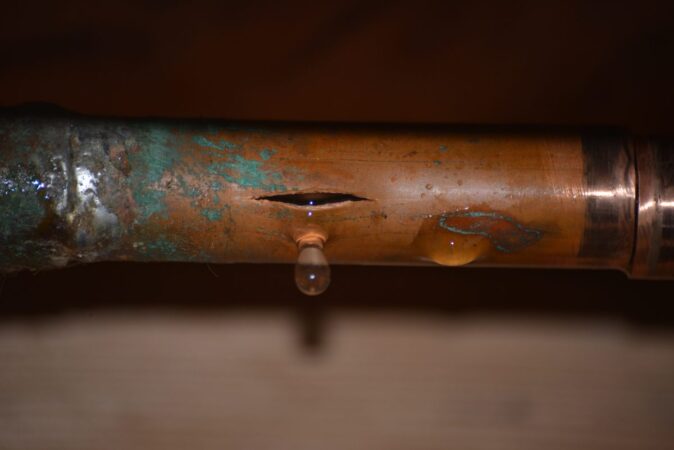
As temperatures drop across the region, the risk of your home’s pipes freezing increases. There are steps, however, that homeowners can take to help stop that from happening and help you avoid a hefty plumbing bill this winter.
Here’s a list of plumber-approved tips on how to keep a pipe from freezing, spotting a frozen one, and what to do if it bursts.
How to prevent your pipes from freezing
“It comes down to three main things: draining outside faucets, keeping pipes warm, and checking for leaks,” said Vincent Thompson, owner of Thompson Plumbing and Heating. Thompson is a master plumber of more than 50 years and for two decades taught plumbing at Dobbins Vocational School in North Philadelphia.
💧 Draining outside faucets
Over the summer, we use outside faucets and hoses to water the plants, rinse of sidewalks, or simply cool down. When the temperature dips, water can freeze and build pressure, ultimately causing a burst pipe, a situation far too common, according to Thompson.
He recommends disconnecting your hose (and storing it for the winter), shutting off the valve that feeds the faucet or spigot (usually found near the hot water heater), and letting the remaining water in the pipe drain out. You can leave the faucet or spigot slightly open, according to Thompson. Letting the faucet drip is also a good suggestion for inside fixtures.
“If it’s empty, it’ll never freeze,” Thompson said. “But if there’s water, it can expand and explode. Then you’ll come out in the spring to use your hose and the water will be shooting out of the wall.”
🌡️ Keep your pipes warm
When the freezing weather descends upon us, we bundle up to stay warm. Pipes need that treatment too. Ideally, the lowest you want to keep your thermostat set at is 50 degrees, but heating is expensive. According to Thompson, the absolute lowest you can go is 40 degrees, because your pipes will start freezing at 39 degrees.
Opening the cabinets underneath your bathroom sink can be a good way to keep pipes from getting too cold. And for the ones in extra-cold spots, using electrical heating tape or fitting them with foam and rubber sleeves is a good idea. Be sure to check for any leaks beforehand, because if water is accumulating, they won’t prevent a pipe from bursting and it will become an added step.
🚽 Check for leaks
“Every drop that goes down the drain will turn into an icicle and eventually can clog up the entire soil stack,” explained Thompson. Not addressing it can result in frozen pipes, flooding, and even water backing up through your toilet.
After 50 years of handling these cases, he advises looking at your water meter because sometimes the leak might not be obvious. Make sure no water sources are open, and look at the blue or red triangle (depending on your meter). If it’s turning that can be a sign of a leak.
If you suspect the culprit is your toilet, he recommends adding a couple of food dye drops into the tank. If the water in the bowl changes color, your suspicions are correct.
Andrew Gadaleta, contractor, works on getting the heat fixed at Visitation BVM School in Philadelphia in December 2021 so that students could return to school. Thieves broke into the school Tuesday morning, ripping copper pipes from the walls that caused flooding. The water rendered the school unusable for a week.
How to spot a frozen pipe
Your house is filled with water pipes, and while it’s not hard to figure out when you’re dealing with a frozen pipe, it can be tricky to figure out where the frozen section is. If you turn on a faucet and nothing comes out, you’re going to have to do a little detective work.
The first step should be to try all the other faucets in your house. If all the faucets in a room aren’t working, the freeze is likely in a split from the main pipe. If all the faucets on a floor aren’t working, the freeze is likely between where the first- and second-floor pipes separate. If all the faucets in your house aren’t working, then the freeze is probably near where the main pipe enters the house.
The frozen section of the pipe, if exposed, will sometimes have condensation over it. You’ll also be able to tell that it’s colder just by touching it.
How to thaw a frozen pipe
Before thawing a frozen section of pipe, you should open the faucet to relieve the water pressure and allow the water to escape once it thaws. You should also begin the thawing process close to the faucet and work your way to the blockage. If melted water and ice get caught behind the blockage, the chance that the pipe will burst increases.
One of the easiest ways to thaw a frozen pipe is with a hair dryer. You can also use hot towels or a heat lamp to warm up the pipe. Never use an open flame.
What to do if a pipe bursts
Don’t panic. The first thing you should do is shut off the main water line into your property. This will prevent your house from flooding. The main water valve is usually near your water meter. After you’ve done that, call your plumber. Locating and tagging the valve to your main water line ahead of time can help make the moment less stressful.
Robert Jordan was playing in his backyard on Aug. 15, 1975, another summer afternoon in his idyllic Delaware County neighborhood, when the panic began to spread from house to house.
Gretchen Harrington, an 8-year-old girl from his Bible camp, was missing.
“I remember being asked, ‘Have you seen Gretchen?’ and saying, ‘No, why?’” Jordan, who was 9 years old at the time, recalled this week.
The Amber Alert system wouldn’t begin for two more decades. There were no cell phones. No Facebook, Citizen or Nextdoor apps.
But through a network of suburban moms, everyone in Jordan’s Marple Township neighborhood seemed to hear the news at nearly the same time.
“It went right down the line, housewives not even getting on the phone, just going to tell each other something had happened,” Jordan said. “We knew something was happening because our mothers were so jittery.”
They sprang into action. Jordan piled into a neighbor’s Volkswagen van with his mother and four other kids. Their search began at a nearby park.
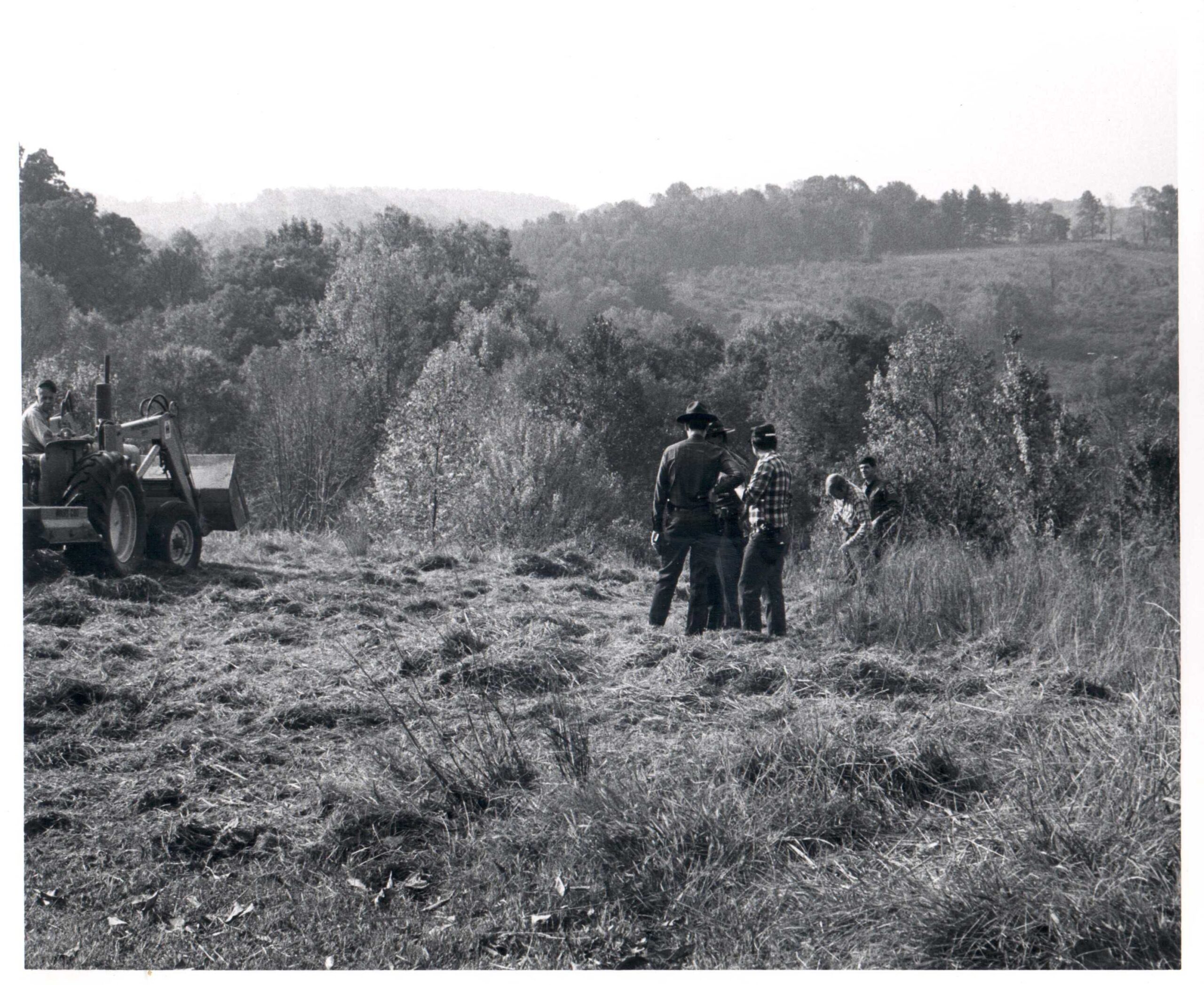
Hundreds of residents from Marple and neighboring towns would later comb wooded areas with no results. Tracking dogs were called in. Even a psychic.
“We haven’t got a thing, not a thing,” then-Broomall Fire Chief Knute Keober told The Inquirer two days after Gretchen’s disappearance. “If she’s in the area, she’s by Jesus well-hidden.”
Police search for Gretchen Harrington in 1975. Harrington was reporting missing that August, and found dead in October.
It wasn’t until Oct. 14, 1975, that a hiker found skeletal remains along a path in Ridley Creek State Park. At first, he thought they belonged to an animal.
“I looked closely and saw what I thought was fingernails,” the man told police, according to a new book on the case. The body was positively identifiedas that of Gretchen Harrington. It bore signs of blunt force trauma to her skull. Her death was ruled a homicide.
Jordan, 57, now a health care marketing executive, still thinks of Gretchen and that summer each time he drives down Lawrence Road, the last place she was seen.
He remembers the Bible camp. Hot dogs and baked beans. Kickball and Wiffle ball. Then, an abduction and a murder. It haunted families for years.
“So many young people from the ‘70s still bear that pain and anxiety today,” he said. “She was a lovely girl.”
‘It was always a dead end’
Brandon Graeff was 2 years oldwhen Gretchen Harrington’s body was found. The case had long turned cold by 1997, when he joined the Marple Township police force.
Tips had poured in early on, then slowed. Detectives pursued them all, on and off the clock.
“Everything — and I mean everything — was followed up on,” said Graeff, who became chief in 2020.
The case came up from time to time, in roll call, or when a detective would grab the folder again during a slow week.
“They’d look through it, maybe try to see something different for her,” Graeff said, “But we couldn’t. We didn’t. It was always a dead end.”
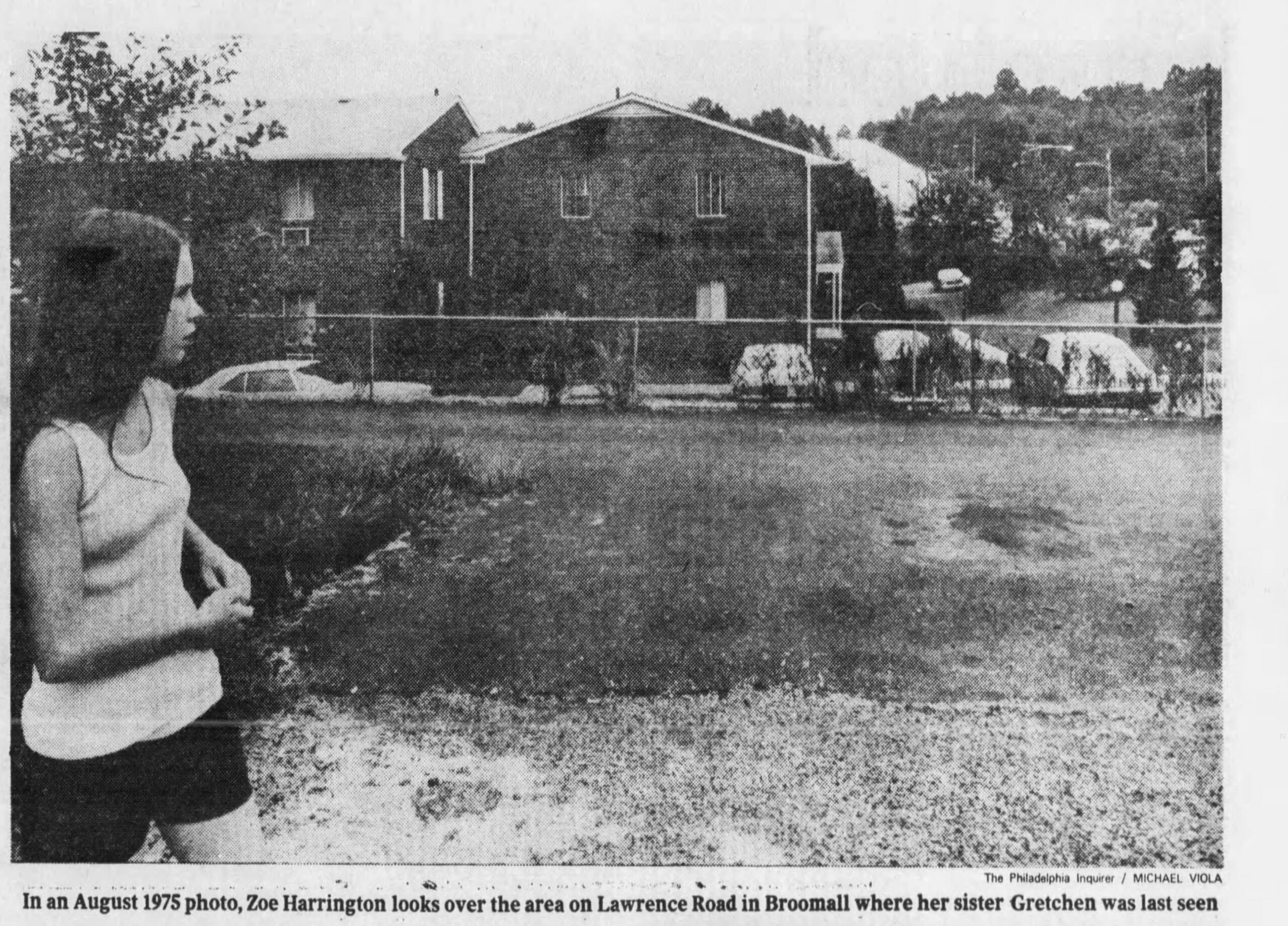
In a 1975 Inquirer photo, Zoe Harrington looks over the area on Lawrence Road in Broomall where her sister Gretchen Harrington was last seen.
Since 1975, the case has proceeded along two tracks: the abduction handled by Marple Police, and the homicide by state police, because the park in Edgmont Township is in their jurisdiction.
In early 2021, Graeff got a call from a man named Mike Mathis, who said he and another former township resident, Joanna Sullivan, were working on a book about the murder and were hoping the department would cooperate with granting them some access to the files.
With little movement in the investigation in decades, Graeff couldn’t think of a good reason to say no.
“We’re dealing with a little girl whose killer was not held to account,” he said. “My question to myself was, ‘Why not? How could it hurt?’”
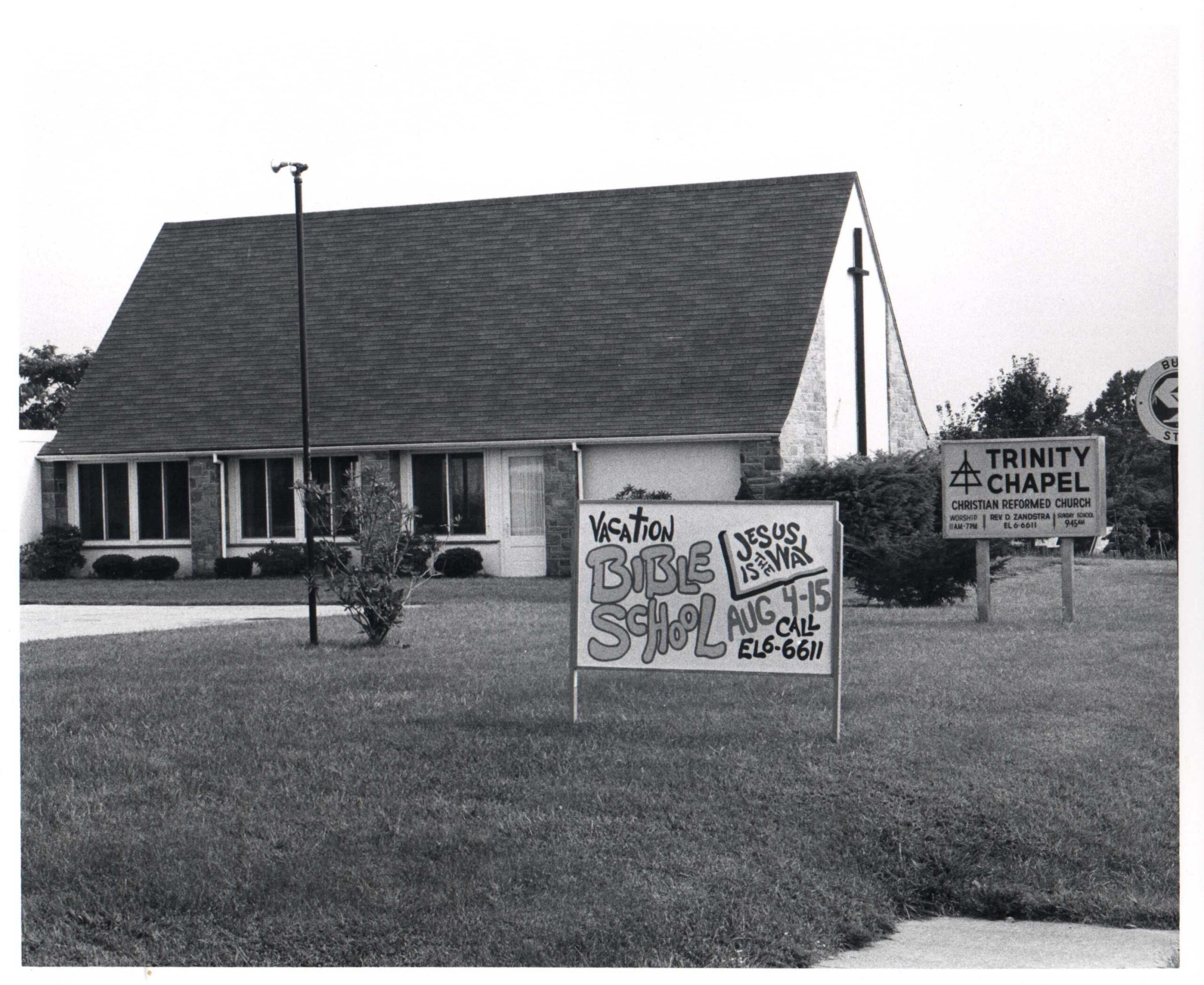
Trinity Chapel, where David Zandstra was reverend.
Sullivan, 57, remembers being at Lawrence Park Swim club the day that Gretchen disappeared. The image of a hovering helicopter was seared into her memory.
“We were just at the pool on a hot summer day and the helicopter was overhead,” she said. “We were wondering what was going on. Then we heard.”
Mathis, 58, remembers his father joining the search for Gretchen. He and Sullivan would meet a few years later at Paxon Hollow Middle School. They were editors at the student newspaper, The Hollow Log.
They kept in touch through high school and beyond. At a reunion decades later, they’d talk about writing a book together about Gretchen.
“It just stayed with me and Mike and many other kids through the years,” said Sullivan, now the editor-in-chief of the Baltimore Business Journal. “I always thought I’d like to write that story.”
Joanna Sullivan and Mike Mathis, who worked together on the student newspaper at Paxon Hollow Middle School, released a book last year on the murder of Gretchen Harrington. Weeks later, a new witness came forward who enabled state police to elicit a confession from David Zandstra, a former reverend.
When COVID struck in 2020, Sullivan and Mathis suddenly had more time. They got started by creating a list of people they wanted to interview.
“At the top of the list,” she said, “was the Zandstra family.”
The book, Marple’s Gretchen Harrington Tragedy: Kidnapping, Murder and Innocence Lost in Suburban Philadelphia, was published in October 2022. Sullivan and Mathis did a round of public appearances in the area, including a December book signing at the Barnes & Noble in the Lawrence Park Shopping Center — just down the street fromwhere Gretchen was abducted.
They had no idea that, just a few weeks later, a woman would come forward with information that would break the case wide open.
“I think it was Mr. Z”
On Jan. 2, 2023, state police interviewed a woman later identified in court documents only by her initials. She said she’d frequently slept at the home of a local reverend named David Zandstra and his family because she was friends with his daughter.
Zandstra had served at Trinity Chapel Christian Reformed Church, one of two churches on Lawrence Road in Marple Townshipthat were used for the Bible camp that Gretchen attended. The other was the Reformed Presbyterian Church, where Gretchen’s father was the pastor.
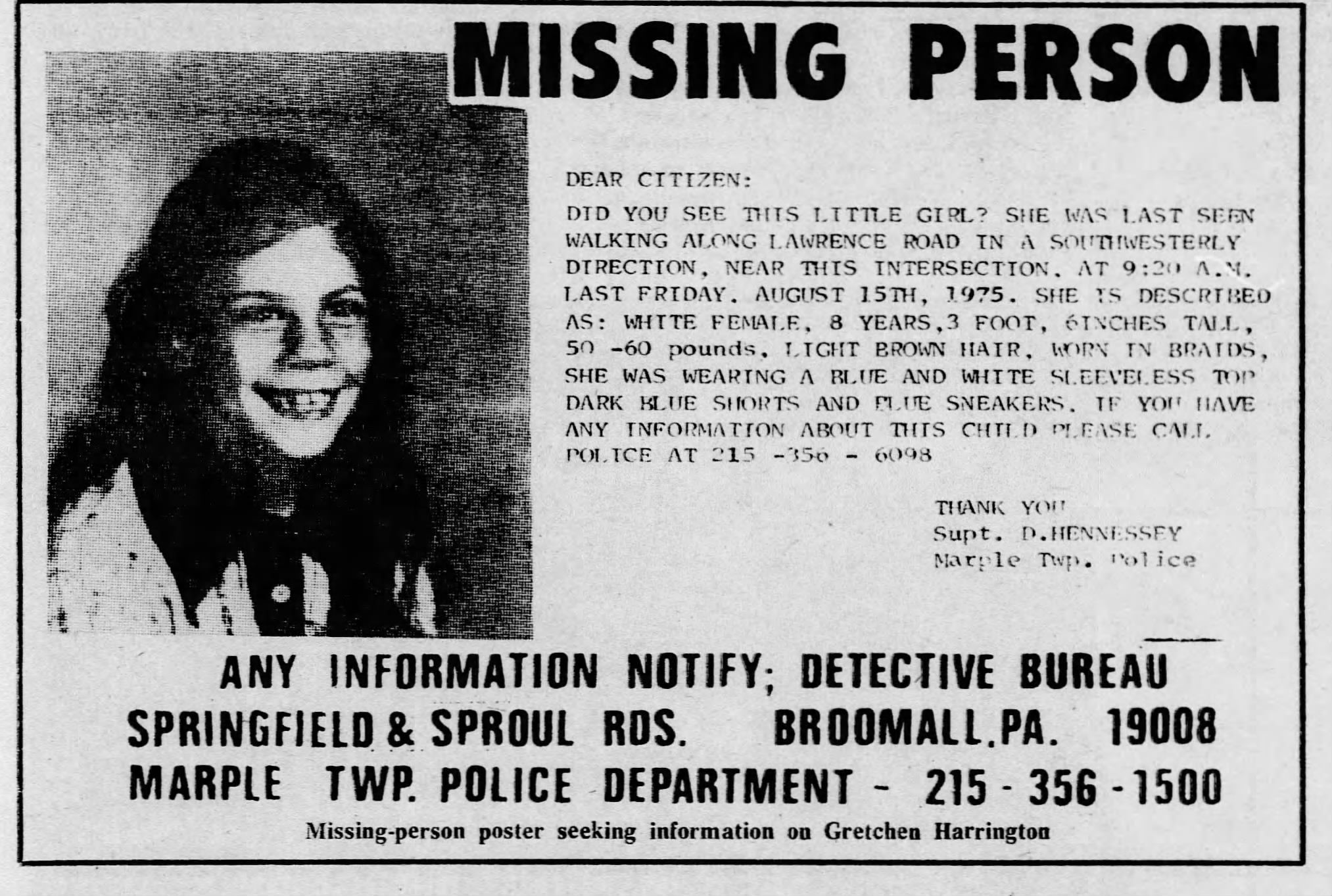
It was Zandstra who called police and reported Gretchen missing at 11:23 a.m. on Aug. 15, 1975. He said he was calling at the request of the girl’s father.
A missing person’s poster for Gretchen Harrington, 8, from a 1975 Inquirer article. The Delaware County District Attorney has announced charges against David Zandstra, currently of Marietta Ga., in Harrington’s murder.
The new witness told state investigators that during two sleepovers at the Zandstra house when she was 10 years old, she awoke to Zandstra touching her. She also showed police a childhood diary she’d kept that mentioned the sleepovers and, in September 1975, her suspicion that Zandstra might have been involved with the attempted kidnapping of a girl in her class, as well as Gretchen’s disappearance.
“It’s a secret, so I can’t tell anyone, but I think he might be the one who kidnapped Gretchen,” she wrote. “I think it was Mr. Z.”
At first, a cordial interview
Earlier this month, David Zandstra, 83 and living in Marietta, Ga., walked into an interview room at the Cobb County Police Headquarters with no reservations about speaking with police. He didn’t lawyer up. It was the department’s “soft” interview room. Couch, comfortable chairs, unlocked.
Two Pennsylvania troopers were waiting for him: Cpl. Andrew Martin, who had picked up the Harrington case about 2017, and Eugene Tray, who’d been called in recently. They’d caught a flight to Atlanta on July 17 to interview the octogenarian suspect, with thenew information in hand.
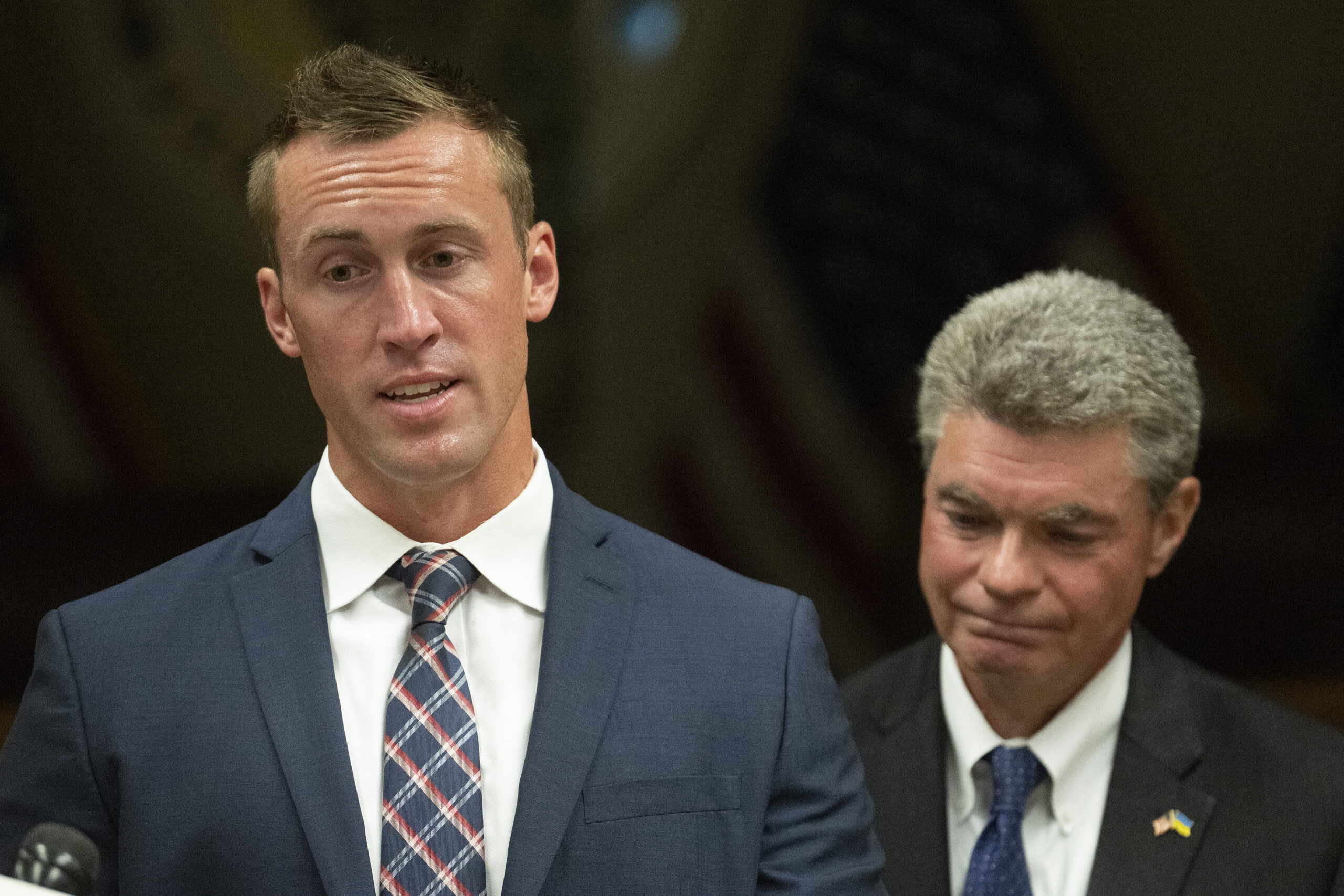
Trooper Eugene Tray, who participated in the investigation and arrest of David Zandstra, and Delaware County District Attorney Jack Stollsteimer, announcing the arrest.
If Zandstra was worried about the interviewwhen he sat down, he didn’t show it — at least not at first.
Back in 1975, police had interviewed Zandstra twice. He also spoke to Mathis for the book, which focused on a different man as the prime suspect.
“Deep down, I’m sure he was very, very concerned,” Tray said.
The conversation was almost cordial to start. Zandstra denied ever seeing Gretchen on the day she went missing.
But then police told Zandstra about the sexual assault allegations from the girl with the diary. It was the final straw placedon top of nearly a half-century of guilt. He broke down and confessed.
“We asked and he spoke,” Tray said. “He was presented with things I don’t think he expected to be presented with. Then, I think he started to think more on it. I think he just wanted his sick, twisted version of redemption, and to come clean.”
Zandstra admitted to abducting Gretchen as she was walking to Trinity Chapel for morning exercises, according to the criminal complaint. He said Gretchen asked to go home, but he drove her to a wooded area and parked. When she refused his demand to take off her clothes, he struck her in the head with his fist, court documents state.
Zandstra said he checked her pulse and believed that she had died, so he attempted to cover up her half-naked body with sticks and left the area.
“He was two different people,” Tray said of Zandstra, before and after his confession. “He was definitely relieved and happy to get that off his chest, how sick that may be.”
Searching for other victims
Zandstra left Delaware County in 1976, and worked in Texas and California before retiring to Georgia. Cops in and around Marple Township who’d worked on the case, or helped search for Gretchen in 1975, have retired and died.
The case took a toll on many of them, knowing a child killer could have gotten away with it, said Delaware County District Attorney Jack Stollsteimer, who was 12 years old when Gretchen disappeared.
“It’s important to understand law enforcement officers are moved by the trauma they see happen,” he said. “That’s why they’re in this business of trying to bring justice.”
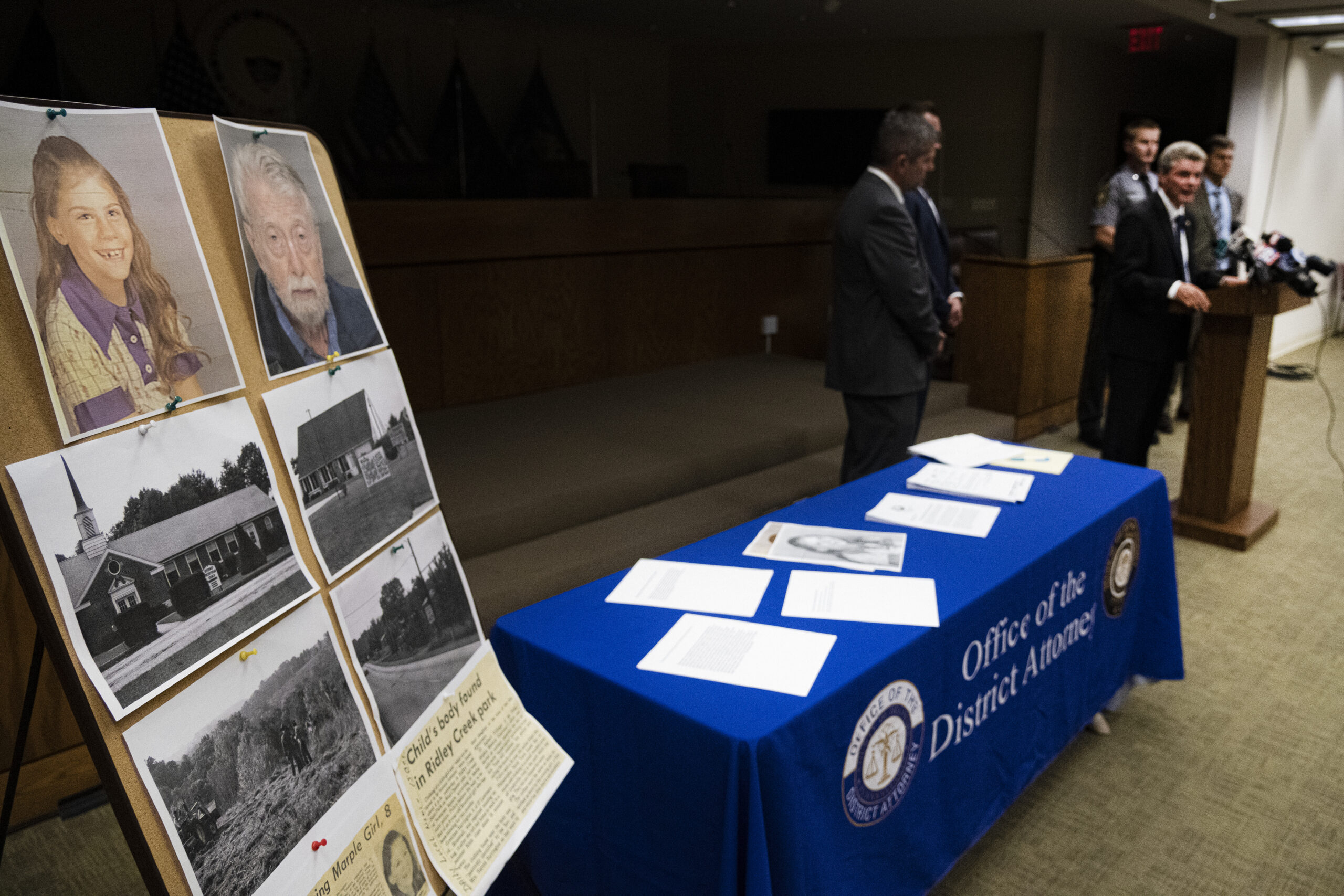
A photo of a victim and her alleged killer are shown during District Attorney Jack Stollsteimer’s news conference on Monday, July 24, 2023.
Stollsteimer described Zandstra’s arrest as a “great relief” to police in Delaware County and praised Martin, in particular, for sticking with the case.
“This is just great, old-fashioned police work,” he said.
Martin was unable to attend the news conference on Monday announcing Zandstra’s arrest and was not available for an interview this week. Tray, however, said the “case would not have been solved were it not for him.”
State police collected DNA from Zandstra when he was arrested, which could prove useful if there are additional victims in other parts of the country.
As part of that effort, the Christian Reformed Church in North America says it is reaching out to Zandstra’s former congregations. He served in Flanders, N.J.; Broomall, Pa.; Plano, Texas; and San Diego and Fairfield, Calif.
After settling in Georgia, Zandstra continued to advise clients of a pregnancy resource center, according to a 2012 religious newsletter in which he wrote a small section titled “Peace to you.” A photo shows him smiling, with gray hair and a closely cropped beard.
“The prospect of peace was and is badly needed in the uncounted and constant conflicts of our world,” he wrote. “Only believers in Jesus are able to find real peace with God.”
“Who knows? This guy was a monster,” Stollsteimer said. “Nothing would surprise me.”
Sullivan, the author of the book on the Harrington murder, has been fielding calls and Facebook messages this week from people in Marple who might have information about other cases of abuse.
“I don’t think it was an isolated case,” Sullivan said.
As for whether the book helped lead to the break in the case, that depends on whom you ask. Some law enforcement officials are convinced that it did. Others cautioned against such speculation. Regardless, a new chapter is planned if the book goes to another printing: Case solved.
On Friday, the Delco DA’s office got word that Zandstra would waive an extradition hearing and agree to be transported from Georgia to Pennsylvania. But his defense lawyer later sought to have the waiver recalled because he was not present with Zandstra when it was signed. Authorities are awaiting a judge’s ruling.
The Harrington family released a statement this week, thanking police for their work and community members for their support over the years. Gretchen’s father, Harold, died in November 2021 at the age of 94.
“If you met Gretchen, you were instantly her friend,” the family wrote. ”She exuded kindness to all and was sweet and gentle. Even now, when people share their memories of her, the first thing they talk about is how amazing she was and still is. At just 8 years old, she had a lifelong impact on those around her.”
THE PARENTS: Shanay Rowe, 38, and Marrita (Rita) Rowe, 35, of Upper Darby
THE CHILD: Christopher, 12
FORMED A BLENDED FAMILY: July 2, 2022
AN INDELIBLE MOMENT: On a recent night, dinner segued into a spontaneous party, all three of them pulling up YouTube and TikTok videos and rocked the moves of the wu-tang and the jerk — ”our own little family dance party,” Shanay says.
Within the first five minutes of their first date — a picnic at the Curtis Arboretum, because it was fall of the first pandemic year — Shanay brushed a bit of flotsam off Rita’s eyelash. It was a sticky-hot October day, but they didn’t want the date to end, so they sought refuge in a nearby Barnes & Noble.
They had their first kiss in the aisle, amid the books.
“It felt very natural, very familiar; it didn’t feel like someone I was hanging out with for the first time,” Shanay says. She had recently written a nonfiction book about gender expression and sexuality, and Rita was eager to talk about that along with other titles both of them had read and loved.
“She loved art, books, reading, studying,” Rita remembers. By Thanksgiving, when she found herself eagerly anticipating spending the holiday together, she knew: “This is my person; this is who I want to start building traditions with.”
There was just one momentary roadblock: Rita had an unspoken rule that she didn’t seriously date people with children. Shanay had a 10-year-old son and talked about him effusively on that first date.
“I was like: Girl, you know I have a kid. I like him, he’s pretty cool, I spend a lot of time with him.” The more Shanay described Christopher — a baseball player, an avid Eagles fan, a warm and adventurous kid — the more Rita wanted to meet him.
“I knew the life I lived as a single, childless woman allowed me to travel and offered me a lot of spontaneity,” she says. “But prior to me settling down with Shanay, I’d put down firmer roots and was looking for someone who shared those same priorities.”
Shanay was technically a single parent, but likes to joke that she shares custody with “an amazing village” that includes Christopher’s biological father (a longtime friend), her mother, her brother, and her grandmother.
She always knew she wanted to be a mother, but in her mid-20s, years before marriage equality became nationwide law, “the whole idea of settling down, trying to conceive, and being a queer woman didn’t even seem like an option.” Although Christopher switched weekly from Shanay’s house to his father’s, “I was not creating family with another person.”
Gradually, Rita began to play a more significant role: She worked remotely from Shanay’s house so she could spend one-on-one time with Christopher during his days of virtual school. “It was a time to see him in his element, and him getting to see me in mine. We’d have breakfast together and lunch together; we’d talk about our favorite television shows.”
Christopher talked about Rita as “part of the family” and made her cards that said, “Best Bonus Mom Ever.” In April 2021, she moved in permanently — a bittersweet transition because it meant leaving a home in West Oak Lane that she’d inherited from her grandparents.
Meanwhile, Shanay had proposed, spontaneously proffering a ring one night while the two were watching Christmas movies; she’d planned to save the proposal until February 2021 but couldn’t wait. Later, in July, she engineered a more elaborate proposal, a catered picnic in Franklin Square on a weekend when Rita’s family was visiting.
Getting married mattered to both of them. “I run into many younger queer folks who still don’t necessarily know older queer people who are married — and when we talk about queer Black folks who are married, that number shrinks,” Shanay says. “It was important to me to be a bit of a living example for those who are coming up behind us.”
Rita says she never viewed herself as “other” because of her sexual orientation. “I always knew one day I’d be married; I just couldn’t parse out how that was going to happen.”
It did happen, this summer, at The German Society of Pennsylvania, an archival library that felt like the ideal setting. Eighty-five friends and family members joined them for a reception in the historic ballroom.
Christopher was front and center: dressed in a suit and a pair of shined Oxfords, walking his grandmother down the aisle, standing between Shanay and Rita as the pastor blessed them as a family.
Shanay Rowe with son Christopher
Shanay has always been frank with Chris about homophobia, “the harsh reality that everyone isn’t always going to be super-friendly about the fact that he has two mothers. It meant a lot to him, as a kid, to know he had that family unit, also.”
Rita cherishes the moment they were presented as “Mrs. and Mrs. Rowe” — she’d taken her wife’s last name because Shanay had been the one to propose — and the sight of a roomful of people who were there to support their union.
“It solidified: Not only am I taking this journey with my partner and family, but there’s a whole community around us that wants us to succeed. Being married: I think of it as a responsibility and an adventure. I have to take care of this woman and love this woman; if I don’t have the tools, one of the people in that room will have them.”
Christopher and “bonus mom” Rita at the July wedding that affirmed their blended family.
For Shanay, too, the tearful, smiling faces of family and friends made her feel loved, validated, and supported. But it was Christopher’s response that made the deepest impression.
“Rita danced with her father; I did my dance with Chris,” Shanay recalls. “It was the sweetest thing. He took my hand, got very close and said, ‘I don’t know what to do.’ I put his hand around my waist and said, ‘You’re going to follow me.’ We danced to ‘If I Could’ by Regina Belle, a tearjerker. I said, ‘Do you need to cry? It’s OK; you can cry.’ He leaned on me and said, ‘I’m so happy for you.’ That was a highlight of a moment. It made me feel like I had made the right decision.”
With an onslaught of freezing winter weather, doctors have one message for Philadelphians: Stay inside as much as possible.
“In order to get frostbite, you have to be out in freezing temperatures,” said Bob McNamara, chair of emergency medicine at Temple University’s Lewis Katz School of Medicine. “So the number-one thing would be to stay inside.”
People should also be concerned about hypothermia, McNamara said, which can occur indoors too, if people don’t have proper heating. “Roughly half the cases of severe hypothermia we see happen indoors,” he said.
But fear not! There is plenty you can do to prepare for the winter not-so-wonderland.
While curling up under a fuzzy blanket is always a good call, here are some tips from experts, including one who’s been to Antarctica.
Frostbite
When the body gets cold, it restricts blood flow to the extremities, prioritizing major organs instead. So the first signs of frostbite include tingling or pain in the fingers, toes, ears, nose, and elsewhere on the face. Numbness and graying patches of skin are more serious indicators that frostbite is setting in.
Older people and young children are at high risk, as is anyone with a medical condition that might affect their circulation.
Nothing beats staying indoors, but if you have to venture out, try to spend as little time outside as possible, McNamara said. And go prepared.
Ted Daeschler, a scientist at the Academy of Natural Sciences of Drexel University, has gone on a research expedition in Antarctica, where he and colleagues camped in 5- to 15-degree temperatures.
He said he often wore two pairs of socks, hooded long underwear, a second layer of long underwear, shirt and pants, a fleece jacket, insulated wind pants, a wind jacket, a neck gator, and wool hat and gloves.
“Still there were times when the wind made it too cold to work outside and we remained in our camp,” he wrote in an email.
While you may not need to go to Antarctic levels of preparedness, it’s a good idea to follow the advice your parents gave you as a kid: warm hat, gloves, snow boots, a wind-resistant jacket, and layers of clothing. The air between layers retains heat, McNamara said.
“If you catch frostbite early, it can be reversed,” McNamara said.
Mild cases of frostnip, in which the skin feels cold and is just starting to tingle, can be reversed by getting indoors or using a warm bath, he said.
But if the skin becomes pale, waxy, or hard, people should seek medical attention. Those are signs of tissue loss and may require amputation.
“Every winter we see people who lose body parts from frostbite in the city of Philadelphia,” McNamara said.
Hypothermia
When the body is exposed to the cold for long periods of time, it can lose heat faster than it can produce it, causing a dangerously low body temperature, according to the Centers for Disease Control and Prevention. Wet conditions are especially dangerous, even when temperatures are above freezing.
“Hypothermia is a life-threatening condition,” McNamara said. Major organs can stop functioning properly when body temperature drops.
It can be difficult to spot, though. People may have slurred speech, stumble or trip over themselves, and seem confused. “A mistake people can make is to think they just had too much to drink,” McNamara said.
Stay inside and stay dry, the CDC recommends. People should check on neighbors and the elderly to make sure everyone has functioning heat. “Not just a space heater,” McNamara said.
When to get help for hypothermia
If you think someone has hypothermia, call 911 and get medical attention, McNamara said.
If you’re stranded or waiting for emergency responders, try to get the person dry, wrap them up in blankets, and get them as warm as possible.
And a warning on alcohol: While some people believe drinking can stave off the cold, it’s actually very dangerous, McNamara said. Alcohol dilates the blood vessels on the skin, making you feel warm. But this process increases heat loss. So you won’t know you’re cold and you’ll be getting colder by the minute, McNamara said.
Another concern doctors in the emergency room see during cold snaps: people with broken bones and head injuries from slipping and falling on ice.
“All the more reason to stay indoors,” McNamara said.
Naval Square, as it is now known, has been many things before becoming a gated community of expensive condos on the banks of the Schuylkill in a neighborhood with many names.
But whatever you call it, the 24-acre plot of land on Grays Ferry Avenue has been associated with the Navy since 1827 and has the unusual distinction of being the final resting place of Dexter, the Navy’s last working horse.
A reader interested in learning more about the horse — the questioner thought it was a mule — asked about it through Curious Philly, the Inquirer and Daily News question-and-answer forum through which readers submit questions about their communities and reporters seek to answer them.
First, a little history about the site.
The Philadelphia Naval Asylum, a hospital, opened there in 1827.
From 1838 until 1845, the site also served as the precursor to the U.S. Naval Academy, until the officers training school opened in Annapolis with seven instructors, four of them from Philadelphia.
In 1889, its name was changed to the Naval Home to reflect its role as a retirement home for old salts, as they used to call retired sailors. It closed in 1976, when the Naval Home moved to Gulfport, Miss.
It was in the service of the Naval Home that Dexter came to Philadelphia.
Originally an Army artillery horse foaled in 1934, Dexter was transferred to the Navy in 1945 to haul a trash cart around the Naval Home.
Despite his lowly duties, the men — only men lived there — loved him.
“That horse was more human than animal,” Edward Pohler, chief of security at the home, told the Inquirer in 1968. “He had the run of the grounds and would come to the door of my office every day to beg for an apple or a lump of sugar.”
The chestnut gelding was retired in 1966 and sent to a farm in Exton, but that did not last long. Naval Home residents who missed him committed to paying the $50 monthly bill for his feed and care.
For two years he grazed on a three-acre field that residents dubbed Dexter Park.
But on July, 11, 1968, Dexter, who had stopped eating and was not responding to medication, died at the age of 34 in his stall with a little human intervention to make it pain-free.
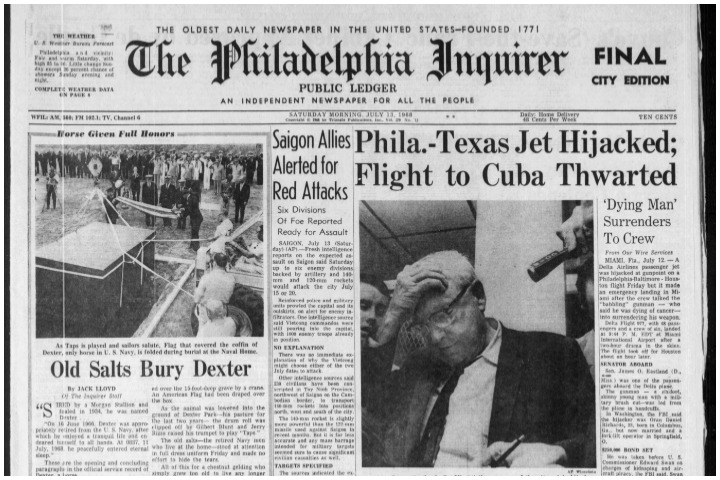
The story about the funeral for Dexter was on the front page of the Inquirer on July 13, 1968.
The next day, 400 people, including Navy men in dress uniform, turned out for a burial with full military honors.
Dexter was placed in a casket measuring 9 feet long, 5 feet wide, and 5 feet deep, with an American flag draped on the top. Retired Rear Adm. M.F.D. Flaherty, the home’s governor, offered final words, saying, “Dexter was no ordinary horse.”
As the casket was lowered by a crane into the 15-foot-deep grave, Gilbert Blunt rolled the drum and Jerry Rizzo played “Taps” on his trumpet. Members of the honor guard folded the flag into a triangle of white stars on a blue field and presented it to Albert A. Brenneke, a retired aviation mechanic and former farm boy from Missouri who was Dexter’s groom.
Brenneke recalled Dexter fondly, saying the horse was “very gentle and playful” and “liked to nibble on you,” according to news coverage of the funeral.
No sign exists marking Dexter’s final place.
The pasture, however, did not remain empty for long.
According to the December 1968 issue of the Navy magazine All Hands, a retired 16-year-old Fairmount Park Police horse named Tallyho took up residence at the Naval Home after Dexter’s death.
But, unlike Dexter, Tallyho, a bay gelding, was a gift to the home’s residents and did not receive an official Navy serial number.
“As was the case with Dexter, Tallyho’s only duty will be to contribute to the happiness of the men who share their retirement with him at the U.S. Naval Home,” the magazine said.
What happened to Tallyho after he went to the Naval Home is not clear.