Category: News

Latest breaking news and updates

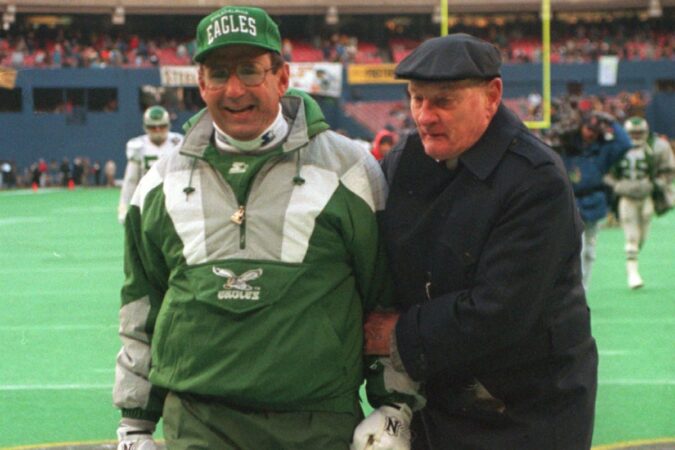
  • 1990s flashback: When the desire for Starter jackets turned deadly

    1990s flashback: When the desire for Starter jackets turned deadly

    Just before midnight on March 4, 1990, 15-year-old Darius Lamont was pulled through the back door of a friend’s home in Charlotte, N.C.

    His attacker wanted the teenager’s green-and-white Eagles Starter-brand jacket, valued at $125. During their struggle, the attacker pulled out a gun and shot Lamont in the face.

    When police arrived, the jacket was gone. Lamont died 10 hours later.

    His death — like the jacket — was part of a trend.

    The growing popularity of professional sports in the late 1980s and early ’90s spawned a new cultural status symbol: expensive sports gear lined in team colors and affixed with hulking logos. The apparel was marketed to the eager-to-impress in their teens and early 20s. But the gear was so popular that some young wearers became crime victims.

    As the 2017 NFL season kicks off and sports stores start to push their cold-weather gear, we look back on the chaos that followed the rise in sports-gear popularity and crimes spurred by the Starter-brand jacket trend.

    In the 1980s and ’90s, the jackets were manufactured by the Starter Corp. of New Haven, Conn. The company was licensed to produce gear for all the major professional teams, including baseball, hockey, basketball, and football. While the brand still exists, it’s now an underutilized subsidy of Iconix Brand Group, which continues to sell the jackets for about $100 each.

    Starter’s business peaked in 1992, when the brand made $350 million in sales. The most popular product was the winter-weight jacket, worn by gangster rappers and Hollywood superstars alike.

    But the status symbol also led to a secondary industry: jacket theft. In Philadelphia, especially in the lower Northeast, some who couldn’t afford one turned to violence.

    Two and three times a week, the police blotter was full. On one week in 1993:

    – “14-year-old boy was jumped by a group of four men at 8:45 p.m. Jan 23 in the 6300 block of Charles Street and robbed of his $100 warmup jacket”

    – “14-year-old boy was punched and robbed of his $100 Starter jacket at 9:15 p.m. Jan. 22 in the 4100 block of Levick Street by a group of three teen-age boys”

    – “A 13-year-old boy was robbed of his $100 Starter jacket at 3:15 p.m. Jan. 21 in the 1500 block of Foulkrod Street by a 15-year-old boy”

    Philadelphia police went so far as to send the freshest-faced cops undercover as decoys to catch would-be thieves. A Mayfair neighborhood group offered to put jackets on a registry, scribbling assigned serial numbers in three separate and secret locations on the jackets. But the thieves caught on, cutting out the serial numbers after they were lifted.

    In 1993, when Robert Levins was inspector of the Northeast Police Division, he told then-Daily News columnist Jill Porter that he would lecture parents.

    “I tell parents that I wouldn’t buy one for my child because of the fact — why put a target on your kid?” he said. “Why make your kid a victim? Buy him a nice coat, but it doesn’t have to be a Starter jacket or a sports team jacket.”

    Porter wrote in response: “Sounds good to me, but try telling that to your kid.”

    James Lamont, Darius’ father, told the Charlotte Observer that he had given his son money for Christmas to buy the jacket.

    “It’s a shame you can’t buy something for your child,” he said, “without worrying if he’ll be safe to wear it.”
  • Starting a gym was one scary workout for City Fitness’ Ken Davies

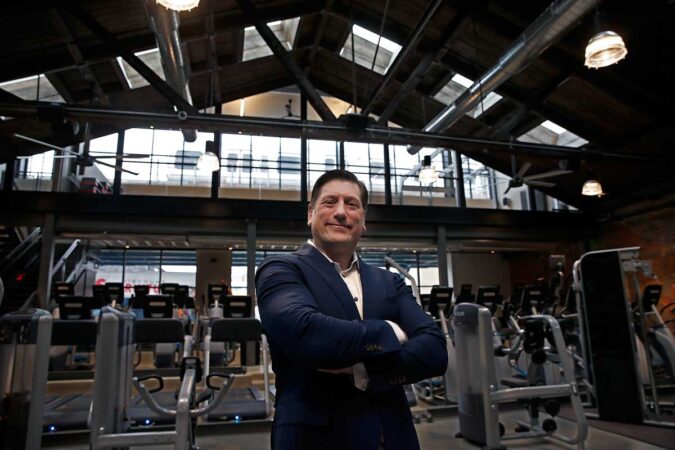
    Starting a gym was one scary workout for City Fitness’ Ken Davies

    Think your gym time is killer? That hour on the elliptical machine? That muscle-taxing combination of burpees, lunges, and side planks that make you want to collapse in a pile of sweat and tears?

    Try owning the gym.

    With his fifth City Fitness location recently opened in Fishtown, and No. 6, the biggest and swankiest of them all, planned for 44,000 square feet in the Sterling apartment building at 18th  Street and JFK Boulevard late this year or early next, founder and CEO Ken Davies is in a good place. But it wasn’t that long ago just the opposite was true.

    The financial hole Davies was in was the ultimate cardio challenge.

    He hit bottom in 2008, a year after opening the first City Fitness on the edge of Northern Liberties, at Second and Spring Garden Streets, just as a recession was bearing down. He reached the precipice of bankruptcy before pulling back.

    “I was beat up,” Davies, 44, a standout wide receiver at Radnor High School and Millersville University, recalled recently. “I didn’t even enjoy it anymore. I wasn’t even working out.”

    It’s a wonder he was making it out of bed those days.

    Davies, who is divorced, had drained the $175,000 he had accumulated in a 401(k) from earlier lucrative jobs in risk management and commercial real estate. He was missing mortgage payments on a house in Stratford, which he had remortgaged for $125,000 and then for an additional $25,000, to help meet his capital needs. He also was delinquent on repayment of a $1.25 million loan from the U.S. Small Business Administration, owed $75,000 on credit cards, had an unsecured loan for $50,000, and needed to repay $70,000 he had borrowed from two friends.

    Plus, he had lost his primary job in information, analytics, and marketing for the commercial real estate industry because he didn’t disclose his gym business.

    One of the worst times, Davies said, was “when I basically slept in a van for a week because I was locked out of my house because I couldn’t pay my mortgage.” The other was when his debit card was declined at Wawa for a $1 purchase.

    “That was the lowest point in my life,” he said.

    City Fitness is now profitable, with gross revenues of $7.5 million, 100 employees, and national growth aspirations, Davies said.

    “I believe he is someone to watch in the fitness industry,” said Wes Deming, principal of All Commercial Capital L.L.C., who was a member of City Fitness before agreeing three years ago to serve as its financial adviser. As such, he is helping Davies locate expansion financing.

    “It can be tough,” Deming said.

    That’s true for many reasons, said Mike Trimble, a vice president in commercial lending at TD Bank. Lack of collateral is one, because most gym owners lease facilities. Another is uncertainty of membership duration.

    Which explains the lack of enthusiasm Davies encountered early on:

    “One banker said, ‘If you were Walt Disney, we wouldn’t lend to you if it was a gym.’ They hated gyms. Even to this day, even with my success, it’s still difficult.”

    Incorporating in May 2005, Davies started paying $20,000 a month to rent the Second and Spring Garden location, which he expected to have open for business in 2006. He was selling memberships for $29.99 a month based on poster-board depictions of what he planned for the site.

    About 300 memberships were sold. Buyers turned against Davies when no gym materialized, accusing him on at least one blog site of stealing their money, he said.

    It took five months to secure the Small Business Administration loan. Build-out  took  an additional six or seven. The first City Fitness gym opened in August 2007. By then, about 10 percent of the presale members had asked for refunds, Davies said.

    Then “things turned from bad to worse,” as can be expected when expenses — equipment leases, instructors, software, office and cleaning supplies, rent — exceed income. Membership sales were slow and revenue from personal training virtually nonexistent, which Davies largely attributed to the recession. Debt mounted.

    To help turn things around, he borrowed the low-cost strategy of a competitor, Planet Fitness. City Fitness memberships dropped to $19.99 a month, quickly attracting 1,000 sign-ups.

    “They have a great model,” Davies said of Planet Fitness, where memberships are currently offered for $10 a month. “But you can’t provide the gym I wanted.”

    That’s a place where equipment is replaced every three years, a robust schedule of group exercise is offered along with top-notch training programs, and where service with a smile and fastidious cleaning are priorities, said Tom Wingert, marketing director for City Fitness. Memberships now start at $49.99 a month.

    “City Fitness’ costs are a direct result of how expensive it is to maintain the level of quality seen in our clubs,” said Wingert, who last year created the city wellness initiative, My City Moves, to achieve another City Fitness objective: community-building.

    “Fitness is a moving target,” said Tracy Shannon, an owner of competitor Sweat, which has been in business since 1997 and plans to open its eighth gym in March at 1 South Broad Street.

    Success is “about staying ahead of the game” and keeping members happy, Shannon said. “If you think you have it figured out, it changes.”

    It wasn’t until 2012 that Davies could open a second location, in the city’s Graduate Hospital section. A smaller “express gym” opened in South Philadelphia in November 2014, followed in April 2015 by what Davies said has been the only failure so far, a personal-training studio in Society Hill at Fourth and Walnut Streets. It reopened Feb. 6 as an express gym.

    Opening in December in Fishtown was a full-scale gym that will offer 25,000 square feet of workout space when fully built out. TD Bank is sold on what Trimble said is “a model that works.”

    Integral, he said, is “an unbelievably strong brand particularly driven by the quality of the offering and Ken’s commitment to building a culture there.” TD has provided $1 million in financing for Fishtown, and a $100,000 letter of credit to support the Sterling lease.

    These days, Davies said, he functions in a state of  “productive paranoia”  because “things can always change.”

    “It’s something that keeps me driven but grounded at the same time.”

  • Joe Conklin recalls Dougherty, in his own voice

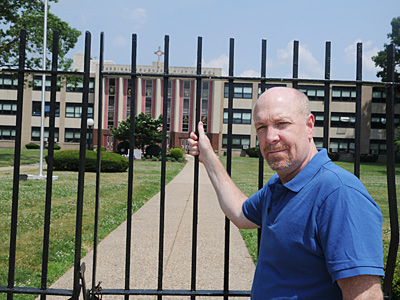
    Joe Conklin recalls Dougherty, in his own voice

    IN OLNEY, there was the Schwarzwald Inn, the Heintz plant, the Olney Times and Cardinal Dougherty. For years I didn’t even know Cardinal Dougherty was a person; I thought it was a giant company.

    Cardinal Dougherty High School was bigger than U.S. Steel. At least it felt that way when I was growing up. I thought it was around for 100 years before I arrived and I figured it would be around for 100 more after I left.

    But this mammoth Catholic institution on 2nd Street above Godfrey, the largest Catholic high school in the world with 6,100 students at its peak in the mid-1960s, will close its doors later this month.

    Named in honor of Cardinal Dennis Dougherty and opened in 1956, the school is survived by more than 40,000 alumni and another 1,000 or so teachers, administrators and staff. In lieu of angry letters to the Archdiocese, please enjoy the experience.

    I’m one of seven in my family to walk the halls of the big CD (Maureen ’69, Jim ’70, Joan ’72, John ’74, Kathy ’78, Joe ’80 and Eileen ’82). Our house was two blocks from the school, so my familiarity with Dougherty started long before my years as a student.

    The school is almost outside the city, just short of Cheltenham Avenue. But we always thought it was cool that you could see all the way to City Hall when you were walking home.

    Dougherty was a constant topic of conversation at the kitchen table. I’d hear my brothers dropping the names of the school’s great athletes: Maurice Savage, Billy Magarity, George Paull, Mike Dennery, Joe Empson, Stevie Conway, Kathy Bess, Kevin Kane, Jim Cooper, Lawrence Reid. CD was the big leagues. To even make one of the sports teams at Dougherty you had to be an exceptional athlete. I played a lot of intramurals.

    I still can hear my sister Joan belting out show tunes from her years in the plays. I still can hear her because she hasn’t stopped belting them out.

    My earliest memory of CD was seeing the world-famous Cardinal Dougherty marching band high-stepping down 2nd Street when I was 5 years old. The band was bigger than life. Bold colors head to toe, dressed like the British Royal Guards, but with our colors: long garnet coats with gold sashes, bright white pants, shiny white shoes. The drum major boldly brandished a gold staff and wore a hat that was a foot tall with a tassle on top, also a foot tall. The band was followed by the drill team: 100 girls with matching berets, suits and boots, marching in lock step. Think Catholic Rockettes.

    They segregated the boys from the girls at the school; it was called co-institutional. One of its most unique physical characteristics was a wall of corrugated steel running straight through the center, dividing the girls’ side and the boys’ side, on all floors. The curriculum was decidedly asexual. (The wall came down in the summer of ’69.)

    I had some great teachers at Dougherty. Mr. Frank Rauscher comes to mind immediately. Junior year, English 3, “Word Wealth.” We had an athletic director who addressed students not by name, but by number. He was a grouchy old priest who set up shop in the little room in the corner of the gym. He would jump out when he heard the clicking of leather soles on the gym floor. If he caught you walking across the hardwood with your shoes on, he’d give you two demerits.

    In my senior year I took advantage of a great opportunity to announce the basketball games for the legendary Bob Harrington, dean of Catholic League coaches. Once during a timeout he leaned over the scorer’s table and said: “Hey, Conk. No funny comments when our guys are on the line, OK?” Yes, Mr. Harrington.

    The student body that topped out at 6,100 kept dwindling, though, to an enrollment of 641 today. The neighborhood has changed and not enough families are sending their kids to this Catholic high school anymore.

    Now the decision to close the school has been made. U.S. Steel started dismantling its Fairless Hills, Bucks County, plant in the early ’90s, but after retooling, the complex still functions today. They got smaller and smarter. The opinion here is that Dougherty could have done the same.

    But I don’t live in Olney anymore and I didn’t send my kids to school there, so I can’t point fingers.

    When I graduated from eighth grade at St. Helena’s School, I brazenly threatened to go to Central High. My mother said: “No, you need the priests at Dougherty.” She was right. I’m richer for the experience.

    Joe Conklin is a comedian and master impressionist, the “Man of a Thousand Voices.” His work is featured most weekdays on the “Morning Show” on WIP (610-AM). You can hear some of Joe’s impressions and see his appearance schedule at www. joeconklin.com. In his words: “I needed the priests, the characters, the rules, the opportunities, the friendships, the microphone, the stage, the right from wrong. So raise a glass [or a can of Schmidt’s] as ‘our sons and daughters hail, we hail Cardinal Dougherty High!’ “