Category: News

Latest breaking news and updates

  • Nearly 30 employees have left Chester County’s election office since 2021 amid allegations of toxic work culture

    Nearly 30 employees have left Chester County’s election office since 2021 amid allegations of toxic work culture

    More than two years ago, a Chester County Voter Services employee made a dire prediction.

    In an eight-page grievance against Voter Services Director Karen Barsoum, the employee described a hostile work environment in which election workers were subjected to “bullying” from the department’s director.

    At the time of the complaint, the employee wrote, 15 people had left the 25-person department since Barsoum was hired in 2021.

    “I have very legitimate fears that there will be a mass exodus from voter services in the coming months,” the employee, who asked not to be named for fear of retaliation, wrote in the grievance document he provided to The Inquirer. “My concern is how this will impact the 370k voters of Chester County.”

    Two years later, it appears that his prediction had come true. The number of staff departures since Barsoum took over grew to 29 by November of this year, according to a Chester County spokesperson.

    Election offices across the nation have experienced a high level of turnover and staff burnout in recent years in the face of election denialism and threats, but Chester County’s churn-rate is nearly double the number of departures in Montgomery and Delaware Counties’ elections departments that have lost 16 and 15 people respectively in the same time period. Both departments are larger than Chester County’s election office.

    Accounts and records from three former staffers at Chester County Voters Services Department, two of whom asked not to be named, paint a picture of a hostile work environment where employees were often made to feel as though management had placed a target on their back.

    These concerns have been raised to elected and non-elected county leaders for more than two years.

    Barsoum said in an interview that she couldn’t respond to allegations from employees but described her management style as collaborative.

    Employees, she said, had left for a variety of reasons including jobs in other Southeast Pennsylvania election offices that pay better than Chester County. Others, she said, left to pursue other opportunities or for family reasons.

    Some, she said, left because of the increased pressures of election work as state law changes and the intensity increases.

    “I encourage everyone to do what is the best for them,” Barsoum said Thursday.

    Though Barsoum acknowledged it was challenging for the office when people left, she said she and other managers were very hands-on in training staff and ensuring that staff members knew the ins and outs of various positions.

    Karen Barsoum, Chester County’s director of voter services, at the Chester County Government Services Building in 2022.

    The employee who filed the grievance said he feared that the attrition would lead to mistakes during the 2024 presidential election, when the eyes of the nation were on Pennsylvania.

    The county reported no major mistakes in 2024.

    But in 2025 the department failed to include an office on the May primary ballot and left the names of roughly 75,000 voters off the poll books in November.

    Ultimately, everyone who wanted to vote was able to, county officials said. But the error created a chaotic scene as the county kept polls open two additional hours and more than 12,000 voters were asked to cast provisional ballots — which require more steps from election workers and voters to be counted.

    The county hired a West Chester law firm to investigate how and why the poll book error occurred.

    Chester County’s CEO David Byerman, the county’s top unelected official, said that turnover across all departments can be attributed to a variety of factors in the county including pay and managers.

    He described working in elections today as a “pressure cooker” as a result of the political climate.

    The investigation, he said, would look closely at management in the department and whether factors existed that would have hindered staff from identifying or reporting concerns.

    “The very fact that we’re doing an investigation into what happened last month … indicates that we want to learn more about what happened in this particular election,” Byerman said. “Part of that investigation is looking at the performance of our management team in voter services.”

    It’s unclear at this stage whether the error can be attributed to the turnover and environment in voter services, but Paul Manson, a professor at Portland State University who researches challenges faced by election workers, said the turnover seen in Chester County is unusual and alarming.

    Often, Manson said, staff tends to be relatively stable in election offices because they care deeply about the work. Stressors of reduced staffing and the toxic environment described by three former employees, he said, could create a dynamic that makes mistakes more likely.

    “When we have these periods of turnover local election officials really sort of grit their teeth because they worry about these small errors turning into big errors,” he said.

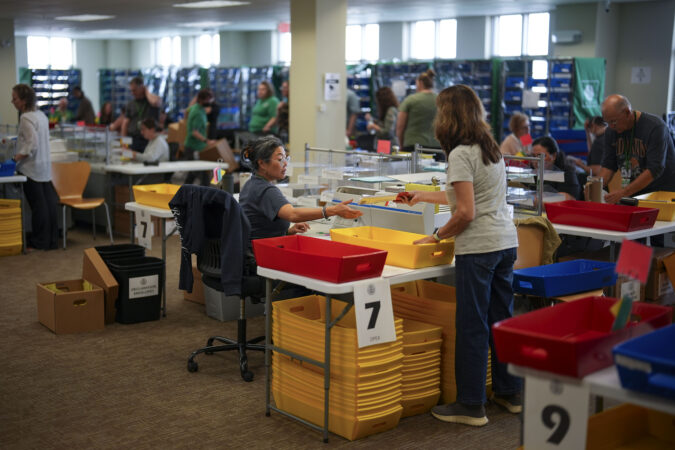
    Election workers process mail ballots for the 2024 general election at the Chester County, administrative offices in West Chester. (AP Photo/Matt Slocum)

    Allegations of ‘hostility’ toward staff

    Barsoum, who came to Chester County from Berks County in 2021, has earned respect in the election field nationally and within Pennsylvania. Barsoum had been the assistant director in the Berks election office.

    “Karen Barsoum has an extraordinary knowledge that is a resource both statewide here in Pennsylvania and has been a resource nationally. I don’t think anyone doubts her knowledge of election processes,” said Byerman, the Chester County CEO.

    “At the end of the day I think any manager needs to combine two abilities. An ability to manage an office effectively and an ability to be knowledgeable and an expert.”

    Byerman said each manager in the county is evaluated on these criteria regularly, but when asked whether Barsoum possessed both qualities, Byerman did not respond.

    Former county employees said Barsoum’s high reputation outside Chester County did not align with what they experienced in their jobs.

    The employee who filed the grievance against Barsoum said he got along with her well when she started and he received high marks on performance reviews, according to documents provided to The Inquirer.

    But after a reorganization in the department in 2022, he said, he noticed that more and more staff members were leaving. The employee was promoted to a new role and during the 2022 election did that job while maintaining responsibilities from his prior role.

    He said he expressed concern about being overworked and received little support in the new role. After the employee said he dropped the ball on a minor item and reported it to Barsoum, she began treating him differently.

    “In Karen’s eyes you’re either 100% right or 100% wrong,” he said in an interview.

    The employee filed his grievance in August of 2023 after a meeting where, he said, Barsoum listed accomplishments of staff members and refused to acknowledge any of his work.

    Barsoum’s “hostility” toward him in the meeting was so noticeable, he wrote in the complaint, that eight colleagues approached him afterward to say they noticed it.

    “After so many months of mistreatment and disrespect in such a hostile work environment, it eventually gets to the point that something needs to be said. If the Presidential Election were to not run smoothly next year and ChesCo voters were disenfranchised due to the Voter Services, I would forever regret not sending this grievance,” the employee wrote in his grievance.

    That employee left the department the next year. He was placed on a performance-improvement plan weeks after submitting his grievance, and, after completing that plan, he was placed on another as a result of a low performance review and quit before he could be terminated.

    Elizabeth Sieb, who worked at the election office for eight years before leaving in 2022, said she had similar experiences with Barsoum to those detailed in the grievance. For the past year and a half she has been telling county officials about her concerns.

    In 2022, Barsoum reorganized the office to respond to the new stressors of elections and new responsibilities that come with mail voting. Since then, she said, she and staff work to evaluate after each election what worked and what didn’t so adjustments can be made.

    But Sieb said Barsoum didn’t take constructive criticism well when changes were made and stifled discussion among staff members.

    Sieb was fired from the department in 2022. She said she was placed on a personal-improvement plan that demanded that she seek mental health treatment and subsequently placed on a three-day unpaid suspension.

    Following the suspension, Sieb said, she was directed not to speak to her colleagues if it was not directly related to her work. She said she was fired for violating that rule when she reported to a lower-level manager concerns about another manager speaking disparagingly about a job applicant in earshot of other employees.

    Sieb, who at times questioned Barsoum’s decisions, said she felt that the director was threatened by long-term staff and was prone to outbursts when employees would correct her.

    “She was slowly but surely wearing down and getting rid of all the people that had been there a long time,” Sieb said.

    Jennifer Morrell, the CEO of the Elections Group, a company that assists local election officials, said turnover in election offices happens for a variety of reasons — including the long hours and relatively low pay civil servants receive.

    She noted that training programs from state agencies and associations are designed to help prevent errors as a result of turnover and that a larger department, like Chester County, may be able to fill rolls with election workers from other counties.

    “Karen is highly respected in the election community, super professional,” Morrell said. “Our hearts just ached with what happened because it could have happened to anybody.”

    Commissioners respond to concerns

    After leaving the department, Sieb said, she believed she suffered from PTSD related to her experience.

    Beginning in 2024 she began reaching out to Republican Commissioner Eric Roe with her concerns. Roe, Sieb said, investigated the complaints and brought them to the other commissioners, Democrats Josh Maxwell and Marian D. Moskowitz. The commissioners also serve as the county’s election board.

    “I have had a lot of people come to me with various concerns throughout county government, and voter services is certainly one of them,” Roe told The Inquirer, explaining that his role as minority party commissioner makes him a frequent recipient of workforce complaints.

    Chester County Commissioners (from left) Eric M. Roe, Josh Maxwell, and Marian D. Moskowitz at a board meeting in September.

    But a year and a half later, Barsoum remained in her role and Sieb continued to hear from her former colleagues with concerns. Twice this year, Sieb went before the Chester County Election Board to raise public concerns about turnover under Barsoum.

    Maxwell, who chairs the Chester County Election Board, said the county reviews reports from departments when they receive them. He said he was unable to comment on specific departments or personnel matters but said the county needed to do everything it could to support its election workers.

    “We need to do a better job, I think, making sure that people feel valued. Including the folks that unfortunately we’ve lost,” he said.

    Election work in Pennsylvania and elsewhere has gotten increasingly fraught. The work itself is more intense than it once was with more mail voting, and workers now deal with threats, longer hours, and a camera on them when they’re working with ballots.

    “We were seen as clerical people, maybe, in the past; now we are wearing many different hats,” Barsoum said.

    Moskowitz attributed much of the turnover in the county to burnout and noted the threats that election employees have faced in her years on the job.

    Barsoum became emotional as she said she had worked to ensure that her staff had the resources they needed to feel safe, including mental health resources through the Human Resources department, team building outside election cycles, and a space for workers to step off camera.

    “We can count on each other; we lean on each other. It’s a strong bond, a camaraderie,” she said.

    When hiring new staffers, Barsoum said she warns them of what’s to come — that they’re not walking into a normal 9-to-5 job, that they won’t be able to plan vacations through about half of the year, and that they’ll be asked to take phone calls from irate people.

    It’s a lifestyle, she said, that isn’t right for everyone — including some parents.

    “If you’re leaning on a daycare and that is your sole, the go-to, it will be very hard to work in the department because there is 24/7 operations, and there are so many things that are going off and beyond the regular work schedule.”
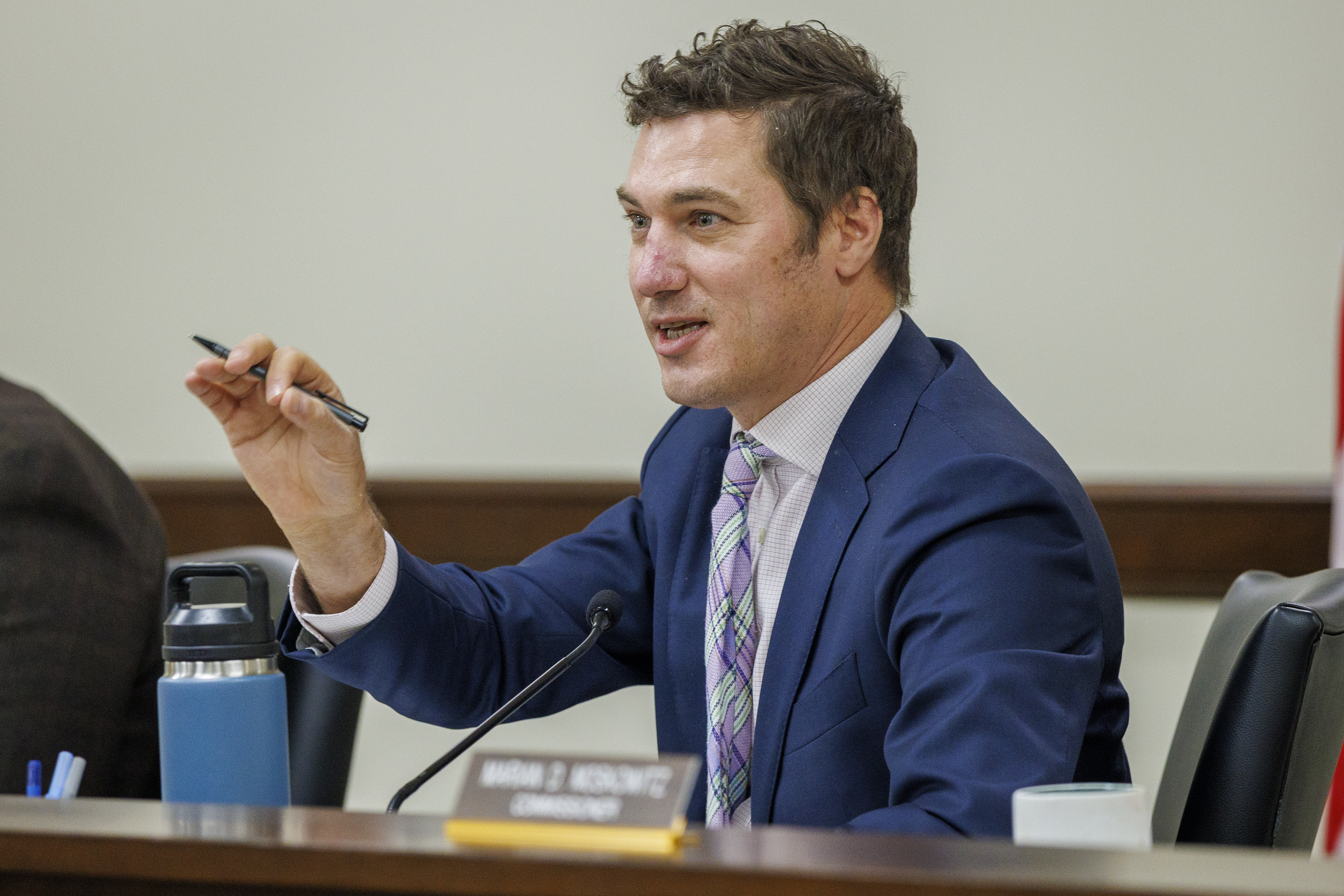
    Josh Maxwell, chair of Chester County Commissioners and the county Elections Board, presides over a September commissioners meeting.

    Maxwell and Moskowitz declined to comment specifically when asked if they were confident in Barsoum’s leadership, but Maxwell has repeatedly asked residents to direct their anger at November’s error at him rather than Barsoum or her staff.

    “I think it’s important that we protect these folks and we empower them to make the best decisions possible,” Maxwell said at an election board meeting last week.

    Speaking to The Inquirer, he reiterated that point.

    “We want to make sure that people feel welcomed and empowered and are in a working environment they appreciate,” Maxwell said in an interview.

    “Elections have changed so much in five years it’s not surprising to me that some people want to find something new to do.”

    This suburban content is produced with support from the Leslie Miller and Richard Worley Foundation and The Lenfest Institute for Journalism. Editorial content is created independently of the project donors. Gifts to support The Inquirer’s high-impact journalism can be made at inquirer.com/donate. A list of Lenfest Institute donors can be found at lenfestinstitute.org/supporters.

  • A disabled Ecuadorian immigrant tried to flag down an ICE officer. Now he faces deportation.

    A disabled Ecuadorian immigrant tried to flag down an ICE officer. Now he faces deportation.

    Victor Acurio Suarez is 52 but childlike, born with developmental disabilities that have left him unable to live on his own.

    He likes to talk to people, said his brother, who takes care of him. And on Sept. 22, in a Lowe’s parking lot near the brothers’ home in Seaford, Del., he tried to flag down an ICE agent, apparently thinking the officer could help him find work.

    Instead, Acurio Suarez, originally from Ecuador, was arrested for being in the country without permission and sent to the Moshannon Valley Processing Center, an ICE detention facility in central Pennsylvania.

    Acurio Suarez doesn’t realize he’s in custody, his brother, Lenin Acurio Suarez, said in an interview. He thinks he’s on vacation, provided with three free meals a day and allowed to buy snacks and kick a soccer ball.

    But in phone calls from Moshannon, he says that after three months, he’s grown tired of vacation and wants to come home.

    In fact, Acurio Suarez faces deportation to Ecuador ― with a key Immigration Court hearing that had been scheduled for Thursday now postponed. When that hearing takes place, he could be granted asylum and allowed to stay in the U.S., safe from the gang violence he fled, or ordered returned to his homeland.

    His case, said his attorney, Kaley Miller-Schaeffer, is a prime example of how Trump-administration policy shifts have encouraged ICE to detain even the most vulnerable and to treat potential discretionary relief as irrelevant in a bid to boost deportations.

    Her Sept. 30 request to have Acurio Suarez released to the care of his brother while his immigration case goes forward was denied.

    Asked about Acurio Suarez’s arrest and detention, ICE said in a statement that they screen and look out for the health of all detainees.

    “U.S. Immigration and Customs Enforcement is firmly committed to the health, safety, and welfare of all detainees in custody. ICE’s National Detention Standards and other ICE policies require all contracted facilities to provide comprehensive medical and mental health screenings from the moment an alien arrives at a facility and throughout their entire time in custody.”

    At an earlier court hearing, Miller-Schaeffer said, she watched as Acurio Suarez struggled to answer basic questions. He told the judge he didn’t know if he had an attorney or know what an attorney does.

    His ability to testify was so limited, she said, that the judge allowed his brother to take the stand to explain his sibling’s experience and situation.

    Acurio Suarez can recall big events in his life, she said. He remembers being beaten by gangs who seized on his vulnerability, but he couldn’t tell you exactly when that occurred.

    Today, as President Donald Trump pursues an unprecedented mass-deportation campaign, more migrants including Acurio Suarez have been made subject to mandatory detention. That means they’re held in custody during their deportation proceedings, unable to seek release on bond.

    Victor Acurio Suarez’s empty room at his home in Seaford, Del.

    That includes immigrants whose only offense was crossing the border without approval, who in the past might have been issued a notice to appear in court and allowed to live in the community while their cases go forward.

    That’s helped drive the number of immigrants in federal detention past 65,000, a two-thirds increase since Trump took office in January.

    The administration says it is arresting the “worst of the worst,” dangerous immigrants who have committed serious and sometimes violent offenses. But data show 74% of those in detention have no criminal convictions.

    That includes Acurio Suarez, who worked at odd jobs in Ecuador before coming to this country in 2021.

    According to an ICE report, at 9:14 a.m. on Sept. 22, an ICE team was conducting operations in Seaford, a southern Delaware city of 9,000 where 13% of the population is foreign-born.

    The ICE officer wrote that he was looking for a place to park in the Lowe’s lot when a man in paint-stained clothing, Acurio Suarez, approached him. Acurio Suarez waved his hand, signaling the officer to come to him, according to the ICE account.

    The officer kept going, then stopped his car and watched Acurio Suarez from another lot. Acurio Suarez tried to hail other cars, and could be seen talking to people who were loading lumber onto a trailer in the parking lot, he said.

    It looked like Acurio Suarez was trying to find daily work, which is why he tried to get the ICE officer to stop his vehicle, the report said.

    It’s common for undocumented immigrants seeking a day’s pay to wait in the parking lots of big home-improvement stores like Lowe’s and Home Depot, hoping to connect with building contractors who need laborers.

    Lenin Acurio Suarez said his brother cannot hold a full-time job, able only to handle small tasks, provided someone is beside him giving directions.

    A second ICE officer arrived, and both parked their cars near where Acurio Suarez had left his lunch box unattended. Acurio Suarez walked back toward the officers, and one of the agents approached and questioned him.

    Acurio Suarez said he had no identification or immigration documents and was placed in handcuffs. He told the officer he was in good health, the report says.

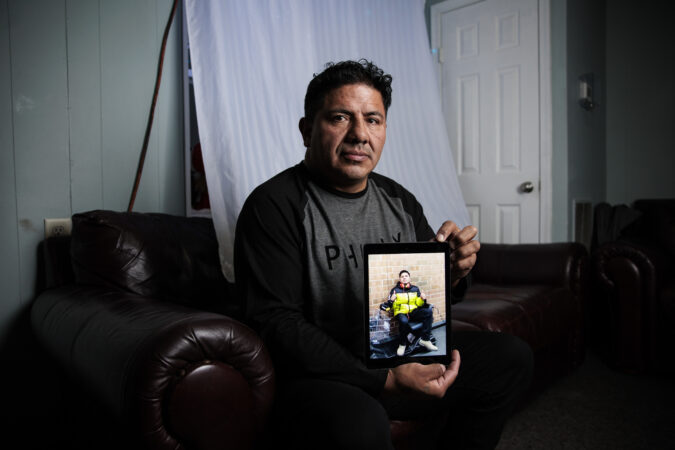
    Lenin Acurio Suarez holds a photograph of his brother, Victor, at his home in Seaford, Del., on Wednesday. Victor was arrested by ICE on Sept. 22.

    Records show that four years ago, on Aug. 2, 2021, he and his brother were stopped by the U.S. Border Patrol as they tried to enter the country near Eagle Pass, Texas, southwest of San Antonio.

    The brothers were processed separately by immigration authorities. Lenin Acurio Suarez was issued a notice to appear in court and released. His immigration case was later dismissed.

    Victor Acurio Suarez was ordered deported and subsequently returned to Ecuador on Sept. 24. But three days later, for reasons that are unclear, the deportation order was found to have been issued incorrectly, and Acurio Suarez was brought back by authorities to the U.S.

    In October 2021, he was granted temporary permission to stay in the country. He had filed his asylum case by the time that permission expired a year later.

    Asylum cases from Ecuador have surged in recent years, as thousands of people flee violence, political instability, and economic hardship. Gang violence there has rocketed as criminal organizations compete for control of the illicit economy, including extortion, kidnapping, transporting drugs, and illegal mining, according to the Geneva-based Global Initiative Against Transnational Organized Crime.

    The group projects that intentional homicides in Ecuador could reach 9,100 in 2025, a 40% increase over the previous year.

    That’s a rate of nearly 50 per 100,000 inhabitants, which would continue to give Ecuador the highest homicide rate in Latin America, the organization said. In the U.S. the figure is about five per 100,000 people.

    While ICE agents were arresting Acurio Suarez, Lenin was frantically searching the neighborhood, initially not having realized that his brother had left their home. Lenin called local police for help, and officers checked the Lowe’s security cameras. The video showed Victor being taken into custody.

    In an interview, Lenin, 49, explained that he has always taken care of his younger brother, since their mother left when they were teenagers in Ecuador.

    In this country, Lenin has a job in housing construction that enables him to provide for himself and his brother and to live with others in a rented house. He worries what will happen to Victor if he’s sent back to Ecuador, where there’s no one to care for him.

    “Thanks to God I’ve been able to pay rent and food for me and my brother,” Lenin said. “I am grateful for this country, to be in this country. But I want my brother to have a fair life, with me, out of detention. He won’t be able to survive by himself in Ecuador.”

  • Courtroom recordings raise questions about Judge Scott DiClaudio’s testimony in probe of whether he tried to influence case

    Courtroom recordings raise questions about Judge Scott DiClaudio’s testimony in probe of whether he tried to influence case

    When Common Pleas Court Judge Scott DiClaudio sat before the Court of Judicial Discipline in October and answered questions under oath about whether he sought to influence a colleague’s decision in a case, he denied having summoned the fellow judge to his Philadelphia courtroom.

    DiClaudio said he did not ask Judge Zachary Shaffer to come see him that day in June. Shaffer, he said, showed up unannounced.

    “I was unaware that day he was going to walk in,” DiClaudio said. “He was unannounced and unexpected.”

    But a recording captured by digital audio systems inside DiClaudio’s and Shaffer’s courtrooms and obtained by The Inquirer calls that account into question.

    According to the recording, DiClaudio asked his assistant, Gary Silver, to contact Shaffer on the morning of June 12.

    “Is Judge Shaffer on the bench right now?” DiClaudio asked his court staff around 11 a.m., according to the recording. “Can you call down there and see if he’s still on the bench, please?”

    A few minutes later, according to a recording from the digital system inside Shaffer’s courtroom, Silver visited Shaffer.

    “1001 wants to see you,” Silver told the judge, referring to the number of DiClaudio’s courtroom, according to the audio.

    The recordings raise questions about DiClaudio’s sworn testimony before the disciplinary panel as he faces charges from the Judicial Conduct Board that he sought to influence Shaffer’s handling of a gun case involving a defendant with ties to Philadelphia rapper Meek Mill.

    Elizabeth Hoffheins, deputy counsel for the Judicial Conduct Board, said during the hearing that DiClaudio’s conduct was so egregious that it brought the judiciary into disrepute.

    DiClaudio has denied that he sought to influence Shaffer’s decision-making and said his colleague misunderstood his words and intentions on that day. He has been suspended without pay as the disciplinary case proceeds.

    DiClaudio’s attorney, Michael van der Veen, declined to comment on the recordings and said the judge had done nothing wrong.

    “It would not be appropriate to comment about alleged secondhand partial evidence in an ongoing matter,” van der Veen said in a statement Monday. “It remains very concerning that there are continual leaks of information somewhere in this process. As from the beginning, my client professes his innocence.”

    Common Pleas Court Judge Zachary Shaffer testified that Judge Scott DiClaudio’s assistant came to his courtroom on the ninth floor of the city’s criminal courthouse and said DiClaudio wanted to see him on the morning of June 12.

    The conversations were captured on a digital audio recording system embedded in dozens of courtrooms across Philadelphia to aid in the transcription of testimony and proceedings. The systems, which have been in city courtrooms since 2003, can be turned on and off between hearings at the discretion of court reporters, who transcribe hearings.

    On the morning of June 12, inside courtrooms 1001 and 905, the systems captured the brief side conversations of the judges and their staff.

    At the hearing in the Court of Judicial Discipline, Shaffer testified that he was seated in his ninth-floor courtroom when Silver, DiClaudio’s assistant and a former defense attorney, came in and said DiClaudio wanted to see him.

    Shaffer said that during that week in June, he and his court clerk, Nicole Vernacchio, had been in touch with DiClaudio about buying T-shirts from DiClaudio’s wife’s cheesesteak shop.

    About 45 minutes after Silver came by, he said, they went up to DiClaudio’s 10th-floor room, assuming the shirts were ready to be picked up.

    They met in DiClaudio’s robing room and talked for about 10 minutes before DiClaudio asked Vernacchio to leave the room, he said. Vernacchio also testified that the judge asked her to step out.

    After she left, Shaffer said, DiClaudio pulled out a piece of lined paper with “Dwayne Jones, courtroom 905, and Monday’s date” written on it.

    DiClaudio held it out at his side, he said, then looked at him and said, “OK?”

    Shaffer said he was confused, and hesitantly said, “OK.”

    Then, he said, DiClaudio ripped up the paper and threw it away.

    The judges then spoke casually about unrelated topics for a few minutes, he said. As he started to leave, Shaffer said, DiClaudio told him, “‘You probably would have done the right thing anyway.’”

    Shaffer said he was shocked. He believed DiClaudio was suggesting that he should give a favorable sentence to Jones, who was scheduled to appear in front of him in a few days on illegal gun possession charges connected to a fatal shooting.

    The next morning, Shaffer said, he reported the conversation to his supervisors, and they referred the matter to the Judicial Conduct Board. He recused himself from Jones’ case.

    Court administrators placed DiClaudio on administrative leave amid an investigation into the matter.

    In September, the Judicial Conduct Board charged DiClaudio with multiple ethical violations, saying his actions on that day represented “conduct that was so extreme that it brought the judicial office itself into disrepute.”

    At the October hearing, held to determine whether DiClaudio should be suspended without pay amid the ongoing inquiry, DiClaudio took the stand and vehemently denied Shaffer’s version of events.

    He said he had met Jones at The Roots Picnic on June 1. During a brief conversation, he said, Jones mentioned that he had a gun case in front of Shaffer, and gave DiClaudio his business card.

    “I eventually say, ‘Judge Shaffer is a good judge. He does the right thing,’” DiClaudio said he responded. “He gives me his card. I put it in my cell phone case. Then he leaves, never to be seen again.”

    He’d forgotten about the conversation, he said, until he saw Shaffer on June 12 and remembered he still had Jones’ business card. He took out the card and relayed the conversation he’d had with Jones before tossing it into the trash, he said.

    “I was relating the story to Judge Shaffer to give him a compliment,” DiClaudio said. “I wasn’t trying to influence a case.”

    He also denied asking Vernacchio, the clerk, to leave the room.

    Van der Veen asked DiClaudio whether he asked Shaffer to come to his courtroom.

    “Never,” he said.

    Van der Veen told the disciplinary panel that he and DiClaudio had never before heard Shaffer’s contention that his fellow judge had summoned him for a conversation and said it was “shocking.” And he noted that there was no mention of such a request in the summary of Shaffer’s interview with the investigator from the disciplinary board.

    (Shaffer, for his part, insisted that he told the investigator DiClaudio had asked him to come to his courtroom. He said he did not review the summary of his conversation with the investigator before it was shared with the board and DiClaudio and his lawyer, and said the report was incomplete and in some ways inaccurate.)

    Van der Veen seized on the omission. He suggested that the assertion that DiClaudio had called Shaffer to his courtroom was a “new fact” belatedly raised to support his contention that DiClaudio had sought to influence him.

    “Otherwise‚” the lawyer said, “it is completely nonsensical. If you’re going to come to the theory of the prosecutors, that this was … clandestine, premeditated, and designed by Judge DiClaudio, that’s completely false if Judge DiClaudio didn’t call for the meeting.”

    Hoffheins, the attorney for the Judicial Conduct Board, told the disciplinary panel DiClaudio orchestrated the meeting with Shaffer to seek a favorable sentence for Jones. The judge did so, she said, because Jones is a friend of Meek Mill. DiClaudio is also a friend of Mill’s, and has worked with him on criminal justice reform issues related to the rapper’s nonprofit.

    “The nature of misconduct here is not a technical misstep. It is an abuse of judicial privilege,” she said of DiClaudio’s actions. “It was made behind closed doors, and it was an attempt to tilt the scales of justice for a personal acquaintance.”

    The judicial officers on the disciplinary court agreed that the allegations were consequential. In November, they suspended DiClaudio without pay.

    The case now awaits a trial before the disciplinary tribunal. If the panel finds that DiClaudio violated judicial ethics or constitutional rules, he could be censored, fined, or removed from office.

    DiClaudio was elected to Philadelphia’s Court of Common Pleas in November 2015, and took the bench in January 2016. In recent years, he has mostly heard cases filed by people seeking to have their murder convictions overturned.

    He has presided over many high-profile exonerations and wrongful-conviction cases and approved the release or resentencing of dozens of people who had been serving life in prison.

    Over the last decade, he has faced multiple inquiries from the Judicial Conduct Board.

    In 2020, the Court of Judicial Discipline determined that he violated the code of conduct for judges when he failed to report debts on annual financial disclosure forms and repeatedly defied a judge’s orders to pay thousands of dollars in overdue bills to a Bala Cynwyd fitness club. He was suspended for two weeks, and placed on probation through 2026.

    Then, in April of this year, the board filed charges against DiClaudio for allegedly using his position as a judge to promote his wife’s cheesesteak shop. In so doing, the board said, he had eroded public trust in the judiciary and abused the prestige of the office for personal gain. DiClaudio has denied the allegations, and the case is pending before the disciplinary court.

    DiClaudio was reelected to another 10-year term last month, though he has publicly discussed retiring after the New Year.

  • Trump administration says White House ballroom construction is a matter of national security

    Trump administration says White House ballroom construction is a matter of national security

    WASHINGTON — The Trump administration said Monday in a court filing that the president’s White House ballroom construction project must continue for reasons of national security.

    The filing came in response to a lawsuit filed last Friday by the National Trust for Historic Preservation asking a federal judge to halt the project until it goes through multiple independent reviews and wins approval from Congress.

    In its filing, the administration included a declaration from the deputy director of the U.S. Secret Service saying more work on the site of the former White House East Wing is still needed to meet the agency’s “safety and security requirements.” The administration has offered to share classified details with the judge in an in-person setting without the plaintiffs present.

    The government’s response to the lawsuit offers the most comprehensive look yet at the ballroom construction project, including a window into how it was so swiftly approved by the Trump administration bureaucracy and its expanding scope.

    The filings assert that final plans for the ballroom have yet to be completed despite the continuing demolition and other work to prepare the site for construction. Below-ground work on the site continues, wrote John Stanwich, the National Park Service’s liaison to the White House, and work on the foundations is set to begin in January. Above-ground construction “is not anticipated to begin until April 2026, at the earliest,” he wrote.

    The National Trust for Historic Preservation did not immediately respond to email messages seeking comment.

    The privately funded group last week asked the U.S. District Court to block Trump’s ballroom addition until it goes through comprehensive design reviews, environmental assessments, public comments, and congressional debate and ratification.

    Trump had the East Wing torn down in October as part of the project to build an estimated $300 million, 90,000-square-foot ballroom before his term ends in 2029.

    The administration argues in the filing that the plaintiff’s claims about the demolition of the East Wing are “moot” because the tear-down cannot be undone. The administration also argues that claims about future construction are “unripe” because the plans are not final.

    The administration also contends that the National Trust for Historic Preservation cannot establish “irreparable harm” because above-ground construction is not expected until April. It argues that the reviews sought in the lawsuit, consultation with the National Capital Planning Commission and the Commission of Fine Arts, “will soon be underway without this Court’s involvement.”

    “Even if Plaintiff could overcome the threshold barriers of mootness, ripeness, and lack of standing, Plaintiff would fail to meet each of the stringent requirements necessary to obtain such extraordinary preliminary relief,” the administration said.

    Trump’s ballroom project has prompted criticism in the historic preservation and architectural communities, and among his political adversaries, but the lawsuit is the most tangible effort thus far to alter or stop his plans for an addition that itself would be nearly twice the size of the White House before the East Wing was torn down.

    A hearing in the case was scheduled today in federal court in Washington.

  • The snow and ice are sticking around the Philly region after an unusual storm

    The snow and ice are sticking around the Philly region after an unusual storm

    What have become the glacial remnants of a picturesque and a meteorologically unusual snowfall that tufted the trees and bushes with a cottony whiteness are likely to stay around for a few more days.

    In what has been quite a chilly December, with not a single day of above-normal temperatures, readings tumbled into the teens for the second consecutive morning on Tuesday and not make it out of freezing in the afternoon.

    Expect more ice and stealth “black ice,” re-frozen snow melt that forms on driveways, sidewalks and other surfaces, again Wednesday morning.

    But if you’re getting tired of salting and chipping ice after those overnight freeze-ups, you’re about to get some help.

    A warm-up is forecast to get underway Wednesday, and come Thursday, which is slated to be the warmest day since before Thanksgiving, the atmosphere is expected to train its snow-removal guns on the region.

    Forecasters see a surge of snow-erasing warmth and a significant — and badly needed — rainfall Thursday night that should restore the landscape to a condition more familiar to Philadelphians and ease precipitation deficits.

    As for the prospects of a winter-wonderland encore, nothing is on the horizon in the near term, said Nick Guzzo, meteorologist with the National Weather Service in Mount Holly.

    Said Matt Benz, senior meteorologist with AccuWeather Inc, “For folks looking for more snow, this might have been it.”

    At least for now and perhaps until after Christmas, or later. But, “Winter’s not done yet,” Benz said.

    Willow, a West Highland, is with Amanda and David York on a walk in Maria Barnaby Greenwald Memorial Park in Cherry Hill on Sunday morning.

    The warmup in Philly is expected to be brief

    Temperatures could go as high as 55 degrees Thursday, Benz said. Then after a cold front passes through, temperatures will fall during the day Friday.

    This won’t be an Arctic front like the one that gave Philly its coldest day of the season on Monday, with a high of 28. However, the forecasts call for readings to be no higher than the 30s on Saturday, and mid-40s on Sunday, which is close to the longer-term normal high, followed by several degrees chillier on Monday.

    What’s expected for the next two weeks

    In its updated extended outlooks on Monday, NOAA’s Climate Prediction Center had just about the entire country with above-normal temperatures through Dec. 29, with a notable exception — the Northeast, including Philadelphia.

    Predicted upper-air conditions in the Arctic and the North Atlantic would argue against above-normal temperatures around here during the period, climate center forecaster Thomas Collow said.

    The center wisely eschews the snow-forecasting business.

    Philly just had quite the unusual snow event

    Regardless of what happens the rest of the way, the winter of 2025-26 will be snowier than at least seven others in the period of snow records that date to the winter of 1884-85.

    The 4.2 inches measured officially at Philadelphia International Airport Sunday is a half-inch above the long-term average for the season to date.

    Granted almost any substantial snowfall would seem exceptional these days around here, but this one truly was, said the weather service’s Zach Cooper, a meteorologist in the Mount Holly office.

    Most of Philly’s significant snows are the result of coastal storms that mine moist air from the ocean.

    That wasn’t the case Sunday.

    ”In some ways it was a bit of a unique situation for us, especially to get the amounts that we did,” he said.

    The snow was generated by a weak “clipper system,” a storm that dives out of southwestern Canada and usually has minor impacts around here, and a disturbance in the upper atmosphere.

    Totals generally ranged from 4 to 8 inches across the region. Totals were less around the city in part because temperatures took their good, old time dropping below freezing.

    Marginal temperatures also were a factor in the spread of accumulations. They added some extra weight and heft to the flakes that glommed on the branches and what remains of the foliage with tenacity.

    While the show will have a limited run, the region learned anew that snow and ice may be a pain, but nothing decorates like nature.

  • ‘General Hospital’ star Anthony Geary of Luke and Laura fame dies at 78

    ‘General Hospital’ star Anthony Geary of Luke and Laura fame dies at 78

    Anthony Geary, who rose to fame in the 1970s and ’80s as half the daytime TV super couple Luke and Laura on General Hospital, has died. He was 78.

    “We are deeply saddened by the passing of Anthony Geary, whose portrayal of Luke Spencer helped define General Hospital and daytime television,” ABC said in a statement confirming his death.

    Geary died Sunday in Amsterdam of complications from a surgical procedure three days prior.

    “The entire General Hospital family is heartbroken over the news of Tony Geary’s passing,” Frank Valentini, executive producer of the ABC show, said in a statement Monday. “Tony was a brilliant actor and set the bar that we continue to strive for.”

    In a career spanning more than 40 years, Geary earned eight Daytime Emmy awards as Luke Spencer after joining the soap in 1978. Luke’s pairing with Genie Francis’ Laura Webber Baldwin (as she was known at the time) propelled the two onto magazine covers and into the cultural mainstream.

    The 1981 wedding of Luke and Laura was a pop culture phenom done in two parts, drawing guest appearances that included Elizabeth Taylor. A record 30 million viewers watched.

    “He was a powerhouse as an actor. Shoulder to shoulder with the greats. No star burned brighter than Tony Geary. He was one of a kind. As an artist, he was filled with a passion for the truth, no matter how blunt, or even a little rude it might be, but always hilariously funny,” Francis said in a statement.

    In addition to his role as Luke, Geary had numerous TV and stage credits, including stints on other soaps: The Young and the Restless and Bright Promise. Geary played Luke on and off until 2015, though he returned for a cameo in 2017.

    He lived a quiet life with husband Claudio Gama in Amsterdam.

    In a 1993 interview, Geary spoke of the many highs and lows of playing Luke.

    “I felt like I had to be Luke 24 hours a day or people would be disappointed,” he said. “As far as I’m concerned, they are mythic creatures. They come from two sides of the universe together and have a mutual connection, which is basically lust and appreciation for individuality. They love the eccentricity in each other.”

    Geary’s Luke began as a small-time hitman recruited to dismantle the relationship of Laura and her first husband, Scotty Baldwin. Their story arc turned darker when Luke sexually assaulted Laura. The assault led to a redemption trail for Luke, who evolved into a hero and even served as mayor of the show’s small town, Port Charles.

    “He was not created to be a heroic character,” Geary told ABC’s Nightline in 2015. “He was created to be an anti-hero, and I have treasured the anti-side of the hero and pushed it for a long time. … He’s not a white hat or a black hat, he’s all shades of gray. And that has been the saving grace of playing him all these years.”

    Geary was born to Mormon parents in Coalville, Utah. He was discovered while attending the University of Utah and performing on stage. He joined a touring company of The Subject Was Roses, which brought him to Los Angeles.

    Over the years, he appeared frequently in stage productions alongside his screen work.

    Geary’s first appearance on TV was as Tom Whalom on an episode of Room 222. He went on to appear in All in the Family, The Partridge Family, The Mod Squad, Marcus Welby, M.D., The Streets of San Francisco, and Barnaby Jones.

  • Crash caused by man fleeing warrant kills 63-year-old woman in Uber, police say

    Crash caused by man fleeing warrant kills 63-year-old woman in Uber, police say

    A 63-year-old woman riding as a passenger in an Uber vehicle was killed Monday morning when a man allegedly fleeing a warrant crashed a car into the Uber in North Philadelphia, police said.

    Just before 7:15 a.m., the Philadelphia Sheriff’s Office attempted to serve a domestic-assault warrant for Joseph Cini, 35, on the 900 block of North Watts Street.

    Police said Cini fled the scene in a Nissan Maxima heading east on Girard Avenue from Watts. The Maxima crashed into a red Jeep Patriot at the intersection of Ninth Street and Girard Avenue, and Cini allegedly got out of the car and ran north on Eighth Street.

    The female Uber passenger was pronounced dead at the scene, police said. The 51-year-old driver was taken by medics to Temple University Hospital, where he was listed in stable condition.

    Cini is now also wanted for leaving the scene of a fatal accident, and anyone who knows his whereabouts is asked to call the police Crash Investigation Division at 215-685-3181.

    Tips can also be submitted anonymously by calling or texting the police department’s tip line at 215-686-TIPS (8477).

    A spokesperson for the Sheriff’s Office said in an email that the agency was “fully cooperating with all investigative authorities.”

    The spokesperson added: “The Office extends its deepest condolences to the victim’s family. Support services have been made available to the deputies involved.”

  • Punk protest group Pussy Riot declared ‘extremist organization’ by a Russian court

    Punk protest group Pussy Riot declared ‘extremist organization’ by a Russian court

    Punk group Pussy Riot was declared an “extremist organization” by a Russian court on Monday.

    The ruling, which was made by Moscow’s Tverskoy District Court, effectively outlaws the group from operating in Russia and puts anyone linked with the group at risk of criminal prosecution.

    The feminist protest group first catapulted to notoriety in 2012, when its members performed a provocative “punk prayer” against President Vladimir Putin from the pulpit of Russia’s largest cathedral.

    Today, members of the group remain part of Russia’s opposition, largely working in exile.

    In September, five people linked with Pussy Riot — Maria Alyokhina, Taso Pletner, Olga Borisova, Diana Burkot, and Alina Petrova — were handed jail terms by a Russian court after being found guilty of spreading “false information” about the Russian military, news outlet Mediazona reported. Mediazona was founded by Alyokhina along with another Pussy Riot member, Nadezhda Tolokonnikova.

    The case was linked to an anti-war music video made by the group, as well as an art performance in Germany that saw Pletner urinate on a portrait of Putin.

    Alyokhina received a 13-year prison sentence, while Pletner was given 11 years. Burkot, Petrova, and Borisova were given eight years’ imprisonment. All have rejected the charges as politically motivated.

  • Western, Arab diplomats tour Lebanon-Israel border to observe Hezbollah disarmament efforts

    Western, Arab diplomats tour Lebanon-Israel border to observe Hezbollah disarmament efforts

    BEIRUT — Western and Arab diplomats toured an area along Lebanon’s border with Israel Monday where Lebanese troops and U.N. peacekeepers have been working for months to end the armed presence of the militant Hezbollah group.

    The delegation that included the ambassadors of the United States and Saudi Arabia was accompanied by Gen. Rodolph Haikal, commander of the Lebanese Armed Forces, as well as top officers in the border region.

    The Lebanese government has said that by the end of the year, the army should have cleared all the border area south of the Litani River of Hezbollah’s armed presence.

    Hezbollah’s leader Naim Kassem had said that the group will end its military presence south of the Litani but vowed again over the weekend that they will keep their weapons in other parts of Lebanon.

    Parts of the zone south of the Litani River and north of the border with Israel were formerly a Hezbollah stronghold, off limits to the Lebanese national army and U.N. peacekeepers deployed in the area.

    During the tour, the diplomats and military attaches were taken to an army post that overlooks one of five hills inside Lebanon that were captured by Israeli troops last year.

    “The main goal of the military is to guarantee stability,” an army statement quoted Haikal as telling the diplomats. Haikal added that the tour aims to show that the Lebanese army is committed to the ceasefire agreement that ended the Israel-Hezbollah war last year.

    There were no comments from the diplomats.

    The latest Israel-Hezbollah war began Oct. 8, 2023, a day after Hamas attacked southern Israel, after Hezbollah fired rockets into Israel in solidarity with Hamas. Israel launched a widespread bombardment of Lebanon in September last year that severely weakened Hezbollah, followed by a ground invasion.

    The war ended in November 2024 with a ceasefire brokered by the U.S.

    Israel has carried out almost daily airstrikes since then, mainly targeting Hezbollah members but also killing 127 civilians, according to the office of the U.N. High Commissioner for Human Rights.

    On Sunday, the Israeli military said it killed three Hezbollah members in strikes on southern Lebanon.

    Over the past weeks, the U.S. has increased pressure on Lebanon to work harder on disarming Hezbollah and canceled a planned trip to Washington last month by Haikal.

    U.S. officials were angered in November by a Lebanese army statement that blamed Israel for destabilizing Lebanon and blocking the Lebanese military deployment in south Lebanon.

    A senior Lebanese army official told the Associated Press Monday that Haikal will fly to France this week where he will attend a meeting with U.S., French, and Saudi officials to discuss ways of assisting the army in its mission. The officer spoke on condition of anonymity because he wasn’t authorized to speak publicly.

    The Lebanese army has been severely affected by the economic meltdown that broke out in Lebanon in October 2019.

  • U.S. Army names 2 Iowa National Guard members killed in attack in Syria

    U.S. Army names 2 Iowa National Guard members killed in attack in Syria

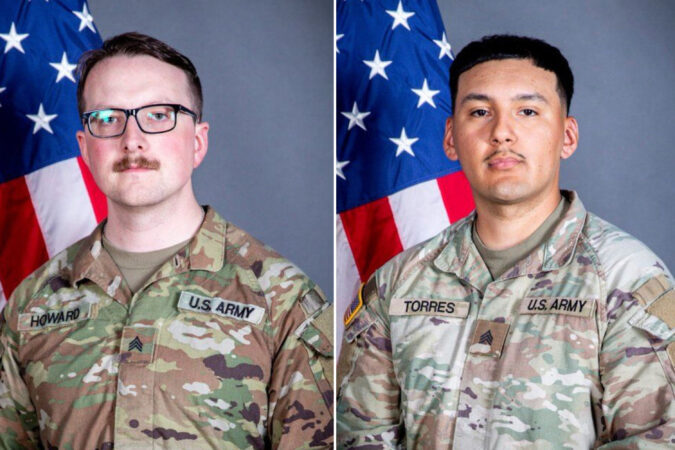
    WASHINGTON — The two Iowa National Guard members killed in a weekend attack in Syria that the U.S. military blamed on the Islamic State group were identified Monday and remembered as dedicated soldiers.

    The U.S. Army named them as Sgt. Edgar Brian Torres-Tovar, 25, of Des Moines, and Sgt. William Nathaniel Howard, 29, of Marshalltown.

    Iowa Gov. Kim Reynolds ordered all flags in Iowa to fly at half-staff in their honor, saying, “We are grateful for their service and deeply mourn their loss.”

    The Pentagon’s chief spokesperson, Sean Parnell, has said a U.S. civilian working as an interpreter also was killed. Three other Guard members were wounded in the attack, the Iowa National Guard said Monday, with two of them in stable condition and the other in good condition.

    The attack was a major test for the rapprochement between the United States and Syria since the ouster of autocratic leader Bashar Assad a year ago, coming as the U.S. military is expanding its cooperation with Syrian security forces. Hundreds of American troops are deployed in eastern Syria as part of a coalition fighting IS.

    How the attack happened

    The shooting Saturday in the Syrian desert near the historic city of Palmyra also wounded members of the country’s security forces, and the gunman was killed. The assailant had joined Syria’s internal security forces as a base security guard two months ago and recently was reassigned amid suspicions that he might be affiliated with IS, a Syrian official said.

    The man stormed a meeting between U.S. and Syrian security officials who were having lunch together and opened fire after clashing with Syrian guards, Interior Ministry spokesperson Nour al-Din al-Baba said Sunday.

    Al-Baba acknowledged that it was “a major security breach” but said that in the year since Assad’s fall, “there have been many more successes than failures” by security forces.

    The Army said Monday that the incident is under investigation. Military officials and President Donald Trump have blamed the attack on an IS member.

    Trump administration vows retaliation

    “Our hearts go out to their families, and we lift them up in prayer for strength and comfort during this time of grief,” Defense Secretary Pete Hegseth said Monday on social media. “The United States of America will avenge these fallen Americans with overwhelming force.”

    Trump reiterated his promise of retaliation from over the weekend, telling reporters at the White House on Monday that IS will “be hit hard.”

    He also reaffirmed his support for Syrian President Ahmad al-Sharaa, saying the Syrian government is not to blame for the deadly attack.

    “This had nothing to do with him,” Trump said of al-Sharaa. “This is a part of Syria that they really don’t have much control over. And it was a surprise. He feels very badly about it. He’s working on it. He’s a strong man.”

    Trump welcomed al-Sharaa, who led the lightning insurgency that toppled Assad’s rule, to the White House for a historic meeting last month.

    Iowa National Guard members remembered as heroes

    Meanwhile, Torres-Tovar and Howard were remembered as dedicated soldiers and “cherished members” of the Iowa National Guard family, Stephen Osborn, adjutant general, said in a statement.

    “Our focus now is providing unwavering support to their families through this unimaginable time and ensuring the legacy of these two heroes is never forgotten,” Osborn said.

    Howard had wanted to be a soldier since he was a young boy, according to Jeffrey Bunn, Howard’s stepfather and chief of the Meskwaki Nation Police Department in Tama, Iowa, about 60 miles northeast of Des Moines.

    Howard “loved what he was doing and would be the first in and last out,” Bunn wrote Saturday on the department’s Facebook page.

    Howard also was a loving husband and an “amazing man of faith,” Bunn said, adding that Howard’s younger brother, a staff sergeant in the Iowa National Guard, would escort “Nate” back to Iowa.

    Howard was inspired by his grandfather’s service and wanted to serve for 20 years, according to an April post on a Facebook page dedicated to sharing stories of the unit. He had served for over 11 years.

    Three fellow members of the Iowa Guard who were deployed with Torres-Tovar reflected on his character in a joint statement to local TV broadcast station, WOI.

    David Hernandez, Freddy Sarceño, and Luis Corona described him as “very positive,” family oriented, and always putting others first.