BERLIN — Ukrainian President Volodymyr Zelensky on Sunday voiced readiness to drop his country’s bid to join NATO in exchange for Western security guarantees, but rejected the U.S. push for ceding territory to Russia as he held talks with U.S. envoys on ending the war.
Zelensky sat down with U.S. President Donald Trump’s special envoy Steve Witkoff and Trump’s son-in-law Jared Kushner. The Ukrainian leader posted pictures of the negotiating table with German Chancellor Friedrich Merz sitting next to him facing the U.S. delegation.
Responding to journalists’ questions in audio clips on a WhatsApp group chat before the talks, Zelensky said that since the U.S. and some European nations had rejected Ukraine’s push to join NATO, Kyiv expects the West to offer a set of guarantees similar to those offered to the alliance members.
“These security guarantees are an opportunity to prevent another wave of Russian aggression,” he said. “And this is already a compromise on our part.”
Russian President Vladimir Putin has cast Ukraine’s bid to join NATO as a major threat to Moscow’s security and a reason for launching the full-scale invasion in February 2022. The Kremlin has demanded that Ukraine renounce the bid for the alliance membership as part of any prospective peace settlement.
Zelensky emphasized that any security assurances would need to be legally binding and supported by the U.S. Congress, adding that he expected an update from his team following a meeting between Ukrainian and U.S. military officials in Stuttgart, Germany.
Washington has tried for months to navigate the demands of each side as Trump presses for a swift end to Russia’s war and grows increasingly exasperated by delays. The search for possible compromises has run into major obstacles, including control of Ukraine’s eastern Donetsk region, which is mostly occupied by Russian forces.
Tough obstacles remain
Putin wants Ukraine to withdraw its forces from the part of the Donetsk region still under its control among the key conditions for peace, a demand rejected by Kyiv.
Zelensky said that the U.S. had floated an idea for Ukraine to withdraw from the Donetsk and create a demilitarized free economic zone there, a proposal he rejected as unworkable.
“I do not consider this fair, because who will manage this economic zone?” he said. “If we are talking about some buffer zone along the line of contact, if we are talking about some economic zone and we believe that only a police mission should be there and troops should withdraw, then the question is very simple. If Ukrainian troops withdraw 5–10 kilometers, for example, then why do Russian troops not withdraw deeper into the occupied territories by the same distance?”
Zelensky described the issue as “very sensitive” and insisted on a freeze along the line of contact, saying that “today a fair possible option is we stand where we stand.”
Putin’s foreign affairs adviser Yuri Ushakov told the business daily Kommersant that Russian police and national guard would stay in parts of the Donetsk region even if they become a demilitarized zone under a prospective peace plan.
Ushakov warned that a search for compromise could take a long time, noting that the U.S. proposals that took into account Russian demands had been “worsened” by alterations proposed by Ukraine and its European allies.
Speaking to Russian state TV in remarks broadcast Sunday, Ushakov said that “the contribution of Ukrainians and Europeans to these documents is unlikely to be constructive,” warning that Moscow will “have very strong objections.”
Ushakov added that the territorial issue was actively discussed in Moscow when Witkoff and Kushner met with Putin earlier this month. “The Americans know and understand our position,” he said.
Zelensky said he spoke with French President Emmanuel Macron on Sunday just before the talks with Trump’s envoys, thanking him on X for his support and adding that “we are coordinating closely and working together for the sake of our shared security.”
Macron vowed on X that “France is, and will remain, at Ukraine’s side to build a robust and lasting peace — one that can guarantee Ukraine’s security and sovereignty, and that of Europe, over the long term.”
Merz, who has spearheaded European efforts to support Ukraine alongside Macron and U.K. Prime Minister Keir Starmer, said Saturday that “the decades of the ‘Pax Americana’ are largely over for us in Europe and for us in Germany as well.”
He warned that Putin’s aim is “a fundamental change to the borders in Europe, the restoration of the old Soviet Union within its borders.”
“If Ukraine falls, he won’t stop,” Merz warned on Saturday during a party conference in Munich.
Putin has denied plans to restore the Soviet Union or attack any European allies.
Russia, Ukraine exchange aerial attacks
Ukraine’s air force said that Russia overnight launched ballistic missiles and 138 attack drones at Ukraine. The air force said 110 had been intercepted or downed, but missile and drone hits were recorded at six locations.
Zelensky said Sunday that hundreds of thousands of families were still without power in the south, east, and northeast regions and work was continuing to restore electricity, heat, and water to multiple regions following a large-scale attack the previous night.
The Ukrainian president said that in the past week, Russia had launched over 1,500 strike drones, nearly 900 guided aerial bombs, and 46 missiles of various types at Ukraine.
Russia’s Defense Ministry said that air defenses downed 235 Ukrainian drones late Saturday and early Sunday.
In the Belgorod region, a drone injured a man and set his house ablaze in the village of Yasnye Zori, regional Gov. Vyacheslav Gladkov said.
Ukrainian drones struck an oil depot in Uryupinsk in the Volgograd region, triggering a fire, according to regional Gov. Andrei Bocharov.
In the Krasnodar region, the Ukrainian drones attacked the town of Afipsky, where an oil refinery is located. Authorities said that explosions shattered windows in residential buildings, but didn’t report any damage to the refinery.
Joseph Oduro had just wrapped up a study session for the final exam in an introductory economics course at Brown University when he heard screaming outside the room and several loud bangs.
Five seconds later, a door opened at the top of the auditorium-style classroom in the Barus and Holley engineering and physics building. A man dressed in black burst in, yelling something unintelligible. He was carrying “the longest gun I’ve ever seen in my life,” Oduro said in an interview Sunday.
Oduro, a senior from New Jersey, is a teaching assistant in the principles of economics course, one of the most popular classes on campus. On Saturday afternoon, he was reviewing the course material with 60-odd students ahead of Tuesday’s exam.
Oduro, 21, locked eyes with the shooter. A single thought went through his mind: Get down.
He crouched behind the podium where only moments earlier he had been offering students words of encouragement ahead of their final exam. He heard shots, dozens of them, and screams. Students began running down the aisles to get away. Some escaped through the side doors at the bottom of the classroom while others huddled with Oduro, all trying to stay as quiet as possible.
One of them was a first-year student from Massachusetts who had been shot twice in the leg. Oduro gave her his hand and told her to squeeze it. “I told her to put all the pain on me,” Oduro said. “I just kept telling her, ‘You’re going to be okay.’”
The attack at the Ivy League school left two students dead and nine others wounded, officials said. Early Sunday, a person of interest was taken into custody, according to Providence Mayor Brett Smiley (D).
Oduro doesn’t know how long it took for police to arrive. There were other victims in the classroom and Oduro got his first real look at the scene as he was escorted out by police. He didn’t want to describe what he saw.
Oduro stayed with his wounded first-year student in the back of a police car all the way to the hospital. He wanted to make sure she would be all right. It sounded corny, he knew, but he truly loved the students in the class, where he has been a teaching assistant since his sophomore year.
It hurt, he said, “to see them all in a state of panic and desperate pain.”
After hours at the hospital and questioning by the police, Oduro went to stay at a friend’s place who lives off campus. His voice was quiet and full of exhaustion. He had no idea what would come next.
On Sunday morning, Brown said that all remaining exams and classes for the semester were canceled.
Jill Biden, who grew up in Willow Grove, is a fervent Eagles fan and has never been shy about her passion for Philly sports. She’s talked about watching the Phillies with her dad, and in 2020, wore an Eagles shirt to a fundraiser with former Dallas Cowboys star Emmitt Smith — as any “good Philly girl” would do.
Husband Joe, a Delawarean, hasn’t been so forthcoming about his allegiance; ahead of the ill-fated Super Bowl LVII, then-POTUS tweeted, “As your president, I’m not picking favorites. But as Jill Biden’s husband, fly Eagles, fly.”
LUXOR, Egypt — Egypt on Sunday revealed the revamp of two colossal statues of a prominent pharaoh in the southern city of Luxor, the latest in the government’s archaeological events that aim at drawing more tourists to the country.
The giant alabaster statues, known as the Colossi of Memnon, were reassembled in a renovation project that lasted about two decades. They represent Amenhotep III, who ruled ancient Egypt about 3,400 years ago.
“Today we are celebrating, actually, the finishing and the erecting of these two colossal statues,” Mohamed Ismail, secretary-general of the Supreme Council of Antiquities, told the Associated Press ahead of the ceremony.
Attempts to revive a prestigious temple
Ismail said the colossi are of great significance to Luxor, a city known for its ancient temples and other antiquities. They’re also an attempt to “revive how this funerary temple of king Amenhotep III looked like a long time ago,” Ismail said.
Amenhotep III, one of the most prominent pharaohs, ruled during the 500 years of the New Kingdom, which was the most prosperous time for ancient Egypt. The pharaoh, whose mummy is showcased at a Cairo museum, ruled between 1390–1353 BC, a peaceful period known for its prosperity and great construction, including his mortuary temple, where the Colossi of Memnon are located, and another temple, Soleb, in Nubia.
The colossi were toppled by a strong earthquake in about 1200 BC that also destroyed Amenhotep III’s funerary temple, said Mohamed Ismail, secretary-general of the Supreme Council of Antiquities.
They were fragmented and partly quarried away, with their pedestals dispersed. Some of their blocks were reused in the Karnak temple, but archaeologists brought them back to rebuild the colossi, according to the Antiquities Ministry.
In the late 1990s, an Egyptian German mission, chaired by German Egyptologist Hourig Sourouzian, began working in the temple area, including the assembly and renovation of the colossi.
“This project has in mind … to save the last remains of a once-prestigious temple,” she said.
A pharaoh facing the rising sun
The statues show Amenhotep III seated with hands resting on his thighs, with their faces looking eastward toward the Nile and the rising sun. They wear the nemes headdress surmounted by double crowns and the pleated royal kilt, which symbolizes the pharaoh’s divine rule.
Two other small statues on the pharaoh’s feet depict his wife, Tiye.
The colossi — 48 feet and 45 feet respectively — preside over the entrance of the king’s temple on the western bank of the Nile. The 86-acre complex is believed to be the largest and richest temple in Egypt and is usually compared to the temple of Karnak, also in Luxor.
The colossi were hewn in Egyptian alabaster from the quarries of Hatnub, in Middle Egypt. They were fixed on large pedestals with inscriptions showing the name of the temple, as well as the quarry.
Unlike other monumental sculptures of ancient Egypt, the colossi were partly compiled with pieces sculpted separately, which were fixed into each statue’s main monolithic alabaster core, the ministry said.
Eye on tourism
Sunday’s unveiling in Luxor came just six weeks after the inauguration of the long-delayed Grand Egyptian Museum, the centerpiece of the government’s bid to boost the country’s tourism industry and bring cash into the troubled economy. The mega project is located near the famed Giza Pyramids and the Sphinx.
The tourism sector, which depends heavily on Egypt’s rich pharaonic artifacts, has suffered during years of political turmoil and violence following the 2011 uprising. In recent years, the sector has started to recover after the coronavirus pandemic and amid Russia’s war on Ukraine — both countries are major sources of tourists visiting Egypt.
“This site is going to be a point of interest for years to come,” said Tourism and Antiquities Minister Sherif Fathy, who attended the unveiling ceremony. “There are always new things happening in Luxor.”
A record number of about 15.7 million tourists visited Egypt in 2024, contributing about 8% of the country’s GDP, according to official figures.
Fathy, the minister,has said about 18 million tourists are expected to visit the country this year, with authorities hoping for 30 million visitors annually by 2032.
PROVIDENCE, R.I. — A person of interest was in custody Sunday after a shooting during final exams at Brown University that killed two students and wounded nine others, though key questions remained unanswered more than 24 hours after the attack.
The attack Saturday afternoon set off hours of chaos across the Ivy League campus and surrounding Providence neighborhoods as hundreds of officers searched for the shooter and urged students and staff to shelter in place. The lockdown, which stretched into the night, was lifted early Sunday, but authorities had not yet released information about a potential motive.
The person of interest is a 24-year-old man from Wisconsin, according to two people familiar with the matter. The people were not authorized to publicly discuss details of the investigation and spoke to the Associated Press on condition of anonymity.
Col. Oscar Perez, the Providence police chief, said Sunday afternoon that no one has been charged yet. Perez, who also said no one else was being sought, declined to say whether the detained person had any connection to Brown.
The person was taken into custody at a Hampton Inn hotel in Coventry, R.I., about 20 miles from Providence, where police officers and FBI agents remained Sunday, blocking off a hallway with crime scene tape as they searched the area.
The shooting occurred during one of the busiest moments of the academic calendar, as final exams were underway. Brown canceled all remaining classes, exams, papers, and projects for the semester and told students they were free to leave campus, underscoring the scale of the disruption and the gravity of the attack.
College President Christina Paxson teared up while describing her conversations with students both on campus and in the hospital.
“They are amazing and they’re supporting each other,” she said at an afternoon news conference. “There’s just a lot of gratitude.”
The gunman opened fire inside a classroom in the engineering building, firing more than 40 rounds from a 9 mm handgun, a law enforcement official told the Associated Press. Two handguns were recovered when the person of interest was taken into custody and authorities also found two loaded 30-round magazines, the official said. The official was not authorized to discuss the investigation publicly and spoke to AP on the condition of anonymity.
One student of the nine wounded students had been released from the hospital, said Paxson. Seven others were in critical but stable condition, and one was in critical condition.
Some businesses remain closed in shocked city
Providence leaders said residents would notice a heavier police presence, and many area businesses announced Sunday that they would remain closed. A scheduled 5K run was postponed until next weekend.
Mayor Brett Smiley invited residents to gather Sunday evening in a city park where an event had been scheduled to light a Christmas tree and Hanukkah menorah.
“For those who know at least a bit of the Hanukkah story, it is quite clear that if we can come together as a community to shine a little bit of light tonight, there’s nothing better that we can be doing,” he told reporters.
Smiley said he visited some of the wounded students and was inspired by their courage, hope, and gratitude. One told him that active shooting drills done in high school proved helpful.
“The resilience that these survivors showed and shared with me, is frankly pretty overwhelming,” he said. “We’re all saddened, scared, tired, but what they’ve been through is something different entirely.”
Exams were underway during shooting
Investigators were not immediately sure how the shooter got inside the first-floor classroom at the Barus & Holley building, a seven-story complex that houses the School of Engineering and physics department. The building includes more than 100 laboratories and dozens of classrooms and offices, according to the university’s website.
Engineering design exams were underway. Outer doors of the building were unlocked but rooms being used for final exams required badge access, Smiley said.
Emma Ferraro, a chemical engineering student, was in the lobby working on a final project when she heard loud pops coming from the east side. Once she realized they were gunshots, she darted for the door and ran to a nearby building where she waited for hours.
Surveillance video released by police showed a suspect, dressed in black, walking from the scene.
Former “Survivor” contestant just left the building
Eva Erickson, a doctoral candidate who was the runner-up earlier this year on the CBS reality competition show Survivor, said she left her lab in the engineering building 15 minutes before shots rang out.
The engineering and thermal science student shared candid moments on Survivor as the show’s first openly autistic contestant. She was locked down in the campus gym following the shooting and shared on social media that the only other member of her lab who was present was safely evacuated.
Brown senior biochemistry student Alex Bruce was working on a final research project in his dorm across the street from the building when he heard sirens outside.
“I’m just in here shaking,” he said, watching through the window as armed officers surrounded his dorm.
Students hid under desks
Students in a nearby lab turned off the lights and hid under desks after receiving an alert, said Chiangheng Chien, a doctoral student in engineering who was about a block from where the shooting occurred.
Mari Camara, 20, a junior from New York City, was coming out of the library and rushed inside a taqueria to seek shelter. She spent more than three hours there, texting friends while police searched the campus.
“Everyone is the same as me, shocked and terrified that something like this happened,” she said.
Brown, the seventh-oldest higher education institution in the U.S., is one of the nation’s most prestigious colleges, with roughly 7,300 undergraduates and more than 3,000 graduate students.
Crystal McCollaum, of Chicopee, Mass., was staying at the hotel where the person of interest was taken into custody. She was with her daughter to attend a cheerleading competition in Providence, but after hearing about the shooting, she thought they would be safer staying outside the city.
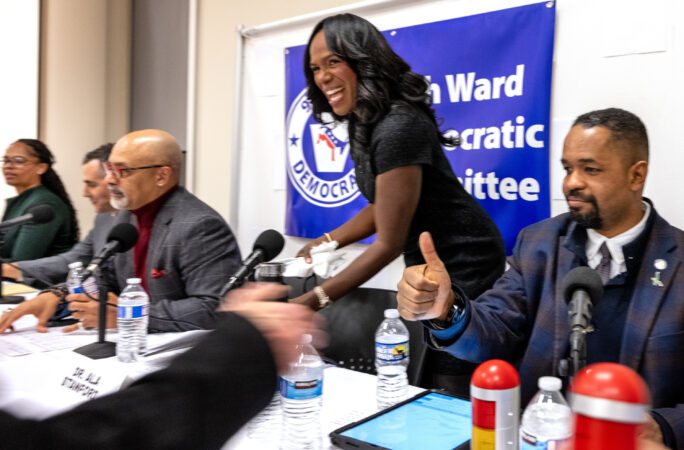
NEW YORK — In dimly lit Italian restaurants, boisterous Irish pubs, and the vintage sprawling ballroom atop Rockefeller Center, candidates running for Congress in Philadelphia spent a busy weekendin New Yorktrying to woo donors and supporters.
State Sen. Sharif Street, Ala Stanford, and State Rep. Morgan Cephas, all seeking to replace retiring U.S. Rep. Dwight Evans in one of the nation’s most Democratic districts, made the rounds, as Pennsylvania’s political elite gathered in Manhattan for the annual Pennsylvania Society dinner — and a parade of related events.
Stanford held a somewhat star-studded fundraiser Thursday evening, hosted, according to a posted listing for the private event, by Hamilton actor Leslie Odom Jr., (who did not attend but lent his name). Other hosts included Holly Hatcher-Frazier, an educator and original cast member on the TV show Dance Moms, and Lauren Bush, the niece of former President George W. Bush and co-founder of FEED Projects, a fashion brand which donates a portion of its proceeds to alleviating childhood hunger.
“What I’m hearing is people want a different type of solution,” Stanford said in an interview at a breakfast held by the University of Pennsylvania on Saturday. “Innovative, reaching across the aisle, collaborative, not afraid to stand up to authority,” she added.
A lot of eyes are on the pediatric surgeon and founder of a community health center, to see how she translates a career that involved fundraising for nonprofits into funding her first campaign.
She was endorsed by Evans upon launching her bid to succeed him in the 3rd Congressional District.
She’s built her campaign around her experience in the medical community and the biggest buzz of the weekend may have been her response to a minor medical incident. An older woman fell down some steps exiting a reception hosted by House Speaker Joanna McClinton(D., Philadelphia).
Stanford “triaged” the situation, according to Democrats in attendance, instructingPennsylvania Supreme Court Justice Kevin Dougherty and his son State Rep. Sean Doughertyto lift the woman onto some chairs so she could evaluate her. The woman ended up being fine and was able to walk home from the restaurant.
“We got a lot of people that can vote in the district here, we want their votes,” he said in an interview at a rooftop reception hosted by Independence Blue Cross. “We got a lot of people who can write checks here, we want their checks.”
State Rep. Ben Waxman, a longtime friend and colleague of Cephas, is in talks with donors to organize a super PAC to support the fellow Philadelphia Democrat’s campaign, according to a source familiar with the plans. The PAC would likely be run by longtime Philadelphia strategist Brandon Evans, who worked for both former Mayor Jim Kenney and District Attorney Larry Krasner.
The PAC has a goal of raising $250,000 to spend on digital, mail, and field, according to the source.
Not spotted at Pennsylvania Society weekend was StateRep. Chris Rabb, who is running as an anti-establishment progressive.
“That’s not really my thing,” he said in a text message, of the glitzy Manhattan affair.
Declared candidates in the Democratic primary for Philadelphia’s 3rd Congressional District, clockwise from upper left: State Sen. Sharif Street, State Rep. Chris Rabb, Ala Stanford, and State Rep. Morgan Cephas. The seat, currently held by retiring U.S. Rep. Dwight Evans, represents a large portion of Philadelphia and is the most Democratic district in the state.
The state of the race
Street released an internal poll last week that showed him narrowly beating Rabb with Stanford and Cephas following behind.
Several candidates running in the crowded race, which is up to about a dozen candidates, were not included in the poll and did not attend Pennsylvania Society.
“I believe our standing is strong,” Stanford said when asked about the poll. “I believe that there are many endorsements and people donate lots of money. But ultimately every individual has one vote. And that is the equalizer.”
One question will be whether Street, the son of former Mayor John Street, ties up most or all of the Democratic establishment support.
Several state representatives and ward leaders, like State Rep. Danilo Burgos, have already endorsed him — little surprise given his background running the party. But other elected officials, including City Councilmember and ward leader Katherine Gilmore Richardson, said they are waiting for their ward’s official vetting process to get underway.
Street said when it comes to his colleagues, “I think by the time we get to Election Day, most of my colleagues will be for me.”
John Brady, political director of the Pennsylvania Democratic Party, said 60% of Philadelphia wards have endorsed Street. He said the City Committee is waiting for more of the remaining wards, including the progressive and independent wards, to complete their processes so the full committee can move forward with their endorsement process in February.
“Look, two months from now is the first week of February, that’s plenty of time for them to complete their processes.” The concern, Brady said, is if the party waits too long, an endorsement may not carry weight.
While the City Committee wants to firm up an endorsement, some elected Democrats at Pennsylvania Society said they were struggling with whom to back — several said they really liked Cephas but felt wary of political backlash if they didn’t back Street and he won the nomination.
While Rabb has carved out a clear lane as the progressive, some of the city’s most progressive elected lawmakers have not lined up behind him yet. City Councilmember Jamie Gauthier, who represents West Philadelphia, said this weekend she is not yet ready to endorse and Working Families Party member Kendra Brooks, also on City Council, said the Working Families Party would go through a formal process in January (the progressive group often gets involved in Democratic races).
While Evans is backing Stanford, Philly’s other Democratic members of Congress have yet to weigh in.U.S. Rep. Brendan Boyle said he might not endorse in the primary. U.S. Rep. Mary Gay Scanlon, at an event on Friday night, said she’s worked with both Cephas and Stanford and has “great respect for both of them.”
Mayor Cherelle L. Parker has said she will endorse in the primary and her vetting process starts in January.
“For me, I’m really looking at Philadelphia’s agenda, you know, safe, clean, green, economic opportunity for all and how will you leverage your seat at the table to deliver for the 3rd Congressional District?” she said.
“What do you advocate for and champion as a legislator? What’s your personal passion and then you have to leverage tangible results.”
ATLANTIC CITY — The journey through Atlantic City is bumpy these days, and not only because Atlantic Avenue is desperately in need of paving.
Ducktown Tavern owner John “Johnny X” Exadaktilos has one wish for Atlantic City that has nothing to do with the gut-jarring avenue that runs in front of his bar.
“Just normal,” says Exadaktilos. “I just want things to be normal.”
Atlantic City, a place of historic mayoral misdeeds, multimillionaire overreach, and chronic unwanted attention, has managed in this waning year, even as its workers string up holiday decorations, to come up with a new plot twist: Its newly reelected Democratic Mayor Marty Small Sr. is on trial for alleged physical abuse of his teenage daughter.
The trial has left Small untethered from his cell phone as new casinos have been green lit in New York City, and the state moves to tighten its authority over the town. Another trial, of Small’s wife, La’Quetta Small, who is the superintendent of schools, is set for Jan. 12.
With Small reporting to an Atlantic County courthouse each day to face his daughter, who spent seven hours testifying against him on Tuesday, a bit of a hush has fallen on the city as it awaits the outcome, which could come this week.
The sentiment in City Hall, where many employees owe their jobs to Small, leaned toward the assumption that Small would beat this charge like he’s beaten two previous indictments on voter fraud charges.
But will the city emerge unscathed?
“Every day, people who live in Atlantic City want to know what those of us are elected are doing to make their lives better and respond to their issues and concerns,” said council member Kaleem Shabazz, who was going from a planning board meeting to a mayor-less City Hall last week. “Whatever will happen will happen. The city still has to function. People have to be responsible.”
On Dec. 1, as Small readied for jury selection in Mays Landing, New York City approved three casinos, two for Queens and one for the Bronx, a development long feared in Atlantic City.
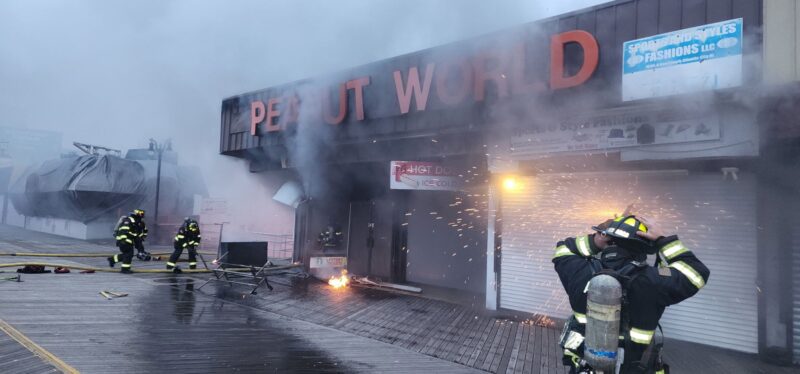
On Dec. 5, with the jury picked, the iconic Peanut World on the Boardwalk erupted in flames. On Dec. 9, with the mayor listening to his daughter, legislators in Trentonwere proposing more state oversight of A.C. including a surprise provision that would give the state the power to pick developers for major projects.
The biggest threat may come from the New York casinos, which some in the industry estimate could threaten as much as 30% of A.C.’s business and lead to the shuttering of one casino, if not more.
Small could face jail time and be forced to step down as mayor under New Jersey law, if convicted. He and his wife, who has been attending her husband’s trial, taking notes in the back, have resisted calls to relinquish their powerful roles as mayor and superintendent.
“It’s not ideal obviously,” said Shabazz. “If you had to pick a multiple choice question what would you want to be happening in your public schools, that wouldn’t be something you would pick, if you’re a parent or a taxpayer.”
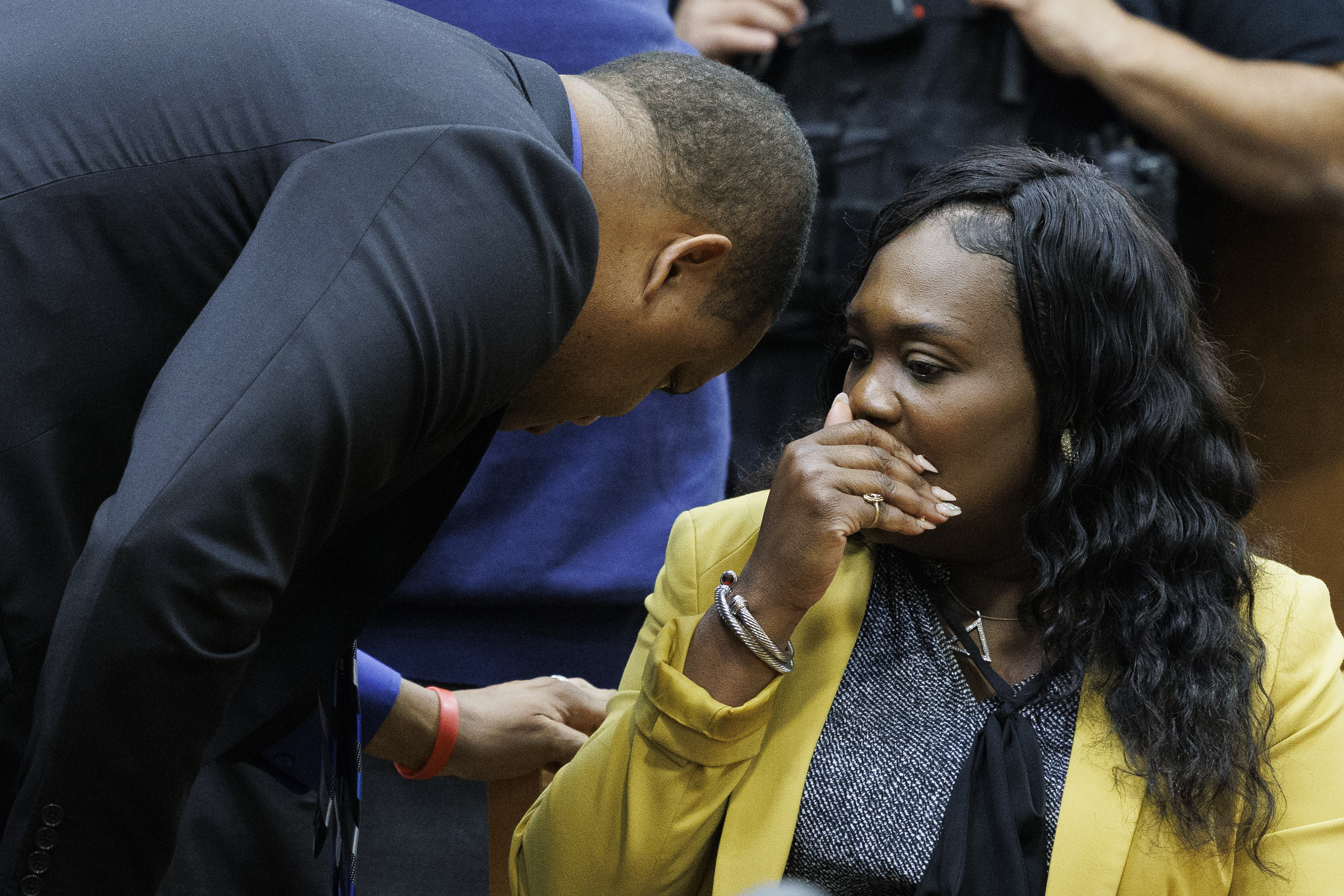
Atlantic City Mayor Marty Small and his wife, Superintendent of Schools La’Quetta Small, chat before the start of arraignment on Oct. 10, 2024. Mayor Small stood trial last week in Mays Landing. Cameras were barred from the courtroom during the trial.
‘A wake-up call’
Early one morning last week, having just come from a planning board meeting, Shabazz said the city was going about its business. “I’m not at the trial, I’m on my way to City Hall,” he said. “The work of government has to go on.”
Shabazz, who’s been focused for years, even decades, on some of the same intractable problems of the resort, remains optimistic. It’s a city where it can be hard to read the scorecard: progress seems to be there, but not there, at the same time.
The city’s only full-size supermarket, the beleaguered Save A Lot is under new management, and the adjacent nuisance liquor store is expected to close. High-profile developers like Jared Kushner and K. Hovnanian appear to be going forward with residential projects in the city’s Inlet section. There are new restaurants, like the Byrdcage in Chelsea and Simpson’s, relocating next month to Atlantic Avenue.
Shabazz is hoping the state will return zoning authority back to the city after years of the Casino Reinvestment Control Authority overseeing planning and zoning in the city’s tourism district.
Kaleem Shabazz, president of the local chapter of the NAACP in Atlantic City, and Maryam Sarhan, a community organizer, stand in front of mural honoring civil rights leaders. “The city still has to function,” he said, while its mayor is on trial for alleged child abuse. “People have to be responsible.”
But last week, as the mayor listened to his daughter testifying that he struck her in the head with a broom, after she threw detergent at him and refused to go to a community march, the state went in the opposite direction: a bill to renew the state’s takeover of Atlantic City for another six years that would allow the state to pick a “master developer” to oversee big projects, the Press of Atlantic City reported.
“We have to be competitive,” Shabazz said. “We have to let people know that we’re open for business and we’re safe and secure. Crime is down significantly.”
Like others interviewed, he believes Atlantic City can sell itself as a safe and affordable seaside destination. “We still have a free beach,” he said. “We have to let people know what we have.”
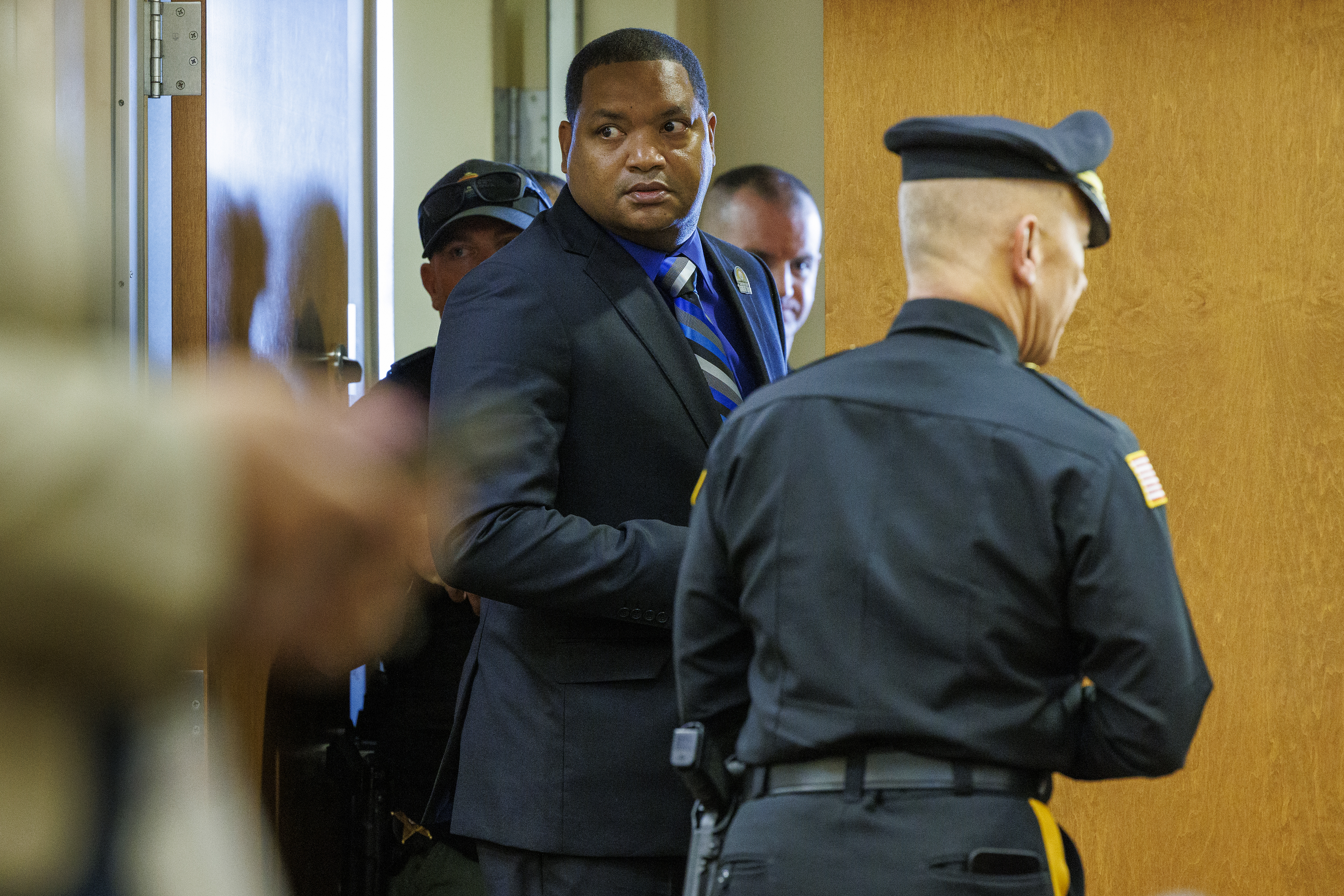
Atlantic City Mayor Marty Small arriving for his arraignment before Judge Bernard DeLury at the Atlantic County Criminal Courthouse in Mays Landing on Oct. 10, 2024. Small testified in his own defense Friday during his trial. Cameras were barred from the courtroom.
Small has defended himself by describing this latest situation as a private family problem, not related to his job performance. He has called the prosecution politically motivated and an overreaction. A jury will now weigh in.
John Boyd Jr., a principal in the Boyd Co., which advises companies on where to locate, said many developers (and homeowners) continue to balk at Atlantic City, despite the upward pressure on Jersey Shore real estate that has left the city as arguably the last affordable seashore town in the entire Northeast.
He called the three New York City casino licenses “a wake-up call” for New Jersey, and advocates a plan where the state allows casinos at the Meadowlands and/or Monmouth Park but shares the revenue with Atlantic City.
“If you ask national developers their opinion of Atlantic City, it wouldn’t be a very positive one for a myriad of reasons,” he said.
“Good governance is fundamental to economic development success. Companies want to minimize risk. It’s more than the mayor being on trial. It’s the uncertainty.”
Meanwhile at the slots
Inside Hard Rock casino during a blustery stretch last week, people were three deep at the holiday-branded Mistletoe Bar in the lobby, and nine guitars had become a menorah in the atrium.
Gamblers were locked in as names were called for a random spin-the-wheel drawing every half hour. A convention of real estate agents brought lines to the check-in desk. The trial was off in the distance, invisible to most.
“I do love coming to Atlantic City,” said Adam Druck, 33, a Realtor from York, Pa. “I hope the trial doesn’t make too much difference to what’s going on here.”
Asked about New York casinos, Joe Pendle, 71, a retired police officer from North Jersey, said he was comfortable with his routines at Hard Rock, where free rooms and meals anchored his pleasant stays. (Hard Rock itself has one of the three licenses in New York City, an $8.1 billion project near Citi Field in Queens, which it projects will result in $1 billion a year in tax revenue.)
“I have a three-room suite upstairs,” noted Pendle. “I like the beach.”
Arthur Austin, 70, of Old Bridge, said he had worked for decades on Wall Street and had no desire to travel to New York for a casino weekend.
“I worked in the city for 20 years,” he said. “I only go into the city if I have to.”
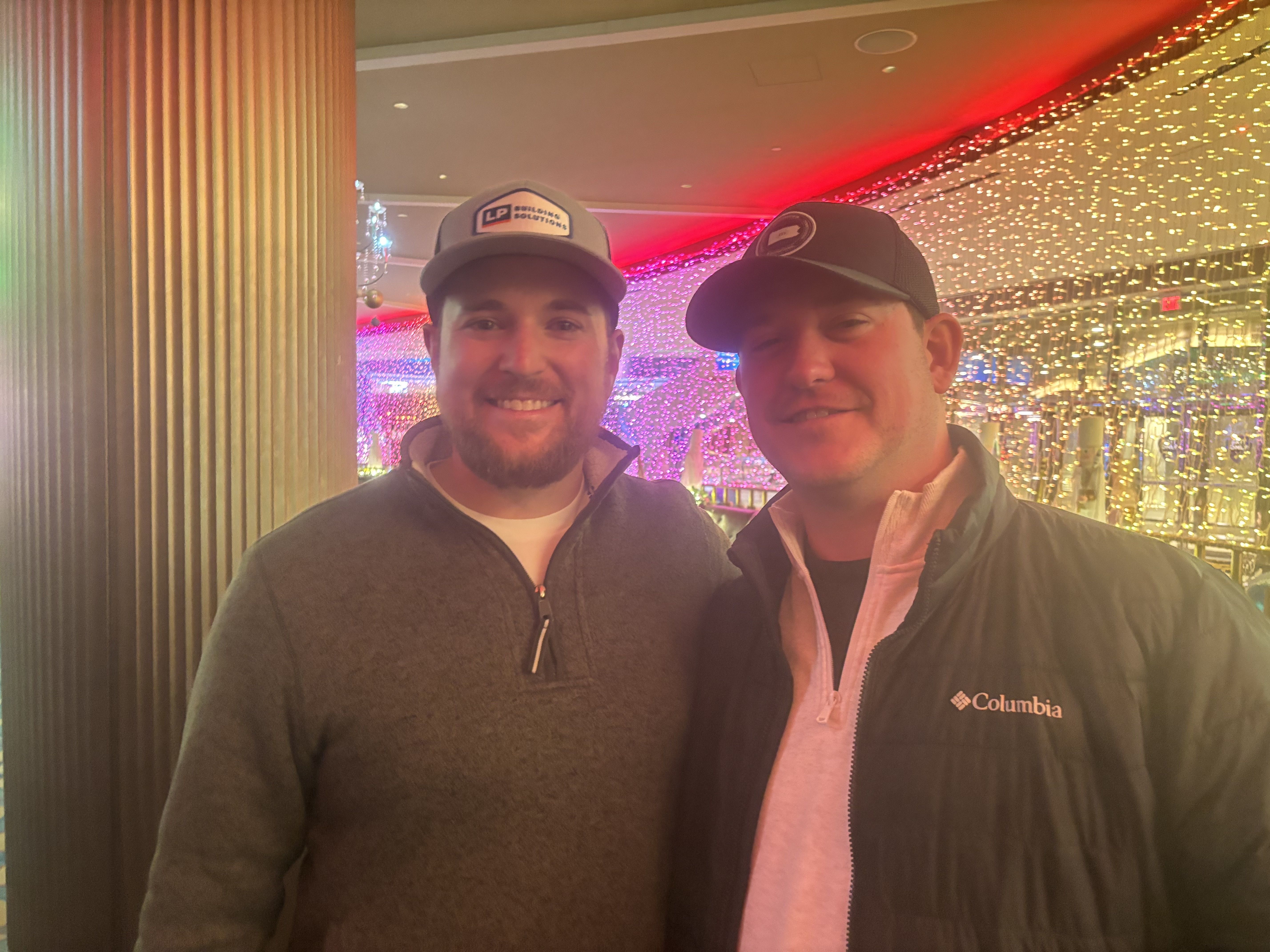
Adam Druck, 33, of York, Pa., and Eric Moeller, 36, of Reading, inside Hard Rock casino on Dec. 9, where they were staying as part of Triple Play Realtor Convention and Trade Expo in Atlantic City.
Out-of-towners like Austin hadn’t heard about Small’s trial, but the local gamblers at Hard Rock sure had.
“Atlantic City is a crooked place, and it’s always gonna be crooked because of what everybody’s into,” said a 57-year-old woman who lives locally and was playing the slots. She did not want her name used so that she could speak her mind in a small town.
“People want their guy to stay in there,” said the woman. “He gives everybody a job. You could flourish, but only if you are with the right people.”
“I don’t think that it hurts Atlantic City,” said Seng Bethia, 40, of Atlantic City, who was at the slots. “His daughter is such a sweet girl. It was bad, just the whole thing.”
‘Are you kidding me right now?’
Exadaktilos, the Ducktown Tavern owner who is Small’s loudest detractor, said he had taken things down a notch of late, putting aside his popular weekly Facebook live rants that he said had started consuming him.
Still, last week, as the prosecution wound up its case, the city sent out a contractor to do some temporary filling in of cracks on Atlantic Avenue in advance of the city’s holiday parade, and Exadaktilos found himself back on Facebook live.
“Are you kidding me right now?” he said over footage of the roadway. “What happened to Atlantic Avenue is going to be paved? Horrible.”
Boyd, the location consultant, points to bright spots. The national developers are a vote of confidence, as is the Septemberopening of the SeaHaus boutique hotel on the Boardwalk, a Marriott property. Showboat and the Sheraton near the Convention Center are converting rooms to residences.
Boyd sees potential for Atlantic City to follow the likes of Coney Island, which has seen a renaissance, to attract film business, to market itself as a live-work-play destination.
Outgoing council member George Tibbitt looks at the Kushner plan, a 180-unit apartment complex, as another missed opportunity. “No vision there,” he said. “That’s desperate development.”
“New York City definitely makes me afraid,” said Tibbitt. “There’s only so many gambling dollars to go around. Adding more casinos is going to be devastating. We have to clean the city up. We have to get the neighborhoods filled back up.”
One industry the city bet heavily on was cannabis: Its midtown quickly filled with 16 dispensaries. But after complaints from the cannabis entrepreneurs themselves, city council capped the number at 16, leaving many that have been approved but have yet to open (including one that necessitated the demolishing of a historic church) in limbo.
Atlantic City is a place where things can seem to be finally coming together, while simultaneously unraveling. Big plans vaporize, like the highly touted gym and nightclub outside Showboat, where last summer, the owner set up couches, DJ booths, and exercise machines, got stalled by permitting issues, and quietly dismantled them.
Miguel Lugo, general manager at AC Leef, which held out for a strategic spot on Albany Avenue, said his cannabis business has been good. He looks forward to the dispensary running financial literacy classes for the community, and getting its cultivation license.
“On this side of the town, everything’s been phenomenal,” Lugo said. “I’m super focused on AC Leef. I don’t know what’s going on with the mayor.”
Amadou Thiam lived the American dream — and then some.
The immigrant from Côte d’Ivoire worked his way up at a major airline as a flight attendant, purchased a home in South Philadelphia, and traveled to exotic locations when his schedule allowed it.
He danced with friends at Philly’s nightclubs, even crafted a stage name for a yearly drag performance he gave at Voyeur — “Ama-Diva,” a play on his name that Thiam’s loved ones say reflected the 50-year-old’s playfulness and unapologetic charm.
He was rushed to a nearby hospital and died from his injuries.
The medical examiner’s office has yet to release the cause and manner of Thiam’s death. But homicide detectives are investigating, and police believe Thiam either fell — or was thrown — out of his third-floor window. They have identified two men they believe may have been involved.
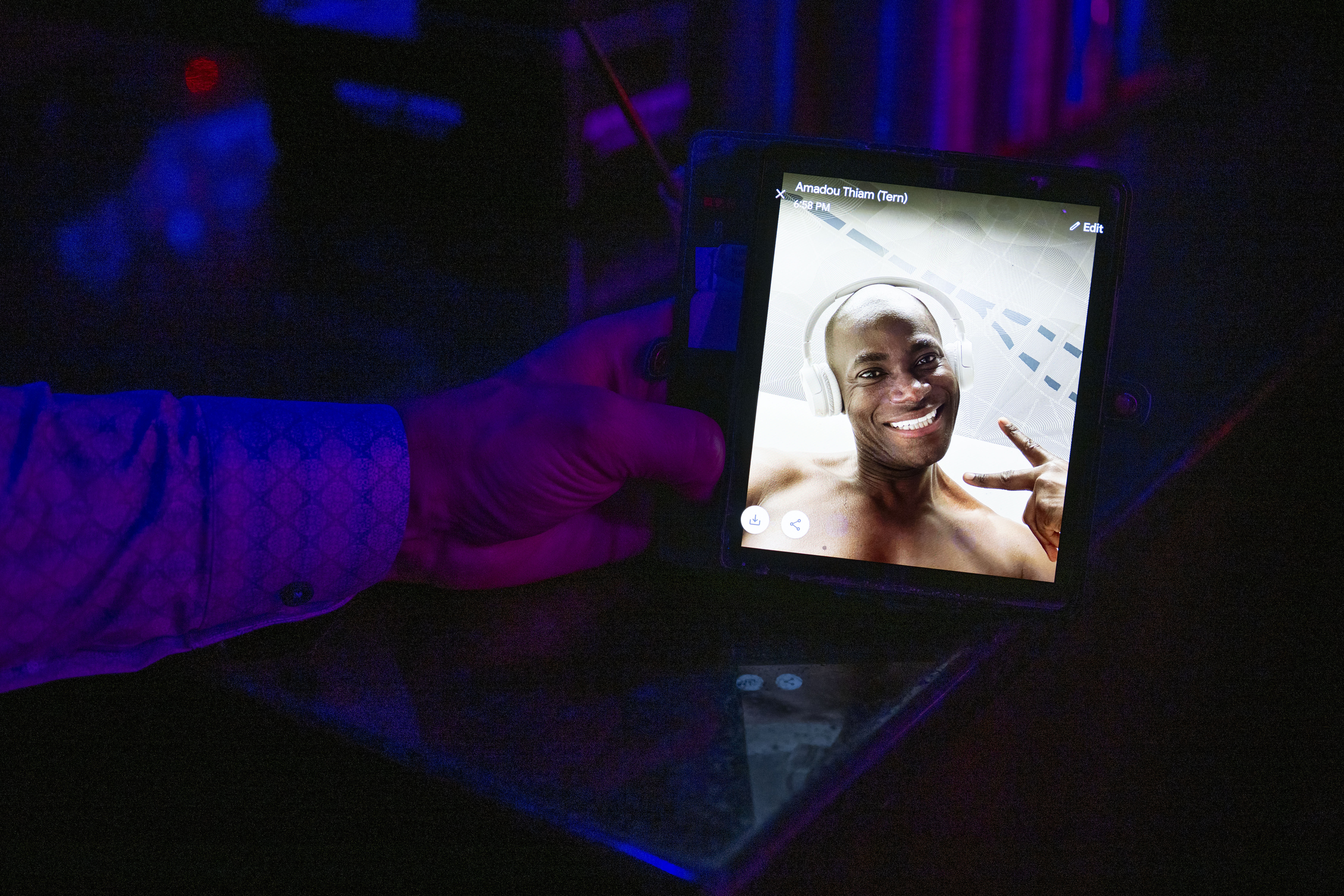
Amadou Thiam’s partner Barry Rucks displays a photo of Amadou before a memorial service at Voyeur Nightclub on Saturday, Dec. 13, 2025 in Philadelphia.
It was jarring news for those who knew Thiam, a beloved member of Philadelphia’s flight attendant community who had worked for American Airlines since 2011.
A group of his loved ones gathered at Voyeur on Saturday to memorialize their friend, sipping drinks and sharing stories beneath the shimmering glow of a disco ball. A DJ played soulful dance music. Some of Thiam’s acquaintances, his “chosen family,” donned dresses, high heels, and flashy jewelry.
In the face of tragedy, they were celebrating in style — the way Thiam would have wanted them to.
“He was just a happy person, and he took advantage of his environment and did the best with it,” said Barry Rucks, Thiam’s partner of five years. “You and me take things for granted — he didn’t take anything for granted.”
Rucks said Thiam started at American Airlines as a baggage claims worker but quickly rose to become one of their “number one” flight attendants.
A native French speaker, Thiam worked on international flights to Paris and Zurich, posting photos to social media of the luxury hotels and historic monuments he visited along the way.
It was a life he could have hardly imagined in western Africa, Rucks said, where he was raised alongside nine brothers and sisters.
After getting his American citizenship, Thiam was proud to vote in elections and serve on jury duty, Rucks said. He marveled at the economic opportunity here, and developed an affinity for purchasing lavish clothing items on Amazon when he wasn’t helping siblings out with money.
“He would never say no to anyone, because he knew how hard it was to be an American,” Rucks said.
Voyeur was a fitting setting for Thiam’s memorial.
The Center City nightclub is where Thiam and a friend once dressed as Glinda and Elphaba from Wicked and performed during an annual drag benefit for flight attendants who had fallen on hard times.
Amadou Thiam’s partner Barry Rucks speaks to guests during a memorial service at Voyeur Nightclub on Saturday, Dec. 13, 2025 in Philadelphia.
“He was just such a shining star in this community,” said Aurore Dussh, one of Thiam’s friends. She said Thiam performed at Voyeur on numerous occasions, balancing his diva reputation with an undeniable sweetness in his relationships.
He was “such a superstar,” Dussh said. “Yet he made everyone else feel seen.”
Police continue to investigate Thiam’s death
In the weeks since Thiam’s death, police have sought two men they believe are connected to the unusual circumstances surrounding his death.
Sources familiar with the investigation say investigators have evidence that suggests Thiam was assaulted that night.
That evidence includes video footage showing the men outside Thiam’s home around the time his body was found. The two, an older and younger man, appear to be carrying clothing from Thiam’s home, according to those sources.
Neighbors, too, recalled seeing the men leaving Thiam’s home.
This image, taken Nov. 16, 2025, shows the third-story window (second from left) from which neighbors say Amadou Thiam fell on Nov. 10.
Finding Thiam’s door cracked open, the neighbors entered to find blood smeared across his kitchen and third-floor bedroom. Back outside, they noticed a stream of blood that led them to Thiam’s body on the pavement.
Rucks, Thiam’s partner, said he has been in touch with investigators and that none of Thiam’s friends and acquaintances recognized the two men in the video.
Rucks, who lives in Montgomery County, lived separately from Thiam, who prized his independence, he said.
He recalled Thiam was nothing but happy the Sunday morning he left his house to return to Philadelphia, a day before his death.
It was the last time Rucks saw his partner alive.
“I can’t speculate and I’m refusing to,” Rucks said. “We will find out what happened.”
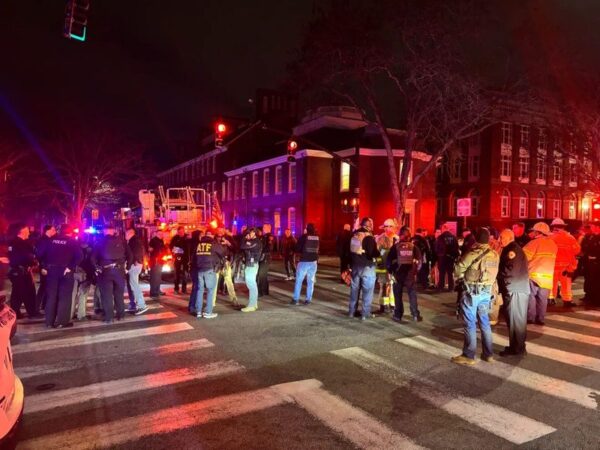
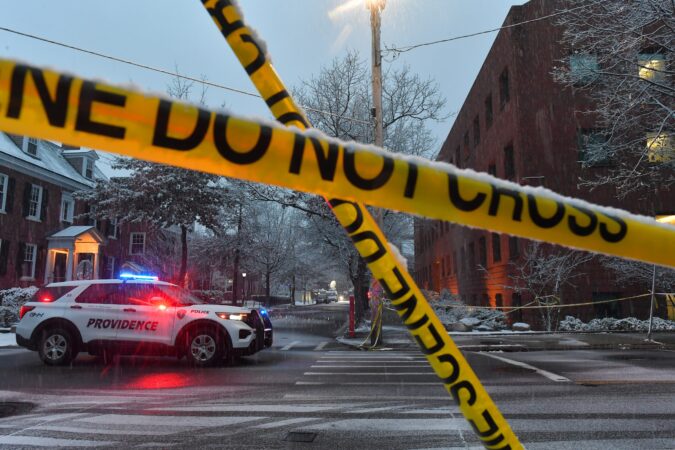
PROVIDENCE, R.I. — A shooter dressed in black killed at least two people and wounded eight others at Brown University on Saturday during final exams on the Ivy League campus, authorities said, as police searched for the suspect.
Officers were hunting through campus buildings and sifting through trash cans more than three hours after the shooting erupted.
The suspect was a male in dark clothing who was last seen leaving the building where the shootings occurred, said Timothy O’Hara, deputy chief of police.
Mayor Brett Smiley said a shelter-in-place order was in effect for the area and encouraged people living near the campus to stay inside and not to return home until it is lifted.
“We have all available resources” to find the suspect, Smiley said.
The eight wounded people were in critical but stable condition, the mayor said. He declined to say whether the victims were students.
University officials initially told students and staff that a suspect was in custody, before later saying that was not the case and that police were still searching for a suspect or suspects, according to alerts issued through Brown’s emergency notification system.
The mayor said a person preliminarily thought to be involved was detained but was later determined to have no involvement.
“We’re still getting information about what’s going on, but we’re just telling people to lock their doors and to stay vigilant,” said Providence Councilmember John Goncalves, whose ward includes the Brown campus. “As a Brown alum, someone who loves the Brown community and represents this area, I’m heartbroken. My heart goes out to all the family members and the folks who’ve been impacted.”
The shooting occurred near the Barus & Holley building, a seven-story complex that houses the university’s School of Engineering and physics department. According to the university’s website, the building includes more than 100 laboratories and dozens of classrooms and offices.
Engineering design exams were underway in the building when the shooting occurred.
Brown senior biochemistry student Alex Bruce was working on a final research project in his dorm directly across the street from the building when he heard sirens outside and received a text about an active shooter shortly after 4 p.m.
“I’m just in here shaking,” he said, watching through the window as a half-dozen armed officers in tactical gear surrounded his dorm. He said he feared for a friend who he thought was inside the engineering building at the time.
Students in a nearby lab hid under desks and turned off the lights after receiving an alert about the shooting, said Chiangheng Chien, a doctoral student in engineering who was about a block away from the scene.
Students were urged to shelter in place as police responded to the scene, and people were told to avoid the area. A police officer warned media to take cover in vehicles because the area was still an active scene.
President Donald Trump told reporters that he had been briefed on the shooting and “all we can do right now is pray for the victims.”
“It’s a shame,” he said in brief remarks at the White House.
Officials cautioned that information remained preliminary as investigators worked to determine what had occurred.
Police were actively investigating and still gathering information from the scene, said Kristy DosReis, the chief public information officer for the city of Providence. The FBI said it was assisting in the response.
Brown is a private institution with roughly 7,300 undergraduate students and more than 3,000 graduate students.
MAYETTA, Kan. — The Prairie Band Potawatomi Nation, whose ancestors were uprooted by the U.S. from the Great Lakes region in the 1830s, are facing outrage from fellow Native Americans over plans to profit from another forced removal: President Donald Trump’s mass deportation campaign.
A newly established tribal business entity quietly signed a nearly $30 million federal contract in October to come up with an early design for immigrant detention centers across the U.S. Amid the backlash, the tribe says it’s trying to get out of it.
Tribal leaders and the U.S. Department of Homeland Security haven’t responded to detailed questions about why the firm was selected for such a big contract without having to compete for the work as federal contracting normally requires. A former naval officer — who markets himself as the “go-to” adviser for tribes and affiliated companies seeking to land federal contracts — established the affiliate, KPB Services LLC, in April.
The criticism has been so intense that the 4,500-member tribe said it fired the economic development leaders who brokered the deal.
“We are known across the nation now as traitors and treasonous to another race of people,” said Ray Rice, a 74-year-old who said he and other tribal members were blindsided. “We are brown and they’re brown.”
ICE deals with tribes generate scrutiny
Tribal Chairperson Joseph “Zeke” Rupnick promised “full transparency” about what he described as an “evolving situation.” In a video message to tribal members Friday, he said the tribe is talking with legal counsel about ways to end the contract.
He alluded to the time when federal agents forcibly removed hundreds of Prairie Band Potawatomi families from their homes and ultimately corralled them on a reservation just north of Topeka.
“We know our Indian reservations were the government’s first attempts at detention centers,” Rupnick said in the video message. “We were placed here because we were prisoners of war. So we must ask ourselves why we would ever participate in something that mirrors the harm and the trauma once done to our people.”
The U.S. Supreme Court cleared the way in September for federal agents to conduct sweeping immigration raids and use apparent ethnicity as a relevant factor for a stop. With some Native Americans being swept up and detained in recent raids, U.S. Immigration and Customs Enforcement’s overtures to tribes and even longstanding deals are generating extra scrutiny.
An LLC owned by the Poarch Band of Creek Indians in Alabama also has a multimillion-dollar contract with ICE to provide financial and administrative services. Meanwhile, some shareholders of an Alaska Native corporation say their values don’t align with the corporation’s federal contracting division, Akima, to provide security at several ICE detention facilities.
“I’m shocked that there is any tribal nation that’s willing to assist the U.S. government in that,” said Brittany McKane, a 29-year-old Muscogee Nation citizen who attends the tribe’s college in Oklahoma.
Some tribal nations have advised their citizens to carry tribal IDs.
Last month, actor Elaine Miles (Northern Exposure) said she was stopped by ICE agents who alleged her ID from the Confederated Tribes of the Umatilla Indian Reservation in Oregon was fake.
Economic pressure increases as federal funding decreases
The economic arms of tribes, which can be run by non-Natives, are under increasing pressure to generate revenue because of decreased federal funding, high inflation, and competition from online gambling, said Gabe Galanda, an Indigenous rights attorney based in Seattle.
But the economic opportunities presented to tribes don’t always align with their values, said Galanda, a member of the Round Valley Indian Tribes in northern California.
The Prairie Band Potawatomi has a range of businesses that provide healthcare management staffing, general contracting, and even interior design.
The tribal offshoot hired by ICE — KPB Services LLC — was established in Holton, Kan., and is not listed on the tribe’s website. It previously qualified along with dozens of other companies to provide logistical support to the U.S. Navy although, to date, it hasn’t performed any work for the federal government.
The ICE contract initially was awarded in October for $19 million for unspecified “due diligence and concept designs” for processing centers and detention centers throughout the U.S., according to a one-sentence description of the work on the federal government’s real time contracting database. It was modified a month later to increase the payout ceiling to $29.9 million. Sole-source contracts above $30 million require additional justification under federal contracting rules.
The contract raises a number of questions and seems to go against the Trump administration’s stated goal of cleaning up waste, fraud, and abuse, said attorney Joshua Schnell, who specializes in federal contracting law.
“The public’s trust in the federal procurement system depends on transparency and competition,” said Schnell. “Although there is a role within this system for multimillion dollar sole-source contracts, these contracts are an exception to statutory competition requirements, and taxpayers are entitled to know how the government is spending their money.”
Backlash swift as news about ICE contract spread
It’s unclear what the Tribal Council knew about the contract. A spokesperson for the Tribal Council did not respond to repeated requests from the AP for details, including who was terminated.
What is known is that KPB was registered by Ernest C. Woodward Jr., a retired U.S. naval officer with degrees in engineering and business who is a member of the Miami Tribe of Oklahoma, according to a website for his one-time consulting firm, Burton Woodward Partners LLC.
The website described Woodward as a serial entrepreneur and tribal adviser on mergers and acquisitions, accessing capital, and landing federal contracts. The consulting firm was registered to an office park in Sarasota, Fla., in 2017 but was delisted two years later after it failed to file an annual report.
The Prairie Band Potawatomi Nation in a 2017 news release said Woodward’s firm advised it on its acquisition of another government contractor, Mill Creek LLC, which specializes in outfitting federal buildings and the military with office furniture and medical equipment.
Woodward also is listed as the chief operating officer of the Florida branch of Prairie Band Construction Inc., which was registered in September.
Attempts to locate Woodward were unsuccessful. The phone number listed on Burton Woodward Partners was disconnected, and he did not respond to an email sent to another consulting firm he’s affiliated with, Virginia-based Chinkapin Partners LLC.
Carole Cadue-Blackwood, who has Prairie Band Potawatomi ancestry and is an enrolled member of the Kickapoo Tribe in Kansas, hopes the contract dies. She has been part of the fight against an ICE detention center opening in Leavenworth, Kan., and works for a social service agency for Native Americans.
“I’m in just utter disbelief that this has happened,” she said.