WASHINGTON — The U.S. imposed sanctions on three nephews of Venezuelan President Nicolás Maduro, among others, on Thursday as President Donald Trump looks to inflict further pressure on the South American nation.
The new sanctions on Franqui Flores, Carlos Flores and Efrain Campo come a day after Trump announced that the U.S. had seized an oil tanker off the coast of Venezuela. Also included in the sanctions are Panamanian businessman Ramon Carretero, six firms and six Venezuela-flagged ships accused of transporting Venezuelan oil.
Carretero is accused of facilitating oil shipments on behalf of the Venezuelan government, and the Treasury says he has had business dealings with the Maduro-Flores family, including partnering in several companies together.
The Treasury’s Office of Foreign Assets Control published the list of sanctions on Thursday.
The sanctions are meant to deny them access to any property or financial assets held in the U.S., and the penalties are intended to prevent U.S. companies and citizens from doing business with them. Banks and financial institutions that violate that restriction expose themselves to sanctions or enforcement actions.
Treasury Secretary Scott Bessent said in a statement that “Nicolas Maduro and his criminal associates in Venezuela are flooding the United States with drugs that are poisoning the American people.”
“Under President Trump’s leadership, Treasury is holding the regime and its circle of cronies and companies accountable for its continued crimes,” he said.
This is not the first time Maduro’s family has been involved in a political tit-for-tat with the U.S.
In October 2022, Venezuela freed seven imprisoned Americans in exchange for the United States releasing Flores and Campo, who had been jailed for years on narcotics convictions. The pair were arrested in Haiti in a Drug Enforcement Administration sting in 2015 and convicted the following year in New York.
Carlos Flores had been sanctioned in July 2017 but was removed from Treasury’s list in 2022 during the Biden administration years in an effort to promote negotiations for democratic elections in Venezuela.
Russian President Vladimir Putin expressed “solidarity with the Venezuelan people” on Thursday amid growing tensions between Maduro and the Trump administration.
The Kremlin said in a statement that Putin spoke with Maduro by phone and reaffirmed his support for the Venezuelan leader’s policy of “protecting national interests and sovereignty in the face of growing external pressure.”
Maduro has insisted the real purpose of the U.S. military operations is to force him from office. Venezuela’s government said the tanker seizure “constitutes a blatant theft and an act of international piracy.”
The South American country’s government said that Putin had “categorically reaffirmed his support” for Maduro in their call.
It said in a statement that Putin had told Maduro that direct communication between Moscow and Caracas would “remain permanently open” and Russia would continue to support Venezuela “in its struggle to assert its sovereignty, international law, and peace throughout Latin America.”
Like his predecessor, the late President Hugo Chávez, Maduro has forged a close relationship with Russia, which has offered Venezuela help, ranging from coronavirus vaccines to the design of a cryptocurrency. In 2018, it also briefly dispatched a pair of nuclear-capable Tu-160 bombers to the airport outside Venezuela’s capital amid soaring Russia-U.S. tensions.
Last year, two Russian naval ships docked in the Venezuelan port of La Guaira after exercises in the Atlantic Ocean that Moscow said were to “show the flag” in remote, important regions.
In Belarus, authoritarian President Alexander Lukashenko, a Putin ally, met with the Venezuelan ambassador to Russia, Jesus Rafael Salazar Velázquez, on Thursday, for the second time in just over two weeks.
Details of what was discussed were not revealed, but Belarus’ state news agency Belta quoted Lukashenko as saying that the diplomat was expected to discuss “certain issues” with Maduro after their first meeting on Nov. 25 and to travel to Belarus again, so that they could reach “a certain decision.”
During the November meeting, Lukashenko extended an invitation to Maduro to visit Belarus, and said that he would try and find the time to visit Venezuela, too.
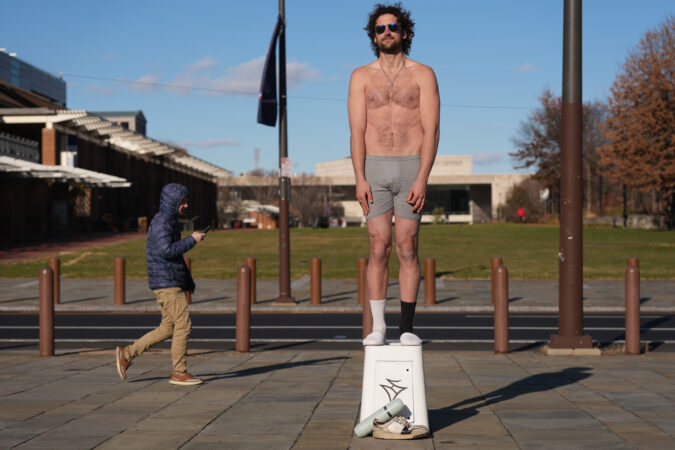
On Thursday, when low temps hit 35 degrees and a wild wind whipped down Market Street, a young man climbed on a box in front of the Liberty Bell and stripped to his underwear.
Turns out the nearly naked man on the box is an artist from Baltimore. His name is Ham. “Like the sandwich,” he said. Standing on a platform in his underwear is, evidently, performance art — a commentary on social media. “Rather than using digital platforms to share art and gain exposure,” Ham told me, “I’ve made a physical platform to stand on in public and talk to strangers.”
In other words, he doesn’t want to be a content creator; he wants to be the content and let others do the creating. And they do.
People snap photos of him, take videos of him, and scan the QR code on the corner of his platform, which links to, what else but his Instagram. It’s part performance art, part guerrilla marketing.
“I do recognize that as an artist I need to have some form of digital presence,” Ham said, “I just don’t want to be responsible for creating it.”
He’d rather shiver.
Ham has been standing on platforms in his underwear on and off for two years in several frigid cities, including New York, Berlin, and a small village in Norway. “I use it as my excuse to travel,” he said.
Ham is saving the money people give him for an engagement ring for his girlfriend.
He also uses it as a way to raise money for an engagement ring for his girlfriend — although that wasn’t the original goal. He only decided to write “engagement ring savings fund” on the side of the platform after he grew tired of explaining to people that he wasn’t freezing in his underwear for money.
“I was like, ‘if people have to have a financial explanation for this, I’ll say it’s an engagement ring fund for my girlfriend,’” he said. Ham wouldn’t disclose how much money he has made, just that it’s “more than you might think,” and enough to afford a custom-designed ring in New York. (I’m guessing at least $2,000.)
Ham is enjoying his time in Philadelphia more than other cities.
“This is actually the most fun I’ve had in terms of the quality of interaction and number of people,” he said, visibly shivering.
Several people have approached him to ask him what he is doing. Two National Parks officers checked in after receiving calls of concern. They offered him clothes; he declined. A police officer stopped by to ask if he was OK. One woman wanted to know whether he was promoting a cause.
If you’re interested in seeing a nearly naked man shiver on a box, Ham will be at the Liberty Bell all day Friday and Saturday. He leaves around 4:30 p.m., partly because he’s noticed people don’t like to talk to him as much once it’s dark.
Measles outbreaks are growing along the Utah-Arizona border and in South Carolina, where hundreds are in quarantine.
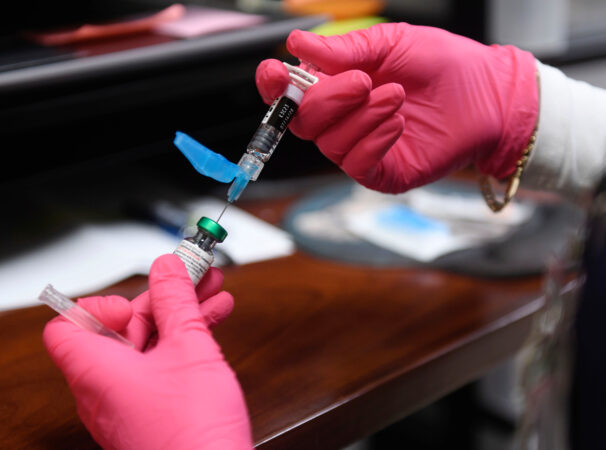
Between Friday and Tuesday, South Carolina health officials confirmed 27 new measles cases in an outbreak in and around northwestern Spartanburg County. In two months, 111 people have been sickened by the vaccine-preventable virus.
More than 250 people, including students from nine area elementary, middle and high schools, are in quarantine — some for the second time since the outbreak began in October. Most of the state’s new cases stemmed from exposures at Way of Truth Church in Inman. Church leaders have been “very helpful,” said state epidemiologist Dr. Linda Bell.
“We are faced with ongoing transmission that we anticipate will go on for many more weeks, at least in our state,” said Bell.
In Arizona and Utah, an outbreak has ballooned since August. Mohave County, Arizona has logged 172 cases and the Southwest Utah Public Health Department has logged 82 cases. The border cities of Colorado City, Arizona, and Hildale, Utah, are the heaviest hit.
Overall, Utah has confirmed 115 measles cases this year. Arizona has confirmed 176.
Nationally, the measles case count is nearing 2,000 for a disease that has been considered eliminated in the U.S. since 2000, a result of routine childhood vaccinations.
Last month, Canada lost that designation — which applies when there is no continuous local spread of the virus — as did the larger health region of the Americas.
Experts say the U.S. is also at risk of losing that status. For that to happen, measles would have to spread continuously for a year. A large outbreak in Texas, New Mexico and Oklahoma that started in January sickened nearly 900 and kicked off the United States’ worst measles year in more than three decades.
All but eight states have logged at least one measles case this year, according to the Centers for Disease Control and Prevention. The CDC has confirmed 47 outbreaks this year, compared with 16 in 2024. Three people — two of them Texas school children — have died.
The measles, mumps and rubella vaccine is safe and provides 97% protection against the disease after two doses. Most children in the U.S. are required to get the shot to attend school. But vaccination rates have declined as more parents waive the shots or have fallen behind on recommended vaccination schedules.
Prior to the vote, the board heard from registered speakers, including some from West Oak Lane Charter School who want their school to be able to purchase the vacant Ada Lewis Middle School building.
The board, with some absences, then moved into the “Goals and Guardrails” portion of its meeting, where district leaders shared 2024-25 Keystone and NOCTI scores. Algebra and biology Keystone scores stayed mostly flat compared to 2023-24, while literature scores dropped 2.9%. Board members Whitney Jones and Wanda Novales each asked for more detailed data from the district.
// Timestamp 12/11/25 6:20pm
Novales adjourns the meeting
Novales summarizes what the board learned from today’s Goals and Guardrails meeting: Keystone scores remained stagnant last year, with literature scores decreasing, she said. And many CTE schools have made gains.
In future monitoring sessions, she said, the board will want to see the data broken down by various demographics, and more specific data about the percentages of schools seeing gains and decreases in Keystone scores. This data will give the board “a more complete understanding of what’s going on in the district.”
Novales then adjourned the meeting.
This is our final scheduled public school board meeting of 2025. See you in 2026!
// Timestamp 12/11/25 6:07pm
Board member Novales asks for more specific data: What percentage of schools saw gains and decreases in Keystone scores?
Board member Wanda Novales asks the district: What percentage of schools made gains in Keystone scores? And what supports are we offering our lowest-performing schools?
Watlington asks each of the individual networks of schools to be read — along with their Keystone score results and changes — with the associate and assistant superintendent of each network recognized.
Novales says she’s interested in even more specific data: What schools made gains, not just networks? What percentage of schools made gains, what percentage saw a decrease in scores, and what percentage stayed the same?
Watlington asks research chief Wolford to pull that together for a future meeting.
// Timestamp 12/11/25 6:05pm
Board member Joan Stern urges to district to think about the role creative and agricultural jobs play in the economy
Board member Joan Stern questions how the district is thinking about “the role of the creative economy in the city and in the region” in career and technical education.
“I would like to know what the focus is on developing careers in that part of the economy,” she said, highlighting the role of agriculture in particular.
Dawson says they are “intentional and methodical” about how they approach extracurriculars and nurturing students’ interests outside of the careers they may pursue.
We want to “help them to build themselves out of poverty and have an opportunity for a livable wage not only for them but their families and that can be sustained over time,” Dawson said.
Watlington adds in: “We don’t want to graduate a majority of young people that take minimum-wage jobs.”
“Our children can learn anything,” Stern said, adding in: “They should not be treated as though they are always going to be doing the pouring of the cement as opposed to the design of the airport.”
// Timestamp 12/11/25 5:55pm
Board member Lam wants to know: How do we keep literature scores from continuing to slip?
Board member ChauWing Lam asks: What is the relationship between the technical education and the core education for NOCTI at CTE schools?
Mastbaum Principal David Lon answers that the programs work together “hand in glove” and they work to prepare students for the tests they’ll need to take to graduate.
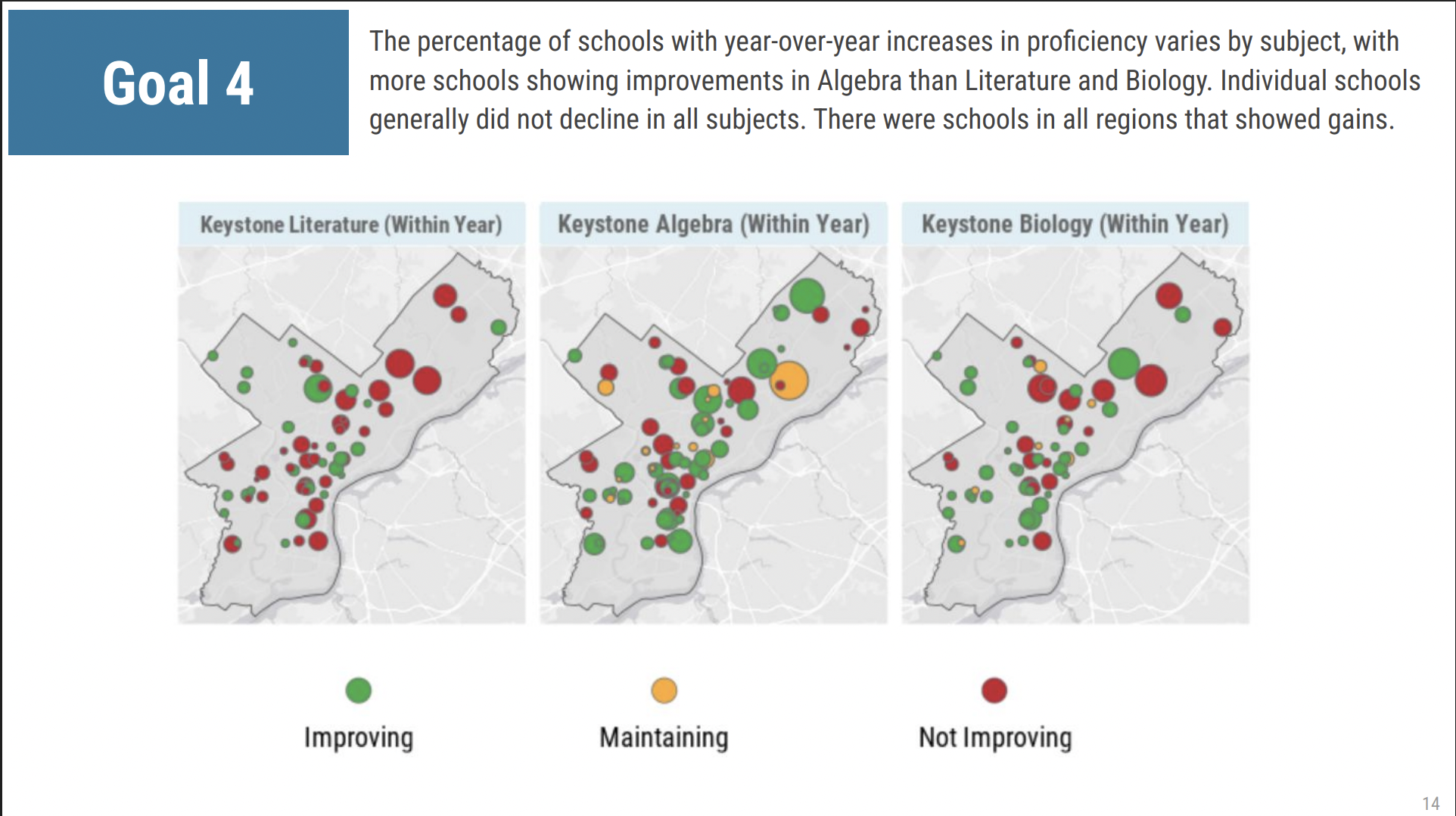
She also said she found the geographic clustering of Keystone interesting. “There’s not really a concise pattern across the three subjects in terms of what happened last year and what happened this year.” She wants to know: What is our strategy for stopping the decline of literature scores?
“We recognize that that is a concern for us,” Dawson said about the dropping ELA scores. But they did just roll out a new curriculum, he said, and teachers are still acclimating.
“We recognize as we say all the time, more work needs to be done to ensure our students are academically successful the first time they sit in that course,” he said.
Lam acknowledges that these test results are from last year. She asks: Are there any early indications yet that we’re seeing a rebound?
Tonya Wolford, the district’s research chief, says they are processing data and hope to have more information later this month or in January.
// Timestamp 12/11/25 5:46pm
Board member Whitney Jones asks district to dig deeper into the data
In responding to a question from board member Whitney Jones, Watlington says they do need to take a harder look at the data broken down by race, gender, economically disadvantaged students, English language learners, and other demographics.
“You can’t move the overall district without moving kids of color,” he said.
// Timestamp 12/11/25 5:35pm
Success isn’t linear, Watlington says: ‘No, I’m not satisfied’
Watlington says that people ask him all the time: Are you satisfied?
“No, I’m not satisfied,” he said. Far too many kids can’t read and do math on grade level, he said. But the district didn’t get here quickly, and it can’t fix it quickly. Success isn’t linear.
“The district is making significant progress,” Watlington said. We’re not blaming historical underfunding or “this political partisan nonsense.”
Deputy superintendent tells the board: ‘We have a lot of work to do in our high schools’
“We’re going to recognize that we have a lot of work to do in our high schools,” deputy superintendent Dawson said. “We see it, we own it, and we recognize it.”
How will the district improve math, ELA, and science performance? Dawson explains: more high-impact algebra tutoring, a fellowship for algebra teachers, and creating math pathways to allow more students to take Algebra 1 in eighth grade. Plus, a new science curriculum this year.
“We’re hearing great feedback from the teachers, from our students, and from principals” about the science curriculum, Dawson said.
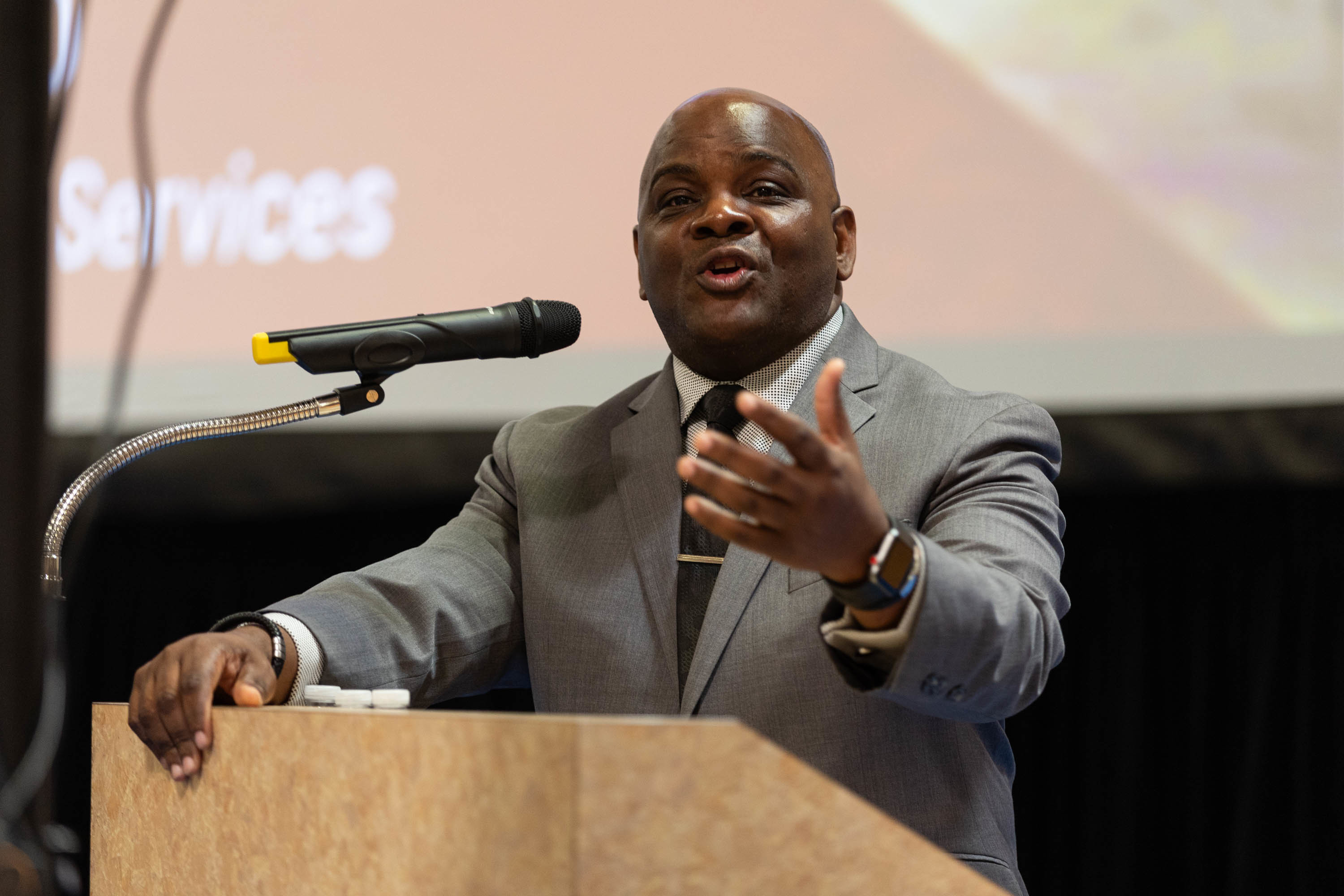
Deputy Superintendent Jermaine Dawson speaks at the School District of Philadelphia’s New Hire Orientation on Aug. 7, 2025.
On career and technical education, Dawson said the district will increase the number of guest speakers, company tours, and job shadowing and internship opportunities; create regional events like career fairs; implement new professional development; expand the middle school CTE program; and more.
Analyzing the district’s career and technical education programs: 39% are aligned to high-wage, in-demand occupations; 32% are aligned to high-wage, in-demand industries, but not aligned to occupation; and 29% of programs are unaligned to high-wage, in-demand occupations.
There are 41 programs in the district across 11 clusters.
This may mean some programs that are currently offered in the district may go away, Dawson said. Some new programs may be launched.
// Timestamp 12/11/25 5:15pm
Mastbaum principal speaks to success with improving NOCTI scores at his school
Principal David Lon from Mastbaum High School has seen tremendous growth at his school, a career and technical education school in Kensington.
Mastbaum has deliberately moved to a NOCTI focus. There’s been pedagogical work in the area students struggle most in: the NOCTI writing portion, Lon said.
There are quarterly benchmark exams, professional learning communities to reinforce data analysis and vocabulary best practices, and more.
There’s also a focus on culture-building, Lon said. Students are taught that the NOCTI is more than just another test; it’s important to their future. There are town halls and pep rallies, and a NOCTI breakfast the morning of the test.
“Before they go into the test, they are literally surrounded by the love and support of their community,” Lon said.
“We can directly tie student performance on the test-to-life outcomes,” Lon said. Students who score advanced get free college credits; those who are competent or advanced get extra points on the city test that can lead to good-paying jobs.
Mastbaum CTE staff are stars, Lon said. Counselors play a big role. Mastbaum had 32.4% point growth in NOCTI pass rate.
Principal David Lon at Mastbaum High School in December 2022.
// Timestamp 12/11/25 5:10pm
Percentage of students passing the NOCTI has increased
For the NOCTI, a nationally-recognized career and technical education exam, the percentage of 12th grade students who passed increased to 59.7% in 2024-25 from 56.9% in 2023-24.
Students in most areas — health, construction and manufacturing, education — increased participation and pass rates on NOCTI exams.
// Timestamp 12/11/25 5:06pm
District highlights the changes to student proficiency in the three Keystone subject areas
On the algebra Keystones, students scoring proficient or advanced increased slightly, from 15.1% to 15.5%, comparing 2024-25 to 2023-24.
Biology Keystones remained flat — 22.7% of students passed.
Literature Keystone proficiency decreased to 34.9%, a 2.9 percentage point drop.
This slide was shown during the Goals and Guardrails portion of the Philadelphia school board meeting on Dec. 11, 2025.
// Timestamp 12/11/25 5:04pm
Deputy superintendent highlights the 2024-25 highlights
Jermaine Dawson, deputy superintendent, is talking about 2024-25 highlights: It was the second year of a new math curriculum, the first year of a new ELA curriculum, and they purchased a new science curriculum (which is being rolled out this year).
This slide was presented during a Goals and Guardrails meeting of the Philadelphia school board on Dec. 11, 2025.
// Timestamp 12/11/25 4:54pm
Special action meeting ends, and Goals and Guardrails portion begins
And here ends the special action meeting.
Now we’re into progress monitoring/Goals and Guardrails.
The board will be monitoring goals around Keystone and NOCTI (career and technical education) exams tonight. Streater and a few other board members have to leave to conduct interviews for student board representatives, they noted.
// Timestamp 12/11/25 4:52pm
Board passes resolution, authorizing district to explore transferring vacant school buildings to the city
The resolution passes, six to two. Crystal Cubbage and ChauWing Lam voted no.
President Streater says this is an ‘exploratory resolution’ that he supports
Reginald Streater, board president, reiterated: No properties are being given to the city with a yes vote to this resolution.
Resolutions are the most effective way to convey what might be coming, Streater said. This is an “exploratory resolution.”
“I don’t see anything wrong with exploring this, and bringing the public along in a very public way,” Streater said, adding that he would be “derelict in his duty” if he didn’t explore this.
// Timestamp 12/11/25 4:50pm
Board member Cubbage says she ‘cannot support this resolution in its current form,’ while board VP Andrews says she will vote yes
Board member Crystal Cubbage said she applauds the mayor’s housing initiative, but “I cannot support this resolution in its current form,” because it limits the district to giving buildings to the city without financial gain, against a backdrop of coming financial issues for the district. Other options should be explored, including selling buildings to interested parties that are not the city.
Sarah-Ashley Andrews, the board vice president, will vote yes, but said any agreement “must deliver clear benefits to our children.” Opportunities to stabilize and grow the district’s tax base would help the district.
// Timestamp 12/11/25 4:48pm
School board discusses the resolution around what to do with vacant school buildings
Board member ChauWing Lam says she “fully supports” the idea of working with the city and addressing what should happen with the portfolio of buildings. But, Lam said: I have a concern that in adopting such a resolution, it limits the district’s options.
The portfolio of vacant buildings was recently valued at $80 million by the city, Lam said. “Given the disrict’s structural budget deficit, I encourage consideration of additional opportunities before rushing into an agreement as set forth in this resolution.”
Board member Wanda Novales notes that these buildings belong to the district, and any agreement must benefit district students.
Board member Joan Stern underscores that this resolution does not transfer any properties to the city. It explores what to do with the properties, some of which have been vacant since 2007. “It is critical for us to know what our costs are, what our liabilities are, what our exposure” is, Stern said.
“We are trying to do this in the context of our facilities plan,” Stern said. “I would like very much for everyone to keep in mind that this is a step for us to take that will provide us with the facts and the diligence necessary to decide on the fate of these properties.”
// Timestamp 12/11/25 4:42pm
Councilmember Thomas shares concerns, through aide, about the ‘lack of communication’ around resolution to transfer properties to the city
Zach McGrath, legislative aide to City Councilmember Isaiah Thomas, is reading a letter from Thomas.
Thomas is concerned about “a lack of communication” around the plan to possibly transfer properties to the city.
Thomas wants a separate, independent authority to manage buildings for the city and district. He and others learned about this plan from The Inquirer, which he finds troubling.
He says: We can’t find ourselves in a situation like Germantown High. The school was closed, abandoned for some time, and then after years, developed into apartments people in the neighborhood largely can’t afford.
// Timestamp 12/11/25 4:45pm
// Timestamp 12/11/25 4:37pm
Retired teacher questions the board’s authority to ‘just give away real estate’
Lisa Haver, retired teacher and a founder of the Alliance for Philadelphia Public Schools, asks the board: “Does this board have the authority to just give away real estate? That would be an abdication of the board’s responsibility of this district.”
The board is supposed to operate independently, not as an intergovernmental board, Haver said.
Haver says: Essentially, it sounds like the mayor wants the district to give her buildings, and the board is playing ball.
// Timestamp 12/11/25 4:35pm
Another West Oak Lane Charter School community member asks the board to allow the school to buy Ada Lewis building
Angela Case, a member of the West Oak Lane Charter School community, asks the board to allow the school to buy the Ada Lewis Middle School building.
“Our school is growing, but our current space is limited,” Case said. “Ada Lewis would give our students safe classrooms, outdoor areas,” and more. It would also mean a positive use of a vacant property, Case said. “This is an investment in our children, families and a better future for Philadelphia.”
// Timestamp 12/11/25 4:32pm
The Cloudens speak to the board about student achievement and vacant buildings
Horace Clouden, a retired district worker, said there’s a “crisis in K-8,” both in public and charter schools, in student achievement.
“If you give away buildings that could be crucial to the development of the children, it could be criminal,” Clouden said.
Clouden tells the board they should repurpose closed schools to solve for student placement.
Mama Gail Clouden, who is married to Horace Clouden, said it must be difficult for the board and superintendent to hear parents discuss significant issues with their children, month after month. Leaders are getting awards “but these children that are suffering are saying something different,” Mama Gail said.
“Everybody’s making money off these children,” Mama Gail said. “The least of these are losing the most. You are in a position to fix this.”
Leah Clouden, Mama Gail and Horace Clouden’s daughter, said “the plan to warehouse students is in full effect.”
“Giving away 20 properties for housing is insane,” Leah Clouden said.
University City High was “given away for pennies on the dollar,” Leah Clouden said.
// Timestamp 12/11/25 4:26pm
Parent shares issues with curriculum sharing between the district and the Catholic church
Anne Dorn, a district parent, is talking about issues with curriculum shared between the district and the Catholic church.
“Fear not” the elephants in the room, Dorn said.
// Timestamp 12/11/25 4:22pm
West Oak Lane Charter School parent praises the school
Daniel Wideman, a parent and board member at West Oak Lane Charter School, is praising the school, which has changed his and his child’s lives.
“As a community, we have grown out of our building at West Oak Lane, and we need change,” Wideman said. The charter would like to buy Ada Lewis Middle School.
Kenderton Elementary parent says she is suing the district over her child’s IEP
Sashai Rivers, a parent of two children at Kenderton Elementary, said her son was bullied and antagonized by students and staff. She removed her kids from the school, but said her child’s IEP was ignored. “I’m currently being ignored by all parties at the school district,” Rivers said.
Rivers said she is suing the district.
// Timestamp 12/11/25 4:17pm
A retired educator, a student, and a charter school staff member each address the board about a variety of issues
Elijah Mahaffey, a former student at George Washington High, said he was bullied at the school. “Nobody would help me,” he said.
Deanna Lewis, of Lab Charter, is drawing attention to Black-led and Black-founded charter schools. Lab recently got a $500,000+ grant to bring computers to the community. “We’re deeply committed to our academic mission, and to support our community with care,” Lewis said.
// Timestamp 12/11/25 4:13pm
Former school board member wants students with special needs to be considered in school closing decisions
We’re onto speakers now.
Cecelia Thompson, a former school board member, wants to know what provisions will be made for students with special needs in school closing decisions.
And when it comes to possibly transferring closed schools to the city, she asks: Can we sell them to the city “for market value, and not $1? Just to be respectful, I guess, for the worth of the properties?”
Former Philadelphia School Board member Cecelia Thompson spoke to the board during a special action meeting on Dec. 11, 2025.
// Timestamp 12/11/25 4:09pm
Pre-submitted written testimony addresses Ada Lewis Middle School
Of note: One piece of written testimony submitted today concerns the closed Ada Lewis Middle School, likely to be considered in any list of vacant schools transferred to the city. A member of the West Oak Lane Charter School community suggests the Ada Lewis building be sold to West Oak Lane Charter.
Eight board members are present at today’s meeting. Joyce Wilkerson is absent.
// Timestamp 12/11/25 4:06pm
The board held an executive session earlier today
The board discussed developments in the People for People and KIPP North Philadelphia vs. Joyce Wilkerson case in executive session today, Streater said, as well as real estate matters one can assume are related to the special action item.
Board president Reginald Streater is outfitted in kelly green, and notes that he still has faith in the Eagles.
The only item on the agenda: a resolution authorizing Superintendent Tony B. Watlington Sr. and the district’s legal team to discuss possibly transferring about 20 vacant district buildings to the city.
Philly school board to host special action meeting with Goals and Guardrails presentation
// Timestamp 12/11/25 3:50pm
The Philadelphia school board is set to host a special action meeting — its last scheduled meeting of the year — starting at 4 p.m.
Following the special action meeting, the board will hold its regularly scheduled Goals and Guardrails meeting, during which Watlington will share end-of-year Keystone and NOCTI performance for 2024-25.
City Council passed legislation Thursday to restore the abandoned Greyhound terminal on Filbert Street as Philadelphia’s new intercity bus station in time for an expected flood of tourists in 2026.
Under the measure, the Philadelphia Parking Authority will operate the station on behalf of the city, collecting fees from bus companies to pay costs.
A refurbished facility is scheduled to open in May 2026, which would resolve more than twoyears of chaos after Greyhound ended its lease, forcing the city to allow the bus companies to operate at the curbs of public streets with few amenities and no shelter for riders.
The saga was embarrassing, and it became more untenable for city leaders with Philadelphia set to host celebrations of the 250th anniversary of the Declaration of Independence, and a round of international FIFA World Cup soccer matches.
The plan came together over the last few months as at least three city departments collaborated and reached an agreement with the parking authority. Mayor Cherelle L. Parker’s administration sent a bill to Council.
Councilmember Curtis Jones Jr. said in a Finance Committee hearing last week that he found the speed of “galvanized” departments working together impressive.
“You can’t put that genie back in the bottle. I know you can cooperate now, and that’s going to be the expectation from now on,” Jones said.
Greyhound ran the terminal at 10th and Filbert Streets for 35 years but ended its lease in June 2023 as the bus line (and its corporate parent) began shedding real estate and leases in the U.S. to cut costs.
First, the buses operated along the 600 block of Market Street. Since November 2023 they have loaded and unloaded passengers in the open along Spring Garden Street.
“This is an opportunity that kind of came from the heavens,” said Mike Carroll, the city’s assistant managing director for transportation.
Bus companies would pay a $40 fee for each stop in the city until the terminal is open, when it would be increased to $65. A smaller number of buses subsidized by the Pennsylvania Department of Transportation under a program to provide rural service would pay $16 a stop.
Operating the renovated terminal will cost $4.7 million to $4.8 million annually, Carroll said.
City officials say they plan to keep researching other possible locations for an intercity bus station but note the lease provides stability.
PPA will provide 24-7 security, 16-hour daily custodial coverage, maintenance staff, and an on-site program manager under terms of an intergovernmental agreement with the city that is part of the legislation.
It also will be responsible for enforcing rules, such as one that will require buses to bypass the heart of Chinatown.
Since the parking authority regulates rideshare and taxi services, its enforcement officers will help keep traffic flowing around the station, officials said.
Councilmember Nina Ahmad pressed city officials to plan for retail tenants and other ways to generate municipal revenue.
“There’s an element of rush,” Ahmad said during the Dec. 3 hearing. “I understand the urgency, but I hope we don’t overlook things that we should be doing to make it really a transit-oriented development.”
It had all the markings of a good, old-fashioned bit of porch piracy.
The man appeared one recent morning in front of a Nether Providence home. He looked to be between 20 and 30 years old, around 5 feet 8, and balding. He wore a black puffer jacket.
For a long while, he paced back and forth in front of the home in the 300 block of South Providence Road.
Then, he opened the mailbox, fiddled with something inside, and walked away.
When the homeowner, who witnessed the incident, went to investigate, however, she was struck by what she found. Inside her mailbox was what Nether Providence police are calling “a significant amount of cash.”
In a season more closely associated with pinched parcels and pilfered packages, police in this Delco township are trying to get to the bottom of something far more novel: An individual apparently passing out a large sum of money through a mailbox.
So far, authorities have been left stumped; a spokesperson for the Nether Providence police on Thursday called the incident an “open investigation” but declined to comment beyond a brief news release issued earlier in the week on the matter, which occurred shortly before 11 a.m. on Dec. 6.
One theory is that the delivery could have been a simple mix-up: According to the homeowner who discovered the cash, the property once housed a psychiatrist’s office, and she suspected the money could’ve been left by a former patient unaware that the previous owner was no longer there.
Police are asking that anyone with information about the curious delivery — or the individual behind it — contact them at 610-892-2875.
“NPPD is urging anyone with information to come forward as detectives work to determine the circumstances surrounding the cash drop-off and identify the individual involved,” according to the department news release.
INDIANAPOLIS — In 44 years in Indiana’s legislature, Vaneta Becker had never before had a call with the White House.
President Donald Trump was on the line that day in October, urging her and her GOP colleagues to redraw the state’s congressional map to help Republicans in next year’s midterm elections.She told the White House she opposed the idea, and a week or so later got a voice message from an aide asking for a follow-up conversation. Becker called back to leave a message of her own.
“I’m not going to change my position,” Becker, 76, recalled saying. “You’re wasting your time on me, so just focus on somebody else.”
Indiana, a state Trump won by 19 percentage points last year, is serving up an unusual amount of resistance to his plan to carve up congressional districts around the country. Since this summer, Republicans in four other states have rejiggered their maps to give their party as many as nine more seats – part of a larger plan aimed at retaining power in Congress after next year’s elections.
But in Indiana, a contingent of GOP state senators has politely but persistentlysaid no. The GOP opponents told Trump and Gov. Mike Braun (R) they weren’t on board and last month 19 of them voted with Democrats to end a legislative session without acting on redistricting. Trump and his allies kept pressing, and the state House passed a plan last week that would likely give Republicans all nine of the state’s congressional districts, two more than they have now.
The leader of the State Senate, Rodric Bray, agreed to bring the senators back to the state capitol to take up the issue even though he was among those who had voted to end the session. They are expecting to vote Thursday.
Opponents include longtime Republican lawmakers like Becker who got involved in politics years before the rise of Trump and his Make America Great Again movement. Hoosiers bristle at meddling from Washington, even when it comes from allies, the opponents say.
The state senators have been increasingly on edge in recent weeks as they endured intimidation— political and physical — and a stream of hoax police reports that seemed designed to draw large law enforcement responses to their homes.
States draw their congressional districts after the census, and lawmakers from both parties often try to maximize their advantage. Years of litigation sometimes follow, but state lawmakers typically don’t redraw their lines in the middle of the decade unless a court orders it. Trump has rejected the usual way of doing business, demanding Republican-led states make immediate changes.
So far, Republicans have not netted as many seats as they’d hoped because Democrats have counteracted them by adopting a new map in California and are trying to do the same in Virginia and other states. Opponents of a new GOP-friendly map in Missouri submitted more than 300,000 signatures to the state to try to block it from going into effect until a referendum on it can be held.
But the GOP resistance in Indiana stands apart, in large part because Republicans across the country have readily acquiesced to Trump’s demands and threats on a range of issues.
Trump may yet prevail. But the rare instance of pushback here could offer warning signs to Trump that his grip on the party may be loosening amid slides in his public approval rating. A vote against a new map in Indiana would add to his woes as Republicans fret over their ability to hold onto the House next year.
What happens in Indiana will have effects elsewhere. If Republicans reject the map here, Trump may put more pressure on officials in other states. If they go along with the plan, Democrats in Illinois and Maryland who have resisted redistricting may feel they need now to jump into the fight.
Time is running short because election officials, candidates and voters need to know where the lines are well ahead of next year’s primaries. But the fight over maps will continue for months. Republicans in Florida are poised to draw a new map and GOP lawmakers in Utah are trying to reverse a court decision that is expected to give Democrats one of the state’s districts.
In Indiana, lawmakers have been debating whether to redraw the lines since August, but they didn’t see the proposed map until the House unveiled it last week. The map would break Marion County, the home to Indianapolis and the state’s largest African American population, into four districts, diluting Democratic votes. It would likely doom the reelection chances of Democratic Reps. Frank J. Mrvan and André Carson, the only Black member of Indiana’s congressional delegation.
Trump has hosted Indiana officials at the White House. He’s dispatched Vice President JD Vance to the state twice. In October, he and his aides held their conference call with Indiana state senators to talk up redistricting. At the end of the call, the senators were told to press a number on their phone to indicate whether they supported redrawing the map, even though they were yet to see how the lines would change.
On Wednesday night, Trump lashed out at the State Senate leader on Truth Social, calling Bray “the only person in the United States of America who is against Republicans picking up extra seats” and warning that lawmakers who oppose the changes were at risk of losing their seats.
A White House official said earlier that Trump’s team is “not arm twisting. Just outlining the stakes and reminding them western civilization stands in the balance of their decision.”
About 800 of Becker’s constituents in southwestern Indiana have told her they are against the plan and about 100 have told her they’re for it, she said. Sitting in her wood-paneled cubicle Tuesday in the state capitol, she slid a constituent’s letter out of its envelope.
“Mid-decade redistricting at the request of President Trump will unnecessarily intensify the already deep partisan divisions in our country,” the man wrote. “Even bringing this topic up in the Indiana legislature will ratchet up the antagonism.”
Voters know the push is coming from Trump, and many are not afraid to criticize him for it, even if they otherwise support the president, she said. Becker declined to say whether she’d voted for Trump but said she’s “not crazy about him,” especially after the Jan. 6, 2021, attack on the U.S. Capitol.
Trump is not letting up on his push. Last month the president called out State Sen. Greg Goode (R) in a post on Truth Social, saying he was “very disappointed” that he opposed redistricting even though Goode had not taken a position. Later that day, Goode said, someone falsely told police he had murdered his wife and barricaded himself in his house. Police kicked in the door just after Goode got out of the shower, while his wife and son were getting Christmas decorations in the basement,and officers pointed their guns at Goode’s chest, he said.
Goode, who serves as the state director for U.S. Sen. Todd Young (R., Ind.), said he didn’t blame Trump for the incident. He got a call from Trump the next day, which he described as polite. Trump called Goode again on Monday, as the state senator was listening to the redistricting debate in committee.
“It was not a pressured call at all,” Goode said. “The overarching message really from day one is the importance for the Republican Party to maintain control of the United States House of Representatives.”
Goode said he won’t decide how he’s voting until he hears the final debate among the senators. He’s voted for Trump three times and takes his opinion seriously, but also is listening closely to his constituents, who have overwhelmingly told him they oppose redistricting, he said.
On Friday, hours after the State House passed the map, Trump named Goode and eight other state senators in a social media post as needing “encouragement to make the right decision.” The conservative group Turning Point Action has claimed it will team up with other Trump-aligned organizations to spend $10 million or more on primaries in 2026 and 2028 against GOP state senators in Indiana who vote against the map. Several Republicans, including Becker, said they’re skeptical the groups would spend so much against members of their own party.
State Sen. Travis Holdman (R) got a call from the White House a couple of weeks ago asking if he would come to Washington to talk about redistricting, but he declined because he couldn’t miss work as a banking consultant. Adopting a new map now would be unfair, he said, and he doesn’t think the president’s team could change his mind.
“I voted for Donald Trump in every election,” he said. “I really agree with his policies. We just disagree on this issue.”
Republicans control the State Senate 40-10, and at least 16 of them would need to vote with Democrats to sideline the map.
Supporters of the altered map said they want to ensure Republicans hold onto Congress and are responding to districts Democrats drew favoring their party years ago in states they control. Indiana State Sen. R. Michael Young told his colleagues on Mondaythat the Supreme Court had blessed letting states draw districts for partisan advantage, holding up a recent decision that upheld a new map in Texas.
“For all those people who think they’re lawyers in Indiana, who think it’s against the law or wrong, the Supreme Court of the United States says different,” he said.
Others have made their opposition clear, with some saying they’re pushing back on what they call bullying. State Sen. Mike Bohacek (R) grew incensed last month when Trump called Minnesota Gov. Tim Walz (D) “seriously retarded” in a social media post. Bohacek, who has a daughter with Down syndrome, said in a social media post that Trump’s “choice of words have consequences.”
“I will be voting NO on redistricting, perhaps he can use the next 10 months to convince voters that his policies and behavior deserve a congressional majority,” Bohacek wrote in his post.
In the State House, Rep. Ed Clere was among 12 Republicans to vote against the map. He believes Trump’s MAGA movement is starting to crack, but doesn’t think that’s what’s behind the GOP resistance to redistricting in Indiana. It stems from a sense of independence that is, he said, “part of Indiana’s DNA.”
Beckeragrees.
“Hoosiers are very independent,” she said. “And they’re not used to Washington trying to tell us what to do.”
A Warminster man who fled to his native El Salvador last year after he was charged with sex crimes against children was extradited to Bucks County on Thursday to face trial for sexually assaulting three girls, including a 5-year-old authorities say he raped multiple times.
Noel Yanes, 45, is charged with rape, statutory sexual assault of a child, involuntary deviate sexual intercourse, and related crimes.
Bucks County District Attorney Jen Schorn said Yanes’ arrest was a testament to the pursuit of justice for those who harm children.
“To those who commit crimes against the most vulnerable and believe they can evade accountability by fleeing across borders, this should serve as a clear message: You will be found, apprehended, and brought back to face the consequences of your actions,” she said.
After months of investigation into the case and Yanes’ whereabouts by local and federal authorities, he was arraigned in district court in Warminster early Thursday and remained in custody on 10% of $500,000 bail. There was no indication he had hired an attorney.
Investigators in Bucks County learned of the assaults in February 2024, when one of the girls told police Yanes had raped her multiple times at a home on Tollhouse Road in Warminster where he was living at the time, according to the affidavit of probable cause for his arrest. She said the assaults began when she was 5 years old and continued for six years.
A second girl told police Yanes groped her in Wildwood, at a park in Doylestown, and at the same Warminster home where the other girl said she was raped. She said the assaults began when she was 4 and continued for two years.
The third girl said Yanes sexually assaulted her when she was 8 years old as they swam together in a pool at a home in Warminster Township, the affidavit said. Yanes groped her while he was spinning her around, holding her by her ankles, she said, and he groped her twice more later in the day.
Yanes fled the country shortly after the charges against him were filed in February 2024. He was on the run there for 11 months before U.S. marshals received a tip about his whereabouts, and his capture was a collaboration between local prosecutors and the Department of Justice, officials said Thursday.
KYIV, Ukraine — Ukrainian President Volodymyr Zelensky said Thursday that negotiators are wrestling with the question of territorial possession in U.S.-led peace talks on ending the war with Russia, including the future of Ukraine’s eastern Donetsk region and the Russian-occupied Zaporizhzhia nuclear power plant, one of the world’s 10 biggest atomic plants.
Zelensky revealed details of the ongoing discussions before he headed into urgent talks Thursday with leaders and officials from about 30 countries that support Kyiv’s efforts to obtain fair terms in any settlement to halt nearly four years of fighting.
Zelensky said Ukraine submitted a 20-point plan to the U.S. on Wednesday, with each point possibly accompanied by a separate document detailing the settlement terms.
“We are grateful that the U.S. is working with us and trying to take a balanced position,” Zelensky told reporters in the Ukrainian capital Kyiv. “But at this moment it is still difficult to say what the final documents will look like.”
Russia has in recent months made a determined push to gain control of all parts of Donetsk and neighboring Luhansk, which together make up Ukraine’s valuable Donbas industrial region.
Ukraine doesn’t accept the surrender of Donbas, Zelensky said, saying that both sides remaining where they currently stand along the line of contact would be “a fair outcome.”
American negotiators have put forward the possibility of a “free economic zone” in the Donbas, with the Russians terming it a “demilitarized zone,” according to Zelensky.
Russian officials have not publicly disclosed their proposals.
U.S. negotiators foresee Ukrainian forces withdrawing from the Donetsk region, with the compromise being that Russian forces do not enter that territory, Zelensky said.
But he said that if Ukraine must withdraw its forces, the Russians should also withdraw by the same distance. There are many unanswered questions, including who would oversee the Donbas, he added.
The Russians want to retain control of the Zaporizhzhia plant in southern Ukraine, which is not currently operating, but Ukraine opposes that.
The Americans have suggested a joint format to manage the plant, and negotiators are discussing how that might work, Zelensky said.
Ukraine’s allies discuss peace plan with Zelensky
The leaders of Germany, Britain and France were among those taking part in the meeting of Ukraine’s allies, dubbed the Coalition of the Willing, via video link.
Zelensky indicated the talks were hastily arranged as Kyiv officials scramble to avoid getting boxed in by President Donald Trump, who has disparaged the Ukrainian leader, painted European leaders as weak, and set a strategy of improving Washington’s relationship with Moscow.
In the face of Trump’s demands for a swift settlement, European governments are trying to help steer the peace negotiations because they say their own security is at stake.
German Chancellor Friedrich Merz said Thursday that he, British Prime Minister Keir Starmer and French President Emmanuel Macron suggested to Trump that they finalize the peace proposals together with U.S. officials over the weekend. There may also be talks in Berlin early next week, with or without American officials, he said.
The talks are at “a critical moment,” European leaders said Wednesday.
Next week, Ukraine will coordinate with European countries on a bilateral level, Zelensky said late Wednesday, and European Union countries are due to hold a regular summit in Brussels at the end of next week.
Russia has new proposals on security
Trump’s latest effort to broker a settlement is taking longer than he wanted. He initially set a deadline for Kyiv to accept his peace plan before Thanksgiving. Previous Washington deadlines for reaching a peace deal also have passed without a breakthrough.
Russia is also keen to show Trump it is engaging with his peace efforts, hoping to avoid further U.S. sanctions. Russia’s Foreign Minister Sergey Lavrov said Thursday that Russia has relayed to Washington “additional proposals … concerning collective security guarantees” that Ukraine and Europe say are needed to deter future aggression.
NATO Secretary-General Mark Rutte said Thursday that so far this year Russia has launched over 46,000 drones and missiles against Ukraine.
He warned his European audience at a speech in Berlin: “We are Russia’s next target.”
He also described China as “Russia’s lifeline” for its war effort in Ukraine by providing most of the critical electronic components Moscow needs for its weapons. “China wants to prevent its ally from losing in Ukraine,” Rutte said.
Russia claims battlefield progress
Putin claimed Thursday in a call with military leaders that Russian armed forces are “fully holding the strategic initiative” on the battlefield.
Russian troops have taken the city of Siversk, in the Donetsk region of eastern Ukraine where fighting has been fierce in recent months, Lt. Gen. Sergei Medvedev told Putin.
Ukrainian officials denied Siversk had been captured.
Putin wants to portray himself as negotiating from a position of strength, analysts say, although Russia occupies only about 20% of Ukraine. That includes Moscow’s 2014 illegal annexation of Crimea and the seizure of territory in the east by Russia-backed separatists later that year, as well as land taken after the full-blown invasion in 2022.
Ukrainian drones hit Russian oil rig, disrupt Moscow flights
Meanwhile, Ukrainian long-range drones hit a Russian oil rig in the Caspian Sea for the first time, according to an official in the Security Service of Ukraine who was not authorized to talk publicly about the attack and spoke on condition of anonymity.
The oil rig in the northern part of the Caspian Sea, about 600 miles from Ukraine, belongs to Russia’s second-biggest oil company, Lukoil, the official told The Associated Press. The rig took four hits, halting the extraction of oil and gas from over 20 wells, he said.
Russian officials and Lukoil made no immediate comment on the claim.
Ukraine also launched one of its biggest drone attacks of the war overnight, halting flights in and out of all four Moscow airports for seven hours. Airports in eight other cities also faced restrictions, Russian civil aviation authority Rosaviatsia said.
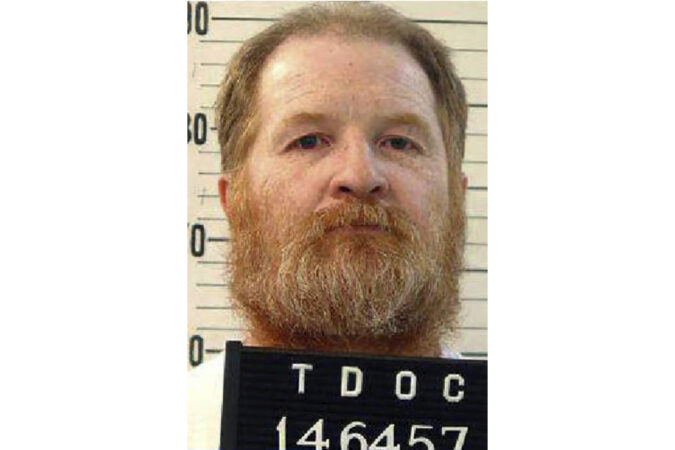
NASHVILLE, Tenn. — Tennessee executed Harold Wayne Nichols by injection Thursday in Nashville for the 1988 rape and murder of Karen Pulley, a 20-year-old student at Chattanooga State University.
Nichols, 64, had confessed to killing Pulley as well as raping several other women in the Chattanooga area. Although he expressed remorse at trial, he admitted he would have continued his violent behavior had he not been arrested. He was sentenced to death in 1990.
“To the people I’ve harmed, I’m sorry,” Nichols said in his final statement. Before Nichols died, a spiritual adviser spoke to him and recited the Lord’s Prayer. They both became emotional and Nichols nodded as the adviser talked, witnesses said.
Media witnesses reported that a sheet was pulled up to just above Nichols’ waist and he was strapped to a gurney with a long tube running to an IV insertion site on the inside of his elbow. There was a spot of blood near the injection site. At one point he took a very heavy breath and his whole torso rose. He then took a series of short, huffing breaths that witnesses said sounded like snorting or snoring. Nichols’ face turned red and he groaned. His breathing then appeared to slow, then stop, and his face became purple before he was pronounced dead, witnesses said.
Nichols’ attorneys unsuccessfully sought to have his sentence commuted to life in prison, citing the fact that he took responsibility for his crimes and pleaded guilty. His clemency petition stated “he would be the first person to be executed for a crime he pleaded guilty to since Tennessee re-enacted the death penalty in 1978.”
The U.S. Supreme Court declined to issue a stay of the execution on Thursday.
In a recent interview, Pulley’s sister, Lisette Monroe, said the wait for Nichols’ execution has been “37 years of hell.” She described her sister as “gentle, sweet and innocent,” and said she hopes that after the execution she’ll be able to focus on the happy memories of Pulley instead of her murder.
Jeff Monroe, Lisette Monroe’s husband and Pulley’s brother-in-law, said the family “was destroyed by evil” the night she was killed.
“Taking a life is serious and we take no pleasure in it,” he said during a news conference following the execution. “However, the victims, and there were many, were carefully stalked and attacked. The crimes, and there were many, were deliberate, violent, and horrific.”
Pulley, who was 20 when she was killed, had just finished Bible school and was attending college in Chattanooga to become a paralegal, Jeff Monroe said.
“Karen was bubbly, happy, selfless, and looking forward to the life before her,” he said.
Nichols has seen two previous execution dates come and go. The state earlier planned to execute him in August 2020, but Nichols was given a reprieve due to the COVID-19 pandemic. At that time, Nichols had selected to die in the electric chair — a choice allowed in Tennessee for inmates who were convicted of crimes before January 1999.
Tennessee’s lethal injection protocol in 2020 used three different drugs in series, a process that inmates’ attorneys claimed was riddled with problems. Their concerns were shown to have merit in 2022, when Gov. Bill Lee paused executions, including a second execution date for Nichols. An independent review of the state’s lethal injection process found that none of the drugs prepared for the seven inmates executed in Tennessee since 2018 had been properly tested.
The Tennessee Department of Correction issued a new execution protocol in last December that utilizes the single drug pentobarbital. Attorneys for several death row inmates have sued over the new rules, but a trial in that case is not scheduled until April. Nichols declined to chose an execution method this time, so his execution will be by injection by default.
His attorney Stephen Ferrell explained in an email that “the Tennessee Department of Correction has not provided enough information about Tennessee’s lethal execution protocol for our client to make an informed decision about how the state will end his life.”
Nichols’ attorneys on Monday won a court ruling granting access to records from two earlier executions using the new method, but the state has not yet released the records and says it will appeal. During Tennessee’s last execution in August, Byron Black said he was “hurting so bad” in his final moments. The state has offered no explanation for what might have caused the pain.
Many states have had difficulty obtaining lethal injection drugs as anti-death penalty activists have put pressure on drug companies and other suppliers. Between the shortages and legal challenges over botched executions, some states have moved to alternative methods of execution including a firing squad in South Carolina and nitrogen gas in Alabama.