Category: News

Latest breaking news and updates

  • ‘I didn’t want to get hit’: A.C. mayor’s teen daughter testifies against him in child abuse trial

    ‘I didn’t want to get hit’: A.C. mayor’s teen daughter testifies against him in child abuse trial

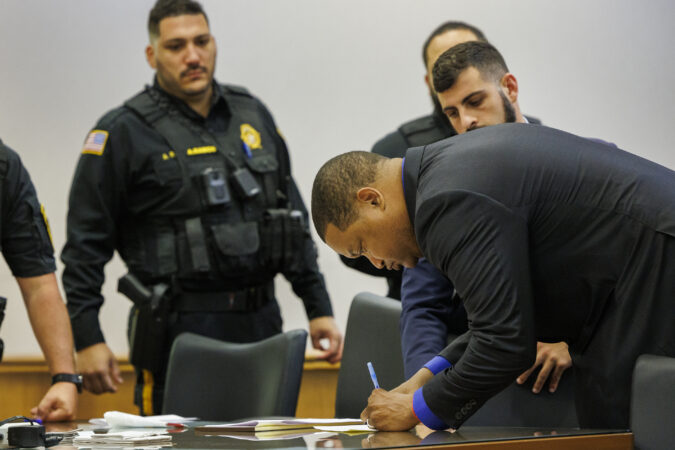
    MAYS LANDING, N.J. — The daughter of Atlantic City Mayor Marty Small Sr. took the stand in an Atlantic County courtroom Tuesday morning to testify against him at trial as he stands accused of physically abusing her.

    As a Superior Court judge looked on, the teen told jurors her father had beaten and punched her and struck her with a broom.

    “He put his hands on me,” she said.

    Small, a Democrat, faces charges of child endangerment, aggravated assault, and witness tampering in connection with a series of incidents in which prosecutors say he punched, beat, and threatened his then-15-year-old daughter, largely over his disapproval of her relationship with her boyfriend. He has denied any wrongdoing, and his lawyers have challenged his daughter’s credibility.

    The girl, now 17, recounted the abuse in a soft voice, calmly answering prosecutors’ questions — and rejecting suggestions by an attorney for her father that she had lied about key details.

    “My dad came home and he was like, upset,” the girl said as prosecutors asked her about crimes they allege took place in the Small family home in January 2024.

    She said her mother had recently gone through her phone and learned that she had sneaked her boyfriend into the house. Her father, she testified, was “mad and disappointed.” As she sat in a chair that she recalled as having a Philadelphia Flyers theme, she told the jury, he hit her with a belt and punched her in the legs.

    Louis Barbone, an attorney for Small, maintained that there were inconsistencies in statements the girl gave to investigators, and he disputed her account of the incident with the broom.

    Earlier in the day, prosecutors played video footage they say the teen recorded at home.

    Though the camera did not show images of Small or others, it captured the sound of the girl and her parents screaming amid what prosecutors described as the chaos that descended on the home after the teen started a relationship they did not approve of.

    Prosecutors also showed Instagram messages the girl exchanged with her boyfriend about the alleged abuse, including one in which she told him, ”I’m scared to get in the shower because my bruise is gonna burn.”

    Small’s daughter told jurors that as her father was rousing his family one January morning to attend the Atlantic City Peace Walk, she did not have her hair done and didn’t want to go. She said she and her father argued and he pushed her, so she splashed him with laundry detergent.

    Small, she said, then got a broom and struck her multiple times in the forehead. She testified that she passed out, and the next thing she remembered was her father telling her brother to get her some water.

    On cross examination, Barbone returned to a theme he struck in his opening statement to the jury on Monday — that Small was a caring father who, watching his daughter’s life veer off course because of a relationship he believed to be manipulative and inappropriate, had legally disciplined a disobedient child.

    He told jurors prosecutors did not have a recording of the incident involving a broom, and he said the girl had been wielding a butter knife and the injuries she sustained that day happened when she fell as the two wrestled for the broom.

    Barbone said the teen had exaggerated her injuries, and he noted that when initially questioned by investigators, she told them she felt safe at home.

    “I didn’t want to get taken away,” the girl said, “so I said, ‘yes.’”

    The trial is expected to continue through the end of the week.

  • Twin brothers in Absecon charged with posting online threats against ICE

    Twin brothers in Absecon charged with posting online threats against ICE

    Twin brothers from Absecon, N.J., were arrested and charged Tuesday with allegedly writing threats on social media against ICE agents and Tricia McLaughlin, the spokesperson for Department of Homeland Security Secretary Kristi Noem, DHS announced.

    Emilio Roman-Flores and Ricardo Antonio Roman-Flores are accused of writing on social media that McLaughlin should be hanged and declaring, “Shoot ICE on sight.”

    The Absecon Police Department SWAT team and DHS executed a search and arrest warrant Tuesday morning for the brothers. DHS said both were U.S. citizens.

    DHS posted a photo on the agency’s website showing a shotgun and a semiautomatic rifle and ammunition that was allegedly taken as evidence during the raid.

    Emilio Roman-Flores was charged with unlawful possession of an assault weapon, possession of prohibited weapons, conspiracy-terroristic threats, criminal coercion, threats, and cyber harassment, the department said.

    Ricardo Antonio Roman-Flores was charged with conspiracy-terroristic threats, DHS said.

    According to public records, the brothers are 26 years old.

    “If you threaten our law enforcement or DHS officials, we will hunt you down and you will be prosecuted to the fullest extent of the law,” Todd Lyons, acting director of U.S. Immigration and Customs Enforcement, said in a statement.

    According to a Fox News story that DHS promoted on social media, one of the brothers allegedly wrote in reply to something McLaughlin posted: “[The Second] Amendment is in place for moments like this. Shoot ICE on sight.”

    One of the brothers also allegedly wrote in response to McLaughlin, according to Fox News: “We Americans should find you, tar you, feather you, and hang you as we did to anyone serving tyrants before the Revolutionary War.”

    Neither the Fox News report nor the DHS announcement specified which brother made the statements.

  • University of Delaware appoints interim president to the permanent post

    University of Delaware appoints interim president to the permanent post

    The University of Delaware on Tuesday appointed Laura A. Carlson, who had been serving as interim president, to the permanent post, effective Jan. 1.

    Carlson came to the school in 2022 as provost after spending 25 years at the University of Notre Dame. She stepped into the interim presidency in July after former president Dennis Assanis announced he was stepping down last June with less than two months notice.

    The university did not conduct a national search but rather engaged a consultant to help the school evaluate the qualities needed for the next president and assess Carlson’s ability to fit the role.

    “Dr. Carlson has demonstrated a deep commitment to the advancement of our university and a clear passion for the success and wellbeing of our students, faculty, staff and alumni,” Terri Kelly, board of trustees’ chair, said in a statement.

    As provost, Carlson, whose specialty is psychology, expanded courses offered in winter and summer sessions to give students the ability to graduate more quickly and prioritized bringing ideas from faculty and staff to fruition, the university said.

    She’s a cum laude graduate of Dartmouth, where she got her bachelor’s in psychology of language and obtained her master’s from Michigan State University and her doctorate from the University of Illinois, Urbana-Champaign.

    “I have fallen in love with UD, and I am deeply committed to its purpose and people,” Carlson, 60, said in a statement. “Together we can make the University of Delaware a place where we inquire with impact, create with connections, innovate with intention, grow with purpose, welcome with promise, educate with outcomes, work with trust, and belong with joy.”

  • The Frankford Arsenal once housed Philly’s narcotics unit. The site gave officers brain cancer, lawsuits say.

    The Frankford Arsenal once housed Philly’s narcotics unit. The site gave officers brain cancer, lawsuits say.

    Joseph Cooney joined the Philadelphia Police Department’s narcotics unit in 1998. For eight years, the officer began and finished each workday at the unit’s headquarters on the site of the old Frankford Arsenal in Philadelphia’s Bridesburg section, where munitions were manufactured and tested from the Civil War through the Vietnam War.

    Cooney, 53, said he would joke with his colleagues that “we’ll all be glowing in the dark someday” because of the materials left behind in the ground and the chemical plants across the Frankford Creek. In 2024, that joke became a dark reality for Cooney when he was diagnosed with glioblastoma, an aggressive and incurable brain cancer.

    In a lawsuit, filed along with lawsuits by the families of two narcotics officers who died of the disease, Cooney links his cancer to radioactive and toxic materials that had not been properly remediated when the munitions factory shut down and the site was converted to a business park.

    The lawsuit, filed Monday in Common Pleas Court, accuses the Philadelphia Authority for Industrial Development, developer Mark Hankin, and Hankin’s businesses of having known about risks of exposure but failing to warn those working in the location or properly remediate the harm.

    “This type of cancer, at the end of the day, it’s a death sentence,” Cooney said. “When you go to work every day, you don’t expect to be dealing with this.”

    The Philadelphia Authority for Industrial Development declined to comment. Hankin did not respond to requests for comment.

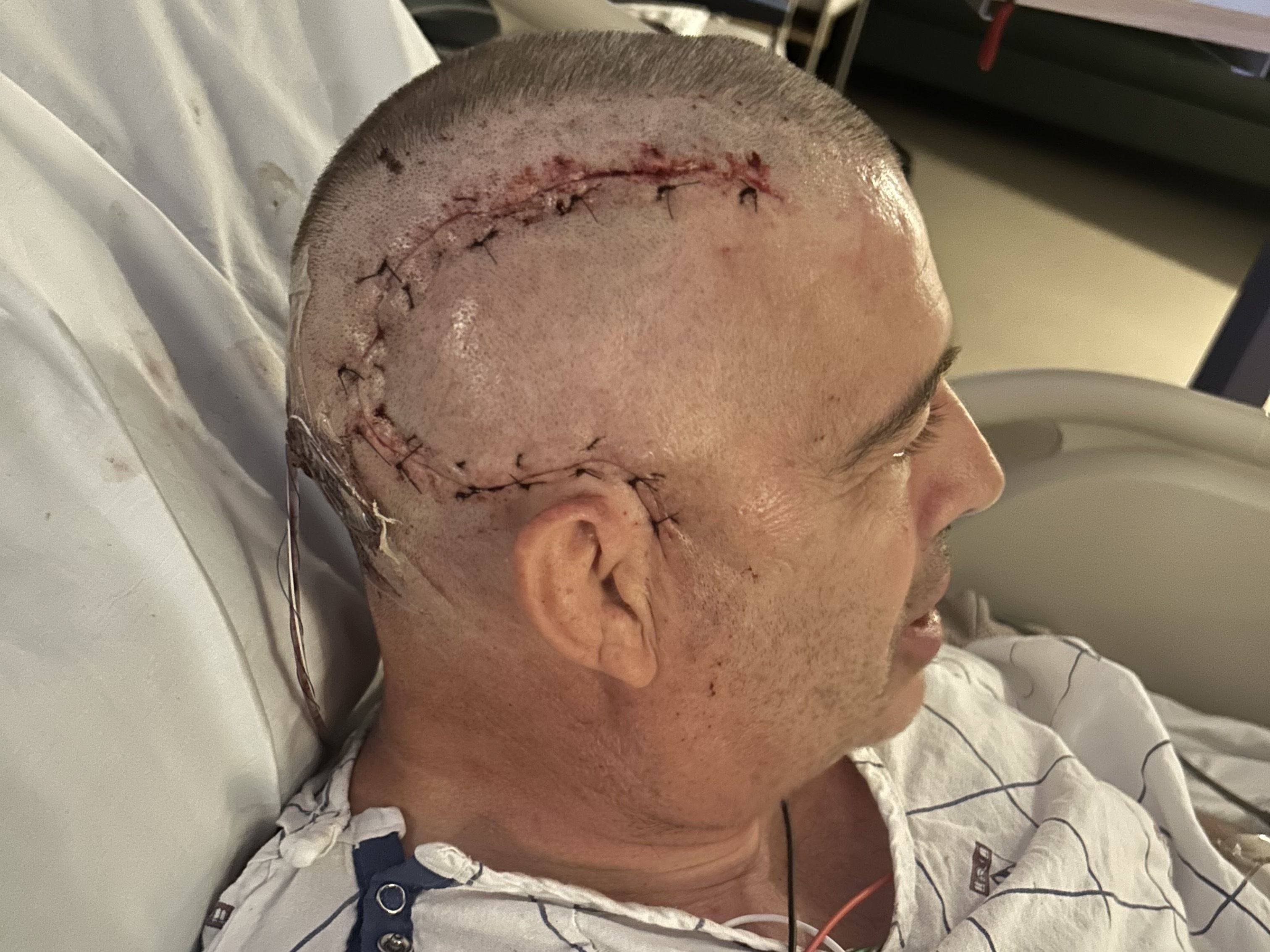
    Joseph Cooney, a police officer who was diagnosed with glioblastoma in 2024, seen after his third surgery in July 2025.

    ‘The street that beat Hitler’

    The Frankford Arsenal opened in 1816 as a weapons storage and repair shop for the U.S. Army, and in 1849 became the country’s largest developer and manufacturer of small arms and artillery shells. The arsenal’s campus grew over the years, including a massive expansion during World War II. By the end of the war, workers fondly referred to it as “the street that beat Hitler.”

    Each war throughout the century-plus of the arsenal’s existence brought its own challenges, and the complex between Bridge Street, Tacony Street, and the Frankford Creek adapted to support the nation’s military needs.

    This woman is loading powder into cartridges of .30 caliber tracer bullets in the assembly division of the Frankford Arsenal in Philadelphia, Penn., on July 27, 1940 during World War II. (AP Photo)

    The arsenal closed in 1977 and the authority for industrial development, an agency with a mayor-appointed board, became the campus’ steward. Hankin, a Montgomery County developer, bought the campus in the 1980s and transformed it into a business park, which included the narcotics unit headquarters from the early 1990s until 2015.

    As soon as the arsenal closed, decontamination needs were discussed, newspaper articles from the time show. An official report found the existence of dangerous materials in buildings in 1981, before the property was converted to civilian use, the lawsuits say.

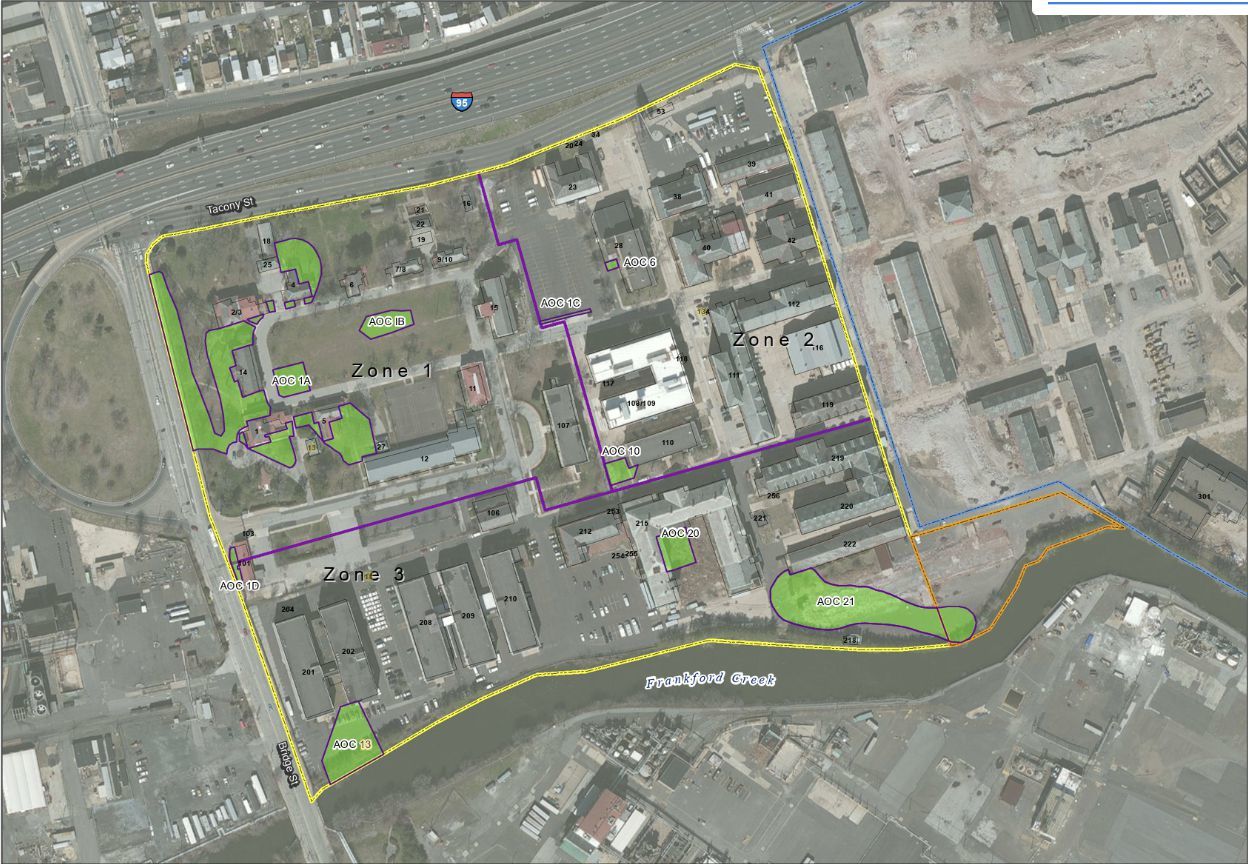
    Throughout the 2000s, the U.S. Army Corps of Engineers, in a series of reports, flagged concerns over dangers in the old arsenal’s ground. A 2016 report found elevated concentrations of lead and potentially cancer-causing substances in six areas that posed “unacceptable risk or potential concerns to future human receptors.”

    One of the areas of concern noted in the report sits atop building 202 — the narcotics unit’s former home.

    A map showing areas of concern for hazardous materials at the Frankford Arsenal site, from a 2016 report on a feasibility study conducted by the U.S. Army Corp of Engineers.

    The common denominator

    Cooney has been hearing over the past decades about colleagues from his narcotics unit days who have gotten sick.

    Michael Deal, who spent 37 years on the police force and joined the narcotics unit in 1994, was diagnosed with glioblastoma in 2018 and died the next year at age 64. Then, in 2023, Andrew Schafer, a 20-year veteran who worked at narcotics from 2002 to 2015, also was diagnosed with the brain cancer. He died in March at age 51.

    The families of Deal and Schafer also filed lawsuits similar to Cooney’s.

    Cooney heard through the grapevine about other cases. And then he was diagnosed.

    “Everyone sat down, started talking,” Cooney said. “The only common denominator was everybody worked in the same building.”

    Adding to their concern were the adjacent chemical plants, Cooney said.

    Fifty-four employees of the Rohm & Haas chemical plant, right across the Frankford Creek from the arsenal, died of lung cancer in the 1960s and early ’70s, the Philadelphia Daily News reported in 1981.

    The current suits allege that the contaminants in the arsenal ground were not properly cleaned up, and that those working at the site were not warned despite a series of reports.

    “The remediation was not done to the extent that it eliminated the risk,“ said William Davis, the attorney who filed the suits. ”Up until now we have no evidence that there was any warning to any tenants.”

    Cooney still works as a police officer, with a desk job supporting the city’s SWAT team. He has lost much of his independence to the disease, which can be slowed but not cured. He can no longer drive or coach youth sports, and relies on a cane to walk.

    “It’s tough now,” Cooney said. “You feel like you’re getting robbed.”

    The officer is concerned about who will take care of his wife and their seven children once he is gone, and Cooney is especially worried for the health of one of his daughters — a biology teacher at Franklin Towne Charter High School, which sits on the arsenal’s old site.

  • Penn State faculty say they will vote on forming a union

    Penn State faculty say they will vote on forming a union

    A Pennsylvania State University faculty group has taken the next step to form a union across the system’s campuses, which eventually could represent some 6,000 faculty.

    Officials from the Penn State Faculty Alliance and the Service Employees International Union said they had filed Tuesday with the Pennsylvania Department of Labor after having obtained at least the required signatures of 30% of eligible faculty.

    The next step would be an election, and if approved by a majority, a union would be formed and contract negotiations could begin. How long it takes to schedule an election depends on whether the university opposes the move.

    “It would be the largest single union election in the public sector in the history of the Commonwealth if not the last 50 years,” Steve Cantanese, president of SEIU 668 said at a news conference held at the Capitol building Tuesday in Harrisburg.

    The announcement comes about a month after graduate student workers at Penn State voted to unionize, with 90% in favor. That vote came nearly a year after the Coalition of Graduate Employees at Penn State filed the required signature cards with the labor board. Their vote came amid a wave of graduate union workers’ efforts to unionize.

    Penn State is the only state-related university of the four in the Commonwealth without a faculty union. Faculty concern about the university’s decisions began to accelerate during the pandemic and have continued to mount amid budget cuts and the decision in May to announce the closure of seven of the school’s Commonwealth campuses. A seeming lack of shared governance, salary, and workload inequities across campuses, and transparency are among other concerns cited by faculty involved in the effort.

    “Penn State faculty are filing for a union election to bring transparency to their workplace, to bring job security to their workplace, to have an opportunity to have a greater voice at their workplace, to have some economic security at their workplace,” Cantanese said.

    Julio Palma, associate professor of chemistry at Fayette, one of the campuses selected for closure, said faculty tried to fight the Commonwealth campus closure plan but didn’t have enough power.

    “We organized,” he said. “We held rallies on campus. We talked to our elected officials. Nothing moved the needle.

    “If we had a faculty union, we wouldn’t be in this situation… We need a faculty union now.”

    Cantanese said SEIU reached out to the university in the hope that it will welcome faculty’s efforts to unionize.

    Penn State in a statement said it would review the petition when it is received.

    “Penn State deeply values the teaching, research, and service of our faculty, who play a critical role in fueling the success of our students and advancing our mission,” the school said.

    Faculty at the press conference said a union is needed.

    “As a teacher, I know that my working conditions are my students’ learning conditions,” said Kate Ragon, an assistant clinical professor of labor and employment relations at University Park, Penn State’s main campus. “We want a voice in the decision-making that affects us, affects our students, and affects our work.”

    The three other state-related universities in Pennsylvania ― Temple, the University of Pittsburgh, and Lincoln ― already have faculty unions. Temple’s has existed for more than 50 years, and its graduate student workers have been unionized for about 25 years. Lincoln’s formed in 1972. Pitt’s is more recent. It was established in 2021.

    Faculty at Rutgers, New Jersey’s flagship university, are unionized, too. So are the 10 universities in the Pennsylvania State System of Higher Education.

    Faculty in the alliance have said they hope to secure better wages and benefits, job security protections, and a greater role in decision-making. When they announced plans to form a union last March, they said they wanted full and part-time, tenure, and nontenure faculty to be included as members and believed all campuses would be involved except for the medical school faculty at Hershey.

  • Your next chance to get FIFA World Cup tickets starts Thursday

    Your next chance to get FIFA World Cup tickets starts Thursday

    The 2026 FIFA World Cup is officially six months away, and Philadelphians’ next chance to buy general admission tickets starts Thursday.

    From Dec. 11 to Jan. 13, fans can enter a lottery for the chance to buy World Cup match tickets, like the two previous lottery phases. The “random selection draw” is the third of several ticket sale phases leading up to the World Cup’s first match on June 11, 2026, in Mexico City.

    During the first two ticket phases, the United States, Canada, and Mexico (in that order) drove the bulk of ticket sales, according to FIFA. Fans in 212 countries have bought tickets.

    However, since the final draw on Friday, the World Cup matchups and schedule have been finalized. This will be the first ticket sale phase in which fans can apply for single-game tickets for exact matchups and teams.

    Next year’s World Cup will take place in 16 cities across the United States, Canada, and Mexico, including in Philadelphia, where six matches will be played. Powerhouses Brazil and France, home to some of the world’s best players, are confirmed to be playing in the City of Brotherly Love.

    Brazil’s Raphinha (center) celebrates with teammate Vinícius Júnior after scoring his side’s opening goal against Venezuela during a World Cup qualifying match.

    How to enter the random selection draw for FIFA World Cup tickets

    To enter the ticket lottery, applicants must first create a FIFA ID at FIFA.com/tickets.

    The lottery application form will become available on FIFA’s website starting at 11 a.m. Thursday and will close at 11 a.m. on Jan. 13.

    Log in during the application window and complete the random selection draw application form.

    Winners will be selected in a random draw, with notifications starting soon after Jan. 13. Those selected will receive an assigned date and time to purchase tickets, subject to availability.

    Single-match tickets to all 104 games, plus venue-specific and team-specific options, will be made available to choose from. That means fans in the Philadelphia area could buy tickets for matches at Lincoln Financial Field — if selected.

    Fans who have applied to previous ticket sale lotteries must submit a new application form.

  • She was hired to supervise troubled youth. She gave one a gun and had sex with him, Bucks DA says.

    She was hired to supervise troubled youth. She gave one a gun and had sex with him, Bucks DA says.

    A New York woman who worked as a “house mom” supervising troubled teens at a group home in Feasterville gave a 16-year-old boy money, posed in pictures with him holding a gun, and forced him into a sexual relationship, prosecutors in Bucks County said Tuesday.

    Cristal Betancourt, 30, told the teen in text messages in December 2024 that she was pregnant and asked him to buy her an emergency contraceptive, according to the affidavit of probable cause for her arrest.

    But the boy, in an electronic diary he kept on his iPhone’s Notes app, said he was afraid of Betancourt, writing that she was “crazy” and once demanded sex from him at gunpoint, the affidavit said.

    Betancourt has been charged with institutional sexual assault, corruption of minors, and related crimes. She had not been arraigned as of Tuesday afternoon. Efforts to reach her were unsuccessful.

    Investigators were first notified of the alleged abuse in January, six months after the teen was court-ordered to move into the home at 700 Ross Dr. in Feasterville.

    The property, operated by Community Service Foundation, provides housing and behavioral therapy for troubled teens, usually after they are taken into custody for criminal offenses. It operates similar to a foster home, with a full-time “house parent” who lives on the premises and supervises the teens.

    That supervisor also makes recommendations to CSF as to whether the teens are worthy of being granted “home passes” to visit family and friends.

    CSF did not return a request for comment on Betancourt or the charges she faces.

    Lower Southampton police were notified by investigators in Lancaster County, where the boy lived before being assigned to the group home, that they had a photo of the teen holding a Walther PPQ handgun and standing next to Betancourt, the affidavit said. Records show that she had purchased a gun similar to the one in the photo, the document said.

    In an interview with investigators, the affidavit said, Betancourt told them she owned two handguns, including the Walther, which she said had been recently stolen from her car. She said she had not reported the gun stolen and asked detectives to do that for her, according to the document.

    Detectives later examined the 16-year-old’s phone and found other photos of him holding both of Betancourt’s guns, the affidavit said. He told police she had taken him to a gun shop to look at firearms and then purchased a second gun, a Palmetto Arms 5.7-caliber pistol. Text messages found on the boy’s phone showed that he had bragged to his friends that he was carrying a handgun of that caliber, the document said.

    The teen’s cell phone showed that he had taken detailed notes of his sexual encounters with Betancourt inside the group home in November 2024, according to the affidavit. He wrote that he no longer wanted to have sex with her but was afraid she would “get him in trouble” or harm him if he refused, the affidavit said.

    Cell phone records revealed that Betancourt had taken the teen on unauthorized trips to Lancaster in violation of his probation, while lying and saying they were at a Costco store in Warminster, the document said, and detectives found she had sent him $600 via CashApp the week before Christmas 2024.

  • Inside Philly’s newest school: AMY at James Martin, a $62 million middle school, will open in January

    Inside Philly’s newest school: AMY at James Martin, a $62 million middle school, will open in January

    A brand-new, $62 million Philadelphia school building is opening soon.

    Alternative Middle Years at James Martin, in Port Richmond, is all but finished and ready for students to occupy after winter break.

    Community members, district officials, and dignitaries gathered Tuesday to take tours and trumpet the new construction, a bright spot in a district grappling with a large stock of aging and sometimes environmentally troubled buildings.

    “This is what growth looks like,” said Paula Furman, AMY at James Martin’s principal. The middle school educates 200 students in grades 6, 7, and 8.

    Superintendent Tony B. Watlington Sr. and Debora Carrera, the city’s chief education officer, applaud a student performance Tuesday at AMY at James Martin, a new middle school in Port Richmond.

    Sarah-Ashley Andrews, the school board vice president, noted that of the district’s roughly 300 buildings, more than 200 were built before 1978.

    “Projects like this underscore why continued investment is essential,” said Andrews.

    On time, on budget

    Inside, the 88,000-square-foot, four-story structure at Richmond and Westmoreland Streets just off I-95 is a marvel: all light and flexible seating, makerspace, “digital flex lab” (think: computer lab), and “gymnatorium” (spiffy gym and auditorium). It has modern science labs, dedicated spaces for instrumental and vocal music, and a killer view of Center City from its rooftop outdoor classroom.

    The outdoor space with a view of the Center City skyline at the new AMY at James Martin school.

    The school replaces an 1894 structure razed to make way for new construction. It is the Philadelphia School District’s sixth new building in 10 years.

    “It is kind of crazy, just the giant leap forward that students will be taking, just in terms of furniture, not to mention the technology,” said Melanie Lewin, a district school facilities planner who led tours of the new building. AMY at James Martin students, who have been temporarily learning in classrooms at Penn Treaty High School, used to learn in a 19th-century building; they’re relocating to a building with built-in charging outlets and “noodle chairs” that let them fidget securely while in class.

    Superintendent Tony B. Watlington Sr. said the project was a standout.

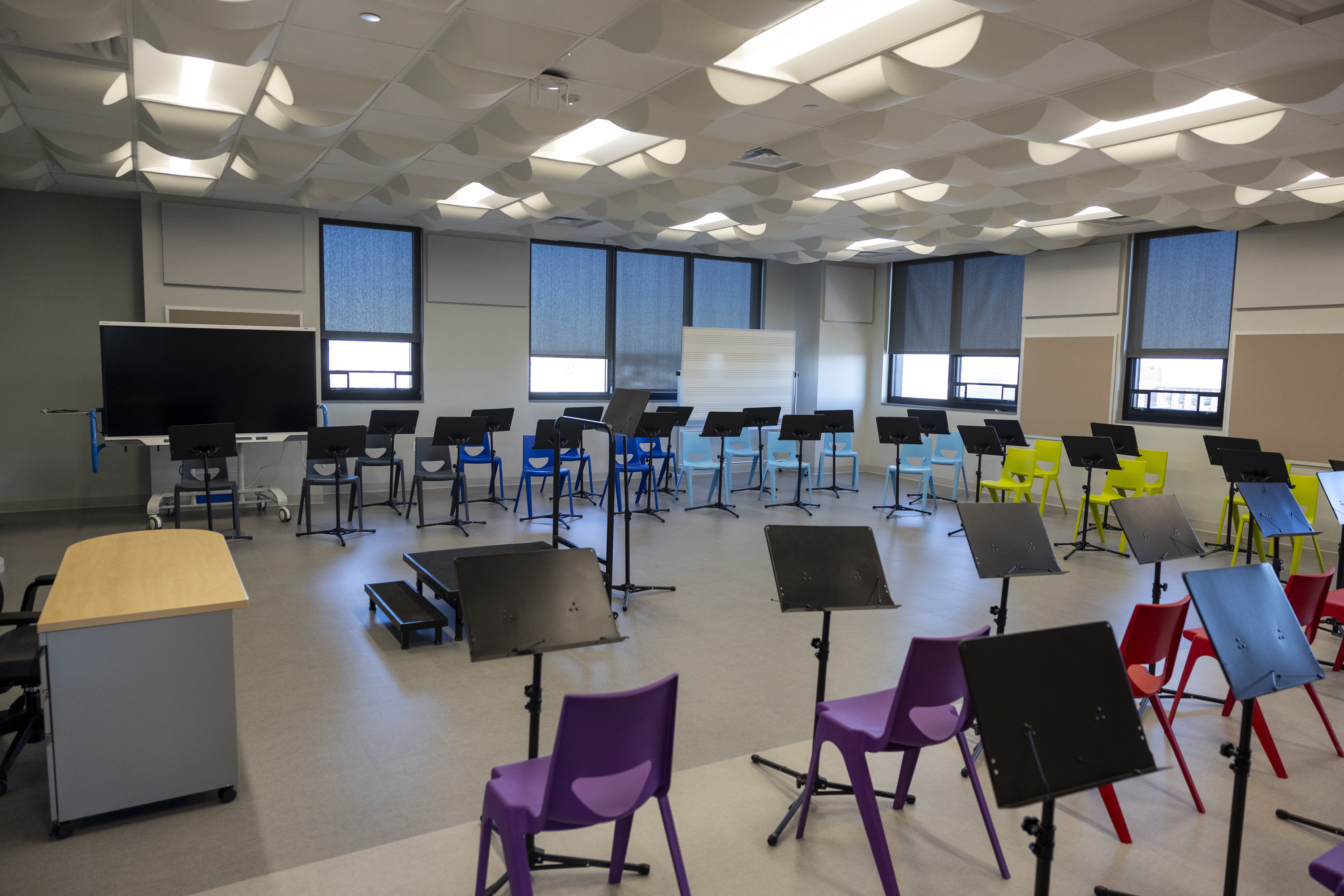
    The instrumental music classroom at the new Amy at James Martin School in Philadelphia.

    “This school was not just built to look fantastic,” Watlington said. “I want everyone to know that it was built on time and on budget. That is no easy feat when the price of everything is going up — inflation, tariffs, everything.”

    Some neighbors showed up at Tuesday’s ribbon-cutting to celebrate. But the process was controversial at first — some protested the loss of the old AMY at James Martin historic site.

    City Councilmember Mike Driscoll alluded to the past pain on Tuesday.

    “It’s been a struggle, I’ll admit that,” Driscoll said. But, he said, the new school is lovely. “When you see the plans on paper, it doesn’t do it justice.”

    A looming facilities master plan

    AMY at James Martin’s opening comes with the district approaching a crossroads: Officials are awaiting a years-in-the-making facilities master plan, the first in decades.

    While schools in the Northeast and in a few other spots are overcrowded or nearing capacity, schools in many parts of the city are dramatically underenrolled.

    Custom cushioned seats in a classroom at the new Amy at James Martin School in Philadelphia.

    Officials have said that some schools will likely cease to exist as part of the process, now expected to culminate early next year with Watlington making recommendations to the school board for grade reconfigurations, closures, co-locations, significant renovations, and new construction.

    AMY at James Martin, in its current form, is likely to come in under the district’s minimum recommended school size, at 200 students. The school’s capacity is 500, officials said.

    But Casey Laine hopes the school count grows by two in January.

    One of the bathrooms for students at the new Amy at James Martin School in Philadelphia.

    Laine, who lives around the corner from the new AMY at James Martin and attended Tuesday’s ribbon-cutting, is the mother of a sixth and seventh grader who currently attend Bridesburg Elementary.

    She’d like her kids, a son and daughter, to transfer to AMY at James Martin if possible.

    “This is beautiful,” Laine said. “I’m so excited.”

  • Longtime Philly grocer Jeff Brown buys his fourth ShopRite-anchored complex for $30.8 million

    Longtime Philly grocer Jeff Brown buys his fourth ShopRite-anchored complex for $30.8 million

    Jeff Brown, the fourth-generation Philly grocer, has added another ShopRite shopping center to his real estate portfolio.

    The Brown family, which operates a dozen local ShopRites, recently purchased the Shoppes at Wissinoming for $30.8 million, according to JLL real estate, which represented the seller. The nearly 98,000-square-foot complex in Northeast Philadelphia is anchored by one of Brown’s ShopRites.

    “We think it’s important to own the real estate where our supermarkets are located, so we can ensure the long-term healthy food access for the local community and the overall sustainability of our stores,” Brown, executive chairman of Brown’s Super Stores, said in a statement. “We are excited to add the Shoppes at Wissinoming shopping center to our real estate properties.”

    Brown said he owns the shopping centers surrounding his ShopRites in Cheltenham, Brooklawn, and Roxborough.

    The ShopRite in Roxborough, pictured in 2020, is run by Jeff Brown and located in a complex owned by the longtime grocer.

    The family also runs ShopRites in Eastwick, Nicetown, Parkside, Port Richmond, South Philadelphia, Bensalem, Fairless Hills, and Mullica Hill..

    The ShopRite at the Shoppes at Wissinoming opened in 2018, and was acquired by Brown earlier this year. The grocery store anchors the center, occupying about 68,000 square feet.

    The complex is 98% occupied, according to JLL. Other tenants include Wawa, Popeyes, and AT&T.

    “The transaction reflects broader trends in the retail investment market, where investors continue to prioritize grocery-anchored properties with proven tenant performance,” said Jim Galbally, JLL senior managing director. “Shoppes at Wissinoming has an ideal combination of dominant grocery anchor, diverse tenant mix, and strategic location within one of Philadelphia’s most densely populated submarkets.”

    Brown and his wife, Sandra, have been running grocery stores for nearly four decades. Over the years, the family has received national attention for opening stores in underserved neighborhoods, hiring people who were formerly incarcerated, and partnering with Black-owned businesses.

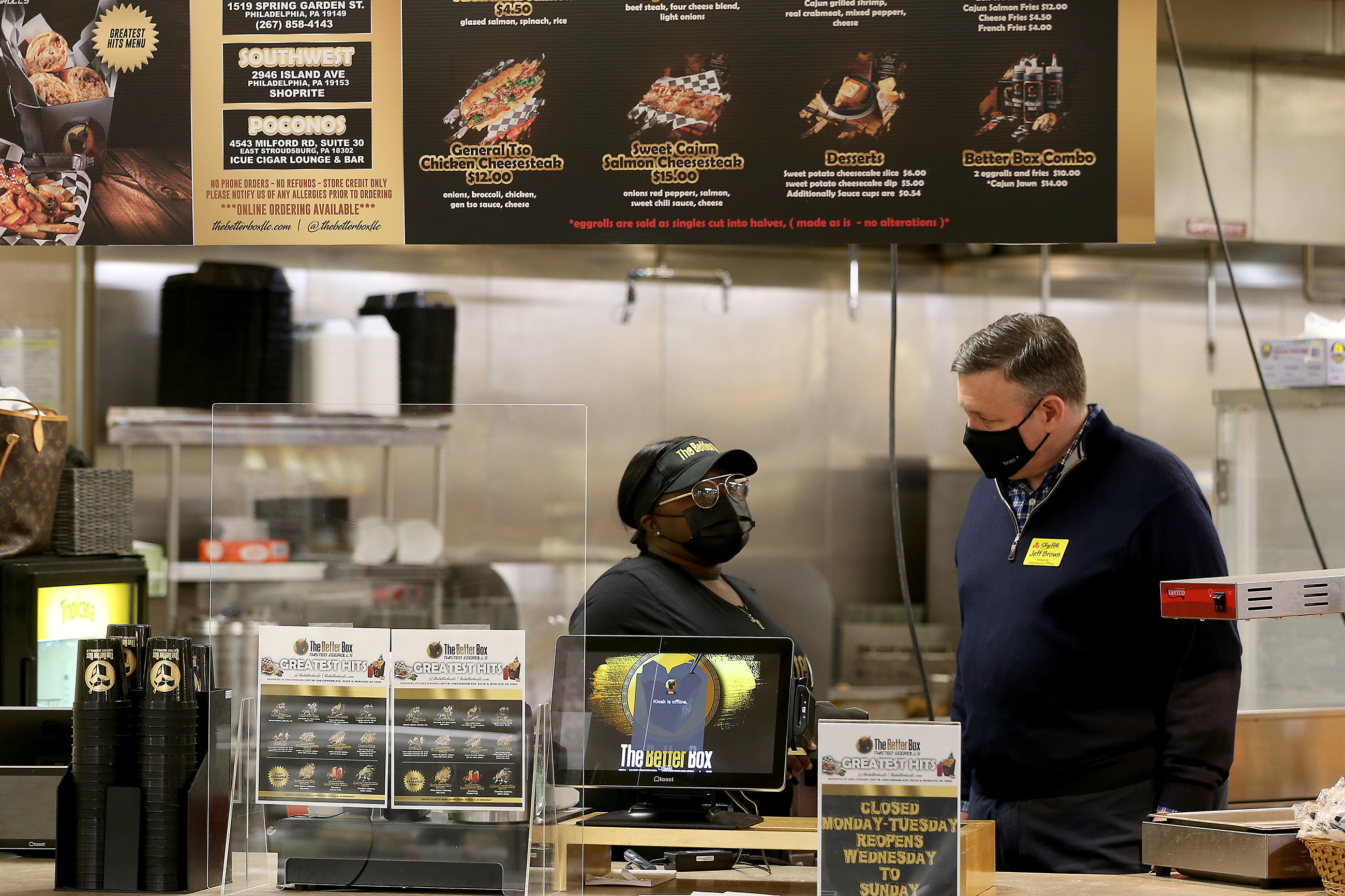
    Better Box owner Tamekah Bost (left) talks with ShopRite owner Jeff Brown at the Cheltenham ShopRite in 2021. Brown has brought local restaurateurs into his stores.

    An outspoken critic of former Mayor Jim Kenney’s soda tax, Brown ran an unsuccessful campaign for mayor in 2023. During his run, the city’s Board of Ethics accused Brown of campaign-finance violations, over which Brown later sued. The lawsuit was dismissed last year by a Philadelphia Common Pleas Court judge. During Brown’s campaign, The Inquirer also reported that his grocery stores had received $1.5 million from a nonprofit he founded.

    After Brown lost to now-Mayor Cherelle L. Parker in the Democratic primary, his grocery chain went on to further expand its holdings, making a substantial investment in DiBruno Brothers in 2024.

    Brown’s Super Stores is headquartered in Gloucester County and also runs the Fresh Grocer stores near City Avenue and in Wyncote.

  • Jimmy Kimmel signs one-year contract extension with ABC

    Jimmy Kimmel signs one-year contract extension with ABC

    Despite President Donald Trump’s wishes, Jimmy Kimmel won’t be going off the air any time soon.

    ABC announced the network signed a one-year contract extension with the late-night host on Monday.

    Kimmel’s previous, multiyear contract was set to expire in May. The extension means Jimmy Kimmel Live! will continue through at least May of 2027.

    The news comes on the heels of Kimmel’s temporary suspension following remarks he made about the assassination of conservative activist, Charlie Kirk. Trump praised the suspension at the time.

    Following a public outcry, ABC lifted the suspension, and Kimmel returned to the air with stronger ratings than he had before.

    Since then, Trump has continued to take jabs at Kimmel, who has resumed making jokes and digs at the president’s expense, performing a 10-minute monologue on Trump and the Jeffrey Epstein files in one episode and ragging on his approval ratings.

    Kimmel lingered on Trump’s mind Sunday as the president hosted the Kennedy Center Honors in Washington.

    “I’ve watched some of the people that host,” Trump said. “Jimmy Kimmel was horrible, and some of these people, if I can’t beat out Jimmy Kimmel in terms of talent, then I don’t think I should be president.” (Kimmel has never hosted the Kennedy Center Honors. He has hosted the Oscars four times.)

    Trump has continued to set his sights on other late-night TV hosts, including Stephen Colbert — whose show will end in May with CBS citing financial reasons for its cancelation — Jon Stewart, and, most recently, Seth Meyers.

    Stewart will remain at his weekly post on The Daily Show for another year, Paramount, a Skydance Corporation, announced last month. Meyers’ Late Night with Seth Meyers is under contract with NBC through 2028.

    The Associated Press contributed to this article.