Category: News

Latest breaking news and updates

  • Trump dismisses U.S. intelligence that Saudi prince was likely aware of 2018 killing of journalist Jamal Khashoggi

    Trump dismisses U.S. intelligence that Saudi prince was likely aware of 2018 killing of journalist Jamal Khashoggi

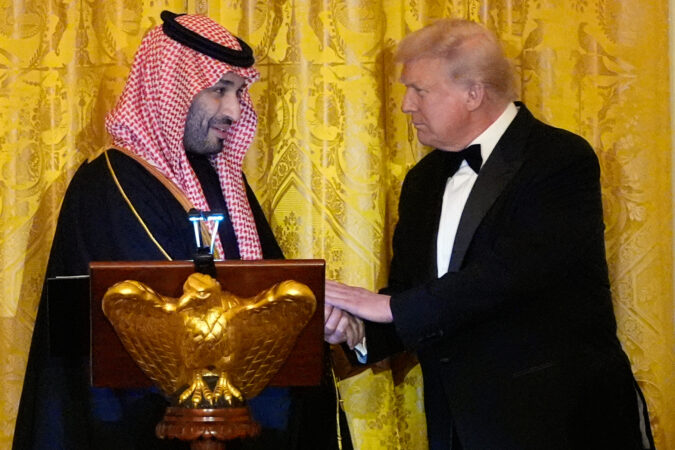
    WASHINGTON — President Donald Trump on Tuesday dismissed U.S. intelligence findings that Crown Prince Mohammed bin Salman likely had some culpability in the 2018 killing of Washington Post journalist Jamal Khashoggi as Trump warmly welcomed the de facto ruler of Saudi Arabia on his first White House visit in seven years.

    The U.S.-Saudi relationship had, for a time, been sent into a tailspin by the operation targeting Khashoggi, a fierce critic of the kingdom.

    But seven years later, the dark clouds over the relationship have been cleared away. And Trump is tightening his embrace of the 40-year-old crown prince, who he said is an indispensable player in shaping the Middle East in the decades to come.

    Trump in his defense of the crown prince derided Khashoggi as “extremely controversial” and said “a lot of people didn’t like that gentleman.” Prince Mohammed denies involvement in the killing of Khashoggi, who was a Saudi citizen and Virginia resident.

    “Whether you like him or didn’t like him, things happen,” Trump said when asked about the killing by a reporter during an Oval Office appearance with Prince Mohammed. “But (Prince Mohammed) knew nothing about it. And we can leave it at that. You don’t have to embarrass our guest by asking a question like that.”

    But U.S. intelligence officials determined that the Saudi crown prince likely approved the killing by Saudi agents of U.S.-based journalist inside the Saudi consulate in Istanbul, according to U.S. findings declassified in 2021 at the start of the Biden administration. Trump officials, during his first administration, refused to release the report.

    Prince Mohammed said Saudi Arabia “did all the right steps” to investigate Khashoggi’s death.

    “It’s painful and it’s a huge mistake,” he said.

    Trump, who said the two leaders have become “good friends,” even commended the Saudi leader for strides made by the kingdom on human rights without providing any specific detail.

    New investment from Saudis

    The crown prince for his part announced Saudi Arabia was increasing its planned investments in the U.S. to $1 trillion, up from $600 billion that the Saudis announced they would pour into the United States when Trump visited the kingdom in May.

    Echoing rhetoric that Trump likes to use, the crown prince called the U.S. the “hottest country on the planet” for foreign investment.

    “What you’re creating is not about an opportunity today. It’s also about long-term opportunity,” Prince Mohammed said.

    Trump’s family has a strong personal interest in the kingdom. In September, London real estate developer Dar Global announced that it plans to launch Trump Plaza in the Red Sea city of Jeddah.

    It’s Dar Global’s second collaboration with the Trump Organization, the collection of companies controlled by the U.S. president’s children, in Saudi Arabia.

    Trump pushed back on suggestions that there could be a conflict of interest in his family’s dealings with the Saudis.

    “I have nothing to do with the family business,” Trump said.

    Trump’s comments about Khashoggi’s killing and defense of his family’s business in Saudi Arabia were blasted by human rights and government oversight activists.

    Human rights groups say Saudi authorities continue to harshly repress dissent, including by arresting human rights defenders, journalists and political dissidents for criticism against the kingdom. They also note a surge in executions in Saudi Arabia that they connect to an effort to suppress internal dissent.

    “President Trump has Jamal Khashoggi’s blood on his hands,” said Raed Jarrar, advocacy director for DAWN, a U.S.-based group advocating for democracy and human rights in the Arab world that was founded by Khashoggi.

    Rolling out the red carpet

    Trump warmly received Prince Mohammed when he arrived at the White House Tuesday morning for a pomp-filled arrival ceremony that included a military flyover and a thundering greeting from the U.S. Marine band.

    Technically, it wasn’t a state visit, because the crown prince is not the head of state. But Prince Mohammed has taken charge of the day-to-day governing for his father, King Salman, 89, who has endured health problems in recent years.

    Later, Trump and first lady Melania Trump welcomed the crown prince for a black-tie dinner in the White House East Room. The boldface names who attended included Nvidia CEO Jensen Huang, tech entrepreneur Elon Musk and soccer star Cristiano Ronaldo.

    Trump at the dinner announced he was designating Saudi Arabia as a major non-NATO ally. The designation, while largely symbolic, provides foreign partners with certain benefits in the areas of defense, trade and security cooperation.

    The president also announced that the two leaders had signed a new defense agreement, but the White House did not immediately release details of the pact. Ahead of the visit, the Saudis had signaled they were looking for formal assurances from Trump defining the scope of the U.S. military protection for the kingdom.

    “A stronger and more capable alliance will advance the interests of both countries,” Trump said. “And it will serve the highest interest of peace.”

    Fighter jets and business deals

    On the eve of Prince Mohammed’s arrival, Trump announced he had agreed to sell the Saudis F-35 fighter jets despite some concerns within the administration that the sale could lead to China gaining access to the U.S. technology behind the advanced weapon system. The White House announced the two leaders formalized the F-35 agreement Tuesday as well as a deal for the Saudis to purchase nearly 300 tanks from the U.S.

    They also signed agreements signifying closer cooperation on capital markets and critical minerals markets, as well as efforts against money laundering and terrorist financing.

    Trump’s announcement on the fighter jets was surprising because some in the Republican administration have been wary about upsetting Israel’s qualitative military edge over its neighbors, especially at a time when Trump is depending on Israeli support for the success of his Gaza peace plan.

    Abraham Accord talks

    The visit comes at a moment when Trump is trying to nudge the Saudis toward normalizing relations with Israel.

    The president in his first term had helped forge commercial and diplomatic ties between Israel and Bahrain, Morocco and the United Arab Emirates through an effort dubbed the Abraham Accords.

    Trump sees expansion of the accords as essential to his broader efforts to build stability in the Middle East after the two-year Israel-Hamas war in Gaza. Getting Saudi Arabia — the largest Arab economy and the birthplace of Islam — to sign on would spur a domino effect, he argues.

    But the Saudis have maintained that a path toward Palestinian statehood must first be established before normalizing relations with Israel can be considered. The Israelis remain steadfastly opposed to the creation of a Palestinian state.

    “We want to be part of the Abraham Accords, but we want also to be sure that we secure a clear path of a two-state solution,” Prince Mohammed said.

  • Congress acts swiftly to force release of Epstein files, and Trump agrees to sign bill

    Congress acts swiftly to force release of Epstein files, and Trump agrees to sign bill

    WASHINGTON — Both the House and Senate acted decisively Tuesday to pass a bill to force the Justice Department to publicly release its files on the convicted sex offender Jeffrey Epstein, a remarkable display of approval for an effort that had struggled for months to overcome opposition from President Donald Trump and Republican leadership.

    When a small, bipartisan group of House lawmakers introduced a petition in July to maneuver around Speaker Mike Johnson’s control of the House floor, it appeared a longshot effort — especially as Trump urged his supporters to dismiss the matter as a “hoax.”

    But both Trump and Johnson failed to prevent the vote. The president in recent days bowed to political reality, saying he would sign the bill. And just hours after the House vote, senators agreed to approve it unanimously, skipping a formal roll call.

    The decisive, bipartisan work in Congress Tuesday further showed the pressure mounting on lawmakers and the Trump administration to meet long-held demands that the Justice Department release its case files on Epstein, a well-connected financier who killed himself in a Manhattan jail while awaiting trial in 2019 on charges he sexually abused and trafficked underage girls.

    For survivors of Epstein’s abuse, passage of the bill was a watershed moment in a years-long quest for accountability.

    “These women have fought the most horrific fight that no woman should have to fight. And they did it by banding together and never giving up,” said Rep. Marjorie Taylor Greene as she stood with some of the abuse survivors outside the Capitol Tuesday morning.

    “That’s what we did by fighting so hard against the most powerful people in the world, even the president of the United States, in order to make this vote happen today,” added Greene, a Georgia Republican.

    In the end, only one lawmaker in Congress opposed the bill. Rep. Clay Higgins, a Louisiana Republican who is a fervent supporter of Trump, was the only “nay” vote in the House’s 427-1 tally. He said he worried the legislation could lead to the release of information on innocent people mentioned in the federal investigation.

    The bill forces the release within 30 days of all files and communications related to Epstein, as well as any information about the investigation into his death in federal prison. It would allow the Justice Department to redact information about Epstein’s victims or continuing federal investigations, but not information due to “embarrassment, reputational harm, or political sensitivity.”

    Even before the bill’s passage Tuesday, thousands of pages of emails and other documents from Epstein’s estate have been released from an investigation by the House Oversight Committee.

    Those documents show Epstein’s connections to global leaders, Wall Street powerbrokers, influential political figures and Trump himself. In the United Kingdom, King Charles III stripped his disgraced brother Prince Andrew of his remaining titles and evicted him from his royal residence after pressure to act over his relationship with Epstein.

    Trump’s reversal on the Epstein files

    Trump has said he cut ties with Epstein years ago, but tried for months to move past the demands for disclosure.

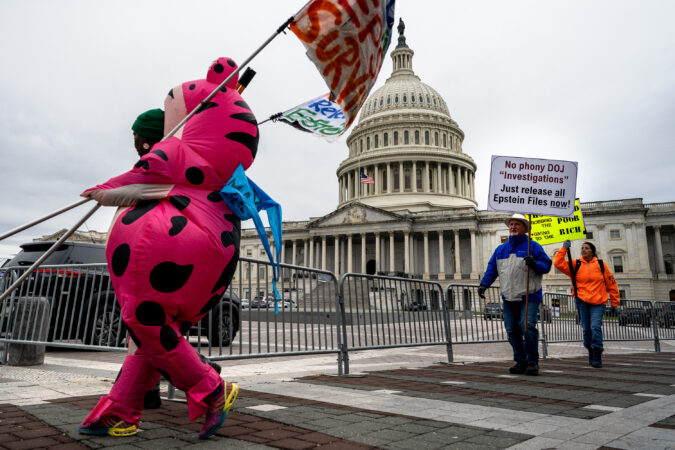
    Still, many in the Republican base continued to demand the release of the files. Adding to that pressure, survivors of Epstein’s abuse rallied outside the Capitol Tuesday morning. Bundled in jackets against the November chill and holding photos of themselves as teenagers, they recounted their stories of abuse.

    “We are exhausted from surviving the trauma and then surviving the politics that swirl around it,” said one of the survivors.

    Another, Jena-Lisa Jones, said she had voted for Trump and had a message for the president: “I beg you Donald Trump, please stop making this political.”

    The group of women also met with Johnson and rallied outside the Capitol in September, but have had to wait months for the vote.

    That’s because Johnson kept the House closed for legislative business for nearly two months and refused to swear-in Democratic Rep. Adelita Grijalva of Arizona during the government shutdown. After winning a special election on Sept. 23, Grijalva had pledged to provide the crucial 218th vote to the petition for the Epstein files bill. But only after she was sworn into office last week could she sign her name to the discharge petition to give it majority support in the 435-member House.

    It quickly became obvious the bill would pass, and both Johnson and Trump began to fold. Trump on Sunday said Republicans should vote for the bill.

    Yet Greene told reporters that Trump’s decision to fight the bill had betrayed his Make America Great Again political movement.

    “Watching this turn into a fight has ripped MAGA apart,” she said.

    How Johnson handled the bill

    Rather than waiting until next week for the discharge position to officially take effect, Johnson held the vote under a procedure that requires a two-thirds majority.

    But Johnson also spent a morning news conference listing off problems that he sees with the legislation. He argued that the bill could have unintended consequences by disclosing parts of federal investigations that are usually kept private, including information on victims.

    “This is a raw and obvious political exercise,” Johnson said.

    Still, he voted for the bill. “None of us want to go on record and in any way be accused of not being for maximum transparency,” he explained.

    Meanwhile, the bipartisan pair who sponsored the bill, Reps. Thomas Massie, R-Ky., and Ro Khanna, D-Calif., warned senators against doing anything that would “muck it up,” saying they would face the same public uproar that forced both Trump and Johnson to back down.

    “We’ve needlessly dragged this out for four months,” Massie said, adding that those raising problems with the bill “are afraid that people will be embarrassed. Well, that’s the whole point here.”

    Senate acts quickly

    Even as the bill cleared his chamber, Johnson pressed for the Senate to amend it to protect the information of “victims and whistleblowers.” But Senate Majority Leader John Thune quickly shut down that notion.

    As senators gathered in the chamber Tuesday evening for the first votes of the week, it became clear no one would object to passing the bill as written.

    Just before Senate Democratic leader Chuck Schumer called to pass the bill by unanimous consent, Oklahoma Sen. Markwayne Mullin, a Republican who is close to Trump, walked in the chamber and gave Schumer a thumbs-up. He then walked over to Schumer and shook his hand.

    “This is about giving the American people the transparency they’ve been crying for,” said Schumer, D-N.Y. “This is about holding accountable all the people in Jeffrey Epstein’s circle who raped, groom, targeted and enabled the abuse of hundreds of girls for years and years.”

  • A night of Michelin culinary stars and even a few cheesesteaks: Philly’s big showing in the restaurant awards

    A night of Michelin culinary stars and even a few cheesesteaks: Philly’s big showing in the restaurant awards

    For the first time ever, Philadelphia has a Michelin star. Three, in fact.

    Friday Saturday Sunday, Her Place Supper Club, and Provenance were each awarded a star, capping a brilliant showing as 31 other Philadelphia restaurants — including three cheesesteak shops — received honors in the city’s debut in Michelin, arguably the world’s most prestigious restaurant awards.

    Tuesday night’s Northeast Cities ceremony — which included restaurants from Chicago, Washington, D.C., New York, and Boston (also in its Michelin debut) — drew hundreds of culinary professionals from around the world to the Kimmel Center, whose facade was lit up in Michelin’s signature red. The attendees were a who’s who of the culinary world, including chefs Thomas Keller and Jean-Georges Vongerichten, and drew dozens of the city’s best-known chefs and restaurateurs, such as Greg Vernick, Marc Vetri, Omar Tate, and Chutatip “Nok” Suntaranon, Jesse Ito, and Ellen Yin.

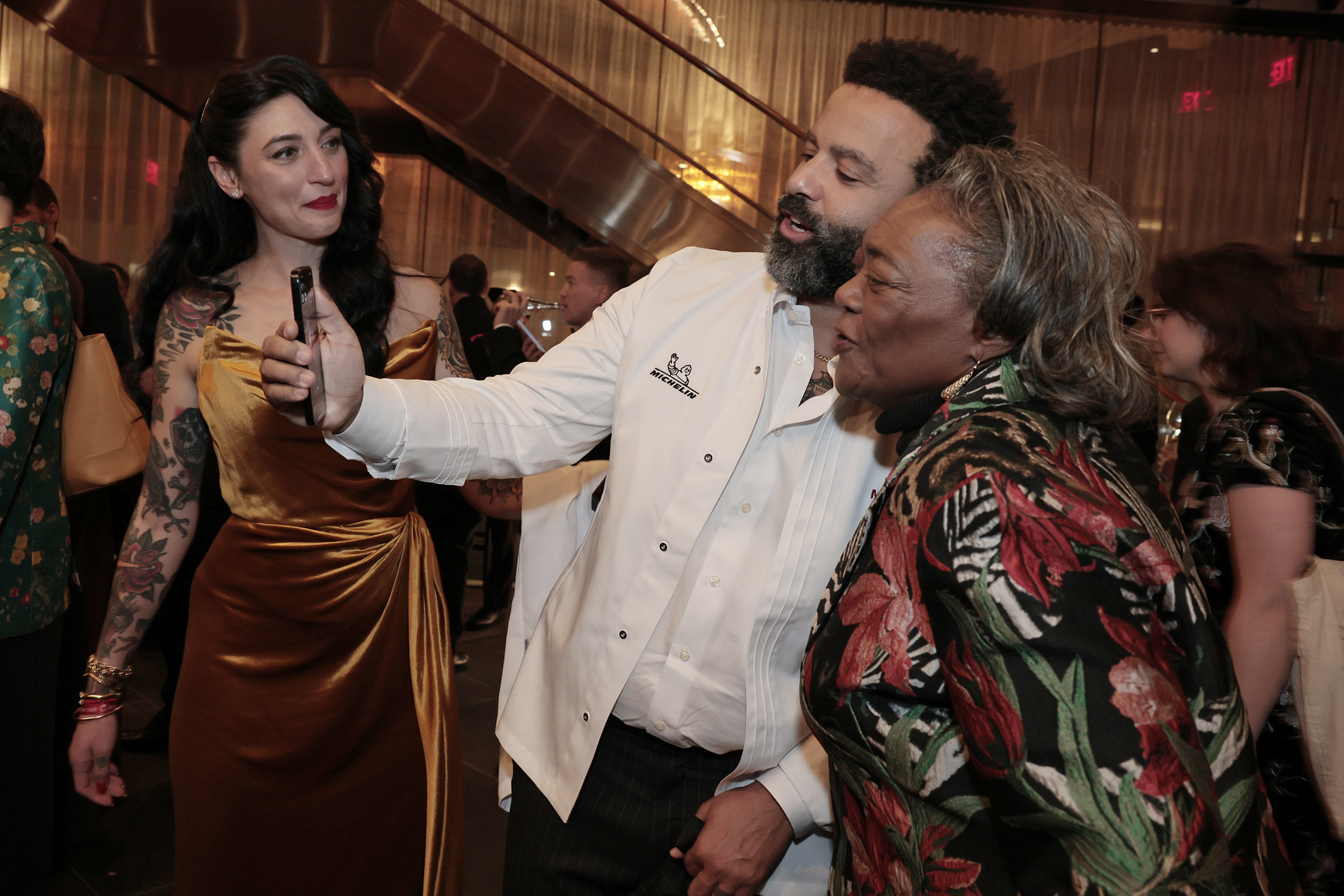
    Hanna Williams looks on as her husband, chef Chad Williams, and Lynette Brown-Sow do a FaceTime after the Michelin awards at the Kimmel Center. Brown-Sow has known Chad Williams since he was a baby.

    Ten Philadelphia restaurants received a Bib Gourmand — recognized as great food at a great value, though not star-worthy. They represent a mixed bag of cuisines and price points: cheesesteaks (Angelo’s, Dalessandro’s, Del Rossi’s), Israeli cuisine (Dizengoff), Mexican (El Chingón), pizza (Pizzeria Beddia, Sally), casual pasta (Fiorella), Japanese (Royal Sushi & Izakaya), and classic Jewish deli (Famous 4th Street Deli).

    Michelin deemed 21 other Philadelphia restaurants as Recommended: Ambra, Forsythia, High Street, Hiroki, Honeysuckle, Illata, Kalaya, Laser Wolf, Laurel (whose final night will be Nov. 21), Little Water, Mish Mish, My Loup, Pietramala, River Twice, Roxanne, Southwark, Suraya, Vedge, Vernick Food & Drink, Vetri Cucina, and Zahav. Michelin says these restaurants serve high-quality food and use good ingredients.

    Joe Beddia (from left), Greg Root, Nick Kennedy (rear), Chutatip “Nok” Suntaranon, and Roland Kassis with the Michelin Man at the Michelin Guide announcements Tuesday at the. Kimmel Center.

    Besides the Recommended honor, Pietramala — chef Ian Graye’s vegan restaurant in Northern Liberties — was awarded a Green Star for demonstrating commitment to sustainability.

    All can use the name “Michelin” in their marketing, a powerful tool that potentially boosts business.

    Michelin, which operates in secrecy, bases the selections on its anonymous inspectors. Stars denote excellence: one star signals very good cuisine that’s “worth a stop,” two stars indicate excellence “worth a detour,” and three stars represent exceptional dining “worth a special journey.”

    Chef Jesse Ito and Mia Colona at the Michelin Guide announcements Tuesdy at the Kimmel Center.

    The ceremony, a milestone for Philadelphia’s profile as a dining destination, was the city’s highest-profile appearance since 2018, when the James Beard Foundation announced that year’s finalists for its annual chef, restaurant, and media awards in a ceremony at Parc.

    It was a night of camaraderie, pride, and emotion. After heading to the stage to acknowledge Angelo’s Pizzeria’s Bib Gourmand, owner Danny DiGiampietro disappeared for a bit. “I had a walk outside,” he explained later. “I can’t stop crying.”

    Philadelphia’s one-stars

    Friday Saturday Sunday chef Chad Williams and his wife, Hanna, took over this storied Rittenhouse restaurant in 2016 and pivoted to a set multicourse menu. “Thanks to skilled technique, just the right amount of innovation and an innate understanding of the luxury ingredients he uses, his dishes fill the mouth with flavor and succulence,” the Michelin blurb reads. “His delicious crispy sweetbreads will convert any skeptic; quail with pâte plays with texture, and the New York strip is a lesson in expert seasoning. There’s a great cocktail bar on the first floor; the long, narrow, lively and warmly run restaurant is up a steep flight of stairs — and those stairs will seem even steeper when it’s time to leave. Expect an atmosphere as spirited and enjoyable as the food.”

    Amanda Shulman (right) and her husband and business partner, Alex Kemp, giggle after winning a Michelin star for Her Place Supper Club at the Michelin ceremony at the Kimmel Center on Tuesday.

    Her Place Supper Club, also in Rittenhouse, was born out of chef Amanda Shulman’s cooking for friends in her Penn campus apartment. Michelin praised its “warm and welcoming supper club vibe.” While diners may get their own table, “there’s a real communal feel at play here; everyone is served at the same time after Amanda has explained to the room the makeup of each dish and perhaps the influence behind it.”

    Provenance, chef Nicholas Bazik’s sumptuous atelier across from Headhouse Square, delivers what Michelin calls “a high-wire, high-stakes performance defined by precision, harmony, and, of course, taste. Korean and French influences come and go with this elaborate tasting menu where special soys, vibrant oils and glossy sauces give wonderful dimension to pristine seafood and dry-aged proteins. Think Japanese tuna with whipped tofu, puffed sorghum and chili oil or brown butter hollandaise with country ham, caviar and cauliflower. The ideas are original, the flavors bold.”

    The Michelin effect

    All this boils down to commerce. City and state tourism boards have increasingly turned to Michelin — the French-based tire company that has been publishing the influential dining guides for decades — as food tourism plays a growing role in travel planning.

    Ian Graye of Pietramala accepts a Green Star award at Tuesday’s Michelin Guide announcement event at the Kimmel Center.

    Michelin has expanded rapidly in the United States over the last several years. Besides the American South region — covering Alabama, Louisiana, Mississippi, North Carolina, South Carolina, and Tennessee — there are guides for Texas and Colorado. Atlanta’s 2023 guide has since been rolled into the South. The Florida guide, launched in 2022, now includes Miami, Orlando, and Tampa. Internationally, it recently arrived in Qatar, New Zealand, and the Philippines.

    (function() {
    var l2 = function() {
    new pym.Parent(‘michelin_philly’,
    ‘https://media.inquirer.com/storage/inquirer/projects/innovation/arcgis_iframe/michelin_philly.html’);
    };
    if (typeof(pym) === ‘undefined’) {
    var h = document.getElementsByTagName(‘head’)[0],
    s = document.createElement(‘script’);
    s.type = ‘text/javascript’;
    s.src = ‘https://pym.nprapps.org/pym.v1.min.js’;
    s.onload = l2;
    h.appendChild(s);
    } else {
    l2();
    }
    })();

    The Philadelphia Convention and Visitors Bureau cites an Ernst & Young study, commissioned by Michelin, showing the guide’s influence: 74% of travelers consider Michelin’s presence a decisive factor when choosing a destination; 76% say they would extend a trip to dine at a recommended restaurant; and 80% report being willing to pay more for what they view as a Michelin-level dining experience.

    For restaurants that receive distinctions, the impact is immediate as restaurants append “Michelin” to their social-media profiles.

    The energetic and anxious crowd of chefs and restauranteurs during the Michelin ceremony at the Kimmel Center Tuesday, Nov. 18, 2025.

    The reservations boost can be dramatic. In Charlotte, the 18-seat Counter sold about 900 reservations in the days after earning a star at the 2025 American South ceremony on Nov. 3, booking out through mid-February, chef-owner Sam Hart told Axios. About half the reservations came from out-of-town guests, including some international travelers.

    In many U.S. markets, the guide is explicitly part of tourism strategies: Axios has reported that the states included in the South edition are collectively paying Michelin $5 million over three years. PHLCVB has not disclosed how much it paid for Michelin’s partnership, which was announced in May.

    Chefs Jean Georges Vongerichten (left) and Thomas Keller posed with the Michelin Man ahead of Tuesday night’s ceremony at the Kimmel Center.

    Not only can reservations rise, so can menu prices at the winning restaurants. A widely cited 2018 analysis by Carly Shin of George Washington University found that a one-star rating increases menu prices by about 15%, two stars by 55%, and three stars by roughly 80%.

    Michelin says that 82% of chefs report increased revenue after receiving a distinction, 60% add new staff, and 58% say a nod boosts team motivation and morale — though anecdotally, some chefs acknowledge enormous pressure to maintain such a high level.

    Michelin’s arrival has inspired the PHLCVB Foundation to sponsor the Philabundance Community Kitchen program, a 16-week culinary vocational training and life-skills program for adults with low or no income, offering hands-on kitchen experience, ServSafe certification, and post-graduation employment support in the food service and restaurant industry. The foundation will connect the recognized chefs and restaurateurs to the PCK program.

  • Murder trial closes for two men charged in the death of Philadelphia Police Officer Richard Mendez

    Murder trial closes for two men charged in the death of Philadelphia Police Officer Richard Mendez

    As the murder trial for two men charged in the shooting death of Philadelphia Police Officer Richard Mendez drew to a close Tuesday, prosecutors and defense attorneys offered differing interpretations of what happened on that violent October 2023 evening.

    Assistant District Attorney Cydney Pope said a group of men — including 20-year-old Yobranny Martinez-Fernandez and 23-year-old Hendrick Pena-Fernandez — went out that night with the goal of stealing cars, a business she said they carried out like a “well-oiled machine.” That, she said, included Martinez-Fernandez’s role of enforcer as he carried a 9mm handgun to protect the operation.

    Mendez, 50, and his partner, Raul Ortiz, were shot after they interrupted the group’s attempt to steal a Dodge Charger in parking lot D at Philadelphia International Airport.

    Prosecutors said Martinez-Fernandez was under the steering wheel programming a new key fob when he fired his gun, shooting Mendez multiple times through the torso and hitting Raul once in the arm. He also unintentionally shot an 18-year-old man who was one of the group’s accomplices, they said.

    Martinez-Fernandez was charged with first-degree murder, robbery, and related crimes. Pena-Fernandez, who prosecutors say assisted in the crime, faces charges of second-degree murder and related crimes.

    With both men facing life in prison without parole if convicted, defense attorneys Robert Gamburg and Earl G. Kauffman urged jurors to conclude that prosecutors had failed to make the case for their guilt.

    For one, they said jurors should question whether prosecutors had presented sufficient evidence to prove that the men had even been at the crime scene that evening.

    And they cast doubt on the account of the prosecution’s star witness — a man who was involved in the crime, and took the stand to implicate the two men after pleading guilty to lesser charges. Alexander Batista-Polanco, who the lawyers said stands to gain a lighter sentence in exchange for his cooperation with prosecutors, could not be trusted, they said.

    Pope scoffed at the suggestion Batista-Polanco had lied in exchange for favorable treatment and reminded jurors that witnesses face the risk of violence to themselves, and to their families, when speaking out. She said she believed Batista-Polanco would likely be “looking over his shoulder for the rest of his life.”

    Pope pointed to evidence including cell phone data and recovered DNA linking the men to the crime, which stretched from the South Philadelphia sports complex to the Cranbury, N.J., warehouse where she said the men torched the vehicle they used to flee the scene.

    Gamburg, who represents Pena-Fernandez, suggested that prosecutors had erred in charging him with second-degree murder, a killing during the commission of a felony like robbery, arson, or rape. In this case, he suggested, stealing a car was more like theft, and no weapon was used to obtain the vehicle.

    Pope, citing the shooting that followed and left a 22-year veteran of the force dead, disagreed.

    “You can call it whatever you want,” she said, “but what this is, is robbery.”

  • EEOC sues Penn for failing to release information related to antisemitism investigation

    EEOC sues Penn for failing to release information related to antisemitism investigation

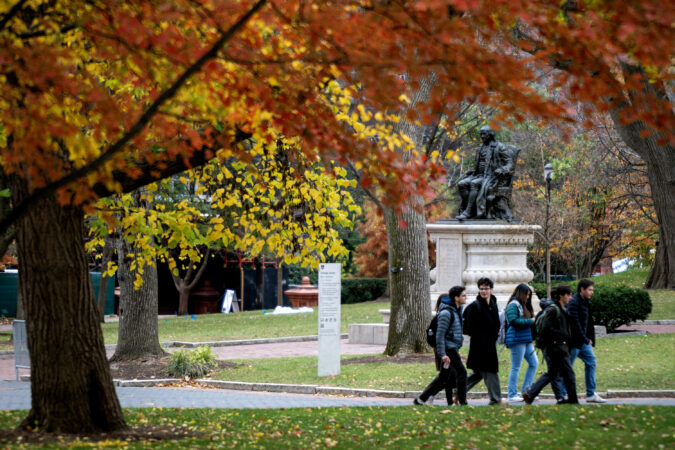
    The U.S. Equal Employment Opportunity Commission is suing the University of Pennsylvania for failing to release information related to an investigation it began in 2023 over the school’s treatment of Jewish faculty and other employees regarding antisemitism complaints.

    Penn, according to the complaint filed in federal court Tuesday, has not complied with a subpoena for information, including the identification of employees who could have been exposed to alleged harassment and the names of all employees who complained about the behavior.

    In its quest to find people potentially affected, the EEOC demanded a list of employees in Penn’s Jewish Studies Program, a list of all clubs, groups, organizations and recreation groups related to the Jewish religion — including points of contact and a roster of members — and names of employees who lodged antisemitism complaints.

    Penn usually does not comment on litigation, but in this case, the school ardently objected to the EEOC’s characterization of its cooperation and the personal nature of the material it was still seeking.

    The school said in a statement it has cooperated extensively with the EEOC, including providing more than 100 documents and over 900 pages.

    But the private university said it will not disclose personal information, specifically “lists of Jewish employees, Jewish student employees and those associated with Jewish organizations, or their personal contact information” to the government.

    “Violating their privacy and trust is antithetical to ensuring Penn’s Jewish community feels protected and safe,” the university said Tuesday.

    Penn also provided information on employees who complained and agreed that it could be shared, the school said, but the school would not provide information on those who objected.

    “Penn also offered to help the EEOC reach employees who are willing to speak with the agency by informing all employees of the investigation and how they could reach out to the agency,” the university said. “The EEOC rejected that offer.”

    The original complaint was launched by EEOC Commissioner Andrea Lucas, now chair of the body, on Dec. 8, 2023, two months after Hamas’ attack on Israel that led to unrest on college campuses, including Penn, and charges of antisemitism. It was also just three days after former Penn President Liz Magill had testified before a Republican-led congressional committee on the school’s handling of antisemitism complaints; the testimony drew a bipartisan backlash and led to Magill’s resignation days later.

    Lucas, who was appointed chair this year by President Donald Trump, also brought similar antisemitism charges against Columbia University that earlier this year resulted in the school paying $21 million for “a class settlement fund.”

    EEOC complaints typically come from those who allege they were aggrieved. Lucas, according to the complaint, made the charge in Penn’s case because of the “probable reluctance of Jewish faculty and staff to complain of harassing environment due to fear of hostility and potential violence directed against them.“

    The EEOC’s investigation ensued after Lucas’ complaint to the EEOC’s Philadelphia office that alleged Penn was subjecting Jewish faculty, staff, and other employees including students “to an unlawful hostile work environment based on national origin, religion, and/or race.”

    The allegation, the complaint said, is based on news reports, public statements made by the university and its leadership, letters from university donors, board members, alumni and others. It also cited complaints filed against Penn in federal court and with the U.S. Department of Education over antisemitism allegations and testimony before a congressional committee.

    The EEOC complaint pointed to public comments by Magill, addressing antisemitism while she led Penn.

    “I am appalled by incidents on our own campus, and I’ve heard too many heartbreaking stories from those who are fearful for their safety right here at Penn,” Magill said in 2023. “This is completely unacceptable.”

    Magill also in a message had addressed “a small number of Penn staff members” who “received vile, disturbing antisemitic emails that threatened violence against members of our Jewish community,” in November 2023.

    The complaint cited incidents of antisemitic obscenities being shouted on the campus, destruction of property in Penn’s Hillel, a swastika painted in an academic building, graffiti outside a fraternity and a pro-Palestinian encampment on the campus in 2024 that eventually was dismantled by police.

    “Throughout its investigation, the EEOC has endeavored to locate employees exposed to this harassment and to identify other harassing events not noted by respondent in its communications, but respondent has refused to furnish this information, thereby hampering the EEOC’s investigation,” the complaint said.

    Penn said it had received three antisemitism complaints, according to the federal complaint, but the EEOC questioned that number given the university’s workforce of more than 20,000. It demanded that the school provide names of all people who attended listening sessions as part of the school’s task force on antisemitism and all faculty and staff members who took the task force’s survey.

    Penn objected to the subpoena and the commission partially modified it in September, ordering the school to comply within 21 days, the complaint said.

    In its statement to The Inquirer, Penn defended its response to antisemitism.

    “Penn has worked diligently to combat antisemitism and protect Jewish life on campus,” the school said.

  • Court blocks Texas from using Trump and GOP-favored House maps for 2026 midterms

    Court blocks Texas from using Trump and GOP-favored House maps for 2026 midterms

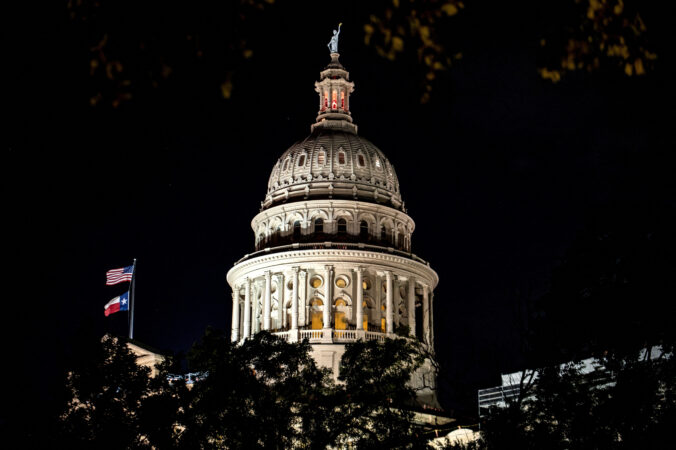
    A federal court has blocked Texas from using its new congressional map for the 2026 midterm elections, directing the state to revert to its previous districts.

    The majority opinion said the coalition of voting and civil rights groups who sued was likely to prove at trial that Texas officials had “racially gerrymandered” a new map that “unconstitutionally sorts voters on the basis of race,” depriving the plaintiffs of “their right to participate in a free and fair election.”

    The judges were under a tight deadline to make a ruling since the candidate filing period for the 2026 midterm elections began on Nov. 8 and ends on Dec. 8.

    Republican Gov. Greg Abbott, a key proponent of the electoral changes, said he would appeal the ruling to the U.S. Supreme Court.

    “Any claim that these maps are discriminatory is absurd and unsupported by the testimony offered during ten days of hearings,” Abbott said. “This ruling is clearly erroneous and undermines the authority the U.S. Constitution assigns to the Texas Legislature by imposing a different map by judicial edict.”

    The decision marks a significant setback for the state and Republicans, which began with a contentious battle in its state legislature last summer, led to a vote to revise state maps for voting districts, and ultimately spurred other states to buck tradition and pursue mid-decade redistricting.

    Two judges, in a three-judge District Court panel, ruled on Nov. 18 that the injunction was necessary because “the racial minorities the Plaintiff Groups represent will be forced to be represented in Congress based on likely unconstitutional racial classifications for at least two years.”

    The majority opinion, written by U.S. District Judge Jeffrey V. Brown, a Donald Trump appointee, who sits in Galveston, Texas, was joined by Senior U.S. District Judge David C. Guaderrama, a Barack Obama appointee, in El Paso.

    U.S. Circuit Judge Jerry E. Smith, who was appointed to the bench by President Ronald Reagan, is expected to file a dissenting opinion.

    A Republican majority in the Texas legislature in August 2025 passed the new state congressional map after a weeks-long standoff with state Democrats. Their new law, at the urging of President Donald Trump, heavily advantaged the GOP in 2026 elections. If used, it could have potentially flipped as many as five Democratic-held seats to Republican control − a significant edge as the party maintains a slim majority in Congress.

    In his statement, Abbott said the Texas legislature passed the new maps to “better reflect Texans’ conservative voting preferences – and for no other reason.”

    The court ruling and any decision by the U.S. Supreme Court could push back the filing deadlines for the Texas primaries for 2026. The midterm general election includes the seat of U.S. Sen. John Cornyn, D-Texas, all the Texas House of Representatives and Senate seats, and the governor, lieutenant governor and attorney general.

    Republicans said redistricting targeted Democrats

    The ruling came more than a month after 10 days of testimony and arguments over the legality of the new redistricting map at the federal courthouse in El Paso. The key testimony during the hearing came from Adam Kincaid, executive director of the National Republican Redistricting Trust, who created the maps.Kincaid testified that he looked at no racial data when building the map, solely relying on targeting districts that historically voted for Democrats.

    He said he combined Democrat-leaning districts into one district. He took Republican portions of those districts to create their own districts. The outcome gave Democrats one less representative, adding more representation for Republican voters.

    Kincaid and Republican leaders said the redistricting was done “race blind.” He testified he targeted Democrats, not minorities, which is allowed under the U.S. Constitution.

    Voting rights groups say redistricting targets minorities

    Democratic leaders and voting rights representatives argued during the hearing that the only districts targeted and impacted were Hispanic and Black majority districts. Hispanic and Black voters historically vote for Democrats.

    In Texas, voters are not required to register by political party. They are free to vote in the primary of their choosing.

    The redistricting map suppresses the voice of Texas minorities, including Hispanics, who make up the largest minority population in the state, Democratic state leaders testified in the trial.“They are not built to give Hispanics or African Americans a candidate of their choice,” Rep. Joe Moody, D-El Paso, testified about the new maps.

    Democrats and voting rights advocates questioned why Trump focused on four districts and why they were the only districts that were dramatically altered. They said Republicans had already created the map before discussions were held in the Texas Legislature and the public had an opportunity to comment on it.

    “That’s not Texas,” testified Rep. Ramon Romero, D-Fort Worth. “That’s not how we do things here.”

    The redistricting vote that sparked a chain reaction

    The Texas legislators’ efforts earlier this year sparked a national redistricting war across several states, as Democratic and Republican governors responded with their own efforts to redraw maps. Democratic California Gov. Gavin Newsom recently landed a victory in a voter-approved measure to implement new districts likely to add more Democratic representatives.

    But that matter is also entangled in a court challenge, after the administration on Nov. 13 joined the California Republican Party to accuse the state of violating the Constitution by gerrymandering using race as a factor to favor Hispanic voters in the new map.

  • Trump lashes out at former Philly Daily News reporter when pressed on Jeffrey Epstein

    Trump lashes out at former Philly Daily News reporter when pressed on Jeffrey Epstein

    President Donald Trump is drawing widespread criticism after lashing out at a female reporter who was pressing for information about files related to Jeffrey Epstein.

    As Trump was speaking to reporters Friday on Air Force One, Bloomberg White House correspondent and former Philadelphia Daily News reporter Catherine Lucey attempted to ask him about the release of the so-called Epstein files, which the Trump administration has refused to make public.

    “If there is nothing incriminating in the files —” Lucey said before being cut off.

    “Quiet, quiet, piggy,” an angry Trump shot back while pointing at Lucey.

    Neither Lucey nor Bloomberg has responded to The Inquirer’s requests for comment.

    “Our White House journalists perform a vital public service, asking questions without fear or favor,” Bloomberg said in a statement to the Guardian. “We remain focused on reporting issues of public interest fairly and accurately.”

    Lucey, who has not spoken publicly about the matter, was first identified by the Guardian and can be seen in photographs of the interaction with Trump on Air Force One.

    Trump’s remarks drew criticism from across the media world. CNN anchor Jake Tapper called the president’s remarks “disgusting and completely unacceptable.” Former Fox News anchor Gretchen Carlson called the president’s comments “degrading.”

    “The president continues to behave in ways that not a single parent I know would tolerate from their elementary-school-aged kids,” wrote the Atlantic’s McKay Coppins.

    A White House official defended the remark in a statement to MS NOW’s Vaughn Hillyard, claiming without evidence Lucey “behaved in an inappropriate and unprofessional way towards her colleagues on the plane.” The official did not elaborate.

    Though the exchange took place days ago, video footage began circulating Tuesday ahead of a House vote on the Epstein files. It has since gone viral among the masses, drawing ire from critics and being reposted by outlets like Pop Crave.

    Trump has a history of making sexist comments toward female journalists. He has called women in the press corps “nasty,” “crazy,” and “losers” over the years. He also has used derogatory language about women, comparing them to pigs, dogs, and other animals.

    Before her time in D.C., Lucey was a respected reporter in Philadelphia, spending 12 years at the Philadelphia Daily News covering everything from police corruption to local news — but her sweet spot was politics. Her portfolio included coverage of then-Mayor Michael Nutter’s administration and the city’s changing power dynamics.

    Lucey left in 2012 to work for the Associated Press, focusing on Iowa state politics and presidential races for four years. From there, she headed to the Wall Street Journal, where she covered the Trump and Biden administrations. She joined Bloomberg in March, according to a news release.

    ABC News reporter Mary Bruce asks a question in the Oval Office Tuesday.

    Trump also drew criticism Tuesday afternoon after lashing out at ABC News reporter Mary Bruce, who also asked about the Epstein files during an Oval Office meeting between the president and Saudi Arabia Crown Prince Mohammed bin Salman.

    “Why wait for Congress to release the Epstein files?” Bruce asked. “Why not just do it now?”

    “It’s not the question that I mind, it’s your attitude,” Trump shot back. “You’re a terrible person and a terrible reporter.”

    Until recently, Trump had strongly opposed efforts to release the Epstein files. Last week, he called the House’s efforts to press the Department of Justice to make the files available a “Democrat hoax.”

    Trump’s social connections to Epstein have been known for decades. Reports show Trump was mentioned in Epstein’s emails more than 1,000 times, making him the most-cited person in the documents released last week by the House Oversight Committee.

    But Trump has been reversing his stance on releasing the files, saying on Air Force One, “we have nothing to hide.”

    On Tuesday, the House of Representatives passed the Epstein Files Transparency Act in a 427-1 vote, demanding the Justice Department release the unclassified documents on Epstein and his associate Ghislaine Maxwell, who was convicted of sex trafficking.

    The Republican-controlled Senate moved quickly Tuesday evening, agreeing to pass the Epstein bill by unanimous consent once it arrived from the House.

    The bill would then head to Trump’s desk, who said in recent days he would sign it into law.

  • Court settlement calls for NPR to get $36 million in government funds to operate U.S. public radio system

    Court settlement calls for NPR to get $36 million in government funds to operate U.S. public radio system

    WASHINGTON — National Public Radio will receive approximately $36 million in grant money to operate the nation’s public radio interconnection system under the terms of a court settlement with the federal government’s steward of funding for public broadcasting stations.

    The settlement, announced late Monday, partially resolves a legal dispute in which NPR accused the Corporation for Public Broadcasting of bowing to pressure from President Donald Trump to cut off its funding.

    On March 25, Trump said at a news conference that he would “love to” defund NPR and PBS because he believes they are biased in favor of Democrats.

    NPR accused the CPB of violating its First Amendment free speech rights when it moved to cut off its access to grant money appropriated by Congress. NPR also claims Trump, a Republican, wants to punish it for the content of its journalism.

    On April 2, the CPB’s board initially approved a three-year, roughly $36 million extension of a grant for NPR to operate the “interconnection” satellite system for public radio. NPR has been operating and managing the Public Radio Satellite System since 1985.

    But corporation officials reversed course and announced that the federal funds would go to a entity called Public Media Infrastructure. NPR claimed the CPB was under mounting pressure from the Trump administration when the agency redirected the money to PMI, a media coalition that didn’t exist and wasn’t statutorily authorized to receive the funds.

    CPB attorneys denied that the agency retaliated against NPR to appease Trump. They had argued that NPR’s claims are factually and legally meritless.

    On May 1, Trump issued an executive order that called for federal agencies to stop funding for NPR and PBS. The settlement doesn’t end a lawsuit in which NPR seeks to block any implementation or enforcement of Trump’s executive order. U.S. District Judge Randolph Moss is scheduled to preside over another hearing for the case on Dec. 4.

    The settlement says NPR and CPB agree that the executive order is unconstitutional and that CPB won’t enforce it unless a court orders it to do so.

    NPR, meanwhile, agreed to drop its request for a court order blocking CPB from disbursing funds to PMI under a separate grant agreement.

    Katherine Maher, NPR’s president and CEO, said the settlement is “a victory for editorial independence and a step toward upholding the First Amendment rights of NPR and the public media system.”

    Patricia Harrison, the corporation’s CEO, said CPB is pleased that the litigation is over “and that our investment in the future through PMI marks an exciting new era for public media.”

    On Aug. 1, CPB announced it would take steps toward closing itself down after being defunded by Congress.

  • After eight years, police say they’ve solved the ‘brutal’ killing of a Maple Shade woman and her son

    After eight years, police say they’ve solved the ‘brutal’ killing of a Maple Shade woman and her son

    For eight years, the mystery of who killed a Maple Shade woman and her 6-year-old son swirled in the South Jersey town.

    The bodies of Sasikala Narra, 38, and her son, Anish, were found in their blood-spattered apartment by their husband and father, Hanumantha Rao Narra, in March 2017. They had been stabbed to death.

    In the end, the mystery was unraveled by a single drop of blood, prosecutors said Tuesday as they announced who they believe was the killer.

    Nazeer Hameed, 38, has been charged with murder and related crimes in the double stabbing. Authorities say Hameed fled to his native India after the killings, where he remains today.

    Hameed worked at Cognizant, a North Jersey tech company with an office in Philadelphia, alongside Hanumantha Narra, and lived in the same apartment complex as the family.

    Sasikala Narra, 38, and her son, Anish, 6, were stabbed to death inside their apartment in Maple Shade in 2017.

    Patrick Thornton, the chief investigator for the Burlington County Prosecutor’s Office, said he could not reveal any information about Hameed’s potential motives. But he said Hameed had stalked the family for some time before the killings and used his background in tech to hide his movements after the fatal stabbings.

    Thornton said Hameed waited until Narra had left the apartment before attacking his family with a series of violent stab and slice wounds to their head and hands. Anish was nearly decapitated in the attack.

    “These innocent victims were defenseless during the horrific attack,” Thornton said. “Veteran officers said this was one of the most brutal crime scenes they’ve seen in their careers, and they are still affected by the memory of it.”

    Hameed’s indictment, according to Burlington County Prosecutor LaChia Bradshaw, was the result of a yearslong investigation that involved local, state, and federal law enforcement.

    And while she said Tuesday that she was pleased to share the news of the charges against Hameed, she stressed that the work for law enforcement was far from over. Hameed is still living in India, and prosecutors in Bradshaw’s office are awaiting assistance from federal authorities to extradite him to New Jersey.

    Prosecutors say Nazeer Hameed stalked the Narra family for some time before killing Sasikala and Anish Narra.

    “We urge the full cooperation of our two nations to send a message that those who commit crimes cannot escape accountability by crossing oceans,” Bradshaw said.

    Hameed was initially considered a person of interest in the case, and later identified as a suspect in 2019, when investigators found a drop of blood at the crime scene that did not belong to the victims.

    For the next five years, detectives attempted to compel Hameed to submit a DNA sample, but were unsuccessful. The Indian government agreed to assist in the collection of the specimen, but never acted on that agreement, officials said Tuesday.

    A break in the case came in 2024, when Cognizant, the tech company Narra and Hameed worked for, sent local prosecutors the laptop Hameed used. A sample of his DNA was pulled from the device, and was ruled to be a match to the blood found at the crime scene.

    Authorities continued to investigate in the months that followed and, on Tuesday, publicly announced his involvement in the crime.

    Bradshaw vowed to work with federal authorities and the Indian government to bring Hameed to America to face criminal charges.

    “The passage of time does not lessen our resolve,” she said. “No border can stand in the way of justice, and the people of Burlington County deserve closure.”

    The mother and son were killed in their Fox Meadows Apartment complex in Maple Shade, N.J.

    The Narras immigrated to America from the Prakasam district in Andhra Pradesh state, on India’s eastern coast.

    After marrying, they moved to Maple Shade and later enrolled their son in Our Lady of Perpetual Help Catholic School. Teachers there called Anish “a beautiful child of God” in speaking to reporters after his slaying.

    Hanumantha Rao Narra could not immediately be reached for comment.

    Through a lawyer, Sasikala Narra’s family in India said Tuesday they were relieved to hear that the killer had been identified.

    “They’re very appreciative of all the work by law enforcement,” Donald F. Browne Jr. said. “It took a very long time, but that’s how justice goes sometimes, and they’re very thankful that everyone kept fighting and kept trying to find the answer to this case.”

  • Bistro at Cherry Hill owner indicted on charges of tax fraud

    Bistro at Cherry Hill owner indicted on charges of tax fraud

    The owner of the beleaguered Bistro at Cherry Hill, a longtime mall fixture that closed this summer amid bankruptcy proceedings, has been indicted on charges of tax fraud.

    The New Jersey Attorney General’s Office announced the indictment against Andrew Cosenza Jr. on Tuesday, saying an investigation found that he had failed to send the state more than $270,000 in sales tax paid by Bistro customers in 2021 and 2022.

    The 57-year-old Cherry Hill resident was indicted Oct. 29 on several charges, including tax fraud.

    “Everyone is required to pay their fair share of taxes,” New Jersey Attorney General Matthew J. Platkin said in the statement. “This form of tax fraud will not be tolerated.”

    Cosenza did not return a request for comment on Tuesday. No defense attorney was listed on court documents as of Tuesday, and an attorney representing Cosenza in a new Chapter 11 bankruptcy case did not return requests for comment.

    Cosenza had owned the Bistro at Cherry Hill for more than 25 years. The beloved restaurant operated out of a 12,000-square-foot kiosk in the middle of the Cherry Hill Mall. This summer, it closed abruptly, saddening loyal customers.

    In July, Cosenza told The Inquirer that the sudden closure was the result of a communication “breakdown” regarding a Chapter 11 bankruptcy petition that he filed in May. It was the restaurant’s second bankruptcy filing since 2017.

    While Cosenza was incapacitated by medical issues over the summer, he said the Bistro’s Chapter 11 bankruptcy petition had been converted to a Chapter 7, which involves the liquidation of assets, without his consent. Cosenza said his brother showed up to open the Bistro on July 10 and found the doors locked.

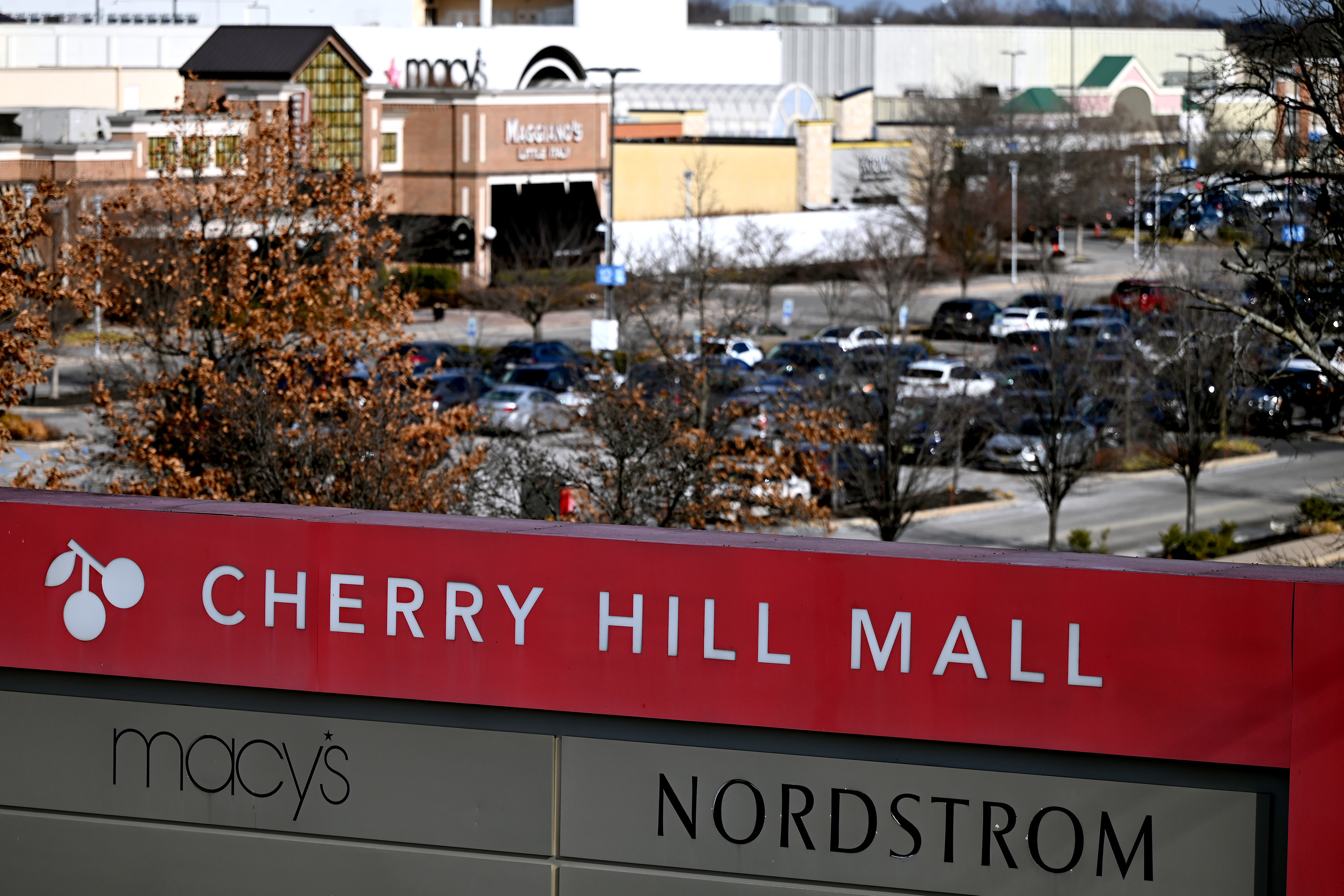
    The Cherry Hill Mall, where the Bistro at Cherry Hill operated for 27 years, is shown in January.

    “This is not a case of mismanagement or inability to meet financial obligations,” Cosenza said in a July interview. He said that the bankruptcy was the result of lingering pandemic-related issues and that he had a plan for repaying his debts.

    In early October, the Bistro’s bankruptcy case was dismissed. Cosenza told The Inquirer on Oct. 10, two weeks before the indictment, that he planned to keep fighting to reopen the Bistro. On Oct. 15, he filed for Chapter 11 bankruptcy as a small-business debtor.

    The charges against Cosenza stem from a 2023 joint investigation by the New Jersey Division of Taxation’s Office of Criminal Investigation and the Division of Criminal Justice. Investigators said they found discrepancies between the gross sales tax amounts that Cosenza reported on his business tax returns and the amounts turned over to the state.

    If found guilty of the charges, Cosenza could face five years or more in state prison and fines of more than $150,000, according to the prosecutor’s office.