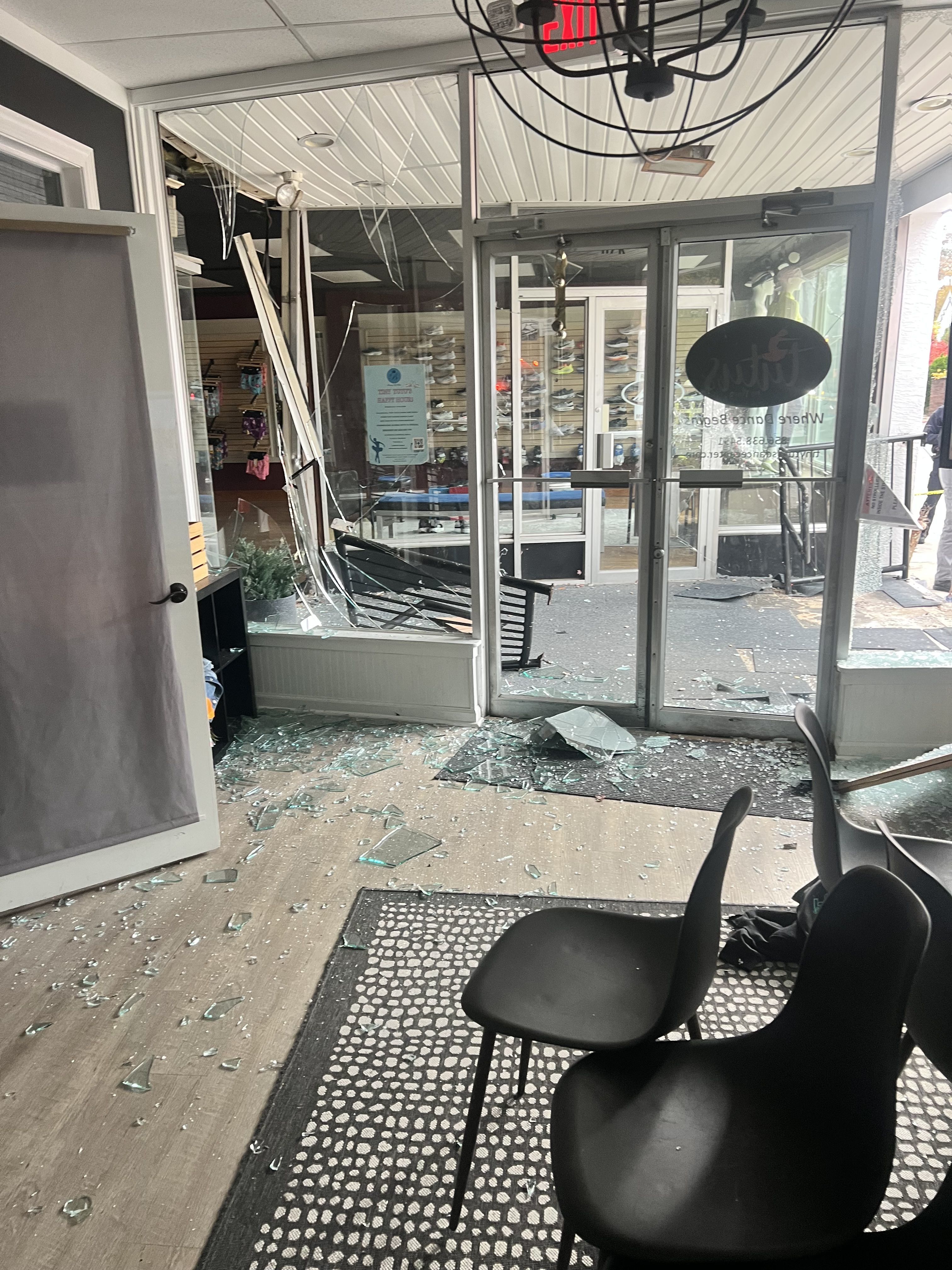
A firefighter browsing sneakers. Tots in tutus arriving for dance lessons. Manicurists.
All were at a Moorestown strip mall Thursday afternoon when a car crashed into the Main Street building, damaging a running gear store, dance studio, and nail salon.One person who was in the salon was hospitalized, Moorestown Director of Police Patrick Reilly told The Inquirer.
About 4:20 p.m., two cars collided in the shopping center parking lot, and one of the drivers, a woman in her 80s, mistakenly hit the gas pedal, slamming at least 50 feet into South Jersey Running Company, according to Reilly. An investigation into the crash is ongoing.
“It’s an accident, it’s not purposeful,” Reilly said, “it’s just bad timing, bad luck.”
💗 Tutus Update 💗
Yesterday afternoon, a car drove into the front of our Studio A at the Main Street location, causing…
South Jersey Running Company owner Dave Welsh said the car drove flew through the front glass vestibule, dressing rooms and an office.
Owner Jaclyn Adams estimated about 30 people were inside Tiny Tutus Dance Center, but no one was injured. La Moores Nail and Spa could not immediately be reached by phone Friday.
Damage to local shown businesses is apparent after a car crashed into a shopping center Thursday, Oct. 23, 2025, in Moorestown.
“A little bit of shattered glass is nothing compared to dealing with what could have been a horrible tragedy,” Adams said in a phone interview. “I’m just very lucky.”
Welsh, who operates four locations, said he doesn’t anticipate losing business and is prioritizing helping the dance studio and salon rebuild: “We’re a super small, independent, little footwear store, … and our customers are as loyal as can be.”
Adams hopes to reopen as soon as possible, and city officials are evaluating the damage to all the businesses. For now, classes are uninterrupted at the Tiny Tutus’ Union Street location.
FBI Director Kash Patel visited Philadelphia Friday to announce the results of a large-scale investigation into a Kensington-based drug gang — the latest demonstration of how President Donald Trump’s administration is seeking to highlight what it’s called a nationwide crackdown against suspected drug dealers.
The target of the investigation — which spanned several years — was a gang that had long run a 24-hour open-air drug market on the 3100 block of Weymouth Street, according to court documents. The group was sophisticated, the documents said, with dozens of members working specific schedules, performing specific roles — such as block owner, street dealer, or lookout — and seeking to control territory with the threat of violence.
Members dealt drugs including fentanyl, heroin, cocaine, and crack, the documents said, and oversaw “one of the most prolific drug blocks in the city.” They also controlled parts of other nearby streets in a neighborhood where single corners have historically been able to generate tens of millions of dollars per year in drug sales.
Prosecutors indicted 33 people in all, court records show, including Jose Antonio Morales Nieves and Ramon Roman-Montanez, whom they described as two of the group’s leaders. Most defendants were charged with conspiracy to distribute controlled substances or other drug-related crimes.
Moralez Nieves “owned” the 3100 block of Weymouth, prosecutors said, and let dealers sell there by paying him “rent.” Roman-Montanez, meanwhile, organized street-level operations — developing schedules, doling out roles, and managing profits.
U.S. Attorney David Metcalf said the investigation into the Weymouth Street group would effectively eliminate it.
U.S. Attorney David Metcalf said more defendants were indicted in this case than any other federal prosecution in the Philadelphia region in a quarter-century.
And although prosecutors did not estimate how much money the group made during its decade-long run on the block — and none of its members were officially charged with committing acts of violence — Metcalf said the arrests nonetheless “annihilated” a gang that had terrorized a long-suffering part of Kensington.
Patel said the effort was emblematic of how law enforcement — both local and federal — can work together to address chronic issues including drug dealing and gun violence.
“Everyone in America should be looking at this takedown,” Patel said “This takedown is how you safeguard American cities from coast to coast.”
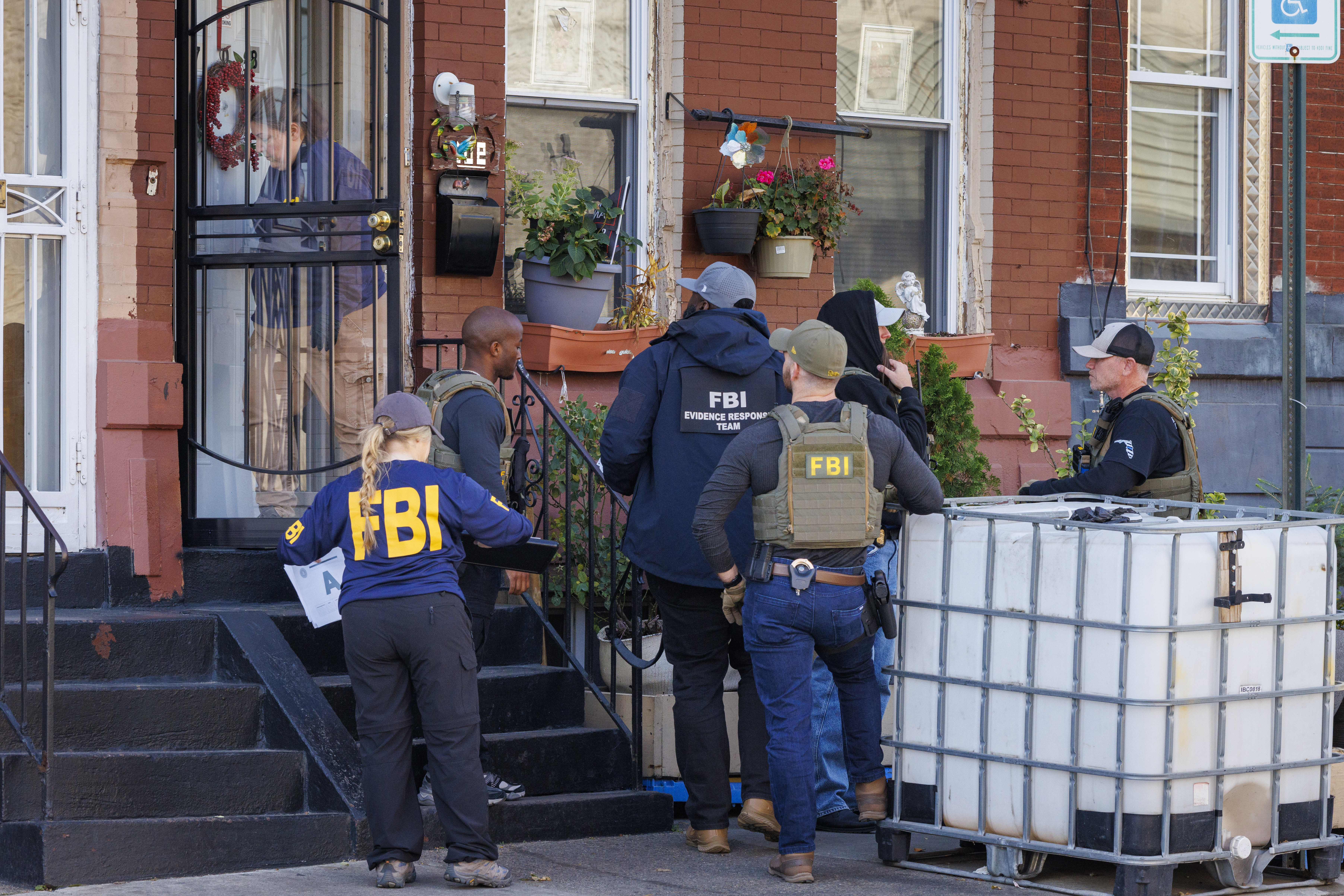
Law enforcement and FBI at Weymouth Street between Clearfield and Allegheny Avenue on Friday, October 24, 2025.
FBI agents and Philadelphia police officers conducted a series of raids in Kensington early Friday morning in support of the initiative. Wayne Jacobs, the FBI’s top official in Philadelphia, said agents served 11 search warrants, and that 30 of the 33 defendants were in custody as of Friday afternoon.
Philadelphia Police Commissioner Kevin Bethel said he was proud that the arrests might help bring “safety, dignity and peace” to Kensington — a neighborhood that Mayor Cherelle L. Parker’s administration has sought to prioritize throughout her two years in office, nearly tripling the police force in the neighborhood.
While officials acknowledged that the investigation began several years ago, the results nonetheless came as Trump and some of his top cabinet officials — including Patel, Attorney General Pam Bondi, and Defense Secretary Pete Hegseth — have sought in recent weeks to promote what they’ve cast as a concerted effort to address crime across the country, particularly involving suspected drug traffickers.
Some of the Trump administration’s initiatives have been relatively conventional, such as Friday’s raids in Philadelphia and other recent takedowns in cities such as Milwaukee and Pittsburgh.
Trump and Patel have also touted the FBI’s arrest numbers this year, saying they are “working non-stop to make America safe again.”
Dan Bongino, one of Patel’s top deputies at the FBI, said Friday that the Philadelphia arrests were part of that mission, writing on social media: “When President Trump told us to ‘go get em,’ he wasn’t kidding. And neither were we.”
FBI agents were on the 700 block of East Clearfield near Weymouth Street on Friday morning.
Still, other aspects of the campaign have been highly controversial, including Trump seeking to deploy federal troops to cities such as Chicago and Portland in response to what he’s called widespread unrest or clashes between protesters and U.S. Immigration and Customs Enforcement agents. Local officials have described Trump’s efforts as unnecessary and challenged them in court.
Trump also moved to effectively federalize law enforcement in Washington, D.C., an effort that local officials called a “baseless power grab” in a lawsuit.
And international tensions have started to rise over the military’s continued bombing of alleged drug-carrying boats in the Caribbean Sea and Pacific Ocean — strikes that have killed dozens of people and raised questions about whether the tactic is legal.
Around Weymouth Street on Friday, SWAT units had dispersed by noon. Residents by then had gathered in the street along the narrow block, where some rowhouse doors were left ajar and several neighbors peered curiously from upper windows.
Victor Ramirez, who has lived near Weymouth Street for 20 years, said police activity has become more common in the area in recent months.
“It’s a different story almost every day,” Ramirez said outside his home.
Ramirez said increased law enforcement activity has frightened his neighbors. He said most are “good people” who work to feed their families. Still, Ramirez said he feels more safe with the increased attention to crime in the neighborhood.
The FBI raid Friday morning felt like a significant escalation, he said. Ramirez was surprised to see agents armed with assault rifles hopping out of armored cars and making arrests.
The raid came on the day of a fall block party on Allegheny Avenue, which stretched between F and G Streets and intersected with neighboring Weymouth Street. The event is popular with local children, Ramirez said, and he hoped it would bring positive energy to a block that experienced an unusual morning.
At the 12th annual Golden Age Prom in Cherry Hill, Shirley Temples were flowing, the buffet line stretched across the room, and seniors — both senior citizens and high school seniors — danced the night away to the Bee Gees’ “Stayin’ Alive” and Gloria Gaynor’s “I Will Survive.”
The event, hosted by the Cherry Hill Education Association, brings Cherry Hill’s older residents together for a night of food, dancing, and celebrating the prom king and queen.
“Prom is a very memorable moment for a lot of people, and it makes them feel young again,” saidWaleska Batista-Arias, the president of the Cherry Hill Education Association. “Just because the body ages, doesn’t mean you lose your youthful spirit.”
Though celebration is the centerpiece of the Golden Age Prom, the annual event offers Cherry Hill’s teachers union an opportunity to build support for public education among seniors, a powerful, yet sometimes overlooked, voting bloc.
According to Kathy Kiehner, 78, a retired reading specialist who has attended the prom for years, it’s about harnessing “the energy of senior citizens that forgets to get tapped.”
Attendees dance during the Golden Age Prom sponsored by the Cherry Hill Education Association at the Legacy Club in Cherry Hill on Thursday, October 23, 2025.
Dispatch from the dance floor
Though the prom has historically been held at one of Cherry Hill’s schools, the education association had to upgrade to the Legacy Club this year to meet rising demand. Even still, they had to turn people away.
Jeanne Kiefner, a retired school nurse, adjunct professor, and longtime Cherry Hill resident, said the prom “makes people healthy,” offering socialization that can be hard to come by in one’s 70s, 80s, and 90s. Many sources did not share their age with the reporter.
As the night went on, attendees enjoyed the buffet — one remarked that there’s nothing seniors love more than free food. They posed in the photo booth and line danced with student volunteers from Cherry Hill’s two high schools.
Seated by the dance floor, Cathy Jenkins, 76, and Emma Waring, 72, said they’ve been friends for longer than they can count. After doing some quick math, the two deduced they had met about 35 years ago while working in the Camden City School District. The retired educators are now involved in the Cherry Hill African American Civic Association, which uplifts Black history education and supports local students.
When the Golden Age Prom announcement drops every year, Waring said she and her friends start calling and texting each other right away. Waring likes that the event is lively and cross-cultural, bringing together seniors from across Cherry Hill’s diverse communities.
“This is something we look forward to,” she said.
Attendees stand in the dinner buffet line during the Golden Age Prom sponsored by the Cherry Hill Education Association at the Legacy Club in Cherry Hill on Thursday, October 23, 2025.
‘These people vote’
The Cherry Hill Education Association hosted the first Golden Age Prom over a decade ago at Kilmer Elementary School to help bring attention to much-needed infrastructure improvements in the district. While teachers and parents understood the district’s dire building needs, many Cherry Hill residents, including seniors who were no longer attached to the schools through their children, did not. In order to pass a bond to pay for the repairs, the education association knew it would have to physically bring voters into the schools.
“The idea was that these people vote, so if you want them supporting anything in the school system, you have to have them be a part of it,” said Kiehner, the former reading specialist.
The first bond referendum failed. But in 2022, a $363 million bond, one of the largest in New Jersey history, passed, allowing the Cherry Hill school district to make improvements to all 19 of its schools. It was the first time in 23 years that Cherry Hill voters approved a school bond.
“Thank you for your support so that we could improve our school facilities for our students and future generations,” Batista-Arias told attendees, an expression of gratitude that was met with roaring applause.
Batista-Arias said the association wanted to continue the intergenerational prom tradition and bring attention to upcoming elections. Candidates for Cherry Hill school board pitched voters from the dance floor, and some even stuck around for the “Cupid Shuffle.”
The Cherry Hill Education Association does not make endorsements in local races, but it is supporting the New Jersey Education Association’s endorsement of Democratic gubernatorial candidate Mikie Sherrill, which Batista-Arias announced to attendees (the Sherrill endorsement also received some applause).
The majority of this year’s prom was funded by the New Jersey Education Association’s PRIDE in Public Education campaign, an effort tobuild support for public education across New Jersey. The Golden Age Prom is free to attendees.
Kathy Kiehner wears her hat and sunglasses while talking to friends during the Golden Age Prom sponsored by the Cherry Hill Education Association at the Legacy Club in Cherry Hill on Thursday, October 23, 2025.
Bringing seniors out of isolation
Emerging from the photo booth in ankle-length, bedazzled dresses, Ann Alfano and Norma Galosi explained that they met just a few months ago at square dancing class and decided to come to prom together. Alfano never went to her own school dances as a teenager, so this prom was her first. When asked how their first hangout outside of dance class was going, they agreed: “Well.”
Joyce Layer, 84, moved to Cherry Hill 41 years ago after getting married. At the time, she knew no one. Line dancing classes, she thought, would be a good way to meet people. Four decades later, she dances on Tuesdays and Fridays, and she showed up to The Legacy Club ready to show off her moves.
“I’m just a person who likes people, who likes to dance,” Layer said.
“It’s a fun night,” she added. “It’s nice to do it for the seniors because so many of us are isolated.”
Joanie Broglin dances wearing her tiara during the Golden Age Prom sponsored by the Cherry Hill Education Association at the Legacy Club.
This suburban content is produced with support from the Leslie Miller and Richard Worley Foundation and The Lenfest Institute for Journalism. Editorial content is created independently of the project donors. Gifts to support The Inquirer’s high-impact journalism can be made at inquirer.com/donate. A list of Lenfest Institute donors can be found at lenfestinstitute.org/supporters.
The federal shutdown messaging war was in full swing at Philadelphia International Airport Friday, where U.S. Transportation Secretary Sean Duffy blamed airline travel disruptions on Democrats, as air traffic controllers are slated to miss their first full paycheck next week.
“If you’re seeing an increase in shutdowns right now, or delays, or cancellations, it’s because the Democrats won’t open the government back up,” said Duffy.
Travel disruptions fueled by air traffic controller absences played a major role in pressuring politicians to relent and reopen government during the last government shutdown, which started in December 2018 and bled into the new year for a total of 35 days. As that shutdown dragged on, air traffic controllers who were working without pay began calling out sick, sparking major delays across the country.
Though a PHL spokesperson said the airport has not experienced disruptions as a result of the shutdown to date, other hubs, including Newark Liberty International Airport, have. Duffy said while about 5% of delays are typically due to staffing shortages, that number has been as high as 53% since the shutdown began Oct. 1.
Joining Duffy, Nick Daniels, president of the National Air Traffic Controllers Association, described how members report taking on side gigs delivering food or driving rideshares.
Air traffic controllers were able to receive about 90% of their pay in their last check because most of theirbiweekly pay period fell before the shutdown.
As more families feel the impact of the shutdown, Daniels said air traffic controllers would feel the stress at work and “instead of focusing on the safety of the American flying public, they’re now focusing on what they can’t afford to pay.”
The visit to Philadelphia International Airport comes amid a back-and-forth between President Donald Trump‘s administration and Democrats. The White House’s official website has a “Government Shutdown Clock,” which tells visitors, “Democrats have shut down the government.” Other federalgovernment sites blame the “Radical Left” or call the shutdown “Democrat-led.”
Airports have not been immune to the shutdown messaging wars, with Homeland Security Secretary Kristi Noem blaming Democrats in a video sent to the travel hubs to play — the Transportation Security Administration is part of Noem’s department and TSA workers are not being paid during the shutdown. PHL and several other airports have refused to play the video, citing federal limits on political messaging they can display.
Just last week, Pennsylvania Gov. Josh Shapiro‘s administration pushed back with its own messaging on the state Department of Human Services website.
“Because Republicans in Washington D.C., failed to pass a federal budget, causing the federal government shutdown, November 2025 [Supplemental Nutrition Assistance Program] benefits cannot be paid,“ reads a banner on the website.
For airports and travelers, the possibility of a prolonged shutdown brings the potential for disruptions during one of the most popular times to travel.
What’s more, it could affect those in the Federal Aviation Administration’s training academy, hoping to become air traffic controllers. Those students continued to receive modest pay amid the shutdown — their instructors have not — but Duffy said money is slated to run out in as little as a week ortwo. The transportation secretary said fears of future funding issues have caused some students to drop out at a time the department is short some 3,000 air traffic controllers.
TSA employees at PHL, meanwhile, are also suffering.
Joe Shuker, Region 7 vice president for AFGE Council 100, which represents TSA employees there, said workers are being required to bring doctor’s notes if they call out, adding the cost of a copay to legitimately sick staff. Shuker, like Daniels, said employees were being encouraged to keep working.
“However, at some point running out of money will be an issue,” he said as workers struggle to pay for gas, childcare, and mortgages.
Duffy on SEPTA
Ahead of his visit to PHL, Duffy wrote a blistering letter to Shapiro, blaming the Democrat for SEPTA’s financial woes and, in particular, for five Regional Rail train fires this year involving 50-year-old Silverliner IV cars.
“Thankfully, no fatalities resulted, but the department will not stand by waiting for tragedy to strike,” Duffy told Shapiro. “If changes are not made immediately, it is only a matter of time before SEPTA’s crumbling commuter rail system erupts in flames and kills someone.”
The governor clapped back. A spokesperson noted that Shapiro has fought for new, stable state funding for SEPTA and other transit agencies in the last two budgets — only to have Senate Republicans, who hold the majority in the chamber, kill the proposals.
“Instead of issuing a press release, if Secretary Duffy actually wants to be helpful, he should call his fellow Republicans and get them to fund the governor’s mass transit funding package for SEPTA,” said Rosie Lapowsky, Shapiro’s press secretary. “We would be happy to provide their phone numbers.”
The mass-transit agency has been pulling the 225 cars off the line for extensive safety inspections and repairs, acting on an Oct. 1 order from the Federal Railroad Administration, which regulates commuter rail. SEPTA also is installing a modern thermal detection system on the Silverliner IVs, which were built in the mid 1970s.
The FRA order imposed a deadline of Oct. 31 and Duffy warned unrepaired rail cars could be ordered out of service if it is not met.
“I want a great system for Philadelphia, that’s what I want,” Duffy said when asked about the letter at PHL. “If I can be helpful, I will, if I get resistance, we can we can be great friends, or we can be really bad enemies. I think we should be in the friend business and serve in this community.”
WASHINGTON — The Social Security Administration’s annual cost-of-living adjustment will go up by 2.8% in 2026, translating to an average increase of more than $56 for retirees every month, agency officials said Friday.
The benefits increase for nearly 71 million Social Security recipients will go into effect beginning in January. And increased payments to nearly 7.5 million people receiving Supplemental Security Income will begin on Dec. 31.
The cost-of-living adjustment, or COLA, for retirees and disabled beneficiaries is financed by payroll taxes collected from workers and their employers, up to a certain annual salary, which is slated to increase to $184,500 in 2026, from $176,100 in 2025.
Some seniors say the cost-of-living adjustment won’t help much in their ability to pay for their daily expenses. Linda Deas, an 80-year-old Florence, South Carolina, resident said “it does not match the affordability crisis we are having right now.”
Deas, a retired information systems network operations specialist, moved to South Carolina from New York in 2022 to be closer to family. She says her monthly rent has increased by $400 in the past two years.
She listed other items that have become more expensive for her in the past two years, including auto insurance and food. “If you have been into the supermarkets lately you will notice how prices are going up, not down,” she said.
Deas is not alone in feeling that costs are getting out of control. Polling from the AARP shows that older Americans are increasingly struggling to keep up in today’s economy. The poll states that only 22% of Americans over age 50 agree that a COLA of right around 3% for Social Security recipients is enough to keep up with rising prices, while 77% disagree. That sentiment is consistent across political party affiliations, according to the AARP.
In Deas’ case, the MIT Living Wage Calculator estimates that an adult living alone in Florence, South Carolina, would spend per year $10,184 for housing, $3,053 for medical expenses and $3,839 for food.
AARP CEO Myechia Minter-Jordan said the COLA is “a lifeline of independence and dignity, for tens of millions of older Americans,” but even with the annual inflation-gauged boost in income, “older adults still face challenges covering basic expenses.”
Social Security Administration Commissioner Frank Bisignano said in a statement Friday that the annual cost-of-living adjustment “is one way we are working to make sure benefits reflect today’s economic realities and continue to provide a foundation of security.”
Emerson Sprick, the Bipartisan Policy Center’s director of retirement and labor policy, said in a statement that cost-of-living increases “can’t solve all the financial challenges households face or all the shortcomings of the program.”
The agency has been in turmoil in recent months
The latest COLA announcement comes as the Social Security Administration has been navigating almost a year of turmoil, including the termination of thousands of workers as part of the Trump administration’s efforts to shrink the size of the federal workforce. Trump administration officials have also made statements they later walked back that raised concerns about the future of the program.
Treasury Secretary Scott Bessent said in July that the Republican administration was committed to protecting Social Security hours after he said in an interview that a new children’s savings program President Donald Trump signed into law “is a back door for privatizing Social Security.”
And in September, Bisignano had to walk back comments that the agency is considering raising the retirement age to shore up Social Security. “Raising the retirement age is not under consideration at this time by the Administration,” Bisignano said at the time in an e-mailed statement to The Associated Press.
“I think everything’s being considered, will be considered,” Bisignano said in the statement when asked whether raising the retirement age was a possibility to maintain the old age program’s solvency.
Efforts to boost benefits for seniors
In addition, the Social Security Administration faces a looming bankruptcy date if it is not addressed by Congress. The June 2025 Social Security and Medicare trustees’ report states that Social Security’s trust funds, which cover old age and disability recipients, will be unable to pay full benefits beginning in 2034. Then, Social Security would only be able to pay 81% of benefits.
Social Security benefits were last reformed roughly 40 years ago, when the federal government raised the eligibility age for the program from 65 to 67.
While a permanent solution for shoring up the benefits program has not been passed into law, both the Trump and Biden administrations have recently signed into law new benefits for retirees, which are expected to boost their finances.
The Trump administration, as part of Republicans’ tax and spending bill, gave tax relief to many seniors through a temporary tax deduction for seniors aged 65 and over, which applies to all income — not just Social Security. However, those who won’t be able to claim the deduction include the lowest-income seniors who already don’t pay taxes on Social Security, those who choose to claim their benefits before they reach age 65 and those above a defined income threshold.
Additionally, former President Joe Biden in 2024 repealed two federal policies — the Windfall Elimination Provision and the Government Pension Offset — that previously limited Social Security payouts for roughly 2.8 million people, including largely former public workers.
These measures have accelerated the insolvency of the old-age benefits program.
Sprick at the Bipartisan Policy Center said “there have been longstanding questions about whether benefits are adequate for low-income seniors, which should inspire urgency among policymakers to work toward broader reforms instead of ignoring Social Security’s long-term solvency.”
For five glorious Sundays this summer, there was peace in Chester.
In places like the William Penn Homes and Chester Apartments, where children are often encouraged to stay indoors, shut away from the threat of gang violence, it was finally safe to play outside during the height of what is normally the most dangerous time of the year.
Roving carnivals nicknamed “Sunday Fun Days” were organized and held in Delaware County’s lone city, in areas that had weathered a surge in violence in recent years. A few bounce houses, some water ice, and communities breathing sighs of relief were rewards for keeping the peace, and motivation to continue that trend.
The parties, according to Geo Stockman, the lead gun violence interventionist with Making a Change Group, came during one of the safest summers on record in the city: Not a single fatal gunshot was fired in Chester during that time.
It was a result that local police and county prosecutors say they have been working toward these last few years, through a combination of advocacy work and interventions by groups like Stockman’s.
“This opened up the neighborhoods. It gave them a reason to say, ‘Let’s try something else, people are really looking out for us now, maybe we should put this down,’” Stockman said. “People are always telling people to stop doing something without offering them something in this place. So that’s what we did this summer. We offered them something in its place.”
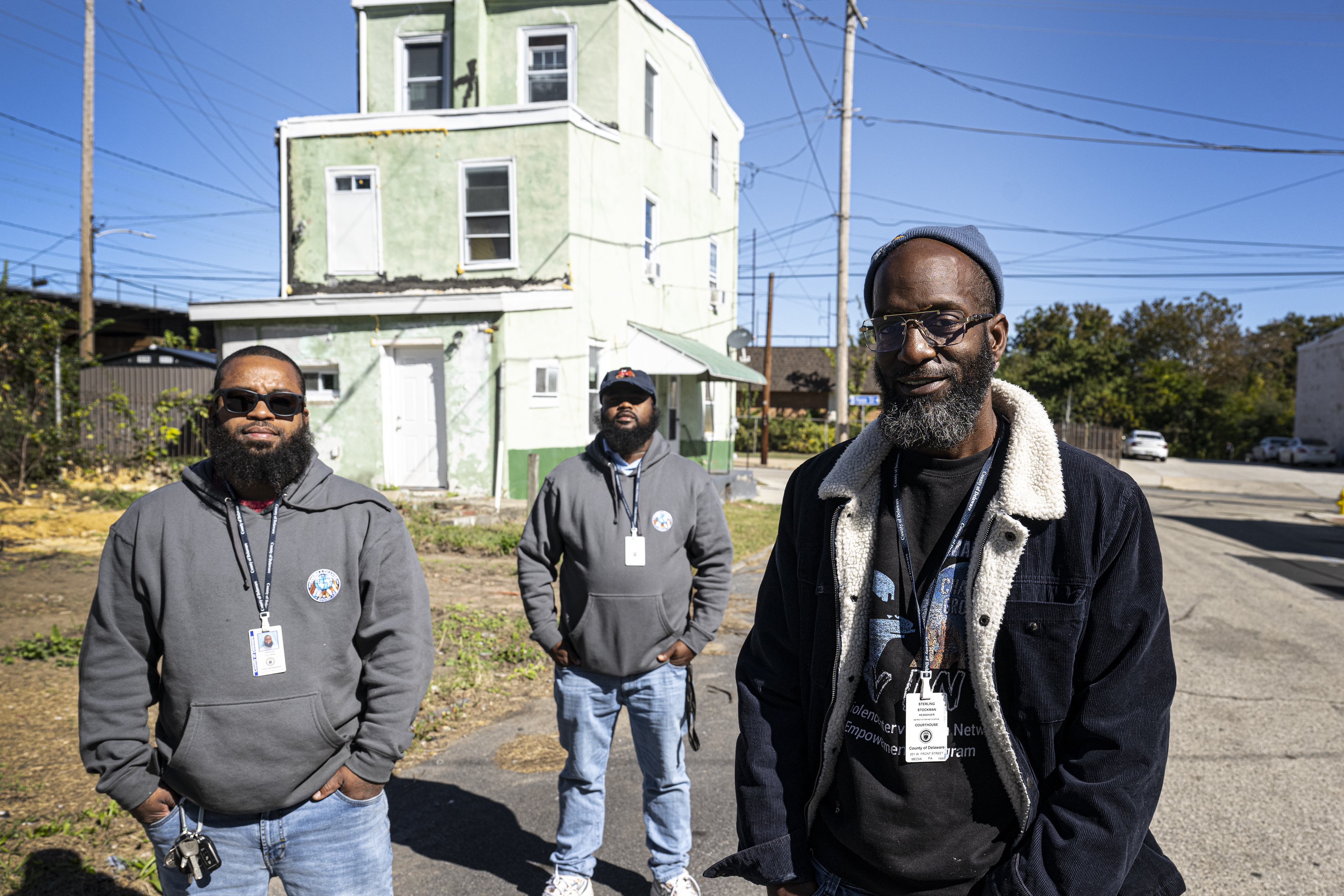
Gregory Cottman left, Gregory Graves, center, and Geo Stockman say the Sunday Fun Day block parties sponsored by the Delaware County District Attorney’s Office served as both a reward for neighborhoods that have curbed gun violence, and an incentive to continue that trend in the years to come.
In its five years of operation, CPSN has seen a 65% reduction in shootings overall and a 74% reduction in fatal shootings. And since the summer, only two fatal shootings have been recorded in Chester, which prosecutors say still puts the city on pace for one of its most peaceful years on record.
“Violence comes from a place of, of hopelessness, of despair. Just anger, resentment, and feeling like you’ve been left behind, like nobody cares,” Stockman said.
window.addEventListener(“message”,function(a){if(void 0!==a.data[“datawrapper-height”]){var e=document.querySelectorAll(“iframe”);for(var t in a.data[“datawrapper-height”])for(var r,i=0;r=e[i];i++)if(r.contentWindow===a.source){var d=a.data[“datawrapper-height”][t]+”px”;r.style.height=d}}});
He spoke from experience, as a lifelong Chester resident who spent time in prison for mistakes made on the streets of his hometown.
“That’s what makes what we do so effective. Most of us want to be stopped, but nobody stops us,” he said. “Nobody takes the time to say, ‘I’m gonna be the one to calm you down.’ It really only takes somebody with a clear mind that they understand to say, ‘Nah, that ain’t it.’”
Stockman said he and his team have successfully mediated 130 disputes between rival neighborhoods in the last two years. They settled petty arguments, usually started on social media, that were clearly heading toward a violent conclusion.
“This is a small community, so your reputation goes further than just the neighborhood you’re from,” said Gregory “G-Code” Graves, who works with Stockman.
Graves said the anti-violence messaging works because it’s coming from people the intended audience can identify with.
“We’ve been through the vetting process in all these neighborhoods, so even if it’s a little hesitation at first, it doesn’t take a great deal of persuasion to get them to come to us,” Graves said. “And we come in with meaningful things that’s going to help the situation.”
Residents of the Chester Apartments line up for water ice at a “Sunday Fun Day” block party held this summer in Chester.
For District Attorney Jack Stollsteimer, those results are exactly what he envisioned when he brought CPSN to the county five years ago, building it on models used successfully in other cities, including Boston.
And he is confident that the program will continue to thrive without him, as he runs for a county judgeship in the Nov. 4 election.
“People have bought into the strategy. They’ve seen it work now, and they just wanna keep it going,” he said.
Stollsteimer said making Chester safe was one of his priorities when running for district attorney in 2019. Similar programs, he said, had failed before because of a lack of buy-in from officials.
This time was different — Mayor Stefan Roots became a fixture at the Sunday Fun Day parties.
Roots said the weekly parties presented a rare opportunity for residents to meet the people making decisions that affect their everyday lives. And, in turn, allowed him and other officials to have open, honest dialogue with people living in communities most affected by gun violence.
The conversation flowed naturally, he said. No pressure. No pretense.
“This is something that’s never, never happened before,” he said. “The relationship between the city and the county is really welcome. And the results are showing themselves.”
Roots said he lost count of how many residents came up to him at the parties to talk about their own efforts to curb violence in their neighborhoods. People, he said, who told him that the block parties, and the gun violence interventions that preceded them, were a welcome sigh of relief.
“They told me that, sometimes, they don’t want to be ‘the man with the cape.’ They want to go on and have a life, too,” Roots said.
Philly-raised rapper Armani White is pushing back on the media coverage of his arrest earlier this month.
White, 29, born Enoch Armani Tolbert, was arrested for disorderly conduct on Oct. 12 after police found the artist and members of his tour bus filming a music video on I-75 in Newport, Ky.
TMZ covered the arrest, releasing Tolbert’s mug shot and police bodycam footage of the arrest, as well as remarking on the nature of his hair in the mug shot.
“My father didn’t raise me to be a criminal. My grandfather didn’t raise me to be a criminal. The only reason why I smiled in that mug shot is because I refuse to let anybody paint a picture of me as a criminal on TV, on the internet, anywhere,” White said to a packed crowd in Birmingham, Ala., last weekend.
Armani White performs during the NFC Championship show as the Eagles face the Commanders Sunday, Jan. 26, 2025, in Philadelphia.
Tolbert was in Kentucky as part of a nationwide tour alongside Grammy-award-winning singer T-Pain when his tour bus stopped on the interstate to film a music video. White did not respond to a request for comment.
According to a police citation, the police were called to the highway after reports of people running on the road. When they arrived, police reportedly found White dancing on the concrete median of the interstate.
White grew to international fame in 2022 after his bass-bumping, Neptunes-sampled track “BILLIE EILISH” birthed a viral TikTok challenge reaching millions. White later joined the track’s namesake, Billie Eilish, the 23-year-old Grammy and Oscar award-winning singer, to perform the song together in 2023.
Rapping since the 2010s, White grew an underground following before joining the lineup of Jay-Z’s Made In America festival in 2018, which he had been attending as a fan before hitting the stage. Earlier this year, White performed his first NFL halftime show during the NFC championship, with the Philadelphia Eagles against the Washington Commanders.
White released his debut album, Keep In Touch, in 2019, followed by the EP, Things We Lost in the Fire, referring to a house fire in which White lost family members at a young age.
This week, he released a music video for the single, “MOUNT PLEASANT.,” a teaser for what’s to come on the release of his next album on Oct. 31.
Senate Majority Leader John Thune earlier this week announced the measure, Senate Bill 3012, as hundreds of thousands of federal workers will miss their paychecks, while the military, while paid Oct. 15, face missing their Oct. 31 paychecks. This as families face food security issues, with SNAP benefits stretched thin.
Senate Bill 3012, known as the S. 3012, is a measure that would pay federal employees who are working through the shutdown, including members of the military and contractors who support “excepted” work.
Majority Whip Sen. John Barrasso, a Wyoming Republican, said live on the Senate floor on Thursday, Oct. 23, that there was “no single argument against passing it immediately” since it would pay the troops, Coast Guard, Border Patrol, members of ICE, air traffic controllers, TSA agents at airports, and Capitol police officers in Washington, D.C.
The bill would provide “such sums as are necessary” to pay non-furloughed workers; however, Democrats have argued that all federal workers, including those on furlough, should be paid.
The bill, sponsored by GOP Sen. Ron Johnson of Wisconsin, applies only to “excepted” federal employees whose work is considered essential during a period of prolapsed funding. Those employees continue to work but cannot get back pay until the shutdown is over. Nonessential workers are placed on furlough, and also get back pay.
The bill was first proposed by Senate Majority Leader John Thune this week. The legislation requires the backing of Democrats, but some have warned the bill would give power to President Donald Trump.
“We know what will happen — any agencies that he doesn’t like won’t get paid,” Sen. Chris Murphy, a Connecticut Democrat, told reporters earlier this week, per CBS News.
Arthur Waskow, 92, of Philadelphia, longtime social activist, pioneering Jewish scholar and rabbi, founder of the Shalom Center for public prophetic action, religion teacher, mentor, and prolific author, died Monday, Oct. 20, of chronic respiratory failure at his home in Mount Airy.
A longtime expert in Judaism, prophetic justice, and peaceful civil disobedience, Rabbi Waskow was so disturbed by the 1968 assassination of the Rev. Dr. Martin Luther King Jr. and the social unrest that followed that he protested, wrote about, and lectured around the country on what he called the “overwhelming crisis” of whether humanity will “build a decent society or will poison or burn it empty.”
For more than five decades, starting in Washington and then in Philadelphia, he connected contemporary social issues with Jewish traditions and championed prophetic justice regarding peace, nuclear disarmament, feminism, LGBTQ rights, same-sex marriage, environmental sustainability, and interfaith collaboration. “He consistently held that Judaism is not meant to stand above and apart from ordinary life, but rather to guide our actions in this life,” Rabbi Jill Jacobs said in a tribute.
Colleagues at the Shalom Center said he dramatically “fused social justice with traditional Jewish themes and spirituality.” Jacobs praised his “legacy of non-violent protest, his prophetic writing, and his courageous leadership.”
He established the Shalom Center for prophetic Judaism in Philadelphia in 1983, cofounded the Alliance for Jewish Renewal in 1993, and helped establish the National Havurah Committee, T’ruah: the Rabbinic Call for Human Rights, and other organizations. “He’s one of the most important figures to merge spirituality and politics since the 1960s,” Rabbi Tsvi Blanchard told The Inquirer in 2001. He “transcends categories and, as a result, he’s always crossing boundaries, but for good.”
Strategic action with compassion was usually his favorite tactic. He called his many disagreements with Jewish orthodoxy “a continuous loving debate” and told The Inquirer in 1970: “Jews have a radical role and mission to join with other communities to remake American society.” In 1993, he said: “In our generation, the people of the earth at last have to learn to share the great round earth or risk ruining it.”
He worked closely on social projects with Sister Mary Scullion of Project HOME, Rabbi Leonard Gordon of the Germantown Jewish Centre, and Imam Abdul-Halim Hassan of the Masjidullah Community Center Mosque. His embrace of the Jewish Renewal movement drew critics, but he never wavered in his support.
“There’s an unpredictability to him, a drama to him, a charisma to him,” Rabbi Gordon said in 2001. “That is who he is and has to be in challenging the community. We would lose too much without it.”
Rabbi Waskow celebrated the 50th anniversary of his Freedom Seder in 2019.
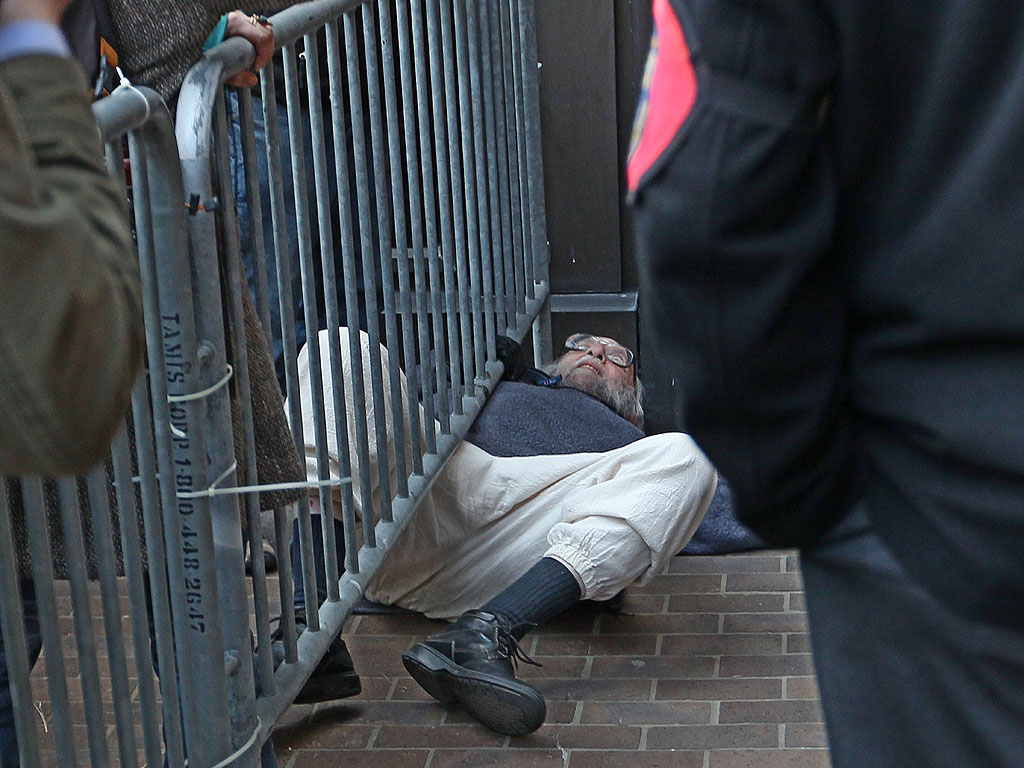
Rabbi Waskow was arrested dozens of times for peacefully protesting about segregation, immigration, and other issues. He wrote so many books he lost track of how many were published. “It’s either 19 or 20,” he told The Inquirer in 2007. “My wife said it’s the same number as the times I’ve been arrested.” He never retired.
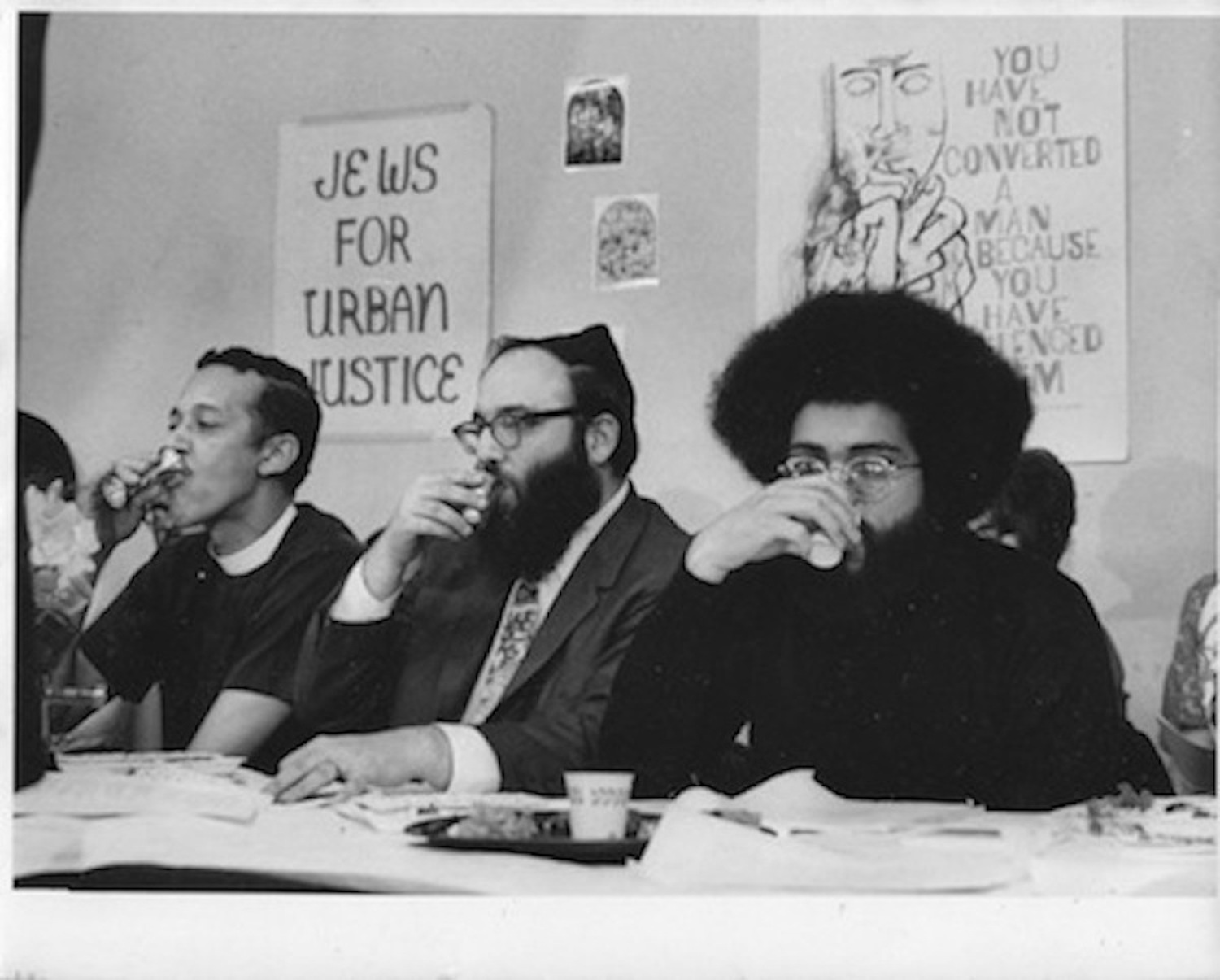
He wrote and organized the first Freedom Seder in 1969 to recognize contemporary liberation efforts as well as the Exodus of the ancient Israelites. He was invited to President Clinton’s Middle East peace ceremony at the White House in 1993 and appeared in a TV ad in 2004 that denounced prisoner abuse in Iraq. “He found joy in reimagining Jewish holidays and prayers in ways that spoke to contemporary issues,” his family said in a tribute.
He came to Philadelphia from Washington in 1982 as a new faculty member at the Reconstructionist Rabbinical College and went on to teach religion at Swarthmore, Temple, Drew University in New Jersey, Vassar College in New York, and the Hebrew Union College-Jewish Institute of Religion in New York.
He wrote articles and op-eds for The Inquirer, Daily News, and other publications, and authored more than 25 books on all kinds of topics. His 1978 book Godwrestling and 1982’s Seasons of Our Joy are religious classics. In 1993, he wrote Becoming Brotherswith his younger brother, Howard.
Rabbi Waskow crawls under a barricade so he could get arrested at a protest in 2014.
Rabbi Waskow won many awards and was recognized for his leadership and lifetime achievements by the Jewish Peace Fellowship, Neighborhood Interfaith Movement, and other groups. Newsweek named him one of the fifty most influential American rabbis in 2007.
Recently, he focused on describing God in traditional ways with modern insights. “Watching your kids begin to parent feels like there is a spiral to life,” he said in 2001.
Arthur Irwin Waskow was born Oct. 12, 1933, in Baltimore. He was always an avid writer and reader, especially science fiction, and fascinated by words.
His father was a high school history teacher, and, with his help, Rabbi Waskow won a newspaper history contest that paid part of his college tuition. He earned a bachelor’s degree in history from Johns Hopkins University in 1954 and a doctorate in American history from the University of Wisconsin in 1963.
Rabbi Waskow (center) celebrates the first Freedom Seder in 1969.
He protested against the Vietnam War and other hot topics in the 1960s, and worked in Washington after college as an aide to U.S Rep. Robert Kastenmeier, and a fellow at the Institute for Policy Studies.
He married Irene Elkin, and they had a son, David, and a daughter, Shoshana. After a divorce, he met Rabbi Phyllis Berman at a conference, and they married in 1986, and both adopted the middle name Ocean.
Over the last 18 months, even though he couldn’t see, Rabbi Waskow wrote two more books. “He was very determined in the fullest sense of that,” his son said. His daughter said: “He was passionate about what he was passionate about.”
His wife said: “He was playful, brilliant, creative, and fierce. He was generous in every way.”
In addition to his wife, children, and former wife, Rabbi Waskow is survived by five grandchildren and other relatives. His brother died earlier.
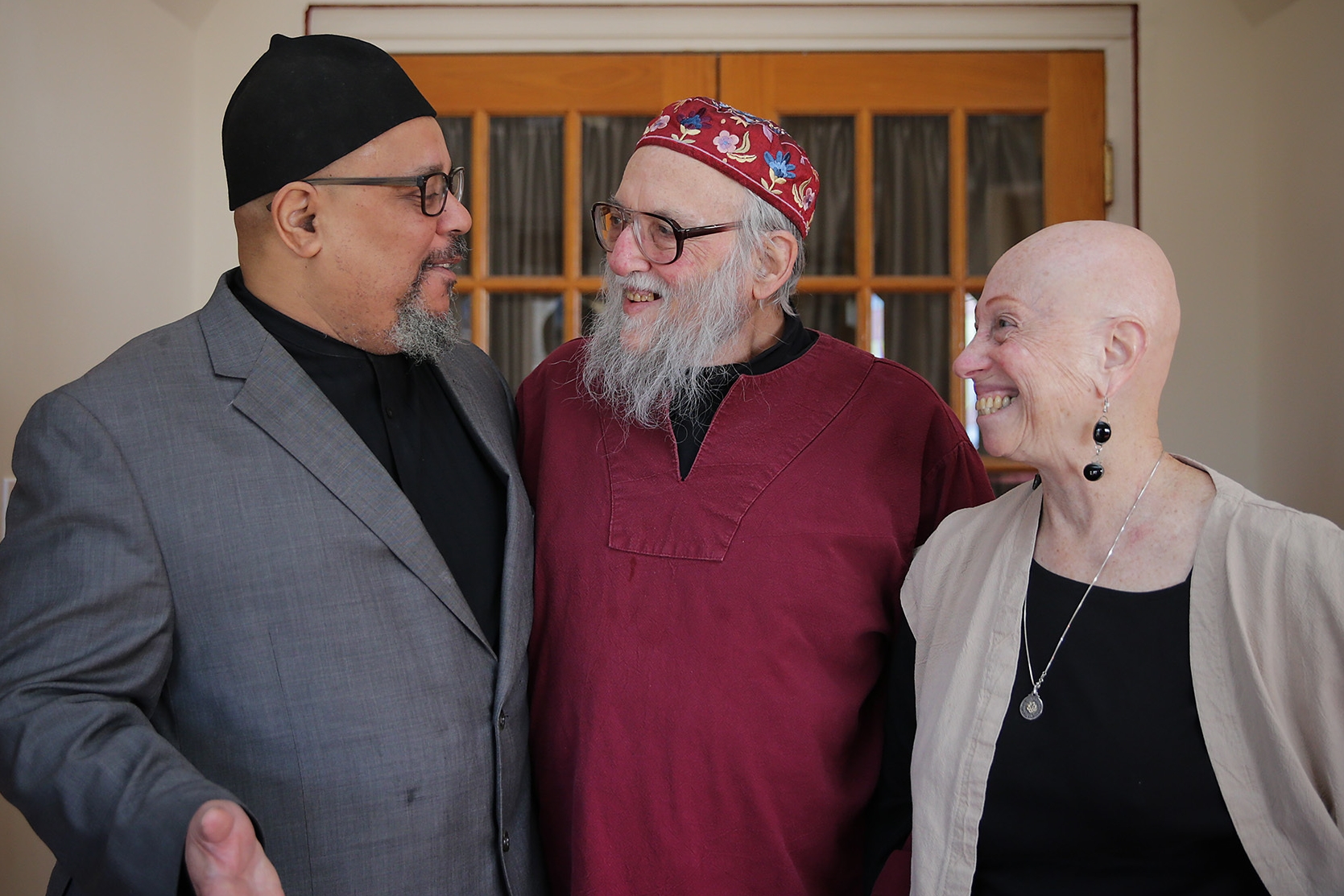
Rabbi Waskow (center) talks with his wife, Phyllis, and Imam Abdul-Halim Hassan in 2019.
Services were held on Oct. 22.
Donations in his name may be made to the legacy fund at the Shalom Center, 6711 Lincoln Dr., Philadelphia, Pa. 19119.
Ocean City Council on Thursday night declared a local emergency over beach erosion, and urged state and federal officials to help.
The resolution comes after the community suffered severe erosion during two recent storms. Hurricane Erin in August and a nor’easter in October battered the city’s beaches, scouring out cliffs of sand.
“This could be a tool to help our legislators who are fighting to fund a U.S. Army Corps of Engineers beach replenishment project,” Mayor Jay Gillian explained.
Gillian said city officials spoke with Republican U.S. Rep. Jeff Van Drew and shared ideas to deal with the erosion. This year marked the first year since 1996 that Congress approved zero federal dollars for beach projects in New Jersey.
A New Jersey Department of Environmental Protection (DEP) assessment of the damage from the October nor’easter found that the city experienced erosion between 1st and 11th streets, with new dune scarping or loss in that entire stretch.
Some of the scarping — vertical sandy cliffs caused by storms —exceeded five feet in height.
High waves caused additional damage under the boardwalk at 5th and 6th Streets, according to the DEP.
“Ocean City is currently experiencing critical and accelerating beach erosion, including significant dune loss, destruction of protective berms, and threats to both public and private property,” the resolution states, “placing the city in an emergency state of vulnerability ahead of the winter storm season.”
The resolution said beach width and height had already been compromised before the storms.
Further, it said, the city “lacks the financial resources to independently implement large-scale beach replenishment, dune restoration, or long-term protective measures, and requires urgent and immediate assistance and funding,” from state and federal sources.
Officials say Army Corps replenishment efforts have already been delayed without any clear timeline to continue.
The resolution was sent to Gov. Phil Murphy, and multiple U.S. and state legislators, as well as multiple county, state, and federal departments.
“Ocean City stands ready to work collaboratively with all levels of government to protect the lives, homes, economy, and natural resources of its residents,” the resolution states, “and requests that this growing crisis be met with the urgency and seriousness it warrants.”
Ocean City is not alone in having felt the wrath of the storms without any funding help in site. The continued federal shutdown has only resulted in more delays in seeking money.
Coming after Hurricane Erin, the October nor’easter erased sand and seriously compromised dune systems, the DEP said in its preliminary assessment of the storm.
“Moderate to major erosion” was reported on Long Beach Island and from Strathmere to Cape May, and “moderate to minor” erosion from Brigantine through Ocean City, according to that assessment.
Although Erin stayed well offshore when it struck in August, the winds and waves it generated caused at least minor erosion on 85% of all Jersey beaches, according to the department’s analysis.
That included “moderate” sand losses in Avalon, Ocean City, Strathmere, and North Wildwood.
Contributing to the sand losses resulting from the nor’easter was the fact that the beaches already had endured consecutive days of onshore winds on four occasions since Aug. 18.