Category: News

Latest breaking news and updates

  • N.J. sues Amazon twice in three days over treatment of workers

    N.J. sues Amazon twice in three days over treatment of workers

    New Jersey officials have sued Amazon twice in three days, saying that the e-commerce giant has exploited delivery drivers and discriminated against warehouse workers who are pregnant or have disabilities.

    The first lawsuit, filed Monday, marked the Garden State’s latest move to dispute companies’ classification of drivers as independent contractors, not employees who are legally entitled to certain benefits and rights, including minimum wage, overtime pay, earned sick time, and family leave.

    At the heart of the latest suit are Amazon’s “Flex” drivers, who use their personal vehicles to deliver packages, according to court documents filed in Superior Court of Essex County.

    New Jersey Attorney General Matthew Platkin and Department of Labor and Workforce Development Commissioner Robert Asaro-Angelo began investigating after some Flex drivers applied for unemployment and disability benefits, toward which Amazon has not been contributing.

    “Amazon calls its drivers ‘Delivery Partners,’ but they are simply Amazon’s employees,” the complaint reads. “Drivers are workers who, in exchange for remuneration from Amazon, perform the discrete, repetitive work of picking up and delivering packages from Amazon’s warehouses, or other Amazon locations such as Whole Foods stores, to their final destinations — a necessary function for Amazon’s business operations. “

    Amazon spokesperson Mary Kate Paradiso said the lawsuit “is wrong on the facts and the law” and misrepresents how Flex works.

    “For nearly a decade, Amazon Flex has empowered independent delivery partners to choose delivery blocks that fit their schedules, giving them the freedom to decide when and where they work,” Paradiso said in a statement. “This flexibility is one of the main reasons many drivers say they enjoy the program.”

    Amazon advertises the Flex program as a way for people to make money on their own schedules. On the Flex website, Amazon says most drivers earn $18 to $25 an hour. A disclaimer underneath reads “actual earnings will depend on your location, any tips you receive, how long it takes you to complete your deliveries, and other factors.”

    A worker boxes up an order to be shipped at the Amazon Fulfillment Center in West Deptford in this 2019 file photo.

    Since at least 2017, thousands of Flex drivers have worked in New Jersey, according to state officials.

    “Amazon is taking advantage of Flex drivers and enriching its bottom line by failing to obey our labor laws and offloading its business expenses for the benefit of shareholders,” Platkin said in a statement.

    New Jersey is stricter than some other states when it comes to independent contractors, and outgoing Gov. Phil Murphy has made combating worker misclassification a priority of his administration.

    In a similar case, Lyft recently paid $19.4 million to the New Jersey Department of Labor & Workforce Development after it found the rideshare service had misclassified 100,000 drivers as independent contractors.

    In a separate lawsuit filed Wednesday, Platkin and the state’s Division on Civil Rights say that Amazon discriminated against pregnant workers and workers with disabilities, including by putting them on unpaid leave or firing them after they requested reasonable accommodations. The lawsuit was the result of a yearslong investigation into the working conditions of about 50,000 workers at dozens of Amazon warehouses across New Jersey.

    State officials said they found that sometimes workers’ accommodation requests were accepted, but then those workers were terminated for not meeting productivity goals.

    “Amazon has exploited pregnant workers and workers with disabilities in its New Jersey warehouses,” Platkin said. “In building a trillion-dollar business, Amazon has flagrantly violated their rights and ignored their well-being — all while it continues to profit off their labor.”

    An Amazon spokesperson did not respond Wednesday afternoon to a request for comment on the second lawsuit.

  • Gov. Josh Shapiro will campaign for Democratic governor hopefuls Mikie Sherrill and Abigail Spanberger this weekend

    Gov. Josh Shapiro will campaign for Democratic governor hopefuls Mikie Sherrill and Abigail Spanberger this weekend

    Gov. Josh Shapiro is hitting the campaign trail in two key states this weekend.

    With less than two weeks left until Election Day, Shapiro will campaign and raise cash for U.S. Reps. Mikie Sherrill (D., N.J.) and Abigail Spanberger, (D., Va.), two Democratic hopefuls in high-stakes gubernatorial races that could preview the national mood ahead of next year’s midterms.

    Shapiro will campaign with Sherrill Saturday morning in Monroe Township at an event to mark the start of early in-person voting in the Democratic-leaning state which has grown increasingly red. The pair will then attend a Souls to the Polls event at a church in New Brunswick, Shapiro For Pennsylvania spokesperson Manuel Bonder said.

    The governor is also expected to hold a fundraiser for the New Jersey Democratic State Committee to benefit Sherrill’s campaign later in the day.

    On Sunday, Shapiro will head to Virginia to attend events in Portsmouth and Norfolk with Spanberger.

    Sherrill has amped up her campaigning in recent weeks, and she’s brought out big Democratic names to help her. In the last three weeks, she’s campaigned with New Jersey Sens. Cory Booker and Andy Kim, and with Maryland Gov. Wes Moore. Former Secretary of Transportation Pete Buttigieg is planning a visit to New Jersey next weekend, and Sherrill’s campaign curtain call the Saturday before Election Day will feature a rally with former President Barack Obama.

    National Democrats see the Garden State governor’s race as a must-win, and despite polling showing Sherrill up in the race, nerves are high after President Donald Trump lost the state by only four points in November.

    This combination photo shows candidates for governor of New Jersey Republican Jack Ciattarelli, left, and Democrat Mikie Sherrill during the final debate in governors race, Oct. 8, 2025, in New Brunswick, N.J. (AP Photos/Heather Khalifa)

    Why Shapiro is involved in the New Jersey governor’s race

    Shapiro is a big draw on the campaign trail as he continues to build a national profile, and gears up for his own reelection campaign next year. The first-term governor, who is seen as a potential 2028 presidential candidate, announced the 2026 release of a memoir this week.

    His multi-state gubernatorial stumping follows investments in races in Pennsylvania. He donated $250,000 from his campaign fund to the Pennsylvania Democratic Party last month. And he’s appeared in ads for the judicial races in Pennsylvania, in which Democrats hope to retain three judges there.

    In a September poll by Quinnipiac University, 61% of respondents said they viewed Shapiro favorably, an unprecedented figure among recent Pennsylvania governors at the same point in their terms, pollsters noted.

    The poll also found that Shapiro is viewed favorably by some Republicans, an across-the-aisle appeal that appears to extend across the Delaware River.

    Shapiro’s been lauded by Sherrill’s Republican opponent in the New Jersey race, Jack Ciattarelli, a trend chronicled recently by Politico.

    Ciattarelli commended Shapiro’s willingness to criticize New York City mayoral candidate Zohran Mamdani’s past comments on Israel, and praised his handling of small businesses, energy and property taxes in Pennsylvania, contrastingly saying New Jersey faces a “crisis” in all three.

    Sherrill has said frequently that she wants to mimic Pennsylvania’s success in cutting the time it takes business owners to get permits from state government.

    This story has been updated to correct the location of Gov. Josh Shapiro’s first stop with U.S. Rep. Mikie Sherrill on the campaign trail Saturday.

  • Coalition rallies against Philly’s plan to close schools, and says district should halt the process

    Coalition rallies against Philly’s plan to close schools, and says district should halt the process

    Pause the city’s facilities master planning process, a grassroots coalition said Wednesday, weeks before the Philadelphia School District has said it would release a draft of that plan — which will include school closures.

    Superintendent Tony B. Watlington Sr. and school board president Reginald Streater have said the long-promised planning process would be different than the 2013 incarnation, that they would consider the harm done then, and would use an equity lens.

    Watlington in September said “there are no fixed decisions at this point, and the short answer is we can’t answer any of those questions right now about which schools will close, but we can surely say some will.”

    Officials have also said the document — which they promise is on track for delivery sometime this fall, with a school board vote by the end of the calendar year — would also include major renovations, new school construction, and joining some schools into a single building.

    But Councilmember Kendra Brooks, who was a school activist fighting the closures on the front lines 12 years ago, said this process feels similar, despite officials’ assertions that their aim is to organize city schools in a way that best advantages children.

    Philadelphia has complex facilities needs — 70,000 excess seats in schools across the city, some schools that are more than half-empty, and some bursting at the seams. Its buildings are old, and many have environmental problems.

    “This seems like a school closure process,” Brooks said in an interview. “We’ve been here before, and the conversation should be about the future we want for our children — it should include plans for investment, not just closure.”

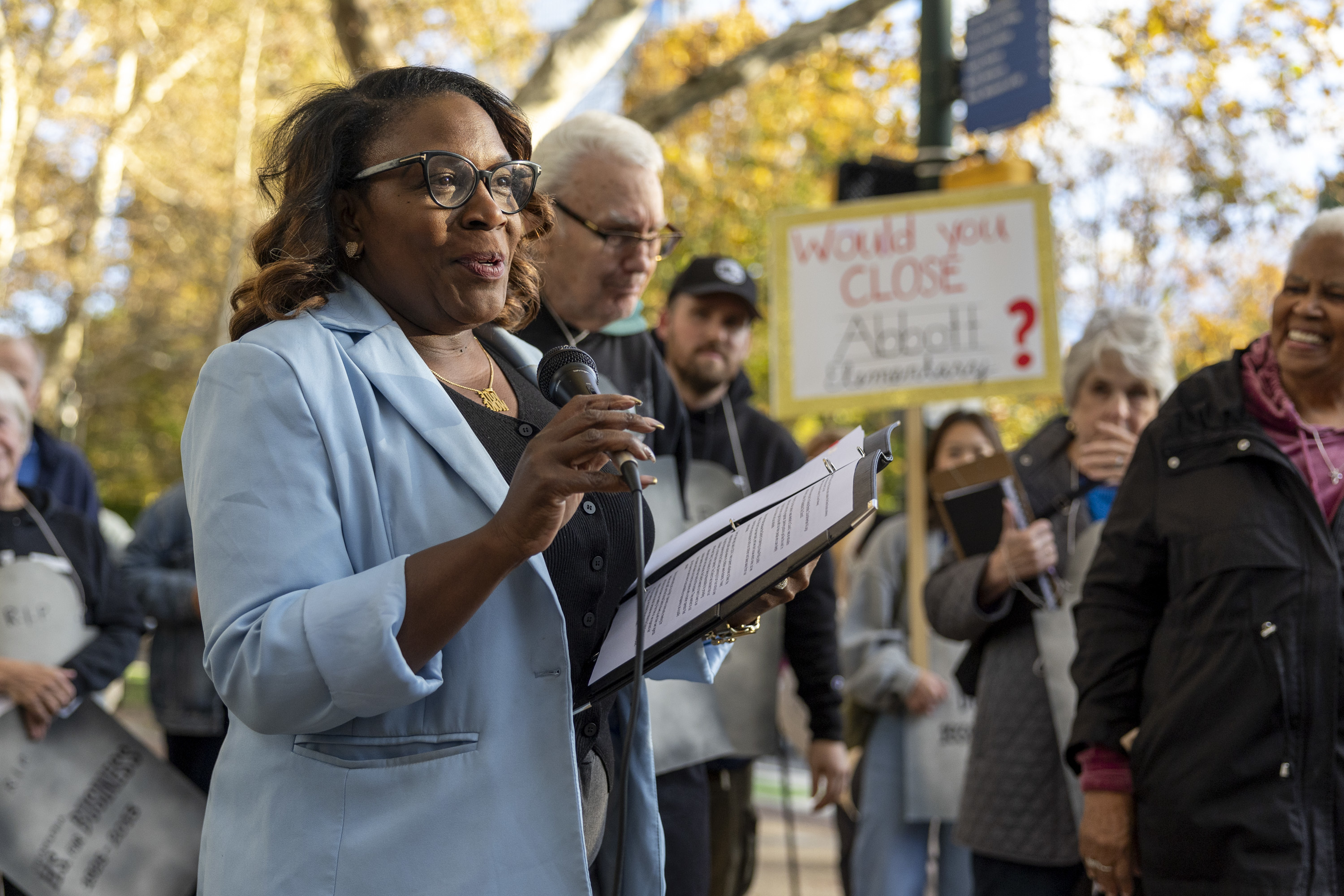
    City Council woman at large Kendra Brooks, speaks in front of parents, teachers, and public school advocates during a Stand Up for Philly Schools event in Philadelphia, on Wednesday, Oct. 22, 2025.

    Brooks joined members of Stand Up for Philly Schools — a coalition of organizations including Parents United for Public Education, the Philadelphia Home and School Council, and Asian Americans United — outside the Barnes Foundation on the Benjamin Franklin Parkway Wednesday night, where members of the Council for Great City Schools met for an opening reception.

    “We are being given an extremely limited set of options about the future of our schools. We are being told that school closures are a foregone conclusion. We’re being told to sign off on a plan that we haven’t even seen,” Brooks said to the crowd of dozens of educators, parents, students and other supporters gathered for the cause.

    “We don’t know how many, we don’t know which ones, but we know that every school closure hurts a community,” she said.

    ‘A big contraction of the school district’

    Those who rallied Wednesday made several demands of the district, which is playing host to the Council for Great City Schools conference. Those asks included pausing the planning process, creating a new strategy for public engagement, and committing at least $250 million annually to keeping district schools well-maintained.

    So far, the process has played out poorly, members of Stand Up for Philly Schools say. There’s been engagement on paper, but many in advisory groups said they felt their work was merely lip service, and community meetings have been sparsely attended.

    The school board has authorized spending over $5 million on contracts for community engagement, the planning process itself, and the construction and hosting of a data warehouse for all facilities information.

    “We feel like we’re not getting the whole picture, we feel like whatever ideas and feedback we gave are not being heeded, and we don’t think there’s enough time in this process,” said Adam Blyweiss, a district parent and teacher who sat on an advisory committee.

    Laurie Mazer, a member of Parents United for Public Education, said the process feels “weird, and rushed.”

    Getting information has ”been a real teeth-pulling exercise,” Mazer said.

    ‘When schools close, communities pay the price’

    It appeared like an early Halloween celebration at the Stand Up for Philly Schools rally.

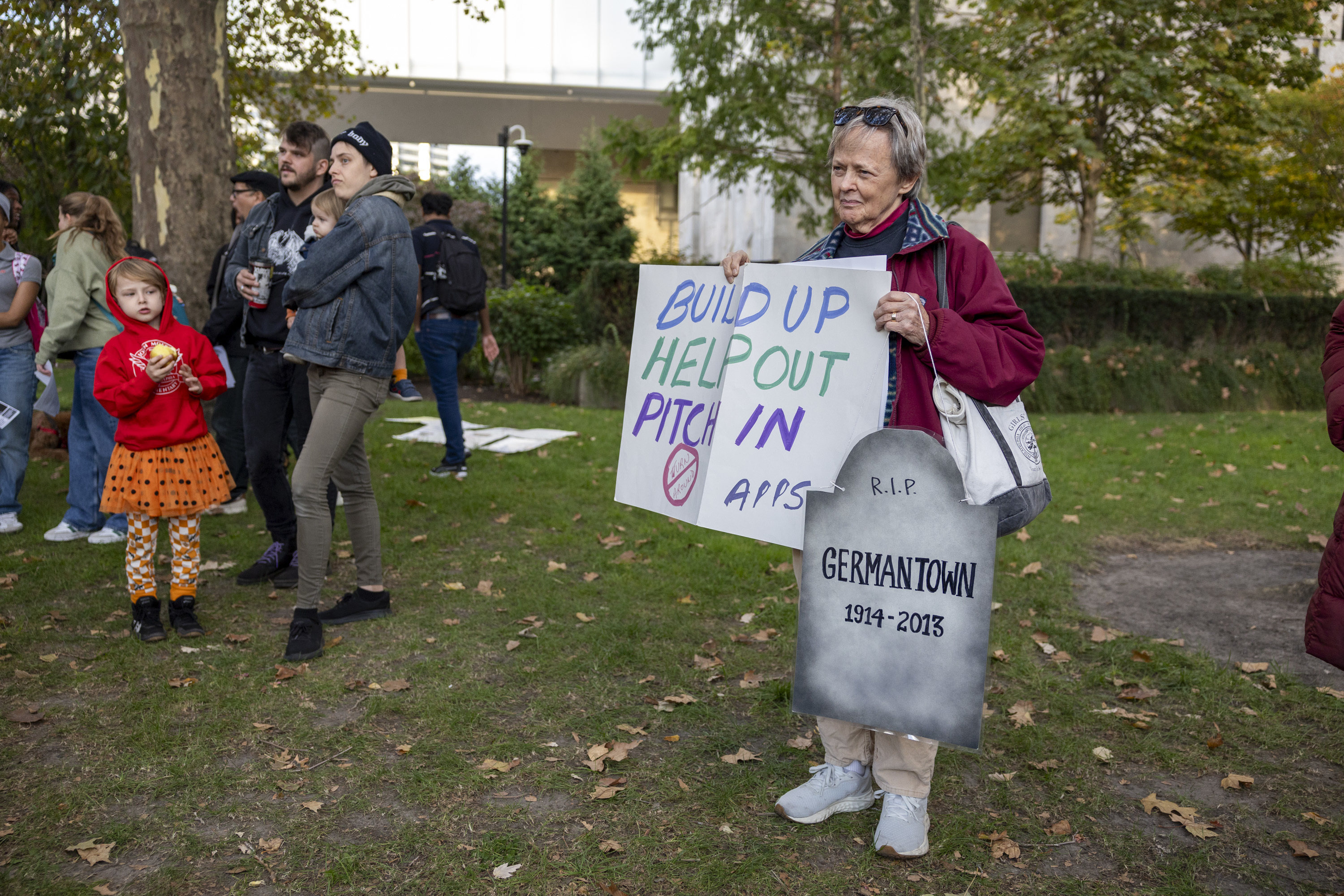
    Coalition members wore tombstone signs around their necks, each representing a Philadelphia public school that was closed during the district’s last closure plan.

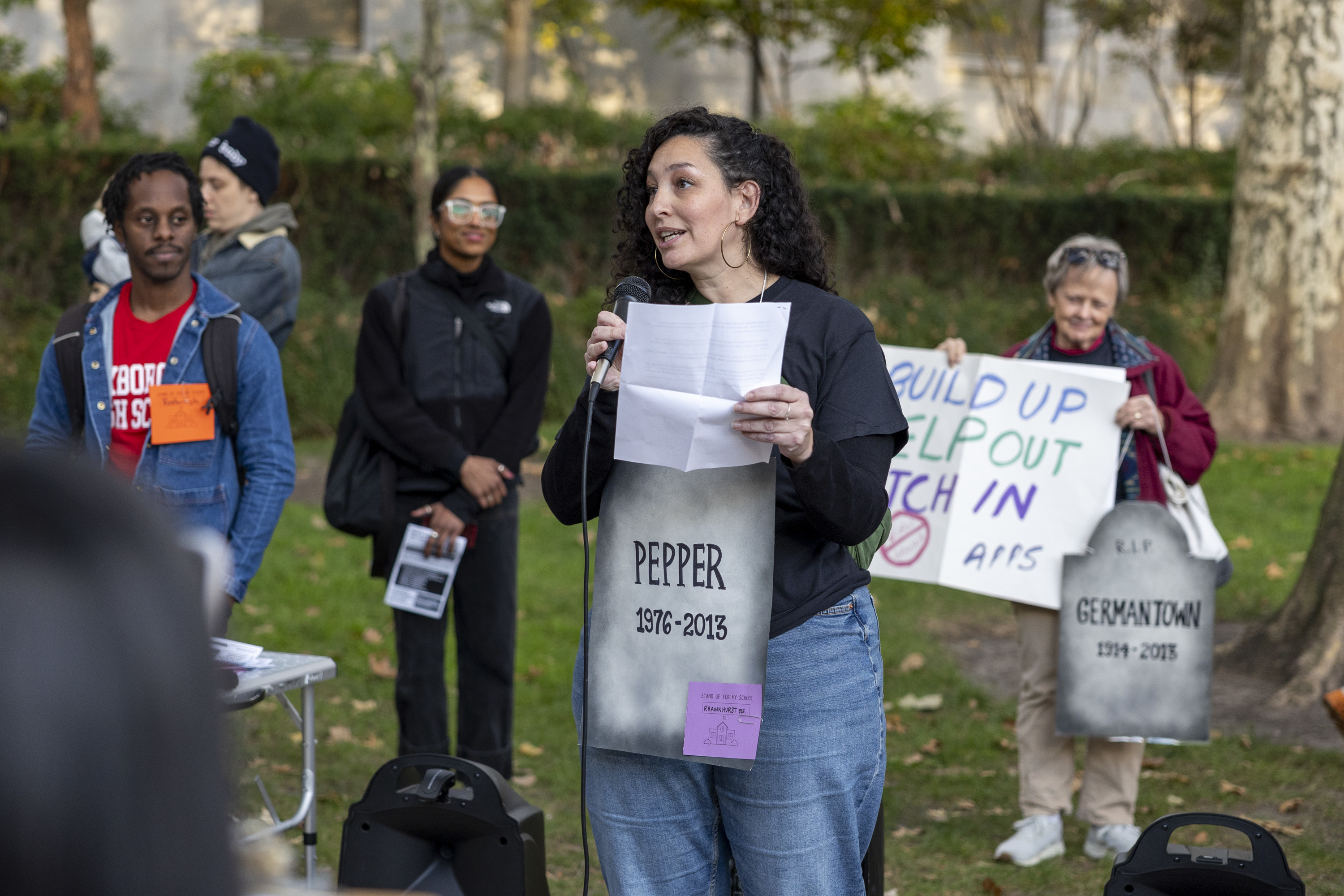
    “After months of delays and missing data, it’s clear why so many families don’t trust this process,” said Melanie Silva, the mother to a fourth grader at Rhawnhurst Elementary School in Northeast Philly and a member of 215 People’s Alliance.

    Melanie Silva, mom to a fourth grader at Rhawnhurst Elementary School, speaks during a Stand Up for Philly Schools event in Philadelphia, on Wednesday, Oct. 22, 2025.

    Wearing a tombstone sign around her neck representing George Wharton Pepper Middle School and its closure in 2013, Silva described the overcrowded and under-resourced conditions at her daughter’s school. She said the school’s library was a meeting room, and classrooms were so full there was “no room to breathe.” She said the district ought to invest in its schools rather than close them.

    “We deserve transparency, we deserve trust, and real investment, not excuses,” she said.

    Charles Hudgins, an algebra teacher at Abraham Lincoln High School in Northeast Philly, warned that the district would make problems that schools face today worse by closing more of them. He said that some of his students already travel more than an hour.

    Barbara Dowdall, of Germantown, Retired teacher of 36 years, holds up a sign to show her support for Philadelphia public schools during a Stand Up for Philly Schools event in Philadelphia, on Wednesday, Oct. 22, 2025.

    “The potential and talent of students is being lost every single day because our school system is focused on quality and numbers. The numbers we care about are the number of excellent schools where our children have opportunities to thrive, to think creatively and to pursue their passions,” said Ruth Kuriloff, 17, a senior at Science Leadership Academy at Beeber.

    She and her classmates said students would only be hurt by closing schools to save money.

    “These obvious inequities will not get better by closing schools,” said Jordyn McGriff-Laduna, 17, also a senior at the school. “Quality education should not be a privilege. It should be a promise for all students in all areas.”

  • Bette E. Landman, award-winning anthropology professor and first female president at Arcadia University, has died at 88

    Bette E. Landman, award-winning anthropology professor and first female president at Arcadia University, has died at 88

    Bette E. Landman, 88, of Glenside, Montgomery County, the first female president of Arcadia University, award-winning professor of anthropology at Arcadia and Temple Universities, longtime board member, lecturer, and volunteer, died Thursday, Oct. 16, at Jefferson Abington Hospital. The cause of her death has not been disclosed.

    An expert in cultural anthropology, Dr. Landman joined Arcadia, known then as Beaver College, from Temple in 1971 as an assistant professor of anthropology. She was promoted to dean of students in 1976 and rose to vice president of academic affairs and then acting president in 1982 before her appointment as president in 1985.

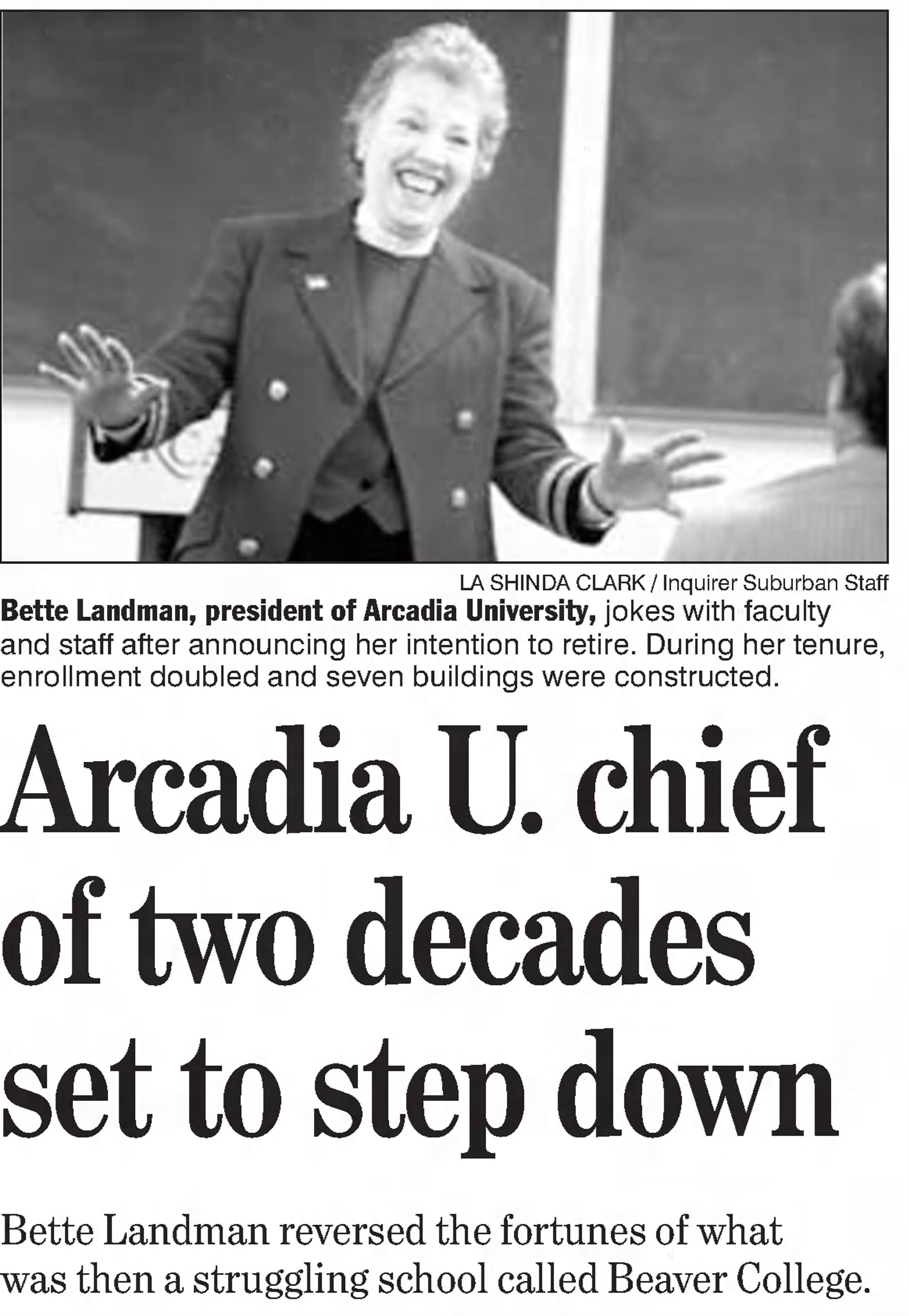
    For the next 19 years, until her retirement in 2004, Dr. Landman doubled the university’s enrollment to more than 3,000 students, increased its endowment from $267,000 to $26 million, supervised construction of seven buildings, and expanded international study programs. She also maneuvered successfully through an eight-month maintenance staff strike in 1993 and initiated the school’s name and academic status change from Beaver College to Arcadia University in 2001.

    She adroitly addressed the school’s thorny financial issues, strengthened its liberal arts program and College of Global Studies, and diversified the student body. “The school has come up from the floor, and it’s because of her,” Joseph Castle 2nd, then chair of Arcadia’s board of trustees, told The Inquirer in 2004.

    When she retired, Arcadia colleague Gene Bucci said: “It’s a sad day. Bette is the college.” Another colleague, Norman Johnston, said: “Without her, there might not even be a college here anymore.”

    In a recent tribute, current Arcadia president Ajay Nair praised Dr. Landman’s “extraordinary vision and unwavering dedication to access and inclusion.” He said: “Her spirit, vision, light, and legacy will forever remain a central part of the university.”

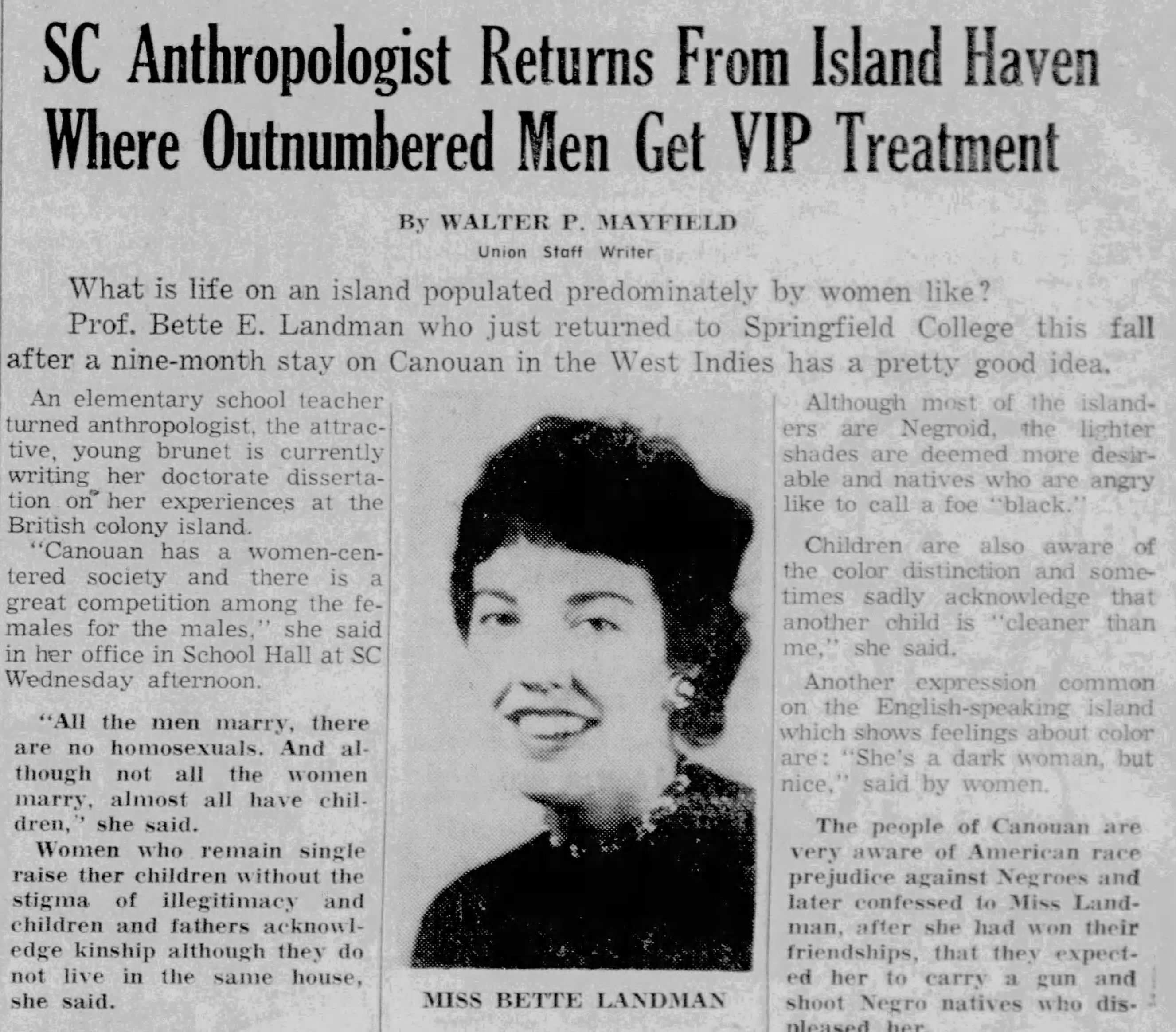
    Dr. Landman studied marriage, child-rearing, and other social constructs for nine months on the remote Caribbean island of Canouan for her doctoral dissertation in 1965 and ’66, and she lectured for decades around the country on evolution and human relationships. She evaluated academic programs and advised colleges around the world, and said often that expansive educations are vital for everyday success.

    “A baccalaureate degree must expose men and women to arts and sciences,” she told The Inquirer in 1992. “It gives breadth to what they do. I realize people work and need job skills, but the really basic skills are critical thinking, problem solving, and the ability to make judgements and effective communication, oral and written.”

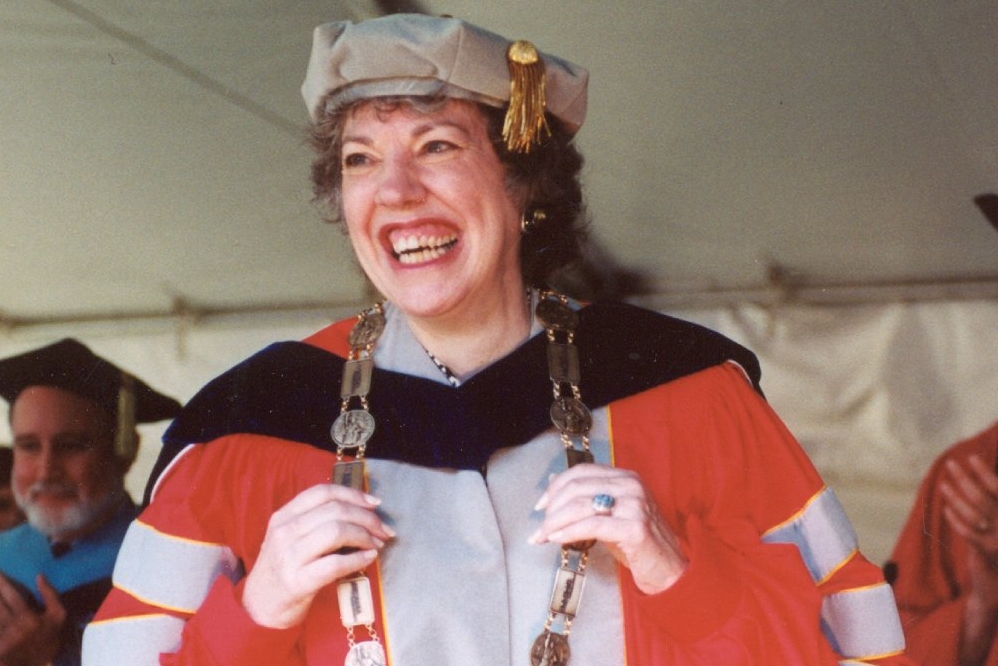
    Dr. Landman became president at Arcadia in 1985.

    She was also effective in improving Arcadia’s athletic program and was inducted into its Hall of Fame in 2009. She held leadership roles in the National Collegiate Athletic Association and Pennsylvania Athletic Conference, and Arcadia officials said on the Hall of Fame website: “Bette Landman put our university on the national map in athletics.”

    Over the years, Arcadia officials named their new Landman Library in her honor, awarded her an honorary doctorate of education, and created the Bette Landman Award for students dedicated to academic success, community service, and global learning. Before Arcadia, she was an assistant professor of anthropology for five years at Springfield College in Massachusetts and then at Temple from 1969 to 1971.

    She earned a bachelor’s degree in elementary education and graduated first in her class of 1959 at Bowling Green State University in Ohio. At Ohio State University, she earned a master’s degree in physical anthropology in 1961 and a doctorate in cultural anthropology in 1972.

    “She treated every student like we were part of her family,” a former student said in a tribute. “She knew us by name. All university presidents should aspire to be like Bette.”

    Dr. Landman taught anthropology at Springfield College and Temple and Arcadia Universities.

    As a volunteer, Dr. Landman was president of the charitable Arcadia Foundation and chair of boards and commissions for the Association of American Colleges, the American Red Cross, and other groups. She was on boards for the National Association of Independent Colleges and Universities, Abington Memorial Hospital, and Wilson College.

    She was named a Distinguished Daughter of Pennsylvania in 1992 by the Foundation for Enhancing Communities and earned a lifetime achievement award in 2003 from the Pennsylvania Council on International Education. In 1992, the Pennsylvania chapter of the American Council on Education created an award in her name to honor a leader in women’s education in Pennsylvania.

    She earned a 1973 Lindback Award at Arcadia for distinguished teaching and other honors from the Boy Scouts of America, the March of Dimes, and the Philadelphia Business Journal. She also is featured in Karen Doyle Walton’s 1996 book, Against the Tide: Career Paths of Women Leaders in American and British Higher Education.

    She never really enjoyed fundraising, colleagues said, so she assembled a formidable staff around her. Her brother, Todd, said: “She was a tremendous team builder.” A former colleague said on Facebook: “Everyone who worked around Bette loved her.”

    The Springfield Union wrote about Dr. Landman’s doctoral dissertation in 1966.

    Bette Emmeline Landman was born July 18, 1937, in Piqua, Ohio. She grew up with an older sister, Patricia, and a younger brother, Todd, and she told memorable bedtime stories to her brother when they were young.

    She worked odd jobs during her high school years, earned a teaching scholarship to Bowling Green, and taught fifth grade in Ohio before joining Springfield College in 1963.

    At Arcadia, she liked to host student gatherings at the president’s residence, and her personal library was filled with books on history, art, and architecture. Friends noted her “infectious smile” and called her “a wonderful woman” and “an incredible lady.”

    Her brother said: “She was a very compassionate person. She was committed to success.”

    This article about Dr. Landman appeared in The Inquirer in 2003.

    In addition to her brother, Dr. Landman is survived by other relatives. Her sister died earlier.

    Services are to be held later.

    Donations in her name may be made to the Fund for Arcadia University, 450 S. Easton Rd., Glenside, Pa. 19038.

  • Toddler’s death in the bathtub of a Philly foster home prompts lawsuit

    Toddler’s death in the bathtub of a Philly foster home prompts lawsuit

    The biological mother of a 20-month-old who died in a Harrowgate foster home is suing two Philadelphia child welfare agencies for placing the toddler in a crowded house.

    Syvir Hill died April 15 while taking a bath with two other children, according to the complaint, which was filed last week in Common Pleas Court. The children were unsupervised by their foster mother, who had left the bathroom to cook in the downstairs kitchen.

    The lawsuit accuses the foster mother, Tabor Children’s Services, and Northeast Treatment Centers of negligence that contributed to Syvir’s death.

    Tabor Children’s Services had certified the mother and the Harrowgate rowhouse as eligible to foster Syvir, the suit says. The city had contracted Northeast Treatment Centers to monitor the child’s progress.

    “We are deeply saddened over this tragic loss of life,” Regan Kelly, president and CEO of Northeast Treatment Centers, said in a statement. “In the meantime, we are doing everything possible to support the family as they deal with their grief.”

    Tabor Children’s Services did not respond to a request for comment.

    Syvir entered the city’s foster-care system before he was 6 months old and “eventually” was placed in the Harrowgate home, according to the complaint. By December 2024, the rowhouse was crowded, with three foster children — including Syvir — in addition to young family members of the foster parent living in the house.

    When Syvir’s sister needed a foster home, Northeast Treatment Centers sought to place the girl with her brother despite noting that the foster parent was “at her max with the children in her home,” according to the complaint.

    The foster parent emptied a storage room, which the lawsuit calls a “closet,” to make room for the sister, who was just a few months old.

    In visits to monitor Syvir’s progress, Northeast Treatment Centers staff noted the varying number of children living in the house. The complaint accuses the caseworkers of “failing to remove Syvir Hill and other children in an already overcrowded foster home.”

    The lawsuit details the horrific last moments of Syvir’s young life based on Philadelphia Department of Human Services investigation records obtained by A.J. Thomson, the attorney who filed the lawsuit.

    Three children were splashing in the water, the suit says, when at one point a 2-year-old turned to Syvir and said, “You are not my brother!” The child held Syvir’s head underwater, while a 4-year-old “screamed in terror,” according to the complaint.

    When the foster mother came back to the upstairs bathroom, Syvir was submerged. She called police, who found Syvir nonresponsive upon arrival. He was pronounced dead at St. Christopher’s Hospital for Children.

    No arrest has been made in connection with the death, the lawsuit says. Court records show no criminal charges against the foster mother.

    “All three of these children are victims of the acts of the Defendants in this case and a system that simply piles children into homes without supervision, training, or enforcement of rules,” the lawsuit says.

    A judge had removed Syvir from his parents because that house was deemed unsafe for him, Thomson said. The parents visited Syvir and followed the protocols in an effort to get their children back.

    Thomson accuses the agencies of failing to inform the parents of their son’s death.

    “When he dies, they are the last to find out,” the attorney said.

    Both child welfare nonprofits have been previously involved in cases where children were abused, severely injured, or died.

    Tabor Children’s Services agreed to pay $11 million in 2023 to settle a lawsuit accusing the organization of failing to oversee the care of an infant who was abused by her biological mother. The organization, which provided child-welfare casework for the Northwest region of Philadelphia, declined to renew its contract with the city for 2025 and beyond, citing litigation insurance costs.

    Northeast Treatment Centers settled a lawsuit for $6.5 million in 2022 following the death of 3-year-old Hope Jones, who was beaten to death in foster care. The nonprofit also settled a case involving the death of Su’Layah Williams, a 1-year-old who was allegedly kicked to death in a West Philly foster home. The terms of the settlement were not disclosed.

    “There has to be a better way than to put these kids with people who are killing them,” Thomson said.

  • Protesters rally outside Philly ICE office as Catholics launch ‘One Church, One Family’ campaign for immigrants

    Protesters rally outside Philly ICE office as Catholics launch ‘One Church, One Family’ campaign for immigrants

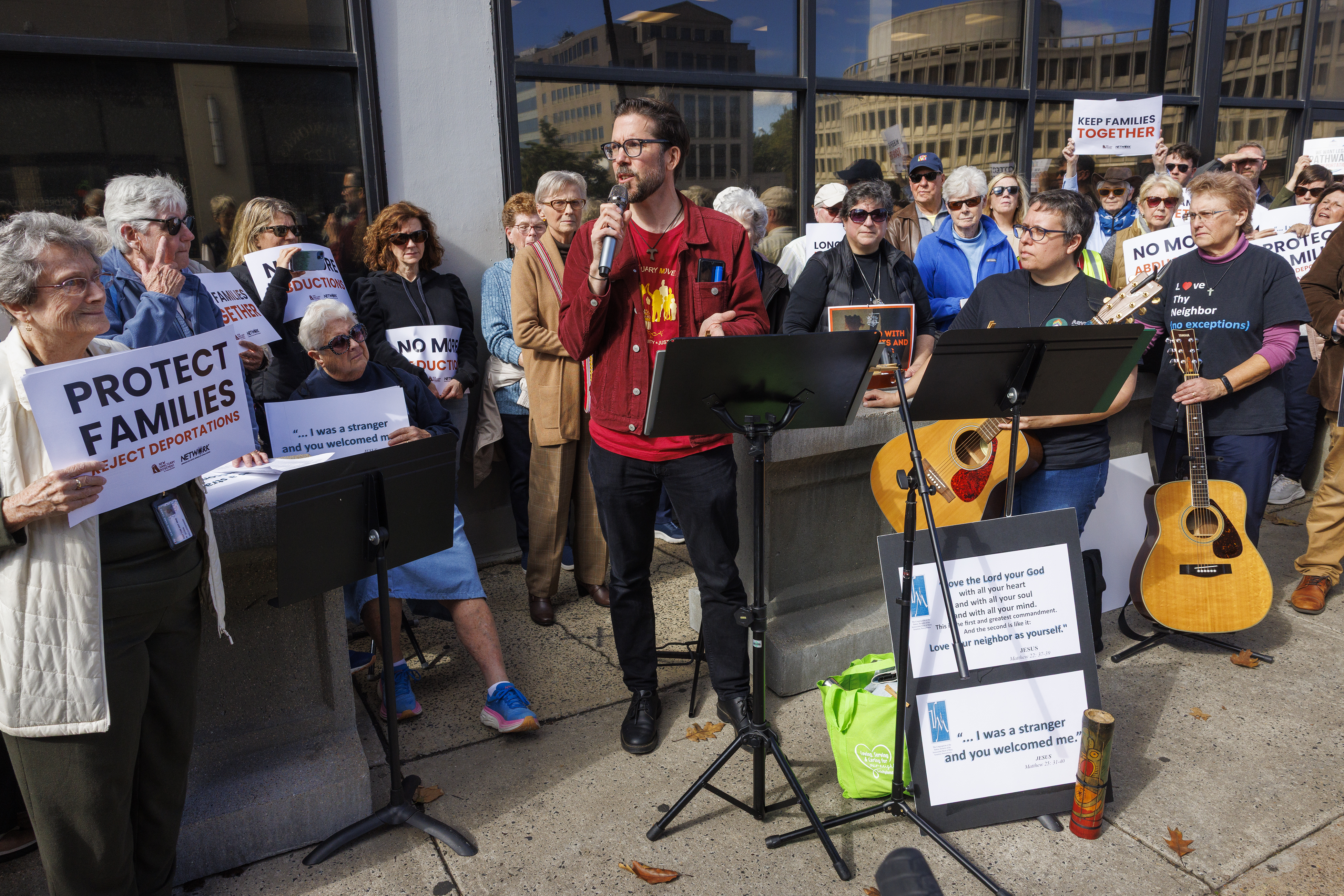
    Lifted by song, prayer, and Scripture, dozens of Philadelphia-area Catholics rallied outside the Center City ICE office on Wednesday, joining a pro-immigrant push undertaken by fellow church groups around the country.

    Catholic priests, nuns, and other supporters prayed and sang outside the field office near Eighth and Cherry Streets, joining a nationwide show of solidarity with migrant families, refugees, and asylum-seekers.

    “We reject the culture of fear that dehumanizes,” Michelle Cimaroli of Handmaids of the Sacred Heart of Jesus, an international community of Catholic women, told the crowd of about 50 people. “As Catholics, we stand with immigrants.”

    Speakers called on people to see the face of God in every human face. And to be as confident as Jesus in sharing the truth.

    Catholic organizations across the country are taking part in a campaign called One Church, One Family: Catholic Public Witness for Immigrants. The movement invites parishes, schools, and faith-based groups to host prayerful public events that proclaim the dignity of every person.

    U.S. Immigration and Customs Enforcement officials said in a statement: “ICE respects the rights of individuals to peacefully protest.”

    A second day of prayer is planned for Nov. 13, timed to coincide with the feast of St. Frances Xavier Cabrini, an Italian immigrant who became the first U.S. citizen to be declared a saint, according to the National Catholic Reporter.

    Peter Pedemonti of the New Sanctuary Movement addressing Catholics gathered outside ICE office at Eighth and Cherry Streets on Wednesday. They are protesting against the detaining and incarceration of immigrants.

    “I want us to take a moment to just let our hearts break,” Peter Pedemonti, codirector of New Sanctuary Movement of Philadelphia, told the crowd in Center City. “That we don’t let the daily barrage of bad news harden us.”

    He and other advocates said they believed ICE arrested four people in Philadelphia on Wednesday, including a man at the Italian Market.

    “We’re trying to get Catholics across the country to listen to Pope Leo’s message: Migrants lead us, they lead us to a true set of values,” said Jerry Zurek, who serves as local co-organizer of NETWORK, the Catholic social-justice group, and who took part in the Philadelphia rally.

    This month the pope described migrants and refugees as “privileged witnesses of hope through their resilience and trust in God,” maintaining their strength while seeking a better future “in spite of the obstacles that they encounter,” Catholic News Service reported.

    Big and small protests continue to take place in the Philadelphia area and around the county in opposition to President Donald Trump’s effort to deport millions of people. The number of people arrested by ICE in Delaware, New Jersey, and Pennsylvania has surged since the agency reportedly implemented a 3,000-arrests-a-day quota in late May.

    Arrests doubled from an average of 26 a day since Trump took office through May 21, to an average of 51 a day between May 22 and June 26 for the three states. At the same time, the proportion of people arrested without a criminal record or pending criminal charges soared, up two-thirds since the directive to ICE was issued.

    “As Catholics and people of deep faith, we reject the culture of fear and silence that dehumanizes, and we choose instead to stand with migrants,” local organizers said in a statement, pledging “to defend the dignity of our neighbors, family members, fellow parishioners, classmates, coworkers, and friends.”

    Vicki Guinta-Abbott, a concerned citizen and a Catholic, gathers with others outside the ICE office at Eighth and Cherry Streets on Wednesday.

    The body of U.S. bishops, individual bishops, and Catholic organizations have been speaking out against what they call inhumane policies that go against church teachings on immigration.

    Local leaders said the campaign is sponsored by the United States Conference of Catholic Bishops Migration and Refugee Services, the Leadership Conference of Women Religious, Jesuit Refugee Service/USA, and many others.

  • Two men who set a building on fire, leading to the death of a Philly fire lieutenant, displayed ‘depraved indifference’ to life, judge says

    Two men who set a building on fire, leading to the death of a Philly fire lieutenant, displayed ‘depraved indifference’ to life, judge says

    Two men who set a Fairhill building on fire in 2022 in hopes of collecting a six-figure insurance payout — but who instead caused the structure to collapse, killing a responding Philadelphia Fire Department lieutenant — were each sentenced Wednesday to decades in federal prison.

    U.S. District Judge Cynthia M. Rufe said the actions by Al-Ashraf Khalil and Isaam Jaghama, which led to the death of Lt. Sean Williamson and left five other first responders injured, were made “out of pure self-interest” and displayed “depraved indifference to human life.”

    “Neither of the defendants considered at all the consequences of their actions, which proved to be far-reaching, devastating, and deadly,” she said.

    She sentenced Khalil — who owned the building on the 300 block of West Indiana Avenue that he set ablaze — to serve 40 years in prison. And she said Jaghama, who participated in the arson alongside Khalil, would serve a term of 25 years behind bars. Both men are 32.

    Both men had faced the potential of life sentences. And both apologized for their actions before being sentenced.

    Jaghama, in a letter read by his attorney, said: “No words can describe the depth of my regret and pain.”

    Khalil, meanwhile, cried as he said he wished he could take back decisions that he called selfish and weak.

    “I was desperate. I was a coward. And the families of the victims are the ones to suffer for a lifetime,” he said. “I am ashamed beyond words. I pray for your forgiveness, although I know I will never deserve it.”

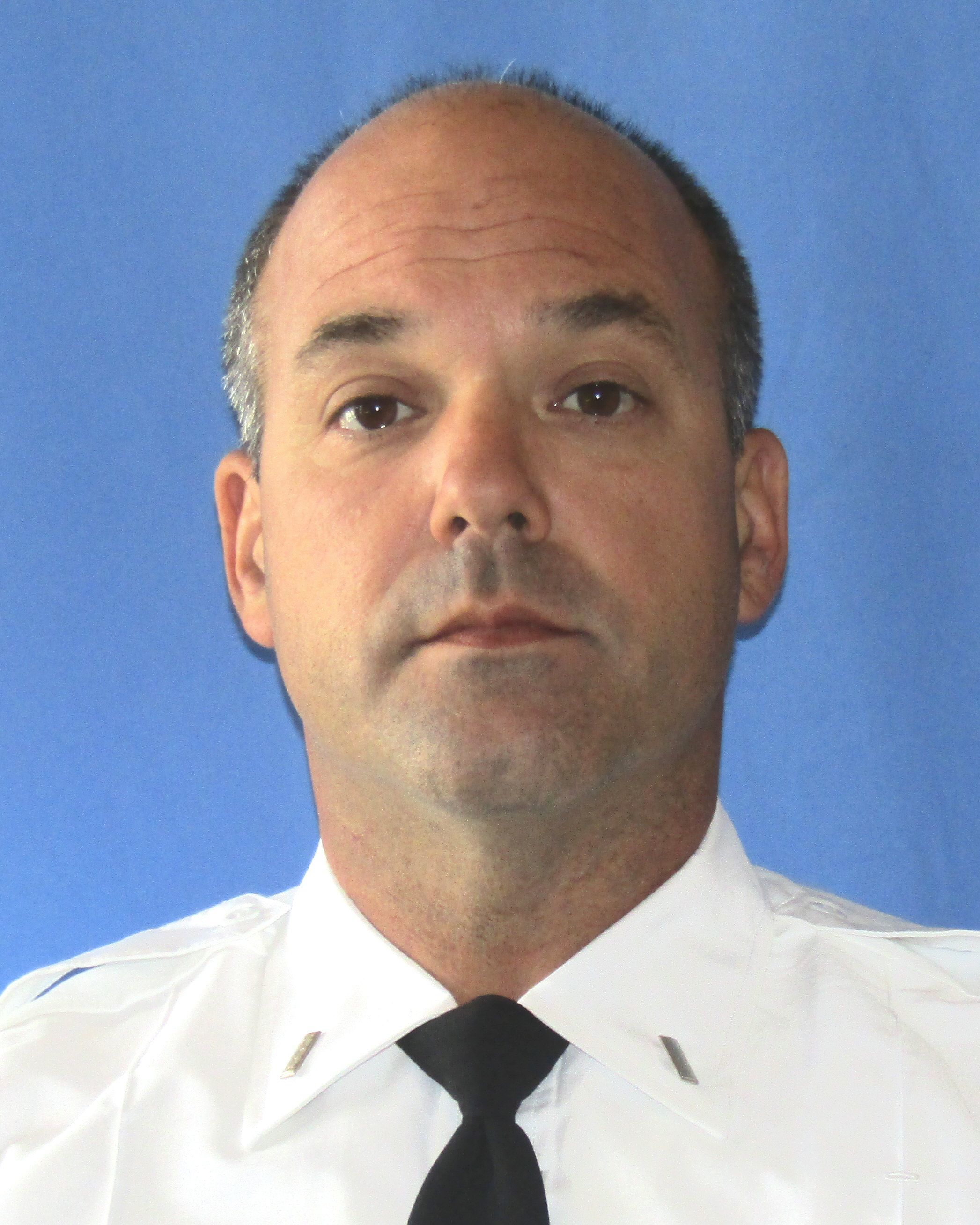
    Lt. Sean Williamson, 51, was killed during a building collapse after a fire in Fairhill in 2022. He was a 27-year veteran of the Fire Department.

    Assistant U.S. Attorney Amanda Reinitz said Khalil and Jaghama were too late in expressing remorse. Both men lied to authorities after the blaze, she said, Khalil tried to flee the country, and both then took their case to trial, where they tried to convince jurors that fire officials shared blame in the disaster for sending first responders into a century-old building shortly after the flames had been extinguished.

    Williamson’s sister, Erin Williamson, said she viewed that as an attempt by Khalil and Jaghama to avoid accountability for causing a tragedy. A second-grade teacher, Williamson said even her 7-year-old students know that fires are dangerous and deadly.

    Khalil and Jaghama “only thought about themselves,” she said, “and what they could gain.”

    The fire was set early in the morning of June 18, 2022. Khalil, who co-owned a pizza shop in Juniata Park, had bought the Indiana Avenue building months earlier and was hoping to renovate it and turn a quick profit.

    But when that plan appeared destined to fail, prosecutors said, he began plotting to set it ablaze, hoping that he could instead collect on an insurance policy worth nearly $500,000.

    Surveillance footage discovered after the crime showed Khalil and Jaghama entering the building’s basement shortly before the blaze began, around 1:30 a.m., then leaving not long after flames erupted.

    Khalil had leased apartments in the upper floors to two employees at his pizza shop, and they were inside with their young children as the fire spread. All of the tenants managed to escape unharmed, prosecutors said, but they lost nearly all of their possessions.

    First responders were not so lucky.

    Philadelphia fire officials honored Lt. Sean Williamson at his funeral in 2022.

    Although firefighters were able to extinguish the blaze, the building was heavily damaged from smoke and water when crews were sent inside to inspect it. The building then collapsed, and Williamson, 51 — a 27-year veteran of the department — died after being trapped under the rubble. Four other firefighters and an inspector from the Philadelphia Department of Licenses and Inspections were also injured but survived.

    The day after the disaster, Khalil filed a claim with his insurance company. In the ensuing days, he also tried to flee for Jordan, prosecutors said, but was arrested at John F. Kennedy Airport in New York City.

    Jaghama was arrested about a year after Khalil. Reinitz, the prosecutor, said Jaghama repeatedly misled authorities while seeking to avoid being prosecuted.

    Jaghama, born in the West Bank, was a legal permanent resident, meaning he is likely to be deported after his prison term.

    Khalil’s wife said in court Wednesday that he was a great husband, a loving father to their three children, and a caring person whose actions in this case were not consistent with how he lived his life.

    Reinitz, however, said the men’s decisions and actions were not only senseless, they were damaging for countless people whose lives were upended by a callous — and illegal — attempt to make money.

    “They had absolutely no need to do this,” she said, “other than pure greed.”

  • Three men convicted of first-degree murder in deadly North Philadelphia playground shooting

    Three men convicted of first-degree murder in deadly North Philadelphia playground shooting

    Three men were convicted of first-degree murder and related crimes for a 2023 shooting at a North Philadelphia playground that left three people dead and one injured, prosecutors said Wednesday.

    Tyyon Bates, 21, Quaza Lopez, 22, and Eric Reid, 23, were all found guilty this week for their roles in the crime, which brought chaos to a basketball court at Eighth and Diamond Streets on a hot summer night as children played outside.

    Nyreese Moore, 22, Nassir Folk, 24, and Isaiah Williams, 22, were killed. A fourth person was shot in the abdomen and survived.

    In addition to murder, Bates, Lopez, and Reid were convicted of conspiracy to commit murder, recklessly endangering others, and firearms offenses, prosecutors said.

    A jury found a fourth suspect, Sufyann Kinslow, not guilty of murder and related charges, court records show. And a jury could not reach a verdict in the trial of a fifth suspect, Tynel Love, on similar charges, though prosecutors say they intend to retry that case.

    Prosecutors said the Aug. 11, 2023, shooting stemmed from “vengeance” over a 2018 shooting that left Bates’ brother, Tyree, dead just several blocks away at Fourth and Diamond Streets.

    “The motivation was for ‘Ree,’ Tyree Bates,” said Assistant District Attorney Cydney Pope. “And Tyyon Bates made sure he got his ‘get-back’ for him — and bragged about it.”

    Investigators recovered more than 100 pieces of ballistic evidence from what prosecutors said was an unusually large crime scene involving six shooters. Surveillance video from the recreation center and a nearby vacant lot helped investigators link the men to the crime, Pope said.

    Bates, Lopez, and Reid were sentenced by Common Pleas Court Judge Glenn Bronson to three consecutive life sentences in prison plus an additional 24 to 48 years in custody.

    Prosecutors said that their work is not finished and that they plan to bring charges against two more people involved in the crime.

  • OpenAI launches Atlas web browser to compete with Google Chrome

    OpenAI launches Atlas web browser to compete with Google Chrome

    OpenAI introduced its own web browser, Atlas, on Tuesday, putting the ChatGPT maker in direct competition with Google as more internet users rely on artificial intelligence to answer their questions.

    Making its popular AI chatbot a gateway to online searches could allow OpenAI, the world’s most valuable startup, to pull in more internet traffic and the revenue made from digital advertising. It could also further cut off the lifeblood of online publishers if ChatGPT so effectively feeds people summarized information that they stop exploring the internet and clicking on traditional web links.

    OpenAI has said ChatGPT already has more than 800 million users but many of them get it for free. The San Francisco-based company also sells paid subscriptions but is losing more money than it makes and has been looking for ways to turn a profit.

    OpenAI said Atlas launches Tuesday on Apple laptops and will later come to Microsoft’s Windows, Apple’s iOS phone operating system and Google’s Android phone system.

    OpenAI CEO Sam Altman called it a “rare, once-a-decade opportunity to rethink what a browser can be about and how to use one.”

    But analyst Paddy Harrington of market research group Forrester said it will be a big challenge “competing with a giant who has ridiculous market share.”

    OpenAI’s browser is coming out just a few months after one of its executives testified that the company would be interested in buying Google’s industry-leading Chrome browser if a federal judge had required it to be sold to prevent the abuses that resulted in Google’s ubiquitous search engine being declared an illegal monopoly.

    But U.S. District Judge Amit Mehta last month issued a decision that rejected the Chrome sale sought by the U.S. Justice Department in the monopoly case, partly because he believed advances in the AI industry already are reshaping the competitive landscape.

    OpenAI’s browser will face a daunting challenge against Chrome, which has amassed about 3 billion worldwide users and has been adding some AI features from Google’s Gemini technology.

    Chrome’s immense success could provide a blueprint for OpenAI as it enters the browser market. When Google released Chrome in 2008, Microsoft’s Internet Explorer was so dominant that few observers believed a new browser could mount a formidable threat.

    But Chrome quickly won over legions of admirers by loading webpages more quickly than Internet Explorer while offering other advantages that enabled it to upend the market. Microsoft ended up abandoning Explorer and introducing its Edge browser, which operates similarly to Chrome and holds a distant third place in market share behind Apple’s Safari.

    Perplexity, another smaller AI startup, rolled out its own Comet browser earlier this year. It also expressed interest in buying Chrome and eventually submitted an unsolicited $34.5 billion offer for the browser that hit a dead end when Mehta decided against a Google breakup.

    Altman said he expects a chatbot interface to replace a traditional browser’s URL bar as the center of how he hopes people will use the internet in the future.

    “Tabs were great, but we haven’t seen a lot of browser innovation since then,” he said on a video presentation aired Tuesday.

    A premium feature of the ChatGPT Atlas browser is an “agent mode” that accesses the laptop and effectively clicks around the internet on the person’s behalf, armed with a users’ browser history and what they are seeking to learn and explaining its process as it searches.

    “It’s using the internet for you,” Altman said.

    Harrington, the Forrester analyst, says another way of thinking about that is it’s “taking personality away from you.”

    “Your profile will be personally attuned to you based on all the information sucked up about you. OK, scary,” Harrington said. “But is it really you, really what you’re thinking, or what that engine decides it’s going to do? … And will it add in preferred solutions based on ads?”

    About 60% of Americans overall — and 74% of those under 30 — use AI to find information at least some of the time, making online searches one of the most popular uses of AI technology, according to findings from an Associated Press-NORC Center for Public Affairs Research poll taken over the summer.

    Google since last year has automatically provided AI-generated responses that attempt to answer a person’s search query, appearing at the top of results.

    Reliance on AI chatbots to summarize information they collect online has raised a number of concerns, including the technology’s propensity to confidently spout false information, a problem known as hallucination.

    The way that chatbots trained on online content spout new writings has been particularly troubling to the news industry, leading The New York Times and other outlets to sue OpenAI for copyright infringement and others, including The Associated Press, to sign licensing deals.

    A study of four top AI assistants including ChatGPT and Google’s Gemini released Wednesday showed nearly half their responses were flawed and fell short of the standards of “high-quality” journalism.

    The research from the European Broadcasting Union, a group of public broadcasters in 56 countries, compiled the results of more than 3,000 responses to news-related questions to help ascertain quality responses and identify problems to fix.

  • Mayor Parker shakes up the Philadelphia Land Bank board to try to further her housing plan

    Mayor Parker shakes up the Philadelphia Land Bank board to try to further her housing plan

    Mayor Cherelle L. Parker is shaking up the board of the Philadelphia Land Bank, which helps control the sale of city-owned land but hasn’t been moving fast enough to advance her housing priorities.

    Parker’s first land bank board chair, Herb Wetzel, has been asked to step down as well as board member Majeedah Rashid, who leads the Nicetown Community Development Corp. The board has 13 members.

    Angela D. Brooks, who serves as the city’s chief housing officer, will be joining the board. Earlier this year Parker appointed Brooks to lead the mayor’s campaign, Housing Opportunities Made Easy, or H.O.M.E., to build or renovate 30,000 houses over the course of her administration.

    The mayor has long championed the Turn the Key program as part of that plan, a policy that depends on getting inexpensive city-owned land to developers so they can build houses that are affordable to working and middle-class families.

    Rashid is being replaced by Alexander Balloon, who formerly served on the Land Bank’s board and is the executive director of the Passyunk Avenue Revitalization Corp.

    “It is clear from the Land Bank’s success with its Turn The Key program: A strong and effective Land Bank is essential for reaching the H.O.M.E. initiative’s goal to produce and preserve 30,000 homes,” Parker said in a statement.

    Several Turn the Key proposals have been held up by the Land Bank board, which has been riven between factions that are either more or less friendly to private-sector developers.

    Rashid and other board members who come from a nonprofit development background have argued that scarce city-owned land should be earmarked for affordable housing, community gardens, and similar projects.

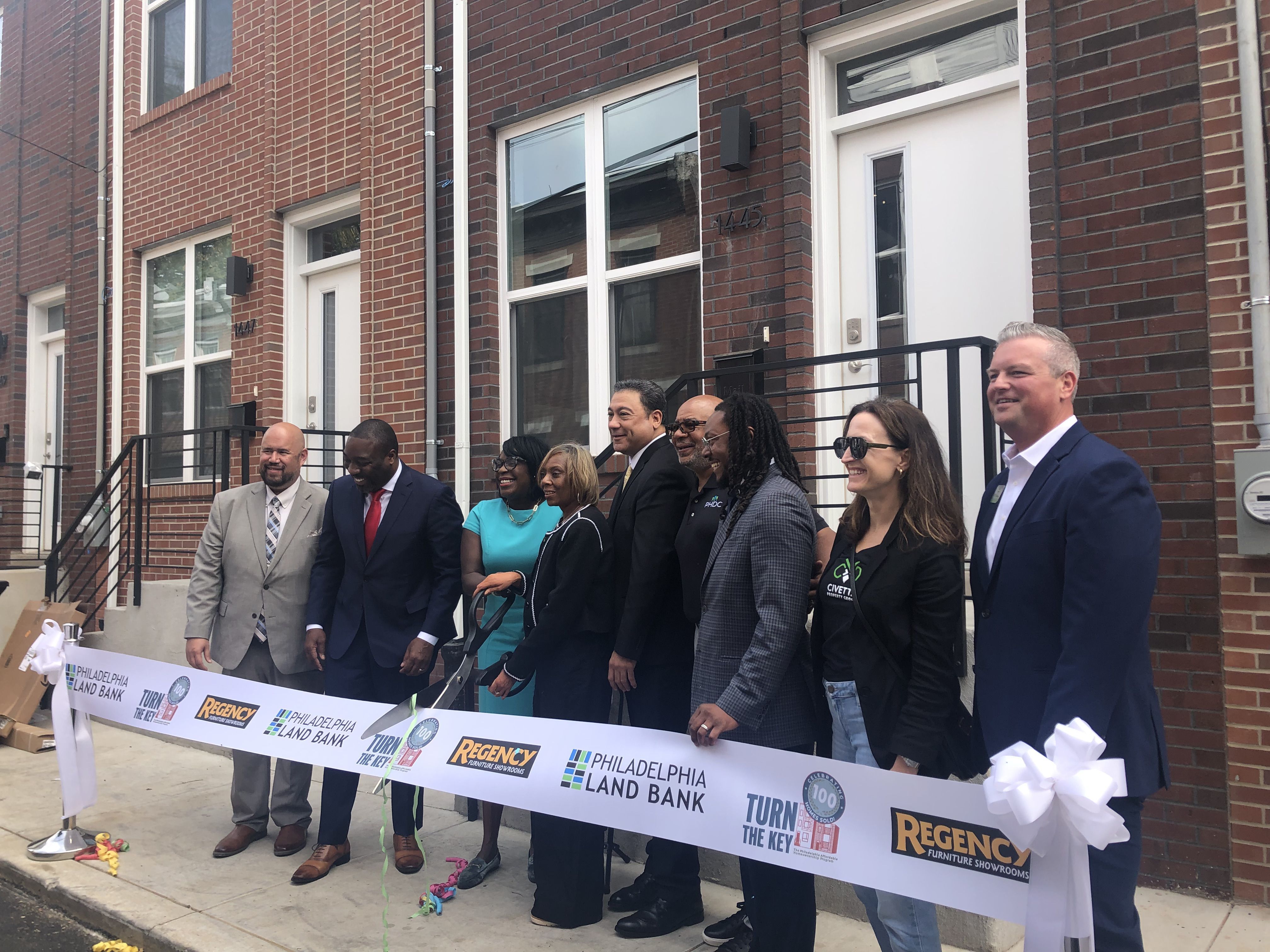
    Mayor Cherelle L. Parker and Turn the Key’s 100th homebuyer hold giant scissors as they prepare to cut a ceremonial ribbon.

    Although the Turn the Key program produces units that are more affordable than market-rate homes, many of the projects are built by private-sector developers and still unaffordable to Philadelphians with low incomes.

    “Majeedah Rashid has worked with me on economic development issues dating to my time in the Pennsylvania General Assembly, and her advice has been invaluable,” Parker said in a statement. “Our city is stronger for Herb’s and Majeedah’s public service.”

    Rashid did not respond to a request for comment.

    During Balloon’s previous tenure on the board, he was among members who pushed for vacant city-owned land to be put back into productive use as quickly as possible because empty lots attract crime and litter and are a drag on city services.

    Private-sector developers often can build more — and faster — than their nonprofit counterparts because they are less reliant on public funds, which are increasingly unreliable from the federal level.

    “I’m excited to rejoin the Philadelphia Land Bank and help Mayor Parker deliver on her bold vision to build and preserve 30,000 homes across our city,” Balloon said in an email statement. “This is an inspiring moment for Philadelphia’s growth and the success of the Turn the Key program and other initiatives.”

    Wetzel’s role as Land Board chair was the latest in a long tenure of municipal housing policy positions, including his lengthy service as a close aide to former Council President Darrell L. Clarke, who created the Turn the Key program and was one of its most enthusiastic proponents.

    “Herb Wetzel has been a subject matter expert for me on any housing issue that I’ve worked on throughout my career as an elected official, and I have always relied on his counsel,” Parker said in a statement. “He will continue to be part of my circle of advisers on housing issues, just in a different capacity.”

    But according to three City Hall sources, who did not have permission to speak to the media, Parker’s team felt Wetzel sought to play peacemaker between the factions and was not always able to get their favored Turn the Key projects moving. As a recent arrival to the city and leader of the administration’s housing initiative, Brooks is expected to pursue the mayor’s priorities.

    Brooks said in an interview that her appointment was no reflection on Wetzel’s performance and that he would continue to serve on the H.O.M.E. advisory board.

    “I don’t have any thoughts on what he didn’t do or didn’t other than he’s been a great supporter of both the mayor and me and this housing plan,” Brooks said. “He’ll continue to be a part of that as we move it forward. [It’s just that] historically, we have had a city staff person to sit on the Land Bank board, and since I’m spearheading the H.O.M.E. Initiative, it seemed to be time.”

    Frequent stalemates on the board were not the only challenge facing Turn the Key projects. Under the tradition of so-called councilmanic prerogative, the Land Bank requires action from City Council to release property for development even if the mayor backs a particular proposal.

    For example, the administration sent over a 50-unit Turn the Key proposal in North Philadelphia to City Council last November, and District Councilmember Jeffery Young simply never introduced it, effectively killing the deal.

    Or in Kensington, Councilmember Quetcy Lozada declined to endorse several Turn the Key proposals, leading developers to abandon them.

    Parker sought to loosen Council’s grip on some city-owned land during budget negotiations earlier this year, but the campaign was largely unsuccessful. National land bank experts have long argued that land banks like Philadelphia’s are much less effective than counterparts that do not have political veto checkpoints.

    During budget hearings this year, Council asked for an organization assessment of the Land Bank, and some members questioned why its staff wasn’t more robust.

    Brooks said that an assessment will be released soon from the consultant group Guidehouse and that the Land Bank “is in the process of filling positions.”