Category: News

Latest breaking news and updates

  • Swarthmore Borough drops income tax proposal after contribution from Swarthmore College

    Swarthmore Borough drops income tax proposal after contribution from Swarthmore College

    Swarthmore Borough is tabling a proposal to implement an earned income tax after Swarthmore College stepped up to cover a funding gap left by the closure of Crozer-Chester Medical Center.

    Under a memorandum of understanding passed by Swarthmore Borough Tuesday, Swarthmore College will contribute $638,000 to the borough to help cover rising emergency service costs.

    The contribution allows the borough to drop a proposal to implement an earned income tax, which faced pushback from residents and some members of borough council.

    In a message to the community, Rob Goldberg, Swarthmore College’s vice president for finance and administration, said, “We’re happy we were able to work with the borough to avoid a new tax being imposed on College employees. We also value our long-standing partnership with the borough and remain committed to supporting the community we share. We’re grateful for the constructive dialogue that led to this outcome and for the continued collaboration that benefits both the borough and the College.”

    In a presentation given last month, the borough projected a 1% earned income tax would bring in at least $3.13 million in the second year of collection (some collection lags would occur in the first year). This would include $760,000 to $1.5 million in taxes collected from nonresidents who work in Swarthmore.

    An earned income tax is a local tax on salary, wages, and tips, but not on passive income like interest, dividends, capital gains, pensions, and Social Security benefits. These taxes are generally capped at 1%.

    If a taxpayer lives in a community with an earned income tax, they pay into their home community’s income tax base. If their home community does not have an earned income tax and the community where they work does, they pay into their work community’s income tax base. One major exception is Philadelphia’s wage tax, which overrides local earned income taxes. This means if a person works in Philadelphia and lives in a suburban municipality with an earned income tax, they would pay Philadelphia’s wage tax rather than their home community’s earned income tax.

    Cindy MacLeod, chair of the borough council’s finance committee, said the borough’s financial outlook is starkly different this year after the loss of Crozer’s ambulance services both increased the borough’s costs and brought down its revenue.

    In April, the borough adopted a declaration of disaster emergency following the closures of Crozer-Chester Medical Center in Chester and Taylor Hospital in Ridley Park. The closures resulted in “significant impacts” to emergency services in the region, the declaration said, including burdening remaining medical centers and increasing wait times for patients.

    According to preliminary estimates, the borough’s public safety costs are set to increase by 41% next year — from $3.1 million to $4.3 million. In addition to the loss of Crozer’s ambulance services, the borough is staring down steep fire equipment repair costs and a drop in the number of volunteer firefighters.

    “The cost assumptions around all these emergency services is a real and meaningful change,” said councilmember Scarlett McCahill at a Sept. 8 meeting. “It’s not that all of a sudden, surprise, we weren’t minding the shop and now we’re really behind and need to do a catchup. The actual costs to the community have changed significantly.”

    In addition to emergency service needs, Swarthmore officials say the borough has not been immune to more general inflationary pressures. Costs are rising for community services that the borough doesn’t want to cut, MacLeod said.

    Though the earned income tax is off the table for now, the borough is considering implementing an emergency services tax, a specific type of property tax that would be earmarked just for emergency services.

    “We hope we don’t have to do an emergency services tax, but we haven’t ruled that out,” MacLeod said.

    Budget discussions will continue at the borough’s Oct. 27 finance committee meeting.

    This suburban content is produced with support from the Leslie Miller and Richard Worley Foundation and The Lenfest Institute for Journalism. Editorial content is created independently of the project donors. Gifts to support The Inquirer’s high-impact journalism can be made at inquirer.com/donate. A list of Lenfest Institute donors can be found at lenfestinstitute.org/supporters.

  • A Bucks County couple built an architectural retreat in the woods

    A Bucks County couple built an architectural retreat in the woods

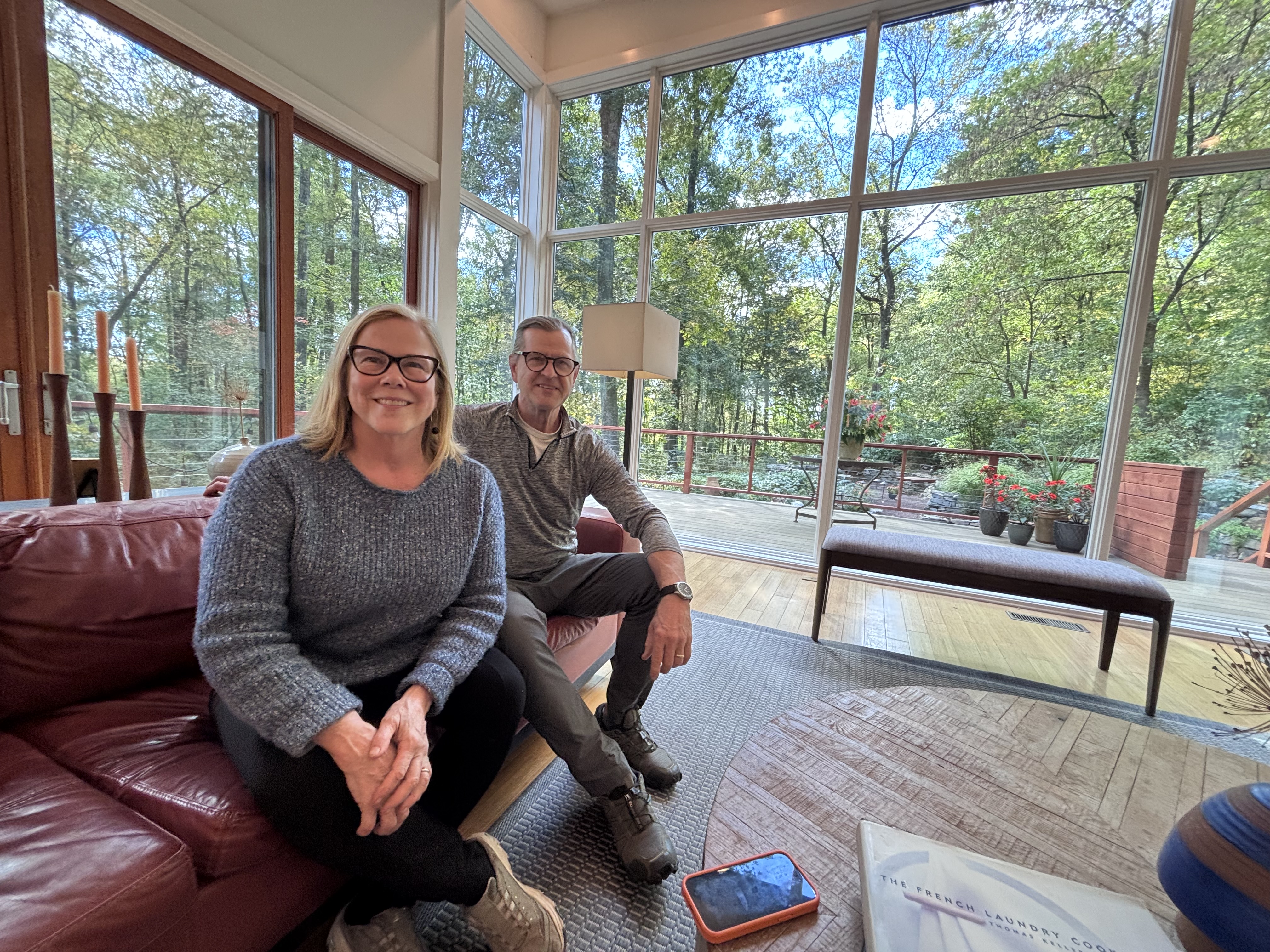
    When cookbook author Pamela Anderson and her husband, David, were looking for a bucolic escape in Bucks County, they found a forested stretch of land sandwiched between a high ridge and a stream to put down roots.

    The couple, who previously lived in New Hope, toured the 11-acre parcel in Riegelsville with an architect back in 2003, learning how their new home could flow with the land. Today, the focal point of Copper House might be the living room, with 180-degree views from floor-to-ceiling windows. It’s like forest bathing, from a comfortable couch.

    “We wanted a place to get away,” Anderson said on a recent October afternoon.

    Outside, they’ve woven gravel trails into countless grottos, fire pits, and other quiet gathering places for the numerous visitors who’ve descended upon their home for sound baths, yoga, and meditations. On this Friday afternoon, about a dozen architects and interior designers gathered at their home for a corporate retreat to learn about sustainable flooring.

    “Some people just want to come here to have a meeting in a lovely place,” Anderson said.

    Pamela and David Anderson sit on their couch in their home, Copper House, where they host events and retreats.

    The Andersons didn’t just want to live at Copper House, so they went beyond having friends over for dinner. They started hosting corporate events and retreats at their home during the early days of the COVID-19 pandemic, stopped for a bit, and got things back up again afterward.

    “We’ve done most of the work ourselves. We built all the walls ourselves from rocks we had here. It’s expensive to maintain this place, and these events help with that,” Anderson said. “It made sense for us.”

    Anderson, along with being a best-selling cookbook author, cooks most of the food for the retreats, harvesting local fruits and vegetables and cooking wood-fired pizza from an outdoor oven.

    “This was just a natural transition for me from that career to this one,” she said.

    David Anderson, a longtime Episcopal priest, said the landscape was wild when they first toured it, filled with brambles and invasive species. The couple has methodically rid the invasive species from various patches of their property, but that work never ends.

    Copper House in Upper Bucks County.

    Their latest retreat was hosted by Interface, an indoor flooring company that specializes in sustainable projects. Monica Blair-Smith, an account executive with Interface, said they’ve had meetings by a bonfire and in the labyrinth, so far, at Copper House. The team also took a sound bath.

    “We toured several places from here to southern New Jersey, but we really loved how much this space was integrated with nature. Hosting in such a beautiful space is important to us,” Blair-Smith said. “Once we toured it, we didn’t go anywhere else. It was a no-brainer.”

    Retreat packages at Copper House begin at $1,500.

    While events and retreats have become a lucrative business, the Andersons said Copper House is still a home they cherish.

    “You’re always seeing something new and different, and our senses are so heightened living here,” Pamela Anderson said. “In winter, it’s like living in a snow globe.”

  • Rose Tree Media school leaders hope to finally bring full-day kindergarten to the district with new K-1 school

    Rose Tree Media school leaders hope to finally bring full-day kindergarten to the district with new K-1 school

    The Rose Tree Media School District is moving forward with plans to build a kindergarten and first-grade school in Middletown Township, marking its second attempt in recent years to build a new school amid rising enrollment and shrinking classroom space.

    The district says the school will be necessary to accommodate increasing student numbers and will finally allow the Delaware County community to offer full-day kindergarten. Yet an uphill battle remains before crews can break ground, as the district must receive approvals from Middletown Township’s council, which has signaled apprehension over traffic and development in the growing municipality.

    Why is the district planning to build a new school?

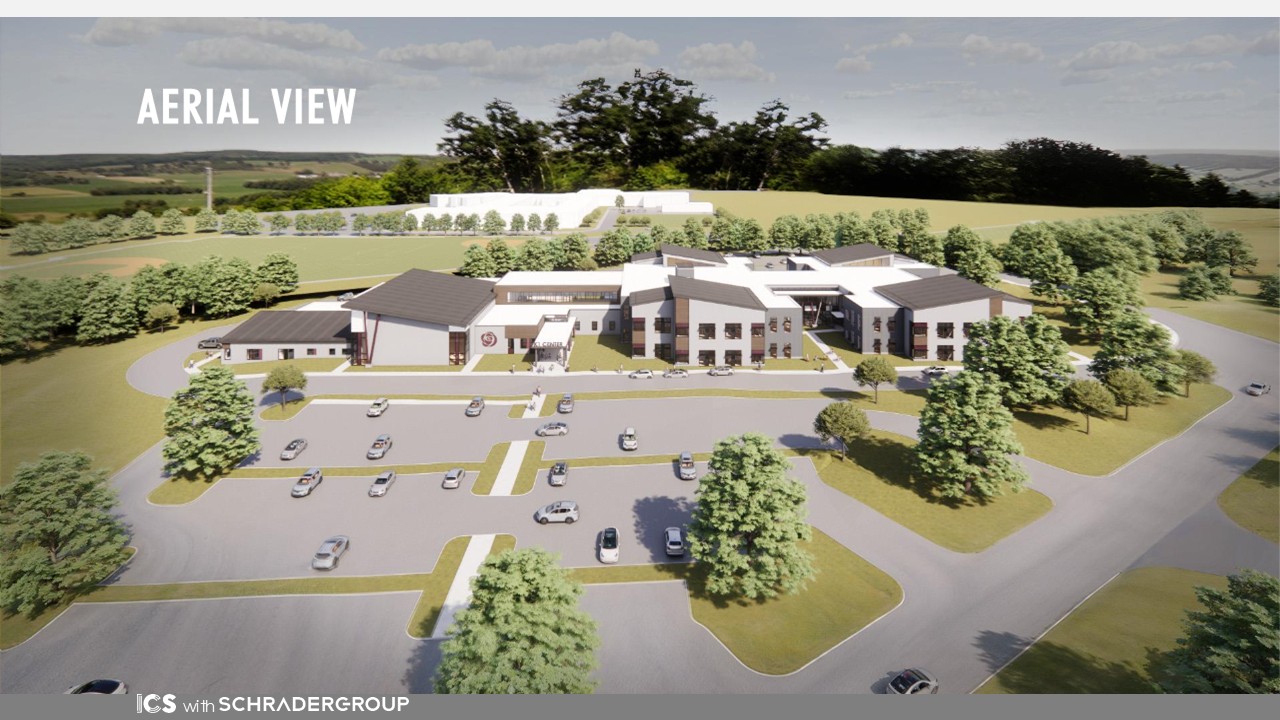
    The Rose Tree Media School District plans to build a new elementary school for kindergarten and first-grade students, known as the K-1 Early Learning Center, on district-owned land behind Penncrest High School.

    Put simply, “We are overcrowded at the elementary level,” said Rose Tree Media School District Superintendent Joe Meloche.

    The school district estimates that more than 600 new homes have been built within its bounds in the last six years, including major developments like Pond’s Edge and the Franklin Mint site. The school district serves Media Borough and Edgmont, Middletown, and Upper Providence Townships. Between 2020 and 2024, Middletown saw a nearly 6% growth rate, due in large part to the new developments. The district projects it will grow by around 300 students in the next 10 years.

    !function(){“use strict”;window.addEventListener(“message”,function(a){if(void 0!==a.data[“datawrapper-height”]){var e=document.querySelectorAll(“iframe”);for(var t in a.data[“datawrapper-height”])for(var r,i=0;r=e[i];i++)if(r.contentWindow===a.source){var d=a.data[“datawrapper-height”][t]+”px”;r.style.height=d}}})}();

    This growth has forced the district to adopt space-saving measures. At Glenwood Elementary School, two modular classrooms were installed in 2023. The school got two more modular classrooms in 2024, then two more in 2025. There are now 10 modular classrooms being used across the district.

    While Rose Tree Media can temporarily expand its classroom space, it can’t expand gyms, cafeterias, auditoriums, nurse’s offices, and other communal spaces. Beyond that, Meloche said, older school buildings aren’t designed to accommodate a modern school day, which includes far more individualized services, breakout groups, and collaborative work than it used to.

    What will the new school look like?

    Rose Tree Media is working with the Schrader Group, an architecture firm that has designed schools throughout the Philly region, including a K-1 school in Phoenixville.

    Having Rose Tree Media’s youngest learners in one building will allow the district to add some “nuanced things” to the school’s design, Meloche said. Small water fountains, tiny sinks, and low-to-the-ground chairs come to mind. The K-1 Center will also place all of the district’s kindergarten and first-grade teachers in one place, making professional development and sharing of resources easier, Meloche said.

    The project is currently estimated to cost $84 million. The district says it plans to sell bonds to build the school.

    Though suggestions have floated around that Rose Tree Media remodel an old school, rather than build something new, district officials say it’s unrealistic. According to the district, purchasing and repurposing an old building “would be costly and would not meet the needs of young children” as it would lack accessibility features, safe play areas, and elements designed specifically for early learners.

    What will this mean for full-day kindergarten?

    Rose Tree Media is one of many districts in the Philadelphia region that have historically not offered full-day kindergarten.

    Citing families’ needs for childcare and the developmental benefits of full-day schooling, many districts in the region have begun implementing full-day programs. The Penn-Delco School District implemented full-day kindergarten in 2023. Lower Merion switched from half-day to full-day last school year. New Jersey Gov. Phil Murphy signed a law ending half-day kindergarten across the state earlier this summer.

    Meloche said bringing full-day kindergarten to Rose Tree Media has been on the table since he came to the district from Cherry Hill in 2023. Full-day kindergarten, Meloche said, will allow the district to “provide a much more substantial foundation for our children.” Under the half-day model, learning is crammed into a shorter period, he said, leaving little time for developmentally important activities like free play, outdoor activities, and specials like art, music, and physical education. Rose Tree Media’s existing elementary schools could not accommodate full-day kindergarten, according to the district.

    What happened to the district’s previous proposal in Edgmont Township?

    Rose Tree Media evaluated 23 potential sites for a new school before landing on a piece of land in Edgmont Township. That plan fell apart after the township denied the school district’s application in 2023, prompting the district to sue. The school district withdrew its legal challenge last spring and pivoted to the K-1 Center proposal.

    Meloche said the district is in the process of selling the 37-acre Edgmont Township property on Route 352. The school district is finalizing the appraisal and has a buyer. They hope to finalize the process, including receiving court approval to sell, by the end of the year.

    What will the approval process with Middletown Township look like?

    Though the district already owns the property behind Penncrest High School, it is required to go through a planning and development process with local and state governing bodies, which can take several months.

    The township has asked the district to undergo an expanded traffic study, which will include evaluations of the intersections of Middletown and Oriole Roads, Rose Tree Road and Hunting Hills Lane, and three access points to Penncrest High School on Barren Road. Once the district completes its expanded traffic study, it will submit a preliminary land development plan to the township. That will kick off a series of public hearings.

    The district plans to hold an Act 34 hearing in January, a public meeting required by Pennsylvania law that gives residents and employees an opportunity to weigh in on the project.

    During public meetings this fall, some residents urged the Middletown Township Council to deny the school district’s proposal, referencing traffic concerns and the desire to preserve green space. Others implored them to approve the school, citing a need to accommodate residents of new apartments and offer full-day kindergarten to working parents.

    Council members noted that the school district will have the opportunity to address community concerns before an official plan is brought to the council.

    Councilmember David Bialek said at a Sept. 17 meeting that the district has implied to the public that the K-1 Center is “a done deal” and “rubber-stamped,” when a preliminary plan has not yet been submitted.

    In an emailed statement, Meloche said, “We have stated multiple times publicly that we have identified the K-1 Center’s location and purpose, and are now in the approval phase, which includes a rigorous process of approvals from Middletown Township, Delaware County, DEP and PennDot. We have been clear that the land development process must be completed prior to obtaining a building permit. The discussion at our Board meetings, the information on the Time to Bloom web page, and our monthly Time to Bloom email updates have laid out the land development process in detail.”

    A rendering of the Rose Tree Media School District’s proposed K-1 center, which the district hopes to build behind Penncrest High School.

    Township council chair Bibianna Dussling said at an Oct. 1 meeting that the “details are going to be key” as the council considers the K-1 Center plans.

    “It’s complicated because you can see the pros and cons,” Dussling said. “There’s a lot of concerns as far as the location, traffic, the neighbors, the neighborhood in very close proximity to it, the roadways there that are already busy.”

    The district has said its professionals are working on creating an “optimal traffic flow,” which may include adding an additional parking lot for athletic fields and routing K-1 Center bus access around the back of Penncrest High School.

    “We believe that we are all on the same side and on the same team,” Meloche said, adding that the goal is “to meet the needs of our community at-large, and to do so in a fiscally responsible but forward-thinking and future-looking way.”

    The district says the new school will open in time for the 2028-29 school year. If the application is denied, a spokesperson from the district said they do not have an alternative plan for the K-1 Center.

    This suburban content is produced with support from the Leslie Miller and Richard Worley Foundation and The Lenfest Institute for Journalism. Editorial content is created independently of the project donors. Gifts to support The Inquirer’s high-impact journalism can be made at inquirer.com/donate. A list of Lenfest Institute donors can be found at lenfestinstitute.org/supporters.
  • Judge rules Bucks County sheriff’s agreement to cooperate with ICE was ‘reasonable and necessary’

    Judge rules Bucks County sheriff’s agreement to cooperate with ICE was ‘reasonable and necessary’

    Bucks County Sheriff Fred Harran acted legally in signing up to have his deputies help ICE enforce federal immigration laws, a judge ruled Wednesday in a case that has riled residents on both sides of a contentious issue.

    Bucks County Court Judge Jeffrey Trauger said Harran’s cooperation with the agency was “clearly lawful under Pennsylvania jurisprudence,” and both “reasonable and necessary” in fulfilling his lawful duty to keep the citizens of Bucks County safe.

    What the judge called “intergovernmental cooperation of law enforcement” is no different under the law at the county, state, or federal level, he wrote.

    The ACLU of Pennsylvania and other plaintiffs had asked Trauger to issue an injunction blocking the partnership from moving forward.

    Reached by phone Wednesday, Harran said he was pleased with the decision and expected his partnership with U.S. Immigration and Customs Enforcement to be fully operational by the end of next week.

    “I knew from the time I started this that I was in the right, that the county commissioners do not control the office of the sheriff,” Harran said.

    A spokesperson for Bucks County said the county intended to appeal.

    Those who sought to block Harran’s efforts said they would continue to battle.

    “This decision doesn’t mean that we’ll stop fighting to hold Sheriff Harran accountable,” said Diana Robinson, co-executive director of Make the Road Pennsylvania, an advocacy group that was one of the plaintiffs. ”Indeed, we will redouble our efforts in this case and continue to fight for what is right.”

    She said an alliance between Harran’s department and ICE was aimed at “turning our neighborhoods into surveillance zones” and “weaponizing local law enforcement to carry out ICE’s harmful agenda.”

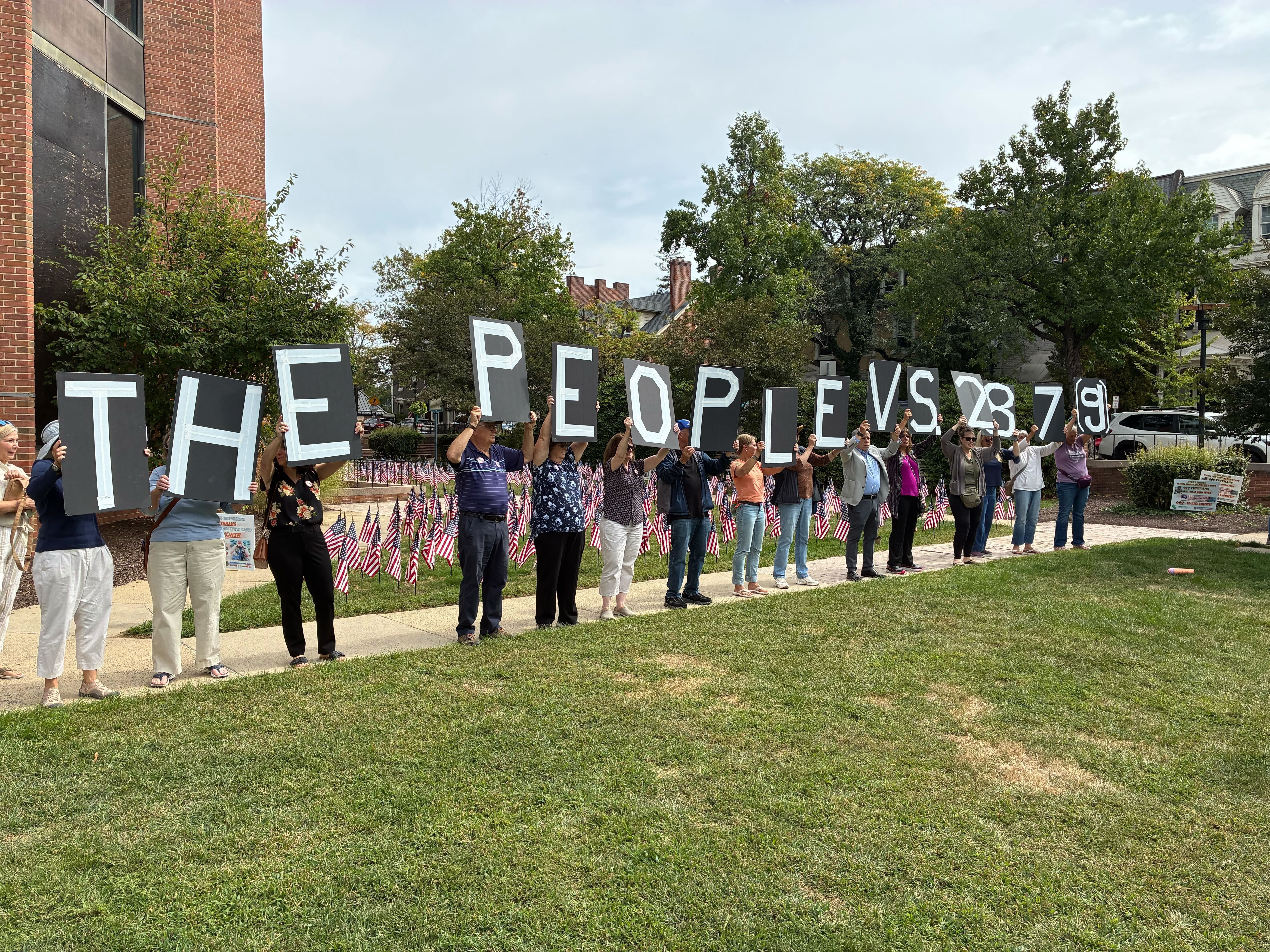
    Community members rally in Bucks County before civil rights groups asked a judge to block Sheriff Fred Harran’s controversial partnership with ICE.

    In his opinion, the judge said it did not appear that Make the Road, NAACP Bucks County, or Buxmont Unitarian Universalist Fellowship as organizations had clear standing to sue under Pennsylvania law.

    While individual members might have standing if they were caused harm by the sheriff’s office, he said, the injuries they alleged were “not immediate or substantial,” and their complaint was based in part on speculation about what might happen.

    ACLU of Pennsylvania attorney Stephen Loney, who helped lead the court fight, said Wednesday that he disagreed with the decision.

    “In the most respectful way I could possibly say it, I think the judge got it totally wrong,” he said. “It’s unfortunate.”

    He said the ACLU would appeal the decision.

    ICE officials did not immediately offer comment.

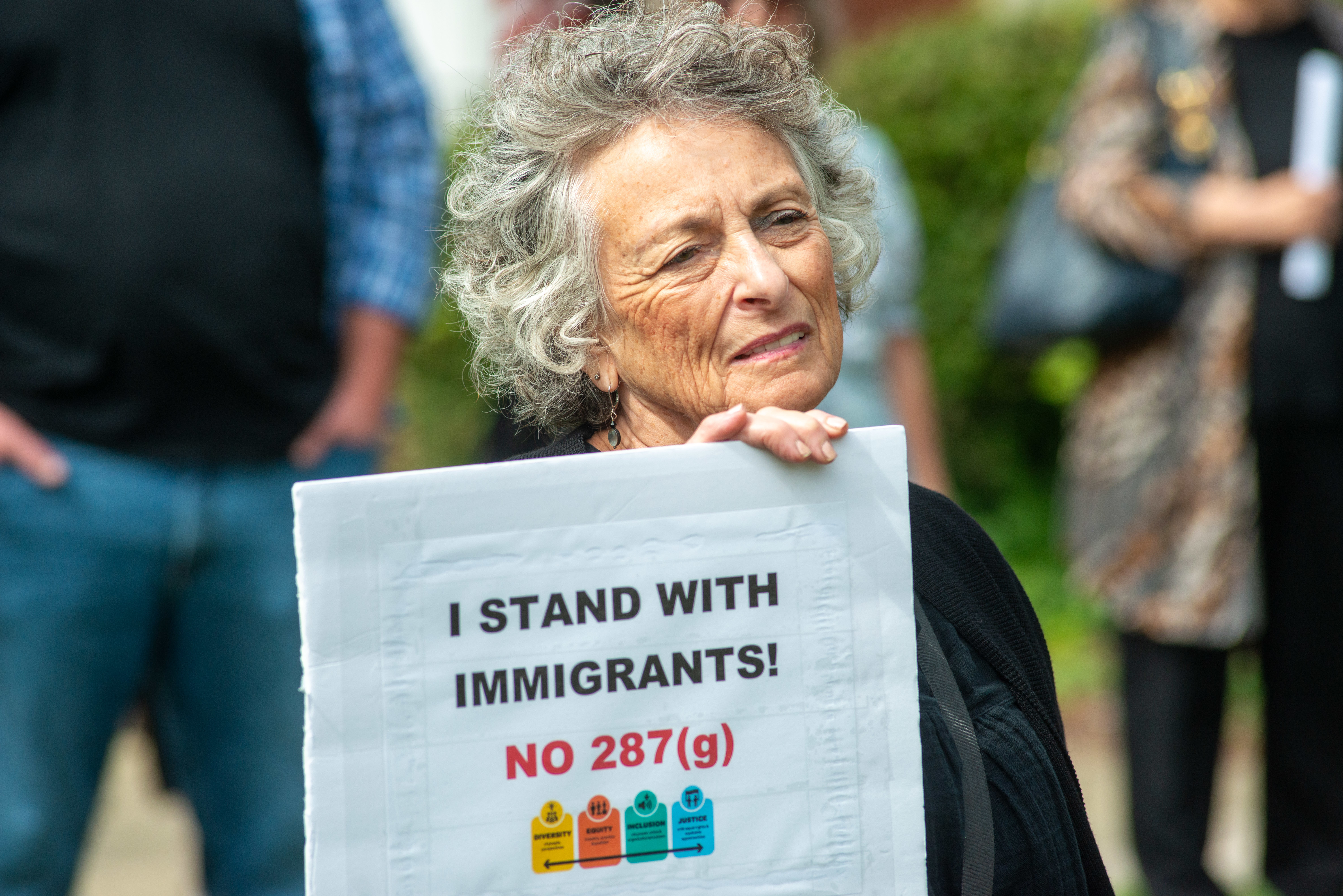
    Melanie Goldstein holds a sign as demonstrators rally outside the Bucks County Administration building before a hearing last month during which the ACLU and other organizations sought an injunction to stop the Bucks County sheriff from going through with his plan to help ICE enforce immigration laws.

    Laura Rose, an organizer with Indivisible Bucks County, said the group was “deeply disappointed in Judge Trauger’s decision” to let Harran proceed “without guardrails.”

    She called the ruling “a profound failure to protect both the immigrants and taxpayers of Bucks County.”

    Rose called on voters to end the local alliance with ICE by voting Harran out of office on Nov. 4.

    Harran’s lawyer, Wally Zimolong, called the decision “a victory for the rule of law and for the safety of Bucks County residents,” and accused the ACLU of maligning the sheriff with false claims.

    “Frankly,” he said, “it is mind-boggling that anyone would oppose this. It is also a vindication for Sheriff Harran, a good and honorable man and dedicated public servant. … It is a proud day when people of good character, like Sheriff Harran, prevail over those that lack it.”

    In the spring, Harran and ICE officials signed what is called a 287(g) agreement, a controversial program named for a section of a 1996 immigration law. It enables local police to undergo ICE training, then assist the agency in identifying, arresting, and deporting immigrants.

    The number of police agencies participating in the program has soared to more than 1,000 under President Donald Trump. Seven states, including New Jersey and Delaware, bar the agreements by law or policy.

    Shortly before the government shutdown, ICE was poised to begin backing its recruitment efforts with money, announcing that it would reimburse cooperating police agencies for costs that previously had been borne by local departments and taxpayers.

    Harran, who is seeking reelection in November, has pledged “zero cost” to local taxpayers.

    He insists the alliance with ICE will prevent crime and keep people safe. Civil rights groups say the sheriff is inviting racial profiling, taxpayer liability, and a loss of trust between police and citizens.

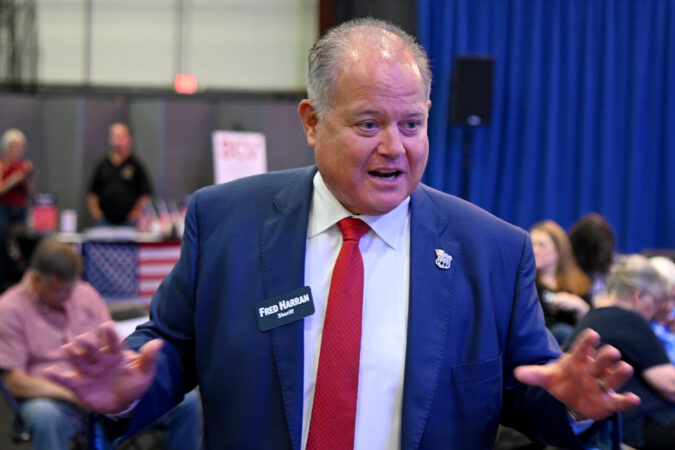
    Bucks County’s sheriff Fred Harran, outside the courthouse in Doylestown, PA, June 9, 2025.

    Contentious legal hearings have come against a backdrop of name-calling and rancor outside the courtroom.

    The Democratic-led Bucks County Board of Commissioners has disavowed Harran’s actions, voting 2-1, with the lone Republican opposed, to approve a resolution that declared the agreement with ICE “is not an appropriate use of Bucks County taxpayer resources.”

    The ICE issue has become central to Democrats’ effort to oust Harran, a Republican, while the sheriff says his intentions have been misconstrued by political opponents and the news media.

    “A judge ruling that he has the authority to enter into this deportation agreement does not make this any less dangerous,” Harran’s Democratic opponent, Danny Ceisler, said in a statement Wednesday.

    The last opportunity to end the partnership, Ceisler said, is by winning the election next month.

    A key issue has been the difference between what Harran says he intends to do and the much broader powers conferred within the agreement with ICE.

    Harran signed up for the “Task Force Model,” the most far-reaching of the three types of 287(g) agreements. It allows local police to challenge people on the streets about their immigration status and arrest them for violations.

    Harran said his officers won’t do that.

    Wednesday’s ruling, Harran said, recognized the limited scope of his plans, and he suggested that every county should partner with ICE.

    “I’m only interested in making the county safer, and I’m only interested in dealing with those folks that are in this country illegally that have committed crimes,” Harran said. “I am not the immigration police. I am not Immigration and Customs Enforcement.”

    Harran has said staff will electronically check the immigration status of people who have contact with the sheriff’s office because of alleged criminal offenses. Those found to be in the country illegally will be turned over or transported to ICE, if the federal agency desires, he said.

    Harran testified in court last month that he planned to create a sheriff’s office policy to specify the limits of his deputies’ powers but had not yet done so.

    He insisted that his office would take only the actions he has described.

    “We will not be stopping people to ask them on immigration status,” he said under cross-examination. “I know what I am doing, and that’s all I intend to do.”

    This suburban content is produced with support from the Leslie Miller and Richard Worley Foundation and The Lenfest Institute for Journalism. Editorial content is created independently of the project donors. Gifts to support The Inquirer’s high-impact journalism can be made at inquirer.com/donate. A list of Lenfest Institute donors can be found at lenfestinstitute.org/supporters.

  • How the 3 Pennsylvania Supreme Court justices on the ballot have ruled in major cases

    How the 3 Pennsylvania Supreme Court justices on the ballot have ruled in major cases

    Three Pennsylvania Supreme Court justices are on the ballot this November, when voters will decide whether to extend each of their tenures for another 10-year term.

    There are currently five justices who were elected as Democrats and two who were elected as Republicans on the bench.

    This year’s retention race has drawn heightened attention, as Republicans have launched a campaign to sink the retention bids of Justices Kevin Dougherty, Christine Donohue, and David Wecht — all elected as Democrats in 2015 — in hopes of flipping the court’s balance.

    Once on the bench, judges are expected to shed their partisan label, which is why Pennsylvania extends judicial terms through retention elections instead of head-to-head races.

    Still, advocacy groups on both sides of the aisle are trying to make the case that control of the judicial seats is critical, if not existential, to their causes.

    The Inquirer reviewed the cases that have come before the Pennsylvania Supreme Court over the last decade, and how Dougherty, Donohue, and Wecht voted.

    Here are some of the most significant cases of their tenure.

    Abortion

    Pennsylvania’s highest court stopped just short of recognizing a constitutional right to abortion access in January 2024.

    The ruling came in a case challenging a state law limiting Medicaid funding for abortions except in cases involving rape, incest, or danger to the life of the mother.

    The 219-page majority opinion included language that strongly endorsed access to abortion as a right derived from the Pennsylvania Constitution, but the judges could not agree on whether they were ready to make the call in this case.

    The majority sent questions about a specific funding limit and broader constitutional protection for abortion access back to a lower court — setting up another round of legal battles that will likely, again, make it before the state Supreme Court.

    How the three justices ruled: Donohue wrote and Wecht joined the majority opinion. The two justices said they believed Pennsylvania’s 1971 Equal Rights Amendment clearly established a right to abortion access. Dougherty wrote a separate opinion saying this case did not call on the court to opine on the right to an abortion. “At least, not yet,” he wrote.

    Voting rights and elections

    The Pennsylvania Supreme Court has ruled on a litany of challenges to Pennsylvania’s election rules, many of them focused on the state’s mail voting law.

    In 2018, the justices threw out the state’s GOP-drawn congressional maps as unconstitutionally gerrymandered.

    In 2020, the court issued a major ruling ahead of the presidential election allowing for ballot drop boxes and allowing local election offices to accept ballots for up to three days after the election as long as those ballots were postmarked by 8 p.m. on Election Day.

    How the three justices ruled: Donohue, Dougherty, and Wecht each joined the majority opinion in the redistricting case. On the 2020 election ruling, Dougherty and Wecht joined the majority opinion. Donohue joined the majority opinion but dissented from the decision to extend the ballot deadline.

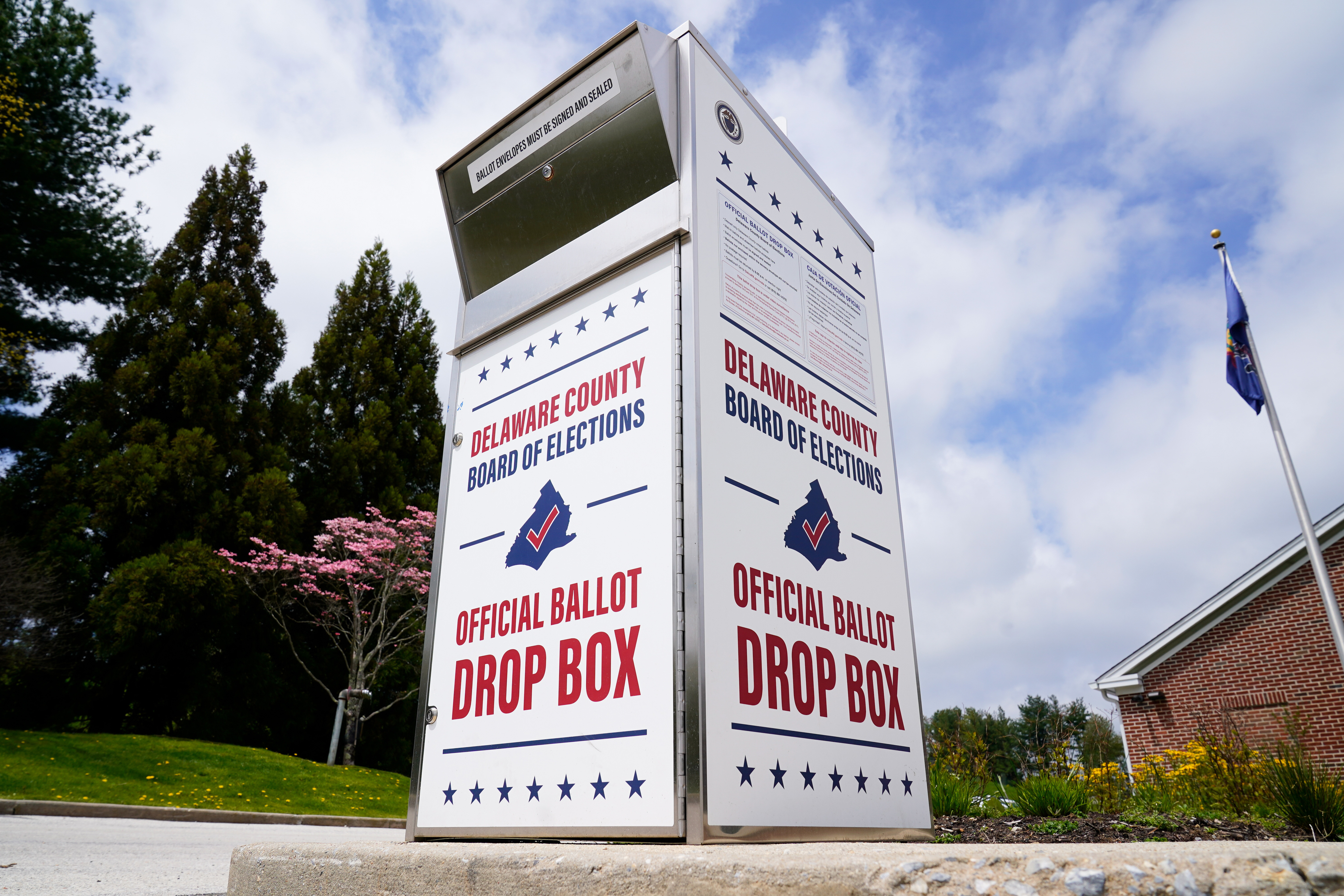
    A Delaware County secured drop box for the return of mail ballots in 2022 in Newtown Square.

    Education

    A Delaware County school district had the right to challenge Pennsylvania’s school-funding system, the Supreme Court ruled in 2017.

    The decision affirmed the role of courts in ensuring that state funding leads to equitable education and sent the case back to Commonwealth Court to proceed with litigation.

    In 2023, Commonwealth Court ruled, as part of the same case, that the state’s funding system for school districts led to disparities that prohibit quality education for all students, rendering it unconstitutional.

    How the three justices ruled: Wecht wrote the majority opinion, which Dougherty and Donohue joined.

    Environment

    Pennsylvania, which partly sits on the natural gas-rich Marcellus Shale, found itself in the midst of the fracking boom of the early 2000s.

    The state sold leases to oil and gas companies to drill wells. The practice raised questions, and legal challenges, as to how the state should use the revenues in the context of the Pennsylvania Constitution’s Environmental Rights Amendment.

    The court ruled in 2017 that it is unconstitutional for the state to use revenue from the royalties of oil and gas leases on public land to pay for anything but conservation and maintenance of the environment.

    How the three justices ruled: Donohue wrote the majority opinion, which Dougherty and Wecht joined.

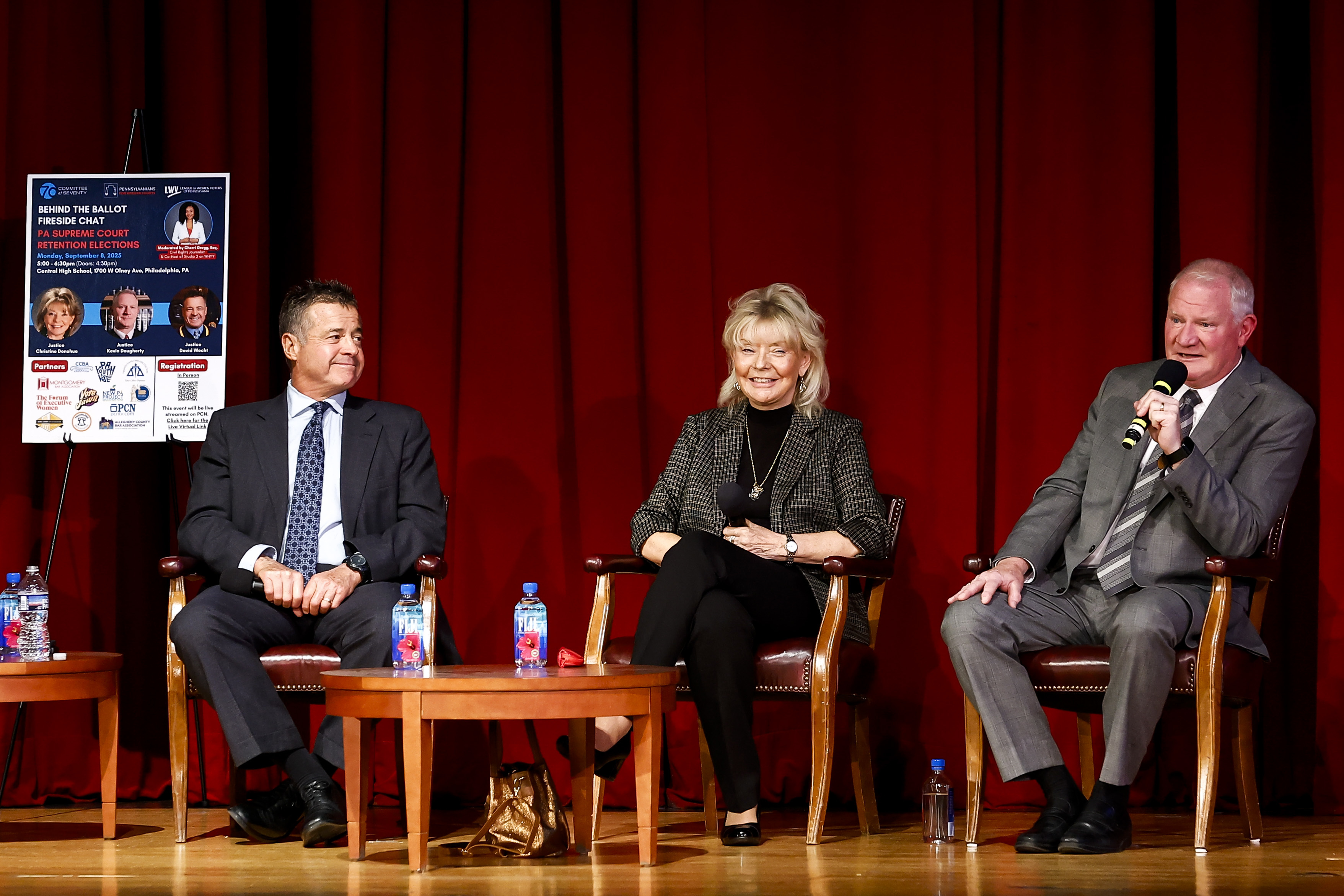
    Justices David Wecht, Christine Donohue and Kevin Dougherty sit onstage during a fireside chat at Central High School in September. The conversation was moderated by Cherri Gregg, co-host of Studio 2 on WHYY, and presented by the Committee of Seventy, Pennsylvanians for Modern Courts, and the League of Women Voters of Pennsylvania.

    Criminal justice

    Pennsylvania has had the nation’s largest population of juvenile lifers: people sentenced as minors to life in prison without the possibility of parole.

    In 2017, the Supreme Court made it harder to sentence a juvenile to life. The majority opinion says there is a “presumption” against life without parole for juveniles who are found guilty of murder, and prosecutors must show that the offender is “unable to be rehabilitated” when seeking the sentence.

    How the three justices ruled: Donohue wrote the majority opinion, which Dougherty and Wecht joined.

    Second Amendment

    In 2024, for the first time, the Pennsylvania Supreme Court issued an opinion that interpreted the wording in the U.S. Constitution that gives Pennsylvanians the right to bear arms.

    In Stroud Township, a zoning ordinance that prohibited the discharge of a firearm within the township’s borders limited the possible locations for shooting ranges. The ordinance barred a resident from having a personal outdoor shooting range on his property, and he sued the township for violating his Second Amendment rights.

    The court ruled that the ordinance was constitutional.

    How the three justices ruled: Dougherty wrote the majority opinion, which Wecht joined. Donohue wrote her own opinion, reaching the same conclusion as the majority but disagreeing with the analysis.

    Larry Krasner

    Did Republican lawmakers make a procedural error in their 2022 effort to impeach Philadelphia District Attorney Larry Krasner? The Supreme Court in 2024 said they did, effectively ending a campaign in Harrisburg to oust the progressive prosecutor.

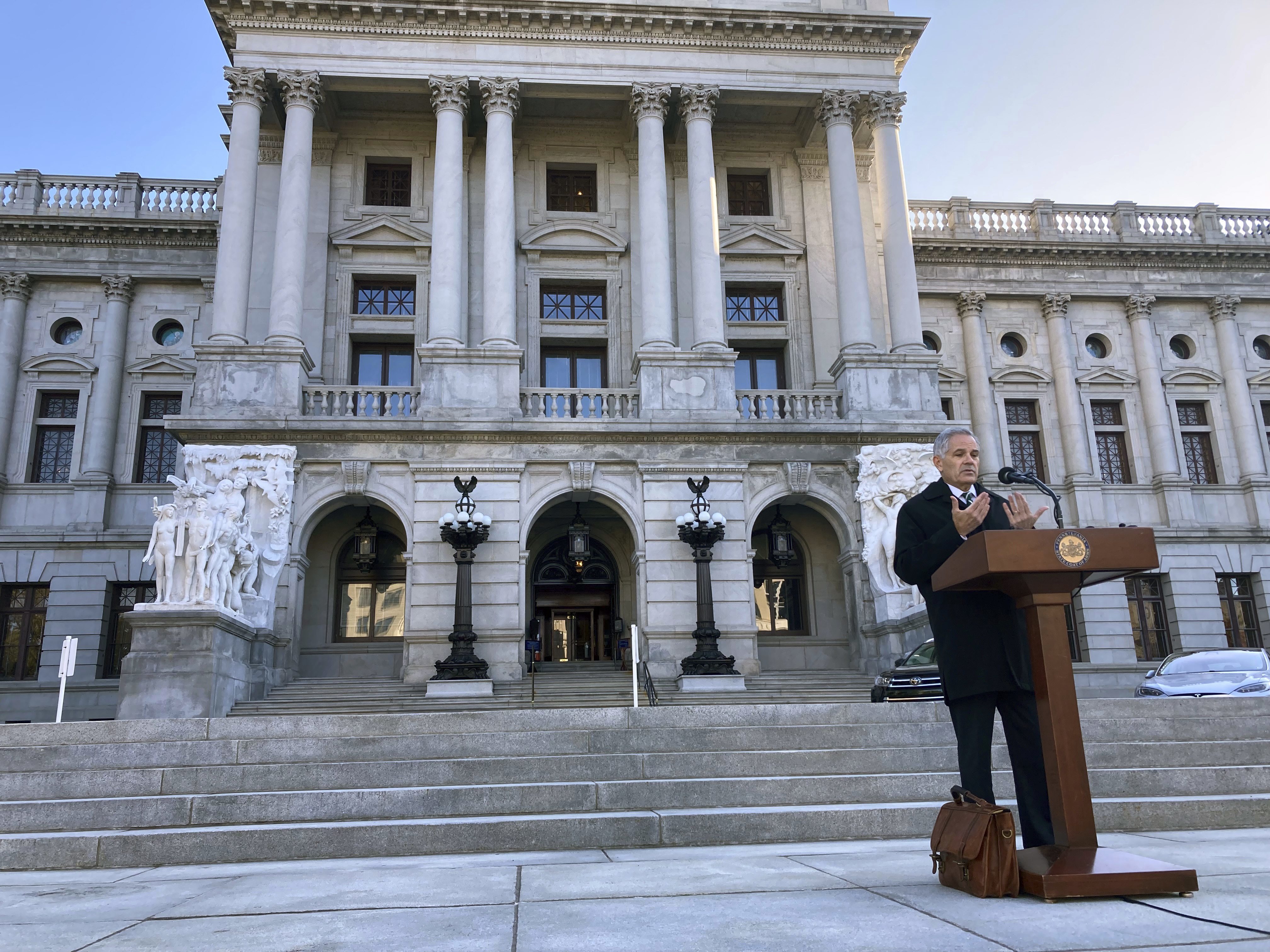
    Philadelphia District Attorney Larry Krasner talks about Republican-led efforts to investigate his record addressing crime and gun violence at the Pennsylvania Capitol in 2022.

    The decision said that the articles of impeachment approved by the state House in late 2022 were “null and void” because they were sent to the Pennsylvania Senate on the last day of that year’s legislative session, and the upper chamber did not complete its work on the matter before the next session began. The attempt to carry the process from one two-year session to the next was unlawful, the court said.

    The majority also agreed with a lower court that none of the articles of impeachment met the required legal standard of “misbehavior in office.”

    How the three justices ruled: Donohue and Wecht joined the majority opinion. Dougherty did not participate in the deliberations.

    Bill Cosby

    Disgraced actor and comedian Bill Cosby walked out of prison a free man in 2021 after the state Supreme Court reversed his sexual assault conviction.

    The court did not weigh in on the facts of the case or whether Cosby was guilty. Instead, it focused on a former Montgomery County prosecutor’s decade-old promise that Cosby would never be charged with drugging and assaulting Andrea Constand if he gave incriminating testimony in a civil case filed by his accuser. The justices found that the testimony was improperly used years later against Cosby at his criminal trial, calling it a “unconstitutional coercive bait-and-switch.”

    How the three justices ruled: Wecht wrote the majority opinion, which Donohue joined. Dougherty wrote a separate opinion, saying he would allow for Cosby to be retried, but would order his testimony from the civil case to be suppressed.

  • A leaked, secret survey reveals what Philly attorneys think about judges up for election

    A leaked, secret survey reveals what Philly attorneys think about judges up for election

    It’s a local tradition as predictable as slow-rolling through a South Philly stop sign or cursing Schuylkill Expressway traffic: Each election season, the Philadelphia Bar Association publishes its carefully considered opinion of the sitting judges up for reelection — then, the voters ignore it and send every incumbent back to the bench.

    That’s because, since 1969, judicial retention elections have been yes-or-no votes for each judge rather than head-to-head competition. In that time, only one Philadelphia Common Pleas Court judge has ever been denied another term — and he was already facing removal for misconduct in a high-profile case. He “had to work damn hard to lose that election,” retired Common Pleas judge Benjamin Lerner said.

    In September, the bar’s Commission on Judicial Selection and Retention issued its advice for the Nov. 4 election, recommending 13 out of the 18 judges seeking reelection to Philadelphia’s Common Pleas and Municipal Courts. Other than noting that three of the five “not recommended” judges had not participated in the review process, the bar — as is typically the case — released no further information about its decisions.

    But this year, The Inquirer obtained the confidential survey responses the association collected from hundreds of lawyers. The attorneys — who practice in Philadelphia’s criminal, civil, and family courts — provided the bar with detailed feedback under the cover of anonymity about the sitting judges. They also answered yes-or-no questions about their confidence in each judge’s integrity, legal ability, temperament, diligence, attentiveness, and general qualification for the job.

    The Inquirer followed up on the issues raised in the survey by interviewing lawyers and judges, watching weeks of court hearings, and reviewing a decade of Superior Court decisions.

    The survey results and The Inquirer’s examination offer voters a rare window into how members of Philadelphia’s legal community view the performance of the judges up for retention next month. It has been at least 40 years since such inside information was made available to the public.

    window.addEventListener(“message”,function(a){if(void 0!==a.data[“datawrapper-height”]){var e=document.querySelectorAll(“iframe”);for(var t in a.data[“datawrapper-height”])for(var r,i=0;r=e[i];i++)if(r.contentWindow===a.source){var d=a.data[“datawrapper-height”][t]+”px”;r.style.height=d}}});

    The survey responses show that, overall, lawyers have confidence in the integrity of the bench, a profound turnaround from an era of chronic judicial corruption scandals that continued well into this century.

    The judges earning the bar association’s recommendation include several on Common Pleas Court with near-unanimous support: Family Court Judges Walter Olszewski, Ourania Papademetriou, and Christopher Mallios; and Judge Ann Butchart, who handles civil cases.

    Olszewski is a “wonderful, caring, intelligent jurist,” one lawyer wrote. “A true public servant.”

    The majority of the judges received the bar’s recommendation despite feedback that was mixed, though generally positive.

    The most polarizing was Judge Tracy Brandeis-Roman, who has faced blistering appeals from the district attorney’s office accusing her of a pro-defendant bias. Two-thirds of lawyers surveyed said Brandeis-Roman is qualified, and some referred to her as a “fair and compassionate” jurist. But others called her biased and “ill-informed on the law.”

    Brandeis-Roman declined to comment.

    The judges who received the harshest criticism — and whom the bar ultimately declined to recommend — were faulted for their demeanor, disciplinary histories, or disregard for legal procedures.

    “She was cruel and condescending to my client,” a lawyer wrote of Common Pleas Court Judge Lyris F. Younge, who faced parent protests in 2018 and was later sanctioned by the state Court of Judicial Discipline.

    “Incapable, even after all of the years of being on the bench, of making an appropriate decision expeditiously,” another said of Common Pleas Court Judge Frank Palumbo.

    Younge and Palumbo did not respond to requests for comment.

    Marc Zucker, who chairs the bar’s Commission on Judicial Selection and Retention, said the anonymous survey has no bearing on the final recommendations. Instead, he described it as a jumping-off point for an extensive process in which more than 100 volunteer investigators interview candidates, other judges, and lawyers. They also scrutinize judges’ written opinions, social media posts, and financial disclosures.

    “We don’t take any criticism at face value,” Zucker said. “We try and look behind it, and hear multiple voices addressing each of those matters.”

    That information is kept private, he said, to encourage candor.

    The bar’s work does seem to have an influence on voters in competitive primaries. In May, only candidates it recommended won primaries for Common Pleas Court judge.

    Retention elections can be confusing for voters and are low-profile by design because sitting judges are limited in how they can campaign, said Lauren Cristella, executive director of the good-government group Committee of Seventy and a Judicial Commission member.

    But the stakes are high. Local judges “make decisions that have a huge impact on our communities,” Cristella said. “Everyone knows someone who’s had a custody hearing, or had to appear in traffic court. People have all kinds of reasons to be before a judge.”

    Here is what voters should know about some of the more notable judges up for retention on Nov. 4:

    (function() { var l = function() { new pym.Parent( ‘retention-palumbo3__graphic’, ‘https://media.inquirer.com/storage/inquirer/ai2html/retention-palumbo3/index.html’); }; if(typeof(pym) === ‘undefined’) { var h = document.getElementsByTagName(‘head’)[0], s = document.createElement(‘script’); s.type = ‘text/javascript’; s.src = ‘https://pym.nprapps.org/pym.v1.min.js’; s.onload = l; h.appendChild(s); } else { l(); } })();

    When Palumbo first ran for judge in 1999, he was best known as the son of a famous Philly power broker and nightclub owner. The bar association declined to recommend him, but Palumbo drew the top ballot position and cruised to victory. Since then, he has been reelected twice without the bar’s support.

    This year, survey participants complained that Palumbo is erratic and indecisive. One lawyer wrote that getting through a daily list of cases “is an immense struggle for him.” Another claimed he “purposefully blows up negotiated pleas in his room so he does not have to take them.”

    The Superior Court has overturned about one-quarter of cases it decided on appeal from Palumbo’s courtroom over the last decade, well above the statewide average of 13%.

    Most days, Palumbo is assigned a modest docket that consists of probation violations.

    A reporter sat in Palumbo’s courtroom on five occasions in August and September. By the time he arrived around 10:30 a.m., most matters had already been resolved by agreement.

    One day, the prosecutor and the public defender informed Palumbo that, in his absence, they had agreed on the outcome of every single case: In minutes, Palumbo’s work on the bench was done.

    But when the lawyers in the matters before him did not reach a complete agreement, as was the case on Aug. 27, Palumbo launched into circuitous legal questioning that stymied what might have been a routine proceeding.

    On that day, Palumbo took the bench at 10:40 a.m. and asked, “Is everything worked out?”

    The lawyers told him there was just one outstanding matter: A man on probation had agreed to plead guilty in a gun case, and they wanted Palumbo to order a presentence investigation and schedule a sentencing for a future date. Instead, Palumbo questioned why the case was in his courtroom, offered to transfer it to another judge, and then aborted the proceeding, saying he could not accept the plea without the man’s probation file in hand.

    After the prosecutor complained, Palumbo offered, twice more, to transfer the case elsewhere. “I can just move it to the trial room,” he said.

    Generally speaking, lawyers on both sides find it difficult to navigate judges who unilaterally delay or derail proceedings, said Dana Bazelon, a former Philadelphia defense lawyer and policy director for the district attorney’s office, who is now a fellow at the Quattrone Center of the University of Pennsylvania Carey Law School.

    “There are judges who really struggle to make decisions who are currently sitting — and that is as basic a tenet of the job as there is,” she said. “You can’t really do the job if you can’t make decisions.”

    (function() { var l = function() { new pym.Parent( ‘retention-roman2__graphic’, ‘https://media.inquirer.com/storage/inquirer/ai2html/retention-roman2/index.html’); }; if(typeof(pym) === ‘undefined’) { var h = document.getElementsByTagName(‘head’)[0], s = document.createElement(‘script’); s.type = ‘text/javascript’; s.src = ‘https://pym.nprapps.org/pym.v1.min.js’; s.onload = l; h.appendChild(s); } else { l(); } })();

    After a jury returned a guilty verdict against Stephen Jones in a child sexual assault case this May, the victim’s family felt a moment’s relief. Then Brandeis-Roman handed down her sentence.

    Rather than the lengthy prison term the prosecutor sought, the judge released the ailing, 80-year-old defendant on short-term house arrest and probation.

    The victim’s family was furious.

    The outcome was not unusual for Brandeis-Roman. Philadelphia’s district attorney’s office has appealed more than two dozen of her rulings, arguing that her sentences are too lenient and that her decisions have a pro-defendant bias. It’s a notable trend given that the office, under D.A. Larry Krasner, is considered one of the most progressive in the country.

    The Superior Court has so far decided 17 of those cases appealed by prosecutors. Sixteen of them were overturned, including a guilty jury verdict Brandeis-Roman had tossed out despite what the Superior Court called “uncontradicted and overwhelming” video evidence tying the defendant to a shooting.

    Krasner’s office is appealing another Brandeis-Roman decision to vacate a jury’s guilty verdict in a sexual assault trial.

    At what was supposed to be the sentencing hearing for that case, the judge instead threw out the verdict, saying that the evidence did not support the jury’s finding and that the defendant might not have known the victim was incapacitated. The prosecutor’s appeal argued that Brandeis-Roman usurped the role of the jury, took a “thoroughly slanted view,” and disregarded testimony that the woman had been so drunk that her friends had to clean up her vomit and put her to bed.

    Marian Braccia, a Temple University law professor and former Philadelphia prosecutor, said it is rare to see a judge overrule a jury in that manner and requires a finding that no reasonable jury could have reached that verdict.

    For that to happen repeatedly, she said, “really undermines the reliability of the whole system.”

    The lawyers responding to the bar’s survey who praised Brandeis-Roman cited her diligence, compassion, and unyielding commitment to justice.

    “Constantly bullied by the [district attorney’s office] and yet still has the self-respect and respect for fairness to be kind and stand up to them. Holds everyone to the same standard,” one lawyer wrote.

    Setting aside the prosecution’s appeals, the appellate court has affirmed more than 90% of her rulings.

    Prosecutors, meanwhile, continue to file motions urging Brandeis-Roman to reconsider what they say are light sentences.

    In one September case, she sentenced Eladio Vega — a 33-year-old man convicted of beating a pregnant woman, causing her to miscarry and breaking her jaw — to a brief jail term, followed by probation and drug treatment.

    The prosecutor had requested five to 10 years in prison for Vega, given previous convictions for domestic incidents that included breaking his mother’s wrist. But Brandeis-Roman, noting that Vega had survived child abuse and mental illness, said state prison “would absolutely be adding to the trauma.”

    She acknowledged that her decision went against state guidelines: “On paper,” she said, giving him a lighter sentence “doesn’t make sense.”

    (function() { var l = function() { new pym.Parent( ‘retention-younge2__graphic’, ‘https://media.inquirer.com/storage/inquirer/ai2html/retention-younge2/index.html’); }; if(typeof(pym) === ‘undefined’) { var h = document.getElementsByTagName(‘head’)[0], s = document.createElement(‘script’); s.type = ‘text/javascript’; s.src = ‘https://pym.nprapps.org/pym.v1.min.js’; s.onload = l; h.appendChild(s); } else { l(); } })();

    In 2018, parents took to the streets calling for action against Younge.

    Then a relatively new Family Court judge hearing child-welfare cases, Younge had come to the bench with deep expertise in child welfare, having worked as a lawyer for the City of Philadelphia and an executive in the Philadelphia Department of Human Services.

    But, among other complaints, the protesting parents said Younge had shut them out of proceedings. One mother who became ill during a hearing stepped out of the room, and Younge would not allow her to return, terminating her parental rights in her absence.

    The Superior Court reversed a spate of the judge’s decisions, finding Younge abused her discretion in throwing a grandmother in jail and handcuffing a mother while her kids were removed.

    One appellate decision cited “example after example of overreaching, failing to be fair and impartial, evidence of a fixed presumptive idea of what took place, and a failure to provide due process to the two parents involved. … The punishment effectuated by [Younge] was, at best, neglectful and, at worst, designed to affect the bond between Parents and [child] so that termination would be the natural outcome of the proceedings.”

    The Court of Judicial Discipline in 2021 suspended Younge for six months, placing her on judicial probation and banning her from Family Court for the duration of her term.

    Instead of child-welfare matters, Younge is now hearing civil cases. Over her tenure, the Superior Court has overturned about 27% of the cases appealed from her courtroom, double the statewide average.

    Younge did not participate in the bar’s process or respond to requests for comment from The Inquirer.

    In the survey, most lawyers brought up concerns with her record in Family Court. Those who had been in her civil courtroom gave mixed feedback.

    “Those patterns and practices are still present in her civil courtrooms,” one lawyer wrote. “No party, on either side, gets a fair trial.”

    (function() { var l = function() { new pym.Parent( ‘retention-diclaudio2__graphic’, ‘https://media.inquirer.com/storage/inquirer/ai2html/retention-diclaudio2/index.html’); }; if(typeof(pym) === ‘undefined’) { var h = document.getElementsByTagName(‘head’)[0], s = document.createElement(‘script’); s.type = ‘text/javascript’; s.src = ‘https://pym.nprapps.org/pym.v1.min.js’; s.onload = l; h.appendChild(s); } else { l(); } })();

    Presiding mostly over post-conviction reviews in criminal court, DiClaudio inherited a docket that included cases pending for a decade or longer, and he said he prided himself on his hard work and efficiency in clearing that backlog. He has noted that his record includes overturning roughly 50 homicide convictions.

    Lawyers surveyed about DiClaudio were divided, with many criticizing his courtroom demeanor even as they said he “knows the law and gets to the right conclusions.” The Superior Court has overturned his rulings in only about 7% of cases.

    But DiClaudio’s decade on the bench has been marked by controversy, including three cases the Judicial Conduct Board brought against him.

    In the first case, from 2019, the board said DiClaudio ignored court orders related to a lawsuit over unpaid membership dues he owed to a sports club. DiClaudio was given a two-week suspension and placed on judicial probation until 2026.

    This year, the board argued that DiClaudio had improperly used his office to promote his wife’s cheesesteak shop and “traded on and abused the prestige of his office for the personal and economic benefit of himself and others.”

    While a final decision on that case was pending, fellow Common Pleas Court Judge Zachary Shaffer alleged that DiClaudio tried to influence his sentencing decision in a gun case by showing Shaffer a piece of paper with the name of a defendant and saying, “I’ve heard you might do the right thing anyway.”

    Court supervisors placed DiClaudio on administrative leave, and the Judicial Conduct Board pushed for his suspension without pay on the grounds that his continued employment as a judge would “erode public confidence in the judiciary.”

    DiClaudio stipulated to various missteps in the 2019 case related to the club debt, but he has denied any wrongdoing in the two pending cases. DiClaudio denied trying to influence Shaffer, and his lawyer insisted that he had not sought to sway the judge but had happened to mention the defendant in passing when Shaffer stopped by his chambers to buy a T-shirt from the cheesesteak shop.

    (function() { var l = function() { new pym.Parent( ‘retention-grey2__graphic’, ‘https://media.inquirer.com/storage/inquirer/ai2html/retention-grey2/index.html’); }; if(typeof(pym) === ‘undefined’) { var h = document.getElementsByTagName(‘head’)[0], s = document.createElement(‘script’); s.type = ‘text/javascript’; s.src = ‘https://pym.nprapps.org/pym.v1.min.js’; s.onload = l; h.appendChild(s); } else { l(); } })();

    Grey, a Family Court judge overseeing child-welfare cases, has drawn harsh criticism from the lawyers participating in the bar’s survey and from Superior Court judges reviewing his decisions.

    A former criminal-defense lawyer, Grey was recommended by the bar when he first ran for judge in 2015.

    Some survey respondents praised him for his commitment to families. But lawyers also raised concerns about his temperament, saying he yells at litigants and interrupts testimony.

    “Judge Grey’s judicial performance is highly dependent on his mood, which varies widely from day to day,” one lawyer wrote. “He is also frequently aggressively impatient with attorneys, social workers and adult parties. Great with kids.”

    An Inquirer review of Superior Court decisions found Grey had the highest reversal rate of any judge in Family Court’s juvenile division. In several opinions, appellate judges said Grey returned children home to dangerous situations — in one case going so far as to say they were “appalled” by Grey’s decision.

    In an interview, Grey acknowledged some errors but said in most cases, his decisions were properly grounded in the available evidence and the law.

    As for occasionally yelling, he said it’s warranted.

    “I’ve yelled at attorneys for not knowing what’s going on or being prepared,” he said.

    Grey said that allowing himself to become emotionally involved is crucial to building connections, and that it is incumbent on him to get involved in asking questions and guiding testimony so that he has all the information he needs to decide cases.

    (function() { var l = function() { new pym.Parent( ‘retention-frazier-lyde2__graphic’, ‘https://media.inquirer.com/storage/inquirer/ai2html/retention-frazier-lyde2/index.html’); }; if(typeof(pym) === ‘undefined’) { var h = document.getElementsByTagName(‘head’)[0], s = document.createElement(‘script’); s.type = ‘text/javascript’; s.src = ‘https://pym.nprapps.org/pym.v1.min.js’; s.onload = l; h.appendChild(s); } else { l(); } })();

    Frazier-Lyde is the only Municipal Court candidate up for retention whom the bar declined to recommend.

    It’s unlikely to affect her chances at the polls. In the last election cycle, she won by the largest margin of any Municipal Court judge.

    The former champion boxer — and daughter of a Philly legend, Smokin’ Joe Frazier — is often responsible for reviewing defendants’ bail terms and handling preliminary hearings, including in domestic violence cases.

    Frazier-Lyde, in an interview, said she is proud of her work on the bench and in the community, and she said she felt blindsided by the bar’s failure to recommend her. She noted the association’s magazine praised her in a feature in its spring 2025 issue as “kind, empathetic and outwardly focused.”

    “I have public interest and public welfare at the forefront of how I look at everything,” Frazier-Lyde said, adding that she had heard no complaints from the legal community or her supervisors, who in recent months have asked her to handle a double caseload.

    But lawyers who responded to the survey said Frazier-Lyde often ignores procedural rules, such as when she questions witnesses after both sides have rested.

    She disagreed with that assessment. “I follow the law. I know the law,” she said.

    Survey respondents also questioned her handling of domestic violence cases, reporting that she had ordered victims and their alleged abusers into couples counseling. Frazier-Lyde said she does not order anyone into counseling but does seek expert evaluations to determine whether counseling is warranted.

    She also frequently imposes mutual stay-away orders on both defendants and complainants — even extending that to unspecified “friends, family, and associates” on both sides, advising that any violation could result in criminal charges.

    Frazier-Lyde said it’s her job to do all she can to keep everyone safe before trial, and such orders help achieve that.

    Bazelon, the Penn Law fellow, said it can become impossible to prosecute domestic violence cases if judges see their role as mediating an interpersonal conflict rather than assessing the evidence in an alleged crime.

    “Many people see domestic violence as not real crime,” she said. “But when judges bring that to the bench, it means they’re not taking victims seriously enough, and it has the potential to put people in danger.

    Staff writers Dylan Purcell and Chris A. Williams contributed to this article.

    Correction: A previous version of this story incorrectly stated the terms of Eladio Vega’s sentence.

    ACKNOWLEDGMENT
    The Inquirer’s journalism is supported in part by The Lenfest Institute for Journalism and readers like you. News and Editorial content is created independently of The Inquirer’s donors. Gifts to support The Inquirer’s high-impact journalism can be made at inquirer.com/donate. A list of Lenfest Institute donors can be found at lenfestinstitute.org/supporters.

  • The West Philly Tool Library is moving, and asking for help

    The West Philly Tool Library is moving, and asking for help

    The West Philly Tool Library, where members can borrow from several thousand different tools and attend classes learning how to use them, is moving from its home of the past 15 years.

    Its landlord on South 47th Street near Woodland Avenue has chosen not to renew its lease, and the library will have to move by the end of November.

    Executive director Jason R. Sanders said that the tool library has been receiving below-market-rate rent since moving in and that the organization was not upset with its landlord for raising the rent beyond what the tool library could afford.

    “We’re very grateful and want to dispel that,” Sanders said.

    The tool library’s leadership is scouting options for a new home. Wherever the library goes, it will likely need to perform repairs and retrofitting before it can open again. Sanders said that work plus moving costs would likely exceed $50,000.

    Tools cabinets inside the West Philly Tool Library last week.

    The library has called for donations through an online fundraiser with the goal of reaching $20,000, and is already roughly three-quarters of the way there. (The link is available at westphillytools.org.)

    Asking for money is something Sanders and the library have always sought to avoid. They run a purposefully tight operation, with $20 annual memberships, volunteer staff, and minimal grant funding.

    Sanders said the organization started in 2007 as a few friends who shared tools with their neighbors to make DIY home repairs. They never imagined to have the reach the library does now, with over 1,300 active members and even more coming through its classes.

    The library offers nearly every kind of household tool imaginable, from mundane screwdrivers and pliers to jackhammers and power washers. Its classes teach attendees about plumbing and electrical work, as well as sewing and date-night woodworking projects. It aims to help people live more safely and healthily in their homes, Sanders said.
    “We want to live within our means and support the community with the support we receive. So it’s kind of an unprecedented thing for us to ask for that, and I think people understand that we’re asking in a time of need,” Sanders said.

    Alan Hahn works on a charcuterie board during a woodworking class at the West Philly Tool Library on Friday, Oct. 10.

    Sanders said that particularly over the last few years, the library has become a sort of “community hub” that means more to West Philly than just a place you can grab a hammer.

    “It blows me away,” Sanders said about the support the library has received.

    Beginning later this week, the library will host volunteer days for those willing to help prepare for their move. The library is also accepting donated construction materials for renovations like drywall and wiring.

    The tool library is hosting a fundraiser event on Oct. 25, with pumpkin carving, food and drink, and a raffle from local businesses and artists.

  • The Philly legacy of the three Alexander Calders

    The Philly legacy of the three Alexander Calders

    For more than quarter century, Greta Greenberger ended her tours of Philadelphia City Hall at the tower, just below the bronze buckled shoes of William Penn (1892), the shady colossus that Alexander Milne Calder sculpted.

    From there, she’d point up the Parkway to Logan Square, where on hot days children sneak into The Fountain of Three Rivers (1924), created by Calder’s son, Alexander Stirling Calder, to honor the Schuylkill, the Delaware, and the Wissahickon.

    She’d finish her lesson at the Philadelphia Art Museum, where an unearthly, white mobile, Ghost (1964), designed by the third generation of Alexander Calders, Sandy, sways ever so slightly in the Great Stair Hall.

    “Sometimes, I’d refer to this as ‘The Father, the Son and the Holy Ghost,’” she says. “It tells such a wonderful story.”

    That story will be easier to tell now, with the opening of Calder Gardens at 21st Street and the Ben Franklin Parkway. The Gardens, focused on the work of the youngest Calder, known as Sandy, brings another opportunity to celebrate the family dynasty’s in Philadelphia: three sculptors named Alexander Calder who have shaped the look of the city and beyond.

    Exterior of the new Calder Gardens on the Ben Franklin Parkway.

    “The Calder family is incredibly important to Philadelphia,” said Anna O. Marley, the former chief curator at the Pennsylvania Academy of Fine Arts (PAFA), where so many Calders studied. “They tell us so much about what it means to be an artist in the United States and how an American artistic identify was created in Philadelphia.”

    And their work here offers “a pocket history of art,” in the view of Kathleen A. Foster, the Art Museum’s senior curator of American art.

    “Between the three of them, you really go from the academic realism of the grandfather through kind of shift into Art Deco and modernism in the `20s with Stirling Calder, and then all the way into modern forms, completely abstract shapes and bright colors.”

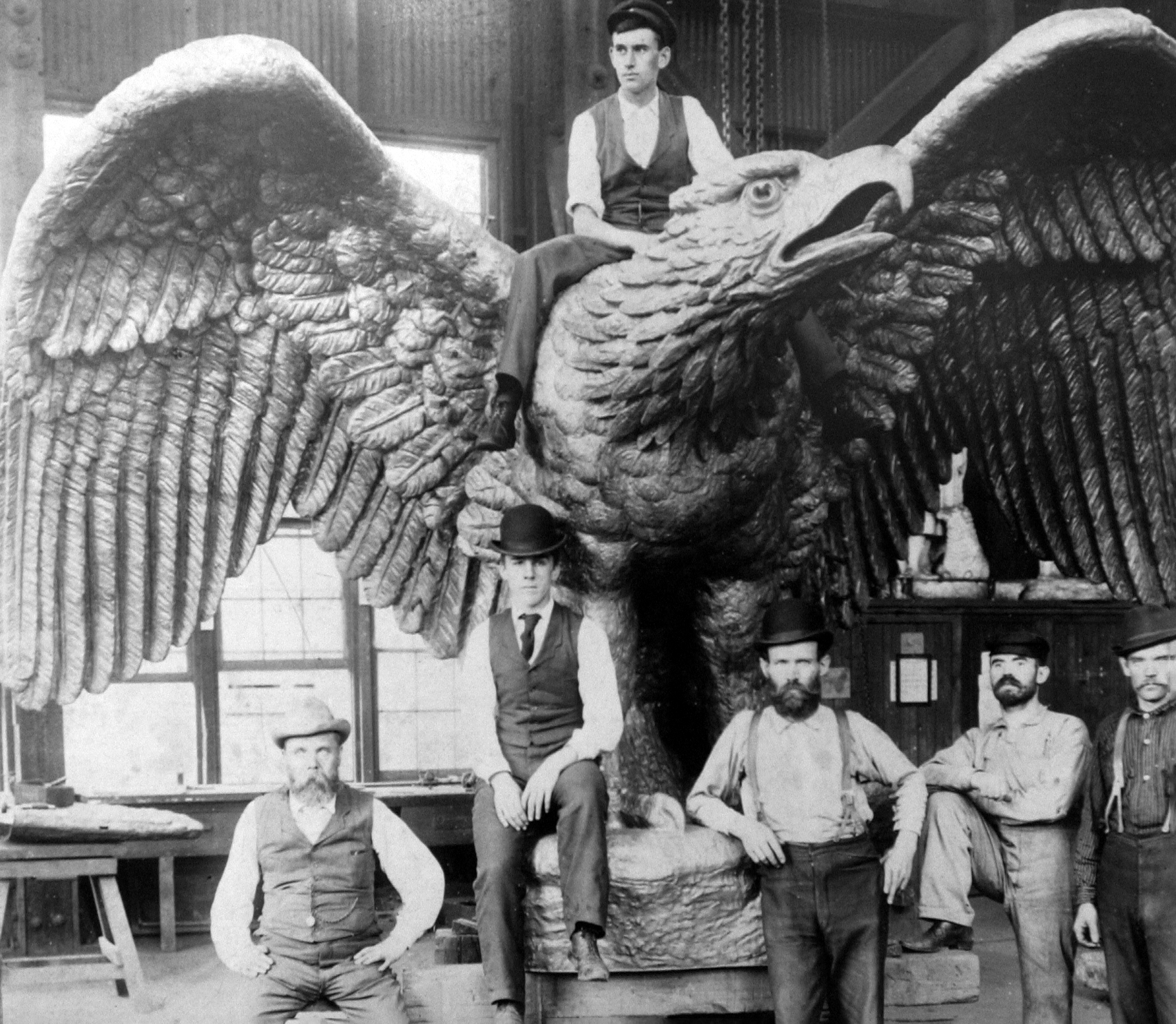
    A photograph of workers and an Alexander Milne Calder eagle sculpture before installation around 1894, on display in the tower at City Hall. Calder created the statue of William Penn atop Philadelphia City Hall — and over 250 other works of sculpture on the exterior and interior of the building — from 1871-1901.

    ‘One of the greatest’

    The Philadelphia that Alexander Milne Calder, a Scottish stonecutter’s son from Aberdeen, first saw in 1868 was sorely in need of a makeover. The sprawling metropolis was known for building big things like ships and rail engines and a wealth of small manufacturers that earned it the nickname “Workshop of the World.”

    It was also filthy.

    “It’s clear that there is no future for a city that is just increasingly based on its industrial might, on the dirt-producing, noise-producing, the squalor,“ says David Brownlee, emeritus professor of the history of art at the University of Pennsylvania.

    The boundaries of Fairmount Park had just been established the year before and plans would soon begin for a giant celebration of the country’s 100th birthday, the 1876 Centennial, which would show the world the city’s cultural achievements. The Benjamin Franklin Parkway was unfolding, a broad boulevard lined by art and leading to what Brownlee calls “one of the greatest monumental ensembles of sculpture ever created.”

    That would be City Hall, the émigré Calder’s workplace for 22 years as he presided over the creation of more than 250 sculptures from his first floor office in the building’s southwest corner — and the towering figure of the colony’s founder.

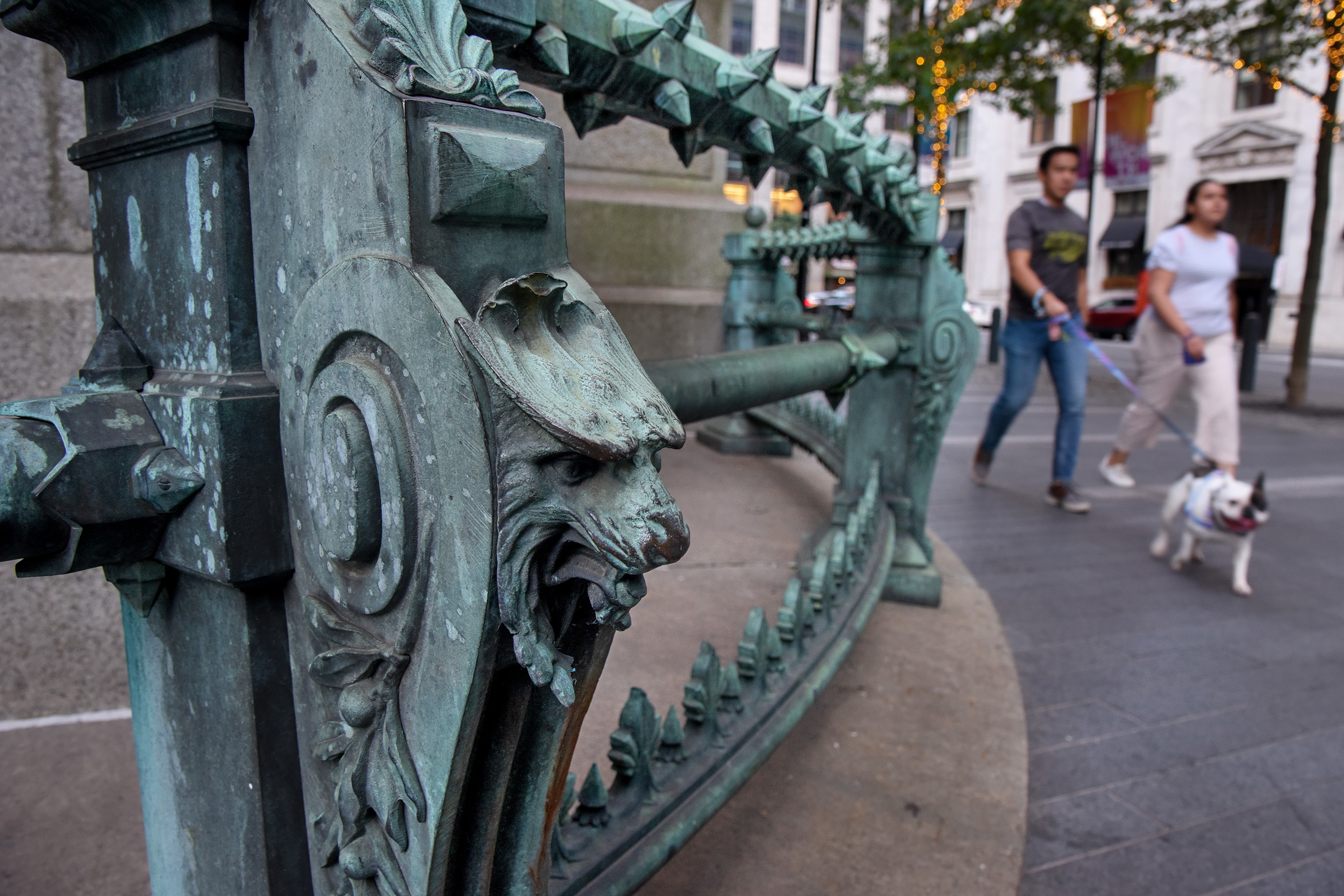
    There were once almost 150 small lion heads on the ornate bronze spiked railing that surrounds City Hall. They, like most of the statuary on the building — including the big one of William Penn — were designed by Alexander Milne Calder. Less than two dozen of the lions remain after 100 years.

    Calder had worked at the Royal Academy in Edinburgh and on the Albert Memorial in London before sailing to America. He stopped in New York, but chose Philadelphia, armed with a letter of introduction to the city’s most eminent sculptor, Joseph A. Bailly, and to the scion of a monument business, William Struthers. Calder was 22.

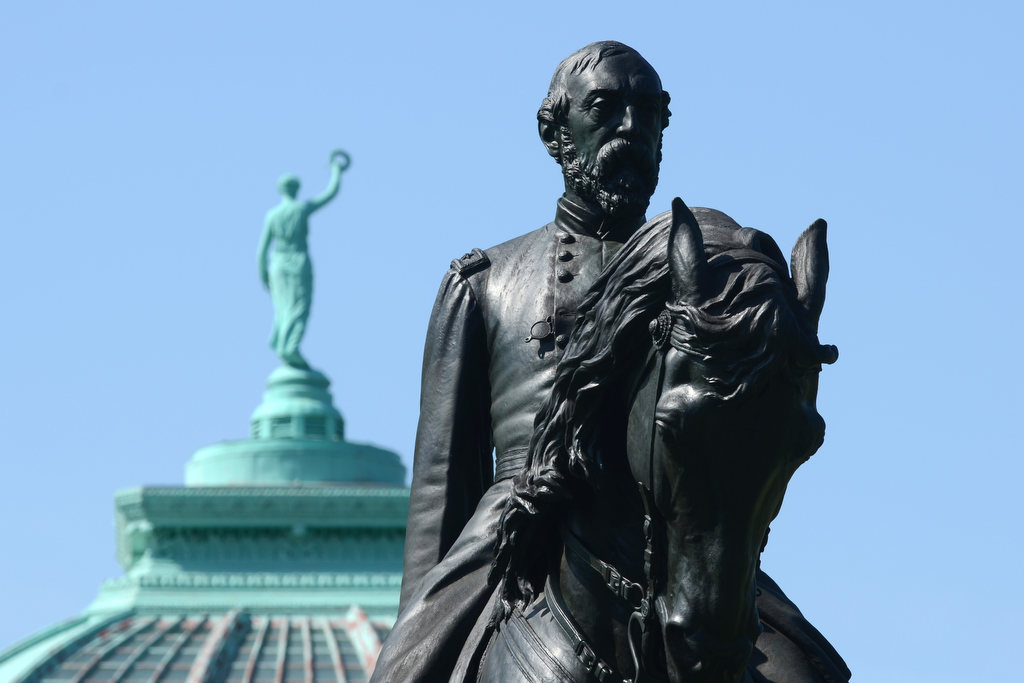
    He registered that year at Pennsylvania Academy of the Fine Arts, the nation’s first art school and museum, and studied “antiques,” drawing from plaster casts of classic sculptures. It was not long before Calder won a prized commission over one of his instructors, to sculpt the likeness of Major Gen. George G. Meade atop his horse, Baldy. Meade, who’d defeated Robert E. Lee at Gettysburg, later designed many of the paths and drives of Fairmount Park. His statue stands now behind the Please Touch Museum on Lansdowne Drive.

    Alexander Milne Calder’s Meade Equestrian Monument in the rear of Memorial Hall. It was cast using captured Confederate cannon for the bronze. Calder rendered Gen. Meade reining in his horse at a moment of crisis during battle.

    When Greenberger gives tours of City Hall — though retired, she still volunteers one day a week — she likes to start in the north portico, where one can sample his expansive vision. Look up to the south, and there are Africans, surrounded by tobacco leaves, a lion. To the east, people from China, Japan, India, and an Asian elephant. West are the Native Americans and pioneers, and a bear. And north is Europe, people from Germany, England, France, maple leaves, and cattle. (She isn’t sure why cattle.)

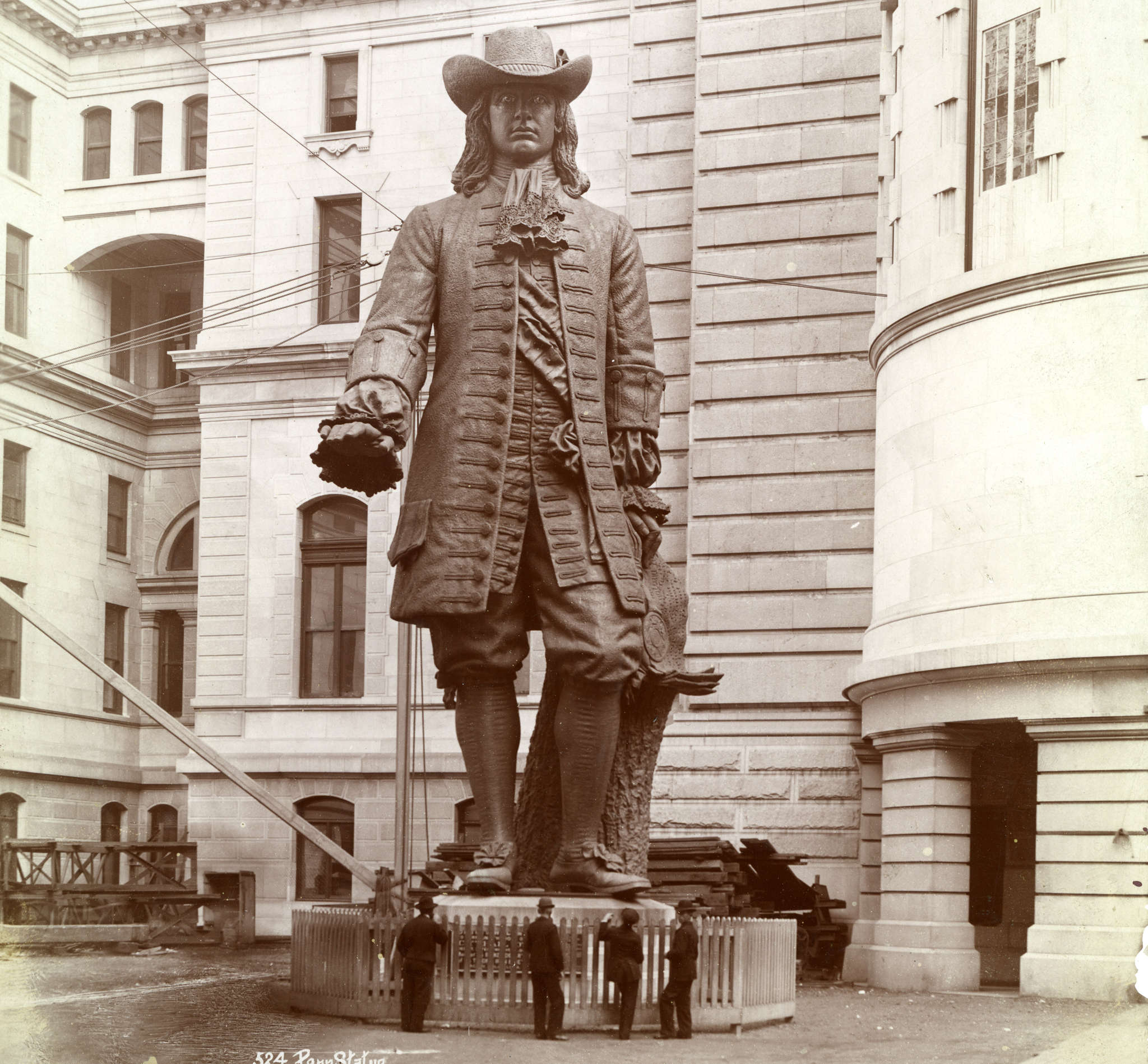
    Calder started on the Penn sculpture in 1886. The iconic figure, now visible from miles away, was the fourth version of the colony’s founder that the sculptor created. Calder’s models were one-tenth the size of the 37-foot high statue. His goal, according to an article at the time in The Inquirer, was to create “William Penn as he is known to Philadelphians; not a theoretical one or a fine English gentleman.”

    The William Penn statue on display in the City Hall courtyard in 1893, the year before it was hoisted, bit by bit, to the top.

    Four teams of horses drew massive plaster sections of the statue up Broad Street to the Tacony Iron & Metal Works. It wasn’t until Thanksgiving 1894 that the head was lifted onto the statue atop the tower, completing Calder’s colossus.

    He was not happy with the result.

    For most of the day, William Penn’s face is shadowed. That was not the artist’s intent. Calder had wanted Penn facing south, where the sun would light his youthful face and the intricate detail of his garb would be visible for all to admire.

    But members of the Public Buildings Commission wanted Penn facing northeast, toward Penn Treaty Park, the site of the 1683 peace agreement with the Lenni-Lenape.

    In a letter quoted in the Dec. 14, 1894 Inquirer, Calder wrote “I think that you will agree that is very disappointing from every point of view.”

    Calder’s William Penn statue atop City Hall as seen from the Comcast Technology Center in Center City.

    While Calder lived in a number of homes around the city — a home at 2020 Bainbridge St. and a studio at 337 Broad — when he registered at PAFA, the address listed was 1903 N. Park Ave., now on Temple’s campus. Decades later, his granddaughter, Margaret Calder Hayes, would remember the North Philadelphia house as “gloomy” — four floors with Empire furniture, a long dark hallway leading to a parlor where children were not welcome unaccompanied.

    Calder had met his wife, Margaret Stirling, soon after his arrival in Philadelphia and married her after a brief courtship.

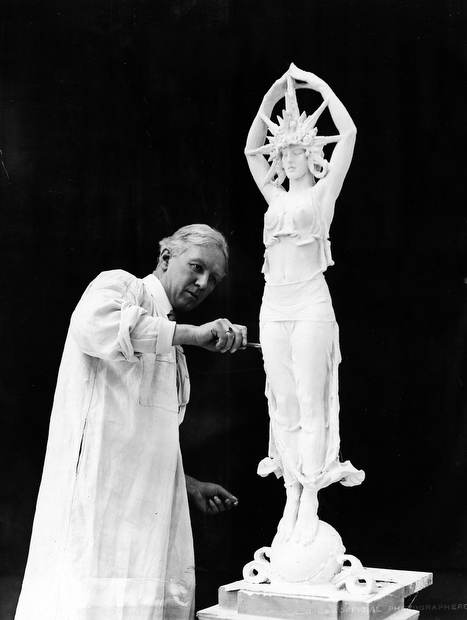
    Three of their sons would study at PAFA and become artists — Ralph Milne Calder, and Norman Day Calder, and Alexander Stirling Calder. But it was “Stirling,” the eldest who left the biggest mark on Philadelphia.

    A portrait of A. Stirling Calder.

    ‘An idealist, somewhat withdrawn’

    In a remembrance kept in the PAFA archives, Alexander Stirling Calder describes art as a fallback. Ever since he was 6 and saw the great Edwin Booth play Hamlet, Stirling Calder wanted to be an actor. But he was too shy. In 1885, he enrolled in art classes at the academy’s new building at Broad and Cherry, and years later recalled the first criticism of his teacher, the artist Thomas Eakins: “Attack all of your difficulties at once.” Eakins urged sculptors to paint, painters to sculpt, and to dissect cadavers to learn anatomy.

    After studying at the École des Beaux-Arts in Paris, he returned home and won a commission to immortalize Samuel Gross with a statue that first stood on the National Mall in Washington, D.C. (It’s since been moved to the Center City campus of Thomas Jefferson University). At 25, he married a fellow PAFA student, Nanette Lederer, a painter.

    To the critic Malcolm Cowley, Stirling Calder was “an idealist, somewhat withdrawn, wholly impractical, creating symbolic figures while brooding on the cruelty of nature.”

    Foster says that looking at the allegorical figures in Logan Square’s Swann Fountain, you can see how Stirling inherited his father’s traditions.

    Children cool off at the Swann Memorial Fountain in 2023.

    “But the figures have a kind of sleek, modern simplicity to them,” she said. “They’re more stylized. So by the 1920s the Swann Fountain represents a kind of moving from the academic past into a more expressive and abstract style.”

    The fence came off the Swann Fountain on a hot July day in 1924. The next evening, 10,000 revelers danced to tangos from a police band. Not everyone was pleased — some wondering if the average Philadelphian would grasp the significance of all that Calder had created.

    He was unbothered.

    “The meaning of works of art is just as mysterious as life itself. It can be explained in many ways by people of different philosophies. …,” he was quoted in the Evening Bulletin as saying. “There are lots of things in life we do not understand; art is no exception.”

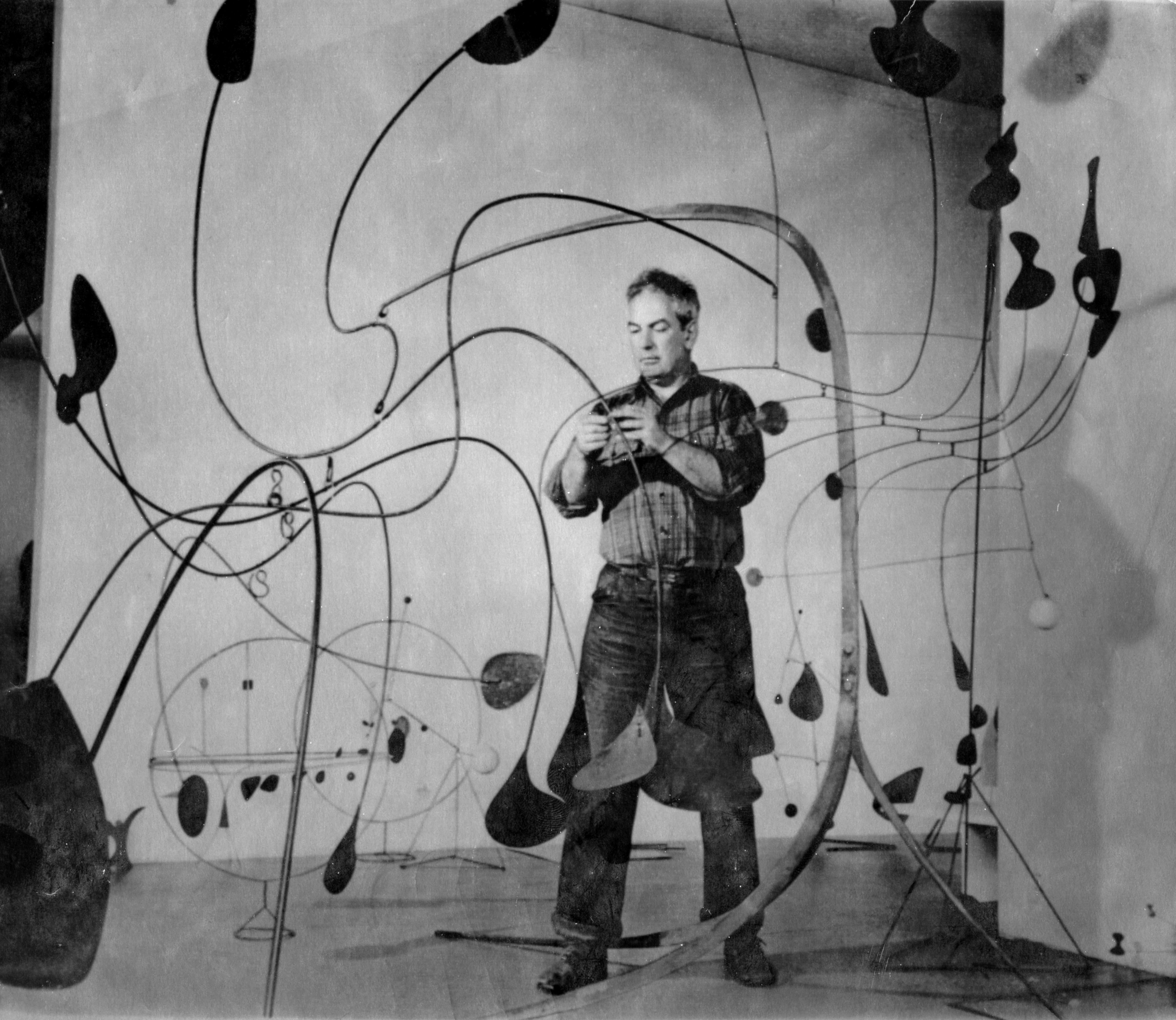
    Alexander “Sandy” Calder installs his “Big Spider” mobile at New York’s Museum of Modern Art in 1943.

    ‘A big child’

    In his autobiography, Sandy Calder included a photograph of the sprawling mansion in Philadelphia where he says he was born. He called the place Lawnton. In 1898 when Calder was born, Lawnton was a neighborhood in East Oak Lane, served by the Reading Line and lined with grand homes where the wealthy went to escape the summer heat.

    It’s unlikely Calder was born there. David Brownlee has dug into the mystery of the third and most famous Calder’s birthplace. While his family doctor lived in Lawnton, and it is possible that his mother delivered her son nearby, more likely, he was born near the edge of the growing city, at 1203 East Washington Lane in Germantown. City records showed that Stirling Calder rented that country place, while the family still owned a home on North Park Avenue.

    In Margaret Calder Hayes’ memoir, she described how Sandy, two years younger, went to school in Buster Brown suits his mother had sewn and by 8 had built a Noah’s Ark of animals. He enrolled in Germantown Academy, when it was still in the city, but left at age 9 before moving to Croton-on-Hudson, N.Y.

    “We love to claim him, but he only went to school here as a child,” Foster said of the youngest Calder’s time in Philadelphia.

    Yet in some ways, he’s the essence of the city he was born in: practical, playful, unpretentious, no pushover.

    He worked as a fireman on a steamer bound for San Francisco, spent a year keeping time in a Washington state logging camp. Trained as an mechanical engineer, he moved to New York City at age 25 to paint.

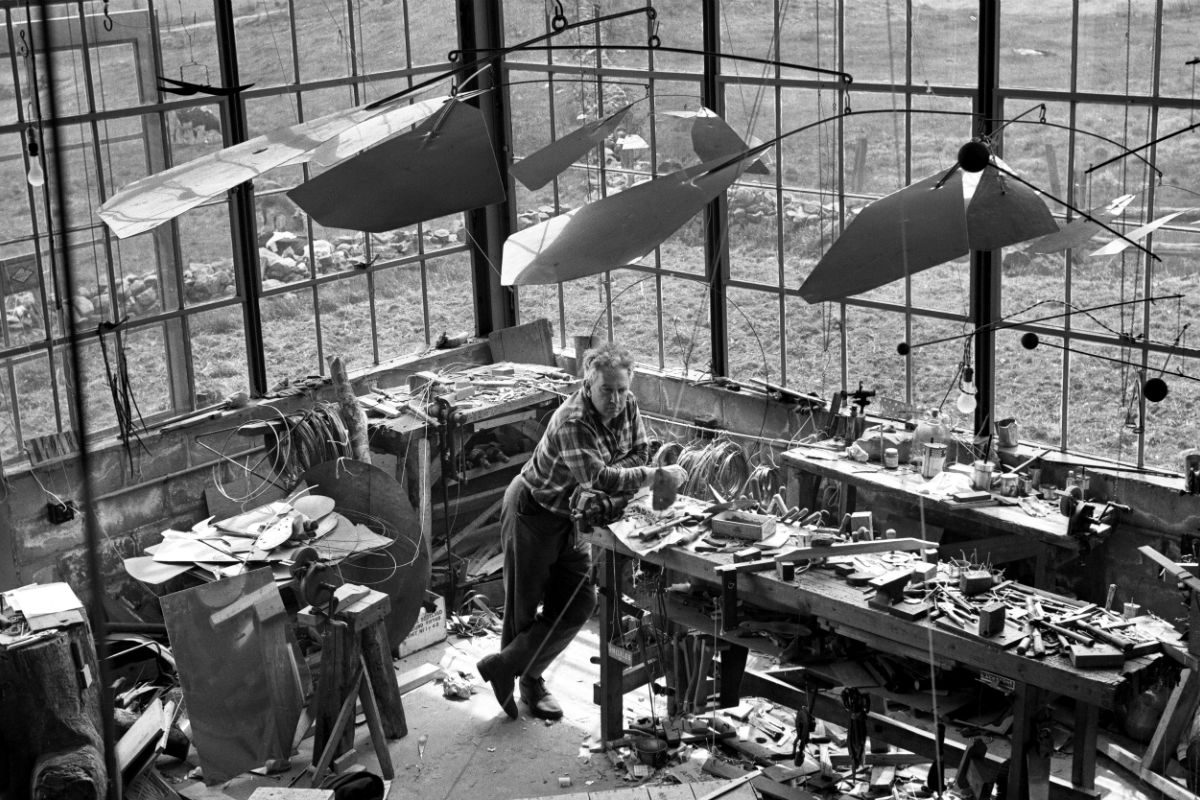
    Calder with Mobile in his Roxbury, Ct., studio in 1941.

    He is known as a 20th century modernist, the artist who put sculpture in motion.

    After visiting Calder’s Paris studio in 1931 and marveling at his sculptures that relied on little motors, Marcel Duchamp coined the word “mobiles” for these kinetic marvels.

    Parisians took to him, while they scoffed at other American artists. Cowley, in an introduction to Hayes’ Three Alexander Calders had a theory:

    ”Of course his work in itself, continually inventive, playful, and enchanting, was his ticket of admission.” But Sandy and his wife Louisa, “a beauty,” Cowley wrote, entertained generously and simply. Calder was in the tradition of the Noble Savage, “who disregards social conventions and judges everything by his instinctive standards.”

    “A big child,” as his friend the playwright Arthur Miller once put it.

    Sandy Calder created Ghost in 1964 for a retrospective at the Guggenheim in New York City, that included 400 examples of his mobiles, stabiles, toys, jewelry, carvings, tapestries, etc. The Art Museum bought the 34-foot-long showpiece a year later and brought it to the city of his birth.

    Ghost, in the Great Stair Hall at the Philadelphia Museum of Art (now, Philadelphia Art Museum). It was created to hang in the center of the Guggenheim Museum in New York for Calder’s exhibition there in 1964.

    “It’s a colossal example of the mobile and it’s majestic,” Foster said. “When it moves, it’s just breathtaking, because it, it almost moves like a giant dinosaur or something. In other words, it’s got long spines and fins, and it moves very slowly and grandly in the air currents in the Great Stair Hall. … It’s delightful.”

    “When every baby has a mobile hanging over their crib, you don’t think about Calder as being the genesis of this. I think he would be delighted to know that … because he was such a child at heart. He managed to keep that imagination.”

    Now, Philadelphia will be home to an institution that celebrates that imagination. It’s a fitting homecoming for an artist whose life and legacy was so shaped by his family, who in turn both shaped and were shaped by Philadelphia.

    The weight of a name

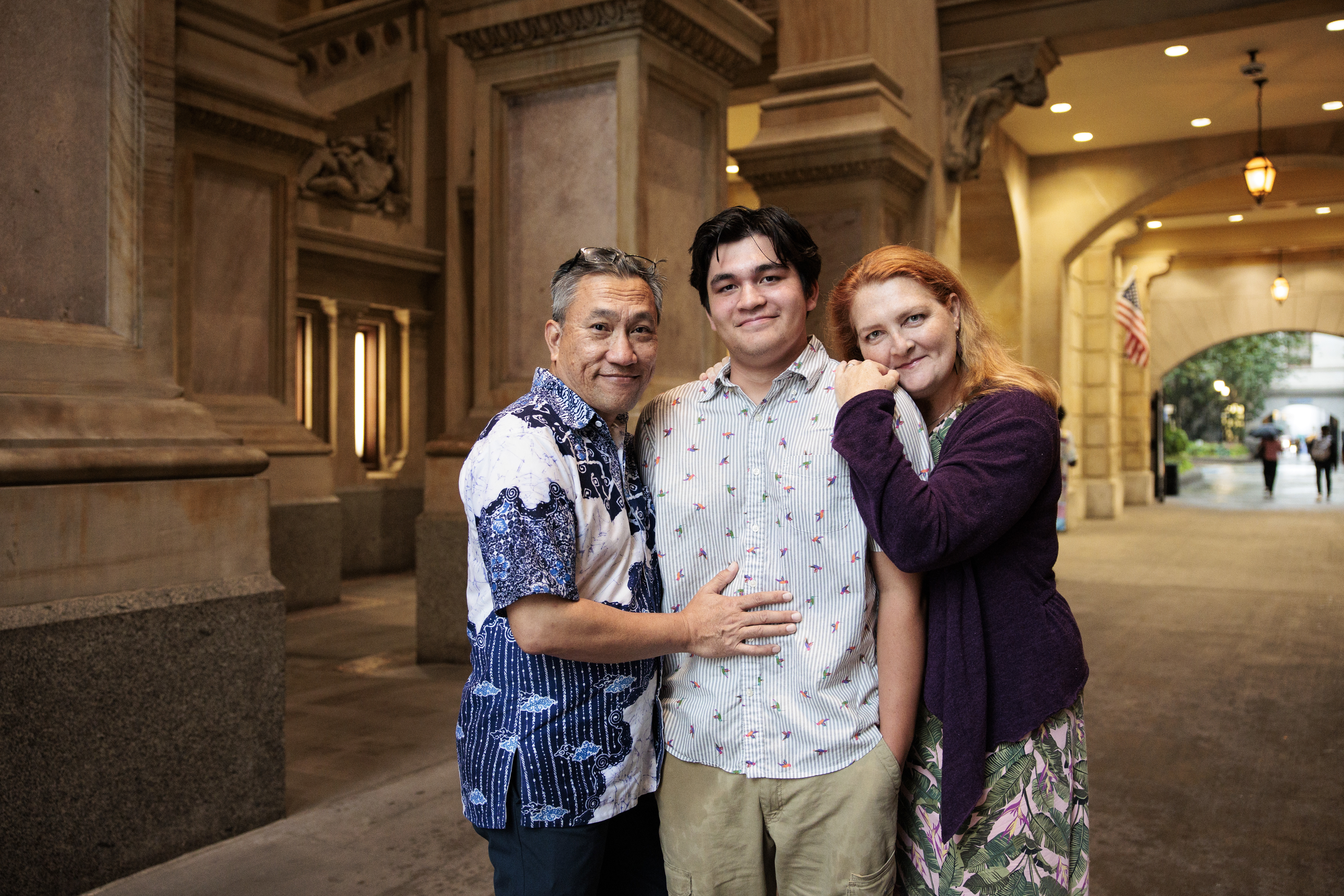
    Tú Huynh was working at the National Gallery of Art in Washington, D.C., when he told a job applicant to look for him under the giant Calder mobile that hangs in the East Building.

    That was in 1997. The applicant, Kaleo Bird, landed the job — and later, his heart. Three years later they moved as a couple to Philadelphia, where she started grad school. Soon they married.

    In 2008, when their son was born, they didn’t take long to decide on a first name:

    Calder.

    He’s now 17, a senior at Penn Charter School.

    Tú Huynh, Calder Huynh, 17, and Kaleo Bird at Philadelphia City Hall where more than 250 of Alexander Milne Calder’s sculptures adorn the building, topped by his statue of William Penn.

    “I have yet to meet anyone my age who knows who the whole Calder family was, which is a shame because I feel they’ve had such an impact here, particularly with City Hall,” said the teen. “So many people think Ben Franklin is atop City Hall and don’t know anything about these beautiful sculptures.”

    His father now runs the Art in City Hall program.

    “I tell people that the true art of City Hall belongs to Alexander Milne Calder,” says Tú Huynh. “This was his Sistine Chapel. There are over 250 sculptures, leafs, busts all over this building. And that’s an homage to his ideal of what this city, state and country is supposed to be about. And he doesn’t sugarcoat anything. There are enslaved Africans, Indigenous populations, Europeans. It tells you the folks who’ve contributed to this extraordinary country.”

    Calder Huynh says he feels the weight of his name — in a way that the two generations named after Alexander Milne Calder must have felt.

    He paints, draws in charcoal, creates his own comic books — exploring themes with super heroes and Westerns, always with an eye on his father’s works that line the walls of their home.

    “Naming me after them is such a big thing to put on someone. For me, it is a weight that Alexander Sandy Calder must have felt. A weight to achieve and create something that differs from what his family members had created, which is kind of cool. … Put something in this world that hasn’t been done yet.”

    “The Magic of Calder Gardens” is produced with support from Lisa D. Kabnick and John H. McFadden. Editorial content is created independently of the project’s donors.

    To support The Inquirer’s High-Impact Journalism Fund, visit Inquirer.com/giving

    Jerusalem Stabile II, 1976 by Alexander Calder is shown on display at the Calder Museum in Philadelphia.
  • Ray the goat needs a wheelchair. The Philly Goat Project hopes its fundraiser will get him one.

    Ray the goat needs a wheelchair. The Philly Goat Project hopes its fundraiser will get him one.

    Ray the Nubian goat has come a long way since a parasite threatened to take his life, leaving him with three legs but not dampening his spirit. Now he’s in need of a wheelchair.

    As a jolly middle-aged goat, 7-year-old Ray loved taking long strolls around Awbury Arboretum, supporting people in bereavement with hoofshakes and kisses, and taking children with cerebral palsy on rides.

    The wagon was his biggest job, and he took it seriously, said Karen Krivit, the director of Philly Goat Project, an East Germantown nonprofit that provides community wellness through nature connection. So much so that he hid his pain.

    “Goats tend to hide their injuries,” Krivit said. “Ray was determined to keep from showing any pain and just trying to pull his head high and be with everybody else.”

    Philly Goat Project’s annual Christmas Tree-Cycle feeds old trees to goats.

    Ray had been battling a parasite infection common among outdoor animals, Krivit said. But, as often happens for his breed, he was resistant to the medication. As his veterinarian team continued trying for a cure, a slight limp alerted the Philly Goat Project staff that his condition had worsened.

    The parasite affected his bone density, causing one of his femurs to break in three places. A big problem for any goat due to their rough-and-tumble nature.

    The place Ray had called home since he was 3 months old rallied around him, raising money for a titanium plate to secure the bone in place. But his anatomy once again worked against him.

    With Ray standing at a little over 3 feet tall, his natural lanky composition would have made it hard for the plate and the screws to hold onto the bone. The titanium plate could have collapsed his bone in another area, causing additional damage, Krivit said.

    “We were able to eliminate the parasite, but not in time enough to save his leg,” she added. “The safest long-term plan was amputation.”

    For tall animals in particular, it’s hard to thrive on three legs, Krivit explained. The biggest challenges since the amputation in May have been teaching him how to move around by himself and reintegrating him into his herd of 13 goats.

    “Humans tend to be mean to each other if you look different or act differently; it’s the same with goats,” Krivit said. “But humans can use their voices and talk about it; goats can only be mean and exclude another goat. Not being rejected is vital to his survival.”

    Ray was placed in a nearby separate stall. His brother Teddy never stopped looking out for him.

    Ten thousand dollars and months of rehabilitation later, Ray has a severe limp, but can now stand up and lie down by himself. The herd has accepted him back, but he seems to feel left behind when they go on long walks, often bellowing as the other goats head out without him.

    “Because he is moving his body in three legs instead of four, he is at risk for hurting himself further if he goes on a long walk, making it harder for him to stay connected to the herd,” Krivit said.

    So Ray needs a wheelchair.

    For goats, that involves a metal harness with a wheel on each side of the goat, mimicking a leg. But they are expensive.

    The Goat Project needs $2,000 for a custom-made wheelchair for Ray, physical therapy, and proper fitting.

    For Krivit, leaving her beloved otherwise-healthy goat without a wheelchair is not an option. She is hoping to raise enough money at the group’s annual GOAToberFest to get him a chair.

    The Oct. 18 event will take place at the Conservatory at Laurel Hill West Cemetery, and tickets run for $75, with free snacks, drinks, and goodie bags.

    Until then, she hopes folks can see in Ray a symbol of resilience.

    “A wheelchair is the missing link for him to safely go on walks that will support his body and his spirit to not be left behind,” Krivit said. “If Ray can be resilient and he can survive this, I hope that gives people hope in their times of adversity.”

    Krivit hopes their upcoming annual GOAToberFest can help get Ray a wheelchair.
  • Pennsylvania court tells Lower Merion it can’t use zoning to regulate how gun shops do business

    Pennsylvania court tells Lower Merion it can’t use zoning to regulate how gun shops do business

    Lower Merion Township’s effort to limit where guns are sold violates state law, Commonwealth Court ruled Thursday.

    In a case that holds major implications for the power of local governments across Pennsylvania, the court threw out the township’s zoning ordinance that sought to block holders of federal firearms licenses from operating in walkable downtown areas and residential neighborhoods.

    The question at the heart of the case was whether the ordinance regulated land-use decisions, the bread and butter of local government, or the sale of firearms, which only the state can do.

    A majority opinion, signed by five judges, said the township’s ordinance violated state law that prohibits local governments from regulating guns because its requirements went beyond geographic limits.

    “The Township’s ordinance here is clearly intended to regulate the sale of firearms, rather than to regulate zoning,” wrote Judge Matthew Wolf in the opinion. “It is a gun regulation, not a zoning regulation.”

    In a statement, Todd Sinai, the Democratic president of the Lower Merion Board of Commissioners, said the township was considering its legal and legislative options.

    “We, of course, are disappointed in the Commonwealth Court’s decision today. It is a fundamental and important right of municipalities to be able to zone the location of uses to best serve their residents and property owners,” Sinai said.

    Frustrated with the lack of gun-control measures out of Harrisburg, advocates and officials have sought to use local ordinances to limit gun sales and where guns can be carried, and to ban certain firearms. Philadelphia has fought for years for the ability to enact gun laws. But ordinances passed by Philly and other cities, including Pittsburgh, have largely been struck down by courts.

    One strategy that has had limited success is the use of zoning ordinances to limit the locations of firearms-related activities, such as shooting ranges or gun stores. The Lower Merion case was seen by some as a test on how far zoning can go to bypass state preemption.

    “The Commonwealth Court has reaffirmed once again that local forms of government cannot regulate firearms and ammunition in any manner,” said Joshua Prince, an attorney with Civil Rights Defense Firm who filed the lawsuit.

    Lower Merion can appeal the decision to the Pennsylvania Supreme Court, which would have to agree to hear the case, but the ruling delivered a blow to gun-control advocates who had hoped Lower Merion’s ordinance could be replicated elsewhere in the state.

    “The decision to treat firearm operations as different within zoning than any other business is unusual and concerning,” said Adam Garber, the executive director of CeaseFire PA.

    The ruling, he said, creates a road map for how municipalities can zone firearm stores but also puts the impetus on the state to address gun regulations, something lawmakers in Harrisburg have refused to do.

    The township approved the zoning rules for firearms dealers in 2023 after the opening of Shot Tec, a gun training facility and seller in Bala Cynwyd, sparked community outrage. The zoning rules established a set of criteria for sellers to operate under and said they could open only in strip malls and industrial-use areas.

    The township argued that, while local governments are not allowed to regulate firearms, they have broad power over zoning and land use.

    Grant Schmidt, the owner of the Bala Cynwyd shop, sued after the zoning ordinance impeded his ability to open a second location in his home.

    He responded to the news of the ruling Thursday with a gif of Ric Flair cheering. His business, which offers training and education on firearms in addition to buying, selling, and storing them, has had four locations in five years. He said he hoped he could now focus on expanding his business rather than fighting local policies.

    “Now I’m looking to just grow and be normal and invest in my staff more,” Schmidt said.

    The litigation focuses on the requirements Schmidt had to adhere to for his most recent Rock Hill Road location, which is within one of the four districts that were zoned for businesses that require a federal gun license. The ordinance went beyond restricting place and imposed 12 additional requirements, such as installing smash-resistant windows, an alarm system, and internal video surveillance.

    Montgomery County Court found that all but three requirements were preempted by state law. Following Schmidt’s appeal, Commonwealth Court struck down the remaining requirements and the place restrictions.

    Lower Merion argued that other businesses, such as medical marijuana dispensaries, animal hospitals, and funeral homes, are subject to compatible conditions to operate. These types of requirements are “traditional local land use control not specific to firearms,” the township argued, according to the majority opinion.

    To make its case, Lower Merion cited a previous, non-precedential decision by Commonwealth Court that allowed Philadelphia to limit gun shops to specific zoning districts.

    The difference between the cases, Wolf wrote, is that Philadelphia limited the location of the gun shops but said nothing about how they need to operate. Lower Merion went a step further to restrict how gun shop owners “conduct their business.”

    Two judges, Renee Cohen Jubelirer and Lori Dumas, disagreed with the majority’s analysis, saying the decision “strips the Township of its traditional power over land use and zoning.”

    “Contrary to the Majority’s conclusion, none of the provisions of the ordinance at issue here regulate the ownership, transportation, or transfer of firearms, ammunition, or ammunition components,” Jubelirer wrote in the dissent.

    Correction: An original version of this story incorrectly identified the gif sent by Schmidt. It featured Ric Flair.

    This suburban content is produced with support from the Leslie Miller and Richard Worley Foundation and The Lenfest Institute for Journalism. Editorial content is created independently of the project donors. Gifts to support The Inquirer’s high-impact journalism can be made at inquirer.com/donate. A list of Lenfest Institute donors can be found at lenfestinstitute.org/supporters.