Independence Hall, the Rocky statue, the Liberty Bell, and … a 2016 Honda Civic parked in Fishtown?
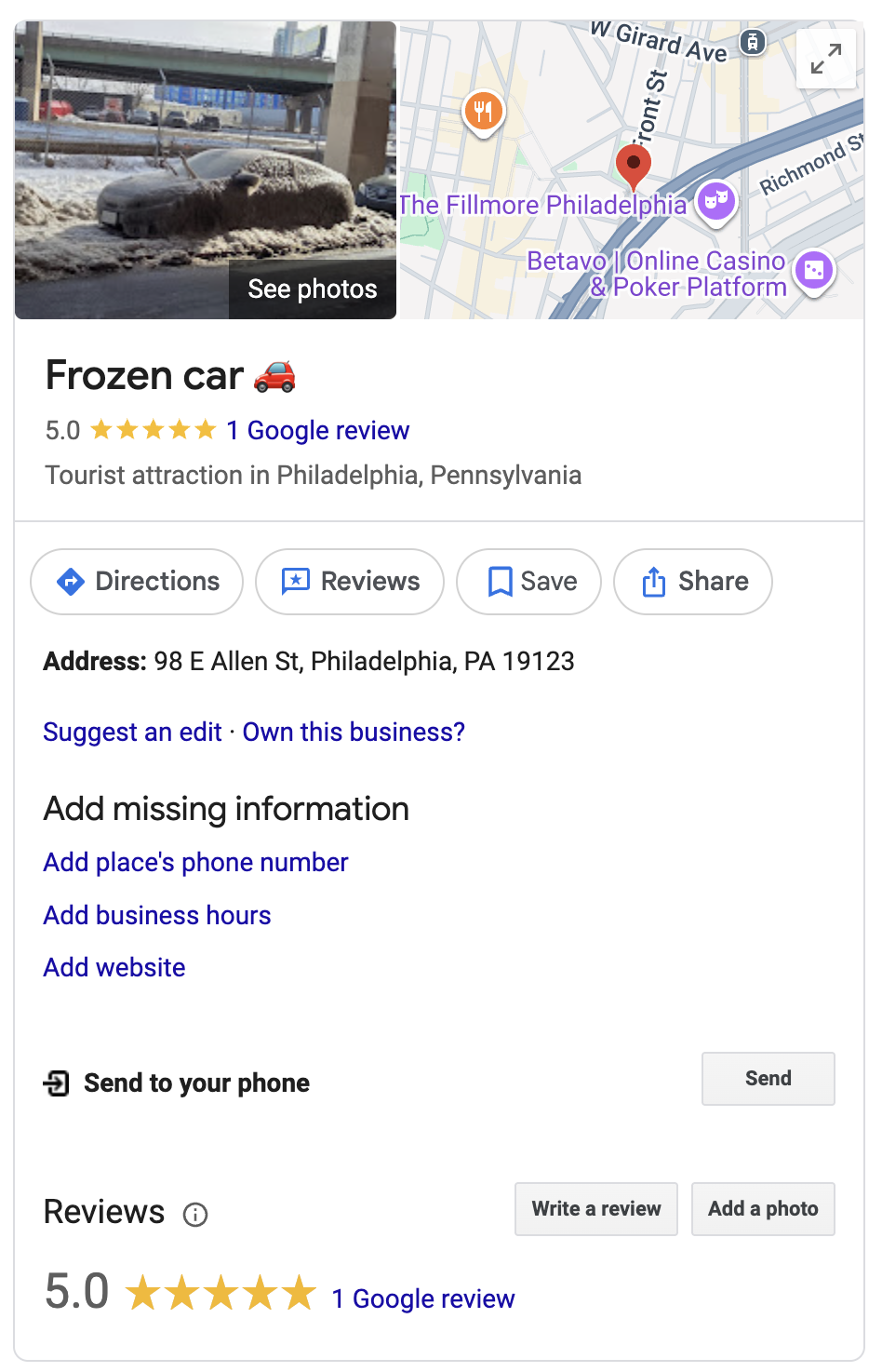
That odd appendage at the end of the list just became one of Philadelphia’s newest tourist attractions on Google Maps.
How does a silver two-door get minted a must-see site in the birthplace of America?
It gets completely covered in ice.
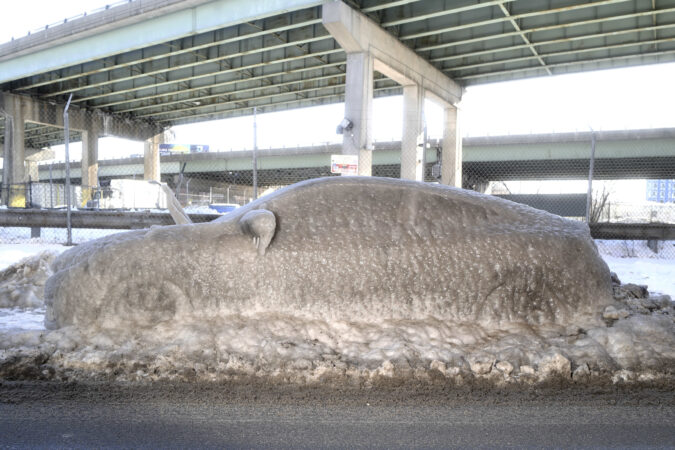
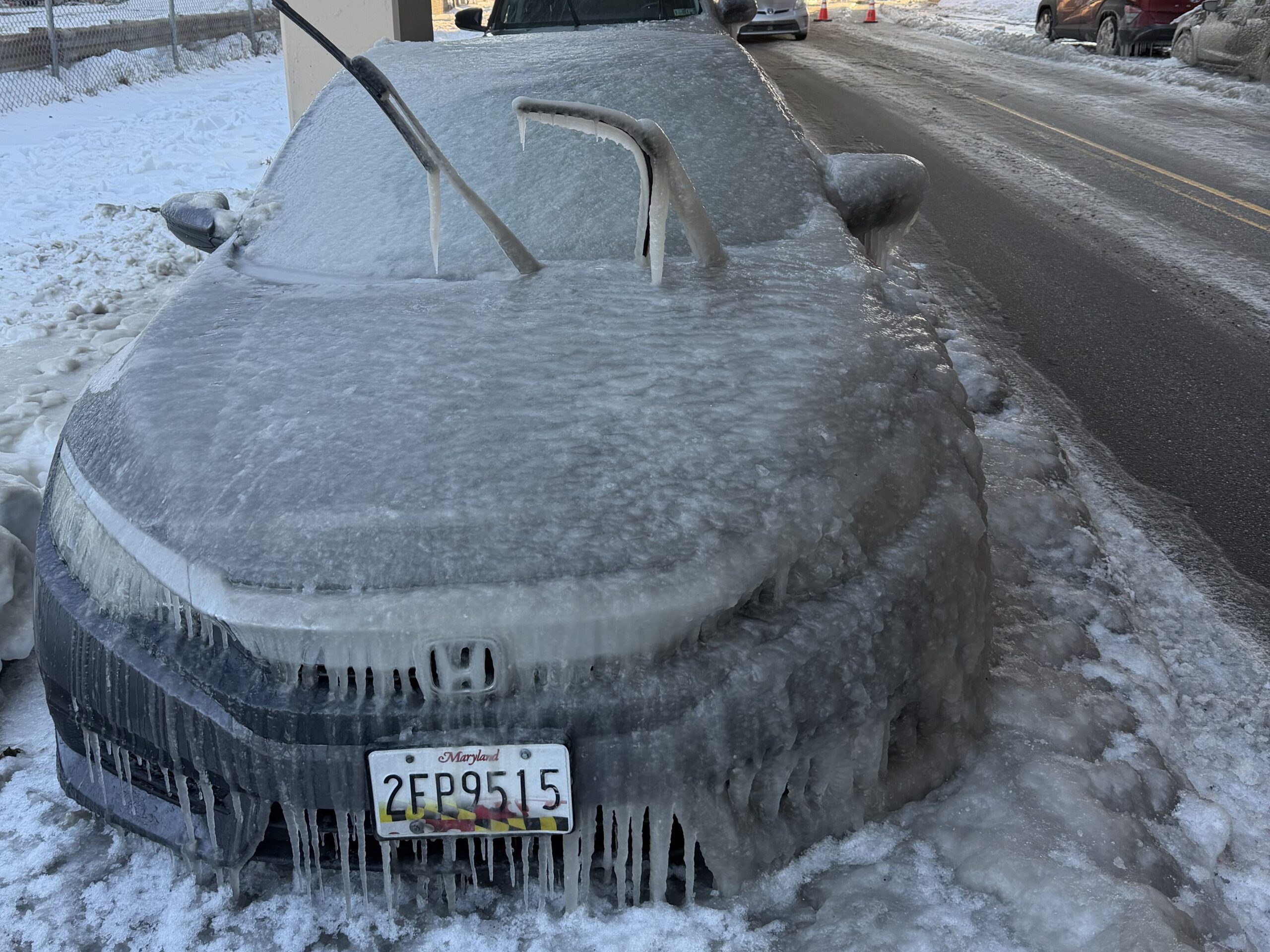
In photos of the car now seen around the world, a sheet of ice wrapping around the roof and hood of the car extends all the way down to the pavement. Paralyzed windshield wipers propped up perpendicular to the dashboard look like a pair of arms flailing frantically for help as the car suffers a frigid death. Passersby might easily mistake the sight for an ice sculpture of a car rather than a real one.
A screenshot of the frozen car in Fishtown on Google Maps.
The journey from plebeian commuter vehicle to local celebrity has been a source of both humor and headache for 24-year-old Tianna Graham, the car’s owner.
At first she wasn’t terribly worried about the situation.
“It’s fine. I’ll figure it out,” she remembered thinking.
Then the shock wore off.
“Now I’m like, ‘OK, what do I actually do now?’”
The saga starts at the intersection of North Front and East Allen Streets, under the El tracks, where Graham first parked her car on Jan. 23. She knew a major snowstorm was looming, so when she found an open spot near her apartment, she leaped at it.
When they returned, they found the spot still vacant, so Graham parked there again.
A car parked in Fishtown becomes completely encapsulated in ice.
On Wednesday, Graham, a fifth-grade math teacher at Community Academy of Philadelphia, noticed the street she had parked on was cordoned off with caution tape.
She asked a nearby police officer if she should move her car, she said, and he advised her to leave it there.
What happened next, Graham, the city, the people of Philadelphia, and frozen-car fanatics worldwide may never fully know.
On Thursday, the Philadelphia Water Department repaired a leak on a six-inch water main at North Front and East Allen Streets around 2:30 p.m., said department spokesperson Brian Rademaekers.
The department did not receive any reports of water gushing dramatically from the pipe, Rademaekers said. It is not clear if water from the pipe, from the highway overpass, or from another source led the car to become enveloped in ice.
But, when Graham returned from work last Thursday around 3:30 p.m. during what turned out to be a weeklong Arctic freeze and checked on her Honda, she saw it frozen absolutely solid.
A car parked in Fishtown becomes completely encapsulated in ice.
“I was freaking out a little bit,” Graham said. “I was just like, ‘I don’t even know where to start.’”
So she started where many Gen Zers start — on Instagram.
Graham posted the photo on her private Instagram story, asking friends what she should do.
Her first instinct was to try to break apart the ice. So she and her friend came at it with a small shovel and an ice pick but quickly found it a futile effort.
Graham was, however, able to pry open the passenger-side door and look inside.
“There was water everywhere,” she said. “The inside of my car is soaked. The floors are soaked. My seats were soaked. Everything is wet inside.”
On Friday, she was able to turn on the ignition, she said, but had no such luck when she tried again this week.
She filed a claim through her insurance company, Geico, which dispatched a tow truck Monday, she said. It is now awaiting inspection.
A car parked in Fishtown that got covered in ice gets towed.
“It’s really just overall inconvenient,” she said. “I understand that it’s like hilarious and everyone’s loved it, but nobody has been offering any kind of valid help at this point.
“I don’t really know where to go from here,” she said.
As Graham was dealing with the logistics of trying to save the car, the car itself was skyrocketing toward social media stardom.
Photos and videos of it began circulating online. Area residents began posting clips of themselves visiting the car, some even climbing on top of it.
When 23-year-old Abbigail Erbacher came up to Philly to visit her friend on Sunday, the frozen car was quickly added to the day’s itinerary.
The Egg Harbor Township, N.J., resident had seen the videos of the car on TikTok, identified the location with her friend based on landmarks around it, and headed to Fishtown.
“My first thought was, ‘Oh, my god, this is real.’ And then my next was, ‘I feel so bad for her,’” Erbacher said. “It had to have been encased in anywhere from an inch to two inches of ice.”
Her video starts with her screaming upon seeing the car and gently knocking on the frozen solid driver’s-side mirror. The overlaid text: “philadelphias newest monument.”
As of Wednesday the video had 22 million views.
Erbacher was surprised to see her clip become so widely viewed, but was not at all shocked to see the story itself gaining traction.
“I think our generation is so unserious,” she said. “These sort of things feel like the type of things that only happen to our generation.”
Between the political climate and the pandemic, Erbacher said, she and many others Gen Zers feel particularly prone to bad luck.
“I think we definitely feel a bit victimized,” she said. “And so when things reinforce that, we’re like, ‘OK, cool. That would only happen to us, so we just kind of got to go with it.’”
And Graham did, indeed, go with it. She started documenting the journey on TikTok herself late last week beginning with a simple video featuring the camera panning around the frozen car to the Rob49 song “WTHELLY.” That post got 8 million views.
and there she goes! yes it is totaled btw! if you feel inclined to help, go fund me in bio! no i’m not begging for money, but people have been asking how they can help and anything is appreciated to help w rental (which is not covered) and the difference to a new car! btw yes, the inside it soaked. yes, it did start but now will not (even after a jump)
On Monday, she posted two more videos: one of her girlfriend and friend gingerly cracking the ice off the car with hammers to the No Doubt song “Just a Girl,” which was viewed more than 27 million times, and another of the car getting towed away to the song “Vroom Vroom” by Charli XCX that was watched more than 12 million times.
“Bye ice car!” she wrote over the video of its immobilized tires cutting through hefty chunks of ice as the tow truck dragged it across the street.
Spotlight PA is an independent, nonpartisan, and nonprofit newsroom producing investigative and public-service journalism that holds power to account and drives positive change in Pennsylvania. Sign up for our free newsletters.
HARRISBURG — A long-simmering dispute over who owns digital copies of millions of Pennsylvania’s treasured historical records landed before a state appellate court this week.
The ruling could determine whether those belong to the public or are under the control of a privately owned genealogy powerhouse.
On Wednesday, Pennsylvania’s Commonwealth Court heard legal arguments in the case, in which a New York City-based professional genealogist faces off with a little-known but important state agency, as well as online genealogy giant Ancestry. The latter is a private company used by millions of people to search for family and other records.
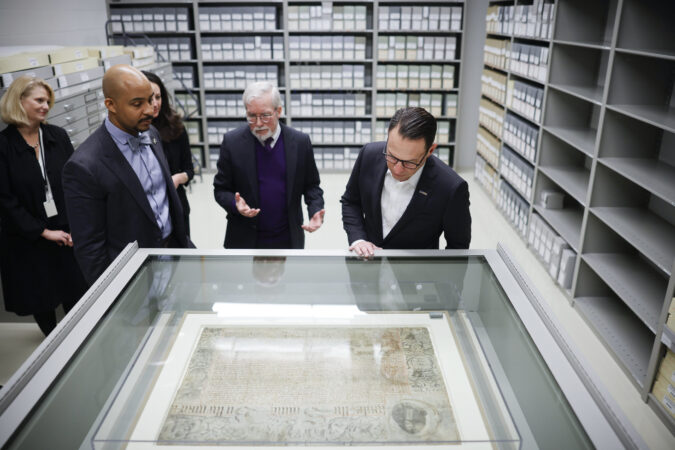
The genealogist is Alec Ferretti, a director at Reclaim the Records, a nonprofit that advocates for governments to make genealogical documents more accessible. In 2022, he submitted a public records request to the Pennsylvania Historical and Museum Commission (PHMC), the state’s “official history agency” that is responsible for collecting, conserving, and safeguarding the commonwealth’s historical records and objects.
At the time, Ferretti sought all records the state agency had provided to Ancestry as part of a 2008 agreement that, up until Ferretti’s request, had attracted sparse attention. That agreement allowed Ancestry to digitize a long list of Pennsylvania historical documents belonging to the commission and make them available on its website.
According to the agreement, those documents include birth and death certificates, veterans’ burial cards, records about enslaved people, and naturalization forms, as well as Civil War border claims and muster rolls. Those records would then be free to Pennsylvania residents who create user profiles with Ancestry, which requires a paid subscription to access the breadth of its records. An Ancestry lawyer on Wednesday said it has about 18 million digitized images in all.
Since Ferretti is a New York state resident, he requested the information directly from PHMC. He also asked for the metadata on the digitized records, as well as any index lists that Ancestry created when performing that work.
PHMC denied the request, saying it didn’t have any responsive records in its possession. Ferretti appealed, arguing that the state agency was required to obtain them from Ancestry under a section of Pennsylvania’s Right-to-Know Law that allows public access to documents held by a private contractor hired to perform a governmental function on behalf of a government agency.
Lawyers for Ancestry soon intervened in the fight, contending the company was not carrying out a government function for PHMC. They also argued that although Ancestry had agreed to license back the digitized records to the state, its work product is proprietary.
Translation: It owns the digital records.
The case has spent nearly four years in a complicated spiral of appeals before the state’s Office of Open Records, which sided with Ferretti. The matter could wind up in front of the Pennsylvania Supreme Court, depending on Commonwealth Court’s decision.
During oral arguments on Wednesday, Commonwealth Court judges asked both sides pointed questions about whether the digital images constitute a public record accessible under the state’s Right-to-Know Law, as certain archival materials (while public) don’t fall under the law’s jurisdiction. They also asked whether maintaining digitized copies of historical records amounted to a governmental function.
The judges seemed to agree on one thing: The case raised interesting dilemmas.
“We just love Right-to-Know Law, so this is great,” President Judge Renée Cohn Jubelirer told lawyers when legal arguments came to a close.
BEFORE YOU GO… If you learned something from this article, pay it forward and contribute to Spotlight PA at spotlightpa.org/donate. Spotlight PA is funded by foundations and readers like you who are committed to accountability journalism that gets results.
Sandra Schultz Newman, 87, of Gladwyne, Montgomery County, the first woman elected to the Pennsylvania Supreme Court, the first female assistant district attorney in Montgomery County, the first woman named to the board of directors of the old Royal Bank of Pennsylvania, longtime private practice attorney, role model, mentor, and colorful “Philadelphia icon,” died Monday, Feb. 2. Her family did not disclose the cause of her death.
Reared in South Philadelphia and Wynnefield, and a graduate of Drexel, Temple, and Villanova Universities, Justice Newman, a Republican, was elected to the Commonwealth Court of Pennsylvania in November 1993 and to the state Supreme Court in 1995. She won a second 10-year term on the Supreme Court in 2005 but, having to step down in just two years due to a mandatory retirement age, left at the end of 2006.
“I love the court. I love my colleagues. The collegiality was great, and I’m going to miss that,” Justice Newman told The Inquirer. “But I just felt like I wanted to move on.”
During her 10-year tenure, Justice Newman was chair of the Supreme Court’s Judicial Council Committee on Judicial Safety and Preparedness and the court’s liaison to Common Pleas Court and Municipal Court in Philadelphia. She ruled on hundreds of issues and wrote opinions about all kinds of landmark cases, from environmental protections to school funding to clergy privilege to the Gary Heidnik and John E. du Pont murder cases.
She had worked in criminal and family law and handled many divorce and custody cases as a private attorney in the 1980s, and was praised later by court observers for her attention to Philadelphia Family Court matters. Lynn Marks, of Pennsylvanians for Modern Courts, told the Daily News in 2005: “She’s been a wonderful justice, and she’s made herself accessible to the public interest community.”
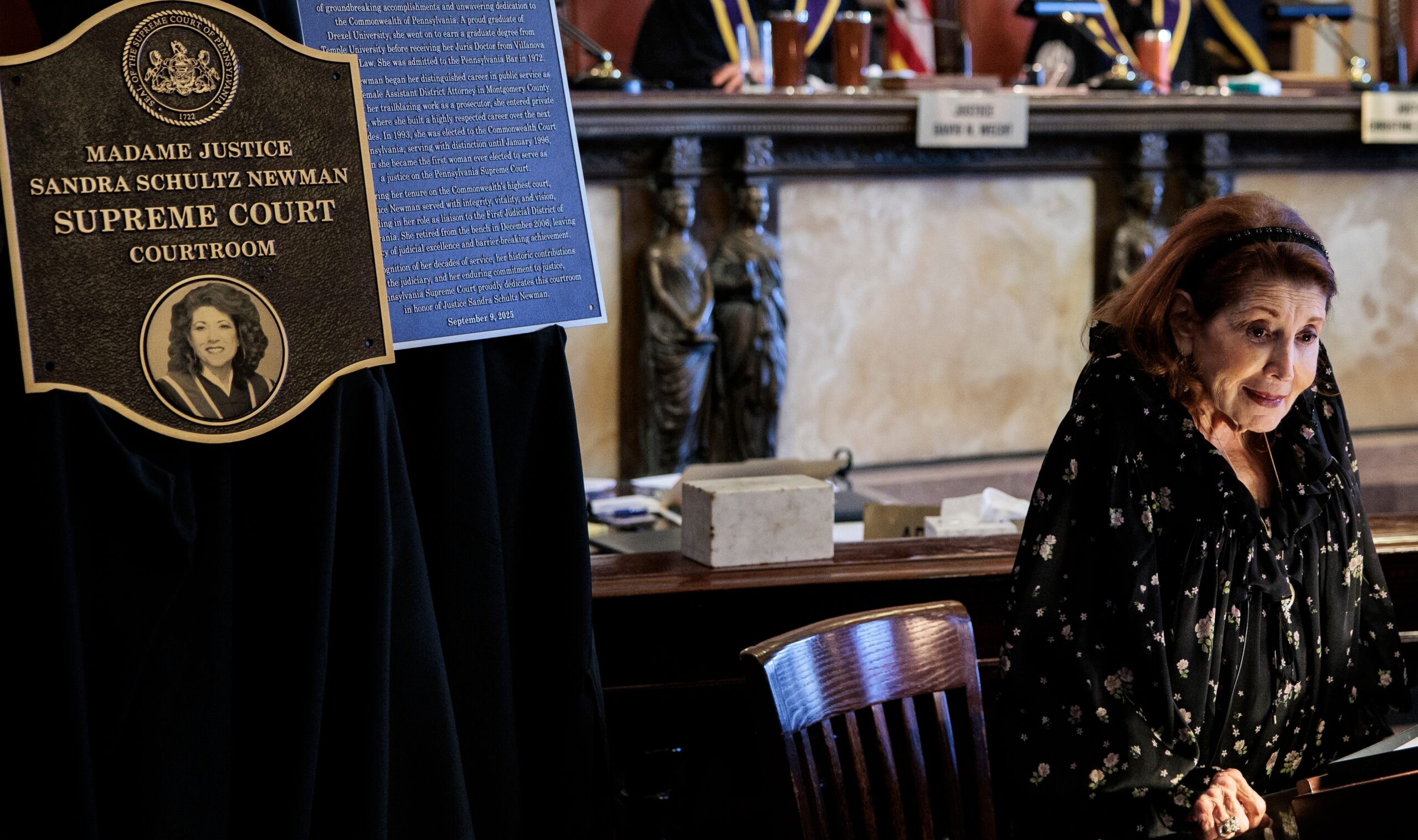
In 2025, her colleagues on the Supreme Court named their Philadelphia courtroom after her. “She was a remarkable jurist, public servant, and trailblazer for women, whose work and impact will leave a legacy beyond the bench,” Supreme Court Chief Justice Debra Todd said in a tribute.
News outlets across the state covered Justice Newman’s election to the Supreme Court as she campaigned in 1995, and she easily collected more votes in the Nov. 7 election than any of the other three candidates, all men. She told the Daily Item in Sunbury, Pa., in September ’95: “I don’t think anyone should be elected solely on their gender. But I don’t think anybody should not be elected because of it, either.”
Justice Newman touted her collegiality and feminine life experience during the 1995 campaign and told The Inquirer she wanted to be a “role model for everyone in Pennsylvania.” She told the Press Enterprise in Bloomsburg, Pa.: “I think I can bring a sensitivity and understanding on many issues, such as criminal issues like rape. I have a deep sense for the need of a safe society.”
Justice Newman speaks in 2025 during the ceremony in which the Supreme Court named its Philadelphia courtroom after her.
After her election, Inquirer staff writer Robert Zausnersaid: “Wealthy yet down-to-earth, Newman talked often during the campaign about her grandchildren and insisted that people ‘call me Sandy’ once she was outside her courtroom.”
Former Gov. Tom Ridge called Justice Newman a “pioneering legal giant” and said she “inspired generations of legal professionals across the Commonwealth.” Ezra Wohlgelernter, chancellor of the Philadelphia Bar Association, noted her “pathbreaking career” and “valuable service to our city and to the Commonwealth” in a tribute.
Either “the first” or “the only” in many of her professional pursuits, Justice Newman was called a “Philadelphia icon,” “a force of nature,” and a “beautiful and radiant star” in online tributes. She flirted with running for political office several times and was colorfully profiled in Philadelphia Magazine in 1988. In that story, writer Lisa DePaulo called her “part woman/part tigress.”
She famously endorsed a controversial cosmetic product on TV in 2006 and attended many galas and charity auctions, and her name appeared in the society and opinion pages nearly as often as the news section. In a 1983 feature, Inquirer writer Mary Walton described Justice Newman as “beautiful … with tousled auburn hair and a slender figure that she liked to cloak in expensive designer clothes.”
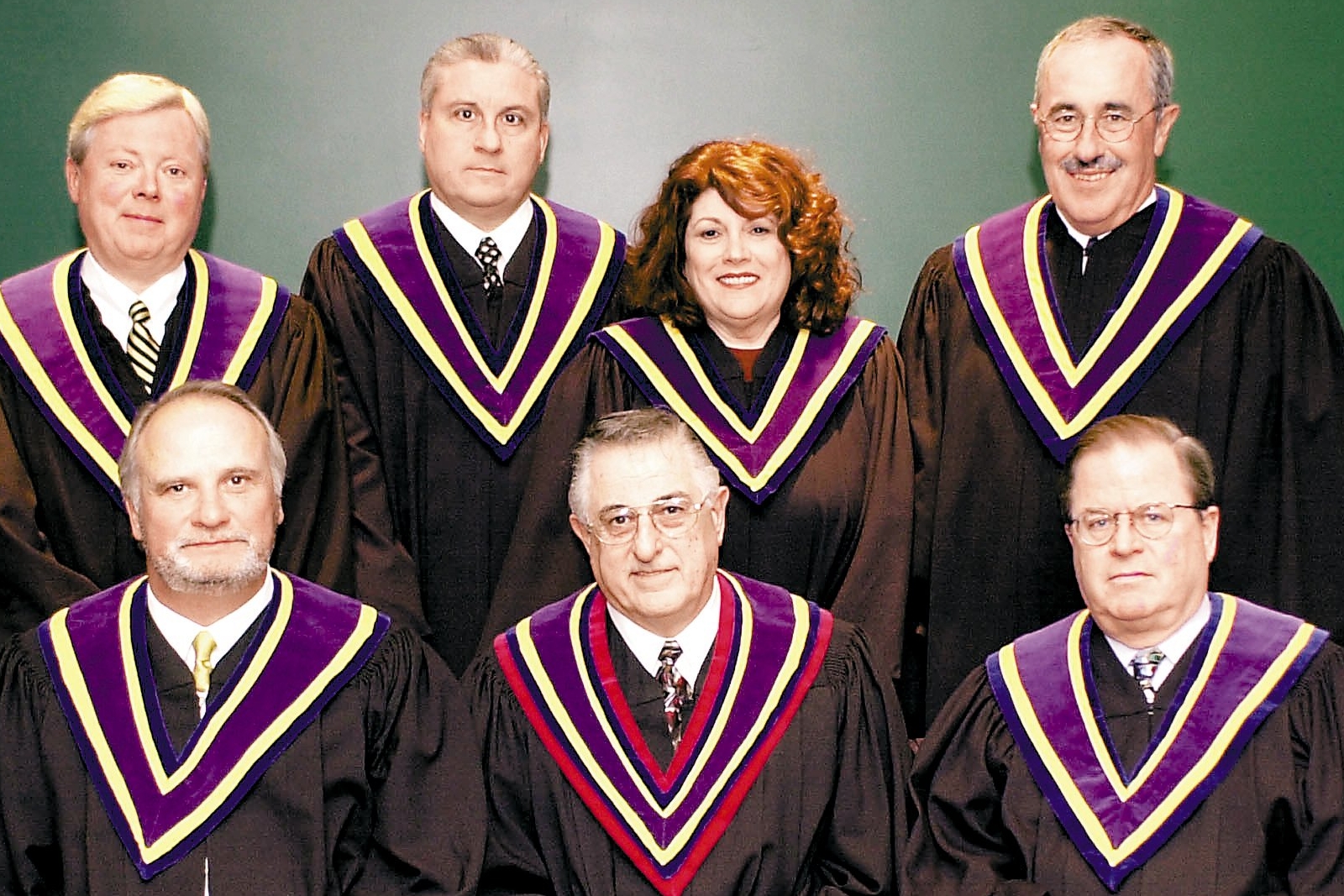
Justice Newman was the only woman on the state Supreme Court in 2002.
A friend said online she was “irrepressible in an Auntie Mame sort of way.” Another said: “The world has become a little quieter.”
Justice Newman served as the first female assistant district attorney in Montgomery County from 1972 to 1974 and was an in-demand, high-profile partner at Astor, Weiss & Newman from 1974 to 1993. She returned to private practice in 2006 and handled mostly alternative dispute resolution cases until recently.
She told the Press Enterprise in 1995 that colleagues in the Montgomery County District Attorney’s Office had adorned her desk with a green plant on her first day in 1972. “It was marijuana from the evidence room,” she said.
She wrote papers and book chapters about trial practice, death penalty statutes, and the electoral system in Pennsylvania. She spoke about all kinds of legal topics at seminars, conferences, and other events.
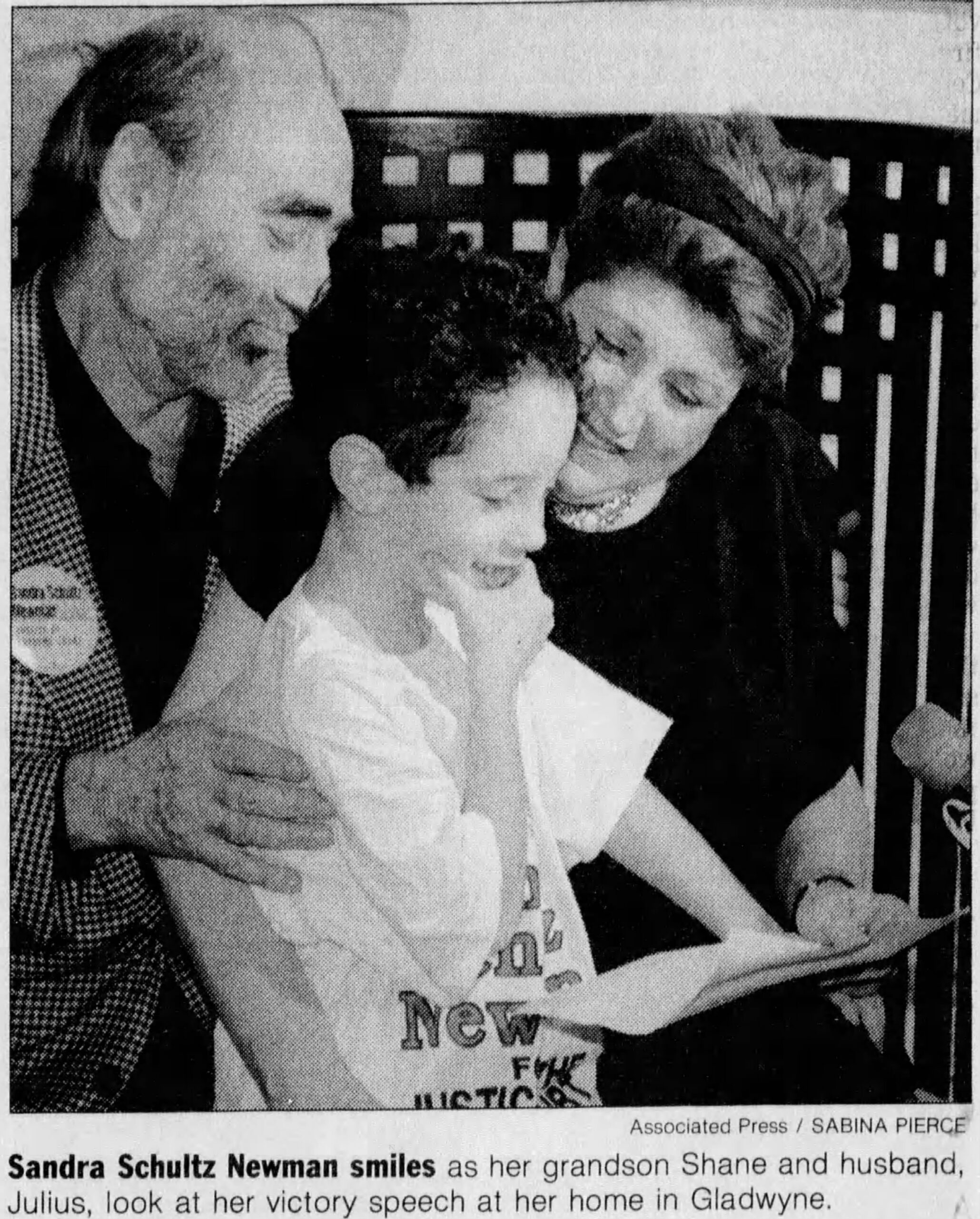
This photo of Justice Newman, her husband, Julius, and grandson Shane was taken for The Inquirer after she won on Election Day in 1995.
She cofounded what is now the Drexel University Thomas R. Kline School of Law in 2006, was a trustee for Drexel’s College of Medicine, and received dozens of service and achievement awards from Drexel, Villanova, the Pennsylvania and Philadelphia Bar Associations, the Women’s Bar Association of Western Pennsylvania, the Pennsylvania Association for Justice, and other groups.
She was the president of boards, chair of many committees, and active with the National Association of Women Justices, the Juvenile Law Center, the American Law Institute, and other organizations. She taught law classes at the Delaware Law School of Widener University in 1984 and ’85, and at Villanova from 1986 to 1993.
She earned a bachelor’s degree at Drexel in 1959 and a master’s degree in hearing science at Temple in 1969. In 1972, she was one of a handful of women to get a law degree at what is now Villanova’s Charles Widger School of Law. Later, she received four honorary doctorate degrees and was named a Distinguished Daughter of Pennsylvaniaby then-Gov. Ridge in 1996.
Outside the courtroom, Justice Newman volunteered for charities and legal associations. She was part of a group that tried unsuccessfully to buy the Eagles from then-owner Leonard Tose in 1983, and she was criticized in the early 2000s for her financial involvement in a bungled long-running effort to fund a new Family Court Building in Philadelphia.
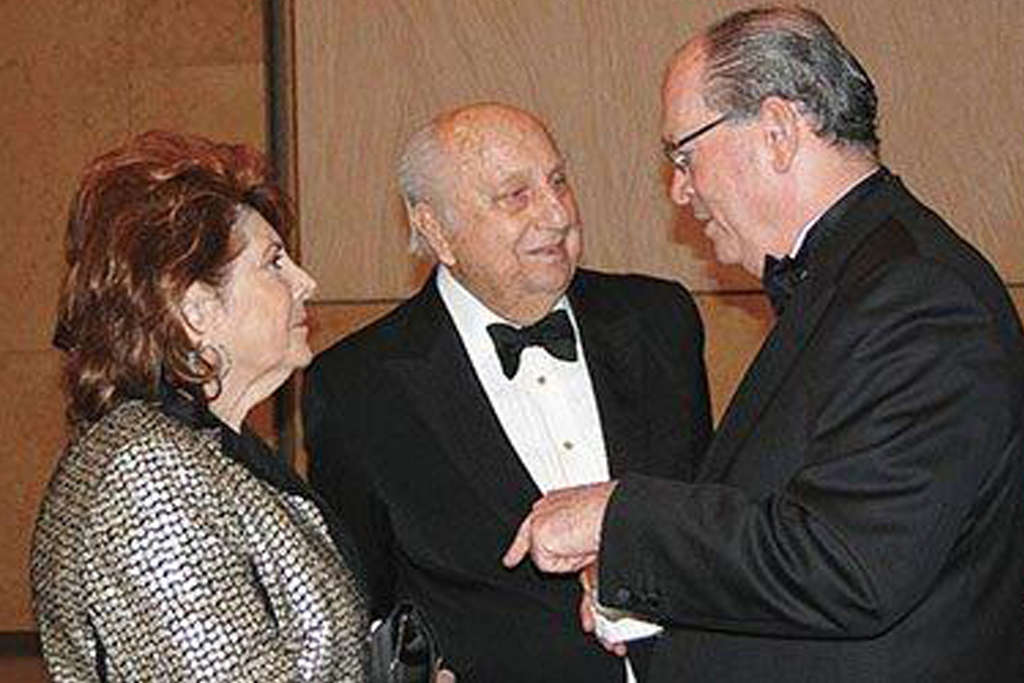
Justice Newman chats with philanthropists and business leaders Raymond G. Perelman (middle) and Joseph Neubauer at the gala opening of the new Barnes Museum in 2018.
“Justice Newman filled every room she entered with her strength, energy, and exuberance for life and for the law,” Supreme Court Justice P. Kevin Brobson said in a tribute. “She lived with intention and spent her entire career focused on creating and expanding opportunities for future generations of legal professionals, especially women.”
Sandra Schultz was born Nov. 4, 1938. She graduated from Overbook High School and married cosmetic surgeon Julius Newman in 1959. They had sons Jonathan and David, and lived in Wynnefield, Penn Valley, and Gladwyne.
Her husband and son David died earlier. She married fellow lawyer Martin Weinberg in 2007, and their union was annulled 11 months later.
Justice Schultz was a longtime fashionista. She reveled in shopping trips to New York, and DePaulo reported in 1988 that her closet in Gladwyne was 800 square feet. She was also funny, generous, and kind, friends said.
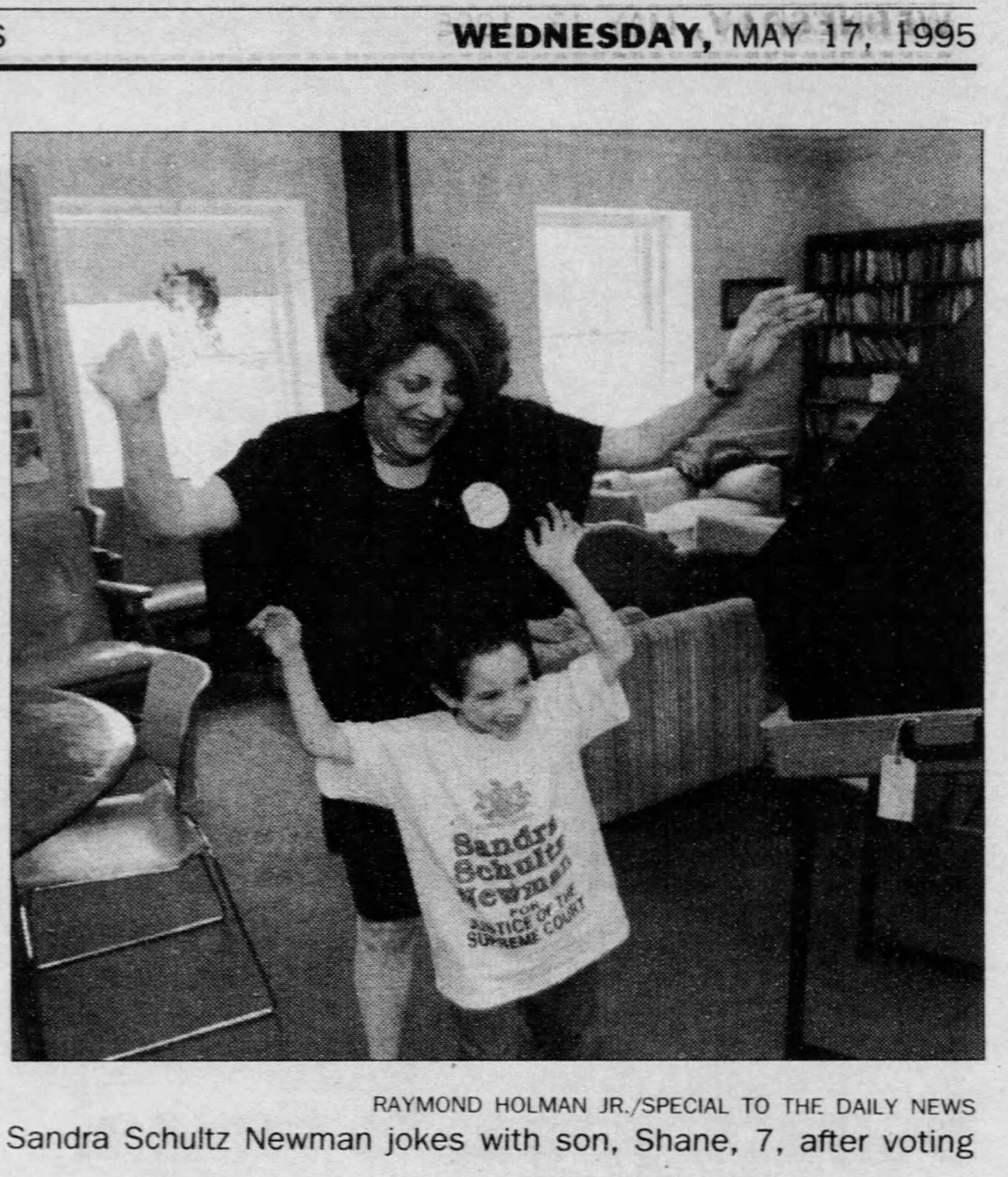
Justice Newman dances with her grandson on Election Day in 1995. This photo appeared in the Daily News.
She funded several college scholarships, collected art, owned racehorses, cooked memorable matzo balls, enjoyed giving gifts, and tried to have dinner every night with her family. Sometimes, DePaulo reported, in the 1970s, she took her young sons to her law school classes at Villanova.
“Despite how busy she was, her family was always her priority,” said her brother, Mark. “She was also a true bipartisan who fought for equal rights and preserving our democratic institutions.”
In 2003, she was asked by Richard G. Freeman, editor in chief of the Philadelphia Lawyer, to describe her judicial decision-making process. She said: “There are beliefs that you have to put aside. One of the wonderful things about being on our court is that you can make new law where your beliefs fit into the law.”
In addition to her son Jonathan and brother, Justice Newman is survived by four grandchildren and other relatives. A grandson died earlier.
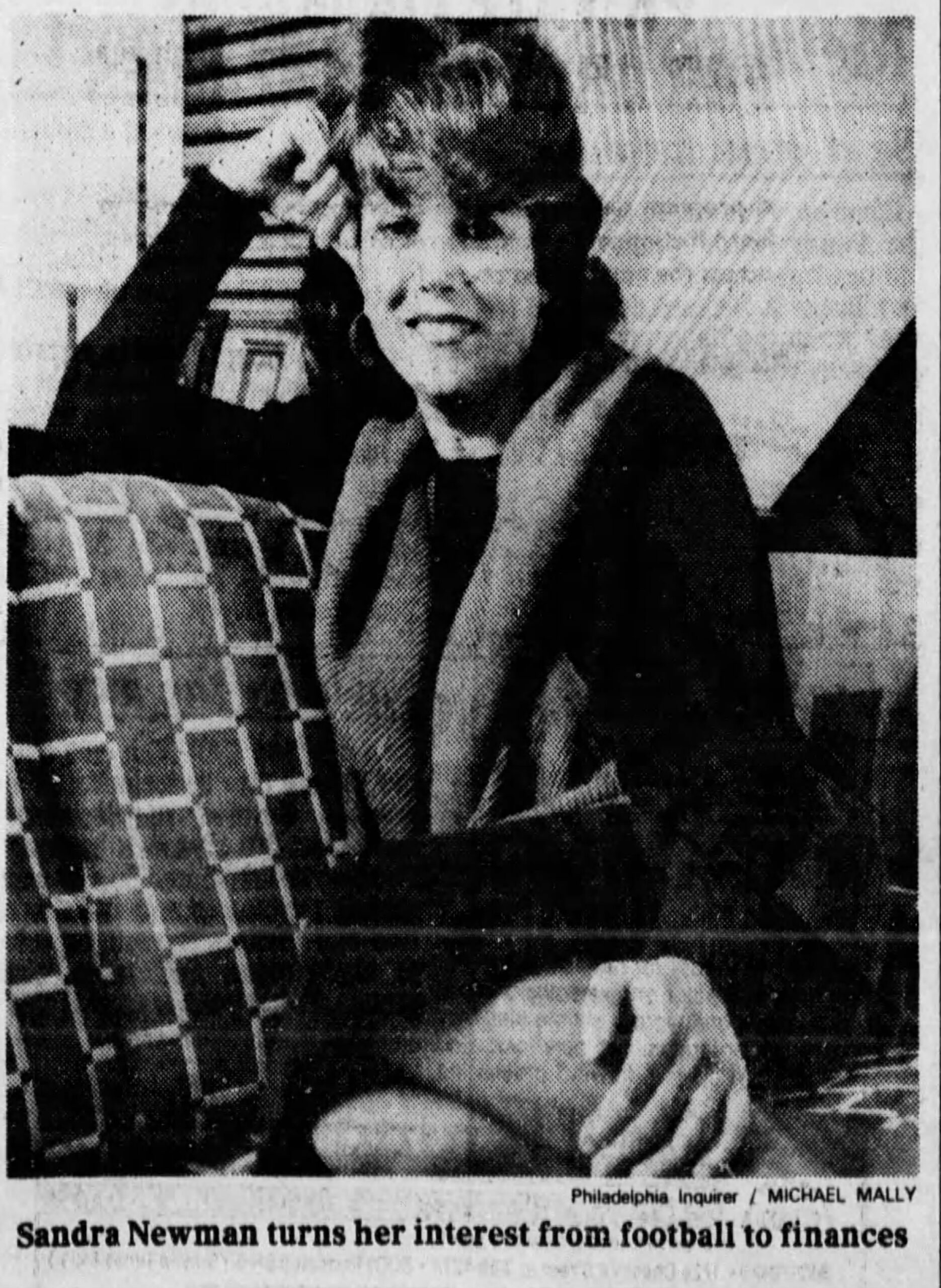
This photo of Justice Newman appeared in The Inquirer in 1983.
Services are private.
Donations in her name may be made to the Crohn’s and Colitis Foundation, 733 Third Ave., Suite 510, New York, N.Y. 10017.
Correction: One of the communities that Justice Schultz grew up in has been corrected.
TRENTON, N.J. — The race in New Jersey between a onetime political director for Sen. Bernie Sanders and a former congressman was too early to call Thursday, in a special House Democratic primary for a seat that was vacated after Mikie Sherrill was elected governor.
Former U.S. Rep. Tom Malinowski started election night with a significant lead over Analilia Mejia, based largely on early results from mail-in ballots. The margin narrowed as results from votes cast that day were tallied.
With more than 61,000 votes counted, Mejia led Malinowski by 486, or less than 1 percentage point.
All three counties in the district report some mail-in ballots yet to be processed. Also, mail-in ballots postmarked by election day can arrive as late as Wednesday and still be counted.
Malinowski did better than Mejia among the mail-in ballots already counted in all three counties, leaving the outcome of the race uncertain.
The Democratic winner will face Randolph Mayor Joe Hathaway, who was unopposed in the Republican primary, on April 16.
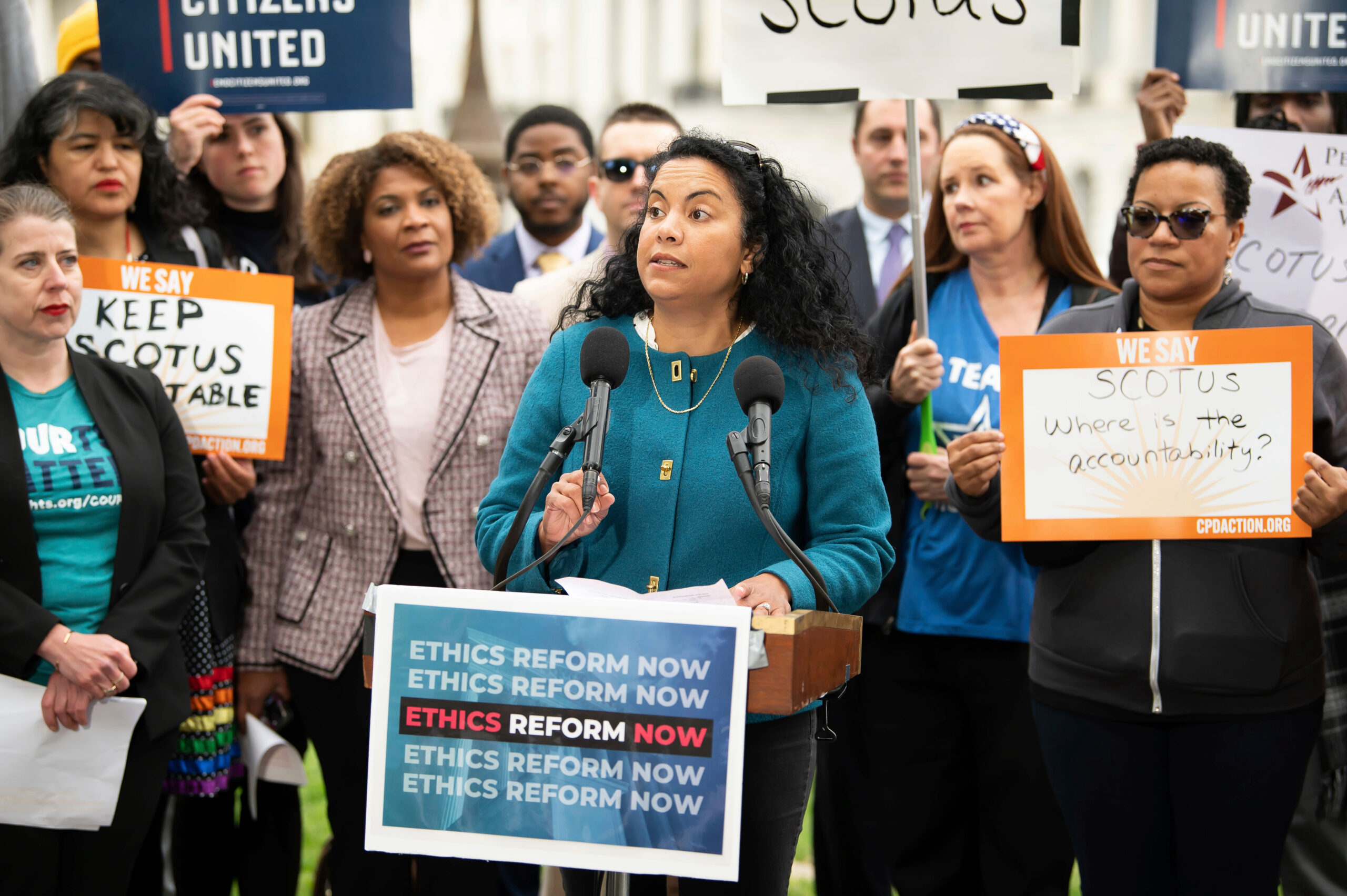
Analilia Mejia, center, speaks during a rally in Washington calling for SCOTUS ethics reform on May 2, 2023.
Mejia, a former head of the Working Families Alliance in the state and political director for Sanders during his 2020 presidential run, had the Vermont independent senator’s endorsement as well as that of U.S. Rep. Alexandria Ocasio Cortez of New York. She also worked in President Joe Biden’s Labor Department as deputy director of the women’s bureau.
Both Malinowski and Mejia were well ahead of the next-closest candidates: Brendan Gill, an elected commissioner in Essex County who has close ties to former Gov. Phil Murphy; and Tahesha Way, who served as lieutenant governor and secretary of state for two terms under Murphy until last month.
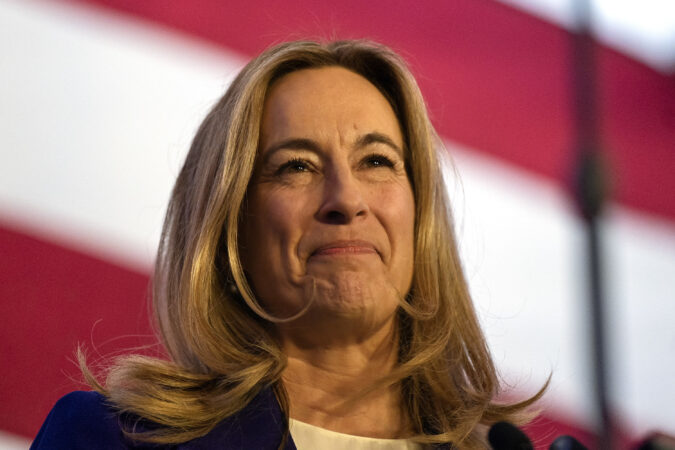
Democratic Congressman Tom Malinowski speaks during his election night party in Garwood, N.J., on Nov. 8, 2022.
The other candidates were John Bartlett, Zach Beecher, J-L Cauvin, Marc Chaaban, Cammie Croft, Dean Dafis, Jeff Grayzel, Justin Strickland and Anna Lee Williams.
The district covers parts of Essex, Morris and Passaic counties in northern New Jersey, including some of New York City’s wealthier suburbs.
The special primary and April general election will determine who serves the remainder of Sherrill’s term, which ends next January. There will be a regular primary in June and general election in November for the next two-year term.
Sherrill, also a Democrat, represented the district for four terms after her election in 2018. She won despite the region’s historical loyalty to the GOP, a dynamic that began to shift during President Donald Trump’s first term.
Think you know your news? There’s only one way to find out. Welcome back to our weekly News Quiz — a quick way to see if your reading habits are sinking in and to put your local news knowledge to the test.
Question 1 of 10
Former Philadelphia District Attorney Seth Williams' tenure imploded as he was prosecuted on federal corruption charges nearly a decade ago. What is he up to now?
CorrectIncorrect. XX% of other readers got this question right.
The role’s expectations are modest. Williams offers spiritual counseling and religious programming to the 600 or so prisoners held at Riverside Correctional Facility. It is part-time and pays about $21 per hour.
Question 2 of 10
Punxsutawney Phil saw his shadow this week, indicating six more weeks of winter are yet to come. That clairvoyant groundhog calls this famed Pennsylvania place home:
CorrectIncorrect. XX% of other readers got this question right.
The weather-predicting groundhog saw his shadow Monday outside his hole at Gobbler’s Knob in Punxsutawney. If you believe such things, that means the entire country — including our snow-covered section of the Northeast — can expect below-average temperatures for the next six weeks.
story continues after advertisement
Question 3 of 10
Formerly known as Lou Turk's, Delaware County’s lone strip club is changing its name, but keeping its highly anticipated flower sale. What holiday marks the occasion?
CorrectIncorrect. XX% of other readers got this question right.
The annual Mother’s Day and Easter flower sales outside of the strip club will remain intact, despite the name change to The Carousel Delco. You wouldn’t want to tell your mom you bought her flowers at the Acme, would you?
Question 4 of 10
One South Philly restaurant has a popular cocktail that mimics a beloved style of soup. The soup is:
CorrectIncorrect. XX% of other readers got this question right.
Chef Thanh Nguyen’s signature pho cocktail at Gabriella’s Vietnam is a many-layered marvel. It’s not like drinking pho broth spiked with vodka. A tiny squirt of Sriracha muddled with fresh culantro and ginger adds a soft orange hue.
Question 5 of 10
After weeks of uncertainty over their potential retirement, which Eagles staff member ultimately decided to return for another season with the team?
CorrectIncorrect. XX% of other readers got this question right.
Fangio’s decision to stay brings some stability to an Eagles coaching staff that is already in the process of undergoing change. Hours before Fangio's return was official, Stoutland announced that he would be leaving his post as the Eagles offensive line coach after 13 years.
Subscribe to The Philadelphia Inquirer
Our reporting is directly supported by reader subscriptions. If you want more journalism like this story, please subscribe today.
This Mount Airy ice cream shop previously said it was closing for good, but will be sticking around after all:
CorrectIncorrect. XX% of other readers got this question right.
Founder Danielle Jowdy announced in December 2024 that she planned to end her 14-year run at the end of 2025. But Liz Yee, a pastry chef at the nearby Catering by Design who also creates desserts for Doho restaurant, also in Mount Airy, plans to reopen Zsa’s on Saturday, Ice Cream for Breakfast Day.
Question 7 of 10
A few months ago, the Philadelphia Art Museum took up its new moniker. But now, it's changing again. The new (?) name is:
CorrectIncorrect. XX% of other readers got this question right.
The PhAM acronym used in marketing materials will be dropped, and the museum will once again refer to itself in shorthand as the PMA as many Philadelphians long have. Why the retreat? In short, the new name was widely disliked.
Question 8 of 10
This boxing great's former home in Cherry Hill is once again on the market with an asking price of $1.9 million:
CorrectIncorrect. XX% of other readers got this question right.
About 300 people have been tasked with manually breaking up ice at crosswalks and streets in residential neighborhoods in Philadelphia following the region's recent stubborn snowfall. What are they called?
CorrectIncorrect. XX% of other readers got this question right.
Mayor Cherelle. L Parker said that the city has tapped into its Future Track Program for snow-removal efforts. The trainees are typically at-risk young adults who are not enrolled in higher education and are unemployed. They get job experience, as well as other services, and they help in beautification projects. In the snow cleanup, Parker said, the trainees cleared more than 1,600 ADA ramps.
Question 10 of 10
Anonymous hackers claimed that a recent data breach compromised data for 1.2 million students, donors, and alumni at the University of Pennsylvania. But the school now says this many people were impacted:
CorrectIncorrect. XX% of other readers got this question right.
The school hired cybersecurity specialists to help investigate the Oct. 31 breach, which accessed systems related to development and alumni activities. A Penn source confirmed Tuesday that fewer than 10 people received notifications that their personal information had been affected.
Your Results
You have skipped .
You scored XX out of 10.
The average reader scored XX out of 10
Seems like you’ve been skimming more than reading there, buddy. There’s always next week.
You’ve read some articles (or made some educated guesses) but we wouldn’t come to you first for our local news recaps. Better luck next week!
Do you work here? You’re a local news stan with the latest updates on Philly happenings. Your friends definitely ask you for summaries on what’s going on and it shows.
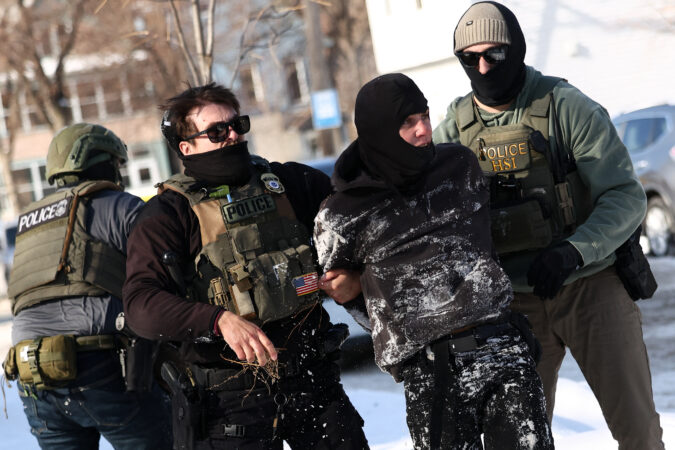
One of the lasting images of President Donald Trump’s mass deportation campaign will be the masks worn by federal immigration agents.
The widespread use of facial coverings by U.S. Immigration and Customs Enforcement officers is among the suite of tactics — agents dressed in plainclothes, wearing little identification, jumping out of unmarked cars to grab people off the street — that have fueled immigration advocates’ use of terms like “kidnappings” and “abductions.”
Now Philadelphia lawmakers appear poised to pass legislation that would ban all officers operating in the city — including local police — from concealing their identitiesby wearing masks or conducting enforcement from unmarked cars.
The question is whether the city can make that rule stick.
Legal hurdles loom for municipalities and states attempting to regulate federal law enforcement. Local jurisdictions are generally prohibited from interfering with basic federal functions, and Trump administration officials say state- and city-level bans violate the constitutional provision that says federal law reigns supreme.
There are also practical concerns about enforcement. Violating the mask ban would be a civil infraction, meaning local police would be tasked with citing other law enforcement officers for covering their faces.
“No doubt this will be challenged,” said Stanley Brand, a distinguished fellow at Penn State Dickinson Law. “This ordinance will be a protracted and complicated legal slog.”
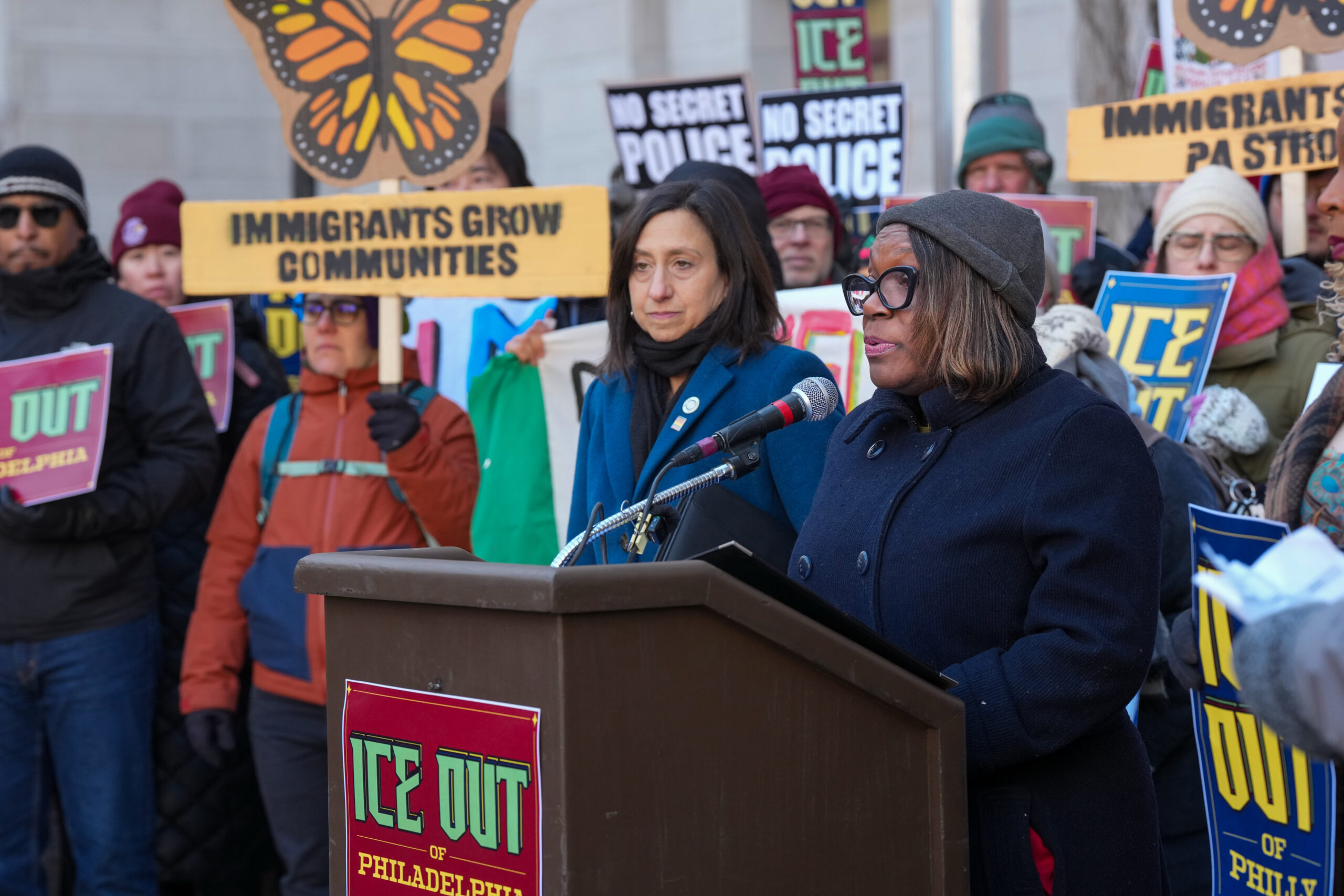
Councilmember Kendra Brooks speaks during a news conference at City Hall to announce a package of bills aimed at pushing back against ICE enforcement on Jan. 27.
Advocates for immigrants say that unmasking ICE agents is a safety issue, and that officers rarely identify themselves when asked, despite being required to carry badges.
Mask use can also spur impersonators, they say. At least four people in Philadelphia have been arrested for impersonating ICE officers in the last year.
“You see these people in your community with guns and vests and masks,” said Desi Bernette, a leader of MILPA, the Movement of Immigrant Leaders in Pennsylvania. “It’s very scary, and it’s not normal.”
Democrats in jurisdictions across America, including Congress and the Pennsylvania General Assembly, have introduced legislation to ban ICE agents from concealing their faces. California is the furthest along in implementing a mask prohibition, and a judge is currently weighing a challenge filed by the Trump administration.
Senate Democrats negotiating a budget deal in Washington have asked for a nationwide ban on ICE agents wearing masks in exchange for their votes to fund the Department of Homeland Security.
And polling shows getting rid of masks is popular. A recent Pew Research Center survey found that 61% of Americans believe federal agents should not wear face coverings to conceal their identities while on duty.
ICE officials say agents should have the freedom to conceal their faces while operating in a hyperpartisan political environment.
Last year, ICE head Todd Lyons told CBS News that he was not a proponent of agents wearing masks, though he would allow it. Some officers, he said, have had private information published online, leading to death threats against them and their families.
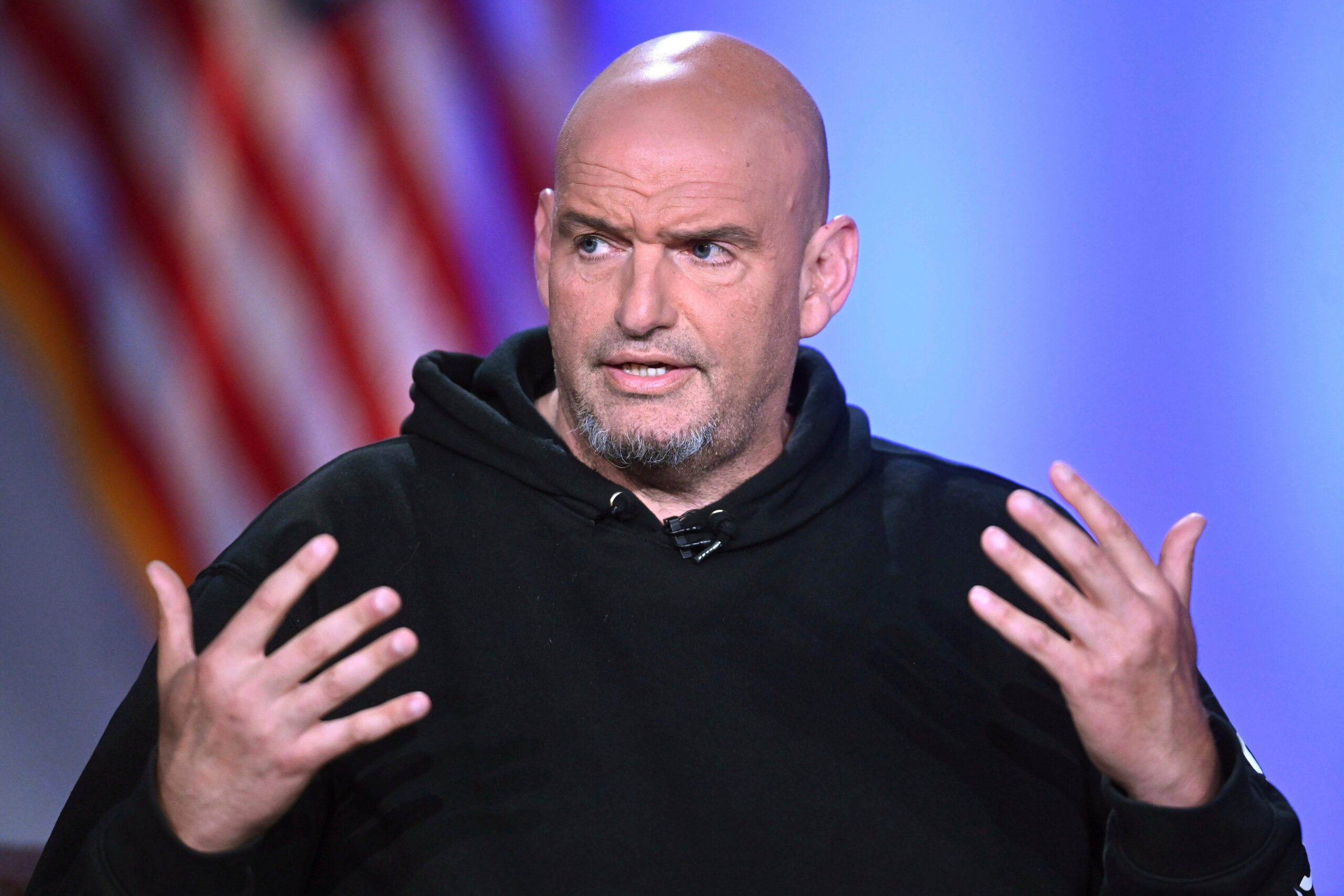
“They could target [agents’] families,” Fetterman said in an interview on Fox News, “and they are organizing these people to put their names out there.”
Sen. John Fetterman, D-Pa., participates in a debate on June 2, 2025, in Boston.
The Council authors of the Philadelphia bills say they are responding to constituents who are intimidated by ICE’s tactics, and they believe their legislation can withstand a legal challenge.
“Our goal is to make sure that our folks feel safe here in the city,” said City Councilmember Kendra Brooks. “We are here to protect Philadelphians, and if that means we eventually need to go to court, that’s what would need to happen.”
The constitutional limits on unmasking ICE
The bill introduced last week by Brooks and Councilmember Rue Landau is part of a package of seven pieces of legislation aimed at limiting how ICE operates in Philadelphia. The proposals would bar Philadelphia employees from sharing information with ICE and ban the agency from using city property to stage raids.
Fifteen of Council’s 17 members signed on to the package of legislation, meaning a version of it is likely to become law. Passing a bill in City Council requires nine votes, and overriding a mayoral veto takes 12. Mayor Cherelle L. Parker has said her team is reviewing the legislation, which can still be amended before it becomes law.
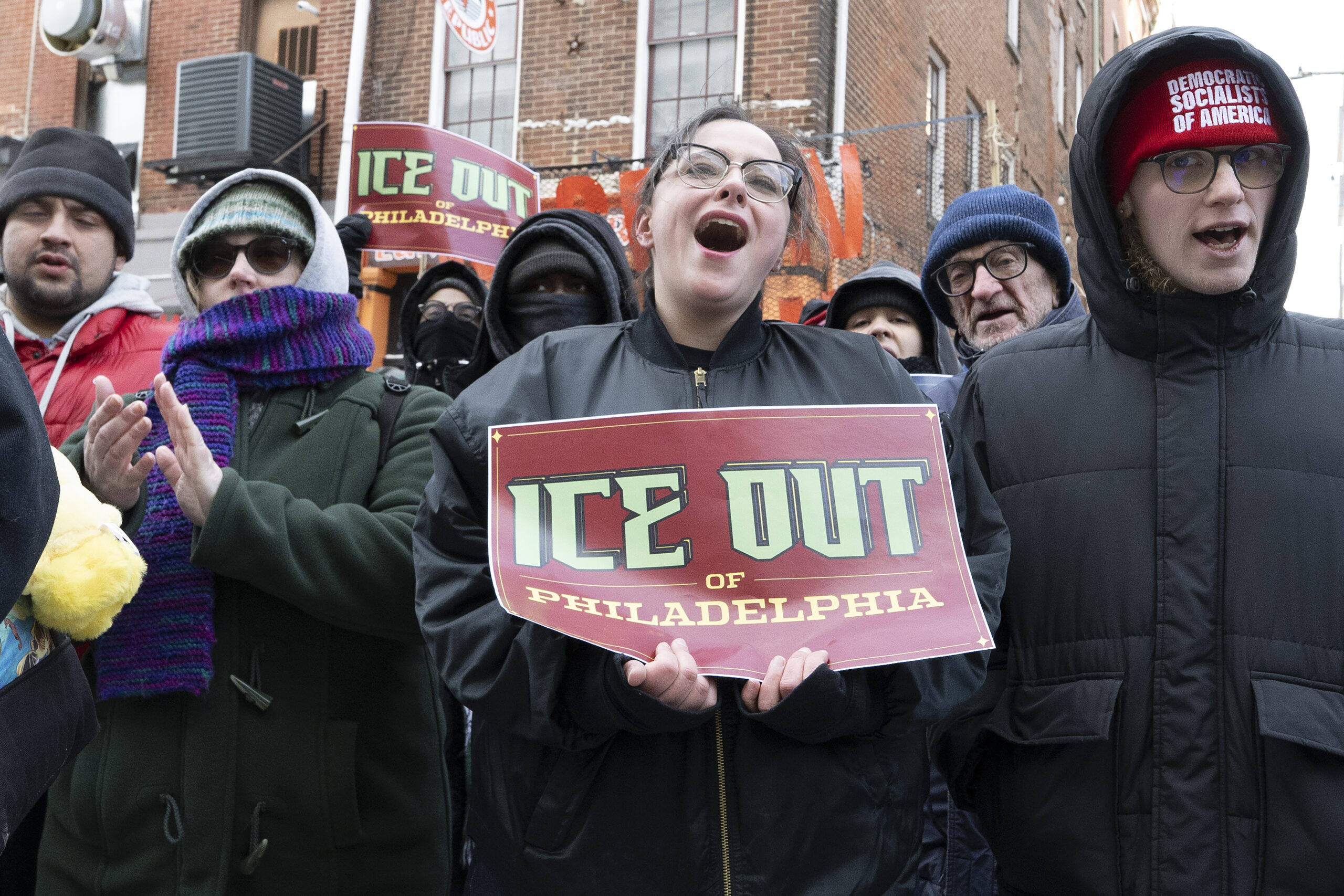
Anti-ICE activists demonstrate outside U.S. Sen. John Fetterman’s Philadelphia office, Jan. 27, calling for an end to federal immigration enforcement policies.
One of the two members who did not cosponsor the package was Councilmember Mike Driscoll, a Democrat who represents parts of Lower Northeast Philadelphia. He indicated that he had concerns about whether the “ICE Out” legislation would hold up in court.
Brooks said Council members worked with attorneys to ensure the legislation is “within our scope as legislators for this city to make sure that we protect our folks against these federal attacks.”
Brand, of Dickinson Law, said the legislation is a classic example of a conflict between two constitutional pillars: the clause that says federal law is supreme, and the 10th Amendment, which gives states powers that are not delegated to the federal government.
He said there is precedent that the states — or, in this case, cities — cannot interfere with laws enacted by Congress, such as immigration matters.
“If I were betting, I would bet on the federal government,” Brand said.
But there is a gray area, he said, and that includes the fact that no law — or even regulation — says federal law enforcement agents must wear masks.
Kermit Roosevelt, a law professor at the University of Pennsylvania who is an expert on the Constitution and conflict of laws, said if there is no agency policy, that is “free space” for states and cities to regulate.
Roosevelt said Brooks’ legislation steers clear of other constitutional concerns because it applies to all police officers, not just federal agents.
“If they were trying to regulate only federal agents, the question would be, ‘Why aren’t you doing that to your own police officers?’” he said. “If you single out the federal government, it looks more like you’re trying to interfere with what the federal government is doing.”
Applying the law to local police
Experts say part of the backlash to ICE agents covering their faces is because Americans are not used to it. Local police, sheriff’s deputies, and state troopers all work largely without hiding their faces.
“Seeing law enforcement actions happening with federal agents in masks, that’s extremely jarring,” said Cris Ramon, an immigration consultant based in Washington. “Why are you operating outside of the boundaries of what every other law enforcement agency is doing?”
Protesters march up Eighth Street, toward the immigration offices, during the Philly stands with Minneapolis Ice Out For Good protest at Philadelphia City Hall on Jan. 23.
The Council legislation includes exceptions for officers wearing medical-grade masks, using protective equipment, or working undercover. It also allows facial coverings for religious purposes.
However, the federal government could still raise First Amendment concerns, said Shaakirrah R. Sanders, an associate dean at Penn State Dickinson Law.
The administration, she said, could argue that the city is only trying to regulate law enforcement officers and claim that would be discriminatory.
Sanders said defending the legislation could be “very costly” and the city should consider alternatives that fall more squarely within its authority. She pointed to efforts like New Jersey Gov. Mikie Sherrill’s announcement that the state would create a database for residents to upload videos of ICE interacting with the public.
“It looks like the city wants to wield big legislative power,” Sanders said. “My alternative is more in the grassroots work, where you are the first ear for your citizens, not the regulator of the federal government.”
BAIDI, Nigeria — There are still bloodstains and bullet holes in the mud-brick alcove where villagers took shelter last month after militants overran their community, opening fire on residents who had gathered to drink tea in the town square.
Six people, ages 18 to 60, were killed in Baidi that night, locals said, gunned down without warning by men whose faces were obscured by the darkness. The attack was the latest in Nigeria’s northwestern Sokoto state, carried out by what Nigerian and U.S. officials believe is the newest African affiliate of the Islamic State.
On Christmas night, President Donald Trump announced that United States had launched airstrikes against the group, known here as Lakurawa, part of what the White House and its allies have described as a campaign to put a stop to the “slaughter of Christians” in Nigeria. But the U.S. strikes were largely ineffective, Nigerian officials, analysts and residents said, and there are very few Christians in Sokoto to protect. The state, once part of a 19th-century caliphate, remains overwhelmingly Islamic, and it is Muslims in villages like this one who have borne most of the violence in Sokoto.
Yet no one here denies there is a real and growing security crisis. Islamist militants from several different groups have wrought havoc in Mali, Burkina Faso and Niger in recent years while quietly extending their reach into northern Nigeria. Most researchers see Lakurawa as an extension of the Islamic State Sahel Province (ISSP), which is strongest along the borderlands between Mali and Niger but has shown the ability to strike high-profile targets. Its fighters kidnapped an American missionary in central Niamey, Niger’s capital, late last year and, just last week, executed a large-scale attack on Niger’s international airport.
Now, according to five Nigerian and U.S. officials, ISSP is sharing intelligence and coordinating logistics with the more established Islamic State West Africa Province (ISWAP), which is based hundreds of miles to the east on the islands of Lake Chad. Together, officials fear, the two groups could destabilize vast stretches of northern Nigeria, home to an estimated 130 million people, where authorities have long struggled to contain insurgent violence.
“This is not just a Nigeria problem,” said one of the Nigerian security officials, speaking like others in this story on the condition of anonymity to discuss sensitive and ongoing operations. “It affects the entire region.”
Men handle donkeys at the market in Tangaza, Nigeria, on Jan. 26. Many kidnappings and attacks occur in this area.
The U.S. has ramped up cooperation with Nigeria’s military in recent months, according to four of the officials, running daily surveillance flights over northern Nigeria with drones launched from Ghana. Officials said the flights have provided actionable intelligence used in additional strikes by the Nigerian military.
What, if anything, the U.S. and Nigerian strikes have achieved against militants in the northwest remains difficult to discern. Both nations are playing catch-up on a threat that analysts say has been building for years and is still poorly understood. Attacks by Lakurawa have not been officially claimed by the Islamic State, and researchers and officials have competing theories about the group’s origins and allegiances.
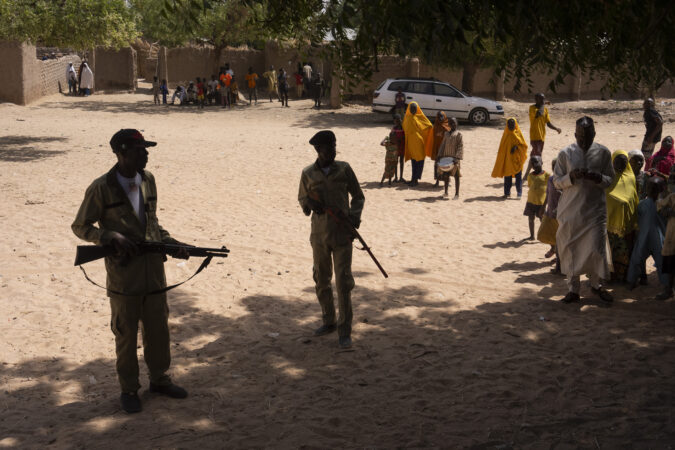
What was clear over the course of more than 20 interviews across Sokoto state is that the militants are on the offensive. Residents in multiple front line villages say armed men are increasingly imposing an extreme version of Islamic law on their communities, demanding they pay taxes known as zakat and punishing those who refuse.
Fighters often announce their arrival by barging into mosques and dictating the rules communities must live by. Most of the villages around Baidi, residents said, have already fallen under Lakurawa’s control. Western schools, already rare in this impoverished region, have been shuttered. Music, cigarettes, and traditional celebrations, including weddings and naming ceremonies, have been banned. Drinking and drugs are forbidden and strict dress codes are enforced.
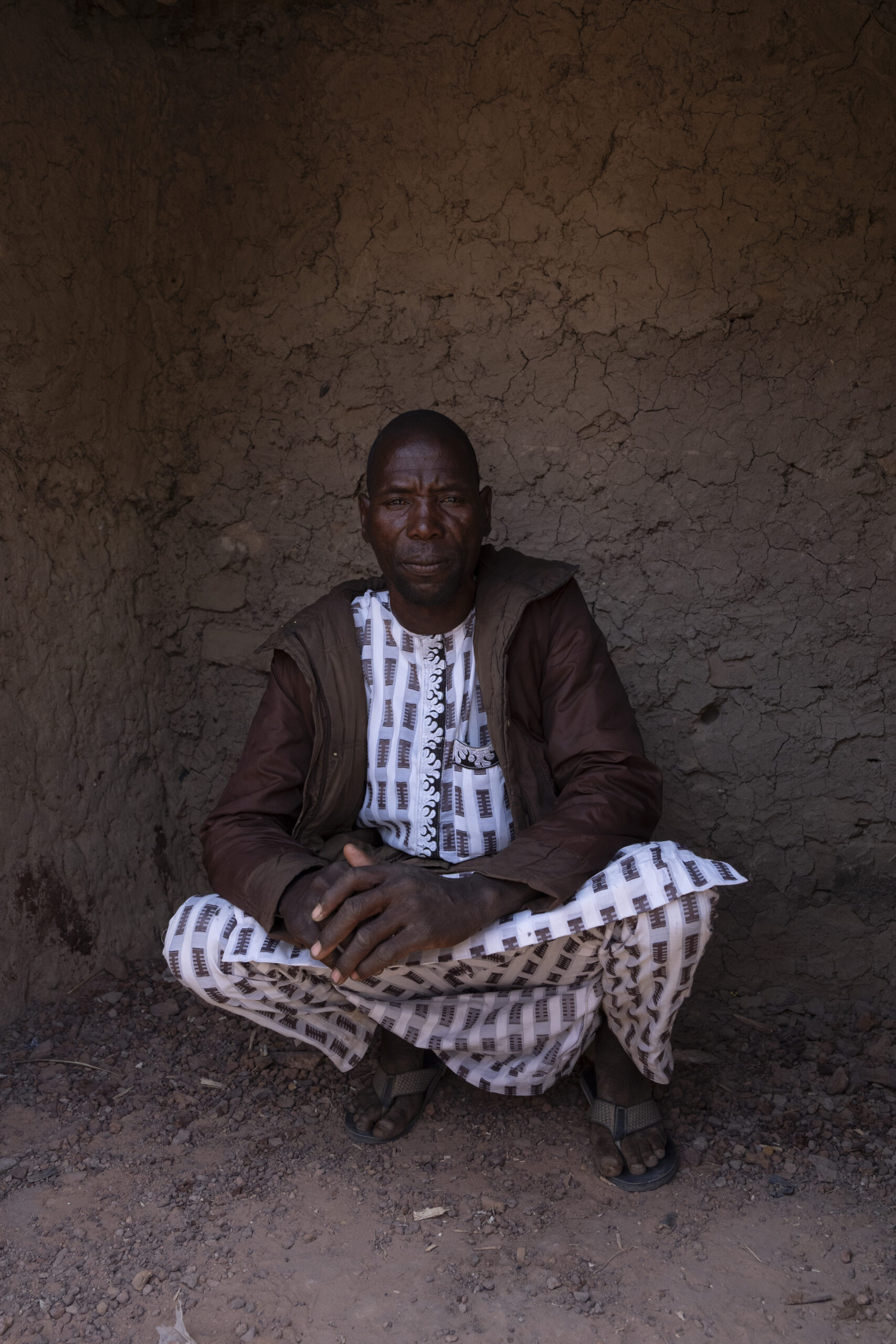
Musa Sani next to blood and bullet holes where Lakurawa shot during a recent attack that killed several people in Baidi, Nigeria, on Jan. 26.
A few weeks before the attack in Baidi, residents said, militants approached members of a local vigilante group that had formed to defend the community, demanding they urge local leaders to submit to their rule. The leaders refused.
“We understood there would be retaliation,” said Musa Sani, 47, one of the vigilantes. “But we did not want to live under a terrorist regime.”
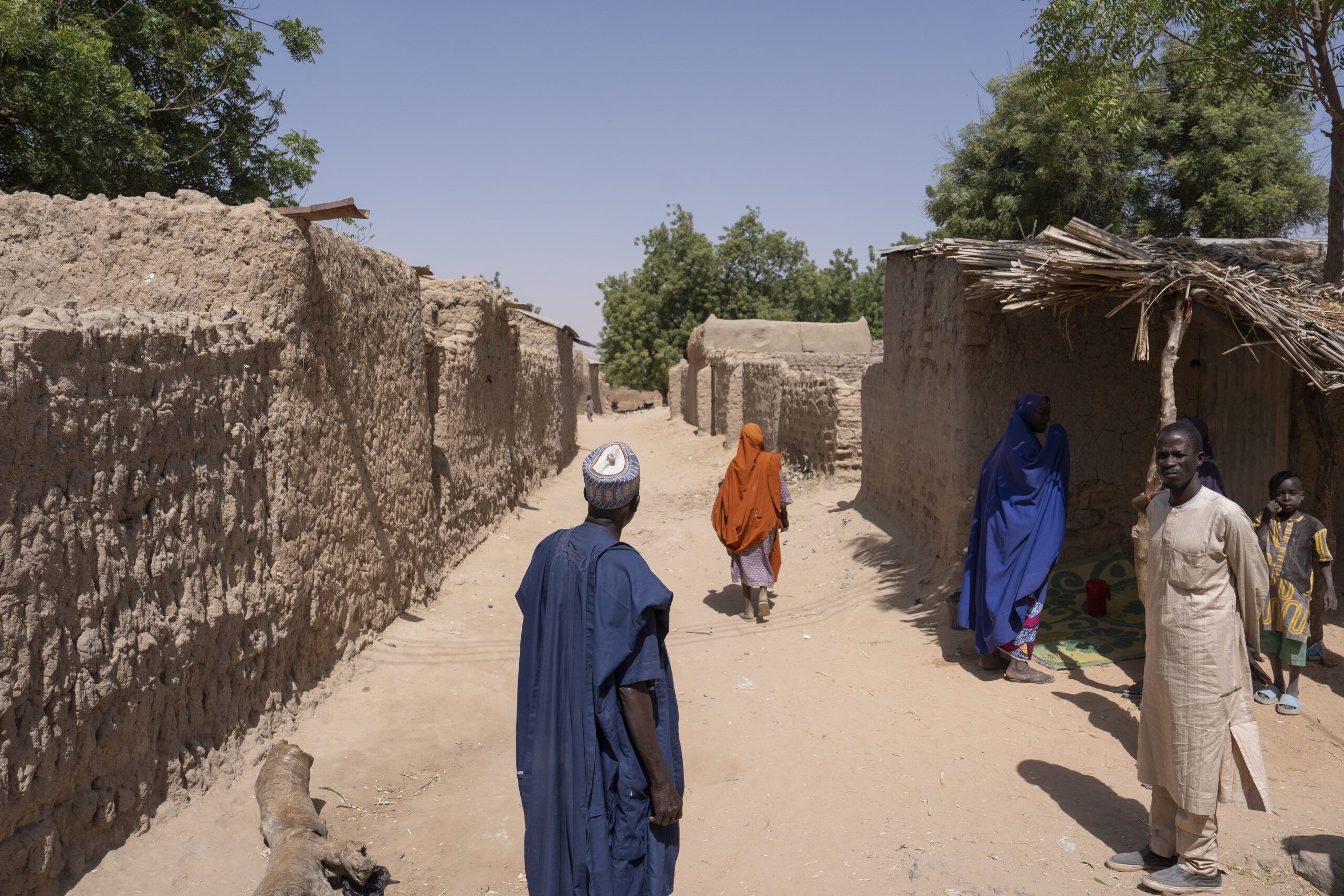
Men hang out in Silame, Nigeria, where Lakurawa pass through, on Jan. 25. Lakurawa have been known to punish people for having cell phones. Many kidnappings and attacks occur in this area.
‘Under the radar’
In November, U.N. secretary-general António Guterres told the U.N. Security Council that Africa’s Sahel region, spanning the breadth of the continent from the Atlantic Ocean to the Red Sea, now accounts for more than half of all terrorism deaths worldwide and warned of a “disastrous domino effect across the entire region.”
A dizzying array of armed groups thrive across a succession of weak states with porous borders. JNIM, a powerful al-Qaeda affiliate, and ISSP compete for influence in Mali, Burkina Faso, and Niger (JNIM also claimed its first attack in Nigeria in late October). ISWAP and the remnants of the Boko Haram jihadist movement are dominant in northeast Nigeria and around Lake Chad.
Boko Haram’s rampage in northeast Nigeria captured the world’s attention more than a decade ago when fighters kidnapped nearly 300 schoolgirls from their dormitories in Chibok. But the arrival of Sahelian militants in the northwest a few years later flew largely under the radar and has been a source of growing alarm for Nigerian officials.
Hakimi Maikudi, community leader, stands in the road where Lakurawa came through during the attack in Baidi, Nigeria, on Jan. 26.
In early November, when Trump suddenly threatened to go “guns-a-blazing” into Nigeria to protect embattled Christmas, officials here were surprised and angry. Nigeria’s population of 230 million is roughly split between Christians and Muslims, and people of both faiths have been targeted by extremists.
But Nigeria’s military was watching the militant violence, especially in the northwest, with growing concern, acknowledged Daniel Bwala, a senior adviser to President Bola Tinubu. “We had always viewed the United States as a senior brother,” said Bwala. “We needed to find a way to work with [them].”
Bwala and a delegation of top officials made the rounds in Washington, appealing for help in addressing a security crisis they said impacted all Nigerians. Their efforts paid off: When the U.S. launched strikes on Dec. 25, it was against Lakurawa targets provided by Nigerian officials.
Although Trump and other U.S. officials have publicly claimed the strikes were a success, they have provided no evidence to support their claims. At least four of the 16 Tomahawk missiles failed to explode, the Washington Post found, landing in open fields and a residential area far from where the militants are known to operate. Nigeria’s government has said three dozen suspected militants were arrested while attempting to flee Sokoto state following the strikes. Mohammed Idris, the country’s information minister, told the Post that a “comprehensive evaluation” was still underway.
A senior Nigerian intelligence official who deployed a team to the sites where missiles reached their targets told the Post that while Lakurawa camps were destroyed, there was no indication that militants were killed. Three other Nigerian officials conceded that the sheer number of armed groups operating in the northwest, and shifting alliances among them, have made it difficult to obtain accurate intelligence.
That lack of clarity presents “a real operational challenge vis-à-vis targeting,” said James Barnett, a Nigeria specialist based between Lagos and Britain. “Intelligence has to be precise and fresh for it to be effective.”
Barnett also cautioned that Lakurawa may not be a single coherent group, but rather a catchall term for Sahelian Islamist militants. Allied criminal bandits, he added, may be exploiting the confusion and operating under its name.
As officials try to make sense of the situation, fighters loyal to ISSP have “entrenched themselves in the Niger-Nigeria borderland and are advancing toward Benin,” said Héni Nsaibia, the senior West Africa analyst for the Armed Conflict Location & Event Data project.
“They have decided to run their operations covertly,” he said, “to try to stay under the radar.”
Children leave their home in Silame, Nigeria, where Lakurawa pass through, on Jan. 25.
Rule of the gun
Driving north from the bustling city of Sokoto, the regional capital, toward the border with Niger, the roads are largely devoid of traffic. Rolling brushland is interrupted only by the occasional farm.
It is in these remote, ungoverned spaces that Lakurawa established a foothold, officials say, and is now expanding.
Residents in four towns and villages described armed men arriving here more than five years ago from Mali and Niger, traveling on motorbikes and speaking languages they didn’t understand.
At first, they presented themselves as peacemakers — mediating disputes between herders and farmers, which sometimes turned violent, and protecting communities from roving bandits. But it was not long before they showed their true colors, residents said, issuing draconian decrees at gunpoint.
Over the last year, according to experts, residents and officials, the militants have widened their reach, bringing more villages under their control and using violence against those who resist.
Residents in Dankale recalled being crowded into the village meeting place last year by 10 men with AK-47s, their faces mostly hidden by turbans. Through an interpreter, the Islamists demanded that locals disarm and adhere to their rules, said Awal, one of the men present that day.
“We knew that if we spoke,” he said, “we would be killed.”
Habiba, left, and Bashariya, carrying baby Awaisu, grind cornmeal in Dankale, Nigeria, where Lakurawa pass through, on Jan. 25.
In nearby Karadal, imam Sirajo Lawal said that virtually everyone in his village tries to live by the Quran. But the Islam that he preaches, and that his father preached before him, gives people the freedom to choose their own path, he said.
With the militants, however‚ “they say, ‘You must do this, otherwise, hellfire,’” said Lawal, 55. “This is the point of difference.”
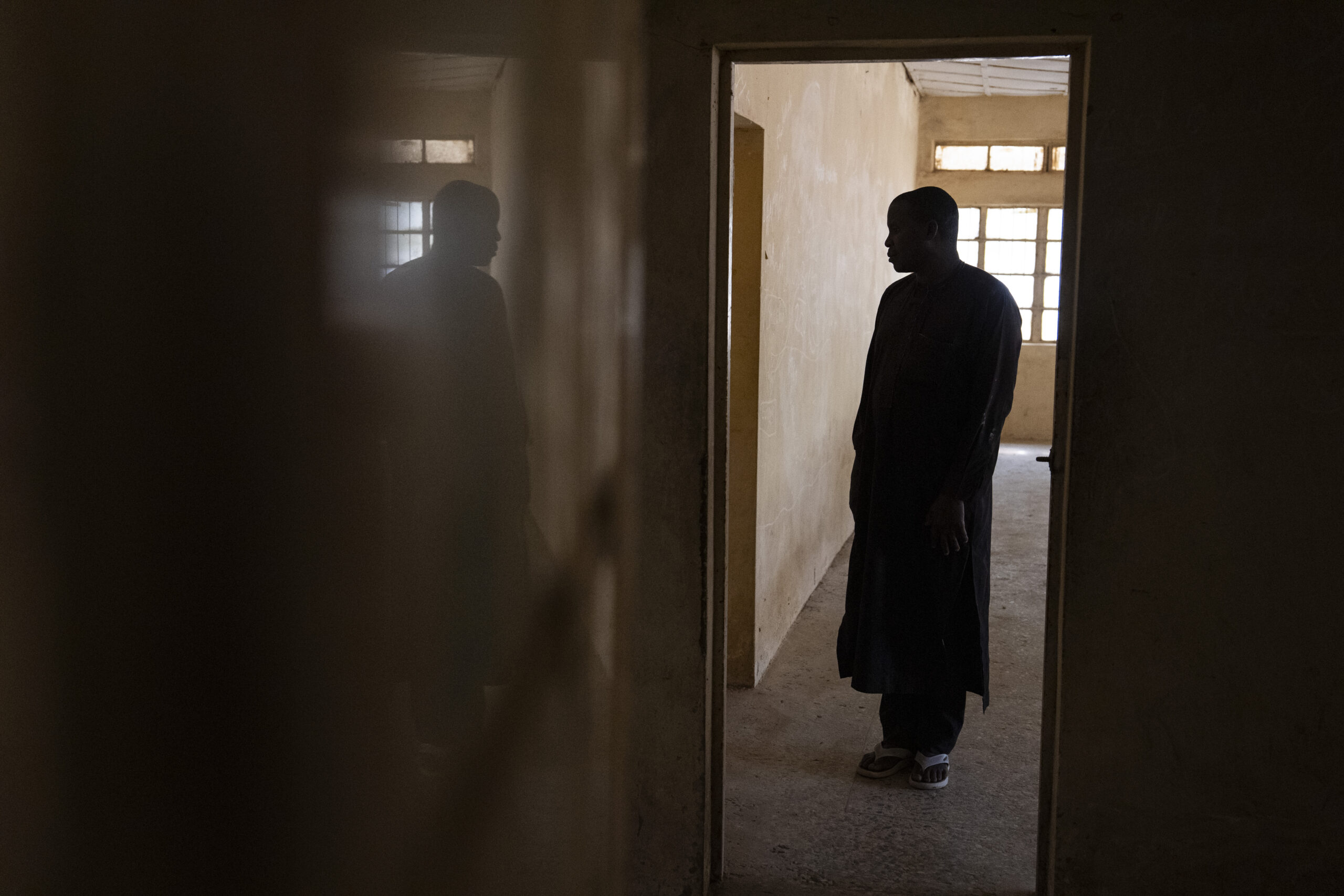
He spoke to the Post at a school in Tangaza, about six miles from his village, now solidly under the control of Lakurawa. Interviewing him there would have been too dangerous. Men in the community who listen to music or refuse to grow beards are beaten or fined by the militants, he said. Gunmen have also burst into traditional ceremonies, which are no longer permitted, and fired into the air.
Imam Sirajo Lawal in Tangaza, Nigeria, on Jan. 26.
In Karadal, and dozens of communities like it, the group rules by extortion: forcing locals to pay taxes in exchange for safety. Lawal said he had put aside eight bags of grain for his next payment to the group.
Kingsley L. Madueke, the Nigeria research coordinator for the Global Initiative Against Transnational Organized Crime, said much of Lakurawa’s funding is believed to come from tax collection, though the group also carries out kidnappings for ransom and steals cattle from herders. Often, he added, they cooperate with local bandits who know the terrain.
Most analysts believe Lakurawa is part of, or affiliated with, the Islamic State Sahel Province, which first emerged in 2015, killed four U.S. soldiers in an ambush in rural Niger in 2017 and was officially recognized as a “province” by the Islamic State in 2022. How much support Lakurawa receives from the Islamic State’s hub in northern Somalia is unclear — one of many things researchers are still trying to pin down.
Lawal said the militants came straight to him when they wanted to enter his village. He acquiesced to their demands, he said, knowing the Nigerian government would not protect them.
“We are not comfortable at all, but we cannot do otherwise,” he said. “They could kill us at any time.”
In the wake of U.S. strikes, Lakurawa have apparently moved their camps, Madueke said, but their attacks have continued. Dislodging them from the northwest would require a clear strategy and sustained commitment from an administration that has not prioritized Africa, said retired U.S. Air Force Maj. Gen. Kenneth Ekman.
“A dozen cruise missiles does not a counterterrorism mission make,” he said. “We’ve learned time and again that success requires consistent presence with sufficient capability and will alongside our partners.”
Men walk with camels in Baidi, Nigeria, on Jan. 26. A recent attack by Lakurawa here killed several people.
Sani, the vigilante in Baidi, was initially hopeful the U.S. strikes would wipe out so many militants that they would abandon the area. He knew he was mistaken when he heard the gunfire in the town square.
He found his grandfather among the dead, his stomach perforated with bullets. Through his tears, he tried to help two men with critical injuries, he said, but neither made it. He expects more violence is coming.
“We’re more scared than ever before,” he said. “It feels like they’ve dispersed and are everywhere.”
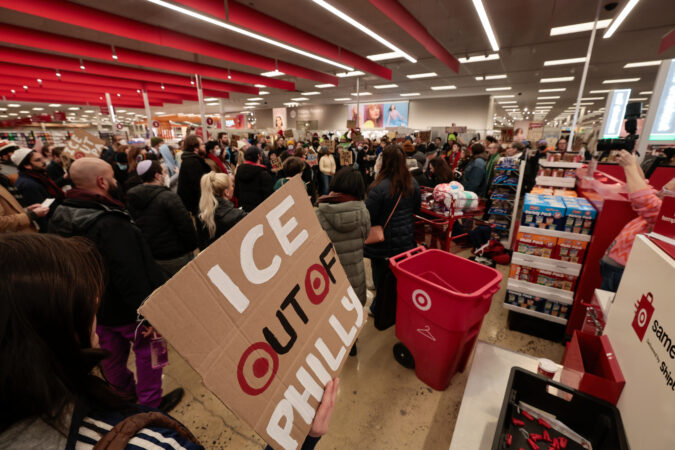
About 40 people were arrested after an activist group Thursday evening conducted a demonstration inside a Target store in South Philadelphia to demand that the company take a public stand against U.S. Immigration and Customs Enforcement actions at the chain’s stores.
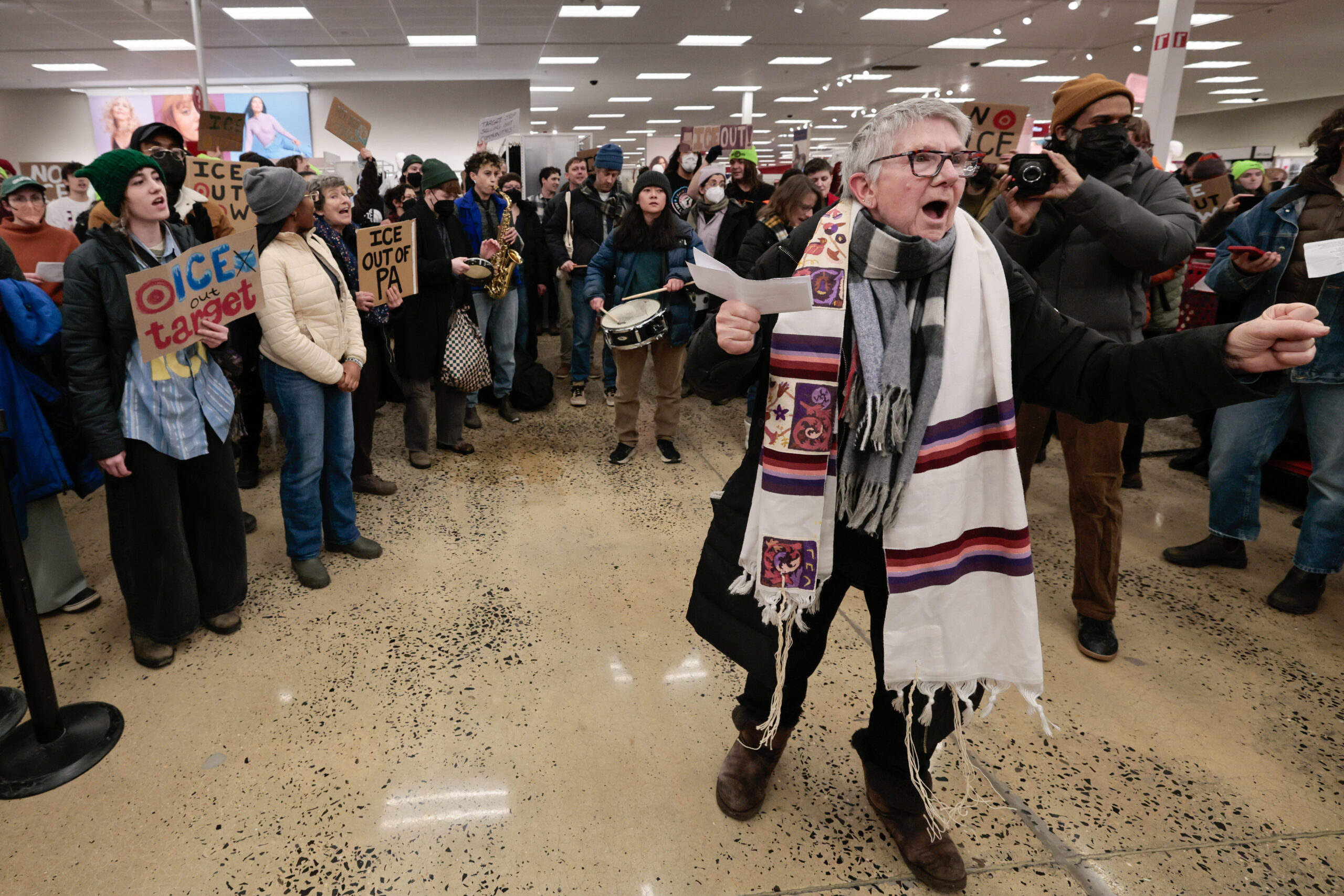
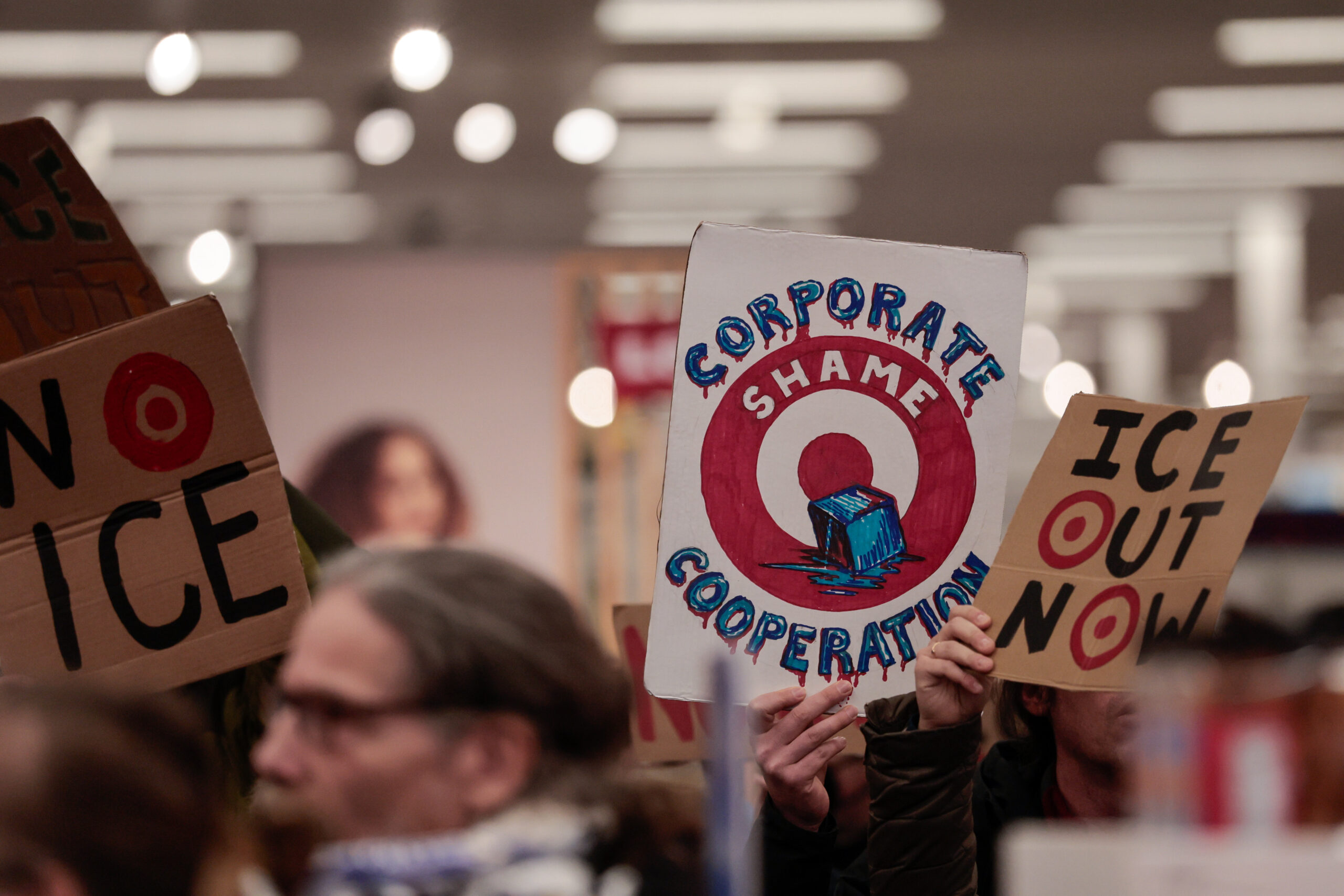
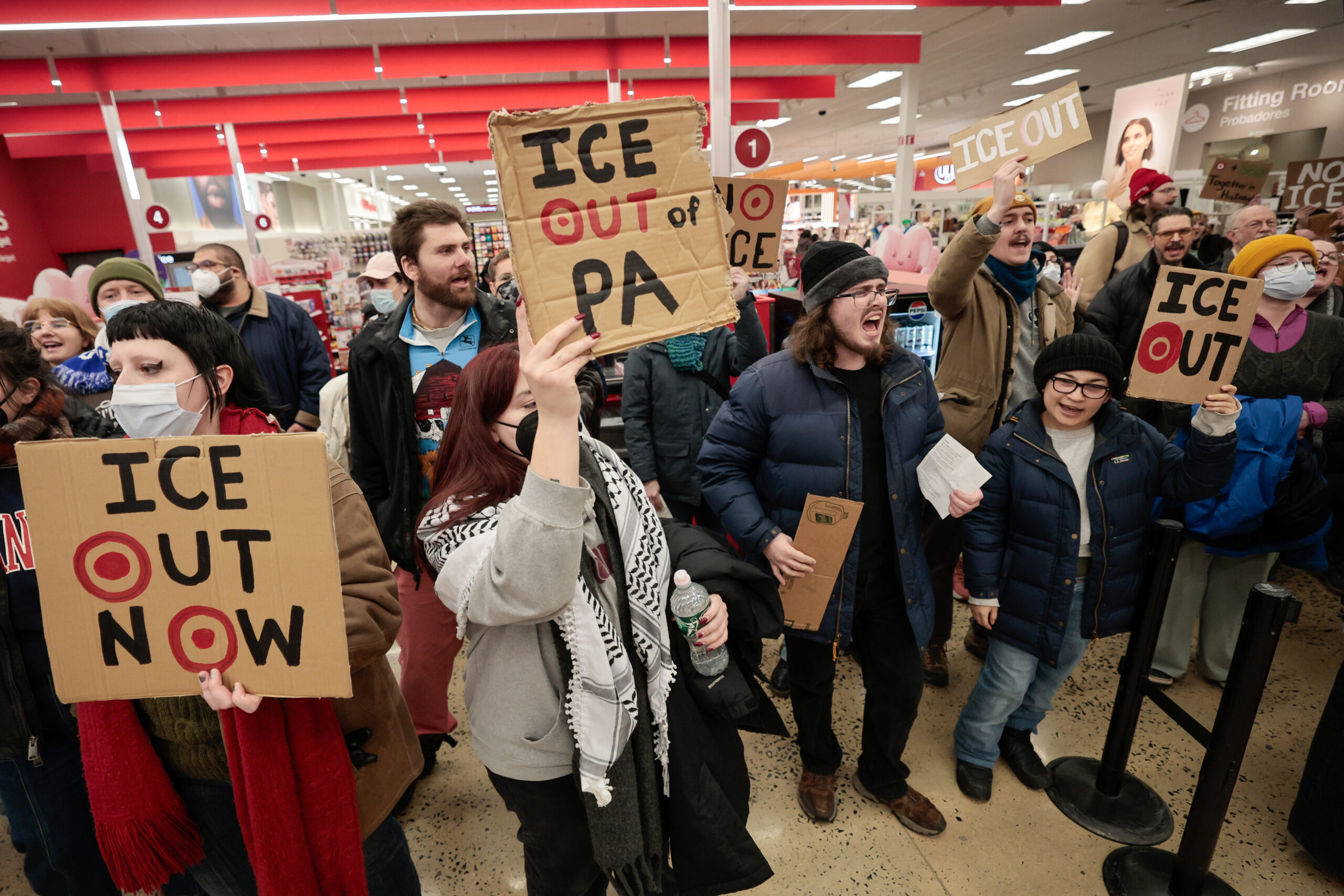
More than 100 demonstrators affiliated with No ICE Philly chanted “ICE out of Target now!” and played instruments inside the store near Snyder Avenue and I-95. Some shoppers joined the chanting.
Shortly before 6 p.m., the protesters were given their first warning by police to leave or be arrested. Dozens then left, but a group of 40 or so remained inside, seated on the floor. Around 6:15 p.m., police began making arrests without incident. Three remaining protesters were given citations and allowed to leave, police said.
The zip-tied detainees were led by police out of the store one by one to cheers from other protesters outside.
The demonstration and subsequent arrests did not deter shoppers from going about their business, entering and leaving the store.
A man dressed in a bear costume and wearing an action camera harnessed to his chest showed up and yelled at the activists inside the store, calling them “weirdos.” Police intervened to prevent an escalation.
Rabbi Linda Holtzman, 73, (right) a spokesperson for No ICE Philly, addresses the crowd during a demonstration inside a Target store in South Philadelphia, Feb. 5, 2026.
Benita Dixon, 66, accompanied by her granddaughter, was at the store to buy a Valentine’s Day present for her daughter when the protest broke out.
Dixon’s first reaction was to get a tighter grip on her granddaughter’s hand, but when chanting began, the pair joined in dancing with protesters.
“ICE has been going around killing people in Minnesota, and that’s not right,” Dixon said. “Many of my co-workers are coming into work carrying their passports because they are scared, so I’m glad we are protesting: No ICE in our streets.”
Across the country, protesters — including employees of the company — have been calling for Target to publicly oppose the federal immigration crackdown in Minnesota, the company’s home state, and deny ICE agents who do not have judicial warrants access to Target stores and parking lots.
Demonstrators from No ICE Philly protesting inside the Target store.
“Target does not have cooperative agreements with any immigration enforcement agency,” a company executive said in a memo to employees on Jan. 22, Business Insider reported.
A day after two ICE agents fatally shot 37-year-old Alex Pretti in Minneapolis, where Target is headquartered, then-incoming CEO Michael Fiddelke cosigned a joint statement from the Minnesota Chamber of Commerce with dozens of other executives, “calling for an immediate de-escalation of tensions and for state, local and federal officials to work together to find real solutions.”
Pretti’s Jan. 24 killing in Minneapolis was the second in less than a month. On Jan. 7, an ICE agent fatally shot 37-year-old Renee Nicole Good.
A Target spokesperson said in an email that Fiddelke also sent a note to employees saying “the violence and loss of life in our community is incredibly painful” and that “we are doing everything we can to manage what’s in our control, always keeping the safety of our team and guests our top priority.”
Target, founded in 1962, operates 1,989 stores across the United States and generates net revenue of more than $100 billion annually.
The company was hit with a national boycott last year after it rolled back Diversity, Equity, and Inclusion initiatives to fall in line with the policies of President Donald Trump.
No ICE Philly has led demonstrations against the agency and against the arrests of immigrants outside the city Criminal Justice Center.
Demonstrators from No ICE Philly protesting inside the store.
At the Target in South Philadelphia, Rabbi Linda Holtzman, 73, said the in-store protest is what people must do when neighbors are under attack.
“What ICE is doing, what they have been doing, is horrible, and we stand with the people of Minneapolis,” Holtzman said.
Protesting at the South Philadelphia Target is a way to tell the company that it must stand on the side of the people, Holtzman said.
“Target has become an ally to ICE, letting them come into their stores without a warrant,” Holtzman said. “That’s not the America I grew up in. Is that the country you want?”
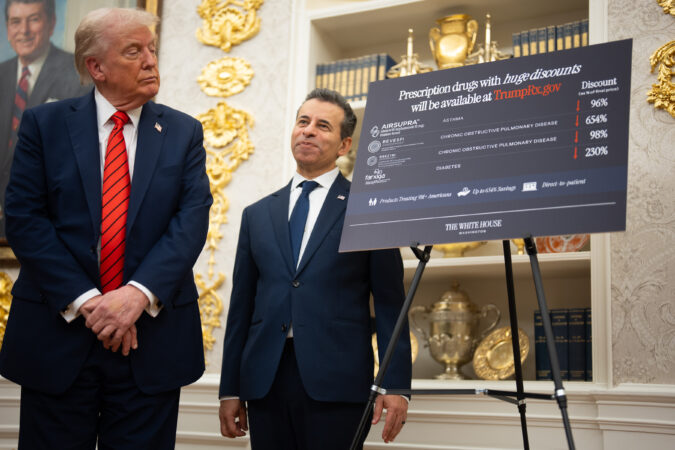
NEW YORK — The Trump administration on Thursday launched TrumpRx, a website it says will help patients buy prescription drugs directly at a discounted rate at a time when health care and the cost of living are growing concerns for Americans.
“You’re going to save a fortune,” President Donald Trump said at the site’s unveiling. “And this is also so good for overall health care.”
The government-hosted website is not a platform for buying medications. Instead, it’s set up as a facilitator, pointing Americans to drugmakers’ direct-to-consumer websites, where they can make purchases. It also provides coupons to use at pharmacies. The site launches with over 40 medications, including weight-loss drugs such as Ozempic and Wegovy.
The site is part of a larger effort by the Trump administration to show it’s tacking the challenges of high costs. Affordability has emerged as a political vulnerability for Trump and his Republican allies going into November’s midterm elections, as Americans remain concerned about the cost of housing, groceries, utilities and other staples of middle-class identity.
Trump stressed that the lower prices were made possible by his pressuring of pharmaceutical companies on prices, saying he demanded that they charge the same costs in the U.S. as in other nations. He said prescription drug costs will increase in foreign countries as a result.
“We’re tired of subsidizing the world,” Trump said at the event on the White House campus that lasted roughly 20 minutes.
The president first teased TrumpRx in September while announcing the first of his more than 15 deals with pharmaceutical companies to lower drug prices to match the lowest price offered in other developed nations. He said in December the website would provide “massive discounts to all consumers” — though it’s unclear whether the prices available on drugmakers’ websites will routinely be any lower than what many consumers could get through their insurance coverage.
The website’s Thursday release came after it faced multiple delays, for reasons the administration hasn’t publicly shared. Last fall, Mehmet Oz, administrator of the Centers for Medicare and Medicaid Services, told Trump the site would share prices for consumers before the end of the year. An expected launch in late January was also pushed back.
The president has spent the past several months seeking to spotlight his efforts to lower drug prices for Americans. He’s done that through deals with major pharmaceutical companies, including some of the biggest drugmakers like Pfizer, Eli Lilly and Merck, which have agreed to lower prices of their Medicaid drugs to so-called “most favored nations” pricing. As part of the deals, many of the companies’ new drugs are also to be launched at discounted rates for consumer markets through TrumpRx.
Many of the details of Trump’s deals with manufacturers remain unclear, and drug prices for patients in the U.S. can depend on many factors, including the competition a treatment faces and insurance coverage. Most people have coverage through work, the individual insurance market or government programs like Medicaid and Medicare, which shield them from much of the cost.
Trump’s administration also has negotiated lower prices for several prescription drugs for Medicare enrollees, through a direct negotiation program created by a 2022 law.
NEW YORK — In 2015, Woody Allen and his wife, Soon-Yi Previn, went on a trip to Washington, D.C. With the help of their friend Jeffrey Epstein, they were able to tour the White House.
Allen’s friendship with Epstein has been known for years, but emails in the huge trove of records released by the Justice Department in recent days illustrate that relationship in new depth.
The filmmaker, his wife and Epstein were neighbors in New York City, and the three dined together often, records show. They offered each other emotional support during periods when they were being criticized in the media. They commiserated about being accused — unfairly, they told each other — of sexual misconduct.
And in 2015, Epstein used his connections to another friend who had been in President Barack Obama’s administration to help the couple get a White House tour.
“Could you show soon yi the White House,” Epstein wrote in a May 2015 email to former White House counsel Kathy Ruemmler. “I assume woody would be too politically sensitive?”
“I am sure I could show both of them the White House,” Ruemmler responded, although she doubted whether Epstein, who in 2008 had pleaded guilty to solicitating prostitution from an underage girl, would be allowed in.
“You are too politically sensitive, I think,” she added.
White House records show that Allen, Previn, and Ruemmler visited on Dec. 27, a Sunday. Obama was in Hawaii at the time.
Ruemmler and Allen were among a long list of notable people who maintained friendships with Epstein for years, even though he was a registered sex offender who had been accused of abusing children, and whose legal problems had been widely covered in newspapers.
Some of the guests who accompanied Allen and Previn to dinners with Epstein included talk show host Dick Cavett, linguist Noam Chomsky, and the late comedian David Brenner. Epstein also attended screenings of Allen’s movies and, according to emails, would visit with Allen so he could watch him edit his latest film.
“Wide variety of interesting people at every dinner,” was how Allen described some of their gatherings in a letter commissioned for a 2016 Epstein birthday party. “It’s always interesting and the food is sumptuous and abundant. Lots of dishes, plenty of choices, numerous desserts, well served. I say well served often it’s by some professional houseman and just as often by several young women reminding one of Castle Dracula where (actor Bela) Lugosi has three young female vampires who service the place.”
A message sent to an assistant for Allen and Previn via email seeking comment wasn’t immediately returned. Epstein killed himself in 2019 while awaiting trial on sex trafficking charges.
Emails suggest that Previn, too, had a close relationship to Epstein and she often served as the intermediary between Epstein and Allen.
Numerous exchanges among Allen, Previn, and Epstein refer to the scandals that began in the early 1990s when Allen acknowledged he was having an affair with Previn, the adopted daughter of his then-girlfriend Mia Farrow. Around the same time, he was investigated by state authorities over allegations he had assaulted their adopted daughter, Dylan Farrow, while visiting Mia’s Connecticut home.
A Connecticut prosecutor said in 1993 that there was “probable cause” to charge Allen with molesting Dylan, but that he decided not to pursue the case.
Allen, who married Previn in 1997 and has since adopted two daughters, has denied any wrongdoing. Dylan’s allegations returned to the news in 2014 when an open letter from her was published in the New York Times. Allen has since been largely ostracized by the American film community.
In emails in 2016, Epstein, Previn, and Allen compared their own scandals to another celebrity in the news at the time: Bill Cosby, who had denied allegations that he drugged and sexually assaulting numerous women.
“The crowd needs a witch to burn, and there are not many left,” Epstein wrote.
Allen replied, in a message relayed through Previn, that his own situation is “radically different” from Cosby’s.
“I do expect (and get) many ugly unfair accusations, (but) he has to battle 50 women and criminal charges,” Allen said, according to Previn’s email. “I have one irate mother whose case was investigated and discredited,” he said, referring to Mia Farrow.
Epstein replied that the public scorn Allen received was more likely related to his relationship with Previn, which he called a “publicly broken taboo.”
“Everything else is noise,” he added.
Allen, in comments relayed through Previn, responded that if the couple’s taboo relationship was the issue, “there’s nothing to be done.”
“I’m certainly not going to dump her and I’m not going to apologize because I don’t feel either of us did anything we have to apologize for,” he says. “Our romantic life is our business and not the business of the public so it’s a hopeless situation because there’s no way out if that’s what they’re holding against us.”
Epstein advised his friends to just enjoy themselves and in life.
“Some actors or actresses might decline a role,” Epstein wrote. “But, so what.”
Allen hasn’t been accused of having any involvement in Epstein’s alleged sexual abuse of girls and women.