Category: News

Latest breaking news and updates

  • Pa. employers can’t reject job applicants who disclose their criminal history, court rules

    Pa. employers can’t reject job applicants who disclose their criminal history, court rules

    A Pennsylvania law prohibiting employment discrimination against people with criminal convictions has gotten a boost from a federal appeals court.

    A three-judge panel of the Third Circuit Court of Appeals held that regardless of how a prospective employer learned about an applicant’s criminal background, Pennsylvania law prohibits rejecting the application as long as the crime was not related to the job for which they are applying.

    The Jan. 28 ruling resolves a dispute in federal cases over the wording of a 1980 law that some employers argued applied only when the criminal information came from official files of state agencies.

    The Third Circuit opinion came in the case of Rodney Phath, a Philadelphia resident who in 2023 applied to work as a truck driver at Central Transport’s Montgomery County facility. Phath had experience as a truck driver and held the needed license and credential.

    He also had a 2008 criminal conviction for armed robbery, and had served six years in prison.

    Phath told the Michigan-based trucking company during an interview about the conviction and was immediately rejected from the job.

    In a 2024 federal lawsuit, Phath accused Central Trucking of violating Pennsylvania’s Criminal History Record Information Act.

    The company didn’t deny that it rejected Phath because of his criminal background. The law prohibits employers using “information collected by criminal justice agencies,” Central Trucking argued, and did not apply because Phath disclosed his conviction himself.

    District Judge John R. Padova agreed, and tossed out the complaint in December 2024.

    Because the law bans employers from obtaining formal criminal records and using the information in them for hiring decisions, it did not apply when Phath self-disclosed his criminal background, the judge concluded.

    Padova wasn’t the first judge to interpret the law literally, as applying only when an official file from a government agency sits on an employer’s desk — or at least in a computer desktop.

    A Georgetown Law professor, Brian Wolfman, offered to assist in Phath’s appeal with his students.

    The literal interpretation renders the law “meaningless,” the appeal argued, and creates a Catch 22. If an applicant with a criminal record discloses it, they are no longer protected. But if they don’t mention it when asked, they can be rejected for lying in the application process.

    “If that’s true the act would have no force at all, and that can’t be right,” Wolfman said in an interview.

    Phath won his appeal last week, with Third Circuit Judges Stephanos Bibas, Anthony Joseph Scirica, and D. Brooks Smith finding that the law prohibits prospective employers from using information that is included in a criminal history file regardless of how it came about.

    “The employer just has to receive the information,” Bibas, who was appointed by President Donald Trump, wrote in the opinion.

    The judge’s opinion could be appealed to an expanded panel of the court, which has the discretion to pick its cases. But if it stands it would be binding precedent in Pennsylvania’s federal court. The case now returns to the Eastern District of Pennsylvania, where it will head toward trial.

    The attorney who represented Central Trucking in the appeal did not respond to a request for comment.

    Phath’s lawsuit was filed in federal court because Central Trucking is based out of state. But Pennsylvania employees suing in-state employers won’t have the benefit of the binding ruling, although it can be cited in an effort to convince local judges.

    The one in four Philadelphians who have a criminal record also are protected by the city’s Fair Chance Hiring Ordinance, which was updated in the fall.

    The ordinance prohibits employers from considering a misdemeanor after four years from an arrest or release from incarceration, and seven years for a felony. Before that time period, it allows rejecting applicants based on the criminal history only if the employer can show a specific record leads to a specific risk related to that specific job.

    Jamie Gullen, managing attorney of Community Legal Services’ employment unit, said the Philadelphia ordinance is one of the strongest in the country.

    Her unit represents 2,000 people a year who face employment barriers because of a criminal record. The most effective way to prevent this type of discrimination is to seal criminal records, Gullen says.

    The Clean Slate Act, which allows people with certain convictions to have their criminal records sealed by filing court petitions, has long waiting periods and doesn’t cover every offense. So Gullen was glad to see an appeals court acknowledge the barriers people with a criminal history face in the job market.

    “Fair hiring laws are a really important piece of the puzzle,” the attorney said.

  • $29M in federal and private funds to go toward Delaware River watershed projects

    $29M in federal and private funds to go toward Delaware River watershed projects

    Federal and private grants totaling nearly $29 million were announced Wednesday for conservation projects within the Delaware River Watershed, including a South Philadelphia wetlands park, a water trail in Camden County, and support of the Lights Out Philly program to keep birds from crashing into buildings.

    The money comes from nearly $12.5 million in grants to the Delaware Watershed Conservation Fund from the National Fish and Wildlife Foundation (NFWF) and the U.S. Fish and Wildlife Service. An additional $17 million comes in matching funds from nonprofits such as the Philadelphia-based William Penn Foundation.

    The total is about $9 million less than last year’s grant awards of $38 million. A representative for the two federal agencies did not state a reason for the decline.

    However, the reduction comes as many federal grants have been cut or reduced by President Donald Trump’s administration.

    What’s being funded?

    In all, the new funds will flow to 30 conservation projects, including local trail creations, stream restorations, shoreline enhancements, and wildlife habitat improvements. The money will go toward planning, hiring for, and construction of projects in Pennsylvania, New Jersey, Delaware, and New York.

    Jeff Trandahl, executive director and CEO of NFWF, said the projects “demonstrate the impact that public-private partnerships can have at a landscape scale and will help ensure a healthier and cleaner future for the Delaware River watershed and the communities and species that depend on it.”

    The watershed is within a densely populated corridor but remains 50% forested. Four hundred miles of it is classified as a National Wild and Scenic River, largely undeveloped but accessible for recreation.

    The grants cover a wide range of projects.

    For example, $498,800 will go toward reducing migratory bird collisions into buildings throughout the Delaware Watershed, which includes Philadelphia and New Jersey. The project of the Wildlife Management Institute, along with Bird Safe Philly, will identify and retrofit buildings to be bird-friendly, inform the public about built-environment hazards, and how to mitigate them.

    Leigh Altadonna, coordinator for Bird Safe Philly, a collaborative of five organizations, welcomed the grant.

    “These funds will reinforce Bird Safe Philly’s continuing work with nature centers, libraries, arboretums and other buildings as part of our mission to mitigate bird collisions with glass,” Altadonna said.

    She said money would go toward educating the public about how to make their homes and communities bird-friendly.

    Bird Safe Philly coordinates with owners of the city’s skyscrapers to turn off or dim lights, which can attract birds during the spring and fall migration seasons.

    A sample of grants with total federal and private funding

    Pennsylvania

    • $650,000 for South Philadelphia Wetlands Park II, a project of the Delaware River Waterfront Corp. The money will go toward completing needed documentation for the park located just south of the base of Tasker Street through Pier 70. The goal is to restore wetland habitat and increase public access to piers and berths, add a kayak launch and a natural pier park, and restore two acres of forested upland, meadow and wetlands.
    • $2 million for stream channel restoration in the south branch of French Creek, a project of the French and Pickering Creeks Conservation Trust. The stream channel and surrounding wetland will be improved as a habitat for brook trout and bog turtle, restore 6.7 acres of riparian buffer, and more than 13 acres of surrounding wetland and flood plain.
    • $900,400 to reintroduce wild brook trout in restored agricultural watersheds in Chester County, a project of the Stroud Water Research Center, which will monitor the re-establishment effort and implement agricultural best management practices to give trout the best chance of recovery.

    New Jersey

    • $3.5 million for horseshoe crab and shorebird habitat at the Kimbles Beach and Bay Cove area in Cape May Court House, a project of the American Littoral Society. The money will go toward restoring one mile of critical habitat along the Delaware Bay, by placing 49,000 tons of sand to stabilize the beach, reverse coastal erosion, and protect the shoreline.
    • $1.2 million for restoration and recreational projects on the Cooper River Water Trail, which is spearheaded by the Upstream Alliance. The money will go toward engaging 3,000 community members through hands-on recreational programming, hiring local youth, and promoting public access on the new trail in Camden County. It will include paddling and fishing programs for the community and create a Friends of the Cooper River Water Trail group.
    • $487,400 for ecological restoration and wildlife habitat improvements at Swede Run Fields in Moorestown, Burlington County, for a project by the township to eradicate invasive species and establish native plant communities within the wetlands, riparian forest, and upland meadow buffers.
  • A family is suing Philadelphia over the death of a man in jail custody

    A family is suing Philadelphia over the death of a man in jail custody

    The family of a man who died in a Philadelphia jail last year contends in a lawsuit filed this week that jail staff did not offer him treatment for opioid withdrawal before his death.

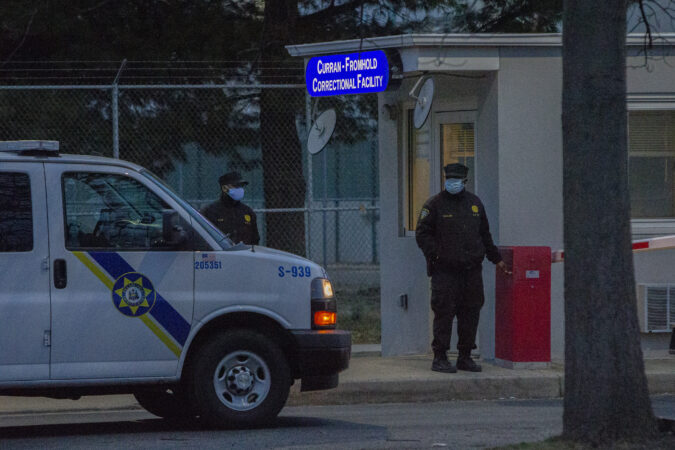
    Andrew Drury died in an intake cell at the Curran-Fromhold Correctional Facility in Holmesburg on March 9, 2025. The lawsuit says he was in the cell for 36 hours, despite suffering from opioid withdrawal symptoms.

    During that time, the suit says, Drury received no medical care, and jail staff did not alert medical personnel that he was going through withdrawal. Drury had a known opioid addiction and had suffered withdrawal symptoms at the jail in the past, according to the lawsuit. His cause of death was listed as “pending,” the lawsuit said.

    Prison officials declined to comment Wednesday. A lawyer for Drury’s family did not return a request for comment. The lawsuit seeks general monetary damages from the city, the jail system, and the state attorney.

    Several other families in recent years have sued Philadelphia jails, saying their relatives did not receive adequate medical care for drug-related issues.

    In 2024, the family of Carmelo Gabriel Ocasio, 22, accused jail staff of ignoring his cellmate’s pleas for help when Ocasio fell unconscious, overdosed, and died after obtaining fentanyl and benzodiazepines at the jail in 2022.

    The family settled with the city for $65,000; further details of the settlement were not made public.

    In 2025, the family of Amanda Cahill sued the city, saying she overdosed on fentanyl illicitly obtained while in the jail after she was arrested in a Kensington sweep in 2024. The suit said she cried and begged for help, and fellow inmates tried to get the attention of correctional officers before she was found unresponsive in her cell.

    A judge dismissed portions of the lawsuit in late December, but attorneys for Cahill’s family later refiled a complaint. Responding to the suit, lawyers for the city acknowledged staffing issues at the jails, but said the city could not have foreseen and did not cause Cahill’s death.

    Between 2018 and July 2024, at least 25 people died in Philadelphia jails of accidents related to drug intoxication, a 2024 Inquirer analysis found. The city noted that summer that the overdose death rate in Philadelphia jails was the same as the citywide rate, despite higher rates of addiction among incarcerated people.

    Philadelphia’s jail system has been hailed as a national leader in offering medications for opioid addiction and provides buprenorphine, an opioid medication that curbs cravings, to inmates soon after arriving.

    But staffing issues created backlogs that kept inmates from receiving longer-term care on time, and advocates said illicit drugs were readily available in the facilities, The Inquirer reported in 2024.

    Staff writer Abraham Gutman contributed to this article.

  • As cold-stunned invasive iguanas fall from trees, Floridians scoop them up for killing

    As cold-stunned invasive iguanas fall from trees, Floridians scoop them up for killing

    Ryan Izquierdo woke up on a recent morning groggy, cold and most of all ready — to go iguana hunting.

    Temperatures in Jupiter, Fla., where the 27-year-old social media star lives, had dipped well below 50 degrees, as a cold front swallowed much of the East Coast in snowfall and record-breaking low temperatures. As flurries fell on parts of the state, residents braced for the inevitable: Cold-stunned green iguanas — one of Floridians’ most reviled invasive pests — began to lose consciousness and fall out of trees.

    The dry, scaly deluge is a familiar forecast in those parts. These cold-blooded reptiles’ nervous systems shut down when temperatures dip into the 40s and below. They become paralyzed and fall from their leafy perches. This time, for some unlikely conservationists, as well as state officials, that meant killing season.

    In a first, officials capitalized on the paralyzed pests and told residents they could bring them in for disposal.

    “This is the first time we have organized a removal effort of invasive iguanas,” said Shannon Knowles, communications director for the Florida Fish and Wildlife Conservation Commission (FWC).

    “South Florida has not experienced this level of cold weather in many years,” she added. “So we used this opportunity to remove this invasive non-native species from the landscape.”

    The commission issued an executive order that allowed people without permits to gather and transport the iguanas to one of several offices to be humanely killed, “or, in some cases, transferred to permittees for live animal sales.”

    Typically people can themselves humanely or painlessly do away with green iguanas when they see them, but they’re not allowed to transport them. Knowles added that people lined up, cloth bags and bins brimming with the lizards, to drop them off Sunday and Monday. While she said the commission did not yet have an official estimate, Izquierdo was floored by what he saw.

    “It was a madhouse,” Izquierdo said of the FWC site near Fort Lauderdale where he deposited about 100 iguanas Monday. “There were iguanas that were pushing six to six-and-a-half feet long. They look like dragons, absolutely crazy.”

    Green iguanas are a scourge of South Florida. First documented in the 1960s, their population has since exploded to, by some estimates, more than 1 million. They’ve wreaked havoc on the region’s infrastructure, burrowing holes around homes, sidewalks and seawalls. They’ve chewed through some of the state’s most crucial native plants such as nickerbean, which helps sustain the endangered Miami Blue butterfly.

    Izquierdo has been catching iguanas since he was 10 years old. In his grandmother’s backyard, he found them to use as fishing bait for peacock bass.

    “I’ve always loved nature and the outdoors,” he said.

    Now, he makes a living out of it as a content creator, documenting his fishing excursions around the world. But as the dipping temperatures created a new opportunity last weekend, he decided to temporarily pivot to the quest he dubbed “a Florida man Easter egg hunt for dinosaurs.”

    He jumped into his pickup truck and began hunting.

    In warm temperatures, iguanas are almost impossible to nab. You need either a gun or a 15-foot-long pole with an invisible lasso attached to it, Izquierdo said.

    “If you want to do iguana management, this is a good time to do it because they’re very vulnerable to removal,” said Frank Mazzotti, a professor of wildlife ecology at the University of Florida.

    But in the cold, chase proved easy and bountiful. “This is the most I’ve ever found,” he said. “We were practically almost stepping on them.”

    Despite the fun and viral Instagram reels, he’s not immune to the difficult decisions that come with maintaining a balanced ecosystem.

    “They’re animals, so people do have a soft spot in their heart for them and so do I because they’re really cool, especially the little baby ones,” Izquierdo said. “But you have to look at the bigger picture of things.”

    He’s passionate about making the most of a dead green iguana. On Monday night, he and his friends baked an iguana pizza, (delicious, he said, they’re nicknamed “chicken of the trees”) and he plans to use the skin and some meat for fishing lures and bait.

    On Tuesday morning, as the temperatures in Florida finally began to creep up to milder levels, Izquierdo sat in his truck, filled with about a dozen stunned iguanas, knowing his hours of hunting were numbered.

    “As the temperature starts climbing back up, it’s going to get back to normal,” he said. Two motionless lizards, a male and a female, lay in his lap. “Yeah, these iguanas will be back about their business.”

  • Gavin Newsom sat by his mother during her assisted suicide, and came to terms with anger and grief

    Gavin Newsom sat by his mother during her assisted suicide, and came to terms with anger and grief

    It was the spring of 2002 when Gavin Newsom’s mother Tessa, dying of cancer, stunned him with a voicemail. If he wanted to see her again, she told him, it would need to be before the following Thursday, when she planned to end her life.

    Newsom, then a 34-year-old San Francisco supervisor, did not try to dissuade her, he recounted in an interview with the Washington Post. The fast-rising politician was wracked with guilt from being distant and busy as she dealt with the unbearable pain of the breast cancer spreading through her body.

    Newsom’s account of his mother’s death at the age of 55 by assisted suicide, and his feelings of grief and remorse toward a woman with whom he had a loving but complex relationship, is one of the most revealing and emotional passages in the California governor’s book, Young Man in a Hurry: A Memoir of Discovery, which will be published Feb. 24.

    Newsom, a potential Democratic candidate for president, has seldom spoken of the chapter in his family’s life, which is likely to generate controversy if he enters the race. Assisted suicide, at the time, was illegal in California and remains illegal in all but 12 states and the District of Columbia, according to the advocacy group Death with Dignity.

    When that Thursday in 2002 arrived, Newsom and his sister Hilary did as his mother asked and sat by her bedside in Pacific Heights, Newsom said in an interview this week. He wanted her suffering to end, he said, but it would be years before he could forgive her for asking him to be there.

    “I hated her for it — to be there for the last breath — for years,” he said in an interview in San Diego this week. “I want to say it was a beautiful experience. It was horrible.”

    Forty-five minutes before the “courageous doctor” arrived to administer the medicine that would end her life, Newsom and his sister gave their mother her regular dose of painkillers to keep her comfortable, he said.

    When the doctor arrived, Tessa Newsom lucidly answered his questions and told him she was sure of her decision, Gavin Newsom said. Her labored breathing and the gravity of the moment became too much for Newsom’s sister. She left the room. Newsom stayed.

    “Then I sat there with her for another 20 minutes after she was dead,” he said, his voice breaking briefly and his eyes welling as he told the story. “My head on her stomach, just crying, waiting for another breath.”

    Despite his painful memories, Newsom said that he believes assisted suicide should be legal nationally, that people should have “the freedom to make that decision themselves.” California legalized the practice in 2015 with the “End of Life Option Act.”

    Six years after voters approved the practice, and two years after he became governor in 2019, Newsom signed a second bill that reduced the waiting period for a drug-induced suicide from 15 days to 48 hours and eliminated a requirement for a formal written declaration of intent at the end of the process. Last year, Newsom signed a third bill that eliminated a sunset clause in the 2015 bill, making assisted suicide legal in California indefinitely.

    When the bill came up in the California legislature, Newsom heard objections not only from churches and religious groups, but also from “the old Irish Catholic side of my family.”

    They were “up in arms about that bill, and obviously, by extension, by what my mom did,” he recalled. But Newsom said his own experience with his mother strengthened his support for the bill.

    “I watched the physical deterioration, the mental deterioration, just the cries of pain,” he said this week. “She would have just suffered.”

    Last year in an interview on the Diary of a CEO podcast, Newsom said he had no regrets about his role — “If you want to come after me, come after me, she needed to do it,” he said.

    Tessa Newsom worked three jobs to support her two children after her husband left, Newsom wrote in the book. His father, William Newsom, an attorney who became a judge, was the best friend of the billionaire Gordon Getty — and had for a time helped manage the Getty Trust. Their father’s friendship with the Gettys, which began in high school, created what Newsom described as a “surreal” double life for the two Newsom children, who joined their father and the Gettys during summer vacations that involved private jets, resorts and limousines.

    Tessa Newsom, a quiet but dominant force who shaped his work ethic, he said, did not approve of Newsom’s political ambitions.

    She urged him to stay immersed in his business, the PlumpJack Group, a wine and hospitality company that he founded in 1992.

    “Get out before it’s too late,” Tessa Newsom told her son after he had become a San Francisco supervisor in 1997 and was considering a 2003 run for mayor of San Francisco, which had been his father’s dream.

    She never fully explained the admonition. But William Newsom had also harbored political ambitions for a time — running for San Francisco county supervisor and state senator. And the younger Newsom learned years later, through an oral history his father recorded, that his electoral failures and subsequent debt had led to the unraveling of his parents’ marriage, Newsom said in an interview with the Post and in his book.

    Newsom — a father of four who is married to Jen Siebel, a documentary filmmaker — said his mother’s warning still haunts him.

    “I think about it any time when things are really going down — that she was right,” he said with a laugh. And while many people don’t believe that Newsom is still wrestling with whether he will run for president, his mother’s warnings are part of the quandary, he said.

    “I don’t think people are taking me as literally as they should. We’ll see what happens,” he said of a potential presidential run. “Every day, I just try to get better, and be a better husband, be a better father. I’ve got to take care of them, and I can’t do what my father did.”

  • The latest Epstein files are rife with uncensored photos and victims’ names, despite redaction efforts

    The latest Epstein files are rife with uncensored photos and victims’ names, despite redaction efforts

    NEW YORK — Nude photos. The names and faces of sexual abuse victims. Bank account and Social Security numbers in full view.

    All of these things appeared in the mountain of documents released Friday by the U.S. Justice Department as part of its effort to comply with a law requiring it to open its investigative files on Jeffrey Epstein.

    That law was intended to preserve important privacy protections for Epstein’s victims. Their names were supposed to have been blacked out in documents. Their faces and bodies were supposed to be obscured in photos.

    Mistakes, though, have been rampant. A review by The Associated Press and other news organizations has found countless examples of sloppy, inconsistent or nonexistent redactions that have revealed sensitive private information.

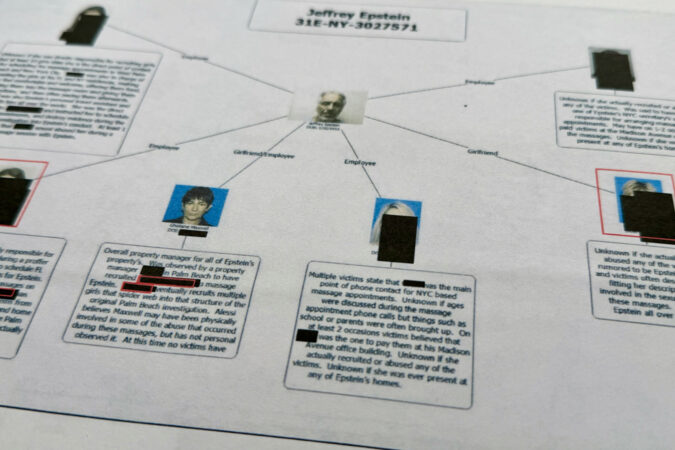
    A photo of one girl who was underage when she was hired to give sexualized massages to Epstein in Florida appeared in a chart of his alleged victims. Police reports with the names of several of his victims, including some who have never stepped forward to identify themselves publicly, were released with no redactions at all.

    Despite the Justice Department’s efforts to fix the oversights, a selfie taken by a nude female in a bathroom and another by a topless female remained on the site, their ages unknown but their faces in full view, as of Wednesday evening.

    Some accusers and their lawyers called this week for the Justice Department to take down the site and appoint an independent monitor to prevent further errors.

    A judge scheduled a hearing for Wednesday in New York on the matter, then canceled it after one of the lawyers for victims cited progress in resolving the issues. But that lawyer, Brittany Henderson, said they were still weighing “all potential avenues of recourse” to address the “permanent and irreparable” harm caused to some women.

    “The failure here is not merely technical,” she said in a statement Wednesday. “It is a failure to safeguard human beings who were promised protection by our government. Until every document is properly redacted, that failure is ongoing.”

    Annie Farmer, who said she was 16 when she was sexually assaulted by Epstein and his confidant, Ghislaine Maxwell, said that while her name has previously been public, other details she’d rather be kept private, including her date of birth and phone number, were wrongly revealed in the documents.

    “At this point, I’m feeling really most of all angry about the way that this unfolded,” she told NBC News. “The fact that it’s been done in such a beyond careless way, where people have been endangered because of it, is really horrifying.”

    Trump administration defends its Epstein files redaction efforts

    The Justice Department has blamed technical or human errors on the problems and said it has taken down many of the problematic materials and is working to republish properly redacted versions.

    The task of reviewing and blacking out millions of pages of records took place in a compressed time frame. President Donald Trump signed the law requiring the disclosure of the documents on Nov. 19. That law gave the Justice Department just 30 days to release the files. It missed that deadline, in part because it said it needed more time to comply with privacy protections.

    Hundreds of lawyers were pulled from their regular duties, including overseeing criminal cases, to try and complete the document review — to the point where at least one judge in New York complained that it was holding up other matters.

    The database, which is posted on the Justice Department website, represents the largest release of files to date in the yearslong investigations into Epstein, who killed himself in a New York jail cell in 2019 while awaiting trial on federal sex trafficking charges.

    Epstein files rife with missed or incomplete redactions

    Associated Press reporters analyzing the documents have so far found multiple examples of names and other personal information of potential victims revealed.

    They have also found many cases of overzealous redactions.

    In one news clipping included in the file, the Justice Department apparently blacked out the name “Joseph” from a photo caption describing a Nativity scene at a California church. “A Nativity scene depicting Jesus, Mary and (REDACTED),” it said.

    In an email released in the files, a dog’s name appeared to have been redacted: “I spent an hour walking (REDACTED) and then another hour bathing her blow drying her and brushing her. I hope she smells better!!” the email said.

    The Justice Department has said staff tasked with preparing the files for release were instructed to limit redactions only to information related to victims and their families, though in many documents the names of many other people were blacked out, including lawyers and public figures.

    Images remain uncensored

    The Justice Department has said it intended to black out any portion of a photo showing nudity, and any photos of women that could potentially show a victim.

    In some photos reviewed by The AP, those redactions did obscure women’s faces, but left plenty of their bare skin exposed in a way that would likely embarrass the women anyway. Photos showed identifiable women trying on outfits in clothing store dressing rooms or lounging in bathing suits.

    One set of more than 100 images of a young woman were nearly all blacked out, save for the very last image, which revealed her entire face.

  • Why Di Bruno’s downsizing isn’t a huge surprise | Inquirer Lower Merion

    Why Di Bruno’s downsizing isn’t a huge surprise | Inquirer Lower Merion

    Hi, Lower Merion! 👋

    Di Bruno Bros. announced it was closing three of its stores last week, but the news wasn’t a surprise to some shoppers. Here’s why. Also this week, Narberth is home to one of the region’s under-the-radar romantic eateries, final construction on SEPTA’s Ardmore station is underway, plus one woman’s dismay at Lifecycle Wellness’ closing.

    We want your feedback! Tell us what you think of the newsletter by taking our survey or emailing us at lowermerion@inquirer.com.

    If someone forwarded you this email, sign up for free here.

    Di Bruno Bros.’ downsizing wasn’t a huge surprise to some

    Di Bruno Bros. is closing three of its five locations, including at the Ardmore Farmers Market.

    Some Di Bruno Bros. shoppers were saddened last week to learn that the longtime beloved specialty grocery store was closing three of its locations, including at the Ardmore Farmers Market. But it didn’t come as a shock to everyone, with some who say there’s been a noticeable decline in quality in recent years.

    “Why am I going to pay upmarket prices for a midmarket product?” one former shopper told The Inquirer’s Denali Sagner.

    Some blamed the decline on Di Bruno’s new owner, Brown’s Super Stores, which purchased a stake in the stores in 2024. Its brand was later brought under the Wakefern Food Corp. portfolio. But Brown’s executive vice president said Di Bruno’s was “very distressed” and despite its efforts was unable to bring back lost business.

    Here’s what other shoppers had to say about Di Bruno’s shrinking footprint.

    💡 Community News

    • The final phase of construction on the Ardmore SEPTA station got underway on Sunday and is expected to continue through the next few weeks, though a SEPTA spokesperson said the agency doesn’t yet have a date for completion. Work will take place weekdays from 6 a.m. to 3 p.m. and on weekends from 8 p.m. to 5 a.m. and will include finishing the roof, installing message boards, adjusting and testing elevators, making ADA-compliant adjustments, and painting.
    • Lower Merion police said two people were taken into custody by ICE during a vehicle stop Friday. In response to community concerns, LMPD yesterday reiterated that it doesn’t participate in programs deputizing local police as federal immigration agents. The department added that residents who see police activity but no marked LMPD presence can call 911 so it can verify the legitimacy, but added that officers will not interfere if federal agents are acting legally.
    • Lankenau Medical Center and Bryn Mawr Hospital both recently ranked among America’s 250 Best Hospitals by Healthgrades. The rankings, released last week, are awarded to the top 5% of institutions in the nation for “overall clinical excellence.”
    • In an opinion piece, a local physician lamented the loss of Lifecycle Wellness in Bryn Mawr, which is closing its doors on Feb. 15 after facing financial pressure. Cara Lea Smith is one of the thousands who gave birth there and found comfort in its “homelike” setting. Read more about the physician’s experience and why she feels the closure is devastating.
    • A former Villanova University professor has filed a federal lawsuit claiming she was fired in 2024 after accusing the law school of racial discrimination involving one of her students. The Inquirer’s Susan Snyder delves into the details.
    • Main Line Today recently took a look inside a 1980s Gladwyne home that’s been updated with a timeless look, complete with a neutral color palette. The 8,000-square-foot home’s dining room has a hand-painted de Gournay wallcovering inspired by Japan’s Kiso Mountains and a large dressing room off the primary suite.
    • Philadelphia Jewish Exponent recently profiled Rabbi Daniel Levitt, the director of adult Jewish learning at Gratz College. The Bala Cynwyd resident reflected on his passion for connecting people to “Jewish intellectual heritage.”

    🏫 Schools Briefing

    • Lower Merion and Harriton won’t be merging their football teams anytime soon. Lower Merion School District’s board of directors last week declined to add a vote to merge to the agenda, keeping in line with Superintendent Frank Ranelli’s previous recommendation not to merge the teams.
    • Lower Merion High School’s winter drama, Eurydice, kicks off tonight and runs through Sunday. Penn Wynne is hosting its “Special Persons Dance” for second and third graders tomorrow evening. There are school board committee meetings Monday evening and home school association meetings on Tuesday. There are no classes next Thursday, which is a staff professional development day, and the district is closed on Friday. See the district’s full calendar here.
    • Students in third through eighth grade who have a sibling with special needs can join an upcoming “SibShops” Zoom, where they can connect, share experiences, and play games. The six, one-hour sessions will take place Wednesdays from 5 to 6 p.m., starting on Feb. 18. Registration is required.
    • Families interested in having a table at next month’s Taste of Penn Wynne must sign up by Feb. 7.

    🍽️ On our Plate

    • Looking for a place to dine this Valentine’s Day? Coco Thai Bistro in Narberth is among the region’s under-the-radar romantic dining spots, according to The Inquirer’s food reporters. The menu at the tropical greenhouse-inspired BYOB combines homestyle Thai curries with street food, Beatrice Forman reports.

    🎳 Things to Do

    🐉 The Neverending Story: Catch a screening of the 1984 cult classic. There’s another screening later this month. ⏰ Saturday, Feb. 7, 11 a.m. 💵 $6.75-$7.75 📍 Bryn Mawr Film Institute

    🍪 Teen-Time Cookie Decorating: Teens 13 to 17 can decorate cookies then take some home. Registration is required. ⏰ Monday, Feb. 9, 7-8 p.m. 💵 Free 📍 Penn Wynne Library

    🐎 Lunar New Year Crafternoon: Celebrate the start of the Year of the Horse by making a themed craft at this drop-in event. ⏰ Wednesday, Feb. 11, 3-5 p.m. 💵 Free 📍 Gladwyne Library

    📜 Remember the Ladies: The Legacy of the Women of Stoneleigh: This presentation will highlight some of the most impactful women who lived or worked at Stoneleigh over the centuries. ⏰ Thursday, Feb. 12, 6:30-7:30 p.m. (Snow date: Feb. 19) 💵 $2-$20 📍 Stoneleigh, Villanova

    🏡 On the Market

    A newly built five-bedroom Penn Valley home with an impressive wine cellar

    A living room adjoining the kitchen features coffered ceilings, built-ins, and a fireplace.

    This newly built home blends classic design with modern amenities. The first floor features two living rooms, both with fireplaces, a dining room, an office, and an eat-in kitchen with an island and high-end appliances, plus an adjoining butler’s pantry and a wine cellar. There are five bedrooms upstairs, including a spacious primary suite with an oversized walk-in closet outfitted with built-ins, and a bathroom with a double vanity, marble floors, and a soaking tub. It also has a rear patio and a three-car garage. There’s an open house Sunday from noon to 2 p.m.

    See more photos of the home here.

    Price: $2.995M | Size: 4,830 SF | Acreage: 0.86

    🗞️ What other Lower Merion residents are reading this week:

    By submitting your written, visual, and/or audio contributions, you agree to The Inquirer’s Terms of Use, including the grant of rights in Section 10.

    This suburban content is produced with support from the Leslie Miller and Richard Worley Foundation and The Lenfest Institute for Journalism. Editorial content is created independently of the project donors. Gifts to support The Inquirer’s high-impact journalism can be made at inquirer.com/donate. A list of Lenfest Institute donors can be found at lenfestinstitute.org/supporters.

  • Joi Washington’s ‘whirlwind’ first weeks as mayor | Inquirer Greater Media

    Joi Washington’s ‘whirlwind’ first weeks as mayor | Inquirer Greater Media

    Hi, Greater Media! 👋

    What have the first few weeks of Joi Washington’s time as mayor looked like? We recently caught up with her to discuss her path to the office. Also this week, the former Providence Village general store, which has since turned into a single-family home, is for sale, Media has one of the region’s most romantic under-the-radar restaurants, plus a new cheesesteak joint is opening.

    We want your feedback! Tell us what you think of the newsletter by taking our survey or emailing us at greatermedia@inquirer.com.

    If someone forwarded you this email, sign up for free here.

    Joi Washington dives in headfirst as Media’s new mayor

    Joi Washington was sworn in as Media’s mayor last month.

    Joi Washington’s first few weeks as the mayor of Media have been a whirlwind. Less than three weeks after being sworn into office, the largest snow storm in years hit the region, forcing a snow emergency declaration and swift action on her part.

    While Washington might have had to dive into running the borough headfirst, she’s no stranger to Media or local government. Washington was elected to borough council in 2021 and is described by Media’s tax collector as being civically and politically engaged.

    The Inquirer’s Denali Sagner recently caught up with Washington to talk about what drew her to Media and what the last few weeks have looked like.

    💡 Community News

    • A historic five-bedroom Media home that was once the Providence Village general store is on the market for $785,000. The couple who live there expected to stay far longer than two years, but when one of them landed a dream job, those plans changed. Spanning over 4,300 square feet and three stories, the home has a newly renovated kitchen and a formal dining room with built-ins and a fireplace. Take a peek inside.
    • The Delaware County housing market got a slow start to the year, with pending sales down 4% as of Jan. 25, compared to the same time a year ago, according to new Redfin data. While home sales were slow, prices were on the rise, with median sale prices in the county and Philadelphia up 10% from the same timeframe last year.
    • Riddle Hospital was recently ranked among America’s 250 Best Hospitals by Healthgrades. The rankings, released last week, are awarded to the top 5% of institutions in the nation for “overall clinical excellence.”
    • Speaking of Riddle, the hospital is expanding its gastroenterology care this month, offering routine screenings, digestive issue care, and minimally invasive treatments.
    • Delaware County Council recently voted to increase the hotel occupancy tax for non-residents from 3% to 5% beginning April 1. The county projects the change will result in $6.4 million in revenue this year, funds which will be used to support the marketing of Delaware County elsewhere. The increase comes ahead of an anticipated influx of visitors to the region for events like the FIFA World Cup, the MLB All-Star Game, the PGA Championship, and celebrations for the nation’s 250th birthday. The hike also puts Delco on par with neighboring Bucks and Chester Counties.
    • L.L. Bean is targeting an early May opening for its Glen Mills store. The apparel retailer is opening a 20,000-square-foot store in the Concordville Town Centre at 901 Byers Dr., taking over the former Staples space.
    • The future of the Eddie Bauer location at The Shoppes at Brinton Lake in Glen Mills is uncertain with the outdoor apparel brand’s parent company planning to file for bankruptcy. When it does, most stores are expected to close. (Retail Dive)

    🏫 Schools Briefing

    • Some Rutledge Elementary School students were left standing in freezing temperatures last week after a miscommunication over an earlier bus pickup time. Wallingford-Swarthmore School District said it has reviewed its protocols to ensure it won’t happen again. (Fox 29)
    • In the Wallingford-Swarthmore School District, tonight kicks off performances of Strath Haven Middle School’s musical, The Music Man, which runs through Sunday. Tomorrow and Saturday, Strath Haven High is hosting the Pennsylvania Music Educators Association District 12 band festival, which includes a free concert at 7 p.m. on Saturday.
    • In the Rose Tree Media School District, Glenwood Elementary is hosting its Olympics opening ceremonies on Monday. There are Valentine’s parties for Indian Lane kindergartners on Wednesday and Media Elementary kindergartners on Thursday. The high school is also holding a student blood drive next Thursday. See the full calendar here.

    🍽️ On our Plate

    • After spending months converting the former House space at 110 S. Jackson St., Jackson St. Steaks is hosting its grand opening next Wednesday. Its menu includes cheesesteaks, pizzas, cutlet and focaccia sandwiches, grinders, and burgers, as well as drinks from Fishtown-based Meyers Brewing Co.
    • Looking for a great date night spot? La Belle Epoque in Media is one of the region’s under-the-radar romantic dining spots, according to The Inquirer’s food reporters. It has an extensive wine list, bistro-style entrees like steak frites, and a dining room befitting Emily in Paris. If you really want to impress your date, try the escargots de Bourgogne, pan-roasted duck, or bucatini, reporter Beatrice Forman suggests.
    • Amid shifting dining habits and increasing food costs, Harvest Seasonal Grill recently made changes that its leadership team said are paying off. Instead of raising prices, the restaurant, which has a location in Glen Mills, changed some of its meat and seafood sourcing and did away with garnishes to slash prices. The result has been an increase in visitors and revenue that founder Dave Magrogan said doesn’t sacrifice quality.

    🎳 Things to Do

    🩰 Ballet of Lights: Tickets are going fast for this take on Cinderella, which gives the classic fairytale a little extra shine thanks to dancers performing in glow-in-the-dark costumes. ⏰ Friday, Feb. 6, 9 p.m. 💵 $43-$69 📍The Media Theatre

    🎭 And Then There Were None: See the Agatha Christie classic come to life on stage. ⏰ Friday, Feb. 6-Sunday, Feb. 8, and Thursday, Feb. 12-Saturday, Feb. 14, times vary 💵 $21.50-$23.50 📍Players Club of Swarthmore

    🏛️ I Love Media Day: The borough event includes a scavenger hunt to find hidden hearts. There will also be board games, snacks, and bingo. Advanced registration is required. ⏰ Saturday, Feb. 7, 10 a.m.-9 p.m. 💵 Free 📍Downtown Media

    ❤️ Galentine’s Brunch: Towne House is hosting a themed brunch that includes dueling pianos. ⏰ Sunday, Feb. 8, noon-3 p.m. 💵 $40; minimum purchase of four tickets 📍Towne House, Media

    💌 Dear Jack, Dear Louise: Catch the regional premiere of Ken Ludwig’s show about an unlikely courtship between two strangers exchanging letters during World War II. ⏰ Wednesday, Feb. 11-Sunday, March 1, times vary 💵 $20-$35 📍Hedgerow Theatre, Rose Valley

    🏡 On the Market

    A split-level Wallingford home with two family rooms

    The updated kitchen has an island with pendant lights.

    Located in Sproul Estates, this split-level home has hardwood floors throughout its main level, including the living room, eat-in-kitchen, and family room, which has a vaulted ceiling and a fireplace. It has an additional family room at ground level and three bedrooms upstairs. Other features include a walk-up attic, a patio, and a one-car garage.

    See more photos of the home here.

    Price: $625,000 | Size: 2,219 SF | Acreage: 0.33

    🗞️ What other Greater Media residents are reading this week:

    By submitting your written, visual, and/or audio contributions, you agree to The Inquirer’s Terms of Use, including the grant of rights in Section 10.

    This suburban content is produced with support from the Leslie Miller and Richard Worley Foundation and The Lenfest Institute for Journalism. Editorial content is created independently of the project donors. Gifts to support The Inquirer’s high-impact journalism can be made at inquirer.com/donate. A list of Lenfest Institute donors can be found at lenfestinstitute.org/supporters.

  • This developer wants to revive one of South Jersey’s deadest malls. But it’s not a done deal.

    This developer wants to revive one of South Jersey’s deadest malls. But it’s not a done deal.

    A North Jersey developer has plans to finally transform the long-dead Echelon Mall, saying he’d spend more than $250 million to create a “regional destination” with high-end restaurants, entertainment venues, sports retailers, housing, and perhaps even an “upscale supermarket.”

    “We’re going to try to make it Voorhees’ main street” inside the old mall building, said George Vallone, president of the Hoboken Brownstone Co. “Just sort of reinvent the whole thing.”

    The project, which would include townhouses, apartments, a parking garage, and community spaces, was unanimously approved by the Voorhees Township Committee in October.

    But Vallone said his plans aren’t set in stone: The revitalization of the former mall, now called the Voorhees Town Center, depends on whether Hoboken Brownstone can get financial help from the state.

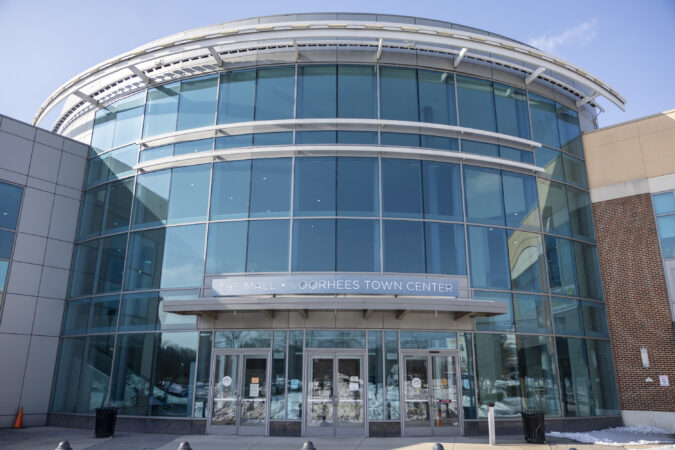
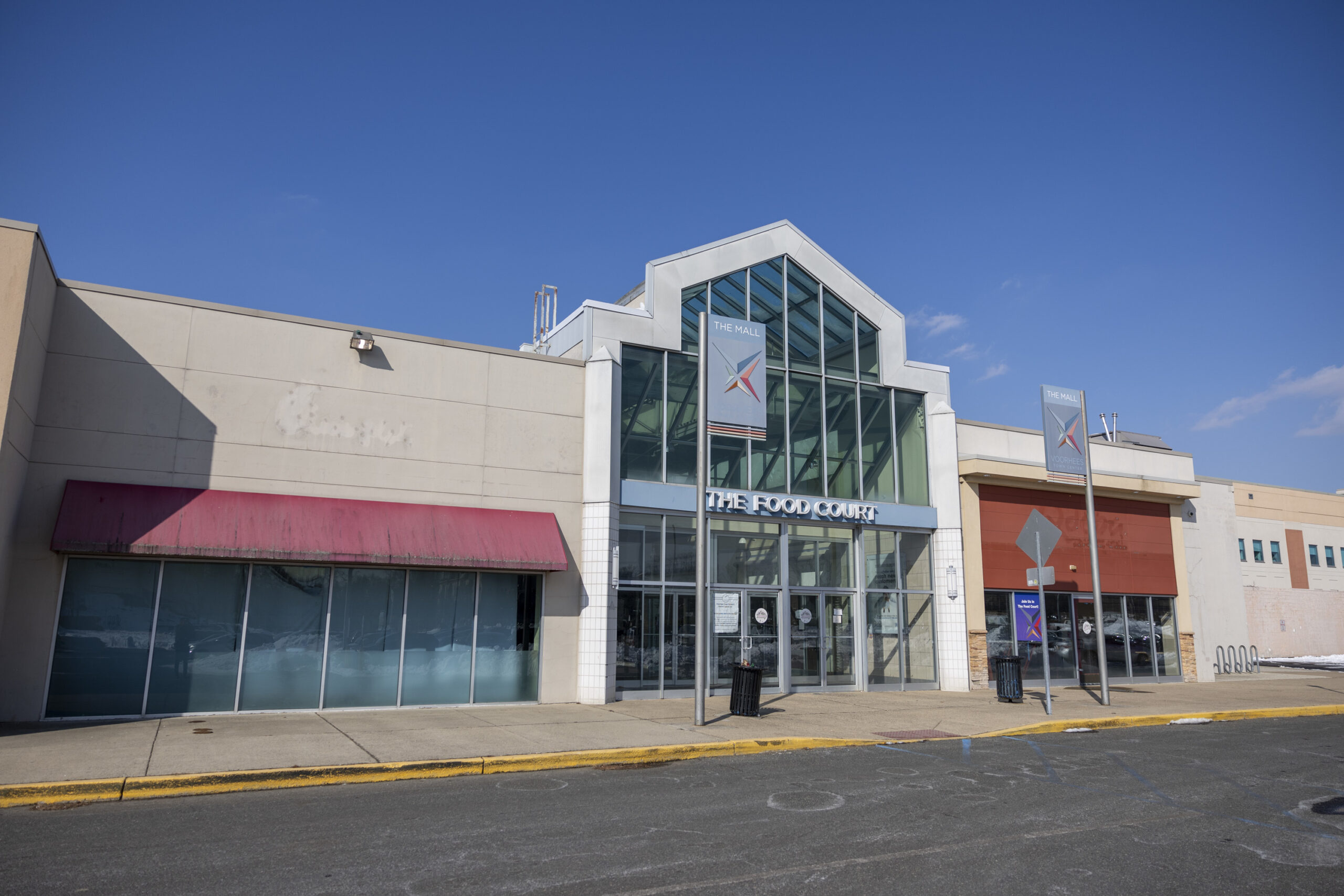
    The entrance to the food court at the Voorhees Town Center, which has been closed for nearly two years after a fire.

    Vallone said his company is applying for a $90 million tax credit for development projects and expects to hear in the coming months whether it is approved. If not, he said, “we walk.”

    Vallone made similar statements in a Philadelphia Business Journal report earlier this week.

    Voorhees Township Mayor Michael Mignogna said he supports “the thoughtful redevelopment of the former Echelon Mall site” as proposed by Hoboken Brownstone.

    “Throughout the process, the township has worked collaboratively with Hoboken Brownstone and Namdar in their private transaction to advocate for the rejuvenation of Town Center, specifically a strong business and retail presence that will restore the site as the center of Voorhees tradition and community,” Mignogna said in a statement.

    He noted that a state tax credit would not affect the developer’s local tax responsibilities.

    The uncertainty represents the latest hurdle in the long quest to revive the sprawling complex off Somerdale Road. Over the years, the 400-acre property, one of the Philadelphia region’s many lifeless malls, has been redeveloped in fits and starts under multiple owners.

    Recently, transformations have begun at nearby malls, including Moorestown and Burlington Center, as the old Echelon Mall languishes.

    What $250 million could do for dead Voorhees mall

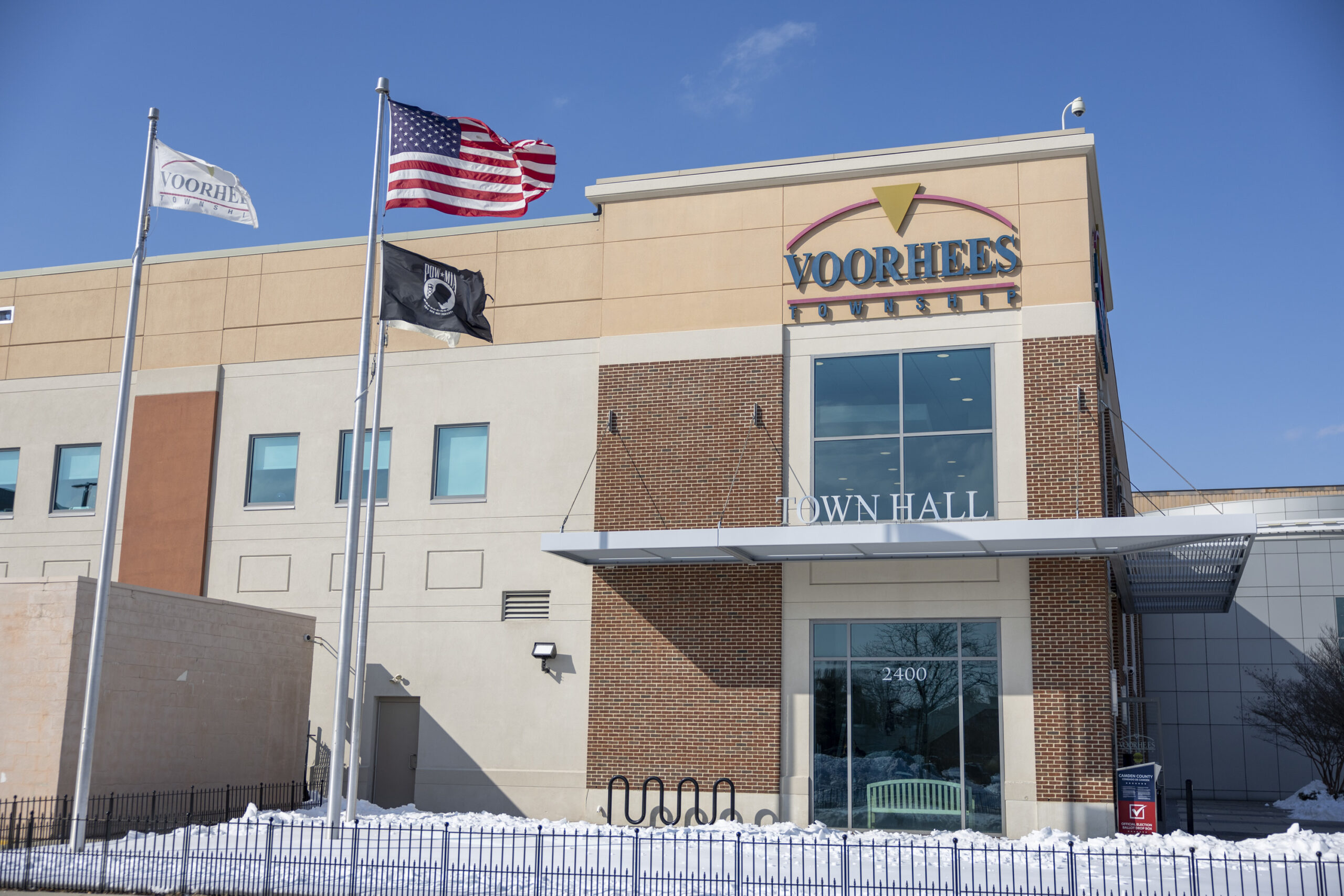
    The Voorhees Township Town Hall would not be included in a potential sale of the closed mall building.

    Voorhees officials, including Mignogna, have been talking about the troubled mall’s revival for two decades.

    Built in the 1970s, the once-bustling Echelon Mall has been struggling with vacancies since the early 2000s.

    In an attempt to turn the mall around, it was partially demolished, and a Main Street-style mixed-use development was built on part of the property in 2008. After this makeover, which cost an estimated $150 million, the complex was rebranded as the Voorhees Town Center.

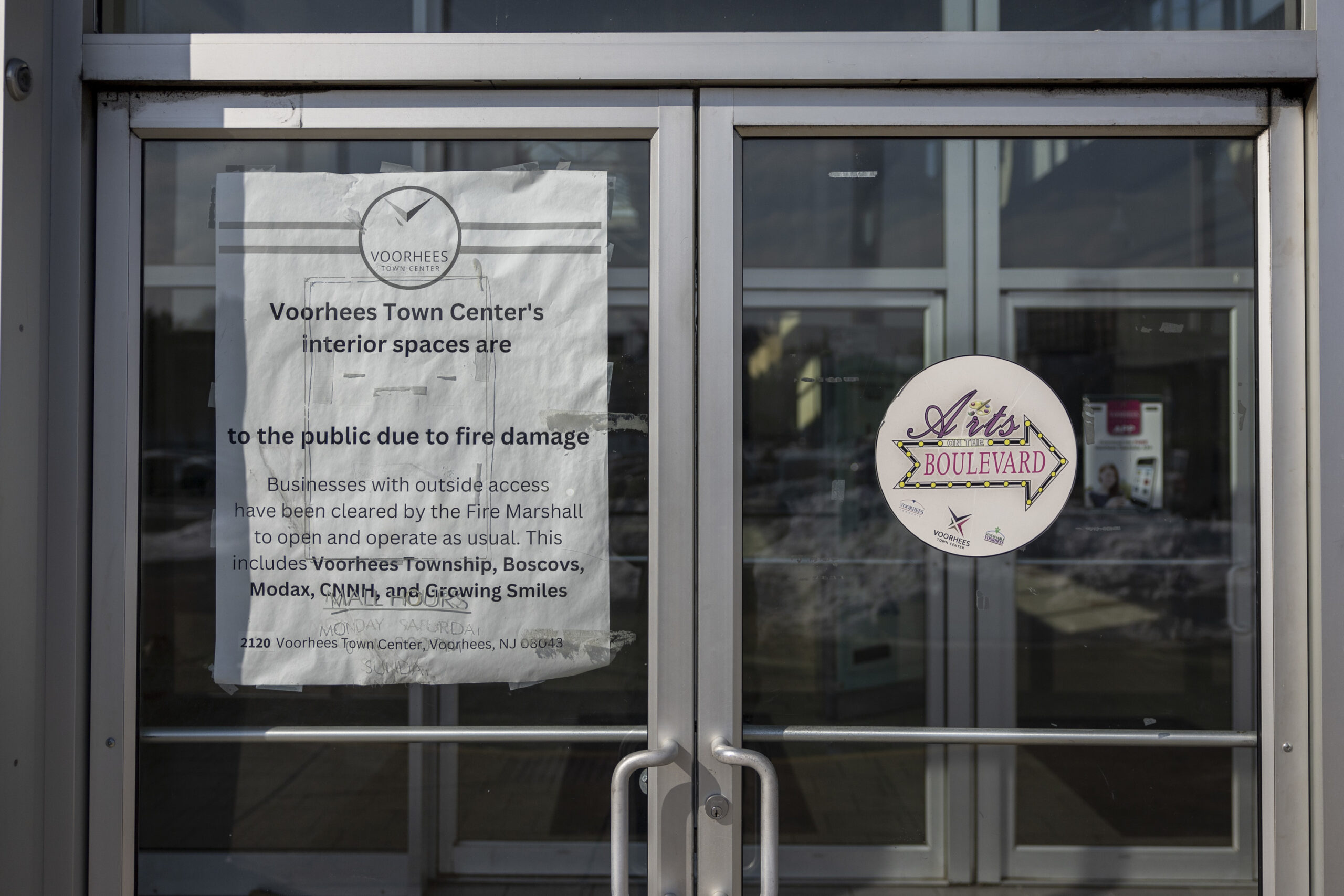
    Namdar Realty Group, which is known to scoop up distressed malls, bought the property from PREIT for $13.4 million in 2015, but the situation did not improve. Retailers continued to flee. Customers followed. In 2024, a two-alarm fire damaged the inside of the building. It has not reopened since.

    A sign on the door of the Voorhees Town Center, which has been closed for nearly two years due to fire damage.

    Hoboken Brownstone plans to buy the mall building from Namdar in a pending sale, dependent on the tax break, Vallone said. He declined to disclose how much he would pay for the property, and Namdar executives could not be reached.

    The sale would not include the Voorhees Town Hall, which occupies 22,000 square feet of the mall and cost the township $5.5 million.

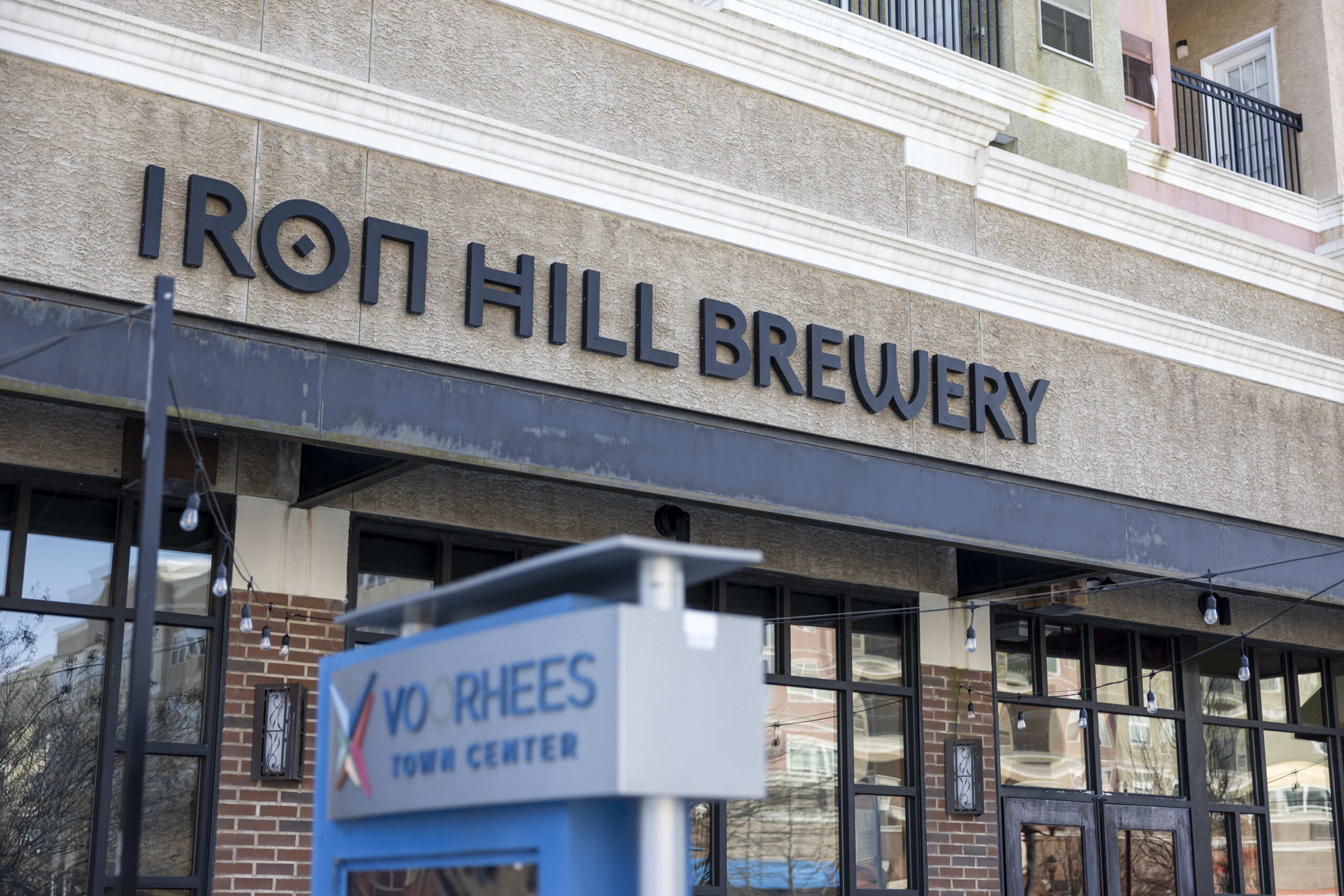
    Nor would it include the property’s existing mixed-use section, Boulevard Shoppes, which had been home to an Iron Hill Brewery until the company filed for bankruptcy and closed all locations this fall. (Township administrator Stephen Steglik said Voorhees hasn’t heard anything from Namdar about what’s next for the Iron Hill space.)

    Voorhees Township officials are in the dark about the future of the closed Iron Hill Brewery.

    Boscov’s, the site’s sole department store, would also be excluded from the sale, and executives have said it would remain open.

    If the sale goes through, Vallone said, construction could begin in early 2027.

    The company plans to build more than 200 market-rate townhouses; more than 100 units of affordable housing, including for-sale townhouses and rental apartments; and a parking garage with at least 1,300 spaces.

    As for the retail space inside the mall, “we’re going to invest a lot of money because there has been very little maintenance done on that thing for the last 20 years,” Vallone said. The mall building will not be torn down, he said, and may look largely the same from the outside.

    Why this developer invests in dead New Jersey malls

    The former Echelon Mail, as seen through a window in October 2024, after a fire damaged the building. The mall has not reopened since.

    In Voorhees, Hoboken Brownstone’s plan differs from its other major mall redevelopment in New Jersey.

    In Flemington, Hunterdon County, Vallone said they’re demolishing Liberty Village, considered the country’s first outlet center, and turning it into a mixed-use complex that will also include townhouses and apartments.

    After buying Liberty Village from Namdar, Vallone said he reached back out to the real estate company to inquire about other mall properties for sale. That’s how he became interested in the Voorhees Town Center.

    Vallone said he believes dead and dying malls can make good investments.

    “Here we have a substantial amount of infrastructure that is feeding the mall,” including plumbing and electric, Vallone said. “That de-risks the project quite a bit.”

    And he said he thinks customers will come to malls-turned-town-centers if they are developed thoughtfully.

    After all, retailers like Amazon can’t deliver everything same-day, Vallone said, and shopping online doesn’t offer the same experience as browsing at a store.

    In-person entertainment, fine dining, and even grocery shopping are also hard to replicate at home, he said: “Certain things, you have to go somewhere to do.”

  • Other Pa. transit systems are dealing with the fiscal crunch that hit SEPTA last year

    Other Pa. transit systems are dealing with the fiscal crunch that hit SEPTA last year

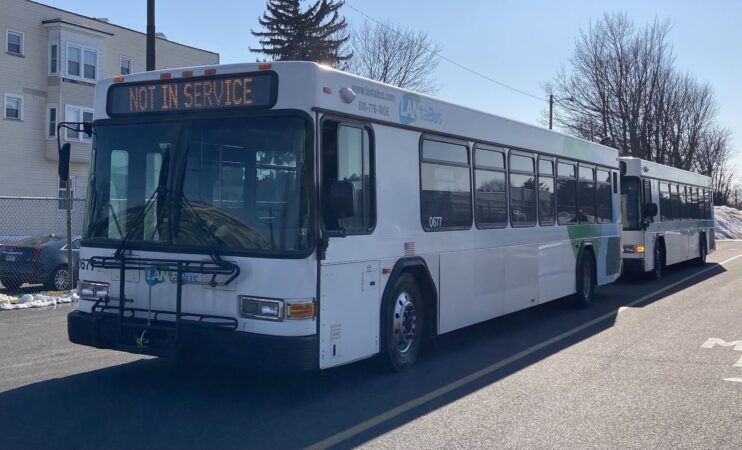
    The bus system serving 11,000 daily riders in Lehigh and Northampton Counties cut its service 5% last week, a result of the continuing uncertainty around state funding for mass transit.

    LANTA did not eliminate any routes but has reduced the number of trips on 13 bus lines.

    “If there’s no solution coming, we’ll have to make deeper cuts,” Owen O’Neil, executive director of LANTA, said in an interview.

    Gov. Josh Shapiro last fall used executive authority to flex long-term funding for capital projects to cover daily operations at SEPTA and Pittsburgh Regional Transit (PRT) for two years, following an impasse with lawmakers.

    Most of the state’s 33 smaller public transit systems did not get that big an assist and now are facing unpleasant belt-tightening choices amid rising costs and years of underfunding from Harrisburg.

    LANTA is planning to raise fares in March.

    But the agency was able to make smaller cuts than the 20% it had budgeted because the Pennsylvania Department of Transportation granted it $13 million to stabilize service over two years, O’Neil said.

    With federal COVID-19 relief funds, LANTA was able to expand service to 11 popular new worksites in the fast-growing Lehigh Valley. It’s the third-largest system in Pennsylvania.

    In the state budget unveiled Tuesday, Shapiro proposed increasing the share of sales tax revenue reserved for SEPTA and its fellow mass transit agencies, raising a projected $319 million a year.

    If the idea is enacted, however, new money would not begin flowing until July 1, 2027 — the start of the 2028 fiscal year. The tax rate itself would stay the same but transit would get 6.1% of the revenue, up from 4.4%.

    O’Neil said LANTA likely could wait that long if needed. But “we don’t have the stable source of funding,” he added. It would be difficult to continue to operate the expanded routes without one, O’Neil said.

    “Our governor is not meeting the moment,” said Connor Descheemaker, statewide campaign manager of Transit for All PA!, a nonprofit advocacy group.

    “Adjusting the sales tax allocation does not meet the structural deficit facing a single one of Pennsylvania’s public transportation systems,” they said.

    Postponing a change for 18 months gives lawmakers and the governor a longer runway to reach agreement on a stable, recurring source of money for transit — either via Shapiro’s proposal or through a new revenue stream.

    State funding for transit operations has declined steeply since the 2013 passage of Act 89, which used toll revenue from the Pennsylvania Turnpike to raise $450 million a year through 2022.

    SEPTA, which got $394 million from the state-sanctioned flex of capital dollars last year, has said it is not considering major service cuts or fare increases this year.

    Executives figure that SEPTA can provide current levels of service until summer 2027.

    The transit agency estimates that it would get $183 million in the first year if the governor’s Tuesday proposal is enacted, said Erik Johanson, SEPTA’s chief financial officer.

    With a local match of $27 million, “the difference between what the governor is proposing and how much we need is getting closer and closer to being sufficient,” Johanson said.

    Yet there has been no proposal to replace the capital money that the transit agency and PRT essentially borrowed against.

    “Those dollars are gone, and they have to be replenished,” he said.

    Descheemaker’s group estimates that seven smaller transit systems, including in the State College area, will have to cut service or raise fares if no solution is in the offing.

    “It’s disappointing that we continue to hear about transit as if it is something that only affects Philadelphia and a little bit of Pittsburgh,” Descheemaker said.