Category: News

Latest breaking news and updates

  • Reflecting Pool’s algae bloom and peeling paint reflect Trump’s treatment of U.S. history

    Reflecting Pool’s algae bloom and peeling paint reflect Trump’s treatment of U.S. history

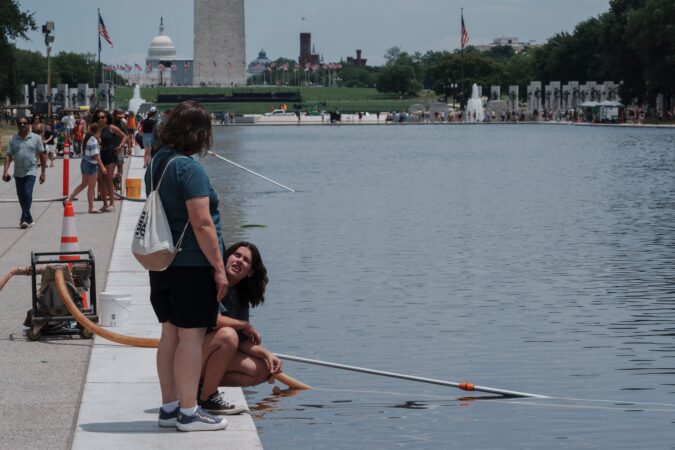
    President Donald Trump’s latest D.C. renovation, painting the Lincoln Memorial Reflecting Pool “American Flag Blue,” to celebrate the country’s 250th birthday has instead turned the symbolic heart of the National Mall Algae Bloom Green. The paint is peeling, and the water is a swampy muck.

    Trump has asserted, without evidence or corroboration, that vandals cut a 250-foot gash into the new lining and poured corrosive chemicals into the basin. Yet, the explanation for what has happened appears to be more mundane and predictable than the cloak-and-dagger sabotage Trump has suggested. Rosalina Stancheva Christova, an aquatic ecologist from George Mason University’s Algal Ecology Laboratory, sampled the water and found an ordinary, non-toxic bloom — the kind any ordinary swimming pool owner has fought in their own backyard.

    And yet, the problem with the renovation runs far deeper than all of this. Trump’s painting project reflects a fundamental lack of understanding of the original purpose and vision for the reflecting pool. For more than a century, the basin has functioned as a civic mirror, a place where visitors could see themselves reflected alongside the monuments that commemorate the nation’s story. Today that possibility is gone.

    The roots of the reflecting pool lie in the “City Beautiful” movement of the late 19th and early 20th centuries. The Gilded Age and decades of laissez-faire growth had left many of America’s cities in disrepair, full of tenement districts, boss-run wards and blight.

    American architects Daniel Burnham, Charles McKim, Frederick Law Olmsted Jr. and Augustus Saint-Gaudens wanted to change that, and they were inspired by European urban renewal projects like Baron Georges-Eugene Haussmann’s redesign of Paris. In 1893, at the World’s Columbian Exposition in Chicago, they explored the principles that spawned their movement to reimagine American cities — demonstrating how monumental architecture and carefully designed landscapes could express civic ideals.

    Their experience in Chicago helped to convince the men that beautiful, orderly, civic space could repair the disordered industrial cities the Gilded Age had left them. Their vision reflected a broader Progressive Era faith that urban renewal and public investment could address the social problems of industrial America while restoring civic pride through monumental construction projects designed to project an image of a robust and resilient nation.

    In 1903, all four architects became members of the Senate Park Commission (McMillan Commission) whose mandate was to replace decades of haphazard development in Washington D.C. with a coherent civic plan.

    They set their sights on the National Mall, which was, at that time, a disunified Victorian garden punctuated by marshland with a public green transected by a railroad depot and tracks.

    The commission’s 1901 report complained that the mall “has been diverted from its original purpose and cut into fragments, each portion receiving a separate and individual informal treatment, thus invading what was a single composition.” Their redesign plans aimed to unify the space into a legible and cohesive civic story and the reflecting pool eventually became the spine for that narrative.

    Over the next two decades, the McMillan Plan gradually reshaped the mall.

    Architect Henry Bacon was charged with designing the Lincoln Memorial. In 1911, he completed his first sketches, and he incorporated the commission’s vision by extending the mall’s central axis westward and anchoring it with the reflecting pool. Bacon imagined the pool as a mirror reflection, where visitors could see both the Washington Monument and the Lincoln Memorial. As a result, Bacon created a linear and legible connection between the man who presided over the creation of the republic at one end and the man who led the nation through the war for its preservation at the other.
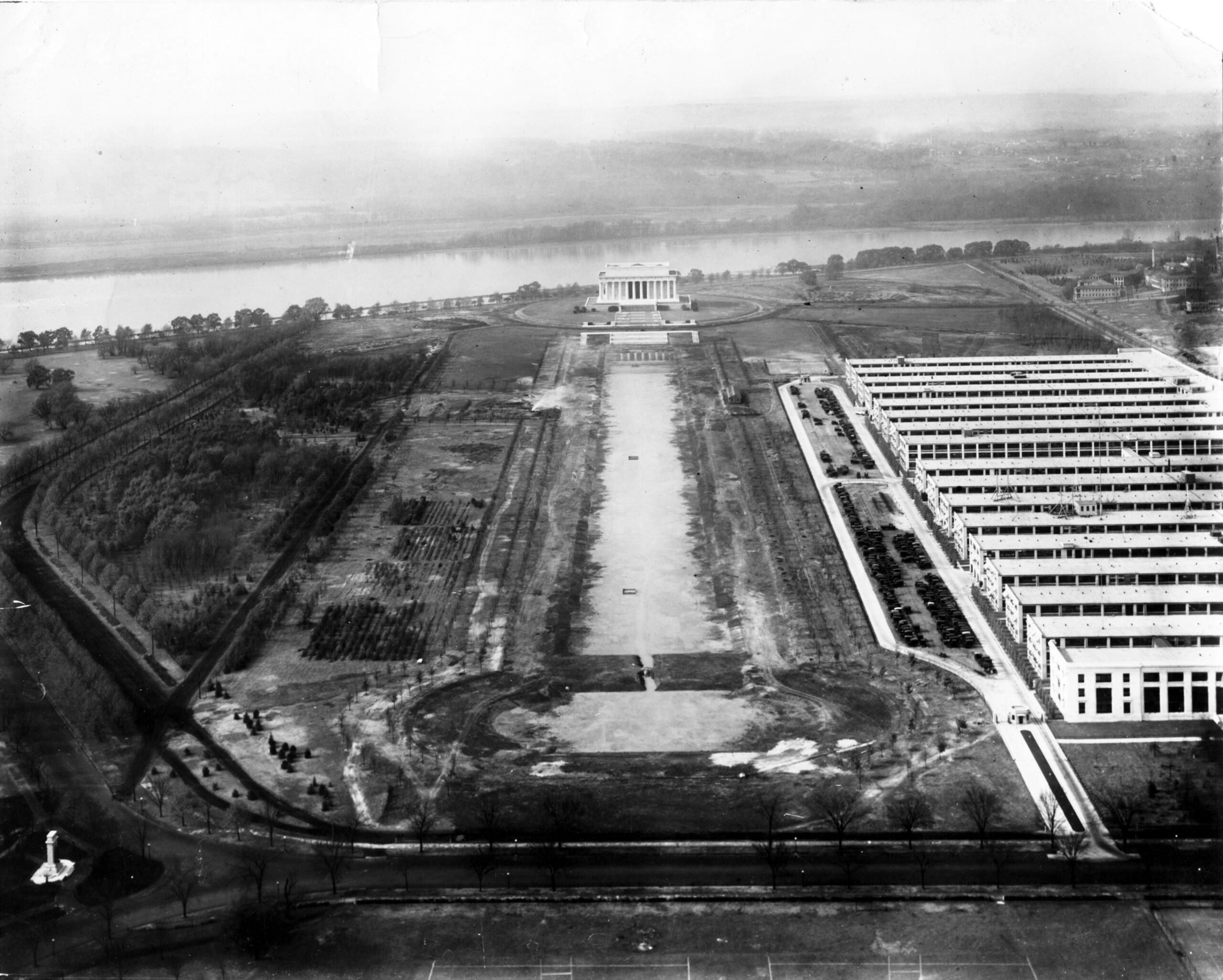
    The future Reflecting Pool site facing west toward the Lincoln memorial in 1921.

    In 1919, the Army Corps of Engineers began excavating a former Potomac marshland known as the Kidwell Flats, to enable construction of the pool. The project took four years and was still under construction at the time of the Lincoln Memorial’s dedication in 1922.

    The pool quickly became a symbolically rich venue for crucial moments in U.S. history. In 1939 the African American contralto Marian Anderson sang from the memorial steps to a crowd of approximately 75,000 people massed along the pool after the Daughters of the American Revolution refused to let her perform at Constitution Hall.

    Made By History sponsors. FOR USE ON MADE BY HISTORY STORIES ONLY.

    Twenty-four years later, a quarter million people lined both banks of the pool to hear the Reverend Dr. Martin Luther King Jr. proclaim his dream, to challenge the nation to complete the unfinished journey toward racial equality and achieve a meaningful resolution of the issues that had nearly destroyed the nation.
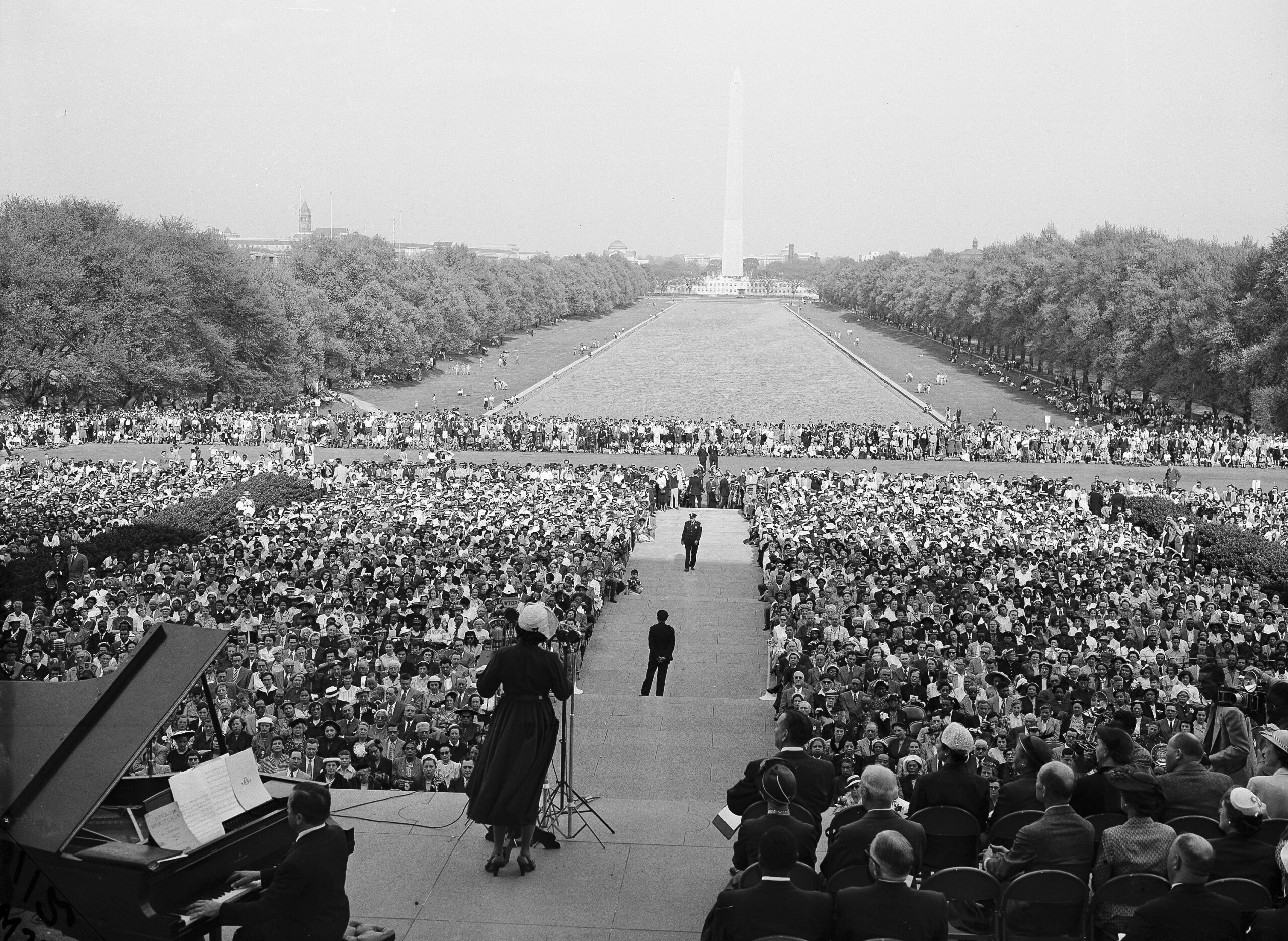
    Marian Anderson performs from the steps of the Lincoln Memorial in Washington on April 20, 1952, in this image showing the Reflecting Pool and the Washington Monument. . Anderson’s accompanist is Franz Rupp, lower left, at piano. (AP Photo/Henry Griffin, File)

    The pool reflected those crowds, those moments and those movements only while they occupied the space. Each reflection vanished and was replaced by another individual, another gathering, another episode in the nation’s story.

    Yet, despite its symbolic significance and its success as a site for large scale civic dialogue, from a physical standpoint, the pool faced problems almost from day one. At issue was the soggy foundation created by the choice of marshlands for the reflecting pool’s site.
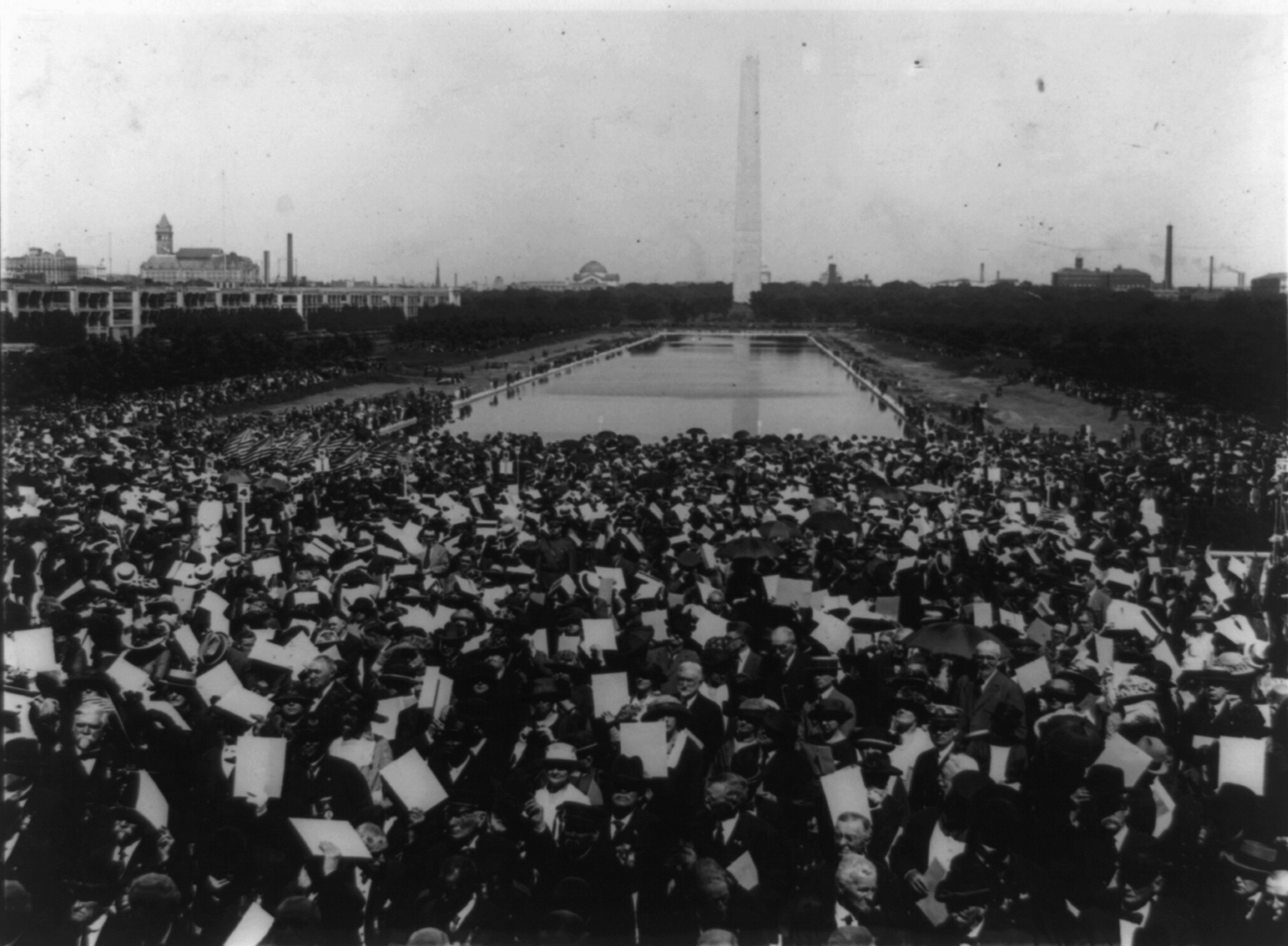
    This 1922 photo was taken at the dedication of the Lincoln Memorial. Nearly from the start, the Reflecting Pool faced structural problems.

    During its construction, the Army Corps of Engineers had attempted to mitigate the potential problem with concrete support beams and a drainage system undergirding the pool. But almost immediately these mitigation systems proved inadequate. The result was cracks and leaks that have plagued the pool for its entire lifetime.

    Numerous administrations have tried to solve the issues. In 1986, the Reagan Administration drained the pool and poured an entirely new concrete foundation. Even this did not solve the problem. The pool continued to leak nearly 30 million gallons per year.

    In 2011, Barack Obama’s administration undertook another round of renovations. While matters improved, the pool still leaks 16 million gallons of water per year.

    The current issue with the reflecting pool and Trump’s response to it, however, go well beyond structural inadequacies and sabotage theories. They reflect a lack of understanding about the pool’s purpose.

    In April, Trump posted a doctored image of himself and his officials in swimsuits lounging in the reflecting pool, a woman in a bikini reclining in the water beside them. But the pool is a mere 18 inches deep, not swimming pool/ lounging depth and Bacon never intended anyone to use it that way. He built a basin you stand beside because its work happens in the mind of the person at the rim. Trump’s artificial intelligence revisionism gets the object exactly wrong — an instrument of contemplation made over into the feature of a tacky resort.

    Trump directed the Department of the Interior to repaint the pool in time for the nation’s 250th anniversary and used an emergency exemption to award a no-bid contract to a company that specialized in painting swimming pools. The result essentially took an area that was a swamp, before its transformation into a civic mirror, and returned it to a swamp. An algae-greened surface now sits where the reflection used to be, and the connection the pool held, the citizen to the monuments, individual to the national story, has been severed.

    When the pool functions as a mirror surface, it is a monument that embodies an evolving republic rather than a finished one. Trump’s swamp has transformed it into a static, murky image that defies the idea of a nation moving forward. As this history makes clear, the health of the republic depends on its ability to see itself clearly, and Trump’s algae-infested reflecting pool is a symbolic reflection of a nation and a history he and his administration continue to try to obscure from clear view.

    Susan Deily-Swearingen holds a Ph.D. in history from the University of New Hampshire, and has taught at multiple universities since 2015. She has a forthcoming book about the persistent legacies of the U.S. Civil War in contemporary politics and society, and frequently writes about historical memory and the echoes of the past in the modern world.

    Made by History takes readers beyond the headlines with articles written and edited by professional historians. Opinions expressed do not necessarily reflect the views of The Inquirer.
  • 🎠 Ocean City nears decision time | Down the Shore

    🎠 Ocean City nears decision time | Down the Shore

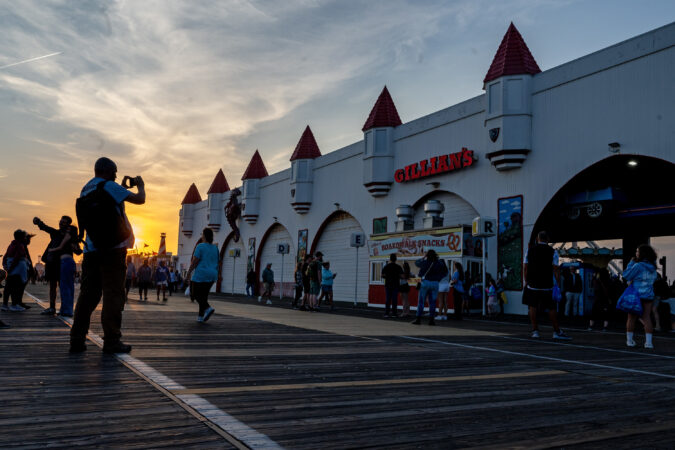
    It may finally be decision time in Ocean City for the site of the former Wonderland Pier at 600 Boardwalk. It’s been nearly two years since the beloved amusement park owned by Mayor Jay Gillian shut down.

    Eustace Mita, the developer who proposed a luxury hotel with a seashore theme anchored by Gillian’s old carousel and Ferris wheel and maybe a kiddie ride or two, told me he’s in the dark about what will happen. The Icona developer has turned his attention to other things lately, he says, like building a Soul Sanctuary Catholic retreat on the grounds of a once-notorious abbey in County Cavan, Ireland.

    Closer to home, Ocean City’s City Council is scheduled to vote Thursday evening on whether to designate the Wonderland site is in need of rehabilitation, a designation Mita has been seeking that would then allow a negotiation with Council over zoning and other matters (the Boardwalk is not zoned for a hotel).

    The council hired a planner to come up with a report, which pretty much said what an earlier report said: that there is justification for such a designation “to prevent further underutilization and deterioration of the Property and to encourage redevelopment of the Property.”

    The city’s planning board in January deadlocked on a recommendation and punted the topic back to Council.

    There are a lot of strong feelings about this in town, though the Save Wonderland movement seems to have resigned itself to the idea that an amusement park is probably no longer in the site’s future.

    Council is expecting a big crowd and has moved the 6 p.m. meeting to the City’s Music Pier. Stay tuned.

    📮 Is it time for Ocean City to move ahead with the hotel plan at 600 Boardwalk? Is it time for another idea? Let me know what you think by replying to this email.

    Have ideas or news tips about the Shore or this newsletter? Send them to me here.

    🌤️ It’s quite lovely out there. Hope it lasts. The recent spate of land breeze days that left the beach a bit suffocating and ocean water temps plunging was not that great.

    — Amy S. Rosenberg (Find me at @amysrosenberg. 📷 Follow me on Insta at @amysrosenberg. 📧 Email me here.)

    If someone forwarded you this email, sign up for free here.

    Shore talk

    🚲 New Jersey says it is now taking appointments for people to get their e-bikes registered, as a new law requires (though not of Pennsylvanians). Read more about the confusing law here.

    🚨 An Atlantic City police officer who was shot in the femoral artery, then saved during surgery at the city’s emergency room, was released from the hospital as hundreds gathered.

    👰‍♀️ Taylor Swift may have other ideas than Sea Isle City for Jason and Kylie Kelce over July 4 weekend.

    🐢 Diamondback terrapins are trying to find suitable nesting spots and are crossing busy Shore roads, especially causeways and blocks near the bay. Please watch out for them!

    🤍 A plane took off from Ocean City’s airport and crashed on its way back to Maryland, killing its three occupants.

    👑 Egg Harbor Township wrestling alum and Preps Pizza employee Kylie Wright was crowned Miss New Jersey.

    🏀 Margate’s favorite basketball superstar, Jalen Brunson, celebrated Father’s Day with brunch at Steve & Cookie’s. His wife, Ali Marks Brunson, is teaching (sold-out) workout classes in Ocean City.

    What to eat/What to do

    🎡 Go to a pretend Shore Boardwalk at Six Flags.

    🏁 Watch Atlantic City’s offshore powerboat high-speed Grand Prix.

    📖 Read Brother Epistles, by Shore resident Shanda McManus, a memoir of her brother’s Christmas Eve 1992 shooting death in Philly. McManus talks here about holding joy and grief on the same page.

    🫐 Savor South Jersey’s amazing blueberries here.

    ✈️ Fly direct from Atlantic City to Vero Beach on newly announced flights from Breeze Airways.

    🍗 Check out the new New Jersey Black Heritage Trail marker commemorating Chicken Bone Beach in Atlantic City, and the city’s new Black Cultural Heritage Tour.

    🏖️ Spend a perfect weekend on 7 Mile Island.

    🇺🇸 Indulge in a Mino’s Bakery strawberry shortcake (red, white) and the iconic blueberry pie (blue) at Ventnor’s 7311 and get ready for fireworks.

    Shore snapshot

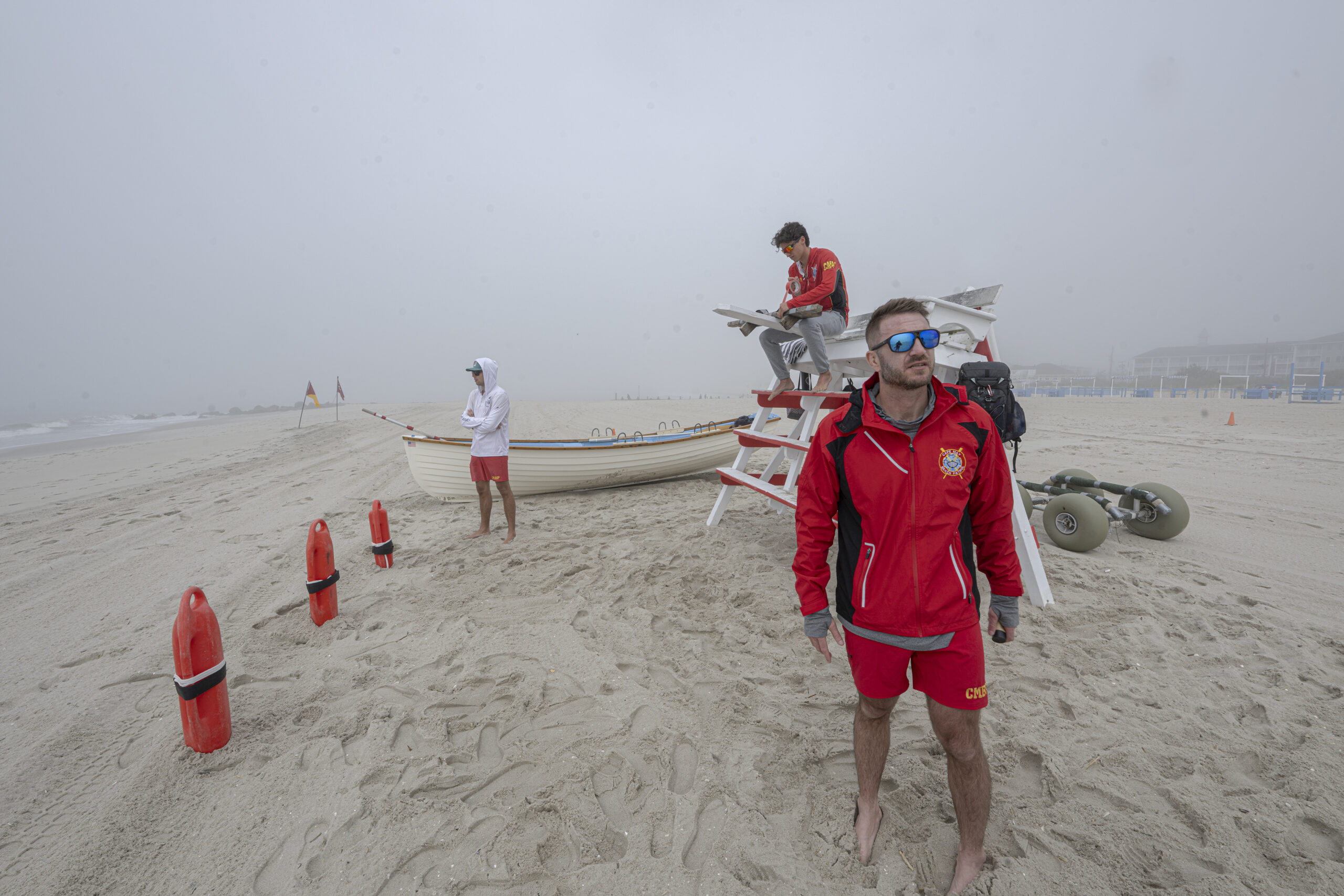
    From left: Lifeguards Kyle Satt, Gavin Mogck, and Paul Connor patrol the beach in rainy and foggy conditions on Memorial Day 2026 in Cape May.

    🧠 Trivia time

    The pizza magnate whose family owns half of Ocean Casino is now buying the entire pie, and will be sole owner of one of Atlantic City’s most successful casinos.

    Which pizza company is it?

    A. Lorenzo’s

    B. Domino’s

    C. Tony’s Baltimore Grill

    D. Little Caesars

    If you think you know the answer, click on this story to find out.

    Ask Down the Shore: Avoiding traffic

    A reader wrote: “Friday used to be the heavy traffic day from Philadelphia to the shore on the Expressway. Now the congestion seems to start as early as noon on Thursday and continues straight through Friday night.”

    We turned to our Shore Line group chat (join us here!) and asked: Which is the best window to drive to the Shore?

    Here are some replies:

    • I go down, believe best time is at 5:30-6 am or after 7 on Friday, still light out at both times, don’t like to drive when dark.
    • Here’s my solution to avoiding heavy traffic to and from the shore. Go down on Wednesday before MDW and come back on Wednesday after LDW (it helps to be retired!).
    • I work in Center City so I leave after work on Friday’s typically. Hit the road around 5:30, use Ben Franklin. Then on the way to the AC, 42 is a parking lot! Anymore, I’m thinking early morning Thursday or Friday before 8 a.m.? Just a guess.
    • No window is better than another — I gave up and moved to the shore.

    Have another Shore dilemma? Or an opinion on traffic? Let us know what you think by replying to this email.

    Your Shore memory

    I’ve been talking to a lot of people about changes in Sea Isle City for an upcoming story, and Diana Dougherty shared these reminiscences of the old days:

    My husband was an altar boy at St. Joe’s. When we got married, we started renting for a couple weeks every year with in-laws, wonderful times, low key restaurants, crowds not as bad, felt safe, no issue with teenagers. Now it’s all changed in maybe last 20-25 years. We finally build our own house in 1985. It looks like a tiny house to what is now. Miss my beloved place, but will never sell and just redid inside.

    Send us your Shore memory in 200 words! Tell us how the Shore taps into something deep for you, and we will publish them in this space during the summer.


    By submitting your written, visual, and/or audio contributions, you agree to The Inquirer’s Terms of Use, including the grant of rights in Section 10.

  • ‘Don’t cut these funds, Gov. Sherrill’ | Inquirer South Jersey

    ‘Don’t cut these funds, Gov. Sherrill’ | Inquirer South Jersey

    Good morning, South Jersey. The bulk of the rain seems to be over this week, but there’s a chance of some more showers.

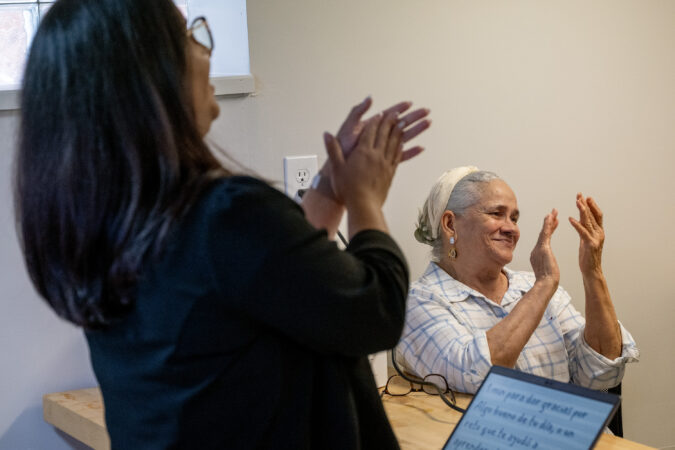
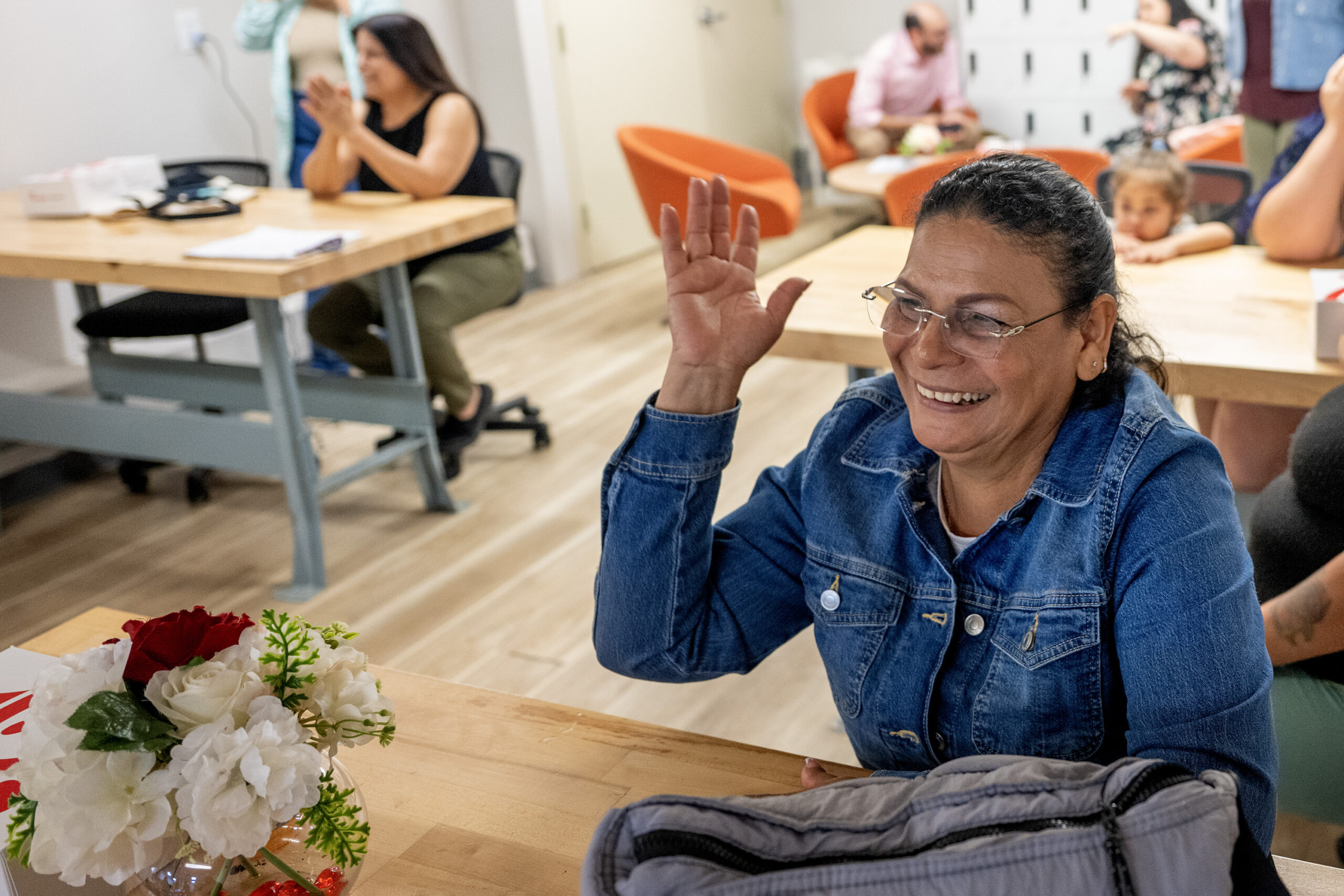
    Hispanic Women’s Resource Centers face steep cuts under Gov. Mikie Sherrill’s proposed budget.

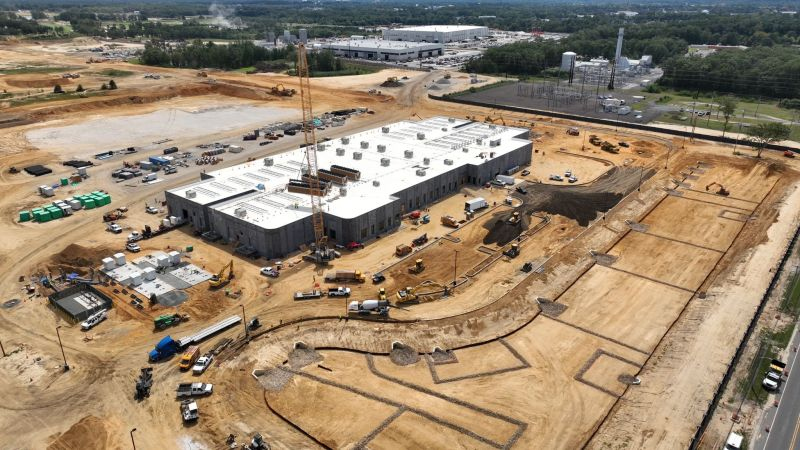
    And Medford passed an ordinance to prohibit data centers within its limits.

    Plus, Pennsauken’s Yaxel Lendeborg was chosen in the first round of the NBA draft, and more news of the day.

    — Taylor Allen (southjersey@inquirer.com)

    If someone forwarded you this email, sign up for free here.

    Pleading for state funding

    Hispanic Women’s Resource Centers were established in 1991 to address the wage gap for Latinas in New Jersey, one of the states with the biggest gap for Latina workers.

    Under Gov. Mikie Sherrill’s proposed budget, the statewide initiative could see its funding decrease by 80%.

    These centers help women like Consensa Francisca Silva Silva who was able to obtain a work permit, make a down payment for an apartment, and start working thanks to the assistance she was able to receive for one of these centers in Camden.

    “It was very hard to come here without knowing anyone, and it was really hard because at first I couldn’t find any work,” Silva said about her experience when she first arrived from Costa Rica.

    Silva and other supporters worry immigrant women like her won’t get the support they need if the cuts go through.

    The Inquirer’s Aliya Schneider has the latest information on the budget process.

    Medford bans data centers

    Medford sent a clear message this week: No data centers here. Its council adopted the ordinance to prohibit them, despite not receiving any formal applications for a center.

    “These are extra precautions to ensure that we don’t move forward in a direction that we can’t come back from until we know full well what the impacts of data centers will be,” Medford Mayor Michael Czyzyk said.

    Council reserves the right to amend the ordinance to permit data centers in the future.

    Medford is the latest South Jersey community to resist data centers, including Cherry Hill.

    Reporter Lacey Latch has the story.

    What to know today

    • The New Jersey Supreme Court on Wednesday ordered prosecutors to fully disclose how police used facial recognition technology in a murder case, New Jersey Monitor reports.
    • A body of a swimmer who went missing last month in Ocean County has been recovered, according to the police.
    • The federal government ordered Chemours Co. to pay $450 million over illegal discharges of synthetic “forever chemicals” known as PFAS. According to the Associate Press, the company will pay penalties and provide mitigation efforts to prevent these types of discharges in North Carolina, West Virginia, and New Jersey.
    • Camden might get a new rooftop nightclub along the waterfront. The Club 9 SkyLounge is proposed for the rooftop deck of the Hinson Parking Garage on Delaware Avenue.
    • Yaxel Lendeborg, a 23-year-old forward who played for Pennsauken High School, was chosen by the Golden State Warriors in the first round of the NBA draft.
    • Moorestown Township established new rules for e-bikes, electric scooters, dirt bikes, and other motor-assisted devices. One of those rules is that they’re generally banned from sidewalks. The new ordinances takes effect on July 19.

    🗓️ The best things to do this week

    SoccerFest26 at the Waterfront: Residents and tourists will be able to celebrate the World Cup with match screenings, international food, soccer-based youth programming, live music, and various craft vendors. ⏰ Thursday, June 25-Saturday, June 27, various times 💵 Pay-as-you-go/RSVP required 📍 Wiggins Park, 2 Riverside Dr., Camden

    🏳️‍🌈 Gloucester Township’s LGBTQ+ Pride Festival: The three-day Pride celebration will feature local vendors, film screenings, art, wellness sessions, and drag shows. ⏰ Friday, June 26-Sunday, June 28, various times throughout the weekend 💵 Pay-as-you-go 📍 Harmony Hall, 3 S. Black Horse Pike, Blackwood

    🇺🇸 Freedom Fest: A Star Spangled Spectacular: The festival will include live performances, fireworks, food trucks, and more. ⏰ Saturday, June 27, 3 p.m. 💵 Pay-as-you-go 📍 Delran Community Park, 12 Hardford Rd., Delran

    See more event listings here.

    🧠 Trivia time

    The Phillies drafted Logan Dawson last year. He grew up locally in Voorhees and is a lifelong fan of the team. Who was his favorite player growing up?

    A) Ryan Howard

    B) Chase Utley

    C) Jimmy Rollins

    D) Cole Hamels

    Think you know? Check your answer.

    What we’re…

    🚲 Double-checking: The rules and restrictions about e-bikes in New Jersey.

    ⚽ Exploring: The different games at the PATCO Soccer Stop for the World Cup.

    🌻 Wishing: It were sunflower picking season at Dalton Farms in Swedesboro.

    🏡 On the market

    A Mount Laurel Colonial with modern updates and an expansive backyard

    The four-bedroom, three-bathroom home has Colonial charm with the original deed dating back to 1842. It has a classic farmhouse exterior with modern amenities inside such as an updated kitchen. The home showcases exposed wood beams and hardwood flooring. There’s also an abundance of space including two large great rooms, and an expansive backyard with mature trees and patio areas.

    See more photos of the property here.

    Price: 589,999 | Size: 2,703 SF | Acreage: 1.10

    And that is all I have for you today. I’ll be back in your inbox tomorrow morning. 👋🏽

    By submitting your written, visual, and/or audio contributions, you agree to The Inquirer’s Terms of Use, including the grant of rights in Section 10.

  • Medford bans data centers within town limits amid public debate about AI

    Medford bans data centers within town limits amid public debate about AI

    Large-scale data centers will not be moving into Medford any time soon thanks to a new ordinance adopted unanimously by the Medford Township Council this week.

    While the township has not yet received any formal applications for data centers, officials are taking steps like the ordinance passed Tuesday that specifically prohibits the land use within town limits as a chance to be proactive.

    “These are extra precautions to ensure that we don’t move forward in a direction that we can’t come back from until we know full well what the impacts of data centers will be,” Medford Mayor Michael Czyzyk said at Tuesday’s public hearing.

    The ordinance received support from Medford-area residents at the hearing but some questioned whether the township might be making its bed too early considering how quickly technology evolves, especially if there’s a chance to reap the rewards of a data center project without negatively impacting the surrounding community.

    “If there’s no impacts to the residents and there’s only a financial benefit, I believe I would consider looking at that at that time, but we’re not there yet,” Czyzyk said.

    While the ordinance constraints may seem all-limiting as it exists today, Czyzyk said, council maintains the authority to at any point amend the ordinance to permit data centers in the township’s redevelopment district.

    “I definitely understand that things will evolve and there may be a time in the future that the term data center is something that is more amenable to the residents and the body that governs them,” Czyzyk said.

    “I will feel comfortable with the vote I cast on this ordinance tonight knowing full well that today I feel that way and that there’s mechanisms in the future if things do change, a process will be undertaken to remedy that,” he said.

    Nearby in Cherry Hill, Mayor David Fleisher has explicitly vowed to block the construction of any large AI or commercial data facilities in the township citing concerns of high energy usage, water consumption, and proximity to residents.

    There are dozens of data centers currently operating throughout the state with major hubs located primarily in North Jersey urban centers like Secaucus and Newark. But more recently, developers have been eyeing spots in rural South Jersey as the industry expands to meet growing demands for generative AI.

    For months, South Jersey residents have been protesting a major AI data center that is currently under construction in Vineland.

    Developers and other data-center proponents say the facilities bring in tax revenue, create jobs, make use of old industrial sites, and put towns on the cutting edge of a hot industry, all without straining school districts or emergency services.

    Opponents, meanwhile, cite concerns about pollution, noise, power and water use, and the impact on their electric bills. Some also say they worry the AI boom is a bubble that could soon burst.

    As concerns continue to grow among towns across the Garden State, representatives from more than 60 environmental, labor, and community groups sent a letter to New Jersey Gov. Mikie Sherrill last month calling for a statewide moratorium on the approval and construction of new facilities that use 20 megawatts or more of power.

    So far in response to the public pressure, Sherrill has proposed a plan that would require new data centers to cover grid upgrades, utilize their own power generators, and publicly report resource usage.

    While some municipalities like Medford have issued moratoriums on new data centers, no state governments have successfully done so, according to the National Conference of State Legislatures.

  • The Buttery comes to Bryn Mawr | Inquirer Lower Merion

    The Buttery comes to Bryn Mawr | Inquirer Lower Merion

    Hi, Lower Merion! 👋

    Beloved Main Line bakery The Buttery has opened its newest outpost in Bryn Mawr. Take a peek at the owners’ plans and pastries. Also this week, a slate of commercial properties worth millions are for sale, Main Line Health patients who get insurance through UnitedHealthcare won’t see a disruption in care Tuesday, plus a strange breakthrough after a string of thefts.

    If someone forwarded you this email, sign up for free here.

    Now open on Lancaster Avenue

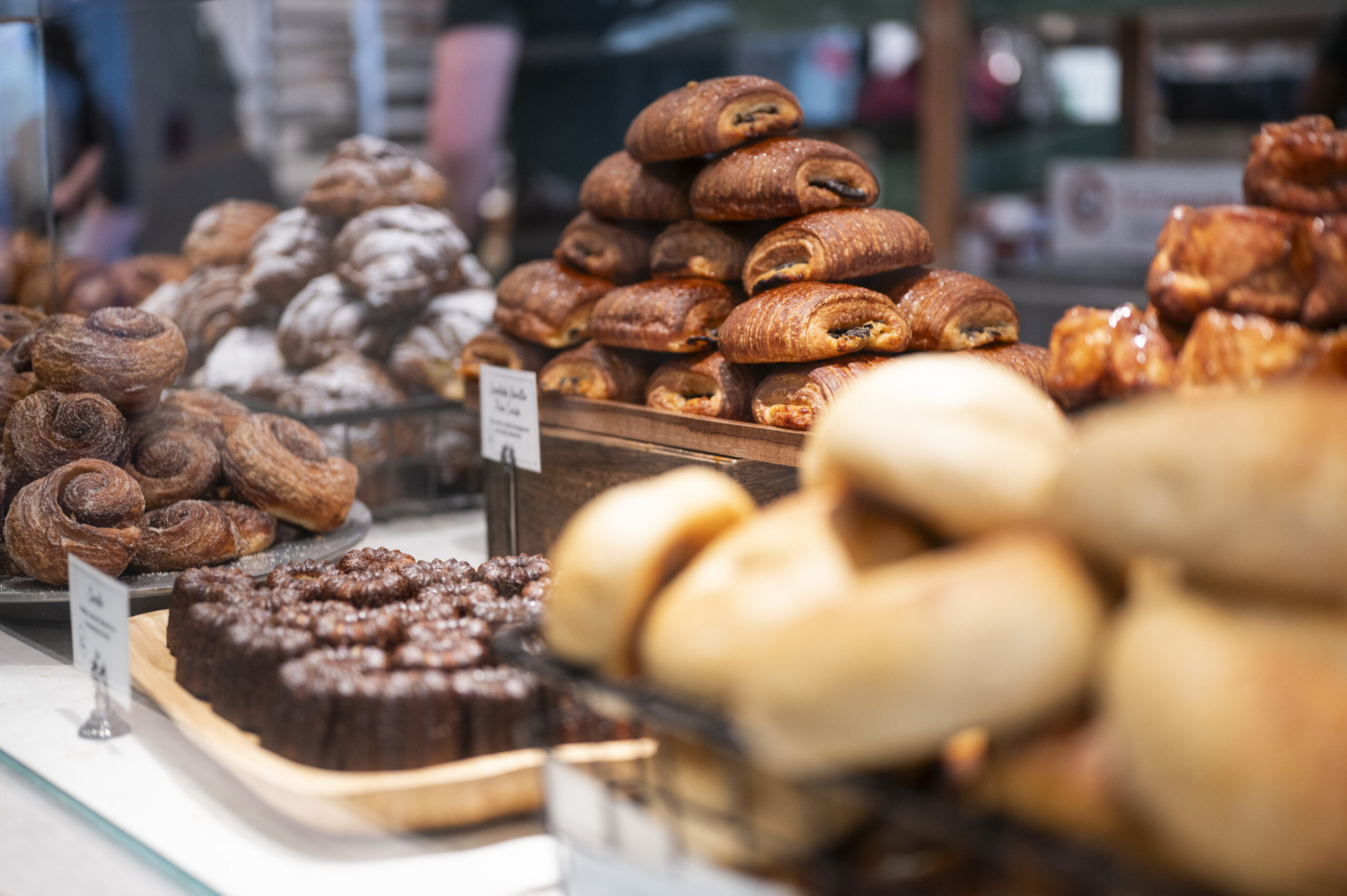
    The pastry case at The Buttery in Bryn Mawr.

    Sourdough, coffee, and locally sourced eats enthusiasts, this one’s for you. Popular Main Line bakery The Buttery has officially opened its third location at 836 W. Lancaster Ave. in Bryn Mawr.

    The bakery-coffee shop and scratch kitchen mash-up is known for its sourdough breads, homemade pastries, and seasonal dishes. Paoli couple John and Silenia Rhoads opened the first Buttery location in Malvern back in 2015 before expanding into the Ardmore Farmers Market last fall.

    The Rhoadses credited the bakehouse they launched a year ago in Norristown with providing the space and resources they needed to grow the concept. Bryn Mawr felt like “a good center point on the Main Line,” John Rhoads said, with Silenia Rhoads adding she’s already noticed the “sense of community.”

    The 82-seat location offers full breakfast and lunch menus, including bagels, quiches, sandwiches, open-face tartines, salads, and Passenger coffee and tea beverages. Dinner service is anticipated to launch in the fall or winter, the Rhoadses said.

    The Inquirer’s Denali Sagner has all the details.

    🥐 Plus: Nearly 26,000 square feet of downtown Bryn Mawr is for sale, including the building that houses The Buttery.

    💡 Community News

    • Main Line Health and UnitedHealthcare reached an “agreement in principle” on a new contract, Main Line Health said Wednesday. Their current contract was set to expire Tuesday, potentially disrupting service for 32,000 people who rely on the health system’s doctors and have insurance through United. Main Line Health owns Bryn Mawr Hospital and Lankenau Medical Center.
    • Lower Merion’s board of commissioners last week passed an amendment to the township’s gas-powered leaf blower ban that specifies exemptions for walk-behind, stand-on, riding, and tow-behind leaf blowers and vacuums, The Inquirer’s Denali Sagner reports. The board also approved a pay raise for future commissioners from $4,000 to $6,000 annually. The raise will go into effect for commissioners who take officer after Jan. 3, 2028, and will not impact sitting commissioners, unless they are reelected.
    • Township police said they linked a hidden camera found along the 900 block of Stony Lane in Gladwyne to a theft ring connected to several Main Line burglaries. (6abc)
    • Montgomery County has selected six designs for the “I Voted” stickers it will give to voters in November’s election. The county put out a call to local artists earlier this year, receiving over 300 submissions. The final six were designed by county residents ranging from 8 to 42, including one Narberth resident.
    • The Party Place in Ardmore has closed, the Lancaster Avenue business announced this month.
    • A Gladwyne designer recently worked with an Ardmore family to transform the second floor of their older home. To bring it into the current century, Rupam Patheja of Ru and Co. Interior Design knocked down walls in the primary suite to create two walk-in closets, and added colorful wallpaper for flair. Philadelphia magazine took a peek inside.

    🏫 Schools Briefing

    • Summer school kicks off on Monday and continues Monday through Thursday until Aug. 6.
    • Three Lower Merion School District students were honored as winners of the Art & Poetry of Freedom Contest, held as part of Montgomery County’s annual Juneteenth celebration. The K-2 poetry winner was Cora Fusi, a first-grader at Penn Valley Elementary School; the 6-8 poetry winner was Jaliyah Taylor, a seventh-grader at Welsh Valley Elementary School; and the 9-12 poetry winner was Ariel Dichamp, a ninth-grader at Harriton High School.

    🍽️ On our Plate

    • Local healthy foods chain ANEU Kitchens will open its fifth location, a 650-square-foot cafe at the Ardmore Farmers Market in Suburban Square, this Monday. Starting at 8 a.m., the first 100 customers will receive free samples of the brand’s YEU snacks. ANEU also plans to add a 20,000-square-foot production kitchen, eatery, and wellness center in Tredyffrin Township.

    🎳 Things to Do

    🔮 Mystic of the Main Line’s Inception Day: The Ardmore shop is marking its one-year anniversary with readings and refreshments. ⏰ Saturday, June 27, 7-11 p.m. 💵 Pay-as-you-go 📍 Mystic of the Main Line

    🎶 Bryn Mawr Twilight Concerts: Vermont-based singer, songwriter, and guitarist Mihali headlines this week’s show. ⏰ Sunday, June 28, 7 p.m. 💵 $25.88, free for kids 12 and under 📍 Bryn Mawr Gazebo

    🎵 Music in the Park: Four Lean Hounds, a Grateful Dead tribute band, will perform at the next concert. ⏰ Wednesday, July 1, 7 p.m. 💵 Free 📍 Narberth Park gazebo

    🏡 On the Market

    A newly built three-bedroom Narberth home

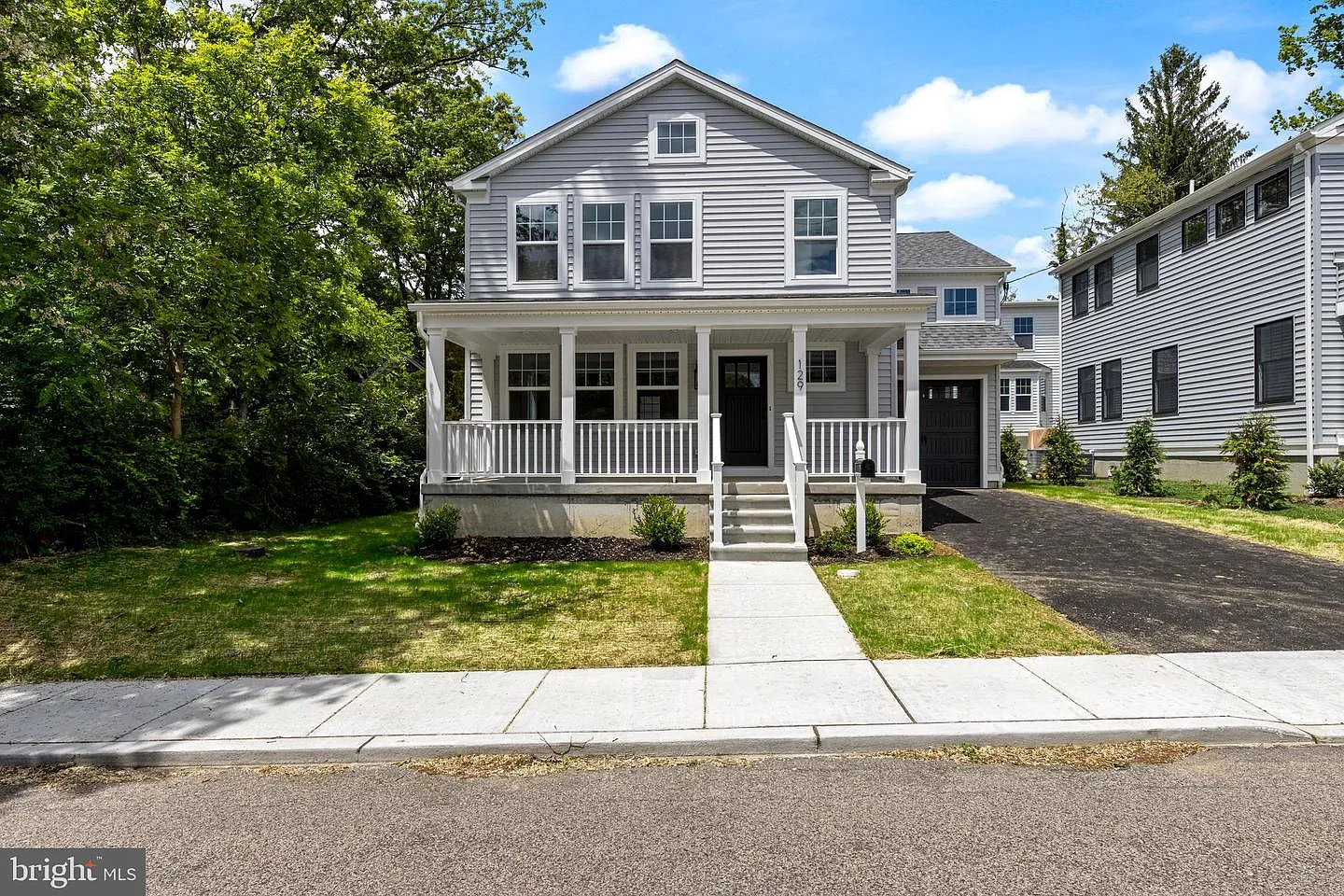
    The home has a dedicated driveway, a garage, and a covered front porch.

    This newly built Narberth home is situated in a five-home community and has its own private driveway. The home’s open-concept first floor has a living room and eat-in kitchen with two-tone cabinetry and an island. There are three bedrooms upstairs, including a primary suite with a walk-in closet and a double-sink vanity. The home also has a finished basement and a covered front porch.

    See more photos of the home here.

    Price: $1.25M | Size: 2,199 SF | Acreage: 0.07

    🗞️ What other Lower Merion residents are reading this week:

    By submitting your written, visual, and/or audio contributions, you agree to The Inquirer’s Terms of Use, including the grant of rights in Section 10.

    This suburban content is produced with support from the Leslie Miller and Richard Worley Foundation and The Lenfest Institute for Journalism. Editorial content is created independently of the project donors. Gifts to support The Inquirer’s high-impact journalism can be made at inquirer.com/donate. A list of Lenfest Institute donors can be found at lenfestinstitute.org/supporters.

  • Media’s homegrown World Cup star | Inquirer Greater Media

    Media’s homegrown World Cup star | Inquirer Greater Media

    Hi, Greater Media! 👋

    Delaware County-born Auston Trusty is living it up on the U.S. Men’s National Team. Ahead of the World Cup match against Turkey tonight, learn more about the Media native’s local soccer roots. Also this week, a judge denied a motion to dismiss trespassing charges against the so-called Swarthmore 9, measles was detected in area wastewater samples, plus the county announced its cooling center locations amid summer heat.

    If someone forwarded you this email, sign up for free here.

    ‘It’s just all meant to be’

    Media’s Auston Trusty (right) embraces Wayne’s Matt Freese after the U.S.’ win over Australia on Friday.

    Delco is on the international stage, thanks to some homegrown soccer talent.

    USMNT’s Auston Trusty was born in Media and played with the Nether United Soccer Club in Wallingford in his youth. He attended Penncrest High School, trained at the Philadelphia Union’s youth academy, and began his pro career with the Union.

    “When you’re a little kid, dreaming about the stadiums you play in and the atmospheres and everything involved, to play in a home turf World Cup, get minutes, it’s a dream come true,” the 27-year-old said after Friday’s shutout.

    Read Inquirer reporter Jonathan Tannenwald‘s dispatch to learn how Trusty and a fellow “Delco-head,” Wayne-born Matt Freese, are helping the USMNT make World Cup history.

    ⚽ Plus: See Trusty’s sweet tribute to his local upbringing and career journey on Instagram.

    💡 Community News

    • A Delco judge on Monday denied a motion to dismiss trespassing charges filed against nine people for refusing to leave a pro-Palestinian encampment on Swarthmore College’s campus last spring. The decision sets the stage for the so-called Swarthmore 9 to face trial next week.
    • Main Line Health and UnitedHealthcare reached an “agreement in principle” on a new contract, Main Line Health said Wednesday. Their current contract was set to expire Tuesday, potentially disrupting service for 32,000 people who rely on the health system’s doctors and have insurance through United. Main Line Health owns Riddle Hospital in Middletown Township.
    • Measles was detected in wastewater samples taken in Delaware County on two days earlier this month, health officials said last week, though no one in the county had been officially diagnosed with the disease. Health reporter Aubrey Whelan has more.
    • Middletown Township’s manager, John McMullan, is leaving at the end of August for a new position with another municipality. McMullan shared the news at last week’s council meeting.
    • Roland Walter Bailey, a 64-year-old Media man, has been charged with possession and distribution of child sexual abuse material and is scheduled for a preliminary hearing today. (Daily Times)
    • The county announced its 2026 heat plan to bring relief to residents during periods of extreme heat. As part of the plan, 30 cooling centers will be open across Delco, including at the Swarthmore Public Library and at Helen Kate Furness Free Library in Wallingford.
    • Springfield Mall’s valuation continues to drop and had an appraisal value of $30 million recently, down 73% from when owners PREIT and Simon Property Group took out a loan for it in 2015. At the time, the mall was valued at $112 million. (Bisnow)

    🍽️ On our Plate

    • It’s not hard to find a quality hoagie in Delaware County. Delco.Today rounded up nine sandwich shops worth traveling for in the region, including A Cut Above Deli in Newtown Square and Boccella’s Deli in Havertown.

    🎳 Things to Do

    🎶 Rose Tree Summer Concert Festival: The upcoming lineup features performances from Doobie Brothers tribute band Minute by Minute tonight, blues band Three Fourteen tomorrow, ‘80s tribute band Class of ‘84 on Saturday, and the Blackbird Society Orchestra on Sunday. Next Wednesday, the Chester County Concert Band takes the stage. ⏰ Thursday, June 25-Wednesday, July 1, 7:30 p.m. 💵 Free 📍 Rose Tree Park, Media

    🎥 Death on the Brandywine: Catch a screening of this political murder mystery set in the Brandywine Valley. ⏰ Friday, June 26, 8-10 p.m. 💵 $19.50 📍 The Media Theatre

    🇺🇸 A Celebration of Patriotic Sports Movies: Radio personalities Ray Didinger and Glen Macnow are teaming up to host this event looking at iconic U.S. sports movies. ⏰ Saturday, June 27, 7:30 p.m. 💵 $39 📍 PCS Theater, Swarthmore

    Nature at Night: Learn about fireflies while exploring the arboretum after dark. ⏰ Tuesday, June 30, 8-9:30 p.m. 💵 $10-$25 📍 Tyler Arboretum, Media

    🎂 Swarthmore’s 250th Birthday: The library is throwing a birthday party party in the lead up to the nation’s 250th birthday. ⏰ Wednesday, July 1, 2-4 p.m. 💵 Free 📍 Swarthmore Public Library

    🏡 On the Market

    An updated three-bedroom Colonial in Swarthmore

    The home has undergone a number of updates, inside and out.

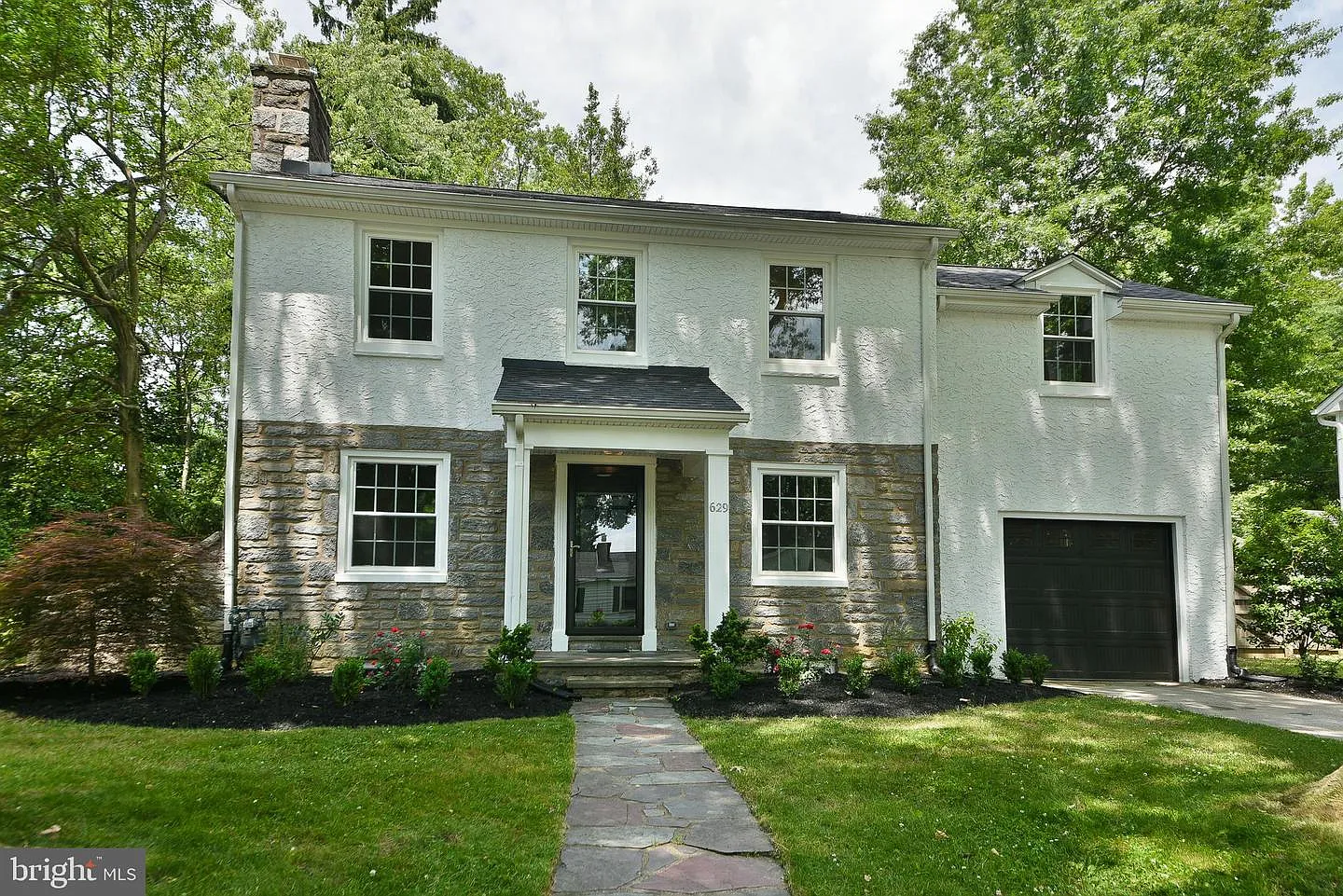
    Located less than a mile from the Swarthmore town center, this 1950 Colonial has been extensively updated for modern living. The home features a living room with a fireplace, a three-season room, and an eat-in kitchen with white cabinetry and stainless steel appliances. There are three bedrooms upstairs, including a primary suite and a bonus room. In addition to interior renovations, the home’s systems have also been updated, as have the roof and windows.

    See more photos of the home here.

    Price: $850,000 | Size: 2,262 SF | Acreage: 0.24

    🗞️ What other Greater Media residents are reading this week:

    By submitting your written, visual, and/or audio contributions, you agree to The Inquirer’s Terms of Use, including the grant of rights in Section 10.

    This suburban content is produced with support from the Leslie Miller and Richard Worley Foundation and The Lenfest Institute for Journalism. Editorial content is created independently of the project donors. Gifts to support The Inquirer’s high-impact journalism can be made at inquirer.com/donate. A list of Lenfest Institute donors can be found at lenfestinstitute.org/supporters.

  • These Philadelphians planned the perfect World Cup weekends for their families. Then their tickets never came.

    These Philadelphians planned the perfect World Cup weekends for their families. Then their tickets never came.

    Georgette Luna planned her Father’s Day weekend down to a T, splurging $3,000 on three tickets to the Friday World Cup match in Philadelphia. The Fishtown resident, her husband, and her father — who traveled from New York — would go to Reading Terminal Market, she thought, barhop to mingle with fans before the game, and then head to the stadium early to tailgate before seeing Brazil take on Haiti.

    She had purchased the tickets on the third-party ticket resale platform StubHub last fall, but the seller she bought the tickets from never transferred them. She called StubHub frequently in the months, weeks, and finally days leading up to the match, wondering when the transfer would go through.

    Every time, a StubHub representative said her “tickets would transfer to her on the day of the game,” Luna said. But by Friday, the group — who could not wait to see Brazil play, since their favored Chileans did not qualify for the World Cup — never made it into the stadium.

    “We’re standing outside the stadium and obviously everybody is in full celebration, and here we are, supposed to be living this World Cup moment together for the first time, and there’s just this feeling of disappointment,” Luna said.

    As the World Cup takes over the country, people across U.S. host cities have shared the same story: Fans in Atlanta, Boston, Dallas, Houston, New Jersey, Seattle, and, of course, Philadelphia arrived at stadiums hoping their tickets would be transferred to no avail, with most facing issues with StubHub. Other reports indicate fans are having similar issues on SeatGeek.

    StubHub, for one, blames FIFA’s tech infrastructure and the rollout of a new mobile phone app weeks before the tournament for why tickets have not been transferring on time. FIFA has urged fans not to buy tickets on third-party platforms, saying it “may result in issues, including the inability to cancel or accept transfers,” as well as a higher risk of fake or invalid tickets.

    This confusion is in addition to the long wait times, glitches, and extra hurdles placed on ticket buyers for original, face-value tickets from FIFA. FIFA’s ticketing practices are under investigation by the New York and New Jersey attorneys general.

    But fans who lost out on a generational moment are more interested in how platforms like StubHub plan to resolve these issues.

    Stephanie Fred of Bristol and her 9-year-old son, Levi, are heartbroken after their tickets to the Monday France vs. Iraq game never materialized, even as they stood outside the stadium. To make matters worse, Levi, a soccer player himself, had been trying to see his favorite player, French superstar Kylian Mbappé.

    Mbappé scored two goals, tying for the second-most goals scored by a player in men’s World Cup history. Fred’s son could hear the cheers from outside the stadium. He broke down into tears that did not stop even later that night, she said.

    During Philadelphia’s first World Cup game, between Ecuador and Ivory Coast, Jayden Quezada, 17, and his parents came to Philadelphia from Bensalem, hoping for an Ecuadorian victory. But they were turned away. The night before the game, the trio had spent $4,350 to get three tickets through the TickPick app after seeing a social media advertisement. By the time they arrived at the stadium, the tickets still had not been transferred to their FIFA app.

    “They have been the biggest fans since before I was born, and they don’t get to go to Ecuador often because of work,” Quezada said. He said they would try to get a refund, but missing the game was “really sad because we were looking forward to feeling the Ecuadorian pride.”

    For that game, a line of more than 50 fans waited for help with their failed tickets. Monica Rojas, 22, and her friend Jose Avil, both Spanish speakers, were confused about what to do after the ticket office explained the problem with their ticket in English. The pair had driven two hours from New York, after having bought tickets on StubHub for $2,000, including parking. After a FIFA volunteer interpreter intervened, the pair found out their tickets had been refunded.

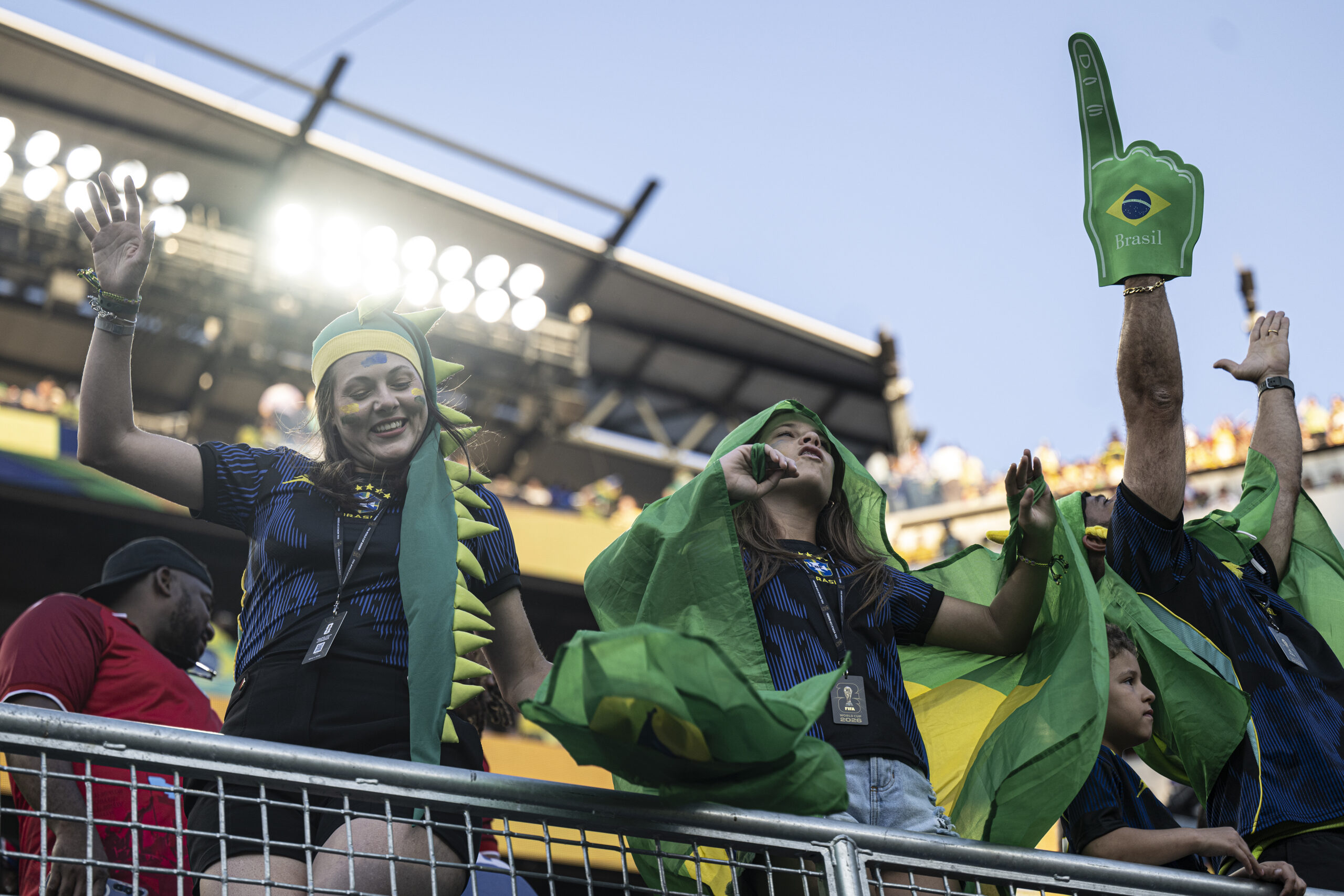
    Brazilian fans cheers before a FIFA World Cup Group C soccer match between Brazil and Haiti at Lincoln Financial Field on Friday, June 19, 2026, in Philadelphia.

    StubHub blames FIFA

    StubHub is aware that fans are not receiving the tickets that they bought, and a company representative blamed FIFA.

    “The issues fans have experienced at this World Cup are largely driven by performance problems with the event organizer’s own ticketing infrastructure, which has created transfer failures across all resale platforms,” a StubHub spokesperson said.

    StubHub said the launch of a new FIFA app right before the World Cup began has led to delays, failed transfers, and access issues that have affected all resale platforms, not just StubHub.

    The ticket reseller also said sellers are required to fulfill their ticket orders or they face financial penalties and bans from the platform.

    Bad actors on resale platforms can engage in a practice called “speculative ticketing,” where buyers will list a ticket that they do not yet own on StubHub and other platforms, in the hope that they will find a cheaper ticket later and recover profit, said Scott Friedman, owner of the Ticket Talk Network podcast and an industry veteran who is helping to sue StubHub on behalf of 160 buyers and sellers who said company practices harmed them.

    StubHub does offer a “FanProtect Guarantee‚” a promise the company will find replacement tickets or refund the order when a ticket does not transfer. But the policy repeatedly states that resolving these issues falls under StubHub’s “sole discretion.”

    StubHub ticket protection measures can look like replacement tickets, a full refund, or a voucher worth 120% of the value of the tickets. During the World Cup, the company said, it is prioritizing replacement tickets so fans can get to a match.

    France forward Kylian Mbappé sprints for a pass against Iraq during the first half of a FIFA World Cup Group I soccer match Monday, June 22, 2026, at Lincoln Financial Field in Philadelphia.

    Refunds can’t replace a once-in-a-lifetime moment

    All of this leads to confusion, and eventually disappointment, when the tickets never show, Luna said. As she and her family, hanging their heads low, took a depressing train ride home from the stadium last week, Luna continued to try to get answers.

    Finally, on Monday, she said, she received word StubHub would refund her June 19 match tickets and gift her similar tickets to the July 4 match in Philadelphia, which she said she would accept. But, later, Luna was told she would only receive replacement tickets.

    “Is this a wonderful outcome? For sure, but my father and I would have been happy with the perfect weekend that we had planned for ourselves as it was,” Luna said. “While they’re doing right by us, there are so many people who aren’t getting this result.”

    Fred’s family got word Tuesday that StubHub would provide them with tickets to France vs. Norway in Boston on Friday. Fred does not mind the drive as long as Levi can achieve his dream of seeing Mbappé play.

    “We don’t get this type of opportunity from where we come from,” Fred said. “Being able to provide a World Cup experience for our kids just means the world to us, and having that be ripped away from us, it was just so hard to process.”

  • Parts of Fairmount Park were not only the site of America’s first paper mill, but also the country’s first company town

    Parts of Fairmount Park were not only the site of America’s first paper mill, but also the country’s first company town

    We take paper for granted now. But in the late 1600s, when Pennsylvania’s founder William Penn recruited German papermaker and preacher William Rittenhouse to manufacture the writing parchment in the New World, paper was a luxury.

    England’s King William III made it difficult for his subjects — at home and in the Americas — to have it. Like many monarchs of his day, he believed it was the Crown’s duty to record history.

    The English imported paper from other European countries. So, to make matters worse, colonists who managed to appeal to the king for paper were double and triple taxed. They got fed up and went about securing their own paper to document the goings on in the government, inform citizens, record history, and ultimately plan a revolution.

    Artist Ava Haitz’s No. 1 honors the country’s first paper mill, celebrating the invention and craftsmanship that made widespread written communication possible.

    In 1690, Rittenhouse partnered with Philadelphia’s first printer, William Bradford, to build America’s first paper mill, situated in northwest Philadelphia and powered by the Monoshone Creek, a tributary of the Schuylkill.

    The paper mill will be celebrated this Saturday at Historic RittenhouseTown, part of a series of weekly “Firstival” celebrations. Firstivals are the Philadelphia Historic District’s yearlong birthday nod to places and events with Philadelphia roots. The day parties are a hallmark of this year’s Semiquincentennial fetes.

    At the Rittenhouse mill, paper was made from linen rags fashioned from flax grown in Germantown, that were broken down and shaped into sheets. The mill grew quickly as Rittenhouse, America’s first Mennonite bishop, provided paper for Bibles and Quaker and Mennonite texts in German.

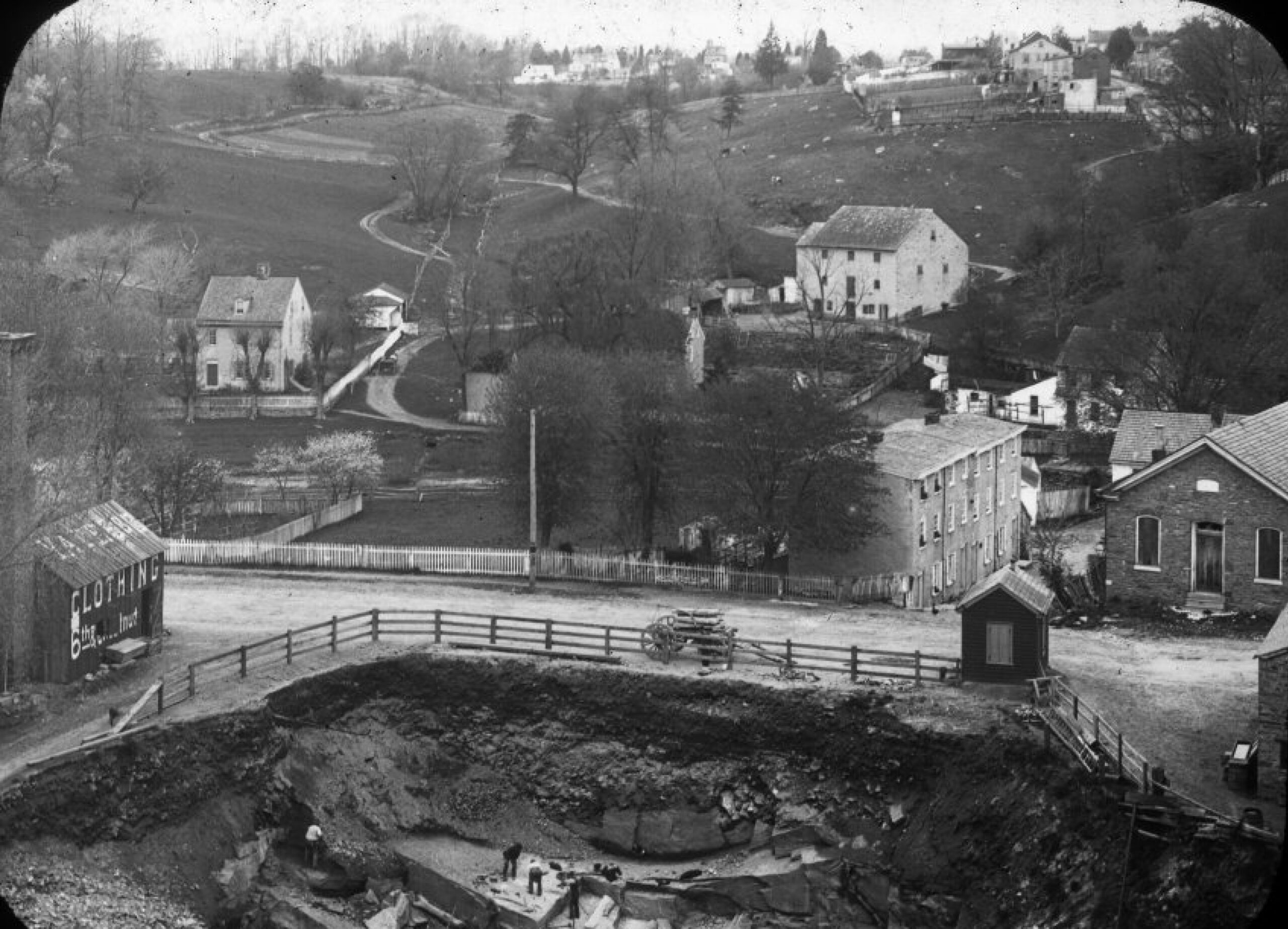
    An aerial view of RittenhouseTown circa 1840-1860. The site eventually grew to more than 200 acres.

    Rittenhouse’s first paper mill was destroyed by a flood, said Alexander Jones, preservation and education manager at Historic RittenhouseTown.

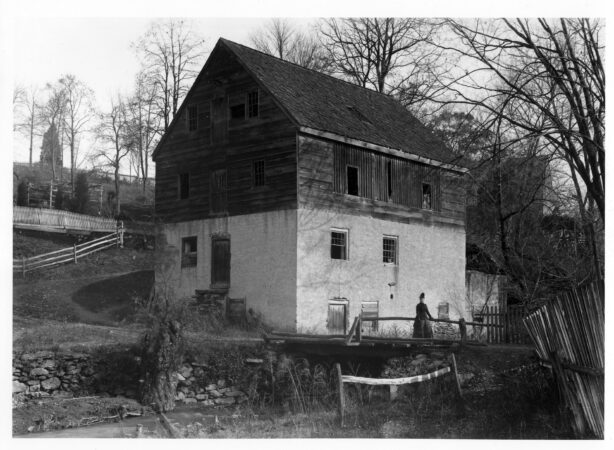
    Then “Rittenhouse rebuilds and he buys out his partner,” Jones said. “The paper mill becomes his sole enterprise. Instead of hiring workers, he recruits his family and it becomes a giant company town. There is a church, a blacksmith, stone houses, a bake house, and more than 40 buildings with five or six of them under what is now Lincoln Drive.”

    RittenhouseTown’s paper mill was the only source of paper in America for more than 40 years, Jones said. It would grow to more than 200 acres.

    David Rittenhouse — Rittenhouse’s great-grandson and the astrologer, clockmaker, and first director of the U.S. Mint after whom Rittenhouse Square is named — was born in his family’s RittenhouseTown homestead in 1732.

    The town thrived for more than a century.

    By the mid-1800s, the paper mill began to slow down as dyes from textile and carpet manufacturers and chemicals from blacksmithing started to pollute the Schuylkill. The filthy water made it nearly impossible to produce good quality paper at the mill.

    The Fairmount Park Commission began acquiring parts of RittenhouseTown through a series of purchases and donations from 1890 to 1917. The city demolished many of the town’s buildings, including a barn that, Jones said, was razed and rebuilt within a year.

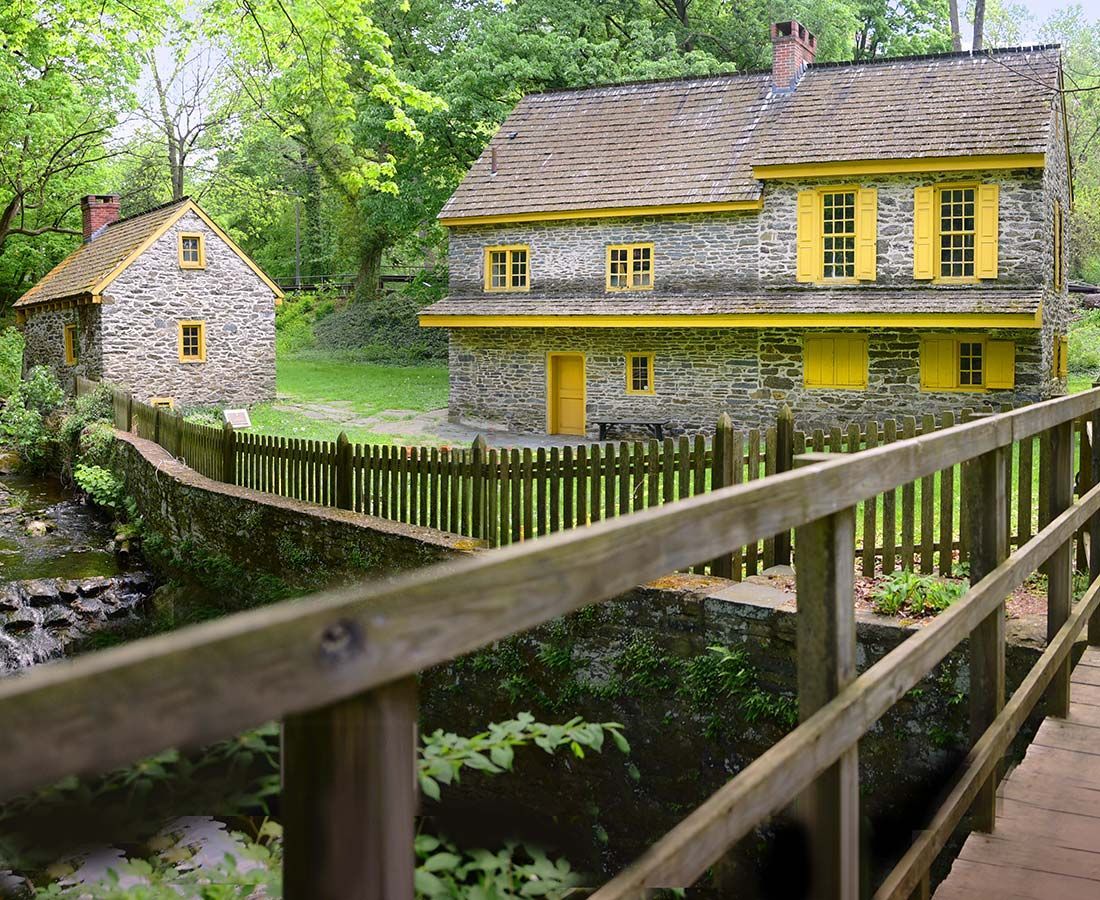
    RittenhouseTown’s homestead and bakehouse. The first permanent home for the Rittenhouse family and birthplace of David Rittenhouse, great-grandson of William Rittenhouse for whom Center City’s Rittenhouse Square is named.

    By that time, however, the Rittenhouse family had spread throughout the Philadelphia region from Center City to Blue Bell, Jones said.

    Today, RittenhouseTown spans 20 acres nestled in Fairmount Park right behind Lincoln Drive. Six of the original buildings remain, serving as a reminder that RittenhouseTown was the first building block of American industry.

    “The paper mill really got the ball rolling for Philadelphia,” Jones said. “And from that first came so many other American firsts in Philadelphia: the first Mennonite bishop, the first company town, and America’s first director of the U.S. Mint.”

    This week’s Firstival is Saturday, June 27, 11 a.m.-1 p.m., at Historic RittenhouseTown, 208 Lincoln Drive.

    The Inquirer is highlighting a “first” from the Philadelphia Historic District’s 52 Weeks of Firsts program each week. A “52 Weeks of Firsts” podcast, produced by All That’s Good Productions, drops every Tuesday.

  • World Cup fans are spending money in Philly. How much will actually stay in the city?

    World Cup fans are spending money in Philly. How much will actually stay in the city?

    The World Cup has arrived in Philadelphia and out of town visitors are flocking to the games, and learning about Rocky’s curse.

    But how much of the money they’re spending will actually stay in Philadelphia?

    The World Cup games were originally expected to generate a $770 million economic impact in the Philadelphia region, Axios reported in 2024. But just $30 million to $90 million is likely to stay in the region and benefit the local economy, according to estimates in a new report by the Economy League of Greater Philadelphia.

    Thousands have visited the Lemon Hill FIFA Fan Festival since it kicked off on June 11, and used SEPTA after the first Philly-hosted match earlier this month. Philadelphia International Airport also estimated a bump in travel through the airport around the June 19 game between Brazil and Haiti.

    But not all spending is equal.

    U.S. cities are spending hundreds of millions of dollars to host World Cup matches, but are limited in how much revenue they can amass from the events, according to a ProPublica analysis of host city contracts, including Philadelphia’s.

    Some of the money coming into the city during the World Cup would have been spent in Philadelphia anyway, but perhaps differently, the Economy League report indicates.

    While the city is gaining World Cup visitors, it may be losing out on regular business travelers and others that would have come to Philadelphia if not for the World Cup, the report said. Meanwhile, some who are spending money to enjoy the tournament in Philadelphia are residents, who would be spending money in the city anyway. And some fan spending is flowing directly to FIFA and other platforms, rather than to the city’s economy.

    The report highlights three areas seeing most of that spending: The stadium district, Center City hotels and restaurants, and the Fan Festival at Lemon Hill.

    “The commercial corridors beyond this core, which make up most of the city, are unlikely to see much benefit without deliberate effort, because visitor spending follows the path of least friction — toward where people sleep, arrive, or already intend to go,” the report says.

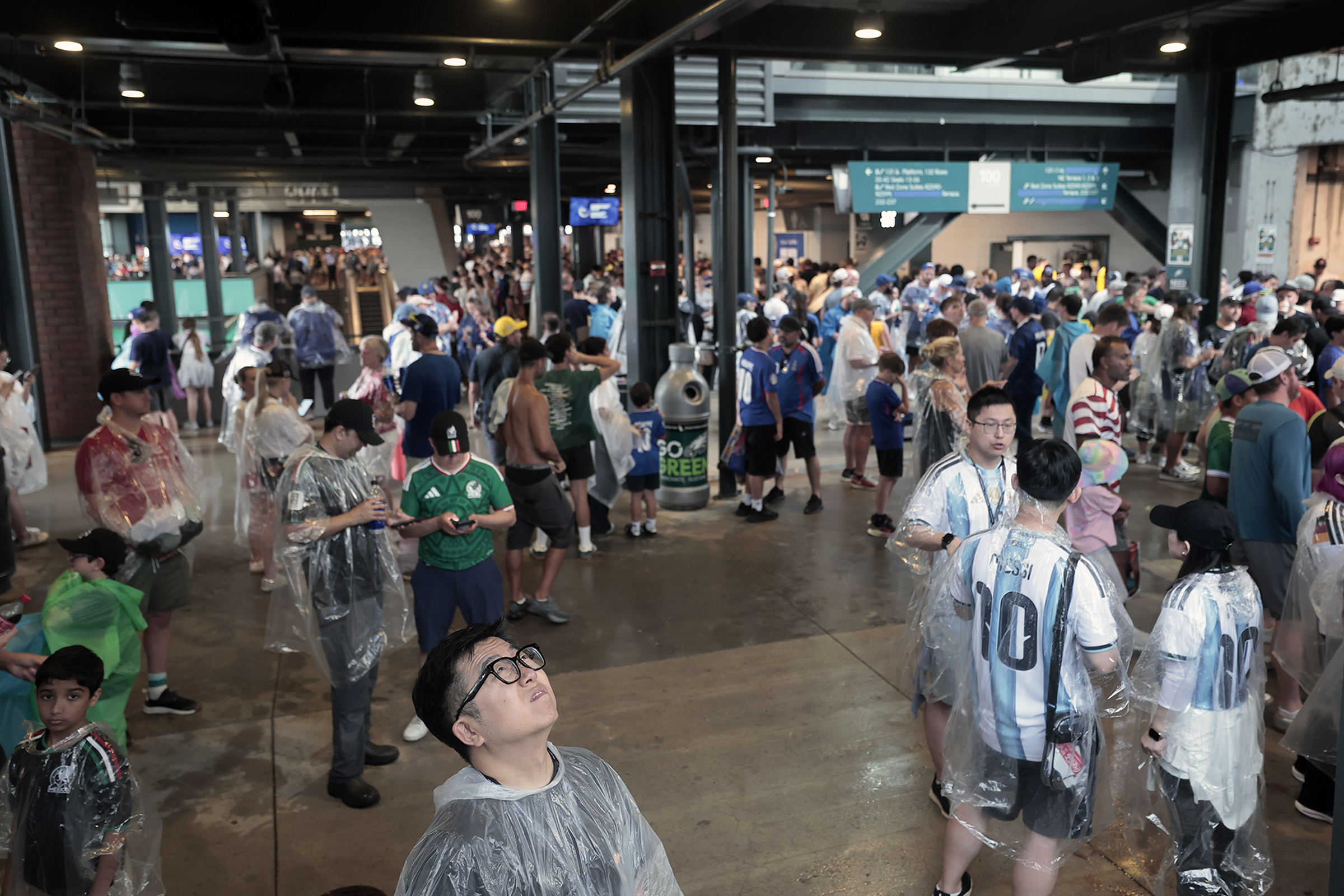
    A man looks to the skies during the rain delay of the France vs. Iraq 2026 FIFA World Cup Group 1 soccer match at Philadelphia Stadium on Monday.

    In the stadium district, where customers have bought tickets to attend games, they’re spending on merchandise and concessions — but few of those dollars trickle down to local independent businesses.

    In Center City, hotels and restaurants are benefiting most, but it’s not as though they wouldn’t be getting business without the games, the report notes.

    Some local food trucks and independent vendors can make money at the FIFA Fan Festival at Lemon Hill. But because the venue is gated, surrounding businesses only profit if visitors leave the festival site.

    And locals are paying the price of hosting the World Cup in other ways.

    Residents who live around the Fan Festival at Lemon Hill are unable to catch a Lyft or Uber from home because of festival restrictions, and parking in the area requires applying for a special permit. The Philadelphia Parking Authority dolled out thousands of tickets in the first few days of the festival.

    Still, the report outlines, much can be gained locally through the World Cup. Lemon Hill is set to receive $4 million in improvements, and some other benefits are harder to quantify.

    “Philadelphia has shown it can move large crowds and stage a global event capably, and the reputational and civic returns, while hard to value, are real,” the report outlines.

  • Rural area in Northern California jolted by its biggest quake since 1940

    Rural area in Northern California jolted by its biggest quake since 1940

    SAN FRANCISCO — A rural area of Northern California experienced its strongest earthquake since 1940 on Wednesday morning, causing some injuries but no immediate reports of major damage, officials said.

    The epicenter of the quake, with a preliminary magnitude of 5.6, was about 7 miles northwest of the agricultural town of Willits, according to the U.S. Geological Survey. It was widely felt, including in the coastal city of Fort Bragg. The initial quake was centered inland about 50 miles east of Fort Bragg at 8:10 a.m. Pacific Time, and the USGS said it was about 5 miles deep.

    The area in Mendocino County dotted with small, agricultural towns is 140 miles northeast of San Francisco.

    Heather Rose, a Mendocino County spokesperson, said that hospitals had reported some injuries but that she had no details on their nature or extent. She said officials plan to meet later Wednesday when more information could be released.

    Power outages are affecting more than 6,000 residents of six towns near the epicenter, the Mendocino County Executive Office said in a statement. The office encouraged people to stay off the highways and roads to allow work crews to inspect for damage and make repairs.

    Brie Leon and her colleagues had just opened Club Calpella Restaurant when the building started shaking, rattling plates and liquor bottles.

    “I had just turned the open sign on and went back into the kitchen, and that’s when it happened,” she said. “It almost felt like something hit the building.”

    The restaurant is in Calpella, Calif., a town about 10 miles south of the epicenter and in a region of Mendocino County that has been struck by smaller quakes this year.

    This was the biggest earthquake in nearly nine decades in the region, which is not on a major fault, said Lucy Jones, a veteran California seismologist.

    “The area is not without earthquakes, but they’re usually smaller than this,” Jones said. She added that aftershocks are likely, but they’ll “probably stay on the low side.”

    Three other quakes under a 2.7 magnitude struck near the epicenter within an hour.

    Leon said the quake knocked frames off the walls and bottles off the shelves in the restaurant and the stockroom next door. She and other servers were cleaning up not long after to welcome customers for breakfast.

    “It wasn’t a big, big quake, but things went everywhere,” she said.

    Alan Harris and his family were at home in Kelseyville, about 40 miles southeast of the epicenter, when he received an earthquake alert on his cell phone. Soon after, the house began shaking.

    “I yelled downstairs immediately to my wife and daughter to make sure they were hanging on,” Harris said. “It was scary. You could hear things crashing, mostly on the third floor of the house.”

    A security camera inside Harris’ home shook vigorously as the quake struck. A few loud, crashing sounds can be heard on the video footage before Harris calls out: “Is everyone OK?”

    It lasted only about 30 seconds. Framed photos fell off the walls and a computer monitor was knocked over, Harris said. Nothing appeared badly damaged, he added, noting he found no structural damage to the house.

    Nearly 657,000 earthquake early warning alerts were sent by the MyShake App throughout Northern California, the California Governor’s Office of Emergency Services said. Cal OES had not received any reports of damage or injuries, but it was coordinating with authorities to evaluate impacts, the office said in a statement.

    Hundreds of thousands more people received alerts through other public safety alert systems, but those numbers have not been finalized, said Robert de Groot, a scientist with the ShakeAlert operations team.

    “The alert deliveries for this are going to be well over a million,” Groot said.