Category: Pennsylvania News

  • The new Norristown school board plans to oust its superintendent, citing poor test scores

    The new Norristown school board plans to oust its superintendent, citing poor test scores

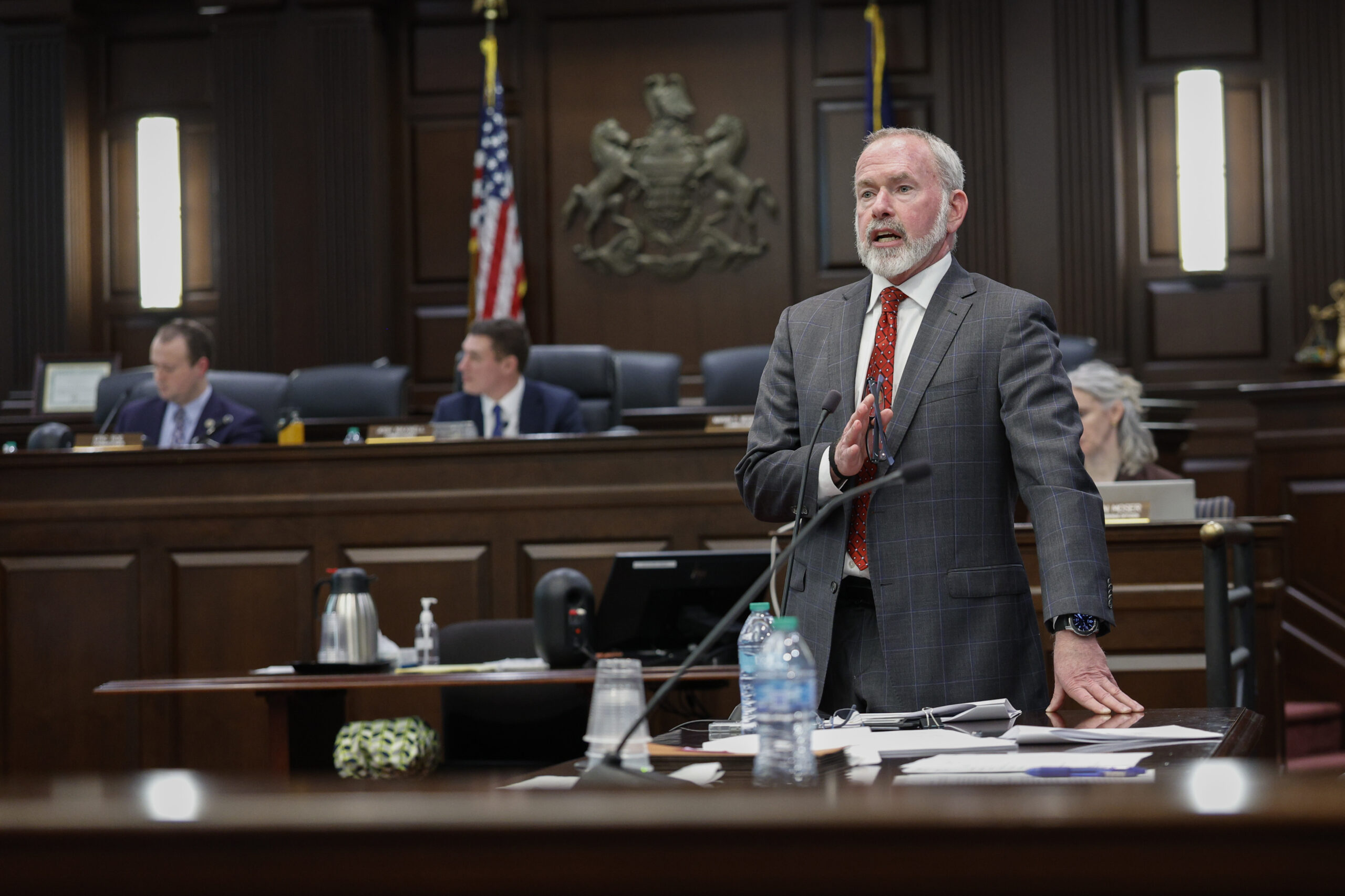
    The Norristown Area School District’s board is moving to oust its superintendent, saying the district needs a new leader to reverse years of poor test scores.

    The move to replace Superintendent Christopher Dormer, who has led the Montgomery County district since 2018 and whose contract expires June 30, comes after five new members were elected to the nine-person school board in November. The board voted unanimously Jan. 20 to give Dormer notice they would not renew his contract.

    Some community members expressed shock at the decision to part ways with Dormer, who is also the president of the Pennsylvania Association of School Administrators. Dormer has been a vocal advocate for increasing funding to Norristown, which is considered underfunded by the state, and where nearly three-quarters of students are economically disadvantaged.

    Jeremiah Lemke, who joined the Norristown school board in December and is now its president, acknowledged Dormer as “a leader statewide” in advocating for a new school funding system and a superintendent who has done “many good things for the district.” But, he said at the Jan. 20 meeting, test scores are a concern.

    “Student achievement in Norristown hasn’t been winning, under Mr. Dormer, for years, not months, but years — seven to be exact,“ Lemke said in an emailed statement Wednesday. ”If the Eagles didn’t win for seven years, regardless of what positive developments happened in the organization, there would be no questions asked when the head coach was replaced.“

    Norristown, a majority Hispanic district, enrolls about 8,000 students.

    About 28% of Norristown’s third-through-eighth graders scored proficient or above in English language arts on the Pennsylvania System of School Assessment standardized tests last year, compared to 48.5% statewide. In math, 27.4% of Norristown students were proficient, compared to 41.7% statewide.

    Over the last few years, changes in Norristown’s test scores have largely tracked Pennsylvania’s as a whole, with ELA scores sliding, and math scores improving. In 2023, 30.7% of Norristown students scored proficient in ELA, compared to 53.7% of students at the state level. In math, 21.6% of Norristown students scored proficient in 2023, compared to 39.4% statewide.

    In a message to staff and families after the Jan. 20 vote, Dormer said he was proud of what the district had accomplished during his tenure — “including consecutive years with minimal to no tax increases, the sizable and significant additions in staffing after years of reductions, the sustained investment in new instructional resources and educational opportunities after years of unaffordability, the development and implementation of our facilities master plan after decades of deferred maintenance, and the commitment to the principles of equity, inclusion, and belonging as we navigated a worldwide pandemic and an increasingly politically divided country.”

    Dormer, who began his career in education as an educational assistant in the Lower Merion School District, spent 13 years as a teacher, coach, and athletic director in the Upper Darby School District before moving into administration in 2005. He became Upper Darby High School’s principal in 2008, a role he held for five years, and came to Norristown in 2016.

    Performance reviews on the district’s website show Dormer was rated “proficient” by the board in 2021-22 and 2022-23. More recent reviews were not listed online.

    On Wednesday, Dormer declined to comment.

    Lemke — who works for a Philadelphia nonprofit, Jounce Partners, that has coached charter school leaders to improve teacher performance — said in a statement Wednesday that the decision was “thoughtful, reflective, data-informed, and unanimous, amongst new and continuing board members.”

    The board last week voted to approve a $79,500 contract with Alma Advisory Group, a Chicago-based firm, to conduct a national search for a new superintendent.

    Jordan Alexander, another new school board member, said during that board meeting that members “often have to make decisions that are very unpopular.”

    “I’m gonna be honest, I wasn’t so sold,” Alexander said. A former Norristown student, Alexander said that when Dormer “came to the scene, the pride did go up, and it was a breath of fresh air.”

    But “we cannot advocate ourselves to be the best if our performance does not reflect that,” Alexander said.

    Community reaction to the ouster

    Some community members accused the board of a predetermined decision.

    “Staff were not aware of these changes … the community was not aware, or anybody. You guys just threw it out there,” Ericka Wharton, a parent and leader of a Norristown community center, told the board at last week’s meeting. Wharton warned the decision could create instability, including a decline in student achievement.

    Carmina Taylor, a local advocate, told the board that community members deserved “a full explanation with dates and details that led to your decision.”

    “This decision is short-sighted, abrupt, without consideration as to how the students will be impacted by this major shift in leadership,” said Taylor, co-founder of the Movement for Black and Brown Lives in Montgomery County.

    The election of the new board came after infighting in the local Democratic Party. Chris Jaramillo, the former board president, lost the local Democratic Party’s endorsement for reelection last year. Jaramillo had opposed a tax break for a senior affordable housing development. Last week, the new board voted to rescind a November district policy that restricted tax abatements, saying it would replace it.

    Jaramillo is also a co-founder of the Movement for Black and Brown Lives in Montgomery County. In an interview Wednesday, he described the board’s new leaders as inexperienced and questioned how it could quickly replace Dormer without causing disruption.

    “I don’t think it’s a sound decision,” said Jaramillo. He said he worried the board would pick someone “without any sort of knowledge of how diverse Norristown and its surrounding area are.”

    Taylor said Wednesday she wasn’t speaking on behalf of Jaramillo. She accused the board of “plotting” to remove Dormer.

    “How in the world, if they didn’t have a sense of what they wanted to do, could they have even attempted to do that in the last 45 days?” said Taylor, who has filed a complaint with the school board, alleging insufficient transparency.

    Lemke said it is “categorially false” that the board acted too quickly and without transparency. “Once we were installed, we had a short time period in which to make a decision because we knew that if we didn’t renew his contract it would not be a quick task to do a national search for a superintendent,” he said.

    Taylor noted that while the district’s test scores “are bad,” Norristown has only been receiving additional state money under a new formula intended to remedy constitutional underfunding for the past two years. (The budget proposed by Gov. Josh Shapiro Tuesday would give underfunded districts their third installment of a nine-year plan.)

    “It’s not enough to address the systemic issue, period,” she said.

  • Ann Harnwell Ashmead, renowned classical archaeology researcher and writer, has died at 96

    Ann Harnwell Ashmead, renowned classical archaeology researcher and writer, has died at 96

    Ann Harnwell Ashmead, 96, of Haverford, renowned classical archaeology researcher, writer, museum curator, volunteer, and world traveler, died Saturday, Jan. 17, of chronic congestive heart failure at her home.

    Dr. Ashmead was an archaeological specialist in Greek vase painting, the depiction of cats on classical and Near Eastern artifacts, and the history of other ancient ceramics. She traveled to Greece, Italy, Turkey, France, and elsewhere around the world to examine, analyze, and research all kinds of ceramics collections.

    She consulted with hundreds of other archaeologists and curators, and wrote extensively about the ongoing international research project to document ancient ceramics and the extensive collections at Haverford and Bryn Mawr Colleges, the Penn Museum, the Rhode Island School of Design, the Louvre Museum in Paris, and other places. She did archaeological field work in Greece during her college years at Bryn Mawr and served as a classical archaeology graduate teaching assistant.

    She was onetime curator of Bryn Mawr’s 6,000-piece Ella Riegel Memorial Museum and a research associate at the Penn Museum. She partnered for years with Bryn Mawr professor Kyle Meredith Phillips Jr. to research and write articles and books about ancient vases, cups, jars, pots, Etruscan images of cats, and other classical antiquities.

    Dr. Ashmead visited many archaeological sites in Greece and elsewhere.

    Some of her colleagues lovingly called her “the cat lady.”

    Dr. Ashmead often reassembled broken ancient objects for curators and created visual and oral presentations to augment her printed catalogs, articles, and books. “She was indefatigable,“ her family said in a tribute.

    She shared her research at conferences, meetings, and exhibitions around the globe, and most recently collaborated with Ingrid M. Edlund-Berry, professor emerita at the University of Texas at Austin, on a project that scrutinized cats as shield devices on Greek vases.

    “Ann was very modest, humble, and self-deprecating about her publications and academic achievements,” her family said. Her son Graham said: “She was a role model who inspired me with her curiosity on all subjects and issues, and a love of world travel, reading, and lifelong learning.”

    Dr. Ashmead spoke English, Japanese, Greek, Chinese, French, Danish, and Italian.

    Dr. Ashmead was active with the Archaeological Institute of America, and her research was published by the American Journal of Archaeology, the journal of the American School of Classical Studies at Athens, and other groups.

    She married Haverford College English professor John Ashmead Jr. in 1949, and they spent the next two decades traveling the world while he completed Fulbright Scholar teaching assignments. They lived in Japan, Taiwan, and India, and later in Paris, Athens, and Florida.

    She spoke English, Japanese, Greek, Chinese, French, Danish, and Italian. “Her learning never stopped,” her family said.

    Ann Wheeler Harnwell was born Oct. 7, 1929, in Princeton, N.J. Her family moved to Wynnewood in 1938 after her father, Gaylord P. Harnwell, became chair of the physics department at the University of Pennsylvania. He became president of Penn in 1953.

    Dr. Ashmead had many articles, catalogs, and books published over her long career.

    She graduated from Lower Merion High School in 1947 after spending the previous three years with her family in California. She earned bachelor’s and master’s degrees and a doctorate in classical archaeology at Bryn Mawr, and her 1959 doctoral thesis was titled: “A Study of the Style of the Cup Painter Onesimos.”

    On page 2, she wrote: “Such attributions of vases to an artist are a delicate business, the outcome of a long and intricate process of observation and analysis, often of tentative nature.”

    She and her husband had sons John III, Graham, and Gaylord, and daughters Louisa and Theodora. They divorced in 1976 but remained close friends until he died in 1992.

    Having grown up during the stock market crisis in the 1930s, Dr. Ashmead followed the market closely as an adult, and was thrifty and frugal, her family said.

    Dr. Ashmead married English professor John Ashmead Jr. in 1949.

    She was an avid letter writer and reader, and her personal library featured more than 5,000 books. She volunteered for years at Bryn Mawr’s old Owl Bookstore and especially enjoyed reading to her children and grandchildren.

    She was on the board of the Haverford College Arboretum and a member of the Hardy Plant Society, the Henry Foundation for Botanical Research, and the Philadelphia Skating Club. She enjoyed dancing, organizing Easter egg hunts, and hosting birthday parties and family events.

    A fashionista in the 1960s and ’70s, she was adept at needle crafting, quilting, and sewing. She bred cats, painted, collected antiques, and researched her genealogy.

    She always made time for family no matter where in the world they were, and they said: “She was concerned if she was ever separated from a child and distraught if they were distraught.”

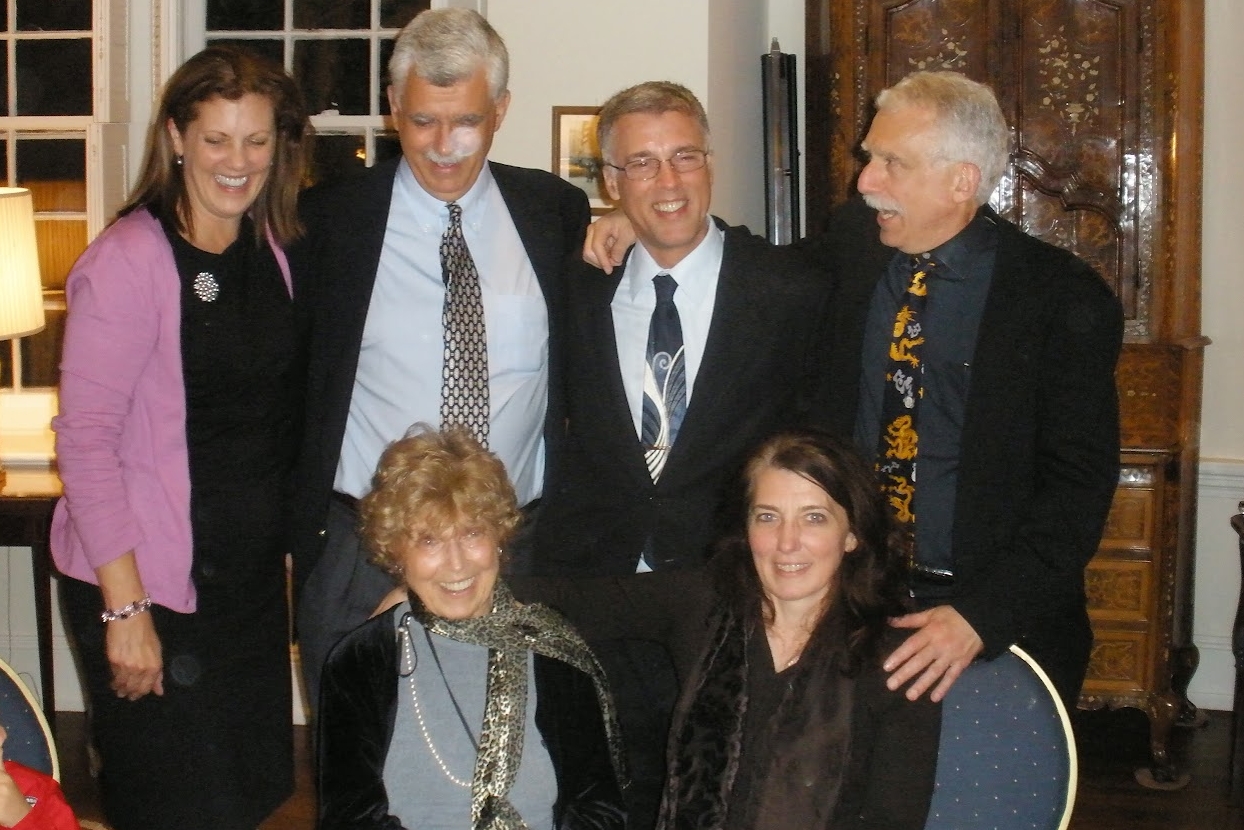
    Dr. Ashmead (front left) always made time for her family.

    She lived in Denmark for a few years and finally settled for good in Haverford in 1983. “She was interesting, smart, capable, strong, articulate, and fun to be around,” her daughter Theodora said. “She was solution-oriented. She sparkled.”

    In addition to her children, Dr. Ashmead is survived by six grandchildren, a sister, and other relatives. A brother died earlier.

    She requested that no services be held and donated her body to the Humanity Gifts Registry through Penn’s Perelman School of Medicine.

    Donations in her name may be made to the Haverford College Arboretum, 370 Lancaster Ave., Haverford, Pa. 19041.

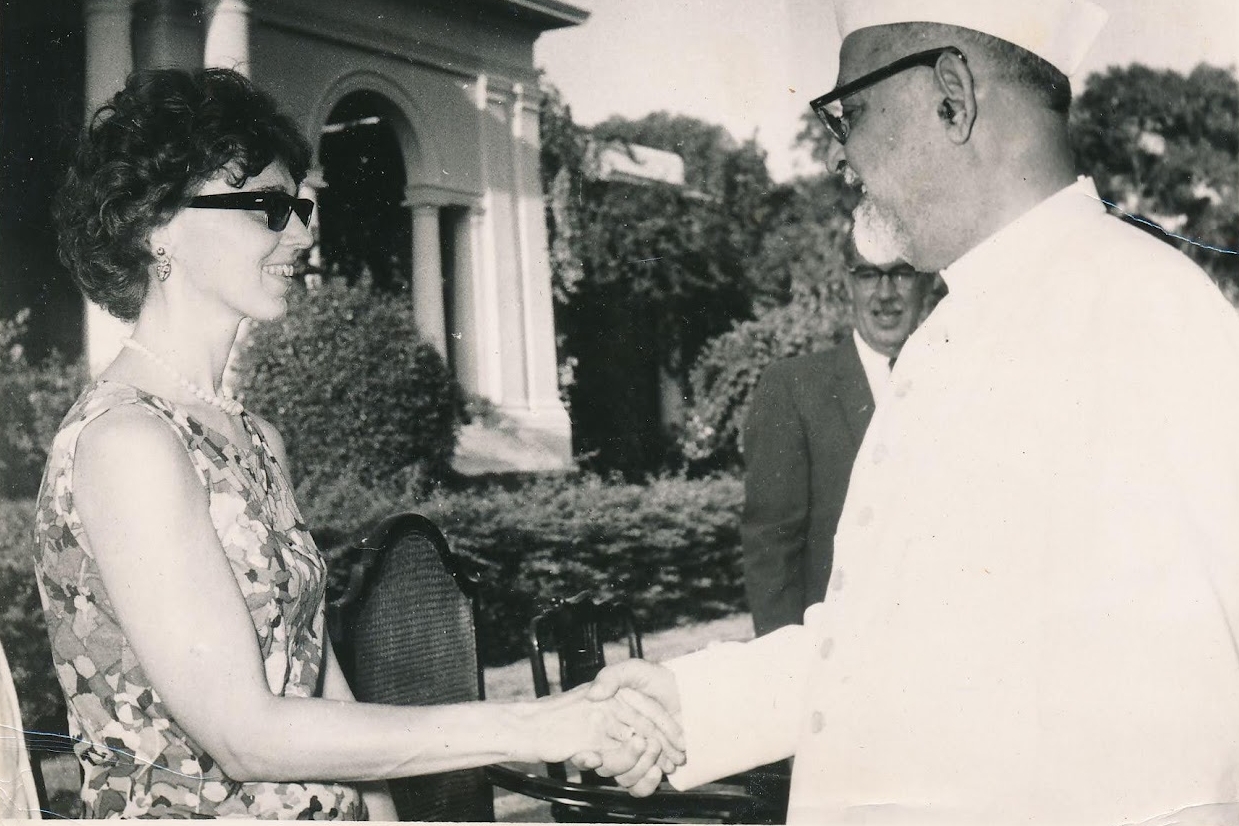
    Dr. Ashmead (left) met many dignitaries during her worldwide travels.
  • ‘The first step’: Chester County commissioners present poll book investigation to voters

    ‘The first step’: Chester County commissioners present poll book investigation to voters

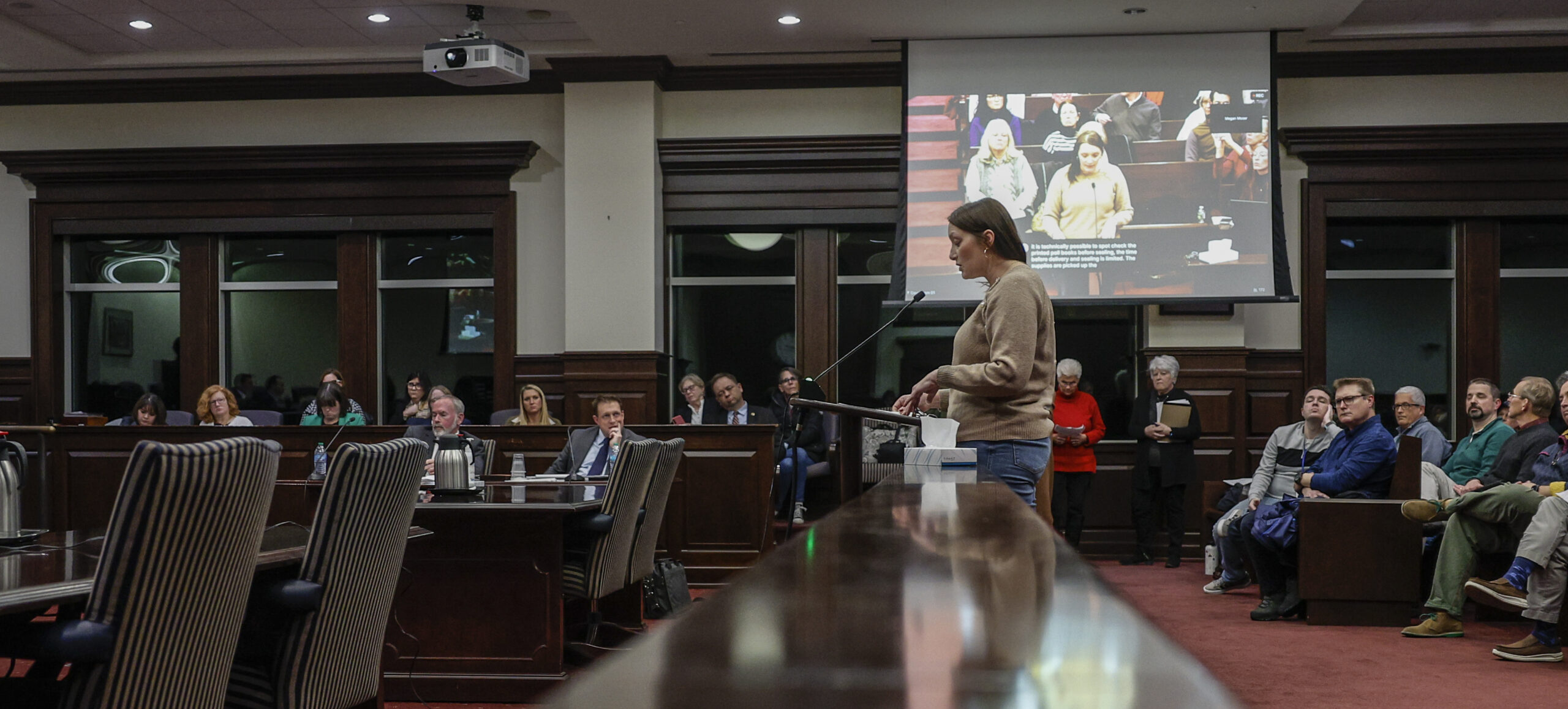
    Chester County residents called for accountability after a poll book error led to thousands of voters being left off the rolls in November’s election, and said the recent investigation solicited by the county fell short of addressing problems they fear could happen again.

    Tuesday’s public meeting was the first time community members — and the county commissioners themselves — were able to respond to an independent firm’s investigation and report, which found that insufficient training, poor oversight, and staffing challenges in the county’s elections office forced more than 12,000 voters to cast provisional ballots in the general election. The poll book error occurred as the 25-person department has faced unusually high turnover in recent years, and as the director faces allegations of fostering a toxic workplace.

    “This is the first step, this is not the last step … to rebuilding trust with the public and improving elections in a way that ensures this never happens again,” Josh Maxwell, chairman of the county commissioners, told the attendees.

    The 24-page report, prepared by West Chester law firm Fleck, Eckert, Klein & McGarry LLC and published last month, found that two employees mistakenly included only registered Democrats and Republicans when using the statewide voter roll to create the poll book, omitting more than 75,000 registered independent and unaffiliated voters from the rolls.

    The employees, inexperienced and never formally trained, lacked direct supervision, the report said. No one in the county’s department checked the books until a poll worker noticed the omissions before polls opened on Election Day.

    There was no evidence of malfeasance, the report said. County officials said previously that everyone who wanted to vote could cast a ballot, despite the issue.

    Still, the error rocked Election Day in the county, with officials scrambling to print supplemental poll books and poll workers staying late to address the challenges. Republican Commissioner Eric Roe broke with his Democratic peers by voting against the certification of the election results in December, saying his conscience would not allow it.

    Community members said Tuesday the error further eroded trust in voting security.

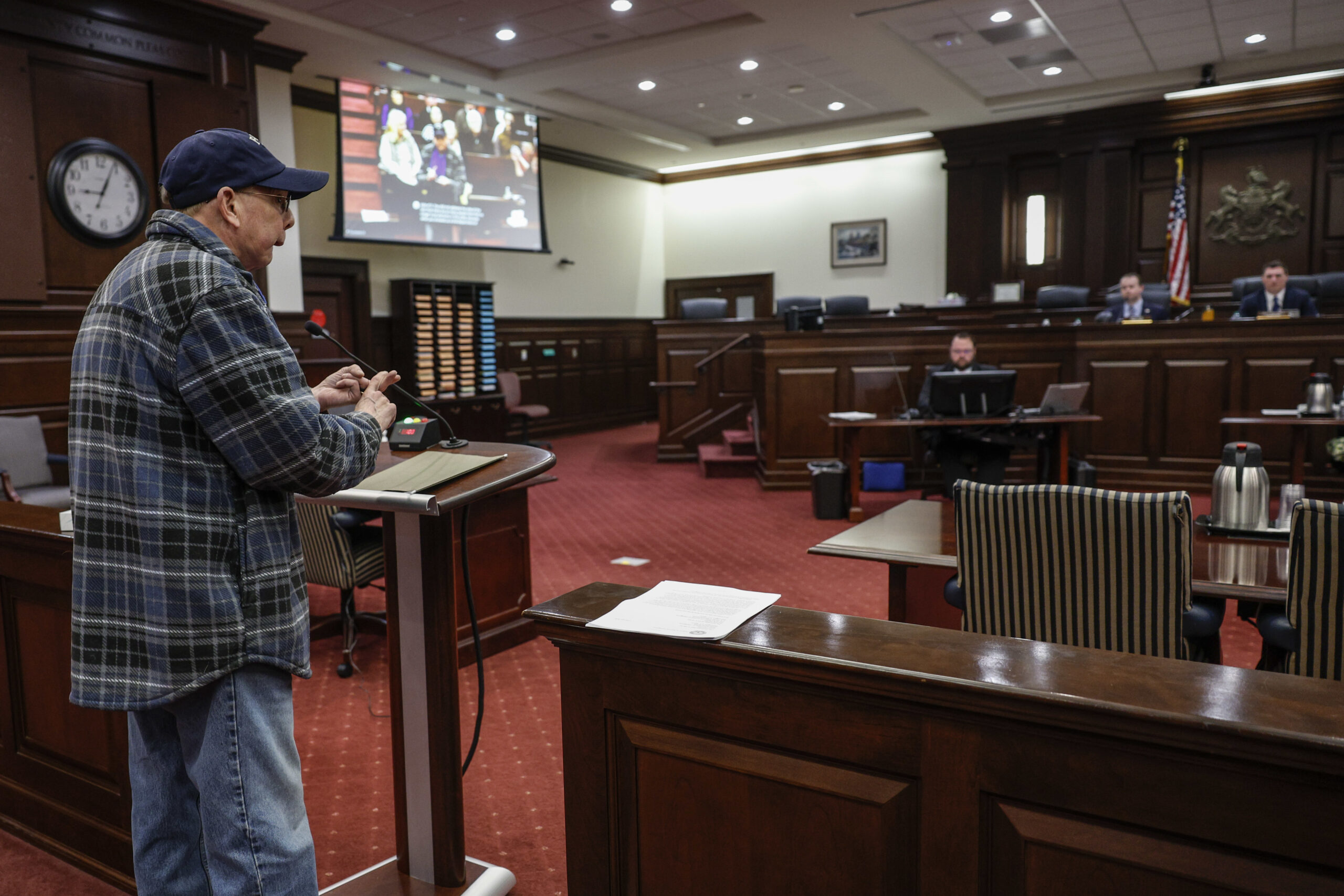
    John Luther addresses the Chester County Commissioners as they hold a public meeting to discuss the errors they had in the pole books during the November election. West Chester. Tuesday, February 3, 2026

    “How many voters were disenfranchised and did not vote?” resident John Luther asked the commissioners. “That is the most important thing. You guys can fix all the rest, but you can’t fix what you messed up in the front.”

    Kadida Kenner — who leads the New Pennsylvania Project, an organization dedicated to voter registration — said she rushed on Election Day to West Chester University, where the organization had helped students register to vote, to make sure they were not disenfranchised.

    “I see the impact of this mistake, this opportunity for change and growth,” she said. “The events of Election Day really did not help our efforts to be able to overcome feelings of individuals, as it relates to the electoral process, here in the commonwealth and across the country.”

    The report recommended more than a dozen changes for the county to prevent future errors, including improved training, reviewing processes and policies, and evaluating staff levels and pay. The county rolled out a plan to address the recommendations and intends to make monthly reports on its progress, saying some recommendations would be in place ahead of May’s primary.

    “Everyone in this room knows that a grievous error was made, and everyone is upset about it,” resident Marian Schneider said. “We can stop the browbeating and focus on the path forward.”

    The report stopped short of recommending personnel changes. Maxwell said the commissioners would not discuss personnel actions.

    Attorney Sigmund Fleck addresses the Chester County Commissioners as they hold a public meeting to discuss the errors they had in the pole books during the November election. West Chester. Tuesday, February 3, 2026

    “Bottom line, this appears to be a human error — clicking the wrong box,” said Sigmund Fleck, one of the attorneys who oversaw the report.

    Residents worried that those errors were symptoms of a deeper problem, and that the report’s scope did not fully address issues within voter services.

    “Yes, human error is a factor here,” Elizabeth Sieb told the commissioners. “This goes far beyond that. Mistakes of this magnitude require consequences.”

    Fleck pointed to larger issues with the state’s election system that culminated in the error, such as tight turnaround times for publishing the poll books, lack of statewide training, and a fairly old-school online voting roll system.

    Elizabeth Sieb addresses the Chester county commissioners as they hold a public meeting to discuss the errors they had in the pole books during the November election. West Chester. Tuesday, February 3, 2026

    But other counties deal with those same complications, some community members argued. November’s error came after the county omitted the office of the prothonotary on the ballot in May’s primary. The report found that error was due to the county solicitor’s office misinterpreting state law.

    “Sixty-seven counties face the same exact issues, except for one: management,” said Nathan Prospero Fox, a former voter services employee.

    Roe acknowledged the anger directed at county staff, but said: “The truth is, the buck doesn’t stop with staff. It stops with us.”

    “I am so sorry,” he continued. “This is not the end; there’s still time for accountability and improvement.”

    This suburban content is produced with support from the Leslie Miller and Richard Worley Foundation and The Lenfest Institute for Journalism. Editorial content is created independently of the project donors. Gifts to support The Inquirer’s high-impact journalism can be made at inquirer.com/donate. A list of Lenfest Institute donors can be found at lenfestinstitute.org/supporters.

  • Pa. officials push back as Trump targets Philly in call to nationalize elections ahead of 2026 midterms

    Pa. officials push back as Trump targets Philly in call to nationalize elections ahead of 2026 midterms

    Pennsylvania Secretary of State Al Schmidt on Wednesday rejected President Donald Trump’s false claims about voter fraud in the state as Trump targeted Philadelphia in his push to nationalize elections.

    The state’s top election official said Trump’s proposal would violate the Constitution, which he noted clearly gives states exclusive authority to administer elections.

    “Pennsylvania elections have never been more safe and secure,” said Schmidt, who served as Philadelphia’s Republican city commissioner in 2020, when the city was at the center of Trump’s conspiracy theories.

    “Thousands of election officials — Democrats, Republicans, and Independents alike — across the Commonwealth’s 67 counties will continue to ensure we have free, fair, safe, and secure elections for the people of Pennsylvania,” he said in a statement.

    Speaking to reporters Tuesday in the Oval Office, Trump cited Philadelphia, Detroit, and Atlanta as examples of where the federal government should run elections. He singled out three predominantly Black cities in swing states but offered no evidence of voter fraud or corruption to support his claims of a “rigged election.”

    “Take a look at Detroit. Take a look at Pennsylvania, take a look at Philadelphia. You go take a look at Atlanta,” Trump said. “The federal government should get involved.”

    Philadelphia has been a frequent target of Trump’s false claims of election fraud for several years, going back to his efforts to overturn his loss in the 2020 election. City and state officials have persistently pushed back on those claims, and there is no evidence that elections in the city have been anything but free and fair.

    Trump is advocating for taking control of elections in 15 states, though his administration has not named which ones.

    “The Republicans should say, ‘We want to take over,’” Trump said in December. “We should take over the voting, the voting in at least many — 15 places. The Republicans ought to nationalize the voting.”

    But, Pennsylvania officials and experts noted, he lacks the power to do so unilaterally.

    Congress has limited power to set rules for elections, but the U.S. Constitution grants control of elections to the states.

    “The president has zero authority to order anything about elections,” said Marian Schneider, an election attorney who was Pennsylvania’s deputy secretary of elections during the 2016 election.

    White House press secretary Karoline Leavitt claimed to reporters early Tuesday the president was referring to the SAVE Act, legislation proposed by House Republicans require citizens to show documents like a passport or driver’s license to register to vote.

    But Trump didn’t mention the legislation Tuesday.

    Trump will face an uphill battle in nationalizing elections as even some Republicans in Congress are already pushing back. Senate Majority Leader John Thune (R., S.D.) told reporters Tuesday he disagreed with Trump on any attempt to nationalize elections, calling it “a constitutional issue.”

    “I’m not in favor of federalizing elections,” Thune said.

    Still, Trump’s comments raised alarm as his administration continues to sow doubt in the nation’s elections.

    “This is clearly a case of Trump trying to push the boundaries of federal involvement in election administration because he has a problem with any checks on his power, democracy being one of them,” said Montgomery County Commissioner Neil Makhija, an attorney and a Democrat who chairs the Montgomery County Board of Elections.

    Trump’s comments came a week after the FBI seized ballots and voting records from the 2020 election from the Fulton County election hub in Georgia. In a statement, Fulton County Commissioner Marvin Arrington Jr. said the county will file a motion in the Northern District of Georgia challenging “the legality of the warrant and the seizure of sensitive election records, and force the government to return the ballots taken.”

    Lisa Deeley, a Democratic member of the Philadelphia city commissioners, who oversee elections, accused Trump of trying to distract from federal agents killing two civilians in Minnesota last month.

    “We all know the President’s playbook by now. His remarks on elections are an effort to change the conversation from the fact that the Federal Government is killing American citizens in Minneapolis,” Deeley said in a statement.

    Trump has been making similar claims since 2016, when he erroneously blamed fraud for costing him the popular vote.During a debate with his 2020 opponent, Joe Biden, Trump said, “Bad things happen in Philadelphia, bad things,” viewed at the time as an attempt to sow doubt about the election results and mail voting during the peak of the COVID-19 pandemic.

    Despite losing to Biden in Pennsylvania in 2020 by a little more than 80,000 votes, Trump has repeatedly claimed he actually won, lying about mail-in votes “created out of thin air” and falsely stating there were more votes than voters.

    “Every single review of every single county in the commonwealth has come back within a very small difference, if any, of the results reported back in 2020,” Kathy Boockvar, who served as Pennsylvania’s secretary of state during the 2020 election, told The Inquirer in 2024.

  • Mark Ruffalo’s ‘Task’ stuntman is now a council member | Inquirer Chester County

    Hi, Chester County! 👋

    The newest member of Kennett Square’s council was sworn in on Monday, and he’s got surprising ties to a popular HBO show. Also this week, we look at how a turnpike exit helped spur billions of dollars in economic development, two restaurants that are among the region’s under-the-radar romantic spots, plus a developer is looking to upsize plans for a proposed data center.

    We want your feedback! Tell us what you think of the newsletter by taking our survey or emailing us at chestercounty@inquirer.com.

    If someone forwarded you this email, sign up for free here.

    A ‘Task’ stuntman is appointed to Kennett Square’s council

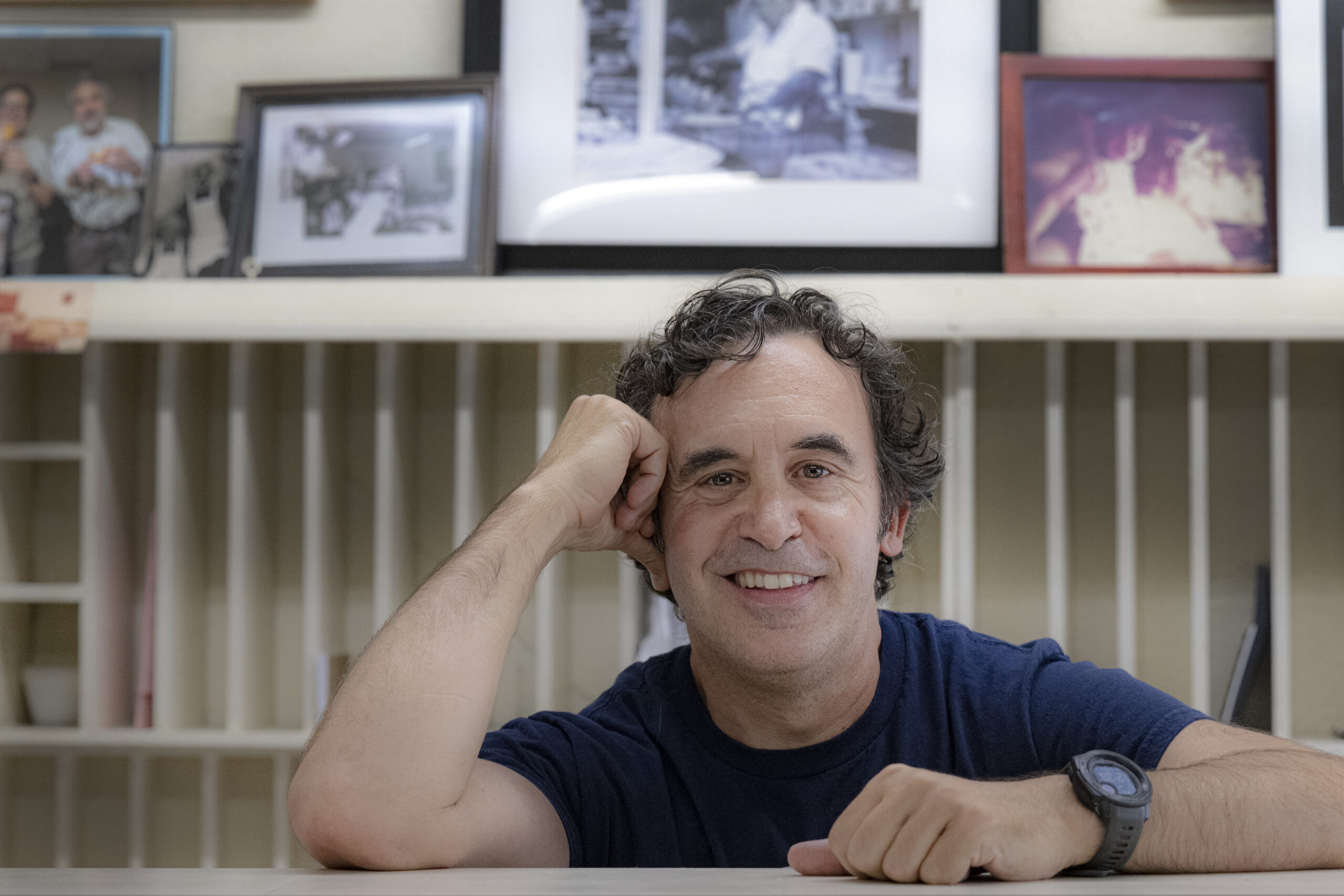
    Actor, director, and producer Michael Bertrando was recently appointed to fill a vacancy on Kennett Square’s council.

    Kennett Square Borough Council is getting a little brush with fame after Task stuntman Michael Bertrando was sworn in Monday to fill a vacant role, which he’ll hold until December 2027.

    The longtime Kennett Square resident is no stranger to the borough. An actor, director, and producer, Bertrando has worked at his family’s 80-year-old sub shop for decades. Outside of his work at Sam’s Sub Shop, he has also been a stuntman for Mark Ruffalo on Task.

    The Inquirer’s Brooke Schultz recently chatted with Bertrando about what attracted him to public service and some of his priorities on council.

    📍 Countywide News

    • It’s been just over 13 years since the Pennsylvania Turnpike opened Exit 320, connecting drivers to Route 29 and slashing commute times to communities like Malvern. The all E-ZPass interchange has since helped spur billions of dollars in economic development throughout Great Valley.
    • Residents have until Friday to submit comments regarding upgrades PennDot is proposing to make to parts of U.S. 30. Read more about the proposed interchange updates here.
    • Chester County and Paoli Hospitals both recently ranked among America’s 250 Best Hospitals by Healthgrades. The rankings, released last week, are awarded to the top 5% of institutions in the nation for “overall clinical excellence.”

    💡 Community News

    • Pulte Homes of Pennsylvania is looking to build a new residential community on the vacant land near Ludwigs Corner in Chester Springs at 1246 and 1320 Pottstown Pike and 603 Birchrun Road. Last month, the homebuilder submitted a conditional use application to West Vincent Township to develop Promenade Chester Springs, which would consist of 28 single-family homes and 46 townhomes, as well as a tot lot and dog park. The application is currently under review.
    • Main Line Health has received a more than $530,000 state grant that will support its planned health center in Caln Township. The center will be at the corner of Lloyd and Manor Avenues and have primary, urgent, and specialty care, as well as imaging and lab services. Plans call for a roughly 145,000-square-foot, three-story facility on 14.5 acres. It’s slated to open in the summer of 2027.
    • Construction is underway to transform the former Quality Inn and Suites at 943 S. High St. in West Chester into a senior living facility. Charter Senior Living of West Chester will be a 162-unit community with 32 memory-care, 59 senior-living, and 71 assisted-living apartments. Leasing is expected to start late this year, with the project completed in late 2027.
    • The community is mourning the deaths of two area coaches. Joe Walsh, a longtime football, wrestling, lacrosse, and tennis coach at West Chester’s Henderson High School, where he was also a health and physical education teacher before his retirement, died of cancer last week at the age of 75. He is remembered as “an inspiration,” “a great coach,” and “a positive example for many, many young people.” John Robert Rohde, an Exton resident, West Chester University alum, and former Malvern Prep and Unionville High School lacrosse coach, died last week at the age of 77. Rohde served as commissioner of the Glenmoore Eagle Youth Association Little League and was a cofounder of Lionville Youth Association Lacrosse.
    • Penn Township Park closed on Monday for construction of an inclusive playground, pickleball, basketball, and hockey courts, as well as other updates. Construction is expected to take about one year. Sports fields are expected to be added in the future.
    • A monthslong $1.3 million Peco project to upgrade the electrical distribution system is set to begin Monday in Tredyffrin Township. Between now and August, work will take place on Westwind, Coldstream, and Churchill Drives, Contention and Stuart Lanes, Winston Way, and Tory Hollow, Cassatt and Old State Roads. There may be some temporary service interruptions, which Peco says will be communicated in advance.
    • In case you missed it, a developer is looking to upsize a proposed data center at a Superfund site in East Whiteland Township, despite community pushback. Last week, the developer appeared before the planning commission with an amended proposal that calls for a more than 1.6-million-square-foot center.
    • A new vintage shop is hosting a grand opening of its storefront at 26 S. Main St. in Phoenixville on Friday. Great Scott Vintage will sell vintage clothing, decor, and housewares.
    • Penn Vet plans to expand its Chester County presence to the tune of $94 million. The University of Pennsylvania School of Veterinary Medicine plans to build a new lab building at the New Bolton Center in East Marlborough Township that will combine the state-funded Pennsylvania Equine Toxicology Research Laboratory and the Pennsylvania Animal Diagnostic Laboratory System. (Philadelphia Business Journal)

    🏫 Schools Briefing

    • The Tredyffrin/Easttown School District’s board of directors adopted the preliminary 2026-27 budget last week, which has a $14.9 million operational deficit. Further budget discussion will take place at a finance committee meeting on Monday.
    • Owen J. Roberts School District has released its 2026-27 academic calendar. The first day of school will be Aug. 24 and the last day will be June 4, which is comparable to the current academic year.
    • There are parent-teacher conferences next Thursday and Friday in the Phoenixville Area School District. Sign up for a time here.

    🍽️ On our Plate

    • Looking for a great date night spot? Jolene’s in West Chester and L’Olivo Trattoria in Exton are among the region’s under-the-radar romantic dining spots, according to The Inquirer’s Food reporters. The chic and modern Jolene’s blends “French-leaning food with a strong cocktail and wine list in a moody, unstuffy dining room,” while L’Olivo has a warm, familiar vibe to pair with its Northern Italian cuisine, The Inquirer’s Michael Klein reports.
    • A new takeout pizza and cheesesteak shop is planning a grand opening in West Caln this Friday. Bada Bing Steaks & Pizza is located at 691 W. Kings Highway and also offers sandwiches on house-made focaccia and wings.
    • Midway Grill in Thorndale, which is known for its hot dogs, is now under new ownership. The Zambaras family, who owned it for 60 years and across four generations, sold the Lincoln Highway establishment to the Cantalicio family effective Sunday. In a note to diners, the Zambaras family said they were grateful for the “unwavering support and loyalty” over the years.

    🎳 Things to Do

    🪴 Make Your Own Pot Workshop: Make your own 4-inch pot and then add a plant before taking it home. ⏰ Friday, Feb. 6, 6 p.m. 💵 $80 📍 The Green House, West Chester

    🛏️ Once Upon a Mattress: This comedic musical puts a spin on classic tale The Princess and the Pea. ⏰ Friday, Feb. 6-Sunday, Feb. 22, select days and times 💵 $31.60-$41.80 📍 SALT Performing Arts, Chester Springs

    👜 Renaissance Faire Flight Night: People’s Light’s first “flight night” of the year will be Renaissance-themed, with a cash bar. Attendees are encouraged to dress for the occasion. ⏰ Wednesday, Feb. 11, 6 p.m. 💵 $45 📍 The Farmhouse at People’s Light, Malvern

    🏡 On the Market

    A spacious Landenberg home with a pool and hot tub

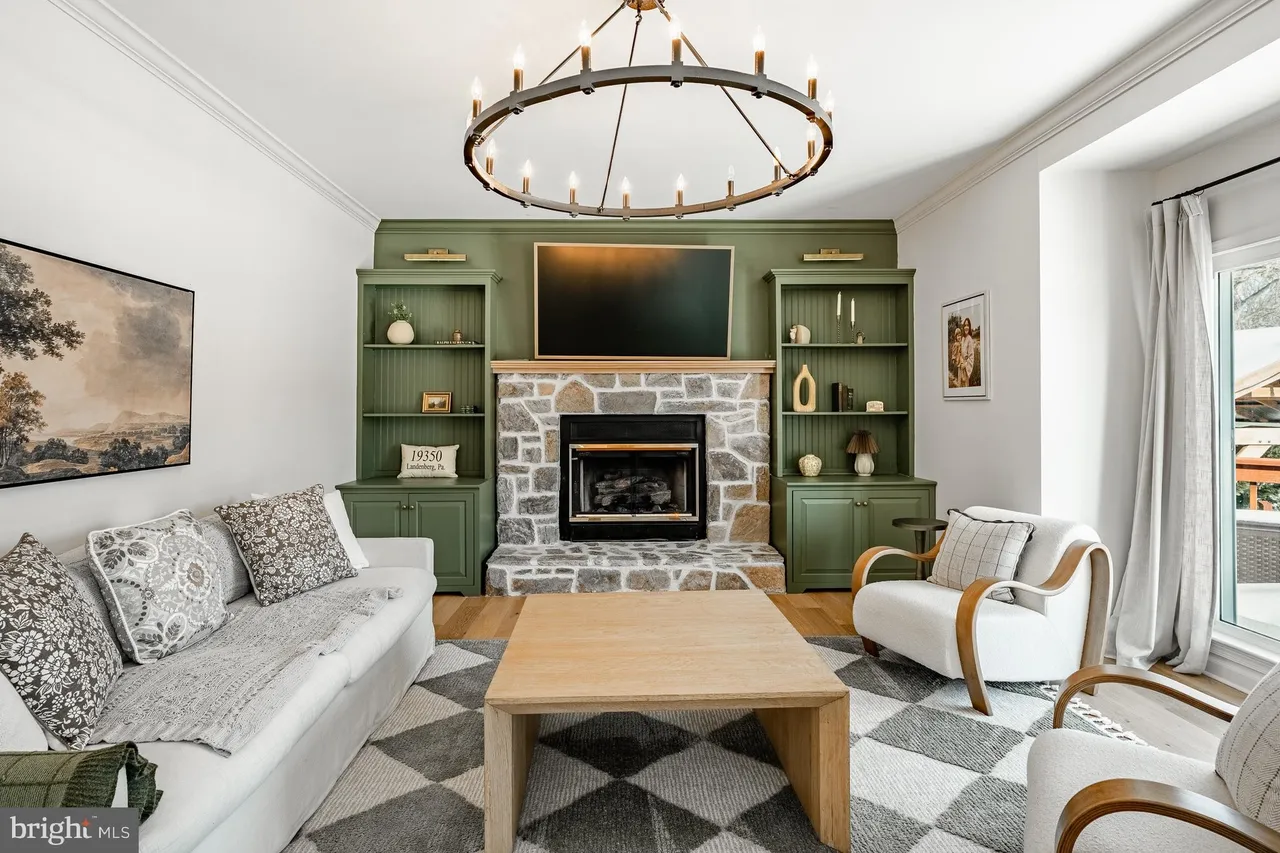
    There’s a family room off of the kitchen, which has a chandelier, built-ins, and a stone fireplace.

    Situated on 3.6 acres, this Landenberg home offers privacy without being too far off the beaten path. The updated home has a dining room with a statement chandelier, multiple sitting rooms, and an open-concept family room with a stone fireplace that adjoins the kitchen, where there’s an island and white cabinetry offset by dark granite countertops and a glass tile backsplash. There are four bedrooms upstairs, including the primary suite, which has vaulted ceilings and a large walk-in closet. There’s also a finished basement. Outside, there’s a deck, a hot tub, and an in-ground pool. There are open houses Friday from 5 to 6:30 p.m. and Sunday from 11 a.m. to 1 p.m.

    See more photos of the home here.

    Price: $799,999 | Size: 4,415 SF | Acreage: 3.6

    🗞️ What other Chester County residents are reading this week:

    By submitting your written, visual, and/or audio contributions, you agree to The Inquirer’s Terms of Use, including the grant of rights in Section 10.

    This suburban content is produced with support from the Leslie Miller and Richard Worley Foundation and The Lenfest Institute for Journalism. Editorial content is created independently of the project donors. Gifts to support The Inquirer’s high-impact journalism can be made at inquirer.com/donate. A list of Lenfest Institute donors can be found at lenfestinstitute.org/supporters.

  • Local businessman and ‘Task’ stuntman is appointed to Kennett Square council

    Local businessman and ‘Task’ stuntman is appointed to Kennett Square council

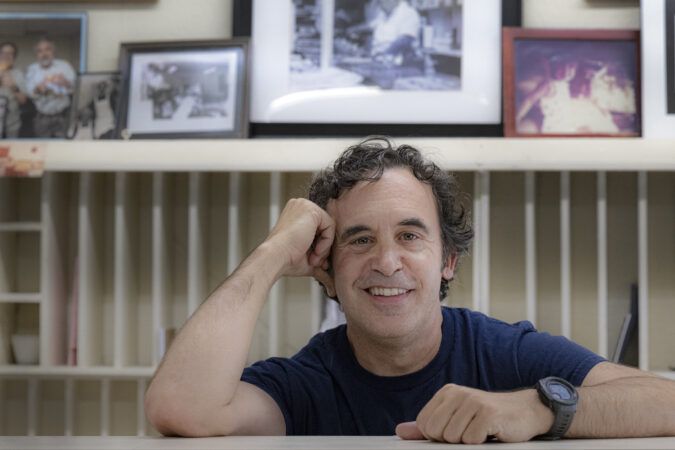
    Michael Bertrando’s first brush with Kennett Square’s council three years ago was to discuss a parking issue at his family’s legacy sandwich spot, Sam’s Sub Shop. He saw his neighbors, listened to them, and started to see how the council worked. Eventually, he became something of a regular.

    When the issue of short-term rentals came up last month, Bertrando had a lot of perspective: As an actor — you might have seen him on HBO’s Task — he has traveled extensively. He has seen the negative effects short-term rentals can have had on communities from New York to Argentina to Brazil. He spoke up.

    And then people started to drop by the sandwich shop, which he runs alongside his parents, suggesting that he put his name in for a vacant seat on the council.

    The council voted last month to appoint Bertrando, 52, from a crowded field of applicants to fill former council member Julie Hamilton’s seat through December 2027. He was sworn in Monday.

    The seat will be on the ballot for a four-year term in the 2027 general election. Hamilton resigned for a job in Texas, the Daily Local reported.

    Long ties to Kennett Square

    Council member is another job title the local businessman and Task stuntman can add to his resumé.

    “I’m volunteering to help the residents of my community; that’s my primary goal,” he said in an interview Tuesday.

    Bertrando — an actor, director, and producer — has worked at his family’s 80-year-old sub shop for decades. It drew him back home a few years ago, so he could help his aging parents run the shop.

    But in the years between, Bertrando left Kennett Square to pursue acting, appearing in commercials for brands like Mercedes, McDonald’s, Nintendo, and Oscar Mayer; traveling the world as a professional clown; and working the improv comedy circuit in New York and Chicago.

    His film career has continued back in Pennsylvania; Bertrando served as Mark Ruffalo’s stand-in and stunt double in Task, the HBO crime drama set in Delco. In his own productions, his hometown has seeped into his work. A short film, Italian Special, is set within Sam’s Sub Shop and Kennett Square.

    Since returning to the borough, Bertrando has been a frequent visitor to council meetings, and advised the borough alongside other business leaders on what was going well, and what wasn’t, in Kennett Square.

    Priorities on council

    His professional career and his family’s long lineage in Kennett Square have shaped his perspectives on the borough, and what he thinks he can add as a council member.

    He is motivated by the possible development of a new theater. Infusing more arts into the community would be beneficial, he said.

    Having worked on Task, he saw how other municipalities the show filmed in benefited from an influx of revenue: from parking to hiring police for traffic control, to renting out locations in town, to ordering food for lunches and snacks, to coffee runs, to overnight stays in hotels.

    “We have all the infrastructure needed for that to happen here in Kennett,” he said.

    Both Task and fellow Pennsylvania-based crime drama Mare of Easttown mention Kennett Square, but neither used the borough for filming.

    “When you have a theater or something arts-driven in the town, I think that’s a signal,” he said. “I think a theater can work as a beacon for revenue from other sources, like film production.”

    Beyond the intersection of his passion for film and the borough, he said the development of the former National Vulcanized Fiber land, a large undeveloped parcel that is being remediated for contamination in soil from the industrial site, has been of concern for residents.

    While the project would be years out even if ultimately approved, Bertrando said he would advocate for environmental transparency and affordable development that respects the existing neighborhoods.

    He would also like to improve communication between the municipality and its residents — the longtime community members, like Bertrando’s family, and those who are choosing to relocate.

    As he began his term on the other side of public comment, he said, he focused in, listening closely to what his neighbors were saying. He feels the burden to pay close attention, since he was appointed to the role, rather than elected.

    “I really have to make the effort to listen to their concerns and really try the best ways to help in their concerns,” he said. “Sitting on the other side was exciting. It was important. It’s serious. It’s my town. I really care about it.”

  • Gov. Josh Shapiro says he’ll prevent data center developers from ‘saddling’ Pennsylvanians with higher energy costs

    Gov. Josh Shapiro says he’ll prevent data center developers from ‘saddling’ Pennsylvanians with higher energy costs

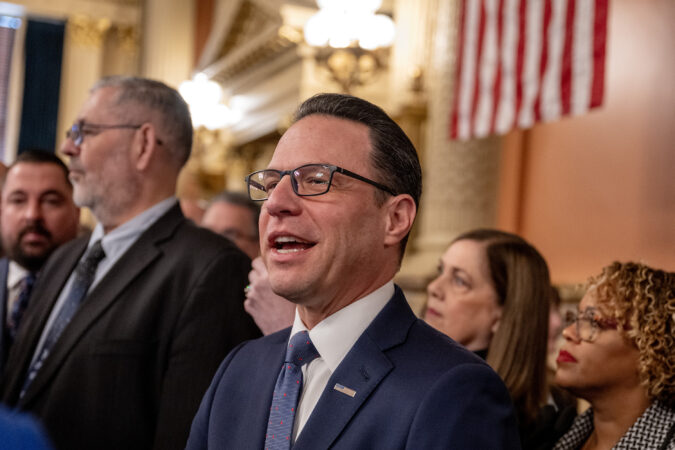
    Gov. Josh Shapiro had a message for data center developers on Tuesday: Come to Pennsylvania, but bring your own energy — or pay up.

    During his budget address, Shapiro said his proposal — the Governor’s Responsible Infrastructure Development (GRID) standards — will ensure center operators are “not saddling homeowners with added costs because of their development.”

    Data centers, which house the technology to power cloud storage and other computing, have been proliferating across the country and the region due to the increasing demands of generative artificial intelligence, or AI. State and local officials are trying to keep up with the rapid pace of development, proposing new legislation — and updating existing measures — in an attempt to regulate the facilities.

    Shapiro’s plan would require data centers to supply their own energy or pay for any new generation they need. It also calls on them to hire and train Pennsylvania workers and comply with “the highest standards of environmental protection,” including in water conservation, Shapiro said.

    In exchange, the governor added, data center developers will get “speed and certainty” in the permitting process, as well as applicable tax credits.

    The comments from Shapiro, a Democrat who has consistently encouraged data center development, come amid a flurry of legislative and executive action, as elected officials promise to keep Pennsylvania and New Jersey consumers from bearing the costs of these power-hungry facilities.

    Data centers, the electric grid, and governors’ proposals

    Locally, proposals for large AI data centers have faced opposition from East Vincent Township, Chester County to Vineland, Cumberland County.

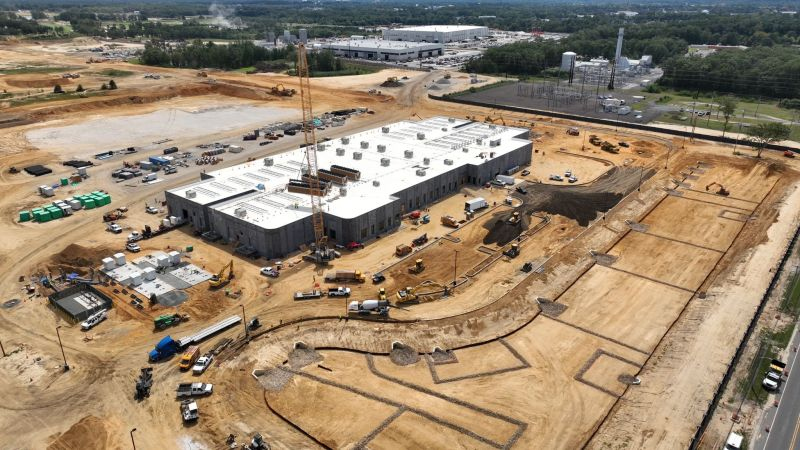
    A half-built data center in Vineland is expected to be completed later this year, with a capacity of 300 megawatts.

    Many experts have attempted to quantify the impact of these centers on Americans’ energy bills. In one analysis, Bloomberg News found that the monthly electric bills of customers who lived near significant data center activity had increased 267% in the past five years.

    At the same time, some governors, including Shapiro, have criticized and sued PJM, the Montgomery County-based electric grid operator, over its annual capacity auction, which influences how much customers pay.

    On Tuesday, Shapiro reiterated calls for PJM to speed up new power-generation projects and extend a price cap.

    Separate from GRID, Shapiro also said electric companies, including Peco, should increase transparency around pricing and “rein in costs” for consumers, including low-income and vulnerable Pennsylvanians.

    “These steps will save consumers money immediately,” Shapiro said. He announced an energy-affordability watchdog to monitor utility-rate requests and take legal action if necessary to prevent companies from “jacking up their rates and costing you more.”

    In New Jersey, new Gov. Mikie Sherrill made energy affordability a central tenet of her campaign. At her inauguration last month, she declared “a state of emergency on utility costs,” following through on a promise she had made in stump speeches and TV ads.

    Through several executive orders, she froze utility rates and expanded programs to spur new power generation in the state. She also ordered electric utilities to report energy requests from data centers.

    “This is just the beginning,” Sherrill said in her inaugural remarks. “We are going to take on the affordability crisis, and we are going to shake up the status quo.”

    In Pennsylvania, ‘Data Center Consumer Protection Bill’ advances

    An Amazon data center is shown last year while under construction in front of the Susquehanna nuclear power plant in Berwick, Pa.

    Meanwhile in Harrisburg and Trenton, some lawmakers have other ideas about how to keep residents from subsidizing data centers.

    As of Tuesday, nearly 30 bills in the Pennsylvania and New Jersey legislatures mentioned data centers, according to online records. Many of those bills aren’t directly related to residents’ electric bills, and instead address the facilities’ energy sources, water usage, environmental impacts, and general regulation.

    Others attempt to tackle rising consumer costs.

    On Monday, the Pennsylvania House Energy Committee advanced a measure referred to as the “Data Center Consumer Protection Bill.” Lawmakers say it would keep residents’ bills down by creating a regulatory framework for data centers and requiring their operators to contribute to utility assistance funds for low-income Pennsylvanians.

    “Today’s vote brings us one step closer to protecting ratepayers,” Robert Matzie, the Beaver County Democrat who introduced the bill, said in a statement. “Data centers can bring jobs and expand the local tax base, but if unchecked, they can drive up utility costs. Electric bills are already too high.”

    The state House Energy Committee also heard testimony Monday on a bill that would allow the state to create a “model ordinance” for local municipalities to regulate data centers, and another that would require centers to report their annual energy and water usage.

    The bills were introduced by State Reps. Kyle Donahue and Kyle Mullins, both Democrats from the Scranton area, which has become a hot spot for data center development.

    “There is a real concern and a sense of overwhelm among the people we represent,” Mullins said at the hearing. “The people of Pennsylvania have serious concerns about data center energy usage and water usage, especially as they see utility bills continue to rise rapidly.”

    Dan Diorio, vice president of state policy for the Data Center Coalition, said he worried the bills would discourage operators from building in Pennsylvania. He said they are already incentivized to reduce energy costs, which are estimated to make up anywhere from 40% to 80% of a data center’s total operating costs.

    “Data center companies strive to maximize energy efficiency to keep their costs low,” Diorio said.

    Rep. Elizabeth Fiedler, the Philadelphia Democrat who chairs the energy committee, closed Monday’s hearing by reminding members of one of its main objectives: to “keep down the energy bills that are skyrocketing for people back home.”

    A South Jersey lawmaker says his bill could help consumers

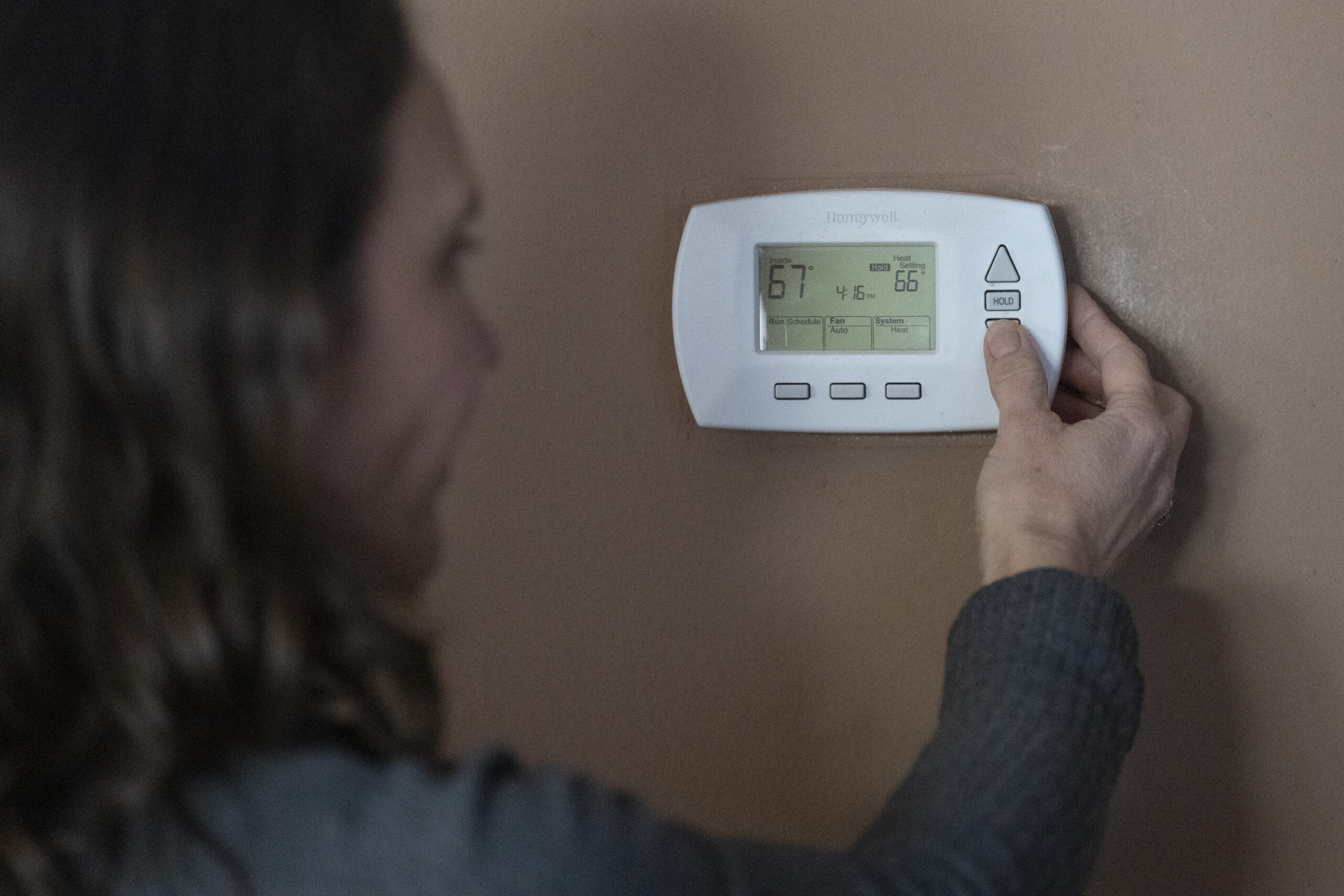
    A Philadelphia-area woman woman turns down her thermostat in attempt to save on electricity in this January 2023 file photo.

    The pain of skyrocketing utility bills has been felt acutely in New Jersey, which unlike Pennsylvania uses more energy than it produces.

    Between 2024 and 2025, New Jersey residents’ electric bills rose more than 13% on average, the fifth steepest increase in the U.S., according to federal data analyzed by the business magazine Kiplinger. Pennsylvanians saw a nearly 10% increase during the same period, according to the data.

    Prices are expected to keep rising in the coming years as more data centers are constructed.

    A bill sponsored by New Jersey State Assembly member David Bailey Jr., a Democrat from Salem County, attempts to prevent future price hikes.

    The legislation would require data center developers to have “skin in the game,” as Bailey described it in a recent interview, and sign a contract to purchase at least 85% of the electric service they request for 10 years. He said it would also provide incentives for data centers to supply their own energy generation.

    “I don’t want to come off as an anti-data center person,” said Bailey, who represents parts of Gloucester, Salem, and Cumberland Counties. “This is a very positive thing. We’re just saying we don’t want these big companies to come in and pass this [cost] on to our mom and pops, our neighbors, and our everyday ratepayers.”

    Bailey said he was disappointed that his bill was pocket-vetoed by former Gov. Phil Murphy last month. Now, it has to restart the legislative process. But Bailey said he expects it to eventually pass with bipartisan support.

    “No matter your party affiliation you understand the affordability issue,” Bailey said. “You understand your electric bill” — and how much it has risen recently.

  • Gov. Josh Shapiro proposes $53.2 billion state budget focusing on affordability, development, and raising Pennsylvania’s minimum wage

    Gov. Josh Shapiro proposes $53.2 billion state budget focusing on affordability, development, and raising Pennsylvania’s minimum wage

    HARRISBURG — Gov. Josh Shapiro on Tuesday unveiled a $53.2 billion state budget that focuses on making Pennsylvania a more affordable place to live — while proposing a 6.2% spending increase over last year and renewing his pitches to create new revenue streams to fill a significant budget deficit as he runs for reelection.

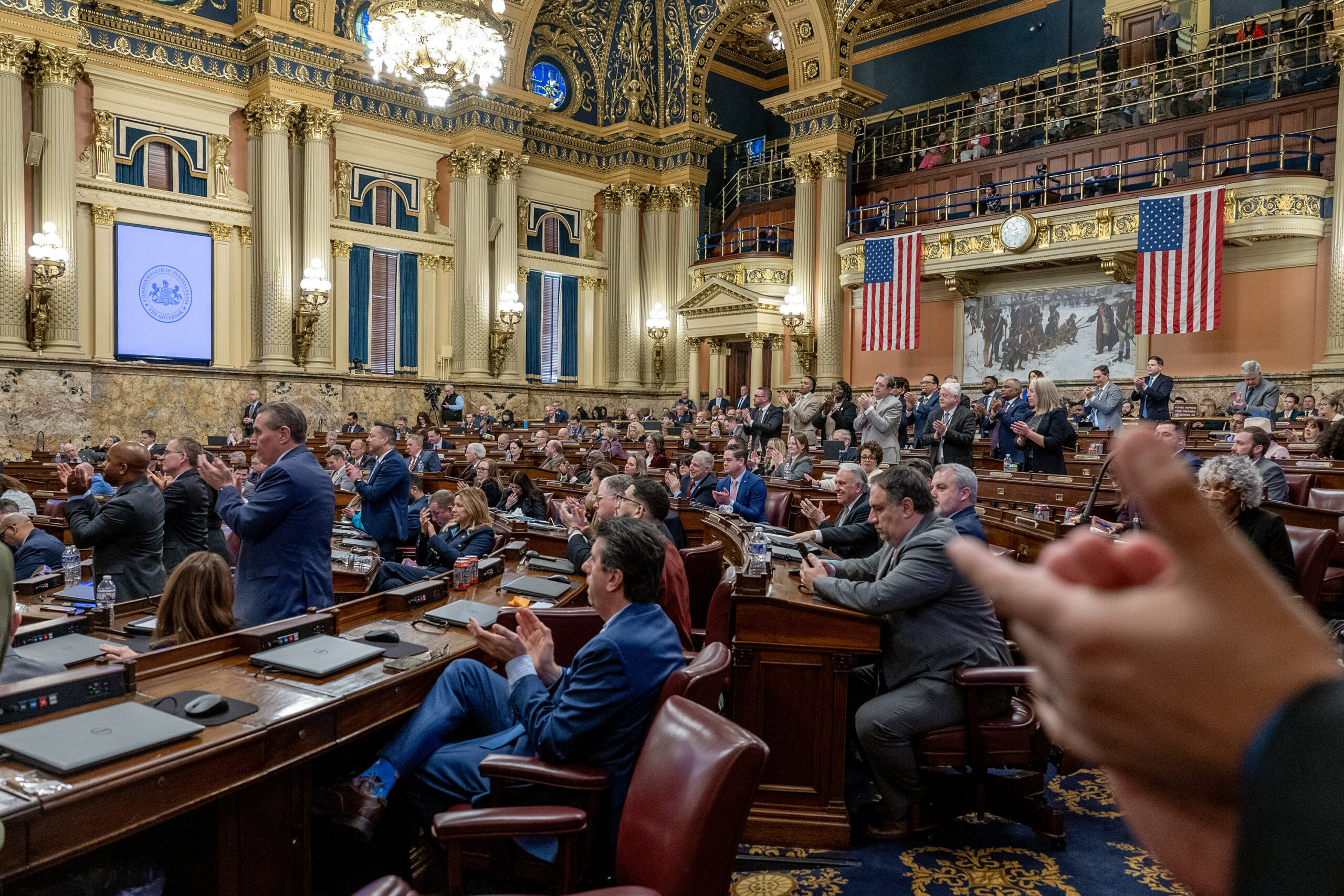
    Shapiro’s fourth budget address attracted several standing ovations from Democrats as he stood before a joint session of the state House and Senate to pitch some of Democrats’ shared priorities, such as increasing the minimum wage to $15 an hour.

    Afterward, Republicans decried the budget proposal as unaffordable, arguing such a steep increase in spending is unrealistic when the state is already poised to spend more than it brings in during the current fiscal year and in the future. Shapiro’s proposal would spend $4.6 billion more than the state is projected to bring in in the 2026-27 fiscal year, requiring officials to pull most new spending from Pennsylvania’s $7.7 billion Rainy Day Fund, or find funding from new revenue streams like the taxation of recreational marijuana that do not yet exist.

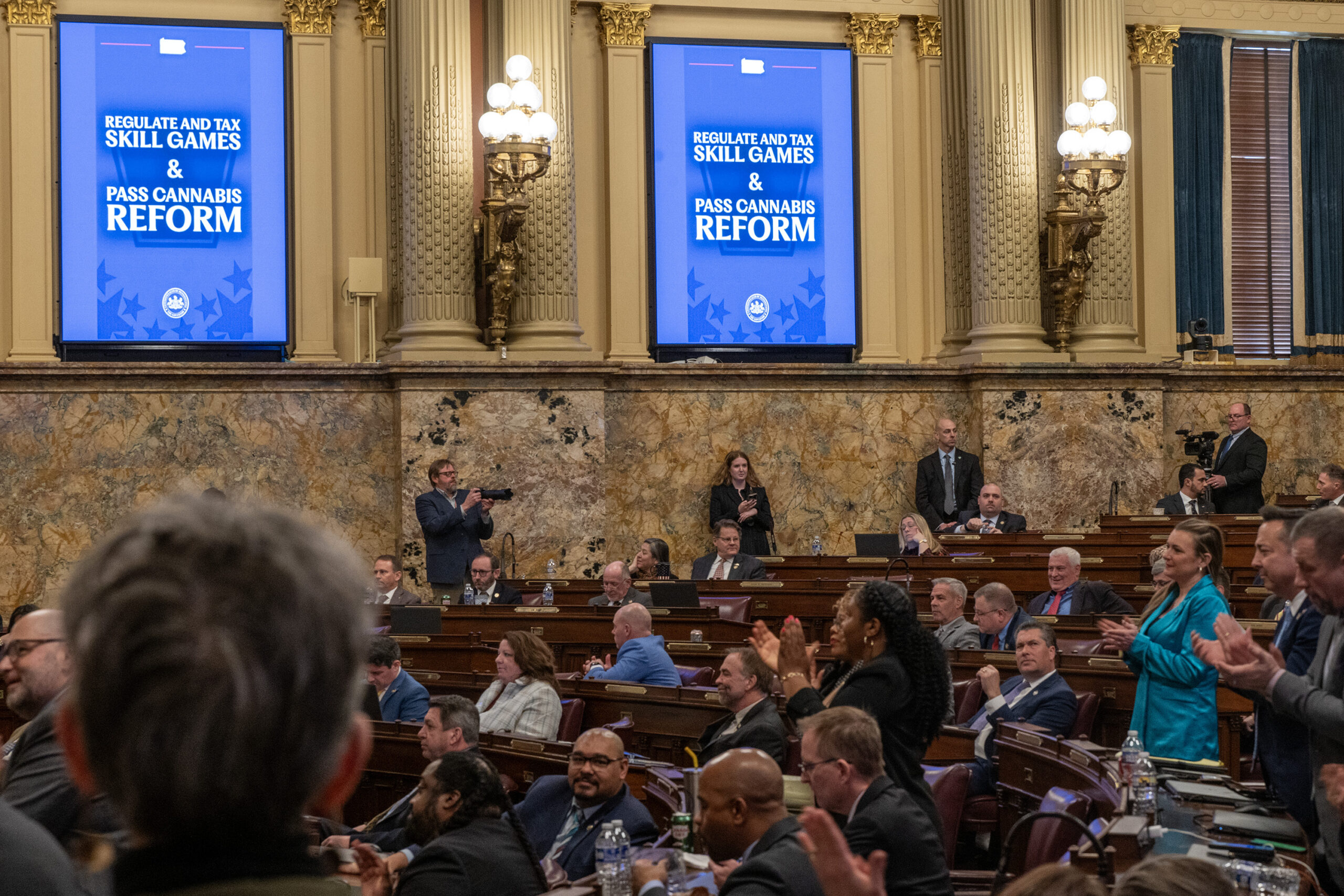
    Screen shows skill games and cannabis regulation and reform as Gov. Josh Shapiro makes his annual budget proposal in the state House chamber in Harrisburg Tuesday, Feb. 3, 2026.

    Shapiro’s proposed spending hike equates to a $2.7 billion total increase over the 2025-26 budget. Approximately $1 billion of that would fulfill increased federal Medicaid obligations, another $1 billion would be for new initiatives proposed by the governor, and $700 million would go to other funding increases, according to a Shapiro administration official.

    The proposal does not include any broad tax increase on state residents. Instead, Shapiro’s budget pitch includes proposals to generate nearly $2 billion in new revenue, largely from the taxation and legalization of recreational marijuana and regulation of so-called skill games — suggestions that he put forward last year but that failed to gain traction within the legislature. He proposed taxing adult-use cannabis at 20% to generate $729.4 million. He is also seeking a 52% tax on skill games, the unregulated and untaxed slot-machine look-alikes that have proliferated around the state in corner stores, bars, and fraternal organizations, to generate an estimated $765.9 million in its first year.

    “Everyone knows we need to get this done. So let’s come together and finally get it over the finish line,” he added.

    Shapiro proposed the legalization and taxation of recreational marijuana in each of his prior three budget proposals. Last year, he pitched a 20% tax on the sale of legal marijuana that he estimated would bring in $535.6 million in its first year. This year’s projection of $729.4 million in that time frame would be a 36% increase without changing the proposed tax rate. A Shapiro administration official said Tuesday that the projected increase is due to more interest from marijuana companies that want to do business in Pennsylvania.

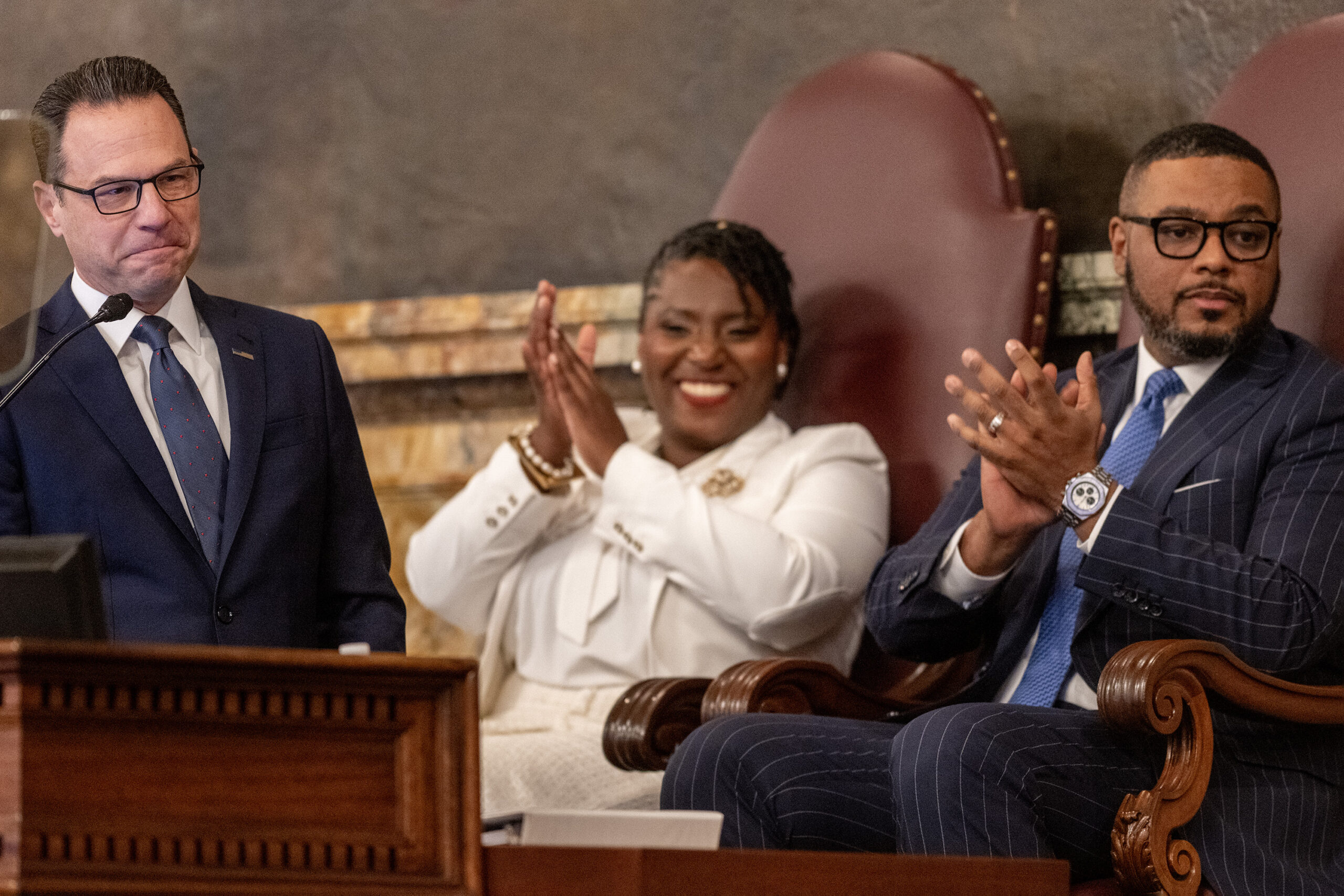
    Gov. Josh Shapiro make his annual budget proposal in the state House chamber in Harrisburg Tuesday, Feb. 3, 2026. Pa. House Speaker Joanna McClinton (left) and Lt. Gov. Austin Davis (right) are seated behind him.

    Shapiro’s budget also called for an additional $565 million for public schools toward the state’s new adequacy funding and tax equity formulas, in the latest installment of a nine-year plan to ensure students get an equitable education no matter their zip code. He requested $30 million in additional funding toward three of Pennsylvania’s state-related universities — the University of Pittsburgh, Pennsylvania State University, and Temple University — to be awarded based on a new performance-based funding mechanism.

    The governor also pitched creating a “Federal Response Fund” in Pennsylvania, seeking to set aside a $100 million reserve to offset any impact from President Donald Trump’s administration, in the event the federal government moves to cut funding to social services programs and grants to state and local governments, as it has done several times over the last year.

    A focus on affordability

    As his reelection campaign ramps up ahead of November, Shapiro made a broad pitch for policies aimed at making Pennsylvania more affordable.

    Shapiro said he was working with utility companies to rein in energy costs and called for the construction of new homes and a bevy of renter protections in a plan to expand the availability and affordability of housing across the state.

    He proposed a $1 billion fund, supported by the issuing of bonds, to pay for a range of infrastructure projects relating to energy, housing, local governments, and schools. But he billed it largely as “a major investment in building new housing.”

    “We need hundreds of thousands of new homes,” Shapiro said. “This is how we build them.”

    Shapiro also called for the state to create a catalog of local zoning rules and to help local governments revamp ordinances to allow for more housing.

    The governor again proposed raising Pennsylvania’s minimum wage to $15 an hour, billing it as a cost savings of $300 million to the state on entitlement programs such as Medicaid.

    In a news conference hosted by Senate and House Republicans following Shapiro’s budget address, top legislative leaders contended that Shapiro’s affordability vision for the state is unnecessary.

    “What we need to do is stand back and watch the private sector work, and watch the private sector grow the jobs that will support this economy,” said House Minority Leader Jesse Topper (R., Bedford). “What we need to do as a government is far less. We need to get our footprint down. That is what we believe will make things more affordable for Pennsylvanians.”

    Attracting AI developments — at a cost

    Shapiro made it clear he wants Pennsylvania to be a place that will draw business investment — particularly amid the expansion of artificial intelligence.

    He announced a new plan he said would protect consumers against rising energy costs associated with data centers, while also easing a path for tech companies to build the centers.

    The Governor’s Responsible Infrastructure Development (GRID) plan would make data center developers either bring their own power generation or pay for any new generation they will need, he said, “not saddling homeowners with added costs because of their development.”

    Shapiro said that too many data center proposals have been “shrouded in secrecy” but that they are crucial for the country.

    “The United States is locked in a battle for AI supremacy against China,” Shapiro said. “Look, I don’t know about you, but I’d much rather the future be controlled by the United States of America and not Communist China.”

    ‘We all recognize it took too long last year’

    Shapiro’s $53.2 billion pitch likely sets him up for another fight with Senate Republicans, who control the chamber. They have promised fiscal restraint as their top priority and are unlikely to approve a major spending increase.

    Last year, Shapiro and House Democrats took 135 days to reach an agreement with Senate Republicans, in what became an at-times ugly battle that underscored the state’s rural-urban divide.

    Shapiro said Tuesday he wants to avoid another lengthy stalled budget, which forced schools, counties, and nonprofits to take out billions in loans to stay afloat during the four-month impasse.

    He invited leaders of all four caucuses — Senate Democrats, Senate Republicans, House Democrats, and House Republicans — to meet on Wednesday to start budget talks much sooner than in past years. They all agreed to attend, he added.

    “We all recognize it took too long last year and that had real impacts on Pennsylvanians, but we learned some valuable lessons through that process,” Shapiro said in his address, which lasted an hour and 24 minutes. “We learned that we all need to be at the table, and that we all need to be at the table sooner.”

    The state House chamber as Gov. Josh Shapiro makes his annual budget proposal in Harrisburg Tuesday, Feb. 3, 2026.

    Budget negotiations will begin Wednesday, Shapiro said, before legislative committees begin meeting about the proposal later this month. The budget will be negotiated in closed-door meetings between top leaders and is due by the start of the new fiscal year, which begins July 1.

    One contentious issue is off the negotiating table for the forthcoming fiscal year: funding mass transit. Shapiro again pitched the state to increase the share of the sales and use tax that goes to mass transit, including SEPTA, as the transit agencies desperately need a new recurring revenue source. Shapiro does not want that to begin until July 1, 2027, when his latest short-term transit funding fix is scheduled to run out.

    Shapiro and most lawmakers in the General Assembly are up for reelection this year. In previous midterm election years, the electoral pressure has sped up negotiations, as legislators want to bring home results to their constituents before they return to the campaign trail in a year when the governor’s mansion and control of the state House and Senate are on the line. (Shapiro’s likely opponent, Republican State Treasurer Stacy Garrity, immediately criticized his budget proposal, saying the pitch “didn’t come nearly close enough” to bridging the state’s spending deficit.)

    But even if lawmakers move with haste, this year’s budget negotiations may be tense as leaders try to reset spending to better align with how much the state generates in revenue.

    “We’re going to do everything we can to protect the taxpayer and make sure that the dollars that are allocated are wisely used,” Senate Majority Leader Joe Pittman (R., Indiana) said. “We have to make sure we’re, again, stretching every taxpayer dollar we can and bringing the cost of government down as much as possible.”

    But with the high-stakes election just months away, House Majority Leader Matt Bradford (D., Montgomery) cautioned Republicans against coming down hard on Shapiro, who has boasted consistently high approval ratings.

    “I would argue the polls indicate that we have a very popular governor. They tried to obstruct him and his numbers only got more popular,” Bradford said. “My suggestion is it would be the political imperative, regardless of the policy implications, that they start working with this governor to pass things.”

    Staff writers Thomas Fitzgerald, Maddie Hanna, Ariana Perez-Castells, and Susan Snyder contributed to this article.

  • Penn’s October data breach impacted fewer than 10 people, despite hackers’ claims it was 1.2 million

    Penn’s October data breach impacted fewer than 10 people, despite hackers’ claims it was 1.2 million

    The data breach that anonymous hackers claimed had compromised data for 1.2 million students, donors, and alumni at the University of Pennsylvania actually impacted fewer than 10 people, according to a legal filing in a proposed class action lawsuit against Penn over the breach.

    A Penn source confirmed Tuesday that fewer than 10 people received notifications that their personal information had been affected in the Oct. 31 incident.

    “Penn conducted a comprehensive review of the downloaded files to determine whose information may have been involved,” the university said in a statement. “That review is now complete. Penn sent notifications to the limited number of individuals whose personal information was impacted as required by applicable notification laws.”

    A second data breach weeks later involving Oracle E-Business Suite was much more widespread and affected more than 100 companies. Penn’s notifications to impacted individuals in that incident were more widespread, though the school hasn’t released the number.

    In the first case, Penn quickly said it could not verify the hackers’ claim about the number of people whose records were obtained. The incident drew widespread attention because the hackers sent an offensive email, which claimed to be from Penn to alumni and students.

    “We have terrible security practices and are completely unmeritocratic,” the email read. “Please stop giving us money.”

    The school hired cybersecurity specialists to help investigate the breach, which accessed systems related to development and alumni activities. Penn said at the time it was taking steps to prevent future attacks and would be instituting mandatory training.

    A series of proposed class-action lawsuits were filed in U.S. Eastern District Court following the hack, alleging that Penn failed to protect users’ sensitive data and in turn allowed it to fall into “the hands of cybercriminals who will undoubtedly use [the information] for nefarious purposes.”

    A federal district judge consolidated 18 lawsuits in December into a single proposed class-action case, but eight members of the Penn community who filed lawsuits dropped out in recent weeks.

    The exodus of plaintiffs is the result of Penn’s disclosure to attorneys involved with the litigation that fewer than 10 people were impacted by the breach, and none of those who sued were among them, attorneys for the plaintiffs said in a Monday court filing.

    The small impact of the breach could be detrimental for the cases if they continue on their own, the attorneys said. They proposed incorporating the remaining cases with the Oracle-breach litigation that is ongoing in Western Texas District Court.

    Another faction of attorneys involved in the case disagree.

    A judge is expected to decide which attorneys will lead the litigation and coordinate among all the litigants, a decision that could determine whether the case will be heard in Philadelphia or Texas.

  • Montco lawyer suspended for 3 years for misleading clients about settlements that didn’t exist

    Montco lawyer suspended for 3 years for misleading clients about settlements that didn’t exist

    A Montgomery County attorney specializing in personal injury claims against large corporations has been suspended for three years following allegations that he misled at least 16 clients on settlement offers that did not exist.

    Brian McCormick was a former partner at Ross Feller Casey, a Philadelphia-based personal injury firm. The conduct that led to his suspension revolves around misleading statements to clients he represented in two types of cases.

    The first set of clients are those who alleged that using agricultural giant Monsanto‘s weed killer, Roundup, caused their cancer. These cases can be lucrative, as Philadelphia juries returned verdicts against Monsanto for millions, and even billions, of dollars.

    Due to the large number of Roundup lawsuits, a federal court appointed a special master who developed a formula to calculate settlement amounts. At least nine of McCormick’s clients rejected the formula-proposed settlement and the attorney claimed he was attempting to obtain, or had obtained, higher offers, according to the suspension order issued last month by the Pennsylvania Supreme Court’s Disciplinary Board.

    McCormick went as far as to ask some clients to sign releases to obtain the nonexistent settlements. As his clients waited for their expected checks, according to the order, the attorney reassured them via emails, text messages, and voice messages between 2023 and January 2025 that the delays were part of the settlement process.

    “[McCormick] did not settle any of the Roundup cases on behalf of the nine clients who rejected the formula determined settlement amount,” the order says.

    Clients suing Monsanto weren’t the only ones McCormick misled. The attorney followed a similar pattern with at least seven clients who sued manufacturers of Risperdal, an antipsychotic drug that thousands of men said led them to develop excessive breast tissue, according to the disciplinary board.

    McCormick promised settlement to his Risperdal clients, the order said, and at one time even gave a client a specific date on which he should pick up his check “knowing that no settlement check existed.”

    Neither McCormick or the attorney who represented him during the disciplinary proceedings responded to a request for comment.

    Ross Feller Casey terminated McCormick in January 2025 after finding that he had clients sign settlement agreements even though no settlements were reached.

    “The firm’s owners terminated Mr. McCormick’s employment on the very same day they learned of his conduct, and they immediately took steps to ensure that the interests of all affected clients were protected,” said Mario Cattabiani, a spokesperson for Ross Feller Casey.

    McCormick admitted to the misconduct and consented to the three-year suspension, the order says. The board noted that he “accepts full responsibility for his misconduct and is remorseful.”