Category: Pennsylvania News

  • Bucks County parents of deaf and blind infants are worried about losing a ‘lifeline’ as early intervention contract ends

    Bucks County parents of deaf and blind infants are worried about losing a ‘lifeline’ as early intervention contract ends

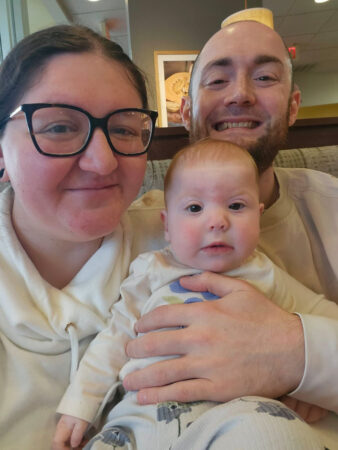
    Julia Hess was on the precipice of discovering the extent of the hearing loss in her 9-month-old daughter Jasmine’s right ear, when she learned that crucial support services for her baby and other visually or hearing impaired children in Bucks County would be cut off next week.

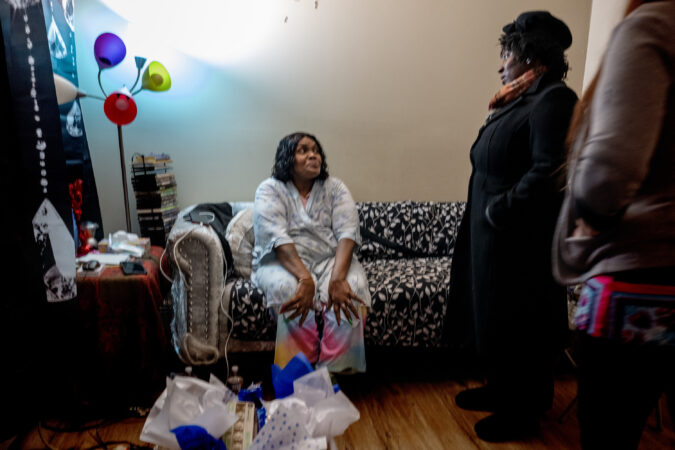
    Jasmine, affectionately known as Jazzy, is a smiley infant who has maintained a “sweet and sassy” personality even as she’s been diagnosed with Smith-Lemli-Opitz syndrome, a developmental disorder, and undergone three surgeries.

    “We can see it in her face in the way that she continues to try even when her body is exhausted and her muscles won’t move anymore,” said Hess, 29, a mental health therapist.

    Jazzy has been receiving early intervention services since she was 2 months old from the Bucks County Intermediate Unit, a county-level education agency, including hearing and communication services due to hearing loss in both ears and other developmental delays. Once a week, an instructor travels to Hess’ home and teaches Jazzy how to communicate with the world around her.

    The 9-month-old has made significant progress, but could face setbacks starting this Saturday when the Bucks County IU will cease services for hearing and visually impaired babies and toddlers ages 0-2, citing funding and staffing challenges. And it’s unclear where parents will find services next.

    “It’s really scary to feel like we are kind of just wandering in the dark,” Hess said.

    In Pennsylvania, children with developmental delays and disabilities are eligible to receive services through a state-backed early intervention system — a right grounded in federal special education law.

    But officials with the Bucks IU say they’ve been losing money on the program for hearing and visually impaired infants and toddlers, which currently serves 49 kids. While the state reimburses the county for early intervention services, it doesn’t cover “indirect” service time, officials said. That means the IU can’t bill for the time incurred by therapists driving between appointments, documenting services, and preparing a child’s program.

    Last year, the gap between what the state reimbursed and what the IU paid to deliver the services was $200,000, officials said.

    At the same time, the demand for services for older children also served by the intermediate unit — both preschool and school-age — has been growing, officials said. And with shortages of special education teachers plaguing school districts statewide, ending services for babies and infants allows the unit to redirect its limited supply of teachers for the deaf and visually impaired to serving older children — a group the IU has primary responsibility for serving.

    “I think what we’re experiencing is what happens when you have a severe shortage, a growing number of kids that need the support, and antiquated models of funding that haven’t kept up,” the intermediate unit’s executive director, Mark Hoffman, said Jan. 20 at a meeting of the unit’s board, which is made up of school board members from districts across Bucks County.

    A Pennsylvania Department of Human Services spokesperson said Monday that provider rates would soon be increased as the result of a $10 million boost in this year’s state budget.

    Revised rates “are still being finalized based on this increase and are expected in the coming weeks,” and will be retroactive to July, said the spokesperson, Brandon Cwalina, who said the change would also allow the state to access more federal money.

    It was unclear whether the increase would change the situation in Bucks County. Officials with the IU said Tuesday they hadn’t been informed of any funding increases.

    Families dependent on services from the intermediate unit are unsure what will happen once the contract expires Saturday.

    “They’ve been a lifeline to us … We haven’t had anybody in our family with this,” said Ali Tirendi, 32, of Warrington, noting that service providers not only help kids, but also educate parents, too.

    Nine-month-old Jasmine receives early intervention services, that are set to be disrupted, from the Bucks County IU.

    Grappling with staffing and funding shortages

    Just 24 days before these crucial services were set to be disrupted, families received correspondence from the Bucks County Department of Behavioral Health/Developmental Programs notifying them that “your current hearing/vision support provider may no longer be available,” according to a Jan. 7 letter from Patricia Erario, county early intervention director, reviewed by The Inquirer.

    One of those providers is BARC Developmental Services, a nonprofit agency that provides services to individuals with intellectual disabilities and autism, and uses teachers from the Bucks intermediate unit to carry out its services.

    Mary Sautter, executive director of BARC, said the Bucks IU informed BARC on Dec. 8 that they would be terminating their contract with the developmental services agency, ending a partnership that’s existed for decades. She said stakeholders are planning to have a meeting this week to discuss next steps.

    “Our hope is that we can find a resolution that minimizes disruption to these vital services so that children can continue to thrive,” said Sautter, adding that BARC is also dealing with staff shortages making it difficult to use their own personnel as providers.

    They have one contractor that services 14 kids, but Sautter said they’re looking to expand the contractor’s caseload.

    “It’s a very unfortunate situation,” Sautter said.

    Erario said that the department would work with agencies to find solutions for families, including virtual options, changing the date or time, or finding an alternative provider if necessary.

    Bucks County spokesperson Jim O’Malley said the county “will be working with our partners in the community to restore access to those affected.”

    Given staffing shortages, Jill Waldbieser, a Neshaminy school board member who serves on the intermediate unit’s board, said she was extremely skeptical the county would find replacement teachers.

    “There’s absolutely no way they’re going to find providers,” said Waldbieser, whose 11-year-old son is deaf.

    Waldbieser’s son went without an interpreter for a year in violation of his individualized education plan.

    “Even if it’s a day or week” that children go without services, “you can never get that time back,” said Waldbieser, who has been pressing officials for a solution.

    Early intervention is valuable for families, and a gap in services could be detrimental, said Casey James, 35, of Warminster, whose 19-month-old has a hearing impairment.

    “What families like mine are concerned about are service gaps, delays, being forced into a fragmented system with multiple providers,” James said.

    Ashley Dats said it “took us as a shock” to learn services for her 21-month-old daughter, who has severe hearing loss, would soon be interrupted.

    “We’re worried,” said Dats, who lives in Doylestown. Her daughter gets a weekly hourlong session with a teacher of the deaf, who works to help her understand spoken language — narrating actions during play, and encouraging her to mimic words — and catch up to her normal-hearing peers.

    Even if a new provider is identified, Dats doesn’t know when that will be, or how her daughter will fare with the change. It took two months for her daughter to reengage after a previous switch in teachers, she said.

    “There are milestones we’re looking to hit, to show us her brain is processing and understanding” words, said Dats, who worried about losing momentum as a result of the service interruption.

    “We don’t want them to get left behind because of funding issues.”

  • ‘Bone-chilling’ cold is sticking around Philly, and so is the snow

    ‘Bone-chilling’ cold is sticking around Philly, and so is the snow

    Out of the snow globe, and into the freezer.

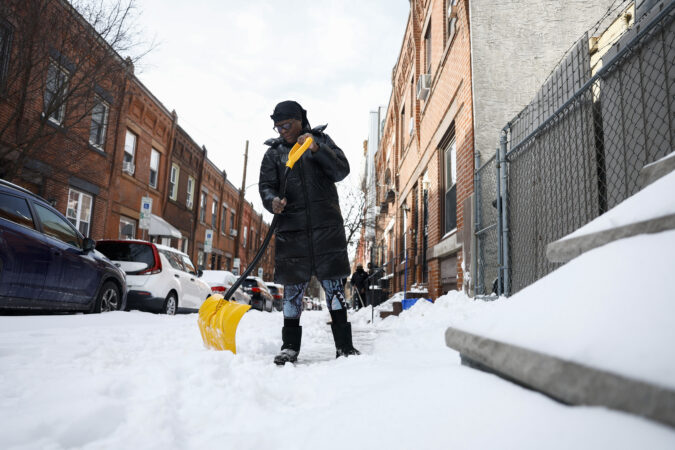
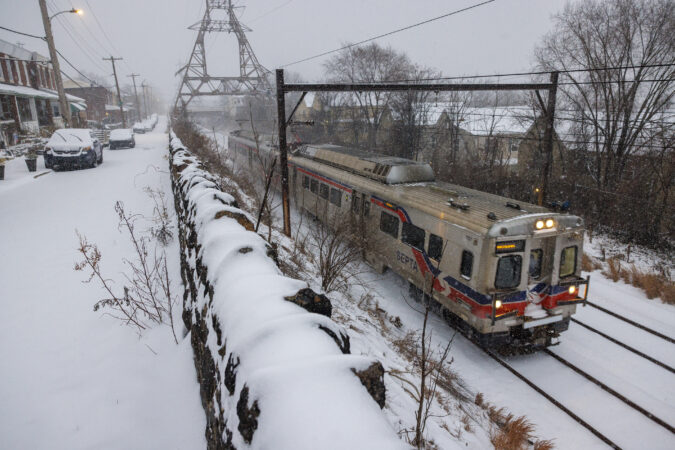
    After having experienced its heaviest snowfall in about a decade, the Philadelphia region now faces frigid temperatures that are expected to barely squeak out of the teens until next week. And all while dealing with cleanup from the 9.3 inches of snow that blanketed the city, a task made more complicated by minimal natural melting due to the cold — plus monitoring another potential winter storm for this coming weekend.

    But don’t panic just yet. Forecasters at the National Weather Service office in Mount Holly say it’s too early to tell whether mean old Jack Frost will set his sights on us once again in the coming days, and what level of snowfall we could see if he does.

    “There will likely be a system somewhere off the Eastern Seaboard over the weekend,” said weather service meteorologist Joe DeSilva. “But it’s very uncertain at this point.”

    Besides, we’ve got enough to worry about already.

    It won’t just be cold in the Philadelphia area this week — it will be dangerously so. On Tuesday, temperatures generally stretched only into the low or mid 20s, a good five to 10 degrees lower than what we saw Monday, the weather service said. Lows, meanwhile, stuck stubbornly in the single digits, with wind chills making it feel like zero or below.

    That cold, it seems, will refuse to budge until next week. As we move through the final week of January, temps are expected to continue to nosedive, the weather service said.

    Daytime highs throughout the week are expected to top out in the mid- or upper teens in the Philadelphia region, with some spots seeing the off chance of making it into the 20s. Lows are likely to stick in the single digits through Friday. As the weather service put it in a Tuesday afternoon update, this is “bone-chilling” cold that has the potential not only to stress the energy grid — as New Jersey and Philadelphia officials alluded to Monday — but also to cause frostbite and hypothermia.

    Philadelphia, in fact, has the grim potential of hitting zero degrees for the first time in 32 years sometime in the coming days. We haven’t seen zero at the Philadelphia International Airport since Jan. 19, 1994, but that mercifully long streak could be broken Thursday or Friday, when temperatures are expected to go as low as 2 or 3 degrees, DeSilva said.

    “We still have three nights before we get there, so lots could change between now and then,” he added.

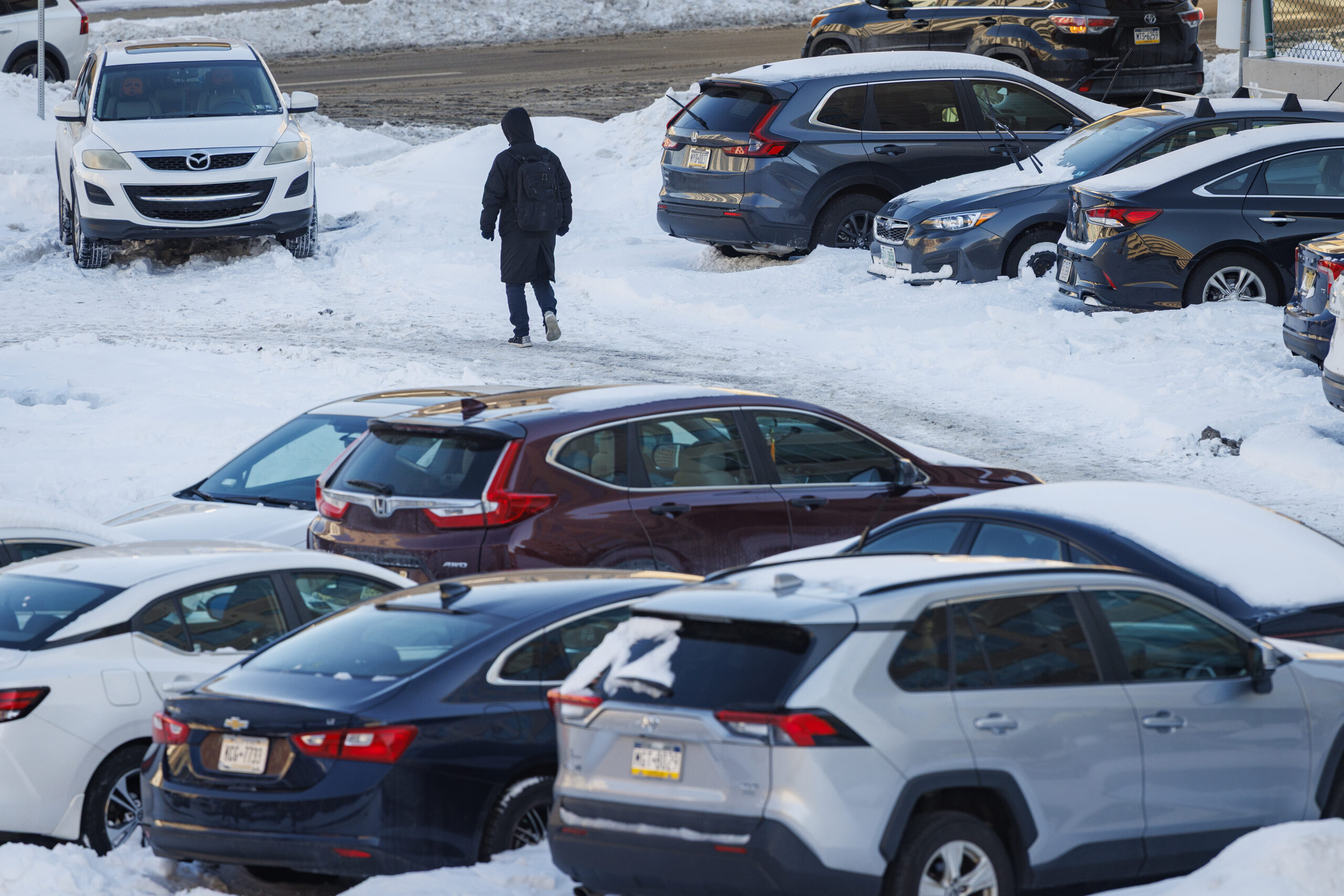
    A pedestrian walks through a snow-covered parking lot at Ninth and Arch Streets in Center City Philadelphia, Tuesday, Jan. 27, 2026.

    These lows arrive as Philadelphia continues to dig out from last weekend’s winter storm, which resulted in a days-long snow emergency in the city that was only lifted Tuesday amid closures for city offices, courts, and schools. Despite a full-court press by the Philadelphia Streets Department, many smaller streets remained unplowed, and the cold weather threatened to institute a deep freeze that could complicate the cleanup, officials have said.

    Unfortunately, no break is imminent. Temperatures are not expected to get above freezing until the early or middle part of next week, and even then perhaps barely so. In its Tuesday afternoon forecast, the weather service called the length and magnitude of the arctic air mass descending upon the area “exceedingly rare” and urged caution. Normal low temperatures for Monday’s date, for example, stand at about 25 degrees.

    “We are running 15 to 20 degrees below average,” DeSilva said.

    And then there is the possibility of even more snow amid our extended bout of cold — though as of Tuesday afternoon, it remained just that. The weather service noted that it remained unclear where precipitation could fall, and in what amounts, though early models indicated that the storm could spare much of the area away from the coast. Still, DeSilva said, it remained too early Tuesday to tell what to expect.

    “If lows track further off the coast, we could see less impact here, but if they’re closer, we may have some moderate impacts,” DeSilva said.

  • Helen Cherry, prolific illustrator and artist, has died at 101

    Helen Cherry, prolific illustrator and artist, has died at 101

    Helen Cherry, 101, formerly of Philadelphia, prolific illustrator, artist, and show tunes devotee, died Thursday, Jan. 15, of age-associated decline at her home in the Woodland Pond retirement community in New Paltz, N.Y.

    “It was her decision entirely,” said her daughter, Lynne. “She knew her own mind and made the decision that it was time for her to take flight to the Great Beyond.”

    A lifelong artist, Mrs. Cherry grew up drawing and painting in West Philadelphia. She earned a scholarship to the old Philadelphia College of Art, sold illustrations to the Jack and Jill children’s magazine, and took a 20-year hiatus in the 1950s and ’60s to rear her three children.

    She resumed her career at 50 in 1974 and went on to illustrate 30 books and dozens of magazine stories for Highlights, Cricket, and other publications. Using a combination of her maiden name, Cogan, and her married name, Cherry, she was published under the pseudonym of Helen Cogancherry.

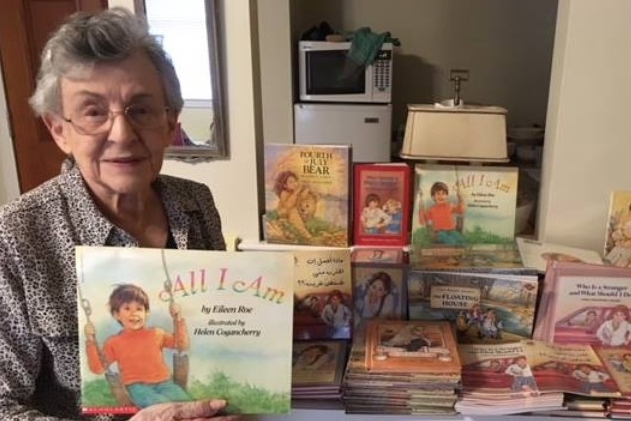
    Mrs. Cherry at work illustrating 1991’s “Fourth of July Bear.”

    “She was always an artist,” said her daughter, also an illustrator and writer. “Art was her hobby, her passion, her work. She said it was something that she can’t not do.”

    Mrs. Cherry was a keen and imaginative observer of life, adept at creating visuals that reflected the concepts of the writers with whom she worked. She illustrated many children’s books, such as All I Am, Warm as Wool, and The Floating House.

    She told The Inquirer in 1986 that a book she illustrated helped a girl she knew address a difficult childhood situation. “That made a profound impression on me,” she said. “I saw how my little books could help children.”

    Her career was featured in several publications, and she told The Inquirer that breaking back into the business in the 1970s was “discouraging at first.” She said: “I remember coming home sometimes and telling my husband that it was hopeless. He kept encouraging me to keep at it.”

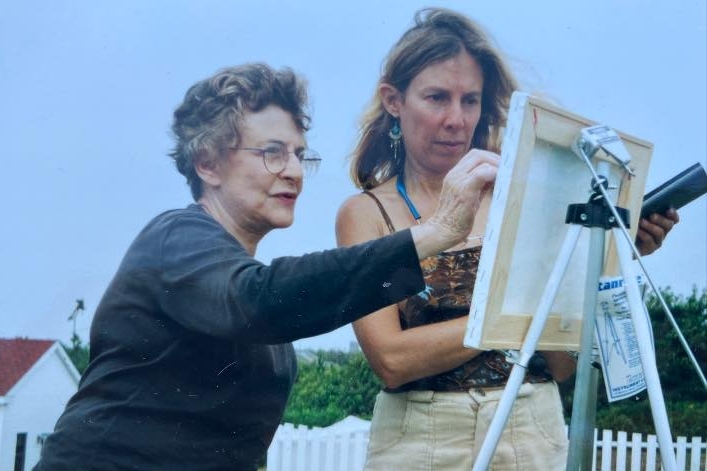
    Mrs. Cherry (left) and her daughter, Lynne, work on a project.

    Helen Cogan was born July 9, 1924, in a West Philadelphia rowhouse beneath the elevated railroad tracks. The middle of three children, she looked up to her sister, Molly, and cared for her younger brother, Robert, while her parents ran the small grocery store they lived above.

    She contributed illustrations to the yearbook and graduated from West Philadelphia High School. She met Herbert Cherry in French class and sent him beautifully illustrated letters while he served overseas during World War II.

    They married in 1950 and had a daughter, Lynne, and sons Steven and Michael. She helped her husband operate Cherry’s Pharmacy in Ridley Park for years, and they lived in Milmont Park and Wallingford in Delaware County, and Carlisle, Pa. She moved to New Paltz after her husband died in 2000.

    Mrs. Cherry often sang show tunes with family and friends, and while she worked. She whipped up memorable meals, especially on holidays, and enjoyed idyllic summers on family vacations at the Jersey Shore in Ventnor.

    Mrs. Cherry grew up in West Philadelphia.

    She tutored her children and their friends, and later her grandchildren, in drawing and painting. She showed everybody, her daughter said, “how to be a good human being in this world.”

    On Facebook, friends called her “warm,” “beautiful,” and “a talented giver.” One said: “The joy she radiated her whole life long was magical.”

    Her daughter said: “She was quiet and understated but strong.”

    Her favorite song was “Life is Just a Bowl of Cherries.” It opens with: “Life is just a bowl of cherries. Don’t take it serious. Life’s so mysterious.”

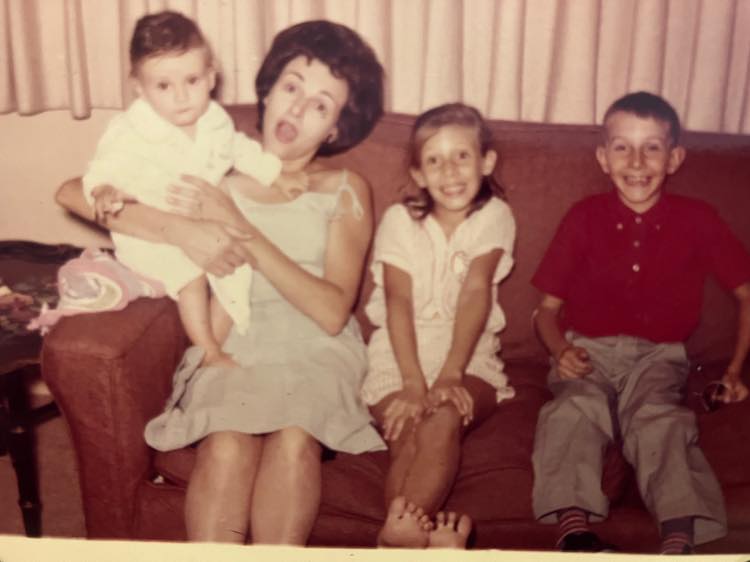
    Mrs. Cherry enjoyed time with her children.

    In addition to her children, Mrs. Cherry is survived by five grandchildren, a great-granddaughter, her brother, and other relatives. Her sister died earlier.

    A memorial service was held Sunday, Jan. 18. A celebration of her life is to be held later.

    Donations in her name may be made to the Children’s Environmental Literacy Foundation, Suite 130, 500 Summit Lake Dr., Valhalla, N.Y. 10595.

    Mrs. Cherry and her husband, Herbert, married in 1950.
  • Bucks County man charged with killing his father, mother, and sister

    Bucks County man charged with killing his father, mother, and sister

    A Bucks County man was charged with homicide and related crimes late Tuesday after prosecutors said he killed his father, mother, and sister inside their parents’ Northampton Township home.

    The charges came a day after authorities arrested Kevin Castiglia following an hourslong standoff at the home where his relatives were found dead.

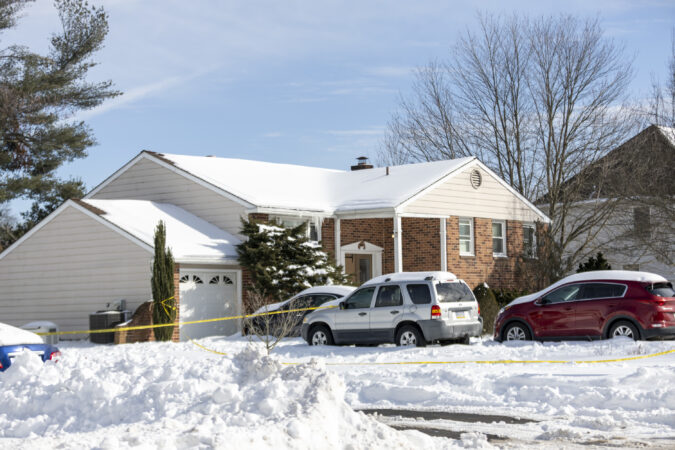
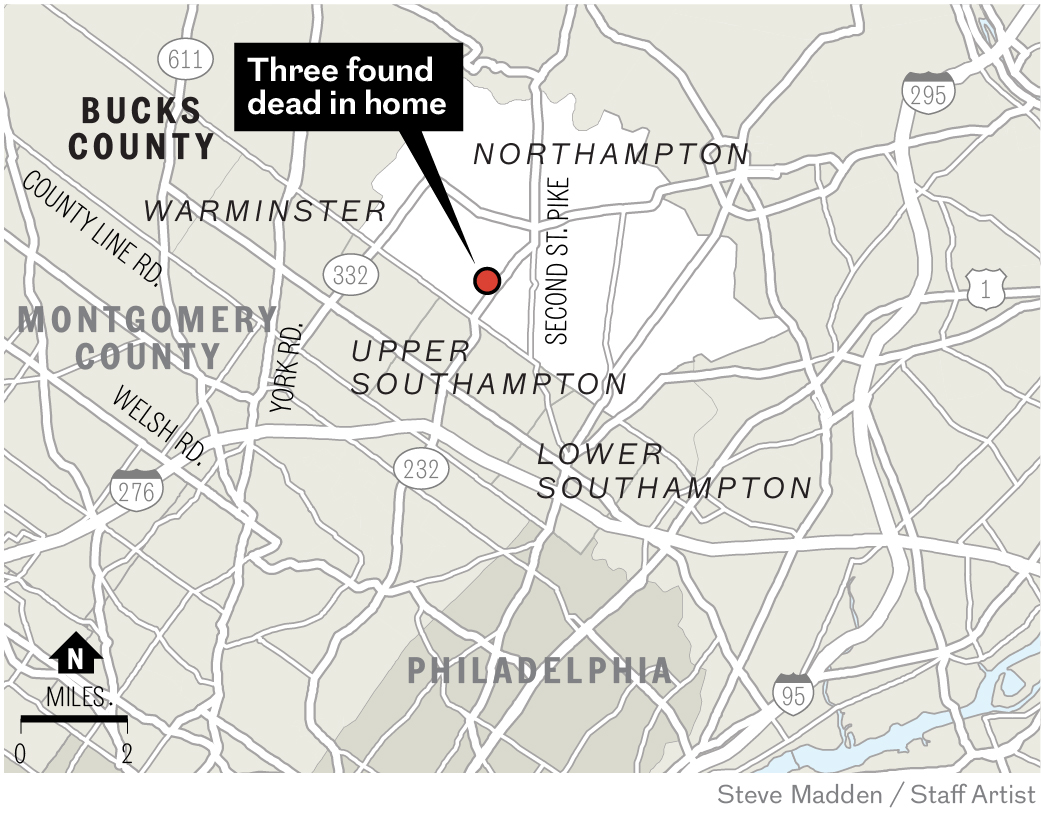
    Castiglia, 55, was taken into custody after he barricaded himself inside the two-story brick house at 26 Heather Road, where police later discovered the bodies of his 53-year-old sister, Deborah, in the kitchen and his parents, Frederick, 90, and Judith, 84, in the basement.

    Authorities have not said how they died.

    Castiglia is charged with three counts each of criminal homicide and abuse of a corpse, as well as making terroristic threats, and related crimes.

    Police were dispatched to the house about 2:15 p.m. Monday after Deborah Castiglia’s boyfriend called 911 to report that Kevin Castiglia had threatened him with a large chef’s knife when he arrived at the home looking for his girlfriend, authorities said. The boyfriend told police Deborah Castiglia had been missing for several days, according to the affidavit of probable cause for her brother’s arrest.

    After officers arrived, the affidavit said, Kevin Castiglia came to the front door armed with two knives, one of which an officer believed had blood on it.

    According to the affidavit, Castiglia spoke incoherently and did not respond when officers asked about his family. He pointed the knives at the officers, who deployed Tasers to try to subdue him — without success, the document said.

    Castiglia pulled the probes from his body before slamming the door shut and locking it, the affidavit said.

    Officers called for a tactical team to break into the house. As police secured the area, neighbors were ordered to shelter in place.

    Three found dead in Northampton

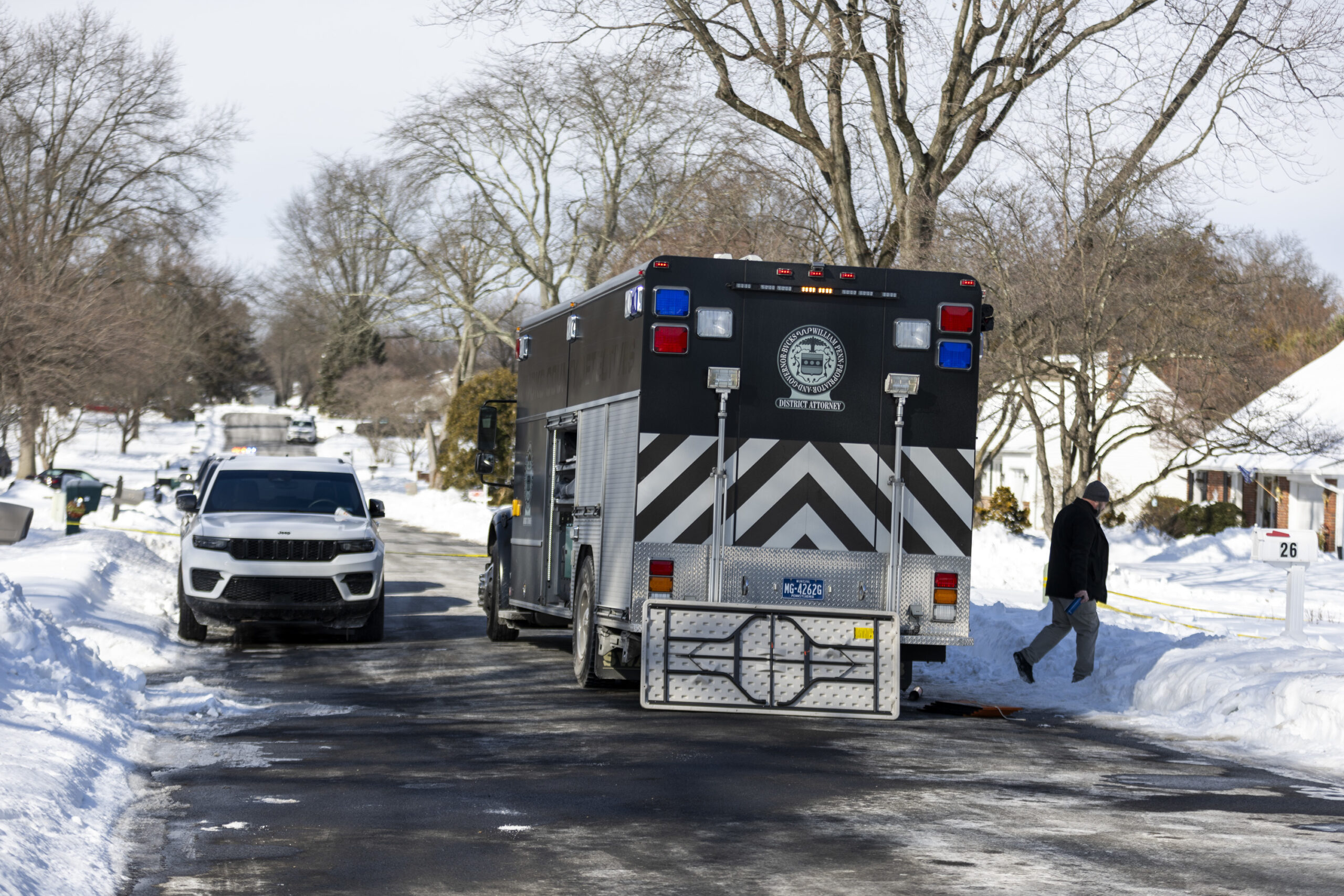
    David Deleo, 41, was shoveling snow from his driveway when Northampton Township police arrived, he said in a phone interview Tuesday. Within minutes, he said, officers blocked off Heather Road. Police vehicles and emergency crews from neighboring towns and counties soon lined the street, surrounding the house and establishing a perimeter, he said.

    From inside her home next door, Erica Titlow, 35, said she looked out a window and saw the man standing at the front door of the house, which has French doors with large glass panes. He was in his underwear, she said, with blood on his chest and stomach. Deleo said that he also saw the man and that he was holding a knife with blood on the blade.

    “I had no idea what was happening,” Titlow said. “I thought maybe he was having some kind of mental breakdown and had hurt himself.”

    After the man retreated from the doorway, police used a bullhorn to call out to him, Titlow said, urging him to come outside. He did not, and the standoff continued for several hours.

    Officers surrounded the house but were unable to enter, Titlow said. Shortly before a SWAT team forced its way through the front door Monday evening, officers went door to door, asking Deleo and Titlow if snipers could use their second-floor windows to provide cover to officers on the ground. They agreed, they said.

    Titlow said she spent more than an hour hiding in her basement with her 2-year-old daughter while snipers were positioned inside her home. “I didn’t want her to see any of it,” she said.

    Even after officers entered the house, the man was not immediately removed, Deleo said. He watched as police deployed gas canisters inside the home and heard them detonate. Firefighters later connected a hose to a nearby hydrant and sprayed water into the house, according to Deleo and Titlow.

    A Bucks County detective truck outside the home where three people died in Southampton on Monday.

    Sometime after nightfall — the exact moment was difficult to recall, Titlow said — officers pulled the man from the house. He was restrained on a stretcher as authorities wheeled him away, she said.

    By Tuesday morning, police were still at the scene, Titlow said, though the activity had slowed. “It’s a lot quieter now,” she said.

    Staff writer Robert Moran contributed to this article.

  • A new Pa. law aimed at keeping unregulated vapes out of the hands of kids may not actually work

    A new Pa. law aimed at keeping unregulated vapes out of the hands of kids may not actually work

    Spotlight PA is an independent, nonpartisan, and nonprofit newsroom producing investigative and public-service journalism that holds power to account and drives positive change in Pennsylvania. Sign up for our free newsletters.

    HARRISBURG — A new Pennsylvania law aimed at removing unregulated vapes from the market and protecting kids may not be very effective due to loopholes, insufficient funding for enforcement, and limited public health backing.

    The statute is the commonwealth’s first major effort to tackle vaping. By this spring, manufacturers will need to have registered with the Pennsylvania Office of Attorney General and self-certified that they have been authorized by the FDA or have applied for authorization.

    Act 57, which mirrors proposals passed in at least 11 other states, passed the General Assembly with broad bipartisan support and the backing of a powerful coalition of interests, including law enforcement, convenience store chains, and the state’s medical society.

    “We can’t stop the youth from smoking,” State Rep. Jeanne McNeill (D., Lehigh), who sponsored the underlying bill, told Spotlight PA. “But at least if they’re going to do it … the ones they are smoking are safer for them.”

    But because registry laws designed to restrict these products are so new, their impact on fighting youth access to vapes is still unclear, public health experts told Spotlight PA.

    “To be honest, I’m still trying to grasp why [registry laws] became popular,” Jeffrey Drope, a research professor at Johns Hopkins Bloomberg School of Public Health, told Spotlight PA.

    He and other researchers say banning all flavored products would be more effective, although other researchers disagree due to data that suggest such policies may harm adults trying to stop smoking cigarettes.

    In particular, supporters of the law hope to target Chinese-made disposable vapes, which often deliver fanciful flavors and sometimes even include video games. Studies have also found these vapes can contain high levels of heavy metals.

    Rates have gone up and down, but as of 2023, one in four Pennsylvania high school seniors said they had tried vaping at least once, according to a state survey. (Just over one in 10 in the same year said they had tried cigarettes, a 60% decrease from 2017.)

    The law may face legal challenges from the vaping industry, Tony Abboud, executive director of the Vapor Technology Association, a trade group, told Spotlight PA.

    He argued the law won’t stop the flow of vapes into Pennsylvania, and will instead shutter businesses and push consumers into an unregulated, untaxed black market.

    “Nobody believes that the demand for vapes that are on the market now will go down,” Abboud said. “They will look for, and find, the products that they like, they’ve used, that they know that work for them.”

    Potential registry issues

    The law directs the state attorney general’s office to maintain a registry of manufacturers who can sell electronic cigarettes that contain nicotine. Products that have been authorized by the FDA are allowed to register. That encompasses just 39 e-cigarettes from a handful of brands, including those owned by big tobacco companies. They are largely refillable vapes, rather than single-use, and the list excludes all flavored products beyond menthol.

    But the law includes an additional provision for products that are under review by the FDA or have received a denial that’s pending due to a court or FDA order.

    There’s a “significant backlog” of applications, exacerbated by the firings by the Trump administration of the people who review them, the Examination reported last year. And because of that pileup, “tens of thousands of products can still qualify for most registries,” according to the Public Health Law Center.

    “I can tell you that many … applications were really inadequate, and I don’t think that those types of products should be treated equally for purposes of these registry laws,” Mitch Zeller, a former chief federal tobacco regulator who retired in 2022, told Spotlight PA.

    To get on the registry, manufacturers have to certify they are eligible under the law’s provisions. Exactly what that form will look like, and how it will be reviewed for accuracy, is unclear — the attorney general’s office declined to comment on the law’s implementation.

    Attorney general spokesperson Brett Hambright said the office was “evaluating various enforcement options, but wouldn’t want to venture into disclosing techniques.”

    If a vape is not registered, retailers and distributors are barred from buying or selling it. Enforcement against those companies will begin in October. Retailers who violate the law could be punished by fines of up to $1,500 per day per vape.

    According to the attorney general’s office, implementing the legislation will have an initial one-time cost of $98,280, with annual ongoing personnel and operating costs equaling approximately $1.3 million.

    “The Office of Attorney General staff will establish and maintain the vaping directory and provide targeted enforcement based on documentation and intelligence regarding noncompliant actors,” a state House analysis of the bill says.

    The law, Hambright added in an email, ensures “only regulated products are on the market, keeping them out of the hands of children, and not marketed towards children.”

    The office’s projected costs are far less than those of other states with robust tobacco enforcement spending. Neighboring New York allocates approximately $40 million for tobacco enforcement each year. Pennsylvania’s most recent budget allocated $1.7 million.

    “If the state is not prepared to put the time, the money, and the effort behind enforcement,” Zeller said, “I don’t know how effective the law can be.”

    The need for resources is part of why some anti-smoking advocates opposed the proposal as passed. According to the Pennsylvania Alliance for Tobacco Control, funding for a registry could be “better used to support evidence-based prevention and cessation programs.”

    “Instead of investing in a system that simply monitors the problem, we need bold, enforceable action that prevents it entirely,” the group argued. That includes a flavor ban as well as efforts to ban sales near schools, they added.

    Public health questions

    Smoking tobacco is among the leading causes of preventable death in the United States. That hasn’t stopped people from doing it, however.

    Tobacco is a $70 billion-plus industry in the U.S., with millions of users in Pennsylvania. The state’s farmers also produce millions of pounds of tobacco every year.

    Vape technology, meanwhile, became popular in the 2010s as a way to let people consume nicotine, the addictive chemical in tobacco, without smoking cigarettes.

    But what vaping means for public health is still unclear and subject to ongoing research, Jungmi Jun, an associate professor who studies tobacco control campaigns at the University of South Carolina, said in an email.

    “The scientific consensus is fairly clear that combustible cigarettes pose substantially greater health risks than e-cigarettes, primarily due to combustion-related toxins. However, that does not mean e-cigarettes and other vape products are harmless, particularly for youth and non-smokers,” Jun said. “Much depends on who is using these products, how they are regulated, and how they are marketed and communicated to the public.”

    The law, Drope of Johns Hopkins said, amounts to an attempt at controlling the vape supply chain, which he argued “is a worthwhile effort, because you want to know what’s on your marketplace.”

    But Drope argued that the state would be more effective at preventing people under 21 from vaping if the legislature also hiked taxes on tobacco products and banned flavored products, which often mimic popular desserts and other sweets, and frequently get marketed to teens.

    In a statement, Lynn Silver, program director of the Prevention Policy Group of the Public Health Institute, agreed with Drope that a flavor ban should have been higher on the legislature’s to-do list.

    “Bans on flavored vapes should be comprehensive and span all nicotine products, cannabis where legal, and hemp, all of which are hooking kids across the nation,” she said. “Pennsylvania’s new bill falls short on protecting our youth.”

    For her part, McNeill has offered a flavor ban before. But the proposal never left committee.

    “I hit a wall with that. I was basically told, ‘It’s never going to be run, it’s never going to be passed,’” McNeill said of her earlier efforts. She did not clarify who told her the proposal would never pass. It would likely have faced industrywide opposition — both traditional, combustible tobacco firms and vape firms sell flavored tobacco products.

    EXCLUSIVE INSIGHTS … If you liked this reporting from Stephen Caruso, subscribe to Access Harrisburg, a premium newsletter with his unique insider view on how state government works.

  • Joanna McClinton has carefully wielded her power as Pa. House speaker. Now she’s speaking out for home care workers.

    Joanna McClinton has carefully wielded her power as Pa. House speaker. Now she’s speaking out for home care workers.

    On a below-freezing day in January, Pennsylvania House Speaker Joanna McClinton delivered food to a West Philly home just minutes from her district office and listened as Sheila Alexander discussed the patchwork of care she has created for herself.

    Alexander, 67, who struggles to get around on her own, explained that she depends on family often but uses a Medicaid-funded home health aide who helps her in the evening — especially when she needs to get up the steep stairs in her home.

    McClinton is advocating for the aides who care for Alexander — and the rest of the roughly 270,000 Pennsylvania workers who make up the home care industry — to earn a higher wage.

    Pennsylvania’s home healthcare workers are among the lowest-paid in the region at an average $16.50 per hour, resulting in what the Pennsylvania Homecare Association has called a crisis point for home care, as more and more workers leave the field and seniors struggle to find help. And it’s a crisis that may only deepen in future years, as one in three Pennsylvanians are projected to be 60 or older by 2030.

    It’s an issue that McClinton, a Philadelphia Democrat who became House speaker in 2023 when her party took a one-seat majority, has had to contend with in her own life.

    McClinton’s 78-year-old mother lost one of her favorite aides because of low pay, she said. The aide had cared for McClinton’s mother for a year, until the aide’s daughter got a job at McDonald’s that paid $3 more an hour. At that point, McClinton said, her mother’s aide realized just how low her pay was.

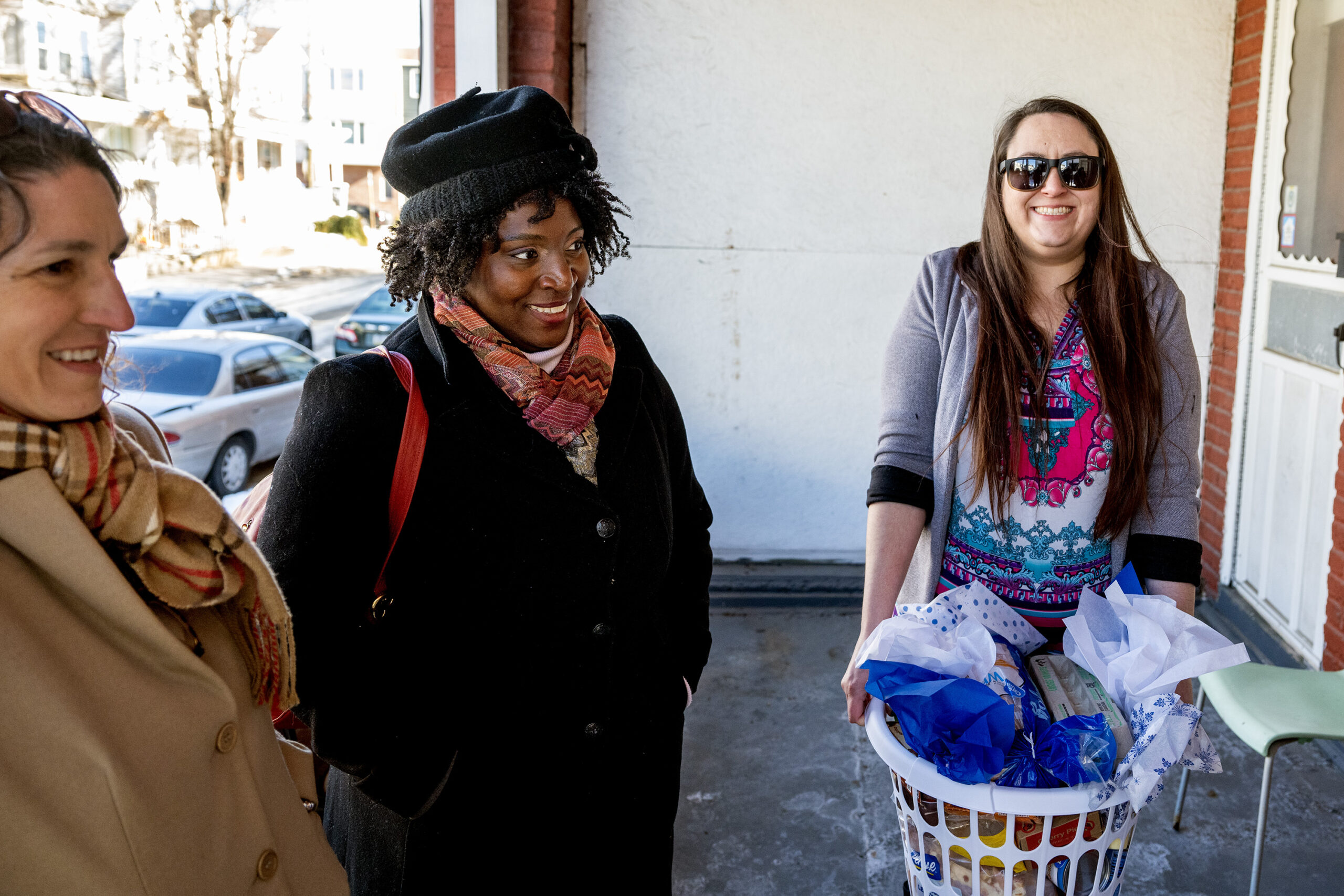
    House Speaker Joanna McClinton (center) with her staff member Nicole Reigelman (left) and home care worker Kate McNaughton (right) wait to meet with home care recipient Ronda Gay on Jan. 20 in her West Philadelphia home. McNaughton was bringing a basket of milk, eggs, canned foods, and other necessities.

    McClinton said she helps her mother when she can, but she only has so many hours in the day and needs assistance when she’s at the Capitol.

    “Many of my colleagues are just like myself, supporting parents who are aging and trying to make sure that they have all the necessities so that when I’m in Harrisburg I’m not thinking, ‘Oh, my God, how’s my mom going to eat or how’s she going to have a bath,’” McClinton said. “It’s because of home health aides and the folks assigned to her that she’s able to thrive. But she’s not unique.”

    Until recently, McClinton had taken a more hands-off approach compared with some previous House speakers who would use their position as the top official to push through their personal agendas. Now, she is taking a more active role in pushing for the issues she cares about most, with special attention to the home care wage crisis.

    Home care workers are often paid through Medicaid, which provides health services to low-income and disabled Americans and is administered at the state level. Pennsylvania has not increased how much it reimburses home care agencies, resulting in all of the surrounding states paying higher wages to home care workers, including GOP-controlled West Virginia and Ohio.

    Describing her leadership approach with a slim majority as “pragmatic,” McClinton says her goal is to find common ground to raise the wages for home healthcare workers between Republicans and Democrats, on an issue that impacts residents across all corners of the state.

    “We just have to really coalesce and build a movement so that we see things get better and that there’s more care,” she said. “Because when there’s more care, there’s less hospitalization, there’s less ER trips, there’s more nutrition.”

    Better pay at Sheetz

    Stakeholders recount dozens of similar stories of aides leaving to work at amusement parks, Sheetz stores, or fast-food restaurants because the pay is better. What’s more: Some home health aides will choose to work in a nearby state where wages are all higher than those paid in Pennsylvania.

    Cathy Creevey, a home health aide who works for Bayada in Philly, made $6.25 when she started working in the field nearly 25 years ago. Now, she makes just $13.50. She has watched countless colleagues quit to take higher-paying jobs elsewhere, resulting in missed shifts and seniors that go without the care they need.

    “We have patients that are 103, 105, and when that aide doesn’t show up their whole world is turned upside down because sometimes we’re the only people that they see to come in, to feed them, to bathe them,” Creevey said.

    While Creevey said she stays in the work because she cares about her patients, she said the long hours and low pay are difficult.

    Fewer and fewer people being willing to take on the jobs means seniors going without care or being forced into already understaffed nursing homes throughout the state.

    “Participants are waiting for care that isn’t coming,” said Mia Haney, the CEO of the Pennsylvania Homecare Association.

    Haney said she hoped McClinton’s advocacy will help drive the issue heading into the next budget season.

    “She has a wonderful opportunity to really influence her peers, but also raise awareness and education about how meaningful and critical these services are,” Haney said.

    In addition to McClinton’s advocacy, 69 House Democrats sent a letter to Gov. Josh Shapiro earlier this month, calling for more funding for the struggling industry just as Shapiro is set to make his 2026-27 budget proposal next month.

    Older Pennsylvanians prefer to “age in place,” or stay in their homes where they remain connected to their communities, said Kevin Hancock, who led the creation of a statewide 10-year strategic plan to improve care for the state’s rapidly aging population.

    “Nursing facilities and hospital services get a lot of attention in the space of older adult services, but it’s home care that really is the most significant service in Pennsylvania,” Hancock said. “The fact that it doesn’t seem to warrant the same type of attention and same type of focus is pretty problematic.”

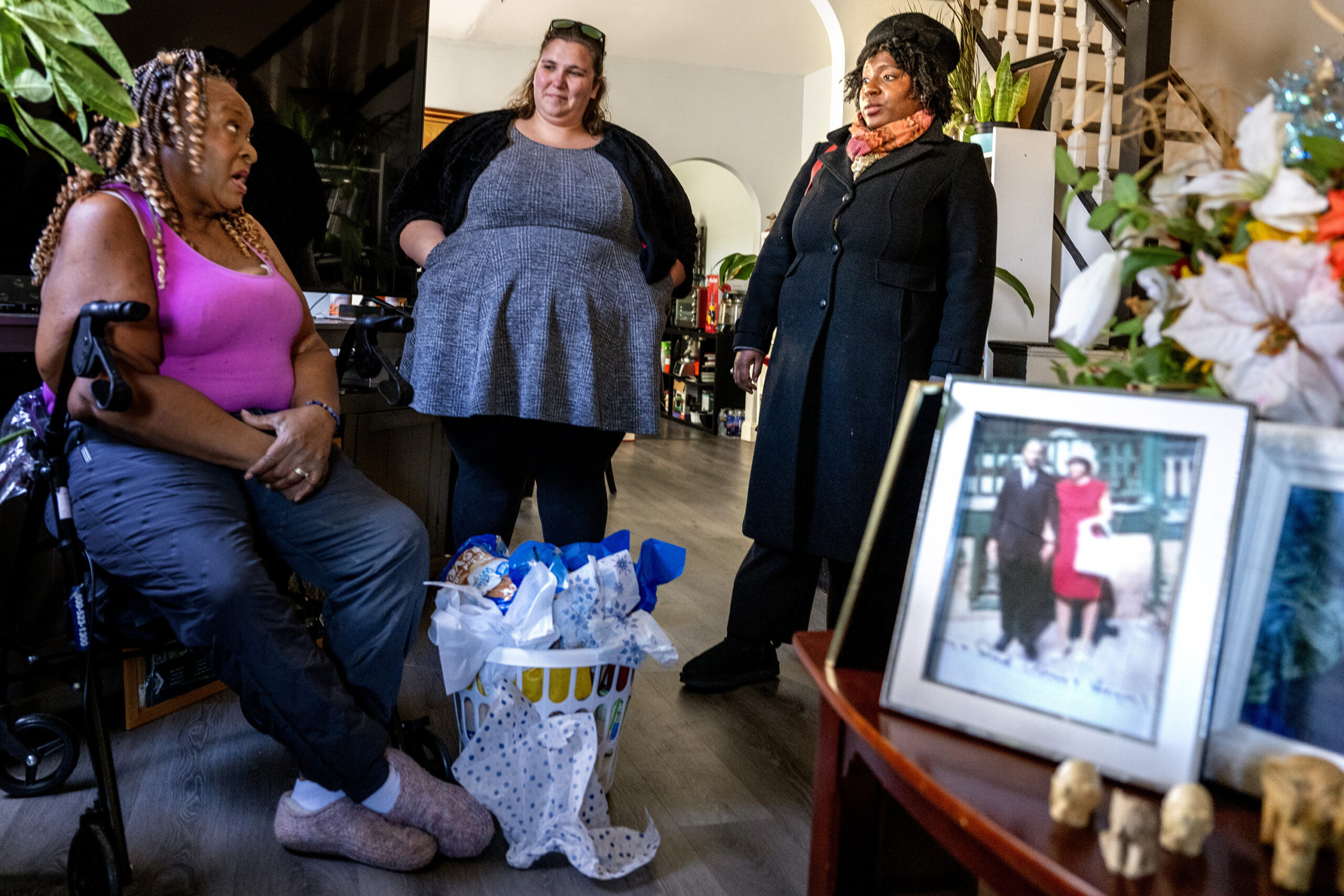
    House Speaker Joanna McClinton (right) meets with home care worker Rachael Gleisner (center) and home care recipient Sheila Alexander in her West Philadelphia home on Jan. 20.

    Home care remains popular in Pa.

    The fight to increase dollars for home care workers has been an uphill battle in Harrisburg even with the speaker’s support.

    More Medicaid dollars go to home care services than any other program in Pennsylvania due to its popularity among Medicaid recipients, Hancock said. Meanwhile, its critical care workers — a majority of whom are women or women of color — still make low wages for often physically and emotionally demanding work.

    A study by the Pennsylvania Department of Human Services last year determined that a 23% increase would be necessary for agencies to offer competitive wages, but the state’s final budget deal did not include it. (The final budget deal did provide increases to direct aides hired by patients, which represent about 6% of all home care workers in the state.)

    Home care agencies are asking Shapiro to include a 13% reimbursement rate increase in the 2026-27 budget, which equates to a $512 million increase for the year. The 13% ask, Haney said, was a “reasonable and fair” first step in what would need to be a phased approach to reaching competitive wages.

    But neither Shapiro nor Senate GOP leadership has committed to any increases in the forthcoming budget.

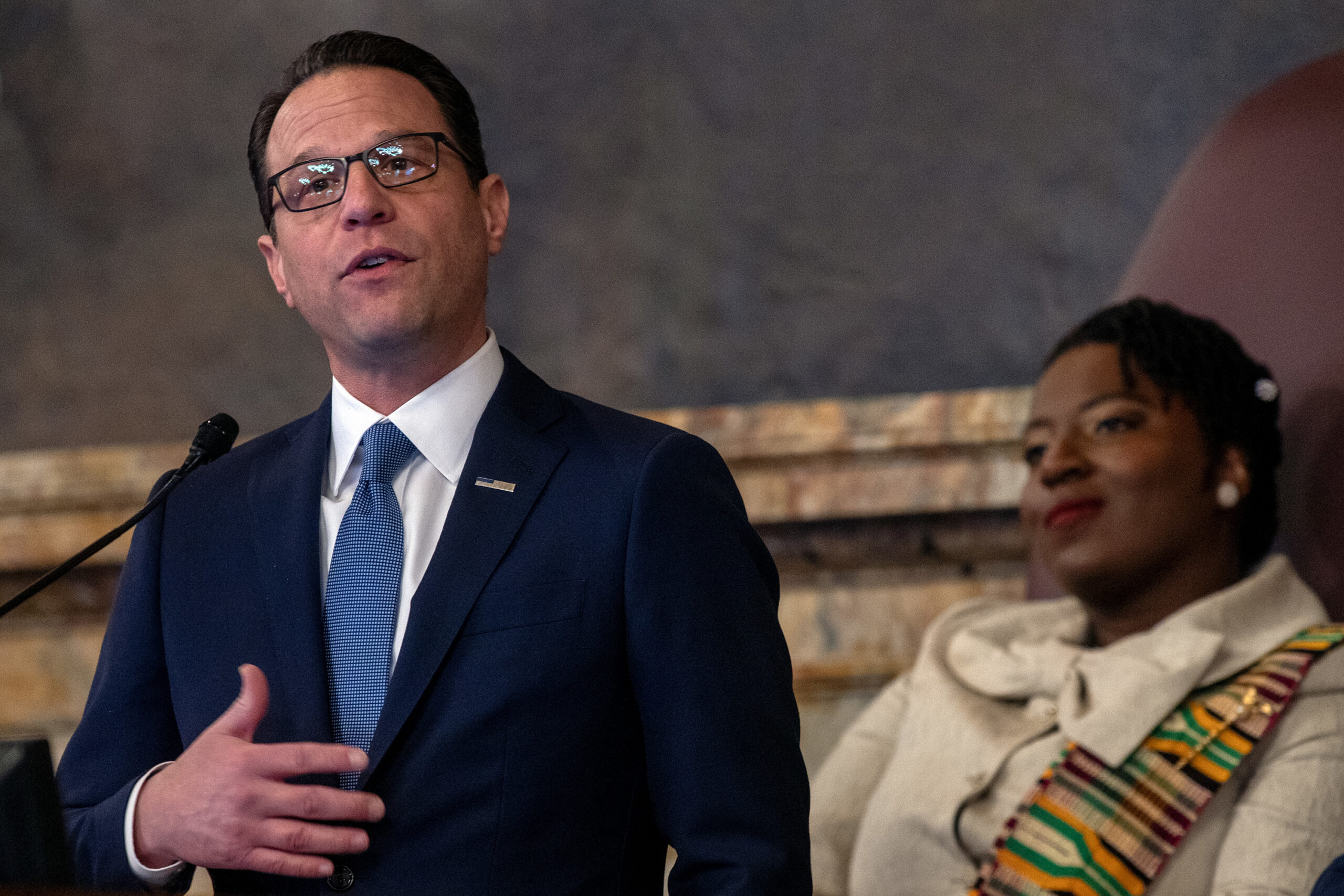
    Pennsylvania House Speaker Joanna McClinton listens as Gov. Josh Shapiro delivers his budget address to a joint session of the state House and Senate at the State Capitol on Feb. 4, 2025.

    In a statement, a spokesperson for Shapiro said the governor understood the need and cited his support for limited increases in last year’s budget and for a proposed statewide minimum wage increase to $15 per hour. (Previous efforts by the Democratic House to increase the state’s minimum wage have stalled in the GOP-controlled Senate.)

    Senate Majority Leader Joe Pittman (R., Indiana) said his caucus will put the state’s “future financial stability” before all else. Pennsylvania is expected to spend more than it brings in in revenue this year, setting the stage for yet another tense budget fight.

    “While we’ve seen Democrats continually push for more spending within the state budget year after year, any increases require thoughtful consideration as to the impact on hardworking taxpayers of Pennsylvania,” Pittman added.

    Senate Majority Leader Joe Pittman, a Republican from Indiana County, is joined by other GOP Senate leaders criticizing Gov. Josh Shapiro’s proposed budget last year.

    McClinton, however, was cautiously optimistic that something could be done this year, even as she placed the onus on Senate Republicans, rather than Shapiro.

    “We’ve seen Republicans refusing to work, refusing to resolve issues, that’s not acceptable,” McClinton said. “I’ve seen an unwillingness from Republicans to resolve these issues.”

    Republicans, she said, should come to the table because staffing shortages harmed their constituents in rural Pennsylvania even more than it harmed hers in Philly.

    “We have to get our heads around the fact that we have the lowest reimbursement rates in our area,” McClinton said in an interview after visiting two patients in her district. “We have to make the investment now. We have lots of needs. We have lots of priorities, but we can balance them.”

  • Yes, there are bats in her Berks County home — and she’s trying to save them all

    Yes, there are bats in her Berks County home — and she’s trying to save them all

    Stephanie Stronsick has bats in her Berks County house. On purpose.

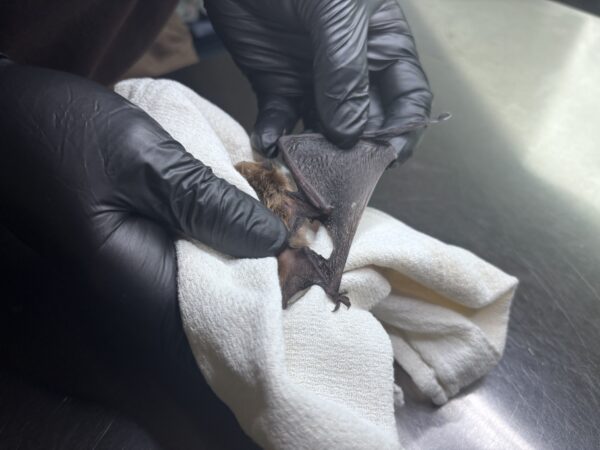
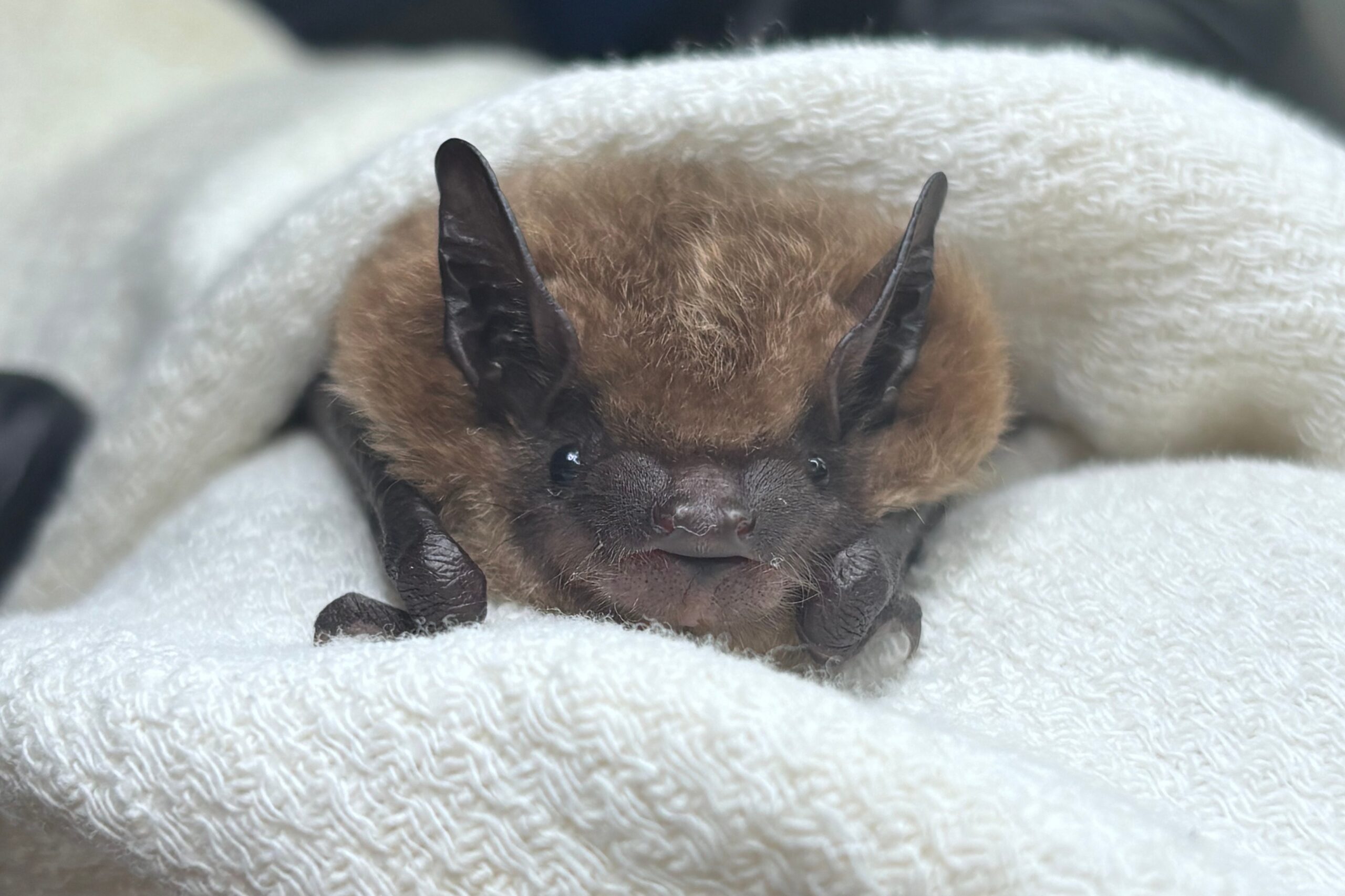
    “Aw, look at her little face,” Stronsick said about an injured brown bat her husband was holding on a recent winter afternoon.

    Stephanie Stronsick is the founder of PA Bat Rescue in Berks County.

    Stronsick, 42, is the founder and executive director of Pennsylvania Bat Conservation and Rehabilitation (PA Bat Rescue), a nonprofit that underwent a major overhaul last year.

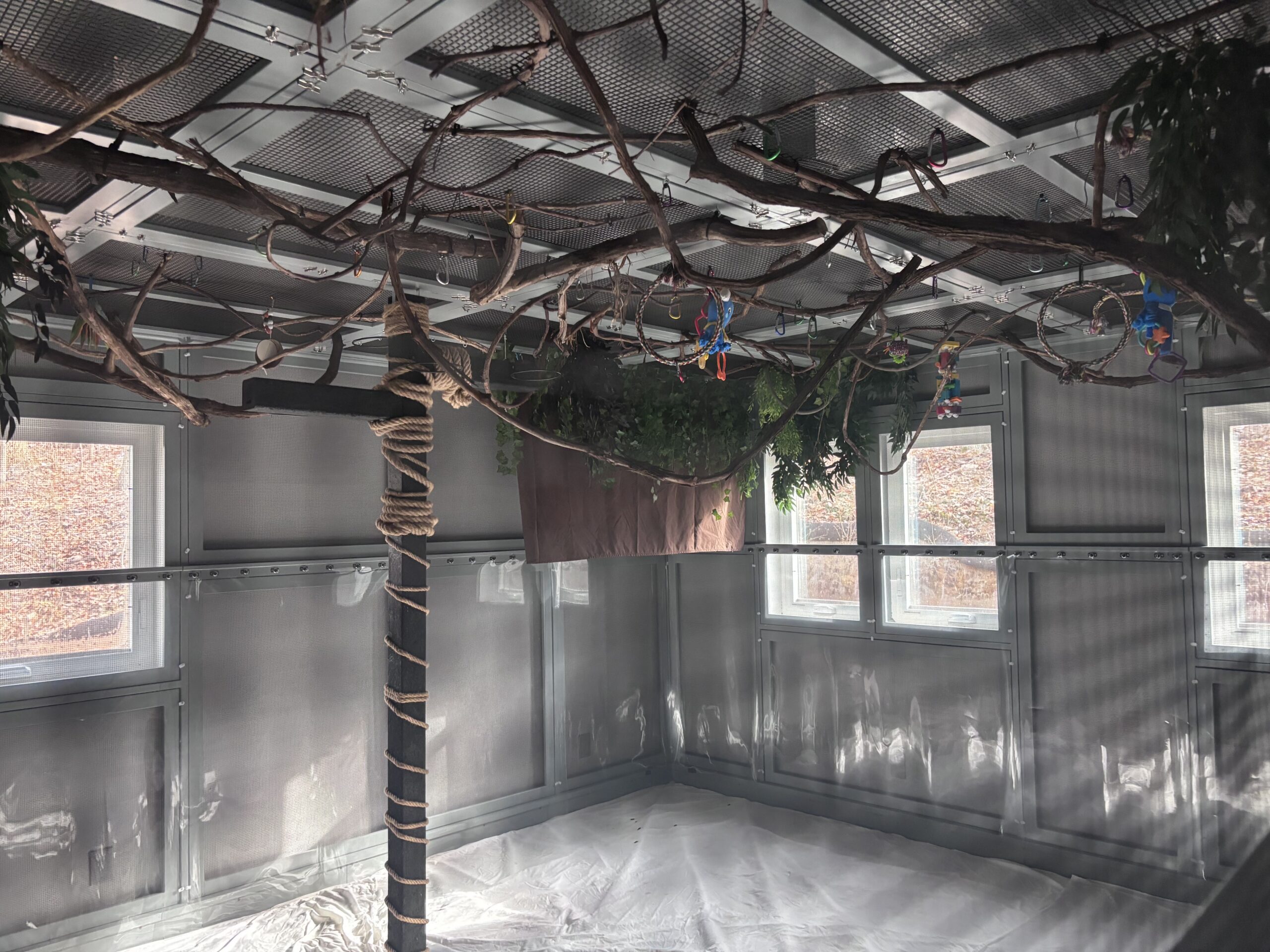
    She’d like the bats to leave, ideally, but only after they’ve healed. Currently, the facility is treating over 100 bats for injuries and illness. Some bonked their heads on tall urban buildings that don’t turn off their lights at night. Others were torn up by outdoor cats or birds of prey.

    Some big fruit bats, which look like puppies, were hanging upside down in one room. They used to live at the Akron Zoo.

    Like the other bats in Stronsick’s house, they were asleep.

    “They’re all retired,” she said.

    Some of Stronsick’s bats are being treated for white-nose syndrome, a fungal disease that has killed millions of bats in North America. In Pennsylvania, it’s estimated that 99% of cave-dwelling bats have been affected by the fungus during hibernation.

    “We’ve lost so many bats that we’re at a point where if we don’t do something, they’re going to be gone,” Stronsick said. “In my lifetime, we are looking at the [local] extinction of two species that occur in Pennsylvania: the Northern long-eared bat and the tricolored bat.”

    Northern long-eared bat. (Wisconsin Department of Natural Resources via AP, File)

    Bats get a bad rap, Stronsick said, thanks to horror tropes, rabies fears, and the overhyped interest in vampire bats. Only three of the approximately 1,500 bat species drink blood, and they’re in Central and South America.

    “I think all bats are adorable,” she said.

    If the general public doesn’t see that, they should at least understand that the flying mammals are biologically fascinating, contribute to healthy ecosystems, and help scientists.

    “If it wasn’t for bats, the military wouldn’t have radar, and anticoagulants that vampire bats use have been studied to treat blood clots and stroke,” said Greg Turner, a mammalogist with the Pennsylvania Game Commission.

    Bats, Turner said, are also highly resistant to cancer.

    In Pennsylvania, bats are insectivores, Turner said, and they eat nothing but flying insects at night. He said studies have shown that bats in Pennsylvania save farmers $74 per acre, by eating moths that would otherwise produce crop-eating caterpillars.

    “They also eat mosquitoes,” he said.

    Elsewhere in the world, bats help pollinate cacti and agave.

    “A lot of people should be happy bats are out there performing every night,” Turner said. “No bats, no tequila. No margaritas.”

    Aside from the fungus, Stronsick said bats face serious dangers similar to birds: predation from feral and outdoor cats and building strikes.

    “Bats do not recognize cats as a predator. If people have cats outdoors, they absolutely should not be feeding birds in the same area, and they should not have a bat house anywhere near there either,” she said. “If you do that, you’re inviting these animals to die. ”

    Stronsick said the light pollution from large cities, combined with a bat’s ability to echolocate, makes window strikes common.

    “When they hit something hard, they do a lot of damage,” she said. “Cityscapes are not good environments for bats.”

    Turner said wind turbines, which dot the landscape in mountainous regions of Pennsylvania, are bat killers. Bats do not constantly echolocate, he said — that would be like screaming, nonstop — and when they’re not echolocating, they’re susceptible to the turbines.

    “It’s estimated that 25 bats are killed per turbine per year, and we have hundreds of turbines in the state,” Turner said.

    PA Bat Rescue takes in bats, year-round.

    Stronsick said she grew up outdoors, seeing bats at her grandmother’s home and playing with salamanders. She’s worked with raptors and shore birds in California and stumbled upon bats.

    “They were so different from what I imagined,” she said. “I left shore birds and birds of prey and started working with bats.”

    Now she has some bat tattoos.

    Stronsick’s facility, which is attached to her home, underwent a major investment in May. She accepts both donations and grants, which are hard to come by, she said.

    PA Bat Rescue takes in bats, year-round, for treatment and injury rehabilitation.

    Since 2018, PA Bat Rescue has rehabilitated 2,000 bats. Unlike most animal rehabilitation centers, hers is as quiet as a church.

    “Bats prefer silence,” she said. “The fruit bats can get a little noisy when they wake up.”

    Correction: This article has been corrected to reflect that there are no bats in the refuge that have been struck by wind turbines. Most bats who do fly into wind turbines die on impact. The article also has been corrected to note that some, but not many, of the bats in Strosnsick’s care are being treated for white-nose syndrome. Finally, a quote has been amended to make clear that two bat species are at risk of extinction in our area, but not total extinction as a species.

  • 3 people found dead at Bucks County home, man in custody

    3 people found dead at Bucks County home, man in custody

    Three people were found dead Monday at a Bucks County home where a man barricaded himself for hours before being taken into custody, police said.

    Police in Northampton Township said they responded around 2:15 p.m. to a home on the unit block of Heather Road for a well-being check and were confronted by a man armed with a knife.

    The South Central Emergency Response Team responded to the scene and later took the suspect into custody, police said, adding that there was no danger to the community.

    Police released no other details about the victims or the man who was in custody.

    A neighbor who asked not to be named said that earlier in the day, police several times tried to communicate over a loud speaker or megaphone with a man inside the house.

    “We just want to talk to you. Come out. We just want to talk,” the neighbor recalled the police saying to the man. “But nobody came out.”

    <iframe src="https://www.facebook.com/plugins/post.php?href=https%3A%2F%2Fwww.facebook.com%2FNTPD54%2Fposts%2Fpfbid02s2KtUyfsmL5mTeyR9FZiGaT6qeEiMVFLu1cvuPySnbhKxVhUjiJwzvVyBdjBB4jdl&show_text=true&width=500" width="500" height="284" style="border:none;overflow:hidden" scrolling="no" frameborder="0" allowfullscreen="true" allow="autoplay; clipboard-write; encrypted-media; picture-in-picture; web-share"></iframe>

    The neighbor said a couple possibly in their 80s have lived in the home for decades and had a son and a daughter. The son, possibly in his 50s, has moved in and out of the home several times over the years, the neighbor said.

    At 3:17 p.m., the Northampton Township Police Department posted an alert on Facebook asking the public to avoid the area of Heather Road and Second Street Pike because of police activity.

    The neighbor said officers from several other police agencies responded to the scene. There were two armored vehicles and several ambulances included as part of the response.

    “It seems like they kept coming and coming and coming,” the neighbor said.

    Around 7:35 p.m., the neighbor said some police officers had left, but many were still at the scene.

  • After Philly’s biggest snow in 10 years, a very big chill is coming

    After Philly’s biggest snow in 10 years, a very big chill is coming

    For the Philly region Monday it wasn’t so much a matter of digging out from the heftiest snowfall in a decade, it was more like a chipping, shaving, scraping, expletive-inducing, and ice-chunk hurling operation.

    Public transportation appeared to be getting back on track, and major roads were open for business with speed reductions removed, thanks to crews working through the weekend.

    But expect some side streets in the city and elsewhere to remain fit for sleigh rides this week and trash pickup to be delayed. City offices will be shut down again Tuesday, as will Philly school buildings, with Camden and more calling for a snow day or opting for remote learning.

    And if you’re stepping outside, get used to that underfoot crunching sensation. The removal operation isn’t going to get much help this week from the atmosphere. It’s about to turn about as frigid as it ever gets around here. New Jersey officials are warning of “historic” demands on energy.

    “We’re going to be in the freezer all week,” said Mike Gorse, meteorologist at the National Weather Service Office in Mount Holly. Philly may have its first zero-degree reading in 32 years later in the week.

    It’s as if after recent wimpy winters, the Arctic is reacquainting with Philly and much of the rest of the East.

    And did we mention another snow threat for the weekend?

    “There’s a chance,” said Marc Chenard, meteorologist with NOAA’s Weather Prediction Center in iced-over College Park, Md., who was among those who had to chuck some frozen boulders before leaving for work Monday morning. “I had to chip it and carry it in pieces,” he said. Sound familiar?

    Why this storm was particularly challenging

    Snow totals for the biggest snowfall since Jan. 22-23, 2016, varied throughout the region; the inconveniences, not so much.

    A general 8 to 12 inches of snow and sleet accumulated while temperatures remained mostly in the teens Sunday, 10 degrees or more below forecast.

    A shallow layer of warmer air caused a changeover to sleet, and the tiny ice balls remained frozen for the entire trip through the stubbornly cold air near the surface. As much as 2 to 3 inches of sleet piled on, containing the same amount of liquid as several inches of snow.

    That added weight to the snowpack. Based on the amount of melted precipitation measured in the 9.3 inches at Philadelphia International Airport, the snowpack weighed about as much as a 12- to 15-inch pile of the pure flaky fluff.

    On a 200-square-foot driveway — a 10 by 20 — what fell Sunday weighed about 1,100 pounds. On a 100-square-foot sidewalk — 5 by 20 — that would be about 550 pounds.

    In addition, ice tends to be rather shovel resistant.

    This is going to be a memorably cold week in Philly

    The ice and snow isn’t going to give up easily. On Monday, temperatures topped out in the upper 20s, and that’s going to be warmest day of the week.

    Based on the forecast, it may not get above 28 degrees until next week, said Chenard, a cold streak the region hasn’t seen in decades.

    Chenard said the upper-air patterns remain in place to import Arctic air on winds from the northwest for at least the next several days.

    In fact, temperatures may have trouble getting out of the teens in Philly until the weekend, and Philly has a shot at reaching zero for the first time in 32 years.

    The forecast lows are in the single digits all week, and down to 1 degree on Friday morning and 2 degrees on Saturday, the National Weather Service says. Both would be record lows for the dates.

    The stubborn snow cover “absolutely” will increase the chances of the airport reaching zero for the first time since January 1994, Gorse said. Snow is ideal for radiating daytime warmth (such as it is) into space.

    Temperatures will moderate some on the weekend, he said, but that might come in advance of yet another storm.

    Said Chenard, “There will be coastal low. It’s a matter of how close it is.”

    window.addEventListener(“message”,function(a){if(void 0!==a.data[“datawrapper-height”]){var e=document.querySelectorAll(“iframe”);for(var t in a.data[“datawrapper-height”])for(var r,i=0;r=e[i];i++)if(r.contentWindow===a.source){var d=a.data[“datawrapper-height”][t]+”px”;r.style.height=d}}});

    One historic footnote in the Philly weather annals

    Philly’s official snowfall total for the winter stands at 15.7 inches, almost double normal for the date and double what fell all of last season.

    Sunday’s was not only the biggest snow in 10 years, it also set a record for a Jan. 25.

    It beat the 8.5 inches of Jan. 25, 2000, a day that the weather service just as soon would like to forget.

    The storm came as a surprise, just a week after a weather service honcho announced a computer upgrade that would bring the nation closer to a “no surprise” era.

    Expect surprises to continue.

    Staff writers Ximena Conde, Kristen A. Graham, Maddie Hanna, Rob Tornoe, and Nick Vadala contributed to this article.

  • Trash pickup, school closures, and rescheduled events: What you need to know post-snowstorm in Lower Merion

    Trash pickup, school closures, and rescheduled events: What you need to know post-snowstorm in Lower Merion

    The largest snowstorm in a decade just hit the Philadelphia area, closing schools and coating the roads with a sheen of slippery white stuff.

    Penn Wynne received 9.4 inches of snow on Sunday, according to the National Weather Service.

    Lower Merion lifted its snow emergency declaration at noon on Monday, though crews are continuing to do post-storm cleanup.

    Trash and recycling will not be picked up Monday in Lower Merion, and a holiday schedule will go into effect. To figure out when your garbage will be picked up, use the township’s address lookup tool to determine what zone you live in. Then, use this chart to determine your holiday garbage pickup day. If you live in Zone 3, your garbage will be picked up on Thursday following today’s Monday snow “holiday.”

    The township has asked residents to bring their trash curbside because garbage trucks may not be able to get into alleys with the high volume of snow. Any missed collections from this week will be made up next week.

    Narberth residents can expect their normally scheduled trash pickup on Tuesday and Wednesday.

    Sidewalks must be cleared (36 inches in width) within 24 hours of the last flakes falling in both Lower Merion and Narberth (here are The Inquirer’s tips for shoveling snow safely). It’s illegal to throw or plow snow into the street.

    The Lower Merion School District has declared today a remote instruction day (rest in peace to the snow day), and all libraries and township offices are closed.

    Narberth Borough’s administrative offices are also closed, and any documents that need to be dropped off can be left in the secure lockboxes outside the building entrance on Haverford Avenue. Narberth Borough Hall’s multipurpose room will be open until 8 p.m. for residents who need access to heat, water, and power.

    Waldron Mercy Academy, Friends’ Central School, the Baldwin School, Agnes Irwin School, Holy Child School at Rosemont, and Gladwyne Montessori, and the Shipley School are closed. Merion Mercy Academy is having a remote learning day.

    Monday’s Coffee with a Cop has been rescheduled to Wednesday.

    This suburban content is produced with support from the Leslie Miller and Richard Worley Foundation and The Lenfest Institute for Journalism. Editorial content is created independently of the project donors. Gifts to support The Inquirer’s high-impact journalism can be made at inquirer.com/donate. A list of Lenfest Institute donors can be found at lenfestinstitute.org/supporters.