Category: Pennsylvania News

  • A man died driving on Northwest Philly’s winding, wet roads. The neighborhood has tried addressing the danger for decades.

    A man died driving on Northwest Philly’s winding, wet roads. The neighborhood has tried addressing the danger for decades.

    A 65-year-old man died Sunday after he lost control of his vehicle on Cresheim Valley Drive in Chestnut Hill, striking a downed guardrail and flipping the car upside down into a creek. Just weeks before, another driver veered off the same road but survived.

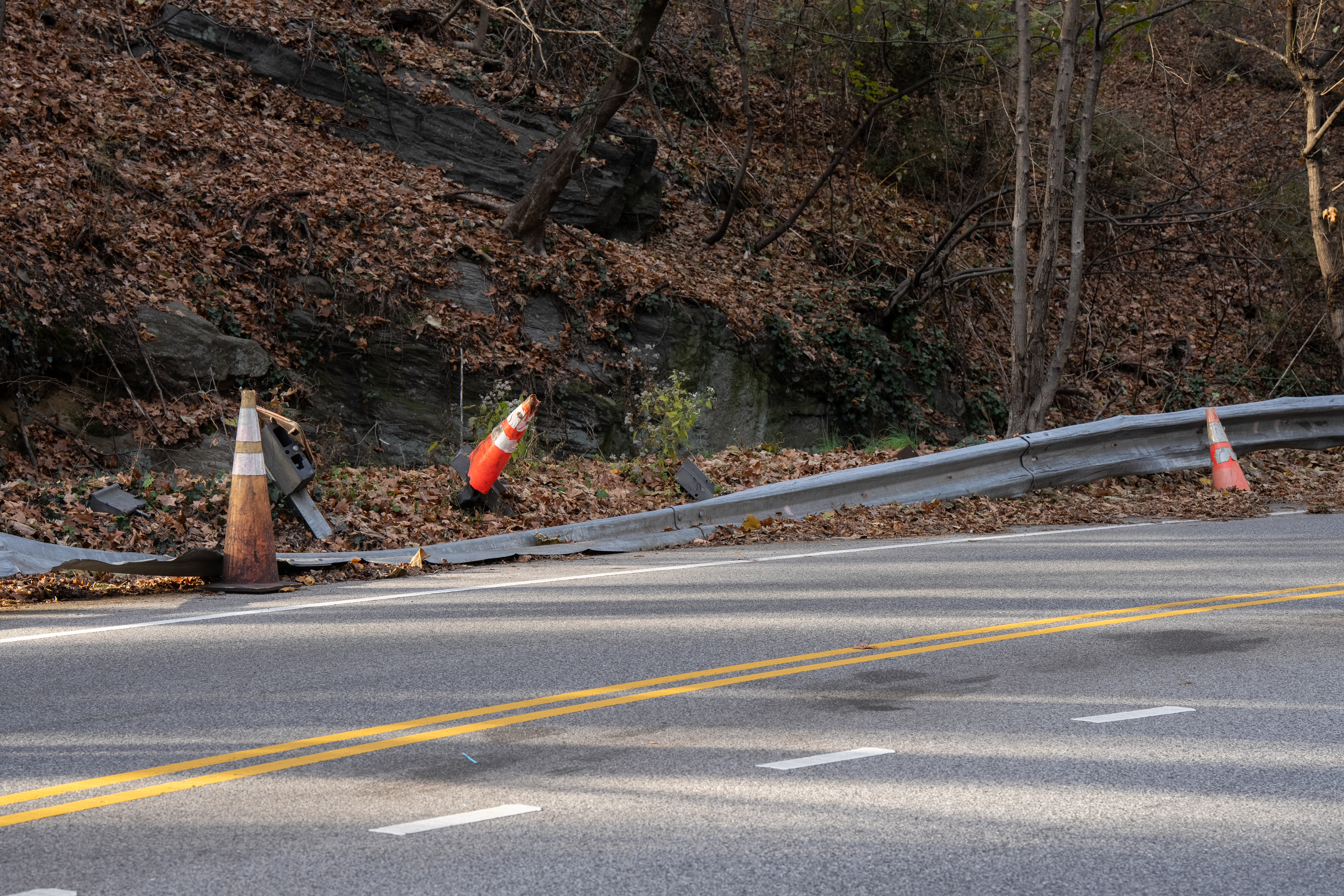
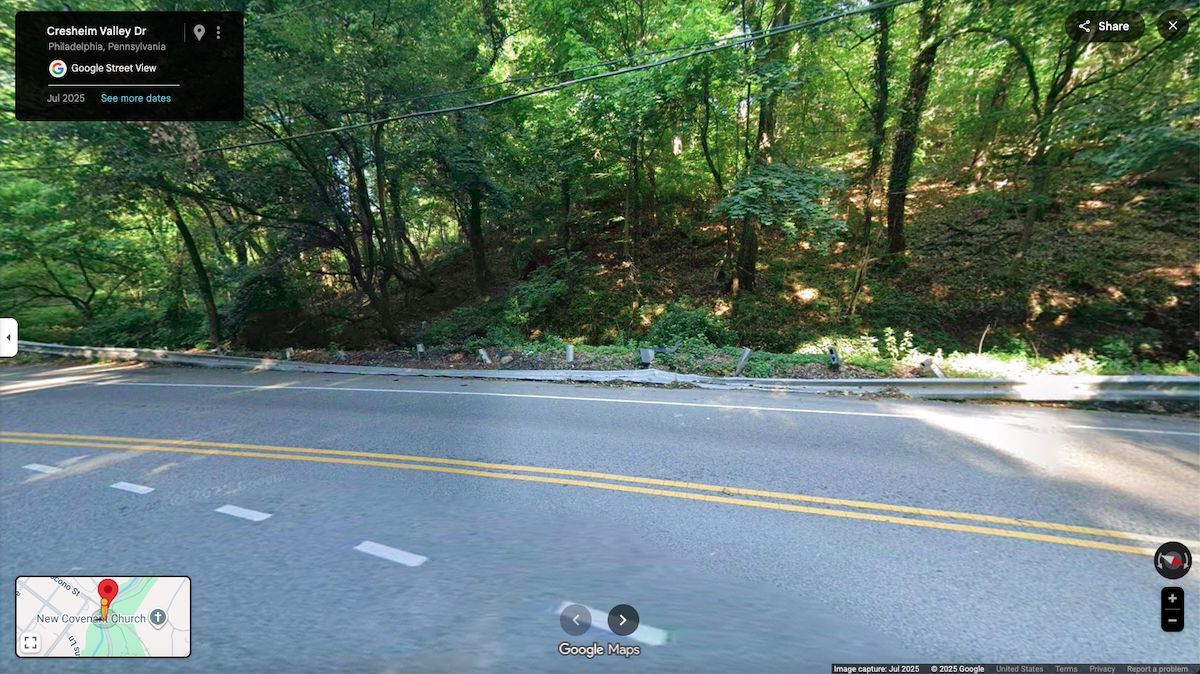
    Compounding this latest traffic death is the fact that the guardrail meant to prevent cars from swerving off the road was broken and nearly flattened from previous crashes, leaving a gap in the guardrails for months, said Josephine Winter, a Mount Airy resident and executive director of West Mount Airy Neighbors (WMAN). “The guardrail was down, and it was previously crumbled so it’s a frequent site of crashes,” she said. Images from Google Maps show the guardrail down as far back as July.

    The Philadelphia Streets Department is aware of the recent crash and is conducting an assessment of the guardrail on Cresheim Valley Road. “The streets department’s top priority is public safety,” a spokesperson said.

    A screenshot of a Google Map’s street view captured in July 2025 shows the downed guardrail on Cresheim Valley Drive in the Chestnut Hill neighborhood of Philadelphia. On Nov. 30, 2025, a 65-year-old man crashed and went over the guardrail, later succumbing to his injuries.

    Neighbors say accidents, sometimes fatal, have plagued the winding roadways in Chestnut Hill and Mount Airy for decades. These traffic safety concerns came to a head with Sunday’s deadly crash.

    “It’s a curvy, tricky road, especially when it’s wet, and people tend to speed on that road,” Winter said of roadways like Lincoln and Cresheim Valley Drives, which are lined with trees, have swooping dips and hills, and are prone to flooding.

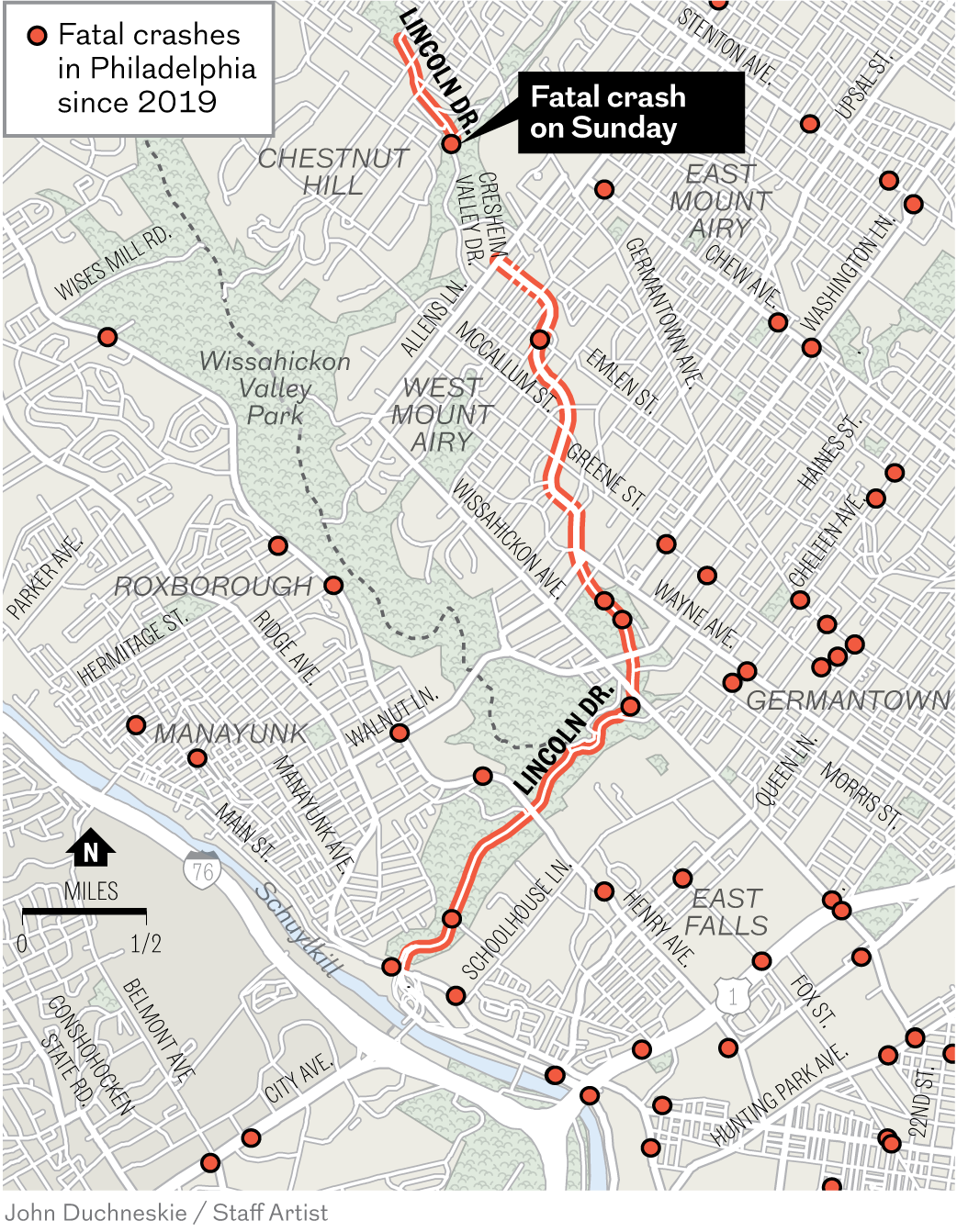
    Map of fatal crashes in Northwest Philadelphia since 2019.

    Since 2019, according to city crash data, at least five people have died while driving on the dark, winding sections of Lincoln Drive, which intersects with Cresheim Valley Drive, prompting many neighbors to fear walking down their street or leading them to invest thousands on giant boulders to protect their home and lawn.

    Winter, who leads WMAN’s traffic-calming committee, and other neighborhood organizations have petitioned for city support, urging the streets department to slow the speed of traffic on Cresheim Valley Drive, Lincoln Drive, and Wissahickon Avenue. The group’s efforts are so ingrained in the fabric of the neighborhood that, when digging through Temple University’s Urban Archives, Winter found an advertisement from 1968 stressing the need for cars in Mount Airy to “slow down to keep kids safe.”

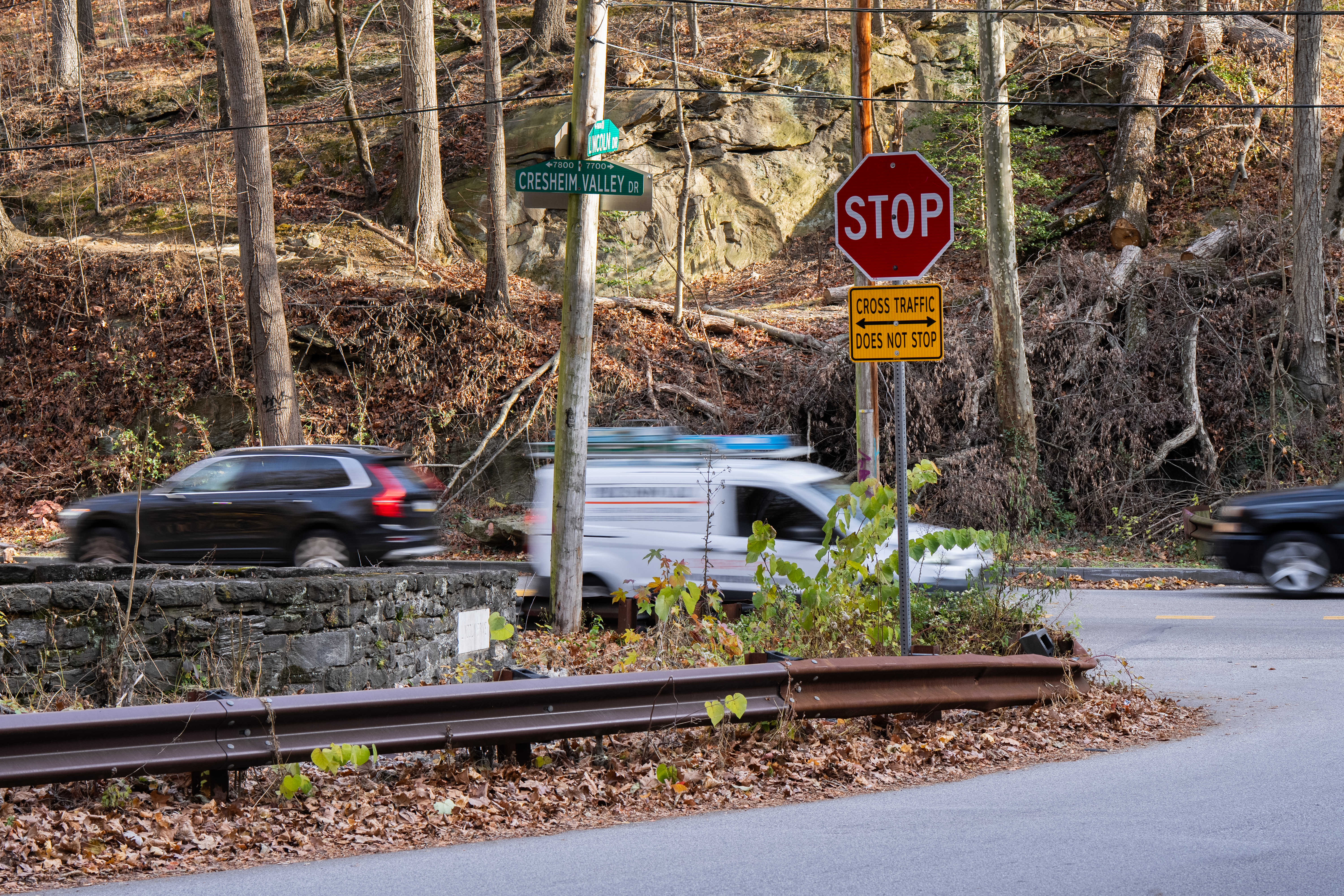
    The intersection of Cresheim Valley Drive and Lincoln Drive, in Philadelphia, PA, Dec. 1, 2025.

    The streets department installed “speed slots,” traffic-calming structures similar to speed bumps, earlier this year along Lincoln Drive between Allens Lane and Wayne Avenue. Along the same stretch of road, the Pennsylvania Department of Transportation installed rumble strips and speed tables to slow drivers down in 2023, in addition to traffic lane separators to keep drivers from using center lanes to pass other vehicles.

    In addition to the recently completed speed slots and traffic-calming measures on sections of Emlen Street, which becomes Cresheim Valley Road, signal upgrades are planned for Lincoln Drive as well.

    However, the work to improve these streets is not over, Winter said. Additionally, the streets department plans do not include changes to Cresheim Valley Drive, where Sunday’s crash happened.

    “We’ll need a collaborative approach as soon as possible to temporarily address the downed guardrail, and then see what the options are moving forward,” Winter said.

    The intersection of Cresheim Valley Drive and Lincoln Drive, in Philadelphia, PA, Dec. 1, 2025.

    Throughout the last decade, locals have suggested better-timed signals, more speed tables, and reducing the number of driving lanes from two in either direction down to one. They also want to see more roundabouts and curb bump-outs in the neighborhood to keep traffic flowing, but at a reasonable speed.

    A mere 50 to 100 feet from Cresheim Valley Drive is a parallel bike trail, where trail organizers like Brad Maule are accustomed to the crashes on the road nearby. Before Sunday’s fatal crash, he remembers two other cars that drove off the side of the road in recent months, not counting the crashes on the roadway itself. The city recently installed pedestrian crossing signs and repainted the crosswalk on nearby Cresheim Road, but Maule hopes speed bumps will follow.

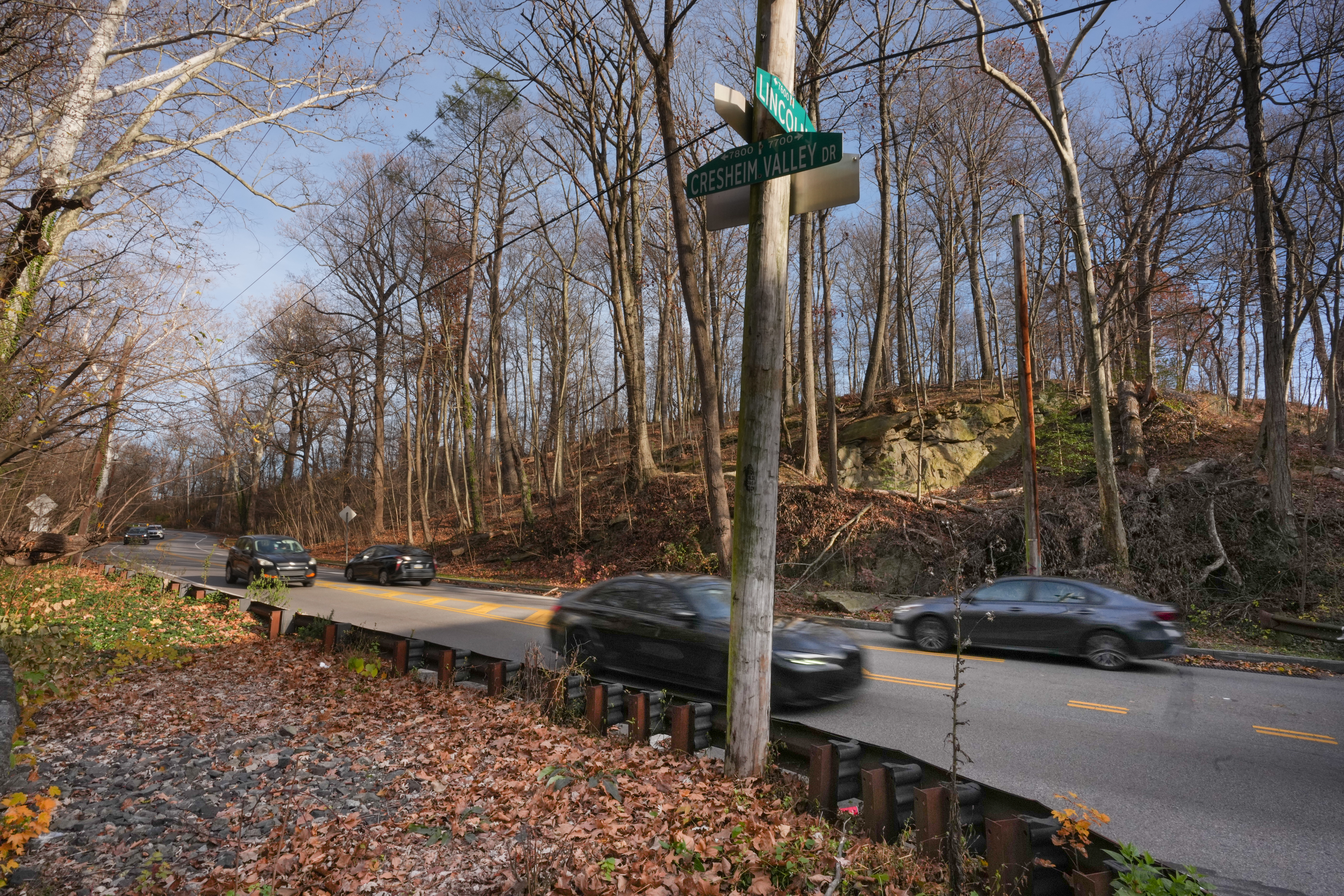
    Cresheim Valley Drive near where it intersects with Lincoln Drive, in Philadelphia, PA, Dec. 1, 2025.

    While Winter said that engineers from the Philadelphia Streets Department were among the first calls she received Monday morning responding to the crash, and that the community appreciates the response, she, Maule, and other neighbors hope that more safety improvements will be considered to save more lives.

    “I’m just looking forward to the new measures of safety that come here,” Maule said. “Hopefully, people will abide by them.”

    Staff writers Max Marin and Dylan Purcell contributed to this article.

  • Eastern University to purchase nearly half of Valley Forge Military Academy’s property

    Eastern University to purchase nearly half of Valley Forge Military Academy’s property

    Eastern University has entered an agreement to buy nearly half the Valley Forge Military Academy property, which is less than a mile from the Christian university’s St. Davids campus in Delaware County.

    The planned purchase, announced by Eastern on Tuesday, includes 33.3 acres encompassing the football stadium, track, and athletic field house, as well as multiple apartment buildings that will be used to house students. Eastern had been leasing the athletic properties from the academy since 2021. The purchase also includes additional fields, buildings, and a pickleball court, the school said.

    The academy announced in September that it planned to close at the end of the 2025-26 academic year amid declining enrollment, financial challenges, and lawsuits over alleged cadet abuse, but that its college would continue to operate on the main campus. The boarding school announced last month it would go virtual after Thanksgiving and resume in-person classes on the 70-acre campus in January.

    Eastern’s current campus is 114 acres, so the addition of the Valley Forge property will substantially increase its footprint.

    “For Eastern, expanding our campus through this new property is a pivotal step in EU’s growth and vision for a flourishing future,” said Eastern president Ronald A. Matthews. “… We will be able to provide the space for our expanding student body to call Eastern’s campus ‘home.’”

    The sale is subject to approvals and regulatory requirements and is expected to be completed over the next five months, the school said.

    “Valley Forge Military Academy & College has enjoyed a mutually beneficial relationship with our neighbors at Eastern University for many years,” academy president Col. Stuart B. Helgeson said in a statement.

    Eastern’s enrollment has continued to grow over the last six years, reaching nearly 10,000 students this fall, up 14% from last year. The growth is largely fueled by its low-cost, online “LifeFlex” programs, including a $9,900 master of business administration. But on-campus enrollment also has been rising in part due to the addition of new athletic and arts programs, the school said. Its football team is competing in the NCAA Division III championships on Saturday.

  • Pottstown man who shot officer during domestic violence call sentenced to state prison

    Pottstown man who shot officer during domestic violence call sentenced to state prison

    A Pottstown man who shot an officer in the leg with his own firearm during a scuffle last year was sentenced Tuesday to 22½ to 45 years in state prison.

    William Ciccoli Jr., 43, showed little emotion as he learned his fate, shaking his head as Montgomery County Court Judge Thomas DelRicci handed down his sentence.

    The judge told Ciccoli he was shocked by his “lack of remorse and accountability.”

    “We all saw the video, yet you claim the ‘gun went off,’” DelRicci said. “It went off because of the defendant’s actions. No other reason.”

    After the hearing, Ciccoli denied pulling the trigger on Cpl. Anthony Fischer’s sidearm as they grappled inside Ciccoli’s apartment in November 2024.

    “If I disarmed him, my prints would’ve been on that gun,” he said. “I just feel sorry for my family for what has happened, that is all.”

    When pressed, Ciccoli said he feels sorry for Fischer, but insisted that he did not shoot him.

    Ciccoli’s attorney, Frank Genovese, said he wasn’t surprised by the sentence, which he said he would appeal.

    In June, a jury convicted Ciccoli of assault on a law enforcement officer and related crimes, but acquitted him of attempted murder, ruling that he did not intend to kill Fischer when he fired the gun.

    Fischer went to Ciccoli’s home on Chestnut Street to respond to a report of a domestic-violence dispute between him and his girlfriend, prosecutors said. While speaking with the officers, Ciccoli became combative and fought with Fischer.

    During the scuffle, Ciccoli wedged his hand into the holster on Fischer’s hip and pulled the trigger on his department-issued .40-caliber handgun, according to bodycam footage played during Ciccoli’s trial in June. During the video, Fischer yells “he’s going for my gun,” shortly before a single gunshot rings out.

    The shot struck Fischer in his leg, nicking his femoral artery and causing severe injuries that the officer said still prevent him from moving without pain.

    District Attorney Kevin Steele, who prosecuted the case, said Tuesday he appreciated that the judge “recognized the seriousness of the case.”

    “I think it’s very important for everyone to understand that if you try to disarm a police officer, if you shoot at a police officer you’re going to jail for 20 years,” Steele said, adding that Ciccoli’s repeated profession of innocence is “nonsense.”

    “This is a guy that’s not taking accountability for his actions,” Steele said. “We’re here because of his actions.”

  • Quinta Brunson wants thousands of Philly kids to have free school field trips

    Quinta Brunson wants thousands of Philly kids to have free school field trips

    Quinta Brunson wants you to dig into your pocket to make free field trips possible for Philadelphia students.

    The actor, writer, and comedian — along with Philadelphia School District officials and the leader of the district’s nonprofit arm — announced the “Quinta Brunson Field Trip Fund” on Tuesday.

    District teachers and administrators will be able to apply for money for field trips by completing a short application subject to evaluation by an independent, internal group of educators. Field trip grants will be made twice a year.

    Brunson, of Abbott Elementary fame, grew up in West Philadelphia and spent time in district and charter schools. She named her smash-hit TV show, now in its fifth season, for Joyce Abbott, her sixth-grade teacher at Andrew Hamilton Elementary.

    Field trips — including ones Abbott’s class sold hoagies to pay for — were a seminal part of her Philly education, Brunson said in a statement.

    “They opened my world, sparked my creativity, and helped me imagine a future beyond what I saw every day,” Brunson said. “Going somewhere new shows you that the world is bigger and more exciting than you believe, and it can shape what you come to see as achievable. I’m proud to support Philadelphia students with experiences that remind them their dreams are valid and their futures are bright.”

    “Abbott Elementary” star Quinta Brunson watches the Phillies play the Atlanta Braves during a taping of the show in Philadelphia in August.

    Every Abbott Elementary season has featured a field trip episode, including visits to Smith Playground, the Franklin Institute, and the Philadelphia Zoo. Brunson’s fund “will remove the financial barriers that too often limit our children’s access to these enrichment opportunities,” officials for the Fund for the School District of Philadelphia said.

    The GivingTuesday launch kicked off with an unspecified donation from Brunson herself.

    Kathryn Epps, president and CEO of the Fund for the School District of Philadelphia, said getting students out of their classrooms is crucial.

    “We are honored to partner with Quinta to expand these experiences for children in Philadelphia’s public schools, helping them to envision and realize any future they desire,” Epps said.

    Tony B. Watlington Sr., Philadelphia School District superintendent, said he was grateful to Brunson.

    “We want our students to venture out and bridge what they’re learning in the classroom to engaging, real-world learning experiences,” Watlington said. “This commitment to equitably expanding opportunities for students to have experiences outside of their classroom will help accelerate student achievement and we are becoming the fastest improving, large urban school district in the nation.”

  • Spotlight PA’s investigative reporting gets results, but it needs your support

    Spotlight PA’s investigative reporting gets results, but it needs your support

    Spotlight PA is an independent, nonpartisan, and nonprofit newsroom producing investigative and public-service journalism that holds power to account and drives positive change in Pennsylvania. Sign up for our free newsletters.

    Next year we celebrate America’s 250th anniversary, and yet one of the most critical components of our free society — an independent, unbiased free press — is at a tipping point, and you have more power than ever to determine what happens next.

    There’s a lot not to like about the news right now. Many people are tuning out, turning away, or feeling like the media no longer serves them. That frustration is legitimate. But at Spotlight PA — a nonprofit, nonpartisan statewide newsroom — we’re charting a bold, fresh new course.

    So as you consider the causes and organizations to support this year, I ask you to invest in nonpartisan, nonprofit journalism that’s getting the job done. And there’s no better time than Giving Tuesday, because all gifts this week to Spotlight PA will be TRIPLED.

    We’re proving every day that accountability reporting can be rigorous without being partisan, that investigations can follow the facts without an agenda, and that a newsroom can earn trust across the political spectrum by simply doing the work with integrity.

    Spotlight PA is a nonprofit, and that’s not incidental to our mission — it’s essential to it. We chose this model to ensure our journalism answers to you, not shareholders, profit margins, or a billionaire owner. Our financial success is tied directly to your support, so we prioritize unique, compelling reporting above all else.

    More than 10,000 of your friends and neighbors — people just like you from every corner of Pennsylvania, of all political backgrounds — support Spotlight PA as a bright spot in a media landscape too often marred by partisan talking points and questionable corporate decisions.

    They’ve invested in journalism that serves the public interest and no one else.

    Now, we want you to join them.

    Since 2019, Spotlight PA has saved taxpayers more than $20 million. Our reporting has prompted 58 policy changes, new pieces of legislation, and legal victories — some setting important new statewide precedent. We’ve uncovered broken government programs and gotten people life-changing help. We’ve held lawmakers and powerful institutions accountable for their actions when no one else would.

    What’s more, we share our stories at no cost with more than 130 local partner newsrooms across Pennsylvania — including this publication — ensuring that quality accountability journalism reaches every corner of the commonwealth.

    Our journalism can sometimes be unpopular, and you may not love everything we write. That’s OK. In fact, that’s the hallmark of truly independent, nonpartisan reporting. But fundamentally, for the good of our country, we can’t afford to leave those with power and influence — especially government — to their own devices and without sustained scrutiny.

    I have seen firsthand how an investment in Spotlight PA can yield one of the greatest returns in public good of any you can make this season of giving.

    Make a tax-deductible gift to Spotlight PA of any amount at spotlightpa.org/donate, and as a special bonus, all contributions sent this week will be TRIPLED. You can also send a check to: Spotlight PA, PO Box 11728, Harrisburg, PA 17108-1728.

    This Giving Tuesday, join 10,000 Pennsylvanians who believe in independent, nonpartisan journalism. Your tax-deductible gift will fund the investigative work our commonwealth needs.

    We cannot afford the alternative.

    Christopher Baxter is the CEO and President of Spotlight PA, a nonpartisan, nonprofit newsroom producing investigative and public-service journalism that gets results.

  • A man accused of committing voter fraud in Bucks County in 2020 says a Trump pardon should wipe out his criminal case

    A man accused of committing voter fraud in Bucks County in 2020 says a Trump pardon should wipe out his criminal case

    President Donald Trump’s decision last month to pardon dozens of political allies who helped him try to overturn the 2020 election was quickly criticized by some opponents.

    Now, a man accused of committing voter fraud in that contest by voting twice for Trump is seeking to wipe out a pending criminal case by saying the powers of that pardon action should extend to him.

    Attorneys for Matthew Laiss wrote in court documents last month that the language in Trump’s pardon proclamation “clearly extend” to Laiss, who is awaiting trial on charges that he illegally voted twice in the 2020 election — first by submitting a mail-in ballot in Bucks County, then by voting in-person at his new home in Florida.

    Federal prosecutors in Philadelphia charged Laiss in September with crimes including voter fraud and voting more than once in a federal election, and they said he faces potential prison time if convicted.

    Last month, however, Laiss’ attorneys filed a motion to dismiss the case, saying that the pardon Trump issued Nov. 7 clearly applied to Laiss, and that Laiss had accepted it.

    Although Laiss was not among the 77 people Trump listed when specifying who would receive relief, Laiss’ lawyers said the proclamation’s preamble included language making it applicable to “all United States citizens” for conduct, voting, or advocacy surrounding the contest.

    In addition, his attorneys wrote, Trump allies including Rudy Giuliani, Sidney Powell, and Mark Meadows were all explicitly pardoned for “exponentially more egregious alleged conduct.” Extending relief to them while denying it to Laiss, his lawyers wrote, “would be outrageous.”

    Federal prosecutors say Laiss is “entirely incorrect.”

    In a reply brief filed last week, the U.S. Attorney’s Office said Trump’s pardon was intended for people who were seeking to expose or rectify potential fraud in the 2020 election — not for people like Laiss, who are accused of actually committing it.

    Beyond what they said was Laiss’ clear misinterpretation, prosecutors said that they checked with Trump’s Office of the Pardon Attorney and that it does not believe the president’s clemency —` which it helped effectuate — applies to Laiss.

    “In other words, it is this office’s understanding that if Laiss were to appeal directly to the Office of the Pardon Attorney for a pardon based on [the] November 7 pardon proclamation, that petition would be denied,” prosecutors wrote.

    It was not immediately clear how or when U.S. District Judge Joseph F. Leeson Jr. might rule on the issue, although Laiss was scheduled to have a final pretrial hearing Tuesday morning.

    If Leeson rules that the case can proceed, a trial is scheduled to begin next week.

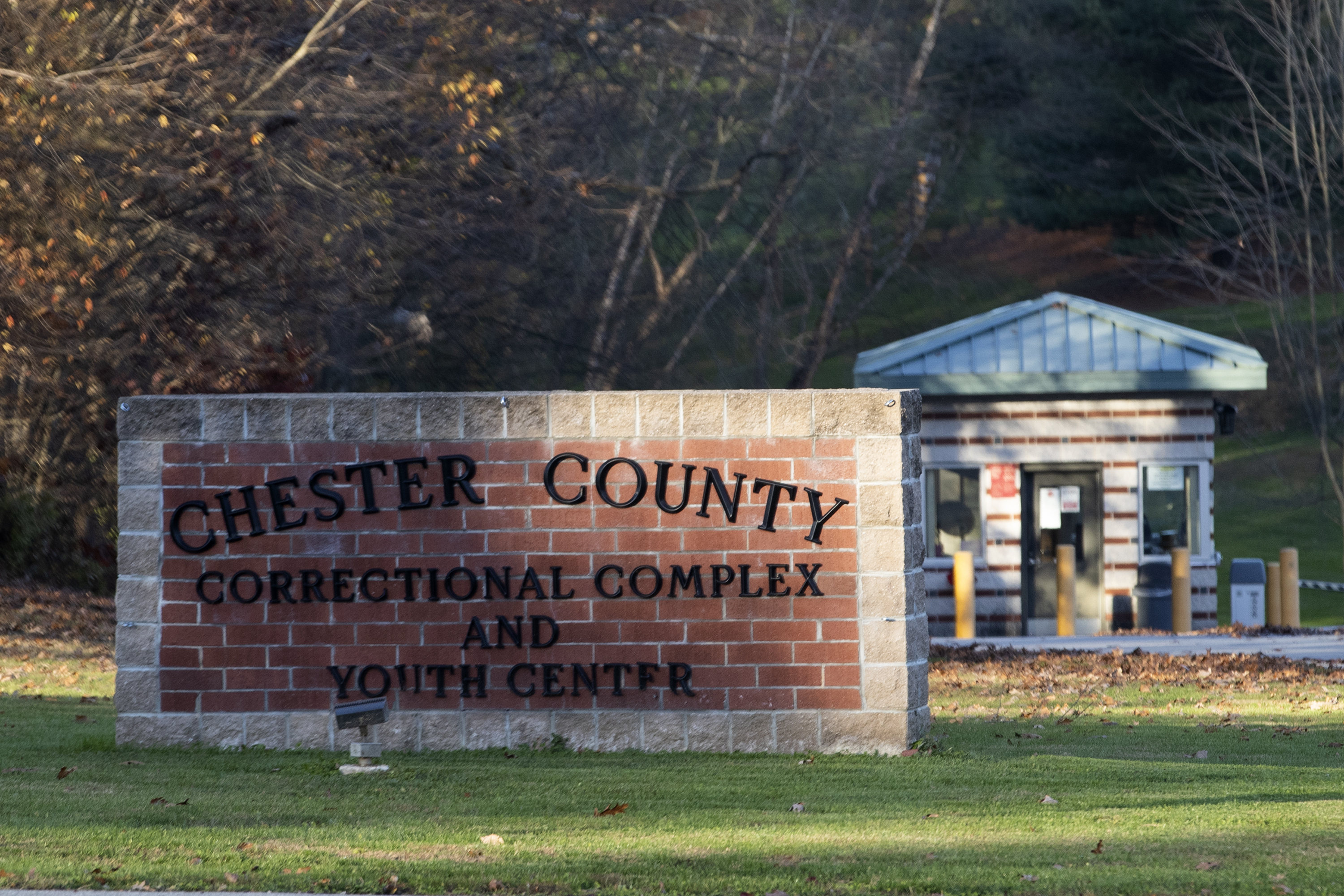
  • In Chester County, inmates are getting workforce training and jobs to match post-release

    In Chester County, inmates are getting workforce training and jobs to match post-release

    Tyler Ramaley wakes up every morning grateful that he’s able to do “respectable work in a hardhat” as he clocks in for his shift at JGM, a steel fabrication plant in Coatesville.

    Nineteen months ago, that would have been impossible: He was struggling with an opioid addiction and waking up to a monotonous routine in a Chester County Prison cell.

    A new program offered at the jail, Exit, Enter, Employ, gave him an opportunity to move on from his past mistakes. He had help building his resume, getting certified in his chosen field, and, crucially, landing an interview for a job that was waiting for him after his release.

    “I was in there, and I just didn’t like who I was and I just knew I needed to change,” Ramaley, 37, said in an interview during a break from running a plasma cutter on a recent day. “It gave me a purpose to wake up every day, and it makes me not want to waste the opportunity I’ve been given.”

    Ramaley’s experience, county officials say, is just one of many success stories to come out of the E3 program since its inception in January 2023 through a partnership between the jail and the Chester County Intermediate Unit.

    More than 100 people have graduated from the course, with a recidivism rate of 2%, according to Jill Stoltzfus, the program’s career-readiness coordinator and a CCIU employee.

    “Everybody needs a second chance,” she said. “And I’m very candid with people when I interview them. Like, we’ve all made mistakes, I’m sure I’ve made mistakes that I could be in the same situation.”

    More than 100 inmates at the Chester County Prison have graduate from the E3 program since its inception in January 2023.

    Job-readiness programs are nothing new for county jails — they’re offered almost universally across the region. But Stoltzfus said E3 is different because it provides a direct path, with job openings already lined up for graduating inmates from multiple companies that partner with the county.

    And in the first few months in those jobs, coordinators from the program follow up with former inmates, checking in to see how they are faring.

    “I don’t like the judgment we often hear of ‘Why should we fund this?’ or the idea that some people deserve a chance over others,” Stoltzfus said. “I think it’s crucial that we at least put that opportunity out to them.”

    E3 is available only to inmates who have been sentenced to county jail, meaning their crimes were not serious enough to warrant state prison time. And county officials carefully screen those who apply to the program to make sure they are ready.

    Besides workforce skills like OSHA certification and courses in customer service, E3 offers financial-planning advice, as well as cognitive behavioral therapy and anger management.

    Current partner employers, besides JGM, include J.P. Mascaro & Sons, FASTSIGNS, and MacKissic. Stoltzfus is hoping to expand the offerings to include agricultural and culinary posts.

    Howard Holland, the warden of Chester County Prison, views the program as a way to help incarcerated people prepare to reenter society in a productive way.

    “We’re engaging them in a way other than just ‘Here’s your cot, stay behind the bars,’” he said. “You just have that same cycle over and over and over again because that’s the way our institutions are run.

    “At the end of the day, we’re humans, right?” he added. “They’re here, and it’s our responsibility to, while they’re here, try to do the best we can for them.”

    Tyler Ramaley said he never thought he would be able to go to work, after years of addiction. The E3 program helped him connect with a job he loves.

    Ramaley, who was named JGM’s employee of the month in June, said the opportunity was an important step toward reversing years of bad decisions.

    His drug abuse, he said, began in 2020, when he was injured on the job while running a hammer drill at a concrete mill. The drill skipped and jerked his arm hard, shredding multiple tendons. After several surgeries, he said, he was prescribed Tramadol in bottles of 150 pills at a time. He became reliant on the pills, using them to deal with the pain.

    And when his workers’ comp ran out, he said, his doctor cut him off cold turkey and he turned to other ways to support his opioid habit and purchase drugs, racking up convictions for theft and forgery and landing in county jail.

    His moment of clarity came this spring, he said, and he graduated from E3 in April, weeks before his jail sentence ended and he was released.

    “When I was in my active addiction, I never thought I would be able to go to work and not be on something,” he said, “and there’s times I’ll stand out there and just kind of think about how happy I am here, actually doing hard work and respectable work and doing it the right way.

    “And that’s a better feeling than anything I had when I was in my addiction.”

  • White state trooper who served on Shapiro’s security team sues state police, alleging racial discrimination

    White state trooper who served on Shapiro’s security team sues state police, alleging racial discrimination

    State police Cpl. Joshua Mack is suing the Pennsylvania State Police in federal court, arguing that he lost a lucrative position on the governor’s security detail because of racial discrimination.

    Mack, who is white, claims that his superiors reassigned him earlier this year and that he had heard them talk about the “need” for “more minorities” on Gov. Josh Shapiro’s security team.

    Mack had been the longest-serving member of the governor’s security detail, joining the elite squad in 2011 when Ed Rendell was in office.

    “Mack’s removal and replacement on the Governor’s Detail were motivated by race considerations and intended to satisfy [Pennsylvania State Police’s] stated goal of increasing minority representation in the Governor’s Detail,” the lawsuit reads. “As a result, Mack suffered loss of pay, loss of overtime income, diminished professional opportunities, and emotional distress.”

    Mack joined the state police in 2004 and went on to protect four governors. The lawsuit claims that he “consistently received strong performance evaluations” and that guarding the governor came with opportunities for specialized dignitary-protection training, state-owned vehicles, and far more overtime than other state troopers have.

    Pennsylvania State Police declined to comment, saying that they don’t respond to queries about personnel matters or pending litigation. Shapiro’s office declined to comment as well.

    According to the lawsuit, Mack lost the position on March 25 — although he retained his rank of corporal — and was told that it was only because of “administrative changes.” His supervisors repeatedly informed him their decision was not due to any deficiencies in his performance, the lawsuit states.

    “As a result of his removal from the Governor’s Detail, Mack was reassigned to another unit farther from his home, lost access to a state vehicle, and lost substantial overtime opportunities,” reads the lawsuit, which was filed on Nov. 25.

    “He was assigned back to patrol, which was a drastic change, as he was out of patrol work for so long and much has changed during that time,” wrote Anthony T. Bowser, who is representing Mack, in an email to The Inquirer.

    Mack alleges he was then replaced by two non-white troopers “who were substantially less qualified and lacked any dignitary-protection experience.”

    Mack is demanding a jury trial. He is alleging damages stemming from lost wages and benefits, damage to his professional reputation, and “emotional distress, humiliation, and embarrassment.”

    Bowser says that while the damages would have to be determined during litigation, the lost overtime amounts to over $50,000 annually because it is capped in Mack’s new patrol position. The lost overtime would also affect his pension.

    Mack is specifically suing the Pennsylvania State Police and his superiors Cpl. John Nicholson and Lt. Col. George Bivens. Shapiro is not mentioned by name in the suit.

    Mack first filed an administrative charge of discrimination with the Equal Employment Opportunity Commission, a necessary first step before filing in federal court.

  • Skill games avoid regulation again in Pa. as gambling lobby war intensifies

    Skill games avoid regulation again in Pa. as gambling lobby war intensifies

    Spotlight PA is an independent, nonpartisan, and nonprofit newsroom producing investigative and public-service journalism that holds power to account and drives positive change in Pennsylvania. Sign up for our free newsletters.

    HARRISBURG — This year’s state budget didn’t pull slot-like skill games out of their legal limbo in Pennsylvania, despite bipartisan consensus on the need to do so.

    But it could still happen. Democratic Gov. Josh Shapiro called the matter “unfinished business,” and legislative leaders have also indicated interest in taking up the issue again next year.

    “This building has a long history of going through gaming debates, and they are very complex and very tedious and very difficult,” state Senate Majority Leader Joe Pittman (R., Indiana) said after the budget passed on Nov. 12. “I certainly believe gaming reform is — and must be — an important policy initiative going forward.”

    Pennsylvania faces a structural deficit, which will require spending cuts or more cash in the state’s coffers. A gambling levy, alongside other sin taxes, offers a way to raise revenue without making politically unpopular increases to sales or income taxes.

    While such taxes are potentially more palatable to the broader electorate, gambling debates are complex and difficult within the Capitol due to the array of monied interests that defend their existing market share or attempt to expand it further.

    The money at stake is real. Existing taxes on revenue from slot machines and table games, whether in brick-and-mortar casinos or online, as well as levies on activities like sports betting and truck stop-based video gaming terminals, brought in $2.7 billion last fiscal year, a record high.

    What was on the table this budget cycle?

    Skill games, which have proliferated in bars and gas stations across the state, exist in a legal gray area and have been subject to years of litigation. They are untaxed and unregulated, and officially setting up laws around them would bring in more gaming cash.

    Shapiro proposed in his budget address a 52% tax on the gross revenue of skill games, estimating that it would bring in roughly $400 million. State Senate Republican leaders later backed a plan to tax skill games at a lower rate, 35% of gross revenue.

    (Politically powerful casinos pay a 55% tax on electronic games and are pushing for skill games to be taxed at a similar rate.)

    As budget talks progressed, neither of the plans went far. Lobbyists for Pace-O-Matic, a major skill games developer and distributor, wanted lawmakers to support legislation introduced by State Sen. Gene Yaw (R., Lycoming) with a 16% tax.

    In the weeks leading up to a final budget deal, Yaw and another state senator, Anthony Williams (D., Philadelphia), proposed levying a $500 monthly fee per machine, rather than a tax. They estimated such a fee would bring in about $300 million.

    Yaw, whose district is home to a skill games manufacturer, told Spotlight PA the bill was an attempt to sidestep the impasse between leaders, adding that he thinks the tax rates proposed so far would destroy the existing industry.

    Williams noted that the bill also seeks to regulate “stop-and-go” convenience stores with liquor licenses. These stores can serve as illegal gaming hubs, which is a concern among Philadelphia lawmakers.

    Both lawmakers said they hope that the legislature will finally address skill games regulations in 2026. If not his bill, Williams added, he hopes the legislature will pass another proposal.

    “I think it will be included,” Williams said of skill games. “We got a budget that’s passed, but revenue challenges are coming next year, and we’re not going to raise taxes. So this, along with other items, will be considered.”

    Adding complexity to the matter is a case before the state Supreme Court. Justices heard oral arguments about the legality of skill games in late November.

    Attorneys for the state argued that the machines’ mechanisms and functionality effectively constitute gambling, violating the state’s gaming law. “A game that looks like a slot machine, and plays like a slot machine, is a slot machine,” the state attorney general’s office wrote in its brief.

    Matthew Haverstick, Pace-O-Matic’s attorney, argued that the devices comply with decades of legal precedent and that many of the concerns raised by justices, such as the devices’ profitability, amount to policy questions.

    “Why [do skill machines] make money? Because somebody really brilliant came up with an idea that they tested. … It was held to be legal, and nobody appealed,” Haverstick said.

    It is not known when the high court will issue a ruling.

    ‘We get threatened all the time’

    Part of what makes gaming such a complex topic is simple: Money.

    Gambling is a multibillion-dollar industry in Pennsylvania with several key players. And public officials hold the keys to either helping or hurting their bottom lines.

    Pace-O-Matic alone has paid millions of dollars to employ dozens of lobbyists to influence the legislature in recent years. Casinos, legalized in the 2000s, likewise are heavily involved in the legislative process — they employ dozens of lobbyists of their own and also spend millions.

    Other, smaller players, including those involved in horse racing, sports betting, and truck-stop-only video gaming terminals, add to the complexity of the policy debate.

    Then there’s campaign fundraising. A Spotlight PA analysis of campaign finance records found that gaming interests of all stripes gave $1.7 million to top legislative leaders and the governor between Jan. 1, 2023, and Dec. 31, 2024.

    Current campaign finance reports show Pace-O-Matic has given money to a PAC that, in turn, donated to a second PAC that has attacked incumbent state Senate Republicans — something that could complicate talks going forward, particularly in the upper chamber.

    The company historically has made significant donations to legislative Republicans. But that once-friendly relationship soured earlier this year, after GOP leaders in the state Senate backed legislation that would have taxed the industry at a higher rate than it preferred.

    Around the same time, door knockers delivered fliers attacking key GOP lawmakers. State Sens. Frank Farry (R., Bucks) and Chris Gebhard (R., Lebanon) were “siding with Harrisburg insiders and lobbyists to stop small town groups like our volunteer firefighters and VFWs from being able to raise additional revenues,” the fliers, viewed by Spotlight PA, said.

    In June, Pace-O-Matic accused the state Senate’s top two GOP leaders of intimidating its lobbyists unless they dropped the company as a client. Three firms did. (A GOP spokesperson called the allegation “bizarre.”)

    A lobbyist for Pace-O-Matic told Spotlight PA at the time that it did not coordinate with the group that advanced the ad campaign attacking GOP senators.

    However, federal campaign finance records show Pace-O-Matic began giving money to Citizens Alliance, a national conservative political group, as budget talks intensified in May — $630,000 total as of Nov. 21.

    Soon after Pace-O-Matic’s first donation, Citizens Alliance contributed to an Ohio-based super PAC called Defeating Communism — the group behind the fliers. Citizens Alliance has donated $428,000 to the super PAC this year.

    Cliff Maloney, CEO of Citizens Alliance, said the organization’s aims are to make Pennsylvania into a “red wall” by running a program to “compete with Democrats’ door-knocking efforts,” and to “run a pledge program to hold both Democrats and Republicans accountable to the principles of the [Pennsylvania] and [U.S.] Constitution.”

    “Yes, partners are working to hold Senate Republicans accountable that proposed a new tax on certain small businesses,” Maloney said in a statement.

    Pennsylvania Department of State disclosures show that in October, Defeating Communism reported $225,000 for door-knocking targeting Gebhard as well as State Sen. Camera Bartolotta (R., Washington). The campaign focused on their votes on past budgets and carbon capture and sequestration, as well as skill games.

    Bartolotta told Spotlight PA that she expected taxation of skill games to still be a leading topic in state Senate Republicans’ internal discussions despite the wave of attacks.

    The skill games lobby, she said, is “just passing out garbage. And they’re acting like criminals. And I don’t know what in the world they think this is going to do to engender our support.”

    Defeating Communism did not respond to a request for comment. Mike Barley, Pace-O-Matic’s chief public affairs officer, said in a statement that the company “donates substantial amounts of funding to politicians and PACs, and we will continue to do so.”

    A growing field

    The number of moneyed gambling interests that wish to play in the Keystone State is growing.

    As Spotlight PA recently reported, the national trade group for sports betting firms launched a more than $500,000 pressure campaign to kill a closed-door budget pitch. The proposal would have raised taxes on sports betting and online casino gaming.

    That pressure helped kill the proposal for now, a source told Spotlight PA.

    Legal Sports Report, a trade news outlet, reported in November that sports bettors were creating a $10 million super PAC, citing an anonymous source who claimed that Pennsylvania has “rocketed to the top of the list of states where operators are looking to play big during next year’s midterm election.”

    While gaming was off the table in 2025, it’s unclear what the future holds.

    “We get threatened all the time by some of these interests, you know, ‘We’re going to come beat you up. We’re going to come take you out,’” state Senate President Pro Tempore Kim Ward (R., Westmoreland) said at a news conference after the budget’s passage.

    “That’s just ridiculous, and it just makes my blood pressure go up. We don’t do well being bullied. And I think a lot of these gaming interests have done nothing but try to bully us. And I don’t think we stand for that.”

    EXCLUSIVE INSIGHTS … If you liked this reporting from Stephen Caruso, subscribe to Access Harrisburg, a premium newsletter with his unique insider view on how state government works.

  • Mark Hallett, world-renowned neuroscientist and groundbreaking researcher, has died at 82

    Mark Hallett, world-renowned neuroscientist and groundbreaking researcher, has died at 82

    Mark Hallett, 82, of Bethesda, Md., world-renowned scientist emeritus at the Maryland-based National Institute of Neurological Disorders and Stroke, former chief of the clinical neurophysiology laboratory at Brigham and Women’s Hospital in Boston, associate professor of neurology at Harvard Medical School, groundbreaking researcher, prolific author, mentor, and world traveler, died Sunday, Nov. 2, of glioblastoma at his home.

    Dr. Hallett was born in Philadelphia and reared in Lower Merion Township. He graduated from Harriton High School in 1961 and became a pioneering expert in movement, brain physiology, and human motor control.

    He spent 38 years, from 1984 to his retirement in 2022, at the National Institutes of Health in Bethesda and was clinical director and chief of the medical neurology branch of the National Institute of Neurological Disorders and Stroke. He and his colleagues examined the human nervous system and the brain, and their decades of research helped doctors and countless patients treat dystonia, Parkinson’s, and other neurodegenerative diseases.

    “When I met him, I was in bad shape,” a former patient said on Instagram. “I’d also been told … that no one would ever figure out the source of my illness. … He and his team diagnosed me, and thereby, I’m pretty sure, saved my life”

    Dr. Hallett told the Associated Press in 1992: “The more that we know about the way these cells function, the better off we are.”

    He founded the NINDS’ human motor control section in 1984, cofounded the Functional Neurological Disorder Society in 2018, and served as the society’s first president. He cultivated thousands of colleagues around the world, and they called him a “giant in the field” and a “global expert” in online tributes.

    Barbara Dworetzky, current president of the FNDS, said Dr. Hallett was a “brilliant scientist, visionary leader, and compassionate physician whose legacy will endure.” Former NIH colleagues called his contributions “astounding” and said: “The scope and impact of Dr. Hallett’s work transcend traditional productivity metrics.”

    He chaired scientific committees and conferences, and supervised workshops for many organizations. He earned honorary degrees and clinical teaching awards, and mentored more than 150 fellows at NIH. “Our lab’s demonstration of trans-modal plasticity in humans was another milestone,” he told the NIH Record in 2023. “And, of course, I am particularly proud of the fellows that I have trained and their accomplishments.”

    In a tribute, his family said those he mentored “valued his intellect, his encouragement, his kindness, and his humor.”

    Dr. Hallett and his wife, Judy, married in 1966.

    Dr. Hallett had planned to study astronomy at Harvard University after high school. Instead, he earned a bachelor’s degree in biology in 1965 and a medical degree at Harvard Medical School in 1969. He completed an internship at the old Peter Bent Brigham Hospital, now part of Brigham and Women’s, and joined a research program at the NIH in 1970 to fulfill his military obligation during the Vietnam War.

    A fellowship in neurophysiology and biophysics at the National Institute of Mental Health sparked his interest in motor control, and he served a neurology residency at Massachusetts General Hospital in 1972 and a fellowship at the Institute of Psychiatry in London in 1974.

    He returned to Brigham and Women’s in 1976 to supervise the clinical neurophysiology laboratory and rose to associate professor of neurology at Harvard. In 2019, he earned the Medal for Contribution to Neuroscience from the World Federation of Neurology, and former colleagues there recently said his work “had a lasting global impact and shaped modern clinical and research practice.”

    He also studied the scientific nature of voluntary movement and free will. He wrote or cowrote more than 1,200 scientific papers on all kinds of topics, edited dozens of publications and books, and served on editorial boards.

    He was past president of the International Federation of Clinical Neurophysiology and the International Parkinson and Movement Disorder Society, and vice president of the American Academy of Neurology.

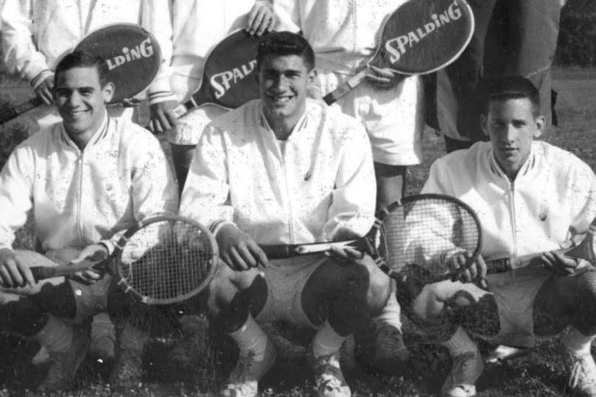
    At Harriton, he was senior class president, a star tennis player, and a leading man in several theatrical shows. “The only time he disobeyed his parents,” his family said, “was when he decided to leave Philadelphia to attend Harvard College.”

    Mark Hallett was born Oct. 22, 1943. The oldest of three children, he was a natural nurturer, a longtime summer camp counselor, and the winner of an Alfred P. Sloan Foundation national scholarship award in high school.

    He grew up in Merion and met Judith Peller at a party in 1963. They married in 1966 and had a son, Nicholas, and a daughter, Victoria.

    Dr. Hallett (center) was a star on the Harriton High School tennis team.

    Dr. Hallett was an avid photographer and a master of the family group shot. He championed a healthy work-life balance, and his family said: “He eagerly built sand castles, skipped stones, and started pillow fights. His easy laugh was contagious.”

    He enjoyed hiking, biking, jazz bands, and organizing family vacations. “He was a natural leader,” his son said, “self-assured and patient of others, with a deep sincerity and a desire to help people.”

    His daughter said: “People were constantly turning to him for medical advice, and he was always willing and eager to help.”

    His wife said: “He was very high energy. He brought out the best and the most in young people. He made them feel good about themselves.”

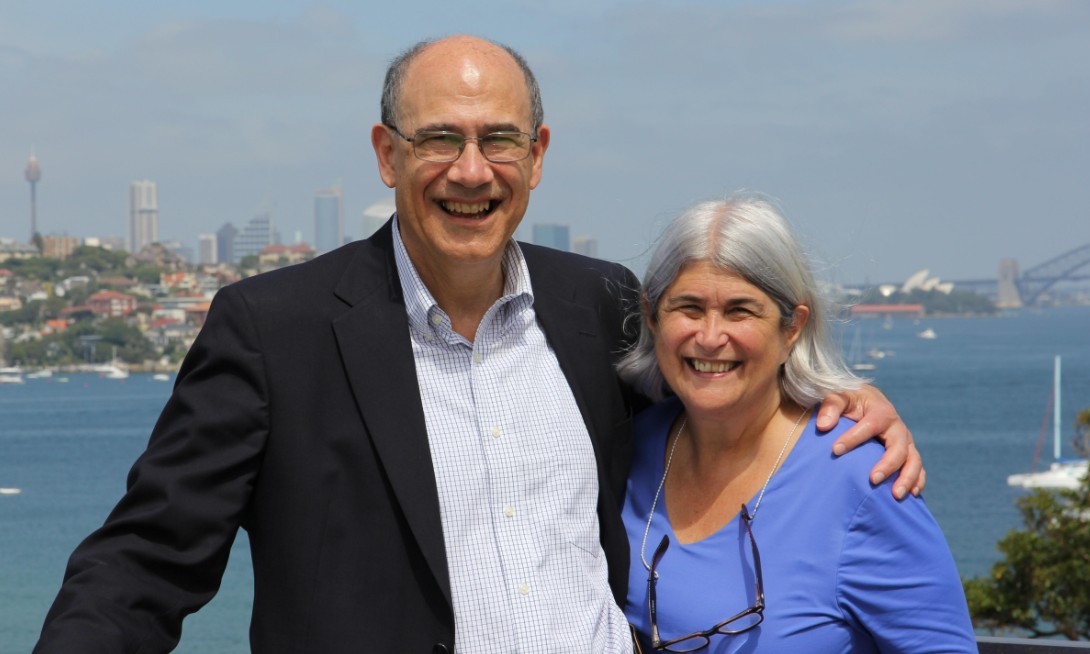
    Dr. Hallett traveled the world on business and family vacations.

    In addition to his wife and children, Dr. Hallett is survived by two granddaughters, a sister, a brother, and other relatives.

    A memorial service is to be held later.

    Donations in his name may be made to the Functional Neurological Disorder Society, 555 E. Wells St., Suite 1100, Milwaukee, Wis. 53202; and the International Parkinson and Movement Disorder Society, 555 E. Wells St., Suite 1100, Milwaukee, Wis. 53202.