Category: Pennsylvania News

  • Virginia A. Smith, retired award-winning Inquirer reporter and editor, has died at 75

    Virginia A. Smith, retired award-winning Inquirer reporter and editor, has died at 75

    Virginia A. Smith, 75, of Philadelphia, longtime reporter and editor for The Inquirer, the Philadelphia Bulletin, the Akron Beacon Journal, and other newspapers, mentor and working-mother role model to many, and avid gardener, died Friday, Nov. 14, of interstitial lung disease at Roxborough Memorial Hospital.

    Born in Philadelphia, Ms. Smith joined her hometown Inquirer in 1985 after three years at the Beacon Journal in Ohio, six months at the Bulletin in Philadelphia, and earlier stints at other papers in New York and Connecticut. Until her retirement in 2015, she covered news, health, and gardens as a reporter for The Inquirer, and served as city and Pennsylvania editor.

    In her official Inquirer profile, she described her final assignment as “happily writing — and learning — about gardening full time since 2006.” Her son, Josh Wiegand, said: “She was a curious person and interested in so many different things.”

    Former colleagues praised the depth and variety of her reporting, especially the detailed long-form stories she wrote about Sister Mary Scullion in 1992, the Iraq War in 2004, her own extensive garden in 2006, and the other interesting people and significant events she encountered. “She was open to reporting a story until she was confident she had all of its shadings,” Inquirer investigations editor Daniel Rubin said. “She had a gift for the stories people would talk about.”

    For Ms. Smith, there was no better place than her own garden.

    Ms. Smith was named The Inquirer’s garden writer in 2006, and, of course, wrote detailed previews and reviews of the annual Philadelphia Flower Show. But her favorite stories, she told colleagues, were the hundreds of others about climate change, garden gnomes, community gardens, butterflies, pruning techniques, seed banks, edible weeds, how blind people enjoy gardens, and other topics.

    Her winter holiday story in 2006 was not about poinsettias or Christmas tree farms. Instead, she profiled an author who discovered a treasure trove of old black-and-white photos of gardeners tending plots in prisons, war zones, and concentration camps.

    “It was her idea,” said Joanne McLaughlin, her editor then. “She wanted to write about gardens nurturing the soul under the worst of circumstances, giving hope under the worst of circumstances.”

    She wrote often about her own garden in East Falls and ended one story in 2006 with: “When winter arrives, maybe I’ll settle down. Oh, what are the chances? New years are for confessions, so here’s mine: Come first snow, I’ll be out there shoveling the garden pathways, hoping to sneak another peek.”

    Ms. Smith wrote this two-part series in 2012.

    Her column was called “Garden Scoop,” and she blogged at “Kiss the Earth” on Inquirer.com. She won two achievement awards from what used to be called the National Garden Writers Association and the 2011 Green Exemplar Award from Bartram’s Garden.

    “She understood how important the topic was to this area,” said Reid Tuvim, a longtime editor at The Inquirer.

    As a health reporter in the early 2000s, Ms. Smith wrote about bottled water, flu medicine, Lyme disease, organ donation, mental illness, children’s healthcare, and other issues. In 2004, she wrote a story about the Medical Mission Sisters, a progressive religious order that offered healthcare advice and full-body massages as well as spiritual guidance. In the third paragraph, she said: “But this is no spa. And that woman doing the hands-on — are you kidding me? — is a nun!”

    She covered Scullion’s acceptance speech of the 1992 Philadelphia Award for community service and described it as “fiery and heartfelt, troubling and joyful.” Inquirer staff writer Amy Rosenberg said Ms. Smith “always drilled down to such emotional depths with her subjects. She defined so much of what The Inquirer meant back then.”
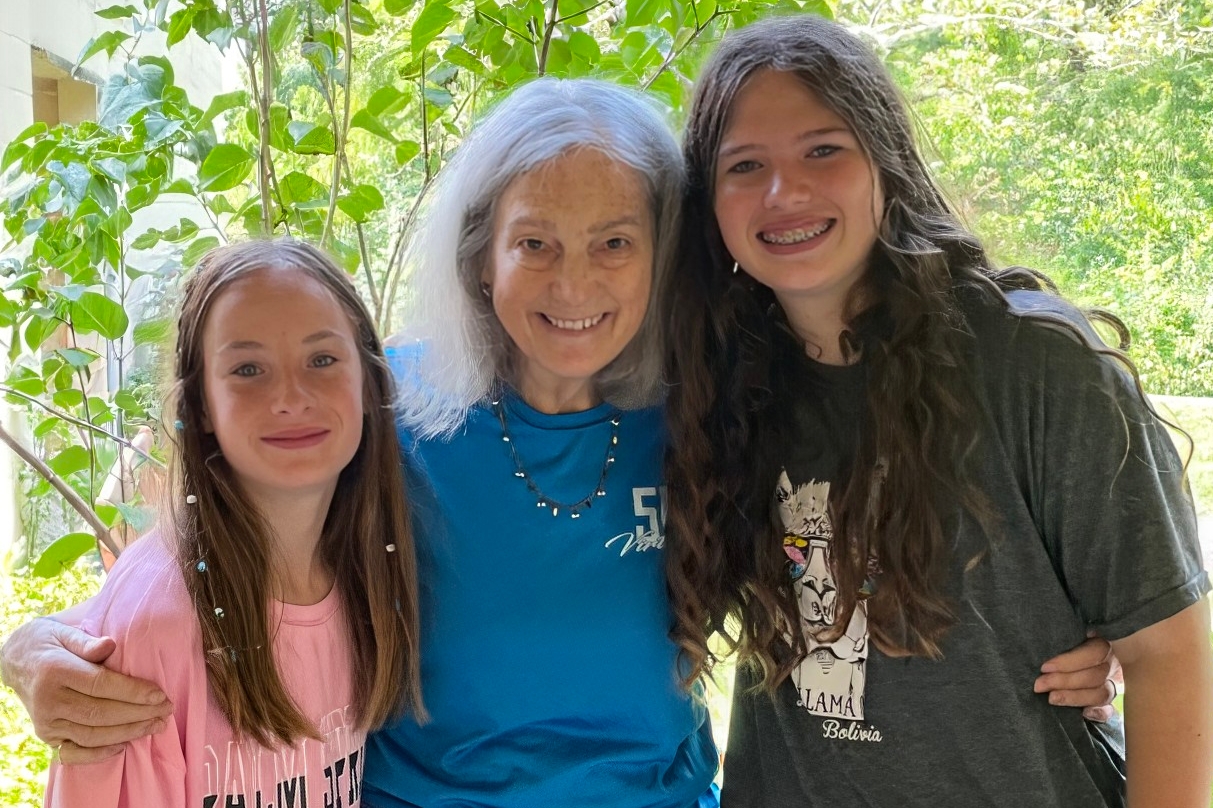
    Ms. Smith doted on her granddaughters.

    She mentored colleagues as she had been mentored and was a role model for fellow working mothers. “I watched her over and over again get up at 5 p.m. and walk out of the newsroom to get her son when he was young,” Rosenberg said. “Never mind what any of the boys in the room thought.”

    Virginia Ann Smith was born Oct. 26, 1950. She graduated from the old Eden Hall high school in Philadelphia and earned a bachelor’s degree in English at Manhattanville University in New York in 1972. In 1981, she earned a master of legal studies degree at Yale University Law School through a Ford Foundation fellowship for journalists.

    She married Alan Wiegand, and they had a son, Josh, and lived in East Falls. After a divorce, she married Randy Smith in 1985. He died in 2020, and she moved to Cathedral Village Retirement Community a few years ago.

    Ms. Smith was a great cook, friends said. They said she was funny, stubborn, and opinionated. She was so into gardens, her son said, that she visited him in Colorado specifically to renovate his garden.

    Ms. Smith poses with her husband, Randy, and her two granddaughters.

    She listened to classical music and danced at blues festivals. Everyone said she made them feel as if she was their best friend.

    “She was one of the most genuine people I’ve ever known,” said friend and former colleague Mari Schaefer. Friend and former colleague Mary Flannery said: “She was so creative and so brave.”

    Her son said: “She was the best. I don’t know how she did it. She wanted to do it all, and she did.”

    In addition to her son and her former husband, Ms. Smith is survived by two granddaughters, two brothers, and other relatives.

    A celebration of her life is to be held later.

    Donations in her name may be made to the Schuylkill Center, 8480 Hagys Mill Rd., Philadelphia, Pa. 19128.

    Ms. Smith tends to her garden’s black-eyed Susans in this photo.
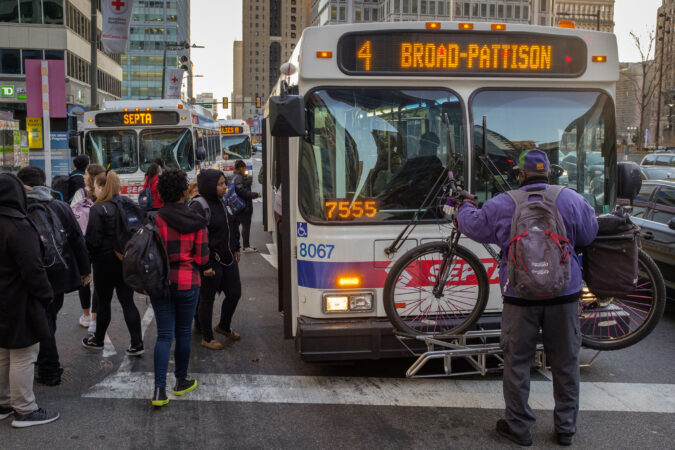
  • Free SEPTA fares for low-income riders could end next year. Advocates are pushing to save it.

    Free SEPTA fares for low-income riders could end next year. Advocates are pushing to save it.

    SEPTA’s 21.5% increase in transit fares and service cuts fell hardest on disadvantaged Philadelphians this year, showing an urgent need to make the city’s Zero Fare program permanent, City Councilmember Nicolas O’Rourke argues.

    He touted his proposal to dedicate 0.5% of the city budget each year to pay for the initiative that provides free SEPTA passes to people living in poverty.

    O’Rourke’s proposed Transit Access Fund would be written into the City Charter “so it can’t be yanked away at a moment’s notice when somebody wants to shift something around in the budget,” he told about 150 people in a town hall at the Friends Center on Cherry Street.

    O’Rourke, Democratic State Sen. Nikil Saval, and the advocacy group Transit Forward Philadelphia called the meeting to push for affordable public transportation and ways to sustainably fund SEPTA after Harrisburg’s failure to provide new state money for mass transit agencies.

    Their affordability agenda is in keeping with the message in Democratic wins for governor in New Jersey and Virginia, as well as Zohran Mamdani’s election as mayor of New York.

    A broad coalition and patience are needed in Pennsylvania, Saval said. ” Every major political win comes from months, years, sometimes decades, of work,” he said.

    Earlier this year, Mayor Cherelle L. Parker’s budget would have eliminated funding for Zero Fare, a two-year pilot program launched in 2023. Money was restored after backlash.

    “We pushed back hard,” said O’Rourke, a member of the Working Families Party. “People with the least income are paying a larger share of their money just to get around. That’s upside down.”

    Funding is not guaranteed after June 30, when the current budget expires, however.

    If enacted, a Transit Access Fund would generate an estimated $34 million in the 2026-2027 fiscal year, O’Rourke’s office calculates.

    That would generate enough money — between $20 million to $25 million, according to managers of the Zero Fare program — to give free SEPTA passes to 60,000 Philadelphians at or below the federal poverty standard.

    O’Rourke and his staff also are considering using the remaining $10 million to $14 million for matching grants to help businesses, landlords and housing developments to join the SEPTA Key Advantage program, which provides subsidized transit passes.

    People living at or below the federal poverty standard are eligible for the Zero Fare SEPTA passes. For 2025, that is $15,650 for an individual and $32,150 for a family of four.

    Philadelphia’s poverty rate was 19.7% in 2024, the latest figure available, according to the U.S. Census.

    To win sustainable state funding for SEPTA, activists need to break through the narrative that urban and rural areas of Pennsylvania are hopelessly divided on transit.

    This year, the Transit for All PA coalition campaigned for more state dollars for transit systems in every county of the state. About 45,000 people representing every legislative district participated.

    “When we’re made to feel like we’re on opposite sides of the fight, our numbers become smaller and we focus on the wrong targets,” said Saval.

    “It’s not the person in Schuylkill County frustrated about potholes and road conditions that’s to blame for lack of transit funding” he said. “That person deserves to get safely where they need to go, too.”

  • Sloomoo Institute, an immersive slime playground, is one of King of Prussia Mall’s new stores this holiday season

    Sloomoo Institute, an immersive slime playground, is one of King of Prussia Mall’s new stores this holiday season

    At the King of Prussia Mall, you can add some slime (the fun kind) to your holiday shopping experience this year.

    Fresh off the opening of the first-ever Netflix House, the Montgomery County mall this week welcomed the Sloomoo Institute’s first Philly-area location. The sensory slime experience’s latest outpost is called a Sloomoo MiniMoo, and it’s a scaled-down, 3,000-square-foot version of its flagship stores.

    For between $24 and $26 a person, King of Prussia Sloomoo customers can design their own slime, choosing from different textures, colors, scents, and charms. They can also smush slime onto the wall, send it flying through the air with a slingshot, go elbow-deep in vats of slime, and take slime-making classes.

    Guests can also browse slime toys and other squishy, sensory gifts at the Sloomoo retail store, no ticket required.

    “King of Prussia is a playground for families,” cofounder Sara Schiller said in a statement, “and we’re bringing a world of slime designed to spark curiosity and pure, unfiltered joy.”

    Customers play with slime at another Sloomoo Institute location. The King of Prussia Mall opened a Sloomoo MiniMoo experience this week.

    Sloomoo Institute was founded by Schiller and her friend Karen Robinovitz, who had rediscovered slime as a way to feel joy again after personal losses and hardships.

    They opened their first location in New York in 2019, went viral on TikTok during the pandemic, and then expanded nationwide, opening outposts in Atlanta, Chicago, Houston, and Los Angeles. A Sloomoo MiniMoo also recently opened in Boston.

    Earlier this year, the founders told CNBC that Sloomoo brings in as much as $4.3 million a month in revenue from ticket sales alone.

    A look inside the King of Prussia Mall’s Sloomoo MiniMoo experience, which opened this week ahead of Black Friday and the holiday shopping season.

    At King of Prussia, Sloomoo MiniMoo welcomed its first customers last weekend, but it will celebrate its grand opening this Saturday, when the first 200 ticketed customers will receive a complimentary hot chocolate and “limited-edition Philly Cheesesteak-themed slime,” according to company officials. The first 100 guests on Saturday will get a bag charm.

    Sloomoo is located next to H&M on the upper level of the Plaza by Eataly, the mall’s new Italian culinary experience.

    Other new stores, restaurants, and experiences at the King of Prussia Mall

    Crowds shopped at the King of Prussia Mall on Black Friday 2022.

    While some other Philly-area malls have struggled or died — and others are trying to reinvent themselves — King of Prussia Mall seems to be thriving.

    Aside from Sloomoo, the mall has welcomed several other new stores, restaurants, and interactive experiences since August. A few retailers, including Lululemon, Abercrombie & Fitch, and Mejuri, have also expanded or relocated.

    As holiday shopping season kicks into high gear, customers can check out the following new additions:

    The “misery-go-round” inside of “Wednesday: Eve of the Outcasts” at the Netflix House, which opened earlier this month at the King of Prussia Mall.

    Stores coming soon to the King of Prussia Mall

    Shoppers sit with their bags at the King of Prussia Mall on Black Friday 2022.

    If you’re doing holiday shopping later in the season, or taking a trip to the mall between Christmas and New Year’s, you might be able to visit the following stores. All of them are set to open their first Philadelphia-area locations this December:

    In early 2026, Adidas and Columbia Sportswear are set to open stores in the King of Prussia Mall. Exact locations for those stores have yet to be announced.

    Looking even further ahead, Level99 is set to open a 46,000-square-foot live social-gaming venue on the ground floor of the former JCPenney in 2027.

  • Temple marching band is preparing to go to New York for Macy’s Thanksgiving Day Parade

    Temple marching band is preparing to go to New York for Macy’s Thanksgiving Day Parade

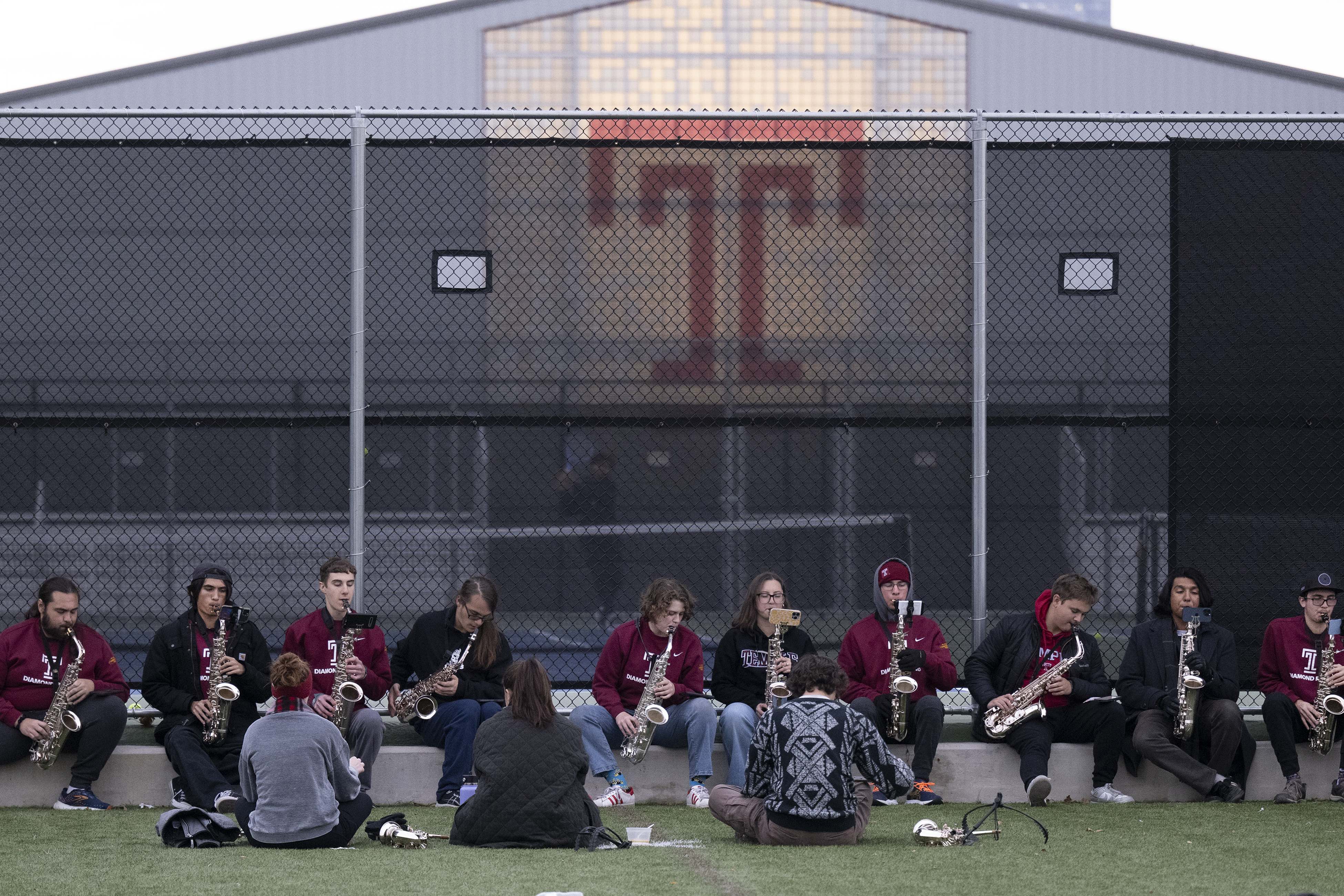
    As the pink of twilight peeked through the November clouds, Temple University’s Diamond Marching Band, instruments and flags in tote, practiced on the campus’ Geasey Field.

    They ran through selections by Taylor Swift and from the movie KPop Demon Hunters while athletic bands director Matthew Brunner studied their sound and formation from a scissor lift 25 feet in the air.

    “Notes should be long,” Brunner called out over a microphone after one selection. “Don’t try to play them too short.”

    There were few spectators that afternoon. But that’s about to change in a big way.

    The 200-member band is one of only 11 that have been selected to participate in the Macy’s Thanksgiving Day Parade in New York City. It’s a first for Temple, which will be the only band from Pennsylvania or New Jersey in this year’s parade. More than 30 million people likely will be watching from home and 3.5 million in person, if prior numbers are any indication.

    Members of the Temple University Marching Band prepare to practice. The band will perform in the Macy’s Thanksgiving Day Parade this year.

    That’s a lot of exposure for the Cherry and White, which could be a boost for recruitment and fundraising.

    “I can scarcely think of a better way to bring visibility to Temple,” said John Fry, Temple’s president.

    And that visibility could lead to more people visiting Temple’s website and seeing what the university has to offer, he said.

    “It’s going to be incredible for the university,” said Brunner, who initially announced Temple’s band had been selected for the parade in August 2024. “There’s no television event, other than the Super Bowl, that is bigger.”

    The excitement is palpable among students, some of whose families plan to attend the parade.

    “It’s a once-in-a-lifetime opportunity,” said Erin Flanagan, 21, who grew up watching the parade with her family and notes she wanted to march in it since she was 6. “I mean, the Macy’s parade is iconic.”

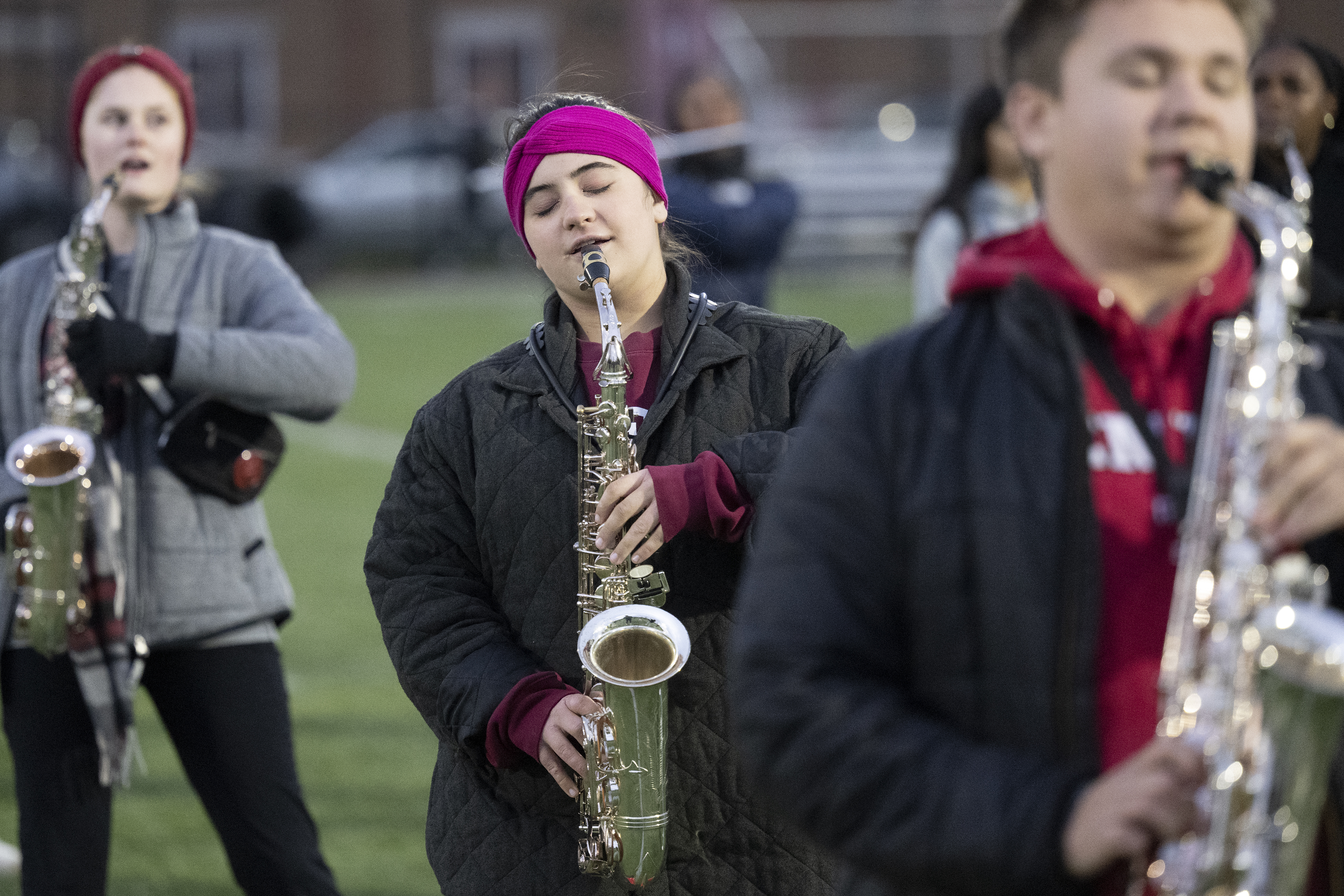
    Temple University alto saxophone player Erin Flanagan rehearses with the marching band.

    The music education major from Manasquan, N.J., who is a senior, said it likely will be her last performance with the band, and she could not have scripted it better.

    “I get to go to this awesome performance and just show everybody what Temple stands for,” said Flanagan, an alto saxophone section leader.

    It’s the 99th anniversary of the 2.5-mile parade, which kicks off about 8:30 a.m. on Thanksgiving Day on NBC and Peacock, hosted by Savannah Guthrie, Hoda Kotb, and Al Roker.

    Temple University tuba player Lorali Minde plays the tuba in the marching band.

    Lorali Minde, 18, a freshman from Levittown, will be marching while playing the tuba, a 36-pound instrument.

    “You kind of get used to it,” she said. “It’s like carrying a really heavy purse.”

    Brunner, who has led the marching band for 18 years, said he had applied to be in the parade several times before. It’s a competitive process, with more than 100 applicants vying for a spot. He had to submit video of a performance — he sent the 10-minute show the band did off the Barbie movie soundtrack — pictures of the band in uniform, reasons that Temple deserved a shot, and the band’s resume and biography.

    Matthew Brunner, athletic bands director, leads a practice in 2018.

    When his wife saw the Barbie show, Brunner said, she texted him: “That’s the show you need to send to Macy’s.”

    It proved a winner.

    “They loved the fact that the music we play is current,” he said.

    The honor comes at a special time for the band, which is celebrating its 100th anniversary. Brunner played that fact up in the application, too.

    Under Brunner, the band has grown and has been hitting high marks. Over the years, the school has been recognized as one of the top collegiate marching bands in the nation by USA Today and Rolling Stone, appeared on Good Morning America, The Tonight Show Starring Jimmy Fallon, and an episode of Madam Secretary, and was featured in two Hollywood movies, The Wolf of Wall Street, starring Leonardo DiCaprio, and the remake of Annie. Some of its performances have received millions of views on YouTube, including a 2018 performance of “Idol” by the K-pop group BTS, which currently has more than five million views on Ricky Swalm’s YouTube channel.

    The band includes a color guard, a baton twirler, brass and woodwind instruments, a drum line, and a dance team. The group typically practices three times a week for two hours at a time.

    Temple University Marching Band tuba players practice.

    “The band is infectious,” Brunner said. “When you see them perform, you can’t help but smile.”

    Students have been eying the parade opportunity for a while.

    When Flanagan was a sophomore, she asked Brunner point-blank: “When are we doing the Macy’s parade?”

    Recently, she and her roommates, also band members, have been counting down the days on a whiteboard.

    Brunner declined to say exactly what the band will perform on Thanksgiving, but promised a mix of holiday, audience participation, and Temple songs.

    “We’re hoping for no wind,” he said.

    Temple University Marching Band Color Guard Captain Abigail Rosen practices with her flag.

    Abigail Rosen, color guard captain, and her cocaptain are planning an “epic toss” of their flags over other band members, and wind could hinder it, he explained.

    “It’s an exchange toss,” said Rosen, 20, a junior advertising major from Abington. “So I toss my flag to Dana [Samuelson] and she tosses her flag to me, and we catch each other’s flags.”

    Bands selected received $10,000 from the retailer, which Temple officials said helped them get started on fundraising to pay for the trip.

    The band will be heading to New York on Tuesday for an alumni event, then a performance on the Today show Wednesday. Band members will be up in the wee hours of the morning Thursday for a rehearsal, and after the parade, they will be treated by the school to a Thanksgiving dinner cruise along the Hudson River.

    Andrew Malick, 20, a music education major from Carlisle, Pa., who plays the tuba, can’t wait.

    “It will be cool to say you’ve done it for the rest of your life,” he said.

    Jeremiah Murrell, a freshman trumpet player from Savannah, GA, rehearses with the Temple University Marching Band Thursday, Nov. 13, 2025.
  • A South Jersey woman will spend 8 years in prison for siphoning money from a nonprofit

    A South Jersey woman will spend 8 years in prison for siphoning money from a nonprofit

    The former chief financial officer of a Burlington County nonprofit was sentenced to eight years in state prison for stealing $2.5 million from the company for personal expenses, including settling her credit card debt and buying vacation homes and a Corvette Stingray sports car, officials said Thursday.

    Colleen Witten, 56, of Buena, Atlantic County, pleaded guilty in June to theft, money laundering, and tax evasion for the scheme, which took place during her time as an executive with OTC Services, a company that provides job training for adults with disabilities.

    New Jersey State Attorney General Matthew Platkin said Witten’s prosecution reflects his office’s “unbreakable commitment to pursue justice for victims and hold accountable those who abuse their positions of trust to commit crimes.”

    Witten’s attorney, Brendan Kavanagh, did not immediately return a request for comment.

    Prosecutors said Witten altered corporate board meeting minutes to give herself the authority to open a company bank account, and then used the account to siphon money between May 2019 and March 2024.

    She disguised the theft by laundering the money through checks issued to a landscaping business she owned with her husband, and the couple failed to pay taxes on these funds.

    Witten’s husband, Allan, pleaded guilty earlier this year to one count of receiving stolen property for accepting money from the nonprofit for work he knew his business did not perform. He was sentenced to three years in state prison.

  • Haverford College president to step down in 2027

    Haverford College president to step down in 2027

    Haverford College president Wendy Raymond announced she will retire in June 2027, and the college plans to launch a search for her replacement early in the new year.

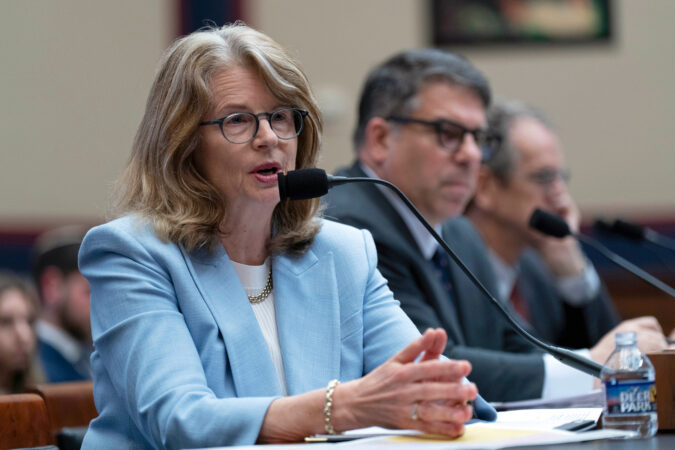
    The announcement comes after a particularly difficult year for the college and Raymond, who faced intense grilling in May by a Republican-led congressional committee probing antisemitism complaints on college campuses. The school also is under investigation by the U.S. Department of Education over its handling of antisemitism complaints.

    “This was not an easy decision, but after more than three decades in higher education, I am ready to step away from academia,” Raymond said in her message to campus.

    Her news comes just two days after she announced John McKnight, the dean of the college, would be leaving in June for a new role at Dartmouth College.

    Raymond said she wanted to give the college’s board of managers time to search for a replacement.

    Raymond, 65, a molecular biologist, became president of the 1,470-student liberal arts college on the Main Line in July 2019. She came to Haverford from Davidson College in North Carolina, where she had been vice president for academic affairs and dean of faculty.

    She has been in the job longer than her three most recent predecessors, Kim Benston, who served four years; Daniel Weiss, who was there two; and Stephen G. Emerson, who had four years.

    In her announcement, she noted accomplishments including the completion of a strategic plan, efforts to advance diversity, equity, and access, the launch of the Institute for Ethical Leadership and Inquiry named for board chair Michael B. Kim, and the new recital hall.

    She also acknowledged challenges, including the pandemic, the strike for racial justice in 2020 in which students refused to attend class and demanded that Haverford do more to support its Black and brown students, and “more recent times of social unrest and public scrutiny.”

    Raymond earlier this year in a message to the campus acknowledged that she “came up short” in dealing with conflict over antisemitism complaints and said both she and Haverford can do better.

    “To Jewish members of our community who felt as if the College was not there for you, I am sorry that my actions and my leadership let you down,” she said in that message.

    Haverford was the only local college earlier this year to receive an F on a report card by the Anti-Defamation League for its response to antisemitism — a rating given to less than 10% of schools nationwide. The ADL’s methodology for categorizing antisemitism has been questioned, and critics have argued that criticism of the state of Israel and its government have been wrongly conflated with antisemitism.

    But the F rating caught the attention of the congressional Committee on Education and Workforce, which called on Raymond and two other college presidents to testify in May. Raymond took the worst of the grilling, largely because she was reluctant to answer questions about discipline for alleged antisemitism, especially in specific cases. Raymond testified that the college does not release data on student suspensions and expulsions.

    In June, the committee demanded answers about faculty and student discipline. And in August, the education department, which has launched a flurry of investigations of colleges regarding antisemitism, said it would probe Haverford.

    The investigation follows “credible reports that Haverford has failed to respond as required by law to multiple incidents of discrimination and harassment against Jewish and Israeli students on its campus,” the department said at the time.

    In her testimony to the congressional committee, Raymond noted the college had made a plethora of changes to address concerns about antisemitism, including changes in the antibias policy and rules around protesting, steps to revise the honor code, and increases in campus safety at events.

    Kim, the board chair, thanked Raymond for her service amid a difficult time in a message to campus Thursday.

    “She has guided the College with great care during periods of both remarkable growth and significant challenge,” he said. “During her tenure, Haverford has welcomed two of its largest incoming classes, increased support for student resources, access, and engagement, and continued to graduate students who use their liberal arts education to effect positive change in the world.”

    Raymond said in her Thursday message that through the challenges, “ … the College has remained strong and resolute in its mission to foster a campus culture of belonging and respect, where academic freedom and freedom of expression remain fundamental to Haverford’s nearly 200 years of academic excellence and open inquiry, and where our values guide us through new territory.”

  • Former Central Bucks superintendent and principal appeal their terminations over handling of abuse allegations

    Former Central Bucks superintendent and principal appeal their terminations over handling of abuse allegations

    Former Central Bucks School District Superintendent Steven Yanni and former Jamison Elementary School principal David Heineman have appealed their terminations by the school board over their handling of abuse allegations in an autistic support classroom.

    The Central Bucks school board voted to terminate the duo last month, nearly a year after a classroom aide reported the alleged abuse.

    A report from the watchdog group Disability Rights Pennsylvania released in April found that students were illegally restrained, creating a “reasonable likelihood of bodily injury” and likely interfering with their breathing.

    The school board initially stood by the district’s leadership, but members’ tune shifted after the report’s publication. Yanni and Heineman were placed on leave the following day, and a two-day termination hearing was held in August.

    Yanni, who has accepted a position as the CEO of Northwood Academy charter school in Philadelphia, filed his appeal Monday in Bucks County Court.

    The filing rehashes the arguments Yanni made during the August hearing, including that he did not make an immediate report to ChildLine, Pennsylvania’s reporting system for child abuse or neglect, because he relied on the assessment of district officials during an internal investigation.

    Yanni’s appeal also says he did not remove the accused teacher and educational assistant from the classroom because the members of his leadership team closest to the investigation told him there was no reason to suspect abuse.

    The 139-page court filing attacks the termination hearing process and calls the school board biased. It notes that board member Jim Pepper‘s son was one of the alleged victims of abuse.

    Pepper recused himself from the hearing and other votes related to the investigation, but the appeal alleges that “he actively participated in the Board’s investigation and disciplinary actions and made public allegations.”

    Pepper declined to comment.

    “For almost a year now, there has been inaccurate and defamatory information shared about me,” Yanni said in a statement. “My appeal corrects the record and clearly articulates the truth around the Jamison situation.”

    The Central Bucks School District said it would not comment on the case because it is active litigation.

    Heineman, meanwhile, challenged his termination Oct. 29 by filing a petition through the Pennsylvania Department of Education’s tenure appeal process, according to a copy of his appeal obtained by The Inquirer. That process, unlike Yanni’s appeal in court, is private.

    The former principal accuses the board of terminating him after 26 years as a district employee over a series of “unproven allegations” that were made at his termination hearing.

    These include the notion that as principal he created a “chilling effect” that deterred staff from making reports to ChildLine, and that he threatened to fire the classroom aide for making the allegations.

    Heineman‘s petition notes that in the days after the allegations of abuse were made, the district’s leadership “unanimously agreed that there was no abuse, and no need to make a ChildLine report.”

    Heineman also says that there is no basis to the way he was characterized during the termination hearings.

    “CBSD’s allegation that Mr. Heineman ‘does not care about children’ carries no support in the record, and appears to be, once more, inflammatory rhetoric made more for the public than for purposes of meeting CBSD’s burden to terminate Mr. Heineman,” the petition says.

    Central Bucks also declined to comment on Heineman’s appeal. The attorney representing Heineman did not immediately respond to a request for comment.

    The school district responded to the petition this week, according to a copy of the filing obtained by The Inquirer that denies most of Heineman’s claims and stands by the termination decision.

    As for the allegation that the top leadership of the school concluded that there was no abuse before making a ChildLine report, Central Bucks says, “regrettably admitted.”

  • Head of Delco nonprofit traded cash for sexual favors from women in addiction, DA says

    Head of Delco nonprofit traded cash for sexual favors from women in addiction, DA says

    After losing his son to a heroin overdose in 2017, Lawrence Arata devoted his life to helping people in addiction, founded an Upper Darby nonprofit to further that mission, and even ran a failed congressional campaign in which the opioid crisis was his tent-pole cause.

    But behind the scenes, prosecutors in Delaware County said Wednesday, Arata twisted that mission, trading cash, gift cards, and other services from his nonprofit, the Opioid Crisis Action Network, for sexual favors from women who were desperate for help.

    One woman told investigators that she saw the relationship as transactional: “He had what I needed, and I had what he needed,” she said, according to court filings.

    Arata, 65, has been charged with trafficking in individuals and patronizing prostitutes, as well as witness intimidation for trying to coerce some of the women he victimized to recant their statements to police, court records show.

    Arata, of Villas, Cape May County, was freed after posting 10% of $500,000 bail.

    His attorney, Ronald Greenblatt, said Arata had done nothing wrong.

    “The evidence that will come out in court will show his innocence,” he said. “Mr. Arata is a pillar of the community who turned the personal tragedy of losing his son to a drug overdose into a career of helping people.”

    Delaware County District Attorney Jack Stollsteimer, in announcing the charges, said Arata “cynically and cruelly” misused opioid settlement funds to “satisfy his sexual desires.”

    “I want to thank the courageous women in recovery who fell victim to Mr. Arata, as well as those working to help others find their way into recovery, for having the courage to come forward and trust law enforcement to stop this predator,” Stollsteimer said. “We heard you and we support you.”

    Stollsteimer said he believes other people may have been victimized by Arata and urged them to contact his office.

    Investigators learned of Arata’s alleged crimes in August, when a former program director at his nonprofit gave a statement to Upper Darby police, according to the affidavit of probable cause for his arrest.

    The woman said Arata behaved inappropriately with his clients, kissed, them, touched them, and asked them to stay in hotel rooms with him. Some of the clients left the program because his behavior made them uncomfortable, she said, and she resigned from her position because of similar concerns.

    Detectives later interviewed one of the women Arata had initiated a relationship with. She said that during one encounter in 2024, Arata approached her after a group meeting and said she “looked like she could keep a secret.”

    At the time, the woman said, the weather had started to turn cold and, in need of a coat, she agreed to perform oral sex on Arata inside his car in exchange for gift cards. The woman told police she could not refuse, because she needed the benefits offered by OCAN to survive.

    The woman said she saw Arata again in March, when he was doing outreach on 69th Street in Upper Darby. Hungry and in need of resources, she told police, she approached Arata and again performed oral sex on him inside his car.

    Another woman, who lives in Atlantic City, said she and Arata had a yearslong sexual relationship. Arata met the woman while she was living in a recovery house in Chester, and she told him about her years of addiction and the time she spent as a sex worker in order to survive.

    Arata began trading gift cards and cash for sex with the woman, she told police. Later, when she returned to Atlantic City, she said, Arata continued their relationship.

    The woman said she needed the cash and gift cards to survive, and saw the arrangement as mutually beneficial. Earlier this month, Arata texted her from an unfamiliar phone number, saying police had confiscated his cell phone and urging her not to speak with investigators.

    But Arata didn’t just assault women in recovery, police said. A therapist who worked for his organization said Arata repeatedly told her she was beautiful, asked her to visit his hotel room in Chester, and once kissed her against her will.

    Later, after police had begun to investigate Arata, he pulled the woman aside, accused her of making “false allegations” against him, and demanded she retract her statement, authorities said.

    Other employees of OCAN said they had raised concerns to Arata about his methods, saying the repeated use of gift cards as an incentive to clients felt tantamount to a bribe, the affidavit said. He ignored or dismissed those concerns.

    Arata told The Inquirer in 2017 that the death of his son, Brendan, inspired him to raise awareness on the lack of resources for people in active addiction.

    “Getting very busy on this issue was a way for me to deal with my grief,” Arata said. “This is not a partisan issue. This disease has killed Republicans and Democrats.”

    Arata ran unsuccessfully for Pennsylvania’s Fifth Congressional District seat in 2018 as a Democrat, receiving just 925 votes.

  • Lower Merion bans gas-powered leaf blowers, but not without pushback

    Lower Merion bans gas-powered leaf blowers, but not without pushback

    Gas-powered leaf blowers will be banned in Lower Merion starting in 2029.

    The Montgomery County township on Wednesday became the first in Pennsylvania to ban gas-powered leaf blowers, commissioners said, taking a phased approach that will begin with a seasonal prohibition and transition to an all-out ban over the next four years.

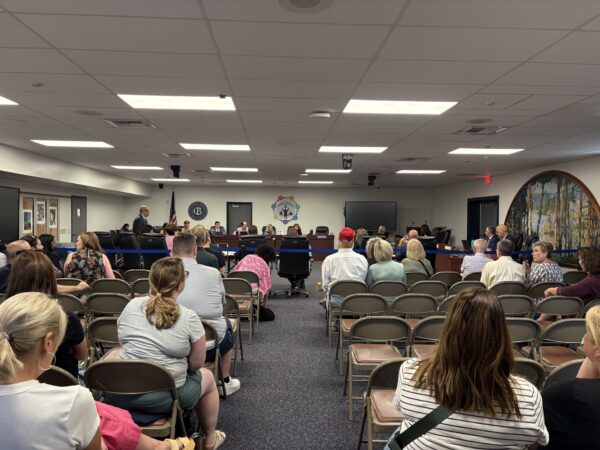
    “Together, we will bring us a step closer to providing our residents the right to clean air, pure water, and to the preservation of the natural, scenic, historic, and aesthetic values of the environment as guaranteed by the Pennsylvania Constitution,” Commissioner Gilda Kramer said, addressing a packed house of attendees at the board meeting.

    The commissioners passed the ordinance 10-4.

    Starting on June 1, 2026, gas-powered leaf blowers will be banned seasonally during the summer (June 1-Oct. 1) and winter (Jan. 1-April 1). The use of portable generators to power electric leaf blowers or charge their batteries will also be banned.

    Starting on Jan. 1, 2028, the use of gas-powered leaf blowers will be permitted only during the fall. They will be banned from Jan. 1 to Oct. 1.

    On Jan. 1, 2029, a full-fledged ban will take effect.

    Residents will still be able to use gas-powered leaf blowers during snowfall and within 24 hours after snow has ceased to fall.

    Similar bans have taken effect in Montclair, N.J.; Montgomery County, Md.; Burlington, Vt.; and Evanston, Ill. The City of Philadelphia and Swarthmore tried for similar bans, but those ordinances did not pass.

    Dozens of residents testified in favor of the ban, citing the noise pollution, environmental impacts, and health consequences associated with the use of gas-powered leaf blowers. One third grader presented a petition with 141 signatures collected at Penn Valley Elementary School.

    While the majority of commissioners characterized the ordinance as a step in the right direction — one that prioritizes safety and environmental health — others dissented, warning that the electric leaf blower technology is not currently strong enough to supplant gas-powered blowers and that the costs of the transition are still unknown.

    “The ordinance that we’re considering tonight is based on an aspiration that the technology is going to be there,” Commissioner Joshua Grimes said. “Right now, staff has told us it is not there. Staff has not told us when it will be there, and no one knows when it’s gonna be there.”

    An amendment to implement a seasonal ban only, not a full ban, failed. The amendment was brought by Commissioner Daniel Bernheim.

    Board President Todd Sinai said that while electric leaf blower technology is not yet fully advanced, the ordinance should be seen as Lower Merion setting ambitious, and important, goals for the future.

    “Some town has to go first. Some town has to be the one that is the starting point for all the other municipalities to coalesce around,” Sinai said. “… If we have to backfill things because we’ve discovered things that are friction points, we will fix them, but at least let’s set an objective and try to accomplish it.”

    Commissioners Bernheim, Grimes, Louis Rossman, and Scott Zelov voted against the ordinance.

    This suburban content is produced with support from the Leslie Miller and Richard Worley Foundation and The Lenfest Institute for Journalism. Editorial content is created independently of the project donors. Gifts to support The Inquirer’s high-impact journalism can be made at inquirer.com/donate. A list of Lenfest Institute donors can be found at lenfestinstitute.org/supporters.

  • The township changes you may want to brace for | Inquirer Lower Merion

    The township changes you may want to brace for | Inquirer Lower Merion

    Hi, Lower Merion! 👋

    Could the township see its first parking meter rate hike since 1999? The change is one of several ordinances considered at last night’s township meeting. Also, meet two Rhodes scholars with local ties, and catch up on the latest in the push to merge Lower Merion’s two high school football teams.

    If someone forwarded you this email, sign up for free here.

    Parking meter rates may be going up for the first time since 1999

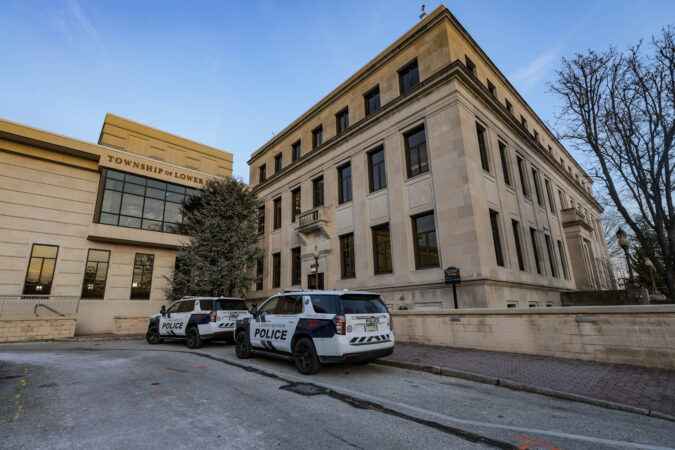
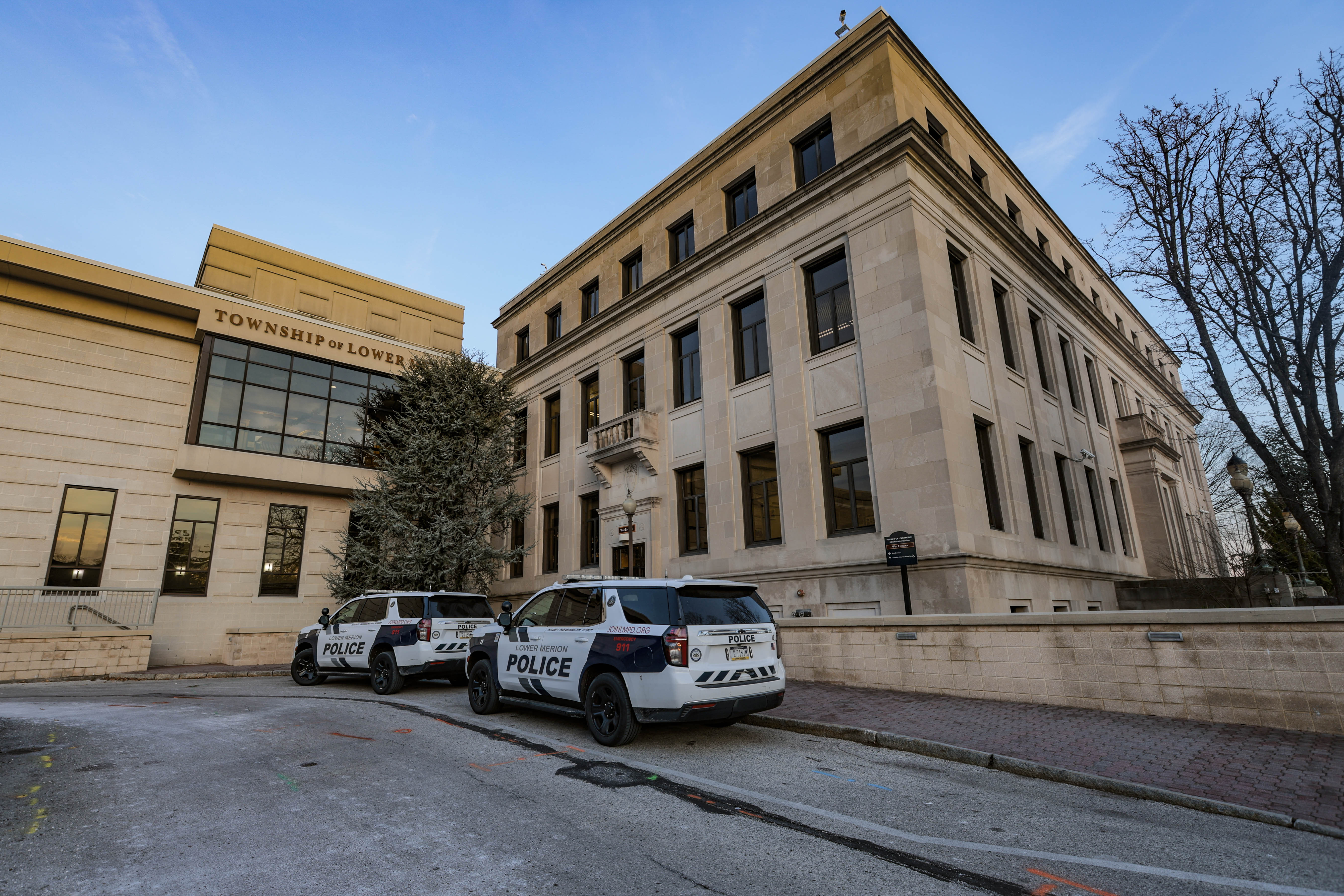
    Lower Merion Township’s administrative building. The township’s board of commissioners is set to raise parking meter rates, reduce the speed limit on a main artery, and regulate vape and smoke shops in upcoming votes.

    Lower Merion residents may want to brace for a few adjustments on the horizon, including a lower speed limit on parts of Lancaster Avenue and new rules surrounding where smoke and vape shops can operate.

    Township commissioners considered multiple ordinances at their meeting last night, including the speed limit reduction and a proposal that would up the cost of parking in the township for the first time in 25 years, potentially generating around $900,000 annually.

    Read the latest updates from reporter Denali Sagner here.

    💡 Community News

    🏫 Schools Briefing

    • In case you missed it, Lower Merion Superintendent Frank Ranelli made an official recommendation during a recent school board meeting not to merge the district’s football programs. The move comes amid a push from parents to combine teams. A school spokesperson said any further action or vote on a potential football merger would be the school board’s decision.
    • Harriton is hosting a “High School Family Workshop Night” on Monday. It kicks off at 6:30 p.m.
    • Harriton High School’s boys soccer team recently won its first-ever Central Athletic League title, as well as the PIAA District One 3A title, before advancing to the state semifinals, where the team lost to Abington Heights.
    • Today is picture retake day. Also, the book fair continues today and tomorrow at Bala Cynwyd Middle School. And tonight, the high schools kick off their fall plays. Harriton is performing Clue, which runs through Saturday, while Lower Merion High is putting on Legally Blonde, which is on until Sunday. Reminder for families: Elementary and middle school students don’t have class on Tuesday, and all students are out on Wednesday. The district is closed next Thursday and Friday for Thanksgiving. See the full calendar here.

    🍽️ On our Plate

    🎳 Things to Do

    🤠 Barn Dance: Brush up on your dancing skills or learn some new steps at this event. ⏰ Friday, Nov. 21, 6:30-9 p.m. 💵 $25 📍 Riverbend Environmental Education Center

    🎁 BHL Holiday Market: Belmont Hills Library is hosting the first of three holiday markets this weekend, where you can shop goods from local artisans. ⏰ Saturday, Nov. 22, 2-7 p.m. 💵 Pay as you go 📍 Belmont Hills Library

    🧙‍♀️ Let’s Celebrate the Opening of Wicked: For Good: Kids ages 5 to 12 can make themed edible crafts inspired by Elphaba and Glinda. ⏰ Sunday, Nov. 23, 4-5 p.m. 💵 $21.20 📍 The Candy Lab

    🦕 Movie Matinee: Catch a screening of The Land Before Time at the library. Registration is required. ⏰ Tuesday, Nov. 25, 1-3 p.m. 💵 Free 📍 Penn Wynne Library

    🍂 Fall Cornucopia Creations: Create your own Thanksgiving centerpiece. ⏰ Tuesday, Nov. 25, 6-7:30 p.m. 💵 $95 📍 Plant 4 Good

    🚗 Worth the Drive: A Longwood Christmas: Longwood Gardens’ annual holiday display kicks off tomorrow and runs through early January. This year’s theme is inspired by jewels and gems. ⏰ Friday, Nov. 21-Sunday, Jan. 11, 10 a.m.-11 p.m. 💵 $25 for kids 5-18, $45 for adults 19 and older, free for members and kids under 5📍 Longwood Gardens

    🏡 On the Market

    Luxury and privacy in Bryn Mawr

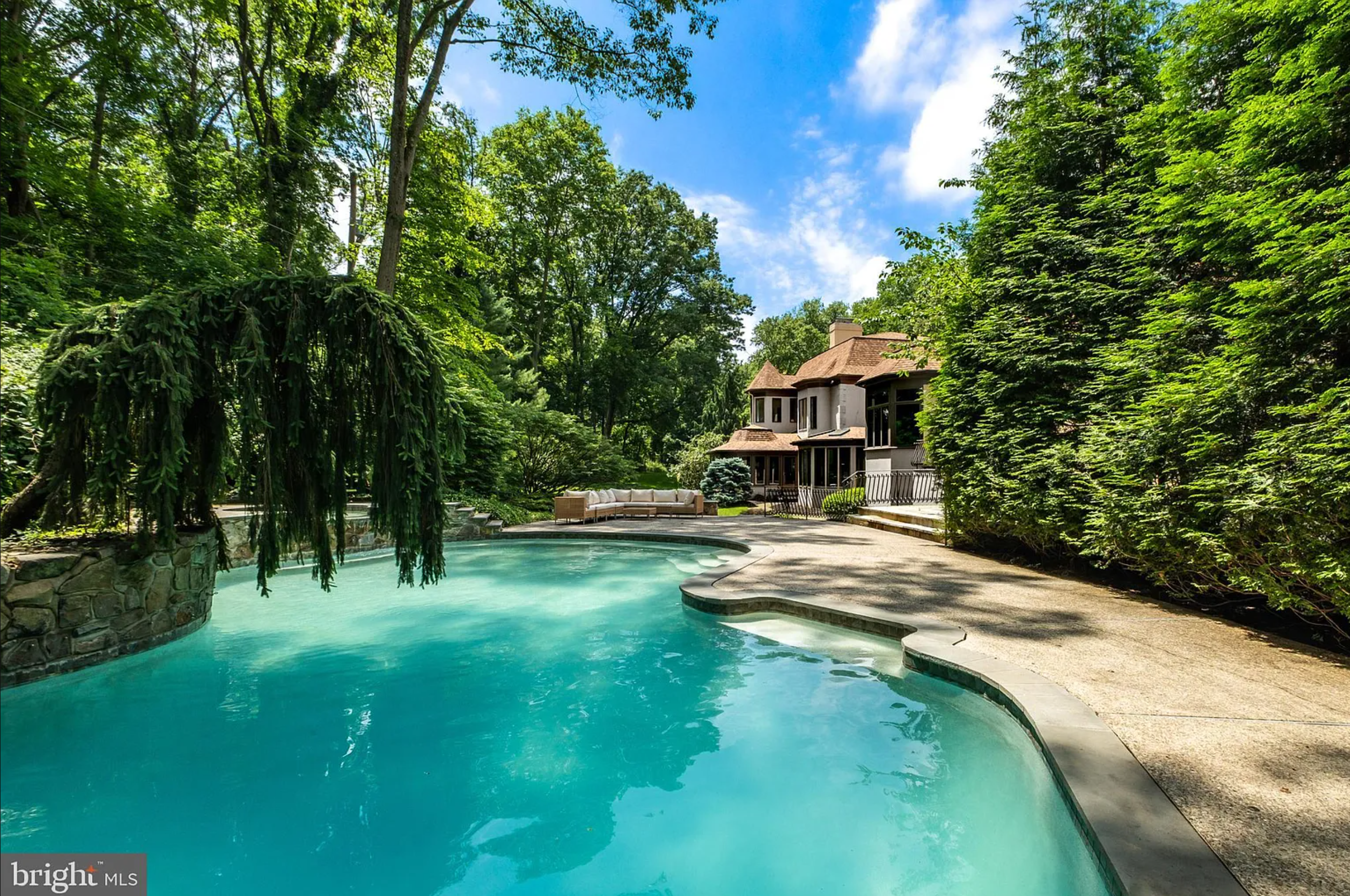
    1075 Green Valley Road in Bryn Mawr is listed for $3.25 million.

    This sprawling, nearly 8,000-square-foot gated estate in Bryn Mawr boasts five bedrooms and five-and-a-half bathrooms. Among its highlights? A sweeping staircase, gym, sauna, wine cellar, and lagoon-style pool.

    See more photos of the property here.

    Price: $3,250,000 | Size: 7,931 | Acreage: 1.61

    🗞️ What other Lower Merion residents are reading this week:

    By submitting your written, visual, and/or audio contributions, you agree to The Inquirer’s Terms of Use, including the grant of rights in Section 10.

    This suburban content is produced with support from the Leslie Miller and Richard Worley Foundation and The Lenfest Institute for Journalism. Editorial content is created independently of the project donors. Gifts to support The Inquirer’s high-impact journalism can be made at inquirer.com/donate. A list of Lenfest Institute donors can be found at lenfestinstitute.org/supporters.