Category: Pennsylvania News

  • Trump administration jails migrant teens in Pa. facility known for child abuse

    Trump administration jails migrant teens in Pa. facility known for child abuse

    MORGANTOWN, Pa. — The Trump administration says it is focused on protecting unaccompanied migrant children. It imposed strict new background checks on those seeking custody of young migrants and cut ties with a chain of youth shelters accused of subjecting children in its care to pervasive sexual abuse.

    “This administration is working fearlessly to end the tragedy of human trafficking and other abuses of unaccompanied alien children who enter the country illegally,” said Health Secretary Robert F. Kennedy Jr., who oversees the Office of Refugee Resettlement, or ORR, which cares for unaccompanied migrant children.

    But for the last three months, that office has also locked some teenage migrant boys inside a secure juvenile prison about 50 miles west of Philadelphia with a long and publicly documented history of staff physically and sexually abusing juvenile offenders in its care, a Washington Post investigation has found.
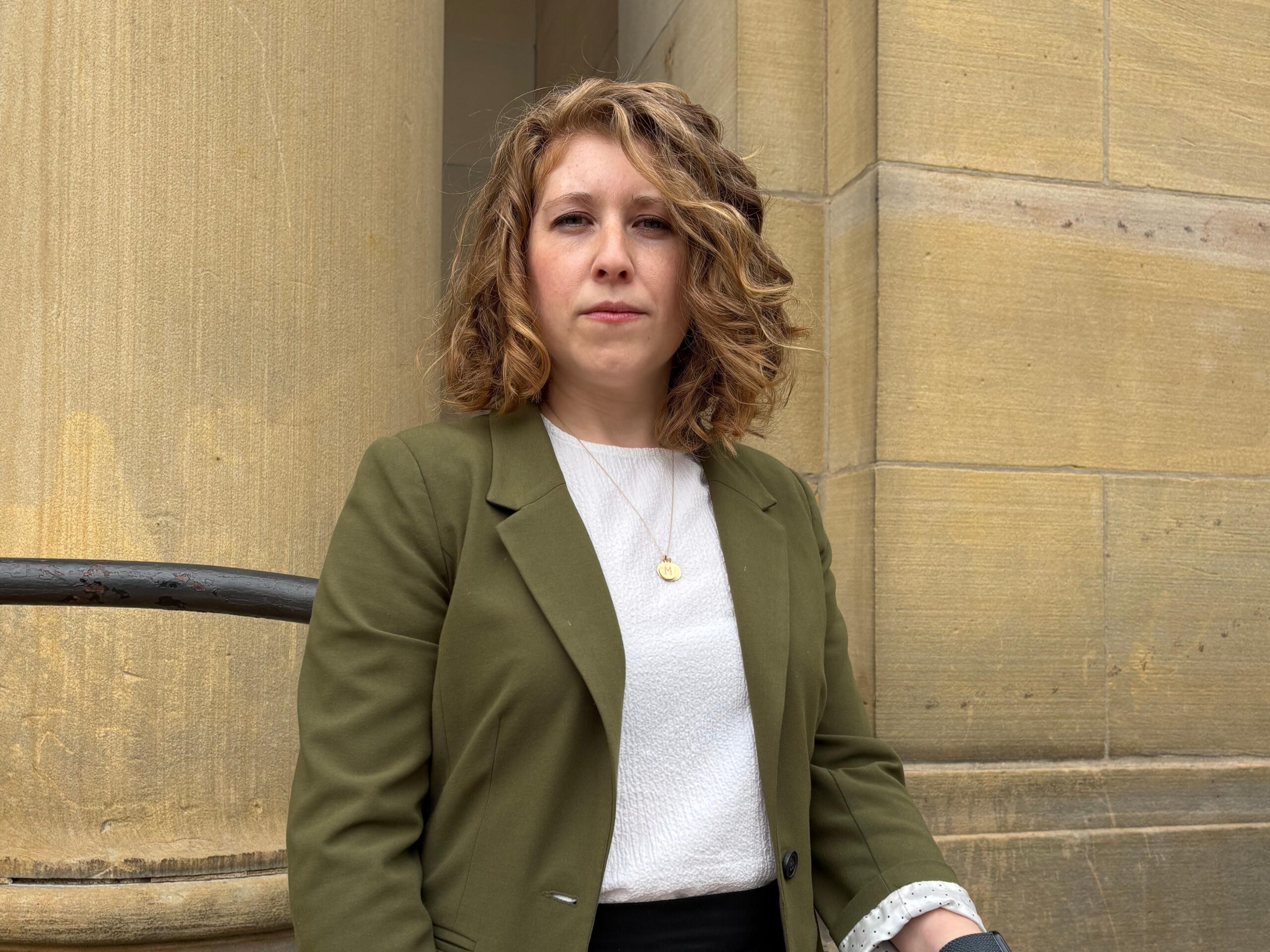
    “ORR is sending children to a juvenile detention center who should not be there,” said Becky Wolozin, a senior attorney at National Center for Youth Law.

    ORR awarded $9 million to Abraxas Alliance in August to hold up to 30 young immigrants deemed a danger to themselves or others in its facility in Morgantown, Berks County. At various times since early October, between five and eight migrant teenage boys have been held inside a dedicated wing of the juvenile detention center, sleeping inside locked cells the size of walk-in closets, according to lawyers who met with them.

    Pennsylvania state inspectors have documented at least 15 incidents since 2013 in which they said staff physically mistreated minors at the Morgantown facility, which holds principally juveniles facing or convicted of criminal offenses. In at least two incidents, officials documented allegations of staff sexually harassing or sexually abusing young residents. The most recent reported abuse occurred in November.

    In a lawsuit filed in 2024, six former residents of the facility allege they were sexually abused by staff between 2007 and 2016, accusing management of enabling a “culture of abuse.”

    A spokesperson for Abraxas Alliance, the Pittsburgh nonprofit that operates the facility, did not respond to a long list of questions about its treatment of children. After some of the incidents cited by inspectors, Abraxas suspended or fired staff members and submitted correction plans to state regulators, promising to retrain workers on proper restraining techniques and install more surveillance cameras.

    ORR has wide latitude over the types of facilities it uses to house children, though federal rules require it to use “the least restrictive setting that is in the best interests of the child.” The rules say ORR may place minors in secure facilities if they have been charged with a crime, or if the agency determines they could harm themselves or others.

    HHS spokesman Andrew Nixon said decisions on where to place migrant children “are based on each child’s specific circumstances, behavior-based risk assessments, and legal criteria.” All the teens at the Morgantown facility were provided a notice with “specific details as to why they are placed there,” he added.

    Some of the migrant boys have no pending criminal charges, and several have parents or close relatives in the U.S. asking to be reunited with them, said Becky Wolozin, a senior attorney at National Center for Youth Law who visited the facility and spoke to some of the boys in November.

    The Post was unable to identify any of the boys or verify Wolozin’s claims about their circumstances, because neither their immigration lawyers nor government officials would share details about their cases due to strict rules protecting the records of minors.

    License revoked

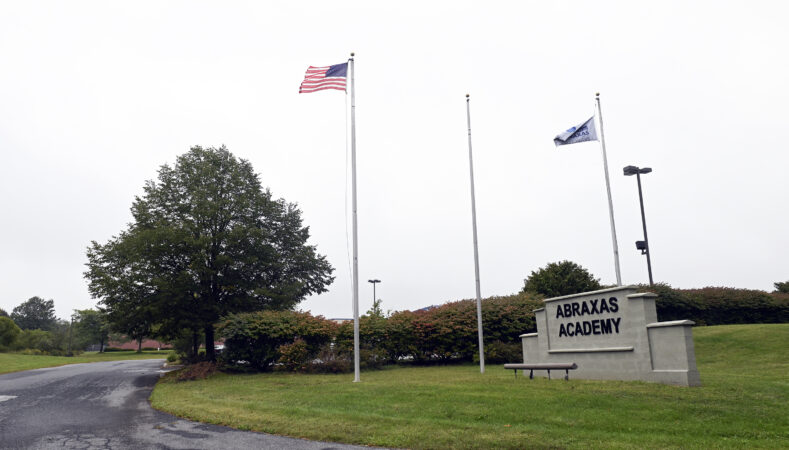
    In November, Pennsylvania revoked one of the three licenses held by different units within the Morgantown facility, Abraxas Academy. The state accused Abraxas of “gross incompetence, negligence, and misconduct” following a Nov. 4 incident of staff violence against a child, state records show. According to those documents, a staff member put his hand on a child’s neck and shoved his face into a table, an incident the facility’s operator did not report to local authorities.

    Ali Fogarty, a spokeswoman for Pennsylvania’s Department of Human Services, said state law prevented her from commenting on the incident, including whether the child was a migrant placed by ORR or another juvenile held in the facility. The state increased its monitoring of the Morgantown facility and reduced its maximum capacity under one license by 25 residents while the company appeals the revocation. Its two other licenses were unaffected, and it is still permitted to hold more than 100 individuals, Fogarty said.

    Nixon, the HHS spokesman, said ORR “will make any necessary adjustments to its use of the facility based on the outcome of the state’s licensing process” and its own review of the incident, adding that “ORR has zero tolerance for sexual abuse and harassment of children in our care.”

    The problems at the nation’s only secure jail for migrant youths are unfolding as the Trump administration pushes measures it says are aimed at safeguarding the 2,300 unaccompanied migrant children in its custody, as well as those it releases to sponsors within the country.

    In March, ORR ended its use of shelters operated by Southwest Keys — a Texas nonprofit which the Justice Department sued in 2024, alleging its workers repeatedly sexually abused children in the nonprofit’s shelters from 2015 to at least 2023. The company said in a 2024 statement that the lawsuit did not “present the accurate picture of the care and commitment our employees provide to the youth and children.” The department dropped the lawsuit last year.

    Around the same time, ORR also began requiring people to provide income documents and submit to DNA testing, fingerprinting and interviews before regaining custody of young migrants, including their own children, which agency officials say will help ensure they are not being claimed by traffickers.

    The Trump administration said President Joe Biden had released tens of thousands migrant children to sponsors with little or no vetting, including to some adults with a history of violent crimes. U.S. Immigration and Customs Enforcement says it’s enlisting the help of local law enforcement agencies to locate the children and verify their safety.

    Jen Smyers, a former deputy director of ORR under Biden, said this population has faced abuse for decades, across several administrations. She said stricter vetting cannot always prevent mistreatment.

    Partly as a result of the Trump administration’s new vetting procedures, the average child remains in ORR custody about six months — nearly three times longer than at the beginning of 2025, government data shows.

    A history of abuse allegations

    By jailing migrant children in a secure detention center, especially one with a recent history of abuse, the administration is exposing these young people to some of the same risks it says it wants to eliminate, said Jonathan White, a former career HHS official who managed the unaccompanied children program during part of Trump’s first term.

    Under any previous administration, a track record of physical or sexual abuse would be “instantly disqualifying” for federal contracts involving the care of minors, White said. “This is the kind of thing under Republican and Democratic administrations you terminate existing grants for — you don’t give new grants to places like that.”

    Abraxas Academy, part of a chain of 10 youth detention and treatment centers, holds dozens of teenage boys from surrounding areas, many of whom are serving sentences for violent crimes or awaiting court hearings. Rob Monzon, a former director of the Morgantown facility, calls it “the most extreme setting in juvenile detention.” Its young inmates, some who claim to be from gangs, frequently lash out at one another, vandalize the building and attack staff members, he said.

    State inspection records show that staff members have at times responded with violence.

    One staff member “picked up [a child] by the shirt and threw the child to the ground, holding the child down with a knee, and banging the child into the wall,” a 2013 report on the state’s website said. Another threw punches at a different minor and yet another bit an incarcerated child in the abdomen, other reports said. The reports noted that one staff member “frequently escalates situations” by applying restraint holds that are “known to cause pain to the child.”

    Workers have been trained to defend themselves by placing inmates into restrictive holds, waiting for them to calm down and calling for help from other employees, according to Shamon Tooles, who worked as a supervisor at Abraxas Academy for eight months in 2023. But due to a lack of training, supervision, and frequent short-staffing, he said, some workers resorted to fighting back.

    “A lot of the staff were just scared,” said Tooles, who said he does not condone any mistreatment of children.

    In December 2016, Pennsylvania state inspectors said they found “a preponderance of evidence” that a staff member sexually harassed a child at the Morgantown facility. The staff member, who was not identified, was put on leave and subsequently resigned.

    One of the former detainees who is suing Abraxas Alliance claimed a staff member took away his food or gym privileges or locked him in his room if he did not comply with sexual requests.

    In court records, attorneys for Abraxas Alliance denied any wrongdoing and said they would need the names of all the abusers to confirm details of the alleged abuse. The lawsuit, which covers allegations lodged by 40 former residents from five Abraxas facilities, is still active and no trial date has been set.

    Nixon, the HHS spokesman, said Abraxas Academy was the only state-licensed facility that submitted a bid on the ORR contract that “operated a secure care facility for youth between the ages of 13 to 17.” He said the contract is part of an effort to “restore” the government’s capacity to hold “children whose needs cannot be safely supported” in less restrictive settings.

    Fresh paint

    Abraxas Academy sits at the end of a three-mile road, deep in the farmlands of Amish country. It’s so remote that when nine boys escaped through a hole in the barbed wire fence in 2023, they were quickly discovered a few miles away, lost and shivering in the rain, ready to go back, according to Paul Stolz, the police chief of nearby Caernarvon Township.

    When Wolozin visited Nov. 5, she said the walls smelled like fresh paint and workers were still renovating the floors of the wing designated for immigrant boys, separate from the teens serving criminal sentences. At that time, there were eight migrant boys; at least two have since been transferred to less restrictive facilities, and another was moved to an adult detention center upon turning 18, according to their lawyers. At least two new detainees arrived in December.

    Wolozin’s group advocates for children in the foster care, juvenile detention and immigration detention systems and has special permission to meet with them per the terms of a landmark 1997 legal agreement. She has personally supported Democratic politicians and causes.

    According to Wolozin, the conditions for migrant boys at Abraxas Academy mirror those of children serving criminal sentences. The boys are woken from their cells and counted every morning. Their use of a “family room,” with TVs, board games and bean bag chairs, is restricted to certain times, as is their access to an outdoor recreation area with farm animals and an indoor gym. Some have told lawyers and advocates they have been limited to two 15-minute phone calls to family members per week. Federal rules require at least three calls per week.

    Wolozin, who interviewed five of the migrant boys but has not reviewed their files, said one appeared to have severe cognitive disabilities. Another had completed his sentence for a criminal charge and was set to be released to his family but was instead transferred to ORR custody. Others had never been in jail before.

    “What became very apparent to me is that ORR is sending children to a juvenile detention center who should not be there,” she said.

    The vast majority of the migrant children in government custody live in shelters where they move freely around a campus. But the government can place children in more restrictive settings if they are deemed a risk — a broad authority that former child welfare officials say ORR has misused.

    In 2018, ORR found it had “inappropriately placed” 18 of the 32 minors who were in secure facilities at the time, according to the court deposition of a former agency official. One child, the official said, had been placed in a jail because they were an “annoyance” and not an actual danger.

    ORR had moved away from juvenile detention centers since 2023, after the government settled lawsuits that claimed children in these facilities were subjected to inhumane punishments or illegally locked up based on being mislabeled gang members. As part of the settlements, ORR agreed to implement new rules providing stronger legal protections for migrant children in custody.

    Now, the administration is expanding the practice of secure detention once more. Along with the 30 beds for migrant teens at Abraxas Academy, ORR is exploring a second secure facility that would hold up to 30 additional migrant children in Texas, government procurement records show.

    Advocates for migrant youths say these jails are unnecessary and harmful — and evident from the government’s tumultuous history with ORR detention centers before the Abraxas contract.

    ‘I just went on myself’

    Young people detained at Virginia’s Shenandoah Valley Juvenile Center said in 2018 court declarations that they had been locked in small rooms for most of the day. Some said they were beaten by guards. If they acted out, some said, they were put in a restraint chair, with straps around their head, elbows, legs and feet, and wheeled into a room where they were left to sit alone for hours with their head covered in a white mesh hood so they couldn’t spit on the guards.

    “This is embarrassing, but on one occasion, I had to pee, and they wouldn’t let me, so I just went on myself,” a child identified as “R.B.” said in a court filing. “I know one or two other kids this happened to as well; they peed on themselves while they were in the chair.”

    Shenandoah’s operators said their use of the restraint chair was not abuse. ORR policies permit such restrains as a last resort. A federal judge ruled in 2018 that the government had improperly placed minors in secure facilities including Shenandoah but did not determine whether its use of restraints constituted abuse.

    California’s Yolo County Juvenile Detention Center commonly used chemical agents and physical force to control children, the state’s attorney general found in 2019. A spokeswoman for Yolo County said in an emailed statement that the facility took measures to reduce its reliance on chemical agents, including staff training on nonviolent crisis intervention.

    Community activists pressured city and state officials to stop jailing migrant children there, citing lawsuits and the growing costs of defending against them. One Salvadoran teen alleged in court papers he was shipped across the country to the facility simply because New York police claimed he was a member of MS13. A federal judge found no unequivocal evidence of the boy’s ties to any gang.

    By 2023, Shenandoah, Yolo and another juvenile detention center in Alexandria, Va., had all opted not to renew their contracts with ORR.

    “Nobody wants these contracts,” said Holly S. Cooper, co-director of the Immigration Law Clinic at UC Davis, who was involved in the effort to end the Yolo contract. “There was a massive public outcry.”

    According to Smyers, ORR’s No. 2 official at the time, the agency in late 2023 solicited proposals for a new kind of facility where children could have restrictions increased or reduced depending on their behavior. ORR has not awarded this contract, but Nixon said it is still a priority.

    Fights, an escape attempt

    The Abraxas chain of youth detention and treatment centers has changed ownership at least twice. At the time of many of the abuse incidents in the inspection reports, it was owned by private prison firm Geo Group, which purchased the chain for $385 million in 2010. Geo has said in court records it is not aware of any sexual abuse.

    The company sold parts of the Abraxas business to a nonprofit group run by Jon Swatsburg, the unit’s longtime executive, for $10 million in 2021. At the time, Geo was losing federal contracts and being shunned by major banks in response to community activism against its business. Geo still owns the building in Morgantown and leases it out to Abraxas Alliance, securities filings show.

    A spokesman for Geo did not respond to requests for comment.

    Swatsburg, who has overseen the properties for more than two decades, was paid $752,000 by Abraxas and related entities in 2022, according to the most recent tax filings available. Inperium, an investor in the nonprofit group, said Swatsburg was departing in 2023, but he continued to list himself as president and chairman of Abraxas in corporate filings in 2024 and 2025. As of last year, Swatsburg was also listed as a vice president of Geo Group.

    Last year alone, police responded to at least 34 incidents at the facility, local records show, including inmate fights, at least one attempted escape, a suicidal detainee, an incident that left three police officers with minor injuries and another incident in which a staff member’s finger was partly amputated by a door.

    Meanwhile, the migrant boys at Abraxis have told advocates that they feel stuck.

    “They had plans and family, and lives and school and girlfriends, and things going on that they planned to do,” Wolozin said. “Instead, they are in this place.”


  • You can still be arrested in Delaware for smoking weed in public. A new bill might change that.

    You can still be arrested in Delaware for smoking weed in public. A new bill might change that.

    While weed is legal in Delaware, with a baker’s dozen worth of dispensaries to buy it from, people can still face jail time for public marijuana use under current state law.

    State Rep. Eric Morrison (D., Newark) introduced a bill last month that would ease those punishments. House Bill 252 would reduce the penalties for public marijuana consumption from a misdemeanor to a civil violation.

    “This is not saying that public consumption of cannabis is OK. It is simply making the penalty commensurate with the offense,” Morrison said. “Almost all of the states that have legalized cannabis like we have revisited their laws and changed this violation to a civil offense instead of a misdemeanor, which carries higher fines, a criminal record, and possible jail time.”

    Customers line up for the first day of recreational marijuana sales at Thrive Dispensary in Wilmington on Aug. 1, 2025.

    Currently, police can either stop and fine someone up to $200 for smoking weed in public, or officers have the option to arrest the person, with possible imprisonment for up to five days.

    Under Morrison’s bill, police can still stop people for smoking or consuming marijuana in public, but instead of a misdemeanor, the offense is considered a civil violation — similar to a traffic violation — that carries a fine of up to $50 for a first offense, and up to $100 for subsequent offenses.

    People driving a vehicle while under the influence of marijuana would still be considered a DUI.

    Delaware’s decriminalization of public marijuana use would match the policies of neighboring states, like New Jersey and Maryland, where weed is fully legal, and some Pennsylvania cities where only medical marijuana is legal, such as Philadelphia and Pittsburgh. In these places, only fines are given out, and violations do not appear on criminal records.

    New Jersey went a step further and approved the East Coast’s first legal weed lounges, which means more adults can safely and legally consume cannabis outside of their homes.

    Zoë Patchell, president of the Delaware Cannabis Advocacy Network, said some lawmakers are now correcting a policy that should have been included in the original legalization laws.

    “This simply just brings Delaware’s law in line with the standards used by most other states,” Patchell said. “This measure does not legalize public consumption. It reduces the penalty from a misdemeanor, which can result in a criminal record.”

    Criminal charges have “severe collateral consequences,” Patchell added. For example, arrest and incarceration can negatively impact someone’s health and social outcomes, like losing access to housing, financing, and employment.

    “Especially today, for people in America living paycheck to paycheck, spending time in jail can lead to lost wages or having this charge on a criminal record can lead to being terminated from your job,” Morrison said. “For a whole lot of Americans, losing any wages puts their family in a hard predicament financially.”

    A customer browses through product offerings on Day One of recreational marijuana sales at Thrive Dispensary in Lewes on Aug. 1, 2025.

    Delaware legalized recreational marijuana in 2023, but it took years to open legal sales to adults in recreational dispensaries. The first 13 dispensaries opened to adults last year, but advocates like Patchell say the current law makes it difficult to consume cannabis legally.

    Delaware’s laws on consumption on private property are also restrictive, Patchell said. Adults can consume cannabis on private property, but only in locations that are at least 10 feet from a sidewalk, street, parking lots, businesses, or “any other areas to which the general public is invited,” according to state law.

    “This means that someone can be arrested for consuming cannabis on their own private property,” Patchell said. This proves even more difficult for those living in households that don’t have the property space to be away from the public, she said.

    Morrison said he wants to keep working with cannabis advocates to create a safe and robust cannabis industry, but that it would be premature to say if additional measures will be taken at this time, such as amending the 10-foot rule around private property and public space.

    “For this year, [decriminalization of public use] is what I’m focused on regarding cannabis,” Morrison said.

  • A 72-year-old woman imprisoned for over half a century was released after her life sentence was commuted

    A 72-year-old woman imprisoned for over half a century was released after her life sentence was commuted

    For the first time in more than half a century, Marie Scott is free.

    Scott, 72, who served more than 52 years in prison for felony murder, was released from custody on Wednesday after Gov. Josh Shapiro commuted her life sentence in June. Despite opposition from the victim’s family, community advocates had pushed for her freedom for years, saying she had served enough time, was a model inmate, and no longer posed a threat to society.

    Scott, known as “Mechie,” has been incarcerated since 1973, after she and her then-16-year-old boyfriend, Leroy Saxton, robbed a Germantown gas station. She was 19 and addicted to heroin when she helped Saxton restrain the cashier, Michael Kerrigan, and then rummage through the store’s cash register and safe. Her attorneys say she was acting as a lookout when — to her surprise, she says — Saxton shot Kerrigan, 35, in the back of the head.

    Philadelphia firefighter Michael Kerrigan, left, was killed in 1973. His family, shown in a 1973 photograph, was never the same. In the photo, from right to left, is Kerrigan’s son Kevin, wife Florence, and daughter Erin holding 8-month-old Angela.

    Saxton was later convicted of first-degree murder and sentenced to life in prison. Scott was convicted of felony murder and handed the same fate.

    But Saxton was released on time served in 2020 after the U.S. Supreme Court overturned mandatory life sentences for juveniles.

    Scott had remained behind bars ever since.

    Until Wednesday, when hours before dawn, she walked out of her cell in State Correctional Institutional Muncy for the final time, stepped into the back of a van, and was driven three hours toward her new life in Philadelphia.

    There, for the first time in her life, she hugged her daughter, Hope Segers, outside the prison walls.

    “I just covered my face and lost it,” Scott said of seeing her Wednesday. “That was the first time I have seen my daughter and grandson in the real world. … To feel them, to smell them in the free air.”

    Marie Scott had her life sentence commuted after 52 years in prison.

    Segers was born in SCI Muncy 45 years ago. During one of the three times Scott escaped from prison between 1975 and 1980, she reunited with a man who worked in the prison kitchen and with whom she had fallen in love, and she got pregnant.

    Segers has known her mother only through prison visits often years apart, and short calls via phone and Zoom. Now, she said, she is eager to begin building a true relationship with her.

    “It’s still not real,” she said of sitting next to her mother. “I’m still in shock.”

    Scott, who will be on parole for the rest of her life, will move into her daughter’s home in Northeast Philadelphia after living in a halfway house for a year, as is required by the prisons.

    Scott’s health has deteriorated in recent years. She uses a wheelchair, suffered from Stage 2 breast cancer, and had a double mastectomy last year. She was not ill enough to qualify for compassionate release, her attorneys said.

    But she has since learned she is cancer free, she said.

    Marie Scott, 72, survived Stage 2 breast cancer while in prison.

    Scott had been serving a mandatory life sentence under Pennsylvania’s felony murder law, which allows people to be convicted of second-degree murder if a death occurs during the commission of a felony such as robbery — even if they did not kill the victim or intend for anyone to die. Pennsylvania is one of only two states where a felony murder conviction automatically carries a life sentence, a punishment Shapiro has called unjust and unconstitutional. (Pennsylvania’s Supreme Court is currently weighing the issue.)

    Other than the decades-old escapes, her attorneys said, she has been a model inmate. She is deeply remorseful for her actions, and has written books about healing, directed plays, and led drug and alcohol treatment courses for inmates, they said. She became a mentor and mother figure to dozens of women at Muncy.

    Rupalee Rashatwar (from left, Hope Segers, Bret Grote, and Sam Lew worked to free Marie Scott through their work at the Abolitionist Law Center.

    For years, Scott and her attorneys at the Abolitionist Law Center applied for a commutation from the Pennsylvania Board of Pardons, asking that her life sentence be reduced. Her applications were repeatedly denied without explanation, lawyer Bret Grote said.

    She applied last year with renewed hope after the leadership at SCI Muncy said they would support her petition.

    Still, Grote said, Laurel Harry, secretary of the state Department of Corrections, told officials she would not support Scott’s petition because of the prison escapes decades ago. Harry’s support was typically a requirement of the board’s approval for release, he said.

    Grote, his colleagues, and a collection of volunteers drafted a social media, phone, and letter writing campaign to persuade Shapiro and prison officials to support her commutation. Members of Philadelphia City Council, alongside state senators and representatives, called for her release, as did Philadelphia rapper Meek Mill.

    It worked. In May, the Board of Pardons voted to recommend a commutation of her sentence, and the following month, Shapiro formally approved her release. The board then required that Scott spend six additional months in prison for the prison escapes.

    Her release comes amid opposition from the victim’s family.

    Michael Kerrigan holding his granddaughter, Angela Kerrigan Hightower. His wife later adopted Angela to be one of her seven children.

    Initially, two of Kerrigan’s daughters said they supported Scott’s release and could forgive her, but later changed their minds and asked the board of pardons and parole not to release her. They said they do not believe she has taken enough responsibility for the crime.

    Angela Kerrigan Hightower, a grandchild of Kerrigan’s who was later adopted by his wife and would have been his seventh child, said Wednesday that “the system failed the victims in this case.” She said she does not believe Scott has shown sufficient remorse, and that she and Saxton should have had to serve a life sentence for the suffering they brought her family.

    “I want to know,” she said, “where is the justice for the victims in this case.”

    Scott has said she deeply regrets what happened. She said Wednesday that she hopes to use her time outside of prison to tell the story of the cycle of drug and sexual abuse and codependency that she has said contributed to her actions.

    She also wants to push for the release of other women who she said have been reformed in prison and don’t deserve to die there.

    Marie Scott, 72, joined a Zoom call with the Coalition to Abolish Death by Incarceration alongside her daughter, Hope Segers, and grandson Dashawn Green.

    Scott’s grandson, Dashawn Green, 28, said he wants to get his grandmother’s health and diet back on track, introduce her to his girlfriend and miniature schnauzer, and maybe even plan a road trip.

    Scott said her first order of business is to find a church.

    Seated on the couches in the Abolitionist Law Center in North Philadelphia Wednesday night, she recalled gathering for her final Sunday service inside the prison last week and saying goodbye to the women in the facility who raised her.

    “You’re my family,” she said she told them. “I don’t make promises because they’re made to be broken, but if you don’t have your word, then you don’t have anything. And I give you my word, I am going to die trying to get all of my women out.”

    “It feels like I’m on another planet,” Marie Scott, 72, said of her newfound freedom.
  • Meet the township’s five new commissioners | Inquirer Lower Merion

    Meet the township’s five new commissioners | Inquirer Lower Merion

    Hi, Lower Merion! 👋

    Welcome to the first full week of 2026. To kick off the year, we get to know the township’s five new commissioners, who were sworn in Monday. Also this week, a popular Manayunk bakery specializing in gluten-free breads and pastries is moving to Bryn Mawr, plus construction on The Piazza is underway.

    We want your feedback! Tell us what you think of the newsletter by taking our survey or emailing us at lowermerion@inquirer.com.

    If someone forwarded you this email, sign up for free here.

    Get to know Lower Merion’s five new commissioners

    Lower Merion has five new commissioners.

    Five new Lower Merion commissioners were sworn in Monday evening: Michael Daly, Charles Gregory, Christine McGuire, Craig Timberlake, and Shelby Sparrow. Each replaces a township official who chose not to seek reelection.

    The new commissioners come from across the township and have varied backgrounds, including local government, law, forensic psychology, business, and community organizing.

    With its new members now in place, the board will make some big decisions in the year ahead, including negotiating collective bargaining agreements, overseeing Main Line Health’s redevelopment of the St. Charles Borromeo Seminary property, and addressing township finances, The Inquirer’s Denali Sagner reports.

    Learn more about the new commissioners and what’s on the docket for 2026.

    A popular gluten-free bakery is moving to Bryn Mawr

    Lila Colello is bringing her popular gluten-free bakery Flakely to Bryn Mawr.

    Popular Manayunk bakery Flakely is relocating to Bryn Mawr in February, where it will take over a former hookah lounge at 1007 W. Lancaster Ave.

    Flakely is known for its gluten-free breads and pastries and is the brainchild of Lila Colello, who’s worked for the Ritz Carlton and Wolfgang Puck Catering. She came up with the business after being diagnosed with Celiac disease.

    The new location, which will be takeout only, will offer everything from fresh baguettes to browned butter chocolate chip cookies, as well as frozen take-and-bake doughs, The Inquirer’s Beatrice Forman reports.

    Read more about Flakely’s new Main Line location here.

    💡 Community News

    🏫 Schools Briefing

    • Harriton High School is hosting its winter one act plays today through Saturday, and a number of other schools will have concerts next week. There are evening conferences at both high schools tonight and school board committee meetings Monday, in addition to an education association council meeting. See the district’s full calendar here.

    🍽️ On our Plate

    🎳 Things to Do

    🎶 Unforgettable Fire: Tickets are going fast for the U2 tribute band which will perform some of the Irish outfit’s best-known songs. ⏰ Friday, Jan. 9, 8 p.m. 💵 $33.38 📍 Ardmore Music Hall

    🍿 Paddington: See the film adaptation of the beloved children’s series on the big screen. Bryn Mawr Film Institute will have another screening on Jan. 24, plus screenings of the sequel on Jan. 17 and Jan. 31. ⏰ Saturday, Jan. 10, 11 a.m. 💵 $6.75-$7.75 📍 Bryn Mawr Film Institute

    🌹 Create Beautiful Paper Poppies: Add a little color to your winter by learning to make paper versions of these flowers. ⏰ Tuesday, Jan. 13, 6-8 p.m. 💵 $40 📍 Plant 4 Good

    🏡 On the Market

    A century-old stone Colonial in Merion Station

    The stone colonial was built in 1925.

    Built in 1925, this classic five-bedroom stone Colonial mixes modern amenities with classic charm. Its features include a living room with a fireplace, a family room, a dining room, and a modern kitchen with exposed wood beams and white cabinetry.

    See more photos of the property here.

    Price: $1.3M | Size: 3,110 SF | Acreage: 0.32

    🗞️ What other Lower Merion residents are reading this week:

    By submitting your written, visual, and/or audio contributions, you agree to The Inquirer’s Terms of Use, including the grant of rights in Section 10.

    This suburban content is produced with support from the Leslie Miller and Richard Worley Foundation and The Lenfest Institute for Journalism. Editorial content is created independently of the project donors. Gifts to support The Inquirer’s high-impact journalism can be made at inquirer.com/donate. A list of Lenfest Institute donors can be found at lenfestinstitute.org/supporters.

  • Meet this Media biochemist-turned-artist | Inquirer Greater Media

    Meet this Media biochemist-turned-artist | Inquirer Greater Media

    Hi, Greater Media! 👋

    Welcome to the first full week of 2026. To kick off the new year, get to know a Media artist who blends folk art from her native India with scenes from the area. Also this week, the new mayors of Media and Swarthmore have been sworn in, along with county officials, including the new district attorney.

    We want your feedback! Tell us what you think of the newsletter by taking our survey or emailing us at greatermedia@inquirer.com.

    If someone forwarded you this email, sign up for free here.

    How a Media artist blends Indian folk art with local imagery

    Rinal Parikh poses in her Media studio with a few of her paintings.

    It’s not every day that you come across a biochemist who is also an artist, but that’s the case for Rinal Parikh.

    Born in India, Parikh has lived in the U.S. for 20 years, and from her home in Media blends several traditional styles of Indian art, drawing on observations from her own backyard.

    The 43-year-old delved into art after her son was born with health complications, stepping away from the lab to focus on him. She soon found inspiration and an artistic community, including at the Creative Living Room in Swarthmore, The Inquirer’s Denali Sagner reports.

    Today, her work, which spans the traditional Indian folk forms Warli, Madhubani, and Kalamkari, adorns her family’s home and has been exhibited throughout the region.

    Read more about what inspires Parikh’s works here.

    💡 Community News

    • This week marked a new era for a number of municipal and countywide roles, as recently elected officials took office. On Monday evening, Joi Washington was sworn in as the new mayor of Media, making her the first woman and first person of color to hold the office. And in Swarthmore, Conlen Booth was sworn in as mayor, succeeding Marty Spiegel. Booth is Swarthmore fire chief and previously worked for Crozer-Keystone Health System and its successor, Crozer Health. (The Swarthmorean)
    • Delaware County has a new district attorney. Tanner Rouse was sworn in Monday, taking over for Jack Stollsteimer. The Inquirer’s Vinny Vella spoke with Rouse about his goals, including continuing to reduce violent crime and the possibility of reciprocity agreements with his counterparts in other collar counties.
    • Also at the county level, Siddiq Kamara has been sworn in as sheriff. Just 30 years old, Kamara is the youngest sheriff in the U.S., according to the county, and the first Liberian-American to hold the office in Delco. (NBC10)
    • Pennsylvania State Police are investigating a sexual assault that was reported last month on the Chester Creek Trail in Middletown Township. A 24-year-old woman from Chester was allegedly raped shortly after midnight on Dec. 5. No additional details have been released. See the report on Page 8 here.
    • Have a Christmas tree to dispose of? Middletown Township is collecting them through Jan. 16. Trees should be placed curbside by 8 a.m. Swarthmore Borough will conduct a final round of curbside pickups next week. See your schedule here. Media will collect trees wherever you put your trash out throughout the month. And Nether Providence township is collecting trees curbside through Jan. 30.

    🏫 Schools Briefing

    • Rose Tree Media has a school board work session tonight at 6:30 p.m. at Springton Lake Middle School. See the district’s full calendar here.
    • In Wallingford-Swarthmore, there’s a Strath Haven High School Home and School Association meeting tonight at 6:30 p.m. and parent-teacher organization meetings for Wallingford and Nether Providence Elementary Schools on Tuesday evening. See the district’s full calendar here.

    🍽️ On our Plate

    • In case you missed it, The Inquirer’s Michael Klein reflected on the most notable restaurant openings of 2025. Among them is Maris, Loïc Barnieu’s Mediterranean eatery on West State Street in Media that opened late last year. See the full list here.
    • Santucci’s Original Square Pizza, which has a location in Media, is among the best takeout pizza spots in the Philadelphia suburbs, according to The Keystone, which noted the plain pie is served with cheese on the bottom and a generous coating of garlicky sauce on top.

    🎳 Things to Do

    ❄️ Snowy Songs, Stories & Sparkly Art: In this month’s Second Saturday Family Fun Series, kids ages 18 months to 5 years old can explore music, art, and stories with their caregivers. Registration is recommended. ⏰ Saturday, Jan. 10, 10:30-11:30 a.m. 💵 Free 📍Park Avenue Community Center, Swarthmore

    🌱 Winter Gardening: Seed Starting for Pollinators: It’s never too early to start preparing for spring. Learn how and what seeds you can start sowing now. ⏰ Sunday, Jan. 11, 1-2:30 p.m. 💵 $21.25 for members, $25 for non-members 📍Tyler Arboretum, Media

    🖼️ January 2026 Artists Reception: Explore the latest artwork on display at the Community Arts Center, including pieces from Carolyn Kline-Coyle and Jennifer Domal. ⏰ Monday, Jan. 12, 2-4 p.m. 💵 Free 📍Community Arts Center, Wallingford

    🏡 On the Market

    A charming five-bedroom Colonial in Rose Valley

    The Rose Valley home spans over 3,600 square feet.

    Built in 1937, this five-bedroom Colonial in Rose Valley exudes charm thanks to a covered front porch, dormers, and exposed stone along the front façade. Some of its features include a living room that has an ornate fireplace with handmade inlays; a dining room with a large brick fireplace; an updated kitchen; and a family room with another fireplace. The primary suite has its own bathroom as well as built-in wardrobes.

    See more photos of the home here.

    Price: $975,000 | Size: 3,641 SF | Acreage: 0.58

    🗞️ What other Greater Media residents are reading this week:

    By submitting your written, visual, and/or audio contributions, you agree to The Inquirer’s Terms of Use, including the grant of rights in Section 10.

    This suburban content is produced with support from the Leslie Miller and Richard Worley Foundation and The Lenfest Institute for Journalism. Editorial content is created independently of the project donors. Gifts to support The Inquirer’s high-impact journalism can be made at inquirer.com/donate. A list of Lenfest Institute donors can be found at lenfestinstitute.org/supporters.

  • Pa. and N.J. lost thousands of jobs after federal workers signed up for Trump resignation program

    Pa. and N.J. lost thousands of jobs after federal workers signed up for Trump resignation program

    The number of federal government employees in the Philadelphia region plunged in October, according to new employment data that appear to reflect the departure of thousands who opted into President Donald Trump’s resignation program.

    Trump’s cuts to the federal workforce over his first year in office became clearer Wednesday with the release of new employment data from the U.S. Bureau of Labor Statistics (BLS). Across Pennsylvania and New Jersey, thousands of federal jobs were cut from September to October.

    It was the first time the government’s deferred resignation program has been reflected in local employment data. First offered in January 2025, this program allowed federal employees to resign from their jobs while continuing to receive pay. For many, the program ended Sept. 30. While it may have been months since they had completed duties related to their federal jobs, the end of the deferred resignation period is when they officially stopped being employed by the government for purposes of employment data.

    window.addEventListener(“message”,function(a){if(void 0!==a.data[“datawrapper-height”]){var e=document.querySelectorAll(“iframe”);for(var t in a.data[“datawrapper-height”])for(var r,i=0;r=e[i];i++)if(r.contentWindow===a.source){var d=a.data[“datawrapper-height”][t]+”px”;r.style.height=d}}});

    “The federal workforce is …in communities like Philadelphia, and we are part of the economy,” said Philip Glover, a union leader with AFGE District 3, which represents federal workers in Pennsylvania and Delaware. The recent local job loss will have ripple effects, he said. It “affects stores, transit, it affects tax bases, all of those things are affected,” he said.

    Federal agencies in the Philadelphia metro area — a region that includes Camden and Wilmington — shed about 2,900 jobs in October, down 5.3% from September. It was the steepest month-over-month decline since July 2010 and the fourth biggest since at least 1990.

    Pennsylvania lost overall about 4,800 federal jobs in October, a 4.8% drop and the largest month-over-month decrease since October 2020.

    New Jersey lost about 1,200 federal jobs in October.

    In nearly five years, employment overall has grown 12.6% in the Philadelphia metro area, but regional gains in federal employment have now been completely wiped out by job losses in the past year.

    window.addEventListener(“message”,function(a){if(void 0!==a.data[“datawrapper-height”]){var e=document.querySelectorAll(“iframe”);for(var t in a.data[“datawrapper-height”])for(var r,i=0;r=e[i];i++)if(r.contentWindow===a.source){var d=a.data[“datawrapper-height”][t]+”px”;r.style.height=d}}});

    The handful of larger prior declines in federal employment for Pennsylvania and Philadelphia came during the recessions of the early 1990s and 2000s, the Great Recession and its aftermath, or the COVID-19 pandemic — periods during which economic activity slowed and the federal government experienced a decline in tax revenue.

    The deferred resignation would have been reflected in a November release, but it was delayed because of the federal government shutdown, which stretched through early November.

    The federal employment figures include all full- and part-time civilian employees, including those of the Postal Service. But it does not include armed forces and intelligence agencies such as the CIA and NSA.

    Why federal workers resigned

    Paul Kenney spent almost 30 years at the National Park Service in Philadelphia — more than two decades in the Northeast Regional Office on Market Street in river protection and six years at Independence National Historical Park.

    All that came to a halt in March 2025. Kenney decided the Trump administration’s efforts to significantly reduce the federal workforce was too much. He felt demoralized and also concerned that a bill in Congress at the time would impact his pension.

    The 59-year-old decided to retire three years early, despite wanting to stay in the workforce. He had just scored some highly coveted grants for restoration efforts in the parks. He remains involved with his union, AFGE Local 2058, as a vice president.

    By the end of May, five people from Kenney’s 11-person team at the Northeast Regional Office left; almost all had opted to take an early retirement.

    “The pressure really was all DOGE,” Kenney said, referring to the Department of Government Efficiency Trump launched soon after taking office. It was a “grim” experience for those in the federal workforce, he added.

    Kenney is one of the thousands no longer on government payroll. Federal employees were laid off, took early retirements, and resigned in 2025 amid Trump’s workforce overhaul.

    Beyond layoffs earlier in 2025, the Trump administration sent termination notices during the government shutdown that started on Oct. 1. Those firings were ordered to be reversed under the deal to end the shutdown.

    Where are federal workers employed?

    In Pennsylvania, federal employment represented about 1.52% of all jobs as of November, down from around 1.69% for the same month in 2024, according to the new data.

    In New Jersey, federal workers represented about 1.05% of jobs overall as of November, down from around 1.13% in November 2024.

    The most recent BLS data are not broken down by agency or department, but data from March 2025 from Pennsylvania’s Department of Labor and Industry indicate that in Southeastern Pennsylvania, the largest employers of federal workers are the U.S. Postal Service, the Department of Defense, and the Department of the Treasury.

    window.addEventListener(“message”,function(a){if(void 0!==a.data[“datawrapper-height”]){var e=document.querySelectorAll(“iframe”);for(var t in a.data[“datawrapper-height”])for(var r,i=0;r=e[i];i++)if(r.contentWindow===a.source){var d=a.data[“datawrapper-height”][t]+”px”;r.style.height=d}}});

    Nationally, the federal government shed about 162,000 jobs in October, down 5.6% from September and 8.7% from the previous October. The government lost a further 6,000 jobs in November.

    There were about 2.74 million federal employees nationwide as of November, compared with about 3.02 million at the start of 2025. The country experienced a loss of 271,000 federal jobs from January through November.

    That’s not far off the 300,000 federal jobs that the Trump administration had said would be cut by the end of 2025. Data for the remainder of the year will be available later this month.

    “What it’s doing is putting a strain on the remainder of the workforce to continue operations,” said Glover. “That increases stress levels, it doesn’t increase efficiency.”

    Meanwhile, the federal government could shut down again, albeit partially, if legislators don’t reach a funding deal by Jan. 30.

    And with that in mind, Glover said, additional federal workers may be thinking about quitting. “I think people are making decisions now whether they’re gonna stay if that happens again.”

  • Another lawsuit is filed for victims of the Bristol nursing home explosion

    Another lawsuit is filed for victims of the Bristol nursing home explosion

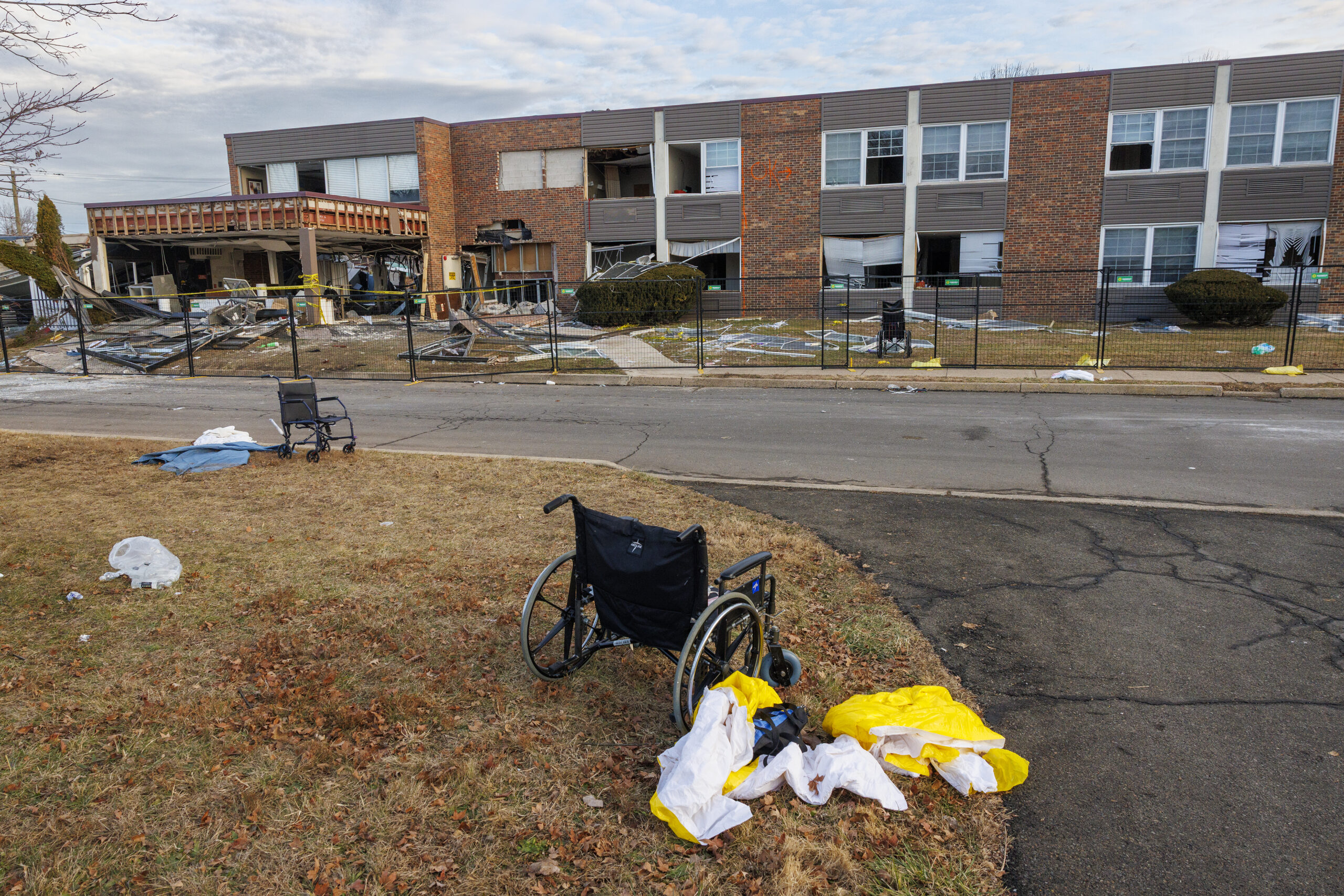
    Another lawsuit has been filed on behalf of victims of the explosion at a Bucks County nursing home just before Christmas that left three dead and about 20 people injured.

    The plaintiffs, Joseph Juhas Sr. and MaryAnn Schnepp, were residents of Bristol Health and Rehab Center when an explosion just after 2:15 p.m. on Dec. 23 ripped through the main building and caused an intense fire. The spouses of the victims also are named as plaintiffs.

    The lawsuit, filed Wednesday in Philadelphia Common Pleas Court, names as the defendants PECO Energy Company and its parent company, Exelon Energy, and Bristol Health and Rehab Center LLC, and its parent company, Saber Healthcare Group. The former operators of the nursing home also are named as defendants.

    “Joe and Maryann suffered serious life-changing injuries because of the negligence of the defendants,” said Brian Fritz, the lead attorney representing the plaintiffs. “We plan on holding all of them responsible for their lack of action in dealing with the well-documented gas leak and conditions that led to this tragic event.”

    On Monday, a lawsuit was filed alleging negligence in the nursing home explosion.

    Exterior of Bristol Health & Rehab Center after the Dec. 23 fatal explosion. The photograph taken Christmas morning, Thursday, December 25, 2025.

    The cause of the explosion is under investigation — including by the National Transportation Safety Board, which investigates pipeline accidents.

    On the day of the explosion, Peco crews responded to reports of a gas odor. Some residents, The Inquirer later reported, had been smelling gas in the 174-bed facility in the days leading up to the explosion, but none were told to evacuate.

    The lawsuit alleges that the nursing home defendants “proceeded as business as usual in the face of a natural gas leak, which presented a clear and obvious threat to the safety and well-being” of the residents.

    The nursing home defendants “recklessly and with callous disregard continued to supply cigarettes and lighters to the residents during the scheduled smoking sessions throughout the day while they knew or should have known that such activity could cause any gas manifestation from the gas leak to explode,” the lawsuit alleges.

    In an interview with the Inquirer, Susie Gubitosi, 71, a resident who is blind and uses a wheelchair, said that just after 2 p.m. that day, she returned inside the building after joining several other residents on the patio for a cigarette break. Gubitosi said she was waiting inside for a staffer to help her with a task when the explosion occurred.

    According to the lawsuit, MaryAnn Schnepp suffered traumatic brain injury, intracranial bleeding, laceration to her scalp requiring staples, a collapsed lung, and broken bones, including broken ribs.

    Joseph Juhas Sr. also suffered traumatic brain injury, intracranial bleeding, and bone fractures, according to the lawsuit.

    The scene at Bristol Health and Rehab Center on Wednesday, Dec. 24, 2025, in Bristol Township, Pa.

    Zach Shamberg, chief of government affairs for Saber Healthcare Group, said in an email: “We continue to cooperate with the ongoing investigation, and we cannot comment on pending litigation.”

    A spokesperson for Peco said in an email: “We are a party to the National Transportation Safety Board investigation. We are fully cooperating with the NTSB and according to the NTSB rules, we are not permitted to comment on this matter.”

    The age and condition of the gas line running to the nursing home remain unclear, but Peco has said that it has about 742 miles of substandard gas lines across the state that need to be replaced — accounting for roughly 5% of its gas service, but 82% of leaks, according to a report from the Pennsylvania Public Utility Commission.

    The company’s plans, the Inquirer previously reported, call for all those lines to be replaced by 2035.

  • Pa. State Sen. Doug Mastriano won’t run for governor again in 2026, after months of teasing a potential campaign launch

    Pa. State Sen. Doug Mastriano won’t run for governor again in 2026, after months of teasing a potential campaign launch

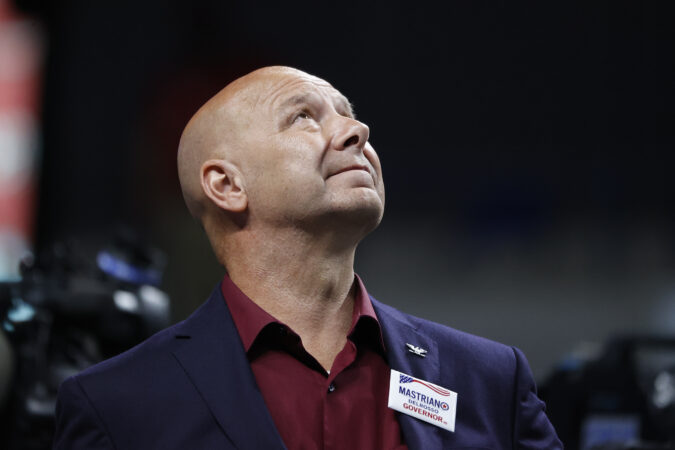
    HARRISBURG — State Sen. Doug Mastriano will not seek the GOP nomination for Pennsylvania again this year, after months of teasing a potential run to the chagrin of establishment Republicans.

    Mastriano’s announcement Wednesday now clears the way for State Treasurer Stacy Garrity, who was endorsed by the state GOP last fall as the party’s best pick to challenge Gov. Josh Shapiro this November.

    “We believe, with full peace in our hearts, God has not called us to run for governor,” Mastriano said in a Facebook Live video stream alongside his wife, Rebbie.

    He did not endorse Garrity as part of his announcement, nor did he mention her by name.

    “For you to have a Republican governor here, the grassroots is going to have to back the candidate,” Mastriano said, referring to Garrity.

    Republicans chose Garrity early — endorsing her more than a year before the 2026 election — in an effort to avoid a crowded primary like the one that eventually led to Mastriano’s nomination in 2022. They hope that a candidate like Garrity, who has won statewide elections twice and dethroned Shapiro for receiving the most votes of any state-level candidate, will have a better chance at beating Shapiro, or at least, preventing a down-ballot blowout in an election that already is likely to favor Democrats.

    Mastriano, a two-term state senator representing Gettysburg and the surrounding area, publicly criticized the state party for endorsing Garrity so early, and has repeatedly said that their endorsement would not deter him from getting in the race.

    In a statement, Garrity said she respected Mastriano’s decision not to run, calling him a “strong voice for faith, family and freedom.”

    “I look forward to working with him to restore integrity, fiscal responsibility, and common-sense leadership in our commonwealth,” Garrity added.

    Mastriano, a former U.S. Army colonel with top-secret clearance, built a grassroots online following during the early days of the COVID-19 pandemic for his resistance to business shutdowns. That support continued to grow after the 2020 presidential election as he promoted President Donald Trump’s false claims that Pennsylvania’s election results were rigged. He has remained a staunch supporter of Trump ever since.

    Trump’s advisers, however, feared that Mastriano’s presence on the ticket would hurt Republicans up and down the ticket despite him leading Garrity in private polling by 21 points, Politico reported in July.

    Mastriano and his wife spent much of his 20-minute announcement on Wednesday reminiscing on their movement since 2020: their daily virtual fireside chats during COVID-19 closures and their other attempts to reopen the state’s businesses amid the pandemic, their efforts to overturn Pennsylvania’s 2020 election results for Trump, Mastriano’s 2022 gubernatorial run, and the GOP’s electoral successes in 2024.

    However, things are different now, the couple said. The grassroots supporters aren’t as unified as they once were, and the state party overstepped in its early endorsement.

    “Bottom line is: They don’t have the last say,” said Rebbie Mastriano, in a reminder to their supporters. “You have the last say.”

    In the 2022 primary, the state GOP declined to endorse candidates in the gubernatorial or U.S. Senate races. That led to a crowded, nine-candidate GOP primary ballot for governor that was advantageous for Mastriano, who had built name recognition through his anti-lockdown and 2020 election efforts.

    Democrats saw Mastriano and his far-right views as an easier opponent in the general election. Shapiro, who at the time was state attorney general and did not face a primary opponent, ran an ad in the GOP primary to try to ensure that he would face the right-wing senator in the general election, where he later cruised to victory.

    Shapiro is expected to announce his reelection campaign on Thursday, beginning his 2026 effort with a record-setting $30 million in his war chest and polls continuing to show him with a more than 50% approval rating.

    The state Democratic Party responded to Mastriano’s announcement with fresh attacks on Garrity, calling her a “far-right, toxic candidate” and noted some of the areas where she and Mastriano agree, including that she denied the 2020 election results and her past opposition to abortion. (She now says she would not support a state abortion ban.)

    As of Wednesday, no GOP candidate had announced their candidacy for lieutenant governor. Garrity told The Inquirer last month she was vetting candidates and planned to announce who she’d endorse as her running mate in February, ahead of the next state GOP meeting.

    Mastriano last year floated the idea of running with Garrity, though he implied he would be at the top of the ticket.

    “I’m still a state senator, still fighting in Harrisburg for you here,” Mastriano said Wednesday. “We’re still in the fight.”

    “We’re going to keep this movement together,” he added.

  • John Langdon, innovative award-winning graphic designer, has died at 79

    John Langdon, innovative award-winning graphic designer, has died at 79

    John Langdon, 79, formerly of Philadelphia, innovative award-winning graphic designer, painter, writer, and longtime adjunct professor of typography at Drexel University, died Thursday, Jan. 1, of complications from a heart attack at French Hospital Medical Center in San Luis Obispo, Calif.

    Mr. Langdon was a lifelong artist and wordsmith. He originated ambigrams in the early 1970s and created distinctive logos for corporate clients, artists, musicians, and others. Ambigrams are words or designs that retain meaning when viewed from different perspectives, and his work influenced countless other designers and typographers who followed.

    “They also present familiar concepts in an unfamiliar way,” he told The Inquirer in 1992, “and thus stimulate the reader’s imagination.”

    On his website, johnlangdon.net, Mr. Langdon described his work as “making abstract concepts visual, almost always through the design of words, letters, and symbols.” He called it “words as art” and said: “I specialize in the visual presentation of words.”

    His designs were featured in more than a dozen solo shows in galleries and museums in Pennsylvania, New Jersey, New York, Connecticut, Maryland, and Delaware, and in more than 50 group exhibitions around the country and Europe. He created six ambigrams for author Dan Brown’s best-selling book, Angels & Demons, and Brown named his fictional protagonist, Harvard symbologist Robert Langdon, after John Langdon.

    “John’s art changed the way I think about symmetry, symbols, and art,” Brown told The Inquirer in 2006.

    Mr. Langdon’s own book about ambigrams, Wordplay, was first published in 1992 and updated in 2005. He also wrote the forwards of other books and articles for journals and newsletters. He said he had a “particular interest in word origins” in an interview on his website.

    He was featured several times in The Inquirer and wrote an op-ed piece in 2014 about the Philadelphia Museum of Art’s new logo. He opened the article with: “Please, beloved Philadelphia Museum of Art, before you print one piece of stationery or a single promotional flier, reconsider your new logo.”

    Mr. Langdon’s work was featured in The Inquirer in 2006.

    In 1996, he began painting what he called his “visual-verbal meditations and manipulations” on canvas. “My paintings still involve symmetry and illusion, a bit of philosophy, and a few puns thrown in for good measure,” he said on his website.

    He cocreated the Flexion typeface and won a 2007 award from the New York-based Type Directors Club. He spoke often about design at colleges and high schools, and to professional societies. He gave a TEDx talk about font and the future of typeface at Drexel.

    Douglas Hofstadter, a professor at Indiana University who coined the term ambigram in 1984, told The Inquirer in 2006 that Mr. Langdon had a “very strong sense of legibility but also a marvelous sense of esthetics, flow, and elegance.”

    Born in Wynnewood and reared in Narberth, Mr. Langdon graduated from Episcopal Academy in 1964 and earned a bachelor’s degree in English at Dickinson College in Carlisle, Pa. He worked in the photo-lettering department of a type house and for a design studio in Philadelphia after college, and began freelancing as a logo designer, type specialist, and lettering artist in 1977.

    He taught typography and logo design classes at Moore College of Art and Design from 1985 to 1988 and at Drexel from 1988 to his retirement in 2015. In an online tribute, one student said he was “one of my favorite teachers of all time.”

    He was interested in Taoism and inspired by artists Salvador Dalí and M.C. Escher, and authors Edgar Allan Poe and Ogden Nash. “In the early ’70s, I tried to do with words what Dali and Escher did with images,” he said in a 2006 interview posted on Newswise.com.

    John Wilbur Langdon was born April 19, 1946. He played high school and college soccer and drew caricatures of classmates for the Episcopal yearbook.

    After college, he took painting and drawing classes at the Pennsylvania Academy of the Fine Arts and the old Philadelphia College of Art. He married Lynn Ochsenreiter, and they had a daughter, Jessica. They divorced later.

    Mr. Langdon enjoyed vacation road trips and told stories of hitchhiking around the country in the 1960s. He followed the Phillies, was interested in genealogy, and traced his family back to the Founding Fathers.

    Mr. Langdon stands with his daughter, Jessica.

    He lived in Darby, Woodbury, Wenonah, and Philadelphia before moving to California in 2016. “He was jovial, social, and amusing,” his daughter said. “People said he was clever, and everyone liked him.”

    He told The Inquirer in 2006: “It may seem counterintuitive, but the more ambiguity you invite into your life, the more things make sense and become understandable.”

    In addition to his daughter and former wife, Mr. Langdon is survived by a brother, Courtney, and other relatives.

    A memorial is to be held later.

    Mr. Langdon lived in Darby, South Jersey, and Philadelphia before moving to California in 2016.
  • The Pittsburgh Post-Gazette is shutting down

    The Pittsburgh Post-Gazette is shutting down

    The Pittsburgh Post-Gazette will fold after nearly a century. The paper will cease operations entirely — both its digital and physical versions — on May 3.

    The announcement comes on the heels of years of declining ad revenue and internal strife within the newsroom, including a yearslong labor strike.

    With the paper’s closure, there are concerns that Pittsburgh could become a news desert, leaving locals without a range of diverse and credible outlets to turn to in an age of increasing misinformation.

    The Post-Gazette was led by former Inquirer senior vice president and executive editor Stan Wischnowski. He resigned from The Inquirer in 2020 after a controversy following a headline after the murder of George Floyd.

    Block Communications, the paper’s owners, released a statement Wednesday about the shutdown, citing “continued cash losses” that were “no longer sustainable.” About 150 union, nonunion, and management employees are impacted.

    The owners added that the paper has lost more than $350 million in operational funds over the last 20 years.

    The paper’s union, meanwhile, said the closure was a result of “losing a nearly decade-long attempt to bust unions at the paper.”

    Andrew Goldstein, current president of the Newspaper Guild of Pittsburgh, said in a statement that “instead of simply following the law, the owners chose to punish local journalists and the city of Pittsburgh.”

    A Zoom announcement

    Post-Gazette staff said they found out about the paper’s closure via a companywide prerecorded Zoom announcement just moments before the news went public. Multiple reporters told The Inquirer that no company representatives spoke live during the video and that there was no opportunity provided for follow-up questions or discussion.

    In a leaked recording of the Zoom announcement obtained by Pittsburgh’s KDKA Radio, a spokesperson asked staff to continue to publish under “business-as-usual conditions” for the paper’s remaining months. The spokesperson added that Block Communications would “of course” give the Post-Gazette the opportunity to break the news of the closure first.

    News desert concerns

    Block Communications, the family-owned multimedia company based in Toledo, Ohio, owns several broadcast news stations, the Post-Gazette, and the Toledo Blade, the Post-Gazette’s sister newspaper. The Blade is unaffected by the shutdown, owners said.

    Earlier this week, the company also announced the closure of City Paper, the Pittsburgh alt-weekly that first published in 1991, “effective immediately.”

    The closure will leave the Pittsburgh Tribune-Review as the region’s last major newspaper. The Tribune-Review is a digital-only publication. Other specialized publications, including the New Pittsburgh Courier and Pittsburgh Business Times, also remain.

    Tim Franklin, the founding director of the Medill Local News Initiative, a research and development project designed to bolster local news sustainability, said the closure was “startling,” given the paper’s size and the region’s market size. Pittsburgh is considered a competitive news market.

    “Even in this economic climate, it’s unusual to see a metro daily newspaper shutter,” he said. “This may be the first metro newspaper closure since the Tampa Tribune in 2016,” which was acquired by the Tampa Bay Times on May 3, 2016, and ceased publication.

    Franklin says the Post-Gazette’s closure symbolized a deepening crisis in local news nationwide, which has led to almost 150 newspaper closures in the past year, according to Medill data, or an average of more than two closures a week.

    According to the Medill State of Local News Report, the country has lost nearly 40% of its newspapers in the past 20 years.

    “Today’s news, though, is especially troubling because it highlights a newer, growing trend — the loss of independent, largely family-owned local newspapers,” Franklin said.

    In the past, the bulk of newspaper closures were attributed to large chains closing clusters of outlets. Now, Franklin says, there’s a rising trend in independently owned papers closing. “If even longtime independent owners are hanging it up, that shows the seriousness of the challenges facing the industry.”

    Allegheny County Executive Sara Innamorato said in a statement that she was troubled by the Post-Gazette’s closure, calling it “devastating” for the region.

    “This is a major loss to the people of Pittsburgh when it comes to transparency in government, accountability from our institutions, and learning about what is happening in our communities,” she said.

    Innamorato added that she wasn’t sure if Block Communications pursued other pathways for buyers or alternatives to shutting down both the Post-Gazette and City Paper entirely.

    “But destroying two legacy papers in a week leaves a gaping hole in our local news environment,” she said.

    Block Communications could not be reached for comment as of publication time.

    On social media, readers expressed contempt toward ownership for the decision and concern regarding whom to turn to for local news.

    “This is a huge loss,” one user commented on a Reddit thread about the closure. “Who will do the work of journalism? … Will we all be going off rumors on Reddit and Nextdoor?”

    A complicated past

    The Pittsburgh Gazette Times, a weekly publication, was founded in 1786. It’s regarded as the oldest newspaper published west of the Allegheny Mountains. The paper took on its current form as the Post-Gazette in 1927 as part of a merger between the Gazette Times and the Pittsburgh Post.

    The newspaper’s shutdown comes on the heels of several internal challenges in recent years.

    In 2019, tension grew between the newsroom staff and Post-Gazette publisher and co-owner John Robinson Block regarding his “bizarre” and “violent” behavior toward employees.

    At the time, according to multiple accounts, Block entered the newsroom in an agitated state with his 12-year-old daughter on a weekend night and appeared out of control as he ranted about the newspaper’s union and its employees.

    That year, the paper cut its print edition from daily to three days a week, citing declining ad revenue.

    Then came the monumental labor strike.

    In 2022, the Post-Gazette saw significant labor disputes, leading to a Guild-approved strike that lasted three years. During the strike, many of the employees impacted established the Pittsburgh Union Progress, a strike paper that published over 4,000 stories covering community news, the strike, and more.

    In November, a federal appeals court ordered the newspaper to reinstate its 2014 union contract, forcing the return of the striking journalists. The U.S. Third Circuit of Appeals ruled that the paper had illegally removed benefits and would need to restore conditions and return to bargaining.

    Block Communications in its statement about the paper’s closure said that those recent court decisions legally requiring it to follow its 2014 labor contract would make it impossible to keep the paper running.

    Union leaders say it’s a cheap excuse after years of attempted union-busting from company owners.

    “The Pittsburgh Post-Gazette and Blocks spent millions on lawyers to fight union workers, fight journalists, and break federal labor law,” said NewsGuild-CWA President Jon Schleuss. “They lost at every level, including now at the Supreme Court. Pittsburgh deserves better and we will continue to fight to make sure all news companies follow the law and serve our communities.”

    Franklin, with the Medill Local News initiative, says it’s inevitable that some people will say the Post-Gazette’s closure is a “special case” because of its extended labor dispute that threw the paper into turmoil for years.

    “And certainly, that standoff played a role in today’s news,” he said. “But the fact that the Post-Gazette owners saw no other option but closure is chilling.”

    The company’s statement went on to say it regretted how the decision would affect Pittsburgh and its surrounding coverage area.

    The Block family said it was “proud of the service the Post-Gazette has provided to Pittsburgh for nearly a century.”

    As for what’s next, Goldstein with the local guild says readers should stay tuned for more from its journalists.

    “Post-Gazette journalists have done award-winning work for decades and we’re going to pursue all options to make sure that Pittsburgh continues to have the caliber of journalism it deserves,” he said.