Category: Pennsylvania News

  • These Wynnewood residents are building a Village to help Lower Merion’s older adults age in place

    These Wynnewood residents are building a Village to help Lower Merion’s older adults age in place

    They say it takes a village to raise a child. But what about to age in place?

    More than ever, older adults want to age in their homes. According to a 2024 survey by AARP, 75% of adults ages 50 and over want to stay in their homes as they get older, and 73% want to stay in their communities.

    Economic and logistical barriers, however, can make aging in place difficult. Single-family homes in suburban neighborhoods can be isolating for older adults, especially those who don’t drive.

    Moving into a retirement community with built-in care and socialization, on the other hand, can be expensive. This paradigm often forces older adults to make difficult decisions about if, and how, they can age in their homes.

    To combat these challenges, a group of Lower Merion residents is building the Lower Merion Village, a local chapter of the nationwide Village to Village Network. The network seeks to “change the paradigm of aging” by connecting older adults to social events, transportation, household help, and other services while keeping them in the neighborhoods they know and love.
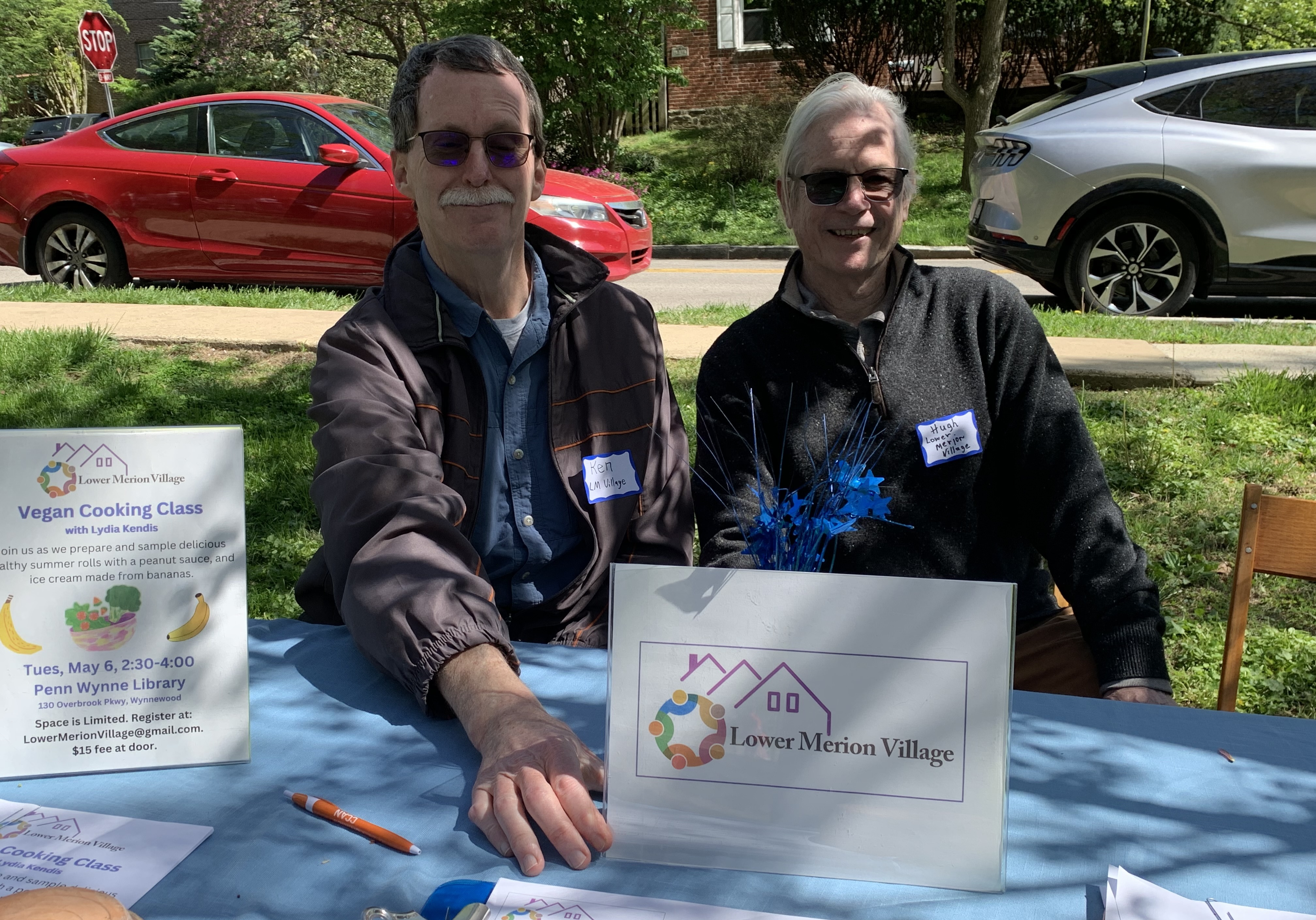
    Lower Merion Village volunteers tabling at an Earth Day celebration in Wynnewood Valley Park in April.

    Bonnie Asher, a member of the Lower Merion Village’s program committee, got introduced to the village model through her mother, who lived in her suburban Maryland home until her death at 99.

    Asher remembers worrying about her mother, especially as she got older and driving became a challenge. Getting involved in a village changed her mom’s life. Suddenly, she made new friends, got rides to the doctor’s office, and signed up for lectures, which she brought Asher to when she visited.

    “Those connections were just really important,” Asher said.

    The Village to Village Network is a national nonprofit that originated in Boston and has since spread from Fairbanks, Alaska, to upstate New York. The network provides guidance and resources to local chapters, which cater to older adults’ needs on a hyperlocal level.

    Villages are membership-driven, self-governing organizations that are run by volunteers, and, at times, have a small paid staff.

    There are five existing villages in the Philadelphia region: Penn’s Village (Center City), Village on the Ridge (Roxborough), East Falls Village, Shtetl 2.0 (Northwest Philly), and the Northwest Village Network (Northwest Philly).

    In 2023, a group of neighbors in Wynnewood began tossing around the idea of starting a village. One conversation turned to a few gatherings at a neighbor’s house, then a monthly meeting at the library.

    As the Wynnewood group dreamed up their village, its members got connected with Sara Crimm, also a Wynnewood resident and the founder of Families CCAN, a nonprofit focused on adults with disabilities.

    Crimm saw the village as an opportunity to create a strong community infrastructure for both older adults and people with disabilities who want to stay, and thrive, in Lower Merion. Crimm met with the village organizers, and the newly formed coalition quickly got to work.

    In spring 2024, Families CCAN received around $21,000 in American Rescue Plan (ARP) funds as part of Lower Merion Township’s ARP Non-Profit Vitality Grant Program. The funds were earmarked to help get the village off the ground, and most of the grant money went to pay Crimm’s salary as its first and only staff member.

    With that foundation, the village has launched a growing slate of social events as it works to establish its official nonprofit structure. The group takes weekly walks, perusing the Wynnewood Valley Park Sensory Garden or the local fall foliage. They’ve baked challah with Jewish Family and Children’s Service of Greater Philadelphia and hosted lectures — last month’s was on “ethical wills.” They meet monthly for coffee at Narberth’s GET Cafe.

    When Asher moved to Lower Merion, her kids were already out of school, so she missed out on the opportunity to make friends through her children’s activities.

    “One of the things that I’ve already gotten from the experience is making new friends. At this age, it’s just amazing,” said Asher, 74.

    With regular lectures, walks, volunteer commitments, and lunches, Asher said with a laugh, “I got kind of busy.”

    “We’re safer living in communities that are connected,” Crimm said, noting that many of the village programs are designed to build social connections and ward off the loneliness and depression that can sneak into older adulthood.

    The Lower Merion Village is still in its infancy. It’s not officially accepting members yet, and Crimm is working to build a dues structure, create a website, and establish the organization as a 501(c)3 nonprofit.

    The Lower Merion Village plans to charge an individual membership rate of $125 per year and a household rate of $200 per year. The village hopes to provide a scholarship option down the road for people who can’t afford it. The membership will come with access to all of the village’s programs, as well as to a network of volunteers who can help with household tasks, give rides, and troubleshoot technology.

    Transportation is a particularly difficult issue for older people in Lower Merion, Crimm said. While SEPTA can take people into Center City or out to Norristown, getting around within the township can be difficult for people. Rideshares like Uber offer a temporary, but costly, solution.

    Crimm noted that Lower Merion’s village will be less expensive than neighboring villages and assisted living communities. (Penn’s Village members pay $600 annually to gain access to services, and a one-bedroom apartment at Sunrise of Haverford, a senior living community that offers healthcare services, starts at $3,770 per month).

    When asked about the misconceptions around aging, Crimm said there’s a pervasive ageism in how we see older adults’ wants and needs.

    “These are people who are so rich in experience, and they have so much to give back,” she said. “Let’s support people to stay in their neighborhoods and to make those neighborhoods richer and stronger.”

    Those interested in getting involved in the Lower Merion Village can email lowermerionvillage@gmail.com.


  • All the Golden Globe Awards nominees with ties to the Philly region

    All the Golden Globe Awards nominees with ties to the Philly region

    Pennsylvanians know how to bring home a trophy, from the reigning Super Bowl champions to Philly natives awarded an Oscar.

    The Golden Globe Awards on Monday announced its nominees for the best in television and movies, and with it, another chance for victory for regional productions and local actors.

    The ceremony airs Jan. 11 with awards given in 28 categories.

    The Abbott Elementary crew visits the Always Sunny gang at Paddy’s Pub in the “It’s Always Sunny in Philadelphia” and “Abbott Elementary” crossover.

    In its fifth season, Abbott Elementary has already won the hearts of Philadelphians and three Golden Globes. Still, this wholesome band of teachers, starring Philly-native Quinta Brunson, is up again for best musical or comedy television series.

    HBO’s Task and Peacock’s Long Bright River, two crime thrillers set in Philadelphia neighborhoods and suburbs, both have leading actors nominated for Golden Globes this season.

    Mark Ruffalo as Tom, Alison Oliver as Lizzie, Thuso Mbedu as Aleah, and Fabien Frankel as Anthony in “Task.”

    In Task, Mark Ruffalo plays an FBI investigator hunting down thieves targeting drug houses in Delco. While Ruffalo may not know the definition of “jawn” in real life, his portrayal of a tortured former priest turned agent resonated with critics and earned a nomination for best male actor in a dramatic television series. The Inquirer compiled a list of the real-life locations used in the show.

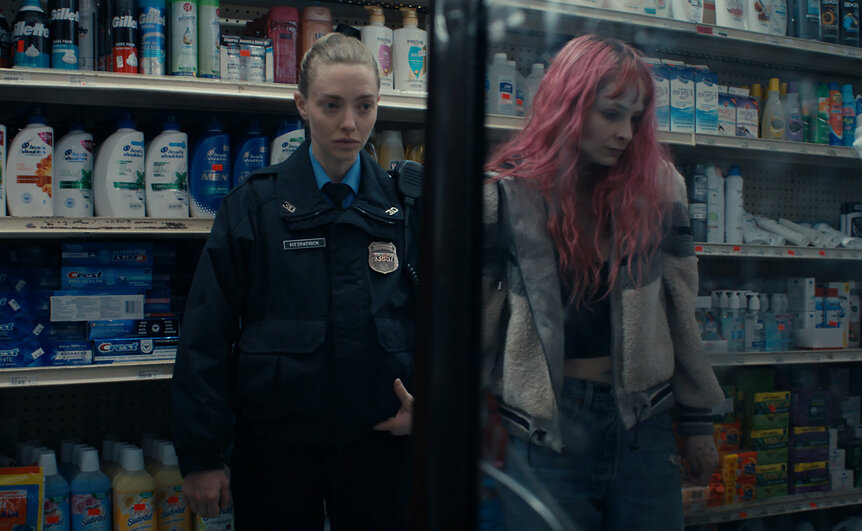
    Amanda Seyfried (left) and Asleigh Cummings in the Kensington-set Peacock series “Long Bright River,” based on the novel of the same name by Temple professor and novelist Liz Moore.

    Liz Moore’s crime novel Long Bright River turned heads when it was released in 2020, detailing the harrowing story of a Kensington police officer, played in the series by Amanda Seyfried, searching for her sister in a cat-and-mouse chase with a killer targeting sex workers. While the television adaptation was filmed in New York City, the bulk of the show takes place in Kensington and other Philadelphia neighborhoods, with Seyfried grabbing a nomination for best female performance in a dramatic limited series.

    Hometown stand-up icon Kevin Hart was back to his roots with a new comedy special, Kevin Hart: Acting My Age, tackling injuries after 40, Chick-fil-A’s spicy chicken sandwich consequences, and slipping in the shower. He earned a nomination for best stand-up comedy performance on television.

    Host Kevin Hart speaks during the BET Awards on Monday, June 9, 2025, at the Peacock Theater in Los Angeles.

    The Golden Globes are introducing a new best podcast category this year, for which Bucks County native Alex Cooper is nominated for her sex-positive show, Call Her Daddy. Alongside celebrity guests like Gwyneth Paltrow, Miley Cyrus, and Kamala Harris, Cooper delves into the taboo of female pleasure and pop culture. She grew the show’s popularity into a $60 million Spotify deal in 2021.

    And through a few degrees of separation, several other nominees can be claimed as Philly-adjacent.

    Hannah Einbinder, whose father is from Doylestown, accepts the award for outstanding supporting actress in a comedy series for “Hacks” during the 77th Primetime Emmy Awards on Sunday, Sept. 14, 2025, at the Peacock Theater in Los Angeles. (AP Photo/Chris Pizzello)

    Take Hacks actress Hannah Einbinder, who shouted “Go Birds!” during her speech after winning an Emmy for best supporting actress in a comedy series, and was filmed by the evening news crying in the streets of Los Angeles after the Eagles’ 2018 Super Bowl win.

    She may not be from Philadelphia (her father, actor Chad Einbinder, is from Doylestown), but she reps the city. HBO’s Hacks, which follows a veteran Las Vegas comic mentoring a young comedy writer, is up for best musical or comedy television series, with Einbinder and costar Jean Smart nominated for best supporting female actor and best actor in a musical or comedy series, respectively.

    And there are some broader Pennsylvania and New Jersey ties among the nominees.

    The breakout medical drama The Pitt, which takes place in the fictional Pittsburgh Trauma Center, depicts a 15-hour shift in an emergency room, split across 15 one-hour episodes. The Pitt’s lead actor, Noah Wyle (known for his role as Dr. John Carter in NBC’s ER), is up against Ruffalo for best male actor in a dramatic television series.

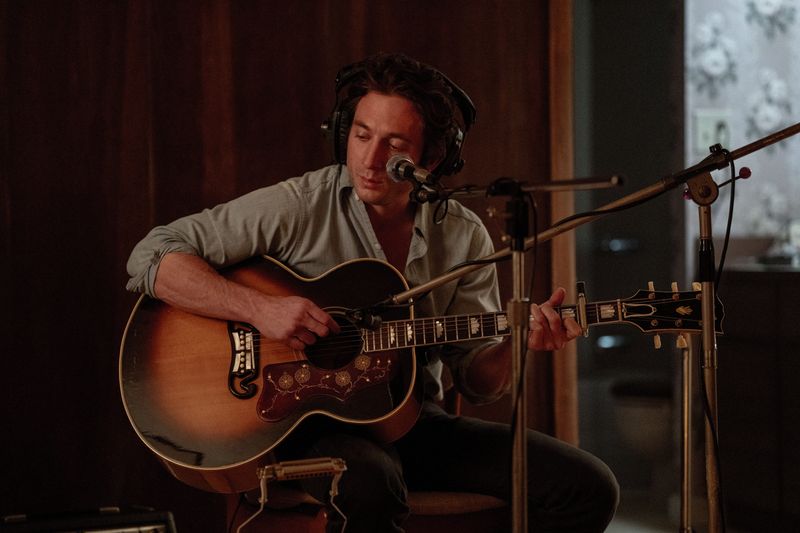
    Jeremy Allen White as Bruce Springsteen.

    Jeremy Allen White stars in the latest Bruce Springsteen biopic, Springsteen: Deliver Me From Nowhere, and is nominated for best actor in a dramatic film. The production was almost entirely filmed around New Jersey — at the request of The Boss — including in Cape May and other parts of South Jersey.

    After a major overhaul of the award show in recent years, including the sunsetting of the Hollywood Foreign Press Association due to ethics and diversity concerns, the new Golden Globe Awards are judged by a panel of 400 journalists from across the world.

    The Golden Globes will be broadcast live on Jan. 11 at 8 p.m. Philadelphia time on CBS and streaming on Paramount+.

  • Gov. Shapiro ‘was instrumental’ in preventing SEPTA strike

    Gov. Shapiro ‘was instrumental’ in preventing SEPTA strike

    Transport Workers Union Local 234 and SEPTA agreed Sunday night to continue contract talks in the morning, avoiding for now a strike that could have ground to a halt much of Philadelphia.

    Beginning in late afternoon, members of Gov. Josh Shapiro’s staff met with union leaders and SEPTA senior managers at the governor’s Philadelphia office. The goal was to unstick talks that had faltered, seeing if compromise was possible.

    The union’s push for an increase in pensions and SEPTA’s proposal for union members to pay a greater share of the cost of their healthcare coverage emerged over the last week as the biggest obstacles to an agreement, according to both union and transit authority sources.

    “Gov. Shapiro’s office brought the parties together and they made progress,” SEPTA spokesperson Andrew Busch said. “It was significant.”

    In a statement, the union said “significant progress” was made.

    “Gov. Shapiro was instrumental in preventing a strike that could have started as soon as Monday morning. We’re grateful for his close involvement,” said TWU Local 234 President Will Vera.

    Sticking points

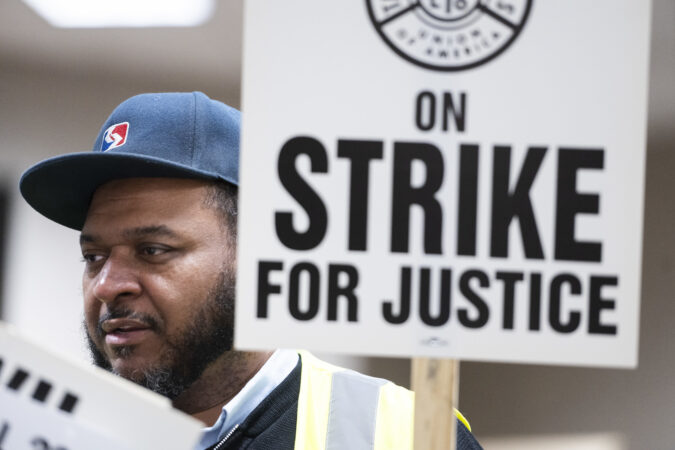
    On Friday, Vera declared he was out of patience at what the union saw as SEPTA’s intransigence and threatened to lead members in a walkout.

    A work stoppage would have brought chaos to a mass transit system that carries a weekday average of 790,000 riders.

    TWU Local 234 represents 5,000 bus, subway, elevated train and trolley operators, as well as mechanics, cashiers, maintenance people and custodians, primarily in the city.

    Their one-year labor contract expired Nov. 7, but members stayed at their posts. On Nov. 16, they authorized Local 234’s leaders to call a strike if needed. The vote was unanimous.

    SEPTA and the union were not far apart on salary and both wanted a two-year deal after a series of one-year pacts during a time of financial crisis for the transit agency, sources said.

    Management wanted to hike what union members pay for health coverage and increase co-pays for doctor and hospital visits.

    The union pushed for an enhancement to the formula that determines retirees’ monthly pensions, based on years of service. It was last increased in 2016.

    SEPTA officials calculated that TWU’s proposed changes would have created an annual unfunded liability of about $6 million for an undetermined length of time. The union says the pension plan books showed a bump was affordable.

    Because TWU Local 234 is the largest SEPTA union, its contracts are used as a template for the other locals working for the transit system, which could boost costs.

    Regional Rail was a concern to SEPTA because commuter railroad workers, like others, receive a federal pension that has tended to be less generous. Those unions would have wanted a SEPTA sweetener to their retirement benefits too.

    TWU Local 234 also wanted changes to work rules involving sick time benefits and the length of time it takes new members to qualify for dental and vision benefits — currently 15 months.

    The local also represents several hundred suburban workers, primarily operators, in SEPTA’s Frontier district, which runs 24 bus routes in Montgomery County, Lower Bucks County, and part of Chester County.

    The Victory district has a similar number of employees, who are represented by SMART Local 1594. They run Delaware County’s two trolley lines, the Norristown High Speed Line, and 20 bus routes in the suburbs.

    Unions for both the Frontier and Victory districts could choose to strike alongside TWU Local 234. If that happened, Regional Rail, already plagued by delays and cancellations due to federally-mandated repairs on train cars, would be the only public transit running.

    Strike-prone reputation

    SEPTA unions have walked off the job at least 12 times since 1975, earning the authority a reputation as the most strike-prone big transit agency in the United States.

    TWU last struck in 2016. It lasted for six days and ended the day before the general election. Democrat Hillary Clinton’s presidential campaign was worried about voter turnout, and the city sought an injunction to end the strike. That proved unnecessary.

    Regional Rail would operate during a TWU strike. Locomotive engineers and conductors on the commuter service are represented by different unions than transit employees, and are working under current contracts.

  • Honesdale’s massive Himalayan Institute is no longer so secret after more than 50 years of yoga and meditation

    Honesdale’s massive Himalayan Institute is no longer so secret after more than 50 years of yoga and meditation

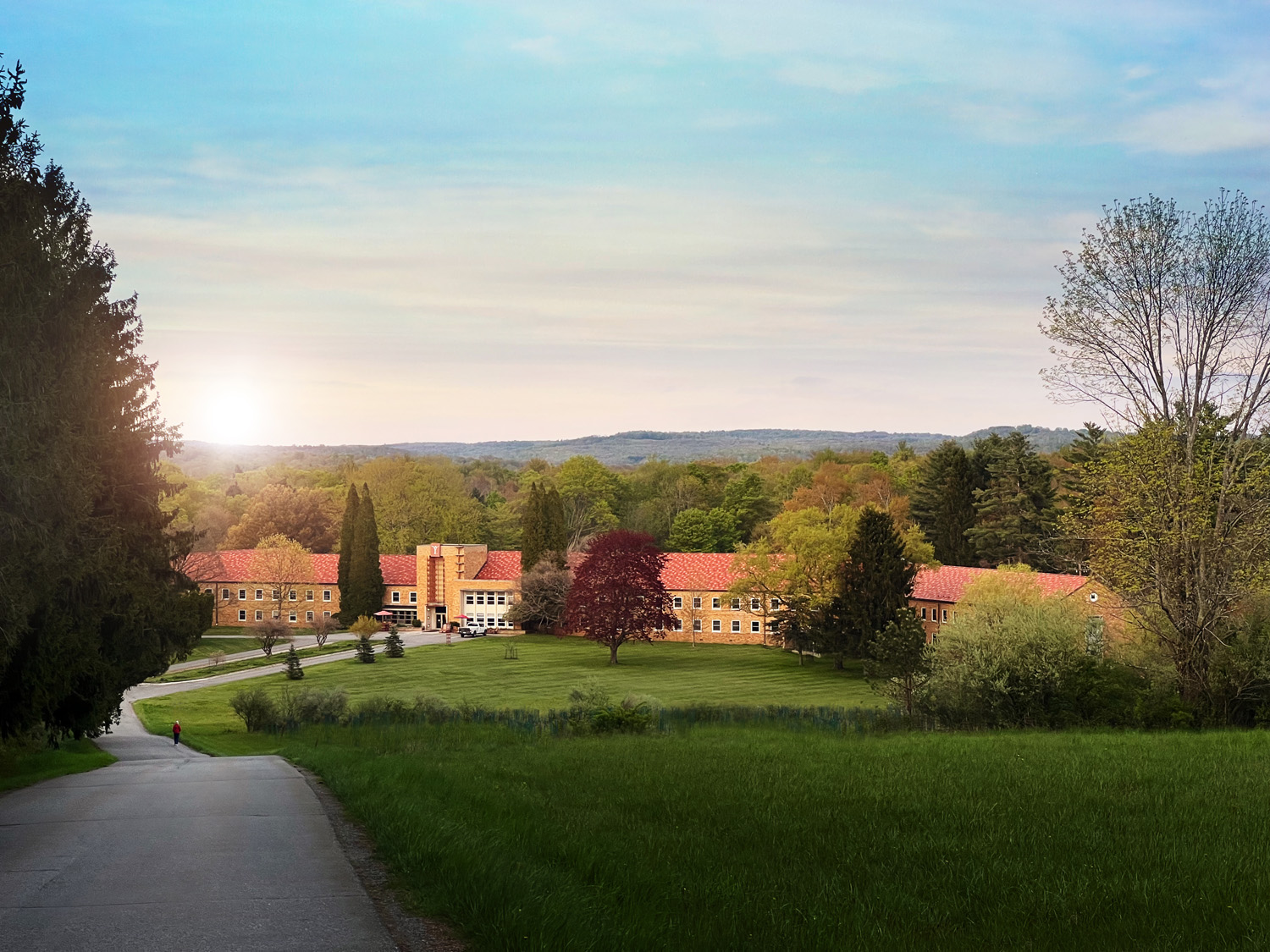
    The silence in the Himalayan Institute’s shrine redefines silence, quiet enough to hear your heartbeat, to pick up a whisper from across the room, and, perhaps most importantly, to feel every breath, in and out, while you meditate.

    The institute, founded in 1972, moved into the massive, former seminary on 400 hilly, forested acres in Honesdale, Wayne County, in 1977, a time when yoga was still a niche practice. For more than 50 years, the institute has been offering yoga training, spirituality, meditation, and holistic health practices, along with getaways and retreats.

    “It’s for anyone, for any creed, religion, sex, or gender,” said Greg Capitolo, a California native who became the institute’s president after attending retreats there. “There’s really no religious affiliation at all.”

    As yoga exploded in popularity and modern meditation apps abound, the Himalayan Institute has seen growing interest worldwide. It hasn’t hurt that downtown Honesdale has seen its own popularity grow over the last decade as Philadelphia and New York City residents look for properties and business opportunities outside of traditional urban escapes, like upstate New York.

    “I like to sat this is the best-kept secret in Wayne County,” Capitolo said. “I hope we become less of a secret to the people here. ”

    The Inquirer went to Honesdale during a frigid weekend last December and confirmed it: even in single-digit temps, the town’s gift shops, bakeries, buzz-worthy restaurants, art galleries, and book stores were alive with tourists and locals up and down Main Street.

    Afterward, several readers mention the Himalayan Institute as a “must-visit.”

    The Himalayan Institute, In Honesdale, Pa.

    On a Monday in late November, the main, dormlike building was abuzz with “residents” who were doing volunteer work in the kitchen for access to classes, yoga training, and other programs the institute offers. Capitolo said the institute can house up to 80 residents, who commit to staying for a year as part of the $800 per month “Residential Service Program.”

    Meals are vegetarian, and on this afternoon, lunch was beet subzi and kimchari. The Himalayan Institute follows Ayurvedic principles, which discuss balance and digestion, among other things.

    “The Ayurvedic system says you should eat your biggest meal around lunchtime, when the sun’s at its highest, point, because your digestion will be optimally ready to break down food,” Capitolo said.

    There’s also a gift shop and a trail network at the Institute, along with a popular Wellness Center that offers several types of massage, including hot stone. One of the Wellness Center’s most popular offerings is an Ayurvedic therapy known as Shirodhara Treatment, which includes “streaming warm oil onto the forehead to clear and calm the mind.”

    The Himalayan Institute, In Honesdale, Pa.

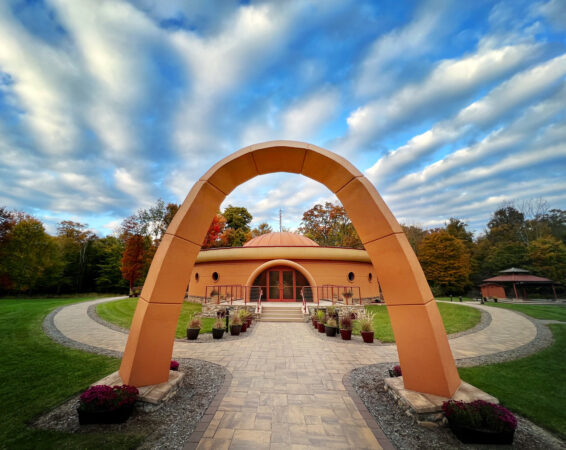
    The simplest structure and offering at the Himalayan Institute may be the Sri Vidya Shrine, a simple, domed building that sits behind the former seminary on the campus. The shrine is the twin of the Sri Vidya Shrine at the Himalayan Institute’s Khajuraho campus in central India, and its meditation hall is not so simple: that unique silence was part of the design.

    The shrine’s meditation hall is referred to as the mandapa, literally “the canopy for seekers to gather.”

    Capitolo sat silently in the hall for several minutes, hands folded, focusing on his breath. He, too, was a seeker, leaving a lucrative job in Silicon Valley to head east to Honesdale, before it was hip.

    “I was happy and seemingly had everything I needed,” he said outside the shrine. “But something was missing. This place satisfied what was missing.”

    The Himalayan Institute, In Honesdale, Pa.
  • Chris Emmanouilides, award-winning filmmaker, has died at 63

    Chris Emmanouilides, award-winning filmmaker, has died at 63

    Chris Emmanouilides, 63, of Rutledge, Delaware County, digital media director, award-winning filmmaker, TV executive producer, cameraman, teacher, and mentor, died Saturday, April 26, of a heart attack at his home.

    Born in Philadelphia and reared in Los Angeles, Mr. Emmanouilides followed his then-girlfriend back to the city in the 1980s, earned a master’s degree in radio, TV, and film at Temple University, and crafted a 36-year career as an independent filmmaker, vice president of programming for Banyan Productions, cofounder and chief content officer of the VuNeex video marketing platform, and director of digital media at the King of Prussia-based American College of Financial Services.

    He specialized in independent documentary films, commercials, and early forms of reality TV, and cofounded Parallax Pictures in the 1990s. His films were screened at the Philadelphia Festival of World Cinema, the Sundance Film Festival, and elsewhere around the world.

    His 40-minute film Archive premiered at the Los Angeles Greek Film Festival in 2013 and earned the Audience Choice Orpheus Award. His 1989 film Suelto! earned first prize at the 1990 Sundance Slice of Life Film Festival.

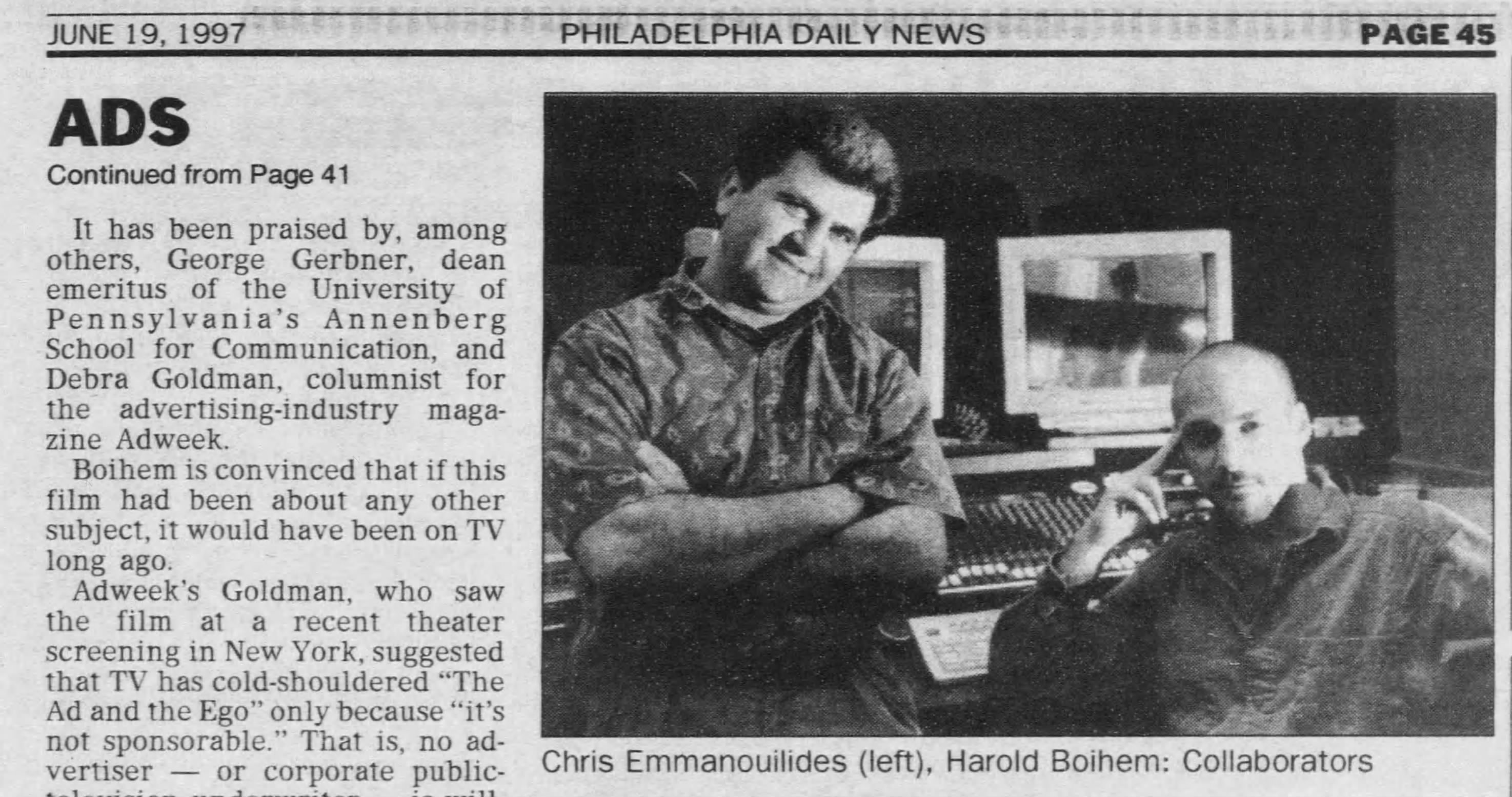
    In 1994, Inquirer movie critic Desmond Ryan called Mr. Emmanouilides’ film Remains “especially noteworthy.” In 1997, The Ad and the Ego earned the top prize at the San Francisco International Film Festival.

    In 2001, critic Damon C. Williams reviewed Talk Fast for the Daily News. Mr. Emmanouilides was the film’s director of photography. Williams said: “It does an incredible job in detailing the desire, dedication and heartbreak that go with pursuing a dream. It also shows that some do indeed find success in chasing their dreams.”

    From 1997 to 2014, Mr. Emmanouilides was an executive producer, director of special projects, and vice president of programing at Philadelphia-based Banyan Productions. Working with the Discovery Channel, the Travel Channel, the Food Network, TLC, Lifetime, and other TV outlets, he and his colleagues created thousands of hours of popular award-winning programming. Among his series credits are Travelers, Reunion, Trading Spaces, Deliver Me, Cruises We Love, and A Wedding Story.

    “What we pull off in four days — the emotions and the intimacy — is extremely rare on television,” he told The Inquirer in a 1998 story about the Reunion series. “It’s a constant push, trying to make a high-quality show on a limited budget, with limited time. And the question is, will it find an audience?”

    He worked with Reader’s Digest and Hope Paige Designs on video marketing projects at VuNeex in 2015, and spent the last 10 years as a senior producer and director of digital media at the American College of Financial Services. “Chris was relentless in the pursuit of quality,” Jared Trexler, senior vice president at American College, said in an online tribute. “He was inquisitive, introspective, and always learning. Most importantly, he was kind, caring, and funny.”

    Mr. Emmanouilides won the 2013 Audience Choice Orpheus Award in Los Angeles.

    In tributes, colleagues called him “an amazing man and incredible coworker” and “very passionate about our field.” One said: “He always brought genuine fun and energy to whatever we were doing.”

    Gregarious and energetic, Mr. Emmanouilides taught film and production courses at Temple, the University of Toledo, the Scribe Video Center, and the old University of the Arts. He lectured at Drexel and Villanova Universities, spoke at conferences and seminars, and taught English-language classes in Greece and Spain.

    He was a longtime member and onetime board president of the Philadelphia Independent Film and Video Association, and he mentored production novices at Scribe Video in Center City and elsewhere. “These newcomers don’t respect the conventions of film that much,” he told The Inquirer in 1993. “They’re trying to find their own voice. So they’re finding new ways to tell stories.”

    Christopher George Emmanouilides was born Aug. 31, 1961. His family moved from Philadelphia to Los Angeles when he was young, and he earned a bachelor’s degree in philosophy at Colorado College in 1983 and a master’s degree at Temple in 1992.

    Mr. Emmanouilides was a talented cameraman and photographer.

    He met Sandra Enck at an independent film event in Philadelphia, and they married in 2004 and had a daughter, Isabella. He doted on his family, and especially enjoyed seeing films with his wife and decorating his daughter’s breakfast pancakes with eyes, nose, and mouth cut from fresh fruit.

    “We took their pictures, and we eventually had hundreds of faces from countless mornings together,” his daughter said on her website facethemorning.com. “None were the same, and each seemed to have something to say.”

    His wife said: “We’d see a film and then talk about it for three days.”

    Mr. Emmanouilides was an avid reader and photographer. He liked to fly-fish, ski, hike, and cook.

    This article about Mr. Emmanouilides (left) appeared in the Daily News in 1997.

    He had an infectious laugh, performed magic tricks, listened to the Grateful Dead, and followed the Eagles and Phillies. “He was a big thinker,” his wife said. “He was buoyant and a powerful life force. You never forgot that you met him.”

    In addition to his wife and daughter, Mr. Emmanouilides is survived by three sisters, a brother, and other relatives.

    Celebrations of his life were held earlier.

    Donations in his name may be made to the Bryn Mawr Film Institute, 824 W. Lancaster Ave., Bryn Mawr, Pa. 19010.

    Mr. Emmanouilides doted on his family.
  • Pagans bikers held for trial in Wawa shooting allegedly sparked by a rivalry between two outlaw clubs

    Pagans bikers held for trial in Wawa shooting allegedly sparked by a rivalry between two outlaw clubs

    Members of the Pagans outlaw motorcycle club targeted two members of a rival club at a Wawa store in West Norriton this fall, setting off a chain of events that left six people shot, including two bystanders, prosecutors in Montgomery County said Friday.

    During a marathon preliminary hearing, held at the Montgomery County Correctional Facility due to security concerns, seven members of the Pagans were held over for trial by District Judge Marc Alfarano on charges including aggravated assault, conspiracy, riot, and reckless endangerment.

    Those who appeared before Alfarano were: Joel Hernandez-Martinez, 36, George Hripto Jr., 50, and Jason Lawless, 45, all of Bridgeport; Manuel Baez-Santos, 34, of Norristown; Erik Dixon, 33, of King of Prussia; Luke Higgins, 29, of Dauberville; and Justin Noll, 34, of Reading.

    Two other Pagans allegedly involved and facing similar charges in the incident, George Cwienk III, 51, of Bridgeport, and Erik Rosenberger, 46, of East Greenville, had their preliminary hearings continued due to a scheduling issue with their attorneys.

    Assistant District Attorney Bradley Deckel said the group conspired to attack two members of the Unknown Bikers outlaw club after seeing them parked at the Wawa on Oct. 17.

    Given the rules of their subculture, Deckel said, the Pagans felt they had no choice but to confront the rival club.

    A gang expert testified Friday that the Pagans have a strong presence throughout Pennsylvania, and fiercely defend their territory.

    “They knew what they had to do the moment they saw a group invading their territory,” Deckel said. “And they had to teach them a lesson with violence.”

    But defense attorneys for the Pagans took turns sharply rebutting Deckel’s theory during the seven-hour hearing, arguing that their clients were not the ones responsible for the shooting. They asserted that prosecutors had built their case entirely on speculation and innuendo, unfairly painting their clients as dangerous in news coverage.

    Further, they said, investigators could not clearly identify what role each of the nine men played in the supposed conspiracy to attack the other bikers, nor prove whether any of the Pagans were armed at the time.

    Noll’s attorney, Robert J. Kirwan II, argued that the alleged targets in the case — the Unknown Bikers — were the ones who should be held accountable. Ballistics evidence showed 13 of the 14 bullets fired during the chaotic melee came from their guns.

    He said he was “disgusted” that the men were not called to testify during Friday’s hearing.

    “It’s astounding that the Unknown Bikers are not charged,” Kirwan said. “What we do know is that they unloaded all of their ammunition at the people present, including bystanders, and yet they’re walking free.”

    After pulling into the Wawa just after 9 p.m., the Pagans encircled the other two bikers and began assaulting them. In turn, the Unknown Bikers opened fire on the Pagans with two 9mm handguns in what prosecutors described as an act of self-defense.

    Three of the Pagans — Cwienk, Hernandez-Martinez, and Noll — were injured in the gunfire. Nearby, a man filling his tires with air was shot in the face as he dived for cover, and a woman smoking a cigarette outside the store was shot in the right side.

    Deckel, the prosecutor, said that during the attack some members of the group strategically positioned their bikes at the gas station’s entrance, in what he described as an attempt to prevent their targets from escaping.

    The Pagans’ defense attorneys denied that entirely, saying their clients were the true victims in the attack. Paul Lang, representing Dixon, said his client abandoned his motorcycle and fled as soon as the first gunshots rang out, despite the supposedly coordinated assault.

    Still, Deckel said, the motive for the attack was clear: The Pagans wanted the Unknown Bikers’ “cuts,” their denim vests bearing the club logo. In the world of outlaw clubs, a biker’s cut is sacred and, therefore, a trophy sought by his rivals, according to a gang expert who testified Friday.

    After the shooting, five of the Pagans were arrested during a car stop in Bridgeport. One of the motorcycles they were riding bore a bullet hole in its gas tank.

    The other four were taken into custody in the following days, prosecutors said, tracked down through automated license plate readers and cell phone records.

  • Gov. Josh Shapiro’s administration just fired a vendor for failing to send state agency mail, impacting an unknown number of residents

    Gov. Josh Shapiro’s administration just fired a vendor for failing to send state agency mail, impacting an unknown number of residents

    HARRISBURG — An unknown amount of mail from Pennsylvania state agencies to residents has gone undelivered, Gov. Josh Shapiro’s administration discovered this week.

    The Pennsylvania Department of General Services said in a statement Friday that it has ended its contract with an unidentified vendor that pre-sorts state agency mail before delivering it to the U.S. Postal Service to be sent to residents around the state. The department discovered in the last 48 hours that the vendor “had been failing to deliver Commonwealth mail to constituents,” said Paul Vezzetti, a spokesperson for the department.

    The state is still determining how much and what type of mail was not delivered to Pennsylvania’s residents. It was unclear Friday why the vendor failed to send the state’s mail, where the mail was located when it was not in the state’s possession, how long the mail went unsent, and how the failure was not identified sooner.

    The unsent mail could prove to be a major headache for Shapiro’s administration, depending on the magnitude of the issue and which state communications were not delivered to residents.

    After discovering the backlog, the Department of General Services rapidly hired a new vendor to sort and deliver the unsent mail “as quickly as possible,” Vezzetti said. The unsent mail has already been transferred to the new vendor and the state estimates that it will be mailed by early next week.

    According to an emergency contract made public Friday, the state hired technology solutions company Pitney Bowes for $1 million, citing its preparedness to process and resume mail operations. If the services were not immediately restored, it “could result in missed deadlines, loss of services, delayed benefits, legal exposure, and operational disruptions for multiple agencies and constituents,” according to contract.

    The unsent mail from unspecified state agencies could include critical communications relating to state services, such as health benefits or food assistance, among other potential communications. State agencies send communications by mail about an individual’s eligibility for services or benefits, renewals and appeals, and whether a person is due to appear at a hearing about that eligibility, and more.

    Vezzetti declined on Friday to confirm which agencies were impacted by the stalled mail, or to name the vendor that had been fired.

    Pennsylvania lawmakers last month ended a 135-day-long state budget impasse that required counties, schools and social service organizations to take out loans or limit their services during the protracted budget fight.

    The state is now taking steps to “carefully assess and mitigate impacts” of the mail delay and adjust deadlines for impacted residents.

    Staff writer Ximena Conde contributed to this article.

  • SEPTA strike is ‘imminent,’ say TWU leaders

    SEPTA strike is ‘imminent,’ say TWU leaders

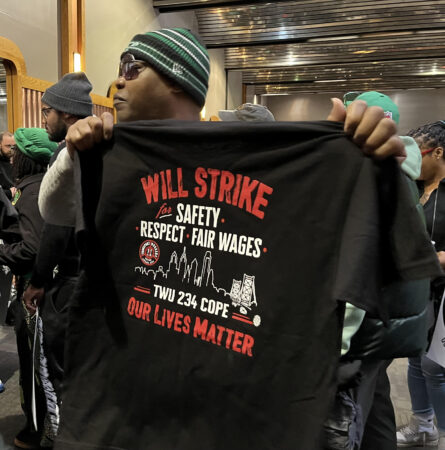
    Transport Workers Union Local 234, SEPTA’s largest union, may soon strike, according to president Will Vera.

    At a Friday afternoon news conference at TWU headquarters in Spring Garden, Vera said his “patience has run out,” and he said the union’s executive committee was meeting to decide when to call a strike.

    “I’m tired of talking, and we’re going to start walking,” said Vera, who was elected president in October.

    Local 234’s latest contract expired Nov. 7, and the 5,000-member local voted unanimously on Nov. 16 to authorize leaders to call a strike if needed during contract negotiations.

    The union represents bus, subway, and trolley operators, mechanics, cashiers, maintenance people, and custodians, primarily in the city.

    SEPTA unions have walked off the job at least 12 times since 1975, earning the authority a reputation as the most strike-prone big transit agency in the United States.

    John Samuelsen, president of TWU International and former president of NYC’s local, joined Vera at the news conference.

    “A strike is imminent,” Samuelsen said. “SEPTA is the most incompetent transit agency in the country … SEPTA is triggering a strike.”

    In an email sent Friday evening, Samuelsen called on leaders and staff members of TWU locals to travel to Philadelphia to help Local 234 in the event of a strike.

    Andrew Busch, spokesperson for SEPTA, said negotiations were “at an impasse,” noting that the negotiating committees met only twice this week. He said SEPTA’s leaders hoped TWU would “take us up on the offer to continue to talk so we can avoid a strike and the massive service disruption it would cause.” No meetings are scheduled for the weekend as of Friday evening.

    Vera agreed there was room for the two groups to keep talking, if SEPTA provided “a fair and reasonable” contract proposal.

    What TWU wants

    Three TWU contracts in a row have run for one year each.

    The union says it is looking for a two-year deal with raises and changes to what it views as onerous work rules, including the transit agency’s use of a third party that Vera said makes it hard for members to use their allotted sick time.

    SEPTA officials have signaled they are open to a two-year deal as a step toward labor stability.

    In recent weeks, TWU and SEPTA have been negotiating contributions to the union’s healthcare fund. Pensions have arisen as a sticking point.

    Union sources told The Inquirer that TWU leaders are increasingly frustrated with the pace of negotiations.

    Vera said the executive board meeting began at 4:30 p.m. on Friday. He hoped the board would reach a decision on when members would walk off the job.

    TWU last went on strike in 2016. It lasted for six days and ended the day before the general election. Democrat Hillary Clinton’s presidential campaign was worried about voter turnout, and the city sought an injunction to end the strike. It proved unnecessary.

    SEPTA’s financials

    TWU’s contract negotiations are happening as SEPTA is emerging from what it has called the worst period of financial turmoil in its history.

    Like many transit agencies, SEPTA was facing a recurring deficit due to inflation, fewer federal dollars, and flat state subsidies. It reported a $213 million recurring hole in its operating budget.

    Following a prolonged and contentious debate over mass transit funding in the state budget, Gov. Josh Shapiro in September directed PennDot to allow SEPTA to tap $394 million in state money allocated for future capital projects to pay for two years of operating expenses.

    And last month, he allocated $220 million to SEPTA, the second time in two years he’s flexed state dollars to support the financially beleaguered transit agency. While the $220 million is expected to go primarily toward capital expenses related to Regional Rail, the move helps SEPTA’s overall balance sheet.

    What riders should know

    SEPTA riders are no strangers to service disruptions.

    In August, the transit agency cut 32 bus routes, shortened 16 others, and trimmed service across the board as part of drastic cost-cutting measures. Riders complained bitterly about skipped stops, crowded vehicles, and longer commutes until a few days later when a Common Pleas Court judge ordered SEPTA to reverse the cuts.

    In the event of a strike, SEPTA says riders should monitor the app for news of service disruptions.

    A strike would shut down buses, trolleys, and the subway and elevated train lines operating in Philadelphia.

    It would not affect Regional Rail, paratransit, or the Norristown High Speed Line.

    SEPTA says 790,000 people ride transit each day. Eighty percent of those riders travel within the city limits.

  • Philly gets another ‘trace,’ but snow threat fizzles

    Philly gets another ‘trace,’ but snow threat fizzles

    Wilmington received its first measurable snow of the season — a mighty 0.4 inches — and snow coated roads in parts of southern Chester County Friday.

    But Philly once again had to settle for a “trace,” as the flakes that appeared at Philadelphia International Airport failed to meet the minimum requirements for a snowfall — a tenth of an inch.

    Yes, PennDot was aware of the potential flake invasion, and crews and trucks were on standby, said spokesperson Krys Johnson. But evidently they can save that salt for another day.

    It is possible that the city may see a few flurries this evening, or perhaps freezing rain, said Eric Hoeflich, meteorologist at the National Weather Service in Mount Holly.

    But you aren’t going to pull a back muscle shoveling. Philadelphia stayed to the north of the snow line as the dry, cold air refused to give it up.

    Snow in early December does happen around here, but lack of it is the norm. The “normal” value for snowfall through a Dec. 5 is 0.4 inches at PHL.

    Philly’s snow season typically peaks in late January into February as the prime moisture source — the Atlantic Ocean — has a chance to chill, and the cold air in the upper atmosphere ripens.

    It’s certainly cold enough for snow. Lows overnight fell into the 20s, officially 25 degrees at PHL. Mount Pocono set a Dec. 5 record with a reading of 4 below zero. That’s Fahrenheit.

    Temperatures may not get above freezing Friday, and no higher than the low 40s Saturday and Sunday, which would be several degrees below the long-term daily averages. Another cold front is due Sunday, and readings likely won’t get out of the 30s on Monday and Tuesday.

    No further flake sightings are expected.

  • Popular THC drinks will soon be illegal. Companies are fighting to save the billion-dollar industry.

    Popular THC drinks will soon be illegal. Companies are fighting to save the billion-dollar industry.

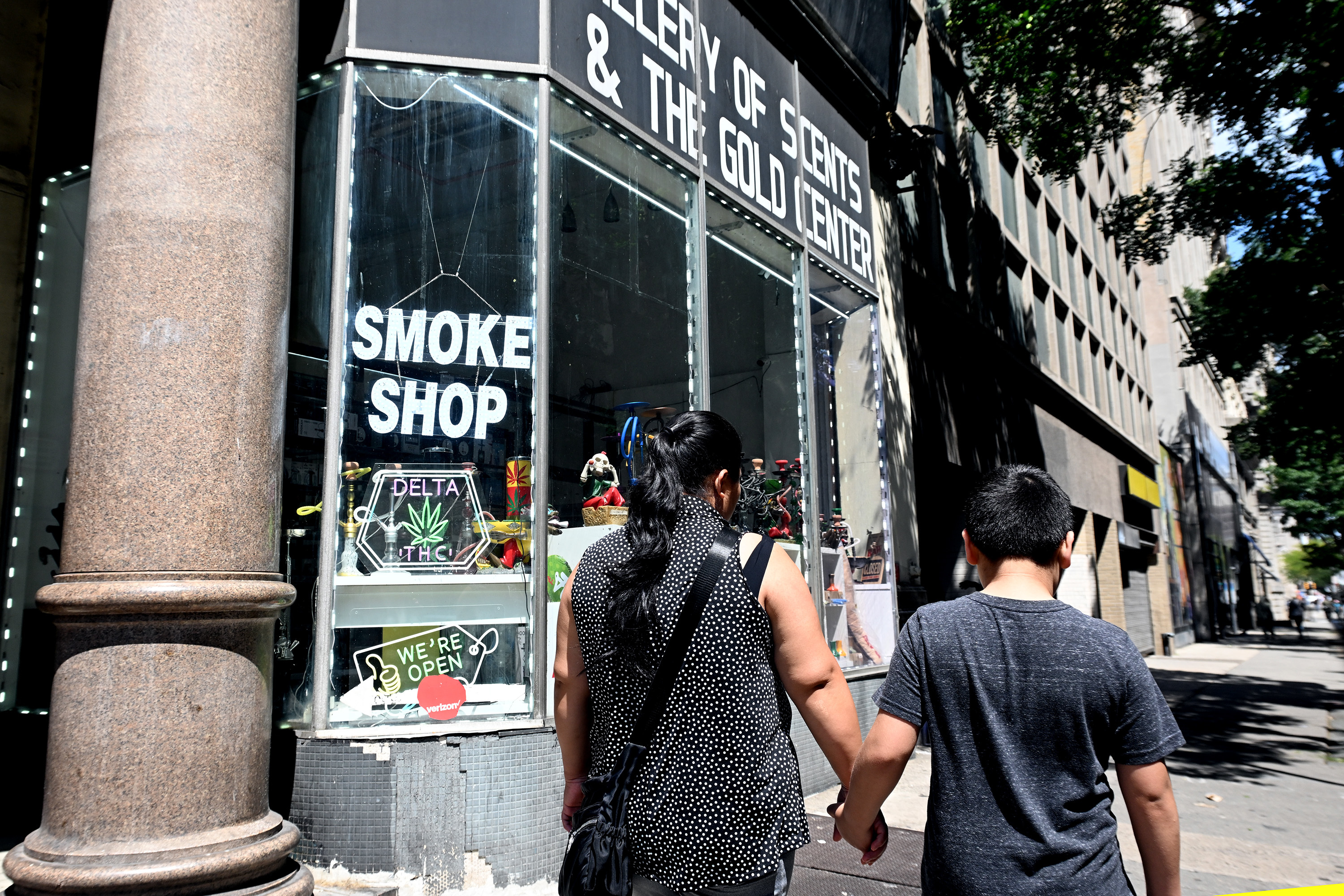
    Right now, any Philadelphian 21 or older can go online or walk into a regional smoke shop and buy a THC-infused drink as potent as products in legal dispensaries.

    But soon, that might all change.

    The billion-dollar intoxicating beverage industry exploded in recent years, with THC-infused seltzers, lemonades, and teas that resemble popular products like Surfsides or White Claws. Sold in local gas stations, smoke shops, and liquor stores outside of Pennsylvania, these weed drinks deliver a cannabis high that is infused into bubbly, sweet canned beverages.

    While marijuana is still federally illegal, the hemp industry had found a way to manufacture and sell hemp-derived THC drinks across the country through a legal loophole that is soon closing.

    Last month, Congress banned all intoxicating hemp products, a slew of THC-infused smokeable, vape-able, and edible products that are derived from hemp plants but could be mistaken for actual marijuana. In many cases, the drinks are just as potent as conventional weed.

    Starting in 2027, almost all of them will be illegal, spurring a nationwide movement within the industry to save the burgeoning market.

    Arthur Massolo, the vice president of national THC beverage brand Cycling Frog, which sells its wares locally, said these restrictions will have devastating effects on the producers of thousands of hemp-derived products, like THC, but also CBD, the non-intoxicating cannabinoid popular for treating anxiety, sleep, and pain.

    Will Angelos, whose Ardmore smoke shop and wellness store, Free Will Collective, relies on THC drinks for nearly 40% of its business, is hoping for some saving grace. “We’re either looking to pivot or we’re disappearing,” he said.

    Adults share Cycling Frog canned THC drinks in this marketing photo provided by Cycling Frog.

    What are THC-infused drinks?

    Seltzers, sodas, teas, mocktails, and lemonades all infused with THC — and sometimes non-intoxicating CBD — exploded onto the scene a few years ago and grew into a billion-dollar business, said hemp market analyst Beau Whitney.

    “These drinks have transformed the hemp industry into this low-dose intoxicating health and wellness, alcohol-adjacent product,” said Massolo, who is also the president of U.S. Hemp Roundtable, a hemp business advocacy organization.

    The THC-infused drinks sold in gas stations, smoke shops, and liquor stores are supposedly formulated using legally grown hemp, which is allowed to be grown under the 2018 Farm Bill that opened the door to hemp farming in the U.S.

    Lawmakers carved out an exemption from federal drug laws for cannabis plants containing 0.3% or less of THC. These low-THC plants are considered “hemp” and are legal to grow. Cannabis plants over that THC threshold are considered marijuana and can carry felony charges if the plant is not being grown by state-licensed growers in places where adult use or medicinal marijuana is legal, like New Jersey and Pennsylvania.

    While intoxicating hemp products have enjoyed consistent growth in the past years, these THC-infused drinks have increasingly appeared in aisles of liquor stores and supermarkets in some states, allowing adults who normally don’t visit dispensaries to pick up a bottle of infused wine in the same place they grab groceries, said New Jersey cannabis lawyer Steve Schain.

    Hemp products photographed at the Philadelphia Inquirer, November 21, 2025.

    The ease of access to THC drinks allowed the national market to grow to $1.3 billion in annual sales, and if access continues, Whitney said, that figure could reach $15 billion in the coming years.

    This is all thanks to what Whitney calls the “FPS,” or “Female Power Shopper.” These women, ages 29 to 45, are the ones who are likely shopping for a household in grocery and liquor stores, and may jump at the chance to try cannabis products without diving headfirst into dispensaries, Whitney said.

    Women are becoming the fastest-growing demographic in the industry, and 2022 marked the first time daily marijuana users outnumbered daily alcohol drinkers. As alcohol consumption reaches historic lows, liquor stores and beer distributors have been “wonderfully buoyed” by THC drinks to keep them afloat, Schain said.

    Mary Ellen, 55, of Bucks County, who asked to not to be identified by her last name over concerns for her cannabis use and employment, said these THC drinks are the perfect way to unwind after a long day, especially for adults like her who choose not to drink alcohol. As a medical marijuana patient, she uses regulated cannabis for a variety of ailments, but also enjoys THC drinks like Nowadays’ infused mocktails that she buys at Angelos’ Ardmore store.

    “I’d rather come home and have a glass of Nowadays. That’s a lot better than having a glass of vodka or a benzodiazepine,” she said. “I’m not going to forget what I did the night before, and I’m not going to wake up feeling crappy the next morning.”

    City smoke shop exterior in the 1000 block of Chestnut Street Monday, July 21, 2025.

    What are the concerns over THC drinks?

    As the money started to roll in for THC drinks, fear among local communities and law enforcement began to grow. In the Philadelphia suburbs, the Bucks, Chester, and Montgomery County district attorneys’ offices finished a 10-month investigation into intoxicating hemp products and the local stores that sell them.

    The 107-page grand jury report speaks of a public health crisis unfolding in “plain sight” across Pennsylvania, where retailers have little to no oversight, in some cases selling actual marijuana.

    Montgomery County District Attorney Kevin Steele said the industry created a “Wild West situation” and urged state lawmakers to regulate the industry similarly to alcohol and tobacco, including age requirements, licensing, and mandatory lab testing.

    Stakeholders in the industry support regulation of some kind. While hemp-derived THC companies fear the economic collapse of their industry, Massolo and Angelos say there is concern that these products will leave overt brick-and-mortar operations known by local officials for more covert, illicit operations, similar to how these products were purchased before the 2018 Farm Bill.

    “We’ve basically traveled back to 10 seconds before the Farm Bill of 2018 was signed,” Schain said.

    Mary Ellen says the lack of regulation is a major sticking point for consumers who flock to these products, but would like some reassurance on the drinks they are ingesting.

    But, even if the ban goes into effect, she said, “people will just figure out another way for us to get it. It’ll be like a prohibition that we’ve seen in this country with alcohol and marijuana.”

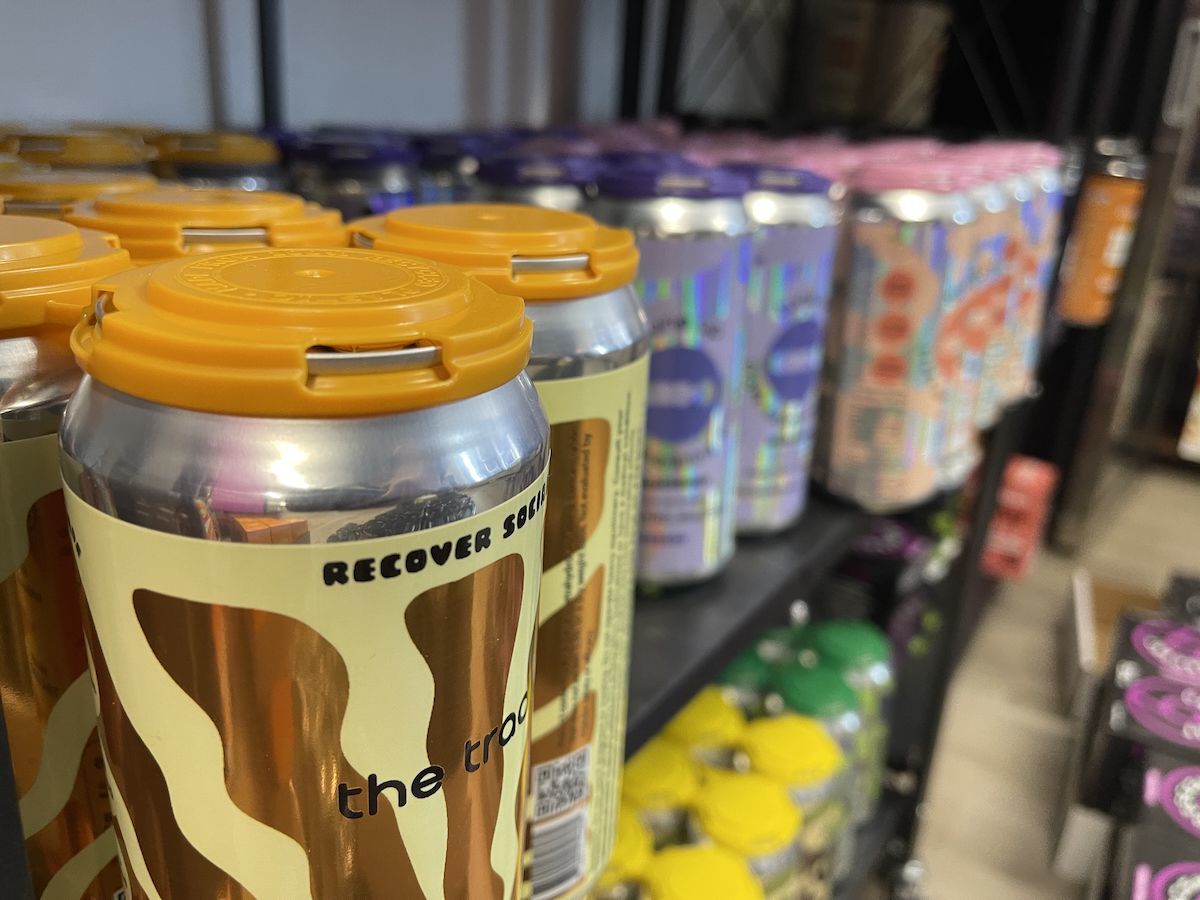
    THC and CBD-infused beverages on the shelves of Free Will Collective, an Ardmore smoke shop and wellness store owned by Will Angelos. As Congress moves to ban most intoxicating hemp products, business owners like Angelos aren’t sure they will be able to keep the doors open long past 2027 if current regulations go into effect.

    Will THC-infused drinks be banned or saved by 2027?

    Now, as the industry’s yearlong grace period begins before the ban takes effect, companies are scrambling.

    The intoxicating hemp manufacturers and retailers who spoke to The Inquirer said the game plan is to offload all of the intoxicating hemp products in stock, including THC-infused drinks, flower, vapes, and even CBD products.

    Some companies will see almost their entire product catalog become illegal, in some cases dwindling from 45 products on offer down to two, Whitney said of the firms he works with. The far-reaching impact will also hurt industrial hemp products, cannabis tourism, alcohol distributors, and even the legal cannabis industry, as some of their products, including CBD, will now have to contend with these new regulations, Schain and Whitney said.

    At the U.S. Hemp Roundtable, Massolo is having daily board meetings, including on weekends, to coordinate a response to federal lawmakers. It’s now a race against the clock to remedy or claw back some of the new regulations before damage is done to the industry’s distribution pipelines, Massolo said. The group hopes to rally other industries, like traditional beverages, wellness products, and supplements, to bolster its case.

    Among the U.S. Hemp Roundtable’s recommendations to lawmakers are an extension of the hemp ban grace period to two years, raising the limit on hemp-derived THC products, and allowing states to regulate these products as they see fit, to name a few.

    Stakeholders say they want regulations to help legitimize this billion-dollar endeavor and save it from annihilation, but smaller operators like Angelos hope it’s not at the expense of small independent businesses.

    While precautions like rigorous age verification systems and lab testing are necessary, Angelos said, if regulators “overtax, or over gate-keep,” many of the smaller retailers — who he said enjoy the benefit of knowing their local government officials and community — won’t be able to compete in the market.

    “There obviously has to be standards, but I’m scared of an overcorrection,” Angelos said of the hemp ban. “It’s not just a singular choice. If you want your kids to be safe, have a mechanism where you can keep your eyes on the product.”