Category: Philadelphia News

  • They served nearly three decades in prison for murder. Today, a Philadelphia judge overturned their convictions.

    They served nearly three decades in prison for murder. Today, a Philadelphia judge overturned their convictions.

    Three men who spent nearly three decades in prison for the 1997 stabbing death of a Northwest Philadelphia woman had their murder convictions overturned Tuesday after prosecutors, defense attorneys, and a judge agreed that key evidence in the case against them was unreliable.

    Marc Brittingham, Rasheed Turner, and Jermal Shuler will be set free after a Common Pleas Court judge vacated their convictions and life sentences, dismantling a prosecution that relied heavily on a timeline of the victim’s death that prosecutors now say can no longer be trusted.

    At trial in 1998, Bennett Preston, an assistant medical examiner, told jurors Essie Mae Thomas had likely died on the evening of Nov. 8, 1997 — a time frame prosecutors used to bolster the testimony of a sole witness who provided a direct link between the men and the killing.

    But the Conviction Integrity Unit of the Philadelphia District Attorney’s Office later determined that Preston’s findings and testimony were not reliable. Experts tapped by both defense attorneys and prosecutors found that Thomas died at least a day later than Preston said she did.

    Common Pleas Court Judge Jennifer Schultz said that information would likely have changed the outcome of the trial had jurors heard it at the time.

    After Schultz vacated the convictions and sentences, prosecutors withdrew the charges, clearing the way for the men’s release after nearly 28 years in prison.

    The case marks the first triple exoneration secured by the conviction integrity unit, which since its creation in 2018 has helped overturn a growing number of convictions tied to flawed forensic testimony, withheld evidence, and other investigative failures.

    Inside the courtroom Tuesday, relatives and supporters wept quietly as Schultz delivered her ruling. One woman rocked back and forth in her seat, sobbing. Others embraced and cheered after the judge formally dismissed the case.

    Family members declined to comment afterward.

    The attorneys — from the Innocence Project, DLA Piper, Pennsylvania Innocence Project, and the Exoneration Project — released a joint statement after the hearing, saying the three men had “maintained their innocence while serving time for a crime they did not commit.

    “The absence of physical evidence, along with new evidence discovered during the joint investigation, makes clear that this wrongful conviction should never have occurred,” the statement said.

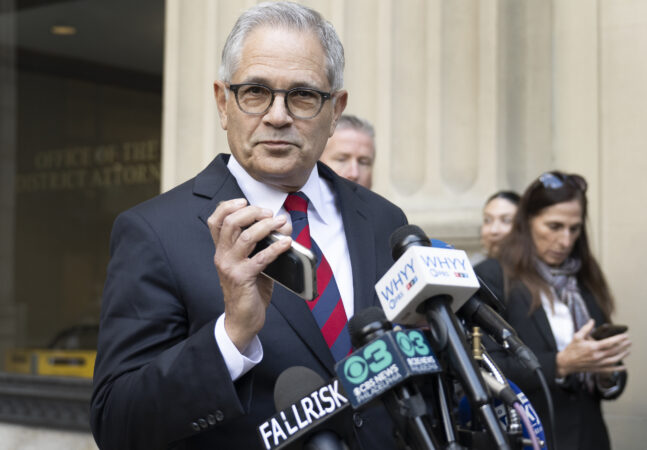
    District Attorney Larry Krasner, who addressed reporters outside the courthouse, said the men had been “robbed of a fair trial, simply put.”

    He added that while the men’s convictions had been vacated, “that does not necessarily mean they are innocent. It means their convictions lacked integrity.”

    Thomas was found dead inside her home. Prosecutors contended at trial that Brittingham, Turner, and Shuler went to her house to rob her and ended up killing her.

    The prosecution’s case, led by Assistant District Attorney Carlos Vega, depended heavily on establishing when Thomas died. Vega could not be immediately reached for comment Tuesday.

    Preston testified that her injuries and condition indicated she was likely killed on Nov. 8 — a timeline prosecutors said matched the account of a witness who placed the three men at the house that day.

    But according to reviews by two forensic pathologists, Preston failed to account for several things that contradicted his conclusion, including evidence that rigor mortis may still have been developing — not disappearing — when Thomas’ body was examined. The experts concluded it was extremely unlikely Thomas died on Nov. 8.

    Defense attorneys argued in court filings that without Preston’s testimony, the case against the men largely unraveled. There was little physical evidence tying them to the killing, the lawyers said, and no DNA evidence linked them to the crime scene. Preston’s testimony about the timing of her death, they said, was used to prop up prosecutors’ otherwise unstable sole eyewitness, Wadia Brown, who admitted she was high on crack cocaine on the night she said she saw the three men on Thomas’ porch around that time.

    Efforts to reach Preston were unsuccessful Tuesday.

    Over the years, questions emerged about Preston’s work in multiple criminal cases, prompting renewed scrutiny from defense attorneys and prosecutors. In recent years, the conviction integrity unit began reexamining cases in which his testimony played a significant role, said unit supervisor Matthew Stiegler.

    Many of the specifics underlying the questions about Preston’s findings remain unclear. Court filings in the case were heavily redacted. Stiegler said Tuesday “what broke the case open” was the discovery that disciplinary action had previously been taken against Preston, but did not provide further details.

    Schultz concluded that the evidence uncovered by prosecutors and defense attorneys was crucial to the outcome of the trial and warranted a new one — a prosecution the district attorney’s office said it would no longer pursue.

  • Airbnb is turning on its ‘anti-party’ technology for Memorial Day weekend

    Airbnb is turning on its ‘anti-party’ technology for Memorial Day weekend

    Airbnb is activating its “anti-party” technology again for Memorial Day weekend as the global rental property giant doubles down on its no-party policies.

    Temporary changes to the online booking system will deter potential “higher risk” bookings during Memorial Day weekend. At the time of publishing, Airbnb did not specify the exact dates and times the technology would be operating.

    Last year, Airbnb said this technology deterred nearly 11,000 people from booking entire homes over Memorial Day weekend. In Philadelphia, 85 people were deterred from entire-home booking that same time period.

    The system looks at the type of listing being booked, the duration of the stay, the distance from the guest’s primary location, and whether the booking is made last minute, to determine whether a booking should be deterred, according to Airbnb.

    Airbnb has tied certain entire-home bookings to the potentially disruptive parties for which rental platforms garnered a reputation in earlier years, including in the Philadelphia region. Muhammad Ali’s Cherry Hill mansion, which still operates as a rental property on platforms like Vrbo and Expedia, was the site of countless “wild parties” that led police to visit the home 97 times between 2018 and 2019, according to an Inquirer report.

    The anti-party technology deters potential house party bookings toward private room listing or hotels hosted on the platform.

    “Our investment in anti-party technology, along with clear policies and consequences, reflects our commitment to supporting positive stays and countering the rare few who would try to break the trust our platform and local communities are built on,” said Rog Kaiser, vice president of fraud and safety operations at Airbnb.

    In 2022, Airbnb made its COVID-era “party ban” permanent, making it against the rules for all users year-round to book entire homes solely for large parties.

    Airbnb was also reminding parents and guardians that children under 18 cannot have Airbnb accounts and parents cannot book rentals for underage guests without the parent being on-site. Violating these rules can lead to bans and financial costs in the case of damages.

    Since these measures were put in place, in 2025, less than 1% of U.S. rental bookings resulted in a report of a party to Airbnb, according to the company.

  • Edna B. Foa, celebrated pioneering psychologist and longtime Penn professor, has died at 88

    Edna B. Foa, celebrated pioneering psychologist and longtime Penn professor, has died at 88

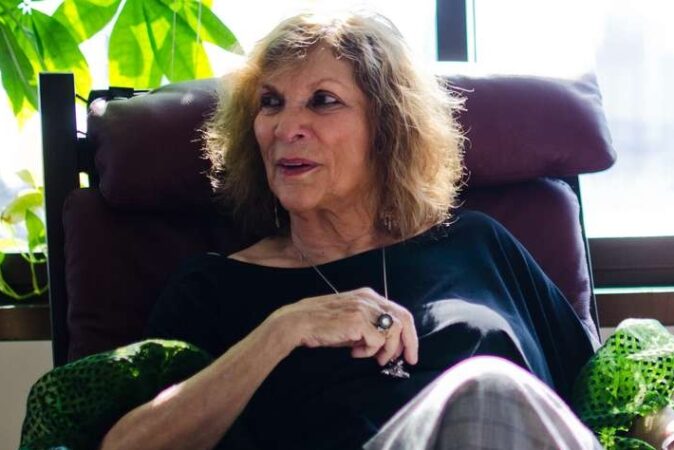
    Edna B. Foa, 88, of Philadelphia, renowned clinical psychologist, pioneering mental health researcher, creator of the celebrated prolonged exposure therapy for post-traumatic stress disorder, longtime professor of clinical psychology in psychiatry at the University of Pennsylvania, lecturer, mentor, and volunteer, died Tuesday, March 24, of complications from pneumonia at Pennsylvania Hospital.

    Dr. Foa was among the first psychologists in the 1970s and ‘80s to infuse empirical case study research into existing behavior protocols to create more effective mental health treatments for victims of rape, combat trauma, childhood sexual abuse, and other ordeals. She became an expert in PTSD, obsessive-compulsive disorder, and social phobia, and her prolonged exposure therapy for PTSD and exposure and response prevention treatments for OCD are still hailed as breakthrough innovations.

    From 1971 to 1997, she was a fellow, professor, and clinical researcher in the psychiatry departments at Temple University and the old Medical College of Pennsylvania, now part of Drexel University. She joined Penn’s Department of Psychiatry in 1998 and, over more than 50 years, evaluated thousands of mental health cases to determine which behavior therapy was best for each condition.

    “Her work truly changed the field,” colleagues at the Ardmore-based Center for Hope and Health said on Instagram. They said she “spent her career doing what she believed mattered most: studying what actually helps people get better, and making those treatments more accessible.”

    She created the Center for the Treatment and Study of Anxiety at Temple in 1979 and directed it later at Penn. Colleagues at the center said on Facebook: “Through her brilliance, determination, and unwavering belief in the power of evidence-based care, she transformed the understanding and treatment of anxiety-related disorders and changed the lives of countless individuals and families around the world.”

    Other colleagues and friends called her “brilliant,” “amazing,” and “extremely influential” in online tributes. One said she was “a giant who taught the world how to conquer fear and reclaim life.”

    Dr. Foa earned grants for research and education, and taught her therapy techniques to veterans counselors in the United States and Israel, to therapists for the U.S. Army and the City of Philadelphia, and to clinicians at Women Against Rape and other groups around the world. In 2010, she was named one of Time magazine’s 100 most influential people in the world.

    To share her innovations and encourage peer review, Dr. Foa edited Failures in Behavior Therapy in 1983 and cowrote Emotional Process of Fear in 1986 and Emotional Processing of Traumatic Experiences in 2007. The hundreds of books, manuals, articles, and papers she wrote, cowrote, or edited about memory, stress, anger, depression, and guilt have been cited more than 13,000 times by other authors.

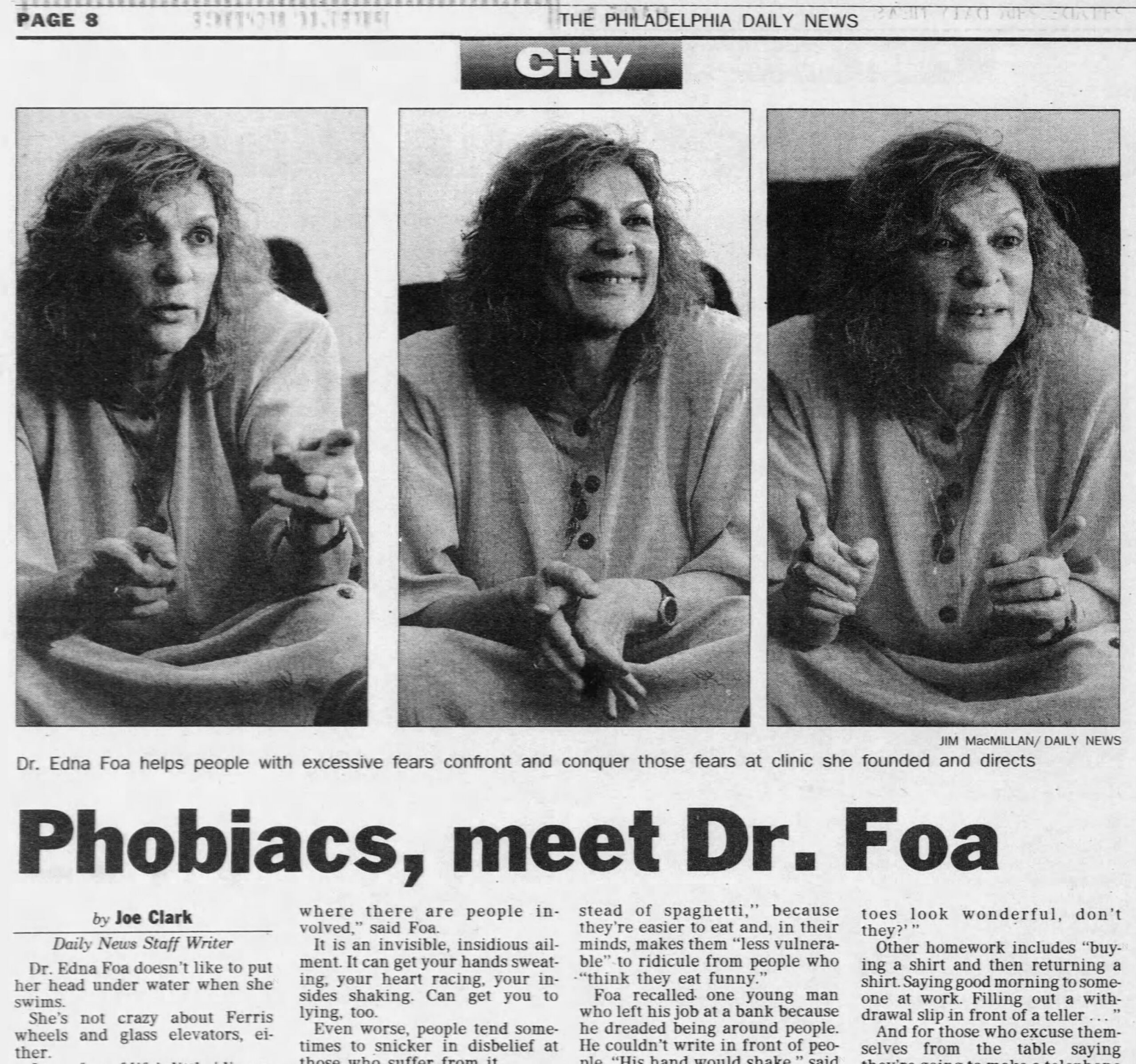
    The Daily News published this story and photos of Dr. Foa in 1993.

    She also volunteered as a consultant and supervisor at clinics and medical centers. She lectured and organized clinical workshops in the United States, Israel, and elsewhere. In 2010, she told Time magazine: “If you develop a wonderful protocol, it’s useless if nobody uses it.”

    She was affiliated with many mental health societies and associations, and earned lifetime achievement awards from the American Psychological Association, the International Society for Traumatic Stress Studies, and other groups. She was featured often in The Inquirer and the Daily News, and told the Daily News in 1993 that “everyone has little fears.” She said her little fears were of heights and swimming underwater.

    In 1970, Dr. Foa earned both a doctorate in clinical psychology and personality from the University of Missouri, and a master’s degree in clinical psychology at the University of Illinois. In 1962, she earned a bachelor’s degree in psychology and literature at Bar-Ilan University in Israel.

    She stopped working full-time at Penn in 2023 but never really retired. In April, she was scheduled to lead a workshop in prolonged exposure therapy. In 2011, she told The Inquirer: “If I die tomorrow, I think that what I have achieved is fine. If I don’t die, I don’t need to stop.”

    Edna Ben Jacob was born Dec. 28, 1937, in what is now Haifa, Israel. She became fascinated by the work of psychologist Sigmund Freud, she told the Encyclopedia of Behavior Modification and Cognitive Behavior Therapy, and she worked briefly with juvenile offenders near Tel Aviv after high school.

    In 2011, she told The Inquirer she was shattered by her own trauma in 1948 when her brother, Uri, was killed in the war and her father, Abraham, died four years later.

    She married and divorced when she was young, and met Professor Uriel Foa at Bar-Ilan. They married when she was 24, had daughter Dora, and moved to the United States in 1966. They had daughters Yael and Michelle, and lived in Illinois and Missouri before moving to Glenside and then Penn Valley. She moved to Philadelphia a few years ago.

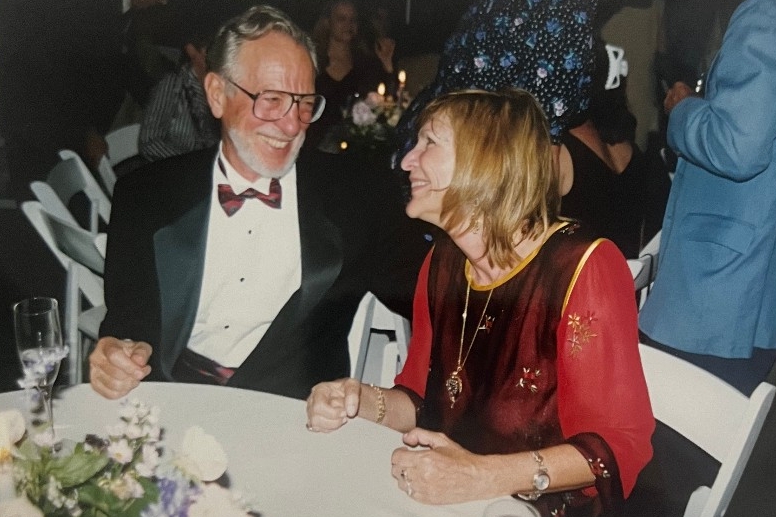
    After a divorce, she married Penn professor Charles Kahn. Her husband and former husband died earlier.

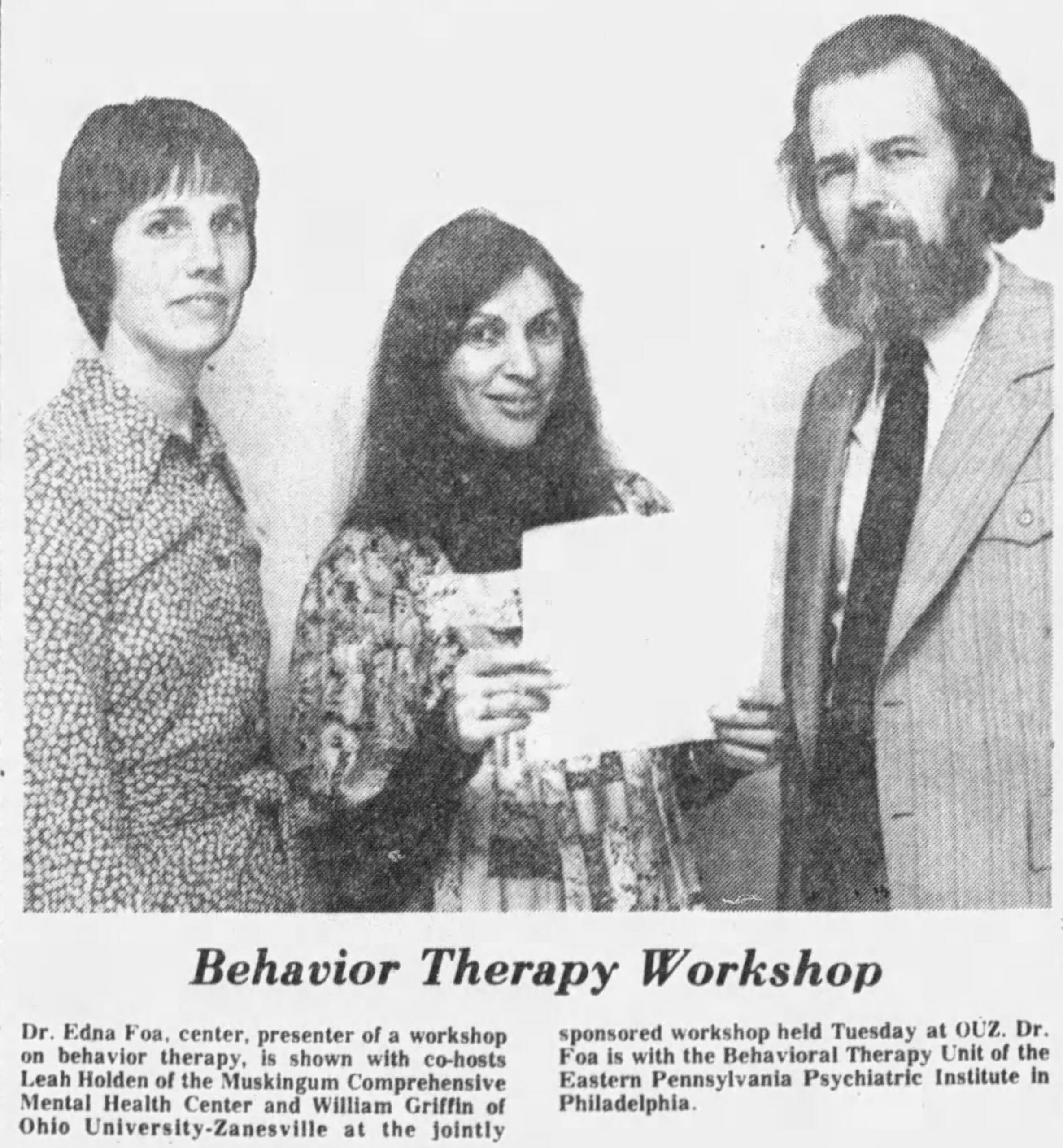
    This photo of Dr. Foa (center) appeared in the Times Recorder in Ohio in 1978.

    Away from work, Dr. Foa enjoyed traveling, gardening, and hosting family and friends at holidays. She collected art and antiques.

    She told an interviewer she had a bad habit of deleting emails before reading them. She managed lung cancer years ago.

    “She was full of energy, vivacious, a force of nature,” said her daughter Yael. Her daughter Michelle said: “She was an extraordinary figure who lived a very rich life.”

    In addition to her daughters, Dr. Foa is survived by five grandchildren, a great-granddaughter, and other relatives.

    Dr. Foa laughs with her husband, Charles Kahn.

    Private services are to be held later.

    Donations in her name may be made to the Philadelphia Museum of Art, 2600 Benjamin Franklin Parkway, Philadelphia, Pa. 19130; and the Philadelphia Orchestra, 300 S. Broad St., Philadelphia, Pa. 19102.

  • No Kings rallied for the third wave of anti-Trump protests in Philly and around the country

    No Kings rallied for the third wave of anti-Trump protests in Philly and around the country

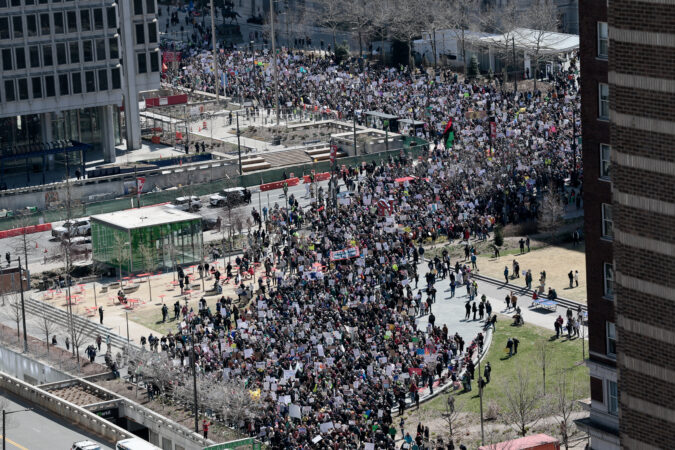
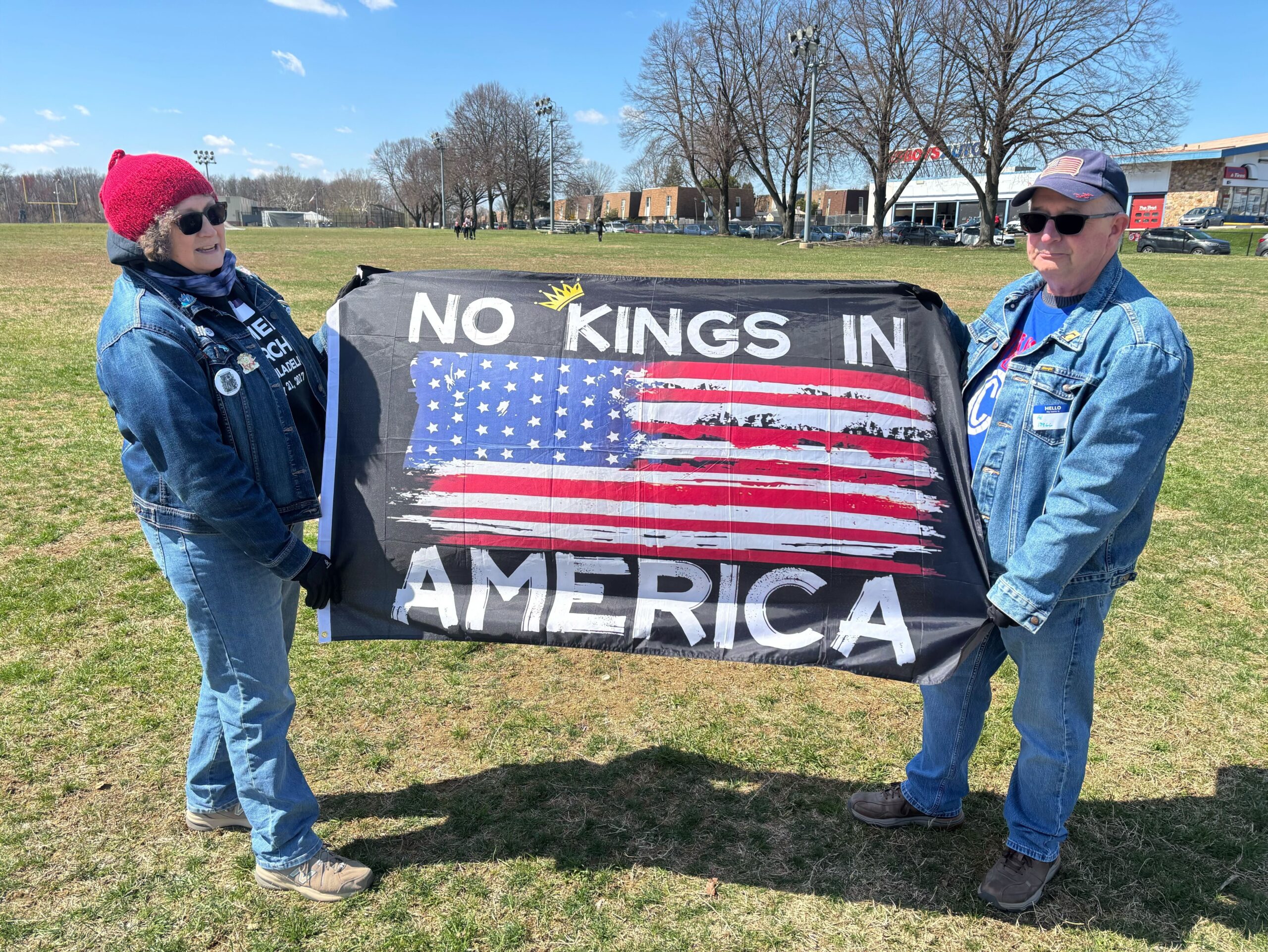
    In step with demonstrators nationwide Saturday, thousands took to streets across the Philadelphia region — from Center City, to Ardmore, to Camden — denouncing President Donald Trump, his policies, and his administration.

    It was the third No Kings protest in roughly nine months, signaling the breadth of dissent and concern over what protesters see as Trump’s authoritarianism and his attempts to consolidate and expand his power. Protesters condemned the gamut of the president’s agenda, including escalating immigration enforcement, the war in Iran and rising gas prices at home, and the dismantling of foreign aid programs.

    “The people in power are making decisions that they won’t have to live through,” said Electra Powers, who brought her Grays Ferry family to the demonstration outside Philadelphia City Hall. “The future they’re setting up for our kids is horrible.”

    On a brisk March afternoon, chants reverberated throughout Center City, drums beat in time, and homemade signs swung as participants marched down the Ben Franklin Parkway to a rally at the Philadelphia Museum of Art.

    Near City Hall’s north entrance, Meoshe McQueen unfurled a large American flag, a tribute to her father, she said, who served as an airman in World War II.

    “My father fought for equality and justice,” the North Philly native said. “The world we live in today threatens that. We want fairness, regardless of a person’s color, creed, or race. None of that matters.”

    More than 3,100 No Kings events were planned Saturday, spanning every state and most continents, according to organizers, who expected historic turnout. The movement’s flagship event was being held in Minnesota, an epicenter of resistance to Trump’s immigration crackdown and the site of two fatal shootings by federal agents. New Jersey’s own Bruce Springsteen performed his anti-ICE protest song, “Streets of Minneapolis,” there.

    “We need a world where kids can be safe, and not hauled off based on the color of their skin,” said Pamela Schott of Jenkintown, who held up a sign pleading for “peace and safety” for her grandchildren.

    Energy was also building in pockets of the region where Trump has more political capital, and those who oppose the president feel their voices drowned out.

    “I grew up in an America where I saw change for the good,” said Betsy Tucker of Bucks County. “Now, I’ve seen that change ripped away.”

    Michelle Dupree, 67, was one of the first of roughly 150 people at the Northeast Philly No Kings rally at Bustleton Field. She had hoped more people would show up in the Northeast.

    She was tired. But not defeated.

    “It’s important to me,” she said, waving her sign for the modest, but steady stream of drivers, who registered their approval with a honk or three. “My knees hurt. My back hurts. It’s so frustrating to be at home and to watch the news — you want to scream. You want to be heard.”

    Olivia Hayes was among a couple thousand ralliers in Ardmore. Hayes was cheered by reports of robust crowds at No Kings events in other suburban spots, like Wayne and nearby Havertown. For a few hours, at least, a sense of pride pierced the anger and hopelessness, she said.

    “It’s great to see such a community,” she said. “When you’re in your day-to-day life, and not around so many people, it can be hard to have hope.”

    Betsy and Al Tucker attend the Northeast Philly No Kings protest on Saturday.

    Across the river, Camden hosted its first No Kings protest (previous events were held in Collingswood and Haddon Heights). The change in locale was driven by increased immigration enforcement and presence in the area, said Michele Messer, of Cooper River Indivisible. Camden city’s population is about 54% Hispanic, according to U.S. Census data. Last month, a nearby ICE operation made a group of Camden County fourth graders and fifth graders run away from a bus stop in a panic, according to the Lindenwold School District.

    “We’re a united front,” she said, “no matter where you land on the political spectrum, we need to work together and build coalitions to fight back against what this administration continues to try to pile on us.

    “And the stronger that fabric, the stronger we’ll be.”

    In a statement to the Associated Press, the White House dismissed the nationwide protests as the product of “leftist funding networks” with little real public support.

    Center City attendees said the sense of urgency is growing.

    “We wanted to show our support for the movement,” Peter Maiolino said. “If we weren’t outraged last time, we definitely are now.

    “Things have only gotten worse.”

    In a video message to the crowd, U.S. Rep. Brendan Boyle — who was stuck in Washington, D.C., as congressional leaders haggle over the partial government shutdown, which has forced Transportation Security Administration employees to work for weeks without pay — encouraged people to continue their protest, even after the rally concluded.

    “This is a fight we cannot lose, but we need to be crystal clear about what is that stake in this country,” Boyle (D., Philadelphia) said. “Our president is more concerned about building his ‘big beautiful ballroom’ than he is about the poor and working-class people in this country.”

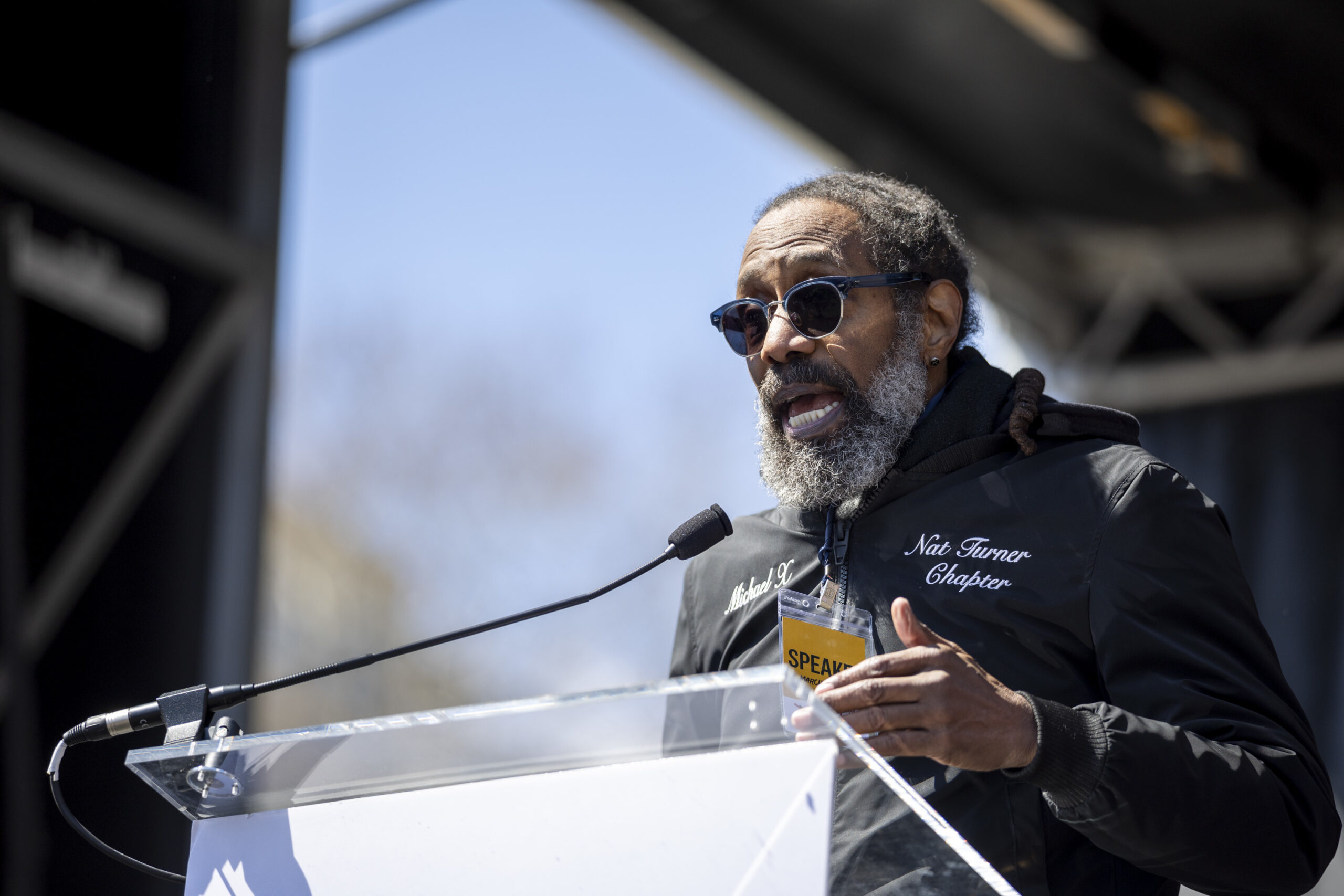
    Avenging The Ancestors Coalition (ATAC) leader and attorney Michael Coard echoed Boyle’s sentiments, calling the attendees “the revolution.” ATAC stewarded the President’s House Site on Independence Mall, a slavery memorial removed — and later partially restored by court order — in what some have called an attempt by the Trump administration to sanitize history.

    Michael Coard, of the Avenging the Ancestors Coalition, speaks Saturday at the third No Kings rally in Philadelphia.

    “When I say fascism, I want you to know that I say it without hyperbole,” he said. “Today America is where Italy was in 1926, but we are not going to do the same. We are going to fight a good fight and we are going to win.”

    The No Kings’ trajectory has been atypical compared to other social movements, where enthusiasm historically wanes over time, according to Billie Murray, an associate professor of communication at Villanova University. No Kings has, instead, gained momentum: Organizers say more than 5 million people took to the streets in June, followed by more than 7 million in October. Organizers projected 9 million people would participate Saturday.

    “The issues don’t seem to be getting resolved,” Murray said, “people see that as a motivating factor — ‘We have to keep pushing, we have to keep trying, we have to keep organizing.’ … People aren’t seeing the change that they want to see.”

    The Associated Press contributed to this article.

  • Philly has been seeing huge temperature swings within 24 hours. Here’s what’s going on.

    Philly has been seeing huge temperature swings within 24 hours. Here’s what’s going on.

    Like so many humans, perhaps the atmosphere is having issues adjusting to the time change. At the very least, it’s having trouble keeping track of the seasons.

    After making a run at 70 degrees on a stormy Monday, on Tuesday it will be welcome back to hats and gloves in Philly.

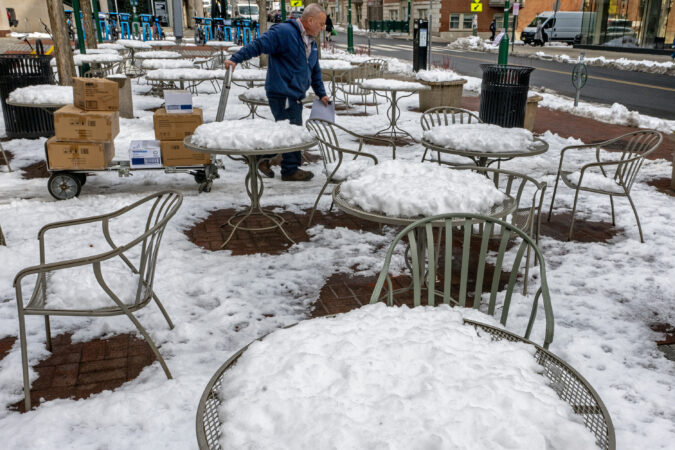
    Temperatures were forecast to fall to freezing by daybreak, which would be a drop of 35 to 40 degrees in less than 24 hours. In some years, that would rank among the biggest annual day-to-day temperature drops.

    But this comes less than a week after the official readings plummeted from 83 degrees, normal for mid-June, to 35 in 24 hours, one of the largest day-to-day temperature swings in Philly’s climate record.

    In official record-keeping dating to 1874 — covering more than 55,000 days — the Wednesday-to-Thursday shift would rank in the top 20 for day-to-day temperature tumbles, according to an Inquirer analysis.

    “It’s really remarkable,” said Eric Balaban, pulmonary and critical care fellow at the Temple Lung Center.

    He and other experts say that aside from what it may do to the morale of spring’s ardent fans, the thermal roller-coaster and the accompanying winds likely are having effects on health, particularly for people with respiratory cardiovascular conditions.

    And we probably should expect to see the dramatic swings to continue for a while, said Matt Benz, senior meteorologist with AccuWeather Inc.

    “I’d be surprised if we didn’t, given the pattern we’ve being going through,” Benz said.

    Why the temperature has been so jumpy lately in Philly

    Philadelphia and other areas in the mid-latitudes are prone to become battlegrounds this time of year between the stubborn winter and the impatient spring.

    March is notorious for temperature swings as cold air masses from the north encounter encroaching warmth and storms tend to form along the borders of the skirmishes.

    One reason the contrasts have been especially vigorous this year is the obvious. “After this hard winter, that’s to be expected,” said Ray Martin, a lead meteorologist at the National Weather Service. We haven’t had many of those lately.

    But that 48-degree drop last week belongs in an elite category. It ranked No. 18 among day-to-day temperature falls, based on the available records. The all-timer was the 57-degree drop from March 28 to 29 in 1921, with several 50-degree drops appearing in the record.

    Whenever they occur, the radical shifts can have health consequences, according to medical experts and a variety of studies.

    The possible health effects of rapid temperature changes

    The temperature changes typically are set off by potent fronts, such as the one that crashed through the region on Monday, and they generate powerful winds.

    By stirring particulate matter and transporting early tree pollens, the winds present a risk to those with respiratory conditions and allergies, said Manav N. Segal, with the Chestnut Hill Allergy & Asthma practice.

    “We are seeing an increase in call volume already because of patients’ spring allergy symptoms,” he said Monday. And conditions this week are just a prequel: The allergy season will pick up steam once the weather turns more consistently warmer and the allergy season intensifies, he said.

    Said Balaban, “People who have preexsiting conditions are simply at higher risk.”

    Rapid changes in temperature and levels of atmospheric moisture with frontal passages can irritate the airways and increase airway inflammation, said Joann Martin, nurse with Guardian Nurses Healthcare Advocates in Flourtown, Montgomery County. Studies have shown associations between temperature variability and increased asthma-related hospital visits.

    Changes in temperature, humidity, and barometric pressure — a measure of the weight of the air that falls as fronts approach and rises after they pass — are “recognized triggers for migraine and severe headaches.”

    In addition, “Sudden temperature shifts can affect blood pressure, vascular tone, and cardiac workload,” Martin said, increasing the changes for heart attacks and strokes.

    For most people, however, after a long winter, the temperature drops are a source of frustration over the delay of a much-anticipated spring.

    More temperature swings are likely in coming weeks in the Philly region

    For now, at least, it appears that the region’s cherry blossoms should be safe, even though temperatures Tuesday morning were expected to come close to freezing in Philly and may fall into the upper 20s Wednesday and Thursday mornings.

    Daytime highs won’t be much higher than 40 Tuesday and Wednesday, before a modest warmup begins.

    It likely would take a serious late-March or early-April freeze to damage the blossoms, said Sandi Polyakov, head gardener for the Japan America Society of Greater Philadelphia. He expects a bloom peak in early April.

    However, the temperature seesaw probably isn’t over, said AccuWeather’s Benz.

    “There’s still a lot of cold air left over in Canada,” he said, ”and a lot of warmth coming up from the Gulf.”

    He noted that Monday’s storm was dropping a healthy 20 to 30 inches of snow in the western Great Lakes.

    “Until we get out of that type of stuff,” he said, “the cold air doesn’t have to go very far to get here.”

  • Baby killed in ambulance crash was being driven to hospital by her grandfather, sources say

    Baby killed in ambulance crash was being driven to hospital by her grandfather, sources say

    An infant who died in a crash involving a private ambulance early Sunday morning was being driven to the hospital by her grandfather, who had jumped behind the wheel of the emergency vehicle parked at the family’s home after the baby became unresponsive, sources said.

    Robert Coleman was trying to rush the baby and her mother to a hospital around 5:15 a.m. after the child was found in distress inside their Frankford house, said a law enforcement source who spoke on the condition of anonymity to discuss an ongoing investigation.

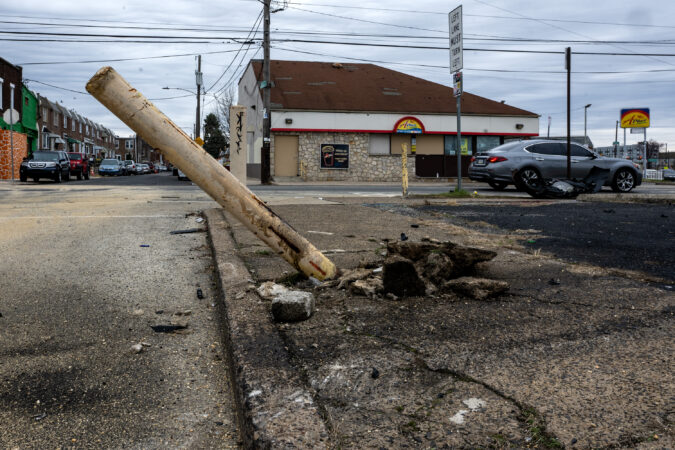
    Police said Coleman, 51, had been drinking — and did not turn on the ambulance’s flashing lights or siren before he sped through a red light at the intersection of Torresdale and Harbison Avenues and collided with a sedan.

    The mother and baby, who the source said were not restrained, were ejected through the windshield of the ambulance, police said.

    The 2-month-old infant, Marian Harris, was declared dead shortly after the crash at an area hospital. Her 32-year-old mother, whom police did not identify, was critically injured with severe head trauma, they said.

    It was not immediately clear why the ambulance, owned by Ambulance Express Inc. or Medstar EMS, was parked at the family’s house or whether the grandfather worked for the company or had experience driving emergency vehicles.

    Police said Sunday that the driver would be charged with driving under the influence and related crimes.

    District Attorney Larry Krasner said in a statement Sunday that no charges had been filed, however. He added that the investigation into the crash “may take some time” but that “we are committed to a fair, appropriate and just outcome.”

  • The fake historic plaque that was erected at the scene of a Philly ICE arrest has disappeared

    The fake historic plaque that was erected at the scene of a Philly ICE arrest has disappeared

    The ICE plaque is gone.

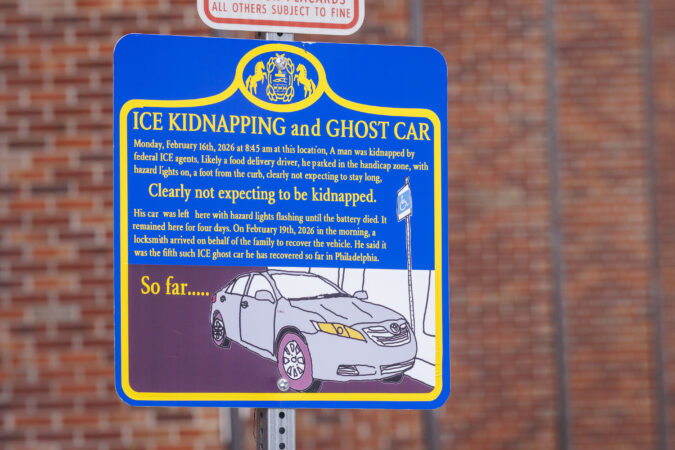
    The fake but authentic-looking Pennsylvania historic marker, erected by two artists who sought to ruefully commemorate a local immigration arrest, disappeared from its post in Philadelphia sometime Monday.

    Huston West, one of the artists, said he was walking his dog around 1 p.m. when he noticed that the sign was absent from its spot on Fairmount Avenue near Fifth Street. A neighbor told him the plaque had been there earlier in the day.

    “It’s lame,” West said of the sign being removed. “But it got a lot of coverage while it was up.”

    West said he could only speculate on who may have taken the marker ― he suspected conservative opponents, people who had criticized the sign on social media, or maybe even the city government.

    A city spokesperson said he would check.

    This particular, familiar-looking blue-and-yellow marker, similar to the ones that commemorate important people, places, and events in communities across Pennsylvania, was put up at the site of a Feb. 16 ICE arrest.

    That morning, masked agents descended on a Gopuff delivery driver who had pulled over to make a quick drop-off in Northern Liberties. After he was taken into custody, the car remained behind for days, set two feet from the curb in an accessible parking space, its hazard lights blinking until the battery died.

    West and a fellow artist who goes by the name Emeyewhisky wondered what had happened to the driver, and created a plaque bearing the header “ICE Kidnapping and Ghost Car.”

    The ghost car terminology borrows from ghost bikes, the roadside memorials where a bicycle is painted white and placed at the site where a cyclist was hit and killed by a motorist.

    Federal immigration authorities say the use of such terms as kidnapping is inaccurate and unfair, that they lawfully arrest migrants who have no permission to be in the United States and who in some cases have committed criminal and even violent offenses.

    Immigration and Customs Enforcement officials in Philadelphia said that on Feb. 16, officers conducted a targeted action and arrested Abdulasen Nazarkhudoev. They said he was unlawfully in the U.S., and told them that he was a Russian citizen.

    He was taken to the Federal Detention Center in Center City and later released by order of a judge, pending further immigration proceedings, records show.

    ICE earlier referred questions about the sign to city officials.

    As word of the art project spread on social media, some disapproved. Some suggested on a Northern Liberties Facebook group that the delivery driver was rightfully arrested.

    West said Monday that he and his art partner had conferred about what to do next. Emeyewhisky is known for projects that place signs with fake wording on Philadelphia streets, and some have been removed.

    Don’t be too surprised, Huston said, if an ICE marker should reappear.

  • TSA closes Terminal C checkpoint at PHL Airport due to staffing shortages

    TSA closes Terminal C checkpoint at PHL Airport due to staffing shortages

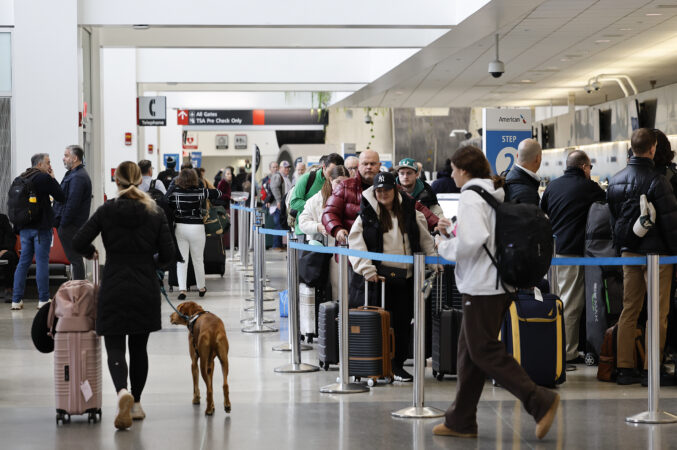
    The Transportation Security Administration temporarily closed the Terminal C security checkpoint at Philadelphia International Airport on Thursday morning.

    “Due to staffing constraints related to the government shutdown, the TSA, in collaboration with the airport, is temporarily closing the Terminal C checkpoint,” said PHL spokesperson Heather Redfern.

    All other security checkpoints remain open, and TSA PreCheck passengers can use the designated lanes at the Terminal A-East and D/E checkpoints. There is no timeline for when Terminal C will be back up and running.

    “We encourage you to check the MyTSA app or the airport’s website to find current wait times and to arrive early to the airport,” said an American Airlines spokesperson. “We are grateful for our federal partners at TSA who continue to ensure safe travel for our customers.”

    The scene at the TSA checkpoint line in Terminal B at Philadelphia International Airport on Sunday morning, Nov. 9, 2025.

    The TSA is experiencing a lapse in funding, alongside other Department of Homeland Security agencies, because its budget has not been passed by Congress.

    In January, federal lawmakers narrowly avoided another full government shutdown by approving budgets for all federal agencies except the Department of Homeland Security. Republicans and President Donald Trump agreed to carve out the DHS budget for further negotiations as Democrats want to put more guardrails on federal immigration enforcement.

    There have been a couple of attempts at passing the DHS budget, but neither side has budged on its demands. The only Senate Democrat to support funding DHS is Pennsylvania Sen. John Fetterman.

    At this point, there is no end in sight to the DHS shutdown and, by proxy, the lapse in TSA funding that is leading to staff shortages across the country, including Philadelphia’s airport.

  • A family from Poland came to Philly for their Rocky steps pilgrimage

    A family from Poland came to Philly for their Rocky steps pilgrimage

    Last year it seemed I was at City Hall a lot; lately it’s been the President’s House. I work for a newspaper so I go where news happens.

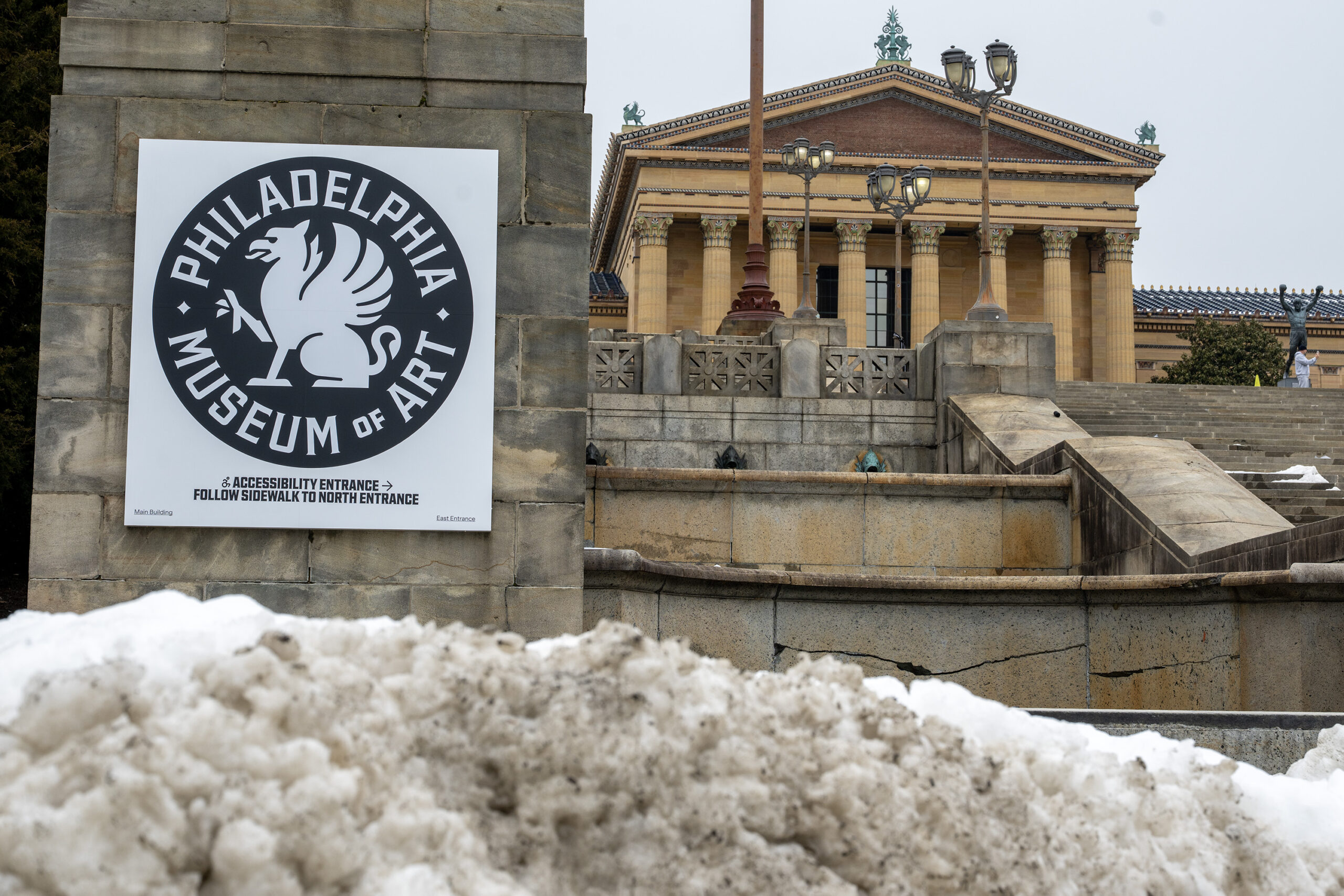
    But I am surprised at how often I’ve ended up at the rebranded, and now un-rebranded, Philadelphia Museum of Art over the past six months. Here, here and here.

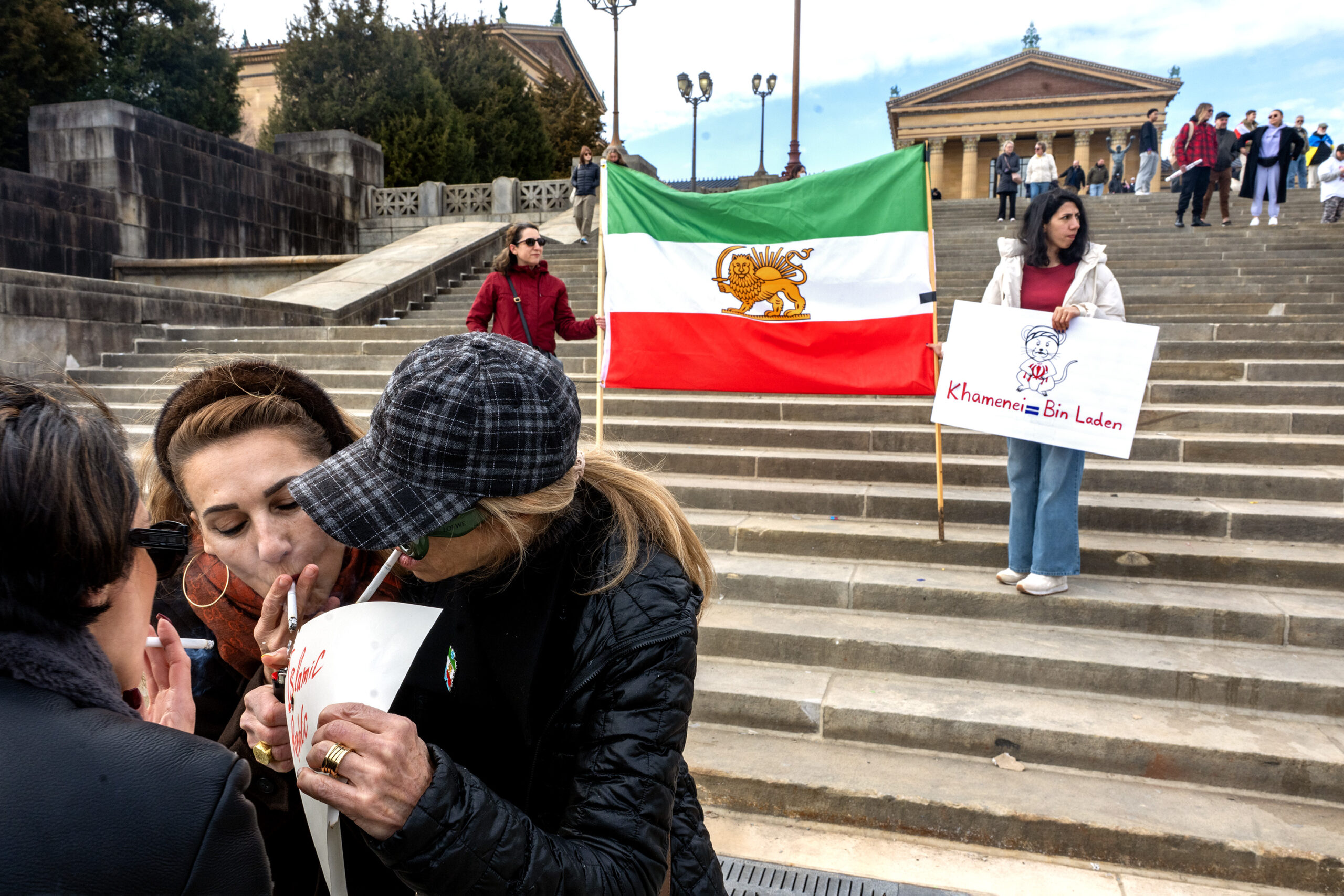
    Last weekend I photographed members of the group Philly Iranians at the museum steps calling for a “free, secular, democratic Iran — united for human rights and against gender apartheid.” (They used cigarettes to burn a sheet of paper representing the Islamic Republic. The smoking symbolized and celebrated the “power of women” they told me, as under Iran’s Islamic penal code, women’s rights are severely restricted.)

    The flag with the Lion and Sun emblem was the official flag of Iran since 1907. It was changed following the 1979 Islamic Revolution is strictly banned from public use in the Islamic Republic. Iranian opposition groups use the old flag in protests.

    I even mentioned the art museum in this space in January.

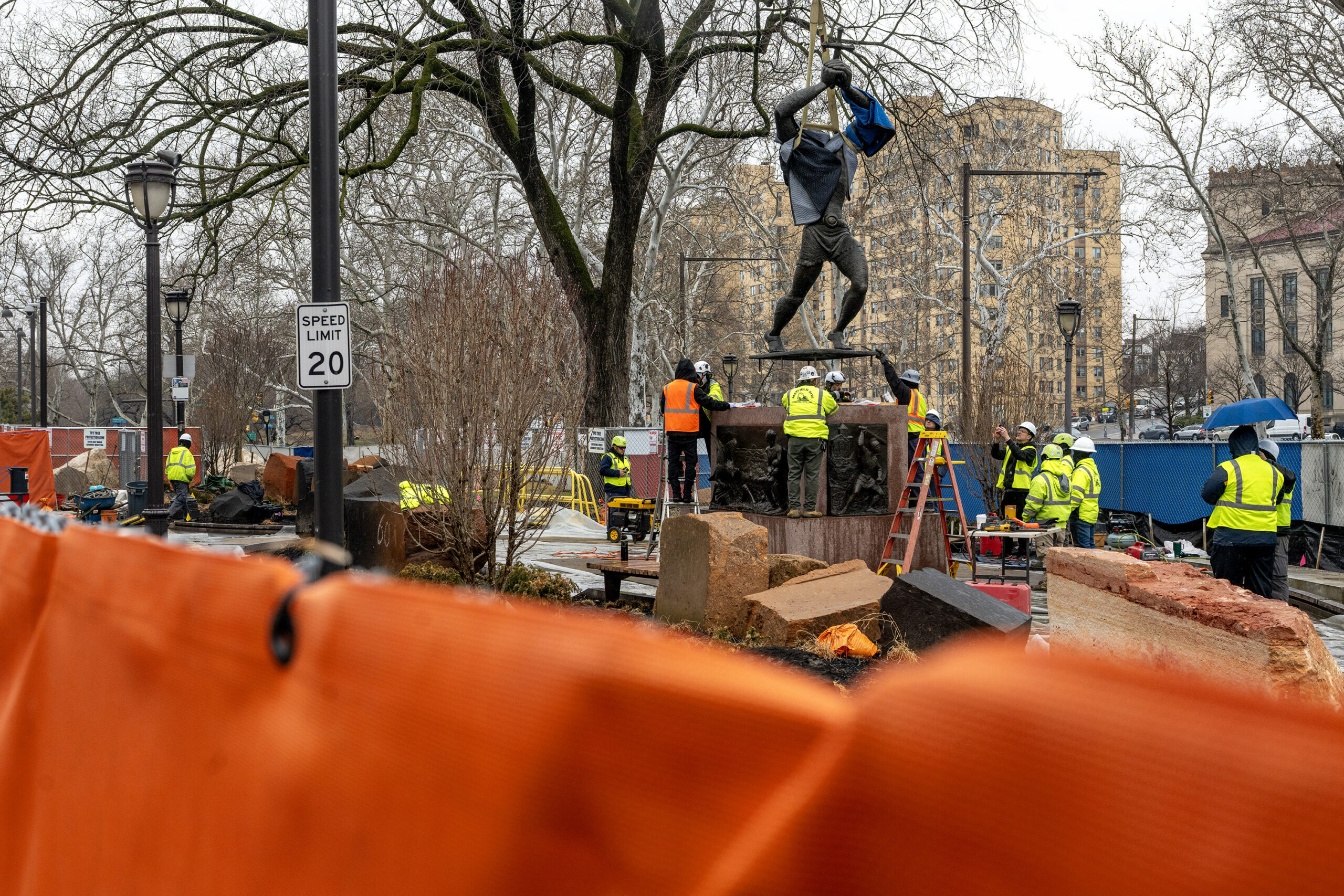
    Workers reinstall the Young Meher statue behind construction fencing outside the museum along Kelly Drive. The work by Armenian artist Khoren Der Harootian was presented to the city in 1976 for the Bicentennial. It was reconditioned and will be the centerpiece of the Armenian Heritage Walk to be unveiled in April for American’s 250th anniversary.
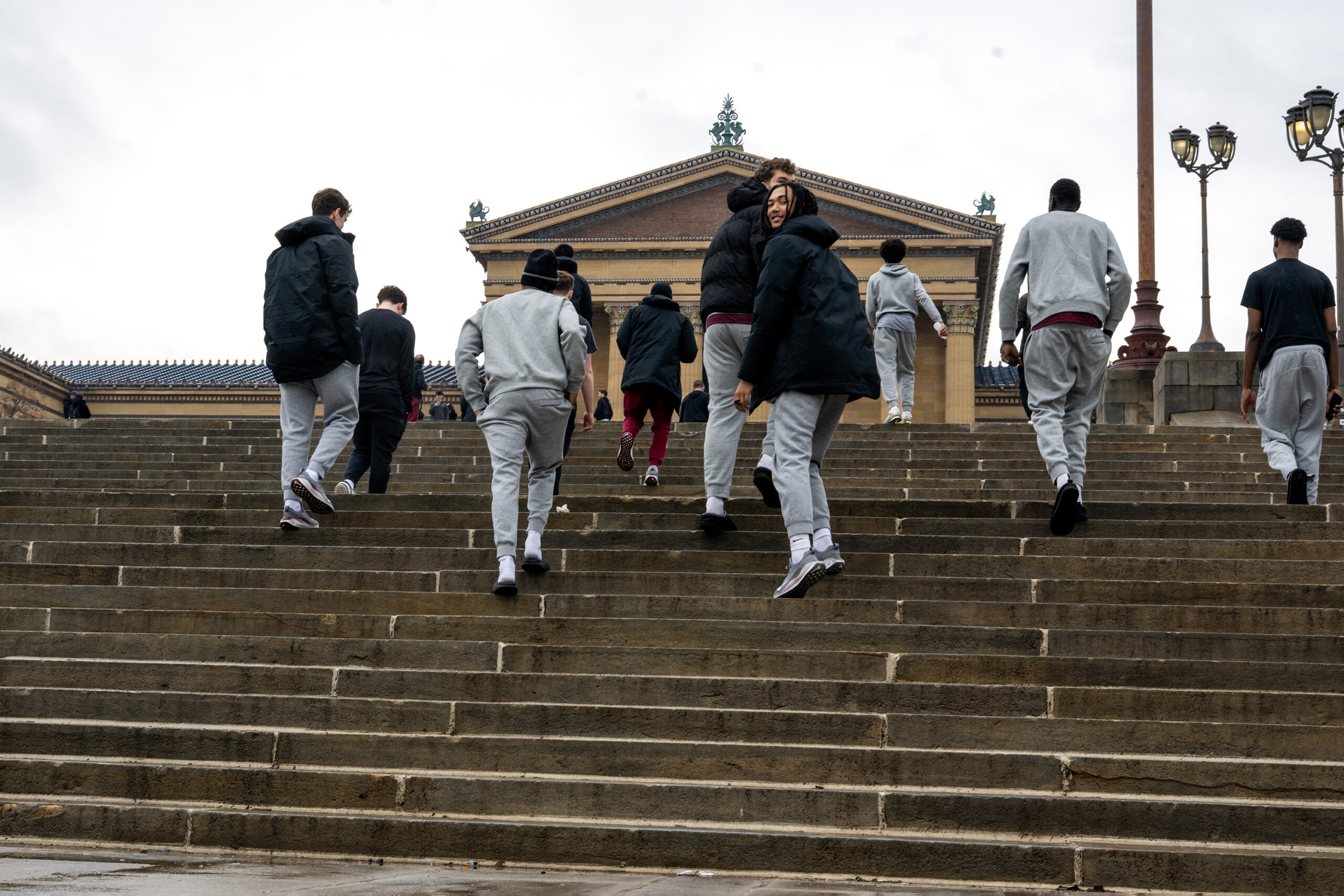
    Student athletes from Fordham University in the Bronx visit the Philadelphia Museum of Art. The steps, anyway. The grey sweats are their “normal travel attire.”

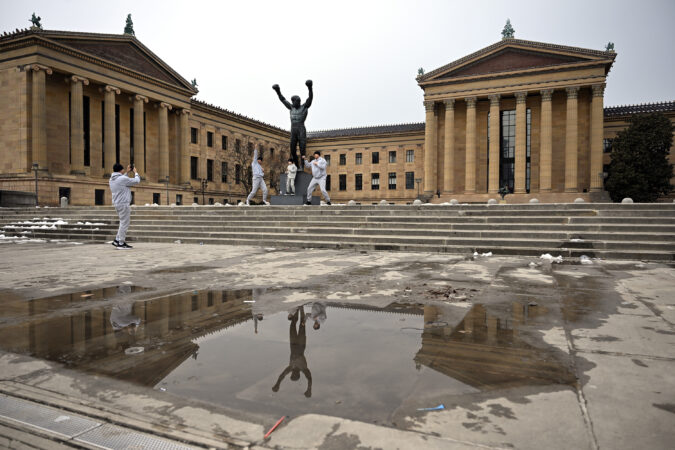
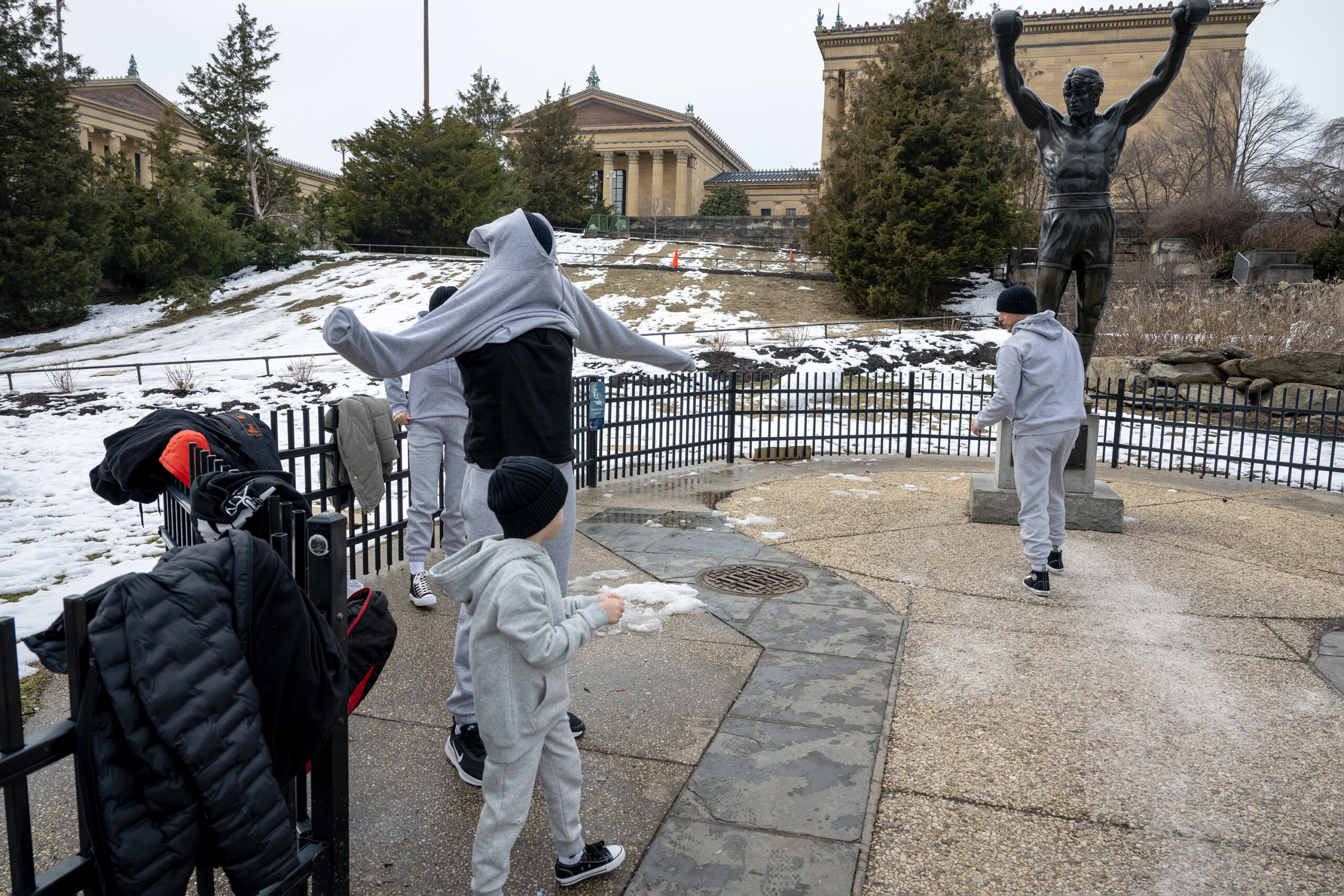
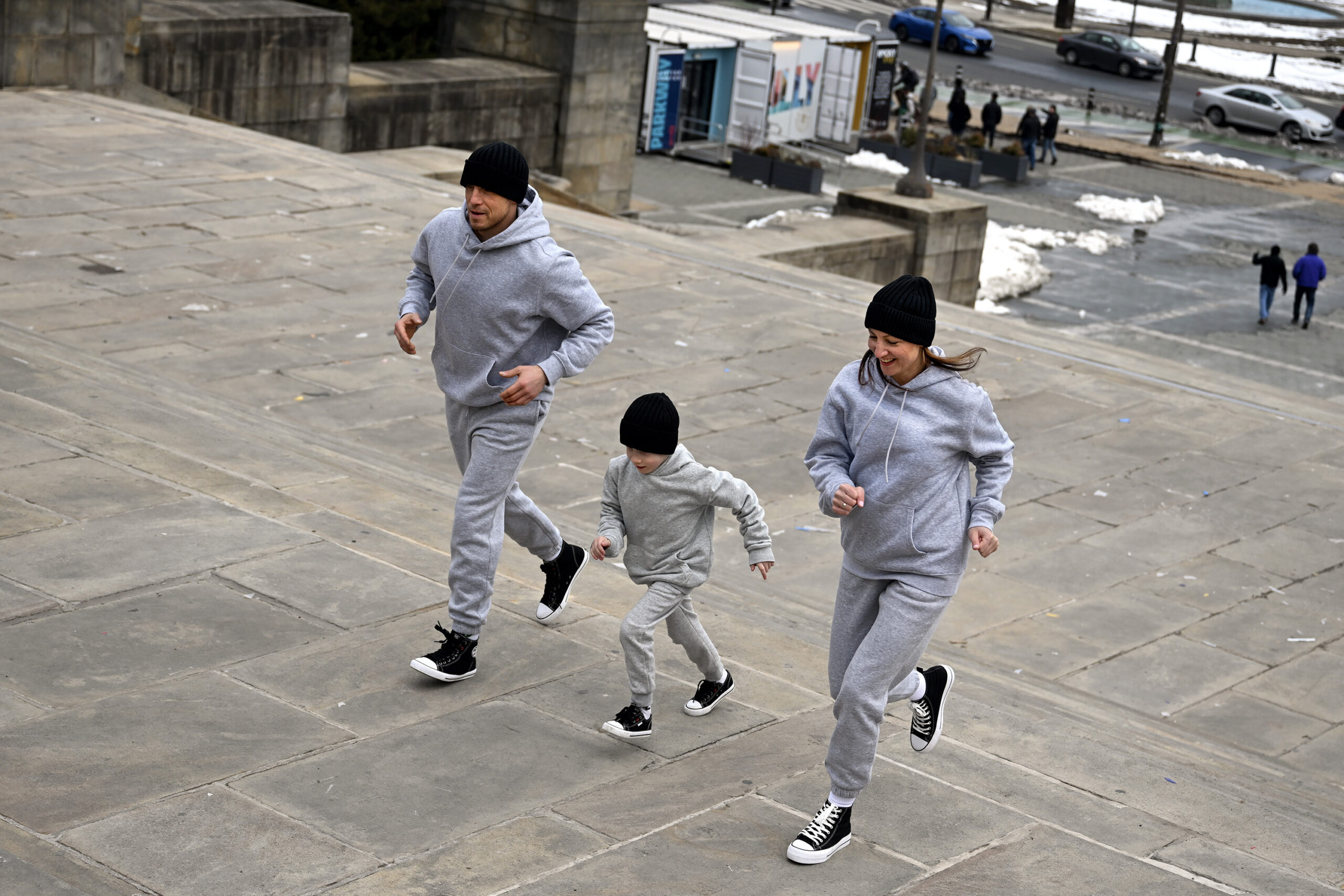
    Being there so often, I knew exactly what was going on as I saw three adults and a kid changing clothes next to the Rocky statue. I didn’t have to ask, as I knew exactly what was coming next as they got decked out in gray cotton sweats, black stocking watch caps, and high-top black Converse All-Star Chuck Taylors.

    Mariusz Sliwa, his wife Magdalena, and their six year-old son Tymek came from Poznan, Poland. Marcin Danych, a friend now living in Chicago, joined them for what is now a classic pilgrimage.

    When he was a boy, Mariusz’s father was “a typical factory worker … worked seven days a week,” he told me. But when he was with his father at night they would watch Rocky — “Playing it over and over, in the VHS.” It was just a part of Mariusz’s childhood, so he wanted his own son to experience it.
    I see it every time I am at the steps, people of all ages, from all over sprinting up those 72 steps, “Gonna Fly Now” playing in their heads. It’s why writer Michael Vitez asked me to join him, to spend a year at the steps meeting people just like Mariusz, seeking a tangible way to inhabit a universal story of hope. As Michael often says, “It’s like the ocean; the waves keep crashing on the beach, they never stop.”

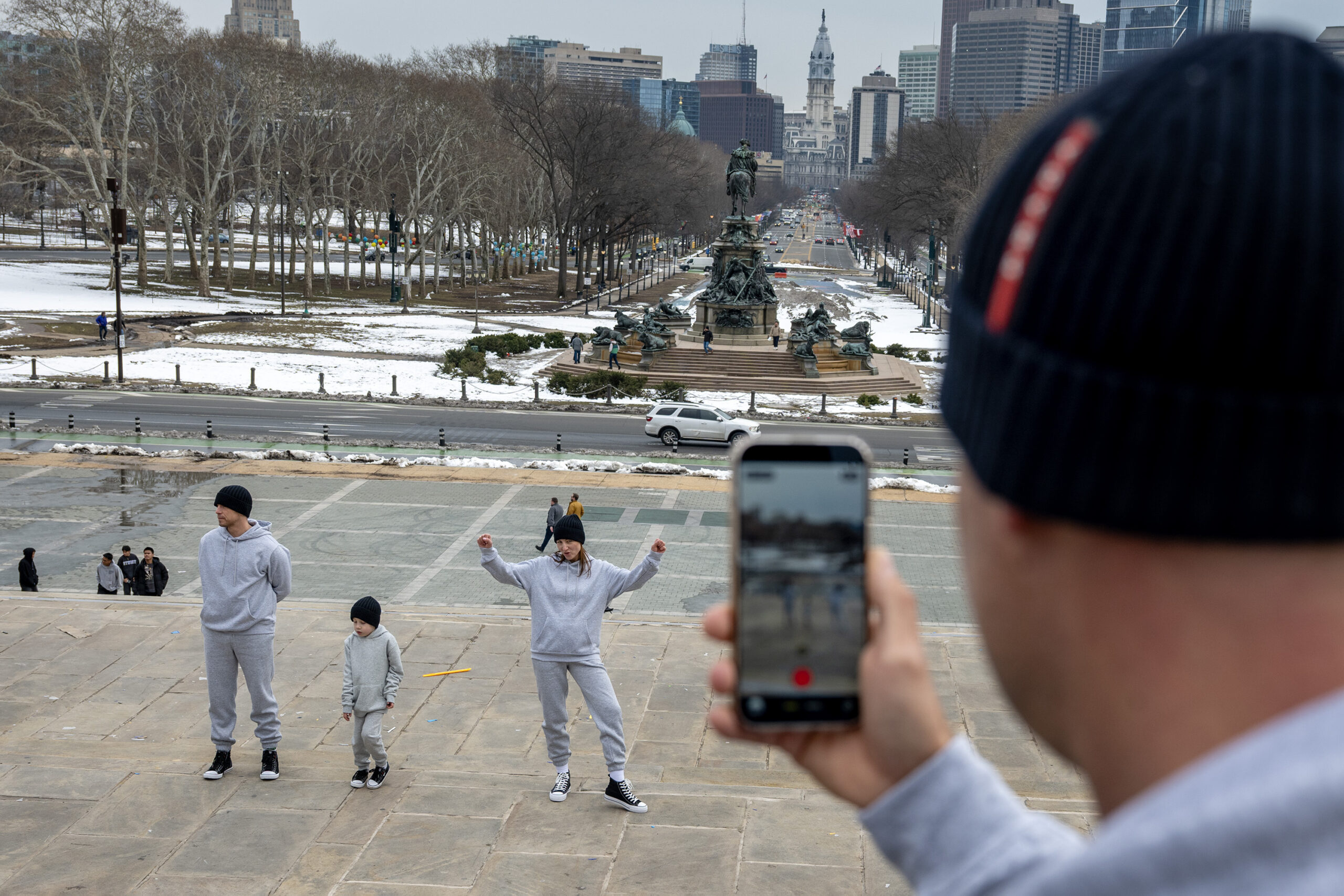
    Mariusz wanted to bring his father with him from Poland, but he is unable to travel. With his friend Danych’s help, he recorded video — over and over — running up the steps with Magdalena and Tymek. And with just Tymek. And only Magdalena and Tymek together. Finally, Tymek alone. He was making his own Rocky movie. Recasting the scene, as it is etched in his mind.

    I hope he sends me a copy. After he shares it back home with his dad.

    Since 1998 a black-and-white photo has appeared every Monday in staff photographer Tom Gralish’s “Scene Through the Lens” photo column in the print editions of The Inquirer’s local news section. Here are the most recent, in color:

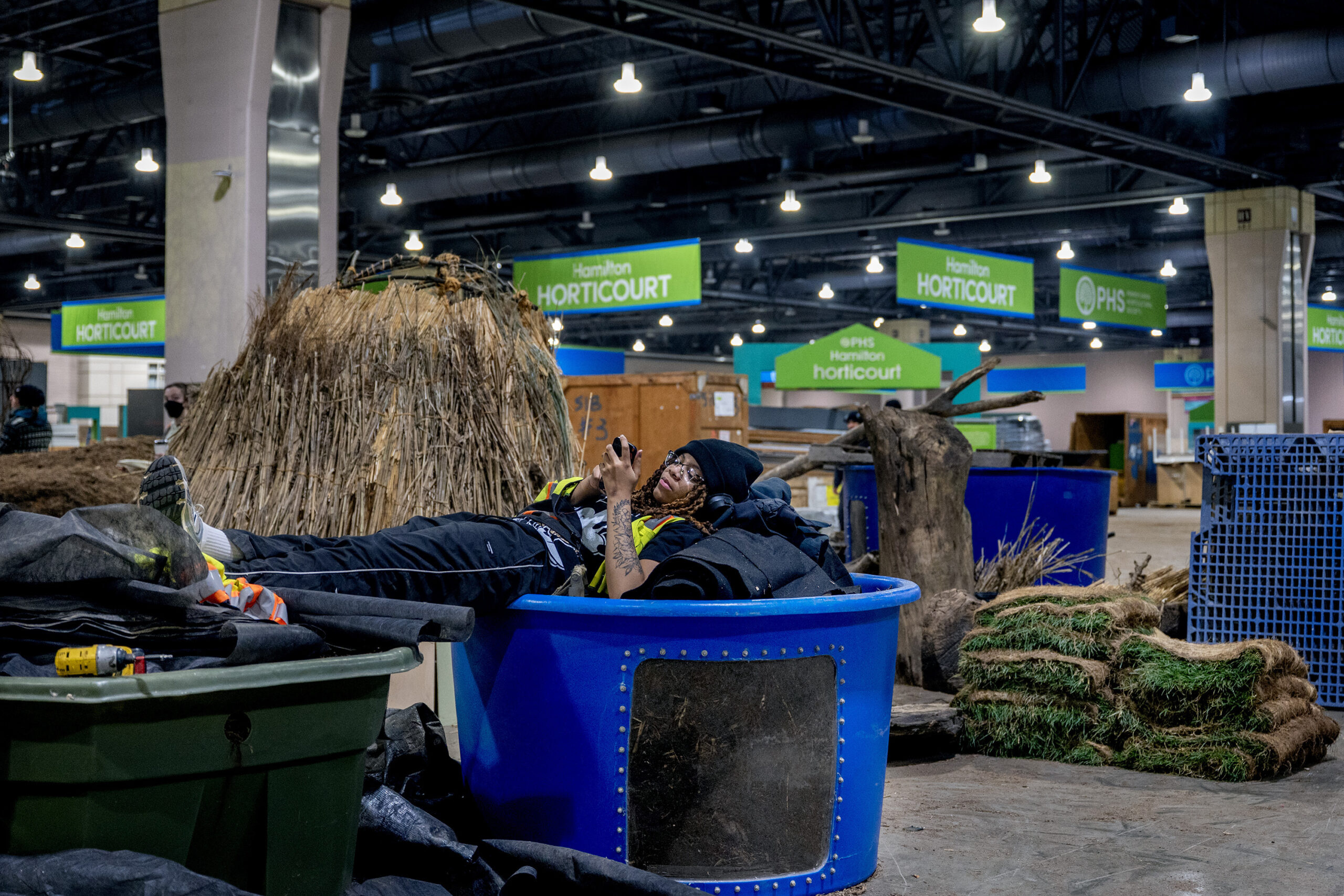
    March 2, 2026: Lynasia Allen, a junior horticulture student at W.B. Saul High School is on lunch break at the Convention Center while setting up for the PHS Philadelphia Flower Show before it opened to the public. Her school’s exhibit is titled, “Up-Rooted, Re-Planted.”
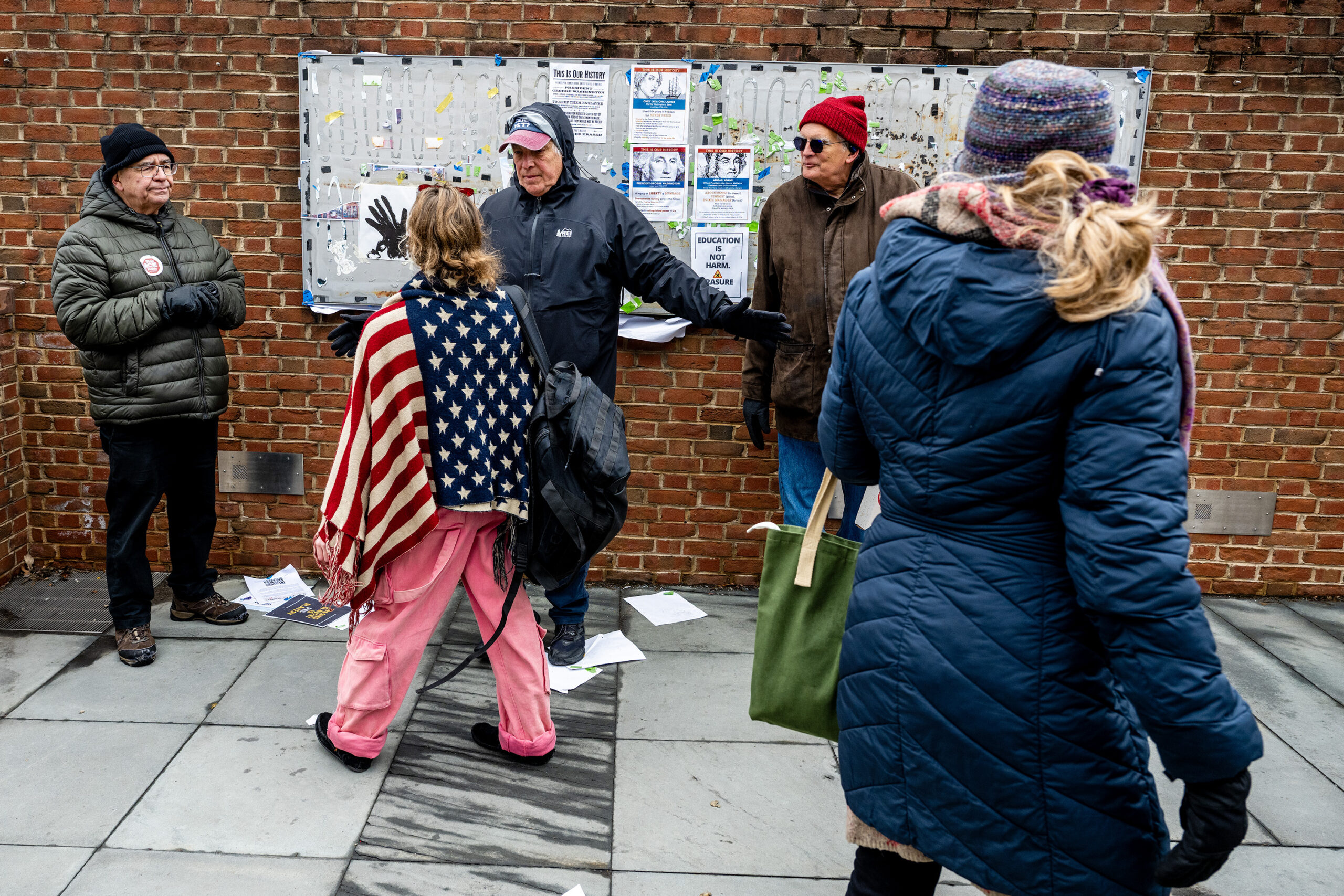
    February 23, 2026: Bystanders at the President’s House try to prevent a “counter-protester” from ripping off notes posted by visitors where panels about slavery had been removed by President Donald Trump’s administration.
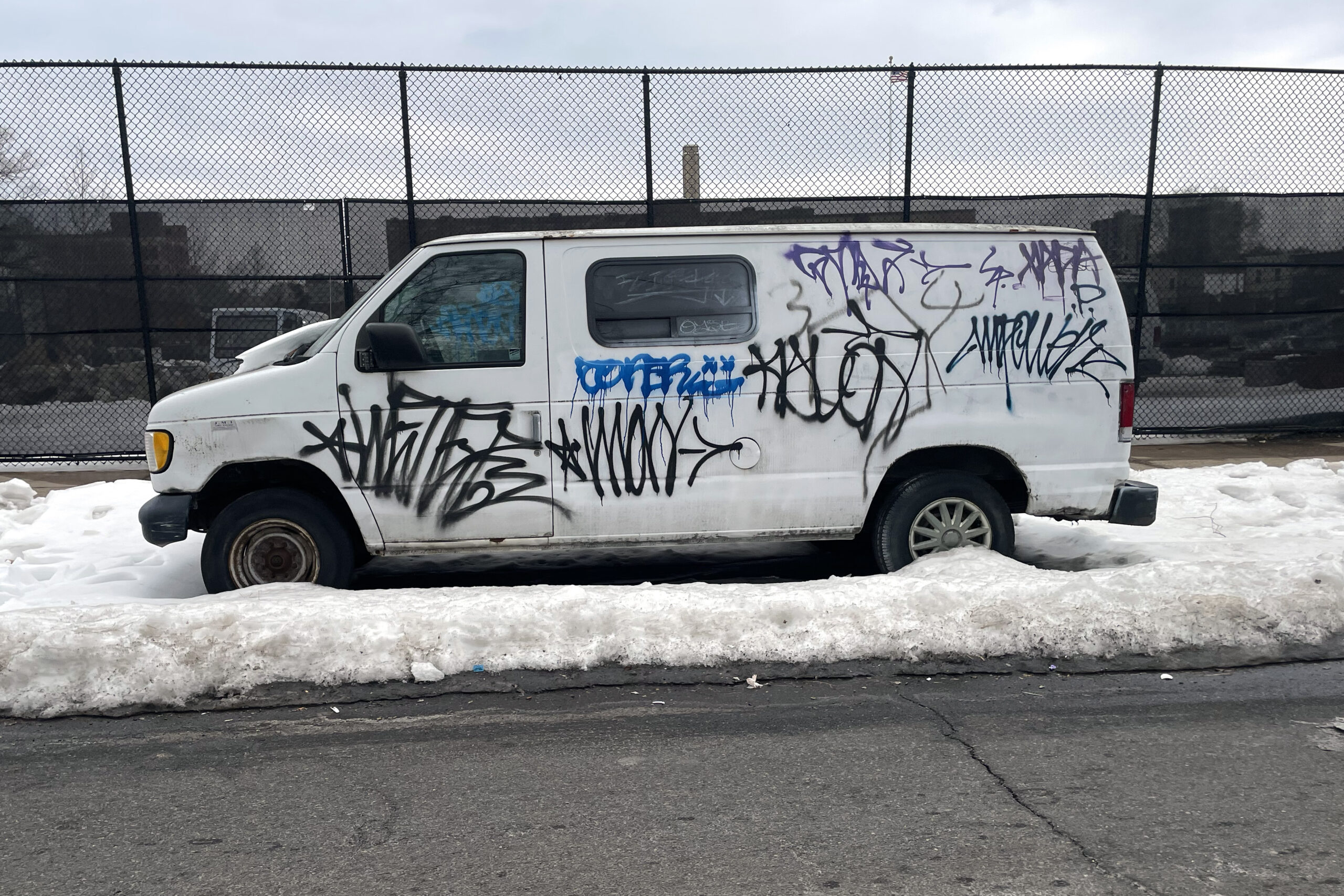
    February 16, 2026: What came first? The dirty snowpacked berm of frozen slush or the graffiti?
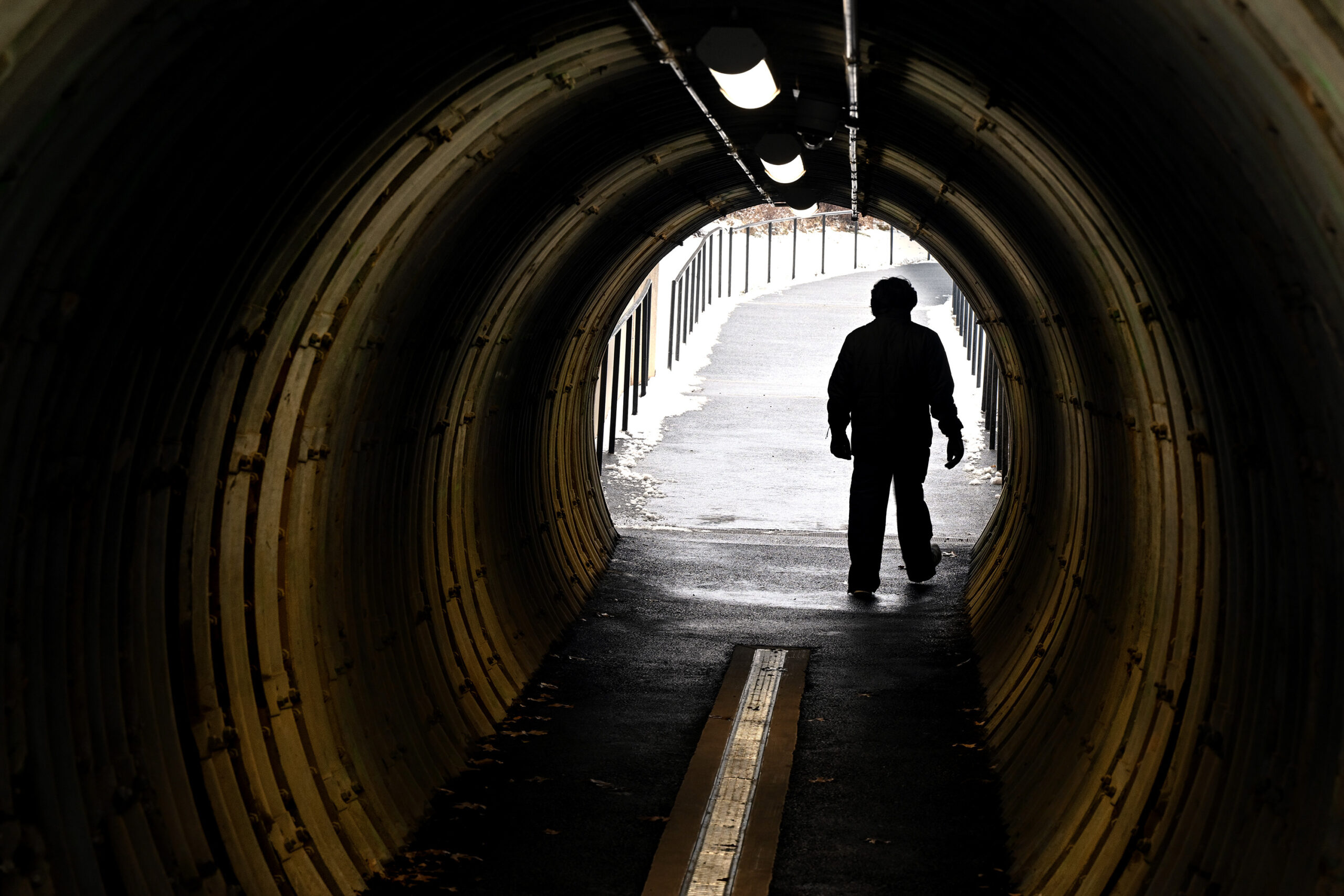
    February 9, 2026: Walking through a corrugated metal culvert called the “Duck Tunnel,” a pedestrian navigates the passageway under the SEPTA tracks on the Swarthmore College campus.
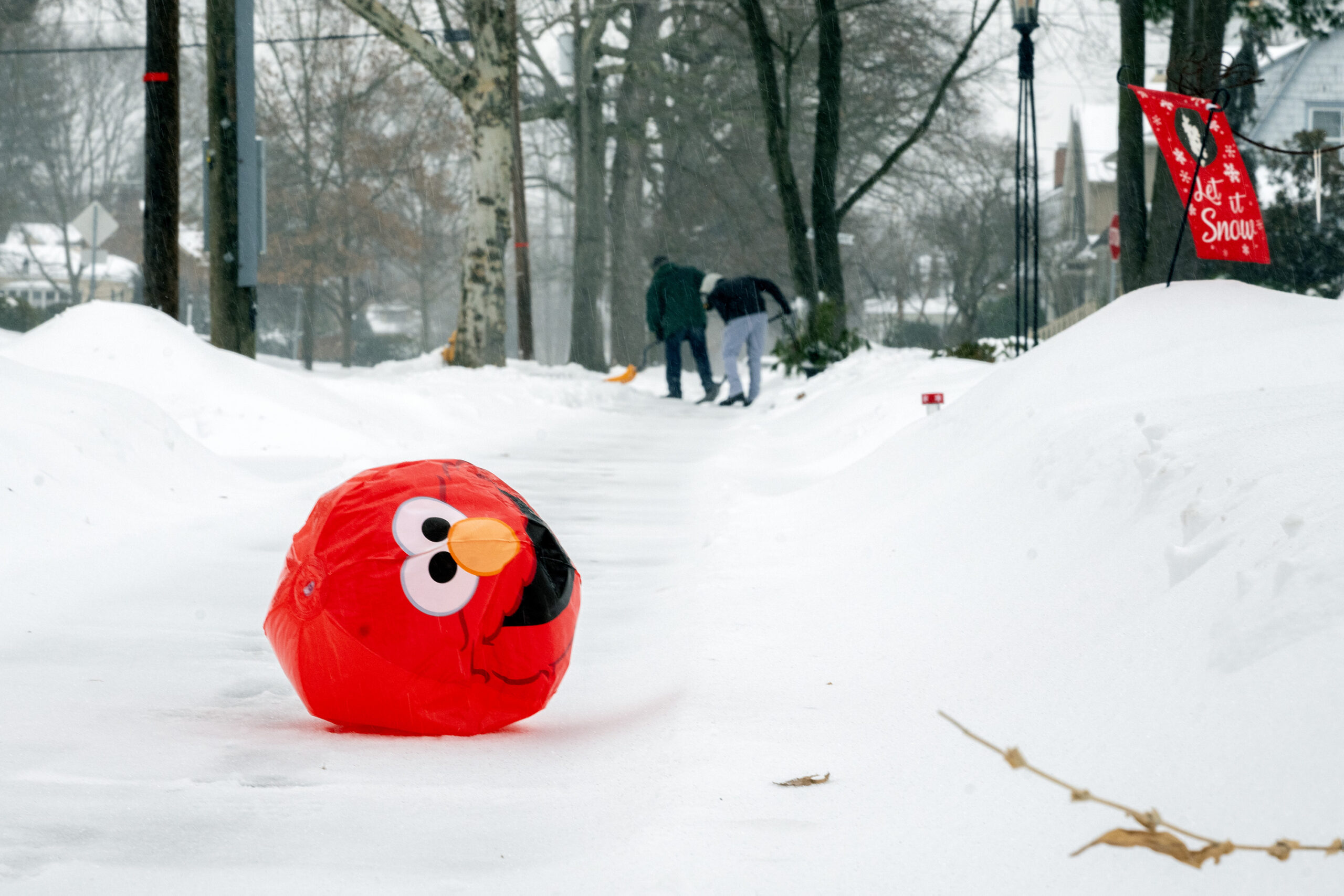
    February 2, 2026: A light-as-air Elmo balloon rolls along a sidewalk in Haddonfield, propelled by the wind as Sunday’s heavy snow starts to turn to ice and sleet.
    January 26, 2026: The President’s House in Independence National Historical Park hours Jan, 22, after all historical exhibits were removed following President Trump’s Executive Order last March that the content at national parks that “inappropriately disparage” the U.S. be reviewed. The site, a reconstructed “ghost” structure titled “Freedom and Slavery in the Making of a New Nation” (2010), serves as a memorial to the nine people George Washington enslaved there during the founding of America.
    January 19, 2026: A low-in-the-sky winter sun is behind the triangular pediment of the “front door” of the open-air President’s House installation in Independence National Historical Park. The reconstructed “ghost” structure with partial walls and windows of the Georgian home known in the 18th century as 190 High St. is officially titled, “Freedom and Slavery in the Making of a New Nation” (2010). It is designed to give visitors a sense of the house where the first two presidents of the United States, George Washington and John Adams, served their terms of office. The commemorative site designed by Emanuel Kelly, with Kelly/Maiello Architects, pays homage to nine enslaved people of African descent who were part of the Washington household with videos scripted by Lorene Cary and directed by Louis Massiah.
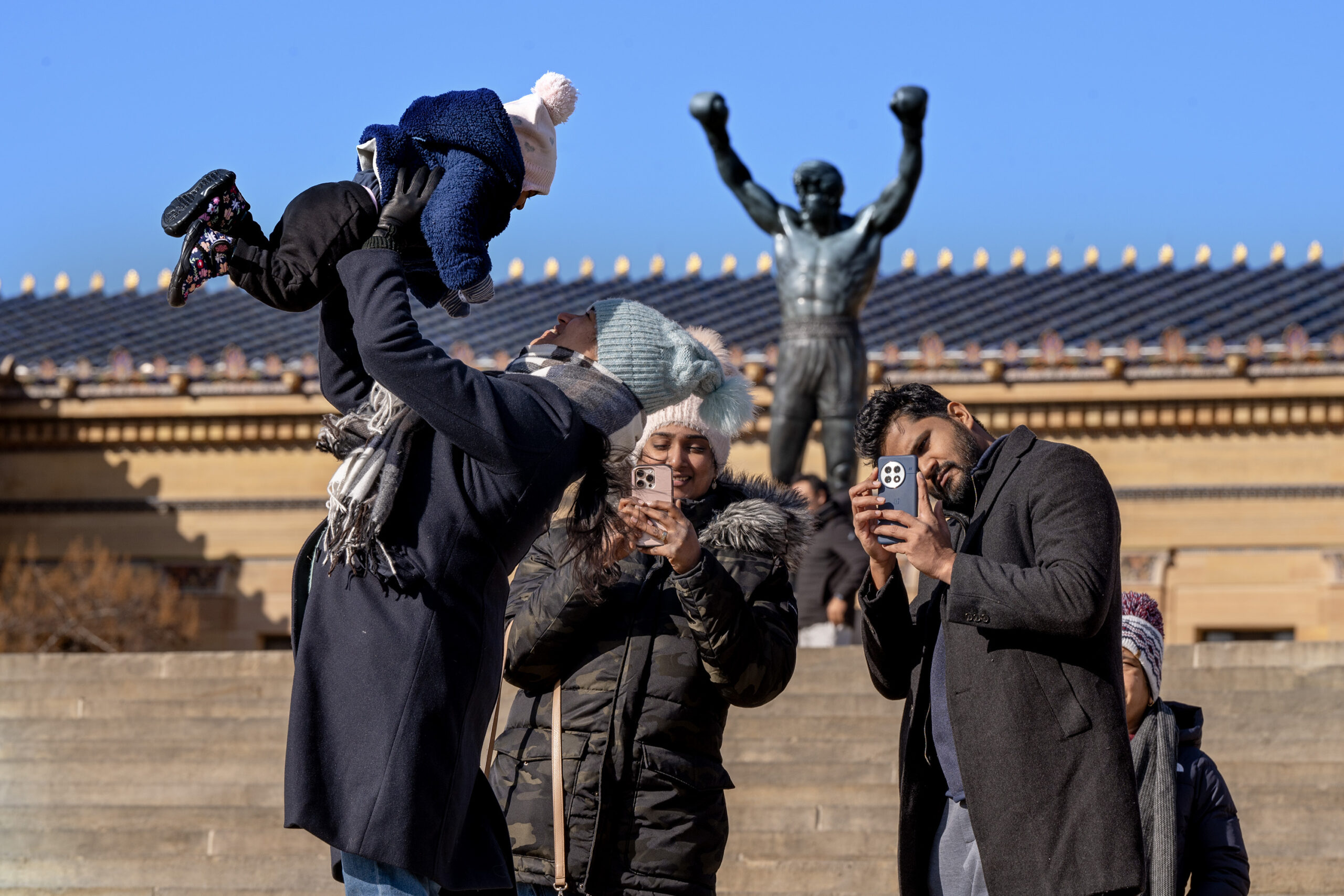
    Deepika Iyer holds her niece Ira Samudra aloft in a Rockyesque pose, while her parents photograph their 8 month-old daughter, in front of the famous movie prop at the top of the steps at the Philadelphia Art Museum. Iyer lives in Philadelphia and is hosting a visit by her mother Vijayalakshmi Ramachandran (partially hidden); brother Gautham Ramachandran; and her sister-in-law Janani Gautham who all live in Bangalore, India.
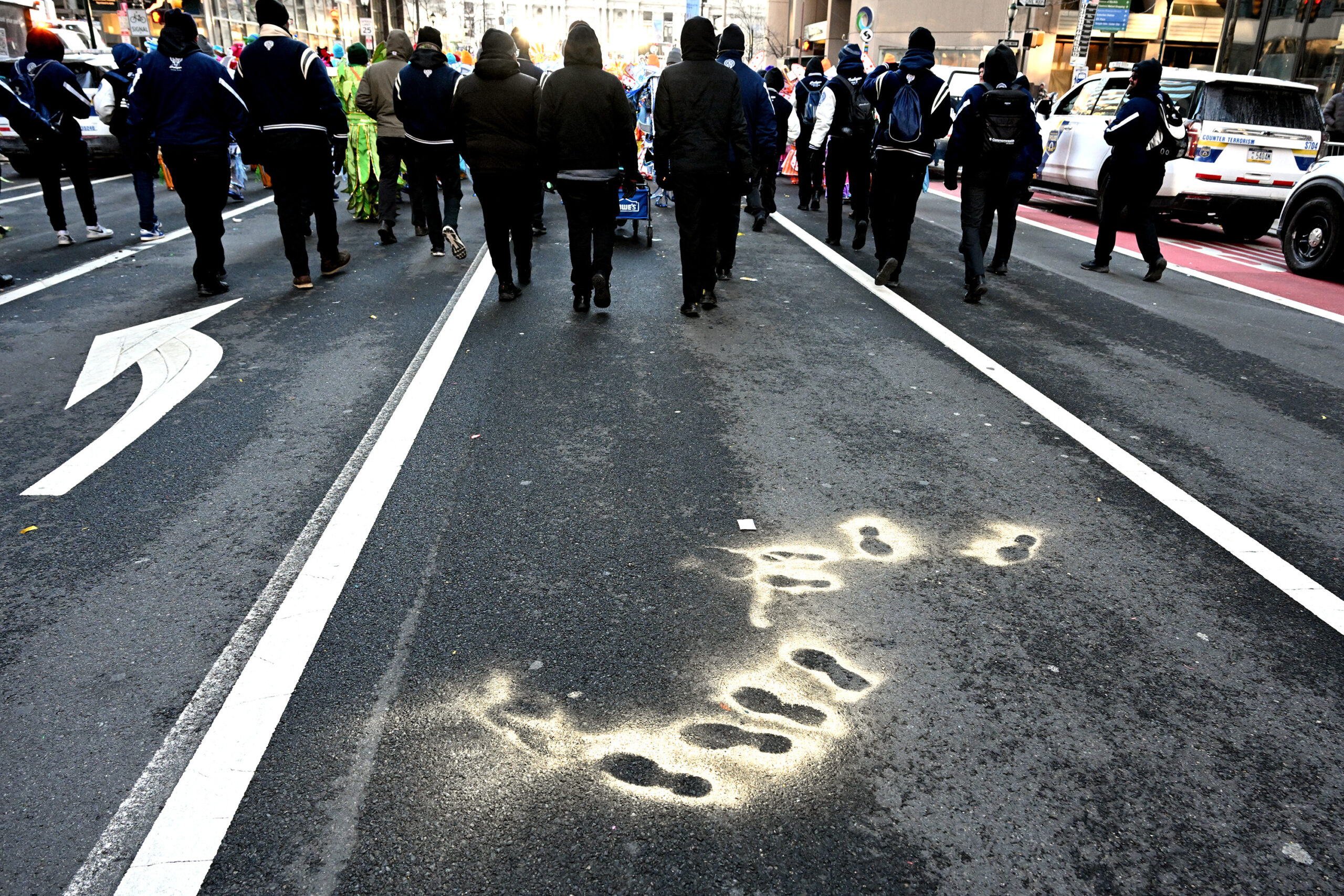
    January 5, 2026: Parade marshals trail behind the musicians of the Greater Kensington String Band heading to their #9 position start in the Mummers Parade. Spray paint by comic wenches earlier in the day left “Oh, Dem Golden Slippers” shadows on the pavement of Market Street. This year marked the 125th anniversary of Philly’s iconic New Year’s Day celebration.
    Dec. 29, 2025: Canada geese at sunrise in Evans Pond in Haddonfield, during the week of the Winter Solstice for the Northern Hemisphere.
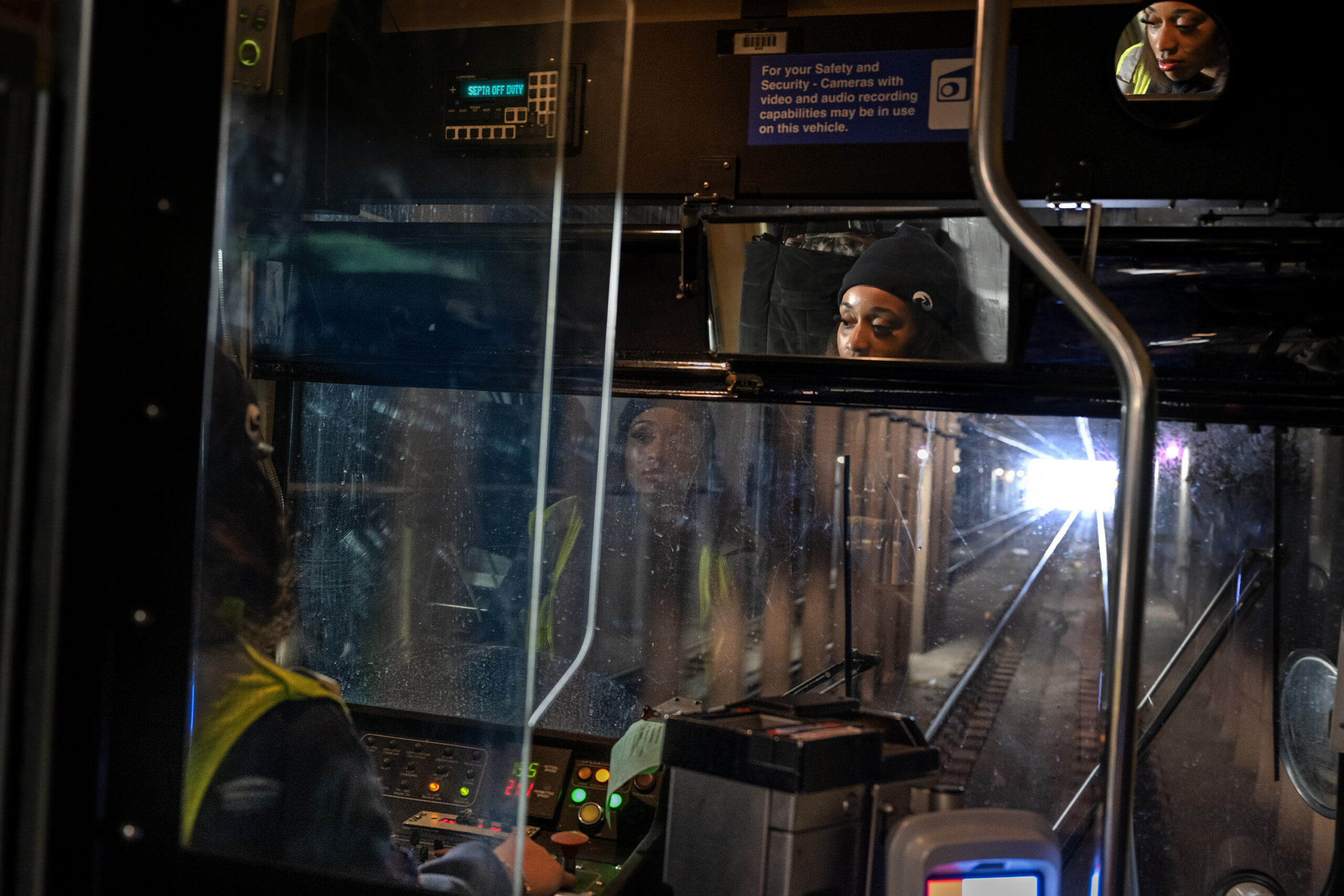
    December 22, 2025: SEPTA trolley operator Victoria Daniels approaches the end of the Center City Tunnel, heading toward the 40th Street trolley portal after a tour to update the news media on overhead wire repairs in the closed tunnel due to unexpected issues from new slider parts.
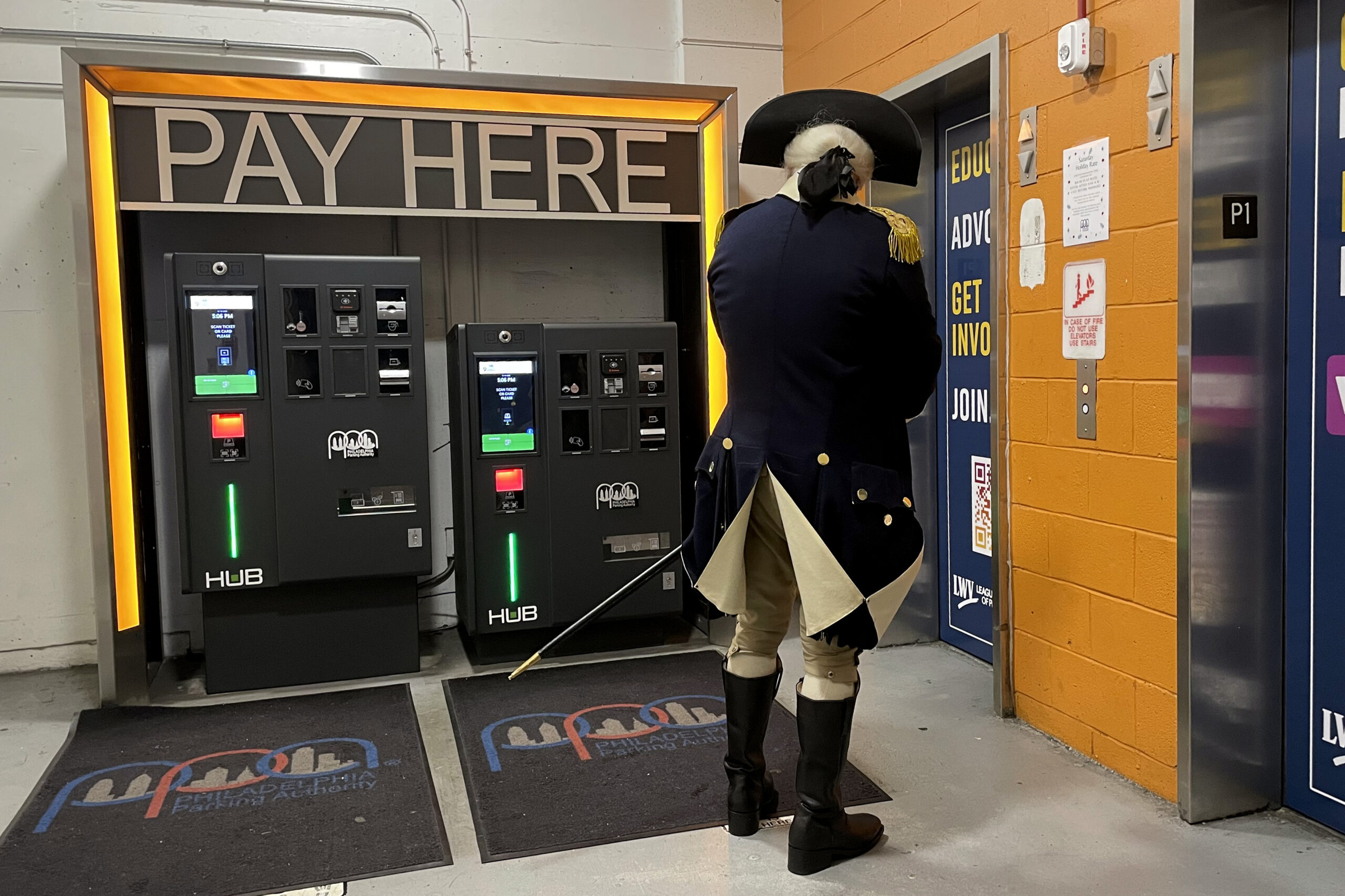
    December 15, 2025: A historical interpreter waits at the parking garage elevators headed not to a December crossing of the Delaware River, but an event at the National Constitution Center. General George Washington was on his way to an unveiling of the U.S. Mint’s new 2026 coins for the Semiquincentennial,
    December 8, 2025: The Benjamin Franklin Bridge and pedestrians on the Delaware River Trail are reflected in mirrored spheres of the “Weaver’s Knot: Sheet Bend” public artwork on Columbus Boulevard. The site-specific stainless steel piece located between the Cherry Street and Race Street Piers was commissioned by the City’s Public Art Office and the Delaware River Waterfront Corporation and created and installed in 2022 by the design and fabrication group Ball-Nogues Studio. The name recalls a history that dominated the region for hundreds of years. “Weaver’s knot” derives from use in textile mills and the “Sheet bend” or “sheet knot” was used on sailing vessels for bending ropes to sails.
    November 29, 2025: t’s ginkgo time in our region again when the distinctive fan-shaped leaves turn yellow and then, on one day, lose all their leaves at the same time laying a carpet on city streets and sidewalks. A squirrel leaps over leaves in the 18th Century Garden in Independence National Historical Park Nov. 25, 2025. The ginkgo (Ginkgo biloba) is considered a living fossil as it’s the only surviving species of a group of trees that existed before dinosaurs. Genetically, it has remained unchanged over the past 200 million years. William Hamilton, owner the Woodlands in SW Phila (no relation to Alexander Hamilton) brought the first ginkgo trees to North America in 1785.
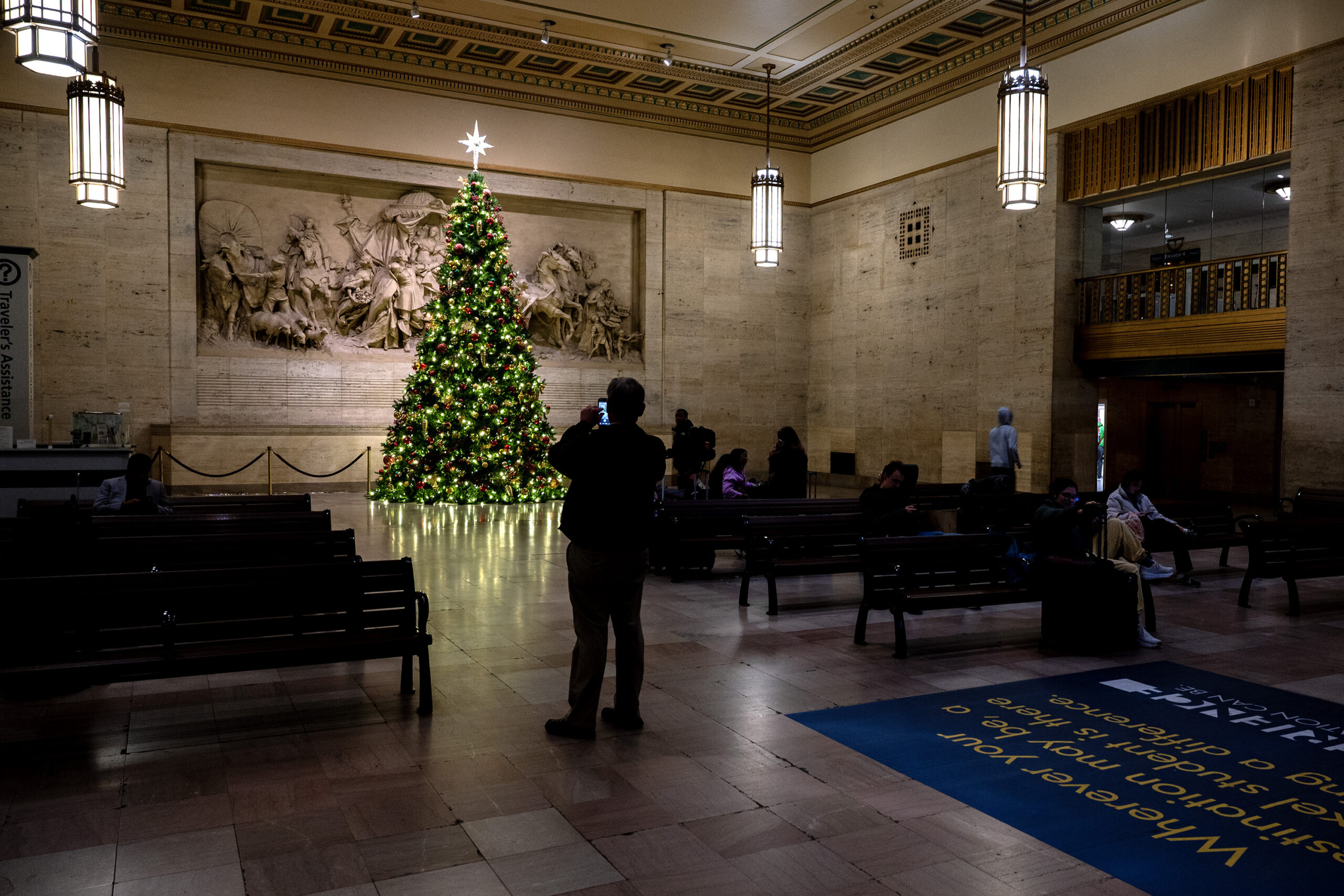
    November 24, 2025: The old waiting room at 30th Street Station that most people only pass through on their way to the restrooms has been spiffed up with benches – and a Christmas tree. It was placed there this year in front of the 30-foot frieze, “The Spirit of Transportation” while the lobby of Amtrak’s $550 million station restoration is underway. The 1895 relief sculpture by Karl Bitter was originally hung in the Broad Street Station by City Hall, but was moved in 1933. It depicts travel from ancient to modern and even futuristic times.

    » SEE MORE: Archived columns and Twenty years of a photo column.

  • The Penn vs. Penn State mix-up, cheesesteak diplomacy, and a very good boy | Weekly Report Card

    The Penn vs. Penn State mix-up, cheesesteak diplomacy, and a very good boy | Weekly Report Card

    The cheesesteak diplomacy phase of the DNC bid: B+

    Philadelphia is once again trying to convince a room full of national political operatives that we are the perfect place to host their giant televised event.

    The pitch is familiar: plenty of hotel rooms, an arena in South Philly, SEPTA ready to move thousands of delegates around, and a city that knows how to handle the logistical chaos of a major convention. We did it in 2016, after all. And these days, we’re basically hosting everything. World Cup matches. The MLB All-Star Game. The country’s 250th birthday.

    But the real strategy is the soft sell. When the selection committee visits, they’ll get the full Philly treatment: Reading Terminal, skyline views, maybe a rooftop party, definitely a cheesesteak.

    And that’s not a guess. That was pretty much the marketing strategy when DNC officials toured Philly ahead of the 2016 convention.

    Because every big event bid in this city eventually comes down to the same argument: Look how fun we are.

    And clearly, it’s been working.

    Philadelphia Phillies center fielder Johan Rojas takes the field before the game against the Washington Nationals at BayCare Ballpark on Thursday, Feb. 26, 2026 in Clearwater, Fla. The Philadelphia Phillies defeated the Washington Nationals 7 to 3.

    Losing Johan Rojas (and his walk-up song): C

    Johan Rojas potentially missing 80 games for a failed PED test is frustrating for the Phillies in a specific way: They don’t really have another center fielder.

    Rojas isn’t exactly an offensive powerhouse, but he plays defense in a spot where the roster is otherwise thin. Take him out of the mix and the Phillies are left juggling a few spring-training options and hoping someone looks like a center fielder by opening day.

    That’s the baseball problem.

    The smaller but still tragic loss is the walk-up song. Every time Rojas stepped to the plate, Citizens Bank Park got “Oh Oh Oh (Veo Veo),” which was extremely fun and made you want to shimmy on a random Tuesday night.

    The Phillies will figure out center field eventually, but the stadium is at risk of losing one of its best vibes.

    Jeffrey Epstein vs. the Penn vs. Penn State mix-up: A

    Newly released emails show the disgraced financier repeatedly claimed he funded a “Quantum Gravity Program” at Penn. The problem: The research program he actually helped fund was at Penn State.

    To outsiders, that might sound like a harmless mix-up. Technically both are universities, sure. But socially it lands closer to mixing up Wawa and Sheetz. People will notice.

    Few things irritate University of Pennsylvania alumni more than being mistaken for Penn State. The Ivy League school has spent decades correcting people on this, to the point that alumni sell novelty shirts that read, “Not Penn State.

    Apparently, Epstein missed the memo.

    Reddit planning a Philly itinerary for a Midwesterner: B+

    A visitor from Columbus popped into Reddit after a first trip to Philadelphia to rave about the walkability, Chinatown food, and an Angelo’s cheesesteak — and ask locals what to do next time.

    Naturally, the internet responded by assembling a pretty respectable itinerary.

    One commenter suggested the Barnes: Another recommended the Schuylkill River Trail and neighborhood hopping through Fishtown, Manayunk, and the Italian Market. A third pushed the visitor farther west for food: “Some great Ethiopian and other African restaurants.”

    There was also the very Philly observation that the tourist somehow skipped the city’s most predictable cheesesteak stop. “It is so rare when a tourist does not stop at a Pats or Genos. They can’t help themselves.”

    The thread is mostly right. But if you want the full Philly experience, we’d add a few more essentials: a Phillies game at Citizens Bank Park, a wander down the Italian Market, and a long, aimless walk through one of the city’s rowhouse neighborhoods where every block looks a little different.

    Also, credit where it’s due. The guy went to Angelo’s on his first trip. Some visitors take years to figure that one out.

    Johnny Garbarino hitting his opponent Apostle Spencer with an overhand right at the Wells Fargo Center during BKFC’s KnuckleMania V event.

    A Flyers fight coach starting a fight outside Barstool: F

    The Flyers once brought Johnny “Cannoli” Garbarino, an undefeated bare-knuckle boxer, in to teach players how to handle themselves in hockey fights.

    So it’s not ideal that he’s now at the center of a late-night brawl outside Barstool Sansom Street.

    Video shows Garbarino punching the bar’s plexiglass vestibule, threatening onlookers, and setting off a multiperson street fight after destroying someone’s phone. Police are investigating an assault complaint.

    Hiring a professional fighter to teach hockey players how to fight makes a certain kind of sense. Being surprised when that same fighter gets into a fight outside a bar at 2 a.m. makes a little less.

    Not exactly the kind of player development the Flyers had in mind.

    One of the newly-installed signs for the recent old/new name change at the Philadelphia Museum of Art, on Thursday, Feb. 26, 2026.

    Pay-what-you-wish Fridays at the PMA: A

    The Philadelphia Museum of Art is bringing back something locals have loved for years: pay-what-you-wish admission on Friday nights.

    Considering a full-price ticket can run up to $30, that’s not a small change. Museums love to talk about accessibility but removing the price barrier is one of the few ways to actually make that happen.

    The timing is also convenient. After months of headlines about leadership drama, rebrands, and legal disputes, the museum seems eager to remind people that the actual point of the place is, you know, art.

    And if letting people decide what to pay gets more Philadelphians wandering the galleries on a Friday night, that’s probably a pretty good reset.

    Ivan, a drug-sniffing K-9 dog working for the Pennsylvania State Police, made a 40-pound drug bust in Delaware County last month.

    K-9 Ivan doing police work: A

    A Pennsylvania State Police K-9 named Ivan helped troopers uncover 40 pounds of marijuana and $6,000 in cash during a traffic stop on I-95 in Ridley Township last month.

    From a law enforcement perspective, that’s a pretty significant drug bust.

    From a public relations perspective, it’s also a reminder that every police department should have at least one extremely good dog on staff.

    Ivan alerted troopers to the scent of narcotics in the vehicle, leading to a search warrant and the eventual discovery of boxes and buckets full of marijuana.

    Which means somewhere in Delaware County, a very good boy probably got a treat and a lot of praise — as he should.