Police on Wednesday were investigating the death of a man who suffered puncture wounds to his chest Wednesday afternoon in the city’s Roxborough section, police said.
Around 2 p.m., police responded to the 400 block of Ripka Street for a report of an injury. The victim was transported by medics to Jefferson Einstein Philadelphia Hospital, where he was pronounced dead at 2:45 p.m.
Homicides detectives were investigating the case and a man was being questioned, police said.
Bryce Wolfe was “so full of life and enthusiasm and intellect and promise,” and it was apparent even as a high schooler when he joined a mountain bike team based in Danville, Pa., said David Decoteau, one of his coaches for the Central Susquehanna Hammers.
“All I can really say about Bryce is that he was one of those rare young people that you meet and walk away from the conversation thinking, ‘I’m not worried about the future. We are going to be fine with guys like this involved,’” Decoteau, 63, said in an interview.
“He was one of those people that made you want to be a better person,” Decoteau said.
On Saturday, Decoteau will be attending the 20-year-old’s funeral.
His body became lodged under the SUV and he was dragged for more than a mile, police said. He died at the hospital the next day.
The driver of the SUV fled and remains at large.
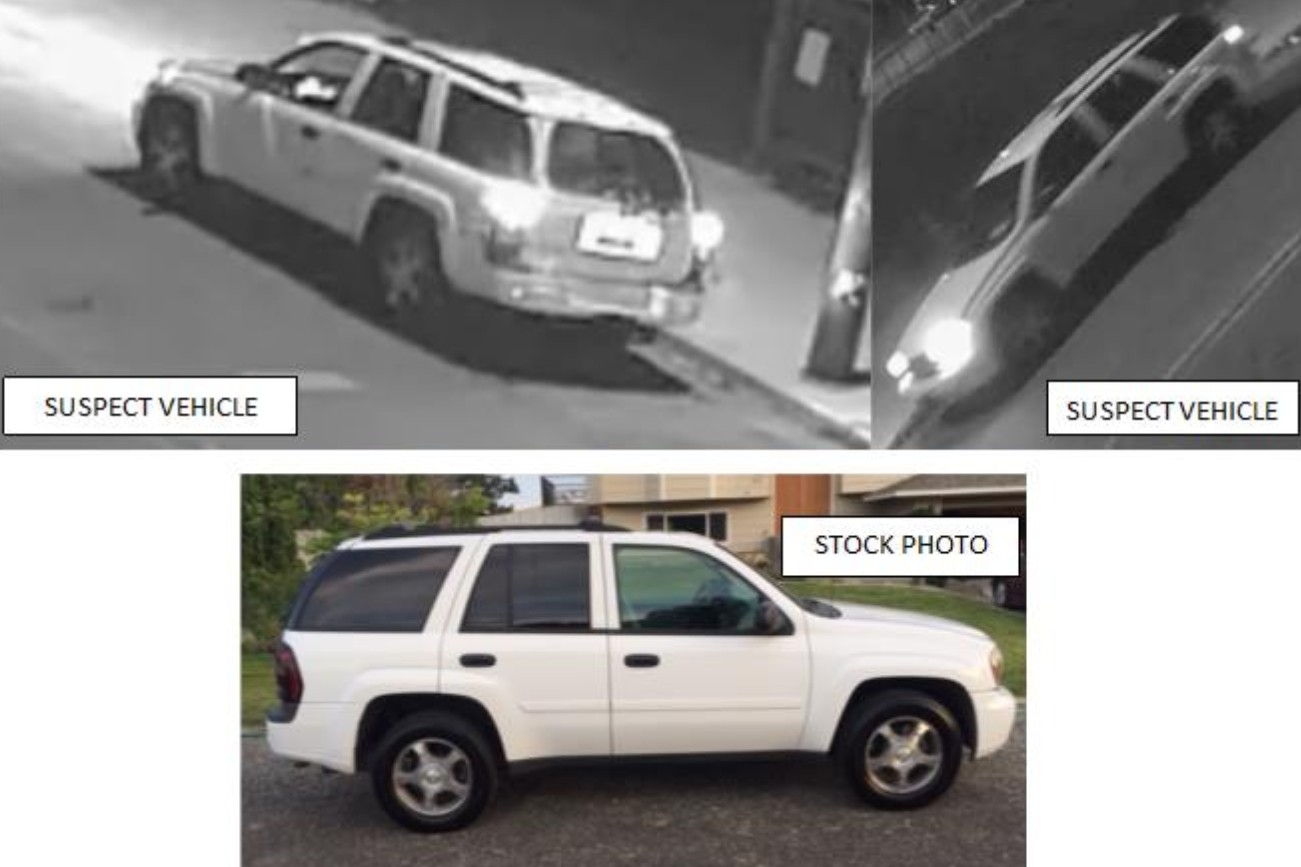
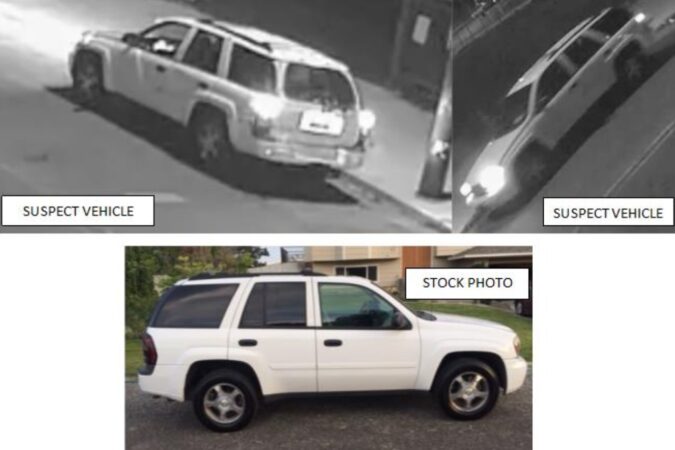
Police on July 7, 2026, released images of the suspected SUV, believed to be a white 2001-08 Chevrolet Trailblazer, that fatally struck 20-year-old Bryce Wolfe, a Temple University student, on June 24.
Police on Tuesday released surveillance images of the SUV suspected in Wolfe’s death. Investigators believe the SUV is a 2001-08 Chevrolet Trailblazer, possibly with damage on the driver’s side, with possible red paint transfer, a broken rear windshield, and a discolored passenger-side front wheel.
A memorial service for Wolfe is scheduled for 7 p.m. Saturday at Krapf & Hughes Funeral Home, 530 West Butler Dr., Drums, Luzerne County. A visitation period will be held from 5 p.m. until the time of the service.
In an obituary written by his parents, Lori Wolfe and Clarence Wolfe III, Bryce Wolfe was described as having lived his life “with a fearless spirit of adventure and a genuine love for the outdoors.”
He “found joy in seeking new challenges and embraced every opportunity to experience the world to its fullest. Whether carving down snow-covered slopes while skiing, exploring miles of trails on his bicycle, or riding motorcycles through rugged dirt tracks and open roads, he felt most alive when he was in motion,” his parents wrote.
Bryce Wolfe, who was from Conyngham, a borough in Luzerne County, had recently started a summer internship and wanted something he could ride around while he stayed in Philadelphia, his mother said in an interview.
“It was the first motorcycle he bought and insured all by himself,” Lori Wolfe said about her son’s Triumph.
Temple University president John Fry said last week that Bryce Wolfe, an actuarial science major in the Fox School of Business, had recently started an underwriting internship with United States Liability Insurance Group.
In a statement, the company said Wolfe “was a quick learner who approached every opportunity with enthusiasm and curiosity, always asking for additional responsibilities and eager to take on new challenges.”
USLI added: “In the short time we were fortunate to know him, Bryce left a lasting impression through his kindness, initiative, and the relationships he built with those around him. He will be deeply missed by his teammates and all who had the privilege of knowing him.”
Wolfe was also a member of the student professional organization Gamma Iota Sigma, the professional fraternity for risk management, insurance, and actuarial science.
He “had quickly established a reputation as both an excellent student and engaged member of the Temple community,” maintaining a high grade-point average while being enrolled in both the Temple and Fox Honors programs, Fry said.
Bryce Wolfe, 20, of Luzerne County, had just completed his sophomore year at Temple University when he was killed by a hit-and-run driver on Kelly Drive.
Bryce Wolfe was the middle sibling of two brothers, 18-year-old Brayden and 22-year-old Tyler. Lori Wolfe said Bryce was particularly close to his older brother, who has Down syndrome.
Bryce and Tyler Wolfe were able to participate in track and field together because of an inclusive “Unified” sports program at Hazleton Area High School that was recognized in late 2023 by the Special Olympics.
In a speech to the high school during the recognition ceremony in January 2024, Bryce Wolfe explained that he and his brother had difficulty finding clubs and activities they could do together.
Thanks to the school district’s Unified sports program, “dozens of students just like my brother and I are able to compete together as equals, marking a truly revolutionary moment in Hazleton area’s history,” he said in his senior-year speech, which was posted on YouTube.
“Some of you may not know it, but every one of you has contributed to the culture and atmosphere here in Hazleton, which the Special Olympics has honored us for today,” Wolfe said.
“This banner, proudly displayed in our gymnasium, will serve as a powerful symbol of Hazleton’s commitment to inclusivity for all visiting fans and athletes to see,” he said.
Decoteau, Wolfe’s mountain-bike coach, said the Hammers team plans to rename a trail where they rode together as a team in Wolfe’s memory.
The team also is working to establish a scholarship to help Wolfe’s “dream of helping kids be involved in mountain biking become a reality,” Decoteau said.
“It’s a terrible loss and tragedy. I will miss him,” Decoteau said.
William T. Hangley, 85, of Philadelphia, celebrated cofounder and chair emeritus of the Hangley Aronchick Segal Pudlin & Schiller law firm, longtime litigator, judge-appointed legal adviser, substitute Common Pleas Court judge, former student organizer, mentor, and onetime music teacher, died Tuesday, June 23, of esophageal cancer at his home in Center City.
A lifelong advocate of music, education, and the law, Mr. Hangley earned a bachelor’s degree in music education, taught elementary school students in Long Island for a year, and got his law degree with high honors at the University of Pennsylvania in 1966.
He was a senior student leader at the State University of New York at Fredonia in 1963, and a dean recognized his organization and leadership skills. So he suggested that Mr. Hangley forgo the music classroom for the courtroom.
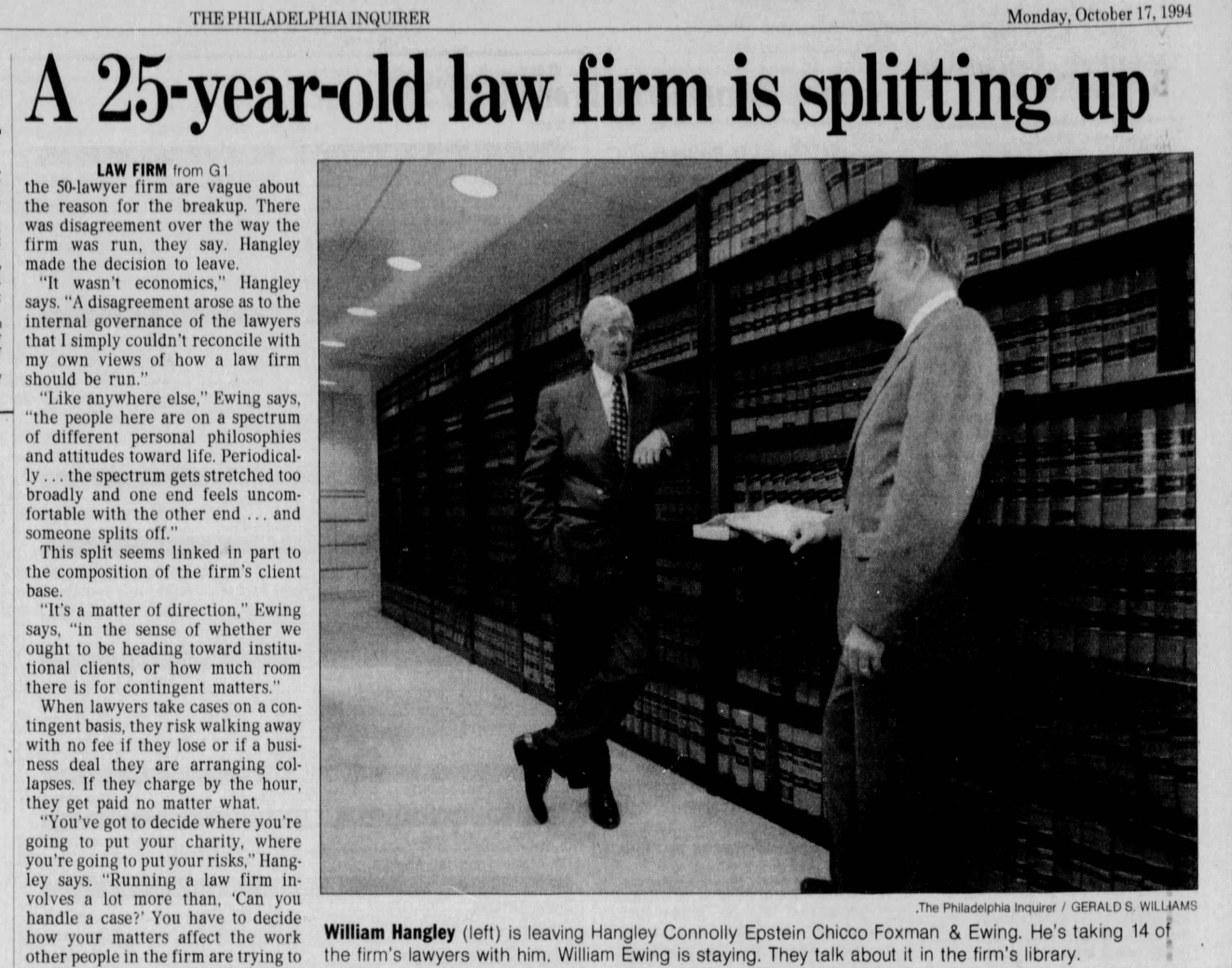
A story and this photo of Mr. Hangley (left) appeared in The Inquirer in 1994.
Mr. Hangley did, and, over the next 60 years, until recently, he tried all kinds of court cases and counseled business owners, executives, employees, students, government officials, journalists, and, in one of his career highlights, a client who was incorrectly sentenced to death.
He was an expert in business litigation and professional liability defense, and he tackled cases about intellectual property, business contracts, antitrust, real estate, malpractice, capital punishment, and other issues.
“He set a standard for integrity, rigor, and creative problem solving,” his family said in a tribute. “He could take virtually any kind of case to trial and win.”
Mr. Hangley appeared on the cover of Super Lawyers magazine for Pennsylvania and Delaware in 2012.
Colleague David Pudlin said: “Bill was a giant at everything he did.”
Mr. Hangley won especially notable cases for The Inquirer, Children’s Hospital of Philadelphia, the Albert Einstein Healthcare Network, heirs to the Tylenol fortune, the Temple University student government, and women athletes at Temple. “The ones I enjoy the most,” he told Super Lawyers magazine in 2012, “are when I get to represent the little guy.”
In 1996, Mr. Hangley won a complex libel case for The Inquirer, and a now-former editor, in a personal letter to Mr. Hangley, said his closing argument “lit up the First Amendment like bolts of lightning in a night sky.”
Mr. Hangley was funny, daring, and dapper, friends and colleagues said.
He was known for his people skills, wide range of expertise, concise legal writing, and crafty courtroom communication techniques.“Some lawyers are confrontational,” he told Super Lawyers. “They want to make a witness feel like dirt, and then he’s putty in their hands. That’s not my approach. I think a lot of witness examination should be freestyle, where the witness is invested in the conversation.”
He cofounded what is now Hangley Aronchick Segal Pudlin & Schiller in 1994, served as chair until 2014, and helped the firm grow to include experts in estate planning and real estate, tax, corporate, and family law. He continued to advise and counsel as chair emeritus until a few months ago.
Earlier, he worked at Schnader Harrison Segal & Lewis, Goodman & Ewing, and Hangley Connolly Epstein Chico Foxman & Ewing.
Mr. Hangley and his wife, Mary, were married for nearly 61 years.
Mr. Hangley was funny, daring, and dapper, friends and colleagues said. He wore Gucci ties in the courtroom and joked with judges and other lawyers. He told The Inquirer after a case in 1978: “We got a good settlement, and I managed to get off a good one-liner. What man could ask for more?”
He was onetime chair of the Good Judges for Philadelphia political action committee and a special master in district court cases. He served on committees for the American Bar Association and was active with the American College of Trial Lawyers and the Institute for the Advancement of the Legal System.
He earned appointments to advisory roles from Supreme Court Justice John G. Roberts Jr., former Pennsylvania Chief Justice Ronald Castille, and JudgeAnthony Scirica of the U.S. Court of Appeals for the Third Circuit. In 1970, he ran unsuccessfully for the state Senate as a Democrat.
Mr. Hangley (middle left) enjoyed time with his family.
“I can’t think of anything else I could have done with my life that I would have enjoyed as much as what I’m doing now,” he told Super Lawyers. “I really hit the big one.”
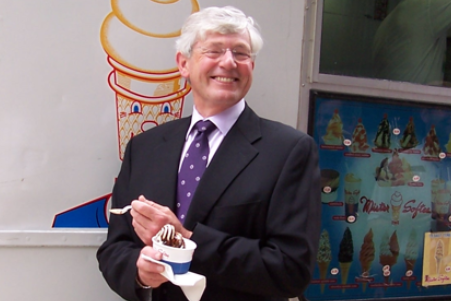
The youngest of 11 children, William Thomas Hangley was born March 11, 1941. He worked as a beach club cabana boy and an ice cream vendor in Long Beach, N.J., when he was young.
He met fellow teacher Mary Dupree after college and asked her to go bowling on their first date, and they married in 1965. They had daughters Michele and Katie and a son, Bill Jr., and lived in Center City and West Mount Airy.
Mr. Hangley and his family enjoyed memorable vacations at their summer home in Martha’s Vineyard, Mass. He followed the Eagles, loved dogs and classical music, and supported the Philadelphia Orchestra and other cultural groups.
“My dad described himself as an optimist,” Mr. Hangley’s daughter Katie said.
He and his wife hosted rollicking holiday parties, and he sang and danced. He doted on his children and grandchildren, and was onetime president of the C.W. Henry Elementary School and home association.
“My dad described himself as an optimist, a gambler at heart, and a person who was grateful for all the joy he had experienced,” said his daughter Katie, “and eager for more.”
His son, Bill, said: “He stood for integrity.” His daughter Michele said: “He told us, ‘I’ve had a good run,’ and he was right.”
In addition to his wife and children, Mr. Hangley is survived by two grandchildren and other relatives. Five sisters and five brothers died earlier.
A private service was held earlier. A celebration of his life is to be held later.
A new airport lounge is landing soon in Philadelphia.
Escape Lounges is set to open a location at the Philadelphia International Airport later this year, according to MarketPlace PHL, which manages the airport’s concessions. The lounges run on a pay-per-visit model, with food and drink included, and do not require customers to have a certain credit card.
Escape’s 1,500-square-foot space in Terminal D will serve food and drinks, according to MarketPlace PHL, and include a bar and other seating areas that overlook the runways.
The U.K.-based Escape Lounges operates 20 U.S. locations, including Syracuse and Providence, R.I. The lounges are open to all travelers within three hours of their departing flights, according to the company’s website.
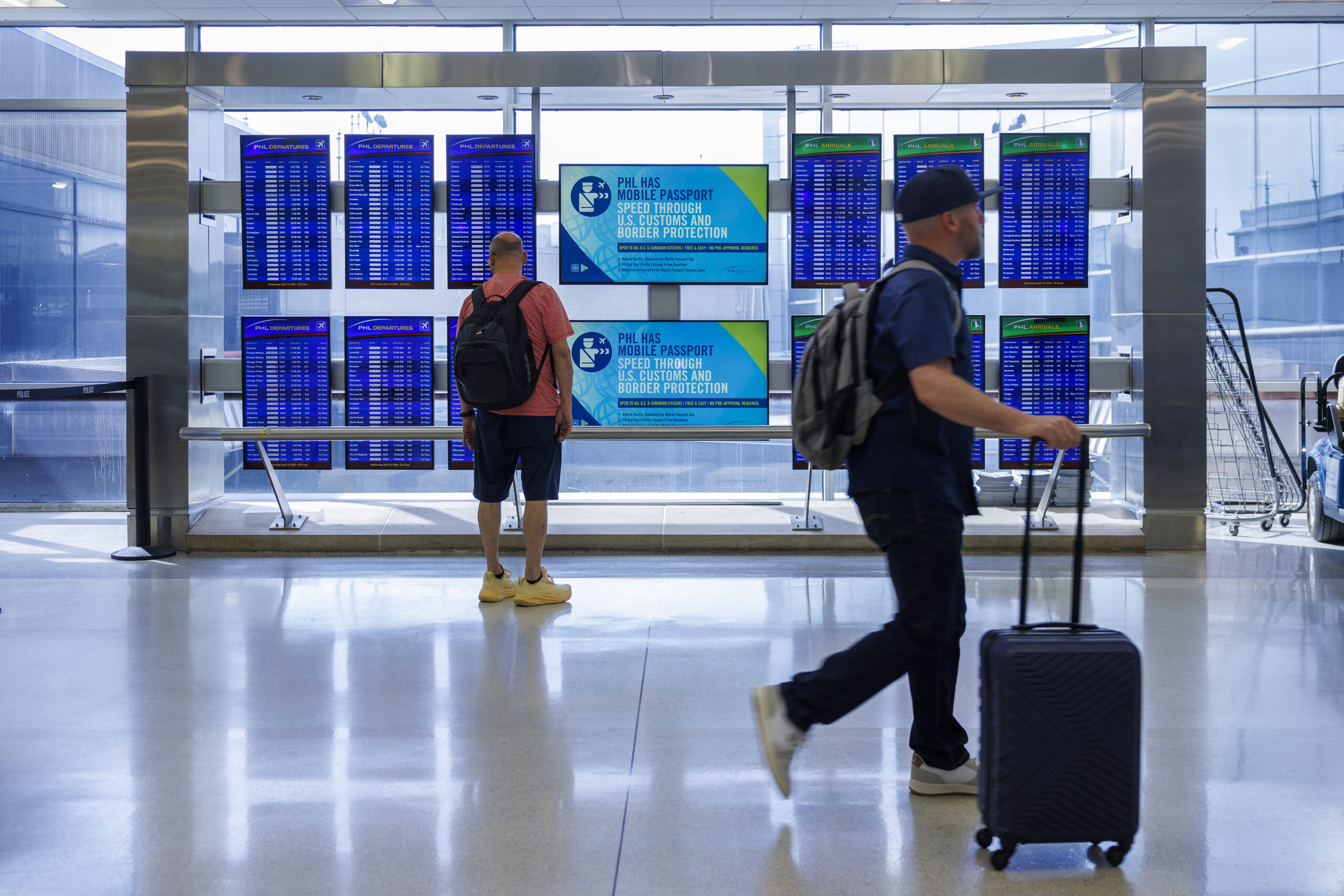
Someone looks at the arrivals and departures board at Philadelphia International Airport in April.
Prices fall between $45 and $65 per person for walk-ups, while customers who pre-book online can get reduced rates starting at $32. Complimentary access is available for American Express cardholders.
The cost includes food and drink, including wine, beer, and spirits, according to Escape. Customers also get private Wi-Fi, charging ports and outlets, printing and copy services, and PressReader, which provides digital access to more than 7,000 newspapers and magazines.
The news comes at a time when airport lounges have become more accessible than ever — and often more crowded. A growing number of credit cards offer lounge access, and travelers without the required cards can buy day passes to most spots.
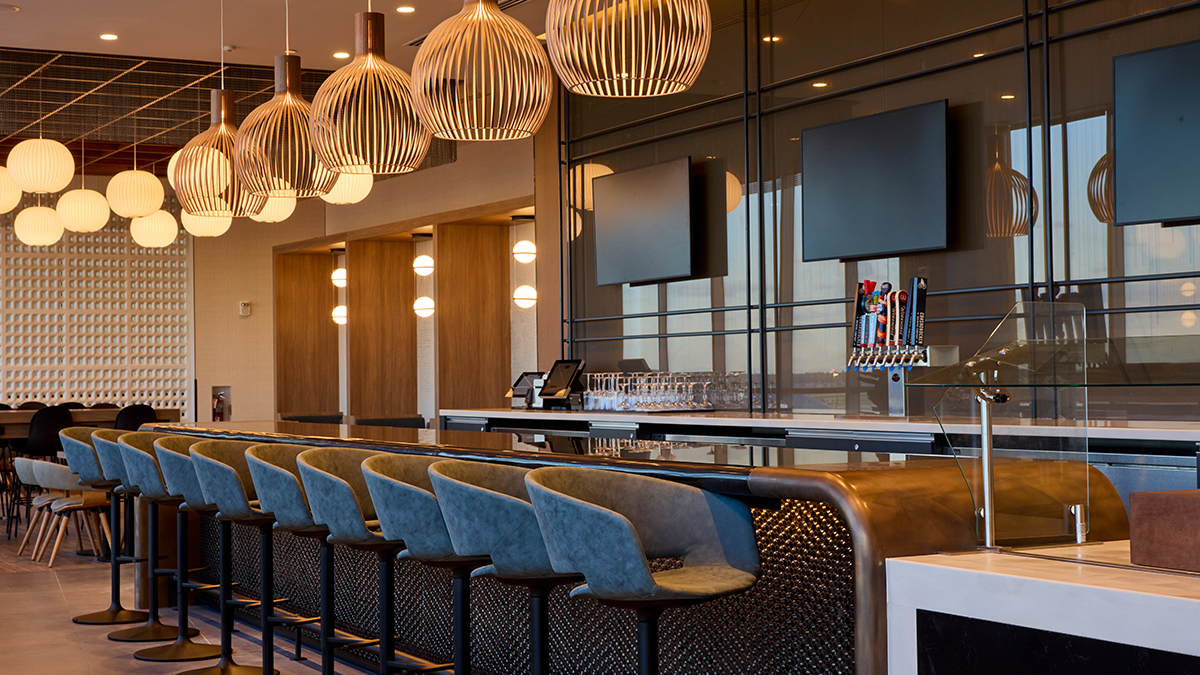
The bar at the American Airlines Flagship Lounge at Philadelphia International Airport.
American Express and British Airways also operate lounges in Terminal A-West, from which many international flights depart.
The airport also has a United Club between Terminals C and D, and Delta Sky Club between Terminals D and E, as well as private Minute Suites between Terminals A and B.
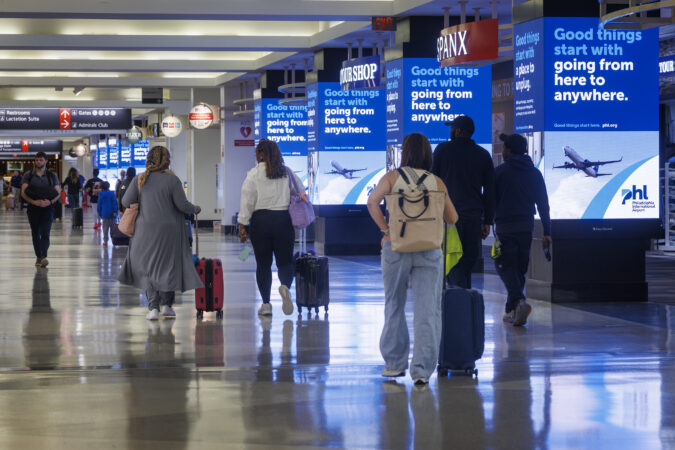
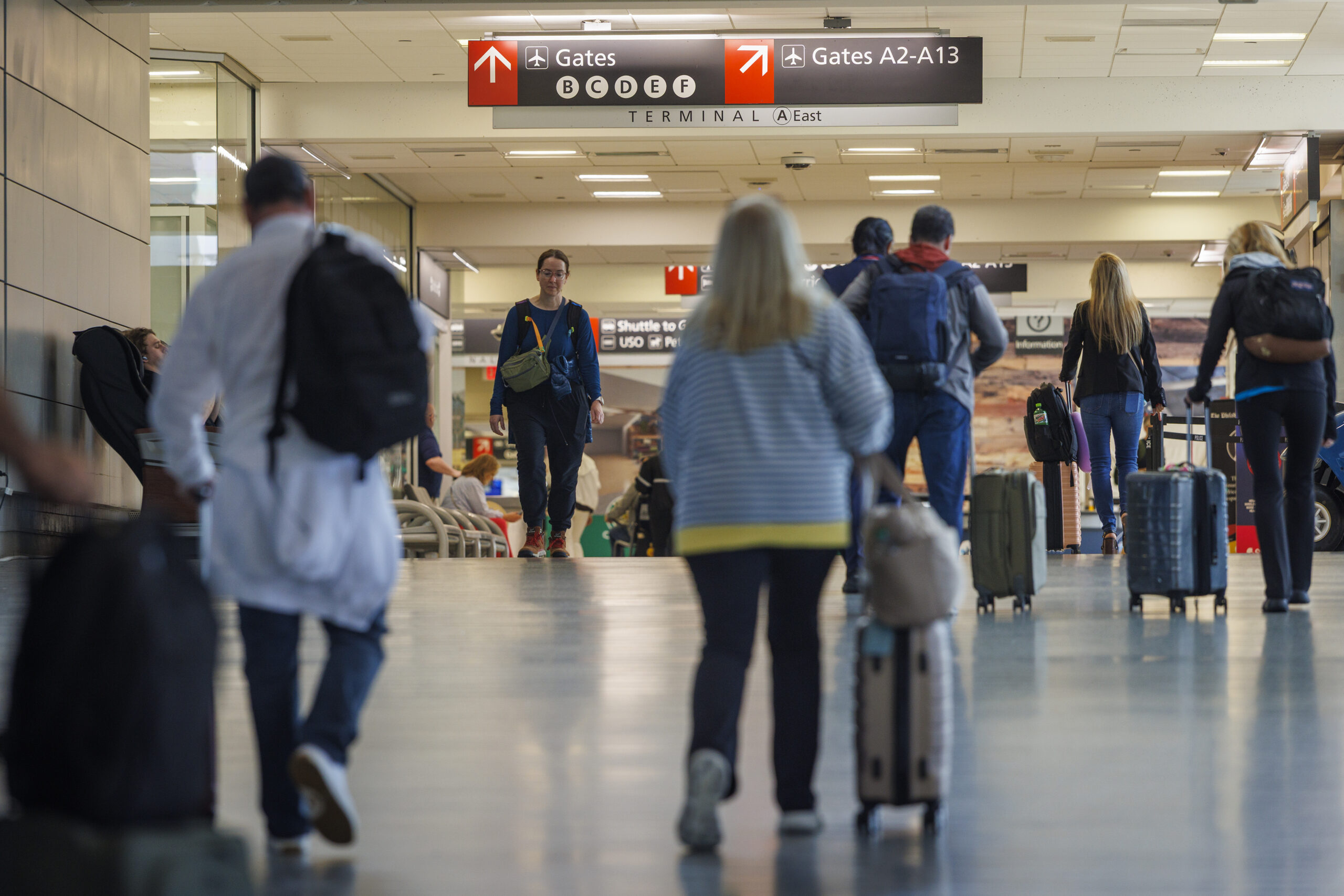
Travelers walk through Philadelphia International Airport in April.
While the total number of 2025 passengers dropped slightly from the prior year, the airport saw a 7.5% increase in international travelers, executives said.
It was also the first time since before the pandemic that the airport recorded two consecutive years with more than 30 million annual passengers.
But the pharmacy chain’s distinct facade still dots the landscape — in suburban shopping centers, on the corners of congested intersections, sometimes even smack dab in the middle of city blocks.
Some of these buildings are still vacant, surrounded by overgrown grass and empty parking lots. Others are getting new life as dollar stores, medical clinics, daycares, Spirit Halloweens, and a Rally House sports retailer.
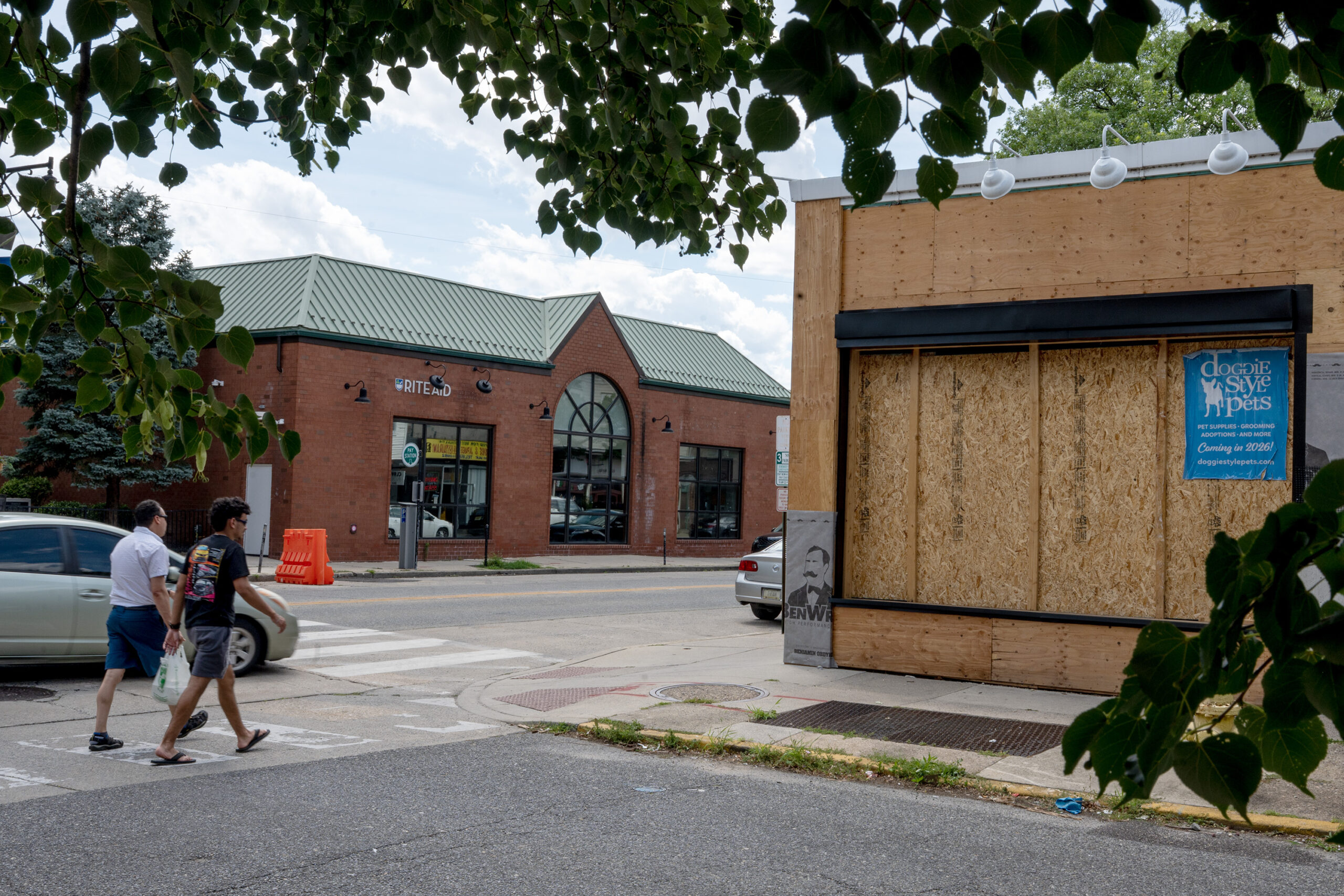
A former Rite Aid (left, rear) and former Wawa (right) sat empty in Collingswood in June.
The 8,000- to 16,000-square-foot shells are ideal for only so many tenants, real estate experts have said, and it is not unusual for these kinds of properties to take several months or more to lease.
Here is a look at what’s happening at a few local zombie Rite Aids:
South Jersey Rite Aids are becoming fitness centers
A former Rite Aid in Blackwood, Camden County, has been a gym for more than a year, and its owners soon plan to open a second location at another old Rite Aid in Cherry Hill.
Nick Bennett, CEO of the Bunker Fitness Center, said the owner of the Blackwood Rite Aid building approached him after seeing the gym’s content on TikTok. At the time, Bennett said, the gym was outgrowing its 3,000-square-foot space in Franklinville, Gloucester County.
When he went to see the 13,000-square-foot former Rite Aid in Blackwood, he said, it had already been demolished inside.
“It was just wide open,” Bennett said. “That floor plan works for our business model because gyms are open. You don’t really need to put up walls.”
Steve Cristelli works out at the Bunker Fitness Center in Blackwood.
Another plus, he said: Pharmacies have rows of refrigerators, which require electrical outlets, and the Bunker crew could use those outlets to plug in workout equipment.
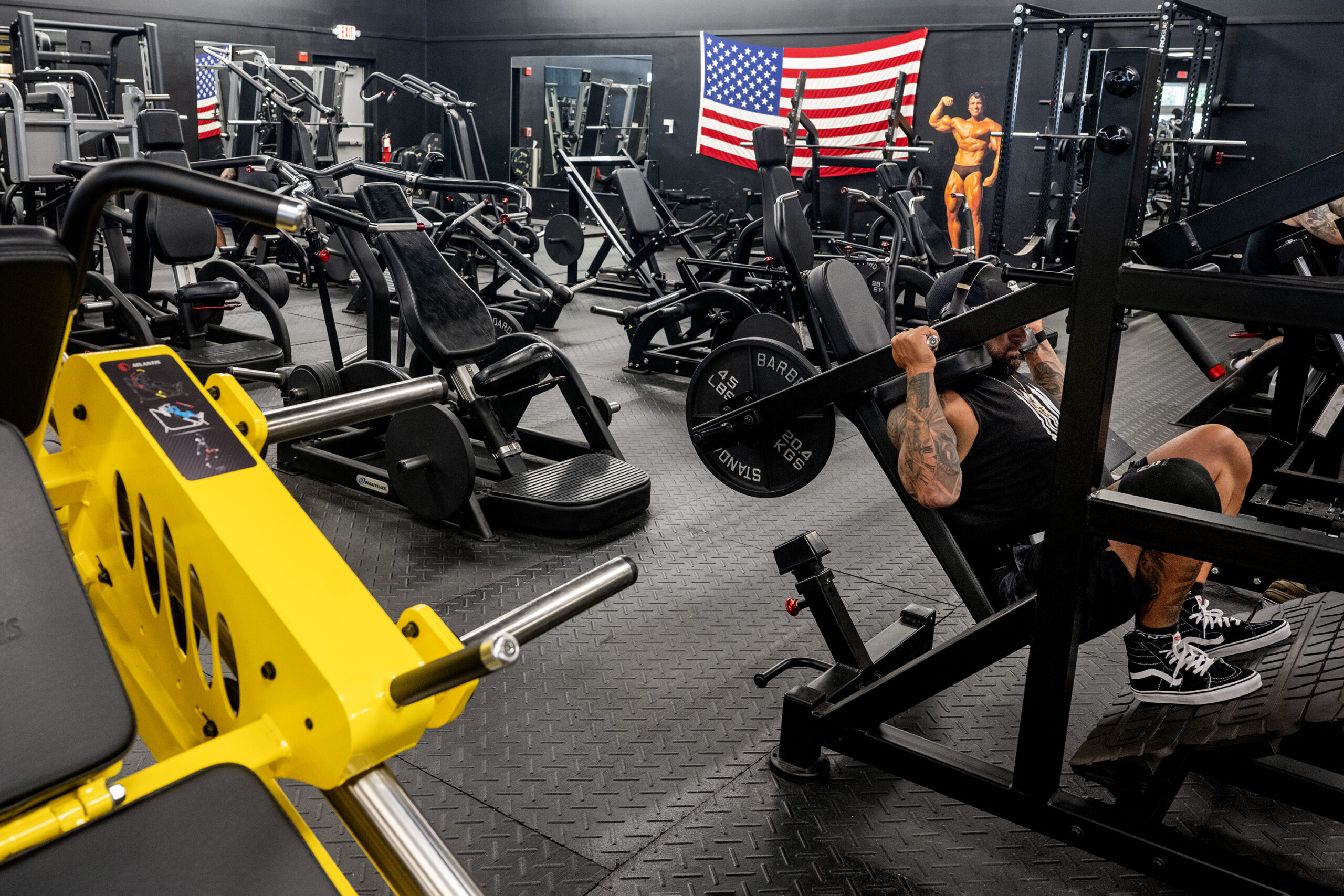
The old Rite Aid on Black Horse Pike needed “very little” work, just paint and rubber floors, Bennett said, and was easily transformed into the exercise and recovery space he had envisioned. The gym opened in 2025.
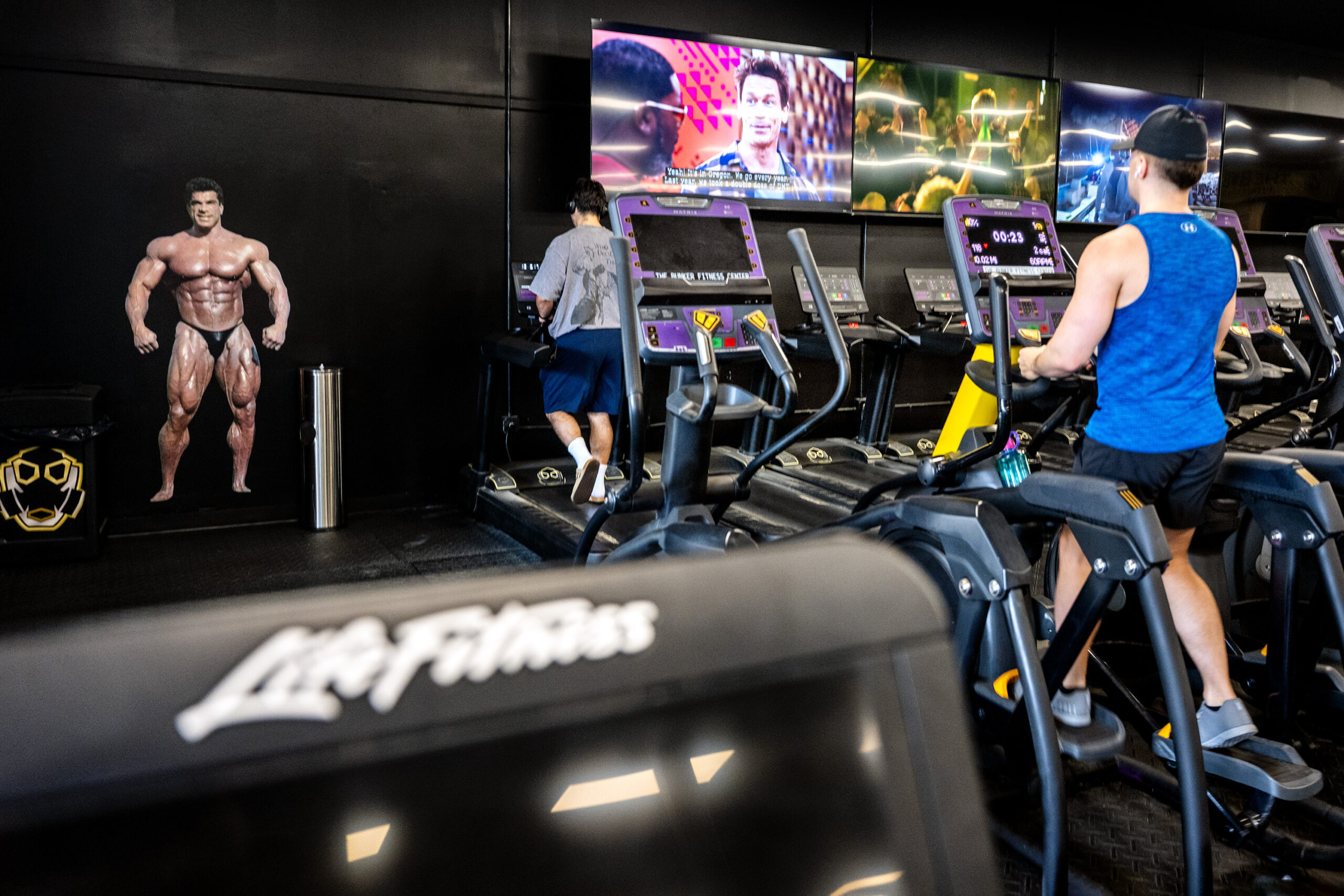
“We’re smashing it,” Bennett said, with thousands of members who pay between $49 and $59 a month for the 24/7 gym, which has cardio and strength machines, weights, a sauna, and a cold plunge. He declined to provide specific sales or membership figures for competitive reasons.
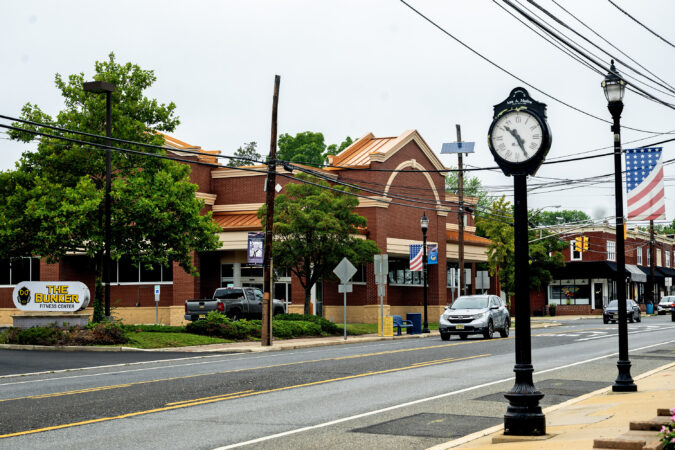
The Bunker Fitness Center operates inside a former Rite Aid in Blackwood.
But Bennett said the business is doing so well that it is expanding into another former Rite Aid, 12 miles away in Cherry Hill with franchisee Jack Prendergast.
That 10,000-square-foot pharmacy shell at Brace and Kresson Roads closed more recently and needs a bit more work inside, Bennett said. When they signed the lease, he said, it “looked like a Rite Aid.”
Bennett said he and Prendergast are demolishing the interior, aiming for a September opening.
In Delco, a Rite Aid could become a township’s first car wash
The former Rite Aid in Newtown Square may get new life as a car wash.
The store at West Chester Pike and St. Alban’s Circle closed last year. In February El Car Wash, a Florida-based chain looking to expand into Pennsylvania, New Jersey, and Maryland, applied to open there, said Newtown Township Solicitor Rich Sokorai.
On its website, El Car Wash lists several other Philly-area locations as “coming soon,” including Cherry Hill, Drexel Hill, Feasterville, and Maple Shade.
The Newtown Square Rite Aid operated a drive-through, Sokorai said, and drive-throughs are permitted in that commercial zone. After a June meeting, the township zoning hearing board is considering whether to permit the car wash, with a decision expected in the coming weeks.
A Rite Aid with a “store closing” sign last summer.
If approved, it would be the only car wash in Newtown Township, the solicitor said.
Residents of the neighborhood behind the old Rite Aid have expressed concerns to local officials, Sokorai said, “because they fear traffic.”
Others have said they are looking forward to a new business moving into the vacant space on a prime corner, Sokorai said. Even before the Rite Aid closed last summer, its shelves were often empty, the solicitor said, and “it was dying a slow death.”
Temple University buys another old Rite Aid
Temple “T” flags fly on North Broad Street.
Temple University recently bought a second former Rite Aid on North Broad Street.
The school recently closed on the old Rite Aid building on the 2100 block of North Broad for $9.25 million, according to spokesperson Stephen Orbanek. He said ArchWell Health, which operates a primary-care clinic for seniors there, will remain the tenant.
“This property’s location, directly across the street from James S. White Residence Hall, supports the priorities of our campus safety and physical environment plan,” Orbanek said.
Editor’s Note: This story has been updated to indicate that Temple Health plans to open neurology offices at the previously acquired Rite Aid building.
The biggest jump in Philadelphia’s property assessments this year occurred in Kensington, a measure that means many homeowners in the long-struggling neighborhood are likely to see higher taxes amid a concerted effort by the city to clean up the area.
That is according to an Inquirer analysis of recently released property assessments of single-family homes, which found that, citywide, there was a 3% median change in valuations from the 2025 tax year, the last time there was a mass reassessment.
That increase is far more modest than the widespread jump in valuations that homeowners saw two years ago, which captured multiple years of real estate growth and the volatile post-pandemic market.
What remains the same: who will be most affected.
The Inquirer’s analysis of this year’s property assessment data shows that low-income neighborhoods near gentrifying areas saw the sharpest jumps in valuations compared with the rest of the city.
The four areas that saw the largest percentage increases in median assessments — Kensington, Mantua, Grays Ferry, and Kingsessing — all border more gentrified neighborhoods like Fishtown, University City, and Point Breeze. The results of the analysis are a further sign that market pressures in higher-income areas are pushing into pockets of the city that have long been primarily home to Black and brown working-class residents.
Of the eight neighborhoods that saw the largest increases between the 2025 and 2027 tax years, five have median annual household incomes around $40,000 or less, according to an analysis of U.S. Census data. The federal poverty level is $33,000 for a family of four.
(function(){function e(){window.addEventListener(`message`,function(e){if(e.data[`datawrapper-height`]!==void 0){var t=document.querySelectorAll(`iframe`);for(var n in e.data[`datawrapper-height`])for(var r=0,i;i=t[r];r++)if(i.contentWindow===e.source){var a=e.data[`datawrapper-height`][n]+`px`;i.style.height=a}}})}e()})();
In a statement, officials with Mayor Cherelle L. Parker’s administration noted that many homeowners in those five neighborhoods are benefiting from a popular city tax break. The city said that the median 2027 value in those five neighborhoods is $123,600, so for many homeowners in those areas, the median taxable assessed value is just $23,600.
That is because of the homestead exemption, a tax break for homeowners who live in their house as their primary residence that exempts the first $100,000 in home value from property taxes. Homeowners must sign up to be included in the free program.
At least 60% of homeowners in those neighborhoods have signed up for property tax relief programs, according to the city.
James Aros Jr., the chief assessor of the Philadelphia Office of Property Assessment, and Revenue Commissioner Kathleen McColgan said enrollment rates in property tax relief, including the homestead exemption and multiple tax freeze programs, are “encouraging.”
They said the city will “build on this progress through extensive targeted outreach, community partnerships, and efforts to make enrollment as simple and accessible as possible.”
The current property tax rate is 1.3998% of assessed value, which has not changed for nearly a decade. The revenue is split between the city and the Philadelphia School District.
Rising home values in Kensington
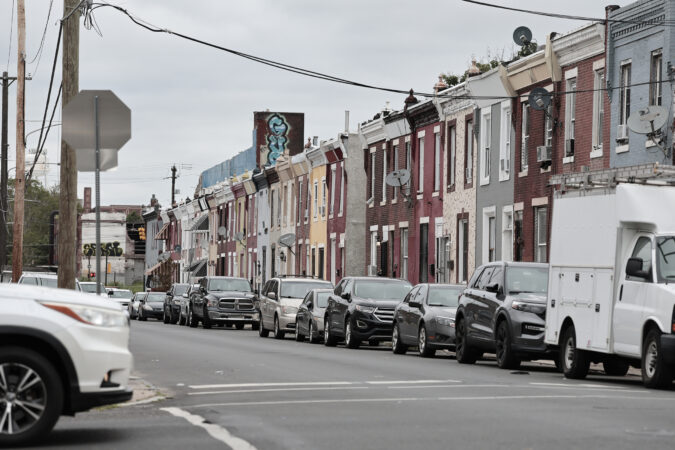
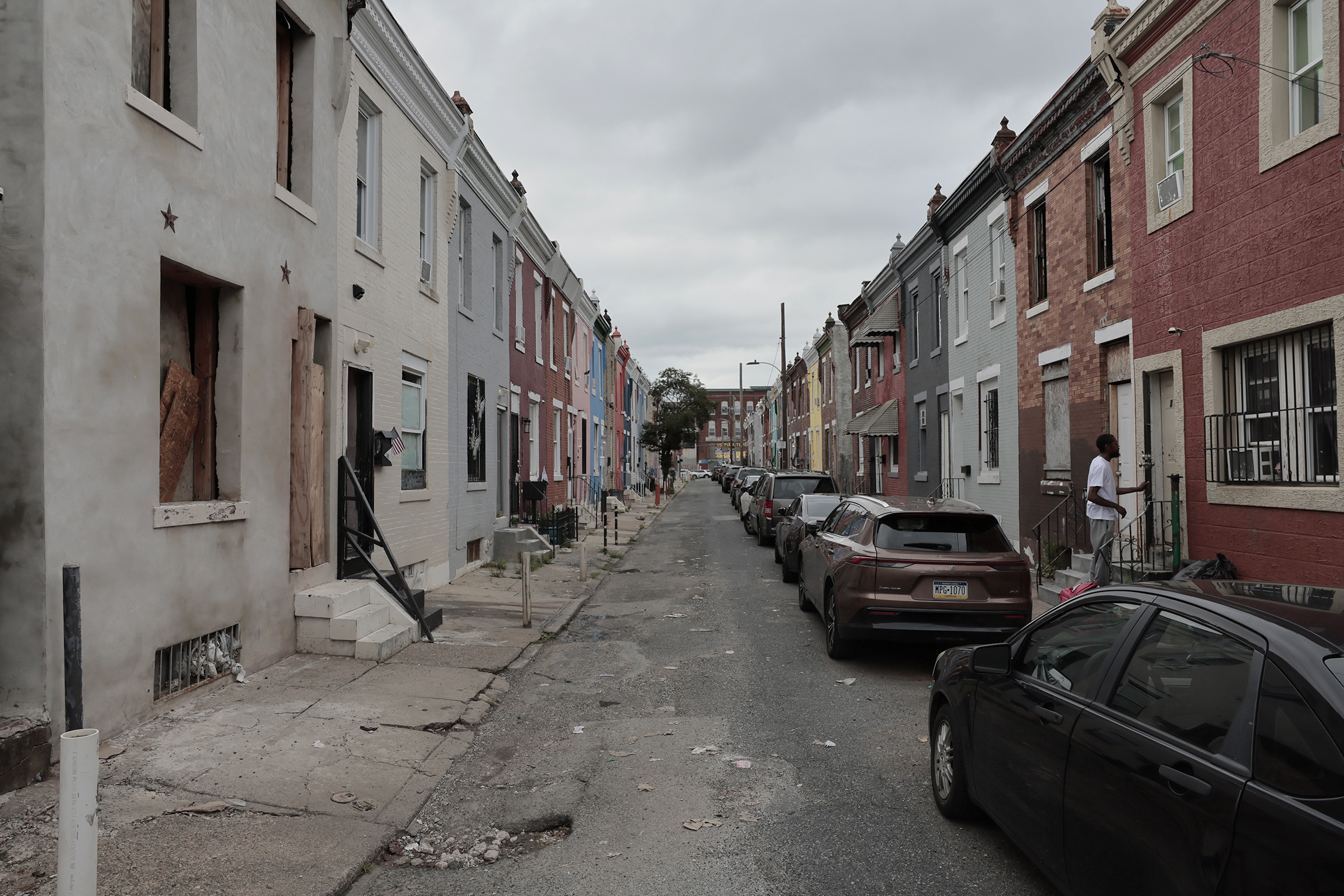
Citywide, the steepest increase in valuations was in Kensington, where the median property value jumped 15.3%, from $115,700 in the 2025 tax year to $133,400 now. That median increase would translate to a roughly $250 annual property tax hike.
That comes after Parker’s administration in 2024 launched a multipronged effort to address the long-entrenched open-air drug market in Kensington, which is the epicenter of the city’s opioid crisis and a site of sprawling homelessness.
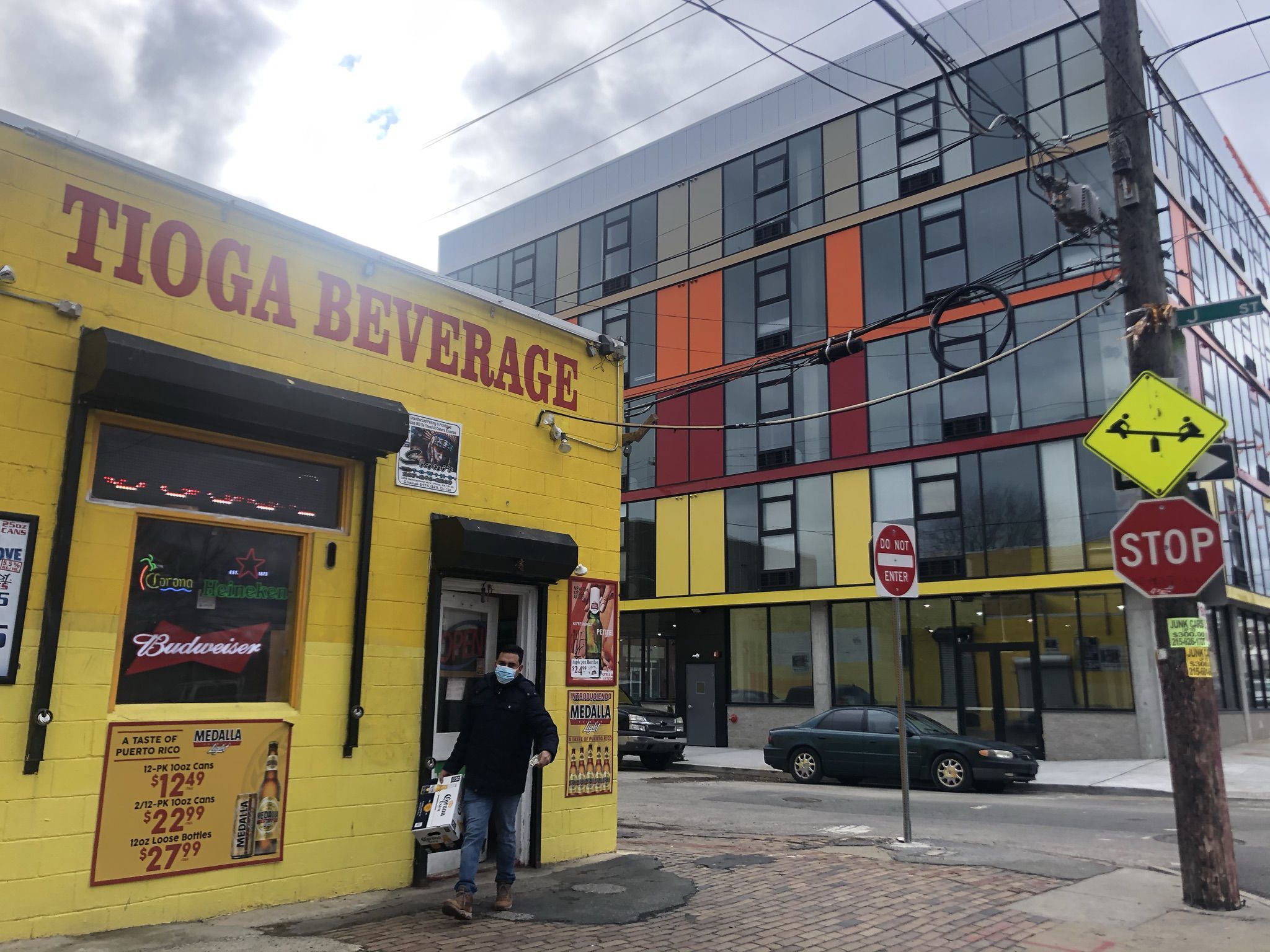
In this 2021 file photo, a glass building at J and Tioga sits near a beer store in Kensington.
Some neighborhood leaders have watched with anxiety as luxury housing developers and out-of-town investors gobbled up properties in the neighborhood, fearing that poorer residents and middle-class homebuyers may be priced out.
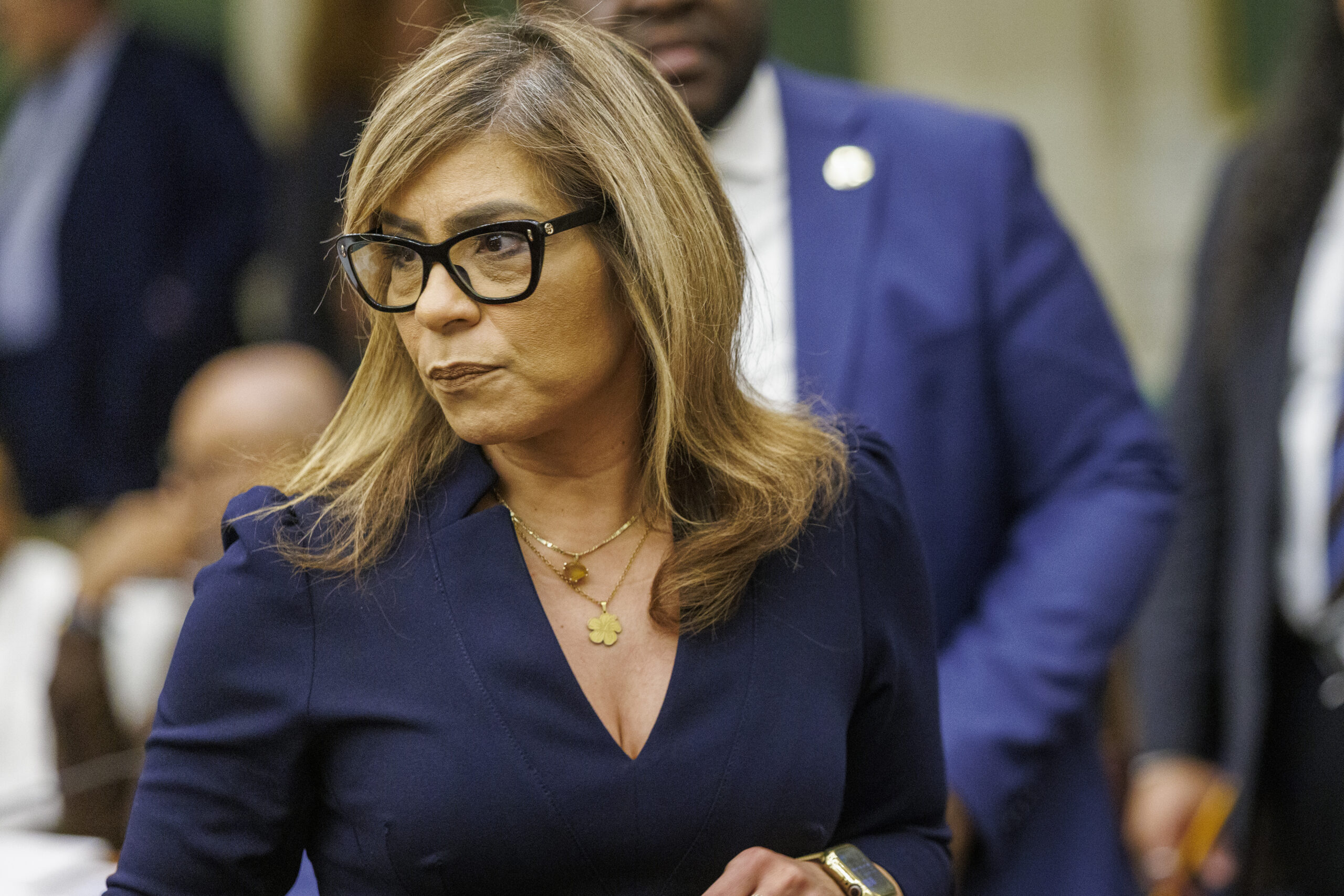
City Councilmember Quetcy Lozada, a Democrat who represents the 7th Council District, which includes parts of Kensington, said she knew speculators from outside the area would want to make it “the next gentrified neighborhood” once the city changed its strategy to more aggressively clean up trash and improve public safety.
But Lozada said there are not enough programs specific to Kensington aimed at preventing displacement as a result of rising property values, especially as the city is investing millions of dollars a year to improve the neighborhood. She said her office is exploring additional tax relief measures.
“I’m going to do whatever I have to do to make sure that residents who have lived in that community can stay there, can raise their families there,” Lozada said. “We have witnessed what has happened on the southern end of the district, where there has been rapid gentrification.”
In this March file photo, City Councilmember Quetcy Lozada stands in Council chambers during Mayor Cherelle L. Parker’s budget address.
Lozada also said rising property values in Kensington are part of why she has been “so careful with projects presented to me” and has prioritized what she sees as equitable development in the neighborhood — at times to the chagrin of developers who think she has been too restrictive.
“I’m all about people making a return,” she said, “but you can’t continue to do it on the backs of poor people.”
The 3100 block of Arbor Street in Philadelphia on Tuesday, July 7, 2026.
Continuing change in pockets of West Philly
There were also significant property value increases in parts of West Philadelphia.
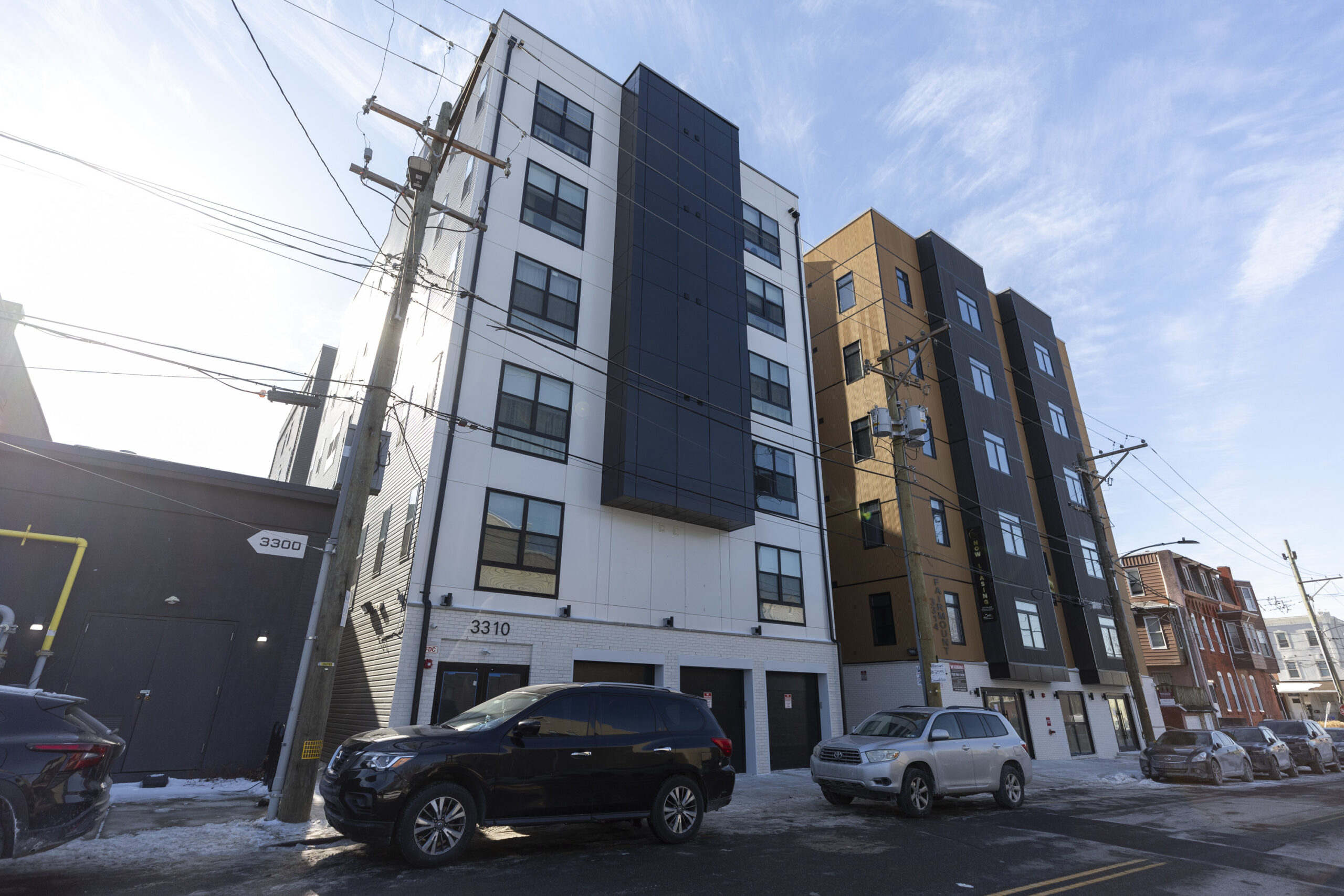
The median increase in Mantua, the neighborhood north of University City, was the second highest in the city, at 15%, according to The Inquirer’s analysis. The median increase was 12% in Kingsessing, the neighborhood south of University City that in 2025 saw the largest jump of any neighborhood in Philadelphia.
Newly developed buildings along Fairmount Avenue in the neighborhood of Mantua in Philadelphia, Pa., on Thursday, Jan. 23, 2025.
Councilmember Jamie Gauthier, a Democrat who represents West Philadelphia and has made preventing displacement a key initiative, said that there has long been racial bias in the city’s property assessments and that the city must “get serious” about protecting low-income homeowners by revamping its system.
“There has to be a higher level of urgency in making sure that the city doesn’t have a hand in pushing out all of these homeowners that make Philadelphia what it is,” Gauthier said. “It’s unconscionable for us to destabilize our neighborhoods and the longtime homeowners who live there because we didn’t take enough care to make sure that our process was fair and equitable.”
For too long, she said, city officials have said they intended to examine the property assessment practices and identify improvements. In 2024, Parker convened a task force to study the process.
Aros told Council in April that the task force’s report was “being finalized.” He said OPA would look to implement recommendations from the report, including conducting more regular reassessments and improving property-level data such as property condition.
The city is also planning to hire an outside consultant to examine its mass appraisal practices, according to city records. The analyst will be responsible for drafting a report by the end of this year.
Deputy creative director John Duchneskie contributed to this article.
Philadelphia police on Tuesday released surveillance images of the white SUV suspected in a the fatal hit-and-run crash on Kelly Drive last month that killed 20-year-old Temple University student Bryce Wolfe.
The unidentified driver dragged Wolfe for more than a mile on Kelly Drive, police said.
The police department’s Crash Investigation Division released two images of what investigators believe is 2001-08 Chevrolet Trailblazer and a stock image that more clearly shows what the make and model looks like.
Police said the white Trailblazer may have damage on the driver’s side with possible red paint transfer, a broken rear windshield, and a discolored passenger-side front wheel.
A $10,000 reward funded by an anonymous donor is being offered to anyone who provides information leading to the arrest and conviction of the driver, Temple University president John Fry said last week.
Wolfe, of Conyngham, a borough in Luzerne County, was an actuarial science major in the Fox School of Business and had just completed his sophomore year.
Bryce Wolfe, 20, of Luzerne County, had just completed his sophomore year at Temple University when he was killed by a hit-and-run driver on Kelly Drive.
Philadelphia police said they responded to a report of a crash at Kelly and Reservoir Drives around 11:15 p.m. on June 24.
Wolfe was riding a red 2004 Triumph motorcycle when he was struck by a white SUV on Kelly Drive at Reservoir Drive. The eastbound SUV driver was trying to make an illegal turn onto Reservoir Drive, but then attempted to return to eastbound Kelly Drive when the SUV entered Wolfe’s westbound path.
The 20-year-old became trapped beneath the SUV and was dragged to the area of Fountain Green Drive before he was dislodged from the SUV, police said. Wolfe was transported by medics to Penn Presbyterian Medical Center and pronounced dead at 4:41 a.m. on June 25, police said.
Lori Wolfe, Bryce’s mother, said in a text message Tuesday evening that she was hopeful that the case would be solved.
“We feel this along with the 10k reward will help to give our son justice in finding the driver,” she said.
Fry, Temple’s president, in a June 30 joint statement with Jodi Bailey Accavallo, vice president of student affairs, and Denise Wilhelm, interim vice president for public safety, said Wolfe “had quickly established a reputation as both an excellent student and engaged member of the Temple community,” maintaining a high grade-point average while being enrolled in both Temple and Fox Honors program.
“Bryce was also deeply involved outside of class as he was a member of the student professional organization Gamma Iota Sigma and had recently started an internship with United States Liability Insurance Group,” Fry said.
“There is no doubt that he had a very bright future ahead of him, and that’s what makes delivering this news especially difficult,” Fry said.
Philadelphia Common Pleas Judge James Crumlish III ordered California-based Tutor Perini Building Corp. to pay $42.4 million in damages to the subcontractor retained to install the building’s exterior, the Chicago-based Ventana DBS LLC.
“Throughout the project, Ventana was forced to navigate numerous obstructions and obstacles, stemming from Tutor Perini’s pervasive material breaches of contract,” Crumlish’s ruling read last week.
A Tutor Perini spokesperson said in April that the firm disagreed with the decision and intended to appeal it.
The contractor declined to comment on the new developments.
“This ruling is an important affirmation of the facts and of the principles that govern successful project delivery,” said Bob Clark, executive chairman of Clayco, a real estate development company that is Ventana’s parent company.
“We are pleased that the Court awarded Ventana $42 million in damages and recognized that Tutor Perini failed to properly coordinate its subcontractors while acting in bad faith by concealing its knowledge of significant concrete defects,” said Clark.
The judgment is the latest in the fallout from a construction project that Crumlish has said in an earlier ruling went “off the rails” because of Tutor Perini. Five years after the W hotel opened, the litigation is ongoing.
Tutor Perini was in court again Tuesday for the start of a new trial, this time for the judge to assess how much a concrete subcontractor, Thomas P. Carney Inc. Construction, owes Tutor for botching the job.
The proceeding had a tense opening as attorneys for Tutor Perini and Carney spent the morning arguing over motions.
Crumlish, who has previously chastised the parties for their animosity and turning the litigation into a “challenging behemoth,” expressed frustrations at times and ordered everyone to stop talking.
“I’m getting cranky, I will admit it,” the judge said at one point.
Disruptive and costly delays
Tutor Perini retained Ventana in 2015 for $14 million to assist in the design and installation of the building’ exterior and window-wall systems for floors nine to 50.
But when Ventana moved to install the hotel’s wall-window systems, they immediately noticed a “big problem,” according to the judge’s October memo. In many places, the concrete was not level or did not meet the elevation requirements in the design.
Tutor Perini denied there was a problem, while quietly attempting to grind the edges of the concrete slabs to address the issue.
By failing to supervise the concrete pours, Crumlish wrote in the recent ruling, Tutor Perini caused the “inefficient, obstructed, and impaired installation” of the window-wall systems.
“Ventana repeatedly encountered disruptive and costly delays due to Tutor’s lack of coordination while attempting to install its window wall systems,” the judge’s memo said.
Tutor Perini, for example, didn’t clear debris left by other subcontractors, the judge said, to allow the Ventana team to transport the window-wall components.
And while Tutor’s consultants confirmed the problem was the concrete pour, the company rejected Ventana’s delay notices and stopped paying the contractor.
Crumlish ordered Tutor to pay Ventana the $7.5 million unpaid subcontractor balance, $7.3 million in labor inefficiency costs, and $2.4 million unpaid change order requests, and $18 million in other costs.
The company is also on the hook for $7.1 million in attorney’s fees, expert witness fees, and litigation costs, bringing the total judgment to $42.4 million.
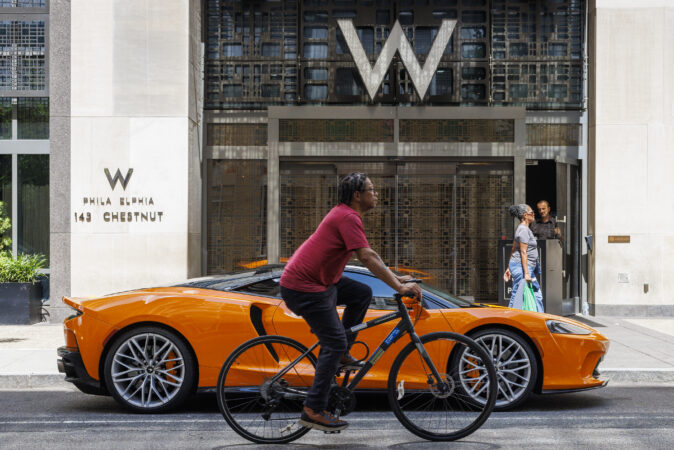
The W hotel opened in 2021 at 15th and Chestnut Streets, three years after its intended opening date, and it still cannot be fully occupied because some window vents are inoperable.
The project was developed by Brook Lenfest, son of former Inquirer owner H.F. “Gerry” Lenfest, whose foundation continues to own the newspaper.
Editor’s note: This article has been updated with a statement from the subcontractor Ventana’s parent company.
Philadelphia so far has confirmed seven heat-related deaths in the last week, bringing the seasonal total to eight, the city health department reported Tuesday.
And officials in the Garden State are investigating 29 “suspected” heat-related deaths, most of them in the central and northern parts of the state, a spokesperson for the New Jersey Health Department said..
Four deaths were reported on Monday, and three additional fatalities Tuesday, said James Garrow, a spokesperson for the Philadelphia Department of Public Health, with an eighth earlier in the season.
No details were available about the victims, including their ages and when and where the deaths occurred.
The possible New Jersey heat-related deaths would have occurred during the record three-day hot spell that ended on July Fourth, the state said.
In Philadelphia, temperatures on those three days hit 101 degrees or higher, the first time that had happened in the period of record dating to 1873, the National Weather Service said.
It also was only the third time that they officially reached triple digits on three straight days.
In New Jersey, the suspected victims ranged in age from the mid-30s to the 80s, said health department spokesperson Dalya Ewais. She added, however, that death toll numbers “are still unconfirmed,” pending forensic examinations.
In the last decade Philadelphia has averaged but five deaths annually, a dramatic drop from the deadly summers of the 1990s.
In 1993, Philadelphia recorded 118 heat-related deaths — compared with 50 in the 10-year period that began in 2017. The eight reported so far are the most since the eight of 2022, according to health department records.
The shock of the 1993 death toll in Philly — which foreshadowed Chicago’s 1995 disaster, and Europe’s in 2003 — led to the creation of the city’s heat-response system, recalled David L. Cohen, who was chief of staff under former Mayor Ed Rendell.
Federal officials have lauded the program as a model for other cities. It includes setting up cooling centers, encouraging people to look in on neighbors, and having the Philadelphia Corporation for Aging set up a heat hotline.
A study published in the Bulletin of the American Meteorology Society in 2025 credited the program with saving 270 lives from 1995 through 1998.
If the forecast holds, the city can give the program a rest at least through the week. No highs of even 90 degrees are expected through Monday.
Cybercriminals duped a Blank Rome attorney into sharing the personal information of 57,554 former and current clients, two federal lawsuits filed Monday say.
The firm, which is headquartered in Philadelphia and has 15 other offices nationwide, notified impacted clients a month after the incident, according to the complaints.
The twonearly identical proposed class-action lawsuits, filed in the Eastern District of Pennsylvania by former Blank Rome clients from California, accuse the firm of negligence, breach of contract, and violation of consumer protection laws, among other claims.
Blank Rome failed to use industry standards for cybersecurity and to comply with safeguards mandated by a federal medical privacy law, according to the complaints.It also didn’t appropriately train staff to identify these types of cyber schemes, the suits said.
The lawsuits asks a judge to certify the class action on behalf of all people impacted by the breach, award them damages, and order action to ensure their identities are protected.
“The exposure of one’s Private Information to cybercriminals is a bell that cannot be unrung,” the suits say. “Before this data breach, its current, former, and prospective clients’ Private Information was exactly that — private. Not anymore.”
The incident was limited to one attorney and the firm’s network was never breached, a Blank Rome spokesperson said.
“We are committed to protecting our clients’ information and maintaining the trust they place in us,” the firm’s statement said. “We believe the lawsuit has no merit and will aggressively defend against it.”
The firm disputed that all people impacted were clients, but did not say who else was impacted.
The attorney who filed the two lawsuits did not respond to a request for comment.
They are also lucrative for class attorneys who can pocket as much as a third of the settlement’s amount.
The Blank Rome data breach took place on May 21 after an “unauthorized third party” posing as a member of the firm’s IT department instructed a Blank Rome attorney to upload files to an external Google Drive, according to a notice of breach attached to the complaint.
Clients began receiving notice on June 26, the suits say.
The firm identified the breach within two hours, deleted all the files on the drive, and opened an investigation, the notice said. Blank Rome also notified law enforcement.
The notice was sent to clients whose information, which included names and Social Security numbers, was stolen. Clients’ addresses, dates of birth, driver’s license numbers, passport numbers, and medical and health insurance information were also potentially obtained by the hackers, the notice said.
Blank Rome provided complimentary credit monitoring to impacted clients, the notices said, and has taken internal steps “mitigating similar risk,” including by working with cybersecurity professionals.
“We are notifying you of this incident and want to assure you that we take it seriously,” the firm’s notice said.