A week after authorities arrested Jonathan Christian Gerlach on charges of stealing human remains from Mount Moriah Cemetery, the consequences of the case continue to unfold — from a small police department fielding frantic pleas from families to a coroner’s office now responsible for safeguarding more than 100 unidentified bones and body parts.
Since the arrest, the Yeadon Police Department has been inundated with calls and emails from relatives fearful that the graves of their loved ones were disturbed, Police Chief Henry Giammarco said. The remains recovered during the investigation — including skulls, bones, and other human fragments — were seized from Gerlach’s basement and from a separate storage unit, both in Ephrata, and are now in the custody of the Lancaster County Coroner’s Office.
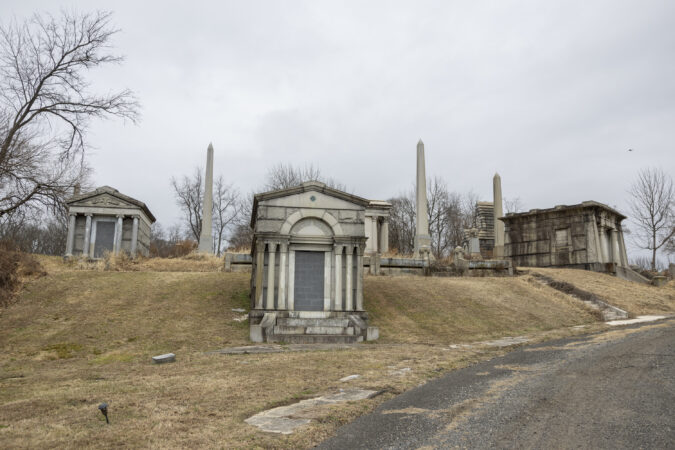
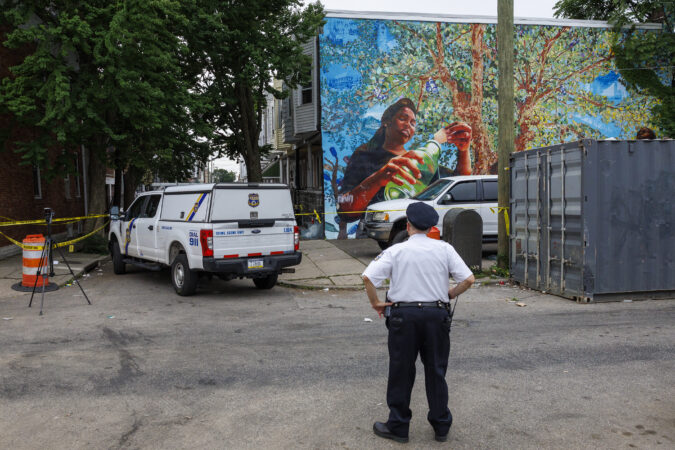
Gerlach is accused of systematically removing skulls and bones from graves at Mount Moriah, a sprawling historic cemetery that spans Philadelphia and Yeadon Borough. The case has drawn national attention, prompting widespread media coverage and intensifying concern among families with relatives buried at the cemetery.
(function() {
var l2 = function() {
new pym.Parent(‘bones’,
‘https://media.inquirer.com/storage/inquirer/projects/innovation/arcgis_iframe/bones.html’);
};
if (typeof(pym) === ‘undefined’) {
var h = document.getElementsByTagName(‘head’)[0],
s = document.createElement(‘script’);
s.type = ‘text/javascript’;
s.src = ‘https://pym.nprapps.org/pym.v1.min.js’;
s.onload = l2;
h.appendChild(s);
} else {
l2();
}
})();
As of Wednesday afternoon, Giammarco said, his department had received more than 200 calls and emails from people across Pennsylvania and from as far away as Montreal and Hawaii, many asking whether authorities could confirm whether specific graves had been disturbed or whether their loved ones’ remains were among those recovered.
Inside the coroner’s office, the remains have been cataloged and placed in secure storage, Coroner Stephen Diamantoni said. They will remain there until Gerlach’s criminal case is resolved.
Diamantoni said his office does not plan to attempt to identify the remains — a task he described as virtually impossible given their age, their condition, and the circumstances in which they were recovered.
When the bones were seized from Gerlach’s home and storage unit, Diamantoni said, they were not labeled or organized in any way that would indicate where they came from or whom they belonged to. In many cases, he said, remains from different individuals were mixed together, a condition known as commingling, “on a scale that I’ve never encountered.”
Compounding the challenge, some of the remains are believed to be hundreds of years old, Diamantoni said, and are in advanced states of decay. Even under ideal conditions, identifying such remains would be difficult. In this case, he said, it would be “a herculean task” to attempt to match the bones to specific burial sites — let alone to determine whose remains they were.
Even if that were somehow possible, Diamantoni said, identifying a living family member would present another nearly insurmountable hurdle, given the age of the remains.
Back in Yeadon, Giammarco said he has tried to provide as much clarity as possible to families reaching out in distress. While the investigation is ongoing, he said, authorities have identified thefts only from mausoleums and underground vaults — structures that are larger and deeper than standard graves and are constructed differently. He spent much of the weekend returning calls and responding to emails, he said, hoping to ease fears.
“If it would have been my family,” Giammarco said, “I would have wanted someone to contact me.”
Delaware County District Attorney Tanner Rouse, whose office is prosecuting Gerlach, said Wednesday the investigation into the crimes was ongoing.
The U.S. Attorney’s Office is seeking documents and information from those connected to the case of Ellen Greenberg, whose 2011 death remains shrouded by questions about whether it was properly investigated by authorities, according to sources.
The sources, who asked not to be identified, said federal prosecutorsrecently sent out subpoenas in the matter, and that the investigationdoes not appear to be focused on the manner of Greenberg’s 2011 death by 20 stab wounds — which was initially ruled homicide then switched to suicide. Instead, the sources said, the probe appears to be centered on questions about how a variety of agencies handled the case in the years after she died, and whether any of those missteps might amount to criminal corruption.
Still, the scope of the potential inquiry was not clear Wednesday.
Multiple city and state agencies have been involved in Greenberg’s case in the last 15 years, including the Philadelphia Police Department, the Philadelphia Medical Examiner’s Office, the Philadelphia District Attorney’s Office, the Philadelphia Law Department, and the Pennsylvania Attorney General’s Office.
Spokespeople for all of those city offices would neither confirm nor deny they have received subpoenas.
A spokesperson for the U.S. Attorney’s Office said they could “neither confirm nor deny the existence of an investigation.”
Joseph Podraza Jr., the attorney for Greenberg’s parents, said he and his clients are “ecstatic.”
“If that is in fact correct and accurate, that the federal government is going to investigate … this is exactly what we’ve wanted all along,” he said. “It’s unfortunate it’s taken more than seven years to get to this point but we are really grateful and thankful to the U.S. attorneys and, of course, are available to assist in any way we can in helping their investigation.”
From homicide to suicide
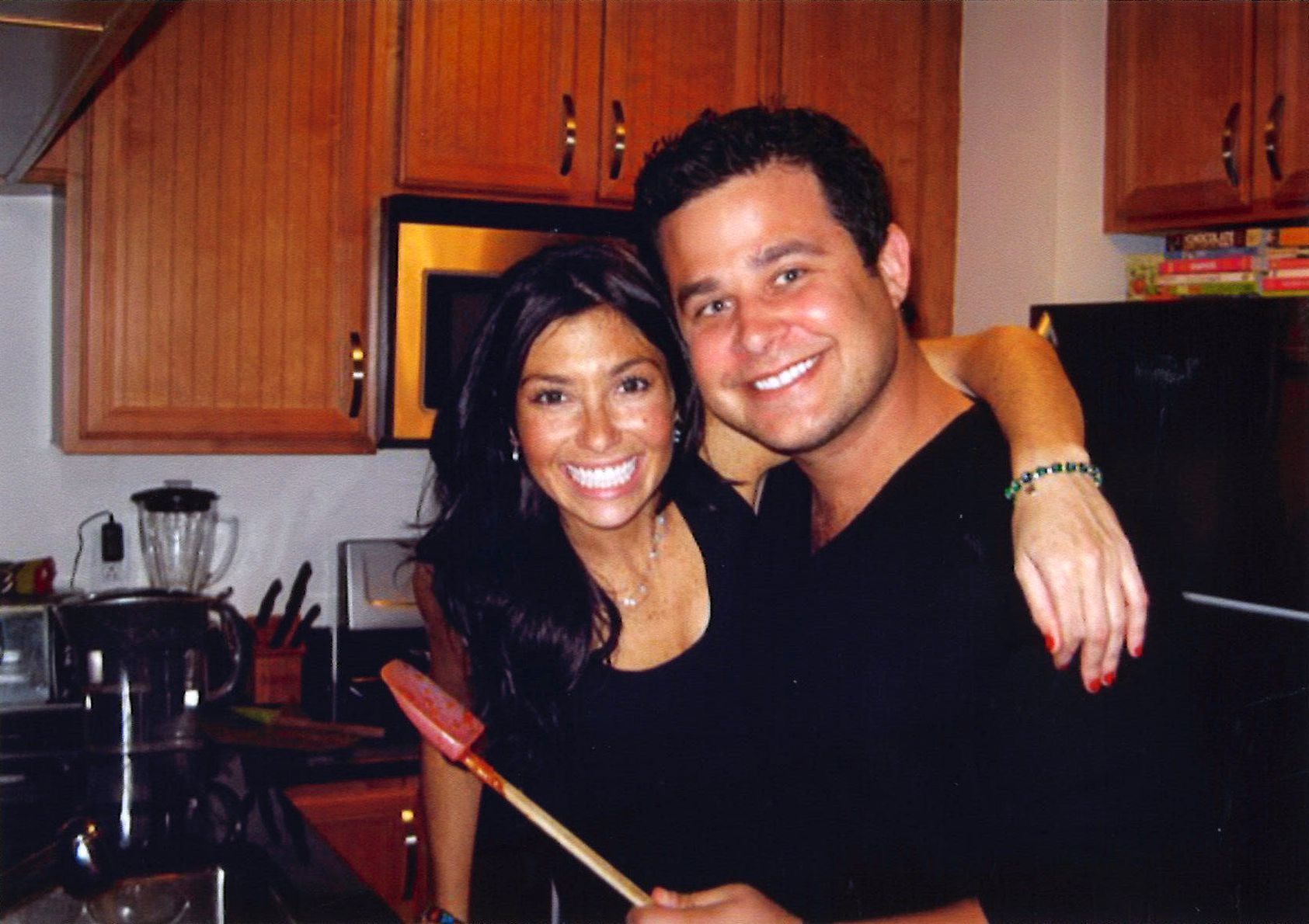
Ellen Greenberg and Samuel Goldberg in the kitchen of the Manayunk apartment they shared.
Greenberg, 27, was found by her fiancé, Samuel Goldberg, in the kitchen of their Manayunk apartment with a 10-inch knife lodged four inches into her chest on Jan. 26, 2011.
Investigators on the scene treated her death as a suicide because Goldberg told them the apartment door was locked from the inside and he had to break it down to get in. There were no signs of an intruder and Greenberg had no defensive wounds, police have said.
During an autopsy the next morning, then-assistant medical examiner Marlon Osbourne noted a total of 20 stab wounds to Greenberg’s body, including 10 to the back of her neck, along with 11 bruises in various stages of healing, and ruled her death a homicide.
By the time homicide investigators returned to the scene to conduct their investigation, the apartment was already professionally cleaned and electronic devices belonging to Greenberg had been removed by a member of Goldberg’s family.
Shortly after the homicide ruling, police publicly disputed the findings, citing “mental issues” Greenberg may have had. Osbourne later changed his ruling to suicide, with no explanation to Greenberg’s parents, Joshua and Sandra.
Greenbergwas dealing with anxiety, had met with a psychiatrist, and was prescribed anti-anxiety and sleep aid medications. Herpsychiatrist told police Greenbergfelt overwhelmed at work, but “there was never any feeling of suicidal thoughts,” and according to the medical examiner’s investigation report at the time, there was nothing indicative of suicide found on Greenberg’s computers.
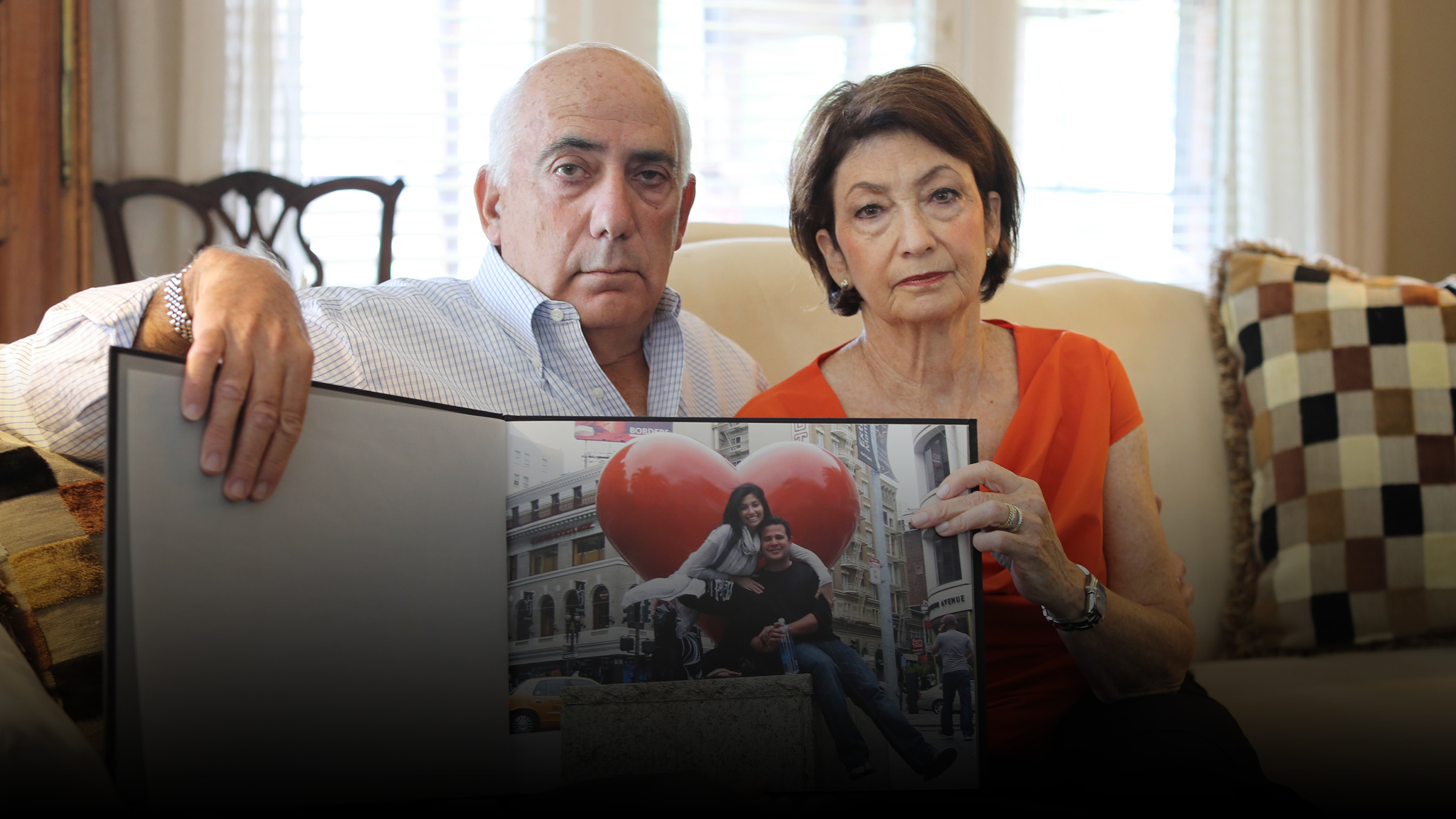
Ellen Greenberg’s parents, Joshua and Sandra, hold a photo album of their daughter.
In their search for answers, the Greenbergs hired then-civil rights attorney Larry Krasner in 2012. He convened a meeting for the Greenbergs with police officials and the district attorney’s office in an effort to get the investigation reopened, but nothing happened, the Greenbergs said.
When Krasner became district attorney in 2018, the Greenbergs reached out to see if he’d reopen the investigation. Krasner referred the matter to the state Attorney General’s Office, then helmed by now Gov. Josh Shapiro, to avoid the appearance of a conflict of interest.
Shapiro’s office had the case for more than a year. It was only when The Inquirer pressed the office for answers that Shapiro’s spokesperson at the time, Joe Grace (now spokesperson for Mayor Cherelle L. Parker), said in a 2019 statement that they had conducted a “thorough investigation,” the “evidence supports ‘Suicide’ as the manner of death,” and that the office had closed the investigation.
Grace pointed to search history on Greenberg’s computer that included the search terms “suicide methods,” “quick suicide,” and “painless suicide.”
When asked why the medical examiner’s 2011 report said nothing indicative of suicide was found on Greenberg’s computer, Grace said his office didn’t find the analysis in the file, so “we cannot say if anyone, police or prosecutor, ever looked at it.”
The lawsuits
Following the Attorney General Office’s review, the Greenbergs filed a lawsuit against the Medical Examiner’s Office and Osbourne in 2019 seeking to have the manner of their daughter’s death changed back to homicide or undetermined.
The city law department fought to have the case dismissed and a lengthy appeals process followed. In the Commonwealth Court’s 2-1 decision in 2024, judges wrote they had “no choice under the law” but to grant the city’s appeal but added that “… this court is acutely aware of the deeply flawed investigation of the victim’s death by the City of Philadelphia Police Department (PPD) detectives, the City of Philadelphia District Attorney’s Office (DAO), and the MEO [Medical Examiner’s Office].”
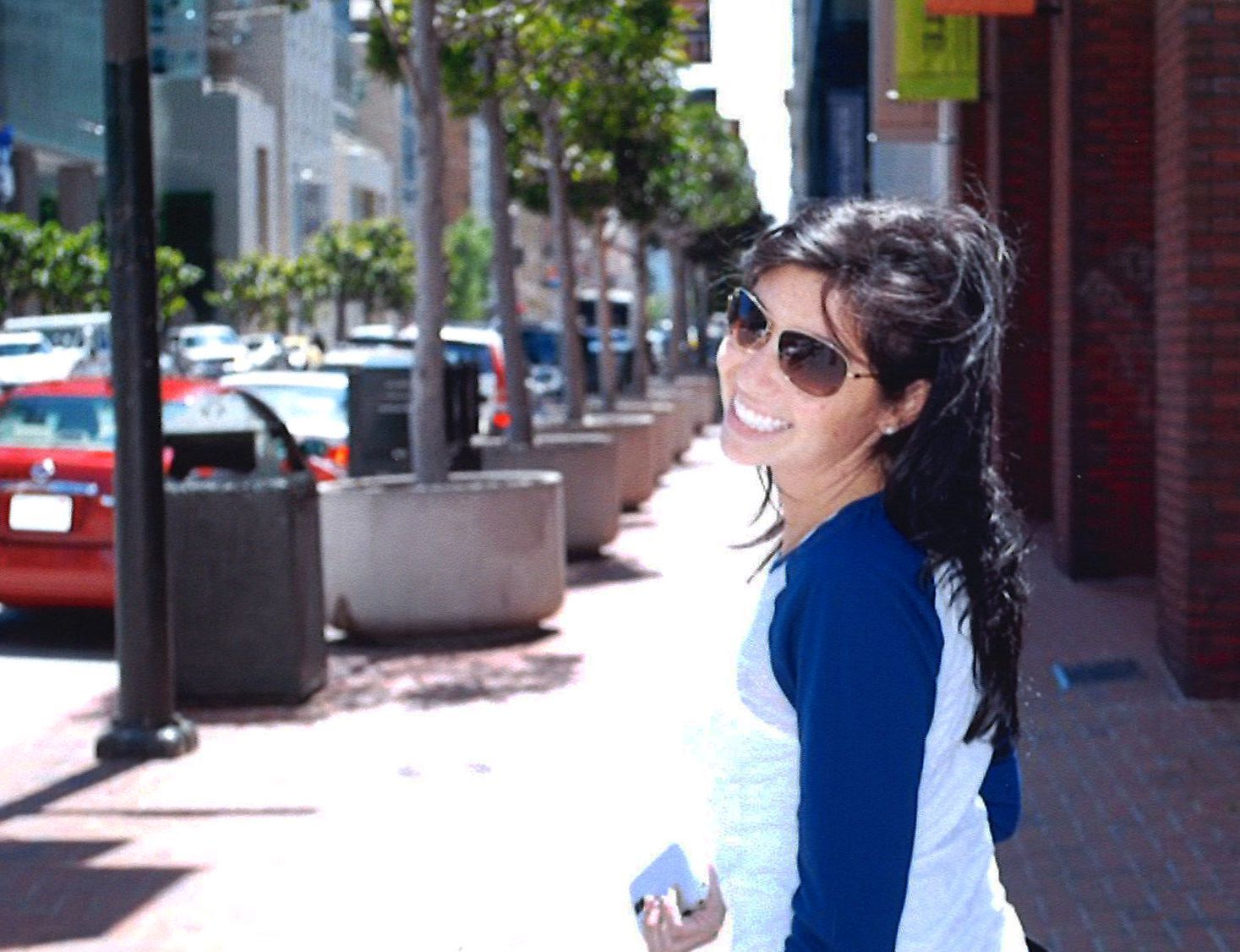
Ellen Greenberg
While that case was ongoing, the Greenbergs filed a second suit in 2022, based on additional details about the case that came to light through the first suit, including new information about the process around how Greenberg’s death was classified.
In the new suit, Podraza alleged the investigation into Greenberg’s death was “embarrassingly botched” and resulted in a “cover-up” by Philadelphia authorities. It sought monetary damages for intentional infliction of emotional distress.
The city law department fought both suits until February, when Osbourne — the pathologist who initially ruled Greenberg’s death a homicide then switched it to suicide — signed a sworn statement saying he now believes her death should be categorized as something other than suicide.
Within days, and shortly before the second case was to go to trial, the city offered to settle with the Greenbergs. The settlement included $650,000, which was paid, and an agreement that the Medical Examiner’s Office conduct an “expeditious” review of the manner of Greenberg’s 2011 death.
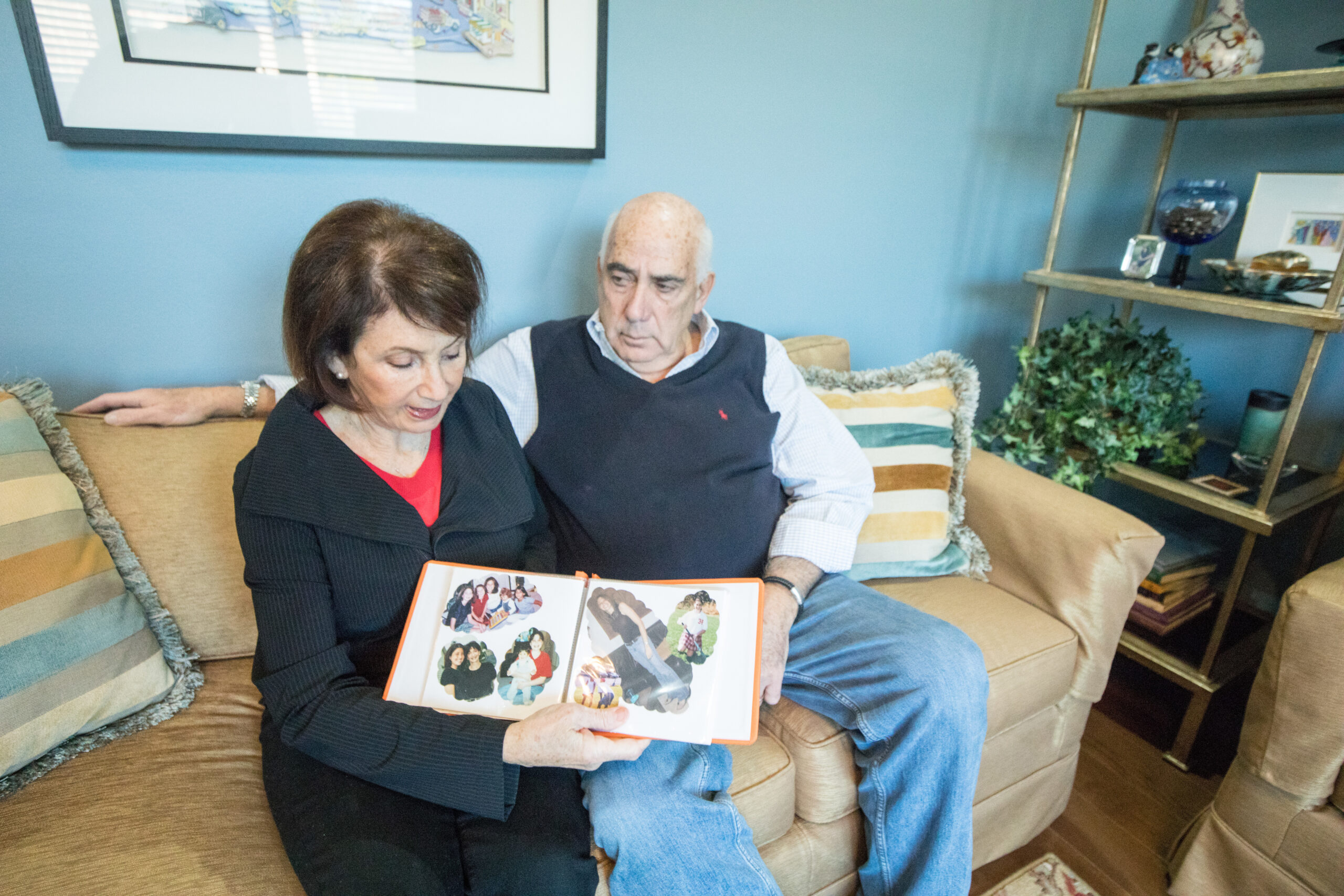
Sandra and Joshua Greenberg
As part of the settlement, the Greenbergs agreed to withdraw both of their lawsuits against the city. The first suit had been slated for a hearing before the Supreme Court of Pennsylvania last year.
In October, Philadelphia Chief Medical Examiner Lindsay Simon delivered her review of the case, in which she said she discovered 20 additional bruises and three additional “perforations in the skin” never before documented on Greenberg’s body, raising the total number of bruises to 31 and stab wounds to 23, up from 20.
Simon concluded that Greenberg “would be capable of inflicting these injuries herself,” and that her death “is best classified as ‘Suicide.’”
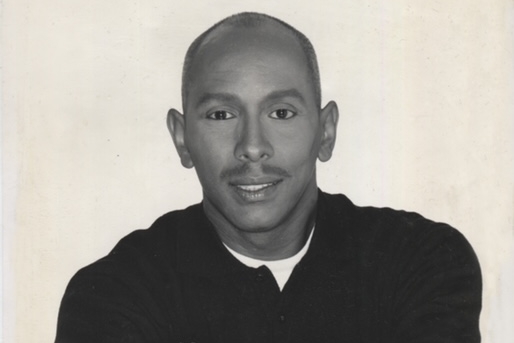
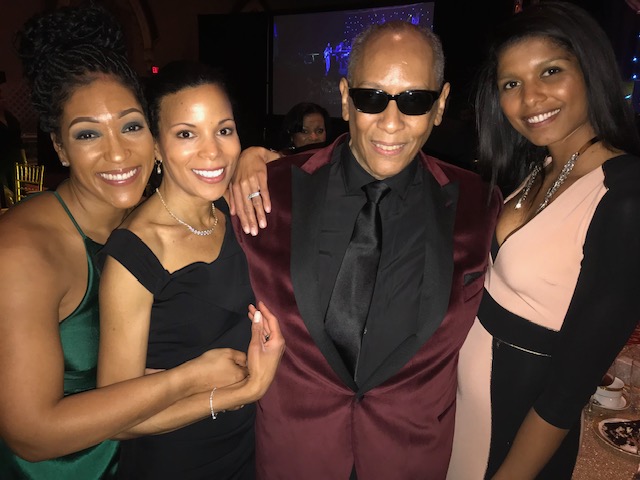
Jeffrey A. Woodley, 71, formerly of Philadelphia, internationally celebrated celebrity hairstylist, scholar, youth track and field star, mentor, and favorite uncle, died Wednesday, Dec. 10, of complications from acute respiratory distress syndrome at Mount Sinai West Hospital in Manhattan.
Reared in West Philadelphia, Mr. Woodley knew early that he was interested and talented in hairstyling, beauty culture, and fashion. He experimented with cutting and curling on his younger sister Aminta at home, left Abington High School before his senior year to attend the old Wilfred Beauty Academy on Chestnut Street, and quickly earned a chair at Wanamakers’ popular Glemby Salon at 13th and Chestnut Streets.
He went to New York in the mid-1970s after being recruited by famed stylist Walter Fontaine and spent the next 30 years doing hair for hundreds of actors, entertainers, models, athletes, and celebrities. He styled Diahann Carroll, Whitney Houston, Aretha Franklin, Anita Baker, Angela Bassett, Halle Berry, and Tyra Banks.
He worked with Denzel and Pauletta Washington, Eddie Murphy, Jasmine Guy, Lynn Whitfield, Pam Grier, Melba Moore, Jody Watley, and Karyn White. His hairstyles were featured in GQ, Vanity Fair, Ebony, Jet, Essence, Vibe, Vogue Italia, and other publications, and in advertising campaigns for L’Oréal and other products.
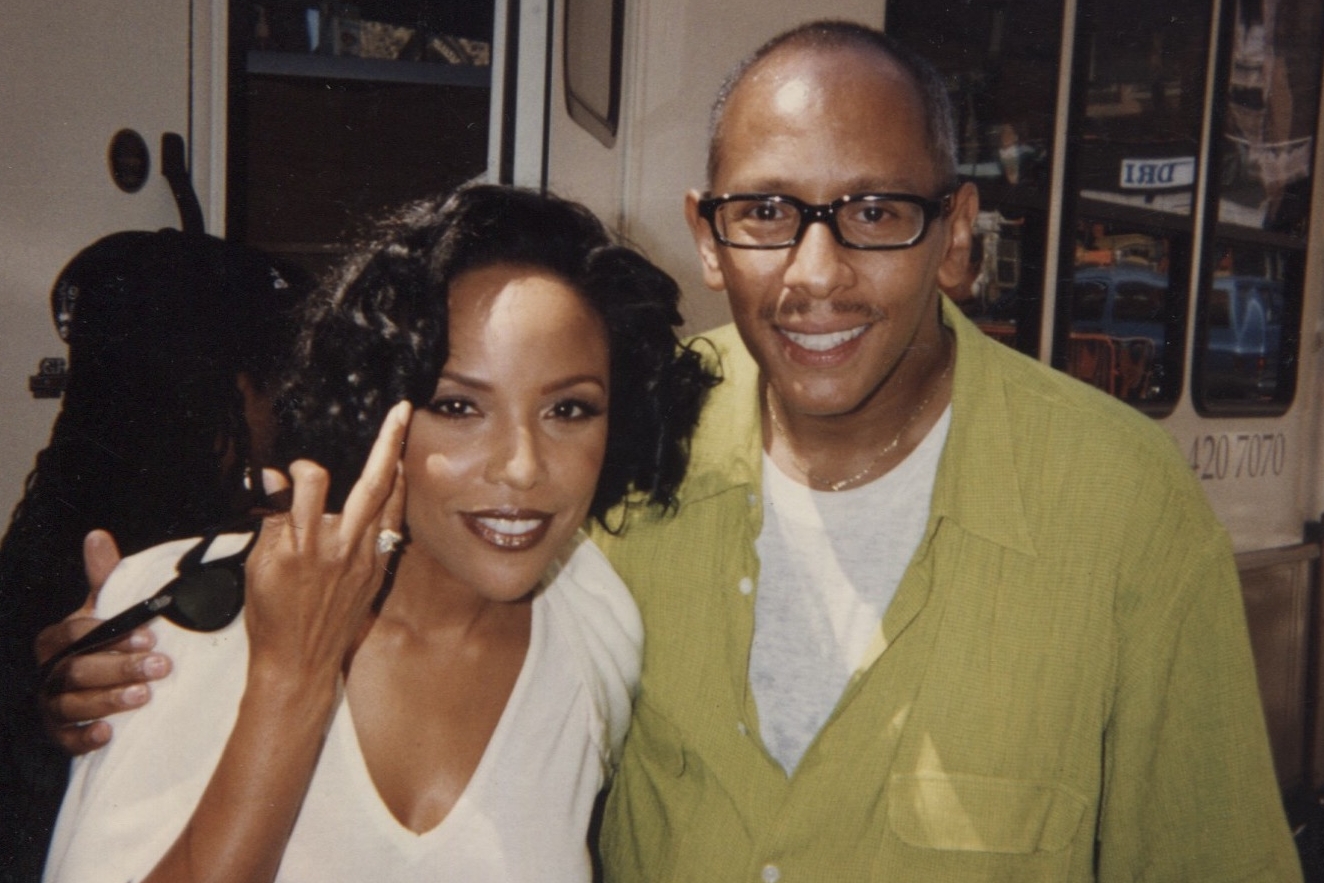
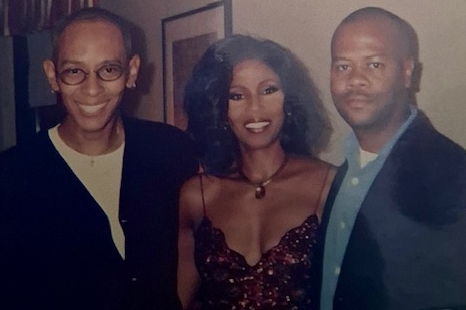
Mr. Woodley poses with actor Lynn Whitfield.
For years, actor Terry Burrell said, “He was the go-to hair stylist for every Black diva in New York City.” Pauletta Washington said: “He was responsible for so much of who I became as an artist and a friend.”
Mr. Woodley worked for Zoli Illusions in New York, Europe, Africa, and elsewhere around the world, and collaborated often with noted makeup artists Reggie Wells and Eric Spearman. Model Marica Fingal called Mr. Woodley “uber talented” on Instagram and said: “He was one of the most skilled artists, creating stunning, innovative styles for models and celebs alike.”
Friendly and curious, Mr. Woodley told Images magazine in 2000 that learning about the people in his chair was important. “A woman’s hairstyle should take into account the type of work she does, her likes, her dislikes, and her fantasies,” he said. “I’m a stylist, but I never impose hair styles on any client. When we arrive at our finished style, it’s always a collaboration.”
His hairstyles appeared on record albums and at exhibitions at the Philadelphia Art Museum and elsewhere. He was quoted often as an expert in coiffure and a fashion forecaster. In 1989, he told a writer for North Carolina’s Charlotte Post: “Texture is the key. … Cut will still be important, but the lines will be more softened and much less severe.”
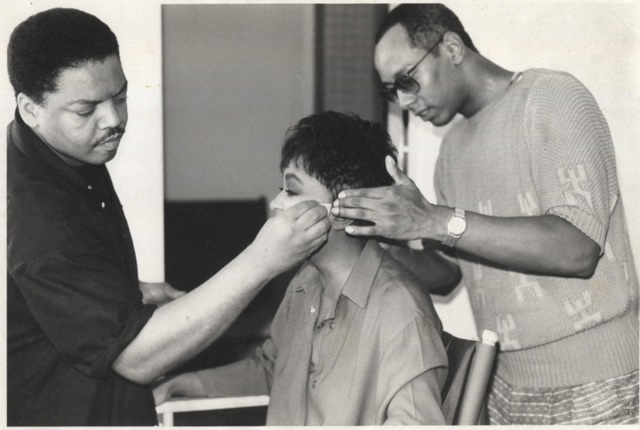
Mr. Woodley (right) handles hair styling for singer Anita Baker while makeup artist Reggie Wells attends to her face.
In 2000, he told Images that “low maintenance is the way of the future.” He said: “Today’s woman is going back to school. She has the corporate job. She has children that she needs to send off to school. She doesn’t have time anymore to get up and spend 35 to 40 minutes on her hair. She wants something she can get up and go with.”
He retired in 2005 after losing his sight to glaucoma. So he earned his General Educational Development diploma, attended classes at the Borough of Manhattan Community College, and studied literature, Black history, and spiritual writing.
“The entirety of his life was inspired by an insatiable thirst for knowledge,” said his friend Khadija Kamara.
He was working on his memoir and still taking classes when he died. “He lived life on his own terms,” Burrell said, “and my respect and admiration for his determination will forever be inspiring.”
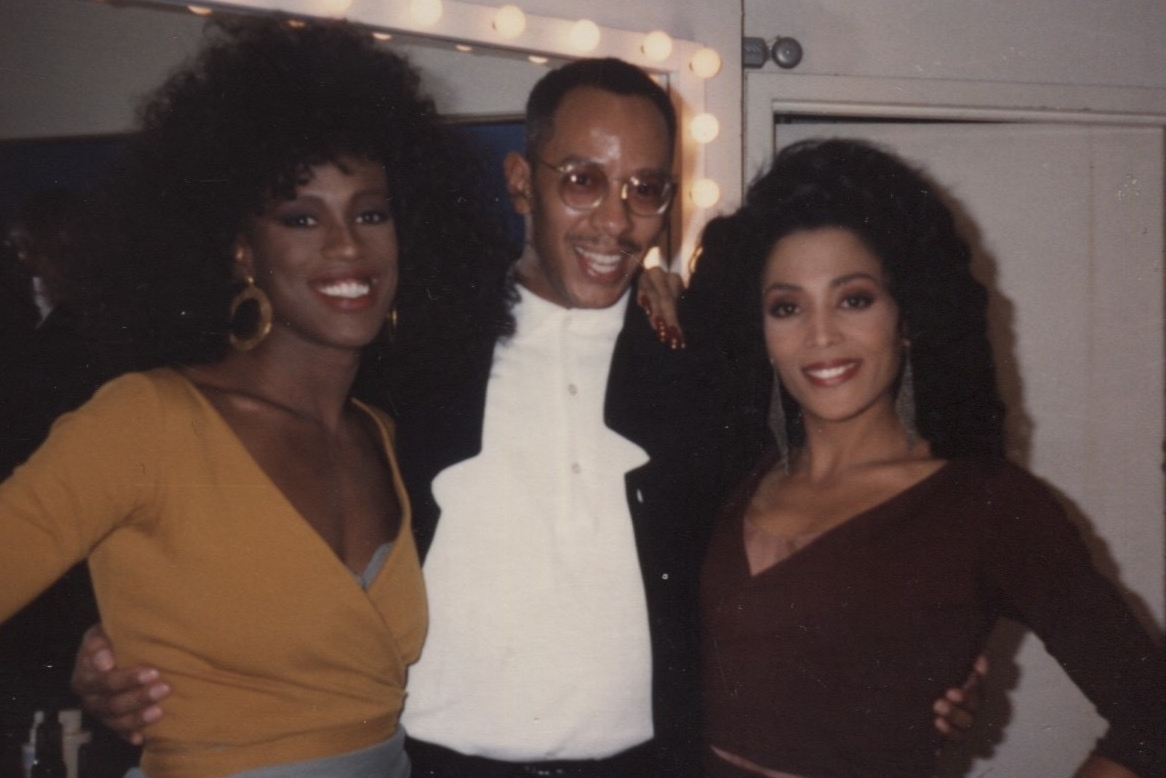
Mr. Woodley smiles with track stars and celebrities Jackie Joyner-Kersee (left) and Florence Griffith Joyner.
As a youth, Mr. Woodley excelled in sprints, relays, and the high jump at St. Rose of Lima Catholic School and Abington High School, and for the Philadelphia Pioneers and other local track and field teams. He ran on Abington’s 440-yard relay team that won the PIAA District 1 championship race at the 1970 Penn Relays and helped set a meet record in the four-lap relay at a 1971 Greater Philadelphia Track and Field Coaches Association indoor meet.
Family and friends called him authentic, generous, and proud of his Philadelphia roots. He mentored his nieces and nephews and hosted them on long visits to his home in New York.
“He was one of the most talented people around and always a lot of fun,” a friend said on Facebook. “A beautiful soul and spirit who made others beautiful.”
Jeffrey Alan Woodley was born May 30, 1954, in Philadelphia. He had an older brother, Alex, and two younger sisters, Aminta and Alicia, and ran cross-country as well as track in high school.
Mr. Woodley (left) worked with actor and musician Pauletta Washington and makeup stylist Eric Spearman.
He was always an avid reader and loved dogs, especially his guide dog Polly. He was a foodie and longtime member of the Abyssinian Baptist Church choir in Harlem. His close family and friends called him Uncle Jeff.
“He was a fun-loving, spirited, and passionate individual,” his brother said. “Uncle Jeff loved the Lord and poured his heart into his work as well as family.”
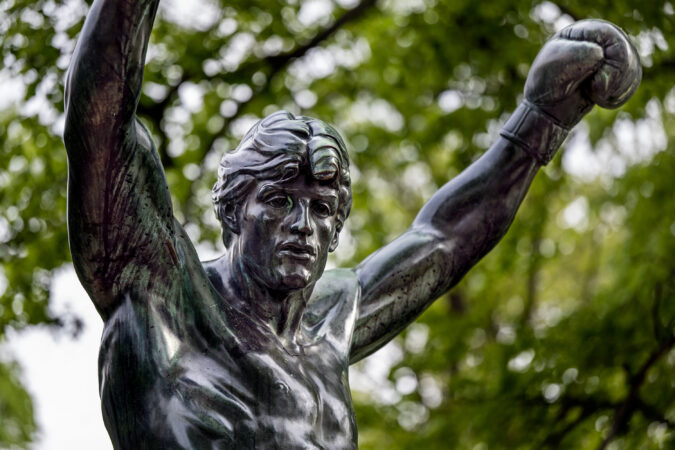
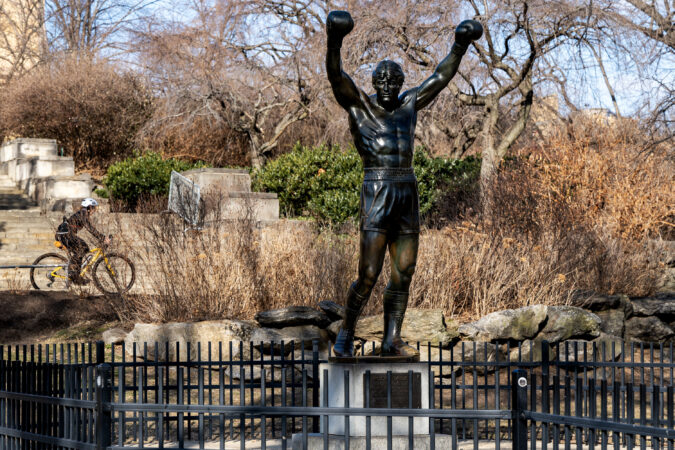
The city’s famed Rocky statue has been cleared for installation atop the Philadelphia Art Museum’s iconic steps later this year following an Art Commission vote Wednesday. Four commissioners voted to approve the move, while one disapproved and one abstained.
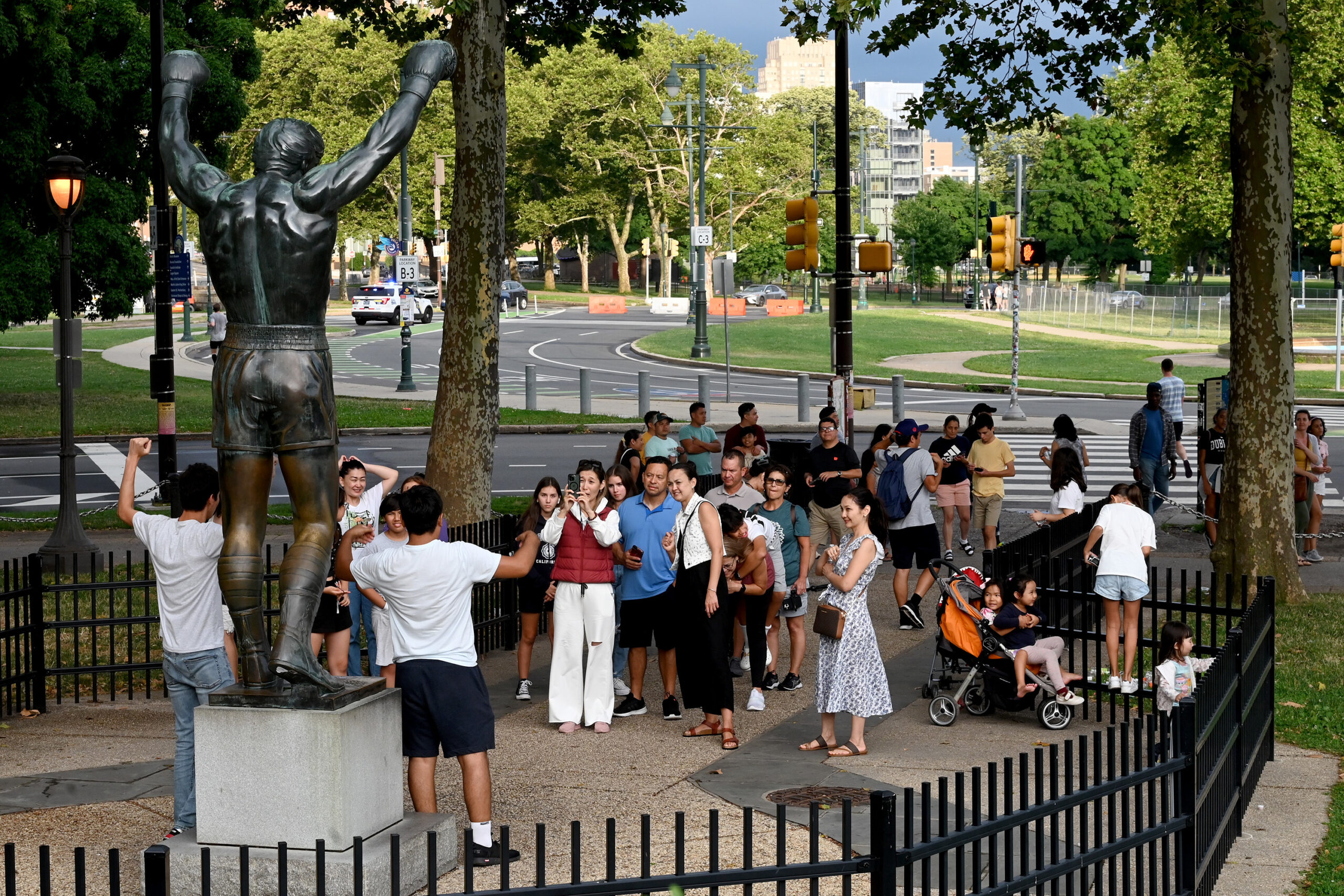
With final approval granted, Creative Philadelphia, the city’s office for the creative sector, can move forward with its recently proposed plan to once again place the statue in one of the city’s most prominent locations. Since 2006, the statue has sat at the base of the museum’s steps, attracting an estimated 4 million visitors per year, agency officials have said.
“I think people come not because they’re told to — they come because it already belongs to them, and that kind of cultural legitimacy cannot be manufactured,” said commissioner Rebecca Segall at Wednesday’s meeting. “And by that measure, I believe it’s one of Philadelphia’s most meaningful monuments, and I believe we should just get him out of the bushes and put him up top.”
Now, Philly’s original Rocky statue — commissioned by Sylvester Stallone for 1982’s Rocky III and used in the film — will do just that sometime in the fall, per Creative Philadelphia’s plan. Its move to the top of the steps will come following its exhibition in “Rising Up: Rocky and the Making of Monuments,” an Art Museum program slated to run from April to August that will see the statue displayed inside the museum building for the first time.
Sylvester Stallone’s “second casting” of the Rocky statue version atop the museum steps Jan. 7, 2026. It will return to the actor’s collection once the original statue is relocated.
Another statue will be installed at the bottom of the Art Museum’s steps, though what statue that will be has not yet been determined. Last month, chief cultural officer Valerie V. Gay said the spot would not be filled with another Rocky statue, leaving Philadelphia with sculptures of the Italian Stallion at both the top of the Art Museum steps, and in Terminal A-West of Philadelphia International Airport.
As part of the original statue’s installation in the fall, Creative Philadelphia plans to develop a shuttle service for visitors with mobility limitations that will take passengers from the bottom of the steps to the top. The service, referred to as the “Rocky Shuttle,” will be run by the Philadelphia Visitor Center, and will operate similarly to the Philly Phlash bus service, which arrives at 15-minute intervals, Creative Philadelphia officials said.
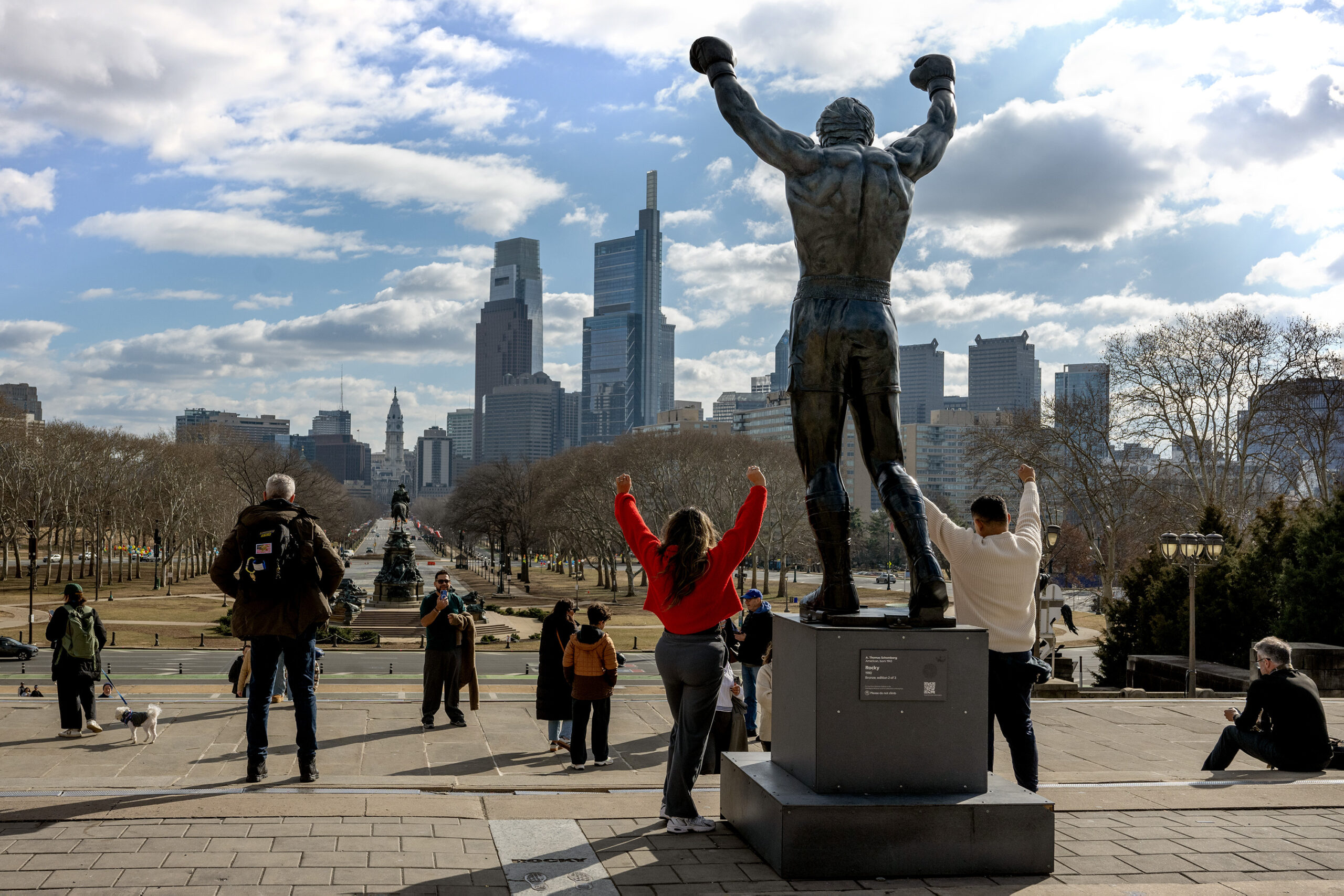
Additionally, the statue will be placed on a pedestal roughly 14 feet back from the edge of the top step, next to where a small installation depicting Rocky’s shoe prints is currently embedded in the museum’s stone walkway, Marguerite Anglin, the city’s public art director, said Wednesday. The project has a budget of $150,000 to $250,000, though final costs were not available, she added. In its proposal last month, Creative Philadelphia indicated the project would cost about $150,000.
Wednesday’s vote came following about an hour of discussion, during which some Art Commission members raised concerns over whether moving the statue would strengthen the relationship Philadelphians have with art or increase attendance at the museum. Commissioner Pepón Osorio said many visitors have indicated they were coming to see the statue because it represents Rocky, and not because it is a work of art.
“I don’t think that people see it as a work of art,” he said. “People see it as an iconic structure.”
Debate over the statue’s merits has been going on since before it first arrived in town for the filming of Rocky III in 1981. In 1980, local artist and then-Art Commission member Joseph Brown referred to the statue as “unnecessarily strident,” and indicated the Rocky franchise didn’t lend any particular cachet to Philadelphia’s cultural standing. Inquirer columnist Tom Fox, meanwhile, in 1982 called the statue a “monument to schlock, chutzpah, and mediocrity.”
Public opinion has also been divided. In a September Inquirer poll, 46% of respondents said no Rocky statue belongs at the top of the steps, but the one at the bottom should stay. Roughly 20% said the city should not have a Rocky statue at all.
Now, however, with the installation plan approved, it appears the debate can continue with Rocky once again atop the Art Museum’s steps. As part of approval, Creative Philadelphia agreed to undertake community engagement efforts examining the public’s interpretation of the statue.
“This really isn’t, for us, about getting the statue up there and then we move on,” Gay said. “This really opens the door to how public art can be used in civic discourse, in the ethos of our city right now, to think about both contemporary [times] and the past, as well as how we think about the future.”
Tourists pose with the original Rocky statue in July 2022. The statue will move to the top of the steps in the fall.
Federal investigators pieced together a timeline for the deadly helicopter crash that killed two longtime friends in Hammonton, N.J., last month.
The National Transportation Safety Board released a preliminary report on Wednesday detailing the helicopter crash that led to the deaths ofpilots Kenneth Kirsch, 65, from Carneys Point, and Michael Greenberg, 71, of Sewell. Their aircrafts collided midair on Dec. 29. The two had been known to enjoy their flights together for years.
According to preliminary data, Kirsch and Greenberg started their flight session at the Vineland-Downstown Airport, departing at 9:48 a.m. The pilots, in separate aircrafts, flew in parallel paths to Hammonton Municipal Airport, arriving 10 minutes later.
Investigators are still trying to determine what happened next;there is no preliminary real-time GPS data on their subsequent flight out of Hammonton Municipal Airport.
The preliminary report confirmed Kirsch and Greenberg flew out of the Hammonton airport and collided at 11:24 a.m., almost an hour-and-a-half after they arrived at the airport.
During that time before their final flight, the two men stopped by Apron Cafe, a breakfast spot overlooking Hammonton Municipal Airport’s runway, the owner told The Inquirer. Minutes after they left, Apron Cafe patrons and staff could see one of the helicopters spiraling, engulfed in flames in the distance.
“I looked up, and I could see in the distance the one spiraling down, and then I see the other one coming down,” said the cafe’s owner, Sal Silipino. “It was hard to believe that they were crashing.”
While no data from the aircraft is available, surveillance video captured the fatal crash as it happened, according to the NTSB. The helicopters flew close together shortly before the accident.
Slightly staggered from one another, and heading in the same direction in what investigators liken to a “formation flight,” the helicopters “converged until they contacted each other.”
Investigators say one helicopter immediately began a tumbling descent to the ground, while the other pitched up sharply before leveling out. However, shortly after leveling off, the helicopter began spinning clockwise before descending rapidly to the terrain.
Kirsch was flying an Enstrom F-28A helicopter, and Greenberg, an Enstrom 280C. Both were operating the aircraft for personal flights.
The crash site was 1.5 miles southwest of Hammonton Municipal Airport and included a 1,211-foot debris path, with paint chips, main rotor blades, and the tail cone of one of the helicopters.
Kirsch’s aircraft was found split in half with the tail cone only held together by one tail rotor control cable, according to the report. There were no signs of fire in Kirsch’s helicopter. Major sections of Greenberg’s aircraft were destroyed by a post-impact fire, with the tail cone relatively intact.
The wreckage was recovered and retained for further examination by the NTSB. Investigators noted these were preliminary details, and the cause of the crash is yet to be determined.
A typical NTSB investigation can last one to two years.
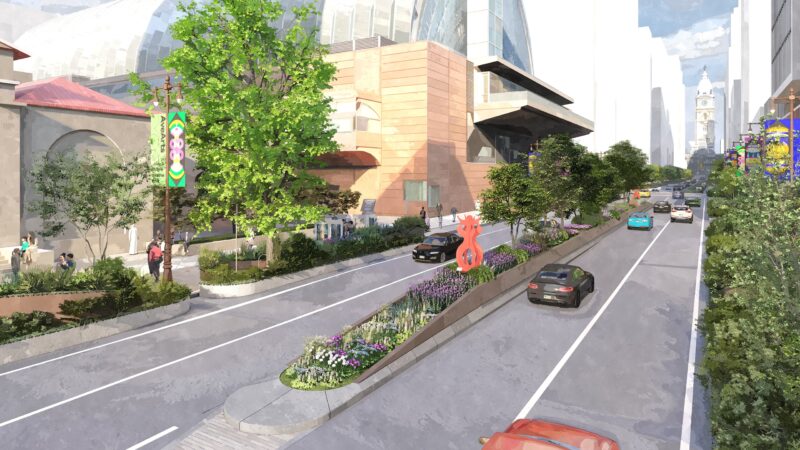
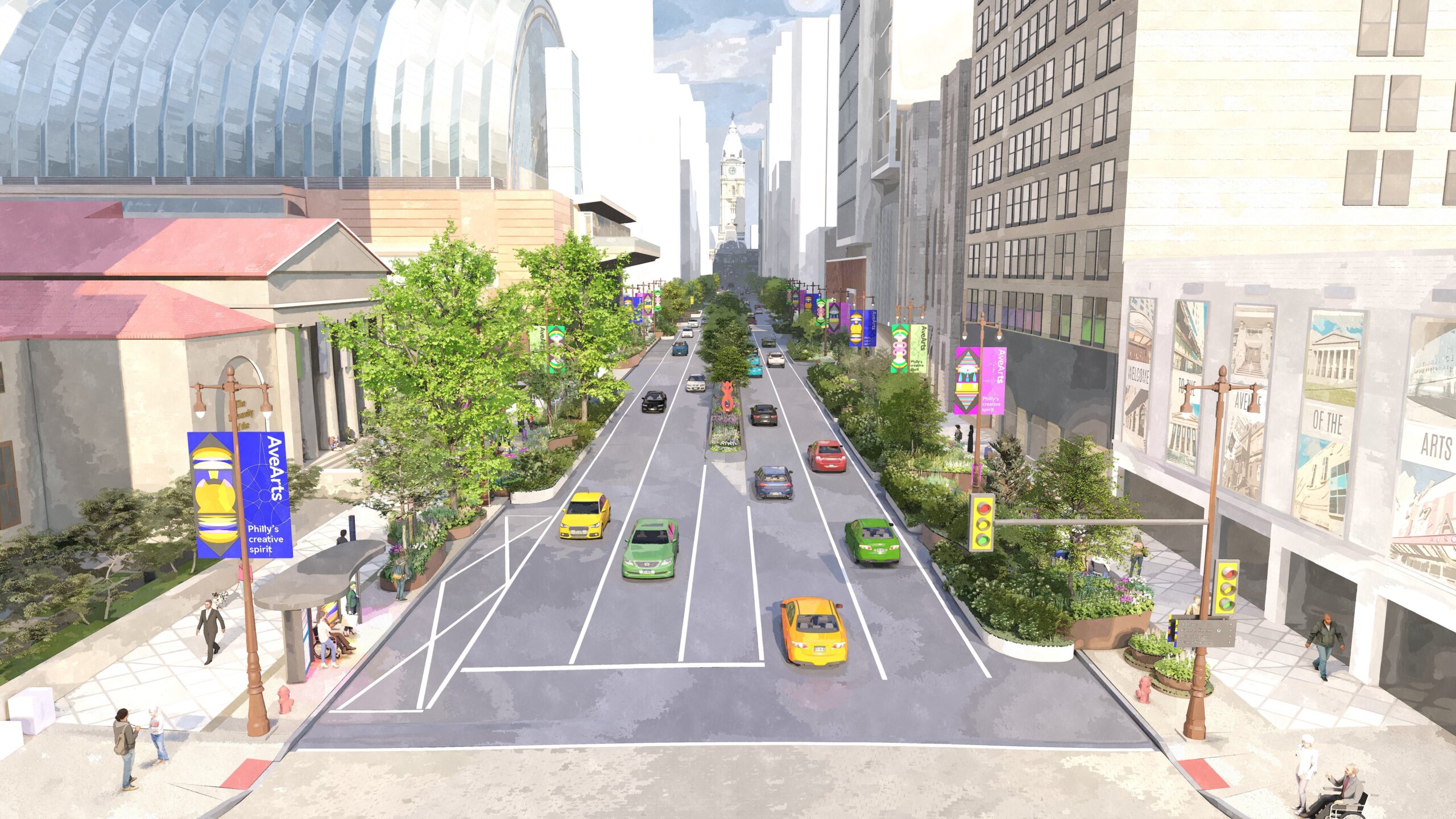
Lush landscaping and public art will soon line Broad Street, impromptu performances may pop up, and vehicular traffic will be calmed with a new Avenue of the Arts south streetscape about to take shape.
The project — estimated to take $150 million and a decade to realize — will begin modestly.
The groundbreaking ceremony was held Wednesday morning in front of the Kimmel Center and was attended by more than 200 dignitaries, including Mayor Cherelle L. Parker, City Council President Kenyatta Johnson, and other members of City Council, state representatives, and officials from groups along the Avenue of the Arts.
The actual construction is slated to start at the end of January on a small portion of the project: remaking the median strip between Spruce and Pine Streets. That phase is expected to be completed by June.
In 2027, after the end of an anticipated swell in tourism and street activity during the Semiquincentennial, sidewalk beautification will begin on both the east and west sides of that block.
Eventually, pending funding, all of the blocks between City Hall and Washington Avenue will be remade.
Looking north toward City Hall, a rendering shows the completed first phase of a South Broad Street streetscape project slated to break ground in January 2026.
The current streetscape of planters, pavers, and retro light fixtures was designed and installed more than three decades ago. In addition to the wear and tear of the existing scheme, the thinking around public space has evolved since then, said Carl Dranoff, board chair of Avenue of the Arts, Inc., which is overseeing the project.
“It’s become somewhat aged and dog-eared,” said Dranoff. “In 1993 you didn’t need to have outdoor cafes. We need to activate the street, not just make it palatable. We have the opportunity to really elevate the Avenue of the Arts into one of the world’s great streets.”
The project was announced in July 2024 at $100 million, but inflation and a more detailed cost analysis has now put the total price tag at about $150 million — $15 million per block. These numbers include not just the planters, lighting, public art, street furniture, and aesthetic elements, but also infrastructure work beneath the surface, said Dranoff.
“A lot of it is things you don’t see. There’s a lot of underground construction,” he said. “Right now water is leaking from the median strip into the subway concourse. One of the reasons we got support from SEPTA and PennDot and [the Philadelphia] Streets [Dept.], is as we are building the median strips, we are improving deficiencies in the street in each block.”
In addition, some utilities will have to be moved. One PECO relocation, for instance, will cost the project $250,000, he said.
Dranoff has a vested interest in the vitality of the Avenue of the Arts. He has led several development projects on South Broad Street, including Arthaus, which is on the same block as the first phase of the new streetscape, and, one block south, Symphony House. He compares the investment in the new streetscape to the ones made in the Pennsylvania Convention Center, Philadelphia Navy Yard, Kimmel Center, and Schuylkill River Trail.
“If we don’t make investments in the future, which are going to increase revenue and population, we are relegating ourselves to second-place status.”
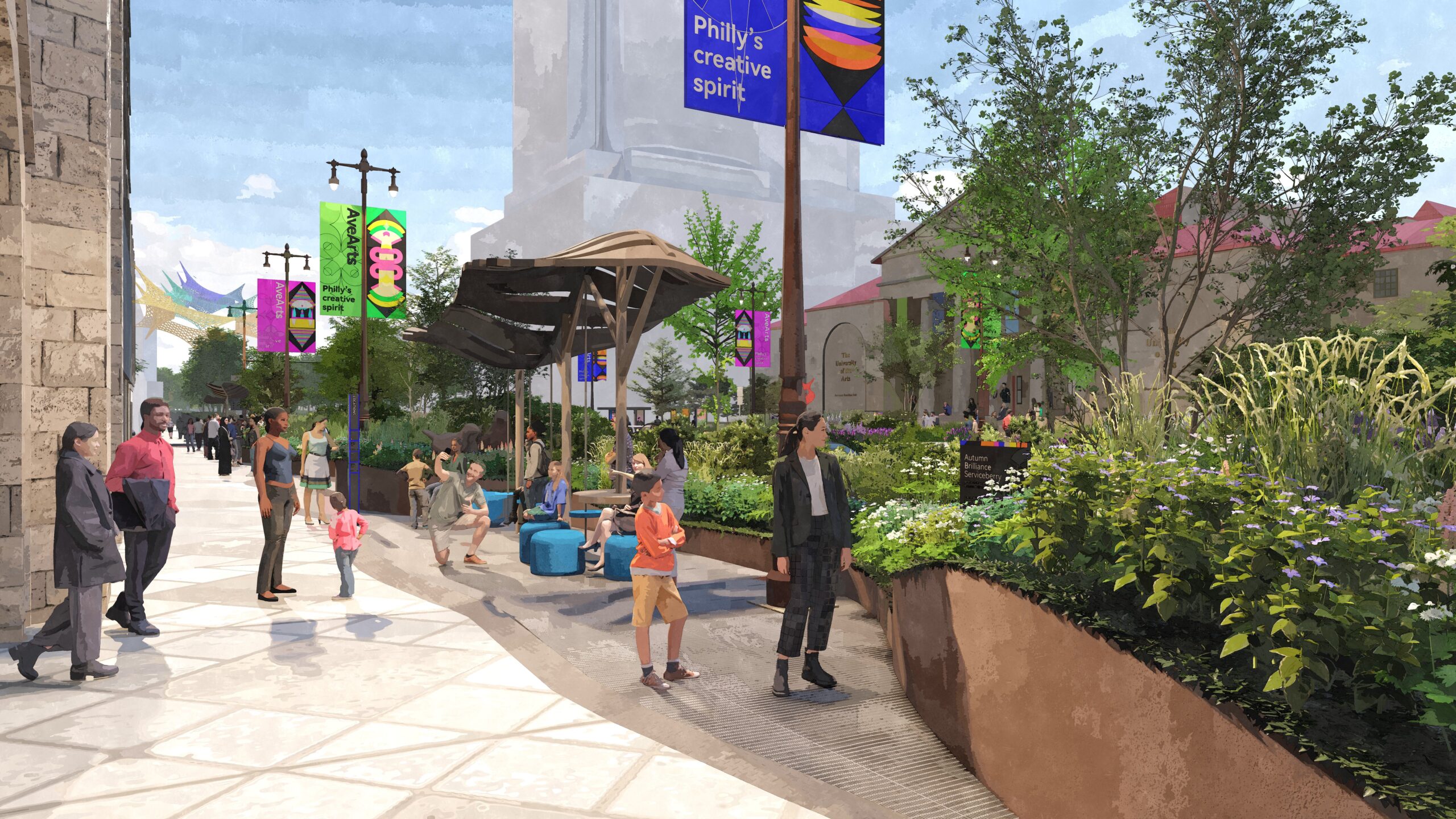
The new $15 million streetscape in the block from Spruce to Pine, which includes a $1 million endowment fund to underwrite maintenance, native-species plants, a rainwater-collection cistern, lighting, curved raised planting beds, public art, seating, way-finding devices, and artist-designed banners.
Of the $15 million needed, $5 million has been raised so far: $3 million from the city over two budget years, $1 million from the state, and $1 million from private donors. Other funding requests are pending, which planners call “very promising.”
A sidewalk garden on the east side of Broad Street between Pine and Spruce Streets is planned for installation in 2027 as part of a new Avenue of the Arts streetscape.
Dranoff says that construction of the median between Spruce and Pine — which is the block occupied by the Kimmel Center and defunct University of the Arts — won’t cause “a lot of disruption. They’re only working business hours, not on weekends.” Any blocked lanes will be reopened after work is done for the day, he said.
The next block to be redesigned hasn’t been decided, but it will likely be north of Spruce Street, Dranoff said. “Part of it will depend on funding. If we get a donor, someone whose offices are near the Academy of Music and is donating $15 million for that block to be next, we might accommodate that,” he said.
Funding for the entire project is expected to be a mix of public money, corporate and individual donations, and foundation support, he said.
The goal isn’t to have the mile-plus between City Hall and Washington Avenue end up with a streetscape that looks uniform, Dranoff said. Instead, design firms Gensler and OJB Landscape Architecture may come up with different ideas for different blocks.
“You don’t need a master plan that’s set for 10 blocks. Every block is different, the institutions are different. It lends itself to block-by-block planning tied together by a common theme.”
Dranoff said once the block from Spruce to Pine is done, it will show the potential, which he expects will spur fundraising to complete the streetscape for the entire Avenue of the Arts south.
“The difference between now and the first block being finished is, you’re going to be driving down a tree-lined boulevard.”
The article has been updated with details from the groundbreaking ceremony.
When Cherelle L. Parker was a City Council member, she championed a strict residency rule that required city employees to live in Philadelphia for at least a year before being hired.
Amid protest movements for criminal justice reform in 2020, Parker said stricter residency requirements would diversify a police force that has long been whiter than the makeup of the city, and ensure that officers contribute to the tax base.
“It makes good common sense and good economic sense for the police policing Philadelphia to be Philadelphians,” she said then.
But today, under now-Mayor Parker, more police live outside Philadelphia than ever before.
About one-third of the police department’s 6,363 full-time staffers live elsewhere. That share — more than 2,000 employees — has roughly doubled since 2017, the last time The Inquirer conducted a similar analysis.
(function() {
var l2 = function() {
new pym.Parent(‘ppd_zips’,
‘https://media.inquirer.com/storage/inquirer/projects/innovation/arcgis_iframe/ppd_zips.html’);
};
if (typeof(pym) === ‘undefined’) {
var h = document.getElementsByTagName(‘head’)[0],
s = document.createElement(‘script’);
s.type = ‘text/javascript’;
s.src = ‘https://pym.nprapps.org/pym.v1.min.js’;
s.onload = l2;
h.appendChild(s);
} else {
l2();
}
})();
Today, the percentage of nonresidents is even higher among the top brass: Nearly half of all captains, lieutenants, and inspectors live outside the city, according to a review of the most recent available city payroll data.
Even Commissioner Kevin Bethel keeps a home in Montgomery County, despite officially residing in a smaller Northwest Philadelphia house that he owns with his daughter.
Most municipal employees are still required to live within city limits. Across the city’s 28,000-strong workforce, nearly 3,200 full-time employees listed home addresses elsewhere as of last fall. Most of them — more than 2,500 — are members of the police or fire departments, whose unions secured relaxed residency rules for their workers in contract negotiations. About a quarter of the fire department now lives outside the city.
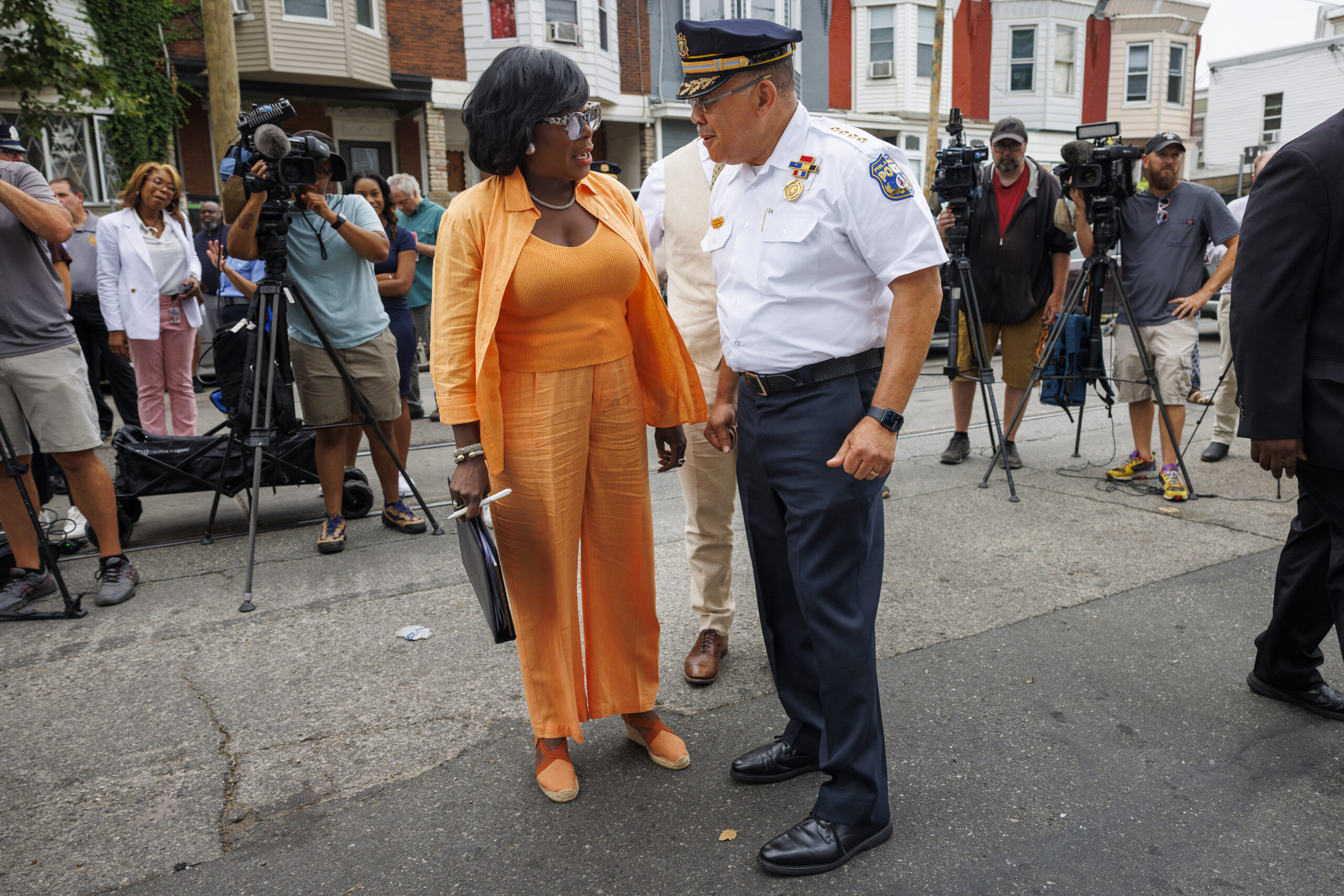
Philadelphia Mayor Cherelle L. Parker and Police Commissioner Kevin Bethel speak before the start of a news conference.
Proponents of residency rules in City Hall have long argued they improve rapport between law enforcement and the communities they serve, because officers who have a stake in the city may engage in more respectful policing.
But experts who study public safety say there is little evidence that residency requirements improve policing or trust. Some say the rules can backfire, resulting in lesser quality recruits because the department must hire from a smaller applicant pool.
A survey of 800 municipalities last year found that residency requirements only modestly improved diversity and had no measurable effect on police performance or crime rates.
“It’s a simple solution thrown at a complex problem,” said Fritz Umbach, an associate professor at John Jay College of Criminal Justice. “It doesn’t have the impact people think it will.”
Parker, a Philadelphia native who lives in the East Mount Airy neighborhood, says she would still prefer all municipal employees live in the city.
“When I grew up in Philadelphia, it was a badge of honor to have police officers and firefighters and paramedics who were from our neighborhood,” she said in a statement. “They were part of the fabric of our community. I don’t apologize for wanting that to be the standard for our city.”
‘Where they lay their heads at night’
What qualifies as “residency” can be a little pliable.
Along with his wife, Bethel purchased a 3,600-square-foot home in Montgomery County in 2017 for over a half-million dollars. Although he initially satisfied the residency rule by leasing a downtown apartment after being named commissioner by Parker in late 2023, he would not have met the pre-residency requirement the mayor championed for other city employees while she was on Council.
Today, voter registration and payroll data shows that Bethel resides in a modest, 1,800-square-foot rowhouse in Northwest Philadelphia, which he purchased with his daughter last year. While police sources said it was common for Bethel to sleep in the city given his long work hours, his wife is still listed as a voter in Montgomery County.
Police Commissioner Kevin Bethel speaks during the 22nd District community meeting at the Honickman Learning Center on Dec. 2, 2025.
Sgt. Eric Gripp, a spokesperson for the department, said in a statement that Bethel is a full-time resident of Philadelphia, and that while he owns a property outside the city, his “main residence” is the home in Northwest Philly.
Although sources say it was not unheard of for rank-and-file officers to use leased apartments to satisfy the requirement on paper, Gripp said “only a small number” of residency violations had required formal disciplinary action following an investigation by the department’s Internal Affairs Division.
That likely owes to officers’ increasing ability to reside elsewhere legally. The Fraternal Order of Police Lodge 5, which represents thousands of active and retired Philadelphia Police officers, won a contract provision in 2009 allowing officers to live outside the city after serving on the force for at least five years.
The union didn’t respond to a request for comment.
Few of the cops who left the city went very far.
While Northeast Philly and Roxborough remain the choice neighborhoods for city police, the top destinations for recent transplants were three zip codes covering Southampton, and Bensalem and Warminster Townships, according to city payroll data.
A few officers went much farther than the collar counties.
Robert McDonnell Jr., a police officer in West Philadelphia’s 19th district with 33 years on the force, has an official address at a home in rural Osceola Mills, Pa., about 45 minutes north of Altoona in Centre County.
A person who answered a phone number associated with McDonnell — who earned $124,000 last year between his salary, overtime, and bonus pay — declined to speak to a reporter.
Asked about the seven-hour round-trip commute McDonnell’s nominal residence could entail, Gripp said the department doesn’t regulate the manner in which employees travel to and from work.
“Our members serve this city with dedication every day,” he said, “regardless of where they lay their heads at night.”
A long and winding history
Versions of residency rules can be found as far back as the 19th century, when police recruits were required to live in the districts they sought to work in.
But when Mayor Joseph S. Clark pushed to reform the city charter in the 1950s, he sought to abolish the rules as an impediment to hiring, saying “there should be no tariff on brains or ability.”
Instead, City Council successfully fought to expand the restrictions. And, for more than five decades, the city required most of its potential employees to have lived in Philadelphia for a year — or obtain special waivers that, in practice, were reserved for the most highly specialized city jobs, like medical staff.
Many other big cities enacted similar measures either to curb middle-class flight following World War II or to prioritize the hiring of local residents. But the restrictions were frequently blamed for causing chronic staff shortages of certain hard-to-fill city jobs.
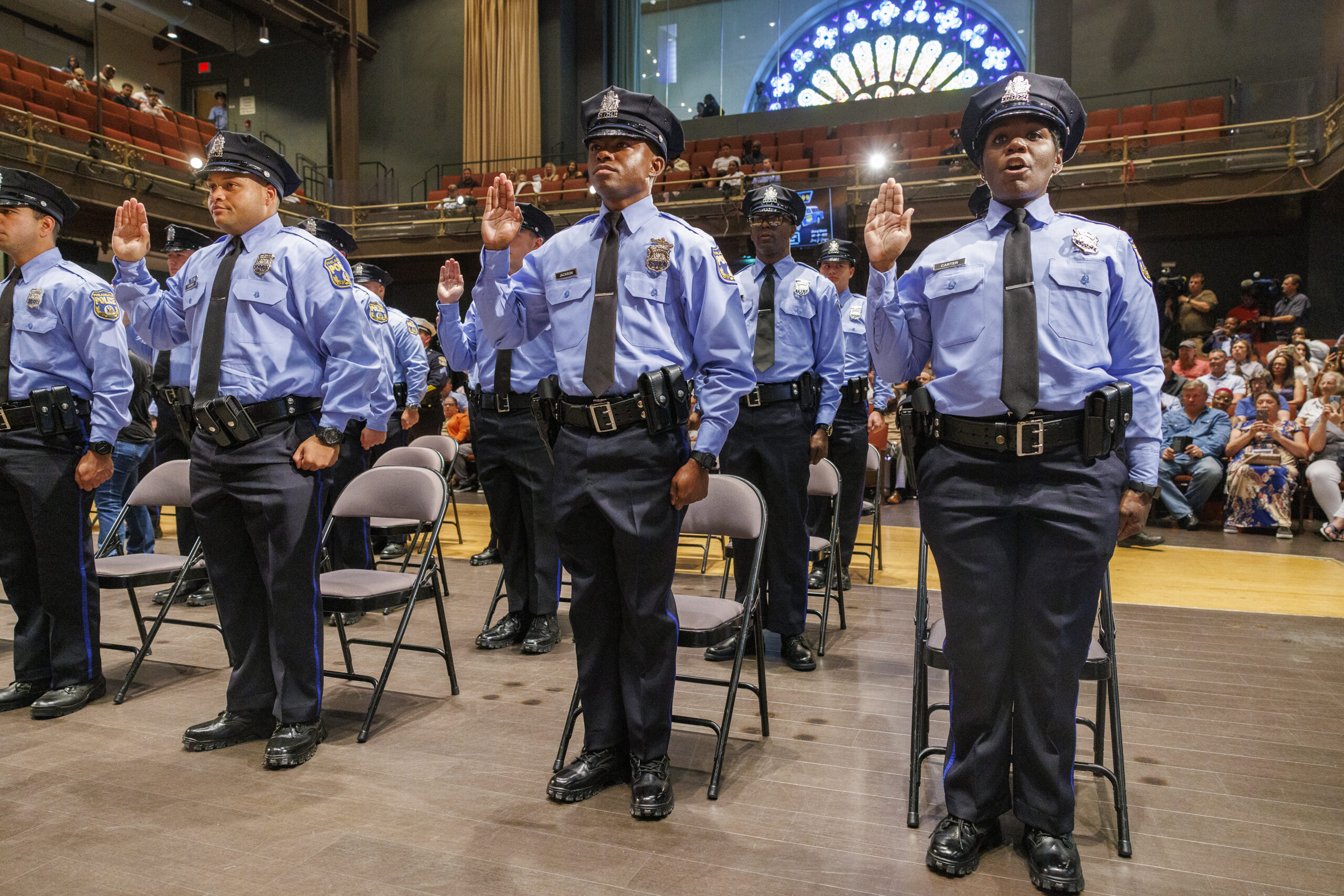
Officers Azieme Lindsey (from left), Charles T. Jackson, and Dalisa M. Carter taking their oaths in 2023.
Citing a police recruit shortage in 2008, former Mayor Michael A. Nutter successfully stripped out the prehiring residency requirement for cadets. Recruits were required only to move into the city once they joined the force.
A year later, the police union attempted to have the residency requirement struck from its contract entirely.
Nutter’s administration objected. But an arbitration panel approved a compromise policy to allow officers to live elsewhere in Pennsylvania after five years on the job. By 2016, firefighters and sheriff’s deputies secured similar concessions.
But experts say there’s little research showing that to be true.
“I am unsure if requiring officers to reside in the city is a requirement supported by evidence,” said Anjelica Hendricks, an assistant law professor at the University of Pennsylvania who worked for the city’s Police Advisory Commission. “Especially if that rule requires a city to sacrifice something else during contract negotiations.”
FOP leaders have long opposed the rule and said it was partly to blame for the department’s unprecedented recruitment crisis and a yearslong short-staffing problem that peaked in the aftermath of the COVID-19 pandemic.
In 2022, facing nearly 1,500 unfilled police jobs, former Mayor Jim Kenney loosened the prehire residency rule for the police department again, allowing the force to take on cadets who lived outside the city, so long as they moved into Philadelphia within a year-and-a-half of being hired.
Since then, recruiting has rebounded somewhat, which police officials attribute to a variety of tactics, including both the eased residency rules and hiring bonuses. The force is still short 20% of its budgeted staffing and operating with 1,200 fewer officers than it did 10 years ago.
Umbach, the John Jay professor, said the impact on recruiting is obvious: Requiring officers to live in a city where the cost of living may be higher than elsewhere amounts to a pay cut, which shrinks candidate pools.
“Whenever you lower the standards or lower the appeal of the job, you’re going to end up with people who cause you problems down the road,” he said. “A pay cut is just that.”
A 16-year-old was found shot to death inside the bathroom of a Chipotle near Temple University’s campus Monday night in what investigators believe may have been an unintentional shooting, according to police and a law enforcement source.
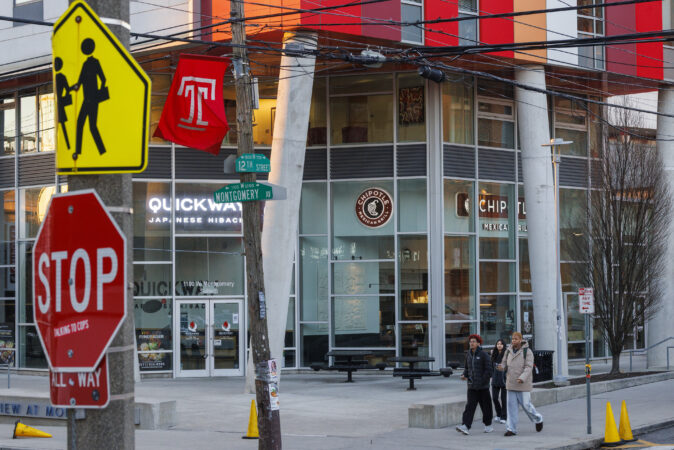
Khyon Smith-Tate and three of his friends were inside the Chipotle on the ground floor of The View at Montgomery apartments at 12th Street and Montgomery Avenue around 5 p.m. Monday, police said. Smith-Tate and one friend went into one bathroom, while the two other teens went into the second bathroom, said Deputy Commissioner Frank Vanore.
According to surveillance video, the teen with Smith-Tate left the restroom alone a short time later, and then walked out of the restaurant with the other teens, Vanore said.
About 15 minutes later, a restaurant employee found Smith-Tate suffering from a gunshot wound to the chest, he said. Police and medics responded, and pronounced him dead at the scene, officials said.
No gun was recovered, though officers found one spent shell casing from a 9mm handgun in the trash can, Vanore said.
Smith-Tate was a student at Imhotep Institute Charter High School. His mother, overwhelmed with grief, declined to speak Monday at her North Philadelphia home.
In a written statement, school officials described Smith-Tate as “caring, energetic, filled with school pride and comical.”
“He was filled with light and love,” the statement, signed by Imhotep Chief Executive Officer Andre Noble and Principal Jury Segers, said. “We will always remember his smile.”
Police have identified the three teens involved, Vanore said, and are poring over cell phone data and interviewing witnesses to try to learn what happened inside the bathroom.
A law enforcement source with knowledge of the investigation said detectives are looking into whether the teens may have been filming a social media video or playing with a gun when it fired and unintentionally struck Smith-Tate.
The source, who asked not to be identified to discuss an ongoing investigation, said the teens are all close friends. Still, they did not call for help, the source said, and left him to die on the bathroom floor.
“As one can imagine, we are struggling today,” Noble and Segers said. Our collective hearts are hurting. But this community is resilient.”
District Attorney Larry Krasner said that trauma-care professionals and victim advocates from his office visited the school on Tuesday to lead “multiple grief trauma healing circles” for students and staff.
“The trauma and grief our young people experience as a result of shootings is unacceptable,” he said. “We will not accept this as normal for our kids and babies.”
If it is confirmed that the shooting was unintentional, Smith-Tate would be the latest in a growing list of children shot by a mishandled gun in Philadelphia.
Dozens of kids have been wounded in accidental shootings in recent years, often the result of other children finding unsecured guns in their homes. Just last month, a 14-year-old was seriously wounded when another teen playing with a gun shot him in the stomach, police said.
The Philadelphia Art Commission on Wednesday is slated to vote on a plan that, if approved, would affix the original statue — commissioned by Sylvester Stallone for 1982’s Rocky III — at the top of the museum’s East entrance steps later this year. Recently proposed by Creative Philadelphia, the city’s office for the creative sector, the move stands to place the iconic statue in one of the city’s most prominent locations for the umpteenth time since it arrived here more than 40 years ago.
In fact, Philly’s original Rocky statue has been shuttled back and forth between the museum and the stadium complex in South Philly — another site that was pitched as its permanent home — at least six times, according to Inquirer and Daily News reports. But since 2006, it has sat at the base of the museum’s famed stair set, its most permanent location to date.
Somehow, though, it always seems to end up overlooking the Benjamin Franklin Parkway from on high, however temporarily. And every so often, debate over the statue seems to reignite, regardless of where the statue sits — a cycle that has been repeating itself since the dawn of the 1980s.
Here is how The Inquirer and Daily News covered the early days of Philly’s famed Rocky statue:
Article from Dec 11, 1980 Philadelphia Daily News (Philadelphia, Pennsylvania) <!— –>
An ‘unnecessarily strident’ monument
The statue’s roots can be traced back to December 1980, when Stallone proposed the temporary installation of his own bronze visage atop the museum steps for the filming of Rocky III. From the start, the star proposed giving the statue to the city following filming as a “way of reaching the common man and perhaps beginning an interest in fine art,” production manager Jim Brubaker told the Daily News.
In Budapest, you don’t always see generals and politicians,” Brubaker said. “You see working men with picks and shovels and that relates to the working class.”
That month, Brubaker and sculptor A. Thomas Schomberg presented a model of the proposed statue to the Art Commission, the Fairmount Park Commission, and the museum’s board. The commission voted 6-2 in favor of letting the statue stay at the museum for the duration of filming, with the two “no” votes indicating that they didn’t want the statue near the museum ever, for any reason, The Inquirer reported.
“There is a difference between size and greatness,” said local artist and commission member Joseph Brown. “This is unnecessarily strident. I appreciated Rocky, but I don’t think it put our museum and our city on the map.”
Article from May 9, 1981 Philadelphia Daily News (Philadelphia, Pennsylvania) <!— –>
Rocky arrives
The Rocky statue that Philly knows today officially arrived on May 8, 1981, and was unveiled in front of the Philadelphia Art Museum that afternoon — three hours later than expected because the truck that was carrying it got stuck in traffic on the way from West Philly, according to a Daily News report.
The plan was for the statue to return to California following filming, but Stallone himself was already admittedly embarrassed by the controversy that had quickly cropped up.
“I’m sorry that got blown out of proportion,” Stallone said, according to a Daily News report. “It’s essentially a prop for the movie. I really don’t want to ruffle anyone’s feathers.”
After a few days, the Rocky statue was dismantled with the conclusion of filming, and was set to be on its way back to the Golden State. City Representative Dick Doran, however, urged Stallone to reconsider the statue’s relocation, noting that it could be relocated to the Spectrum in South Philly, or placed outside the Philadelphia Tourist Center on JFK Plaza.
Article from May 25, 1982 The Philadelphia Inquirer (Philadelphia, Pennsylvania) <!— –>
Philly’s ‘Rocky III’ premiere
In May 1982, Rocky III made its premiere in Philadelphia with a screening at the Sameric Theater at 19th and Chestnut in a star-studded affair that began with a reception at the Art Museum in which Stallone himself presented the Rocky statue to Philadelphia, almost exactly a year to the day that it first arrived in town. It was, The Inquirer reported, a 300th birthday gift to the city.
On May 24, 1982, the statue was officially unveiled to the city, with Stallone himself pulling the cord on a canvas cover to reveal the sculpture at the top of the museum’s steps as the Lincoln High School band played the Rocky theme, The Inquirer reported. Stallone had “done more for this city than anyone since Benjamin Franklin,” said Doran, then the city’s commerce director.
“I owe everything to the city of Philadelphia,” Stallone said at the unveiling. “If you could cut up the character of Rocky into a million pieces, each of you would be a part of it.”
Article from May 24, 1982 The Philadelphia Inquirer (Philadelphia, Pennsylvania) <!— –>
‘Schlock, chutzpah, and mediocrity’
Though the statue was displayed prominently, it was not exactly well-received. The Daily News’ Kitty Caparella, for example, called it “only a movie prop.”
Inquirer columnist Tom Fox, meanwhile, called the statue a “monument to schlock, chutzpah, and mediocrity.” Art Commission member Joe Brown, a local painter, meanwhile, told Fox the statue “violates the spirit of the museum and its environment,” and that the city would be better served by the creation of a statue depicting Tug McGraw, Pete Rose, or Dr. J instead.
Still, a museum spokesperson said, attendance had increased since the statue’s installation, though they believed it was because of a new exhibit featuring the work of artist Thomas Eakins. Those arriving at the museum to see Rocky, the spokesperson told the Daily News, “don’t even come inside.”
Article from Aug 3, 1982 Philadelphia Daily News (Philadelphia, Pennsylvania) <!— –>
Goodbye, Rocky
Though the statue was only supposed to initially be installed at the Art Museum through mid-July 1982, it remained there through early August that year, Daily News reports from the time indicate. In fact, it wasn’t moved to the Spectrum until Aug. 3, 1982.
At the time, no one was willing to foot a reported $25,000 bill to get the statue to the Spectrum, and the issue was only settled after negotiations led to splitting the cost between the Spectrum and distributor United Artists, according to a Daily News report from the time. The city, a Commerce Department staffer told The Inquirer, flatly refused to pay.
But on a hot day, the statue’s run atop the Art Museum’s steps came to an end. Despite encountering difficulties with removal due to the concrete base upon which it had been installed, workers were ultimately able to send the statue on its way to the Spectrum — the spot where it would largely remain until it saw a high-profile move back to the Art Museum for the filming of Rocky V.
“People are going to miss him,” said onlooker Marcy Landesburg, of Wyncote, amid the statue’s 1982 removal. “They’re having a hard time dislodging him. He doesn’t want to go.”
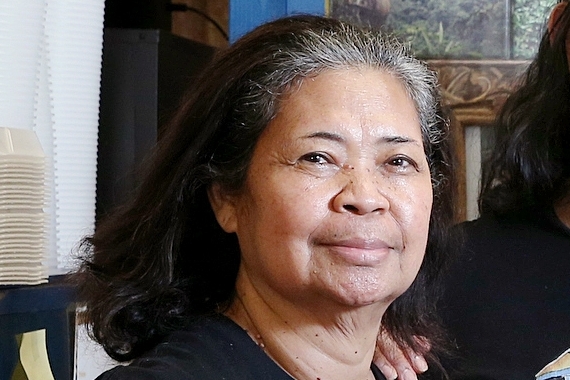
Ena Widjojo, 73, of Philadelphia, owner and longtime celebrated chef atthe Hardena restaurant in South Philadelphia, mentor, and mother, died Wednesday, Dec. 24, of cancer at her home.
Born and reared in Java, Indonesia, Mrs. Widjojo came to the United States in 1969 when she was 17. She opened a cantina at the Indonesian Consulate in New York in 1977, worked as a caterer in the 1990s after the cantina closed in 1989, and moved to Philadelphia in 2000 to open Hardena with her husband, Harry.
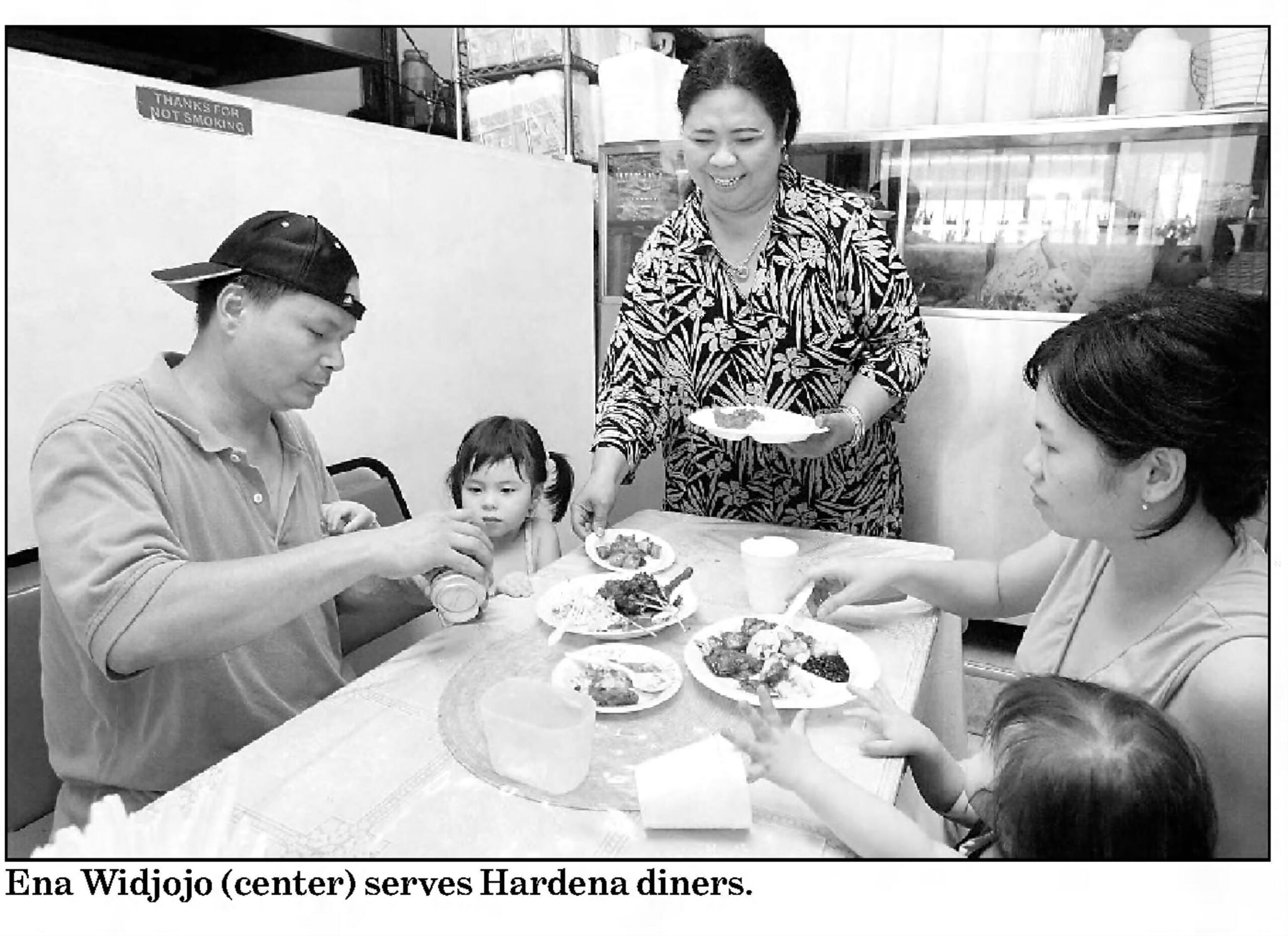
Over the next decade and a half, until she retired in 2017, Mrs. Widjojo grew Hardena, described by the Daily News in 2007 as “a postage-stamp-size luncheonette at Hicks and Moore Streets in a gritty section of South Philly,” into a culinary and cultural connection for thousands of local Indonesians and other diners who enjoyed her homemade Southeast Asia cuisine.
The corner restaurant’s name is a blend of their names, Harry and Ena, and features Indonesian specialties such asgolden tofu, goat curry, saté chicken, beef rendang, and tempeh. “It’s the best Indonesian food in Philadelphia, a great mix of Indian and Chinese flavors,” elementary schoolteacher Aaron MacLennan told the Daily News in 2007.
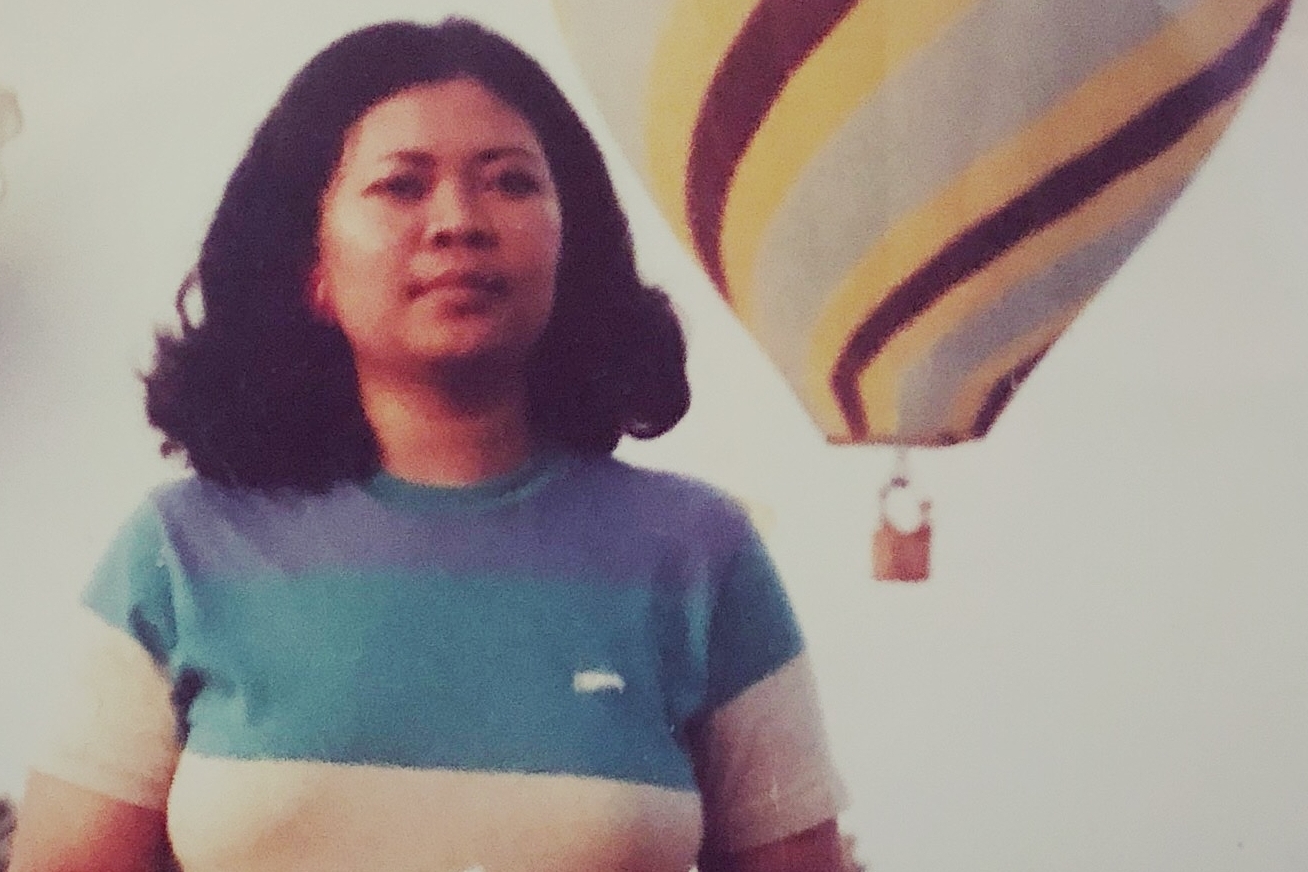
This photo of Mrs. Widjojo appeared in the Daily News in 2007
Friendly and ever present at the lunch and dinner rushes, Mrs. Widjojo was known as Mama to many of her customers and friends. She learned how to bake and cook from her mother, a culinary teacher in Java, and later incorporated many of her mother’s recipes into her own memorable melting pot of Indian, Chinese, Arab, Portuguese, Spanish, English, and Dutch dishes at Hardena.
“She served me greens once, and I felt like I was at home,” a friend said on Instagram.
She and her husband traveled weekly between Philadelphia and Queens while their daughters — Diana, Maylia, and Stephanie — finished school in New York. Maylia and Diana assumed control of Hardena when Mrs. Widjojo retired, and Diana opened the restaurant Rice & Sambal on East Passyunk Avenue in 2024.
Earlier, at the consulate in New York, Mrs. Widjojo made meals for former Secretary of State Henry Kissinger and former Indonesian President Suharto and his large entourage. “I cooked for all the diplomats.” she told The Inquirer in 2018.
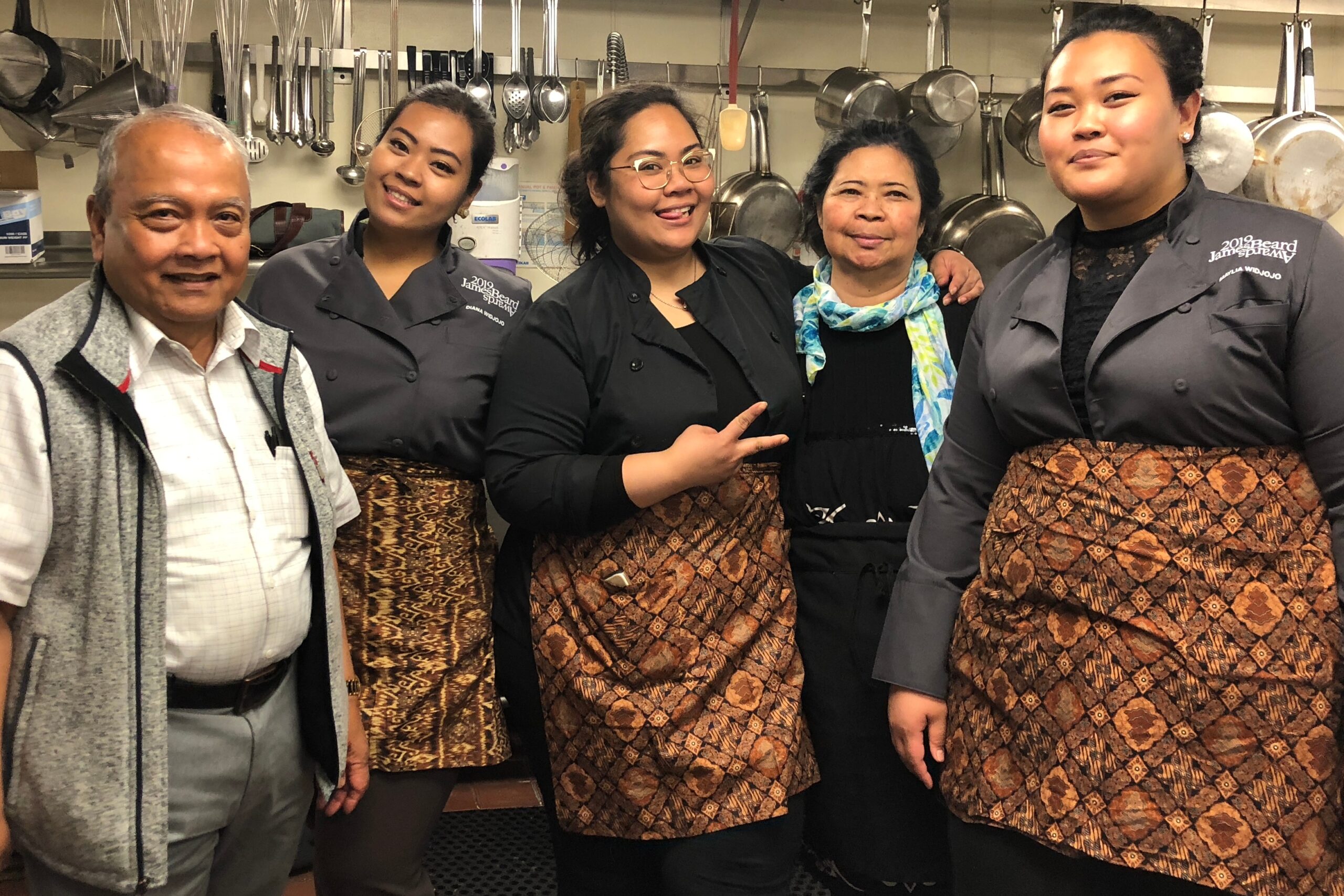
Mrs. Widjojo (second from right) smiles with her husband and three daughters.
She grew chili peppers and lime trees in her South Philly backyard, was happy to share kitchen tips and cultural traditions with visitors and cooking classes, and helped her daughters cater the 2019 James Beard Foundation’s annual Media Awards in New York.
She worked six days a week for years and told edible Philly in 2017 that her retirement was good for her daughters. “If I’m cooking all the time,” she said, “they’re not learning.”
Ena Djuneidi Juniarsah was born April 24, 1952. She baked cakes in a charcoal oven for her mother in Java and sold cookies and pastries after school when she was young. “
Her mother was strict about cooking, Mrs. Widjojo said in 2018, and discarded any and all imperfect creations. “Like me, with my kids’ cooking,” she said, “if you’re not good, that’s no good.”
She married fellow restaurateur Harry Widjojo in New York and spent time as a singer, beautician, florist, and nanny before cooking full time. Away from the restaurant, she enjoyed drawing, painting, crocheting, and family strolls in the park.
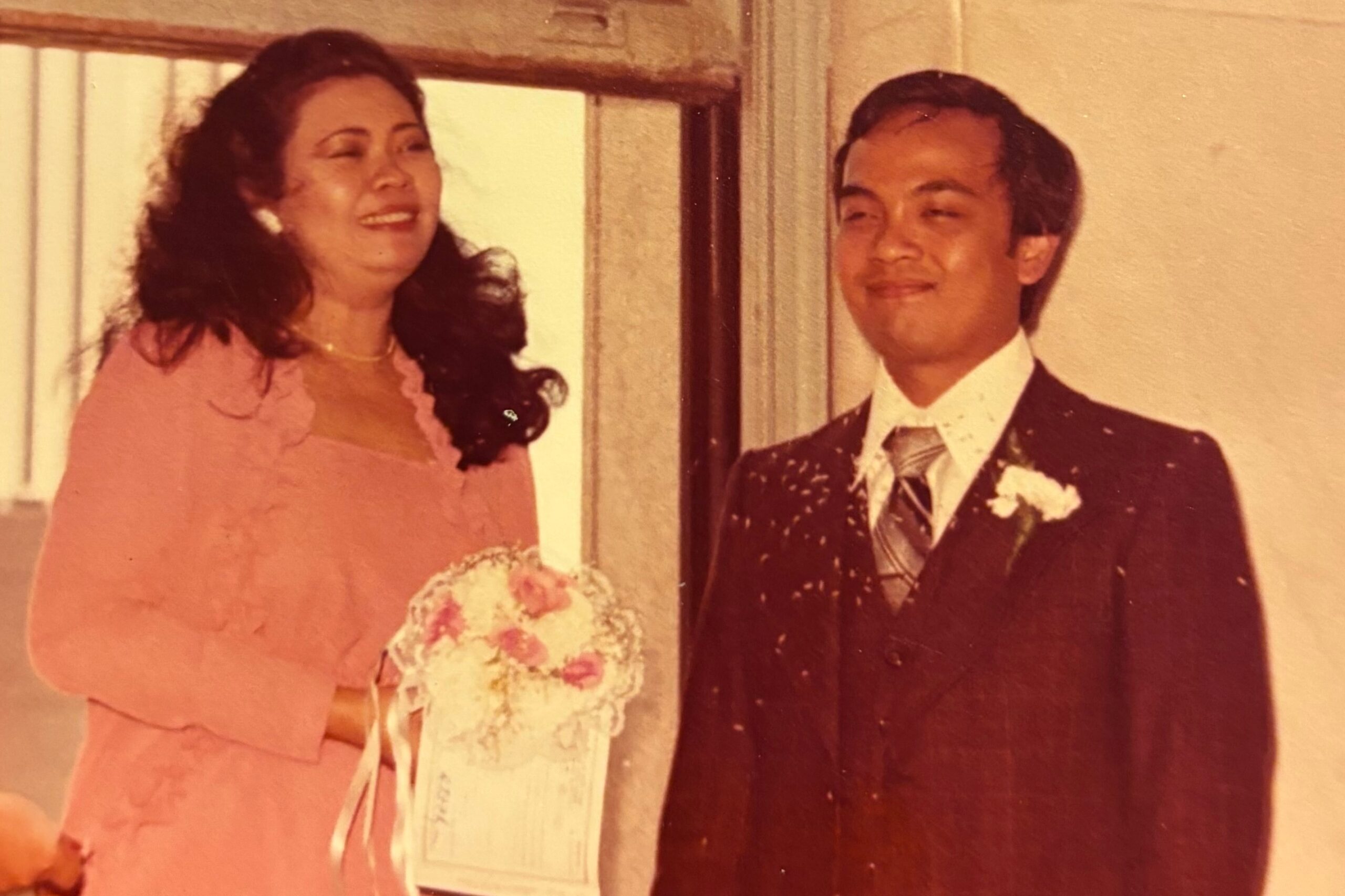
Mrs. Widjojo and her husband, Harry, were married in New York.
She could be goofy, her daughters said. She sang “You Are My Sunshine” when they were young and served as their lifelong mentor and teacher.
Friends called her “sweet,” “amazing,” “a beautiful soul,” and “warm and welcoming” on Instagram. She was diagnosed with cancer in 2015.
“Her life, generosity, and talent enriched the hearts of all who met her,” her family said in a tribute. “She taught us that feeding people is one of the purest ways to show love, have pride in our culture, and support our family.”
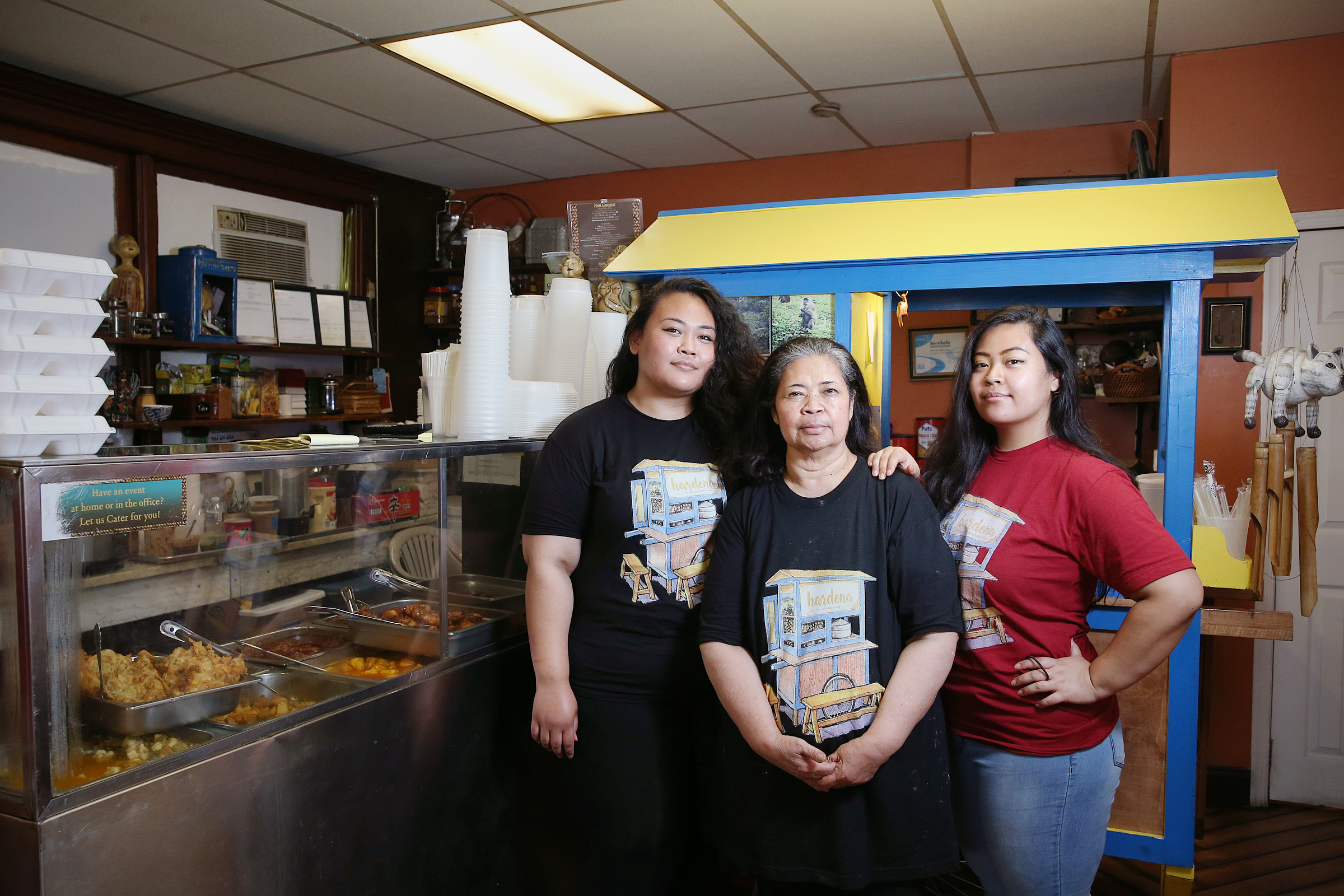
Mrs. Widjojo (center) stands in Hardena with her daughters Maylia (left) and Diana in 2020.
Diana said: “She saw the world with open arms and an open heart. She was a wonder woman.”
In addition to her husband and daughters, Mrs. Widjojo is survived by two grandchildren, a sister, two brothers, and other relatives. A sister and two brothers died earlier.


 –>
–>  –>
–>  –>
–>  –>
–>  –>
–>