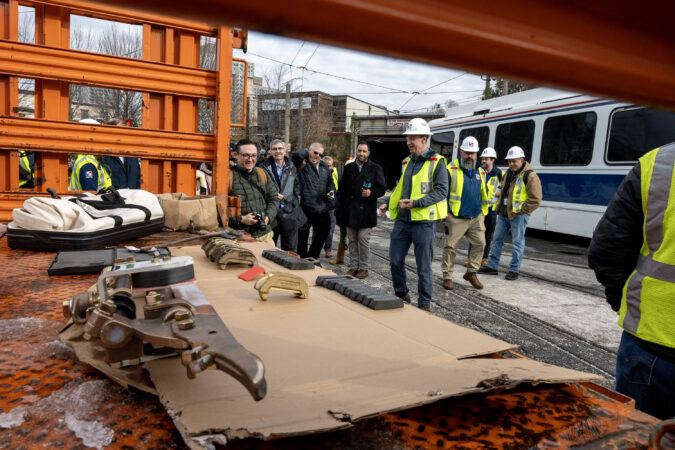
Philadelphia’s trolley tunnel has been closed for two months, but SEPTA now is saying that it has completed most necessary repairs and could reopen the connection between Center City and West Philadelphia soon.
Crews currently are running trolleys through the tunnel to test fixes for damaged overhead wires and other equipment and to decide when it is safe for normal service to resume.
“We’re pretty close,” SEPTA spokesperson Andrew Busch said Tuesday.
About 60,000 riders traveled daily through the tunnel between 13th Street and its West Philadelphia portal at 40th Street before SEPTA closed it in early November.
At issue is a U-shaped brass part called a slider that carries carbon, which acts as a lubricant on the copper wires above the tracks that carry the electricity that powers the trolleys.
There were two major incidents when trolleys were stranded in the tunnels. On Oct. 14, 150 passengers were evacuated from one vehicle and 300 were evacuated from a stalled trolley on Oct. 21.
The Federal Transit Administration on Oct. 31 ordered SEPTA to inspect the overhead catenary system along all its trolley routes.
SEPTA has had to replace about 5,000 feet of damaged wire and make other repairs. It also switched back to 3-inch sliders.
On Nov. 7, SEPTA shut down the tunnel to deal with the issue, which had cropped up again, then reopened it on the morning of Nov. 13, thinking it was solved. But it discovered further damage to the catenary system and the tunnel was closed at the end of the day.
Other potential reopening dates were announced but postponed.
This story has been updated to correct the amount of wire replaced in the tunnel.
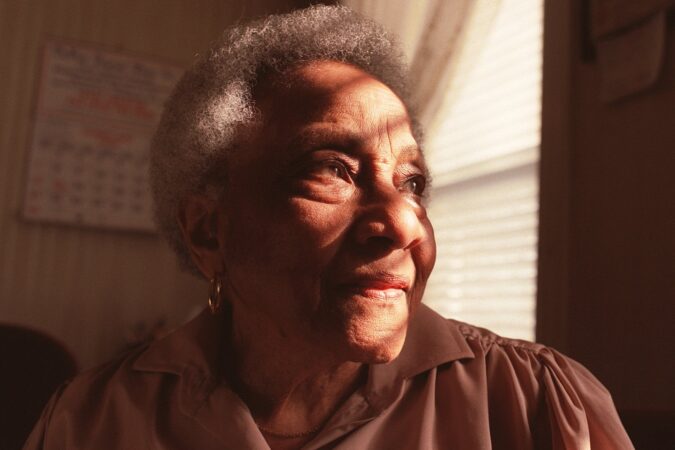
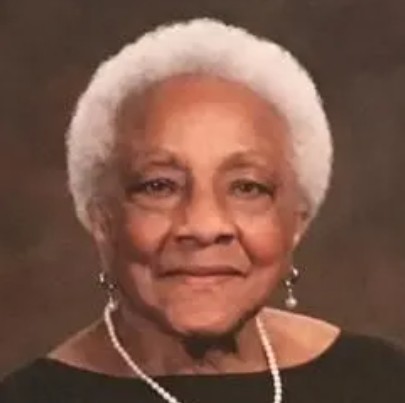
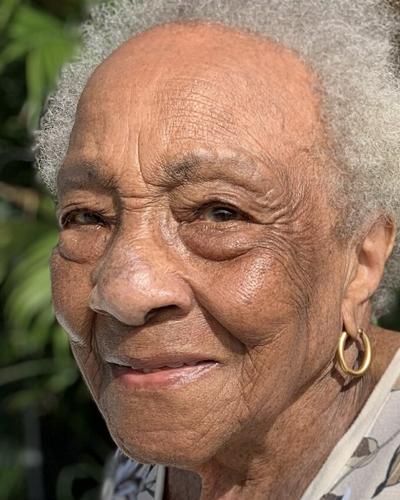
Margaret Dupree, 104, of Philadelphia, cofounder, director, and president of Dupree Funeral Home Inc. at 28th and Diamond Streets in North Philadelphia, former teacher’s aide for the School District of Philadelphia, beautician, and mentor, died Monday, Dec. 15, of age-associated decline at Thomas Jefferson University Hospital.
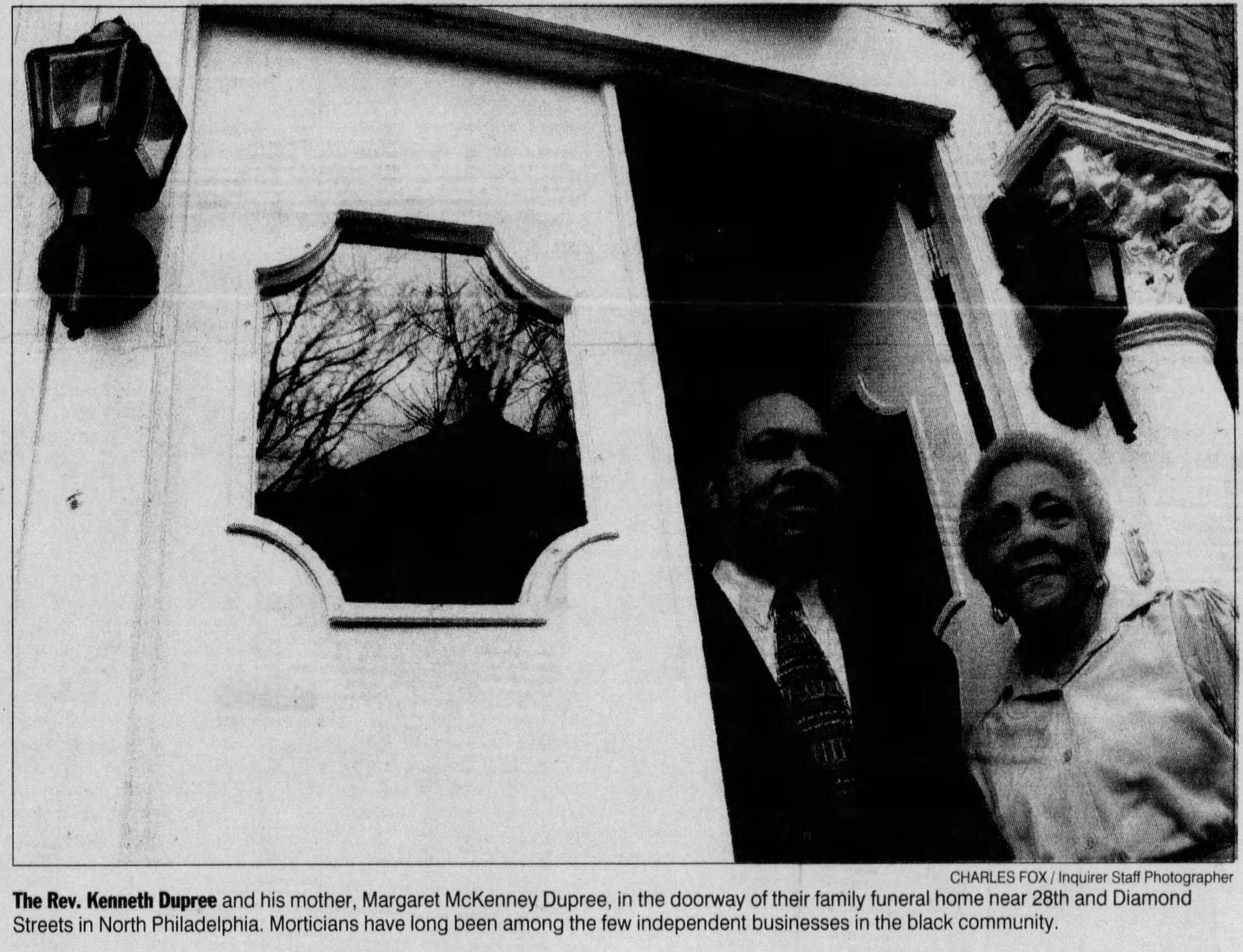
Mrs. Dupree and her husband, Troy, established the Dupree Funeral Home in 1955, and she became sole owner and president when he died in 1987. Her son Kenneth joined her as supervisor, and together, for nearly 40 years, they conducted thousands of funerals and oversaw a building expansion in 2000 and renovation in 2003.
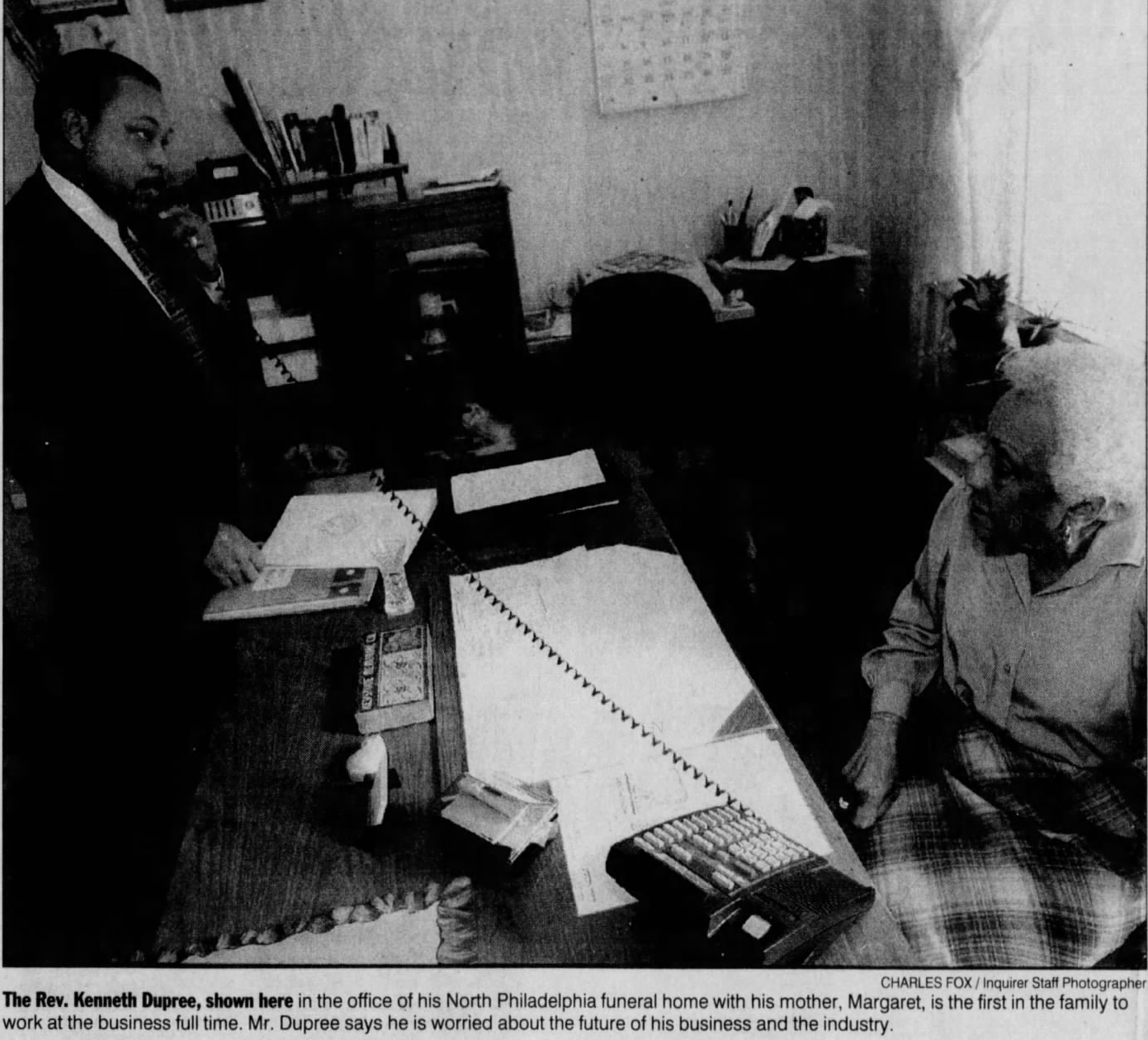
Most often, Mrs. Dupree supervised the books and answered the office telephone. Her son handles the funeral arrangements. “She was very meticulous and organized,” her son said. “She continued our legacy and served with integrity.”
In the 1960s and ‘70s, Mrs. Dupree told The Inquirer in 1999, funerals were held at night because most people worked during the day. So she and her husband had day jobs, too. She was a reading and math aide at William Dick and Richard R. Wright Elementary Schools. He worked for the telephone company.
Mrs. Dupree earned a beautician’s license after graduating from Philadelphia High School for Girls in 1941.
She earned a beautician’s license after graduating from Philadelphia High School for Girls in 1941 and workedat her mother’s beauty shop at 13th Street and Susquehanna Avenue for a while. She became licensed as a funeral director in 1949 and met her husband when they were interns at a funeral home in South Philadelphia.
“Her lifelong commitment to funeral service stands as a rare and remarkable testament to dedication, professionalism, and service to families during their most sacred moments,” her family said in a tribute.
Mrs. Dupree was among the oldest licensed funeral directors in the country, her family said, and she told The Inquirer she went into the business because morticians and barbers were so respected when she was a child. “They were the people who were looked up to,” she said.
She used her makeup and beauty expertise to augment the cosmetic work on bodies in the mortuaries and said in 1995: “In the early stages, I liked doing reconstructive work. I relished doing the ‘invisible stitch.’”
This photo of Mrs. Dupree (right) and her son Kenneth appeared in The Inquirer in 1999.
Her family called her career “a powerful symbol of her lifelong devotion to the calling of funeral service” and praised her “mentoring others, serving families with dignity, and remaining deeply connected to the profession she loved.”
She was a charter member of Child’s Memorial Baptist Church, known now as Keeping It Real Christian Fellowship, and supported affordable housing initiatives in North Philadelphia. “I like for women to have a place to raise their children,” she told The Inquirer in 1998 regarding a proposed housing renewal project. “If you give people a place to work and take care of their children, then the whole neighborhood will be improved.”
Friends and former colleagues called her “funny and sweet” and a “history maker” in online tributes. One friend said she was “a woman of grace, and her radiant smile always was contagious.” Another said: “She has had a positive impact on so many Philadelphians.”
Margaret Alma McKenney was born July 8, 1921, in Belvedere, S.C. She relocated with her family to North Philadelphia when she was 5 and grew up at 13th and Diamond Streets.
Mrs. Dupree doted on her grandchildren and great-grandchildren.
During World War II, she worked for the Army Signal Corps and at the Frankford Arsenal. Afterward, she earned her funeral director’s license at the old Eckels College of Mortuary Science in Philadelphia.
She married Troy Dupree in 1951, and they had daughters Melanie and Carrie, and sons Troy Jr. and Kenneth. For years, she reared the children, worked at the funeral home, and helped out at her mother’s shop.
Later, she doted on her grandchildren and great-grandchildren, and a friend said online: “I am a better grandma having watched from one of the best to ever do it.”
Mrs. Dupree enjoyed knitting sweaters for her children, solving cryptograms in the newspaper, and traveling with family and friends to Bermuda, Africa, and elsewhere. She always, even at restaurants, her son Kenneth said, ate her dessert first.
Mrs. Dupree (right) sits at her office desk while her son Kenneth talks on the phone in a photo that was published in The Inquirer in 1999.
“She had a multifaceted personality,” her son Kenneth said. “She was a comedian, an organizer, and a fan of the underdog.”
Her family said: “Margaret lived a life rooted in service, compassion, and purpose. Funeral service and education were never just her profession. It was her calling.”
In addition to her children, Mrs. Dupree is survived by six grandchildren, six great-grandchildren, and other relatives. Two sisters and five brothers died earlier.
Services were held on Dec. 28 and 29.
Donations in her name may be made to Project Home, Development Dept., 1515 Fairmount Ave., Philadelphia, Pa. 19130.
The namesake behind Wawa’s biggest rival, Sheetz, has died.
Stephen G. Sheetz, the man responsible for taking a family-owned convenience store in Altoona, Pa., and transforming it into a multibillion-dollar empire, was 77. The company announced his death in a statement Monday, citing respiratory complications after having been hospitalized with pneumonia.
And while Wawa fans may be suspicious of how the chain’s fried food, or coffee, or even gasoline stacks up against their supreme leader’s, there’s no denying Sheetz’s legacy and vision.
Sheetz served as the chain’s CEO and president from 1984 to 1995, overseeing its expansion. After that, he was chairman of the board for another 18 years.
The former president was just 12 when he began working at the original Sheetz Kwik Shopper, founded by his brother, Bob Sheetz. He graduated from Altoona Area High School in 1965 and from Pennsylvania State University four years later.
Penn State named Steve and his wife, Nancy Sheetz, as its 2010 philanthropists of the year, following their donation of $2.5 million to the school’s Altoona campus. It was the campus’ largest donation in its 70-year history. The couple tacked on another half a million that year, funding the establishment of an entrepreneurial center and a Sheetz Fellows program.
“I try to provide a positive influence,” Steve Sheetz said at the time in a university statement. “I really hope that students in the program will be better prepared for the world they’re about to enter, whether it’s business or another profession.”
As supervisor and director of operations at the chain, he oversaw the expansion of Sheetz convenience stores, with the intention of opening a new location every year, according to the company’s website. Over the next 14 years, Sheetz would grow to 100 locations.
“Above all, Uncle Steve was the center of our family,” Sheetz president and CEO Travis Sheetz said in a statement. “We are so deeply grateful for his leadership, vision, and steadfast commitment to our employees, customers, and communities.”
Today, with over 800 locations across six states and about 25,000 employees, the business remains largely family-run.
Offering a hodgepodge of fast food, including burgers, hot dogs, and mozzarella sticks, the chain has its super fans, just like Philly’s own Wawa phanatics.
They call themselves “Sheetz Freakz.” And they start them young.
Take Dylan LaMotte of Lynchburg, Va.
In 2020, then-8-year-old Dylan went viral for his mom’s video of him wearing a shirt that said “Youngest Sheetz Freak” and pitching ideas for the chain’s menu.
Steve Sheetz himself flew to Lynchburg to surprise Dylan and gift him $5,000 toward his daily order of fries and a slushie. In other instances over the years, the company has rewarded other superfans with hefty donations to their charities of choice.
In 2020, The Inquirer tapped Pennsylvanians Sen. John Fetterman (who was lieutenant governor at the time) and U.S. Rep. Brendan F. Boyle to weigh in on the debate.
Boyle, who is team Wawa, helped cut the ribbon on Wawa’s first D.C. location. He joked that it was the “Philly Embassy in Washington.”
“Sure enough, as I approached the D.C. Wawa right after the game, the crowd of people wearing Eagles jerseys was out the door. The Philly diaspora had had the same thought I did. We flocked to our ‘embassy’ to celebrate,” he said.
Fetterman, who is pro-Sheetz, said, “Whether I’m Jeeping it home from Harrisburg, or on the road asking yinz and youse about legalizing cannabis, the warm red glow of a Sheetz awning beckons with red beet eggs, a hunk of cheese, and the rich cavalcade of the entire family of Duke’s smoked shorty sausages.” He added, “It is a given that Sheetz is far superior.”
At the end of the day, the rivalry isn’t going anywhere. But you can still respect the man behind the mystique.
“Steve’s guidance shaped nearly every aspect of our family business,” said Joe Sheetz, chairman of the Sheetz board of directors. “He was a mentor for every leader who has followed him, and his vision, wisdom, and entrepreneurial spirit will be missed deeply by everyone at Sheetz.”
Altoona Mayor Matt Pacifico also released a statement, saying “Steve had a genuine, tangible love for the City of Altoona, as shown by his contributions, actions and initiatives. We send our sincere sympathy to Steve’s family during this difficult time, as well as immense gratitude for his lasting contributions to our City and its residents, that will be his legacy for years to come.”
In addition to his wife, Nancy, Steve Sheetz is survived by two daughters, Megan Sheetz and Nicole Sheetz Frith; seven grandchildren; and six of his seven siblings, including his brother Bob Sheetz.
A Philadelphia man whose murder conviction was overturned because of its connection to disgraced former homicide detective Philip Nordo is now a suspect in two new homicides, and he was arrested this weekend after authorities say he committed yet another violent crime.
Arkel Garcia, 32, had been on the run since November, when police said he beat an elderly acquaintance to death inside an apartment complex in the city’s Stenton section. Authorities described that crime as a robbery, and issued an arrest warrant for Garcia on murder charges.
Weeks after that, authorities in Florida said they were seeking to question Garcia in connection with another killing there, on Nov. 28 in St. Lucie County. The sheriff’s office said a victim — whom it did not identify — died from blunt force trauma and smoke inhalation after a residence was intentionally set ablaze. Authorities did not provide many additional details about the crime, but said Garcia was considered a person of interest “based on evidence recovered at the crime scene and witness interviews.”
The most recent incident occurred Sunday afternoon, when police said Garcia, back in Philadelphia, shot a 34-year-old man in the arm inside a residence on the 5200 block of Germantown Avenue. Another man, age 37, then stabbed Garcia, police said, and began struggling with Garcia over his firearm, at which point the gun went off and struck Garcia.
Responding officers found Garcia suffering from gunshot and stab wounds in a nearby parking lot and took him to a hospital, where he was to be treated before being arraigned on murder charges. He had not been arraigned as of Tuesday afternoon.
The string of crimes occurred about a year after Garcia was released from prison after the collapse of his earlier murder case — an outcome prosecutors said was necessary because of Nordo’s misconduct.
In 2015, a jury had found Garcia guilty of fatally shooting Christian Massey, a 21-year-old man with special needs who was killed in Overbrook over a pair of Beats by Dre headphones. Garcia was sentenced to life in prison.
But four years later, District Attorney Larry Krasner’s office charged Nordo with raping and sexually assaulting male witnesses he met on the job. And as part of that investigation, prosecutors said they uncovered emails and recorded phone calls showing that Nordo had pursued secret sexual relationships with key witnesses while seeking to compile evidence implicating Garcia.
A confidential informant who spoke to Nordo about the Garcia case later told The Inquirer Nordo sexually assaulted him and also failed to protect his identity in the neighborhood. The informant was later convicted of killing someone after he said he was threatened because of being labeled a snitch.
In 2021, prosecutors persuaded a judge to overturn Garcia’s murder conviction in the Massey killing, and Krasner’s office declined to retry him.
But Garcia was not released from prison right away. After being found guilty of Massey’s murder, he fought with a sheriff’s deputy in the courtroom and was later convicted of aggravated assault. A judge sentenced him to five to 10 years in prison for that crime, and he remained incarcerated for it until he was paroled in October of 2024.
(Nordo, meanwhile, was convicted of sex crimes in 2022 and sentenced to 24½ to 49 years in prison.)
Late last year — while Garcia was still on parole — police said he fatally beat 68-year-old David Weinkopff inside an apartment on the 4900 block of Stenton Avenue. Weinkopff was wheelchair-bound, authorities said, and neighbors told police they’d seen Garcia going into and out of the building before the crime.
About two weeks after a murder warrant was issued in that case, authorities in Florida announced they were seeking to question Garcia over a homicide in Fort Pierce, a coastal city about an hour north of West Palm Beach.
Detectives there believe Garcia may have come to the area to visit estranged relatives, but are not sure how or why he killed the 51-year-old victim found dead on the 600 block of South Market Avenue. By the time authorities said they were seeking to question Garcia, they said he may have been attempting to return to Philadelphia by bus.
Still, Garcia remained on the lam until Sunday, when police said he got into an argument with several people inside a residence in Germantown.
Witnesses said the episode turned violent when Garcia fired his gun, according to Deputy Police Commissioner Frank Vanore, and officials said Garcia was the only one with a firearm.
Vanore said Garcia was expected to face charges including aggravated assault, illegal gun possession, and reckless endangerment — in addition to the murder charges he will face for the killing on Stenton Avenue in November.
A relative of Massey’s, who asked not to be identified to discuss Garcia’s new arrest, said she and her relatives had felt “let down” by the system — and were heartbroken that Garcia, whom she still believes killed Massey, had been freed to hurt other people.
“This is a violent individual,” she said. “How is that not clear?”
The Philadelphia Police Department on Tuesday released the name of the officer who shot and wounded a knife-wielding man on New Year’s Eve in Strawberry Mansion: Nicholas Jones.
Jones, 26, a four-year veteran of the department, shot 31-year-old Keith Freeman once in the chest, police said.
Jones and another officer — whose name has not been released — were called to a house in the 1800 block of North Bailey Street, police said, after a 911 caller had reported hearing a woman screaming.
A 9-year-old child opened the door, police said, and inside the officers saw a 30-year-old woman lying on the floor. Standing over her, knife in hand, they said, was Freeman. The woman had not been injured.
According to police, Jones and the other officer told Freeman to drop the knife. Instead, police said, Freeman leapt over a sofa and charged the officers, and Jones shot him.
Freeman was taken to Temple University Hospital for treatment. He was charged with aggravated assault, possession of an instrument of crime, simple assault, and recklessly endangering another person.
Freeman and the woman know one another, police said.
A police spokesperson said Tuesday that Jones has not previously been involved in an on-duty shooting. He has been placed on administrative duty, as is customary, pending an internal investigation.
El Carnaval de Puebla, one of the biggest yearly celebrations of Mexican culture in Philadelphia and on the East Coast, is not returning in 2026.
For the second year in a row, the current immigration policies have overshadowed the festival that commemorates the Battle of Puebla traditionally celebrated on May 5, but not for the reasons one might expect.
“We are not scared of ICE; it is not fear that drives us,” said Edgar Ramirez, founder of Philatinos Radio and a committee member for San Mateo Carnavalero. “Many of the people who attend the carnival are second or third generation, but we are living at a time where the feeling of rejection is palpable, and it is not a suitable environment.”
A group of children dress up for the 2019 Carnaval de Puebla.
El Carnaval de Puebla has been a long-standing tradition for the city since 2005, stopping only during the pandemic, the first year of Donald Trump’s presidency in 2017, and last year following his reelection, as concerns for attracting immigration enforcement actions arose.
Since Trump’s reelection, the number of immigrants in federal detention facilities has increased beyond 65,000, a two-thirds increase since he took office last January.
Such uncertainty over when ICE might strike puts festival attendees at risk, making it harder to find sponsors and generate enough revenue to pay for city permits and requirements to hold the event, said committee member Olga Renteria.
“It’s hard to ask people to invest when there is no certainty that the carnival will be able to drive the success of previous years,” said Renteria, who noted that over 15,000 people attended the carnival in 2024. “The carnival is about family, sharing, drinking, enjoying yourself, and right now, any excuse is good enough to arrest someone; one incident is enough.”
For the community, this feels like a loss of space, both literally and figuratively.
A group of Carnavaleros march on Broad Street during the 2019 Carnaval de Puebla.
Longtime carnival attendee Alma Romero looked forward to seeing people in traditional attire, dancing andparading on Washington Avenue, triggering memories of her home in Puebla once a year.
“The carnival would have been good to lift our spirits, just as the Day of the Dead celebrations did,” Romero said, referring to the Ninth Street Corridor festivities in November that commemorate loved ones who passed away. “Without it, it feels like a sense of pride and unity is missing; now we just carry it in our hearts.”
After having attended the parade at all 19 past El Carnaval de Pueblaevents in Philly, Karina Sanchez, too, feels that sense of loss.
“I understand it’s important for the community to feel safe, but it’s sad to see us shrinking ourselves,” Sanchez said. “When that sentimentgrows, it is not a loss just for us, but for Philadelphia as a whole.”
Currently, there are no plans to replace El Carnaval de Puebla, but there is hope among many for a return.
“We have to come back,” Ramirez said. “We must because we are part of this city too, and things have to get better at some point.”
The parade that included horses arrives at the 18th annual El Carnaval de Puebla at Sacks Playground on Washington Avenue on April 30, 2023. El Carnaval de Puebla falls on Mexico’s “Day of the Children” and is one of the city’s biggest celebrations of Mexican culture. The celebration featured a parade, traditional games, food, live music and dancing.
A man died Sunday night after being placed in the back of a Philadelphia police cruiser that was parked on a Mayfair road, police said.
Officers were called to the 4000 block of Hellerman Street after the man, whose name and age have not been released, fired his legally owned gun several times into the ground outside a home he had just left, a police spokesperson said Monday.
Moments earlier, the spokesperson said, the man had argued with a relative during a party at the house.
No one was injured by the gunfire, police said.
When officers arrived, they took the man, who they said appeared disoriented and resisted arrest, into custody. They placed him in the back of a police vehicle, “where he became unresponsive,” the spokesperson said.
Efforts to resuscitate him were unsuccessful, and he was pronounced dead shortly before midnight at a nearby hospital.
The police released no additional details about the incident and said the cause of the man’s death has not yet been determined.
On Monday afternoon, no one answered the door at the home where the party had taken place. There was no visible sign of gunfire on the front lawn, which was crowded with lawn ornaments and a sign warning dog owners to clean up after their pets.
Two neighbors who were reached for comment at their homes said they had slept through the incident.
When Larry Krasner was sworn in to his second term as district attorney four years ago, Philadelphia was in a public safety crisis: Murders and shootings were at an all-time high and the homicide clearance rate was at a historic low.
Krasner, 64, took the oath of office alongside his wife, former Common Pleas Court Judge Lisa M. Rau, and one of his two sons inside the grand auditorium of the Kimmel Center for the Performing Arts.
Krasner cruised to reelection in November after handily defeating former Municipal Court Judge Patrick F. Dugan with about 75% of the vote. Krasner’s campaign often focused more on attacking President Donald Trump than specifying what, if anything, he might do differently with another four years.
He struck similar tones on Monday.
Across a nearly 20-minute speech, Krasner did not lay out a coming agenda, saying that was “not for today,” but instead recounted what he said were his accomplishments over the last eight years: building what he said was a more morally intact staff, investing in forensic advancements to help take down violent gangs, and providing grants to community organizations.
“It will be headed towards more safety. It will be headed towards more freedom,” he said of his office in the next four years.
And he took a few shots at Trump.
“Sometimes people ask me, ‘Why are you talking about Trump so much? Why do you keep bringing up Trump?’” he said.
While City Council members and state lawmakers have “tremendous power,” he said, “they don’t have the obligation, as I just swore in front of you, to uphold the Constitution and the laws of the United States from someone … whose intent is, without question, the overthrow of democracy in the United States of America.”
District Attorney Larry Krasner displays a political cartoon by Pat Bagley during a news conference in August 2025 to lament President Trump’s deployment of the National Guard to D.C. streets. Bagley is staff cartoonist for the Salt Lake Tribune in Salt Lake City, Utah.
He also noted that Trump has not deployed the National Guard to Philadelphia, as the president has done in other Democratic cities like Chicago, San Francisco, and Los Angeles, and seemed to acknowledge Cherelle L. Parker’s hotly debated strategy of avoiding confrontation with Trump.
“If that has any part in the reality that we have not seen Trump’s troops, Trump’s tanks in the City of Philadelphia — I don’t know if it does or not, but if it has anything to do with that, then I’m glad, and I intend to work closely, always, with other elected officials.”
Parker, who earlier congratulated Krasner in her introductory remarks, stared ahead stoically during his comments about Trump.
Krasner ended by promising to continue making Philadelphia safer, and then returned to one of his favorite themes.
“We all got to this point of achievement together, and this is no time to retreat. It is no time to surrender. It is time to push on so that Philadelphia goes from being known as chronically violent to being known as consistently safe for decades to come,” he said.
“And if anybody — including the guy in D.C. — doesn’t want that, if they want to F around, then they’re gonna find out.”
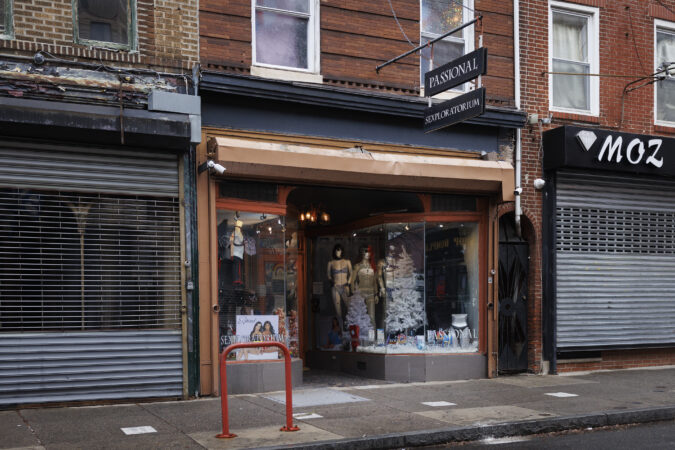
Passional Boutique & Sexploratorium displays mannequins in leather handcuffs, vibrators, and posters of women in lingerie in its storefront windows along one of Philadelphia’s main shopping drags.
But the adult store — a South Street staple of fetish and fantasy fashion and sex toys for about two decades — is now under scrutiny by President Donald Trump’s administration for selling an undergarment tucked away on the shop’s second floor: breast binders.
On Dec. 16, the U.S. Food and Drug Administration sent a warning letter to Passional stating it was illegally selling breast binders. Most purchasers are trans men — individuals who are assigned female at birth but identify as male.
The FDA classifies breast binders, which compress chest tissue, as a medical device. Businesses that distribute them in the United States must be registered with the FDA or face fines and other enforcement action.
Passional’s operations manager, Ashly Booth, said it’s “a paperwork issue” that pertains to the overseas manufacturer, not to the Center City retailer. Passional will continue to sell those breast binders in its store but not online, she said.
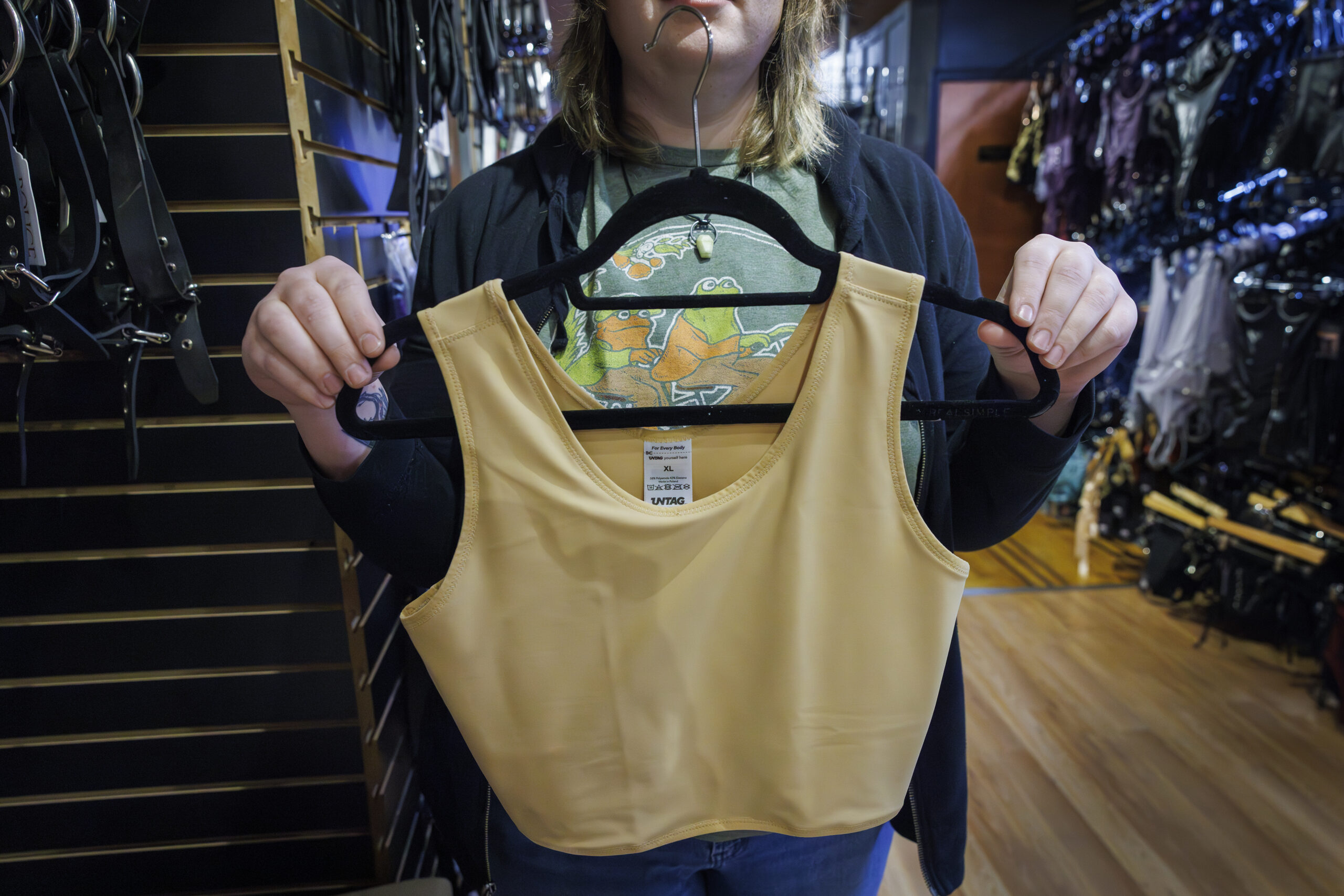
An employee at Passional Boutique displays a breast binder for sale at the South Street store. Breast binders are garments that compress chest tissue.
The FDA’s warning sparked outrage within the region’s transgender community.
Naiymah Sanchez, 42, who described herself as “a proud woman of transgender experience,” said she believes the Trump administration wants to ban gender-affirming care for everyone, not just children and teens.
Breast binders can help treat gender dysphoria, a medical condition in which a person’s body does not match their gender identity.
“This is an adult store, so now you’re attempting to restrict our access — adult access — to the things we need so that we can exist‚” said Sanchez, a senior organizer for the ACLU’s Pennsylvania chapter. “They are trying to double down on making it illegal to be trans in the United States.”
Protecting ‘children’?
Passional was one of only 12 businesses across the nation and overseas, including companies in Singapore and the Netherlands, that received a warning letter. All 12 companies sell, distribute, or manufacturer breast binders to buyers in the United States, primarily through online sales. They included Seattle-based Tomboyx, which uses the tagline “Be Exactly Who You Were Born to Be — No Apologies,” and Manhattan-based For Them, a queer and trans-owned company.
The language in each FDA letter was largely boilerplate.
During a Dec. 18 news conference, FDA Commissioner Martin Makary said the 12 companies were illegally marketing breast binders for children as treatment of gender dysphoria.
“Pushing transgender ideology in children is predatory, it’s wrong, and it needs to stop,” Makary said.
However, none of the violation letters specifically mention children or marketing of breast binders to minors. The FDA declined to comment Friday, referring a reporter to the letter sent to Passional.
Passional employees said they do not market breast binders to minors. Customers must be 18 or older to shop there. A teen may enter and try on a breast binder, but only when accompanied by a parent or guardian, they said.
Makary’s comments were part of a Trump administration announcement of proposed rules to cut off federal Medicaid and Medicare funding from hospitals that provide gender-affirming care to children. The administration wants to restrict the use of puberty blockers, hormone therapy, and surgical interventions for transgender people under the age of 18.
“It’s based on a medical dogma, sadly, that the normal, sometimes stressful experiences of boys and girls growing up is a pathology that requires medical intervention,” Makary said.
Several states have prohibited gender-affirming care for minors, but it remains legal in Pennsylvania, New Jersey, and Delaware. The American Academy of Pediatrics and other major medical associations, citing research, widely accept such care as safe, effective, and medically necessary for the patients’ mental health.
“These binders are not benign,” he said. “Long-term usage has been associated with pain and compromised lung functions.”
‘A paperwork issue’
Passional carries a line of breast binders distributed by UNTAG, originally Trans-Missie B.V., a company based in the Netherlands. UNTAG says on its website that “chest binding plays a vital role in reducing gender dysphoria” and it offers “kids binders.” Passional does not sell child sizes.
“We offer a selection of domestic and imported binders from sizes XS through 3XL,” Passional’s website says. “Whether you are binding for gender identity, cosplay, drag performance or nonsurgical body sculpting, we offer a range of styles and price points to help you achieve your desired expression.”
Under FDA regulations, manufacturers and distributors of Class 1 — generally meaning low risk — medical devices must register annually with the government. The regulation is designed to help the FDA track devices and quickly respond to safety concerns or recalls.
The FDA defines medical devices, including breast binders, as “intended for use in the diagnosis of disease or other conditions or in the cure, mitigation, treatment, or prevention of disease, or to affect the structure or any function of the body.”
The FDA issued warning letters to both Passional and the Dutch company. The letters say separate government reviews of Passional and UNTAG’s websites found “various breast binders for sale” with claims to help “reduce gender dysphoria” in violation of the Federal Food, Drug, and Cosmetic Act.
The letters gave each 15 business days to respond and provide corrective measures.
In an email to The Inquirer on Wednesday, UNTAG, based in Amsterdam, replied that it would keep a reporter informed of any next steps.
Booth, Passional’s operations manager, said the regulations do not apply to in-store retail sales. However, Passional will stop selling UNTAG breast binders on its website, she said.
“One specific producer of the binders that we have here in Passional now did not register themselves as a medical device company,” Booth said. “It was more of a paperwork issue on the side of the manufacturer.”
Passional, she added, would not pull breast binders from its brick-and-mortar store “for the simple fact that there is a need for them.”
Teens need parental consent
Passional customers must be 18 or older to enter the store. Employee Aizlyn Kraus said she will ask for identification if a patron looks under age.
However, teens who want to get fitted for a breast binder and possibly purchase one may come in, but they must be accompanied by a parent or guardian. In those cases, Passional temporarily closes the store so the teen can quickly get upstairs, where there’s a dressing room. Typically, parents call or email ahead of time to set up an appointment, according to Kraus and Booth.
“We can get them up there without them seeing anything they don’t need to see, without them knowing anything they don’t need to know, and they walk out with something that helps them in their lives,” Kraus said.
Kraus, who is transgender and identifies as a woman, said “dysphoria affects everyone differently. Some people know at a really early age and when they begin to go through puberty, it’s really distressing. There are so many trans kids who either think about self-harm or engage in self-harm. It’s disheartening.”
In the last six months, “two or three parents” have come in separately with their teens to try on breast binders, Booth said.
Kraus said Passional does not market or advertise breast binders to minors, and the majority of purchasers are adults. Passional employees are trained how to properly fit people in breast binders, making sure they are not too tight and advising customers not to wear them for longer than eight hours a day.
Kraus, 33, said breast binders offer an alternative to top surgery. “It’s a whole lot cheaper and easier to do, rather than just jump right into surgery,” Kraus said.
Passional, known for its queer and trans inclusivity, sells many items to help people “feel better about their body,” including waist-tightening corsets, penis “extenders,” and “tucking” or “gaff” undergarments to minimize penile bulge — all forms of gender-affirming care, Kraus said.
Kraus added that some men with gynecomastia, or an enlargement of breast tissue in males due to hormone imbalance, will buy breast binders.
‘It’s just insane’
Prior to undergoing top surgery, 34-year-old Simon Parsons wore a breast binder for a flattened appearance, likening it to Spanx body-sculpting wear.
Parsons, who identifies as a nonbinary transgender Philadelphian, said: “This is going to create a chilling effect for anyone who needs a breast binder. It’s all just to open the door to eventually say, ‘Trans people are not allowed to exist.’”
Parsons said after breast-removal surgery, the hospital provided a chest compression vest to reduce swelling, but it looked nothing like the ones sold by Passional. It had a padded front zipper and Velcro shoulder straps for easy release.
Passional’s breast binders look like sports bras or nylon crop tops.
Parsons and others described the FDA action as a government overreach at best and erosion of civil rights at worst.
“It’s just insane,” said Corie Bosman, 34, of Bensalem.
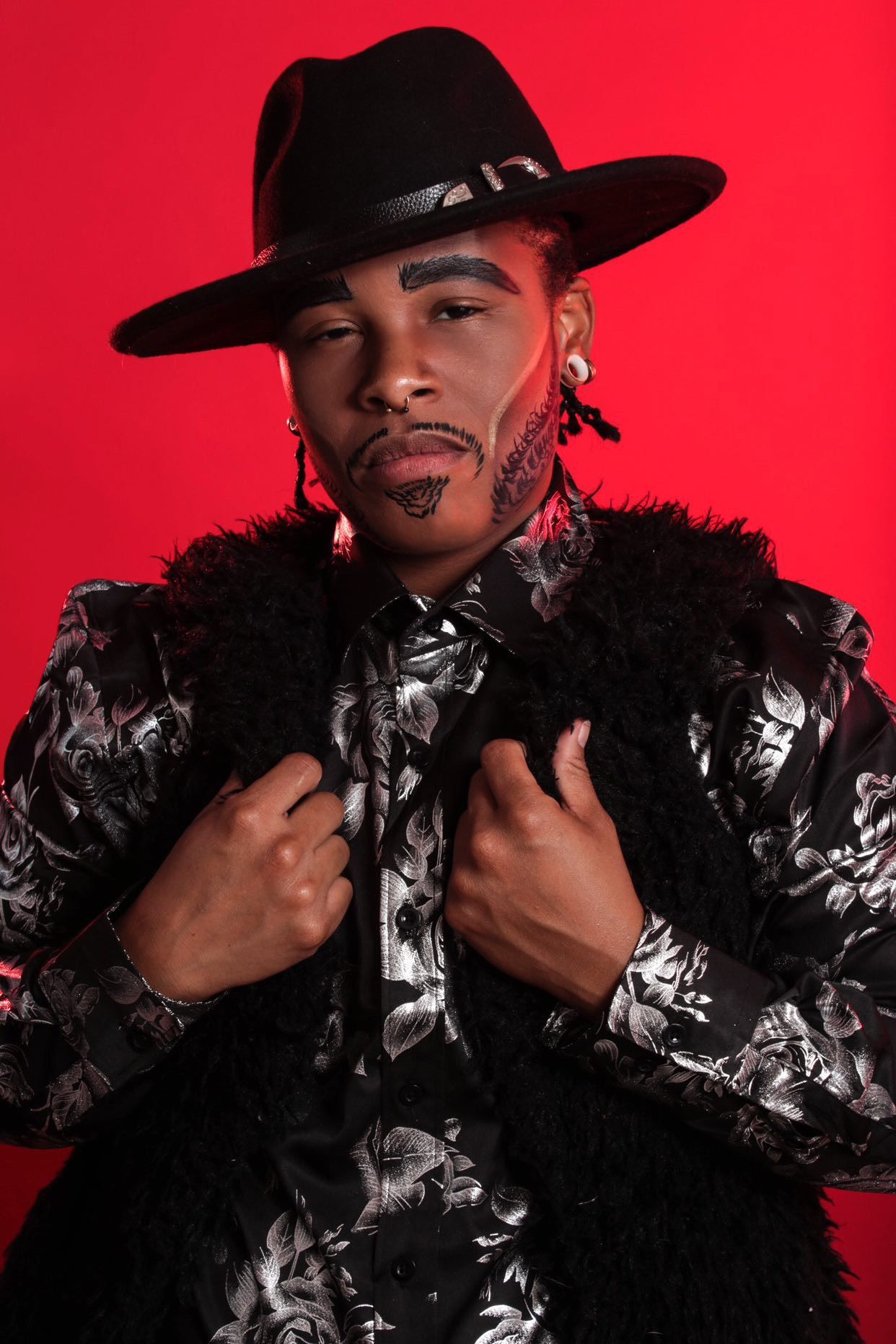
Bosman, who is nonbinary transgender and whose stage name is “Mister Right,” has worn breast binders while performing as a drag king. Bosman was the 2025 winner of Mr. Philly Drag King, or Mr. PDK, a pageant-style competition organized by the Philly Dyke March.
Corie Bosman, whose stage name is “Mister Right,” was the 2025 winner of the Mr. Philly Drag King (Mr. PDK) pageant competition, organized by Philly Dyke March. Bosman uses breast binders or special “trans tape” for chest flattening.
Bosman and Parsons, who had purchased their breast binders online, said they are concerned that transgender people, especially minors, will resort to potentially harmful practices, like binding their chests with duct tape, if the Trump administration restricts access to breast binders.
“It opens up the window for people to hurt themselves by just trying to be themselves,” Bosman said.
Venezuelans in the Philadelphia region had mixed reactions to the U.S. strike against their home country over the weekend, which removed Nicolás Maduro from power and left the future of the South American country unclear.
But some Ukrainian Americans in the region felt an uneasy sense of déjà vu as they watched events in Venezuela unfold — and are concerned about what it could mean for relatives and compatriots 6,000 miles away from Caracas, in Ukraine.
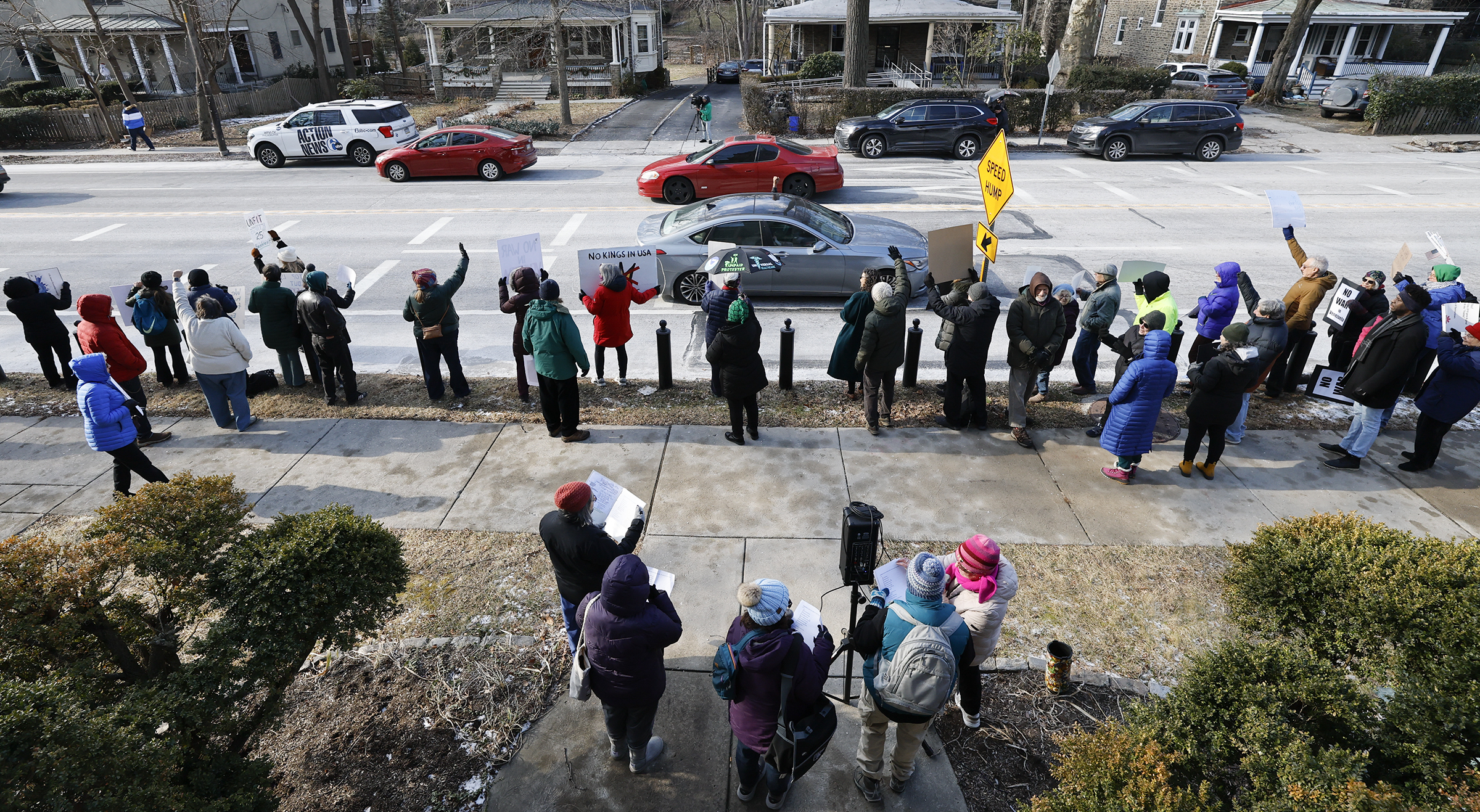
“This action, which is an illegal action, gives the light to people like [Russian President Vladimir Putin] and other dictators to do whatever they like,” Ukrainian American activist Mary Kalyna said Sunday amid a 60-person anti-war rally outside the Unitarian Society of Germantown in West Mount Airy. “Why should he not invade Ukraine or Poland or Lithuania, when the U.S. is invading Venezuela?”
The Trump administration’s unilateral action sends a message to other countries, like Russia, that the United States may no oppose a larger nation meddling in a smaller country’s political affairs, said Paula Holoviak, a political science professor at Kutztown University, in an interview.
“It just doesn’t set a good precedent,” said Holoviak, who is a Ukrainian American.
‘We have been waiting for this for 26 years’
Venezuelan flag in hand, Diana Corao Uribe, 53, and her family drove from Media to the Cathedral Basilica of SS. Peter and Paul to attend a Sunday vigil for the future of Venezuela, organized by local groups Casa de Venezuela Philadelphia, Casa de Venezuela Delaware, and Gente de Venezuela Philadelphia.
Hundreds of people hugged, cried, and prayed as they waited inside with flags and apparel, brightening the basilica with yellow, red, and blue. Members of the crowd were largely critical of the rule of Maduro and his predecessor, Hugo Chávez.
“We have been waiting for this for 26 years; you cannot imagine the feeling, the joy, the happiness, the hope that we feel right now,” Corao Uribe said.
But Corao Uribe said that as the hours passed, her feelings have grown more complicated. Until President Donald Trump announced the U.S.’s intentions to “run” Venezuela until a “safe, proper and judicious transition” could be completed, Corao Uribe had hoped Edmundo González Urrutia, who faced Maduro at the polls in the 2024 Venezuelan presidential election, would become the next president.
The announcement was unexpected and a bit concerning, she said, but it wasn’t enough to shake her sense of happiness.
Philadelphia resident Astrid Da Silva, 32, said it felt bittersweet.
“The amount of joy that seeing the dictator out of Venezuela brings — it’s immeasurable; it’s normal when there has been torture and pain for so long,” Da Silva said. “But without a democratic transition of power, fear starts slipping in.”
Hearing Trump say that opposition leader Maria Corina Machado lacked support in Venezuela clouded her feelings.
“People don’t want the U.S. there; we want the opposition or at least a free election,” Da Silva said, adding that the country’s political turmoil forced her to emigrate to the U.S. at age 7.
Ongoing power struggles have at times made her feel like people view Venezuela as a pawn, forgetting there are real lives at stake, she said.
‘It could be very destabilizing’
The U.S. has a long history of intervening in other countries, Holoviak noted, but that hasn’t always gone well. “We do have an extremely powerful military, but we might not want the aftermath of this,” Holoviak said. “It could be very destabilizing.”
Residents of Northwest Philadelphia voice their opposition to the Trump administration’s strike against Venezuela in a vigil outside the Unitarian Society of Germantown on Sunday, Jan. 4, 2026.
Ukrainian leaders have largely welcomed the liberation of Venezuelans from Russian-allied Maduro’s regime. Speaking with reporters in Kyiv, President Volodymyr Zelensky said, “Well, what can I say? If dictators can be dealt with in this way, then the United States of America knows what it should do next.”
Eugene Luciw, a Ukrainian American who lives in Montgomery County, said in an interview that he interpreted Zelensky’s comments to mean that he believes the U.S. should arrest Putin — and Luciw agrees.
Luciw said that he has no problem with Trump removing Maduro, whom he called “a dictator who slaughters people.”
However, Luciw questioned Trump’s motives and said his actions were inconsistent.
“If we want to do away with a real dictator, with absolute evidence that he’s a genocidal maniac,” then the U.S. should be tougher on Putin, he said.
At the Cathedral Basilica, Fernando Torres, 45, said he has struggled with what the future may hold for Venezuela after Trump’s actions.
“Even if we don’t like Trump, we have to separate things. It’s like if you were drowning and someone threw you a life buoy,” Torres said. “You don’t care who threw it or what their intentions were; you just care about saving your life. What people don’t understand is that Venezuelans needed their life buoy and now for the first time we have hope.”
As political decision-making continues to unfold, Corao Uribe, Da Silva, and Torres agree on one thing: the importance of listening to what Venezuelans want for their future.
“Venezuelans have suffered for so long, don’t try to understand our pain; this isn’t about politics, it’s about the suffering of the Venezuelan people,” Corao Uribe said.
This article contains information from the Associated Press.