Venezuela native Gil Arends was unwinding at his South Philadelphia apartment Saturday when an X notification came through: “There’s no power in Caracas and we are hearing some explosions.” A panoramic video showed smoke rising from the capital city.
“I was immediately scared; even with all the military, I did not think Caracas was going to get bombed,” Arends, 40, said. Then, the news came through: Venezuelan President Nicolás Maduro was in custody.
A U.S.military operation ousted Maduro from power early Saturday, capturing him and his wife, Cilia Flores. The couple were extracted from their home on a military base and taken to New York, where they face prosecution for their alleged participation in a narco-terrorism conspiracy. The dramatic ground offensive capped a monthslong pressure campaign by President Donald Trump against the Venezuelan leader.
Arends, who owns Puyero Venezuelan Flavor with locations in Center City and University City, left Venezuela 15 years ago. He woke up his mother, sister, and wife when he learned the news. No one could believe it.
“Some people just began noticing the bombings in the Caribbean, but we have been living this our entire lives,” Arends said. “No one wants to see their country getting bombed, but they gave us no alternative. I am grateful for the help.”
In the wake of the raid, Trump said the United States would “run Venezuela” until a transition of power could be arranged. Speaking from Mar-a-Lago, Trump offered few details on what American intervention would look like — or how long it could take — but revealed he plans to “fix” the country’s oil infrastructure and sell “large amounts” of oil to other countries.
The military operation and takeover Saturday elicited reactions from Philadelphia’s Venezuelan community and a cohort of area politicians who denounced Trump’s plan to run the country and capitalize off its oil reserves.
Philadelphia Democrat U.S. Rep. Brendan Boyle took to X, writing, “The American people want affordable housing and health care. The last thing they want is another costly forever war.”
U.S. Rep. Brian Fitzpatrick said in a statement that Venezuela’s future “belongs to the Venezuelan people alone.”
“The only country that the United States of America should be ‘running’ is the United States of America,” the Bucks County Republican said.
The legal authority for the raid on Maduro and airstrikes in Caracas were not immediately known, but area lawmakers said Trump did not seek congressional authorization to capture Maduro. Decrying the attack, a spokesperson for U.S. Rep. Dwight Evans of Philadelphia noted that the president’s chief of staff Susie Wiles told Vanity Fair in November that ground operations in Venezuela would require the approval of Congress.
In a social media post, Sen. Andy Kim accused Secretary of State Marco Rubio and Defense Secretary Pete Hegseth of “blatantly” lying when the administration told congressional leaders its objective was not a regime change. Kim — a New Jersey Democrat and former national security official in the Obama administration — argued the raid may further isolate the U.S. from its allies.
“This strike doesn’t represent strength. It’s not sound foreign policy,” Kim wrote. “It puts Americans at risk in Venezuela and the region, and it sends a horrible and disturbing signal to other powerful leaders across the globe that targeting a head of state is an acceptable policy for the U.S. government.”
Delaware Democratic U.S. Sen. Chris Coons echoed Kim in a news release: According to Coons, senior Trump administration officials said in briefings to Congress that they were focused on combating drug trafficking.
“President Trump put American service members in harm’s way to capture Maduro, but the president lacks a clear plan for what comes next,” Coons said. “This raid risks creating more instability in the region, putting U.S. service members and civilians in the hemisphere at risk, and dividing us further from our regional partners.”
While condemning Trump, Sen. Cory Booker, a New Jersey Democrat, also upbraided the Republican-led Congress for its “ongoing abdication of its constitutional duty” and choosing “spineless complicity over its sworn responsibilities.”
“Again and again, the president has exceeded his authority, defied congressional intent, trampled the separation of powers, and broken the law — while Congress looked away in cowardice and submission,” Booker said in a news release. “Congress must act now. It must reassert its constitutional authority, restore the rule of law, and stop this president before further injury is done to our democracy and our republic.”
State Sen. Nikil Saval (D., Philadelphia) called for his federal counterparts to impeach Trump.
“Trump’s attack on Venezuela and abduction of its President are criminal acts of terror. They follow in the darkest traditions of American history: a violent, reckless flex of military power to gain control over foreign resources,” Saval posted on Instagram. “It is incumbent on every American of conscience to rise against these actions.”
Bill Burke-White, an international lawyer and law professor at the University of Pennsylvania Carey Law School, said the United States’ unsanctioned attack on another sovereign state opens the doors for other military superpowers to oust opposing heads of states.
“Many countries in the world are going to look at this and say … that the United States has fundamentally abandoned the basic principles that kept us safe for the last 70 years. We’re going to be reverting to a world that looks more like regional powers that can do whatever they want,” he said, “a world governed, not by law, but by the whims of powerful autocrats in countries with nuclear weapons.”
The U.S. government does not recognize Maduro as a legitimate leader of Venezuela, and Trump repeated rhetoric Saturday that Maduro had effectively exploited the nation for cocaine trafficking and criminal enterprises. American presence in waters off South America has swelled in recent months as the U.S. attacked boats allegedly carrying drugs.
The number of known boat strikes was 35 and the number of people killed at least 115 as of Friday, according to the Trump administration. Trump has said that the U.S. is engaged in an “armed conflict” with drug cartels and has justified the boat strikes as necessary to curb the flow of drugs.
In social media posts, Pennsylvania U.S. Sens. Dave McCormick , a Republican, and Democrat John Fetterman applauded American military personnel who carried out the mission under the cover of darkness.
“For years Maduro’s regime killed our children by flooding America’s streets with poison, threatened our borders, and undermined U.S. national security,” McCormick wrote. “I urge what’s left of the Maduro regime to honor the will of the Venezuelan people and transition peacefully to rightfully elected leadership.”
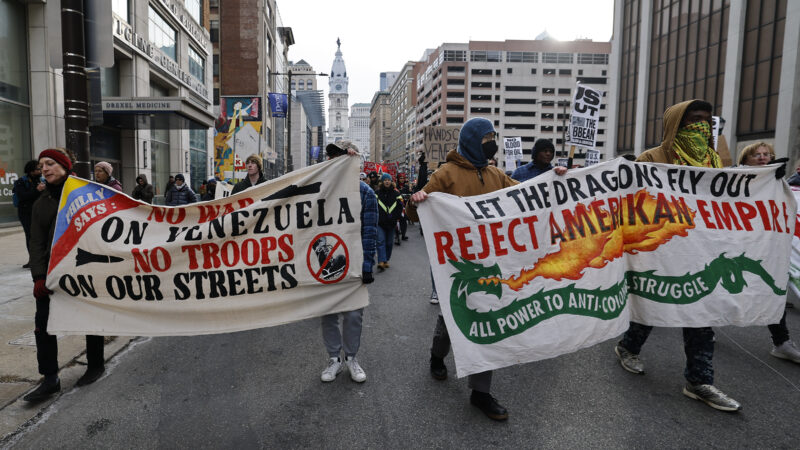
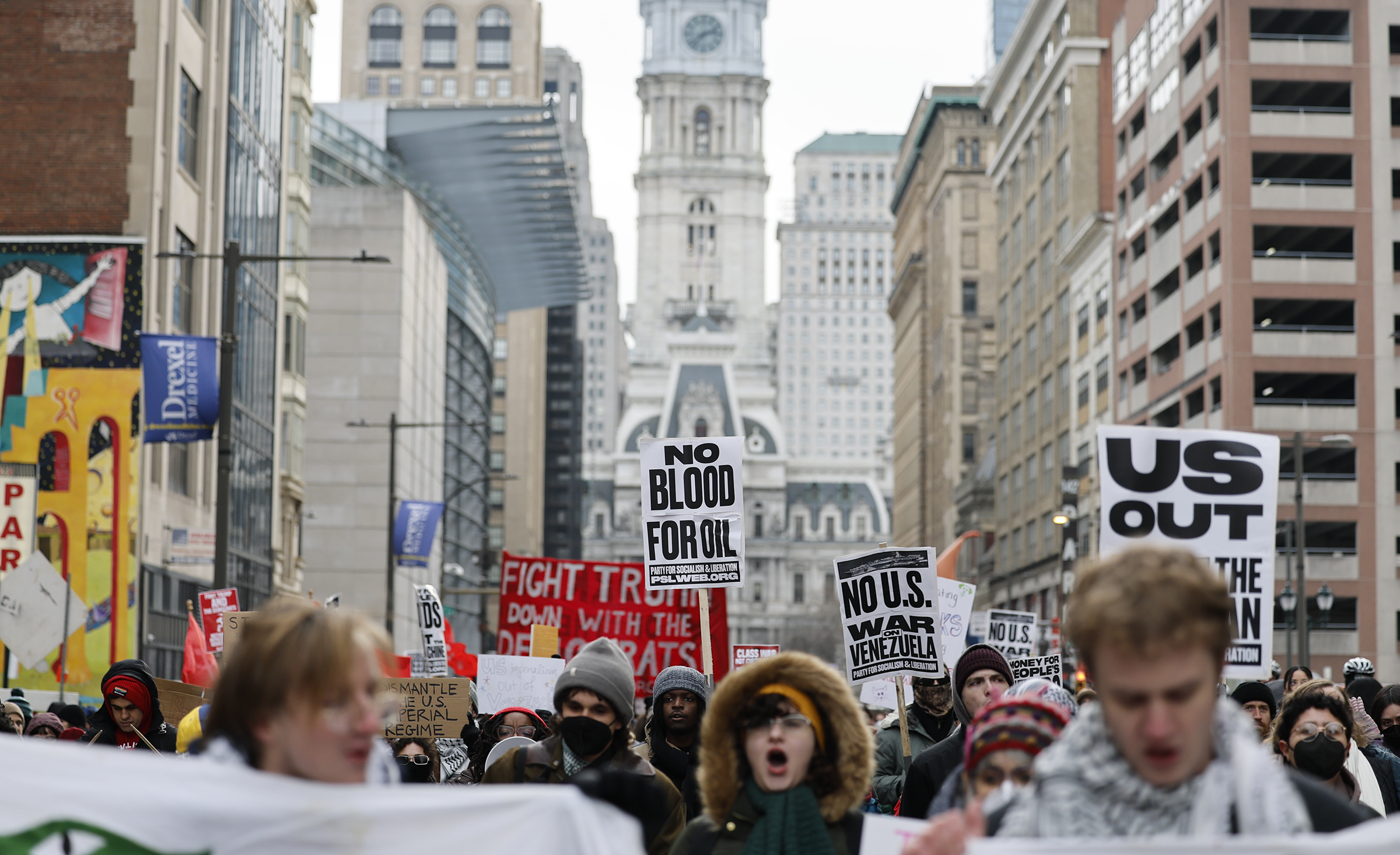
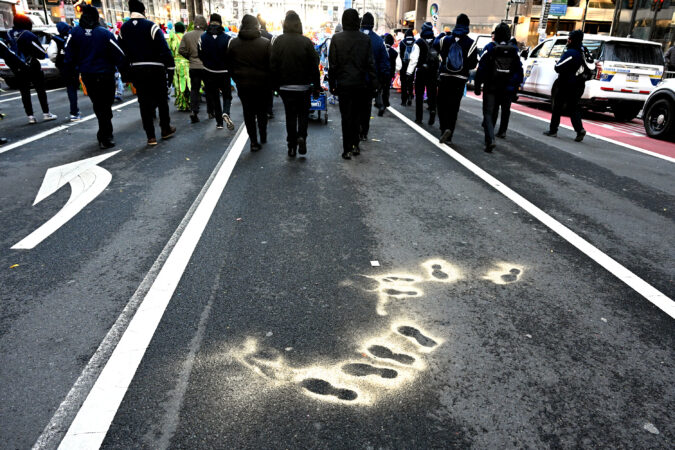
Demonstrators march along North Broad Street reacting to U.S. strikes on Venezuela on Saturday.
There are about 7,000 people of Venezuelan origin in the Philly metro area, according to the latest census data, out of a total metro area Latino population of 681,000. By comparison, there are 135,000 people of Mexican origin, and 74,000 people of Dominican origin in the metro area.
Three local Venezuelan organizations — Casa de Venezuela Philadelphia, Casa de Venezuela Delaware, and Gente de Venezuela Philadelphia — rallied for peace and unity among the diaspora.
“In moments of heightened emotional sensitivity and rapid information circulation, we urge our community in exile to act with serenity, caution, and a sense of collective responsibility,” a joint statement read.
A vigil for Venezuela’s future is scheduled for noon Sunday at the Cathedral Basilica of SS. Peter and Paul.
“We firmly believe that no process of change will be sustainable if built on hatred, confrontation, or suffering,” the statement said.
After the news began to sink in, Arends, the restaurateur, checked in with his employees, asking about their family members in Caracas. Overall everyone was OK, he said, although some were startled and concerned by the bombing sounds.
“There is so much uncertainty in every single level and we have been through so much; we have seen bad things become worse so it’s very difficult to just be happy without fearing what that might lead to,” Arends said. “I’m hopeful but it doesn’t feel like we are at the point where this is over.”
As the first day of a post-Maduro Venezuela came to a close, Venus Lucini, 28, said she felt like there was a difference in the air.
“There are too many emotions, too much uncertainty, but for the first time, there is possibility,” Lucini said, as she held her daughter Sofi’s hand.
For the young mother this is a chance for younger generations to recover a sense of the future.
“I already had to emigrate, but this is her chance to see a new Venezuela,” Lucini said, longing to visit with family members who have never seen her 6-year-old in person.
“Can we go to Venezuela now, Mami?” Sofi asked.
“Not yet, baby, but soon you will get to see all the places Mami grew up in,” Lucini replied.
Graphics editor John Duchneskie and the Associated Press contributed to this article.
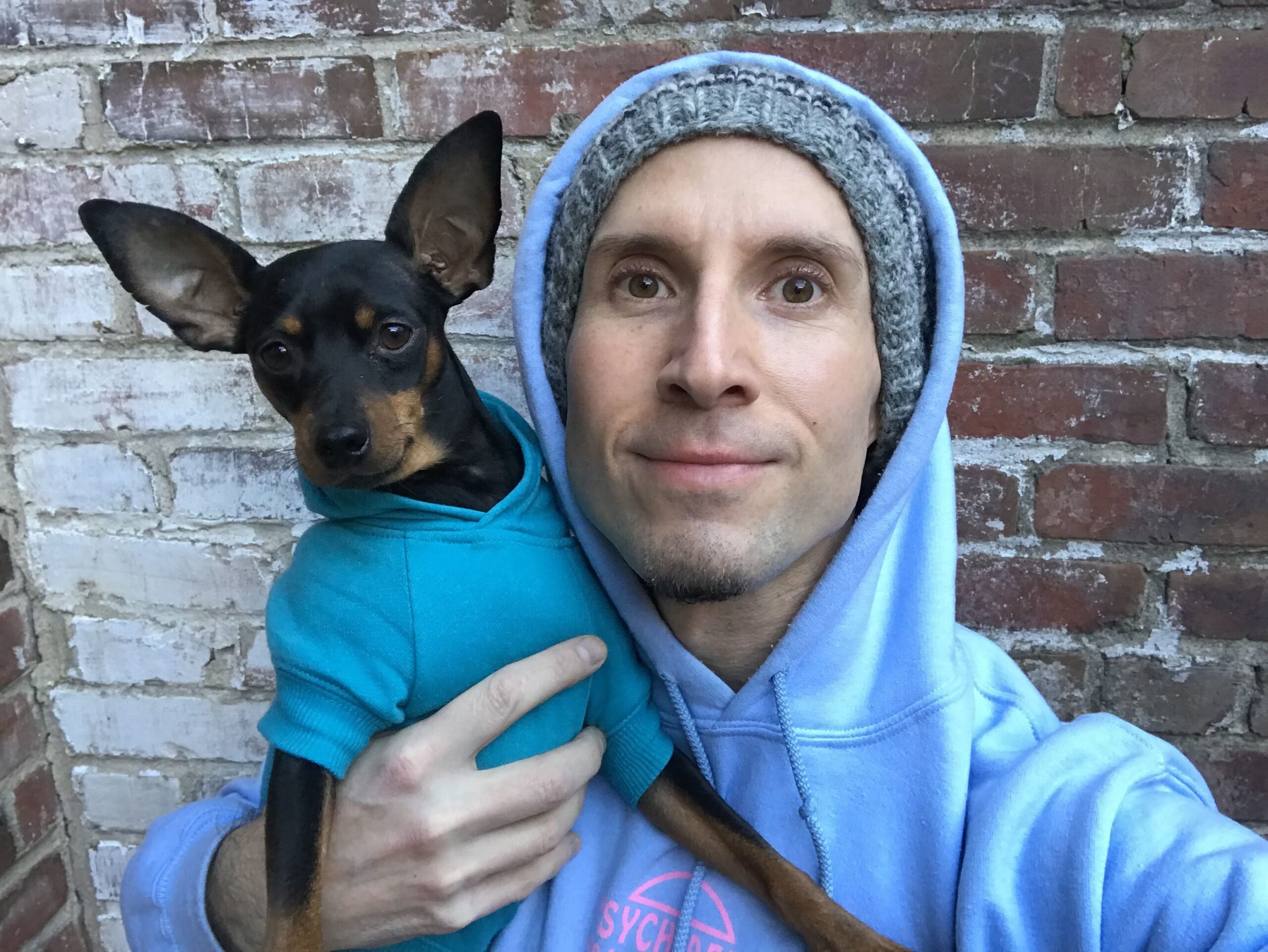
Brian Lovenduski was strolling with his leashed miniature pinscher, Ziggy, through a Center City plaza Monday evening — just another routine walk for the pair.
“Just enjoying the Christmas lights,” said Lovenduski, who had David Bowie’s Diamond Dogs pulsing through his earbuds. “And then, before I knew it, I turned around and a pit bull had latched onto Ziggy’s leg.”
Lovenduski recalled the horrific attack that followed at 12th and Chestnut Streets in front of dozens of bystanders. He was bitten and Ziggy was left seemingly near death — until the small dog rallied and fought back for his life against the much bigger, more powerful pit bull.
Miguel Torres, a spokesperson for the Philadelphia Police Department, said Saturday that the pit bull is believed to have been involved in a trio of attacks in Center City that took place in the week after Christmas. The pit bull is believed to be owned by a homeless person, police said.
Owners of two victimized dogs say they have not only been traumatized by the attacks, but face tens of thousands of dollars collectively in vet bills.
Brian Lovenduski was walking his leashed miniature pinscher, Ziggy, Monday in Center City when they were attacked by a pit bull, which is believed to have carried out two other recent attacks.
Ziggy’s attack
Ziggy was the second dog attacked by the pit bull.
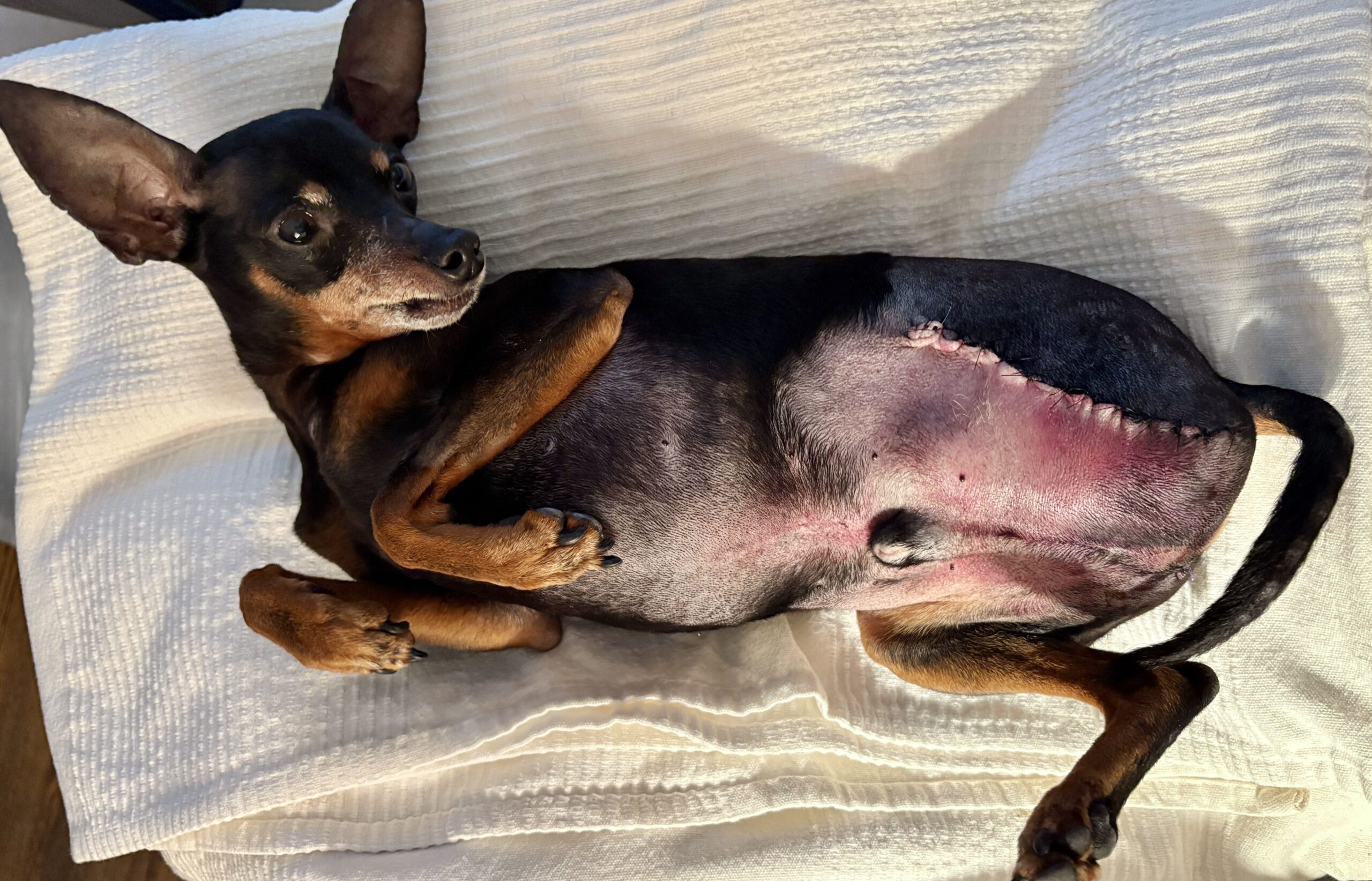
The 4.5-minute attack left Ziggy with a long row of stitches and an amputated leg. Lovenduski was bitten on the hand as he tried to ward off the pit bull.
Lovenduski said he grabbed the pit bull by the collar and pulled its head to his chest to wrest him away from Ziggy. Dozens of people gathered, with some shouting instructions, but not intervening. At one point, Ziggy went limp.
“I was worried that I’m watching my dog die in front of me, and I can’t save him,” Lovenduski said. “And then suddenly, Ziggy in his little, little, fiery body sprung back to life and started biting the pit bull on the ears, over and over and over. There was blood everywhere.”
Lovenduski continued to strike the pit bull on the head and finally it released Ziggy. A nurse from Jefferson Hospital came and helped seek medical treatment.
Eventually, Ziggy was treated at Philadelphia Animal Specialty & Emergency on Washington Avenue in Point Breeze.
“He is little by little, starting to learn how to balance himself upright on three legs,” Lovenduski said of Ziggy. “I’m still in shock. But Ziggy’s will to live is inspiring me.”
Lovenduski estimates he faces $11,000 in medical expenses, and expects that could grow. He has set up a GoFundMe account to raise money for the bills.
Ziggy, a miniature pinscher, was attacked by a pit bull while being walked by owner, Brian Lovenduski on Dec. 29, 2025. It was one of three known attacks by the pit bull.
The attack on Stella
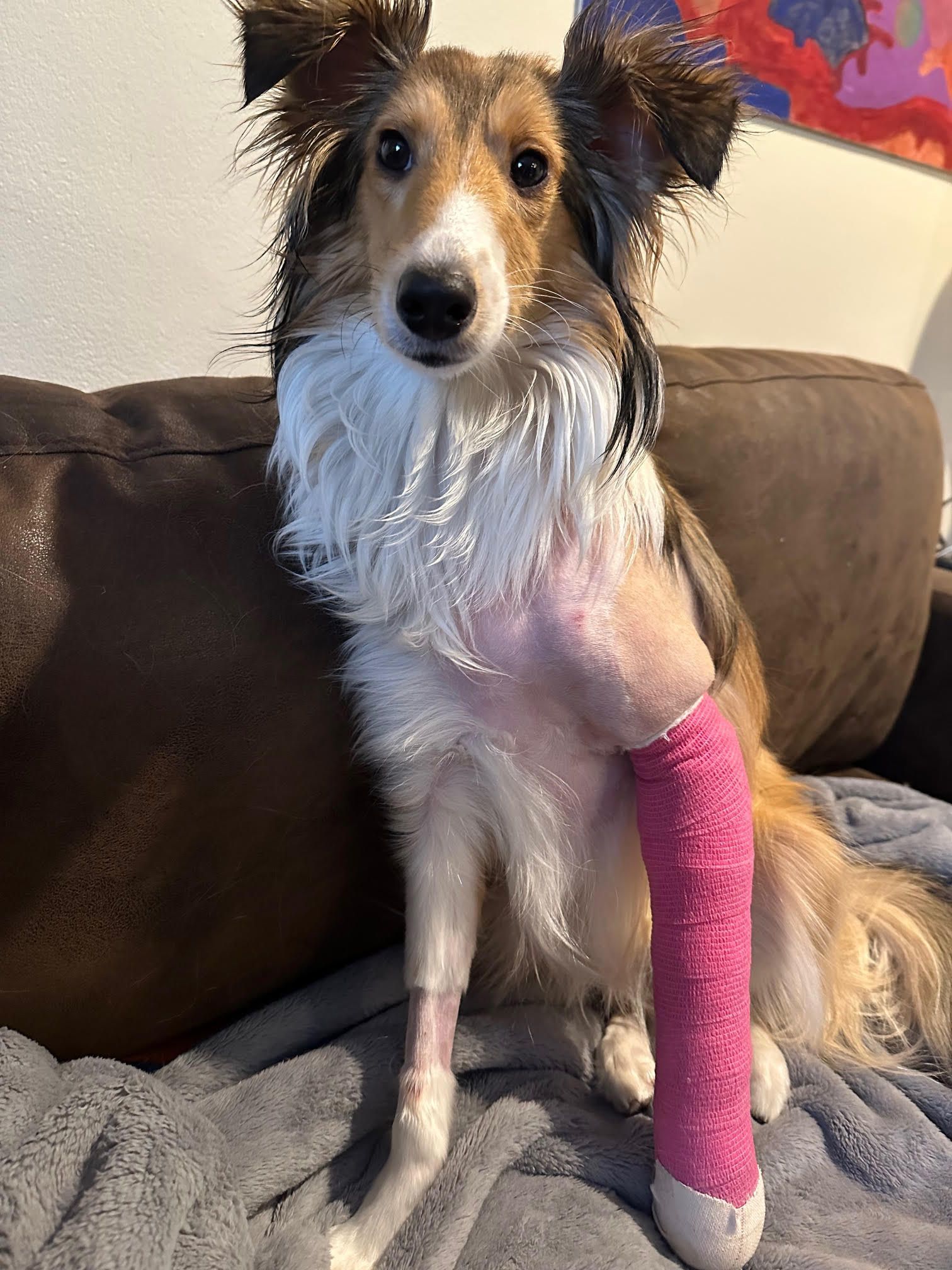
The first known attack by the pit bull occurred on Dec. 26 as J. Bazzel was walking his 11-month-old sheltie Stella at Juniper and Chestnut Streets.
Bazzel said he saw a homeless woman sitting on the corner under a blanket with a pit bull to the side. He’d seen the dog before and usually gives it “a wide berth.” He believes the woman also travels with a man.
He crossed over Juniper, near the Wanamaker Building, and was startled to hear Stella suddenly yelp.
“I looked down, and saw that the dog had, very quietly, ran over, grabbed Stella’s front left leg and wouldn’t let go of it. My dog was yelping and crying in pain. I started yelling for help.”
Bazzel said a man came over and jumped on the back of the pit bull and started striking it in the head. Bazzel worked his gloved fingers into the back of the pit bull’s jaw and applied pressure until it released Stella.
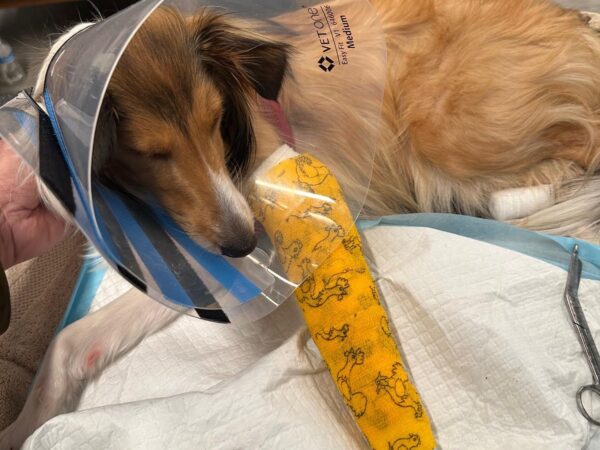
Stella, an 11-month-old sheltie, is seen here recovering from surgery after she was attacked by a pit bull Dec. 26 in Center City. Police believe the pit bull is responsible for three recent attacks.
“The guy who was holding back the pit bull yelled at me to run,” Bazzel recalled. “And I scooped Stella up.”
Bazzel brought the bleeding puppy to the VEG Emergency Vet center, where staff helped.
“I had blood on me, I had excrement on me,” Bazzel said. “The folks at VEG were just amazing. They quickly got the door. They escorted me right back. They got her on a table. They started taking care of me and her because I was out of breath.”
Eventually, Bazzel got Stella to Philadelphia Animal Specialty & Emergency. There, a surgeon pieced together Stella’s crushed foreleg, keeping it together with a plate. Stella also needed a skin graft.
“She’s with me every single place I go,” Bazzel said of Stella. “She’s my emotional support. She’s my best friend. It just breaks your heart to see what she’s going through.”
Bazzel is hoping the dog’s foreleg will be saved, but is still waiting to see if it heals. He said the medical bills total about $9,000 so far, and he expects it could run thousands more by the time treatment is over. He has also set up a GoFundMe account.
The third attack occurred 7 a.m., Dec. 31, as a 74-year-old man was walking his dog at 19th and Walnut Streets, according to police.
There, a homeless person, described by police as a white male wearing a black coat and dark blankets, was lying on the ground with a pit bull.
The pit bull then rose to bite both the man and dog. The man drove himself to a hospital for treatment.
The city’s Animal Care and Control Team is aware of the situation, said ACCT Philly executive director Sarah Barnett.
But, stopping the pit bull is a process.
“We can’t just take someone’s dog; the process takes so long and it’s not victim friendly,” Barnett said.
The steps involve filing dangerous dog charges, taking the owner to court, and waiting over 30 days. This process is more complicated when the owner is unhoused, she said.
After three attacks, Barnett conceded there’s a chance that the pit bull attacks again.
“It wouldn’t surprise me if someone’s dog gets attacked and they do something horrible like shoot it,” Barnett said. She encouraged people to instead call the police if they think they have spotted the pit bull.
“Be aware of your surroundings and don’t just assume the dog is only in Center City,” she said.
This story has been corrected to say that Stella was initially bought to VEG Emergency Vet center, not Vedge the restaurant.
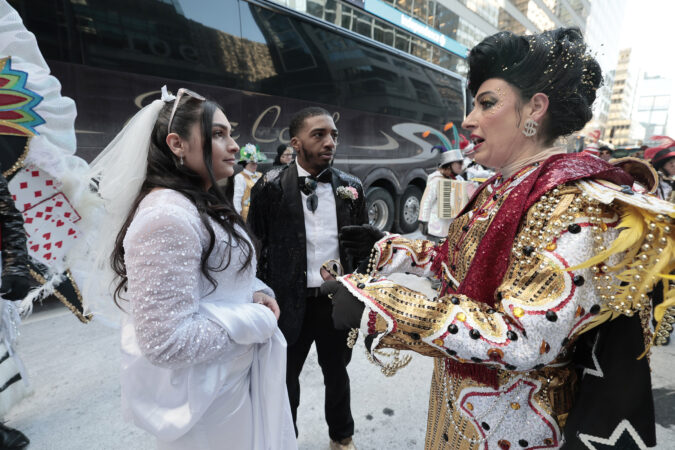
If you’re going to get married in Philadelphia, this is the correct way to do it: sequins, sneakers, a string band, bitter cold, delayed schedules, and a crowd that didn’t ask for romance but got it anyway.
A couple saying “I do” in the middle of the Mummers Parade is the purest expression of this city’s personality. Equal parts earnest and unhinged. Romantic, but only after everyone’s been standing around freezing for hours. Vegas chapel energy, but filtered through South Philly logistics and Broad Street chaos.
This wasn’t a viral stunt or a look-at-us wedding. It was two people already marching, already committed, deciding that if they were going to wait around in the cold anyway, they might as well get married while they’re at it. Honestly? Efficient.
The details make it sing: golden sneakers instead of heels, a flask for warmth and nerves, vows practiced on a bus, Elvis officiating, and the inevitable Philly closer, “I’m glad it’s done so I can get warm.” That’s love, but realistic.
And of course it happened at the Mummers. The parade that routinely features feathers, fake arrests, grown adults sobbing at saxophone solos, and more sequins than dignity. If any institution could absorb a full wedding without breaking stride, it’s this one.
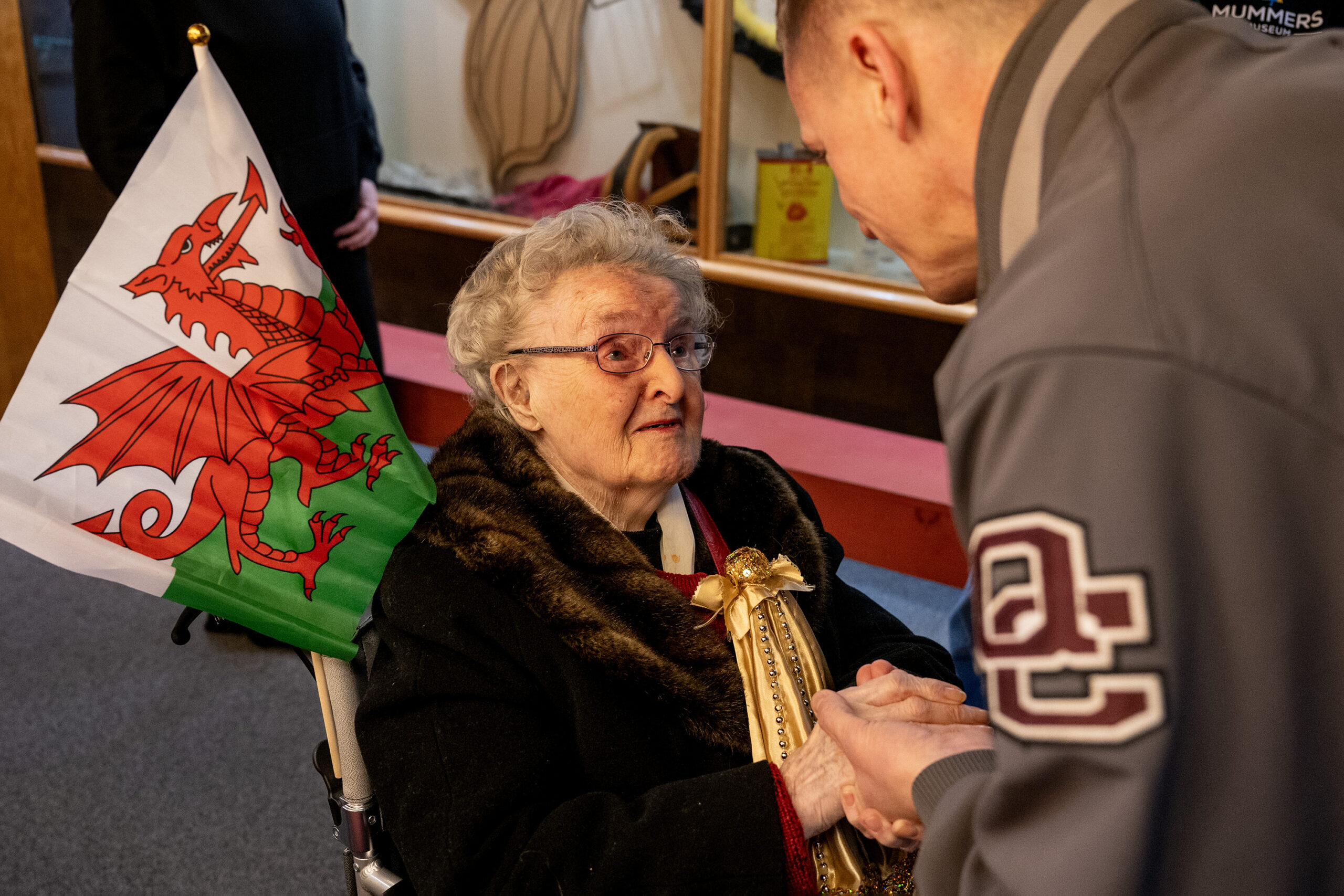
”Queen Mumm” Avril Davidge, a 93-year-old Welsh grandma meets Quaker City String Band Captain Jimmy Good as he surprises her at the Mummers Museum on Wednesday, Dec. 31, 2025. Davidge got to live her dream of going to the Mummers Parade, starting on New Year’s Eve morning with a tour of the museum.
Mummers devotion, no notes: A+
Yes, we’re grading two Mummers stories this week, and no, that’s not an accident.
Avril Davidge didn’t come to Philadelphia for irony or spectacle. She came because she fell genuinely, deeply in love with the Mummers through YouTube — learned the string bands, picked favorites, developed opinions — and decided, at 93, that she needed to see it in person. That alone clears the grading curve.
What makes this story land isn’t just the transatlantic trip. It’s how naturally Philly met her energy. A museum tour. A surprise meeting with her favorite band captain. A golf cart to the parade. No skepticism, no gatekeeping … just, “Yeah, of course. Welcome.”
And then there’s the wedding: sequins, sneakers, vows exchanged in the cold on Market Street, because if you’re already marching, why not also get married? It’s unhinged. It’s beautiful. It’s extremely us.
No notes.
Philadelphia’s cost of living vs. the suburbs: C (with math and feelings)
On paper, this sounds like a win: It’s up to 26% cheaper to live in Philadelphia than in places like Ardmore, King of Prussia, and Phoenixville, Philadelphia Business Journal reported. Congrats to the city for clearing the extremely low bar of not being the suburbs.
The problem is the second half of the equation: income.
Suburban households make dramatically more money, which means they somehow pay more and end up with way more left over. Ardmore residents, for example, are apparently out here saving more than $50,000 a year, which is a number that sounds fake if you live south of Girard.
So what we really have here isn’t a victory lap. It’s a familiar Philly paradox. The city is more affordable because it has to be. Lower costs don’t feel like a flex when they’re paired with lower wages, longer commutes, and the constant background hum of “maybe next year.”
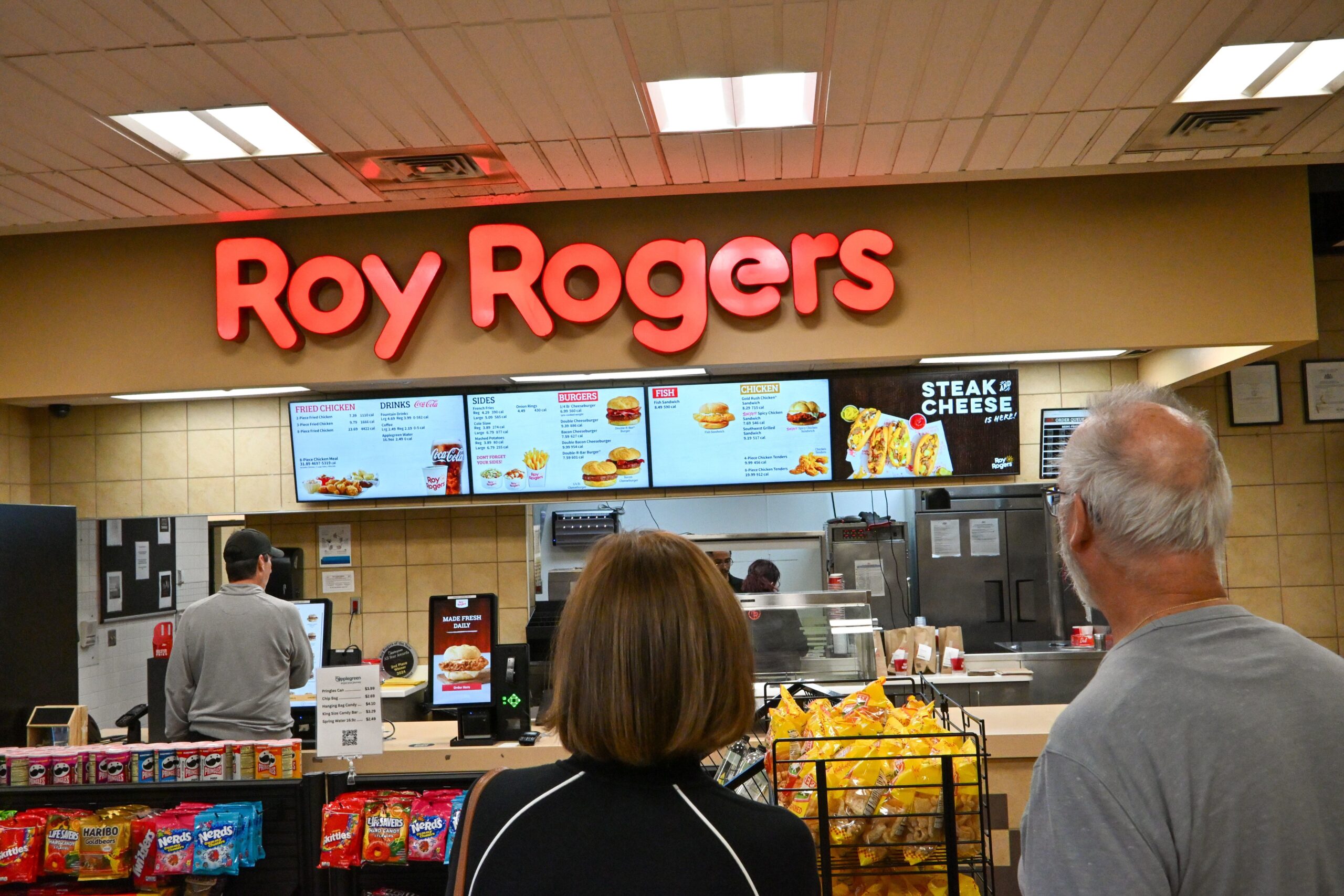
Mary Wright and Rich Misdom of Collingswood consider their options at the Roy Rogers located in the Peter J. Camiel Service Plaza on the Pennsylvania Turnpike in late November 2025.
This isn’t just personal bitterness; it’s structural. The Turnpike’s dining lineup is effectively locked in by a decades-old contract, which explains why eating on one of the state’s busiest roads feels less like a pit stop and more like a museum exhibit titled Fast Food, 1998. Auntie Anne’s. Burger King. Dunkin’. Starbucks. Repeat until New Jersey.
To be clear, this isn’t about disrespecting Roy Rogers. Roy Rogers has survived longer than many of our friendships. But when New Jersey and New York travelers are choosing between Shake Shack and Pret a Manger, and Pennsylvanians are debating whether this Sbarro feels better or worse than the last one, something has gone off the rails.
A C+ feels right. The food won’t kill you. It will fill the void. It might even unlock a memory of your mom liking Roy Rogers, which is sweet in its own way. But if the Turnpike is going to keep charging premium tolls, it might eventually want to acknowledge that the rest of the world moved on from mall food courts, and took better rest-stop dining with it.
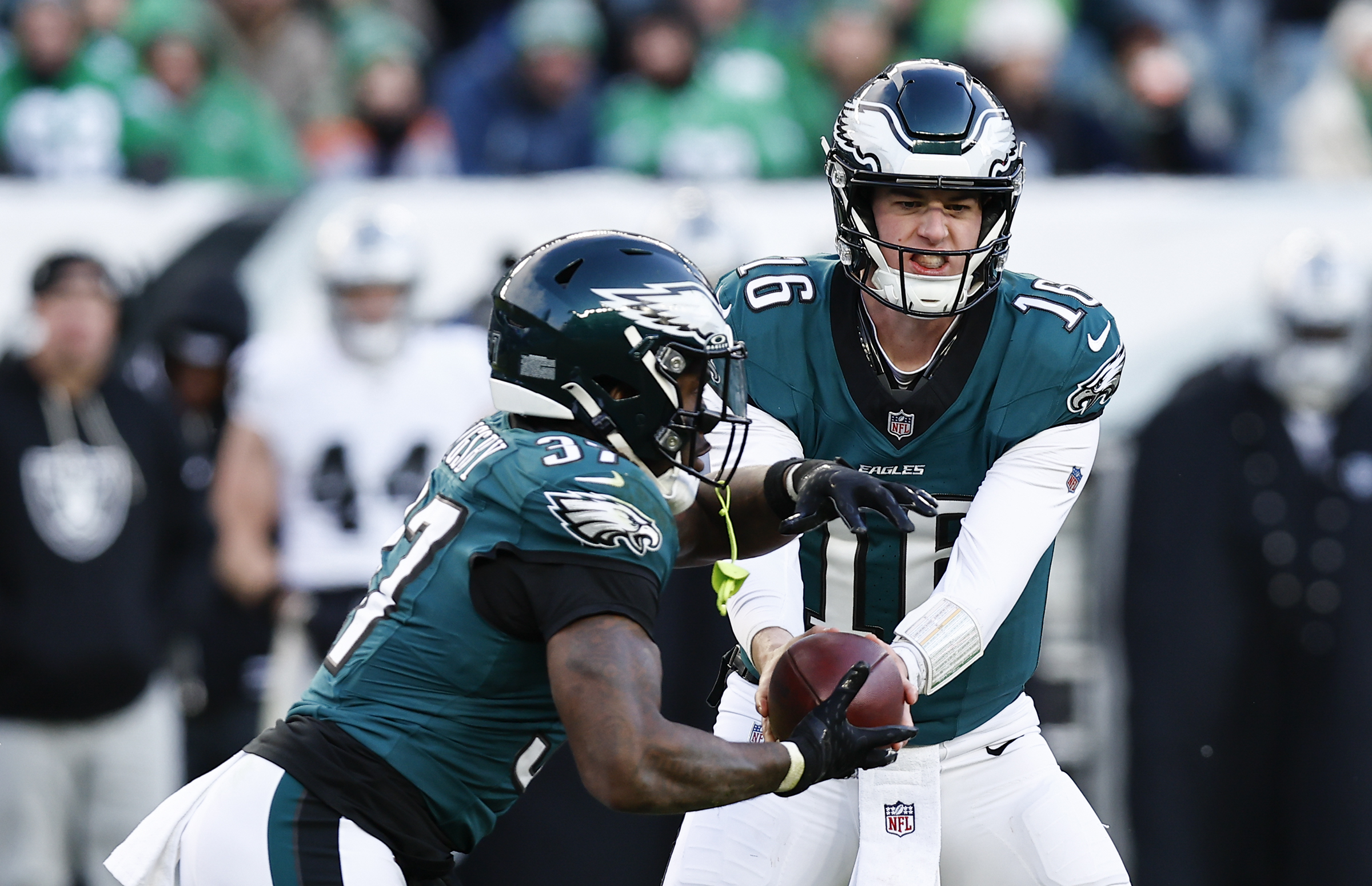
Eagles quarterback Tanner McKee hands off the football to running back Tank Bigsby against the Las Vegas Raiders in the fourth quarter on Sunday, December 14, 2025, in Philadelphia.
Eagles resting the starters (and trusting the vibes): B+
This is one of those decisions that feels smart, responsible, and completely terrifying all at once … which means it’s extremely on brand for Philadelphia football.
The Eagles are essentially turning Week 18 into a spa day for Jalen Hurts and most of the starters, handing the keys to Tanner McKee and asking the football gods to be normal about it. On paper, it makes sense. They’ve been here before. Sirianni keeps pointing out that the two Super Bowl runs came with byes, rest, and fresh legs. He’s not wrong. The scars from 2023 — A.J. Brown getting hurt in a meaningless finale, Hurts dislocating a finger — are still very much part of the group chat.
But this is Philly, so we can’t just rest people quietly.
Because technically, this game still matters. There’s still a path to the No. 2 seed. There’s still a chance to build offensive momentum, which has been… inconsistent, let’s say. And instead, the Eagles are choosing peace. Or at least the idea of it.
If McKee plays well, WIP will combust. If he struggles, everyone will retroactively insist the starters should’ve played. There is no outcome where this doesn’t get litigated.
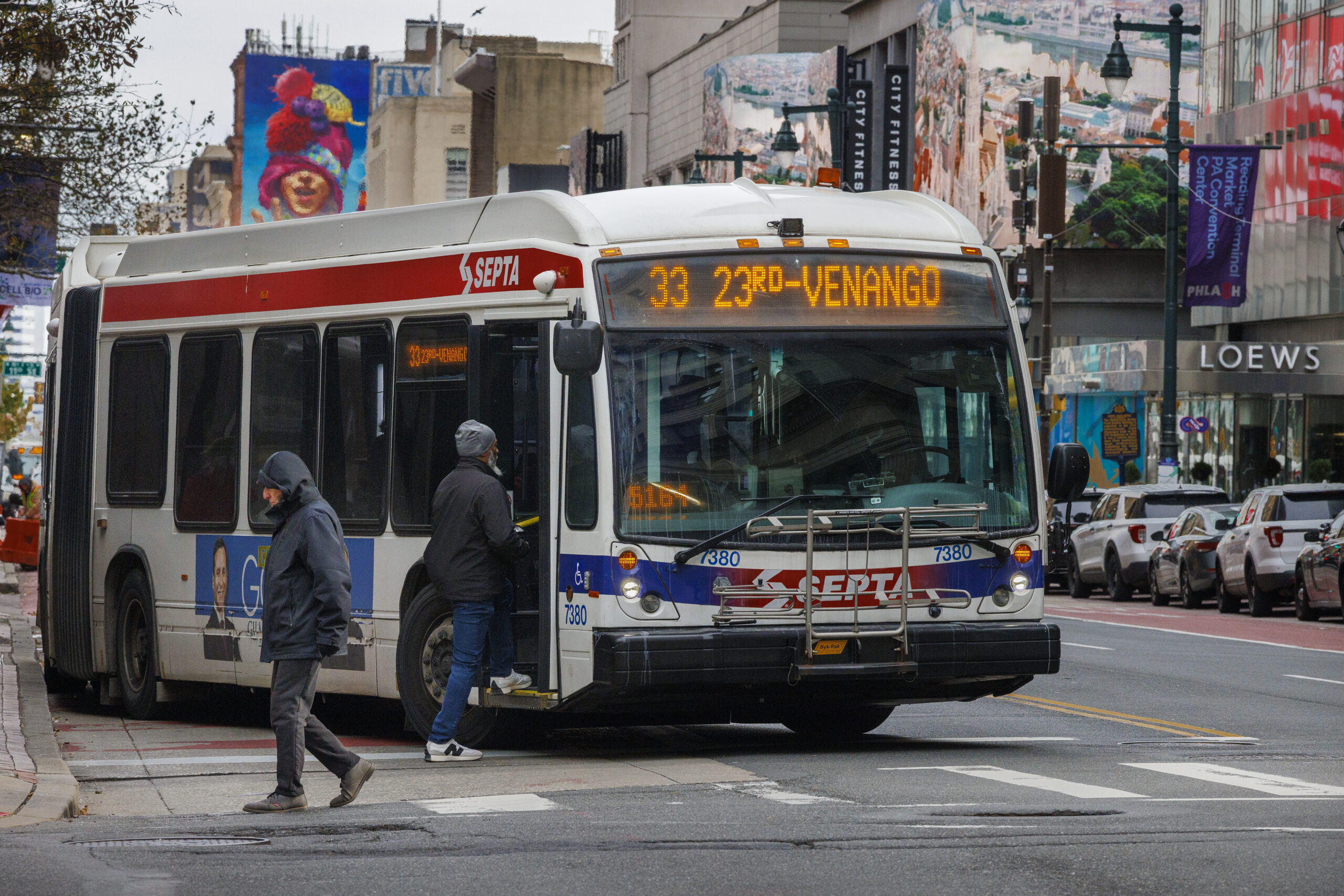
SEPTA 33 bus picking up passengers at 13th and Market Street, Center City Philadelphia, Monday, December 8, 2025.
If you rode transit even semiregularly this year, you don’t need a recap. You felt it in missed connections, sudden service cuts, mystery delays, and that low-grade anxiety that comes from not knowing whether your train is late, canceled, or quietly on fire. Five Regional Rail fires. A trolley tunnel that closed, reopened, and closed again. A budget cliff so real it had a dollar amount attached to it. Near-strikes. Court-ordered service reversals. Emergency money parachuting in at the last second like SEPTA is a reality show contestant who keeps surviving elimination.
The most Philly part? SEPTA technically survived. Barely. With duct tape, emergency funds from Gov. Josh Shapiro, and the kind of last-minute labor deal that had everyone holding their breath. There’s something almost admirable about how resilient the system is — not because it’s thriving, but because it simply refuses to collapse on schedule.
To be fair, some things improved. Serious crime dropped. Fare evasion finally got gates and consequences. SEPTA moved hundreds of thousands of people for the Super Bowl parade without melting down, which honestly might have been the most impressive transit achievement of the year.
But none of that erases the larger truth: SEPTA spent 2025 lurching from crisis to crisis, stuck in the same funding limbo it’s been warning about for years, with riders paying the price in time, stress, and reliability. The money fixes were temporary. The politics were familiar. And the promise for 2026 is essentially: please let us just do the basics.
That’s a low bar… and one SEPTA hasn’t consistently cleared in a while.
New Jersey’s minimum wage lapping Pennsylvania: D (for us)
We love to say we’re better than New Jersey. Spiritually. Culturally. Hoagie-wise. But on minimum wage? Absolutely not. Not even close.
New Jersey is heading into 2026 with a $15.92 minimum wage, adjusted for inflation like it’s a normal, functioning place that occasionally updates laws to reflect reality. Pennsylvania, meanwhile, is still parked at $7.25 — the same number it’s been since 2009, back when we all thought flip phones might be making a comeback.
That gap isn’t just embarrassing; it’s structural. You can cross the bridge and make more than double per hour doing the same work. And while yes, New Jersey is more expensive overall, that doesn’t magically excuse Pennsylvania paying wages that don’t come close to covering basic needs. Even the MIT living wage calculator, which is not exactly a radical think tank, says Pennsylvanians need far more than $7.25 to survive. Shock.
Philly has been stuck in the same frustrating loop for years. The city wants the power to set its own minimum wage. The governor supports raising it. Bills exist. Rallies happen. And yet nothing changes, leaving workers watching Jersey do the thing we keep promising to “get to.”
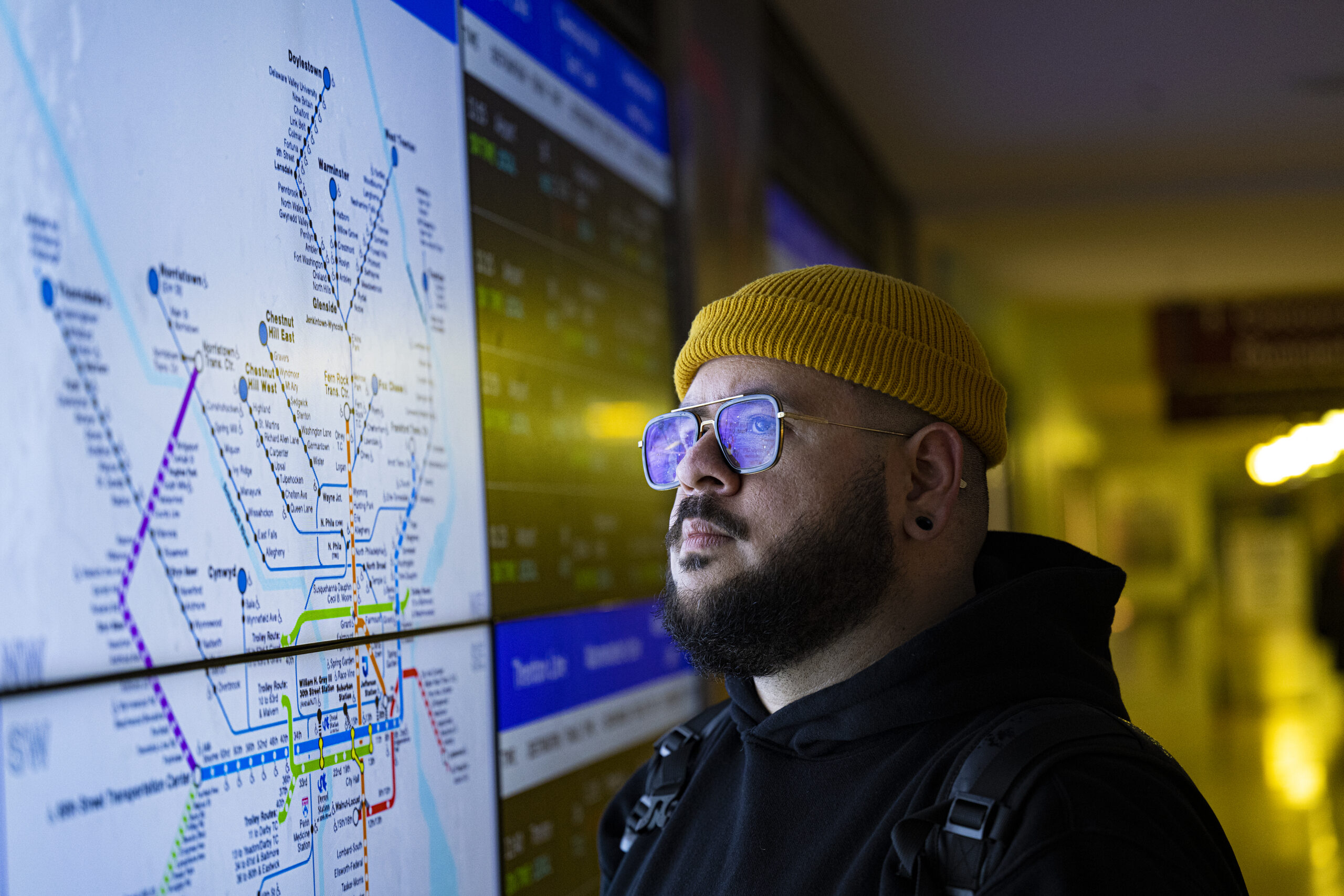
Daniel Rodriguez travels through Philadelphia’s Suburban Station on Friday, Dec. 19, 2025, in Philadelphia. Rodriguez uses the station to commute between Philadelphia and metro Atlanta, taking a train from Center City to Philadelphia International Airport before boarding flights to and from his company’s Atlanta office.
Flying to Atlanta twice a week so you can keep living in a Jewelers’ Row apartment with your wife, avoid owning a car, and still make your job work is the kind of stubborn, impractical devotion this city respects. It’s extreme. It’s exhausting. It makes no sense on paper. And yet it somehow feels more reasonable than moving to the suburbs.
This isn’t about hustle culture or going viral (though he did). It’s about refusing to uproot your life because the job market is broken, SEPTA is unreliable, and cities don’t always make it easy to stay. Instead of leaving Philly, Rodriguez made the commute worse. Heroic behavior.
Is it sustainable? Questionable. Is it environmentally clean? Debatable. Is it the most Philly response imaginable to a bad system? Absolutely.
Just a week ago, in my last column of 2025 I said I was looking forward. So where do I go in the very first column of 2026?
When you drive for decades all over the city on assignment certain streets, buildings or neighborhoods tilt you toward the past.
Memories don’t just live in one place but are scattered across the map, waiting around a corner, or sitting on a stoop like an old friend. Every recurring event or anniversary replays images in my head.
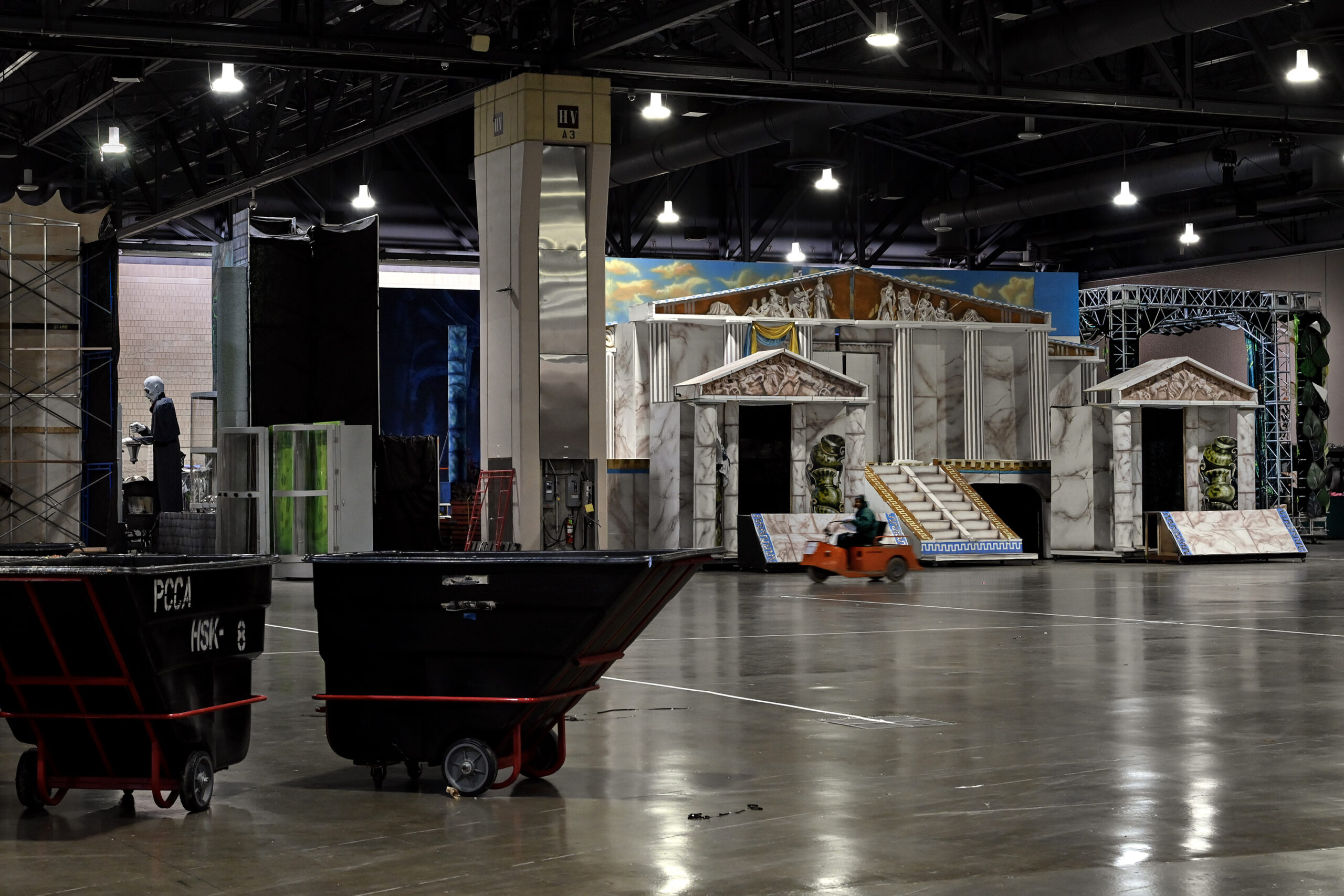
An empty Convention Center hours before Fancy Brigade members arrive for a night of finishing the construction of their stage sets.
I went to the Convention Center two days before the Mummers Parade, looking as I have many times, to make a photo ahead of the event.
But this year, there were no Fancy Brigade members in the cavernous room. Nobody working on their elaborate stage sets or rehearsing their Broadway-quality choreographed performances.
As a cost-cutting measure this year, the clubs only booked the hall (and union workers) for an eight-hour shift in the evening. No early overtime.
So there I was, “seeing” feathered and sequined Mummer ghosts of my memory dancing through the hall. Then, like in the 2006 movie Night at the Museum. I almost wondered if a Greek god, 15 foot high Tiki figure or jester would suddenly come alive.
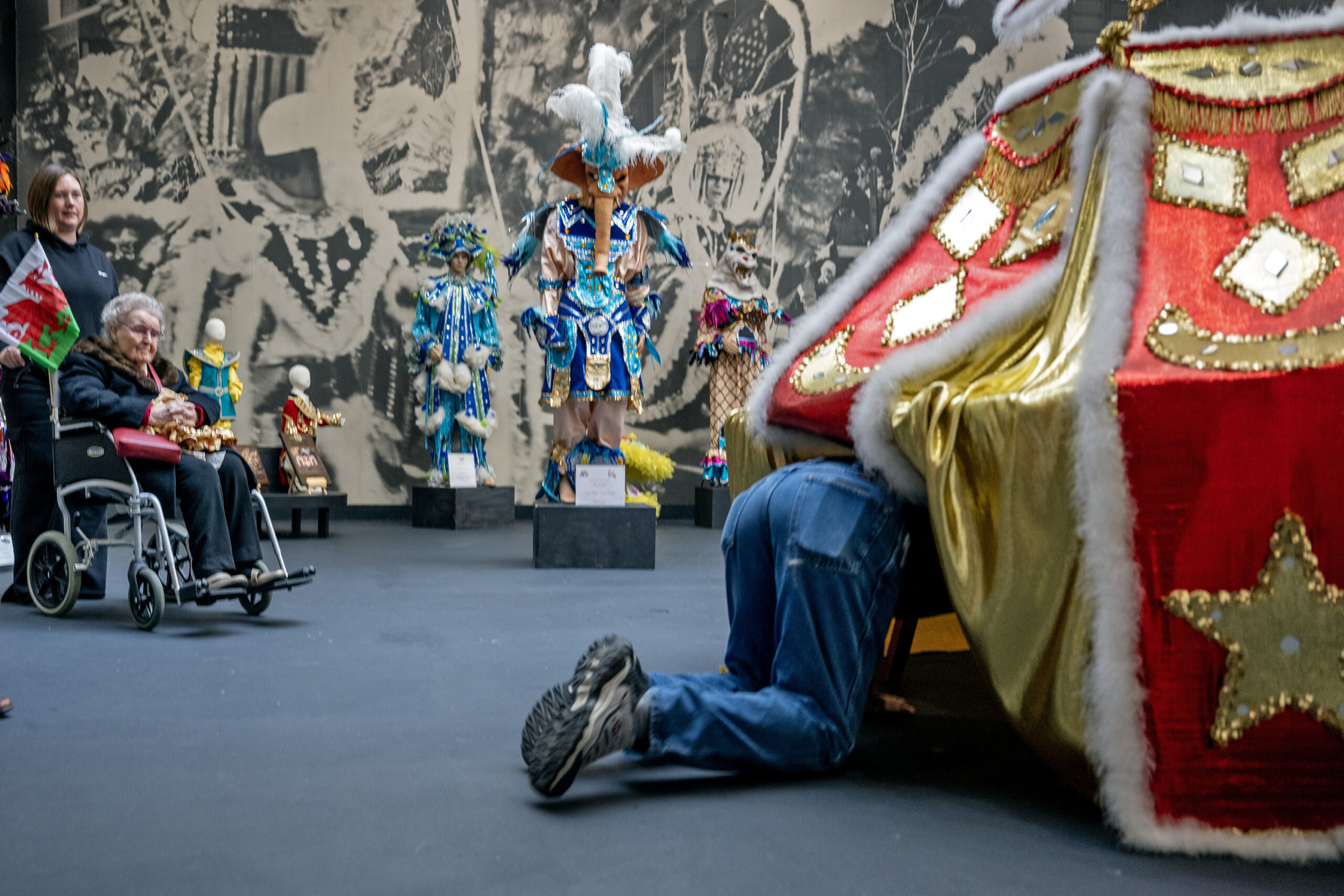
Mummers Museum president Brian Donnelly crawls inside to demonstrat marching in a large Fancy Division frame suit while giving Avril Davidge a tour.
The next day she was to live her dream of going to the parade. I wondered what she was thinking the next day, even as I photographed it for my umpteenth time, collecting more memories and learning, as always, how to see things in new ways.
Since 1998 a black-and-white photo has appeared every Monday in staff photographer Tom Gralish’s “Scene Through the Lens” photo column in the print editions of The Inquirer’s local news section. Here are the most recent, in color:
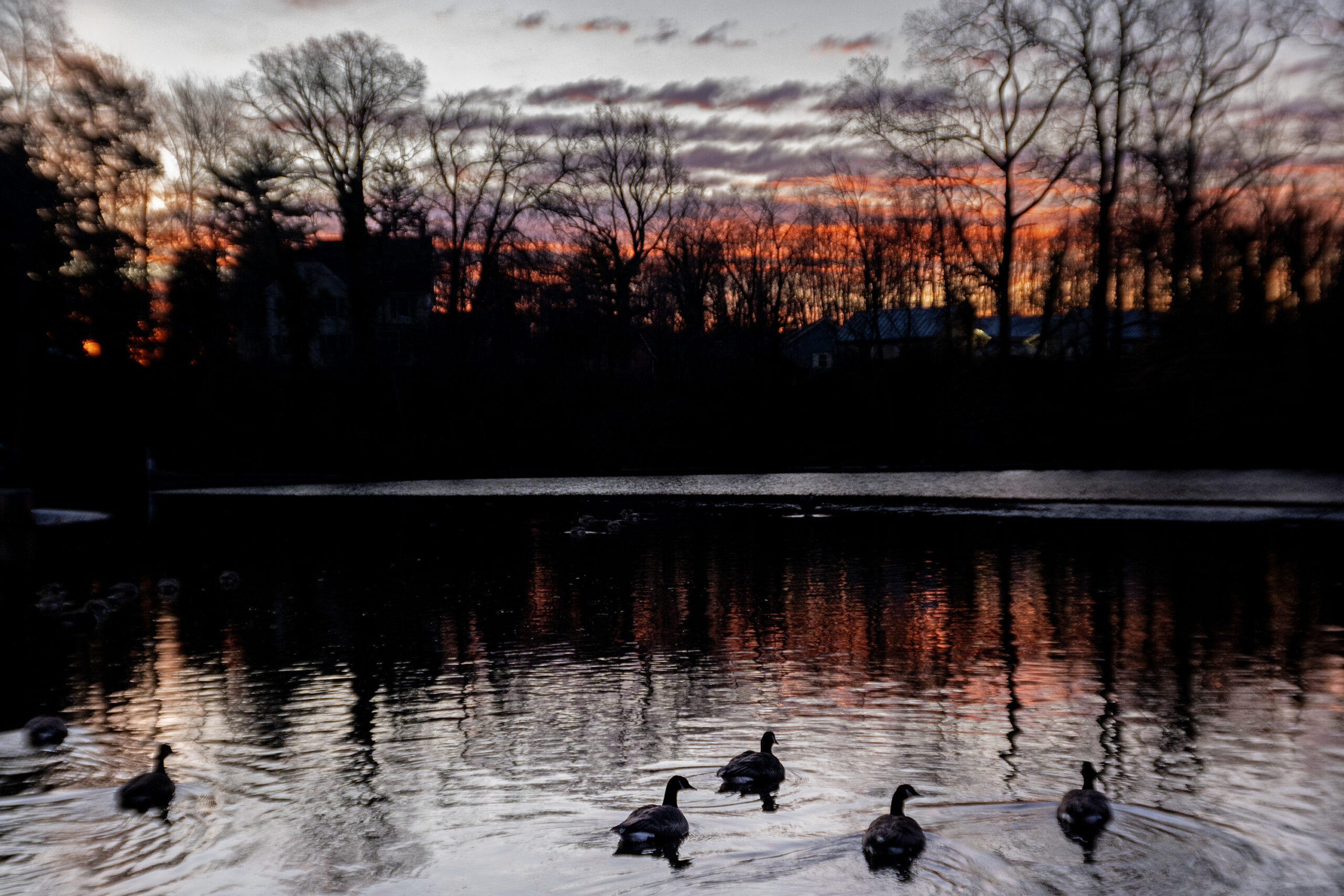
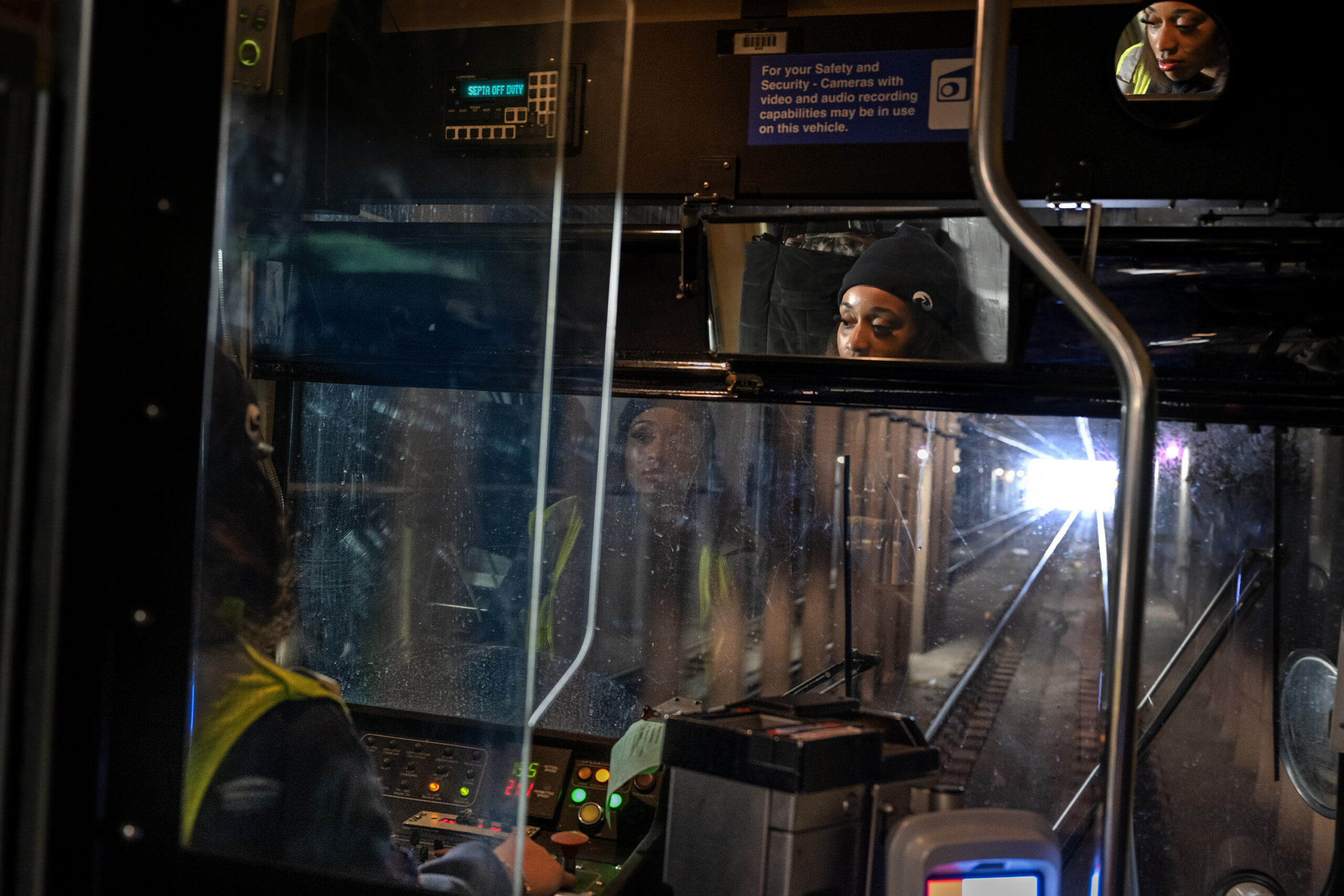
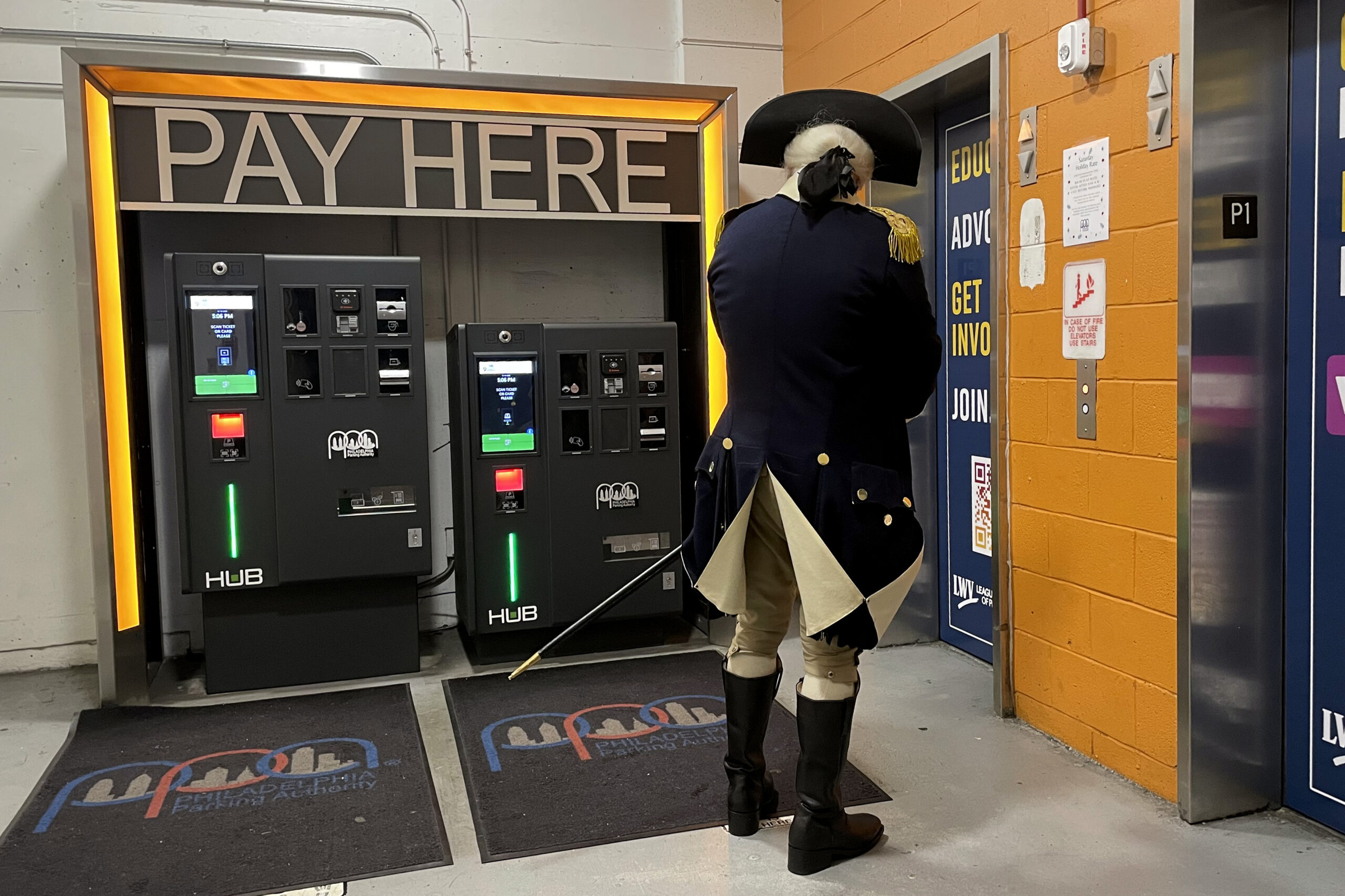
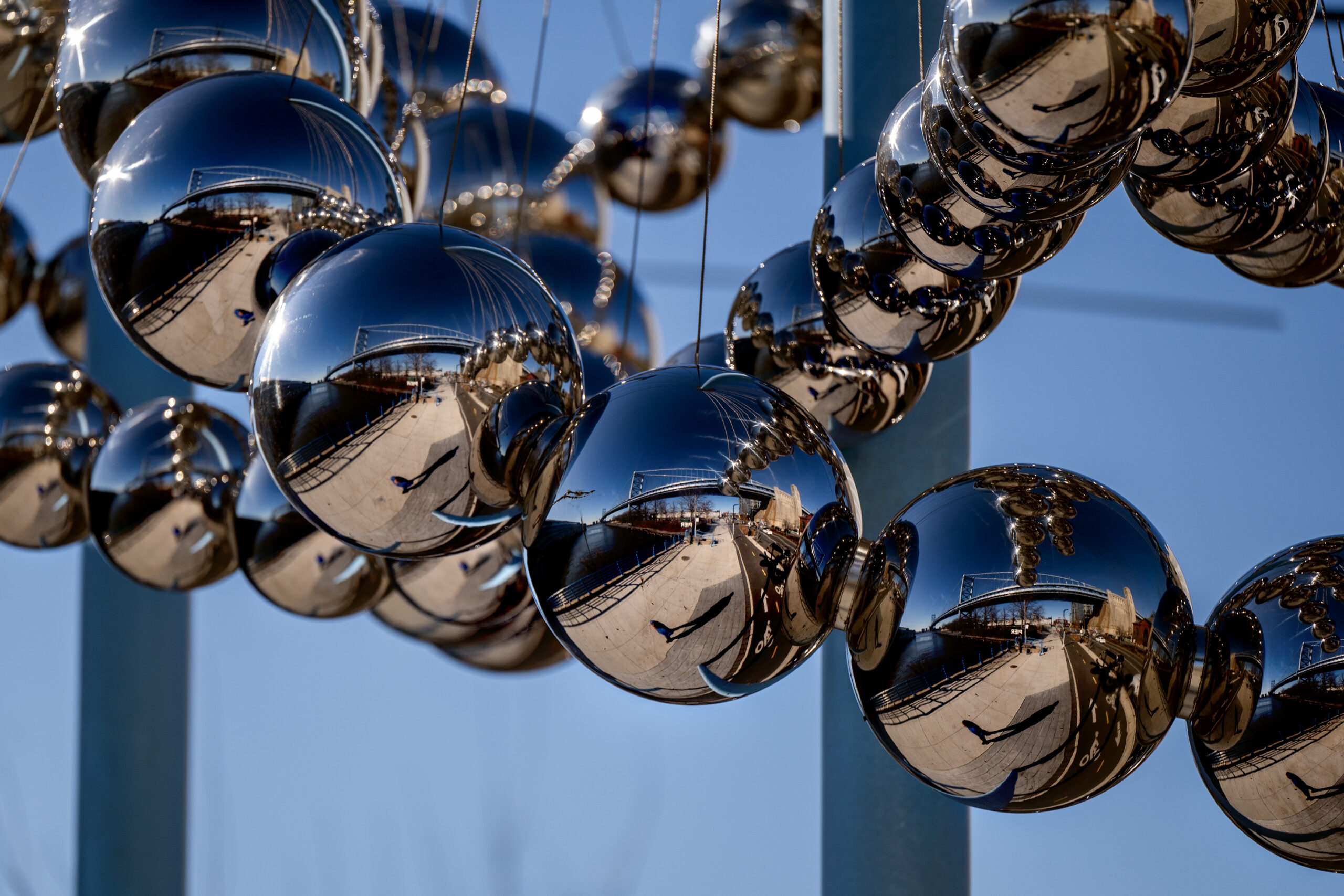
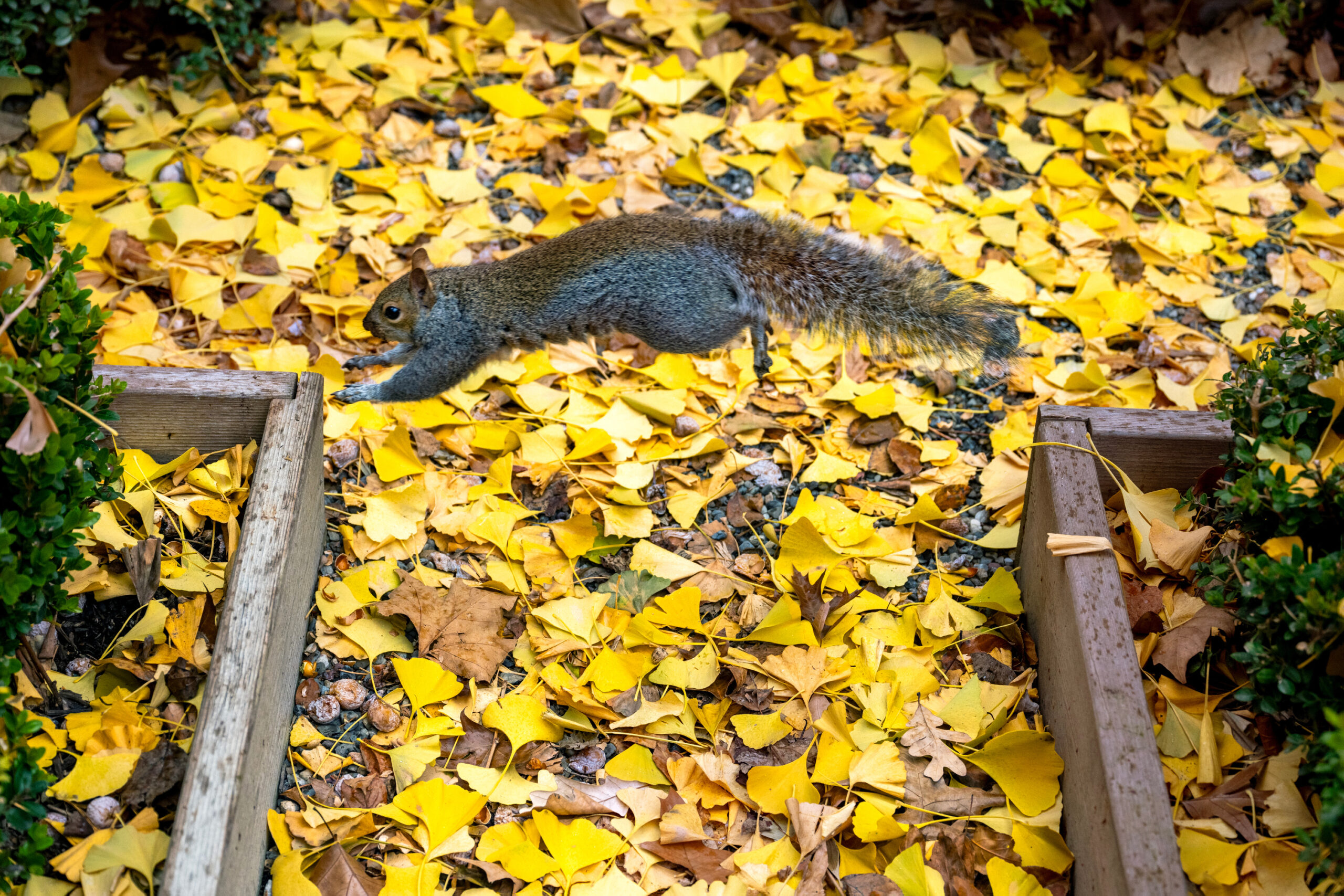
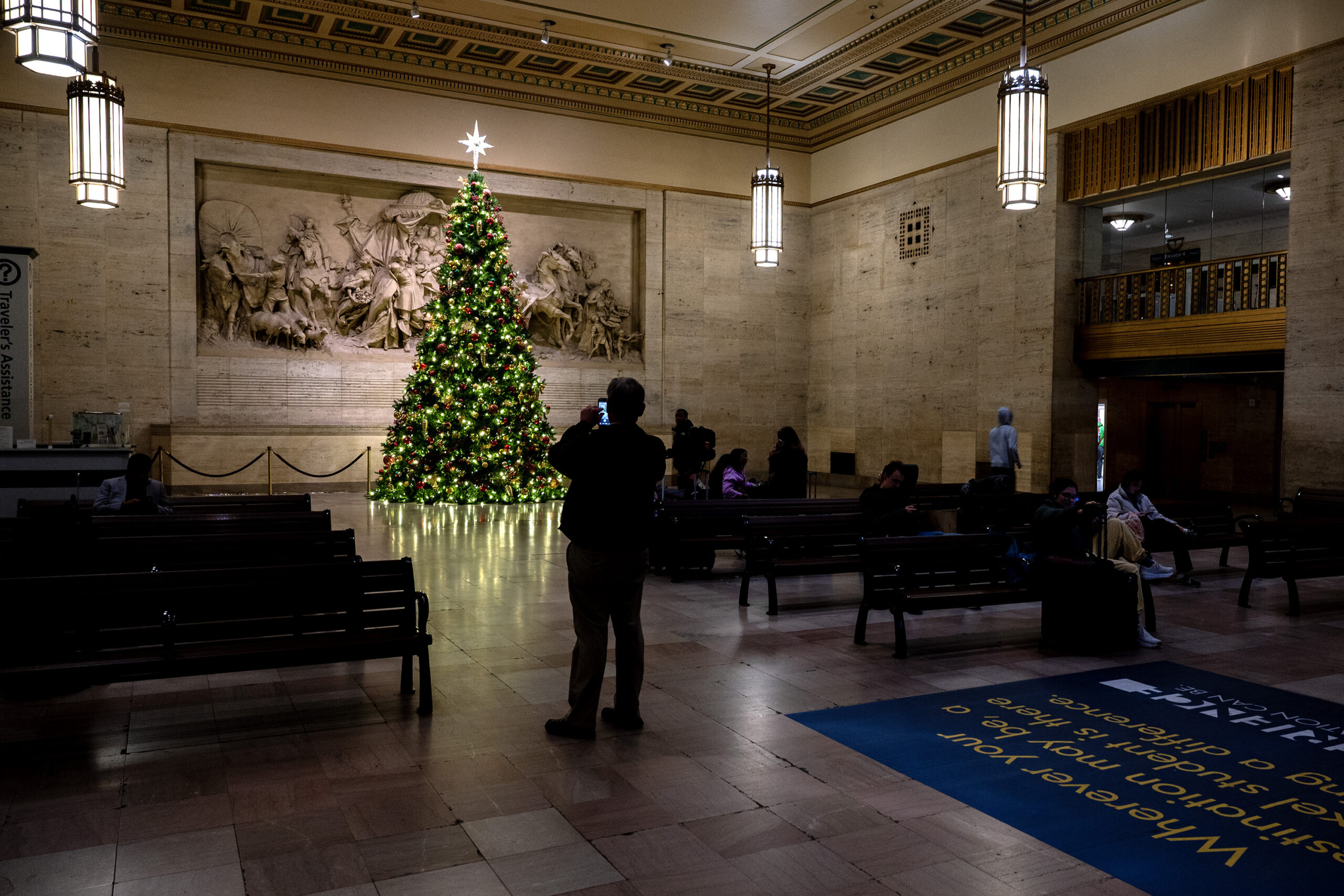
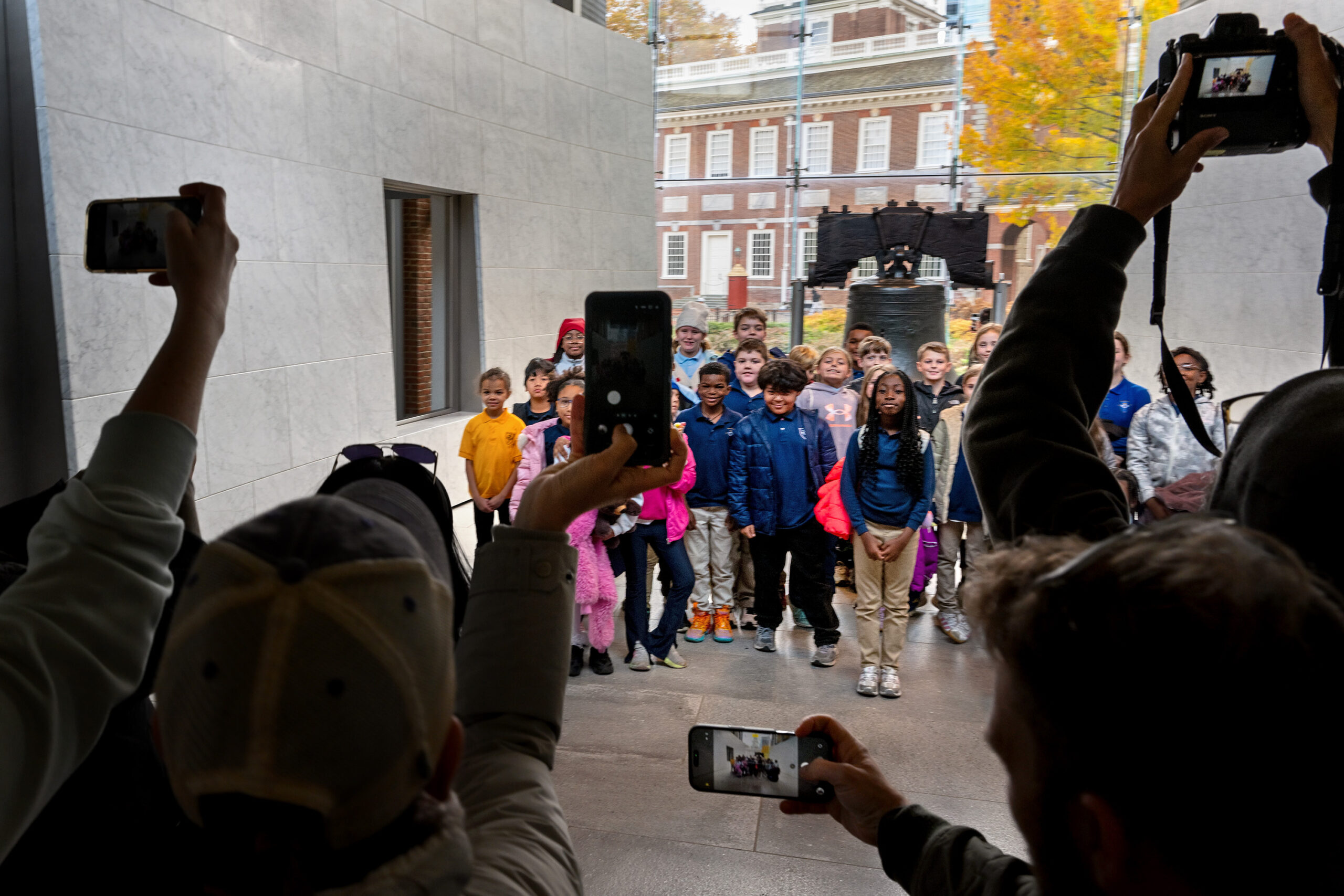
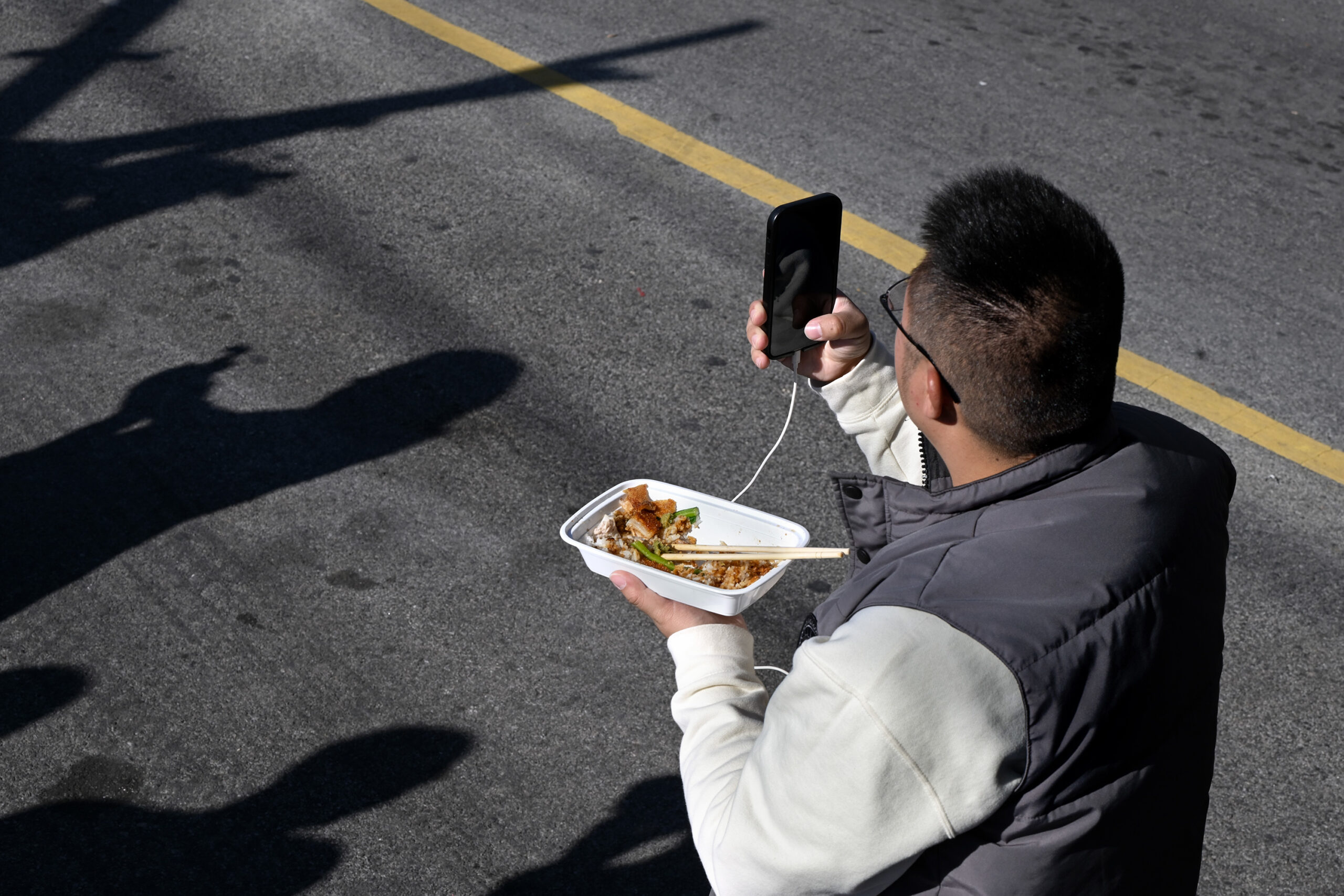
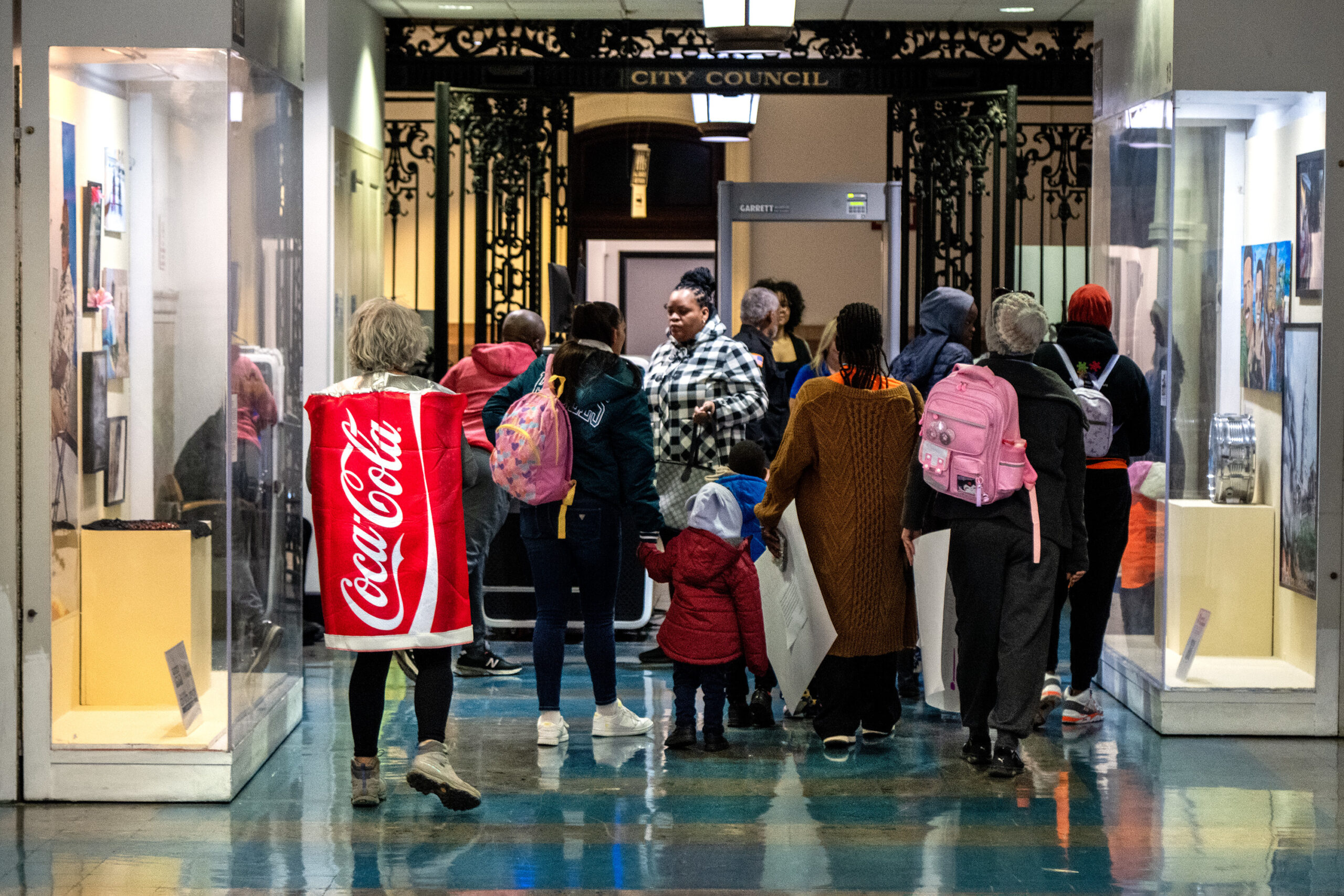
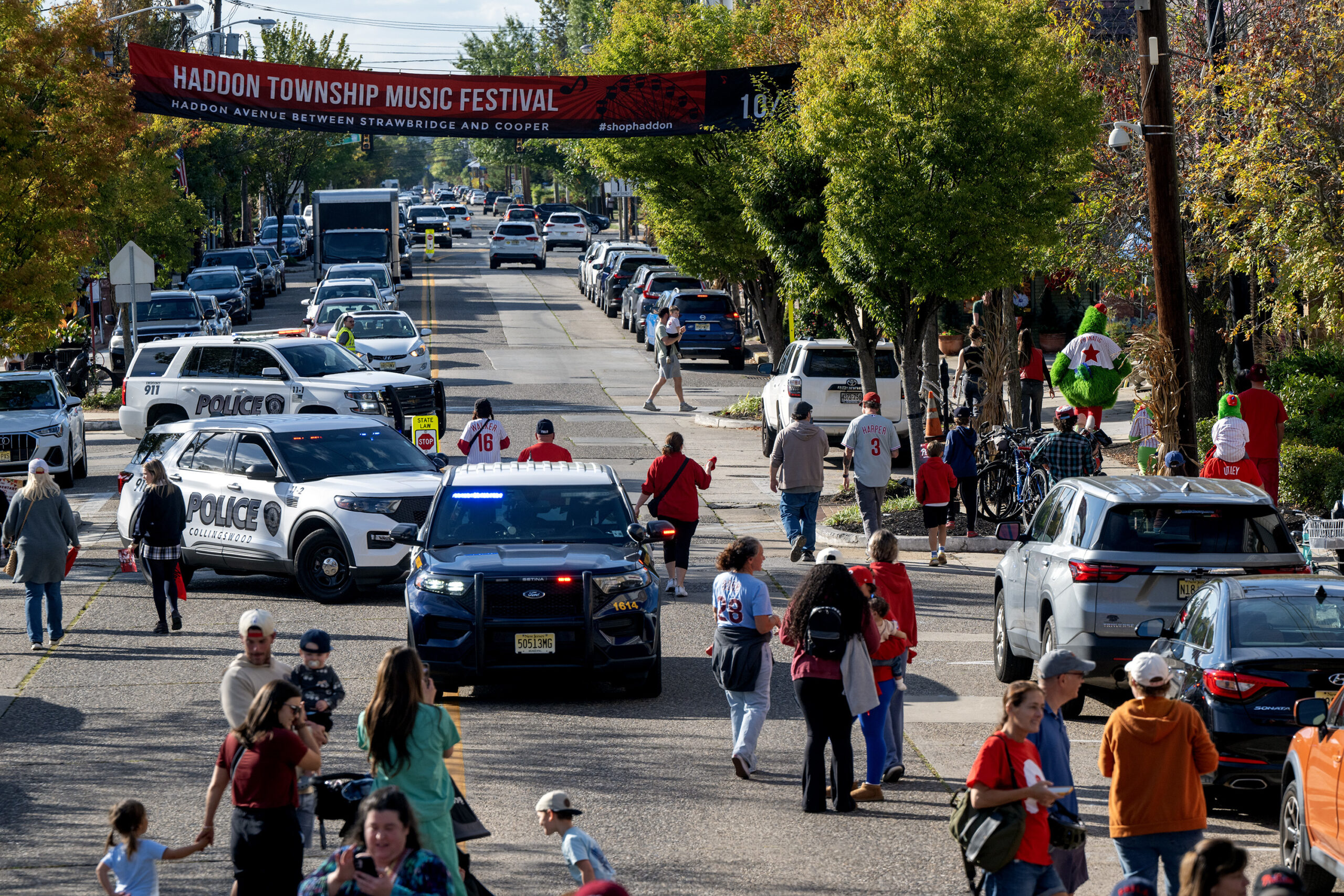
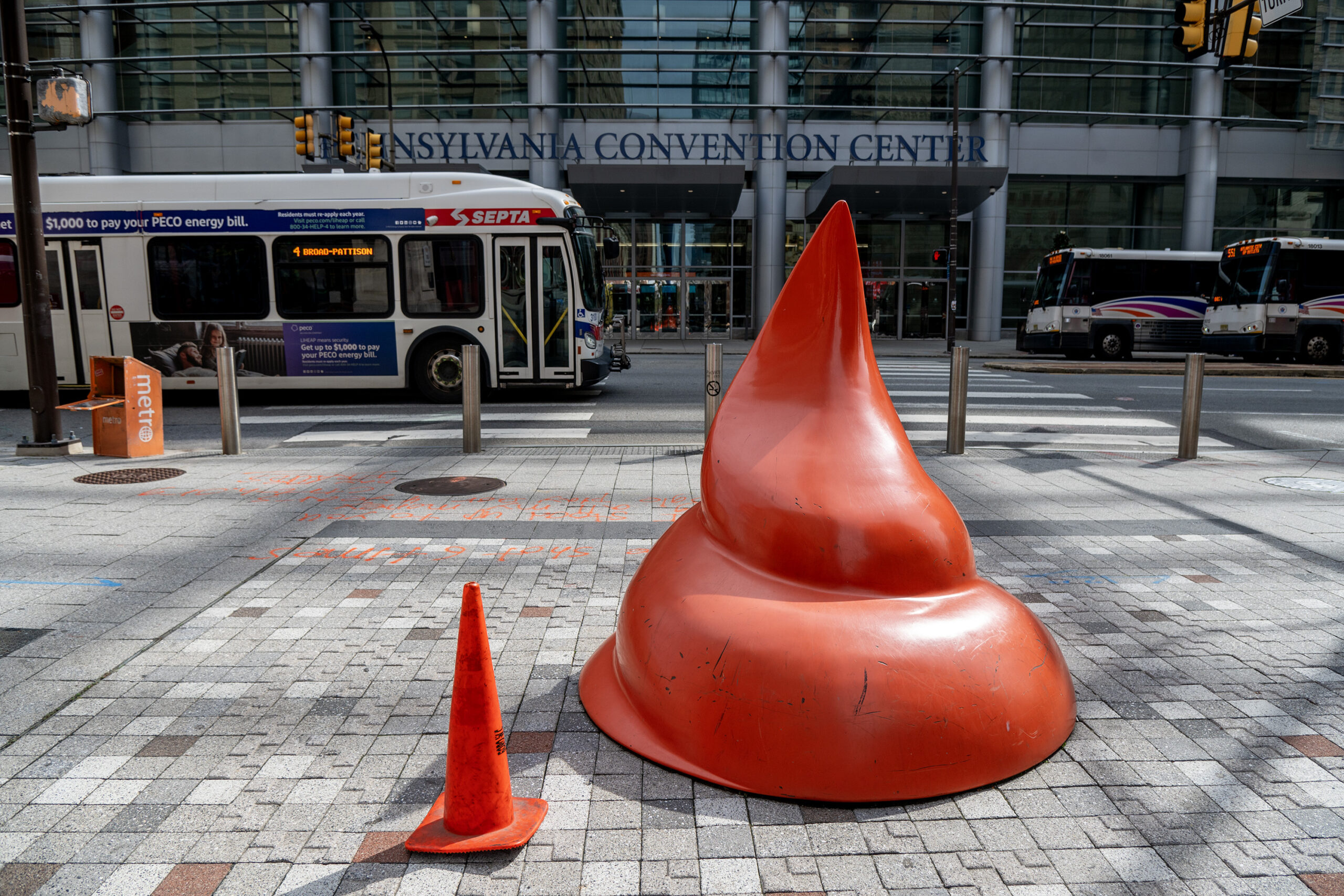
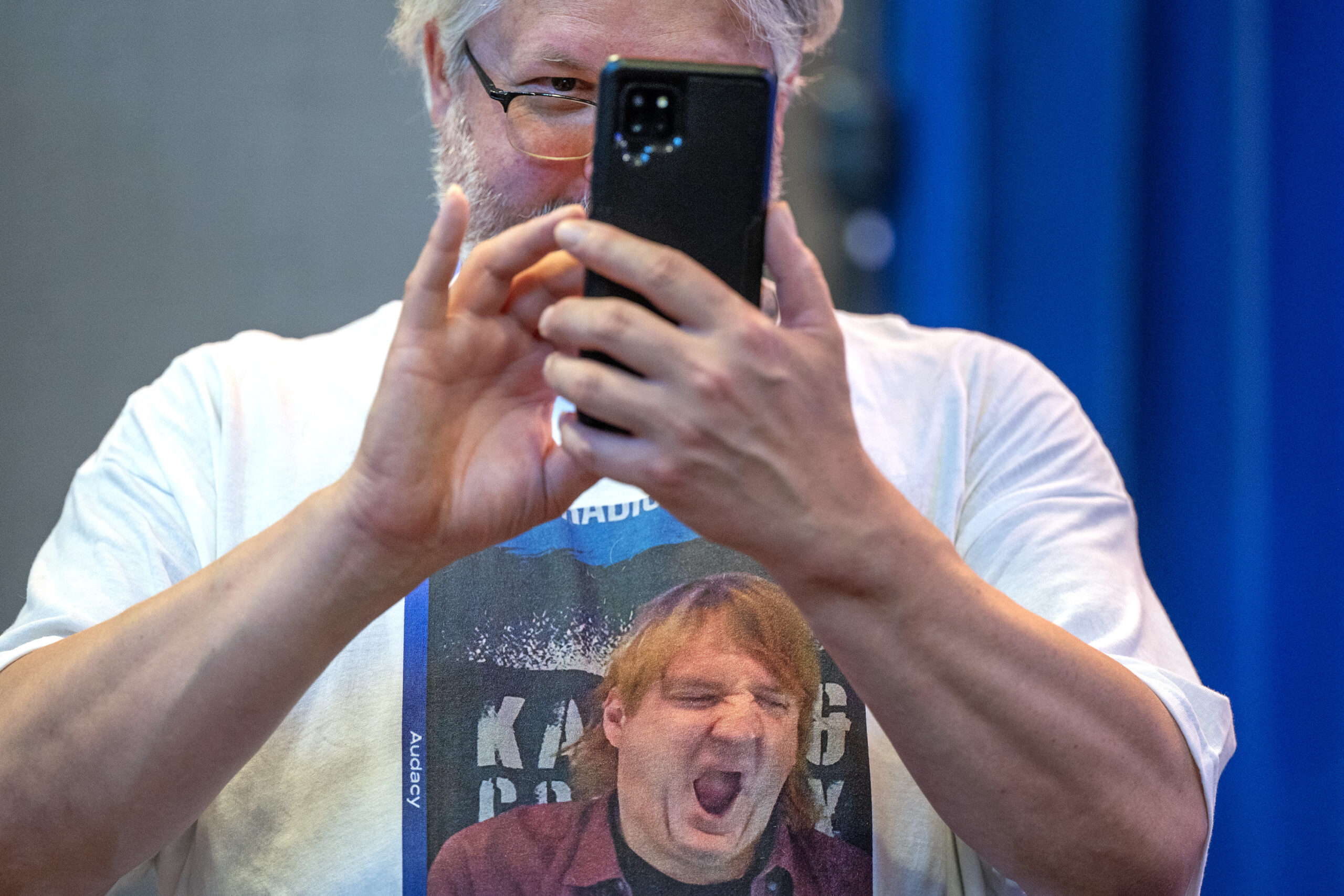
Dec. 29, 2025: Canada geese at sunrise in Evans Pond in Haddonfield, during the week of the Winter Solstice for the Northern Hemisphere. December 22, 2025: SEPTA trolley operator Victoria Daniels approaches the end of the Center City Tunnel, heading toward the 40th Street trolley portal after a tour to update the news media on overhead wire repairs in the closed tunnel due to unexpected issues from new slider parts.December 15, 2025: A historical interpreter waits at the parking garage elevators headed not to a December crossing of the Delaware River, but an event at the National Constitution Center. General George Washington was on his way to an unveiling of the U.S. Mint’s new 2026 coins for the Semiquincentennial, December 8, 2025: The Benjamin Franklin Bridge and pedestrians on the Delaware River Trail are reflected in mirrored spheres of the “Weaver’s Knot: Sheet Bend” public artwork on Columbus Boulevard. The site-specific stainless steel piece located between the Cherry Street and Race Street Piers was commissioned by the City’s Public Art Office and the Delaware River Waterfront Corporation and created and installed in 2022 by the design and fabrication group Ball-Nogues Studio. The name recalls a history that dominated the region for hundreds of years. “Weaver’s knot” derives from use in textile mills and the “Sheet bend” or “sheet knot” was used on sailing vessels for bending ropes to sails. November 29, 2025: t’s ginkgo time in our region again when the distinctive fan-shaped leaves turn yellow and then, on one day, lose all their leaves at the same time laying a carpet on city streets and sidewalks. A squirrel leaps over leaves in the 18th Century Garden in Independence National Historical Park Nov. 25, 2025. The ginkgo (Ginkgo biloba) is considered a living fossil as it’s the only surviving species of a group of trees that existed before dinosaurs. Genetically, it has remained unchanged over the past 200 million years. William Hamilton, owner the Woodlands in SW Phila (no relation to Alexander Hamilton) brought the first ginkgo trees to North America in 1785.November 24, 2025: The old waiting room at 30th Street Station that most people only pass through on their way to the restrooms has been spiffed up with benches – and a Christmas tree. It was placed there this year in front of the 30-foot frieze, “The Spirit of Transportation” while the lobby of Amtrak’s $550 million station restoration is underway. The 1895 relief sculpture by Karl Bitter was originally hung in the Broad Street Station by City Hall, but was moved in 1933. It depicts travel from ancient to modern and even futuristic times. November 17, 2025: Students on a field trip from the Christian Academy in Brookhaven, Delaware County, pose for a group photo in front of the Liberty Bell in Independence National Historical Park on Thursday. The trip was planned weeks earlier, before they knew it would be on the day park buildings were reopening after the government shutdown ended. “We got so lucky,” a teacher said. Then corrected herself. “It’s because we prayed for it.” November 8, 2025: Multitasking during the Festival de Día de Muertos – Day of the Dead – in South Philadelphia.November 1, 2025: Marcy Boroff is at City Hall dressed as a Coke can, along with preschoolers and their caregivers, in support of former Mayor Jim Kenney’s 2017 tax on sweetened beverages. City Council is considering repealing the tax, which funds the city’s pre-K programs. October 25, 2025: Austin Gabauer, paint and production assistant at the Johnson Atelier, in Hamilton Twp, N.J. as the finished “O” letter awaits the return to Philadelphia. The “Y” part of the OY/YO sculpture is inside the painting booth. The well-known sculpture outside the Weitzman National Museum of American Jewish History was removed in May while construction continues on Market Street and has been undergoing refurbishment at the Atelier at the Grounds for Sculpture outside of Trenton.October 20, 2025:The yellow shipping container next to City Hall attracted a line of over 300 people that stretched around a corner of Dilworth Park. Bystanders wondered as they watched devotees reaching the front take their selfies inside a retro Philly diner-esque booth tableau. Followers on social media had been invited to “Climb on to immerse yourself in the worlds of Pleasing Fragrance, Big Lip, and exclusive treasures,” including a spin of the “Freebie Wheel,” for products of the unisex lifestyle brand Pleasing, created by former One Direction singer Harry Styles.October 11, 2025: Can you find the Phillie Phanatic, as he leaves a “Rally for Red October Bus Tour” stop in downtown Westmont, N.J. just before the start of the NLDS? There’s always next year and he’ll be back. The 2026 Spring Training schedule has yet to be announced by Major League Baseball, but Phillies pitchers and catchers generally first report to Clearwater, Florida in mid-February.October 6. 2025: Fluorescent orange safety cone, 28 in, Poly Ethylene. Right: Paint Torch (detail) Claes Oldenburg, 2011, Steel, Fiberglass Reinforced Plastic, Gelcoat and Polyurethane. (Gob of paint, 6 ft. Main sculpture, 51 ft.). Lenfest Plaza at the Pennsylvania Academy of the Fine Arts on North Broad Street, across from the Convention Center.September 29, 2025: A concerned resident who follows Bucks County politics, Kevin Puls records the scene before a campaign rally for State Treasurer Stacy Garrity, the GOP candidate for governor. His T-shirt is “personal clickbait” with a url to direct people to the website for The Travis Manion Foundation created to empower veterans and families of fallen heroes. The image on the shirts is of Greg Stocker, one of the hosts of Kayal and Company, “A fun and entertaining conservative spin on Politics, News, and Sports,” mornings on Talk Radio 1210 WPHT.
Nowhere will celebrate America’s 250th anniversary like Philadelphia. Because nowhere else can celebrate the national milestone like Philadelphia.
Philly is where it happened.
Only in Philadelphia, on July 4, 1776, did 56 sweat-soaked delegates of the Second Continental Congress stride into sweltering Independence Hall to stake their necks on an idea. In the course of human events, it had become time to declare self-evident truths. All men are created equal and endowed by certain unalienable rights.
Some men, that is.
This unforgivable erasure would have reverberations to this day. Nowhere are the centuries-old wounds of that betrayal more visible than in the unrelenting poverty, violence, and inequality preventing so many Philadelphians from their pursuit of happiness.
But the manifesto was still the most revolutionary freedom document humankind ever produced. A single piece of parchment composed of elegant, unwavering prose that defied and dared an empire, forever reordered the rights of man, and drew the eyes of humanity — and judgments of history — upon our humble burg.
Their work for the day done — and in keeping with the rest of the Founders’ stay in the City of Brotherly Love — the framers presumably dusted off their wigs, loosened up their waistcoats, and repaired to the cooling comfort of the City Tavern for a rager for the ages.
Only in Philadelphia.
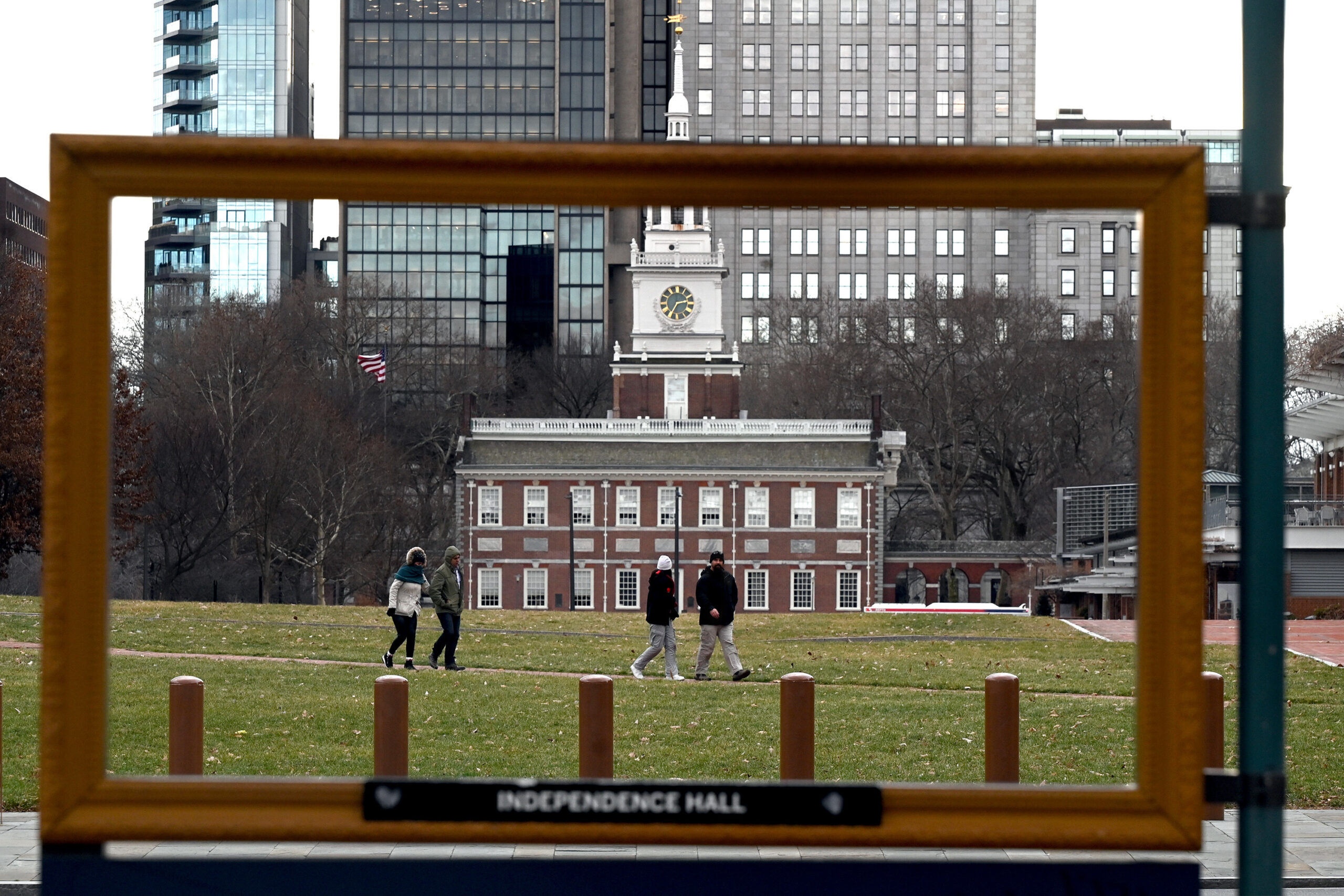
Independence Hall in Independence National Historical Park Jan. 3, 2024. one of the Philadelphia region’s most visited areas, but the lustre has often seem faded in its grounds and buildings. But organizers say it will be different in time for 2026, the 250th birthday celebration of America.
‘Philly is beyond ready’
Two-and-half centuries later, the eyes of the world again fall upon our Philly — for yet another rager for the ages.
In Philly fashion, the city’s preparations for the 250th anniversary of the signing of the Declaration of Independence, also known as the Semiquincentennial, stumbled to a rocky start. Poor funding, a lack of leadership, and miscommunication plagued early stages of Philly’s 250th party planning.
But in truer Philly fashion, dozens of passionate Philadelphian civil servants, cultural leaders, artists, volunteers, and philanthropies rallied to ensure the city where it happened met the moment.
Only a year ago, during a 2026 preparedness meetings, worried planners requested $100 million from city and state coffers to fund festivities and programming worthy of democracy’s birthplace. They have received it.
“A year ago, we were having a conversation about, ‘Are we ready?’, ‘Is the money there?’, ‘Can we pull this off?’” said Max Weisman, an aide to Councilmember Isaiah Thomas, a key planner. “Yes, yes, yes.”
Philadelphia is ready, the planners say. Have no doubt.
These Philly-loving patriots say they have organized a once-in-a-lifetime party equal to the city’s unparalleled role in history — and its irrepressibly proud personality.
“Philly is beyond ready,” said Kathryn Ott Lovell, president and CEO of the Philadelphia Visitor Center Corporation and Philadelphia250, the city’s key planning partner for 2026. “Everyone is pulling out the red carpet. Every museum. Every cultural institution. Every neighborhood organization. Everyone is doing something special for the company that’s coming.”
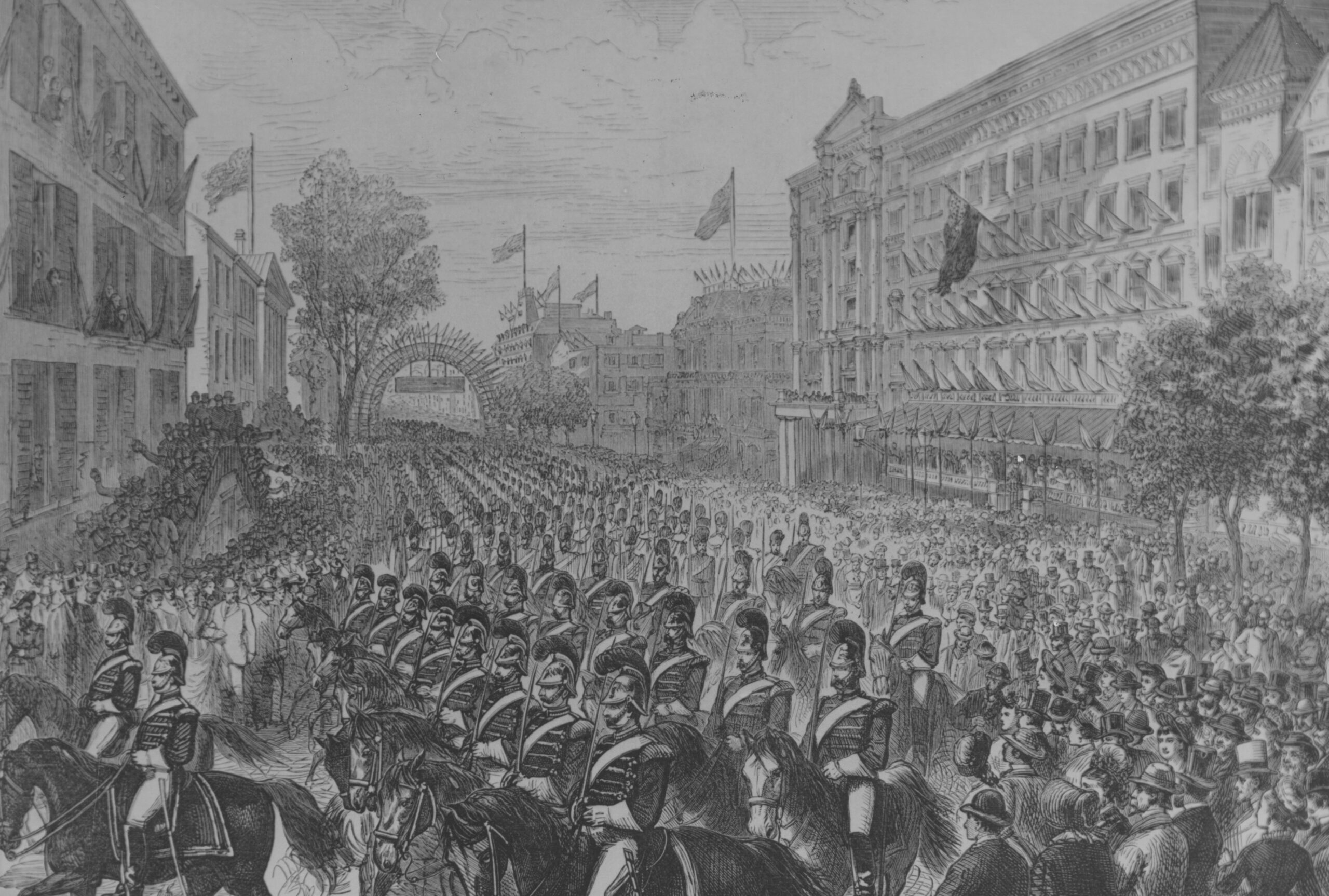
In this depiction published in The Inquirer July 1, 1951, the first event of July 4, 1876, was a huge military parade. The celebration was held in Independence Square after the parade.
A ‘reintroduction to the world’
Look around. Everywhere signs abound of the already-underway party. In the scores of new museum exhibits grandly exploring every power and contradiction enshrined in the declaration bellowed out of Philadelphia 250 years ago. In the abundance of plans for neighborhood programming and beautifications that bring the party to the people in 2026. In new ventures honoring Philly diversity and pride. In the polish and paint in the works for the Historic District.
Hey, Philly cleans up when it needs to.
It was visible when a parade of ships sailed along the Delaware in October to kick off the 250th anniversary of the Navy, founded in Philly. And it was heard in the crisp salutes and solemn hymns of the Marines who crowded Old City in November to mark their branch’s founding, also in Philly in 1775. It builds in the excitement of clock-ticking preparations for the string of big-ticket events that will grace Philadelphia in 2026.
Six FIFA World Cup matches, with a summer fan festival and volunteer-training campus. The MLB All-Star Game. A pumped-up Fourth of July with to-be-announced special guests. TED Democracy talks featuring citizen speakers from Philly and beyond, exploring democracy’s painful past and uncertain present.
It rings out in the genuine excitement of Philadelphians who work in ceaseless dedication to the principle that Philadelphians know how to throw a party.
Philadelphia is not screwing up a party, is Weisman’s mantra (except he doesn’t say, “screwing.”)
Matthew Skic, of Morristown, N.J., Director of Collections and Exhibitions, (left), and Michael Hensinger, of Fishtown, Pa., Senior Manager of K-12 Education, (right), are dressed as Minute Men from the Massachusetts Militia at the opening of the exhibit Banners of Liberty which showcased the original revolutionary war flags at the Museum of the American Revolution in Philadelphia, Pa., on Saturday, April 19, 2025.
Not just a party. A year-long, city-wide commemoration that delivers Philadelphia into a more prosperous future. Before city planners found their 250th footing, Philly tourism and cultural leaders banded together to seize the opportunity. With more than500,000 visitors expected for the World Cup alone, they aim to reintroduce Philadelphia to the world.
“Or introduce ourselves for the very first time to people who do not know Philadelphia or have a very narrow view of Philadelphia,” said Angela Val, president and CEO of Visit Philadelphia, the nonprofit that serves as the city’s official leisure-tourism marketing agency. “We don’t take these big events lightly. They are investments. This is really an opportunity to set ourselves up for success in 2026 and beyond.”
Parties of the past
We’ve been here before.
Every 50 years since 1876, the nation’s Centennial year, and America’s first major birthday bash, Philly has dusted off its wig to get down. Each of these events came with larger national wounds.
“Before every one of these fairs, there’s a scar,” said David Brigham, librarian and CEO of the Historical Society of Pennsylvania, referring to Philly’s previous national birthday parties. “There’s always been a conflict and a pain.”
And in these moments, Philly has strove to be a salve, he said. Most of the time, anyway.
In 1876, when America reeled from unhealed wounds of the Civil War, Philadelphia built a small city in Fairmount Park — and hosted 10 million people from 37 countries. The showcase of growing American innovation and economic prowess aimed to heal a ruptured nation. Memorial Hall, its massive art gallery, remains today as the Please Touch Museum.
In 1926, as America emerged from the carnage of World War I, our Sesquicentennial marked the building of the Ben Franklin Bridge, the transformation of what is now FDR Park, and the construction of a temporary, gleaming, utopian metropolis in South Philly.
The Bicentennial in 1976 led to the creation of the Mann Center and the African American Museum in Philadelphia, even if the party itself was marred by Mayor Frank Rizzo’s heavy-handed security — he summoned 15,000 National Guard members.
We’ve been here before. And we aren’t perfect.
As ready as Philadelphia stands, next year’s commemoration will not include the big legacy projects of past celebrations, the bridges, stadium, and new museums.
But maybe that’s not what this moment is about, anyway.
An unfinished journey
Just as past planners grappled with the questions of their American moment, Philadelphia organizers wrestle with ours.
“It’s a commemoration of why our republic was created,” Lovell said. “But also about a recommitment to the ideals that were established. We were founded on these basic principles and values that the Founding Fathers fought over. And we’re still fighting over it.”
It’s that same theme — the grand fragility of our American experiment — that pulses though the Museum of the American Revolution’s landmark exhibit, “The Declaration’s Journey.”
A breath-taking assemblage of rare artifacts, including Thomas Jefferson’s writing chair and Martin Luther King’s prison bench, the museum’s most ambitious show ever explores the 250-year global impact of the declaration. How words proclaimed out from Philadelphia inspired revolutions and freedom movements throughout the centuries
“The American Revolution is not synonymous with the Revolutionary War,” said R. Scott Stephenson, president of the museum. “It is a centuries-long, ongoing experiment in liberty, equality, and self-government.”
And that journey’s not yet over.
The birth of democracy in Philadelphia, and the worldwide struggle to sustain it, represents the most significant event since the birth of Christ, said filmmaker Ken Burns. (And here we though it was Super Bowl LII.)
The American war may be over, but the revolution is not, said Burns, whose 12-hour docuseries, “The American Revolution,” is streaming on PBS.
All we were promised was the pursuit, he said. And the chance to forever make the imperfect a little less so.
The republic the Founders forged in the Philly heat stands the most divided and tested it has been in decades, with core disagreements about its very foundations.
It is only right, then, that Philadelphians march onto the global stage. Who else but us?
In every way, being America’s birthplace shapes Philadelphia. Where else is its hallowed iconography such a daily staple? Where else does its symbolism so powerfully frame every civic successes — and failure? Every sports triumph and cultural happening. Every step forward; every stumble backward.
Where else does the promise and contradictions of a proclamation that turned the world upside down so intrinsically coarse through the lifeblood of a place?
From losing a leg to a parasitic infection that almost took his life to getting temporarily cast out by his herd, Ray the Nubian goat had a rough 2025. Loving volunteers and a wheelchair might make for an improved 2026.
In October, the Philly Goat Project, an East Germantown nonprofit that provides community wellness through nature connection, shared Ray’s story with The Inquirer.
The 7-year-old goat had gone from helping people in bereavement and children with cerebral palsy at Awbury Arboretum to needing help moving around. Readers showed up for the middle-aged ruminant, donating enough for Ray to get his wheelchair and have physical therapy.
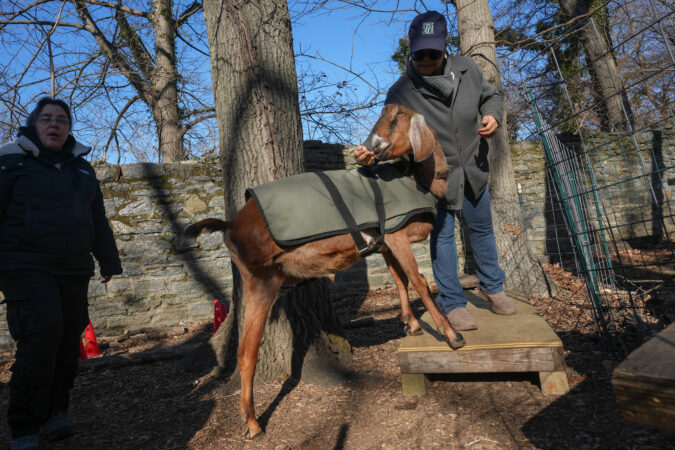
On a recent cold Monday morning, Ray eagerly awaited his rehabilitation, standing strong on three legs and eating orange peels out of volunteer Jay Tinkleman’s hand.
“It’s amazing what he has been through,” Tinkleman said, kissing Ray’s forehead. “He seems more confident now, a little stronger, and the other goats don’t pick on him like they used to at first, so I think they sense that he is stronger.”
Leslie Jackson, director of operations, works with Ray, who lost his leg due to a parasite infection.
Casey Buckley, who runs Ray’s physical therapy, agrees with Tinkleman, but said the friendly goat still has a long way to go.
These days, Ray is an ambulatory wheelchair user. He can move with or without a wheelchair, but needs it for long strolls, an important part of goat life.
“His rehab is a lifelong process,” Buckley said. “The goal is that on long walks, where he might not be able to go, he can use the wheelchair, but we just have to take it day by day.”
Ray might not fully agree. Once the first of his nine exercises began, he was ready to go.
“Slow down!” Leslie Jackson, director of operations at Philly Goat Project, told Ray on multiple occasions.
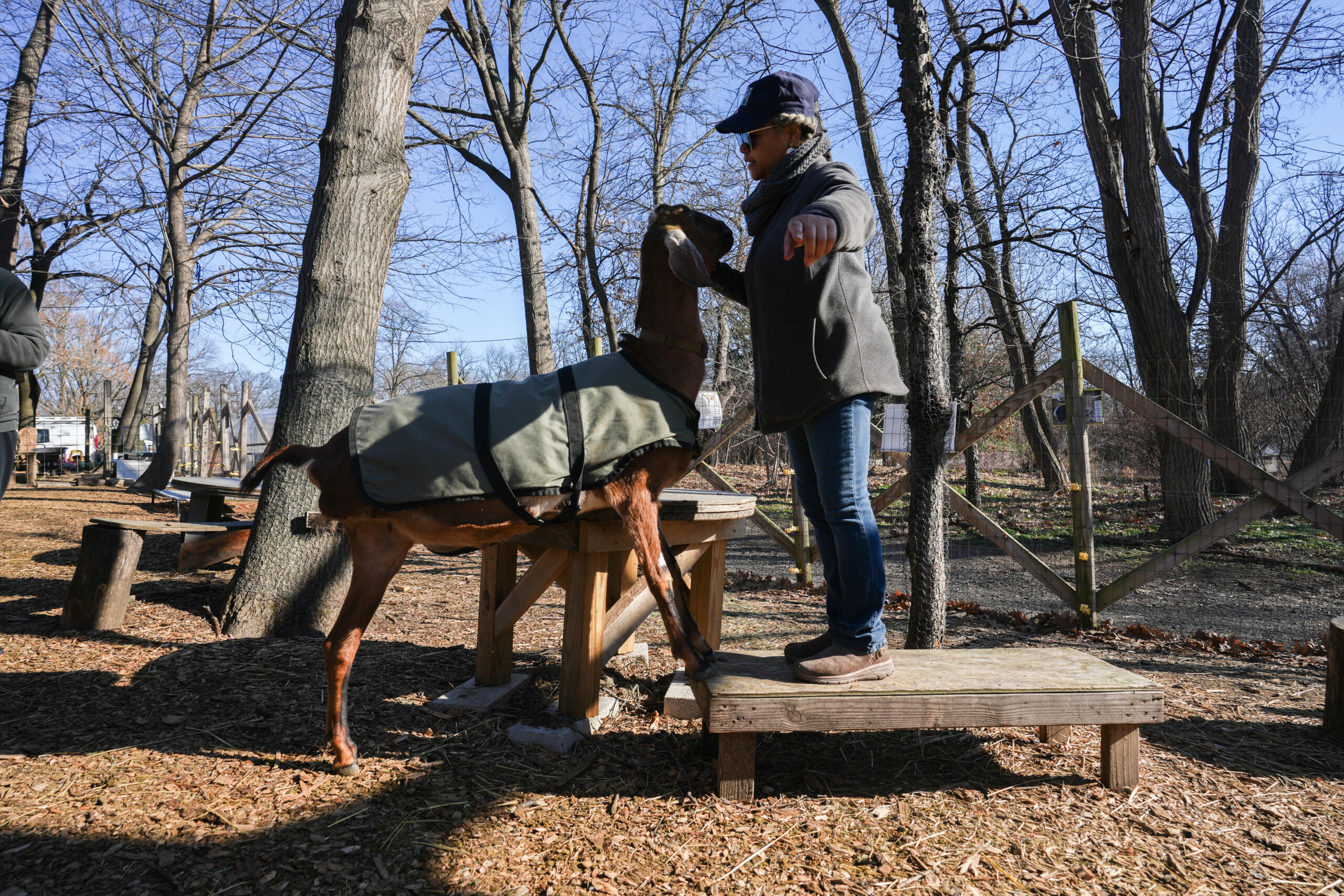
Neck stretches side to side, he aced it. Getting rocked back and forth to get the core strength humans get when doing crunches, no problem. Elevating his two front hooves on a table, while balancing on his third leg, to practice climbing the Philly Goat Project van “Vangoat,”easy.
Then came the orange cone course. Ray flew through it only to be stopped by Jackson right before the ending.
“No, no, no cheating, back, back,” Jackson told him upon realizing, in his speed, Ray had missed a line.
He tried again and again, but his last paw kept missing a line of cones. He bumped Jackson’s arm softly, perhaps looking for a comforting treat.
“We will do it together, teamwork makes the dream work,” Jackson told Ray, as Tinkleman and Buckley rallied around them to help line up the cones for another try. And shortly, to Ray, victory tasted like orange peels.
After 30 minutes of PT, he was ready to practice walking around in his wheelchair.
It took all three to get Ray into the chair. Tinkleman petted Ray’s head, keeping him calm. Jackson lifted the back of his body. And Buckley placed the metal contraptionaround Ray, making sure there was a wheel on each side, securing the black belt, and placing two soft sponges under the hip where his fourth leg used to be.
“He is not afraid of it, he doesn’t run from it,” Jackson said as Ray took off walking faster than before, no hopping or dragging. A milestone for the team that had been working for Ray to walk with his chair instead of feeling like he had to drag it.
Belly full of treats, the jolly goat led the group to the barn where his 11 goat friends and brother Teddy rested after returning from one of their long walks.
In time, the team hopes that the chair will help Ray join in once again. They are practicing having Teddy walk next to Ray in his wheelchair, keeping enough space for the wheels not to run over Teddy’s hooves.
Until then, Jackson feels grateful for Ray’s resilience and the big hearts that have helped him along the way.
“You don’t give up on a teammate, you try to help them through,” Jackson said. “Without the people who responded from The Inquirer [article], and our friends and family and fans, this would not be possible; he would not be getting stronger without a trainer, without a professional wheelchair. It’s a community effort.”
We’ll show you a photo taken in the Philly-area, you drop a pin where you think it was taken. Closer to the location results in a better score. This week’s theme is all about the new year. Good luck!
Round #14
Question 1
Where were people enjoying the fireworks?
Loading…
ClickTap on map to guess the location in the photo
ClickTap again to change your guess and hit submit when you're happy
You will be scored at the end. The closer to the location the better the score
Elizabeth Robertson / Staff Photographer
Pretty good/Not bad/Way off! Your guess was from the location.Spot on! Your guess was exactly at the location. Here's also where a random selection of Inquirer readers guessed.
This is Penn Treaty Park. Crowds gather here annually to watch the New Year’s Eve firework shows on the Delaware River.
Quiz continues after ad
Question 2
Where was this sunrise?
Loading…
Alejandro A. Alvarez / Staff Photographer
Pretty good/Not bad/Way off! Your guess was from the location.Spot on! Your guess was exactly at the location. Here's also where a random selection of Inquirer readers guessed.
This sunrise was at Delancey Street and South 6th Street.
Quiz continues after ad
Question 3
Where is this building?
Loading…
Jose F. Moreno / Staff Photographer
Pretty good/Not bad/Way off! Your guess was from the location.Spot on! Your guess was exactly at the location. Here's also where a random selection of Inquirer readers guessed.
This is the Athenaeum of Philadelphia on South Sixth Street. The Athenaeum will host a celebration on Jan. 6 to commemorate the first balloon voyage in America, kicking off the city's yearlong United States Semiquincentennial celebrations.
Your Score
ARank
Amazing work. You are already checking off your resolution list!
BRank
Good stuff. Seems like you’re ready to embrace a promising new year!
CRank
C is a passing grade, but you need to commit to studying all year-round!
DRank
D isn’t great. Your answers look like leftovers from 2025.
FRank
We don’t want to say you failed, but you didn’t not fail.
You beat % of other Inquirer readers.
We’ll be back next Saturday for another round of Citywide Quest.
A suspect in a West Philadelphia carjacking briefly stole a Philadelphia police car in the city’s Frankford section Friday night before finally being arrested.
Around 6:30 p.m. at Race and Robinson Streets, a young man carjacked a Chevrolet SUV, said Inspector D.F. Pace.
Its OnStar system enabled police to track the vehicle, which the man abandoned at Frankford and Adams Avenues, Pace said.
As officers tried to apprehend him, the man stole a 25th District police vehicle and drove north to the area of Castor Avenue and Herbert Street, Pace said, where he then parked the vehicle in a driveway on the 900 block of Herbert Street.
The department’s helicopter unit tracked the stolen police car and officers were able to apprehend the man a short time later, Pace said.
No one was injured, Pace said. The SUV that was originally stolen sustained some damage.
Two men died in a shootout that began over a domestic issue in the city’s Castor neighborhood on New Year’s Day, authorities say, and police have charged a man and a woman with murder for their involvement.
The victims, 52-year-old Luis Colon and 21-year-old Quadir Tull, both died from their injuries at local hospitals, according to police.
Tyriq Williams, 21, and Cara Williams-Reeves, 44, were charged with murder and related crimes on Friday.
The incident began Thursday when a group of family members related to the ex-boyfriend of Colon’s stepdaughter showed up to Colon’s residence on the 7100 block of Oakland Street shortly after 11 a.m.
The group, which included Tull, Williams, and Williams-Reeves, had come to “initiate a confrontation” with Colon’s stepdaughter, police said. The ex-boyfriend was not present.
A struggle broke out when two women in the group — including Cara Williams-Reeves — began assaulting Colon’s stepdaughter and wife on the front lawn.
When Colon intervened, Tull and Williams pulled out firearms and pushed Colon.
Colon then pulled a firearm, and a shootout between the three men began, police said. They did not specify which man fired the fist shot.
Colon was struck multiple times in the chest and was transported by police to a nearby hospital, where he was pronounced dead just before noon.
Tull and Williams fled the scene in a dark-colored Chrysler 300 along with Williams-Reeves.
Tull had been shot multiple times and was driven in the Chrysler to a different hospital, where he was pronounced dead around 11:50 a.m.
Williams was shot in the hand and is in stable condition, police said.
For the first time in more than half a century, Philadelphia has recorded fewer than 225 homicides in a single year.
In 2025,222people were killed — the fewest since 1966, when there were a fraction of as many guns in circulation and 178 homicides.
It is a milestone worth commemorating — and mourning: Violence has fallen to its lowest level in decades, yet 222 deathsin a single city is still considered progress.
window.addEventListener(“message”,function(a){if(void 0!==a.data[“datawrapper-height”]){var e=document.querySelectorAll(“iframe”);for(var t in a.data[“datawrapper-height”])for(var r,i=0;r=e[i];i++)if(r.contentWindow===a.source){var d=a.data[“datawrapper-height”][t]+”px”;r.style.height=d}}});
The drop mirrors a national reduction in violence and follows years of sustained declines after Philadelphia’s annual homicide totals peaked during the pandemic, and it reflects a mix of likely contributing factors: Tech-savvy police are solving more shootings, violence prevention programs have expanded, and the city has emerged from pandemic instability.
No single policy or investment explains it, and officials caution that the gains are fragile.
“The numbers don’t mean that the work is done,” said Adam Geer, the city’s director of public safety. “But it’s a sign that what we’re doing is working.”
The impact is tangible: fewer children losing parents, fewer mothers burying sons, fewer cycles of retaliation.
“We are saving a life every day,” District Attorney Larry Krasner said.
Still, the violence hit some. Victims ranged from a 2-year-old girl allegedly beaten to death by her mother’s boyfriend to a 93-year-old grandfather robbed and stabbed in his home. They included Ethan Parker, 12, fatally shot by a friend playing with a gun, and Said Butler, 18, killed just days before starting his first job.
Police say street-level shootings and retaliatory violence fell sharply, in part because some gang conflicts have burned out after key players were arrested or killed. Killings this year more often stemmed from long-standing drivers — arguments, drugs, and domestic violence — and were concentrated in neighborhoods that have borne the brunt of the crisis.
“These same communities are still traumatized,” said Police Commissioner Kevin Bethel. “One gunshot is a lot. We can’t sit or act like we don’t see that.”
window.addEventListener(“message”,function(a){if(void 0!==a.data[“datawrapper-height”]){var e=document.querySelectorAll(“iframe”);for(var t in a.data[“datawrapper-height”])for(var r,i=0;r=e[i];i++)if(r.contentWindow===a.source){var d=a.data[“datawrapper-height”][t]+”px”;r.style.height=d}}});
The number of domestic-related killings nearly doubled this year compared with last, making up about 20% of homicides, Geer said. The disappearance and killing of Kada Scott, a 23-year-old woman from Mount Airy, was among them, and led to a citywide outcry and renewed scrutiny of how authorities handle violence against women.
And mass shootings on back-to-back holiday weekends — 11 people shot in Lemon Hill on Memorial Day, and 21 shot in a pair of incidents in South Philadelphia over July Fourth — left residents reeling.
<iframe title="Philadelphians’ Perceptions of Safety at Night" aria-label="Line chart" id="datawrapper-chart-GRrTN" src="https://datawrapper.dwcdn.net/GRrTN/1/" scrolling="no" frameborder="0" style="width: 0; min-width: 100% !important; border: none;" height="556" data-external="1"></iframe><script type="text/javascript">window.addEventListener("message",function(a){if(void 0!==a.data["datawrapper-height"]){var e=document.querySelectorAll("iframe");for(var t in a.data["datawrapper-height"])for(var r,i=0;r=e[i];i++)if(r.contentWindow===a.source){var d=a.data["datawrapper-height"][t]+"px";r.style.height=d}}});</script>
The progress comes even as the police department remains 20% below its budgeted staffing levels, with about 1,200 fewer officers on the force than 10 years ago.
The city’s jail population has reached its lowest level in recent history. It dipped below 3,700 in April for the first time in at least a decade, and remains so today.
And arrests citywide, particularly for drug crimes, have cratered and remain far below pre-pandemic levels, mirroring a nationwide trend.
Experts say the moment demands persistence.
“We can’t look at this decline and turn our attention to other problems that we have to solve. We have to keep investing and keep pushing to get this number even lower, because it could be even lower,” said Jason Gravel, an assistant professor of criminal justice at Temple University.
‘Unheard of’ clearance rates
After shootings exploded during the pandemic, and Philadelphia recorded 562 homicides in 2021 — the most in its history — violence began to decline, slowly at first.
But then, from 2023 to 2024, killings fell by 35% — the largest year-over-year reduction among U.S. cities with the highest homicide rates, according to an analysis by Pew.
The decline continued into 2025.
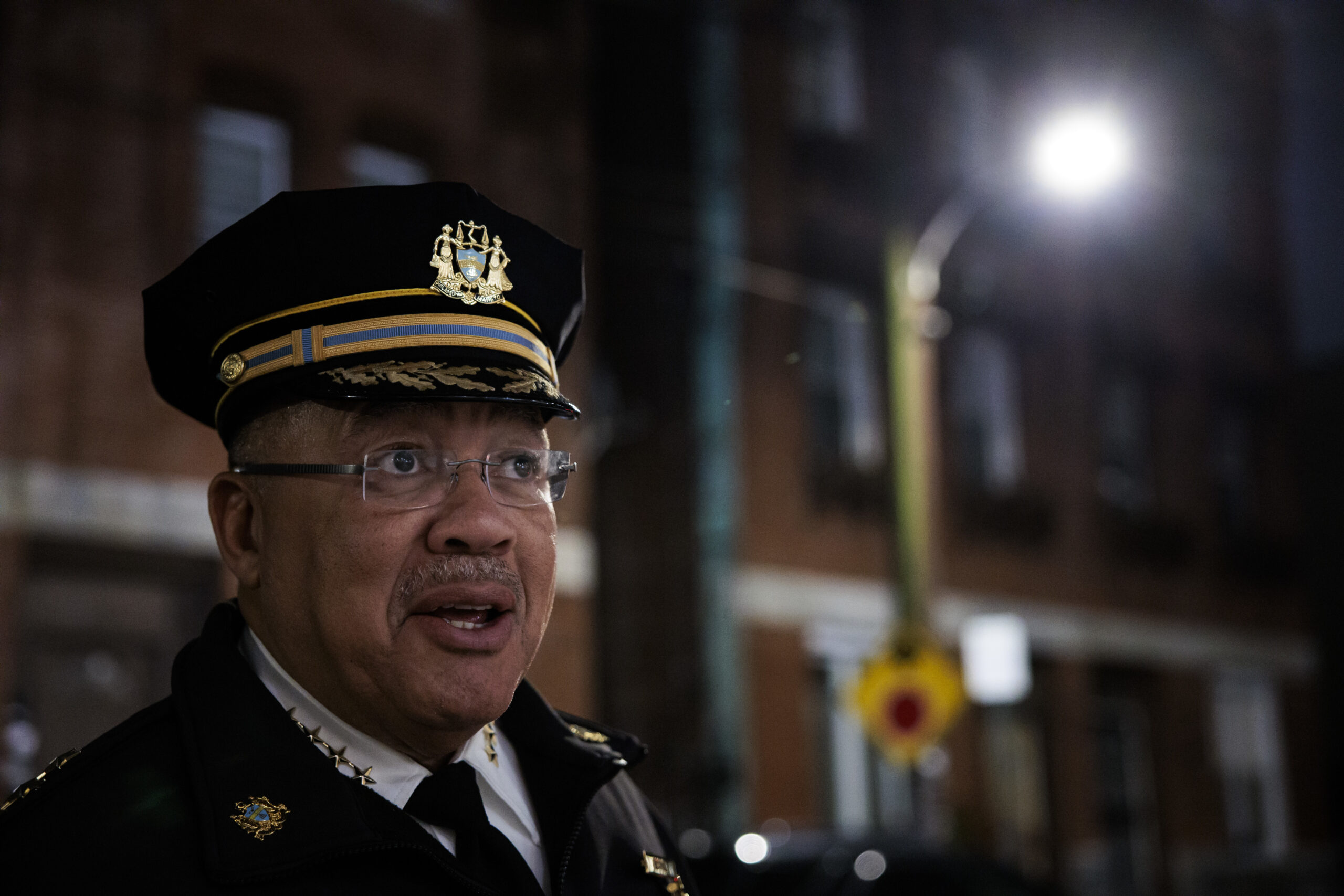
Police Commissioner Kevin Bethel arrives at a North Philadelphia community meeting on Dec. 2.
Bethel has pointed to a host of potential reasons for the decline: the reopening of society post-pandemic — kids returned to school and adults reconnected with jobs, courts, and probation officers — as well as police resources focused in hot spot crime areas and improved coordination among city leaders.
Most notably, he said, detectives are making more arrests in nonfatal shootings and homicides. Experts say that arresting shooters is a key violence-prevention strategy — it prevents that shooter from committing more violence or from ending up as a victim of retaliation, sends a message of accountability and deterrence, and improves the relationship between police and the community.
The homicide clearance rate this year ended at 81.98%, the highest since 1984, and the clearance of nonfatal shootings reached 39.9%.
“That’s unheard of,” said Geer, the public safety director. “The small amount of people who are committing these really heinous, violent crimes in our neighborhood[s] are being taken off the street.”
window.addEventListener(“message”,function(a){if(void 0!==a.data[“datawrapper-height”]){var e=document.querySelectorAll(“iframe”);for(var t in a.data[“datawrapper-height”])for(var r,i=0;r=e[i];i++)if(r.contentWindow===a.source){var d=a.data[“datawrapper-height”][t]+”px”;r.style.height=d}}});
Still, more than 800 killings from between 2020 and 2023 remain without an arrest, according to an Inquirer analysis.
That has had a significant impact on the police department’s relationship with the community over the years, something Bethel has sought to repair since he was appointed commissioner in 2024.
In 2025, he created an Office of the Victim Advocate, hired a 20-person team to communicate with and support victims, and hosted 35 meetings with residents of the most challenged neighborhoods.
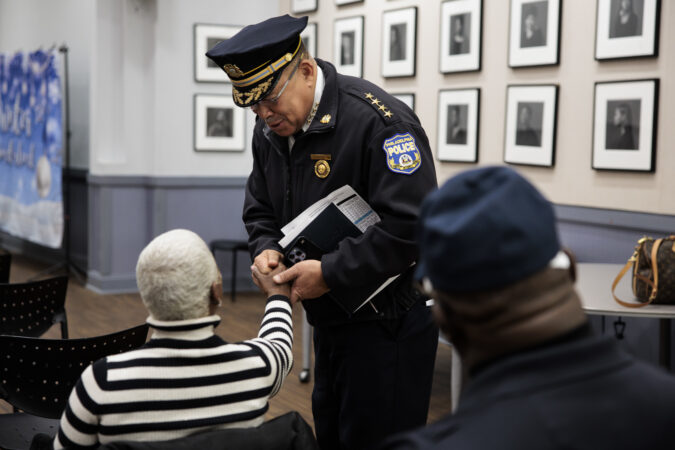
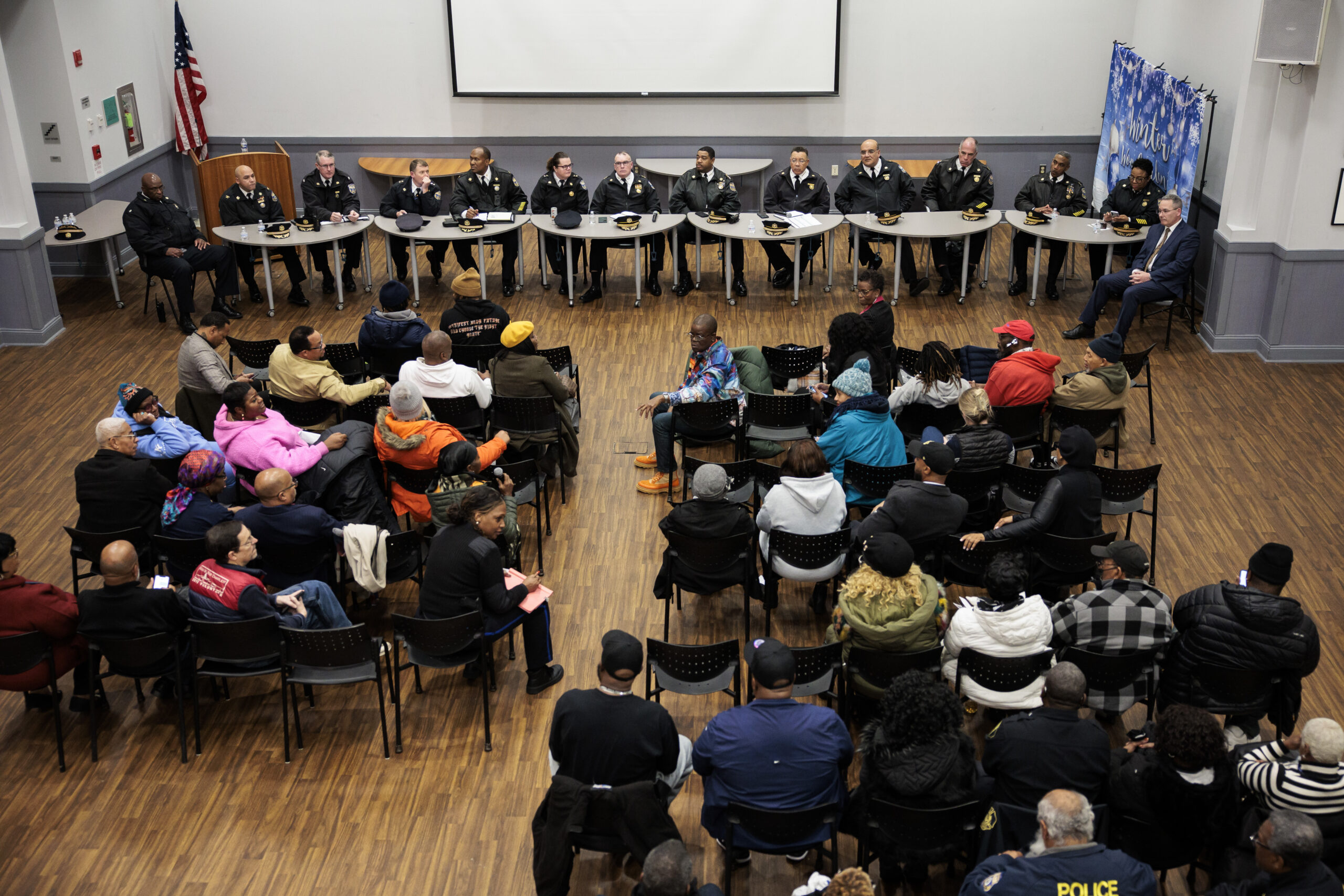
A few dozen community members gathered with top police brass in North Philadelphia on Dec. 2.
Yet Bethel has grappled with the challenge of convincing residents that the city is safer today than four years ago, while questioning whether today’s gains can outweigh years of devastation.
That challenge was on display on a recent cold December night, as Bethel gathered with a few dozen residents inside a North Philadelphia church and asked what they wanted him to know.
Person after person stood and told him what gun violence had taken from them in recent years.
My son. My brother. My nephew.
Both of my sons.
Investing in violence prevention
The city’s network of violence prevention strategies has expanded greatly since 2020, when the city began issuing tens of millions of dollars in grants to grassroots organizations.
Early on, the city faced criticism that its rollout of the funds was chaotic, with little oversight or infrastructure to track impact. Today, Geer said, the city has stronger fiscal oversight, better organizational support, and a data-driven approach that targets neighborhoods experiencing the most violence.
In 2024,Community Justice, a national coalition that researches violence-intervention strategies, said that Philadelphia had the most expansive violence-prevention infrastructure of the 10 largest U.S. cities. When evaluating 100 cities, it ranked Philadelphia as having the third-best public-health-centered approach to preventing violence, falling behind Washington and Baltimore.
Geer said the work will continue through 2026. Starting in January, the city will have a pool of about $500,000 to help cover the funeral expenses for families affected by violence.
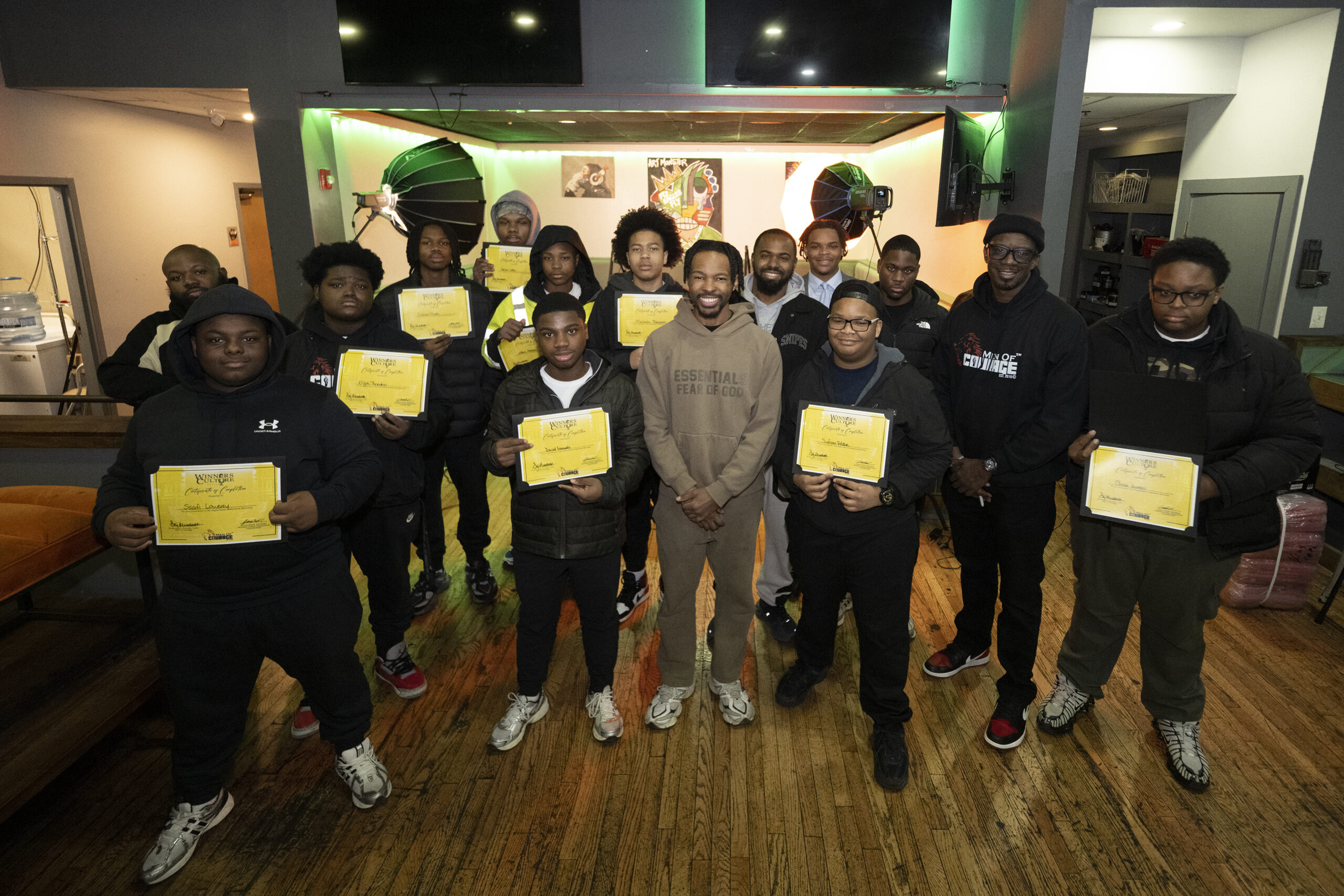
Members of Men of Courage pose with the certificates of accomplishment after completing a 16-week program on multi-media work and podcasting, one of multiple programs the community organization uses to help Black teens build their confidence.
One of those organizations that has benefited from the city’s funding is Men of Courage, a Germantown-based group that mentors young Black men ages 12 to 18 and focuses on building their confidence, resilience, and emotional intelligence.
“We want them to know that one decision can affect your entire life,” said founder Taj Murdock. “Their environment already tells them they’ll be nothing. … We have to shift their mindsets.”
Arguments are a leading cause of shootings, and teaching teens how to de-escalate conflicts and think through long-term consequences can prevent them from turning disputes violent, he said.
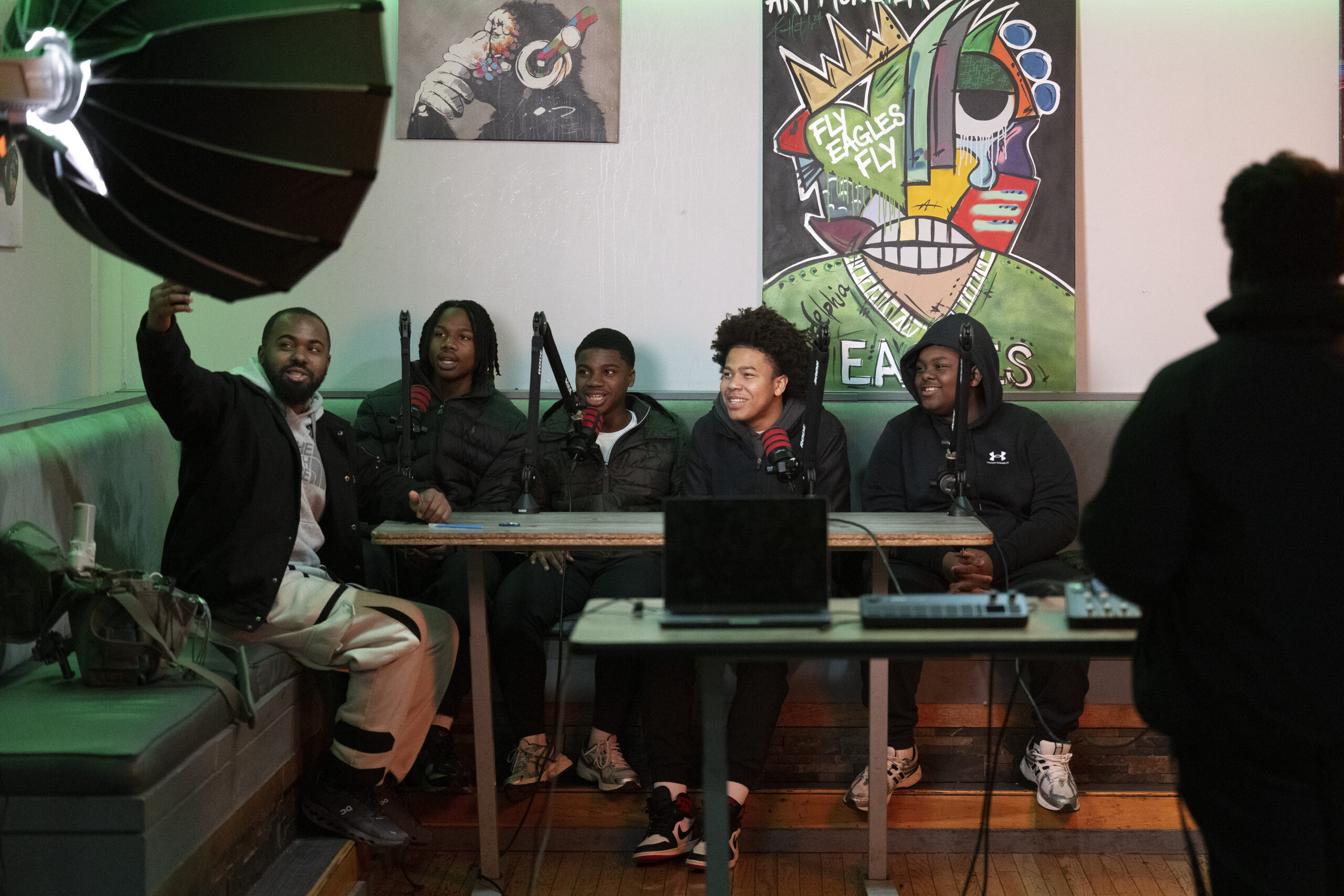
Isaiah Clark-White, second to left, and David Samuel, middle, pose for a photo with other members of Men of Courage before recording a podcast.
Isaiah Clark-White, 16, a sophomore at Hill Freedman World Academy in East Mount Airy, said that in his three years working with Men of Courage, he has grown more confident and has improved his public speaking.
And David Samuel, 15, of Logan, said he has learned how to better control his emotions and identify those of the people around him. Both said they feel safer today than three years ago, but remain vigilant of their surroundings.
Samuel said his dad watches the news every day and talks about the overnight crimes and shootings.
“He’s always telling me,” he said, “‘David, I don’t want this to happen to you.’”