Category: Philadelphia News

  • Graduate student workers at Penn reach a tentative agreement, avoiding a strike

    Graduate student workers at Penn reach a tentative agreement, avoiding a strike

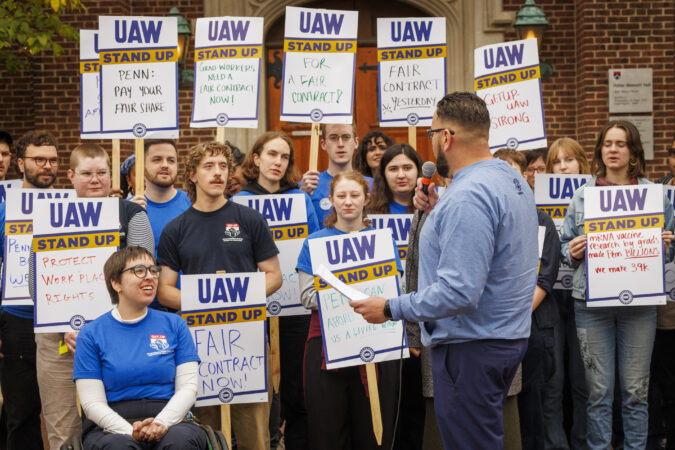
    Penn’s graduate student workers have reached a tentative agreement on a first union contract, averting a strike.

    The two-year tentative agreement includes increases to wages among other benefits.

    “I am so proud of what we were able to accomplish with this contract,” Clara Abbott, a Ph.D. candidate in literary studies and member of the bargaining committee said in a statement. “We won a historic contract that enshrines gains for grad workers.”

    Research and teaching assistants at the university voted to unionize in 2024. The union, which represents about 3,400 graduate student workers, is known as Graduate Employees Together-University of Pennsylvania (GET-UP) and is part of the United Auto Workers (UAW). The union has been negotiating with the university since October 2024 for a first contract.

    In November, the union’s bargaining members voted to authorize a strike, if called for by the union. In January, they set a strike deadline, announcing that they would walk off the job on Feb. 17 if they had not reached a deal.

    A deal was announced in the early morning hours Tuesday.

    While tentative agreements had been reached on a number of issues, some remained without consensus ahead of the final bargaining session on Monday before the strike deadline. Those sticking points included wages, healthcare, and discounts on SEPTA passes.

    “We are pleased to announce that a tentative agreement has been reached between Penn and GETUP-UAW,” a university spokesperson said in a statement. “Penn has a long-standing commitment to its graduate students and value their contributions to Penn’s important missions. We are grateful to all the members of the Penn community who helped us achieve this tentative agreement.”

    A date to vote on the ratification of the tentative agreement has not yet been announced.

    The deal comes as earlier this month Pennsylvania state senators and representatives and Philadelphia City Council members addressed letters to the university’s president and provost, urging them to come to an agreement with the student workers and avoid a strike.

    “A strike at the University of Pennsylvania would seriously disrupt life for the tens of thousands of Philadelphians who are students, employees, and patients at Penn,” the letter signed by City Council members reads. “As such, we strongly urge the Penn administration to avert a strike by coming to a fair agreement that meets the needs of graduate student employees prior to February 17th.”

    What’s in the tentative deal?

    Monday’s bargaining session brought tentative agreements on sticking points that included wages and healthcare coverage.

    If ratified, the tentative deal would provide graduate student workers with an annual minimum wage of $49,000, which the union has said is a 22% increase over the previous standard. For those paid on an hourly basis, the minimum hourly rate would be $25. Those rates would go into effect in April and a 3% increase would be provided in July 2027.

    The deal would also create a fund with $200,000 annually from which graduate student workers could seek reimbursements to cover up to 50% of their dependent’s health insurance premiums.

    Ahead of the Monday bargaining session, other tentative agreements had come together around leave. The university agreed to give six weeks of paid medical leave, as well as eight weeks of paid parental leave.

    The university and the union had also recently reached a tentative agreement that would create an annual $50,000 fund to help international graduate student workers with expenses associated with reinstating or extending visas.

    What would have happened in the event of a strike?

    Graduate student workers in the bargaining group teach and conduct research at the university.

    Classes, research, and other academic activities would have continued during a strike, according to the university spokesperson. Penn published guidance on how to continue this work in the event of a work stoppage or other disruption.

    Striking graduate student workers would not have been paid throughout a work stoppage, but would have continued to be covered by their health insurance for the time being, according to a university statement.

    If others employed at the university who are not in the bargaining group chose to join the work stoppage, they would not have been paid and could have faced consequences “up to and including separation from that position, depending on the circumstances of the refusal to work,” according to a university statement.

    Ahead of the tentative agreement on Monday, hundreds signed a pledge indicating that they are employed at Penn and would not do the work of those on strike or assign it to others in the event of a work stoppage.

    In recent years, a wave of labor actions has taken place across Penn and other local campuses. Temple University graduate workers went on strike for 42 days in 2023 during contract negotiations. Rutgers University educators, researchers, and clinicians walked off the job for a week that same year.

    At Penn, the largest employer in Philadelphia, a wave of student-worker organizing in recent years has included resident assistants, graduate students, postdocs, and research associates, as well as training physicians in the University of Pennsylvania Health System.


    Pins on a table during a GET-UP rally at the University of Pennsylvania in Philadelphia, Pa., on Wednesday, Oct. 4, 2023.
  • Why Philly has so many chicken bones lying around

    Why Philly has so many chicken bones lying around

    As the cold thaws and the snow melts, one constant remains the same: There are chicken bones on the Philly streets.

    Time may be a flat circle, but that doesn’t stop us from wondering why. A reader asked through Curious Philly, The Inquirer’s forum for answering questions, why there are so many chicken bones on the sidewalks and streets of Philadelphia.

    » ASK US: Have something you’re wondering about the Philly region? Submit your Curious Philly question here.

    Two architects appear to be behind Philadelphia’s chicken-bone temple.

    First are animals, who forage through trash looking for the final scraps left on discarded bones. Whether they discover drumsticks by ripping through trash bags on the street or from dumpster diving, these animals likely drop the bones wherever they finish with them.

    The culprits most likely to blame are rats, followed by raccoons and opossums, said Rich Foreman, the owner of Dynamite Pest Control in West Philly.

    While it’s unclear if rats have a particular taste for fried chicken, the animals are among the least-picky eaters around and will take advantage of any food source, from human scraps to cannibalism. And Philadelphia is seemingly a good place to be a rat, being declared the eighth-rattiest city in the United States in 2025 by the pest-control company Orkin, measured by tracking its new residential rodent treatments.

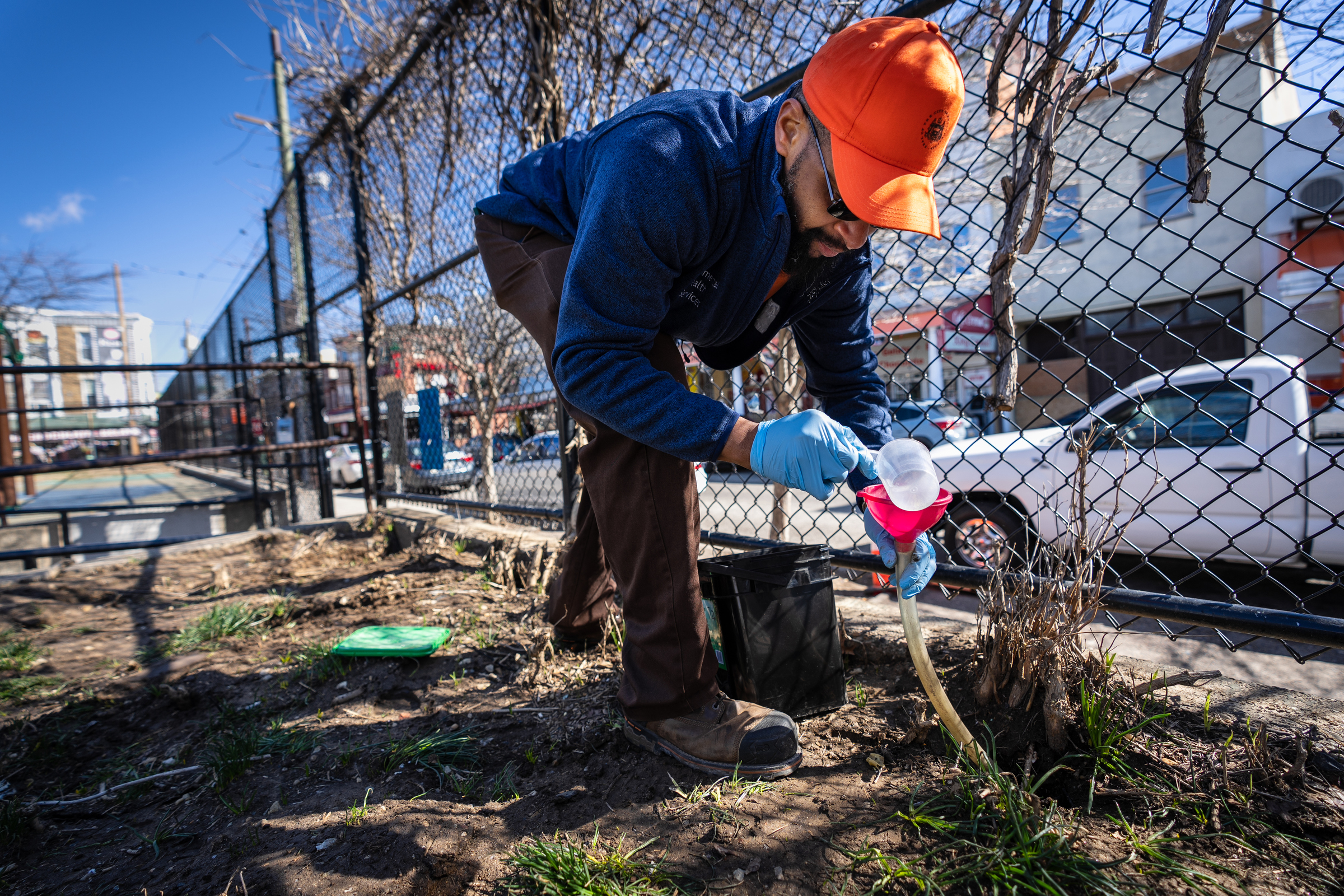
    Adrian Jordan, Vector Control Crew Chief, works keeping the rat population under control, in Philadelphia, Friday, March 7, 2025.

    Foreman sees the chicken-bone problem all over the city, as with some restaurants in Port Richmond that called Dynamite when they saw their trash all over the street. He is confident animals were behind the mess, and said he has “never seen” humans do anything of the sort.

    Foreman said the city’s twice-weekly trash pickup initiative has not helped, since it means an additional day of easily accessible trash on the street for animals.

    He said the best way for people to prevent critters from going into their garbage for bones is to get large, durable trash cans.

    “And make sure you put the lid on it,” he said.

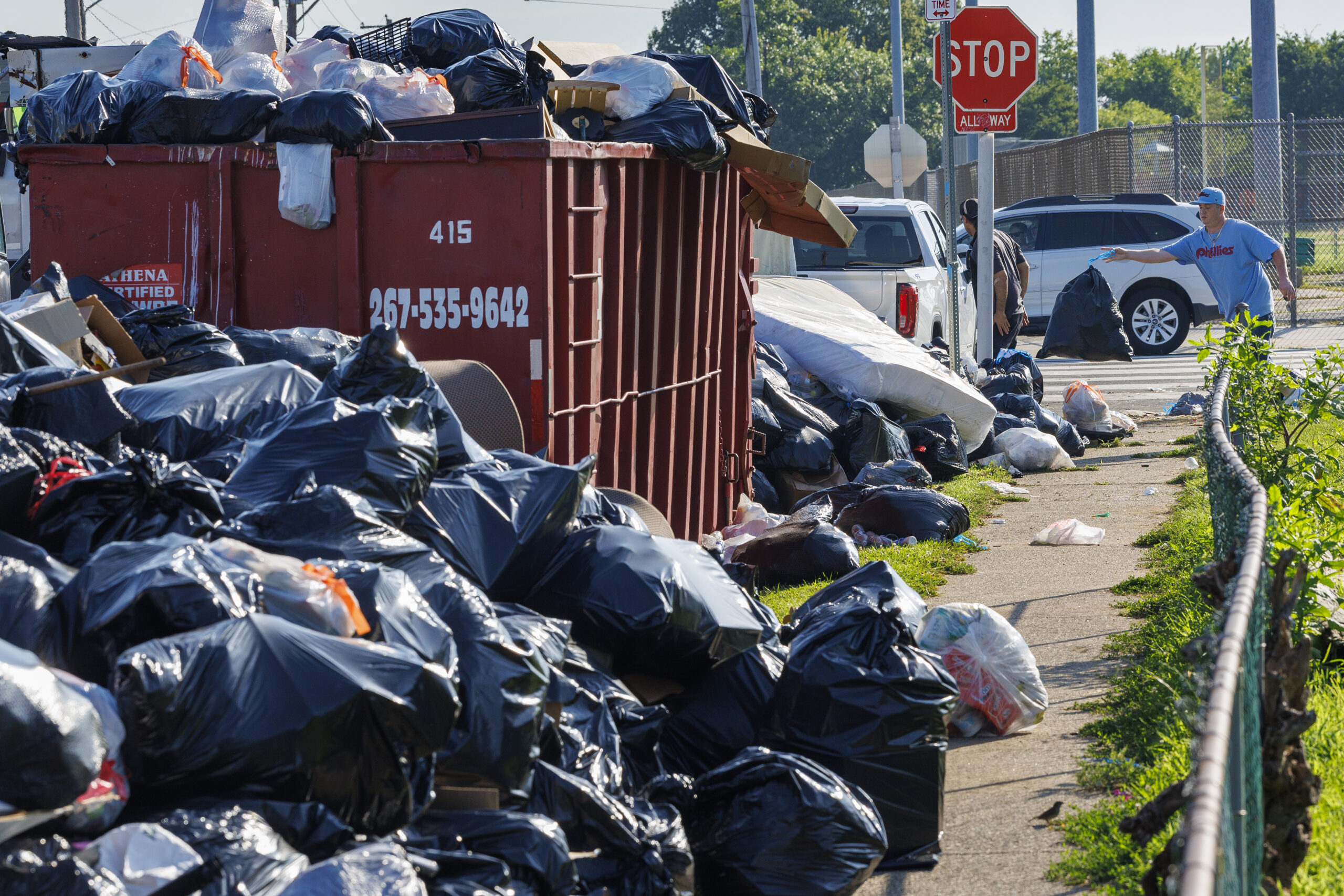
    Residents with trash arriving at garbage dump site at Caldera Road and Red Lion Road in northeast Philadelphia. AFSCME District Council 33 workers enter their second week on strike, Tuesday, July 8, 2025.

    Scavenging animals was the conclusion that the Search Engine podcast reached in a 2024 episode investigating the cause of the chicken bones littering the streets of New York City. Other cities have reported the same problem, including Chicago, Miami, and Washington.

    And yet, anecdotal evidence from residents demonstrates that human activity clearly contributes to the problem.

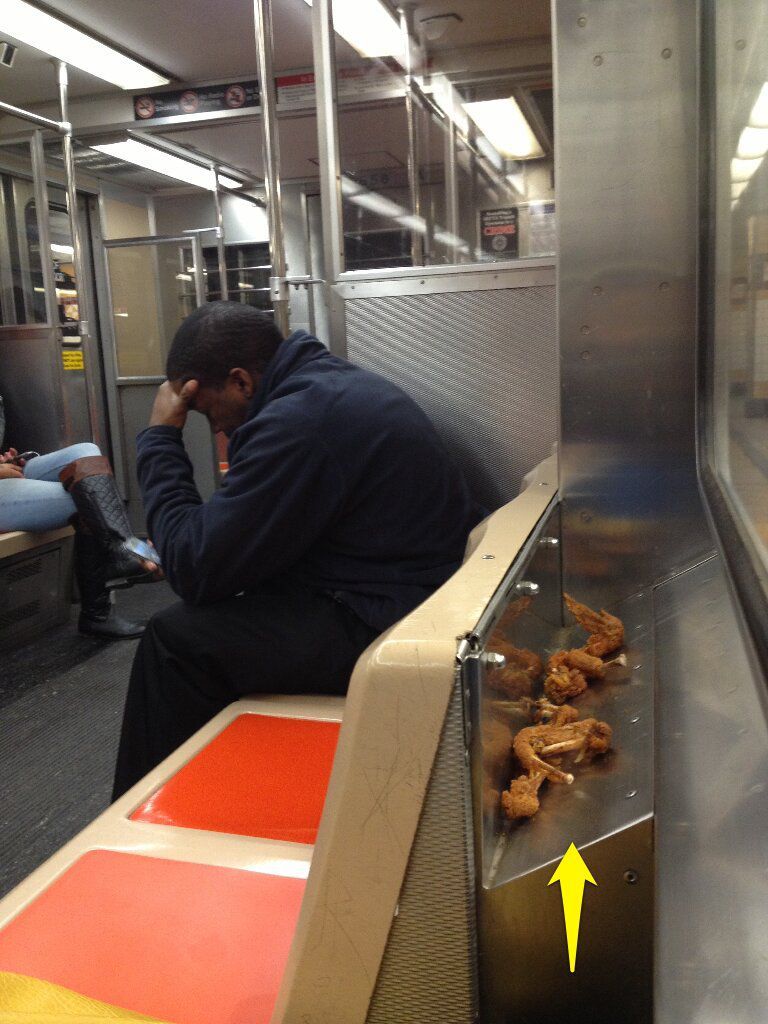
    Jessica Griffith has become the David Attenborough of abandoned chicken bones, documenting and appreciating the beauty of what she encounters in the wild. More than 10 years ago, when she lived in South Philly, Griffith, 46, would notice the chicken bones frequently on walks with her dog. She started photographing them and posting the pictures to Facebook, finding the bones everywhere, including a pile on a SEPTA train.

    “It was just bizarre to me. Just a phenomenon,” she said.

    Jessica Griffith snapped this picture of some discarded chicken bones on the Broad Street Line in 2013.

    Her documentation gathered a following, and people started to send their own submissions. Griffith received pictures from all over the globe — people in Seattle, Las Vegas, South Korea, Sweden, and the Dominican Republic all had their own pictures of discarded chicken bones to share.

    When Brian Love, 53, walks his miniature pinscher, Ziggy, through the Gayborhood, he often sees other people smiling at his dog. But then he realizes it’s because Ziggy is carrying a chicken bone in his mouth.

    Love has complained to his friends about constantly needing to tussle with Ziggy over what the dog sees as a treasure. He has watched people toss chicken bones on the ground, and recently came across a pile of four bones on a mound of snow. Love wishes his neighbors would just use trash bins.

    “It’s your food that you’ve literally just had in your mouth. Throw it in the trash,” he said.

    Stephanie Harmelin, 43, has the same problem with her dog in West Philly, and she said she accepts the bony sidewalks as part of living in a city. She has seen aggressive squirrels rifling through trash, but also has come across bones at street corners and under park benches that appear to have been dropped by humans.

    She said part of the problem is educational. Once, Harmelin pulled her dog away from a bone on the street, and two fellow walkers asked her why.

    Harmelin explained how chicken bones are unsafe for most dogs to consume. Cooked bones splinter when a dog chews on them, and the sharp fragments may cause life-threatening damage as they pass through the dog’s digestive track.

    One woman was shocked, and said she had not realized chicken bones were potentially dangerous to dogs when she had tossed them to the ground before.

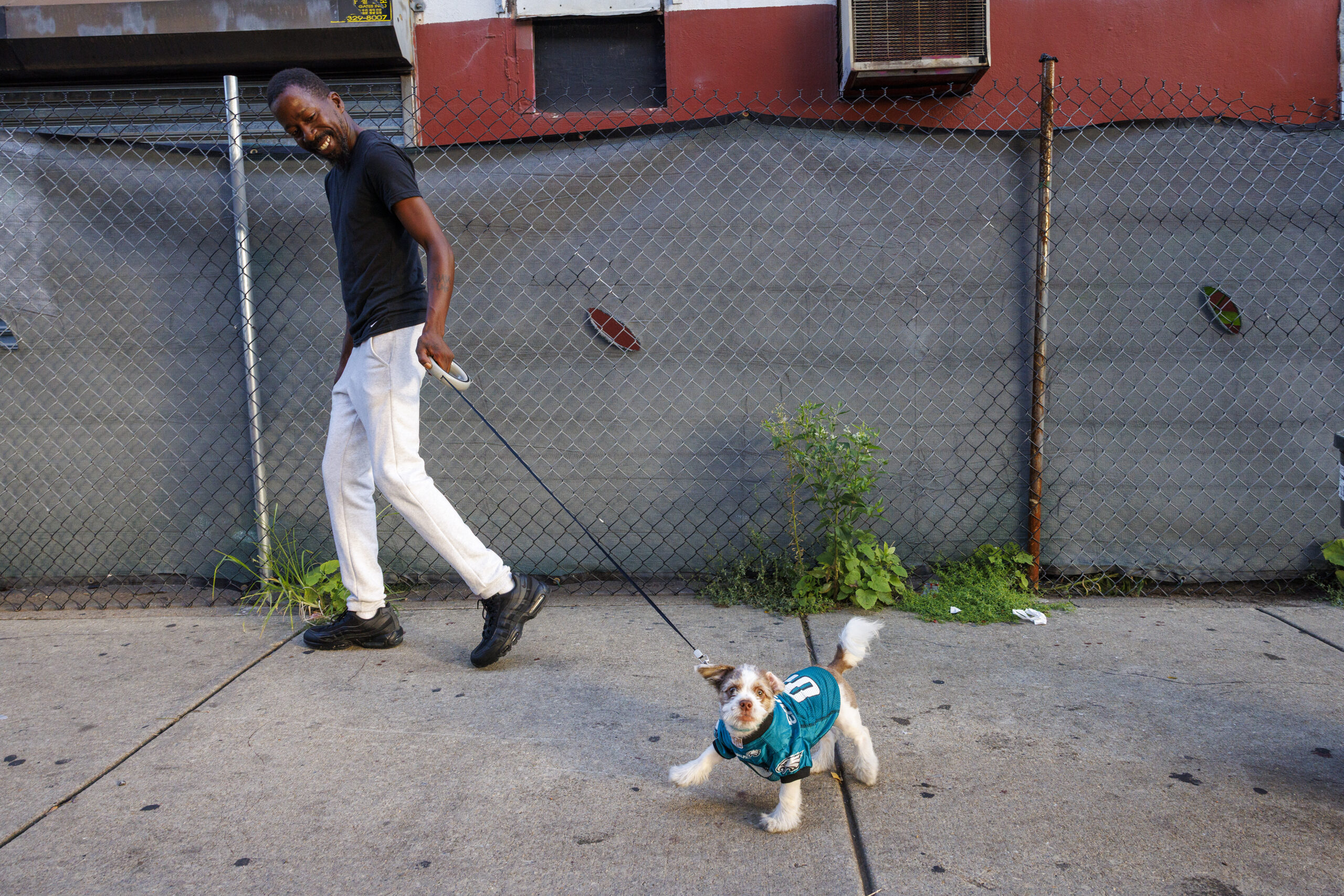
    Theo Caraway of Philadelphia walking his dog Cooper, 6 months, Shitzu/Poodle wearing his Eagles jersey along Kensington at Ontario Street on Philadelphia, Friday, September 5, 2025.

    Harmelin has had similar conversations with others who were not aware of the hazards bones create. Now, she is less likely to be frustrated at whomever has dropped the chicken bone on her street corner.

    “We’re trying to assume what other people know and intend, but we can’t,” she said.

    Even if more people get the message, though, it appears you will still be as likely to find a chicken bone on the street as a fallen leaf.

    Although they’re a gross nuisance of a sidewalk adornment, Griffith doesn’t really mind them. She said they are more of a curiosity that make Philly what it is, in a small way.

    “I think it’s kind of endearing,” she said.

  • Philly’s teachers union has raised an alarm with City Council about school closing plan

    Philly’s teachers union has raised an alarm with City Council about school closing plan

    The city’s teachers union has significant concerns with the Philadelphia School District’s sweeping facilities plan, and it has taken them to a City Council committee.

    Superintendent Tony B. Watlington Sr.’s $2.8 billion proposal “does not provide sufficient detail or data to inform binding decisions about school closures, co-location, re-purposing, or widespread impact and disruption that will be incurred,” Philadelphia Federation of Teachers president Arthur Steinberg wrote in a letter to Council’s education committee obtained by The Inquirer.

    The appeal, sent late last week, comes as the district prepares for a Tuesday Council hearing on the school blueprint, which currently calls for 20 school closings, six colocations, and 159 modernization projects.

    The stakes are high as district officials prepare to appear before Council members, who have raised alarm about several proposed closures.

    Council members are not the decision-makers — Philadelphia’s school board will ultimately vote on the plan sometime this winter — but as one of the district’s main funders, “you hold powerful levers that may be used to encourage the district to craft a more equitable [plan] that achieves our shared goals of improving student learning conditions and educators’ working conditions,” Steinberg wrote.

    Council President Kenyatta Johnson has said he’s willing to hold up city funding to the district if Council’s concerns are not adequately addressed.

    About 40% of the district’s nearly $2 billion budget comes from local revenue and city funding, which City Council and Mayor Cherelle L. Parker must approve in the annual city budget by the end of June.

    What does the PFT letter say?

    Before any decisions are made about what to do with the district’s buildings, the PFT wants system officials to do better by “showing their work and providing all data used to reach their determinations and recommendations for school improvement,” Steinberg wrote.

    The teachers union also flagged compliance inconsistencies with the district’s own standards, implementation questions, and “substantial problems with data interpretation and application.”

    The conclusions came after Jerry Roseman, the PFT’s longtime director of environmental science, scrutinized the plan. Roseman has decades of experience working with district officials on environmental issues.

    The PFT and Roseman want access to all data. The district has released some details officials used to make their calls, but some remain opaque.

    “How is the district ensuring that decisions regarding closing and receiving schools are based on comprehensive, up-to-date, and easily verifiable facility data (e.g., lead, asbestos, ventilation, overall condition)?” Steinberg wrote.

    The PFT also wants to “definitively show that the facility condition of receiving schools is not, in fact, worse than the facilities that are slated to close. If students are moving to a facility with worse current conditions, what will happen at the facility to improve it prior to students being moved there?”

    District officials outlined some modernization and renovation plans ahead of Tuesday’s Council hearing, but some remain a mystery to the public. Watlington has promised all projects will be detailed before Feb. 26, when he’s scheduled to formally present the plan to the school board.

    Don’t close schools or displace students based on incomplete data, PFT says

    The school system’s own data contains some inconsistencies, Steinberg said — including some schools judged to be in “good” or “fair” building condition by the district’s metrics that have “severely inadequate” critical systems, such as roofing, windows, or electrical and plumbing systems.

    And though the district said it could modernize all 85 school buildings currently in poor or unsatisfactory condition for $2.8 billion, the PFT questioned that price tag as overly optimistic. (City and district officials had previously put the system’s total deferred maintenance cost at $7 billion or more.)

    “The cost to fully repair poor-inadequate buildings and systems could actually exceed $3.5 billion,” the PFT said.

    The teachers union also highlighted the inequitable distribution of adverse conditions, noting that “Black and brown children and children from economically disadvantaged families are more vulnerable — to health risks, learning disruptions, and the long-term effects of instability and displacement.”

    While the information the district has made public is “useful and has value as a ‘baseline,’ it is insufficient for its use in supporting the proposed conclusions, recommendations and other plan details released,” Steinberg said.

  • Frederick Wiseman, documentarian behind the Northeast High-filmed ‘High School,’ dies at 96

    Frederick Wiseman, documentarian behind the Northeast High-filmed ‘High School,’ dies at 96

    Frederick Wiseman, 96, the renowned documentarian who chronicled life at Northeast Philadelphia High School in a 1968 film that caused a yearslong controversy in the city, has died.

    Zipporah Films, a company that has distributed Mr. Wiseman’s films for more than 50 years, confirmed the filmmaker’s death in a statement Monday.

    Known for his direct cinema style, Mr. Wiseman started his career as a law professor at the Boston University Institute of Law and Medicine before turning to film. His lengthy filmography stretches back to 1967 with the release of Titicut Follies, a controversial exposé focused on the treatment of the patient-inmates of Bridgewater State Hospital for the Criminally Insane in Massachusetts.

    That film was banned in Massachusetts for more than two decades.

    His follow-up, 1968’s High School, a foundational cinema verite documentary filmed at Northeast High School in Philly between the assassinations of the Rev. Dr. Martin Luther King Jr. and Sen. Robert F. Kennedy, was similarly controversial. In fact, Northeast High leaders found it so incendiary that it did not receive a local premiere until 2001 — 32 years after its initial release — for Mr. Wiseman’s fear of legal action.

    At 75 minutes, High School depicted what viewers at the time saw as a bleak vision of life at Northeast High. Contemporary reviews agreed, with Variety writing that it showed the school taught “little but the dreary values of conformity, [and] blind respect for authority.” Newsweek noted that the film showed “high schools are prisons where the old beat down the young.”

    In one scene, a guidance counselor tells a student they may not be college material. In another, a teacher tells a girl her legs are too fat for a dress she sewed. Another shows a dean shutting down a student who was complaining about unfairly receiving detention.

    As early as mid-1969, Mr. Wiseman refused to make a copy of the film available locally, citing “legal repercussions,” according to Inquirer reports from the time. The Philadelphia Board of Education, meanwhile, declared the documentary “biased” and demanded it be shown to students and faculty.

    High School, however, would not receive its first official local public showing until August 2001, at the Prince Music Theater. About 400 people attended, The Inquirer reported, most of whom were faculty or alumni of Northeast High.

    Five days later, it aired on the PBS series POV Classic.

    “I took him to the annual press tour the year we aired High School and never had a funnier, more incisive companion to compare notes with on the state of cinema,” said Cara Mertes, who was then the executive producer of POV Classic. “He was perpetually young, incredibly smart, and did not suffer fools, and still he was always generous with his time and immense talent as one of America’s greatest chroniclers, in any medium.”

    Ten years before, in 1991, High School was selected for preservation in the United States National Film Registry by the Library of Congress.

    “It is everything you need to know about 1968 middle-class America in microcosm,” Mertes said. “So many scenes and characters have taken on iconic status. It captures the tectonic social shifts happening in the most ordinary of exchanges in the day-to-day of a touchstone of American life: the high school experience.”

    “Wiseman pulled a fast one on Northeast,” said English department head Irene Reiter after seeing the film. “It was a setup to attack the educational system.”

    Former students, however, largely seemed to disagree. Andrea Korman Shapiro, a student featured in a scene in which a vice principal admonishes her for wearing a minidress to prom, called it “accurate.”

    “[It’s] a chronicle of the inner life of people not permitted to speak,” she said.

    Even others who had more positive experiences at the school argued the film’s strengths outweighed its shortcomings. As Marilyn Kleinberg, a 1978 graduate, put it: “It felt real to me, even though I had an excellent experience.”

    Shapiro, meanwhile, said it would be wise to view High School as a “trauma model.”

    “A trauma, if it doesn’t get resolved, gets replayed and reenacted,” she said. “There needs to be some kind of learning to let it go.”

    The year High School debuted in Philadelphia, Mr. Wiseman told Current, a nonprofit news organization associated with American University’s School of Communication, that his concerns about legal action over the film were perhaps overblown.

    “This was soon after the Titicut Follies case, and I didn’t want another lawsuit on my hands,” he said. Possible legal threats, he added, were merely the “vague talk of no one particular individual.”

    In 2016, Mr. Wiseman received an honorary Oscar at the 89th Academy Awards for his “masterful and distinctive documentaries” that “examine the familiar and reveal the unexpected.” Making films, he said in his acceptance speech, presented opportunities to “learn something about a new subject.”

    “The variety and complexity of the human behavior observed in making one of the films, and cumulatively all of the films, is staggering,” Mr. Wiseman said in the speech. “And I think it is as important to document kindness, civility, and generosity of spirit as it is to show cruelty, banality, and indifference.”

    The article has been updated with quotes from Cara Mertes.

  • Police release images of vehicle in hit-and-run of 9-year-old boy in Southwest Philly

    Police release images of vehicle in hit-and-run of 9-year-old boy in Southwest Philly

    Philadelphia police on Monday released images of a distinctive vehicle that injured a 9-year-old boy in a hit-and-run that happened over the weekend in Southwest Philadelphia.

    Just after 12:20 p.m. Saturday, the boy was struck by a midsized crossover SUV on the 2200 block of South 56th Street, police said.

    The boy was transported to Children’s Hospital of Philadelphia, where he was listed in stable condition.

    Police described the vehicle as a 2010 to 2013 Honda Crosstour, mostly burgundy in color, but with a green front passenger-side door, a white rear passenger-side door, and a black passenger-side fender. The Honda also had a bicycle rack on the roof.

    The driver was described as a Black man around 25 to 35 years old, with short hair and a beard.

    The boy suffered a broken leg, according to 6abc, which showed video from a doorbell camera of the boy trying to cross the street and then falling before being hit by the fast-moving Honda.

    Police said anyone with information about the vehicle or driver can call 215-686-TIPS or dial 911.

  • Federal judge orders Trump administration to restore slavery exhibits to the President’s House

    Federal judge orders Trump administration to restore slavery exhibits to the President’s House

    A federal judge ordered President Donald Trump’s administration to restore the slavery exhibits that the National Park Service removed from the President’s House last month.

    U.S. District Judge Cynthia M. Rufe issued a ruling Monday requiring the federal government to “restore the President’s House Site to its physical status as of January 21, 2026,” which is the day before the exhibits were removed.

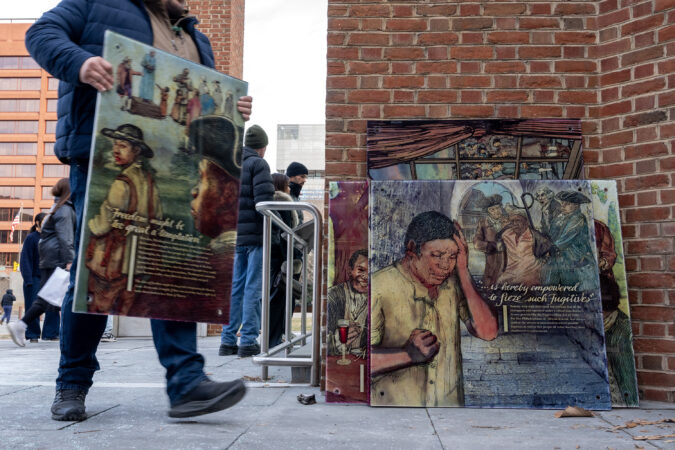
    The order does not give the government a deadline for the restoration of the site. It does require that the National Park Service take steps to maintain the site and ensure the safety of the exhibits, which memorialize the enslaved people who lived in George Washington’s Philadelphia home during his presidency. The exhibits were abruptly removed in January following months of scrutiny by the Trump administration.

    Rufe, a George W. Bush appointee, compares the federal government’s argument that it can unilaterally control the exhibits in national parks to the Ministry of Truth in George Orwell’s 1984, a novel about a dystopian totalitarian regime.

    “As if the Ministry of Truth in George Orwell’s 1984 now existed … this Court is now asked to determine whether the federal government has the power it claims — to dissemble and disassemble historical truths when it has some domain over historical facts,” Rufe wrote. “It does not.”

    Mayor Cherelle L. Parker’s administration filed a federal lawsuit against Interior Secretary Doug Burgum and acting National Park Service Director Jessica Bowron, and their respective agencies, the day the exhibits were dismantled. The complaint argued dismantling the exhibits was an “arbitrary and capricious” act that violated a 2006 cooperative agreement between the city and the federal government.

    The federal government has the option to appeal the judge’s order. The Interior Department and National Park Service did not immediately comment on the ruling, which fell on Presidents’ Day, a federal holiday. The U.S. Attorney’s Office for the Eastern District of Pennsylvania declined to comment.

    During a hearing last month, Rufe called the federal government’s argument that a president could unilaterally change the exhibits displayed in national parks “horrifying” and “dangerous.” She ordered the federal government to ensure the panels’ safekeeping after an inspection and a visit to the President’s House earlier this month.

    Monday’s ruling follows an updated injunction request from the city that asked for the full restoration of the site — not merely that the exhibits be maintained safely — and a brief from the federal government arguing the National Park Service has discretion over the exhibits and that the city’s lawsuit should be dismissed on procedural grounds.

    The federal government’s brief also argued there could be no irreparable harm from the removal of the exhibits because they are documented online and replacement panels would cost $20,000.

    But the judge found the city is likely to prove its case that the removal was unlawful, and the panels should be restored while the litigation continues.

    “If the President’s House is left dismembered throughout this dispute, so too is the history it recounts, and the City’s relationship to that history,” Rufe wrote.

    The judge also found that the cooperative agreement between Philadelphia and the National Park Service remains in “full force,” even though the contract is technically expired.

    Rufe’s memo named the nine enslaved Africans owned by Washington, and noted that two — Oney Judge and Hercules Posey — escaped. The removed displays recognize their struggles and the nation’s “progress away from the horrors of slavery,” the judge wrote.

    “Each person who visits the President’s House and does not learn of the realities of founding-era slavery receives a false account of this country’s history,” the judge wrote.

    The injunction does not resolve the underlying lawsuit, and is in effect for the duration of the litigation. In a January hearing, Rufe said she wouldn’t let the case drag into the summer, recognizing the 250th anniversary celebration being planned for Independence Mall.

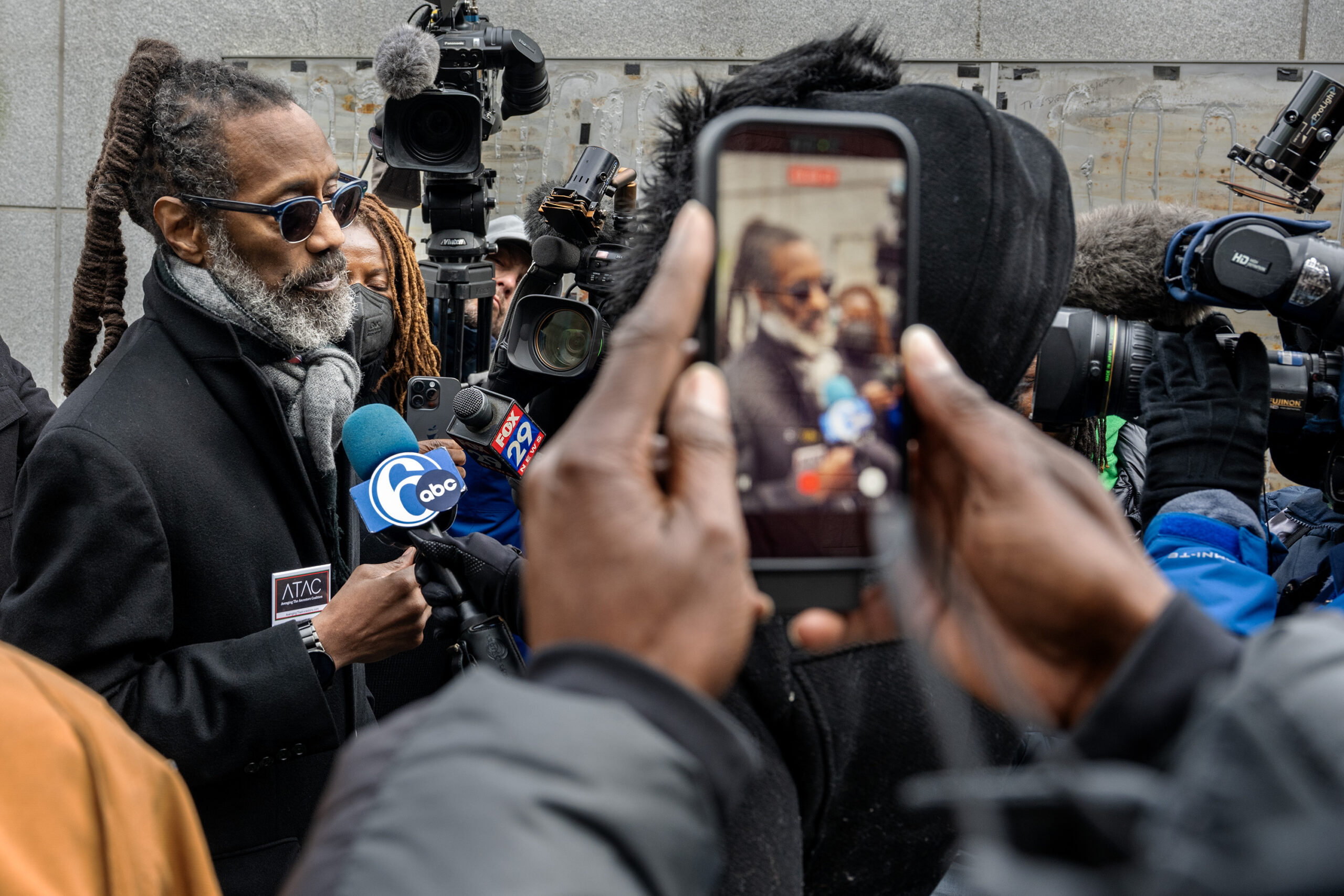
    Attorney Michael Coard, leader of the Avenging the Ancestors Coalition, speaks with the news media Monday after a federal judge ordered the Trump administration to restore the slavery exhibits that the National Park Service removed from the President’s House last month. The group was on the site for an annual gathering for a Presidents’ Day observance when they learned of the order.

    The timing of the ruling underscored its significance to the Philadelphians pushing for the exhibits’ return.

    Avenging the Ancestors Coalition, the main advocacy organization leading the fight to protect the President’s House, was less than an hour into its Presidents’ Day event at the site when leaders got wind of their victory.

    The group’s leaders, excited and completely in shock, congregated behind the site’s Memorial Wall to soak in the news before announcing it.

    Moments later, Michael Coard, an attorney and the coalition’s leader, emerged before the crowd of about 100 people and told them: “Thanks to you all, your presence and your activism, I have great news: We just won in federal court.”

    The crowd erupted in cheers and chants of “When we fight, we win!” and “We have won!”

    Coard told reporters there was “no other blessing that we could have gotten today.”

    The coalition has led dozens of rallies and town halls meant to energize the public in opposing the Trump administration’s ongoing scrutiny of the President’s House. The Black-led advocacy group helped develop the site in the early 2000s before it opened in 2010.

    Dana Carter, the group’s head organizer, said she was in disbelief when she heard about the ruling.

    “After we figured out that it really was the truth, I am just moved. My heart is overflowing with love for the judge who made the ruling, as well as the people who have been with us since the beginning … and also the people who have joined us in this fight to restore the President’s House,” Carter said.

    But the fight is not over, advocates said, with Coard expecting the Trump administration to appeal or ignore rulings.

    “This is a lawless administration. The people are going to have to take over to force them to do the right thing,” Coard said.

    The Trump administration’s attempt to alter the President’s House was part of a wider initiative to remove content from national parks that “inappropriately disparage Americans past or living,” following an executive order from Trump. For instance, Park Service employees removed signage about the mistreatment of Native Americans from the Grand Canyon.

    The fate of the President’s House exhibits was in limbo for months until they were removed by Park Service employees with wrenches and crowbars on Jan. 22. Meanwhile, advocacy groups and creatives behind the President’s House cultivated support for their cause to protect the site. Philadelphia City Council issued a resolution condemning the censorship of the exhibit.

    “Judge Cynthia Rufe made it clear that historical truth cannot be dismantled or rewritten, and that the federal government does not have the authority to erase or alter facts simply because it has control over a national site. … We can not let President Donald Trump whitewash African-American history. Black history is American history,” City Council President Kenyatta Johnson said in a statement Monday.

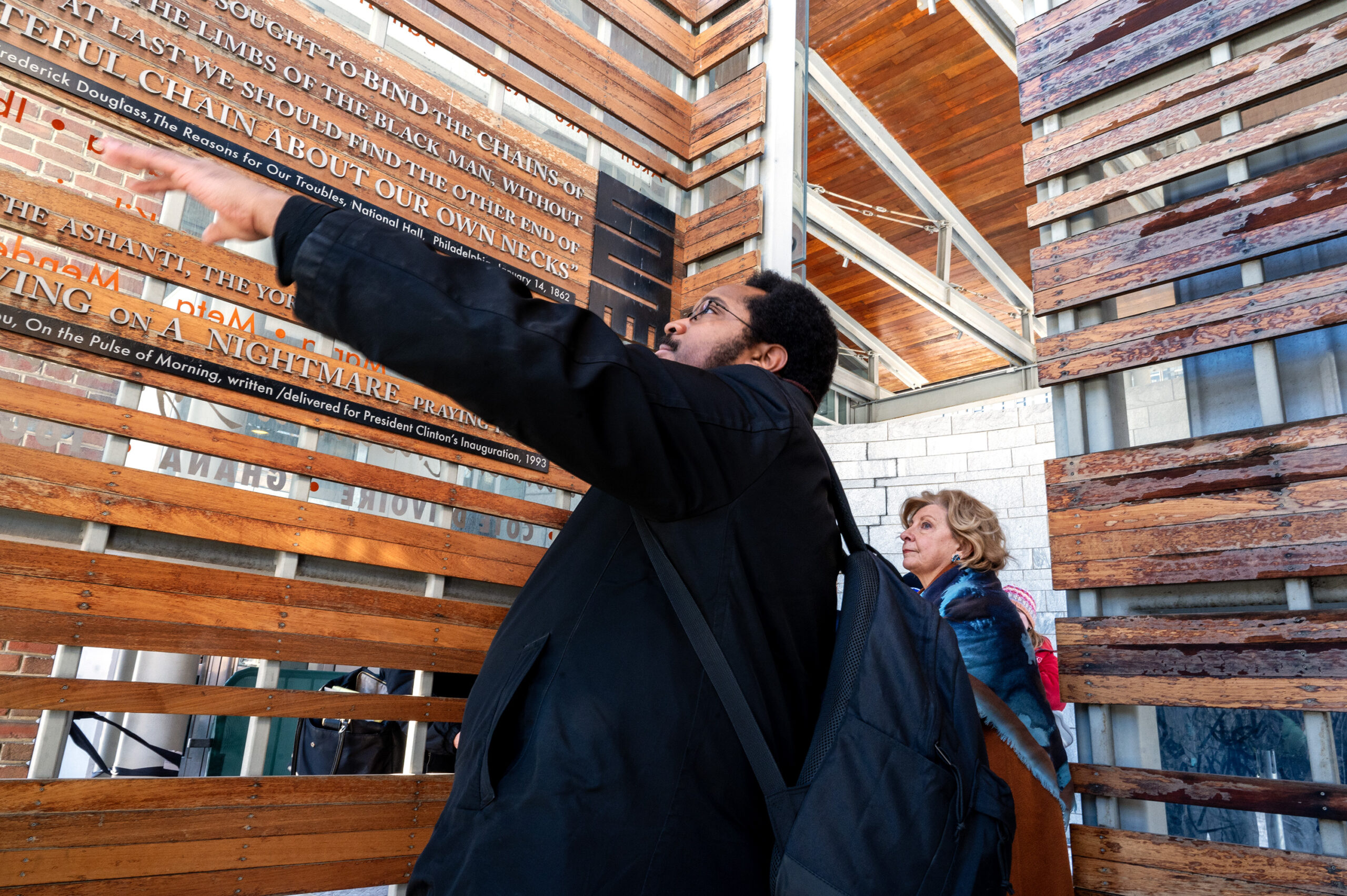
    Mijuel Johnson (left), a tour guide with The Black Journey: African-American Walking Tour of Philadelphia, leads Judge Cynthia Rufe (right) as she visits the President’s House in Independence National Historical Park on Feb. 2.

    Attendees at Monday’s event were invigorated by the ruling.

    Mijuel Johnson, a tour guide leader with the Black Journey who led Rufe through the site earlier this month, said he was “enjoying the moment for now” but then he would be back to work.

    “This is a great win for this movement,” Johnson said.

  • These Philly schools are slated for big upgrades as the district works to modernize buildings

    These Philly schools are slated for big upgrades as the district works to modernize buildings

    Nearly $58 million for South Philadelphia High School. Over $27 million for Forrest Elementary in the Northeast. Almost $55 million for Bartram High in Southwest Philadelphia.

    Ahead of a Tuesday City Council hearing on the Philadelphia School District’s proposed facilities master plan, district officials have dangled the carrot that would accompany the stick of 20 school closings.

    The district released Monday morning how much it would spend on modernization projects at schools in each City Council District if Superintendent Tony B. Watlington Sr.’s plan is approved by the school board this winter.

    The totals range from $443 million in the 9th District — which includes parts of Olney, East and West Oak Lane, Mount Airy, and Oxford Circle — to nearly $56 million for the 6th District in lower Northeast Philadelphia, including Mayfair, Bridesburg, and Wissinoming.

    The district’s announcement comes as the plan has already raised hackles among some Council members, and City Council President Kenyatta Johnson has said he’ll hold up the district’s funding “if need be” if concerns are not answered to Council’s satisfaction.

    Tailoring the release to Council districts — including highlighting one major project per district — appears to be an effort to calm opposition ahead of Tuesday’s hearing.

    Details on every school that would get upgraded under Watlington’s plan — 159 in total — have not yet been released.

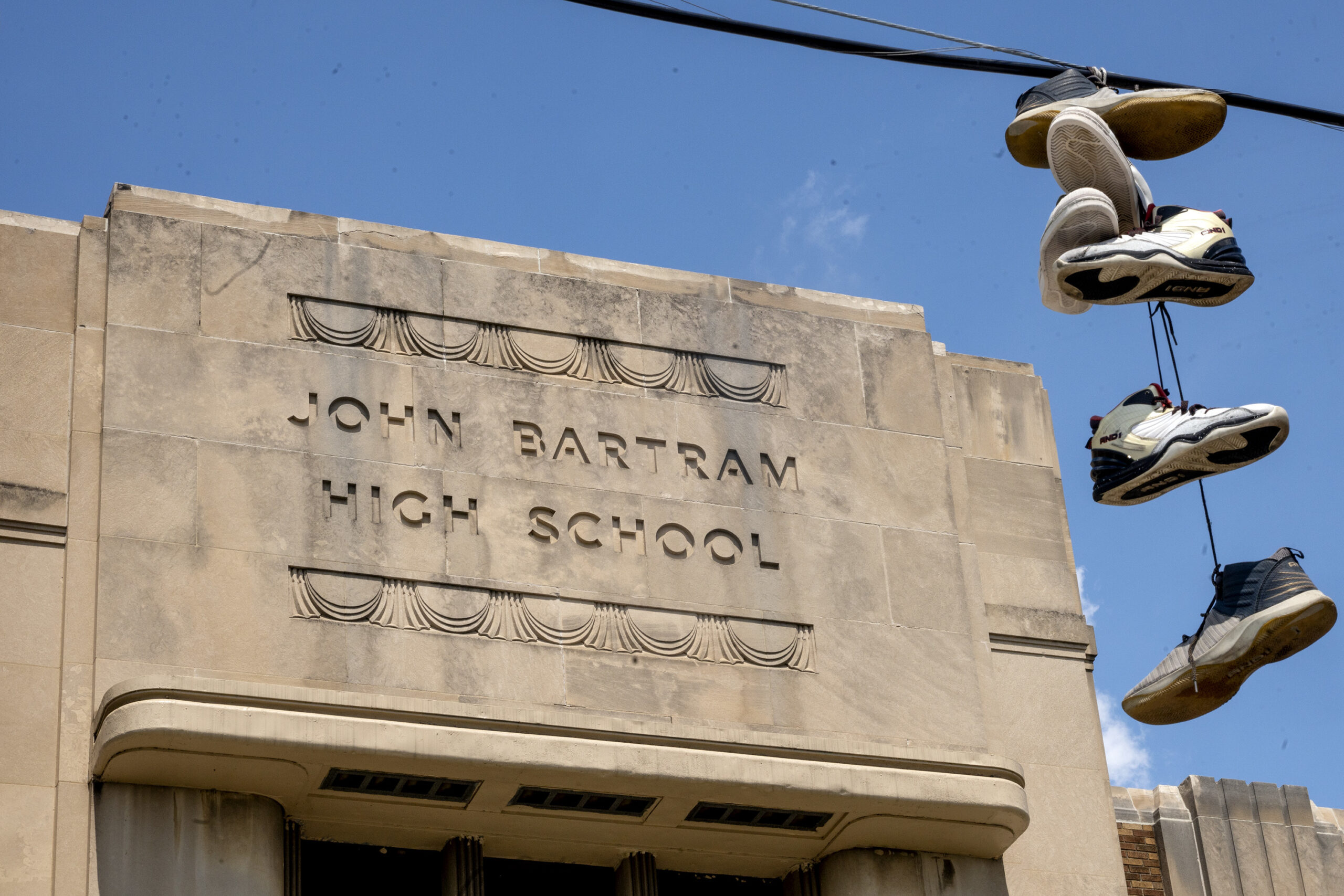
    John Bartram High School at 2401 S. 67th St in Southwest Philadelphia.

    Watlington has stressed that the point of the long-range facilities plan is not closing schools, but solving for issues of equity, improving academic programming, and acknowledging that many buildings are in poor shape, while some are underenrolled and some are overenrolled.

    “This plan is about ensuring that more students in every neighborhood have access to the high-quality academics, programs, and facilities they deserve,” Watlington said in a statement. “While some of these decisions are difficult, they are grounded in deep community engagement and a shared commitment to improving outcomes for all public school children in every ZIP code of Philadelphia.”

    But at community meetings unfolding at schools across the city that are slated for closure, Council members have expressed displeasure about parts of the plan — a preview, perhaps, of Tuesday’s meeting.

    Councilmember Quetcy Lozada, represents the 7th District, including Kensington, Feltonville, Juniata Park, and Frankford. Four schools in her district — Stetson, Conwell, Harding, and Welsh — are on the chopping block.

    “The fact that they are being considered for closure is very concerning to me,” Lozada said at a meeting at Stetson Middle School on Thursday.

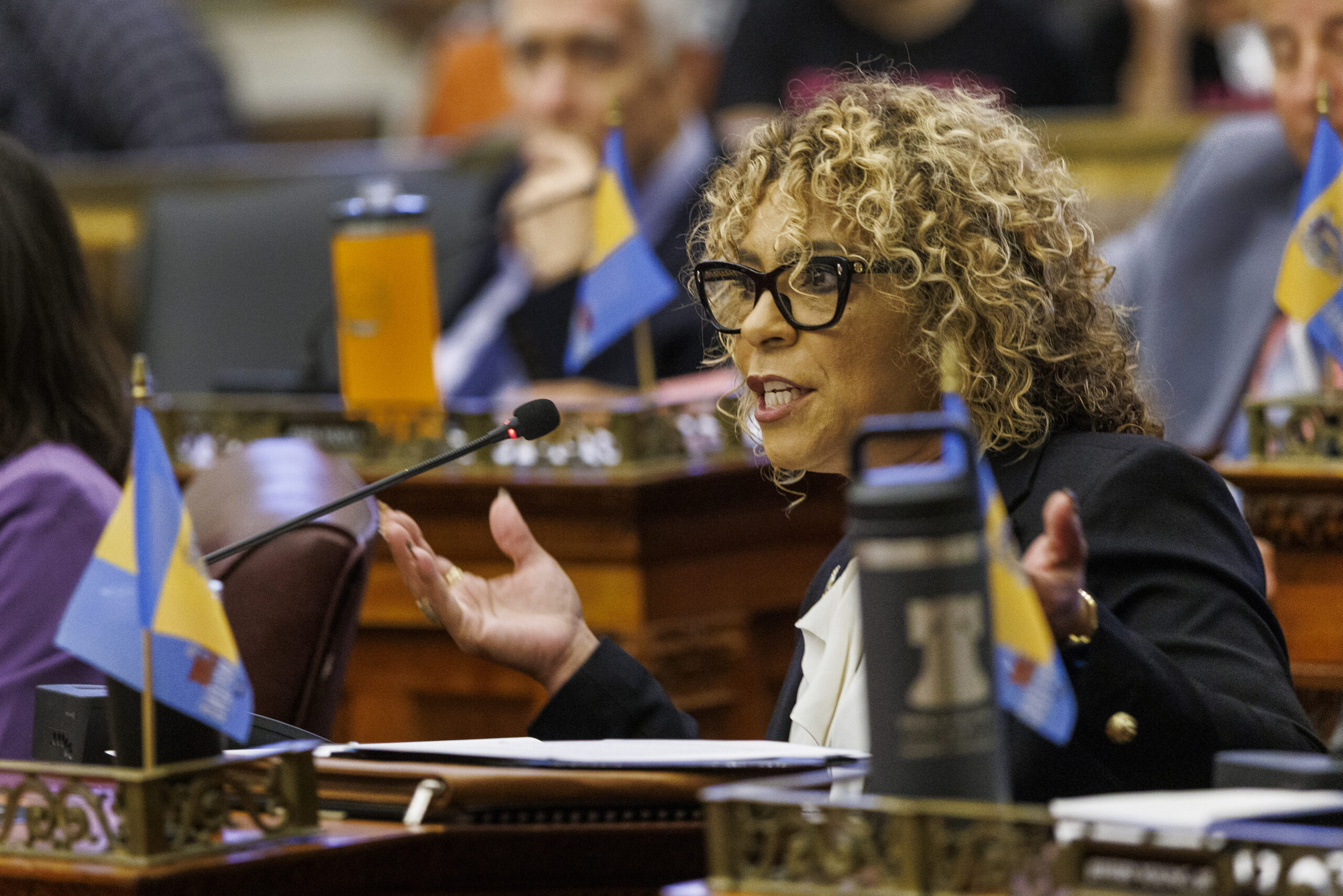
    Councilmember Quetcy Lozada is shown in a 2025 file photo.

    Councilmember Cindy Bass, speaking at a Lankenau High meeting, objected to closing schools that are working well. (Three schools in Bass’ 8th District, Fitler Elementary, Wagner middle school, and Parkway Northwest High School, are proposed for closure. Lankenau is in Curtis Jones Jr.’s district but has citywide enrollment.)

    “I do not understand what the logic and the rationale is that we are making these kinds of decisions,” said Bass.

    While Council members will not have a direct say on the proposed school closures or the facilities plan, Council wields significant control over the district’s budget. Funding for the district is included in the annual city budget that Council must approve by the end of June.

    Local revenue and city funding made up about 40% of the district’s budget this year, or nearly $2 billion. Most of that is the district’s share of city property taxes which, unlike other school systems in Pennsylvania, are levied by the city and then distributed to the district.

    (function() {
    var l2 = function() {
    new pym.Parent(‘schools_districts2’,
    ‘https://media.inquirer.com/storage/inquirer/projects/innovation/arcgis_iframe/schools_districts2.html’);
    };
    if (typeof(pym) === ‘undefined’) {
    var h = document.getElementsByTagName(‘head’)[0],
    s = document.createElement(‘script’);
    s.type = ‘text/javascript’;
    s.src = ‘https://pym.nprapps.org/pym.v1.min.js’;
    s.onload = l2;
    h.appendChild(s);
    } else {
    l2();
    }
    })();

    Where will the money go?

    Despite city and schools officials saying in the past that the district has more than $7 billion in unmet facilities needs, Watlington has said the district could complete its plan — including modernizing 159 schools — for $2.8 billion.

    Officials said further details about modernization projects and the facilities plan will be released before the Feb. 26 school board meeting, where Watlington is expected to formally present his proposal to the school board.

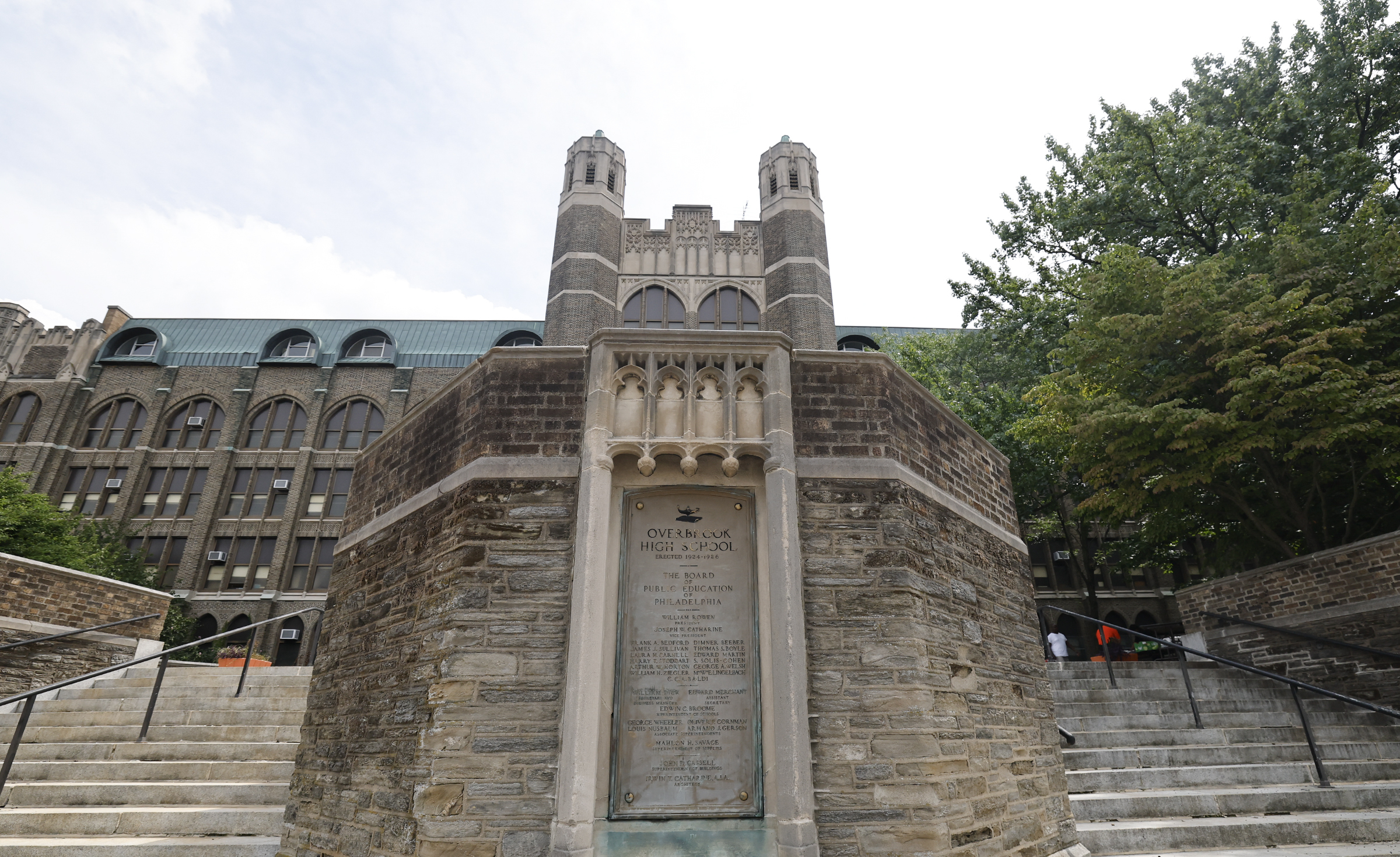
    Overbrook High School, in West Philadelphia, will get major renovations in preparation for The Workshop School, a small, project-based district school, colocating inside the building.

    Here are the total proposed dollar amounts per Council district and the 10 big projects announced Monday:

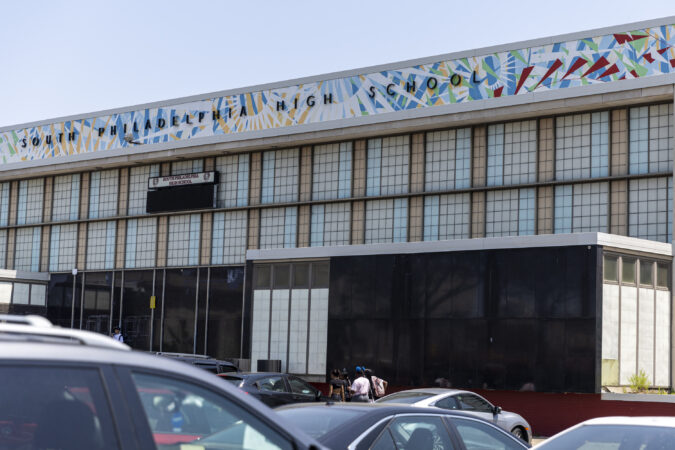
    • 1st District: $308,049,008. Key project: $57.2 million for South Philadelphia High, turning the school into a career and technical education hub and modernizing electrical, lighting, and security systems.
    • 2nd District: $302,284,081. Key project: $54.6 million for Bartram High, to renovate the school and grounds, career and technical education spaces, restroom and accessibility renovations, new painting, and new athletic fields and facilities (on the site of nearby Tilden Middle School, which is slated to close). Motivation High School would close and become an honors program inside Bartram.
    • 3rd District: $204,947,677. Key project: $19.6 million for the Sulzberger site, which currently houses Middle Years Alternative and is proposed to house Martha Washington Elementary. (It currently houses MYA and Parkway West, which would close.) Improvements would include heating and cooling and electrical systems, classroom modernizations, and the addition of an elevator and a playground.
    • 4th District: $216,819,480. Key project: $50.2 million for Overbrook High School, with updates including new restrooms, accessibility improvements, and refurbished automotive bays. (The Workshop School, another district high school, is colocating inside the building.)
    • 5th District: $290,748,937. Key project: $8.4 million for Franklin Learning Center, with updates including for exterior, auditorium, and restroom renovations, security cameras, accessibility improvements, and new paint.
    • 6th District: $55,769,008. Key project: $27.2 million for Forrest Elementary, including modernizations that will allow the school to grow to a K-8, and eliminate overcrowding at Northeast Community Propel Academy.
    • 7th District: $388,795,327. Key project: $32.3 million at John Marshall Elementary in Frankford to add capacity at the school, plus a gym, elevator, and schoolwide renovations.
    • 8th District: $318,986,215. Key project: $42.9 million at Martin Luther King High in East Germantown for electrical and general building upgrades and accommodations for Building 21, a school that will colocate inside the King building.
    • 9th District: $442,934,244. Key project: $42.2 million at Carnell Elementary for projects including an addition to expand the school’s capacity, restroom renovations, exterior improvements, and stormwater management projects.
    • 10th District: $275,829,539. Key project: at Watson Comly Elementary in the Northeast, an addition to accommodate middle grade students from Loesche and Comly, and building modernizations. District officials did not give the estimated cost of the Comly project.

    What’s next?

    The facilities Council hearing is scheduled for 10 a.m. Tuesday at City Hall. It will also be livestreamed.

    Members of the public also have the opportunity to weigh in on the facilities plan writ large at three community town halls scheduled for this week: Tuesday at Benjamin Franklin High from 4:30 to 6:30 p.m., Friday at Kensington CAPA from 4:30 to 6:30 p.m., and a virtual meeting scheduled for 2 p.m. on Sunday.

    Meetings at each of the schools proposed for closure continue this week, also; the full schedule can be found on the district’s website.

  • The Philly School District tried to close Paul Robeson HS before. Now, it’s back on the chopping block.

    The Philly School District tried to close Paul Robeson HS before. Now, it’s back on the chopping block.

    In 2022, the governor of Pennsylvania stood on a stage at Paul Robeson High in West Philadelphia and hailed the small school as “a model for what can happen in Pennsylvania.

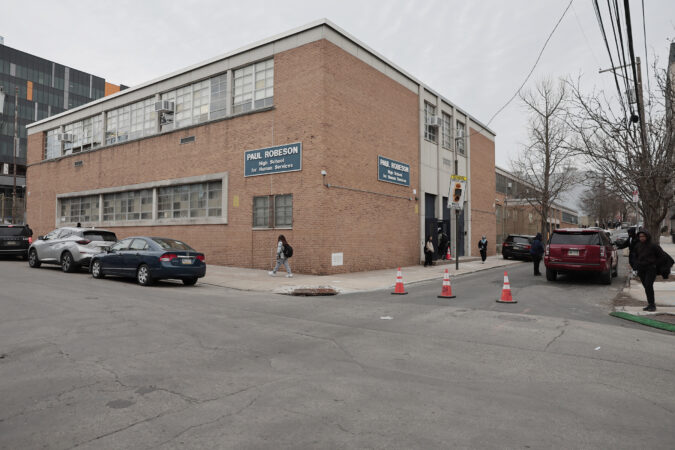
    But four years later, the Philadelphia School District has recommended closing Robeson, suggesting its small size limited students’ opportunities. Superintendent Tony B. Watlington Sr. wants its students to attend Sayre High, where Robeson would become an honors program, losing its separate identity, administration, and staff.

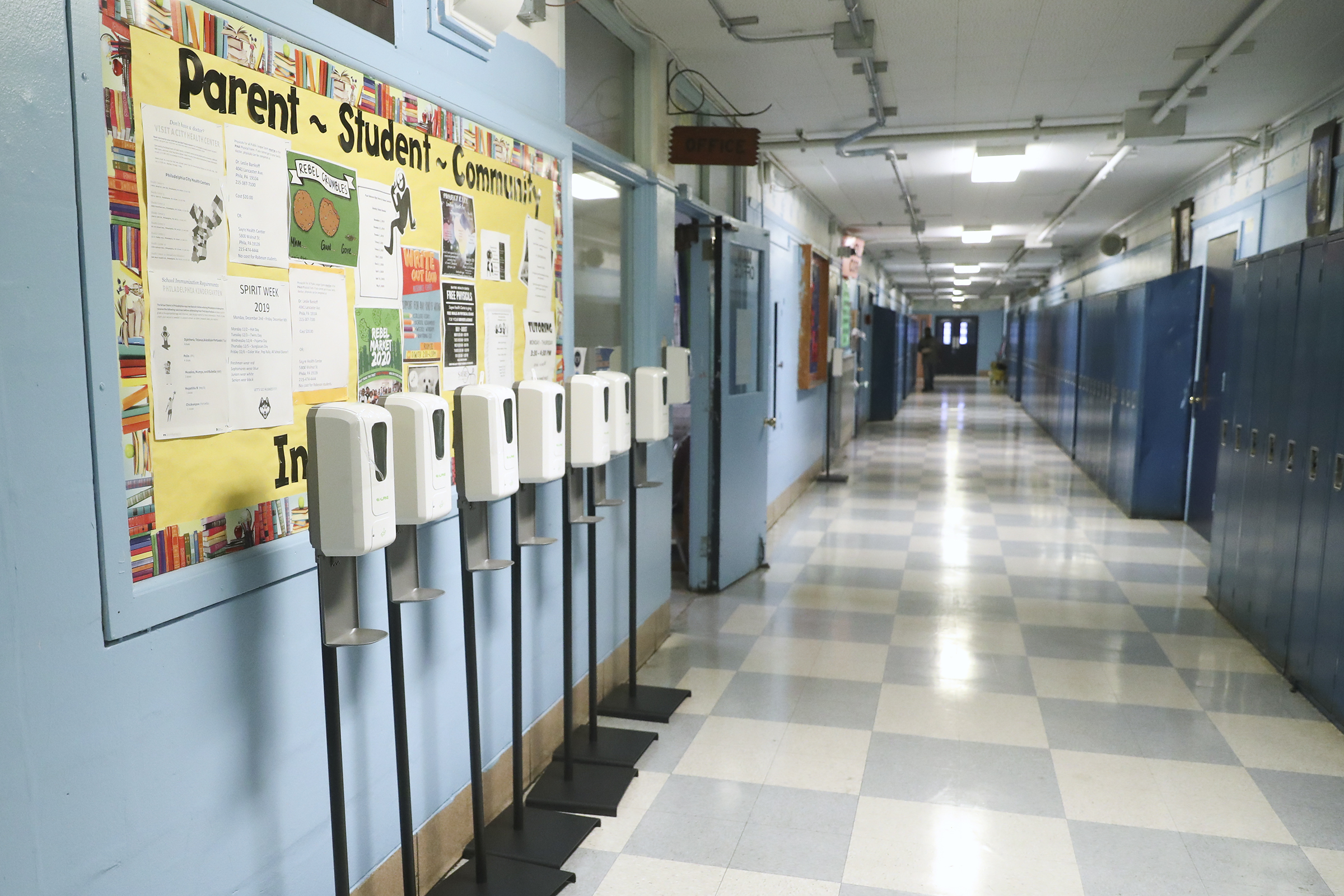
    A hallway at Paul Robeson High School, which the district is attempting to close for the second time.

    Having Robeson listed among 20 schools slated for closure was the worst kind of déjà vu for some in the Robeson community: In the last round of large-scale Philadelphia school closures, district officials recommended closing Robeson and sending students to Sayre, which is about two miles away.

    “This is the exact same plan,” said Andrew Saltz, who helped organize the Robeson community against closure in 2013 and who is doing it again 13 years later. “We need a different plan.”

    The community is speaking out, hoping to persuade the school board to save Robeson again when it votes on Watlington’s recommendations later this winter.

    An upward trajectory

    Robeson soared after successfully fending off its last attempted shutdown.

    By 2017, it was named the district’s most-improved high school. It built upon its core of dedicated teachers and students; though most Robeson students come from its own West Philadelphia neighborhood, it is a citywide school, meaning they have to apply to be there.

    Robeson expanded existing partnerships and formed new ones that gave students opportunities to get onto nearby college campuses. Richard Gordon, who came to lead the school in 2013, was recognized as national principal of the year. (Gordon has since been promoted to assistant superintendent in the district.)

    Multiple Robeson teachers have been honored as among the district’s best.

    The school sent a student to Harvard, a coup for any district high school, let alone one without strict academic criteria. Its students successfully pushed to get their school air-conditioned. School staff secured outside funding to renovate the cafeteria.

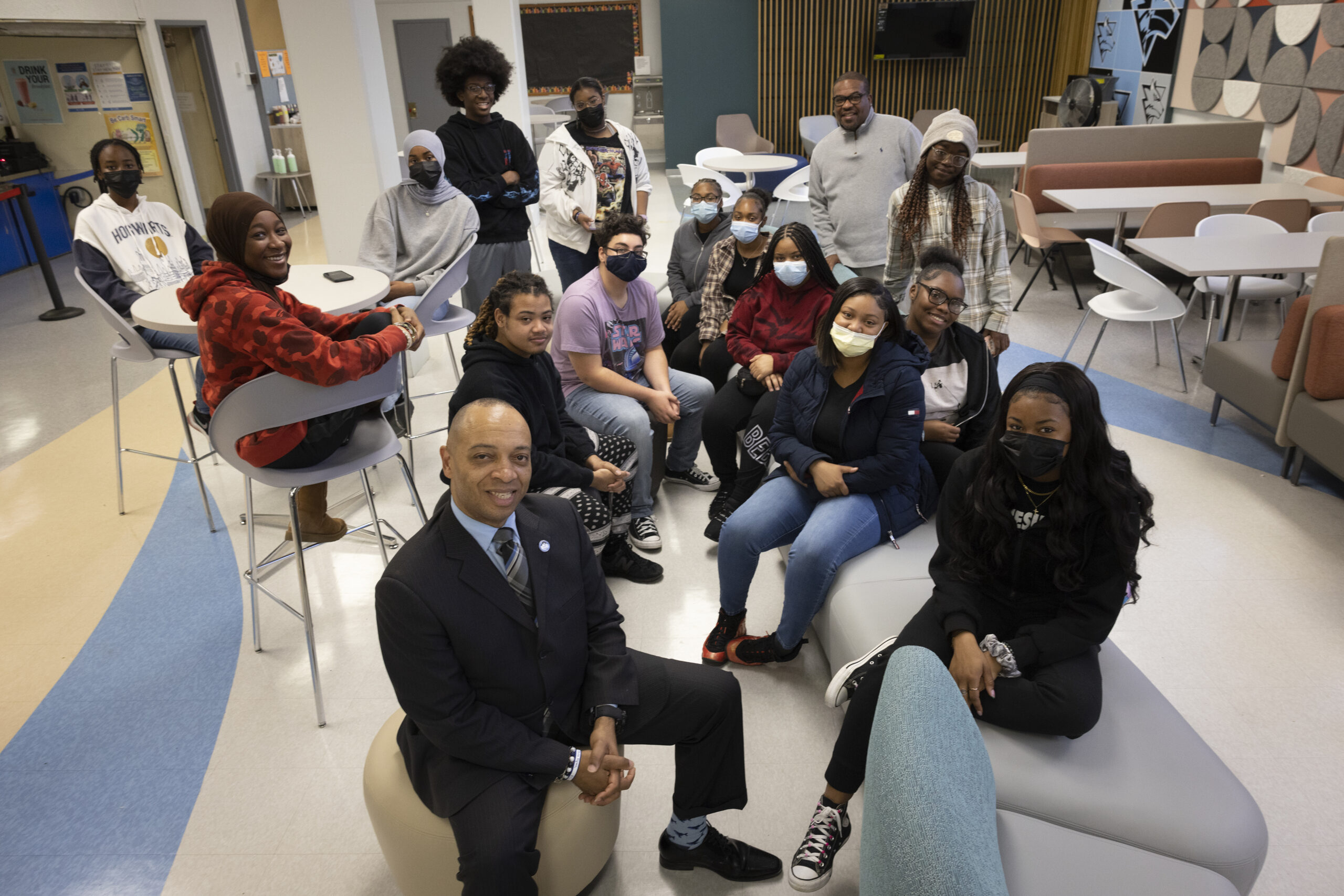
    Then-Principal Richard Gordon (front, tie), then-assistant principal Lawrence King (rear, gray sweater) and members of the Robeson High student body in the newly renovated cafeteria in this 2022 file photo.

    Then-Mayor Jim Kenney visited Robeson to tout its success. So did then-Gov. Tom Wolf.

    Elana Evans, a beloved Robeson teacher and the school’s special education compliance monitor, has already weathered one school shutdown — she taught at the old University City High School, closed in 2013

    That loss was brutal, Evans said. But she is proud of what the community has built at Robeson.

    “It’s an amazing story that continues to stay amazing because we still keep growing,” Evans said. “To say, ‘OK, you’re going to merge with this school, and your name is just going to fade to nothing,’ is, to me, disrespectful.”

    District officials are pitching Robeson’s closure — and the closings writ large — as a move to expand opportunities for all students.

    Sayre, with Robeson as a part of it, would get modernized career and technical rooms and equipment in the facilities plan, Sarah Galbally, Watlington’s chief of staff, told the Robeson community. Sayre would get more accessibility features; renovated stormwater management, roof, and restrooms; and new paint.

    But that didn’t convince Evans.

    “You say one thing, ‘This is how it’s going to look like,’ but for real for real, stop gaslighting me,” Evans said.

    ‘They needed something small’

    Samantha Bromfield homeschooled her twins for seven years, and was wary when she enrolled her children in public school — until Robeson made her believe.

    The move to shut the school frustrated and saddened her, Bromfield said. She and many other Robeson parents said they would not send their children to Sayre.

    “If you as a board choose to close Paul Robeson, I choose to pull my children from the public school system,” Bromfield said at meeting held at Robeson on Saturday. “They needed something small. They needed a family. They needed someone who could hold their arms around the children and say, ‘Hey, are you having a bad day?’”

    Multiple parents echoed Bromfield’s statements.

    The district is choosing to invest in some schools but not others under the facilities proposal, they said.

    Cassidy got a new school, why not us?” one parent told district officials, referring to a $62.1 million new building for a West Philadelphia elementary school.

    ‘Y’all don’t know’

    Ahrianna DeLoach, a Robeson ninth grader, struggled in middle school but is soaring at Robeson, she said, because of the nature of a place where teachers know every student’s name.

    “I don’t want it to close down,” DeLoach said. “I was looking forward to graduating from this school. It would devastate me if I couldn’t.”

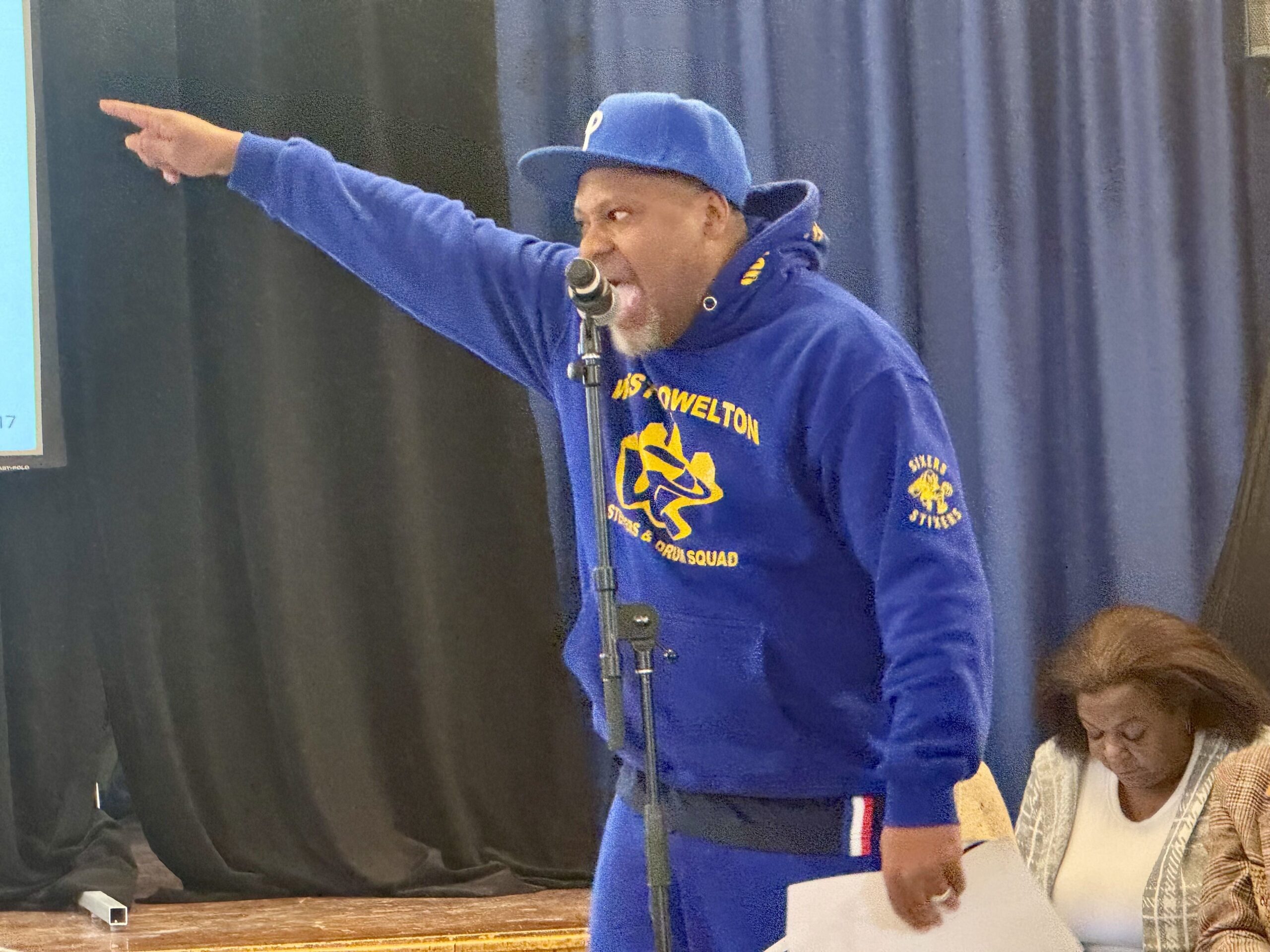
    Antoine Mapp Sr., a West Philadelphia resident, expresses frustration that the Philadelphia School District is attempting to close Paul Robeson High School. Mapp spoke at a district meeting on the subject.

    West Philadelphia resident Antoine Mapp Sr. graduated from University City High, but has been spending time at Robeson since he was 11. Mapp’s West Powelton Steppers and Drum Squad rehearses inside the Robeson gymnasium.

    It feels especially cruel to lose Robeson as gentrification creeps in, Mapp said, and with gun violence still plaguing Philadelphia. He worries about the routes children would have to take to get to Sayre, and about neighborhood rivalries.

    “You guys don’t understand what it’s like living in the community or our neighborhood, or what we go through,” Mapp said. “Y’all don’t know how hard it is just to go to the store in our community. Y’all don’t know what it’s like trying to go to an activity in our neighborhood. We have none of those things. Now you want to take this school away from us and send our kids to different communities. I want you to know that the crime rate and the murders are going to increase and there’s nothing y’all can do about it.”

  • A service honoring Absalom Jones took on added meaning this year for his church

    A service honoring Absalom Jones took on added meaning this year for his church

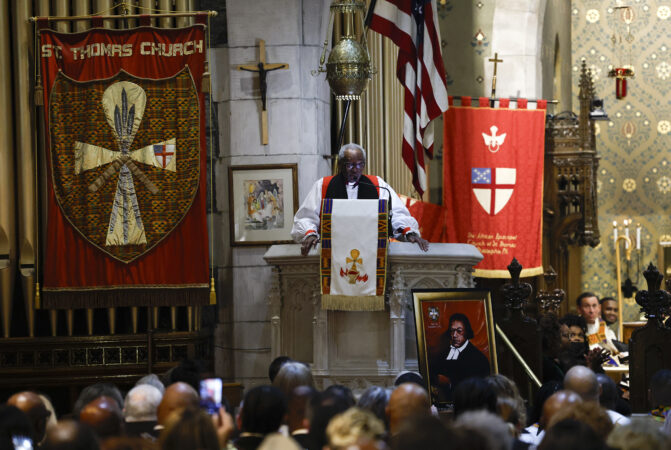
    This year’s celebration of African Episcopal Church of St. Thomas’ founder, the Rev. Absalom Jones, was intrinsically political.

    Parishioners on Sunday overwhelmed the pews at the Overbrook Farms church for the annual event honoring Jones, the first Black ordained Episcopal priest. But this year’s service took on new meaning after Jones’ legacy was stripped from the President’s House historical site on Independence Mall, the church’s rector said.

    Last month, the National Park Service dismantled the exhibit memorializing the lives of nine people enslaved at the nation’s first presidential mansion. The illustrative displays chronicled the Atlantic slave trade and President George Washington’s dogged support for the institution. They also elevated early influential Black Philadelphians, like Jones and contemporary Richard Allen. The site was a casualty of President Donald Trump’s push to remove all content that “inappropriately disparages Americans past or living” from federal land — what many have called an attempt to sanitize history by omitting the brutality of slavery from the narrative.

    The 35-minute sermon, delivered by the visiting Rt. Rev. Michael Curry, ran the gamut: From Bad Bunny’s Super Bowl halftime performance, to unrest in Minnesota over Trump’s immigration crackdown, the detention of 5-year-old Liam Conejo Ramos, and dysphoria spreading throughout the country.

    But Curry’s prevailing message was clear: Fight through the vicissitudes. Curry, former presiding bishop and primate of the Episcopal Church, is the first African American presiding bishop in the country.

    “If you want to taste freedom, if you want America to be just again,” Curry said, “if you want an America where every person is a child of God, where there is freedom and justice — not just for some — but for all … don’t you quit. Keep going, keep going.”

    Curry later added: “If we love America, change America.”

    The late afternoon service also featured young singers from Minnesota, faith leaders from other prominent Philadelphia institutions, and descents of the Rev. Allen.

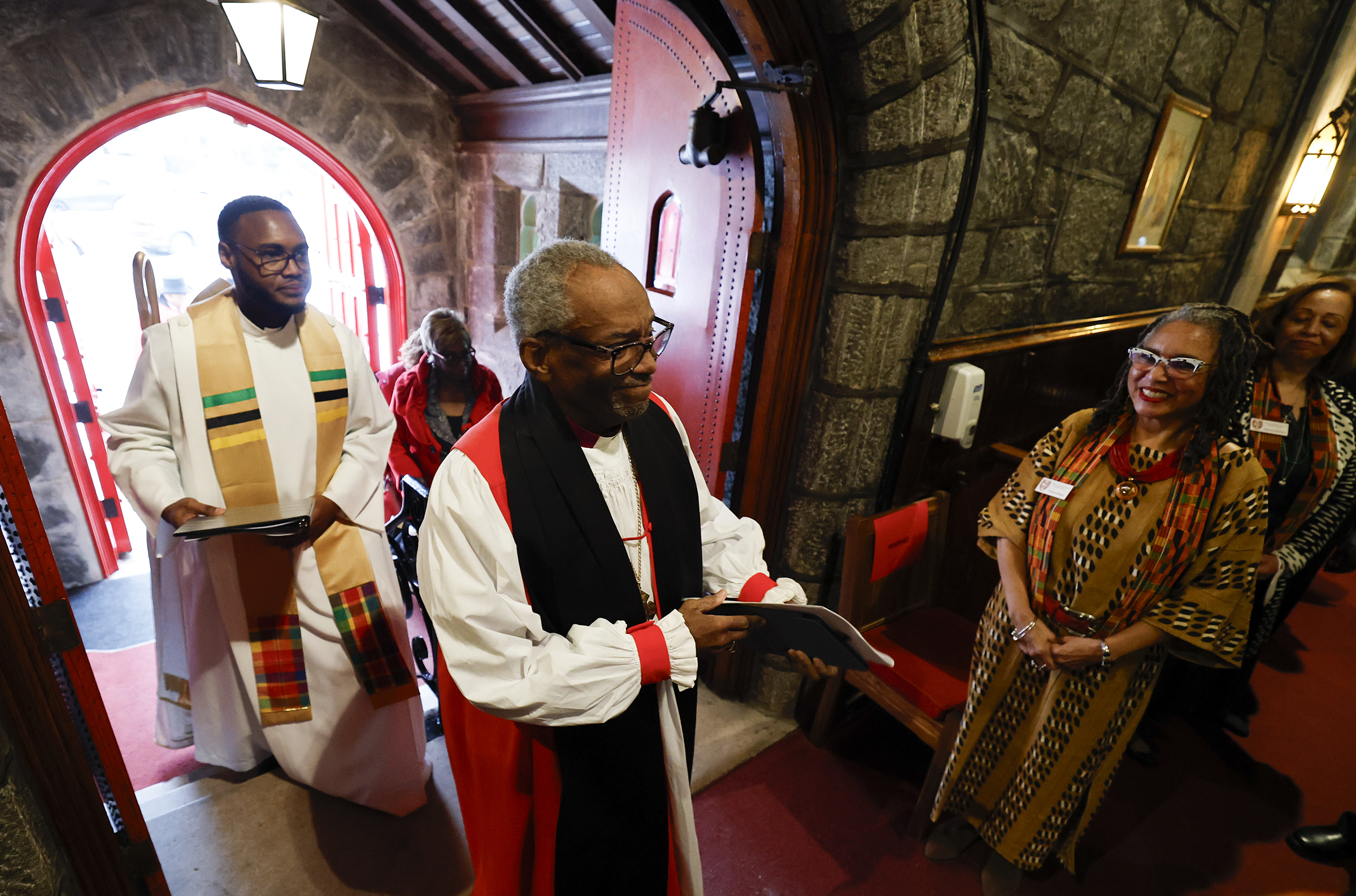
    The Rt. Rev. Michael B. Curry (center) walks into the African Episcopal Church of St. Thomas before providing the sermon in the celebration of the life and ministry of the Rev. Absalom Jones on Sunday.

    Jones and Allen, former slaves who became lay preachers in the 18th century and together created the benevolent Free African Society, were forced out of St. George’s Methodist Church general congregation and forced to worship in segregated pews. Jones went on to form St. Thomas, while Allen built Mother Bethel A.M.E. Church.

    The men’s names and history were invoked throughout the President’s House Site. A panel titled “How Did Enslaved People Become Free?” discussed Jones’ and Allen’s experience at St. George’s, their respective parishes, and how they organized against slavery.

    The erasure of the site — which captured the somber paradox of a young America that exalted freedom for some but deprived others — comes ahead of the country’s Semiquincentennial celebrations putting Philadelphia in the national spotlight.

    The city has filed lawsuits intervening, arguing that the removal of the exhibits is unlawful. A federal judge ordered that the exhibits be kept safe while the court proceedings are ongoing.

    “It brings a totally different emphasis and focus on the celebration this year at the church,” the Rev. Martini Shaw, St. Thomas’ rector, told Episcopal News Service. “But while some want to erase history, we in the church are prepared to celebrate history.”

  • Lebanese restaurant Manakeesh closes its West Philly location

    Lebanese restaurant Manakeesh closes its West Philly location

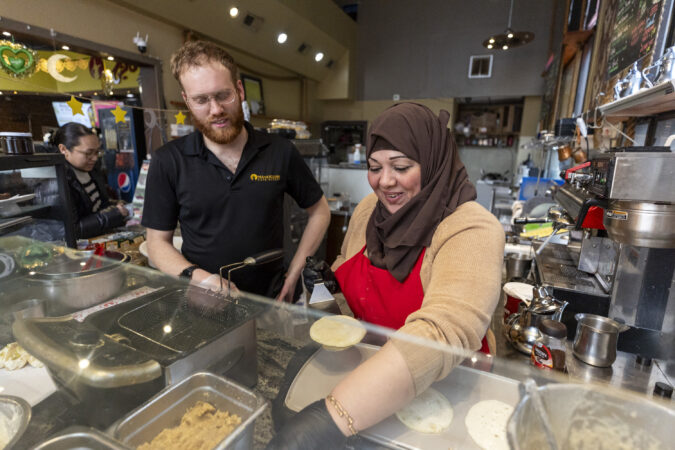
    After 15 years in its West Philadelphia location, Manakeesh Cafe Bakery & Grill has built a loyal customer base, general manager Adam Chatila said.

    But when the Lebanese restaurant announced it was closing its location at Walnut and 45th Streets, Chatila did not anticipate the outpouring of support on social media.

    Longtime customers asked what they could do to support the business.

    “You have been such a pillar of our community and neighborhood,” one typical commenter wrote on Instagram. “Is there anything we can do to help? We love you guys.”

    “I was really touched by that,” Chatila said.

    While the location is closing, the business isn’t. Manakeesh will continue online with a smaller menu, as the owners scout out a new location.

    Chatila said the closing was not by choice – the business was leasing its space, and the rent had become too high.

    While Manakeesh wasn’t the first restaurant offering this cuisine in the area — Saad’s Halal Restaurant is across the street — it introduced the community to a wider range of options for breakfast and lunch, with its namesake manakeesh flatbreads being a customer favorite.

    “It’s a social hub, you know, they would come and have their meetings and dates and … to come hang out,” Chatila said. “Manakeesh is kind of like a Lebanese Panera.”

    He said that while it’s had its ups and downs, business has largely been consistent in recent years. Customers kept coming back for staples, like hummus and baklava, as well as specialties like chicken tawook kabob, which is grilled in front of patrons.

    “We really put our heart into our dishes; we’re not just, you know, taking something that someone else prepared for the most part and just like repackaging it and selling it. We make our dough from scratch. We get a lot of our Lebanese ingredients imported from Lebanon, like the za’atar,” he said.

    Chatila said the business is looking for a space in the same neighborhood, though it may not be as elegant as the former bank building that has been its home since his father, owner Wissam Chatila, opened the restaurant in January 2011. Adam Chatila described what they’re hoping for:

    “Something similar, maybe a slightly smaller scale operation but it gives off the same effect of, you walk in and you feel like you’re in a different country, in the Lebanese country,” he said.

    While Manakeesh will become a “cloud kitchen” in the short term, Chatila said, it will continue to deliver out of a physical location — the family’s other restaurant, Toomi’s Shawarma, a fast-food-style place in Upper Darby. It won’t have the entire menu, Chatila said, but it will have many of the most popular dishes.

    Chatila said the restaurant has relied on many of its staff members for years, including one since the day it opened.

    “We treat them like a family, so we’re going to do our best to try to retain the workforce,” he said. “We’re going to see how things go the first month, and try to accommodate for them, and hopefully we’ll be able to make it work.”

    Chatila said he teared up at the decision to close the location.

    “And then to notice (on social media) that they also had that feeling: It makes us feel like we were not just a restaurant. We are community members.”

    The closing on Sunday, marked by a party, comes just ahead of Ramadan, the Muslim month of fasting and prayer, and a special time of year for Manakeesh, which would open at sunset to serve many customers when they break their fast with special Ramadan dishes.

    That tradition will continue online, for now.