Category: Philadelphia News

  • Drugs took both her sons and her leg. Now, Kelly Wyatt is committed to staying sober.

    Drugs took both her sons and her leg. Now, Kelly Wyatt is committed to staying sober.

    Kelly Wyatt winced as a nurse unwrapped layers of gauze from her left leg, exposing the massive wound beneath.

    Yellow and red and gray, weeping plasma and agonizingly painful at the slightest touch, it covered almost the entirety of the end of her leg — the site of the amputation she had undergone four years before.

    Emergency room doctors at the time had warned her that if the drugs she was using didn’t kill her, her wounds would.

    Now Wyatt is 14 months into recovery from an addiction to fentanyl, a potent synthetic opioid, and xylazine, an animal tranquilizer never approved for human use. The emergence of xylazine, known as “tranq” on the streets, early in the decade marked the beginning of a dangerous new era for Philadelphians addicted to illicit opioids.

    Tranq users developed skin lesions that became gaping wounds, though exactly how is still unclear. As the medical establishment scrambled to respond, amputations more than doubled among people addicted to opioids between 2019 and 2022.

    Wyatt, 52, is among hundreds of Philadelphians facing lifelong medical needs from tranq, as the latest wave of the area’s drug crisis has seen a rapidly evolving succession of veterinary and industrial chemicals compound the dangers of the powerful opioids being sold on the streets.

    Some have become regular patients in burn units and wound care clinics at area hospitals, among the only places capable of treating severe tranq injuries.

    As part of its ongoing coverage of the area’s drug crisis, The Inquirer followed Wyatt for more than a year as she went through early recovery and worked with doctors to heal her wound.
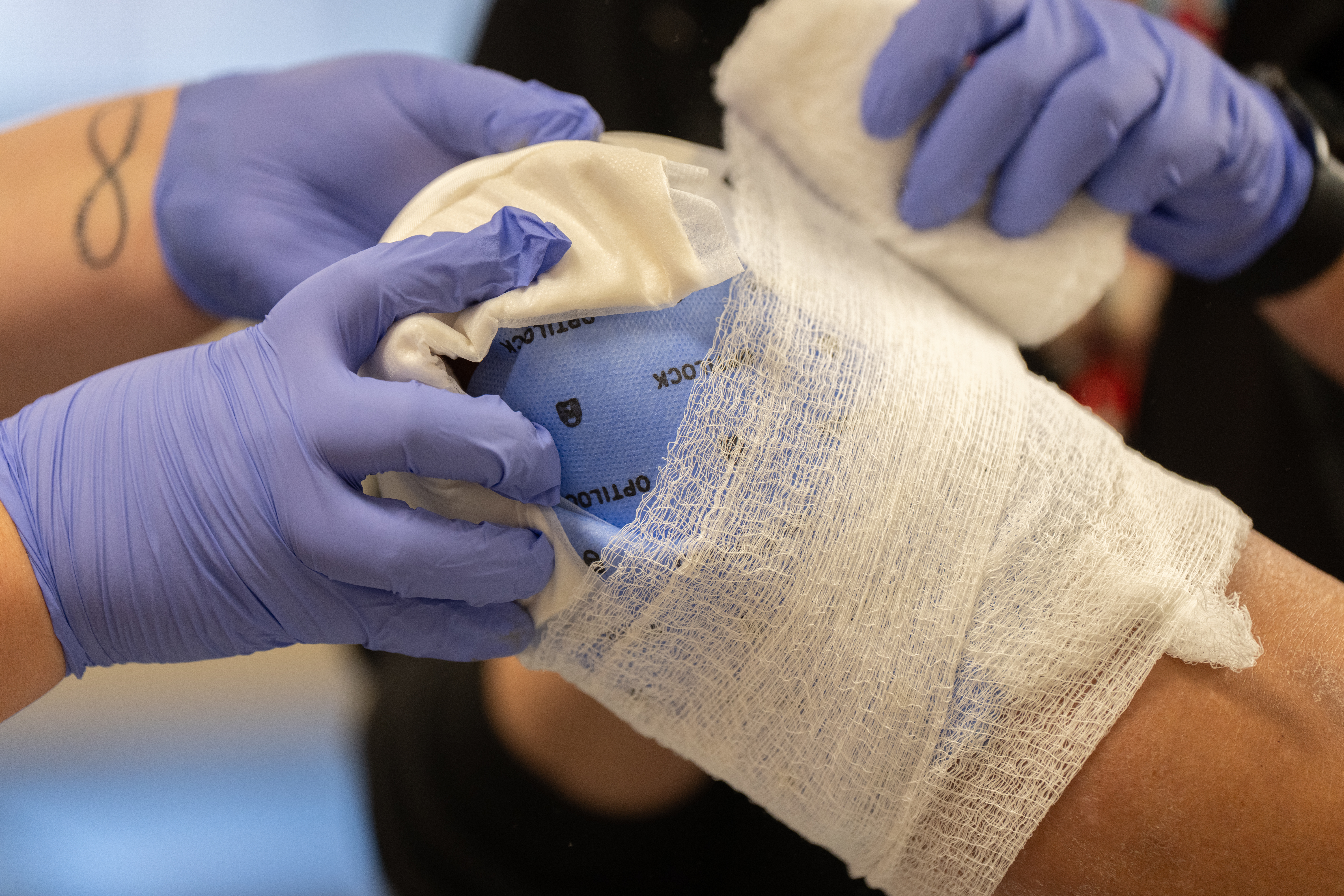
    Kelly Wyatt receives treatment at Jefferson Einstein Philadelphia Hospital’s Center for Wound Healing in Philadelphia in November.

    Wyatt initially shrugged when the small sores had emerged on her legs, only to watch them grow into massive abscesses, resulting in an amputation below her knee. Her ongoing tranq use prevented the wound on her left leg from healing properly. Even after recent months of sobriety and careful treatment, doctors are still warning her that they may have to amputate more of her leg.

    But Wyatt’s tranq wounds go still deeper.

    Over the last several years, both of her sons had spiraled into addiction. By January, both of them were dead.
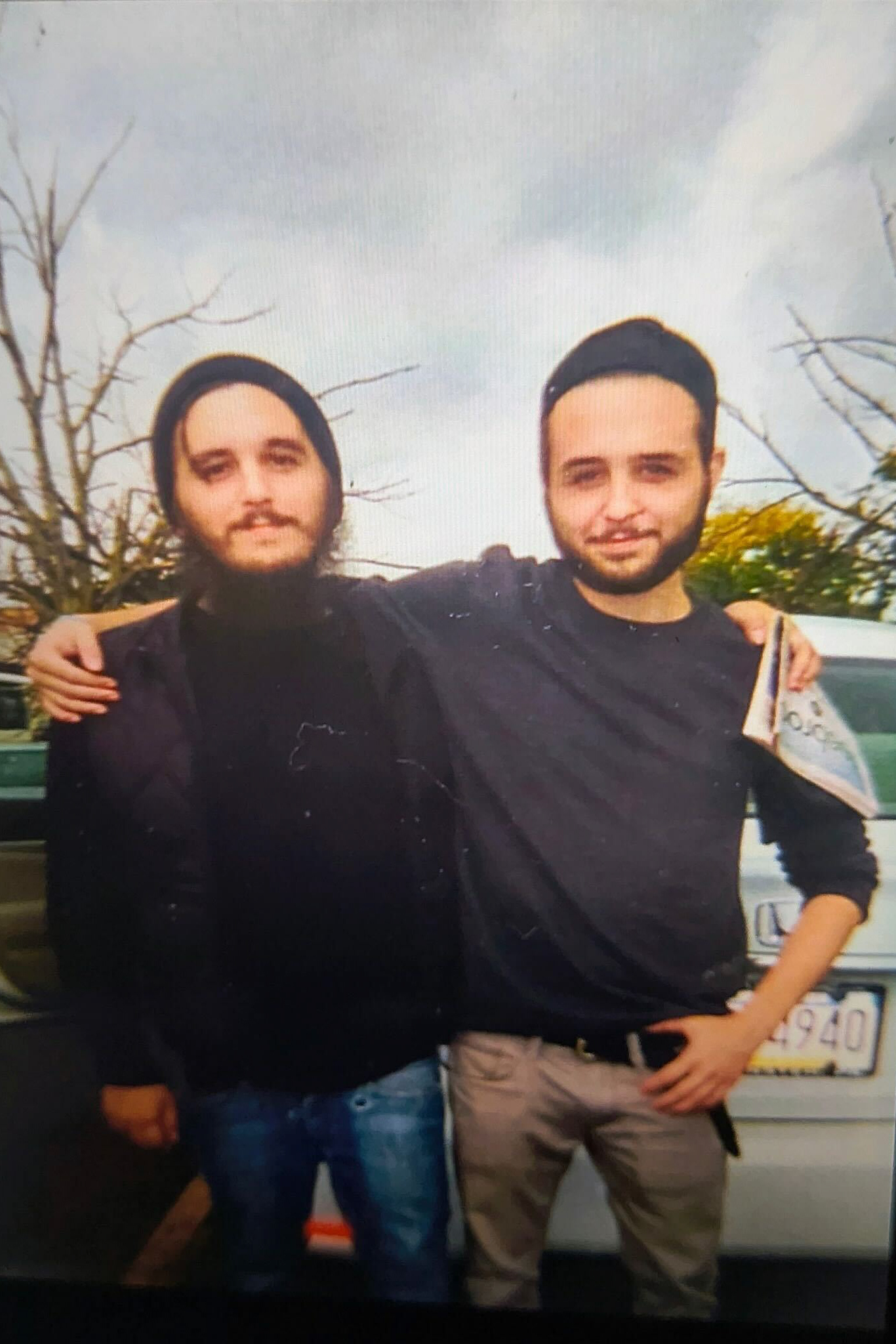
    A family photo of Dakota Wyatt, left, and Tyler, right.

    Spiraling into addiction

    Several members of Wyatt’s family have struggled with addiction.

    Wyatt experimented with drugs as a teenager, but was sober during her kids’ early childhoods. She didn’t drink alcohol, let alone seek out illicit drugs, after giving birth to her eldest son, Dakota, at 18. She raised two sons and a daughter in a neighborhood near Pennypack Park.

    Her days had a familiar rhythm: packing lunches, picking the kids up from school, watching them play together at the local park. In her spare time, she dabbled in mixed-media art, designing the window displays at the downtown restaurant where she worked for years. One Philadelphia Flower Show-themed display had a working waterfall.

    Her youngest, Tyler, was a happy child, grinning wide in every school picture and sharing inside jokes and a love for music with his brother. Dakota, more sensitive, had struggled with anxiety from an early age; Wyatt remembers him asking her at bedtime what the family would do if their house burned down in the night. But he could always make her laugh, and she and the boys would sing along to the same music in the car: ’90s alt-rock, Johnny Cash, the local hip-hop station.

    In 1999, she divorced their father. A few years later, at 28, she took her first Percocet pill, an opioid painkiller approved for medical use that is widely abused as a street drug. She had just started working at a bar, and the long hours were wearing on her.

    With the pills, “I could get more cleaning done, I could push my body more,” she said. “And it snowballed.”

    She was not aware when her sons began using drugs themselves in their teenage years. “I didn’t know for a long, long time,” she said.

    Afterward, Wyatt tried to help them seek treatment, even while her own drug use increased, she said.

    But a series of traumatic life events resulted in all falling deeper into addiction together.

    Wyatt’s ex-husband died following long-standing health issues, including diabetes.

    Then Dakota, who drove a Zamboni at a local ice rink, was injured in an accident at work — losing the tips of his fingers while cleaning the machine. He had been using more opioids to deal with the pain.

    Wyatt began buying drugs with him in Kensington, at the vast open-air drug market that is the epicenter of Philadelphia’s opioid crisis. “It was normalizing — I’m his mom and I’m with him in that crazy environment. I’m sure it made him feel like it was OK. And I regret that,” Wyatt said.

    “I regret a lot of stuff. But that was the beginning.”
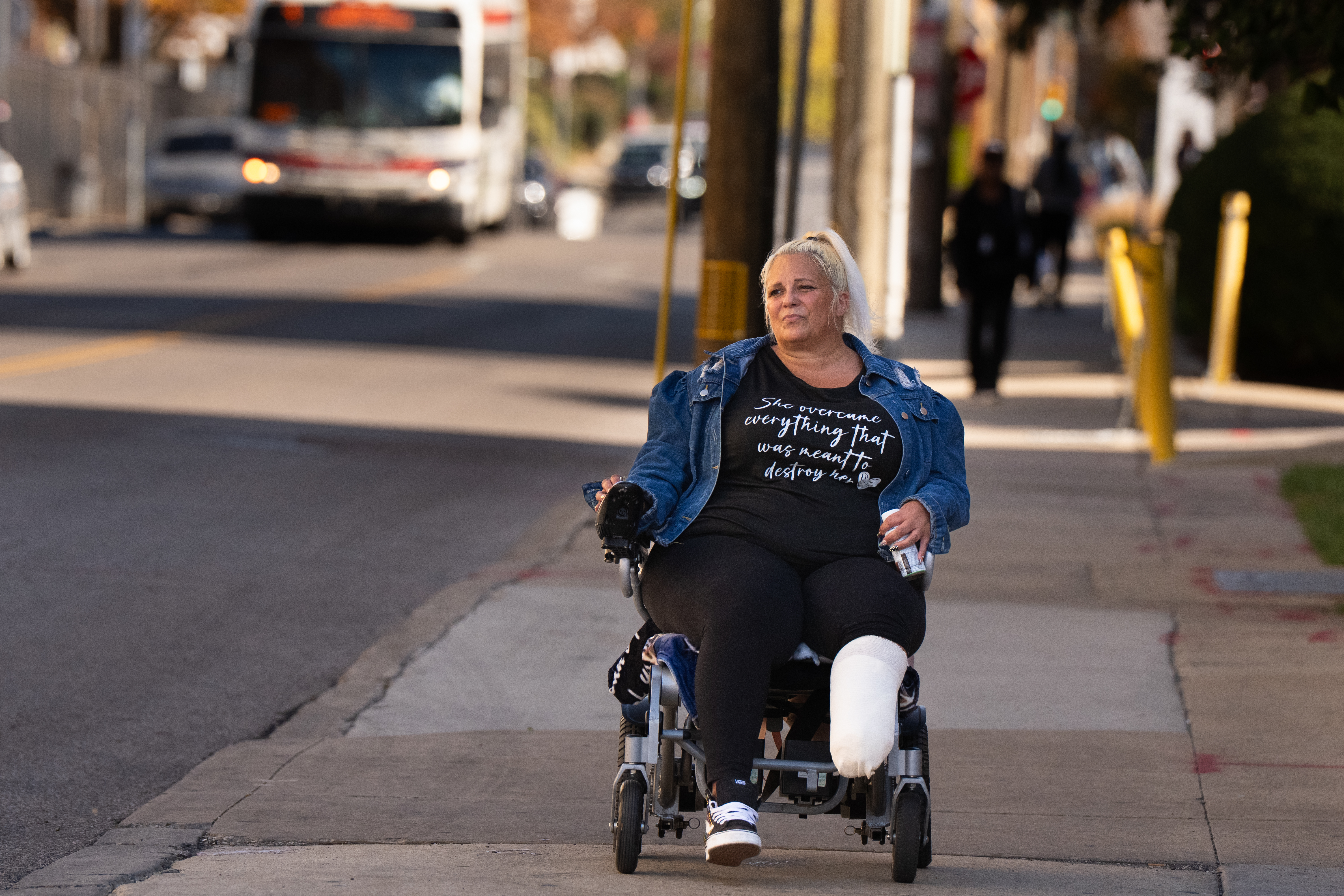
    Kelly Wyatt leaves her wound care appointment at Jefferson Einstein Philadelphia Hospital’s Center for Wound Healing in November.

    Tranq warning signs

    It was the mid-2010s, and the drugs on the street were changing. The stronger synthetic opioid fentanyl was just emerging; dealers chanted “fetty-fetty-fetty” on the corners to draw in customers.

    And then Wyatt began hearing talk of “tranq” getting mixed into the drug supply.

    That was around the time that Dakota developed wounds on his arm, open sores that would not close. Wyatt found small wounds on her arms and legs — “like melon-ball scoops.”

    One day, she saw a flier, handed out by health authorities in Kensington, warning that tranq can cause skin lesions.

    “All of a sudden,” she recalled, “things made sense.”

    But her addiction was so severe that she was afraid to stop using the fentanyl-tranq mix now prevalent in the illicit drug market. She fixated on avoiding xylazine’s severe withdrawal symptoms — chills, sweating, anxiety, and agitation — which don’t respond to traditional opioid withdrawal medications. She worried about seeking treatment with no guarantee of relief.

    By the time Wyatt was admitted to a hospital in 2021, she was hallucinating from sepsis, a severe complication from an infection that can lead to organ failure, shock, and death.

    When she woke up eight days later, a doctor told her she was at risk of having one leg amputated, and maybe both. “Please let me keep as much of my leg as possible,” she recalls begging a doctor who wanted to remove her entire leg.
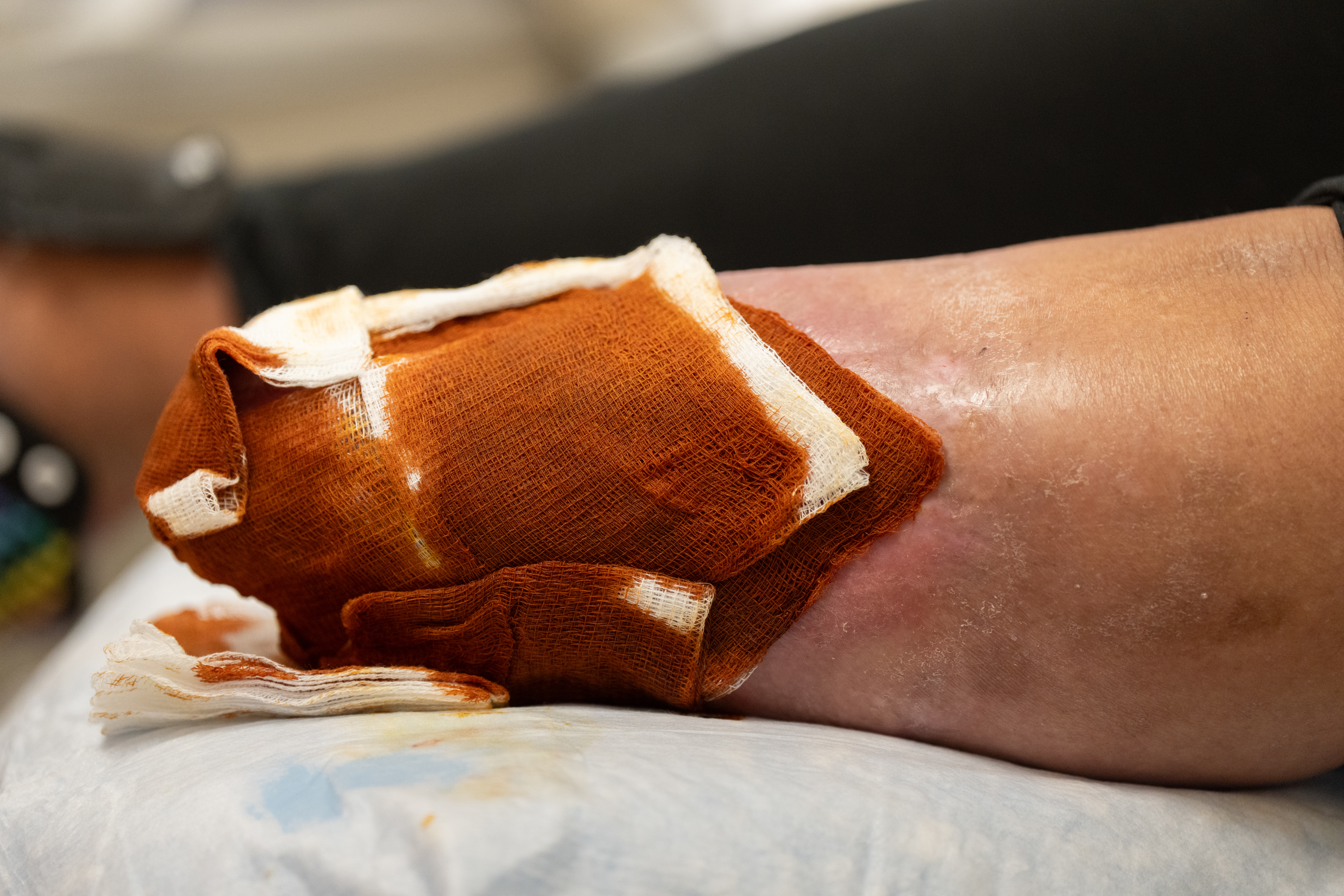
    Kelly Wyatt receives treatment for a serious xylazine wound at the site of her amputation at Jefferson Einstein Philadelphia Hospital’s Center for Wound Healing in November.

    “The doctor thought I should get the whole leg cut off. The other thing I could do was amputate below the knee, and then get tons of operations for the infection,” she said.

    Her oldest son’s tranq wounds had also worsened. Dakota had wounds on his legs and an arm, which was eventually amputated later that year. He also suffered a heart infection linked to his drug use, and needed a valve replacement.

    After a month in the hospital, he came home and continued using drugs.

    He developed new lesions. Maggots ate at his rotting skin. Wyatt cleaned the bugs out of his wounds.

    Wyatt tried bargaining with her son, promising they could get addiction treatment together. She offered to get him enough drugs that he wouldn’t enter withdrawal while waiting for care at the hospital. Sometimes, he managed to stay at the hospital for a few hours, but never longer.

    “He was too embarrassed to go anywhere, he was too afraid to get clean, and he was too afraid to be sick. He told us he would rather die than go through withdrawal again,” she said. “A couple times, he asked me if I wanted to just shoot up and lay down and die with him.”

    “‘I want to live,’” she recalls telling him, “‘and I don’t want to live without you.’”
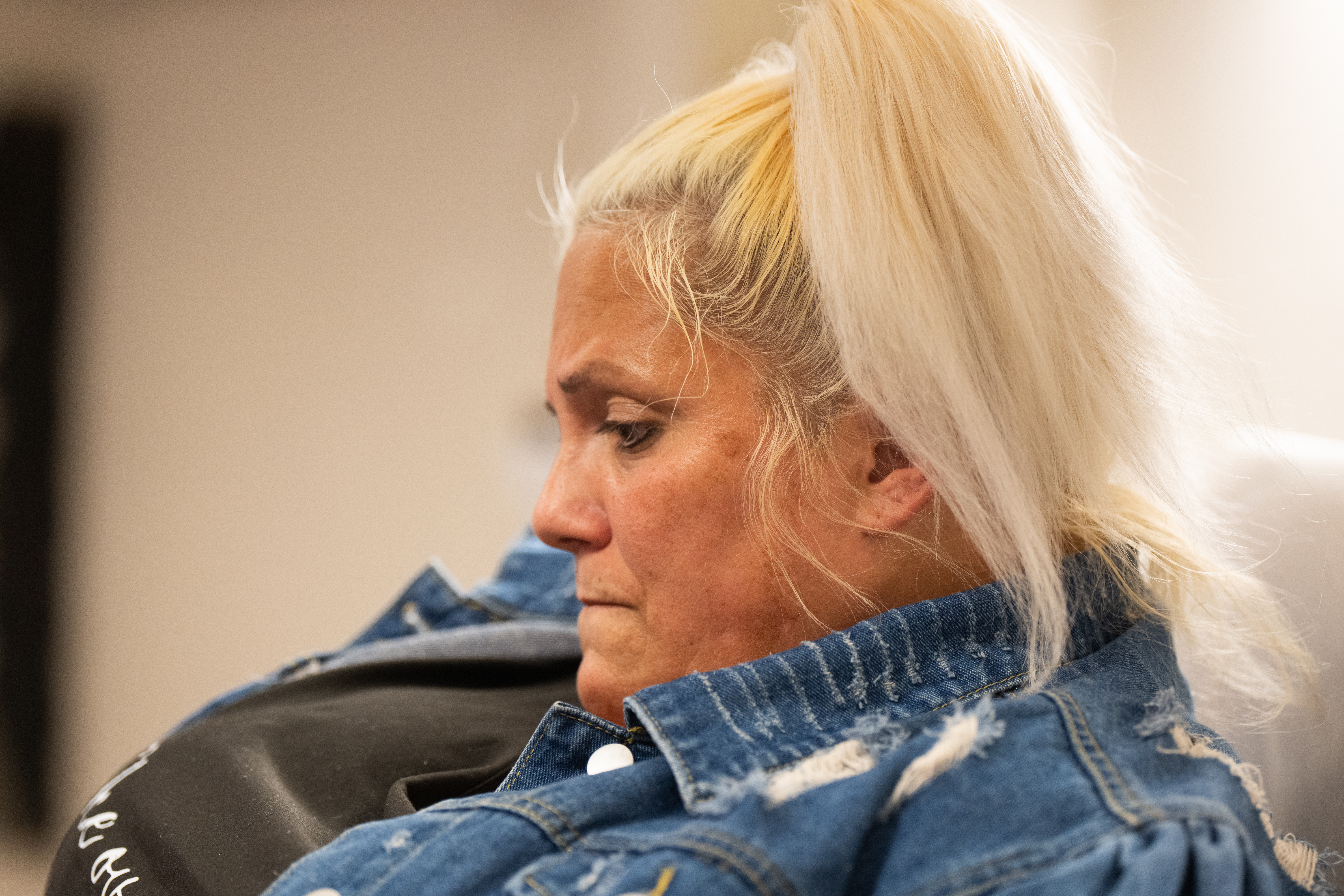
    Kelly Wyatt waits for treatment for a serious wound on her leg at Jefferson Einstein Philadelphia Hospital’s Center for Wound Healing in November.

    Loss and recovery

    One night in January 2024, Dakota was having trouble breathing and seemed to be hallucinating, speaking nonsense. He asked Wyatt to call an ambulance to the house.

    Dakota died before the family reached the hospital. His cause of death was listed as drug intoxication.

    Wyatt believes ongoing health issues from his wounds hastened his death. Her grief intensified her own drug use, leading to more xylazine wounds. The wound that had opened near her amputation grew worse.

    A month after Dakota’s death, she entered drug treatment. After three months, she relapsed and overdosed on cocaine and fentanyl. Her first thought after waking up was to use again, but instead she chose rehab.

    “I didn’t want to die,” Wyatt said. “I didn’t want to be in pain anymore.”

    She arrived at the Behavioral Wellness Center at Girard in July 2024, hoping to enter outpatient rehab.

    Instead, physicians recommended their inpatient clinic that could also treat her wounds, one of the few such facilities in Philadelphia.
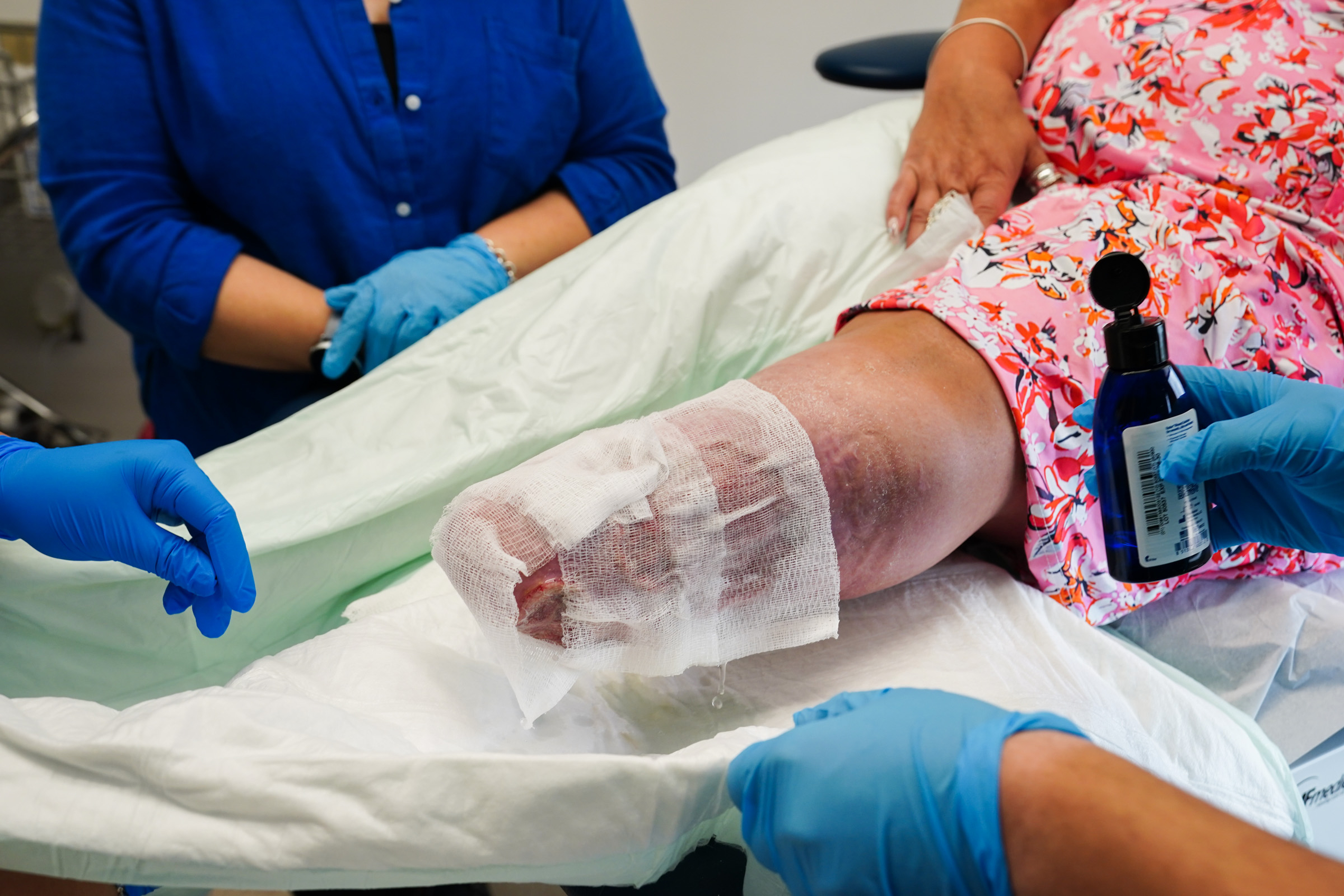
    In August 2024, Kelly Wyatt attended a wound care appointment as part of her inpatient care at Girard Behavioral Health, one of a few addiction rehabs in the city that can treat xylazine wounds.

    Wyatt was living there and undergoing treatment a month later, in August 2024, when she wheeled her motorized wheelchair into a clinic room and took deep breaths as nurses carefully peeled back layers of moisturized gauze on her left leg, cleaning the wound.

    Still in the shaky early months of recovery, and needing to remain in inpatient rehab, she remained worried about Tyler, who was still using drugs.

    “He was the primary caretaker of his brother. They would be in their room, getting high together. And now he’s just in that room by himself, day in and day out,” she said in an interview that summer.

    “I kept saying, ‘I think I should go home to him.’ And everybody kept saying to me, ‘You have to work on yourself first. He’ll be fine,’” she later recalled.

    “And then he wasn’t fine.”
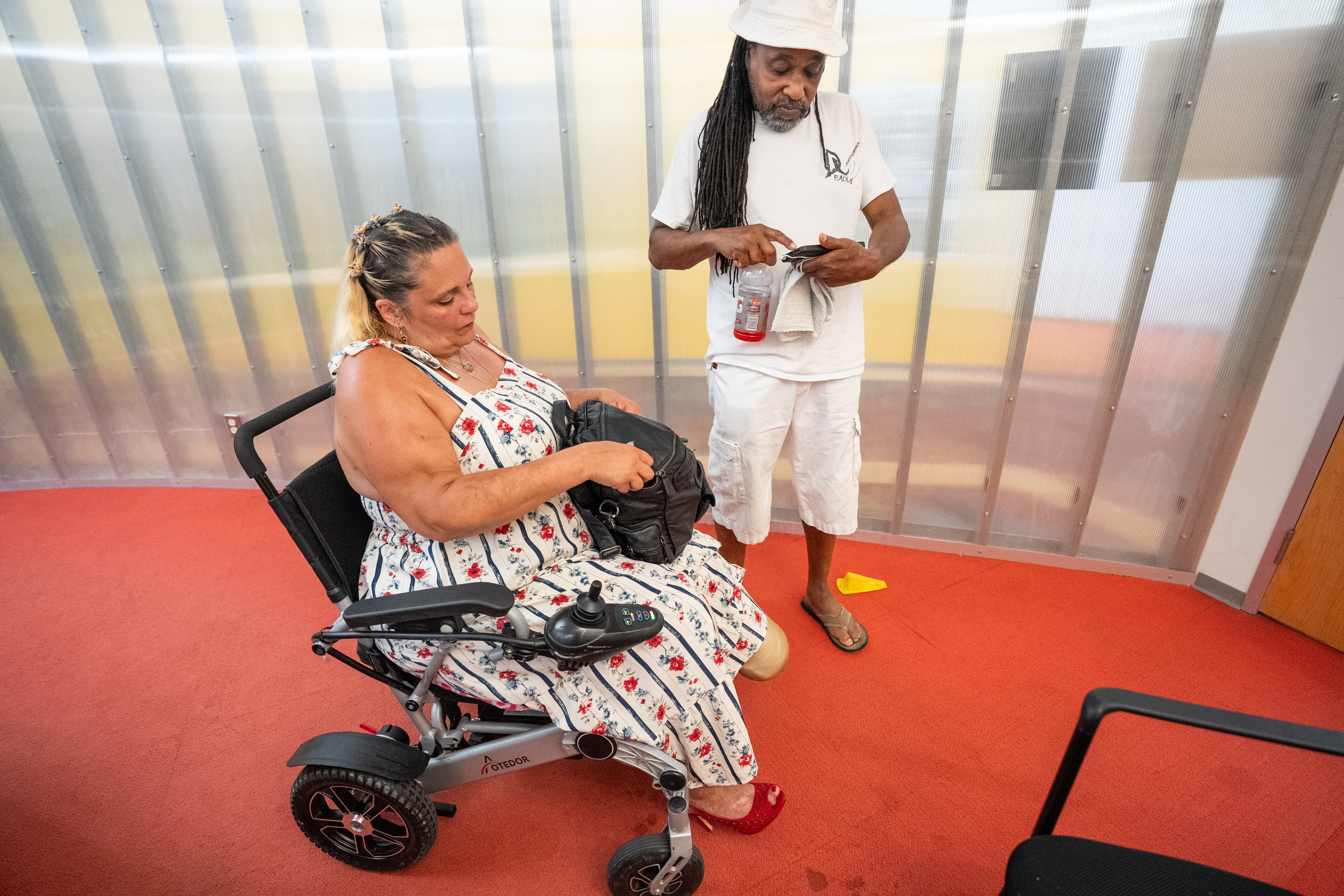
    Kelly Wyatt and her partner Randy Stewart at the headquarters of Resources for Human Development, which runs the skilled nursing and inpatient addiction treatment center where Wyatt sought treatment this winter.

    A mother’s guilt

    Wyatt was still in rehab in January 2025 when her partner, Randy Stewart, called. He hadn’t seen Tyler in hours and thought he might have left the family’s house.

    Wyatt called several hospitals and then asked Randy to check the bathroom in the back of the house.

    He found Tyler on the floor.

    “I just thought, God, please no,” Wyatt said. “Not again. You can’t do this to me again.”

    Tyler’s cause of death was also listed as “drug intoxication.”

    He died at 27, a year and 10 days after his brother.

    Wyatt is still wracked by guilt. Guilt that she used drugs with her sons. That she used drugs at all. That she wasn’t there when either of her boys died. That her daughter, who does not use drugs, stopped speaking to her. Sometimes, she dreams about her children and wakes up screaming.

    As she continues treatment, Wyatt said, she hopes her story will help other families struggling with addiction, especially the realities of tranq use.

    “Sometimes I’m embarrassed to talk about it. But I feel like I have to,” she said. “Because people need to know. If one person sees this and gets some medical care, gets any kind of help, I would be happy.”
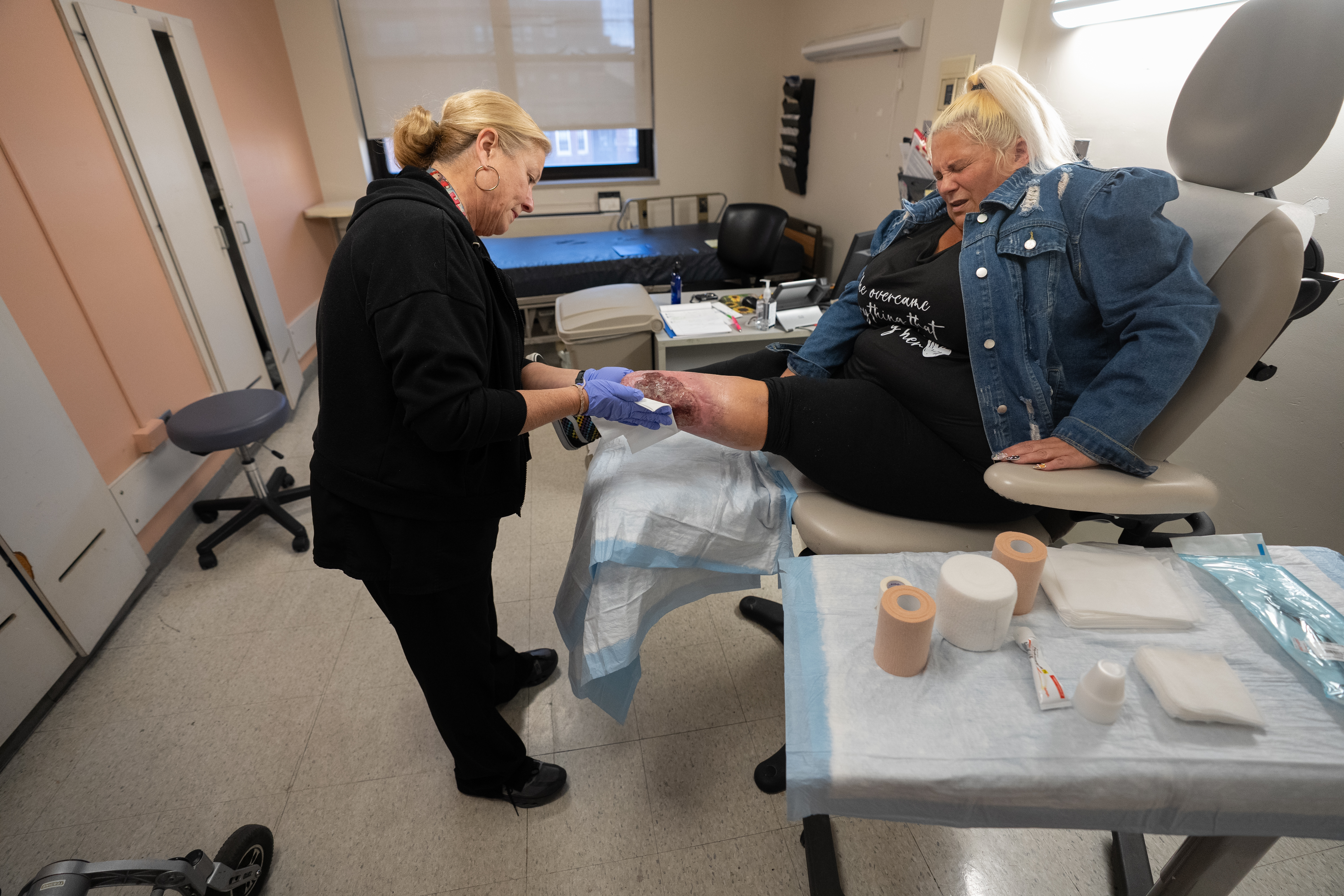
    Heidi Hunt, a wound care-certified registered nurse, cleans the wound on Kelly Wyatt’s leg at Jefferson Einstein Philadelphia Hospital’s Center for Wound Healing in November.

    Treating tranq’s wounds

    For Wyatt, maintaining her recovery from addiction and caring for her wounds are full-time occupations that sometimes are in conflict.

    Methadone, the opioid addiction treatment drug that has helped Wyatt curb cravings for more than a year, can be dispensed only at special clinics.

    Wyatt’s clinic journey meant three hours a day on a bus where she couldn’t keep her leg elevated. The wound worsened until she was able to switch to a closer methadone clinic.

    Wyatt relies on Stewart to help her move around her home, where the only bathroom that she can access is the one where Tyler died.

    “Cleaning, taking care of me, changing my wound dressings, talking about my sons — he calms me down. It’s been a lot, and he’s really done a lot,” she said.
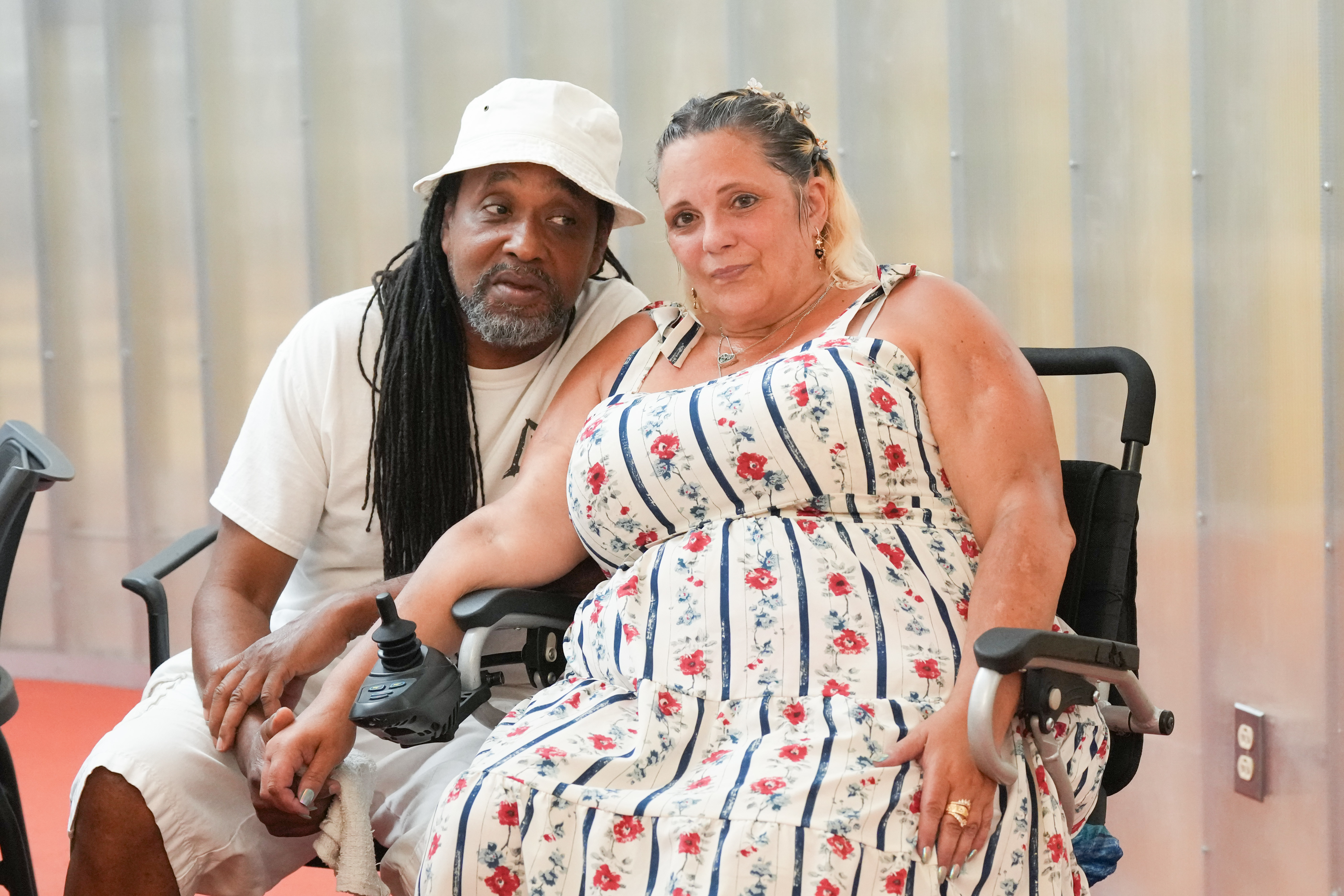
    Kelly Wyatt and her partner Randy Stewart in July.

    Once a week, Wyatt travels to Jefferson Einstein Philadelphia Hospital’s Center for Wound Healing for wound care.

    At a recent appointment, nurse practitioner Danielle Curran scraped away infected skin, measured the wounds, cleaned and re-bandaged her lesion.

    In between office visits, nurses also go to her home to clean and re-bandage her wound twice weekly. Several times this year, Wyatt has undergone debridement surgery to remove more damaged skin under anesthesia.

    If the treatments manage to shrink her wound, Curran said, Wyatt could try a skin graft and eventually receive a prosthetic leg that could help her get around more easily.

    Curran has treated about 20 xylazine patients at the clinic over the last few years. About 10, including Wyatt, are still getting regular care. Others have relapsed and returned to the streets. Several have died of overdoses.

    She is relieved that, as Philadelphia’s opioid crisis continues to evolve, tranq is becoming less prevalent. But it has been replaced in street drugs by another animal tranquilizer, medetomidine, which does not appear to cause flesh wounds but, rather, agonizing withdrawal symptoms. Skin lesions among opioid users have decreased in the last year.

    Yet Curran still insists on seeing patients like Wyatt with xylazine wounds weekly, trying to help them through their injuries and hopefully their recovery, too. “I like to be another person holding them accountable, to stay on the path. We try to give them that support.”

    Sometimes, that support means simply reminding Wyatt how far she has come in the four years since the amputation, and now 14 months of sobriety.

    At a recent appointment, after carefully scraping dead skin away from Wyatt’s leg with a small curette, Curran walked through her next steps: A disinfecting gel to keep bacteria out of the wound. A course of antibiotics to avoid infection. Another debridement surgery, in a few weeks.

    “As a rule of thumb,” Curran told a reporter, “it’s very hard to give timelines for wound care, because of all the things that could possibly go wrong. A wound this size, though? It could take years.”

    Wyatt began to cry. “It’s already been four years,” she said.

    Curran turned to her. “You’ve made so much progress,” she said gently. “Give yourself time.”
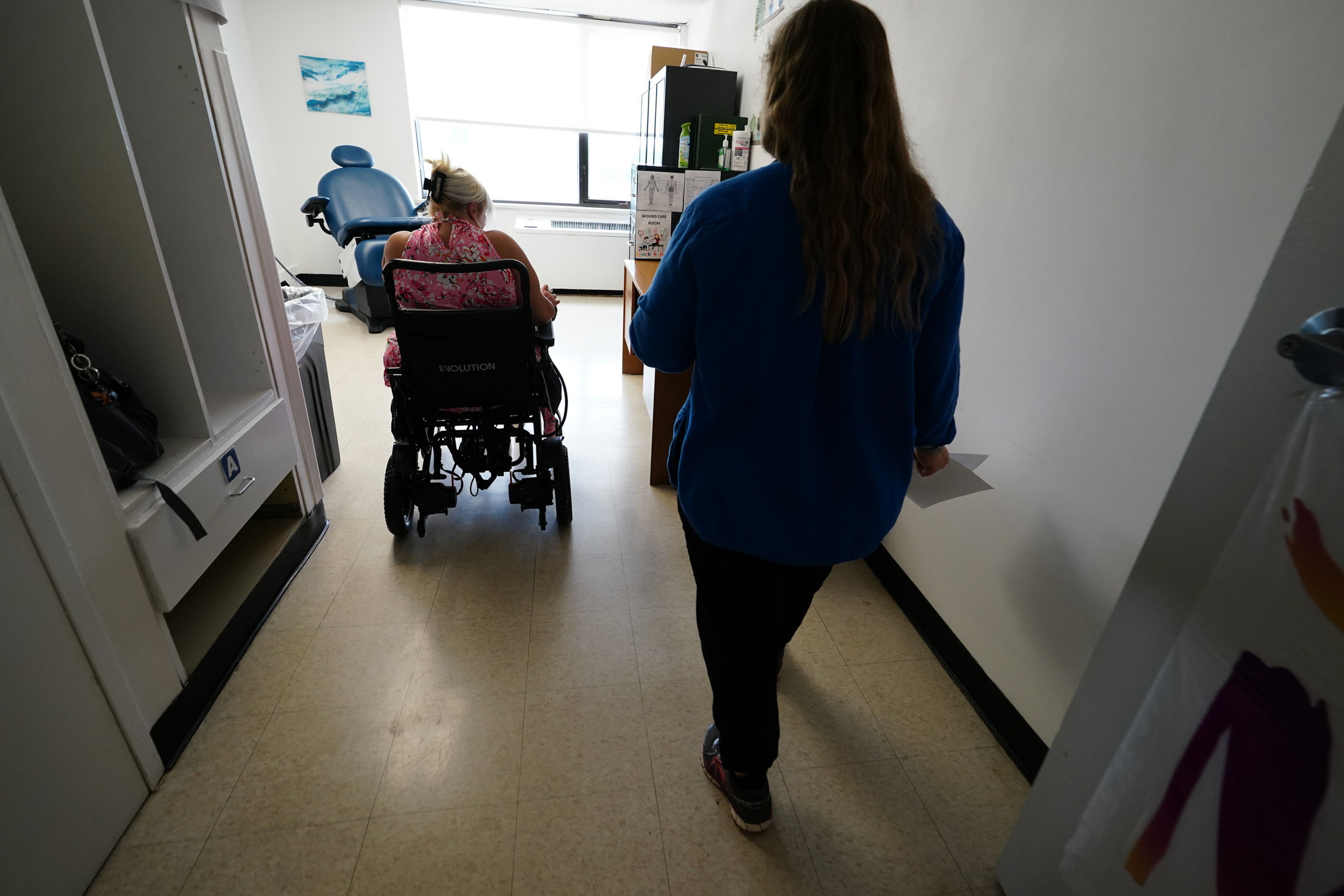
    Kelly Wyatt enters the wound care clinic at Girard Behavioral Health in August 2024.

    Editor’s note: This story has been updated to clarify the name of the Jefferson Health clinic where Kelly Wyatt received wound care.
  • The share of Asian residents living in Philly’s Chinatown is decreasing, says a new report

    The share of Asian residents living in Philly’s Chinatown is decreasing, says a new report

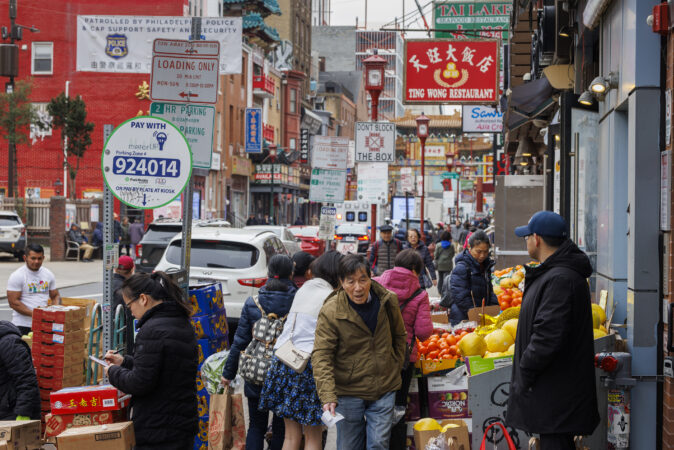
    Philadelphia’s Chinatown neighborhood has grown significantly over the last decade, but a majority of its gains in population and business have resulted in a decline in the share of Asian residents amid concerns over gentrification and displacement, according to a new report.

    And the situation is not unique to Philly, a study from the Asian American Legal Defense and Education Fund found. Its counterparts in New York City and Boston — both also historic Chinatowns — are facing similar pressures.

    All three cities’ Chinatowns, in fact, saw declines in their share of Asian residents from 2010 to 2020, the report found. The findings in Philly, meanwhile, come following years of the neighborhood staving off locally planned developments that may have resulted in additional challenges for residents — including the proposed billion-dollar Sixers arena effort abandoned in January after years of heated debate.

    “The Chinatown community is no stranger to fighting off large-scale and predatory development,” said the report from the fund, which provided legal support to community groups during the arena saga. “The arena would have devastated the neighborhood, bringing in a renewed wave of gentrifying pressure for residents and competition for local businesses.”

    The fund recommends that cities like Philadelphia enact community-focused rezoning efforts to protect their Chinatowns’ cultures from those pressures. But, as the report found, Philly’s Chinatown is already seeing substantial demographic shifts.

    For population and race data in 2000 and 2010, the study used the U.S. Census Bureau’s decennial census, which conducts a 100% count of the nation’s population. Figures for 2020 were drawn from estimates from the Census Bureau’s American Community Survey for the five-year period of 2018 to 2022, as the study’s authors cited possible data issues in the 2020 decennial census because of the pandemic and the proposed citizenship question.

    An Inquirer analysis that used the decennial census for both 2010 and 2020 shows that Asians remain the largest racial group in Chinatown, with their share of the population falling slightly, from 61% to 57%. White residents’ share of Chinatown’s population grew from 24% to 28%.

    Here are three takeaways from the fund’s report:

    An older, less Asian population

    Between 2010 and 2020, Chinatown’s population grew by 15%, from roughly 5,900 people to nearly 6,800. During that time, much of the growth was driven by an influx of white residents, with that group’s population growing by roughly 76% during that time — and becoming the largest racial group in the area — the report found.

    The overall number of Asian residents, however, remained roughly the same — 2,464 in 2010 vs. 2,445 in 2020. That proportion accounted for about 36% of the neighborhood’s population in 2020, decreasing from 42% in 2010. The white population, meanwhile, accounted for 44% of Chinatown’s residents in 2020, compared with 29% in 2010.

    As a result, the report notes, the area’s growth can be “entirely attributed” to a rush of non-Asian residents over the last decade covered by the U.S. Census. The proportion of Latino residents also increased significantly between 2010 and 2020, with that group growing by 36%, the report found.

    The neighborhood’s population also appears in part to be aging in place, with the number of people 65 and older almost doubling from 2010 to 2020, from 444 residents to 849. Simultaneously, its population of residents up to age 17 decreased by 15% during that time period, and the group ages 18 to 24 decreased by 37%. The group of residents ages 25 to 64, meanwhile, saw a “modest” increase of 22% from 2010 to 2020, the report found.

    Higher rent — and home values

    As the proportion of Chinatown’s Asian population decreased, its rent costs, house values, and homeownership rates all increased, the report found. House values in Chinatown, in fact, were more than double the citywide median in 2020, standing at more than $491,000 in the neighborhood compared with $236,000 in Philadelphia overall.

    Homeownership rates were lower in Chinatown than in the city at large, however, standing at 40% in 2020 compared with 52% citywide. Still, homeownership in Chinatown increased from 31% in 2010 while it fell marginally in the city overall from that year, when it stood at 54%. By comparison, Boston’s homeownership rate in its Chinatown stood at 7% in 2020, while New York’s Chinatown had a 15% homeownership rate that year, the report found.

    Rent in Chinatown was also higher in 2020 compared with the rest of the city, the fund’s report found. The neighborhood’s median rent stood at nearly $1,900, while the city’s was about $1,150 that year.

    Boston, New York, and Philadelphia, the report found, all saw the “transformation of former warehouses, tenement buildings, or rowhouses into luxury apartments and condominiums” over the last decade. Those developments, the fund noted, “fail to expand the housing supply for Chinatown community members” and contribute to rising rents and displacement of low-income residents.

    “Affordable housing is quickly disappearing in Philadelphia’s commercial core,” the fund’s report found.

    Largely local business

    In total, the study found that 92% of Chinatown’s commercial land parcels were small or local businesses in 2020, with restaurants and retail outlets making up a lion’s share of storefronts. Restaurants were the clear growth leader, increasing in number by 40% from the decade prior.

    Nearly all of Chinatown’s restaurants were located south of the Vine Street Expressway, the fund noted. Of those, Asian restaurants dominated the cuisine offered, with most eateries serving Chinese food.

    Still, despite the dominance of Asian restaurants in the neighborhood, Philadelphia did observe the largest shift in Asian to non-Asian restaurants of the three Chinatowns examined in the study. Over the last decade, the proportion of neighborhood Asian restaurants decreased from 85% to 62%, while the area’s non-Asian eateries more than doubled from 15% to 38%.

    The presence of national chains in Philly’s Chinatown doubled between 2010 and 2020, moving from 4% of all businesses to 8%, the study found. Retail stores, meanwhile, made up about 30% of commercial businesses in the neighborhood in 2020, the largest proportion of which were beauty and hair salons, followed by grocery stores and markets.

    Many newer businesses, the study noted, were tailored for younger customers, such as bubble tea and upscale dessert shops, as well as convenience stores that sell snacks rather than groceries — many of which lack indoor dining rooms. That shift may affect older residents, the fund noted.

    “As these types of indoor dining rooms disappear, Chinatown elders have fewer options to spend their time in safe and affordable spaces,” the study said.

    Clarification: This story has been updated to further explain the data used in the Asian American Legal Defense and Education Fund study.

  • Overnight closures to begin on westbound I-76 at 30th Street, PennDot says

    Overnight closures to begin on westbound I-76 at 30th Street, PennDot says

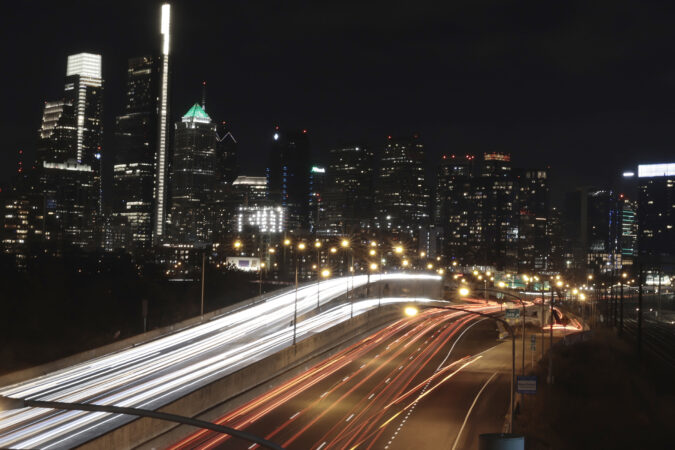
    The Pennsylvania Department of Transportation said lane restrictions and overnight closures will begin Sunday and last until June for a short westbound stretch of the Schuylkill Expressway at 30th Street to allow for overhead bridge construction.

    The work is part of a $148.9 million project to rehabilitate the bridges that connect Market Street over Amtrak and I-76, the Schuylkill River Trail, and CSX Railroad, PennDot said Wednesday.

    On Sundays through Thursdays from 9 to 10 p.m., I-76 West will be reduced to one lane between 30th Street and the I-676 interchange.

    Then from 10 p.m. to 5 a.m., all the westbound lanes will be closed and traffic will be detoured at 30th Street onto Schuylkill Avenue to then access the ramps to I-76 West and I-676 East.

    The changes will last through June 1.

    Because of the forthcoming holidays, there will be no overnight closures from Dec. 21 through Jan. 3.

    PennDot said motorists can visit www.marketstreetbridges.com to sign up for email notifications and learn more about the project.

  • Waymo starts self-driving tests in Philadelphia for its robo-taxi service

    Waymo starts self-driving tests in Philadelphia for its robo-taxi service

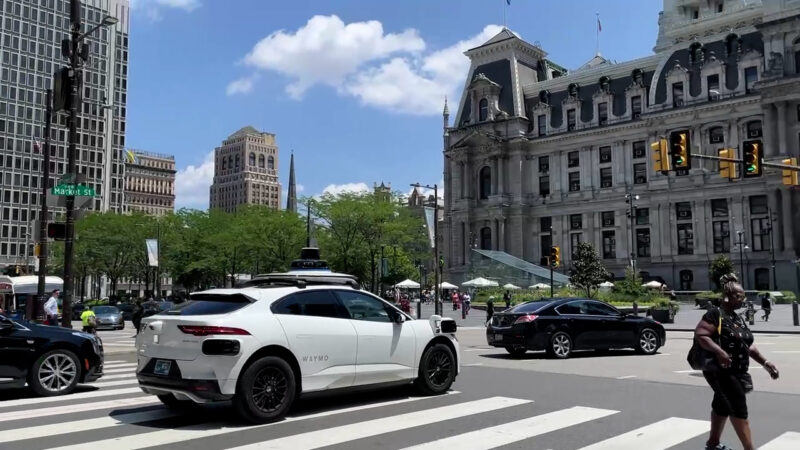
    Waymo, the self-driving car company owned by Google’s parent firm, said Wednesday that it has begun autonomous tests in Philadelphia and expects to offer its robo-taxis to customers at some point afterward.

    “We’re making it official, Philly: Waymo will bring our service to the City of Brotherly Love!” the company announced on its website.

    Ethan Teicher, a spokesperson for Waymo, said in an email: “We recently began driving autonomously with a specialist behind the wheel, after securing permission to do so from PennDOT. We’ll continue laying the groundwork in Philadelphia to open our fully autonomous ride-hailing service for the public in the future.”

    In July, a Waymo spokesperson said the company would begin mapping Philadelphia’s neighborhoods, manually “driving through the most complex parts of the city, including downtown and freeways.”

    In its Wednesday announcement, Waymo said it will begin the mapping process in Pittsburgh, and noted that city’s connection with autonomous driving history. Carnegie Mellon University, which is located in Pittsburgh, is known as the birthplace of self-driving technology.

    The company said mapping will also begin in St. Louis and Baltimore.

    Under a 2022 Pennsylvania law legalizing the commercial operation of “highly automated vehicles,” Waymo needs a “certificate of compliance” to conduct autonomous testing in specified locations. In July, the Pennsylvania Department of Transportation said it was reviewing an application from Waymo.

    PennDot’s website on Wednesday showed that Waymo now has a certificate for Philadelphia.

    The only other company with a certificate for the city is Perrone Robotics, which operates a self-driving shuttle service at the Navy Yard.

    In New Jersey, state law does not allow for commercial services using self-driving vehicles on public streets. Legislation recently was introduced to create a pilot program requiring three years of testing with a human driver in the vehicle.

    Waymo offers self-driving taxi service in Los Angeles, San Francisco, Phoenix, Austin, and Atlanta, and has test-driven in dozens of other cities. Testing began in New York City this summer.

    Currently, the company says it is performing a total of 250,000 rides a week using fully autonomous electric vehicles.

    A spokesperson for Mayor Cherelle L. Parker said Wednesday that the mayor and other city officials are “closely monitoring Waymo and its plans for Philadelphia” but declined to elaborate.

    Besides mapping and testing its vehicles, Waymo has “engaged with community organizations” in Philadelphia and Pennsylvania, including the Bicycle Coalition of Greater Philadelphia and the National Federation of the Blind of Pennsylvania, said Teicher, the company spokesperson.

    In the company’s announcement, it included a statement from Samantha Civitate, the Pennsylvania state director for Best Buddies, a nonprofit that brings together volunteers and people with intellectual and developmental disabilities.

    “Accessible transportation remains a vital piece of fostering independence and inclusion,” Civitate said.

    There has been no groundswell of opposition to Waymo coming to Philadelphia. The company, however, has had to deal with recent incidents elsewhere that have generated negative attention.

    A Waymo taxi in Los Angeles was caught on video making a left turn just feet away from an incident involving police officers positioned behind their vehicles shouting commands at a suspect who was lying facedown on the ground, apparently waiting to be arrested.

    In San Francisco on Sunday, a Waymo taxi hit an unleashed dog, which reportedly needed to be euthanized because of its injuries.

    Waymo vehicles have also been targeted, though mainly because they were in the wrong place at the wrong time. In June, several Waymo taxis were burned during anti-ICE protests in Los Angeles. The company temporarily halted service in the area.

  • Joint city-Parking Authority proposal to reopen Filbert Street bus station advances in Council

    Joint city-Parking Authority proposal to reopen Filbert Street bus station advances in Council

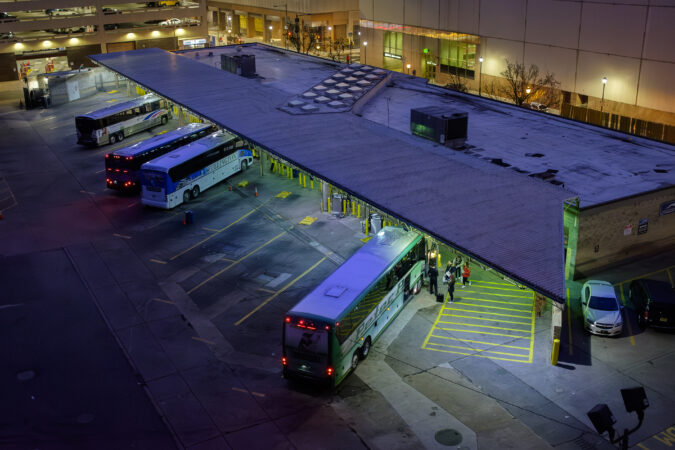
    The Philadelphia Parking Authority would renovate and run the abandoned Greyhound bus terminal on Filbert Street under legislation approved Wednesday by a key City Council committee.

    It was a step toward ending a two-year civic struggle to find a site for long-distance buses and their passengers. The renovated station could be ready for a series of big national and international events expected to draw millions of visitors next year.

    “A lot of people are going to be coming here for the first time, and when they’re in that station, they’re going to get their first taste of Philadelphia — and we want to make sure it’s a good one,” said Councilmember Mike Driscoll, who sponsored the bill on behalf of the Parker administration.

    The city will host events in 2026 for the 250th anniversary of the Declaration of Independence, as well as FIFA World Cup soccer matches and the Major League Baseball All-Star Game, among others.

    Greyhound ran the terminal at 10th and Filbert Streets for more than three decades but ended its lease in June 2023 when the business model of its parent company, Flixbus, called for divesting from real estate and moving toward cheaper curbside service in many U.S. cities.

    Since November 2023, customers of Greyhound, Peter Pan, and other interstate bus carriers wait, board, and arrive at curbside along Spring Garden Street in Northern Liberties — with no shelter from the weather and few amenities. It also has proved a nuisance to nearby businesses.

    Before that, the buses operated at curbside on Market Street between Sixth and Seventh Streets.

    PPA has a 10-year lease agreement with the property’s owner, 1001-1025 West Filbert Street LLC, with an option to extend it.

    The city senses that over the long term the owner anticipates selling the property, said Michael Carroll, assistant managing director for the Philadelphia Office of Transportation and Infrastructure Systems.

    “That’s the sweet spot, long enough that there’s a meaningful basis to invest in improvements and solve the problems,” Carroll told the committee.

    “At the 10-year mark, decisions will have to be made about whether this is a site that forever works best in Philadelphia, or whether there’s a better site,” he said.

    The unanimous Finance Committee vote came after it amended the measure to adjust the fees bus companies would be charged to stop in Philadelphia.

    Each stop in the city would cost $40 until the bus terminal is open, when it would move to a $65 fee. A smaller number of buses subsidized by the Pennsylvania Department of Transportation under a program to provide rural service would pay $16 a stop.

    Committee members also asked for suspension of a procedural rule so that all 17 lawmakers could consider the bill Thursday and clear the way for final passage before the holidays.

    In the agreement with the city that is part of the bill, PPA would run the terminal; assess the fees on bus carriers for the use of the facility and any street loading zones, such as those in University City; and handle enforcement.

    The Filbert Street proposal includes specific requirements designed to address concerns particular to Chinatown.

    For instance, the streets department would change traffic patterns so buses are routed to the station via Market Street instead of driving through the heart of the neighborhood as they did in the past.

    John Mondlak, first deputy and chief of staff of the city planning department, said that the through traffic had long been a chief complaint of residents and business owners in Chinatown.

    This story has been updated to include the name of the firm that owns the former Greyhound station.

  • Man and woman shot dead in Kensington murder-suicide, authorities say

    Man and woman shot dead in Kensington murder-suicide, authorities say

    A man and woman were shot and killed Wednesday afternoon in Kensington in what police believe was a murder-suicide, according to a law enforcement source who asked not to be identified to discuss an ongoing investigation.

    The two, whom police did not identify, were shot on the 3400 block of Hartville Street around 1:15 p.m., according to the department. They were pronounced dead just after 2 p.m.

    Investigators believe the man shot the woman with a shotgun, according to the police source.

    Police continue to investigate.

  • A Philly man was sentenced to 33 months in federal prison for making violent and racist threats to Black women

    A Philly man was sentenced to 33 months in federal prison for making violent and racist threats to Black women

    As U.S. District Judge Gerald McHugh prepared to sentence Mark Anthony Tucci for hurling racist, violent threats at two Black women he had never met, the judge paused for a moment and teared up.

    Tucci’s vile language and promises to harm the women not only were criminally inexcusable, McHugh said, but also were a demonstration of “deeply hateful attitudes” that cannot be tolerated in society.

    “It was meant to deny their dignity and their humanity,” McHugh said. “And that’s what makes it so troublesome.”

    McHugh offered those remarks before sentencing Tucci on Tuesday to 33 months in federal prison and ordering him to pay nearly $17,000 in restitution. Tucci had pleaded guilty earlier this year to charges including threat to use a dangerous weapon, interfering with federally protected activities, and interstate communication of threats.

    U.S. Attorney David Metcalf said in a statement that the case was an example of the criminal justice system holding someone accountable for language that was both disturbing and a violation of the victims’ civil rights.

    “Every citizen is entitled to a peace and security undisturbed by the abhorrent and racist threats that took place in this case, full stop,” he said.

    Tucci’s crimes took place last year in two separate incidents: In the first, Tucci, who is white, pulled up next to a Black woman driving on I-95, rolled down his window, and threatened to kill her, court documents said. The second episode happened when he repeatedly harassed a Black employee of the Philadelphia Department of Human Services who had been assigned to an investigation involving Tucci’s daughter.

    In both instances, court documents said, Tucci used racial slurs and made bigoted, demeaning comments that played on offensive racial stereotypes. Prosecutors said he also threatened to harm both women — telling the driver on I-95 that he would kill her and throwing a coffee cup at her car, and, in the case of the DHS worker, finding her home address and cell phone number to continue his racist harassment.

    As prosecutor Samuel Kuhn, of the Justice Department’s Civil Rights Division, outlined those facts during Tuesday’s sentencing hearing, Tucci repeatedly put his face in his hands, shaking and bowing his head.

    Tucci later addressed McHugh, saying that he was embarrassed and ashamed, and that his actions were inexcusable. At the time of the crimes, he said, he had been suffering from undiagnosed mental health issues. He said that he has since been receiving treatment, and that his medications have helped him understand his past misdeeds.

    Authorities initially said Tucci had boasted during one of the episodes about his association with the far-right Proud Boys group, and his lawyer said in court documents that the group “clearly influenced” him. But there was no discussion of the group or Tucci’s politics during his sentencing hearing.

    Several of his relatives, including his mother and brother, testified and said they had seen his mental health improve over the last several months while receiving treatment in custody.

    Tucci, for his part, said he wished he could have apologized to his victims, neither of whom attended the proceeding. Kuhn, the prosecutor, read statements on their behalf. In one of them, the motorist Tucci threatened said she still experiences anxiety as a result of the attack, particularly while driving.

    “People who look like me have a right to live safely and freely,” she wrote.

    Tucci said he agreed, and lamented that there was “nothing I can do to make it right.”

    “I’m forever pegged as a racist because I said things that were racist,” he said.

    As Tucci stood to leave the courtroom at the end of the hearing, McHugh, the judge, told him: “Your future is in your hands now.”

  • Philadelphia Whole Foods workers filed for a union a year ago. Here’s what’s holding up their contract.

    Philadelphia Whole Foods workers filed for a union a year ago. Here’s what’s holding up their contract.

    Nearly a year after Philadelphia Whole Foods workers voted to form a union, becoming the first group in the grocery chain to do so, their union’s ability to move forward and negotiate a contract is locked in a procedural standstill.

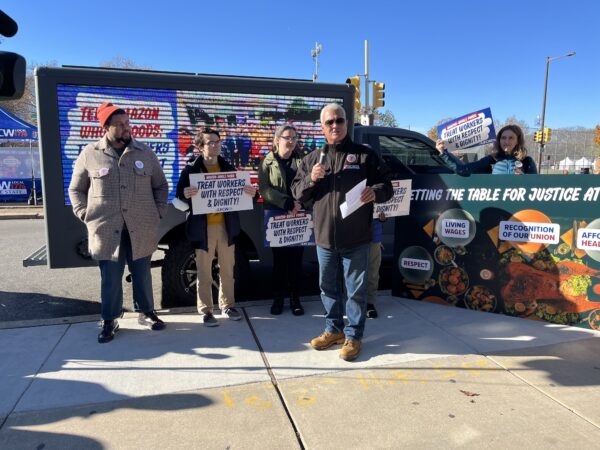
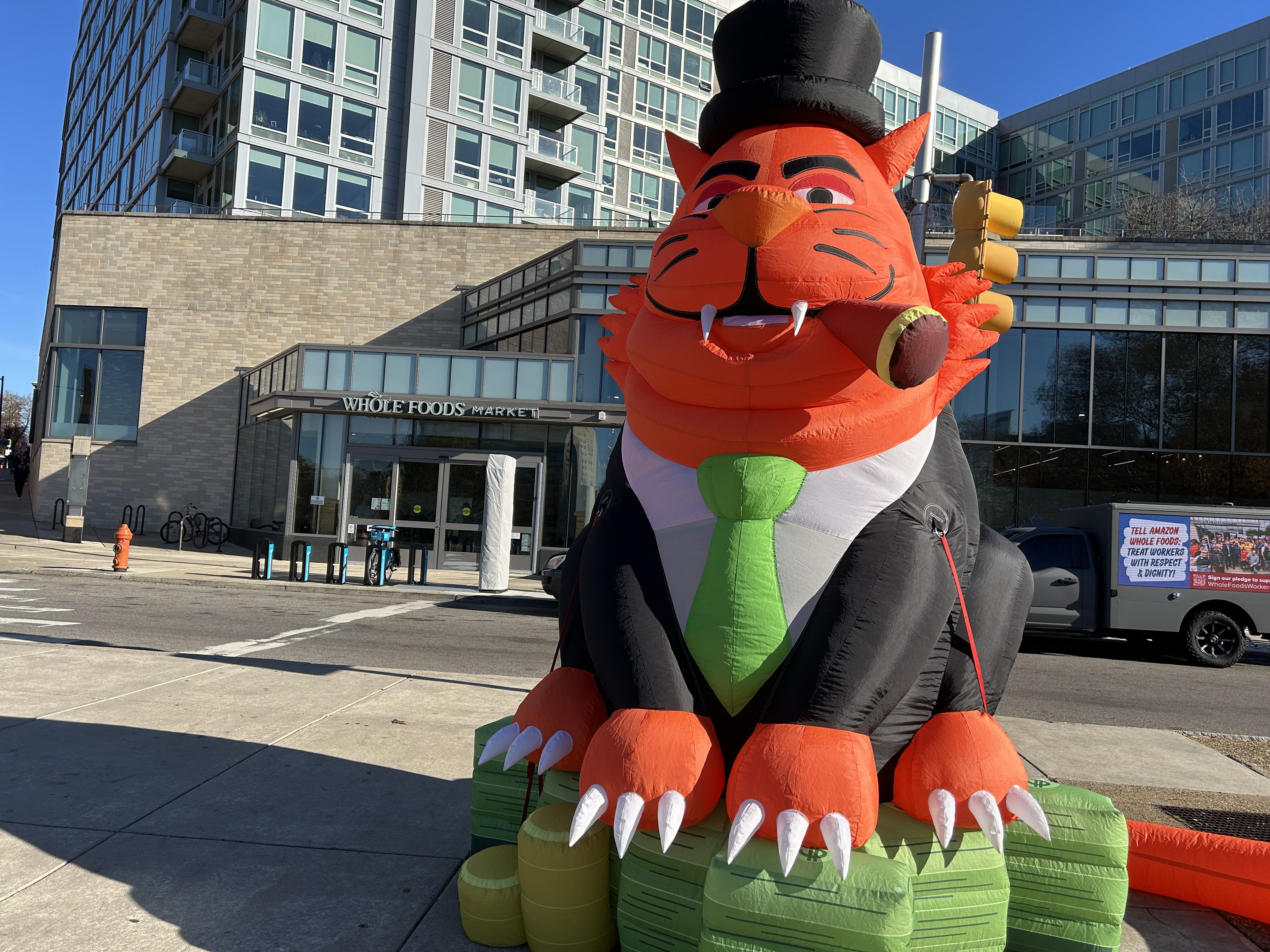
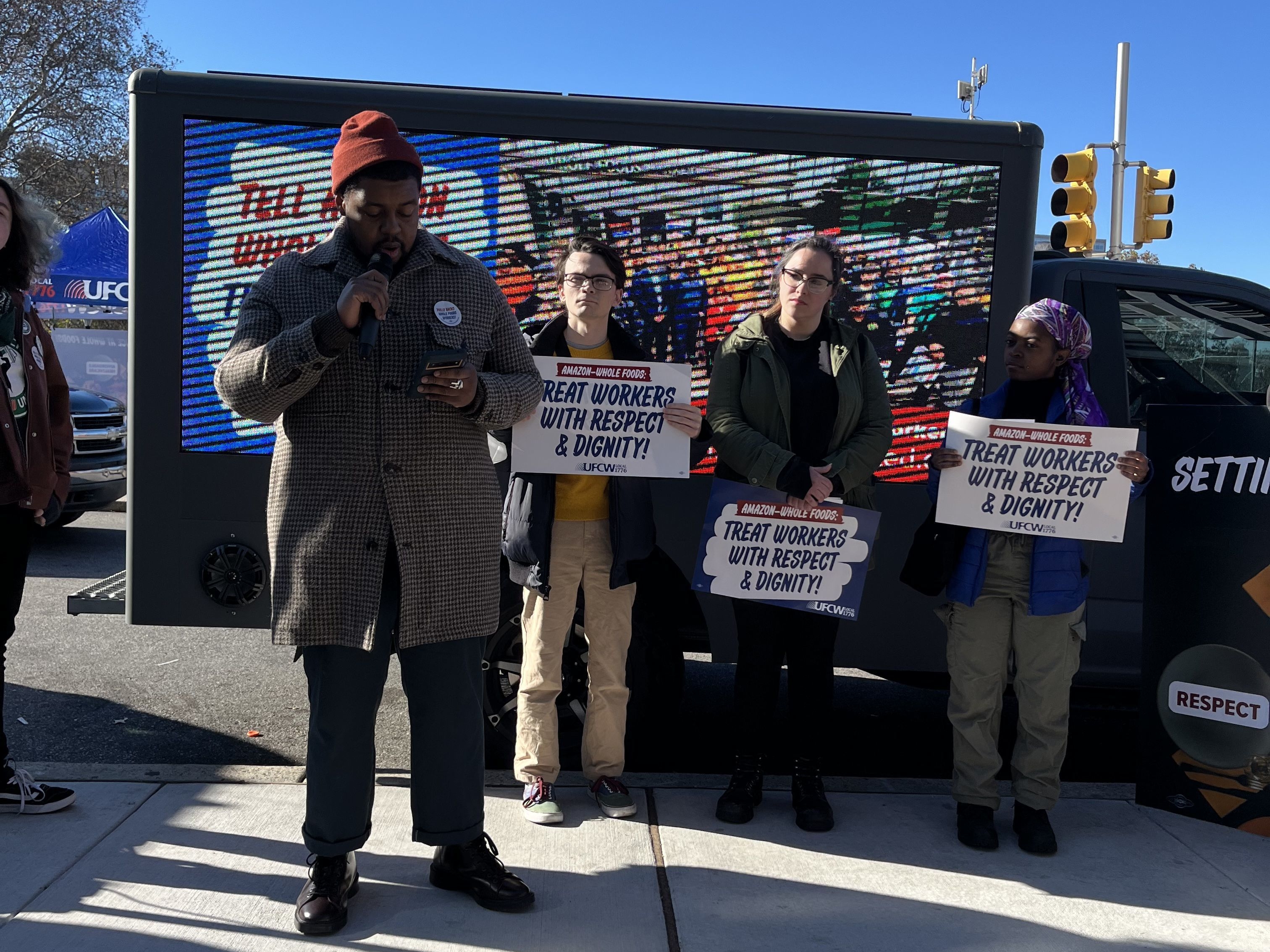
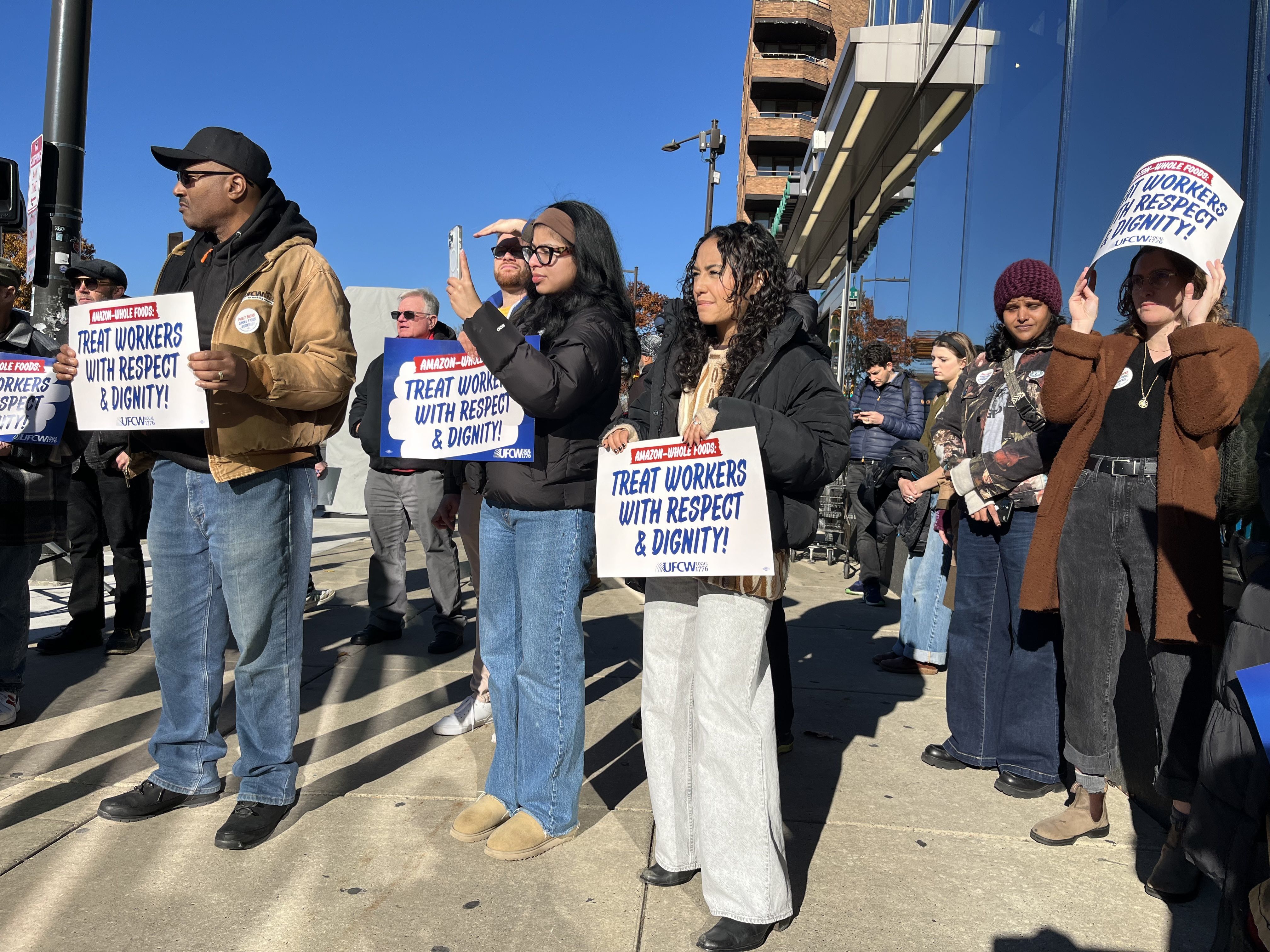
    The Monday before Thanksgiving, workers and supporters gathered outside the Pennsylvania Avenue store, holding signs that read “Amazon-Whole Foods: Treat workers with respect & dignity!” Nearby, an inflatable “fat cat,” used by labor organizers and often denoting a person who uses wealth to exert power, stood tall outside the Whole Foods store.

    Edward Dupree, who has been employed at Whole Foods for over nine years and works in the produce department at the Philadelphia store, told the crowd that in the 1970s, unionized grocery employees could maintain a middle-class family, but today workers are facing rising housing and healthcare costs as well as uncertainty in the economy.

    “There’s been a concerted effort by billionaire business class — folks like [Amazon and Whole Foods owner] Jeff Bezos — to crush working class power by fighting unions like this,” said Dupree. “For 50 years, we’ve seen the worsening of living standards in tandem with the drop of unionization rates. It’s been long due for us to stand up for one another and fight back for a better future.”

    Workers at the Philadelphia grocery store filed a petition to unionize with the National Labor Relations Board in November 2024 and made history in January as the first company store to successfully vote to unionize.

    Employees want the company to begin negotiating a first contract, but for now, the case is at a standstill. Whole Foods has challenged the union election, and resolution of the issue lies with the National Labor Relations Board, which for months has been without the required quorum to make a decision since President Donald Trump fired a board member.

    “We want Whole Foods to do what they’re obligated to do. What’s right to do is sit down and bargain a contract,” said Wendell Young IV, president of UFCW Local 1776, the union that Whole Foods workers elected to join. “We understand there’s a give and take in that process, but that’s from both sides. They’re refusing to even sit down and begin those discussions for a contract.”

    An inflatable fat cat is seen outside the Whole Foods at 2101 Pennsylvania Ave. on Nov. 24, marking a year since workers first filed their intention to form a union with the National Labor Relations Board.

    Why is the Whole Foods case at a standstill?

    Whole Foods raised multiple objections to the worker union election earlier this year including alleging that the union promised employees would get a 30% raise if they voted for a union.

    In May, the National Labor Relations Board’s regional director dismissed the challenge by Whole Foods, but the company asked for that decision to be reviewed. The union, for its part, has tried to block that review, but the board can’t make a decision either way without the required quorum.

    “As previously stated, we strongly disagree with the regional director’s conclusion, and as demonstrated throughout the hearing earlier this year, including with firsthand testimony from various witnesses, the UFCW 1776 illegally interfered with our team members’ right to a fair vote at our Philly Center City store,” a spokesperson for Whole Foods Market said via email.

    A union spokesperson said via email that they must wait until the board again has at least three members to review the case and added, “We expect that we will be successful at that time.”

    Young, the president of the union local, has said in the meantime that the company is hiding behind the situation at the NLRB “to refuse to bargain.”

    Edward Dupree, a Whole Foods worker, gathers with colleagues and supporters outside on Nov. 24 asking that the company come to the bargaining table and negotiate a first contract.

    In the 1960s and into the 1970s, when it was not uncommon in the U.S. to see grocery workers strike or threaten to, Republicans and Democrats in office understood that unions were a permanent part of the economy, said Francis Ryan, a labor history professor at Rutgers University who has been a member of UFCW local 1776. The NLRB “provided some balance between the company and the union,” acknowledging that both parties “had an important role to play in our society,” he said.

    “What we have in more recent years is a much more polarized political context, where the National Labor Relations Board is sometimes stocked with people who are aggressively anti-union,” said Ryan.

    The Trump administration firing an official at the NLRB and not replacing them “is a deliberate attempt to make the process of collective bargaining and also organizing much more difficult,” said Ryan, adding that this is playing out in the case of Whole Foods.

    Whole Foods workers and supporters outside the Center City grocery store on Nov. 24.

    UFCW Local 1776, which Whole Foods workers in Philadelphia elected to join, represents thousands of workers across Pennsylvania and neighboring states in drugstores and food processing facilities, among other areas of work. The union represents grocery employees at ShopRite, Acme, and the Fresh Grocer.

    Under the ownership of Amazon, the quality of work life at Whole Foods has deteriorated, said Young, adding that the company has unrealistic expectations and doesn’t compensate workers fairly in terms of wages, healthcare, retirement security.

    “These people have no say in any of that — and that’s what led them to organize,” he said.

    Whole Foods has said employee benefits include 20% off in-store items, as well as a 401(k) plan that offers a company match. The company also says it evaluates wages to ensure it is offering a competitive rate.

    The number of unionized workers at grocery stores grew in the 1950s and 1960s in large part because areas of the U.S. were becoming more suburban and adding new grocery stores in the process, according to Ryan.

    “You had thousands of workers in these new supermarkets that were unionized, and they made the retail clerks union one of the largest unions in the United States by the time you get to the 1970s — and Philadelphia was one of the real centers of supermarket unionization.”

    It wasn’t unusual in the 1960s and 1970s for someone to make a living as a supermarket worker, although it was not uncommon for workers to have more than one job, said Ryan. In some cases, workers would stay at a grocery store for decades, he says, where they made decent wages and had a stable job indoors, adding that between 1965 and 1975 the wages of retail workers in Philadelphia nearly doubled.

    Since then, it’s become much harder to make a living overall in the service industry, says Ryan.

    But having unionized grocery stores amid other nonunion stores today can help shape the economy of the industry, says Ryan. A business that wants to maintain a nonunionized workforce might try to pay their workers the same starting rate that union workers make in wages, for example.

    Unionized grocery stores “have a hidden-planet kind of role: They have this gravitational pull on the industry that actually raises conditions for everyone,” Ryan said.

    While the Whole Foods store in Philadelphia is the first of the company’s locations to vote to form a union, others seem to be following.

    “We now have active organizing going on, not only in other Whole Food stores in the area and around the country, but other grocery stores,” said Young.

  • City Council took a rare stand against Mayor Parker by allotting more housing funds to the poorest Philadelphians

    City Council took a rare stand against Mayor Parker by allotting more housing funds to the poorest Philadelphians

    Philadelphia City Council on Tuesday amended the initial budget for Mayor Cherelle L. Parker’s signature housing initiative to direct more money to programs that will help the lowest-income Philadelphians, a move that sparked one of the most notable confrontations between Parker and city lawmakers since she took office almost two years ago.

    The amendment, which followed a weekslong standoff between the executive and legislative branches, represents a rare act of defiance for a Council that has otherwise been largely compliant with Parker’s agenda, and it appeared at first to be a major win for Philly progressives.

    But Parker is not giving up the fight, and she said Tuesday night that the amendment may have had unintended consequences that could hold up much of the housing initiative for months.

    The changes to the legislation, she said, may trigger additional procedural steps that will prevent the city from issuing $400 million in bonds to fund the initiative until March or later. The mayor did not hold back from laying the blame for the delays at Council’s feet.

    “The resolution that City Council passed out of the Committee of the Whole today contained language that our bond lawyers have repeatedly advised would prevent the administration from being able to issue the bonds,” Parker said in a statement. “That means homes are not being restored. It means homes are not being built or repaired.”

    In an unusually blunt statement late Tuesday night, Council President Kenyatta Johnson pushed back against the administration’s analysis of the situation.

    “Council’s responsibility is not to rubber-stamp legislation, but to ensure that any multi-billion-dollar public investment is legally sound and targeted to the Philadelphians who need it most,” Johnson said.

    But he also vowed to have Council quickly introduce new legislation that could ameliorate the procedural problem Parker identified, tacitly conceding that additional legislation was needed hours after lawmakers approved the resolution with no mention of that possibility.

    Johnson said Council would “resolve remaining legal and policy issues swiftly,” and that a new measure to legalize lawmakers’ most recent changes could be introduced this week.

    Council wants “shovels in the ground” and “homes repaired,” he said, but ”refuses to rush into issuing $800 million in debt without iron-clad legal protections and clear guarantees.”

    “Council members repeatedly raised concerns — directly and in good faith — about accountability, neighborhood equity, homeowner protections, and the long-term impact of the H.O.M.E legislation,” he said. “Council’s action today strengthened the H.O.M.E resolution, not sabotaged it.”

    The late-night war of words between Parker and Johnson came hours after a celebratory Council committee meeting in which lawmakers took a victory lap for standing up to the administration.

    After the vote, Councilmember Jamie Gauthier and Councilmember Rue Landau, respectively the chair and vice chair of the Committee on Housing, Neighborhood Development and the Homeless, said the amended resolution means “working and low-income families will finally be able to get the support they need sooner.”

    “With roughly $30 million in federal homelessness funding at risk, it is more important than ever that this multiyear, $800 million investment begins by prioritizing the more than 200,000 Philadelphia households on the brink of losing their homes,” Gauthier and Landau said in a joint statement, referring to a federal policy change proposed by President Donald Trump’s administration that could cost the city millions in funding for anti-homelessness programs.

    Council pushes for policy changes

    Parker, who has long championed the city’s “middle neighborhoods,” structured her sweeping Housing Opportunities Made Easy, or H.O.M.E, initiative to ensure that the myriad programs funded or created by the program would be available to homeowners and renters at a variety of income levels.

    But Johnson — in an unexpected break from his usual alignment with Parker — stood with Gauthier and other progressives who fought to ensure the neediest city residents were prioritized in the budget resolution, which sets the first-year spending allocations for H.O.M.E. The distribution of funding must be approved by Council before the administration can issue the first of two planned $400 million tranches of city bonds that will finance much of the initiative.

    Council’s Committee of the Whole, which includes all members, approved the amendment and advanced the resolution in a pair of unanimous voice votes Tuesday afternoon following hours of testimony.

    The measure would now head to the Council floor for a final passage vote in the next two weeks. Parker’s statement, however, could mean Council has additional work to do before getting the measure over the finish line. Johnson’s office said the vote is still scheduled for Dec. 11.

    “The majority of the members of City Council want to focus on the issues of those who are poor here in the city of Philadelphia when it comes to housing and equality,” Johnson told reporters after the vote.

    It’s unclear whether the vote represents a serious rupture in the tight relationship between Parker and Johnson, who have worked closely together since both took office in January 2024. Council approved the most important pieces of legislation Parker proposed as part of the H.O.M.E initiative earlier this year, and the changes adopted Tuesday do not alter the fundamentals of the program, which Parker hopes will achieve her goal of creating or preserving 30,000 units of housing in her first four-year term.

    “We support the H.O.M.E. plan,” Johnson said. “And I think the mayor did a good job in investing close to $1 billion … in supporting the issue of housing inequality here in the city of Philadelphia. This amendment represents the will of the members. … We want to specifically focus on those who are the most least well-off, those who are poor.”

    But after reading about Parker’s statement in the evening, Johnson’s attitude toward the administration sharpened. His lengthy statement included the most critical language the Council president has directed at the mayor since they were inaugurated.

    Mayor Cherelle L. Parker unveils her long-awaited plan to build or preserve 30,000 units of housing during a special session of City Council Monday, Mar. 24, 2025. Council President Kenyatta Johnson is behind her.

    Johnson rejected Parker’s claim that the legislative delays could cause the popular Basic Systems Repair Program to temporarily run out of funding, saying that there is plenty of money in the current city budget to cover shortfalls.

    “Threatening residents with a shutdown of the Basic Systems Repair Program and assigning blame does not move this process forward,” he said. “Collaboration and working together does.”

    The amendment increases the first-year budget for spending the bond proceeds from $194.6 million to $277.2 million. The increased price tag, however, does not represent new money in the housing budget; it merely allows the administration to spend more of the $400 million in bond proceeds in the initiative’s first year.

    The changes include increases in funding for housing preservation from $29.6 million to $46.2 million, and housing production from $24.3 million to $29.5 million. Additionally, the amendment boosted funding for homelessness prevention programs from $3.8 million to $8.8 million.

    But perhaps more importantly, Council altered the income eligibility levels for several programs.

    Parker, for instance, had proposed that the H.O.M.E. funding for the Basic Systems Repair Program, which subsidizes critical home improvements to prevent residents from being displaced by the costs of needed repairs, be open to any homeowner who makes Philadelphia’s area median income, or AMI, which is about $119,400 for a family of four.

    Council’s amendment, however, requires 90% of the new funding to go to families making 60% of AMI or less, about $71,640 for a family of four.

    The administration initially planned to issue the first $400 million in bonds this fall, and Parker sent Johnson’s office a first draft of the budget resolution in July. Council then delayed the committee vote on the resolution several times as Johnson negotiated with Parker on potential changes.

    The amendment adopted Tuesday appears to largely mirror Gauthier’s priorities for the spending plan, rather than a negotiated compromise, the first sign that Johnson had moved forward despite not reaching a deal with Parker.

    Bond sales potentially delayed again

    Parker’s plan to sell the initial round of bonds this fall appeared to be on schedule when Council in June approved the most important pieces of legislation associated with the H.O.M.E. initiative, including an $800 million bond authorization.

    But lawmakers at that time inserted a provision into the bond legislation that required the administration to get Council approval of its H.O.M.E. budget each year before it can spend the bond proceeds. For the initiative’s first year, that provision means the city cannot take the bonds to market at all without Council signing off on the budget resolution, city Finance Director Rob Dubow has said.

    The latest potential delay, which could set Parker’s schedule back months more, stems from the amendment approved in committee Tuesday.

    Parker did not elaborate on the procedural issue that could cause the latest delay, but her comments indicated what it may be: Because the resolution, which dictates how the bond proceeds can be spent, now includes significant differences from the bond authorization bill Council approved months ago, the city may not be able to rely on the original bill as its legal basis for taking out debt and selling the bonds.

    To make them align, Council may have to approve a new bond authorization bill, or abandon some of its changes to the spending resolution.

    In his statement Tuesday night, Johnson indicated Council has chosen the former route.

    “City Council is preparing to introduce an amendment to the H.O.M.E bond ordinance as early as this week’s Council session,” he said.

    It’s unclear if the resolution could pass by the end of the year. But Johnson’s reference to the potential of the current city budget’s surplus covering shortfalls in housing programs indicates that might not be possible.

    Council’s last meeting is scheduled for Dec. 11. Lawmakers can vote to suspend Council rules and fast-track legislation as needed.

    This story was updated to include Council President Kenyatta Johnson’s response to Mayor Cherelle L. Parker’s statement.

  • William Way services will return to Center City building after renovation, nonprofit says

    William Way services will return to Center City building after renovation, nonprofit says

    The William Way LGBT Community Center will return to the building it has called home after much-needed renovations are completed, instead of permanently leaving as had been previously announced, the leaders of the nonprofit’s board said Tuesday.

    Earlier this year, William Way announced it was planning to sell its 175-year-old building at 1315 Spruce St. because fundraising efforts for a “comprehensive redevelopment plan to renovate and expand” the Center City property had fallen short.

    The nonprofit said early last week that it was permanently closing its doors later this month and relocating services, and even had a “One Last Dance” goodbye party in the building scheduled for this Friday.

    The building will still close on Dec. 18, but the services that William Way provides will eventually return, the nonprofit said Tuesday.

    “Thanks to the support of multiple sources, including generous individual donors, and the efforts of our board, staff, and partners, we are pleased to share that the center will return to the building once redevelopment is complete,” Dave Huting and Laura Ryan, cochairs of the William Way LGBT Community Center Board, said in a statement.

    “While there are still many details to finalize, including a timeline for when we can once again welcome the community back into the building, we are thrilled to share that the center will not be leaving its longtime home,” Huting and Ryan said.

    “We look forward to sharing our vision for a reimagined facility, one that continues to be an essential resource for Philadelphia’s LGBTQ community, and which will become a reality as details are finalized,” they said.

    “We are partnering with a nonprofit developer to redevelop our building at 1315 Spruce Street, transforming it into a modern and welcoming space that better serves our vibrant and engaged community,” Huting and Ryan said.

    The center briefly closed for inspection and emergency repairs last fall, then partially reopened in January 2025.

    In June, William Way said it needed to sell the building — which it had purchased in 1997 — because the nonprofit could not move forward with the more than $3.5 million in immediate repairs that were needed “before any broader redevelopment could proceed.”

    The statement on Tuesday did not explicitly say the building would not still be sold.

    A spokesperson for William Way could not be reached for comment.

    In the meantime, William’s Way’s programs will move.

    On Jan. 5, the center’s empowerment programs, including the elder initiative, peer counseling, and trans programs, will operate out of the nearby Church of St. Luke and the Epiphany at 330 S. 13th St.

    A plan is being developed to temporarily relocate the John J. Wilcox Jr. Archives and is expected to be announced next year, the nonprofit said.

    “We have always said that the center thrives not because of its building, but because of its people. However, the rebuilding of the center will allow it to become an even more effective space to advance our mission and enhance the services and support we provide to our community,” the board cochairs said.

    As of Tuesday evening, the “One Last Dance” party was still being promoted on William Way’s website.