Category: Philadelphia News

  • Two men who set a building on fire, leading to the death of a Philly fire lieutenant, displayed ‘depraved indifference’ to life, judge says

    Two men who set a building on fire, leading to the death of a Philly fire lieutenant, displayed ‘depraved indifference’ to life, judge says

    Two men who set a Fairhill building on fire in 2022 in hopes of collecting a six-figure insurance payout — but who instead caused the structure to collapse, killing a responding Philadelphia Fire Department lieutenant — were each sentenced Wednesday to decades in federal prison.

    U.S. District Judge Cynthia M. Rufe said the actions by Al-Ashraf Khalil and Isaam Jaghama, which led to the death of Lt. Sean Williamson and left five other first responders injured, were made “out of pure self-interest” and displayed “depraved indifference to human life.”

    “Neither of the defendants considered at all the consequences of their actions, which proved to be far-reaching, devastating, and deadly,” she said.

    She sentenced Khalil — who owned the building on the 300 block of West Indiana Avenue that he set ablaze — to serve 40 years in prison. And she said Jaghama, who participated in the arson alongside Khalil, would serve a term of 25 years behind bars. Both men are 32.

    Both men had faced the potential of life sentences. And both apologized for their actions before being sentenced.

    Jaghama, in a letter read by his attorney, said: “No words can describe the depth of my regret and pain.”

    Khalil, meanwhile, cried as he said he wished he could take back decisions that he called selfish and weak.

    “I was desperate. I was a coward. And the families of the victims are the ones to suffer for a lifetime,” he said. “I am ashamed beyond words. I pray for your forgiveness, although I know I will never deserve it.”

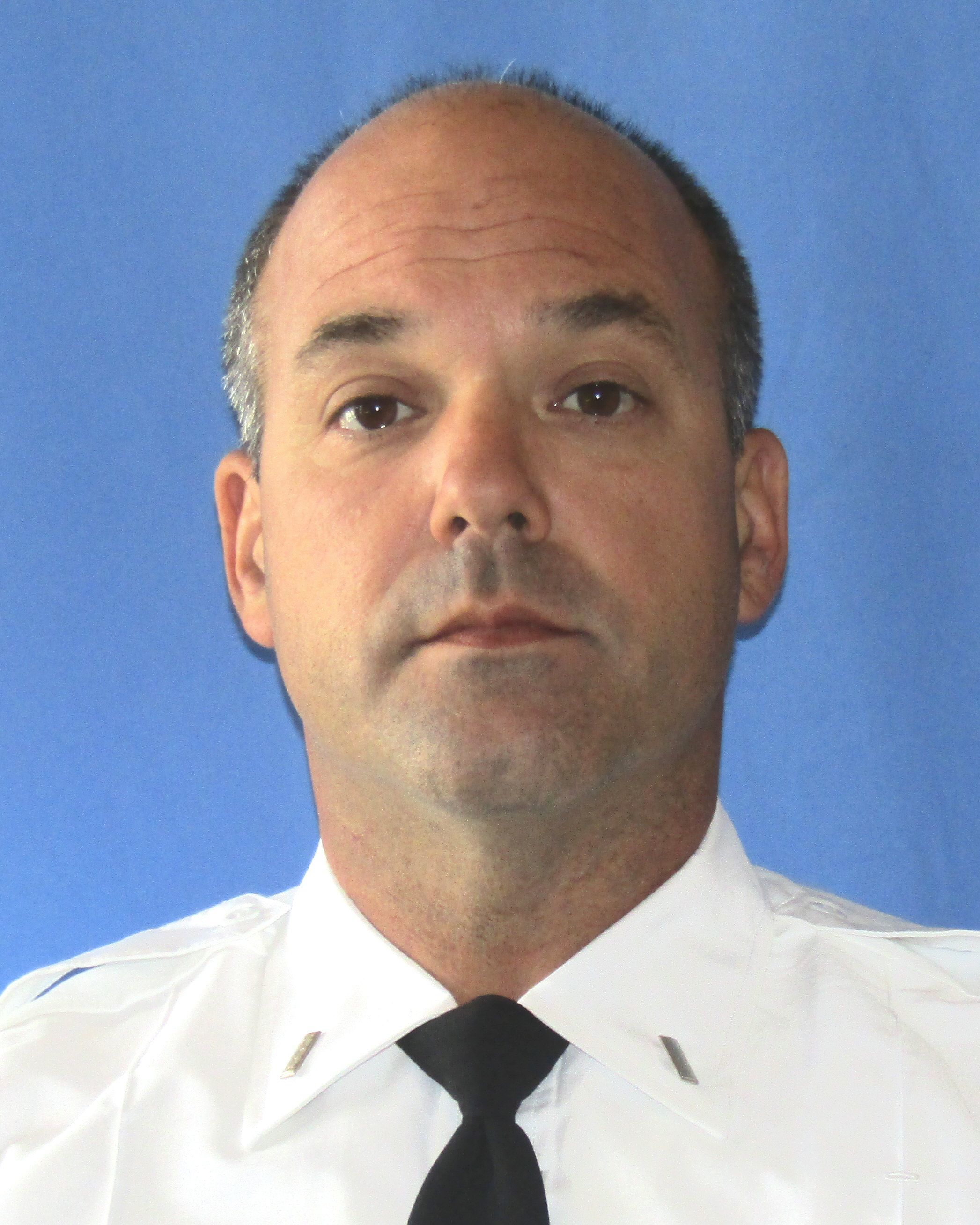
    Lt. Sean Williamson, 51, was killed during a building collapse after a fire in Fairhill in 2022. He was a 27-year veteran of the Fire Department.

    Assistant U.S. Attorney Amanda Reinitz said Khalil and Jaghama were too late in expressing remorse. Both men lied to authorities after the blaze, she said, Khalil tried to flee the country, and both then took their case to trial, where they tried to convince jurors that fire officials shared blame in the disaster for sending first responders into a century-old building shortly after the flames had been extinguished.

    Williamson’s sister, Erin Williamson, said she viewed that as an attempt by Khalil and Jaghama to avoid accountability for causing a tragedy. A second-grade teacher, Williamson said even her 7-year-old students know that fires are dangerous and deadly.

    Khalil and Jaghama “only thought about themselves,” she said, “and what they could gain.”

    The fire was set early in the morning of June 18, 2022. Khalil, who co-owned a pizza shop in Juniata Park, had bought the Indiana Avenue building months earlier and was hoping to renovate it and turn a quick profit.

    But when that plan appeared destined to fail, prosecutors said, he began plotting to set it ablaze, hoping that he could instead collect on an insurance policy worth nearly $500,000.

    Surveillance footage discovered after the crime showed Khalil and Jaghama entering the building’s basement shortly before the blaze began, around 1:30 a.m., then leaving not long after flames erupted.

    Khalil had leased apartments in the upper floors to two employees at his pizza shop, and they were inside with their young children as the fire spread. All of the tenants managed to escape unharmed, prosecutors said, but they lost nearly all of their possessions.

    First responders were not so lucky.

    Philadelphia fire officials honored Lt. Sean Williamson at his funeral in 2022.

    Although firefighters were able to extinguish the blaze, the building was heavily damaged from smoke and water when crews were sent inside to inspect it. The building then collapsed, and Williamson, 51 — a 27-year veteran of the department — died after being trapped under the rubble. Four other firefighters and an inspector from the Philadelphia Department of Licenses and Inspections were also injured but survived.

    The day after the disaster, Khalil filed a claim with his insurance company. In the ensuing days, he also tried to flee for Jordan, prosecutors said, but was arrested at John F. Kennedy Airport in New York City.

    Jaghama was arrested about a year after Khalil. Reinitz, the prosecutor, said Jaghama repeatedly misled authorities while seeking to avoid being prosecuted.

    Jaghama, born in the West Bank, was a legal permanent resident, meaning he is likely to be deported after his prison term.

    Khalil’s wife said in court Wednesday that he was a great husband, a loving father to their three children, and a caring person whose actions in this case were not consistent with how he lived his life.

    Reinitz, however, said the men’s decisions and actions were not only senseless, they were damaging for countless people whose lives were upended by a callous — and illegal — attempt to make money.

    “They had absolutely no need to do this,” she said, “other than pure greed.”

  • Three men convicted of first-degree murder in deadly North Philadelphia playground shooting

    Three men convicted of first-degree murder in deadly North Philadelphia playground shooting

    Three men were convicted of first-degree murder and related crimes for a 2023 shooting at a North Philadelphia playground that left three people dead and one injured, prosecutors said Wednesday.

    Tyyon Bates, 21, Quaza Lopez, 22, and Eric Reid, 23, were all found guilty this week for their roles in the crime, which brought chaos to a basketball court at Eighth and Diamond Streets on a hot summer night as children played outside.

    Nyreese Moore, 22, Nassir Folk, 24, and Isaiah Williams, 22, were killed. A fourth person was shot in the abdomen and survived.

    In addition to murder, Bates, Lopez, and Reid were convicted of conspiracy to commit murder, recklessly endangering others, and firearms offenses, prosecutors said.

    A jury found a fourth suspect, Sufyann Kinslow, not guilty of murder and related charges, court records show. And a jury could not reach a verdict in the trial of a fifth suspect, Tynel Love, on similar charges, though prosecutors say they intend to retry that case.

    Prosecutors said the Aug. 11, 2023, shooting stemmed from “vengeance” over a 2018 shooting that left Bates’ brother, Tyree, dead just several blocks away at Fourth and Diamond Streets.

    “The motivation was for ‘Ree,’ Tyree Bates,” said Assistant District Attorney Cydney Pope. “And Tyyon Bates made sure he got his ‘get-back’ for him — and bragged about it.”

    Investigators recovered more than 100 pieces of ballistic evidence from what prosecutors said was an unusually large crime scene involving six shooters. Surveillance video from the recreation center and a nearby vacant lot helped investigators link the men to the crime, Pope said.

    Bates, Lopez, and Reid were sentenced by Common Pleas Court Judge Glenn Bronson to three consecutive life sentences in prison plus an additional 24 to 48 years in custody.

    Prosecutors said that their work is not finished and that they plan to bring charges against two more people involved in the crime.

  • How the Inquirer and Daily News covered the 1990s mafia power struggle seen in Netflix’s ‘Mob War’

    How the Inquirer and Daily News covered the 1990s mafia power struggle seen in Netflix’s ‘Mob War’

    More than 30 years ago, Philadelphia was the battleground in a brutal mob war as a group of young mafia upstarts challenged the rule of the established La Cosa Nostra leadership.

    Known as the Young Turks, that group consisted mostly of younger men who were the sons, brothers, and nephews of former crime family members who were dead or in prison, and was purportedly led by Joseph “Skinny Joey” Merlino and Michael “Mikey Chang” Ciancaglini. They believed that mob boss John Stanfa, a Sicilian immigrant who preferred to keep a low profile, was an outsider who was not fit to lead. Instead, their bloodlines and connections gave them the right to rule their hometown neighborhoods.

    Now, a new docuseries from Netflix, Mob War: Philadelphia vs. The Mafia, examines that conflict, complete with interviews from the law enforcement agents and former mobsters who were there, vintage 1990s Philly TV news footage, and the perspective of a hitman-turned-informant who made headlines. The goal, said director Raïssa Botterman, is to show the human element behind the violence.

    “They’ve committed crimes, but they’re still humans, and understanding who they were and having their versions of events” is important, she said. “Whether it’s fighting against crime or it’s committing crimes, [we’re] trying to get a more holistic picture of what’s going on.”

    Notably missing from the series is Merlino, who Botterman said declined to participate. Merlino has long denied having been behind a faction of the city’s mob and has never been convicted of mob-related violence.

    Likewise, Merlino declined through a representative to comment about Mob Wars.

    Throughout the ’90s, mob violence regularly dominated Inquirer and Daily News headlines, and resulted in several high-profile deaths and criminal trials, and a new mob leader in the city.

    Here is how we covered it:

    30 Jan 1992, Thu Philadelphia Daily News (Philadelphia, Pennsylvania) Newspapers.com

    The war begins

    By most accounts, the first strike in the brewing mob war happened in January 1992 with the killing of Felix “Tom Mix” Bocchino, a Stanfa loyalist, on the 1200 block of Mifflin Street. Bocchino, 73, was shot four times in his 1977 Buick, and authorities believed he was targeted by members of the Young Turks faction, according to an Inquirer report from the time.

    Retaliation was swift. Two months later, gunmen attempted to assassinate Michael Ciancaglini at his home near 12th and McKean Streets — just steps south of where Bocchino was killed. In that incident, the Daily News reported, Ciancaglini was returning home from a basketball game when two men carrying shotguns began chasing him. He made it inside, and the gunmen fired shotgun blasts through the front door and window.

    Ciancaglini was not injured, and neither were his wife and two children, who were inside the house. Law enforcement sources told the People Paper that Ciancaglini “had something to do with Bocchino’s death,” but Ciancaglini’s attorney maintained his client was in the dark about the attempt on his life.

    “He don’t know why. He don’t know who. And he don’t know what,” attorney Joseph C. Santaguida told The Inquirer following the shooting.

    06 Aug 1993, Fri The Philadelphia Inquirer (Philadelphia, Pennsylvania) Newspapers.com

    All-out war

    In March 1993, almost exactly a year after the attempt on Michael Ciancaglini’s life, older brother Joseph Ciancaglini, 35, was shot at the Warfield Breakfast and Lunch Express in Grays Ferry. The attempted hit on Stanfa’s underboss was captured on FBI surveillance video.

    Though he survived, Joseph Ciancaglini became permanently paralyzed.

    On Aug. 5, 1993, the warfare arrived on the 600 block of Catharine Street with an afternoon shooting that injured Merlino and killed Michael Ciancaglini. The pair were walking down the block when two gunmen began firing, striking Merlino in the leg and buttocks, and Ciancaglini in the heart, reports from the time indicate. Ciancaglini died at Thomas Jefferson University Hospital, while Merlino was placed in stable condition at the Hospital of the University of Pennsylvania.

    window.addEventListener(“message”,function(a){if(void 0!==a.data[“datawrapper-height”]){var e=document.querySelectorAll(“iframe”);for(var t in a.data[“datawrapper-height”])for(var r,i=0;r=e[i];i++)if(r.contentWindow===a.source){var d=a.data[“datawrapper-height”][t]+”px”;r.style.height=d}}});

    The car used in the shooting, meanwhile, was found some 35 blocks away, burned to a crisp. It had been leased to Philip Colletti, a mob associate who later admitted his role in the crime.

    Hundreds attended Ciancaglini’s viewing at the Carto Funeral Home at Broad and Jackson days later; some neighborhood residents were not surprised by his killing, The Inquirer reported.

    “Why’d he get killed? The same reason the rest of these hoods in South Philly do,” said one South Philly hairdresser. “Most Italians are good, hard-working people, and these people give us a bad name.”

    01 Sep 1993, Wed Philadelphia Daily News (Philadelphia, Pennsylvania) Newspapers.com

    An attempt on Stanfa

    By the end of August 1993, the Young Turks struck back — this time with a botched assassination attempt on Stanfa himself that ended up wounding the mob boss’ son, Joseph, who was 23 and not involved with mafia activities.

    That attempt took place during the morning rush hour as Stanfa and his son traveled from their home in Medford to their food importing business in South Philadelphia. As they drove toward the Vare Avenue off-ramp on the Schuylkill Expressway, gunmen ambushed them from a van that had been modified with makeshift gunports, allowing the assailants to fire from concealment.

    The attackers, police later learned, had not cut eye holes in the van, and fired on the Stanfas wildly, missing their intended target. The younger Stanfa, however, was struck in the face, leaving a bullet lodged in his neck though he survived.

    The van was found near 29th and Mifflin Streets as police attempted to reconstruct possible escape routes. It was littered with spent cartridges, and had “a number of punctures in it,” leading police to believe that a shooter lost control of his weapon, tearing bullet holes into the vehicle.

    Stanfa’s vehicle, meanwhile, was heavily damaged, with at least 10 bullet holes running from the front hood to the right rear fender. A tire was shredded, and a window panel in the rear-passenger side — where Joseph had been sitting — was shattered. Stanfa, The Inquirer reported at the time, had his driver hide the car in the garage of the restaurant where Joseph Ciancaglini had been shot, requiring police to obtain a warrant to examine it.

    “You’ve got to understand: This is an all-out mob war,” said Col. Justin J. Dintino, superintendent of the New Jersey State Police. ”They’re going to take their shot whenever the opportunity presents itself.”

    18 Sep 1993, Sat Philadelphia Daily News (Philadelphia, Pennsylvania) Newspapers.com

    Murder at the Melrose

    In September 1993, the opportunity presented itself at the Melrose Diner, where Frank Baldino Sr., a reportedly low-level associate of the Young Turks, was shot to death in his car. His last meal was a $6.95 chopped steak dinner, the Daily News reported.

    Gunmen approached Baldino’s vehicle, investigators said, and “pumped several bullets” through its closed window, striking him in the head and torso. The assailants fled west on Passyunk Avenue in a rainstorm, and Baldino died while en route to the hospital.

    Baldino was not considered to be a major player in the local mob. His killing, friends and investigators said, was something of a shock — even former mobster Nicholas “Nicky Crow” Caramandi, who was in hiding at the time, denounced it.

    “This guy was not a gangster,” Caramandi told The Inquirer. “He wouldn’t hurt anybody. He was not a threat. It should never have happened.”

    19 Jan 1994, Wed Philadelphia Daily News (Philadelphia, Pennsylvania) Newspapers.com

    A mafia hitman turns informant

    Though mob violence cooled as 1993 wore on, it didn’t fully stop, and late one Friday in January 1994, police found John Veasey near Sixth and Sigel Streets, grievously injured.

    He had three bullet wounds to his head, one to his chest, and seven stab wounds, having fought off his attackers in an assassination attempt in the apartment above a nearby meat store. Somehow Veasey, then 28, had survived, and was placed in critical but stable condition at Jefferson Hospital.

    “He’s a tough kid,” one underworld source told The Inquirer. “He knows a lot, and what he knows can hurt a lot of people.”

    Veasey, it turned out, had gone to the FBI days before and copped to the Ciancaglini and Baldino killings at the behest of his brother, William “Billy” Veasey, who had told him there was a contract out on John Veasey’s life.

    His assailants, Veasey told police, were Stanfa loyalists Frank Martines and Vincent “Al Pajamas” Pagano, both of which later surrendered.

    The pair, John Veasey said, had lured him to a mob-run “numbers house” under the guise of protecting him. But once inside, Martines pulled a gun and shot him in the head and chest, telling him, “Bye, John-John.” When that failed to kill Veasey, a battle ensued in which Veasey wrestled a knife away from Pagano, and used it to slash Martines in the eye.

    “I have a real powerful neck, real, real big,” Veasey later said of his survival, according to a Daily News report. “I was not knocked out. It wasn’t sending any messages to the brain.”

    06 Oct 1995, Fri The Philadelphia Inquirer (Philadelphia, Pennsylvania) Newspapers.com

    The killing of Billy Veasey

    Following the attack on Veasey, Stanfa and 23 associates were indicted on federal racketeering charges and imprisoned by March 1994. As the legal proceedings wore on, mob violence in the city trickled almost to a stop — with one notable exception.

    On Oct. 5, 1995, just hours before Veasey was set to take the witness stand against Stanfa and his codefendants, his brother Billy was shot and killed on the 1700 block of Oregon Avenue.

    Veasey was distraught, but his resolve to testify was hardened by the killing, law enforcement sources said. Five days later, he did just that.

    Delivering his testimony in what The Inquirer called “South Philadelphia tough-guy jargon,” Veasey made the federal government’s case clear — in some cases, graphically so — for jurors. Calling himself a triggerman for Stanfa, he testified that the mob boss had given orders in 1993 to kill anyone who was aligned with Merlino and the Young Turks faction, and that a hit list with more than a dozen names had been circulated to mob members.

    “A couple of [defense] lawyers tried to catch him up in semantics,” one federal source told The Inquirer of Veasey. “John doesn’t even know what semantics means.”

    22 Nov 1995, Wed The Philadelphia Inquirer (Philadelphia, Pennsylvania) Newspapers.com

    The war’s end

    By November 1995, Stanfa and his associates were convicted on all counts, including murder, extortion, gambling, and kidnapping. Stanfa received five life sentences, and, at 84, remains in prison.

    With that, the Young Turks had officially won the war. According to Inquirer and Daily News reports from the time, Ralph Natale had been installed as the head of the Philadelphia mob but focused his efforts on South Jersey, allegedly leaving Merlino and his cohorts to run South Philadelphia.

    Following Natale’s arrest on a parole violation in 1998, Daily News and Inquirer reports from the time indicate, Merlino purportedly took over as acting mob boss, and later cut out Natale completely. Merlino himself was arrested on drug conspiracy charges in 1999, and Natale served as a government witness against him.

    Ultimately, Merlino received a 14-year sentence after being convicted of racketeering. He was acquitted of drug trafficking and murder charges, the latter for which prosecutors initially considered pursuing the death penalty. With credit for two and a half years served, he was to spend nine more years in prison.

    “It ain’t bad,” Merlino said of the verdict, according to an Inquirer report. “Nine’s better than a death penalty.”

    “Mob Wars” is a three-part series on Netflix. Its release date is Wednesday, Oct. 22.

  • What to know about John Veasey, the hit man-turned-informant in Netflix’s ‘Mob War’

    What to know about John Veasey, the hit man-turned-informant in Netflix’s ‘Mob War’

    Hit man-turned-government informant John Veasey, whose testimony helped bring down mob boss John Stanfa and a dozen of his top associates in the 1990s, says he’s on the road to redemption.

    The new Netflix docuseries Mob War: Philadelphia vs. The Mafia, now streaming, chronicles a violent 1990s power struggle in the local La Cosa Nostra through the eyes of investigators and former crime family members who were there.

    Veasey, a South Philly native, was a central figure in the ’90s Philly mob, having admitted to participating in two high-profile murders. He went on to serve nearly 11 years in prison after becoming a government witness against Stanfa and other top mob associates in a federal racketeering trial, and was released in 2005. He has since denounced the mob life, and, in the Netflix series, calls joining the mafia the “worst decision” he ever made.

    While he became a feared killer, Veasey was also something of a folk hero after Stanfa’s 1995 trial. The jury, according to Inquirer and Daily News reports from the time, was enamored with his frank and sometimes graphic testimony, which was a key component of federal prosecutors’ case against Stanfa and others.

    Here is what you need to know, based on Inquirer and Daily News coverage from the time:

    13 Jun 1994, Mon Philadelphia Daily News (Philadelphia, Pennsylvania) Newspapers.com

    An admitted hit man

    Veasey agreed to become an FBI informant in January 1994 after his brother, William “Billy” Veasey, told him Stanfa had taken a contract out on his life, reports from the time indicate. In agreeing to work with federal authorities, Veasey admitted to being one of the shooters behind two then-recent mob killings: Michael “Mikey Chang” Ciancaglini and Frank Baldino Sr.

    Ciancaglini was killed in August 1993 in a shooting that also wounded Joseph “Skinny Joey” Merlino. The pair were the purported leaders of the so-called “Young Turks” faction who opposed the rule of Stanfa, reports indicated. Merlino has long denied having been behind a faction of the city’s mob and has never been convicted of mob violence.

    Ahead of that shooting, Veasey testified, Stanfa had given orders to “kill anybody aligned with Merlino” and circulated a list of about a dozen people who were to be killed. Veasey undertook the hit with fellow mob enforcer Philip Colletti in a white Ford Taurus that, shockingly, was leased in Colletti’s name.

    Veasey also admitted to burning the vehicle, badly burning his hand in the process. Knowing he needed an explanation to have his injury treated, Veasey returned to his house and poured lighter fluid into a barbecue grill, and intentionally lit his injured hand on fire.

    “I screamed and told the neighbors I had burned it trying to light the grill,” he told jurors during the Stanfa trial. The cover, he says in the Netflix docuseries, wasn’t a great one — the grill he used was electric, arousing the suspicion of police.

    15 Oct 1995, Sun The Philadelphia Inquirer (Philadelphia, Pennsylvania) Newspapers.com

    The Melrose Diner killing

    Likewise, Veasey was the triggerman in the killing of Frank Baldino Sr., a then-suspected low-level mob associate who was killed outside the Melrose Diner in September 1993.

    Baldino was shot multiple times in his car in the diner’s parking lot, and died en route to Thomas Jefferson University Hospital. Veasey later tipped off authorities to the location of the murder weapons, which divers found in a pond at FDR Park in April 1994, reports from the time indicate.

    The attempted murder of John Veasey

    In January 1994, police found Veasey grievously injured near Sixth and Sigel Streets, having somehow survived a brutal assassination attempt in which he was shot four times and stabbed seven. The attempted murder, he later testified, was undertaken by Stanfa associates Frank Martines and Vincent “Al Pajamas” Pagano in an apartment above a meat store near where Veasey was found.

    “One bullet fragmented in the back of my head. One went in the back and out through my forehead,” Veasey later said of the shooting. ”One hit the back of my head and bounced into my neck. And one is still in my chest, in my rib cage.”

    His assailants, Veasey said, had targeted him because they believed he was working with the FBI — which he had been for a few days by the time the attack happened.

    11 Feb 1994, Fri The Philadelphia Inquirer (Philadelphia, Pennsylvania) Newspapers.com

    The shots failed to kill Veasey, who in the struggle wrestled a knife away from Pagano and used it to stab Martines near the eye. The ordeal lasted about 18 minutes, according to a Daily News report, and ended with Martines and Pagano letting Veasey go in exchange for their lives.

    After he escaped, Veasey attempted to stop a car for help. But because of the way he looked, he said, no one would help him.

    Eventually, police arrived but believed Veasey would die.

    “I could hear them talking, saying I was DOA,” Veasey said. “I’m saying, ‘I’m alive, I’m alive. Everyone is giving up on me tonight.’”

    Veasey later said he left the mob that night, putting his time in the mafia at just over five months, the Daily News reported. He had been recruited in August 1993, days before the Ciancaglini murder, after landing a job at a construction company owned by Stanfa’s brother-in-law.

    “I wouldn’t recommend this life to an enemy,” he later said of the mob.

    06 Oct 1995, Fri The Philadelphia Inquirer (Philadelphia, Pennsylvania) Newspapers.com

    A fallen brother

    Hours before Veasey was set to take the stand for Stanfa’s trial in October 1995, his brother, Billy, was shot and killed on the 1700 block of Oregon Avenue. The killing, authorities speculated, could have been ordered by Stanfa as a way to silence Veasey, or by suspected Young Turks leader Merlino as revenge for the Ciancaglini and Baldino murders.

    Ultimately, it only delayed Veasey’s testimony by five days.

    From the stand, Veasey referred to himself as a triggerman and divulged his involvement with the murders of Ciancaglini and Baldino.

    Veasey’s testimony at trial

    In total, Veasey testified for about two and a half days, which he wrapped up with two pieces of information: That he refused to kill kids, and he did not like gambling. He also mocked Sergio Battaglia, a would-be Stanfa hit man who, despite going on a number of hits, never actually killed anyone, according to an Inquirer report.

    Battaglia “went on a hundred hits and didn’t shoot nobody,” Veasey said.

    He quickly became well-liked by the jury, who seemed to hang on his every word, The Inquirer reported. Among his more graphic accounts from the witness stand was the “drilling” of Joseph “Joe Fudge” DeSimone, a mob associate who had wanted to kill Veasey, to which Veasey took less-than-kindly.

    12 Oct 1995, Thu Philadelphia Daily News (Philadelphia, Pennsylvania) Newspapers.com

    Veasey testified that he had warned Stanfa of a coming altercation with DeSimone, and at one point persuaded another mob associate to bring DeSimone over to Veasey’s house to settle their dispute. Veasey was on house arrest at the time.

    DeSimone arrived, kicking off a violent encounter with an electric drill.

    “I smacked him in the face with the drill. I stuck the drill in his chest and in his legs. I stuck it in his head, and from the rotation of the drill, clumps of hair was going out,” Veasey testified. “Then I hit him in the knee with a baseball bat. I chambered the gun … gave it to him and asked, ‘Do you still want to kill me?’”

    Veasey said that DeSimone declined.

    The testimony was not only well received by jurors, but it was considered a success by prosecutors. Though violent, Veasey appeared relatable to the jury and seemed to have a secret weapon against the defense.

    Former mob hit man John Veasey’s biography details his work for one of the city’s mob organizations, the hits he carried out, the attempt on his life, and more.

    The reformed hit man

    Stanfa was ultimately found guilty and sentenced to five consecutive life terms. Veasey, meanwhile, spent almost 11 years in prison, and was released in 2005. By 2012, he was back in the news, this time for a detailed account of his story in The Hit Man: A True Story of Murder, Redemption and the Melrose Diner, a book by former Inquirer reporter Ralph Cipriano.

    By then, Veasey was working as a car salesman in the Midwest, and claimed to have turned over a new leaf.

    “I never respected the Mafia or what it stood for,” Veasey said in an interview with The Inquirer in 2012. “My only regret was being dumb enough to join … I always said they either rat or kill each other.”
  • In the 1990s mob wars, John Stanfa didn’t have a nickname. The Daily News tried to change that.

    In the 1990s mob wars, John Stanfa didn’t have a nickname. The Daily News tried to change that.

    Convicted former Philadelphia mob boss John Stanfa made headlines as part of a bloody mafia power struggle in the 1990s, which is now being chronicled in the newly released Netflix docuseries, Mob War: Philadelphia vs. The Mafia.

    He was missing one thing that many of his contemporaries had — at least in the papers.

    A nickname.

    Don of the Philadelphia La Cosa Nostra from 1990 to 1995, when he was convicted on racketeering, murder, and conspiracy charges that netted him five life sentences, Stanfa went without an official street name during his time at the top. In September 1993, the Daily News set out to change that with a “Name the Don” contest encouraging readers to send in their best handles for Stanfa.

    “Philadelphia mobsters have had nicknames since there’s been a Philadelphia mob,” the People Paper wrote in a contest announcement. “But poor John Stanfa, the acknowledged leader of the local Cosa Nostra, has suffered long enough. Our godfather needs a nickname — and fast.”

    03 Sep 1993, Fri Philadelphia Daily News (Philadelphia, Pennsylvania) Newspapers.com

    A classic Daily News stunt, yes — but its timing was somewhat, well, insensitive. Just days before the contest was announced, Stanfa was the target in a brazen morning rush-hour shooting on the Schuylkill Expressway in Grays Ferry. His then-23-year-old son, Joseph, was seriously injured with a gunshot wound to the face.

    That shooting, the Daily News reported, signaled an “all-out war” for control of the local mafia, escalating the then-ongoing feud between Stanfa’s crew and a group of young upstarts referred to by the press as the “Young Turks,” purportedly led by Joseph “Skinny Joey” Merlino. The month before, Merlino was injured in a shooting on the 600 block of Catharine Street, and his friend Michael “Mikey Chang” Ciancaglini was killed.

    (Merlino, who opened Skinny Joey’s Cheesesteaks on South Broad this year, has long denied having been behind a faction of the city’s mob.)

    Stanfa was uninjured in the expressway shooting. His son survived and was never implicated in Stanfa’s underworld dealings.

    Still, some of the Daily News’ audience was game to participate in the contest, though the total number of submissions was not reported. Some of the potential monikers were directly inspired by the attempt on his life, including “Nine Lives,” “The Dodger,” and “Johnny Wheels.”

    Others poked fun at his appearance, like “Sourpuss,” “Stoneface,” and “Big Baldy.” And some — such as “Johnny Meatballs,” “The Grocer,” and “Sticky Buns” — focused on Stanfa’s work in the food business, thanks to his involvement in a South Philly-based Italian food importer.

    01 Sep 1993, Wed Philadelphia Daily News (Philadelphia, Pennsylvania) Newspapers.com

    The contest, however, was not without its detractors. It was, after all, a controversial move — this was a mob boss being roasted, and one who was nearly killed only days before the Daily News began soliciting jokes at his expense. And it didn’t help that the paper went directly to some law enforcement officials to ask for their suggestions.

    “I don’t think I should be in the business of characterizing Mr. Stanfa,” said Joel Friedman, then-head of the U.S. Organized Crime Strike Force in Philly. ”I am in the business of investigating criminal activity, and prosecuting it.”

    Regular folks were upset, too — largely over the perception that the contest mocked Italian Americans at large. One reader, retired high school principal Richard Capozzola, took particular umbrage, postulating that the Daily News “wouldn’t have done it if [Stanfa] weren’t Italian.”

    “How much more insulting can your paper be to the Italian-American community of Philadelphia?” said Arthur Gajarsa, of the National Italian-American Foundation. “Would you dare run a contest involving any other ethnic criminal element?”

    The outcry became so significant that after almost two weeks, the Daily News’ editor at the time, Zachary Stalberg, addressed it in a note to readers. The message: Relax.

    “I think people understand that nothing in our handling of the contest mocked those of Italian descent,” Stalberg wrote. “And I think people know it’s OK to be intrigued by the mob, even if you hate their business.”

    13 Sep 1993, Mon Philadelphia Daily News (Philadelphia, Pennsylvania) Newspapers.com

    By mid-September, the Daily News had a winner with John “Tightlips” Stanfa. That entry came from South Philadelphia resident Brian Baratta, who won, of course, a videotape box set of The Godfather I, II, and III for his effort.

    “‘Tightlips’ certainly is descriptive of this strong and silent guy,” the Daily News wrote of the winning entry. “John Stanfa doesn’t talk to the cops, the feds, or the press.”

    With that, the contest was over — but it wasn’t so quickly forgotten, and not just in Philadelphia.

    In 1995, ahead of Stanfa’s trial, the Daily News sent reporter Kitty Caparella to Italy to investigate the mob boss’ family tree. While in Caccamo, on Sicily’s Tyrrhenian coast, Caparella was approached by a police officer, editor Stalberg wrote in a note that year.

    The officer, Stalberg said, pulled out the 1993 Daily News issue advertising the “Name the Don” contest.

    “What do you know about this?” he asked.

  • Cherry Hill’s new PGA Tour Superstore is set to open. Here is a look inside.

    Cherry Hill’s new PGA Tour Superstore is set to open. Here is a look inside.

    Clearing a golf ball past the 250-yard mark into the sunlit fairway of California’s Titleist Performance Institute is getting easier for a whole lot of people in the region.

    All they have to do is stop by the virtual golf simulators at Cherry Hill’s PGA Tour Superstore. The Georgia-based chain is opening store No. 80 in South Jersey. It already has an outlet in the Metroplex Mall in Plymouth Meeting, and is looking to expand to Ocean Township, N.J., soon.

    The company has undergone a significant growth spurt in the last six years with new brick-and-mortar locations and a 200% jump in e-commerce, a company spokesperson said.

    The sprawling 40,000-square-foot superstore in Cherry Hill will open at 9 a.m. Saturday with $30,000 worth of giveaways, including a full set of iron golf clubs to the first two customers.

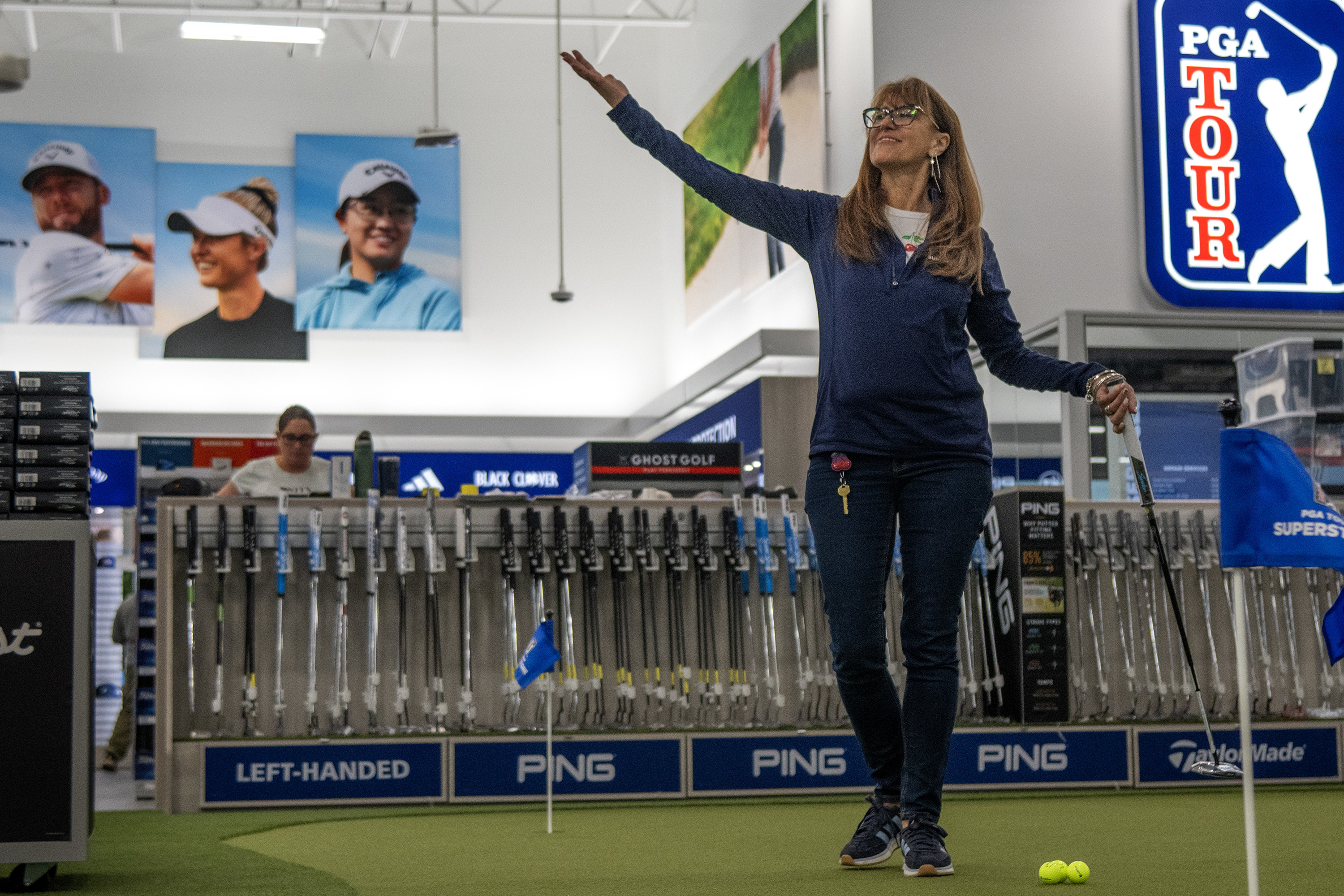
    It will house dozens of aisles of the latest golf clubs, balls, apparel, and other gear, among six practice and play hitting bays, virtual golf simulation stations, and an expert club fitting area. Store sales manager Lexi Humbert, a golfer of 16 years, said she added 10 yards to her drive after a new club head suggestion.

    Store general manager Lisa-Jo Donnelly reacts as she sinks a putt on the practice green at the PGA Superstore.

    The real draw is the golf simulation bay, where customers can cycle through world-famous golf courses projected onto a screen, and drive balls nearly 100 mph into them, receiving analytics on each swing.

    The putting green is lined with the most popular putters from classics like Taylor Made Spiders and Scotty Cameron Phantoms to the fresh lineup of L.A.B. brand putters. Golfers can explore clubs and then test them out in the golf simulation bays, or get hands-on fittings with the experts. Regripping and repair services are available, too.

    Golf, historically associated with wealthier, white men, is a growing sport — especially “off-course golf.” It was made popular by TopGolf — a trend PGA Tour Superstore hopes to capitalize on with recurring Saturday events, inviting youth groups (like First Tee) in for lessons, and providing a social space for those looking to get some swings in outside of the green.

    “The average golfer is now down to their early 40s‚” said the store’s general manager, Lisa-Jo Donnelly. The goal is to create a space that will become part of the Cherry Hill golfing community, within a region that is home to 70 courses and a local high school team that likes bringing home trophies, she said.

    The store has an expansive women’s and juniors’ sections. Humbert, who said she has been to golf stores all over the country, said the selections will be refreshing for many, as stores tend to skimp on women’s and junior equipment.

    “When I go to other stores, I already know that I’m not going to have nearly the selection that I need. I always get frustrated,” Humbert said. “The biggest thing for me is for those just wanting to get into golf and see a PGA shirt at other places for $150, whereas here you can go into the back of the store and find something for $20 to $30.”

    Store sales manager Lexi Humbert reacts after a great drive on a virtual golf simulation at the PGA Superstore.

    Saturday’s opening day is likely to lure hundreds to the store for giveaways, but they may have to contend with the dozens of people who will camp out for days to be first.

    “These opening giveaways are so popular that we had, for quite a few openings, the same person in the front of the line. He was traveling around the country and getting there first,” Donnelly said.

    The store will provide campers with pizza on Friday night and coffee and Krispy Kreme doughnuts on Saturday. The new PGA Tour Superstore CEO, Troy Rice, and Cherry Hill Mayor David Fleisher will also be in attendance Saturday, alongside members of the township council.

    📅 Opening Oct. 25, at 9 a.m.📍2232 N.J. Route 70, Suite C, Cherry Hill Township, N.J. 08002, 🕒 Monday to Friday 10 a.m. to 8 p.m., Saturday 9 a.m. to 8 p.m., Sunday 10 a.m. to 6 p.m. 🌐 pgatoursuperstore.com

  • Prosecutors hid evidence in 1988 murder case that sent Michael Gaynor to prison, lawyers say

    Prosecutors hid evidence in 1988 murder case that sent Michael Gaynor to prison, lawyers say

    After 37 years in prison, Michael Gaynor — who was convicted of killing a 5-year-old boy in a Southwest Philadelphia candy store — could soon be released.

    Lawyers from the McEldrew Purtell firm on Oct. 15 filed a petition under Pennsylvania’s Post-Conviction Relief Act (PCRA), saying that police and prosecutors suppressed crucial evidence pointing to another suspect, coerced witnesses, and relied on false testimony to convict Gaynor in 1988.

    Gaynor is “wholly innocent,” lawyer Daniel Purtell told The Inquirer on Tuesday. “We request speed and transparency toward his exoneration.”

    The District Attorney’s Office Conviction Integrity Unit (CIU) has also been investigating the case since late last year. The office is expected to file a brief with the court in response to the petition.

    The petition to free Gaynor relies on information detailed in The Inquirer’s six-part investigative series “The Wrong Man,” published late last year. The stories uncovered evidence that Gaynor was not the gunman or even in the store where a shootout between two men took the life of little Marcus Yates. The Inquirer’s investigation was based on thousands of pages of court transcripts and police paperwork, 21 witness statements, and interviews with more than four dozen people.

    For more than a year, Gaynor, now 58, has had the most unlikely supporter: Marcus’ family.

    Marcus’ mom, Rochelle Yates-Whittington, remained tormented by the tragedy decades later. She said she could find peace only by telling Gaynor and Ike Johnson, who was one of the convicted gunmen, that she forgave them.

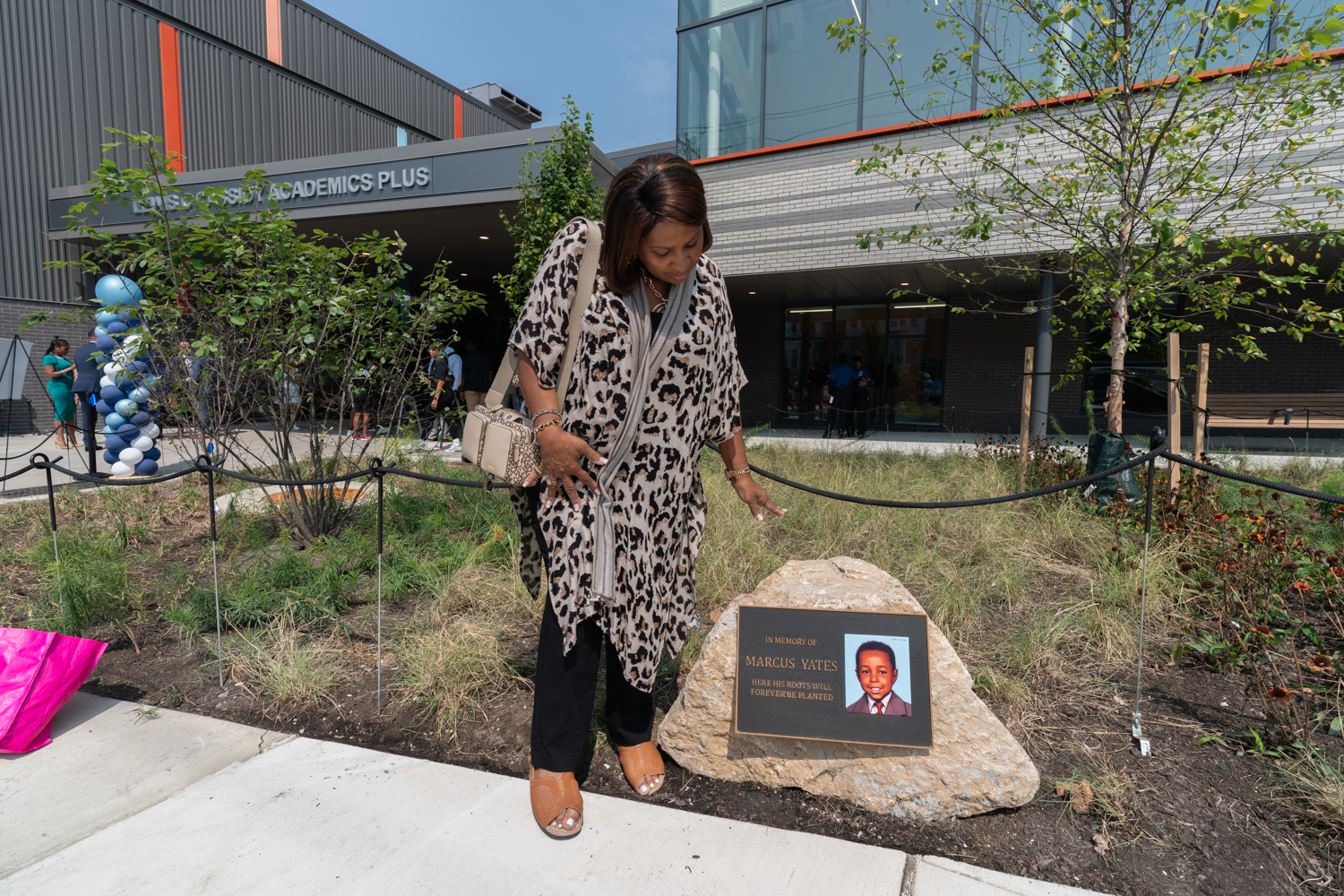
    Rochelle Yates- Whittington, mother of Marcus Yates, at the new memorial for Marcus, at the .Lewis C. Cassidy Elementary Academics Plus School, in Philadelphia in 2024.

    But after speaking with each of them in prison video calls last year, she said, she no longer believed the police and prosecutors’ account of the crime and told her family Gaynor was not guilty.

    “I am just so overwhelmed with happiness,” Yates-Whittington said this week after hearing about the court filing. “I just want to let Michael know I’ll be there for him once he’s released. I really hope this moves fast and his release is expedited.”

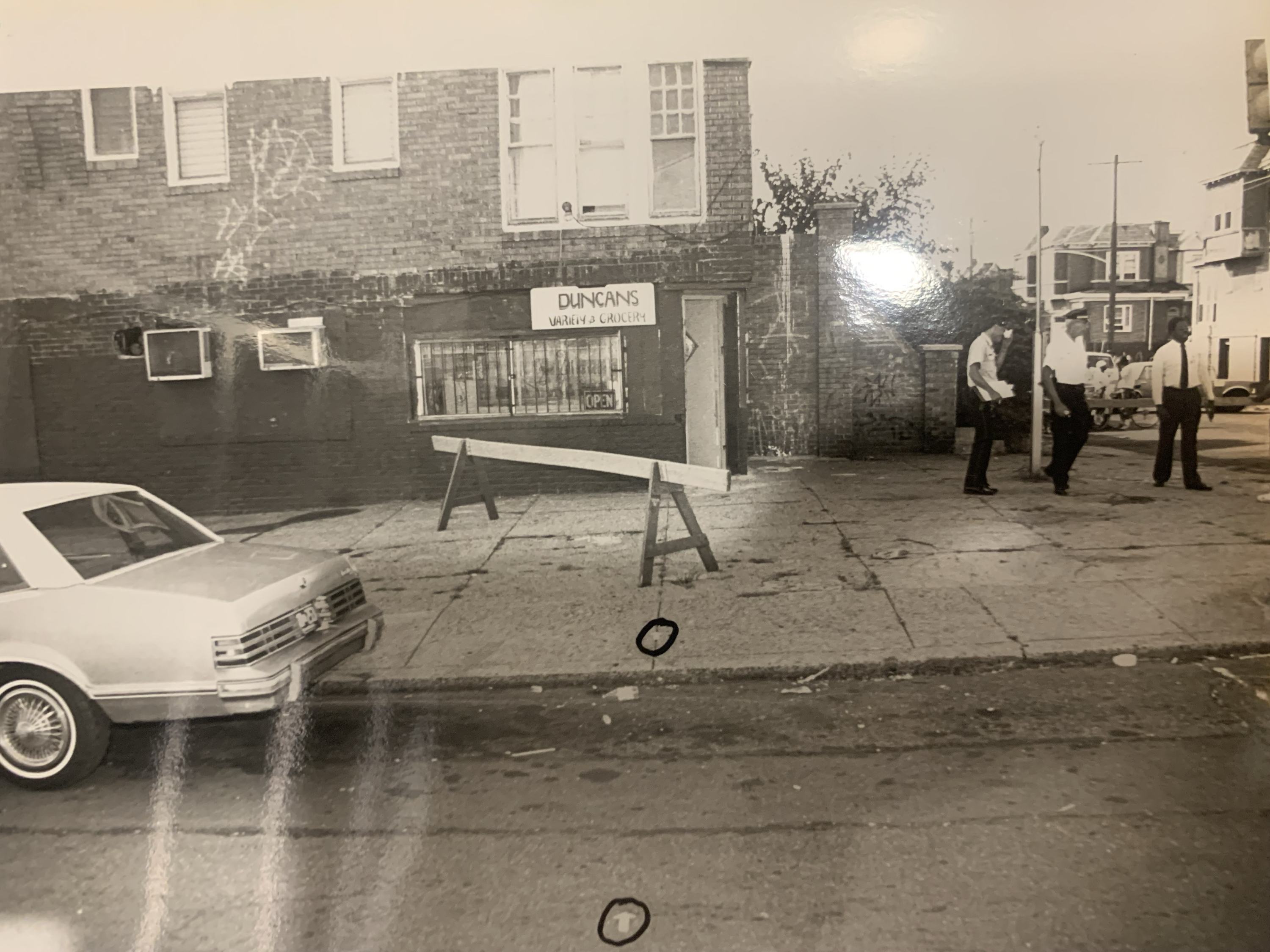
    On the afternoon of July 18, 1988, Marcus, his two older brothers, and seven other children were crammed inside the tiny Duncan’s Variety & Grocery store, where they played three video games and eyed penny candy. Suddenly, two men blasted guns at each other, and the children were caught in the crossfire.

    On the afternoon of July 18, 1988, police gather outside Duncan’s Variety and Grocery store in Southwest Philadelphia to start investigating the shooting death of 5-year-old Marcus Yates, and his brother and another boy, who were shot, yet survived.

    Marcus, who took a bullet to the head, died at the hospital later that day. His brother Malcolm survived being shot, as did another boy.

    Gaynor lived around the corner from the store and was a low-level crack dealer. He was from Jamaica, and witnesses had told police that both shooters were Jamaican.

    As part of the investigation, police seized a number of cars parked near the store, including Gaynor’s 1988 Nissan 300ZX. Four days after the shooting, he called the police to claim his car and spoke to Paul Worrell, lead investigator on the case. Worrell told Gaynor to come to Police Headquarters.

    Gaynor said Worrell took him into an interrogation room, placed him in handcuffs, sat him in a chair bolted to the floor, and accused him of killing the 5-year-old boy. Worrell put a plastic bag over his head, Gaynor said, held it tight, and told him he had to admit to the killing. Gaynor said he told him he would talk but wouldn’t confess to a crime he didn’t commit.

    Worrell has been linked to seven murder cases in the 1980s and 1990s in which defendants allege he and his partners coerced false confessions, falsified statements, slapped suspects while handcuffed to chairs, kicked their genitals, and threatened witnesses with criminal charges if they didn’t testify. Four men in those cases have since been exonerated, and another conviction was vacated.

    Worrell, now retired, declined to comment.

    In an interview last year,he told The Inquirer: “I hope Michael Gaynor rots in jail.”

    Gaynor and Johnson, also known as Donovan “Baby Don” Grant, were convicted of first-degree murder and sentenced to life without parole. Johnson and other witnesses had always maintained Gaynor was not the other shooter.

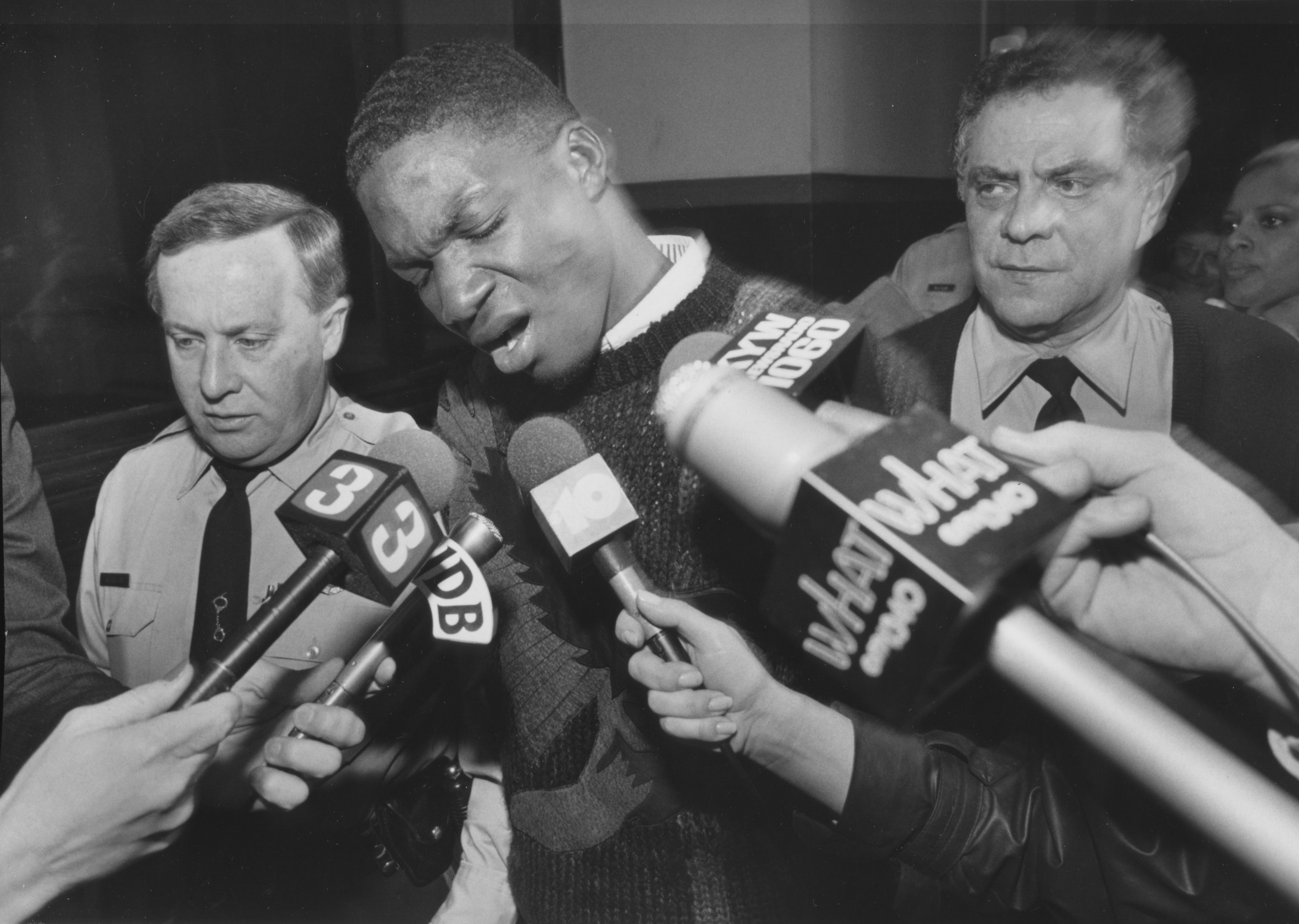
    In this Feb. 20, 1990 Daily News file photograph, Michael Gaynor is escorted by sheriff deputies after receiving a life sentence from the jury.

    In fact, witnesses had told police the other shooter was a man known on the street as “Harbor.” But detectives did not properly or substantively investigate Harbor.

    When asked during the murder trial why police had not tried to find Harbor, Worrell replied: “I had investigated that name early on in the investigation, in the fall of 1988. …That name was a nickname. That name has never been attached to any human being that is in my capability to find nor within the New York Police Department’s capability to find. Our determination was that that person did not exist.”

    The Inquirer determined that he was Paul Jacobs, also known as Peter J. Jacobs, a career criminal who was born in Jamaica and had lived in New York and Los Angeles.

    Years after Gaynor and Johnson were locked up, Jacobs was shot dead on March 12, 1996, in a small ramshackle home in a South Los Angeles neighborhood wrought with street gangs and drug wars. He was 34.

    Investigators knew Jacobs had faced criminal charges in New York and had an associated address that was part of the investigative records, according to the petition. Those details were concealed from the defense, the document says.

    “The Philadelphia District Attorney’s Office has recently produced previously undisclosed documents confirming that Jacobs was identifiable through the New York prison system,” according to the petition.

    Gaynor’s lawyers contend that suppressing that evidence amounted to misconduct that undermines the integrity of the conviction. Had it been disclosed, the petition said, “there is a reasonable probability the outcome of the trial would have been different.”

    During the trial, the prosecution relied heavily on the testimony of traumatized children who identified Johnson and Gaynor in court. But three of the five children, now adults, said detectives and prosecutors had directed or coached them to do so, The Inquirer found. And police coerced Christopher Duncan, the son of the candy store owner, into recanting his original statement and adopting a false account implicating Gaynor, the petition said.

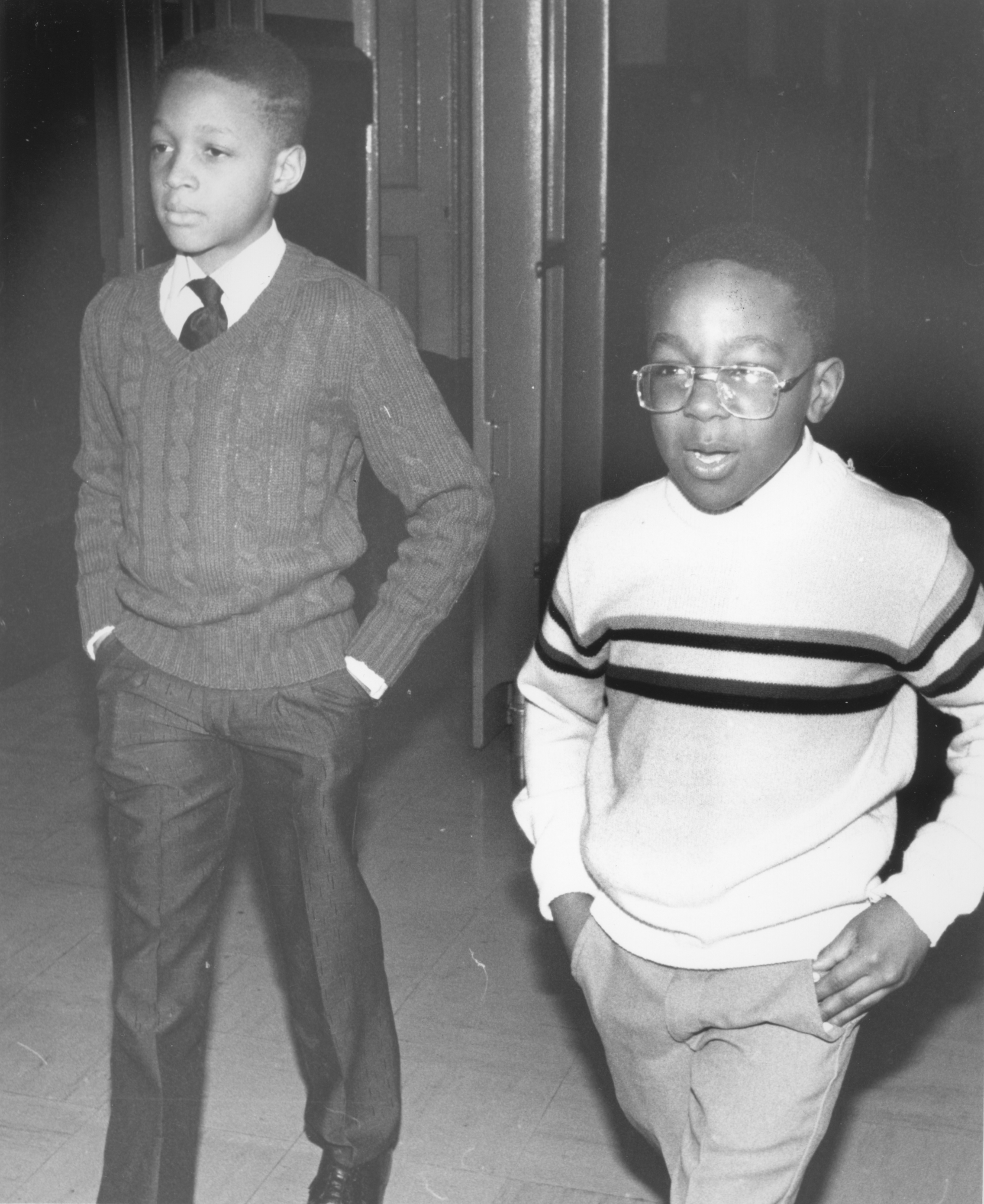
    In this Feb. 6, 1990 Daily News file photograph Toney Yates, 12, and brother Malcolm Yates, 8, walk through the hall at City Hall outside of the hearing for the shooting of their brother Marcus Yates.

    No forensic or physical evidence linked Gaynor to the murder.

    “This was not a major lapse in judgment but a conscious decision to ignore leads that pointed away from Gaynor and toward the actual perpetrator,” his lawyers said in the court filing.

    Since District Attorney Larry Krasner took office in January 2018, the convictions of 48 people have been overturned, according to data compiled by his office.

    Many of the overturned cases date to the 1980s and 1990s, and police misconduct, fabricated statements, coerced confessions, and the withholding of exculpatory evidence were later cited as key factors in the wrongful convictions.

  • Before the Day of the Dead, a time to welcome departed dogs and cats as families create ‘pet ofrendas’

    Before the Day of the Dead, a time to welcome departed dogs and cats as families create ‘pet ofrendas’

    The spirits of the pets come first, treading home on soft, shadowy paws, making their way by the light of altar candles and guided by the eternal tie of love.

    They are welcomed with offerings of favorite treats and fresh water, and by the careful placement of old toys and worn collars that have become cherished mementos.

    It’s a new tradition connected to the Day of the Dead, the ancient Mexican holiday where people honor and celebrate the lives of family members at a time when the wall between worlds melts.

    Now, in Philadelphia and elsewhere, people have begun to recognize not just human relatives but those with wings and whiskers, the departed dogs, cats, birds, and other animals that enriched their lives. And who, like family, continue to be mourned and missed.

    The souls of pets are said to return on Oct. 27, a few days before the Dia de Muertos on Nov. 1 and 2.

    “The day,” said Gerardo Coronado Benitez, manager of the Association of Mexican Business Owners of Philadelphia, “is not about death, but about celebrating and remembering people, keeping memories alive. Of course many people want to keep alive the memories of their pets.”

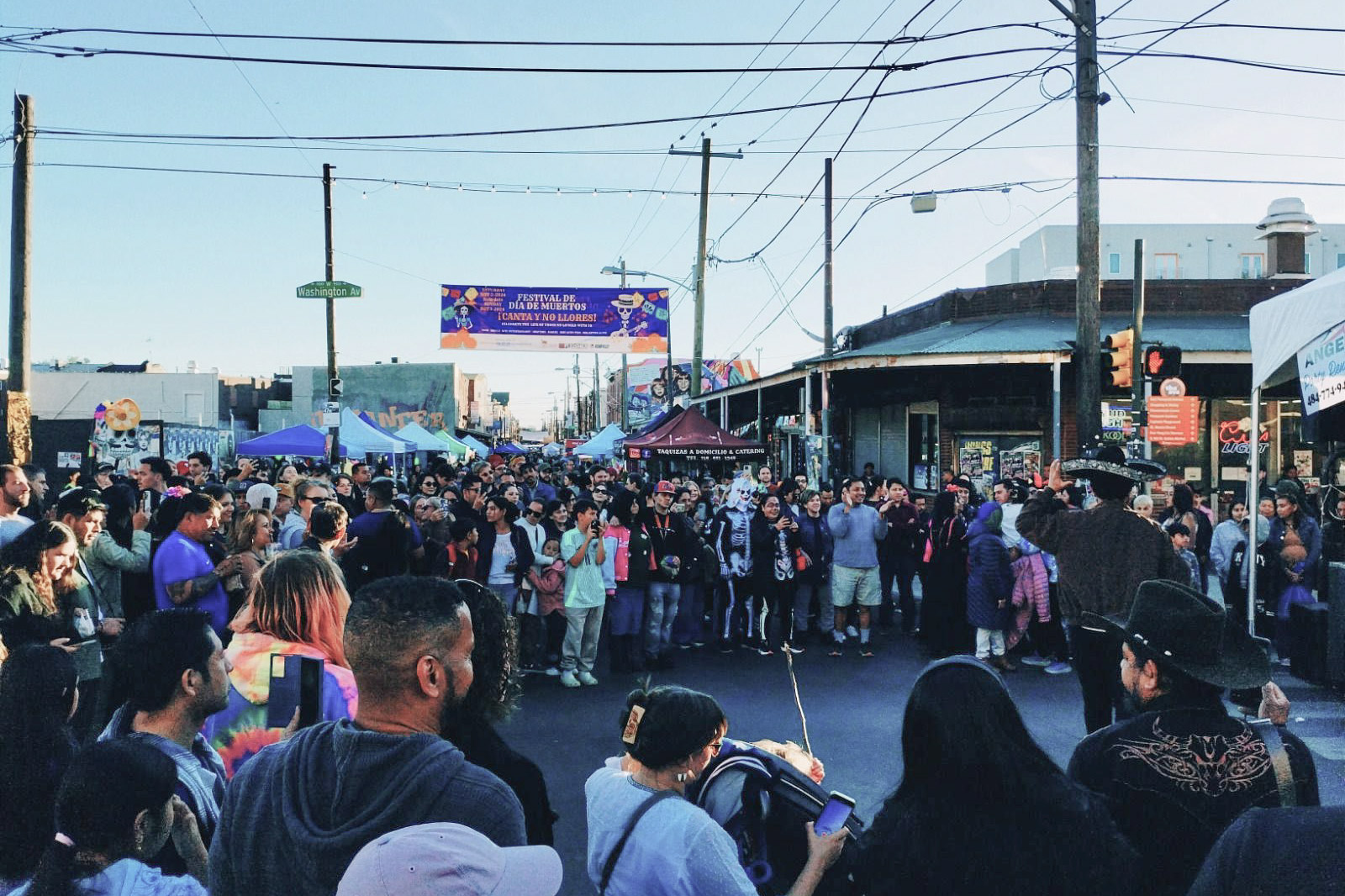
    He is helping organize a big Day of the Dead event at the Italian Market on Nov. 2, where people will be able to place photos of relatives and pets on a community ofrenda ― a decorated altar ― at Ninth Street and Washington Avenue.

    A crowd gathers at last year’s Day of the Dead celebration at the Italian Market in South Philadelphia.

    Others have set up altars in their homes. These ofrendas may be adorned with traditional marigolds, with candy skulls, paper skeletons, and photographs. But they may also feature a snatch of fur or a whisker left behind.

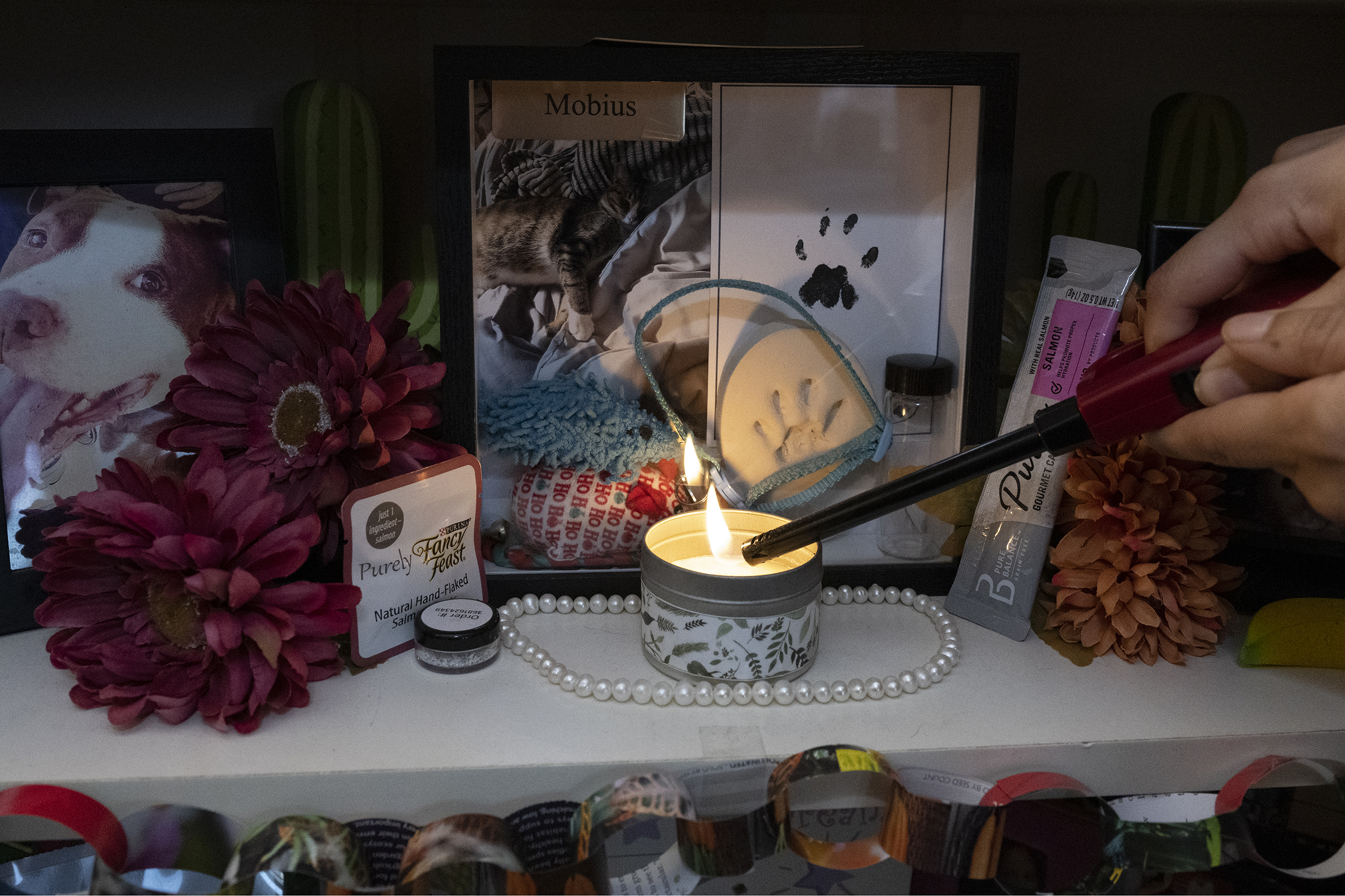
    Genesis Pimentel-Howard created an ofrenda for her cat, Mobi, on a bedroom shelf of the West Philadelphia home she shares with her husband, Yaphet Howard.

    It’s hard for her to talk about Mobi, who died suddenly in May at only 4 years old.

    He was, she said, an adorable menace. Mobi loved to poke at and play with the couple’s other cat, Sannin, though Sannin didn’t always appreciate the attention.

    Mobi sometimes stole food from the trash. And he managed to push over and break Pimentel-Howard’s flat-screen TV. Still, she said, he followed her everywhere. She couldn’t even use the bathroom without him trailing her inside.

    “A sweet momma’s boy,” she said. “Always next to me.”

    On the ofrenda, Pimentel-Howard placed her grandmother’s pearls. And photos of her family dogs, Ella and Red, and her hamster, Shia LaBeouf. She added a shadow box that holds Mobi’s collar and an impression of his paw.

    “I’ll stay up as late as I can to welcome him,” she said. “I like to think he’ll be around.”

    Genesis Pimentel-Howard lights a candle for her late cat, Mobi, beside a lovingly crafted ofrenda in her Philadelphia home on Monday. The altar glows with candlelight, welcoming the spirits of her beloved departed pets. The ritual is part of a growing tradition tied to Día de los Muertos.

    The roots of the Day of the Dead go back 3,000 years, to Aztec and Mayan traditions. It is celebrated not only in Mexico but also in wider Latin America and in communities across the United States.

    Dogs have always played an important role. The ancients considered them sacred, guides that led souls through the afterlife. They revered the Mexican Hairless dog, the Xoloitzcuintle, or Xolo for short.

    It’s a Xolo dog, Dante, that guides Miguel to meet his ancestors in Coco, the popular animated Disney movie. And it’s a song from the movie, “Remember Me,” that has become the soundtrack for countless social media posts about departed pets.

    In Philadelphia, the Italian Market festival welcomes all who wish to take part in its Day of the Dead event to South Ninth Street between Federal and Christian Streets from 11 a.m. to 5 p.m. on Nov. 2

    The Fleisher Art Memorial in South Philadelphia also will hold a big Day of the Dead celebration. Everyone is invited to help with final preparations for the ofrenda from 2 to 9 p.m. on Oct. 31, and to come to the Day of the Dead event the next day.

    “The animals, that’s family, too,” said María De Los Angeles Hernández Del Prado, the artist who led the creation of the Fleisher’s large, three-part ofrenda, which includes a section devoted to pets. “They’re the same as us, they just don’t talk the same language.”

    Pimentel-Howard knew after Mobi died that she would find a way to honor him, along with the other animals she has loved.

    “You don’t know what it’s like to lose an animal,” she said, “until you’ve lost one.”

  • Community College of Philadelphia interim president is selected for permanent role

    Community College of Philadelphia interim president is selected for permanent role

    Alycia Marshall, who has been serving as interim president of Community College of Philadelphia since April, was unanimously endorsed for the permanent role Tuesday.

    The board of trustees, at an 8 a.m. meeting, approved making an offer of employment to Marshall, who had served as provost and vice president for academic and student success at CCP for nearly three years before stepping into the interim role.

    Marshall was among four finalists for the job.

    “Congratulations,” Board Chair Harold T. Epps said to Marshall during the Zoom meeting, which lasted about 10 minutes. “You have earned it through a very tough and challenging process. …We look forward to working with you.”

    Epps cited Marshall’s “stellar work” through the interim period as a factor in the board’s decision and said she had “the full confidence” of the board.

    “I’m a little bit emotional,” Marshall said at the meeting. “I’m very excited. I’m honored. I’m deeply humbled, pleased, ecstatic, and looking forward to the road ahead and the journey ahead.

    “I am fully committed to this institution, to our students, most importantly, and to the college community.”

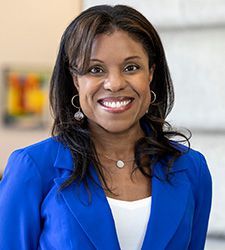
    Alycia Marshall

    Epps said contract negotiations with Marshall would begin immediately to lead the college, which had an enrollment of 12,400 credit students and 1,381 noncredit students last spring. No terms or salary of her employment were released.

    Marshall will follow former CCP President Donald Guy Generals, who led the college for 11 years and was forced out of the job in April and placed on paid administrative leave through the end of his contract.

    Philadelphia Mayor Cherelle L. Parker congratulated Marshall in a statement.

    “The Parker administration supports CCP, Dr. Marshall, and the board in its mission,” she said.

    Maria Baez, student government president, was on the search committee and said while she liked all four candidates, Marshall was her first choice.

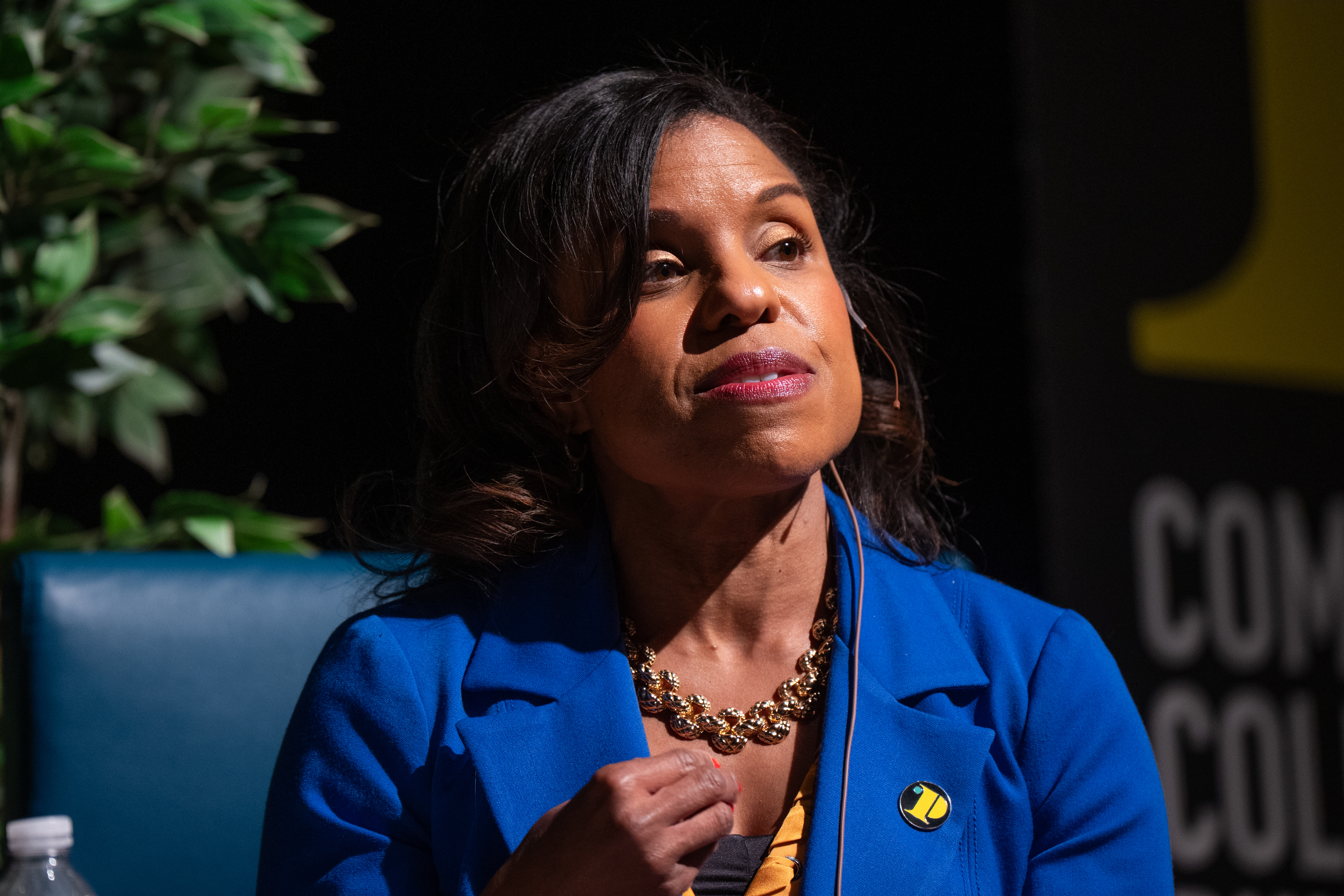
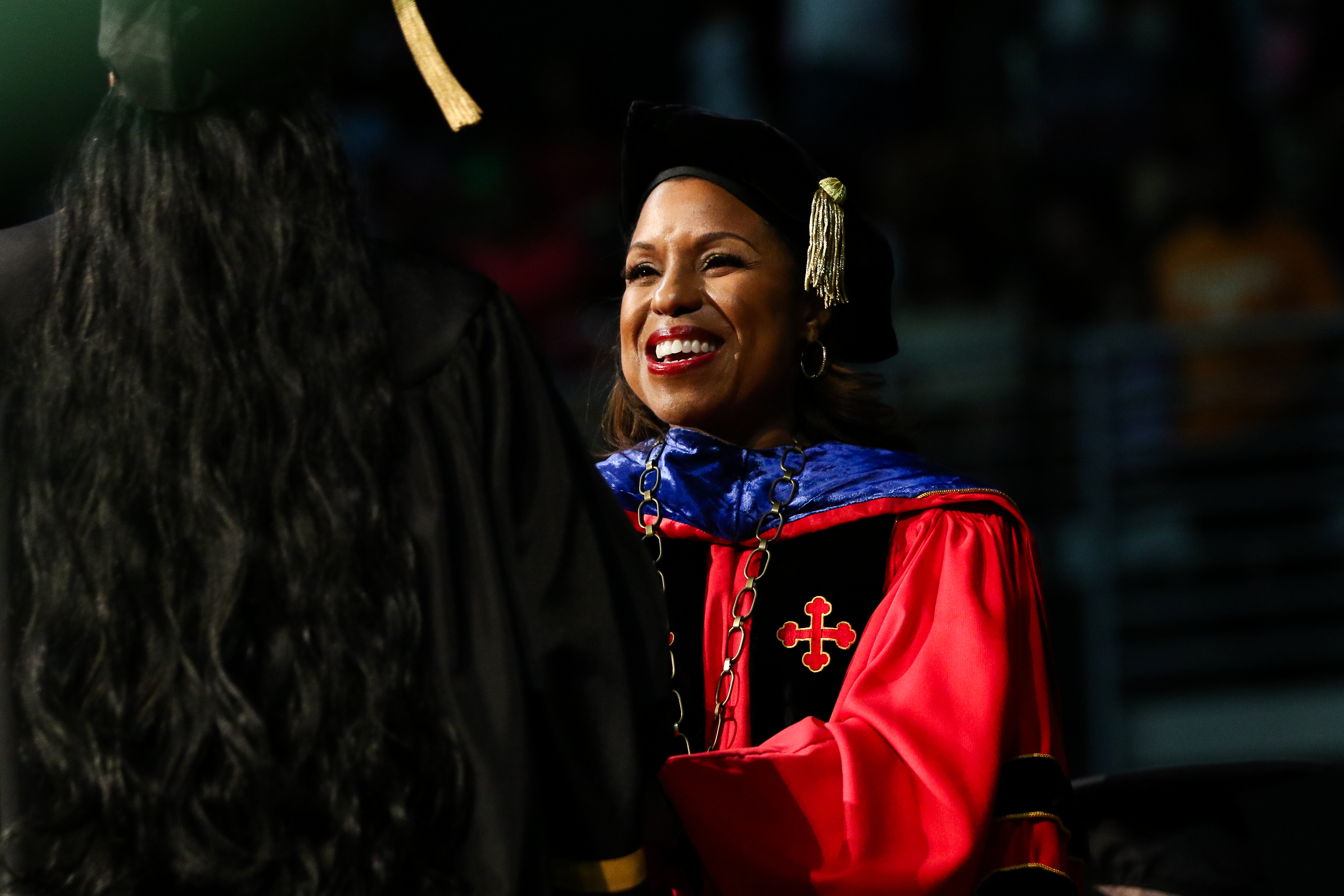
    Alycia Marshall speaks at a Community College of Philadelphia forum where she appeared as one of four finalists for president. She got the job Tuesday.

    “As a student, I see her passion for the students,” Baez said. “I see how connected she is with the students. Her heart is for the students.”

    Junior Brainard, co-president of the faculty and staff union, said: “As a union, we are looking forward to Dr. Marshall finally making good on the agreement we signed back in March,” referring to a contract agreement. “That includes SEPTA passes for all students, smaller class sizes, and improvements to health, safety, and working conditions that will be figured out through various committees.”

    During a finalist forum, Marshall addressed free SEPTA passes for students. While the college couldn’t offer the benefit to all students — it would cost about $2 million — a pilot will begin in the spring at the college’s West Philadelphia site, she said.

    Brainard said the college has to do better. The pilot only serves half the students at the West Philadelphia site and just 3% of the student body, he said.

    Marshall said in an interview Tuesday afternoon that the goal is to find alternative funding sources and expand the program to the entire college.

    She said among her priorities will be increasing and strengthening transfer partnerships, with the recently announced program with Cheyney University, an historically Black college in Delaware and Chester counties, as a model.

    “Many of our students have transportation issues and perhaps reasonably cannot drive the 25 miles to Cheyney University,” she said. “So Cheyney at CCP is going to provide opportunities to complete a bachelor’s while staying on our campus. It’s symbolic of where I would like to work together with faculty, staff and the administrators and the board … on really strengthening those pathways.”

    She cited workforce development and strengthening partnerships with K-12 schools, too, including expanding dual enrollment opportunities and reaching into areas of the city that the college currently is not penetrating enough.

    When Marshall was named as interim, Epps cited her “academic and organizational leadership, along with her extensive expertise in STEM, her focus on mentoring and serving underrepresented student populations.”

    Marshall, 51, received her bachelor’s in mathematics from the University of Maryland Baltimore County, her master’s in teaching from Bowie State University, and her doctorate in mathematics education from the University of Maryland.

    A native of Maryland, she started her career as an adjunct professor at Anne Arundel Community College in Maryland, near Annapolis, and later became a full tenured professor and chair of the mathematics department.

    She was promoted to associate vice president there and founded the African American Leadership Institute and spent a total of nearly 23 years at the Maryland community college. She’s also a rising presidents fellow with the Aspen Foundation, a nonprofit aimed at creating thought leaders in their fields to address critical challenges.

    Alycia Marshall, then interim president of Community College of Philadelphia, speaks at commencement in May.

    At a campus interview session for the job, Marshall said she would lead both internally and externally, focusing on faculty and staff satisfaction as well as building relationships with funders and donors.

    She said she has already met more than 20 City Council members and state legislators.

    Marshall acknowledged that an employee satisfaction survey she commissioned when she became interim president showed low morale and promised to address it “through ensuring transparency and frequent communication.” The results of that survey haven’t been publicly released.

    Marshall said that over the last six months, she learned to be comfortable not knowing what will happen next. After a board meeting earlier this month, a consultant who is the liaison to the presidential search committee said on a still-active microphone that Marshall had not been well-received on campus.

    Marshall said at the interview session that she did not agree with that and that she has developed relationships with people across the college.

    “If you have worked directly with me, you will know I am here for the students and I am here to support faculty and staff,” she said.

    Marshall, who maintains a residence in Maryland, said she would move to the city full time if selected for the job.

    The other finalists for the job were: Jesse Pisors, former president of Pasco-Hernando State College in Florida; Jermaine Wright, vice president for student affairs at City University of New York-Lehman College; and Lisa Cooper Wilkins, vice chancellor of student affairs at City College of San Francisco.

  • Barry Leonard, celebrated crimper and longtime Center City beauty salon owner, has died at 87

    Barry Leonard, celebrated crimper and longtime Center City beauty salon owner, has died at 87

    Barry Leonard, 87, formerly of Philadelphia, celebrated crimper, longtime innovative owner of the Barry Leonard Crimper & Spa in Center City, unisex beauty salon groundbreaker, fashion and marketing trendsetter, haircutting mentor, and Army veteran, died Sunday, Oct. 12, at his home in Hallandale Beach, Fla. The cause of his death has not been disclosed.

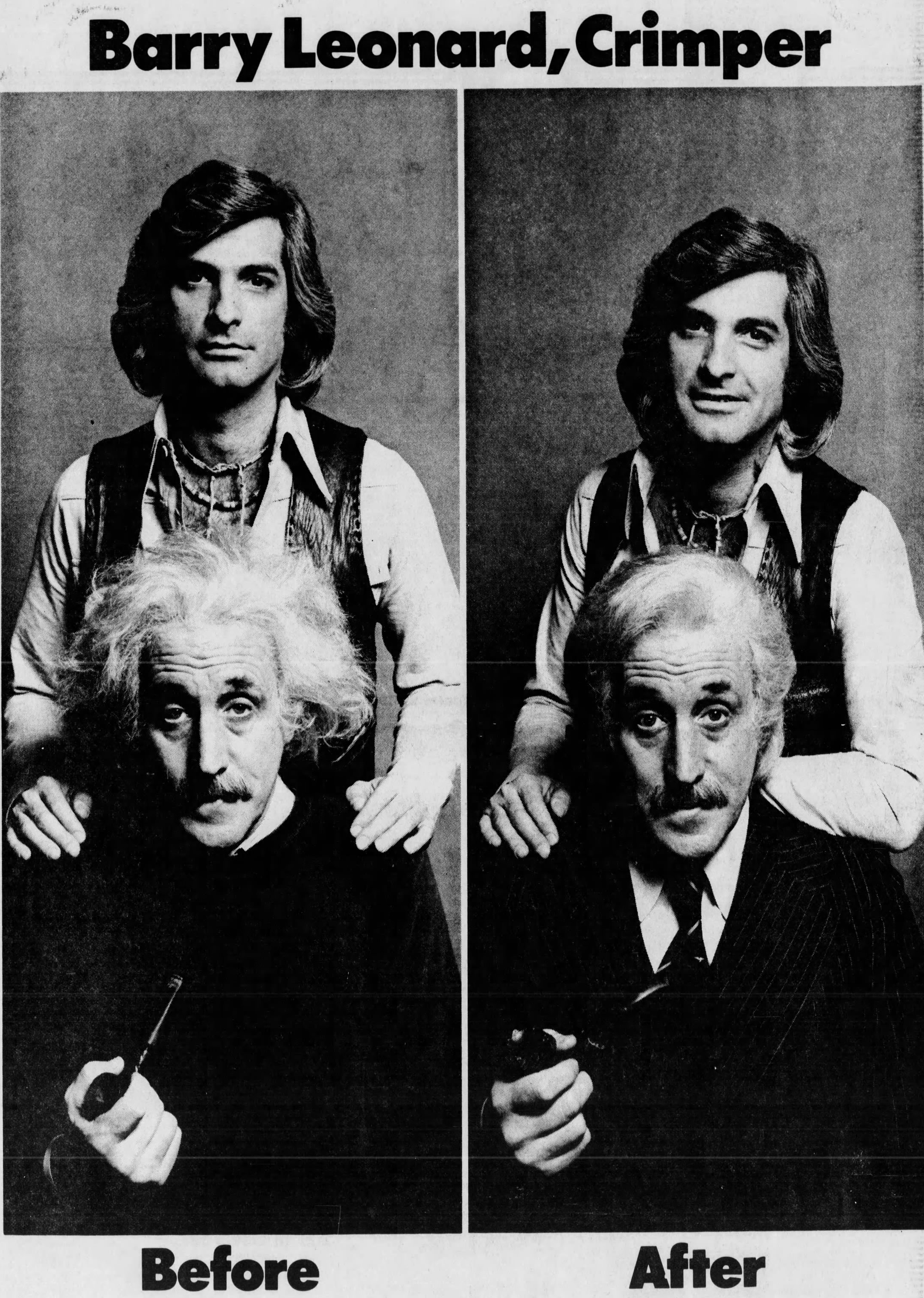
    Born in Philadelphia to a family of hairstylists, Mr. Leonard swept the floor at his father’s beauty salon in West Philadelphia as a boy and, in 1955, became the first male to graduate from the beauty culture curriculum at Murrell Dobbins Career and Technical Education High School. He went on to help rewrite state statutes to allow unisex beauty salons in the 1970s, wow the marketing world with innovative ads that featured Fidel Castro, Albert Einstein, Santa Claus, and the Wolfman, and own high-end shops in the old Marriott Hotel on City Avenue and then on Chestnut Street for 43 years.

    A proponent of what he called “natural haircutting,” Barry Leonard, Crimper, counted politicians, musicians, actors, and other celebrities as well as local residents as his regulars, and most of them were fine with waiting months for an appointment. He moved his bustling salon from the Marriott to 1527 Chestnut St. in 1972, relocated to 1822 Chestnut in 1995, and retired to Florida in 2005.

    In the early 1970s, he saw that men appreciated hair care, too, and he successfully challenged an old state law that required separate locations for male and female haircuts. So unisex salons became common in the 1980s and ’90s.

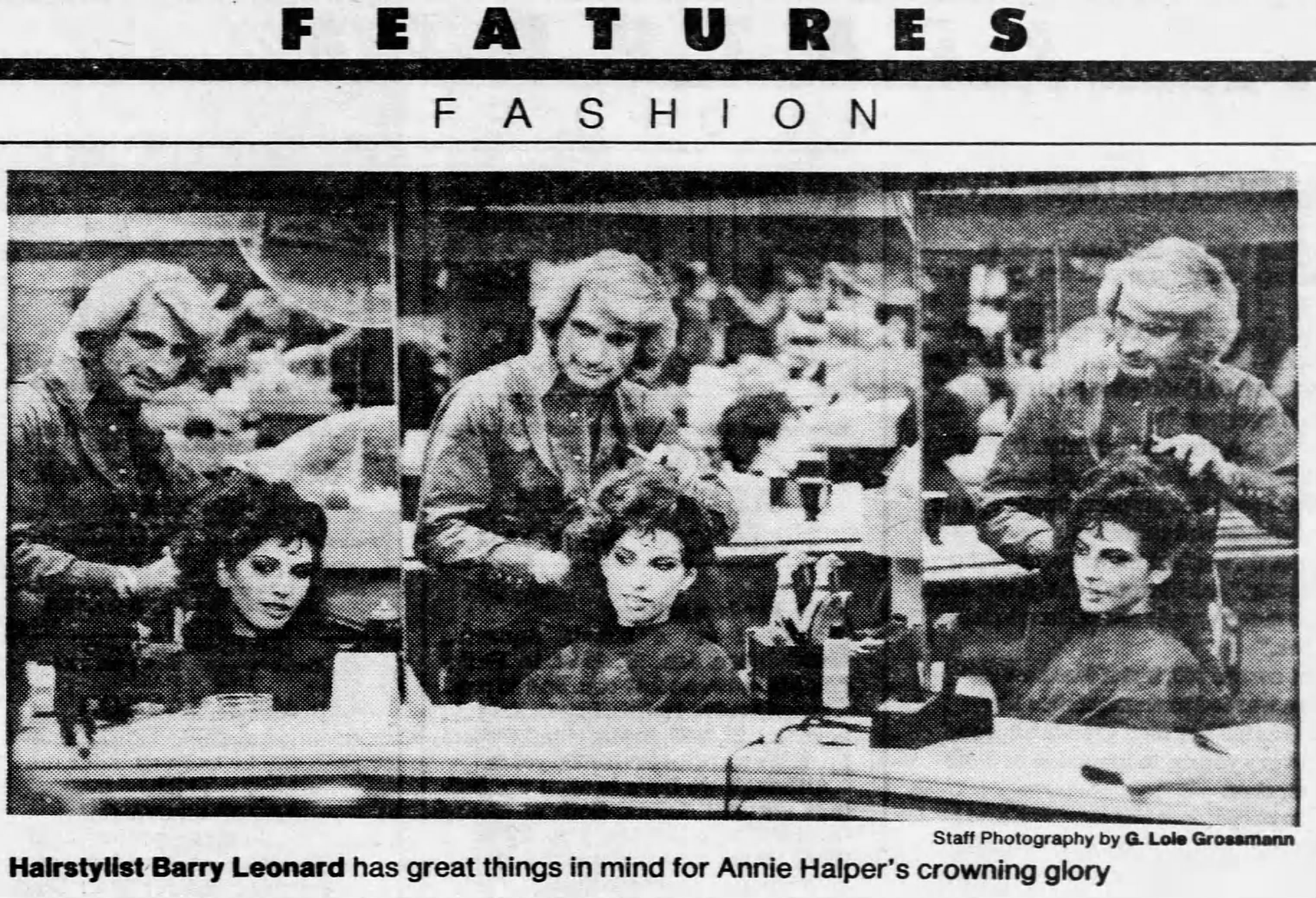
    Mr. Leonard is shown styling the hair of Annie Halpern, his future wife, in this 1985 photo in the Daily News.

    “Hair,” he told The Inquirer in 1973, “is the only part of the body that can be changed readily and allows the individual to play his role as he feels it at that particular moment — protest, freakiness, sensuality, anything.”

    His New Age salon featured wicker furniture, hanging plants, big pillows, Japanese koi, and free coffee, fruit, and wine. He charged $12.50 per cut in 1973 and $25 in 1991. Sometimes, he booked 75 heads a day, his wife, Annie, said.

    Most often, he consulted with customers before the cut, assigned the job to an assistant stylist, and checked back when the work was done. Over his career, he told his wife, he likely attended to more than 1 million customers. In 1991, he told The Inquirer: “My general philosophy is to make people happy.”

    He also created and distributed do-it-yourself manuals for those who couldn’t get appointments and introduced computerized styling technology in the 1980s so clients could design their own cuts on video screens. “I’m a firm believer that nothing lasts forever,” he told the Daily News in 1977. “But right now, I’ll stay the way I am. It’s really a matter of the world catching up with me.”

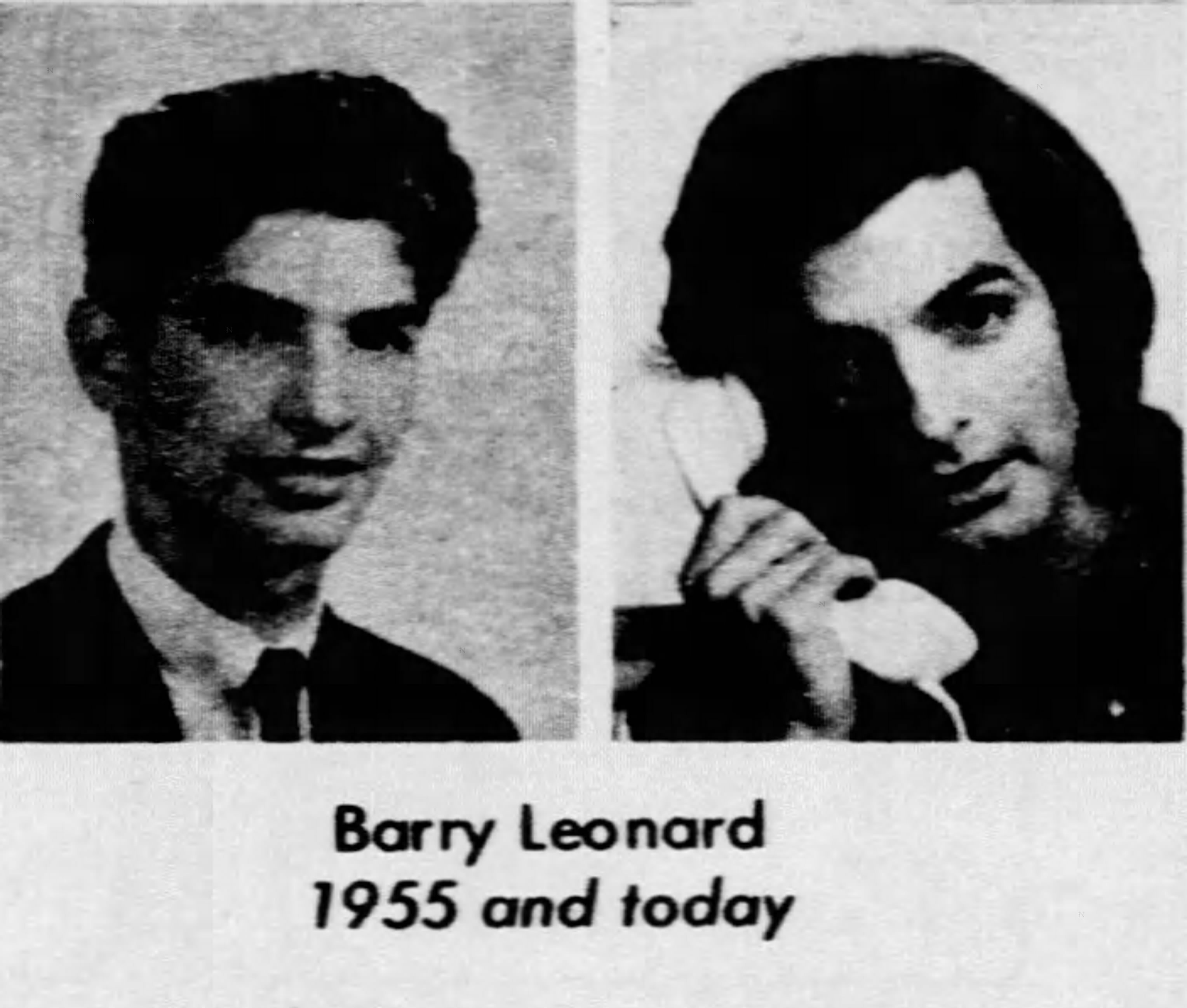
    This then and now photo appeared with a story in The Inquirer in 1973.

    He was featured often in The Inquirer, Daily News, Philadelphia Magazine, Philadelphia Business Journal, and other publications, and writers dubbed him the “top hair gun” in Philadelphia, “the dashing haircutter,” and “Philadelphia’s leading proponent of hair as art.” He dabbled in selling franchises, endorsed a new Japanese hair-straightening process, and hosted runway-style hair shows and crimper workshops.

    Women told him his beauty advice changed their lives. Men said his haircuts improved their sex lives. “I was the image changer,” he told The Inquirer in 2002.

    In the late 1960s, Mr. Leonard gave local advertising whiz Elliott Curson a haircut, and Curson, delighted with the result, suggested rebranding Mr. Leonard as “a crimper,” British slang for hairdresser. What followed was a hugely successful ad campaign and a friendship that lasted more than 50 years.

    One of their first ads featured the phrase: “When I come out of Barry Leonard’s, I won’t look like my mother.” Curson said: “He had that look, the outfit, and the vision that worked so well.”

    Mr. Leonard and his wife, Annie, married in 1986.

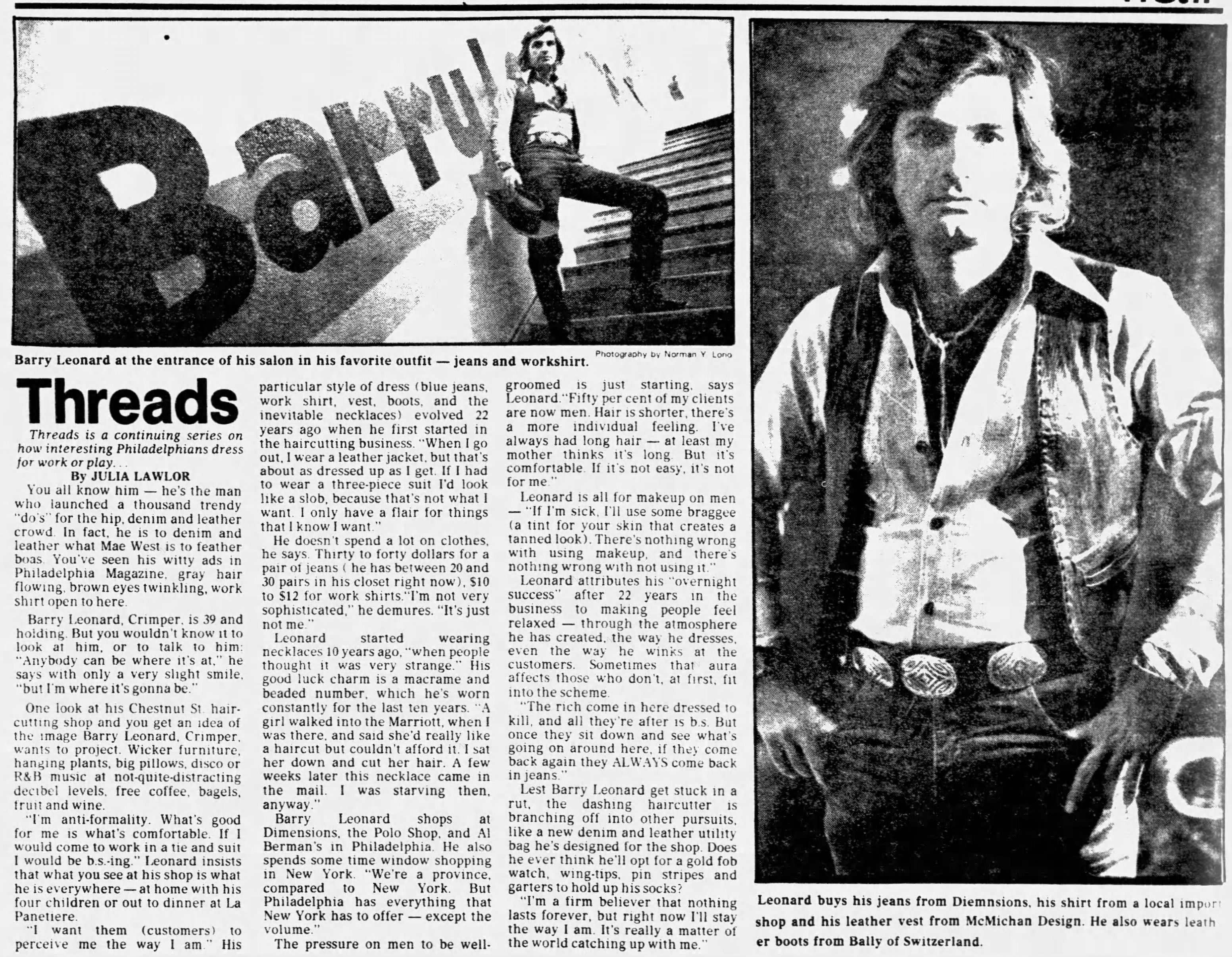
    Mr. Leonard liked to wear a work shirt, vest, blue jeans, boots, designer glasses, and turquoise jewelry to work. His own hair flowed down to his shoulders when he was young. He told the Daily News in 1977: “Anybody can be where it’s at. But I’m where it’s going to be.”

    He was a member of Intercoiffure America and participated in its competitive showings in New York and elsewhere. He was included in a display called “Movers and Shakers” at the now-closed Philadelphia History Museum.

    “He would meet you once and have an impact on the rest of your life,” his wife said. “Everybody loved him. He was passionate and compassionate.”

    Barry Leonard was born Jan. 27, 1938, in Philadelphia. He grew up in Wynnefield and Bala Cynwyd, and served in the Army’s 101st Airborne Division for two years after high school.

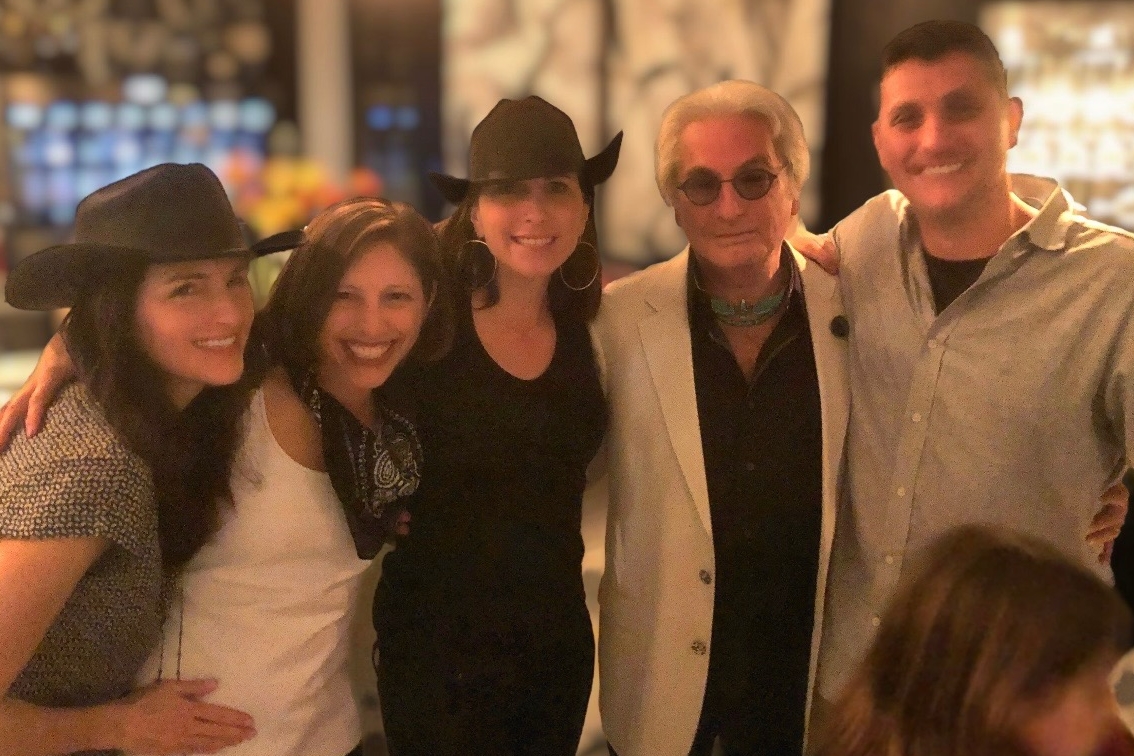
    Mr. Leonard (second from right) celebrated his 80th birthday with his children.

    He wore a traditional tie and jacket, and cut hair with his father and in a few local shops before opening his place at the Marriott in 1962. He also spent some time working in London and first heard the word crimper there.

    He married Charlene Brooks, and they had daughters Karen, Susan, and Elizabeth and a son, Brett. After a divorce, he met Annie Halpern at a party in 1983. They went to a Neil Diamond concert on their first date in 1984, married in 1986, and moved from Center City to Florida in 2005.

    Mr. Leonard was an avid boxing fan, and he knew his way around the popular Blue Horizon venue on Broad Street. He had a summer home in Longport, N.J., and enjoyed time at Gulfstream Park racetrack in Florida.

    He was spiritual and loquacious, his wife said. He had favorite witty quips, and his family and friends refer to them as “Barryisms.”

    This article about Mr. Leonard’s fashion sense was published in the Daily News in 1977.

    He attended all kinds of galas and benefits, and doted on his children. “He gave me my first shag” haircut, a longtime friend said on Facebook. Another friend said her neighbor cut her hair once. “The results were not good,” she said. “Barry fixed me.”

    They called him “one of a kind,” “truly the best around,” and a “mentor and a friend.” His wife said: “He was the love of my life.”

    In addition to his wife, children, and former wife, Mr. Leonard is survived by eight grandchildren and other relatives. A brother died earlier.

    A celebration of his life is to be at 11 a.m. Saturday, Dec. 6, at Gulfstream Park, Third Floor, Flamingo Room, 901 S. Federal Highway, Hallandale Beach, Fla. 33009. RSVP to blcrimper@aol.com.

    This ad by Mr. Leonard and Elliott Curson appeared in The Inquirer in 1982.