Category: Philadelphia News

  • Popular THC drinks will soon be illegal. Companies are fighting to save the billion-dollar industry.

    Popular THC drinks will soon be illegal. Companies are fighting to save the billion-dollar industry.

    Right now, any Philadelphian 21 or older can go online or walk into a regional smoke shop and buy a THC-infused drink as potent as products in legal dispensaries.

    But soon, that might all change.

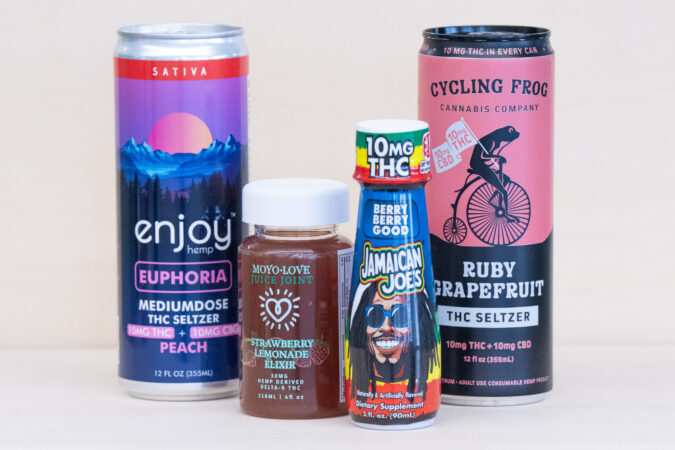
    The billion-dollar intoxicating beverage industry exploded in recent years, with THC-infused seltzers, lemonades, and teas that resemble popular products like Surfsides or White Claws. Sold in local gas stations, smoke shops, and liquor stores outside of Pennsylvania, these weed drinks deliver a cannabis high that is infused into bubbly, sweet canned beverages.

    While marijuana is still federally illegal, the hemp industry had found a way to manufacture and sell hemp-derived THC drinks across the country through a legal loophole that is soon closing.

    Last month, Congress banned all intoxicating hemp products, a slew of THC-infused smokeable, vape-able, and edible products that are derived from hemp plants but could be mistaken for actual marijuana. In many cases, the drinks are just as potent as conventional weed.

    Starting in 2027, almost all of them will be illegal, spurring a nationwide movement within the industry to save the burgeoning market.

    Arthur Massolo, the vice president of national THC beverage brand Cycling Frog, which sells its wares locally, said these restrictions will have devastating effects on the producers of thousands of hemp-derived products, like THC, but also CBD, the non-intoxicating cannabinoid popular for treating anxiety, sleep, and pain.

    Will Angelos, whose Ardmore smoke shop and wellness store, Free Will Collective, relies on THC drinks for nearly 40% of its business, is hoping for some saving grace. “We’re either looking to pivot or we’re disappearing,” he said.
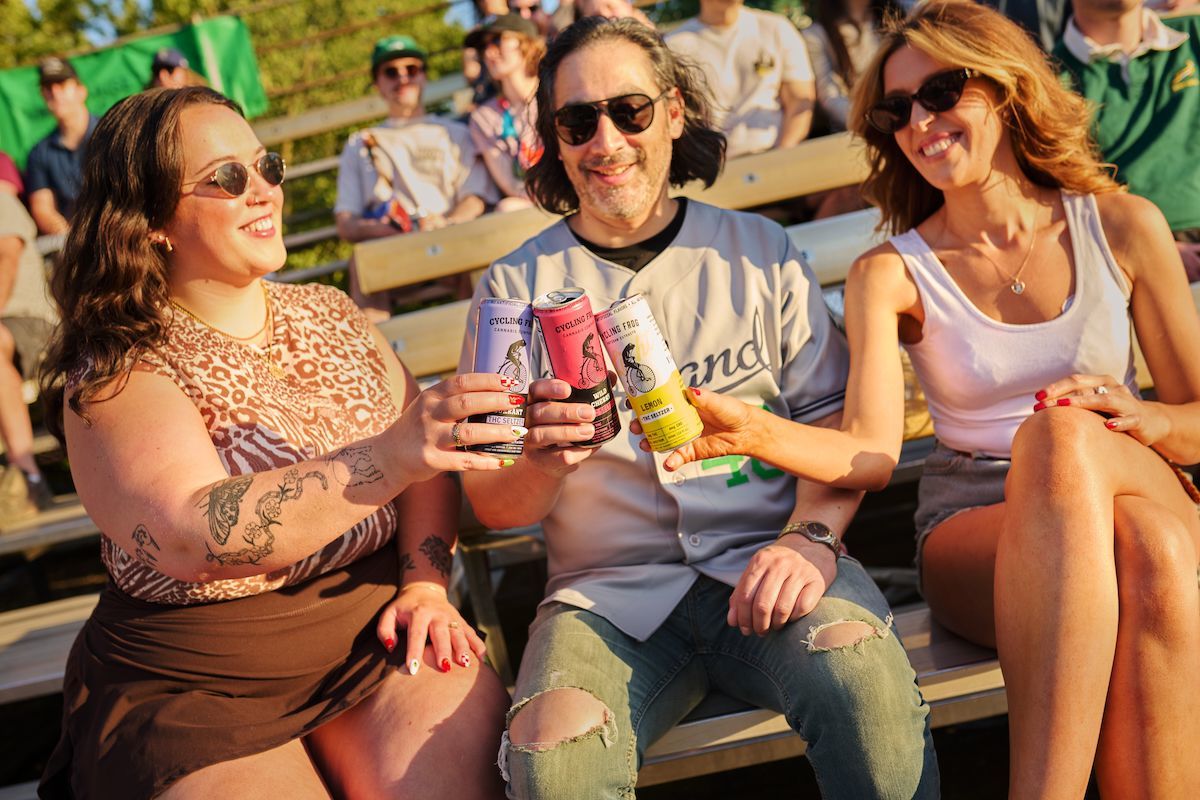
    Adults share Cycling Frog canned THC drinks in this marketing photo provided by Cycling Frog.

    What are THC-infused drinks?

    Seltzers, sodas, teas, mocktails, and lemonades all infused with THC — and sometimes non-intoxicating CBD — exploded onto the scene a few years ago and grew into a billion-dollar business, said hemp market analyst Beau Whitney.

    “These drinks have transformed the hemp industry into this low-dose intoxicating health and wellness, alcohol-adjacent product,” said Massolo, who is also the president of U.S. Hemp Roundtable, a hemp business advocacy organization.

    The THC-infused drinks sold in gas stations, smoke shops, and liquor stores are supposedly formulated using legally grown hemp, which is allowed to be grown under the 2018 Farm Bill that opened the door to hemp farming in the U.S.

    Lawmakers carved out an exemption from federal drug laws for cannabis plants containing 0.3% or less of THC. These low-THC plants are considered “hemp” and are legal to grow. Cannabis plants over that THC threshold are considered marijuana and can carry felony charges if the plant is not being grown by state-licensed growers in places where adult use or medicinal marijuana is legal, like New Jersey and Pennsylvania.

    While intoxicating hemp products have enjoyed consistent growth in the past years, these THC-infused drinks have increasingly appeared in aisles of liquor stores and supermarkets in some states, allowing adults who normally don’t visit dispensaries to pick up a bottle of infused wine in the same place they grab groceries, said New Jersey cannabis lawyer Steve Schain.
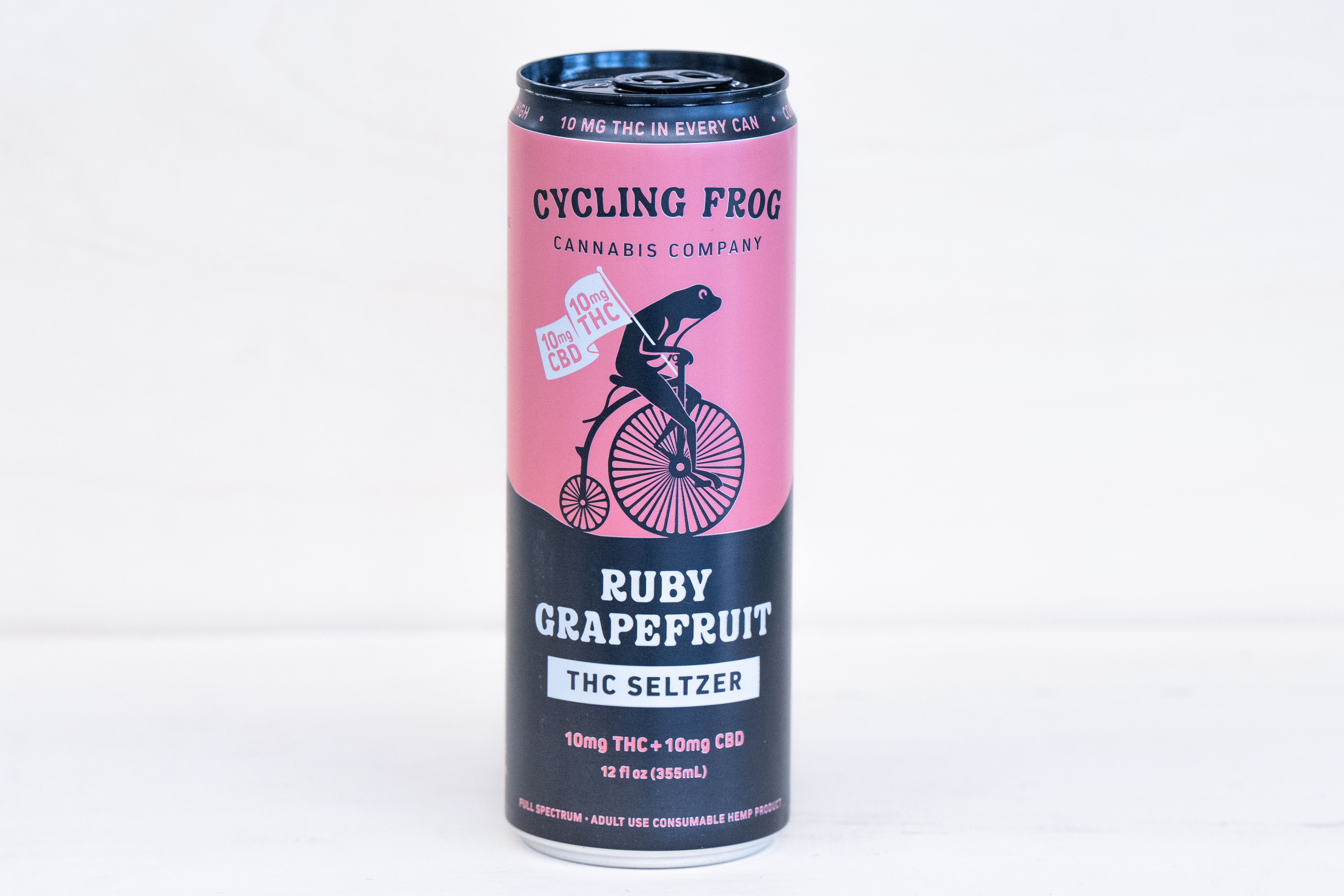
    Hemp products photographed at the Philadelphia Inquirer, November 21, 2025.

    The ease of access to THC drinks allowed the national market to grow to $1.3 billion in annual sales, and if access continues, Whitney said, that figure could reach $15 billion in the coming years.

    This is all thanks to what Whitney calls the “FPS,” or “Female Power Shopper.” These women, ages 29 to 45, are the ones who are likely shopping for a household in grocery and liquor stores, and may jump at the chance to try cannabis products without diving headfirst into dispensaries, Whitney said.

    Women are becoming the fastest-growing demographic in the industry, and 2022 marked the first time daily marijuana users outnumbered daily alcohol drinkers. As alcohol consumption reaches historic lows, liquor stores and beer distributors have been “wonderfully buoyed” by THC drinks to keep them afloat, Schain said.

    Mary Ellen, 55, of Bucks County, who asked to not to be identified by her last name over concerns for her cannabis use and employment, said these THC drinks are the perfect way to unwind after a long day, especially for adults like her who choose not to drink alcohol. As a medical marijuana patient, she uses regulated cannabis for a variety of ailments, but also enjoys THC drinks like Nowadays’ infused mocktails that she buys at Angelos’ Ardmore store.

    “I’d rather come home and have a glass of Nowadays. That’s a lot better than having a glass of vodka or a benzodiazepine,” she said. “I’m not going to forget what I did the night before, and I’m not going to wake up feeling crappy the next morning.”
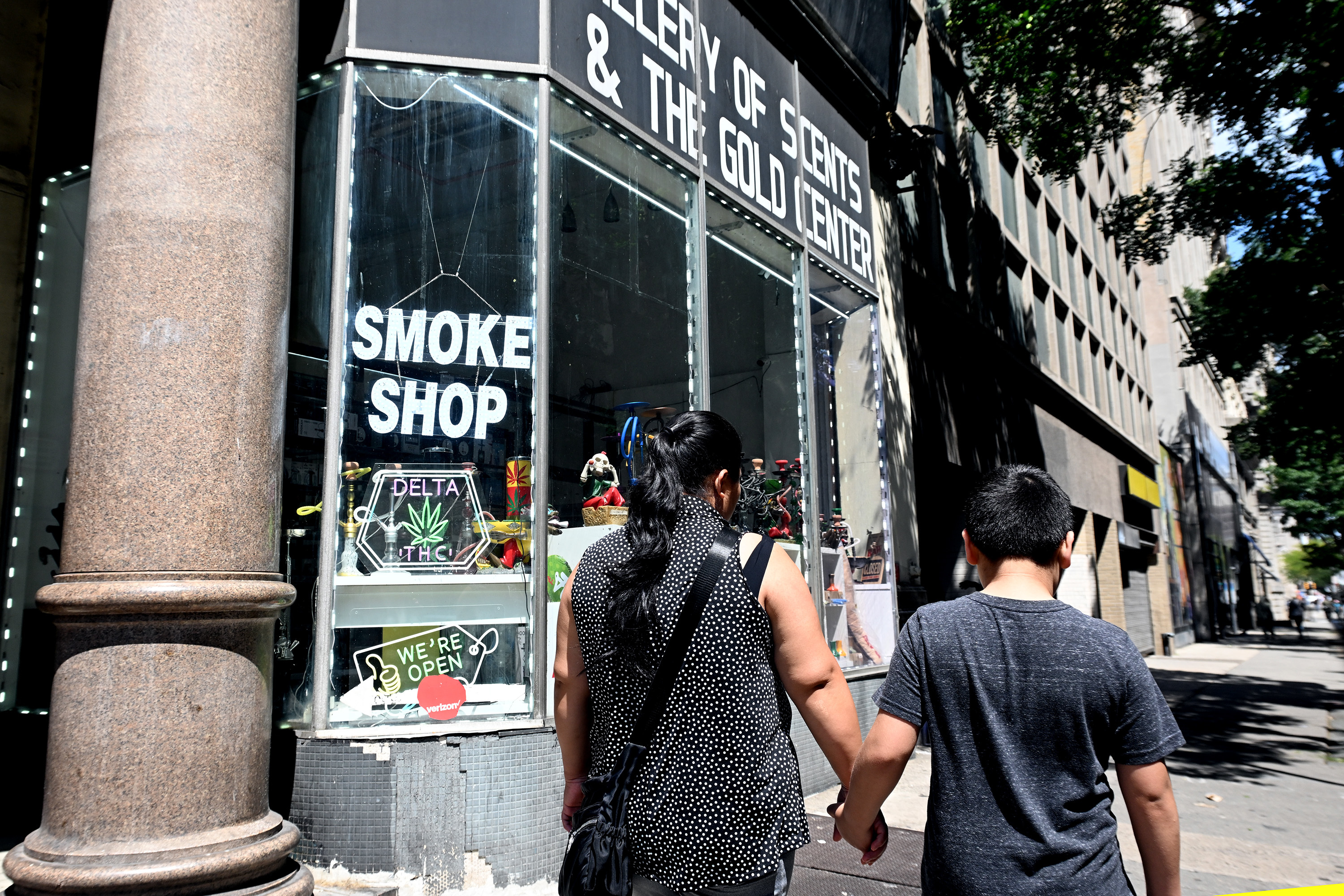
    City smoke shop exterior in the 1000 block of Chestnut Street Monday, July 21, 2025.

    What are the concerns over THC drinks?

    As the money started to roll in for THC drinks, fear among local communities and law enforcement began to grow. In the Philadelphia suburbs, the Bucks, Chester, and Montgomery County district attorneys’ offices finished a 10-month investigation into intoxicating hemp products and the local stores that sell them.

    The 107-page grand jury report speaks of a public health crisis unfolding in “plain sight” across Pennsylvania, where retailers have little to no oversight, in some cases selling actual marijuana.

    Montgomery County District Attorney Kevin Steele said the industry created a “Wild West situation” and urged state lawmakers to regulate the industry similarly to alcohol and tobacco, including age requirements, licensing, and mandatory lab testing.

    Stakeholders in the industry support regulation of some kind. While hemp-derived THC companies fear the economic collapse of their industry, Massolo and Angelos say there is concern that these products will leave overt brick-and-mortar operations known by local officials for more covert, illicit operations, similar to how these products were purchased before the 2018 Farm Bill.

    “We’ve basically traveled back to 10 seconds before the Farm Bill of 2018 was signed,” Schain said.

    Mary Ellen says the lack of regulation is a major sticking point for consumers who flock to these products, but would like some reassurance on the drinks they are ingesting.

    But, even if the ban goes into effect, she said, “people will just figure out another way for us to get it. It’ll be like a prohibition that we’ve seen in this country with alcohol and marijuana.”
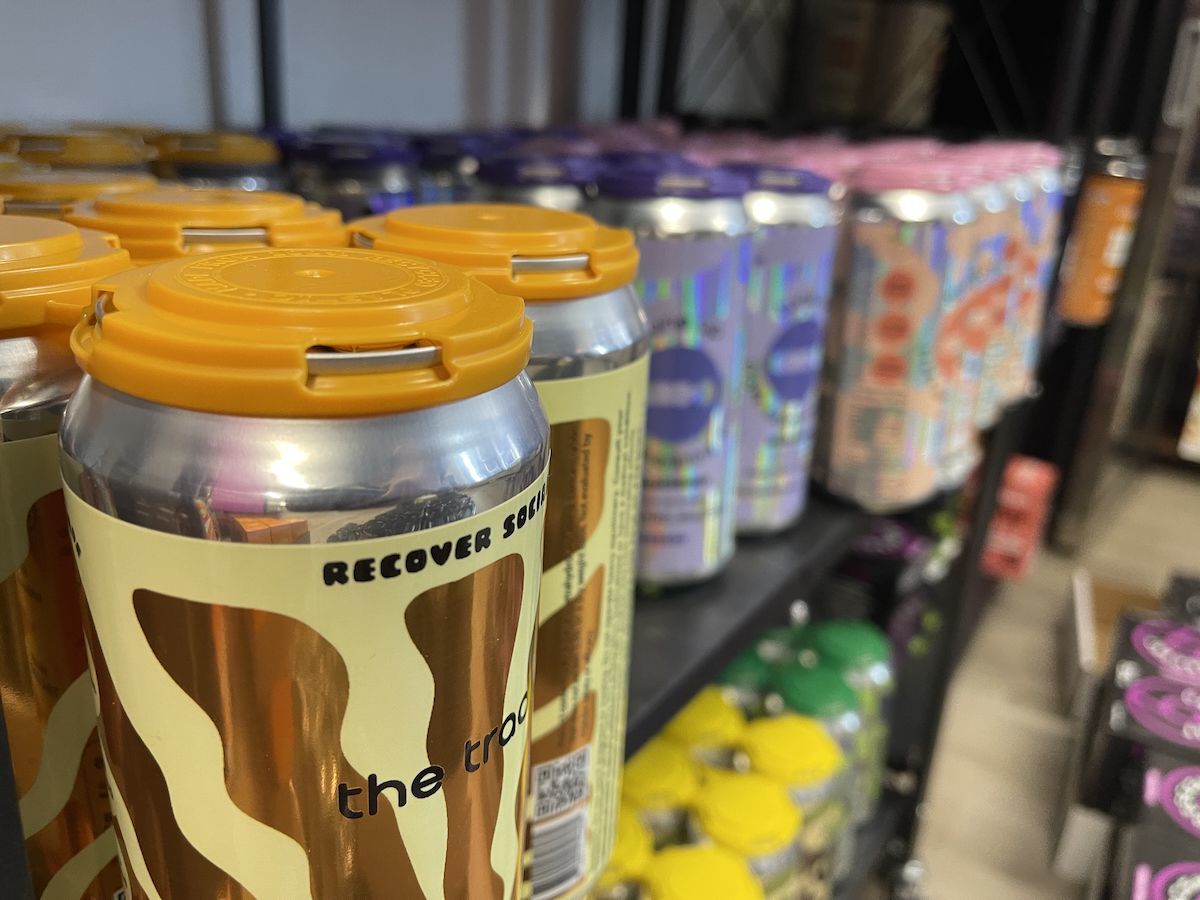
    THC and CBD-infused beverages on the shelves of Free Will Collective, an Ardmore smoke shop and wellness store owned by Will Angelos. As Congress moves to ban most intoxicating hemp products, business owners like Angelos aren’t sure they will be able to keep the doors open long past 2027 if current regulations go into effect.

    Will THC-infused drinks be banned or saved by 2027?

    Now, as the industry’s yearlong grace period begins before the ban takes effect, companies are scrambling.

    The intoxicating hemp manufacturers and retailers who spoke to The Inquirer said the game plan is to offload all of the intoxicating hemp products in stock, including THC-infused drinks, flower, vapes, and even CBD products.

    Some companies will see almost their entire product catalog become illegal, in some cases dwindling from 45 products on offer down to two, Whitney said of the firms he works with. The far-reaching impact will also hurt industrial hemp products, cannabis tourism, alcohol distributors, and even the legal cannabis industry, as some of their products, including CBD, will now have to contend with these new regulations, Schain and Whitney said.

    At the U.S. Hemp Roundtable, Massolo is having daily board meetings, including on weekends, to coordinate a response to federal lawmakers. It’s now a race against the clock to remedy or claw back some of the new regulations before damage is done to the industry’s distribution pipelines, Massolo said. The group hopes to rally other industries, like traditional beverages, wellness products, and supplements, to bolster its case.

    Among the U.S. Hemp Roundtable’s recommendations to lawmakers are an extension of the hemp ban grace period to two years, raising the limit on hemp-derived THC products, and allowing states to regulate these products as they see fit, to name a few.

    Stakeholders say they want regulations to help legitimize this billion-dollar endeavor and save it from annihilation, but smaller operators like Angelos hope it’s not at the expense of small independent businesses.

    While precautions like rigorous age verification systems and lab testing are necessary, Angelos said, if regulators “overtax, or over gate-keep,” many of the smaller retailers — who he said enjoy the benefit of knowing their local government officials and community — won’t be able to compete in the market.

    “There obviously has to be standards, but I’m scared of an overcorrection,” Angelos said of the hemp ban. “It’s not just a singular choice. If you want your kids to be safe, have a mechanism where you can keep your eyes on the product.”

  • Holiday season kicked off at City Hall with tree lighting

    Holiday season kicked off at City Hall with tree lighting

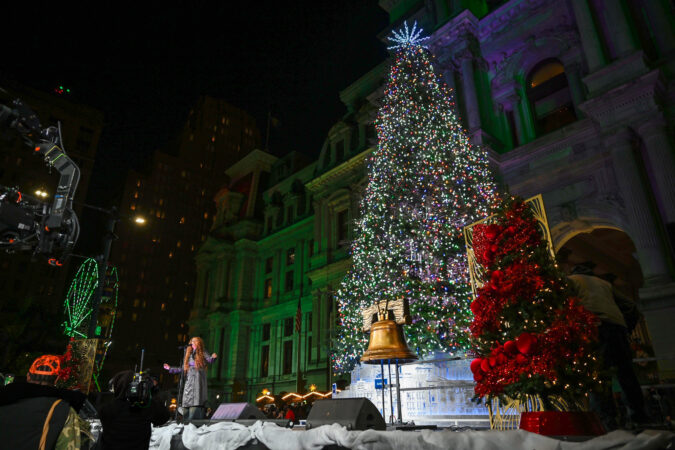
    The holiday season at City Hall was kicked off Thursday night with a lighting ceremony for what is officially called the “Philly Holiday Tree,” followed by live musical performances by Grammy-winning artists Ashanti and Lalah Hathaway.

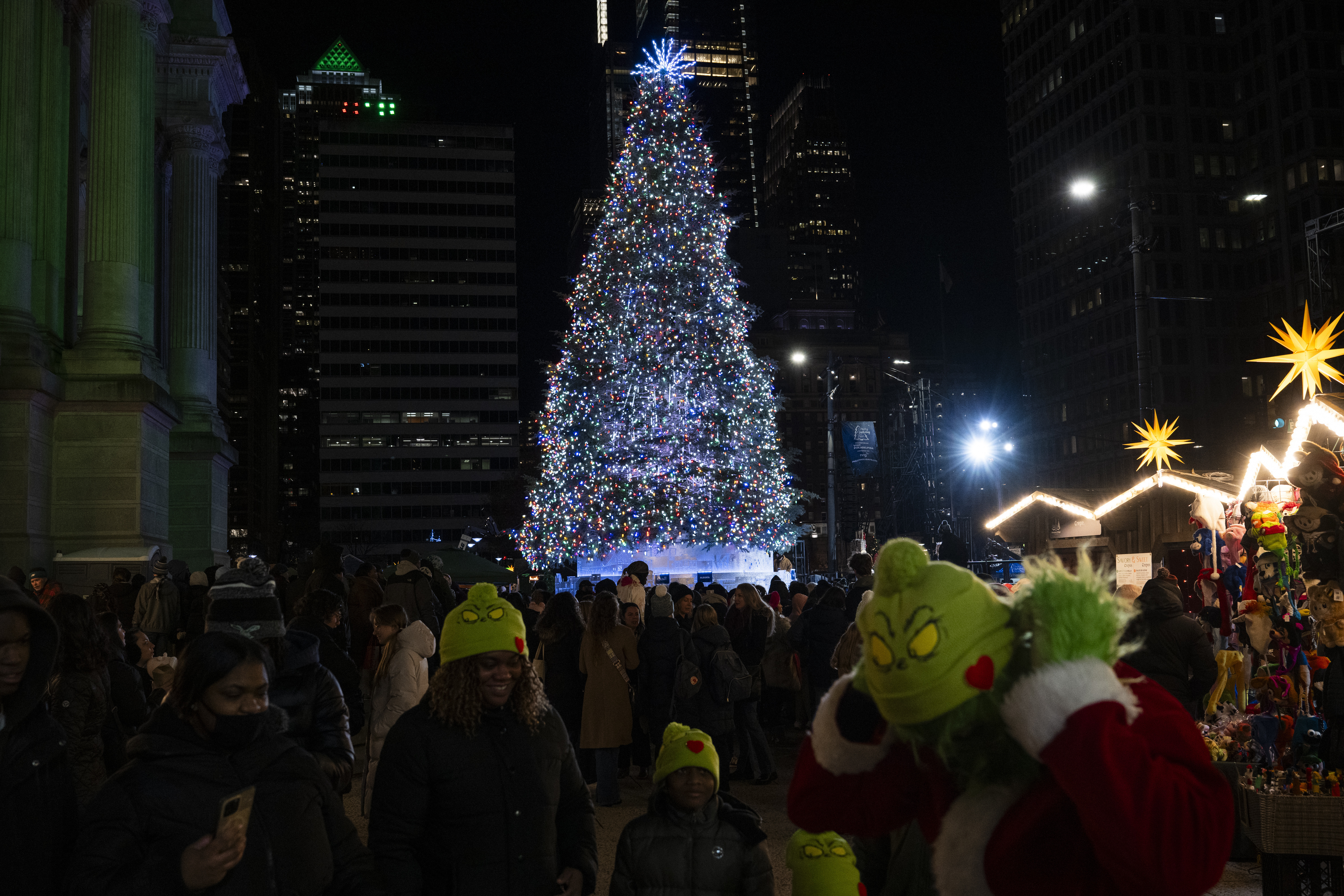
    The 50-foot-tall, 75-year-old Concolor Fir, sourced from Stutzman Farms in New York, will be displayed on the north side of City Hall through Jan. 1. The tree is bigger and brighter this year, with a reimagined base that serves as a centerpiece and more than 6,000 lights.

    Mayor Cherelle Parker smiles alongside Santa during the annual City of Philadelphia Holiday Tree Lighting ceremony at City Hall on Thursday, Dec. 4, 2025.
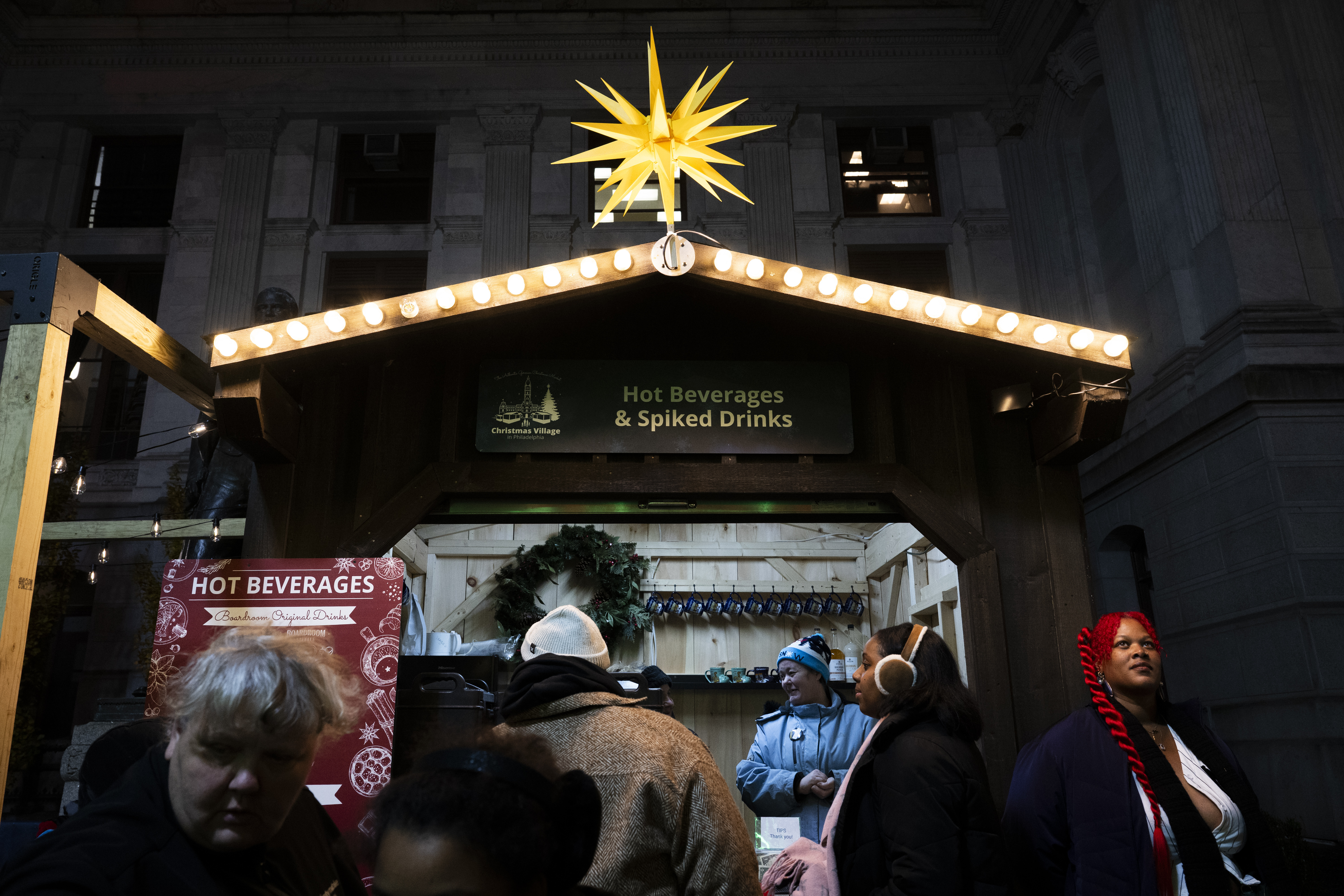
    Attendees wait in line for drinks during the annual City of Philadelphia Holiday Tree Lighting ceremony at City Hall on Thursday, Dec. 4, 2025.
    Attendees with Grinch hats gather for the annual City of Philadelphia Holiday Tree Lighting ceremony at City Hall on Thursday, Dec. 4, 2025.
    Ashanti performs at the annual City of Philadelphia Holiday Tree Lighting ceremony at City Hall on Thursday, Dec. 4, 2025.

    Ashanti performs a medley during the BET Awards on Monday, June 9, 2025, at the Peacock Theater in Los Angeles.

    Mayor Cherelle L. Parker struck a replica Liberty Bell with a large hammer at 7:05 p.m. to signal the lighting of the tree.

    Cassie Donegan, the current Miss America, sang “White Christmas” and “Rockin’ Around the Christmas Tree.” The show was broadcast live on 6abc.

    The annual city-run event is part of a wider event schedule to ring in the holiday season in Philadelphia, organized by Welcome America LLC, which also organizes the Wawa Welcome America festival on July 4.

    There will be a free photo opportunity with Santa Claus at the Comcast Center on Dec. 13 from 11 a.m. to 4 p.m.

    Staff writer Robert Moran contributed to this article.

  • Protesters decry ICE arrests at Philly courthouse as sheriff’s backers say she’s been unfairly blamed

    Protesters decry ICE arrests at Philly courthouse as sheriff’s backers say she’s been unfairly blamed

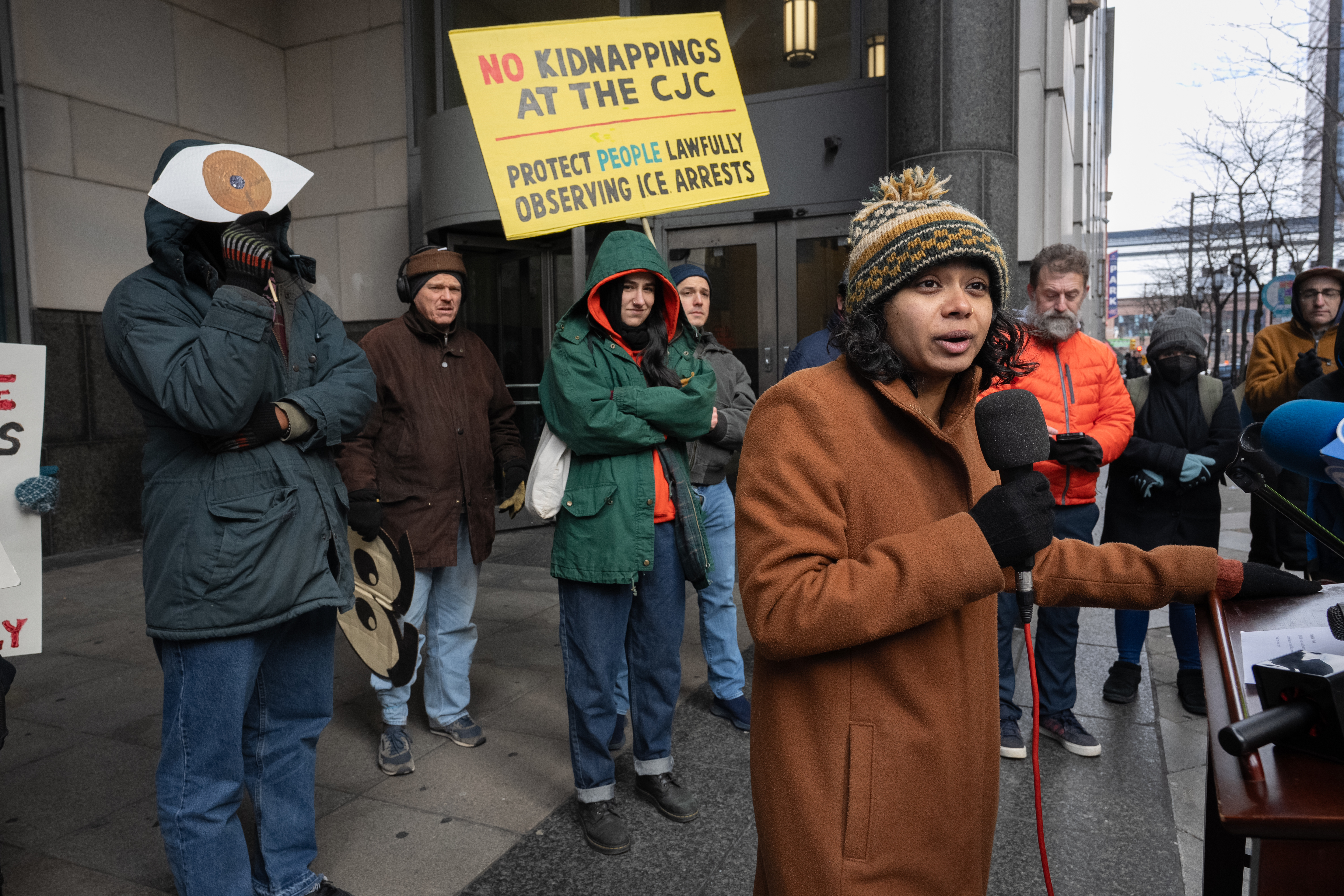
    Immigration activists carried a worn wooden lectern to the Criminal Justice Center on Thursday, demanding that Sheriff Rochelle Bilal step up and explain why she allows ICE agents in the courthouse.

    She didn’t appear, and after a few minutes lead protest speaker Aniqa Raihan stepped away from the microphone, highlighting the sheriff’s absence by leaving the podium empty, save for the recorded chirps of crickets.

    The quiet didn’t last.

    As Raihan resumed speaking, she was quickly interrupted by counterdemonstrators, supporters of the sheriff who said No ICE Philly had unfairly maligned her. Her supporters said the sheriff could bar ICE from the courthouse only upon a judge’s order ― initiating a testy debate.

    “It’s the judges that have to actually give the order,” said Andy Pierre, CEO of Fox & Lion Communication, who said he helped run the sheriff’s campaign for office. ”Her coming down here, and taking time away from managing her office, to come down here for this show …”

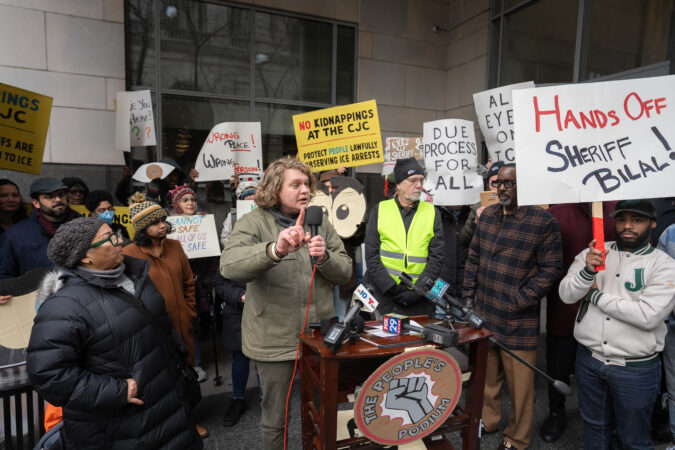
    Other Bilal backers, at least one wearing a campaign shirt, also accused the immigration advocates of targeting the wrong person, holding up signs that said, “Hands off Sheriff Bilal!”

    Aniqa Raihan, an organizers with No ICE Philly, speaks at a protest Thursday at the Criminal Justice Center.

    The No ICE Philly demonstrators responded that the sheriff is in charge of courthouse security. And that she does not report to Philadelphia judges.

    No ICE Philly has castigated Bilal, saying that by not barring U.S. Immigration and Customs Enforcement from the property — as judges and lawmakers in some other jurisdictions have done — she has helped enable the arrest of at least 90 immigrants who were trailed from the courthouse and arrested on the sidewalk outside.

    Three more people were arrested this week, activists said.

    “Sheriff Bilal, we are watching,” Raihan said.

    Conflicting views at Philly courthouse

    In response to a request for comment ahead of the protest, the sheriff’s office said in a statement that Bilal had already made her position clear:

    “The Sheriff’s Office does not cooperate with ICE, does not assist in ICE operations, and does not share information with ICE. That policy has not changed and will not change.”

    The statement reiterated that deputies are prohibited from assisting ICE in courthouse arrests. The department’s priority is the safety of immigrants, residents, observers, and everyone entering the court system, it said.

    Meanwhile, the statement said, the office would continue to protect the public, enforce its policies, and ensure that “no one is targeted or harmed because of their immigration status.”

    Protesters say that is exactly what has been happening, that the sheriff has allowed ICE to turn the Criminal Justice Center into “a hunting ground.”

    The issue has spurred contention between activists and lawyers who say the courthouse must be a place to seek and render justice ― not to target immigrants ― and federal authorities who insist that making arrests there is legal, safe, and logical.

    No ICE Philly says agents have been allowed to essentially hang out at the Center City courthouse, waiting in the lobby or scouring the hallways, then making arrests outside, a pattern they say has been repeated dozens of times since President Donald Trump took office in January.

    Asked for comment, an ICE spokesperson in Philadelphia said: “ICE respects the rights of individuals to peacefully protest.”

    Contention over courthouses

    Activists noted that many people who go to the courthouse are not criminal defendants ― they are witnesses, crime victims, family members, and others who are already in diversionary programs.

    Other jurisdictions have acted to bar or restrict ICE activity at their courthouses.

    In Connecticut last month, state lawmakers passed a bill to bar most civil immigration arrests at courthouses. In Chicago, the top Cook County judge barred ICE from arresting people at courthouses. And in New York, a federal judge dismissed a Trump administration challenge to a law that barred the immigration arrests of people going into and out of courthouses.

    Nearly 11 months into Trump‘s second presidency, courthouses have become disputed territory as his administration pursues ever-more-aggressive arrest and deportation policies.

    Under President Joe Biden, ICE agents were allowed to take action at or near a courthouse only if the situation involved a threat to national security, an imminent risk of death or violence, the pursuit of someone who threatened the public safety, or a risk of destruction of evidence.

    The Biden restrictions on ICE were nullified the day after Trump took office. New guidance said agents could conduct enforcement actions in or near courthouses ― period.

    The only conditions were that agents must have credible information that their target would be present and that the local jurisdiction had not passed laws barring such enforcement.

    ‘We want to keep our city’

    On Thursday, about 60 demonstrators gathered outside the Center City courthouse, where they said Bilal must do more to protect immigrants.

    The demand comes as ICE has dramatically expanded its presence and visibility in the Philadelphia region and across the United States. More than 65,000 immigrants are now being held in federal detention, up dramatically since Trump took office.

    “We want to keep our city, not a city of fear, but a city of love,” said Elena Emelchin Brunner, immigrant rights organizer with Asian Americans United.

    Imam Salaam Muhsin, a community leader, stepped up to speak as No ICE Philly opened the lectern to all. He said the climate around ICE had become “terrorizing” and must be addressed.

    “What we’re doing right here, we’re doing it in a kind of ugly way,” he said. “And I say ugly because we haven’t come together. We still are stigmatizing one person, and that’s the sheriff. That’s unfair to her.”

  • Two men face murder charges after shooting two people outside a Bordentown 7-Eleven, prosecutors say

    Two men face murder charges after shooting two people outside a Bordentown 7-Eleven, prosecutors say

    Authorities have charged two men in connection with a double fatal shooting outside a Bordentown convenience store, prosecutors said Thursday.

    Justford Doe, 23, and Giovanni Varanese, 21, are charged with first-degree murder, first-degree robbery, and other offenses stemming from the Nov. 5 killing outside a 7-Eleven and Valero gas station at the intersection of Route 130 North and Farnsworth Avenue.

    The shooting left Daniel Patterson, 22, and Mason Knott, 21, dead.

    Bordentown Township police were called at about 11:30 p.m. to the convenience store after Patterson, a Philadelphia resident, came into the store suffering from gunshot wounds and asked for help. He was pronounced dead at the scene, according to the Burlington County Prosecutor’s Office. Knott, of Wrightstown, was transported to a hospital in Trenton, where he died.

    Police said the men shot Knott in the back of the head, then stole marijuana that was in his vehicle. They shot Patterson three times and stole his Jeep, police said.

    The assailants fled but crashed in Florence Township, the prosecutor’s office said.

    Authorities did not say Thursday how they connected Doe and Varanese to the killings.

    The men are being held in the Philadelphia Department of Prisons, but will be extradited to New Jersey to face the charges, according to the prosecutor’s office.

  • SEPTA will be 7,000 feet of wire short of meeting Silverliner IV repair deadline

    SEPTA will be 7,000 feet of wire short of meeting Silverliner IV repair deadline

    Time and parts ran out on SEPTA.

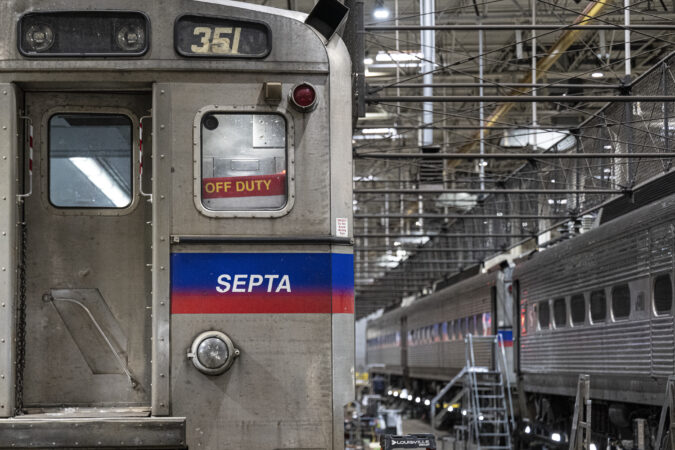
    The transit agency says it will miss Friday’s federal deadline to finish outfitting all 223 Silverliner IV Regional Rail cars with a new heat-detection system. The reason: It needs to wait for 7,000 additional feet of thermal wire.

    About 30 of the 50-year-old cars have not yet had the safety feature installed, officials said. The wire required to finish the job is on back order.

    “I don’t think the suppliers expected one agency to raid their entire stockpile,” spokesperson Andrew Busch said.

    SEPTA needed about 39,000 feet of the thermal wire to outfit the entire fleet of Silverliner IV cars, he said. “It was an unusual demand on the supply chain,” Busch said. SEPTA has worked with two manufacturers and four distributors.

    The missing link is expected to arrive next week, and the installations should be finished the following week, Busch said.

    SEPTA worked with two manufacturers and distributors to get the large rolls of wire.

    The thermal wire is made of spring steel, separated by a polymer that melts at high temperature, allowing the steel conductor to touch and connect the electric circuit. That allows it to provide earlier warning of a potential problem so cars can be pulled from service.

    Delays, cancellations, station skips, and overcrowded trains running with fewer than the normal number of cars have been regular challenges for riders during the work, which started in October.

    Meanwhile, SEPTA is leasing 10 passenger coaches from Maryland’s commuter rail system, MARC, which Amtrak is scheduled to deliver late Friday night at 30th Street Station. They will be towed to SEPTA’s nearby Powelton yard.

  • David E. Loder, longtime attorney, multifaceted board member, and education advocate, has died at 71

    David E. Loder, longtime attorney, multifaceted board member, and education advocate, has died at 71

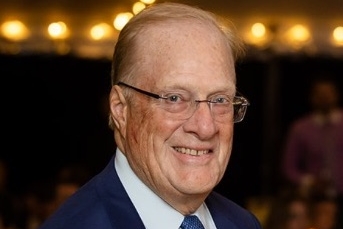
    David E. Loder, 71, of Flourtown, longtime attorney at Duane Morris LLP, multifaceted trustee and board member, education advocate, mentor, and volunteer, died Thursday, Oct. 23, of complications from lymphoma and scleroderma at his home.

    A graduate of Germantown Friends School and what is now the University of Pennsylvania’s Carey Law School, Mr. Loder spent 43 years, from 1982 to his retirement in 2024, as an associate, partner, and chair of the health law group at the Duane Morris law firm. He became partner in 1989 and helped the health law practice gain national recognition for its success.

    Mr. Loder and his team represented the Hospital and Healthsystem Association of Pennsylvania, the Pennsylvania Trauma Systems Foundation, and other medical providers in all kinds of consequential litigation. In 2006, he helped local hospitals win a multimillion-dollar settlement with an insurance company. In 2010, he supervised a case that successfully revived a state abatement program that alleviated medical malpractice costs for physicians and hospitals.

    In a tribute, former colleagues at the Pennsylvania Trauma Systems Foundation praised “his ability to see both the legal complexities and the human dimensions of every situation.”

    Mr. Loder stands with Blanka Zizka , the Wilma Theater’s artistic director, at an event in 2018.

    He was adept in vendor contract law, board governance, policy development, and human relations issues. He took special interest in doctor-patient relations and told the Daily News in 2016: “While it is critical that the healthcare provider convey necessary and accurate information to patients concerning their health condition, it is also important to remain sensitive to the patient’s interest and willingness to hear such information.”

    Matthew A. Taylor, chair and chief executive officer at Duane Morris, said in a tribute: “He was one of the nation’s most respected healthcare lawyers.”

    Mr. Loder also represented the Philadelphia Zoo, homeowners fighting increased property assessments, participants in gestational-carrier programs, and other clients. “He was a shrewd judge of character,” said his son Kyle. “He was thoughtful and strategic. He became a confidant and adviser to many of his clients.”

    John Soroko, chair emeritus at Duane Morris, said in a tribute: “Dave had a unique ability to turn friends into clients. But, even more importantly, to turn clients into friends.”

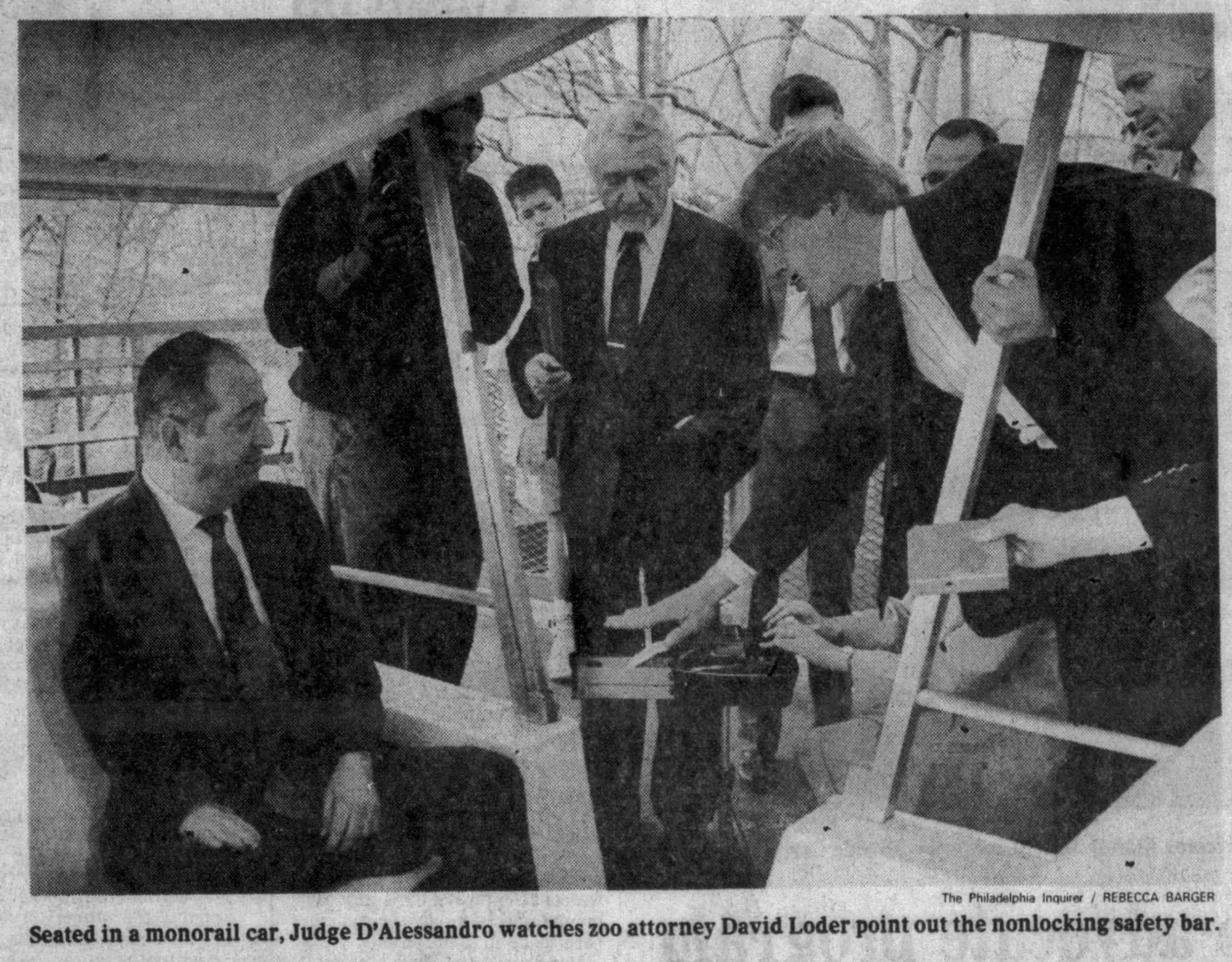
    This photo of Mr. Loder (right) representing the Philadelphia Zoo appeared in The Inquirer in 1989.

    Away from the law firm, Mr. Loder was chair of the board for the Wilma Theater and served on boards at Germantown Friends, the old University of the Sciences, the World Affairs Council of Philadelphia, and other groups. He was a trustee at the Dolfinger-McMahon Foundation and the Christian R. and Mary F. Lindback Foundation, and represented the Lindback regularly at its annual distinguished educators awards ceremony.

    “There’s a firm belief in the importance of excellence in education in the public schools,” he told The Inquirer at the 2016 Lindback ceremony. In 2017, he said: “All of us need to recognize that the Philadelphia public schools are serving an incredibly important function.” In 2018, he said: “People need to know that there are some exceptional educators in Philadelphia public schools.”

    He mentored many other lawyers and volunteered to help students in need. In online tributes, friends noted his “kind advice,” “voice of reason and compassion,” and “sense of humor, keen intellect, love of sports, and limitless knowledge on so many topics.”

    In 1998, he was featured in an Inquirer story about the challenges parents face when dealing with young children stuck inside during the cold winter months. He said: “I find that if you can get the kids down by 6 p.m. and have a glass of wine in front of the fireplace, it gets you through.”

    Mr. Loder enjoyed sports and the outdoors.

    His family said in a tribute: “He took life seriously but never too seriously, and his warmth, humor, guidance, and generosity will be remembered.”

    David Edwin Loder was born April 22, 1954, in Yalesville, Conn. His father, noted theologian Theodore Loder, moved the family to West Mount Airy when Mr. Loder was a boy, and he graduated from Germantown Friends in 1972.

    He starred in football, basketball, and baseball in high school, and went on to play basketball and earn a bachelor’s degree in political science at Wesleyan University in Connecticut in 1977. He worked briefly after college as a high school history teacher, served an independent study fellowship in Poland, earned his law degree at Penn in 1981, and studied international law at the London School of Economics and Political Science.

    He married Nadya Shmavonian, and they had sons Marek and Kyle, and a daughter, Julya, and lived in Philadelphia and Flourtown. After a divorce, he married Jennifer Ventresca and welcomed her children into the family.

    Mr. Loder liked hiking in New York’s Adirondack Mountains and relaxing at his getaway home on Long Beach Island.

    Mr. Loder enjoyed tennis, squash, and golf at the Philadelphia Cricket Club. He liked hiking in New York’s Adirondack Mountains and relaxing at his getaway home on Long Beach Island, N.J.

    He doted on his family and Labrador, and played cards every month for years with an eclectic group of old friends.

    “David embodied the values of faith, service, and integrity,” his family said. His son Kyle said: “He was magnetic, gracious, thoughtful, and curious. He was easy to talk to.”

    In addition to his wife, children, and former wife, Mr. Loder is survived by a granddaughter, a sister, two brothers, and other relatives.

    Mr. Loder “was magnetic, gracious, thoughtful and curious,” his son Kyle said.

    A memorial service and celebration of his life were held earlier.

    Donations in his name may be made to the Penn Medicine Scleroderma Center, Attn: Amanda Hills, 3535 Market St., Suite 750, Philadelphia, Pa. 19104.

  • Drugs took both her sons and her leg. Now, Kelly Wyatt is committed to staying sober.

    Drugs took both her sons and her leg. Now, Kelly Wyatt is committed to staying sober.

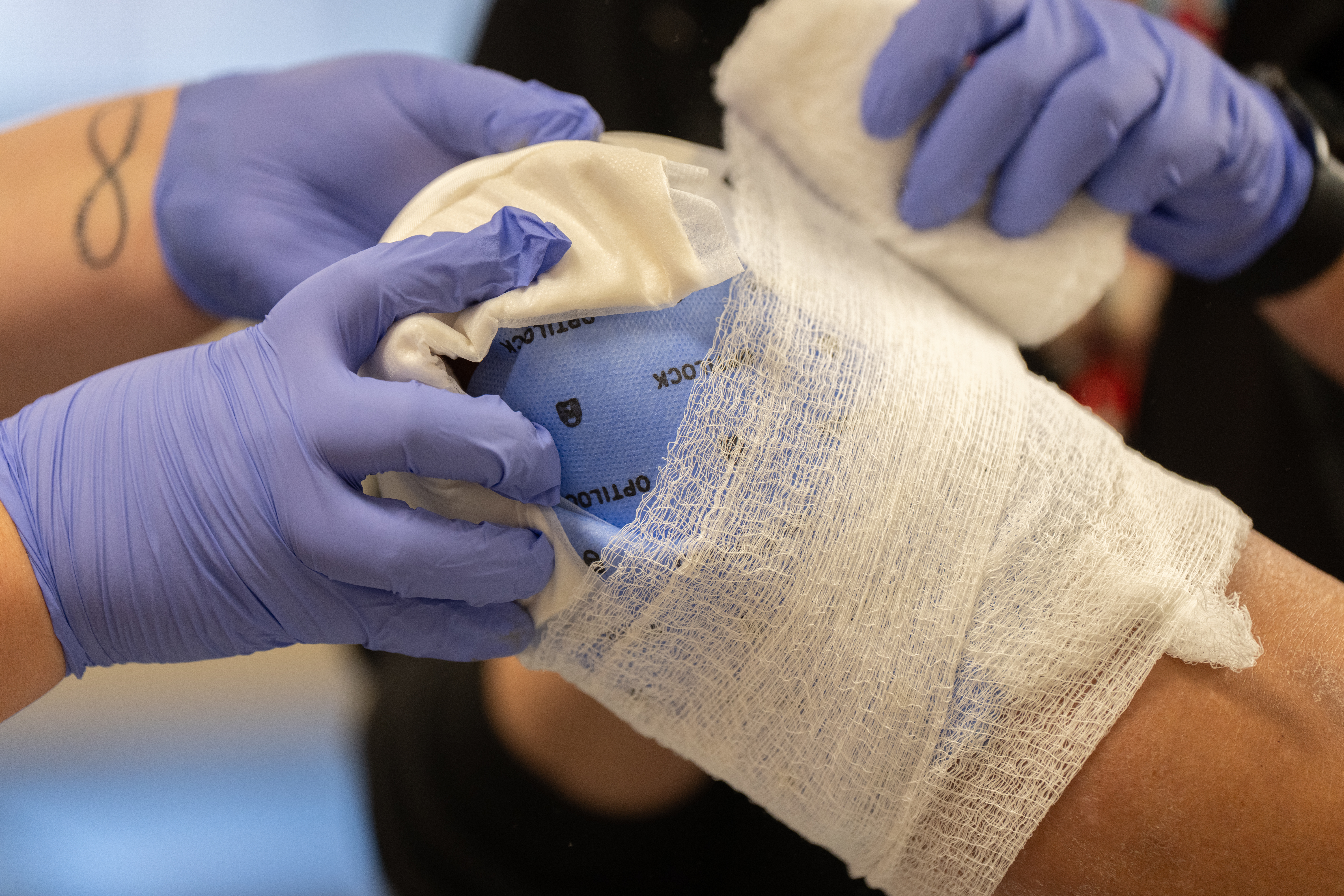
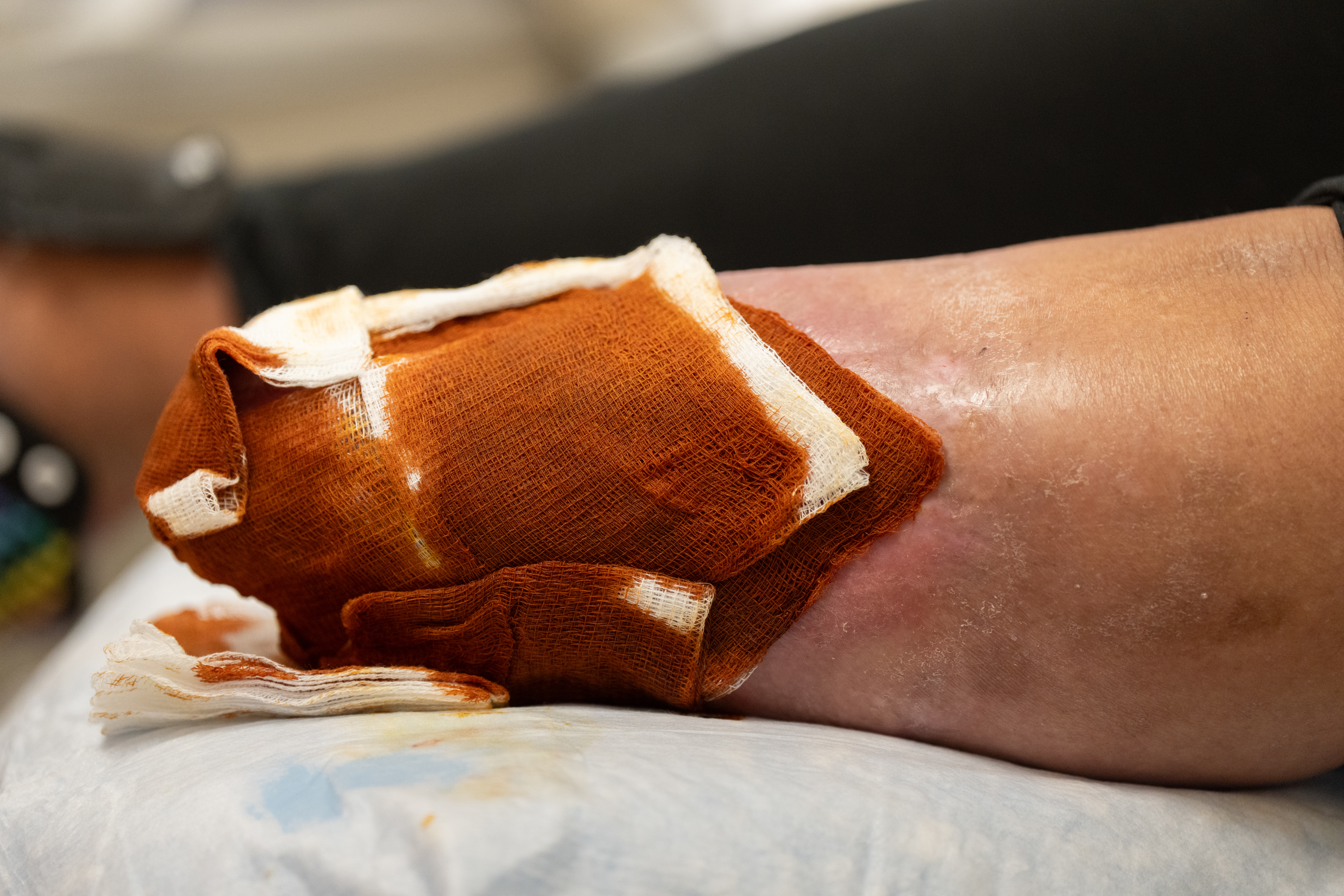
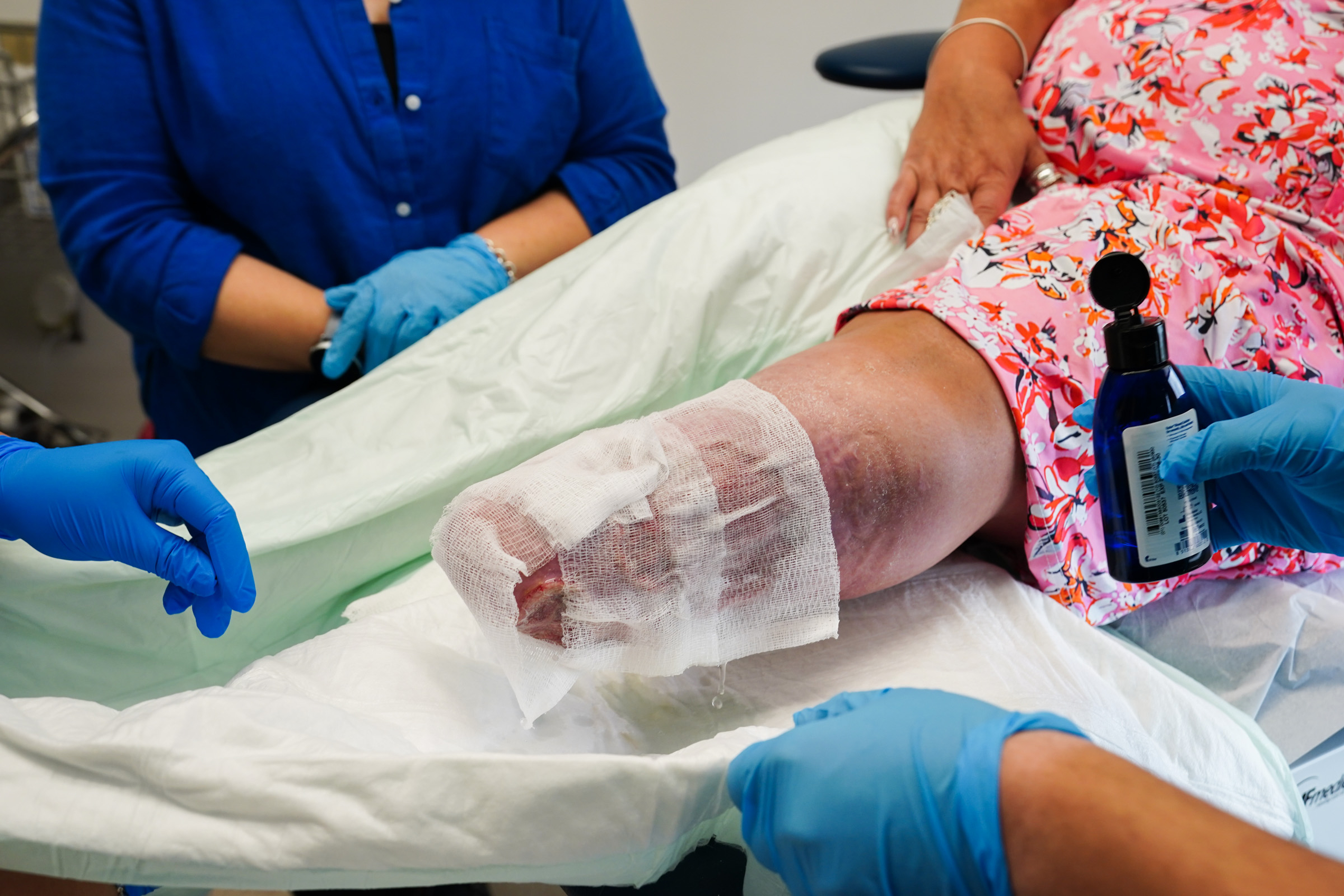
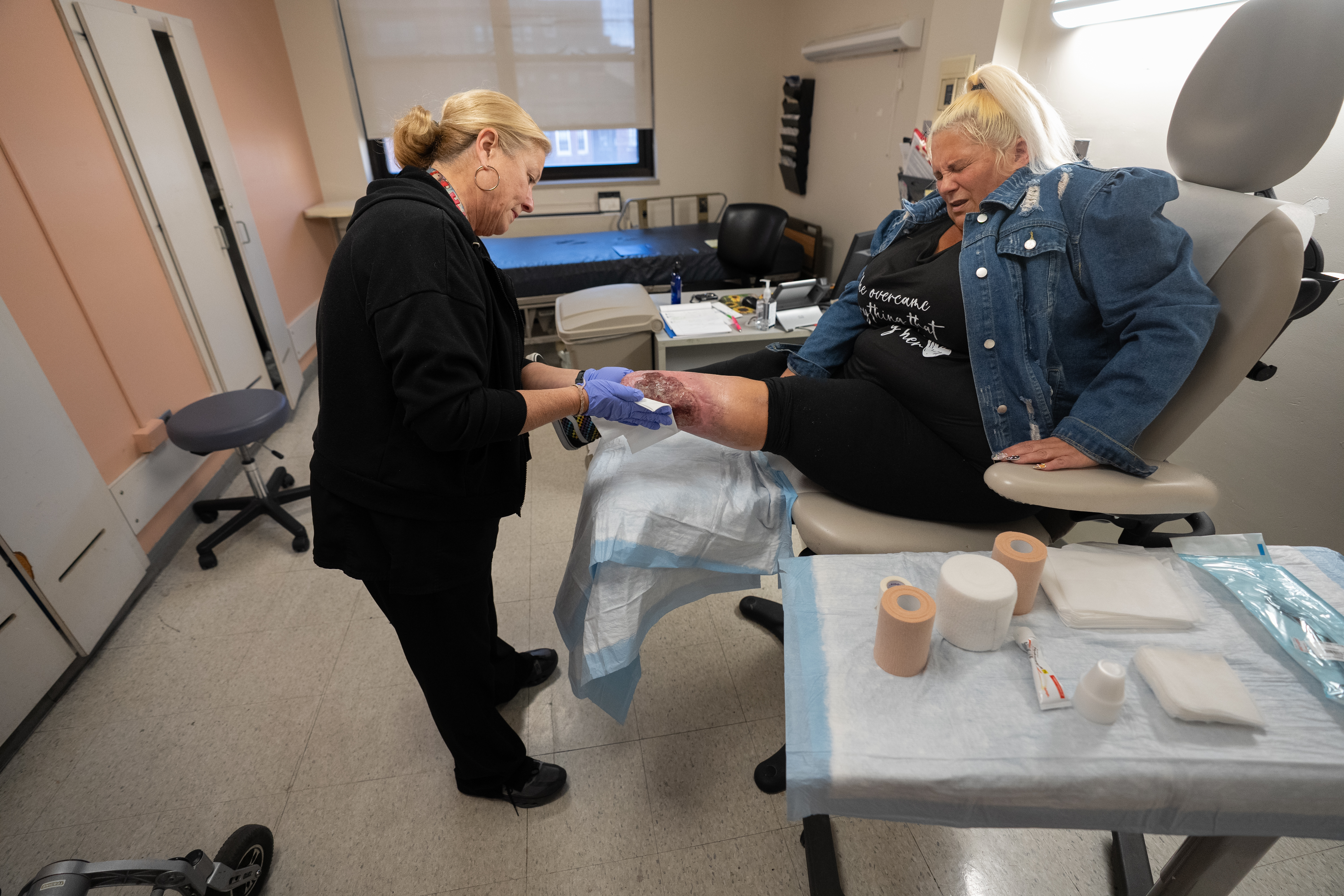
    Kelly Wyatt winced as a nurse unwrapped layers of gauze from her left leg, exposing the massive wound beneath.

    Yellow and red and gray, weeping plasma and agonizingly painful at the slightest touch, it covered almost the entirety of the end of her leg — the site of the amputation she had undergone four years before.

    Emergency room doctors at the time had warned her that if the drugs she was using didn’t kill her, her wounds would.

    Now Wyatt is 14 months into recovery from an addiction to fentanyl, a potent synthetic opioid, and xylazine, an animal tranquilizer never approved for human use. The emergence of xylazine, known as “tranq” on the streets, early in the decade marked the beginning of a dangerous new era for Philadelphians addicted to illicit opioids.

    Tranq users developed skin lesions that became gaping wounds, though exactly how is still unclear. As the medical establishment scrambled to respond, amputations more than doubled among people addicted to opioids between 2019 and 2022.

    Wyatt, 52, is among hundreds of Philadelphians facing lifelong medical needs from tranq, as the latest wave of the area’s drug crisis has seen a rapidly evolving succession of veterinary and industrial chemicals compound the dangers of the powerful opioids being sold on the streets.

    Some have become regular patients in burn units and wound care clinics at area hospitals, among the only places capable of treating severe tranq injuries.

    As part of its ongoing coverage of the area’s drug crisis, The Inquirer followed Wyatt for more than a year as she went through early recovery and worked with doctors to heal her wound.

    Kelly Wyatt receives treatment at Jefferson Einstein Philadelphia Hospital’s Center for Wound Healing in Philadelphia in November.

    Wyatt initially shrugged when the small sores had emerged on her legs, only to watch them grow into massive abscesses, resulting in an amputation below her knee. Her ongoing tranq use prevented the wound on her left leg from healing properly. Even after recent months of sobriety and careful treatment, doctors are still warning her that they may have to amputate more of her leg.

    But Wyatt’s tranq wounds go still deeper.

    Over the last several years, both of her sons had spiraled into addiction. By January, both of them were dead.

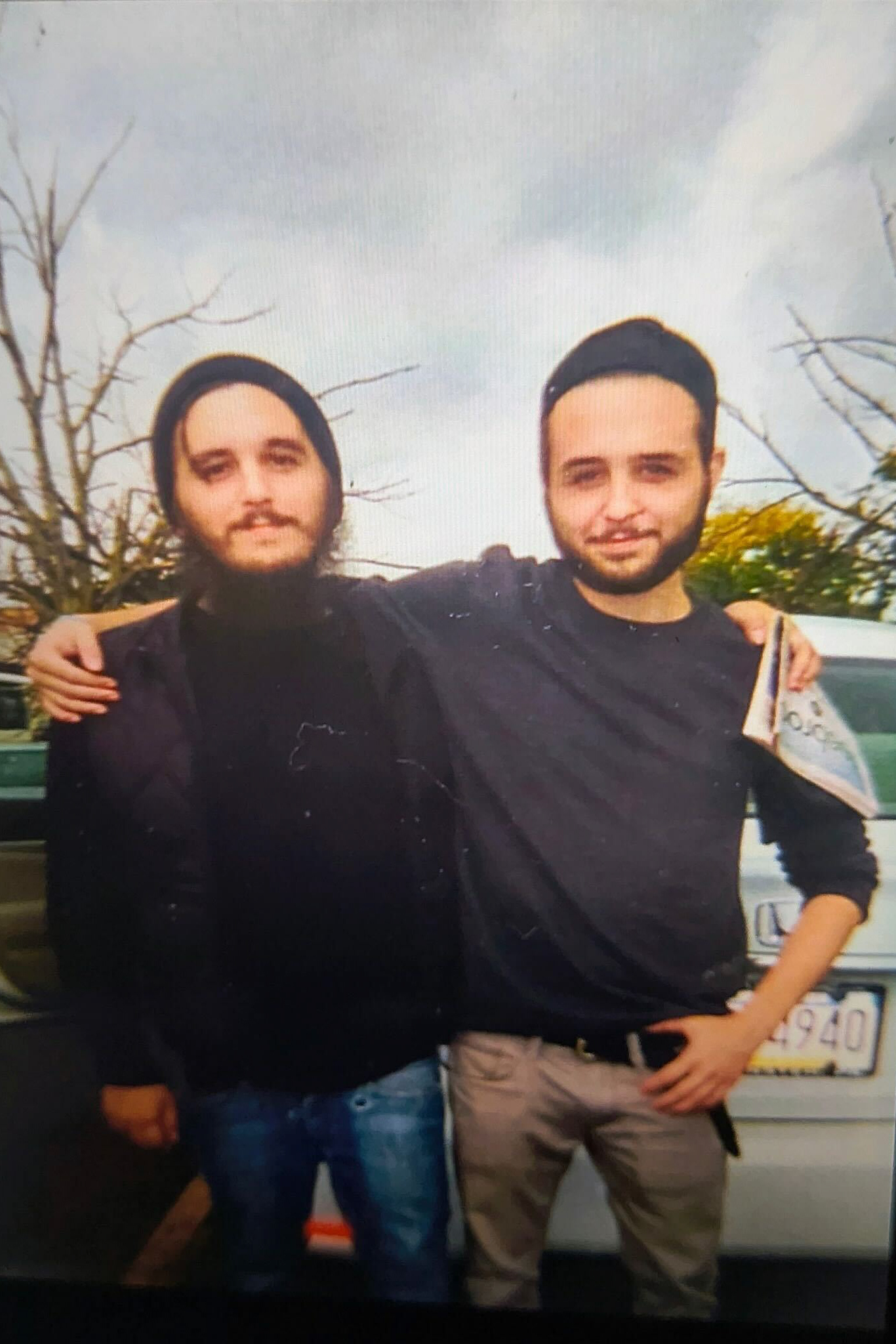
    A family photo of Dakota Wyatt, left, and Tyler, right.

    Spiraling into addiction

    Several members of Wyatt’s family have struggled with addiction.

    Wyatt experimented with drugs as a teenager, but was sober during her kids’ early childhoods. She didn’t drink alcohol, let alone seek out illicit drugs, after giving birth to her eldest son, Dakota, at 18. She raised two sons and a daughter in a neighborhood near Pennypack Park.

    Her days had a familiar rhythm: packing lunches, picking the kids up from school, watching them play together at the local park. In her spare time, she dabbled in mixed-media art, designing the window displays at the downtown restaurant where she worked for years. One Philadelphia Flower Show-themed display had a working waterfall.

    Her youngest, Tyler, was a happy child, grinning wide in every school picture and sharing inside jokes and a love for music with his brother. Dakota, more sensitive, had struggled with anxiety from an early age; Wyatt remembers him asking her at bedtime what the family would do if their house burned down in the night. But he could always make her laugh, and she and the boys would sing along to the same music in the car: ’90s alt-rock, Johnny Cash, the local hip-hop station.

    In 1999, she divorced their father. A few years later, at 28, she took her first Percocet pill, an opioid painkiller approved for medical use that is widely abused as a street drug. She had just started working at a bar, and the long hours were wearing on her.

    With the pills, “I could get more cleaning done, I could push my body more,” she said. “And it snowballed.”

    She was not aware when her sons began using drugs themselves in their teenage years. “I didn’t know for a long, long time,” she said.

    Afterward, Wyatt tried to help them seek treatment, even while her own drug use increased, she said.

    But a series of traumatic life events resulted in all falling deeper into addiction together.

    Wyatt’s ex-husband died following long-standing health issues, including diabetes.

    Then Dakota, who drove a Zamboni at a local ice rink, was injured in an accident at work — losing the tips of his fingers while cleaning the machine. He had been using more opioids to deal with the pain.

    Wyatt began buying drugs with him in Kensington, at the vast open-air drug market that is the epicenter of Philadelphia’s opioid crisis. “It was normalizing — I’m his mom and I’m with him in that crazy environment. I’m sure it made him feel like it was OK. And I regret that,” Wyatt said.

    “I regret a lot of stuff. But that was the beginning.”

    Kelly Wyatt leaves her wound care appointment at Jefferson Einstein Philadelphia Hospital’s Center for Wound Healing in November.

    Tranq warning signs

    It was the mid-2010s, and the drugs on the street were changing. The stronger synthetic opioid fentanyl was just emerging; dealers chanted “fetty-fetty-fetty” on the corners to draw in customers.

    And then Wyatt began hearing talk of “tranq” getting mixed into the drug supply.

    That was around the time that Dakota developed wounds on his arm, open sores that would not close. Wyatt found small wounds on her arms and legs — “like melon-ball scoops.”

    One day, she saw a flier, handed out by health authorities in Kensington, warning that tranq can cause skin lesions.

    “All of a sudden,” she recalled, “things made sense.”

    But her addiction was so severe that she was afraid to stop using the fentanyl-tranq mix now prevalent in the illicit drug market. She fixated on avoiding xylazine’s severe withdrawal symptoms — chills, sweating, anxiety, and agitation — which don’t respond to traditional opioid withdrawal medications. She worried about seeking treatment with no guarantee of relief.

    By the time Wyatt was admitted to a hospital in 2021, she was hallucinating from sepsis, a severe complication from an infection that can lead to organ failure, shock, and death.

    When she woke up eight days later, a doctor told her she was at risk of having one leg amputated, and maybe both. “Please let me keep as much of my leg as possible,” she recalls begging a doctor who wanted to remove her entire leg.

    Kelly Wyatt receives treatment for a serious xylazine wound at the site of her amputation at Jefferson Einstein Philadelphia Hospital’s Center for Wound Healing in November.

    “The doctor thought I should get the whole leg cut off. The other thing I could do was amputate below the knee, and then get tons of operations for the infection,” she said.

    Her oldest son’s tranq wounds had also worsened. Dakota had wounds on his legs and an arm, which was eventually amputated later that year. He also suffered a heart infection linked to his drug use, and needed a valve replacement.

    After a month in the hospital, he came home and continued using drugs.

    He developed new lesions. Maggots ate at his rotting skin. Wyatt cleaned the bugs out of his wounds.

    Wyatt tried bargaining with her son, promising they could get addiction treatment together. She offered to get him enough drugs that he wouldn’t enter withdrawal while waiting for care at the hospital. Sometimes, he managed to stay at the hospital for a few hours, but never longer.

    “He was too embarrassed to go anywhere, he was too afraid to get clean, and he was too afraid to be sick. He told us he would rather die than go through withdrawal again,” she said. “A couple times, he asked me if I wanted to just shoot up and lay down and die with him.”

    “‘I want to live,’” she recalls telling him, “‘and I don’t want to live without you.’”

    Kelly Wyatt waits for treatment for a serious wound on her leg at Jefferson Einstein Philadelphia Hospital’s Center for Wound Healing in November.

    Loss and recovery

    One night in January 2024, Dakota was having trouble breathing and seemed to be hallucinating, speaking nonsense. He asked Wyatt to call an ambulance to the house.

    Dakota died before the family reached the hospital. His cause of death was listed as drug intoxication.

    Wyatt believes ongoing health issues from his wounds hastened his death. Her grief intensified her own drug use, leading to more xylazine wounds. The wound that had opened near her amputation grew worse.

    A month after Dakota’s death, she entered drug treatment. After three months, she relapsed and overdosed on cocaine and fentanyl. Her first thought after waking up was to use again, but instead she chose rehab.

    “I didn’t want to die,” Wyatt said. “I didn’t want to be in pain anymore.”

    She arrived at the Behavioral Wellness Center at Girard in July 2024, hoping to enter outpatient rehab.

    Instead, physicians recommended their inpatient clinic that could also treat her wounds, one of the few such facilities in Philadelphia.

    In August 2024, Kelly Wyatt attended a wound care appointment as part of her inpatient care at Girard Behavioral Health, one of a few addiction rehabs in the city that can treat xylazine wounds.

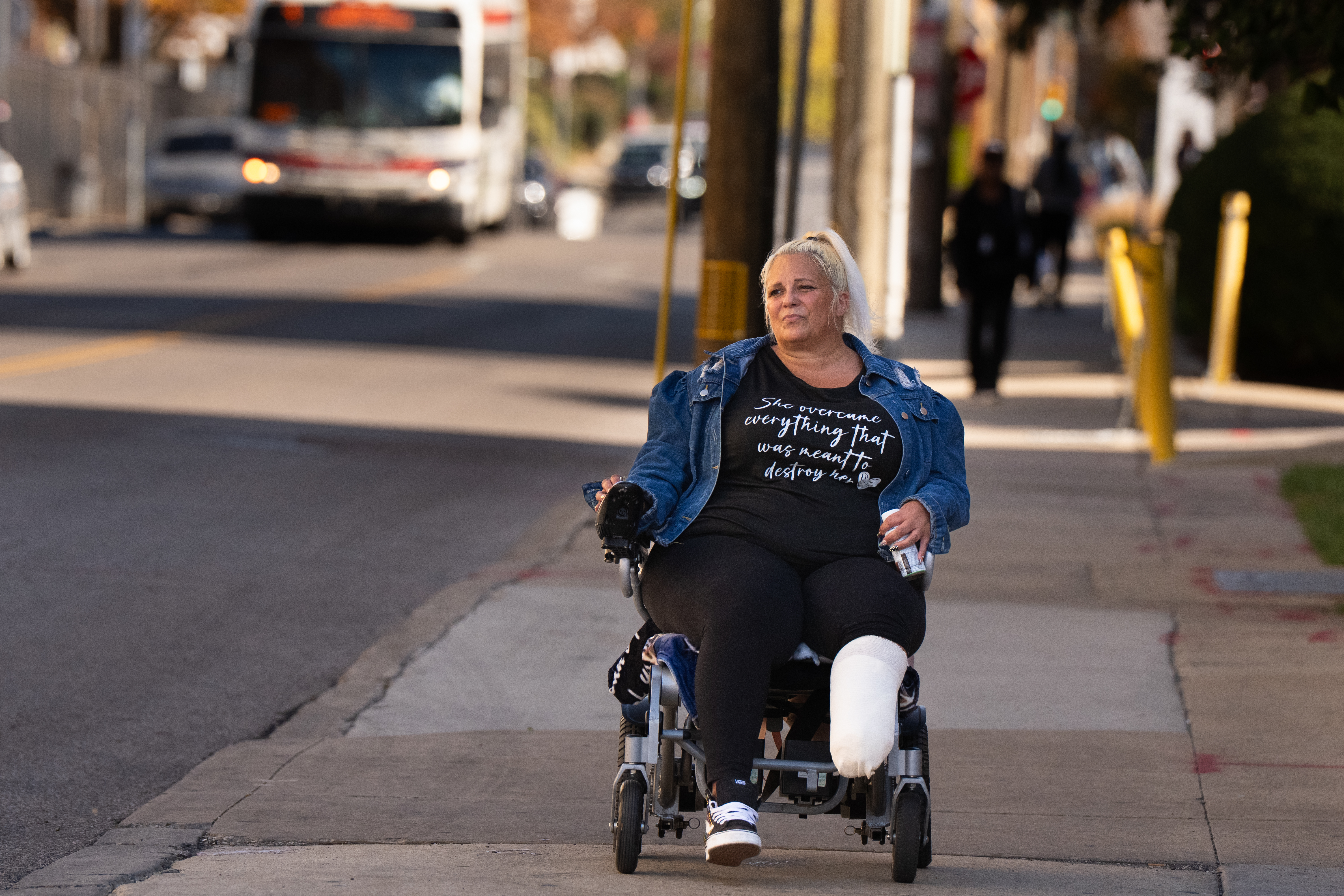
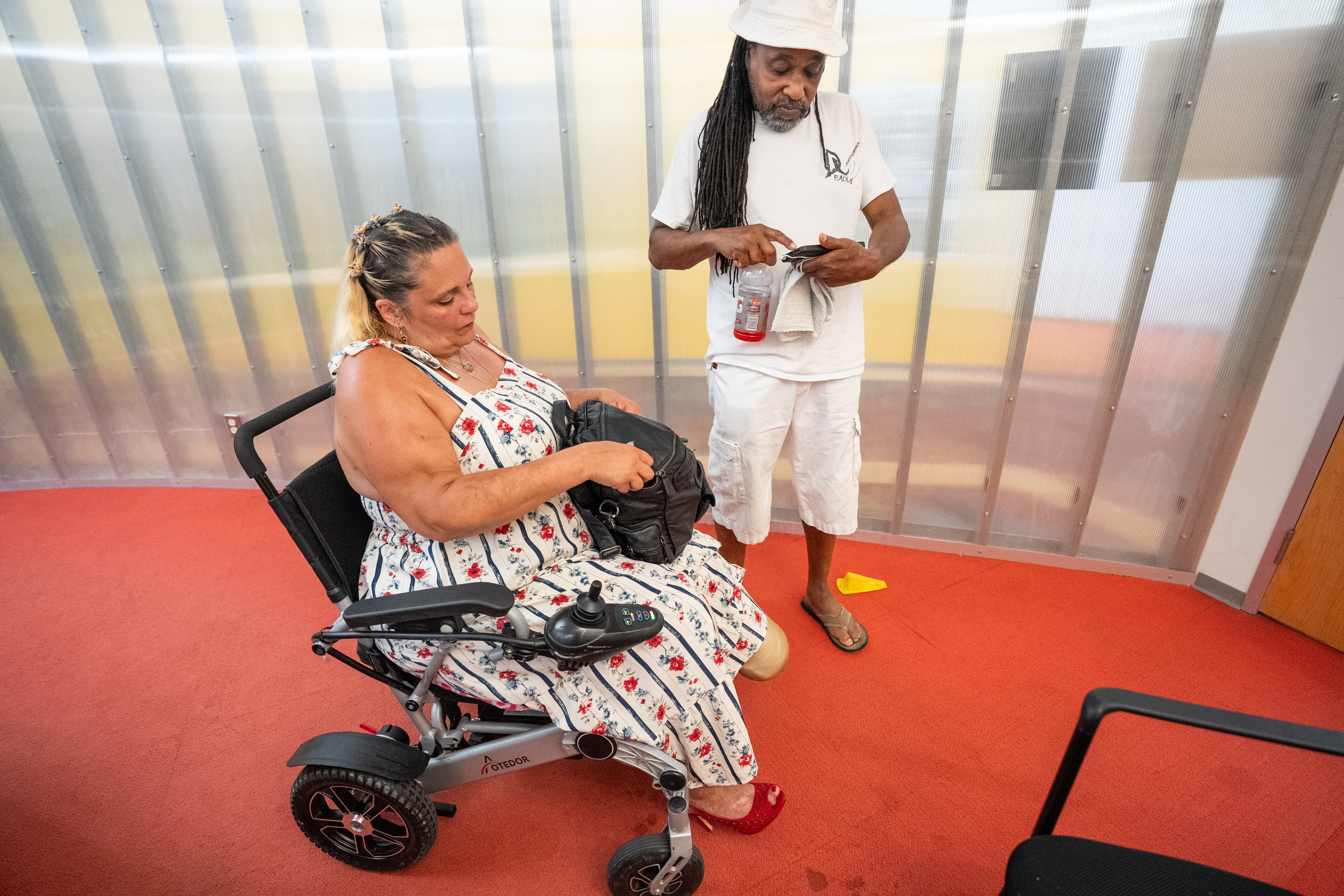
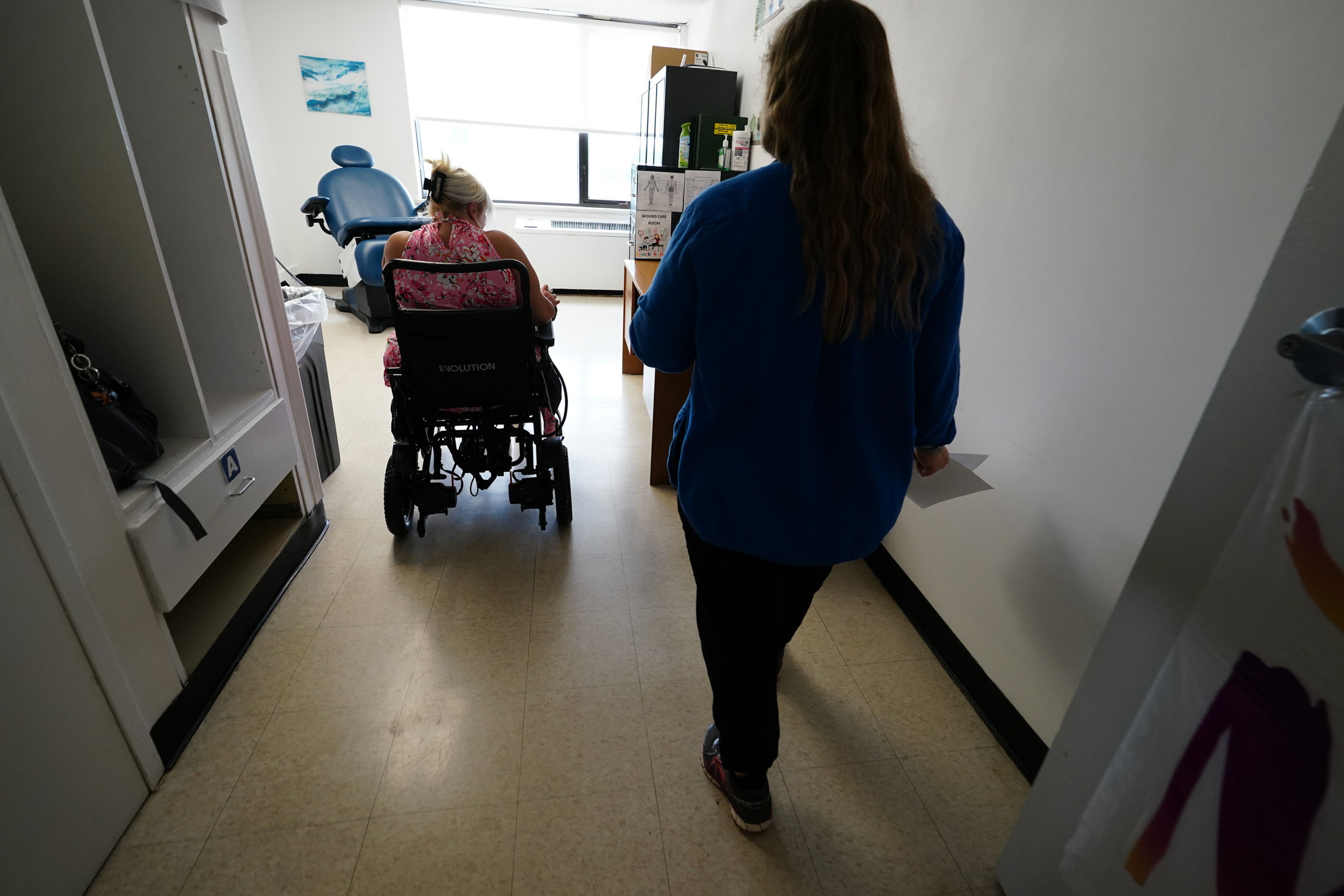
    Wyatt was living there and undergoing treatment a month later, in August 2024, when she wheeled her motorized wheelchair into a clinic room and took deep breaths as nurses carefully peeled back layers of moisturized gauze on her left leg, cleaning the wound.

    Still in the shaky early months of recovery, and needing to remain in inpatient rehab, she remained worried about Tyler, who was still using drugs.

    “He was the primary caretaker of his brother. They would be in their room, getting high together. And now he’s just in that room by himself, day in and day out,” she said in an interview that summer.

    “I kept saying, ‘I think I should go home to him.’ And everybody kept saying to me, ‘You have to work on yourself first. He’ll be fine,’” she later recalled.

    “And then he wasn’t fine.”

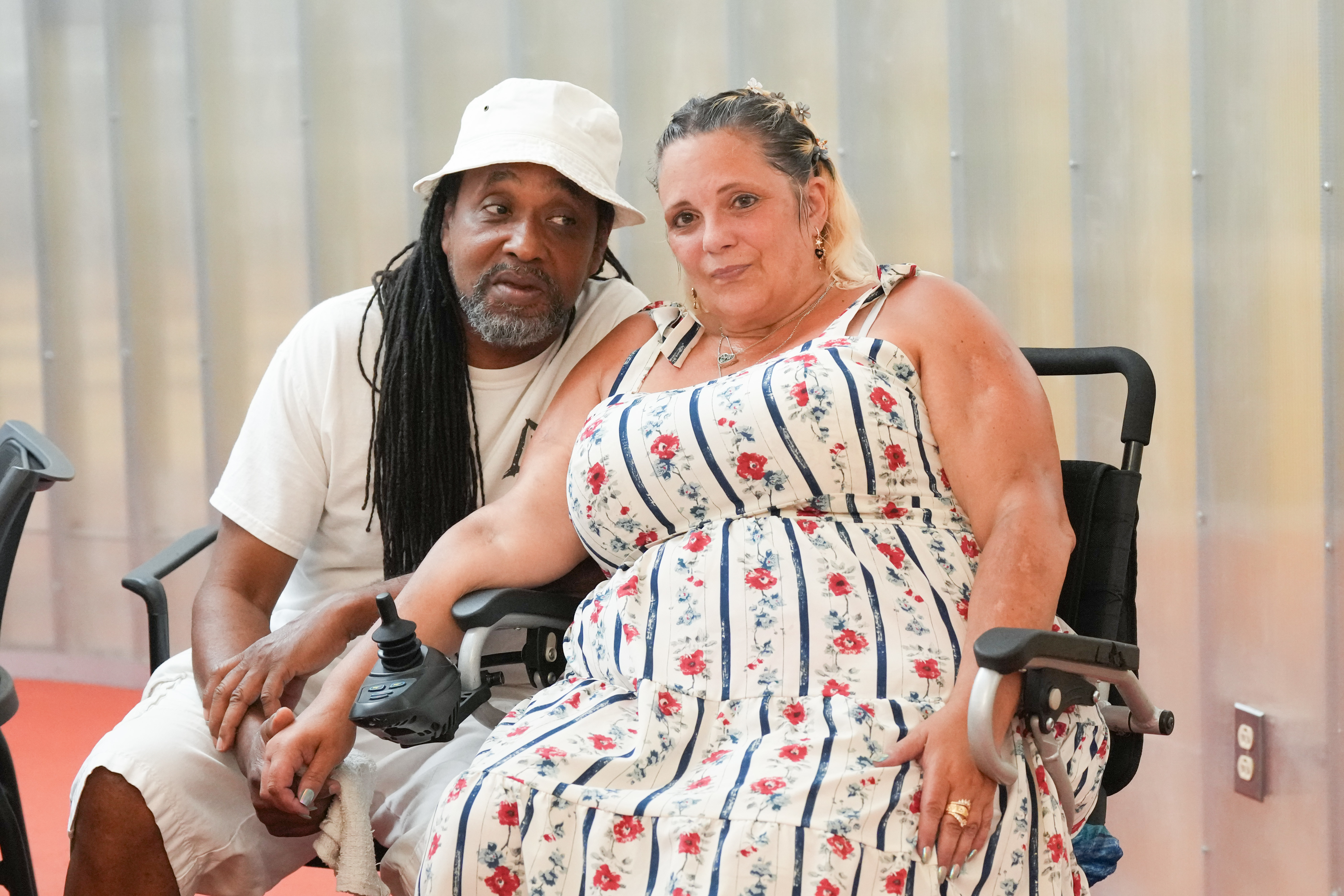
    Kelly Wyatt and her partner Randy Stewart at the headquarters of Resources for Human Development, which runs the skilled nursing and inpatient addiction treatment center where Wyatt sought treatment this winter.

    A mother’s guilt

    Wyatt was still in rehab in January 2025 when her partner, Randy Stewart, called. He hadn’t seen Tyler in hours and thought he might have left the family’s house.

    Wyatt called several hospitals and then asked Randy to check the bathroom in the back of the house.

    He found Tyler on the floor.

    “I just thought, God, please no,” Wyatt said. “Not again. You can’t do this to me again.”

    Tyler’s cause of death was also listed as “drug intoxication.”

    He died at 27, a year and 10 days after his brother.

    Wyatt is still wracked by guilt. Guilt that she used drugs with her sons. That she used drugs at all. That she wasn’t there when either of her boys died. That her daughter, who does not use drugs, stopped speaking to her. Sometimes, she dreams about her children and wakes up screaming.

    As she continues treatment, Wyatt said, she hopes her story will help other families struggling with addiction, especially the realities of tranq use.

    “Sometimes I’m embarrassed to talk about it. But I feel like I have to,” she said. “Because people need to know. If one person sees this and gets some medical care, gets any kind of help, I would be happy.”

    Heidi Hunt, a wound care-certified registered nurse, cleans the wound on Kelly Wyatt’s leg at Jefferson Einstein Philadelphia Hospital’s Center for Wound Healing in November.

    Treating tranq’s wounds

    For Wyatt, maintaining her recovery from addiction and caring for her wounds are full-time occupations that sometimes are in conflict.

    Methadone, the opioid addiction treatment drug that has helped Wyatt curb cravings for more than a year, can be dispensed only at special clinics.

    Wyatt’s clinic journey meant three hours a day on a bus where she couldn’t keep her leg elevated. The wound worsened until she was able to switch to a closer methadone clinic.

    Wyatt relies on Stewart to help her move around her home, where the only bathroom that she can access is the one where Tyler died.

    “Cleaning, taking care of me, changing my wound dressings, talking about my sons — he calms me down. It’s been a lot, and he’s really done a lot,” she said.

    Kelly Wyatt and her partner Randy Stewart in July.

    Once a week, Wyatt travels to Jefferson Einstein Philadelphia Hospital’s Center for Wound Healing for wound care.

    At a recent appointment, nurse practitioner Danielle Curran scraped away infected skin, measured the wounds, cleaned and re-bandaged her lesion.

    In between office visits, nurses also go to her home to clean and re-bandage her wound twice weekly. Several times this year, Wyatt has undergone debridement surgery to remove more damaged skin under anesthesia.

    If the treatments manage to shrink her wound, Curran said, Wyatt could try a skin graft and eventually receive a prosthetic leg that could help her get around more easily.

    Curran has treated about 20 xylazine patients at the clinic over the last few years. About 10, including Wyatt, are still getting regular care. Others have relapsed and returned to the streets. Several have died of overdoses.

    She is relieved that, as Philadelphia’s opioid crisis continues to evolve, tranq is becoming less prevalent. But it has been replaced in street drugs by another animal tranquilizer, medetomidine, which does not appear to cause flesh wounds but, rather, agonizing withdrawal symptoms. Skin lesions among opioid users have decreased in the last year.

    Yet Curran still insists on seeing patients like Wyatt with xylazine wounds weekly, trying to help them through their injuries and hopefully their recovery, too. “I like to be another person holding them accountable, to stay on the path. We try to give them that support.”

    Sometimes, that support means simply reminding Wyatt how far she has come in the four years since the amputation, and now 14 months of sobriety.

    At a recent appointment, after carefully scraping dead skin away from Wyatt’s leg with a small curette, Curran walked through her next steps: A disinfecting gel to keep bacteria out of the wound. A course of antibiotics to avoid infection. Another debridement surgery, in a few weeks.

    “As a rule of thumb,” Curran told a reporter, “it’s very hard to give timelines for wound care, because of all the things that could possibly go wrong. A wound this size, though? It could take years.”

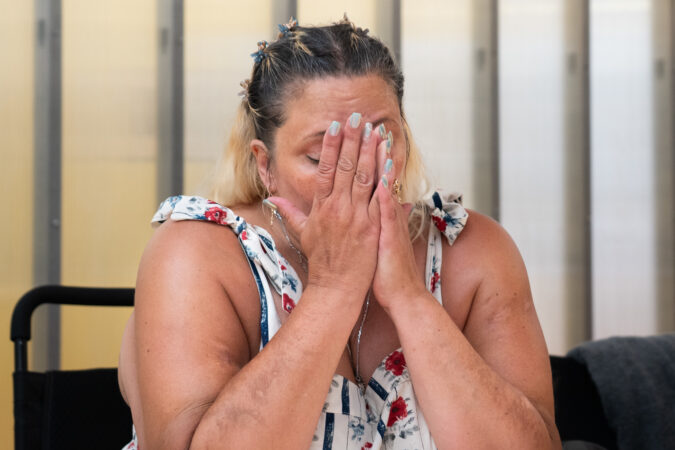
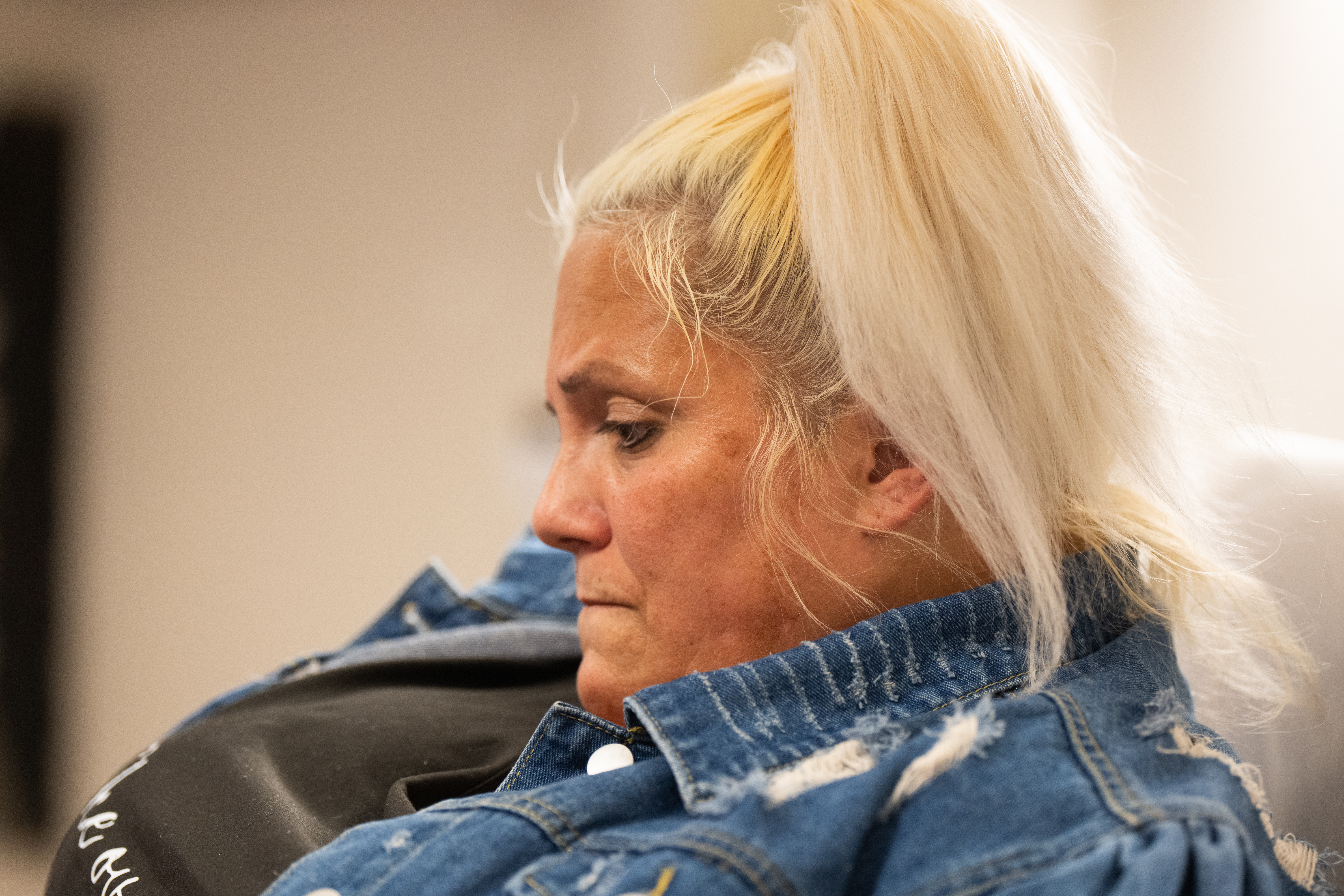
    Wyatt began to cry. “It’s already been four years,” she said.

    Curran turned to her. “You’ve made so much progress,” she said gently. “Give yourself time.”

    Kelly Wyatt enters the wound care clinic at Girard Behavioral Health in August 2024.

    Editor’s note: This story has been updated to clarify the name of the Jefferson Health clinic where Kelly Wyatt received wound care.

  • The share of Asian residents living in Philly’s Chinatown is decreasing, says a new report

    The share of Asian residents living in Philly’s Chinatown is decreasing, says a new report

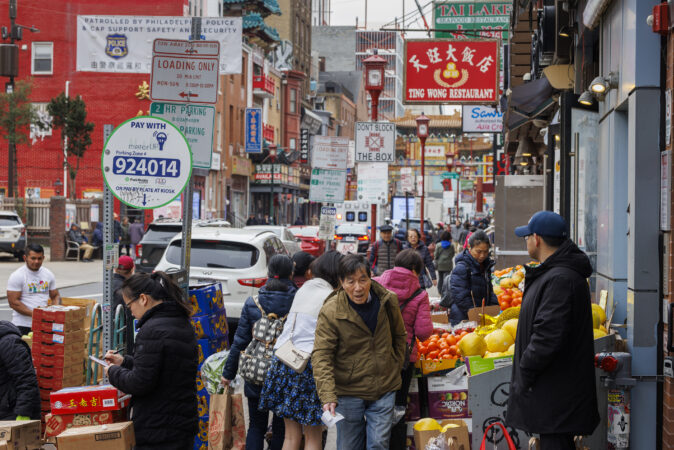
    Philadelphia’s Chinatown neighborhood has grown significantly over the last decade, but a majority of its gains in population and business have resulted in a decline in the share of Asian residents amid concerns over gentrification and displacement, according to a new report.

    And the situation is not unique to Philly, a study from the Asian American Legal Defense and Education Fund found. Its counterparts in New York City and Boston — both also historic Chinatowns — are facing similar pressures.

    All three cities’ Chinatowns, in fact, saw declines in their share of Asian residents from 2010 to 2020, the report found. The findings in Philly, meanwhile, come following years of the neighborhood staving off locally planned developments that may have resulted in additional challenges for residents — including the proposed billion-dollar Sixers arena effort abandoned in January after years of heated debate.

    “The Chinatown community is no stranger to fighting off large-scale and predatory development,” said the report from the fund, which provided legal support to community groups during the arena saga. “The arena would have devastated the neighborhood, bringing in a renewed wave of gentrifying pressure for residents and competition for local businesses.”

    The fund recommends that cities like Philadelphia enact community-focused rezoning efforts to protect their Chinatowns’ cultures from those pressures. But, as the report found, Philly’s Chinatown is already seeing substantial demographic shifts.

    For population and race data in 2000 and 2010, the study used the U.S. Census Bureau’s decennial census, which conducts a 100% count of the nation’s population. Figures for 2020 were drawn from estimates from the Census Bureau’s American Community Survey for the five-year period of 2018 to 2022, as the study’s authors cited possible data issues in the 2020 decennial census because of the pandemic and the proposed citizenship question.

    An Inquirer analysis that used the decennial census for both 2010 and 2020 shows that Asians remain the largest racial group in Chinatown, with their share of the population falling slightly, from 61% to 57%. White residents’ share of Chinatown’s population grew from 24% to 28%.

    Here are three takeaways from the fund’s report:

    An older, less Asian population

    Between 2010 and 2020, Chinatown’s population grew by 15%, from roughly 5,900 people to nearly 6,800. During that time, much of the growth was driven by an influx of white residents, with that group’s population growing by roughly 76% during that time — and becoming the largest racial group in the area — the report found.

    The overall number of Asian residents, however, remained roughly the same — 2,464 in 2010 vs. 2,445 in 2020. That proportion accounted for about 36% of the neighborhood’s population in 2020, decreasing from 42% in 2010. The white population, meanwhile, accounted for 44% of Chinatown’s residents in 2020, compared with 29% in 2010.

    As a result, the report notes, the area’s growth can be “entirely attributed” to a rush of non-Asian residents over the last decade covered by the U.S. Census. The proportion of Latino residents also increased significantly between 2010 and 2020, with that group growing by 36%, the report found.

    The neighborhood’s population also appears in part to be aging in place, with the number of people 65 and older almost doubling from 2010 to 2020, from 444 residents to 849. Simultaneously, its population of residents up to age 17 decreased by 15% during that time period, and the group ages 18 to 24 decreased by 37%. The group of residents ages 25 to 64, meanwhile, saw a “modest” increase of 22% from 2010 to 2020, the report found.

    Higher rent — and home values

    As the proportion of Chinatown’s Asian population decreased, its rent costs, house values, and homeownership rates all increased, the report found. House values in Chinatown, in fact, were more than double the citywide median in 2020, standing at more than $491,000 in the neighborhood compared with $236,000 in Philadelphia overall.

    Homeownership rates were lower in Chinatown than in the city at large, however, standing at 40% in 2020 compared with 52% citywide. Still, homeownership in Chinatown increased from 31% in 2010 while it fell marginally in the city overall from that year, when it stood at 54%. By comparison, Boston’s homeownership rate in its Chinatown stood at 7% in 2020, while New York’s Chinatown had a 15% homeownership rate that year, the report found.

    Rent in Chinatown was also higher in 2020 compared with the rest of the city, the fund’s report found. The neighborhood’s median rent stood at nearly $1,900, while the city’s was about $1,150 that year.

    Boston, New York, and Philadelphia, the report found, all saw the “transformation of former warehouses, tenement buildings, or rowhouses into luxury apartments and condominiums” over the last decade. Those developments, the fund noted, “fail to expand the housing supply for Chinatown community members” and contribute to rising rents and displacement of low-income residents.

    “Affordable housing is quickly disappearing in Philadelphia’s commercial core,” the fund’s report found.

    Largely local business

    In total, the study found that 92% of Chinatown’s commercial land parcels were small or local businesses in 2020, with restaurants and retail outlets making up a lion’s share of storefronts. Restaurants were the clear growth leader, increasing in number by 40% from the decade prior.

    Nearly all of Chinatown’s restaurants were located south of the Vine Street Expressway, the fund noted. Of those, Asian restaurants dominated the cuisine offered, with most eateries serving Chinese food.

    Still, despite the dominance of Asian restaurants in the neighborhood, Philadelphia did observe the largest shift in Asian to non-Asian restaurants of the three Chinatowns examined in the study. Over the last decade, the proportion of neighborhood Asian restaurants decreased from 85% to 62%, while the area’s non-Asian eateries more than doubled from 15% to 38%.

    The presence of national chains in Philly’s Chinatown doubled between 2010 and 2020, moving from 4% of all businesses to 8%, the study found. Retail stores, meanwhile, made up about 30% of commercial businesses in the neighborhood in 2020, the largest proportion of which were beauty and hair salons, followed by grocery stores and markets.

    Many newer businesses, the study noted, were tailored for younger customers, such as bubble tea and upscale dessert shops, as well as convenience stores that sell snacks rather than groceries — many of which lack indoor dining rooms. That shift may affect older residents, the fund noted.

    “As these types of indoor dining rooms disappear, Chinatown elders have fewer options to spend their time in safe and affordable spaces,” the study said.

    Clarification: This story has been updated to further explain the data used in the Asian American Legal Defense and Education Fund study.

  • Overnight closures to begin on westbound I-76 at 30th Street, PennDot says

    Overnight closures to begin on westbound I-76 at 30th Street, PennDot says

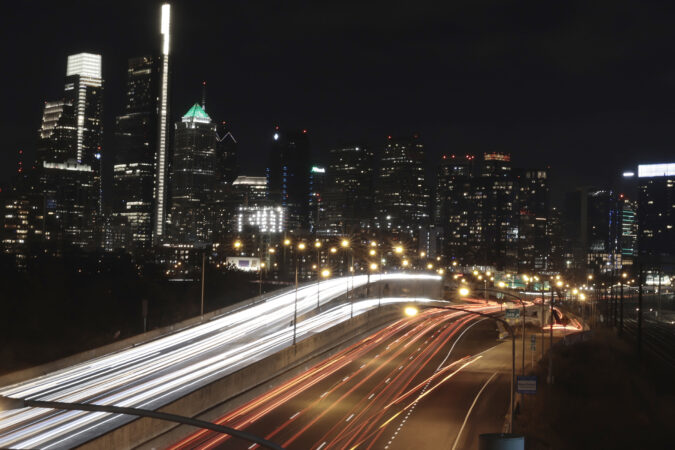
    The Pennsylvania Department of Transportation said lane restrictions and overnight closures will begin Sunday and last until June for a short westbound stretch of the Schuylkill Expressway at 30th Street to allow for overhead bridge construction.

    The work is part of a $148.9 million project to rehabilitate the bridges that connect Market Street over Amtrak and I-76, the Schuylkill River Trail, and CSX Railroad, PennDot said Wednesday.

    On Sundays through Thursdays from 9 to 10 p.m., I-76 West will be reduced to one lane between 30th Street and the I-676 interchange.

    Then from 10 p.m. to 5 a.m., all the westbound lanes will be closed and traffic will be detoured at 30th Street onto Schuylkill Avenue to then access the ramps to I-76 West and I-676 East.

    The changes will last through June 1.

    Because of the forthcoming holidays, there will be no overnight closures from Dec. 21 through Jan. 3.

    PennDot said motorists can visit www.marketstreetbridges.com to sign up for email notifications and learn more about the project.

  • Waymo starts self-driving tests in Philadelphia for its robo-taxi service

    Waymo starts self-driving tests in Philadelphia for its robo-taxi service

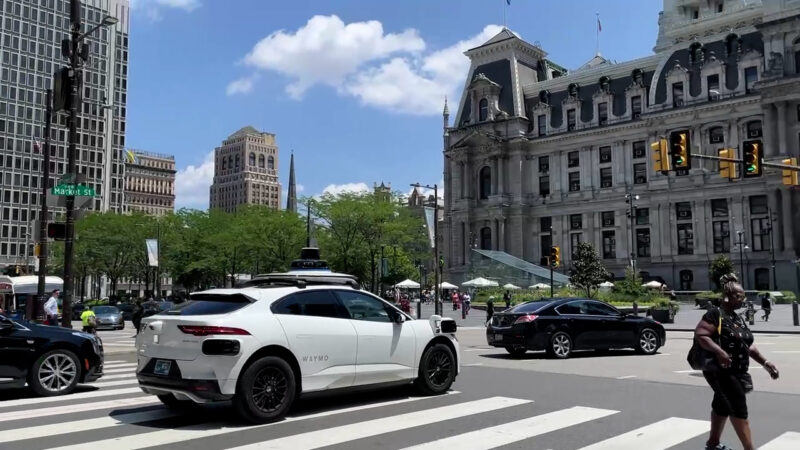
    Waymo, the self-driving car company owned by Google’s parent firm, said Wednesday that it has begun autonomous tests in Philadelphia and expects to offer its robo-taxis to customers at some point afterward.

    “We’re making it official, Philly: Waymo will bring our service to the City of Brotherly Love!” the company announced on its website.

    Ethan Teicher, a spokesperson for Waymo, said in an email: “We recently began driving autonomously with a specialist behind the wheel, after securing permission to do so from PennDOT. We’ll continue laying the groundwork in Philadelphia to open our fully autonomous ride-hailing service for the public in the future.”

    In July, a Waymo spokesperson said the company would begin mapping Philadelphia’s neighborhoods, manually “driving through the most complex parts of the city, including downtown and freeways.”

    In its Wednesday announcement, Waymo said it will begin the mapping process in Pittsburgh, and noted that city’s connection with autonomous driving history. Carnegie Mellon University, which is located in Pittsburgh, is known as the birthplace of self-driving technology.

    The company said mapping will also begin in St. Louis and Baltimore.

    Under a 2022 Pennsylvania law legalizing the commercial operation of “highly automated vehicles,” Waymo needs a “certificate of compliance” to conduct autonomous testing in specified locations. In July, the Pennsylvania Department of Transportation said it was reviewing an application from Waymo.

    PennDot’s website on Wednesday showed that Waymo now has a certificate for Philadelphia.

    The only other company with a certificate for the city is Perrone Robotics, which operates a self-driving shuttle service at the Navy Yard.

    In New Jersey, state law does not allow for commercial services using self-driving vehicles on public streets. Legislation recently was introduced to create a pilot program requiring three years of testing with a human driver in the vehicle.

    Waymo offers self-driving taxi service in Los Angeles, San Francisco, Phoenix, Austin, and Atlanta, and has test-driven in dozens of other cities. Testing began in New York City this summer.

    Currently, the company says it is performing a total of 250,000 rides a week using fully autonomous electric vehicles.

    A spokesperson for Mayor Cherelle L. Parker said Wednesday that the mayor and other city officials are “closely monitoring Waymo and its plans for Philadelphia” but declined to elaborate.

    Besides mapping and testing its vehicles, Waymo has “engaged with community organizations” in Philadelphia and Pennsylvania, including the Bicycle Coalition of Greater Philadelphia and the National Federation of the Blind of Pennsylvania, said Teicher, the company spokesperson.

    In the company’s announcement, it included a statement from Samantha Civitate, the Pennsylvania state director for Best Buddies, a nonprofit that brings together volunteers and people with intellectual and developmental disabilities.

    “Accessible transportation remains a vital piece of fostering independence and inclusion,” Civitate said.

    There has been no groundswell of opposition to Waymo coming to Philadelphia. The company, however, has had to deal with recent incidents elsewhere that have generated negative attention.

    A Waymo taxi in Los Angeles was caught on video making a left turn just feet away from an incident involving police officers positioned behind their vehicles shouting commands at a suspect who was lying facedown on the ground, apparently waiting to be arrested.

    In San Francisco on Sunday, a Waymo taxi hit an unleashed dog, which reportedly needed to be euthanized because of its injuries.

    Waymo vehicles have also been targeted, though mainly because they were in the wrong place at the wrong time. In June, several Waymo taxis were burned during anti-ICE protests in Los Angeles. The company temporarily halted service in the area.