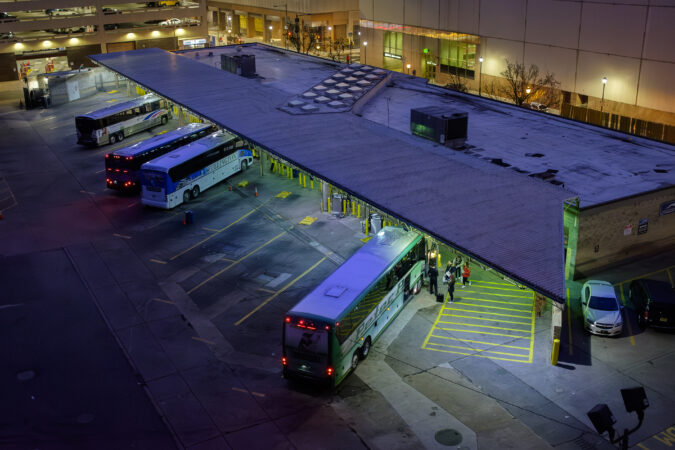
It was a step toward ending a two-year civic struggle to find a site for long-distance buses and their passengers. The renovated station could be ready for a series of big national and international events expected to draw millions of visitors next year.
“A lot of people are going to be coming here for the first time, and when they’re in that station, they’re going to get their first taste of Philadelphia — and we want to make sure it’s a good one,” said Councilmember Mike Driscoll, who sponsored the bill on behalf of the Parker administration.
The city will host events in 2026 for the 250th anniversary of the Declaration of Independence, as well as FIFA World Cup soccer matches and the Major League Baseball All-Star Game, among others.
Greyhound ran the terminal at 10th and Filbert Streets for more than three decades but ended its lease in June 2023 when the business model of its parent company, Flixbus, called for divesting from real estate and moving toward cheaper curbside service in many U.S. cities.
Since November 2023, customers of Greyhound, Peter Pan, and other interstate bus carriers wait, board, and arrive at curbside along Spring Garden Street in Northern Liberties — with no shelter from the weather and few amenities. It also has proved a nuisance to nearby businesses.
Before that, the buses operated at curbside on Market Street between Sixth and Seventh Streets.
The city senses that over the long term the owner anticipates selling the property, said Michael Carroll, assistant managing director for the Philadelphia Office of Transportation and Infrastructure Systems.
“That’s the sweet spot, long enough that there’s a meaningful basis to invest in improvements and solve the problems,” Carroll told the committee.
“At the 10-year mark, decisions will have to be made about whether this is a site that forever works best in Philadelphia, or whether there’s a better site,” he said.
The unanimous Finance Committee vote came after it amended the measure to adjust the fees bus companies would be charged to stop in Philadelphia.
Each stop in the city would cost $40 until the bus terminal is open, when it would move to a $65 fee. A smaller number of buses subsidized by the Pennsylvania Department of Transportation under a program to provide rural service would pay $16 a stop.
Committee members also asked for suspension of a procedural rule so that all 17 lawmakers could consider the bill Thursday and clear the way for final passage before the holidays.
In the agreement with the city that is part of the bill, PPA would run the terminal; assess the fees on bus carriers for the use of the facility and any street loading zones, such as those in University City; and handle enforcement.
The Filbert Street proposal includes specific requirements designed to address concerns particularto Chinatown.
For instance, the streets department would change traffic patterns so buses are routed to the station via Market Street instead of driving through the heart of the neighborhood as they did in the past.
John Mondlak, first deputy and chief of staff of the city planning department, said that the through traffic had long been a chief complaint of residents and business owners in Chinatown.
This story has been updated to include the name of the firm that owns the former Greyhound station.
A man and woman were shot and killed Wednesday afternoon in Kensington in what police believe was a murder-suicide, according to a law enforcement source who asked not to be identified to discuss an ongoing investigation.
The two, whom police did not identify, were shot on the 3400 block of Hartville Street around 1:15 p.m., according to the department. They were pronounced dead just after 2 p.m.
Investigators believe the man shot the woman with a shotgun, according to the police source.
As U.S. District Judge Gerald McHugh prepared to sentence Mark Anthony Tucci for hurling racist, violent threats at two Black women he had never met, the judge paused for a moment and teared up.
Tucci’s vile language and promises to harm the women not only were criminally inexcusable, McHugh said, but also were a demonstration of “deeply hateful attitudes” that cannot be tolerated in society.
“It was meant to deny their dignity and their humanity,” McHugh said. “And that’s what makes it so troublesome.”
McHugh offered those remarks before sentencing Tucci on Tuesday to 33 months in federal prison and ordering him to pay nearly $17,000 in restitution. Tucci had pleaded guilty earlier this year to charges including threat to use a dangerous weapon, interfering with federally protected activities, and interstate communication of threats.
U.S. Attorney David Metcalf said in a statement that the case was an example of the criminal justice system holding someone accountable for language that was both disturbing and a violation of the victims’ civil rights.
“Every citizen is entitled to a peace and security undisturbed by the abhorrent and racist threats that took place in this case, full stop,” he said.
Tucci’s crimes took place last year in two separate incidents: In the first, Tucci, who is white, pulled up next to a Black woman driving on I-95, rolled down his window, and threatened to kill her, court documents said. The second episode happened when he repeatedly harassed a Black employee of the Philadelphia Department of Human Services who had been assigned to an investigation involving Tucci’s daughter.
In both instances, court documents said, Tucci used racial slurs and made bigoted, demeaning comments that played on offensive racial stereotypes. Prosecutors said he also threatened to harm both women — telling the driver on I-95 that he would kill her and throwing a coffee cup at her car, and, in the case of the DHS worker, finding her home address and cell phone number to continue his racist harassment.
As prosecutor Samuel Kuhn, of the Justice Department’s Civil Rights Division, outlined those facts during Tuesday’s sentencing hearing, Tucci repeatedly put his face in his hands, shaking and bowing his head.
Tucci later addressed McHugh, saying that he was embarrassed and ashamed, and that his actions were inexcusable. At the time of the crimes, he said, he had been suffering from undiagnosed mental health issues. He said that he has since been receiving treatment, and that his medications have helped him understand his past misdeeds.
Authorities initially said Tucci had boasted during one of the episodes about his association with the far-right Proud Boys group, and his lawyer said in court documents that the group “clearly influenced” him. But there was no discussion of the group or Tucci’s politics during his sentencing hearing.
Several of his relatives, including his mother and brother, testified and said they had seen his mental health improve over the last several months while receiving treatment in custody.
Tucci, for his part, said he wished he could have apologized to his victims, neither of whom attended the proceeding. Kuhn, the prosecutor, read statements on their behalf. In one of them, the motorist Tucci threatened said she still experiences anxiety as a result of the attack, particularly while driving.
“People who look like me have a right to live safely and freely,” she wrote.
Tucci said he agreed, and lamented that there was “nothing I can do to make it right.”
“I’m forever pegged as a racist because I said things that were racist,” he said.
As Tucci stood to leave the courtroom at the end of the hearing, McHugh, the judge, told him: “Your future is in your hands now.”
Nearly a year after Philadelphia Whole Foods workers voted to form a union, becoming the first group in the grocery chain to do so, their union’s ability to move forward and negotiate a contract is locked in a procedural standstill.
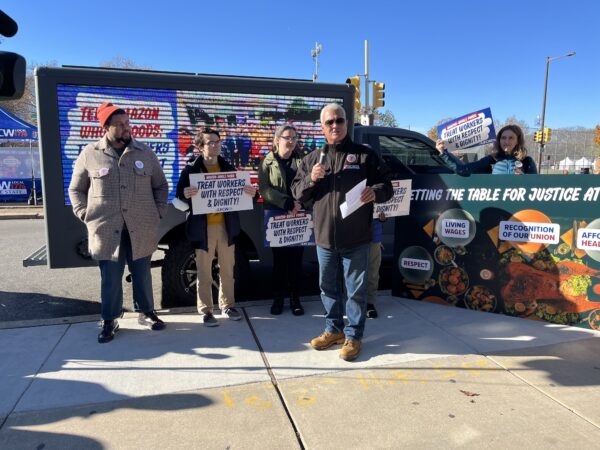
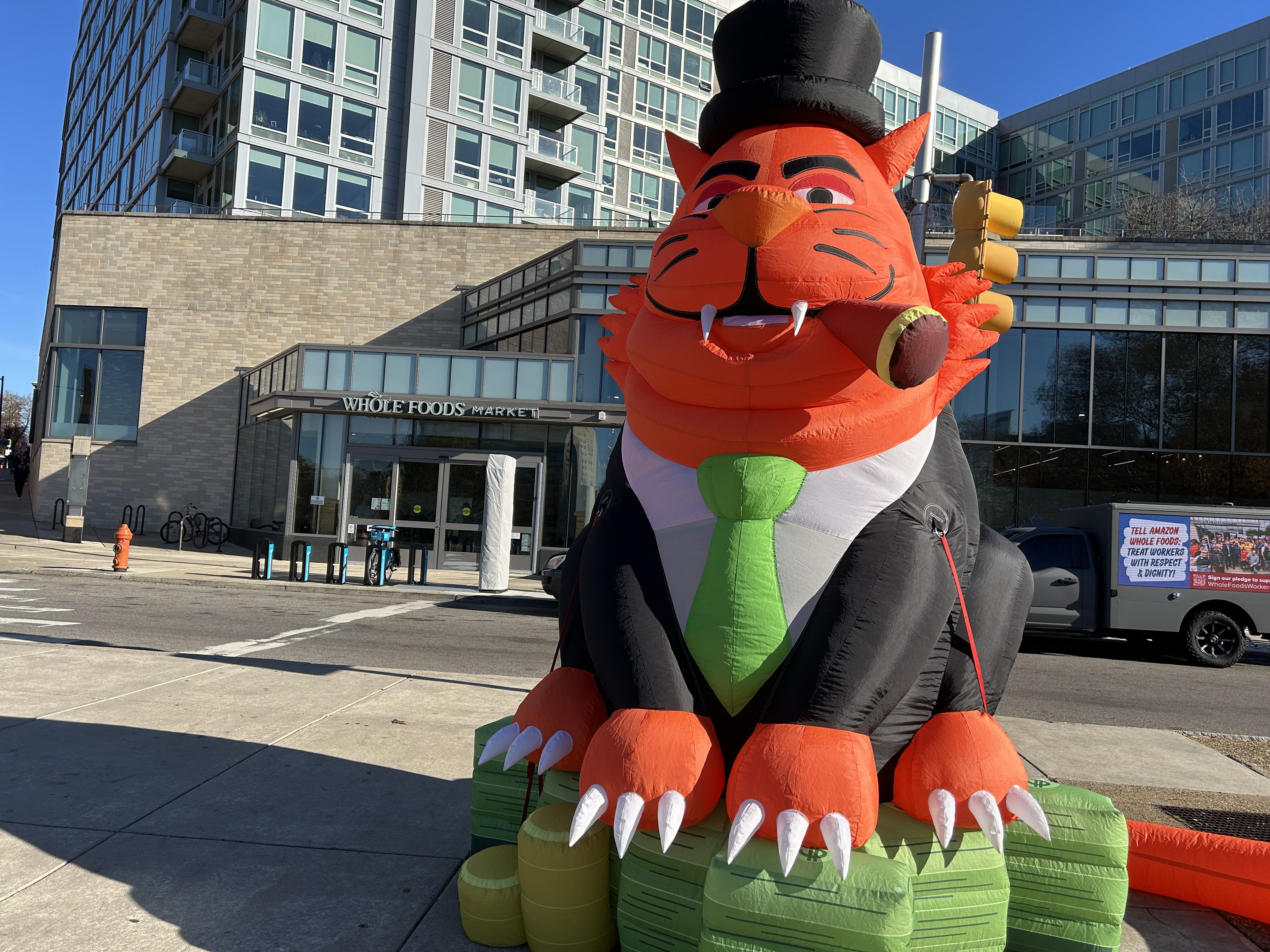
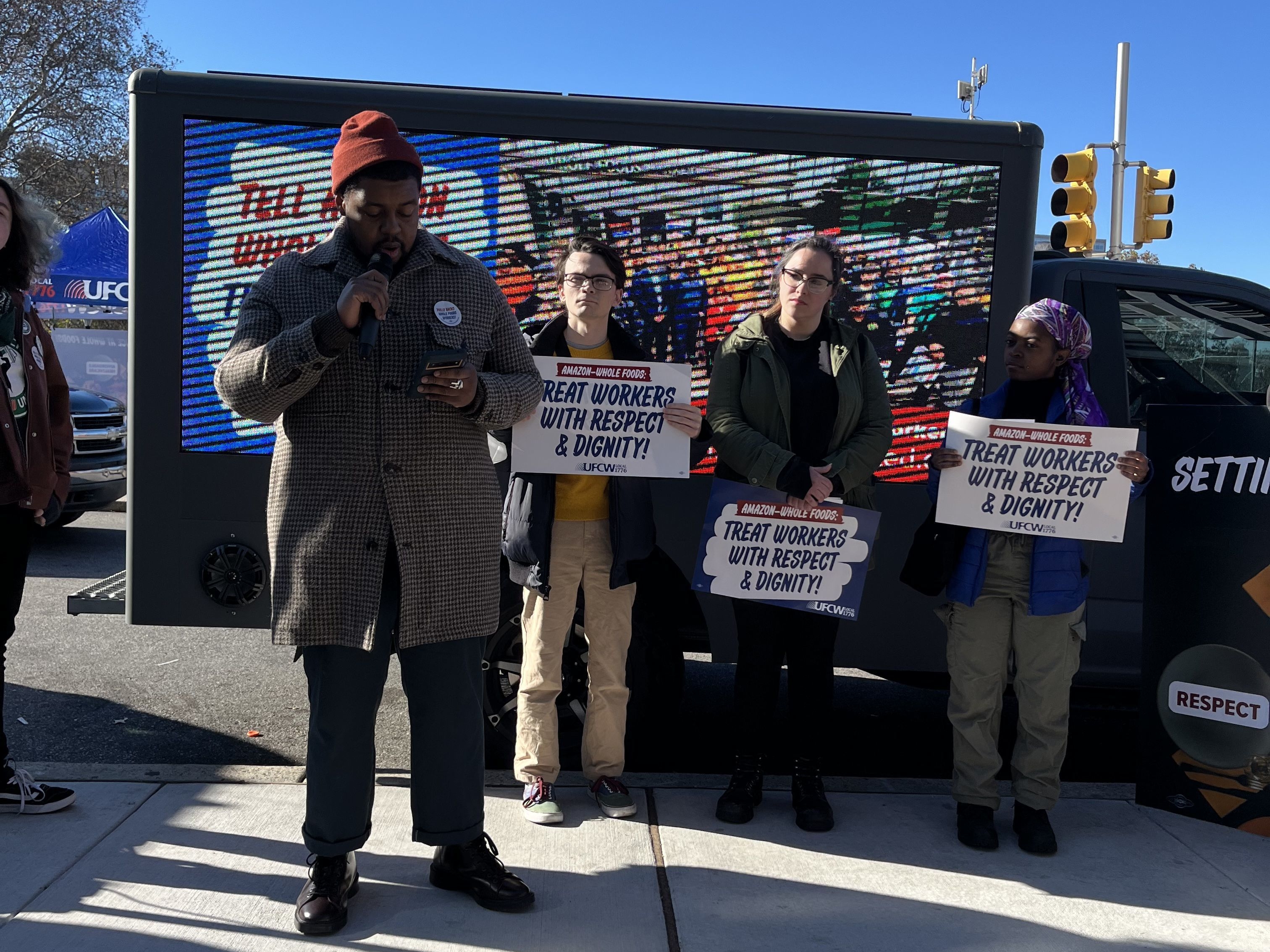
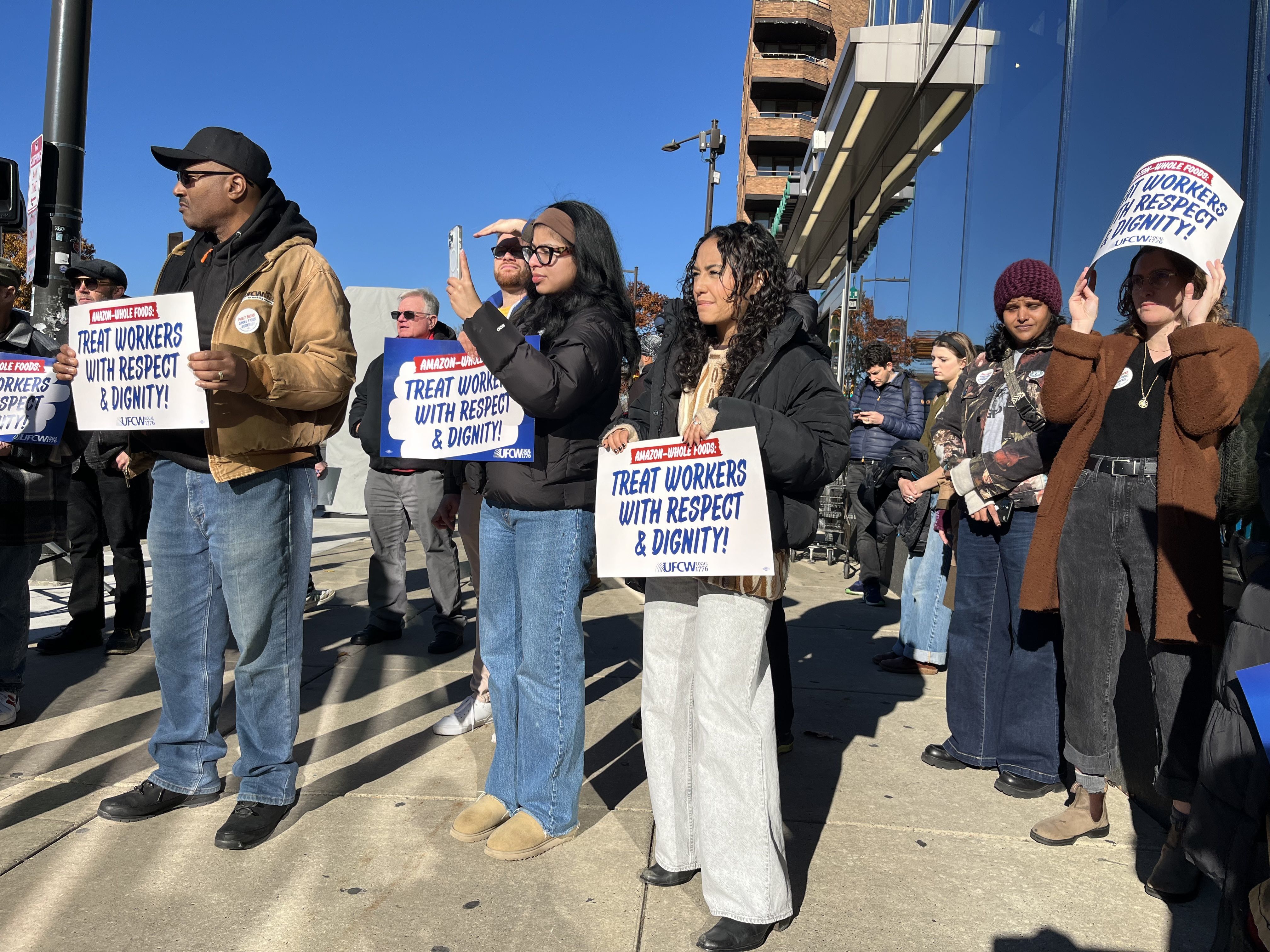
The Monday before Thanksgiving, workers and supporters gathered outside the Pennsylvania Avenue store, holding signs that read “Amazon-Whole Foods: Treat workers with respect & dignity!” Nearby, an inflatable “fat cat,” used by labor organizers and often denoting a person who uses wealth to exert power, stood tall outside the Whole Foods store.
Edward Dupree, who has been employed at Whole Foods for over nine years and works in the produce department at the Philadelphia store, told the crowd that in the 1970s, unionized grocery employees could maintain a middle-class family, but today workers are facing rising housing and healthcare costs as well as uncertainty in the economy.
“There’s been a concerted effort by billionaire business class — folks like [Amazon and Whole Foods owner] Jeff Bezos — to crush working class power by fighting unions like this,” said Dupree. “For 50 years, we’ve seen the worsening of living standards in tandem with the drop of unionization rates. It’s been long due for us to stand up for one another and fight back for a better future.”
Workers at the Philadelphia grocery store filed a petition to unionize with the National Labor Relations Board in November 2024 and made history in January as the first company store to successfully vote to unionize.
Employees want the company to begin negotiating a first contract, but for now, the case is at a standstill. Whole Foods has challenged the union election, and resolution of the issue lies with the National Labor Relations Board, which for months has been without the required quorum to make a decision since President Donald Trump fired a board member.
“We want Whole Foods to do what they’re obligated to do. What’s right to do is sit down and bargain a contract,” said Wendell Young IV, president of UFCW Local 1776, the union that Whole Foods workers elected to join. “We understand there’s a give and take in that process, but that’s from both sides. They’re refusing to even sit down and begin those discussions for a contract.”
An inflatable fat cat is seen outside the Whole Foods at 2101 Pennsylvania Ave. on Nov. 24, marking a year since workers first filed their intention to form a union with the National Labor Relations Board.
Why is the Whole Foods case at a standstill?
Whole Foods raised multiple objections to the worker union election earlier this year including alleging that the union promised employees would get a 30% raise if they voted for a union.
In May, the National Labor Relations Board’s regional director dismissed the challenge by Whole Foods, but the company asked for that decision to be reviewed. The union, for its part, has tried to block that review, but the board can’t make a decision either way without the required quorum.
“As previously stated, we strongly disagree with the regional director’s conclusion, and as demonstrated throughout the hearing earlier this year, including with firsthand testimony from various witnesses, the UFCW 1776 illegally interfered with our team members’ right to a fair vote at our Philly Center City store,” a spokesperson for Whole Foods Market said via email.
A union spokesperson said via email that they must wait until the board again has at least three members to review the case and added, “We expect that we will be successful at that time.”
Young, the president of the union local, has said in the meantime that the company is hiding behind the situation at the NLRB “to refuse to bargain.”
Edward Dupree, a Whole Foods worker, gathers with colleagues and supporters outside on Nov. 24 asking that the company come to the bargaining table and negotiate a first contract.
In the 1960s and into the 1970s, when it was not uncommon in the U.S. to see grocery workers strike or threaten to, Republicans and Democrats in office understood that unions were a permanent part of the economy, said Francis Ryan, a labor history professor at Rutgers University who has been a member of UFCW local 1776. The NLRB “provided some balance between the company and the union,” acknowledging that both parties “had an important role to play in our society,” he said.
“What we have in more recent years is a much more polarized political context, where the National Labor Relations Board is sometimes stocked with people who are aggressively anti-union,” said Ryan.
The Trump administration firing an official at the NLRB and not replacing them “is a deliberate attempt to make the process of collective bargaining and also organizing much more difficult,” said Ryan, adding that this is playing out in the case of Whole Foods.
Whole Foods workers and supporters outside the Center City grocery store on Nov. 24.
UFCW Local 1776, which Whole Foods workers in Philadelphia elected to join, represents thousands of workers across Pennsylvania and neighboring states in drugstores and food processing facilities, among other areas of work. The union represents grocery employees at ShopRite, Acme, and the Fresh Grocer.
Under the ownership of Amazon, the quality of work life at Whole Foods has deteriorated, said Young, adding that the company has unrealistic expectations and doesn’t compensate workers fairly in terms of wages, healthcare, retirement security.
“These people have no say in any of that — and that’s what led them to organize,” he said.
Whole Foods has said employee benefits include 20% off in-store items, as well as a 401(k) plan that offers a company match. The company also says it evaluates wages to ensure it is offering a competitive rate.
The number of unionized workers at grocery stores grew in the 1950s and 1960s in large part because areas of the U.S. were becoming more suburban and adding new grocery stores in the process, according to Ryan.
“You had thousands of workers in these new supermarkets that were unionized, and they made the retail clerks union one of the largest unions in the United States by the time you get to the 1970s — and Philadelphia was one of the real centers of supermarket unionization.”
It wasn’t unusual in the 1960s and 1970s for someone to make a living as a supermarket worker, although it was not uncommon for workers to have more than one job, said Ryan. In some cases, workers would stay at a grocery store for decades, he says, where they made decent wages and had a stable job indoors, adding that between 1965 and 1975 the wages of retail workers in Philadelphia nearly doubled.
Since then, it’s become much harder to make a living overall in the service industry, says Ryan.
But having unionized grocery stores amid other nonunion stores today can help shape the economy of the industry, says Ryan. A business that wants to maintain a nonunionized workforce might try to pay their workers the same starting rate that union workers make in wages, for example.
Unionized grocery stores “have a hidden-planet kind of role: They have this gravitational pull on the industry that actually raises conditions for everyone,” Ryan said.
While the Whole Foods store in Philadelphia is the first of the company’s locations to vote to form a union, others seem to be following.
“We now have active organizing going on, not only in other Whole Food stores in the area and around the country, but other grocery stores,” said Young.
Philadelphia City Council on Tuesday amended the initial budget for Mayor Cherelle L. Parker’s signature housing initiative to direct more money to programs that will help the lowest-income Philadelphians, a move that sparked one of the most notable confrontations between Parker and city lawmakers since she took office almost two years ago.
The amendment, which followed a weekslong standoff between the executive and legislative branches, represents a rare act of defiance for a Council that has otherwise been largely compliant with Parker’s agenda, and it appeared at first to be a major win for Philly progressives.
But Parker is not giving up the fight, and she said Tuesday night that the amendment may have had unintended consequences that could hold up much of the housing initiative for months.
The changes to the legislation, she said, may trigger additional procedural steps that will prevent the city from issuing $400 million in bonds to fund the initiative until March or later. The mayor did not hold back from laying the blame for the delays at Council’s feet.
“The resolution that City Council passed out of the Committee of the Whole today contained language that our bond lawyers have repeatedly advised would prevent the administration from being able to issue the bonds,” Parker said in a statement. “That means homes are not being restored. It means homes are not being built or repaired.”
In an unusually blunt statement late Tuesday night, Council President Kenyatta Johnson pushed back against the administration’s analysis of the situation.
“Council’s responsibility is not to rubber-stamp legislation, but to ensure that any multi-billion-dollar public investment is legally sound and targeted to the Philadelphians who need it most,” Johnson said.
But he also vowed to have Council quickly introduce new legislation that could ameliorate the procedural problem Parker identified, tacitly conceding that additional legislation was needed hours after lawmakers approved the resolution with no mention of that possibility.
Johnson said Council would “resolve remaining legal and policy issues swiftly,” and that a new measure to legalize lawmakers’ most recent changes could be introduced this week.
Council wants “shovels in the ground” and “homes repaired,” he said, but ”refuses to rush into issuing $800 million in debt without iron-clad legal protections and clear guarantees.”
“Council members repeatedly raised concerns — directly and in good faith — about accountability, neighborhood equity, homeowner protections, and the long-term impact of the H.O.M.E legislation,” he said. “Council’s action today strengthened the H.O.M.E resolution, not sabotaged it.”
The late-night war of words between Parker and Johnson came hours after a celebratory Council committee meeting in which lawmakers took a victory lap for standing up to the administration.
After the vote, Councilmember JamieGauthier and Councilmember Rue Landau, respectively the chair and vice chair of the Committee on Housing, Neighborhood Development and the Homeless, said the amended resolution means “working and low-income families will finally be able to get the support they need sooner.”
“With roughly $30 million in federal homelessness funding at risk, it is more important than ever that this multiyear, $800 million investment begins by prioritizing the more than 200,000 Philadelphia households on the brink of losing their homes,” Gauthier and Landau said in a joint statement, referring to a federal policy change proposed by President Donald Trump’s administration that could cost the city millions in funding for anti-homelessness programs.
Council pushes for policy changes
Parker, who has long championed the city’s “middle neighborhoods,” structured her sweeping Housing Opportunities Made Easy, or H.O.M.E, initiative to ensure that the myriad programs funded or created by the program would be available to homeowners and renters at a variety of income levels.
But Johnson — in an unexpected break from his usual alignment with Parker — stood with Gauthier and other progressives who fought to ensure the neediest city residents were prioritized in the budget resolution, which sets the first-year spending allocations for H.O.M.E. The distribution of funding must be approved by Council before the administration can issue the first of two planned $400 million tranches of city bonds that will finance much of the initiative.
Council’s Committee of the Whole, which includes all members, approved the amendment and advanced the resolution in a pair of unanimous voice votes Tuesday afternoon following hours of testimony.
The measure would now head to the Council floor for a final passage vote in the next two weeks. Parker’s statement, however, could mean Council has additional work to do before getting the measure over the finish line. Johnson’s office said the vote is still scheduled for Dec. 11.
“The majority of the members of City Council want to focus on the issues of those who are poor here in the city of Philadelphia when it comes to housing and equality,” Johnson told reporters after the vote.
It’s unclear whether the vote represents a serious rupture in the tight relationship between Parker and Johnson, who have worked closely together since both took office in January 2024. Council approved the most important pieces of legislation Parker proposed as part of the H.O.M.E initiative earlier this year, and the changes adopted Tuesday do not alter the fundamentals of the program, which Parker hopes will achieve her goal of creating or preserving 30,000 units of housing in her first four-year term.
“We support the H.O.M.E. plan,” Johnson said. “And I think the mayor did a good job in investing close to $1 billion … in supporting the issue of housing inequality here in the city of Philadelphia. This amendment represents the will of the members. … We want to specifically focus on those who are the most least well-off, those who are poor.”
But after reading about Parker’s statement in the evening, Johnson’s attitude toward the administration sharpened. His lengthy statement included the most critical language the Council president has directed at the mayor since they were inaugurated.
Mayor Cherelle L. Parker unveils her long-awaited plan to build or preserve 30,000 units of housing during a special session of City Council Monday, Mar. 24, 2025. Council President Kenyatta Johnson is behind her.
Johnson rejected Parker’sclaim that the legislative delays could cause the popular Basic Systems Repair Program to temporarily run out of funding, saying that there is plenty of money in the current city budget to cover shortfalls.
“Threatening residents with a shutdown of the Basic Systems Repair Program and assigning blame does not move this process forward,” he said. “Collaboration and working together does.”
The amendment increases the first-year budget for spending the bond proceeds from $194.6 million to $277.2 million. The increased price tag, however, does not represent new money in the housing budget; it merely allows the administration to spend more of the $400 million in bond proceeds in the initiative’s first year.
The changes include increases in funding for housing preservation from $29.6 million to $46.2 million, and housing production from $24.3 million to $29.5 million. Additionally, the amendment boosted funding for homelessness prevention programs from $3.8 million to $8.8 million.
But perhaps more importantly, Council altered the income eligibility levels for several programs.
Parker, for instance, had proposed that the H.O.M.E. funding for the Basic Systems Repair Program, which subsidizes critical home improvements to prevent residents from being displaced by the costs of needed repairs, be open to any homeowner who makes Philadelphia’s area median income, or AMI, which is about $119,400 for a family of four.
Council’s amendment, however, requires 90% of the new funding to go to families making 60% of AMI or less, about $71,640 for a family of four.
The administration initially planned to issue the first $400 million in bonds this fall, and Parker sent Johnson’s office a first draft of the budget resolution in July. Council then delayed the committee vote on the resolution several times as Johnson negotiated with Parker on potential changes.
The amendment adopted Tuesday appears to largely mirror Gauthier’s priorities for the spending plan, rather than a negotiated compromise, the first sign that Johnson had moved forward despite not reaching a deal with Parker.
Parker’s plan to sell the initial round of bonds this fall appeared to be on schedule when Council in June approved the most important pieces of legislation associated with the H.O.M.E. initiative, including an $800 million bond authorization.
But lawmakers at that time inserted a provision into the bond legislation that required the administration to get Council approval of its H.O.M.E. budget each year before it can spend the bond proceeds. For the initiative’s first year, that provision means the city cannot take the bonds to market at all without Council signing off on the budget resolution, city Finance Director Rob Dubow has said.
The latest potential delay, which could set Parker’s schedule back months more, stems from the amendment approved in committee Tuesday.
Parker did not elaborate on the procedural issue that could cause the latest delay, but her comments indicated what it may be: Because the resolution, which dictates how the bond proceeds can be spent, now includes significant differences from the bond authorization bill Council approved months ago, the city may not be able to rely on the original bill as its legal basis for taking out debt and selling the bonds.
To make them align, Council may have to approve a new bond authorization bill, or abandon some of its changes to the spending resolution.
In his statement Tuesday night, Johnson indicated Council has chosen the former route.
“City Council is preparing to introduce an amendment to the H.O.M.E bond ordinance as early as this week’s Council session,” he said.
It’s unclear if the resolution could pass by the end of the year. But Johnson’s reference to the potential of the current city budget’s surplus covering shortfalls in housing programs indicates that might not be possible.
Council’s last meeting is scheduled for Dec. 11. Lawmakers can vote to suspend Council rules and fast-track legislation as needed.
This story was updated to include Council President Kenyatta Johnson’s response to Mayor Cherelle L. Parker’s statement.
The William Way LGBT Community Center will return to the building it has called home after much-needed renovations are completed, instead of permanently leaving as had been previously announced, the leaders of the nonprofit’s board said Tuesday.
Earlier this year, William Way announced it was planning to sell its 175-year-old building at 1315 Spruce St. because fundraising efforts for a “comprehensive redevelopment plan to renovate and expand” the Center City property had fallen short.
The nonprofit said early last week that it was permanently closing its doors later this month and relocating services, and even had a “One Last Dance” goodbye party in the building scheduled for this Friday.
The building will still close on Dec. 18, but the services that William Way provides will eventually return, the nonprofit said Tuesday.
“Thanks to the support of multiple sources, including generous individual donors, and the efforts of our board, staff, and partners, we are pleased to share that the center will return to the building once redevelopment is complete,” Dave Huting and Laura Ryan, cochairs of the William Way LGBT Community Center Board, said in a statement.
“While there are still many details to finalize, including a timeline for when we can once again welcome the community back into the building, we are thrilled to share that the center will not be leaving its longtime home,” Huting and Ryan said.
“We look forward to sharing our vision for a reimagined facility, one that continues to be an essential resource for Philadelphia’s LGBTQ community, and which will become a reality as details are finalized,” they said.
“We are partnering with a nonprofit developer to redevelop our building at 1315 Spruce Street, transforming it into a modern and welcoming space that better serves our vibrant and engaged community,” Huting and Ryan said.
The center briefly closed for inspection and emergency repairs last fall, then partially reopened in January 2025.
In June, William Way said it needed to sell the building — which it had purchased in 1997 — because the nonprofit could not move forward with the more than $3.5 million in immediate repairs that were needed “before any broader redevelopment could proceed.”
The statement on Tuesday did not explicitly say the building would not still be sold.
A spokesperson for William Way could not be reached for comment.
In the meantime, William’s Way’s programs will move.
On Jan. 5, the center’s empowerment programs, including the elder initiative, peer counseling, and trans programs, will operate out of the nearby Church of St. Luke and the Epiphany at 330 S. 13th St.
A plan is being developed to temporarily relocate the John J. Wilcox Jr. Archives and is expected to be announced next year, the nonprofit said.
“We have always said that the center thrives not because of its building, but because of its people. However, the rebuilding of the center will allow it to become an even more effective space to advance our mission and enhance the services and support we provide to our community,” the board cochairs said.
As of Tuesday evening, the “One Last Dance” party was still being promoted on William Way’s website.
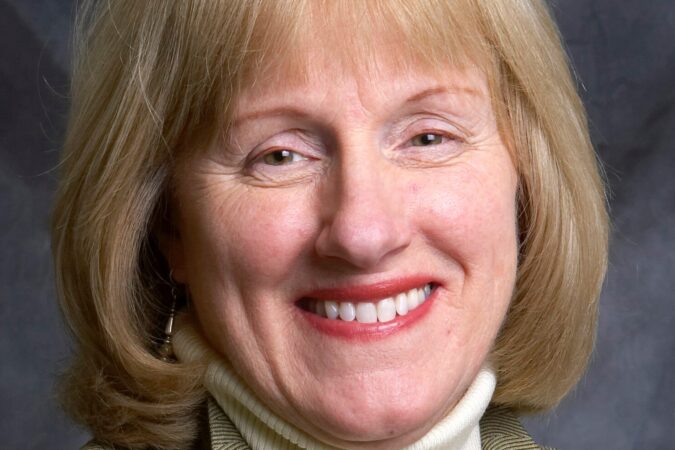
Kathleen A. Case, 80, of Bryn Mawr, longtime writer, pioneering medical journal editor, award-winning historian, researcher, and volunteer, died Friday, Nov. 14, of heart failure at Bryn Mawr Hospital.
A natural wordsmith who was interested in the origins and nuances of language as well as its use, Ms. Case spent 24 years as a top editor for the Annals of Internal Medicine and vice president for publishing at the Philadelphia-based American College of Physicians. Later, for 15 years, she was publisher, archivist, historian, and director of strategic planning for the publishing division of the Philadelphia-based American Association for Cancer Research.
She was adept at understanding and organizing complex research and other medical information, and helped Annals of Internal Medicine digitize its production process and content, expand its reach, and become one of the world’s most influential and cited medical journals. “She loved precise, concise, and unambiguous writing,” her family said in a tribute.
She was one of the few female editors in the medical publishing industry when she joined Annals as an assistant editor in 1977, and she rose to managing editor, executive editor, and senior vice president for publishing by 1998. She attended many international medical publishing conferences around the world, and other journals tried unsuccessfully to lure her away from Philadelphia.
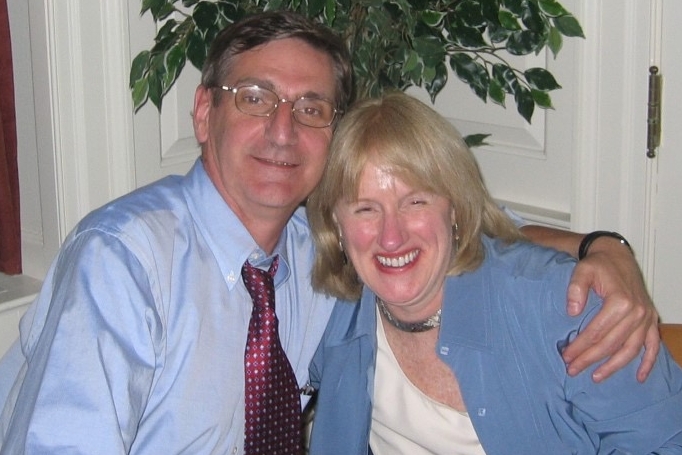
Ms. Case and her husband, Jacques Catudal, married in 1995.
“She set the highest editorial standards in medical publishing and expected the best from everyone around her,” a former colleague said in an online tribute. “But she also took the time to teach. … The lessons I learned from her have shaped my work ever since.”
Ms. Case joined the American Association for Cancer Research in 2001, served two stints as head of the publishing division, and supervised its marketing campaigns, advertising sales, and product development. She retired in 2008 but continued part time as the AACR archivist, historian, and director of strategic planning until retiring for good in 2016.
Away from her day jobs, Ms. Case was past president of the Society for Scholarly Publishing and what is now the Council of Science Editors. She also served on boards and committees for the American Medical Association, the American Chemical Society, the American Heart Association, and the International Committee of Medical Journal Editors.
Even in retirement, she continued to work as a board member, writer, researcher, and historian for the Haverford Township Historical Society. She served on the Haverford Township Historical Commission, was a member of the Historical Society of Pennsylvania, chaired the Friends of the Polo Field, and helped establish the Brynford Civic Association.
Ms. Case graduated from Radnor High School and Pennsylvania State University.
“She was always busy, always involved with some project,” said her husband, Jacques Catudal. She edited his published academic papers, he said, and routinely marked up her two sons’ school reports in red ink for years.
In 2019, she won a historic preservation award from the Heritage Commission of Delaware County. “She was an endlessly inspiring woman whose intelligence was matched only by her sharp wit and her extraordinary cultural sensitivity,” a friend said in a tribute.
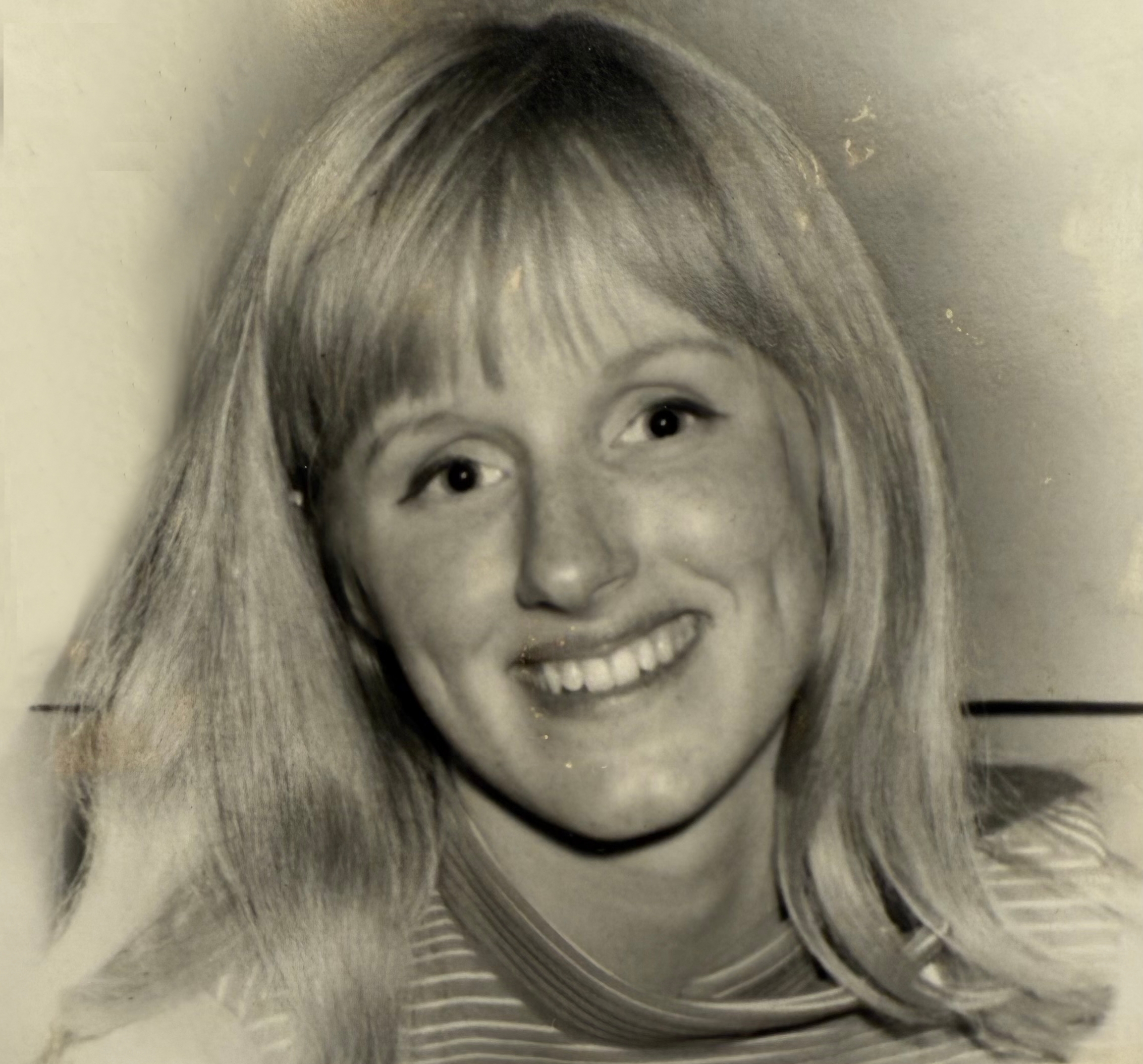
Kathleen Ann Case was born Sept. 13, 1945, in Westfield, N.J. The youngest of three children, her family moved to Omaha, Neb., and then Radnor when she was young.
She graduated from Radnor High School, studied journalism at Pennsylvania State University, and earned a bachelor’s degree in English in 1967. She was a reporter and editor for the Penn State student newspaper and so active that school officials waived their prohibition of female students living alone off campus so she could reside near the paper’s office. In 1987, she earned a master’s degree in technical and science communication at Drexel University.
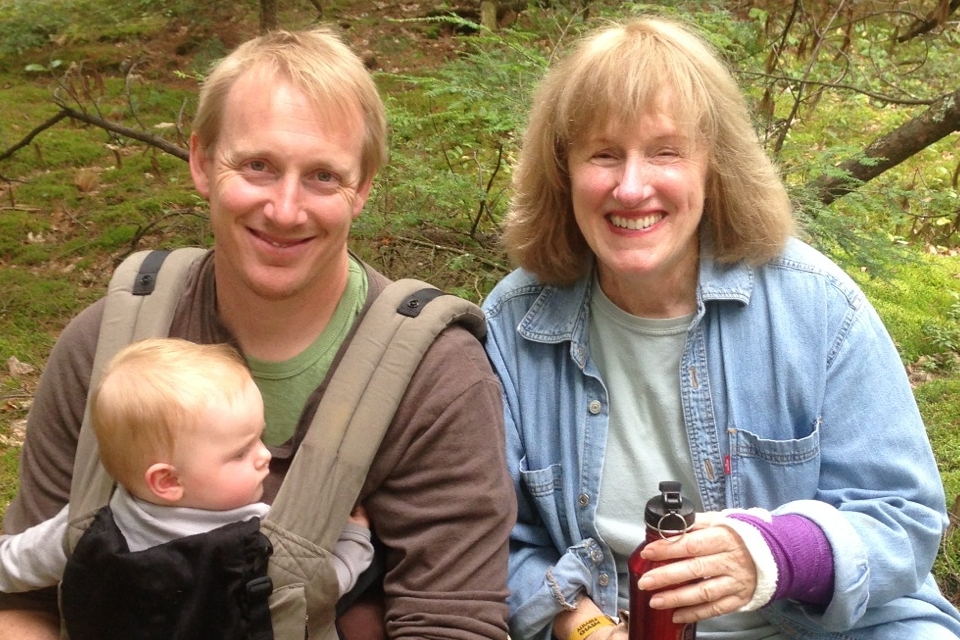
Ms. Case (second from left) enjoyed time with her family
She married D. Benjamin van Steenburgh III, and they had sons Ben and Jason. After a divorce, she married Peter Moor. They divorced, and she married Catudal in 1995.
Ms. Case raised her sons as a single mother in Avondale, Chester County, for years and moved to Bryn Mawr in 1979. She read voraciously about history, collected antiques, and enjoyed travel, classic rock, and Irish folk music.
She rode horses, was an expert archer, and followed the local sports teams. She tended her garden and investigated her genealogy.
She liked to refinish and paint furniture and discuss current events. She and her husband camped, hiked, and canoed all over the world.
Ms. Case enjoyed hiking and the outdoors.
She also dealt with metastatic breast cancer and three heart attacks. “She always gave as much honesty, opinion, perspective, experience, literary acumen, word knowledge, help, advice, comfort, and love as could be needed,” said her son Jason.
Her husband said: “She was brilliant and extremely funny. She was an organizer and always giving of herself.”
In addition to her husband, sons, and former husbands, Ms. Case is survived by four grandchildren, a sister, a brother, and other relatives.
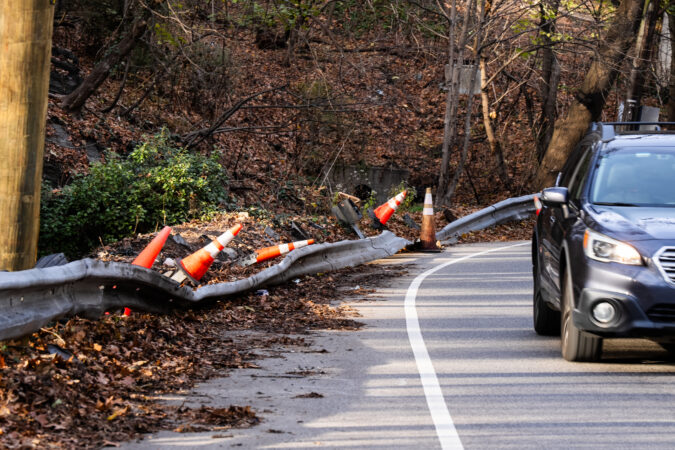
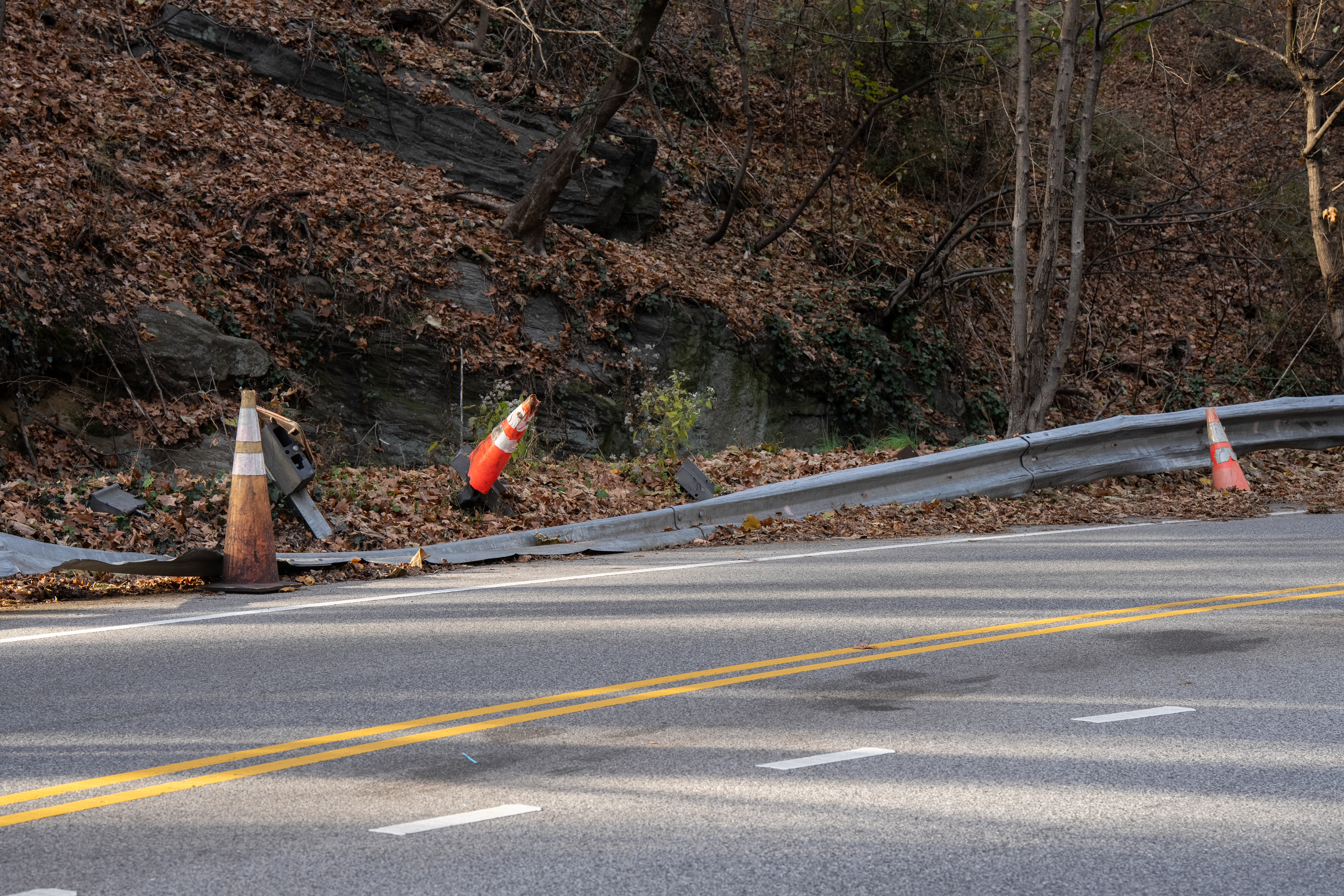
A 65-year-old man died Sunday after he lost control of his vehicle on Cresheim Valley Drive in Chestnut Hill, striking a downed guardrail and flipping the car upside down into a creek. Just weeks before, another driver veered off the same road but survived.
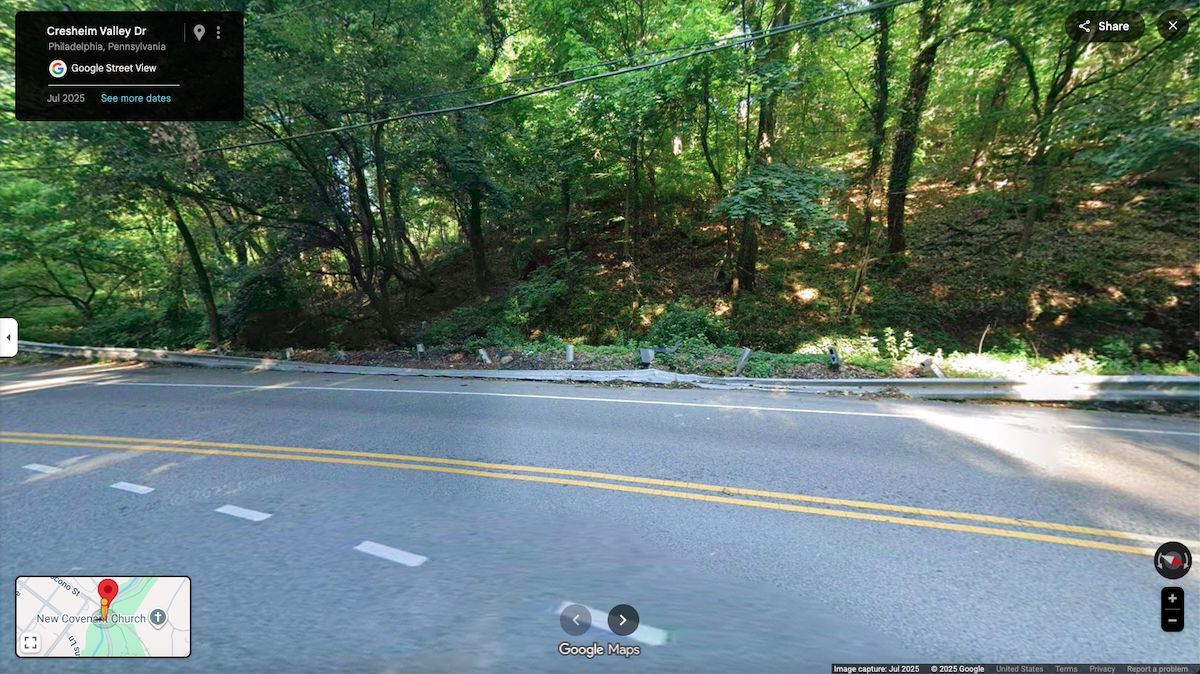
Compounding this latest traffic death is the fact that the guardrail meant to prevent cars from swerving off the road was broken and nearly flattened from previous crashes, leaving a gap in the guardrails for months, said Josephine Winter, a Mount Airy resident and executive director of West Mount Airy Neighbors (WMAN). “The guardrail was down, and it was previously crumbled so it’s a frequent site of crashes,” she said. Images from Google Maps show the guardrail down as far back as July.
The Philadelphia Streets Department is aware of the recent crash and is conducting an assessment of the guardrail on Cresheim Valley Road. “The streets department’s top priority is public safety,” a spokesperson said.
A screenshot of a Google Map’s street view captured in July 2025 shows the downed guardrail on Cresheim Valley Drive in the Chestnut Hill neighborhood of Philadelphia. On Nov. 30, 2025, a 65-year-old man crashed and went over the guardrail, later succumbing to his injuries.
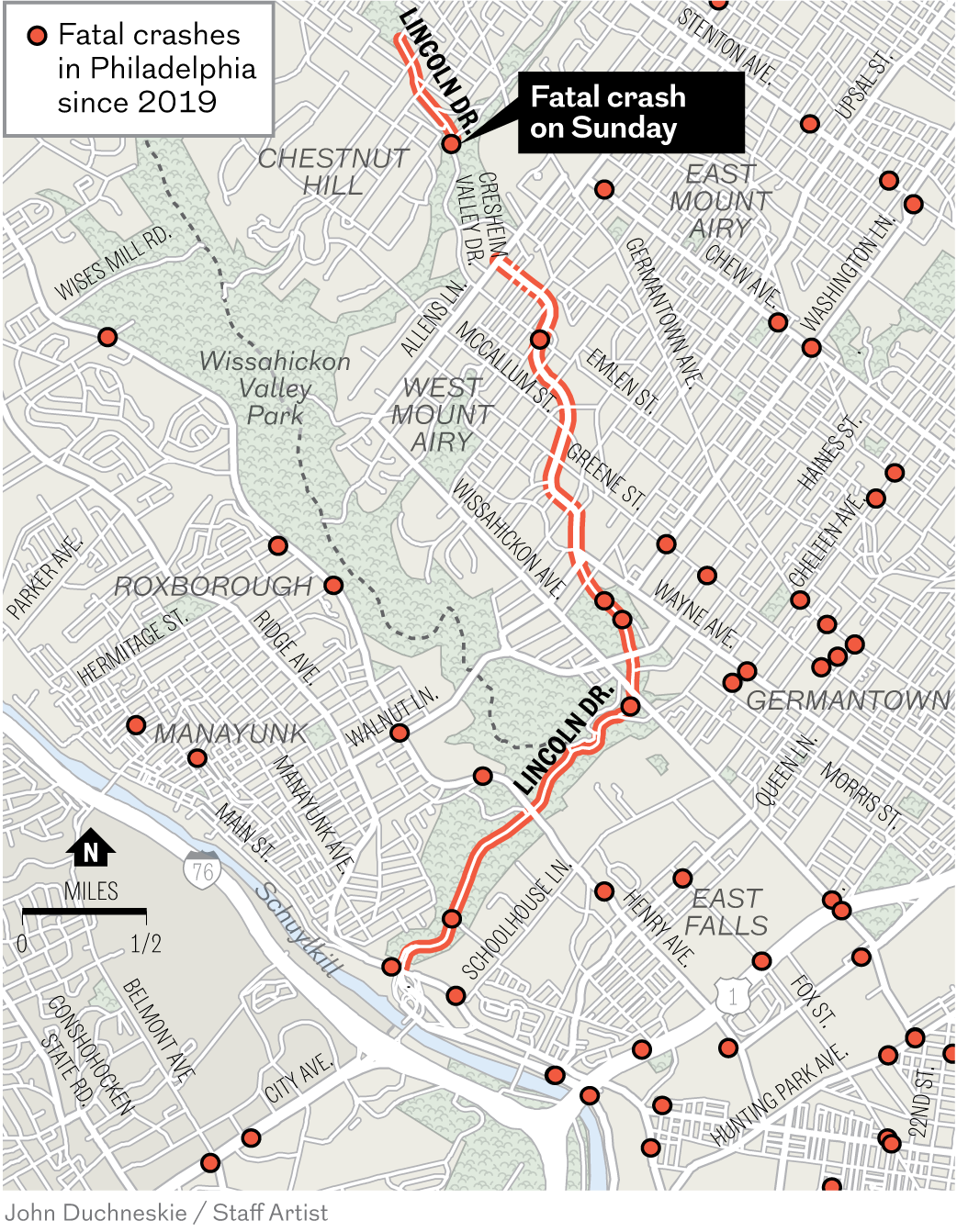
Neighbors say accidents, sometimes fatal, have plagued the winding roadways in Chestnut Hill and Mount Airy for decades. These traffic safety concerns came to a head with Sunday’s deadly crash.
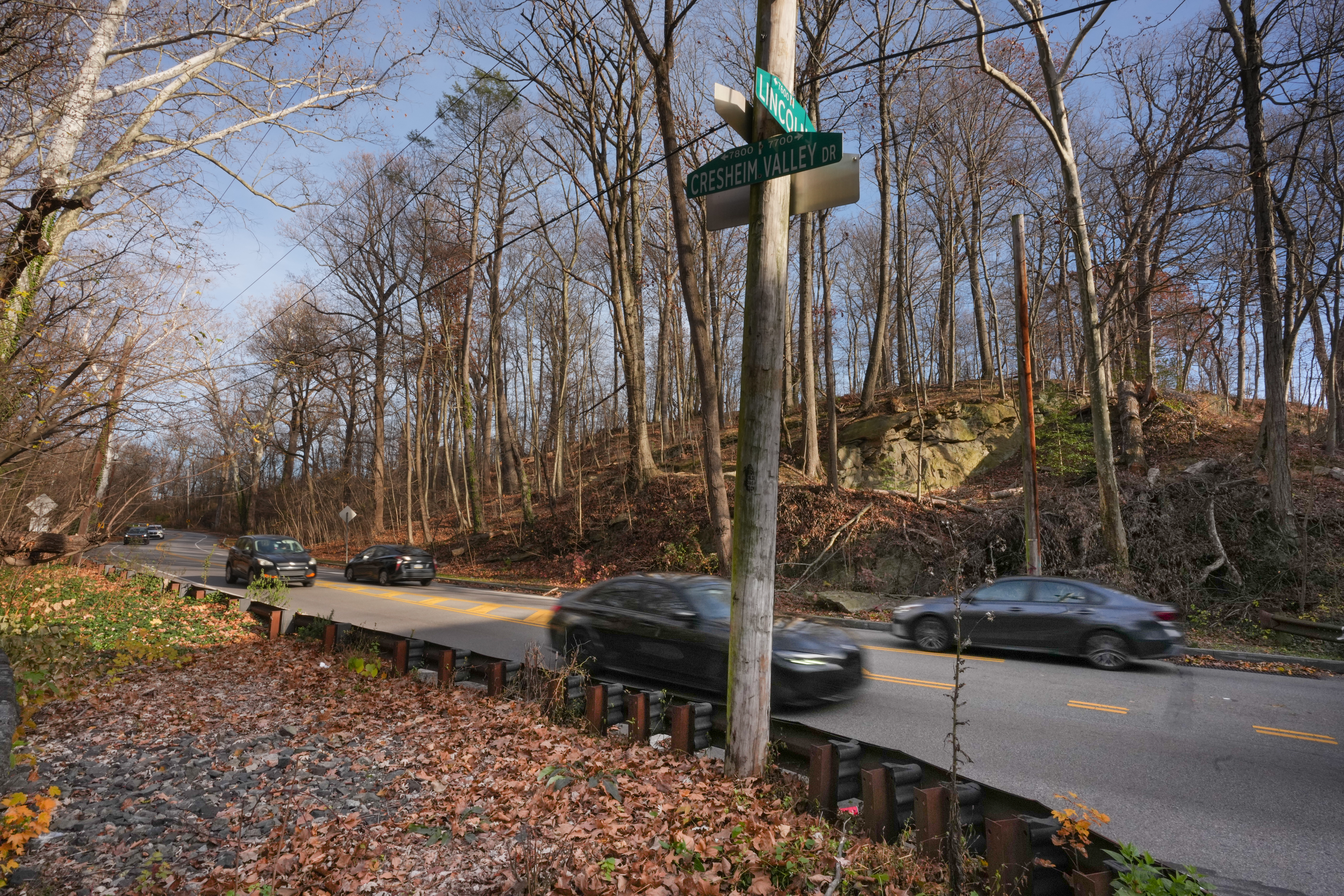
“It’s a curvy, tricky road, especially when it’s wet, and people tend to speed on that road,” Winter said of roadways like Lincoln and Cresheim Valley Drives, which are lined with trees, have swooping dips and hills, and are prone to flooding.
Map of fatal crashes in Northwest Philadelphia since 2019.
Winter, who leads WMAN’s traffic-calming committee, and other neighborhood organizations have petitioned for city support, urging the streets department to slow the speed of traffic on Cresheim Valley Drive, Lincoln Drive, and Wissahickon Avenue. The group’s efforts are so ingrained in the fabric of the neighborhood that, when digging through Temple University’s Urban Archives, Winter found an advertisement from 1968 stressing the need for cars in Mount Airy to “slow down to keep kids safe.”
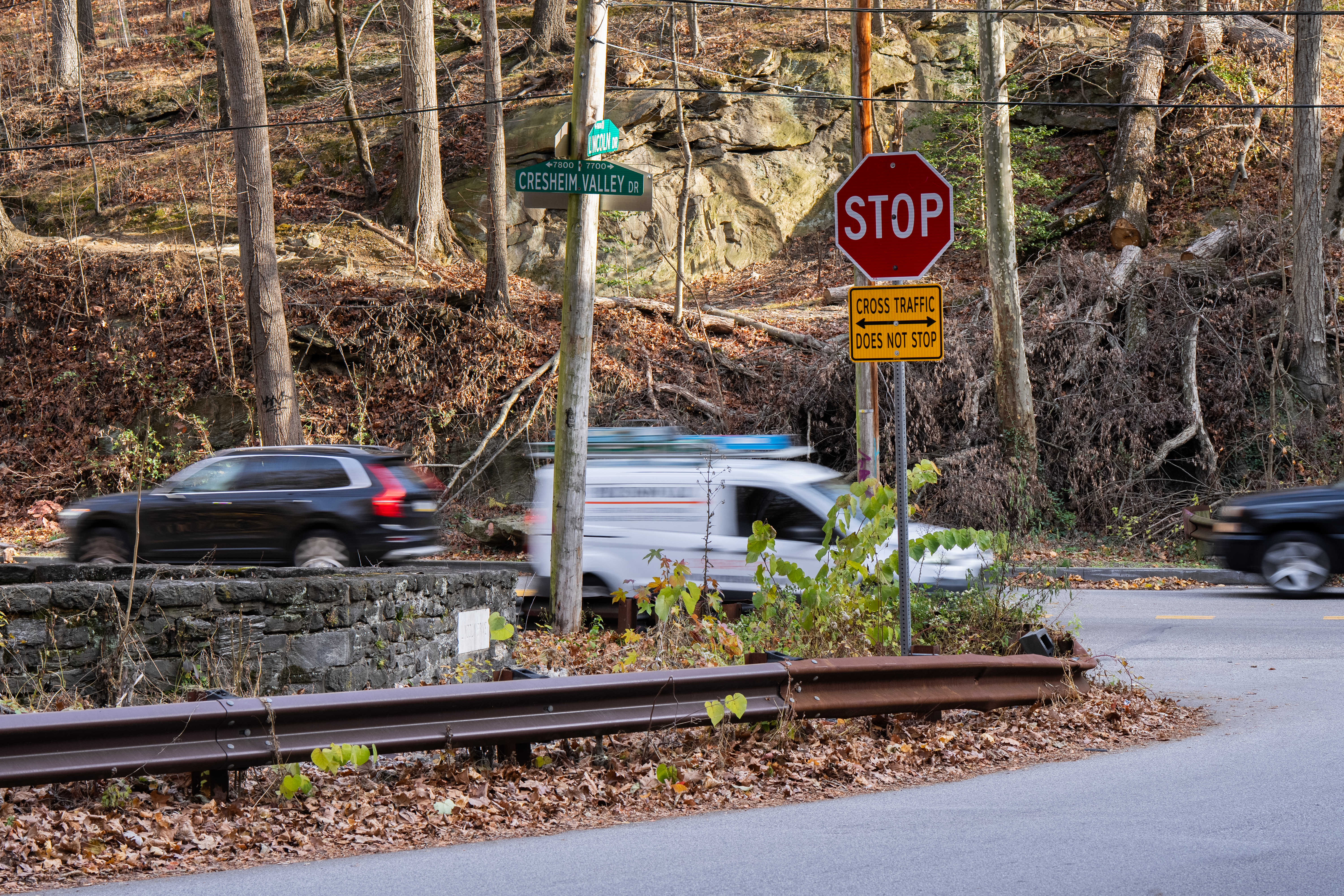
The intersection of Cresheim Valley Drive and Lincoln Drive, in Philadelphia, PA, Dec. 1, 2025.
The streets department installed “speed slots,” traffic-calming structures similar to speed bumps, earlier this year along Lincoln Drive between Allens Lane and Wayne Avenue. Along the same stretch of road, the Pennsylvania Department of Transportation installed rumble strips and speed tables to slow drivers down in 2023, in addition to traffic lane separators to keep drivers from using center lanes to pass other vehicles.
In addition to the recently completed speed slots and traffic-calming measures on sections of Emlen Street, which becomes Cresheim Valley Road, signal upgrades are planned for Lincoln Drive as well.
However, the work to improve these streets is not over, Winter said. Additionally, the streets department plans do not include changes to Cresheim Valley Drive, where Sunday’s crash happened.
“We’ll need a collaborative approach as soon as possible to temporarily address the downed guardrail, and then see what the options are moving forward,” Winter said.
The intersection of Cresheim Valley Drive and Lincoln Drive, in Philadelphia, PA, Dec. 1, 2025.
Throughout the last decade, locals have suggested better-timed signals, more speed tables, and reducing the number of driving lanes from two in either direction down to one. They also want to see more roundabouts and curb bump-outs in the neighborhood to keep traffic flowing, but at a reasonable speed.
A mere 50 to 100 feet from Cresheim Valley Drive is a parallel bike trail, where trail organizers like Brad Maule are accustomed to the crashes on the road nearby. Before Sunday’s fatal crash, he remembers two other cars that drove off the side of the road in recent months, not counting the crashes on the roadway itself. The city recently installed pedestrian crossing signs and repainted the crosswalk on nearby Cresheim Road, but Maule hopes speed bumps will follow.
Cresheim Valley Drive near where it intersects with Lincoln Drive, in Philadelphia, PA, Dec. 1, 2025.
While Winter said that engineers from the Philadelphia Streets Department were among the first calls she received Monday morning responding to the crash, and that the community appreciates the response, she, Maule, and other neighbors hope that more safety improvements will be considered to save more lives.
“I’m just looking forward to the new measures of safety that come here,” Maule said. “Hopefully, people will abide by them.”
Staff writers Max Marin and Dylan Purcell contributed to this article.
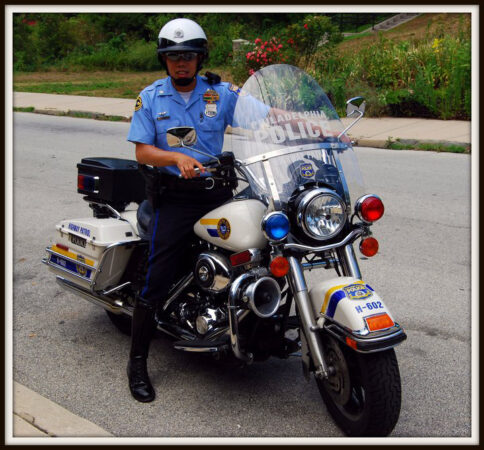
Andy Chan, a Philadelphia Highway Patrol officer who suffered a devastating brain injury in a motorcycle crash while on his way to work six years ago, has died.
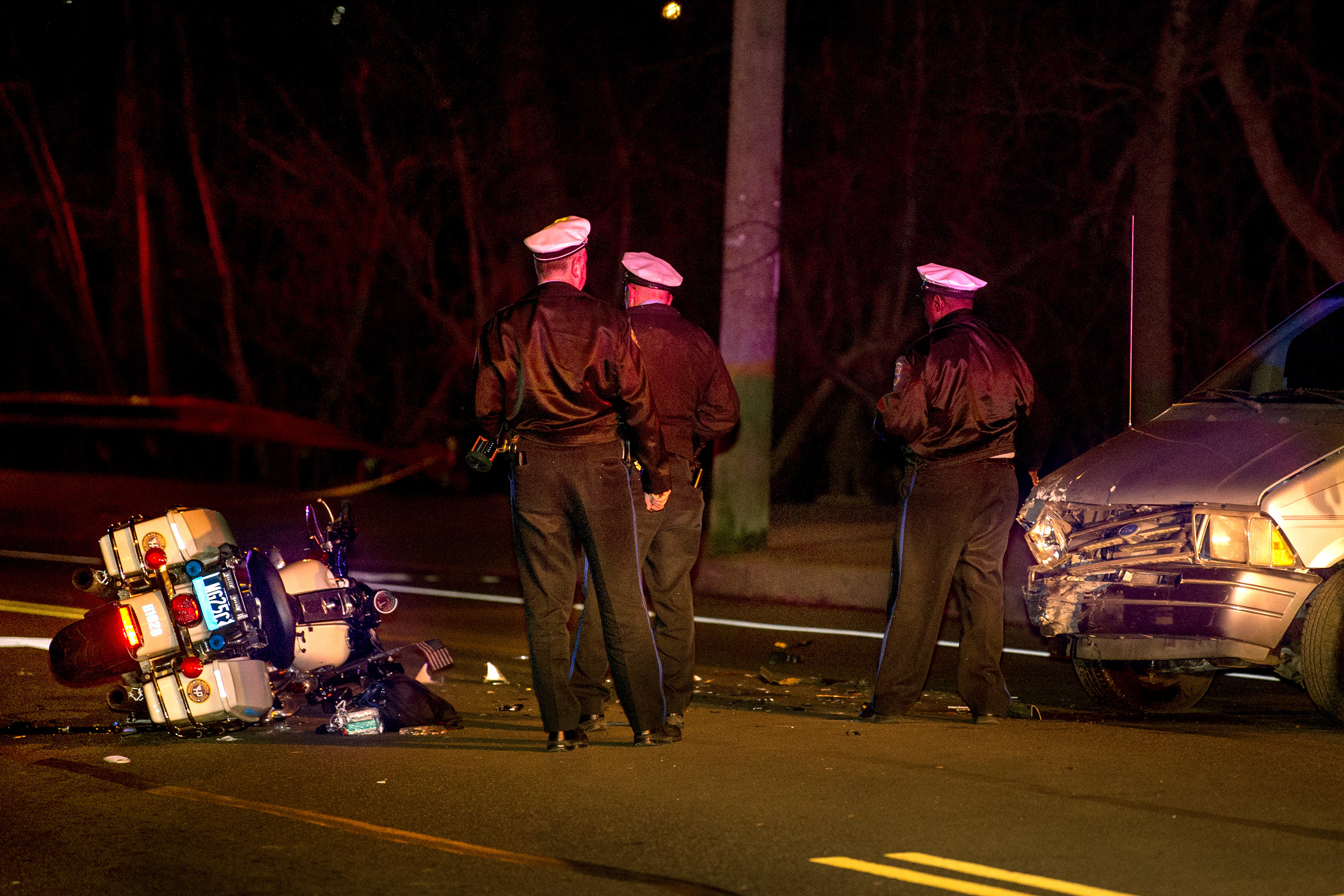
Chan, 48, was riding through Northeast Philadelphia one evening in January 2019 when an elderly driver unintentionally struck him on the 3300 block of Rhawn Street. He was thrown about 20 feet, police said, and was critically injured.
Chan, a 24-year veteran of the force, was in a prolonged coma and was hospitalized for weeks on a ventilator. In the years since, his injuries have required around-the-clock care, with family, friends, and colleagues in the Philadelphia Police Department regularly at his side.
The Fraternal Order of Police Lodge 5 announced Chan’s death on Tuesday. The cause of death was not immediately clear.
“Andy died a hero and we will always remember and honor his sacrifice,” the union wrote on Facebook.
Andy Chan was thrown from his highway patrol motorcycle and critically injured in a crash on the 3300 block of Rhawn Street on January 3, 2019.
Chan, a father of three, grew up in Chinatown and had always dreamed of being a highway patrolman. His family recalled how he watched with awe when the leather-clad officers approached his parents’ restaurant on their motorcycles.
He decided, they said, that would be him one day.
“That was the only place he strived to be in,” his wife, Teng, said years ago.
After becoming a Philadelphia police officer in 1996, he was first assigned to the 39th District, working as a bike cop. Eight years later, he was promoted to the elite highway unit.
He took such pride in his work that when he walked into police headquarters, instead of yelling, “Hi,” he would shout, “Highway!”
And even when he met Teng nearly two decades ago, he introduced himself as such: “I’m Highway.”
Chan and his partner, Kyle Cross, were among the first officers who responded to the Amtrak crash in 2015 that left eight people dead and nearly 200 injured. Cross, in an earlier interview, recalled how Chan kept his composure as he sought to rescue survivors from the wreckage.
“What I remember from Andy was his poise — he stayed so calm, he really just led the way,” Cross recalled. “I followed his lead.”
Police Commissioner Kevin Bethel, in an email to the department Tuesday morning, described Chan as “larger than life, not because of what he did, but because of who he was.”
“He was the kind of officer whose reputation reached every corner of this Department and City; not because he sought attention, but because his work, his character, and his heart made him impossible to forget. Andy represented the very best of who we are and what we aspire to be: skilled, humble, kind, and unfailingly courageous,” Bethel wrote.
“Andy,” he said, “will forever remind us of why this work matters.”
Funeral arrangements have not been announced.
Since Chan was injured, police and community members have gathered each December to support his family and raise money for his recovery. Supporters will continue to gather in his honor this year, on Dec. 12 at Craft Hall at 4 p.m., for the sixth annual Andy Chan Block Party.
Quinta Brunson wants you to dig into your pocket to make free field trips possible for Philadelphia students.
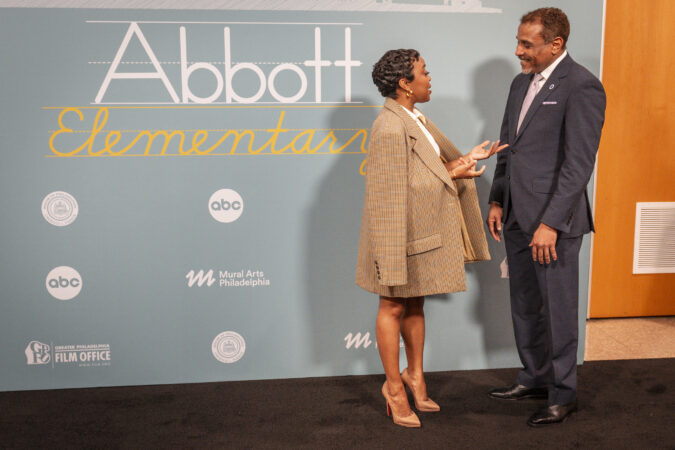
The actor, writer, and comedian — along with Philadelphia School District officials and the leader of the district’s nonprofit arm — announced the “Quinta Brunson Field Trip Fund” on Tuesday.
District teachers and administrators will be able to apply for money for field trips by completing a short application subject to evaluation by an independent, internal group of educators. Field trip grants will be made twice a year.
“They opened my world, sparked my creativity, and helped me imagine a future beyond what I saw every day,” Brunson said. “Going somewhere new shows you that the world is bigger and more exciting than you believe, and it can shape what you come to see as achievable. I’m proud to support Philadelphia students with experiences that remind them their dreams are valid and their futures are bright.”
“Abbott Elementary” star Quinta Brunson watches the Phillies play the Atlanta Braves during a taping of the show in Philadelphia in August.
Every Abbott Elementary season has featured a field trip episode, including visits toSmith Playground, the Franklin Institute, and the Philadelphia Zoo. Brunson’s fund “will remove the financial barriers that too often limit our children’s access to these enrichment opportunities,” officials for the Fund for the School District of Philadelphia said.
The GivingTuesday launch kicked off with an unspecified donation from Brunson herself.
Kathryn Epps, president and CEO of the Fund for the School District of Philadelphia, said getting students out of their classrooms is crucial.
“We are honored to partner with Quinta to expand these experiences for children in Philadelphia’s public schools, helping them to envision and realize any future they desire,” Epps said.
Tony B. Watlington Sr., Philadelphia School District superintendent, said he was grateful to Brunson.
“We want our students to venture out and bridge what they’re learning in the classroom to engaging, real-world learning experiences,” Watlington said. “This commitment to equitably expanding opportunities for students to have experiences outside of their classroom will help accelerate student achievement and we are becoming the fastest improving, large urban school district in the nation.”