Category: Editorials

  • It’s Trump — not service members — who could benefit from a reminder about following the law | Editorial

    It’s Trump — not service members — who could benefit from a reminder about following the law | Editorial

    Six lawmakers, including two from Pennsylvania, had good reason to remind military members not to follow unlawful orders, given Donald Trump’s illicit history and recent actions, such as sending federal troops into cities and boat strikes that violate international law.

    The six Democrats, who either served in the military or the intelligence community, posted a short video telling their former counterparts that “no one has to carry out orders that violate the law or our Constitution.”

    Right on cue, Trump responded with a fury of unhinged social media posts calling for the lawmakers to be jailed or executed.

    “Each one of these traitors to our Country should be ARRESTED AND PUT ON TRIAL,” Trump wrote. He followed that with: “SEDITIOUS BEHAVIOR FROM TRAITORS!!! LOCK THEM UP???” He escalated in yet another post: “SEDITIOUS BEHAVIOR, punishable by DEATH!”

    Trump later claimed he was not calling for members of Congress to be put to death — though his words plainly suggested otherwise.

    When he isn’t lying, Trump’s abhorrent rhetoric over the past decade has become so routine that it barely causes a stir. (See: his recent outburst telling a reporter, “Quiet, piggy!” and shameful defense of Saudi Crown Prince Mohammed bin Salman, who authorized the vile murder of a journalist.)

    Given Trump’s record of abusing his power, the members of Congress were right to sound the alarm.

    In his previous term, Trump incited a violent insurrection at the U.S. Capitol. Let’s not forget he is a convicted felon who was criminally indicted three other times.

    Trump was also impeached twice in his first term. Since his return, he has committed as many as eight impeachable offenses, according to legal scholars.

    Trump’s first year back in office has been marked by relentless abuses. A federal judge said his attempt to eliminate birthright citizenship was “blatantly unconstitutional.” (The U.S. Supreme Court is weighing whether to take it up.)

    Trump’s pardon of more than 1,500 insurrectionists, including nearly 200 who assaulted police officers, rewarded lawbreakers. Other steps to freeze foreign aid, fire federal workers, send troops into cities, and deport migrants have faced more than 100 legal challenges and strong rebukes from judges.

    The Republicans who control Congress have done nothing to stop Trump’s abuses, let alone investigate whether he has used the presidency to enrich himself.
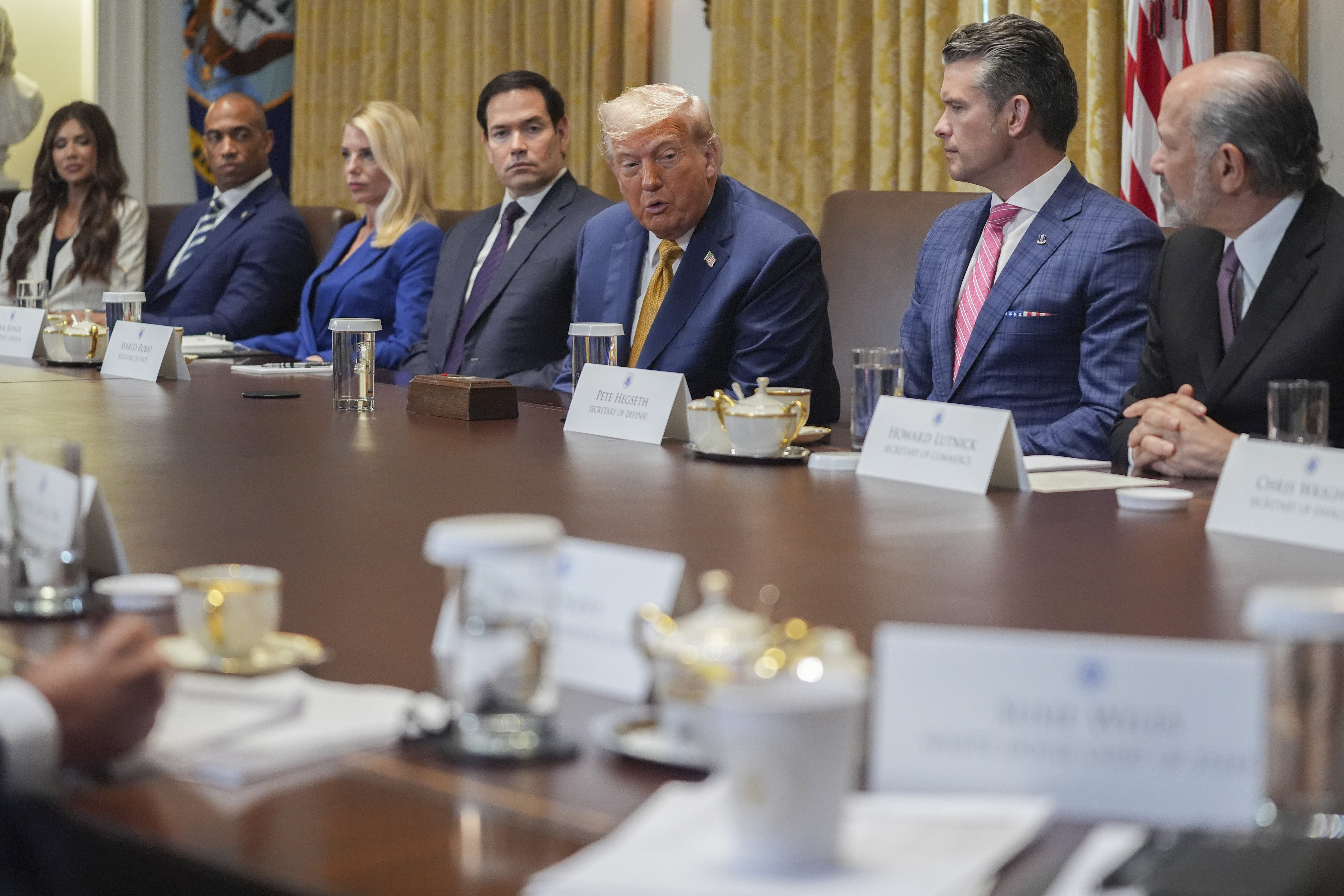
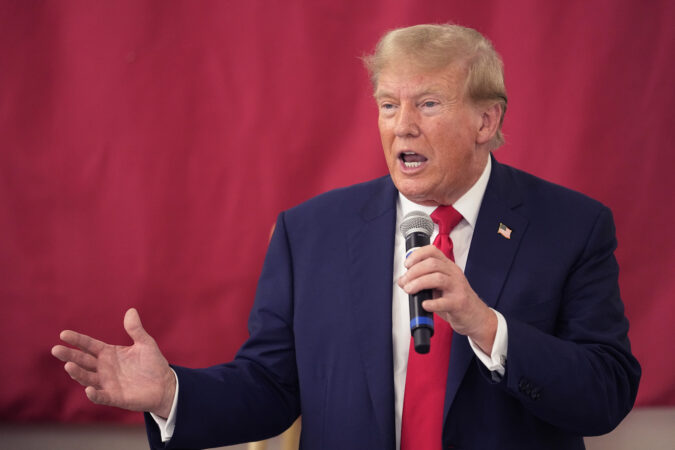
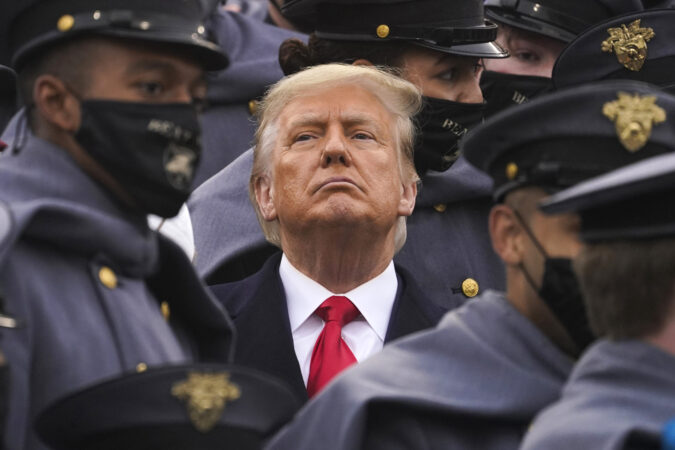
    President Donald Trump speaks during a cabinet meeting at the White House in July.

    Likewise, the unqualified loyalists overseeing the various government departments do whatever Trump demands. See: Attorney General Pam Bondi’s willingness to fire career prosecutors and go after Trump’s perceived political enemies.

    Former Defense Secretary Mark Esper ignored Trump’s suggestion to shoot demonstrators following the death of George Floyd. Does anyone trust Pete Hegseth — a former weekend Fox News host who has faced allegations of financial mismanagement, sexist behavior, and excessive drinking — to show similar restraint?

    That explains why the members of Congress urged service members to follow their constitutional oath — and not any unlawful orders.

    Trump’s response to jail and kill elected officials is especially irresponsible given the rise in political violence, including murders of state lawmakers, a judge, and far-right podcaster Charlie Kirk. Not to mention the attack on former House Speaker Nancy Pelosi’s husband, the firebombing of the Pennsylvania governor’s mansion, and the attack on Trump’s own life.

    After the president targeted the six Democrats, Pennsylvania Reps. Chrissy Houlahan and Chris Deluzio received bomb threats at their offices. Michigan Sen. Elissa Slotkin received a similar threat at her home.

    Meanwhile, House Speaker Mike Johnson (R., La.) deflected Trump’s outrageous behavior by claiming it was “wildly inappropriate” for Democrats to urge troops not to follow the chain of command.

    But that was not what the six legislators did. They reminded military members not to follow unlawful orders in accordance with Article 92 of the Uniform Code of Military Justice.

    For example, the legality of Trump’s boat strikes — which have killed more than 80 people — is dubious.

    A secret U.S. Department of Justice memo reportedly blessed the strikes by claiming the U.S. is in an armed conflict with drug cartels. But members of Congress from both parties argue it is illegal to target civilians — even suspected criminals — who do not pose an imminent threat. The United Nations’ human rights chief said the strikes violated international law.

    As such, legal experts said if the strikes are found to be illegal, a defense by military officials of “just following orders” may not hold up in court.

    Of course, Trump is shielded from prosecution thanks to a Supreme Court ruling last year that placed presidents above the law.

    The same cannot be said for those who do Trump’s bidding.

  • The U.S. must support Ukraine in peace deal, not help fulfill Putin’s wish list | Editorial

    The U.S. must support Ukraine in peace deal, not help fulfill Putin’s wish list | Editorial

    As families across America prepare to settle in for turkey, stuffing, and football, the Trump administration is imposing a brutal choice on the people of Ukraine: capitulate by Thanksgiving, or lose U.S. support.

    If the bloodiest fighting in Europe since World War II is to come to an end, any peace plan must be fair and hold Russia accountable for invading its neighbor. The 28-point plan released last week and endorsed by the White House would enshrine injustice instead.

    Perhaps the only surprise about the lopsided peace proposal is that it took so long. Ever since Donald Trump returned to the Oval Office, it has often felt like an all-out push for Kyiv’s surrender is just around the corner.

    The president has repeatedly praised Russia’s Vladimir Putin, threatened and removed existing U.S. aid to Ukraine’s military, and reinforced Russian talking points about the conflict, including blaming Ukrainian President Volodymyr Zelensky for starting the war.

    Meanwhile, the situation on the ground has deteriorated.

    Ukrainians have taken to covering their streets and homes with anti-drone nets due to the Russian military’s “human safari” tactics. Russian drone operators have terrorized civilians and aid workers by attacking them indiscriminately, making simple errands dangerous in cities close to the front lines.

    Russia’s military, fueled by the conscription of ethnic minorities, convicted criminals, and Ukrainians from Russian-occupied territories, has made incremental gains. Meanwhile, the Ukrainian military has suffered from increasing rates of desertion and low morale. While most Ukrainians do not want to give up territory to end the fighting, this position has become more popular over time because of the suffering and devastation the war has unleashed.

    American support for Ukraine has reached new lows under Trump, but President Joe Biden bears much of the blame for what’s happening today. The past administration never supplied Ukraine with anything close to the kinds of weapons it needed to succeed in the war’s early stages. Instead of rushing F-16 fighter jets into the country, Biden held off on delivering them for years. Long-range missiles, which would have allowed Ukraine to strike deeper into Russian territory, were also delayed.

    Imagine how much stronger a position Ukraine might be in if the Biden administration had approved the transfer of these weapons systems back in 2022, before the country suffered hundreds of thousands of casualties against brutal Russian invaders.

    The Trump administration seems prepared to compound this betrayal by forcing Ukrainians to accept a peace plan that some U.S. senators have suggested was written by Moscow.

    As released last week, the plan would force Ukraine to cede territory, abandon hopes of joining NATO, and cap the size of its military. It would create a blanket amnesty for war crimes and allow Russia to rejoin the G8 and reintegrate into the global economy.

    Given the scale of the suffering in Ukraine’s towns and cities and along the front lines, peace is a crucial goal. Beyond the direct human toll, the war has also led to the destruction of the Khakhovka Dam on the Dnieper River, a major environmental disaster. Russian recklessness has also repeatedly endangered nuclear plants.

    Zelensky and European leaders have countered the plan with one of their own, which was immediately criticized by the Kremlin. Ukrainian negotiators are keen to avoid formally handing over territory, remove or raise the cap on the size of their military, and allow for eventual NATO membership, even if it is off the table in the foreseeable future.

    U.S. efforts to end the war should be more in line with its allies’ proposal, instead of fulfilling Putin’s wish list. If Trump sides with Russia, it will send a clear message to other authoritarians that the West will not stand together against illegal aggression.

    If America sells out Ukraine, the world will be watching.

  • Congress should renew Affordable Care Act subsidies — regardless of whether Trump cares | Editorial

    Congress should renew Affordable Care Act subsidies — regardless of whether Trump cares | Editorial

    The longest shutdown of the federal government in this nation’s history ended after Republicans finally agreed to consider Democrats’ appeal for an extension of expiring Affordable Care Act subsidies that help families buy health insurance.

    What action Republicans will ultimately take is anyone’s guess before the subsidies expire in January. As for President Donald Trump, he treats healthcare like every other issue: mostly making nebulous, politically calculated statements that are counterproductive when leadership from the White House is needed.

    For years, Trump has derisively called “Obamacare” bad legislation that never should have been passed, but he has never offered a better alternative.

    “My first day in office, I am going to ask Congress to put a bill on my desk getting rid of this disastrous law and replacing it with reforms that expand choice, freedom, affordability,” Trump said on the campaign trail in 2016. Several proposed replacements to the ACA were subsequently introduced after his election, but each was defeated in the Senate, with even some Republicans voting against the inadequate alternatives.

    Trump never produced anything better than Obamacare during his first administration, but that didn’t stop him from again making the healthcare law a major talking point during his reelection campaign. “We’re signing a healthcare plan within two weeks, a full and complete healthcare plan,” Trump said in July 2020. “We’re going to be doing a very inclusive healthcare plan. I’ll be signing it sometime very soon.”

    But the plan never came, and Trump lost the election.

    He stewed during Joe Biden’s four years as president, but promised voters during his 2024 campaign that he was ready to replace Obamacare. Pressed by reporters to reveal his alternative, Trump had to admit he had only “concepts of a plan.” Nearly a year has passed since his second inauguration, but Trump’s concepts of a better plan to make sure health insurance is affordable are still a mystery.

    Unless that changes before the increased ACA subsidies expire, Congress should vote to extend them.

    The subsidies help Americans who earn up to 400% of the federal poverty level — $15,650 annually for an individual and $32,150 for a family of four — pay for insurance. Without those subsidies, a person now paying $325 a year for health insurance might have to pay as much as $1,562 annually.

    Many whose insurance costs will go up may decide to rejoin the ranks of the uninsured. That would be a travesty. The medically uninsured rate in America almost halved from 17.8% when the ACA became law in 2010 to 9.5% in 2023. Studies show uninsured adults have less access to medical care, receive poorer quality of care, and experience worse health outcomes than insured adults.

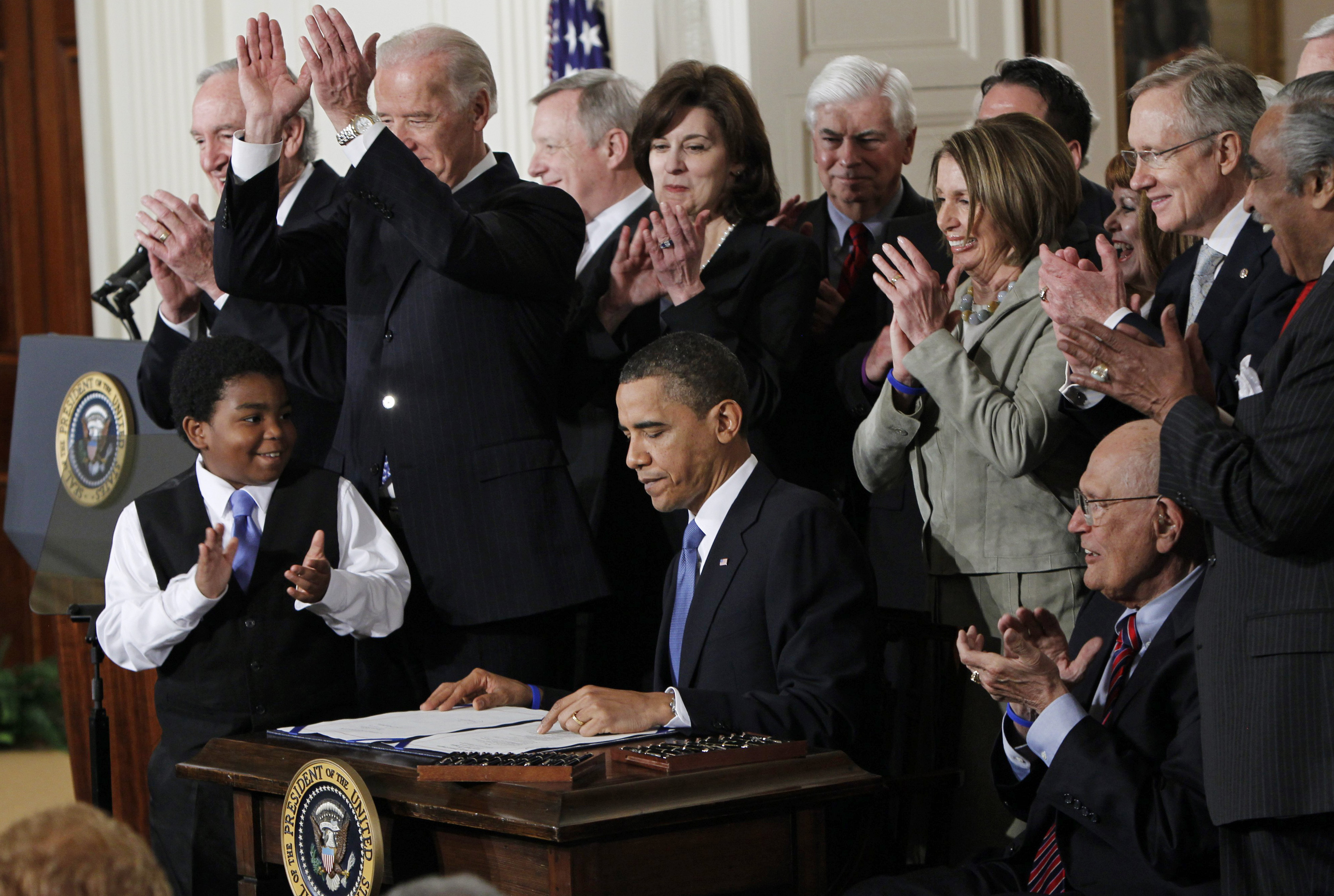
    President Barack Obama is applauded after signing the Affordable Care Act into law in the East Room of the White House in 2010.

    Ending the subsidies will turn back the clock. That doesn’t mean Obamacare shouldn’t be touched. Adjustments should be made based on how much healthcare in America has changed since the law was signed in 2010 and fully implemented in 2014.

    The ACA was this country’s alternative to installing a “single-payer” healthcare system, such as Canada’s, where most funding and payments for medical treatment come directly from the government via taxes paid by the public. The ACA system in America instead retains the third-party role of private medical insurance companies such as Blue Cross, Aetna, and Cigna, whose revenue has increased greatly under Obamacare.

    Most Canadians also have private insurance to pay costs not included in their government coverage, so even they don’t consider a taxpayer-funded, single-payer system the best way to provide healthcare. In fact, a survey of 11 healthcare systems provided by the world’s highest-income nations ranked Canada 10th and the United States last.

    Despite spending far more of our gross domestic product on healthcare, America is at the bottom in terms of access to patient care, administrative efficiency, equity, and healthcare outcomes. In other words, we’re spending a lot of money and getting sicker in return.

    The study by the Commonwealth Fund said the highest-ranked nations, including Norway and the Netherlands, which topped the list, shared four distinguishing features:

    1. They provide universal coverage and remove cost barriers.
    2. They invest in primary care systems that provide high-value services to all people in all communities.
    3. They reduce administrative burdens that divert time and spending from health improvement efforts.
    4. They invest in social services, especially for children and working-age adults.

    That last point brings up another issue regarding healthcare and Trump. The omnibus legislation passed in July, which he dubbed the “One Big Beautiful Bill,” made drastic cuts to Medicaid to help pay for tax cuts expected to reduce federal revenue by $4 trillion between 2025 and 2034. Why should Medicaid, which helps cover medical costs for low-income families, older adults, and people with disabilities, be sacrificed so that Trump can boast he cut taxes?

    Trump’s minions falsely said the cuts were needed to combat fraud and abuse, including a bogus claim that undocumented immigrants were receiving Medicaid benefits.

    Why is this president always finding some perceived wrong among the most vulnerable Americans while lavishing praise and largess on the wealthy? Certainly, he’s more familiar with the latter, having grown up rich and being more comfortable among his people. But so many less fortunate Americans voted for him, including more than a few who depend on Medicaid.

    Shouldn’t he at least occasionally seem to care for their health?

  • A vote to release the Epstein files should only be Congress’ first step toward ensuring justice for victims | Editorial

    A vote to release the Epstein files should only be Congress’ first step toward ensuring justice for victims | Editorial

    For months, Donald Trump has tried to insult, bully, and intimidate his way to keeping the House from voting on the release of files related to convicted sex offender Jeffrey Epstein.

    On Sunday night, fearing that more than a handful of Republicans would break ranks and support the measure in a vote scheduled as soon as Tuesday, the president tried to keep the word humiliating from preceding a description of his defeat.

    “The House Oversight Committee can have whatever they are legally entitled to, I DON’T CARE,” Trump posted on Truth Social.

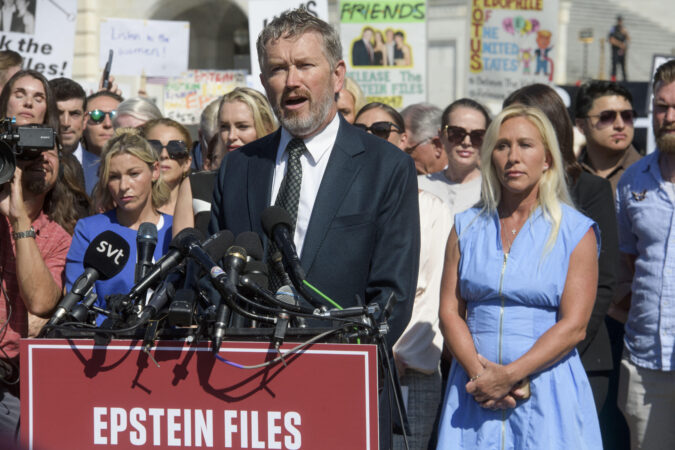
    The abrupt about-face clears the way for Republicans to join Democrats and steadfast GOP Reps. Thomas Massie, Marjorie Taylor Greene, Lauren Boebert, and Nancy Mace in compelling the U.S. Department of Justice to release the files.

    This is an important win for the many alleged victims — around 200 women and underage girls — of the late disgraced financier, whose ties to the rich and powerful (including Trump and former President Bill Clinton) have sparked conspiracy theories about a mass cover-up and suspicion around Epstein’s 2019 suicide in a federal jail cell in Manhattan.

    Once the House clears the way, the Senate should quickly follow suit and send the bill to the president’s desk. Transparency, accountability, and justice for Epstein’s victims have been delayed long enough.

    Of course, even if Congress and Trump approve the measure, the fight will likely continue.

    The president’s capitulation may only be a strategic retreat. His persistent unwillingness to release the information — which he had promised to make public if elected — forecasts further obstruction.

    It is not difficult to wonder why.

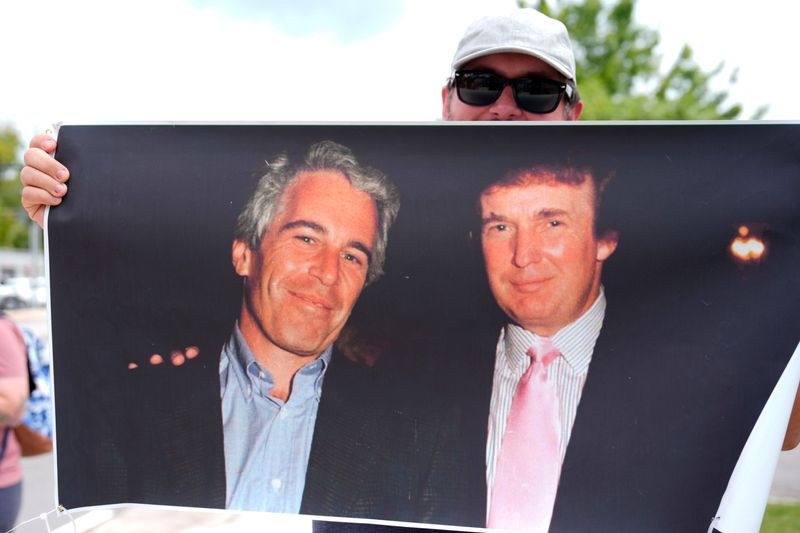
    A protester holds up a photo of Donald Trump with financier Jeffrey Epstein at a rally in Augusta, Ga., in August.

    Despite Trump’s denials, he and Epstein were once good friends, part of an elite cadre that included financial titans and political leaders. There are videos and photos of them together, and Trump repeatedly flew on Epstein’s plane (known as “the Lolita Express”).

    Trump himself has faced sexual misconduct allegations by dozens of women and was found liable for sexual abuse in 2023. His appearance in published Epstein documents, which have so far included a salacious birthday card and email allegations that he “knew about the girls,” indicates there could be worse to come.

    Even as he told Republicans to vote to release the files, Trump nonsensically railed that this was all a “Democrat Hoax perpetrated by Radical Left Lunatics.” He argued in the same breath that Republicans shouldn’t fall into the “Epstein trap,” which was “actually a curse on the Democrats, not us.”

    Only the full release of the files may reveal why the president has been so reluctant to act on a promise he made to his supporters. Why he has pressured his party so effectively that a vote on the House bill had to be forced upon Republican leadership. As this board has asked before: What are they hiding? Who are they protecting?

    Unfortunately, the American people cannot fully trust those in charge of the files. Attorney General Pam Bondi and FBI Director Kash Patel have shown that they value loyalty to Trump above all else, including going after the president’s political enemies regardless of any evidence.

    Congress must ensure that both fully discharge their duties and release all required information, regardless of who is embarrassed or implicated.

    Justice — and, at least for now, the president — demands it.

  • Voters should consider their choices carefully in judicial retention races | Editorial

    Voters should consider their choices carefully in judicial retention races | Editorial

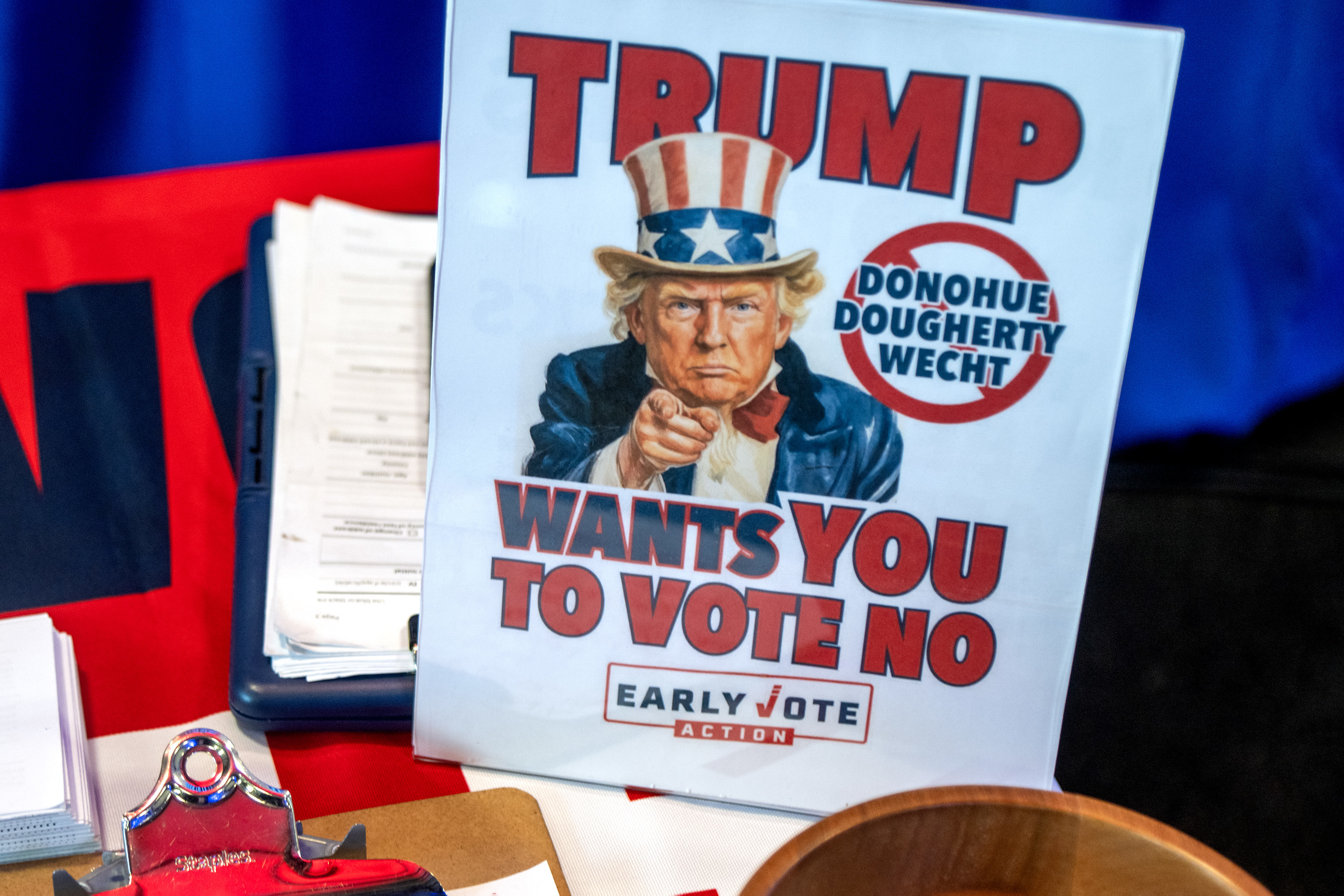
    The most important election facing Pennsylvania voters on Nov. 4 involves whether to retain state Supreme Court Justices Christine Donohue, Kevin Dougherty, and David Wecht.

    While voters should vote yes to retain the three justices, there are some lower court judges who do not deserve another term.

    Millions of dollars have been spent on the Supreme Court race, which will impact residents in cities and towns across the commonwealth. In recent years, the state Supreme Court has ruled on a variety of high-profile issues, including elections, redistricting, reproductive health, and education.

    Going forward, the court is likely to continue to confront many of the same hot-button issues — especially if Republicans gain control of the state House, the governor’s mansion, or replace the three well-qualified justices on the high court with extreme partisans.

    Voters need only look to Washington, D.C., to see the danger of a politicized, conservative majority on the bench, as the U.S. Supreme Court continues to ignore precedent and rubber-stamps Donald Trump’s abuses of the rule of law.

    Republican control of the White House, Congress, and the U.S. Supreme Court has resulted in a rapid erosion of the system of checks and balances created by the founders.

    In just a few short months, the GOP has deferred all power to Trump, who has shuttered the government, demolished part of the White House, sicced the U.S. Department of Justice on political enemies while pardoning cronies, celebrities, and insurrectionists, summarily killed alleged drug traffickers without any evidence, and deported people living in America without any legal due process.

    He has forced out tens of thousands of career civil servants, imposed tariffs that have roiled the economy, slashed environmental, health, and worker safety regulations, appointed incompetent hacks throughout the government, pressured red state lawmakers to take steps to rig elections, and sent federal troops into cities for no legitimate reason — all while evading previous criminal indictments and embarking on dubious personal enrichment schemes.

    Much of Trump’s unchecked power emanates from the ruling last year by the conservative majority on the U.S. Supreme Court that effectively said presidents are above the law.

    Voting rights activists gather outside the U.S. Supreme Court Building on Oct. 15 as the justices prepared to take up a major Republican-led challenge to the Voting Rights Act, the centerpiece legislation of the civil rights movement.

    What does all of that have to do with the retention election of three Pennsylvania Supreme Court justices? Plenty.

    The state is evenly divided between Republicans and Democrats. Yet, the GOP controls the state Senate and all three row offices: attorney general, treasurer, and auditor general.

    The Democrats have a narrow edge in the House, while Gov. Josh Shapiro, a Democrat, is up for reelection next year.

    Essentially, Shapiro and the Supreme Court, which has a 5-2 Democratic majority, are the only bulwarks keeping Trump’s MAGA-fueled zealots from seizing total control of Pennsylvania.

    If the GOP were to control the governor’s mansion and the high court, voting maps would get even more gerrymandered, voting rights, including mail-in balloting, would likely get curtailed, abortion rights would get dramatically rolled back, and pro-business groups — and polluters like gas drillers — would enjoy even less regulation. Funding for public education and transit would likely also be slashed.

    Other inane red state laws could get enacted that attack science, limit teaching about race, or make it harder to get a divorce. More to the point, Pennsylvania doesn’t need a radicalized state Supreme Court like the Roberts Court, which has squandered its credibility.

    Judicial retention voter material at a Republican candidate’s rally in Bucks County in September.

    Donohue, Dougherty, and Wecht have demonstrated that they are fair, open-minded, and follow the law. They have restored respect to a high court that was plagued by scandals a decade ago.

    But don’t just take this Editorial Board’s word for it.

    The nonpartisan Pennsylvania Bar Association has a rigorous process for evaluating judges based on criteria like legal ability, integrity, and temperament. The process includes investigative panels that review the judge’s records, interview candidates, and gather input from attorneys.

    After all that, both the Pennsylvania and Philadelphia Bar Associations recommended voting yes to retain Justices Donohue, Dougherty, and Wecht.

    The Philadelphia Bar Association recommended voting no to retain five lower court judges. They are Common Pleas Judges Scott DiClaudio, Daine Grey, Frank Palumbo Jr., and Lyris F. Younge. The association also recommended not retaining Municipal Court Judge Jacquelyn Frazier-Lyde, the daughter of the late boxing champion Joe Frazier.

    The association does not disclose the reasons for the recommendation, other than noting that three of the five judges did not participate in the review process, which includes surveying more than 500 lawyers to assess the judges for things like integrity, legal ability, temperament, and diligence.

    Another 100 volunteer investigators interview the candidates, other judges, and lawyers, as well as scrutinize the judges’ written opinions, social media posts, and financial disclosures.

    The Inquirer obtained the confidential surveys, which shed more light on how lawyers view the jurists. Inquirer reporter Samantha Melamed also reviewed opinions, interviewed some of the judges, and spent time in the courtroom.

    It is not always easy for voters to be well-informed when it comes to selecting judges. But the intense focus (and misinformation) on the state Supreme Court election, combined with the nonpartisan work of the bar associations, other good government groups, and The Inquirer’s reporting, has framed the stakes.

    Voters will now decide the fate of Pennsylvania’s courts — and of Pennsylvanians’ freedoms.

  • Fewer killings, more homicide cases solved is good news for Philadelphia | Editorial

    Fewer killings, more homicide cases solved is good news for Philadelphia | Editorial

    Philadelphia has lost 187 people to homicide this year. With just over two months left in 2025, this represents a marked improvement over the pandemic era, a time when the city experienced more than 500 killings annually.

    This reduction — along with an increase in the number of homicide cases detectives are solving — is worth celebrating. But, as evidenced by the horrific killing of Kada Scott and far too many other calamities, there is still much more to be done. Even if homicides remain under 240 killings this year, which would be the lowest number since the 1960s, it would still leave the city with a homicide rate that is triple that of New York or Boston.

    That’s not to say there hasn’t been important progress.

    In 2020, when gun violence was beginning to surge, City Council authorized the “100 Shooting Review,” which identified weaknesses in the criminal justice system and outlined a series of recommendations to cool the violence.

    In 2021, Philadelphia invested more than $150 million in violence prevention and intervention programs. The disbursement of those funds was marked by instances of disorganization and insufficient oversight. However, according to those who study urban violence, the money served its purpose.

    A report from the Coalition to Save Lives credited community programs, including city-funded initiatives, with helping to reduce gun violence. Community leaders like the Rev. Carl Day, pastor of the Culture Changing Christians Worship Center, also stepped up, even without city support.

    Thanks, in part, to new technology and the installation of high-definition cameras across the city, police are now solving between 85% and 91% of homicide cases, a 40-year high.

    The clearance rate — or the percentage of homicides that have been solved — had dipped as low as 42% in recent years, meaning killers were more likely than not to get away with murder in Philadelphia.

    Beyond providing closure for families and accountability to perpetrators, solving cases and prosecuting offenders can also help deter future acts of violence. According to crime researchers, certainty of punishment is one of the most effective deterrents for those who are likely to kill. This effect is particularly strong for younger offenders, who tend to act impulsively. Given that gun violence among teens continued to rise despite the progress made in other age groups, continuing to improve the clearance rate is essential.

    Solving cases also helps to prevent cycles of retributive shootings by gang members. These days, experts say, it is song lyrics and social media beefs that drive many conflicts between rival gangs, not territorial clashes. Solving cases, and doing so quickly, can help intervene before these groups become the next Young Bag Chasers.

    Despite the drop in the murder rate, Philadelphia still often feels beset by misdemeanors and lower-level felonies that contribute to an overall sense of disorder. Reckless driving permeates nearly all corners of the city, many transit stations reek of smoke and urine, illegal dumping plagues communities, blighted buildings like the former Ada H.H. Lewis Middle School attract crime, and police can take hours to respond to calls.

    Many Center City businesses feel the need to employ armed security due to regular incidents involving thieves or emotionally disturbed people. In August, a security guard at a women’s clothing store fired a warning shot at a man who was harassing the staff. Earlier this month, a security guard at an IHOP in Center City was charged with murder after shooting a man who allegedly spat on her. Buying clothes and eating pancakes should not feel like a trip to the Wild West, nor should crossing the street feel like a game of Frogger.

    Philadelphia’s leaders, including Police Commissioner Kevin J. Bethel, deserve credit for the progress the city has made in providing justice and reducing gun violence. But the job is far from over.

  • Lessons must be learned after criminal justice system fails Kada Scott | Editorial

    Lessons must be learned after criminal justice system fails Kada Scott | Editorial

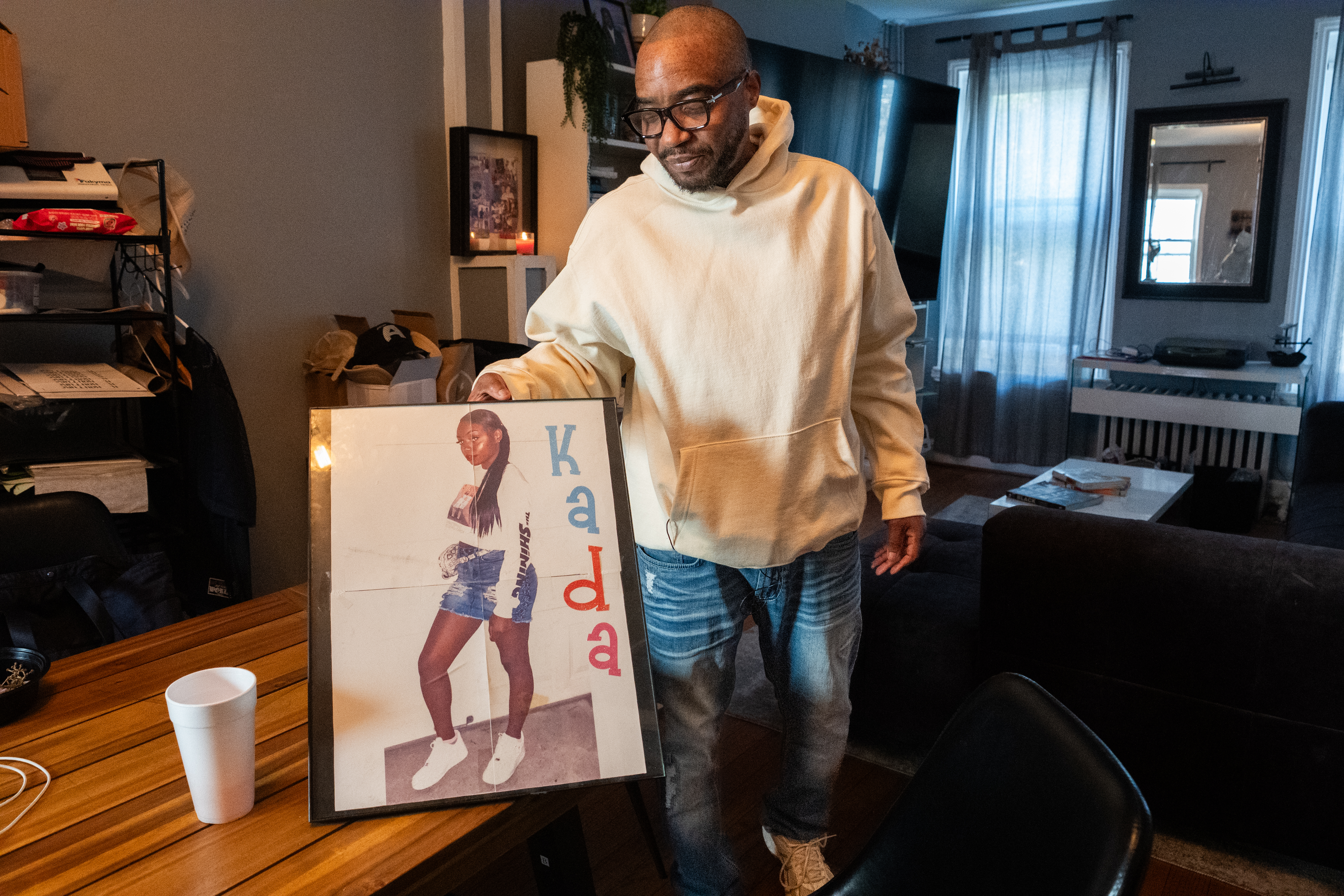
    The killing of Kada Scott is tragic on many levels, but hopefully, some lessons can be learned to honor her life.

    Scott’s death is all the more painful for her family and friends because it could have been prevented. That’s because it appears District Attorney Larry Krasner and the Philadelphia court system failed her.

    The man accused of abducting Scott had been previously charged with assaulting an ex-girlfriend twice in the last year, but prosecutors withdrew the charges after the victim did not show up for court.

    After Scott’s disappearance, Krasner’s office admitted its handling of the earlier cases was a mistake. If the district attorney’s office had instead prosecuted Keon King, 21, then perhaps Scott, 23, would still be alive.

    “We could’ve done better,” Krasner said at a news conference Monday, echoing earlier comments from Assistant District Attorney Ashley Toczylowski, who said last week, “Everyone involved at this point, including the [initial prosecutor], agrees that we wish this happened differently.”

    To be sure, hindsight is 20/20. But a review of King’s legal entanglements indicates a series of miscues may have enabled Scott’s death.

    The case also offers a window into the challenges of filing domestic abuse charges, and underscores the need for prosecutors to be more aggressive in going after the accused while doing more to ensure the safety of victims.

    For starters, King’s initial assault charges last November were handled by an inexperienced assistant district attorney who was juggling multiple cases. During that incident, prosecutors said, King grabbed an ex-girlfriend by the neck and tried to strangle her after she refused to lie on the bed with him, according to the affidavit.

    But after initially cooperating with the authorities, King’s accuser stopped responding to calls from prosecutors. After she failed to appear at three court hearings, the district attorney’s office withdrew the case.

    In January, King tried to break into the woman’s home, but fled before police arrived, according to an affidavit. He returned later in the day and dragged the woman by her hair, shoved her in a car, and drove away before dropping her off on the side of the road.

    This time, the woman and her friend captured video of King trying to get into her home. He was arrested again and charged with kidnapping, strangulation, and other charges.

    But once again, the victim and her friend refused to cooperate with prosecutors, so the charges were withdrawn in May.

    Kevin Scott, Kada Scott’s father, with a photo of his daughter.

    This is not unusual, as victims of domestic violence often live in fear of the perpetrators. Reviewing the period between 2010 and 2020, researchers at the University of Pennsylvania found that 70% of victims of domestic violence cases failed to appear in Philadelphia’s courts.

    A big part of the problem is that the accused are often out on bail and still threatening the victims. In King’s case, after the second set of assault charges, prosecutors requested bail of $1 million, but the magistrate lowered it to $200,000.

    King posted the necessary 10% — or $20,000 — and was released in April.

    Krasner blamed the magistrate for lowering the bail, but his office could have appealed the ruling.

    There is a fine line in detaining suspects accused of crimes for months on end until a trial. But in domestic violence cases, the current system is not working and needs to be revamped.

    Prosecutors and judges must do everything possible to guarantee the safety of victims. Victims need more support within the criminal justice system to ensure their safety.

    More broadly, additional preventive steps are needed to reduce violence against women, including standing up to rape culture, empowering women, and teaching boys to respect women.

    Black women disproportionately experience higher rates of domestic abuse, including rape and homicides, studies show, further underscoring the need for more awareness, training, and preventive measures.

    In this instance, given that King had been charged once before, the magistrate and Krasner’s office dropped the ball.

    And although the victim refused to testify, the district attorney’s office could have used the video evidence to move forward with King’s prosecution — though not having the witnesses testify certainly would have made for a tougher case.

    To his credit, Krasner, a former defense attorney who faces reelection next month and has been criticized for being soft on crime, admitted his office was ultimately to blame.

    “The buck stops here,” he said.

    Sadly, a young, vibrant woman full of promise has died, and another woman was previously assaulted and traumatized. Krasner said the public played an enormous role in Scott’s case, and asked for anyone with information to call 215-686-TIPS.

    The only positive outcome will be to ensure justice is served, and a broken legal system in which victims are afraid to testify is fixed, so others do not experience the same horrific outcome.

  • U.S.-Venezuela prisoner swap is a chilling reminder of Trump’s scorn for the rule of law | Editorial

    U.S.-Venezuela prisoner swap is a chilling reminder of Trump’s scorn for the rule of law | Editorial

    On July 18, more than 250 Venezuelan immigrants held since March in a Salvadoran prison at the behest of the Trump administration were released in a prisoner swap for 10 U.S. citizens and permanent residents jailed by the Venezuelan government.

    For the men and their families, it could not have been a more joyous moment. It had been months since they last heard from their loved ones, not knowing if they were alive or dead.

    For the respective governments involved, it was also a time to crow.

    After all, it was President Donald Trump’s “leadership and commitment to the American people” that freed the imprisoned Americans. Venezuelan President Nicolás Maduro called it a “perfect day” for his country, and blame for the “kidnapped Venezuelan migrants” was put on his opponents “on the Venezuelan right.”

    Even self-described “world’s coolest dictator” (and apparently America’s next top jailer), Salvadoran President Nayib Bukele, got a little self-love in, boasting on X of the “months of negotiations with a tyrannical regime” that El Salvador had engaged in to help get the Americans home.

    Well, bully for authoritarianism.

    For the rest of us — for those who believe in the rule of law and still hold out hope for the American Experiment — July 18 may be remembered as a dark day.

    Unless the administration is held accountable for the blatantly illegal way it upended these immigrants’ lives, the episode will mark a new low in America’s slide toward illiberal democracy under President Trump.

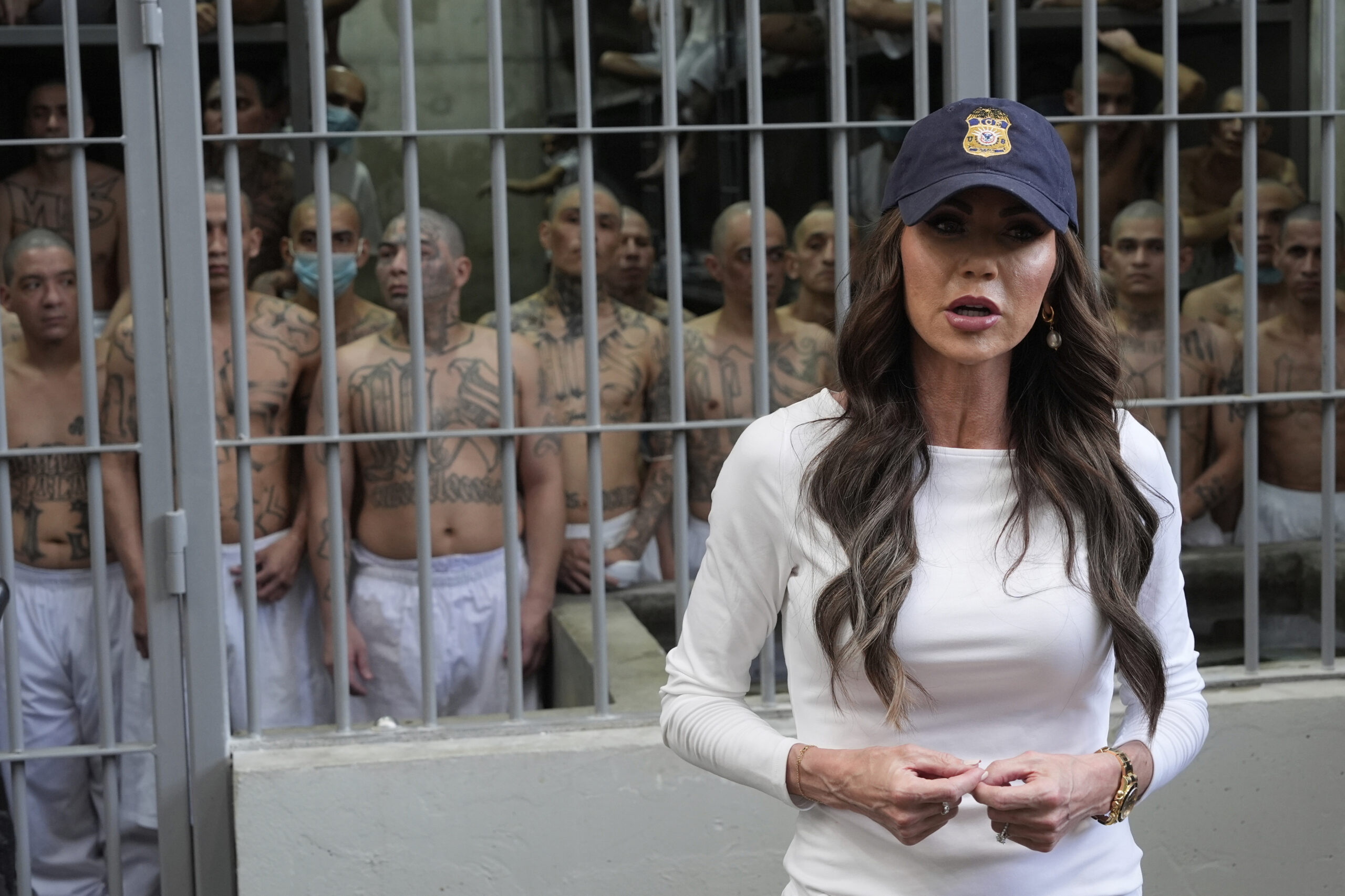
    As prisoners stand looking out from a cell, Homeland Security Secretary Kristi Noem speaks during a tour of the Terrorist Confinement Center in Tecoluca, El Salvador, in March.

    Undue process

    To be sure, the release of all these men is good news. Most of the freed Americans were wrongfully detained and accused of being involved in plots to destabilize Venezuela.

    Their arrests were part of a transparent, cynical ploy by the Maduro regime to use these men like bargaining chips as the country struggles to get out from under oil sanctions that have contributed to the nation’s deep economic problems.

    The illegal detentions were also par for the course for a government where every branch is controlled by Maduro loyalists, and which routinely jails its own dissidents. (The swap included 80 political prisoners, but there are conflicting reports on whether they have all been released.)

    There is no question that Venezuela’s actions are morally and legally indefensible. But what about America’s?

    The more than 250 Venezuelans who ended up in El Salvador’s Terrorism Confinement Center, known as CECOT, were sent there by the Trump administration on March 15. They were deported with little or no due process under the 1798 Alien Enemies Act, accused of being dangerous criminals and members of the Tren de Aragua gang, which Trump declared a terrorist organization.

    In sending the men to a place notorious for its poor conditions and inhumane treatment of prisoners — in a $6 million deal with El Salvador’s Bukele — the administration called the detainees “the worst of the worst.”

    But reporting by several media organizations quickly put the lie to those claims, with ProPublica finding the government’s own records show that it knew the vast majority of the men had not been convicted of any violent crime in the U.S., and only a few had committed crimes abroad.

    Most of the men were also not very hard to find, as they were either never released from immigration custody while they pursued asylum claims or their cases were moving through the immigration system.

    Take the four Venezuelans identified as having ties to Pennsylvania before they were sent to CECOT.

    Inmates exercise under the watch of prison guards during a press tour of the Terrorism Confinement Center, or CECOT, in Tecololuca, El Salvador, Oct. 12, 2023.

    Joén Manuel Suárez Fuentes, 23, was detained during a traffic stop and charged with driving without a license. Ileis Villegas Freites, 28, had been sentenced to one year of probation for retail theft in Montgomery County.

    Miguel Gregorio Vaamondes Barrios, 32, had a series of shoplifting arrests, including an open theft case in Pennsylvania, and was convicted of petit larceny in Nassau County, N.Y. Luis Jean Pier Gualdrón, 22, had a pending asylum application when he was deported. He had pleaded guilty to harassment in Northampton County, Pa., and was sentenced to three to six months in jail.

    While some may argue that only people of unimpeachable moral character should be welcomed in America — and having a criminal record can disqualify immigrants from being granted legal status — these men were far from the “monsters” and members of a gang who the U.S. Department of Homeland Security said “rape, maim, and murder for sport.”

    And even if they had been charged with being the worst of the worst, under the Constitution, the government still has to prove its case against anyone it seeks to deprive of “life, liberty, or property.”

    In deporting the Venezuelans, the administration acted recklessly and lawlessly, ignoring not only the letter of the law but also directly disregarding an order from U.S. District Judge James Boasberg, barring the government from transferring the men to El Salvador under the Alien Enemies Act.

    That the men are now free — although it is highly likely some have been placed right back in the dangerous situations under an oppressive regime they were fleeing in the first place — does not absolve the Trump administration of wrongdoing.

    Migrants deported months before by the United States to El Salvador under the Trump administration’s immigration crackdown arrive at Simon Bolívar International Airport in Maiquetia, Venezuela, July 18, 2025.

    Test case

    Throughout the entire ordeal, the government has placed itself above the law.

    Seeking to make good on Trump’s promise of mass deportations and tall tales of criminal immigrants running rampant, administration officials engaged in the kind of abuse of power that is un-American on its face.

    The government selected a group of men under suspect criteria, identifying many of them as gang members based on the discredited belief that they had identifying tattoos. It then disappeared them, sending them to a foreign prison known for its brutal conditions, where they were unable to communicate with their families or lawyers.

    To this day, officials have not even released a full list of names of the people they sent to El Salvador. What is publicly available has been cobbled together from families speaking out and media reports. It is unclear if everyone deported has been accounted for.

    The government consistently defied court interventions, claiming that once the men were in El Salvador, they had no direct control over what would happen to them. The prisoner swap makes this particular lie only more blatant.

    Most alarming is that there is nothing stopping them from doing it again — or keeping them from doing it to whomever they want. Already, Trump has mused about sending Americans to El Salvador.

    The homegrowns are next,” he told Bukele during the Salvadoran leader’s April visit to the White House. “You gotta build about five more places. … It’s not big enough.”

    Having already violated the Fifth Amendment guaranteeing due process, it’s not much of a stretch for the administration to ignore the Eighth Amendment’s protection from cruel and unusual punishment.

    America cannot move on from what happened to the Venezuelan immigrants. Their plight cannot be swept away in the flood of scandals and outrages that regularly flow from the White House.

    The Trump administration cannot be allowed to do this to anyone ever again.

  • Trump’s morally bankrupt mass deportation plan revels in cruelty and brutality | Editorial

    Trump’s morally bankrupt mass deportation plan revels in cruelty and brutality | Editorial

    As Donald Trump intensifies his push for mass deportations, and communities rightfully protest in defense of their immigrant members, local and state leaders must be ready to stand up and defend the rule of law — including civil rights — against a president who is increasingly bent on using authoritarian tactics.

    The United States is a nation of laws, and those who are in the country illegally should understand there are consequences. But two wrongs don’t make a right, and the way the Trump administration has engaged in enforcing immigration has leaned into the kind of cruelty and brutality that is anathema to American values.

    During his presidential campaign, Trump was clear that if elected, he would seek to deport the estimated 11 million people in the country without authorization. Thanks to misinformation, propaganda, and the Biden administration’s inability to pursue a coherent asylum strategy, many voters were sold on Trump’s promise of mass deportation as a viable solution to what they saw as a crisis on the border.

    The U.S. has every right to control who enters the country, and detaining and deporting immigrants who commit violent offenses has near-universal support. But mass deportation is a morally bankrupt policy whose execution, even if done within the boundaries of the law, results in families and communities being torn apart, to no discernible benefit.

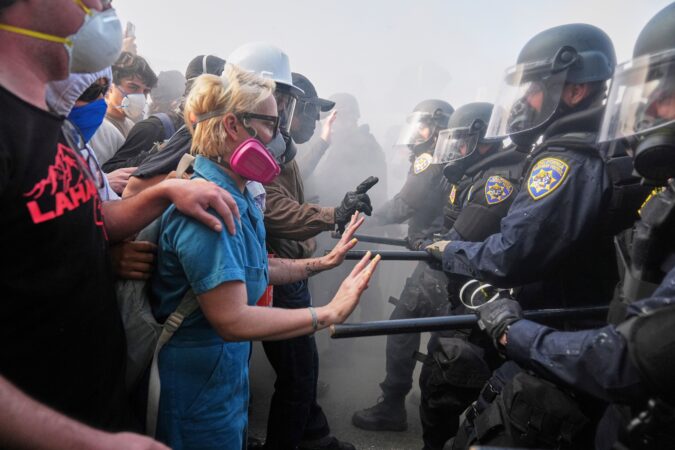
    Protesters confront police following an immigration raid protest the night before. Mass deportations tear families and communities apart, to no discernible benefit, the Editorial Board writes.

    If the president were serious about ending illegal immigration, he would begin by lobbying Congress to reform a system that is deeply broken and works only for those who seek to exploit people who are looking for a better life in the land of opportunity.

    The old saw that immigrants in the country illegally should “get in line” cuts to one of the biggest misconceptions about immigration, and that is that for most people seeking to come to the U.S. legally, or to adjust their status once here, there is no line.

    And yet, America is filled with jobs that depend on immigrant labor.

    Immigrants toil under difficult conditions in construction, meat processing, and dairy farming. They take care of our children and our elderly, and pick the fruits and vegetables that end up on our tables. They help revitalize blighted and economically depressed commercial corridors with their small businesses. They are also easy to demonize and scapegoat whenever politicians need to find someone to blame.

    There is a stunning hypocrisy in the Trump administration’s claim that it is righteously enforcing the law to protect America from immigrants, even as it engages in the kind of lawlessness that truly endangers the union. The government has clearly violated the Constitution, denying due process to immigrants it has accused of serious crimes and summarily deported to foreign prisons renowned for torture.

    The president also continues to coyly ignore the courts, endorse U.S. Immigration and Customs Enforcement agents hiding their identity and acting like de facto secret police, and flirts with disaster by entangling troops trained for deadly combat in civilian law enforcement surrounding immigration protests.

    Those protests are only expected to grow, yet Trump is fanning the flames, extending his dangerous dehumanizing rhetoric from immigrants to those who would defend them. During a speech at Fort Bragg in North Carolina on Tuesday, the president called protesters in Los Angeles “animals” and a “foreign enemy.”

    “We will liberate Los Angeles and make it free, clean, and safe again,” he told gathered soldiers, in a deeply troubling display of politicizing the military.

    Philadelphia has already been targeted by the administration as a “sanctuary city,” and ICE tactical teams are reportedly on their way. What happens if Trump decides the city also needs to be “liberated”?

    While we must all continue to demand that the courts and Congress hold the president accountable for any abuses, elected officials must do all they can within the law to protect all Philadelphians — including immigrants.

    A government that is allowed to run roughshod over the rights of some will not hesitate to trample the rights of all.

  • Pa. voters sent John Fetterman to represent them in the Senate. On most days, he has other ideas. | Editorial

    Pa. voters sent John Fetterman to represent them in the Senate. On most days, he has other ideas. | Editorial

    Whither John Fetterman?

    It seems Pennsylvania’s senior U.S. senator enjoys the perks of high office but is less interested in doing the actual job.

    He has missed more votes than nearly every other senator in the past two years. He regularly skips committee hearings, cancels meetings, avoids the daily caucus lunches with colleagues, and rarely goes on the Senate floor.

    Fetterman, a first-term Democrat, is also following the path of Republican elected officials by not holding town halls with constituents for fear of being heckled.

    A string of Fetterman staffers have left his office, including his chief of staff, top communications aides, and legislative director. Several current and former staffers voiced concern about Fetterman’s mental and physical health, according to a report in New York Magazine.

    Fetterman dismissed the report as a single-source “hit piece.” But several media outlets confirmed Fetterman’s erratic behavior through multiple sources, including The Inquirer.

    In one instance, Fetterman lashed out at members of the teachers’ union who pressed him regarding cuts to federal education. He reportedly banged his fist on the table and yelled at the group.

    Six former Fetterman staffers told Inquirer reporter Julia Terruso that Fetterman was frequently absent or spent hours alone in his office, avoiding colleagues and meetings.

    “It’s pretty impossible to overstate how disengaged he is,” one recently departed staffer said.

    Fetterman suffered a stroke in May 2022 while running for Senate. After winning the election, he underwent treatment for clinical depression, citing a “dark time” and struggles to get out of bed.

    Fetterman bravely confronted physical and mental health challenges, but has checked out of his Senate duties at a time when all elected officials must stand up to Donald Trump’s naked authoritarianism, corruption, and incompetence.

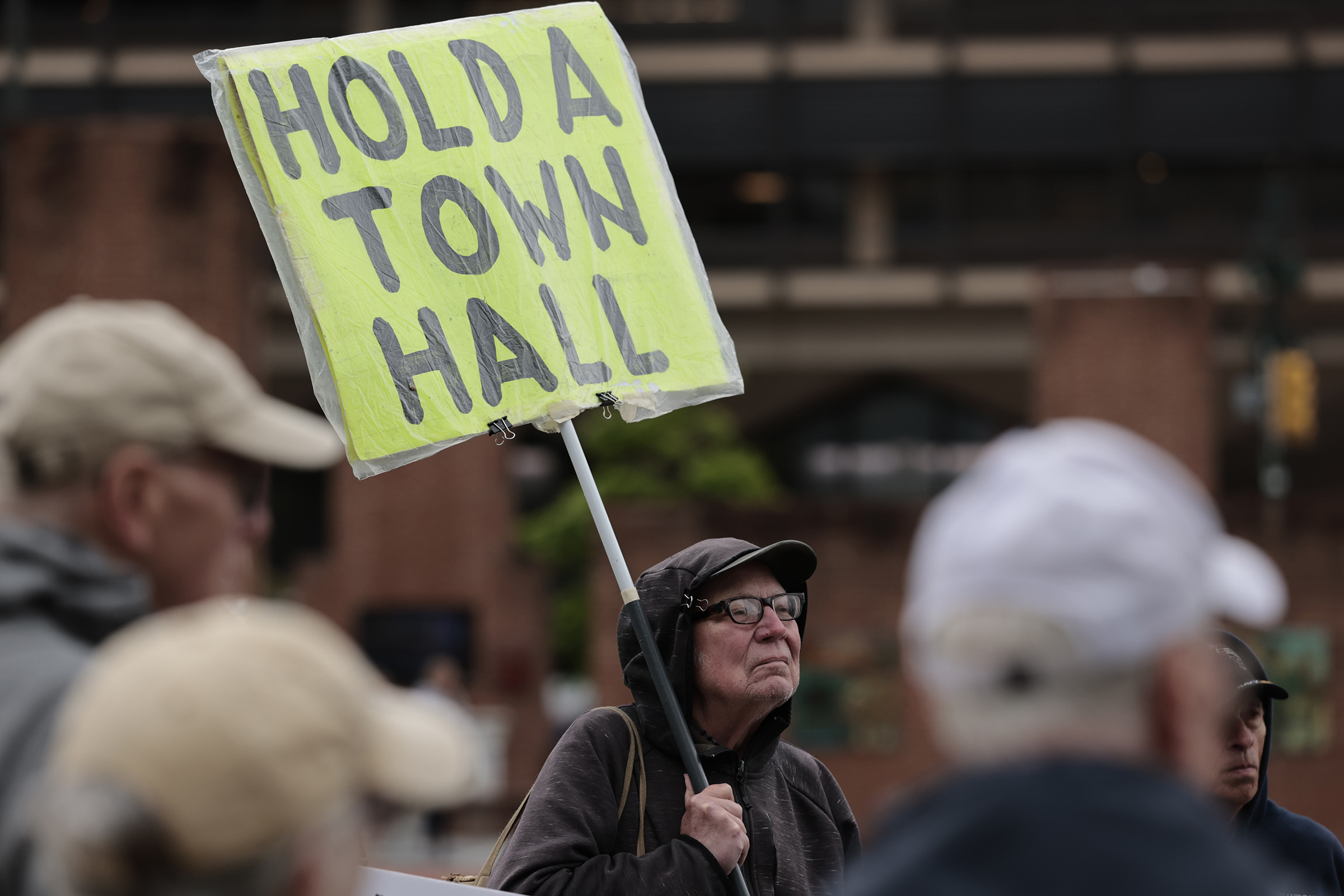
    John Prenis holds a sign at Independence Mall during Indivisible Philadelphia’s demonstration and march from Independence Mall to Sen. John Fetterman’s office at Second and Chestnut Streets on May 9.

    To be sure, mental health is a serious issue and not something to ignore. If Fetterman is still struggling, then he should seek immediate help.

    Instead, Fetterman complained people have “weaponized” his mental health battles against him.

    Being an elected official comes with public scrutiny. If Fetterman can’t handle the attention or perform his job, then in the best interest of the country and the nearly 13 million residents of Pennsylvania he represents, he should step aside.

    After all, being an elected representative is a privilege, not an entitlement. Being a U.S. senator is a serious job that requires full-time engagement.

    If Fetterman wants to continue to serve, then he must take his position seriously. He showed up for his first Commerce, Science and Transportation Committee meeting of the year in May and admitted he was shamed into attending by the media.

    Fetterman dismissed his skipping out on the committee work and procedural votes as a “performative” waste of time.

    He said his chronic absenteeism was a product of his decision to spend more time at home with his children and his father, who suffered a recent heart attack.

    “I would go visit my dad instead of a throwaway vote,” he told the New York Times.

    Spending time with family is laudable, but if that is his priority, then Fetterman should get a job closer to one of the eight properties he owns in his hometown of Braddock, Pa.

    Senators often work long nights in Washington. But they also have flexible schedules and enjoy plenty of time off from Washington, since there are only an average of 165 legislative days.

    Many of Fetterman’s constituents would like to work half a year so they, too, could spend time with their families. Safe to say, many would do it for less than Fetterman’s salary of $174,000, which is more than double the nation’s median household income.

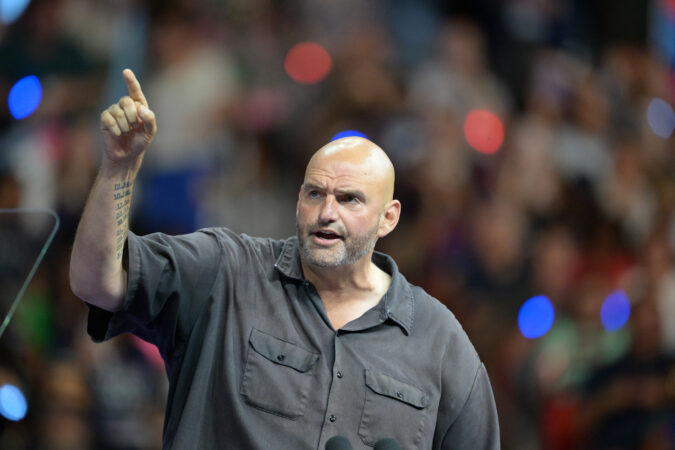
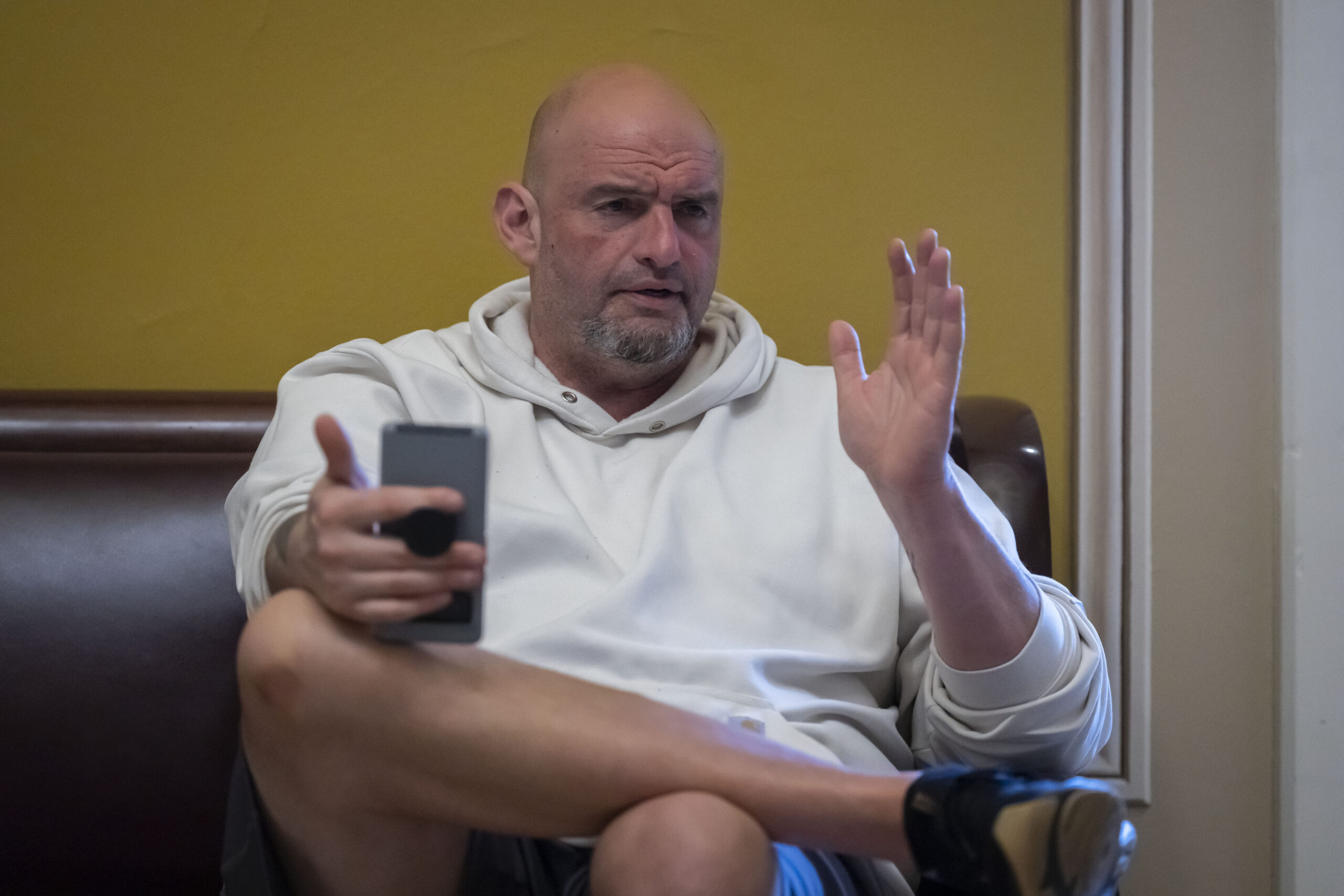
    Sen. John Fetterman speaks to a reporter near the Senate chamber at the U.S. Capitol in Washington in March.

    That doesn’t include the $172,500 advance Fetterman received to write a book with former Inquirer reporter Buzz Bissinger, or the $34,000 tax-free pay bump senators can claim for gas, food, and lodging while on official business in Washington.

    Or the generous pensions and healthcare coverage senators receive — something most Pennsylvanians do not enjoy. Or the lifetime access to the U.S. Capitol gym and Senate dining room. Or the support staff of around 60 to help each senator do their job.

    Being a U.S. senator also requires a lot of travel — mainly across their home state to hear from their constituents. The late Sen. Arlen Specter routinely crisscrossed Pennsylvania, visiting all 67 counties every two years and holding 400 town hall meetings. That’s what public service looks like.

    Fetterman has not had much time for Washington or Pennsylvania. But he found time to jet down to Mar-a-Lago to schmooze with Trump, who he said “was kind,” “fascinating,” and “a commonsense person.”

    Fetterman has flown to Israel twice in the past year, including a recent all-expense-paid junket to meet with Prime Minister Benjamin Netanyahu, who has been accused of war crimes and corruption. He and his wife flew first class and stayed in five-star hotels as part of a fact-finding mission that cost $36,000 and was paid for by a New York-based nonprofit.

    Fetterman finds time to regularly appear on Fox News and other TV talk shows, while also seeming preoccupied with his social media profile.

    “He’s taken two all-expenses-paid trips to Israel, but can’t drive down the street and hold a town hall,” a former staffer told the Intercept.

    Other senators travel overseas but also show up for work in Washington and meet with constituents in their home state. Public service is not about serving yourself.

    It’s time for Fetterman to serve Pennsylvanians, or step away.