The Philadelphia Superiority Complex is an occasional series of highly opinionated takes about why Philadelphia is better than other cities.
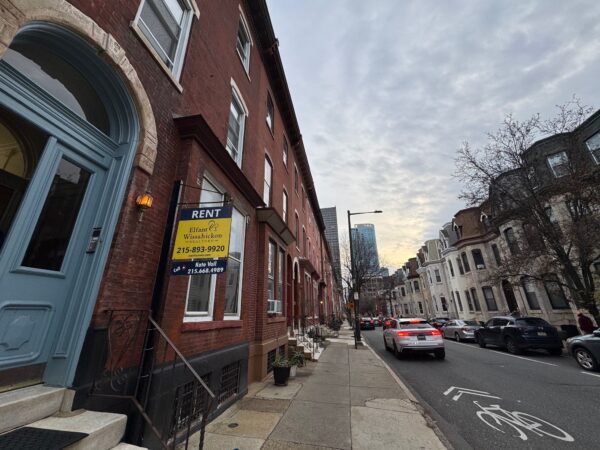
As I began in earnest my search for a Philadelphia apartment recently, I steeled myself for a tradition I assumed to be as East Coast as unnecessary honking and an unhealthy animosity toward outsiders.
I’m speaking, of course, about the broker fee.
As a native Midwesterner and perpetual renter who has spent the past decade living in Boston, I’d come to view broker fees as an inescapable part of big-city life.
For the uninitiated, broker fees are a lot like extortion payments. Here’s how it would go in Boston: A so-called apartment broker — to this day I couldn’t tell you what a broker actually is — meets you at an available apartment, unlocks the door, and stands there while you give yourself a brief tour of the unit. In exchange for this white-glove service, and the privilege of renting the apartment, you pay the broker a one-time, nonrefundable fee typically equal to one month’s rent. In Boston, where the average rent for a one-bedroom apartments sits at around $3,500, this is no small thing.
Making matters worse, the Boston brokers always seem to be finance-bros-in-training, arriving to these brief showings in Lexuses or BMWs, hair meticulously styled and dressed head to toe in Brooks Brothers.
How refreshing it has been, then, to discover that broker fees just … don’t actually exist here?
Not once since I began responding to online apartment postings have I been asked to hand a stranger a $3,500 check in exchange for arranging a two-minute tour. I haven’t yet received a torrent of unwanted text messages from guys named Brock or Beau, demanding to know the earliest possible moment I can schedule a viewing.
And from what I can gather, I’m not going to.
As one longtime Philadelphian explained it to me recently, “There is a beauty in Philadelphia that no matter how cool it’s trying to be, it is never desirable enough to warrant something like brokers fees.”
It’s been a true revelation.
(In Boston’s defense, Massachusetts legislators recently passed a measure mandating that landlords can no longer require tenants to pay a broker fee. Of course, that doesn’t give me back the thousands of dollars I would’ve otherwise put into my retirement fund or, more likely, Uber Eats and Nerf machine guns.)
Which is not to say, certainly, that things here are perfect. An increasing number of Philly renters are cost-burdened. And the city recently ranked among the nation’s least affordable for apartment renters, according to one online real estate brokerage firm.
And as someone who is at the very beginning of the process, I’m sure there will be more disappointment in store.
I’m preparing for an upcoming weekend of apartment tours in Philly, and I have no illusions about how it’s likely to go. I’m imagining a couple days of drab leasing offices and hidden-fee horrors, one-sided rental agreements and a good ol’-fashioned scam or two.
Fine.
If it means not handing a half-month’s salary over to a smug 25-year-old in wingtips, well, then, I’m OK with all of it.
President Trump mounted an illegal invasion of Venezuela, kidnapping president Nicolás Maduro and his wife and spiriting them out of the country.
The breathtaking use of military force against a sovereign state has no legal justification. It opens the door for anarchy in Venezuela and threatens to make the United States a pariah with no moral authority for other dictatorships around the globe.
Trump acted without the authorization of Congress, in clear violation of the Constitution. But then again Trump has long mocked the Constitution he swore to uphold.
Former President George W. Bush at least sold a phony story about weapons of mass destruction to get Congress to go along with his reckless invasion of Iraq. That catastrophic folly lasted nearly nine years, resulting in tens of thousands of needless deaths and costing taxpayers roughly $3 trillion.
Trump once promised to avoid forever wars and claimed to be the president of peace. But without any provocation or convincing explanation, he launched a military buildup in the Caribbean and began illegally bombing small boats, killing alleged drug smugglers in Central and South America.
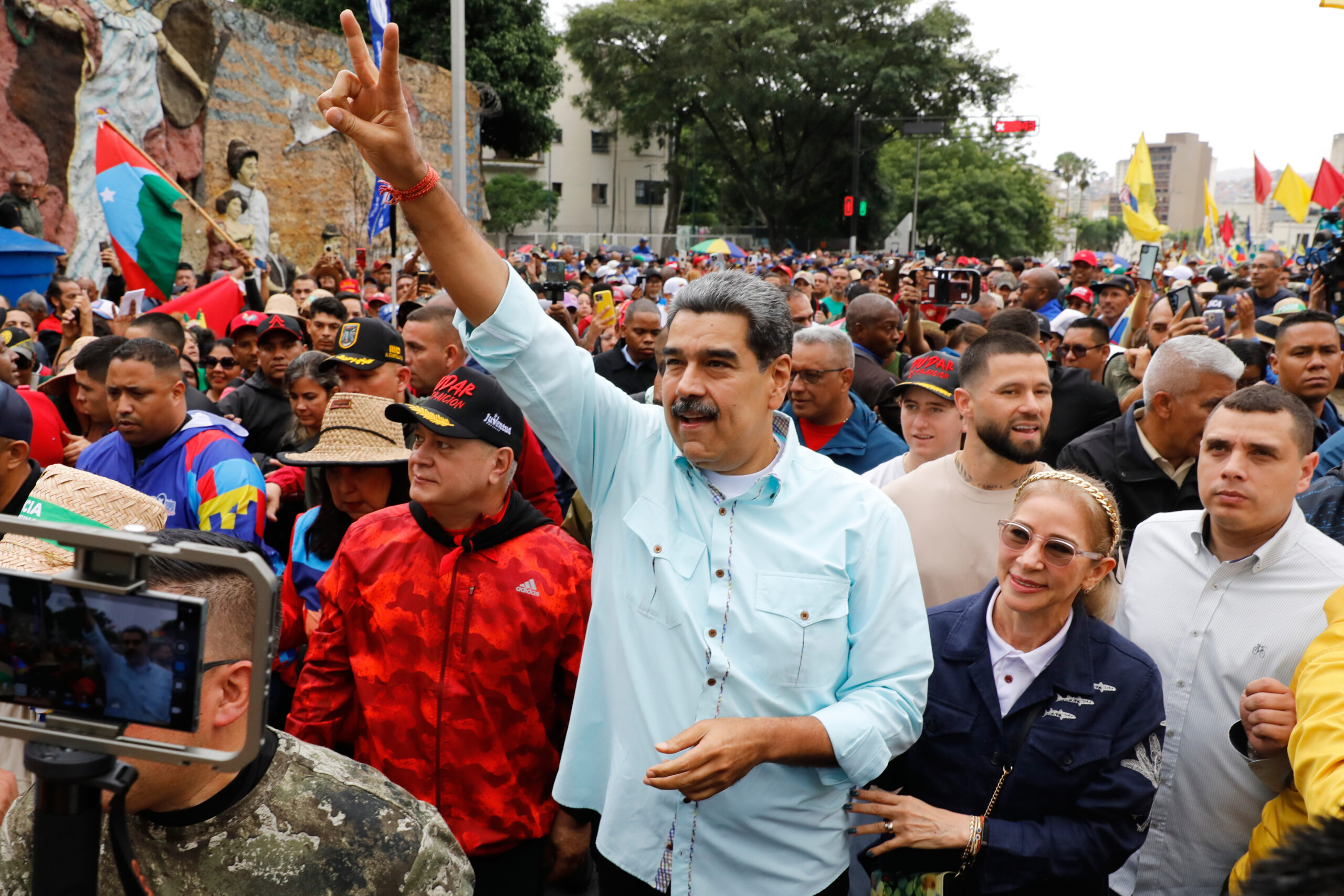
President Nicolás Maduro joins a rally in Caracas, Venezuela, on Dec. 10, 2025. The Trump administration designated Cartel de los Soles, which it says is headed by Maduro, a foreign terrorist organization.
Trump has offered shifting explanations — and even less evidence — for the military action ranging from wanting to stop drug trafficking to accusing Maduro of “stealing” U.S. oil and land.
After the attack, Trump came clean on just how out of control the operation is, claiming the U.S. is ”going to run the country” and take over oil production.
Congress, which under the Constitution, has the sole power to declare war, rejected efforts to rein in Trump’s warmongering. House Speaker Mike Johnson, a Trump puppet, praised the attack as a “justified operation that will protect American lives.”
Sen. Andy Kim (D., N.J.) called the move “disastrous” and said Secretary of State Marco Rubio and Defense Secretary Pete Hegseth “blatantly” lied to Congress when they said the goal of the military buildup was not to topple Maduro.
To be sure, Maduro is a corrupt and undemocratic leader who has brought economic ruin and death to Venezuela. Under his repressive regime, roughly 8 million people have fled the country.
But if the Trump doctrine is the removal of corrupt and undemocratic leaders, where do the military actions end? How does Trump square the removal and prosecution of Maduro with his outrageous pardon last month of former Honduras President Juan Orlando Hernández, who was convicted of drug trafficking by federal prosecutors?
Trump’s strongman act will do little to spread peace and democracy around the globe. In fact, the military actions in Venezuela may embolden China to invade Taiwan. It also signals to Russian dictator Vladimir Putin that Trump is not serious about defending Ukraine or Europe.
It is painfully clear there is a corrupt and unrestrainedmadman in the White House. Yet, the conservatives on the U.S. Supreme Court and the Republicans in Congress have abandoned their role to act as checks on the executive branch, starting with the insurrection Trump fomented nearly five years ago.
Under Trump, the American democracy that is getting ready to celebrate 250 years, is backsliding. A Harvard professor who studies democracies said flatly: “We are no longer living in a democratic regime.”
The unauthorized attack in Venezuela is just the latest example of Trump’s growing authoritarian rule.
This week’s Shackamaxon column proposes some New Year’s resolutions for our state and local officials, and other boldfaced names.
Gov. Josh Shapiro
Resolution: To put the horse before the cart. It’s hardly a secret that the Ambitious Abingtonian is eyeing a 2028 run for president. The governor participated in a deep profile written by the Atlantic’s Tim Alberta, one of the country’s preeminent presidential campaign reporters. New York Times opinion writer Binyamin Appelbaumlabeled him “the future of the Democratic Party.” And, of course, Shapiro himself has a new book on the way. Given all the hubbub, you might forget that Shapiro actually has yet to win his bid for reelection this year. Until he accomplishes that goal, all the presidential talk is a waste of time.
Mayor Cherelle L. Parker
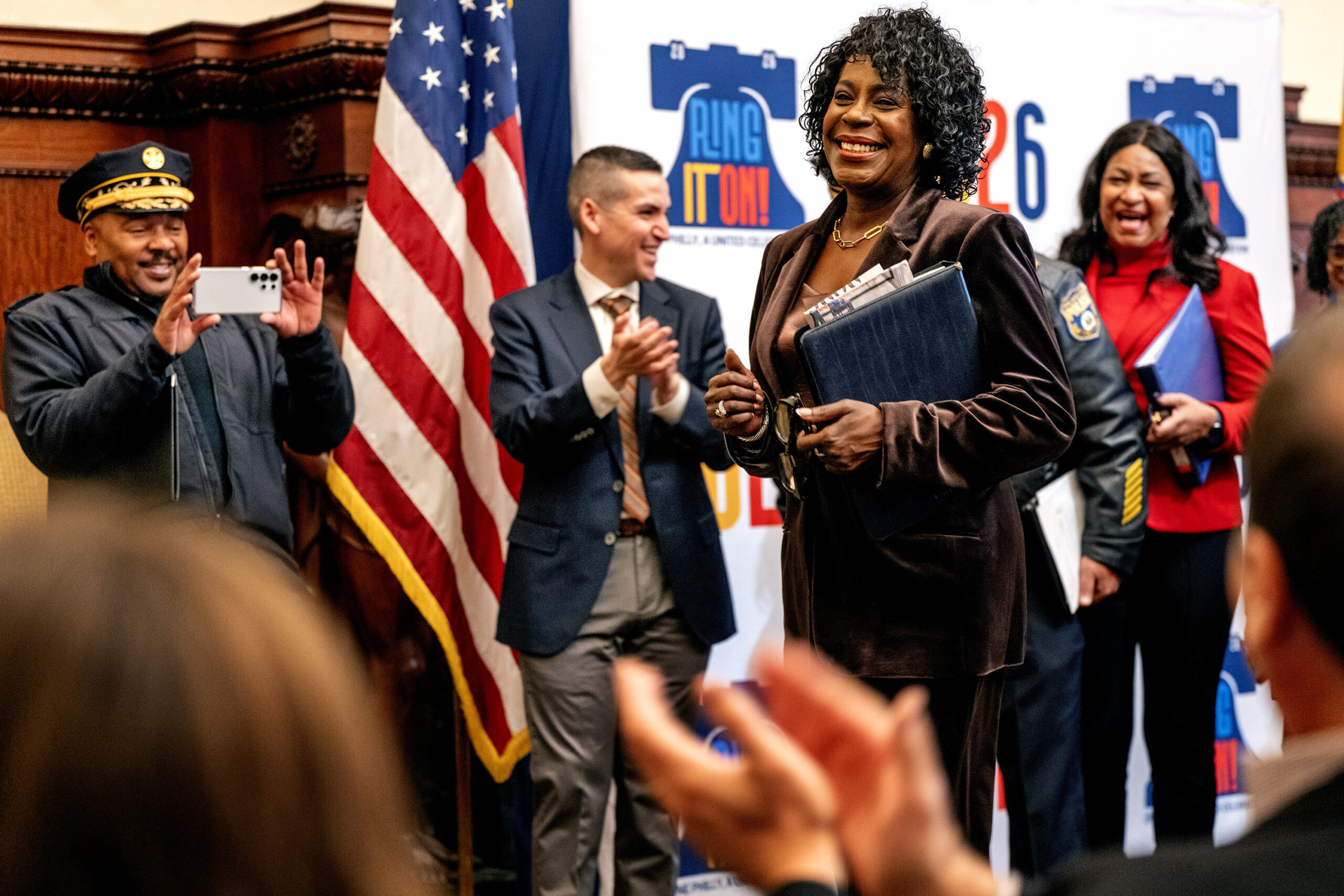
Fire Commissioner Jeffrey Thompson (left) records Mayor Cherelle L. Parker as she dances a (modified) mayoral Mummer’s Strut to the music of the Quaker City String Bang following a news conference at City Hall last month.
Despite this, Parker can point to important successes. Crime rates continue to decline: The city has posted the lowest number of homicides since the 1960s. Philadelphia is no longer the nation’s poorest big city. Despite a pandemic-induced decline in commercial property values and commuter wage taxes, the city’s fund balance stands at a record $1.19 billion. But there is one thing the mayor could do that would strengthen both herself and the city, which is moving beyond the siege mentality that has defined much of her tenure so far.
City Council
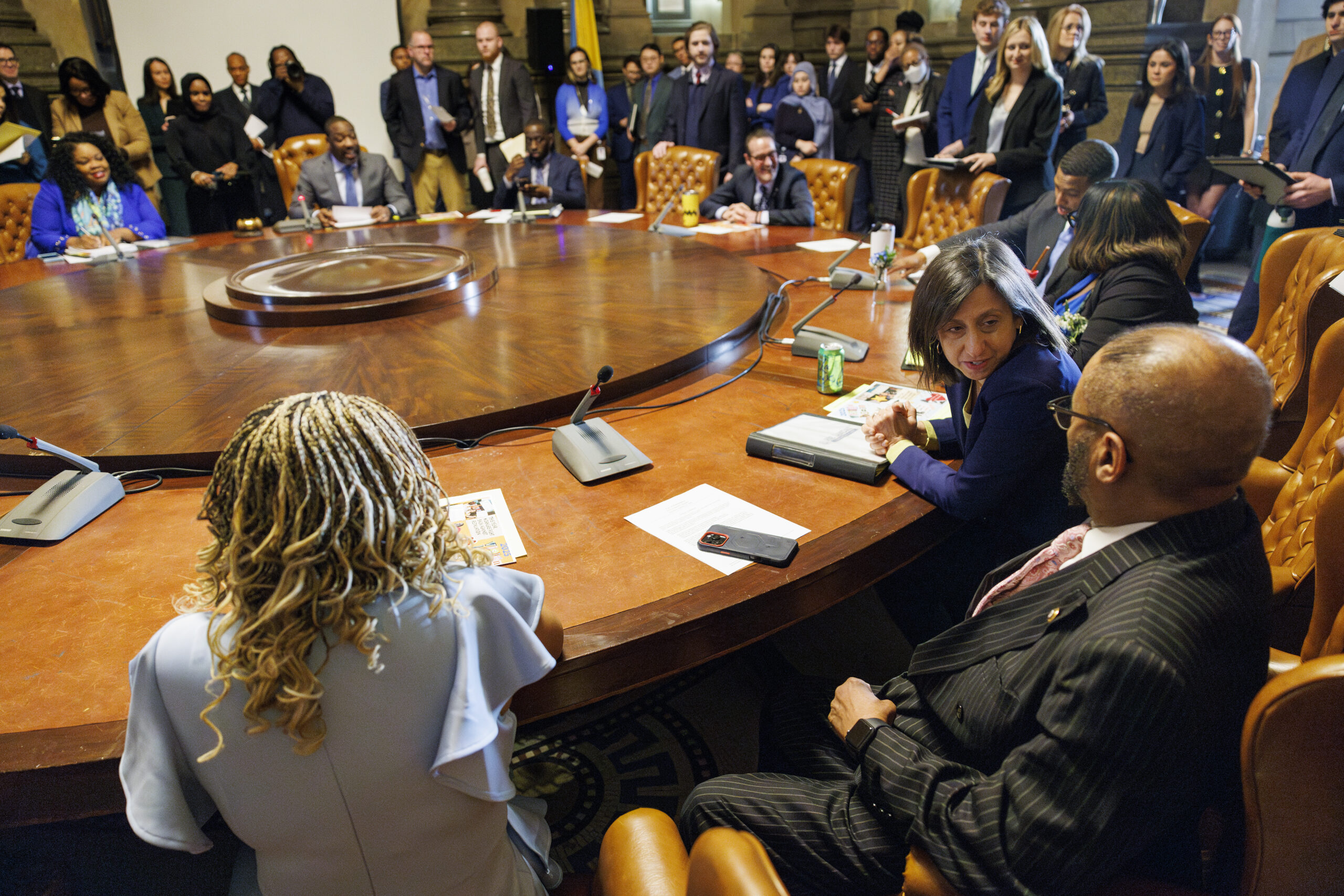
Members of City Council in their Caucus Room at City Hall in January.
Resolution: To eliminate micromanagement. District Council members often defend their tradition of “councilmanic prerogative” by citing the phone calls they’ll inevitably get from irate constituents when things change. That may be true, but they should think about things a little differently. After all, the more a municipal lawmaker leans into using prerogative, the less popular they seem to be.
Take Jeffrey “Jay” Young, for example. Young won his election by default. His opponents were disqualified over issues with their petitions, and the legal challenge against his own candidacy was dropped. He’s also the only councilmember with a declared opponent, with local lawyer Jalon Alexander openly tossing his hat into the ring. Then there’s Cindy Bass. Her record of allowing vacant-but-treasured local landmarks to sit and rot is so unpopular that — in a chamber where many incumbents go unchallenged — she won her last reelection campaign by just under 500 votes.
Angry phone calls are a part of life in elected office. Prioritizing the squeaky wheels over the public good, however, is a choice.
SEPTA
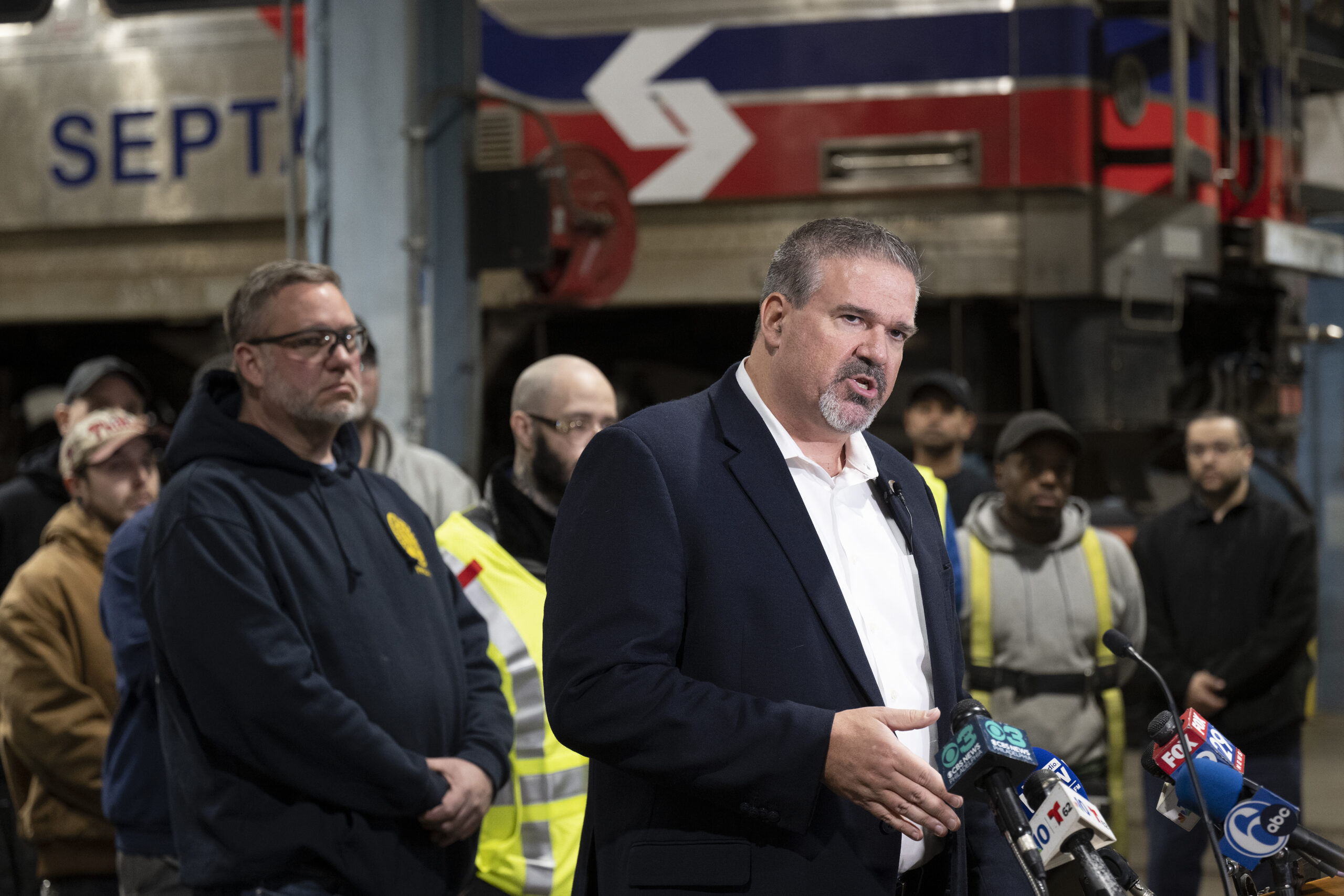
SEPTA General Manager Scott Sauer addresses reporters during a news conference at the SEPTA Overbrook Maintenance Facility in November.
Resolution: To stand and deliver. It has been a tough year for our local transit agency and its new general manager, Scott Sauer. Harrisburg punted yet again on a sustainable funding solution. Train cars in the decades-old Regional Rail fleet started catching fire, and an effort to save money on maintenance led to a months-long closure of the Center City trolley tunnel. Still, despite these challenges, 2026 represents an important opportunity for our city’s transit agency to change perceptions.
Beyond getting the tunnel back up and running, SEPTA’s riders need more reliable service on both buses and trains. They also need better conditions in stations and on vehicles. While overall crime is down, issues like smoking remain frustratingly common. With Philadelphia anticipating hundreds of thousands of additional tourists in 2026, the agency should pull every available lever to improve the quality of life for both visitors and longtime riders (a group I am part of).
Kim Ward and Joe Pittman
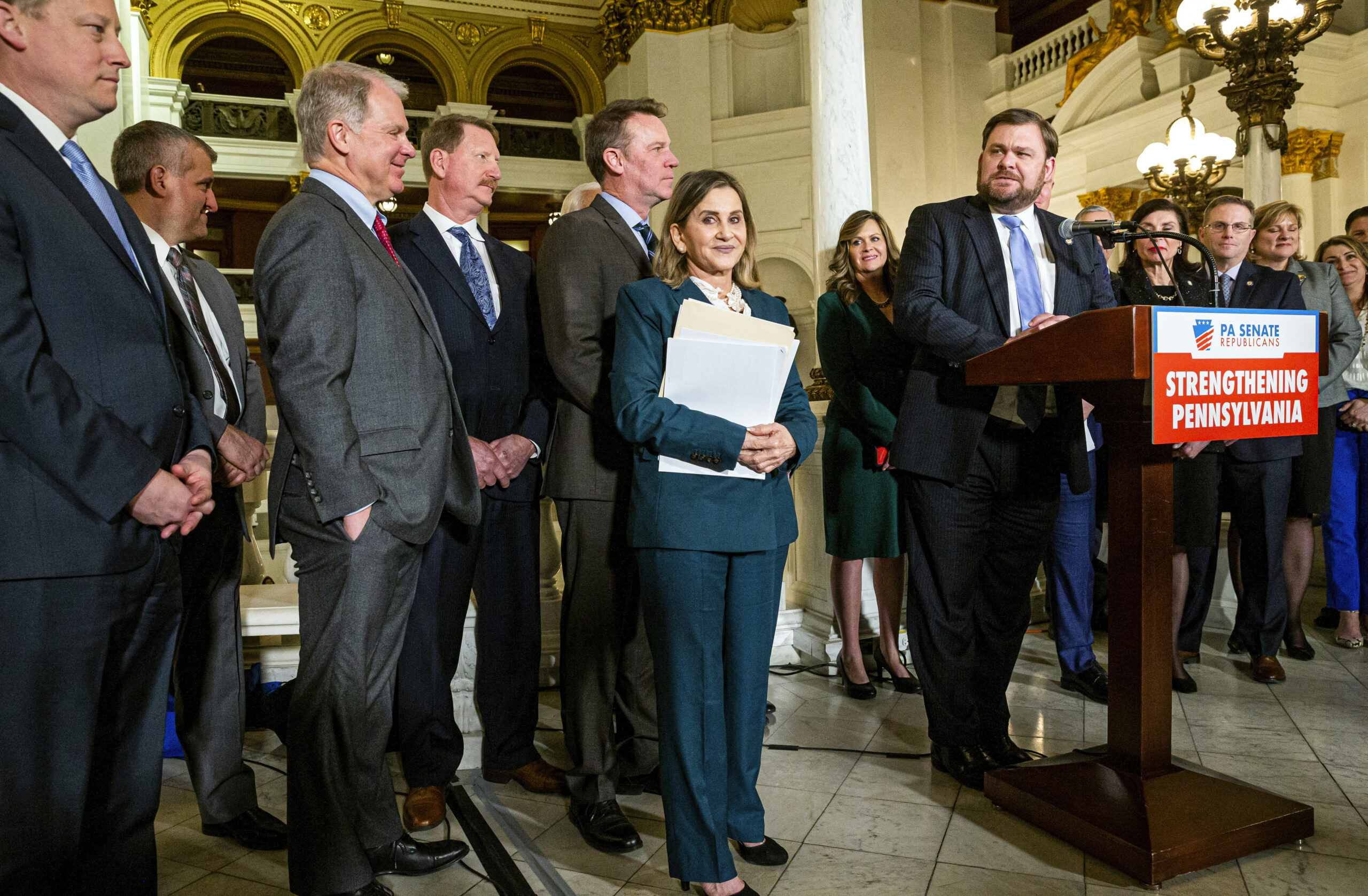
With Senate President Pro Tempore Kim Ward (R., Westmoreland) standing at left, Senate Majority Leader Joe Pittman (R., Indiana) speaks during a March 2023 news conference at the state Capitol building in Harrisburg.
Resolution: To learn to love all of Pennsylvania. State Senate Majority Leader Joe Pittman’srambling August speech represented one of the lower points in intra-commonwealth relations. Meanwhile, his colleague in leadership, Senate President Pro Tempore Kim Ward, spent the year essentially trying to destroy Philadelphia’s transit system. Ward frequently lobbed rhetorical bombs despite never once meeting with Sauer. It’s hard to imagine a Philadelphia-based politician ever treating rural needs with such open contempt. Their petulant approach stands out because their party’s mid-level leaders took a much more reasonable tack.
By contrast, State Sen. Judy Ward, who chairs the Transportation Committee, represents a Central Pennsylvania district that is, if anything, more rural than Pittman’s. Yet, she’s gone as far as visiting Philadelphia and touring SEPTA facilities herself in her quest to better understand the issues facing the agency. Pittman and Ward should emulate that model and at least do their homework before making big decisions about the southeastern corner of the state.
The rest of us
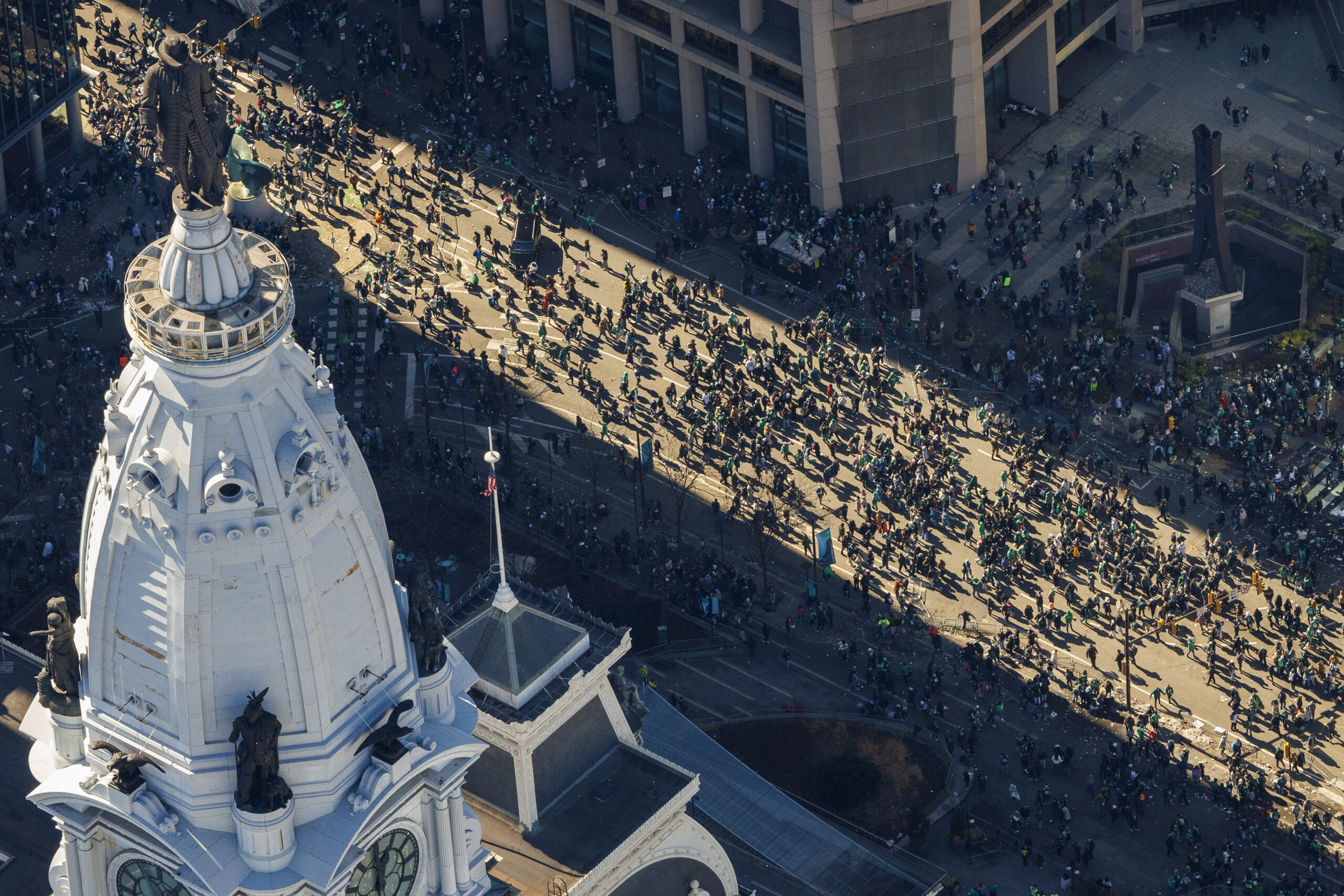
An aerial view of 15th Street — with the William Penn statue atop City Hall — during the Eagles Super Bowl LIX victory parade in February.
Resolution: To put our best foot forward. A crucial factor in making 2026 a success for Philadelphia is Philadelphians ourselves. The city is filled with conscientious, law-abiding, tax-paying residents. But a dedicated cadre of miscreants often creates a different impression. Let’s make 2026 a year where all of us shovel our sidewalks, park our cars legally, dispose of our litter, pick up our dog poop, stop for red lights and stop signs, yield to pedestrians, use real license plates, get proper permits for construction, wait to smoke until after leaving the station, and pay our public transit fares.
Growing up in South Jersey, my siblings and I were often reminded by our mother to seek a college education to better our chances of landing a good job.
My sister Andrea and I heeded her advice and obtained bachelor’s degrees with honors a few years after high school, and began working in our professional fields.
It took my brother, William, the oldest, nearly 50 years to believe he could do it, too. We always knew he had the smarts and the grit. He had to believe it.
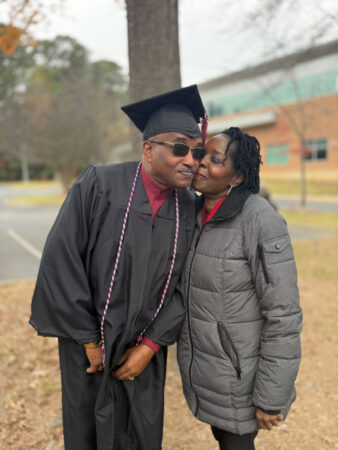
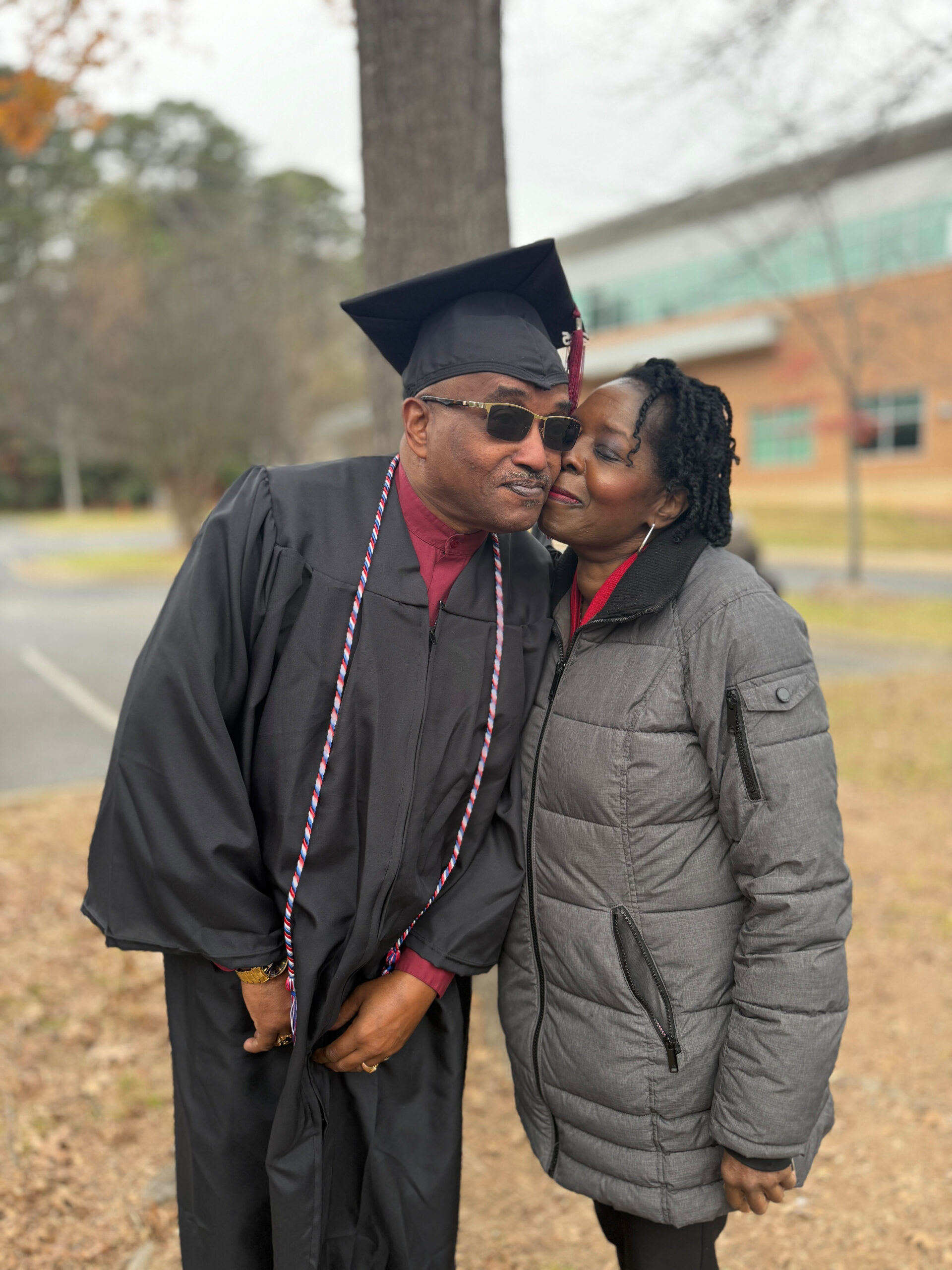
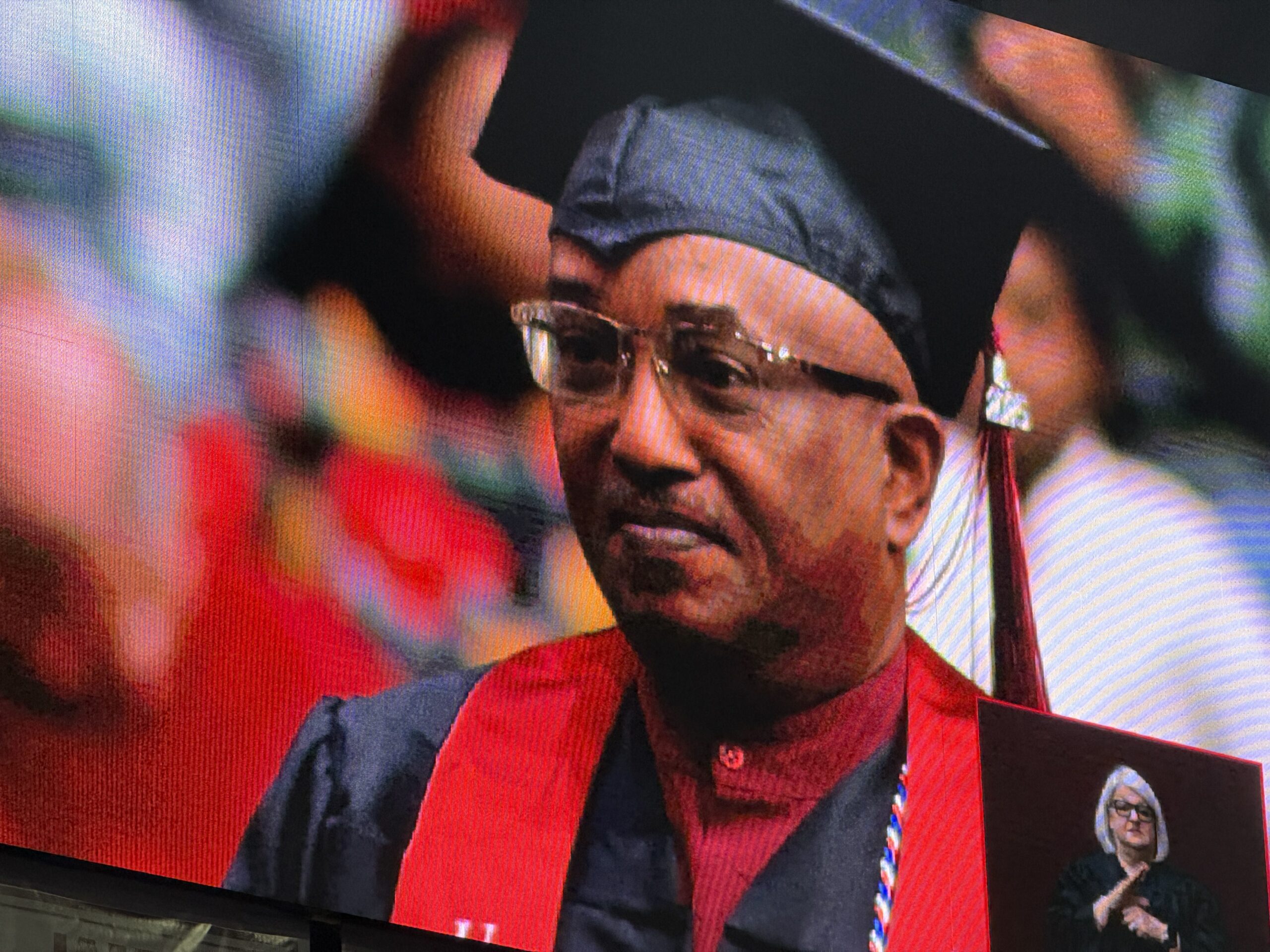
After a circuitous journey, he proved it by graduating in December from the University of Arkansas at Little Rock at 67. His extended family could not have been more proud.
‘I don’t want to give up’
He attended three colleges and took classes part time for eight years. He enrolled in remedial math, reading, and writing courses, had tutors, and took algebra four times until he finally passed after two years. He missed a semester after a major health scare in 2022, which interrupted his studies.
“I didn’t want to give up. I was the only one in the family who didn’t have a college degree,” he said. “For me, it was the sky is the limit, and you can do it.”
An increasing number of learners like Will, 35 and older, are joining younger students in college classrooms. More than four million were enrolled in postsecondary education in 2023, according to an Inside Higher Education report.
Some older learners, like my brother, are retired and want to pursue a lifelong dream to obtain a college degree. Others want to change careers or increase their earning potential.
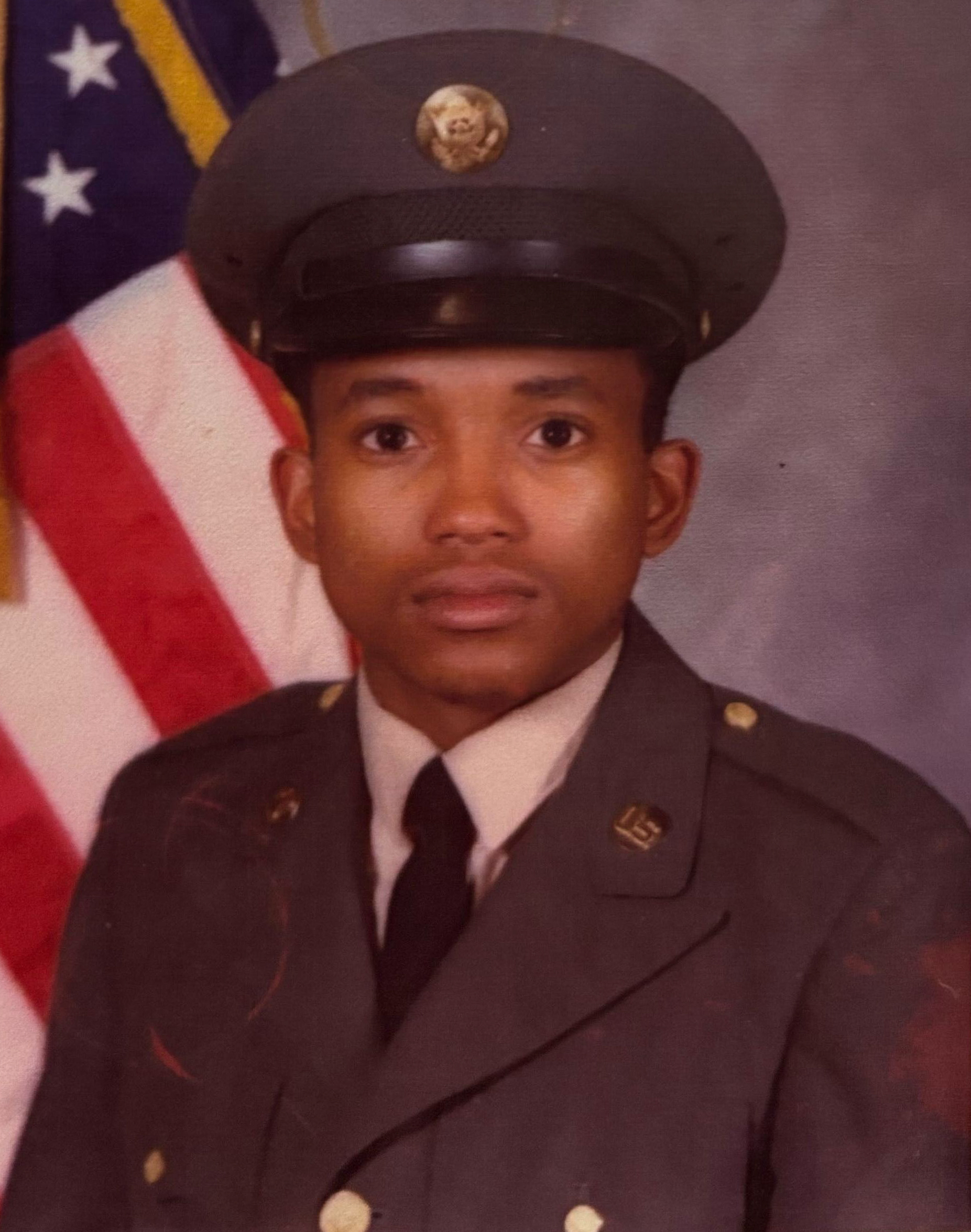
Affectionately called “Willie Will,” my brother dropped out of Bordentown Regional High School his senior year in 1976 to enlist in the U.S. Army. Because he was just 17, our mother, Eva, had to give permission.
William Burney dropped out of Bordentown Regional High School his senior year in 1976 to join the U.S. Army. He obtained a GED while serving in the military.
Bored with school and failing most classes, Will decided the military would give him a new start and ease the financial burden on our single mother. During his three-year military stint, he became a medic in the Army and obtained his GED.
Despite not having a degree, Will always landed good-paying jobs in a variety of fields. He has been a psychiatric technician, a nursing assistant, a retail store manager, a longshoreman on the Camden waterfront, a truck driver, and a corrections officer.
Along the way, he battled demons and a drug addiction that made him not always make good choices. He eventually sought treatment and has been sober for nearly three decades.
No regrets
“I don’t have any regrets,” he said. “I could have been dead three or four times, so to make it to 67, I have made it.”
Will retired from the Arkansas Department of Corrections’ Wrightsville Unit, where he had worked as a corrections officer for three years after moving to North Little Rock with his wife, Belinda, in 2008. He suffered a light stroke at work in 2015 that left his left side weakened and affected his short-term memory.
Returning to the classroom for the first time in nearly five decades wasn’t easy. He was three times as old as his classmates. The technology was intimidating: He could barely type and had never used a laptop. He took virtual classes during the pandemic.
His wife, a retired elementary teacher, became his biggest cheerleader, and his college pursuit became a family project. She found him a tutor, reviewed his research papers, and even watched Zootopia, a Disney animation, with him for an assignment.
“I was on the journey with him,” she said with a laugh. “It was something he set his mind to, and he kept on.”
He graduated from Pulaski in 2020 with an associate degree. The family proudly watched the commencement, which was held virtually because of the pandemic. We thought that was it.
William Burney obtained an associate degree from the University of Arkansas — Pulaski Technical College in 2020. A virtual commencement was held due to the COVID-19 pandemic.
Motivated by his advisers, Will decided to pursue his bachelor’s with a vengeance. He rarely missed class, turned in assignments on time, and sought help from professors when needed to stay on track.
He missed the spring 2023 semester after undergoing open-heart surgery to replace an aortic valve. He was back in school the following semester.
When Will informed the family he was finally graduating, I was determined to witness his big day, traveling over 1,000 miles to get there. I wanted to stand in the gap for our mother, who died in 2014. Our sister, a healthcare administrator in Florida and unable to attend, said, “I’m incredibly proud of him and this monumental accomplishment.”
William Burney holds a portrait of his mother, Eva Moss, that he commissioned. She died in 2014.
From the moment we stepped on campus with my boyfriend, Jeff, I chronicled every moment, snapping photos and videos, much to Will’s chagrin. I was especially proud when he led his fellow criminal justice major graduates inside as the department’s student marshal.
“I knew I was real smart, but wasn’t using it,” he said. “It was just a matter of buckling down and doing it.”
Always a jokester, he couldn’t resist a sibling jab. “We all know I’m the smartest in the family. I had to go the long route to get there.”
The Burney family, from left, William Burney, Melanie Burney, mother Eva, sister Andrea Robinson, and her children, Jamil and Christopher Robinson (front).
During my whirlwind visit, we celebrated and reminisced about our childhood and lessons from our mother. I had a chance to learn more about the man my brother had become. It was bittersweet that our mother was not there to share the moment.
Siblings William and Melanie Burney at his graduation Dec. 13 from the University of Arkansas at Little Rock.
As we drove around Little Rock, Will pointed to the community garden he helped start in 2011 and served as the manager. He serves on the board of Jefferson Comprehensive Care Service Inc., which operates seven health clinics. He took me to King Solomon Baptist Church, where he was baptized in 2012.
Inspiring others
Will — who earned a second associate degree in addition to a bachelor’s — plans to use his experience to encourage others, especially young Black men. He’s currently weighing an offer to join the university’s faculty. He may pursue a graduate degree.
“If you get the opportunity to become a better person, learn while you can. You have to do the work.”
After taking classes for eight years, William Burney graduated in December from the University of Arkansas at Little Rock. He wants to encourage others to pursue their dreams.
I applaud The Inquirer for last Sunday’s Opinion section, which was made up entirely of an editorial documenting the damage done by Donald Trump over the past 11 months. In 2025, we learned once again how important a free press is to inform our citizens about the path Trump’s administration is taking. The most recent episode of CBS News’ Sunday Morning disappointed me. In its year in review, no mention was made of the three large protests: “Hands Off” (three million people), “No Kings I” (five million people), and “No Kings II” (seven million people). Why were these peaceful demonstrations not mentioned? I believe CBS fears retribution by Trump. A free, informative, fact-based news media is so important to maintain our democracy. Shame on CBS for its cowardly bowing to Trump — first in suppressing the 60 Minutes report on the inhumane treatment in an El Salvadoran detention center, and then by not mentioning our peaceful protests.
Marie Kania, Media
. . .
Thank you for your recent editorial that comprehensively details the most egregious of Donald Trump’s corruption. It was masterful, given the overwhelming volume of material that you had to sort through.
Yet, Trump is only one person. Most Senate and House Republicans have done nothing to fulfill their Oath of Office to support and defend the Constitution. There are too few Republicans willing to do the right thing. Their near total obedience to this corrupt regime — and not to the Constitution — has enabled the near collapse of our democracy. Why? Most of them seem to want to hold on to their piece of the financial pie and cling to the power they have but refuse to use.
The Constitution clearly outlines many paths to dealing with the corruption of this administration, but most Republicans continue to enable and obey MAGA Mike Johnson’s abuse of power, rules manipulation, and time wasting. Chaos enables corruption, and the majority of Republicans at the local, state, and federal levels like it. They think that if they bend the knee to Trump, they’ll be safe. They are so ensconced that even though they don’t believe the GOP rhetoric, they willingly play along and spew it to constituents.
Let’s hope the coming elections continue to reestablish the ideals of our democracy by voting out all politicians — Republican and/or Democrat — who have lost their sense of right and wrong or played along. Let’s hope a younger, idealistic generation of politicians emerges from this chaos, because the GOP has sunk so low that it protects rich pedophiles without a thought of the victims. After these heinous crimes were exposed publicly, it finally moved a few Republicans to denounce Trump’s actions, even though they had fully enabled him up to this point. Still, too few were moved, and still others who knew the details before the public disclosures but chose to look the other way.
We appreciate newspaper journalism. Other mainstream media outlets do not cover issues in depth, and many have capitulated to the current regime so much that they can no longer be trusted.
H. Tunney, Huntingdon Valley
. . .
Dec. 26 was my 67th birthday. The weather was cold and bleak, like the year had been. Unlike during Donald Trump’s first term, the major news networks, along with many of the nation’s top newspapers, had fallen to Trump’s authoritarian bullying, or had hopped onto the oligarchy bandwagon for the goodies. Universities, top law firms, and business titans paid coin to join the gravy train, or at least not to be run over by Trump’s retribution railroad. But on my birthday, The Inquirer stood tall and published “The Damage Done” online. Maybe it is weird that an in-depth piece detailing the breadth, depth, and speed at which Trump is destroying our country and the institutions that should be protecting us felt like a gift. But Philly has grit, and our paper has gravitas. The Inquirer understands there is risk in speaking out. The risk of remaining silent is greater.
Lynn Strauss,West Chester
Minimum wage increase
The Inquirer recently reported that the state of New Jersey was moving to raise its minimum wage to $15.92 per hour. A just and modest increase from $15.49 per hour.
Recently, the city of Santa Fe, N.M., moved forward with a proposal to increase its minimum wage, as well. Something that caught my eye is that the article about it in the Albuquerque Journal mentions that Santa Fe has, since 2003, mandated an automatic increase in minimum wage, which occurs every year. I personally think this would be a fantastic policy for the city of Philadelphia to investigate.
For decades, Philadelphia was the poorest big city in America (that honor now belongs to Houston, I believe). Nonetheless, as a city that is still fairly poor, Philadelphia still has a huge section of its population that holds positions that pay minimum wage, which is still $7.25 an hour in Pennsylvania. Now, one could debate what parameters go into determining the increase of that minimum wage, but I think it is beyond doubt that a policy that automatically increased minimum wage and tied it either to inflation, Consumer Price Index, or some other parameter would benefit literally tens of thousands of Philadelphians.
The “Fight for 15” movement started in 2012, and every year that goes by means inflation makes that $15 an hour worth less and less. (Thankfully, New Jersey is inching toward $16 per hour.) A great deal of time and political capital is spent fighting for or against one-time increases. If a schema for automatic increases could be agreed upon, it would save our political energy (which is pulled in so many directions these days) for figuring out other problems. Perhaps an automatic system could even be considered business-friendly, as it would allow businesses to plan for and budget for small increases over time instead of lobbying against their own workers in pursuit of preventing big wage jumps.
In New York, Zohran Mamdani was right to tap into the issue of affordability and wages as a universal problem in our great American cities. Now is the time to get creative about how to address that problem here in Philadelphia.
Alex Palma, Philadelphia
No one is safe
Nick Elizalde, my grandson, was shot and killed at his high school football game on Sept. 27, 2022. That year, 516 homicides were recorded in Philadelphia, and 51 school shootings in the U.S. In 2024, we saw 84 school shootings nationwide. The U.S is the only country in the world where the leading cause of death for children is guns.
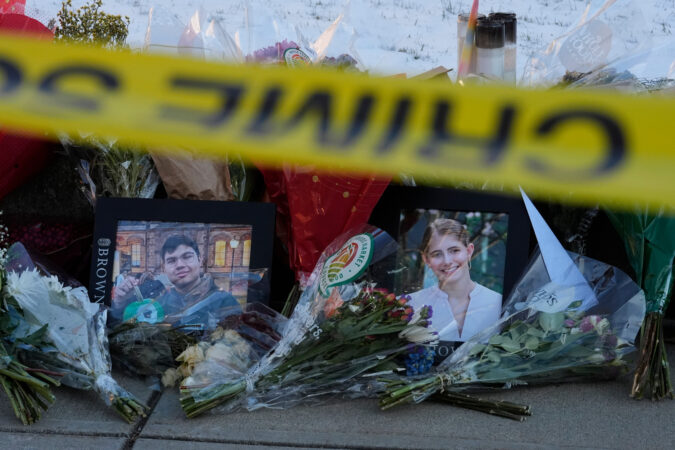
On Dec. 13, two students were shot and killed at Brown University. Donald Trump shrugged. “Things can happen,” he said. One day later, Providence, R.I., Mayor Brett Smiley assured residents that they are safe. No, Mayor, they’re not. Americans aren’t safe. Not in Providence, Uvalde, Newtown, Blacksburg, Parkland … Not in schools, places of worship, theaters, our front porches. We’re killed at home and away. Murdered on buses. In cars. Like Trump, we shrug. We may tell ourselves, “It can’t happen here.” Friends and neighbors become statistics. By continuing to support elected officials who fail to act, we accept the carnage.
Following rare mass shootings, New Zealand, Norway, and Canada banned assault weapons. Sweden limited access to semiautomatic weapons. After the Dec. 14 murder of 15 people on Bondi Beach, Australia will strengthen its gun laws to include limiting gun ownership. Why not here?
In Delaware County this year, the council took bold action and banned untraceable ghost gun parts and machine gun conversion devices. Why not your county?
In this election year, demand more from lawmakers. Vote only for those who support commonsense solutions to gun violence. Vote all others out. It’s too late for Nick, but maybe not for the folks you love.
Marge LaRue, Aston, laruehouse@verizon.net
Join the conversation: Send letters to letters@inquirer.com. Limit length to 150 words and include home address and day and evening phone number. Letters run in The Inquirer six days a week on the editorial pages and online.
As I reach for the hope of 2026, I am convinced that this new year is about more than the 250th anniversary of the Declaration of Independence and more than the politics of the upcoming midterm elections. This new year is a mirror that allows us to look back on who we were in 2025.
Internationally, 2025 was defined by the Trump administration’s military attacks in and around oil-rich countries like Venezuela and Nigeria, an apparent push to annex mineral-rich Greenland, and Trump-backed peace deals in Gaza and Ukraine that never quite seemed to bring peace.
Perhaps, in Trump’s mind, that’s what it means to Make America Great Again. In 2026, the country will have to decide if we agree with him, and the choice will not be easy, because the sides are completely dug in.
For millions of Americans, there’s an inherent appeal to Trump’s brand of no-holds-barred politics.
His supporters believe political correctness has robbed them of the right to say what they feel, to take what they want, and to run through anyone who stands in their way.
When Trump insults those who don’t look or think like him, his supporters believe he’s speaking for them.
After all, the idea of blaming others for their problems is not only palatable, it’s delicious — because when someone else is always at fault, one never has to look at oneself.
For millions of other Americans, like me, the echoes of white supremacy that amplify the MAGA movement are repulsive.
Pro-Trump demonstrators in Washington during the Jan. 6, 2021, insurrection. The echoes of white supremacy that amplify the MAGA movement are repulsive, Solomon Jones writes.
By implementing that strategy, the Trump White House won 21 victories in the Supreme Court. The wins allowed the Trump administration to take wide-ranging actions, including: deporting undocumented immigrants to third-party countries, ending federal funding for DEI, firing thousands of federal workers without congressional approval, accessing Americans’ Social Security data, and revoking the power of federal judges to implement nationwide injunctions.
Perhaps the ruling will stop the president’s strategy of sending troops into cities run by Democrats, or maybe he’ll find a workaround. If I were a betting man, I’d take the odds on the latter.
That’s why in 2026, if we truly want to commemorate the 250th anniversary of the birth of American democracy, we cannot stand by and watch as our country is twisted into knots.
When this year’s midterm elections take place, we must raise our voices and vote.
During Turning Point USA’s AmericaFest 2025, held on Dec. 21, I heard Vice President JD Vance say that America was founded as, and always will be, a Christian nation. I strongly disagree.
Not because we have failed to live up to that standard (we have), but because no nation-state can rightly claim that title. Scripture never supports such claims. Nations may be influenced by God, restrained by God, or even blessed by God, but they are not the Kingdom of God.
Two hundred and fifty years ago, 13 British colonies did something unprecedented in human history.
Their most remarkable act was not just rebellion itself — rebellions had happened before — but the nature of their rebellion. They did not cast off one king to enthrone another. They rejected the very premise that sovereignty ultimately belonged to any earthly monarch.
Instead, they declared that all people are created equal and endowed with certain “unalienable rights” not by a crown, but by God, our creator. These were not merely political claims; they were moral assertions rooted in a Judeo-Christian worldview that affirmed human dignity as a gift, not a privilege.
This declaration was, of course, an act of war not just against England, but the feudal worldview. Over the next eight years, these colonies fought the most powerful military force on Earth for the right to govern themselves — and they won.
What followed was one of the most remarkable political achievements in history: a constitutional framework designed not to grant rights, but to protect rights already given by Almighty God.
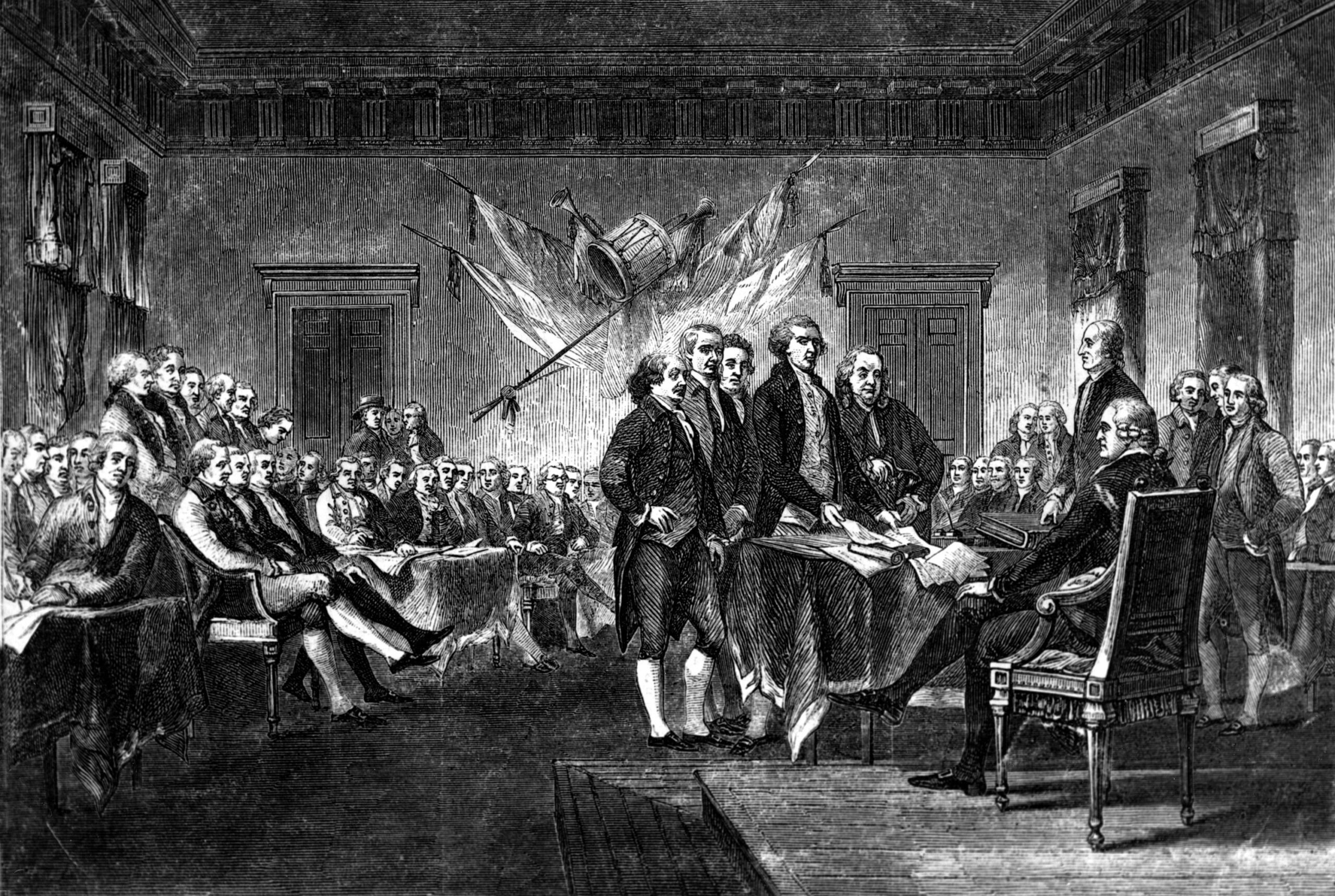
This undated engraving shows the scene on July 4, 1776, when the Declaration of Independence, drafted by Thomas Jefferson, Benjamin Franklin, John Adams, Philip Livingston, and Roger Sherman, was approved by the Continental Congress in Philadelphia.
Governing powers were divided, totalitarian authority was restrained, and freedom was placed in the hands of the people. John Adams captured this intent with striking clarity when he wrote: “Our Constitution was made only for a moral and religious people. It is wholly inadequate to the government of any other.”
The founders understood that liberty could not survive without moral virtue — and that virtue could not be legislated.
These principles still work today — but only when we the people take an active role in self-government. Our freedom is not self-sustaining. It requires discipline, restraint, and moral courage from each generation. When citizens abdicate responsibility, power inevitably consolidates. Self-rule depends upon self-control.
The founders also stumbled grievously over the question of slavery. Many knew it was morally wrong, yet they compromised, deferred, and left its resolution to future generations. That failure should never be minimized. But neither should it be used to dismiss the ideals of freedom themselves. The principles were sound. The people were flawed.
History reminds us that liberty must be defended, expanded, and, at times, redeemed by those willing to pay the price.
Many of the original signers were Christians, and they understood a core principle of God’s Kingdom: It is transcendent. When Jesus was questioned by political authority, he stated plainly, “My kingdom is not of this world” (John 18:36). Jesus did not come to establish a nation-state or seize political power. He formed a people whose true citizenship transcends borders, flags, and governments.
This truth must direct how, as Christians, we live as Americans. As citizens of a nation-state, we have real obligations. Citizenship is not passive. It requires obedience to just laws, respect for civil authority, and a commitment to the common good.
It also demands vigilance. We must be willing to challenge laws and policies that violate the God-given freedoms of others — especially religious liberty. Obedience without conscience is not virtue; it is mere compliance.
America was shaped by Judeo-Christian principles, but it was never intended to be a theocracy. America’s unity is powerful precisely because we do not have a state religion. Faith compelled by law is no faith at all. Genuine belief cannot be coerced; it must be chosen. The Gospel advances by witness, persuasion, and sacrificial love, not by legislation or force.
I say this as a Christian and a follower of Jesus Christ: The church does not need the power of the state to fulfill its mission. History shows that when the church weds itself too closely to political power, it loses its prophetic voice and relinquishes its spiritual authority.
America is not the Kingdom of God, and it was never meant to be.
But neither is it a historical accident nor a moral improvisation. It is something far more fragile: A people united in the conviction that liberty flows from God, not the state, that government exists to safeguard rights it did not create, and that faith must remain free.
If we confuse America with the Kingdom of God, we will ultimately diminish both — robbing the nation of its moral responsibility and the Gospel of its eternal power.
The Rev. Dr. Michel J. Faulkner, a former NFL player, community leader, pastor, and registered Republican, is chair of the board of directors of the Philadelphia Council of Clergy.
President Ulysses S. Grant established Yellowstone as the first national park on March 1, 1872. Ever since, 27 American presidents have supported, nurtured, and developed national parks — that is, until now, with this president, Donald Trump.
National park budget cuts, which were first proposed by the Heritage Foundation’s Project 2025, have totaled roughly 35%.
Implemented by Elon Musk and his so-called Department of Government Efficiency, the cuts have led to thousands of public servants being fired and day-to-day operations being vastly curtailed.
Taking it to the next step, Trump’s secretary of the interior, Doug Burgum, who oversees national parks, is considering a plan for the elimination of up to 350 park sites across the country. Burgum is apt to diminish or shutter sites that fall vulnerable to Trump’s executive order, cynically titled, “Restoring Truth and Sanity to American History.”
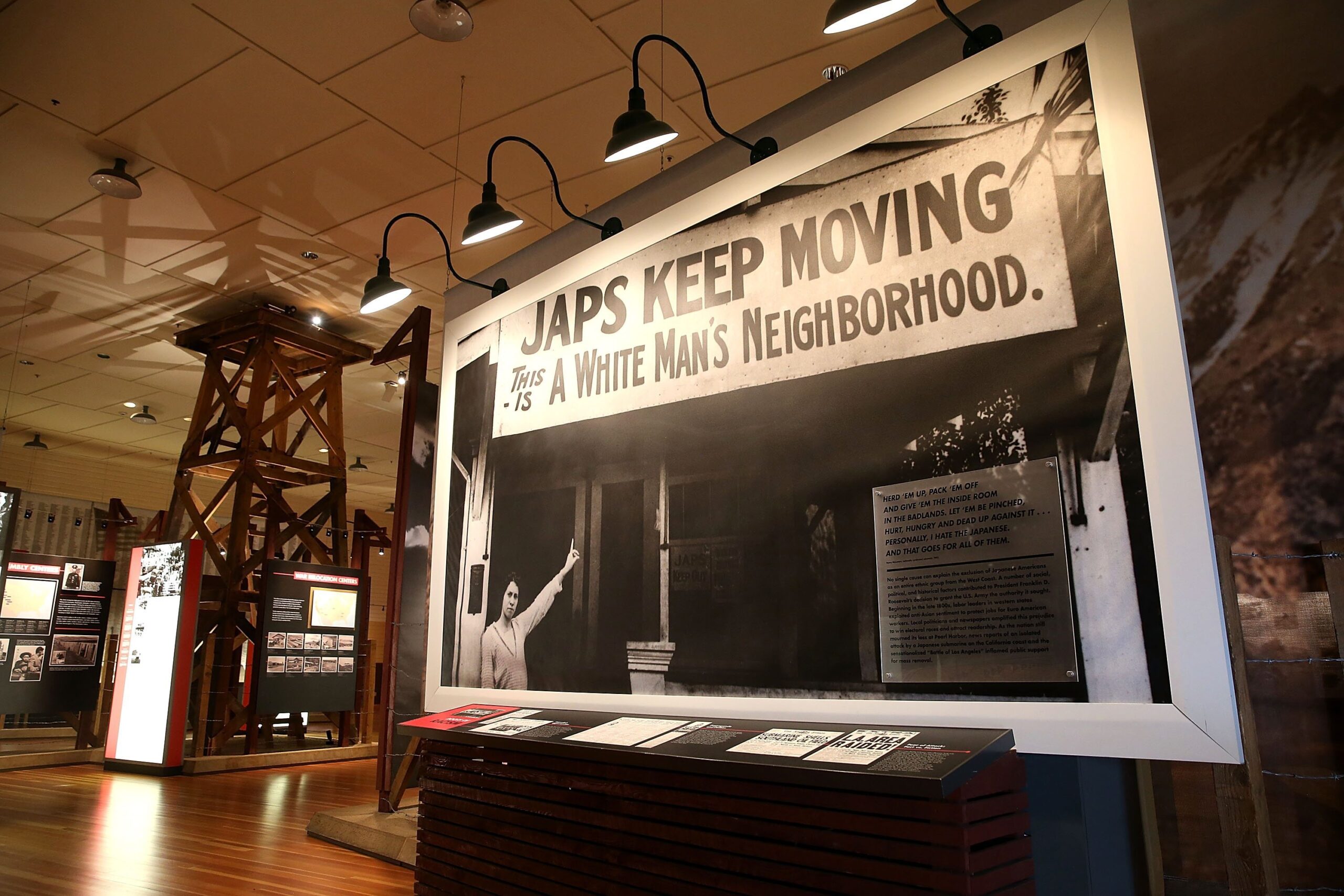
A vintage photograph is displayed at Manzanar War Relocation Center at Manzanar National Historic Site, near Independence, Calif.
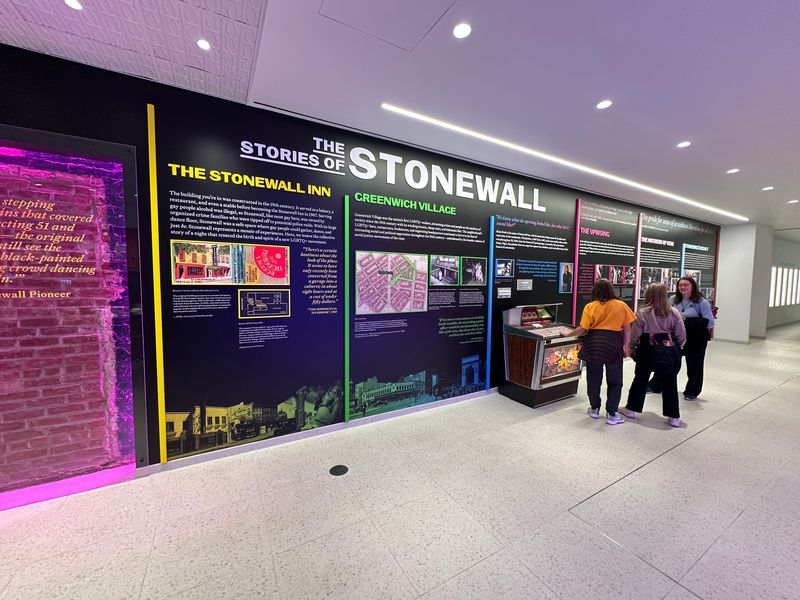
Park sites seen as not conforming to the order might include the Manzanar National Historic Site in California, which describes the government’s forced race-based relocation to detention camps of Japanese Americans at the start of World War II, or the Stonewall National Monument in New York City, where the advancement of civil rights for LGBTQ+ Americans is celebrated.
An exhibit at the Stonewall National Monument Visitor Center.
National parks across the country are also burdened with huge backlogs of deferred maintenance to infrastructure.
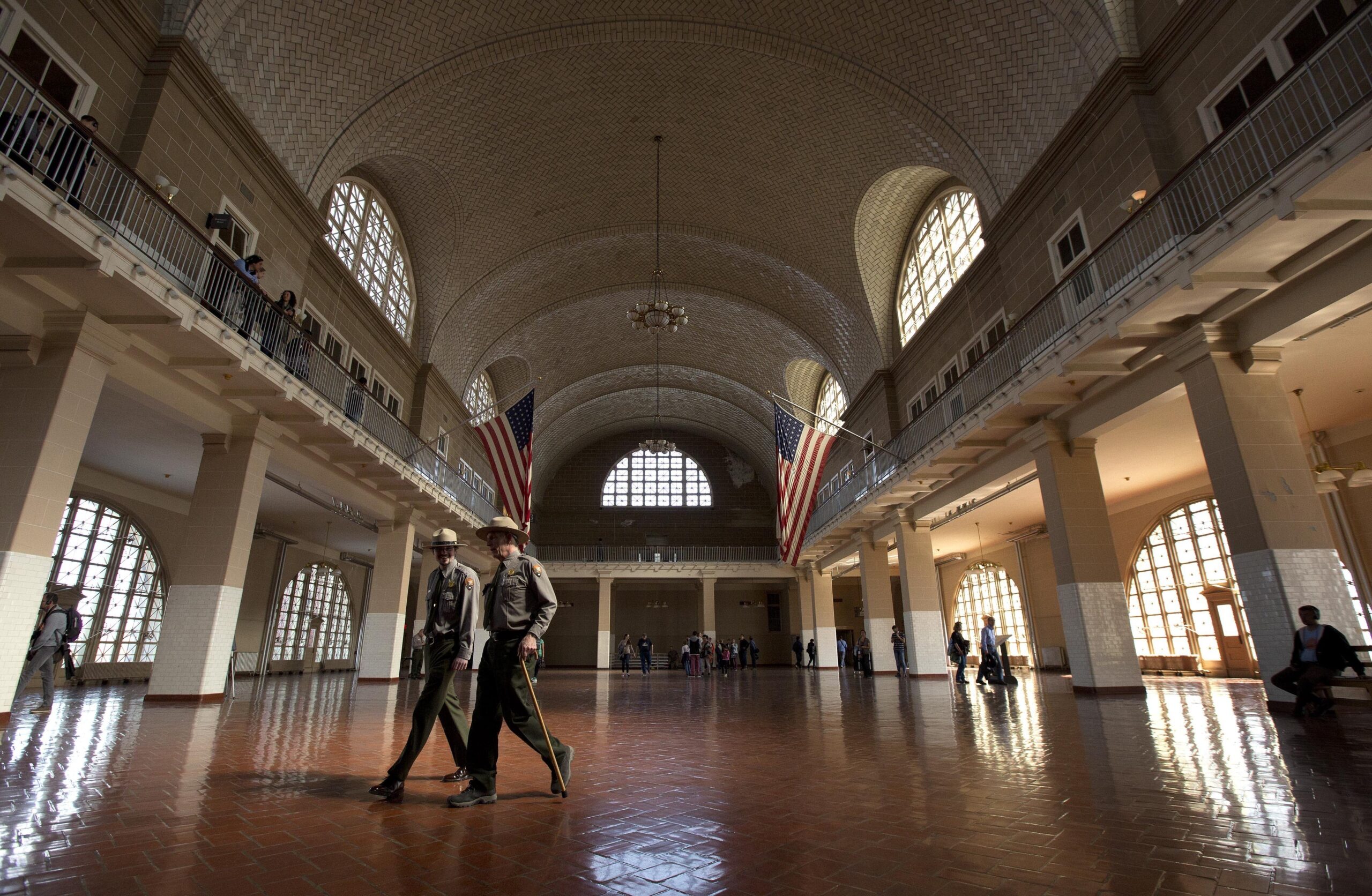
Statue of Liberty National Monument and Ellis Island in New York Harbor stand proudly as memorials to those who migrated to the United States to escape poverty, repression, and tyranny. Many of the nearly four million who visit every year pay honor to ancestors who made new homes, raised families, and helped build the American dream.
National Park Service rangers walk through the Great Hall at Ellis Island.
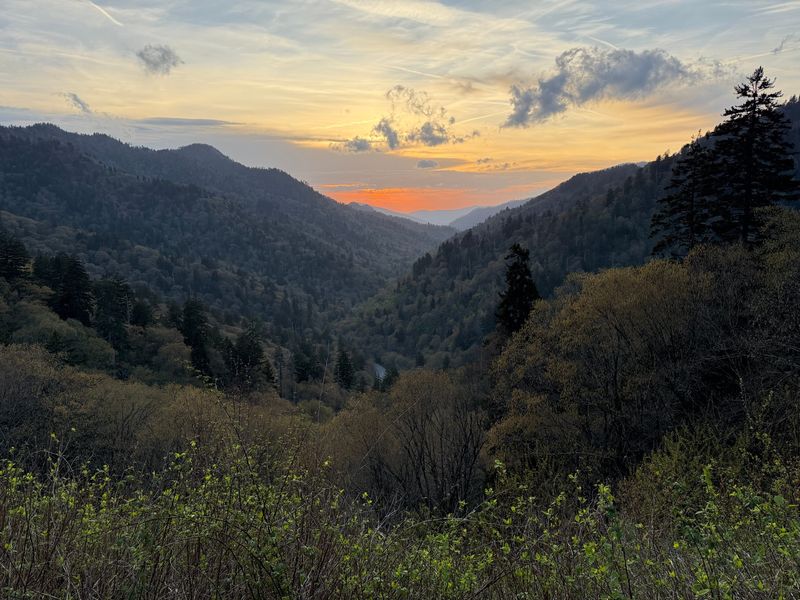
The Great Smoky Mountains National Park in Tennessee and North Carolina is a natural gem that attracts over 12 million visitors a year. People come to camp, hike, fish, or enjoy the awesome scenery.
The sun sets on America’s most visited national park, Great Smoky Mountains.
Guests also spend an estimated $2.1 billion annually boosting area lodgings, restaurants, and convenience stores. This economic dynamic supports over 20,000 jobs in the region.
President Trump apparently does not grasp that if parks nationwide are degraded through deep budget cuts, thousands of small businesses located in or near national park gateway communities will suffer, and tens of thousands of employees, mostly in the private sector, will be out of work.
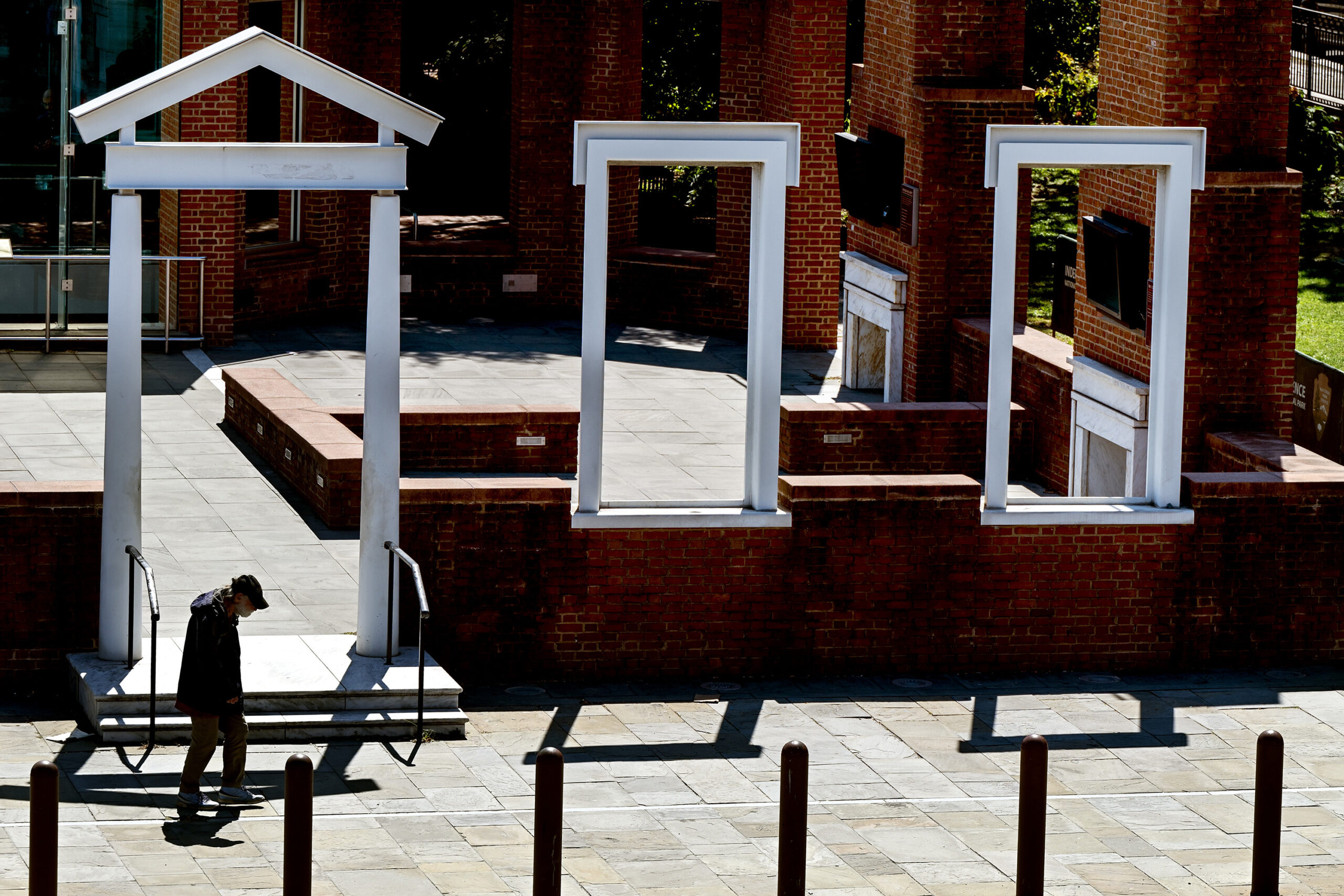
The President’s House in Independence National Historical Park, in September.
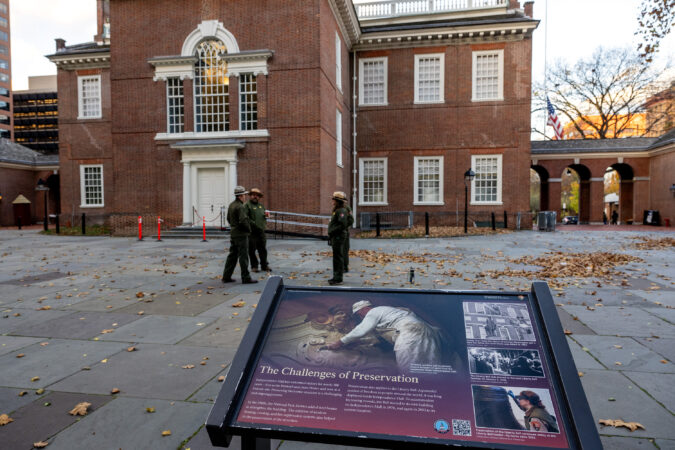
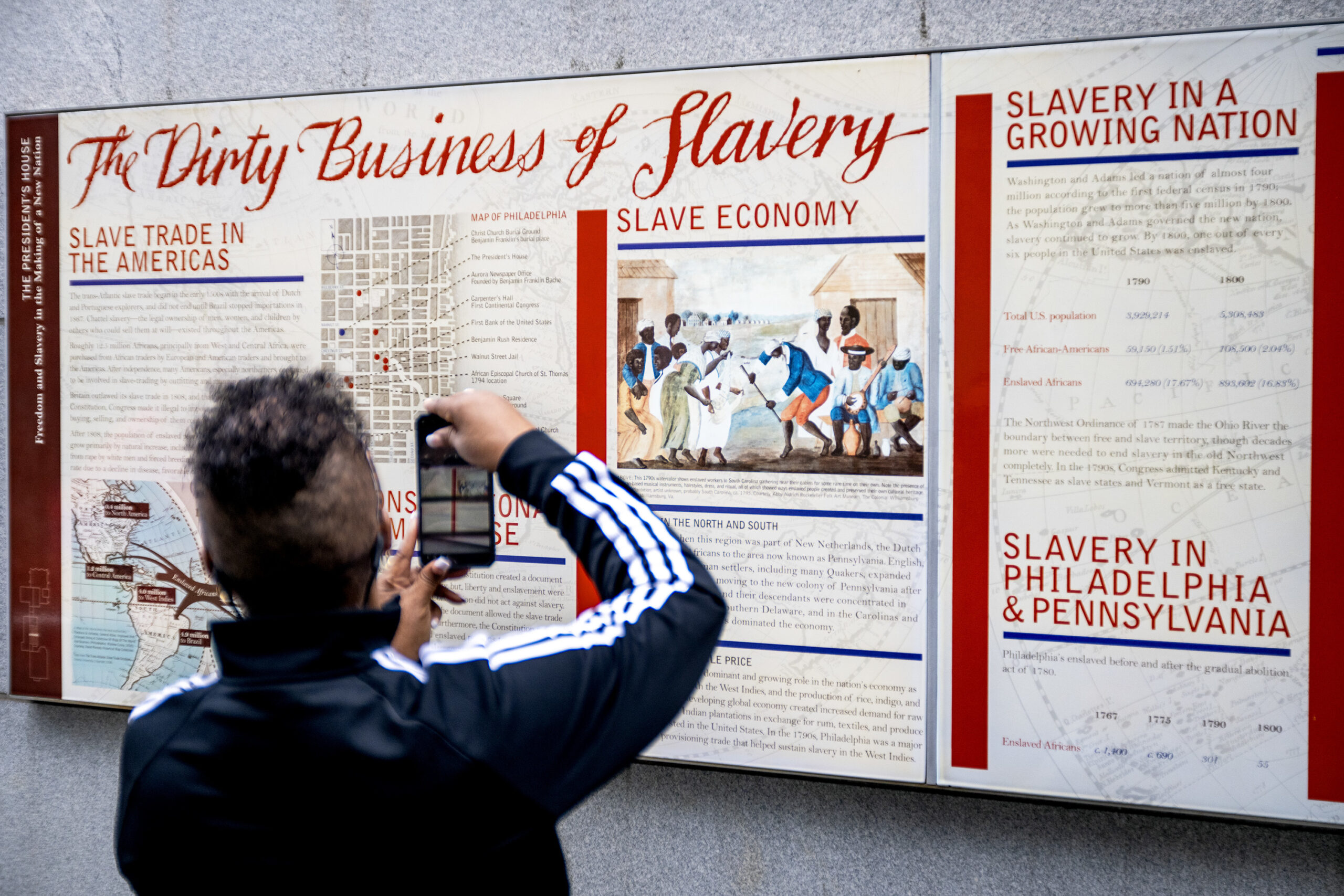
The President’s House Site at Independence National Historical Park in Philadelphia memorializes nine people who were enslaved there while George Washington was president in the earliest years of the republic. Their names are Austin, Christopher Sheels, Giles, Hercules, Joe, Moll, Oney Judge, Paris, and Richmond. The house site reflects this important detail and describes it truthfully. Yet, this president has ordered that the story be altered to be compatible with a sanitized — and dishonest — description of history.
Gina Blakemore from Sacramento, Calif., photographs signage describing enslavement at the President’s House in Independence National Historical Park, in September.
By erasing this factual presentation at Independence Park, a venerated place that represents the founding ideals of the nation, President Trump is revealing a vivid disrespect not only for African Americans but for all of us.
Slashed funding, fired employees, endangered properties, lost revenue, environmental rollbacks, whitewashed history: this will be the public lands legacy of President Donald Trump.
The damage to national parks that Trump and his loyalists have already inflicted is so profound that it will take years for these sites to recover.
We citizens, though, can do something now to help save them. We can write, call, or text members of Congress to demand they step up and repel this president’s egregious assault on parks.
Meanwhile, we should also make sure to visit a nearby national park site, seek out a ranger or guide, and assure them that we will do our part to defend and protect America’s magnificent national parks.
John Plonski was a finalist for the 2023 Theodore Roosevelt Genius Prize for the Promotion of Conservation and served as executive secretary of the Pennsylvania State Park and Forest Systems from 1995-2004.
The Wanamaker Light Show and Dickens Village are over for 2025 — and with renovation needing to be done on 13th and Market, it is uncertain when they will return. The void that it leaves in Philadelphia’s holiday season will not just be one less Christmas attraction — it just won’t feel like Christmas.
As a kid, it just wasn’t Christmas without a trip to Wanamaker’s to see that light show and Dickens Village, and, of course, the sweet sound of that organ. The smell of that incredible grand marble lobby is forever captured in my mind. And getting lost? That was a metaphysical impossibility — all I had to do was to make my way back to that giant Eagle provided by John Wanamaker himself, and one that seemed a mere 1,000 feet tall to my 8-year-old brain.
One hundred and fourteen years ago this week, President William Howard Taft dedicated Wanamaker’s grand flagship store. Wanamaker’s was a true first in American shopping. The first with tags for prices, the first offering a money-back guarantee, the first to be equipped with a pneumatic tube system in the building in order to transport money.
Wanamaker’s didn’t just make an indelible mark on Philadelphia’s holiday celebrations. It redefined American shopping. When Wanamaker couldn’t serve in the American Civil War, he opened a store instead. His original venture (Oak Hall) sat on the location of the old President’s House in Center City. When it was time for a new location, Wanamaker selected the old Pennsylvania Railroad Depot at 13th and Market.
So with such a significant part of our city’s history taking a hiatus for the near term, what will we Philadelphians do? Wait for it to return, of course.
Michael Thomas Leibrandt, Abington Township
The Mighty Caroline
Tatiana Schlossberg, the accomplished wife, mother, and middle child of Caroline Kennedy Schlossberg, died at 35 years of age. It was the latest in a series of devastating heartbreaks for her mighty mother.
I am sure there are countless women of a certain age all over this country whose own hearts are aching for Caroline — the way we did as little girls when her daddy died. I recall the moms on our block on Long Island bursting out of their front doors, wailing in collective anguish at the news coming out of Dallas.
The other level of sadness is that thinking of young Caroline brings us back to a point in time in national politics and society when compassion crossed back and forth between party lines in the interest of the common good.
What is going on now in Washington also makes a person want to tear up — mostly because there is no known unifier to count on to lead us back to a functioning nation due to all the regrettable and preventable upheaval of the past year.
Mary Kay Owen,Downingtown
Join the conversation: Send letters to letters@inquirer.com. Limit length to 150 words and include home address and day and evening phone number. Letters run in The Inquirer six days a week on the editorial pages and online.
Behind every statistic is a patrol officer, detective, analyst, supervisor, or civilian professional who showed up day after day, determined to protect this city. Lives have been saved, neighborhoods strengthened, and trust rebuilt because of their work.
Philadelphia is safer today than it has been in a generation, and that progress deserves recognition.
Changing threats
But public safety is not defined solely by addressing violent crime. Some of the most damaging threats we face today are quieter, more personal, and increasingly digital.
Across Philadelphia and the surrounding region, criminals continue to target the most vulnerable among us. Elderly residents are being deceived out of their life savings through increasingly sophisticated fraud schemes. Young people are being exploited through sextortion, often by offenders operating overseas who use fear, manipulation, and anonymity to cause devastating harm. Businesses of every size are facing ransomware attacks that can cripple operations, disrupt critical services, and threaten livelihoods.
At the same time, our business community and world-class academic institutions face persistent threats from nation-state actors seeking to steal intellectual property, sensitive data, and cutting-edge research. These efforts target innovation, economic competitiveness, and national security itself, and they often unfold silently over months or years before being discovered.
Such crimes leave deep scars. They are often underreported, emotionally devastating, and constantly evolving. Addressing them requires persistence, adaptability, and a willingness to confront threats that do not always fit traditional definitions of crime.
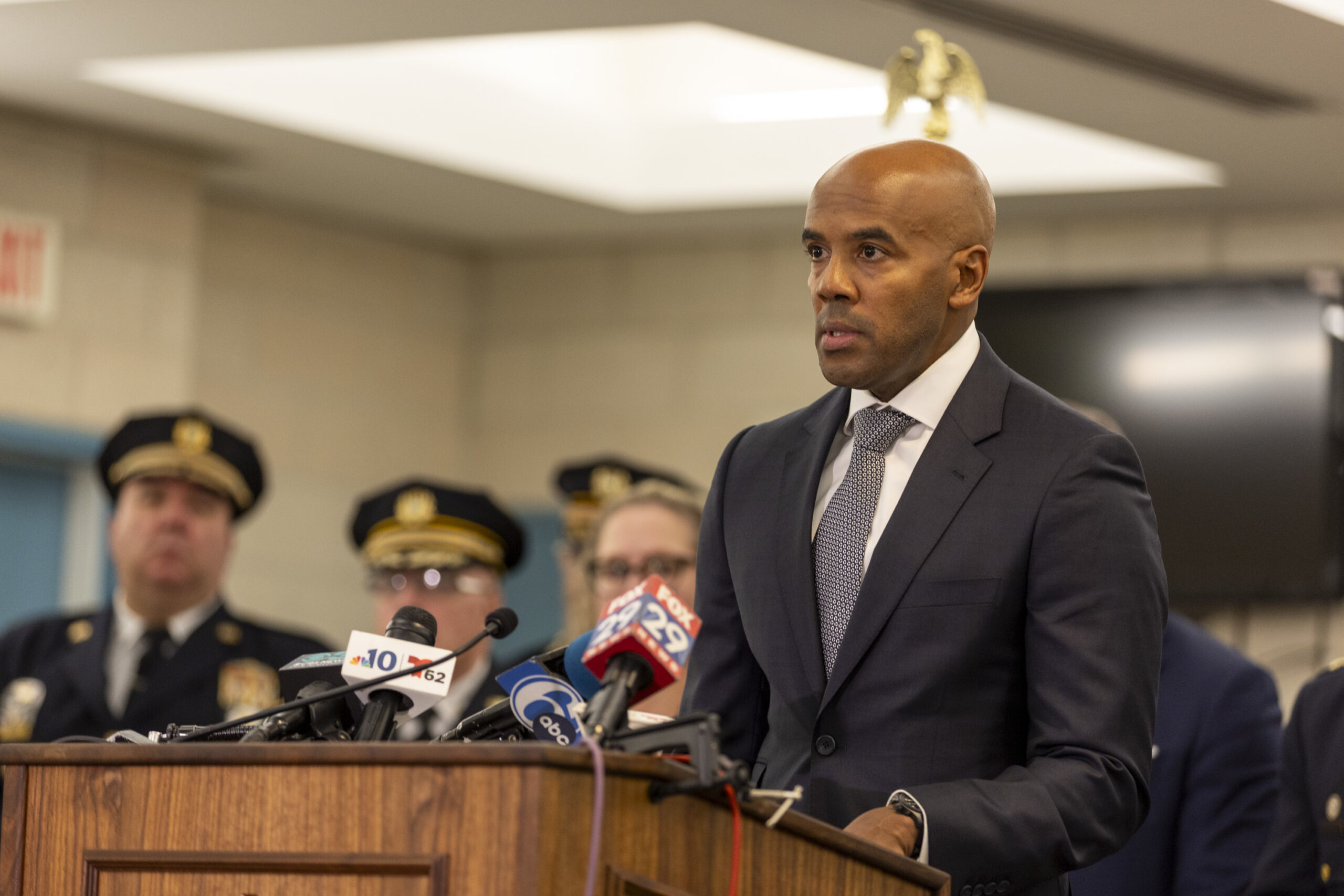
Special Agent in Charge Wayne A. Jacobs at a news conference at the 24th Police District Headquarters in Philadelphia in October
Every day, the men and women of the FBI show up with a clear purpose: to protect people and hold perpetrators accountable. Our agents, intelligence analysts, and professional staff work tirelessly to identify offenders, dismantle criminal networks, prevent acts of terrorism, disrupt foreign intelligence threats, and bring those responsible to justice, whether they operate across the street or across the world.
But enforcement alone is not enough. Preventing harm before it occurs is one of the most powerful tools we have.
Through partnerships with schools, senior centers, businesses, universities, and community organizations, we work to raise awareness, share intelligence, and empower people to recognize threats early. Helping a senior avoid a scam, a teenager seek help before harm escalates, or an institution protect sensitive research can be just as impactful as an arrest.
None of this work happens in isolation. The progress Philadelphia has made, both in reducing violent crime and in confronting complex threats like fraud, sextortion, ransomware, and foreign intellectual property theft, is rooted in strong partnerships. Federal, state, and local law enforcement, prosecutors, private-sector leaders, and academic institutions are aligned around a shared responsibility to keep this city safe.
Those partnerships will be more important than ever as Philadelphia prepares for a historic year in 2026. With global events, national celebrations, and millions of visitors expected, success will depend on seamless coordination, shared intelligence, and a unified approach to prevention and preparedness.
We are ready because we have built this foundation together.
Philadelphia’s progress is real. The challenges ahead are serious. And by continuing to work side by side, guided by intelligence, driven by prevention, and grounded in partnership, we will keep this city safe in 2026 and beyond.
Wayne A. Jacobs is the special agent in charge of the FBI’s Philadelphia Field Office, a position he’s held since November 2023.