Thank you to Wendy Ruderman for your moving story about Mike West. I had the privilege of knowing both Mike and Lynn — Mike, who left a lasting impact, and Lynn, who continues to honor his legacy with grace and heart. Your piece truly captured their spirit.
Mike was always approachable — no matter how challenging the business discussion, his smile always led the way into the room. He was a consummate professional who brought people together and made things happen, always with kindness and respect.
Reading about his journey with Alzheimer’s was difficult. It’s hard to imagine the weight of the decisions he faced. I salute Lynn for her courage in sharing resources and their family’s experience, so others might find help and understanding on their own Alzheimer’s journeys.
Your story is a reminder that it’s easy to get caught up in the day-to-day and forget what matters most in support of friends and family. Mike’s legacy isn’t just in Rothman’s growth, but in how he treated people — with genuine care. Sharing his story will help more families find the support they need.
Thank you for telling it with such compassion.
Richard L. Snyder, chief operating officer, Independence Blue Cross
Combined sewer systems — where sewage and stormwater share the same pipes to a treatment plant — serve about 60% of Philadelphia. These systems can’t handle heavy rainfall, causing overflows that contaminate our rivers. Between 2016 and 2024, an average of 12.7 billion gallons of untreated sewage and stormwater entered local waterways each year. This goes against the Clean Water Act’s goal of protecting U.S. waters and threatens wildlife, communities, and athletes like myself.
Philadelphia must invest in stronger infrastructure that can handle heavy rainfall. While green stormwater projects are an important start, they aren’t enough to protect the Schuylkill and Delaware Rivers. Ongoing sewage overflows make training and recreation unsafe for up to 195 days a year. It’s time for the Water Department to act and keep our rivers clean and safe.
These soldiers died fighting for freedom and against the Nazis. They must be remembered.
How must their descendants feel?
Judy Hartl,Philadelphia
Join the conversation: Send letters to letters@inquirer.com. Limit length to 150 words and include home address and day and evening phone number. Letters run in The Inquirer six days a week on the editorial pages and online.
I’m always reluctant to talk about upcoming columns, because in this twisted era everything changes at the drop of a MAGA hat, and I hate to jinx things. But as of now, I’m booked for a trip to Charlotte (or Raleigh?…I’ve already jinxed it, maybe) this coming weekend, where I hope to report from the front lines of the Border Patrol’s latest big-city invasion that has terrorized the immigrant community in North Carolina. So I’m going to spend a couple days reading up on what to do in a tear-gas attack, and I’ll see you again this weekend.
Fearless college kids are saving journalism. Grown-ups? Not so much
Editions of the Indiana Daily Student in the student media area in Franklin Hall on Indiana University’s campus on Oct. 14.
In American journalism’s year of the bended knee, nobody would have been surprised if the student editors of the Harvard Crimson followed the sorry example of major outlets like CBS News or the Washington Post in groveling before the rich and powerful — in this case, their ex-university president and still plugged-in professor Larry Summers.
Earlier this month, Summers took to social media (the Elon Musk-owned X, of course) with a rant against the student-run paper at the Ivy League school he once helmed, linked to an article by conservative commentator (and former Crimson editor) Ira Stoll accusing the Crimson of biased coverage in favor of Palestine. Summers said ominously, “I do hope alumni trustees will investigate and take any necessary steps lest a problematic situation deteriorate any further.”
But instead ofbacking down, Harvard’s student journalists stepped up. When the emails of the late financier and sex fiend Jeffrey Epstein, released last week by a House committee, proved to be riddled with his communications with Summers — long after Epstein had pleaded guilty to teen sex trafficking in Florida — the Crimson produced the most in-depth takedown of any media outlet, anywhere.
“As Summers Sought Clandestine Relationship With Woman He Called a Mentee, Epstein Was His ‘Wing Man’” was the blistering headline on the article by undergraduates Dhruv T. Patel and Cam N. Srivastava. It described, in excruciating detail, the married Summers’ missives to Epstein about his efforts to woo a much younger Chinese economist on campus whom he was mentoring (and whom the former U.S. treasury secretary and his felonious friend code-named, with a racism they thought would remain forever private, as “peril.”)
Take that to the alumni trustees, Mr. Summers!
With a devastating kicker that shows Summers still emailing Epstein up until 1:27 p.m. of the day before his pal was busted on new federal sex charges in 2019, the Crimson article went viral over the weekend. By Monday morning, Massachusetts U.S. Sen. Elizabeth Warren was calling for Summers’ ouster from his faculty post. By Monday night, a “deeply ashamed” Summers announced that he’s pulling back from his public commitments, although he plans to continue teaching.
The students’ reporting was another win for truth, justice, and the American way — but not an isolated incident. In recent years, as mainstream journalism looks increasingly weak and flabby in the face of U.S. authoritarianism, and with college campuses on the front lines of a culture war, scribes in their teens and early 20s — burning with youthful idealism and the freedom of not much to lose — have raced into the void.
Some 3,000 miles from Harvard Square, the student journalists at the Stanford Daily stood their ground after one of its reporters was charged with three felonies, at the behest of a top university administrator, for attempting to cover a pro-Palestinian protest on the California campus. Under increasing public pressure, the charges were dropped in March — another triumph for the paper whose 2022 investigative reporting into research irregularities took down the university president.
In the heartland, the editors of the Indiana Daily Student at that state’s flagship public university last month stood up to school administrators banning their print editions, blasting the move in a front-page editorial that said “telling us what we can and cannot print is unlawful censorship.” The students, who worked with their peers at nearby Purdue University to publish a special issue that circumvented the ban, rallied support from prominent alums and got the school to reverse course.
“I think that many of these college journalists are laser-focused on their beats, are developing great sources among administrators, faculty and students, and are unfazed by the possibility that their stories might piss off a valued source or two,” Columbia Journalism School professor Bill Grueskin, who covered the Stanford fracas for Columbia Journalism Review, told me Monday. “In other words, they’re doing the things that the best reporters do. They’re just not able to buy a beer (legally, at least) when their story shakes up the world.”
I know what some of you are thinking here. Investigating corruption or misconduct among university leaders, or fighting for a free press…aren’t these college students just doing what any journalist worth their saltwould do? Well, yes and no.
Consider those Epstein emails that continue to dominate the news. It turns out that two prominent journalists corresponded frequently with the convicted sex creep: the “palace intrigue” access journalist Michael Wolff, and a soon-to-be-fired New York Times business reporter, Landon Thomas Jr. The missives suggest they had zero interest in reporting on Epstein’s proclivity for underage girls but very much wanted the access to the rich and famous that jeevacation@gmail.com offered.
And it gets worse. Thomas actually solicited a $30,000 donation from Epstein to a favored charity — a severe ethical breach that cost him his job in America’s most prestigious newsroom. Wolff, meanwhile, was offering Epstein advice on how to leverage — in essence, blackmail — the sitting U.S. president, Donald Trump. At the same time, he was pushing a business venture that would link him not only with Epstein but another man later convicted of sex crimes, filmmaker Harvey Weinstein. It seems like both conflicted journalists wanted to play in the big leagues with the much richer people they were supposed to watchdog.
This is something that too many elite journalists share with the increasingly conflicted corporations that employ them: a desire to comfort the comfortable in return for access, or prestige, or money — and to avoid getting sued, which might jeopardize those first three things.
How else to explain major TV networks like CBS or ABC, owned by corporations with myriad issues before the federal government, settling frivolous lawsuits by Trump for millions of dollars, or the similarly conflicted Jeff Bezos telling his Washington Post to spike its endorsement of Kamala Harris, or the mealy-mouthed “both sides” reporting on rising authoritarianism that plagues so many elite newsrooms of the traditional media?
The late, great Kris Kristofferson told us that freedom’s just another word for nothing left to lose, and maybe that simple explanation has a lot to do with the bravery of college journalists — that they are freer to question authority than folks with a mortgage and worries about paying for their own kids to attend a top school.
Still, it’s important to understand that most of the rot in modern mainstream journalism — too much consolidation in the hands of too few conglomerates with too much at risk to be seen as anti-regime — is institutional. We should strive to make something great out of the fact that the next generation of American journalists has arrived with smarts, savvy, and a moral compass yet to be worn down by late-stage capitalism.
Our challenge, as a society, is to tear down the decrepit structures of the corrupted old media and build a new one that rewards independent journalists who actually afflict the comfortable, and offers them incentives to keep doing that instead of cutting venture-capitalism deals with the folks they allegedly cover. Most of today’s college journalism majors would never trade emails with the likes of Jeffrey Epstein — except to take him down.
Yo, do this!
The stroke of timing behind Ken Burns’ latest documentary epic, The American Revolution, which is currently running this week on PBS stations like WHYY here in Philadelphia and also streaming, was supposed to be the 250th anniversary of the conflict that created the United States. But the project has taken on much greater relevance in a fraught present, when folks are heatedly arguing just what the Founders’ American Experiment is really all about. Critics have praised Burns and his skilled team for blending the ideals and leadership of the George Washingtons and Thomas Paines with the realities faced by everyday folk, including indigenous and enslaved people.
Personally, I’ve been embroiled in my nostalgia for a more recent revolution — the cultural and musical explosions that occurred in 1966. I’ve been listening to the audiobook about that tumultuous year — 1966: The Year the Decade Exploded — by the British author Jon Savage, whose later book on the year 1971 was the basis for an outstanding but largely ignored documentary series on Apple TV, But 1971’s classic rock wouldn’t have happened without the cultural pioneers and a youthful clamor for liberation that came five years earlier. The book is an engrossing reminder that change is possible.
Ask me anything
Question: Now that People Magazine has revealed the disgusting “piggy” story, why isn’t this atop every news outlets coverage? We spent 3 full weeks on Biden’s age, a week on his pardon of his son with such moral outrage from every outlet. This doesn’t even get covered? — BigTVFan (@bigtvfan.bsky.social) via Bluesky
Answer: The episode that BigTVFan is referring to occurred with a gaggle of journalists about Air Force One, but just started getting viral attention Monday night. It is, indeed, shocking to watch. When a Bloomberg woman journalist pressed Donald Trump on the Epstein files, the president erupted. “Quiet! Quiet, Piggy!” Yes, this should be a front-page story in the traditional media, and not only because of the stunning sexism (when the subject is Epstein, no less!) and the regal arrogance, but also this: the man who’s followed around by the nuclear suitcase seems to be losing his grip on reality. Monday afternoon, Trump spoke to a gathering of franchisees of the fast-food addiction that may be just one reason why nobody believes he only weighs 16 ounces more than Jalen Hurts, McDonald’s, and was at times beyond incoherent. Yet Trump’s rapidly deteriorating mental state remains mostly off-limits for the elite media. It’s a massive error of omission that the world will look back on and regret.
What you’re saying about…
It’s funny how one week can feel like a decade in 2025. Last week’s question about the eight senators (seven Democrats and an independent) who cut a deal to end the long government shutdown drew a huge response from folks fired up about an issue that now almost feels like ancient history after the Epstein email release. Readers were passionate but divided. Certainly many felt the eight senators had caved in the worst possible way. An outraged Freddi Carlip wrote that “most people wanted to do what was best for Americans who are hurting and that is to stand up to bullies.” But a number of you thought the opposition had few real options but to deal from a weak hand. “This was always going to end with the government opening under the black flag of the Big Ugly Bill,” wrote Kent Dietz. “Oft repeated but true: elections have consequences.”
📮 This week’s question: It’s all Epstein all the time, so let’s talk about it. Do you think Trump has sincerely flip-flopped and the relevant files will soon be released? Or is the White House still playing a long game aiming to keep Epstein’s secrets buried with him? Please email me your answer and put the exact phrase “Epstein files” in the subject line.
History lesson on ‘Charlotte’s Web’…and fascism
U.S. Border Patrol Commander at large Gregory Bovino, right, looks on as a detainee sits by a car Monday, in Charlotte, N.C.
Nobody reads any more, at least not to the end. That’s been driven home this autumn by several efforts from tech bros and other leaders of our dystopia falling flat on their face with their attempts at literary allusions. A viral post on Bluesky recently mocked the Icarus Flying Academy, whose founders may be blissfully unaware that their Greek mythological namesake flew too close to the sun and crashed. On Monday, gazillionaire Jeff Bezos also invoked ancient Greece by announcing his AI startup Project Prometheus, invoking an inventor who was ultimately bound to a rock by Zeus for his overreaching. Then there’s the bad people behind the U.S. Border Patrol and its inhumane mass deportation drive, who took their horror show to North Carolina this past weekend with their “Operation Charlotte’s Web.”
The “brains” behind the BP’s masked goon squad, Gregory Bovino, named the operation — which netted 81 detainees in its first Saturday during a chaotic surge through suburban lawns and Home Depot parking lots — after the 1952 classic children’s novel by E.B. White about a farm, a pig, and the compassionate spider, Charlotte, who saves the pig’s life. Why? Because Bovino’s secret police force are ensnaring scores of immigrants in their web. In Charlotte, N.C. Get it? Bovino even took to social media’s X with a wildly out-of-context quote from the novel: “Wherever the wind takes us. High, low. East, west. North, south. We take to the breeze, we go as we please.”
In a viral essay, the writer Chris Geidner of the excellent site LawDork demolished Bovino’s literary aspirations for his police-state operation. His piece went well beyond the obvious point that a children’s novel that centers on a spider’s quest to protect someone different from her — a pig — from his human predators is the 180-degree polar opposite from the web of inhumanity that Team Bovino is spinning in Charlotte, terrorizing the Latino community there. Geidner notes that much of E.B. White’s wider work was in opposition to the very fascism that’sbehind the mass deportation drive of Bovino and his ultimate boss, Donald Trump.
Geidner quotes White from a 1940 essay, as Adolf Hitler’s stormtroopers were advancing across Europe: “I am in love with freedom and that it is an affair of long standing and that it is a fine state to be in, and that I am deeply suspicious of people who are beginning to adjust to fascism and dictators merely because they are succeeding in war. From such adaptable natures a smell rises. I pinch my nose.”
White, and his fictional Charlotte, would have done more than pinch their nose from the stench of this operation in a proud city that shares its name with a heroic spider. For sure, Bovino’s crimes against literature pale in comparison to his ongoing crimes against humanity. But he may discover that the rapidly spinning American thread of community and common decency that is resisting mass deportation is the true sequel to Charlotte’s Web.
What I wrote on this date in 2018
It was Mississippi’s most famous writer, William Faulkner, who wrote, “The past is never dead. It’s not even past.” Seven years ago on this date, I wrote about how a justice-denied 1955 murder of a Black man trying to deliver absentee ballots to the county courthouse in Brookhaven, Miss., haunted the modern Senate campaign of that town’s GOP U.S. Sen. Cindy Hyde-Smith. I wrote: “Four years after [Lamar Smith] was killed, a baby girl was born in Brookhaven named Cindy Hyde. Over the next 59 years, she immersed herself in the politics of a community that bitterly refuses to concede the just cause that Lamar Smith died for.” Read the rest from Nov. 18, 2018: “Why the blood of a 1955 Mississippi murder drenches today’s U.S. Senate race.”
Recommended Inquirer reading
Only one column this week, and as you might expect it drilled deeply into the true meaning of the Jeffrey Epstein emails that have dominated the headlines. I went beyond the suggestive comments about Donald Trump to look at the deeper moral decay of the rich and famous who continued to seek out Epstein and his connections years after his Florida guilty plea to child prostitution charges. The missives from billionaires and political insiders also reveal their growing — and justified — worries that the public may be reaching for pitchforks.
The John Fetterman saga never ends, nor does Pennsylvania readers’ bottomless fascination with his decade-plus odyssey from outspokenly progressive mayor of struggling Braddock, Pa., to the U.S. Senate, where he is increasingly at odds with his fellow Democrats about practically everything. The Inquirer’s coverage of revelations in Fetterman’s new autobiography, including his long-running feud with Gov. Josh Shapiro, was one of the most widely read stories last week. So was what happened next, as renewed heart problems caused Fetterman to fall flat on his face and again be hospitalized. There’s three more years until the end of Fetterman’s term and an all-but-certain primary challenge from his political left. No one is going to cover this better than The Inquirer, so why not subscribe today?
By submitting your written, visual, and/or audio contributions, you agree to The Inquirer‘s Terms of Use, including the grant of rights in Section 10.
A favorite of mine was ESPN’s Mike and Mike. I remember during the height of the Colin Kaepernick protest, Mike Golic commended Kaepernick for his attention-grabbing display and the reasons behind it.
But Golic turned the tables on Kaepernick and asked what the quarterback planned to do to achieve the goals he sought through his protest.
I would love to ask white people who were part of the “No Kings” rally recently the same question, but I am unsure of what tangible outcome was sought from it. It seemed like an occasion to voice their displeasure, so I am unsure what the next step is beyond planning another “protest” in the next few months.
The optics from the mass demonstration were indeed impressive: seven million people, predominantly older and white, took part in protests nationwide. That cannot be ignored. But the substance of these protests was lacking.
Not according to news media pundits, who declare that these acts are signs of the anger and emerging resistance to the Trump administration we’ve been waiting for.
But “No Kings” shouldn’t be confused with the Arab Spring.
Protesters made no demands. They caused no ruckus. In fact, this “protest” seemed more like a party than a desperate attempt to save humanity.
Don’t get me wrong.
Protesting one’s grievances in an attempt to acquire a remedy for them by way of public policy is a good thing. Black people are well acquainted with our history of protest and resistance to unjust laws.
Lessons from the civil rights era
But the lessons for all to learn from the history of Black resistance, particularly the civil rights movement, is 1) there is always a tangible demand for something or numerous things, 2) there’s a righteous anger that is harnessed into a tangible action (e.g., protest, boycott, divesting, etc.) to produce the demand, and 3) there is a desperation that yields a willingness to sacrifice in the name of their humanity.
The “No Kings” protest had none of these.
But it did have singing, dancing, and folks in costumes. Indeed, there is room for joy within any social movement (if you can call this a social movement yet, I am not sure), and there’s been that at protests before.
Joy is one of the fruits of our work, whether it comes from protest or other mass action, but a protest isn’t a party.
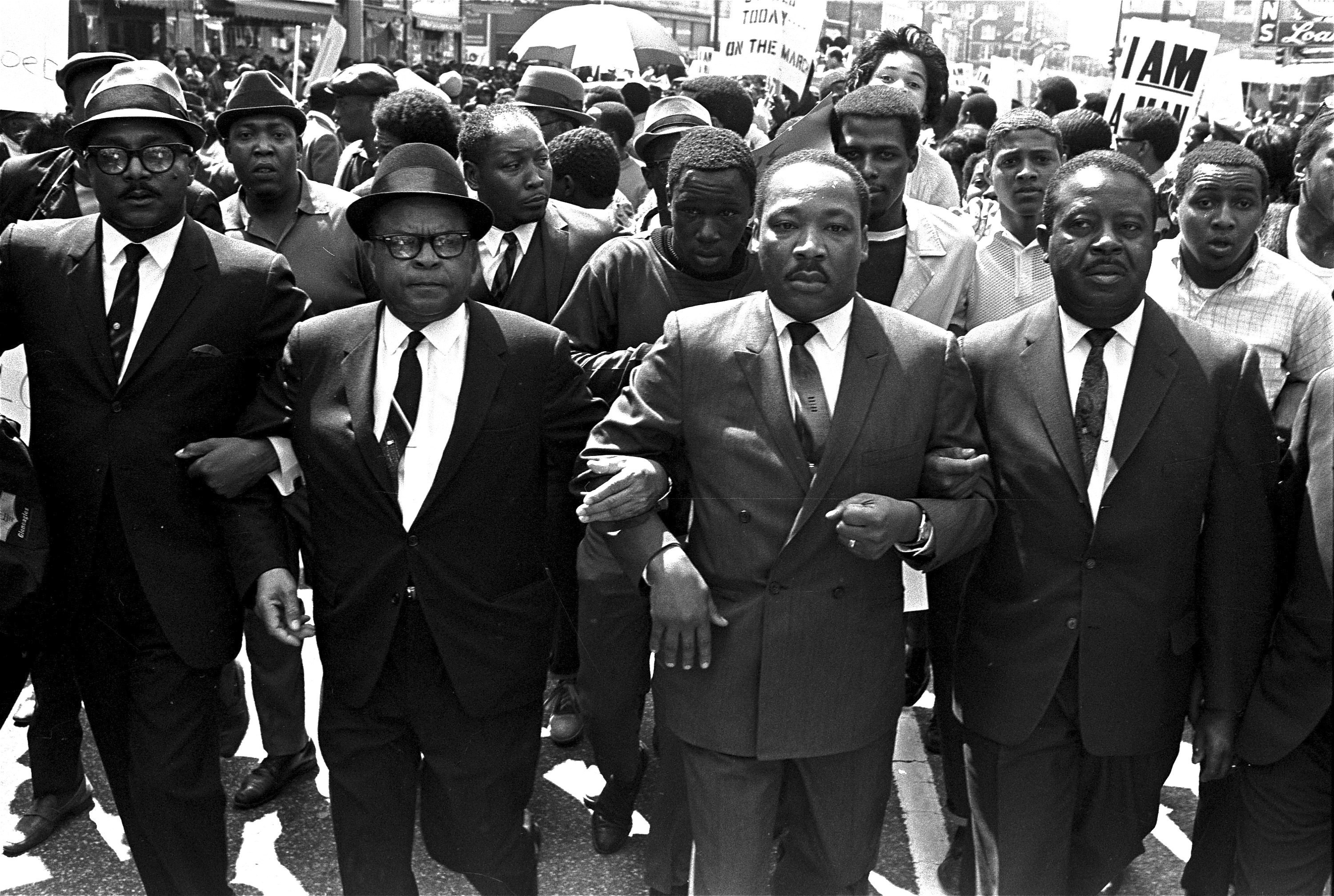
The Rev. Dr. Martin Luther King and other civil rights leaders march in Memphis on March 28, 1968. He was killed a week later.
Organized protests should elicit a response that either brings the oppressor to their knees and forces them to concede the demand, or, at the very least, brings them to the negotiating table.
The “No Kings” rally produced only one response from Donald Trump: an AI video of a “King Trump” jet dumping what appeared to be liquid feces on the protesters. Clearly, demonstrators got a reaction from Trump, but not the kind that relieves any of the pressure they face at the kitchen table.
I previously commented that white people have a decision to make. That is, whether they intend to fight for their rights and the rights of nonwhite people, or only for their own rights. I’m not sure what these protests suggest is their answer to that question. But my advice is to learn from the civil rights movement.
Some sit it out
I highly doubt white Americans can “save” democracy in America by way of reconciling its relationship with white supremacy absent Black people. However, a lot of us have chosen to sit out these protests because many of the people protesting Trump are likely responsible for his return to power.
We’re tired of persevering through the hypocrisy in the name of survival, but I digress.
Learn from the civil rights movement to strengthen this effort on behalf of all Americans. Concretely define the “movement’s” demand(s) via policy change that can directly begin to upend systemic oppression.
Just as the civil rights movement improved the lives of all Americans, so should these coordinated mass demonstrations. Harness the real anger seen at town hall meetings, for example, to agitate and aggravate the power structure to show that these protests are a force to be reckoned with, as opposed to “a good time had by all.”
Lastly, continue direct action with a consistency that demonstrates your demands aren’t a wish list, but rather the oxygen necessary to breathe.
Taking it to the streets is definitely a start. But it’s nowhere near the finish.
To reach the finish line, y’all have more work to do. Some Democrats in Congress need to learn these lessons, as well.
Rann Miller is an educator and freelance writer based in southern New Jersey. His “Urban Education Mixtape” blog supports urban educators and parents of children attending urban schools. urbanedmixtape.com@UrbanEdDJ
Earlier this week, the United States Congress voted to reopen the federal government. Yet, for more than 470,000 residents of Philadelphia, the timeline for restoring full SNAP (Supplemental Nutrition Assistance Program) benefits remains uncertain.
As a pediatrician, I witness its effects firsthand. I regularly speak with parents who struggle not only to find healthy options but simply to secure enough food to feed their families. Sharing information about local food banks and pantries has become a routine part of these conversations.
While the precariousness of SNAP benefits continues even as the government shutdown has ended, I am deeply concerned about the growing food insecurity facing children across the city. Among this population, I am particularly worried about children with autism, who are at even greater risk for food insecurity.
Autism spectrum disorder is a neurodevelopmental condition often accompanied by sensory overresponsiveness, which can lead to significant food aversion and extreme selectivity. Many children with autism tolerate only a limited range of foods — sometimes as few as five to 10 — because the textures, smells, or appearances of unfamiliar foods can be overwhelming.
Many challenges
Families raising children with both autism and intellectual disabilities are estimated to face twice the risk of food insecurity, driven, in part, by financial strain, childcare challenges, and reduced employment opportunities.
A national pulse survey conducted during the COVID-19 pandemic found that, amid widespread disruptions to support systems, families of children with autism were nearly four times more likely to experience food insecurity than the general population.
A sign alerts cusotmers that this store accepts food stamps, or SNAP benefits
While SNAP benefits remain uncertain, I am directing more families toward the extraordinary efforts of food banks and community pantries across Philadelphia.
These organizations, however, were designed to supplement food supplies — not to replace the sustained support that federal nutrition programs provide. Many, despite increased donations, are now facing unprecedented demand.
While I am grateful for that important work, I face understandable pushback from some families when I direct them toward Philadelphia’s food pantries. I have had heartbreaking conversations with parents who are scared about their ability to meet their child’s specialized dietary needs.
“They gave me food, but my kid won’t eat the noodles, bread, and beans they gave us. I’ll figure something out — I have to.”
“I have to pick out specific things for my kid. He’s incredibly picky and won’t eat outside of his regular foods. You’re not finding Eggo waffles at a food bank.”
A call to action
These are not isolated anecdotes. They illustrate a broader challenge that deserves public attention: the intersection of food insecurity, disability, and systemic gaps in support.
My intention is not only to express gratitude for the vital work of local food assistance organizations, but also to highlight the additional barriers facing families of children with autism.
Philadelphia’s schools already struggle to meet the educational and behavioral needs of these children. Their families often experience additional economic burden, including lower household incomes and heightened employment instability due to caregiving responsibilities — factors that compound the effects of a prolonged SNAP interruption.
The government’s reopening offers hope, but procedural hurdles remain before SNAP benefits will return to families in need. Meanwhile, my call to action is to avoid passivity and find a way to help.
Food insecurity is not always visible.
It hides in the shadows of stigma and sometimes shame. I urge those who can to support local food pantries with their time, resources, or donations. I encourage you to pick up the phone and call your elected representatives to demand swift restoration of SNAP benefits.
Finally, if you happen to know a family raising a child with autism, consider reaching out with compassion and asking, “Is there a way I can help?”
Sometimes, this small human action of solidarity may just keep a child from missing their next meal.
Nishant Pandya is a general pediatrician in Philadelphia.
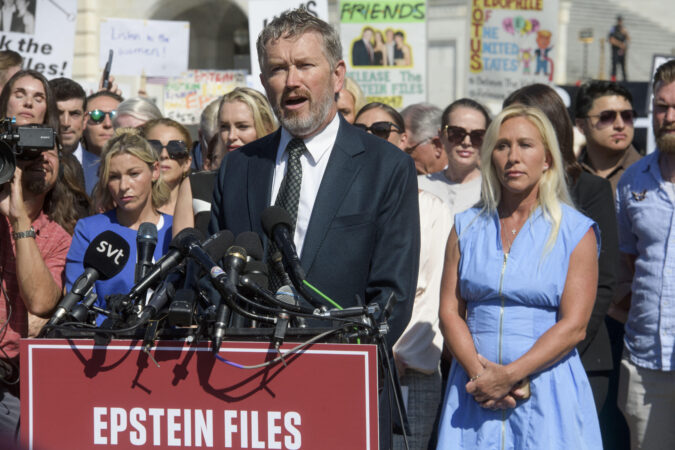
For months, Donald Trump has tried to insult, bully, and intimidate his way to keeping the House from voting on the release of files related to convicted sex offender Jeffrey Epstein.
On Sunday night, fearing that more than a handful of Republicans would break ranks and support the measure in a vote scheduled as soon as Tuesday, the president tried to keep the word humiliating from preceding a description of his defeat.
“The House Oversight Committee can have whatever they are legally entitled to, I DON’T CARE,” Trump posted on Truth Social.
The abrupt about-face clears the way for Republicans to join Democrats and steadfast GOP Reps. Thomas Massie, Marjorie Taylor Greene, Lauren Boebert, and Nancy Mace in compelling the U.S. Department of Justice to release the files.
This is an important win for the many alleged victims — around 200 women and underage girls — of the late disgraced financier, whose ties to the rich and powerful (including Trump and former President Bill Clinton) have sparked conspiracy theories about a mass cover-up and suspicion around Epstein’s 2019 suicide in a federal jail cell in Manhattan.
Once the House clears the way, the Senate should quickly follow suit and send the bill to the president’s desk. Transparency, accountability, and justice for Epstein’s victims have been delayed long enough.
Of course, even if Congress and Trump approve the measure, the fight will likely continue.
The president’s capitulation may only be a strategic retreat. His persistent unwillingness to release the information — which he had promised to make public if elected — forecasts further obstruction.
It is not difficult to wonder why.
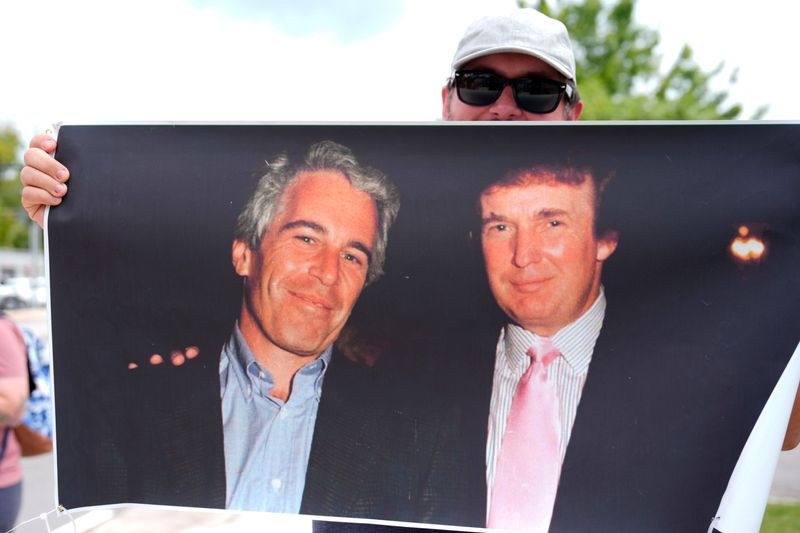
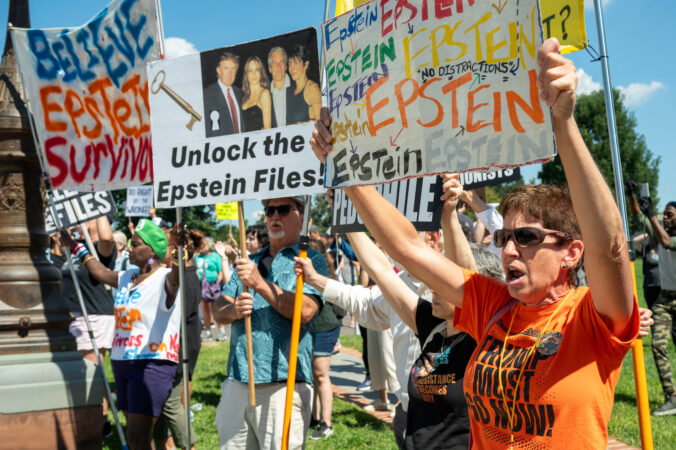
A protester holds up a photo of Donald Trump with financier Jeffrey Epstein at a rally in Augusta, Ga., in August.
Despite Trump’s denials, he and Epstein were once good friends, part of an elite cadre that included financial titans and political leaders. There are videos and photos of them together, and Trump repeatedly flew on Epstein’s plane (known as “the Lolita Express”).
Even as he told Republicans to vote to release the files, Trump nonsensically railed that this was all a “Democrat Hoax perpetrated by Radical Left Lunatics.” He argued in the same breath that Republicans shouldn’t fall into the “Epstein trap,” which was “actually a curse on the Democrats, not us.”
Only the full release of the files may reveal why the president has been so reluctant to act on a promise he made to his supporters. Why he has pressured his party so effectively that a vote on the House bill had to be forced upon Republican leadership. As this board has asked before: What are they hiding? Who are they protecting?
Unfortunately, the American people cannot fully trust those in charge of the files. Attorney General Pam Bondi and FBI Director Kash Patel have shown that they value loyalty to Trump above all else, including going after the president’s political enemies regardless of any evidence.
Congress must ensure that both fully discharge their duties and release all required information, regardless of who is embarrassed or implicated.
Justice — and, at least for now, the president — demands it.
I was saddened to read the article about the possibility of Lower Merion High School and Harriton High School merging their football programs because of declining enrollment. I remember when Lower Merion was the “powerhouse” when it came to football. My late sister, my brother, and I all attended Lower Merion (Classes of ’56, ’59, and ’61, respectively), and the greatest football rivalry on the Main Line was the last game of the season between Lower Merion and Radnor High School. The local newspapers covered it extensively. Our school had all kinds of placards and decorations up in the school, with the slogan “Beat Radnor,” during the week leading up to the big game. The night before the game, all the students and the coaches had a pre-victory celebration around a bonfire on the football field. The legendary John “Fritz” Brennan was the coach of Lower Merion, and what a successful career he had. His football team went undefeated for 32 straight games, between the years 1952 and 1957, and had only a few losses in the following years when I graduated. A statue of Brennan was placed near the entrance to Arnold Field, which, by the way, was named after Gen. Henry “Hap” Arnold, a graduate of Lower Merion and the only officer to hold the rank of a five-star general in both the Army and Air Force. Today, very few students even attend the games.
Paul Benedict,Broomall
Insurance is a blessing
No one is happy to see another person hurt. But if they have to deal with an injury, it is truly a blessing to have health insurance.
So while I was sorry to hear Sen. John Fetterman was hospitalized after his recent fall, I thought it was great he had insurance that allowed him to stay in the hospital a few extra days while doctors adjusted his medication regimen. I also couldn’t shake the sense of irony here: It seems grossly unfair that this man, one of eight senators who caved on the Democrats’ demand to save healthcare subsidies in the budget resolution, is able to receive the best of hospital care through his own elite insurance — even after he surrendered in the fight for affordable healthcare for his fellow Americans.
Mardys Leeper, Bryn Mawr
Keep the same energy
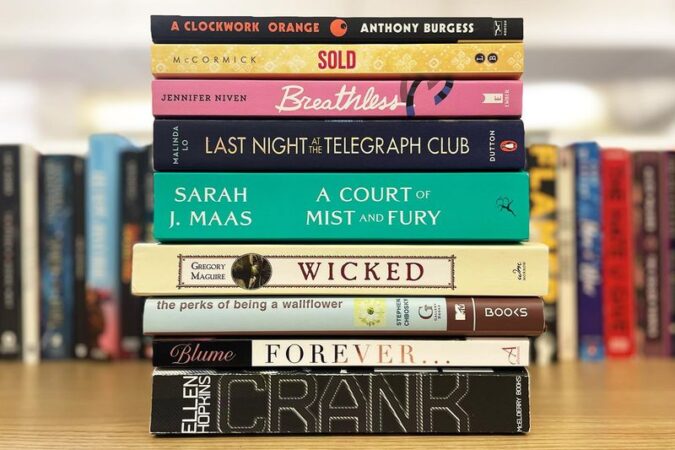
Recent reporting on the Cherry Hill School District’s internal memo about potential limits on student library books fit a pattern we’ve seen across the country. Few issues galvanize public outrage today like the prospect of “banned books,” and for good reason. Access to a wide, diverse range of literature is essential for a healthy democracy and for our children’s moral and intellectual development.
But there is a quieter crisis hiding behind the headlines.
While communities pack meetings and flood social media over which books might be restricted, there is comparatively little uproar over how few of our children can read fluently and confidently at all. Proficiency scores in reading are abysmal in many districts nationwide. That reality should trouble us at least as much as any debate over a handful of contested titles.
Our students deserve both: school libraries that offer rich, inclusive collections and sustained investment in high-quality reading instruction, tutoring, and early intervention. If we’re going to show up in force over schoolbooks, we should also be showing up over reading outcomes.
By all means, let’s protect our students’ right to read widely. But we should be just as passionate about ensuring they are able to read anything on the shelf in the first place.
Brandon McNeice, head of school and CEO, Cornerstone Christian Academy, Philadelphia
Join the conversation: Send letters to letters@inquirer.com. Limit length to 150 words and include home address and day and evening phone number. Letters run in The Inquirer six days a week on the editorial pages and online.
This metaphorical Epstein Island — people sending, or featured in, the emails of the late disgraced financier and sex fiend Jeffrey Epstein, released last week by a House committee — is kind of like TV’s Gilligan’s Island … if everyone had a truckload more money than Thurston Howell III, and was also a lot dumber.
Last week’s stunning document dump by the House Oversight Committee of Epstein’s emails, mostly from the 2010s, among 20,000 pages from his estate, can and should be viewed through several prisms. The main media focus has understandably beenon his leering close friend in the 1990s and 2000s, now-President Donald Trump, who is mentioned many times over. There’s arguably no “smoking gun” directly linking Trump to any specific act of sexual misconduct in Epstein’s lurid world, but more than enough innuendo that POTUS 45 and 47 “knew about the girls,” and possibly much more, to fuel a Watergate-level frenzy.
I don’t know if the emails, so far, are enough to take down Trump, but the president should be even more worried — and he probably is — about the much deeper rot that’s already been laid bare about the entire decrepit class of men (because they’re almost all men) who rule the world with atrocious grammar amid a nonstop booty call.
The QAnon folks were almost there! These emails prove there really is a global cabal of the world’s most powerful and wealthy elites, linked to the most repulsive child sex trafficking operation we know about. No, it doesn’t involve pizzeria basements or blood-drinking rituals — at least as far as we know so far. But these missives do reveal the evil banality of the world’s most rich and famous, whose vast pursuit of money or teenaged blondes or whatever knew no bounds, or, at long last, any sense of decency.
This is cool. COURIER has created a searchable database with all 20,000 of the files just released from Epstein’s estate.
Trump's name appears in them more than anyone else, in 1,628 documents.https://t.co/EAqRoi5zN2
The Nation’s Jeet Heer nailed it when he wrote after the email dump that the Epstein scandal “has always been a scandal about the ruling class as a whole, not one individual or political party,” adding that “Epstein trafficked not just in the bodies of the children he abused but also in social connections that could bring elites together.”
And ignorance is no defense. By the 2000s, the murky but wildly rich financier’s predilection for underage girls was hardly a secret. In 2008, in a sweetheart deal, he pleaded guilty in Florida to a charge of procuring a 17-year-old girl for prostitution, but prosecutors had evidence linking him to about three dozen other girls, including some as young as 13. And yet, most of the emails from powerful people released by the committee came after those revelations, up through his 2019 second indictment and his death in a federal jail in Manhattan under mysterious circumstances.
Some of the most telling exchanges are not the more than 1,000 emails from Epstein, his convicted partner-in-crime Ghislaine Maxwell, or their pals that mention Trump (who, wisely for him, never learned to use email), but involve Epstein’s misogyny-soaked friendship with Larry Summers, the former U.S. Treasury secretary and Harvard president.
Summers had lost that plum Ivy League post in 2006, in good measure because of a speech in which he’d questioned the intellect of top female scientists. During the 2010s, when the Obama administration or cable TV wasn’t still treating him as an economic seer, the married Summers turned to this convicted sex trafficker for advice on how to hit on a younger, attractive protégée, or just to commiserate.
“I’m trying to figure why [the] American elite think if u murder your baby by beating and abandonment it must be irrelevant to your admission to Harvard,” Summers wrote Epstein in 2017, referring to this episode at the school. “But hit on a few women 10 years ago and can’t work at a network or think tank. DO NOT REPEAT THIS INSIGHT.”
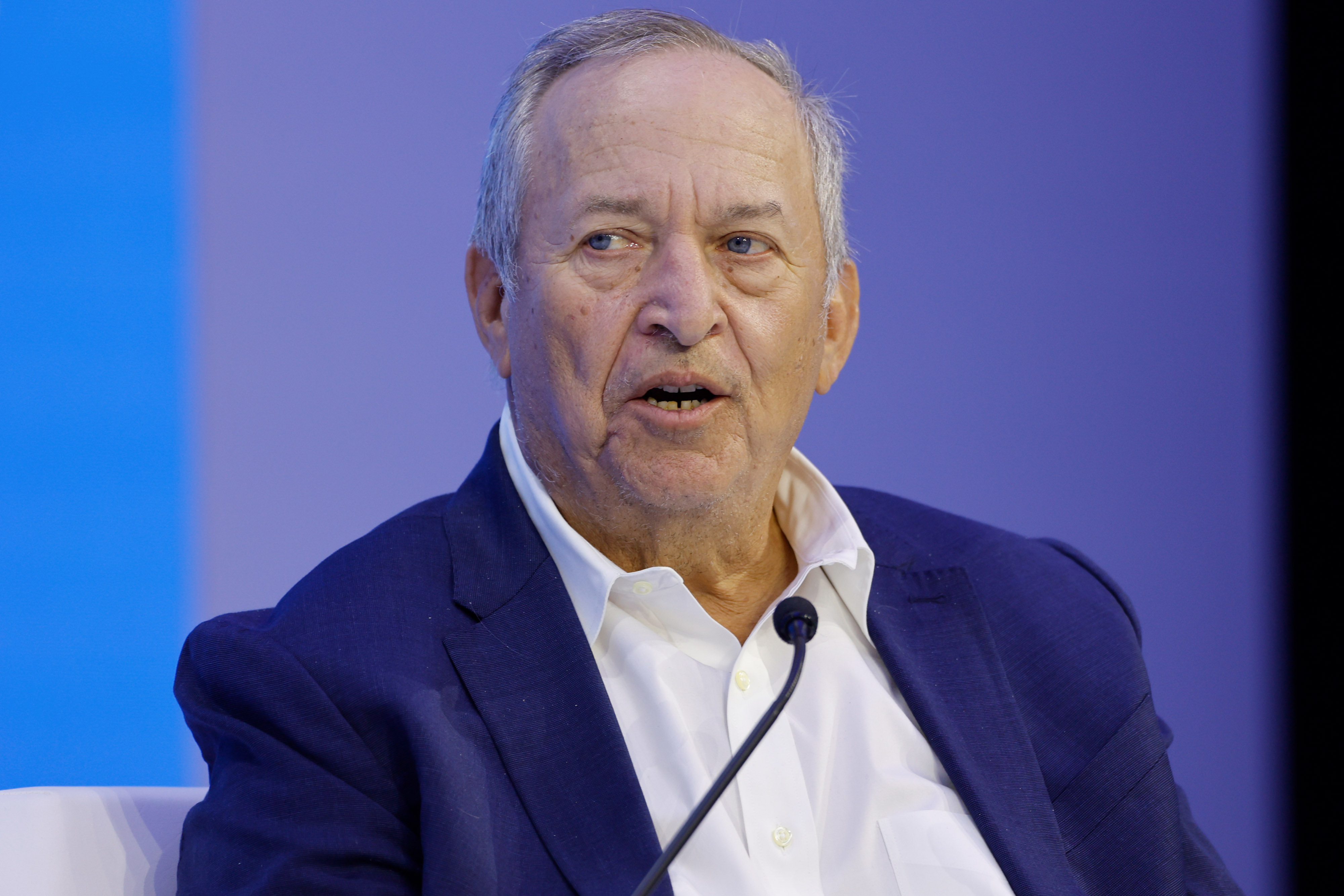
Larry Summers, president emeritus and professor at Harvard University, during a panel session at the World Economic Forum in Davos, Switzerland, in January 2023.
You may remember that 2017, the first year of Trump’s first presidency, is when the #MeToo movement against male sexual harassment and misconduct exploded. That email from Summers is one of the very few that even alludes to the social upheavals of the tumultuous 2010s that also included Occupy Wall Street, the tea party, Black Lives Matter, and other movements targeting privilege and inequity. Most of this prattle is instead just rich dudes talking about how to get themselves richer … or just how to get off.
Still, as Heer captures in his analysis for the Nation, the thought-to-be-secret communications of the elites increasingly involved enhanced security for the 1 Percent and ways to silence protests as that decade devolved, including scheming with the former Israeli prime minister, Ehud Barak, about launching a cybersecurity start-up. The world’s shrewdest investors knew the pitchfork bubble was coming before you did.
In the six years since Epstein was found dead, however, it has been the political backlash his email correspondents, like the Silicon Valley billionaire Peter Thiel, have heavily funded that has advanced while warding off the revolution. This was the ultimate goal of this sordid chat group: to desperately cling to their dying hierarchies around patriarchy and white supremacy, and to portray the #MeToo movement as going too far, when it’s obvious it didn’t go nearly far enough. It was during those fraught years that they stumbled into the perfect avatar in the unlikely Trump presidency.
Now, it’s a headline that Trump “knew about the girls,” but, of course, he knew about the girls. They all knew about the girls, and every Thiel and Summers and the con artist formerly known as Prince Andrew knew they’d bought more security with a U.S. president who shared their “wonderful secret.”
🚨 HAPPENING NOW: Massive anti-Trump protest outside the White House as protesters demand the resignation of President Trump following the release of Epstein emails. pic.twitter.com/7b55gvvEtx
It starts to make sense that Team Trump even deployed the White House Situation Room to fight a congressional vote for a wider release of the Epstein files, as if these secrets were a nuclear bomb headed for Chicago. To be sure, this all-out war against disclosure — along with Trump’s bizarre order for the U.S. Department of Justice to investigate only Democrats mentioned in the letters — might be to hide that Trump did more with Epstein’s bevy of young girls than just “know about” them.
But on some level, Trump’s White House must also realize that the Epstein file is the Jenga piece that brings the whole thing crashing down — the end of America, or, more to the point, the version of America getting financially drained, sexually abused, and basically ruined by all the people getting emails from jeevacation@gmail.com.
The timing couldn’t be better, or worse, for this midnight of the elites. The overblown stock market fueled by an AI hallucination is set to burst any moment, and new hiring is already grinding to a halt — just as the price of everything from steak to coffee goes through the roof, and health insurance is doubling or tripling for millions of Americans. When this perfect storm strikes, an electoral bloodbath in the 2026 midterms is the best outcome Trump can hope for, on a list of dire possibilities.
It’s no coincidence Trump is accelerating the pace of dictatorship, not because he’s at the peak of power, but because he knows he’s running out of time. Thus, the wag-the-dog war drums off Venezuela are pounding louder, and the muck of naked corruption — from Swiss gold bars to real estate deals with the murderous Saudi prince — is getting filthier. All of it haunted by the ghost of Jeffrey Epstein.
There’s one other thing about the Epstein files I feel compelled to mention. I’m also in them — well, sort of. On Feb. 12, 2019, for reasons we’ll never know, Epstein emailed his ethically conflicted journalist pal Michael Wolff a column I’d just written, with the words “please note.”
The piece was tied to the recent arrest of another close friend, the New England Patriots owner Robert Kraft, for soliciting sex in strip mall massage parlors near Palm Beach, and the moral decay of Kraft and his Florida neighbors, Trump and Epstein. It came at a moment when Epstein and Wolff were talking about ways to use his inside knowledge about Trump as leverage when the walls of federal prosecution were closing in. Nine months later, Epstein was dead — weird coincidence.
In that column, I wrote, “Kraft’s embarrassing charges come at one of those rarest of moments — when everyday people are suddenly realizing who doesn’t have power in America, who does, and that something can be done about this.” If Epstein did, in fact, read the piece, he knew what was coming. Now Trump knows it, too — and America will never be the same. FEEL FREE TO REPEAT THIS INSIGHT.
Thirty years ago next February, the world’s first high-profile competition between human and machine intelligence took place in Philadelphia.
IBM’s Deep Blue supercomputer faced world chess champion Garry Kasparov at the still-new Pennsylvania Convention Center. It was timed with the 50th anniversary of the unveiling at the University of Pennsylvania of ENIAC, the world’s first supercomputer, and a reminder that Philadelphia once led the world into the computer age.
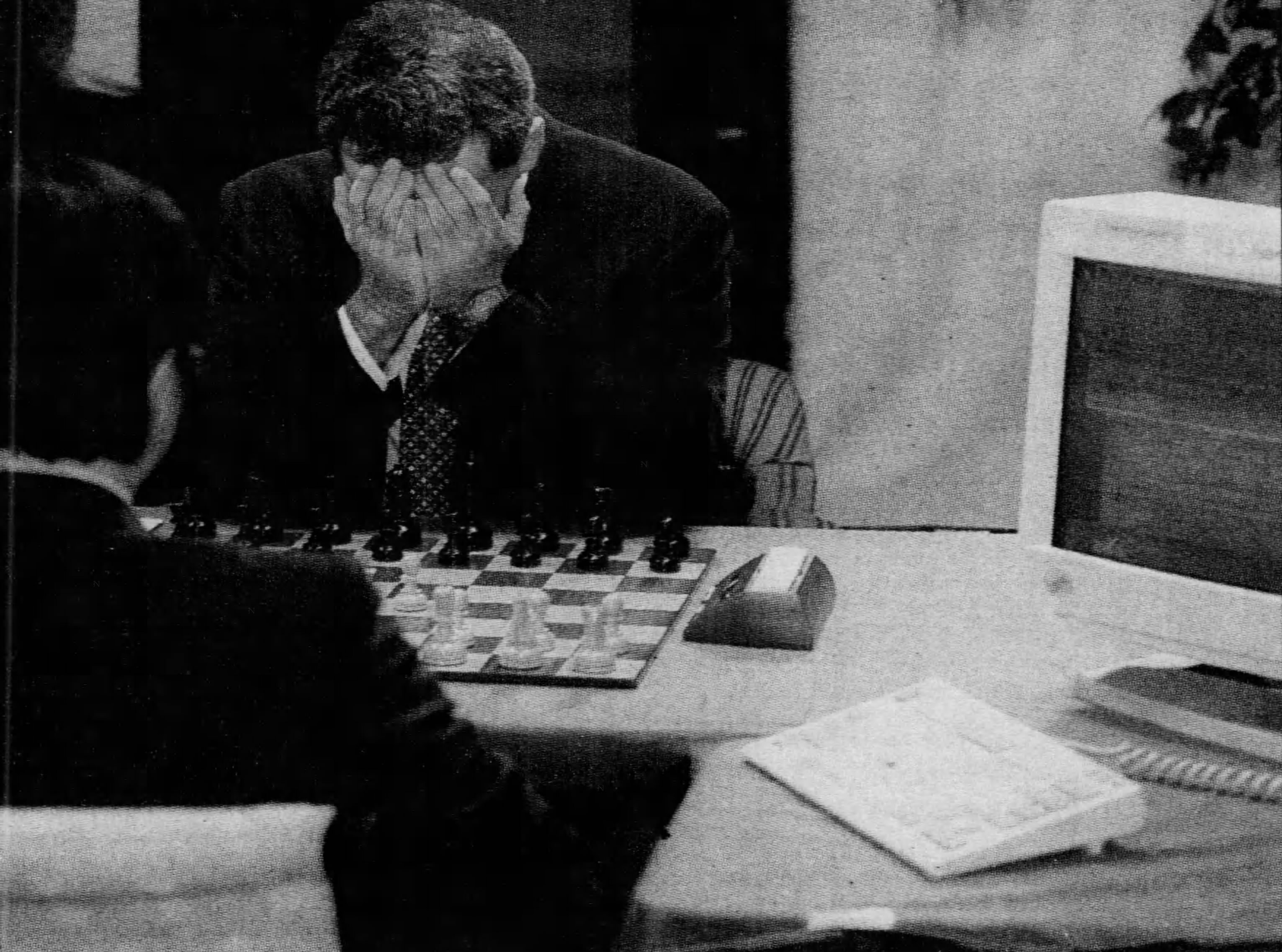
Russian chess grandmaster Garry Kasparov, hunched over a chessboard and holding his furrowed brow in his hands, competes against the supercomputer Deep Blue in February 1996.
Back then, artificial intelligence felt distant. Today, it feels existential.
As we prepare to host the nation’s 250th anniversary in 2026, I’ve been asking: In a city so rich in history, are we still interested in the future?
How it started
This spark began in 2023, during a reporting project on economic mobility called Thriving that Technical.ly — the news organization I founded and lead — published with support from the William Penn Foundation, the Pew Charitable Trusts, and the Knight Foundation. Our newsroom followed 10 Philadelphians for a year to produce an award-winning audio-documentary and hosted a dozen focus groups across the city.
One Brewerytown resident said something that inspired a previous op-ed I wrote for this paper: “Leaders here talk a lot about hundreds of years in the past, but nobody is looking very far in the future.”
Across this region — in boardrooms, nonprofits, universities, and regional corporate offices — too many leaders manage the wealth and institutions created by past entrepreneurs, but too rarely invent anything new. We fight over what exists instead of building what’s next.
The Semiquincentennial is our chance to prove we can balance our past, present, and future.
Why this matters now
My career has been spent listening to and challenging the inventors, entrepreneurs, and civic leaders shaping tomorrow’s economy. They act while others analyze.
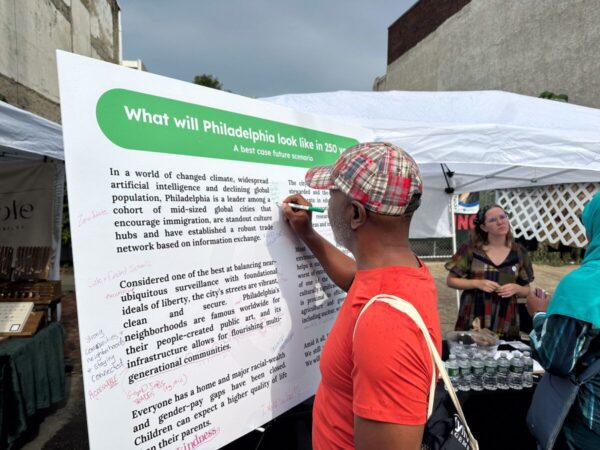
In that spirit, we spent two years developing a vision for Philadelphia 250 years in the future. Nearly 1,000 Philadelphians have shared ideas at festivals, community events, and small-group gatherings. The current draft, open for one final round of feedback at Ph.ly, isn’t a plan but an invitation — a shared view of what we wish for our descendants in 2276.
The coming decades could bring population decline, climate strain, and sweeping technological change. Yet, many local leaders still struggle to plan even years ahead.
During a recent private discussion I moderated inside one of our city’s impressively preserved old buildings, a longtime civic leader cited Philadelphia’s poor economic mobility ranking. I reminded him that the same research, with the same warning, was released a decade ago. Why didn’t we plan to make changes then?
He assured me this time would be different.
Philadelphia’s past points forward
Philadelphia’s breakthroughs have nearly always come from outsiders who pushed past local gatekeepers.
Stephen Girard, a French immigrant dismissed by elites, built a shipping and banking fortune, stabilized the nation’s finances, and endowed Girard College.
The Drexel family’s daring banking experiments helped fuel the Industrial Revolution before founding the school for engineers.
Albert Barnes saw beauty where Philadelphia’s art establishment did not.
ENIAC’s inventors, John Mauchly and Presper Eckert, were a little-known physics professor and a 24-year-old grad student whose entrepreneurial efforts were blocked locally, presaging Silicon Valley.
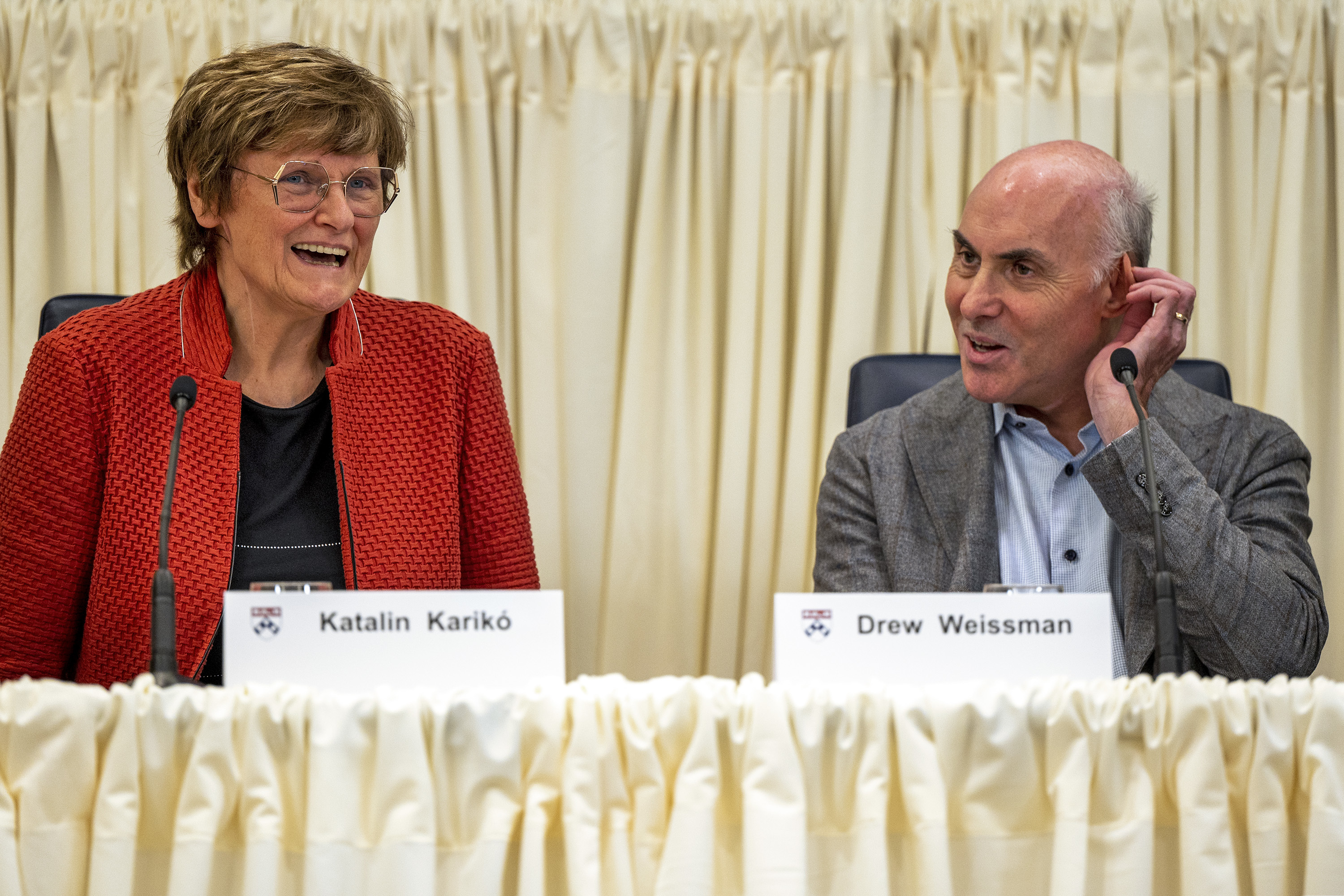
Katalin Karikó and Drew Weissman attend a news conference at the University of Pennsylvania in October 2023, after they were named winners of the 2023 Nobel Prize in physiology or medicine for their work on messenger RNA, a key component of COVID-19 vaccines.
Most recently and famously, Nobel laureate Katalin Karikó’s mRNA research that led to the rapid-fast, lifesaving COVID-19 vaccine response was commercialized in Boston, not here.
The pattern is clear: Visionaries choose to live in Philadelphia, yet often get ignored, if not outright blocked, by local institutions. That’s no way to secure the next 250 years.
There are signals of change.
I take inspiration from bold efforts to build, including the Delaware waterfront and the cap of I-95. In the 2010s, Philadelphia’s technology sector earned initial, if timid, attention from successive mayoral administrations and civic leadership — and a half dozen tech unicorns were born.
That tech community helped inform this multiyear vision statement project, which received $75,000 from a funders collaborative activating Semiquincentennial efforts, including the William Penn and Connelly Foundations. The city’s 2026 planning director, Michael Newmius, has been supportive, urging us to listen to residents and avoid undue filtering.
Over two years, we’ve tabled at community events, hosted discussions, and led working sessions. The result isn’t mealymouthed or filtered by incumbency; it has grit and humanity — like Philadelphia itself.
You can read the draft vision at Ph.ly and in the article box in this op-ed. We’re collecting one final round of feedback this fall, and we’ll incorporate what we can. We’re accepting feedback until Dec. 1.
From conversation to commitment
Our goal is to enshrine the final version of this statement on a physical plaque at a prominent location in the city. We’ll also host a digital version online, paired with voices from residents across the region.
This vision doesn’t prescribe policy, nor make fallible predictions; instead, it offers a shared aspiration, a framework that future leaders can measure their plans against.
In its early drafts, the statement imagined a green-energy Philadelphia with climate-adaptive agriculture, abundant public art, thriving multigenerational neighborhoods, and a culture that “exports ideas and imports opportunity.”
Over subsequent versions, the specifics were removed to reflect the long time horizon, but the spirit remains: Philadelphia must keep people — not technology, not incumbency — at the center of our future.
The Semiquincentennial should celebrate our history — I personally cherish it. I was a historic Old City tour guide for a year, and my daily bicycle commute to the Technical.ly newsroom past Independence Hall reminds me what endurance looks like.
But if we only admire our past, we’ve missed its key lesson. Philadelphia is strongest when we pair cobblestones with invention’s spark.
Read the vision at Ph.ly. Critique it, add to it, make it better. May it inspire Philadelphians for generations to keep building, not just preserving.
The Kasparov-Deep Blue rivalry is remembered as the moment a machine beat a human genius. But that was the rematch. The first contest — the one held here in Philadelphia — ended with the human winning. Let’s make sure that’s still true for our city.
Christopher Wink is the publisher and cofounder of the news organization Technical.ly.
Talk to most nonprofit chief executives, and they’ll be able, on cue, to recite a heartwarming story about someone their organizations helped.
And the Rev. Luis Cortés Jr., Esperanza’s founder and chief executive, can do it, too.
But he’d rather talk about a sin he committed as a little boy — a sin that impacted his thinking for a lifetime and allowed him to understand how to build a $111.6 million organization with 800 employees that educates, develops, uplifts, and houses 35,000 people a year in the heart of North Philadelphia’s predominantly Hispanic Hunting Park neighborhood.
When Cortés was 12, he stole a Snickers candy bar from the bodega his father owned in New York City’s Spanish Harlem.
Oh, his father figured it out, and quickly, too, because he began to ask little Luis some important questions:
Did the 12-year-old know how many Snickers bars the bodega would have to sell to break even — not only on the box of Snickers, but on the taxes and utilities for the entire store? More importantly, how many Snickers bars would be required to turn a profit — a profit that could be reinvested?
“You need to understand finance, whether it’s a box of Snickers or a multimillion-dollar bond to build a school. Where is the money coming from, and what’s the repayment structure?” Cortés said.
Outside, as he spoke, a crane moved materials in what will soon become a new culinary school.
“Understanding finance is important, and understanding culture is important, and you have to understand the relationship between the two.”
So, yes, Cortés can and did tell the story about the mother who came to Esperanza to learn English skills, who got help to get a job and a house, who sent her daughter to Esperanza’s charter school and to Esperanza’s college, and now that same daughter is getting a house thanks to Esperanza’s mortgage counseling help.
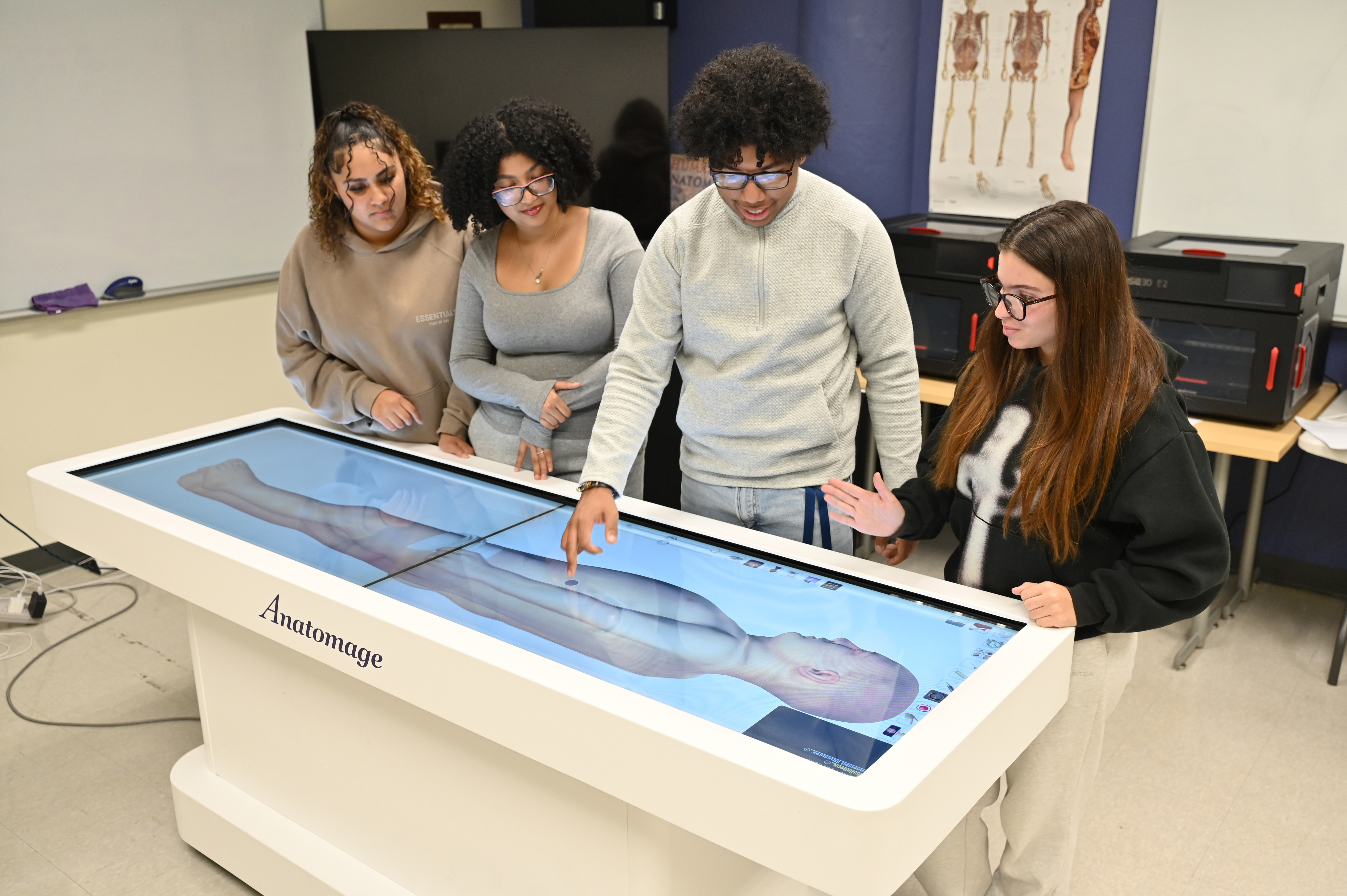
Students Jayliani Casioano, Oryulie Andujar, Derek Medina, and Natalia Kukulski use an interactve anatomy table. The students are members of is the Health Occupations Students of America (HOSA).
All good. But this is what Cortés really wants people to know:
“If people trust us with their funds,” he said, “we’re putting the money into institutions, and institutions build culture.”
That’s why Esperanza has a K-12 charter school, a cyber school, a two-year college that’s a branch campus of Eastern University, a 320-seat theater, an art gallery, computer labs, an immigration law practice, a neighborhood revitalization office, a CareerLink office for workforce development and job placement, a music program, a youth leadership institute, housing and benefit assistance, and a state-of-the-art broadcasting facility.
Cortés even likes to brag about the basketball court. “Three inches of concrete, maple wood flooring, fiberglass backboards — NBA standards.”
“Think about Paoli. It has a hospital, a public school, a theater. Paoli has all of that, and it’s understood that that’s the quality of life. We have to have access to those same things at a different price point,” he said. “Notice I didn’t say different quality. I said different price point.
“We want to create an opportunity community, where people can have a good life — with arts, housing, healthcare, financial literacy, education, all those pieces — regardless of your family income,” he said.
“What’s important here and what’s different is that in all our places, all our facilities are first class,” Cortés said.
“I grew up in a low-income community where people were always telling you to step up, but step up to what?” he asked. “Where is the vision? What is possible to even have? How can anyone know unless they can see it?”
So, when people from the community visit Esperanza, “you can see that you can have the best facilities with state-of-the-art equipment. As a provider of services, we have to step up,” he said, in turn always giving people the tools and resources they need to step up.
For example, on Citizenship Day, Sept. 20, Anu Thomas, an attorney and executive director of Esperanza’s Immigration Legal Services, trained a dozen volunteer lawyers and law students on the fine points and recent pitfalls in the process of applying for citizenship.
Soon, the room was crowded with people coming for help.
Watching from the sidelines was Charlie Ellison, executive director of the city’s Office of Immigrant Affairs, who noted that an estimated 60,000 legal residents of Philadelphia are eligible to apply for citizenship.
“Clinics like these are critically important to helping people who might be facing barriers,” including the cost of getting legal help. “This bridges a lot of gaps. It’s a vital mission, now more than ever,” he said.
For Neury “Tito” Caba, a men’s fashion designer, tailor, and director of green space at Historic Fair Hill, citizenship help from Esperanza was a family affair. Through Esperanza, he, his grandmother, and his mother all became citizens.
“Now I can vote, and that’s the most positive thing I can do,” he said. “And also, things being the way they are, it gives me some sort of protection.”
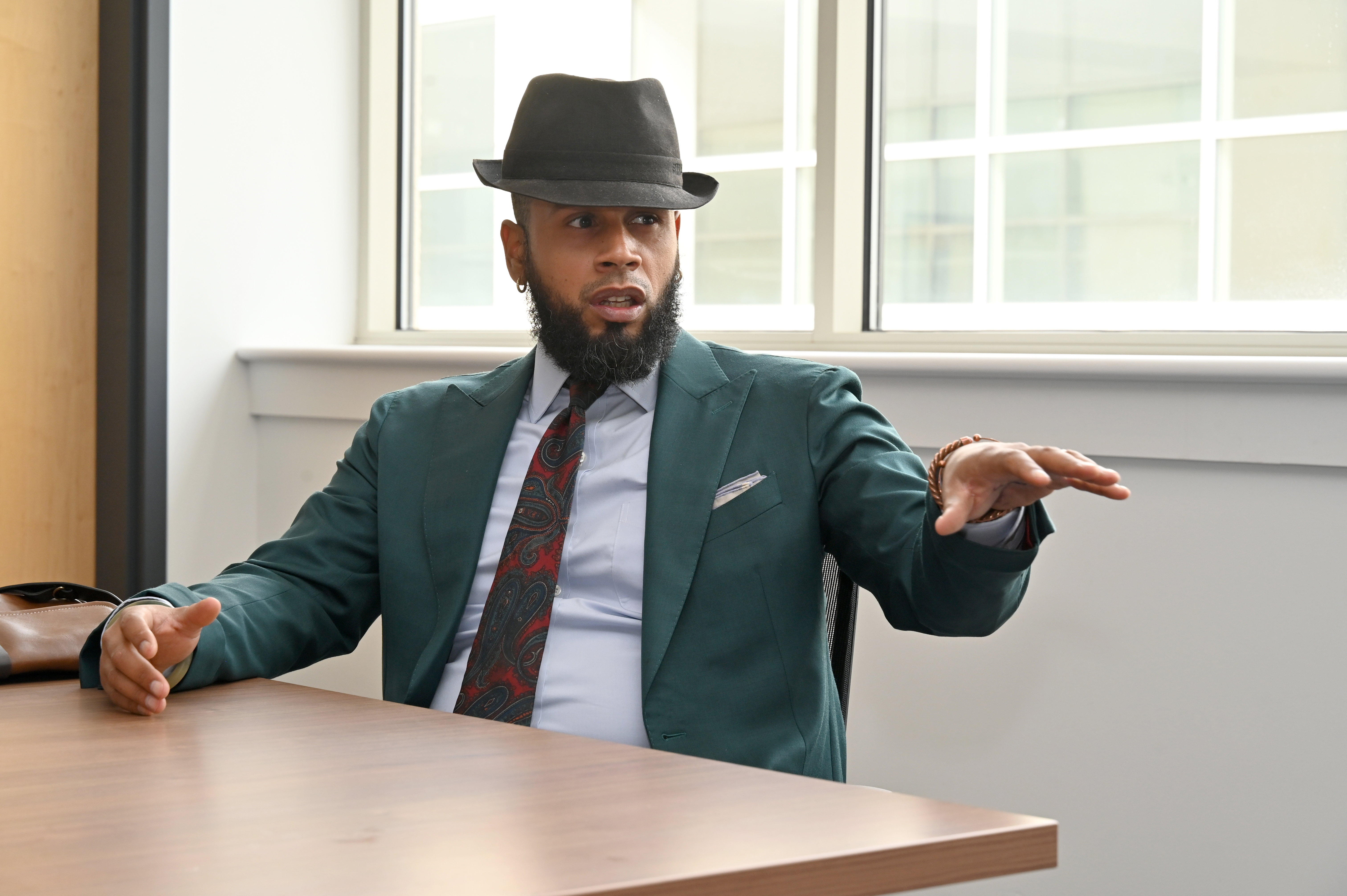
Fashion designer Neury “Tito” Caba talks about his citizenship experience at Esperanza.
Earlier this fall at Esperanza’s CareerLink branch, counselor Sylvia Carabillo helped Luis Rubio on the computer. He was trying to extend his unemployment benefits and looking for a job as a security guard. Agueda Mojica was being tutored in Esperanza’s most popular workforce class: Introduction to Computers.
“I want to become more independent to be able to do anything on a computer,” she said in Spanish, speaking through a translator. “I was always working and never had time to learn.”
Much of Esperanza’s staff is bilingual in Spanish, but to help people from the neighborhood, Esperanza also hired counselors who speak Ukrainian and Kreyòl for Haitians who live nearby.
In Esperanza College classrooms a few weeks ago, Esperanza Academy high schoolers enrolled as college students had just finished a chemistry exam. When they graduate from high school, they’ll already have associate degrees on their résumés.
For them, Esperanza represents a future.
There’s Oryulie Andujar, 18, who wants to study sonography because an ultrasound technician found a cyst in her mother’s uterus. “We could have lost her. That was very impactful for me.”
Jayliani Casiano, 17, wants to go into anesthesiology. The oldest of seven, she witnessed her mother giving birth to several younger siblings. “She was in a lot of pain. It was interesting. I want to do everything after seeing her through that process.”
Derek Medina, 18, said the opportunity to go to college “made me rethink my whole life.” He had been getting into trouble in school, but now wants to combine a love of mathematics and a desire to help people by going into the field of biomedical engineering.
Recently, on Nov. 14, Esperanza College hosted its Ninth Annual Minorities in Health Sciences Symposium, designed to acquaint high schoolers with medical careers.
Construction will soon begin to convert a former warehouse space into a center to teach welding and HVAC in an apprenticeship program.
Next month, it’ll be time for “Christmas En El Barrio” with music, food, and community in Teatro Esperanza — admission is free. In January, the Philadelphia Ballet will perform there. Tickets are $15 and free for senior citizens and students.
“My worst seat — in Row 13 — would be $250 at the Academy of Music,” Cortés said. He wants to offer the arts at a price and a time available to a mother of three, who may not be able to afford even the cheapest seats in downtown venues, plus bus fare, “and heaven forbid the child wants a soda,” Cortés said.
All this adds up to culture, which brings him back to the Snickers bar, and not just breaking even, but investing.
Other groups, Cortés said, had to build their own institutions when mainstream organizations put up barriers. Howard University helped Black people, Brandeis served Jewish people, and Notre Dame provided education to the Irish.
Building an institution is his investment goal with Esperanza, and he takes as his mentors famous Philadelphia pastors such as the Rev. Leon Sullivan, who founded Progress Plaza in North Philadelphia, and the Rev. Russell Conwell, the Baptist minister who founded Temple University.
“Philadelphia has a tradition that its clergy don’t just do clergy things,” he said, admitting that he doesn’t have the patience for a more traditional pastor’s role. “As clergy here, it’s understood that we snoop around everything.”
Cities sometimes brag that their poverty rates have declined, he said, when in reality, rates have declined because people with low incomes were forced to move away.
Philadelphia, he said, has a chance to be different — to lower the poverty level both by raising people’s incomes and improving their standards of living. “There should be Esperanzas in every neighborhood,” he said.
“How can we focus on helping the people who just need a break?” Cortés said, referencing Jesus’ admonishment to “help the least of these.”
“This city has the opportunity to make this a win-win,” he said, “to show the rest of the country and Washington, D.C. — especially Washington, D.C. — that people who are different, and people who are `the other’ can be supported, so that they are not only part of the fabric of the city, but economic drivers of the city.”
This article is part of a series about Philly Gives — a community fund to support nonprofits through end-of-year giving. To learn more about Philly Gives, including how to donate, visit phillygives.org.
For more information about Philly Gives, including how to donate, visit phillygives.org.
AboutEsperanza
People Served: 35,000
Annual Spending: $111.6 million across all divisions
Point of Pride: Esperanza empowers clients to transform their lives and their community through a diverse array of programs, including K-14 education, job training and placement, neighborhood revitalization and greening, housing and financial counseling, immigration legal services, arts programming, and more.
You Can Help: Esperanza welcomes volunteers for community cleanups, plantings, and other neighborhood events. Some programs also need volunteers with specific skills (lawyers, translators, etc.).
$25 covers the cost of one private music lesson for a young student through our Artístas y Músicos Latinoamericanos program.
$50 provides printing and distribution of 30 “Know Your Rights” brochures to immigrant families.
$100 pays for five hours of training for a new mentor fellow at the Esperanza Arts Center, preparing a young person for a career in arts production through hands-on learning.
$275 funds the planting of one street tree in a neighborhood that desperately needs additional tree cover to address extreme heat.
$350 covers tuition and books for one English as a second language student at the Esperanza English Institute.
$550 supports the cost of the initial work authorization for an asylum-seeker.
Editor’s Note: This column originally appeared in The Inquirer in November. On Tuesday, the Rev. Jesse Jackson Sr. died at his home in Chicago.
One of the first articles I wrote for my college paper was about PUSH, the organization founded by the Rev. Jesse Jackson Sr. — People United to Save Humanity.
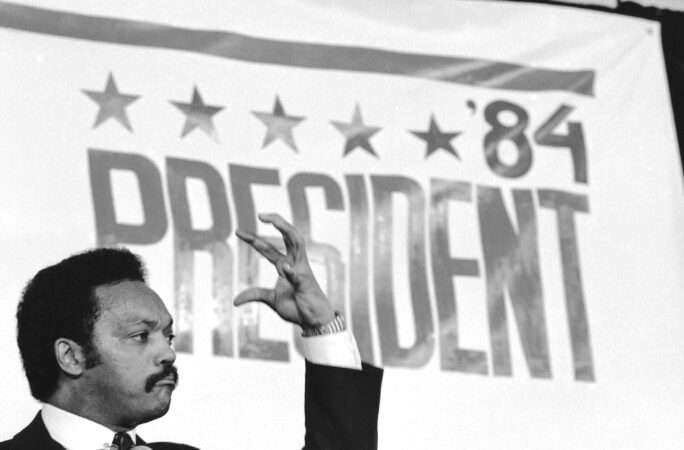
When the civil rights leader arrived in Washington, D.C., for a presidential campaign rally on the National Mall, I was there. It was electrifying. I remember listening as he called for Americans to unite across racial, gender, and class lines, and become part of his Rainbow Coalition. Looking back, it was a message that would resonate even today. But America wasn’t ready.
Four years later, he was back on the presidential campaign trail, urging his followers to “keep hope alive.” That time around, he tripled his share of white voters in the Democratic primaries, finishing second to then-Massachusetts Gov. Michael Dukakis. He also pushed the Democratic Party to institute reforms. But once again, America wasn’t ready.
Although Jackson didn’t clinch the Democratic nomination that time, either, his efforts to become America’s first Black president set the stage for Barack Obama’s historic election.
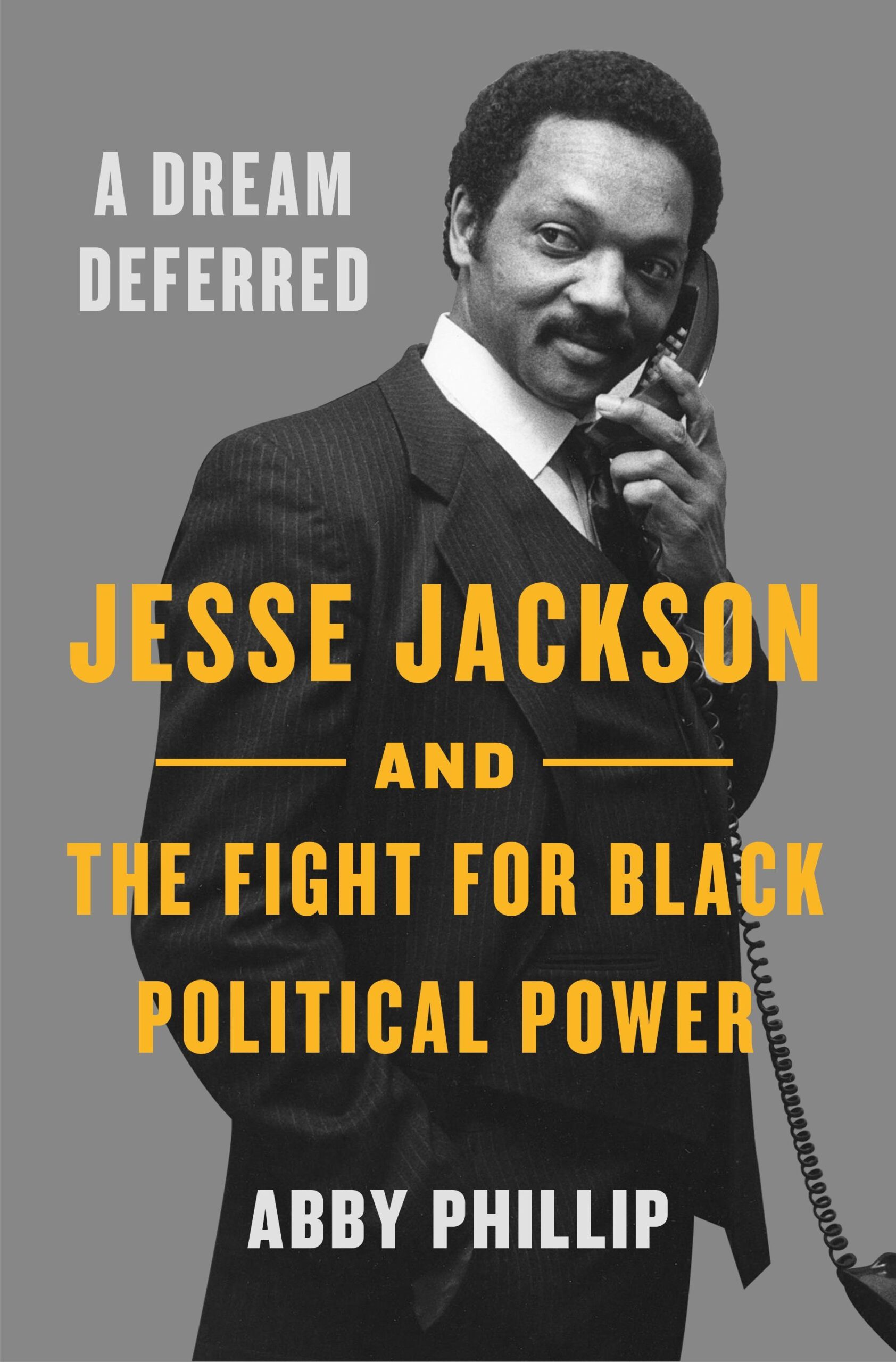
CNN anchor Abby Phillip explores the legacy of civil rights leader Jesse Jackson and its impact on American politics in her new book “Jesse Jackson and the Fight for Black Political Power.”
In 1988, the same year Jackson launched his second presidential bid, CNN anchor Abby Phillip had just been born. I doubt her parents ever dreamed that one day their baby girl would go on to write a seminal tome about Jackson, who at the time wasone of the best-known political figures.
Published last month, A Dream Deferred: Jesse Jackson and the Fight for Black Political Powertakes readers through Jackson’s impoverished childhood as the son of a single mother in the Jim Crow South, to his days in the civil rights movement with the late Rev. Dr. Martin Luther King Jr., and through his historic campaigns for the presidency.
I read it last month while vacationing. When I reached the end, I turned the last page with a feeling of gratitude, not only for Jackson and his contributions to the cause of civil rights, but also for Phillip for making the time to write it. A graduate of Harvard University, she’s a media superstar, juggling the demands of motherhood with weeknights at the anchor desk and fact-checking the uber-annoying conservative commentator Scott Jennings, a frequent cohost on her show. If Phillip, 36, had chosen to pass on this considerable undertaking, it would have been understandable.
Instead, she stuck with it through the COVID-19 pandemic, the launch of her first show, Inside Politics Sunday, the 2021 birth of her daughter, a move to New York City, and the creation of her current show, CNN NewsNight with Abby Phillip. The reporting and writing took almost four years to complete, and was somewhat of a race against time.
“One of the impetuses for writing this book was just a recognition that in order to really get to the truth of a lot of these stories, you really have to get it from the people who were there,” Phillip told me when we spoke last week. “It was important for me to try to reach those people while they are still with us, including Rev. Jackson, and a lot of his aides and staffers and so on and try to get those stories.”
A new book written by CNN anchor Abby Phillip explores the legacy of civil rights leader Jesse Jackson and its impact on American politics.
Doctors diagnosed Jackson, now 84, with Parkinson’s disease in 2017. Two years ago, he stepped down as the leader of the Rainbow-PUSH Coalition, which he had led for roughly half a century.
Since his speech is impaired by the disease, Phillip found it easier to understand him in person and traveled to his home in Chicago for interviews. The CNN anchor also went with him to his hometown in Greenville, S.C.
“I really got to know his world, and I’m grateful that they trusted me to do my job,” Phillip said.
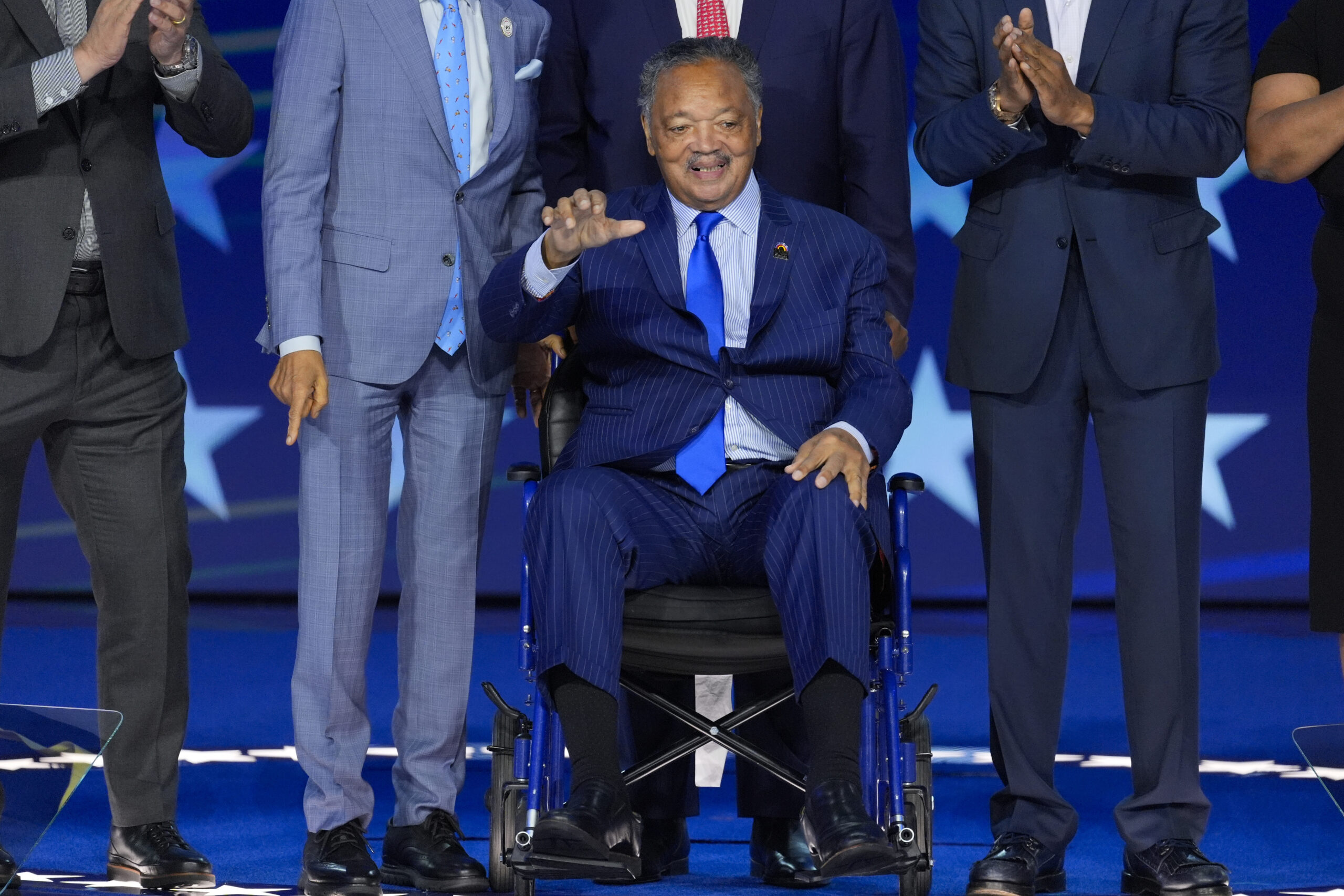
The Rev. Jesse Jackson waves during the 2024 Democratic National Convention in Chicago.
Much of the book focuses on Jackson’s presidential campaigns. “This is a major point of pride for him,” Phillip said. “His political campaigns, I think he really sees them as an essential part of his legacy. I do think that there was a sense that they were always underplayed or misunderstood.”
So many of his accomplishments slip deeper into the recesses of our minds with each passing year. He organized voter registration drives that helped elect Chicago’s first Black mayor, Harold Washington, in 1983, and negotiated with Syria for the successful release of Navy Lt. Robert Goodman. He pushed for changes in how delegates were allotted in the Democratic Party.
President Donald Trump wants to whitewash American history, as evidenced by his call to sanitize the history of Black people in America. In light of this, it’s more important than ever to preserve these stories. Phillip’s goal in writing the Jackson book, she told me, “was to make sure that this chapter didn’t get lost to history.”
Thanks to her dedication, persistence, and brilliance, it won’t.