Category: Opinion

  • Letters to the Editor | Dec. 26, 2025

    Letters to the Editor | Dec. 26, 2025

    Gun control works

    In response to the Dec. 14 mass shooting at Bondi Beach in Australia, right-wing voices in the U.S. have quickly moved to point to this tragedy as evidence that gun control does not work. This is not only a disgusting lie, but also a claim that is so divorced from reality it would be laughable were its consequences not so dire.

    According to the Associated Press, since the Port Arthur massacre in 1996, which saw Australia implement sweeping gun control laws, that nation has experienced a total of six mass shootings. According to the Gun Violence Archive, the U.S. had twice that number in December 2025 alone.

    This does not have to be our reality. We do not have to continue losing members of our communities to gun violence. Gun control works, and while our legislators should have passed commonsense gun control decades ago, the least they can do is pass it now.

    Katherine Roberts, Philadelphia

    Freedom doesn’t defend itself

    The United States was founded on the idea that individual rights must be protected from usurpation. Those rights, rooted in natural law and expressed through law and custom, were never meant to survive on principle alone. They endure only when citizens actively understand and defend them. History shows that rights are rarely taken outright; more often, they are lost through neglect.

    A free society depends on the recognition that liberty is shared. In a nation defined by difference, coexistence is not optional, and respect is not sentimental — it is structural. When Americans ignore one another or reduce differences to something threatening, the civic bonds that hold the country together begin to weaken. Division does not start with conflict; it begins when responsibility is abandoned.

    The greater danger emerges when ignorance gains influence and truth is treated as negotiable. In such moments, freedom is not abolished but rebranded — used to justify exclusion, distortion, and power without accountability. Institutions remain standing, but their purpose thins. Law continues, but its moral authority erodes.

    This is the warning worth repeating: Rights lost through complacency are not easily recovered through outrage. Self-government depends not only on laws and elections, but on an informed and engaged citizenry. When truth yields to convenience and civic duty gives way to faction, the damage is no longer political — it becomes foundational.

    Joel Alan Eisenberg, Warminster

    An easy fix

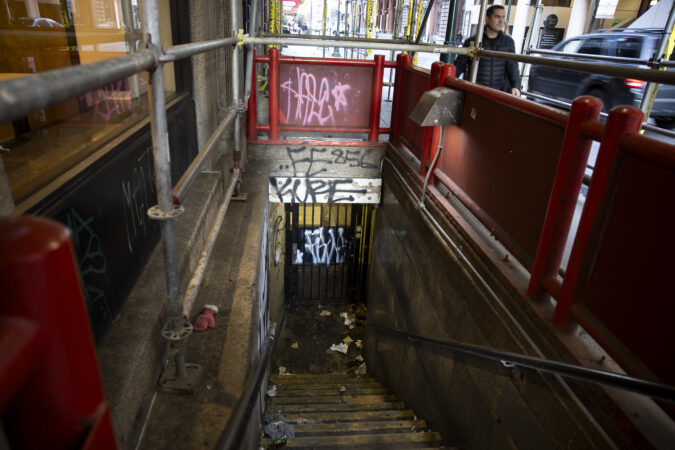
    The city is expecting people from New Jersey to come see the Mummers Parade, as well as visitors during the 2026 celebration. It’s really a shame how they will be greeted when they come up from the 15th Street PATCO station, because the elevator never works, and the steps are falling apart.

    I have complained many times over the last few years. PATCO tells me it’s the city’s responsibility once you get past the turnstile. I’ve complained to the city, to the visitors bureau, to the mayor’s office. When I finally got a response, they told me to complain to SEPTA. When I told them it is not a SEPTA station, I never heard from them again. How can they not know this? I can’t believe I’m the only one who ever told them about this. I know the city has bigger problems, but this is something that can be easily fixed if they want people to come in to spend money in the city.

    Fradele Feld, Cherry Hill

    Sidewalk cleanups

    I read with interest the article about the Center City Residents Association ceasing its contract with the Center City District to clean sidewalks in its own catchment area.

    In the Graduate Hospital part of the city, we struggle with similar issues, and have in the past worked with various groups to help us keep the sidewalks clean. These groups are helpful and employ local workers.

    The one missing ingredient is that of personal responsibility: If every homeowner, landlord (those who rent out their residential properties), and business simply cleaned up their own public space on a daily basis, the city would be immensely cleaner.

    It would be lovely if the city would champion this notion of personal and shared responsibility — it would reap great benefits and would cost nothing. A real win-win. It would also require the city to expand its own enforcement in addition to policing antidumping measures and the like. As a physician, I can tell you that this is also a public health issue, and not just one of aesthetics.

    David Share, chair, South of South Neighborhood Association Clean and Green Committee

    Power of the people

    As we approach our 250th birthday as a nation, I wonder what the founders would think of the current state of affairs.

    They would be alarmed at the power wielded by our president. They would be even more concerned about how inept the people’s branch, Congress, is. The lack of bipartisanship is causing the imbalance of power between the branches of government. Without Congress doing its job, someone else has to do what needs to be done.

    The founders would feel like America is right back where it was before the American Revolution, i.e., taxation without representation.

    A national movement should be organized to protest how we’re paying taxes through the nose and not getting representation from our elected representatives. The time is now. Start by marching on the National Mall in Washington, D.C.

    Brian Reilly, Medford

    . . .

    I believe in the adage, ”It bears repeating.” When you apply that to Donald Trump, I can understand why people are interested in reading many different accounts of his depraved thirst for power and his ruthless attempts to get it. However, reading those details repeated over and over again ad infinitum will not necessarily tell me how to fight Trump.

    Your editorial was an accurate and direct analysis of the Jeffrey Epstein files release, and we see once again the deceptions in which Trump engages.

    The burning question in my mind is, after the recording of all his lies, over 30,000, what do we do about it?

    We can’t just moan and complain and write editorials for the next three years. We need to do something more effective.

    I personally think we need to have more “No Kings” protests and big demonstrations, as we had against the Vietnam War.

    Judy Rubin, Philadelphia

    Dishonor endures

    As I read the recent Associated Press article about Vice President JD Vance’s recent speech, in which he refused to denounce bigots in the Republican Party, I couldn’t help comparing Vance’s positions with former Washington Post journalist Jennifer Rubin’s recent Substack post, “Remember the Unsung Resistance Fighters.” While Vance states outright his desire for a country in which white supremacy guided by Christian nationalism rules, Rubin asks us to acknowledge those of us who continue to stand in opposition, supporting instead the rule of law and the Constitution of the United States of America.

    Someday, Trump will be gone from office. To all the Republican government officials — including the U.S. Supreme Court — your voting record will remain. And with that voting record, so, too, will your dishonor.

    Cindy Maguire, Merion Station

    Join the conversation: Send letters to letters@inquirer.com. Limit length to 150 words and include home address and day and evening phone number. Letters run in The Inquirer six days a week on the editorial pages and online.

  • Celebrating a Jewish tradition: Chinese food on Christmas

    Celebrating a Jewish tradition: Chinese food on Christmas

    For years, I envied Jews who enjoyed Christmas without getting into the weeds of what it’s all about, who put up a tree and lights without a sense of guilt. I admired Jews who wrote the best Christmas songs in history (google it), even though the holiday will never be their own.

    But the day itself has never been my favorite. It ranks slightly ahead of Good Friday and Easter, but not by much. While no mindful Jew needs to be reminded of what a small minority we are, Christmas puts us in our tribal place. No amount of secular candy canes or court-ordered ecumenical neutrality softens the reality that the day is not for us.

    This is not a complaint or a condemnation of the celebration. If there is a war on Christmas, I am not a combatant.

    Unlike the Grinch, I never begrudge others their joy, even though I can’t embrace it. I wish others a merry Christmas and mean it. Why shouldn’t they be happy?

    Adaptation

    I have no resentment toward public displays of Christmas decorations. So long as they are not paid for with tax dollars, who are they hurting? There are far greater injustices to litigate, more serious public displays to mourn. With antisemitism on the rise, nobody has the luxury of getting upset over a creche.

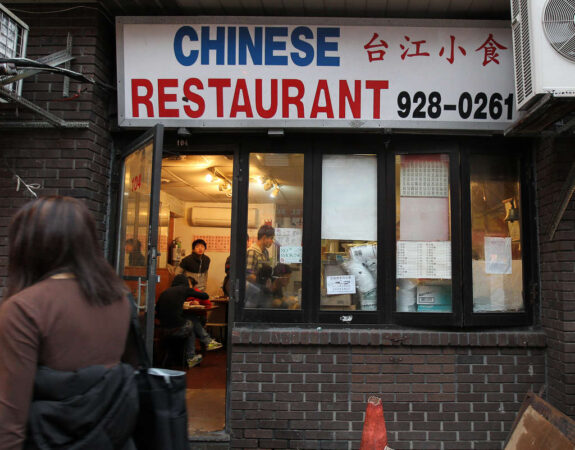
    To survive, one need not assimilate; one need only adapt. And Jews are masters of it. Take, for example, the now cliché practice of our eating Chinese food on Christmas.

    Chef Rui Guang Yu prepares long life noodles at Nom Wah in Philadelphia. Chinese food generally does not violate kosher dietary laws.

    But it has become more than an adaptation.

    Tradition

    The Christmas Chinese dinner is one of the truly great and unique nights of the American Jewish year. Jewish families patronize the same restaurant every year with the dedication generally reserved for delis and houses of worship.

    What makes the night different from all other nights is the special joy that can only be found in our shared otherness. Being with those who share your identity — religious and otherwise — is always a blessing. But that feeling of togetherness is never more poignant than in those moments when what makes us different from others also makes us so alike among ourselves.

    And it is often reciprocated by the people feeding us. The owners of the restaurants seem as happy to see us as we are to see them. And to share in our joy.

    That I especially feel my Jewishness in a Chinese restaurant on a Christian holiday is the stuff of comedy.

    And thus humanity.

    Jonathan Shapiro is an Emmy- and Peabody Award-winning TV writer and the author of the recent “How to Be Abe Lincoln: Seven Steps To Leading a Legendary Life.”

  • Behind the holiday lights: My Christmases in the grip of addiction

    Behind the holiday lights: My Christmases in the grip of addiction

    Christmas hasn’t always meant warmth, family, or celebration for me. For nearly a decade, the holidays were some of the most frightening days of my life. While others wrapped gifts and prepared meals, I was consumed with one mission: securing enough pills to avoid opioid withdrawal.

    People rarely talk about this side of addiction — the logistics, the panic, the constant calculations. For me, the days leading up to Christmas weren’t merry or bright. They were a dangerous countdown.

    My entire holiday hinged on whether a doctor would answer the phone before the office closed. I’d sit in my car with trembling hands, rehearsing my tone before calling, trying to sound calm even as fear tightened my stomach.

    I knew exactly which doctors might authorize an early refill and which ones suspected I had become addicted. My 10-year addiction, which began when I was prescribed painkillers after knee surgery, had me cycling through more than 65 doctors in a half dozen states — each one recorded in the many calendars I hid in drawers. They were my secret maps for survival.

    I would flip through them frantically, searching for any appointment I could make to save me from a night of withdrawal. I wasn’t looking for relief or euphoria. I was looking for a way to avoid the sickness that came the moment I ran out.

    Many of the pharmacies I used were inside large chain stores. While they stayed open late, their pharmacies did not. As the metal grates rolled down over the pharmacy windows, the rest of the store hummed on. That contrast haunted me — bright aisles full of shoppers on one side, and on the other, the closed counter that meant I would be sick by morning. Once those grates came down, my options disappeared.

    My withdrawals weren’t mild. At the height of my addiction, I was taking close to 30 pills a day just to feel normal.

    At the height of my addiction, I was taking close to 30 pills a day just to feel normal, writes Chekesha Lakenya Ellis.

    When the supply ran low, withdrawal hit me brutally and immediately. My stomach would bubble, my skin would prickle, and waves of nausea and trembling would take over. My chest tightened until breathing felt like work. Fear of that sickness controlled my entire life — especially during the holidays.

    There were Christmas Eves when I sat alone in my car, looking at my dwindling supply of pills, trying to make it last through the night. I would delay doses longer than my body was used to, forcing myself to wait, bargaining with myself, fighting back tears each time the sickness crept in. It wasn’t safe. It wasn’t smart. But that was all I could do.

    At family gatherings, I appeared frail and hollow. While everyone raved about my mother’s sweet potato pie, I barely touched my plate. My stomach was in knots, and nausea had stolen my appetite.

    I’d slip into the bathroom, sit on the edge of the tub, and try to steady my breathing before returning to the table. People often assume addiction is about chasing a high. Mine wasn’t. Mine was about avoiding the physical collapse that came when the drugs left my system. I wasn’t celebrating Christmas — I was surviving it.

    Addiction has a way of making you disappear, even when you’re standing right in front of the people who love you.

    Today, my holidays are very different. More than 15 years into recovery, I can sit at a Christmas table fully present. I can breathe without fear. I can enjoy a meal. I can laugh. I can be myself again.

    The holidays are hard for many people, but especially for those battling addiction, writes the auuthor.

    But I never forget the version of me who couldn’t.

    And I haven’t forgotten the people who are living that experience right now.

    If you’re struggling this holiday season — if you are using, withdrawing, unhoused, hiding your pain, or simply trying to make it to tomorrow — I want you to know something:

    Your story is not over.

    You are not beyond help.

    You are not alone.

    Even if all you can do today is stay alive, that is enough. The holidays are hard for many people, but especially for those battling addiction. I survived nights I didn’t think I would survive. And if I could make it out, so can you.

    This Christmas, my prayer is that you hold on — just long enough for the light to break through.

    There is life beyond this moment. Even if you can’t feel hope right now, hope can still find you.

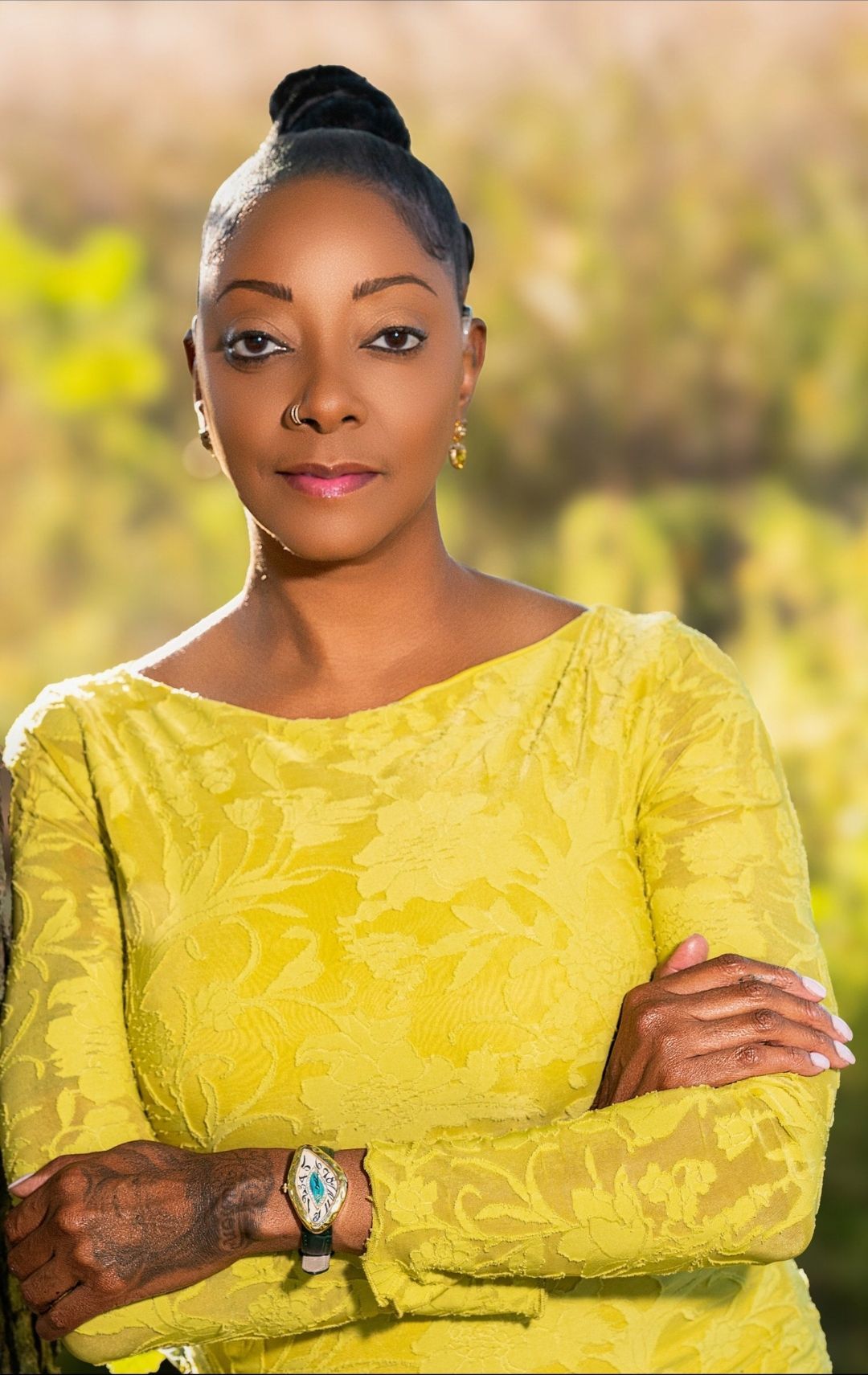
    Chekesha Lakenya Ellis is a certified peer recovery specialist. The Burlington County resident uses Facebook to raise awareness about addiction and recovery.

  • Why I like the commercialization of Christmas

    Why I like the commercialization of Christmas

    With the announcement of record sales across the country on Black Friday, including $11.8 billion in online transactions, the holiday shopping season was off to a great start. In the next few weeks, the average person was expected to spend about 10% of their annual shopping budget. By Dec. 25, the National Retail Federation expected a record-setting $1 trillion to be spent nationwide on consumer goods.

    As a Christian, I am not supposed to like the commercialization of Christmas. I was taught from childhood that the birth of Jesus is “the reason for the season,” not gifts. In recent years, critics of all faiths — and none — have joined a growing chorus of anti-consumerist sentiment toward the holidays.

    But rather than dismissing holiday shopping as a symbol of materialism and excess, I have come to view it as an expression of generosity and joy that captures the purpose of the season.

    Rather than dismissing holiday shopping as a symbol of materialism and excess, I have come to view it as an expression of generosity, writes B. G. White.

    The tradition of giving gifts at Christmastime was introduced several centuries ago in Europe by Christians who took stories about the gift-giving of an ancient saint, Nicholas of Myra, and turned him into the modern Santa Claus. As the Industrial Revolution created a new middle class and increased the availability of consumer goods, the tradition grew.

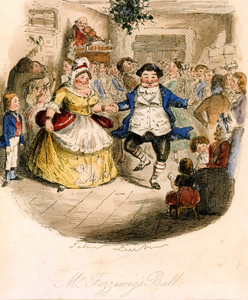
    The importance of material generosity at Christmas was especially championed by Charles Dickens in his 1843 novella A Christmas Carol, which depicts the infamous Ebenezer Scrooge’s transformation from a penny-pinching grump to a joyful philanthropist.

    Hand-colored plate illustration from the first-edition/first-issue copy of Dickens’ “A Christmas Carol.”

    Dickens’ largely secular vision of giving gifts at Christmas helped to make a holiday originally confined to Christians more accessible for an increasingly pluralistic world.

    Of course, there are problems with the connection between Christmas and shopping. I do not like how it can exacerbate class difference, revealing a vast disparity in the quantity and quality of gifts from one household to the next. The upper and middle classes can use Christmas as another opportunity for an exotic vacation or the acquisition of yet another status symbol.

    One only needs, however, to recall the refrain from so many holiday movies to realize that the vast expenditure inherent to the season is not the main problem.

    As Charlie Brown struggles in A Charlie Brown Christmas to pull together the perfect Christmas play, he realizes that, while he may need a Christmas tree for the set, it does not need to be particularly tall, pretty, or even upright. A short, scrawny tree will do just fine.

    Instead of trying to buy happiness, or a better relationship with a loved one, or the perfect Christmas tree, we can use Christmas to focus on what someone really needs, writes B. G. White.

    Christmas is about being content with what you already have and, out of that contentment, being generous to others. Instead of trying to buy happiness, or a better relationship with a loved one, or the perfect Christmas tree, we can use Christmas to focus on what someone really needs.

    To keep ourselves focused on others and avoid unnecessarily lavish gifts, my wife and I use holiday sales as a means to get a discount on items that we would otherwise buy for our kids at some other point in the year. We also focus on practical gifts people will actually use — last year, we got a battery caddy for my mom and gardening gloves for my dad. Our son requested an expensive toy this year — an electric train set — so we found a small one that is in good secondhand condition, which reduces waste and expenditure.

    Perhaps the greatest reason why I like to give gifts at Christmas is that they embody the heart of the Christmas story — the one, ironically, that so many Christians use to create skepticism about Christmas gifts — in which God “gave” Jesus as a savior for the world (John 3:16).

    Perhaps, then, giving gifts does not destroy Christmas; it captures its very essence.

    B. G. White is a faculty member in the theology department at Boston College.

  • Letters to the Editor | Dec. 25, 2025

    Letters to the Editor | Dec. 25, 2025

    Disharmony

    Donald Trump has a fixation on putting his name on everything he can find. His latest is the Kennedy Center. Animals mark their territory, but the smell dissipates quickly. The stench from Trump’s antics will take years to remove.

    Barry Adams, Malvern

    . . .

    The John F. Kennedy Center for the Performing Arts has had wonderfully harmonious moments.

    The recent addition of Donald J. Trump’s name to the center creates a brash, clanging disharmony.

    Consider three examples:

    Kennedy inspired the creation of the Peace Corps. Trump eviscerated the U.S. Agency for International Development, leaving children starving and food rotting.

    Kennedy instituted the Alliance for Progress, which brought hopes of prosperity and peace to Latin America. Trump ordered the military to murder suspected drug smugglers from Latin America.

    Kennedy laid the moral foundation for the Civil Rights Act (1964) and the Voting Rights Act (1965). Trump directed states to redraw congressional boundaries so as to reduce nonwhite representation.

    Bring back harmony and erase Trump’s name from the Kennedy Center. Adding Trump’s name is an insult to the memory and inspirational presidency of Kennedy, who said, “Ask not what your country can do for you — ask what you can do for your country.” In Trump’s case, it’s always been the other way around.

    Terry Furin, Philadelphia

    Pardon or consequences

    Two of your recent editorial cartoon selections shone a light on the changing state of criminal punishment in the United States today: One showed a Santa protester holding a sign that says, “RELEASE THE NAUGHTY LIST.” The other showed Santa checking his “Naughty List” of drug dealers, insurrectionists, fraudsters, etc., but with the word “Naughty” changed to “Pardon.”

    In 2025, facing punishment for misdeeds is no longer a sure thing. Whether it’s a federal conviction for storming the U.S. Capitol, bringing illegal drugs into the country, or defrauding investors, if you support the president, he’ll make it all go away. Donald Trump bragged during his campaign that he could shoot someone in the middle of Fifth Avenue without losing any of his supporters. He may have been right — and he is sharing that immunity with any of his friends who need it.

    Wayne Williams, Malvern

    . . .

    How come Donald Trump can get away with just about anything: demolishing the East Wing, dismantling the U.S. Agency for International Development, freezing congressionally appropriated funds, just to name a few? And while each of those things occurred when he was president, bending the rules has been his MO, as a business person, since Day One. If you or I did the same thing, they’d throw the book at us. Trump? He gets the U.S. Supreme Court to say a president can’t be held accountable for anything he does while in office. The founders are turning over in their graves. Can you imagine what Trump would do if Joe Biden did everything he has done over the past 11 months?

    Biden Derangement Syndrome, indeed.

    Michael Miller Jr., Philadelphia

    Join the conversation: Send letters to letters@inquirer.com. Limit length to 150 words and include home address and day and evening phone number. Letters run in The Inquirer six days a week on the editorial pages and online.

  • Nativity scenes have long mirrored current events. All of the ICE references this year are no different.

    Nativity scenes have long mirrored current events. All of the ICE references this year are no different.

    For 29% of the world, the world’s 2.3 billion Christians, the days leading up to Dec. 25 are filled with traditions to help us prepare for one of the two most important religious celebrations of the year.

    On Christmas Day, the mangers in Nativity scenes in front of churches across the nation, empty until now, will feature depictions of the infant Jesus.

    Christians can then, as the carol goes, know the thrill of hope, and the weary world can rejoice.

    For a day, an hour, a moment, Christians in the U.S. will seem to be one body in Christ — but perhaps not even the Nativity can bridge the gulf that has grown between Christians over President Donald Trump’s immigration policies.

    In fact, this holiday season, some of that deep division has flared up publicly, centered on Nativity scenes at churches — across denominations and geographies — that depict the Holy Family behind barbed wire, or flanked by federal agents from U.S. Immigration and Customs Enforcement and U.S. Customs and Border Protection.

    An “ICE WAS HERE” sign is posted in the empty spot for the baby Jesus at a Nativity scene displayed at St. Susanna Church in Dedham, Mass., earlier this month.

    In Massachusetts, at the Roman Catholic St. Susanna Church, the Holy Family is missing — replaced by a sign saying “ICE WAS HERE.” At Oak Lawn Methodist in Dallas, the Holy Family is behind a barbed wire fence, with a sign that says “Holy is the refugee.” At Missiongathering Church in Charlotte, N.C., ICE agents wearing bulletproof vests surround the Holy Family.

    At Oak Lawn United Methodist Church’s nativity, Mary and Joseph are silhouettes, surrounded by a chain link fence topped with razor wire. Their halos are old bicycle wheels. A shopping cart and two metal bins, frequently used by the unhoused as firepits, flank the scene.

    [image or embed]

    — NPR (@npr.org) December 16, 2025 at 2:08 PM

    And at Lake Street Church of Evanston, in Evanston, Ill., not only are ICE and CBP figures included, but Mary wears a gas mask, and the infant Jesus has his hands zip-tied together — the way a witness describes federal agents from ICE and CBP zip-tying children together after raiding an apartment building in Chicago in October — and is swaddled in a Mylar blanket like those used in detention centers.

    The pastors involved say the Nativities remind everyone that “God is with us” now. The scene “reflects the context that Jesus would be coming into if he were born today,” St. Susanna’s Father Stephen Josoma told the National Catholic Reporter.

    The Rev. Michael Woolf, pastor of Lake Street, was even more direct when he posted on Instagram after someone had removed the zip ties from the Jesus figure in his church’s Nativity:

    “We restored the zip ties on baby Jesus. The #Christmas story is literally about an authoritarian ruler using violence, causing fear, and eventually driving the holy family to become refugees in Egypt. The parallels couldn’t be more clear between Scripture and our nativity. We’re not going anywhere.”

    There is a long tradition of having Nativity scenes reflect contemporary concerns and realities. For example, during World War I, according to Emma Cieslik, a museum professional and religious scholar writing for the website Hyperallergic, the Holy Family huddled in the trenches. More recently, the Christmas Lutheran Church in Bethlehem created a Nativity scene with the infant Jesus cradled by rubble from the bombing of Gaza, and the Vatican itself hosted Nativity scenes depicting the war in Ukraine.

    Still, there has been plenty of pushback. The bishop of the Archdiocese of Boston has been critical of St. Susanna’s Nativity, for example, and online comments at X dispute any characterization of the Holy Family as migrants or refugees. (Ahem, Matthew 2:13-14 anybody?)

    But the strongest reactions have taken place at the churches in places that were impacted by Trump-directed immigration surges.

    At Missiongathering in Charlotte, a person was caught on video knocking over the ICE figures in the Nativity and tearing up the “Know Your Rights” signs around it. At Lake Street Church on Chicago’s North Side, vandals knocked down the ICE and CBP figures, then battered and decapitated the Mary figure.

    The violence is symbolic, but the fury is undeniable. This administration has so thoroughly demonized migrants and refugees, labeling all as criminals, that any hint of resemblance between today’s migrants and refugees and the Holy Family reads as anathema to some Christians. But anyone who thinks the parallels are politically driven needs to get their history straight. Way back in 1952, Pope Pius XII was writing in his Exsul Familia Nazarethana that “the migrant Holy Family of Nazareth, fleeing into Egypt, is the archetype of every refugee family.”

    And here’s the thing: These Nativities that have enraged people aren’t exclusively reflecting the reality of migrants and refugees who are endangered by the Trump administration policies — they are reflecting the danger to all of us.

    Folks may feel safe in their own status, but anyone can be treated the same way the administration is treating migrants and refugees. It is happening already, in fact, with federal agents refusing to accept valid U.S. birth certificates and passports as proof of citizenship.

    “No document will protect you,” Malka Older, who heads up the international community of writers and human rights activists Global Voices, and has years of experience working at humanitarian aid, disaster risk reduction, and emergency preparedness organizations, wrote recently on Bluesky.

    “All they have to do is take it from you and ‘lose’ it; take it from you and say you never gave it to them; claim it’s fake; make a new rule that you need another document. Citizenship is a made-up status that governments decide the rules for.”

    Older said “it has never been about immigration. It’s racism, and it’s intimidation, and profit for some. Allowing it to happen to any group means it’s a possibility for everyone, and that’s how fascism maintains power.”

    Which brings me back to Christmas Day, and what every pastor who has placed one of those ICE Nativity scenes knows.

    It is a broken world now, and it was a broken world when Christ was born into it.

    Amid the soaring Glorias, the sparkle of lights, and the colorful paper wrapped around gifts we give each other in echo of the gifts brought to the Christ child by the Magi, we should remember that three days after Christmas Day, Christians will be marking the slaughter of the Holy Innocents. The one the Holy Family fled from, the one that made them refugees.

    They were warned, as we are warned, that authoritarian rulers will stop at nothing to get their way.

  • Dear Santa, Trump has been very naughty. Don’t give him anything. Not even coal.

    Dear Santa, Trump has been very naughty. Don’t give him anything. Not even coal.

    Dear Santa Claus,

    I hope you and Mrs. Claus are well. This is the first time in a long while that I have taken the time to write out my Christmas wish list. It’s a long one, but it’s also for the millions of Americans struggling this year to fill their Christmas stockings.

    Donald Trump, a spray-tanned, 21st-century version of Ebenezer Scrooge, claims the affordability crisis is a “Democratic hoax,” and that parents should deal with it by buying fewer toys. With a heart that’s at least two sizes too small, he just can’t relate to those who scrape to get by. The only struggle he can relate to has to do with pronouncing the word acetaminophen.

    Like the main character in Charles Dickens’ A Christmas Carol, Trump enjoys demeaning people — as he did last week when he unveiled a series of plaques near the Oval Office, deliberately distorting the legacies of former Presidents Joe Biden and Barack Obama. Trump isn’t in the same league with either of them. Not even close. Same thing with President John F. Kennedy, but that didn’t stop him from having his name slapped onto the John F. Kennedy Center for the Performing Arts last week.

    Please, Santa, make sure your sleigh doesn’t drop off any presents at the White House on Christmas Eve. Same thing with Mar-a-Lago. Remember Trump’s posting an AI-generated meme dropping what looks like feces on “No Kings” protesters back in October? Just tell Dasher, Dancer, Rudolph, and the rest to fly right on by both of these locations.

    President Donald Trump speaks during an address to the nation from the Diplomatic Reception Room at the White House in Washington in December.

    Unemployment rose to 4.6% last month, the highest increase since 2021. For African Americans, it’s way higher, at 8.3%. Kudos to Rep. Ayanna Pressley (D., Mass.), among others, for demanding answers about what’s going on. Please don’t forget to drop off something really nice for them.

    Also, as I’m sure you’re aware, America is on the verge of a healthcare crisis. Once federal subsidies to the Affordable Care Act expire Dec. 31, millions will see their health insurance costs skyrocket. This isn’t the kind of thing you and the elves typically work on up at the North Pole, but members of Congress have failed to come up with a solution.

    If something drastic doesn’t happen soon, millions may wind up dropping their policies, which could prove catastrophic. We can’t count on that old Scrooge, I mean the president, who campaigned claiming he had a “concept of a plan” to fix healthcare. He hasn’t done it yet, and I doubt he ever will. Instead of boxed gifts, anything you can do to help us resolve this important issue would be deeply appreciated.

    Trump really deserves that No. 1 spot on your naughty list this year. It’s one thing to try to secure America’s borders, but it’s a whole other thing to allow masked U.S. Immigration and Customs Enforcement agents to carry out a reign of terror on undocumented immigrants and U.S. citizens alike.

    There have been many other lowlights from the first 11 months of his second term: imposing tariffs on foreign countries that have raised costs for American consumers, dismantling the U.S. Agency for International Development, and stopping diversity, equity, and inclusion in the federal government and anywhere else he can.

    On top of everything else, Trump doesn’t even bother to hide his bigotry anymore. Under his leadership, officials have admitted white Afrikaners — descendants of the European colonizers whose segregationist practices led to the formalization of apartheid in South Africa — granting them refugee status while doing everything in his power to deport Black and brown migrants. I haven’t recovered from his calling Somalis “garbage” and saying that they should leave the country.

    They and anyone else Trump doesn’t like have to go because he’s worried about “chain migration,” but first lady Melania Trump, who brought her parents to the States using the same process, can stay? Make it make sense.

    Volunteers take phone calls from children asking where Santa is and when he will deliver presents to their house, during the annual NORAD Tracks Santa Operation, at the North American Aerospace Defense Command, or NORAD, at Peterson Air Force Base, in Colorado Springs, Colo., last Christmas Eve.

    I could go on and on, but I’m trying to embrace the holiday spirit. Please give my regards to Mrs. Claus and to all of the elves who work so hard to make the Yuletide season jolly.

    When you make your way down my chimney, you will find your cookies and milk in their usual place. I don’t need anything personally, but please do what you can to make life easier for Americans scraping to get by in the so-called golden age of Trump. As a certain humbug himself might say, thank you for your attention to this matter!

    Love, Jenice

  • Catholic Charities helps those in need both surmount life’s hardships and celebrate its many little joys | Philly Gives

    Catholic Charities helps those in need both surmount life’s hardships and celebrate its many little joys | Philly Gives

    Heather Huot, the top executive at Catholic Charities, named her only daughter after Lidia, a homeless, mentally ill, and often cranky elderly woman she met as a young social worker at Women of Hope Vine, a transitional housing facility run by the organization Huot now leads.

    As “mean spirited” as Lidia was, Huot said, Lidia still celebrated forsythia.

    When their bright yellow blossoms heralded winter’s end, Lidia would drag Huot outside to marvel. “Despite all the hardships,” Huot said, “there are things to be celebrated.”

    Which brings us to the Christmas holiday season.

    Even if it were possible, which it’s not, to overlook all the troubles in our world, with wars and starvation, or even to overlook all the troubles in our nation, there would still be the troubles of the season — too much work, too much loneliness, too many struggles.

    Where’s the forsythia?

    Two weeks ago, it was outside the Archdiocesan Pastoral Center in the form of a living Nativity scene, complete with a wee baby goat named Lady, an artificial-snow machine, an actual camel, and an elementary school choir in their Catholic school uniforms singing “Joy To the World.”

    Yes, “Joy To The World,” because 500 children, some of whom live in tough circumstances, got a chance to celebrate Christmas and with it, maybe, the hope that the holiday brings. It was the 70th annual Archbishop’s Benefit for Children, a Catholic Charities of Philadelphia event funded by a grant from the Riley Family Foundation. No expense was spared.

    Heather Huot, the chief of Catholic Charities Philadelphia, pets a calf during a living Christmas scene in front of the Archdiocesan Pastoral Center in Center City Philadelphia.

    More than 60 volunteers from area high schools lunched on pizza and cookies before heading across the street to a lavishly decorated ballroom in the Sheraton Philadelphia Downtown. Balloons, banners, party favors, huge plates of cookies, a container of ice cream cups, and a bucket of all different flavors of milk awaited at each table. Kids and chaperones crowded the dance floor, only to make way for an appearance by Santa, who high-fived his way around the ballroom. At the party’s end, the volunteers sprang into action distributing bags of toys — all beautifully wrapped.

    In a way, the party is a metaphor for Catholic Charities as a whole. Both the party and the organization are big and multifaceted with lots of moving parts, involving all types of people, not only Catholics.

    Each year, Catholic Charities spends about $158 million to run about 40 different programs in four main categories — care for seniors; support for at-risk children, youth, and families; food and shelter; and its biggest category, many-pronged assistance for people with intellectual and developmental disabilities and their families.

    As an overview, there’s housing for at-risk youth in Bensalem. In Philadelphia, people may be familiar with St. John’s Hospice on Race Street, which provides food, showers, shelter, and case management to men. There are several smaller transitional housing shelters for women in the city.

    Social workers funded by Catholic Charities assist students at six Catholic high schools across the region. Other social workers handle case management under contract with the City of Philadelphia. A program teaches teenagers involved in the juvenile justice system about conflict resolution. Family navigators step in to assist families with issues ranging from employment to parenting support. There are adoption and foster-care services.

    For the elderly, Catholic Charities supports senior centers and works to help seniors stay independent through case management.

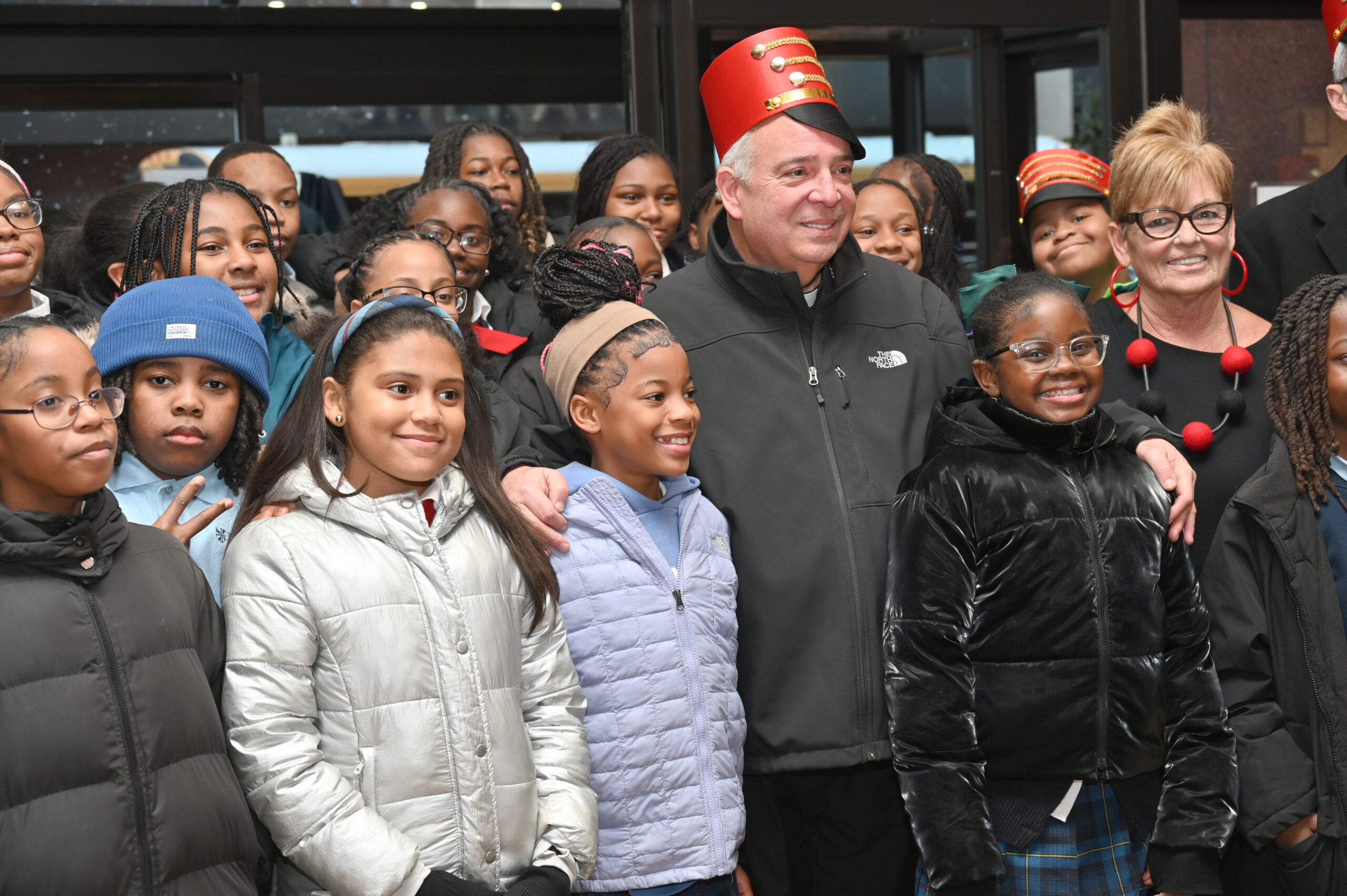
    Archbishop Nelson Pérez poses with students during a holiday party.

    Just over half of Catholic Charities’ annual budget is allocated to supporting people with intellectual or developmental disabilities. A major focus is housing for adults. For example, at the Divine Providence Village in Springfield, Delaware County, 72 women live in six cottages on a 22-acre campus with a pool, greenhouse, and picnic pavilion.

    In addition, there is employment support, a day program, field trips, a family-living program, and respite care to help families overwhelmed by caregiving responsibilities.

    Nearly 80% of Catholic Charities’ funding comes from government sources, which, these days, requires Huot to focus her prayers. “I ask God to help me get through this and to give me the strength and the people around me to get through this,” she said. “At the same time, we have to recognize that God provides in ways you don’t expect.

    “We’ve been blessed with generous benefactors who have stepped in,” she said. “The Philadelphia community is incredibly generous. We get a bad rap as the people who throw snowballs at Santa Claus, but Philadelphians will give you the shirt off their backs. They are passionate about caring for one another.”

    The generosity moved Lakisha Brown to tears as she shepherded her two children and a third to the party earlier this month. Brown, 44, lives in a three-bedroom subsidized housing apartment at Catholic Charities’ Visitation Homes in Kensington.

    “This is the best I ever lived,” she said. But, she said, just outside her door “is a constant reminder of where I came from and where I never want to go.”

    Brown’s father died when she was in elementary school and her mother struggled with alcohol addiction. Brown left home when she was 16 under the protection of a man who started their relationship with gifts and ended it with beatings.

    “He left me in a coma,” she said.

    Brown had her own struggles with addiction. She spent many nights without a roof over her head. If lucky, she could sleep in safety in an abandoned car on a quiet block. One night, she went to a party in a hotel. When she woke up, her clothes were off. Whatever happened wasn’t consensual.

    Soon after, she learned she was pregnant and, knowing that, she vowed to give her baby a clean birth. She found a drug program and a place to live. Slowly, through housing and support from Catholic Charities, she rebuilt her life.

    Erika Hollender holds up her grandchild so Layani, 3, can touch Percy the camel.

    “They help us with budgeting, with money management,” said Brown, who relies on disability, welfare, and food benefits while trying to cope with her own mental health issues. “When we get some money, we want to spend it on the children. We were parenting out of guilt and shame.”

    Those are the big things, but what Brown wants people to understand is that the level of care is deep, personal, and specific. It’s being able to ask a staff person for a roll of toilet paper and trash bags — basics that are sometimes unaffordable when money must be allocated to food and shelter.

    “A mom’s job is never done,” she said, explaining why people should donate to Catholic Charities. “It is needed for mothers who come from nothing. It is needed.”

    For more information about Philly Gives, including how to donate, visit phillygives.org.

    About Catholic Charities of Philadelphia

    People served: 294,000 annually (in the 2023-24 fiscal year)

    Annual spending: $158.6 million across four pillars of mercy and charity

    Point of pride: Catholic Charities of Philadelphia is the heart of the church’s mission in action, serving all people regardless of background. With decades of experience, nearly 40 comprehensive programs, and deep community partnerships, Catholic Charities turns compassion into action, and action into lasting and impactful change.

    You can help: By serving meals, volunteering at a food pantry or shelter, hosting a food or clothing drive, and sharing your gifts and passions with seniors.

    Support: phillygives.org

    What your Catholic Charities donation can do

    • $25 provides five nutritious lunches for children through the School Lunch Program.
    • $50 provides three hot lunches at St. John’s Hospice for individuals experiencing food insecurity.
    • $100 provides an instructor and supplies for an art or recreation class for 50 to 100 seniors at a senior community center.
    • $275 provides one week of groceries for a family of four.
    • $325 provides a mother with formula, diapers, and wipes for a month.
    • $550 provides emergency shelter and meals for a week for someone experiencing homelessness.
  • Letters to the Editor | Dec. 24, 2025

    Letters to the Editor | Dec. 24, 2025

    Police corruption

    In your recent editorial, “Will the Philadelphia Police Department ever be free of scandal?” you provided a valuable albeit disheartening summary of the examples of police misconduct and corruption that surfaced in 2025. These recent events are part of “a systemic problem that has undermined the department for decades” and underscored the need for independent accountability. Our organization, the Citizens Police Oversight Commission (CPOC), has not conducted any police investigations because the police employment contract remains an obstacle to our efforts. Despite our public advocacy before City Council, broad support from lawmakers, community partners, and the public, and our groundbreaking testimony at the interest arbitration hearing, CPOC’s demand to carry out our public mandate was denied.

    Each day, when Philadelphians call us to report misconduct — as they do in increasing numbers every year — they expect us to investigate their complaints. They are let down when we have to tell them we can’t.

    Until we can perform the independent investigations Philadelphians voted for in 2020, the systemic misconduct of a small number of police officers will continue to plague the department and detract from the good work of many other officers. A fair and effective system of accountability is vital to any agency.

    We will continue to work — including performing real-time audits of the department’s internal investigations of police misconduct and exposing the problems with arbitration you mentioned in the editorial. We will work to reduce and address misconduct in the months and years to come, so that community trust can be built, wrongful convictions will be a thing of the past, and taxpayers will not pay such a high price for a failed system.

    Tonya McClary, Citizens Police Oversight Commission, Philadelphia

    . . .

    Who are the arbitrators who continue to let corrupt cops keep their jobs? And who is going to organize an effort to get them to change? It sounds counterintuitive, but shouldn’t the police union want to get rid of the rotten apples who make taxpayers question the integrity of police officers in general?

    Debbie Weiner, Quakertown

    . . .

    Your recent editorial about police misconduct raised several questions: Are members of the Citizens Police Oversight Commission being paid? If so, where does the money come from? How often do they meet? Why, in three years, has there not been one investigation? Why is the committee still in existence? Doesn’t anyone oversee them?

    By the way, I am definitely pro-police, my husband having served on the job for 38 years.

    And I have one more question: When will there be an investigation into the sheriff’s office? From the articles I’ve seen over the years, it appears that a serious look at what’s happening there is certainly needed.

    Florence Newman, Philadelphia

    . . .

    Your editorial questioned whether the Philadelphia Police Department will ever be free of scandal. The answer is no — at least for the foreseeable future. The underlying causes started well before the current commissioner. Issues with arbitration have been long-standing, and the city never seems to confront them during contract negotiations.

    The biggest issue, as the article pointed out, is recruitment. Lowering standards and the de-emphasis on education have hurt the department immeasurably. Many recruits have high school degrees, but can’t really read, write, or comprehend at a high school level. Understanding the laws of arrest, search and seizure, and the department’s voluminous directives is lost on many of them.

    The promotion system — which used to be completely anonymous (you were identified only by a number) — has become politicized, resulting in less competent supervisors managing less competent cops. The mayor needs to put together a task force to propose a new way forward — something far cheaper than budgeting tens of millions of dollars on legal settlements for misconduct, which will inevitably be needed each year.

    Charles Brennan, retired deputy commissioner, Philadelphia Police Department

    Rewriting history

    I am thankful my family and I were able to visit most of the museums that make up the Smithsonian Institution before the Trump administration began its content review.

    Once again, this administration is threatening to withhold funding unless the Smithsonian bows to the pressure to submit documentation so that this administration can purge “improper ideology” from the museum system. Donald Trump’s Executive Order 14253, titled “Restoring Truth and Sanity to American History,” is an attempt to rewrite what history can be shared with the public. It is a disgraceful attempt to remove and rewrite history in exhibits that target works and content mentioning slavery, race, transgender identity, and immigration. So instead of this nation learning from our errors of the past, we just rewrite history and never acknowledge these actions? How is this “restoring truth”?

    The Smithsonian Institution has served our country as an independent and nonpartisan institution for nearly 180 years. It needs to stay that way. Call your members of Congress to object to this administration’s attempts to rewrite history by bullying the Smithsonian Institution and other museums and historical exhibitions, including the President’s House Site on Independence Mall, which attempts to share nonpartisan, historically accurate information.

    This administration is now increasing its threats and pressure on institutions as the nation’s 250th anniversary celebration approaches. Use your voice before it is too late, and this administration purges what it — and only it — decides is “woke” ideology.

    An easy way to contact your senators and representatives is to use the 5Calls app, which is free, provides quick access, information on topics, and even scripts for your calls.

    Every voice counts. Please help block this administration’s efforts to rewrite our history.

    Judy Endicott, Fort Washington

    Insult to JFK’s memory

    Adding Donald Trump’s name to the Kennedy Center is an insult to John F. Kennedy, who, like our current president, came from a prominent family but instead devoted his life to serving others, not himself. During World War II, when Kennedy was disqualified from the Army due to his back problems, he enlisted in the Naval Reserves by downplaying those problems. He asked to be sent into active combat zones, subsequently becoming a decorated war hero. Always forward-thinking, Kennedy supported civil rights as president and paved the way for the U.S. to be the first to land men on the moon. Kennedy sought every opportunity to serve the American people. Trump, on the other hand, evaded military service, believing it beneath him. He is a backward-thinking man, rejecting science and concentrating on reversing scientific, economic, and social progress. Trump has exploited his position to enrich himself and his family by many millions, ignoring all laws and norms meant to prevent that. The Kennedy Center was built to honor one man, and Trump’s name does not belong on it.

    Jean A. Kozel, West Norriton

    Disbarred attorney

    I found it a bit ironic — and more than a little depressing — to learn that while our justice system is regularly being made a mockery of by baseless indictments filed by White House lawyers, the federal courts locally have disbarred an attorney who sought to overturn a death sentence.

    Mike Carroll, Philadelphia

    Join the conversation: Send letters to letters@inquirer.com. Limit length to 150 words and include home address and day and evening phone number. Letters run in The Inquirer six days a week on the editorial pages and online.

  • As long as [REDACTED] has his thumb on the scales of justice, the Epstein files were always going to be [REDACTED] | Editorial

    As long as [REDACTED] has his thumb on the scales of justice, the Epstein files were always going to be [REDACTED] | Editorial

    Of course, not all of the Jeffrey Epstein files were released.

    Even some files made available late Friday were quickly removed. Large portions were heavily redacted. Some portions contained boldfaced names, but there was little mention of Donald Trump.

    As long as Trump keeps his thumb on the scales at the U.S. Department of Justice, no one should ever expect a fair shake — let alone an honest accounting of the yearslong connection between a convicted sex offender and a convicted president who is a congenital liar.

    This is life under a brazenly corrupt administration that rewards billionaire cronies, punishes hundreds of political enemies, kills in broad daylight, and tramples the Constitution.

    Better to prepare for how to defend against three more years of authoritarian rule mixed with kabuki theater.

    In normal times, the Trump administration’s continued cover-up of the Epstein files would be an epic scandal, prompting hearings, investigations, and accountability.

    But the Republicans who control the House and Senate have been a profile in cowardice. Until enough voters wake up, Trump and the GOP will continue to provide misdirection, denials, and a flouting of the law.

    Gary Rush, of College Park, Md., holds a sign outside the U.S. Capitol urging the release of the full Epstein files in November.

    Trump has not been implicated in any wrongdoing, but his enablers — including Attorney General Pam Bondi and FBI Director Kash Patel, and most Republicans in Congress — inexplicably continue to protect him.

    Doing so obliterates any trust in the justice system and the rule of law.

    The main tragedy involves the yearslong sex trafficking, rape, and abuse of hundreds of underage girls, including one alleged 11-year-old, and young, vulnerable women by Epstein and his many rich and powerful friends.

    Epstein’s survivors have demanded that the files be released so there can be at least some public accounting of the horror they endured. But instead, the survivors have had to relive the trauma and fear of death threats.

    One survivor who Epstein recruited from Trump’s Mar-a-Lago spa when she was a teen took her own life earlier this year. In a telling admission of how Trump views women as objects, he said earlier this year that Epstein “stole” her from him.

    A recent story by the New York Times detailed how Trump and Epstein “pursued women in a game of ego and dominance” where “female bodies were currency.”

    But the American people have been misled and abused, as well, while other pressing issues have been ignored or made worse.

    Trump’s disregard for women has been well documented.

    More than two dozen women have accused Trump of sexual abuse. He was caught on tape bragging about grabbing women by their genitals.

    Danielle Bensky (left) and Anouska De Georgiou, victims of convicted sex offender Jeffrey Epstein, embrace during a news conference in Washington, D.C., in September.

    A separate video showed Trump and Epstein partying at Mar-a-Lago, while Trump patted a woman on her behind. In 2023, a jury found Trump liable for sexually abusing a woman.

    Everyone knew Trump was a lout, but more than 77 million Americans, including millions of women, voted for him anyway. And the Republicans in Congress have dutifully stood by him for years, bringing repeated shame to themselves and the country.

    During last year’s election campaign, Trump used the Epstein files to stoke conspiracies and rally his supporters. He promised to release the files if elected, but after returning to the White House, called them a hoax.

    (Trump also promised to lower prices, but that is a separate editorial, just as is his promise to end the war in Ukraine in one day.)

    After mounting pressure from his base, and a 427-1 House vote last month to release the Epstein files, Trump ultimately signed a bill to make them public by Dec. 19.

    The deadline passed, and all the files have yet to come out. Expect more gamesmanship and Truth Social rants.

    The Epstein saga is a microcosm of Trump’s modus operandi. Lie, steal, cheat. Deny, deflect, delay, and degrade. Blame, complain, pressure, and sue. Line pockets whenever possible. Always overpromise and underdeliver.

    Truth, honesty, humility, compassion, or responsibility are nowhere to be found.

    Trump’s sinking poll numbers indicate that many supporters are finally catching on. The midterms loom, but so does three more years of hell.

    But could the end of our long national nightmare be near?