Category: Opinion

  • Pa. voters sent John Fetterman to represent them in the Senate. On most days, he has other ideas. | Editorial

    Pa. voters sent John Fetterman to represent them in the Senate. On most days, he has other ideas. | Editorial

    Whither John Fetterman?

    It seems Pennsylvania’s senior U.S. senator enjoys the perks of high office but is less interested in doing the actual job.

    He has missed more votes than nearly every other senator in the past two years. He regularly skips committee hearings, cancels meetings, avoids the daily caucus lunches with colleagues, and rarely goes on the Senate floor.

    Fetterman, a first-term Democrat, is also following the path of Republican elected officials by not holding town halls with constituents for fear of being heckled.

    A string of Fetterman staffers have left his office, including his chief of staff, top communications aides, and legislative director. Several current and former staffers voiced concern about Fetterman’s mental and physical health, according to a report in New York Magazine.

    Fetterman dismissed the report as a single-source “hit piece.” But several media outlets confirmed Fetterman’s erratic behavior through multiple sources, including The Inquirer.

    In one instance, Fetterman lashed out at members of the teachers’ union who pressed him regarding cuts to federal education. He reportedly banged his fist on the table and yelled at the group.

    Six former Fetterman staffers told Inquirer reporter Julia Terruso that Fetterman was frequently absent or spent hours alone in his office, avoiding colleagues and meetings.

    “It’s pretty impossible to overstate how disengaged he is,” one recently departed staffer said.

    Fetterman suffered a stroke in May 2022 while running for Senate. After winning the election, he underwent treatment for clinical depression, citing a “dark time” and struggles to get out of bed.

    Fetterman bravely confronted physical and mental health challenges, but has checked out of his Senate duties at a time when all elected officials must stand up to Donald Trump’s naked authoritarianism, corruption, and incompetence.
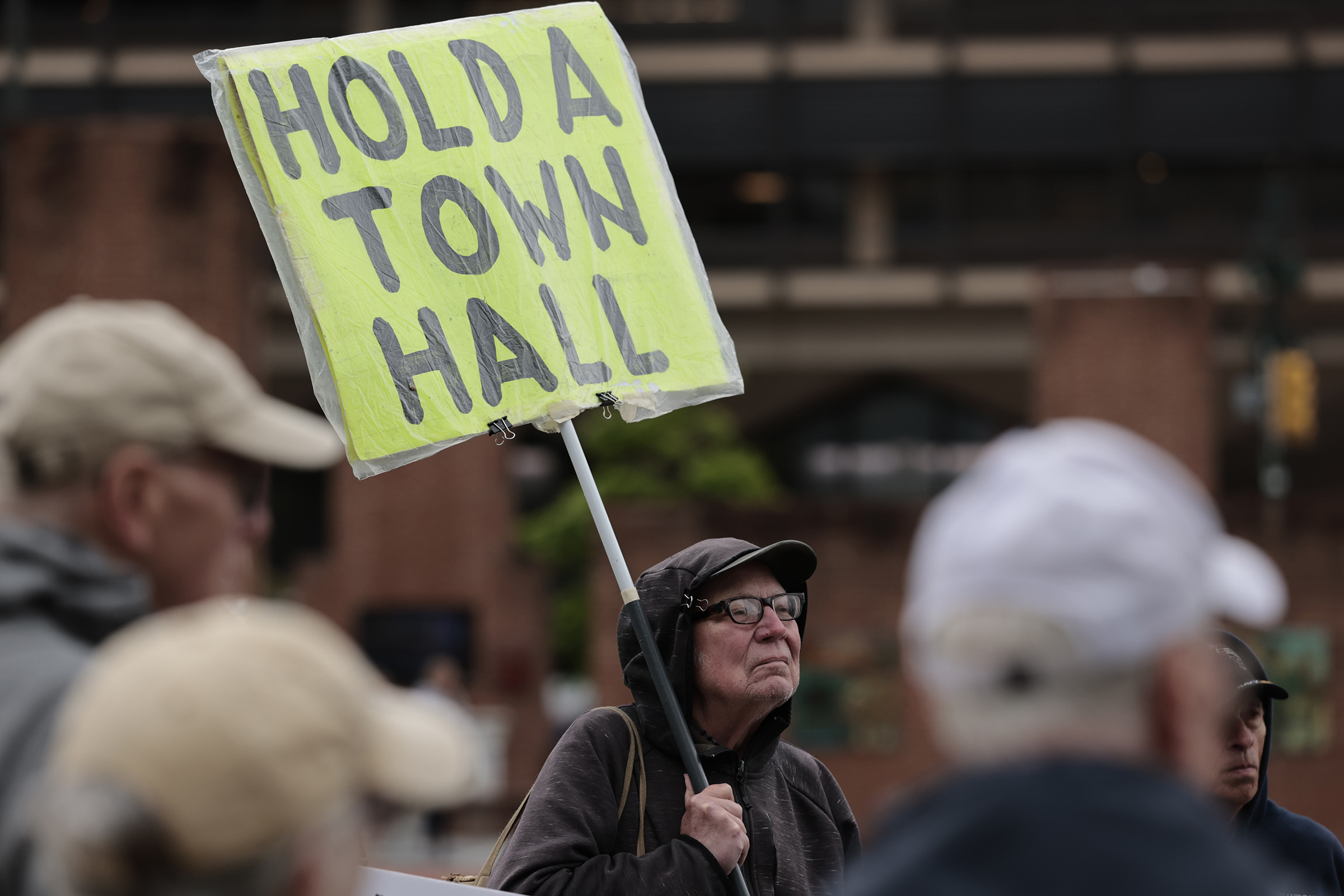
    John Prenis holds a sign at Independence Mall during Indivisible Philadelphia’s demonstration and march from Independence Mall to Sen. John Fetterman’s office at Second and Chestnut Streets on May 9.

    To be sure, mental health is a serious issue and not something to ignore. If Fetterman is still struggling, then he should seek immediate help.

    Instead, Fetterman complained people have “weaponized” his mental health battles against him.

    Being an elected official comes with public scrutiny. If Fetterman can’t handle the attention or perform his job, then in the best interest of the country and the nearly 13 million residents of Pennsylvania he represents, he should step aside.

    After all, being an elected representative is a privilege, not an entitlement. Being a U.S. senator is a serious job that requires full-time engagement.

    If Fetterman wants to continue to serve, then he must take his position seriously. He showed up for his first Commerce, Science and Transportation Committee meeting of the year in May and admitted he was shamed into attending by the media.

    Fetterman dismissed his skipping out on the committee work and procedural votes as a “performative” waste of time.

    He said his chronic absenteeism was a product of his decision to spend more time at home with his children and his father, who suffered a recent heart attack.

    “I would go visit my dad instead of a throwaway vote,” he told the New York Times.

    Spending time with family is laudable, but if that is his priority, then Fetterman should get a job closer to one of the eight properties he owns in his hometown of Braddock, Pa.

    Senators often work long nights in Washington. But they also have flexible schedules and enjoy plenty of time off from Washington, since there are only an average of 165 legislative days.

    Many of Fetterman’s constituents would like to work half a year so they, too, could spend time with their families. Safe to say, many would do it for less than Fetterman’s salary of $174,000, which is more than double the nation’s median household income.
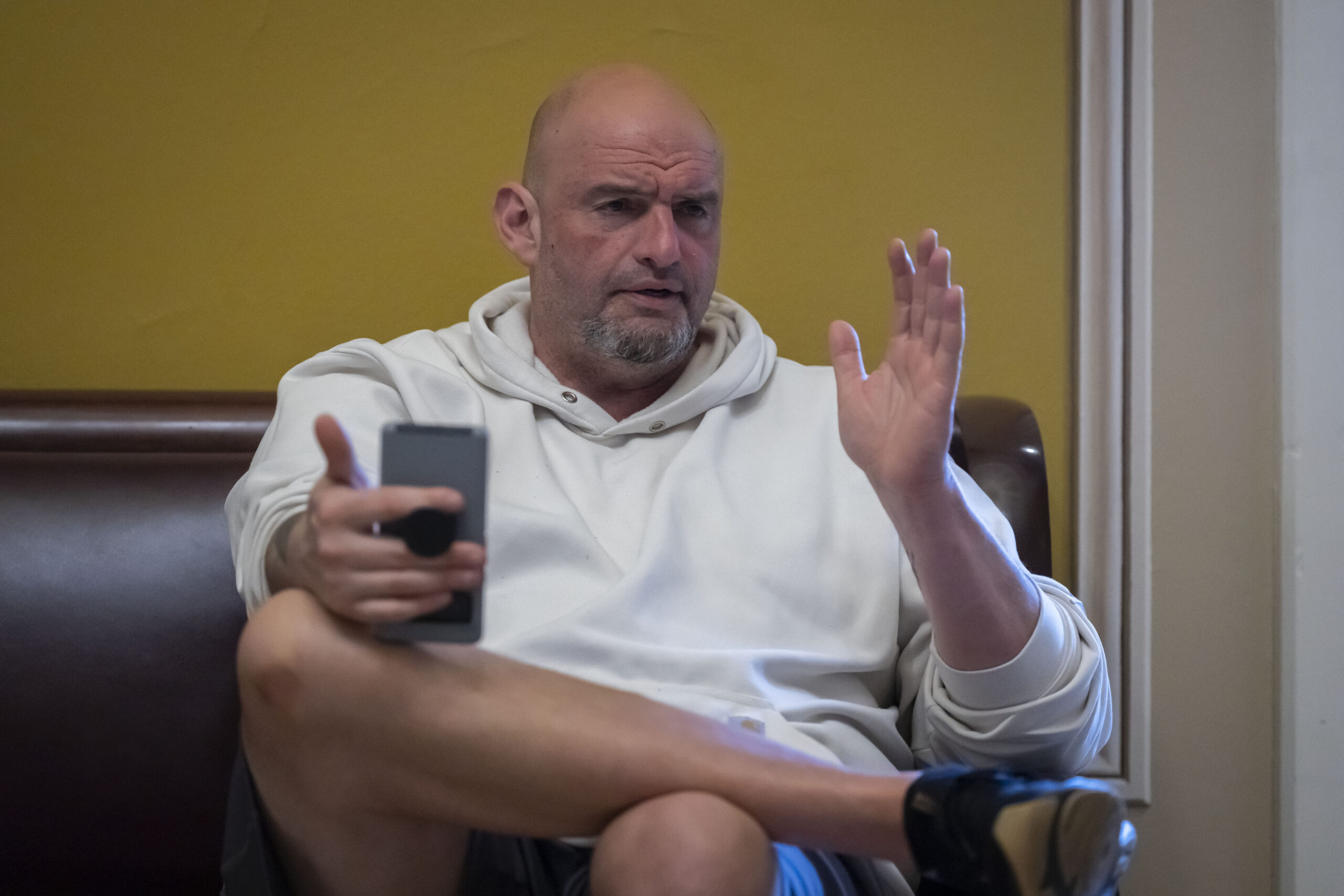
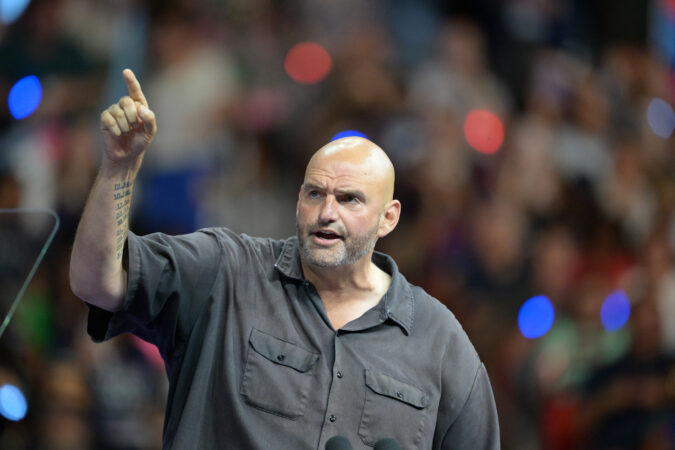
    Sen. John Fetterman speaks to a reporter near the Senate chamber at the U.S. Capitol in Washington in March.

    That doesn’t include the $172,500 advance Fetterman received to write a book with former Inquirer reporter Buzz Bissinger, or the $34,000 tax-free pay bump senators can claim for gas, food, and lodging while on official business in Washington.

    Or the generous pensions and healthcare coverage senators receive — something most Pennsylvanians do not enjoy. Or the lifetime access to the U.S. Capitol gym and Senate dining room. Or the support staff of around 60 to help each senator do their job.

    Being a U.S. senator also requires a lot of travel — mainly across their home state to hear from their constituents. The late Sen. Arlen Specter routinely crisscrossed Pennsylvania, visiting all 67 counties every two years and holding 400 town hall meetings. That’s what public service looks like.

    Fetterman has not had much time for Washington or Pennsylvania. But he found time to jet down to Mar-a-Lago to schmooze with Trump, who he said “was kind,” “fascinating,” and “a commonsense person.”

    Fetterman has flown to Israel twice in the past year, including a recent all-expense-paid junket to meet with Prime Minister Benjamin Netanyahu, who has been accused of war crimes and corruption. He and his wife flew first class and stayed in five-star hotels as part of a fact-finding mission that cost $36,000 and was paid for by a New York-based nonprofit.

    Fetterman finds time to regularly appear on Fox News and other TV talk shows, while also seeming preoccupied with his social media profile.

    “He’s taken two all-expenses-paid trips to Israel, but can’t drive down the street and hold a town hall,” a former staffer told the Intercept.

    Other senators travel overseas but also show up for work in Washington and meet with constituents in their home state. Public service is not about serving yourself.

    It’s time for Fetterman to serve Pennsylvanians, or step away.
  • In a small wedding by a Denver lake, I found the true meaning of celebrating LGBTQ Pride

    In a small wedding by a Denver lake, I found the true meaning of celebrating LGBTQ Pride

    DENVER — Amarilis Marte and Mariangy Delgado Gutiérrez didn’t leave their native Venezuela and spend three months traveling about 5,000 miles to the United States because they were pursuing a “dream.” They yearned for something both more practical and more basic.

    The practical? “I didn’t come here for an American dream,” Mariangy told me in an interview last week. “I came to this country for calmness, stability — to live peacefully without the fear that someone would kill you.”

    It was not an abstract concern. In Venezuela, a nation mostly defined over the last decade by economic and social unrest under the autocratic regime of President Nicolás Maduro, Amarilis, 24, and Mariangy, 31, said they lived with a persistent worry that they would be harmed — not just because of the country’s overall instability, but also because they are a lesbian couple. In Venezuela, as in much of Latin America, there is a widespread intolerance of the LGBTQ community.

    “There was a lot of aggression toward us both,” Mariangy said, adding that the couple had received at least one death threat.

    Then, there was the basic: The two wanted to be wed. With same-sex marriages banned in their home country, and the price of even the simplest ceremony out of reach in their new home in Colorado, it seemed they had few options.

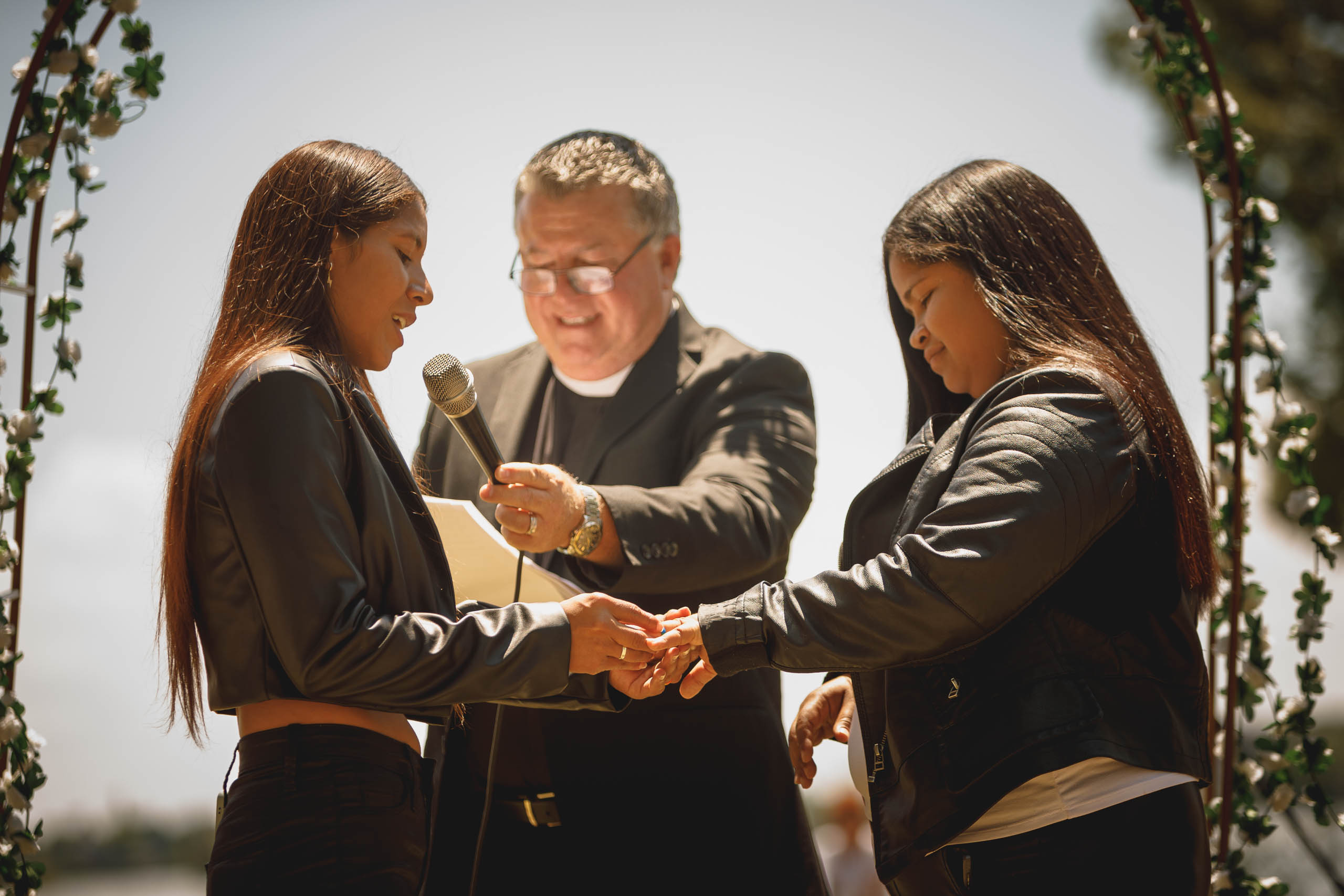
    That’s when Denver’s LGBTQ community rallied around them. A Pennsylvania native organized the wedding, complete with donated photography, a wedding cake, cookies, rainbow flags, and a wedding arch in honor of Pride Month.

    “We are waiting for a favor from God,” Mariangy said.

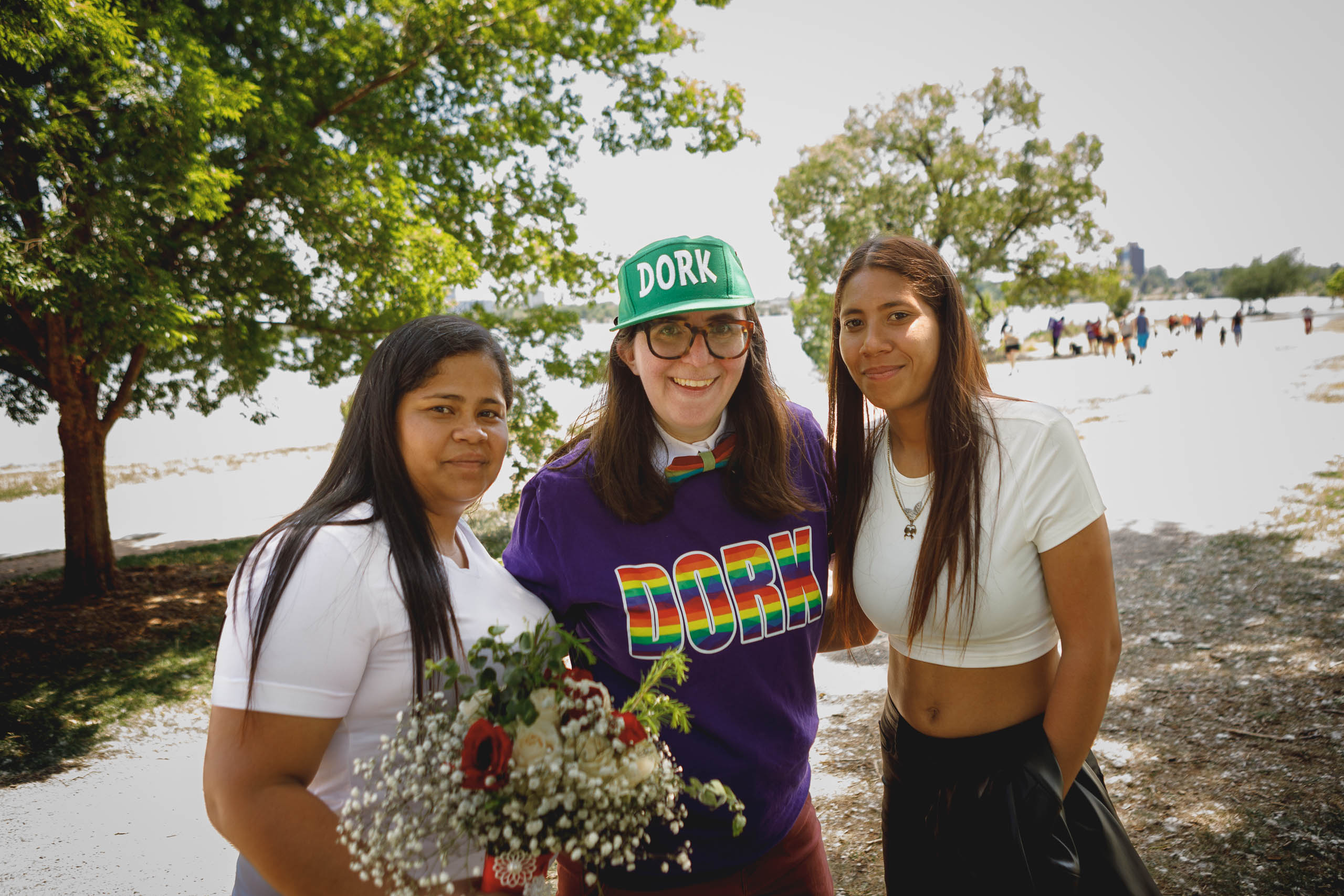
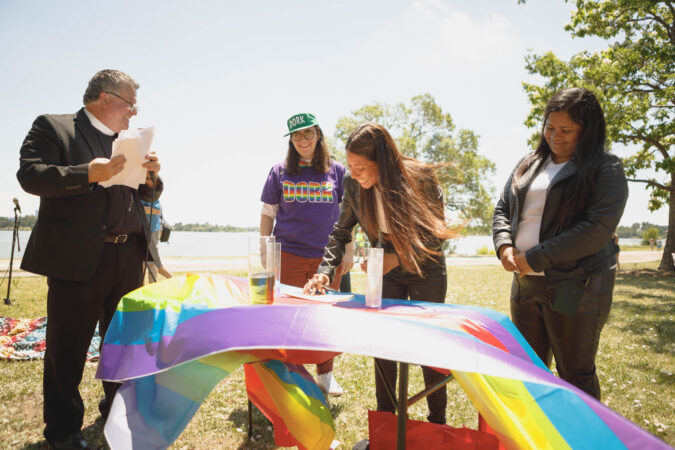
    Susan Law (center) grew up in Murrysville, Pa., and organized a wedding in Denver for Venezuelan asylum-seekers Mariangy Delgado Gutiérrez (left) and Amarilis Marte.

    That favor came in the form of their new neighbors in their new home, including Susan Law, the Pennsylvania woman who put together the weekend’s events.

    Law, the executive director of Dork Dancing, a nonprofit that encourages people to dance as a way to improve their mental health, met Amarilis and Mariangy through her volunteer work with mutual aid and migrant communities.

    In a migrant support group on Facebook, she saw a news clip about the couple and reached out to ask if they were interested in attending the Denver Pride parade with Dork Dancing.

    “I wanted to set aside a certain number of spots for the unhoused and migrant LGBTQ community members,” said Law, who grew up in Murrysville, Pa., a 20-minute drive from Pittsburgh. “They told me what they had been through. They were in serious hardship and needed my help.”

    When she heard the couple couldn’t afford a $30 marriage license, she vowed to throw them a wedding during Pride Month.

    So last Sunday, a crowd of 70 LGBTQ people and allies gathered to celebrate the couple under the shade of a cottonwood tree at Sloan’s Lake Park, about four miles from the home of Molly Brown, the Denver philanthropist who survived the Titanic sinking.

    The Rev. Quirino Cornejo officiated. The couple walked down the aisle lined with Pride flags to the sounds of “The Story” by Brandi Carlile. Many guests brought their children. Others contributed lemon crinkle cookies to the Pittsburgh-style cookie table. And unlike at many weddings, most of the attendees were meeting each other for the first time.

    Before the ceremony started, I spoke with David Hosanna and Jaime Rodriguez, who met a year ago this month at a gay bar. “For anyone who has negative things to say about Pride, I would say you’re missing the big picture,” Rodriguez said. “Who is to say that someone you’ve come to love — a friend, niece, grandchild, nephew — won’t need this in the future? Wouldn’t you feel better and happier knowing that they are entering a more accepting world?”

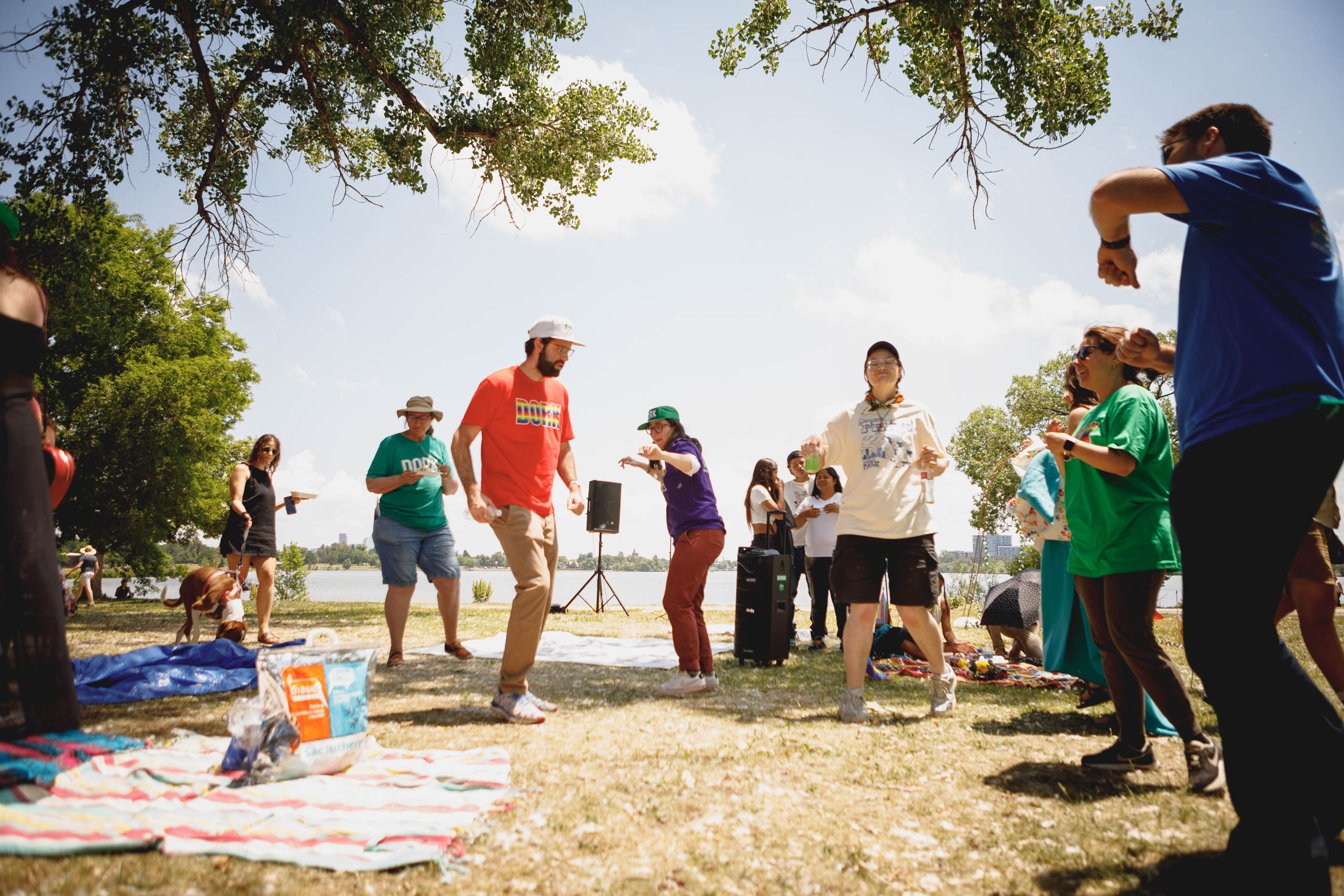
    After the wedding, the Dork Dancers danced. The founder of Dork Dancing, Ethan Levy, is at center.

    At one point during the ceremony, an orange Jeep sped by, the driver shouting expletives about Pride from a lowered window. Minutes later, a minivan passed in the opposite direction, honking exuberantly and waving a rainbow umbrella out of the passenger-side window.

    The brides poured black-and-white sand into a shared vessel to symbolize their union. They had wanted to be married for years since they were in Venezuela, but it wasn’t safe to do so. Under Venezuelan law, same-sex couples do not have protections or rights. And while same-sex relationships are not explicitly illegal, as they are in 67 countries, frequently, LGBTQ Venezuelans face violence.

    “We feel more free here,” Mariangy said.

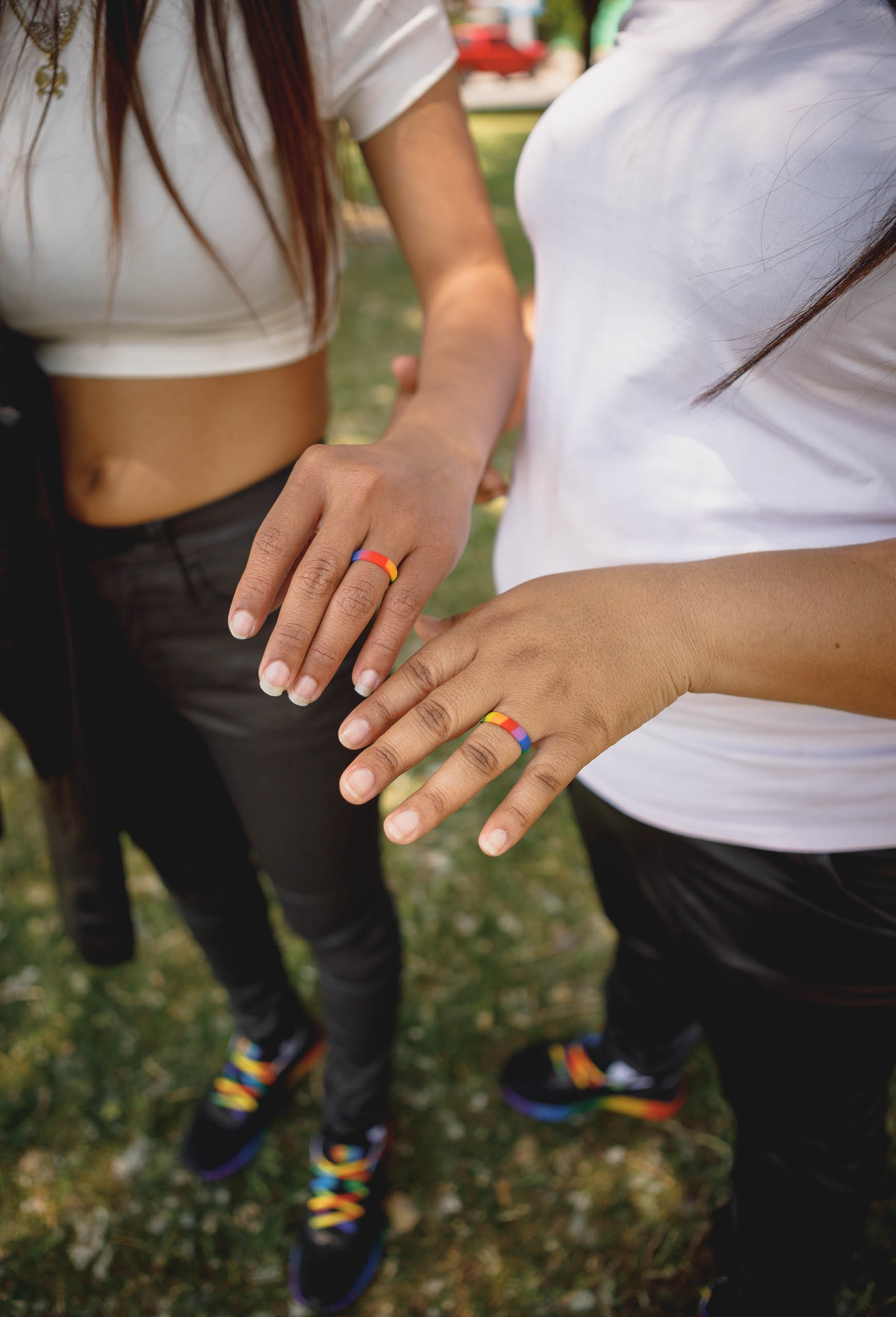
    The couple shows off their wedding rings.

    A perilous journey

    Amarilis and Mariangy’s journey to Sloan’s Lake Park began five years ago when they first started dating. In 2020, fearing for their safety, the couple and their two daughters, ages 9 and 13, left their home in Valencia, Venezuela, and fled to Colombia.

    They left Bogotá on July 14 for Medellín, Colombia, and spent almost four months traveling overland to the United States. They crossed the Darién Gap, a 60-mile stretch of dense jungle between Colombia and Panama, over three days without eating; the little food they found in the trash was saved for their children.

    In addition to being perilous, crossing Central America is expensive. In Panama, the family was kidnapped and told to pay $280 per head to continue. When the kidnappers realized Amarilis and Mariangy didn’t have money, nor did their friends and family back home, they let them go.

    The threats continued: In Mexico, on a packed train, a cartel stopped the railcar and took money from the passengers. Mariangy told me she and Amarilis had to protect the kids from assault. They jumped from the top of the train and ran barefoot over mountains until they reached a faraway town.

    After three arduous months, the family of four arrived legally as asylum-seekers at the border in Texas on Oct. 28, where Amarilis was detained by migration. Mariangy and her daughters were given the option of taking a bus to New York, Washington, D.C., or Denver. She chose Denver because she heard that there would be shelters. On Dec. 1, Amarilis rejoined them.

    “We are here,” Mariangy told me. “That’s the most important thing.” They survived.

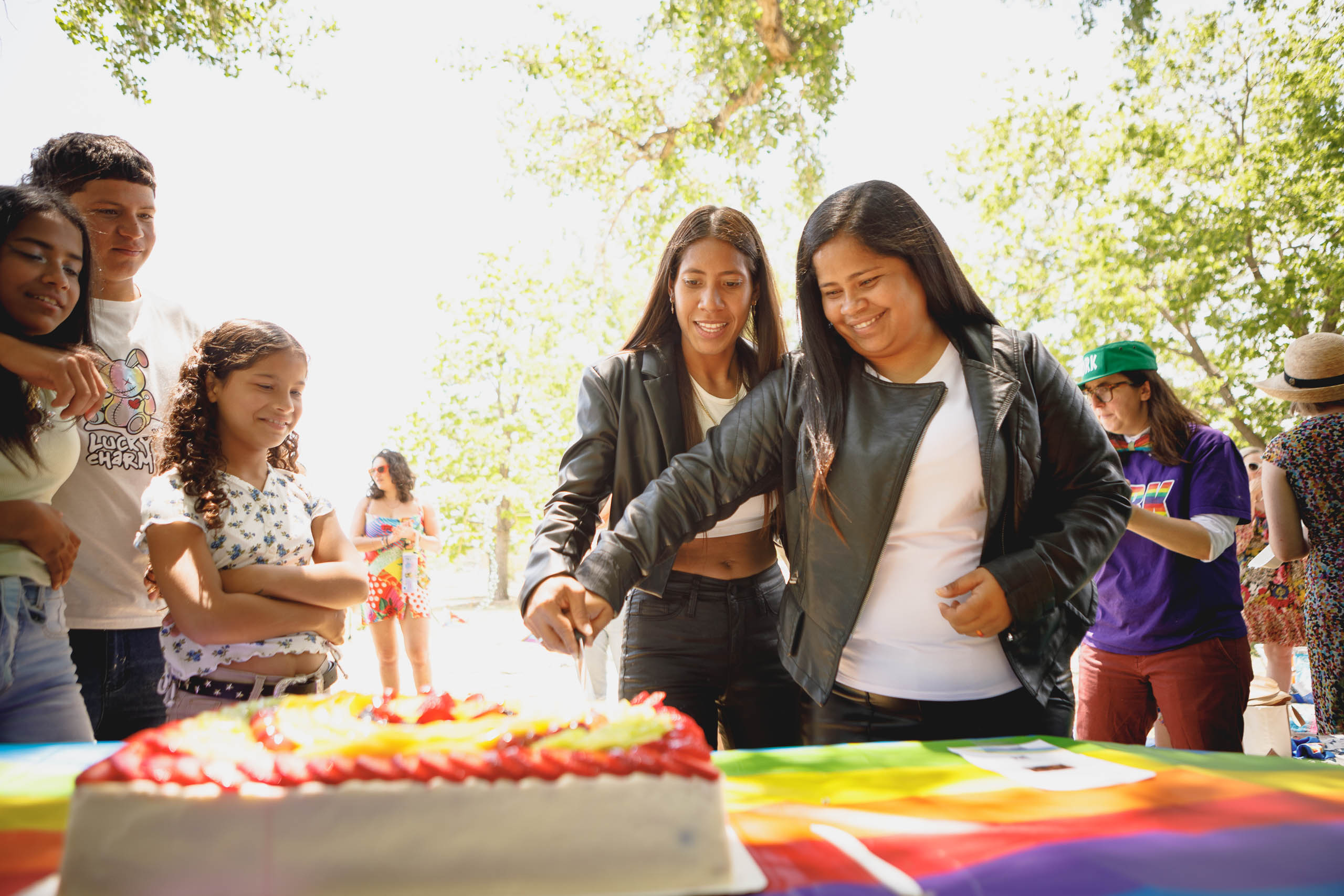
    Amarilis Marte and Mariangy Delgado Gutiérrez cut into their wedding cake from Eternal Flavors Bakery while their daughters look on. After the couple told Susan Law they couldn’t afford a $30 marriage license, a community of LGBTQ people and allies came together to throw them a wedding.

    A call to action

    When they reached Colorado, Amarilis and Mariagny wanted to marry, but they couldn’t afford the simplest items for a ceremony. The family lives in the 16th most expensive metro area in the country, where they spend $800 a month to sleep on the floor of an apartment with five people they don’t know, all men. The family sleeps in a closet.

    Their dreams are so prosaic as to be beautiful. They want a house for their kids to thrive in, good work to support their family, and to have another child together. They want to get a dog, though they differ in preferences: Mariangy wants a mini schnauzer. Amarilis would prefer a German shepherd.

    The wedding on the shore of Sloan’s Lake was a celebration, but also a call to action. Without Law’s help, they would likely be on the streets. The family is still food insecure. Paying rent is a struggle; Law helped them with a missing $450 a few days before the wedding. Once they get work permits, her hope is to help Amarilis and Mariangy identify a source of income beyond cleaning patios or backyards.

    “Community support can’t stop after one day,” Law wrote in an Instagram story. She started a GoFundMe page for the couple to help cover their food, housing, and other expenses, and a wedding registry to cover other essentials.

    Mariangy Delgado Gutiérrez and Amarilis Marte exchanged vows at Sloan’s Lake Park in Denver on June 9.

    In my life, I have ridden a bicycle in Toronto behind the Dykes on Bikes and learned the hard way not to wear glitter on my eyes in the rain. I’ve marched at Pride in New Hampshire, New Zealand, and watched from the sidelines in New York City.

    None of that was as meaningful as watching Mariangy and Amarilis get married. It was a privilege to witness the true power of the LGBTQ community. Celebrating Pride means uplifting the most vulnerable among us.

  • Ivan Provorov refused to wear Flyers’ Pride Night jerseys because of his religion. He’s getting Christianity all wrong.

    Ivan Provorov refused to wear Flyers’ Pride Night jerseys because of his religion. He’s getting Christianity all wrong.

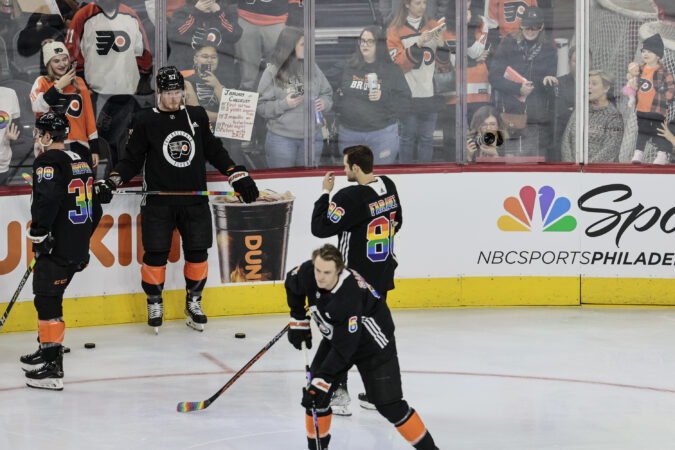
    On Tuesday, Flyers defenseman Ivan Provorov refused to wear a rainbow warmup jersey during the team’s LGBTQ Pride Night game against the Anaheim Ducks. He was the only player to do so. Provorov, who hails from Yaroslavl, Russia, cited his Russian Orthodox faith as the reason for abstaining from rainbows, telling reporters after the game that he had chosen “to stay true to myself and my religion.”

    As a queer woman, a former hockey player, a Christian, and an NHL fan, I am disappointed at the league and the Flyers’ response. In refusing to wear the Pride Night jersey, Provorov refused to acknowledge the humanity of LGBTQ people. And the league, in defending his stance, went right along with it.

    In a statement released Wednesday, the NHL said: “Clubs decide whom to celebrate, when and how — with league counsel and support. Players are free to decide which initiatives to support, and we continue to encourage their voices and perspectives on social and cultural issues.”

    In other words: There’s no problem with players being vocally antigay. Flyers head coach John Tortorella doubled down on the support of Provorov’s homophobia, telling reporters after the game: “This has to do with his belief and his religion. It’s one thing I respect about Provy, he’s always true to himself. That’s where I’m at with that.”

    Too few people understand that this tacit acceptance of discrimination — especially as it relates to sexuality and religion — is a matter of life or death for members of my community.

    Provorov is entitled to his personal convictions. He can believe that only marriages between a man and a woman can be blessed by God, or that homosexuality is a sin. But I wish he knew this: For other populations, when they adopt the church, the suicide rate decreases. For LGBTQ people, when they adopt the church, the suicide rate increases.

    Provorov should have donned that rainbow jersey and, yes, put rainbow tape on his hockey stick — not because he accepts gay marriage or because he’s eager to march in a Pride parade — but to stand up for LGBTQ people who are suffering. The defenseman had a chance to make a statement against bullying, against hatred, and against violence, without even opening his mouth. Instead, he chose not to step on the ice for warmups. That is shameful.

    I would recommend that Provorov, Tortorella, NHL leadership, and anyone who disagrees with me — take a moment to read the book Heavy Burdens by sociologist Bridget Eileen Rivera. In it, she shows how generations of LGBTQ people have been condemned and alienated by churches. That legacy has caused immeasurable harm to my community. It is a heavy burden to carry.

    Flyers defenseman Ivan Provorov sat out warmups on Tuesday night to avoid wearing the team’s Pride Night jerseys.

    Next, dive into Affirming: A Memoir of Faith, Sexuality, and Staying in the Church by Sally Gary. Gary is the executive director of CenterPeace, a nonprofit organization that helps members of the LGBTQ community feel a sense of belonging in the church — and provides resources for Christian leaders and parents of LGBTQ kids to respond to the queer community as Christ would: with love and acceptance.

    After that, I would recommend that Provorov sit down and spend time with his Bible.

    If Provorov truly wants to follow Jesus, the best thing to do is to stand up for the vulnerable. One of the first things Jesus said in announcing his ministry was: “The Spirit of the Lord is on me, because he has anointed me to proclaim good news to the poor. He has sent me to proclaim freedom for the prisoners and recovery of sight for the blind, to set the oppressed free, to proclaim the year of the Lord’s favor.” (Luke 4:18-19)

    That is how close the vulnerable were to Jesus’ heart. If Provorov’s Christianity does not center on helping the vulnerable — and I mean every vulnerable population — then he’s missing the mark.

    And LGBTQ people are one of the most vulnerable populations here in the United States, and in Russia. In December, Russian President Vladimir Putin signed a law that makes it illegal to spread “propaganda” about “non-traditional sexual relations.” Closer to home, the Central Bucks school board earlier this month banned teachers from hanging Pride flags.

    My heart goes out to Provorov. He’s trying to follow God with the knowledge and resources he has.

    In the Gospel of Matthew, Jesus had some of the strongest warnings for the most religious of his day. He warned his followers to be wary of those who “preach, but do not practice. They tie up heavy burdens, hard to bear, and lay them on people’s shoulders, but they themselves are not willing to move them with their finger.” (Matthew 23:3-4)

    I’m asking Provorov to move his finger. Clear these burdens. Reading the Bible with fresh eyes might open his mind.

    (And at least Gritty isn’t a homophobe. Bless that creature.)

  • After a shooting at an LGBTQ club in Colorado, I’m rethinking what safe spaces mean

    After a shooting at an LGBTQ club in Colorado, I’m rethinking what safe spaces mean

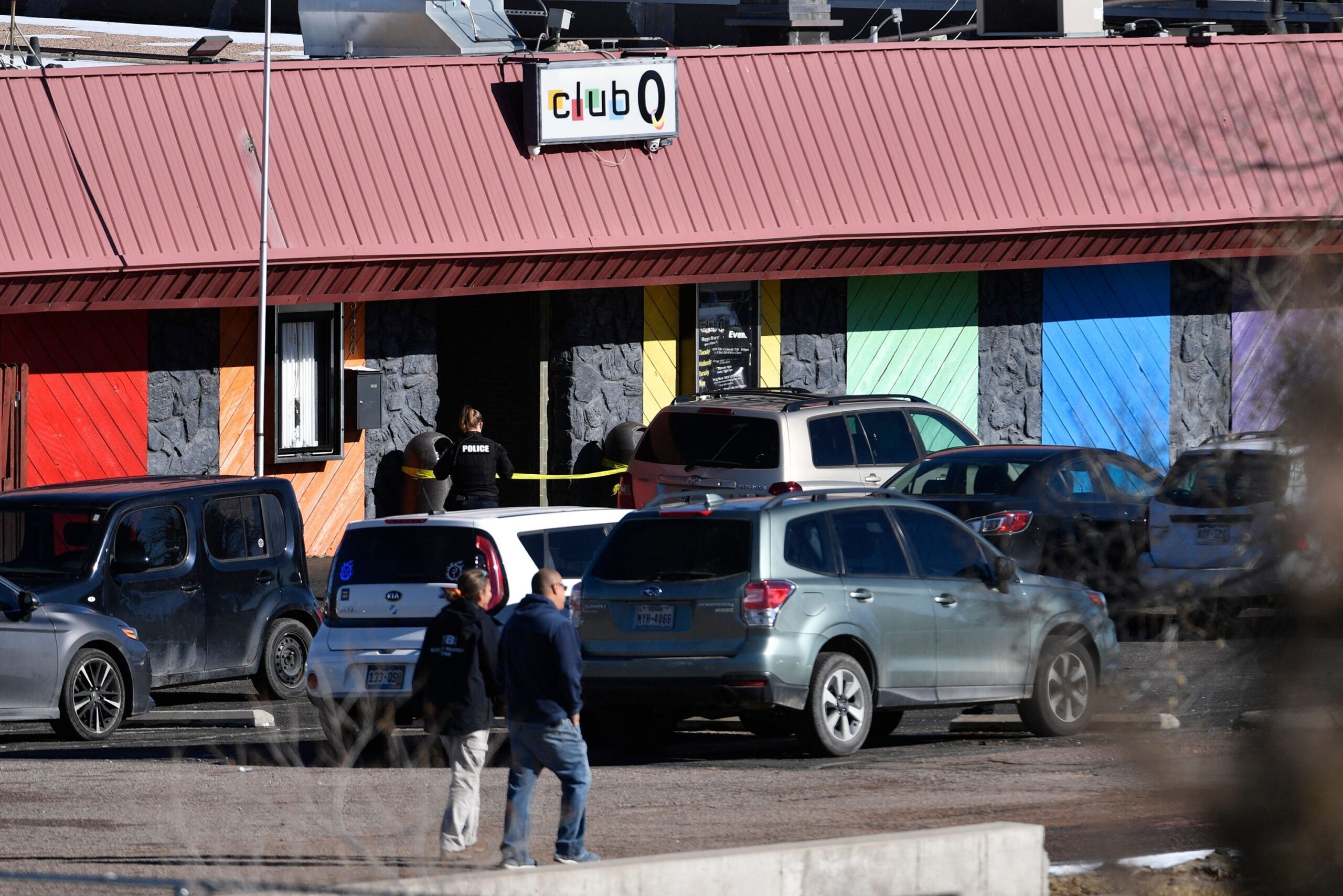
    On Saturday night, a 22-year-old man entered an LGBTQ nightclub in Colorado Springs, Colo., and used a long rifle to kill five people before he was tackled to the ground by patrons. Twenty-five others were injured.

    When I heard the news, I felt nauseated. I thought about a recent night I spent with a date at Tavern on Camac in the Gayborhood. We chose the spot specifically because we would be able to talk, but also be surrounded by some semblance of community. A series of men strutted up to the piano to sing renditions of Disney and Sondheim and Cher. I sipped a lager and asked my date about their childhood.

    Not once did I eye the exit or think about what might happen if a man with a gun entered the room, hellbent on killing us because of our gender identities or the way that we love. But after the shooting at Club Q — and after reflecting on the 49 LGBTQ people who lost their lives at Pulse nightclub in Orlando, Fla., in 2016 — I might start.

    Many people don’t understand that LGBTQ bars and clubs are holy spaces. Too many of us have been rejected by our families or our religious communities, or deal with microaggressions at work that make us feel overly sexualized and less-than-human.

    Too often, the people who we expect to love and accept us unconditionally choose not to respond in that way — and that leads to LGBTQ people seeking out other channels for connection. It’s possible to find safety and support in a bar, or a community center, or a friend’s kitchen. Even if we have the privilege of not dealing with these pains — both large and small — on a daily basis, we have likely loved someone who has.

    Even in a strong circle of support, many LGBTQ people feel a sense of isolation. The suicide rate is astronomically high — nearly half of LGBTQ youth have had suicidal thoughts in the past year, according to a survey by the Trevor Project. The politicians who ban LGBTQ books or enact laws that limit access to gender-affirming health care don’t understand that for many in my community, the ability to be seen and loved as ourselves is a matter of life or death.

    And hate breeds hate. At least 32 trans and gender-noncomforming people across the country have been killed this year. Of those, 81% of known victims were people of color, and 59% were Black. Trans women are disproportionately targeted.

    For adults, an LGBTQ bar is a safe space. But what does safety mean?

    Law enforcement officers walk through the parking lot of Club Q, an LGBTQ nightclub, in Colorado Springs, Colorado, on Sunday.

    Safety means being able to make eye contact. It means not fearing death. It means staring into the eyes of someone who could be a lover — or even holding their hand above the table, or dancing close — and thinking only of them, without being distracted by a straight person’s gaze or judgment.

    That’s not to say that Tavern on Camac is perfect. A lesbian bar would have been preferable by a mile — but Philadelphia doesn’t have one. Toasted Walnut closed in 2021. Sisters closed in 2013. If I had a time machine, I would go to Sisters in 1996, just for one drink.

    But back in Tavern on Camac on Oct. 15, in the year of our Lord, 2022, my date leaned in for a kiss. Soon after, a drunk man leered at us.

    “There’s two straight people kissing in here! Don’t they know this is a gay bar?” he shouted.

    That wouldn’t have happened in a lesbian bar. We left soon after — giddy, yes, but fazed.

    In this Philly experience, I know I am not alone. In his 2015 essay, “Black not fetch enough for Woody’s?” Ernest Owens wrote: “LGBT members of color continue to face a sense of de facto dismissal socially when trying to enjoy the night scene at one of Philly’s more accepting venues.” Owens argued that the city should work with the Gayborhood to “foster more cross-cultural LGBT collaboration to help shake up the social division. Otherwise, there will be more shade to be thrown across the dance floor — something that nobody has time for.”

    Next year, Rue Landau could become Philadelphia’s first openly LGBTQ City Council member. Maybe she can help make this vision a reality. But we can’t rest our hopes on the shoulders of any one person. Change happens in community, in conversation.

    There are vanishingly few lesbian bars across the country. In 1980, there were around 200. Today, there are less than 25. On the podcast Cruising Pod, Sarah Gabrielli, Rachel Karp, and Jen McGinity take a road trip to document the surviving spaces for queer women. The Lesbian Bar Project is a documentary film and fund-raising project that seeks to do the same. These bars are sacred.

    After running the New York City Marathon earlier this month, I decamped with my friends to the Stonewall Inn, the birthplace of Pride, to sip beer under portraits of Marsha P. Johnson and Sylvia Rivera, the two drag queens whose activism launched the LGBTQ rights movement. I felt deeply at home.

    Every queer person’s experience is different. But the unifying theme is a longing for acceptance. Too often we are told that we are less-than-human, or unwelcome, or that the way we love is unholy. When I see a rainbow flag over the door of a bar or a church or a café, I know that I won’t be judged.

    On a road trip this spring, I waited out a tornado warning at the Lipstick Lounge in East Nashville, Tenn., where it was drag queen trivia night. Outside, torrential rains fell. Inside, I was welcomed to a table of queer women who were elated just to share space with each other. I was useless at the trivia, but that didn’t matter. I had a puppy with me, recently adopted, who was a total babe magnet. The bartenders gave her bacon. The night ended with karaoke, and I listened but did not sing. Suffice to say, karaoke in Nashville, where everyone is a would-be musician, is superior to karaoke in any other city.

    For people who don’t have an experience in these LGBTQ spaces — and for the politicians who live at a comfortable distance — imagine that the person in that bar is your daughter, or your son, or your loved one.

    Think of Daniel Aston, a 28-year-old trans man and bartender at Club Q who was shot and killed this weekend. In an interview with Colorado Public Radio, his mother, Sabrina Aston, said that working at Club Q, her son “was the happiest he had ever been.”

    “He was thriving and having fun and having friends. It’s just unbelievable. He had so much more life to give to us and to all his friends and to himself.”

    Everyone deserves a safe space to dance and exist and experience joy. And Philly, if we ever get a lesbian bar again, know that I will show up in my finest blazer and sneakers and dance.