Category: Opinion

  • Lessons must be learned after criminal justice system fails Kada Scott | Editorial

    Lessons must be learned after criminal justice system fails Kada Scott | Editorial

    The killing of Kada Scott is tragic on many levels, but hopefully, some lessons can be learned to honor her life.

    Scott’s death is all the more painful for her family and friends because it could have been prevented. That’s because it appears District Attorney Larry Krasner and the Philadelphia court system failed her.

    The man accused of abducting Scott had been previously charged with assaulting an ex-girlfriend twice in the last year, but prosecutors withdrew the charges after the victim did not show up for court.

    After Scott’s disappearance, Krasner’s office admitted its handling of the earlier cases was a mistake. If the district attorney’s office had instead prosecuted Keon King, 21, then perhaps Scott, 23, would still be alive.

    “We could’ve done better,” Krasner said at a news conference Monday, echoing earlier comments from Assistant District Attorney Ashley Toczylowski, who said last week, “Everyone involved at this point, including the [initial prosecutor], agrees that we wish this happened differently.”

    To be sure, hindsight is 20/20. But a review of King’s legal entanglements indicates a series of miscues may have enabled Scott’s death.

    The case also offers a window into the challenges of filing domestic abuse charges, and underscores the need for prosecutors to be more aggressive in going after the accused while doing more to ensure the safety of victims.

    For starters, King’s initial assault charges last November were handled by an inexperienced assistant district attorney who was juggling multiple cases. During that incident, prosecutors said, King grabbed an ex-girlfriend by the neck and tried to strangle her after she refused to lie on the bed with him, according to the affidavit.

    But after initially cooperating with the authorities, King’s accuser stopped responding to calls from prosecutors. After she failed to appear at three court hearings, the district attorney’s office withdrew the case.

    In January, King tried to break into the woman’s home, but fled before police arrived, according to an affidavit. He returned later in the day and dragged the woman by her hair, shoved her in a car, and drove away before dropping her off on the side of the road.

    This time, the woman and her friend captured video of King trying to get into her home. He was arrested again and charged with kidnapping, strangulation, and other charges.

    But once again, the victim and her friend refused to cooperate with prosecutors, so the charges were withdrawn in May.
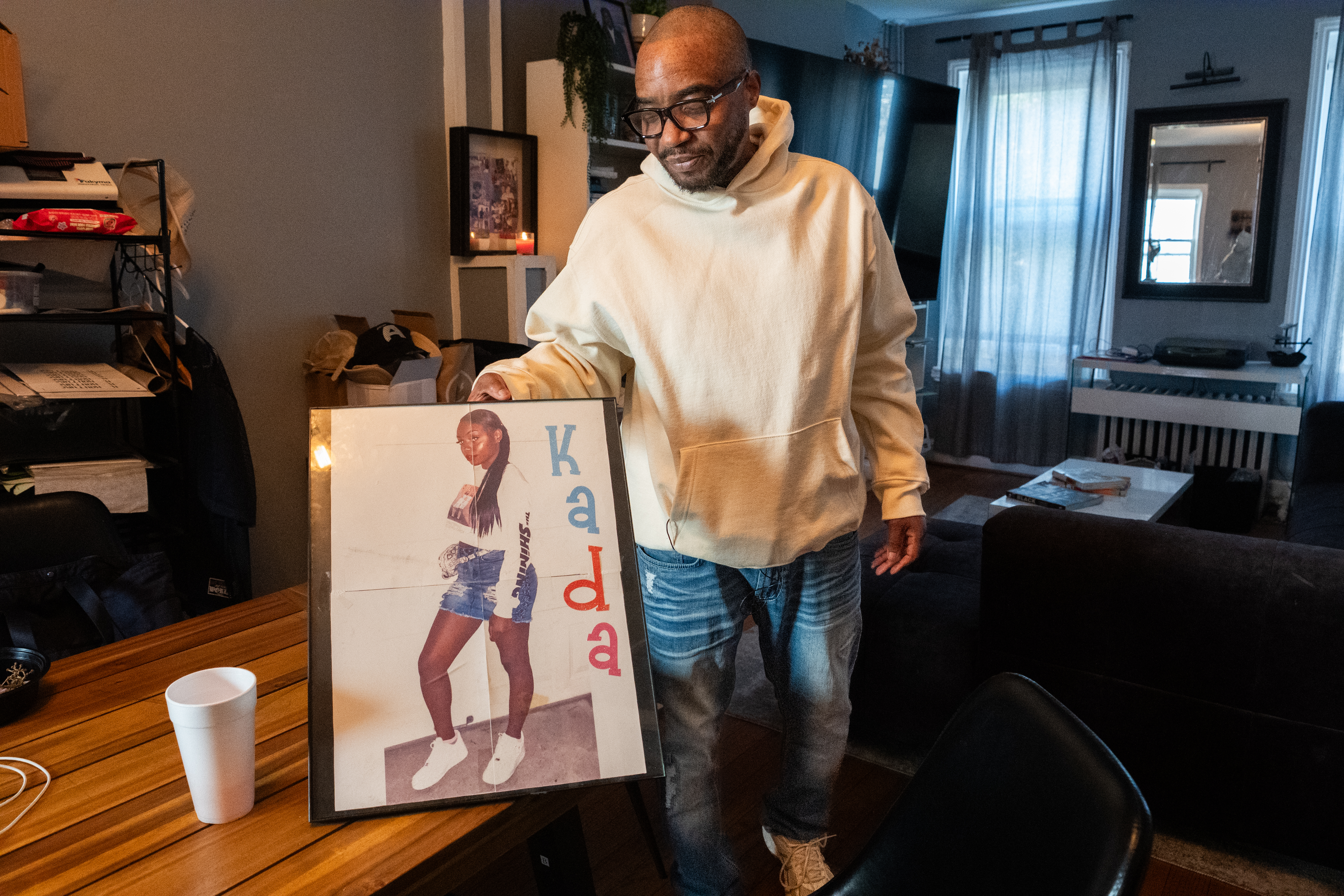
    Kevin Scott, Kada Scott’s father, with a photo of his daughter.

    This is not unusual, as victims of domestic violence often live in fear of the perpetrators. Reviewing the period between 2010 and 2020, researchers at the University of Pennsylvania found that 70% of victims of domestic violence cases failed to appear in Philadelphia’s courts.

    A big part of the problem is that the accused are often out on bail and still threatening the victims. In King’s case, after the second set of assault charges, prosecutors requested bail of $1 million, but the magistrate lowered it to $200,000.

    King posted the necessary 10% — or $20,000 — and was released in April.

    Krasner blamed the magistrate for lowering the bail, but his office could have appealed the ruling.

    There is a fine line in detaining suspects accused of crimes for months on end until a trial. But in domestic violence cases, the current system is not working and needs to be revamped.

    Prosecutors and judges must do everything possible to guarantee the safety of victims. Victims need more support within the criminal justice system to ensure their safety.

    More broadly, additional preventive steps are needed to reduce violence against women, including standing up to rape culture, empowering women, and teaching boys to respect women.

    Black women disproportionately experience higher rates of domestic abuse, including rape and homicides, studies show, further underscoring the need for more awareness, training, and preventive measures.

    In this instance, given that King had been charged once before, the magistrate and Krasner’s office dropped the ball.

    And although the victim refused to testify, the district attorney’s office could have used the video evidence to move forward with King’s prosecution — though not having the witnesses testify certainly would have made for a tougher case.

    To his credit, Krasner, a former defense attorney who faces reelection next month and has been criticized for being soft on crime, admitted his office was ultimately to blame.

    “The buck stops here,” he said.

    Sadly, a young, vibrant woman full of promise has died, and another woman was previously assaulted and traumatized. Krasner said the public played an enormous role in Scott’s case, and asked for anyone with information to call 215-686-TIPS.

    The only positive outcome will be to ensure justice is served, and a broken legal system in which victims are afraid to testify is fixed, so others do not experience the same horrific outcome.

  • Letters to the Editor | Oct. 21, 2025

    Letters to the Editor | Oct. 21, 2025

    Murder on the high seas

    Donald Trump is executing human beings. By blowing up boats in the Caribbean Sea, he is targeting vessels he deems are “suspected” of carrying contraband, and authorizing the military to blow them up in international waters. Please, let that sink in for a minute. We have the Navy, the Marines, and the Coast Guard patrolling our seas. How about securing our ports and turning the ships away, or confiscating the ships and their contents? Where is the proof of any criminal acts? I can’t believe what I am witnessing. How does this stand?

    K. Mayes, Philadelphia

    The irony

    Not looking good for John Bolton regarding accusations of mishandling classified material. But, oh, the irony! I can’t get the photos out of my mind of boxes full of classified material in the ballroom and bathroom of Mar-a-Lago. I can’t forget the outrage when Trump-appointed Judge Aileen Cannon dropped that case. I can’t forgive the U.S. Supreme Court for giving Donald Trump immunity from any illegal activity as president. Then there is the irony of former Attorney General Merrick Garland delaying any prosecution of Trump to avoid the appearance of weaponization of the Justice Department — only for Trump to take office again and do exactly that. And now, I can’t sleep worrying about the fate of our democracy and our country.

    Sylvia Metzler, Philadelphia

    Offensive Young Republicans

    Nine Young Republican activists in New York, Arizona, Kansas, and Vermont were recently outed for the revelation of eight months of their disgusting, racist, antisemitic, and homophobic texts covering 2,900 pages of material that were obtained by Politico. The texts and the writers were quickly distanced by the Republican establishment, but one has to wonder why these individuals felt perfectly comfortable exchanging such abhorrent views. Are these the views all Young Republicans have when they speak to each other behind closed doors or online? And if these rising stars expressed remorse for their texts, is the remorse only that they were caught and their bigotry was exposed for all the world to see?

    Larry Skvir, Delran

    Refreshing representation

    I was delighted to see diversity on display in the performing and marching units celebrating the 250th anniversary of the founding of the Navy and Marine Corps earlier this month. Truly remarkable that citizens of all persuasions and ethnic backgrounds have chosen to serve their country and build such strong fighting forces. This has not happened overnight and has been years in the making. It would be a shame for Defense Secretary Pete Hegseth’s misguided efforts to actually tear things down.

    Roger Smith, West Chester

    Join the conversation: Send letters to letters@inquirer.com. Limit length to 150 words and include home address and day and evening phone number. Letters run in The Inquirer six days a week on the editorial pages and online.

  • University, heal thyself

    University, heal thyself

    Whew.

    Professors and students at the University of Pennsylvania — where I teach — breathed a sigh of relief on Thursday when the university rejected a compact that would have given us preferential treatment in federal funding. All we needed to do in exchange was comply with the Trump administration’s demands around teaching, student costs, and much else.

    As our faculty senate warned, the compact asked universities to “surrender their institutional autonomy.” I’m delighted — and proud — that Penn joined four other institutions — MIT, Brown, the University of Southern California, and the University of Virginia — in rejecting the offer, which the White House sent to nine schools earlier this month.

    Now comes the hard part: to institute the goals of the compact on our own. The problem wasn’t with the demands of the Trump administration. It was with the mechanism of enforcement, which would have let it determine if we were satisfying them.

    Consider the compact’s requirement that we foster “a vibrant marketplace of ideas” and abolish “institutional units” that “belittle” conservative ideas. Of course, we should aim for a full and free dialogue of all ideas, including conservative ones.

    But do you trust Donald Trump and his disciples to determine — fairly and impartially — whether universities are belittling conservatives? I certainly don’t.

    Trump’s vice president, JD Vance, has already declared that “the universities are the enemy.” The only way to make friends with Trump is to echo his own ideas, which is what the compact would have required us to do.

    University of Pennsylvania students at graduation, at Franklin Field, in May.

    But if we’re honest, we’ll also admit that we have indeed belittled — or suppressed — conservatives, via the cultures we have created on our campuses. We talk a good game about the free exchange of ideas. If you think we’re living that ideal, however, you haven’t talked to right-leaning students.

    I have. They come out to me in my office, with the door shut, because they’re afraid of being canceled by their peers or their professors. In a 2024 survey, 12% of Penn students said they planned to vote for Trump. That’s a small fraction, but Penn is a big place; we have about 12,000 undergraduates, which means more than 1,000 students probably backed Trump.

    We almost never hear from them, which harms everyone. We won’t understand the Trump phenomenon if they are biting their tongues. I want my conservative students to speak their minds, especially in class, so they can teach the rest of us.

    But classes have become something of an afterthought at our elite universities, where reading requirements have plummeted and almost everyone gets an A. As the Trump compact correctly notes, grades should reflect “the quality, breadth, and depth of the student’s achievement.”

    They don’t. “When we act as though virtually everything that gets turned in is some kind of A — where A is supposedly meaning ‘excellent work’ — we are simply being dishonest to our students,” Yale philosopher Shelly Kagan told the New York Times in 2023.

    And earlier this month, the Times reported that Harvard students routinely skip classes, and even register for two courses that meet at the same time. When they do show up, they often spend the class period surfing on their phones or laptops.

    It’s not their fault. The problem lies with their professors, who are rewarded for their research rather than their teaching. So we let the students skate by with an easy A so we can get back to our keyboards.

    Again, though, I don’t want the federal government monitoring our “commitment to grade integrity” — to quote the Trump compact — or penalizing us if we fall short. That would give the White House another cudgel to use against a school that said or did something Trump didn’t like. We should instead address the problem on our own, by instituting grade curves and making effective teaching a requirement for tenure and promotion.

    Ditto for college costs, which the Trump compact properly identifies as a huge burden on our students. But the answer is not to freeze tuition for five years, as the compact demands, even as it instructs us to limit our enrollment of international students. Cutting the number of students from other countries — most of whom pay our full sticker price — would make it even harder for us to keep that price down.

    Rather, we need to make a stronger argument for public assistance to all our universities. Over the past four decades, as state governments slashed their aid to higher education, students and their families have had to finance college on their own. What began as a public good — to serve all Americans, and to sustain our democracy — has become a private one.

    But we’ll never make the case for more government dollars unless we can show we’re doing well with what we already have. That will require us to put good teaching — and the free exchange of ideas — front and center. I’m glad we rebuffed Trump’s effort to impose his will on us. Now we’ll find out if we can muster the will — and the courage — to do the job ourselves.

    Jonathan Zimmerman teaches education and history at the University of Pennsylvania. He is the author of “The Amateur Hour: A History of College Teaching in America” and nine other books.

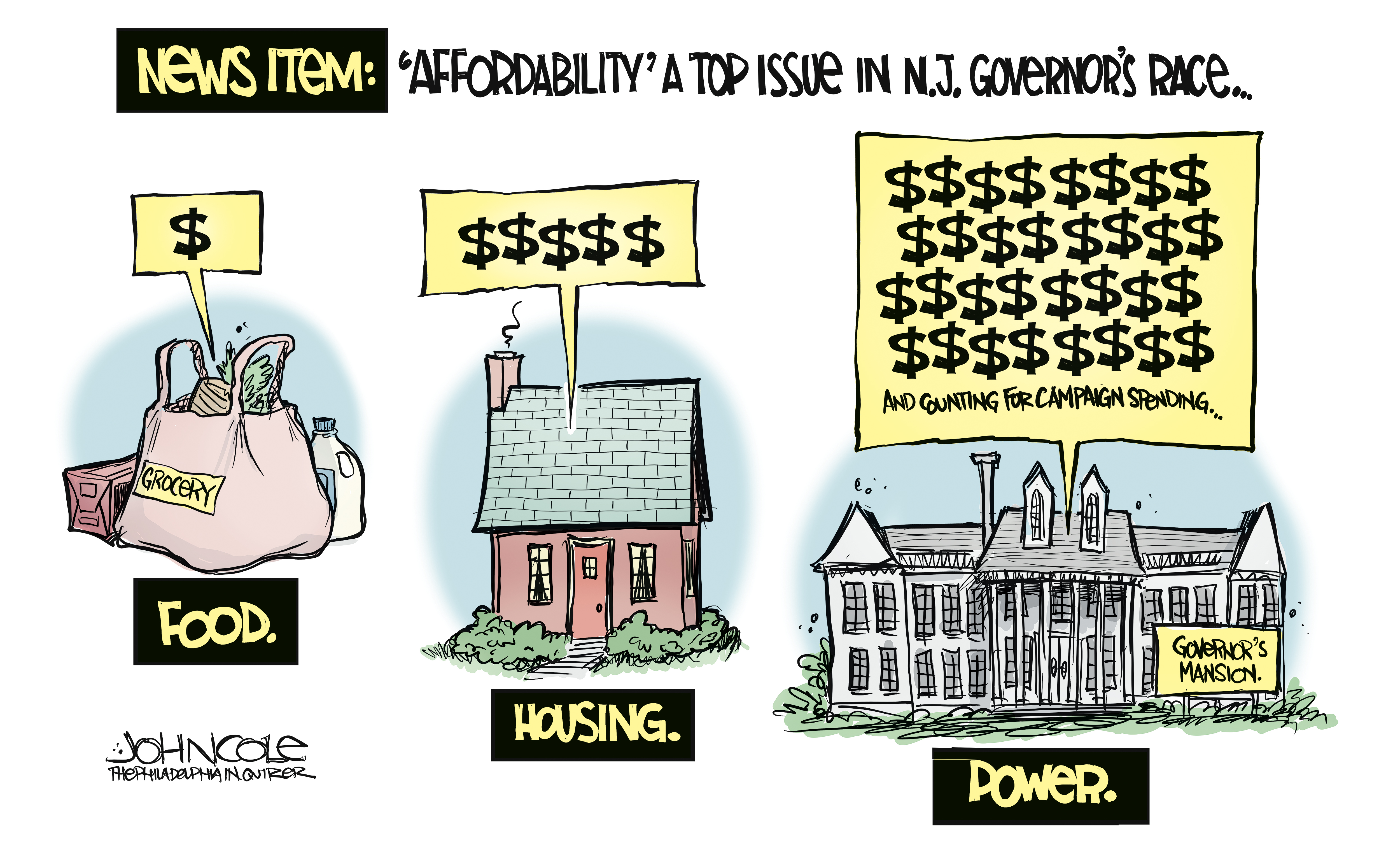
  • Through the roof | Editorial Cartoon

    John Cole spent 18 years as editorial cartoonist for The (Scranton) Times-Tribune, and now draws for various statesnewsroom.com sites.

  • ‘Conversion therapy’ is antithetical to responsible psychological counseling

    ‘Conversion therapy’ is antithetical to responsible psychological counseling

    As I listened to the recent oral arguments before the U.S. Supreme Court challenging Colorado’s ban on conversion therapy for minors — a pseudoscientific practice that attempts to change or suppress a person’s sexual or gender identity — as a mental health professional, I was confronted with a difficult truth: The Supreme Court debate itself revealed major gaps in the general understanding of what ethical therapy is, and how it differs from malpractice.

    While the decisive action taken in 2024 by the Shapiro administration and five state licensing boards to officially declare conversion therapy professional misconduct and harmful is a major victory affirming our ethical standards here in Pennsylvania, the questions raised by the justices underscore a critical and urgent need. Mental health professionals must clearly communicate to the public, especially to the youth in our commonwealth, what constitutes sound, ethical, and effective treatment.

    To an outside observer, or even a justice who sits on the highest court in the land, psychotherapy might seem like a conversation with someone who is supportive and compassionate.

    But the psychological science confirms that this impression is patently inaccurate. Evidence-based psychotherapy is built on the premise that validation, acceptance, and understanding are the keys to alleviating distress, strengthening relationships, and enabling healthier life choices.

    Becoming a competent and ethical psychotherapist takes years of specialized training, study, and supervision.

    Importance of validation

    Just looking at one of these skills, validation, we can see how complex this is. Validation is the focused act of striving to understand a person’s feelings, thoughts, and behaviors, reflecting the ways their reactions make sense in the context of their lived experience.

    Crucially, and something I stress to my own patients, validation is not agreement or approval. True validation allows for curiosity, paving the way for the self-acceptance that is essential for learning and growth. And, importantly, validation requires the therapist to put aside their own wishes, hopes, and beliefs, also not easy or natural.

    The entire premise of conversion therapy stands in direct opposition to what comprises ethical practice by therapists.

    The U.S. Supreme Court heard oral arguments this month from a lawsuit brought by Kaley Chiles, a licensed counselor, against Colorado’s law prohibiting conversion therapy for minors.

    Conversion therapy asserts that one’s inherent sexuality, a quality that lacks any evidence of malleability, is pathological and must be altered. This lie is deeply shaming and stigmatizing.

    Shame and stigma do not persevere without active promotion from those in power.

    A therapist’s position is not that of a mere “conversation partner,” but a person in an official capacity with specialized training.

    Any professional who promises a client they can alter their core sexual identity is exploiting that power and acting in the face of the overwhelming evidence that their own training is built upon.

    To illustrate, consider a licensed dermatologist consulting with a patient whose natural skin tone is subject to deep societal prejudice. The patient wishes to permanently change their skin color to escape this stigma, and the dermatologist, perhaps due to a shared personal or religious belief, sincerely wishes they could grant this escape.

    Despite this shared wish and personal conviction, if the dermatologist were to accept payment and declare, “I will prescribe a treatment that will permanently and fundamentally rewrite your DNA to give you an entirely different skin color,” that doctor would be committing profound malpractice and fraud.

    Unethical and immoral

    More than just unethical, it is immoral, because it validates and profits from the harmful, prejudiced notion that the patient’s natural, nonpathological trait is a curable defect. Their oath demands they communicate the truth: that such a fundamental alteration is impossible.

    The therapist’s scenario is the direct professional equivalent.

    They might share a client’s faith-based desire to alter their sexual orientation. But this desire does not supersede the scientific consensus of every major national psychological, psychiatric, and medical organization, all of which agree that sexual orientation is not a disease to be cured or a choice to be changed.

    A therapist can ethically help a client manage their feelings or behaviors related to their orientation; they cannot ethically promise to remove the orientation itself.

    To promise this impossible, discredited service is professionally unethical and morally corrosive, as it actively reinforces the lie that a natural variation of human existence is a defect needing a “cure.”

    The distinction is clear: Ethical therapy offers acceptance; malpractice promises an impossible cure.

    The debate before the Supreme Court is not about a professional’s freedom of speech; it is about protecting the public — especially vulnerable minors — from emotional violence perpetrated under the guise of professional care.

    Keren Sofer is a Philadelphia-based clinical psychologist.

  • Letters to the Editor | Oct. 20, 2025

    Letters to the Editor | Oct. 20, 2025

    The death of Ellen Greenberg

    Try as I may, I can’t wrap my head around Chief Medical Examiner Lindsay Simon’s recent ruling that 27-year-old Ellen Greenberg’s stabbing death was by suicide.

    You most likely are familiar with the details of the case: In January 2011, Greenberg was found on the kitchen floor of the Manayunk apartment she shared with her fiancé, Sam Goldberg, a politically connected producer at NBC Sports. Greenberg had been stabbed 20 times, and she was discovered by Goldberg, who was never considered a suspect or charged with any crime.

    Simon, in her recent review, which was prompted by two lawsuits Greenberg’s parents filed against the city, discovered 20 additional bruises and three additional “perforations of her skin” never before documented, raising the number of bruises to 31 and stab wounds — including one in the back of her neck — to 23. Well, I’m not a medical examiner, a criminal investigator, a police officer, an assistant DA, or an attorney. But I have so many questions.

    Although Simon states that all of the wounds and bruises could have been self-inflicted, it seems to me that only a skilled contortionist could accomplish what was described. Did Simon conduct further interviews to validate her conclusions? Did she examine Greenberg’s emails?

    Mostly, though, I remain clueless about how, through the long years since Greenberg’s death, her parents, Joshua and Sandra Greenberg, have held on to any semblance of the ability to rest, to sleep — or even breathe.

    SaraKay Smullens, Philadelphia

    U.S. strikes again

    Donald Trump claims he won the election in 2020. He didn’t. He fumes that he didn’t receive this year’s Nobel Peace Prize, which was given for accomplishments in 2024, a year in which he didn’t serve as president. Trump, who was handed more money at birth than most of us will ever earn, has an overdeveloped sense of victimhood while completely lacking in humanity.

    Another six people who were suspected of being drug smugglers were killed on their boat, bringing the total to 27. We don’t know their names. We haven’t been presented with evidence of their crimes. We do know there was no due process. These strikes are accelerating. I worry this might turn inward, as the administration militarizes our cities. Our Congress on both sides of the aisle must wake up and act. We must make sure they do.

    Elliott Miller, Bala Cynwyd

    Rebuilding the Middle East

    The ceasefire in the Middle East brings relief, but there is ongoing pain and trauma to address for those of us who have witnessed it. When I look at the areas to which the people of Israel and Gaza will be returning, it resembles the destruction and loss of life in Western Europe after World War II.

    I am reminded of the Marshall Plan, the U.S.-led initiative that was meant to help rebuild Europe after the Second World War. It seems the world community needs to unite and do something similar now to restore infrastructure, finance reconstruction, and stabilize governments. Can East and West join forces to make life better for the people of Gaza and Israel now?

    Mary McKenna, Philadelphia

    The ebb and flow

    It is starting to really weigh me down — not too much chocolate or an inadequate amount of exercise in the rain, but the day-to-day headlines about everything from American citizens “being disappeared” to drastic cuts in special education funding and the dissolution of a functioning Congress.

    Like countless other people around the world, I was so happy for the families of the Israeli hostages who came home. All that elation, though, was not far removed from the prospect of generational wealth exhibited by the very deliberate presence of Jared Kushner and other allies of President Donald Trump. Trump’s plans for a playground for the rich in the ruins of war now seem more likely than ever — the ebb and the flow.

    The coming days and weeks will continue to illuminate for us all whether or not we can stand up for the weakest, most disconnected and challenged citizens in this country while we can still vote, or are we already too worn out by all the daily blasphemies toward the oppressed and the routinized dismissal of the rule of law?

    Mary Kay Owen, Downingtown

    Dems’ stance on ACA

    Our national shutdown is a fight about restoring tax credits to the Affordable Care Act marketplace and reversing the pending Medicaid cuts. For a public largely indifferent to health policy, it is a gamble for Democrats, who have to explain how these programs might impact them. Even today, most Americans do not understand Medicaid or the ACA marketplace. A criticism of the Dems is, what do they stand for besides being against Donald Trump? Now is the time to stand up for a policy that goes beyond restoring cuts to a bureaucratic, dysfunctional, irrational system to one that is simple enough that all Americans can understand — a properly funded, national health insurance covering everyone.

    Walter Tsou, Philadelphia

    The writer is a former health commissioner of Philadelphia.

    . . .

    I am not surprised to see so many Republican politicians beginning to support the idea of keeping the income caps removed from receiving premium tax credit subsidies under the Affordable Care Act (ACA), also known as Obamacare. And this policy, which began during the COVID-19 pandemic, will undoubtedly receive more and more support from them if they consider it thoughtfully rather than reacting impulsively.

    However, I find it puzzling that Democrats are making the continuation of this policy part of their platform at all, much less a central component of the government shutdown. Obamacare was designed to expand access to healthcare for low- and middle-income Americans who had previously struggled to afford insurance, and removing the income caps contradicts the original purpose of the law. It also raises questions about fiscal responsibility and equity, as without the income caps, many wealthy families without employers effectively receive five-figure bonus checks each year from Obamacare that are paid for by everyone else.

    Meanwhile, due to the Big Beautiful Bill, married couples with student loans on income-driven repayment will now qualify for $0 in Obamacare premium tax credit subsidies if they wish to limit their student loan payments to a 1,000% increase instead of 2,500%, as this requires filing their federal taxes as “married filing separately” — which also disqualifies them from various other benefits, including the child tax credit.

    It is baffling how Democrats have become so misaligned with their priorities that they are doing the work of Republicans for them.

    Calvin J. Haneline, Paragould, Ark.

    Love for the Phillies

    Like letter writer Peter Schmidt, I find I have a new perspective on the epic saga that is the Phillies. For most of my seven decades, I have been only a casual fan of city teams. Still, I’ve acquired that shell so many in our region wear — a shield against disappointment built of cynicism and a grumbling.

    But the last few seasons have been different. My daughter lives 700 miles away in Georgia, but we share our thoughts on games almost every night by a stream of text messages, stats, and emoji-decorated cheers and groans.

    Though I questioned if the Phils had the stuff to win the World Series, I grew to love everybody involved, heroes and goats alike. When we took my grandsons (13 months and 3 years old) to a game this summer at their aunt’s insistence, the whole family reveled in the boys’ enjoyment. Despite their lack of understanding of the game, they delighted in the general fun at the Bank: the Phanatics’ antics, the massive pile of ice cream in a miniature batting helmet, and the chance to yell “Go Phillies!” without being shushed.

    Even at its most serious, the game is just a game, and our disappointment is not tragedy. But the bond fans have with the team — and with each other — bridges gaps of miles, age, and unfamiliarity. That sense of sharing, almost in spite of ourselves, is why I love the Phillies.

    Joe Jones, Mount Holly

    Join the conversation: Send letters to letters@inquirer.com. Limit length to 150 words and include home address and day and evening phone number. Letters run in The Inquirer six days a week on the editorial pages and online.

  • Then they fight you: How the ‘No Kings’ protests are winning America

    Then they fight you: How the ‘No Kings’ protests are winning America

    Outlined against a blue, gray October sky on a perfect fall morning, Carol Otis, in her Obama-Biden T-shirt, joined more than 1,000 people Saturday who lined both sides of the busy Eagle Road thoroughfare in Havertown to yell, wave signs, and provoke an endless cacophony of car horns against an authoritarian Donald Trump regime.

    “I could probably name 7,000 reasons why,” the 77-year-old recent retiree from Drexel Hill told me, “because every day there are 18 things that happen that are just what Trump says — and then there’s the GOP talking about this ‘hate rally.’

    So Otis didn’t make a sign and chose instead — like many in this protest in the heart of suburban Delaware County — to wave an American flag, “because people who carry the flag do not hate America, and as you can see, there are a lot of flags.”

    She laughed, then added sarcastically, parrying one of the more absurd GOP talking points: “We’re all paid protesters! George” — Soros, the liberal billionaire — “where are you? I don’t see you. I’m waiting for my handout.”

    Carol Otis, 77, a retiree from Drexel Hill, at the “No Kings” protest Saturday in Havertown.

    There is a famous quote about mass protest movements — with murky origins (misattributed frequently to Gandhi) — that says, “First they ignore you, then they laugh at you, then they fight you, then you win.” Saturday’s massive “No Kings” protest that filled Main Streets and public squares from New York and Washington, D.C., to smaller burgs like Havertown showed that the effort to halt and reverse dictatorship in mid-2020s America has already prompted a half-laughing, half-fighting response from an increasingly unpopular White House and its allies.

    Ignored at first, the “No Kings” protest movement is rapidly accelerating toward the then-you-win phase. Indeed, the over-the-top alarmism from Republicans like House Speaker Mike Johnson, who called it a “hate America rally,” or Texas Gov. Greg Abbott — who called up his state’s National Guard in Austin to pump up a ridiculous narrative about rock-throwing radicals instead of the peaceful, joyous events in 2,700 different locales — proved that “No Kings” struck a raw nerve.

    The day was not only nonviolent but also historic. The estimated nearly seven million who showed up across America marked the second-largest one-day protest in U.S. history, surpassed only by a very different type of event: the first Earth Day in 1970. That was roughly 40% larger than the first “No Kings” event in June, and in talking to protesters Saturday, it seemed the turnout was only boosted by the right-wing rhetoric that anti-Trump protesters must be some kind of domestic terrorists.

    “Knowing that they’re feeling threatened makes me know this is what needs to happen,” Gary Fishbein — 65, from Bala Cynwyd, with his American flag T-shirt and Eagles cap — told me. His words were nearly drowned out by the steady honking of supportive cars passing the undulating sea of signs that were as funny as “Does This Ass Make My Country Look Small” or as simple as “Dogs Against Fascism” (held by the canine’s companion) or just “Freedom to Speak.”

    The official White House reaction, as related to one reporter, was “Who cares?” But guess what? They clearly cared — a lot. You could see that in the week leading up to the demonstration, with the increasingly insane rhetoric and warnings about “antifa” — a tiny, unorganized sliver of young rock-throwing radicals who were nowhere in sight Saturday — that aimed to neutralize the reality that millions of everyday Americans are sick of seeing a masked secret police snatch people off the streets.

    In a maneuver North Korean dictator Kim Jong Un must have surely applauded, Trump’s Pentagon fired some artillery shells over a closed I-5 in the heart of Southern California’s anti-Trump rally as the protests were taking place — ostensibly to mark the 250th anniversary of the armed forces, but also as a reminder of the regime’s military might as Trump weighs invoking the Insurrection Act.

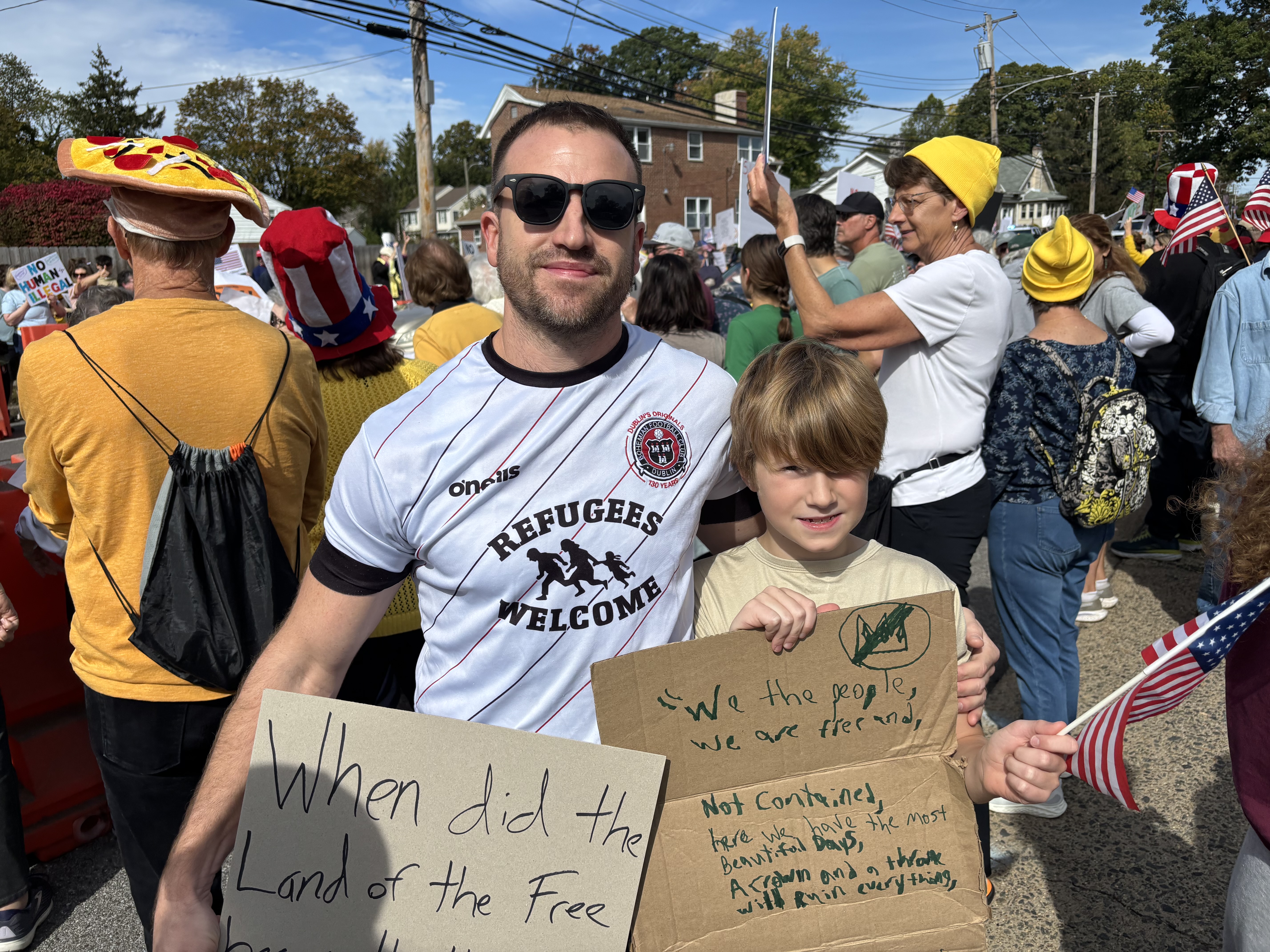
    Ben Liptock, a 38-year-old Philadelphia public school teacher who lives in Havertown, attended the “No Kings” protest there Saturday with his 9-year-old son, Bobby.

    Just a short time after the “Who cares?” comment, Trump himself posted a shocking — to the extent that anything can be truly shocking anymore — AI-created video to Truth Social that showed him piloting a jet fighter wearing a king’s crown (!!) and “bombing” a large U.S. urban protest march with brown, liquid, um, excrement.

    I guess that was supposed to be the fascist version of four-dimensional chess, that our 47th and possibly last president could mock, ridicule, and dismiss “No Kings” by confirming everything the largest protest in 56 years was all about: that our government is hijacked by a monarch who defecates on his own subjects. The reality is that Trump’s late-night video reeked more of panic and fear than its crude subject matter.

    The biggest American protest doesn’t happen in a vacuum. The reason seven million people are in the streets is that Trump long ago squandered any chance for a honeymoon after his narrow reelection in 2024. His approval rating is just 40% in the latest Gallup poll (even lower in some other surveys). And like the protester Otis said, there are about 7,000 reasons — including higher prices in the supermarket, a looming doubling of health insurance premiums for millions of Americans, and a 20-day-and-counting shutdown of the federal government with no end in sight.

    But it was Trump’s mass deportation crusade, and the brutal tactics by those masked and unbadged goons for U.S. Immigration and Customs Enforcement (ICE) and other federal agencies — grabbing migrants (and, in at least 170 documented cases, U.S. citizens) off the street and lobbing tear gas at anyone who protests — that was cited again and again by the marchers when I asked them why they are in the streets.

    Ben Liptock — 38, who lives in Havertown and teaches in a North Philadelphia public school, and came with his 9-year-old son, Bobby — explained that we need to “continue to show people that you’re not alone in today’s America — it’s scary to protest.” But he said he felt they had to be there for his many immigrant students — some who’ve gone home to find their dads deported — who can’t safely demonstrate themselves.

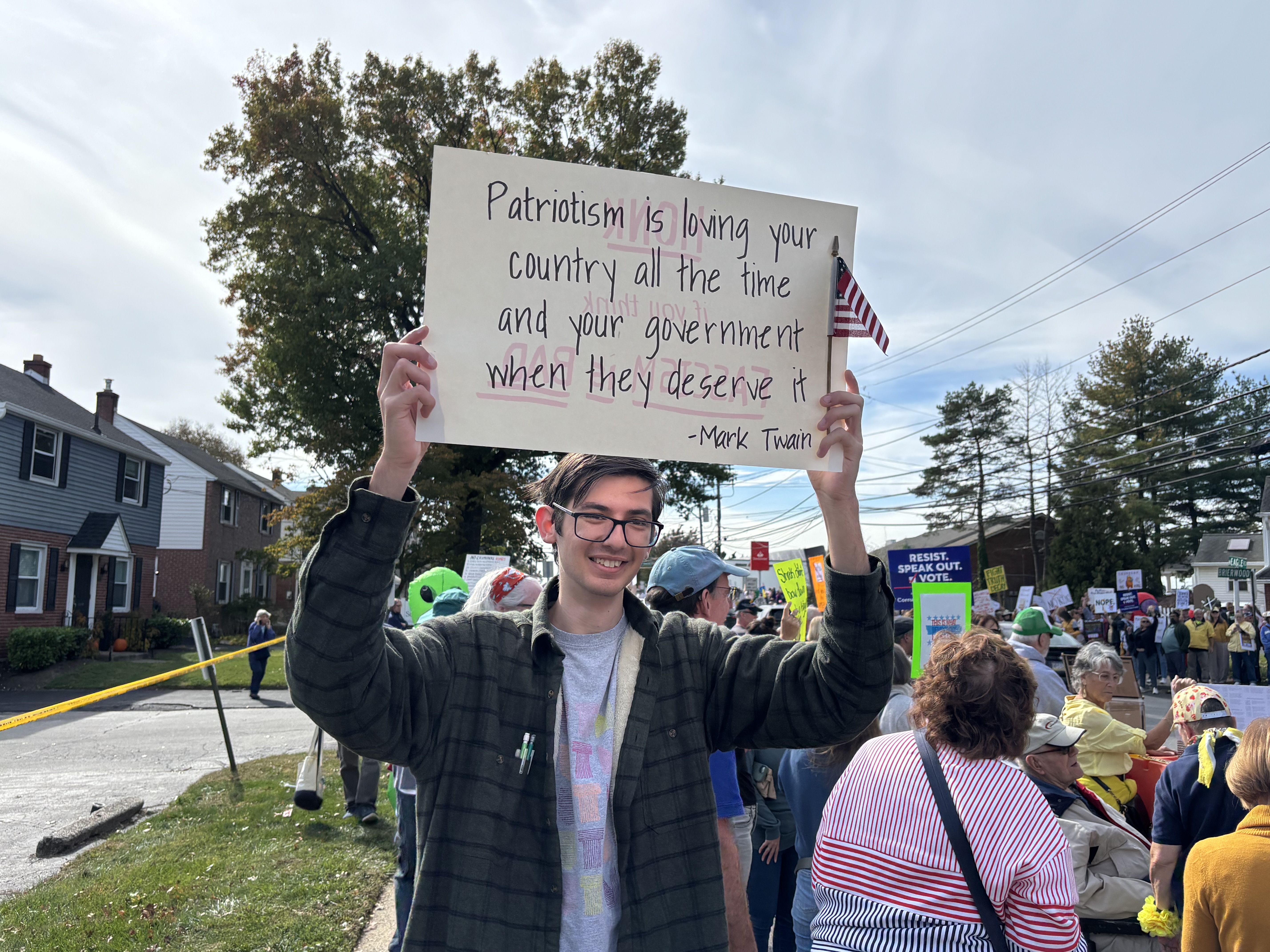
    Emilio Ovalle, a 19-year-old West Chester University student, attended the “No Kings” protest Saturday in Havertown.

    “If I looked a little different, I wouldn’t be able to show my face and protest power,” Liptock said. “There are people in the shadows right now, and they’re terrified.”

    It arguably cut both ways that the suburban crowd in Havertown was overwhelmingly white, with most older than the median U.S. age of 38. Others echoed Liptock that this breed of protester can use its privilege to speak for those who can’t, and any true mass movement needs the white metro middle class to succeed. But the lack of Black and brown faces, or members of Gen Z (who’ve powered uprisings in parts of Asia and Africa), remains a significant problem for “No Kings.”

    Someone like Emilio Ovalle ― a lanky 19-year-old student from West Chester University waving a sign with a Mark Twain quotation — stood out in the crowd on Saturday. The son of an immigrant from Guatemala, Ovalle also cited the deportations as his No. 1 issue, and while he said many of his friends oppose Trump, he also understands their reluctance to protest.

    “Part of it has to be the Democrats — they’re not good at getting the young vote,” he said. “The right is very good at appealing to a lot of the insecurities, especially in younger men.”

    This would seem to be the next mission for “No Kings” going forward: to build a bigger network with groups such as Gen Z teens and 20-somethings or African Americans. Those groups also have major issues with the Trump presidency, but feel them in different ways and express them in different venues than the ones like Facebook or MSNBC that are popular with the first wave of protesters.

    That said, it’s impossible to ignore what the “No Kings” movement has accomplished in a matter of months. By raising their voices, protesters have encouraged Democrats in Washington to at least slightly stiffen their backbones, as shown by the current budget battle. They are winning new converts from the disaffected middle by exposing the depths of Trump’s unpopularity.

    And they are reassuring their friends and neighbors to keep the faith in a dark moment — that there are far more Americans who want democracy than dictatorship. “It makes you feel good that you are not alone, that a lot of people feel the same way,” Michael Tempone, a 73-year-old from Upper Darby, waving American flags with his wife, Stephanie, told me.

    There were thousands of American flags across the nation Saturday, and no reported violence, and close to no arrests — zero in New York City (where the New York Police Department is not known for its restraint) or San Diego or fearmongered Austin. That is driving the Trump regime bat-guano crazy, because it has not crushed the resistance, and it knows its days are numbered. As I walked back to my car, I heard one protester chuckle to his partner, “This is the best ‘hate America’ rally that I’ve ever been to.”

  • No offense to Hoboken, but Philly should aim to mimic a peer city that’s a little farther north | Shackamaxon

    No offense to Hoboken, but Philly should aim to mimic a peer city that’s a little farther north | Shackamaxon

    This week’s Shackamaxon is about field trips, political systems, and state budget shenanigans.

    Perspective vs. parochialism

    Five members of City Council, several Council staffers, three state representatives, and the head of the Philadelphia Parking Authority are taking a field trip up to Hoboken, N.J., next week, with the aim of learning more about how that city managed to eliminate traffic deaths. Hoboken hasn’t just done so for one year or two — the Mile Square City has gone without a vehicular fatality since 2017. Council President Kenyatta Johnson deserves credit for being willing to learn from other places, something Council has traditionally been hostile to.

    Still, if our local legislators want to truly have their minds blown, they should head farther north. No, not Boston. The city they should learn from is Montreal, where my wife and I spent last weekend.

    The city known as “Le Belle Ville” shares a lot in common with Philadelphia. Unlike Hoboken, which is ultimately a satellite city of Manhattan, Montreal is the center of its own metropolitan area, and the biggest city in Quebec. While there are zip codes in Philadelphia that have more residents than the North Jersey hamlet, Montreal has over 1.7 million inhabitants. It also has a riverside Old City, a park named for Marconi, an often contentious relationship with their state provincial government, a plethora of Second Empire architecture, a storied Chinatown, an expansive urban park that’s a bit of a hike to get to, and they call their downtown “Centreville,” or Center City.

    Unlike Philadelphia, however, Montreal’s leaders embrace being a city, rather than trying to plug their square suburban preferences into a round metropolitan hole. The difference in quality of life is easy to see, even on a short trip.

    People gather next to the Lachine Canal on a warm spring day in Montreal in 2021.

    As my colleague Stephanie Farr pointed out, Philadelphia lacks even a single regularly pedestrianized corridor, while in Montreal, you’ll find them all over the place. Montreal’s mayor, Valerie Plante, credits its pedestrianization program with attracting additional tourists and boosting the local economy. There are more cyclists in Montreal than here in Philadelphia, and yet, you were less likely to encounter them speeding past you on the sidewalk, with even older riders and parents of small children feeling comfortable and safe riding in the street, thanks to traffic calming in residential areas and abundant paths elsewhere.

    Additionally, their embrace of city life means a much more pleasant transit experience. In the four hours I spent riding the rails in Montreal, I did not notice a single person smoking cigarettes or marijuana on board a train or inside a metro station. I smelled both on my first trip back on SEPTA. Many Montrealers smoke. You’ll even find a recreational cannabis dispensary along Rue Saint-Paul, their historic thoroughfare, but they respect their transit system enough to refrain while on board. Imagine that!

    Real choices

    It would be easy to cite cultural differences as the primary reason why things seem to work better up north. But culture is not stagnant; it interacts with politics and policy. There are differences in electioneering between the City of 100 Steeples and the City of Brotherly Love, as well.

    Since Philadelphia enacted the 1951 Home Rule Charter, the Democratic Party has dominated city politics. Many Council members are reelected without facing a credible challenge. Local Republicans stand little chance, especially with their colleagues in Washington and Harrisburg routinely demonstrating their contempt for our city.

    A sign in the Fairmount neighborhood in May.

    The city’s new, progressive opposition, the Working Families Party, is often more focused on national issues than things city government has direct control over. In fact, it urged people to vote for it in order to stop Donald Trump. Neither opposition party has been willing to tackle local good government priorities like councilmanic prerogative or eliminating row offices. This makes achieving change in this city feel impossible, which probably contributes to what former Inquirer columnist Helen Ubiñas famously called “the Philly Shrug.”

    In Montreal, however, voters have a real choice. They even have municipal political parties, meaning voters have to form their own opinions about local issues.

    Budget blame game

    Harrisburg Democrats are increasingly convinced state Senate Republicans are holding up the budget to boost state Treasurer Stacy Garrity’s chances in next year’s governor’s race. Garrity is currently behind by about 16 points in the polls. Republican consultant Chris Nicholas, one of the more reasonable members of his party, insists this is not the case, claiming that if it were, the treasurer would have unveiled her loan program earlier for Pre-K Counts programs and groups that provide rape and domestic violence prevention and response services.

    State Treasurer and Republican candidate for governor Stacy Garrity holds a rally in Bucks County at the Newtown Sports and Events Center in September.

    Still, it is hard to avoid thinking a Josh Shapiro landslide in 2026 could have an adverse effect on the campaigns of Republicans who are up for reelection next year.

    Of course, holding up needed state cash might only make things worse. The county commissioners in state Senate President Pro Tempore Kim Ward’s Westmoreland County canceled their public meetings because there’s no money to spend. As Spotlight PA’s Stephen Caruso has outlined, nonprofit service providers are already feeling the pain, taking on debt that will hurt their ability to provide care for years to come.

    It’s too bad that kind of pain has not been felt by our representatives.

  • As clashes with ICE heat up, Trump’s cold war against immigration rages on

    As clashes with ICE heat up, Trump’s cold war against immigration rages on

    Clashes between U.S. Immigration and Customs Enforcement agents and members of targeted communities continue to intensify as the Trump administration gleefully condones a dangerous mix of heavy-handed enforcement tactics and zero accountability.

    Recent examples of intimidation, harassment, and excessive use of force by ICE and U.S. Customs and Border Protection agents have been piling up, ranging from a praying minister being shot in the head with a pepper ball to a woman allegedly taunted to “do something” before an officer opened fire.

    Americans who care about the rule of law — whether they support mass deportations or not — must speak out against the inhumane theater of cruelty put on by Donald Trump’s secret police.

    Yet, beyond the daily outrage of immigrants being disappeared off the street, or citizens detained without reason by jeering masked thugs, there is another insidious level to the administration’s anti-immigrant efforts.

    From the moment Trump came into office, he has shut down or obstructed the country’s legal immigration pathways. No shots have been fired in this cold war, but the long-term economic damage will leave most Americans worse off.

    Starting in January, the administration froze the U.S. Refugee Admissions Program, leaving more than 100,000 highly vetted immigrants who had already been approved for resettlement stuck in limbo.

    According to reports, the program will restart in 2026, but the cap will be lowered from the 125,000 set under President Joe Biden to 7,500. Not only that, but many of those limited slots will be reserved for white South Africans.

    You have to give it to white supremacists in the administration; they are not subtle.

    The refugee freeze may not be the largest cut to legal immigration, but it is the most significant, said David J. Bier, director of immigration studies at the libertarian Cato Institute.

    “All these people who would have been here with a path to permanent residence and citizenship — it’s just gone,” he told me. “Over the next four years, it’s basically the equivalent of half a million people who are going to be lost as a result of that decision.”

    Refugees are fleeing from persecution, have gone through extensive background checks, and likely waited for years for a chance to come to the U.S. — all of which is meaningless to an administration for whom a foreigner is just an “illegal” who hasn’t overstayed their visa yet.

    Federal agents from U.S. Immigration and Customs Enforcement and U.S. Customs and Border Protection walk north on North Clark Street in the River North neighborhood of Chicago in September.

    And, if and when Trump leaves office, the system itself will be damaged, atrophied after years of disuse and partner agencies that have moved on.

    The administration has also ended all humanitarian parole initiatives launched during the Biden years, which allowed some immigrants who had a sponsor in the U.S. and who passed a background check to come to America for a period of two years to live and work lawfully.

    International students, long a wellspring for high-skilled workers in the U.S. and a major revenue driver for colleges and universities, have also been targeted by the administration. As the new academic year began in August, the number of international students declined by almost 20% from 2024. Difficulties getting visas, fears of getting caught up in the wider immigration crackdown, or ending up in jail for saying the wrong thing played a part in the drop, according to reports.

    These are no idle concerns. The best and brightest around the world can quickly find validation for their worries in what happened to Columbia graduate student Mahmoud Khalil, who was detained after leading pro-Palestinian protests, or Tufts doctoral candidate Rumeysa Öztürk, who spent six weeks in custody over an op-ed she wrote for her student newspaper.

    There are also travel bans targeting 19 countries and a proposal to charge a $100,000 fee for H-1B visas for skilled workers. Meanwhile, U.S. Citizenship and Immigration Services — the agency tasked with overseeing legal immigration, including legal permanent residence and citizenship applications — is being weaponized against the people it’s meant to serve.

    The agency will now have armed special agents engaged in immigration enforcement, even as its backlog hits an all-time high and fee-paying applicants face worsening delays for USCIS services.

    It’s going to be some time before the full economic effects of mass deportation, plus legal immigration being throttled so aggressively, manifest themselves, but the math is clear. The consequences of Trump’s legal immigration crackdown will not play out in the streets, but around people’s kitchen tables.

    “It’s going to mean less economic growth for the United States,” the Cato Institute’s Bier said. “You’re reducing business creation and entrepreneurship and innovation, which drives improvements in economic growth over the long term.”

    With less economic growth, it means lower living standards for the U.S. population, Bier added. “It’s a bleak picture.”

    Much as the reality of who’s being targeted for deportation puts the lie to the administration’s claims that they are focusing on “criminal” immigrants and “the worst of the worst.” So the gutting of legal immigration removes all doubt over what this is really about, or for whom it’s really for.

    As I said, these folks are not subtle.

  • Trump’s cronyism crosses borders as we bail out his Argentine buddy

    Trump’s cronyism crosses borders as we bail out his Argentine buddy

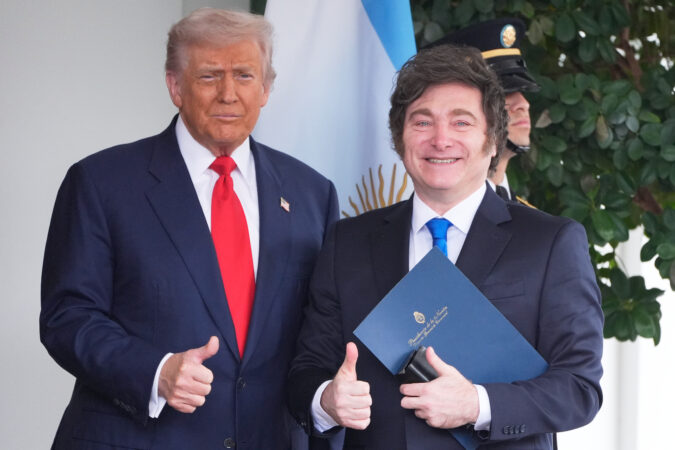
    With a government shutdown looming, Jimmy Kimmel coming back, and former FBI Director James Comey being indicted, it would be easy to miss that the Trump administration has promised billions in taxpayer money to bail out one of the president’s buddies after he got in trouble down south.

    Argentine President Javier Milei, who you may remember gave Elon Musk a “bureaucracy chain saw” onstage at the Conservative Political Action Conference in February, has put the power tools down and brought out the collection plate.

    “As President [Donald] Trump has stated, we stand ready to do what is needed to support Argentina and the Argentine people,” Treasury Secretary Scott Bessent posted on X Wednesday. “The Treasury is currently in negotiations with Argentine officials for a $20 billion swap line with the Central Bank.”

    That influx of cash is, of course, timed to the forthcoming midterm elections, as Milei is challenged over his poor handling of the economy and other political woes. Elected in 2023, the brash self-proclaimed anarcho-capitalist has cut a Trumpian path, governing by decree and force of personality. But corruption allegations surrounding his sister, growing wage stagnation, and rising unemployment have him on the ropes.

    Now, helping a neighbor facing hard times is not a bad thing. I was in Mexico when President Bill Clinton took it upon himself to approve a $20 billion loan in 1995 to help stabilize the peso after that country’s economic collapse. But helping the nation next door was also in America’s best interest.

    Elon Musk holds up a chain saw he received from Argentina’s President Javier Milei (right) as they arrive to speak at the Conservative Political Action Conference in February at the Gaylord National Resort and Convention Center in Oxon Hill, Md.

    The U.S. had just entered into a trade agreement, and there were American jobs dependent on exports. Clinton also pragmatically argued that a broke Mexico would likely lead to more illegal immigration and destabilize the southern border.

    The gamble worked. Mexico ended up paying back the loan, along with half a billion dollars in interest, ahead of schedule. The country also continued down the road to true democracy, with an opposition party winning the presidency in 2000 for the first time in more than 70 years. But Argentina is not Mexico.

    The country is hardly a top export destination for American goods (imports from China almost double what U.S. producers sell there), and Milei has already burned through $15 billion in International Monetary Fund money. Not to mention Argentina owes another $45 billion from an IMF loan taken out in 2018.

    Those are a lot of hopes and dreams riding on the right-wing Milei. As U.S. Rep. French Hill, the GOP chairman of the House Committee on Financial Services, wrote after a trip to Argentina recently, if Milei’s policies are successful, they could “reverse 150 years of macro financial disappointment to creditors.” I believe in long shots, but I’m not taking that bet.

    Oh, wait. As a taxpayer, I guess I am.

    Scott Bessent, U.S. Treasury secretary, (left) and Argentine President Javier Milei during the Atlantic Council Global Citizen Awards in New York on Wednesday.

    What’s maddening about this situation is that it’s part of the cronyism that defines Trump’s second term. The president has made no secret, as usual, of what his motivations are, calling Milei “a very good friend, fighter, and winner” on Truth Social, and telling Argentines their president has his complete and total endorsement and “will never let you down!”

    We can argue on the merits of propping up Argentina’s economy, but this is no way to run foreign policy in Latin America.

    Not while the U.S. cozies up to the “world’s coolest dictator” (and America’s jailer) Nayib Bukele in El Salvador. Nor when we’re imposing 50% tariffs on Brazil — a country with an economy more than three times the size of Argentina’s — for convicting former president (and Trump pal) Jair Bolsonaro over a coup attempt after his electoral defeat in 2022.

    Nor when Trump continues to order the extrajudicial killings of Venezuelans — at least 17 people — the White House claims were drug running in the Caribbean.

    The little Republican pushback over the administration’s efforts to rescue Milei’s political career has come from U.S. Sen. Chuck Grassley, who objects to Argentina’s undercutting of U.S. farmers trying to sell to China. “Why would USA help bail out Argentina while they take American soybean producers’ biggest market???” Grassley posted to X on Thursday.

    Not exactly a clarion call to action, but it’s a start. Maybe if we put soybeans on those Venezuelan boats the U.S. keeps blowing up, we’ll get some needed outrage from the right.

    I won’t take that bet, either.