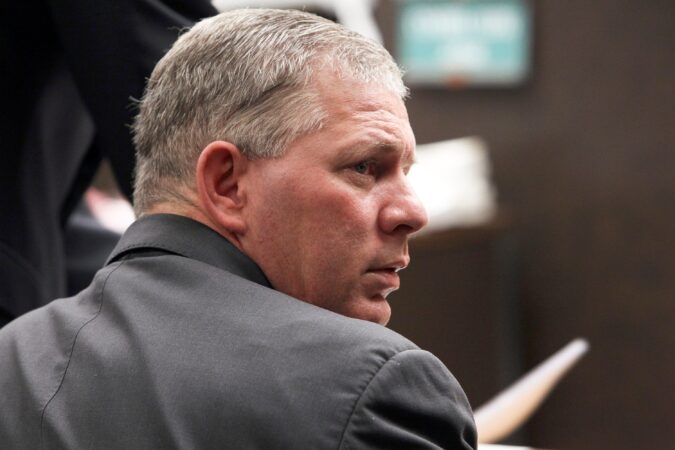
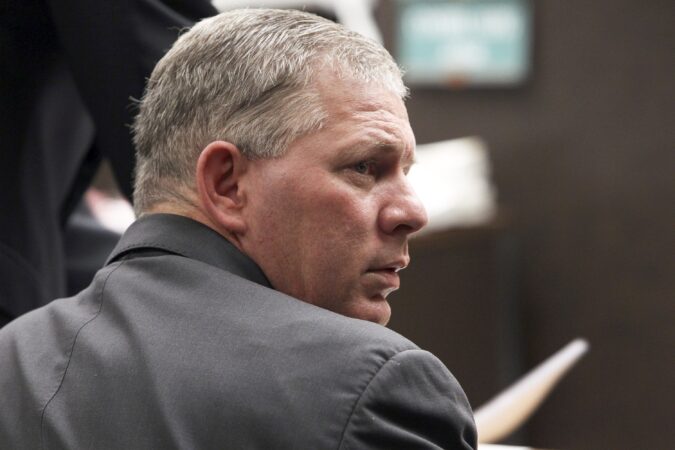
Former Phillies star Lenny Dykstra has been charged with misdemeanor possession of drugs and drug paraphernalia following a traffic stop just after midnight on New Year’s Day in Northeastern Pennsylvania.
Matthew Blit, lawyer for Dykstra, said in a statement that the 62-year-old Scranton resident was not arrested or taken into custody at the scene, and was accused of being under the influence.
Blit said that “the actual driver,” whom he would not name, was taken into custody for suspicion of driving under the influence.
“Lenny Dykstra was merely a passenger in a vehicle that did not belong to him,” Blit said.
Blit said the charges against Dykstra “will be swiftly absolved.”
Thomas Mincer, another lawyer for Dykstra, said in a statement that “we firmly assert that the alleged narcotics in the vehicle did not belong to Lenny.” Dkystra “was not knowingly in possession of or under the influence of any narcotics,” the lawyer said.
Just after midnight on Jan. 1, Dykstra was a passenger in a 2015 silver GMC Sierra truck in the area of Route 507 and Robinson Road in Greene Township, Pike County, when the vehicle was stopped by the Pennsylvania State Police for a motor vehicle code violation, the state police said in a report.
“During this investigation, the passenger was found to be in possession of narcotics and narcotic related equipment/paraphernalia,” the state police report said. “Charges to be filed.”
The state police report identified Dykstra as the “arrestee,” but the court record showing the charges says Dykstra was issued a summons.
Dykstra has a preliminary hearing in Pike County scheduled for Feb. 3.
Dykstra played 12 seasons in Major League Baseball in center field, spending the first four with the Mets — including as part of the team that won the 1986 World Series — before being traded to the Phillies during the 1989 season. He retired with the Phillies in 1996.
Nicknamed the “Dude” and “Nails,” Dykstra was a celebrated member of the 1993 Phillies team that made it to the World Series, but lost to the Toronto Blue Jays.
After his baseball career, Dykstra ran afoul of the law multiple times. He spent time in prison after pleading guilty in federal court for bankruptcy fraud and pleading no contest to grand theft auto in California.
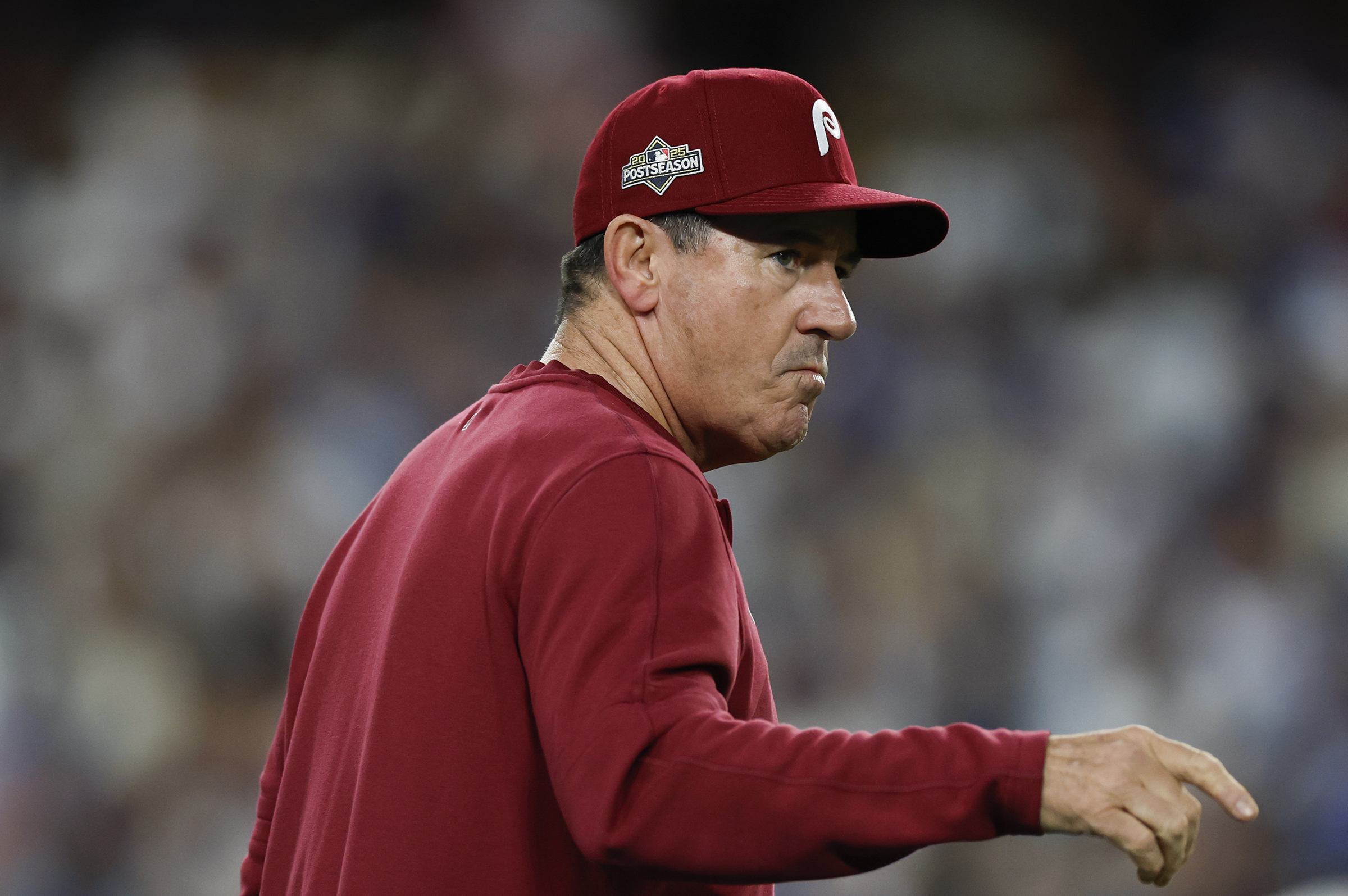
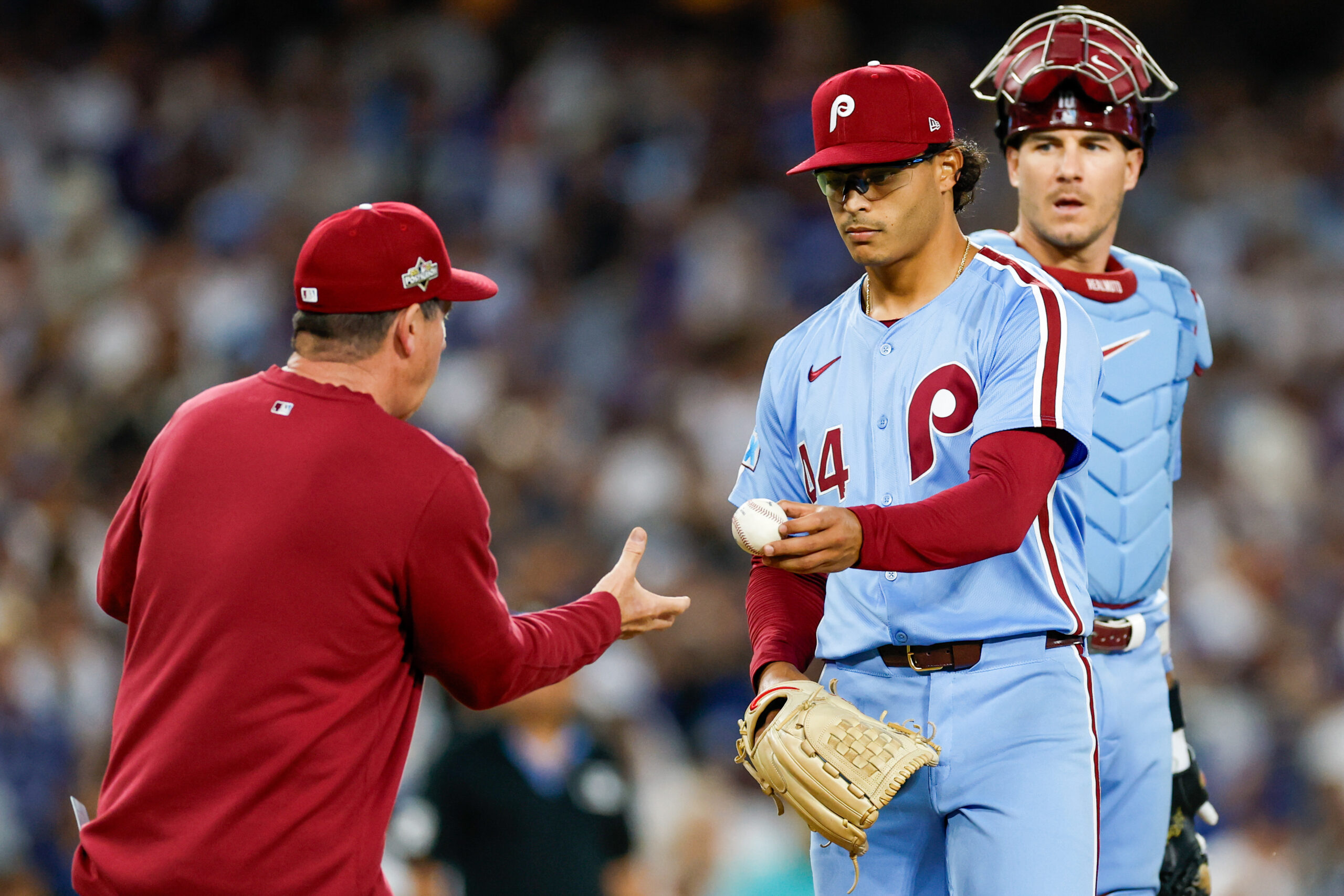
David Robertson, 40 and unemployed until July, put out a fire in the sixth inning of the Phillies’ first playoff game of 2025, but he hadn’t pitched an “up-down” all season — ending one inning and beginning another. With a one-run lead, Rob Thomson sent him back out for the seventh. Robertson hit one batter and another singled. Thomson then brought in Matt Strahm, who hadn’t inherited a runner in six weeks. Strahm got two outs, then gave up a three-run homer. The Phillies lost Game 1 of the NLDS to the Dodgers.
Two nights later, with a slow runner on second base and nobody out in the ninth inning of a one-run game, Thomson directed Bryson Stott to bunt. Twice. The Dodgers ran a “wheel” play and nailed the runner at third. The Phillies lost Game 2 of the NLDS.
These are the latest blemishes on Thomson’s thin resumé. He was elevated from longtime major league bench coach to first-time manager in June 2022, and the Phillies have at least played to the level of their payroll ever since, but they’ve faltered in the fall. Fairly or not, from pulling Zack Wheeler early in Game 6 of the 2022 World Series to not pinch-hitting early for Johan Rojas in Game 7 of the 2023 NLCS, the popularity of the affable, accountable skipper has steadily waned.
Enter Donnie Baseball.
After an intense, two-month recruiting effort, the Phillies on Monday hired Yankees legend Don Mattingly, 64, to replace Mike Calitri as bench coach. Immediately after the four-game NLDS loss to the Dodgers, the Phillies reassigned Calitri to the post of major league field coordinator, which means he’ll retain his myriad administrative duties as they pertain to scheduling and number-crunching. But he no longer will be Thomson’s chief lieutenant; no longer the voice of reason in tight situations.
Phillies manager Rob Thomson will have an experienced bench coach in the dugout with him in 2026 with the addition of Don Mattingly.
That louder, deeper voice will belong to Mattingly.
Thomson was asked Monday if some of his playoff missteps might have been averted had Mattingly been on the bench, protesting.
“Possibly,” Thomson replied. “Possibly. You never know.”
“Missteps” might be unfair, but Thomson has addressed each one with honest reevaluation. His authenticity and his absence of ego are part of his charisma.
Charisma doesn’t win World Series.
Anyway, the dugout’s charisma just grew by a factor of 10.
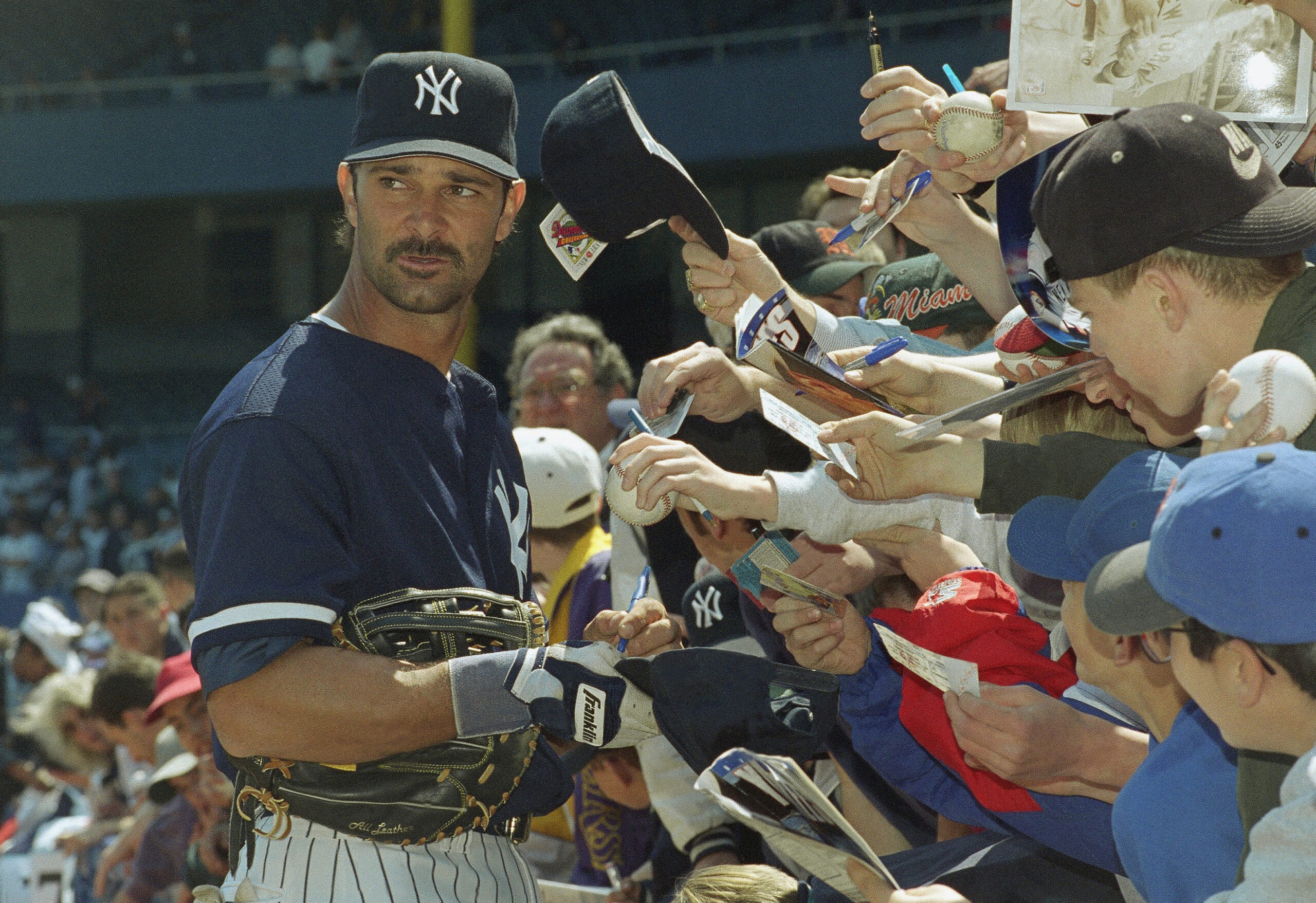
For a decade, Mattingly was the face of the Yankees, then the biggest sports franchise in America. His .307 career average, .830 OPS, and nine Gold Glove awards make him a logical Hall of Fame candidate who has been cursed by a largely illogical voting bloc. With a husky build, full mustache, and thick, full head of dark hair, he was an archetype of a baseball player for a generation. Even today, as the cleft in his chin grows deeper with age, he looks like a movie-star version of a once-great athlete.
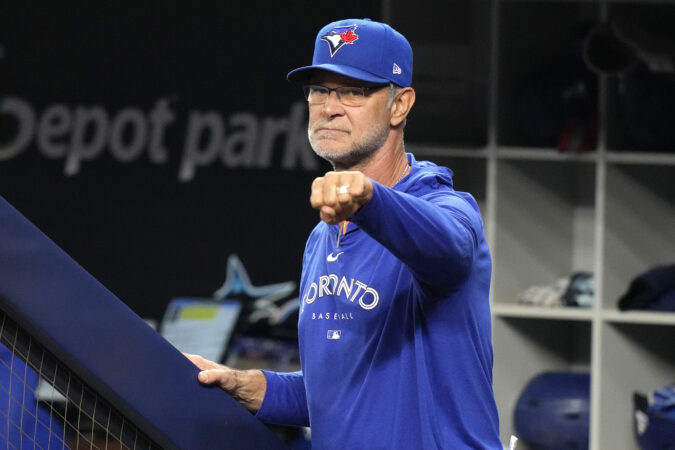
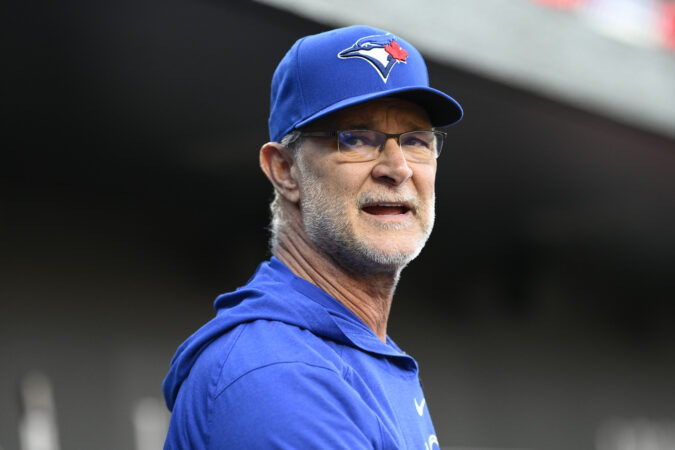
He managed the Dodgers to the playoffs three times and the Marlins once, in 2020, when he was National League Manager of the Year. He has coached for the Yankees, Dodgers, and, for the last three seasons, for the Blue Jays, who lost the World Series to the Dodgers in seven games. Mattingly expected Game 7 to be the last of his career.
But Phillies president Dave Dombrowski was on the phone the next day, and the day after that, and so forth. Finally, Mattingly agreed.
From now on, every decision — who pitches the eighth inning, who sits for a defensive replacement, who steals and who sacrifices — will go through a man with credentials Thomson simply doesn’t have.
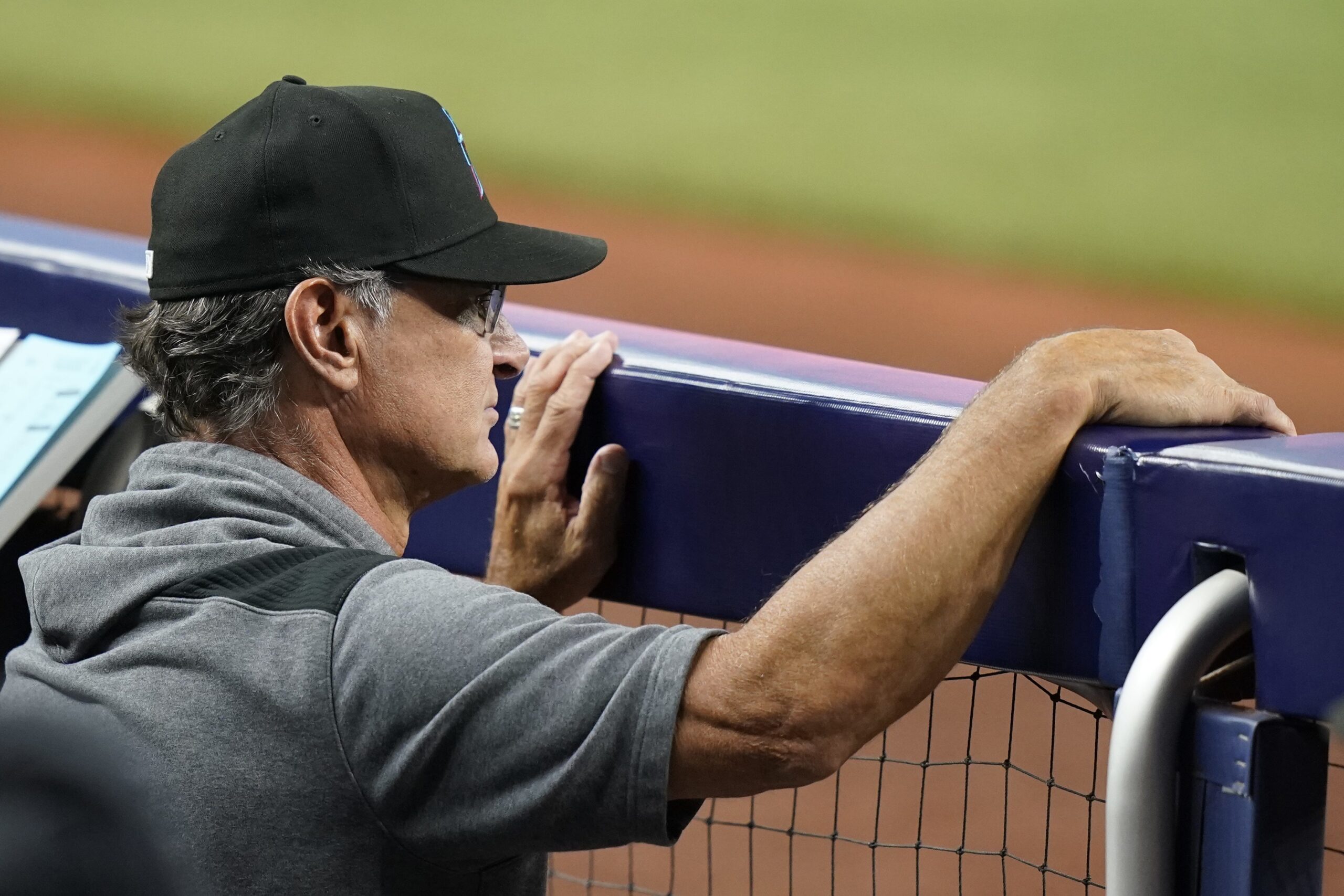
Don Mattingly managed the Marlins for seven seasons after leading the Dodgers for five.
“We can now blame Don for it,” Thomson joked.
Mattingly might have agreed to support Thomson for the next two seasons, but he agreed to much more than just making sure that Topper doesn’t bunt again in the ninth with nobody out.
Superstar Don
Mattingly immediately validates a coaching room full of excellent, but anonymous, teachers of the game. With a roster that includes Bryce Harper, Kyle Schwarber, Trea Turner, and Wheeler, in a game in which nothing carries more weight than having withstood the brightest lights yourself, this cannot be overstated.
“He’s a great sounding board for our stars because he’s been there and done all these things,” Thomson said. “The rest of us really can’t [say] that.”
Sheriff Don
One of the most important services a bench coach provides is as a buffer between a manager and the players or as an enforcer who snuffs sparks before they become fires. It’s doubtful that Nick Castellanos’ insubordination or Strahm’s frequent criticisms would have proliferated if Mattingly had been around the clubhouse.
Manager Don
Asked if he ever wanted to wear the skipper hat again, Mattingly was steadfast and insistent in his reply.
“I feel like those days have passed me by; I don’t have any aspirations to manage,” Mattingly said. “I don’t think I have the energy for that anymore.”
If the Phillies stumble early in 2026, or if, heaven forbid, something incapacitates Thomson, Mattingly will be the obvious choice to replace him. You simply don’t take a job as bench coach without the understanding that you will manage the team in case of dismissal or emergency. Also …
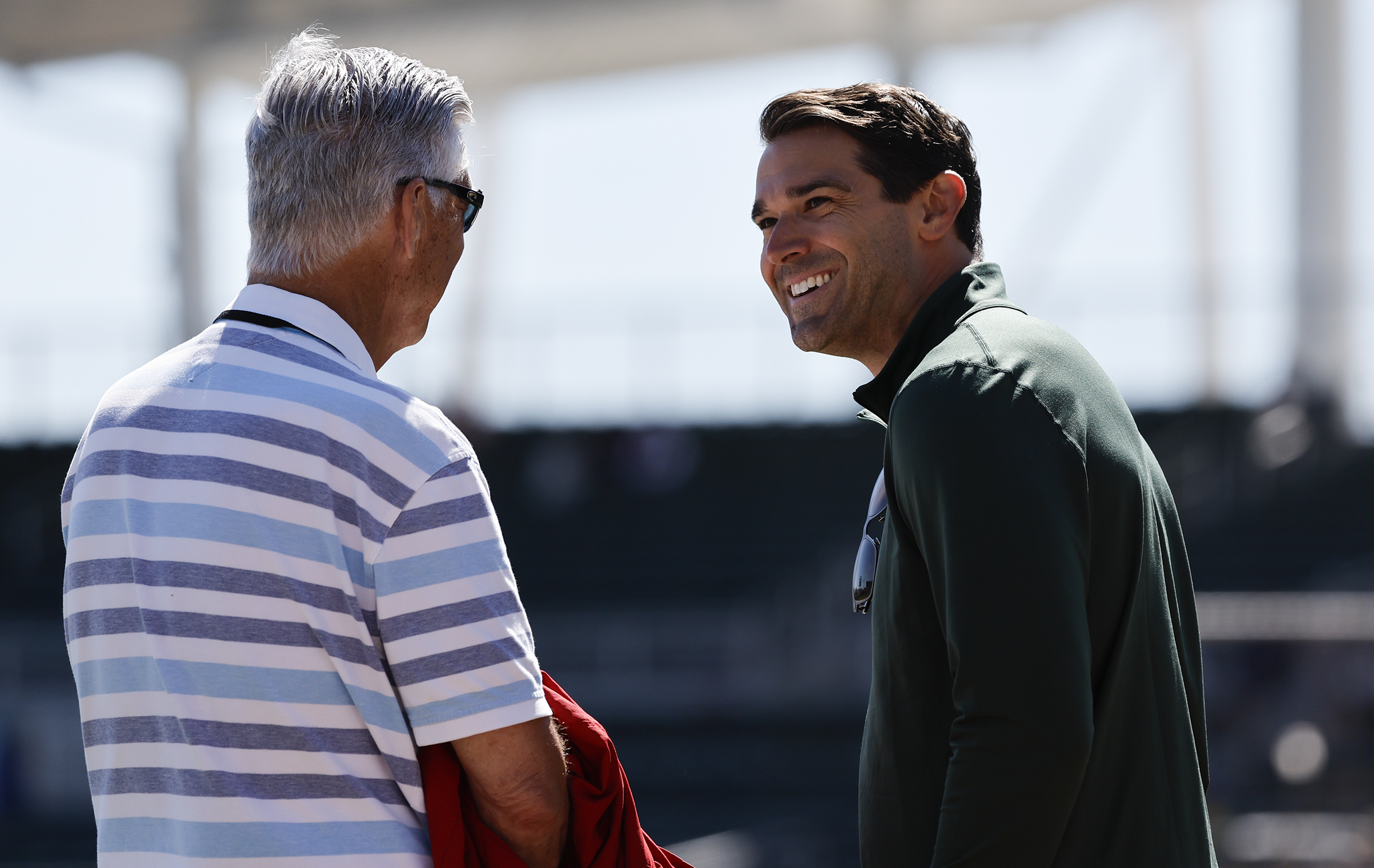
Preston Mattingly (right) with Dave Dombrowski, is going into his second season as Phillies general manager.
Daddy Don? Spy Don?
The Phillies and Mattingly want us to believe that the presence of Preston Mattingly as the Phillies’ general manager is almost entirely coincidental to their pursuit of him and of him delaying retirement. Mattingly swore that, even though Press is his son, he never would betray the sanctity of the dugout and clubhouse to the front office.
“I’m not a voice running upstairs to talk about anything and everything,” Don said, clearly aware that some organizations are run in exactly that manner. “I came from a different era where that is not something that happens.”
That said, after more than four decades of playing and working in the majors, Mattingly admitted that he has envisioned the sweetness of winning the first World Series with his son as his boss.
“To be able to do that with him would be incredible,” Don said.
Incredibly difficult.
In fact, even chiming in on Thomson’s occasional cockeyed decisions, and even riding herd over a roster full of coddled princelings, maintaining a normal father-son relationship while balancing a strictly professional GM-bench coach relationship will be the hardest part of old Don Mattingly’s new job.
There was a point last season when Don Mattingly was planning on calling it a career.
He went into 2025, his third year as the bench coach with the Blue Jays, expecting it to be his last in the sport. Mattingly, now 64, thought he had accomplished what he had set out to do in Toronto, helping a younger manager in John Schneider become established.
But it was his 11-year-old son, Louis, who helped change his mind.
“Dad, you can’t stop,” Louis told him. “You’ve got to keep going.”
And after Toronto fell to the Dodgers in Game 7 of the World Series — marking Mattingly’s first World Series appearance in more than 40 years in baseball as a player, manager, and coach — he was approached by the Phillies for their open bench coach job.
The position had been vacated after Mike Calitiri was moved to the role of major league field coordinator at the end of the season. The fit was natural on both sides. The Phillies wanted a veteran voice to add to manager Rob Thomson’s staff. Mattingly managed the Dodgers from 2011-15 and the Marlins from 2016-22.
He had also previously worked alongside Thomson and hitting coach Kevin Long in the Yankees organization, as well as assistant hitting coach Edwar Gonzalez with the Marlins.
And he will reunite with another of his sons, Preston Mattingly, who is the Phillies’ 38-year-old general manager.
“When it came to me that there was a possibility that Donny was going to be available, I said, ‘This is the perfect guy,’” Thomson said Monday after the Phillies announced that Mattingly’s hiring was official. “Because I know the integrity, I know the knowledge. I know how detailed he is. And plus, I think he’s a great sounding board for our players and our stars. He’s been there, and he’s done all these things, and the rest of us really can’t answer that.”
Thomson’s contract was recently extended through 2027, and Mattingly said Monday he had committed to “a couple of years” with the Phillies’ manager.
He also said he has no further aspirations to be a manager again. His approach as a bench coach is to be another set of eyes and ears for Thomson.
A six-time All-Star, Don Mattingly was a career .307 hitter over 14 seasons with the Yankees.
“I know it gets busy and fast at times when you’re thinking about your pitching, and then you got a pitch-hit situation, and all those things get fast,” Mattingly said. “ … Try to stay ahead of him and just lighten the load for him.”
Mattingly’s playing career, during which he was a six-time All-Star, nine-time Gold Glove winner at first base, and 1985 American League MVP, also influences how he coaches.
“The one thing I’ve tried to always do is never forget how hard the game is,” Mattingly said. “Guys make a lot of money, and we expect them to come through all the time, and that’s just not that way. … I’m always going to try to be myself [in] any role that I’ve played, as a coach or a hitting coach or manager, I feel like I’m here to help players. I’m here to serve, help them get the best out of their ability.”
Mattingly managed Phillies pitcher Jesús Luzardo on the Marlins, and is looking forward to developing relationships with the other Phillies players. He met Bryce Harper at the 2017 All-Star Game in Miami.
“He’s always been a guy for me who’s been really interesting, just because of how young he was when he came [up], how good he was when he broke into the league, watching his development over the years,” Mattingly said of Harper. “This cat can go, for me. He’s a first-ballot Hall of Famer, hands down. So I love being around guys like that.”
It’s a bit of an unusual arrangement to have his son in the front office, but Mattingly said his priority is preserving trust with the players.
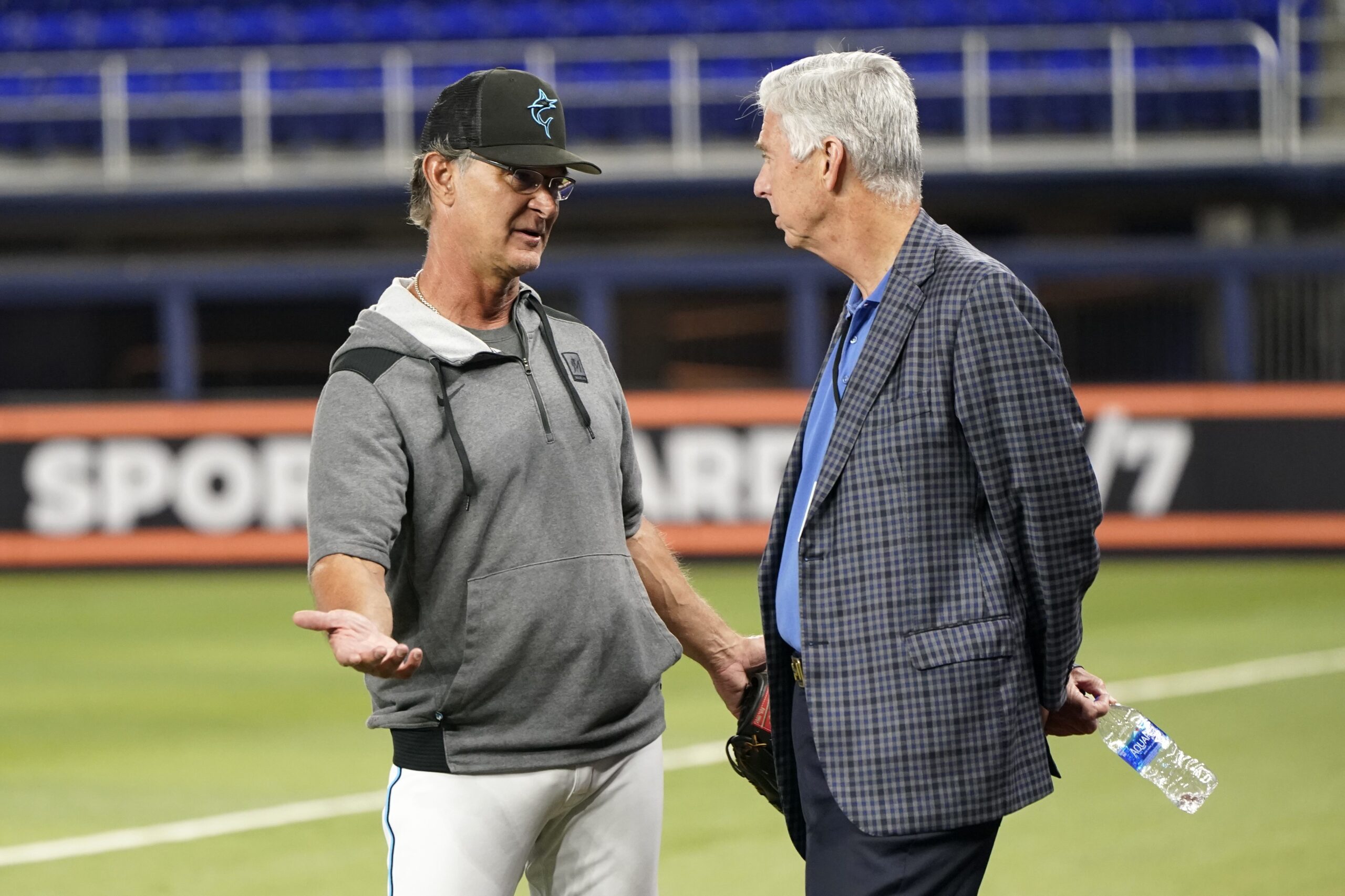
Don Mattingly, then the Marlins manager, talks with Phillies president of baseball operations Dave Dombrowski before a game in 2022.
“I’m not a voice that’s just running upstairs and talking about anything and everything,” he said. “That’s just not the way I operate. I came from a different era where that is not something that happens. I’m going to have to build that trust with players so they will trust me that that’s not going to happen.”
But there is also the possibility for a storybook ending for Mattingly’s career. He had hoped last season that Toronto would meet the Phillies in the World Series to go head-to-head with Preston. Now, they’re on the same side.
“To be able to do it with him would be incredible,” Mattingly said.
Maybe Bryce Harper is still ticked off. Maybe, even after his air-clearing with Dave Dombrowski, he implanted a chip on his shoulder. Maybe he’s just trying to sell T-shirts.
Either way, he got our attention.
As usual.
In case you missed it, because the holidays can be hectic, the Face of the Phillies posted a 101-second TikTok video in which he took seven swings while wearing a long-sleeve black shirt with two words — NOT ELITE — printed in all caps across the chest.
Whatever the motivation, Harper’s choice in workout wear was as intentional as his “Rivalry Pack” cleats or his color-coordinated arm sleeves. He rarely does or says anything without thinking it through.
And if Dombrowski’s candid assessment of Harper’s 2025 — “He didn’t have an elite season like he has had in the past,” the Phillies’ president of baseball operations said in October — rang in Harper’s ears as he rang in the New Year, well, would it be so bad? The last time someone publicly slighted him, Harper homered twice and stared a hole through Braves shortstop Orlando Arcia in Game 3 of the divisional series in 2023.
Besides, Dombrowski wasn’t wrong. Although he omitted the inflamed right wrist that sidelined Harper for a month and ate into his counting stats (e.g., homers, RBIs, walks), Harper lagged in other areas.
To wit: Harper swung at 35.6% of pitches out of the strike zone, 129th among 144 qualified hitters, according to Statcast, and worse than the league average (28.4%) and his career mark (29.3%). If you’re wondering why he faced a lower rate of strikes (43%) than any hitter in baseball last year, that’s the biggest reason.
“He expanded a little bit more than we’re accustomed to,” hitting coach Kevin Long told Phillies Extra, The Inquirer’s baseball podcast. “I don’t know what his actual chase rate ended up being, but it was probably 35%. That’s high. If he gets that number down to 32, just drop it 3%, now he’s swinging at better pitches [and] he’s going to do more damage.”
But while Harper must revert to better plate discipline, the Phillies could also stand to better protect him in the batting order. Manager Rob Thomson is already scribbling possible lineups, crossing them out, and making new ones.
“I’ve got some ideas, but I haven’t talked to the players yet,” he said last month. “I don’t want to talk much more about that. But, yeah, I’ve thought long and hard about it.”
Two-thirds of the way through the offseason, it’s fair to wonder if Dombrowski has provided Thomson with better alternatives than he had last season. With five weeks until spring training, let’s look at the options:
Kyle Schwarber (right) batted in front of Bryce Harper for most of the 2025 season en route to finishing second in the NL MVP race.
Two weeks into last season, after Harper drew 10 walks in 12 games, Thomson moved Schwarber down in the order to bat third or fourth behind Harper.
It stayed that way for 45 games.
But Harper injured his wrist, and upon returning, Schwarber was firmly in the midst of a 56-homer season that resulted in a runner-up finish in the NL MVP race. Thomson left him in the No. 2 hole, one spot ahead of Harper.
“Schwarber is having, at that point, a career year, and I just didn’t want to mess with it,” Thomson said. “And the fact that Harper was protecting Schwarber, too.”
Fair enough. And then there was this: Although Schwarber would seem to represent Secret Service-level protection, Harper saw even a lower rate of strikes (41.7%) while batting behind him.
“It’s actually gotten worse,” Harper noted in May, “which is crazy.”
Long’s theory: When it comes to superstar hitters, lineup protection doesn’t matter much. In Harper’s case, the numbers support that idea. He has seen only 42.7% of pitches in the zone in seven seasons with the Phillies and 42.1% since he arrived in the majors.
Former Cubs manager Joe Maddon once walked Harper 13 times (four intentional) in 19 plate appearances over four games at Wrigley Field in 2016.
“I don’t care where you hit [Shohei] Ohtani, I think they’re going to pitch him the exact same way,” Long said. “They’re scared to death of him. I think Harper’s in that category. You can kind of put him wherever you want, but I do not think pitchers are going to give in to him. I just don’t. I think they’re going to try to be very careful.
“Can we maybe help him out and put somebody [else] behind him? That may be part of the equation as well. But in Bryce’s case, I think it’s more, if this is where it’s been the last six years since he’s been here, then the onus falls on me to make sure that he’s swinging at the right pitches and him to make sure that he’s not expanding. No matter what, he has to control his at-bats.”
The path of least resistance is to put Schwarber back behind Harper, an alignment that Thomson is considering. Thomson prefers to alternate left- and right-handed hitters through the order. But Schwarber’s success against lefties (.300 average in 2024; major-league-record 23 left-on-left homers in 2025) leaves Thomson comfortable with Harper and Schwarber back-to-back.
It might be easier to protect Schwarber. He tends to be more disciplined than Harper (21.5% out-of-the-zone swing rate last season; 22.8% for his career). He strikes out more often than Harper but is less likely to get himself out in front of the Phillies’ middle-of-the-order righty options, such as …
Adolis García is poised to be the Phillies’ right fielder after signing a one-year, $10 million contract.
In 2022, the Phillies threw $100 million at Nick Castellanos to supply sock from the right side. Among 179 hitters with at least 1,500 plate appearances in the last four seasons, he ranked 87th in slugging (.426) and 172nd in wins above replacement (1.3).
And now, he’s about to disappear.
Castellanos clashed with Thomson and lost his everyday job last season. All parties agree that a change of scenery is best. The Phillies will trade or release him, likely before spring training. Either way, they will pay all or most of his $20 million salary in the final year of his contract.
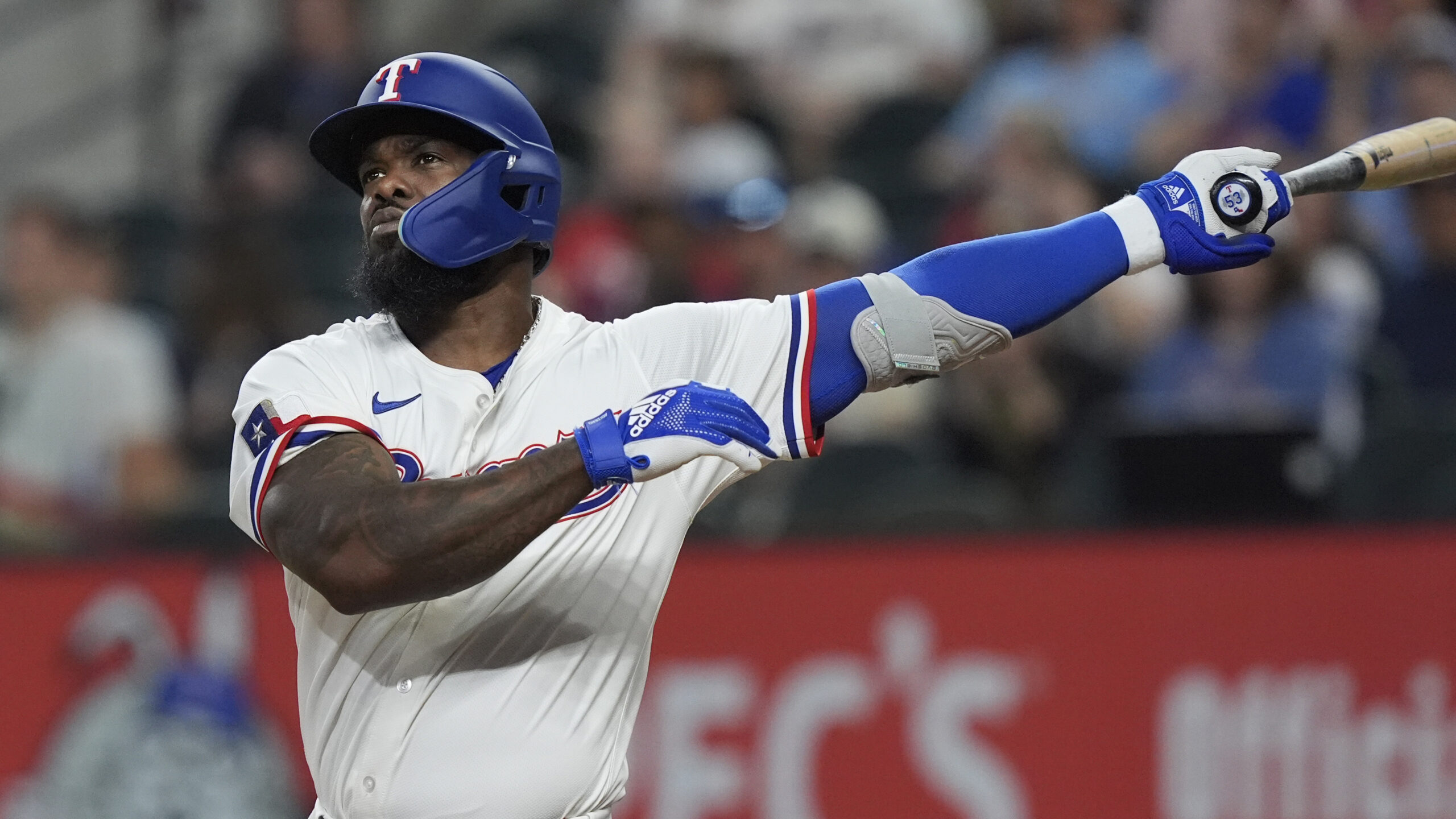
The Phillies already replaced Castellanos with free-agent right fielder Adolis García, a candidate to bat behind Harper if he hits like he did earlier in his career. From 2021 to ‘23, García slugged .472 with 97 homers, tied for sixth among all right-handed hitters.
But García was available because of the last two seasons. He slugged .397 and hit 44 homers, tied for 28th among all right-handed hitters. His swing-and-miss rate soared. And he got non-tendered by the Rangers.
Maybe García can provide at least a $10 million value at a position that will cost the Phillies roughly $30 million. If so, he’d be viable as right-handed protection for Harper in a batting order that would look something like this:
Bohm emerged in 2023 as the Phillies’ best protection for Harper. He excelled with runners in scoring position, often making teams pay for pitching around Harper, and drove in 97 runs in back-to-back seasons in 2023 and ‘24. He started the All-Star Game in 2024.
The Phillies balked at trade offers for Bohm last offseason, with rival teams suggesting they overvalued a player who hasn’t hit more than 20 homers in a season. Then he got off to a brutally slow start, prompting a move down in the order and the Harper/Schwarber arrangement. Bohm dealt with injuries through the middle of the season and finished as a league-average hitter (102 OPS-plus).
Is he primed to bounce back? Or is he who he is?
“I think he’s much closer to that type of [97-RBI] hitter than he was last year,” Dombrowski said. “All of a sudden you put him, that same guy, fourth or fifth in your lineup, and I think that’s a pretty good addition in itself.”
J.T. Realmuto (left) has batted behind Bryce Harper at times over the last several seasons.
Getting creative
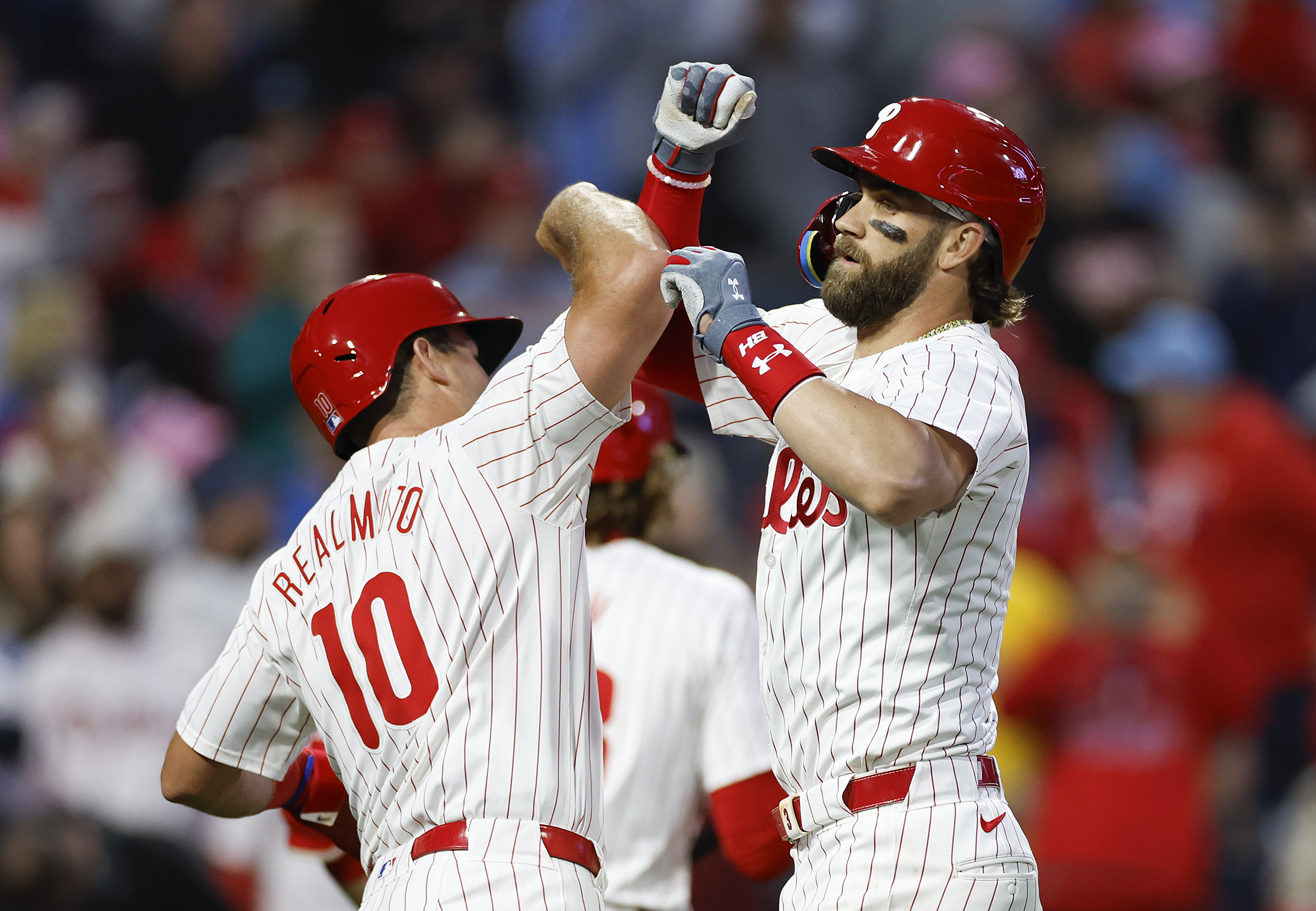
After the All-Star break, nobody took more at-bats behind Harper than J.T. Realmuto, mostly a function of Bohm’s injuries and Castellanos’ reduced role. But at times over the years, the iron-man catcher reliably protected Harper.
Now, Realmuto and the Phillies are having a staring contest over variations of a multiyear contract, the free-agent catcher seeking a better combination of years and salary. There’s still mutual interest in an agreement, according to major league sources. It remains likelier than not that they will come together.
But what if they don’t?
The Phillies’ contingency plan could set in motion several dominoes. First, they would pivot to a catcher, in free agency or a trade, to pair with Rafael Marchán or Garrett Stubbs. The new catcher would be a downgrade from Realmuto but also cost less than his catcher-record $23.1 million annual salary.
The savings could then be applied to another area of the roster. Maybe an addition to the rotation — Ranger Suárez is still available — or the bullpen?
Or, if Bohm had to be packaged for a catcher, the Phillies could take a run at a free agent, such as Alex Bregman or Bo Bichette, right-handed hitters with power who could slot in behind Harper.
“I am about [lineup] protection, and I’ll argue that with anybody,” Maddon said. “Regardless of what the stats indicate, if the number of balls out of the zone are the same, I still would put somebody back there [behind him] because I still believe it causes pause with how you’re pitching.
“Maybe you say, ‘If we walk him, we walk him.’ There’s that attitude, also. But if there’s a guy behind him, I’m telling you, you’re not going to want to do it if there’s a real guy.”
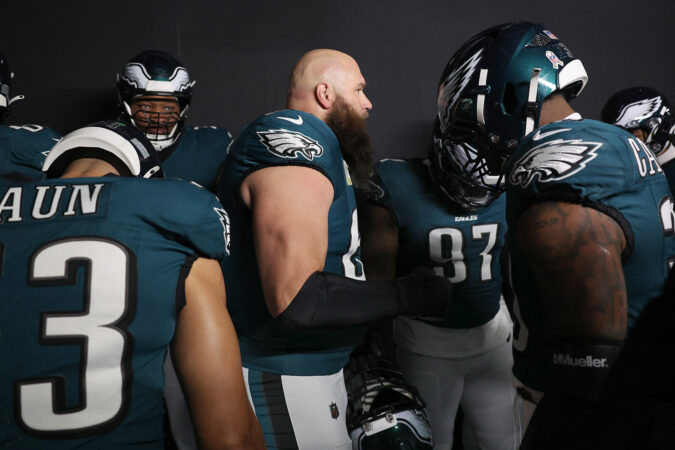
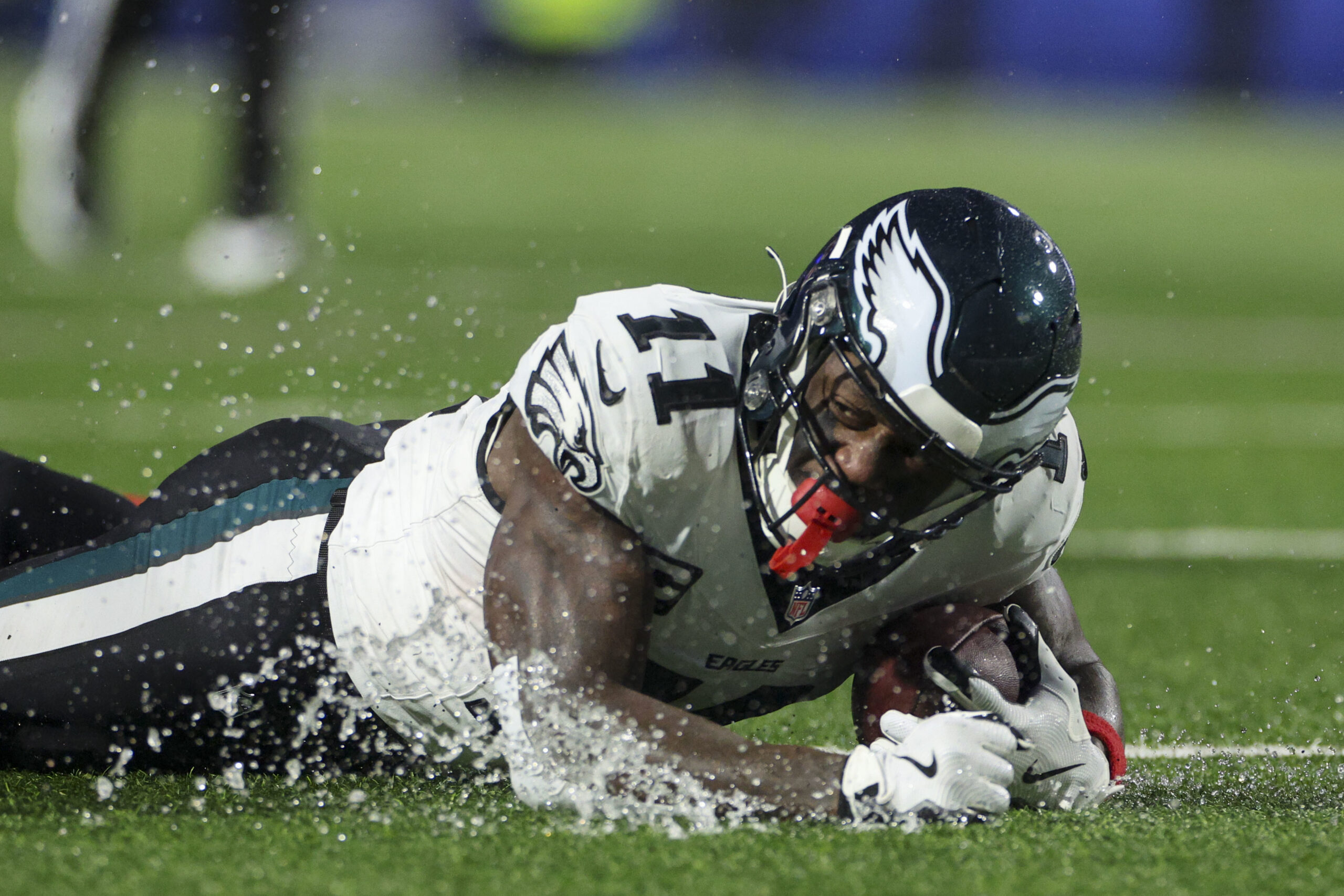
The stakes for the Eagles on Sunday are clear: If they beat the Washington Commanders and if the Detroit Lions beat the Chicago Bears, then the Eagles would secure the No. 2 seed in the NFC playoffs.
It would likely make for an easier road back to the Super Bowl (easier on paper, anyway), because they’d be assured of having home-field advantage in at least the wild-card and divisional rounds, and the matchups they’d face in those games might be more favorable.
So the Eagles had a choice: They could play their starters against the Commanders, giving their most important players no rest ahead of the postseason, with no guarantee that, even if they beat Washington, that they’d end up with the second seed anyway.
Or they could sit their starters, banking that a well-rested team would be better off no matter who or where it plays. Nick Sirianni and his staff, as we now know, opted to rest the starters.
It was the right decision, for this reason: Given that Washington is 4-12 and will have third-stringer Josh Johnson at quarterback Sunday, there’s a decent chance that the Eagles will secure the best of all outcomes for themselves.
They can give their starters a week off, still win the game, and have the Bears lose to the Lions. After a regular season that raised some questions about the Eagles’ ability to repeat, that scenario would be a timely reassertion of strength from the defending champs.
Too hot for pucks
The entire premise and most of the appeal of the NHL’s Winter Classic, when it began in 2008, were based around the notion that hockey in its best and purest form was a cold-weather sport.
A pond or stream or lake froze over. Kids bundled up, grabbed their skates and sticks and a couple of rickety little goal nets, and just played. The sport was a natural and seamless part of life in Canada and in certain regions of the United States.
But not in Miami. Which is where this year’s Winter Classic, between the Florida Panthers and the New York Rangers, was held Friday. How do you know a gimmick has gotten stale? When you’re playing an outdoor hockey game in early January in a place where it’s 70 degrees in the shade.
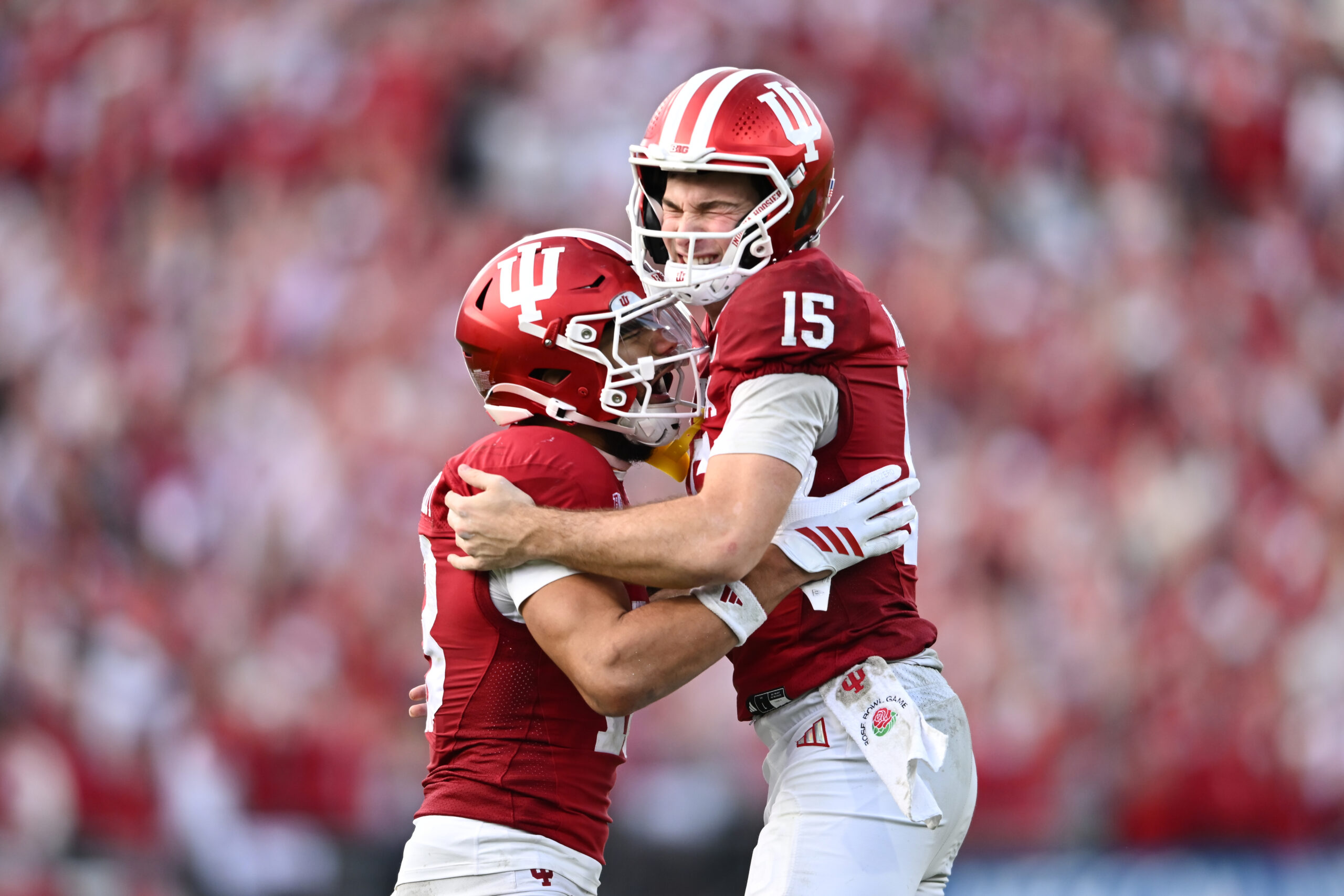
Quarterback Fernando Mendoza (right) and Indiana routed Alabama on the way to the College Football Playoff semifinals.
Hoosier daddy?
The benefit of the 12-team College Football Playoff is that it is a great revealer. Most of the sport’s regular season is marred by “expert analysis” that is based on little more than arrogance and presumptuousness: The SEC is obviously a better and more challenging league than the Big Ten, which is better and more challenging than the Big 12, which is way ahead of the ACC, and so on. It’s regional bias and figure-skating-style judging all the way down.
Then they actually play the games. And we learn that Alabama has no business being on the same field as Indiana, that Texas Tech is a long way from the days of Kliff Kingsbury and Patrick Mahomes, that Ohio State’s lopsided intraconference victories aren’t a true indication of how good the Buckeyes really are.
Dave Dombrowski apparently provided Bryce Harper with some extra motivation this offseason.
An elite idea
Bryce Harper recently posted a video of himself taking batting-cage swings while wearing a T-shirt with “NOT ELITE” across the front, a reference to Phillies president Dave Dombrowski’s description of Harper’s 2025 season.
You’ve got to love that defiant, near-vindictive energy from Harper, and it was a brilliant idea to take Dombrowski’s words and strip them across a shirt. Imagine an entire apparel line, marketed to individual athletes, made up of critical yet potentially inspiring phrases. The possibilities are endless.
In his 33 games during his only year of college basketball at Baylor, VJ Edgecombe took 4.6 three-pointers a game and made 34% of them. In his 28 games so far with the 76ers, he is taking 5.8 a game and making 38% of them. That improvement might be the most pleasant surprise of his terrific rookie season.
One last one-liner
Congratulations to former Eagles great Frank Gore for being a Pro Football Hall of Fame finalist.
Former Phillies star Lenny Dykstra was arrested for possession of narcotics and narcotics paraphernalia during a traffic stop just after midnight on New Year’s Day in Northeastern Pennsylvania, the state police said.
Dykstra, 62, who lives in Scranton, was a passenger in a 2015 silver GMC Sierra truck in the area of Route 507 and Robinson Road in Greene Township, Pike County, when the vehicle was stopped by the Pennsylvania State Police for an alleged motor vehicle code violation, the state police said in a report.
“During this investigation, the passenger was found to be in possession of narcotics and narcotic related equipment/paraphernalia,” the state police report said. “Charges to be filed.”
Neither Dykstra nor the Pike County District Attorney’s Office could be reached for comment Friday night.
Dykstra played 12 seasons in Major League Baseball in center field, spending the first four with the Mets — including as part of the team that won the 1986 World Series — before being traded to the Phillies during the 1989 season. He retired with the Phillies in 1996.
Nicknamed the “Dude” and “Nails,” Dykstra was a celebrated member of the 1993 Phillies team that made it to the World Series, but lost to the Toronto Blue Jays.
After his baseball career, Dykstra ran afoul of the law multiple times. He spent time in prison after pleading guilty in federal court for bankruptcy fraud and pleading no contest to grand theft auto in California.
In February 2024, Dykstra suffered a stroke. In an interview later that year with the Times-Tribune in Scranton, he reflected on his health recovery and his legal and drug problems.
Dykstra told the Times-Tribune he did some drinking while playing for the Mets, but his drug use intensified when he played for the Phillies.
“It was a pharmacy,” he said.
Dykstra said he liked using drugs and alcohol, but did not consider himself an addict, the Times-Tribune reported.
“There were a lot of other players that were worse than me,” he said.
You never see the biggest stories coming. That’s kind of by definition, isn’t it?
The year 2025 was relatively quiet one as far as seismic activity goes. The Sixers’ arena switcheroo probably was the biggest pure news story next to the Eagles’ Super Bowl win. Compare that to 2024, in which Saquon Barkley and Paul George signed, Jason Kelce retired, Matvei Michikov arrived, and the Sixers went belly-up. That, in addition to Carter Hart being arrested, Cutter Gauthier forcing a trade, and Haason Reddick being traded.
It’s impossible to say whether the earth will shake in 2026. But if it does, here is how it could happen:
1. Lane Johnson announces his retirement after 13 NFL seasons and leaves the Eagles scrambling.
At this point, nothing suggests that Johnson will seriously consider retiring after the season. The contract extension he signed last year tacked on $40 million in guarantees in 2025 and 2026. That’s a pretty good reason for Eagles fans to take comfort, especially if Johnson returns to the field for the postseason, as is expected. He’d be walking away from some serious money if he retired this offseason.
At the same time, we’d be foolish not to at least acknowledge the possibility, given the dramatic implications it would have on the Eagles’ roster. Johnson has been the single biggest reason the Eagles have seamlessly bridged their competitive teams through a rotating cast of quarterbacks and head coaches. There will be no replacing him, at least not immediately.
Johnson has been open about the punishment that the NFL has inflicted upon his body over the years. That’s worth noting after a regular season in which he missed seven games because of injury for the first time since 2020 and just the second time in his career.
At 35 years and 239 days, Johnson is the second-oldest offensive lineman to play at least 300 snaps this season. Only Kelvin Beachum has him beat at 36 years, 207 days. Since 2015, only seven offensive linemen have a season of 12-plus starts at age 36 or older.
Eagles wide receiver A.J. Brown shown after making a catch against the Bills on Sunday in Buffalo.
2. A.J. Brown gets traded for a conditional 2027 second round pick that can become a first; Eagles immediately invest in a replacement.
Forget about Brown’s public grumbling for a moment. Consider instead this fact: In the 10 games in which Brown has seen eight or more targets, the Eagles are 5-5. In the five games in which he has seen fewer than eight targets, the Eagles are 5-0. Kind of strange, isn’t it?
Correlation doesn’t equal causation, but Brown’s on-field performance clearly has dipped this season. In his first three years with the Eagles, he looked like a receiver who belonged in the conversation for best in the sport. That hasn’t been the case this season. The explosiveness, the burst, the strength at the point of attack and in the air appear to be diminished. The numbers reflect it. His 8.3 yards-per-target is down nearly 20% from 2022 to 2024 (10.3), as is his yards per reception (12.9, down from 15.4) and his catch percentage (52.1, down from 56.3).
Brown is at an age at which decline can come fast at the wide receiver position. Cooper Kupp hasn’t broken 850 yards in a season since turning 29. Same goes for Brandin Cooks and Odell Beckham Jr.
DeAndre Hopkins averaged 1,380 yards per season from 25-28 years old and 644 yards at 29-30 years old. Adam Thielen averaged 6.4 catches and 82.8 yards per game at 27-28 and 4.2 catches and 53.7 yards at 29-30.
Alshon Jeffery, Allen Robinson, Michael Thomas, Tyreek Hill … the list goes on. For Antonio Brown, Julio Jones, Amari Cooper, Stefon Diggs, and Antonio Brown, the drop-off came at 30 or 31.
There are exceptions: Davante Adams, Keenan Allen, Mike Evans. But they are very much exceptions.
To justify trading Brown, the Eagles almost certainly would have to have a replacement lined up. Jahan Dotson clearly isn’t a suitable second option. In the four regular-season games Brown has missed over the last two seasons, Dotson has a total of five catches for 25 yards. In those four games, the Eagles’ total wide receiver production outside of DeVonta Smith was 20 catches for 94 yards.
The Eagles would save about $7 million against the cap if they traded Brown after June 1. They might be able to accommodate a free-agent offer to somebody like Alec Pierce, the Colts deep threat whose all-around game took an intriguing step forward this season. But there are a lot of teams that will be in the free-agent market this season, with the Patriots and dream quarterback Drake Maye at the top of the list.
Even if Brown isn’t the player at 29 years old that he was at 27, he would still be difficult to replace. Combined with the limited financial upside of moving him, we’ll have to see this story to believe it.
Sixers center Joel Embiid has scored 27 or more points in his last three games.
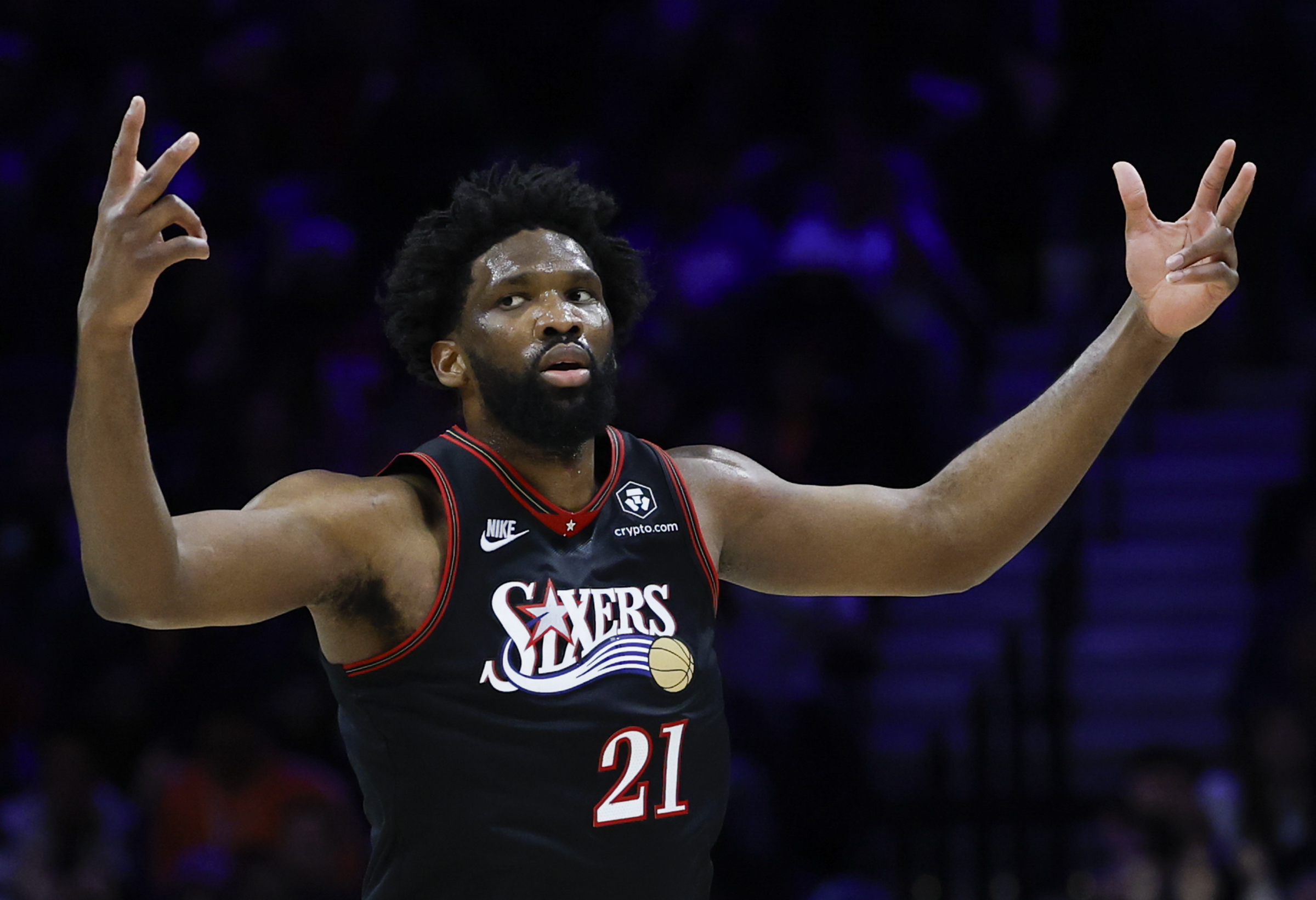
3. Joel Embiid helps to lead the Sixers to a first-round playoff upset and sparks trade interest among teams desperate to catch the Thunder and Spurs.
Embiid entered the new year having scored 27-plus points in three straight games. That counts as an accomplishment these days. He looked like an empty husk of his former self in his first nine games of the 2025-26 season, averaging just 18.2 points on a woeful .441 effective field goal percentage.
Question is, what if Embiid’s recent uptick in minutes and production is a signal that he has more left in the tank than we’ve given him credit for? He still needs to show a lot more defensively. And he has yet to play more than 71 minutes in a seven-day span. But he just logged 38 minutes in an overtime win over the Grizzlies, four days after playing a season-high 32 minutes in a loss to the Bulls.
With three years and $188 million left on his contract after this season, Embiid would probably have to be playing at his prime MVP level to have positive trade value. A more realistic question is whether he can play well enough to change the Sixers’ short-term narrative.
4. Eagles hire Shane Steichen or Mike McDaniel as offensive coordinator.
The Colts would be foolish to fire Steichen, who has somehow managed to put together a 25-25 record with the following starting quarterbacks: Gardner Minshew (7-6), Daniel Jones (8-5), Anthony Richardson (8-7), Joe Flacco (2-4), and Philip Rivers (0-3). But here is what owner Carlie Irsay-Gordon told the Athletic recently:
“Most people don’t like change,” said Irsay-Gordon, who has been patrolling the sidelines with a clipboard all season. “I think there’s something wrong with me, but I feel like it is the one thing that is a guarantee. I think it can be exciting.”
Even if the Colts part ways with Steichen, a team like the Giants could easily snatch him up. I can’t imagine Nick Sirianni would demote himself from head coach in order to restore Steichen as the play-caller. It definitely would be a heck of a story.
McDaniel might be a more realistic option, although he may be in the process of saving his job by leading the Dolphins to five wins in seven games.
5. Bryce Harper takes another step backward, as do the Phillies.
There has been enough passive-aggressive weirdness percolating between Harper and management that we have to at least flag him as the main character in a potential major story. Dave Dombrowski rankled Harper when he mused about Harper’s eliteness, but it is a legitimate question. At 32 years old, Harper is coming off his worst season in a decade. Another step backward would raise some serious concerns. And create some serious headlines.
An All-Star lineup of guests has joined The Inquirer’s baseball podcast since it launched in February. Because it’s the holiday season and the last Phillies Extra episode of the year, we’ve put together a “Best of 2025” show to revisit some of our favorite conversations, from Kyle Schwarber and Bryce Harper to Mike Schmidt and John Middleton, and many others. Watch here.
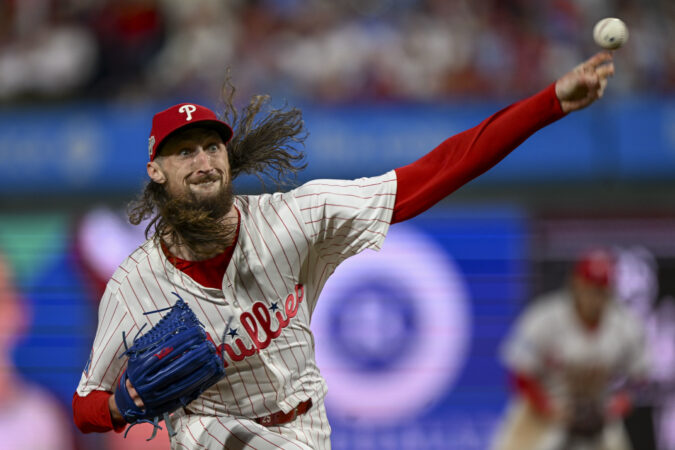
There were some signs that the Phillies and Matt Strahm weren’t long for this world. Small ones. The kind you see in a lot of relationships between headstrong people. Certainly nothing that suggested things were fractured beyond repair. Still, there was enough smoke to at least dampen the surprise when the Phillies decided to trade their versatile setup man to the Kansas City Royals last week.
Whatever the rationale for trading Strahm, his departure reopens a major question that appeared to be solved when the Phillies signed veteran high-leverage righty Brad Keller:
Will that Thomson have enough depth at the back of his bullpen to avoid another season of Russian roulette in the sixth and seventh innings?
We tend to focus on the eighth and ninth innings when assessing the strength of a team’s bullpen. But when you look at the game’s truly elite units, you’ll usually find that they are just as dominant in the bridge to their setup/closer combo. Think about the 2008-era Phillies. Ryan Madson and Brad Lidge were one of the best setup/closer combos in the game. But think about all of the big outs you saw from guys like Chad Durbin and J.C. Romero in situations that were just as pivotal as the ones Madson and Lidge would face.
A more recent example is last year’s San Diego Padres. The most dominant bullpen in the majors by a wide margin in 2025, San Diego relievers ranked ninth in the majors in total batters faced in the seventh inning while also allowing the fourth-fewest runs. The correlation between those two numbers makes sense: the better a manager’s options in the seventh inning, the more likely he is to go to that option rather than attempt to stretch his starting pitcher. Same goes for the sixth.
Those were the innings that killed the Phillies in their NLDS loss to the Los Angeles Dodgers. Eight of the 13 runs that the Phillies allowed over four games came in the seventh inning. Another two came in the sixth inning.
Not all of those runs were charged to the bullpen. But that’s not the whole story. Think about the seventh inning of Game 2, when Thomson stuck with Jesús Luzardo rather than going to his bullpen. Luzardo allowed two runners to reach base, both of whom ended up scoring off Orion Kerkering, who then allowed two runs of his own.
Phillies manager Rob Thomson has been forced to lean on his starters because of a thin bullpen.
A similar situation unfolded in the seventh inning of Game 4. Cristopher Sánchez took a 1-0 lead into the bottom half of the frame but allowed two of three batters to reach before Thomson pulled him. In fact, that game was Exhibit A for why a team needs at least three, and ideally four, arms who can thrive in situations where the outcome is in the balance. Not only did Thomson use closer Jhoan Duran in the seventh, and for five outs, he went to Luzardo for five outs in extras. The only other actual reliever who pitched in the first 10 innings: Matt Strahm.
In that context, it sure looks puzzling that the Phillies decided to trade Strahm for a middle reliever with a light big league track record (Jonathan Bowlan). How does a guy go from being a manager’s second-most-trustworthy option in a do-or-die postseason game to superfluous in barely two months?
Here was the explanation from Dave Dombrowski, who pointed out the presence of fellow lefties José Alvarado and fly-ball on the roster.
“We didn’t necessarily think we needed all three,” the Phillies’ president said. “[Strahm is] a year away from free agency. We were able to get a guy that we liked who has six years of [club control], and we think can help us right away. So you have to give to get. And we still feel good with our left-handers in the bullpen.”
Which is all well and good. Except, the Phillies never looked at Strahm like a typical lefty. He was even more effective against righties, in fact, with a .585 OPS against in 2025.
While the Phillies may like Bowlan, who has an impressive frame and an intriguing pitch mix as well as six more years of club control (albeit at the age of 29), Strahm’s presence in trade rumors over the last several weeks suggests the Phillies weren’t necessarily targeting the Royals’ righty. The driving force in this trade was that the Phillies were ready to move on from Strahm.
For some justifiable reasons.
Most conspicuous were Strahm’s comments after Kerkering’s fielding error in the Phillies’ NLDS elimination loss to the Dodgers, when he suggested that the team didn’t do enough pitcher’s fielding practice. A few days later, Dombrowski disputed Strahm’s characterization, going so far as to point out that Strahm did not participate in the PFP drills the team did have before the NLDS.
Not exactly bridge-burning stuff, there. But Strahm also showed some signs of decline in his age-33 season. When he was a well-deserved All-Star in 2024, he struck out a third of the batters he faced while walking 4.6% of them. Last year, both of those metrics worsened. He still struck out a solid 27.3% of batters, but his walk rate rose by almost 50%.
In fact, Strahm’s underlying results declined across the board, a clear indication that his stuff had diminished. Always a fly-ball pitcher, Strahm’s ground-ball rate plummeted by nearly a third in 2025, dropping from 31.9% to 23.8%. That decline correlated with a noticeable drop in life on his fastball, with his average velocity falling from 93.4 in 2024 to 92.3 in 2025, per Statcast.
Only four relievers in the majors have logged more than his 212⅔ innings since the Phillies signed him in 2023, three of them are younger than Strahm.
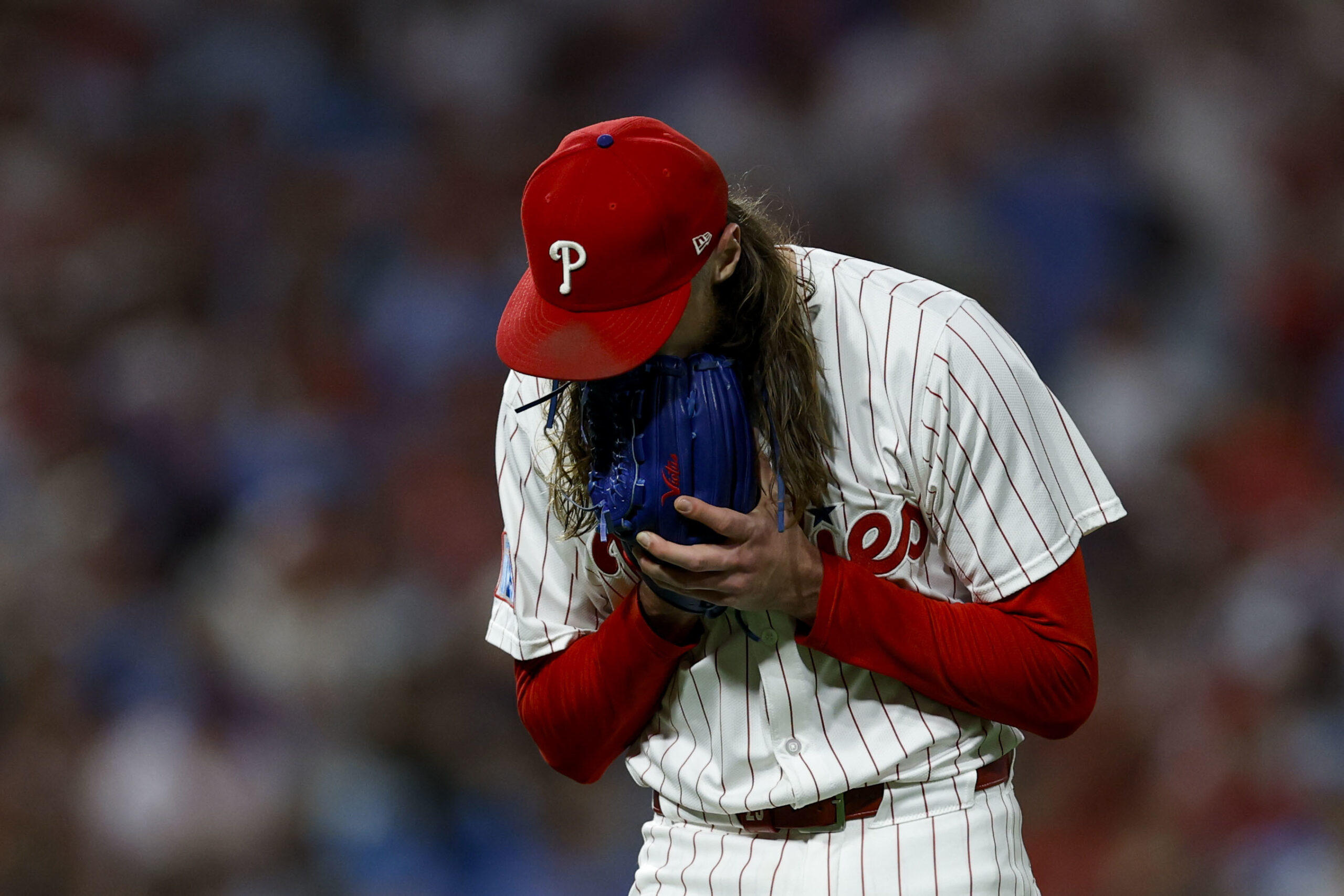
Phillies pitcher Matt Strahm yells into his glove after the Los Angeles Dodgers score three runs in the seventh inning in Game 1 of the NLDS.
There’s a realistic chance that this move looks like a nothingburger at worst by the end of next season.
Make no mistake, though. It’s a move that weakens the Phillies bullpen in the short term. Mostly, it puts a lot more pressure on Duran, Keller, and Alvarado to remain healthy and effective. If all three pitch to their potential, the Phillies will be plenty OK in tight games. But Alvarado is in his decline phase and is coming off a season where he missed 80 games and the postseason because of a PED suspension. Keller could be a one-year wonder. Behind them is Kerkering, who has yet to blossom into the high-leverage ace the Phillies envisioned and who will have to overcome the psychological trauma of his debilitating mistake in Game 4 of the NLDS.
No team would be comfortable with those kind of question marks in the ninth inning. But the seventh can be just as important, particularly when your roster is built around its starting rotation. Last year, Phillies relievers allowed the fifth-most runs in the majors in seventh innings, despite facing the fewest batters (513, or 101 fewer than the Padres). It has been a long-running theme under Dombrowski. Since 2021, the Phillies’ bullpen has the ninth-highest seventh-inning ERA in the majors (4.46), per FanGraphs.
Trading Strahm was a defensible move. But it could easily become one that Dombrowski regrets.
Clark Hunt and his family, who own the Kansas City Chiefs and are worth a reported $25 billion, are going to build a new domed stadium for the team in Wyandotte County, Kan. Wait, that’s not quite right. The Hunts aren’t really the ones building it. The construction is projected to take $3 billion to complete, but $1.8 billion — 60% of the cost — will come from Kansas taxpayers.
That’s OK, though, because once the stadium is finished, it’ll be a gleaming football palace where the Chiefs’ opponents will never have to face harsh Midwest winter conditions during December and January. The teams will play football the way it was meant to be played: inside an aseptic arena where the temperature is always 72.3 degrees Fahrenheit.
Best of all, the NFL is sure to hold at least one Super Bowl at the stadium. And by at least one, I mean one, because if there’s anywhere that the celebrities and fat cats and influencers who populate Super Bowl week can’t wait to go, it’s … the Missouri-Kansas border.
What we’re seeing here, of course, is the privatization of profit and the socialization of cost, a dynamic as old as the modern multibillion-dollar industry of pro sports. What we’re also seeing — and it will accelerate — is the slow death of the un-rich sports crowd. Those with the financial means to go to a game in the Chiefs’ new stadium — or in a new Eagles stadium, if Jeffrey Lurie eventually gets his way — don’t want cold and snow to mar their fun. They don’t want the experience they’re having to be common or accessible.
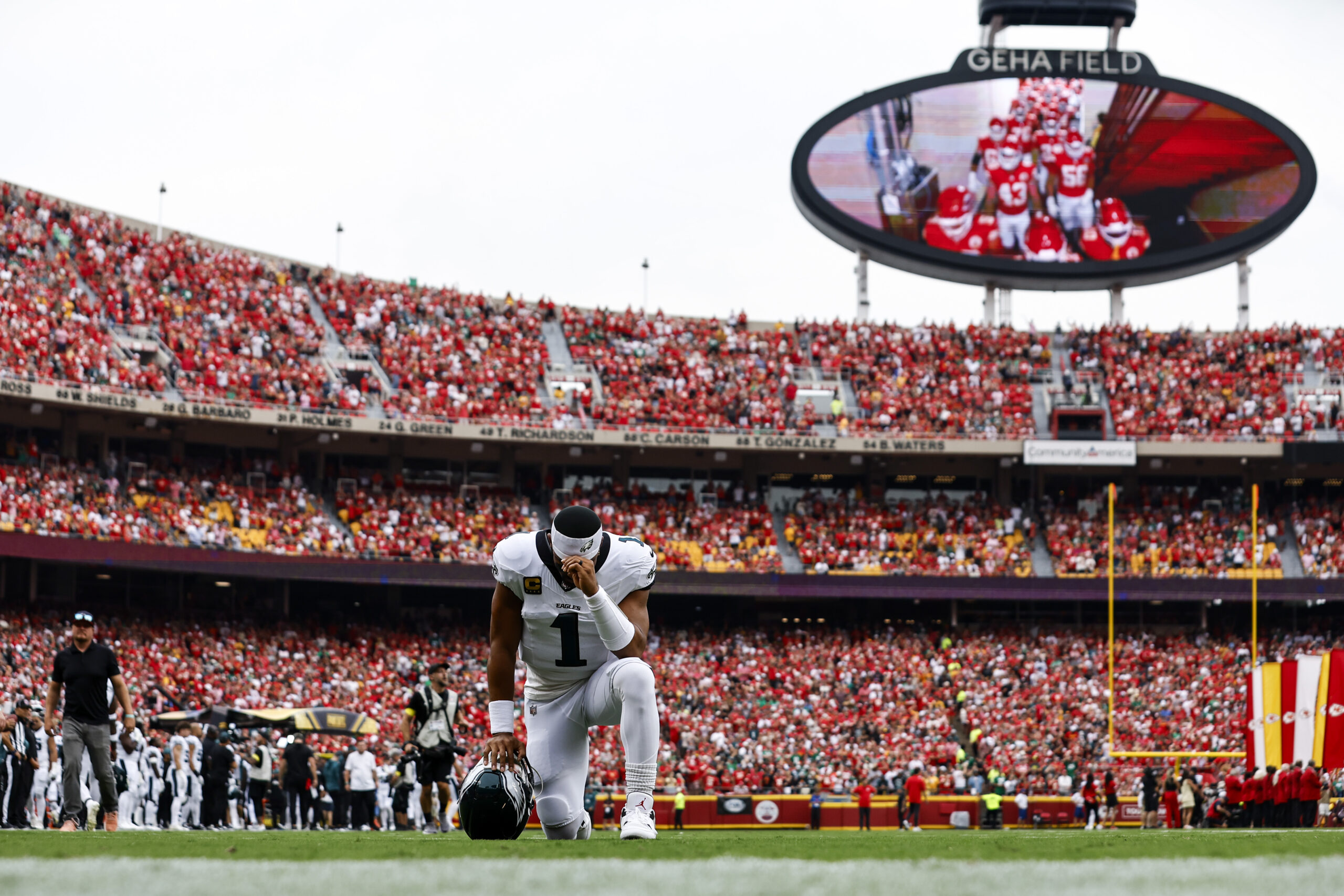
Eagles quarterback Jalen Hurts kneels in the endzone before a game at the Kansas City Chiefs on Sept 14.
Attending a major pro sports contest became a luxury buy long ago. Now it’s on its way to becoming a sterile exercise only a select few can afford, and those fans who care the most, who drive interest and revenue in these games boys and girls can play, end up paying anyway, even while they are kept on the other side of the window.
Still seeking a star
If the NHL season had ended on Christmas … well, that would be a really short NHL season. Also, the Flyers would have qualified for the playoffs for the first time since 2020, and Trevor Zegras would have been considered a brilliant offseason acquisition.
But the season, of course, isn’t even half-finished yet, and, given the Flyers’ recent history, there’s still plenty of reason to wonder whether they’ll keep up a postseason-worthy pace. That natural skepticism accounts for some of the relative indifference to their relative success so far. People will believe the Flyers are a good team when they see the Flyers be a good team over a full 82 games.
After falling out of favor in Anaheim, Trevor Zegras has rebounded in Philly, where he has 37 points at Christmas, besting his mark for the entire 2024-25 season.
There’s another reason, though, why the Flyers haven’t penetrated the broader, more mainstream public conversation about Philly sports so far: They don’t have any stars.
At his current pace, Zegras would finish with 34 goals and 83 points over 82 games, which would lead the team but place him 31st in the league in points per game. Offense has been up in the NHL for a while. This would be the fifth straight season that the average team has scored at least three goals each game, the first such stretch in the league since the early 1990s.
Yet the Flyers haven’t been part of that surge in scoring. They have not had a player with 35 goals or more in a season since 2011-12, when Scott Hartnell had 37. They have not had a player with 40 goals or more in a season since 2008-09, when Jeff Carter had 46. And they have not had a player with 50 goals or more in a season since 1997-98, when John LeClair had 51.
That recent history also explains part of the frustration and disgruntlement from the fan base over Matvei Michkov’s sluggish sophomore season. Michkov was supposed to be the franchise’s next superstar, and he still can be, but his regression has at least delayed his development into the kind of player who even a hockey neophyte knows and feels compelled to watch. The Flyers haven’t had such a star since Eric Lindros, and, at the moment, they still don’t.
Casty got one thing right
A tip of the cap to Mark Whicker, an all-time great Philadelphia sports columnist, for noting that Nick Castellanos delivered the quote of the year in Philly sports.
After Phillies pitchers Cristopher Sánchez and Ranger Suárez were snubbed for the National League All-Star team in favor of the Milwaukee Brewers’ Jacob Misiorowski, who had made just five starts, Castellanos said:
“This is turning into the Savannah Bananas.”
Nick Castellanos is likely out in Philly after a couple tough years in the field and at the mound.
No offense to the Bananas, who make baseball less stuffy and lots more fun for loads of kids in America. But Castellanos’ point about the All-Star Game being more than just a meaningless exhibition — that it is, still, supposed to be an acknowledgment of and accolade for those players who have performed best through a season’s first half — was well taken. Whatever one might think of his performance on the field in 2025, he launched that answer into the upper deck.
Good stuff, Gramps
In his two games with the Indianapolis Colts this season, nearly five years after he had retired, Philip Rivers — 44 years old, father of 10, grandfather of one — has completed 41 of 62 passes for 397 yards and three touchdowns.
How hard can it be to play quarterback in the NFL if Pop-Pop can do it this well?