
» READ MORE: This is a test – Merry Christmas
» READ MORE: This is a test – Merry Christmas
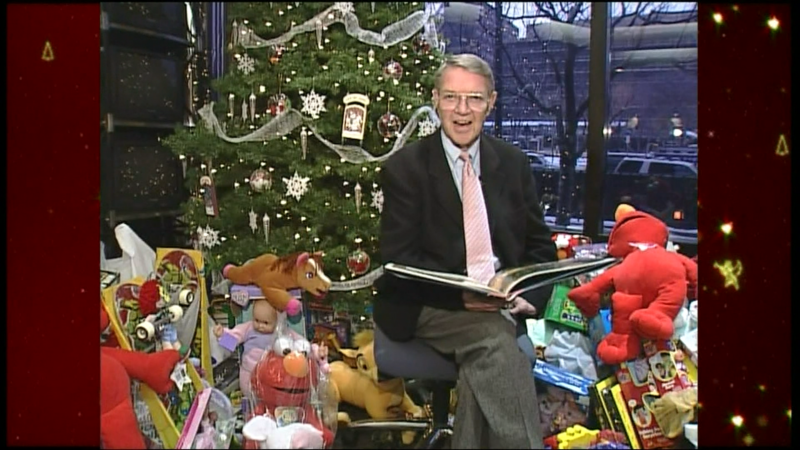
Harry Kalas loved Christmas. The holiday combined two of his favorite things: singing and making people happy. So when Andy Wheeler, a producer at CBS3, approached the broadcaster about reading ’Twas the Night Before Christmas in 2002, Kalas didn’t have to give it much thought.
“I’ll come right in,” he replied.
The station was recording a segment of five local broadcasters reciting the poem. Kalas would be featured alongside Marc Zumoff and Tom McGinnis of the 76ers, Merrill Reese of the Eagles, and Jim Jackson of the Flyers.
It aired Dec. 24, and a few years later, while cleaning out his desk, Wheeler found the unedited Kalas video. He watched it through, and suddenly, an idea popped into his mind.
They had the footage. Why not use the Kalas version in its entirety?
Wheeler (no relation to longtime Phillies announcer Chris Wheeler) presented it to producer Paul Pozniak and sports director Beasley Reece, who signed off. Christmas Eve was always a slow news day. This would give them something seasonal that undoubtedly would resonate with their audience.
A decades-long tradition was born. Barring breaking news (and Eagles games), the station has aired Kalas’ reading of the poem every Dec. 24 since 2005.
Management has no plans to change that.
“Obviously, people love Christmas and people love Harry Kalas,” Wheeler said. “And having him read that story, with his voice that everybody is so used to … I think people miss him and miss hearing him.
“It’s almost like watching a home movie of Christmases past.”
To Phillies employees, Kalas’ voice was as synonymous with Christmas as it was with summer. He loved carols and often sang them at the team’s holiday party.
The broadcaster would do this in a way only he could. Toward the end of the evening’s festivities, Kalas would ask those gathered to join hands to “sing the greatest Christmas song ever.” As they swayed back and forth, he’d belt out “Silent Night” in his baritone voice.
Dan Stephenson, the Phillies’ longtime video productions manager, compared it to a star gracing a stage.
“We knew at some point in the evening that Harry was going to be the entertainment,” he said. “And that was good enough for all of us.”
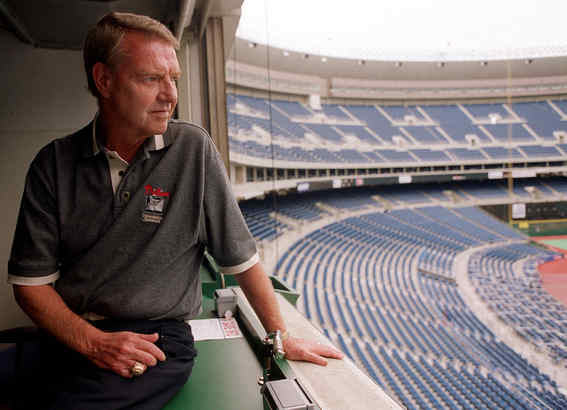
This wasn’t Kalas’ only December tradition. In the early 2000s, he visited retirement homes in the Philadelphia area to provide seasonal cheer.
Like the Phillies’ holiday party, these visits inevitably ended with Christmas carols. John Brazer, who worked in the team’s marketing department for 33 years, remembered driving Kalas to a retirement community in Media in 2005.
On the ride there, Brazer asked the broadcaster if he enjoyed singing to the retirees.
“John, I tell you what,” Brazer recalled Kalas saying. “I love it. I love Christmastime. But the songs I really love doing are the religious songs — ‘Hark the Herald Angels Sing’ and ‘Silent Night.’”
He got emotional for a moment, then abruptly changed his tune.
“But I really don’t like when they do a secular song. I’m not a big fan of ‘Jingle Bells’ and ‘Santa Claus is Coming to Town’ and stuff like that.”
Brazer and Kalas arrived at the retirement home a few minutes later. Kalas began taking requests, as an employee played along on the piano.
The first four songs were religious in nature. The fifth was not.
“Someone said, ‘Hey, Harry, can you sing ‘Jingle Bells?’” Brazer said. “And he [turned to] me with this disgusted look.”
Despite his personal opinions, Kalas launched into an upbeat rendition of the song with a big smile on his face, as if it were his favorite carol of all.

Brazer relayed the story to Stephenson, who wasn’t surprised. Kalas would sign every autograph with glee. He’d get all sorts of requests — fans asking him to record voicemail greetings, or to read the names of their bridal parties — and would always oblige.
It was about making people feel like they mattered.
“There was no way he wasn’t going to sing it,” Stephenson said with a laugh. “That was classic Harry.”

Wheeler had a December tradition, too. When he was a kid, growing up in Aston, his parents would read ’Twas the Night Before Christmas every Dec. 24.
The idea of having play-by-play announcers recite the poem on air was exciting, but when it came to Kalas, the young producer was nervous.
He grew up listening to the voice of the Phillies, and was worried about coming off as inexperienced (or worse, clueless). But when Kalas arrived to KYW’s studios at 5th and Market, he brought calm to a chaotic scene.
The only Christmas tree the producers could find was in the lobby, so they had Kalas do his taping there. Station employees filtered in and out, causing quite a bit of background noise. A gaggle of children with limited attention spans sat in front of him.
But none of that seemed to faze Kalas. Wheeler handed him the book (bought from a nearby Borders), and the broadcaster began to read.
His audience was entranced.
“It was almost like he played the role of Santa Claus,” Pozniak said. “With his voice, and the way he relates to people. He wasn’t too big to be talking to kids he didn’t know. It was like he was reading to his grandkids or something.”
Kalas sat in front of the tree for about 40 minutes, asking producers for feedback and reciting lines until he was satisfied. He even added his own creative flair.
Near the end of the poem, the broadcaster realized there was a reference to a pipe. He decided to give a nod to his partner, Richie Ashburn, who famously smoked in the booth.
“And the beard on his chin was as white as the snow,” Kalas read. “The stump of a pipe — like Whitey’s — he held tight in his teeth …”
Kalas grinned at Wheeler.
“Had to get that in there,” he said.

It wasn’t until a few years later, when Wheeler found the old recording, that he realized just how special Kalas’ version was. So KYW, and subsequently CBS3, began running it every Christmas Eve.
After Kalas died of heart disease in April 2009, the station considered ending the tradition. Wheeler and Pozniak were concerned that it would be in poor taste.
But Reece insisted they continue.
“This is a way of keeping him close,” he told the producers.
Years later, the recitation still has that effect. From start to finish, it captures Kalas perfectly. You can see his humanity, and his humor. You can hear the richness in his voice.
And if you listen closely enough, you can even catch his favorite carol, softly humming in the background: “Silent Night.”
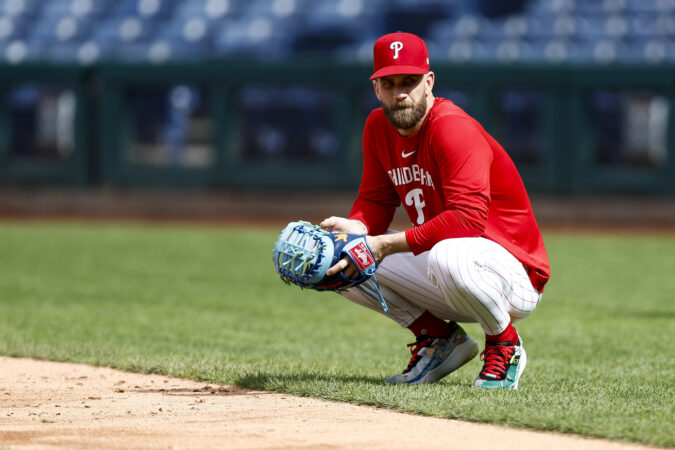
Bryce Harper’s dream is to compete in the Olympics.
First, he’ll suit up for the World Baseball Classic.
Harper announced his plans Tuesday on Instagram, posting a photo of himself superimposed in a Team USA jersey. The Phillies star joins a loaded roster that includes Aaron Judge, Cal Raleigh, Bobby Witt Jr., teammate Kyle Schwarber, and ace pitchers Paul Skenes and Tarik Skubal.
“Put the colors on my chest for the 1st time when I was 15,” Harper wrote in a caption below his photo. “No other feeling like it.”
Harper was among the first players to commit to Team USA for the 2023 World Baseball Classic, but he was unable to play after undergoing Tommy John elbow surgery in the previous offseason.
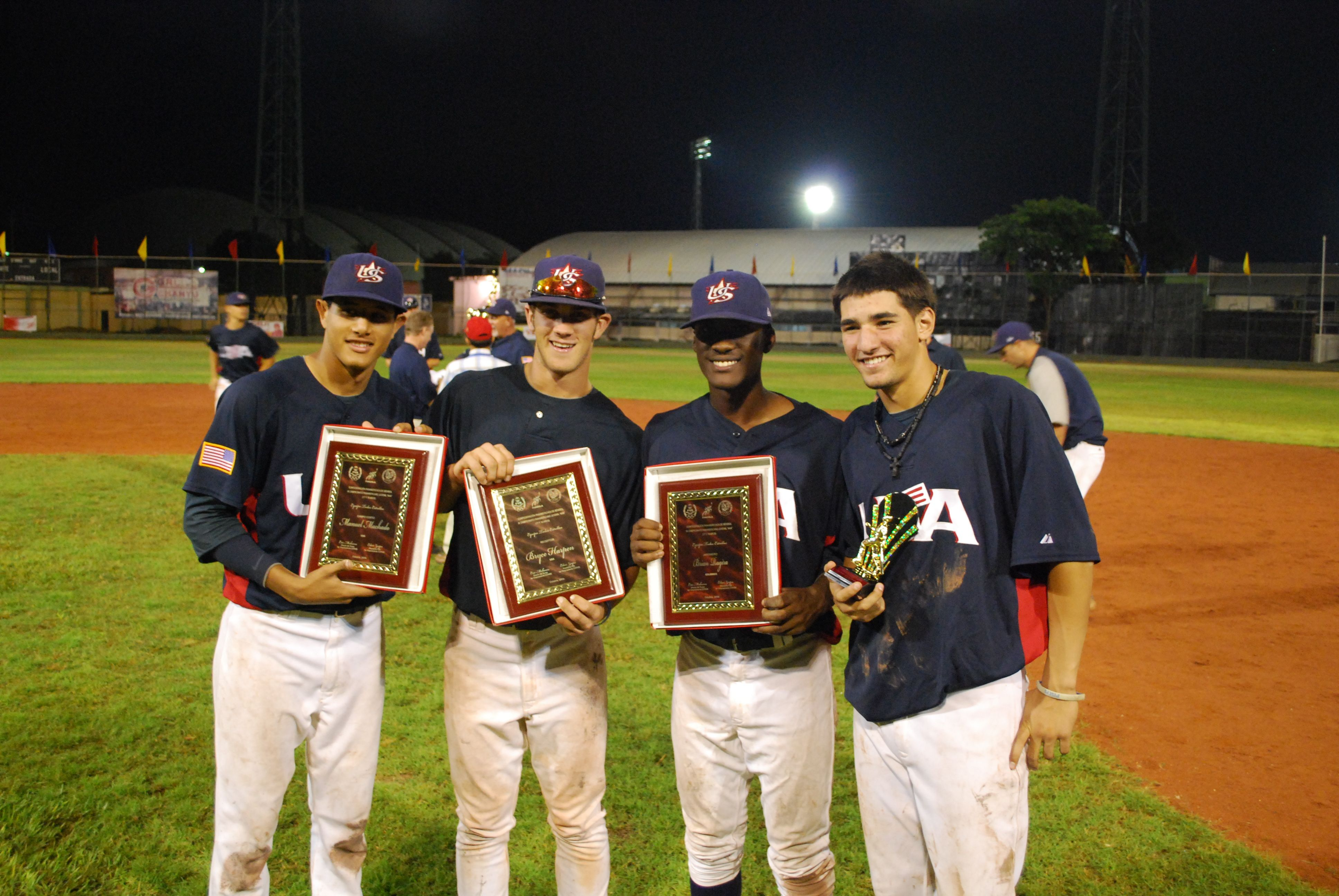
As a teenager, Harper participated in several international tournaments. He won a gold medal at the 2009 Pan Am junior world championship for an under-18 U.S. national team that featured 10 future major leaguers, including Manny Machado and Nick Castellanos.
Harper never misses an opportunity to stump for major leaguers in the Olympics. He discussed it at a postseason news conference in 2023 and brought it up again when the Phillies played in London in 2024. He said he has shared his feelings with commissioner Rob Manfred.
Baseball will be reinstated as an Olympic sport in 2028 in Los Angeles. In October, Manfred told reporters at the World Series that MLB will consider extending the All-Star break in 2028 to enable major leaguers to compete in the Olympics.
“I’ve been a huge advocate of baseball getting back in the Olympics and us taking that pause during the regular season, kind of like hockey does, to just let the guys go and play,” Harper told The Inquirer in 2023. “It’d be so much fun to have that and have the game and see that in the Olympics and have the best players in the world doing it.”
Meanwhile, the WBC could serve as a warm-up act.
Team USA will compete in Pool B of the WBC field. Players will leave their respective spring-training camps in early March. The United States will open the preliminary round March 6 in Houston against Brazil. The WBC final will be played March 17 in Miami.
Harper, 33, batted .261 and slugged .487 with 27 homers and a 129 OPS-plus last season. And although those numbers were below his typical standards, he tied for sixth among first basemen in homers and ranked fifth in slugging.
Phillies backup catcher Garrett Stubbs committed to playing in the WBC for Israel. Manager Rob Thomson said recently that he hasn’t been informed of other players who will be going to the WBC. Jesús Luzardo and José Alvarado pitched for Venezuela in 2023.
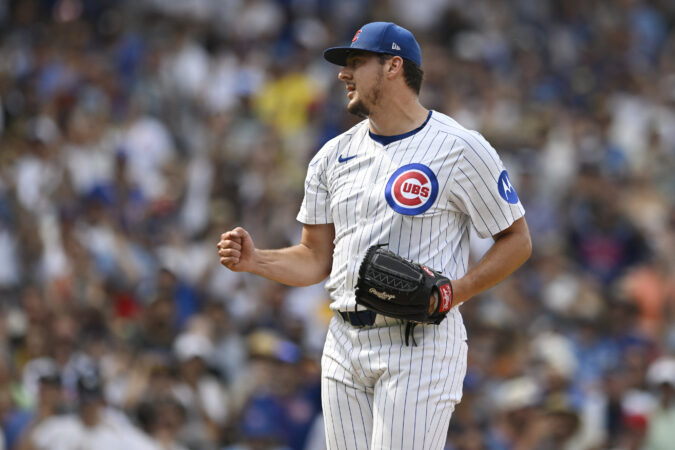
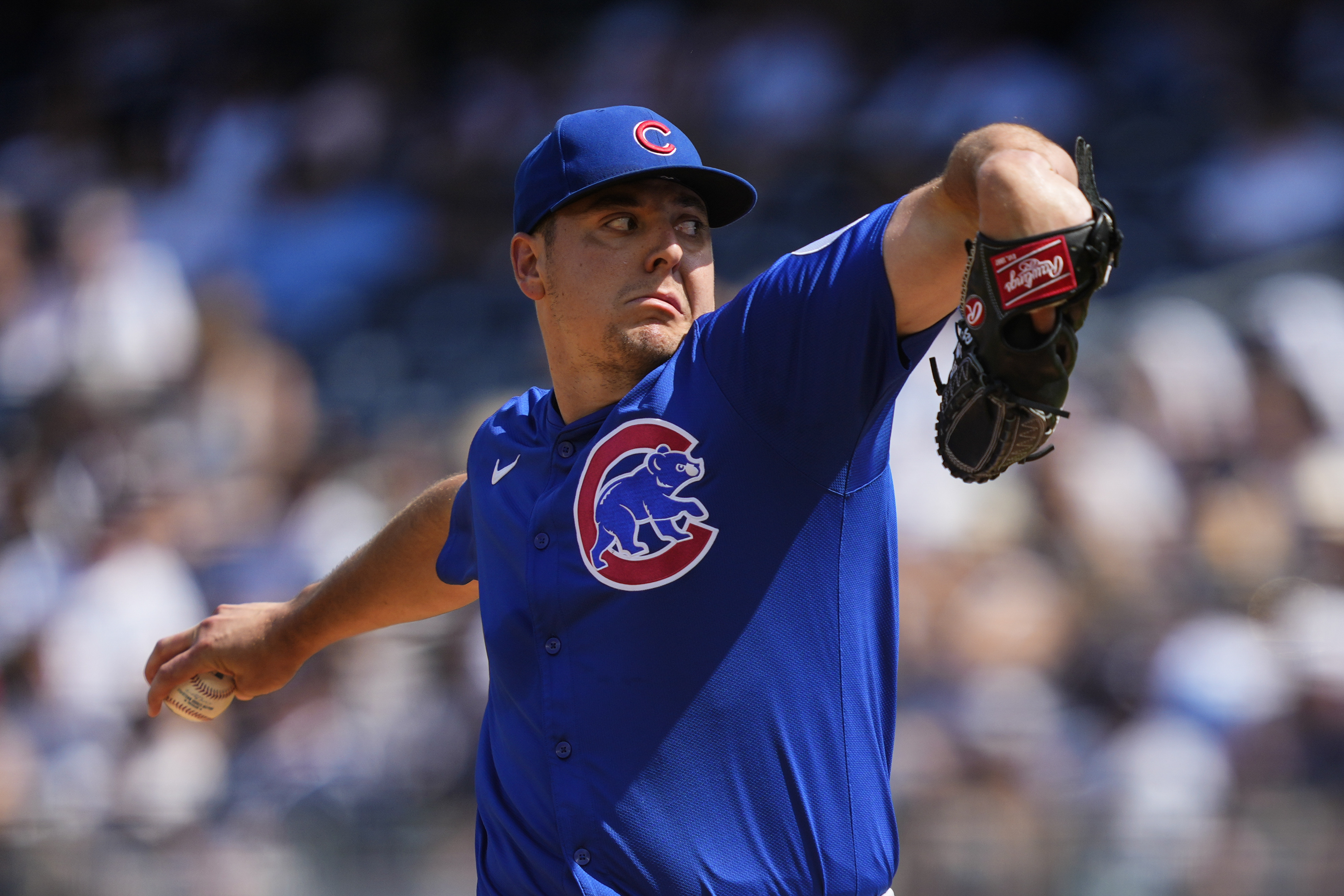
It’s not unusual for a pitcher’s velocity to increase a little after transitioning from starting to relieving. But when Brad Keller moved to the Chicago Cubs bullpen last season, his fastball jumped over 3 miles per hour.
The increased zing — an average of 93.7 mph in 2024 became 97.1 mph last year — was followed by a career season. Keller posted a 2.07 ERA and 0.962 WHIP in 69⅔ innings with the Cubs, primarily pitching in a setup role. And he parlayed that into a two-year, $22 million contract with the Phillies last week.
“There’s nothing like the adrenaline spike when the phone rings and your name’s called,” Keller said on Monday. “So I really grew into that.”
Behind closer Jhoan Duran, Keller is set to become one of the Phillies’ top right-handed relief options along with Orion Kerkering. The Phillies also added righty Jonathan Bowlan to the mix last week in a trade for Matt Strahm. Another righty in competition for a bullpen spot will be Zach Pop, whom the Phillies signed to a major league deal on Monday. Pop, 29, has a 4.88 ERA in 162⅓ career innings, and spent most of last season in triple A in the Mariners and Mets organizations.
“We love Keller. We think he’s one of the best in the business, the way he stepped up last year as a reliever with the Cubs,” Phillies president of baseball operations Dave Dombrowski said. “So we really like the way the bullpen now shapes up.”
It wasn’t just the move to the bullpen that led to Keller’s velocity increase last year. He also made some key mechanical adjustments, focusing on using his lower body more. And most important, Keller felt completely healthy.
The right-hander had thoracic outlet decompression surgery during the 2023 offseason, a procedure that Phillies ace Zack Wheeler also underwent on Sept. 23. Before his diagnosis with thoracic outlet syndrome, Keller’s hand would swell up so much because of the lack of blood flow that he couldn’t grip a baseball.
Keller returned to the mound in the spring of 2024 after signing with the Chicago White Sox. He said he didn’t quite feel like himself until the All-Star break.
“Granted, I kind of rushed my rehab because I had surgery in the offseason,” he said. “And I was a free agent that year, and I really tried to be with the team and finish rehab with the team, and then kind of roll through there.”
Keller was designated for assignment by the White Sox in May 2024 and spent the rest of that season in the Red Sox organization.
“I just carried that second half into last year, where it’s like, ‘All right, that’s in the rearview. I feel good. I don’t have to worry about that stuff anymore,’” Keller said.
When Keller signed with the Cubs last January, it was to be a starter. But after the deal came together late in the offseason, and the Cubs underwent an accelerated spring training before the Tokyo Series, he wasn’t fully built up. Chicago tried him out in the bullpen. And not only did Keller find success there, he also enjoyed the new role.
The Phillies believe the 97-mph version of Keller is here to stay.
“All of our scouting work, our analytical work, our pitching people that have taken a look at him, between [pitching coach] Caleb [Cotham] and the rest of the group,” Dombrowski said, “people that we’ve talked to feel like, ‘OK, this is him now.’ I mean, he’s a legit back-end-type guy.”
Keller still has a starter’s arsenal, using a five-pitch mix of four-seam, sinker, slider, changeup, and sweeper, which he introduced last season. He and Cotham have already discussed ways he could improve the newest offering.
“He thinks very similar to how I think about things,” said Keller, 30. “And he brought up some ideas of things that we feel like would be fun things to try, like throwing sweepers to lefties, changeups to righties, things like that that’s kind of a little unorthodox.”
This winter, other teams inquired about Keller’s willingness to return to a starting role. He said he was open to it, but he had more fun coming out of the bullpen.
Most fun of all, though, was experiencing the playoffs for the first time in his career. Keller had a 1.59 ERA in five postseason appearances with the Cubs in 2025, recording two saves and one hold. One of his biggest priorities in free agency this winter was joining a contender.
“Once you get a taste of that,” Keller said, “that’s what you crave every single year.”
When the Texas Rangers won the World Series in 2023, Brad Miller and Adolis García sprinted from the dugout to jubilate with their teammates behind the pitcher’s mound.
It wasn’t much of a race.
“Adolis has a torn oblique [in his left side] and is still just pulling away from me,” Miller said by phone this week, recalling the celebration. “Like, I can’t keep up with him.”
Nobody could. Not then. García was the hottest hitter on the planet for three weeks in the fall of 2023. He set a record with 22 RBIs in a postseason, including 15 in the American League Championship Series. With the Rangers facing elimination on the road in Houston, he smashed a grand slam in Game 6 and two homers in Game 7 to clinch the pennant.
“I’ve never seen a performance like that,” Miller said. “It was [freaking] insane.”
And it seems like a lifetime ago.
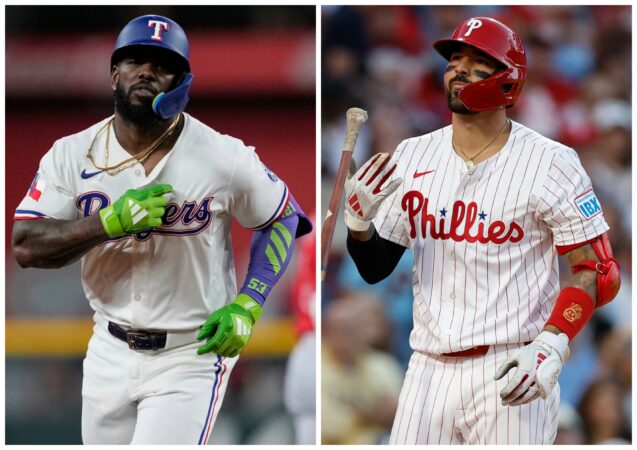
The Phillies signed García this week to a one-year, $10 million contract, and if he’s close to the middle-of-the-order masher that he once was, it will be a steal. From 2021 to 2023, he slugged .472 with a 113 OPS+, tied for sixth among all right-handed hitters with 97 home runs, won a Gold Glove, and was a two-time All-Star.
But in two seasons since his turn as Mr. October, he slugged .397 with a 96 OPS+ and 44 homers.
If that’s the hitter who shows up in Philly, the Rangers will be justified in not offering him a 2026 contract at a raised salary (projected $12 million) in his final year of arbitration. And it will be fair to wonder if García is an upgrade over even the right fielder he’s replacing: Nick Castellanos. Or if a Phillies outfield that is “pretty well set,” president of baseball operations Dave Dombrowski said this week, will be any better than it was this year.
OK, before we go further, a reminder: Castellanos isn’t leaving because he’s a free agent. (He’s actually still on the roster, not that you’d know it.) And the Phillies aren’t choosing to move on from him — even while paying all or most of his $20 million 2026 salary — simply because he’s amid a three-year decline as a hitter and one of the worst defenders in the sport.
The Phillies aren’t bringing back Castellanos because, well, they can’t. Not after his insubordinate behavior in the dugout June 16 in Miami when manager Rob Thomson took him out for defense in the ninth inning. Castellanos brooded over losing his everyday job in August and publicly criticized Thomson in September.
Quite simply, he has to go — and thus far, the Phillies haven’t gotten much interest, according to a source, even though they’re willing to foot the bill. If they’re unable to trade Castellanos before spring training, they are expected to release him.
Either way, right field will represent upward of a $30 million outlay in 2026, even though it won’t be filled by Kyle Tucker, Cody Bellinger, or another $30 million-plus player. García will step into the payroll space occupied this year by Max Kepler, who got paid $10 million to slug .391 with 18 homers and an 88 OPS+ in a one-and-done Phillies tenure.
The Phillies believe García has more upside than Kepler and Castellanos. It’s a low bar. And even if hitting coach Kevin Long and the slugger-friendly environment of Citizens Bank Park are unable to unlock more production from García, Phillies officials still figure they will come out ahead.
But don’t take their word for it.
“What I would tell people is, Adolis is worth the price of admission,“ said Miller, the bamboo-loving former Phillies utility man and now a Rangers pre- and postgame television analyst. ”It’s not just like, ‘Oh, he’s a good outfielder.’ It’s exciting stuff, like he’ll make diving plays, he’ll throw a guy out from the wall in right field. I can just picture that at the Bank. He’ll have the arm to throw in the air from anywhere in right field and get somebody out.
“He plays with a flair. And he can do everything. I’m excited for him. I think it’s going be a breath of fresh air.”
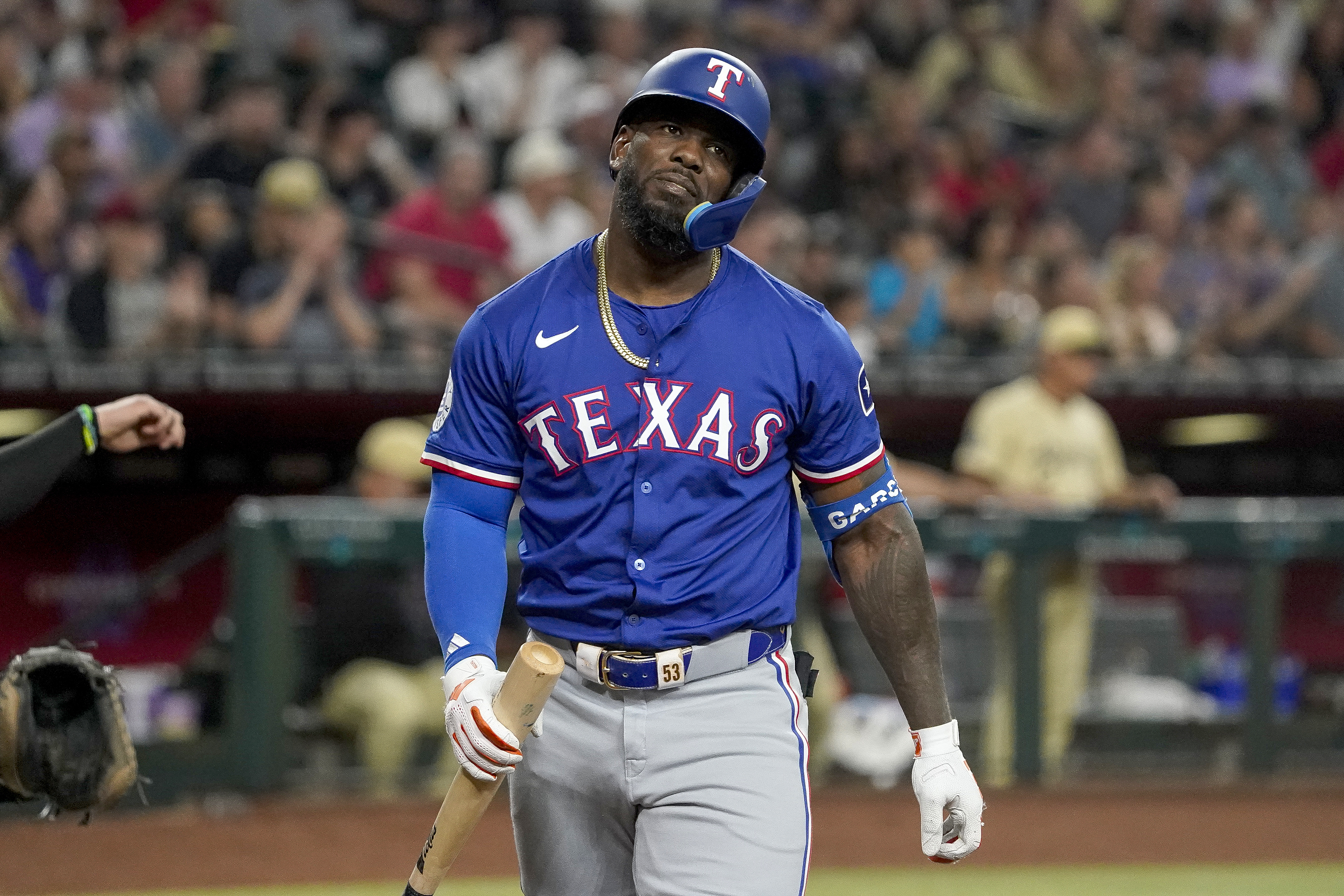
Name the players, based on these numbers over the last two seasons:
Castellanos is Hitter A; García, if you couldn’t guess, is Hitter B. They were strikingly similar in their swing-and-miss tendencies. If anything, García exhibited marginally better discipline while Castellanos struck out slightly less frequently.
But a deeper dive into the quality of the contact each player did make helps explain why multiple Phillies scouts recommended to Dombrowski that García could be poised for a bounce back.
Over the last two seasons, the average exit velocity on balls hit by Castellanos was 88.1 mph, compared to 91.6 mph for García. Castellanos’ hard-hit rate, defined as batted balls at 95 mph or more, was 36.5%; García‘s was 47.6%.
And García‘s metrics weren’t far off his career-best 2023 season, when his average exit velocity was 92.1 mph and his hard-hit rate totaled 49.7%.
“Our scouts had very good reports on him,” Dombrowski said. “Even though some of the stuff may be slightly down, it’s still positive in many directions. The tools are there. The ball jumps off his bat still; bat speed’s still there; exit velocity is very good. Those are all things that we feel encouraged about.
“We think it has more to do with approach than it does with ability.”
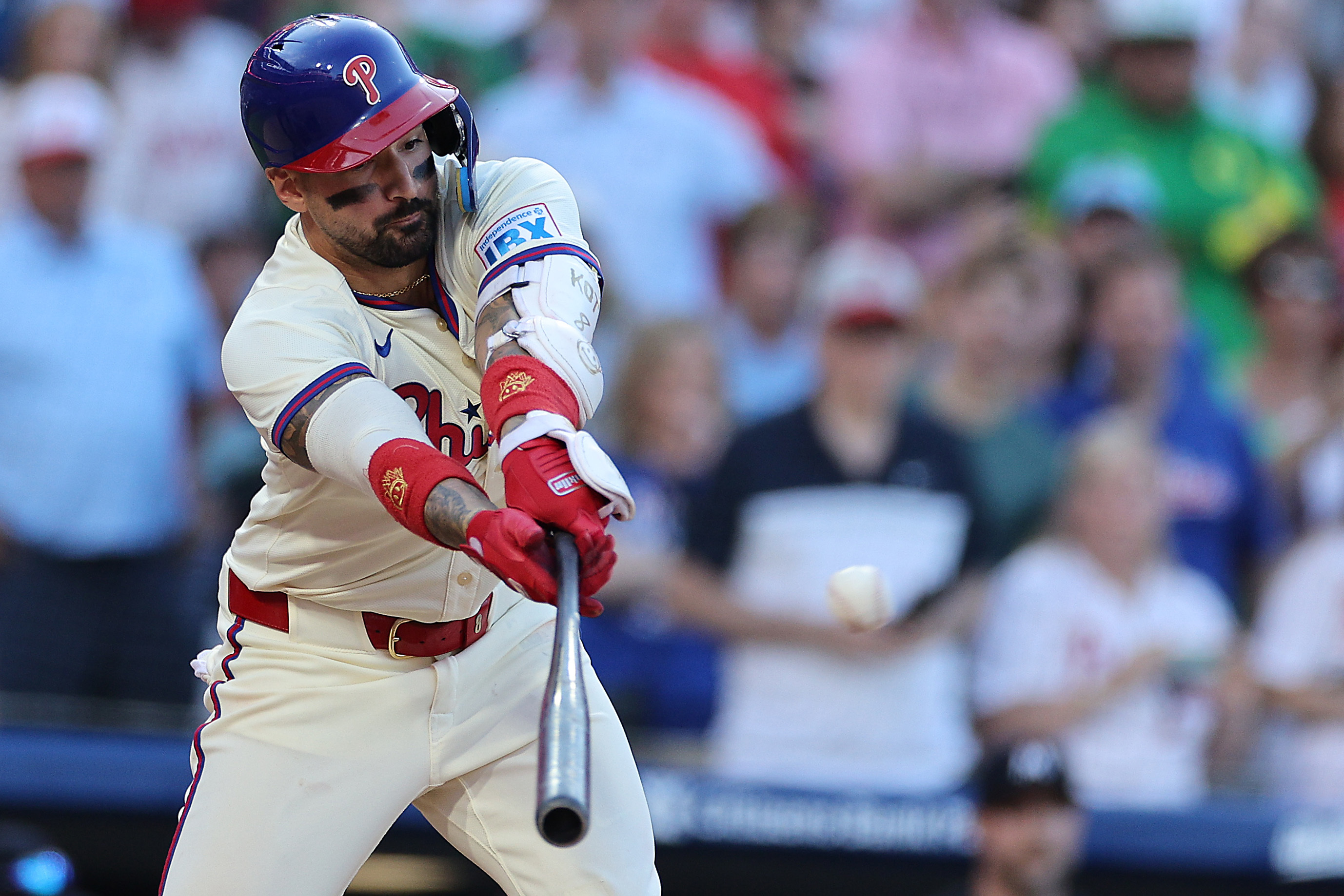
The Phillies’ efforts over the years to tweak Castellanos’ approach weren’t always embraced.
Although Thomson and Long conceded that Castellanos always would be an aggressive hitter, they focused on “controlled aggression,” a happy medium in which he could still swing at pitches early in the count while laying off low-and-away breaking balls in particular. Castellanos often said the emphasis on his chase rate left him stuck between approaches.
The Phillies will soon discover if García is open to adjustments. Long and assistant hitting coach Edwar Gonzalez are expected to drop in on García at his home in Tampa, Fla., before spring training to start “chipping away,” as Thomson put it.
García said he has already had phone calls with Long.
“We believe in the same things,” he said, via assistant general manager Jorge Velandia’s interpretation. “We’re on the same page already. … The focus is not to be a hero. Just [stay] within myself.”
Whereas Castellanos tends to fish for sliders (pitchers fed him almost as many breaking pitches as fastballs this season), García is vulnerable to elevated fastballs. As such, he saw heaters 64.3% of the time and flailed away, batting .215 and slugging only .300 against 95 mph and harder.
“What Adolis did when I saw him hitting at his best is he took most of those pitches,” Miller said. “He laid off the velocity up. He was really hunting a certain spot and not necessarily tomahawking balls and doing anything crazy. He was just laying off those tough pitches.”
Never more than in the 2023 postseason.
“He would take some swings like Adrian Beltré, where he’d fall over and his helmet would fly off because he wanted it so bad,” Miller said. “But then he would recalibrate, take a deep breath. When he was at his best, it was very controlled. Because he has enough power and then some. When he stays within himself, good things happen.”
At least they used to. Since the 2023 playoffs, García’s .278 on-base percentage is the lowest among 120 players with at least 1,000 plate appearances. His .675 OPS is tied for 116th.
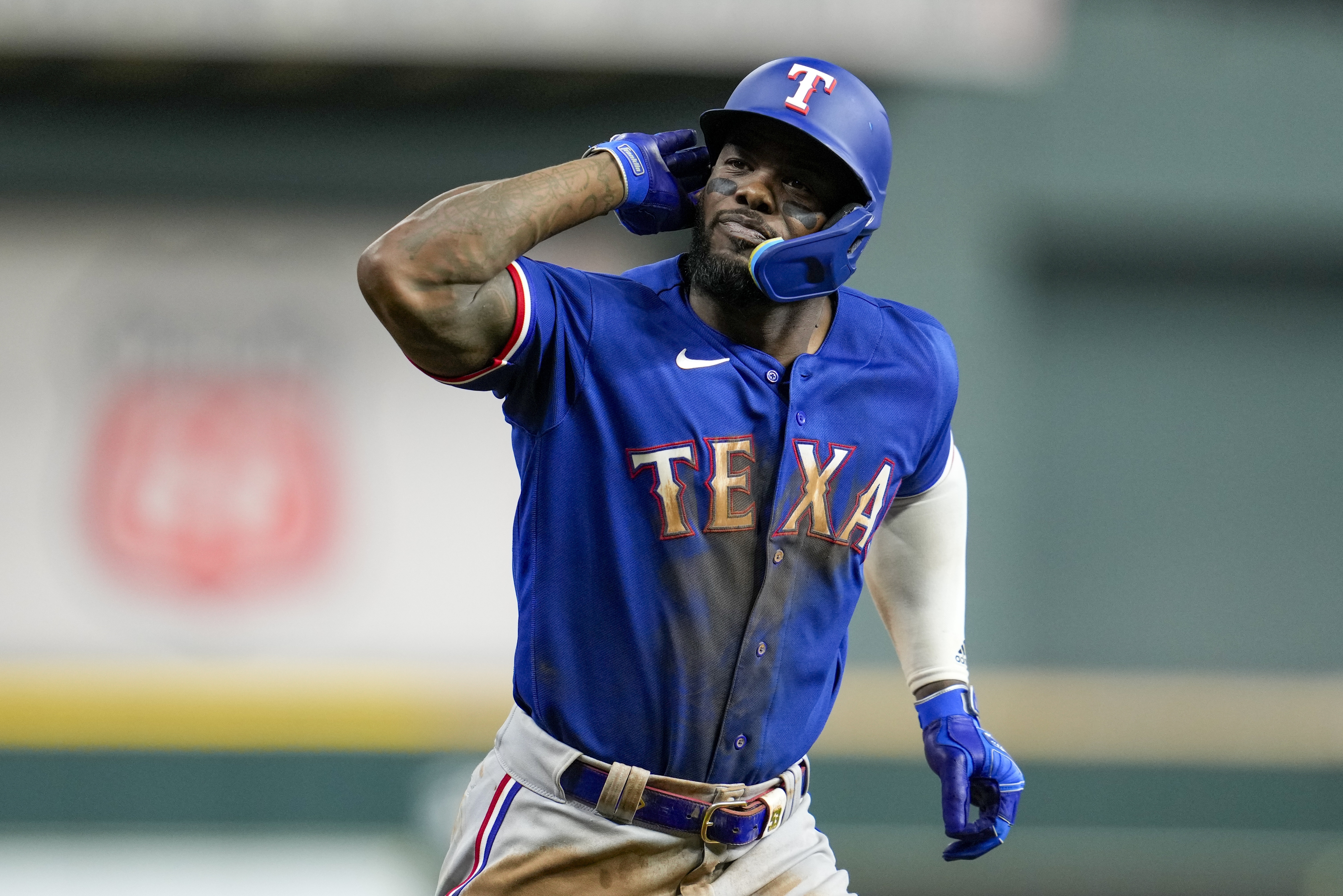
Corey Seager and Marcus Semien were the stars of the 2023 World Series team. But García predated both in Texas.
Acquired from the Cardinals in a cash trade in 2019, García got designated for assignment and outrighted to triple A in 2021 only to make the All-Star team later that season.
“He’s self-made, you know?” Miller said. “He was a fan favorite in Texas, truly. He was kind of ‘The Guy.’”
And when the Rangers stumbled to a 78-84 record in their title defense in 2024, Miller suggested nobody took it harder than García. He painted García as conscientious and “soft-spoken,” belying the fiery emotion that he often shows on the field.
It didn’t get much better this year. The Rangers were 26th in the majors in batting average (.234) and slugging (.381) and 22nd in runs scored (684). They got shut out 15 times and scored less than two runs in 20% of their games. Midway through the season, they fired hitting coach Donnie Ecker.
García conceded he might’ve put too much pressure on himself.
“He’s very self-aware,” Miller said.
In a sense, then, García might benefit from a change of scenery as much as Castellanos. Thomson, with Velandia’s help, delivered a message in their first phone conversation with him this week.
“You have to be yourself and relax,” Thomson said. “Have fun, be yourself, don’t try to do too much. Because we’ve got a lot of really good players around him. I know that Texas had some injuries last year. Maybe he tried to do a little bit too much for the team.”
Said Dombrowski: “We don’t need him to hit the ball out of the ballpark on every swing or every at-bat. He needs to be more under control with the swing. We think he can do that.”
And what if he does?
“There’s going to be some times,” Miller said, “where he is going to make Citizens Bank Park look very small.”
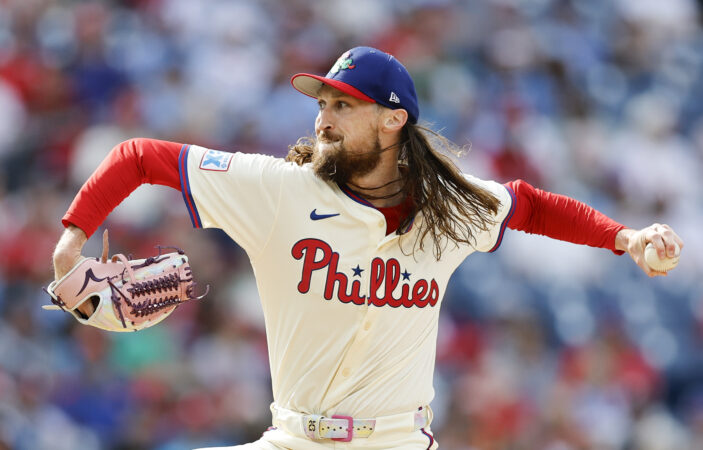
Matt Strahm ranked among the most effective lefty relievers in baseball over the last three seasons.
Yet, to the Phillies, he was expendable.
In a move that saved nearly $7 million to help address other needs (re-signing J.T. Realmuto?) — and may have been spurred by an increasingly strained relationship between the team and pitcher — the Phillies traded Strahm to the Royals on Friday for right-handed reliever Jonathan Bowlan.
“Matt’s done a nice, solid job for us,” president of baseball operations Dave Dombrowski said. “He’s been a good part of our ballclub. We’re in a spot though, with three left-handers, we didn’t necessarily think we needed all three.”
Indeed, with José Alvarado’s return from an 80-game drug suspension and the emergence this year of late-blooming Tanner Banks, the Phillies have two late-inning lefties to pair with star closer Jhoan Duran, newly signed Brad Keller, and Orion Kerkering from the right side.
(They also traded for sidearming lefty Kyle Backhus from the Diamondbacks on Friday for minor league outfielder Avery Owusu-Asiedu. Backhus has minor league options and represents bullpen depth.)
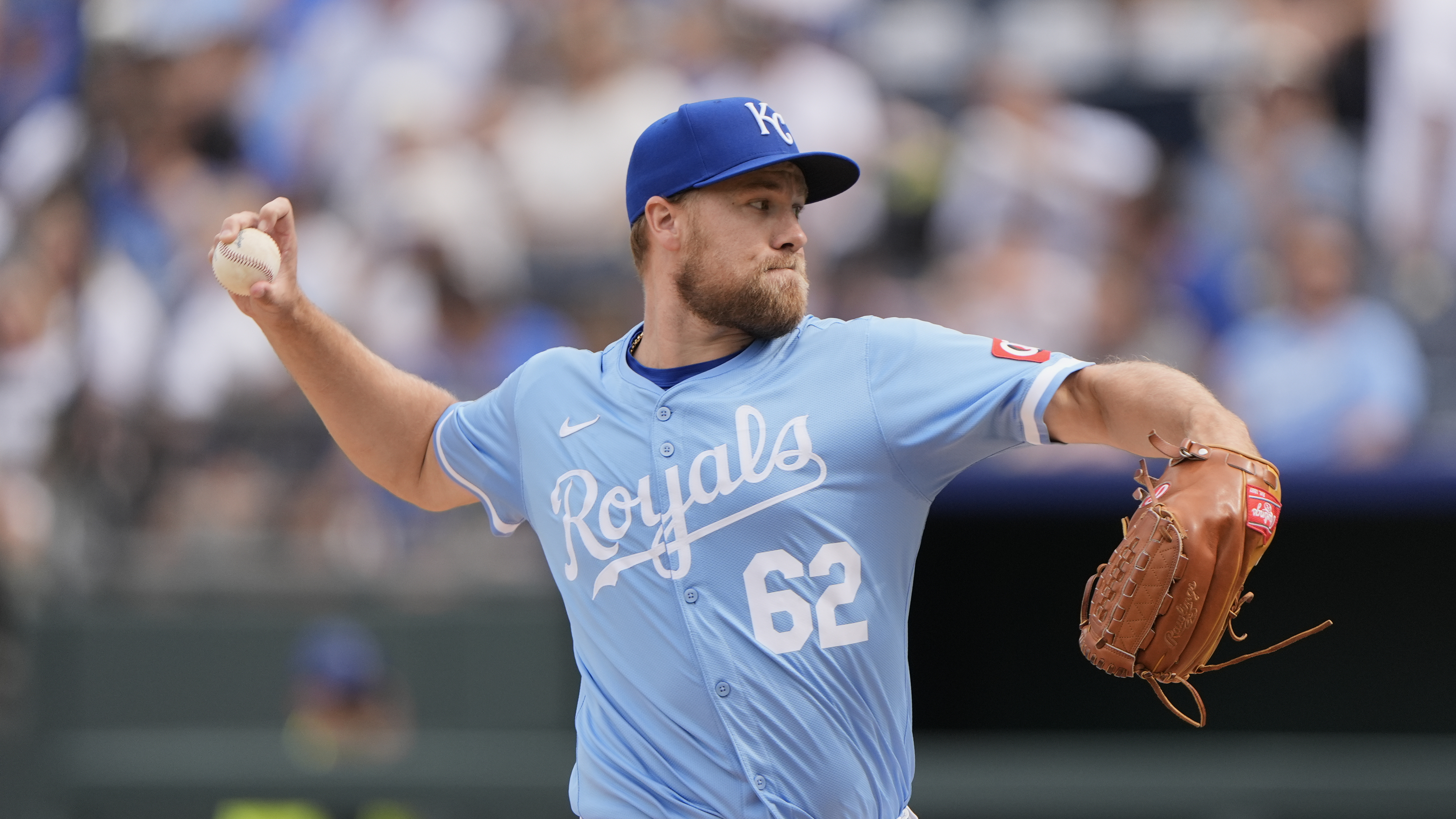
So, although Strahm had a 2.71 ERA in 188 appearances since 2023, including a 2.74 mark in 66 games this year, the Phillies were comfortable with reapportioning $7.5 million salary for 2026, especially after signing Keller this week to a two-year, $22 million deal. Bowlan, 29, will make slightly more than the $780,000 major league minimum.
The Phillies began getting calls on all three lefty relievers early in the offseason, according to a major league source. They were most willing to listen on Strahm.
Because while Strahm was durable and versatile (10 starts in 2023), he faltered in each of the last two postseasons. He allowed four runs in two innings over three games against the Mets in the 2024 divisional round, then allowed Teoscar Hernández’s go-ahead three-run homer in Game 1 this year against the Dodgers.
Strahm was a veteran leader in the bullpen. But there were hints that the outspoken 34-year-old might have begun to overstep. For example, after Kerkering’s season-ending errant throw in Game 4 at Dodger Stadium, Strahm told reporters that he wished he pushed the Phillies to put their pitchers through more rigorous fielding practice.
Dombrowski pushed back on that idea in his end-of-season news conference.
“We did plenty,” Dombrowski said. “Actually, as it turns out, we did do [pitcher fielding practice] in the postseason. He didn’t do them. But we did them.”
After the trade, Dombrowski denied any issues with Strahm.
“I can’t speak for others in our situation, but if Matt would have come back with us, we’d have felt very comfortable,” he said. “I’ve always had a good relationship with him. I loved talking to his wife and his daughter. That’s from my perspective.”
Bowlan has a spot in the season-opening bullpen, alongside Duran, Keller, Alvarado, Kerkering, and Banks. He posted a 3.86 ERA in 34 appearances for the Royals and held right-handed hitters to a .182 average.
“When we look at him, not a real well-known guy, but somebody that we think can contribute to us on a strong basis from the right-hand side,” Dombrowski said. “And of course, he doesn’t have to pitch the eighth or ninth for us. We can kind of gradually work him into different situations.”
The Phillies could look at Rule 5 selection Zach McCambley and a group of optionable relievers — Backhus, Seth Johnson, Max Lazar, and newcomer Yoniel Curet — to cycle through the last two spots in the bullpen. With two vacancies on the 40-man roster, they continue to seek depth for the bullpen and starting rotation.
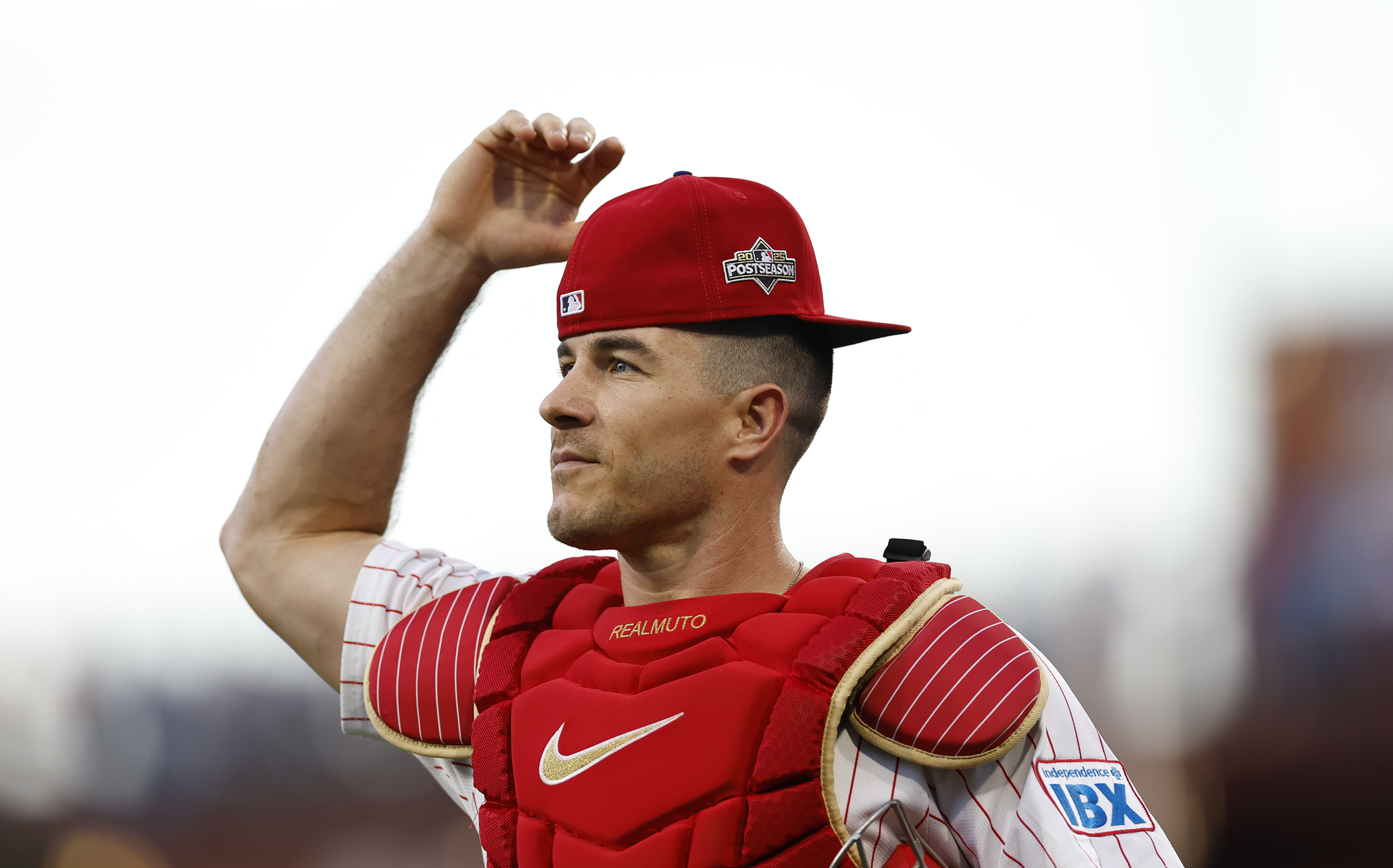
But the No. 1 priority remains bringing back Realmuto. MLB.com reported that the Phillies have an offer on the table. But it’s possible Realmuto is trying to get a guaranteed third year.
“We would love to re-sign him,” Dombrowski said. “But [the situation] really hasn’t changed very much.”
In jettisoning Strahm, the Phillies might have freed up a few extra dollars. They still have approximately $299 million in 2026 payroll commitments, as calculated for the luxury tax. They’re expected to stay within range of the 2025 payroll, which came in at roughly $312 million, over the fourth (and highest) tax threshold.
Dombrowski said the Phillies “continue to work through some details” in hiring Don Mattingly to be the bench coach. Mattingly is the leading candidate for the job, which opened after the postseason when Mike Calitri moved into a newly created role of major league field coordinator. … The Phillies intend to replace assistant general manager Ani Kilambi, hired away this week as GM of the Washington Nationals. Kilambi led the data and analytics arm of Dombrowski’s front office.

For two decades, Scott Franzke’s voice has been the soundtrack of the summer for Phillies fans. And his radio calls of some of the best moments in franchise history are legendary — from Jimmy Rollins’ walkoff double in the 2009 NLCS to Bryce Harper’s “Bedlam at the Bank” homer in 2022. The longtime play-by-play announcer joined Phillies Extra to talk about the team’s offseason and much more. Watch here.

WASHINGTON — Ani Kilambi is joining the Nationals as their new general manager, a person with knowledge of the move told The Associated Press on Wednesday, making the 31-year-old who had been with the Phillies the latest young face to join president of baseball operations Paul Toboni in Washington.
The person spoke to the AP on condition of anonymity because Kilambi’s hiring had not been announced yet.
The news was first reported by ESPN.
Kilambi has been an assistant general manager for the Phillies, working with that club since 2021.
Before that, he was with the Tampa Bay Rays for more than five years.
Kilambi takes over a job that was held for more than a decade and a half by Mike Rizzo, who became the GM in Washington in 2009 and added the title of president of baseball operations in 2013. Rizzo was fired in July during the Nationals’ sixth consecutive losing season. Manager Dave Martinez also was fired then.
Rizzo and Martinez were in charge in 2019 when the Nationals won the World Series, but the team hasn’t had a winning year since. Washington went 66-96 in 2025, putting it 14th out of 15 clubs in the National League.
Mike DeBartolo took over as interim GM after Rizzo was let go and oversaw the selection of 17-year-old high school shortstop Eli Willits with the No. 1 pick in Major League Baseball’s amateur draft in July.
Toboni, 35, then was hired in late September to run the Nationals; he had been an assistant GM with the Boston Red Sox. He brought in manager Blake Butera, who at 33 became the youngest skipper in the majors since the 1970s.
There is plenty of work to be done to turn around the Nationals, who are in need of plenty of talent and depth as they try to replenish their major league roster and minor league supply of prospects.
Toboni’s first move in free agency came Monday, when Washington agreed to terms with left-handed pitcher Foster Griffin on a $5.5 million, one-year contract, pending the successful completion of a physical exam. Griffin played in Japan the past three seasons.
Sometimes, it’s the thought that counts.
As recently as Tuesday, Dave Dombrowski sounded like a man who didn’t feel much of a sense of urgency with regard to his bullpen.
“I guess we’d look for arms in the bullpen, but we’ve also got five solid guys out there that are of veteran status,” the Phillies president said.
It was encouraging, then, when news leaked on Wednesday that the Phillies were closing in on a two-year, $22 million contract for former Cubs setup man Brad Keller. Set aside the question of who Keller is and whether or not Rob Thomson can count on a repeat of the veteran righty’s breakout 2025 campaign. The mere fact that the Phillies saw a pressing enough need to spend this sort of money on another reliever is commendable.
And, let’s be clear. This is real money that the Phillies are spending. The relief market has exploded this offseason. That’s true at the top of the market, where former Mets closer Edwin Díaz accepted a whopping $21 million AAV on a three-year contract, all the way down to erratic former Phillies lefty Gregory Soto, who somehow landed $7.75 million from the Pirates on a one-year deal. Keller is the 11th reliever to sign a deal worth at least $9.5 million per year and the seventh to sign for at least $11 million.
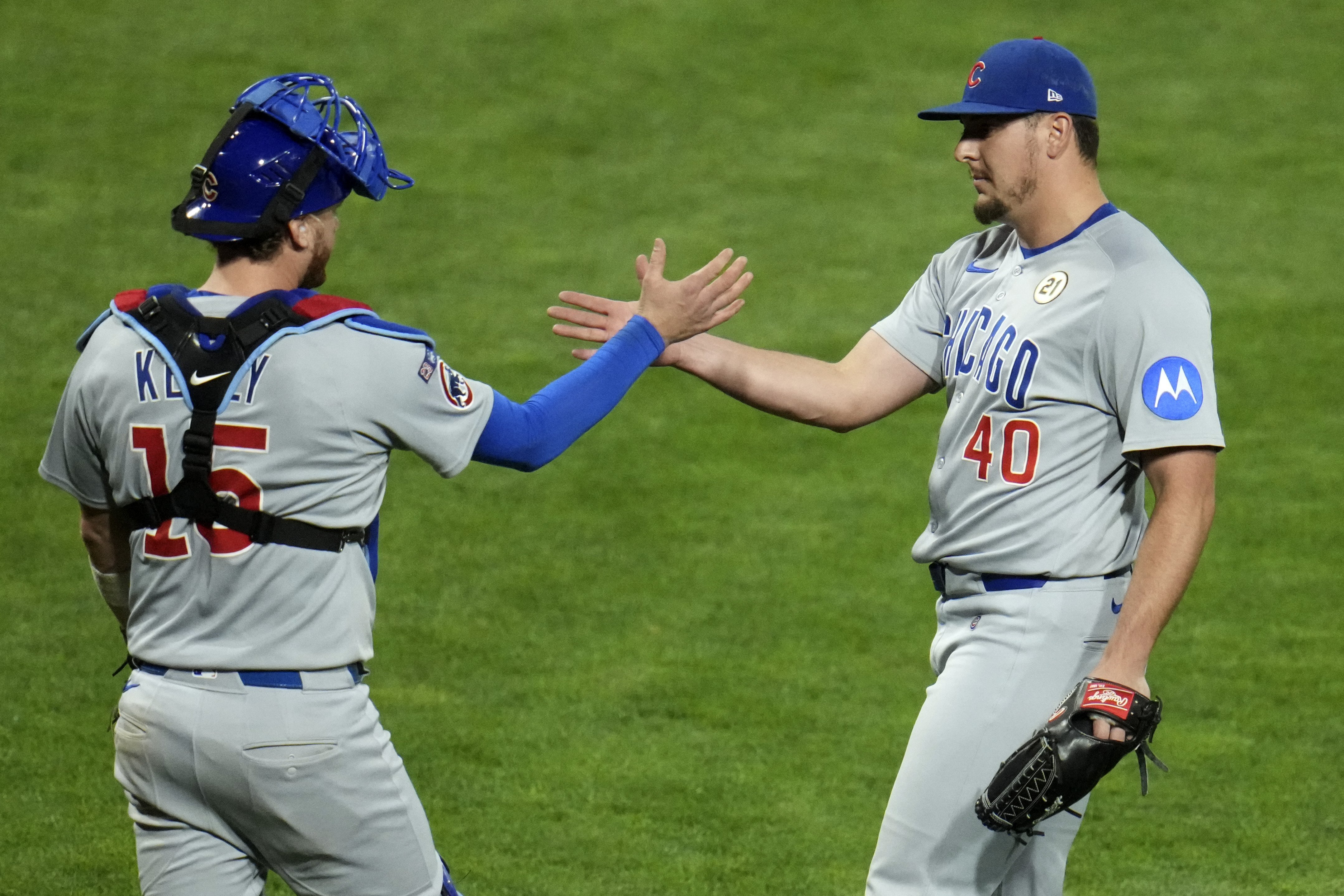
He is also the youngest of that group, which is a key fact to consider. Heading into his 30-year-old season, Keller doesn’t have the wear-and-tear that relievers tend to accumulate by the time they hit free agency. He spent the first six years of his career moving into and then out of the Royals rotation. In 2024, he bounced back and forth between the minors and the Red Sox big-league roster, later landing with the White Sox.
Last offseason, the Cubs nabbed Keller on a minor league deal and gave him a job in their bullpen. His velocity jumped from the low-90s to a Statcast average of 97 in 2025, and he quickly worked his way to the back of the Cubs’ bullpen. He thrived in high-leverage situations, holding opponents to just four extra-base hits and a .582 OPS with 28 strikeouts and 10 walks in 101 plate appearances. His numbers after the All-Star break were as good as you’ll see: 35 strikeouts, eight walks, a 0.33 ERA in 99 plate appearances.
The addition of Keller gives the Phillies an assortment of high-leverage arms unlike any they’ve had in a long time. At 6-foot-5, 250 pounds, he is built like a closer. The Phillies will enter spring training with the thought that he will pair with Jhoan Duran as an elite setup/closer combo in the eighth and ninth innings. Between Keller, Duran and Matt Strahm, they have three of the 34 big-league relievers who finished last season with an ERA+ of 160 or better (minimum 40 innings). Lefty José Alvarado, back on a team option after a suspension-marred 2025, remains a quality high-leverage option. That gives Thomson four legitimate options for the late innings of close games, with lefty specialist Tanner Banks and young righty Orion Kerkering also bringing plenty of experience and potential upside.
The Phillies easily could have convinced themselves that they could make due without making a significant investment in another arm. They tried to ham-and-egg their way through last offseason, signing Jordan Romano and Joe Ross for about the same amount they’ll pay Keller. Though the Phillies won 96 games, they arrived in the postseason without the back-end horsepower to complement their best-in-class rotation. It cost them against the Dodgers. As much as the offense struggled, a dominant bullpen would have given them a clear edge in the series.
Who knows if it will work out? The relief market is little different from a roulette wheel. You ante up and then cross your fingers. But if the bullpen again emerges as a concern next season, it at least won’t be for a lack of trying.
For the first time in years, the Phillies aren’t scouring the offseason pitching markets in search of a closer.
But the bridge to Jhoan Duran does need fortification.
And so, shortly before lunch Wednesday, the Phillies came to a two-year, agreement with right-hander Brad Keller. The deal, which was announced by the Phillies on Thursday, is worth $22 million, according to a major-league source.
It completes a yearlong career revival for the 30-year-old Keller, who was poised to pitch in Japan until a deal with the Chiba Lotte Marines fell through. He hooked on with the Cubs, made the team out of spring training as a nonroster invitee, and posted a 2.07 ERA and 0.962 WHIP in a team-leading 68 appearances.
Keller, who drew interest as both a reliever and starter, is expected to slot into a setup role for the Phillies. He will join a bullpen that includes right-hander Orion Kerkering and three lefties (José Alvarado, Matt Strahm, and Tanner Banks), in addition to Duran.
With Keller, the Phillies will have roughly $306 million in 2026 payroll commitments, as calculated for the luxury tax. They continue to prioritize re-signing free-agent catcher J.T. Realmuto, according to president of baseball operations Dave Dombrowski, a move that would push the payroll behind this year’s total of approximately $312 million.
The Phillies have explored trading one of the lefty relievers and allocating the salary to another area of the roster at a time when the free-agent market is flooded with relievers. Surely, there are low-cost, high-yield fliers — a 2026 version of Keller — out there among them.
Earlier in the week, though, Dombrowski expressed satisfaction with the state of the bullpen.
“We’ve got five solid guys out there that are veteran status,” Dombrowski said, not including Keller. “Sometimes you have to give some young guys an opportunity, too.”
Such as: The Phillies selected righty Zach McCambley in the Rule 5 draft last week. He must make the team out of camp or be offered back to the Marlins. They also acquired right-hander Yoniel Curet in a trade with the Rays. Hard-throwing right-hander Seth Johnson is out of minor-league options. Alex McFarlane, who finished last season in double A, was added to the 40-man roster in November.
But the Phillies needed a righty to help in the seventh and eighth innings. Manager Rob Thomson’s options last season included Jordan Romano, who flamed out with an 8.23 ERA and a finger injury that sidelined him for the final six weeks, and 40-year-old David Robertson, who signed in July after several months at home on his couch.
In turning now to Keller — rather than, say, Luke Weaver, who agreed to an identical two-year, $22 million deal with the Mets — the Phillies are betting that he’s more than a one-year wonder.
A starter early in his career with the Royals, Keller got released midway through the 2024 season by the 121-loss White Sox. Going into last winter, his career ERA was 4.34.
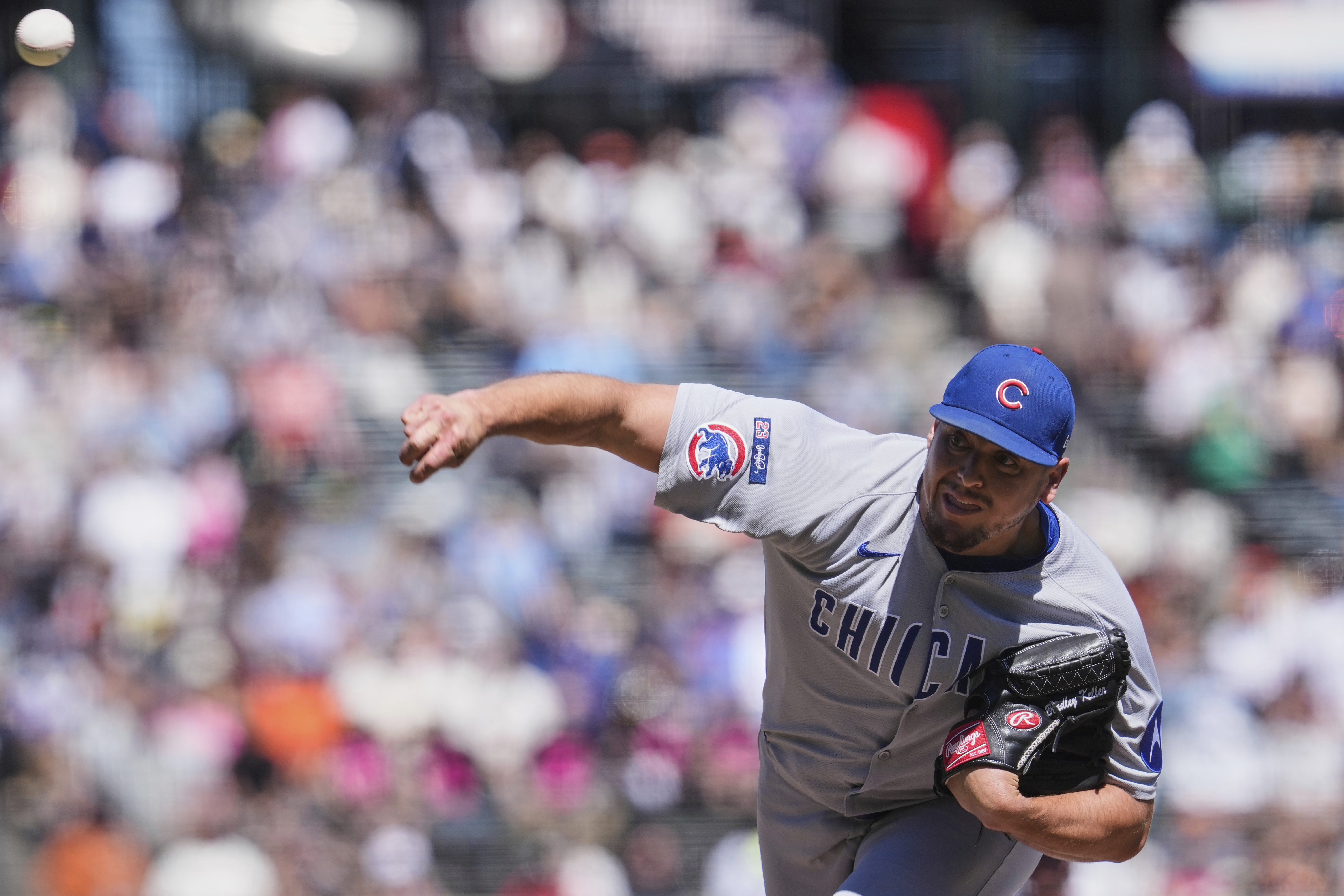
Keller made a full-time move to the bullpen with the Cubs and gained an average of 3.4 mph on his fastball. The jump from 93 mph to 97 mph also helped him better set up his off-speed pitches.
But rather than consolidating the five-pitch repertoire that he used as a starter, Keller kept throwing two sliders, a sinker, and a changeup. The changeup, in particular, was effective against left-handed batters.
Keller held opponents to a .182 average. He struck out 75 batters and walked 22 in 69⅔ innings. And he gained Cubs manager Craig Counsell’s trust, even closing out a 3-1 victory in Game 1 of the wild-card round series against the Padres.
Coincidentally, Keller was treated in October 2023 for venous thoracic outlet syndrome, the condition that befell Zack Wheeler last season. Wheeler has been working out several times per week at Citizens Bank Park and recently resumed throwing. The Phillies expect him to be ready early in the season.