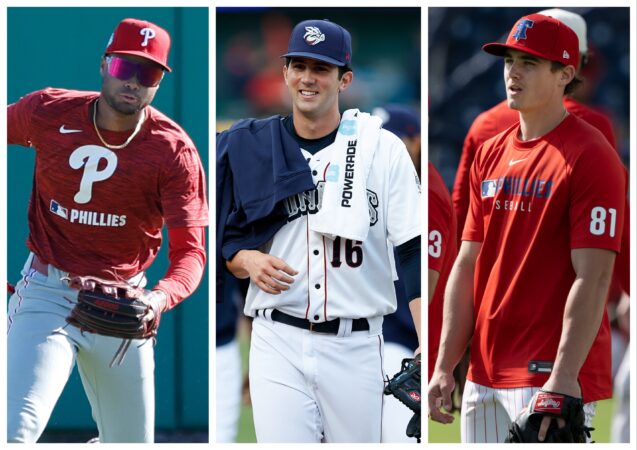
WASHINGTON — Ani Kilambi is joining the Nationals as their new general manager, a person with knowledge of the move told The Associated Press on Wednesday, making the 31-year-old who had been with the Phillies the latest young face to join president of baseball operations Paul Toboni in Washington.
The person spoke to the AP on condition of anonymity because Kilambi’s hiring had not been announced yet.
The news was first reported by ESPN.
Kilambi has been an assistant general manager for the Phillies, working with that club since 2021.
Before that, he was with the Tampa Bay Rays for more than five years.
Kilambi takes over a job that was held for more than a decade and a half by Mike Rizzo, who became the GM in Washington in 2009 and added the title of president of baseball operations in 2013. Rizzo was fired in July during the Nationals’ sixth consecutive losing season. Manager Dave Martinez also was fired then.
Rizzo and Martinez were in charge in 2019 when the Nationals won the World Series, but the team hasn’t had a winning year since. Washington went 66-96 in 2025, putting it 14th out of 15 clubs in the National League.
Mike DeBartolo took over as interim GM after Rizzo was let go and oversaw the selection of 17-year-old high school shortstop Eli Willits with the No. 1 pick in Major League Baseball’s amateur draft in July.
Toboni, 35, then was hired in late September to run the Nationals; he had been an assistant GM with the Boston Red Sox. He brought in manager Blake Butera, who at 33 became the youngest skipper in the majors since the 1970s.
There is plenty of work to be done to turn around the Nationals, who are in need of plenty of talent and depth as they try to replenish their major league roster and minor league supply of prospects.
Toboni’s first move in free agency came Monday, when Washington agreed to terms with left-handed pitcher Foster Griffin on a $5.5 million, one-year contract, pending the successful completion of a physical exam. Griffin played in Japan the past three seasons.
It was encouraging, then, when news leaked on Wednesday that the Phillies were closing in on a two-year, $22 million contract for former Cubs setup man Brad Keller. Set aside the question of who Keller is and whether or not Rob Thomson can count on a repeat of the veteran righty’s breakout 2025 campaign. The mere fact that the Phillies saw a pressing enough need to spend this sort of money on another reliever is commendable.
And, let’s be clear. This is real money that the Phillies are spending. The relief market has exploded this offseason. That’s true at the top of the market, where former Mets closer Edwin Díaz accepted a whopping $21 million AAV on a three-year contract, all the way down to erratic former Phillies lefty Gregory Soto, who somehow landed $7.75 million from the Pirates on a one-year deal. Keller is the 11th reliever to sign a deal worth at least $9.5 million per year and the seventh to sign for at least $11 million.
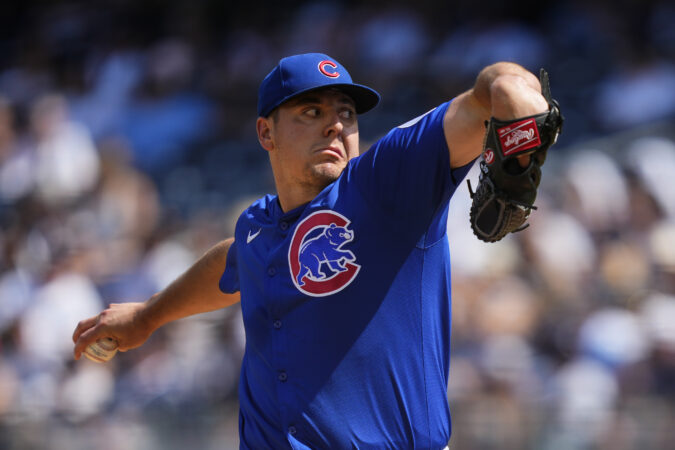
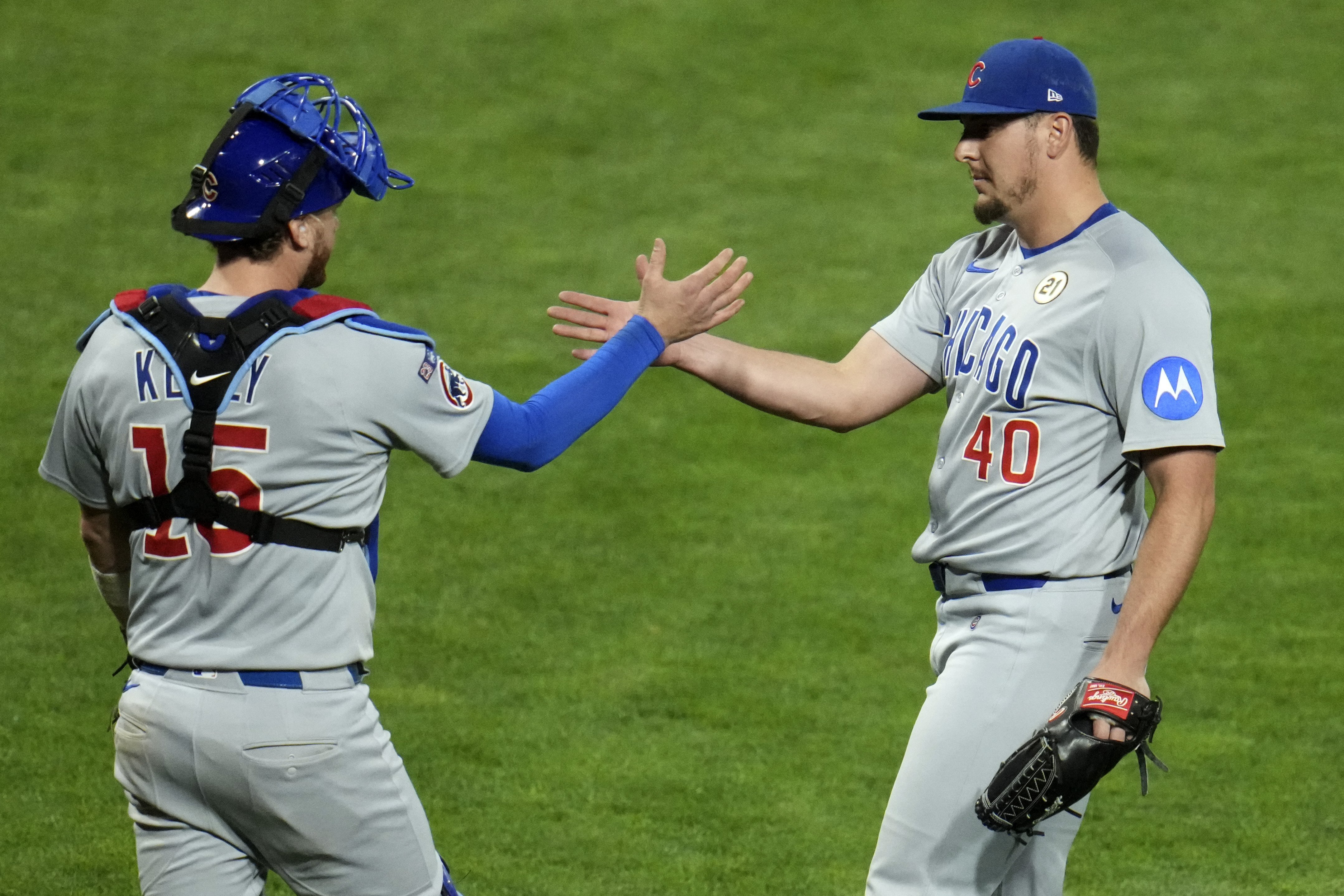
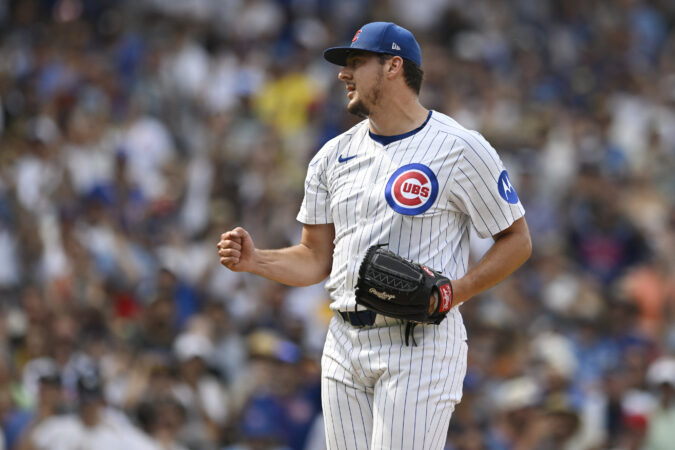
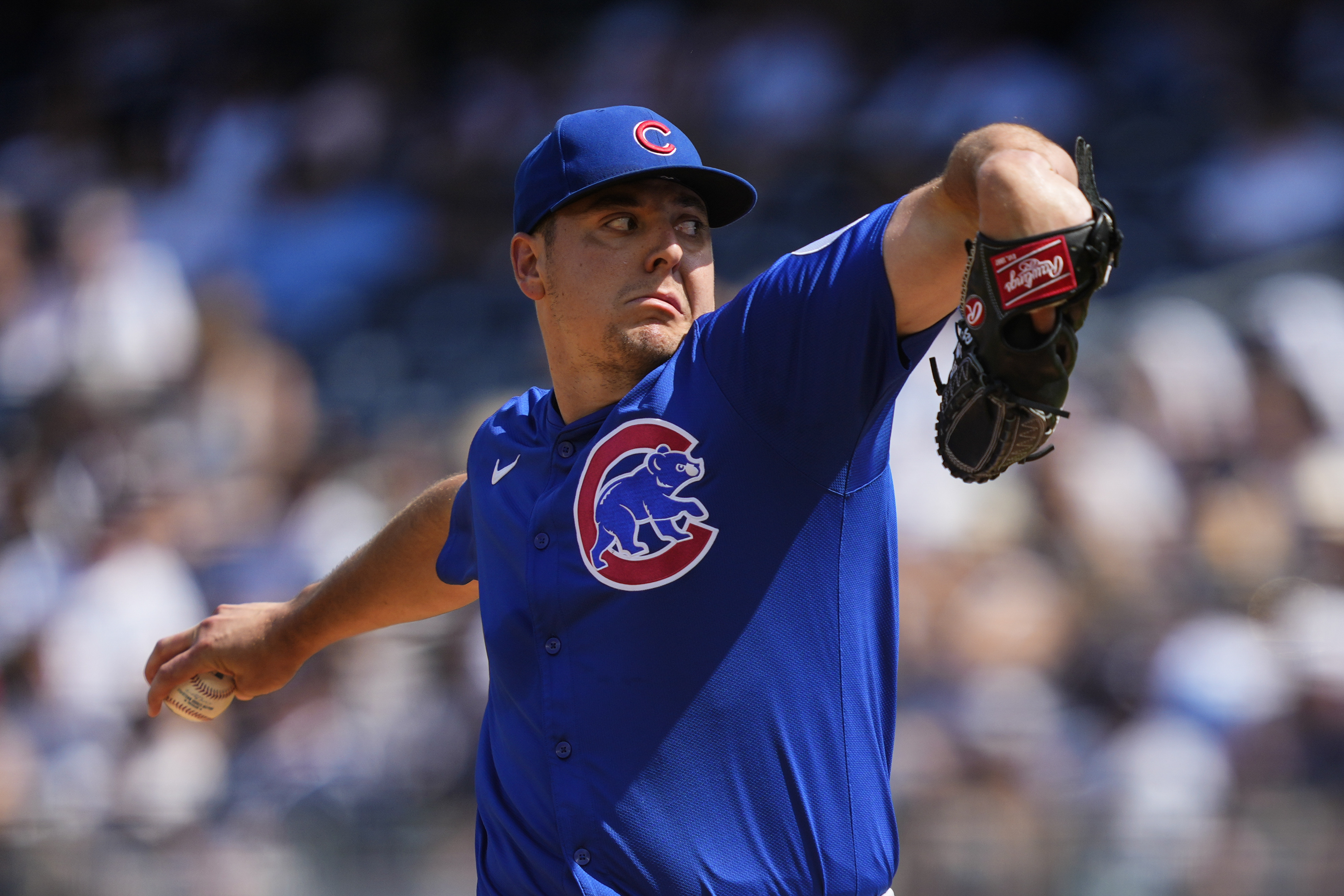
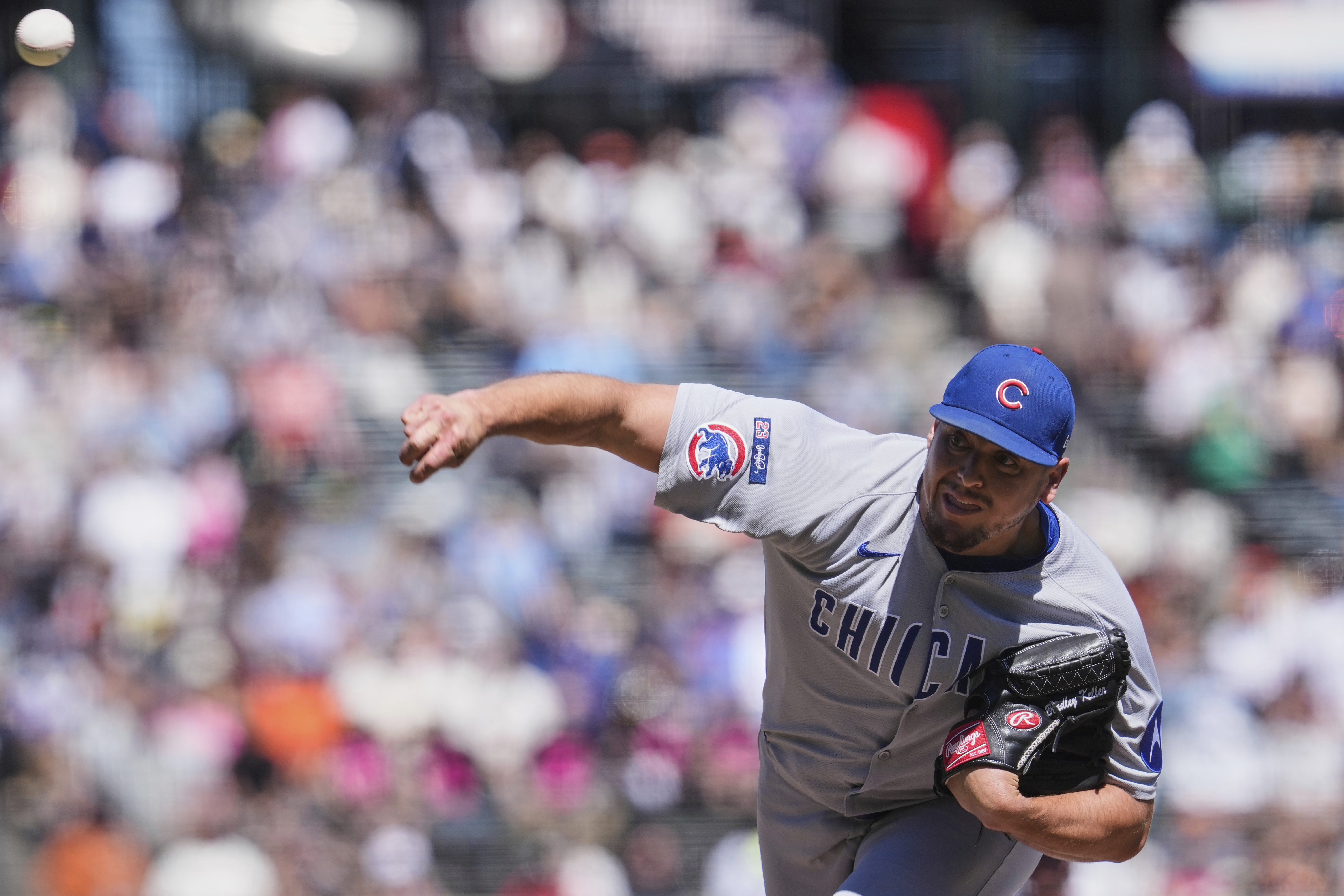
Brad Keller, right, revived his career with the Cubs in 2025 as one of manager Craig Counsell’s most trusted relievers.
He is also the youngest of that group, which is a key fact to consider. Heading into his 30-year-old season, Keller doesn’t have the wear-and-tear that relievers tend to accumulate by the time they hit free agency. He spent the first six years of his career moving into and then out of the Royals rotation. In 2024, he bounced back and forth between the minors and the Red Sox big-league roster, later landing with the White Sox.
Last offseason, the Cubs nabbed Keller on a minor league deal and gave him a job in their bullpen. His velocity jumped from the low-90s to a Statcast average of 97 in 2025, and he quickly worked his way to the back of the Cubs’ bullpen. He thrived in high-leverage situations, holding opponents to just four extra-base hits and a .582 OPS with 28 strikeouts and 10 walks in 101 plate appearances. His numbers after the All-Star break were as good as you’ll see: 35 strikeouts, eight walks, a 0.33 ERA in 99 plate appearances.
The addition of Keller gives the Phillies an assortment of high-leverage arms unlike any they’ve had in a long time. At 6-foot-5, 250 pounds, he is built like a closer. The Phillies will enter spring training with the thought that he will pair with Jhoan Duran as an elite setup/closer combo in the eighth and ninth innings. Between Keller, Duran and Matt Strahm, they have three of the 34 big-league relievers who finished last season with an ERA+ of 160 or better (minimum 40 innings). Lefty José Alvarado, back on a team option after a suspension-marred 2025, remains a quality high-leverage option. That gives Thomson four legitimate options for the late innings of close games, with lefty specialist Tanner Banks and young righty Orion Kerkering also bringing plenty of experience and potential upside.
The Phillies easily could have convinced themselves that they could make due without making a significant investment in another arm. They tried to ham-and-egg their way through last offseason, signing Jordan Romano and Joe Ross for about the same amount they’ll pay Keller. Though the Phillies won 96 games, they arrived in the postseason without the back-end horsepower to complement their best-in-class rotation. It cost them against the Dodgers. As much as the offense struggled, a dominant bullpen would have given them a clear edge in the series.
Who knows if it will work out? The relief market is little different from a roulette wheel. You ante up and then cross your fingers. But if the bullpen again emerges as a concern next season, it at least won’t be for a lack of trying.
For the first time in years, the Phillies aren’t scouring the offseason pitching markets in search of a closer.
But the bridge to Jhoan Duran does need fortification.
And so, shortly before lunch Wednesday, the Phillies came to a two-year, agreement with right-hander Brad Keller. The deal, which was announced by the Phillies on Thursday, is worth $22 million, according to a major-league source.
It completes a yearlong career revival for the 30-year-old Keller, who was poised to pitch in Japan until a deal with the Chiba Lotte Marines fell through. He hooked on with the Cubs, made the team out of spring training as a nonroster invitee, and posted a 2.07 ERA and 0.962 WHIP in a team-leading 68 appearances.
Keller, who drew interest as both a reliever and starter, is expected to slot into a setup role for the Phillies. He will join a bullpen that includes right-hander Orion Kerkering and three lefties (José Alvarado, Matt Strahm, and Tanner Banks), in addition to Duran.
With Keller, the Phillies will have roughly $306 million in 2026 payroll commitments, as calculated for the luxury tax. They continue to prioritize re-signing free-agent catcher J.T. Realmuto, according to president of baseball operations Dave Dombrowski, a move that would push the payroll behind this year’s total of approximately $312 million.
Brad Keller is expected to slot into a setup role for the Phillies.
The Phillies have explored trading one of the lefty relievers and allocating the salary to another area of the roster at a time when the free-agent market is flooded with relievers. Surely, there are low-cost, high-yield fliers — a 2026 version of Keller — out there among them.
Earlier in the week, though, Dombrowski expressed satisfaction with the state of the bullpen.
“We’ve got five solid guys out there that are veteran status,” Dombrowski said, not including Keller. “Sometimes you have to give some young guys an opportunity, too.”
Such as: The Phillies selected righty Zach McCambley in the Rule 5 draft last week. He must make the team out of camp or be offered back to the Marlins. They also acquired right-hander Yoniel Curet in a trade with the Rays. Hard-throwing right-hander Seth Johnson is out of minor-league options. Alex McFarlane, who finished last season in double A, was added to the 40-man roster in November.
But the Phillies needed a righty to help in the seventh and eighth innings. Manager Rob Thomson’s options last season included Jordan Romano, who flamed out with an 8.23 ERA and a finger injury that sidelined him for the final six weeks, and 40-year-old David Robertson, who signed in July after several months at home on his couch.
In turning now to Keller — rather than, say, Luke Weaver, who agreed to an identical two-year, $22 million deal with the Mets — the Phillies are betting that he’s more than a one-year wonder.
A starter early in his career with the Royals, Keller got released midway through the 2024 season by the 121-loss White Sox. Going into last winter, his career ERA was 4.34.
Brad Keller gained an average of 3.4 mph on his fastball after moving to the bullpen with the Cubs.
Keller made a full-time move to the bullpen with the Cubs and gained an average of 3.4 mph on his fastball. The jump from 93 mph to 97 mph also helped him better set up his off-speed pitches.
But rather than consolidating the five-pitch repertoire that he used as a starter, Keller kept throwing two sliders, a sinker, and a changeup. The changeup, in particular, was effective against left-handed batters.
Keller held opponents to a .182 average. He struck out 75 batters and walked 22 in 69⅔ innings. And he gained Cubs manager Craig Counsell’s trust, even closing out a 3-1 victory in Game 1 of the wild-card round series against the Padres.
Coincidentally, Keller was treated in October 2023 for venous thoracic outlet syndrome, the condition that befell Zack Wheeler last season. Wheeler has been working out several times per week at Citizens Bank Park and recently resumed throwing. The Phillies expect him to be ready early in the season.
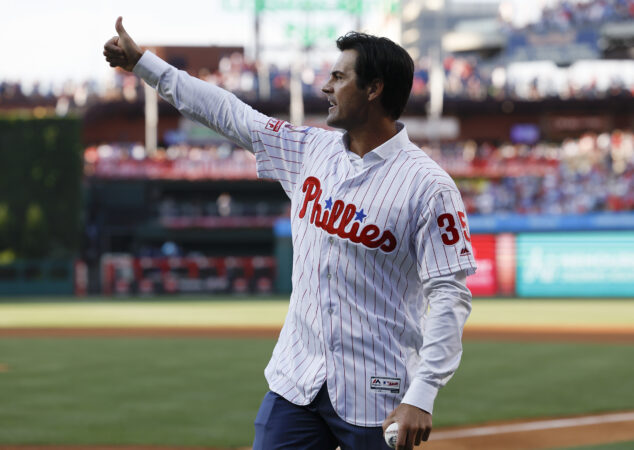
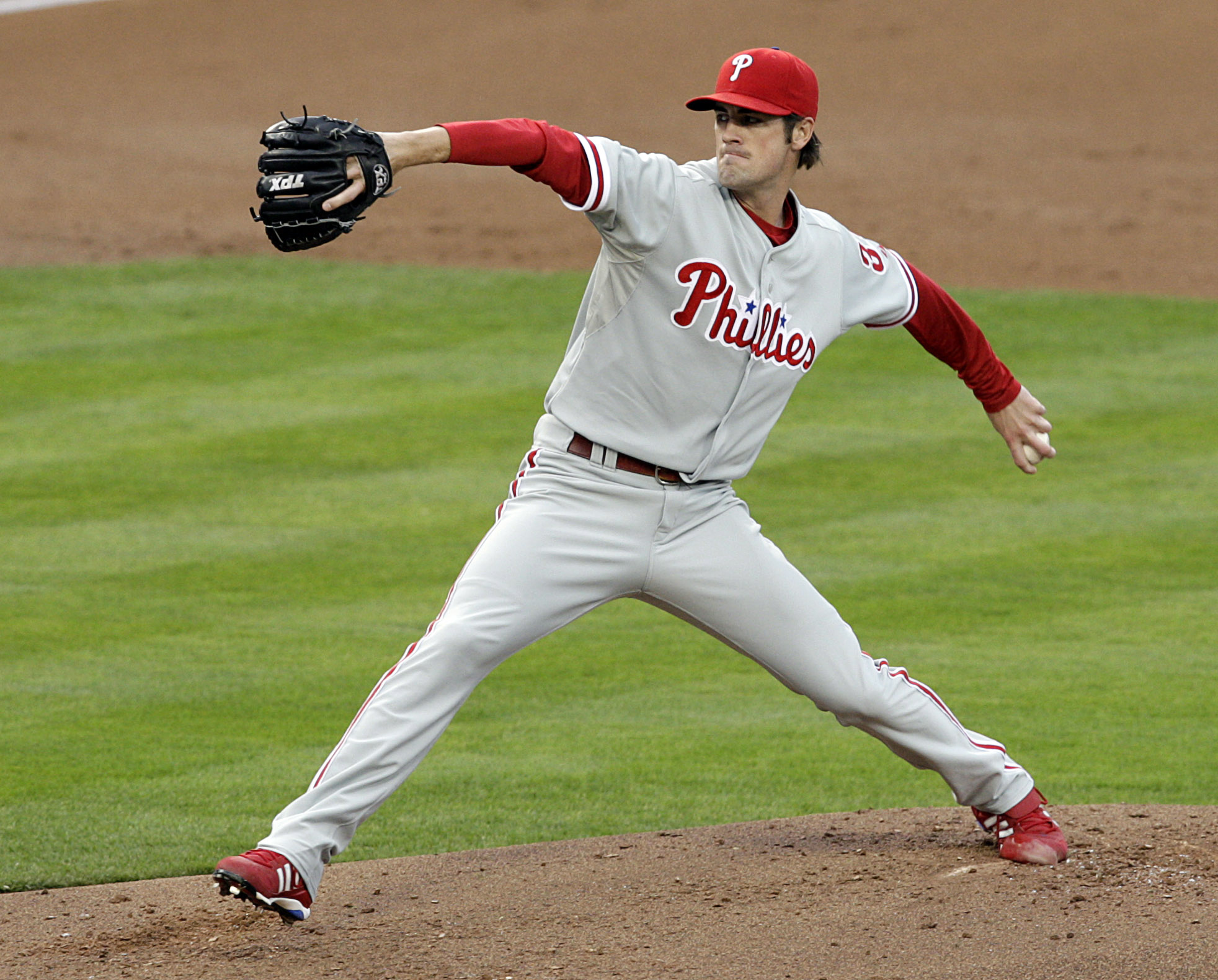
Cole Hamels was among the best pitchers in baseball for 15 seasons. He was the MVP of the World Series in 2008. The history of the Phillies can’t be written without him.
And for the first time, he’s on the Hall of Fame ballot.
Hamels was the first guest when The Inquirer launched the Phillies Extra podcast in February. He made a return appearance to chat about a variety of topics, including Kyle Schwarber’s return to the Phillies, what’s next in the team’s offseason, and, oh yeah, the honor of being considered for Cooperstown.
Watch the full interview below and subscribe to the Phillies Extra podcaston Spotify or Apple Podcasts.
Q: What did you think of Schwarber coming back for five more years on the largest contract ever for a DH?
A: I never doubted what Schwarber means to the team and what he means to the organization and the city. I didn’t think he was going to go somewhere else. But it’s the game you have to play. It’s understanding free agency. It’s understanding you not wanting to have to think about it during the year. You have agents. But to be able to see, it was the first of what the Phillies are really trying to do this offseason, and to finally get their guy — I don’t think they were going to let him get away.
And it’s just a testament to John [Middleton] and Dave [Dombrowski] and Preston [Mattingly]. They know who he is as a player. They’ve had him for a couple of years. I think a lot of organizations who have had him know how special he is, and they didn’t want him to go. And for the Phillies to lock him up, they do know it’s ‘go’ time, and this is a person that they need in the clubhouse, and they need him in the lineup. He produces runs, and he’s so patient, and especially to see his lines on lefty-on-lefty. That was something I always favored. I didn’t mind lefties coming up. I knew I was going to succeed more. But Schwarber comes up, he’s not the type of guy that you want to see in the box in a big moment when you’re facing him because he’s a tough, tough hitter. So it’s good. I think there’s going to be a lot of moves that are going to start to kind of roll, but I think he was first. I’m glad it’s done. He’s a big part of this organization, and it’s good to see for five more years.
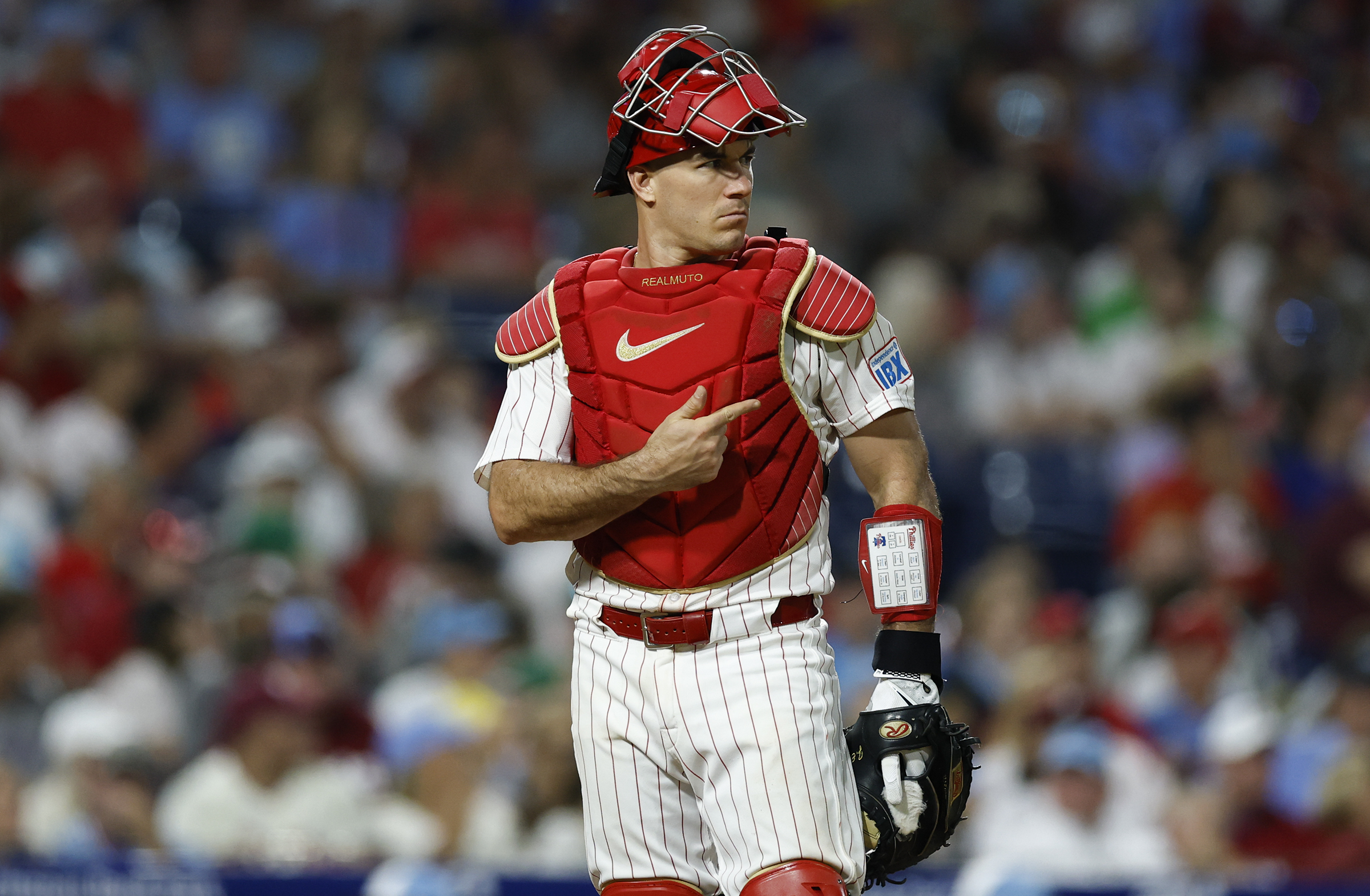
Cole Hamels believes veteran catcher J.T. Realmuto is “in the driver’s seat” with his market in free agency.
Q: Now the focus shifts now to J.T. Realmuto, and I can’t help thinking back to the 2013-14 offseason when Carlos Ruiz was a free agent. He was 34 going on 35, just like J.T. is now, and, also like J.T., all the pitchers love throwing to him. I know you swore by him. Do you see any similarities with where the Phillies are now with J.T.?
A: So, the hardest part about a catcher is, most of the time, you just look at what you can try to perceive as some sort of statistical value, and that’s how they hit, how they receive. But there’s something else that’s really difficult to measure, and that’s just his presence and confidence behind the plate in making a pitcher feel good, to want to execute, and to listen to a game plan, and then adjusting on the fly. And that’s something that [Realmuto] has really shown over the last couple of years.
He’s been a tremendous receiver, but he throws guys out. And you can never count them out with his bat. And you got to see that in the playoffs. He comes through in big moments. He’s an incredible athlete, and I think that’s what is the difference. When you look at age, it’s how athletic he is. He sets a bar that’s a lot different. And then you have to look at what is available, and on the given market, there’s not really much available that are comps to him. So he’s kind of in the driver’s seat.
But at the same time, when you have a catcher that is really good and instills confidence in a pitching staff — both the starters and the relievers — you don’t want to let those guys get away. And you can see that in all the greatest catchers in the history of the game is you don’t let the good ones get away.
Cole Hamels had a 3.09 ERA in 13 postseason starts with the Phillies.
Q: I don’t think we spend enough time celebrating what it means to be on the Hall of Fame ballot. When you think about how few people actually get to the big leagues in the first place, and then you’ve got to play at least 10 years to be eligible for consideration, and then there’s a screening committee that whittles it down even more. It’s like the top 5% all-time of players that actually get on that ballot. What does it mean to you to be on that ballot for the first time?
A: I think a lot of us, we all kind of say the same thing, to really be recognized, it’s incredibly rewarding for a job that is so humbling. This job is a career that you fail a lot, and you fail more than everybody else. In order to play that sort of period of time, you had big successes, but you probably failed twice as many times as you had successes. And that’s why we were able to create a career out of it [because] we always knew how to get back up, and we always knew how to never doubt ourselves, and to keep trying. That is probably the one thing that happens, is when they do put you on the ballot, they send you a letter, and you get to read, and you see statistics of percentages, and that is the wildest thing. You’re going, ‘Oh my gosh, 13% of drafted players make the big leagues?’ And then you’ll go see a smaller percentage, and we just start to see that. Wow.
We were so fortunate to be able to play the game of baseball as a career and a job that we loved as a kid, and it never changed. And now getting recognized, it’s a very special moment, and I’m incredibly thankful. I put in a ton of time and effort. My family devoted a ton of time and effort to try to get to have the career that I had, and then for it to actually be somewhat recognized, to be as one of the best ever. … It’s a small percentage, and I look at names that are in the Hall of Fame. I was lucky enough to go there [to Cooperstown, N.Y.] and pitch in the Hall of Fame Game, and we took a tour. And just the nostalgia of baseball and what it means to America’s pastime, I have a part in that history in certain moments. And I’m just lucky to do what I did. I loved every minute of it, and now this is kind of the reward.
Check out the full episode for Hamels’ thoughts on how Hall of Fame voting for pitchers has changed, the Cooperstown cases for former teammates Jimmy Rollins and Chase Utley, and more.
The scariest day of the offseason is always the one when Dave Dombrowski looks at his Phillies roster, smiles, and says, “Yep, that’ll do.”
On Tuesday, Christmas came earlier than usual for next year’s trade-deadline sellers.
“We feel very good,” said Dombrowski. “I guess we’d look for arms in the bullpen. But we’ve also got five solid guys out there that are of veteran status. Sometimes, you have to give some young guys an opportunity. We have some guys that we like. So that’s really where it stands. And maybe depth at different positions. We’re dealing with that. But I think as far as our everyday positional players — other than catcher — we’re pretty well set.”
[JUMP CUT TO MAY 2026, THE CITIZENS BANK PARK SCOREBOARD]
VISITOR — 000 000 03X | 3 5 0
HOME — 100 000 0XX | 1 2 0
[THE CAMERA ZOOMS OUT SLOWLY, REVEALING A PLAYER IN A GRAY JERSEY CIRCLING THE BASES AS A PHILLIES RELIEVER STANDS ON THE MOUND WITH HIS SHOULDERS SLUMPED, STARING BLANKLY INTO THE MIDDLE DISTANCE]
NARRATOR: (gravely) As it turned out, they weren’t pretty well set.
It goes like this every year, doesn’t it? Opening day arrives and a month or two later the Phillies realize they could really use one more right-handed bat and another reliever or two. Maybe this will be the year that breaks the cycle.
Or, hey, maybe we’ve been looking at the offseason wrong this whole time. Maybe the whole point of the thing is to remind us what it feels like to believe. That Adolis García will be the player he was at 30 years old instead of the player he was at 31 and 32. That Justin Crawford will go from being a player who didn’t deserve a big league roster spot over Max Kepler to one who will be an impactful piece of the Phillies lineup and play a good center field to boot. That the bullpen will transform into a dominant unit instead of one that has allowed 25 runs and 21 of 26 inherited runners to score in the Phillies’ last eight postseason games.
It’s a magical time of year, isn’t it? Maybe we are the grinches.
There’s some truth to it. As Dombrowski has said before, there is no such thing as a perfect roster. The team you bring into opening day is much more the sum of all previous offseasons than it is the product of the most recent one. The Phillies have spent a lot of money in the five years since they hired Dombrowski as president of baseball operations. Most of those expenditures are still on the books and occupying roster spots in the lineup, rotation, and bullpen. It’s easy to watch the Dodgers drop $69 million on Edwin Díaz and wonder why the Phillies can’t do the same. But there are 20-plus teams saying the same about the Phillies as they watch Kyle Schwarber re-up for five years and $150 million.
Dave Dombrowski says the Phillies’ roster is “pretty well set.”
Using the Dodgers as a benchmark can skew reality. The Phillies have improved their regular-season win total in each of Dombrowski’s first five seasons at the helm. Not only did they win 96 games last season, but they scored 31 more runs and allowed 37 fewer than they did in 2022, when they went to the World Series. Those results don’t necessarily align with the narrative that says the Phillies are a team in the midst of a steady decline.
As long as we assume that the Phillies eventually come to terms with J.T. Realmuto and fill their gaping void at catcher, they will enter 2026 with a sensible roster that is well within the range of outcomes we should have expected heading into the offseason. García is a decent bet to be an improvement over Nick Castellanos, pairing good defense, decent speed, and better power with his free-swinging approach. In left field, the Phillies will presumably begin the season with Brandon Marsh and perhaps Otto Kemp and keep an open mind from there. A little bit of flux can be a good thing, perhaps preserving an opening to get a look at a prospect like the lefty-hitting Gabriel Rincones at some point down the road.
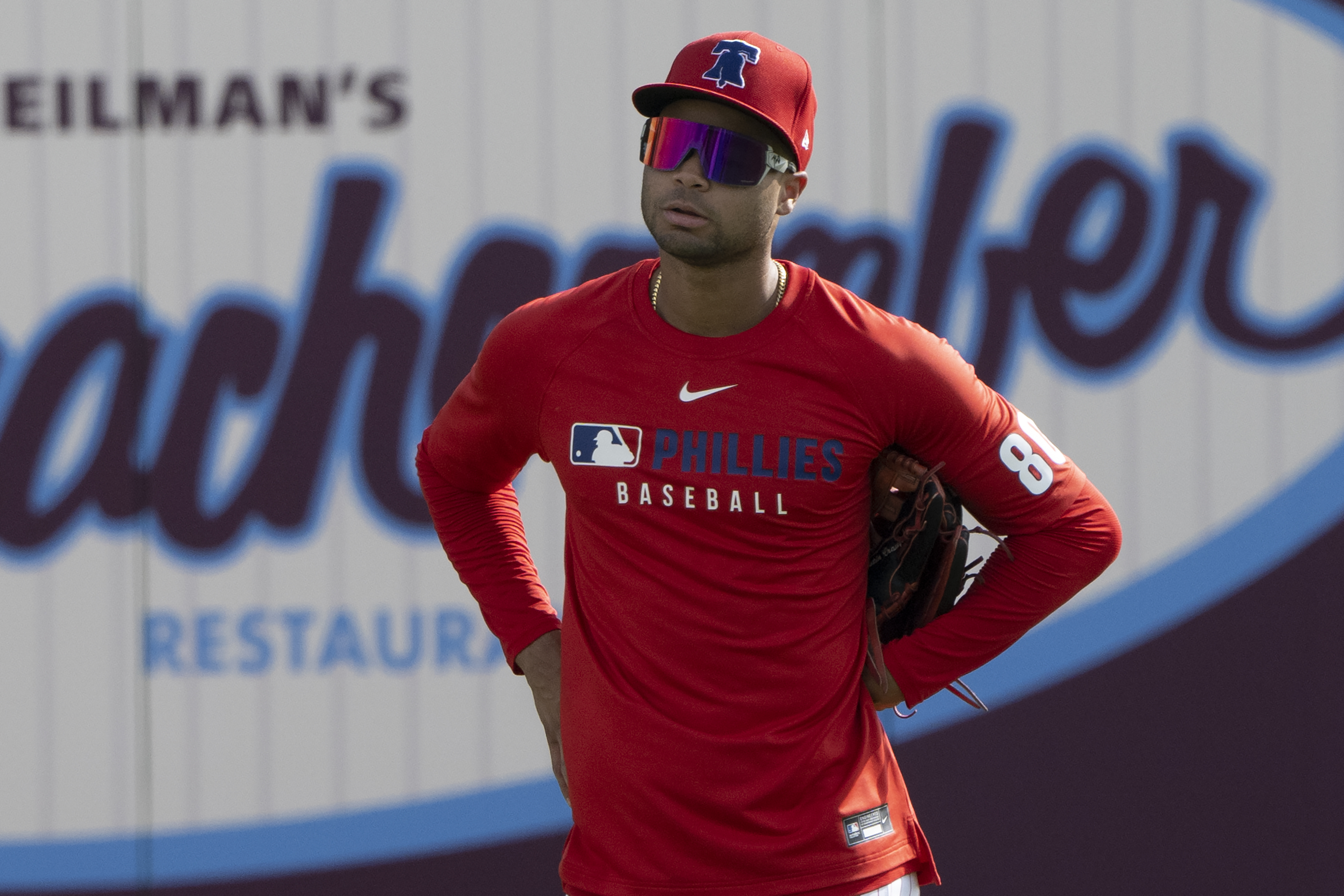
The biggest potential weakness in the Phillies’ approach is the extent to which they will be counting on Crawford, whom Dombrowski indicated would report to spring training as the leading candidate to man center field. Nobody is expecting Crawford, who will be 22 in January, to hit .334 with a .411 on-base percentage, as he did last season in 506 plate appearances at triple-A Lehigh Valley. He won’t even need to come close to those marks to warrant an everyday role. But he will need to warrant that role, or else the Phillies’ outfield situation will look a lot closer to what it did during the first half of last season vs. the competent unit it became as Kepler emerged and Harrison Bader joined up.
The big risk the Phillies are taking is in moving on from Bader. The center fielder was such an obvious fit after his trade-deadline acquisition from the Twins that you can’t help but think that they will enter next July looking for another similar player. The obvious question: Why not just do it now?
The first answer is money. Bader is reportedly looking for a three-year deal at $10 million to $15 million annually. That’s a steep price to pay a 31-year-old player with an injury history who is coming off his first season of 500-plus plate appearances.
The second answer is Crawford.
“If you’re going to give Crawford an opportunity, you’ve got to give it to him,” Dombrowski said. “And that’s where we are. We’re going to give him an opportunity to go out there and have a chance to play a lot.”
Where they are is the place they usually are, and one that is the fate of most teams when pitchers and catchers report.
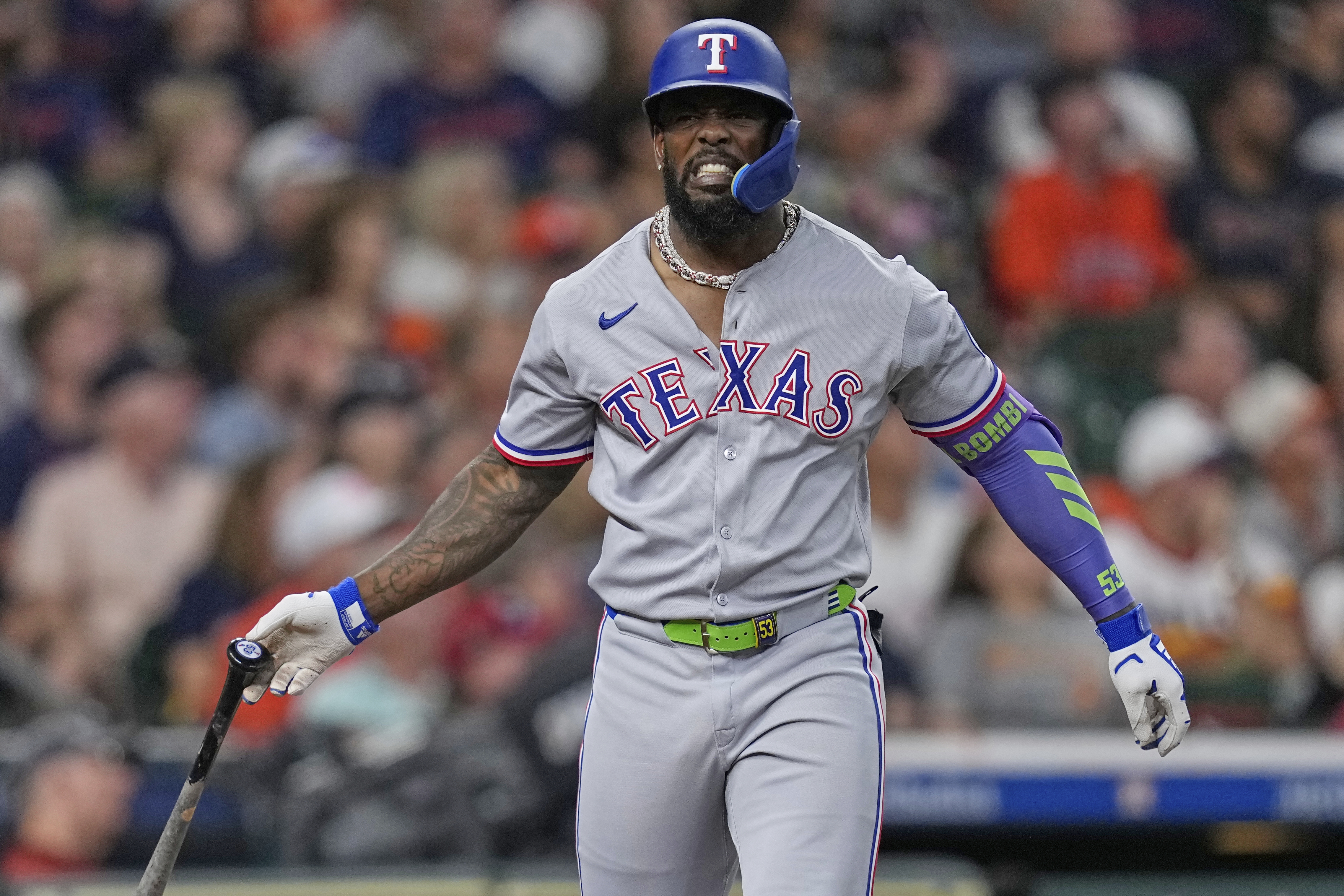
With the addition of Adolis García, the Phillies’ outfield picture for 2026 has come into focus.
García, who signed a one-year, $10 million deal with the Phillies on Tuesday, will get the opportunity to be the Phillies’ everyday right fielder. And now the outfield is “pretty well set,” according to president of baseball operations Dave Dombrowski.
Their top priority now becomes the catcher position, and bringing back J.T. Realmuto is the main focus.
“We just continue to grind along and see if we can come up with a solution,” Dombrowski said. “We’ve talked consistently about trying to sign J.T., and we remain that way. But we haven’t been able to get it done so far.”
As it stands, García will slot into right field, with Brandon Marsh in left — likely in a platoon role with Otto Kemp — and Justin Crawford will get an opportunity to be the everyday center fielder. The Phillies have already made clear their intention of cutting ties with Nick Castellanos this offseason.
“We like the players,” Dombrowski said. “We think Brandon Marsh is a good player. He hasn’t taken the next step vs. left-handed pitching. We’ve talked about that. Will he do it? I’m not sure, but we do like Otto Kemp. We think when we look at ourselves, that that’s one of the best combos in left field, if you look at the two of them. Adolis, we think, helps us in right field. It gives us an improvement there. And we think Justin is going to be a good player.”
By committing to this configuration, the Phillies are taking a few gambles. First, they’re betting on García returning to his 2023 form, when he hit .245 with an .836 OPS and helped power the Texas Rangers to the World Series title.
Since then, García has seen a drop-off in his performance at the plate. Last season, the righty slashed .227/.271/.394 with a 93 OPS+, and he was non-tendered by the Rangers in November. Underlying those numbers, García’s chase rate of 29.3% in 2023 increased to 35.7% in 2025.
Defensively, though, he remained reliable, recording +1 outs above average and +16 defensive runs saved in right field.
It’s a familiar bet for Dombrowski, who took a similar risk on Max Kepler a year ago on another one-year, $10 million contract.
“He needs to be more under control with the swing,” Dombrowski said. “We don’t need him to hit the ball out of the ballpark on every swing or every at-bat. We think he can do that. And our hitting coaches, to me, that’s one of the things that they do very well with working with individuals. It’s a matter of not trying to do too much. …
“The tools are there. The ball jumps off his bat, still. Bat speed is still there. Exit velocity is very good. So those are all things that we feel encouraged about.”
Adolis García will be an upgrade defensively over Nick Castellanos in right field.
García’s average exit velocity of 92.1 mph in 2025 was the same as his 2023 marker. His bat speed of 72.1 mph dipped slightly from 73.6 mph in 2023.
The Phillies plan to send hitting coach Kevin Long or assistant hitting coach Edwar Gonzalez to meet with García where he’s training in Tampa to start working.
“I want to be able to focus on being a better version of myself, to add a piece to this winning team,” García said through an interpreter. “There’s a great team involved. I just want to go and play my defense, and hopefully my bat will be there. And I just want to be a piece that contributes to this good team.”
Phillies manager Rob Thomson said he has made no decisions on where García might hit in the lineup, but he could potentially be protection for the Phillies’ left-handed bats.
The other gamble the Phillies are making with their 2026 outfield is handing the keys in center field to Crawford, who has yet to make his major league debut.
The Phillies repeatedly said that they felt Crawford was ready for the majors last season, when he hit .334 and stole 46 bases in triple A, but he did not have a path to regular playing time. In 2026, the road will be wide-open.
The Phillies are giving Justin Crawford the opportunity to take over in center field and “have a chance to play a lot” in 2026.
“If you’re going to give Crawford an opportunity, you’ve got to give it to him,” Dombrowski said. “And that’s where we are. We’re going to give him the opportunity to go out there and have a chance to play a lot.”
Thomson said he called Crawford, who turns 22 in January, on Monday night.
“I knew that he was going to hear about the Adolis deal and being a young kid, I just wanted to reiterate the fact that he’s coming into camp to win a job, and signing a Adolis does not affect Justin at all,” Thomson said. “Again, I want him to come into camp, be himself, and if he is himself, he’ll make this club.”
Here are five things to know about the newest Phillie …
García defected from Cuba
García ultimately charted his path through professional baseball by first playing in Japan for Nippon Profession Baseball’s Yomiuri Giants. On his return flight to Cuba, which connected through Paris, García instead disembarked and boarded a flight bound for the Dominican Republic, where he lived for six months to establish residency and to become an international free agent in 2017. He signed with the Cardinals for $2.5 million.
García appeared in 21 games for St. Louis in 2018, and then was traded to the Texas Rangers in 2019. In his 2021 rookie season with Texas, García appeared in 149 games for the Rangers — he had only played a total of 24 games prior — and made the American League All-Star team, finishing fourth in rookie of the year voting.
If you’re familiar with García already, it’s probably because of his postseason performance for the Rangers in 2023, the year Texas won the World Series, a series the Phillies were one win from reaching before losing two straight to the Arizona Diamondbacks.
Garcia, who was named MVP of that year’s American League Championship Series, is a confident player who loves the big stage.
“These types of games, when there’s a lot of emotions, the fans out there, they are rallying for their team, it fuels me,” García told Fox Sports. “It’s motivation that helps me out when I’m playing.”
Former Ranger teammate Marcus Semien, who García now joins in the National League East, said the outfielder was the most confident teammate he’d ever had.
“I think so,” Semien told Fox Sports. “He’s got the swag to go with it. It’s just so good for young players to watch him and how he plays with such confidence to just boost up everybody else. I think a lot of young players could learn from that guy.”
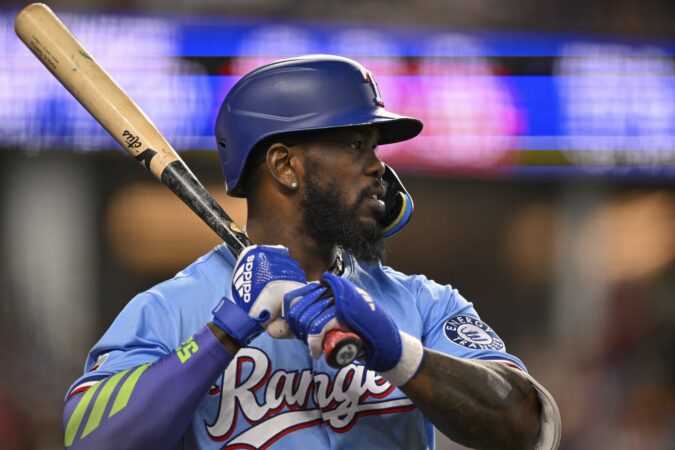
Adolis García won a World Series with the Rangers in 2023.
El Bombi 💡
García’s nickname is El Bombi, which, according to the Dallas Morning News, originated in childhood in Cuba, thanks to a friend who thought his head represented a light bulb, or a “bombillo.”
Baseball is a family affair
His older brother, Adonis García, played in MLB with the Atlanta Braves from 2015-2017. His father also played professionally in Cuba.
García and current Mariners outfielder Arozarena defected from Cuba around the same time. They didn’t know each other well in Cuba, but became close friends in the Cardinals’ minor league system.
“Adolis is kind of like my brother,” Arozarena told The Athletic. “So much (so) that I named him the godfather of my daughter.”
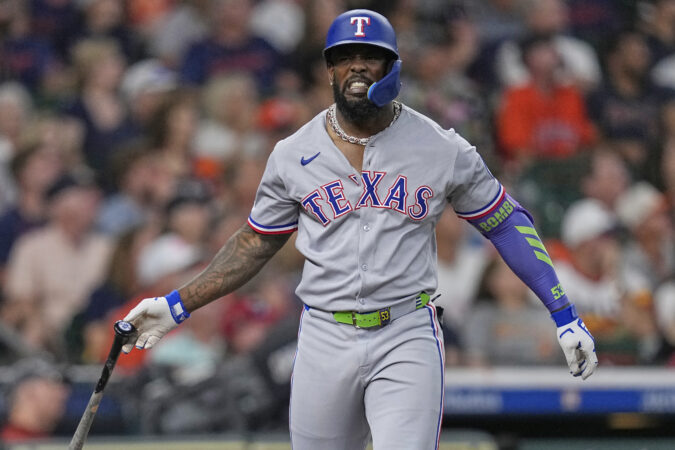
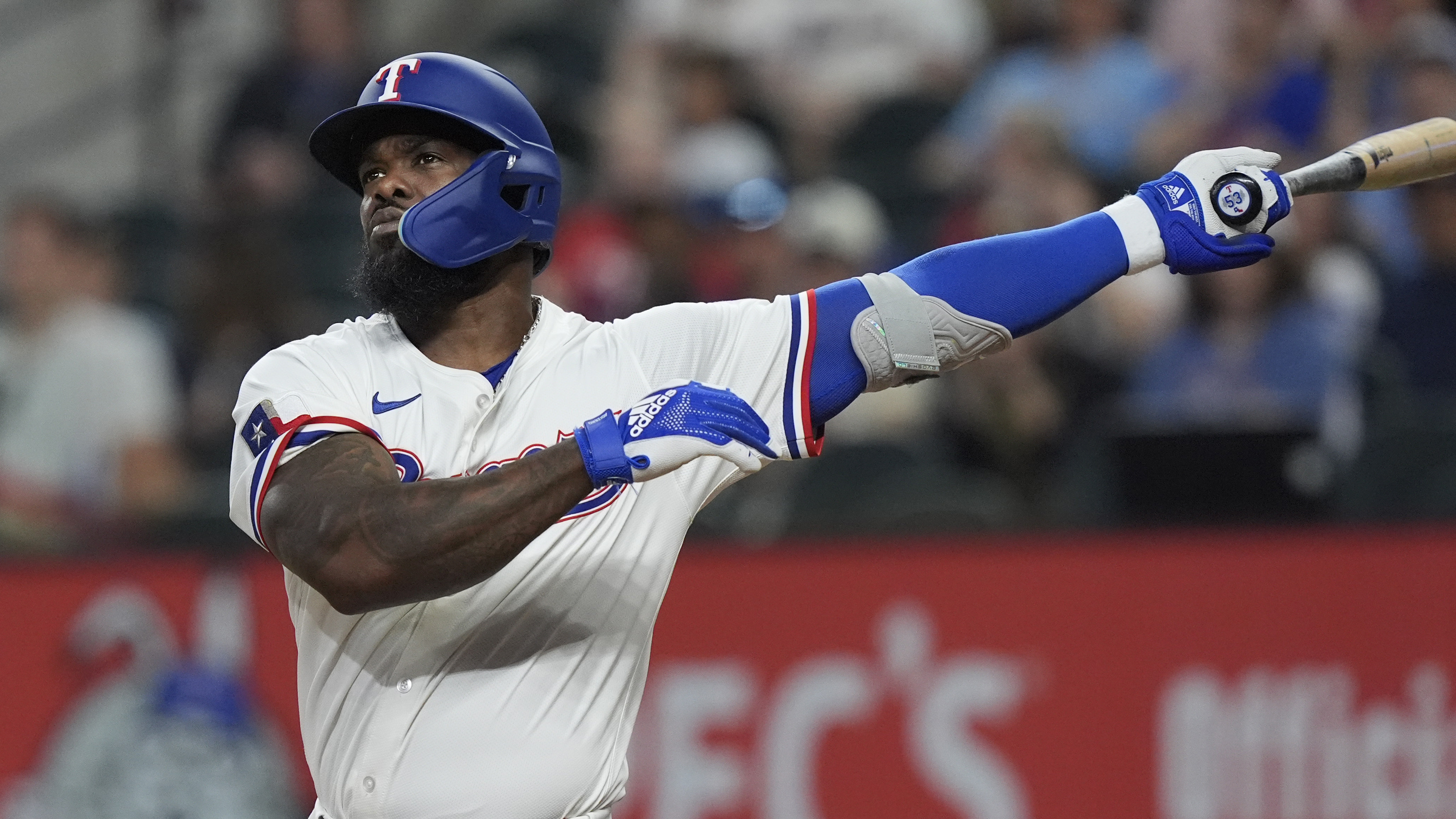
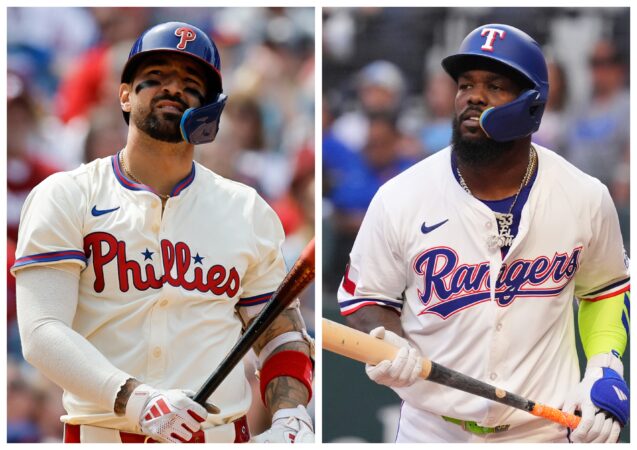
Adolis García is the new Nick Castellanos. That’s the simplest way to look at the Phillies agreeing to a one-year, $10 million contract with the former Rangers star on Monday. It’s true on a lot of different levels, including some that will make you scratch your head about why Dave Dombrowski decided to go in this direction. Not only is García likely to replace Castellanos in right field — his batting profile looks an awful lot like Castellanos’. Uncomfortably so.
Let’s make sure we keep things in context here. General managers can’t be picky at this particular price point. Any regular who is willing to sign a one-year deal for less than $20 million is self-evidently going to have some massive flaws. Basically, you are talking about two types of players:
Veterans who have done it before and could potentially bounce back to doing it again.
Veterans who have never done it before but have shown flashes of being able to do it.
Dombrowski has always seemed to favor the first group of players. Whit Merrifield, Max Kepler, Austin Hays, Jordan Romano, etc. — all were brought into the fold with the hope that they could get back to a form they’d shown in previous seasons. García fits that mold.
The best-case scenario for the Phillies is that García reemerges as the player he was in 2023, when he was an All-Star and then hit eight postseason home runs with a 1.108 OPS in 15 games as the Rangers won the World Series. His regular-season batting line that year was .245/.328/.508 with 39 home runs and 107 RBIs. That’s quite nice.
García’s first three seasons in Texas looked a lot like what the Phillies were hoping for out of Castellanos when they signed him to a five-year, $100 million deal. From 2021 through ’23, García averaged 32 home runs with a .226 isolated power percentage. Aaron Judge was the only right-handed-hitting outfielder who hit more home runs than García in those three seasons. His Statcast numbers ranked in the top 10 of righty outfielders in all of the power metrics: Hard-hit percentage (47.6%, 10th), barrel percentage (13.4%, 10th), exit velocity (91.7, ninth), etc.
Castellanos has never flashed that kind of power in his four seasons with the Phillies. His hard-hit rate since 2022 is just 39.8, down from the 46.9% he posted in his walk year with the Reds. His 82 home runs are well shy of a total that let you accept his plate discipline struggles.
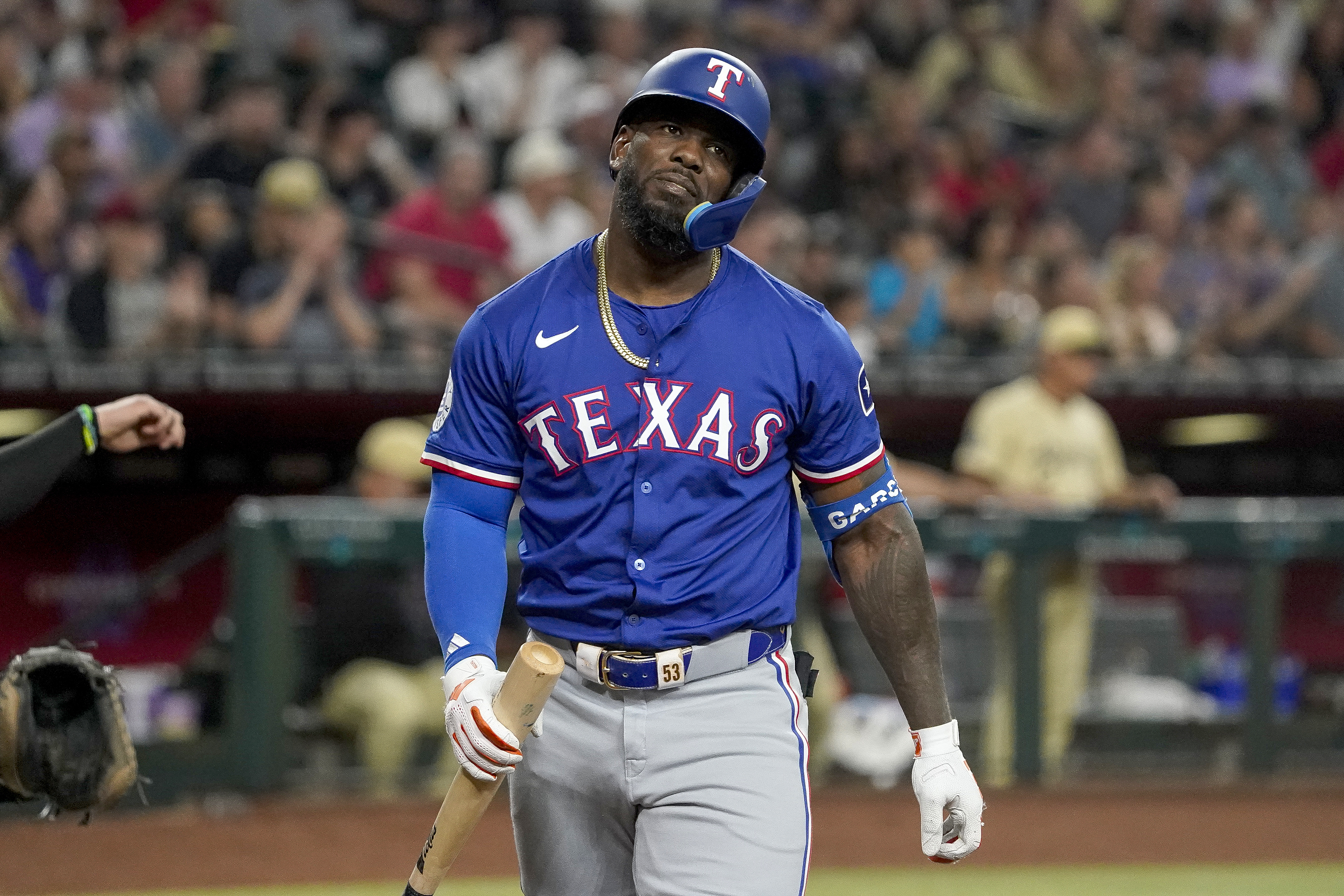
Adolis Garcia hit 141 home runs over the last five seasons with the Rangers.
García has many of the same struggles. They are largely to blame for his back-to-back disappointing seasons, which led the Rangers to non-tender him rather than pay him a projected $12 million. After hitting 39 home runs in 2023, he hit just 44 combined in 2024-25. His batting line over those two seasons was .225/.278/.397. That’s still good enough for an OPS+ that was within range of league average. But without the power production, his lack of competitiveness at the plate can be a frustrating thing to watch, manage, and play alongside.
At the same time, García’s plate discipline metrics aren’t as extreme as Castellanos’. His chase rate of 34.4% in 2024-25 was well above average, but also well shy of Castellanos’ 39.1%. Same goes for his overall swing percentage: 52.1%, compared with 58.4% for Castellanos. García is much more likely to swing-and-miss in the zone. You can live with that when he is hitting 30-plus homers. Not when he is hitting 19, as he did in 2025.
García hasn’t even been all that good against lefties. His .715 career OPS with the platoon advantage is a lot lower than you’d expect to see out of a power hitter of his profile. Last year, he hit just .199 with 44 strikeouts in 136 at-bats against lefties.
There aren’t a lot of bad gambles at the $10 million price point. I’m just not sure how realistic the upside is. García is coming off two disappointing seasons and was just non-tendered by a team that knows him quite well. If the Rangers didn’t think he was worth $10 million-$12 million, and the Phillies do, who is more likely to be correct?
Instead of García, the Phillies could have taken a chance on someone like Miguel Andujar, who finished last season on a tear for the Reds (1.035 OPS, seven home runs in 125 plate appearances over the last quarter of the season). A onetime top-100 prospect who had a big year with the Yankees in 2018 at the age of 23, Andujar has had less than 1,200 plate appearances over the last seven seasons. Heading into his 31-year-old season, he is young enough to think that he might still have his biggest season in front of him. At worst, he gives you a platoon bat (.807 career OPS vs. lefties) with some positional versatility (third base and outfield). Although, you can argue that positional versatility doesn’t mean much if a guy can’t play any of the positions well.
Dombrowski would likely argue that there is a certain floor of value for a guy who has a track record of playing every day for competitive teams. He wouldn’t be wrong, either. García has five straight seasons of 500-plus plate appearances with an elite tool (power) and production that has been close to league average even in two straight disappointing seasons. The Phillies were clearly looking for someone who could play every day for them, presumably in right field, where Castellanos is almost certainly on his way out.
Whatever the Phillies ended up doing with this particular roster spot, it wasn’t going to be the kind of move you could judge on its own. The important question is the overall picture in the Phillies’ outfield. If they can find a way to bring back Harrison Bader, the unit will be a better one than it was a year ago. Even the player García was in 2024-25 is better than the player Castellanos has been lately.
At a time when righty-hitting outfielders with power are in short supply across baseball, the Phillies will wager on a onetime postseason star to have a bounce-back season.
The Phillies signed free-agent outfielder Adolis Garcia to a one-year contract, which major league sources said is for $10 million. The deal was reported first Monday by Beisbol FG.
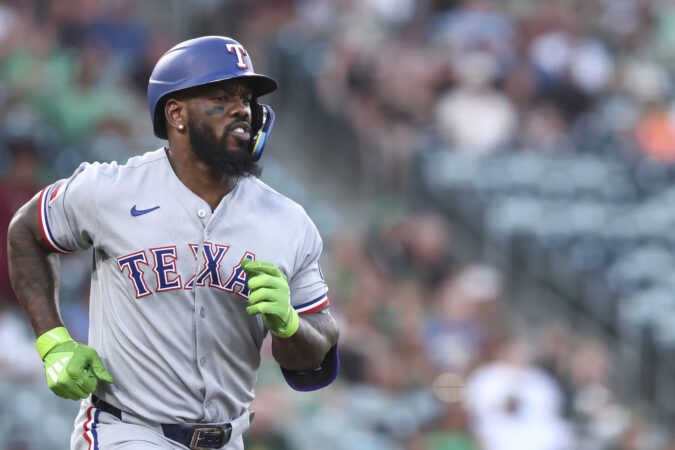
García, 32, is expected to replace Nick Castellanos in right field. The Phillies intend to trade or release Castellanos, who is owed $20 million in 2026 but lost his everyday job in August amid declining performance and clashes with manager Rob Thomson.
The Phillies’ signing of García comes 361 days after an identical one-year, $10 million free-agent deal with outfielder Max Kepler.
It represents a similar bet, too.
García, who will be 33 next season and played for the Rangers since 2020, wasn’t tendered a contract last month after batting .225/.278/.397 with a 96 OPS-plus over the last two years. He was projected to make $12.1 million in salary arbitration, according to MLB Trade Rumors.
Adolis García had a 30.3% strikeout rate last season with the Rangers.
In particular, García struggled to make contact, with a 30.3% whiff rate last season and 33.6% the year before. For context, Castellanos had a 29.9% whiff rate last season and 30.1% in 2024. García’s bat speed has also dipped in the last two years.
But when García connects, he still hits the ball hard. He ranked in the 89th percentile among all hitters last season in average exit velocity (92.1 mph), which mirrored his mark from 2023 when he smashed 39 homers and had a 127 OPS-plus, career-best totals. García also batted .323 with eight homers in the 2023 postseason and was MVP of the American League Championship Series en route to helping the Rangers win the World Series.
The Phillies will count on hitting coach Kevin Long to bring about a revival for García. And maybe he will benefit from hitting in Citizens Bank Park.
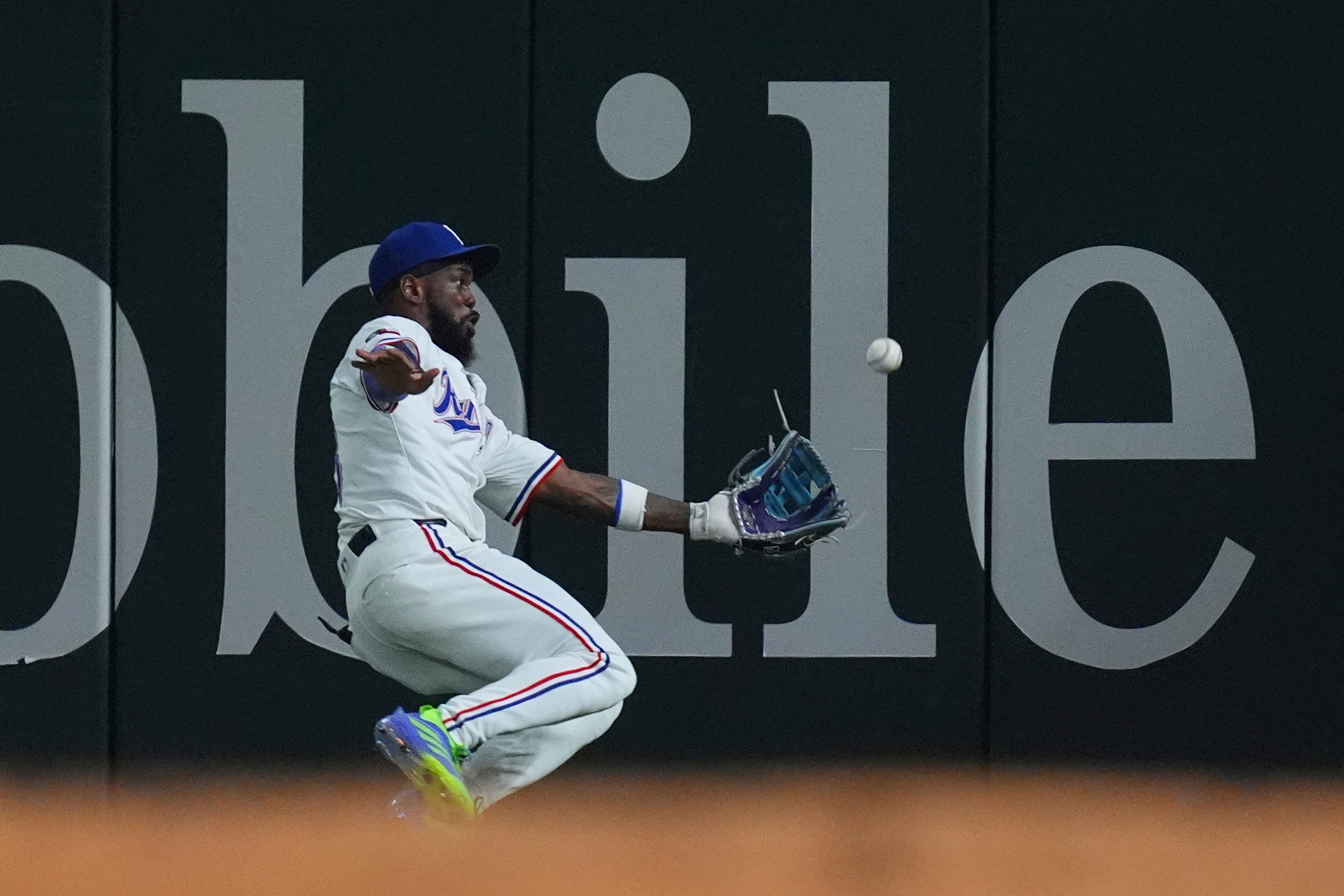
Even if García’s decline at the plate continues, he figures to be a massive defensive upgrade in right field. Known for his elite arm strength, García tied for third among all outfielders with 16 defensive runs saved above average and was a Gold Glove finalist. He won a Gold Glove in 2023.
Castellanos rated among the worst defenders at any position last season, 11 runs saved below average, according to Sports Info Solutions. His offense is in a three-year decline (OPS-plus: 112, 104, 88 over the last three years). And Thomson benched him in June in Miami for insubordination in the dugout after being removed for defense in the ninth inning.
Even with Castellanos, the Phillies, like many teams, looked everywhere in recent years in search of righty-hitting outfield help. After committing to Johan Rojas as a rookie in 2023, they traded for Austin Hays and Harrison Bader on back-to-back July deadlines.
Last winter, the available righty-hitting outfield options were so scarce that the Phillies signed lefty-swinging Kepler, who batted .216/.300/.391 with 18 homers and an 88 OPS-plus. And although president of baseball operations Dave Dombrowski has defended Kepler’s season, he also said multiple times that the Phillies would not re-sign him.
Adolis Garcia has 44 homers over the last two seasons, 10th among all righty-hitting outfielders in baseball.
The scarcity of righty-hitting outfielders was evident earlier in the offseason, when the Orioles traded a pitcher with four years of team control (Grayson Rodriguez) to the Angels for Taylor Ward, a corner outfielder entering his last year before free agency.
García ranks 10th among all righty-hitting outfielders with 44 homers over the last two seasons.
“There’s just a lot more left-handed hitters nowadays than there are right-handed hitters, for whatever reason,” Dombrowski said last week. “We’ll talk about something that comes up, and I’ll say, ‘Yeah, but that’s a left-handed hitter again.’”
García’s presence in right field likely means top prospect Justin Crawford will play center with Brandon Marsh in left, at least against right-handed pitching. The Phillies could still add a righty-hitting outfielder, or open the door again to Rojas, to share time with Marsh.
García’s contract will boost the Phillies’ 2026 payroll commitments to approximately $295 million, as calculated for the luxury tax. That figure includes Castellanos’ salary. If the Phillies are able to trade him, they almost certainly will have to swallow all or most of the $20 million.
The Phillies still hope to bring back free-agent catcher J.T. Realmuto, which would put them in range with their final 2025 payroll figure of roughly $312 million.
During the winter meetings last week in Orlando, rival team officials painted the Phillies as interested in trading from the major league roster to create payroll space to add in other areas, including the outfield and bullpen. They remain interested in re-signing Bader, although he’s believed to be seeking to parlay a career-best season at the plate into a three-year contract.
It’s possible, then, that García will represent the Phillies’ biggest outfield addition.
After a spring training workout in February, Kyle Schwarber contemplated the likelihood of the Phillies keeping most of the roster’s core intact through the end of the decade.
“I think we would love to all finish our careers together,” he said. “But who would want to come out and watch a bunch of 40-year-old dudes play baseball? Right?”
Well …
Schwarber will be only 37 when his newly minted five-year, $150 million contract expires in 2030. Bryce Harper will be 38 by then; Trea Turner and Aaron Nola 37; even Cristopher Sánchez will be 34. All will have no-trade rights, if they don’t already.
Maybe they will have World Series rings, too. In that case, the 42,000 fans who pack Citizens Bank Park on random weeknights in June won’t mind watching them ease into baseball old age together. Flags fly forever, you know.
But modern front offices obsess over long-term plans more than trying to win a championship one season at a time. Sustainability is their buzzword. Most whiz-kid general managers would look you in the eye and say that five-year contracts for 33-year-old designated hitters coming off 56-homer seasons are bad business. Don’t even get them started on multiyear deals for 35-year-old catchers who still play 130 games per year.
At 69, Dave Dombrowski is no kid. But five World Series appearances with four franchises and two titles make him a team-building wiz. And although he has hitched the Phillies’ hopes in 2026 and probably 2027 mostly to a handful of thirtysomething superstars, he outlined a second part of the plan that’s essential to success in 2028 and 2029, too.
President of baseball operations Dave Dombrowski is intent on incorporating more young players into the Phillies’ roster.
“I’ve said this all along, and I still believe this: We need to start working our young players into our [roster],” Dombrowski said this week at baseball’s winter meetings in the shadow of Disney World. “We have good young players, and we’ll be better for it. I do think that good organizations can blend young players with veterans.”
Look no further than the sport’s model organization.
Since 2023, the Dodgers have spent more than $1 billion on player salaries, including a record $415 million this year (calculated for the luxury tax, according to Cot’s Baseball Contracts). Yet they had 25 players make their major league debut, including center fielder Andy Pages, infielder Hyeseong Kim, and pitchers Bobby Miller, Gavin Stone, Emmet Sheehan, Jack Dreyer, Roki Sasaki, and World Series MVP Yoshinobu Yamamoto.
Conversely, the Phillies had 12 major league debuts in the last three seasons — fewer than any team, based on Fangraphs research — with setup reliever Orion Kerkering and reserve outfielder Johan Rojas having the most impact.
Dombrowski attributed the low graduation rate from the minor leagues to “a combination of factors,” including a veteran-laden roster that stayed mostly healthy relative to other teams and allowed few opportunities for call-ups.
But it will be different in 2026. It has to be.
Because it’s one thing to reunite Schwarber — and probably free-agent catcher J.T. Realmuto, too — with Harper, Turner, Nola, Sánchez, and Zack Wheeler on one of the majors’ oldest rosters and take a few more whacks at an elusive championship. It’s quite another to realize that long-term success — beyond, say, 2027, when Wheeler intends to retire — is tied to how good Justin Crawford, Andrew Painter, and Aidan Miller end up being.
“We have some really exciting talent that’s going to be coming up, and you’re looking forward to whenever they can step foot in the big-league locker room,” Schwarber said. “You want to make them feel like they’re going to be welcomed right away and feel like there’s going to be a seamless transition for them.”
And even as the Phillies bring back the band, the maturation of their next core will be an equally important 2026 storyline.
Top prospect Justin Crawford is expected to occupy a spot in the Phillies’ outfield on opening day.
A new ‘Daycare’
When the Phillies returned to the postseason in 2022, the lineup included three, sometimes four players who were 25 or younger: Alec Bohm, Bryson Stott, Brandon Marsh, and Matt Vierling.
Teammates and coaches dubbed them “Phillies Daycare.”
Although Bohm, Stott, and Marsh became solid contributors after Rob Thomson took over as manager (Vierling got traded to the Tigers for lefty reliever Gregory Soto), they’re mostly supporting actors rather than leading men in the Phillies’ ensemble. And as they outgrew their moniker — “They’re not the ‘Daycare’ anymore,” Harper finally declared last spring — there wasn’t another class coming behind them.
“Well, we traded quite a few players that could have been contributing members,” Dombrowski said, citing Vierling specifically. “We traded them for more veteran type of players to help us win at that particular time.”
Dombrowski also noted that five of the Phillies’ last six first-round picks — including Mick Abel (2020), Painter (2021), Crawford (2022), and Miller (2023) — were drafted out of high school, which typically means a longer path through the minors.
And when the Phillies did punch the accelerator and gave Painter a chance to make the team out of spring training as a 19-year-old in 2023, he tore a ligament in his right elbow, had Tommy John surgery, and missed two seasons.
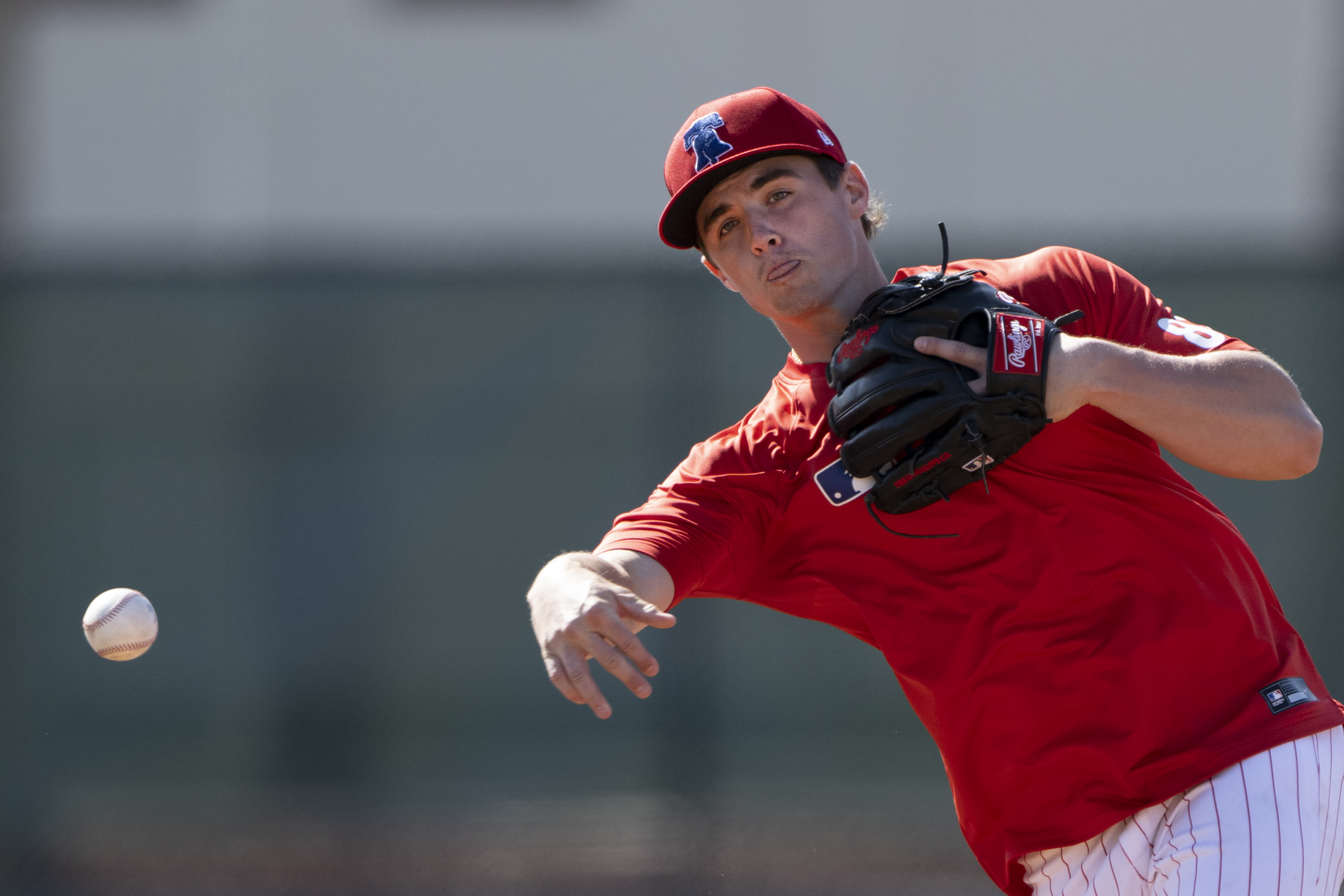
The Phillies planned to call up Painter midway through this past season. But he struggled to regain his preinjury command, common for pitchers in the first year back from surgery. Painter stayed in triple A, and finished with a 5.40 ERA in 106⅔ innings.
“Honestly, some of the expectations we put on players is unfair,” minor league director Luke Murton told The Inquirer’s Phillies Extra podcast. “A guy that’s just coming back from Tommy John that pitched over 100 innings, was healthy, and at a level he’d never been at, I was very pleased, very satisfied.
“I think he accomplished a ton this year. Next year he’s looking forward to accomplishing more.”
Painter stands a good chance to crack the season-opening rotation, especially if Wheeler needs more time after thoracic outlet decompression surgery. And the Phillies expect Painter’s long-awaited arrival in the majors to help lessen the anticipated loss of Ranger Suárez in free agency.
Dombrowski has all but guaranteed Crawford’s spot in the opening-day lineup, either in center field or left. The Phillies came close this summer to calling up the 21-year-old but elected to leave him in triple A to win a batting title, especially after acquiring veteran center fielder Harrison Bader at the trade deadline.
“I really believe that [Crawford] could have played for us at some point,” Dombrowski said. “But then you also do what you think is best for the player and for us in that time period. You’re trying to win a championship. And it didn’t hurt him to go out and continue to play [in triple A].
“But now, all of a sudden, you’re in a position where you’ve got Crawford and you’ve got Painter knocking on the door. Miller’s close; [outfielder Gabriel] Rincones is close. [Otto] Kemp came up for us last year, and we like Kemp a lot. There’s others that we like. It’s exciting.”
Also, necessary.
The Phillies could fast-track Aidan Miller to the majors in 2026 if he can make a smooth transition to third base.
‘Close your eyes and let ‘em play’
Including Schwarber’s new deal, the Phillies have roughly $285 million in 2026 payroll commitments, calculated for the luxury tax. Bringing back Realmuto would likely push the total past $300 million.
And still, there are holes in the outfield and bullpen.
The Phillies have explored trading from the major league roster to create payroll flexibility, according to sources. Moving Bohm, entering his free-agent walk year, would clear approximately $10.3 million based on MLB Trade Rumors’ salary arbitration projections.
In that case, the Phillies could look inward to find Bohm’s replacement at third base. One possibility: Kemp, who made his major league debut this year and has drawn effusive praise from Dombrowski throughout the offseason.
“He’s a good hitter. The ball jumps off his bat,” Dombrowski said. “He’s a threat when he comes to the plate. He can play different positions. And he’s a tough son of a gun. He’s a championship-type player. What he played through last year, injury-wise, I don’t think that there’s many people that would have done that.”
Indeed, Kemp continued to play despite fracturing his left kneecap in June and finished with eight homers and a 92 OPS-plus. He had knee surgery and a minor procedure on his left shoulder after the season. The Phillies expect him to be ready for spring training.
Before long, third base could belong to Miller. Murton said the touted 21-year-old shortstop will move to third in spring training. Miller spent the last week of the season in triple A and could return for only a pit stop after finishing with 14 homers, 59 stolen bases, and an .825 OPS between two levels.
Could he follow Crawford and Painter as a major league debutant in 2026?
“You never know,” Murton said. “He’s a very talented player. Don’t want to put too much on him too soon. He’ll be a big-league spring-training invite. You bring him in and see what we’ve got.”
The timing lines up. As Harper posts Instagram videos of his elective blood-oxygenation treatments, the Phillies can finally inject fresh blood into the roster, acclimatizing Crawford, Painter, and eventually Miller while the old guard is still elite and bearing most of the pressure.
“We just need them performing to their best abilities,” Schwarber said. “We don’t need anyone feeling like they need to step out and be Superman. We don’t need them worrying about, ‘How does Schwarber, how does Trea Turner, how does Bryce Harper, how does whoever think about what I’m doing?’”
Said Thomson: “I always think, when you bring a young guy up, close your eyes and let him play. No matter what happens, he gets two, three months, whatever you want to give him, and don’t even talk. Just let him go. The guys that we have at the upper level of our system are performers, and eventually they’re going to perform.”
It’s not just overdue. It’s imperative to keeping the Phillies’ roster from going stale.