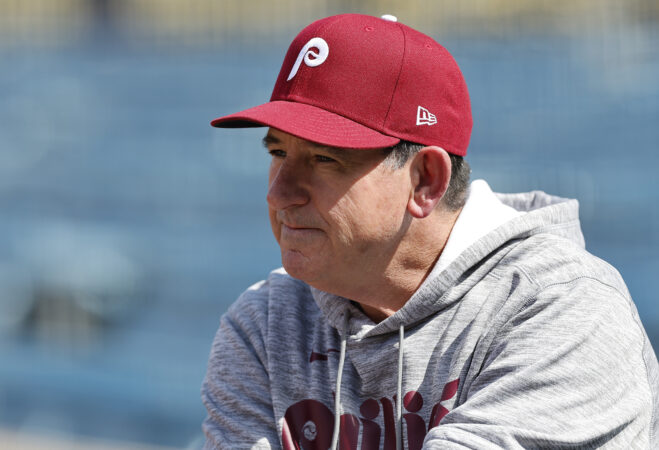
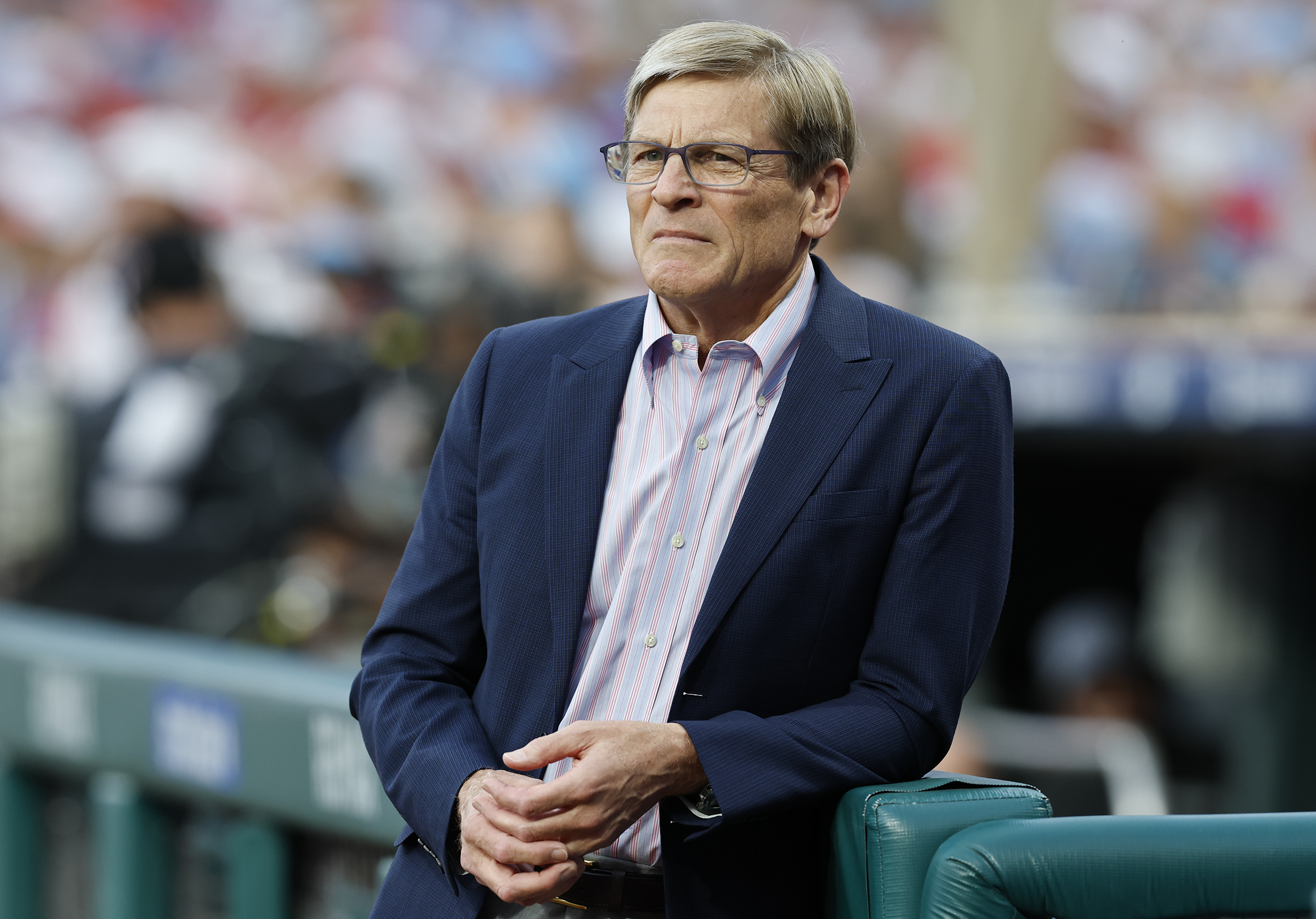
ORLANDO — The Phillies have extended manager Rob Thomson’s contract through 2027, the team announced Tuesday.
After the team’s National League Division Series loss to the Dodgers, Phillies president of baseball operations Dave Dombrowski said he planned to add a year to Thomson’s contract during the winter to avoid him being a lame duck in 2026.
“I think he’s a good manager, is really what it comes down to,” Dombrowski said in October. “And there’s so many qualities when you talk about a manager that’s a good manager. He knows the game very well; he’s inside and out in that regard. He communicates with his players. He works hard. I don’t think he leaves any stone unturned. …
“You make mistakes, or you make things that can be questioned, but you do it with sound reason. I think there’s way too much emphasis that’s always placed on ‘That didn’t go well,’ or ‘This didn’t go well.’ It’s different than if you’re doing something that just doesn’t make sense. … You review the overall picture of what somebody does. And I think he does a really good job for us.”
Since he was named Phillies manager in 2022, Thomson, 62, has led the team to a .580 winning percentage. He is the fourth manager in MLB history to reach the postseason in each of his first four full seasons at the helm and was a finalist for manager of the year in 2025.
“It always comes back for me, are you having fun? Are you enjoying it? Are you getting in somebody’s way? Are you getting in the way of winning?” Thomson said. “I’m still enjoying it. I love the organization. This is the only place I want to go.
“I don’t want to go anyplace else whenever I’m done because I love the people and I love the organization, from the owner to Dave to all our player development people. It’s just a group of people that really come together and want to win baseball games and want to win a championship. That’s what I like.”
Dombrowski also said Monday at the winter meetings that the Phillies have “mutual interest” with Don Mattingly regarding their opening at bench coach, although nothing has been finalized. Mattingly worked with Thomson in the New York Yankees organization.
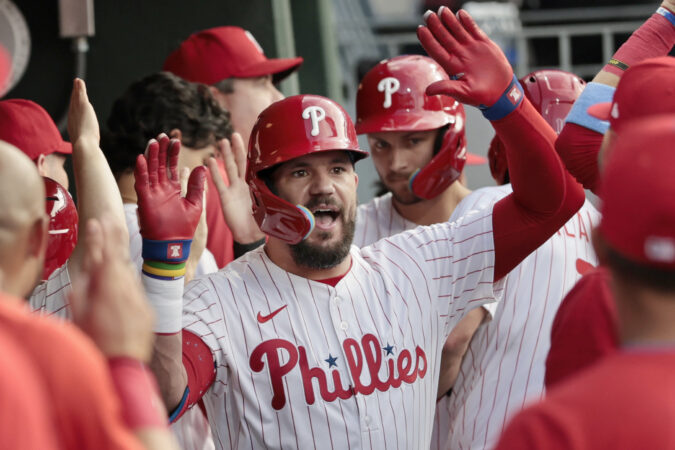
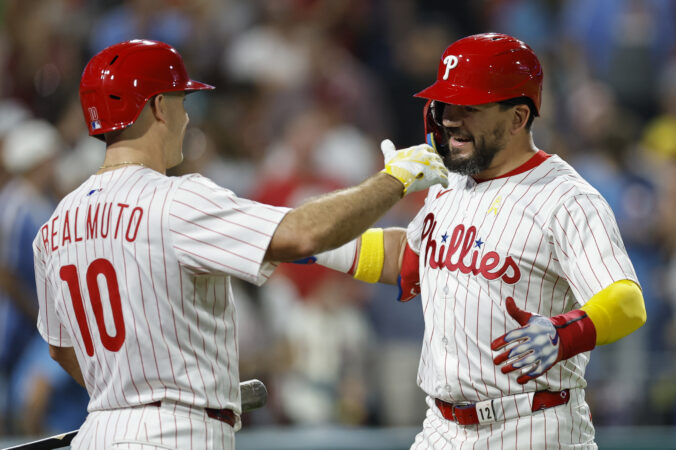
The Phillies and Kyle Schwarber agreed to a five-year contract, the team announced on Tuesday night. A source told The Inquirer that the deal totals $150 million.
The contract will take Schwarber, who turns 33 in March, through his age-37 season.
Phillies president of baseball operations Dave Dombrowski said repeatedly this fall that re-signing Schwarber was “a real priority” for the club.
“He’s so different than most of the guys I’ve ever been around,” manager Rob Thomson said. “He’s a great player, one, and he knows how to bring the heartbeat of the clubhouse down when things are going rough. Not only the clubhouse, but individuals as well. I’ve talked about it to no end. He’s just a huge part of our ballclub.”
While primarily a designated hitter, Schwarber has seen occasional time in left field when needed to give the Phillies more flexibility with the DH spot. He also took reps at first base last spring. Thomson said Schwarber could continue to see time in left once in a while to give another teammate a day off from defense.
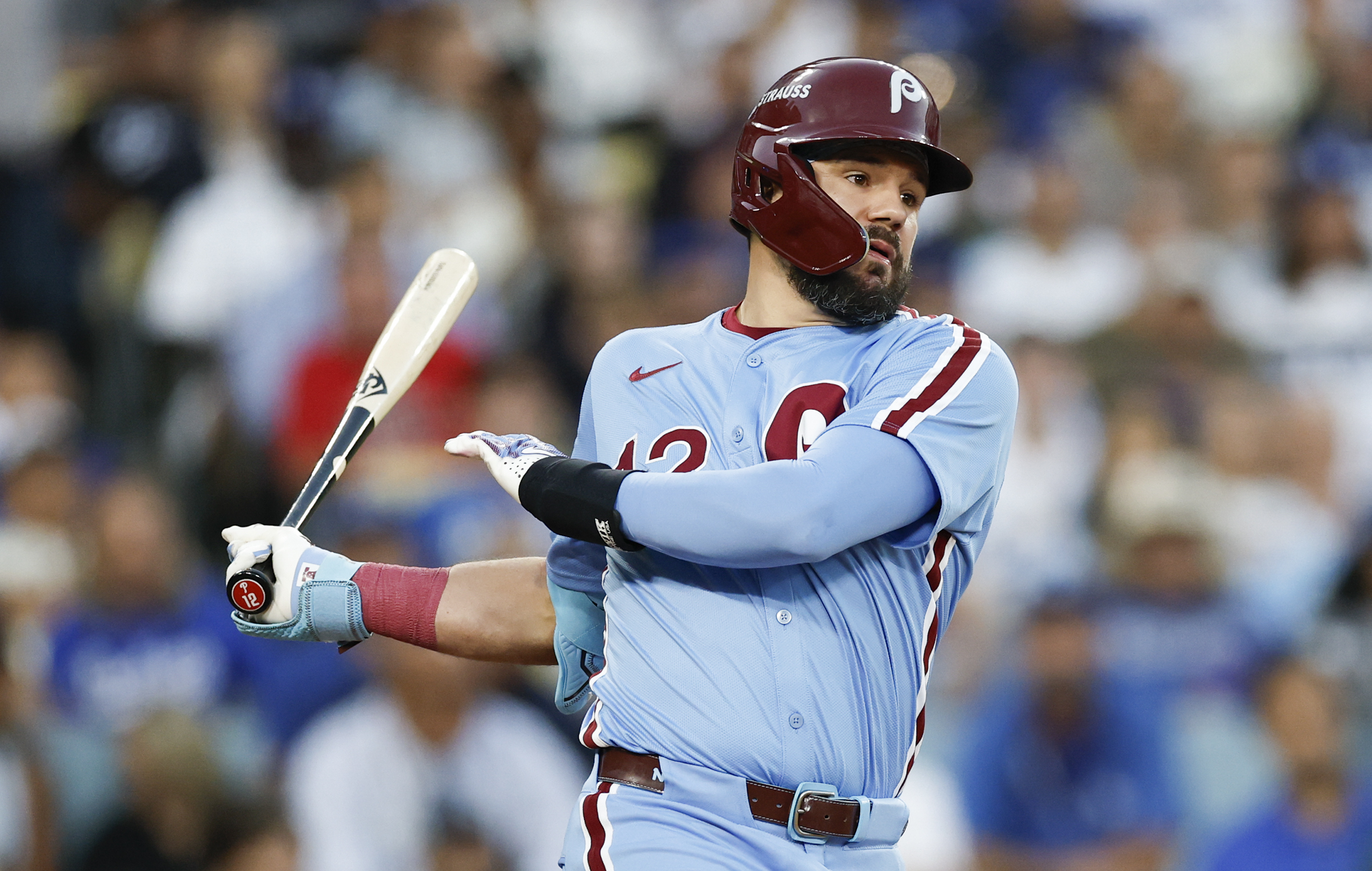
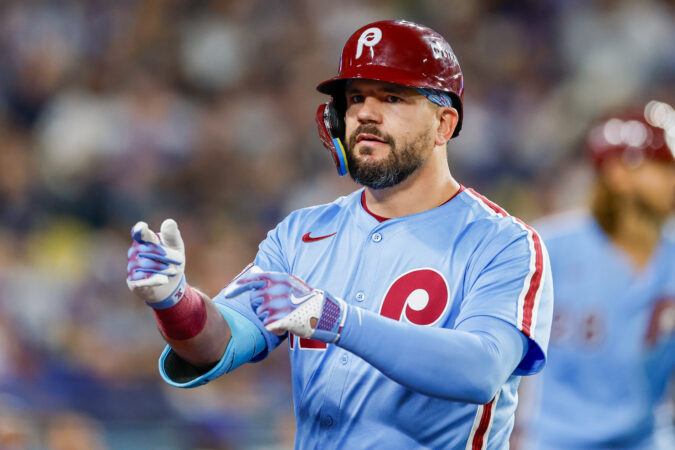
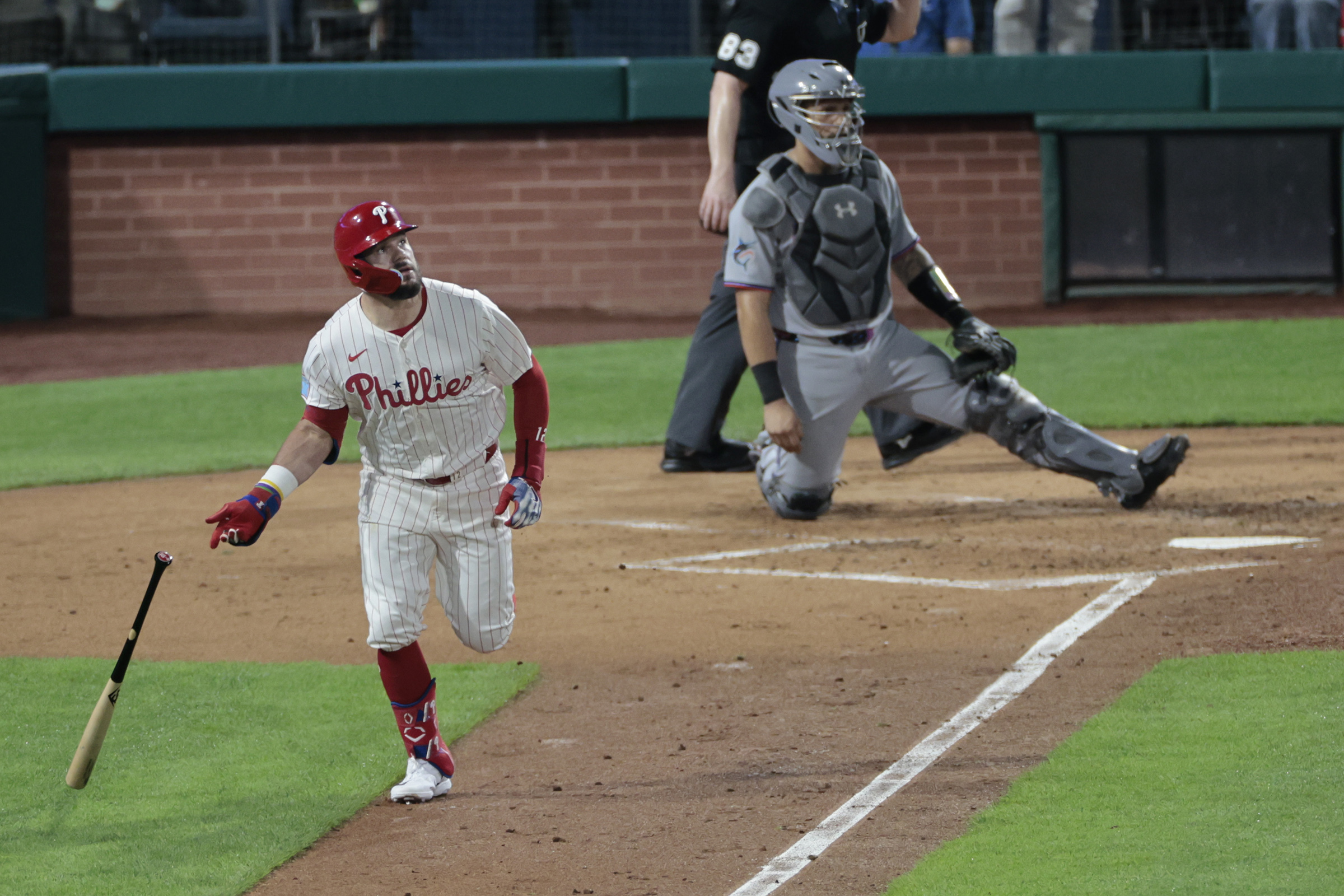
Phillies designated hitter Kyle Schwarber hit 56 home runs in his final season before free agency.
Since Schwarber signed his first contract with the Phillies in 2022, a four-year, $79 million deal, he accumulated 11.1 WAR, bashed 187 home runs, and drove in 434 runs. He also underwent a total transformation against left-handed pitching. In 2025, Schwarber hit 23 home runs against lefties to set a single-season record for a left-handed batter.
That was only one chapter in his milestone season, when he hit 56 homers — including four in one game — to finish two shy of Ryan Howard’s franchise record. Schwarber was runner-up for National League MVP.
(function() { var l = function() { new pym.Parent( ‘schwarbucks__graphic’, ‘https://media.inquirer.com/storage/inquirer/ai2html/schwarbucks/index.html’); }; if(typeof(pym) === ‘undefined’) { var h = document.getElementsByTagName(‘head’)[0], s = document.createElement(‘script’); s.type = ‘text/javascript’; s.src = ‘https://pym.nprapps.org/pym.v1.min.js’; s.onload = l; h.appendChild(s); } else { l(); } })();
“Schwarb’s obviously one of our team leaders, one of the cornerstones of this organization,” Bryce Harper said after the Phillies were eliminated from the NLDS.
Thomson, who texted with Schwarber on Tuesday to check in, said he’s confident that Schwarber will be able to maintain his production throughout the length of the contract.
“I think just his work ethic. The body’s gotten better over time. He’s in the best shape of his life right now, and I don’t think that that’s going to change,” he said. “He’s so intelligent. He sees the game a little bit different than a lot of other guys, and he works at it, watches a lot of film.
“I think there’s a really good chance that he’s going to maintain this level. I mean, this was an unbelievable year for him. So I don’t think we can expect this every year, but I still think he’s going to be a high-level performer.”
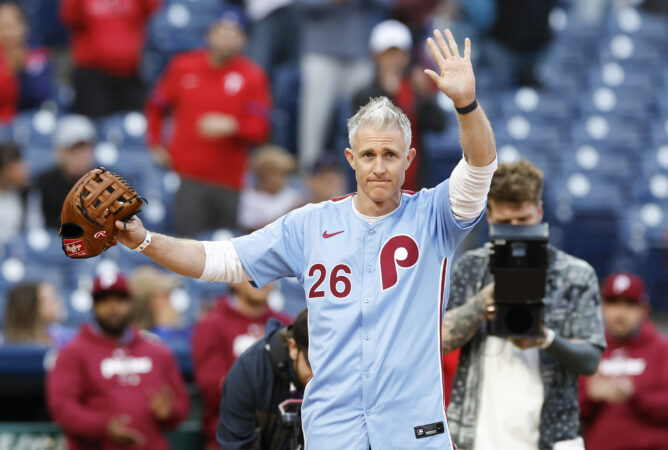
ORLANDO, Fla. — Whether or not he needs it, Chase Utley’s Hall of Fame bid just got a boost.
Pete Rose’s? Forget about it.
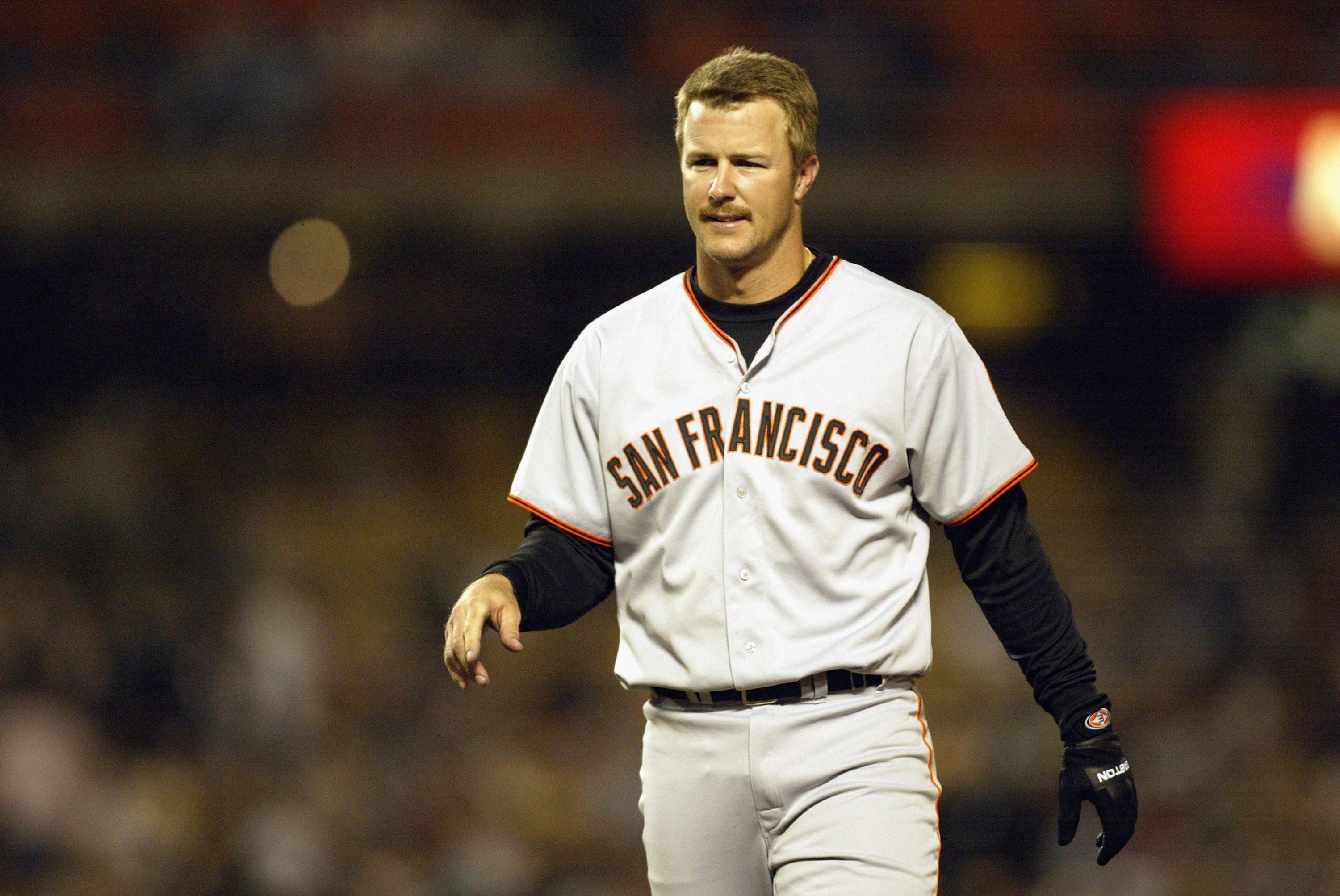
Those were the Phillies-centric takeaways Sunday night from the voting results of the Hall’s Contemporary Era Committee. A 16-person panel of Hall of Fame players, major league owners and executives, media members, and historians elected Jeff Kent — and only Jeff Kent — from a field of eight candidates that included Barry Bonds and Roger Clemens.
Kent, a former MVP and five-time All-Star, is only the 22nd second baseman to gain election after topping out at 46.5% on the writers’ ballot in 2023. Utley is already marching toward becoming the 23rd. His name was checked on nearly 40% of the writers’ ballots last year, only his second cycle of eligibility (75% is needed for election).
Without a strong first-time candidate this year, Utley is expected to make another jump.
But the iconic former Phillies second baseman has an even gustier tailwind now. Because although Kent is the only player to appear in at least 75% of his games at second base and total at least 350 homers, 550 doubles, 1,500 RBIs, 1,300 runs, and 800 walks, Utley was considered a better all-around second baseman. The overall numbers:
Kent: 56.0 WAR (Fangraphs); .290/.356/.500; 123 OPS-plus; 2,461 hits; 377 homers; 1,518 RBIs in 2,298 games over 17 seasons.
Utley: 61.5 WAR (Fangraphs); .275/.358/.465, 117 OPS-plus; 1,885 hits; 259 homers; 1,025 RBIs in 1,937 games over 16 seasons.
Jeff Kent, a former MVP and five-time All-Star, hit 377 home runs mostly as a second baseman.
Kent received 14 votes from the committee, a resounding correction of the writers’ 10-year oversight that historically extends to other second basemen. Neither Lou Whitaker nor Bobby Grich lasted long on the ballot despite multiple Gold Gloves and All-Star appearances and copious WAR totals.
None of the other candidates came close to the 12 votes that were needed for election. The Hall doesn’t disclose the vote total for players who receive less than 25% of support from the committee. But Bonds, Clemens, and Gary Sheffield, who all played under the cloud of suspicion of performance-enhancing drug use, received fewer than five votes.
It was a repeat of 2022, when Bonds and Clemens got fewer than four votes apiece from a committee that didn’t include anyone on this year’s panel. And it reaffirmed that the committee process is even less forgiving than an electorate of nearly 400 writers, even for the all-time home-run leader and a seven-time Cy Young Award winner, because Hall of Famers tend to be ultraprotective of the doors to Cooperstown.
Bonds and Clemens made incremental progress in 10 years on the writers’ ballot, eventually reaching 66% and 65.2%, respectively. If the Hall of Fame hadn’t reduced the term of eligibility to 10 years from 15, they might have eventually gotten to 75%.
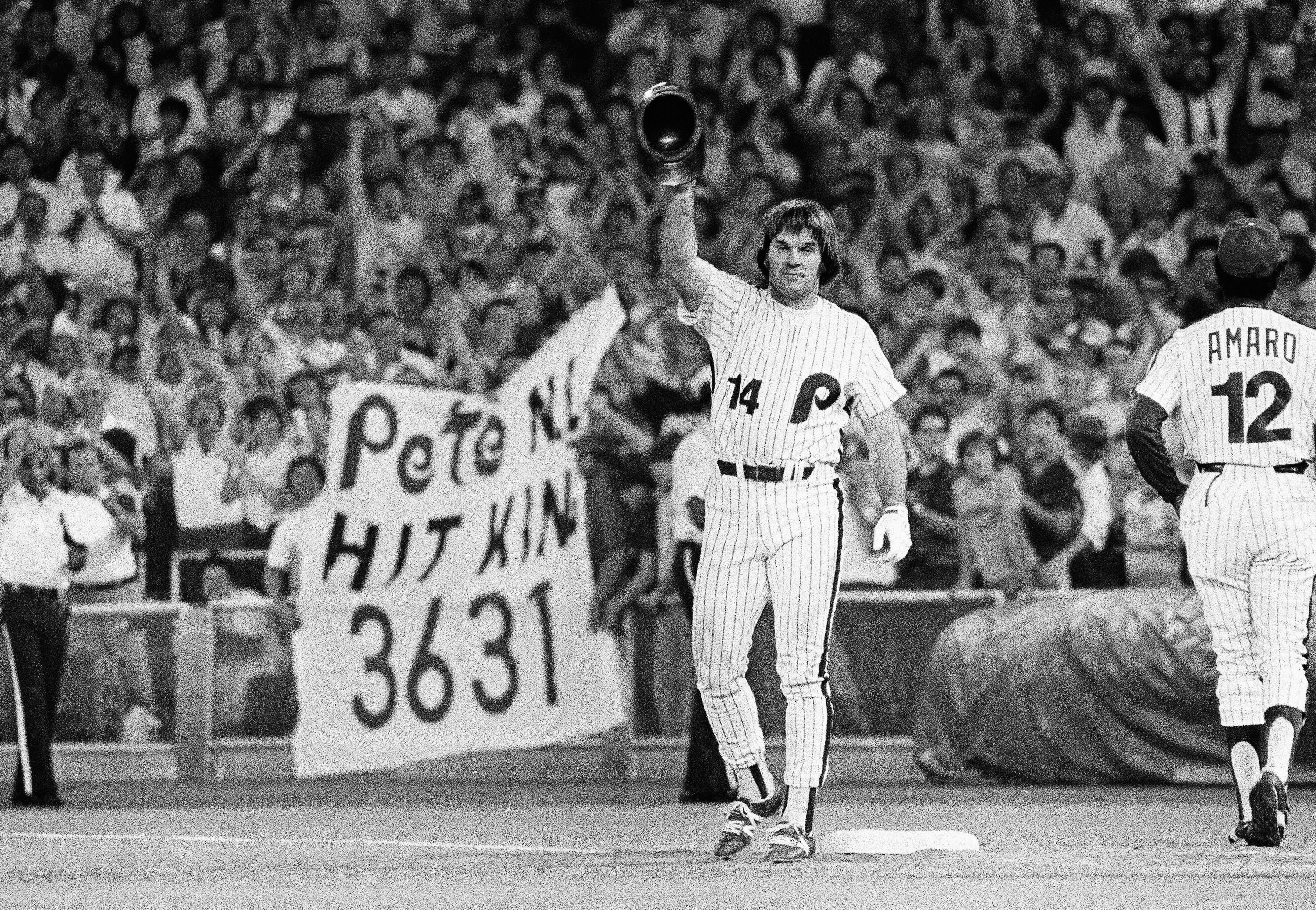
The writers never got an opportunity to vote for Rose because the Hall of Fame didn’t put him on the ballot after he was banned from baseball for gambling on games. And although he was posthumously reinstated earlier this year by commissioner Rob Manfred, the Hall’s voting rules stipulate that players who are retired for more than 15 years may be considered only by the era committees.
Rose is eligible to come before the Classic Era committee in 2027.
Despite being reinstated by commissioner Rob Manfred this year, Pete Rose’s Hall chances remain uncertain.
Even Mike Schmidt, who supported Rose’s reinstatement and previously backed him for the Hall of Fame despite what he describes as a “tumultuous life,” has his doubts about how it would go.
“I don’t know that it’s any more than 50%,” Schmidt told The Inquirer’s Phillies Extra podcast in September when asked if fellow Hall of Famers would open the door to Rose. “There are as many detractors as supporters in Pete’s case. However, [Hall of Fame chairman of the board] Jane Clark forms the committee that will determine Pete’s fate. And even if they put 16 ex-players, members of the Hall of Fame on it, I still think it would be 50/50.”
The latest overwhelming repudiation of Bonds and Clemens by a committee of their peers suggests that 50% for Rose would be generous.
Tony Lupien drove to Philadelphia in February of 1946, just a few weeks before the Phillies were scheduled to begin spring training. Lupien missed most of the previous season after being drafted into the Navy during World War II and still didn’t have a contract for the new season.
There was a good reason: Phillies general manager Herb Pennock told Lupien he was being traded to the Hollywood Stars, a minor-league team.
Lupien was livid. He believed his job in the majors was guaranteed to him for a year after returning from the service and hired a lawyer to challenge the team’s decision.
“Who the hell are you to think that you’re above the federal government?” Lupien told Pennock.
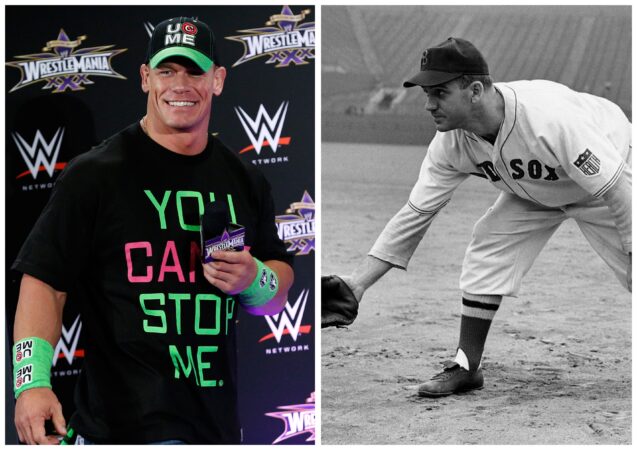
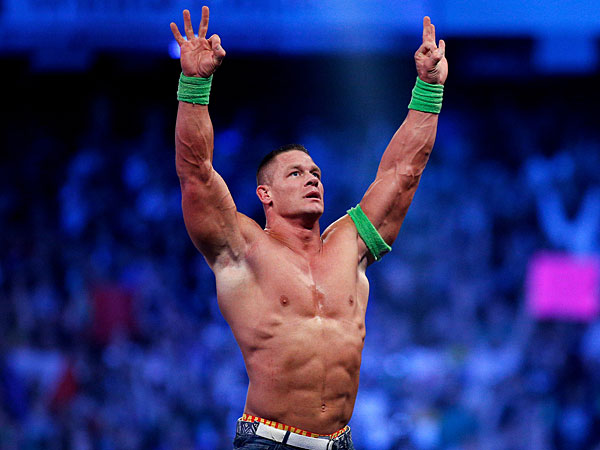
Lupien’s grandson would become one of the biggest stars in professional wrestling before embarking on a Hollywood career. But John Cena’s grandfather didn’t want to be a Hollywood Star. He wanted to play first base for the Phillies.
“Lupien, guaranteed a year’s job with Phils under selective service law, gets kick in pants instead,” wrote a headline in The Boston Globe.
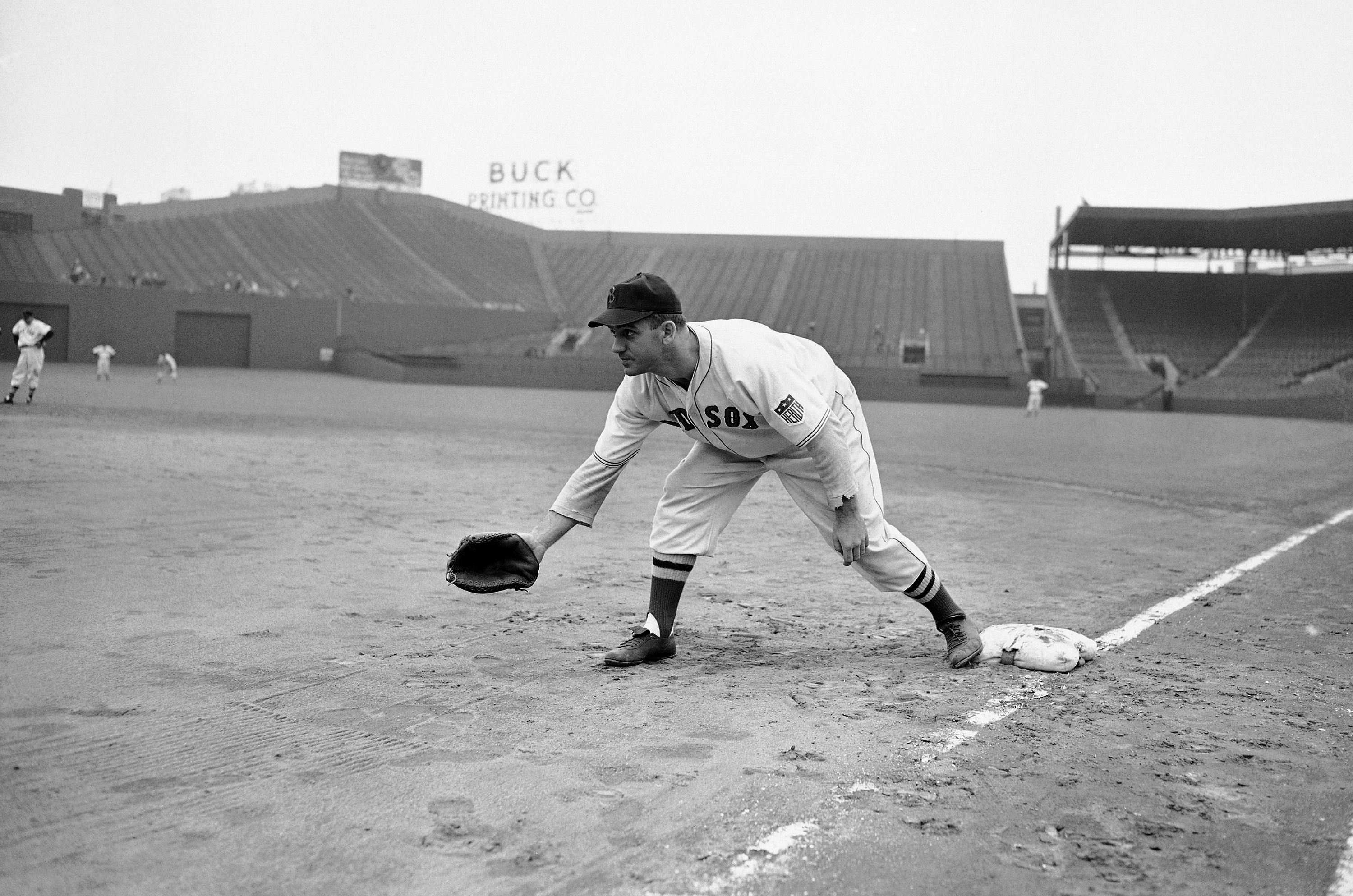
Ulysses “Tony” Lupien graduated from Harvard and joined the Phillies in 1944 after being waived by the Red Sox. He hit .283 in 1944 before being sworn into the Navy in March of 1945. Lupien spent six months on a Naval base in New York before returning to the Phillies in September, just in time for the final stretch of a 108-loss season.
The Phillies were so bad in 1945 that their manager quit in June. Lupien, a smooth fielder, was a bright spot when he returned at the end of the season, hitting .315 over 15 games.
Tony Lupien played six major league seasons, including two with the Phillies.
The Phils ranked last that season in nearly every statistical category, even attendance. The Phils wanted to clean house, declaring that any player who was in the lineup for the final game of 1945 would not be in the lineup for the first game of 1946. So that meant Lupien was gone.
“The G.I. Bill was designed to protect for at least one year the jobs of men who entered the service. Now that bill either applies to ballplayers or it doesn’t,” Lupien told The Sporting News. “That’s what I am trying to find out, and if it means that I am the goat or the ball carrier, I am perfectly willing to assume that role. If the G.I. Bill does apply, then I may help many other veterans in the months to come by following through with my action.”
The Phillies disagreed with Lupien as Pennock said the G.I. Bill didn’t apply to baseball. They had signed Frank McCormick, a 35-year-old power hitter, to play first base and the 29-year-old Lupien had a minor-league gig waiting in California.
“I think the least the Phils might have done is give me a chance to show what I have,” Lupien said.
Lupien wrote a letter to the National League commissioner. He hoped to become a free agent or at least get invited to spring training. Lupien already played three years in the minors and didn’t want to go back.
His letter was returned unopened. Lupien’s lawyer, a former Harvard classmate, said he had a case. The Massachusetts Selective Service Board said the case would have to be heard in Philadelphia since it involved the Phillies.
The Hollywood Stars sent him a contract for $8,000, which made him the highest-paid player in the minor leagues. He learned the Phillies were kicking in $3,000. The Phillies, Lupien believed, were circumventing the G.I. Bill by making sure he still earned his prewar salary despite not giving him his old job.
John Cena has said next Saturday night will be the final wrestling match of his career.
Lupien already had two children and knew it would be too expensive to travel back and forth to Philadelphia to fight his case. He reported to Hollywood at the end of spring training and became a Star.
Lupien played two seasons with the Stars before returning to the majors in 1948 with the White Sox. He then bounced around the minors as a player/manager and coached basketball at Middlebury College before being hired in 1956 to coach Dartmouth College. He managed the team to the College World Series in 1970 and co-wrote a book in 1980 about the history of baseball’s labor movement. Lupien remained outspoken about labor, believing the sport’s contract structure railroaded his career.
He died in 2004, two years after Cena debuted in the WWE. Cena, whose mother, Carol, is Lupien’s daughter, said next Saturday night will be the final match of his career.
Cena, 48, once wore a Phillies jersey to the ring and is one of the most popular performers in wrestling history. His celebrity has long crossed over into popular culture as he’s starred in movies and TV shows.
He spent the last year balancing his WWE farewell with the filming of a new movie. After wrestling, Cena is expected to fully become a Hollywood star. His grandfather, begrudgingly, was one first.
What’s it like to be an executive at baseball’s winter meetings? Jim Duquette, a former general manager with the Mets and Orioles and now the host of a show on MLB Network Radio, puts us in the rooms where everything happens. He also discusses the Phillies’ offseason, including the chances that Kyle Schwarber and J.T. Realmuto return in free agency. It’s all on “Phillies Extra,” the baseball podcast from The Philadelphia Inquirer. Watch here.
“It’s really more their process than it is ours at this time in the sense that they set the time frame,” Dave Dombrowski said. “They know we have interest, and then it’s up to them to kind of say, ‘OK, we’re ready to move forward,’ or not, whenever that ends up happening.”
That was three weeks ago. Schwarber and Realmuto have had five weeks to browse the market. By now, they have a decent idea of what’s there for them beyond the Delaware Valley. The Phillies probably do, too.
And with the baseball world set to gather again Sunday night in Orlando for the three-day winter meetings, it might finally be time for all parties to circle back to one another. In the shadow of the Magic Kingdom, of all places, the fantasyland of rumors about which teams are curious about which players will give way to a better sense of reality about whether Schwarber and Realmuto will return or move on.
The Phillies haven’t hidden their strong desire to keep both. Even though Schwarber will be 33 and Realmuto 35, and they’re central to a team that made the playoffs four years in a row but stubbed its toe in October, Dombrowski described them as “very important” and said they “mean a lot to the organization.”
With the exception of Japanese ace Yoshinobu Yamamoto, owner John Middleton hasn’t lost out on a free agent that he’s wanted since the “stupid money” winter of 2018-19. And free agents have wanted to play in Philly over the last half-decade because of the culture set by Schwarber, Realmuto, et al.
No wonder most of the industry expects Schwarber and Realmuto to find their way back to the corner of Pattison and Darien.
Phillies owner John Middleton hasn’t been outbid for many free agents over the last half-decade.
But even if it feels like almost a fait accompli, the mission for their agents is to get offers that will at least drive up the price. Maybe they’ve done that. Maybe not.
Schwarber’s market is especially fascinating because it lacks most of the high-payroll teams. The Dodgers’ designated hitter is Shohei Ohtani, only the best player on the planet. The Yankees (Giancarlo Stanton) and Astros (Yordan Alvarez) are set at DH, too. George Springer had a career renaissance as a DH for the Blue Jays, who are in on seemingly every marquee free agent except Schwarber. The Cubs appear to be focused on pitching.
The Red Sox want to add a middle-of-the-order bat, chief baseball officer Craig Breslow said last month, and Alex Cora loved managing Schwarber in 2021. But given their lineup’s lefty lean and Fenway Park’s dimensions, righty-hitting Pete Alonso or Alex Bregman might be better fits. And Boston doesn’t spend money like it once did, either.
The Reds’ interest in bringing Schwarber home to southwest Ohio is real, multiple sources confirmed this week. It makes sense for a young team that is rich in starting pitching but lacking power and veteran leadership. Asked in July about the prospect of being courted by his childhood team, Schwarber said this: “I think it’d be awesome.”
But the Reds intend to keep their payroll in the $120 million range, president of baseball operations Nick Krall told reporters last month, leaving them with about $20 million to spend for 2026. Schwarber figures to cost at least $30 million per year.
And even if they had the cash, spending big for free agents isn’t in the Reds’ organizational DNA. They’ve done only two nine-figure contracts in their history, and Joey Votto and Homer Bailey were extensions. Their largest free-agent contracts: Mike Moustakas and Nick Castellanos, both four years, $64 million.
That leaves, well, who? Various reports have linked Schwarber to the Giants and Pirates (seriously).
The Mets are “in the mix” for Schwarber, at least according to an ESPN.com report. It’s plausible as a backup plan if New York doesn’t re-sign Alonso, although president of baseball operations David Stearns emphasized run prevention as the team’s chief offseason focus. Schwarber doesn’t help there.
But the best way for Schwarber’s agents to hike the price on the Phillies might be to claim interest from the rival Mets, owned by Steve Cohen, the wealthiest man in baseball. And the Mets could attempt to gain leverage over Alonso by suggesting they’d pivot to Schwarber.
In any case, the Phillies remain the favorite in the Schwarber derby.
“You have the owner who wants him, you have Dave Dombrowski who wants him, you have the coaching staff, you have [manager] Rob Thomson, you have a fan base — everybody involved here wants [him] to be back, including Kyle — so what does it come down to?” hitting coach Kevin Long, who is close with Schwarber, said on The Inquirer’s Phillies Extra podcast. “What’s his market value, and are we willing to give him his market value? And I think the answer is yes to that.
“I think it would be devastating to this organization and this fan base and everybody involved if he wasn’t a Phillie.”
The last five weeks have been about establishing market value for Schwarber and Realmuto. Next week might finally mark the Phillies’ chance to meet it.
A few other thoughts leading into the winter meetings:
Phillies third baseman Alec Bohm is once again a candidate to be traded in the offseason.
Trading places
Two of the most intriguing offseason moves so far were one-for-one trades of major leaguers.
The Orioles swapped four years of control over gifted but often-injured pitcher Grayson Rodriguez to the Angels for walk-year outfielder Taylor Ward. Then, the Mets dealt popular outfielder Brandon Nimmo to the Rangers for second baseman Marcus Semien in a change-the-mix move.
Across the sport, the trade market is hyperactive, multiple team officials said this week, perhaps because some clubs are wary of signing free agents to multiyear contracts amid labor uncertainty beyond 2026.
Once again, Alec Bohm‘s name will come up in the Phillies’ conversations. But they couldn’t agree on his value in trade talks last winter, and it figures to be even lower now that the third baseman is one season from free agency.
Lefty reliever Matt Strahm could be another potential chip, especially after Dombrowski volunteered in an end-of-year news conference that the veteran declined to do pitcher fielding drills before the postseason.
Rivals believe the Phillies prefer trading from their major league roster rather than the farm system after moving teenage shortstop Starlyn Caba (for Jesús Luzardo) and catcher Eduardo Tait and right-hander Mick Abel (for Jhoan Duran) within the last calendar year. Andrew Painter, Aidan Miller, and Justin Crawford are thought to be largely off limits, with Painter and Crawford ticketed for the opening-day roster and Miller close behind.
As long as the Phillies cling to that trio, it’s difficult to see them matching up with the Diamondbacks for second baseman Ketel Marte, the Red Sox for outfielder Jarren Duran, or especially the Twins for center fielder Byron Buxton, if Buxton decides to waive his no-trade clause.
But maybe there’s a trade to be made for someone like Astros center fielder Jake Meyers, a solid defender who batted .292 with a 103 OPS-plus this season and is reportedly available.
Jesús Luzardo had a big season for the Phillies after being acquired in a trade last December.
Making a pitch
A year ago, the Phillies weren’t focused on starting pitching at the winter meetings. But they traded for Luzardo a few weeks later, and it wound up as their best offseason move.
Just something to keep in mind.
Because although the rotation remains the strength of the roster even amid the expected departure of free agent Ranger Suárez, there are questions. Aaron Nola is coming off an injury-interrupted season in which he posted a 6.01 ERA. Painter’s prospect shine isn’t quite as luminescent after he struggled in triple A.
Oh, and although Zack Wheeler is close to throwing a ball again, a source said this week, the recovery from thoracic outlet decompression surgery isn’t always a linear process.
And Dombrowski, who values starting pitching as much as any executive in the sport, recently noted the drop-off after Cristopher Sánchez, Luzardo, Wheeler, Nola, Taijuan Walker, and Painter.
“We don’t have a lot of starting pitching depth, so that’s something that we have to be cognizant of,” he said. “It’s not our highest priority, but I can’t say that we wouldn’t [add another starter]. That doesn’t necessarily mean top of the market, but where does that fit in? Because you never have enough starting pitching.”
After making a bid for Yamamoto two years ago, it wouldn’t be surprising if the Phillies show interest in Japanese right-hander Tatsuya Imai. Or maybe they will be opportunistic in the trade market again.
One other bit of winter-meetings business: The Phillies are still looking for a bench coach. Don Mattingly remains a leading candidate, if he’s interested in returning to the dugout after leaving the Blue Jays’ staff after the World Series.
What would it mean to keep Kyle Schwarber in a Phillies uniform?
Just look at the names he is likely to pass on the franchise’s all-time home runs list by the end of 2026, his age-33 season.
Sitting at 187 dingers since joining the Phillies, Schwarber likely will pass Bobby Abreu (195) and Dick Allen (204) before the All-Star break. A month or two later, he could pass Jimmy Rollins (216) and Cy Williams (217).
By then, Schwarber will be in striking distance of three of the heaviest hitters in Phillies history, literally and figuratively.
Greg Luzinski, 223
Chase Utley, 233
Chuck Klein, 243
A repeat of Schwarber’s 56 homers in 2025 would leave him in a tie with Klein for fifth place all-time. Only Del Ennis (259) and Pat Burrell (251) would stand between him and Mike Schmidt (548) and Ryan Howard (382).
You can’t let a guy like that walk away. We know it. The Phillies know it. And, yeah, Schwarber’s agent knows it. Which is why we are here, in early December, on the eve of baseball’s annual winter meetings, still waiting for confirmation that the last of the Schwarbombs has yet to fall on South Philadelphia.
Do not fret, sweet children. Save your angst for the Eagles. The baseball offseason is in its opening laps. The pace car is still on the track. The top of the market has barely begun to percolate. Kyle Tucker, Bo Bichette, Alex Bregman, Cody Bellinger … all have yet to agree to terms. All will remain free agents for the foreseeable future. Exactly one position player has signed a multiyear contract. Schwarber and the Phillies are right where we should have expected them to be.
The one big deal to date actually bodes well for the Phillies. Josh Naylor’s five-year, $92.5 million contract with the Mariners suggests that the market won’t grow too outlandish for sluggers at nonpremium positions.
Kyle Schwarber will enter his age-33 season coming off a 56-homer campaign in 2025.
You can argue that Naylor barely qualifies as a slugger, with 88 home runs over the last four seasons. Whatever the semantics, he clearly is in a different power class. But there is some comparability here. Naylor’s 124 OPS+ from 2022 to 2025 is in a similar tier to Schwarber’s 134. He is also four years younger than Schwarber and has a good glove at first base.
The logic goes something like this: The same types of teams that would have interest in a hitter like Schwarber probably would have interest in a hitter like Naylor. If Naylor had signed for six years and $120 million or five years and $110 million, we might be sitting here wondering if it really would be wise for the Phillies to shell out the stupid money it would take to retain Schwarber. The answer probably still would be yes. But it’s nice not to have to consider it.
It’s fair to assume that the market will look as it has the past several seasons. There is a pretty hard limit on the amount teams are willing to spend on players who don’t add significant value on defense. Besides Juan Soto, the only hitters to sign for more than $95 million over the last three offseasons have played shortstop, center field, or starting pitcher (Shohei Ohtani). The last first baseman or designated hitter to sign for more than five years and $100 million was Freddie Freeman, who landed six years and $162 million from the Dodgers in 2022.
Schwarber can — and should — argue that he is a different case. A typical designated hitter doesn’t finish second in MVP voting. Schwarber’s power and consistency are transcendent enough to disregard positional archetypes. The only hitter with more home runs than his 187 over the last four seasons is Aaron Judge (210). He, Judge, and Ohtani (also at 187) stand alone. In terms of impact on a contender, Schwarber is much closer to Freeman than he is to Naylor. Six years and $150 million is a defensible ask.
The Phillies can argue that Schwarber’s age and positional limitations are legitimate factors. Just look at Pete Alonso, who is pretty close to a carbon copy of Schwarber at the plate. The Mets’ first baseman had to settle for a two-year, $54 million contract last offseason. Not only that, Alonso is on the market again after opting out of his deal. Or, consider Teoscar Hernández, who signed with the Dodgers for three years and $69 million last year. Schwarber is better than Hernández. But is he better than two Hernándezes? For the Phillies, four years and $100 million is a justifiable offer.
Hopefully, we’re just waiting for the two sides to split the difference. Five years and $125 million would be a steep price to pay to lock up the designated hitter position through Schwarber’s age-37 season. But then, Schwarber will be bigger than a 37-year-old designated hitter when that time comes. He will be one of the defining players of an era, one of the franchise’s all-time greats, a fixture in the community and a potential Hall of Famer. He may have passed Howard for second on the franchise home run list. He may be closing in on 500 for his career.
Can the Phillies afford to sign Schwarber?
The better question is whether they can afford not to.
Two of its tentpole baseball franchises — the Brooklyn Dodgers and the New York Giants — packed up before the 1958 season and moved to the West Coast. Leaving behind only the Yankees and the rival American League to carry the New York City banner.
Just down the (not-yet-under-construction) I-95 corridor, the Carpenter family wondered if their own N.L. franchise, the Philadelphia Phillies, could help fill the void.
Broadcasting Phils’ games to the New York market could help soften the blow of losing two beloved franchises. It could also be lucrative.
And it would help a Philly team build a fanbase in — of all places — the Big Apple.
A league of their own
Now they’re just organizing devices, but back in the 1950s, there was a difference between the two leagues under the Major League Baseball umbrella.
The N.L. was faster to integrate Black players, featured more competitive teams, and thus more competitive pennant races. The A.L., on the other hand, was mostly dominated by one glory-hogging franchise.
So Phillies owner Bob Carpenter, hoping to help fill the vacuum, made a deal with TV station WOR, which had previously aired Dodgers games.
New York would carry 78 Phillies games during the 1958 season: 58 from Connie Mack Stadium, and 20 from the road (including night games).
And they weren’t alone.
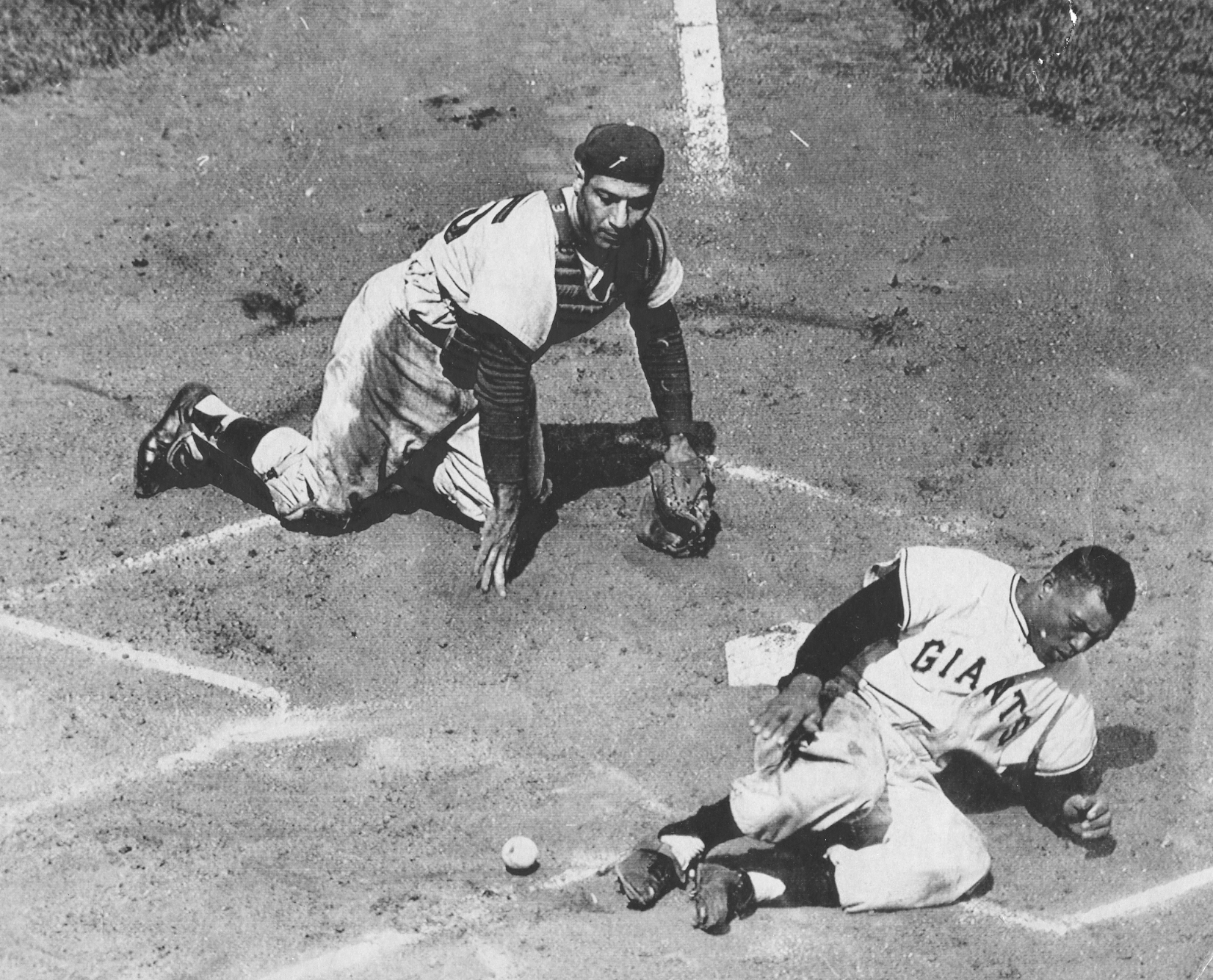
Willie Mays scores on an inside-the-park home run vs. the Phillies in the 1950s.
‘The market is shot’
The St. Louis Cardinals and Pittsburgh Pirates made deals to broadcast two dozen of their games against the Giants and Dodgers to a New York audience.
Yankees brass reacted with trademark tact: They started making threats.
If Phillies (or Pirates or Cardinals) games returned to New York television sets the next season, then the Yankees would look to televise their games — featuring World Series-winning superstars like Mickey Mantle and Yogi Berra — on a national network. They’d even partner with the National League’s Milwaukee Braves to complete the package. Together stealing away scores of diehards and converting scores of casuals, from sea to shining sea.
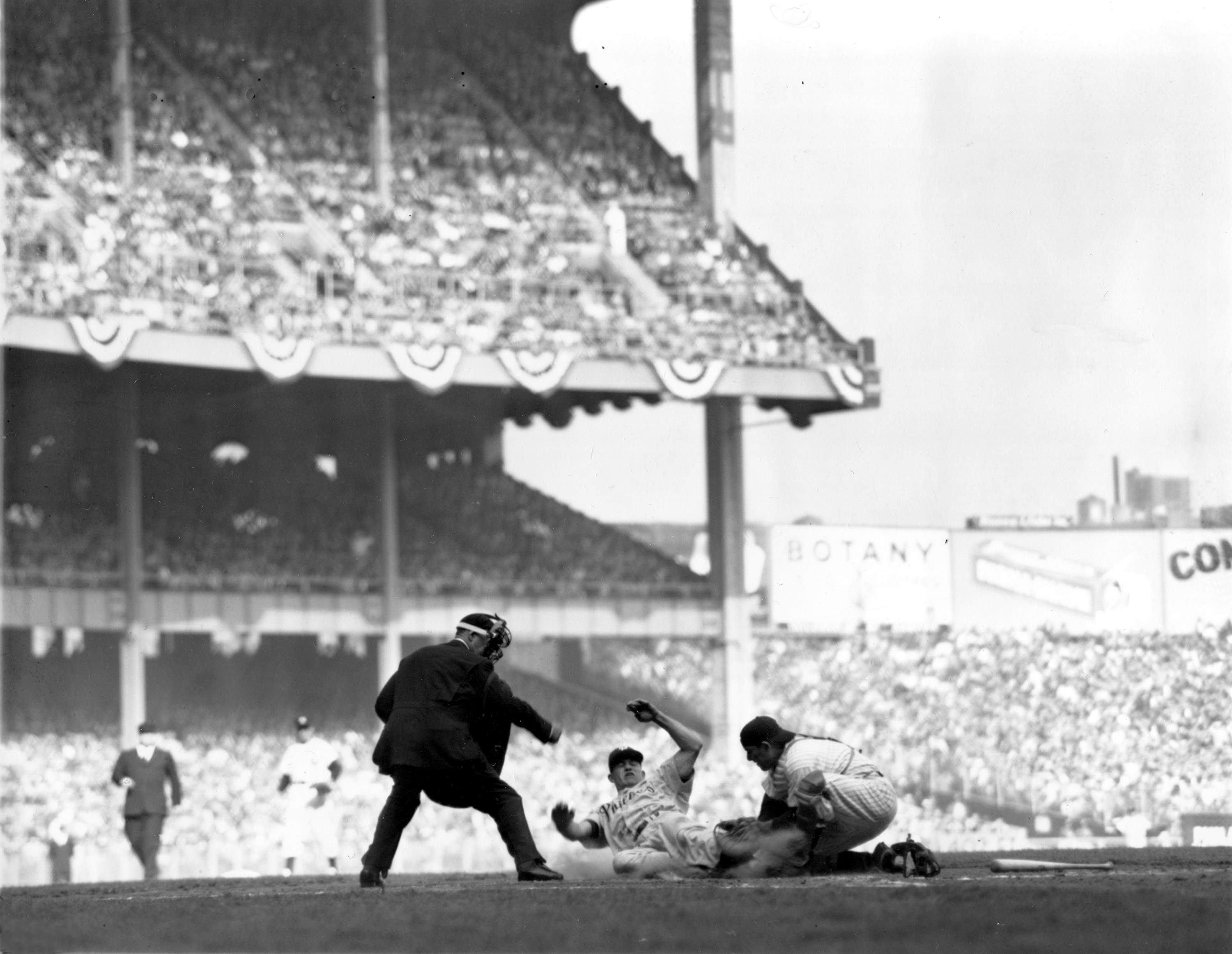
New York Yankees catcher Yogi Berra tags the sliding Philadelphia Phillies shortstop Granny Hamner for an out at home plate and second half of double play in 4th inning in the fourth and final World Series game at Yankee Stadium in New York City in 1950.
So on Dec. 5, 1958, the three teams announced that they were dropping their New York broadcast plans for the 1959 season.
None of the team representatives admitted to backing down.
But the joke was really on us: Those left-behind Dodger and Giants fans in New York didn’t get much joy from Philadelphia’s signature brand of baseball.
The Phillies went 69-85, and finished in last place.
And to make it worse: the Mets would arrive four years later.
In 2025, the Phillies had the second-oldest lineup in baseball.
Collectively, the average age of Phillies hitters was 30.3 years old, ranking only behind the Dodgers’ 30.7. That number only stands to increase when their core reports to Clearwater, Fla., another year older in February — that is, unless the Phillies see an injection of youth. Which, according to president of baseball operations Dave Dombrowski, is the plan.
“We also have some young players that we’re going to mesh into our club,” Dombrowski said in October. “I’m not going to declare that anybody has a job, but there will be some people that we’re really open-minded to be on the big league club next year.”
There are several Phillies prospects poised to make their debuts in 2026. Here’s a breakdown of the position players on the farm most likely to make a major league impact in 2026. (An overview of pitching prospects can be found here.)
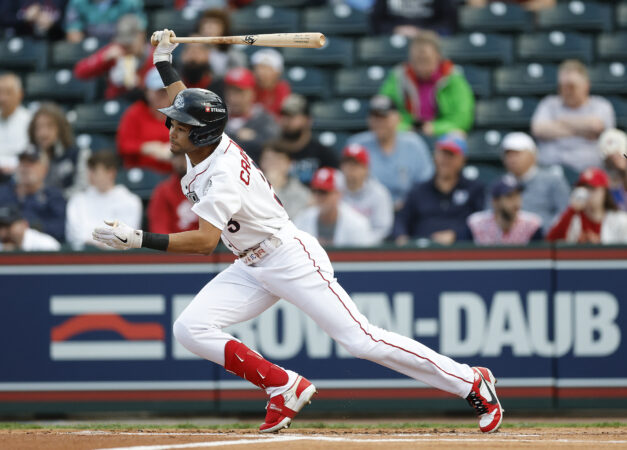
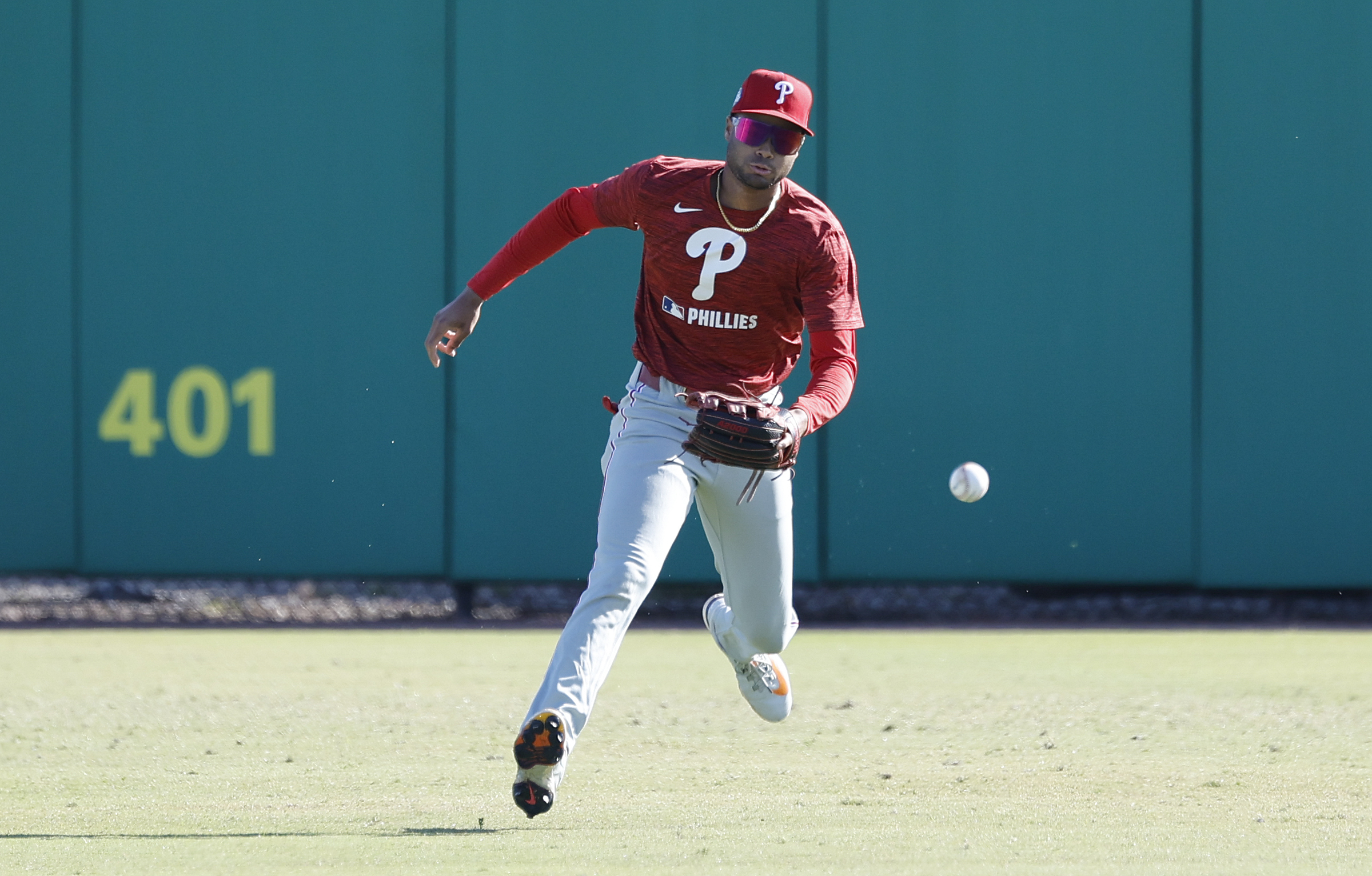
Justin Crawford could wind up in center field or left field for the Phillies in 2026.
Justin Crawford
The Phillies have been saying it for a while: Justin Crawford is ready.
There isn’t much left for the outfielder to prove at the triple A level after he hit .334 and stole 46 bases for Lehigh Valley. Crawford, who turns 22 next month, was blocked from a promotion in 2025 because of a lack of a path to regular playing time on the major league club. But with some outfield shuffling expected this offseason, he will have an opportunity in 2026, one he could seize as soon as opening day.
“Crawford has a real strong chance to be with our club,” Dombrowski said at the general managers’ meetings last month. “We’re giving him that opportunity to be with our club.”
The Phillies view Crawford internally as a center fielder, though he also played 30 games in left field at Lehigh Valley last season. Where his major league opportunity will come will likely depend on how the rest of the outfield picture shakes out after any free-agent additions or trades.
Beyond youth, Crawford would add speed to the Phillies’ lineup. He has an 81.9% success rate in stolen base attempts throughout his three-year professional career, and last season hit 23 doubles and four triples. He doesn’t have an overwhelming amount of power, with just seven homers last season, and his ground-ball rate continues to be high, at 59.4% in 2025. Despite that, he has hit well at every minor league level, and the only test left is the biggest one.
“I think [Crawford] more than anybody is looking forward to the 2026 opportunity he’s going to have in front of him,” Phillies farm director Luke Murton said on a recent episode of Phillies Extra, The Inquirer’s baseball show.
Gabriel Rincones Jr.’s 18 home runs ranked second in the Phillies farm system last season, but all were against right-handed pitching.
Gabriel Rincones Jr.
At his year-end news conference in October, Dombrowski highlighted outfield prospect Gabriel Rincones Jr. as one of the young players in the system the Phillies were high on.
“We really like Gabriel Rincones, who’s got a lot of pop in his bat, and really hits right-handed pitching even better,” Dombrowski said.
The Phillies added Rincones to the 40-man roster to protect him from being selected in the Rule 5 draft on Dec. 10.
Ranked No. 9 in the Phillies’ system by MLBPipeline, Rincones had a .240 batting average and a .799 OPS in 119 games at Lehigh Valley. His 18 home runs ranked second in the Phillies farm system, trailing Rodolfo Castro by one.
All 18 of those came against right-handed pitching, though. Rincones struggles against lefties, with just a .107 batting average and a .323 OPS.
If an opportunity were to arise for him in the majors, it would likely be strictly a platoon role — and the Phillies already have a left-handed outfield platoon bat in Brandon Marsh. But Rincones’ pop against righties could be of value to the major league club at some point in 2026.
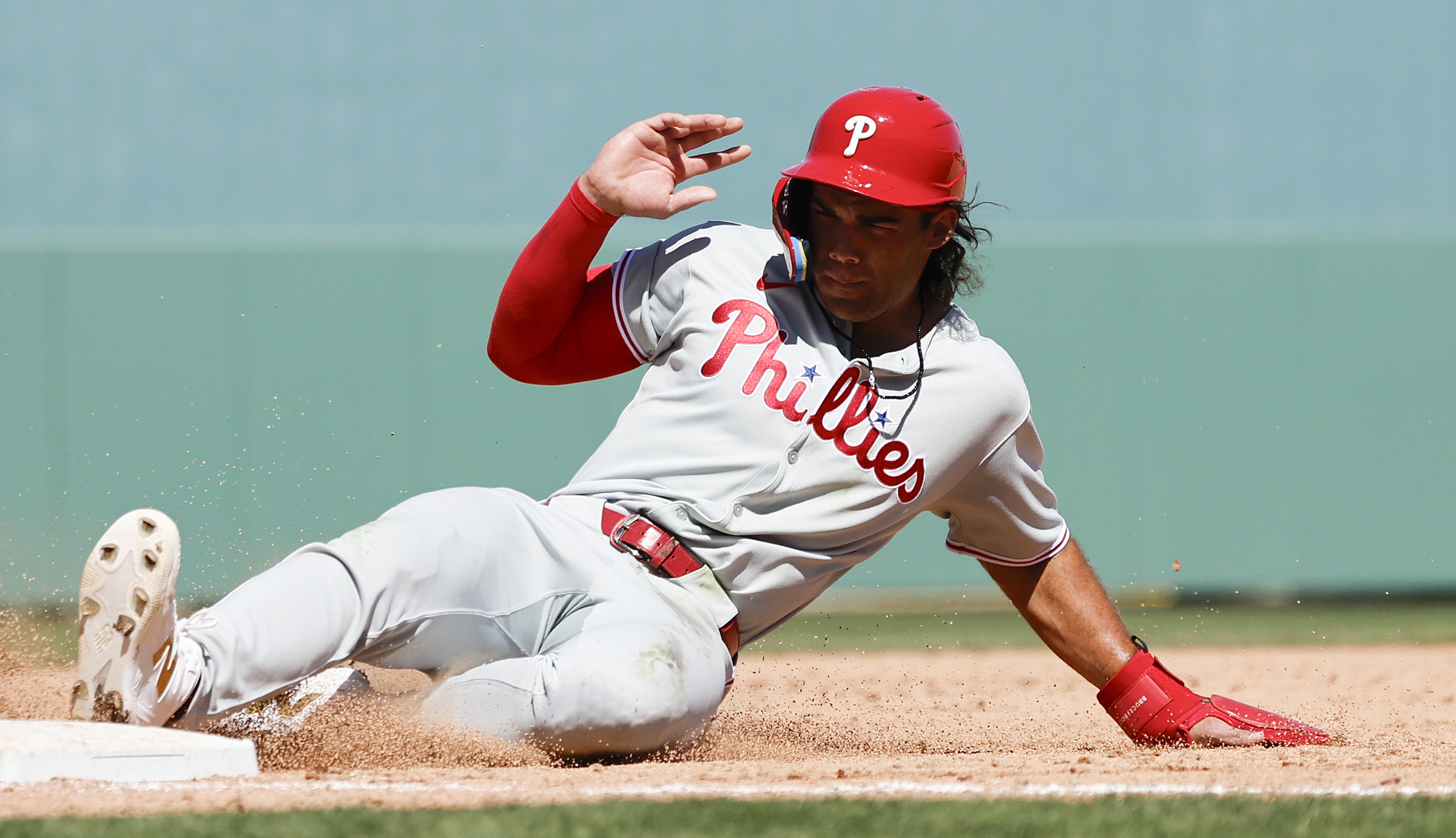
Shortstop Aidan Miller led the Phillies farm system with 59 stolen bases last season.
Aidan Miller
Infield prospect Aidan Miller slashed .264/.392/.433 and led the Phillies farm system with 59 stolen bases in 116 games last season. Eight of those games were in triple A after a September promotion from double-A Reading, as Miller finished the season one step from the majors.
When Miller’s big league opportunity arrives, though, he will need to have a chance to play every day to develop.
Miller has played only shortstop in the minor leagues. But there isn’t exactly an opening there for the foreseeable future, with Trea Turner under contract through 2033 and coming off a resurgent defensive season.
With Alec Bohm heading into free agency after the 2026 season — and once again surrounded by trade rumors — it seems the likeliest path for Miller to break into the Phillies infield will be third base.
“We’d have to make sure that we properly prepared him to do that, and that’s still a discussion that we’ll have to have,” Dombrowski said in October of Miller changing positions. “But he’s a really good player and a good athlete.”
Murton said on Phillies Extrathat while the Phillies would not completely rule out Miller playing left field as a path to the majors, it’s “not something that I think we’ve kicked around too much recently.”
Keaton Anthony
Ranked No. 15 in the Phillies’ system, first baseman Keaton Anthony has flown relatively under the radar.
Anthony, who was one of 26 Iowa student-athletes investigated for violating the NCAA’s sports betting policies in 2023, went undrafted that year. He was not charged, and the Phillies signed him as a free agent.
Since then, Anthony has a career .324 minor league batting average and an .869 OPS. He won a Gold Glove in 2024 as the top defensive first baseman in the minors.
Anthony, who slashed .323/.378/.484 this season, reached triple A in June. The 24-year-old right-hander’s approach is geared more toward contact and he doesn’t have a ton of power, with six homers last year. But Anthony hits line drives at a 33.5% clip.
As a first baseman, Anthony has a very limited avenue to the majors as it stands. But he has some experience playing outfield in college.
With a strong start to 2026, Anthony could potentially follow a similar trajectory as Otto Kemp in 2025. Kemp, who was also undrafted, was called up as an injury replacement in June. Despite having little outfield experience, Kemp ultimately saw some time in left field to keep his bat in the lineup.
No matter what happens over the next few weeks in free agency and the trade market, one thing appears certain about the Phillies in 2026.
It will be graduation season.
Justin Crawford and Andrew Painter are poised to figure prominently in the Phillies’ plans — probably as soon as opening day — after spending 2025 in the minors. Fellow top prospect Aidan Miller may not be far behind.
And their looming major league debuts are as essential to an aging Phillies roster as any offseason move that the team will make, including the potential re-signings of Kyle Schwarber and J.T. Realmuto.
Minor league director Luke Murton recently joined Phillies Extra, The Inquirer’s baseball podcast, to discuss the state of the farm system, with a focus on Crawford, Painter, and Miller. Here’s an excerpt from our conversation, edited for brevity and clarity.
Watch the full interview below and subscribe to the Phillies Extra podcaston Spotify or Apple Podcasts.
Q: Was there any point in 2025 when you got close to calling up Crawford?
A: Any time a player performs the way Justin performed, I think the conversation will always happen. When you’ve got a guy that’s hitting .330 at triple A and is athletic and can play center field and do all these things, I think at the end of day, that’s always a conversation: Should we bring Justin up? When should we bring Justin up? The one thing that’s good for us is our major league club is very, very good. Not the best thing for some prospects. I think if you look at a lot of the organizations, Justin would have probably been in the big leagues at some point this year because of how well he performed.
I do think his maturation in the minor leagues in the full season of triple A will help him heading into this year. So, yeah, I think at different points of the year [a call-up] was obviously closer than others. He’s a talented player who we believe is major league-ready. And I think he could have been ready for a lot of teams last year. I think just given where we were at, where he was at, it just probably wasn’t the best at the time. So I think him more than anybody is looking forward to the 2026 opportunity he’s going to have in front of him.
Q: How much debate is there internally about him being best in center field vs. left field? You were pretty clear during the season that you think he can be your center fielder. Is that still the feeling?
A: … I think Justin’s more than capable of playing center field. We view him internally as a center fielder. We’ll see how the offseason goes. But I think, right now, he’s geared to center field. That’s where he’s going to play, and that’s where he’s going to be with us for a very long time.
Q: Looking back on Painter’s year, how much do you emphasize the 26 starts, 118 innings, no setbacks from a health standpoint, finishing the season, and trust that the command will get sharper as he gets further away from Tommy John surgery?
A: … He did a tremendous job this year. We had expectations on him. I think the industry had expectations on him. Honestly, some of these expectations we put on players is unfair. I think he’s a guy that’s just coming back from Tommy John, that pitched over 100 innings, was healthy and at a level he’d never been without an offseason to where he could really progress and do what he wanted to do.
So, I was very pleased, very satisfied. … You hear a lot of statistics of what guys do their first year out of Tommy John and how much better the second year goes. So at the end of the day, Andy’s a very, very talented kid who’s a great kid. I think he accomplished a ton this year. I think next year, he’s looking forward to accomplishing more. I think he’s down in Florida, at home, and he’s working. I know he goes in and out of Cressey [Sports Performance in Florida], spends a lot of time there, which, they’ve done a great job with him over the years. So he’s down there. He popped in here [in Clearwater, Fla.] to the high-performance camp the other day. But he looks great. He’s healthy. He’s ready to go.
Q: What’s the plan for getting Miller some reps at other positions, maybe third base? Is that in the cards for him? And can you see him factoring into the mix at the big league level in 2026?
A: … He wanted to prove that he can play shortstop. I think he’s done that internally. I think he’s done that to the industry. Where we’re at now is, Trea Turner is a phenomenal shortstop, played great defensively, led the league in hitting. It’s not easy to go replace that in the big leagues. But I think at the end of the day, we’ve talked to Aidan about possibly doing some third [base] and moving around the infield a little bit, and he’s open to it.
And as far as him being in the mix next year, you never know. He’s a very talented player. Don’t want to put too much on him too soon. He’ll be a big-league spring-training invite. You bring him in and you see what we’ve got, we see where the roster ends up throughout the year, and you never know … Obviously, that’s [president] Dave [Dombrowski] and [general manager] Preston [Mattingly] kind of doing that. But I think from a talent standpoint, from a readiness standpoint … the ones that are really good, they always are ready a little sooner than you think they are. So I think we’ll see. I think, at the end of day, he might move around defensively a little bit to get somewhere off shortstop. He’ll be in big league spring training, and he’s looking for the opportunity to prove that he’s ready.
Aidan Miller has only played shortstop in the minor leagues but that position is blocked by Trea Turner at the major league level.
Q: Could you see left field as a possibility for Miller?
A: I don’t think you rule anything out as a possibility ever. Because I think, at the end of the day, it’s [about] how do we best service our major league team? And I think somebody like Aidan would be completely willing to go wherever he could to do that. But right now I think it’s more to say moving around the infield, see if there’s a spot there potentially ever in the future. And, again, I don’t think outfield is out of the question, but not something that I think we’ve kicked around too much recently.
Check out the full interview for Murton’s assessment of several other prospects, including pitcher Gage Wood, outfielder Gabriel Rincones Jr., and more.