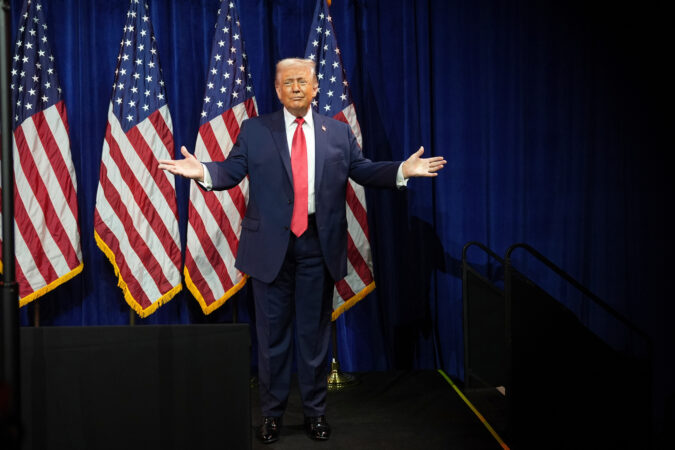
WASHINGTON — President Donald Trump on Tuesday warned that Democrats would “find a reason to impeach me” if the GOP lost control of Congress — using the prediction to pressure lawmakers to unify behind a narrow set of electoral priorities to win the 2026 midterm elections.
“You got to win the midterms, because if we don’t win the midterms, they’ll find a reason to impeach me,” Trump said. “I’ll get impeached.”
The remark was a rare acknowledgment of Trump’s political vulnerability as Republicans prepare to face a Democratic Party buoyed by a string of off-year election victories, favorable polling, and voter anxiety over an economy now fully under Trump’s stewardship. The warning framed the midterms not onlyas a referendum on his agenda, but as a test of his legacy.
Trump addressed the representatives at the start of an all-day policy forum for House Republicans inside the Kennedy Center, a performing arts building recently renamed in his honor. The setting in the heart of Washington underscored how far Trump has come since Jan. 6, 2021, exactly five years ago, when rioters stormed the Capitol and set off years of criminal prosecution and political isolation.
In an address meant to energize his party, Trump conceded that his agenda has struggled to break through with voters. He complained that Americans had quickly moved past his record on illegal immigration and that the press had paid little attention to his push to pressure drug companies to cut prices, which has yielded wins, albeit limited, for some consumers.
He urged House Republicans to focus their messaging on drug prices, transgender athletes in women’s sports and cracking down on violent crime — issues he argued could sharpen contrasts with Democrats and mobilize voters ahead of 2026. And he instructed Republicans to set internal disputes aside and focus on a disciplined message he believes can carry them in November.
He also used the moment to defend Speaker Mike Johnson (R., La.), who has struggled to manage an ideologically divided conference with a razor-thin majority without Trump’s interference.
“He’s as tough as anybody in the room actually,” the president said. “But you can’t be tough when you have a majority of three.”
“You can’t be Trump,” he said, appearing to mock his own confrontational style. “You make 10 enemies, 20 enemies and that’s the end of that.”
The endorsement came at a critical moment for Johnson, who is trying to unify his unruly conference behind a second legislative package after passing a sweeping tax and immigration effort — dubbed by Trump the One Big Beautiful Bill.
Trump also urged House Republicans to reclaim healthcare from the Democrats as a political issue and to pass a voting ID law, while urging conservatives to remain “flexible on Hyde” a signal to lawmakers who have stalled negotiations over abortion language.
“You got to be a little flexible. You got to work something,” Trump said. “We’re all big fans of everything but you got to have flexibility.”
Since returning to the presidency, Trump has continued to minimize the violenceof the riot, calling the insurrection “a day of love” and ultimately fulfilling his promise to pardon participants charged with misdemeanors and felonies. On Tuesday, he again downplayed his role.
Across town, House Democrats marked the anniversary with a hearing featuring lawmakers, Capitol Police officers and Pamela Hemphill, a rioter who entered the Capitol and later rejected a pardon from Trump.
“Once I got away from the MAGA cult and started educating myself about January the 6th, I knew what I did was wrong,” she said. “When Donald Trump pardoned us I rejected the pardon. Accepting that pardon would be lying about what happened on January 6. I am guilty.”
Republicansmeanwhile refocused on their agenda Tuesday,which the party is seeking to anchor on Trump’s economic agenda. That effort has been complicated by his decision to deploy U.S. forces to Venezuela and seize control of the country’s oil assets, a move that has resonated with some hawkish Republicans and members of both parties critical of Nicolás Maduro, but concerned others who fear the president’s “America First” base will lose patience with his interventionism.
Trump argued the action would lower energy costs.
“Got a lot of oil to drill,” he said.
Trump’s address lasted for more than an hour and included everything from jokes about FDR’s disability to an aside about first lady Melania Trump’s distaste for his dance moves.
“I think I gave you something,” he concluded. “It’s just a road map. It’s a road map to victory.”
President Donald Trump’s intervention in Venezuela will test Americans’ appetite for regime change, inserting a new and unpredictable element ahead of midterm elections this year that have so far been dominated by domestic issues.
Democrats immediately began arguing that overnight action on Saturday was an abandonment of Trump’s promise to focus on improving lives at home, while manyRepublicans insisted it was an expansion, rather than a shift, in Trump’s “America First” mantra.
Trump on Saturday said the United States had captured Venezuelan President Nicolás Maduro and his wife and planned to “run the country” during a transition period, an action Trump cast as part of a new era of “American dominance in the Western Hemisphere.” The president touted the operation as a boost to U.S. interests: a blow to the drug trade, an opportunity for American oil companies, and a show of strength.
But his argument drew skepticism on both the right and the left, as critics warned against dragging the U.S. into regime change and costly wars. Recent polls suggest there is significant political risk for Trump, who is already facing discord within his base. A CBS News poll in November found that 70% of Americans opposed U.S. military action in Venezuela and that the vast majority did not view the South American country as a major threat to national security. Americans in both parties have grown increasingly skeptical of foreign intervention in recent decades.
Republican leaders mostly backed the president, but some expressed doubts as Trump outlined a potentially expansive U.S. role in Venezuela and said he is “not afraid of boots on the ground.” Many Democrats framed the attack as a violation of Trump’s campaign promises to “get rid of all these wars starting all over the place” and toavoid the type of foreign entanglements that bedeviled many of his predecessors and bred cynicism within his base.
While foreign policy does not always play a central role in domestic elections, it often informs broader opinions about competence and focus. President Joe Biden’s botched withdrawal from Afghanistan undermined his argument that he was restoring faith and effectiveness in government that had been hampered by the COVID-19 epidemic. President George W. Bush’s decision to invade Iraq with faulty intelligence claims, and the attempts at nation-building that followed, damaged his party’s credibility and helped pave the way for Trump’s takeover of the GOP.
“What Americans want is an American president that’s going to care about them … and I think what this shows is the president’s more concerned about what’s going on in Venezuela, what’s going on in Argentina than he is on what’s going on in Pennsylvania and Ohio,” said Rep. Ro Khanna (D., Calif.) in an interview.
The politics of the intervention are hard to assess immediately, some strategists said, as details of the U.S.’s plans remain unclear and the situation in Venezuela is still unfolding. The issue’s relevance to voters could change based on the ultimate extent of the U.S.’s involvement and Venezuela’s stability in the months to come. Trump on Saturday said Venezuela’s vice president, Delcy Rodríguez, appeared “willing to do what we think is necessary to make Venezuela great,” but she later criticized the U.S.’s actions as “barbarity.”
Trump had been ramping up pressure on Maduro for months, but the action in Venezuela probably caught many Americans off guard, given that it did not follow a provocation like the Sept. 11, 2001, terrorist attacks.
Republicans embracing his latest action in Venezuela are betting that the fallout there will be limited, and even some staunch critics of foreign intervention on the right declined to criticize Trump on Saturday. But a few echoed the concerns from Democrats.
Rep. Marjorie Taylor Greene (R., Ga.), a proponent of America First policies who has become one of Trump’s biggest critics from the right, questioned his justifications for the attack — noting that the fentanyl responsible for most U.S. drug deaths comes primarilyfrom places other than Venezuela — and reiterated her worry that he is veering from principles on which he campaigned.
“This is what many in MAGA thought they voted to end,” she wrote on X. “Boy were we wrong.”
Rep. Thomas Massie (R., Ky.), who has long been at odds with Trump,said the president, at his news conference, had undercut earlier suggestions from administration officials that the action in Venezuela was a limited effort to apprehend Maduro. Stephen K. Bannon, the former Trump adviser turned MAGA commentator, initially hailed Maduro’s capture as a “stunning overnight achievement” on his show — but after Trump’s news conference expanding on the U.S. role in Venezuela, he wondered if the plan would “hark back to our fiasco in Iraq under Bush.”
Sen. Todd Young (R., Ind.) called the Venezuela operation “successful” but added in a statement online, “We still need more answers, especially to questions regarding the next steps in Venezuela’s transition.”
Other Republicans echoed Trump’s points about U.S. interests in the region. Raheem Kassam, a political strategist who is editor of the conservative National Pulse, suggested Trump’s MAGA base will “warm” to the idea that the Venezuela action is America First and noted that many supporters also embraced Trump’s long-shot ambitions to annex Greenland.
Kassam doesn’t see the issue playing into the midterms much yet — but “if it turns into a disaster, certainly.”
“These things are very risky,” he acknowledged.Trump “willknow what risk he’s taking and people know what it means if Caracas suddenly overnight turns into a complete powder keg.”
Some Republicans were skeptical that the U.S. would be as involved as Trump suggested Saturday was possible. “The president gets a lot of leeway up to a certain point,” said GOP strategist David Urban, “and I think that point would be, having U.S. soldiers in some meaningful capacity in Venezuela. I don’t think you’ll see that.”
Democrats, meanwhile, questioned the legality of the military action in Venezuela. Some also sought to use it to build their longtime case that Trump is distracted from the issues that matter most to voters.
“The American people don’t want to ‘run’ a foreign country while our leaders fail to improve life in this one,” wrote Pete Buttigieg, the former transportation secretary and potential Democratic 2028 presidential candidate, on social media, arguing that Trump was “failing on the economy and losing his grip on power at home.”
Buoyed by victories in November’s elections in New Jersey and Virginia, Democrats are focusing intensely on the issue of affordability heading into the 2026 midterms. Trump’s advisers signaled after those elections that they would be refocusing on the economy, and Trump began to tout his economic achievements at rallies. Now, many Democrats say the operation in Venezuela could undercutthat effort.
“His biggest problem is that costs are continuing to go up, and he promised people they would go down, and whenever people see him creating some other kind of a problem, rather than buckling down and trying to un-break that key promise, they turn against him more,” argued Andrew Bates, a Democratic strategist and former White House communications official under Biden.
Whit Ayres, a longtime GOP pollster, emphasized that it’s hard to predict the politics of Trump’s actions in Venezuela without more data.
“What I can say based upon polling is that one of Trump’s strengths in public opinion polls is that he’s viewed as strong, and not indecisive or weak, and in that sense this plays to his strength,” he said of the Venezuela operation.
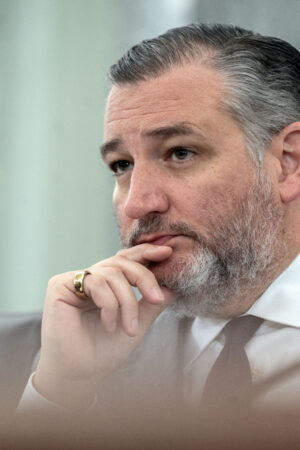
Sen. Ted Cruz sat down with a longtime ally in November at an office near D.C.’s Union Station to discuss the future of the Republican Party. Before long, the discussion touched on his own future.
His friend Morton Klein, president of the Zionist Organization for America, told Cruz he believed that “Jew hatred and Israel bashing” was on the rise on the right — and that something had to be done about it. Cruz, who had begun a series of speeches decrying antisemitism in the GOP, told Klein he had been fielding requests from people urging him to run for president in 2028.
Cruz came across as someone “seriously” considering such a run, Klein recalled.
With the future of the party up for grabs in a Donald Trump-less 2028 primary, Cruz has in recent months positioned himself as a loud voice for a more traditional, hawkish Republican foreign policy. He’s also urging the GOP to rid itself of popular MAGA pundit Tucker Carlson, whom he argues is injecting the “poison” of antisemitism into the movement with his broadsides against Israel. Carlson has rejected that characterization.
As he feuds with Carlson, Cruz is weighing a second presidential bid, according to a person close to the senator and another briefed on his thinking, who spoke like others on the condition of anonymity to disclose internal conversations. A White House run would be politically risky for Cruz, 55, putting him on course to collide with Vice President JD Vance, whom many Republicans expect to enter the 2028 race.
Friction is already evident behind the scenes: Cruz has criticized Vance, a close ally of Carlson, to Republican donors, according to two people familiar with the comments. The senator has warned that Vance’s foreign policy views are dangerously isolationist, the people said.(Vance has been one of the GOP’s most prominent skeptics of U.S. intervention abroad.)
The emerging rivalry shows how much the party has changed under Trump’s leadership since Cruz arrived in the Senate in 2013. After rising to prominence as a rebel against the establishment, Cruz is now a vocal champion of some longtime orthodox GOP positions, as a new generation of conservatives is ascending with a different vision.
Some political observers are skeptical that another Cruz run would gain much traction. He can no longer run as an outsider and alienated some conservatives with his fight against Trump in the 2016 campaign. Still, Cruz has built name recognition and relationships with plenty of activists and donors across the country in recent years, and it’s far from clear what will animate the base in the next GOP primary.
“Can Ted help craft or meld together the traditional Republican approach with the new reality of what the Republican Party is now?” asked Daron Shaw, a political science professor at the University of Texas who overlapped with Cruz as a staffer on George W. Bush’s presidentialcampaign. “It’s a heavy lift.”
The day after his chat with Klein, Cruz called Carlson “a coward” during a speech before a group supporting Jewish conservatives in Las Vegas, again denouncing the “poisonous lies” of antisemitism. He said they were “blessed” to have Trump, who “loves the Jewish people,” in the White House right now.
“When Trump is not in the White House, what then?” he asked in his booming voice.
“Ted Cruz!” an audience member shouted.
The senator just smiled, then continued his speech.
“All of us hate Ted Cruz”
Anyone considering a run for the GOP nomination in 2028 faces a big obstacle: Vance.
The 41-year-old vice president leads early polls and is seen as a loyal lieutenant to Trump, who maintains high support from the party base even as the president’s approval ratings have plummeted.
But Trump has been noncommittal about endorsing his running mate as heir to his Make America Great Again movement, leaving an opening for an ambitious conservative with a different vision for the party.
“The Republicans will be fighting for their identity,” Rep. Marjorie Taylor Greene (R., Ga.) said of the 2028 primary. Greene, a close ally of Carlson who represents the populist and isolationist wing of the party, added: “There’ll be Ted Cruz, I’m sure, running against JD Vance. All of us hate Ted Cruz.”
Cruz has adapted to changes in his party over several decades in politics. Following a stretch in the establishment during Bush’s 2000 campaign, he became solicitor general of Texas in 2003 and launched a Senate campaign in 2011 as a tea-party-infused change agent, defeating the lieutenant governor in the GOP primary.
“The best thing to happen to the Republican Party was to get its teeth kicked in in 2008,” Cruz said during a 2012 campaign event with the libertarian Ron Paul.
When he arrived in Washington, Cruz picked fights over spending and President Barack Obama’s healthcare law, sparking a government shutdown in 2013. Not everyone in his party liked his style. “If you killed Ted Cruz on the floor of the Senate, and the trial was in the Senate, nobody could convict you,” Sen. Lindsey Graham (R., S.C.) joked at a 2016 press dinner.
Cruz brought his insurgent pitch into the 2016 presidential race, but Trump caught fire with an antiestablishment campaign that dramatically eclipsed the senator’s. After bowing out of the GOP race as the last major Trump opponent standing, Cruz told delegates at the Republican National Convention that year to “vote your conscience,” instead of throwing his support behind Trump, who had branded him as “Lyin’ Ted.” He returned to the Senate, where he is now chair of the Commerce Committee and has refashioned himself into a bipartisan dealmaker on aviation safety and other issues.
The Texas senator, who has called himself a “noninterventionist hawk” and has long been a vocal ally of Israel, argues that an anti-Israel foreign policy could embolden terrorists. And he is a defender of the benefits of traditional capitalism at a time when some in the New Right are calling for a more populist turn.
“Those who are anti-Israel quickly become anti-capitalist and anti-American,” Cruz said in a brief interview about his decision to speak out against Carlson. “Tucker’s obsession is unhealthy and dangerous.”
By targeting Carlson and growing anti-Israel sentiment within the party, Cruz has hit upon a division within the GOP base that some believe could animate the 2028 primaries. Carlson is closely allied with Vance, a onetime Trump critic who is now an America First populist, embracing skepticism of some big-business interests and rejecting the U.S. foreign policy status quo.
Cruz is staking out positions against isolationism and antisemitism at a time when explicitly antisemitic figures such as white supremacist commentator Nick Fuentes are gaining an audience on the right.
Vance, by contrast,has rejected the suggestion that the right has a problem with antisemitism afterCarlson hosted Fuentes for a friendly interview. (The vice president disavowed Fuentes months before the interview and has not explicitly weighed in on Carlson hosting him.)
It’s “kind of slanderous to say that the Republican Party, the conservative movement, is extremely antisemitic,”Vancesaid in a recent interview with NBC News. In a social media postlast week, Vance criticized a news article claiming antisemitism was rising among young people.
“I would say there’s a difference between not liking Israel (or disagreeing with a given Israeli policy) and antisemitism,” he replied to one user.
Asked to respond to Vance’s comment, Cruz said he is not in agreement with “people who are anti-Israel or people who are antisemitic.”
“Every Hamas or Hezbollah or IRGC terrorist that Israel took out makes Americans safer,” Cruzsaid, referencing militants in Gaza, Lebanon, and Iran that the United States designates as terrorist groups. “And those who don’t see that are not acting in accordance with American national security interests.”
The feud
In early July, Cruz sat down in Washington with Israel’s prime minister and delivered a dire warning. Over cigars at Blair House, Cruz told Benjamin Netanyahu that antisemitism on the right was rising to a level he had never seen before.
“No, Ted,” Netanyahu responded, according to Cruz, who recounted the conversation in a speech. “That’s Qatar, that’s Iran, that’s astroturf, that’s paid for.”
But Cruz said he was not placated. Replies to his social media posts were flooded with anti-Jewish bigotry from what looked to him like ordinary, real people. He began to fear that what he saw as antisemitism on the left was beginning to infect the right, he said.
In June, Cruz sat for an interview with Carlson that grew heated over the topic of Israel. Cruz suggested that Carlson criticizes Israel more than other countries because of bigotry toward Jews. Carlson said he has many Jewish friends who have the same questions as him and grilled Cruz with factual questions on the Middle East. In an uncharacteristic lapse, Cruz failed to identify the population of Iran. “You don’t know the population of the country you seek to topple?” Carlson asked.
Since then, the two have savaged each other in increasingly personal terms. Carlson has called Cruz “vulgar and dumb and reckless” for connecting U.S. military support for Israel to a biblical responsibility to defend the Holy Land and God’s chosen people. After Carlson hosted Fuentes on his podcast this fall, Cruz called on Republicans to repudiate the pundit.
Carlson “decided Jews are the source of all evil in the world,” Cruz said in a recent podcast. The senator also posted a digitally altered sexually suggestive photo of Carlson to critique his friendly stance toward Qatar, a U.S. ally with which Israel has clashed.
Since the killing of conservative influencer Charlie Kirk, internal battles about the future of the GOP have spilled into the open, many centering on the true meaning of “America First” as Trump spends time and political capital on Ukraine, Israel, and Venezuela. Carlson criticized Trump’s decision to strike Iran’s nuclear sites in June and has warned the president against pursuing regime change in Venezuela, a goal Cruz shares.
“What Ted is trying to do is say, this is where our voters are,” said one person close to the senator. “Trump and Ted are much more aligned on foreign policy than Trump and Tucker are.”
Few Republicans have publicly rallied to Cruz’s side.
“I can tell you, my colleagues, almost to a person, think what is happening is horrifying,” Cruz said in one speech on Carlson. “But a great many of them are frightened because he has one hell of a big megaphone.”
Rep. Dan Crenshaw (R., Texas) said he “applauds” Cruz for speaking out against Carlson. But others declined to weigh in.
Sen. Tommy Tuberville (R., Ala.), a close Trump ally, said he believes the back-and-forth is personal. “Sometimes when you get embarrassed, you get mad, get your feelings hurt,” he said.
Sen. Richard Blumenthal (D., Conn.) said he is surprised but happy that Cruz has the “courage” to challenge such a powerful figure on the right. “To give Senator Cruz due credit, it requires some guts and gumption to stand up against Tucker Carlson,” he said.
As Carlson and Cruz have attacked each other, Trump has declined to take sides, calling Carlson a “nice guy” and Cruz a “good friend” in recent months.
Carlson has said he thinks “antisemitism is immoral, and I am against it.” He argues the feud is just politics. “All [Cruz] wants is to be president. That’s all he’s ever wanted,” Carlson said in an interview. “As a political matter, he somehow thinks that calling me a Nazi is going to get him the nomination because it’s going to hurt JD Vance.” (Cruz has not publicly used that word to described Carlson.)
Rep. Ryan Zinke (R., Mont.), who argued that Cruz damaged his credibility with conservatives after spurning Trump in 2016 but later recovered his standing, said Cruz “always has an eye on running.”
“Ted stakes out his position pretty well, and so were he to run, we know where he is,” Zinke said.
So far, there are few signs that Cruz is gaining an advantage. Hal Lambert, a major GOP donor who helped organize a super PAC to support Cruz when he ran for president in 2016, said he thinks a 2028 bid would be tricky for the senator.
“If JD Vance is running, I’m going to be supporting JD Vance,” Lambert said.
“I just don’t understand what the platform would be,” he said of Cruz’s potential run. “The platform would be, I’m Ted, and that’s JD?”
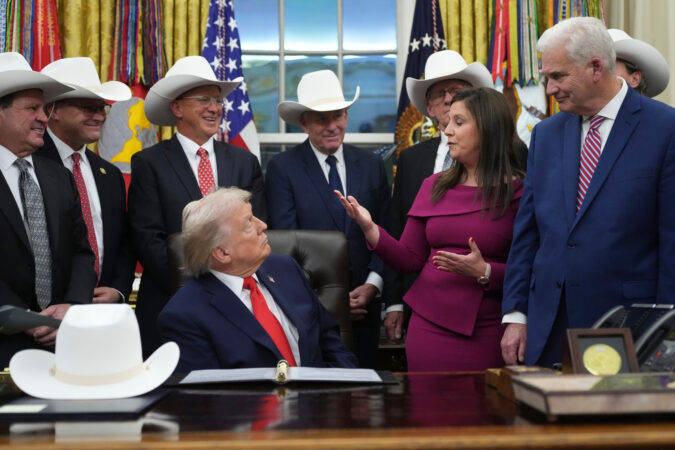
ALBANY, N.Y. — Rep. Elise Stefanik announced Friday that she is suspending her campaign for New York governor and will not seek reelection to Congress, bowing out of the race in a surprise statement that said “it is not an effective use of our time” to stay in what was expected to be a bruising Republican primary.
Stefanik, a Republican ally of President Donald Trump, said in a post on X that she was confident of her chances in the primary against Bruce Blakeman, a Republican county official in New York City’s suburbs. But she said she wanted to spend more time with her young son and family.
“I have thought deeply about this and I know that as a mother, I will feel profound regret if I don’t further focus on my young son’s safety, growth, and happiness — particularly at his tender age,” she said.
Stefanik has been an intense critic of incumbent Democratic Gov. Kathy Hochul, who is also seeking reelection but faces a primary challenge from her own lieutenant governor, Antonio Delgado.
The announcement marks an abrupt end, at least for now, for a once-promising career for Stefanik. She was the youngest woman ever elected to Congress when she won her first campaign in 2014 at just 30 years old, representing a new generation of Republicans making inroads in Washington. She ultimately rose to her party’s leadership in the House when she became the chair of the House Republican Conference in 2021.
First viewed as a moderate when she came to Washington, Stefanik became far more conservative as Trump began to dominate the party. Once someone who refused to say Trump’s name, she became one of his top defenders during his first impeachment inquiry. She would go on to vote against certifying the 2020 election results, even after a violent mob stormed the Capitol on Jan. 6.
Stefanik was expected to have a bitter Republican primary against Blakeman, who also counts himself as an ally of Trump. The president had so far seemed keen on avoiding picking a side in the race, telling reporters recently: “He’s great, and she’s great. They’re both great people.”
Stefanik’s decision follows a clash with Speaker Mike Johnson, whom she accused of lying before embarking on a series of media interviews criticizing him. In one with The Wall Street Journal, she called Johnson a “political novice” and said he wouldn’t be reelected speaker if the vote were held today.
The tumultuous early December episode appeared to cool when Johnson said he and Stefanik had a “great talk.”
“I called her and I said, ‘Why wouldn’t you just come to me, you know?’” Johnson said. “So we had some intense fellowship about that.”
Still, Stefanik, the chairwoman of the House Republican leadership, has not fully walked back her criticisms. A Dec. 2 social media post remains online in which, after a provision she championed was omitted from a defense authorization bill, Stefanik accused Johnson of falsely claiming he was unaware of it, calling it “more lies from the Speaker.”
State Republican Chairman Ed Cox said the party respected Stefanik’s decision and thanked her for her efforts.
“Bruce Blakeman has my endorsement and I urge our State Committee and party leaders to join me,” Cox said in a prepared statement. “Bruce is a fighter who has proven he knows how to win in difficult political terrain.”
More than two years ago, a Chester County Voter Services employee made a dire prediction.
In an eight-page grievance against Voter Services Director Karen Barsoum, the employee described a hostile work environment in which election workers were subjected to “bullying” from the department’s director.
At the time of the complaint, the employee wrote, 15 people had left the 25-person department since Barsoum was hiredin 2021.
“I have very legitimate fears that there will be a mass exodus from voter services in the coming months,” the employee, who asked not to be named for fear of retaliation, wrote in the grievance document he provided to The Inquirer. “My concern is how this will impact the 370k voters of Chester County.”
Two years later, it appears that his prediction had come true. The number of staff departures since Barsoum took over grew to 29 by November of this year, according to a Chester County spokesperson.
Election offices across the nation have experienced a high level of turnover and staff burnout in recent years in the face of election denialism and threats, but Chester County’s churn-rate is nearly double the number of departures in Montgomery and Delaware Counties’ elections departments that have lost 16 and 15 people respectively in the same time period. Both departments are larger than Chester County’s election office.
Accounts and records from three former staffers at Chester County Voters Services Department, two of whomasked not to be named, paint a picture of a hostile work environment where employees were often made to feel as though management had placed a target on their back.
These concerns have been raised to elected and non-elected county leaders for more than two years.
Barsoum saidin an interview that she couldn’t respond to allegations from employees but described her management style as collaborative.
Employees, she said, had left for a variety of reasons including jobs in other Southeast Pennsylvania election offices that pay better than Chester County. Others, she said, left to pursue other opportunities or for family reasons.
Some, she said, left because of the increased pressures of election work as state law changes and the intensity increases.
“I encourage everyone to do what is the best for them,” Barsoum saidThursday.
Though Barsoum acknowledged it was challenging for the office when people left, she said she and other managers were very hands-on in training staff and ensuring that staff members knew the ins and outs of various positions.
Karen Barsoum, Chester County’s director of voter services, at the Chester County Government Services Building in 2022.
The employee who filed the grievance said he feared that the attrition would leadto mistakes during the 2024 presidential election, when the eyes of the nation were on Pennsylvania.
Ultimately, everyone who wanted to vote was able to, county officials said. But the error created a chaotic scene as the county kept polls open two additional hours and more than 12,000 voters were asked to cast provisional ballots — which require more steps from election workers and voters to be counted.
The county hired a WestChester law firm to investigate how and why the poll book error occurred.
Chester County’s CEO David Byerman, the county’s top unelected official, said that turnover across all departments can be attributed to a variety of factors in the county including pay and managers.
He described working in elections today as a “pressure cooker” as a result of the political climate.
The investigation, he said, would look closely at management in the department and whether factors existed that would have hindered staff from identifying or reporting concerns.
“The very fact that we’re doing an investigation into what happened last month … indicates that we want to learn more about what happened in this particular election,” Byerman said. “Part of that investigation is looking at the performance of our management team in voter services.”
It’s unclear at this stage whether the error can be attributed to the turnover and environment in voter services, but Paul Manson, a professor at Portland State University who researches challenges faced by election workers, said the turnover seen in Chester County is unusual and alarming.
Often, Manson said, staff tends to be relatively stable in election offices because they care deeply about the work. Stressors of reduced staffing and the toxic environment described by threeformeremployees, he said, could create a dynamic that makes mistakes more likely.
“When we have these periods of turnover local election officials really sort of grit their teeth because they worry about these small errors turning into big errors,” he said.
Election workers process mail ballots for the 2024 general election at the Chester County, administrative offices in West Chester. (AP Photo/Matt Slocum)
Allegations of ‘hostility’ toward staff
Barsoum, who came to Chester County from Berks County in 2021, has earned respect in the election field nationally and within Pennsylvania. Barsoum had been the assistant director in the Berks election office.
“Karen Barsoum has an extraordinary knowledge that is a resource both statewide here in Pennsylvania and has been a resource nationally. I don’t think anyone doubts her knowledge of election processes,” said Byerman, the Chester County CEO.
“At the end of the day I think any manager needs to combine two abilities. An ability to manage an office effectively and an ability to be knowledgeable and an expert.”
Byerman said each manager in the county is evaluated on these criteria regularly, but when asked whether Barsoum possessed both qualities, Byerman did not respond.
Former county employees said Barsoum’s high reputation outside Chester County did not align with what they experienced in their jobs.
The employee who filed the grievance against Barsoum said he got along with her well when she started and he received high marks on performance reviews, according to documents provided to The Inquirer.
But after a reorganization in the department in 2022, he said, he noticed that more and more staff members were leaving. The employee was promoted to a new role and during the 2022 election did that job while maintaining responsibilities from his prior role.
He said he expressed concern about being overworked and received little support in the new role. After the employee said he dropped the ball on a minor item and reported it to Barsoum, she began treating him differently.
“In Karen’s eyes you’re either 100% right or 100% wrong,” he said in an interview.
The employee filed his grievance in August of 2023 after a meeting where, he said, Barsoum listed accomplishments of staff members and refused to acknowledge any of his work.
Barsoum’s “hostility” toward him in the meeting was so noticeable, he wrote in the complaint, that eight colleagues approached him afterward to say they noticed it.
“After so many months of mistreatment and disrespect in such a hostile work environment, it eventually gets to the point that something needs to be said. If the Presidential Election were to not run smoothly next year and ChesCo voters were disenfranchised due to the Voter Services, I would forever regret not sending this grievance,” the employee wrote in his grievance.
That employee left the department the next year. He was placed on a performance-improvement plan weeks after submitting his grievance, and, after completing that plan, he was placed on another as a result of a low performance review and quit before he could be terminated.
Elizabeth Sieb, who worked at the election office for eight years before leaving in 2022, said she had similar experiences with Barsoum to those detailed in the grievance. For the past year and a half she has been telling county officials about her concerns.
In 2022, Barsoum reorganized the office to respond to the new stressors of elections and new responsibilities that come with mail voting. Since then, she said, she and staff work to evaluate after each election what worked and what didn’t so adjustments can be made.
But Sieb said Barsoum didn’t take constructive criticism well when changes were made and stifled discussion among staff members.
Sieb was fired from the department in 2022. She said she was placed on a personal-improvement plan that demanded that she seek mental health treatment and subsequently placed on a three-day unpaid suspension.
Following the suspension, Sieb said, she was directed not to speak to her colleagues if it was not directly related to her work. She said she was fired for violating that rule when she reported to a lower-level manager concerns about another manager speaking disparagingly about a job applicant in earshot of other employees.
Sieb, who at times questioned Barsoum’s decisions, said she felt that the director was threatened by long-term staff and was prone to outbursts when employees would correct her.
“She was slowly but surely wearing down and getting rid of all the people that had been there a long time,” Sieb said.
Jennifer Morrell, the CEO of the Elections Group, a company that assists local election officials, said turnover in election offices happens for a variety of reasons — including the long hours and relatively low pay civil servants receive.
She noted that training programs from state agencies and associations are designed to help prevent errors as a result of turnover and that a larger department, like Chester County, may be able to fill rolls with election workers from other counties.
“Karen is highly respected in the election community, super professional,” Morrell said. “Our hearts just ached with what happened because it could have happened to anybody.”
Commissioners respond to concerns
After leaving the department, Sieb said, she believed she suffered from PTSD related to her experience.
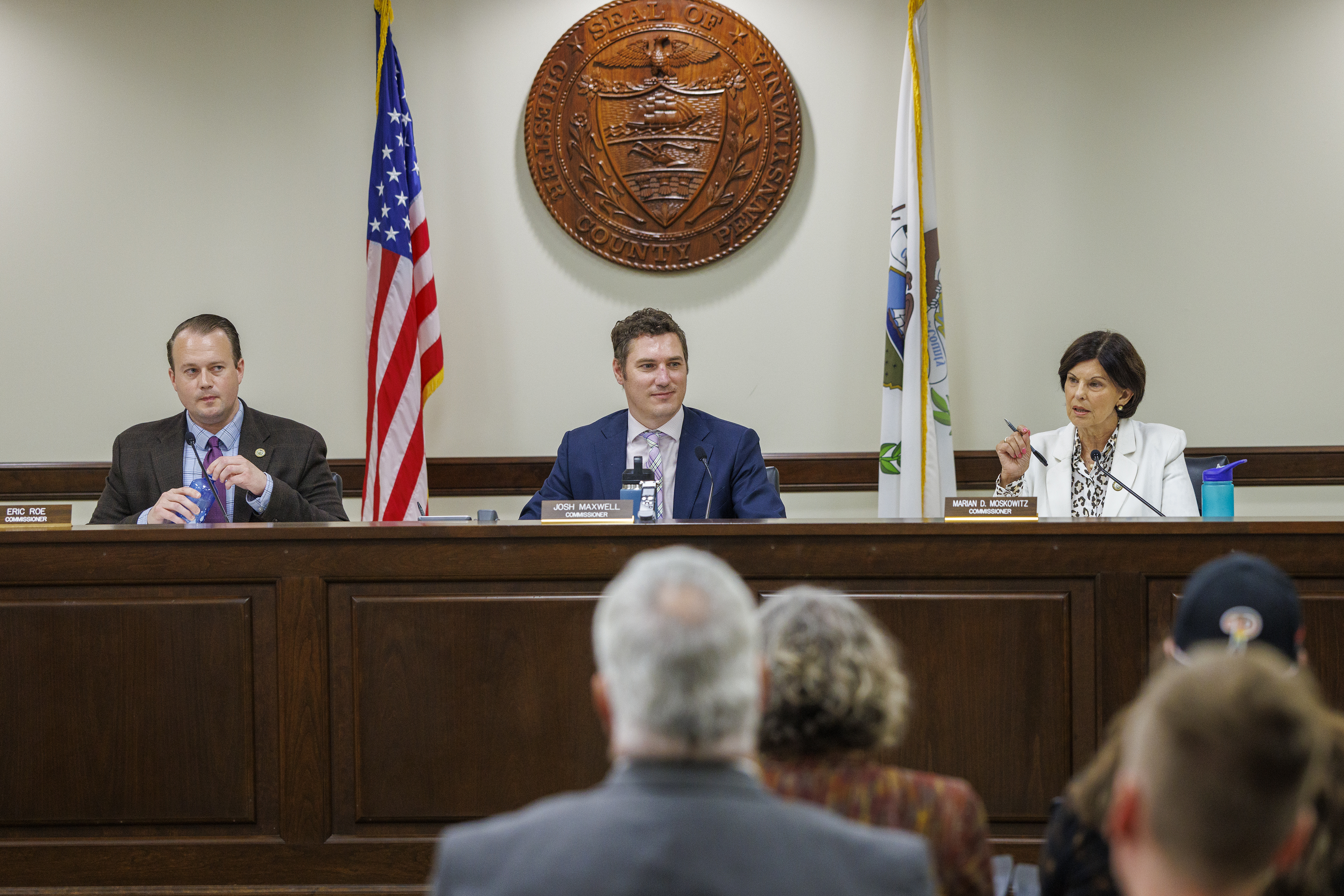
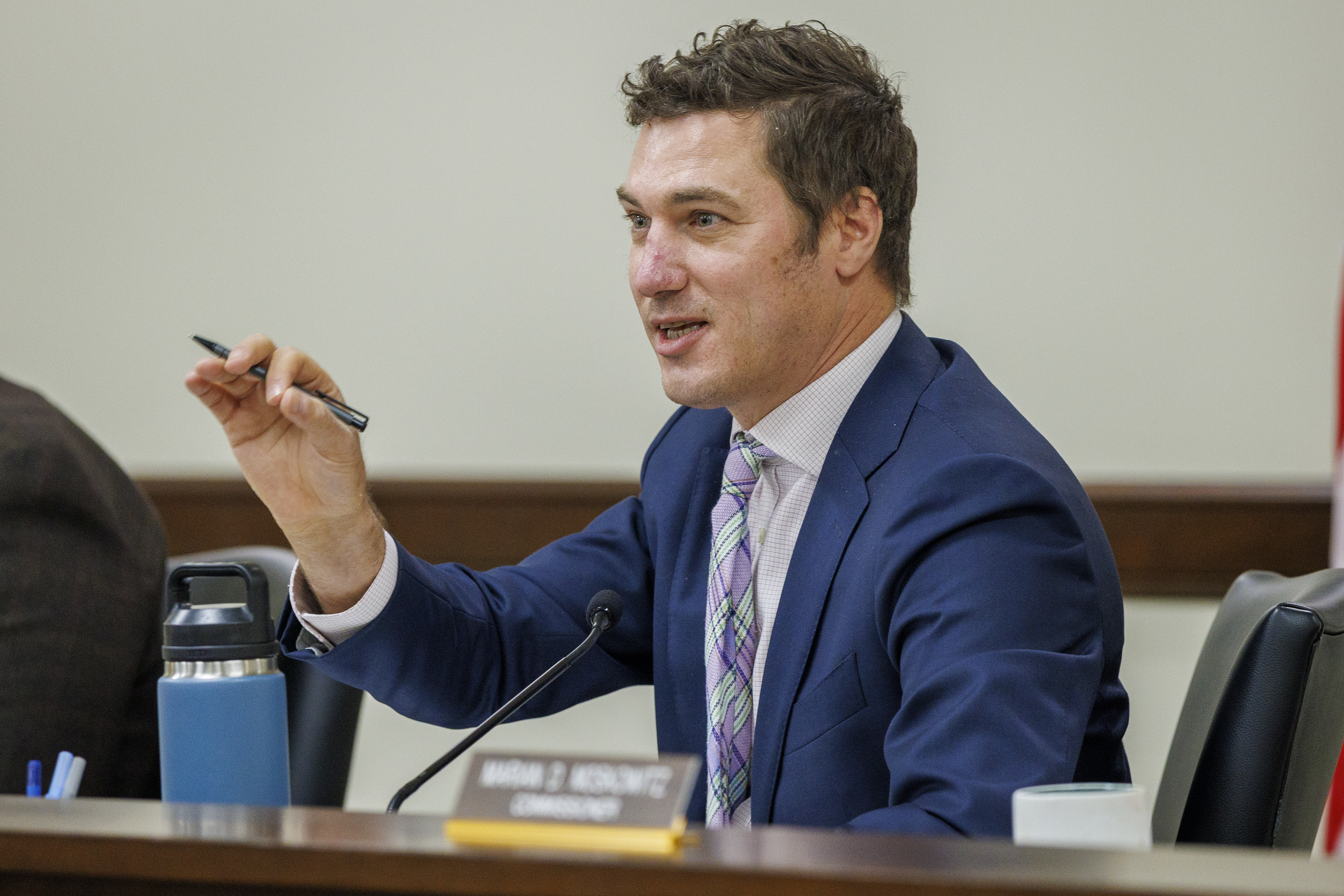
Beginning in 2024 she began reaching out to Republican Commissioner Eric Roe with her concerns. Roe, Sieb said, investigated the complaints and brought them to the other commissioners, Democrats Josh Maxwell and Marian D. Moskowitz. The commissioners also serve as the county’s election board.
“I have had a lot of people come to me with various concerns throughout county government, and voter services is certainly one of them,” Roe told The Inquirer, explaining that his role as minority party commissioner makes him a frequent recipient of workforce complaints.
Chester County Commissioners (from left) Eric M. Roe, Josh Maxwell, and Marian D. Moskowitz at a board meeting in September.
But a year and a half later, Barsoum remained in her role and Sieb continued to hear from her former colleagues with concerns. Twice this year, Sieb went before the Chester County Election Board to raise public concerns about turnover under Barsoum.
Maxwell, who chairs the Chester County Election Board, said the county reviews reports from departments when they receive them. He said he was unable to comment on specific departments or personnel matters but said the county needed to do everything it could to support its election workers.
“We need to do a better job, I think, making sure that people feel valued. Including the folks that unfortunately we’ve lost,” he said.
Election work in Pennsylvania and elsewhere has gotten increasingly fraught. The work itself is more intense than it once was with more mail voting, and workers now deal with threats, longer hours, and a camera on them when they’re working with ballots.
“We were seen as clerical people, maybe, in the past; now we are wearing many different hats,” Barsoum said.
Moskowitz attributed much of the turnover in the county to burnout and noted the threats that election employees have faced in her years on the job.
Barsoum became emotional as she said she had worked to ensure that her staff had the resources they needed to feel safe, including mental health resources through the Human Resources department, team building outside election cycles, and a space for workers to step off camera.
“We can count on each other; we lean on each other. It’s a strong bond, a camaraderie,” she said.
When hiring new staffers, Barsoum said she warns them of what’s to come — that they’re not walking into a normal 9-to-5 job, that they won’t be able to plan vacations through about half of the year, and that they’ll be asked to take phone calls from irate people.
It’s a lifestyle, she said, that isn’t right for everyone — including some parents.
“If you’re leaning on a daycare and that is your sole, the go-to, it will be very hard to work in the department because there is 24/7 operations, and there are so many things that are going off and beyond the regular work schedule.”
Josh Maxwell, chair of Chester County Commissioners and the county Elections Board, presides over a September commissioners meeting.
Maxwell and Moskowitz declined to comment specifically when asked if they were confident in Barsoum’s leadership, but Maxwell has repeatedly asked residents to direct their anger at November’s error at him rather than Barsoum or her staff.
“I think it’s important that we protect these folks and we empower them to make the best decisions possible,” Maxwell said at an election board meeting last week.
Speaking to The Inquirer, he reiterated that point.
“We want to make sure that people feel welcomed and empowered and are in a working environment they appreciate,” Maxwell said in an interview.
“Elections have changed so much in five years it’s not surprising to me that some people want to find something new to do.”
This suburban content is produced with support from the Leslie Miller and Richard Worley Foundation and The Lenfest Institute for Journalism. Editorial content is created independently of the project donors. Gifts to support The Inquirer’s high-impact journalism can be made at inquirer.com/donate. A list of Lenfest Institute donors can be found at lenfestinstitute.org/supporters.
NEW YORK — In dimly lit Italian restaurants, boisterous Irish pubs, and the vintage sprawling ballroom atop Rockefeller Center, candidates running for Congress in Philadelphia spent a busy weekendin New Yorktrying to woo donors and supporters.
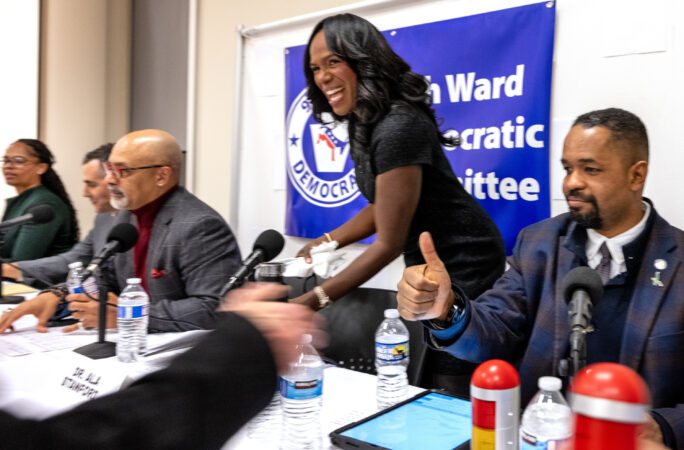
State Sen. Sharif Street, Ala Stanford, and State Rep. Morgan Cephas, all seeking to replace retiring U.S. Rep. Dwight Evans in one of the nation’s most Democratic districts, made the rounds, as Pennsylvania’s political elite gathered in Manhattan for the annual Pennsylvania Society dinner — and a parade of related events.
Stanford held a somewhat star-studded fundraiser Thursday evening, hosted, according to a posted listing for the private event, by Hamilton actor Leslie Odom Jr., (who did not attend but lent his name). Other hosts included Holly Hatcher-Frazier, an educator and original cast member on the TV show Dance Moms, and Lauren Bush, the niece of former President George W. Bush and co-founder of FEED Projects, a fashion brand which donates a portion of its proceeds to alleviating childhood hunger.
“What I’m hearing is people want a different type of solution,” Stanford said in an interview at a breakfast held by the University of Pennsylvania on Saturday. “Innovative, reaching across the aisle, collaborative, not afraid to stand up to authority,” she added.
A lot of eyes are on the pediatric surgeon and founder of a community health center, to see how she translates a career that involved fundraising for nonprofits into funding her first campaign.
She was endorsed by Evans upon launching her bid to succeed him in the 3rd Congressional District.
She’s built her campaign around her experience in the medical community and the biggest buzz of the weekend may have been her response to a minor medical incident. An older woman fell down some steps exiting a reception hosted by House Speaker Joanna McClinton(D., Philadelphia).
Stanford “triaged” the situation, according to Democrats in attendance, instructingPennsylvania Supreme Court Justice Kevin Dougherty and his son State Rep. Sean Doughertyto lift the woman onto some chairs so she could evaluate her. The woman ended up being fine and was able to walk home from the restaurant.
“We got a lot of people that can vote in the district here, we want their votes,” he said in an interview at a rooftop reception hosted by Independence Blue Cross. “We got a lot of people who can write checks here, we want their checks.”
State Rep. Ben Waxman, a longtime friend and colleague of Cephas, is in talks with donors to organize a super PAC to support the fellow Philadelphia Democrat’s campaign, according to a source familiar with the plans. The PAC would likely be run by longtime Philadelphia strategist Brandon Evans, who worked for both former Mayor Jim Kenney and District Attorney Larry Krasner.
The PAC has a goal of raising $250,000 to spend on digital, mail, and field, according to the source.
Not spotted at Pennsylvania Society weekend was StateRep. Chris Rabb, who is running as an anti-establishment progressive.
“That’s not really my thing,” he said in a text message, of the glitzy Manhattan affair.
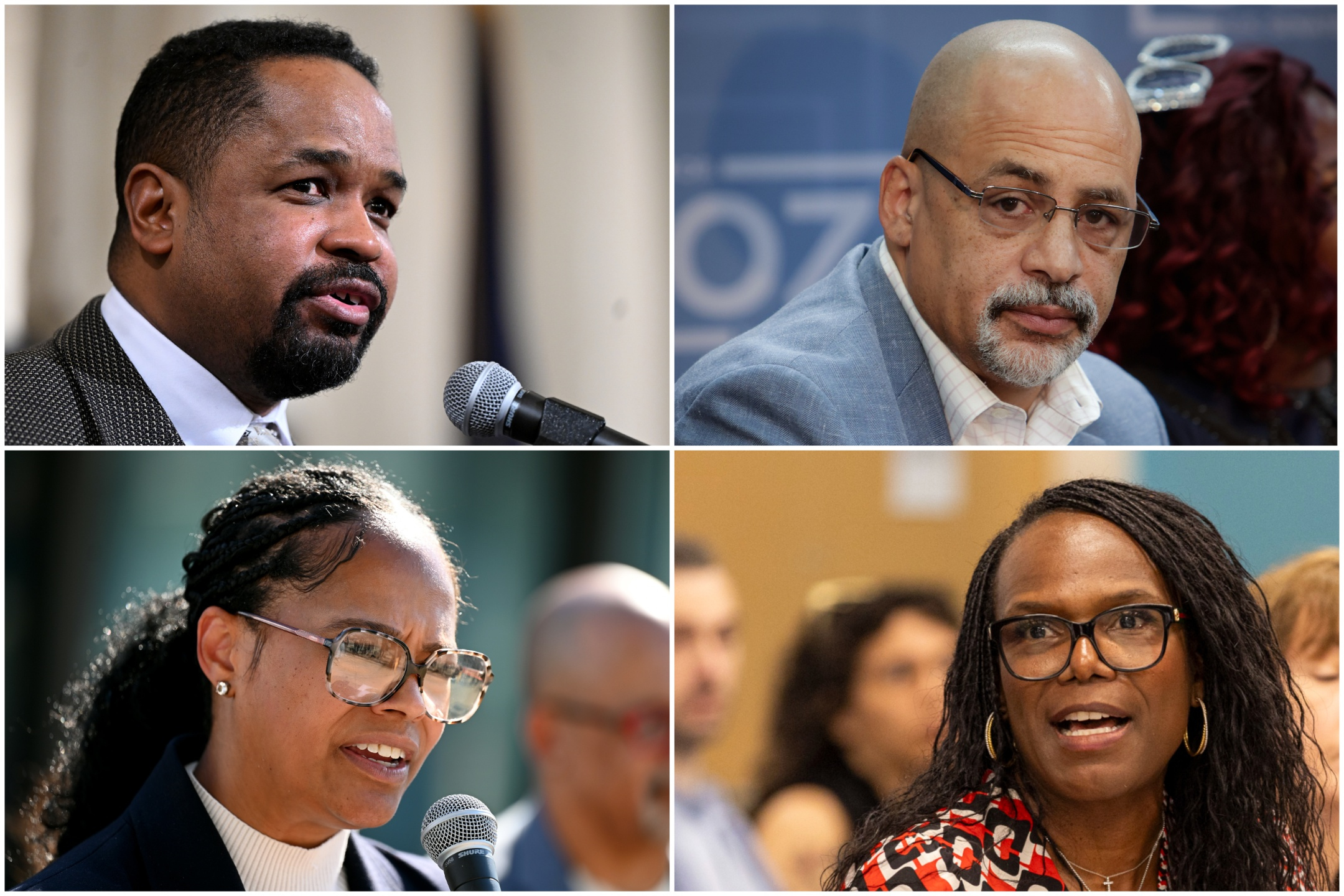
Declared candidates in the Democratic primary for Philadelphia’s 3rd Congressional District, clockwise from upper left: State Sen. Sharif Street, State Rep. Chris Rabb, Ala Stanford, and State Rep. Morgan Cephas. The seat, currently held by retiring U.S. Rep. Dwight Evans, represents a large portion of Philadelphia and is the most Democratic district in the state.
The state of the race
Street released an internal poll last week that showed him narrowly beating Rabb with Stanford and Cephas following behind.
Several candidates running in the crowded race, which is up to about a dozen candidates, were not included in the poll and did not attend Pennsylvania Society.
“I believe our standing is strong,” Stanford said when asked about the poll. “I believe that there are many endorsements and people donate lots of money. But ultimately every individual has one vote. And that is the equalizer.”
One question will be whether Street, the son of former Mayor John Street, ties up most or all of the Democratic establishment support.
Several state representatives and ward leaders, like State Rep. Danilo Burgos, have already endorsed him — little surprise given his background running the party. But other elected officials, including City Councilmember and ward leader Katherine Gilmore Richardson, said they are waiting for their ward’s official vetting process to get underway.
Street said when it comes to his colleagues, “I think by the time we get to Election Day, most of my colleagues will be for me.”
John Brady, political director of the Pennsylvania Democratic Party, said 60% of Philadelphia wards have endorsed Street. He said the City Committee is waiting for more of the remaining wards, including the progressive and independent wards, to complete their processes so the full committee can move forward with their endorsement process in February.
“Look, two months from now is the first week of February, that’s plenty of time for them to complete their processes.” The concern, Brady said, is if the party waits too long, an endorsement may not carry weight.
While the City Committee wants to firm up an endorsement, some elected Democrats at Pennsylvania Society said they were struggling with whom to back — several said they really liked Cephas but felt wary of political backlash if they didn’t back Street and he won the nomination.
While Rabb has carved out a clear lane as the progressive, some of the city’s most progressive elected lawmakers have not lined up behind him yet. City Councilmember Jamie Gauthier, who represents West Philadelphia, said this weekend she is not yet ready to endorse and Working Families Party member Kendra Brooks, also on City Council, said the Working Families Party would go through a formal process in January (the progressive group often gets involved in Democratic races).
While Evans is backing Stanford, Philly’s other Democratic members of Congress have yet to weigh in.U.S. Rep. Brendan Boyle said he might not endorse in the primary. U.S. Rep. Mary Gay Scanlon, at an event on Friday night, said she’s worked with both Cephas and Stanford and has “great respect for both of them.”
Mayor Cherelle L. Parker has said she will endorse in the primary and her vetting process starts in January.
“For me, I’m really looking at Philadelphia’s agenda, you know, safe, clean, green, economic opportunity for all and how will you leverage your seat at the table to deliver for the 3rd Congressional District?” she said.
“What do you advocate for and champion as a legislator? What’s your personal passion and then you have to leverage tangible results.”
Voters in Shamong handily rejected a $25 million school bond question that would have raised property taxes, while a referendum in Mantua was too close to call, officials said Wednesday.
Shamong voters rejected the bond question 797-271, according to unofficial results from Tuesday’s election in the Burlington County school system.
If approved, the bond issue would have meant a $408 annual property tax increase on a home assessed at the township average of $309,500.
The district had said funding was needed for projects at the Indian Mills and Indian Mills Memorial schools that need immediate action. They included roofing and HVAC work.
Superintendent Mayreni Fermin-Cannon did not respond to a message seeking comment on next steps for the district.
Shamong Mayor Michael Di Croce, who tried unsuccessfully to block Tuesday’s election, hailed the results. Shamong residents make up 90% of the town’s tax base and could not afford an increase, he said.
Di Croce, an attorney, filed a complaint last week on behalf of several residents that contended school officials provided incorrect or misleading information about state funding for the project.
The complaint also alleged the district has refused to disclose why it could not earmark $4 million in capital reserves for renovations prior to seeking a bond referendum.
At a hearing Monday, Superior Court Judge John E. Harrington refused to invalidate the referendum.
“I’m very happy with the way things played out,” Di Croce said Wednesday. “Their whole sky is falling just was not credible and voters didn’t buy it.”
Mantua results too close to call
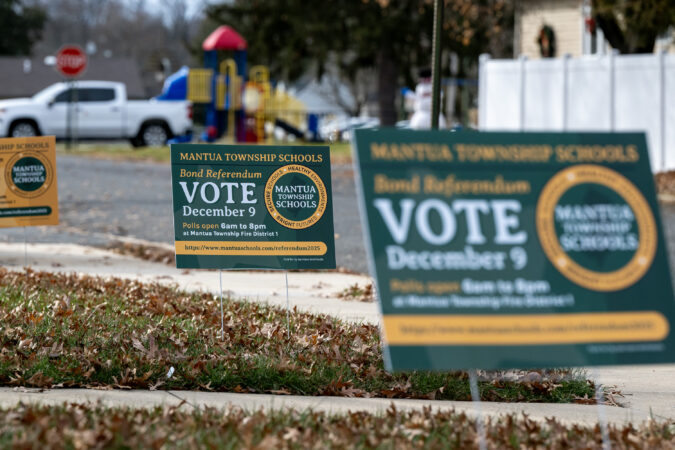
Meanwhile, the outcome of Tuesday’s vote in Mantua Township on a $39.1 million school bond referendum was too close to call Wednesday.
In preliminary results, there were 1,097 votes opposed and 1,074 votes in favor, the Gloucester County district said. The totals are expected to change over the next few days as officials count mail ballots and verify provisional ballots.
“Regardless of the result, our mission remains the same — to prepare our students for lifelong success through comprehensive academics, community partnerships, and character education,” Superintendent Christine Trampe said in a statement.
The bond issue would fund improvements at all three schools in the kindergarten-through-sixth-grade district, including renovations, roof repairs, and new classrooms.
Trampe called the renovations “true necessities.” Without the funding, the district may need to cut programs, she said.
If approved, the bond issue would increase property taxes about $336 annually on a home assessed at the township average of $311,993.
Elsewhere in the region, voters in Woodbine in Cape May County and Cumberland Regional district in Cumberland County approved bond questions, according to the New Jersey School Boards Association.
Tuesday was one of five times during the year that school boards may ask voters to approve a bond issue or special question. Bond referendums allow districts to pay for projects that cannot readily be funded through their annual operating budget.
A Montgomery County Democratic Committee leader has set his sights on unseating a Republican state senator in the suburbs — part of a larger effort by Pennsylvania Democrats to flip the state Senate for the first time in 31 years.
Chris Thomas, the former executive director of the Montgomery County Democratic Committee, who lefthisroleatthe end of November to run for Senate, launched his bid on Wednesday to challenge State Sen. Tracy Pennycuick, a first-term senator representing parts of Montgomery and Berks Counties.
Thomas, 29, is also an Upper Frederick Township volunteer firefighter andtaught in a Philadelphiapublicschool for a year prior to his jump into politics. His campaign is focused on increasingpublicschoolfunding, finding a newfundingstream for masstransit, and making Pennsylvania more affordable for working people.
Pa. state Rep. Tracy Pennycuick (R., Montgomery County). (Photo: Pa. House of Representatives)
Thomas announced his campaign with dozens of endorsements from state and local elected officials, including five sitting senators from the Philadelphia suburbs. He also secured the endorsement of House Majority Leader Matt Bradford (D., Montgomery), another driving force behind the Democratic efforts to flip the state Senate in the 2026 midterm election in attempts to control all three branches of Pennsylvania’s government.
Pennsylvania is one of few divided legislatures in the country, where Democrats hold a narrow majority in the state House, 102-101, and Republicans control the Senate, 27-23.
Gov. Josh Shapiro, a Democrat, and House Democrats frequently butt heads with GOP Senate leaders. By flipping two seats next November, Democrats would tie the chamber 25-25 and Democratic Lt. Gov. Austin Davis would act as a tiebreaker. But Democrats are targeting four GOP-held seats, three of which are in the Philadelphia suburbs, in hopes of gaining control in the upper chamber for the first time in 31 years.
The GOP-controlled state Senate has been a thorn in the side of Shapiro and House Democrats, as the more conservative members of the GOP Senate caucus have objected to most spending increases and rejected top Democratic priorities, like a long-term revenue source for mass transit. The state budget, passed in November, was 135 days late, requiring school districts, counties, and social service providers to take out loans or lay off staff to continue operating during the monthslong standoff.
Mirroring national efforts to win control of congressional seats, Pennsylvania Democrats are targeting GOP-held districts that President Donald Trump won in 2024 but Shapiro carried in 2022. With Pennsylvania’s popular first-term governor and potential 2028 contender back at the top of the ticket — and a methodical, behind-the-scenes effort by Shapiro to orchestrate a decisive year for Democrats in 2026 — Democrats see it as possible this time around.
Thomas’ first order of business if he is elected to Harrisburg and Democrats flip the chamber: electing Democratic floor leaders in the chamber.
“No meaningful legislation moves in Harrisburg unless we fix who’s in charge, and right now Sen. Pennycuick is supporting a Senate leadership that’s failed working people,” Thomas said.
Pennycuick said she “welcomes this campaign as an opportunity” to talk about the successes she has achieved while serving in the state Senate, such as her support for public education funding, reducing overreaching regulations, and her bipartisan proposal to create safeguards around artificial intelligence.
Kofi Osei, a Towamencin Township supervisor and Democrat, has also announced his bid for Senate District 24, which stretches along the northwestern parts of Montgomery County and into parts of Berks County.
The state Senate Democratic Campaign Committee does not endorse candidates in a primary election, and will support whoever wins the Democratic nomination in Pennsylvania’s May 19 primary. However, State Sen. Vincent Hughes (D., Philadelphia), who chairs the SDCC, said Thomas’ candidacy is “the right time and the right moment.”
“I’m really excited about having a young person in there, generating young people and getting young people motivated,” Hughes added.
The state Senate Republican Campaign Committee, meanwhile, is fundraising off Democrats’ efforts to flip the state’s upper chamber, warning voters that Democratic special interest group dollars are already pouring in.
“State Democrats have made it clear their goal is to have a blue trifecta in Pennsylvania in 2026,” the SRCC wrote in a fundraising email Tuesday. “They know Senate Republicans are the last line of defense against Josh Shapiro and PA House Democrats far-left agenda.”
Thomas was a public school teacher for one year at the Northeast Community Propel Academy, teaching seventh-grade math and science. He comes from a family of educators, he said, but quickly realized he needed to get more involved to improve the education system and government services to better serve these students. He made the jump to politics to try to make change.
“I was sitting there, trying to feed my kids in the morning to make sure they had full stomachs to learn, having supplies to make sure they’re fully equipped for the day,” Thomas added. “I saw a system that wasn’t working for our students.”
If elected, Thomas would be Pennsylvania’s youngest sittingstate senator, and would join State Sen. Joe Picozzi (R., Philadelphia), 30, as part of a new generation of leaders hoping to shape the state’s future.
“Our generation has grown up during economic crashes, school shootings, endless wars, and now we’re watching our parents and grandparents struggle to retire with dignity,” Thomas said.
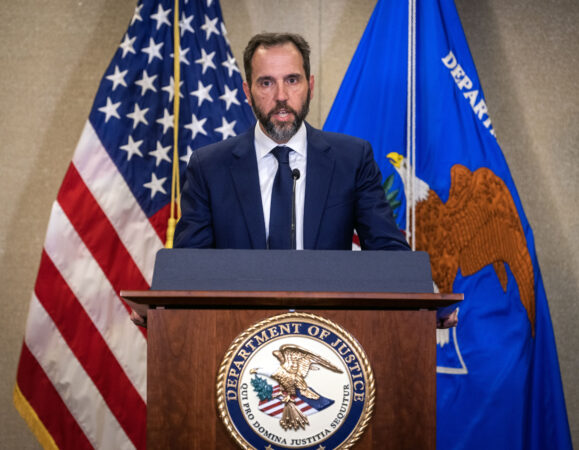
House Republicans have upped their demands for Jack Smith to testify behind closed doors, issuing a subpoena on Wednesday to the former special counsel that calls on him to meet with members of the House Judiciary Committee and answer questions about his two federal prosecutions of President Donald Trump.
Rep. Jim Jordan (R., Ohio), who chairs the House Judiciary Committee, said in his letter to Smith — which he posted on social media — that Smith would be deposed on Dec. 17. Smith must hand over materials related to the investigations by Dec. 12, he said.
The demand is the latest in a string from Republican lawmakers aimed at getting Smith to testify privately and hand over materials related to the probes. In October, Jordan wrote Smith requesting that he sit for a private interview with lawmakers about the investigations, though did not issue a subpoena.
“Due to your service as special counsel, the Committee believes that you possess information that is vital to its oversight of this matter,” the letter from Jordan reads.
Smith repeatedly has said he would sit for an interview with lawmakers in a public setting, but does not want to do it behind closed doors. His supporters have expressed concern that a private interview would be subject to selective leaks by committee members.
Public testimony, however, could put Republicans and the Trump administration in a tricky position. Smith has said he collected ample evidence showing that Trump committed the alleged crimes for which he was indicted.By calling Smith to testify, Republicans risk giving him a platform to air the evidence he collected against the president and failing to elicit testimony that would portray him as a corrupt prosecutor out to get Republicans.
The former special counsel has also said that, under long-standing protocol, he needs Justice Department guidance to tell him what he is allowed to testify about and what materials he is allowed to hand over. Smith, who is now a private citizen, says he does not have access to the investigatory materials, which are now in the Justice Department’s possession.
The Justice Department did not immediately respond to a request asking if it had provided Smith with that guidance.
“Nearly six weeks ago Jack offered to voluntarily appear before the House Judiciary committee in an open hearing to answer any questions lawmakers have about his investigation,” Smith’s attorney, Peter Koski, said in a statement.
“We are disappointed that offer was rejected, and that the American people will be denied the opportunity to hear directly from Jack on these topics. Jack looks forward to meeting with the committee later this month to discuss his work and clarify the various misconceptions about his investigation.”
If Smith failed to comply with the subpoena, he could risk prosecution. If a person defies a congressional subpoena, lawmakers could refer that person to the Justice Department for prosecution.
The back-and-forth over the terms of Smith’s testimony highlights the Trump administration’s contentious relationship with Smith and the large team of agents and prosecutors involved in investigating the president. The administration has fired multiple prosecutors and agents who worked on the cases and has portrayed Smith and his team as corrupt and politicized. The committee has also called some of Smith’s deputies on the special counsel team for testimony.
Smith oversaw two federal investigations into Trump during the Biden administration. One examined Trump’s alleged mishandling of classified materials after he left office, and the other probed his alleged attempts to overturn the 2020 election results.
Neither case made it to trial, and both were dismissed before Trump took office in January. Smith has said that he did nothing wrong and that he followed all investigatory protocols when overseeing the cases.
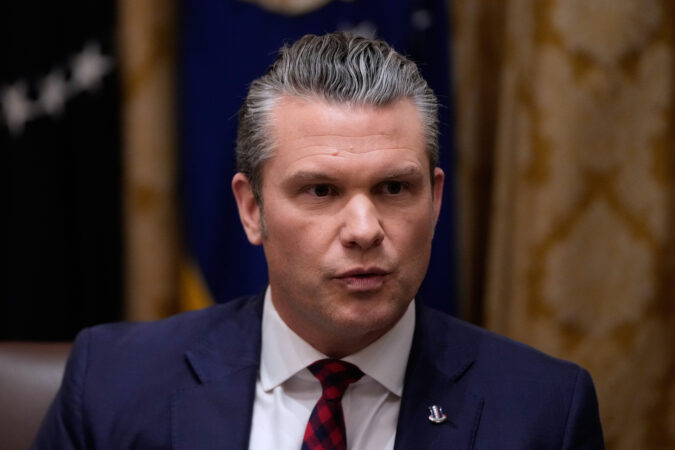
The Pentagon’s watchdog found that Defense Secretary Pete Hegseth put U.S. personnel and their mission at risk when he used the Signal messaging app to convey sensitive information about a military strike against Yemen’s Houthi militants, two people familiar with the findings said Wednesday.
Hegseth, however, has the ability to declassify material and the report did not find he did so improperly, according to one of the people familiar with the findings who spoke on condition of anonymity to discuss the information. That person also said the report concluded that Hegseth violated Pentagon policy by using his personal device for official business and it recommended better training for all Pentagon officials.
Hegseth declined to sit for an interview with the Pentagon’s inspector general but provided a written statement, that person said. The defense secretary asserted that he was permitted to declassify information as he saw fit and only communicated details he thought would not endanger the mission.
The findings ramp up the pressure on the former Fox News Channel host after lawmakers had called for the independent inquiry into his use of the commercially available app. Lawmakers also just opened investigations into a news report that a follow-up strike on an alleged drug-smuggling boat in the Caribbean Sea in September killed survivors after Hegseth issued a verbal order to “kill everybody.”
Hegseth defended the strike as emerging in the “fog of war‚” saying he didn’t see any survivors but also “didn’t stick around” for the rest of the mission and that the admiral in charge “made the right call” in ordering the second strike. He also did not admit fault following the revelations that he discussed sensitive military plans on Signal, asserting that the information was unclassified.
“The Inspector General review is a TOTAL exoneration of Secretary Hegseth and proves what we knew all along — no classified information was shared,” Sean Parnell, the Pentagon’s chief spokesman said in a statement. “This matter is resolved, and the case is closed.”
Meanwhile, the Pentagon knew there were survivors after a September attack on an alleged drug boat in the Caribbean Sea and the U.S. military still carried out a follow-up strike, according to two people familiar with the matter.
The rationale for the second strike was that it was needed to sink the vessel, according to the people familiar with the matter who spoke on the condition of anonymity because they weren’t authorized to discuss it publicly. The Trump administration says all 11 people aboard were killed.
What remains unclear was who ordered the strikes and whether Hegseth was involved, one source said. That will be part of a classified congressional briefing Thursday with the commander that the Trump administration says ordered the second strike, Adm. Frank “Mitch” Bradley.
The information about the follow-on strike was not presented to lawmakers during a classified briefing in September, in the days after the incident. It was disclosed later, one source said, and the explanation provided by the department has been broadly unsatisfactory to various members of the national security committees in Congress.
In a rare flex of bipartisan oversight, the Armed Services committees in both the House and Senate swiftly announced investigations into the strikes as lawmakers of both parties raise questions.
Hegseth is under growing scrutiny over the military strikes on alleged drug traffickers in the Caribbean and eastern Pacific. Legal experts and some lawmakers say a strike that killed survivors would have violated the laws of armed conflict. The Trump administration has said the U.S. is in “armed conflict” with drug cartels, even though Congress has not approved any authorization for the use of military force in the region.
Journalist was added to a chat where sensitive plans were shared
In at least two separate Signal chats, Hegseth provided the exact timings of warplane launches and when bombs would drop — before the men and women carrying out those attacks on behalf of the United States were airborne.
Hegseth’s use of the app came to light when a journalist, Jeffrey Goldberg of The Atlantic, was inadvertently added to a Signal text chain by then-national security adviser Mike Waltz. It included Vice President JD Vance, Secretary of State Marco Rubio, Director of National Intelligence Tulsi Gabbard, and others, brought together to discuss March 15 military operations against the Iran-backed Houthis.
Hegseth had created another Signal chat with 13 people that included his wife and brother where he shared similar details of the same strike, The Associated Press reported.
Signal is encrypted but is not authorized for carrying classified information and is not part of the Pentagon’s secure communications network.
Hegseth previously has said none of the information shared in the chats was classified. Multiple current and former military officials have told the AP there was no way details with that specificity, especially before a strike took place, would have been OK to share on an unsecured device.
The review was delivered to lawmakers, who were able to review the report in a classified facility at the Capitol. A partially redacted version of the report was expected to be released publicly later this week.
Hegseth said he viewed the investigation as a partisan exercise and did not trust the inspector general, according to one of the people familiar with the report’s findings. The review had to rely on screenshots of the Signal chat published by the Atlantic because Hegseth could not provide more than a small handful of his Signal messages, the person said.
When asked about the investigation in August, Pentagon press secretary Kingsley Wilson told reporters that “we believe that this is a witch hunt and a total sham and being conducted in bad faith.”
The Pentagon did not immediately respond Wednesday to a request for comment.
Lawmakers had called for inspector general to investigate
The revelations sparked intense scrutiny, with Democratic lawmakers and a small number of Republicans saying Hegseth posting the information to the Signal chats before the military jets had reached their targets potentially put those pilots’ lives at risk. They said lower-ranking members of the military would have been fired for such a lapse.
The inspector general opened its investigation into Hegseth at the request of the Republican chairman of the Senate Armed Services Committee, Sen. Roger Wicker of Mississippi, and the committee’s top Democrat, Sen. Jack Reed of Rhode Island.
Some veterans and military families also raised concerns, citing the strict security protocols they must follow to protect sensitive information.
It all ties back to the campaign against Yemen’s Houthis
The Houthi rebels had started launching missile and drone attacks against commercial and military ships in late 2023 in what their leadership had described as an effort to end Israel’s offensive against Hamas in the Gaza Strip. Their campaign greatly reduced the flow of trade through the Red Sea corridor, which typically sees $1 trillion of goods move through it annually.
The U.S.-led campaign against the Houthis in 2024 turned into the most intense running sea battle the Navy had faced since World War II.
A ceasefire in the Israel-Hamas war had begun in January before falling apart in March. The U.S. then launched a broad assault against the Houthis that ended weeks later when Trump said they pledged to stop attacking ships. The latest Gaza ceasefire began in October.
Following the disclosure of Hegseth’s Signal chat that included the Atlantic’s editor, the magazine released the entire thread in late March. Hegseth had posted multiple details about an impending strike, using military language and laying out when a “strike window” starts, where a “target terrorist” was located, the time elements around the attack and when various weapons and aircraft would be used in the strike. He mentioned that the U.S. was “currently clean” on operational security.
Hegseth told Fox News Channel in April that what he shared over Signal was “informal, unclassified coordinations, for media coordinations and other things.”
During a congressional hearing in June, Hegseth was pressed multiple times by lawmakers over whether he shared classified information and if he should face accountability if he did.
Rep. Seth Moulton, a Massachusetts Democrat and Marine veteran, asked Hegseth whether he would hold himself accountable if the inspector general found that he placed classified information on Signal.
Hegseth would not directly say, only noting that he serves “at the pleasure of the president.”