Category: Elections

  • Republicans brace for tough midterms after Tennessee special election

    Republicans brace for tough midterms after Tennessee special election

    Republicans held onto a reliably conservative U.S. House district in Tennessee’s special election, but only after a late burst of national spending and high-profile campaigning helped them secure a margin less than half of last year’s race.

    Even with that victory, the outcome contributed to a gloomy outlook for the party going into the 2026 midterms that will determine control of Congress. Republicans will need to defend much more vulnerable seats if they have any hope of keeping their House majority, while Democrats are capitalizing on President Donald Trump’s unpopularity and the public’s persistent frustration with the economy.

    “The danger signs are there, and we shouldn’t have had to spend that kind of money to hold that kind of seat,” said Jason Roe, a national Republican strategist working on battleground races next year.

    He said that “Democratic enthusiasm is dramatically higher than Republican enthusiasm.”

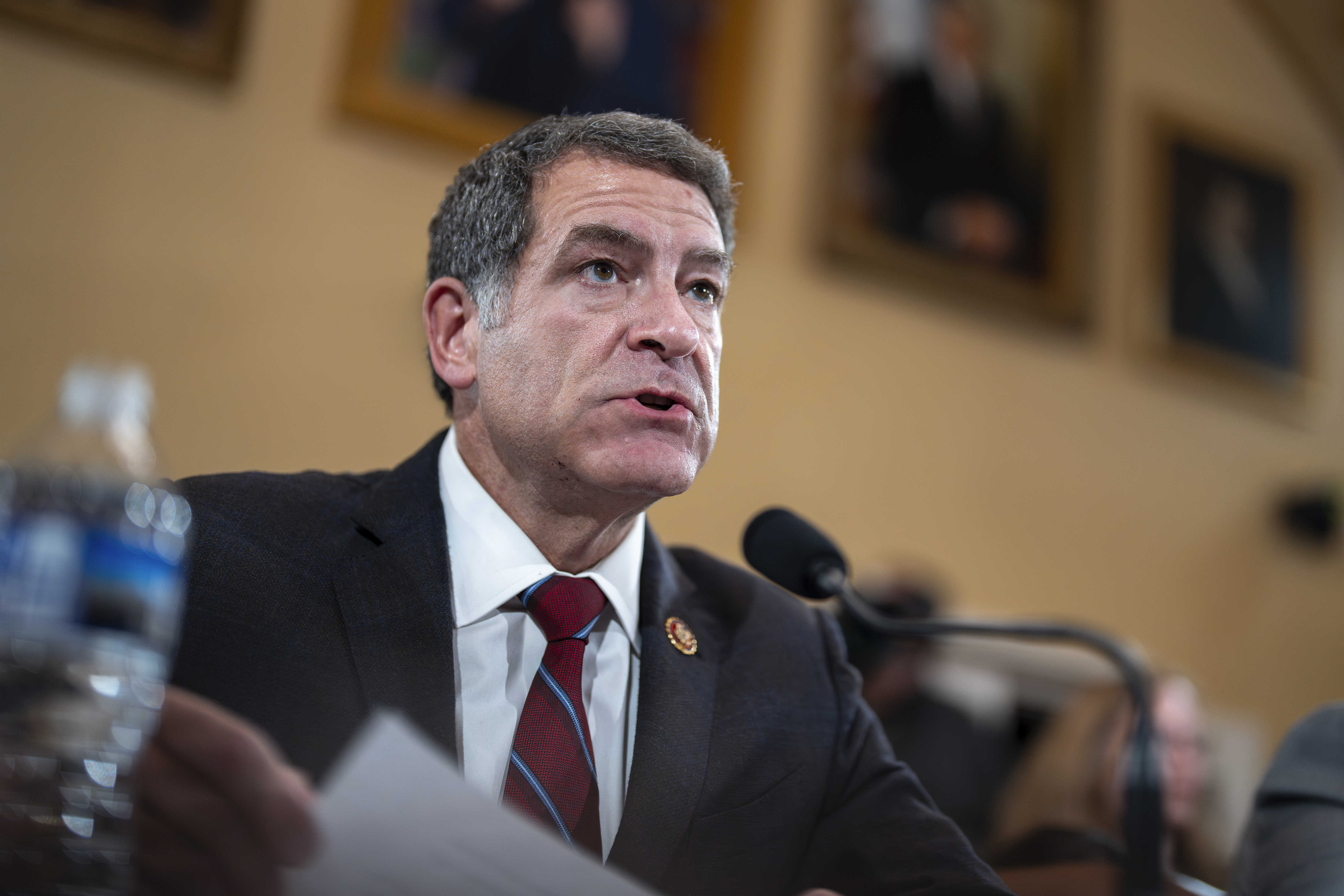
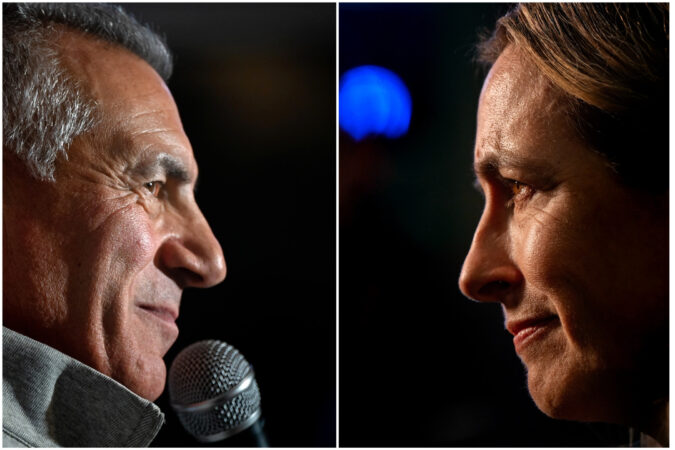
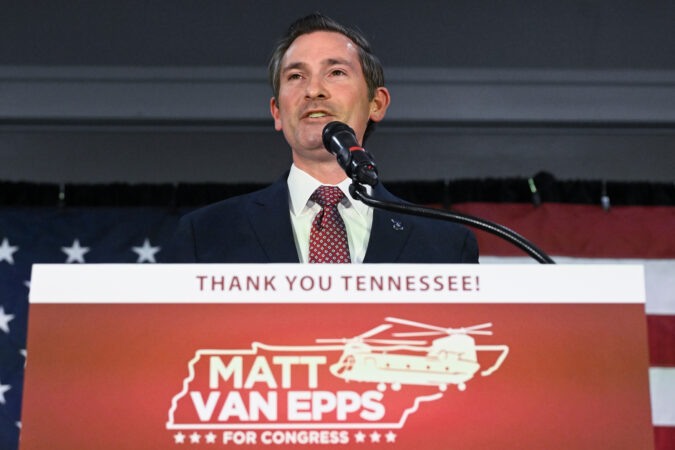
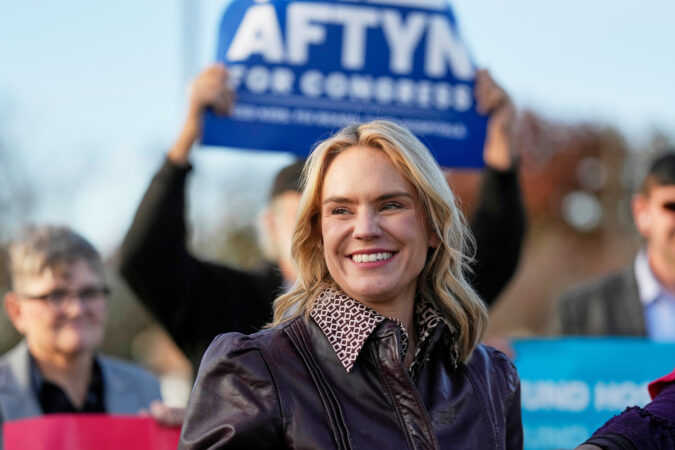
    Republican Matt Van Epps, a military veteran and former state general services commissioner, defeated Democratic state Rep. Aftyn Behn by 9 percentage points on Tuesday for the seat vacated by Republican Mark Green, who retired over the summer. Green had won reelection in 2024 by 21 percentage points.

    Special elections provide a limited window into the mood of voters and take place under far different conditions than regular campaign cycles. But some Republicans are acknowledging the warning signs, especially after Democrats had convincing victories in New Jersey, Virginia and elsewhere last month.

    Tennessee was the fifth House special election this year, and Democratic candidates have outperformed Kamala Harris’ showing in the 2024 presidential race by an average of 16 percentage points in the same districts.

    “We could have lost this district,” Sen. Ted Cruz (R., Texas) told Fox News after The Associated Press called the race for Van Epps. Cruz said his party must “set out the alarm bells” because next year is “going to be a turnout election and the left will show up.”

    Trump dismisses affordability concerns

    Although inflation has dropped since Democratic President Joe Biden was in office, Behn focused her campaign on the lingering concerns about prices.

    Trump has played down the affordability issue, saying during a Cabinet meeting Tuesday that it was “a con job” by his political opponents.

    “There’s this fake narrative that the Democrats talk about, affordability,” he said. ”They just say the word. It doesn’t mean anything to anybody, they just say it.”

    Roe viewed things differently. He said the Tennessee race had “better be a wake-up call that we’ve got to address the affordability problem, and the president denying that affordability is a political issue is not helpful.”

    Maintaining House control is crucial for Trump, who fears a repeat of his first term, when Democrats flipped the House and launched an impeachment inquiry. The Republican president has been leaning on GOP-led states to redraw congressional maps to improve the party’s chances.

    Trump campaigned for Van Epps, boosting him during the primary with an endorsement and participating in two tele-rallies during the general election.

    The Republican National Committee also deployed staffers and partnered with state officials to get voters to the polls. MAGA Inc., the super political action committee that had gone dark since supporting Trump in 2024, reemerged to back Van Epps with about $1.7 million.

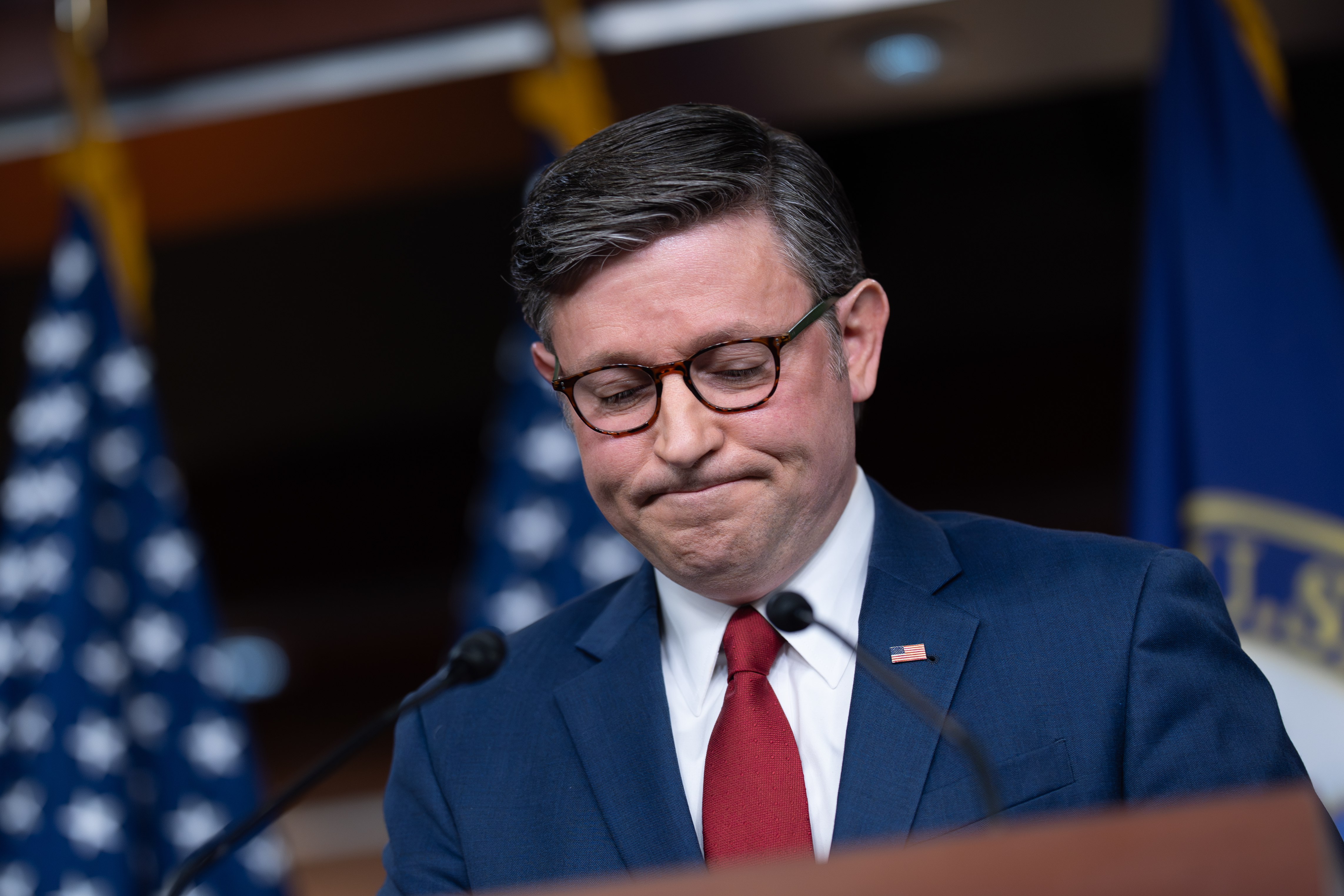
    House Speaker Mike Johnson (R., La.) visited the Nashville-area district on Monday.

    “When you’re in a deep red district, sometimes people assume that the Republican, the conservative will win,” he said Tuesday. “And you cannot assume that, because anything can happen.”

    Chip Saltsman, a political strategist and former Tennessee Republican Party chair, said his party had brought in its heaviest hitters simply because there were not other competing contests, not because Republicans feared a loss.

    “It’s the only election going on. Why wouldn’t the speaker come?” he asked. “There was one race, and you would expect everybody to do everything they could.”

    Democrats see promise despite loss

    The House Majority PAC put $1 million behind Behn. After she lost, Democratic national party chair said Behn’s performance was “a flashing warning sign for Republicans heading into the midterms” in 2026.

    Behn said her campaign had “inspired an entire country.”

    “Let’s keep going,” she urged voters after her loss. “We’re not done. Not now, not ever.”

    Although Democrats were optimistic, the result contributed to some murmuring within the party about the best path forward as it grasps for a path back to power in Washington.

    Among special elections this year, the shift in Behn’s direction was the second smallest, providing an opening for some factions that believe more moderate candidates would fare better.

    “Each time we nominate a far-left candidate in a swing district who declares themselves to be radical and alienates the voters in the middle who deliver majorities, we set back that cause,” said a statement from Lanae Erickson, a senior vice president at Third Way, a centrist Democrat think tank.

    Republicans tried to turn Behn’s own words against her in television ads, such as when she described herself as a “radical” or claimed to be “bullying” immigration agents and state police officers. Also cited were comments Behn made about Nashville years ago, when she said, “I hate this city,” and complained about bachelorette parties.

    Several high-profile progressive leaders, including U.S. Rep. Alexandria Ocasio-Cortez (D., N.Y.) had rallied for Behn in the campaign’s final days.
  • Republicans won in Trump-friendly Tennessee, despite swing toward Democrats. Here’s what it means for Pennsylvania and 2026.

    Republicans won in Trump-friendly Tennessee, despite swing toward Democrats. Here’s what it means for Pennsylvania and 2026.

    A special election in a safely Republican district in Tennessee became must-watch TV for political observers Tuesday night, the latest sign of anti-Trump sentiment ahead of the 2026 midterms.

    The Associated Press called the race in Tennessee’s 7th Congressional District for Republican Matt Van Epps, who was leading Democrat Aftyn Behn by about 9 percentage points with about 99% of the vote in. That was a steep decline from the 22-point win President Donald Trump recorded in the same district just last year, and from his 39-point victory in 2016.

    It was the latest sign of a Democratic blue wave forming, following Election Day sweeps in Virginia, New Jersey, and Virginia last month. It also was the third straight special election in a deeply Republican district where voters swung toward the Democratic candidate by double-digit margins.

    “Sometimes in politics, what is happening is clear and in front of you,” David Chalian, CNN’s Washington bureau chief and political director, said Tuesday night. “Democrats are significantly, significantly over-performing what Kamala Harris did last year vs. Donald Trump in all of these places.”

    While Democrats were not successful in stealing a Republican seat Tuesday night, there are about 100 districts Trump won by a slimmer margin that Republicans will now need to defend during the 2026 midterms, according to the New York Times. Democrats need to flip just a couple to take back the majority in the House for the remainder of Trump’s term.

    While Trump celebrated Van Epps’ victory on social media, Democratic National Committee chairman Ken Martin called the results “a flashing warning sign for Republicans heading into the midterms.”

    “What happened tonight in Tennessee makes it clear: Democrats are on offense and Republicans are on the ropes,” Martin said in a statement.

    What is the Republican majority in the House?

    Speaker of the House Mike Johnson (R., La.) is dealing with a shrinking majority.

    Van Epps’ victory means Republicans will hold 220 seats, while Democrats have 214 seats; 218 are needed to control the majority.

    Two seats remain vacant, and both are expected to go to Democrats, further reducing the already slim majority of House Speaker Mike Johnson (R., La.).

    The first is in Texas, where a runoff will be held Jan. 31 to fill the seat vacated by the death of Democratic Rep. Sylvester Turner. The race is down to two Democrats — Christian Menefee and Amanda Edwards.

    The second open seat is in New Jersey’s 11th Congressional District, which will hold a special election April 16 to fill the spot vacated by New Jersey Gov.-elect Mikie Sherrill. While the district was represented by a Republican as recently as 2018, it has been safely blue since maps were redrawn following the 2020 Census and is expected to remain in Democratic control.

    Not surprisingly, there are a lot of Democrats vying to replace Sherrill. At least 13 have entered the race or are about to do so, a lengthy list that includes former Rep. Tom Malinowski, progressive activist Analilia Mejia, Obama White House alum Cammie Croft, Essex County Commissioner Brendan Gill, and current Lt. Gov. Tahesha Way.

    Just one Republican has announced a bid to replace Sherrill — Randolph Mayor Joe Hathaway.

    Then there is the Georgia seat of GOP Rep. Marjorie Taylor Greene, which is set to become vacant following her resignation on Jan. 5. It is unclear when Georgia will hold a special election to replace Greene, but Gov. Brian Kemp is required to set a date within 10 days of her departure.

    The seat is considered safely Republican, but that is hardly definitive after what happened in Tennessee on Tuesday night.

    Why was there a special election in Tennessee?

    Former Rep. Mark Green (R., Tenn.) left Congress suddenly to launch his own business.

    Tuesday’s special election was held to replace the seat vacated by Republican Mark Green, who resigned in July to launch a new business called Prosimos.

    Green’s decision to leave Congress, and his role as the chair of the Homeland Security Committee, came in the middle of his fourth term.

    So what is Prosimos? According to Green, it’s a development and strategy firm designed to help U.S. businesses better compete against the influence of China. The company’s website says it provides “tailored strategies and expert guidance to navigate the complexities of global business development.”

    What does this mean for Republicans in Pennsylvania and New Jersey?

    Rep. Ryan Mackenzie (R., Pa.) is one of four Pa. Republicans facing a tough reelection battle.

    If there has been a trend since Trump’s inauguration, it’s that voters are keen on punishing Republicans at the ballot box.

    In four previous special elections for House seats held in 2025, Democrats significantly outperformed Harris’ margins in 2024. That was also true of Election Day victories in Pennsylvania, New Jersey, Virginia, and Georgia, where two Republicans were booted off the state’s Public Service Commission.

    Closer to home, there are five House seats — four in Pennsylvania, one in New Jersey — that Democrats hope to flip during the 2026 midterms, potentially deciding the balance of power during the final two years of Trump’s presidency.

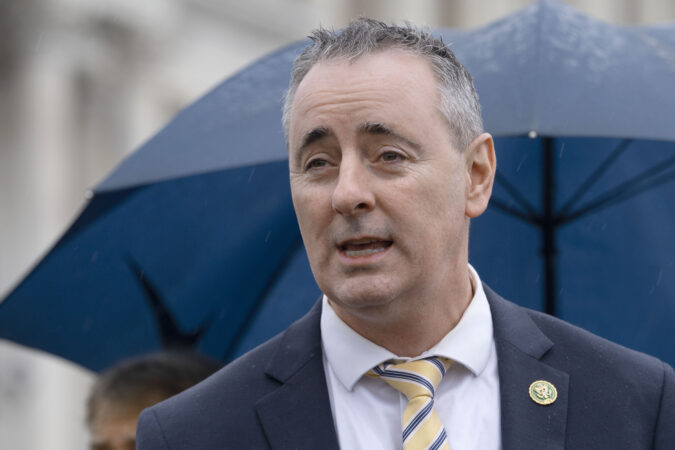
    • PA-01: In Bucks County, Republican Rep. Brian Fitzpatrick is used to close races, but next year could be particularly challenging for the five-term moderate. In addition to nationwide trends, Democrats won each countywide office by around 10 percentage points last month, and Bucks County District Attorney Joe Khan is the first member of their party ever elected to the office.
    • PA-07: In the Lehigh Valley, Republican Rep. Ryan Mackenzie is the biggest target for Democrats after ousting Susan Wild by just 1 percentage point in 2024. Cook Political Report lists the district as a true “toss up” and five Democrats have already entered the race.
    • PA-08: Farther north, in Scranton and Wilkes-Barre, Republican Rep. Rob Bresnahan is also looking to win reelection to a seat he flipped by just 1 percentage point in 2024. The district leans Republican — Trump won it by nearly 9 percentage points — and so far Bresnahan’s only challenger is Scranton Mayor Paige Cognetti.
    • PA-10: Another of Cook’s “toss up” districts. Republican Rep. Scott Perry, an outspoken Trump supporter who supported the president’s efforts to overturn the 2020 election, is seeking his eighth term. Perry narrowly won reelection in 2024, defeating former news anchor Janelle Stelson by less than 1 percentage point. She is running against Perry again in 2026 and has already received an endorsement from Gov. Josh Shapiro.
    • NJ-07: The northwestern New Jersey district is currently represented by Republican Tom Kean Jr., a moderate who won reelection by about 5 percentage points in 2024. Cook lists Kean’s district as a “toss up,” and he faces a crowded field of Democrats in what would otherwise be a safely Republican seat.
  • Citing extraordinary circumstances, Chester County will count the vast majority of provisional ballots cast after Election Day chaos

    Citing extraordinary circumstances, Chester County will count the vast majority of provisional ballots cast after Election Day chaos

    The Chester County Board of Elections rejected Republican challenges to provisional ballots Monday as the board prepares to launch an investigation into a poll book error that forced thousands of independent and third-party voters to cast provisional ballots during this month’s election.

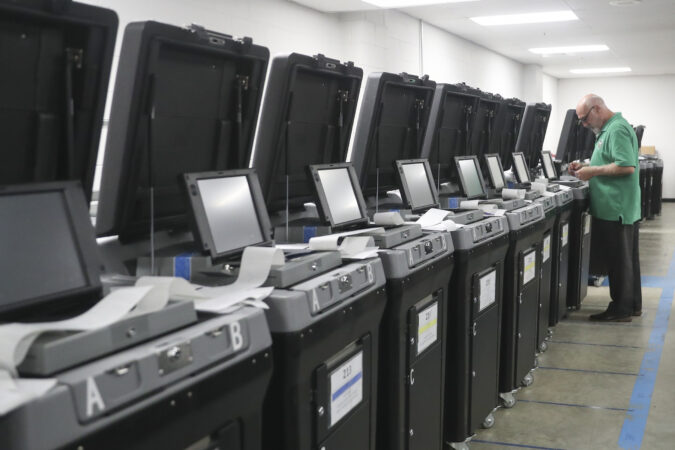
    In a nearly six-hour meeting, the Democratic-led board heard from dozens of voters and poll workers who described the chaos they endured on Nov. 4 during the high-turnout municipal election. The election resulted in more than 12,000 provisional ballots being cast primarily by independent and third-party voters blocked from voting on machines — an unusually high amount.

    The election board, which is made up of the county’s commissioners, voted to count the vast majority of the provisional ballots, arguing that the county’s mistake allowed the board to accept ballots that would be rejected under normal circumstances.

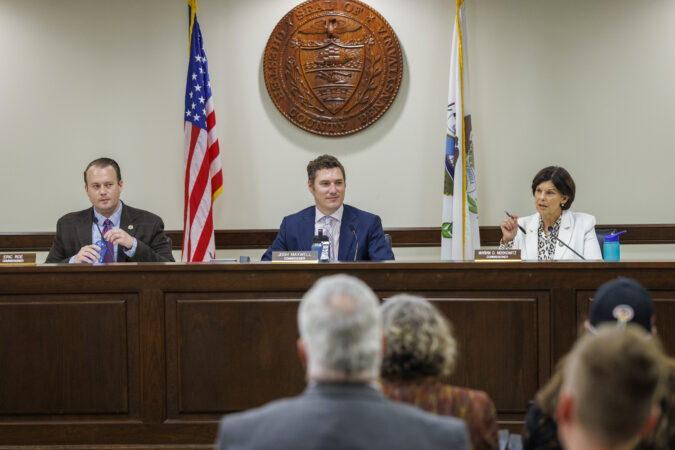
    “People’s ballots deserve to be counted in this circumstance,” said Josh Maxwell, a Democrat who chairs the three-member board. “If we make a mistake, we have to remedy it.”

    The error was caused when officials mistakenly sent poll books to precincts that did not include the names of independent and third-party voters. Until supplemental poll books were provided to precincts late in the day, those voters were asked to cast a provisional ballot.

    Provisional ballots are cast when voters are unable to vote by machine on Election Day, most often because they already requested a mail ballot or are at the wrong polling place.

    The ballots require an additional level of review before they are counted. Provisional ballots are often more likely to be rejected than mail ballots or ballots cast on voting machines in person because voters are less familiar with the voting method and are required to place ballots in a secrecy envelope and sign in two places.

    The Chester County Republican Committee objected to the counting of more than 1,000 ballots ahead of Monday’s meeting. That number whittled down as the committee withdrew objections to ballots where the error was likely caused by election workers. But the GOP committee’s attorney argued that it would be illegal to count ballots missing the first required voter signature or a secrecy envelope.

    By allowing the votes to count, she argued, the board was setting a dangerous precedent.

    “These votes are not going to change the outcome of elections, but what they do is they change the way the law is interpreted. They give someone the ability to bypass the safeguards that are in the law,” said Dolores Troiani, an attorney for the county GOP.

    The ballots, the party argued, needed to be rejected to preserve voter confidence in county elections. In a letter to the commissioners, the party argued that voter confidence had dropped after the poll book error, the office’s failure to include a county row office on the primary ballot, and high turnover in the county election office.

    In response, the letter said, county officials should not certify the November election.

    Democratic officials rejected all the GOP challenges.

    “We should not, especially when it is of no fault of their own, be disenfranchising voters,” said Democratic Commissioner Marian Moskowitz.

    Republican Commissioner Eric Roe voted against counting the ballots, arguing that there was no legal basis to do so.

    “If the legislature wanted to make exceptions, it should have and would have said so,” Roe said. “I will be relying on what the law says and not what I wish it says.”

    Voters on Monday voiced frustration and confusion at having learned their ballot, which they were told would count, would be rejected for an error they were not aware of at the polling place. Several were angry that the county GOP asked for eligible voters’ ballots to be rejected.

    Edith Jones, a poll worker, approached the podium nearly in tears Monday to tell commissioners that she worried she’d caused more than a dozen voters to have their ballots thrown out. As the day began, she said, she directed voters to fill out their provisional ballots but forgot to provide them with the required secrecy envelope.

    “I gave them instructions, but when somebody in authority tells you what to do, who’s going to read all those words on the paper?” Jones said.

    Throughout testimony, voters and the Republican Party questioned how the error could occur and demanded remedy moving forward.

    “We have no guarantee they’ll fix it,” Troiani said in an interview after the meeting. However, the attorney said the party would not appeal the board’s decisions.

    Last week, the county announced plans to hire an outside firm to investigate the poll book error.

    This suburban content is produced with support from the Leslie Miller and Richard Worley Foundation and The Lenfest Institute for Journalism. Editorial content is created independently of the project donors. Gifts to support The Inquirer’s high-impact journalism can be made at inquirer.com/donate. A list of Lenfest Institute donors can be found at lenfestinstitute.org/supporters.

  • After big wins Tuesday, Democrats think they can oust Brian Fitzpatrick. But the Bucks Republican is resilient.

    After big wins Tuesday, Democrats think they can oust Brian Fitzpatrick. But the Bucks Republican is resilient.

    Should last week’s election results make Brian Fitzpatrick nervous?

    Bucks County Democrats think so.

    The Republican lawmaker has been like Teflon in the 1st Congressional District, which includes all of Bucks County and a sliver of Montgomery County. He persistently outperforms the rest of his party and has survived blue wave after blue wave. First elected in 2016, he has remained the last Republican representing the Philadelphia suburbs in the U.S. House.

    But Democrats pulled something off this year that they hadn’t done in recent memory. They won each countywide office by around 10 percentage points — the largest win margin in a decade — and for the first time installed a Democrat, Joe Khan, as the county’s next top prosecutor.

    Now they are looking to next year, hopeful that County Commissioner Bob Harvie, the likely Democratic nominee, succeeds where Fitzpatrick’s past challengers have failed.

    “This year was unprecedented, and sitting here a year before the midterm, you have to believe that next year is going to be unprecedented as well,” State Sen. Steve Santarsiero, who is also the county party’s chair, said Wednesday.

    Eli Cousin, a spokesperson for the Democratic Congressional Campaign Committee, predicted a “perfect storm brewing for Democrats” to beat Fitzpatrick. “He and Trump’s Republican Party are deeply underwater with Bucks County voters; he has failed to do anything to address rising costs, and we will have a political juggernaut in Gov. Josh Shapiro at the top of the ticket,” Cousin said.

    There are several reasons Democrats may be exhibiting some premature confidence: Despite a spike in turnout for an off-year election, far fewer voters turn out in such elections than do in midterms. Fitzpatrick is extremely well-known in Bucks, where his late brother served before he was elected to the seat. He has won each of his last three elections by double digits.

    Just last year, President Donald Trump narrowly won Bucks County, becoming the first Republican presidential candidate to do so since the 1980s, and Republicans overtook Democrats in voter registrations last year.

    But Tuesday was a sizable pendulum swing in the bellwether. Some of the communities, like Bensalem, that drove Trump’s victory flipped back to blue.

    The last time Democrats had won a sheriff’s race in the county was 2017, a year after Trump was elected the first time. That year, Democrats won by smaller margins, and a Republican incumbent easily won reelection as district attorney. The following year, Fitzpatrick came the closest he has yet to losing a race, but still won his seat by 3 percentage points.

    This year’s landslide, Democrats say, is a warning sign.

    “There were Democratic surges in every place that there’s a competitive congressional seat, and that should be scaring the s— out of national Republicans,” said Democratic strategist Brendan McPhilips, who managed Democratic Sen. John Fetterman’s campaign in the state and worked on both of the last Democratic presidential campaigns here.

    “The Bucks County seat has always been the toughest, but it’s certainly on the table, and there’s a lot there for Bob Harvie to harness and take advantage of.”

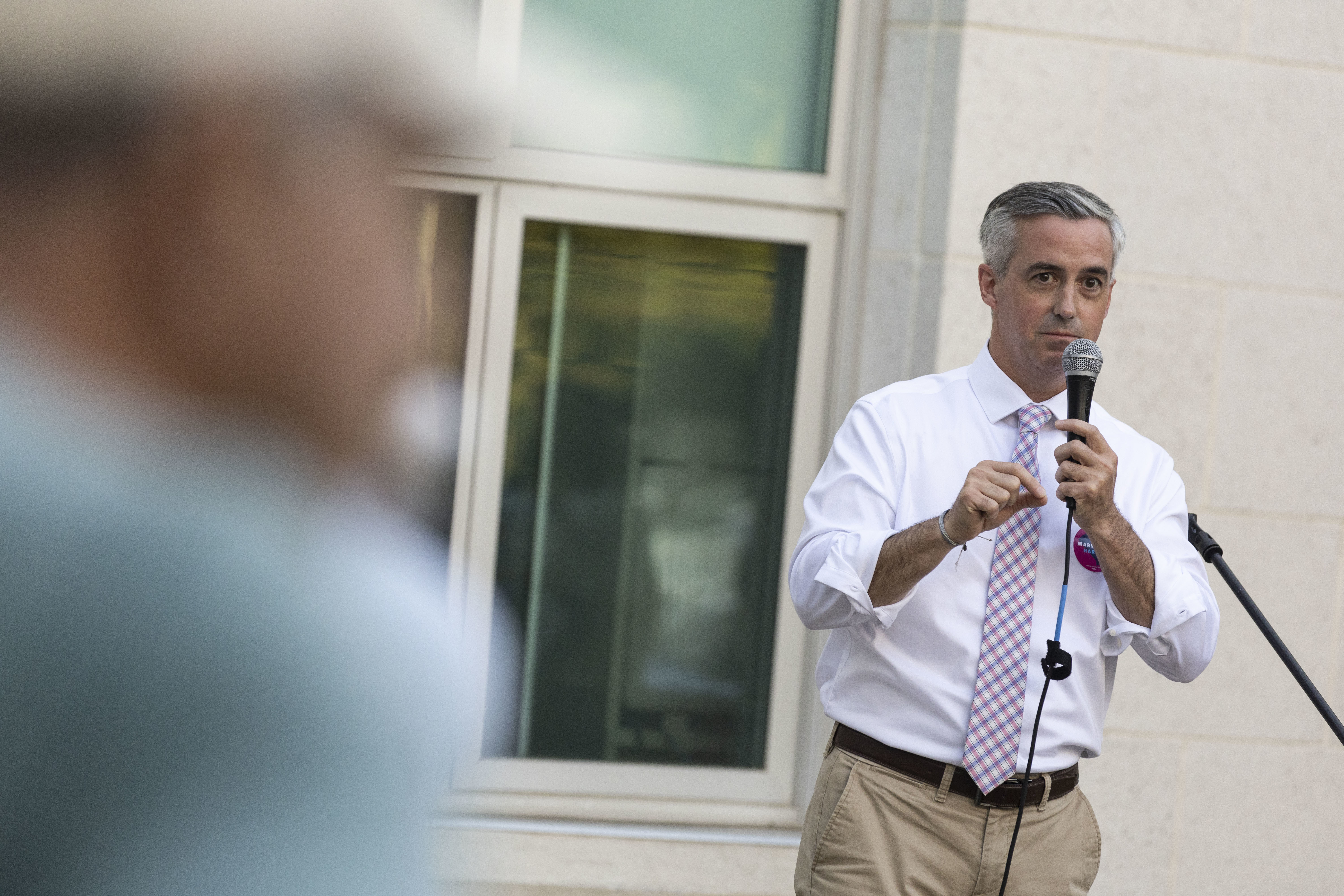
    Bucks County Democratic Commissioner Bob Harvie speaks during an Oct. 5 rally outside the Middletown Township Police Department and Administrative Offices in Langhorne.

    Harvie, a high school teacher-turned-politician, leapt on the results of the election hours after races were called, putting out a statement saying, “There is undeniable hunger for change in Bucks County.”

    “The mood of the country certainly is different,” Harvie said in an interview with The Inquirer on Thursday. “What you’re seeing is definitely a referendum.”

    Lack of GOP concern

    But Republicans don’t appear worried.

    Jim Worthington, a Trump megadonor who is deeply involved in Bucks County politics, attributes GOP losses this year to a failure in mail and in-person turnout. Fitzpatrick, he said, has a track record of running robust mail voting campaigns and separating himself from the county party apparatus.

    “He’s not vulnerable,” Worthington said. “No matter who they run against him, they’re going to have their hands full.”

    Heather Roberts, a spokesperson for Fitzpatrick’s campaign, noted that the lawmaker won his last election by 13 points with strong support from independent voters in 2024 — a year after Democrats performed well in the county in another off-year election. She dismissed the notion that Harvie would present a serious challenge, contending the commissioner “has no money and no message” for his campaign.

    Fitzpatrick is also a prolific fundraiser. He brought in $886,049 last quarter, a large amount even for an incumbent, leading Harvie, who raised $217,745.

    “Bob Harvie’s not going to win this race,” said Chris Pack, spokesperson for the Defending America PAC, which is supporting Fitzpatrick. “He has no money. He’s had two dismal fundraising quarters in a row. That’s problematic.”

    Pack noted Harvie’s own internal poll, reviewed by The Inquirer, showed 57% of voters were unsure how they felt about him.

    “An off-off-year election is not the same as a midterm election,” Pack said, adding he thinks Fitzpatrick’s ranking as the most bipartisan member of Congress will continue to serve him well in Bucks County.

    “He’s obviously had well-documented breaks on policy with the Republican caucus in D.C., so for Bob Harvie to try to say Brian Fitzpatrick is super far right, no one’s gonna buy it,” Pack said. “They haven’t bought it every single election.”

    On fundraising, Harvie said he had brought in big fundraising hauls for both of his commissioner races, and said he would have the money he needed to compete.

    Of the four GOP-held House districts Democrats are targeting next year in the state, Fitzpatrick’s seat is by far the safest. That raises the question: How much money and attention are Democrats willing to invest in Pennsylvania?

    “Who’s the most vulnerable?” asked Chris Nicholas, a GOP consultant who grew up in Bucks County. The other three — U.S. Rep. Scott Perry and freshman U.S. Reps. Rob Bresnahan, in the Northeast, and Ryan Mackenzie, in the Lehigh Valley — won by extremely narrow margins last year. “If you’re ranking the four races, you have Rob Bresnahan at the top and Fitzpatrick at the bottom,” Nicholas said.

    National Democrats seldom invest as much to try to beat Fitzpatrick as they say they will, Nicholas said. And he pointed to 2018, a huge year for Democrats, when they had a candidate in Scott Wallace who was very well-funded, albeit far less known than Harvie, and still came up short.

    Democrats see Harvie as the best shot they have had — a twice-elected commissioner, with name ID from Lower Bucks County, home to many of the district’s swing voters. And the 1st District is one of just three in the country that is held by a Republican member of Congress where Vice President Kamala Harris won last year.

    And then there’s Shapiro, who Democrats think will give a boost to candidates like Harvie as he runs for reelection next year. Shapiro won the district by 20 points in 2022.

    Following the playbook used by successful candidates this year, Democrats are likely to argue to voters that Fitzpatrick has done little to push back on Trump — while placing cost-of-living concerns at the feet of the Republican Party.

    “A lot of people are, you know, upset with where we are as a nation,” Harvie said. “They grew up expecting that if you worked hard and played by the rules, you’d be able to have all the things you needed and have a good life. And that’s not happening for them.”

    The Trump effect

    Democrats won races in Bucks County, and across the country, this year by tying their opponents to Trump — a tactic that was especially effective in ousting Republican Sheriff Fred Harran, who partnered his office with U.S. Immigration and Customs Enforcement. In recent cycles, that strategy has not worked against Fitzpatrick.

    “The big thing Democrats throw against Republicans is you’re part and parcel of Trump and MAGA, and Fitzpatrick voted against Trump,” Nicholas said.

    Over nearly 10 years in Congress, Fitzpatrick has been a rare Republican who pushes back on Trump, though often subtly. Fitzpatrick, who cochairs the bipartisan Problem Solvers Caucus, was the lone Pennsylvania Republican to confirm former President Joe Biden’s electoral victory in 2020. A former FBI agent who spent a stint stationed in Ukraine, he is among the strongest voices of support for Ukraine in Congress, consistently pushing the administration to do more to aid the country as it resists a yearslong Russian invasion.

    Fitzpatrick was also one of just two House Republicans to vote against Trump’s signature domestic policy package, which passed in July. He voted for an earlier version that passed the House by just one vote, which Democrats often bring up to claim Fitzpatrick defies his party only when it has no detrimental impact.

    “He’s good at principled stances that ultimately do nothing,” said Tim Persico, an adviser with the Harvie campaign. “That is what has allowed him to defy gravity in the previous cycles. … Now the economy is doing badly. … People feel worse about everything, and Fitzpatrick isn’t doing anything to help with that. I think it makes it harder to defy gravity.”

    Trump has endorsed every Republican running for reelection in Pennsylvania next year except Fitzpatrick. While the Bucks County lawmaker has avoided direct criticism of the president, in an appearance in Pittsburgh over the summer, Trump characterized the “no” vote on the domestic bill as a betrayal.

    Fitzpatrick has faced more conservative primary challengers in the past, but no names have surfaced so far this cycle, a sign that even the more MAGA-aligned may see him as their best chance to hold onto the purple district.

    Keeping his distance from Trump, and limiting Democrats’ opportunities to tie the two together, may remain Fitzpatrick’s best path forward.

    “Anybody who wants to align themselves with an agenda of chaos and corruption and cruelty ought to be worried,” said Khan, Bucks County’s new district attorney-elect.

    This suburban content is produced with support from the Leslie Miller and Richard Worley Foundation and The Lenfest Institute for Journalism. Editorial content is created independently of the project donors. Gifts to support The Inquirer’s high-impact journalism can be made at inquirer.com/donate. A list of Lenfest Institute donors can be found at lenfestinstitute.org/supporters.

  • Chester County officials promise to investigate poll book omissions, after they’ve finished counting the votes

    Chester County officials promise to investigate poll book omissions, after they’ve finished counting the votes

    The Chester County Board of Commissioners apologized to voters Wednesday after an error forced independent and third-party voters to cast provisional ballots through much of Election Day.

    Speaking at their twice-monthly board meeting, Democratic Commissioners Josh Maxwell and Marian Moskowitz and Republican Commissioner Eric Roe promised to determine how the error was made and ensure it doesn’t happen again.

    “Know that we will look into this. We need to finish the election first,” Maxwell said.

    Election officials in Chester County sent poll books to precincts that included only the names of registered Republicans and Democrats, omitting all other voters.

    The error meant poll workers had no way to ensure voters not affiliated with a major party were eligible when they arrived to vote Tuesday morning. As a result, those voters cast provisional ballots until supplemental poll books were delivered to each precinct by around 3:45 in the afternoon.

    Provisional ballots will be counted, but they are counted slower as election officials must first verify they were cast by an eligible voter who had not already voted.

    The county left polling places open for an additional two hours Tuesday, allowing voters who arrived after 8 p.m. to cast provisional ballots. About 75,000 voters in Chester County are not registered with either party. The error likely affected far fewer people, as many voters had cast mail ballots and odd-year elections tend to have lower turnout.

    To get through the day, Maxwell said, Philadelphia’s election office delivered a “truckload” of provisional ballots to the suburban county.

    While some online have called for the resignation or firing of Chester County’s director of voting services, Karen Barsoum, Maxwell said discussions of personnel matters were premature.

    “We have a lot of very good people who are very well-intentioned who set a very high standard for themselves,” Maxwell said, adding that the county had had to increase security for some staff members in response to online threats.

    Roe and Moskowitz each thanked poll workers who managed a chaotic, and longer than normal, day at the polls.

    County officials said they would work to better understand how the error occurred after they have finished tallying votes and certifying the election.

    “We will be working on it,” Roe said. “We will get to the bottom of it. Accountability will come.”

    This suburban content is produced with support from the Leslie Miller and Richard Worley Foundation and The Lenfest Institute for Journalism. Editorial content is created independently of the project donors. Gifts to support The Inquirer’s high-impact journalism can be made at inquirer.com/donate. A list of Lenfest Institute donors can be found at lenfestinstitute.org/supporters.

  • Democrats sweep Delaware County Council election centered on rising property taxes

    Democrats sweep Delaware County Council election centered on rising property taxes

    Democrats swept Delaware County Council elections for the fifth consecutive election, further solidifying their dominance in the former Republican stronghold in the suburbs.

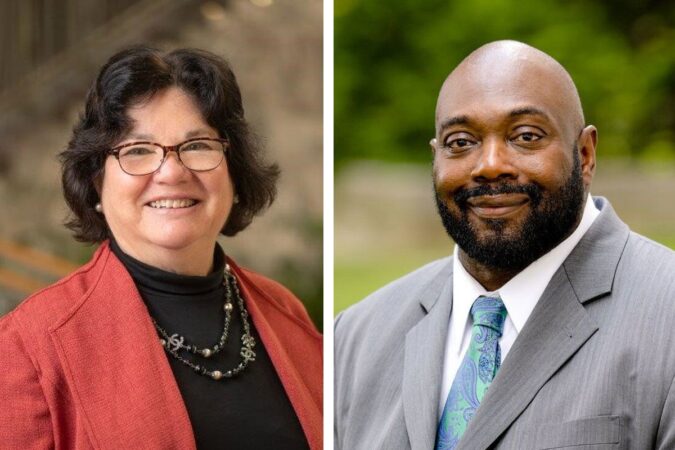
    Council member Richard Womack won a second term Tuesday, while his running mate, County Controller Joanne Phillips, was elected to her first term on the council. The Democrats overcame a Republican campaign focused on rising taxes under the council’s current leadership.

    In statements early Wednesday morning, the Democrats thanked their supporters.

    “I will continue to work hard and fight for the residents in our County. I look forward to working together with all parties to make Delaware County one of the strongest counties in the Commonwealth,” Womack said in a statement.

    With all but one precinct reporting Wednesday, Republican challengers Brian Burke and Liz Piazza each trailed Womack and Phillips by roughly 50,000 votes.

    In a statement Wednesday, Frank Agovino, the chair of the Delaware County GOP, said it appeared local issues were a “secondary concern” for Democrats this year.

    “The State wide retention initiative was uncharted waters and it feels as though Dem turnout was positively impacted. Additionally, the Unrealistic disdain for the President from the majority of Democrats was also an undeniable factor,” Agovino wrote.

    Democrats have held all five seats on the Delaware County Council since 2020, when the party took control of the county for the first time since the Civil War. Democrats flipped the county as part of a national trend of suburbs shifting left, which was accelerated during President Donald Trump’s first term in office. With Tuesday’s results, they will keep their supermajority for the next two years.

    In the years since Democrats took control in Delaware County, they say they have worked to enhance county services and repair infrastructure. That has included establishing a health department — Delaware County was the largest county in Pennsylvania without one at the onset of the COVID-19 pandemic — and de-privatizing the county prison following a series of scandals.

    Last year, the county increased property taxes 23%, citing the loss of federal pandemic relief dollars and inflation driving up salaries. Republicans made that increase the base of their campaign, telling voters that the Democrats were overspending and that more tax increases were on the way.

    Republicans wanted voters to give the GOP a voice on the board, even though the party wouldn’t have the majority, to push back on budgetary decisions and hold the Democrats accountable.

    But in the heavily Democratic county, that message was not enough to sway the independent and Democratic voters Republicans needed to win seats. Instead, voters demonstrated continued trust in the current county leadership.

    “I truly respect Richard and Joanne as members of Council and hope they will listen to the voices of our residents and help bring to light some of their concerns,” Piazza said in a statement Wednesday.

    On Election Day, Donald and Esther Newton, a Chester couple who have been married for more than 55 years, said they believed it was about time their city received more care and investment through property taxes.

    “Our infrastructure needs to be fixed, and that takes money,” Esther Newton said.

    Democrats swept all countywide races Tuesday. District Attorney Jack Stollsteimer, who was among the first Democrats to win countywide office in Delaware County, won a seat on Delaware County Court. He will have to step down from his current role to take the seat.

    Staff writer Nate File contributed to this article.

    This suburban content is produced with support from the Leslie Miller and Richard Worley Foundation and The Lenfest Institute for Journalism. Editorial content is created independently of the project donors. Gifts to support The Inquirer’s high-impact journalism can be made at inquirer.com/donate. A list of Lenfest Institute donors can be found at lenfestinstitute.org/supporters.

  • Downingtown elects Erica Deuso, Pennsylvania’s first openly transgender mayor

    Downingtown elects Erica Deuso, Pennsylvania’s first openly transgender mayor

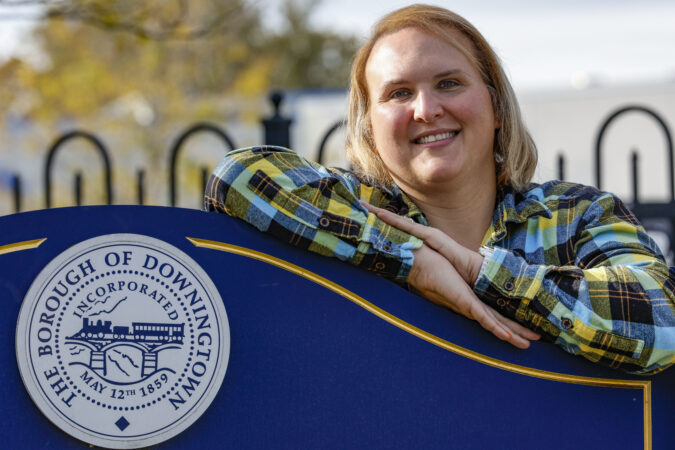
    Erica Deuso will be Pennsylvanias first openly transgender mayor. She won Tuesday’s contest to lead Downingtown after a campaign focused on bread-and-butter local issues in the face of attacks to her identity.

    The longtime Democratic advocate who works in management at a pharmaceutical company earned 64% of the vote as of Wednesday morning defeating Republican Rich Bryant who had 35% of the vote to serve as the next mayor of Downingtown, a Chester County borough of roughly 8,000 people.

    “Voters chose hope, decency, and a community where every neighbor matters,” Deuso said in a statement at 1:30 a.m. Wednesday. “I am honored to be elected as Pennsylvania’s first openly transgender mayor. I carry that responsibility with care and with purpose.”

    Deuso joins a small but growing rank of transgender officials in Pennsylvania and nationwide. There are 52 out transgender elected officials across the United States and three in Pennsylvania, all who govern at the local level , according to the Victory Institute, the research arm of the Victory Fund, which supports LGBTQ+ candidates and backed Deuso.

    While her gender identity attracted attention, and online vitriol, Deuso’s campaign didn’t dwell on it. Instead she prioritized public safety, sustainable growth and community in the historic borough now home to Victory Brewing.

    She ran with the support of the borough’s last two mayors, Democrats Phil Dague and County Commissioner Josh Maxwell.

    Bryant, a retired cybersecurity expert, argued he was better experienced for the job, which primarily leads the borough police department. But Bryant faced accusations of bigotry as Deuso posted screenshots online of her opponent making misogynistic and transphobic remarks on X, (Bryant said 90% of the posts were AI-generated, but offered no proof.)

    In a statement, Bryant congratulated Deuso and pledged to continue working to serve the community.

    “To those who voted differently, I respect your decision and share your hope for a stronger, safer, and more united Downingtown. I will continue to serve, to listen, and to advocate for responsible growth, fiscal transparency, and accountable local leadership,” he said.

    This suburban content is produced with support from the Leslie Miller and Richard Worley Foundation and The Lenfest Institute for Journalism. Editorial content is created independently of the project donors. Gifts to support The Inquirer’s high-impact journalism can be made at inquirer.com/donate. A list of Lenfest Institute donors can be found at lenfestinstitute.org/supporters.

  • Democrats sweep Bucks County law enforcement races, ousting a sheriff who sought controversial ICE partnership

    Democrats sweep Bucks County law enforcement races, ousting a sheriff who sought controversial ICE partnership

    Democrats swept two law enforcement races in Bucks County, ousting the incumbents and signaling the swing county has soured on President Donald Trump just a year after voting for him.

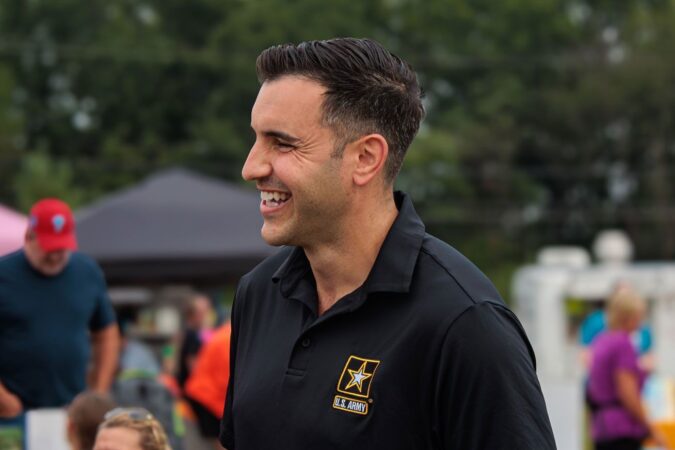
    Democrat Danny Ceisler, an Army veteran who held a public safety role in Gov. Josh Shapiro’s administration, led Republican Sheriff Fred Harran by 12 percentage points with all precincts reporting Wednesday morning. The sheriff race centered on Harran’s controversial decision to partner his agency with ICE as Trump ramps up immigration enforcement nationwide.

    And former Bucks County Solicitor Joe Khan led Republican District Attorney Jen Schorn by eight percentage points. Democrats believe Khan is the first member of their party to ever be elected to the office.

    Bucks County Democrats declared victory just after midnight Wednesday morning — sweeping every countywide race. The victories came in what appeared to be a blue wave election as voters rejected Republican candidates in Pennsylvania, New Jersey, and Virginia.

    “What’s going on with our federal government is not normal, and voters saw that creeping into local offices, and they overwhelmingly rejected it,” Ceisler said Wednesday. “Bucks County doesn’t let extremism come inside.”

    The hotly contested Bucks County races centered on some of the most contentious issues in national politics — Trump, crime, and immigration. Democrats sought to paint the incumbents as Trumpian ideologues, while Republicans warned voters of an influx of “Philly crime” if Democrats took office, even as the violent crime rate in the city has dropped from its pandemic peak.

    Voters opted for a change, delivering both offices to Democrats and, as result, spelling the end to a controversial partnership between the sheriff’s office and U.S. Immigration and Customs Enforcement.

    Bucks was the only county in the Philadelphia area to go for Trump last year and will be a key battleground in 2026 when Shapiro runs for reelection. Tuesday’s wins will give Democrats momentum going into the midterms.

    Democrats, Khan said, had to work to prove to voters they could be trusted with public safety. They were aided by a favorable dynamic as voters rejected Trumpism.

    “It was a campaign not about attacking somebody else but, really, making really clear that we deserve better than what we’ve got,” Khan said.

    Voters at the polls persistently expressed frustration with Trump, and a sense that anyone from his party should not be trusted in office.

    “They’re subject to his control, regardless of how they feel on issues,” said Stephanie Kraft of Doylestown. “And that affects everything, from our local courts on up to the higher courts in the state.”

    Harran attributed the GOP losses to Democratic enthusiasm for retaining three left-leaning state Supreme Court justices.

    “We woke a sleeping giant. When I say ‘we,’ I don’t mean me; I mean the Republican Party at the state level,” Harran said Wednesday.

    “I also worry for Bucks County,” he added. “We’re going to have Philadelphia policies and politics in Bucks County, and that’s extremely dangerous.”

    Democrats control the Bucks County Board of Commissioners, but Trump narrowly won Bucks last year, marking the first time the purple county had gone for a Republican in the presidential race since the 1980s. There are more registered Republicans than Democrats in Bucks County, but Democrats hoped the president’s low approval ratings, and Harran’s decision to partner with ICE, would drive angry voters to the polls in high numbers.

    Joe Khan

    The effort succeeded, indicating that Bucks voters are already disenchanted with the president they voted for just a year ago. The vote may set off alarm bells among Republicans as they prepare for next year’s election, when Republican Treasurer Stacy Garrity seeks to oust Shapiro and Republican U.S. Rep. Brian Fitzpatrick stands for reelection.

    The Democratic victory is “on everything that Trump is doing to undermine the institutions of democracy, but it’s also on Trump’s failure to really reverse inflation,” said State Sen. Steve Santarsiero, the chair of the Bucks County Democratic Party.

    Even so, for several voters, Harran’s partnership with ICE was the final straw.

    Jill Johnson worried it would result in the targeting of Latino citizens, including her half-Mexican son, who is away at college.

    “My biggest fear is that someone in a mask is going to come up and grab him because they think he’s here illegally,” Johnson said. “It’s scary. These are law-abiding people who have done nothing wrong.”

    The partnership, which recently became active after months of planning, provoked backlash, including a lawsuit, public demonstrations outside the courthouse, and a repudiation by the Democratic-led board of commissioners.

    Ceisler said Wednesday that he will issue a moratorium barring deputies’ cooperation with ICE on his first day in office. From there, he said, he will figure out how to disentangle the sheriff’s office from the agreement signed by his predecessor.

    For his part, Harran said Wednesday that Ceisler will “have to answer for a person who becomes victimized by an individual that should have been deported. And he’ll have to sleep with that, and it’ll be on his head, not mine.”

    Officials with U.S. Immigration and Customs Enforcement declined to comment.

    Harran, an outspoken Republican who endorsed Trump last year and frequently clashes with the Democratic commissioners, was elected sheriff in 2021 after more than a decade leading Bensalem’s police department.

    The Republican has expanded the role of the sheriff’s department, adding a K-9 unit and partnering with immigration officials, but faced criticism that he was failing to complete the basic duties of his job, such as executing warrants and protecting the courthouse.

    Ceisler advocated taking politics out of the office, saying he would focus on domestic violence and pledging to end the partnership with ICE. He argued his experience in the Army and in a public safety leadership post under Shapiro prepared him to serve as sheriff — though Harran argued Ceisler would be unprepared for the job, having never worked in a sheriff’s office or police department.

    “Being the sheriff isn’t on-the-job training,” Harran said at a Bristol polling place Tuesday. “You need knowledge and experience.”

    Ceisler said he had spoken to Harran after the results came in and the incumbent promised to assist with a smooth transition.

    Schorn, a veteran Bucks County prosecutor, lost in her bid for a full term after being appointed district attorney last year when her predecessor became a judge.

    She had been an assistant district attorney in the county since 1999, prosecuting some of the county’s most high-profile cases. When she became district attorney, Schorn started a task force in the county to investigate internet crimes against children.

    Khan, a former county solicitor and federal prosecutor, argued Schorn ran the office under “Trump’s blueprint” and criticized her decisions not to recuse herself when a Republican committeeperson was charged with voter fraud and not to prosecute alleged child abuse at Jamison Elementary School.

    Schorn has said she was unable to discuss the details of the Jamison Elementary School case due to rules governing prosecutors, but Khan argued her explanations were insufficient as parents sought answers.

    Meanwhile, Schorn accused her opponent, who had unsuccessfully run for Philadelphia district attorney and Pennsylvania attorney general, of playing politics when he understood the rules prosecutors were bound by.

    Schorn performed slightly better than her GOP counterparts in Bucks County on Tuesday. But, while many voters said they had no issue with Schorn’s policies, her political party was a turnoff.

    “I just feel the Democrats would be better right now; I’m down on all Republicans,” said Marybeth Vinkler, a Doylestown voter who said she had no problems with how Schorn had run the district attorney’s office. “Everything happening in D.C. is trickling down around us.”

    Schorn did not immediately comment on the results Wednesday.

    Jim Worthington, who has run pro-Trump organizations in Bucks County, said Republicans failed to turn out voters on Election Day even as data showed Democrats held a significant lead on mail voting ahead of Tuesday.

    “This is where the GOP was asleep at the wheel,” Worthington said.

    Traditionally, voters trust Republicans more with law and order. The resounding victories for Democrats defied that trend.

    “We now have an obligation to deliver and to show that Democrats can lead on the issue of safety,” Ceisler said.

    “The ball is in our hands, and we’re ready to run with it.”

    Staff writer Jeff Gammage contributed to this article.

    This suburban content is produced with support from the Leslie Miller and Richard Worley Foundation and The Lenfest Institute for Journalism. Editorial content is created independently of the project donors. Gifts to support The Inquirer’s high-impact journalism can be made at inquirer.com/donate. A list of Lenfest Institute donors can be found at lenfestinstitute.org/supporters.

  • Chester County poll book error forces independents to vote provisionally through the afternoon

    Chester County poll book error forces independents to vote provisionally through the afternoon

    Independents in Chester County were forced to cast a provisional ballot through the morning hours and early afternoon on Election Day.

    Poll books delivered to Chester County’s precincts Tuesday morning did not include the names of independent and third-party voters, the county’s voter services department said in a post to X. As a result, poll workers were unable to allow those voters to cast ballots on machines as normal.

    The county resolved the issue, delivering supplemental poll books to precincts, by 3:45 p.m. Tuesday. In response to the problem, the county extended voting hours by two hours. Voters who arrive at their polling places between 8 and 10 p.m. will have the opportunity to cast a provisional ballot.

    Poll books are the records poll workers use to verify that each voter is an eligible voter seeking to cast a ballot in the correct precinct.

    Until the supplemental books were delivered, voters were asked to cast provisional ballots.

    A provisional ballot is used when poll workers cannot immediately verify the eligibility of a voter. The ballots will be counted, but they are counted later than other votes, as election officials must first verify that the voter is eligible and has not already cast a ballot by mail or at another polling place.

    All eligible voters in the county ultimately had the opportunity to cast a ballot and have it be counted.

    Just over 75,000 Chester County voters are unaffiliated or registered to vote with a third party. Far fewer voters were likely to be affected by the error, however, as many cast mail ballots ahead of the election and odd-year elections tend to be lower in turnout.

    A spokesperson for Chester County said the county will conduct a formal review to determine how unaffiliated and third-party voters were left off poll books and how to prevent it from happening again.

    Voters can track the status of their provisional ballot at https://www.pa.gov/agencies/vote/voter-support/provisional-ballot.

    This suburban content is produced with support from the Leslie Miller and Richard Worley Foundation and The Lenfest Institute for Journalism. Editorial content is created independently of the project donors. Gifts to support The Inquirer’s high-impact journalism can be made at inquirer.com/donate. A list of Lenfest Institute donors can be found at lenfestinstitute.org/supporters.

  • New Jersey will vote for a new governor. But the stakes go far beyond the Garden State.

    New Jersey will vote for a new governor. But the stakes go far beyond the Garden State.

    The eyes of the nation are on the Garden State.

    New Jersey voters will head to the polls tomorrow as America watches whether Republican Jack Ciattarelli pulls off an upset or Democratic U.S. Rep. Mikie Sherrill holds the line and gives her party something to celebrate ahead of the 2026 midterm elections.

    The results of the tight race could be a barometer, nationally, for which party has an edge, and signal the type of messaging and candidate that can win over New Jersey voters in an increasingly purple state.

    The race has attracted national attention and resources from both parties — especially Democrats who see the seat as a critical opportunity to build momentum and safeguard the state from the policies of President Donald Trump.

    Republicans, meanwhile, see potential for a huge pickup in Ciattarelli’s third run for the office — this time buoyed by the momentum of a grassroots MAGA movement after Trump’s 2024 win — and the hope that some Democrats uninspired by Sherrill stay home or give the Republican a shot.

    Ciattarelli spent his final campaign week rallying with Puerto Rican voters in Passaic County and taking his “It’s Time” bus tour around the state. He held meet-and-greets, rallies, and diner stops over the weekend in Monmouth, Ocean, Union, and Bergen Counties.

    Sherrill, who would be only the second woman elected governor in the state should she prevail on Tuesday, rallied with former President Barack Obama on Saturday in Newark and with Sens. Cory Booker and Andy Kim on Sunday in Camden and Mount Laurel Township. The events followed a week that included a “Driving Down Costs” bus tour and appearances with former Transportation Secretary and presidential candidate Pete Buttigieg and Philadelphia Mayor Cherelle L. Parker.

    Along with her promise to take on landlords “colluding to raise rents” and to tackle pharmaceutical prices, Sherrill reiterated her campaign promise to freeze utility rate hikes on her first day in office at the rally with Obama on Saturday.

    “New Jersey, I’m not playing,” she told the audience. “I’m not writing a strongly worded letter and I’m not starting up a working group. I am not doing a 10-year study. I’m declaring a state of emergency.”

    For decades, New Jerseyans had voted blue at the national level while electing Republicans to the governor’s mansion. Democrats have a voter registration advantage of about 850,000 voters in New Jersey, but 2.2 million voters are registered unaffiliated. And GOP registrations have outpaced Democratic ones since the 2024 presidential election, when Trump swung the state significantly redder, losing by only 6 points.

    The last gubernatorial battle in 2021 shocked many in the state when Democratic Gov. Phil Murphy won reelection by a slim, 3-point margin.

    A record amount of money has poured into the race in the expensive media market that overlaps with Philadelphia and New York City.

    Most polls have shown Sherrill with a single-digit edge, a lead that is within the margin of error in many of the surveys. However, a Quinnipiac University poll released Oct. 30 showed Sherrill leading by 8 points, outside of the survey’s margin of error. Emerson College, a respected firm found the race tied in two separate polls, one from September and another released on Thursday.

    Ashley Koning, the director of the Rutgers Center for Public Interest Polling, said either candidate has a “very plausible path to victory.”

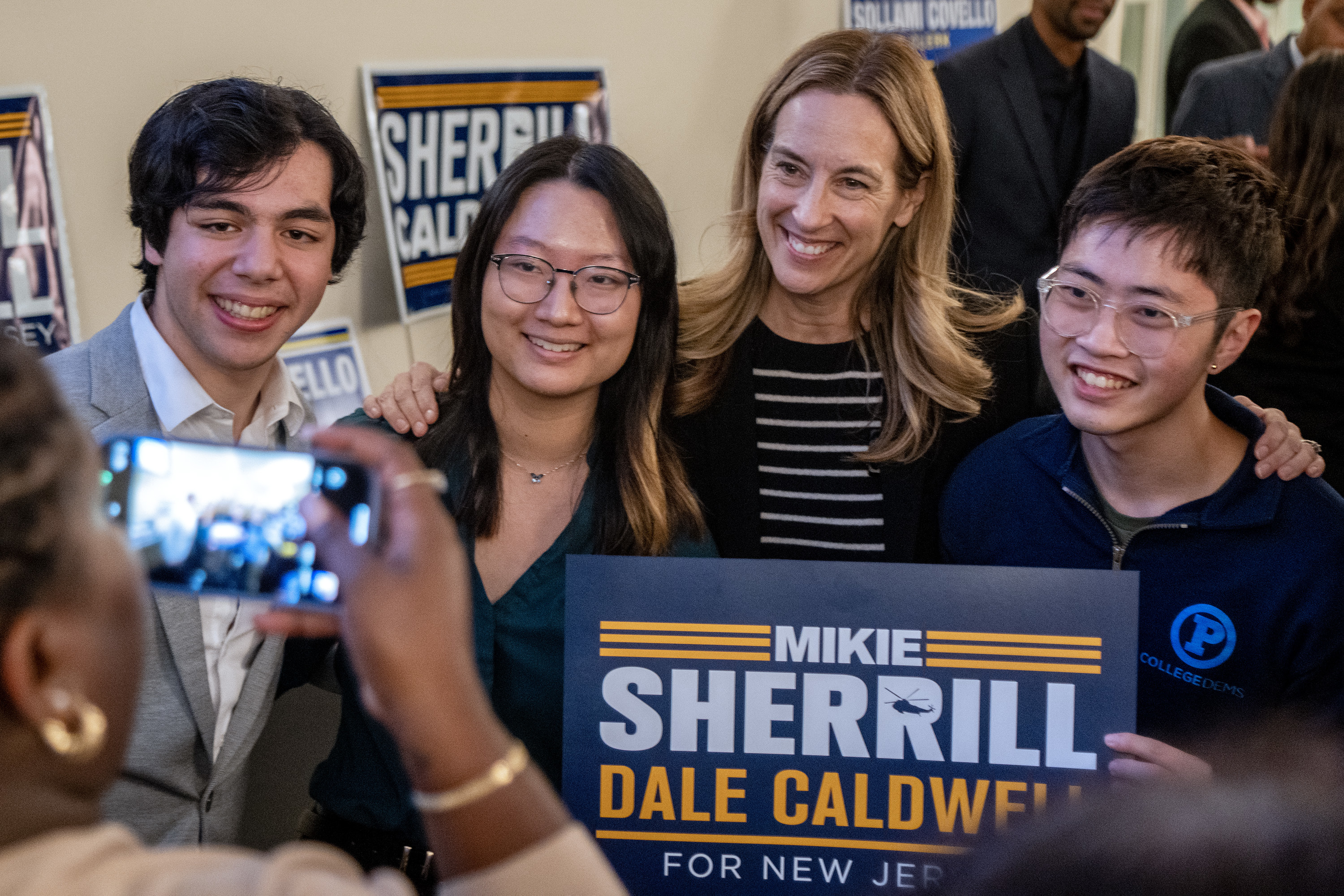
    Democratic candidate for governor U.S. Rep. Mikie Sherrill poses with members of the Princeton College Democrats as she appears at a Mercer County Democrats GOTV Rally at the Mercer Oaks Golf Course in West Windsor Thursday, Oct. 23, 2025. From left are: Julian Danoff; Michelle Miao; and Paul Wang. (The group’s motto: “Bringing blue values to the Orange Bubble.”)

    Dueling headwinds

    There are dueling headwinds at play in the contest for New Jersey governor, too. Both Trump and Murphy are unpopular with about half of New Jersey voters. New Jersey hasn’t elected the same party to a third term for the governorship since 1961, but Republicans have also not won the office while their party has held the White House since 1985.

    Once the votes are tallied in Tuesday’s election, New Jersey political history will be made either way.

    Democratic leaders have projected confidence despite tight polls and some concern Sherrill’s cautious campaign could fail to motivate voters.

    Ken Martin, the chair of the Democratic National Committee, said he expects the race to be a close win for Democrats, noting “a win is a win.”

    He resisted the critiques from some fellow Democrats that Sherrill played her campaign too safe, “in an era of brash bravado, machismo, and Donald Trump, and these candidates basically saying whatever the hell they want.”

    “I think what she’s been doing is putting out a pretty compelling message to New Jerseyans and campaigning everywhere to make sure that they understand what she’s focused on,” he said.

    The party’s vice chair, Pa. State Rep. Malcolm Kenyatta (D., Philadelphia) predicted a good night for Democrats in New Jersey. “There’s that famous saying that ‘Trenton makes, the world takes,’ and I think Trenton is going to make a lot of momentum that we are going to take into 2026 and beyond.”

    “I feel it, you know, I feel it on the ground,” said Sen. Andy Kim (D., N.J.) who campaigned with Sherrill in between fielding questions from fellow Democrats in Washington about what the race looks like back home.

    “Everyone I talked to knows what’s at stake,” Kim said.

    Chris Russell, Ciattarelli’s political strategist, argued that Ciattarelli has garnered support from voters who have traditionally supported Democrats by delivering them a clearer message on affordability.

    “We put a significant amount of time and resources, driven and led by Jack, to be present in minority communities like the Hispanic community and the Black community, and we believe that effort is going to pay off,” he said.

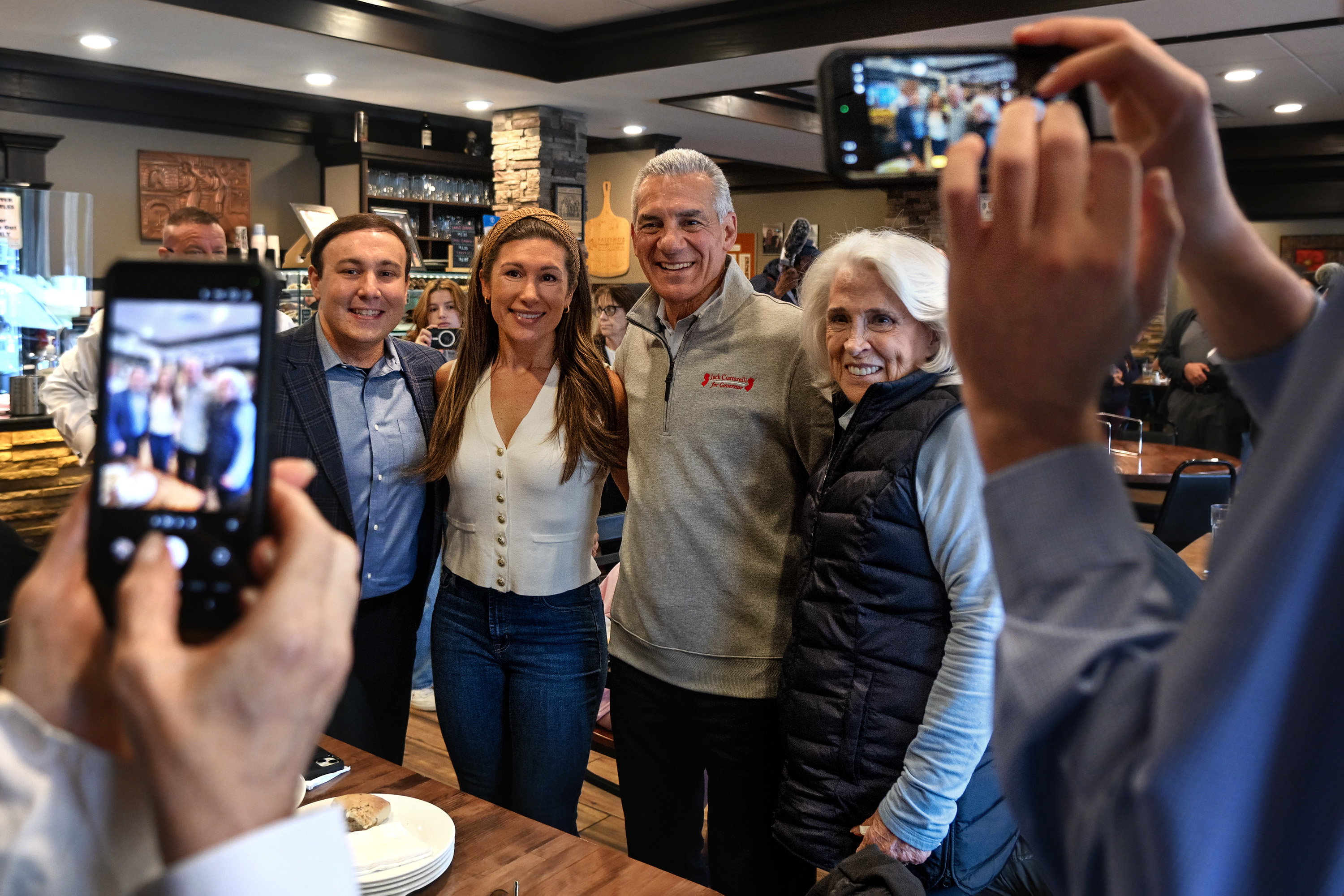
    Republican candidate for governor Jack Ciattarelli poses with members of the Pascucci family as he greets supporters at Palermo’s Pizza in Bordentown Monday, Oct.13, 2025 while campaigning in South Jersey.

    ‘A totally different vibe’

    As the candidates made their final burst of media appearances in the countdown to Election Day, Ciattarelli, in a town hall with Fox News’ Sean Hannity on Thursday night, said the Republican campaign energy “is electric.” Ciattarelli said he was encouraged by early-vote and vote-by-mail numbers, which, while trailing Democrats, had surpassed 2021 GOP turnout numbers.

    “We go after those one out of four Republicans … who typically only vote in presidential years,” Ciattarelli said on Hannity’s program. “We’ve done a magnificent job, our local Republican organizations have, in getting those people to vote by mail or vote early.”

    State Sen. Latham Tiver, a South Jersey Republican, said Ciattarelli’s campaign stops are a “totally different vibe” than his last run in 2021. He recalls Ciattarelli introducing himself table to table, but now, Tiver said when the candidate enters the room, people flock to him.

    “Jack’s doing everything he can. … He’s pounding the pavement, he’s meeting more and more people, and we’re all out there doing the same thing for him,” Tiver said.

    In an otherwise sleepy election cycle, New Jersey and Virginia, also electing a governor this month, have the spotlight. Pennsylvania’s Supreme Court retention races have also garnered an outsized amount of attention for a judicial race and could be a bellwether for one of the nation’s largest battlegrounds.

    As the candidates make their final push to lead New Jersey, the outcome will likely depend on who shows up at the polls Tuesday.

    Both campaigns have motivated bases, but the election could come down to the less engaged and whether they decide to vote. Despite a record amount of spending in the state, only about 2% of voters remained undecided in polls.

    “I don’t think people give enough credit — pollsters, political wonks — to just how burnt out the average American is,” said Jackie Cornell, who previously ran field operations for Obama’s campaign in New Jersey.

    “They just don’t want to hear anything about any of this any more, and I worry that will be the deterrent more so than anything else.”