Category: Elections

  • Erica Deuso’s campaign to be Pa.’s first trans mayor isn’t about that. It’s ‘about the neighbors.’

    Erica Deuso’s campaign to be Pa.’s first trans mayor isn’t about that. It’s ‘about the neighbors.’

    By most measures, Erica Deuso’s campaign for mayor of Downingtown is unremarkable.

    She spends Saturday mornings greeting residents at the farmers market and her weekend days knocking on doors in the Chester County borough. Most of the time, she’s talking about traffic and community events.

    Nevertheless, the effort is groundbreaking.

    If she is elected in the Democratic-leaning borough, Deuso would be the first openly transgender person elected mayor in Pennsylvania. She would do so as President Donald Trump’s administration pursues policies that limit public life for transgender residents and as Democrats’ vocal support for the community wanes in the aftermath of the 2024 election.
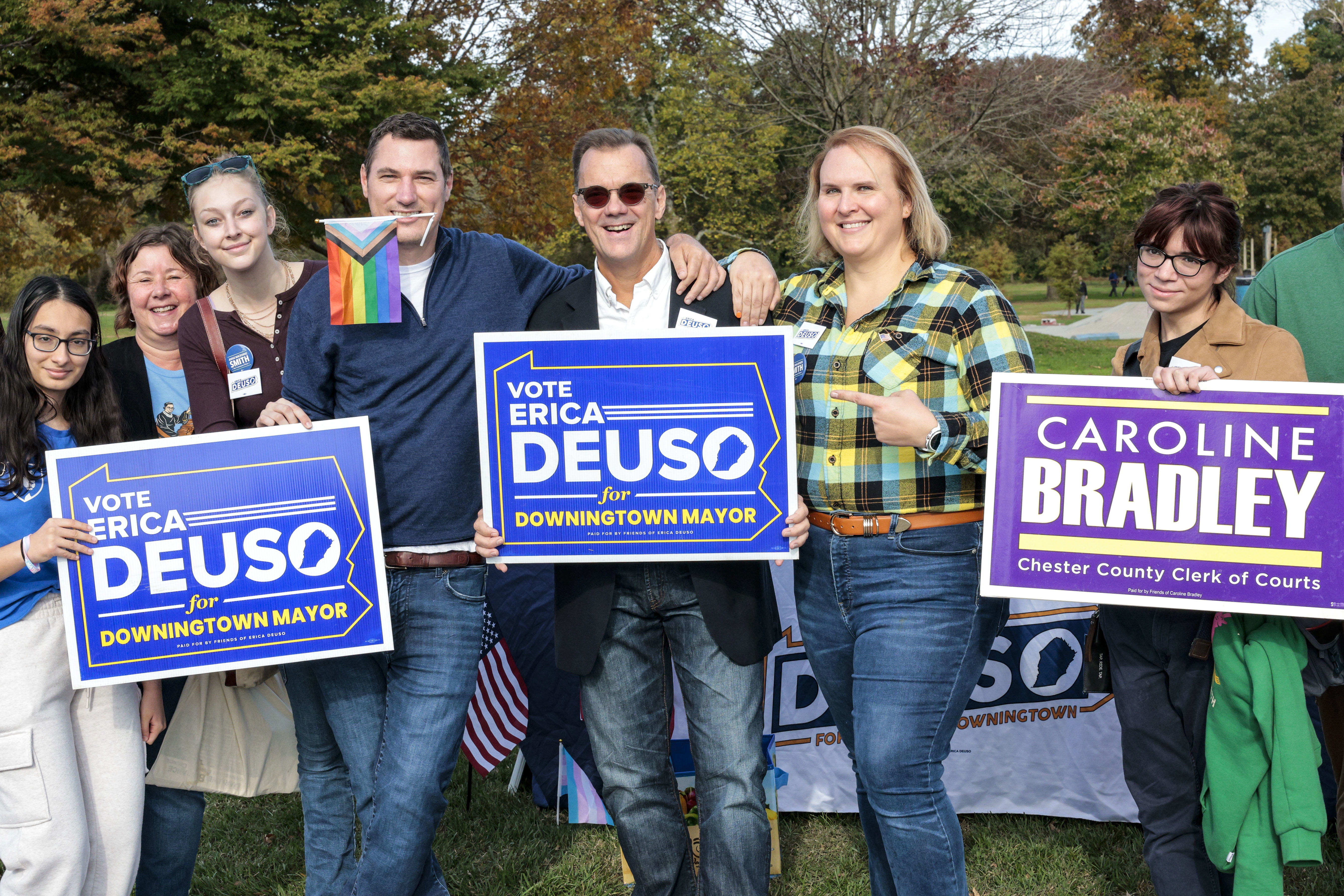
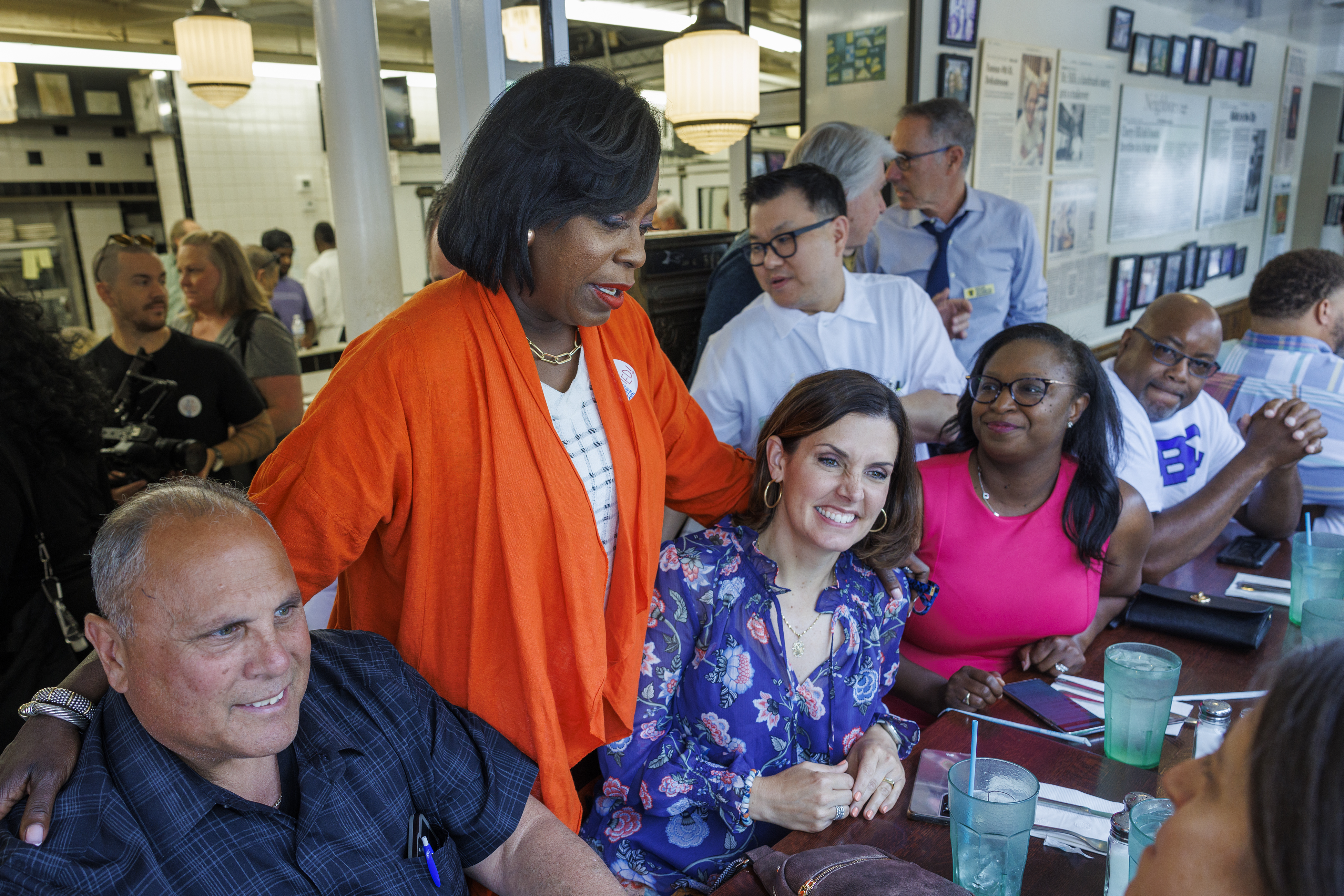
    Democratic supporters pose with current Downingtown Mayor Phil Dague, center, Chester County Commissioner Josh Maxwell, center left, and mayoral candidate Erica Deuso, center right.

    For most voters, though, those facts didn’t even register.

    Deuso, who works in management at a pharmaceutical company, has lived in Downingtown for 18 years.

    She is a committeewoman in the local Democratic Party, and board member for Emerge Pennsylvania, which trains women and LGBTQ+ people to run for office. Her platform centers on traffic control, domestic violence, community engagement, and sustainable development.

    The Downingtown mayor has relatively limited power, overseeing the police department and acting as a tiebreaking vote on borough council. Deuso has promised not to sign an agreement between Downingtown police and U.S. Immigration and Customs Enforcement and said she wants to work on enhancing mental health services for officers while expanding their reach in the community to address concerns over traffic violations and e-bikes.

    As she knocked on doors on a Saturday morning in October, Deuso’s gender identity rarely came up in her interactions with voters.

    “I’m not running on being trans, that’s not something I ever do or ever wanted to do. I wanted to make it about the neighbors,” Deuso said. “It’s the other side making it about who I am, my identity.”
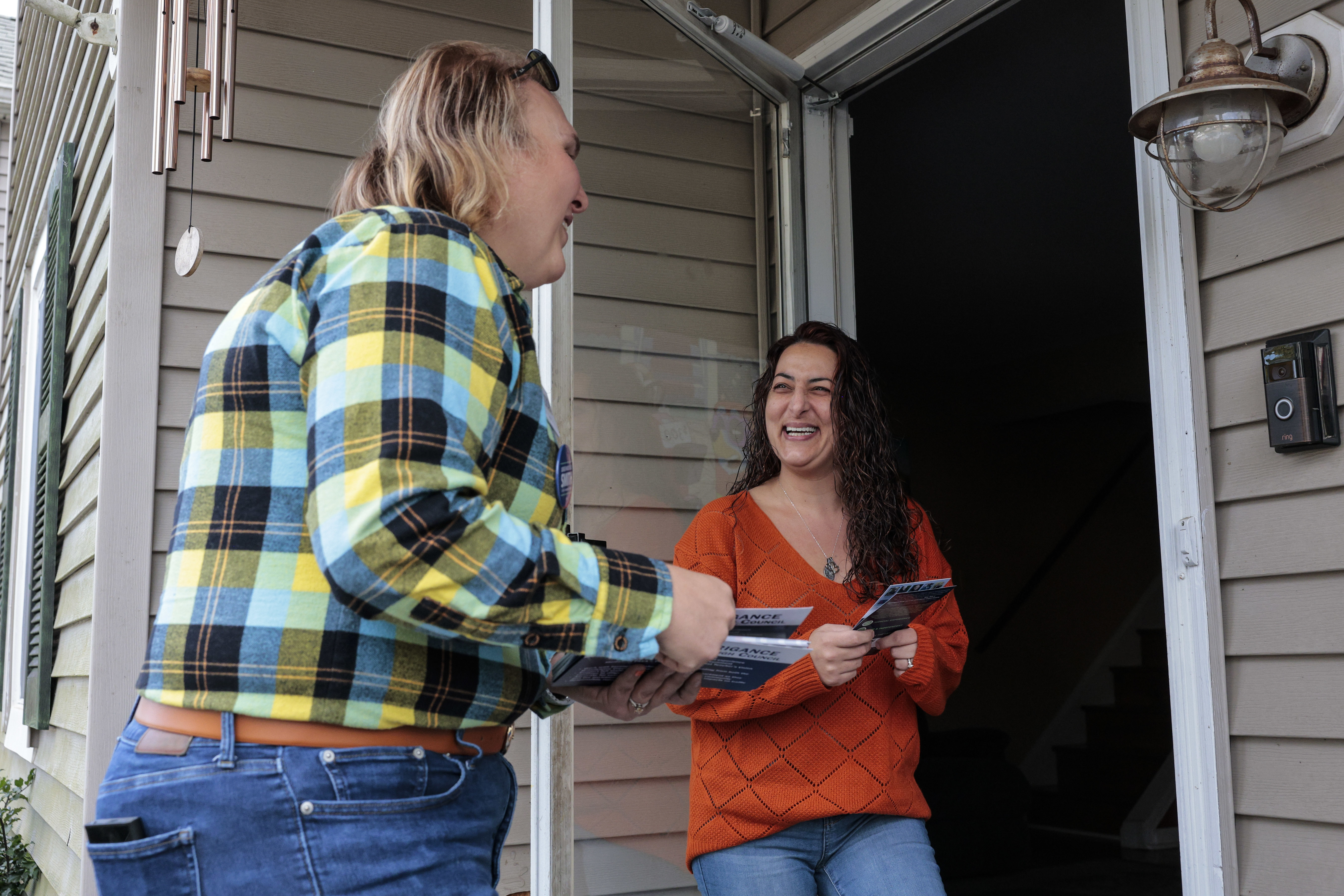
    Going door-to-door looking for votes in Downingtown in October, Erica Deuso meets Nicole Flood at her door.

    The historic nature of her campaign has likely driven attention and funds to the race. She has earned endorsements from several organizations that back LGBTQ+ and women candidates. And she’s received donations from outside the state and outside Chester County, including a $3,000 donation from Greater Than PAC, which supports progressive women.

    But a scan of comments in community Facebook pages shows her identity has also driven more vitriol.

    “There are people who refuse to use my correct name or pronouns, they’ve deadnamed me, all those sorts of things. But it’s been 16 years since I transitioned; I don’t really care,” Deuso said. But she’s mindful that LGBTQ+ youth are watching her. She engages in some of the posts, but not all of them.

    “I want to handle it with grace.”

    Those efforts are already influencing at least one local teen. Nicole Bastida-Moyer, a 39-year-old voter, told Deuso her candidacy had inspired her 14-year-old daughter to volunteer to help other students with their mental health. Both she and her daughter are pansexual.

    “She deals with a lot of hate,” Bastida-Moyer said through tears about her daughter.

    “Having Erica’s voice, it means a lot,” Bastida-Moyer said.
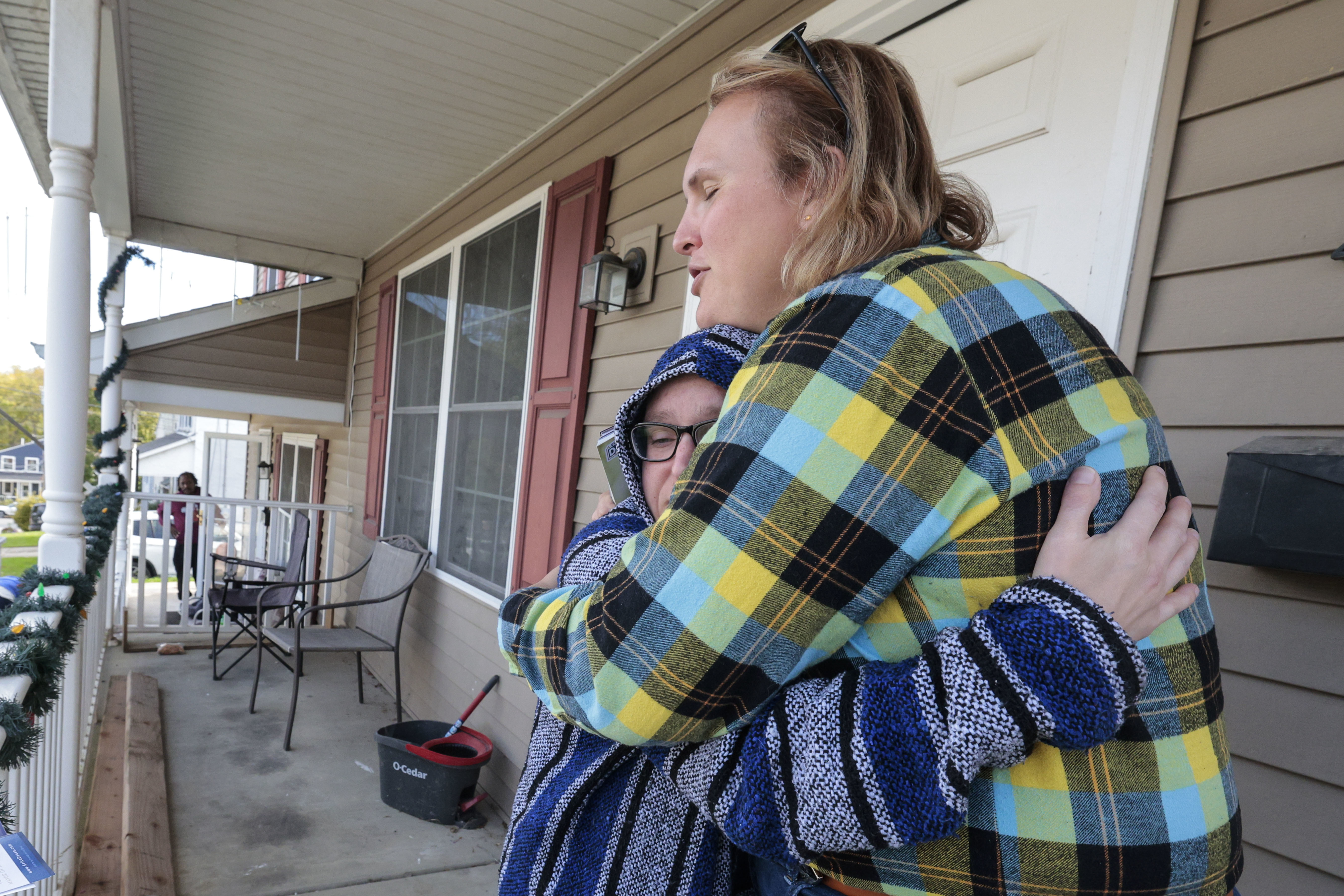
    Nicole Bastida-Moyer gets a hug from Downingtown mayoral candidate Erica Deuso while campaigning in October.

    Impact on voters

    Deuso responds to comments on her Facebook page and other groups occasionally. She said she tends to do so only when she thinks a true conversation can come of it.

    Door-knocking in her neighborhood, Deuso encountered just one voter who appeared to be hostile to her because of her gender identity. When Deuso approached one house, a woman came to the door and glanced at the candidate and her fliers through the screen door without opening it.

    “I’m not voting for him,” the woman said. “For who?” Deuso asked as the woman turned and walked away.

    Episodes like this are relatively rare, Deuso said

    “People are generally much nicer in person than online,” said Jenn Fenn, who managed U.S. Rep. Chrissy Houlahan’s 2024 reelection campaign in a district that includes Downingtown.

    Deuso’s opponent, Republican Rich Bryant, says he doesn’t condone those who attack Deuso based on her identity.

    But Deuso has shared several screenshots on social media that appear to show Bryant insulting transgender women and making misogynistic remarks about cisgender women. At a canvass launch at the local farmers market, the township’s current mayor, Democrat Phil Dague, referenced these posts while comparing Bryant to Trump.
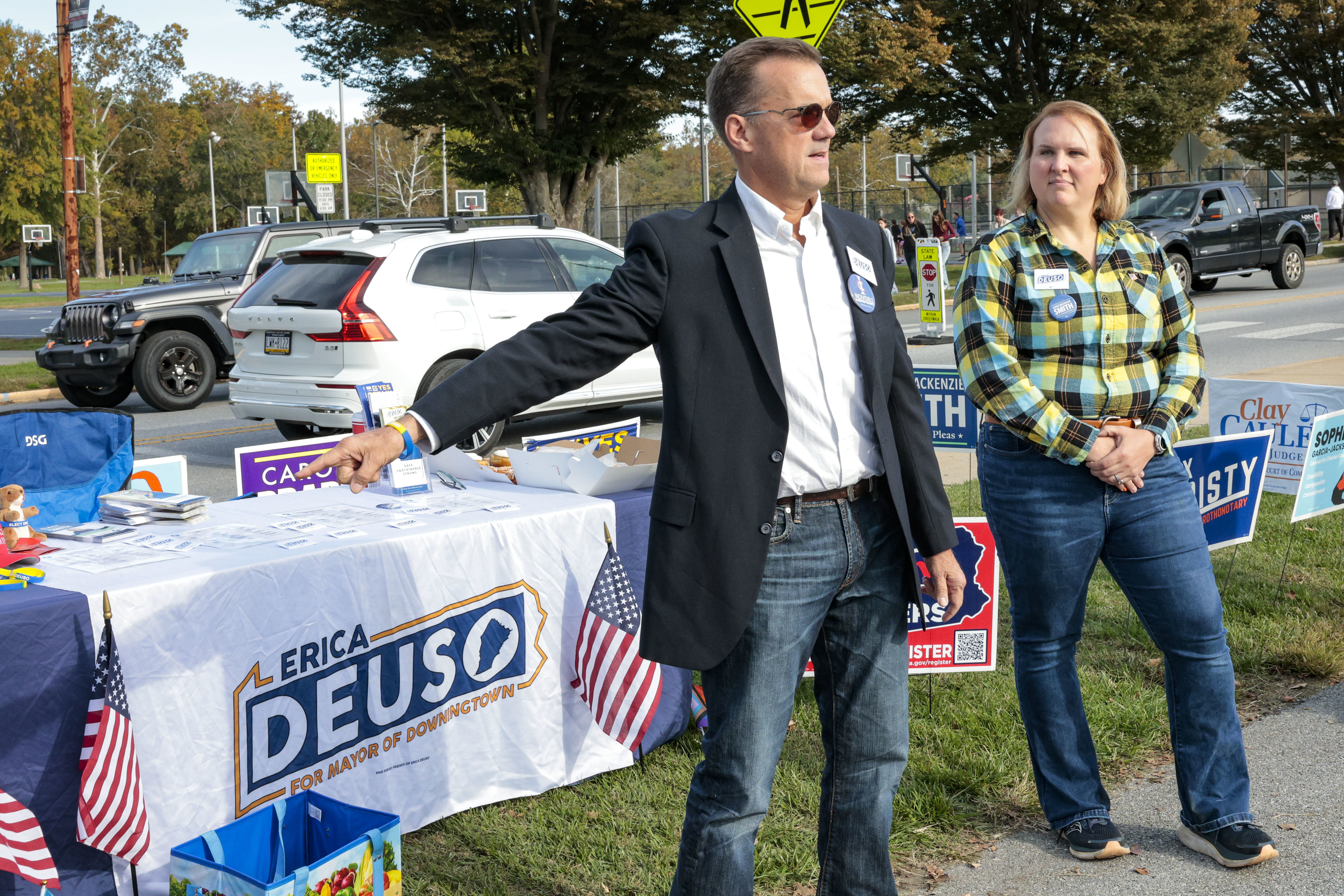
    Current Downingtown Mayor Phil Dague talks with supporters for Erica Deuso listening at right. Saturday October 18, 2025.

    Bryant claimed 90% of these posts are AI-generated but refused to say which posts are real and which are fake.

    “I don’t like mud-slinging misinformation,” Bryant said. “I try to stay focused on what’s good for Downingtown.”
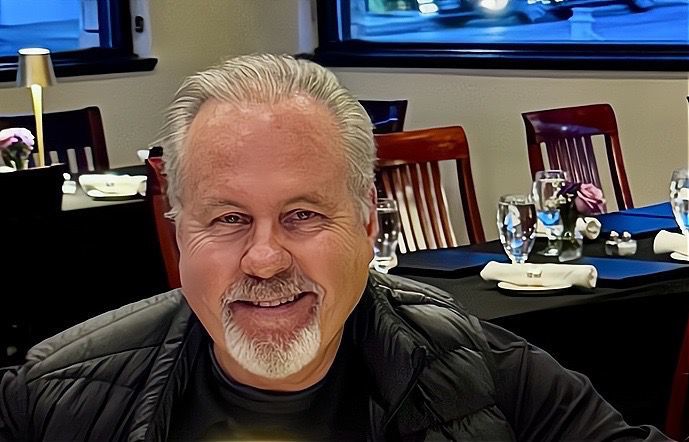
    Rich Bryant is running as a Republican for Downingtown mayor.

    He sought to present himself as better experienced than Deuso to be mayor, contending his career in cybersecurity has prepared him for the mayor’s primary duty of overseeing the local police department.

    Alice Sullivan, an 80-year-old neighbor and donor to Deuso, had noticed some of the nastiness on social media and said she was voting for Deuso because, unlike her opponent, she wasn’t a “bigot.”

    She lamented the online attacks against Deuso as disappointing — but unsurprising. The candidate’s gender identity shouldn’t matter, insisted Sullivan, who has lived in Downingtown for decades.

    “Other people’s lives, genders, whatever is not my business,” she said.

    Josh Maxwell, a Democratic county commissioner and former Downingtown mayor who had joined Deuso to knock doors, asked if Sullivan thought others would disagree in the historically Catholic community. But the people who cared, Sullivan argued, are “not going to vote Democrat anyway.”

    “There might be some,” she said. “I don’t know very many.”
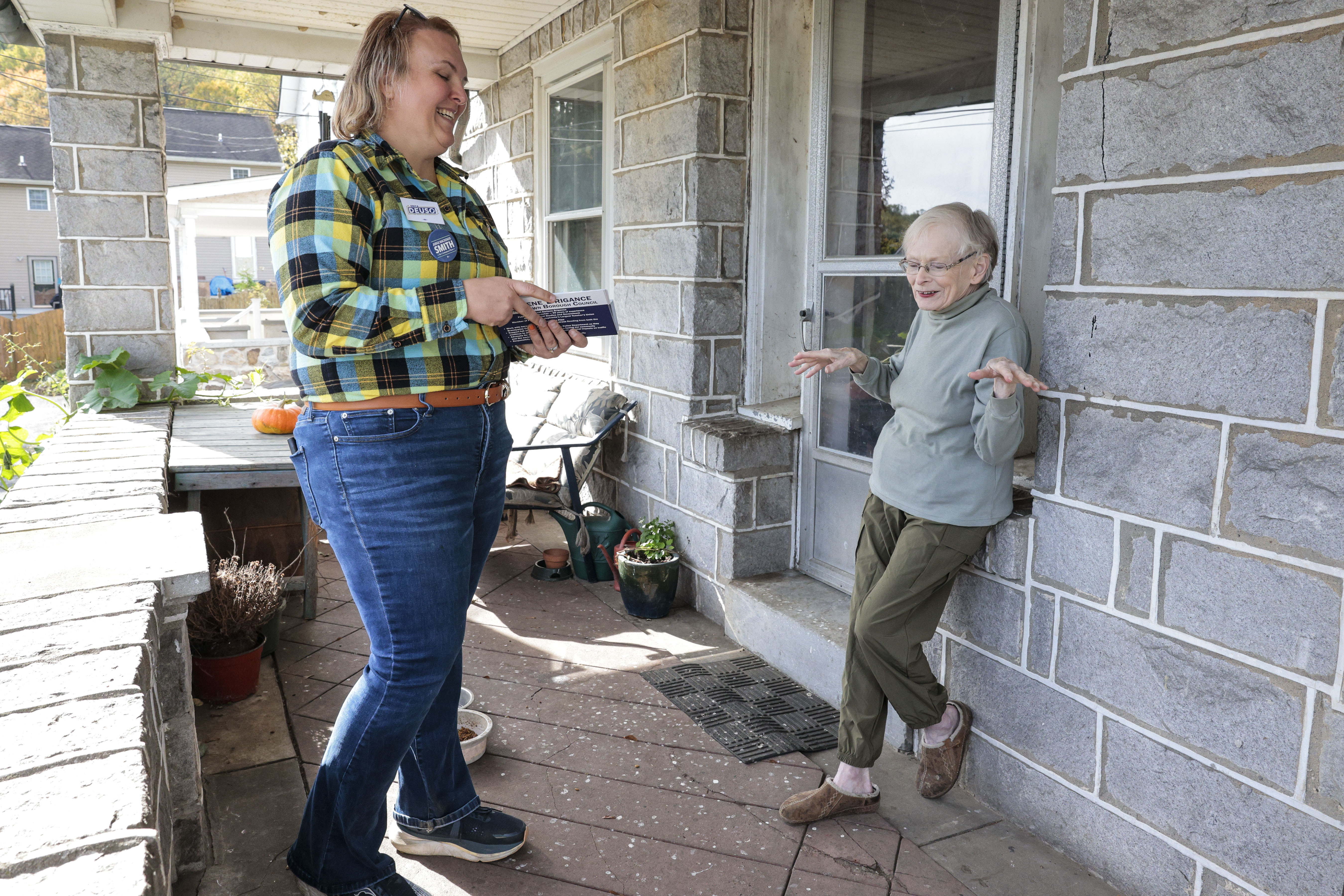
    Campaigning in the west end of Downingtown Erica Deuso greets Alice Sullivan on Oct. 18.

    As Deuso walked door to door, her conversations focused on local and community issues. She greeted every dog she saw and spoke to their owners about their safety concerns — drivers had been racing down quiet neighborhood streets — and their concerns about the community. Deuso is proposing a program to offer hotel rooms for one night to those facing domestic violence.

    She also made it clear that she would be a resource, even on issues that went beyond the mayor’s official duties. She showed one voter how she had started a youth-driven art project at a recent township festival. And pointed to a home that, just weeks prior, she’d brought a misdelivered package to on behalf of a voter.

    For weeks, Raul Hurtado, Deuso’s neighbor who immigrated from Colombia in the 1990s, has been rolling down his windows when he sees Deuso, telling her he’s voting for her.

    “She is from this town, my neighbor, and we need someone to help us,” Hurtado told The Inquirer.

    If she’s elected, Deuso told Hurtado, her goal is to be available to all residents through office hours at Borough Hall.

    “We can have a face-to-face discussion,” she said. “Not through your car window.”

    This suburban content is produced with support from the Leslie Miller and Richard Worley Foundation and The Lenfest Institute for Journalism. Editorial content is created independently of the project donors. Gifts to support The Inquirer’s high-impact journalism can be made at inquirer.com/donate. A list of Lenfest Institute donors can be found at lenfestinstitute.org/supporters.

  • These parents wish Mikie Sherrill would defend their transgender kids. They understand why she doesn’t.

    These parents wish Mikie Sherrill would defend their transgender kids. They understand why she doesn’t.

    C.B. can’t even comprehend her transgender daughter being required to use the boys’ bathroom at her South Jersey school.

    “If you went into her classroom and someone said, ‘Pick out the trans kid out of these 25 kids,’ you would not be able to,” C.B. said. “You might very well get it wrong.”

    C.B., who asked to be identified by her initials to protect the privacy of her child, said she loves the Garden State. She has a “very Jersey family.”

    But, like other parents of trans children, she’s considering packing her family’s bags depending on the results of the Nov. 4 election, and whether the next governor maintains the state’s LGBTQ+ friendly policies.

    “I can’t think of anyone who’s not at least thinking of a contingency plan. I think we all have our limits of when we’ve got to go,” C.B. said. “We just have to protect our kids.”

    The stakes of the election are stark for C.B. and other parents. Jack Ciattarelli, the Republican nominee for New Jersey governor, opposes state policies implemented under Democratic Gov. Phil Murphy meant to protect transgender children. Ciattarelli says he would require schools to tell parents about their children’s gender identity and stop transgender girls from participating in girls’ sports. He also opposes gender-affirming care for minors and believes parents should be able to opt their kids out of LGBTQ+ related topics in school.

    U.S. Rep. Mikie Sherrill, the Democratic nominee, has largely voted in support of transgender rights throughout her nearly seven-year legislative career. She was endorsed by LGBTQ+ advocacy groups as well as her friend U.S. Rep. Sarah McBride (D., Del.), the first openly transgender member of Congress. But Sherrill has not publicly defended trans rights when criticized by Ciattarelli and has declined to answer reporters’ questions on the matter.

    L.B., another South Jersey parent facing the same dilemma in the lead-up to Election Day, said her 10-year-old transgender daughter isn’t stealing any thunder from other girls on her coed sports team — she is the smallest in her class. And it’s hard for her to imagine anyone seeing her child as a threat to anyone in the bathroom.

    “People move from all over the country to New Jersey because it’s known as a safe haven for LGBTQ rights,” said L.B., who is using her initials to protect her child’s privacy. “And now, if Jack Ciattarelli wins, it could become a state that people have to flee from.”

    Republican nominee for New Jersey governor Jack Ciattarelli speaks at a rally at the Corner House Tavern in Columbus.

    During the 2024 election, President Donald Trump frequently attacked Vice President Kamala Harris for supporting transgender people. Ciattarelli has followed that playbook, framing Sherrill on the campaign trail, in ads, and on the debate stage as being too supportive of transgender identities.

    Sherrill has not just ignored the attacks. She has avoided talking about the issue altogether.

    “I don’t necessarily blame her for that, although more vocal support, outspoken support, would be amazing. It would make a lot of us feel much safer,” C.B. said.

    Other transgender rights advocates interviewed by The Inquirer also said they wish Sherrill would speak up more. But they understand why she doesn’t.

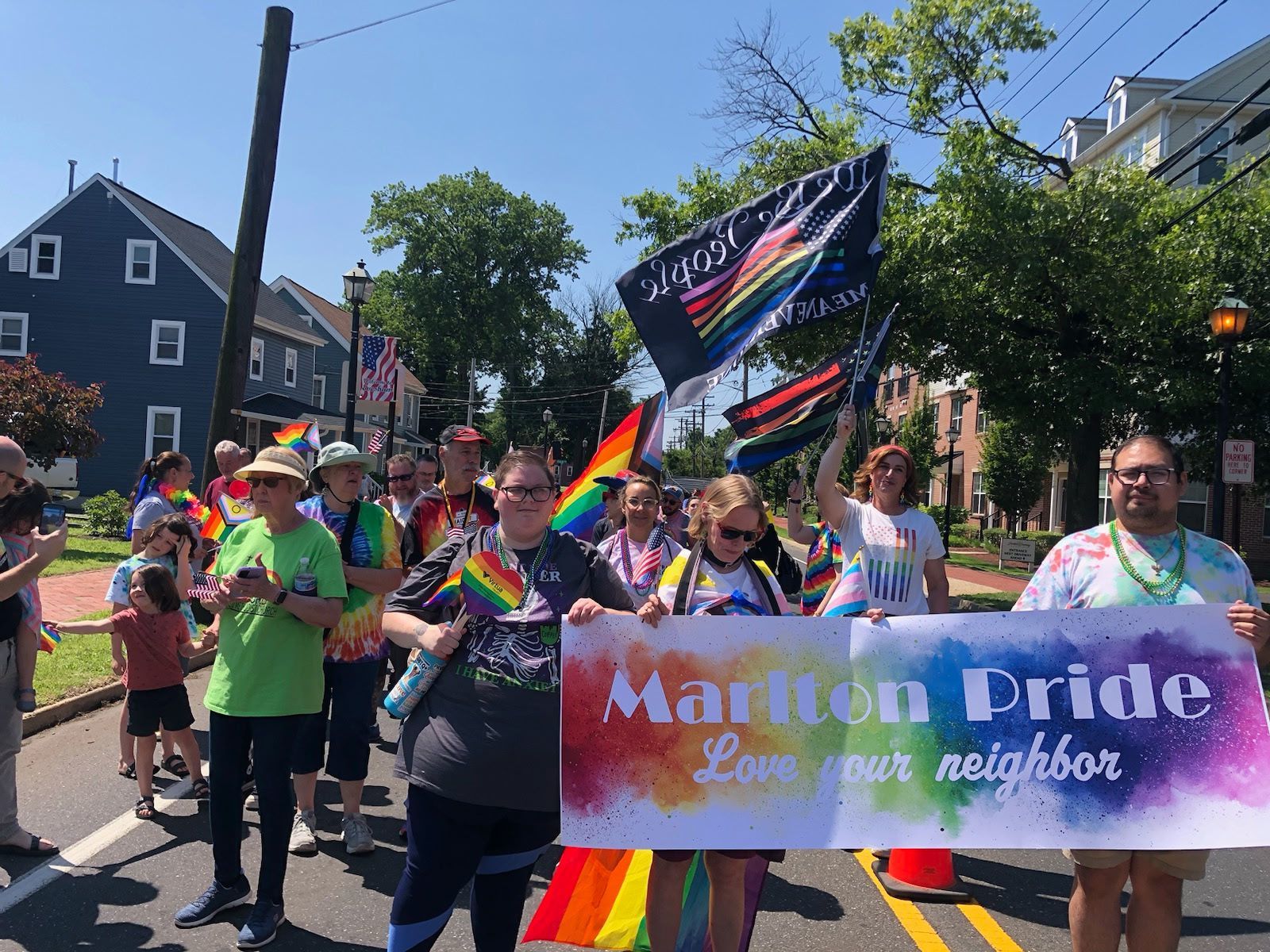
    “Mikie Sherrill is not saying much of anything about the transgender population — which, you know, frankly, is what unfortunately might be her best strategy to be elected,” said Melissa Firstenberg, a transgender woman who founded Marlton Pride. “Unfortunately, for somebody like me, she is the only option.”

    Melissa Firstenberg marching in a July 4 parade with Marlton Pride.

    A page out of Trump’s playbook

    Trump campaigned for president on the promise of stopping transgender athletes from competing in women’s and girls’ sports.

    Ciattarelli has also made the popular GOP talking point a centerpiece of his campaign. In his stump speeches, he attacks Sherrill for voting “to allow biological boys to play in girls’ sports” despite being “a mother of two daughters,” in reference to her vote against the “Protection of Women and Girls in Sports Act‚” which would prohibit transgender girls from participating in girls’ sports and had support from only two House Democrats.

    Ciattarelli has championed a so-called parental rights movement and frequently touts his opposition to New Jersey School Policy 5756, an advisory policy calling for schools to support students’ gender identity and allow transgender students to compete on sports teams and use the restrooms where they feel comfortable. The guidance states that parental consent is not needed to accept a student’s asserted gender identity.

    In the first general election debate last month, Ciattarelli tried to veer the conversation to transgender youth in schools multiple times, and said he was concerned about “the welfare of our children.”

    “I don’t think school districts should be keeping secrets from parents. I don’t think that biological boys should be playing in girls’ sports,” he said.

    “She opposes me on both of those issues,” Ciattarelli added, referring to Sherrill’s 2023 vote against the “Parents Bill of Rights Act” that would require parental notification of children’s gender identity, among other measures. No House Democrats voted for the bill.

    Sherrill did not address her past votes, correct Ciattarelli, or respond to the specifics of his argument, beyond mentioning that “parents know their kids best, and they need to be able to determine if there’s something they want to opt out of.” That stance echoes Ciattarelli’s arguments, though it was unclear what exactly Sherrill was referring to.

    When asked after the debate about participation of transgender athletes, Sherrill deferred to “New Jersey sports groups” and the National Collegiate Athletic Association. She also cited her support for the Kids Online Safety Act, mentioning an uptick in bullying of LGBTQ+ youth.

    Sherrill has garnered endorsements and donations from LGBTQ+ advocacy groups like the Human Rights Campaign and GLAAD for her voting record — though she did take heat for a December 2024 vote for the National Defense Authorization Act, which included a provision that removed transgender healthcare for military dependents. Despite her vote, Sherrill criticized that measure as singling “out a small handful of innocent children to be used as political pawns.”

    But Sherrill declined through a campaign spokesperson to share her stance on the state’s school guidance or protections for gender-affirming care for this story, or to be interviewed about trans rights.

    U.S. Rep. Mikie Sherrill (D., N.J.) speaks during a gubernatorial debate with Republican Jack Ciattarelli Sept. 21, 2025 at Rider University.

    Instead, in a statement, Sherrill said she “will govern in a way that keeps New Jersey kids, my own and others, safe and with parents in the driver’s seat regarding their kids’ education.” The 200-word statement did not mention “trans,” “gender,” or “LGBTQ.”

    She also said that “schools are a place to learn, not to advance political agendas,” and that she would ensure they teach “the full history of our nation” and continue to give parents the choice to opt out of “certain sex-education conversations.”

    Meanwhile, Chris Russell, a Ciattarelli campaign spokesperson, said in a text message that Ciattarelli “opposes so-called gender-affirming care for minors” when asked about Murphy’s executive order that makes the state a “safe haven” for gender-affirming healthcare.

    “As Governor Jack will review all of Governor Murphy’s EO’s and related policies to ensure that they are consistent with his positions regarding parental notification for minors, protecting women’s & girl’s sports & offering an age appropriate curriculum,” he added.

    Sherrill is not the only Democrat across the country who has trod lightly on trans rights since Republicans upped the attacks last year, but Diane Rugala, a Collingswood-based parent whose transgender son is a Rutgers University graduate student, thinks Sherrill should “just own it” when it comes to defending transgender kids.

    “You have to play the game, I get it,” said Rugala, who is also an activist with PFLAG, an LGBTQ+ advocacy group.

    “But I also think that a really authentic statement would be good,” she added. “I don’t think people are asking for her to become this big advocate for the trans community … just a simple statement.”

    Attack ads mirroring the presidential election

    Ciattarelli’s campaign recently started running an ad that highlights Sherrill saying that she “would push an LGBTQ education into our schools,” and that “parents have a right to opt out of a lot of things” but “this is not an area where they should be opting out.”

    The clip was from a Democratic primary debate earlier this year when she was responding to the question of whether parents should be able to opt their students out of “LGBTQ-related content” in the same way they can be taken out of sex-ed and health classes.

    The ad calls it her “education plan” and tells viewers that it’s “your choice, not hers.”

    She explained in that debate that students should understand “the background of people throughout our nation” and condemned the “erasure of history.” As of 2020, New Jersey schools are required to teach about societal contributions from LGBTQ+ people, along with other groups, in middle and high school social studies.

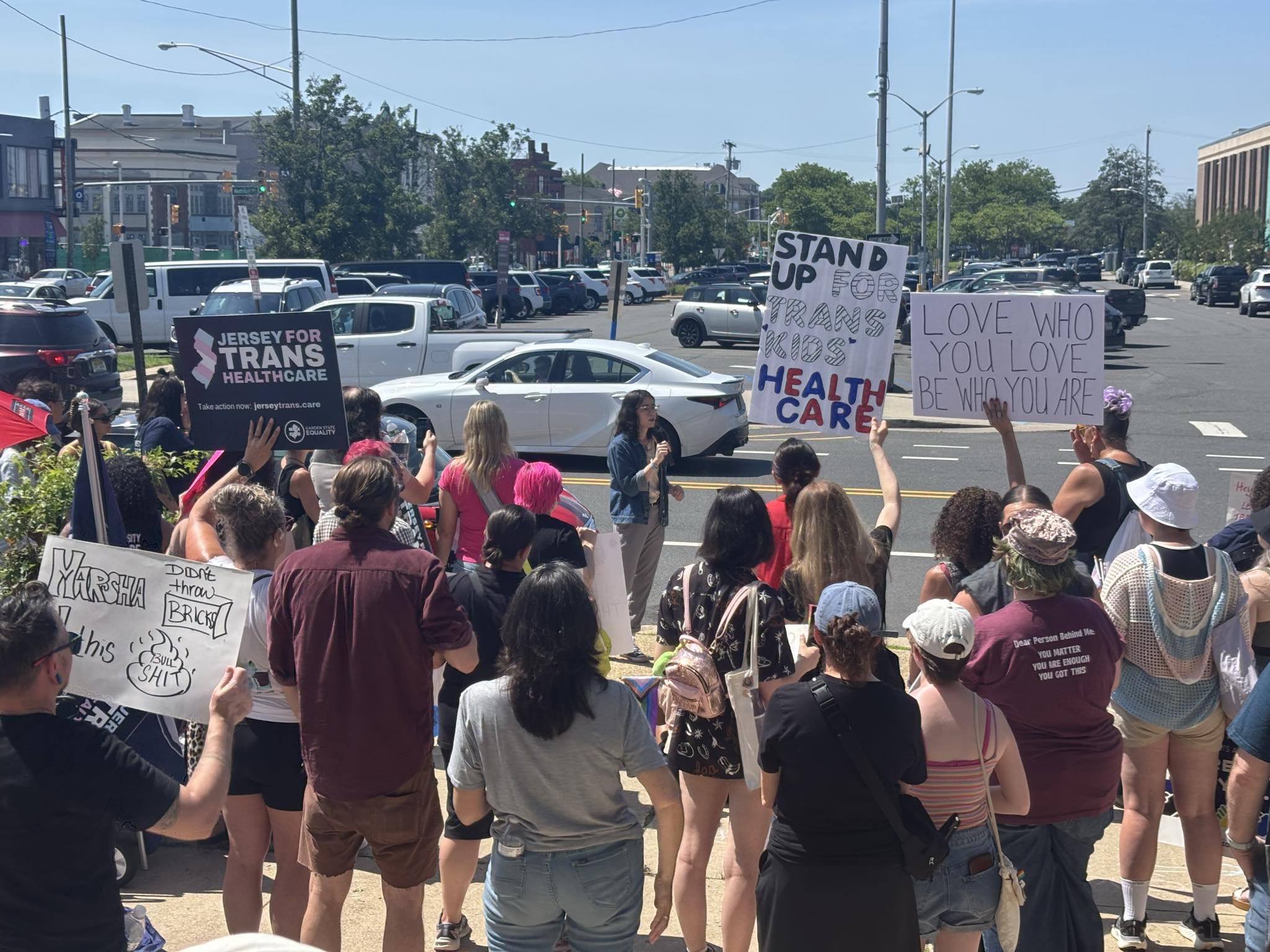
    Jo Miller speaks at a rally for trans youth organized by Garden State Equality in Asbury Park in June.

    Another ad echoes the attack that was lodged against Vice President Kamala Harris’ presidential campaign.

    The American Principles Project (APP), a Virginia-based conservative group that identifies itself as “pro-family,” paid for an ad that vilifies trans people and accuses Sherrill of wanting to “protect they/them instead of your children,” referencing nonbinary pronouns. The group’s New Jersey PAC reported $126,000 in expenditures in the race as of Oct. 3, with $429,000 more cash on hand.

    Trump’s campaign aired ads last year arguing that Harris is for “they/them,” while Trump is for “you.”

    Jo Miller, 29, a transgender woman who serves on the Woodbury City Council, said she “would like to see a more forceful response” from Sherrill because not addressing the attacks can leave more people thinking that Republicans’ “demonization” of trans people — a small segment of the population — is true.

    “I would love to see Mikie Sherrill take some stronger stances, and I think we will see that eventually as governor, but I think the truth is, it’s not her main focus,” Miller said. “And it’s kind of strange that it’s Jack Ciattarelli’s main focus, and it’s Donald Trump’s main focus.”

  • Shapiro stumps for N.J. gubernatorial candidate Mikie Sherrill

    Shapiro stumps for N.J. gubernatorial candidate Mikie Sherrill

    On the first day of early in-person voting in New Jersey, and with U.S. Rep. Mikie Sherrill, the Democratic gubernatorial candidate, showing a slim polling edge over her Republican opponent, Democrats called in the popular governor from neighboring Pennsylvania to drum up some enthusiasm among Garden State voters.

    Gov. Josh Shapiro stumped for Sherrill at a senior center auditorium and an African Methodist Episcopal church, targeting two groups seen as necessary for Sherrill to beat Republican Jack Ciattarelli.

    “Thank you for getting off the sidelines,” Shapiro said to the crowd at the senior center, several of whom said they either voted by mail already or were on their way to the polls. “Thank you for doing your part. Thank you for being in this game. I am grateful.”

    Outside the Monroe Township senior center, Shapiro was a big draw among the crowd that lined up early Saturday to get through security.

    “He’s very well liked,” said Connie Hamlin, 71, of Monroe Township, who sipped coffee to stay warm “Number one, he’s handsome. He’s young. That’s very important.”

    Equally important, she said, is that Shapiro is “for democracy” and “a decent person,” two traits she said President Donald Trump lacks.

    Shapiro got standing ovations and roaring applause, but Sherrill was the main event. The Navy veteran and former federal prosecutor finds herself in a tight race with Ciattarelli, a business owner and former state lawmaker. A recent Rutgers-Eagleton poll found Sherrill with a five-percentage-point lead.

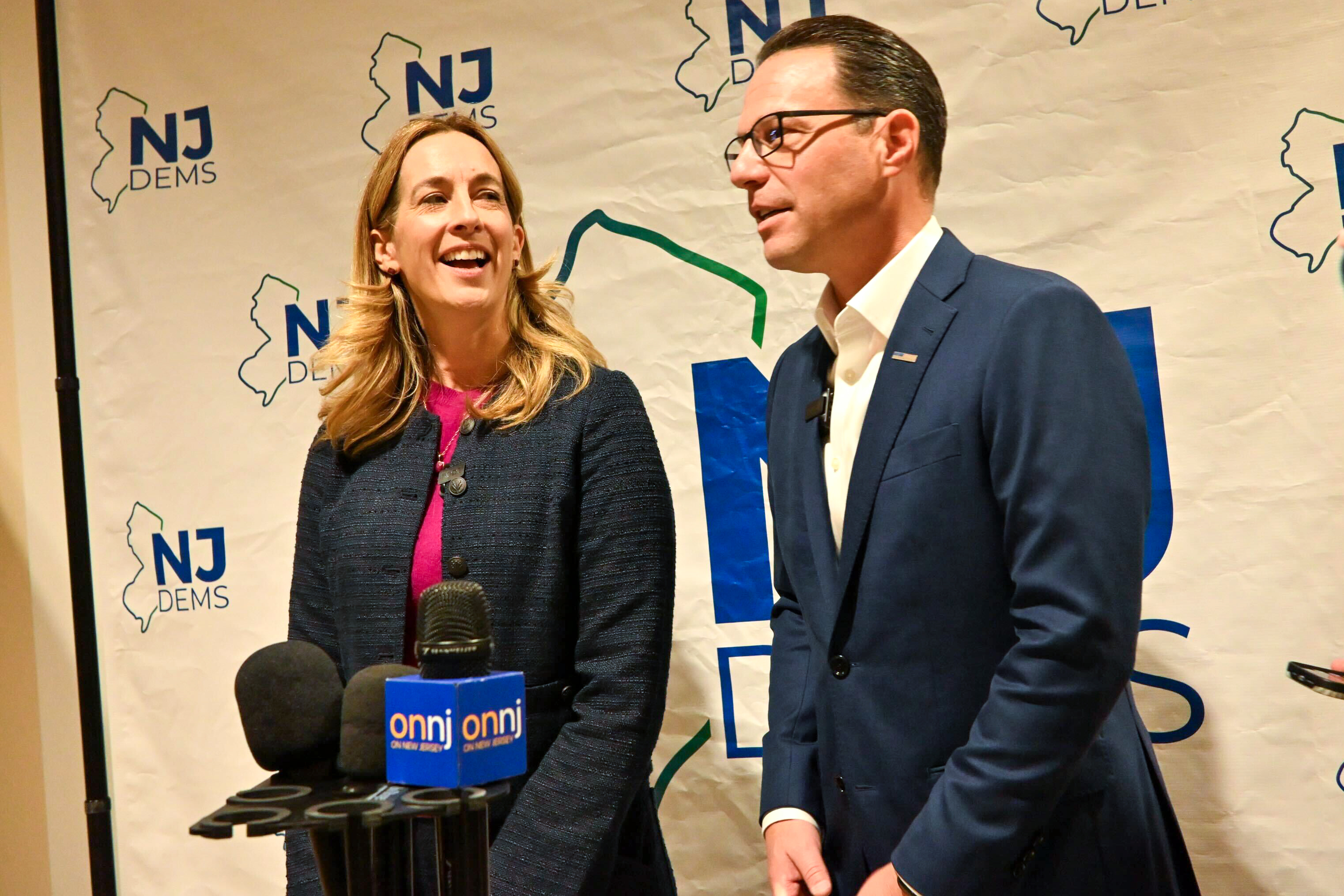
    Gov. Josh Shapiro on the campaign trail for NJ gubernatorial candidate Mikie Sherrill (left) Saturday, Oct. 25, 2025.

    At the two campaign stops, Sherrill ripped into Trump, saying that while the prices of consumer goods like coffee have skyrocketed, “Trump and his family are making billions.”

    Sherrill said her opponent would rubber-stamp Trump administration policies that are unpopular with many in New Jersey — such as his cancellation of $16 billion in funding to build two new rail tunnels under the Hudson River.

    “It’s about opportunity and affordability,” Sherrill said. “We’re fighting for our kids, to make sure they have a better future.”

    Ciattarelli hit the campaign trail as well Saturday, stopping in Passaic, Bergen, and Morris Counties with a message of “a stronger, safer, and more affordable New Jersey,” according to Facebook posts.

    Friday evening, Trump held a tele-rally for Ciattarelli, in which he said Sherrill would “be a travesty as the governor of New Jersey” and urged Republicans to take part in early voting.

    “You got to make sure the votes are counted, because New Jersey has a little bit of a rough reputation, I must be honest,” Trump said.

    There is no evidence of mass voter fraud in New Jersey or anywhere else in recent elections, but Trump still claims the 2020 election was rigged against him and has appointed a notorious Pennsylvania election denier to a federal position monitoring elections. On Friday, the Department of Justice said it will send federal observers to monitor elections in New Jersey and California.

    At a news conference Saturday, Sherrill said she is proud that New Jersey’s elections have been “open, transparent, and free.”

    “And we’re going to continue to do that, and ensure we don’t have any voter intimidation,” Sherrill said.

    At the senior center, Hamlin said she supports Sherrill’s plan to lower energy costs, likes that she’s a woman, and feels it’s important that the next governor is a Democrat. “She’s soft-spoken, but she has meaningful things to say,” Hamlin said.

    Shapiro spoke about how he was raised and how his faith teaches him that “no one is required to complete the task, but neither are we free to refrain from it.”

    The message wasn’t lost on Steve Riback, who said Trump has given antisemites and other extremists “license to come out of the woodwork.” Riback, who is Jewish, said that Shapiro would be his top choice for president in 2028, above Illinois Gov. JB Pritzker.

    Shapiro urged voters frustrated with Trump to send a message to the rest of the country “that here in Jersey, we value our freedom, we cherish our democracy, and we love our country.”

    And Shapiro held up Sherrill as someone who would get things done in New Jersey. Sherrill has cited Pennsylvania as an example of a state with more efficient business licensure rules and better-managed energy costs.

    Shapiro, who has not officially announced his reelection campaign, has long been floated as a presidential hopeful by Democratic insiders and national pundits. Shapiro’s soon-to-be-released memoir will likely add to speculation about his 2026 intentions.

    After the senior center visit, Shapiro and Sherrill hit the turnpike up to New Brunswick, where a packed Mount Zion A.M.E. Church — congregants had come in on buses from around the state — was waiting for him.

    Shapiro said it was up to Democrats to keep, and build upon, what the founders created. “We are those people, and this is a moment where we have to do this work. We’ve got to stand up for our rights,” he said. “We’ve got to keep perfecting our union.”

    Pheobie Thomas, an A.M.E. member who traveled from Trenton for church, said Shapiro and Sherrill offered promising signs that they support “equitable access for all people, including Black people.”

    Thomas, 48, said there is a long history of Democratic politicians courting Black churches for votes, and for good reason.

    “The Black church is extremely important,” Thomas said. “We do go to the polls. We do show up.”

    As for Shapiro, she said he was speaking to New Jersey — but at the same time, he hinted that he was speaking to a broader audience.

    “You just know that there’s that potential of, you know, ‘I may come back again to ask for your vote.’”

    Staff writer Robert Moran contributed to this article.

  • DOJ prepares to send election monitors to California, New Jersey following requests from state GOPs

    DOJ prepares to send election monitors to California, New Jersey following requests from state GOPs

    LOS ANGELES — The Department of Justice is preparing to send federal election observers to California and New Jersey next month, targeting two Democratic states holding off-year elections following requests from state Republican parties.

    The DOJ announced Friday that it is planning to monitor polling sites in Passaic County, New Jersey, and five counties in southern and central California: Los Angeles, Orange, Kern, Riverside, and Fresno. The goal, according to the DOJ, is “to ensure transparency, ballot security, and compliance with federal law.”

    “Transparency at the polls translates into faith in the electoral process, and this Department of Justice is committed to upholding the highest standards of election integrity,” Attorney General Pam Bondi said in a statement to the Associated Press.

    Election monitoring is a routine function of the Justice Department, but the focus on California and New Jersey comes as both states are set to hold closely watched elections with national consequences on Nov. 4. New Jersey has an open seat for governor that has attracted major spending by both parties and California is holding a special election aimed at redrawing the state’s congressional map to counter Republican gerrymandering efforts elsewhere ahead of the 2026 midterms.

    The DOJ’s efforts are also the latest salvo in the GOP’s preoccupation with election integrity after President Donald Trump spent years refusing to accept the results of the 2020 election and falsely railing against mail-in voting as rife with fraud. Democrats fear the new administration will attempt to gain an upper hand in next year’s midterms with similarly unfounded allegations of fraud.

    The announcement comes days after the Republican parties in both states wrote letters to the DOJ requesting their assistance. Some leading Democrats in the states blasted the decision.

    New Jersey Attorney General Matt Platkin called the move “highly inappropriate” and said the DOJ “has not even attempted to identify a legitimate basis for its actions.”

    Rusty Hicks, chair of the California Democratic Party, said in a statement that “No amount of election interference by the California Republican Party is going to silence the voices of California voters.”

    California’s House districts at stake

    The letter from the California GOP, sent Monday and obtained by the AP, asked Harmeet Dhillon, who leads the DOJ’s Civil Rights Division, to provide monitors to observe the election in the five counties.

    “In recent elections, we have received reports of irregularities in these counties that we fear will undermine either the willingness of voters to participate in the election or their confidence in the announced results of the election,” wrote GOP chairwoman Corrin Rankin.

    The state is set to vote Nov. 4 on a redistricting proposition that would dramatically redraw California’s congressional lines to add as many as five additional Democratic seats to its U.S. House delegation.

    Each of the counties named, they alleged, has experienced recent voting issues, such as sending incorrect or duplicate ballots to voters. They also take issue with how Los Angeles and Orange counties maintain their voter rolls.

    California is one of at least eight states the Justice Department has sued as part of a wide-ranging request for detailed voter roll information involving at least half the states. The department has not said why it wants the data.

    Brandon Richards, a spokesman for Gov. Gavin Newsom, said the DOJ has no standing to “interfere” with California’s election because the ballot contains only a state-specific initiative and has no federal races.

    “Deploying these federal forces appears to be an intimidation tactic meant for one thing: suppress the vote,” he said in an email.

    Orange County Registrar of Voters Bob Page said he welcomes anyone who wants to watch the county’s election operations and said it’s common to have local, state, federal and even international observers. He described Orange County’s elections as “accessible, accurate, fair, secure, and transparent.”

    Los Angeles County Clerk Dean Logan said election observers are standard practice across the country and that the county, with 5.8 million registered voters, is continuously updating and verifying its voter records.

    “Voters can have confidence their ballot is handled securely and counted accurately,” he said.

    Most Californians vote using mail ballots returned through the Postal Service, drop boxes or at local voting centers, which typically leaves polling places relatively quiet on Election Day. But in pursuit of accuracy and counting every vote, the nation’s most populous state has gained a reputation for tallies that can drag on for weeks — and sometimes longer.

    In 2024, it took until early December to declare Democrat Adam Gray the winner in his Central Valley district, the final congressional race to be decided in the nation last year.

    Passaic County the target in New Jersey

    California’s request echoed a similar letter sent by New Jersey Republicans asking the DOJ to dispatch election monitors to “oversee the receipt and processing of vote-by-mail ballots” and “monitor access to the Board of Elections around the clock” in suburban Passaic County ahead of the state’s governor’s race.

    The New Jersey Republican State Committee told Dhillon that federal intervention was necessary to ensure an accurate vote count in the heavily Latino county that was once a Democratic stronghold, but shifted to President Donald Trump’s column in last year’s presidential race.

    The county could be critical to GOP gubernatorial nominee Jack Ciattarelli’s hopes against Democrat Mikie Sherrill. But the letter cited previous voter fraud cases in the county and alleged a “long and sordid history” of vote-by-mail shenanigans.

    In 2020, a judge ordered a new election for a city council seat in Paterson — the largest city in Passaic County — after the apparent winner and others were charged with voter fraud.

    Platkin said the state is committed to ensuring its elections are fair and secure. With the DOJ’s announcement, he said the attorney general’s office is “considering all of our options to prevent any effort to intimidate voters or interfere with our elections.”

    Election observers are nothing new

    Local election offices and polling places around the country already have observers from both political parties to ensure rules are followed. The DOJ also has a long history of sending observers to jurisdictions that have histories of voting rights violations to ensure compliance with federal civil rights laws.

    Last year, when the Biden administration was still in power, some Republican-led states said they would not allow federal monitors to access voting locations on Election Day.

    Trump has for years railed against mail voting as part of his repeated false claims that former President Joe Biden’s victory in 2020 was rigged. He alleges it is riddled with fraud, even though numerous studies have found no evidence of widespread fraud in U.S. elections.

    Earlier this year, Trump pledged to ban vote-by-mail across the country, something he has no power to do under the U.S. Constitution.

    The DOJ’s effort will be overseen by Dhillon’s Civil Rights Division, which will deploy personnel in coordination with U.S. attorney’s offices and work closely with state and local officials, the department said

    The department also is soliciting further requests for monitoring in other jurisdictions.

    David Becker, a former DOJ attorney who has served as an election monitor and trained them, said the work is typically done by department lawyers who are prohibited from interfering at polling places.

    But Becker, now executive director of the Center for Election Integrity & Research, said local jurisdictions normally agree to the monitors’ presence.

    If the administration tried to send monitors without a clear legal rationale to a place where local officials didn’t want them, “That could result in chaos,” he said.

  • Johnny Doc played a pivotal role electing his brother to the Pa. Supreme Court. Ten years later, things are different.

    Johnny Doc played a pivotal role electing his brother to the Pa. Supreme Court. Ten years later, things are different.

    As Pennsylvania Supreme Court Justice Kevin Dougherty knocked on doors in Northeast Philadelphia last month, a voter made a connection.

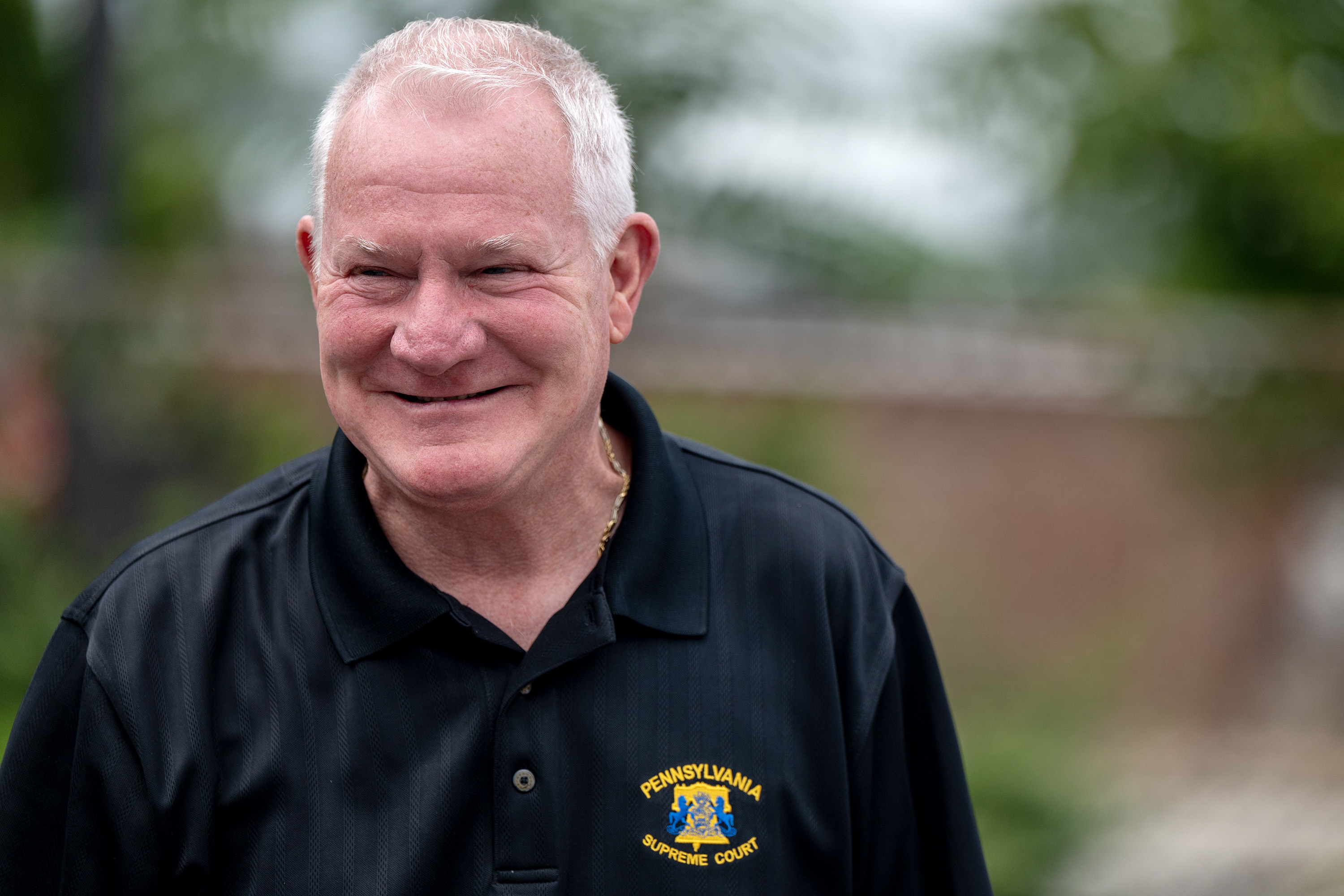
    Peering out his front door on a sunny September day, the man asked if the mild-mannered and smiling white-haired justice standing on his front porch was related to former labor leader John Dougherty. Widely known as “Johnny Doc,” the former head of Local 98 of the International Brotherhood of Electrical Workers and a onetime kingmaker in state and local politics was sentenced last year to six years in federal prison on embezzlement and bribery convictions.

    Despite the public fall from grace, the voter said he missed John Dougherty’s leadership in Philadelphia, adding that he believed Dougherty had been good for workers in the city. They are brothers, Kevin Dougherty confirmed.

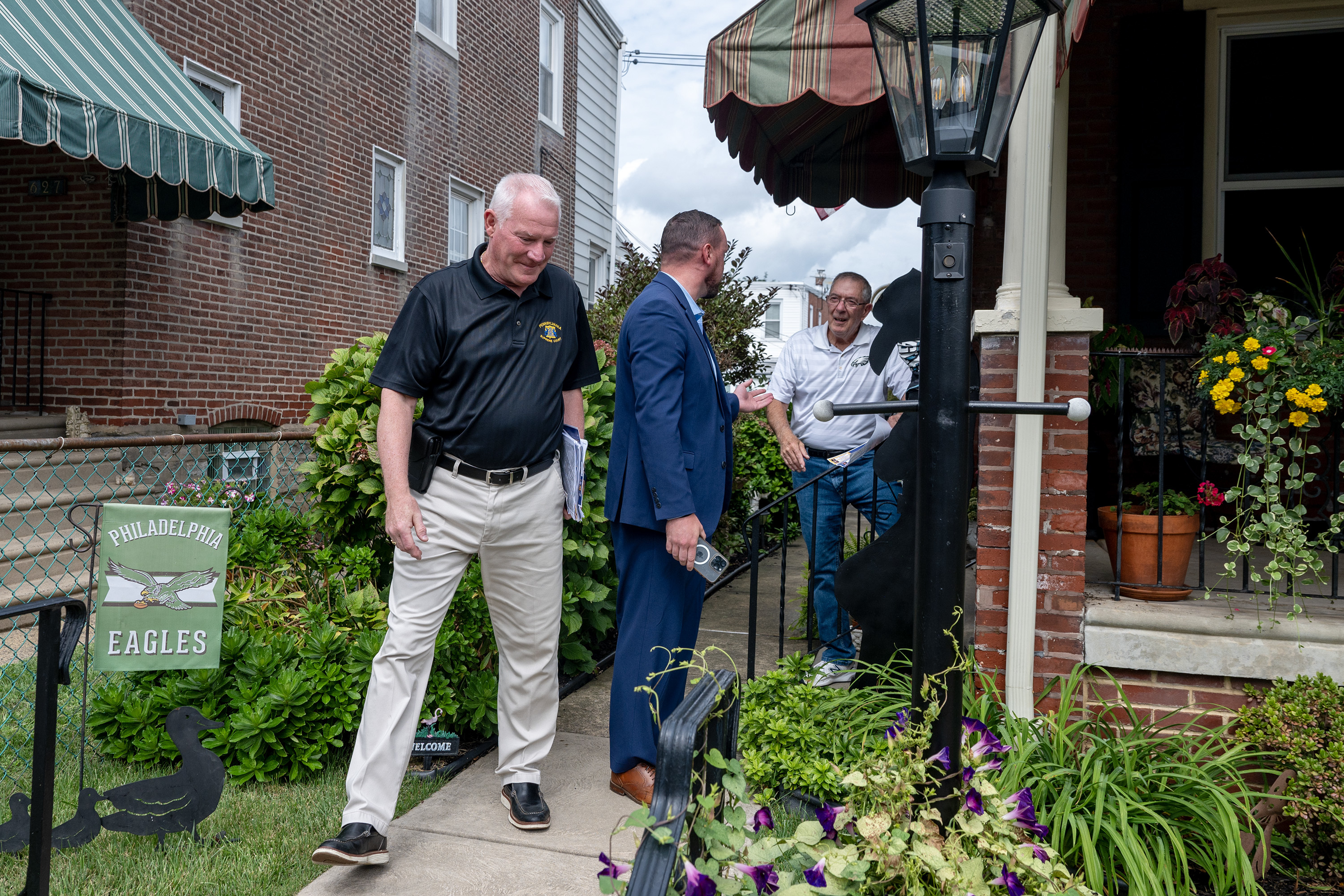
    Justice Kevin Dougherty (left) canvasses with his son, State Rep. Sean Dougherty (center) in Fox Chase Sunday Sept. 7, 2025, stopping at the home of a voter. The elder Dougherty is one of three Pennsylvania Supreme Court justices up for retention.

    The justice had spent the day asking voters in his neighborhood to keep him and two other justices on the state’s Supreme Court for an additional 10-year term. At that stage, many voters were not even aware of the typically sleepy and nonpartisan contest on which both parties are spending millions in the lead-up to the Nov. 4 election.

    But in this year’s unusually high-profile state Supreme Court retention race, the connection has, in some circles, become unavoidable. Republicans seeking to oust Kevin Dougherty and two of his colleagues, all initially elected as Democrats, have sought to tie the judge to his brother’s misdeeds. The justice, a son of South Philadelphia who previously led Philadelphia’s Family Court, has sought to distance himself, and has seen the continued support of labor unions in his retention campaign.

    “Over the course of 25 years as a judge, including ten years as a Justice on the Supreme Court, Justice Dougherty has had the privilege and the benefit of meeting a multitude of Pennsylvanians including the working men and women of organized labor,” Shane Carey, Kevin Dougherty’s campaign manager, said in a statement. “Our campaign is proud to receive their support, as well as the support from almost 5,000 other individual donors.”

    How Johnny Doc helped elect his brother to the Supreme Court in 2015

    Kevin Dougherty didn’t choose to be related to one of the city’s most prominent power brokers, but he certainly benefited from his brother’s former union’s help, with significant support from the politically powerful Local 98 during his 2015 campaign for the state bench.

    Local 98, where John Dougherty was the longtime business manager, contributed more than $620,000 during Kevin Dougherty’s 2015 campaign for the Pennsylvania Supreme Court. Local 98’s spokesperson at the time also served as Kevin Dougherty’s campaign manager and appears from campaign finance filings that year to have been paid by Local 98. The union also spent more than $480,000 on in-kind contributions for “professional services,” mailers, merchandise, and more.

    Justice Kevin Dougherty talks with volunteers before they head out the canvass in Fox Chase Sunday Sept. 7, 2025. Dougherty is one of three Pennsylvania Supreme Court justices up for retention.

    Kevin Dougherty is the only justice up for retention from Southeastern Pennsylvania. The other justices, Christine Donohue and David Wecht, live in Pittsburgh. They will each appear on the November ballot with no party and no home county. Voters will simply be asked “yes” or “no” whether each individual justice should be retained for another term.

    Republicans working to oust the three justices this year have tried to leverage Kevin Dougherty’s past support from his brother to encourage voters to oppose his retention.

    Scott Presler, an influencer aligned with President Donald Trump who has more than 2.4 million followers and runs a political action committee aimed at registering Republican voters, posted an AI-generated image of John Dougherty behind bars, tying, without evidence, Local 98’s contributions to Kevin Dougherty’s 2015 campaign to his brother’s convictions.

    “Coincidence?” Presler wrote.

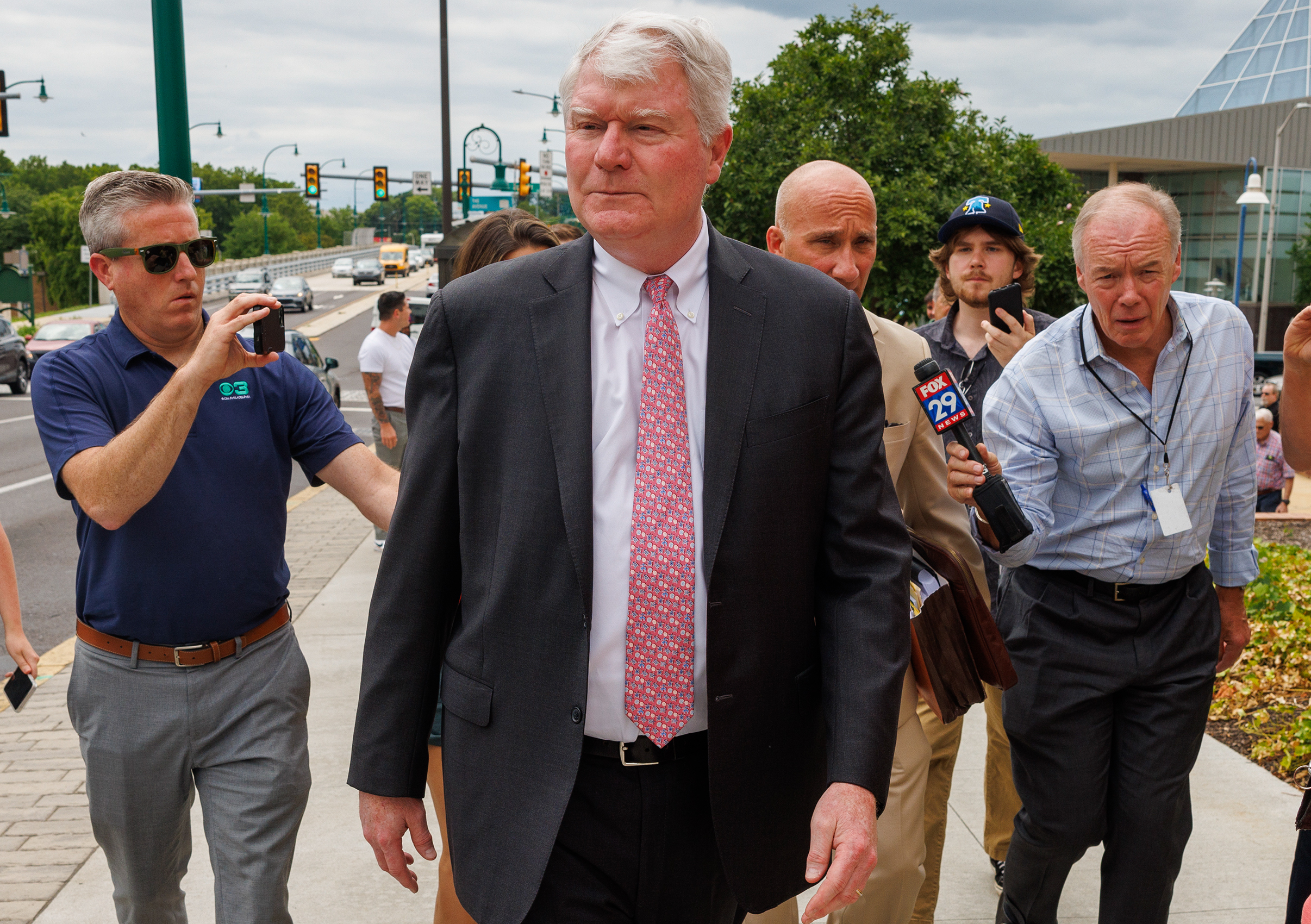
    Johnny Dougherty, the former IBEW business manger, and his attorney Gregory J. Pagano as they leave the U.S. District Court, Reading, Pa. on the day he was sentenced to 6 years in prison Thursday, July 11, 2024.

    For months, the conservative influencer has posted on social media urging followers to vote against retaining Kevin Dougherty and his colleagues, citing the times his name was mentioned during John Dougherty’s trials, such as when prosecutors alleged the justice received free home repairs or snow removal on the union’s dime. Kevin Dougherty’s lawyer at the time of the embezzlement trial said the judge never knowingly accepted services paid for with union funds.

    While door-knocking in September, Kevin Dougherty dismissed attacks against him related to his brother as “misinformation,” noting his decades-long career as a judge.

    Kevin Dougherty, 63, spent more than a decade as a Common Pleas Court judge in Philadelphia before his election to the state Supreme Court. During his tenure on the state’s highest court, he has authored majority opinions and is leading a statewide initiative to improve how Pennsylvania’s judicial system interacts with people with behavioral health issues.

    “I spent close to a quarter of a century being a judge,” Dougherty said on a sidewalk in Northeast Philly. “I just don’t accept people’s comments and judgment. I want to know what the motive behind those comments are. Some of these comments are just partisan … and I believe in my reputation.”

    The justice should be vetted on his own merits, said John Jones, a former U.S. District Court judge for the Middle District of Pennsylvania who was appointed to the bench by former President George W. Bush.

    “You can pick your friends, but you can’t pick your relatives,” Jones, now president of Dickinson College, added. “You have to judge the justice on his own merits. This is not a country where we favor guilt by association.”

    This time on the campaign trail, Kevin Dougherty has new familial support. State Rep. Sean Dougherty, a Democrat who was elected last year to represent parts of Northeast Philadelphia, has joined his dad to stump for his retention.

    Kevin Dougherty still has broad union support, including from Local 98

    With John Dougherty no longer at the helm of Local 98, labor unions in Pennsylvania this year still overwhelmingly supported the justice for retention, contributing $665,000 to Kevin Dougherty’s campaign as of September. While trades unions contributed the most of any interest group to all three justices — for a total of $903,000 as of the latest filings — Kevin Dougherty is the largest beneficiary of that support.

    Among those contributors: Local 98. The union, which has reorganized and distanced itself from John Dougherty since he was first convicted in 2021, gave $70,000 to Kevin Dougherty’s retention campaign.

    “IBEW Local 98 does not support candidates based on personal relationships,” said Tom Lepera, Local 98’s political director, in a statement. “We support candidates who understand and stand up for the needs of working men and women in organized labor. Justice Dougherty, along with Justices Donohue and Wecht, have consistently demonstrated their commitment to protecting the rights and interests of middle-class workers across this commonwealth.”

    Kevin Dougherty’s campaign did not respond to several questions this week about his brother’s role in his 2015 campaign or whether his brother’s reputation has influenced the retention campaign.

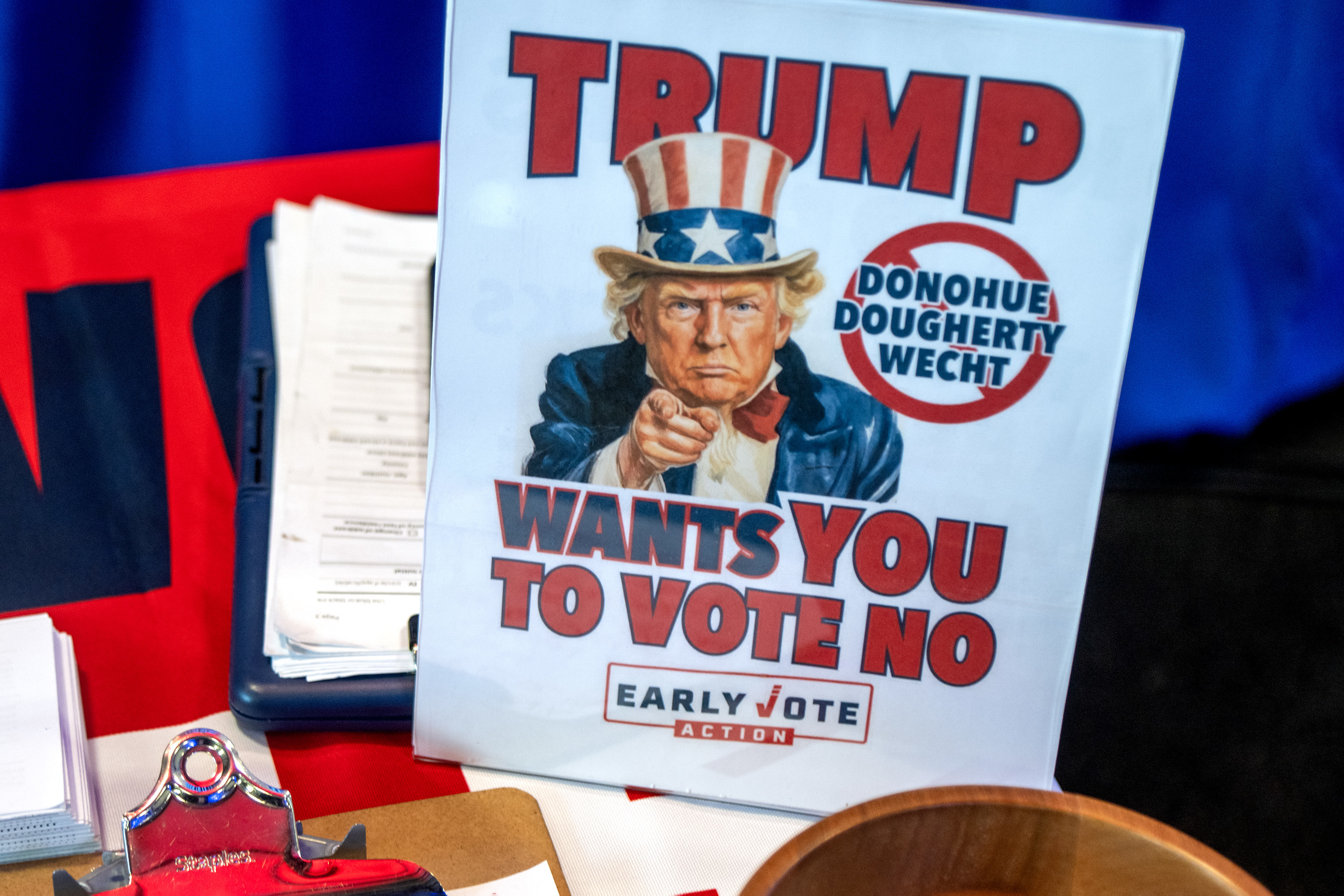
    Anti-retention material featuring President Donald Trump as Uncle Sam was on display at Republican rally in Bucks County last month headlined by Treasurer Stacy Garrity, a candidate for governor. The material is from Early Vote Action, a group led by GOP influencer Scott Presler.

    Union leaders insist their support for Kevin Dougherty this year has nothing to do with his brother and is a reflection of his quality work in the judiciary. Labor unions often support Democratic candidates, who are often seen as more beneficial to unions and their priorities.

    “It’s about keeping good judges on the bench,” said Ryan Boyer, leader of the Philadelphia Building and Construction Trades Council, an umbrella organization of local trades unions once commanded by John Dougherty. This year, the building trades gave just over $33,000 to each justice.

    “We don’t live on Mars where we don’t know that sometimes familial connections can be there,” Boyer said, “and they try to exploit those things.”

    Nonpartisan and Democratic groups favor Dougherty’s tenure on the bench

    Like his colleagues running for retention, Kevin Dougherty has earned broad support from nonpartisan and partisan groups alike.

    Dougherty was recommended for retention by the Pennsylvania Bar Association, which is a rigorous, nonpartisan decision based on a jurist’s behavior on the bench, and endorsed by several law enforcement organizations.

    Lauren Cristella, CEO of the Committee of Seventy, the Philadelphia-based good-government group, noted that the justice was never charged or found guilty of wrongdoing.

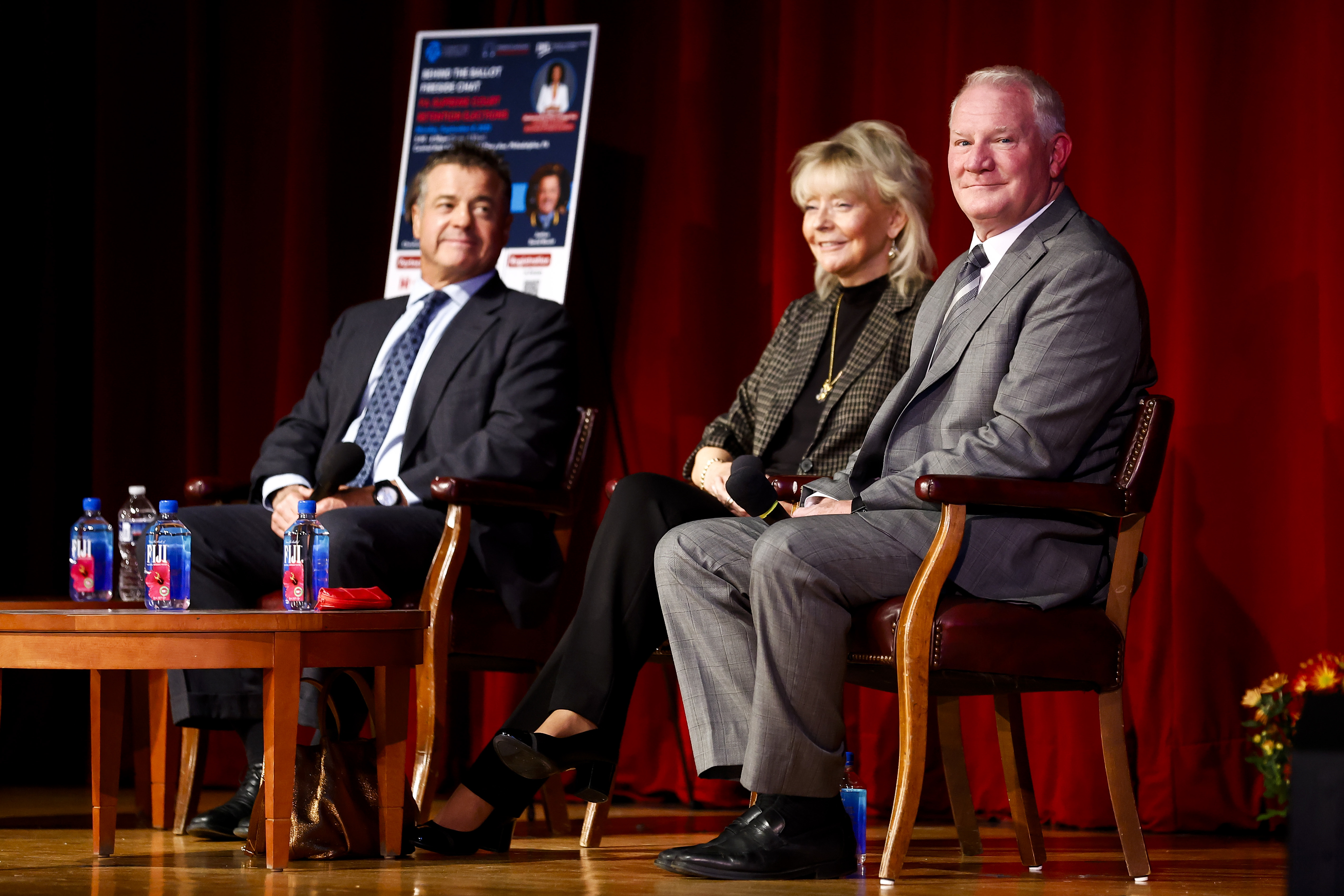
    Justices David Wecht, Christine Donohue and Kevin Dougherty sit onstage during a fireside chat at Central High School on Monday, Sept. 8, 2025 in Philadelphia.

    “The Committee of Seventy relies on the findings of law enforcement and professional oversight organizations, such as the Bar Association, when evaluating judicial candidates. This year, the Pennsylvania Bar Association has evaluated Justice Dougherty and recommended him for retention. Our focus remains on transparency, accountability, and maintaining public trust in Pennsylvania’s courts,” Cristella said in a statement.

    Dougherty and his fellow justices have also gained the support of Gov. Josh Shapiro, Pennsylvania’s popular Democratic governor, who in a fundraising email to Pennsylvania Democrats on Thursday urged voters to mark “yes” on retaining Dougherty, Donohue, and Wecht.

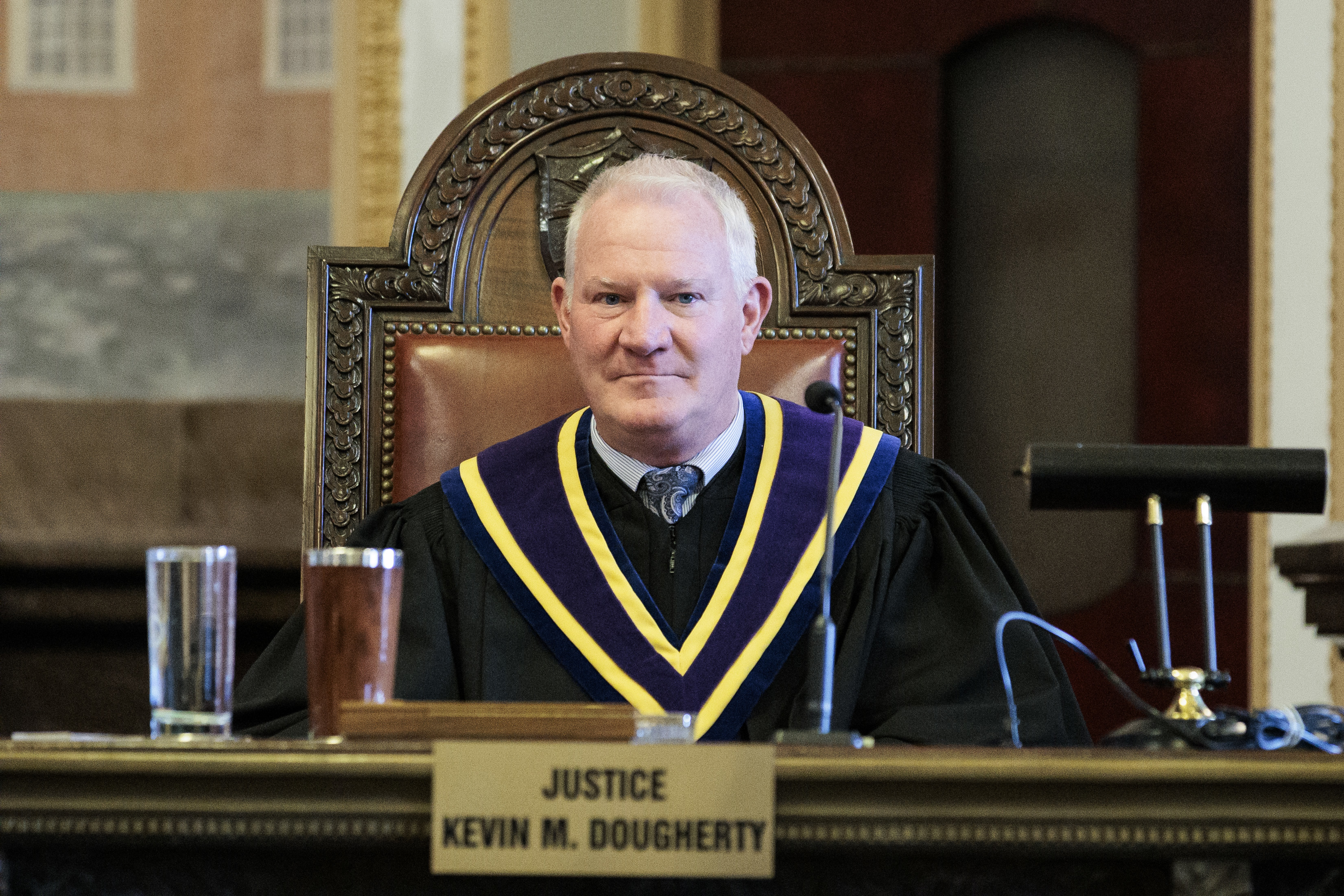
    Justice Kevin M. Dougherty listens during a Courtroom Dedication Ceremony at the Supreme Court Courtroom in Philadelphia City Hall on Tuesday, Sept. 9, 2025 in Philadelphia.

    “The threats to our freedoms are coming from all directions, and we need a Court that stands up for what’s right,” Shapiro said in the email. “Justices Donohue, Dougherty, and Wecht have proven that we can count on them to protect freedom, reproductive rights, and the rule of law.”

    In a statement to The Inquirer, Kevin Dougherty didn’t mention his brother by name.

    “With regard to my personal relationship I love my big brother. For obvious reasons, my brother is not participating in my Retention campaign,” he said.

  • Gov. Josh Shapiro will campaign for Democratic governor hopefuls Mikie Sherrill and Abigail Spanberger this weekend

    Gov. Josh Shapiro will campaign for Democratic governor hopefuls Mikie Sherrill and Abigail Spanberger this weekend

    Gov. Josh Shapiro is hitting the campaign trail in two key states this weekend.

    With less than two weeks left until Election Day, Shapiro will campaign and raise cash for U.S. Reps. Mikie Sherrill (D., N.J.) and Abigail Spanberger, (D., Va.), two Democratic hopefuls in high-stakes gubernatorial races that could preview the national mood ahead of next year’s midterms.

    Shapiro will campaign with Sherrill Saturday morning in Monroe Township at an event to mark the start of early in-person voting in the Democratic-leaning state which has grown increasingly red. The pair will then attend a Souls to the Polls event at a church in New Brunswick, Shapiro For Pennsylvania spokesperson Manuel Bonder said.

    The governor is also expected to hold a fundraiser for the New Jersey Democratic State Committee to benefit Sherrill’s campaign later in the day.

    On Sunday, Shapiro will head to Virginia to attend events in Portsmouth and Norfolk with Spanberger.

    Sherrill has amped up her campaigning in recent weeks, and she’s brought out big Democratic names to help her. In the last three weeks, she’s campaigned with New Jersey Sens. Cory Booker and Andy Kim, and with Maryland Gov. Wes Moore. Former Secretary of Transportation Pete Buttigieg is planning a visit to New Jersey next weekend, and Sherrill’s campaign curtain call the Saturday before Election Day will feature a rally with former President Barack Obama.

    National Democrats see the Garden State governor’s race as a must-win, and despite polling showing Sherrill up in the race, nerves are high after President Donald Trump lost the state by only four points in November.

    This combination photo shows candidates for governor of New Jersey Republican Jack Ciattarelli, left, and Democrat Mikie Sherrill during the final debate in governors race, Oct. 8, 2025, in New Brunswick, N.J. (AP Photos/Heather Khalifa)

    Why Shapiro is involved in the New Jersey governor’s race

    Shapiro is a big draw on the campaign trail as he continues to build a national profile, and gears up for his own reelection campaign next year. The first-term governor, who is seen as a potential 2028 presidential candidate, announced the 2026 release of a memoir this week.

    His multi-state gubernatorial stumping follows investments in races in Pennsylvania. He donated $250,000 from his campaign fund to the Pennsylvania Democratic Party last month. And he’s appeared in ads for the judicial races in Pennsylvania, in which Democrats hope to retain three judges there.

    In a September poll by Quinnipiac University, 61% of respondents said they viewed Shapiro favorably, an unprecedented figure among recent Pennsylvania governors at the same point in their terms, pollsters noted.

    The poll also found that Shapiro is viewed favorably by some Republicans, an across-the-aisle appeal that appears to extend across the Delaware River.

    Shapiro’s been lauded by Sherrill’s Republican opponent in the New Jersey race, Jack Ciattarelli, a trend chronicled recently by Politico.

    Ciattarelli commended Shapiro’s willingness to criticize New York City mayoral candidate Zohran Mamdani’s past comments on Israel, and praised his handling of small businesses, energy and property taxes in Pennsylvania, contrastingly saying New Jersey faces a “crisis” in all three.

    Sherrill has said frequently that she wants to mimic Pennsylvania’s success in cutting the time it takes business owners to get permits from state government.

    This story has been updated to correct the location of Gov. Josh Shapiro’s first stop with U.S. Rep. Mikie Sherrill on the campaign trail Saturday.

  • City Controller Christy Brady is facing a challenge from Republican Ari Patrinos

    City Controller Christy Brady is facing a challenge from Republican Ari Patrinos

    City Controller Christy Brady, seeking her first full term as Philadelphia’s independently elected fiscal watchdog, is being challenged by Republican Ari Patrinos in the Nov. 4 general election.

    The controller’s office is charged with auditing the city’s finances and investigating fraud, waste, and abuse.

    But despite that critical role, there hasn’t been much drama in this year’s race.

    Patrinos, a former stockbroker and Philadelphia public school teacher, acknowledged the odds are against him in heavily Democratic Philadelphia and said he has no particular complaints about Brady’s performance.

    Instead, he said, he ran because “it was important that somebody run on the ticket.”

    “The truth is nobody wanted to run, and my ward leader asked me if I would run,” said Patrinos, who has not reported raising any money for his campaign. “I didn’t have any specific attacks on Brady. My concern is that the city is too single-party, and I think the city functions better when you have a two-party system.”

    Brady, a Democrat who has a $250,000 campaign war chest she likely won’t need to use this year, has the support of much of the local political establishment, including the Democratic City Committee and the building trades unions.

    A 30-year veteran of the controller’s office, Brady has struck a notably conciliatory tone during her tenure, striving to work collaboratively with Mayor Cherelle L. Parker’s administration rather than butt heads with the executive branch, as many of her predecessors have done.

    “Because of my experience when I took office two years ago, I hit the ground running,” she said.

    She pointed to her office’s audit that uncovered that the Philadelphia School District had made about $700,000 in payments to fake vendors as part of a cyber scam and to her investigation finding that fraudulent use of the property tax homestead exemption was costing the city and school district about $11.4 million per year.

    Brady was appointed acting controller in 2022 by then-Mayor Jim Kenney when Rebecca Rhynhart resigned from the post to run for mayor. Brady then won a 2023 special election to finish Rhynhart’s term, which ends in January.

    Seeking a full four-year term for the first time, Brady this year ran uncontested in the Democratic primary.

    “The biggest question I get [on the campaign trail] is: What does a controller do?” she said. “And so I’m getting out there and spreading the word of what we’re currently working on and what we do in the office.”

    The controller earns an annual salary of $171,000 and oversees an office with more than 120 employees and a budget of about $11.8 million.

    Patrinos also had no opponent in the May primary. He said he has been spending much of his time on the campaign trail promoting Pat Dugan’s campaign for district attorney.

    Dugan, a self-described “lifelong Democrat,” lost to District Attorney Larry Krasner in the Democratic primary but has accepted the GOP nomination to take a second swing at the incumbent in the general election.

    “I spend like half my time when I campaign advocating for Dugan because I’m very concerned about the crime,” Patrinos said.

    From Philly to Harvard and back

    Patrinos, who lives in Chestnut Hill, said he was a Democrat until about four years ago, adding that he voted for Joe Biden in the 2020 presidential election.

    His conversion was prompted primarily by his alma mater, Harvard College, which he felt had too enthusiastically embraced a “woke” stance.

    “The immediate driving factor was on the cultural front. It was what was going at Harvard,” he said. “I’m a little bit of an anti-woke warrior. … 2020 was peak woke.“

    Academia’s leftward trajectory and the Biden administration’s “terrible” handling of the pandemic combined to leave Patrinos with the feeling that he had no place in the Democratic Party, he said.

    “These Ivy League liberal types who really don’t have a sense of what’s going on in the lives of average Americans — they seemed to be so indifferent to the negative effects of their policies,” he said.

    He became involved in local Republican politics and helped boost President Donald Trump’s Philadelphia campaign in 2024.

    “I’m not a MAGA guy, so I didn’t join [the GOP] because of Trump,” he said, “but honestly I’m very happy with the higher education stuff, the hardcore stand he’s taken with Harvard.”

    Patrinos, a Central High School graduate who also has a master’s degree in political science from the University of Chicago, was a stockbroker in New York City before moving back to Philly about 15 years ago.

    He then became a math and history teacher and worked at West Philadelphia High School and Strawberry Mansion High School. Patrinos said he suffered a seizure several years ago that temporarily limited his employment opportunities, but is now seeking other jobs should he come up short against Brady.

    If elected, Patrinos said, he would audit the Philadelphia Department of Licenses and Inspections (L&I), examine whether SEPTA could do a better job preventing fare evasion, and push the school district to prepare more students for careers in information technology.

    Controller and mayor on the same page

    Brady’s approach to the mayor’s administration is the exception when it comes to the recent history of her office.

    A decade ago, then-City Controller Alan Butkovitz’s relationship with Mayor Michael A. Nutter became so toxic that Nutter at one point issued a statement calling Butkovitz “a sad and sick person.”

    Their successors, Kenney and Rhynhart, started off with widespread expectations that they might have a better working partnership, given that Rhynhart served as a top executive branch official under Nutter and, briefly, Kenney. But the relationship soured in a matter of months after Rhynhart publicly criticized the administration’s bookkeeping, prompting a call from Kenney that reportedly “got personal” and the cancellation of their planned monthly meetings.

    Cherelle L. Parker, then a candidate for mayor of Philadelphia, stops to greet a group, including Christy Brady,(center seated), during election day lunch at Famous 4th Street Deli in Philadelphia on Tuesday, May 16, 2023.

    That outcome does not appear likely with Brady and Parker.

    Brady shares many political allies with Parker, especially the Philadelphia Building and Construction Trades Council, a coalition of unions that spends big on elections and has reason to be pleased with both Brady and Parker’s tenures so far.

    Brady, for instance, touts her office’s audit of L&I that revealed inspectors often failed to confirm that construction sites were being run by licensed contractors — providing ammunition to the trades unions, which often rail against “fly-by-night” contractors that do not employ their members. And the mayor last year split the department into two agencies, with one focused largely on enforcing construction regulations.

    Brady said her healthy relationship with the Parker administration should not be confused with a reticence to call out fraud and waste.

    “I am an independently elected official. I am not afraid to stand up for what’s right,” she said. “I believe in the rules and regulations in city government.”

    Her approach to the executive branch, she said, is designed to advance the aim of any auditor: ”getting management to implement your recommendations.”

    “In my experience in the controller’s office, when you fight, they’re not going to listen to your recommendation,” said Brady, a certified public accountant who graduated from the Philadelphia College of Textiles and Science, now Jefferson University. “When we issue our reports, the mayor has been thanking me for the recommendations. And I really appreciate that relationship because I believe that we can make change.”

    Staff writer Ryan W. Briggs contributed to this article.

  • Why Delaware County’s council race is focused around rising property taxes

    Why Delaware County’s council race is focused around rising property taxes

    Democrats have dominated Delaware County government since the 2019 election.

    As suburban communities across the nation flipped from red to blue, Democrats took control of the county council for the first time since the Civil War — the result of long-term shifts accelerated by President Donald Trump’s first administration. The party has held all five seats on the governing board ever since, easily retaining seats in 2021 and 2023.

    But on the heels of a double-digit property tax increase last year, Republicans see an opening to regain representation.

    Two seats on the five-member board are on the ballot in November. Democrats argue tax increases were necessary to make up for decades of underinvestment by Republicans.

    But Republicans insist spending is out of control. While they cannot take control of the board this year, they are asking voters to give them a voice to push back against the Democrats.

    “The money tree in the backyard does not exist,” said Brian Burke, one of two Republicans running for council.

    Who is running?

    Republicans nominated Burke, the former president of the Upper Darby Township Council, and Liz Piazza, a former county employee, for the two seats.

    Burke, a union steamfitter, was first elected to Upper Darby’s township council in 2019 as a Democrat. He became a Republican to unsuccessfully run for mayor of the township in 2023 following years of feuds with the Democratic administration. While on the township council, Burke worked in conjunction with Republicans on the board as well as two other Democrats to challenge Democratic leadership in Upper Darby. He said this experience would aid him as he worked to hold Democratic leadership in Delaware County accountable.

    Piazza worked for decades in Delaware County Court’s domestic relations department, where she ran the warrant division and served as a liaison for judges and attorneys. Running for council, Piazza has been vocal about wanting to devote opioid settlement funds toward grandparents caring for the children of those struggling with addiction.

    Democrats nominated incumbent Councilmember Richard Womack and County Controller Joanne Phillips.

    Womack was first elected to the council in 2021 after spending 10 years on the Darby Township Board of Commissioners. Womack spent years as an advocate in the labor movement, including serving as an adviser on community and religious affairs for the national AFL-CIO.

    Phillips was elected controller in 2017, the first year Democrats swept county-level positions. In the controller role, she has been responsible for auditing county offices and advising on council spending matters.

    What is the Republican platform?

    Burke and Piazza are urging voters to elect them to “stop the spend.”

    After the council raised property taxes by 23% last year, the pair of Republicans argued the taxes were a result of out-of-control spending in the county. They say there needs to be a voice on the council acting as a check on spending.

    “There’s a lot that needs to be cut. There’s a lot of spending,” Piazza said.

    If elected, the two Republicans would not have control over county spending, but they would have votes on the five-member board to oppose new spending and work to sway their Democratic counterparts.

    What is the Democratic platform?

    Womack and Phillips are largely defending the actions of the Democratic council over the last five years. Republican leadership, they argue, did not raise taxes for 12 years and allowed county infrastructure to fall into disrepair. As a result, they say, Democrats had to increase taxes to fund county services and infrastructure improvements.

    No one wanted to increase taxes, Womack said, but it was unavoidable.

    “Our county has really been underserved for many decades,” Womack said. “In the long run, it costs you a lot more money to repair than if you had taken care of things gradually.”

    If elected, Phillips says she would like to do more public vetting of contracts and work to increase development in Delaware County so that the local tax base can be increased without more tax hikes. Womack has said he wants to work on expanding affordable housing options in the county.

    Why were taxes raised? Will there be another hike?

    The county council voted last year to increase property taxes by 23%, which comes out to roughly $185 annually for the owner of a home assessed at the county average. The county had used pandemic relief funds to stave off significant tax increases in prior years, but those funds were running dry and additional dollars were needed to cover employee salaries amid inflation, council members said at the time.

    Piazza and Burke insist that another double-digit tax increase is on the way. Too much of the current budget, they argue, still depends on short-term federal pandemic relief funds or transfers from other county funds.

    “They’re going to come out after November 4th election and basically tell the residents of Delaware County, ‘You’ve got another 20% increase,’” Burke said.

    Womack, the sole member of the county council who voted against the increase, said that he anticipated another tax hike but that he could not imagine it would reach 20%.

    The incumbent spearheaded a citizens budget task force that has spent the year seeking areas to cut spending.

    “It’s kind of hard to really project what we’re looking at right now,” Womack said. He noted that, amid a federal government shutdown, details on state and federal aid are unclear.

    However, the county is not expecting to release its preliminary budget until mid-November, after the election. Last year, the county did not release its proposed budget until Dec. 3.

    Where do Republicans want to cut?

    Republicans have identified three primary areas they argue represent overspending: the county health department, the prison, and outside legal assistance.

    Delaware County, the largest county in Pennsylvania without a health department at the onset of COVID-19, launched its health department in 2022.

    Republicans in the county have long argued it was an unnecessary expense. Though the $18 million department is currently funded entirely by state and federal grant dollars, Burke argued it will eventually cost taxpayers.

    “In my eyes, that [money] could have been used somewhere else,” Burke said.

    In 2020, the council voted to explore options to retake control of the county prison from the private firm that had run it. Phillips, who was controller at the time, argued the decision was in the county’s best interest and has better served inmates and staff.

    The prison was de-privatized after a series of complaints of mismanagement and mistreatment of prisoners. The prison’s superintendent resigned in 2019 after an Inquirer investigation revealed allegations of racism and abuse of employees.

    But Republicans argued that the county’s costs have gone up too much and that the county opened itself up to litigation that it would not have been vulnerable to if the prison had remained privately run. The union representing prison employees often clashed with the first warden the county chose to lead the prison.

    In an interview, Burke argued the county could find significant savings if it put the prison back in private hands. In 2025, the prison cost the county over $59 million. The county’s last contract with GEO, which managed the prison privately, paid the company $259 million over five years.

    Phillips said the health department and public prison, while significant expenses, will save the county and its residents in the long run. Even when the prison was run privately, she said, infrastructure repairs were on the county and the private operators sought to maximize the number of inmates in the building.

    “Government should take care of its people,” Phillips said.

    Finally, Republicans point to the ballooning cost of legal counsel to the county. Last year, the county paid more than $4.4 million to outside legal counsel, including a firm that once employed Phillips and County Councilwoman Christine Reuther. Republicans argue this represents misuse of funds and political cronyism.

    Phillips and Womack instead point to the county’s small in-house legal team and the growing number of cases brought against the county, including defending against frivolous suits filed by election deniers, as well as managing complex legal issues, such as the Prospect Medical Holdings bankruptcy filing that closed two major hospitals in the county.

    Even if they won both seats, Republicans would hold the minority on the council for at least the next two years. This means they would have to persuade Democrats to come along with them on any policy changes or budget cuts.

    “I would love to win the seat and get in there and get into the nitty-gritty and kind of see what goes on behind closed doors and have a voice for the residents and be there for them,” Piazza said.

    This suburban content is produced with support from the Leslie Miller and Richard Worley Foundation and The Lenfest Institute for Journalism. Editorial content is created independently of the project donors. Gifts to support The Inquirer’s high-impact journalism can be made at inquirer.com/donate. A list of Lenfest Institute donors can be found at lenfestinstitute.org/supporters.
  • ‘Philly crime’ and the specter of Donald Trump are dominating two Bucks County law enforcement races

    ‘Philly crime’ and the specter of Donald Trump are dominating two Bucks County law enforcement races

    Bucks County Republicans are stoking fears about crime in Philadelphia even as violent crime in the city steadily drops from its high during the pandemic.

    Digital ads Republicans have circulated for the county’s sheriff and district attorney races since August tell voters to “keep Philly crime out of Bucks County,” borrowing a tactic from President Donald Trump, who regularly promotes exaggerated visions of crime-ridden liberal cities.

    Republicans in the purple collar county hope the message will boost the GOP incumbents, District Attorney Jen Schorn and Sheriff Fred Harran, as they face off this fall against their respective Democratic challengers, Joe Khan and Danny Ceisler.

    “We’re letting anarchy take over our country in certain places, and that’s not something we want in Bucks,” said Pat Poprik, the chair of the Bucks County Republican Party.

    Meanwhile, Democrats are eager to tie the GOP incumbents to Trump, portraying them as allies of a president whose nationwide approval rate is dropping.

    Khan, a former county solicitor and former federal prosecutor who unsuccessfully ran for attorney general last year, is seeking to portray himself as less politically motivated than Schorn, a veteran prosecutor who is running for a full term as district attorney after being appointed to the position last year.

    Ceisler, an Army veteran and an attorney who worked for Democratic Gov. Josh Shapiro’s administration, has taken a similar approach in his race against Harran, the outspoken Republican sheriff who has sought a controversial partnership with U.S. Immigration and Customs Enforcement.

    “Democrats are far more enthusiastic about voting precisely because they see what’s happening on the national level. They are really infuriated by what Donald Trump is doing,” State Sen. Steve Santarsiero, who chairs the Bucks County Democratic Party, said. “They’re going to make their displeasure heard by coming to the polls.”

    The local races in the key county, which Trump narrowly won last year, will be a temperature check on how swing voters are responding to Trump’s second term and will gauge their enthusiasm ahead of the 2026 midterms, when Shapiro stands for reelection.

    As the Nov. 4 election approaches, early signs indicate Democrats’ message might be working — polling conducted by a Democratic firm in September found their candidates ahead, and three weeks before Election Day, Democrats had requested more than twice as many mail ballots as Republicans.

    “I think the Republican Party has the same problem it always does. … They turn out when Trump’s on the ticket, but when he’s not, there’s less enthusiasm,” said Jim Worthington, who has run pro-Trump organizations in Bucks County. “Truth be told, the Democrats do a hell of a job just turning out their voters.”

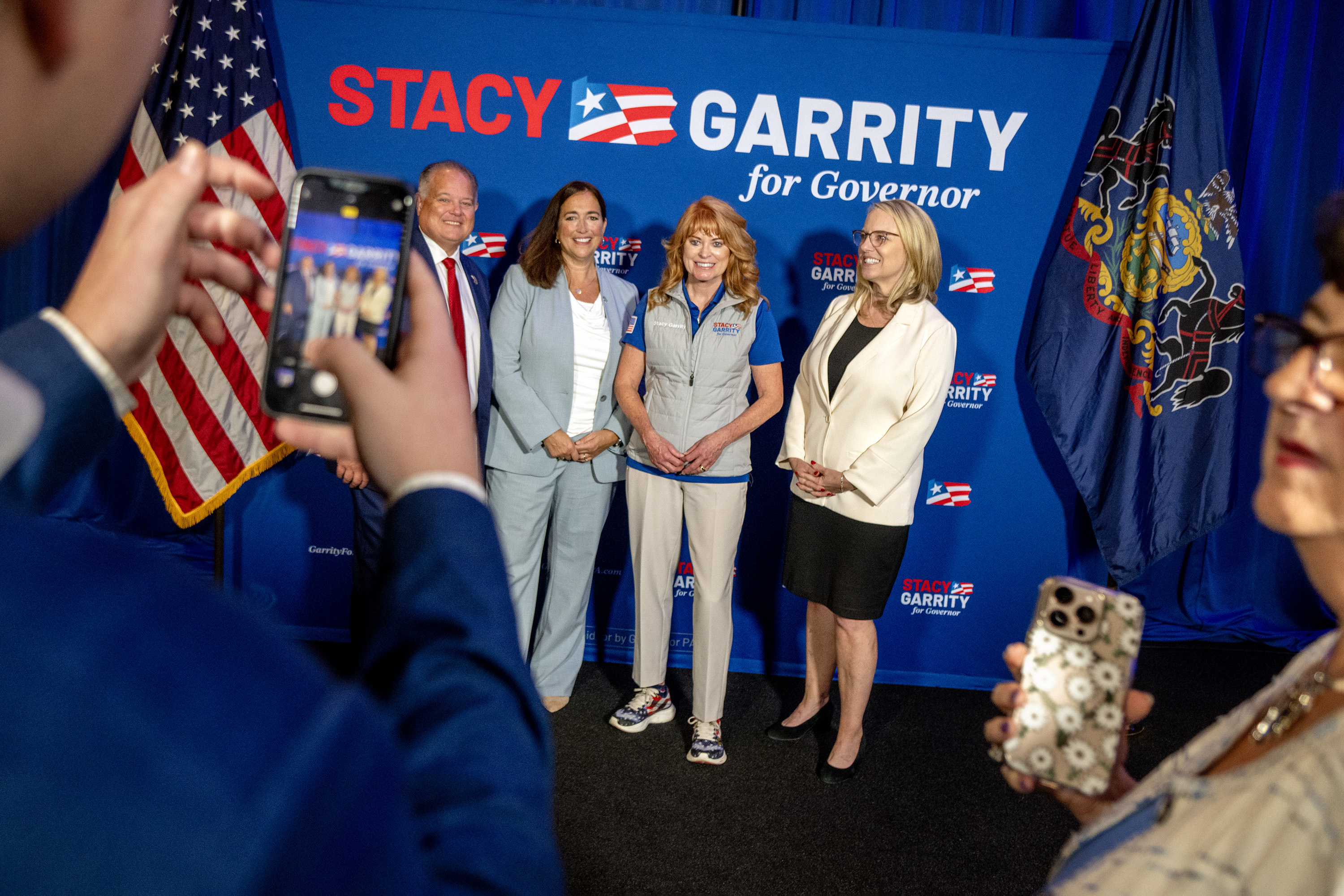
    State Treasurer Stacy Garrity, a Republican running for Pa. governor, poses with Bucks County elected officers following her campaign rally Sat the Newtown Sports & Events Center. From left: Bucks County Sheriff Fred Harran; Bucks County District Attorney Jennifer Schorn; Garrity; and Pamela Van Blunk, Bucks County Controller.

    GOP warns of ‘dangerous’ policies

    Republican messaging in the two races focuses on the idea that Bucks County is safe, but its neighbors are not.

    GOP ads, which have run over the course of four months, suggest that Khan and Ceisler would enact “dangerous” policies in Bucks County such as “releasing criminals without bail” and “giving sanctuary to violent gang members.”

    Democrats reject these ads as scare tactics. The ads make implicit comparisons to Philly’s progressive District Attorney Larry Krasner, who is poised to win a third term in the city but remains a controversial figure in the wider region even as violent crime rates have fallen in the city.

    They frame Harran and Schorn in stark contrast to their opponents as lifelong Bucks County law enforcement officers with histories of holding criminals accountable.

    “I think it resonates beyond the Republican base,” said Guy Ciarrocchi, a Republican analyst, who contended frequent news coverage of Krasner makes the message more viable.

    Khan, a former assistant Philly district attorney who unsuccessfully ran against Krasner in the 2017 primary, has noted that he campaigned “very, very vigorously” against Krasner and challenged his ideas on how to serve the city.

    “I accept the reality that I didn’t win that election,” said Khan, whose platform in 2017 included a proposal to stop prosecuting most low-level drug offenses. “Unlike my opponent, who seems to basically enjoy the sport of scoring political points by sparring with the DA of Philadelphia.”

    Schorn, however, is adamant that politics has never played a role in her prosecutorial decisions. Her mission, she said, is “simply to get justice.”

    A lifelong Bucks County resident who has been a prosecutor in the county since 1999, Schorn handled some of the county’s most high-profile cases and spearheaded the formation of a task force for internet crimes against children.

    Bucks County District Attorney Jennifer Schorn speaks at a Republican rally at the Newtown Sports & Events Center in September.

    “This has been my life’s mission, prosecuting cases here in Bucks County, the county where I was raised,” she said. “I didn’t do it for any notoriety. I didn’t do it for self-promotion. I did it because it’s what I went to law school to do.”

    Harran spent decades as Bensalem’s public safety director before first running for sheriff in 2021. He is seeking reelection amid controversy caused by his decision to partner his agency with ICE, a move that a Bucks County judge upheld last week after a legal challenge.

    “Being Bucks County Sheriff isn’t a position you can learn on the job. For 39 years, I’ve woken up every day focused on keeping our communities safe,” Harran said in an email to The Inquirer in which he criticized Ceisler as lacking experience.

    Although Ceisler has never worked directly in law enforcement, he argues the sheriff’s job is one of leadership in public safety. That’s something he says he’s well versed in as a senior public safety official in Shapiro’s administration who previously served on the Pentagon’s COVID-19 crisis management team.

    Harran, who described his opponent as a “political strategist,” criticized “politicians” for bringing “half-baked ideas like ‘no-cash bail’” into law enforcement. The concept, which is repeatedly derided in the GOP ads, sets up a system by which defendants are either released free of charge or held without the opportunity for bail based on their risk to the community and likelihood of returning to court.

    Khan and Ceisler each voiced support for the concept in prior runs for Philadelphia district attorney and Bucks County district attorney, respectively.

    Both say they still support cashless bail. Neither, however, would have the authority to implement the policy if elected, though Khan as district attorney could establish policies preventing county prosecutors from seeking cash bail in certain cases.

    Joe Khan, a Democratic candidate running for Bucks County DA, walks from his polling place in Doylestown, Pa. in April 2024 when he was running for attorney general.

    “When a defendant is arrested and they come into court, every prosecutor answers this question: Should this person be detained or not?” Khan said. “If the answer is yes, then your position in court is that this person shouldn’t be let out, and it doesn’t matter how much money they have. And if the answer is no, then you need to figure out what conditions you need to make sure they come to court.”

    Democrats claim to ‘keep politics out’

    Even as Democrats view voter anger at Trump as a key piece of their path to victory, they are working to present themselves as apolitical.

    Democratic ads attack Schorn for not investigating a pipeline leak in Upper Makefield and Harran as caring about nothing but himself. Positive ads highlight Ceisler’s military background and Khan’s career as a federal prosecutor.

    Khan and Ceisler, the Democratic Party’s ads argue, will “stop child predators, stand up to corruption, and they’ll keep politics out of public safety.”

    Khan has described Schorn as a political actor running her office “under Trump’s blueprint.” He has focused on her decisions not to prosecute an alleged child abuse case in the Central Bucks School District or investigate the company responsible for a jet fuel leak into Upper Makefield’s drinking water.

    The jet fuel case was turned over to the environmental crimes unit in Pennsylvania Attorney General Dave Sunday’s office. And prosecutorial rules bar Schorn from discussing the alleged abuse.

    “During the last, I don’t know, 13 years when [Khan] has been pursuing politics, I’ve been a public servant,” Schorn said. “For someone accusing me of putting politics first, he seems to be using politics to further his own agenda.”

    But Schorn appears in GOP ads alongside Harran, a figure who has frequently invited political controversy in fights with the Democratic-led Bucks County Board of Commissioners, his effort to partner with federal immigration authorities, and his early endorsement of Trump last year.

    At a September rally in Newtown for Treasurer Stacy Garrity, a Republican running for governor, Harran cracked jokes about former President Joe Biden’s age as he climbed onto the stage and falsely told voters that they will “lose [their] right to vote” if they don’t vote out three Pennsylvania Supreme Court justices standing for retention.

    Harran has long contended that his decision to partner with ICE was not political.

    “I’m a cop who ran to keep being a cop. This isn’t about politics for me — it’s about doing everything I can to keep my community safe,” Harran said.

    Harran’s opponent, Ceisler, paints a different picture as he draws a direct line between the sheriff and the president.

    Danny Ceisler, a Democrat, is running for Bucks County sheriff.

    Trump, Ceisler said, has inserted politics into public safety in his second term, and he contended that Harran has done the same.

    “[Harran] used his bully pulpit to help get the president elected, so to that extent he is linked to the president for better or worse,” Ceisler said in an interview.

    Ceisler has pledged to take politics out of the office and end the department’s partnership with ICE if elected.

    At an event in Warminster last month, voters were quick to ask Ceisler which party he was running with. Ceisler asked them to hear his pitch about how he would run the office first.

    “Don’t hold it against me,” he quipped as he ultimately admitted to one voter he’s a Democrat.

    Staff writer Fallon Roth contributed to this article.

    This suburban content is produced with support from the Leslie Miller and Richard Worley Foundation and The Lenfest Institute for Journalism. Editorial content is created independently of the project donors. Gifts to support The Inquirer’s high-impact journalism can be made at inquirer.com/donate. A list of Lenfest Institute donors can be found at lenfestinstitute.org/supporters.
  • Barack Obama endorses Mikie Sherrill for New Jersey governor

    Barack Obama endorses Mikie Sherrill for New Jersey governor

    Former President Barack Obama endorsed U.S. Rep. Mikie Sherrill, the Democratic nominee for New Jersey governor, who is locked in a tight race with Republican Jack Ciattarelli.

    Obama’s announcement just weeks ahead of the Nov. 4 election came in the form of an ad paid for by Sherrill’s campaign that Sherrill shared on X Friday morning.

    “Mikie is a mom who will drive down costs for New Jersey families,” Obama said in the ad, echoing her campaign’s core message. “As a federal prosecutor and former Navy helicopter pilot, she worked to keep our communities safe.”

    “Mikie’s integrity, grit, and commitment to service are what we need right now in our leaders,” he adds.

    Sherrill maintains a single-digit lead in polls over Ciattarelli, a former Assembly member who also ran for governor in 2017 and 2021 and has the endorsement of President Donald Trump.

    In a statement, Sherrill praised Obama for leading “historic efforts to lower healthcare costs” and criticized Ciattarelli for defending cuts to Medicaid in Trump’s “big beautiful bill.”

    “There’s so much at stake in this election, so President Obama and I are mobilizing New Jerseyans to make a plan to vote on or before November 4,” Sherrill added.

    The race has been tightening, with each candidate solidifying their bases.

    New Jersey is only one of two states with a race for governor this year, along with Virginia, and national money has been flowing into the race.

    Sherrill last week appeared in South Jersey last week with Sens. Cory Booker (D., N.J.) and Amy Klobuchar (D., Minn.) and in her hometown of Montclair with former U.S. Rep. Gabby Giffords, an Arizona Democrat. She will appear in this weekend with Maryland Gov. Wes Moore.

    Ciattarelli appeared on Wednesday with Ohio gubernatorial candidate Vivek Ramaswamy, who co-founded Trump’s DOGE and who appeared at a GOP summit in Atlantic City earlier this year to garner enthusiasm ahead of the gubernatorial primary.

    Trump does not currently have plans to appear in the state with Ciattarelli, Axios reported. While New Jersey shifted more in support of Trump in 2024 he still lost the state by 6 percentage points.

    The president held a tele-rally ahead of the primary after Ciattarelli pocketed his endorsement in May. Trump is planning to host more of these, Axios reported.

    An earlier version of this story misidentified Vivek Ramaswamy’s position. He is a candidate for Ohio governor.