Category: Elections

  • State Sen. Sharif Street has early fundraising lead in Philly congressional race, but his competitors are close behind

    State Sen. Sharif Street has early fundraising lead in Philly congressional race, but his competitors are close behind

    State Sen. Sharif Street has an early fundraising lead over his competitors in next year’s Democratic primary for a storied Philadelphia congressional seat, according to new campaign finance reports.

    But the race is in its early stages, and candidates who entered the race after Street still have plenty of time to catch up before the May 2026 primary.

    Street, the son of former Mayor John F. Street, entered the race for Pennsylvania’s 3rd Congressional District in early July, days after U.S. Rep. Dwight Evans (D., Philadelphia) announced he would not seek reelection. Street’s campaign launch coincided with the beginning of the campaign finance reporting period, allowing him three full months to solicit contributions and seek endorsements.

    He took in about $352,000 from July 1 through Sept. 30, according to the Federal Election Commission. His campaign spent $33,000 during that time, and he finished the period with $372,000 in cash on hand, which is also the most of any candidate in the race. (Street’s cash reserves are higher than his fundraising because he carried over money from a previous campaign account.)

    “Our strong fundraising results put us in a commanding position,” Street campaign manager Josh Uretsky said in a statement. “We’re building a strong campaign that will hit every neighborhood in the Third District by leveraging our broad-based coalition.”

    window.addEventListener(“message”,function(a){if(void 0!==a.data[“datawrapper-height”]){var e=document.querySelectorAll(“iframe”);for(var t in a.data[“datawrapper-height”])for(var r,i=0;r=e[i];i++)if(r.contentWindow===a.source){var d=a.data[“datawrapper-height”][t]+”px”;r.style.height=d}}});

    State Rep. Chris Rabb, an anti-establishment progressive, who raised $257,000, also announced his campaign in July.

    Rabb’s haul was notable for a candidate with little support among Philadelphia’s established political organizations, such as the deep-pocketed building trades unions that endorsed Street this week. As he has in past runs, Rabb said he is eschewing contributions from corporate-backed political action committees, and tapping into a national network of progressive small-dollar donors.

    “This is a robust, grassroots campaign that’s fueled and funded by a growing movement of Philadelphians and citizens far & wide who want a bold, independent-minded and accountable Democrat to represent the bluest congressional district in the nation,” Rabb said in a statement.

    His campaign spent $76,000, and carried forward $181,000.

    State Rep. Morgan Cephas, a West Philly Democrat who chairs the Philadelphia delegation to the state House, collected $156,000 in contributions, a respectable sum given that she entered the race about a month before the reporting deadline. Her campaign spent $37,000 and had $119,000 in cash.

    In a statement, Cephas said “the excitement about our campaign is palpable.”

    “I understand the problems of Philadelphia because I’ve lived them for the last 41 years,” Cephas said. “Together we can deliver real results for our community.”

    Political outsiders aim to shake up race

    David Oxman, a physician who lives in South Philadelphia, brought in $107,000, spent $35,000, and had a healthy $332,000 in the bank.

    “Since day one, this campaign has been fueled by healthcare professionals, small business owners, and working families across Philadelphia who are ready to take power back from leaders bought by corporate interests,” Oxman said in a statement.

    David Oxman, an intensive care doctor and medical school professor at Thomas Jefferson University Hospital, is running for Congress. Oxman, 58, of Bella Vista, joins a race that includes State Reps. Sharif Street and Chris Rabb to replace retiring U.S. Rep. Dwight Evans.

    The campaign for Temple University professor Karl Morris raised $28,000, spent $26,000, and had $12,000 in cash on hand.

    “As a scientist, teacher, and a non-politician running an outsider campaign, my focus is on connecting with everyday Philadelphians,” Morris, a computer scientist, said in a statement. “Career politicians and the donor class want politics as usual. I’m prepared to make sure everyone in Philadelphia receives equal benefits and equal protections.”

    One notable candidate, physician Ala Stanford, entered the race after the close of the reporting period and has not yet submitted a campaign finance filing. Stanford was a founder of the Black Doctors COVID-19 Consortium and has been endorsed by Evans.

    “In just a few weeks in the race, Dr. Stanford has generated significant momentum — in contributions, volunteer engagement, and community enthusiasm,” Stanford campaign manager Aaron Carr said in a statement.

    Pennsylvania’s 3rd Congressional District, which includes parts of North, Northwest, West, and South Philadelphia, is one of the most Democratic seats in the nation. With Evans retiring from the seat he has held for nearly a decade, the field could still be in flux as more Philly politicians eye the potentially once-in-a-generation ticket to Washington.
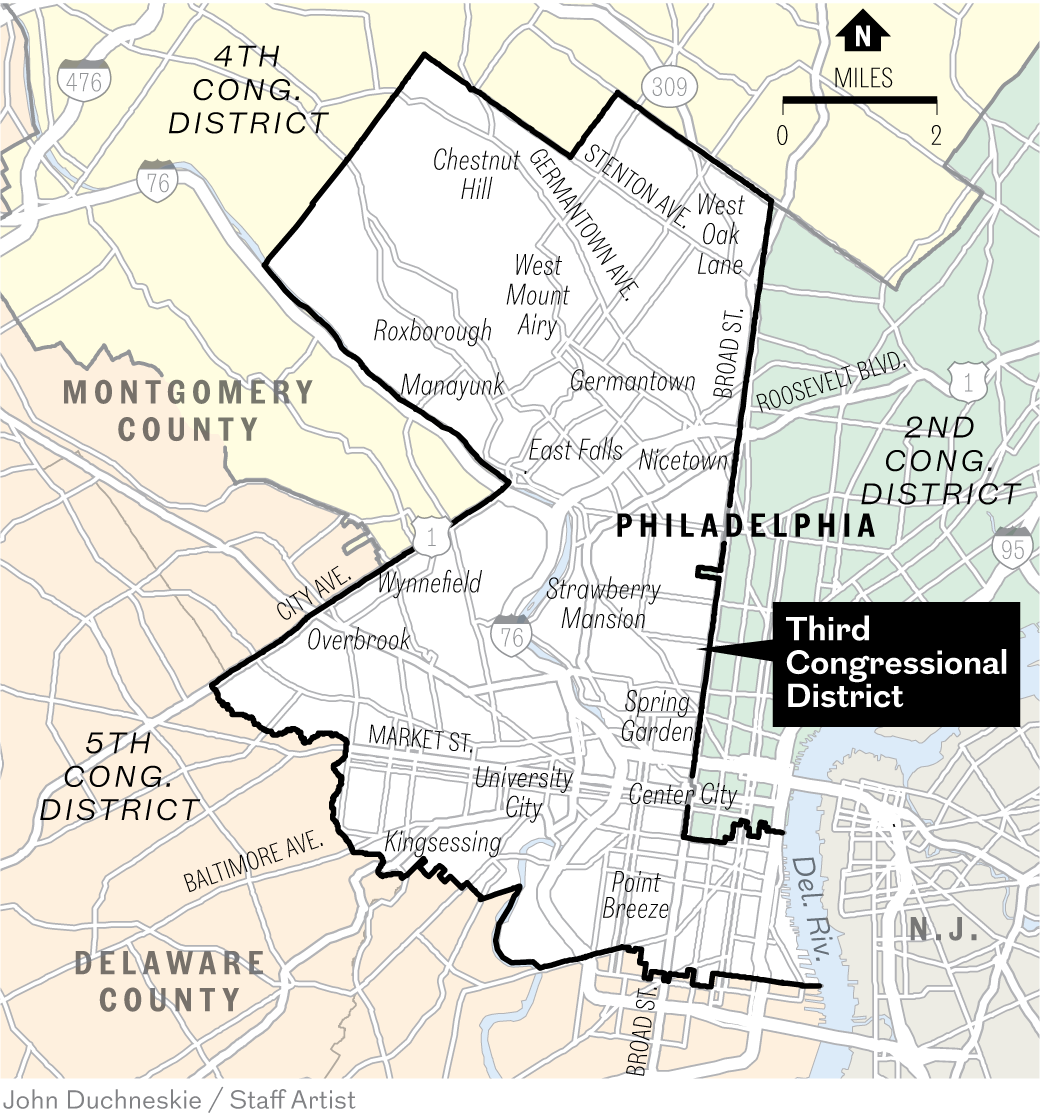
    Map of Pennsylvania’s Third Congressional District.

    While the race remains competitive, Street’s early fundraising lead will help cement his status as the favorite of the local political establishment. Democratic City Committee chair Bob Brady said this week that party ward leaders will likely vote to endorse Street after this year’s election cycle wraps up next month.

    “We’re fully prepared to take advantage of this early lead,” Uretsky said.

    Brian Fitzpatrick outraises competitors in Bucks County congressional race

    In Pennsylvania’s 1st Congressional District, where Democrats have made ousting Republican U.S. Rep. Brian Fitzpatrick a top priority, the incumbent outraised his leading Democratic challenger by a nearly 4-1 ratio, bringing in $886,049 this quarter.
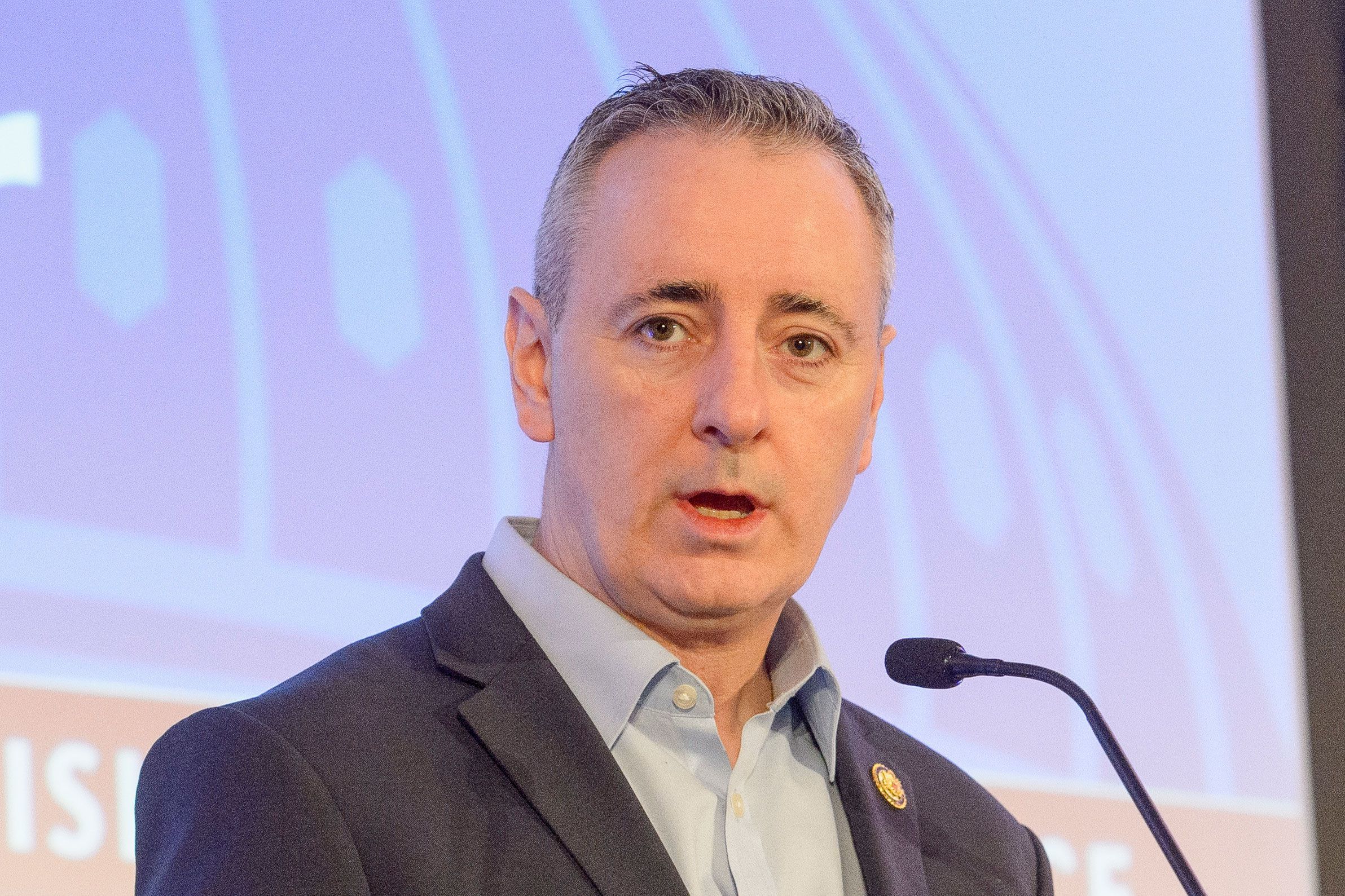
    Rep. Brian Fitzpatrick (R., Bucks and Montgomery) speaks during the opening session of the National Treasury Employees Union (NTEU) Legislative Conference in Washington in March.

    Unlike the deep-blue 3rd District, the fate of the 1st District will likely be decided in next year’s general election, and not the primary. The district, which includes all of Bucks County and a part of Montgomery County, is the only Philadelphia-area congressional seat represented by a Republican.

    Democratic County Commissioner Bob Harvie announced plans to challenge Fitzpatrick earlier this year.

    Harvie, viewed as the favorite to win the Democratic nomination, raised $217,745 last quarter. The other Democrat in the race, attorney Tracy Hunt, raised $36,692.

    This suburban content is produced with support from the Leslie Miller and Richard Worley Foundation and The Lenfest Institute for Journalism. Editorial content is created independently of the project donors. Gifts to support The Inquirer’s high-impact journalism can be made at inquirer.com/donate. A list of Lenfest Institute donors can be found at lenfestinstitute.org/supporters.

  • How the 3 Pennsylvania Supreme Court justices on the ballot have ruled in major cases

    How the 3 Pennsylvania Supreme Court justices on the ballot have ruled in major cases

    Three Pennsylvania Supreme Court justices are on the ballot this November, when voters will decide whether to extend each of their tenures for another 10-year term.

    There are currently five justices who were elected as Democrats and two who were elected as Republicans on the bench.

    This year’s retention race has drawn heightened attention, as Republicans have launched a campaign to sink the retention bids of Justices Kevin Dougherty, Christine Donohue, and David Wecht — all elected as Democrats in 2015 — in hopes of flipping the court’s balance.

    Once on the bench, judges are expected to shed their partisan label, which is why Pennsylvania extends judicial terms through retention elections instead of head-to-head races.

    Still, advocacy groups on both sides of the aisle are trying to make the case that control of the judicial seats is critical, if not existential, to their causes.

    The Inquirer reviewed the cases that have come before the Pennsylvania Supreme Court over the last decade, and how Dougherty, Donohue, and Wecht voted.

    Here are some of the most significant cases of their tenure.

    Abortion

    Pennsylvania’s highest court stopped just short of recognizing a constitutional right to abortion access in January 2024.

    The ruling came in a case challenging a state law limiting Medicaid funding for abortions except in cases involving rape, incest, or danger to the life of the mother.

    The 219-page majority opinion included language that strongly endorsed access to abortion as a right derived from the Pennsylvania Constitution, but the judges could not agree on whether they were ready to make the call in this case.

    The majority sent questions about a specific funding limit and broader constitutional protection for abortion access back to a lower court — setting up another round of legal battles that will likely, again, make it before the state Supreme Court.

    How the three justices ruled: Donohue wrote and Wecht joined the majority opinion. The two justices said they believed Pennsylvania’s 1971 Equal Rights Amendment clearly established a right to abortion access. Dougherty wrote a separate opinion saying this case did not call on the court to opine on the right to an abortion. “At least, not yet,” he wrote.

    Voting rights and elections

    The Pennsylvania Supreme Court has ruled on a litany of challenges to Pennsylvania’s election rules, many of them focused on the state’s mail voting law.

    In 2018, the justices threw out the state’s GOP-drawn congressional maps as unconstitutionally gerrymandered.

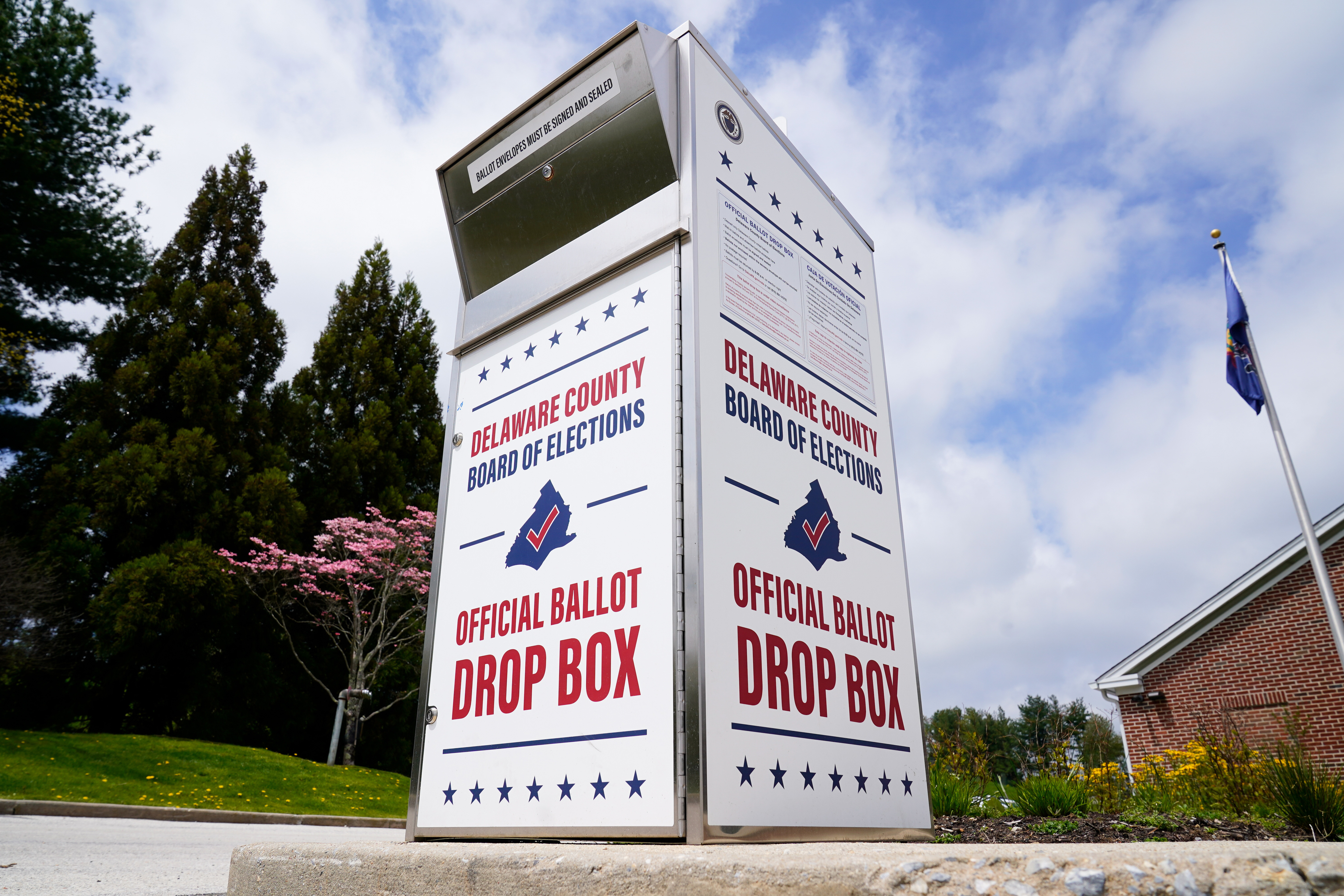
    In 2020, the court issued a major ruling ahead of the presidential election allowing for ballot drop boxes and allowing local election offices to accept ballots for up to three days after the election as long as those ballots were postmarked by 8 p.m. on Election Day.

    How the three justices ruled: Donohue, Dougherty, and Wecht each joined the majority opinion in the redistricting case. On the 2020 election ruling, Dougherty and Wecht joined the majority opinion. Donohue joined the majority opinion but dissented from the decision to extend the ballot deadline.

    A Delaware County secured drop box for the return of mail ballots in 2022 in Newtown Square.

    Education

    A Delaware County school district had the right to challenge Pennsylvania’s school-funding system, the Supreme Court ruled in 2017.

    The decision affirmed the role of courts in ensuring that state funding leads to equitable education and sent the case back to Commonwealth Court to proceed with litigation.

    In 2023, Commonwealth Court ruled, as part of the same case, that the state’s funding system for school districts led to disparities that prohibit quality education for all students, rendering it unconstitutional.

    How the three justices ruled: Wecht wrote the majority opinion, which Dougherty and Donohue joined.

    Environment

    Pennsylvania, which partly sits on the natural gas-rich Marcellus Shale, found itself in the midst of the fracking boom of the early 2000s.

    The state sold leases to oil and gas companies to drill wells. The practice raised questions, and legal challenges, as to how the state should use the revenues in the context of the Pennsylvania Constitution’s Environmental Rights Amendment.

    The court ruled in 2017 that it is unconstitutional for the state to use revenue from the royalties of oil and gas leases on public land to pay for anything but conservation and maintenance of the environment.

    How the three justices ruled: Donohue wrote the majority opinion, which Dougherty and Wecht joined.

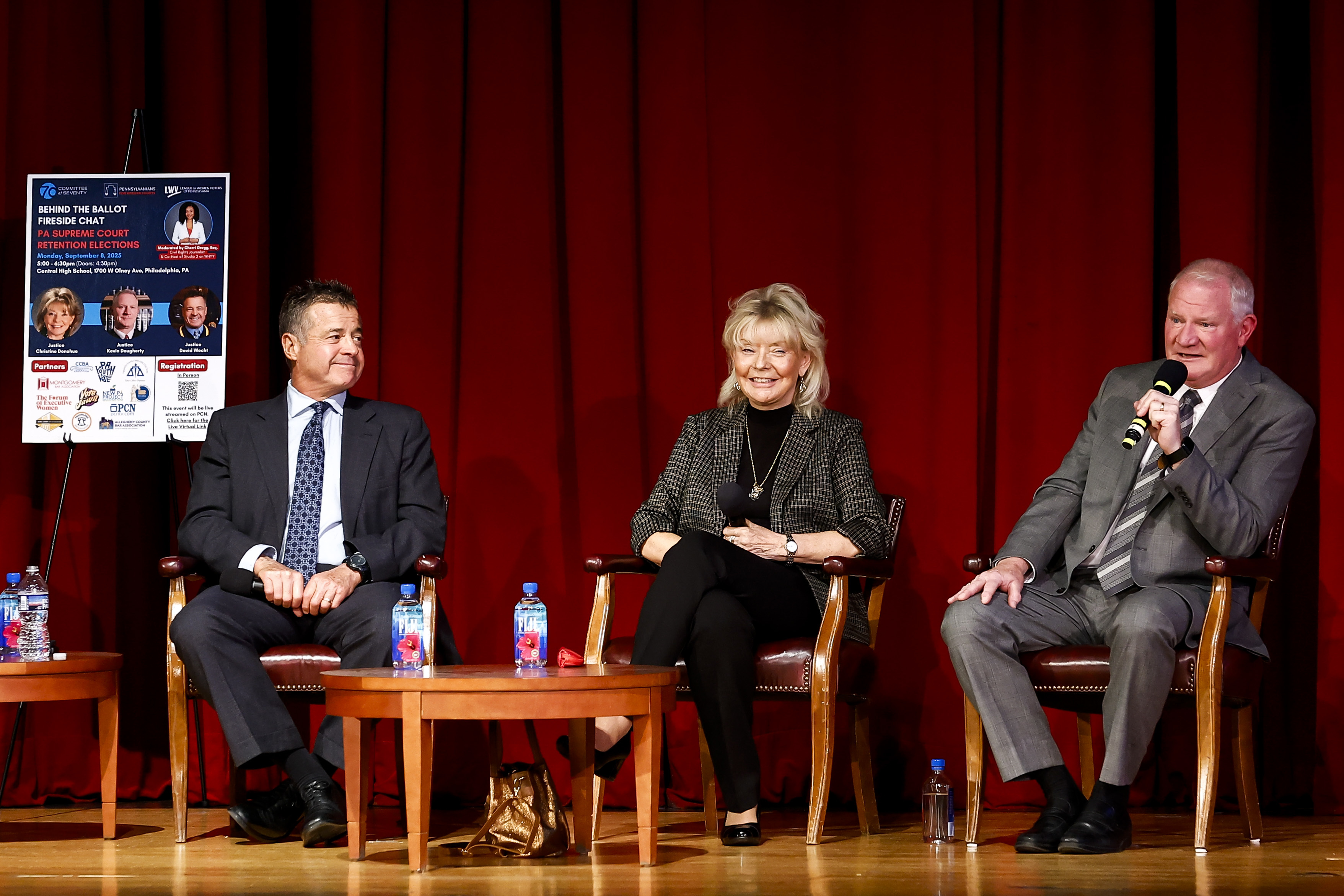
    Justices David Wecht, Christine Donohue and Kevin Dougherty sit onstage during a fireside chat at Central High School in September. The conversation was moderated by Cherri Gregg, co-host of Studio 2 on WHYY, and presented by the Committee of Seventy, Pennsylvanians for Modern Courts, and the League of Women Voters of Pennsylvania.

    Criminal justice

    Pennsylvania has had the nation’s largest population of juvenile lifers: people sentenced as minors to life in prison without the possibility of parole.

    In 2017, the Supreme Court made it harder to sentence a juvenile to life. The majority opinion says there is a “presumption” against life without parole for juveniles who are found guilty of murder, and prosecutors must show that the offender is “unable to be rehabilitated” when seeking the sentence.

    How the three justices ruled: Donohue wrote the majority opinion, which Dougherty and Wecht joined.

    Second Amendment

    In 2024, for the first time, the Pennsylvania Supreme Court issued an opinion that interpreted the wording in the U.S. Constitution that gives Pennsylvanians the right to bear arms.

    In Stroud Township, a zoning ordinance that prohibited the discharge of a firearm within the township’s borders limited the possible locations for shooting ranges. The ordinance barred a resident from having a personal outdoor shooting range on his property, and he sued the township for violating his Second Amendment rights.

    The court ruled that the ordinance was constitutional.

    How the three justices ruled: Dougherty wrote the majority opinion, which Wecht joined. Donohue wrote her own opinion, reaching the same conclusion as the majority but disagreeing with the analysis.

    Larry Krasner

    Did Republican lawmakers make a procedural error in their 2022 effort to impeach Philadelphia District Attorney Larry Krasner? The Supreme Court in 2024 said they did, effectively ending a campaign in Harrisburg to oust the progressive prosecutor.

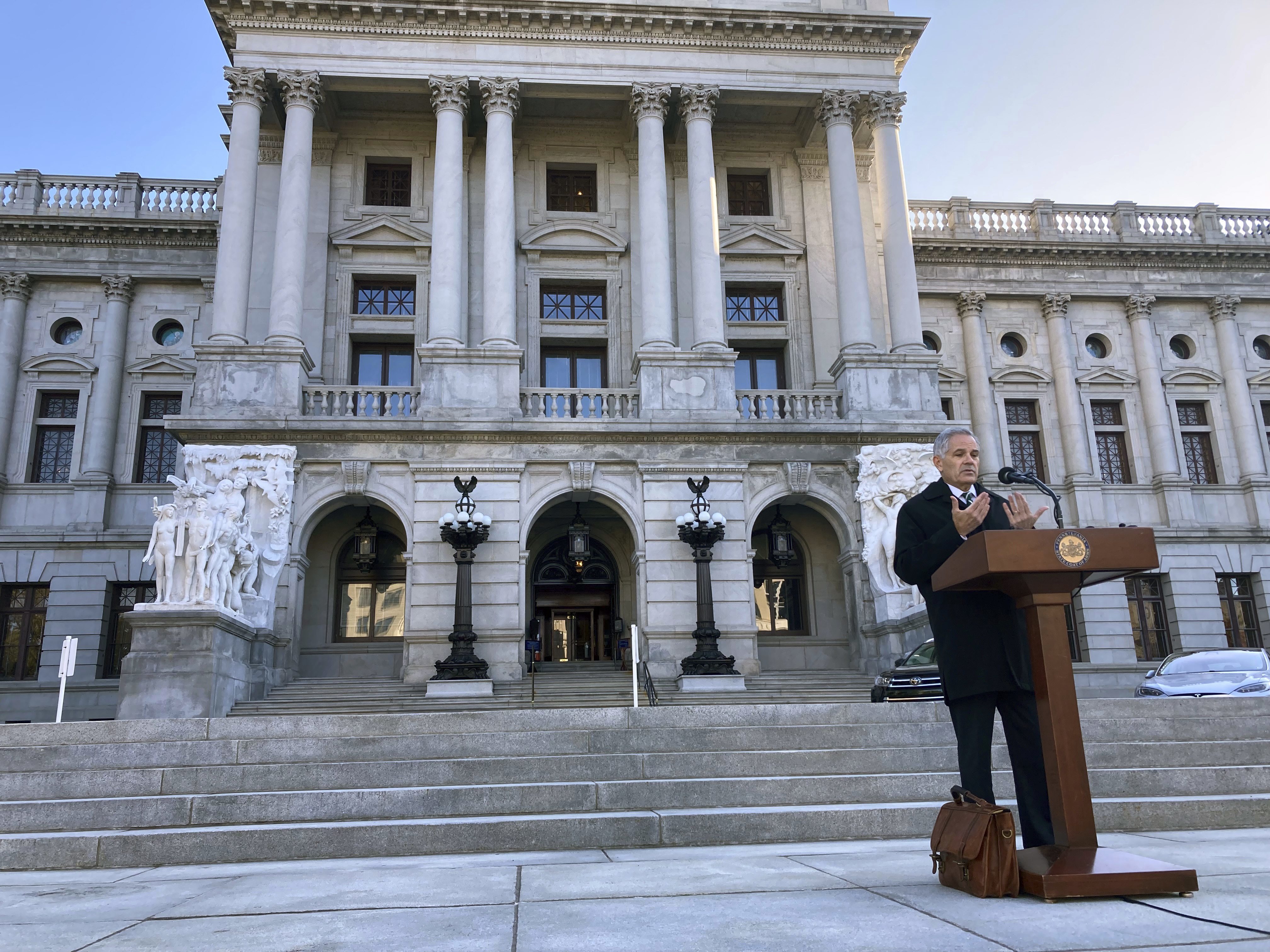
    Philadelphia District Attorney Larry Krasner talks about Republican-led efforts to investigate his record addressing crime and gun violence at the Pennsylvania Capitol in 2022.

    The decision said that the articles of impeachment approved by the state House in late 2022 were “null and void” because they were sent to the Pennsylvania Senate on the last day of that year’s legislative session, and the upper chamber did not complete its work on the matter before the next session began. The attempt to carry the process from one two-year session to the next was unlawful, the court said.

    The majority also agreed with a lower court that none of the articles of impeachment met the required legal standard of “misbehavior in office.”

    How the three justices ruled: Donohue and Wecht joined the majority opinion. Dougherty did not participate in the deliberations.

    Bill Cosby

    Disgraced actor and comedian Bill Cosby walked out of prison a free man in 2021 after the state Supreme Court reversed his sexual assault conviction.

    The court did not weigh in on the facts of the case or whether Cosby was guilty. Instead, it focused on a former Montgomery County prosecutor’s decade-old promise that Cosby would never be charged with drugging and assaulting Andrea Constand if he gave incriminating testimony in a civil case filed by his accuser. The justices found that the testimony was improperly used years later against Cosby at his criminal trial, calling it a “unconstitutional coercive bait-and-switch.”

    How the three justices ruled: Wecht wrote the majority opinion, which Donohue joined. Dougherty wrote a separate opinion, saying he would allow for Cosby to be retried, but would order his testimony from the civil case to be suppressed.