Category: National Politics

  • ‘A slow-rolling disaster’: Inside the implosion of the Platner campaign

    ‘A slow-rolling disaster’: Inside the implosion of the Platner campaign

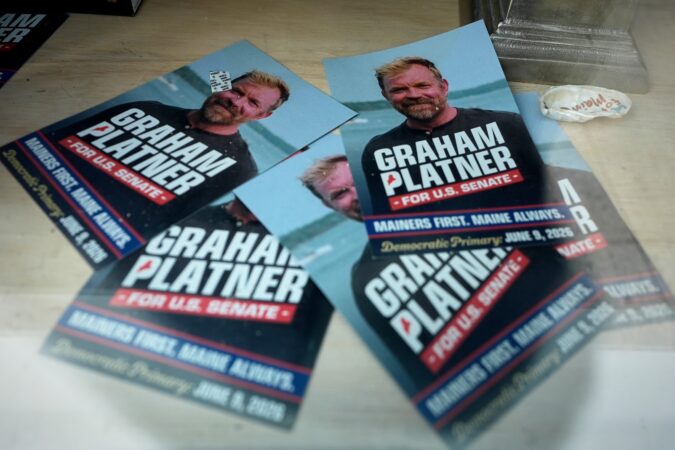
    HANCOCK, Maine — They told him that he was “the guy.”

    Last July, in a small town in coastal Maine, three progressive, self-styled recruiters of economic populists showed up at the blue-shingled house of Graham Platner, a little-known oyster farmer and Marine veteran who lived largely off government benefits.

    They knew his name from local labor organizers and activists, and they had watched a video on the internet of him talking about oysters. Struck by his left-leaning ideology, his working-class affect and his gravelly voice, they became convinced that he could win a Senate seat in Maine — and quickly persuaded Platner of the same.

    The recruiters — Dan Moraff, Leanne Fan and Morris Katz — told Platner he was “the one,” a “hero of the movement,” “a historical figure” who could be “leading a revolution,” according to half a dozen people with knowledge of their conversations.

    But a clutch of people who cared about Platner were telling him something else. They worried about his mental health, amid his ongoing efforts to heal from post-traumatic stress disorder after tours in Iraq and Afghanistan. They feared this trio of out-of-state operatives was a dangerous combination of inexperienced and overconfident. The worst-case scenario, they thought, wasn’t running for Senate and losing — it was destroying the life he worked hard to build.

    Until recently, Platner had seemed to prove the worriers wrong. His campaign was pumping out viral videos and broadcasting scenes from crowded town halls. He easily pushed a sitting governor out of the Democratic primary as voters embraced his message of economic populism and overlooked his checkered past. Progressives across the country heralded him as a new left-wing hero and saw him as their best opportunity to defeat Sen. Susan Collins, a Republican, in a race that could decide control of the Senate.

    But behind the scenes, his campaign was messy, disorganized and haphazardly run. Platner did not disclose explosive, politically damaging secrets to key members of his team. And he was guarded by an insular and zealously protective inner circle of advisers who did not always seem to grasp the seriousness — or strangeness — of what quickly became a steady drip of scandal, according to party strategists, Democratic officials and former staff members.

    Repeatedly, Platner promised there was nothing else damaging from his past to come. And each time, he was wrong.

    Platner, said Ronald Holmes III, his former national finance director, was “seriously flawed.” But he faulted Platner’s team for failing to “ask the right questions and get honest answers.”

    In a statement, the campaign disputed the idea that there was a lack of planning or infrastructure as “simply false,” and said that the team “built the operation, strategy, and organization needed to create one of the strongest grassroots campaigns Maine has ever seen.”

    This report is based on interviews with more than 30 people who interacted with the campaign or Platner, many of whom were granted anonymity to discuss sensitive matters.

    In June, as rumors swirled about a damaging story coming from The New York Times featuring several of Platner’s ex-girlfriends, Katz called a top national Democratic strategist, insisting that there were no issues in Platner’s past concerning his treatment of women, according to a person with direct knowledge of the conversation.

    Katz said he had asked Platner directly and repeatedly whether anyone had made sexual assault allegations against him and the candidate had said no, according to two people familiar with the discussion who described it on the condition of anonymity.

    “It’s been a slow-rolling disaster instead of all happening at once — it’s been really drawn out and painful and difficult to watch,” added Holmes, who resigned last fall after raising concerns about the professionalism of the campaign’s senior leadership. “It’s like we’ve been watching a mile-long train derail at four miles an hour.”

    That train finally crashed this week, when a woman who had dated Platner accused him of rape. He denied the allegation, but released a video saying he was taking time to “reflect” on his path forward.

    Within roughly 24 hours, Democrats at every level had called for him to withdraw, and the Maine Democratic Party was on a war footing with its own nominee. Ambitious politicians were taking steps to try to succeed him on the ticket. And Democrats across the country wondered how one of their best chances to flip a Senate seat had imploded.
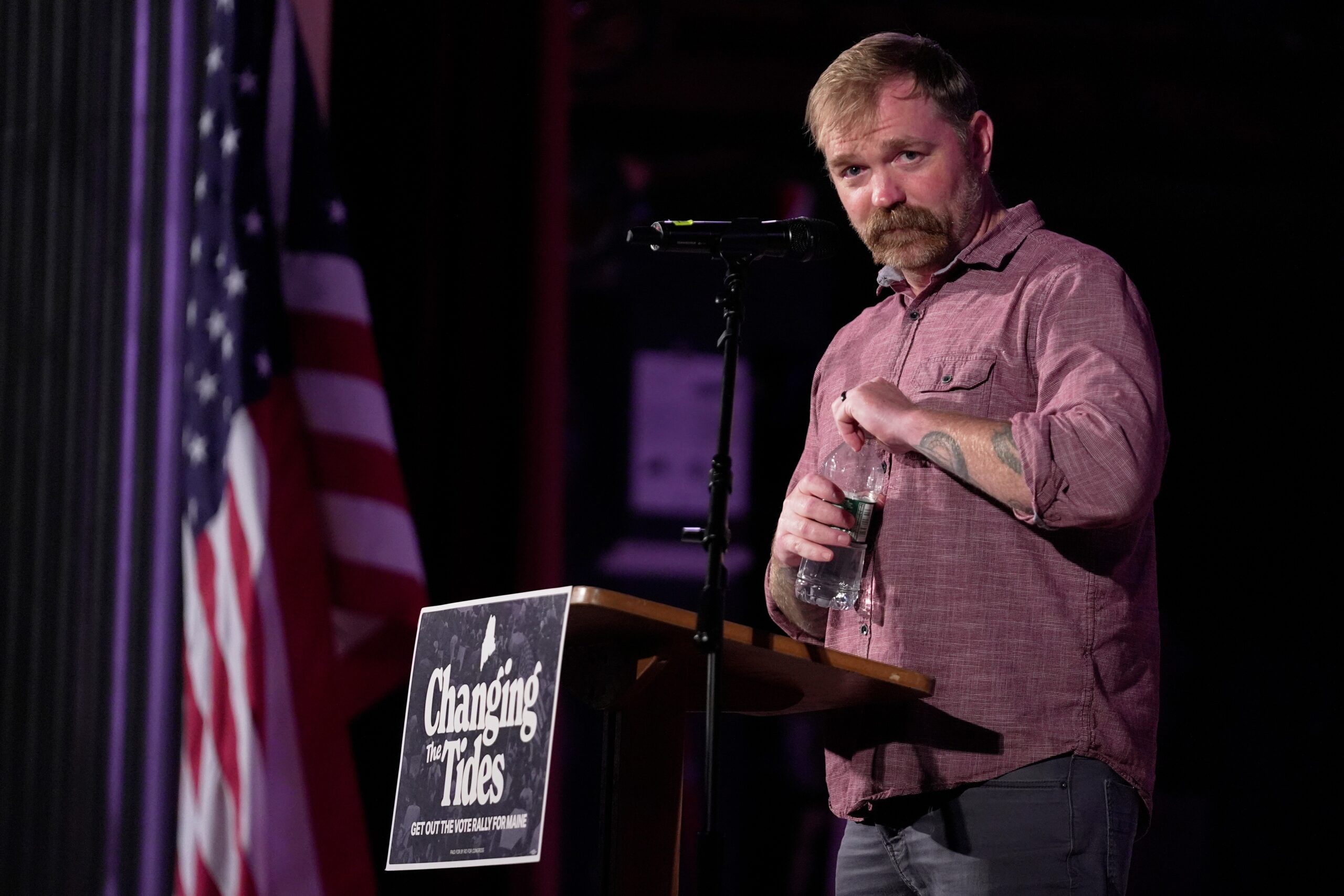
    Graham Platner, Democratic candidate for U.S. Senate, speaks at a campaign event Friday, June 5, 2026, in Bar Harbor, Maine.

    A ‘Totenkopf’ tattoo

    Before Platner became the Democrats’ biggest headache, his most ardent supporters spoke about him in strikingly lofty terms.

    As his campaign was getting off the ground, Moraff likened him to Barack Obama in conversations with senior Democratic officials, according to two people with knowledge of the private conversations.

    But there were early signs that Platner had serious political liabilities. Less than two weeks after he announced his bid, his wife, Amy Gertner, approached a top campaign aide. She wanted to disclose that Platner had been exchanging sexual messages with multiple women.

    Platner was about to hold a campaign event with Sen. Bernie Sanders, his first major endorser and a personal hero. Gertner told Genevieve McDonald, then the campaign’s political director, that she worried Sanders would think less of her husband if he later found out about the exchanges with other women, McDonald recalled.

    Was that the extent of the controversy in Platner’s personal life or was there more to worry about? Campaign officials appeared not to know.

    A top Platner adviser had promised a national Democratic strategist that they would not launch a campaign without completing a full investigation of Platner’s background. But, according to two people familiar with the campaign’s operations, no extensive effort was undertaken in one of the marquee races of the midterm cycle.

    Instead, they conducted an expedited review, resulting in a short risk-assessment memo.

    Platner’s campaign said that a research firm produced a vetting memo of nearly 50 pages that included searches of news reports, social media posts and public documents. They did not do exhaustive interviews with Platner.

    “I said, ‘None of this will or should stop him from becoming a U.S. senator,’” Moraff told The Wall Street Journal.

    But others had access to significantly more damaging information about Platner’s past.

    In Northern Virginia, Lyndsey Fifield, a former girlfriend of Platner’s, texted a private group chat of friends last summer about a tattoo on his chest widely recognized as a Nazi symbol. He had gotten it while serving in the military and referred to it, she has said, as “my Totenkopf.”

    The “Nazi tattoo on his chest,” Fifield suggested, was going to be a problem.

    The existence of the tattoo, however, did not immediately become public. In the meantime, Platner’s campaign began to find an audience. He drew bigger and bigger crowds, crisscrossing the state for events and spending hours gabbing on podcasts.

    Yet controversies kept arising. In October, CNN and other news outlets uncovered a trove of incendiary online posts that Platner had written between 2009 and 2021, which included dismissive comments about rape and sexual assault in the military.

    Platner apologized, and has urged the public not to judge him for his worst moments on the internet.

    The lack of disclosure about his past made McDonald, a former state legislator and lobbyist, uncomfortable. She quit the campaign in October.

    Around the same time, photos of Platner’s tattoo from his wife’s Facebook account began leaking to news organizations.

    The Platner team, hoping to defuse the potential damage, released video footage of a shirtless Platner with the tattoo visible to Pod Save America, a liberal podcast that supported his bid.

    In a friendly interview, Platner dismissed the issue as little more than pearl-clutching by his opponents. “I am not a secret Nazi,” he said. “Lifelong opponent.”

    At the time, Platner said in a statement that he did not know that his tattoo resembled a Nazi symbol until it became a campaign issue.

    More staffers, including Holmes, left the campaign.
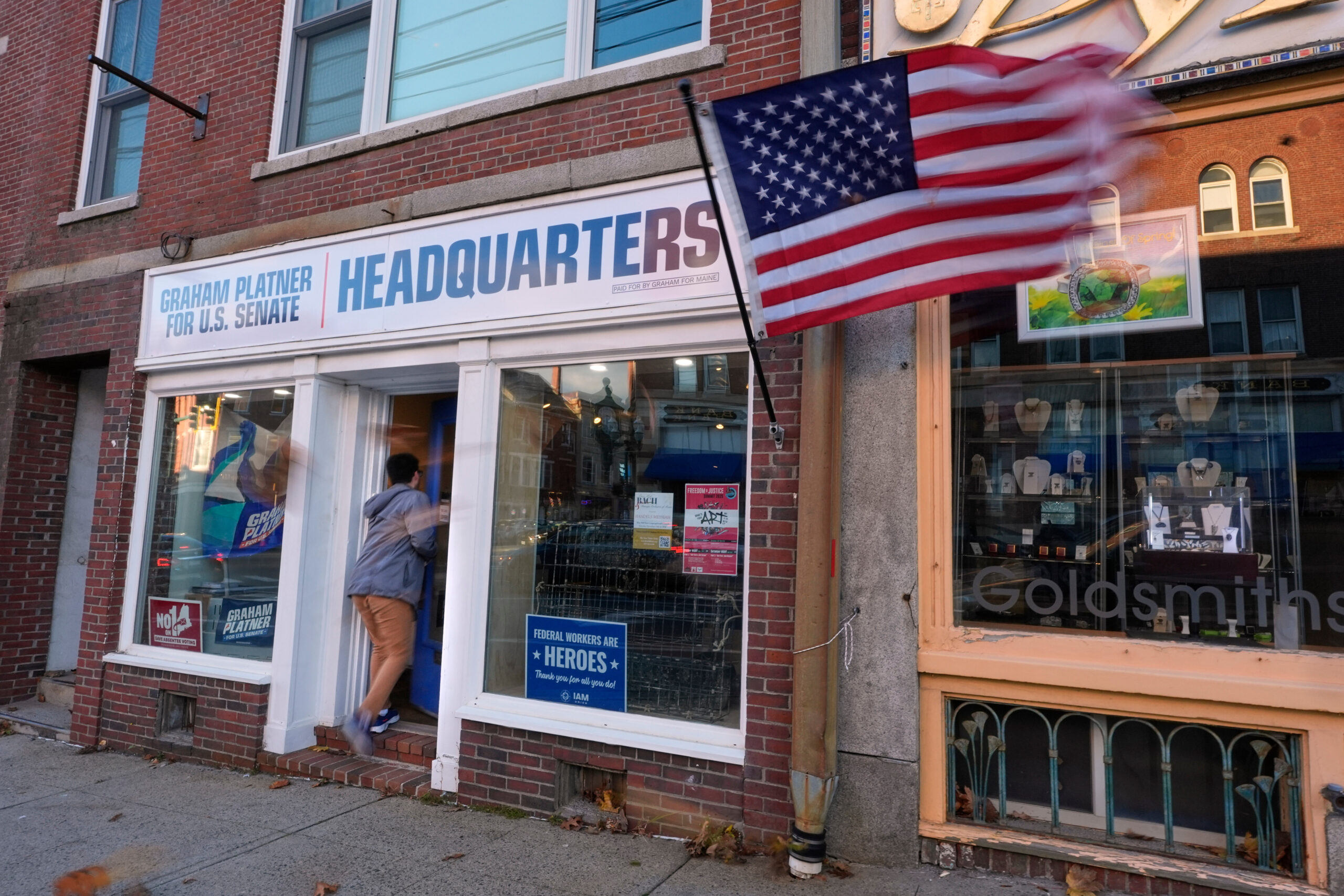
    FILE – A worker enters the campaign headquarters for US Senate candidate Graham Platner, Tuesday, Nov. 4, 2025, in Ellsworth, Maine.

    ‘It’s not that complicated’

    For months, there was little indication that any of the controversy was seriously hurting his candidacy.

    As Platner’s star rose through the winter and early spring, Katz was privately promoting him as a future presidential candidate for as soon as 2028, if he won his Senate bid.

    When Janet Mills, his chief Democratic primary opponent, produced tough ads featuring his comments about women and rape, it did little to change the trajectory of the race. Poll after poll showed Platner leading Mills, a two-term governor who was supported by national Democratic leaders, by double-digits.

    Platner built a movement-like following, emerging as one of his party’s most powerful online fundraisers. His campaign constructed an image of a working-class combat veteran who had returned to Maine to rebuild his life, who spoke movingly about the failings of U,S, foreign policy and rallied voters with his promises to take on a political system dominated by corporations and billionaires. Democrats flocked to his town hall meetings.

    Publicly, at least, the candidate expressed nothing but bravado.

    In an April interview, he dismissed any jitters about going up against Mills — a former prosecutor — in a series of planned public debates.

    Platner had debated before, he said, in college classes. His preparations, he said, were “standard run-of-the mill debate prep.”

    “Honestly, I’ve seen enough and read enough about politics that it looks and sounds very much like what debate prep usually looks like,” he said.

    He added: “Standing up and talking about the things you believe in, it’s not that complicated.”

    Platner’s theory about debating would never be tested. The next morning, Mills dropped out the race, saying she lacked the funds to compete.

    But by June, Platner was trailing far behind Collins in campaign funds. Platner’s campaign had just $1.3 million in the bank when he exited the race, a fraction of Collins’ $9.7 million war chest as of late May. A person familiar with the campaign’s finances said the amount of cash available to spend was even lower — under $100,000.

    The campaign raised nearly $9 million last quarter, said a campaign official, more than doubling the previous quarter’s haul. While the campaign successfully focused on attracting small-dollar donations, it struggled to recruit and retain big-dollar donors.

    Campaign aides told top Democratic strategists that donors kept raising concerns about the tattoo and his other controversies. Their requests for help assuaging donors’ concerns were met with silence from the national committee, according to three people familiar with discussions.

    Last week, Platner kicked off a call with a new national finance committee — a first, if belated, step to bundle checks from wealthy donors, according to an invitation seen by the Times. And the campaign took its worries about money public, warning on a call with reporters that he was being swamped on the airwaves.

    Estimates showed they were set to be outspent by 2-to-1 on advertising by Collins and her allies through Election Day, according to data from the media tracking firm AdImpact.

    “I was training with my jujitsu buddies at my kids’ class yesterday,” Ben Chin, Platner’s campaign manager, told reporters. “There were these radio ads that were coming on as we were listening, and people were starting to give me a hard time, like, ‘Oh, where are your radio ads?’”

    A campaign in crisis

    The campaign’s money troubles were exacerbated by a series of even more damaging revelations about his personal conduct and treatment of women. In May, the Journal and the Times published stories detailing sexual text exchanges with women that had worried McDonald and Gertner nearly 10 months earlier.

    In early June, Platner found himself in a private meeting in Washington facing questions from senators about whether more damaging revelations were yet to come. He promised that there was nothing else, according to a person familiar with the discussion.

    But it became clear that Platner and his team were in crisis mode. He flew home to Maine, and frantically dialed ex-girlfriends to find people who would testify to his good character.

    He called Rep. Ro Khanna, an early supporter from California, to warn him that the Times was going to publish a story that would detail his “toxic relationships.” He was a “terrible boyfriend” and made misogynistic comments, he said, according to someone familiar with the discussion, but nothing worse.

    Days later, the Times published accounts from three women who had been in romantic relationships with Platner for years. They said he could be demeaning to women and, in at least one case, even physically threatening.

    In the immediate aftermath, many activists and politicians went to their partisan corners.

    “There are no saints in the United States Senate,” Sanders said.

    But other prominent Democrats started speaking out more bluntly. In private meetings, even strong supporters began raising concerns.

    “I look forward to the day where I am not answering every single week a question about bad behavior by another dude,” said an exasperated Sen. Elissa Slotkin, D-Mich., in an interview on MS Now.

    By late June, Platner found what he hoped would be a powerful answer to critics: an endorsement by Planned Parenthood Action Fund at a splashy rally, portraying him as a champion of abortion rights.

    Planned Parenthood officials knew their endorsement was a political risk, according to someone familiar with internal discussions. But they desperately wanted to defeat Collins.

    Before they offered their endorsement, Alexis McGill Johnson, the chief executive of the group’s political arm, had posed to Platner the question that so many others had asked: Was there anything else that would come out about him?

    Again, he said no. She responded with an ultimatum. If anything worse were to come out about him, he should not expect the women’s groups to clean up after him.

    On Monday evening, as news that he had been accused of rape ricocheted across the country, the group quickly withdrew its support.

    By midweek, as Democratic officials pushed for Platner to rapidly exit the race, the besieged candidate and a handful of aides, including Katz, hunkered down in his blue-shingled house and tried to challenge establishment politics one last time. Journalists trailed them to the local convenience store, where “The Graham,” a roast beef and pepper-jack sub, has been a popular deli counter order.

    On Wednesday night, his campaign released a video in which Platner suspended his campaign and blamed his loss on the “corporate media system” and “political establishment.”

    “We did it the right way,” he said. “And we won and now they are not going to let us have it. Not if it’s me.”
  • How Mitch McConnell’s absence complicates the Senate’s business and war funding

    How Mitch McConnell’s absence complicates the Senate’s business and war funding

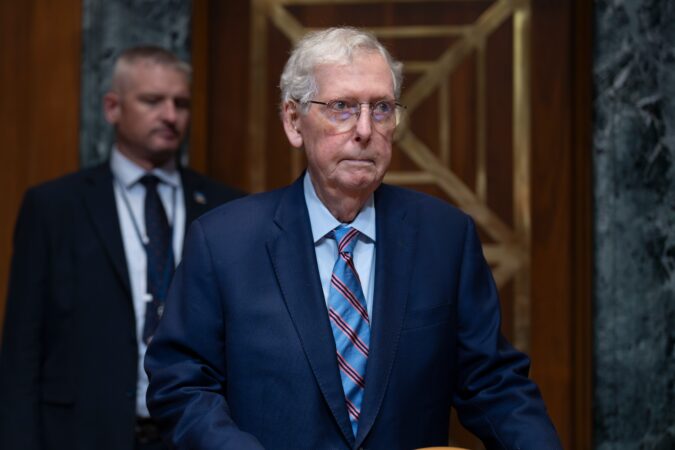
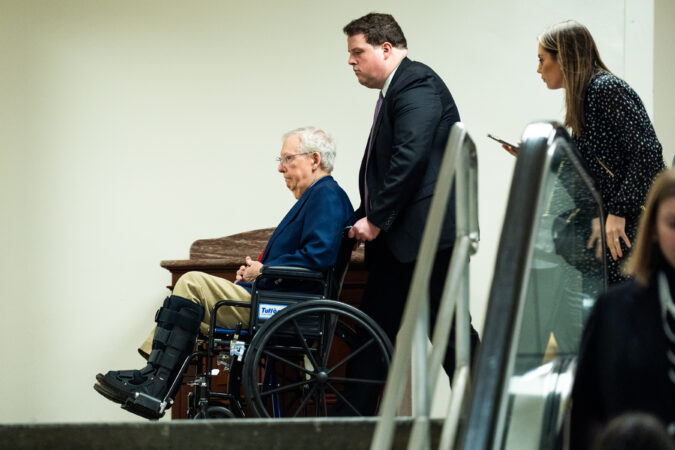
    Sen. Mitch McConnell’s current health condition and ongoing absence threatens to complicate the U.S. Senate’s return to business next week.

    Congress is returning from recess on Monday and faces a limited number of days left before the Sept. 30 deadline to fund the government for fiscal year 2027. McConnell (R., Ky.) plays a crucial role as a member of the Senate Appropriations Committee.

    Republicans and Democrats on the committee have been at a stalemate that began over disagreements about defense funding. If the two sides can’t come to an agreement, Republicans will likely need McConnell’s support to advance any spending bills out of the committee amid Democratic opposition.

    The Trump administration has requested Congress provide an additional $87.6 billion in supplemental funding for the Pentagon and other agencies, largely to cover needs related to the war with Iran, which reignited this week.

    McConnell, 84, leads the Senate Defense Appropriations Subcommittee, which has jurisdiction over that military spending. He has not cast a vote on the Senate floor since June 11. He was admitted to the hospital on June 14. While members of Senate leadership said they have since spoken to him, McConnell’s office has offered limited details about his condition and he has not been seen publicly.

    Democrats have refused to support the increase in defense funding Republicans have put forward without a comparable boost for domestic programs. That disagreement is part of the reason the committee, which normally advances these measures on a bipartisan basis, has not yet advanced any legislation for fiscal year 2027.

    The Senate Appropriations Committee planned to begin hearings the week of June 22 to review some of the nondefense bills, after previous delays related to the defense spending. But those plans were canceled due to McConnell’s absence, according to a Republican aide, who spoke on the condition of anonymity to share internal deliberations.

    A separate Republican congressional aide, who also spoke on the condition of anonymity to share internal deliberations, argued that the delays with the appropriations process “predate” McConnell’s hospitalization and blamed the delays on Senate Democrats.

    McConnell’s continued absence could make it harder for the Senate Appropriations Committee to pass budget bills, by eliminating Republicans’ one-seat majority on the panel. Without McConnell, the Appropriations committee is split evenly between Republicans and Democrats, and tied votes tend to sink legislation in committees.

    Republicans could move forward with hearings to markup the nondefense bills, but Democrats have indicated they would not support any funding measures without an agreement on overall spending levels.

    Lawmakers will have to pass a temporary stopgap funding bill to prevent a government shutdown if they cannot get the fiscal year spending bills done in time.

    McConnell’s office declined a request for comment about McConnell’s role in delaying the budget process, referring The Post to the appropriations committee. The appropriations committee pointed to a statement by its chair, Sen. Susan Collins (R., Maine), who has said there would be a hearing on the defense supplemental request.

    McConnell’s absence is attracting more concern outside of Washington. Kentucky Gov. Andy Beshear, a Democrat, sent a letter on Wednesday to McConnell’s office asking for an update on his health.

    “Over the last several weeks, Kentuckians have grown increasingly concerned about the current state of your health and well-being, and ability to hold office in the United States Senate,” Beshear said in the letter. “As public officeholders, we have made a commitment to our constituents to do our best to represent them and to always be transparent. I believe this requires clear communication about one’s ability to serve.”

  • Trump says he’ll ask Supreme Court to rehear citizenship case, an unlikely event

    Trump says he’ll ask Supreme Court to rehear citizenship case, an unlikely event

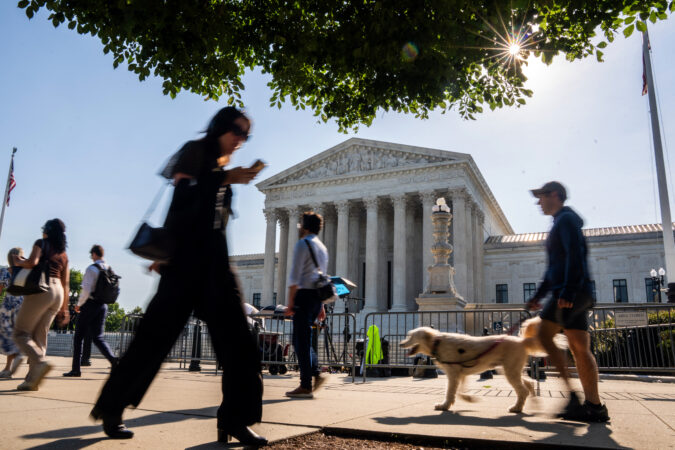
    WASHINGTON — President Donald Trump said on Wednesday that he would ask the Supreme Court to reconsider its decision to strike down his executive order that aimed to revoke birthright citizenship, a request that the justices are highly unlikely to take up.

    The declaration, made in a social media post, showed the president’s continued frustration with the court’s decision last week, when a majority of justices ruled that the citizenship given to nearly all children born on U.S. soil was enshrined in the Constitution.

    Trump claimed that signs and billboards were being placed along the southern border and in Mexico advertising the right, and that citizenship would be granted to “anyone willing to pay.”

    The president appeared to be referring to a Fox News report that identified a hospital in Texas that had advertised paying for “Birth Packages in South Texas” on billboards in Mexico. The outlet reported that Gov. Greg Abbott of Texas, a Republican, had ordered an investigation into the hospital, which told Fox News that “marketing materials regarding maternity services are no longer in use due to any unintended misunderstanding.”

    “We do not support or facilitate any unlawful activity and work to comply with all applicable federal and state laws and regulations,” the hospital added in a statement to the outlet.

    On Wednesday, Trump said that he would ask for a “rehearing” of the case “IMMEDIATELY,” and that the justices would “destroy America if they don’t change their absolutely insane decision.” As of Wednesday evening, administration lawyers had not filed a request with the court.

    Under Supreme Court rules, parties can ask the justices to rehear a so-called merits case after it has already been decided. But it is exceptionally rare for the court to grant such requests.

    The last time the court granted a rehearing request after it had announced a decision in an argued case was in 1965. The court has only once reversed itself after rehearing a case, according to Stephen I. Vladeck, a professor at Georgetown University Law Center. That reversal happened in a 1956 case examining military tribunal jurisdiction for civilian spouses of service members.

    Trump, who attended the oral arguments in the Supreme Court citizenship case, has continued to lash out at the court over its ruling, which was delivered by Chief Justice John Roberts.

    “Citizenship, then and now, was the right to have rights — to freely participate in our political community,” Roberts wrote in the decision. “The framers of the 14th Amendment extended that promise to ‘every freeborn person in this land.’”

    The 6-3 decision capped a more than decadelong effort by Trump to use the issue as a political tool. In the immediate aftermath, he urged Congress to take up the issue with legislation, incorrectly asserting that “no long and unwieldy Constitutional Amendment is necessary.”

    Several days later, the decision received renewed attention after Trump intervened in an officiating decision in the men’s World Cup on behalf of a U.S. player with foreign-born parents.

    He called Gianni Infantino, the president of the body overseeing the tournament, to protest a red card that was given to Folarin Balogun, a star player who was born in the United States while his parents, who were born in Nigeria and lived in London, were on a trip.

    FIFA, the World Cup governing body, reversed the referee’s decision, which would have prohibited Balogun from playing in a match against Belgium; the United States lost the game, 4-1, on Monday.

    Trump said that he had decided to act when he learned of the implications of the red card, saying that “when they take your best player, or just about,” it is “very unfair.”

    This article originally appeared in The New York Times.

  • Kentucky Gov. Andy Beshear asks Sen. Mitch McConnell to give a public update on his condition

    Kentucky Gov. Andy Beshear asks Sen. Mitch McConnell to give a public update on his condition

    Kentucky Gov. Andy Beshear is directly asking Sen. Mitch McConnell, the state’s most powerful figure in Congress, to disclose more about his condition after three weeks of silence from the 84-year-old since he was hospitalized in Washington.

    The letter released Wednesday from Beshear, a Democrat who is considered a potential presidential candidate in 2028, to the former Senate Republican leader says, “Kentuckians have grown increasingly concerned about the current state of your health and well-being, and ability to hold office.”

    McConnell, whose physical condition has visibly declined in recent years, was hospitalized June 14. He has not released a public statement, photos, or videos since. Aides have disclosed nothing specific about his condition, other than to say last week that McConnell “continues to improve, and is working closely with his staff on Kentucky and Senate matters while the Senate is out of session.”

    That lack of detail has fueled rampant speculation about his prognosis and whether he will return to the Senate when it reconvenes next week. The firestorm was enough that Republican Senate leaders on Tuesday made public statements saying they had talked to McConnell and that he was alert and discussing current events.

    McConnell is retiring at the end of his term in January, and the campaign to elect his successor already is underway. Kentucky’s Senate succession law, which Republican legislators have twice changed during Beshear’s tenure, does not give the governor a role in picking a temporary successor should McConnell’s seat become vacant before his term ends.

    Under the latest change in 2024, if the seat becomes vacant before Aug. 3, there would be a special election to pick a replacement, perhaps held concurrently with the general election in November. The special election winner could take office nearly immediately. The general election winner would be sworn in as part of the new Congress in January.

    If the seat were vacated after Aug. 3, there would be no time under the law for a special election and the seat would remain vacant until January.

    Beshear ended the letter by wishing McConnell “a safe and speedy recovery.”

  • Justice Department threatens top election officials over noncitizen voting

    Justice Department threatens top election officials over noncitizen voting

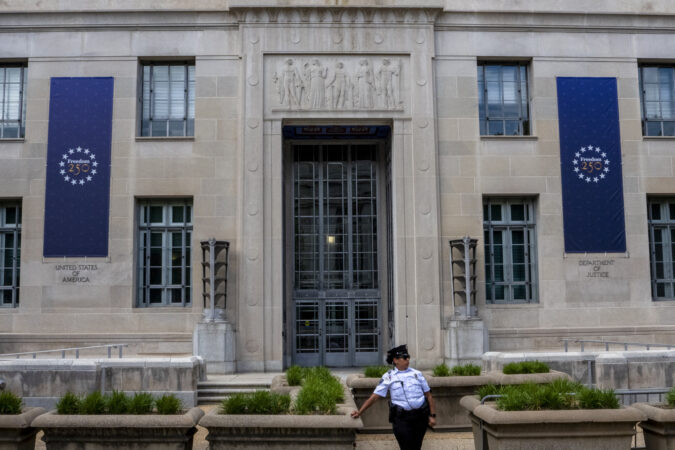
    The Justice Department sent letters to all 50 states and the District of Columbia on Tuesday threatening criminal prosecution of top election officials if ballots cast by noncitizens were counted in upcoming elections.

    The letters arrived in the midst of an ongoing campaign by President Donald Trump and his allies to tighten election rules to prevent a problem that doesn’t exist: widespread noncitizen voting in American elections.

    The effort has, however, continued to sow doubt and distrust in the electoral process, most notably among the president’s base of supporters. And his proposals could have the effect of making it more difficult for eligible voters to cast their ballots — an outcome that many voting-right activists say is the president’s real goal.

    The letters sent Tuesday came from Harmeet Dhillon, who runs the Justice Department’s civil rights division. They are largely identical, according to multiple copies obtained by The New York Times. The seven-page letters detail a host of federal election laws that prohibit noncitizens from voting in elections — laws that have been clear for decades.

    “Any election officer, including the chief election officer of the state, who knowingly retains noncitizens on the state’s” voter list “or facilitates noncitizens in receiving and casting ballots could be subject to criminal liability,” Dhillon wrote.

    The letters asked the election officials to respond to the Justice Department “within five days” with details on how their states intended to comply “with these federal laws both at the state and local level and how the Department can assist in those efforts.” It is unclear what would happen if a state does not respond in five days, as the letters are not subpoenas requiring a response.

    Lt. Gov. Deidre Henderson, the top election official in Utah and a Republican, expressed frustration with the Justice Department’s tenor and tactics.

    “Got another love letter this morning from the DOJ sprinkled throughout with threats of criminal prosecution,” Henderson wrote on social media. “I’m sure I’m not the only chief election officer of a state who is being targeted for following state and federal laws by resisting DOJ’s demands for private voter data that have thus far been ruled illegal by at least a dozen courts. This is truly bizarre behavior by the federal agency that is supposed to be protecting civil rights.”

    Adrian Fontes, the Democratic secretary of state in Arizona, criticized the efforts by the Justice Department as politically motivated.

    “It is insulting to insinuate that the good people at our county recorders’ offices across the state are not doing their jobs correctly,” Fontes said. “Arizona election officials have always worked to ensure that only eligible citizens are registered to vote, and we will continue following Arizona law — not directions that come from political rhetoric or intimidation.”

    Justice Department officials have said their purpose in seeking voter roll data is to ensure compliance with federal law requiring states to maintain accurate voting rolls. Some voting-rights advocates have speculated that the department’s specific aim is to look for evidence of noncitizen voting or use voter roll data to challenge future election results.

    Kiersten Pels, a spokesperson for the Justice Department, confirmed that letters were sent to officials in all 50 states and the District of Columbia, seeking “voluntary compliance in a timely manner with their obligations under federal law to ensure only citizens vote in federal elections.”

    David Becker, a former voting rights lawyer for the Justice Department who now runs the Center for Election Innovation and Research, a nonpartisan group that works to build confidence in elections, said that the letters from Dhillon look like a performative display by the Justice Department to show it is working aggressively on one of the president’s priorities despite little success.

    “This is what panic and desperation looks like,” Becker said. “They’ve had 18 months to find evidence of a crime that was never committed, and found nothing. And now they fall back on crude and transparent bullying tactics. They sent these letter to several, perhaps all states, with no specific evidence of a crime.”

    He added that “the election officials I’ve spoken with aren’t intimidated, and are seeing these empty threats for what they are.”

    The Justice Department also sent letters to three cities in Michigan — Detroit, Lansing and East Lansing — stating that federal election monitors from the department would be going to the areas for the upcoming primary election. The department’s stated reasons were observations from the 2024 election, citing a lack of provisional ballots in at least one polling location and voting machines that were not operational in multiple polling locations.

    Michigan election officials roundly rejected both the claims from the Justice Department and the reasons for sending monitors. Janice M. Winfrey, the city clerk in Detroit, wrote in response Tuesday that the Justice Department had made “false assertions that form a baseless conclusion that then becomes the pretext for additional monitoring of Detroit elections.”

    Winfrey added that “according to our records, there were no representatives from the Department of Justice, and if so, they did not comply with regulations requiring them to identify themselves and sign in with supervisory staff at the polling place.”

    For years, Trump has claimed without evidence that noncitizens voting in American elections have benefited Democrats. After the 2016 election, which he won, he claimed that as many as 3 million ballots in California had been cast by noncitizens.

    Since returning to office, Trump has led a relentless effort to prove his claims using the levers of the federal government.

    None of those investigations has provided any evidence of widespread noncitizen voting. An initial review in January of nearly 50 million voter registration records by the Department of Homeland Security referred roughly 0.02% of the names processed for further investigation.

    This article originally appeared in The New York Times.

  • The demand for purity in Trump’s GOP comes from the death of the party’s moderate wing

    The demand for purity in Trump’s GOP comes from the death of the party’s moderate wing

    With the 2026 midterm elections shaping up to be one of the most consequential in recent memory, President Donald Trump has gone on offense — not only against Democrats, but also against Republicans who he has accused of disloyalty. In fact, in recent primary elections, Trump has targeted candidates in his own party, from those running for state office to U.S. senators seeking reelection, including John Cornyn and Bill Cassidy.

    Most of those targeted by Trump have lost, which has sent a clear message: there is no longer room for debate within the GOP; only complete allegiance to MAGA orthodoxy — and by extension to Trump himself — is acceptable. This is a far cry from the GOP of yesteryear, which comfortably included staunch conservatives like Barry Goldwater and Ronald Reagan, as well as a robust moderate-to-liberal wing centered in the Northeast, upper Midwest and on the West Coast. In Pennsylvania and New Jersey alone, moderate Republicans like Hugh Scott Jr., Arlen Specter, Thomas Kean Sr. and Christie Whitman, routinely won Senate and gubernatorial elections into the 21st century.

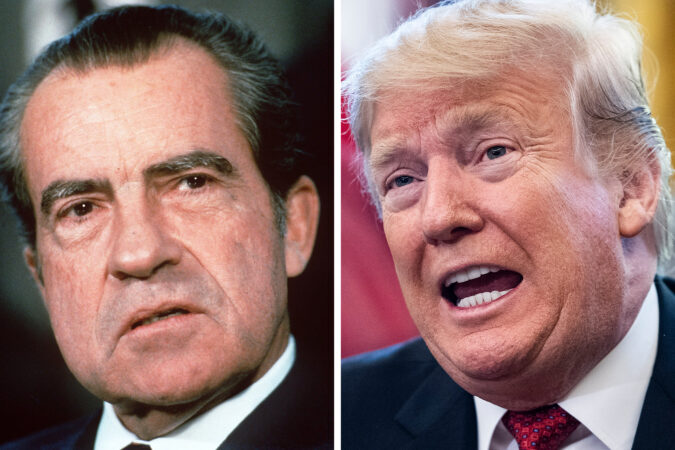
    In fact, an often-forgotten chapter in the career of Richard Nixon — the president most often compared with Trump — vividly illustrates that the ideological boundaries in the GOP were once quite malleable. Nixon regularly shapeshifted and operated across multiple wings of the GOP as he rose from congressman to senator to vice president, and finally, to president. Yet, as Republicans have become more ideologically rigid, such moves have become increasingly difficult, replaced by debates over who qualifies as a “real Republican” — and who is a Republican in Name Only (RINO).”

    The Richard Nixon who embarked on a political career in 1945 was nothing like the figure who resigned the presidency in disgrace three decades later. When he launched his first campaign in California’s 12th Congressional District, Nixon pledged to local Republicans that he would wage an “aggressive, vigorous campaign on a platform of practical liberalism” to defeat the popular incumbent congressman, Jerry Voorhis.

    At this time, Nixon modeled himself on Republican Harold Stassen, the former “boy wonder” governor of Minnesota. Stassen had built a national reputation in the late 1930s for his bipartisan “middle way” approach to governance, which blended fiscal discipline, civil service reform and bipartisan labor legislation. By 1943, when he resigned from the governorship to serve in the Navy during World War II, Stassen had become one of the country’s most prominent progressive Republicans.

    In Stassen’s success, Nixon saw a model for how a newcomer could win over liberal and independent voters in California. He wrote to the Minnesotan, “I have been very interested in following your campaign to liberalize the Republican Party because I feel strongly that the party must adopt a constructive progressive program in order to merit the support of voters.” Key to this program was retooling the principles of Democrat Franklin D. Roosevelt’s vaunted New Deal instead of rejecting them outright like many conservative Republicans did.

    This formula included accepting popular New Deal programs like Social Security — and even bolstering them. It also involved advocating against American isolationism and in favor of increased international cooperation. On labor rights — another thorny issue — Nixon, like Stassen, sought a middle ground: he supported arbitration to avoid strikes, while balancing the interests of workers and management. In a campaign speech, Nixon claimed that he “would not be a candidate if he were not strongly in favor of unions and small business.”

    This platform proved successful for Nixon, who the Minneapolis Star Tribune dubbed a “Stassen Candidate.”

    Shortly after he upset Voorhis and became the representative-elect for the 12th District, a former Whittier College classmate wrote to Nixon to offer “hearty congratulations” — despite being a Democrat who hadn’t voted for him. Nixon’s progressive message resonated with his former classmate, who expressed hope not only for Nixon’s success but “for the success of the progressive and liberal elements” within the Republican Party.

    In the coming years, Nixon would dash this hope as he illustrated the ease with which politicians moved between ideological camps in the GOP. During his early years in Congress, Nixon hung his hat not on the progressive vision of Stassen, but on staunch anti-Communism and red baiting. In 1947, Nixon joined the House Un-American Activities Committee (HUAC), where his pursuit of former State Department official Alger Hiss generated national attention. The case helped transform Nixon from an anonymous freshman congressman into one of the nation’s most prominent anticommunists.

    In 1950, Nixon further cemented his anti-Communist reputation during a successful Senate campaign against Rep. Helen Gahagan Douglas, who he portrayed as soft on Communism by repeatedly linking her voting record to that of left-wing Congressman Vito Marcantonio.

    Nixon’s reputation as an anti-Communist crusader compelled Dwight Eisenhower to select him for the 1952 GOP ticket as an olive branch to disgruntled conservatives after he beat their preferred candidate for the nomination, Ohio Sen. Robert Taft.

    Eisenhower’s election was a victory for progressive Republicans as he promised an era of “Modern Republicanism” — which paired a commitment to free enterprise with a belief that the government had an obligation to improve society and provide a basic social safety net.

    The GOP’s right flank derided this philosophy, and Nixon often spent time mediating between the two wings of the party. His ability to move comfortably between the camps reflected the ideological flexibility that still characterized the Republican Party during the 1950s.

    Made By History sponsors. FOR USE ON MADE BY HISTORY STORIES ONLY.

    Yet, even as he tried to reassure conservatives, Nixon embraced Modern Republicanism; he represented the Eisenhower administration abroad, including during his highly publicized exchanges with Soviet Premier Nikita Khrushchev. This engagement reflected the desire to contain communism through diplomacy and alliances, and the administration’s internationalist approach.

    Domestically, Nixon served as the administration’s point man on civil rights, supporting measures such as the Civil Rights Act of 1957 and overseeing efforts to combat employment discrimination through his leadership of the President’s Committee on Government Contracts. In 1958, Martin Luther King Jr. expressed his belief that “Nixon would have done much more to meet the present crisis in race relations than President Eisenhower has done.”

    In 1960, Nixon embarked on his first presidential campaign. During an October question-and-answer session at the University of Southern California, the vice president turned to the question of whether he considered himself a liberal or a conservative.

    He started by offering a definition of liberalism from Roosevelt. “A liberal is a man who wants to build bridges over the chasms that separate humanity from a better life,” Nixon explained. To him that meant, “we’re all liberals … We all want a better life.” Nixon concluded his answer by describing himself as a “practical progressive” — an echo of the “practical liberalism” he embraced during his 1946 campaign.

    Nixon went on to lose that race narrowly. But in 1968, he rebounded, by once again successfully navigating the party’s competing factions. He appealed to conservatives with his Southern Strategy and rhetorical emphasis on “law and order,” while reassuring moderates that he remained an experienced and pragmatic Republican.

    As president, he did some things that were progressive by today’s standards, including enacting the first federal affirmative action program and signing the Clean Air and Clean Water Acts. Simultaneously, however, he tangled with the liberal wing of his party over Vietnam and several Supreme Court appointments, and he vetoed legislation to provide federally funded daycare for children.

    Nixon is typically remembered for helping to usher in the populist conservative tide that would eventually sweep GOP politics. Today, he’s often compared with Trump because of his embrace of white grievance politics, his demands for personal loyalty and his abuse of power.

    Yet, his career also highlights how the Republican Party once had a vibrant and popular progressive and moderate wing. When Nixon launched his career, the idea of branding someone a RINO would have been far-fetched because the GOP comfortably managed to include staunch conservatives like Taft, as well as progressives like Stassen. The progressive or moderate wing of the party survived into the 1990s and 2000s; in Pennsylvania, Specter won the first of five Senate terms in 1980, while in New Jersey, Kean and Whitman both served as governors in the 1980s and 1990s.

    Yet, their careers tell the story of what happened as the brand of populist conservatism that Nixon capitalized on to win the presidency gained steam: In 2009, Specter switched parties and became a Democrat for his last years in the Senate, and Whitman is now a national co-chair of the Forward Party, and has endorsed Democrats in the last three presidential elections.

    Their departures reflected the rise of a new hard-line conservative Republican base with little tolerance for moderation or compromise. The collapse of the GOP’s liberal wing made today’s battles of who counts as a “real Republican” not just possible, but inevitable.

    Gaetano V. Della Torre is a New Jersey-based historian and educator. His article “Nixon’s Practical Liberalism: How Richard Nixon Tapped Harold Stassen’s Progressive Vision in 1946” is forthcoming in the Southern California Quarterly.

    Made by History takes readers beyond the headlines with articles written and edited by professional historians. Opinions expressed do not necessarily reflect the views of The Inquirer.

  • In 2026, like in 1770, standing armies in our cities erode freedom

    In 2026, like in 1770, standing armies in our cities erode freedom

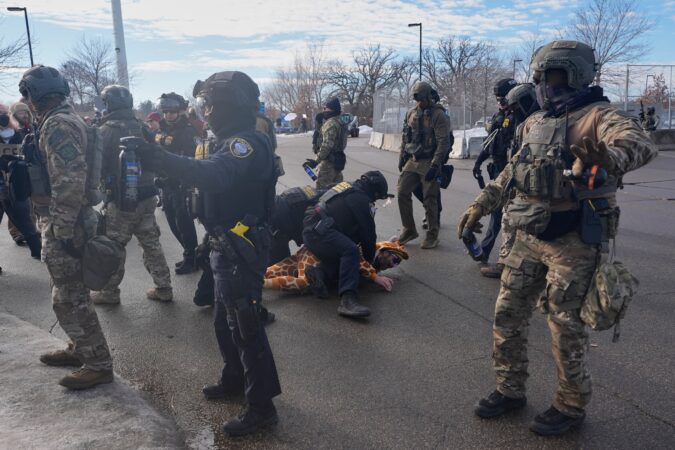
    In January, Bruce Springsteen released a passionate anti-ICE ballad, “The Streets of Minneapolis,” in which he named U.S. Immigration and Customs Enforcement (ICE) “King Trump’s private army.” Dedicated to the memory of two protesters who died at the hands of armed government agents in a frigid Minnesota winter, the song invites comparisons to Paul Revere’s famous and equally passionate engraving of the 1770 Boston Massacre. Revere’s image depicts a bloodthirsty line of soldiers shooting directly into a crowd of unarmed Bostonians, killing five and injuring six more. In calling ICE a king’s private army, Springsteen drew on a long history of protest against standing armies, one built on the belief that accountability to the people and their representatives is the foundation for political liberty.

    Since the Magna Carta, Britons had been hostile to the idea of a standing or permanent army, one that existed even in peacetime, and that was paid for through taxes rather than staffed by volunteers. The 1689 Bill of Rights explicitly prohibited a standing army except with Parliament’s blessing. Within a few years, however, Parliament had softened its stance against armies in peacetime, since Britain was engaged in nearly continuous and often undeclared wars against France and Spain. In response, Britons firmed up other ground rules for a standing army: military power must always be subordinate to civilian authority, and some form of legislative consent was necessary. Without these guardrails, people feared, a monarch could simply turn his military might on his own subjects to quell dissent.

    The army could be used as a British police force, but not without complications. Magistrates and mayors regularly requested troops to come to their aid as they tried to catch smugglers and control rioting. Although a justice of the peace might occasionally be able to disperse a crowd by reading the Riot Act, those civilian authorities usually required military support. Eighteenth-century soldiers were trained for battle in the field, not to police civilians, and magistrates soon begged the war office to remove rowdy soldiers from their towns, and especially from the public houses where they were quartered.

    In 1768, the Massachusetts governor, like so many magistrates before him, asked the British War Office to send him troops in response to colonial protests against new tariffs set by Parliament. Bostonians felt deeply betrayed by the news of arriving troops. As one minister wrote: “To have a standing army! Good God! What can be worse to a people who have tasted the sweets of Liberty?” They were less concerned with the violence soldiers might bring than with the threat that a peacetime army posed to society and especially to the political rights of civilians.

    When the first two regiments of Redcoats landed in Boston Harbor in October 1768, they marched with flags flying and drums beating along the central Long Wharf into the heart of the city, where they appropriated Boston Common and Faneuil Hall as temporary campsites. Determined to demonstrate to the world that their peaceful town had no need of troops to keep order, Bostonians mostly refused to rise to the bait. For at least a while, there was nothing for the troops to do.

    Instead, the Sons of Liberty turned to the press to protest the troops’ arrival. In the year and a half that British soldiers lived in Boston, the newspapers were crammed with examples of how the very presence of a standing army could destroy every part of a civilized society, from church services (when the army band deliberately played music during the sermon) to parental authority (as young women defied their fathers to date Redcoats).

    Most of all, colonists feared the impact of a standing army on political freedom. How could a free people debate, much less protest, at the point of a bayonet? When the British army pointed its cannons at the door of the Massachusetts legislature, it was hard to escape the conclusion that a standing army was the king’s way of taking back political power. In sum, as the Massachusetts assembly complained to the governor in 1769, “establishing a Standing Army in this Colony, in a Time of Peace, without the Consent of the General Assembly of the same, is an Invasion of the natural Rights of the People.”

    The death of British protesters at the hands of soldiers was not uncommon in England, and colonists and officers alike knew that a violent clash was only a matter of time. On March 5, 1770, troops fired into a crowd of civilians in downtown Boston, killing Crispus Attucks, Samuel Gray, and James Caldwell immediately; Patrick Carr and teenager Samuel Maverick later died of their wounds. Even 256 years later, the exact sequence of events that led to the shooting is impossible to discover. Its importance for shaping the American Revolution, however, is clear.

    On the night of the shooting, the acting governor of Massachusetts rushed to the scene and was horrified to see people bleeding to death on the snow before the seat of governmental power, today the Old State House. He swore he would launch a full civilian investigation with local law enforcement, and he promised, “I will live and die by the law.”

    The governor was as good as his word. That night, the captain in charge turned himself in to the local jail, as did the men under his command. John Adams, urged by the Sons of Liberty to demonstrate Bostonians’ equally strong commitment to the rule of law, took on the defense of the British soldiers, successfully winning acquittals for most of them. Three years later, Adams reflected that defending the soldiers was “one of the most gallant, generous, manly and disinterested Actions of my whole Life, and one of the best Pieces of Service I ever rendered my Country.” And he was quite convinced that the jury verdict “was exactly right.”

    At the same time, Adams agreed that Boston should certainly “call the Action of that Night a Massacre.” In fact, he wrote, “[I]t is the strongest of Proofs of the Danger of standing Armies.” The experience of living with — and dying at the hands of — a standing army forever damaged Bostonians’ trust in the British empire.

    In 1776, Congress highlighted the Boston Massacre in its list of grievances against George III. The 11th complaint drew directly from the Massachusetts legislature’s complaint seven years earlier: “He has kept among us, in times of peace, Standing Armies without the Consent of our legislatures.” It was not the violence that so horrified colonists; it was the lack of legislative consent.

    Despite the striking parallels, the shootings of Renee Good and Alex Pretti in Minneapolis earlier this year were not just retreads of the Boston Massacre. For the Redcoats, face coverings and anonymity were not options; they had been living among Bostonians for a year and a half, becoming neighbors and sometimes even family. No one claimed the troops had legal immunity, and even the royal governor, who had requested the troops, believed in holding individual soldiers accountable for their actions.

    In those ways, the shooting in Boston defied fewer norms than the activities of ICE in Minneapolis two and a half centuries later. Even so, the Boston Massacre and its consequences were no small part of the forces that impelled colonists toward a final break with the British empire.

    Serena Zabin is the Stephen R. Lewis Jr. Professor of History and the Liberal Arts at Carleton College and the author of “The Boston Massacre: A Family History.”

    The “Road to 250” series is an initiative of Historians for 2026, a group of early American academics, public historians, archivists, and educators devoted to shaping an accurate, inclusive, and just public memory of the American Founding for the 250th anniversary.

    Made By History takes readers beyond the headlines with articles written and edited by professional historians. Opinions expressed do not necessarily reflect the views of The Inquirer.

    Made By History sponsors.
  • Pope Leo XIV celebrates immigrants in speech to Philadelphia crowd amid clash with Trump ahead of 250th anniversary

    Pope Leo XIV celebrates immigrants in speech to Philadelphia crowd amid clash with Trump ahead of 250th anniversary

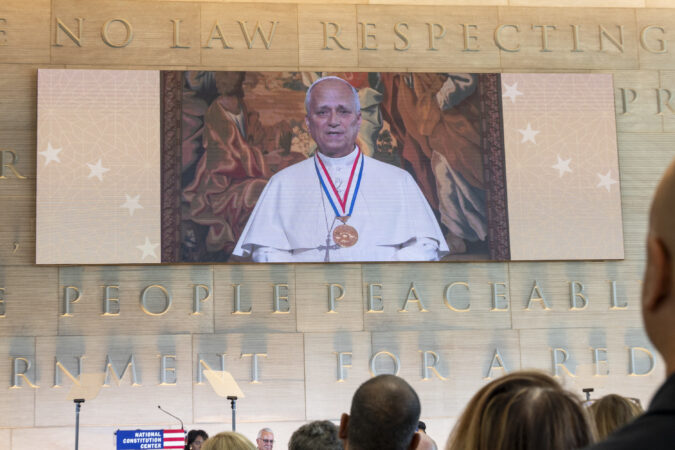
    Addressing a Philadelphia crowd live from the Vatican, Pope Leo XIV called for a “recommitment” to American ideals.

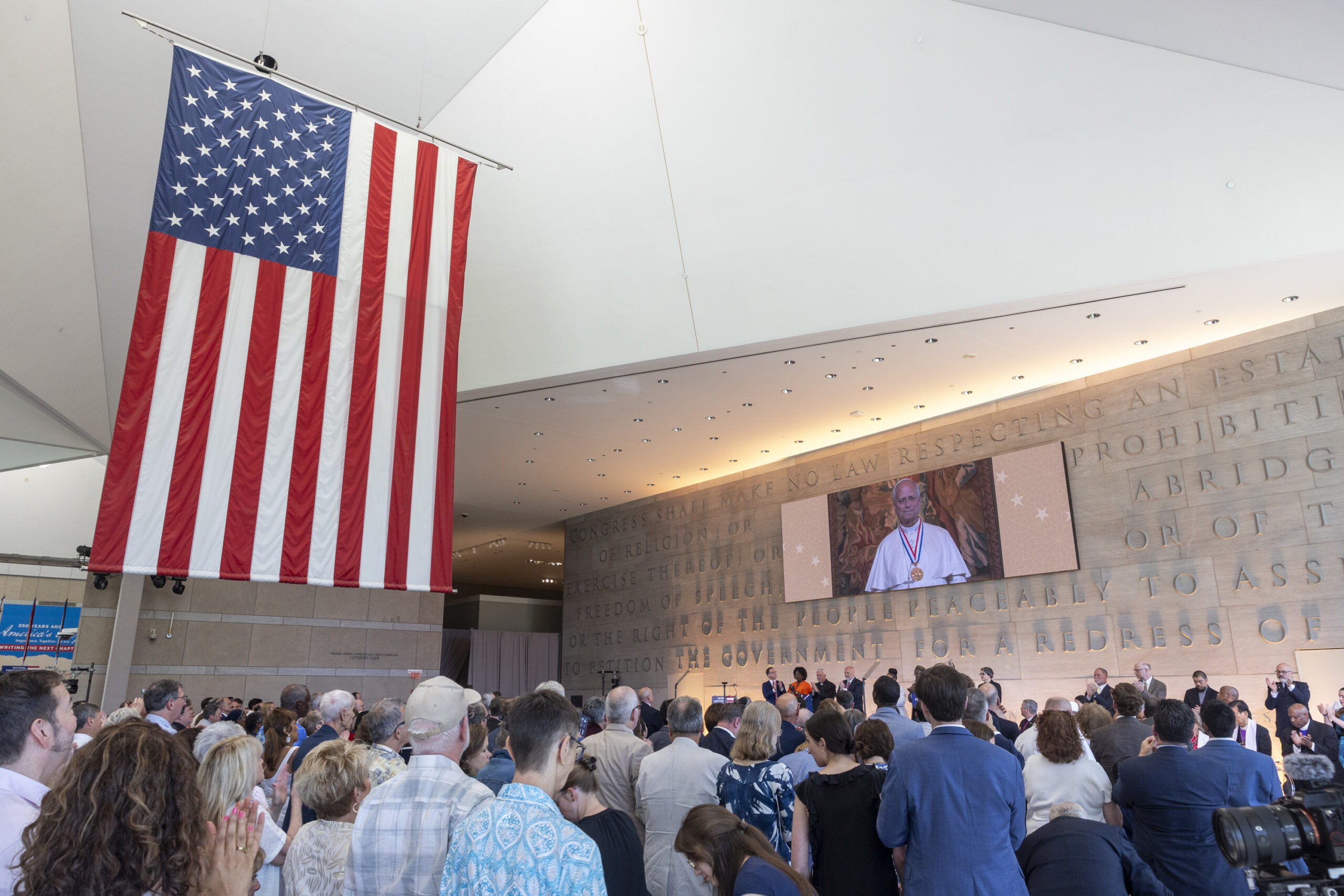
    The first U.S.-born pope delivered remarks virtually at an interfaith ceremony inside Philadelphia’s National Constitution Center on the eve of the United States’ 250th birthday to accept the center’s prestigious Liberty Medal.

    Facing a screen showing the live, cheering Philadelphia audience, the pontiff wore his Liberty Medal along with a cross around his neck.

    Leo, who grew up in Chicago and attended Villanova University, quickly pointed out his American roots, calling himself “a son of this great country.”

    “I join you in asking God’s blessings upon America’s future that the lofty ideals enshrined at the beginning of the Declaration of Independence may continue to guide the flourishing of the nation in unity, justice, and peace,” he said.

    Leo, who was elected pope last year, spent years serving the church in Peru and has been outspoken about calling for international peace. That’s landed him at odds with President Donald Trump’s administration on the issue of migrants, the war in Iran, and more.

    The pope leaned into some of those themes in his speech, even though he did not refer to the president directly.

    He nodded to his advocacy for humane treatment of immigrants and noted that the founders of the United States “made America a byword for freedom, as the country opened its doors to successive waves of immigrants, enabling them and their children to play their part in shaping the future of the nation.”

    He said the “love of freedom” in the United States has inspired the country “to look beyond itself and at great sacrifice to champion the cause of freedom beyond its own borders.” But he acknowledged that mission hasn’t been straightforward, noting that building a society that embodies such ideals “was not always easy and, in many respects, is still a work in progress.”

    The pontiff’s speech comes the day before he plans to visit Lampedusa, an Italian island known as a stop for migrants making the dangerous journey across the Mediterranean Sea from North Africa to Europe. His predecessor Pope Francis made his first official visit outside of Rome in 2013 to the same island and condemned the “globalization of indifference” toward migrants.

    Pope Leo XIV speaks at the Liberty Medal Ceremony at the National Constitution Center in Philadelphia on Friday.

    Julie Silverbrook, the chief content and learning officer for the National Constitution Center, emphasized in a Friday interview that Leo is a “global leader who has been uniquely shaped by American ideals.”

    “He has brought together people of different faith traditions, and through his ministry really reflected his belief in the inherent dignity of all human beings,” she said.

    Leo declined an invitation from Trump to the United States to celebrate the country’s 250th birthday on July Fourth, the New York Times reported. The first American-born pope opting to visit migrants instead sends a stark message as the president pursues his mission of mass deportations.

    But the pontiff’s participation in the Philadelphia program highlights his connections to the region, which isn’t lost on the National Constitution Center.

    The Philadelphia-based private nonprofit organization chose Leo for the award due to “his lifelong work promoting religious liberty and freedom of conscience and expression around the world — ideals enshrined by America’s founders in the First Amendment to the U.S. Constitution.” That, and also because he is the first pope born in the United States, and has connections to Philadelphia, Silverbrook said.

    “He was shaped by those freedoms … in much the same way that the Declaration of Independence was shaped by the city of Philadelphia, and of course a reflection of American values that have been carried globally,” she said.

    When a delegation from Philadelphia’s National Constitution Center met with Leo at the Vatican in April to present him with the medal in person, they also bore a few local goodies: a bundle of Villanova swag, a replica of George Washington’s Acts of Congress, and a Wawa tote bag filled with Tastykakes.

    “I think he very much so feels a connection to Philadelphia, both having been educated here, and I think in this semiquincentennial moment, I think the eyes of the world are on Philadelphia, and we’re thinking about the ideals that have emanated from this place for 250 years,” Silverbrook said.

    Leo, a 1977 Villanova alum, recently passed on a surprise message to graduates of his alma mater. Vince Stango, the interim president and CEO of the National Constitution Center, also went to the Augustinian university on the Main Line, which co-sponsored the NBC10 broadcast of the event along with the archdiocese and Malvern Prep.

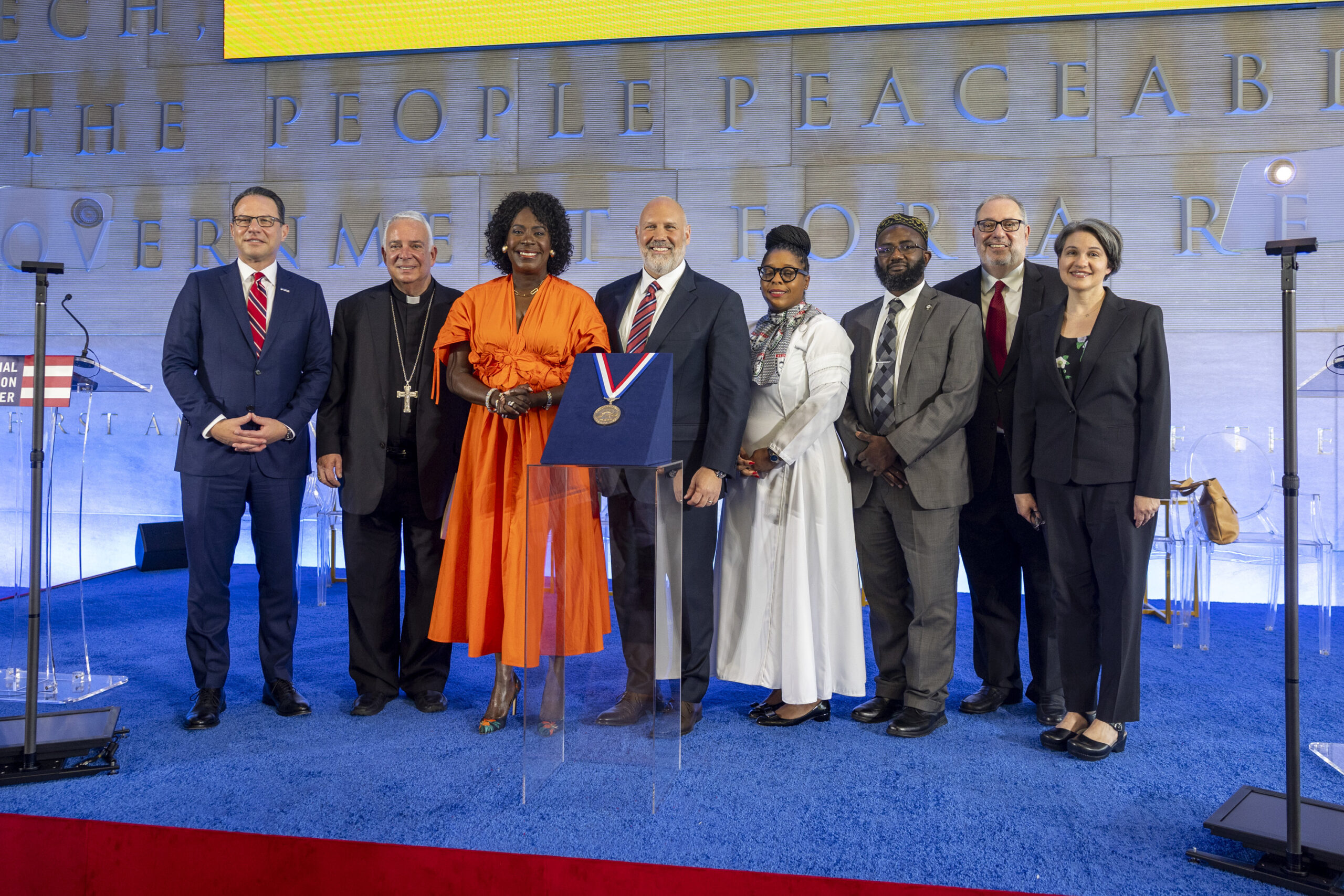
    (From left to right) Gov. Josh Shapiro, Rev. Nelson J. Pérez, Mayor Cherelle L. Parker, Interim President & CEO of National Constitutional Center Vince Stango, Rev. Carolyn C. Cavaness, Imam Quaiser D. Abdullah, Rev. Luis A. Cortés Jr., and Rabbi Jill L. Maderer, pose for a photo at the Liberty Medal Ceremony at the National Constitution Center in Philadelphia, Pa., on Friday.

    Clashing with Trump

    The pope has contended that it’s up to each country to determine how they want to accept migrants while also denouncing the Trump administration’s “extremely disrespectful” treatment of them.

    He has also spoken out against Trump’s threats against Iran, and declined to participate in the president’s “Board of Peace” for Gaza’s reconstruction.

    In an April social media rant, Trump complained that he doesn’t “want a Pope who criticizes the President of the United States.” The president called the Catholic leader weak and accused him of “catering to the Radical Left.”

    Leo told reporters that month that he has “no fear, neither of the Trump administration, nor of speaking out loudly about the message in the Gospel, and that’s what I believe I am called to do, what the church is called to do.”

    In his Friday remarks, the pope made a call for unity but warned that a country should come together with “ideals that do not fade with the passing of time.”

    He called on the United States to recognize its values of “peace and prosperity, a country characterized by generosity and nobility of heart,” and said the values of “shared human dignity, equality, and the rights laid out in the Declaration of Independence” can help unite and guide the nation.

    The Liberty Medal

    The Liberty Medal was created in 1988 and has been hosted by the National Constitution Center since 2006.

    The award has gone to storytellers, philanthropists, civil rights leaders, and politicians on both sides of the aisle, such as Ukrainian President Volodymyr Zelenskyy, former Supreme Court Justice Ruth Bader Ginsberg, the Bushes, Malala Yousafzai, and Thurgood Marshall.

    The center describes its recipients as individuals who “strive to secure the blessings of liberty to people around the globe.”

    The process of selecting Leo began about a year ago, Silverbrook said.

    The speech was initially going to be projected on Independence Mall, but the event was moved indoors due to the extreme heat and livestreamed by the center online.

    Rich Russo, 63, a Fishtown resident who attended the event in person, called the experience “once in a lifetime.”

    “How many times do you get the pope talking to you?” said Russo, who works for a bank.

    Gov. Josh Shapiro, who is Jewish, and Mayor Cherelle L. Parker, a Baptist — both Democrats who have been outspoken about their own faiths — joined Philadelphia Archbishop Nelson J. Pérez and other religious leaders who made remarks on stage prior to the pope’s speech. Pennsylvania Attorney General Dave Sunday, a Republican, rang a replica Liberty Bell outside.

    “Philly is proud that the pope is a graduate of Villanova University who spent time living and working in our region,” Pérez said on stage. “Pope Leo knows us, and we feel like we know him, too.”

    “His influence, however, extends beyond Philadelphia,” the archbishop added.

  • Frederick Douglass’ critical lesson for the 250th: ‘Contend, contend’

    Frederick Douglass’ critical lesson for the 250th: ‘Contend, contend’

    As the country moves toward the 250th celebration, the official directive from the Trump administration is clear: be proud, be grateful, and rejoice in our great nation. This rosy narrative overlooks the global political conflicts, fractured economy, and longstanding racial and gendered inequalities that have shaped our country from its founding. These difficult realities are not footnotes to American history but a reminder of all of the ways that our nation continues to fail to live up to its espoused values. This is why one of the greatest speeches in American history resonates this time of year and especially on the eve of our nation’s 250th birthday: Frederick Douglass’s “What to the Slave is the Fourth of July?”

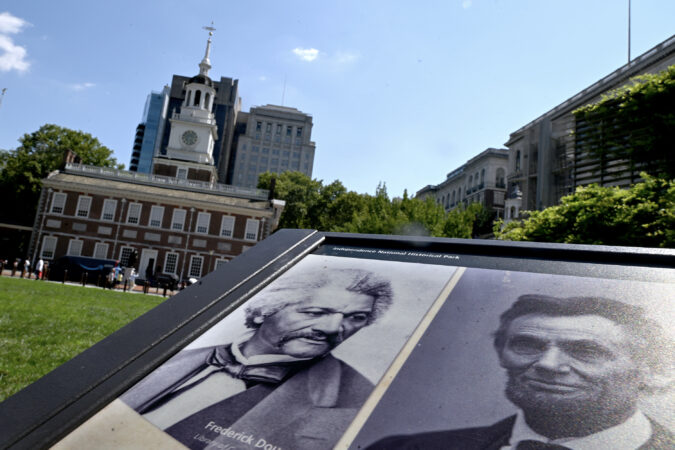
    Born into slavery, Frederick Douglass escaped from bondage to become the foremost African American abolitionist, orator, and intellectual of the nineteenth century. His famous “Fourth of July” speech is a profound declaration of faith in the promise of America and its “saving principles.” In this speech, delivered pointedly on July 5, 1852, not July 4, in Rochester, New York, Douglass argues that the foundations of American democracy are not fundamentally rotten, just mistaken in their implementation, and that the values enshrined in the founding mythology and documents might yet redeem America from its sins. It is a galvanizing and patriotic text, and it anticipates what W.E.B. Du Bois would say in 1935 in Black Reconstruction in America: that “democracy died save in the hearts of Black folk.”

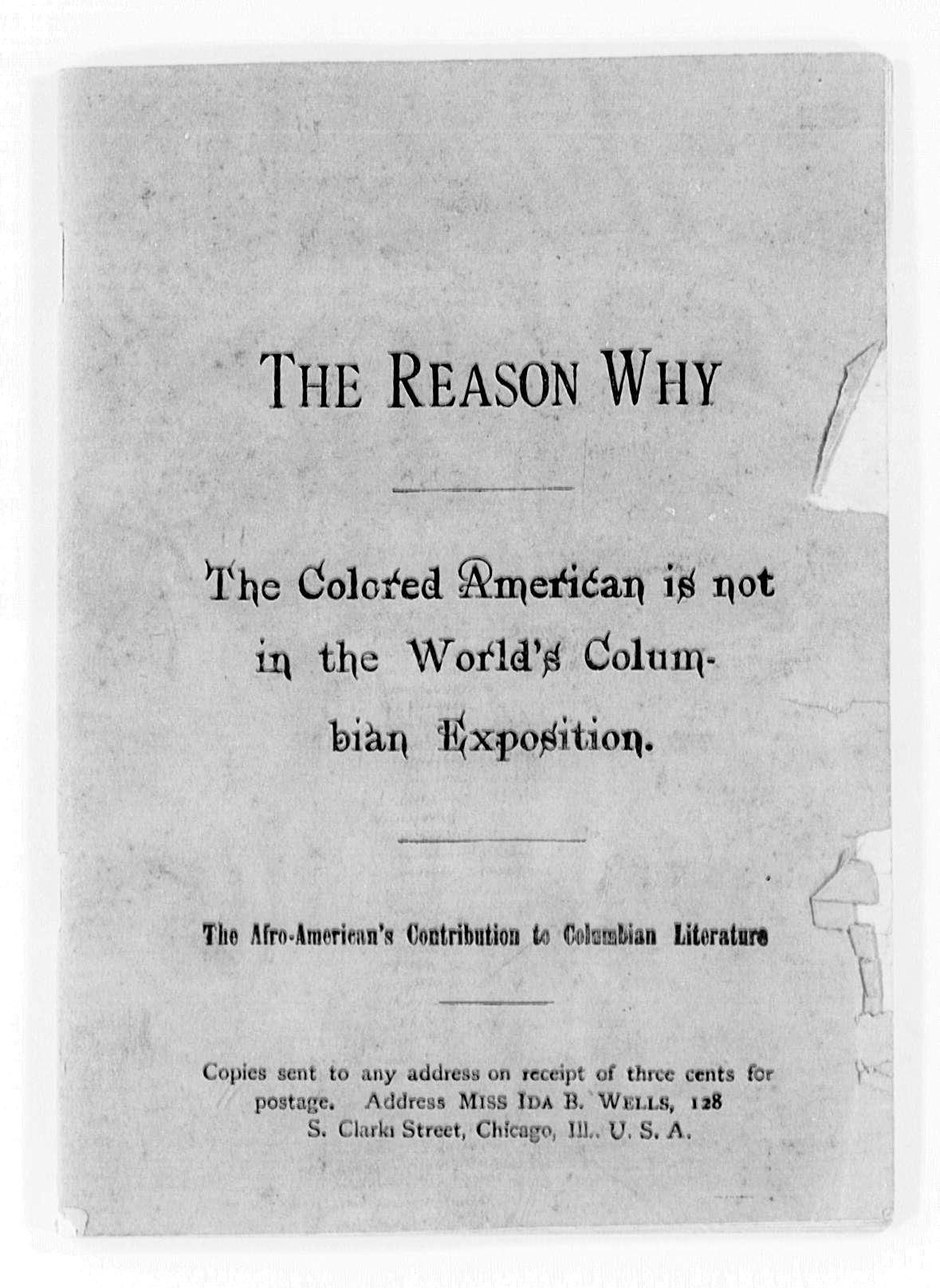
    But this year, a different piece by Douglass resonates: “The Reason Why the Colored American is Not in the World’s Columbian Exposition,” written in 1893, just two years before he died. In that pamphlet, Douglass criticizes another national commemoration that asked Americans to set aside painful realities in favor of a more flattering narrative. His argument—that the struggle against racial injustice must continue not because success is guaranteed, or even likely, but because it is the right thing to do when confronted with injustice—continues to matter today.

    The pamphlet, “The Reason Why: The Colored American is not in the World’s Columbia Exhibition,” had to be distributed and discussed from the Haitian exhibition space at 1893 World Fair in Chicago because African Americans were denied any real role in the Fair.

    In this pamphlet, Douglass protested the World’s Fair in Chicago, a grand celebration of the 400th anniversary of Christopher Columbus’s 1492 arrival in the “New World.” The fair, Douglass argued, distorted American history by erasing the contributions of Black Americans whose labor and suffering had made that very “progress” possible. By this time, Douglass had witnessed the Emancipation Proclamation and Reconstruction and the violent undoing of Reconstruction. He had seen the Supreme Court strike down the Civil Rights Act of 1875. As white Americans imposed the brutal logic of Jim Crow across the nation, Douglass came to believe that the consciences he had spent his life appealing to had been so corrupted by white supremacy that they could no longer be relied on to redeem America.

    And yet, in the closing passages of the pamphlet, Douglass did not embrace despair or advocate for retreat. Instead, he offered the metaphor of a ship that must embrace the dangers of the open sea. The ship might remain safely anchored in harbor but this safety, he argued, is deceptive. The ship must weather the storm. And he followed it up with something even more profound: “Next to victory is the glory and happiness of…contending for it. Therefore, contend, contend! That we should have to contend and strive for what is freely conceded to other citizens without effort or demand may indeed be a hardship, but there is compensation here as elsewhere. Contest is itself ennobling. A life devoid of purpose and earnest effort is a worthless life. Conflict is better than stagnation.” For Douglass, the act of contending itself is meaningful. The struggle testifies to the injustice it intends to repair.

    Made By History sponsors. FOR USE ON MADE BY HISTORY STORIES ONLY.

    The origins and reception of the pamphlet reveal the fault lines in American society at the end of the 19th century. Douglass had appealed to Black communities across the nation for funds to print the pamphlet and had received almost nothing. Discouraged, he told his collaborator, Ida B. Wells, that he wanted to abandon the effort. It was Wells who insisted otherwise, organizing with many Black women’s organizations to raise the necessary resources. Ironically, the man who would close his pamphlet urging Black Americans to “contend, contend” had to be persuaded to continue contending himself.

    The reception of the pamphlet was divided and harsh. Many prominent white journalists called Douglass a complainer. Even within the Black press, there was hardly consensus. Some Black journalists endorsed his indictment of the fair while others argued that Black economic and educational enfranchisement were more important than another lament of prejudice. This was a broader debate within the Black community that Douglass did not settle in the pamphlet. What he offered instead was something harder and arguably more important today: the argument that we must continue to fight even when we are not winning the war.

    This is an extraordinary argument coming from Douglass at the end of his life. He had every reason to give up the fight. He had spent decades working to change America, and America had proven far more resistant to that change than he had originally hoped. And yet he insisted: contend, contend.

    At this moment of democratic fracture and racial retrenchment in America, Douglass’s argument deserves a second hearing. The Supreme Court has dismantled affirmative action, executive orders have unraveled federal civil rights commitments, and disparities in housing, education, healthcare, and criminal justice persist and deepen. The fight against racial injustice must continue not because we can be assured of our triumph but because our commitment to America’s “saving principles” should not falter even when those principles seem out of reach. Douglass’s refusal to abandon the fight—his willingness to steer into the storm—is not merely a biographical detail about an American at the end of his life. It is an argument about what it means to celebrate America and her saving principles.

    Happy 250th birthday, America. Contend, contend.

    Dr. Amy Gais is a Lecturer in the Department of Political Science and Comparative Literature and Thought at Washington University in St. Louis. She is the author of The Coerced Conscience (Cambridge University Press, 2024) and is currently working on a book project on dissimulation, resistance, and freedom in African American political thought.

    Made by History takes readers beyond the headlines with articles written and edited by professional historians. Opinions expressed do not necessarily reflect the views of The Inquirer.

  • Philly can’t force ICE agents to unmask, federal judge rules

    Philly can’t force ICE agents to unmask, federal judge rules

    Philadelphia can’t prevent U.S. Immigration and Customs Enforcement agents and other federal officers from concealing their identities, a federal judge ruled Thursday.

    U.S. District Judge Chad F. Kenney issued an order preventing Mayor Cherelle L. Parker’s administration and District Attorney Larry Krasner’s office from barring federal law enforcement officers from wearing masks, intentionally covering their badges, or using unmarked vehicles.

    The U.S. Constitution’s Supremacy Clause prevents states — or a city in this case — from imposing requirements on how federal agencies carry out their duties, the judge appointed by President Donald Trump said.

    When City Council passed the bill in April as part of the ICE Out legislative package, the lawmakers “attempted to sidestep the Constitution’s clear mandate and disregarded this fundamental principle of law that has informed American jurisprudence for over 200 years,” Kenney’s opinion said.

    Parker allowed the bill to become law without her signature, following City Solicitor Renee Garcia’s advice that signing the bill “would send an inaccurate signal to the public that the Administration can legally and practically enforce” its provisions.

    “Mayor Cherelle Parker acted with civic wisdom and courage to stand up for the Constitution and follow the rule of law to where it led, despite what may have been strong personal inclinations to the contrary,” the judge said.

    While the ordinance’s requirements apply to all law enforcement, its inclusion in an “ICE Out” package suggested the city planned to be selective in its enforcement, Kenney said.

    And even though the ordinance hadn’t taken effect yet, the judge said, the city never said it wouldn’t attempt to enforce its provision. Krasner’s past statements vowing to “arrest” and “put handcuffs” on ICE officers who break state law, as well as his involvement in a progressive prosecutors’ group committed to such prosecutions, suggest the threat of enforcement is real, Kenney said.

    “The Department of Justice will keep fighting jurisdictions that try to obstruct President Trump’s immigration enforcement with policies that endanger agents and public safety,” a department spokesperson said.

    The city is reviewing the ruling and potential next steps, a law department spokesperson said.

    Kenney showed an “unnecessary urgency” from the beginning of the case, Krasner said.

    “The red-hot rush of this federal district court judge, a Delaware County Republican appointed by Donald Trump, was predictable,” the district attorney said.

    Defending the ordinance put Parker and her administration in an awkward position. City Council passed the legislation with a veto-proof supermajority as part of a seven-bill package.

    The ordinance at the heart of the litigation made it a crime for law enforcement officers, including Immigration and Customs Enforcement agents, to wear face coverings or conceal personal identifiers like badges and nameplates while carrying out their official duties in Philadelphia, and required officers to identify themselves. It also prohibited the use of unmarked vehicles.

    The bill included exceptions allowing officers to wear masks in certain circumstances, such as medical emergencies or SWAT operations.

    An officer could face up to 90 days in jail plus a fine for violating the ordinance.

    The other bills prohibit federal immigration agencies from staging raids on city-owned property, ban discrimination on the basis of citizenship status, and prohibit the city from engaging in most forms of information-sharing with ICE.

    The legislation also codified some of Philadelphia’s long-standing sanctuary city status, which a recent poll found most city residents support.

    Parker signed the six other bills, which will take effect Tuesday.

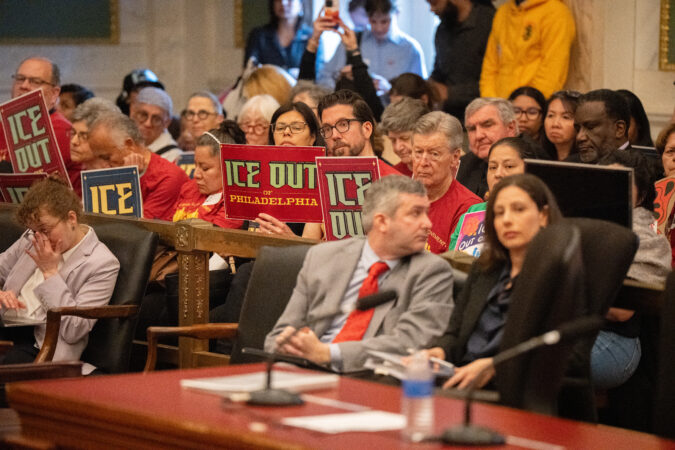
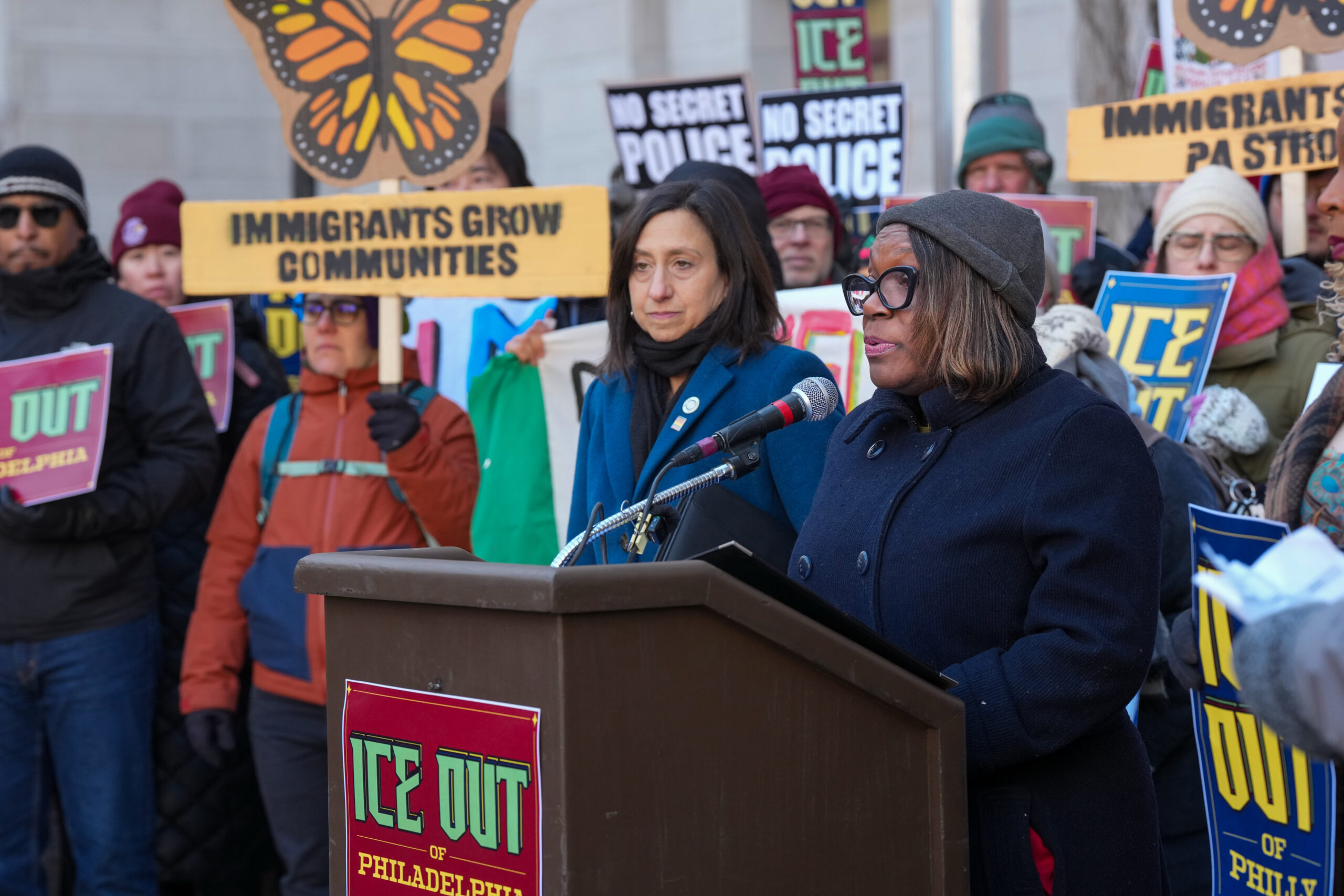
    Kendra Brooks shown here during a press conference at City Hall to announce a package of bills aimed at pushing back against ICE enforcement in Philadelphia, January 27, 2026.

    The Justice Department sued the city, Parker, Krasner, and Garcia in federal court in Philadelphia last month and requested an injunction on the enforcement of the masking bill.

    Officials from various federal agencies told the court the bill would harm their operations and officers.

    Members of the public routinely dox ICE agents, who are later subject to threats, John Rife, acting director of ICE’s Philadelphia field office, said in a filing.

    “Facial coverings reduce the risk of officers’ personal identities being shared publicly, which helps ensure that officers’ privacy and safety, and that of their family members, remains intact,” Rife said.

    The city argued the litigation was premature as the ordinance hasn’t gone into effect and there was no attempt to enforce it.

    The city also said federal agents had applied “aggressive enforcement tactics behind the mask of anonymity, undermining public safety and trust.”

    But Kenney’s opinion said, “there can be no public interest” in enforcing a provision that violates the Constitution.

    It doesn’t make sense that the city can’t hold federal officers to the same standard it holds its own police department to, Councilmember Rue Landau, who authored the bills with fellow progressive Kendra Brooks, said in a statement.

    The Trump administration has sued other jurisdictions, including New Jersey, over similar requirements. In April, the U.S. Court of Appeals for the Ninth Circuit found that a California bill requiring agents to “visibly display identification” was unconstitutional.

    On Tuesday, a federal judge in Richmond enjoined Virginia from enforcing a law barring ICE agents from covering their faces.

    “It’s unfortunate the Parker administration’s own doubts were used against the bill in this injunction,” Brooks said in a statement. “No one else is dealing with that dynamic in their lawsuits.”