Category: National Politics

  • House speaker ‘confident’ partial shutdown will end by Tuesday

    House speaker ‘confident’ partial shutdown will end by Tuesday

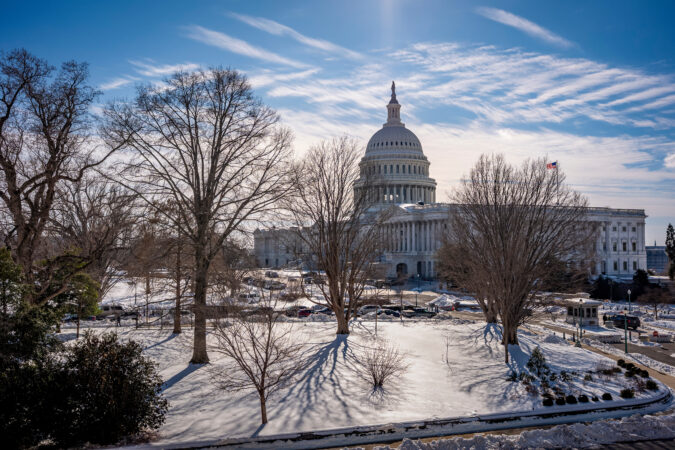
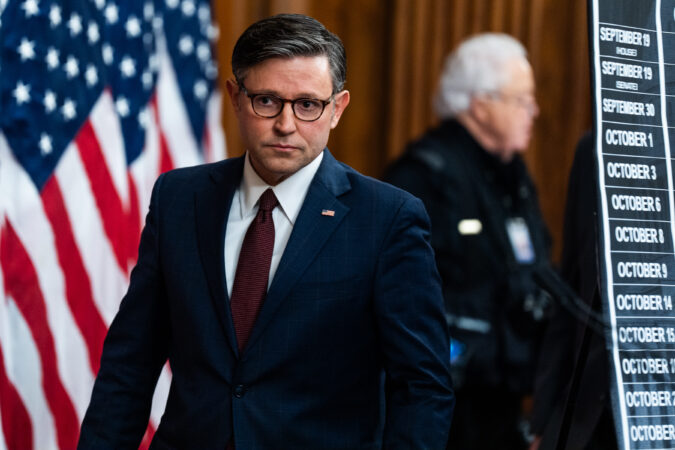
    House Speaker Mike Johnson (R., La.) said Sunday that he is “confident” he will have enough support from Republicans in the House conference to end the partial government shutdown by Tuesday.

    In an interview with NBC News’ Meet the Press, Johnson said the House will vote to reopen the government “at least by Tuesday.”

    “We have a logistical challenge of getting everyone in town, and because of the conversation I had with Hakeem Jeffries, I know that we’ve got to pass a rule and probably do this mostly on our own,” Johnson said, referring to the minority leader as he looked to blame Democrats for the second shutdown of President Donald Trump’s second administration, which began early Saturday.

    After the Trump administration’s aggressive immigration enforcement operation in Minneapolis left two U.S. citizens dead, Democrats have said they would not advance government funding measures unless changes were made to a funding bill for the agencies driving the Trump administration’s immigration policies, including the Department of Homeland Security. The department houses U.S. Customs and Border Protection, Immigration and Customs Enforcement, and the Federal Emergency Management Agency.

    On Friday, Congress missed a midnight deadline to approve six new spending bills because the Senate changed DHS funding measures after the House passed them. The Senate, however, quickly approved a bipartisan agreement backed by Trump to pass five major appropriations bills and a temporary two-week funding extension for DHS to buy time for additional policy negotiations.

    Over the weekend, Johnson remained adamant that the House will move quickly to pass those measures when it returns to Washington on Monday, despite frustrations from conservative members of the Republican caucus and skepticism from House Democrats.

    “We’ll have a lot of conversations to have with individual Republican members over the next 24 hours or so. We’ll get all this done by Tuesday,” Johnson said on Fox News Sunday. “I don’t understand why anybody would have a problem with this, though. Remember, these bills are bills that have already been passed.”

    Johnson will need nearly all of the House GOP majority to pass the bills if Democrats refuse to support DHS funding. The speaker said he believed he could get the backing of his members, emphasizing that Trump “is leading this” and that it “is his play call to do it this way.”

    The president, Johnson added, “has already conceded that he wants to turn down the volume” in the immigration enforcement operations, a change punctuated by his decision to send border czar Tom Homan to Minneapolis last week to take control of the situation.

    Johnson said the Trump administration has acknowledged to Senate Minority Leader Charles E. Schumer (D., N.Y.) that some of the changes and processes that Democrats are demanding “are fine with them,” including a requirement for ICE agents to wear body cameras.

    Johnson, however, said that while some of the proposed DHS revamps are “obviously reasonable,” he doesn’t think House Republicans will support Democrats’ demands that federal agents remove their masks and wear an ID while conducting immigration operations.

    “There’s a lot of details in this, we could get deep in the weeds, but we will do that over the next two weeks,” he said on Meet the Press.

    House Democrats have not committed to supporting the bipartisan agreement struck in the Senate, although they plan to support the other five funding bills. Jeffries (D., N.Y.) told ABC News’ This Week that Democrats would meet Sunday afternoon to discuss “what we believe is the best path.”

    “What is clear is that the Department of Homeland Security needs to be dramatically reformed,” Jeffries said. “Body cameras should be mandatory. Masks should come off. Judicial warrants should absolutely be required consistent with the Constitution, in our view, before DHS agents or ICE agents are breaking into the homes of the American people or ripping people out of their cars.”

    When asked if he believes the administration will enforce the changes if they pass, Jeffries said that this is “an untrustworthy administration” but that the American people are strongly rejecting the violent immigration enforcement actions they’ve seen out of Minneapolis.

  • Senate passes Trump-backed government funding deal, sending it to House

    Senate passes Trump-backed government funding deal, sending it to House

    WASHINGTON — The Senate voted Friday to fund most of the government through the end of September while carving out a temporary extension for Homeland Security funding, giving Congress two weeks to debate new restrictions on federal immigration raids across the country.

    With a weekend shutdown looming, President Donald Trump struck the spending deal with Senate Democrats on Thursday in the wake of the deaths of two protesters at the hands of federal agents in Minneapolis. Democrats said they would not vote for the larger spending bill unless Congress considers legislation to unmask agents, require more warrants and allow local authorities to help investigate any incidents.

    “The nation is reaching a breaking point,” Senate Democratic leader Chuck Schumer said after the vote. ”The American people are demanding that Congress step up and force change.”

    As lawmakers in both parties called for investigations into the fatal shootings, Trump said he didn’t want a shutdown and negotiated the rare deal with Schumer, his frequent adversary. Trump then encouraged members of both parties to cast a “much needed Bipartisan ‘YES’ vote.”

    The bill passed 71-29 and will now head to the House, which is not due back until Monday. That means the government could be in a partial shutdown temporarily over the weekend until they pass it.

    Speaker Mike Johnson, who held a conference call Friday with GOP lawmakers, said he expects the House to vote Monday evening. But what is uncertain is how much support there will be for the package.

    Johnson’s right flank has signaled opposition to limits on Homeland Security funds, leaving him reliant on Democrats who have their own objections to funding U.S. Immigration and Customs Enforcement without immediate restraints.

    Two-week debate over ICE

    It was unclear how involved Trump will be in the negotiations over new restrictions on immigration arrests — or if Republicans and Democrats could find any points of compromise.

    Senate Democrats will not support an extension of Homeland Security funding in two weeks “unless it reins in ICE and ends violence,” Schumer said. “If our colleagues are not willing to enact real change, they should not expect Democratic votes.”

    Similarly, House Democratic Leader Hakeem Jeffries told reporters that any change in the homeland bill needs to be “meaningful and it needs to be transformative.”

    Absent “dramatic change,” Jeffries said, “Republicans will get another shutdown.”

    Senate Majority Leader John Thune, R-S.D., said the two sides will “sit down in good faith,” but it will be “really, really hard to get anything done,” especially in such a short amount of time.

    “We’ll stay hopeful, but there are some pretty significant differences of opinion,” Thune said.

    Democrats demand change

    Irate Democrats have asked the White House to “end roving patrols” in cities and coordinate with local law enforcement on immigration arrests, including requiring tighter rules for warrants.

    They also want an enforceable code of conduct so agents are held accountable when they violate rules. Schumer said agents should be required to have “masks off, body cameras on” and carry proper identification, as is common practice in most law enforcement agencies.

    Alex Pretti, a 37 year-old ICU nurse, was killed by a border patrol agent on Jan. 24, two weeks after protester Renee Good was killed by an ICE officer. Administration officials, including Homeland Security Secretary Kristi Noem, originally said Pretti had aggressively approached officers, but multiple videos contradicted that claim.

    Republican pushback

    The president’s concessions to Democrats prompted pushback from some Senate Republicans, delaying the final votes and providing a preview of the coming debate over the next two weeks. In a fiery floor speech, Trump ally Sen. Lindsey Graham of South Carolina warned that Republicans should not give away too much.

    “To the Republican party, where have you been?” Graham said, adding that ICE agents and Border Patrol agents have been “slandered and smeared.”

    Several Republicans have said that if Democrats are going to push for restrictions on ICE, they will push for restrictions on so-called “sanctuary cities” that they say do not do enough to enforce illegal immigration.

    “There no way in hell we’re going to let Democrats knee cap law enforcement and stop deportations in exchange for funding DHS,” said Missouri Sen. Eric Schmitt, R-Mo., ahead of the vote.

    Still, some Republicans said they believe that changes to ICE’s operations were necessary, even as they were unlikely to agree to all of the Democrats’ requests.

    “I think the last couple of days have been an improvement,” said Kentucky Sen. Rand Paul. “I think the rhetoric has been dialed down a little bit, in Minnesota.”

    Last-minute promises

    After Trump announced the deal with Democrats, Graham held the spending bills up for almost a day until Thune agreed to give him a vote on his sanctuary cities bill at a later date.

    Separately, Graham was also protesting a repeal of a new law giving senators the ability to sue the government for millions of dollars if their personal or office data is accessed without their knowledge — as happened to him and other senators as part of the so-called Arctic Frost investigation into the Jan. 6, 2021, attack by Trump supporters at the Capitol.

    The spending bill, which was passed by the House last week, would repeal that law. But Graham said Thune had agreed to consider a separate bill that would allow “groups and private citizens” who were caught up in Jack Smith’s probe to sue.

  • The Justice Department released 3 million pages from its Jeffrey Epstein files

    The Justice Department released 3 million pages from its Jeffrey Epstein files

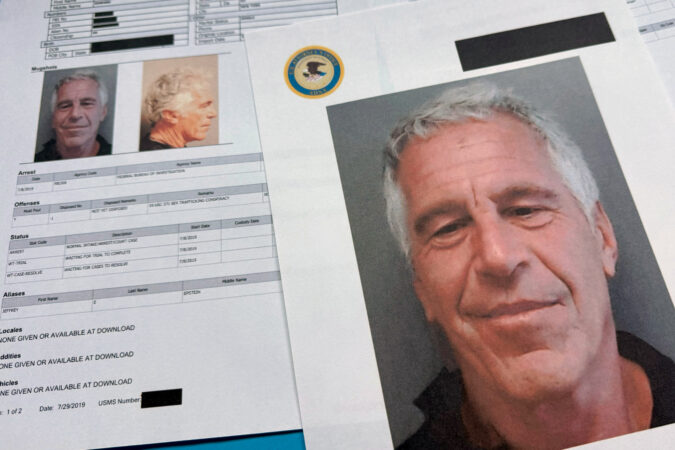
    NEW YORK — The Justice Department on Friday released many more records from its investigative files on Jeffrey Epstein, resuming disclosures under a law intended to reveal what the government knew about the millionaire financier’s sexual abuse of young girls and his interactions with rich and powerful people such as Donald Trump and Bill Clinton.

    Deputy Attorney General Todd Blanche said the department would be releasing more than 3 million pages of documents in the latest Epstein disclosure, as well as more than 2,000 videos and 180,000 images. The files, posted to the department’s website, include some of the several million pages of records that officials said were withheld from an initial release in December.

    Included in the batch were records concerning some of Epstein’s famous associates, including Andrew Mountbatten-Windsor, formerly known as Britain’s Prince Andrew, as well as email correspondence between Epstein and Elon Musk and other prominent contacts from across the political spectrum.

    The documents were disclosed under the Epstein Files Transparency Act, the law enacted after months of public and political pressure that requires the government to open its files on the late financier and his confidant and onetime girlfriend, Ghislaine Maxwell. Lawmakers complained when the Justice Department made only a limited release last month, but officials said more time was needed to review an additional trove of documents that was discovered and to scour the records to ensure no sensitive information about victims was inadvertently released.

    “Today’s release marks the end of a very comprehensive document identification and review process to ensure transparency to the American people and compliance with the act,” Blanche said at a news conference announcing the disclosure.

    Friday’s disclosure represents the largest document dump to date about a saga the Trump administration has struggled for months to shake because of the president’s previous association with Epstein. State and federal investigations into the financier have long animated online sleuths, conspiracy theorists and others who have suspected government cover-ups and clamored for a full accounting, demands that even Blanche acknowledged might not be satisfied by the latest release.

    “There’s a hunger, or a thirst, for information that I don’t think will be satisfied by the review of these documents,” he said.

    After missing a Dec. 19 deadline set by Congress to release all the files, the Justice Department said it tasked hundreds of lawyers with reviewing the records to determine what needed to be redacted, or blacked out. But it denied any effort to shield Trump, who says he cut ties with Epstein years ago despite an earlier friendship, from potential embarrassment.

    “We did not protect President Trump. We didn’t protect — or not protect — anybody,” Blanche said.

    Among the materials withheld is information that could jeopardize any ongoing investigation or expose the identities of potential victims of sex abuse. Women other than Maxwell were redacted from videos and images being released Friday, Blanche said.

    The number of documents subject to review ballooned to roughly 6 million, including duplicates.

    Epstein’s famous friends

    The latest batch of documents include correspondence either with or about some of Epstein’s friends.

    Mountbatten-Windsor’s name appears at least several hundred times in the documents, sometimes in news clippings, sometimes in Epstein’s private email correspondence and in guest lists for dinners organized by Epstein. Some of the records also document an attempt by prosecutors in New York to get the former prince to agree to be interviewed as part of their Epstein sex trafficking probe.

    The records also show that Musk, the billionaire Tesla founder, reached out to Epstein on at least two separate occasions to plan visits to the Caribbean island where many of the allegations of sexual abuse purportedly occurred.

    In a 2012 exchange, Epstein inquired how many people Musk would like flown by helicopter to the island he owned — Little Saint James in the U.S. Virgin Islands.

    “Probably just Talulah and me,” Musk responded, referencing his partner at the time, actress Talulah Riley. “What day/night will be the wildest party on our island?”

    Musk messaged Epstein again ahead of a planned trip to the Caribbean in December 2013. “Will be in the BVI/St Bart’s area over the holidays,” he wrote. “Is there a good time to visit?” Epstein responded by extending an invite for sometime after the New Year holiday.

    It’s not immediately clear if the island visits took place. Spokespersons for Musk’s companies, Tesla and X, didn’t immediately respond to emails seeking comment.

    Musk has maintained that he repeatedly turned down the disgraced financier’s overtures.

    “Epstein tried to get me to go to his island and I REFUSED,” he posted on X in 2025 when House Democrats released an Epstein calendar with an entry mentioning a potential Musk visit to the island.

    The documents also contain hundreds of friendly text messages between Epstein and Steve Bannon during Trump’s first term.

    Bannon, a conservative activist who served as Trump’s White House strategist earlier in the president’s first term, bantered over politics with the financier, discussed get-togethers with him over breakfast, lunch or dinner and, on March 29, 2019, asked Epstein if he could supply his plane to pick him up in Rome: “Is it possible to get your plane here to collect me?”

    Epstein told him his pilot and crew “are doing their best” to arrange that flight but if Bannon could find a charter flight instead, “I’m happy to pay.” Apparently in France at the time, Epstein followed up with a text saying: “My guys can pick you up. Come for dinner.” The exchange did not show how that played out.

    On one occasion in December 2012, Epstein invited Howard Lutnick — now Trump’s commerce secretary — to his private island in the Caribbean for lunch, documents released Friday show. Lutnick’s wife, Allison Lutnick, enthusiastically accepted the invitation and said they would arrive on a yacht with their children. On another occasion in 2011, the two men had drinks, according to a schedule shared with Epstein.

    Lutnick has tried to distance himself from Epstein, saying in a 2025 interview that he cut ties decades ago and calling him “gross.” He didn’t respond to a request for comment Friday.

    During Trump’s first term, Epstein emailed Kathy Ruemmler, a lawyer and former Obama White House official, to warn that Democrats should stop demonizing Trump as a Mafia-type figure even as he derided the president as a “maniac.”

    A spokesperson for Goldman Sachs, where Ruemmler serves as general counsel and chief legal officer, said in a statement that Ruemmler “had a professional association with Jeffrey Epstein when she was a lawyer in private practice” and “regrets ever knowing him.”

    Building on the earlier release

    The Justice Department released tens of thousands of pages of documents just before Christmas, including photographs, interview transcripts, call logs and court records. Many were either already public or heavily blacked out.

    They included previously released flight logs showing Trump flew on Epstein’s private jet in the 1990s, before they had a falling-out, and several photographs of Clinton. Neither Trump, a Republican, nor Clinton, a Democrat, has been publicly accused of wrongdoing in connection with Epstein. Both have said they had no knowledge he was abusing underage girls.

    Epstein killed himself in a New York jail cell in August 2019, a month after he was indicted on federal sex trafficking charges.

    In 2008 and 2009, Epstein served jail time in Florida after pleading guilty to soliciting prostitution from someone under the age of 18. At the time, investigators had gathered evidence that Epstein had sexually abused underage girls at his Palm Beach home. The U.S. attorney’s office agreed not to prosecute him in exchange for his guilty plea to lesser state charges.

    In 2021, a federal jury in New York convicted Maxwell, a British socialite, of sex trafficking for helping recruit some of his underage victims. She is serving a 20-year prison sentence at a prison camp in Texas, after being moved there from a prison in Florida. She denies any wrongdoing.

    U.S. prosecutors never charged anyone else in connection with Epstein’s abuse of girls, but one of his victims, Virginia Roberts Giuffre, accused him in lawsuits of having arranged for her to have sexual encounters at age 17 and 18 with numerous politicians, business titans, noted academics, and others, all of whom denied her allegations.

    Among those she accused was Britain’s Prince Andrew, who was stripped of his royal titles amid the scandal. Andrew denied having sex with Giuffre but settled her lawsuit for an undisclosed sum.

    Giuffre died by suicide last year at age 41.
  • Judge chastises Trump administration attorney in hearing over dismantled President’s House exhibits

    Judge chastises Trump administration attorney in hearing over dismantled President’s House exhibits

    Attorneys for the City of Philadelphia and President Donald Trump’s administration sparred in federal court Friday over the abrupt removal of slavery-related exhibits from the President’s House on Independence Mall.

    The hearing centered on the city’s request that the judge order that no more exhibits be removed from the President’s House and that the already-removed exhibits be protected as the effort to return them is litigated.

    Mayor Cherelle L. Parker’s administration is “fighting” to restore the panels, City Solicitor Renee Garcia told reporters after the hearing.

    “I want to be very clear that we want those panels back up, but we also do not want anything else to come down,“ Garcia said.

    Judge Cynthia M. Rufe wasn’t ready to issue a ruling after the daylong hearing in the courthouse across the street from the historic site. On Monday, she wants to visit the President’s House and ensure that the removed exhibits being stored in a National Park Service storage facility adjacent to the Constitution Center are not damaged. She asked the federal government to maintain the status quo until she makes her decision.

    But with the nation’s 250th anniversary celebration being planned for the site in dispute, Rufe said she would not let the case drag into the spring or summer.

    The George W. Bush-appointed judge chastised the attorney representing the government, Assistant U.S. Attorney Gregory in den Berken, for talking out of “both sides of his mouth” and making “dangerous” arguments.

    The federal government argued the injunction request was invalid on procedural grounds, and that the removal was lawful because, in den Berken said, “the government gets to choose the message that it wants to convey.”

    “That’s horrifying to listen to,” Rufe said. “Sorry. That’s not what we elected anybody for.”

    The judge asked the assistant U.S. attorney to imagine Germany removing a monument for the American soldiers who liberated the Nazi concentration camp Dachau in an effort to erase the crimes of the Holocaust. “What are we doing here? Are we speaking truth and justice?” Rufe asked.

    In another notable exchange, the judge read Trump’s posts from then-Twitter in 2017 in which he lamented the removal of statutes of confederate leaders.

    “Sad to see the history and culture of our great country being ripped apart with the removal of our beautiful statues and monuments,” Trump wrote. “You can’t change history, but you can learn from it.”

    Rufe asked the assistant U.S. attorney to reconcile that sentiment with Trump’s directive to remove slavery-related exhibits.

    “Is this a desire to change history?” the judge asked.

    In den Berken declined to respond or opine on the motivations of the president or decision-makers at the Department of Interior, and returned to procedural arguments.

    A three-way collaboration

    Friday’s hearing marked the first time the City of Philadelphia and Trump’s administration have gone head-to-head in court during his second term.

    The city sued Interior Secretary Doug Burgum, acting National Park Service Director Jessica Bowron, and their respective agencies Jan. 22 while Park Service employees were dismantling educational exhibits about slavery at the President’s House.

    The President’s House, which opened in December 2010, seeks to inform visitors about the horrors of slavery and memorialize the nine people George Washington enslaved there while he resided in Philadelphia during the early years of the United States. All information at the site is historically accurate.

    The exhibits were dismantled after increased scrutiny from the Trump administration. Last year, Trump and Burgum issued orders calling for content at national parks that “inappropriately disparage Americans past or living” to be reviewed and potentially removed.

    Garcia argued the removal of exhibits violated federal law and an agreement between the federal government and the city, and caused imminent harm.

    “The contents of the removed panels are critical context to share the stories of the individuals enslaved at the president’s home and their fight for freedom” Garcia said.

    The President’s House exhibition was the results of yearslong collaboration between the city and the federal government that spanned multiple presidential and mayoral administrations, Garcia said. Two former mayoral chiefs of staff testified to the city’s extensive work alongside the National Park Service.

    “I could not imagine that anybody would decide, after all that it took, together, and that we always had each others back, that they would over night tear it down,” said Everett Gillison, chief of staff under former Mayor Michael Nutter. “It boggles my imagination.”

    Valerie Gay, the city’s chief cultural officer, also testified to the historical importance of the site to Philadelphians and to visitors for the upcoming 250th anniversary celebrations.

    The city’s lawsuit has been supported by Gov. Josh Shapiro and Democrats in Pennsylvania’s state Senate, who filed briefs in support of the requested injunction alongside a coalition of residents who advocated for historical acknowledgment of the enslaved people living in Washington’s house, Avenging The Ancestors Coalition, and the walking tour company The Black Journey.

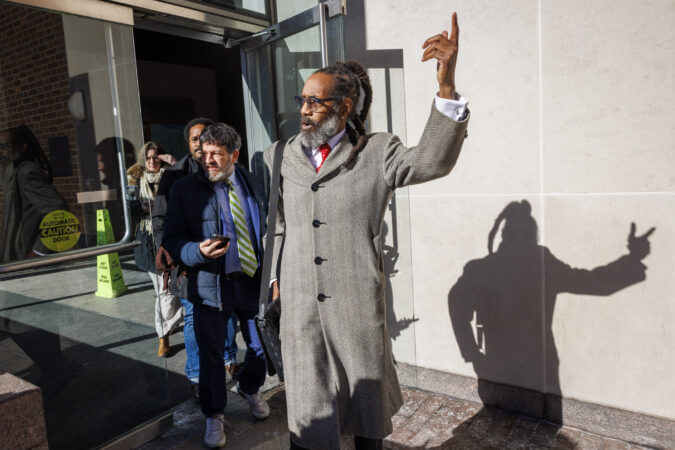
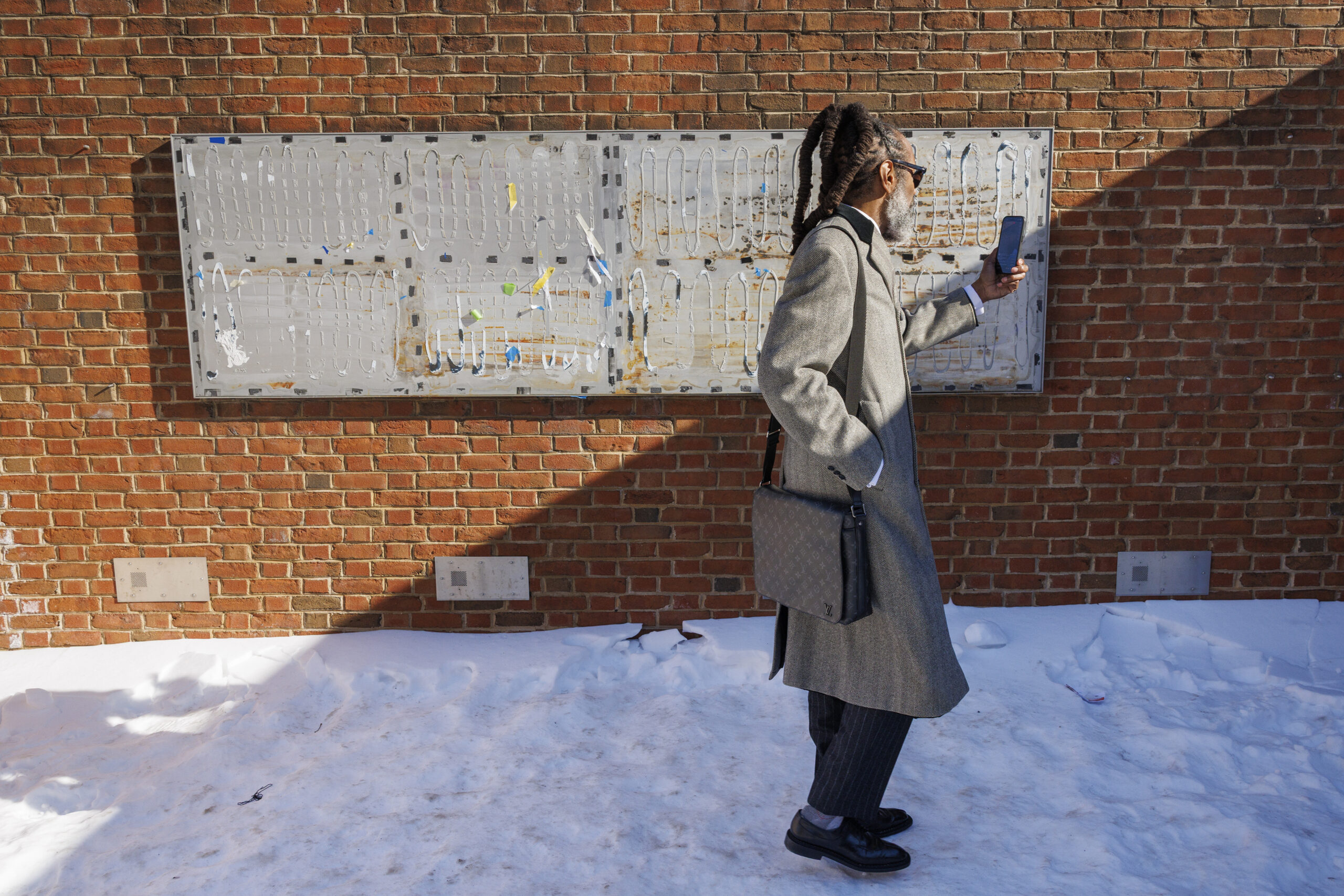
    Michael Coard, attorney and founding member of Avenging the Ancestors Coalition, at President’s House in Philadelphia.

    The President’s House was also a partnership with the public, said Cara McClellan, the attorney representing the coalition and The Black Journey

    It was advocacy by coalition leader Michael Coard in the early 2000s that kickstarted the process to recognize the nine enslaved people who lived in Washington’s house through exhibits on the site, McClellan told Rufe. The design was the result of multiple public meetings, with the participation of thousands of Philadelphians.

    Yet the exhibits were removed without public input, notice, or reasoning, the attorney said.

    “This is like pulling pages out of a history book with a razor,” McClellan said. ”History does not change based on who is in political office.”

  • Trump names former Federal Reserve governor Kevin Warsh as the next Fed chair, replacing Jerome Powell

    Trump names former Federal Reserve governor Kevin Warsh as the next Fed chair, replacing Jerome Powell

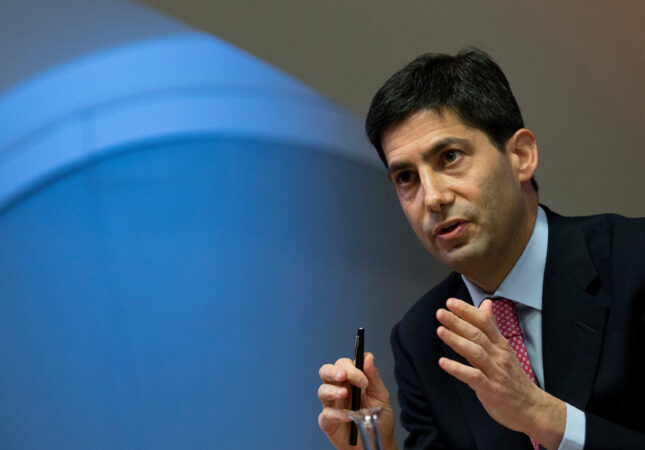
    WASHINGTON — President Donald Trump said Friday that he will nominate former Federal Reserve official Kevin Warsh to be the next chair of the Fed, a decision likely to result in sharp changes to the powerful agency that could bring it closer to the White House.

    If approved by the Senate, Warsh would replace current chair Jerome Powell when his term expires in May. Trump chose Powell to lead the Fed in 2017 but this year has relentlessly assailed him for not cutting interest rates quickly enough.

    “I have known Kevin for a long period of time, and have no doubt that he will go down as one of the GREAT Fed Chairmen, maybe the best,” Trump posted on social media. “On top of everything else, he is ‘central casting,’ and he will never let you down.”

    The appointment, which requires Senate confirmation, amounts to a return trip for Warsh, 55, who was a member of the Fed’s board from 2006 to 2011. He was the youngest governor in history when he was appointed at age 35. He is currently a fellow at the right-leaning Hoover Institution and a lecturer at the Stanford Graduate School of Business.

    In some ways, Warsh is an unlikely choice for the Republican president because he has long been a hawk in Fed parlance, or someone who typically supports higher interest rates to control inflation. Trump, by contrast, has said the Fed’s key rate should be as low as 1%, a level few economists endorse, and far below its current level of about 3.6%.

    During his time as governor, Warsh objected to some of the low-interest rate policies that the Fed pursued during and after the 2008-09 Great Recession. He also often expressed concern at that time that inflation would soon accelerate, even though it remained at rock-bottom levels for many years after that recession ended.

    More recently, however, in speeches and opinion columns, Warsh has voiced support for lower rates.

    Early reaction

    Financial markets reacted in ways that suggest investors expect that Warsh could keep rates a bit higher over time. The dollar and yields on long-term U.S. Treasurys rose, although that moderated a bit.

    The 10-year yield is at 4.26%, up from 4.23% Thursday. U.S. stock futures saw losses of around 0.5%. The biggest moves were in the suddenly volatile metals markets, where gold dropped more than 5% and silver sank more than 13%.

    In Congress, Sen. Thom Tillis, a North Carolina Republican who is retiring, reiterated in a social media post that he will oppose Warsh’s nomination until a Justice Department investigation into Powell is resolved.

    Tillis is a member of the Senate Banking Committee, which will consider Warsh’s nomination.

    He added that Warsh is a “qualified nominee” but stressed that “protecting the independence of the Federal Reserve from political interference or legal intimidation is non-negotiable.”

    Tillis’s opposition could complicate the confirmation process. Asked late Thursday whether Warsh could be confirmed without Tillis’s support, Senate Majority Leader John Thune said, “Probably not.”

    Democratic Sen. Elizabeth Warren of Massachusetts, the highest-ranking Democrat on the Banking Committee, said, “This nomination is the latest step in Trump’s attempt to seize control of the Fed.”

    Warsh beat out several other candidates, including Trump’s top economic adviser, Kevin Hassett, investment manager Rick Rieder, and current Fed governor Christopher Waller.

    Controlling the Fed

    Warsh’s appointment could be a major step toward Trump asserting more control over the Fed, one of the few remaining independent federal agencies. While all presidents influence Fed policy through appointments, Trump’s rhetorical attacks on the central bank have raised concerns about its status as an independent institution.

    The announcement comes after an extended and unusually public search that underscored the importance of the decision to Trump and the potential impact it could have on the economy. The chair of the Federal Reserve is one of the most powerful economic officials in the world, tasked with combating inflation in the United States while also supporting maximum employment.

    The Fed is also the nation’s top banking regulator.

    The Fed’s rate decisions, over time, influence borrowing costs throughout the economy, including for mortgages, car loans, and credit cards.

    For now, Warsh would likely fill a seat on the Fed’s governing board that was temporarily occupied by Stephen Miran, a White House adviser whom Trump appointed in September. Once on the board, Trump could then elevate Warsh to the chair position when Powell’s term ends in May.

    Trump has sought to exert more control over the Fed. In August he tried to fire Lisa Cook, one of seven governors on the Fed’s board, in an effort to secure a majority of the board. Cook, however, sued to keep her job, and the Supreme Court, in a hearing last week, appeared inclined to let her stay in her position while her suit is resolved.

    Powell revealed this month that the Fed had been subpoenaed by the Justice Department about his congressional testimony on a $2.5 billion building renovation. Powell said the subpoenas were “pretexts” to force the Fed to cut rates.

    Trump’s economic policies

    Since Trump’s reelection, Warsh has expressed support for the president’s economic policies, despite a history as a more conventional, pro-free trade Republican.

    In a January 2025 column in the Wall Street Journal, Warsh praised Trump’s deregulatory policies and potential spending cuts, which he said would help bring down inflation. Lower inflation would allow the Fed to deliver the rate cuts the president wants.

    Trump had said he would appoint a Fed chair who will cut interest rates to lower the government’s borrowing costs and bring down mortgage rates, though the Fed doesn’t decide those costs directly.

    In December, he wrote on social media of the need for lower borrowing costs and said, “Anyone who disagrees with me will never be the Fed chairman!”

    Potential challenges and pushback

    Warsh would face challenges in pushing interest rates much lower. The chair is just one member of the Fed’s 19-person rate-setting committee, with 12 of those officials voting on each rate decision. The committee is already split between those worried about persistent inflation, who’d like to keep rates unchanged, and those who think that recent upticks in unemployment point to a stumbling economy that needs lower interest rates to bolster hiring.

    Financial markets could also push back. If the Fed cuts its short-term rate too aggressively and is seen as doing so for political reasons, then Wall Street investors could sell Treasury bonds out of fear that inflation would rise. Such sales would push up longer-term interest rates, including mortgage rates, and backfire on Warsh.

    Trump considered appointing Warsh as Fed chair during his first term, though ultimately he went with Powell. Warsh’s father-in-law is Ronald Lauder, heir to the Estee Lauder cosmetics fortune and a longtime donor and confidant of Trump’s.

    Warsh in recent years has become harshly critical of the Fed, calling for “regime change” and assailing Powell for engaging on issues like climate change and diversity, equity and inclusion, which Warsh said are outside the Fed’s mandate.

    His more critical approach suggests that if he does ascend to the position of chair, it would amount to a sharp transition at the Fed.

    In a July interview on CNBC, Warsh said Fed policy “has been broken for quite a long time.”

    “The central bank that sits there today is radically different than the central bank I joined in 2006,” he added. By allowing inflation to surge in 2021-22, the Fed “brought about the greatest mistake in macroeconomic policy in 45 years, that divided the country.”

  • Pete Buttigieg endorses Bob Brooks, a firefighter running for Congress in the Lehigh Valley

    Pete Buttigieg endorses Bob Brooks, a firefighter running for Congress in the Lehigh Valley

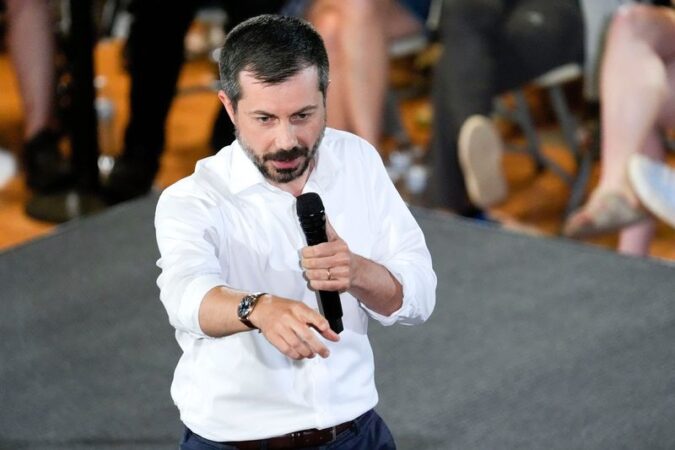
    Pete Buttigieg, former President Joe Biden’s transportation secretary and a potential presidential hopeful for 2028, has endorsed Democrat Bob Brooks, a firefighter running for Congress in the Lehigh Valley.

    Brooks, the president of the Pennsylvania Professional Fire Fighters Association, is running to represent Pennsylvania’s 7th Congressional District, which is currently held by freshman U.S. Rep. Ryan Mackenzie, a Republican. At least six other Democrats are also vying for the nomination as of this month.

    Buttigieg’s endorsement of Brooks, shared first with The Inquirer, illustrates the political importance of the Lehigh Valley, a national bellwether.

    Democrats see the 7th Congressional District as one of a limited number of flippable Republican-held seats in the 2026 midterms. It’s also notable that Buttigieg, who could once again be on the national stage in 2028, is weighing into politics in Pennsylvania, a key battleground state.

    “People are seeking leaders who understand their lives and fight for their needs,” Buttigieg said in a news release, noting Brook’s experience as a firefighter, union leader, and snowplow driver.

    “He understands the urgency of lowering costs because he’s lived it – working long hours, juggling jobs, and fighting for a paycheck that actually covers the basics,” Buttigieg added. “It’s a perspective Washington needs more of, and I’m proud to endorse him.”

    This undated photo provided by Bob Brooks for Congress in August 2025 shows Bob Brooks, president of the Pennsylvania Professional Fire Fighters Association. (Bob Brooks for Congress via AP)

    In addition to Buttigieg, Brooks has also received the backing of Gov. Josh Shapiro (another potential 2028 candidate), Lt. Gov. Austin Davis, U.S. Rep. Chris Deluzio, Sen. Bernie Sanders (I-Vt.), various unions, and other elected officials.

    Brooks said in the news release that Buttigieg’s endorsement “means a great deal.”

    “He’s focused on listening to new voices and making government work for everyday people at a time when too many feel shut out and left behind,” Brooks said. “It’s an honor to have him on board as we fight to build a Congress that looks like and works for the people it serves.”

    Mackenzie’s seat is a top target for the Democratic Congressional Campaign Committee, along with Republican U.S. Reps. Brian Fitzpatrick, of Bucks County, Scott Perry, of York County, and Rob Bresnahan of Lackawanna County.

    President Donald Trump has endorsed Mackenzie (and every other congressional Republican in Pennsylvania except Fitzpatrick) and Vice President JD Vance swung through the district in December.

    But Trump may not be the boon for Mackenzie he was two years ago.

    Trump made his biggest gains in the state in 2024 in the Lehigh Valley and Northeastern Pa., but recent interviews with voters and polling data suggests his support in the region could be dwindling heading into the midterms.

  • Trump threatens Canada with 50% tariff on aircraft sold in U.S., expanding trade war

    Trump threatens Canada with 50% tariff on aircraft sold in U.S., expanding trade war

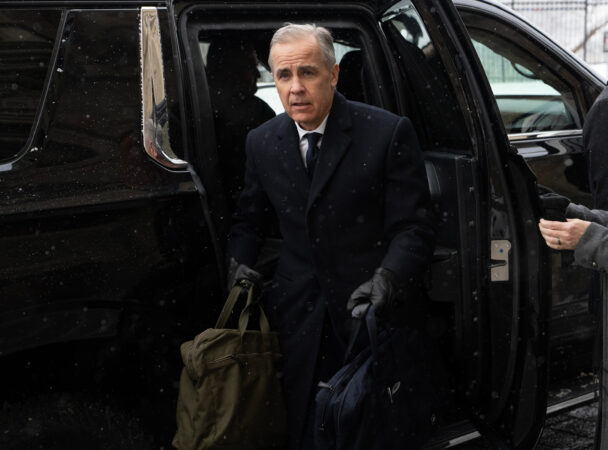
    WASHINGTON — President Donald Trump on Thursday threatened Canada with a 50% tariff on any aircraft sold in the U.S., the latest salvo in his trade war with America’s northern neighbor as his feud with Prime Minister Mark Carney expands.

    Trump’s threat posted on social media came after he threatened over the weekend to impose a 100% tariff on goods imported from Canada if it went forward with a planned trade deal with China. But Trump’s threat did not come with any details about when he would impose the import taxes, as Canada had already struck a deal.

    In Trump’s latest threat, the Republican president said he was retaliating against Canada for refusing to certify jets from Savannah, Ga.-based Gulfstream Aerospace.

    Trump said the U.S., in return, would decertify all Canadian aircraft, including planes from its largest aircraft maker, Bombardier. “If, for any reason, this situation is not immediately corrected, I am going to charge Canada a 50% Tariff on any and all Aircraft sold into the United States of America,” Trump said in his post.

    Spokespeople for Bombardier and Canada’s transport minister didn’t immediately respond to messages seeking comment Thursday evening.

    The U.S. Commerce Department previously put duties on a Bombardier commercial passenger jet in 2017 during the first Trump administration, charging that the Canadian company is selling the planes in America below cost. The U.S. said then that the Montreal-based Bombardier used unfair government subsidies to sell jets at artificially low prices.

    The U.S. International Trade Commission in Washington later ruled that Bombardier did not injure U.S. industry.

    Bombardier has since concentrated on the business and private jet market in recent years. If Trump cuts off the U.S. market it would be a major blow to the Quebec company.

    Treasury Secretary Scott Bessent warned Carney on Wednesday that his recent public comments against U.S. trade policy could backfire going into the formal review of the U.S.-Mexico-Canada Agreement, the trade deal that protects Canada from the heaviest impacts of Trump’s tariffs.

    Carney rejected Bessent’s contention that he had aggressively walked back his comments at the World Economic Forum during a phone call with Trump on Monday.

    Carney said he told Trump that he meant what he said in his speech at Davos, and told him Canada plans to diversify away from the United States with a dozen new trade deals.

    In Davos at the World Economic Forum last week, Carney condemned economic coercion by great powers on smaller countries without mentioning Trump’s name. The prime minister received widespread praise and attention for his remarks, upstaging Trump at the gathering.

  • Venezuelan lawmakers vote to ease state grip on oil, abandoning self-proclaimed socialist tenet

    Venezuelan lawmakers vote to ease state grip on oil, abandoning self-proclaimed socialist tenet

    CARACAS, Venezuela — Venezuela’s acting President Delcy Rodríguez on Thursday signed a law that will open the nation’s oil sector to privatization, reversing a tenet of the self-proclaimed socialist movement that has ruled the country for more than two decades.

    Lawmakers in the country’s National Assembly approved the overhaul of the energy industry law earlier in the day, less than a month after the brazen seizure of then-President Nicolás Maduro in a U.S. military attack in Venezuela’s capital.

    As the bill was being passed, the U.S. Treasury Department officially began to ease sanctions on Venezuelan oil that once crippled the industry, and expanded the ability of U.S. energy companies to operate in the South American nation, the first step in plans outlined by Secretary of State Marco Rubio the day before. The license authorization by the Treasury Department strictly prohibits entities from China, Russia, Iran, North Korea, or Cuba from the transactions.

    The moves by both governments on Thursday are paving the way for yet another radical geopolitical and economic shift in Venezuela.

    “We’re talking about the future. We are talking about the country that we are going to give to our children,” Rodríguez said.

    Rodríguez proposed the changes in the days after President Donald Trump said his administration would take control of Venezuela’s oil exports and revitalize the ailing industry by luring foreign investment.

    Private companies to control oil production

    The legislation promises to give private companies control over the production and sale of oil and allow for independent arbitration of disputes.

    Rodríguez’s government expects the changes to serve as assurances for major U.S. oil companies that have so far hesitated about returning to the volatile country. Some of those companies lost investments when the ruling party enacted the existing law two decades ago to favor Venezuela’s state-run oil company, Petróleos de Venezuela SA, or PDVSA.

    The revised law would modify extraction taxes, setting a royalty cap rate of 30% and allowing the executive branch to set percentages for every project based on capital investment needs, competitiveness and other factors.

    It also removes the mandate for disputes to be settled only in Venezuelan courts, which are controlled by the ruling party. Foreign investors have long viewed the involvement of independent courts as crucial to guard against future expropriation.

    Will change Venezuela’s economy

    Ruling-party lawmaker Orlando Camacho, head of the assembly’s oil committee, said the reform “will change the country’s economy.”

    Meanwhile, opposition lawmaker Antonio Ecarri urged the assembly to add transparency and accountability provisions to the law, including the creation of a website to make funding and other information public. He noted that the current lack of oversight has led to systemic corruption and argued that these provisions can also be considered judicial guarantees.

    Those guarantees are among the key changes foreign investors are looking for as they weigh entering the Venezuelan market.

    “Let the light shine on in the oil industry,” Ecarri said.

    Some oil workers support overhaul

    Oil workers dressed in red jumpsuits and hard hats celebrated the bill’s approval, waving a Venezuelan flag inside the legislative palace and then joining lawmakers in a demonstration with ruling-party supporters.

    The law was last altered two decades ago as Maduro’s mentor and predecessor, the late Hugo Chávez, made heavy state control over the oil industry a pillar of his socialist-inspired revolution.

    In the early years of his tenure, a massive windfall in petrodollars thanks to record-high global oil prices turned PDVSA into the main source of government revenue and the backbone of Venezuela’s economy.

    Chávez’s 2006 changes to the hydrocarbons law required PDVSA to be the principal stakeholder in all major oil projects.

    In tearing up the contracts that foreign companies signed in the 1990s, Chávez nationalized huge assets belonging to American and other Western firms that refused to comply, including ExxonMobil and ConocoPhillips. They are still waiting to receive billions of dollars in arbitration awards.

    From those heady days of lavish state spending, PDVSA’s fortunes turned — along with the country’s — as oil prices dropped and government mismanagement eroded profits and hurt production, first under Chávez, then Maduro.

    The nation home to the world’s biggest proven crude reserves underwent a dire economic crisis that drove over 7 million Venezuelans to flee since 2014. Sanctions imposed by successive U.S. administrations further crippled the oil industry.

  • A man impersonating an FBI agent tried to get Luigi Mangione out of jail, authorities say

    A man impersonating an FBI agent tried to get Luigi Mangione out of jail, authorities say

    NEW YORK — A man claiming to be an FBI agent showed up to a federal jail in New York City on Wednesday night and told officers he had a court order to release Luigi Mangione, authorities said.

    Mark Anderson, 36, a Minnesota native who has a history of drug and other arrests and disclosed last year in court papers that he suffers from mental illness, was arrested and charged with impersonating a federal officer in a foiled bid to free Mangione from the Metropolitan Detention Center. Mangione is being held at the notorious Brooklyn lockup while awaiting state and federal murder trials in the killing of UnitedHealthcare CEO Brian Thompson.

    A criminal complaint against Anderson did not identify the person he attempted to free. A law enforcement official familiar with the matter confirmed it was Mangione. The official was not authorized to speak publicly and did so on condition of anonymity.

    Anderson was ordered held without bail after an initial appearance Thursday in Brooklyn federal court. He was not required to enter a plea. A day after getting stopped at the entrance, he is now locked up in the same jail as Mangione, according to federal prison records. An online court docket did not include information on a lawyer who could speak on Anderson’s behalf. A message was also left for a spokesperson for Mangione’s legal team.

    In a lawsuit last year alleging injuries from a fall at a city homeless shelter, Anderson said he has “multiple disabilities” and has been ruled by the Social Security Administration to be “fully disabled because of mental illness.” He said he had no money and said he received state and federal assistance.

    According to public records, Anderson has had numerous drug and alcohol-related arrests and convictions over the last two decades in his native Minnesota and in Wisconsin, where he has also lived.

    Papers ‘signed by a judge’ and a pizza cutter

    According to the criminal complaint, Anderson approached the jail intake area around 6:50 p.m. Wednesday and told uniformed jail officers that he was an FBI agent in possession of paperwork “signed by a judge” authorizing the release of a specific person in custody at the jail.

    When the officers asked for his federal credentials, Anderson showed them a Minnesota driver’s license, threw documents at them and claimed to have weapons, the criminal complaint said. The documents appeared related to filing claims against the Justice Department, according to an FBI agent who viewed them and prepared the complaint. Officers searched Anderson’s bag and found a barbecue fork and a circular steel blade, the complaint said. In a photo included in the complaint, the blade appeared to be a small pizza cutter wheel.

    Anderson’s driver’s license listed an address in Mankato, Minn., about 65 miles southwest of Minneapolis. He moved to New York for a job opportunity and started working at a Bronx pizzeria when that fell through, the law enforcement official said. Court records indicate he had been living in the city at least since 2023, including at motels, a shelter and a Bronx apartment.

    Acting as his own lawyer, he has filed handwritten lawsuits against the Pentagon, Chinese and Russian ambassadors and a Minnesota police department, all of which have been thrown out. Another lawsuit, alleging a Bronx pizzeria forced him to work 70 hours a week with no overtime, is still pending.

    Mangione due in court Friday

    The alleged attempt to free Mangione added a bizarre wrinkle to a critical stretch in his legal cases.

    Hours before Anderson’s arrest, the Manhattan district attorney’s office sent a letter urging the judge in Mangione’s state case, Gregory Carro, to set a July 1 trial date.

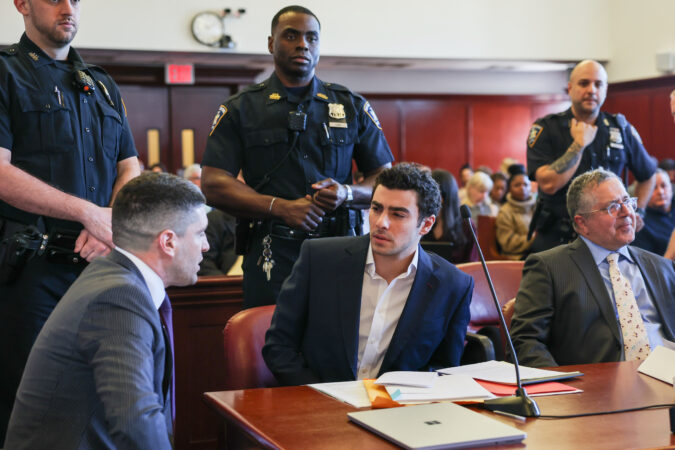
    On Friday, Mangione will be in court for a conference in his federal case. The judge in that case, Margaret Garnett, is expected to rule soon whether prosecutors can seek the death penalty and whether they can use certain evidence against him.

    Last week, Garnett scheduled jury selection in the federal case for Sept. 8, with the rest of the trial happening in October or January, depending on whether she allows prosecutors to seek the death penalty.

    Mangione has pleaded not guilty in both cases. The state charges carry the possibility of life in prison.

    A cause célèbre for people upset with the health insurance industry, Mangione has attracted legions of supporters, some of whom have regularly turned up at his court appearances donning green clothing — the color worn by the Mario Bros. video game character Luigi — as a symbol of solidarity. Some have brought signs and shirts with slogans such as “Free Luigi” and “No Death For Luigi Mangione.”

    Thompson, 50, was killed on Dec. 4, 2024, as he walked to a midtown Manhattan hotel for UnitedHealth Group’s annual investor conference. Surveillance video showed a masked gunman shooting him from behind. Police say “delay,” “deny,” and “depose” were written on the ammunition, mimicking a phrase used to describe how insurers avoid paying claims.

    Mangione, 27, a Penn graduate from a wealthy Maryland family, was arrested five days later at a McDonald’s in Altoona, Pa., about 230 miles west of Manhattan.

    After several days of court proceedings in Pennsylvania, Mangione was whisked to New York and sent to the Metropolitan Detention Center.

    The jail is also home to former Venezuelan President Nicolás Maduro and his wife, Cilia Flores. Former inmates include hip-hop mogul Sean “Diddy” Combs and cryptocurrency fraudster Sam Bankman-Fried.

  • Man who rammed a car into NYC Jewish site had recently connected with Chabad community, police say

    Man who rammed a car into NYC Jewish site had recently connected with Chabad community, police say

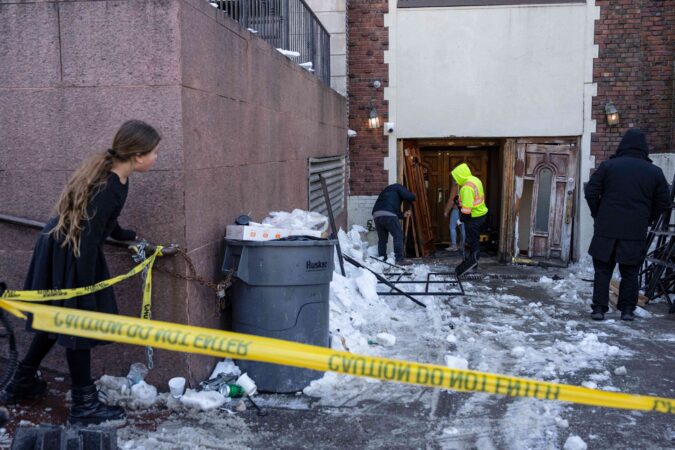
    NEW YORK — A man who drove his car into the Chabad Lubavitch world headquarters in New York City had recently been trying to connect with the Hasidic Jewish community and was recorded on video enthusiastically dancing with congregants during a recent visit to the site, police said.

    Investigators were still trying to piece together what prompted the man, Dan Sohail, 36, to ram his car repeatedly into a set of doors at the revered Hasidic Jewish center in Brooklyn on Wednesday night, but police charged him Thursday with attempted assault as a hate crime, based on the fact that the building was a Jewish institution.

    “Earlier this month, Sohail attended a social gathering at this very same location,” New York Police Department Chief of Detectives Joseph Kenny said at a news conference, noting there was video circulating online of that gathering.

    The video appears to show Sohail dancing with Orthodox men inside the headquarters.

    “We believe that he was in Brooklyn last night to continue this attempt to connect with the Lubavitch Jewish community,” Kenny said.

    Sohail told police that he lost control of his car because he was wearing “clunky boots,” Kenny said, though Kenny added that Sohail had removed several blockades and cleared snow away from a sidewalk before driving into the building.

    The complex at 770 Eastern Parkway includes a synagogue and offices, and was packed with worshippers at the time, but no one was injured. Some of the building’s doors were damaged. No weapons were discovered in Sohail’s car.

    Sohail’s father told the New York Daily News Thursday that his son had been considering converting to Judaism and that he had struggled with “mental problems.” The Forward, a media outlet centered on Jewish issues, interviewed a rabbi in New Jersey who said Sohail attended a Purim service at Chabad last year and visited two other times, looking for spiritual guidance.

    “I was able to talk to him for a few minutes and see that he’s not exactly stable,” Rabbi Levi Azimov told the Forward. Another rabbi at a Jewish school in Carteret, N.J., where Sohail lived, told the Forward he had dropped by for afternoon prayers on Tuesday but began yelling about feeling let down by Chabad after the service.

    The crash occurred on the 75th anniversary of Rabbi Menachem Mendel Schneerson becoming the leader of the Lubavitch movement and prompted immediate concern in the city. Mayor Zohran Mamdani and the city’s police commissioner, Jessica Tisch, rushed to the scene to brief the media, with officials announcing increased security around houses of worship across the city.

    “This is deeply alarming, especially given the deep meaning and the history of the institution to so many in New York and around the world,” Mamdani said. “And on today of all days.”

    The Chabad Lubavitch headquarters and synagogue in Brooklyn draws thousands of visitors each year. There is a near constant police presence around the complex.