Category: National Politics

  • Democrats, White House strike spending deal that would avert government shutdown

    Democrats, White House strike spending deal that would avert government shutdown

    WASHINGTON — Democrats and the White House struck a deal to avert a partial government shutdown and temporarily fund the Department of Homeland Security as they consider new restrictions for President Donald Trump’s surge of immigration enforcement. But passage was delayed late Thursday as leaders scrambled to win enough support for the agreement before the midnight Friday deadline.

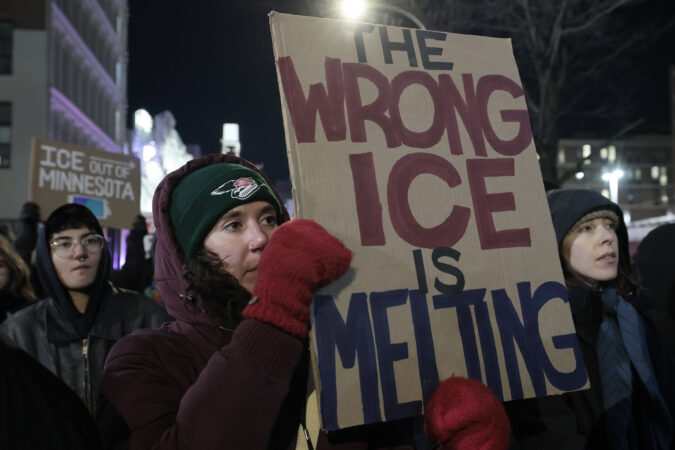
    As the country reels from the deaths of two protesters at the hands of federal agents in Minneapolis, the White House agreed to separate homeland security funding from a larger spending bill and fund the department for two weeks while they debate Democratic demands for curbs on the U.S. Immigration and Customs Enforcement agency.

    “Republicans and Democrats have come together to get the vast majority of the government funded until September” while extending current funding for Homeland Security, Trump said in a social media post Thursday evening. He encouraged members of both parties to cast a “much needed Bipartisan ‘YES’ vote.”

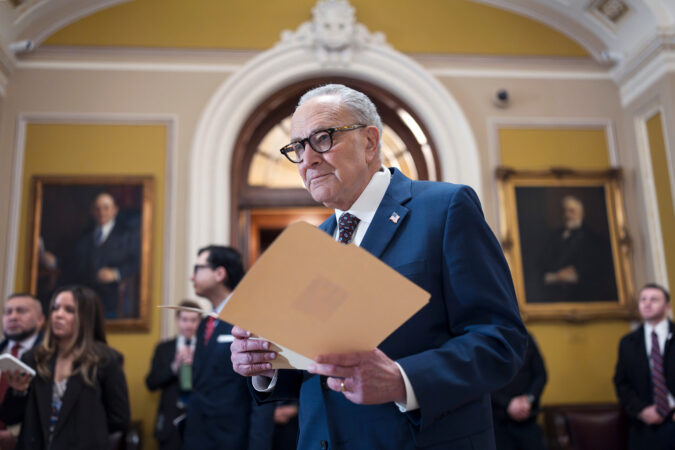
    Still, all senators weren’t yet on board. Leaving the Capitol just before midnight Thursday after hours of negotiations, Senate Majority Leader John Thune said there were “snags on both sides” as he and Democratic leader Chuck Schumer tried to rally support.

    “Hopefully people will be of the spirit to try and get this done tomorrow,” Thune said.

    Sen. Lindsey Graham, R-S.C., said late Thursday that he was one of the senators objecting. He said Immigration and Customs Enforcement agents were being treated unfairly. He has also opposed House language that would repeal a new law that gives senators the ability to sue the government for millions of dollars if their personal or office data is accessed without their knowledge.

    Democrats had requested the two-week extension and say they are prepared to block the wide-ranging spending bill if their demands aren’t met, denying Republicans the votes they need to pass it and potentially triggering a shutdown.

    Rare bipartisan talks

    The rare bipartisan talks between Trump and his frequent adversary, Senate Democratic leader Chuck Schumer, came after the fatal shooting of 37-year-old Alex Pretti in Minnesota over the weekend and calls by senators in both parties for a full investigation. Schumer called it “a moment of truth.”

    “The American people support law enforcement. They support border security. They do not support ICE terrorizing our streets and killing American citizens,” Schumer said.

    The standoff has threatened to plunge the country into another shutdown, just two months after Democrats blocked a spending bill over expiring federal health care subsidies. That dispute closed the government for 43 days as Republicans refused to negotiate.

    That shutdown ended when a small group of moderate Democrats broke away to strike a deal with Republicans, but Democrats are more unified this time after the fatal shootings of Pretti and Renee Good by federal agents.

    Democrats lay out demands

    Democrats have laid out several demands, asking the White House to “end roving patrols” in cities and coordinate with local law enforcement on immigration arrests, including requiring tighter rules for warrants.

    They also want an enforceable code of conduct so agents are held accountable when they violate rules. Schumer said agents should be required to have “masks off, body cameras on” and carry proper identification, as is common practice in most law enforcement agencies.

    The Democratic caucus is united in those “common sense reforms,” and the burden is on Republicans to accept them, Schumer said.

    “Boil it all down, what we are talking about is that these lawless ICE agents should be following the same rules that your local police department does,” said Democratic Sen. Tina Smith of Minnesota. “There has to be accountability.”

    Earlier on Thursday, Tom Homan, the president’s border czar, stated during a press conference in Minneapolis that federal immigration officials are developing a plan to reduce the number of agents in Minnesota, but this would depend on cooperation from state authorities.

    Still far apart on policy

    Negotiations down the road on a final agreement on the Homeland Security bill are likely to be difficult.

    Democrats want Trump’s aggressive immigration crackdown to end. “If the Trump administration resists reforms, we shut down the agency,” said Connecticut Sen. Richard Blumenthal.

    “We need to take a stand,” he said.

    But Republicans are unlikely to agree to all of the Democrats’ demands.

    North Carolina Sen. Thom Tillis said he is opposed to requiring immigration enforcement officers to show their faces, even as he blamed Homeland Security Secretary Kristi Noem for decisions that he said are “tarnishing” the agency’s reputation.

    “You know, there’s a lot of vicious people out there, and they’ll take a picture of your face, and the next thing you know, your children or your wife or your husband are being threatened at home,” Tillis said.

    South Carolina Sen. Graham said some of the Democratic proposals “make sense,” such as better training and body cameras. Still, he said he was putting his Senate colleagues “on notice” that if Democrats try to make changes to the funding bill, he would insist on new language preventing local governments from resisting the Trump administration’s immigration policies.

    “I think the best legislative solution for our country would be to adopt some of these reforms to ICE and Border Patrol,” Graham posted on X. But he said that the bill should also end so-called “sanctuary city” policies.

    Uncertainty in the House

    Across the Capitol, Speaker Mike Johnson, R-La., told The Associated Press on Thursday that he had been “vehemently opposed” to breaking up the funding package, but “if it is broken up, we will have to move it as quickly as possible. We can’t have the government shut down.”

    On Thursday evening, at a premiere of a movie about first lady Melania Trump at the Kennedy Center, Johnson said he might have some “tough decisions” to make about when to bring the House back to Washington to approve the bills separated by the Senate, if they pass.

    “We’ll see what they do,” Johnson said.

    House Republicans have said they do not want any changes to the bill they passed last week. In a letter to Trump on Tuesday, the conservative House Freedom Caucus wrote that its members stand with the Republican president and ICE.

    “The package will not come back through the House without funding for the Department of Homeland Security,” they wrote.

  • Handling of Pretti probe prompts prosecutors to consider resignations

    Handling of Pretti probe prompts prosecutors to consider resignations

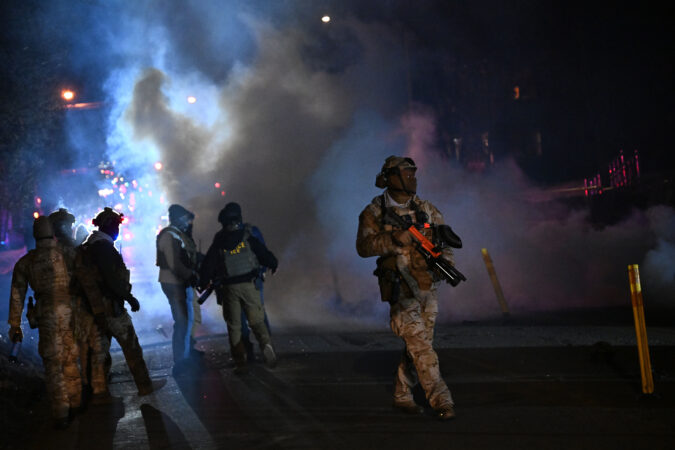
    Federal prosecutors in Minneapolis have told U.S. Attorney Daniel Rosen, the Trump administration appointee leading the office, that they feel deeply frustrated by the Justice Department’s response to the shootings of Renée Good and Alex Pretti by immigration officers and suggested that they could resign en masse, leaving the office unable to handle its current caseload, according to two officials familiar with the office.

    At least one prosecutor in the office’s criminal division has resigned since a meeting this week with Rosen at which the prosecutors aired their concerns, according to the people, who spoke on the condition of anonymity to discuss a personnel matter that has not been made public.

    The threat of further resignations is the latest sign of how the federal judicial system in Minnesota has begun to crack under the strain imposed by the administration’s immigration enforcement surge in the state. On Wednesday, the chief federal district judge in the state wrote that Immigration and Customs Enforcement officials had violated 96 court orders since launching the crackdown in Minnesota, dubbed Operation Metro Surge.

    “ICE has likely violated more court orders in January 2026 than some federal agencies have violated in their entire existence,” Chief U.S. District Judge Patrick Schiltz wrote.

    When asked for comment about the Minnesota prosecutors, a Justice Department spokesperson responded with Attorney General Pam Bondi’s February 2025 “zealous advocacy” memo that said attorneys would face discipline or termination if they are not “vigorously defending presidential policies.”

    The U.S. attorney’s office in Minnesota has been in turmoil since the administration sidelined the office in the investigations around the shootings of Good and Pretti, who were shot two and a half weeks apart during confrontations with immigration officers in Minneapolis.

    At least a half-dozen prosecutors in the office — including the second-in-command — resigned earlier this month after top Justice Department officials told prosecutors not to investigate the shooting of Good but instead try to build a case against her partner.

    In the aftermath of those resignations, the Justice Department sent prosecutors from other Midwestern states to help deal with the swelling caseload in Minnesota. The severe staffing shortage in the office is expected to worsen in the coming weeks as more prosecutors from the office’s criminal and civil divisions resign.

    The Minnesota U.S. attorney’s office is down to about half of its full staffing level of approximately 70 lawyers. At least some of the resignations occurred in the final months of the Biden administration before President Donald Trump took office.

    When Pretti was shot by immigration officials on Jan. 24, Trump administration officials said the Department of Homeland Security would be leading the probe, prompting confusion and frustration among Minneapolis prosecutors who felt they should be involved.

    The shootings of Good and Pretti were captured on cellphone cameras and have prompted outrage from Democrats and Republicans over Trump’s immigration crackdown.

    Typically, a federal investigation into an officer-involved shooting would involve FBI agents and criminal and civil rights prosecutors. Any federal use-of-force investigation into an officer’s conduct is considered a civil rights investigation because the provision under which officers can be charged is a civil rights statute that covers deprivation of a person’s rights “under color of law.”

    The Washington Post reported that the FBI briefly opened a civil rights investigation into the Good shooting before changing course.

    Law enforcement officers are rarely charged for using lethal force, in part because the law provides significant leeway for officers to decide when use of force is needed. Law enforcement experts said that an accurate conclusion can only be reached, however, if officials examine all relevant state and federal laws and their application to the facts in the case.

    The immigration crackdown has strained U.S. attorney’s offices across the country. On the criminal side, prosecutors are handling a surge in cases involving allegations of residents impeding immigration officers. And on the civil side, attorneys are being inundated with an influx of petitions from immigrants contesting their detainments.

    The Justice Department is also facing staffing shortages at its Washington headquarters and in U.S. attorney’s offices across the country. In 2024, roughly 10,000 attorneys worked across the Justice Department and its components, including the FBI. In 2025, Justice Connection, an advocacy group that has been tracking departures, estimates that at least 5,500 people — not all of them attorneys — had quit the department, been fired or taken a buyout offered by the Trump administration.

    The department has struggled to find qualified candidates to fill these vacancies.

  • The FBI raid in Georgia highlights Trump’s obsession with the 2020 election and hints at possible future actions

    The FBI raid in Georgia highlights Trump’s obsession with the 2020 election and hints at possible future actions

    DENVER — Donald Trump lost his bid for reelection in 2020. But for more than five years, he’s been trying to convince Americans the opposite is true by falsely saying the election was marred by widespread fraud.

    Now that he’s president again, Trump is pushing the federal government to back up those bogus claims.

    On Wednesday, the FBI served a search warrant at the election headquarters of Fulton County, Ga., which includes most of Atlanta, seeking ballots from the 2020 election. That follows Trump’s comments earlier this month when he suggested during a speech at the World Economic Forum in Davos, Switzerland, that charges related to the election were imminent.

    “The man has obsessions, as do a fair number of people, but he’s the only one who has the full power of the United States behind him,” said Rick Hasen, a UCLA law professor.

    Hasen and many others noted that Trump’s use of the FBI to pursue his obsession with the 2020 election is part of a pattern of the president transforming the federal government into his personal tool of vengeance.

    Sen. Jon Ossoff, a Georgia Democrat, compared the search to the Minnesota immigration crackdown that has killed two U.S. citizen protesters, launched by Trump as his latest blow against the state’s governor, who ran against him as Vice President Kamala Harris’ running mate in 2024.

    “From Minnesota to Georgia, on display to the whole world, is a President spiraling out of control, wielding federal law enforcement as an unaccountable instrument of personal power and revenge,” Ossoff said in a statement.

    It also comes as election officials across the country are starting to rev up for the 2026 midterms, where Trump is struggling to help his party maintain its control of Congress. Noting that, in 2020, Trump contemplated using the military to seize voting machines after his loss, some worry he’s laying the groundwork for a similar maneuver in the fall.

    “Georgia’s a blueprint,” said Kristin Nabers of the left-leaning group All Voting Is Local. “If they can get away with taking election materials here, what’s to stop them from taking election materials or machines from some other state after they lose?”

    Georgia has been at the heart of Trump’s 2020 obsession. He infamously called Republican Secretary of State Brad Raffensperger on Jan. 2, 2021, asking that Raffensperger “find” 11,780 more votes for Trump so he could be declared the winner of the state. Raffensperger refused, noting that repeated reviews confirmed Democrat Joe Biden had narrowly won Georgia.

    Those were part of a series of reviews in battleground states, often led by Republicans, that affirmed Biden’s win, including in Michigan, Wisconsin and Nevada. Trump also lost dozens of court cases challenging the election results and his own attorney general at the time said there was no evidence of widespread fraud.

    His allies who repeated his lies have been successfully sued for defamation. That includes former New York Mayor Rudolph Giuliani, who settled with two Georgia election workers after a court ruled he owed them $148 million for defaming them after the 2020 election.

    Voting machine companies also have brought defamation cases against some conservative-leaning news sites that aired unsubstantiated claims about their equipment being linked to fraud in 2020. Fox News settled one such case by agreeing to pay $787 million after the judge ruled it was “CRYSTAL clear” that none of the allegations were true.

    Trump’s campaign to move Georgia into his column also sparked an ill-fated attempt to prosecute him and some of his allies by Fulton County District Attorney Fani Willis, a Democrat. The case collapsed after Willis was removed over conflict-of-interest concerns, and Trump has since sought damages from the office.

    On his first day in office, Trump rewarded some of those who helped him try to overturn the 2020 election results by pardoning, commuting or vowing to dismiss the cases of about 1,500 people charged in the Jan. 6, 2021, attack on the U.S. Capitol. He later signed an executive order trying to set new rules for state election systems and voting procedures, although that has been repeatedly blocked by judges who have ruled that the Constitution gives states, and in some instances Congress, control of elections rather than the president.

    As part of his campaign of retribution, Trump also has spoken about wanting to criminally charge lawmakers who sat on the House committee investigating the Jan. 6 attack, suggesting protective pardons of them from Biden are legally invalid. He’s targeted a former cybersecurity appointee who assured the public in 2020 that the election was secure.

    During a year of presidential duties, from dealing with wars in Gaza and Ukraine to shepherding sweeping tax and spending legislation through Congress, Trump has reliably found time to turn the subject to 2020. He has falsely called the election rigged, said Democrats cheated and even installed a White House plaque claiming Biden took office after “the most corrupt election ever.”

    David Becker, a former Department of Justice voting rights attorney and executive director of The Center for Election Innovation & Research, said he was skeptical the FBI search in Georgia would lead to any successful prosecutions. Trump has demanded charges against several enemies such as former FBI Director James Comey and New York’s Democratic Attorney General, Letitia James, that have stalled in court.

    “So much this administration has done is to make claims in social media rather than go to court,” Becker said. “I suspect this is more about poisoning the well for 2026.”

  • Justice Department charges man who squirted vinegar on Rep. Ilhan Omar

    Justice Department charges man who squirted vinegar on Rep. Ilhan Omar

    MINNEAPOLIS — The Justice Department has charged a man who squirted apple cider vinegar on Democratic U.S. Rep. Ilhan Omar at an event in Minneapolis, according to court papers made public Thursday.

    The man arrested for Tuesday’s attack, Anthony Kazmierczak, faces a charge of forcibly assaulting, opposing, impeding and intimidating Omar, according to a complaint filed in federal court.

    Authorities determined that the substance was water and apple cider vinegar, according to an affidavit. After Kazmierczak sprayed Omar with the liquid, he appeared to say, “She’s not resigning. You’re splitting Minnesotans apart,” the affidavit says. Authorities also say that Kazmierczak told a close associate several years ago that “somebody should kill” Omar, court documents say.

    Kazmierczak appeared briefly in federal court Thursday afternoon. His attorney, Jean Brandl, told the judge her client was unmedicated at the time of the incident and has not had access to the medications he needs to treat Parkinson’s disease and other serious conditions he suffers from.

    U.S. Magistrate Judge Dulce Foster ordered that Kazmierczak remain in custody and told officials he needs to see a nurse when he is transferred to the Sherburne County Jail.

    Kazmierczak also faces state charges in Hennepin County for terroristic threats and fifth-degree assault, Hennepin County Attorney Mary Moriarty announced Thursday.

    “This was a disturbing assault on Rep. Omar, who is frequently the target of vilifying language by fellow elected officials and members of the public,” Moriarty said. “The trust of our community in the federal government keeping politics out of public safety has been eroded by their actions. A state-level conviction is not subject to a presidential pardon now or in the future.”

    The attack came during a perilous political moment in Minneapolis, where two people have been fatally shot by federal agents during the White House’s aggressive immigration crackdown.

    Kazmierczak has a criminal history and has made online posts supportive of President Donald Trump, a Republican.

    Omar, a refugee from Somalia, has long been a fixture of Trump’s anti-immigrant rhetoric. After she was elected seven years ago, Trump said she should “go back” to her country. He recently described her as “garbage” and said she should be investigated. During a speech in Iowa earlier this week, shortly before Omar was attacked, he said immigrants need to be proud of the United States — “not like Ilhan Omar.”

    Omar blamed Trump on Wednesday for threats to her safety.

    “Every time the president of the United States has chosen to use hateful rhetoric to talk about me and the community that I represent, my death threats skyrocket,” Omar told reporters.

    Trump accused Omar of staging the attack, telling ABC News, “She probably had herself sprayed, knowing her.”

    Kazmierczak was convicted of felony auto theft in 1989, has been arrested multiple times for driving under the influence and has had numerous traffic citations, Minnesota court records show. There are also indications he has had significant financial problems, including two bankruptcy filings.

    In social media posts, Kazmierczak criticized former President Joe Biden and referred to Democrats as “angry and liars.” Trump “wants the US is stronger and more prosperous,” he wrote. “Stop other countries from stealing from us.”

    In another post, Kazmierczak asked, “When will descendants of slaves pay restitution to Union soldiers’ families for freeing them/dying for them, and not sending them back to Africa?”

    Threats against members of Congress have increased in recent years, peaking in 2021 following the Jan. 6 attack on the U.S. Capitol by a mob of Trump supporters before dipping slightly, only to climb again, according to the most recent figures from the U.S. Capitol Police.

    Officials said they investigated nearly 15,000 “concerning statements, behaviors, and communications directed against Members of Congress, their families, staff, and the Capitol Complex” in 2025.

  • Trump says he’s instructed U.S. officials to reopen Venezuelan airspace for commercial travel

    Trump says he’s instructed U.S. officials to reopen Venezuelan airspace for commercial travel

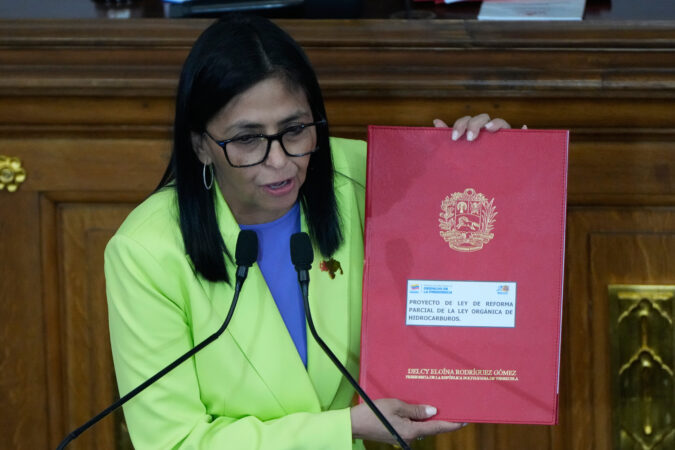
    WASHINGTON — President Donald Trump said Thursday he has informed Venezuela’s acting president, Delcy Rodríguez, that he will open up all commercial airspace over the Venezuela and Americans will soon be able to visit.

    Trump said he instructed his transportation secretary, Sean Duffy, and U.S. military leaders to take steps to open the airspace for travel by the end of the day.

    “American citizens will be very shortly able to go to Venezuela, and they’ll be safe there,” the Republican president said.

    Venezuela’s government did not immediately comment.

    While the State Department continued to warning Americans against traveling to Venezuela, at least one U.S. airline announced its intention to soon resume direct flights between the countries.

    American Airlines was the last U.S. airline flying to Venezuela when it suspended flights in 2019 that it operated between Miami and the capital, Caracas, as well as the oil hub city of Maracaibo. The airline said Thursday it would share additional details about the return to service in the coming months as it works with federal authorities on security assessments and necessary permissions.

    “We have a more than 30-year history connecting Venezolanos to the U.S., and we are ready to renew that incredible relationship,” Nat Pieper, American’s chief commercial officer, said in a statement. “By restarting service to Venezuela, American will offer customers the opportunity to reunite with families and create new business and commerce with the United States.”

    Before Venezuela came undone in the mid-2010s, it was not uncommon for Venezuelans to take weekend leisure trips to Miami. U.S. airlines stopped flying to Venezuela before the Department of Homeland Security in 2019 ordered an indefinite suspension, arguing that conditions in Venezuela threatened the “safety and security of passengers, aircraft, and crew.”

    Earlier this week, Trump’s administration notified Congress that it was taking the first steps to possibly reopen the shuttered U.S. Embassy in Caracas as it explores restoring relations with the country after the U.S. military raid that ousted then-President Nicolás Maduro. In a notice to lawmakers dated Monday and obtained by The Associated Press, the State Department said it was sending in a regular and growing contingent of temporary staffers to conduct “select” diplomatic functions.

    “We are writing to notify the committee of the Department of State’s intent to implement a phased approach to potentially resume Embassy Caracas operations,” the department said in separate but identical letters to 10 House and Senate committees.

    Diplomatic relations between the two countries collapsed in 2019.

    Even as Trump suggested Americans will be safe in Venezuela, his State Department kept in place its highest-level travel advisory: “Do not travel,” a warning of a high risk of wrongful detention, torture, kidnapping and more.

    The department did not immediately respond to a message inquiring whether it would be changing that warning.

    In November, as Trump was ramping up pressure on Maduro, the American president said the airspace “above and surrounding” Venezuela should be considered as “closed in its entirety.”

    The Federal Aviation Administration, which has jurisdiction generally over the United States and its territories, told pilots to be cautious flying around Venezuela because of heightened military activity.

    After that FAA warning, international airlines began canceling flights to Venezuela.

    The FAA issued a similar 60-day warning in January, urging U.S. aircraft operators to “exercise caution” when flying over the eastern Pacific Ocean near Mexico, Central America, and parts of South America. The warning was issued after Maduro’s capture but came as the U.S. has threatened to continue military strikes on alleged drug trafficking boats in the area.

    The FAA on Thursday said it was lifting four Notices to Airmen (NOTAMs) for the region that it said were “issued as precautionary measures and are no longer necessary.”

    “Safety remains our top priority,” the FAA said in a statement, “And we look forward to facilitating the return of regular travel between the U.S. and Venezuela.”

  • Trump says he asked Putin not to target Kyiv for 1 week during brutal cold spell

    Trump says he asked Putin not to target Kyiv for 1 week during brutal cold spell

    KYIV, Ukraine — President Donald Trump said Thursday that President Vladimir Putin has agreed not to target the Ukrainian capital and other towns for one week as the region experiences frigid temperatures. There was no immediate confirmation from the Kremlin that Putin has agreed to such a pause.

    Russia has been pounding Ukraine’s critical infrastructure, hoping to wear down public resistance to the war while leaving many around the country having to endure the dead of winter without heat.

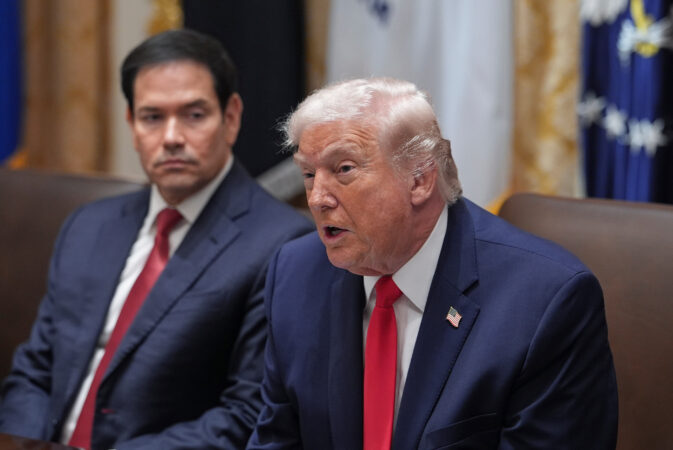
    “I personally asked President Putin not to fire on Kyiv and the cities and towns for a week during this … extraordinary cold,” Trump said during a Cabinet meeting at the White House, adding that Putin has “agreed to that.”

    Kremlin spokesman Dmitry Peskov was asked earlier Thursday whether a mutual halt on strikes on energy facilities was being discussed between Russia and Ukraine, and he refused to comment on the issue.

    Ukrainian President Volodymyr Zelensky late Wednesday had warned that Moscow was planning another large-scale barrage despite plans for further U.S.-brokered peace talks at the weekend.

    Trump said he was pleased that Putin has agreed to the pause. Kyiv, which has grappled with severe power shortages this winter, is forecast to enter a brutally cold stretch starting Friday that is expected to last into next week. Temperatures in some areas will drop to minus-22 Fahrenheit, the State Emergency Service warned.

    “A lot of people said, ‘Don’t waste the call. You’re not going to get that.’” the president said of his request of Putin. “And he did it. And we’re very happy that they did it.”

    Zelensky, for his part, thanked Trump for his effort and welcomed the “possibility” of a pause in Russian military action on Kyiv and beyond. “Power supply is a foundation of life,” Zelensky said in his social media post.

    Trump did not say when the call with Putin took place or when the ceasefire would go into effect. The White House did not immediately respond to a query seeking clarity about the scope and timing of the limited pause in the nearly four-year war.

    Russia has sought to deny Ukrainian civilians heat and running water over the course of the war, which began with Russia’s full-scale invasion on Feb. 24, 2022. Ukrainian officials describe the strategy as “weaponizing winter.”

    Last year was the deadliest for civilians in Ukraine since 2022 as Russia intensified its aerial barrages behind the front line, according to the U.N. Human Rights Monitoring Mission in the country.

    The war killed 2,514 civilians and injured 12,142 in Ukraine — 31% higher than in 2024, it said.

    A Russian drone attack killed three people in Ukraine’s southern Zaporizhzhia region overnight and caused a major blaze in an apartment building, officials said Thursday.

    Firefighters also worked through the night to put out fires in the central Dnipropetrovsk region, where two people were injured, officials said.

    Zelensky said Ukrainian intelligence reports indicate Russia is assembling forces for a major aerial attack. Previous large attacks, sometimes involving more than 800 drones as well as cruise and ballistic missiles, have targeted the Ukrainian power grid.

    The ongoing attacks discredit the peace talks, Zelensky said. “Every single Russian strike does,” he said late Wednesday.

    Russia’s daily bombardment of civilian areas behind the roughly 600-mile front line has continued despite international condemnation and attempts to end the fighting.

    Ukraine is working with SpaceX to address the reported use of its Starlink satellite service by Russian attack drones, Ukrainian Defense Minister Mykhailo Fedorov said Thursday on the Telegram messaging app.

    He said his team contacted the American aerospace company run by Elon Musk and “proposed ways to resolve the issue.” Starlink is a global internet network that relies on around 10,000 satellites orbiting Earth.

    Fedorov thanked Musk and SpaceX President Gwynne Shotwell for their “swift response and the start of work on resolving the situation.”

    Musk and SpaceX have sought to steer a delicate course in the war.

    Shotwell said a year after the invasion that SpaceX was happy to provide Ukrainians with connectivity “and help them in their fight for freedom.” At the same time, the company sought to restrict Ukraine’s use of Starlink for military purposes, she said.

    Negotiations between the two sides are poised to resume on Sunday amid doubts about Moscow’s commitment to a settlement.

    The European Union’s top diplomat accused Russia of not taking the talks seriously, calling Thursday in Brussels for more pressure to be exerted on Moscow to press it into making concessions.

    “We see them increasing their attacks on Ukraine because they can’t make moves on the battlefield. So, they are attacking civilians,” Kaja Kallas said of Russia at a meeting of EU foreign ministers.

    She stressed that Europe, which sees its own future security at stake in Ukraine, must be fully involved in talks to end the war. The push for a settlement has been led over the past year by the Trump administration, and European leaders fear their concerns may not be taken into account.

    Steve Witkoff, Trump’s special envoy, said Thursday “a lot of progress” was made in recent three-way talks and expressed optimism that more headway can be made when the parties meet again in the coming days.

    “I think the people of Ukraine are now hopeful and expecting that we are going to deliver a peace deal sometime soon,” Witkoff added.

    The number of soldiers killed, injured or missing on both sides during the war could reach 2 million by spring, with Russia suffering the largest number of troop deaths for any major power in any conflict since World War II, according to an international think tank report published Tuesday.

  • Israel returns Palestinian bodies, marking last exchange between Israel and Hamas

    Israel returns Palestinian bodies, marking last exchange between Israel and Hamas

    DEIR AL-BALAH, Gaza Strip — Israel turned over the bodies of 15 Palestinians on Thursday, just days after recovering the remains of the last Israeli hostage, a Gaza Health Ministry official said.

    It marks the last hostage-detainee exchange between Israel and Hamas carried out as part of the first phase of the U.S.-brokered ceasefire reached in October.

    The Red Cross said that it helped facilitate the return of the bodies. They were taken to Shifa Hospital in Gaza City, health ministry spokeperson Zaher al-Wahidi said.

    The return of all remaining hostages, living or dead, had been a key part of the first phase in the ceasefire that paused the war.

    Israel agreed to return 15 Palestinian bodies for each hostage recovered, according to the ceasefire terms. It’s unclear if the bodies released Thursday were of Palestinian detainees who died in Israeli custody or bodies taken from Gaza by Israeli troops during the war.

    Israel has released roughly 2,000 Palestinian prisoners under the ceasefire deal, many of whom were seized by Israeli troops during the more than two-year war and held without being charged. It also has released the bodies of 360 Palestinians back to Gaza, where officials have struggled to identify them.

    The Gaza health ministry, part of the Hamas-run government, has posted photos of the deceased for families to identify. Of the bodies handed back by Israel, about 100 have been identified by families, al-Wahidi said.

    On Monday, Israel announced that it found and identified the remains of the last Israeli hostage, police officer Ran Gvili, following an extensive search at a cemetery in northern Gaza.

    The attack by Hamas-led militants on Israel on Oct. 7, 2023, which launched the war, killed about 1,200 people and saw 251 taken hostage. Gvili, a 24-year-old police officer known affectionately as “Rani,” was killed while fighting Hamas militants.

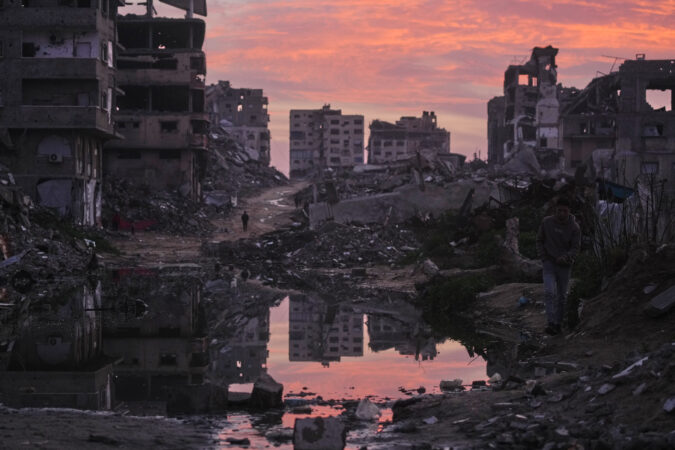
    The return of his body closed a painful chapter for the country and cleared the way for the next and more challenging phase of the ceasefire, which calls for deploying an international security force, disarming Hamas, pulling back Israeli soldiers and rebuilding Gaza.

    Deaths continue in Gaza

    While U.S. envoy Steve Witkoff announced the launch of the second phase of the ceasefire deal earlier this month, Israeli fire and strikes continue to kill Palestinians across Gaza almost daily.

    Israeli fire killed two Palestinians on Thursday in southern Gaza’s Khan Younis area, according to Nasser hospital, where the bodies were taken. Health officials said that the two men were killed in areas that aren’t Israeli-controlled.

    Another Israeli strike in central Gaza killed one Palestinian and wounded others, according to Al-Aqsa martyrs hospital, where the casualties were taken.

    Israel’s military said that it carried out a “precise strike” on Thursday that targeted a suspect planning to attack its troops in the southern Gaza Strip.

    The Gaza Health Ministry said that 492 Palestinians have been killed since the ceasefire. The ministry doesn’t distinguish between civilians and combatants in its figures. The ministry maintains detailed casualty records that are seen as generally reliable by U.N. agencies and independent experts.

    The Israeli military has said that some of those killed in recent months were along the ceasefire line that splits Israeli-held areas and most of Gaza’s Palestinian population, and that it has targeted those posing a threat to its troops.

    Rafah border crossing

    For Palestinians separated from their families by the war and the tens of thousands of people outside Gaza seeking to return home, the reopening of the Rafah crossing along the border with Egypt can’t come soon enough.

    The crossing is expected to reopen soon, Israeli officials have said, but how many people will be allowed to enter and leave Gaza remains unclear.

    Preparations are underway to allow the departure of a limited number of medical evacuees who were wounded in the war and need to travel abroad for medical care.

    But Israeli Prime Minister Benjamin Netanyahu has said that crossing won’t be open to goods for now. The crossing, Gaza’s main gateway to the outside world, has been largely closed since May 2024.

  • EU lists Iran’s paramilitary Revolutionary Guard as terrorist organization over protest crackdown

    EU lists Iran’s paramilitary Revolutionary Guard as terrorist organization over protest crackdown

    BRUSSELS — The European Union agreed Thursday to list Iran’s paramilitary Revolutionary Guard as a terrorist organization over Tehran’s bloody crackdown on nationwide protests, the bloc’s top diplomat said, in a largely symbolic move that adds to international pressures on the Islamic Republic.

    The EU’s foreign policy chief, Kaja Kallas, said foreign ministers in the 27-nation bloc unanimously agreed on the designation, which she said will put the regime “on the same footing” with al-Qaeda, Hamas and the Islamic State group.

    “Those who operate through terror must be treated as terrorists,” Kallas said.

    Meanwhile, Iran faces the threat of military action from President Donald Trump in response to the killing of peaceful demonstrators and over possible mass executions. The American military has moved the USS Abraham Lincoln and several guided-missile destroyers into the Mideast. It remains unclear whether Trump will decide to use force.

    Activists say the crackdown has killed at least 6,443 people. “Any regime that kills thousands of its own people is working toward its own demise,” Kallas said.

    For its part, Iran has said it could launch a preemptive strike or broadly target the Mideast, including American military bases in the region and Israel.

    Iran issued a warning to ships at sea Thursday that it planned to run a drill next week that would include live firing in the Strait of Hormuz, potentially disrupting traffic through a waterway that sees 20% of all the world’s oil pass through it.

    Other countries, including the U.S. and Canada, have designated the Guard as a terrorist organization.

    Terrorist group label a ‘symbolic act’

    Iranian Foreign Minister Abbas Araghchi dismissed the designation as a “PR stunt” and said Europe would be affected if energy prices surge as a result of the sanctions.

    “Several countries are presently attempting to avert the eruption of all-out war in our region. None of them are European,” he wrote on X.

    France originally objected to listing the Revolutionary Guard as a terrorist organization over fears it would endanger French citizens detained in Iran, as well as diplomatic missions, but the country reversed course. French Foreign Minister Jean-Noël Barrot told the Foreign Affairs Council on Thursday in Brussels that France supports more sanctions on Iran and the listing “because there can be no impunity for the crimes committed.”

    “In Iran, the unbearable repression that has engulfed the peaceful revolt of the Iranian people cannot go unanswered,” he said.

    Edouard Gergondet, an lawyer focused on sanctions with the firm Mayer Brown, said the Revolutionary Guard will be notified of the listing and given the opportunity to comment before the measure is formally adopted.

    Kristina Kausch, a deputy director at the German Marshall Fund, said the listing is “a symbolic act” showing that for the EU “the dialogue path hasn’t led anywhere, and now it’s about isolation and containment as a priority.”

    “The designation of a state military arm, of an official pillar of the Iranian state, as a terrorist organization, is one step short of cutting diplomatic ties,” she said.

    The EU on Thursday also sanctioned 15 top officials and six organizations in Iran, including those involved in monitoring online content, as the country remains gripped by a three-week internet blackout by authorities.

    The sanctions mean that affected officials and organizations will have their assets frozen and their travel to Europe banned, according to Barrot.

    The Revolutionary Guard holds vast business interest across Iran, and sanctions could allow its assets in Europe to be seized.

    Iran already struggles under the weight of multiple international sanctions from countries including the U.S. and Britain.

    Iran’s rial currency fell to a record low of 1.6 million to $1 on Thursday. Economic woes sparked the protests, which broadened into a challenge to the theocracy before the crackdown.

    Guard emerged from 1979 revolution

    The Guard emerged from Iran’s 1979 Islamic Revolution as a force meant to protect its Shiite cleric-overseen government and was later enshrined in its constitution. It operated in parallel with the country’s regular armed forces, growing in prominence and power during a long and ruinous war with Iraq in the 1980s. Though it faced possible disbandment after the war, Supreme Leader Ayatollah Ali Khamenei granted it powers to expand into private enterprise, allowing it to thrive.

    The Guard’s Basij force likely was key in putting down the demonstrations, starting in earnest from Jan. 8, when authorities cut off the internet and international telephone calls for the nation of 85 million people. Videos that have come out of Iran via Starlink satellite dishes and other means show men likely belonging to its forces shooting and beating protesters.

    Iranian men once reaching the age of 18 are required to do up to two years of military service, and many find themselves conscripted into the Guard despite their own politics.

    Strait of Hormuz drill planned

    In other developments, a notice to mariners sent Thursday by radio warned that Iran planned to conduct “naval shooting” in the Strait of Hormuz on Sunday and Monday. Two Pakistani security officials, speaking on condition of anonymity because they were not authorized to talk to journalists, also confirmed the warning had been sent.

    Iran did not immediately acknowledge the drill. The hard-line Keyhan newspaper raised the specter of Tehran attempting to close the strait by force.

    “Today, Iran and its allies have their finger on a trigger that, at the first enemy mistake, will sever the world’s energy artery in the Strait of Hormuz and bury the hollow prestige of billion-dollar Yankee warships in the depths of the Persian Gulf,” the newspaper said.

    Such a move would likely invite U.S. military intervention. American military officials did not immediately respond to a request for comment.

    Elsewhere, Iranian opposition leader Mir Hossein Mousavi, whose Green Movement rose to challenge Iran’s disputed 2009 presidential election, again called for a constitutional referendum to change the country’s government. A previous call failed to take hold.

    WHO says doctors detained, health services attacked

    In other developments, at least five doctors have been detained and multiple health workers assaulted while treating injured patients in Iran since the protests began, the World Health Organization said Thursday.

    The statement from WHO offered some of the first information to emerge about the country’s medical system as journalists and human rights organizations struggle to assess the toll of the crackdown.

    WHO Director General Tedros Adhanom Ghebreyesus wrote on X that a hospital in the western city of Ilam came under attack, and authorities deployed tear gas inside a hospital in Tehran. At least 50 paramedics were hurt at 10 emergency medical posts and over 200 ambulances were damaged, he said.

    The U.S.-based Human Rights Activists News Agency reported that the violence in Iran has killed at least 6,443 people in recent weeks, with many more feared dead. Its count included at least 6,058 protesters, 214 government-affiliated forces, 117 children and 54 civilians who were not demonstrating. More than 47,208 have been arrested, it added.

    The group verifies each death and arrest with a network of activists on the ground, and it has been accurate in multiple rounds of previous unrest in Iran. The communication cutoff imposed by Iranian authorities has slowed the full scale of the crackdown from being revealed, and The Associated Press has been unable to independently assess the death toll.

    Iran’s government as of Jan. 21 put the death toll at a far lower 3,117, saying 2,427 were civilians and security forces and labeled the rest “terrorists.” In the past, Iran’s theocracy has undercounted or not reported fatalities from unrest.

    That death toll exceeds that of any other round of protest or unrest in Iran in decades and recalls the chaos surrounding the 1979 Islamic Revolution.

  • Trump’s wide ambitions for Board of Peace sparks new support for the United Nations

    Trump’s wide ambitions for Board of Peace sparks new support for the United Nations

    UNITED NATIONS — President Donald Trump’s latest attempt to sidestep the United Nations through his new Board of Peace appears to have inadvertently backfired after major world powers rejected U.S. aspirations for it to have a larger international mandate beyond the Gaza ceasefire and recommitted their support for the over 80-year-old global institution.

    The board to be chaired by Trump was originally envisioned as a small group of world leaders overseeing his plan for Gaza’s future. But the Republican president’s ambitions have expanded to envisioning the board as a mediator of worldwide conflicts, a not very subtle attempt to eclipse the Security Council, which is charged with ensuring international peace and security.

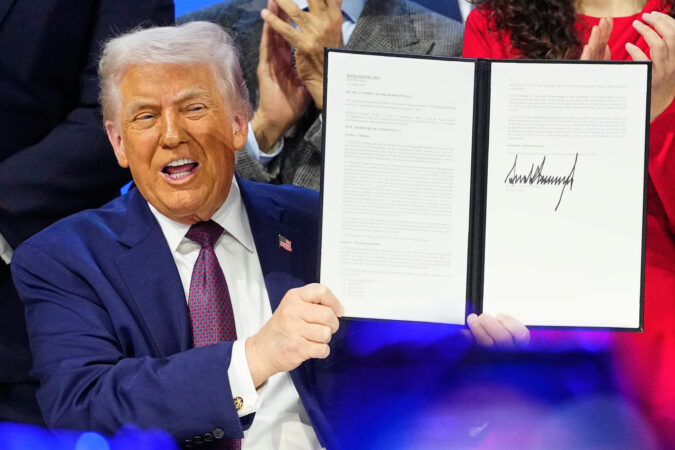
    The board’s charter also caused some dismay by stating Trump will lead it until he resigns, with veto power over its actions and membership.

    Secretary of State Marco Rubio tried to ease concerns by saying the board’s focus right now is only on the next phases of the Gaza ceasefire plan.

    “This is not a replacement for the U.N., but the U.N. has served very little purpose in the case of Gaza other than the food assistance,” Rubio said at a congressional hearing Wednesday.

    But Trump’s promotion of a broadened mandate and his floating of an idea that the Board of Peace “might” replace the U.N. have put off major players and been dismissed by U.N. officials.

    “In my opinion, the basic responsibility for international peace and security lies with U.N., lies with the Security Council,” Secretary General Antonio Guterres said Thursday. “Only the Security Council can adopt decisions binding on all, and no other body or other coalition can legally be required to have all member states to comply with decisions on peace and security.”

    In Security Council statements, public speeches and behind closed doors, U.S. allies and adversaries have dismissed Trump’s latest plan to overturn the post-World War II international order with what he describes as a “bold new approach to resolving global conflict.”

    “The U.S. rollout of the much broader Board of Peace charter turned the whole exercise into a liability,” according to the International Crisis Group’s Richard Gowan, a U.N. watcher and program director. “Countries that wanted to sign on to help Gaza saw the board turning into a Trump fan club. That was not appealing.”

    “If Trump had kept the focus of the board solely on Gaza, more states, including some more Europeans, would have signed up,” he said.

    Key Security Council members haven’t signed on

    The four other veto-wielding members of the Security Council — China, France, Russia, and the United Kingdom — have refused or have not indicated whether they would join Trump’s board, as have economic powers such as Japan and Germany.

    Letters sent this month inviting various world leaders to be “founding members” of the Board of Peace coincided with Trump’s vow to take over Greenland, a semiautonomous territory of NATO ally Denmark, and punish some European countries that resisted. That was met with stark rebuttal from Canada, Denmark and others, who said Trump’s demand threatened to upend an alliance that has been among the West’s most unshakeable.

    Shortly after, Trump pulled a dramatic reversal on Greenland, saying he had agreed with the NATO secretary-general on a “framework of a future deal” on Arctic security.

    Amid the diplomatic chaos, British Prime Minister Keir Starmer, who at the time had not responded to Trump’s Board of Peace invitation, met with Guterres in London and reiterated “the UK’s enduring support for the UN and the international rules-based system,” according to a statement.

    Starmer emphasized the U.N.’s “pivotal role in tackling global problems which shape lives in the UK and all over the world.” The United Kingdom later declined to join the board.

    France, Spain, and Slovenia declined Trump’s offer by mentioning its overlapping and potentially conflicting agenda with the U.N.

    French President Emmanuel Macron said last week that the board goes beyond “the framework of Gaza and raises serious questions, in particular with respect to the principles and structure of the United Nations, which cannot be called into question.”

    Spain would not join because the board excluded the Palestinian Authority and because the body was “outside the framework of the United Nations,” Prime Minister Pedro Sánchez said.

    Some countries are urging a stronger U.N.

    America’s adversaries also have shunned the board.

    “No single country should dictate terms based on its power, and a winner-takes-all approach is unacceptable,” China’s U.N. ambassador, Fu Cong, said at a Security Council meeting Monday.

    He called for the United Nations to be strengthened, not weakened, and said the Security Council’s status and role “are irreplaceable.”

    In a clear reference to the Board of Peace, Fu said, “We shall not cherry-pick our commitments to the organization, nor shall we bypass the U.N. and create alternative mechanisms.”

    So far, about 26 of some 60 invited countries have joined the board, and about nine European countries have declined. India did not attend Trump’s signing ceremony at the World Economic Forum meeting in Davos, Switzerland, last week but is reportedly still deciding what to do. Trump revoked Canadian Prime Minister Mark Carney’s invitation.

    “It’s hardly surprising that very few governments want to join Trump’s wannabe-U.N., which so far looks more like a pay-to-play club of human rights abusers and war crimes suspects than a serious international organization,” said Louis Charbonneau, U.N. director for Human Rights Watch. “Instead of handing Trump $1 billion checks to join his Board of Peace, governments should work on strengthening the U.N.”

    Eight Muslim nations that agreed to join the board issued a joint statement that supported its mission in Gaza and advancement of Palestinian statehood. Turkey, Saudi Arabia, Egypt, Jordan, Indonesia, Pakistan, Qatar and the United Arab Emirates made no mention of Trump’s global peacemaking plan.

    The Crisis Group’s Gowan said their focus could be a way to “get a foothold in discussions of Gaza” at the start, as Trump’s ceasefire plan has already faced several setbacks.

    “I remain unconvinced that this is a real long-term threat to the U.N.,” Gowan said.

  • Will there be a government shutdown this weekend? Here’s what we know.

    Will there be a government shutdown this weekend? Here’s what we know.

    New year, same you googling repeatedly, “Is a government shutdown happening?” We see you. We get it. And the answer is: “Maybe.”

    The likelihood of a partial government shutdown this weekend has ramped up following a surge in immigration enforcement and related backlash in Minnesota.

    The highly publicized presence of Immigration and Customs Enforcement and the Department of Homeland Security in Minneapolis, alongside the death of Alex Pretti, the second person federal agents have fatally shot in the state, has reinvigorated efforts among Democrats to reject a bill to fund DHS.

    “The appalling murders of Renee Good and Alex Pretti on the streets of Minneapolis must lead Republicans to join Democrats in overhauling ICE and CBP [Customs and Border Protection] to protect the public,” Senate Minority Leader Chuck Schumer said in a statement Sunday. “People should be safe from abuse by their own government.”

    Schumer (D., N.Y.) said Democrats would not support keeping the government fully open if it means funding the Department of Homeland Security. Other Democratic senators have joined in calling for Senate Republicans to collaborate on advancing five other pending bills, aside from the DHS bill, and separately retooling the DHS measure.

    In case you need a refresher, here is what you need to know about deadlines, what a partial government shutdown looks like, and more.

    What’s a government shutdown vs. a partial government shutdown?

    A full government shutdown happens when all (or most) federal agencies have not secured funding. It usually means widespread furloughs, sometimes layoffs, and any nonessential government services are put on pause.

    Meanwhile, a partial government shutdown happens when Congress has funded only certain federal agencies, leaving others in limbo. In turn, some parts of the government would close while others keep operating.

    When a partial shutdown happens, some federal agencies and operations, like Social Security and air traffic control, keep running as usual. But other federal employees are furloughed.

    In this instance, agencies at risk of expiring funding include the Departments of Defense, Health and Human Services, Labor, Education, Transportation, Housing and Urban Development, Treasury, and State; the Securities and Exchange Commission; and the federal court system, according to Reuters.

    Democrats are pushing Republicans to decouple the spending bill so disagreements over DHS don’t fuel disruptions to the other agencies. But Republicans so far say they will not break up the spending bill.

    When does government funding expire?

    Federal funding is set to expire at 12:01 a.m. Saturday. A partial shutdown would occur if Congress and President Donald Trump’s administration do not reach an agreement by then.

    Where does the DHS funding bill stand?

    The House has done its part and is in recess until February. But Senate Democrats are pushing back on approvals, citing the Trump administration’s treatment of immigrants. That leaves the Senate with only a few options to avoid a shutdown if it cannot pass the current measures.

    Most legislation in the Senate needs 60 votes to move forward. Republicans hold 53 seats, meaning they need bipartisan support to pass the existing measure, which covers about $1.3 trillion in annual government spending, including military and social service funding.

    But Democrats want new guardrails on immigration enforcement and added oversight on DHS. Some demands include requiring judicial warrants for immigration arrests, and agents to wear visible identification, Time reported.

    Several Democratic senators who broke with their party last year to keep the government open say the killings of Pretti and Good at separate protests have changed their stance.

    Sen. John Fetterman (D., Pa.), who has historically broken with the Democratic Party to avoid government shutdowns, released a lengthy statement Monday saying that he wanted to see the DHS operation in Minneapolis end but would not support a government shutdown. But on Thursday, in a surprising break, Fetterman voted against advancing the six-bill package.

    His vote, along with 54 other senators who voted “no,” meant the financial package could not move forward.

    It is also worth noting that DHS would continue to operate and receive funding under a government shutdown. That is because DHS agencies received major funding through Trump’s One Big Beautiful Bill Act last year. In turn, ICE and other parts of the agency would continue operating under a shutdown.

    Who is affected by a government shutdown?

    Hundreds of thousands of federal employees are affected, since many would be expected to work but would not receive pay until after the shutdown is lifted. Employees are typically guaranteed back pay.

    Many employees are also at risk of being furloughed and would not be allowed to work (but would also receive back pay thanks to legislation passed in 2019).

    Some of the main groups of employees that a shutdown could affect include (but are not limited to) active members of the military, federal law enforcement, federal transportation workers (like air traffic controllers and Transportation Security Administration agents, but not SEPTA workers), scientific researchers, and the IRS.

    The federal court system said it would not be able to continue full operations past Feb. 4, which could disrupt hearings and other activities, Reuters reported. Data and research activity from the Bureau of Labor Statistics and the National Institutes of Health could also go dark.

    What about tax season?

    This potential partial shutdown comes during tax season.

    If a shutdown happens, funding for the IRS could lapse, which would in turn mean tax processing — and refunds — could be disrupted.

    During last year’s shutdown in October, the IRS approved a contingency plan that let the agency continue some activities under a shutdown. But, the agency said, refunds would be delayed aside from some direct electronic returns that could be automatically processed and direct-deposited. Taxpayers were still expected to file and pay their taxes on time.

    The IRS has not yet commented on a potential shutdown. Trump previously touted larger refunds this year because of the One Big Beautiful Bill Act. Some experts say that emphasis could play a role in the agency remaining partially open.

    When would the government shut down?

    Congress and the Trump administration need to reach an agreement by midnight Friday. If they don’t, a shutdown would go into effect at 12:01 a.m. Saturday.

    What was the longest government shutdown?

    The longest government shutdown was the most recent one, which began on Oct. 1, 2025, and lasted 43 days. It broke the record for the longest shutdown on the 36th day.

    What could a government shutdown mean for Philly?

    In Philadelphia, the October shutdown led to the closing of Independence Hall and the Liberty Bell Center, to the chagrin of tourists. But that would not happen this time, because the national parks are funded by the Department of the Interior, which secured its funding through an already passed appropriations bill for the year.

    SNAP benefits would also not be affected this time.

    The Department of Transportation would close during this shutdown, but air traffic controllers would be required to work without pay. Similar to the last shutdown, this could lead to flight delays and cancellations.

    Other impacts could be in store as the shutdown’s implications become more clear.