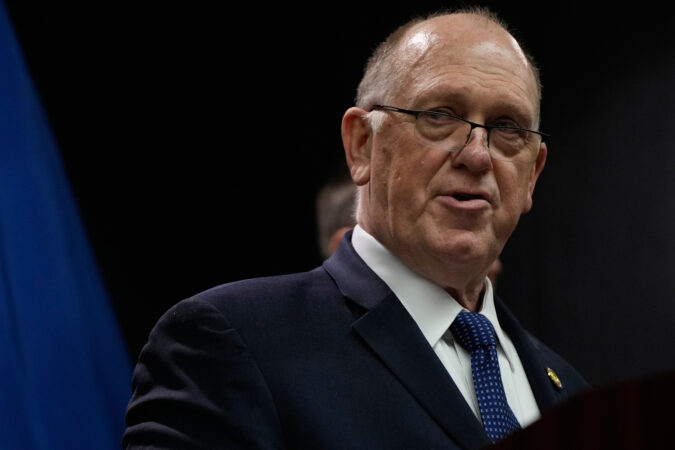
MINNEAPOLIS — The number of immigration enforcement officers in Minnesota could be reduced, but only if state and local officials cooperate, President Donald Trump’s border czar said Thursday, noting he has “zero tolerance” for protesters who assault federal officers or impede the ongoing operation in the Twin Cities.
Tom Homan addressed reporters for the first time since the president sent him to Minneapolis following last weekend’s fatal shooting of protester Alex Pretti.
The news conference comes after President Donald Trump seemed to signal a willingness to ease tensions in the Minneapolis and St. Paul area after Saturday’s deadly shooting, the second this month. But Homan also emphasized that the administration isn’t backing away from its crackdown on illegal immigration.
Vowing to stay until the “problem’s gone,” he seemed to acknowledge missteps while warning protesters they could face consequences if they interfere with federal officers.
“I do not want to hear that everything that’s been done here has been perfect. Nothing’s ever perfect,” Homan said.
He added later: “But threatening law enforcement officers, engaging and impeding, and obstruction, and assault is never OK, and there will be zero tolerance.”
Homan also hinted at the prospect of drawing down many of the roughly 3,000 federal officers taking part in the operation, but he seemed to tie that to cooperation from state and local leaders and a reduction in what he cast as interference from protesters.
“When the violence decreases, we can draw down the resources,” he said. “The drawdown is going to happen based on these agreements. But the drawdown can happen even more if the hateful rhetoric and the impediment and interference will stop.”
He also said he would oversee internal changes in federal immigration law enforcement, but he gave few specifics.
“The mission is going to improve because of the changes we’re making internally,” he said. “No agency organization is perfect. And President Trump and I, along with others in the administration, have recognized that certain improvements could and should be made.”
Despite Trump softening his harsh rhetoric about Minnesota officials — he said this week they were on a “similar wavelength” — there was little sign on the ground Wednesday of any big changes in the crackdown.
Pretti, 37, was fatally shot Saturday in a scuffle with the Border Patrol. Earlier this month, 37-year-old Renee Good was shot in her vehicle by an Immigration and Customs Enforcement officer.
On Thursday, Homan doubled down on the need for jails to alert ICE to inmates who can be deported, and that transferring such inmates to the agency while they’re still in jail is safer because it would mean fewer officers having to be out on the streets looking for immigrants in the country illegally. ICE has historically relied on cooperation from local and state jails to notify the agency about such inmates.
“Give us access to illegal aliens, public safety threats in the safety and security of a jail,” he said.
Homan acknowledged that immigration enforcement operations in Minnesota haven’t been perfect, but he was also adamant that the administration isn’t surrendering its mission.
He also seemed to suggest a renewed focus on what ICE calls “targeted operations” designed to focus its efforts on apprehending immigrants who have committed crimes. He said the agency would conduct “targeted strategic enforcement operations” prioritizing “public safety threats.”
Homan’s arrival in Minnesota followed the departure of the Trump administration’s on-the-ground leader of the operation, Greg Bovino. Homan didn’t give a specific timeline for how long he would stay in Minnesota.
“I’m staying until the problem’s gone,” he said, adding that he has met elected officials and law enforcement leaders across the city and state, seeking to find common ground and suggested that he’s made some progress.
Operation Metro Surge began in December with scattered arrests, as Trump repeatedly disparaged the state’s large Somali community. But the operation ramped up dramatically after a right-wing influencer’s January report on Minnesota’s sprawling human services fraud scandal, which centers around the Somali community.
Federal officials announced thousands of immigration agents were being deployed, with FBI Director Kash Patel saying they would “dismantle large-scale fraud schemes exploiting federal programs.”
But talk of the scandals was almost immediately forgotten, with federal authorities instead focusing on immigrants in the country illegally and so-called sanctuary agreements that limit cooperation between local law enforcement agencies and jails with immigration authorities.
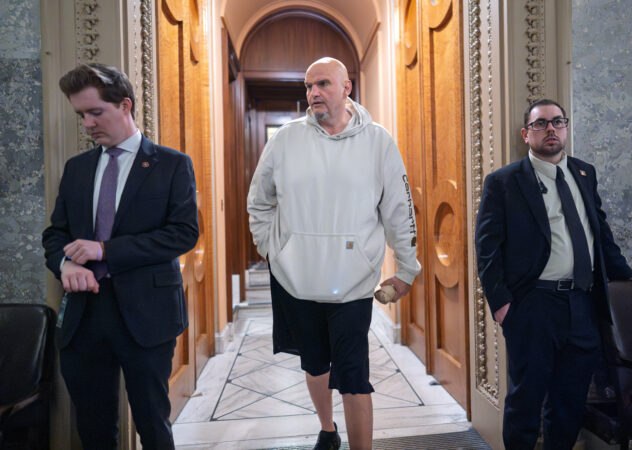
U.S. Sen. John Fetterman (D., Pa.) on Thursday voted against advancing a highly contested government funding package that includes allocations for the Department of Homeland Security, despite noting his objections to shutting down the government.
The Senate voted 45-55 on the key procedural vote, failing to advance a budget package as the country moves closer to a partial government shutdown this weekend.
With Fetterman aboard, every Democrat voted against the appropriations package because of the inclusion of funding for DHS. The party previously vowed to block DHS funding in the aftermath of federal immigration agents’ fatal shooting of two Americans in Minneapolis this month.
Sen. Dave McCormick (R., Pa.) voted to advance the bill.
Fetterman’s vote came as a surprise given the senator’s comments earlier in the week, when he said he would “never vote to shut our government down, especially our Defense Department,” one of the agencies that would have received funding from the appropriations package.
It was unclear Thursday why Fetterman voted against the package, but it is unlikely to be the final version considered by the Senate, as eight Republicans also voted no. A shutdown is slated to begin Saturday if Congress does not pass a package this week.
A spokesperson for Fetterman did not immediately return a request for comment on the senator’s vote.
Senate Majority Leader John Thune (R., S.D.) was among the Republicans who voted no so that he could make a motion to reconsider the legislation.
DHS oversees Immigration and Customs Enforcement and Border Patrol, the agencies involved in the fatal Minnesota shootings. Democrats have been calling for a halt to additional funding in the wake of the deaths of Renee Good and Alex Pretti.
But Fetterman noted Monday that the department received $178 billion from last year’s One Big Beautiful Bill Act, which he opposed, and that ICE would continue to operate during a shutdown.
“A vote to shut our government down will not defund ICE,” Fetterman said.
Fetterman has previously suggested removing DHS funding from the package under consideration as a compromise. He has also urged President Donald Trump to fire DHS Secretary Kristi Noem.
A reporter from the Hill posted on X minutes after the vote that Fetterman saw his no vote as setting the stage to decouple DHS funding from the other five bills under consideration, rather than triggering a shutdown.
Senate Minority Leader Chuck Schumer (D., N.Y.) has pushed Republicans and the White House to strip the Department of Homeland Security funding from the rest of the bill. In a deal reached with the White House, DHS would still be funded, but for a short time to allow for negotiations on the Democrats’ demands. Other agencies included in the bill would be funded through the end of September.
Negotiations remained ongoing Thursday.
Within the last week, Fetterman faced mounting pressure from fellow Pennsylvania Democrats and constituents to vote against the package as tensions in Minneapolis continued to escalate.
On Tuesday, every Democratic member of Pennsylvania’s U.S. House delegation cosigned a letter urging Fetterman and McCormick to vote against the funding. Constituents also gathered outside Fetterman’s office in Philadelphia on Tuesday to protest his stance.
“We can no longer continue to give Homeland Security a blank check,” U.S. Rep. Brendan Boyle (D., Pa.) said Thursday morning in a virtual news conference with U.S. Rep. Dwight Evans (D., Pa.).
McCormick voted as expected to advance the GOP-led legislation.
“I’m just not in favor of shutting down the government or stopping funding the government, and that’s the position that I’ve had through the last shutdown,” McCormick said about his support for the funding on a tele-town hall Tuesday night. “I’m not in favor of ever shutting down the government. It doesn’t matter what party is in power, but some people see that differently.”
If lawmakers fail to pass a package by Friday, the federal government will undergo its second shutdown in four months, starting Saturday, potentially demoralizing federal workers and inconveniencing members of the public who rely on affected services.
This shutdown would be a partial one, affecting the Departments of Defense, State, Transportation, Education, Labor, Treasury, Health and Human Services, and Housing and Urban Development in addition to DHS.
The U.S. Department of Agriculture, which provides nutrition assistance to needy families, would not be affected.
The other four Democratic senators from the Philadelphia region — Sens. Andy Kim and Cory Booker of New Jersey and Sens. Chris Coons and Lisa Blunt Rochester of Delaware — all joined Fetterman in voting no Thursday.
Kim argued the vote was a bipartisan rebuke of the Trump administration’s immigration strategy and said he would be working with colleagues to deliver “real security” to the American public.
“Their lawlessness has taken lives on the streets of our neighborhoods, and I’ve heard from so many about an overwhelming fear that they can be targeted next,” Kim said in a statement. “We need real changes to fix a broken and lawless system that has led to so many Americans losing trust in their government to keep them safe.”
This story is developing and will be updated.
Staff writer Aliya Schneider contributed to this article, which contains information from the Associated Press.
A 30-gallon stoneware crock sat in the corner of Lois Jurgens’ back porch for nearly three decades, collecting dust through Nebraska summers and snow through the winters. Her late husband used it as a makeshift table to rest grilling tongs and platters. They almost never thought of it.
On Jan. 10, that same crock sold at auction for $32,000.
“I just couldn’t believe it,” said Jurgens, who turned 91 on the day the crock was sold. “It’s the biggest thing I’ve ever gotten on my birthday.”
The crock was manufactured by Red Wing Stoneware, probably between 1877 and 1900. The nearly knee-high crock features molded side handles and a cobalt blue butterfly, along with the company name stamped twice. Unlike later models finished with a smoother zinc glaze, the crock is salt glazed, giving it a coarser texture. Despite its many years outdoors, it is still in good condition.
“It’s very unusual,” said Ken Bramer, the owner of Bramer Auction & Realty in Amherst, Nebraska, which sold the piece. “That’s the first one of those I’ve seen in 40 years of auctioneering.”
Jurgens, who lives in Holdrege, Neb., said she can’t recall how or when she and her husband acquired the crock.
“I really don’t know how it came into the family,” said Jurgens, whose husband died in 2022. She has three children and four grandchildren.
Whatever its origins, Jurgens said, she never imagined it might be valuable. Stoneware crocks were common household items, historically used for food preservation before modern refrigeration. Today, some are still used for fermenting or as decorative objects, and pieces like Jurgens’s are seen as rare collectors’ items. In 2019, a salt-glazed stoneware cooler sold for $177,000.
“Some people collect strange things,” Bramer said.
Jurgens had spent the past several months clearing out items from her home that she no longer needed. Last summer, she had a garage sale and considered putting the crock out with the rest, but it never made it to the driveway.
“It was too heavy for us to handle,” Jurgens said, adding that her daughter helped her with the garage sale. “We just decided we weren’t going to bother with it.”
Then, earlier this month, she saw a notice in the local Holdrege Daily Citizen newspaper about an upcoming auction for antiques and collectibles, including many Redwing crocks. She called Bramer Auction & Realty, and Bramer offered to stop by Jurgens’s house and take some photos of the crock.
“I said, ‘Oh my goodness, that’s a good one,’” Bramer said, telling her: “I think you will be pleasantly surprised by what it brings.”
Jurgens’s son let Bramer know they were prepared to sell it for $20 at the garage sale, and they’d be glad if it fetched more than that.
“She was hoping for $100,” Bramer said.
Bramer posted pictures of the crock on his website and Facebook, and offers started pouring in.
“I was getting calls from collectors all over the United States,” Bramer said. “I knew it was a good piece, but I really didn’t know how good.”
Since so many calls came in from bidders outside Nebraska, Bramer said he allowed people to call in with offers during the auction on Jan. 10. Jurgens did not attend the auction, as she was at church for a funeral.
He started bids at $1,000 for the crock, and things escalated quickly.
“People just started bidding like crazy,” Bramer said, noting that the most he had sold a crock for was about $5,800 last year. “People were standing up in the crowd, and they all had their cameras out, taking pictures and videos of it … it’s something that doesn’t happen every day.”
The bidding war ended when a crock collector in Kansas offered a whopping $32,000 for the crock. About an hour later, while the auction was still happening, Jurgens walked in with her daughter.
“I stopped the auction and asked Lois if she’d come up to the front,” Bramer said. “I introduced her to the crowd and said, ‘This is the young lady who had the crock on the back porch.’”
He asked her how much she thought it sold for.
“I hope you got $100,” Jurgens said.
“I think we did just a little bit better,” Bramer replied.
When he revealed the final number, “she kind of went weak in the knees,” Bramer said.
Jurgens said she was — and still is — in disbelief.
“The whole situation kind of left me in shock. Thankful, but in shock,” she said. “I just couldn’t believe it.”
Bramer said he, too, was stunned by the outcome.
“It was really fun for both of us to be surprised,” Jurgens said. “I feel guilty that I didn’t even pretend to take care of it.”
Jurgens said that since the auction, people stop her when they see her out and about and ask her to tell the story. It was first reported by local news personality Colleen Williams.
“I can’t go anywhere or they recognize me,” Jurgens said.
She said she plans to give part of her windfall to her church, and she’s still thinking about what to do with the rest.
“It would have been fun to share with him if he was still alive,” she said of her husband.
He would have gotten a kick out of his trusty makeshift table being an actual treasure.
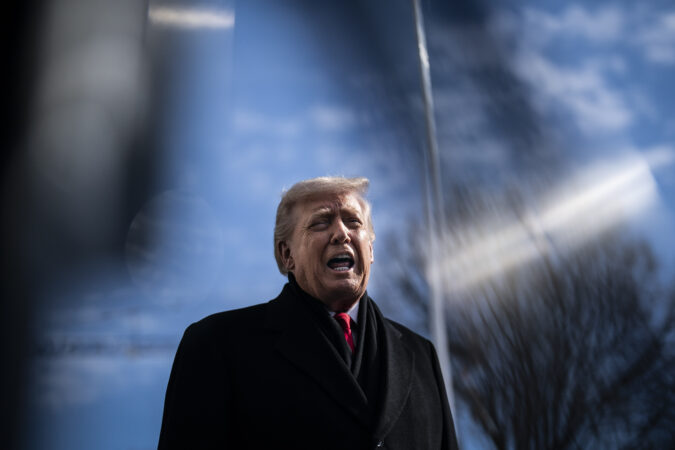
President Donald Trump’s efforts this week to “de-escalate” controversial deportation tactics in Minnesota in the face of widespread public dismay have caused a new wave of blowback from his base of hard-line anti-immigration advocates.
The president is caught between competing interests: a loyal base of voters who elected him on a campaign promise of “mass deportations,” and a broader electorate that is increasingly uncomfortable with an aggressive approach that has led to the shooting deaths of two American protesters by federal agents this month.
The conflicting viewpoints are evident within the administration, too, with advisers divided along similar lines and offering opposing feedback on whether and how drastically to shift Trump’s immigration strategy, according to people aware of the conversations.
Federal agents deploy tear gas near the intersection of Park Avenue and 34th Street in Minneapolis on Jan. 13.
Trump is also navigating a collision of his own instincts: his desire for flashy roundups of foreign-born criminals, and his recognition that the broader public, including business leaders he identifies with who rely on immigrant labor, have soured on the expansion of those roundups to noncriminals in workplaces.
The conflict has put the normally resolute Trump in an unusual spot, needing to tread carefully on an issue that he has previously plowed ahead on with threats and swagger. The result has been mixed signals from the White House — and fresh evidence of the difficult task Trump faces in a midterm election year of appeasing both his MAGA base and a broader swath of voters.
Earlier this month, Trump threatened to invoke the Insurrection Act to allow him to send the military to Minneapolis — and suggested that “THE DAY OF RECKONING & RETRIBUTION IS COMING.” He also sharply criticized two Minnesota Democrats, Gov. Tim Walz and Minneapolis Mayor Jacob Frey, calling them “useless” earlier this month.
This week, however, the president characterized conversations with Walz and Frey as positive and productive. He told Fox News that he wanted to “de-escalate a little bit” and that his talk with Walz “couldn’t have been a nicer conversation.”
Yet Trump has not articulated a clear shift in immigration strategy, leaving the public unsure of where he actually stands or what comes next.
He sidelined Homeland Security Secretary Kristi L. Noem from the Minnesota operation — a tacit but rare show of disapproval towarda cabinet member. He has not taken parallel action against senior aide Stephen Miller, who is widely viewed as the architect of Trump’s immigration policies — and who advised Noem on how to respond publicly to the shooting death of ICU nurse Alex Pretti in Minneapolis on Saturday, according to a person who spoke on the condition of anonymity to describe internal conversations.
In the immediate aftermath of the shooting, both Miller and Noem labeled Pretti a “domestic terrorist.” Miller also called him an “assassin.” Trump and White House press secretary Karoline Leavitt have not defended the officials’ rhetoric but also have not publicly criticized their job performance.
In a statement to the Washington Post, Miller said the initial information he received about the shooting from the Department of Homeland Security was “based on reports from CBP on the ground.” Miller said the White House is now working to determine why Customs and Border Protection at the time of the incident was not using the extra personnel that DHS had sent to Minnesota for “force protection.”
Stephen Miller, deputy White House chief of staff for policy, on Tuesday at the White House.
Noem asked for a meeting with Trump on Monday evening — after Trump announced that his border czar, Tom Homan, would be taking over operations in Minnesota. The gathering lasted for hours, according to twopeople who spoke anonymously to describe a private meeting.Noem and her top aide, Corey Lewandowski, joined the president and other aides to discuss issues including the border wall and Minneapolis, one of the people said. Separately, Lewandowski and Homan, who have previously clashed, have spoken and agreed to work together, the person added.
The White House’s efforts to make adjustments on tactics have not stanched the bleeding in public opinion.
The most recent flood of criticism has come from pro-Trump users online and top influential MAGA commentators. Some called Trump’s pivot a “betrayal.” Others warned, as they have about other issues for months, of the risk that the base could sit out November’s elections.
Fresh public polling showing increased “anti-ICE sentiment” and “increased support of sanctuary cities” makes clear that the administration must change its deportation tactics, said Mark Mitchell, head pollster at the conservative Rasmussen Reports.
An Economist/YouGov poll released this week — with most respondents answering after the Pretti shooting — found that 55% of Americans have little confidence in ICE, an increase of 10 percent since mid-December. The decline in trust for ICE has been most pronounced among independent voters, the poll found, with 67% now saying they have little confidence in the immigration agency, compared with 49% last month.
By contrast, 60% of Republicans say they have “a great deal” or “quite a lot” of confidence in ICE, highlighting the gap between Trump’s own party and independents and Democrats.
Andthe president’s sudden interest in cooperating with Walz and Frey and his suggestions about going easy on longtime immigrant workers have amounted to a “rug pull” for the base in his rhetoric, Mitchell said. While polling hasn’t yet showed Trump’s base punishing him, the midterms already look increasingly problematic for the GOP, Mitchell said, and concern remains about declining enthusiasm among Trump supporters. Mitchell met with Trump in November to warn him of frustration within his populist base.
“Ten years, this has been the core part of his platform — ‘They all have to go home … Build the wall,’” Mitchell said. Trump talking about only focusing on removing violent criminals sounds like he has “caved on the major campaign promise.”
Within the MAGA base, the president’s supporters want as aggressive an offense as Trump can conceive.
“This is an inflection point — you blink now and you’re going to blink forever. You bend the knee now, you’ll bend the knee forever,” Stephen Bannon, a former Trump adviser and influential MAGA commentator, said on his show Wednesday as he continued urging the Trump administration to ramp up deportations and to not “de-escalate” or draw back federal agents from Minnesota. “I don’t care how many people I’ve got to deport. I don’t care.”
Federal agents threaten to spray a chemical agent as they confront journalists and rapid responders in Minneapolis on Jan. 14.
Some prominent Trump supporters are also concerned about the actions by some members of Congress, possibly emboldened by Trump’s recent change of tone, to renew efforts to pass immigration reform.
The White House has pushed back on the notion that Homan’s elevation amounts to a dialing back of deportations. A White House official, who spoke on the condition of anonymity to discuss strategy, said the administration has “not wavered” in its deportation mission, but Trump doesn’t want to see Americans injured because of clashes with immigration officials.
In a statement, White House spokeswoman Abigail Jackson said the administration “will never waver in standing up for law and order and protecting the American people.”
“Any left-wing agitator or criminal illegal alien who thinks Tom’s presence is a victory for their cause is sadly mistaken,” she said.
This isn’t the first time in Trump’s second term that the MAGA base has erupted over his comments on immigration policy, which have consistently revealed his sensitivity to the concerns of business leaders and average conservatives put off by the deportation of otherwise law-abiding immigrants.
In late spring, after hearing complaints from friends and donors about deportation roundups at farms, hotels and restaurants hurting operations and scaring off workers, Trump announced that “changes are coming” to spare the agriculture and hospitality fields.
Trump’s base similarly went off on him. Even some top advisers were blindsided, privately insisting that no such policy changes were in the works and chalking up the suggestion to Trump’s habit of trying to smooth public conflictswith rhetoric.
Miller at the time raised concerns to the president about his stated plans for “changes” to protect migrant workers, according to a person who spoke anonymously to describe private conversations. Miller had been calling for a drastic increase in deportation numbers to keep up with the administration’s aggressive goals. Homan told the Washington Post soon after Trump’s announcement that he had not discussed any such changes with the president and wasn’t a part of crafting a policy to carve out workers.
During a speech a few weeks later in Iowa, Trump acknowledged he had gotten “into a little trouble because I said I don’t want to take people away from the farmers,” before describing supporters who were unhappy with his comments as “serious radical-right people.” The comment further inflamed tensions, with influential MAGA commentators including Bannon and Charlie Kirk, the head of Turning Point USA shot dead later last year, accusing the administration of preparing to offer amnesty to some illegal immigrants.
A number of Republicans in Minnesota said they were glad to see Trump shift course this week. They said they welcomed the arrival of Homan and the apparent truce between Trump and local leaders.
“I’m just grateful that we’re moving in a direction to get back to being sensible,” said Jim Abeler, a GOP state senator in Minnesota who worried that federal agents were violating people’s rights. “There are people afraid, there are citizens afraid to leave their homes, to go buy groceries because of their skin color or their nationality … It’s past time.”
Yet on Wednesday, the president also signaled that he was aware of the latest criticism from within his base. A day after speaking favorably of his conversation with the Minneapolis mayor, Trump posted on Truth Social that Frey was “PLAYING WITH FIRE” by saying he would not enforce federal immigration laws.
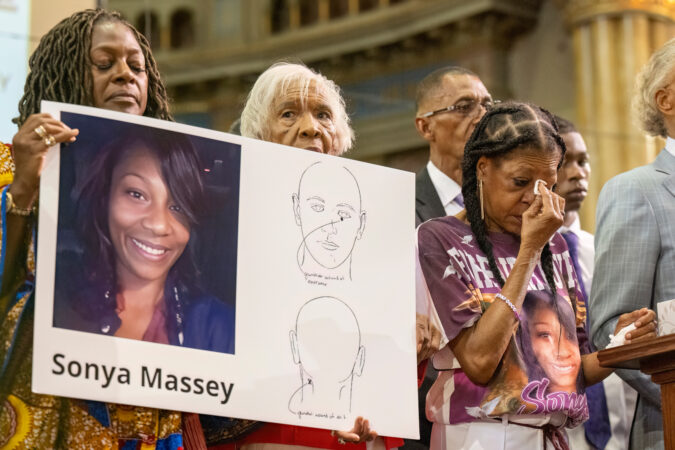
SPRINGFIELD, Ill. — A former Illinois sheriff’s deputy was sentenced Thursday to 20 years in prison for fatally shooting Sonya Massey, who had dialed 911 to report a possible prowler outside her Springfield home.
Sean Grayson, 31, was convicted in October. Grayson, who is white, received the maximum possible sentence. He has been incarcerated since he was charged in the killing.
He apologized during the sentencing, saying he wished he could bring Massey back and spare her family the pain he caused.
“I made a lot of mistakes that night. There were points when I should’ve acted, and I didn’t. I froze,” he said. “I made terrible decisions that night. I’m sorry.”
But Massey’s parents and two children — who lobbied for the maximum sentence — said their lives had changed dramatically since the killing. Her two children said they had to grow up without a mother, while Massey’s mother said she lived in fear. They asked the judge to carry out justice in her name.
“Today, I’m afraid to call the police in fear that I might end up like Sonya,” her mother Donna Massey said.
When the judge read the sentence, the family reacted with a loud cheer: “Yes!” The judge admonished them.
After the hearing, Massey’s relatives thanked the public for the support and listening to their stories about Massey.
“Twenty years is not enough,” her daughter Summer told reporters.
In the early morning hours of July 6, 2024, Massey — who struggled with mental health issues — summoned emergency responders because she feared there was a prowler outside her Springfield home.
According to body camera footage, Grayson and sheriff’s Deputy Dawson Farley, who was not charged, searched Massey’s yard before meeting her at her door. Massey appeared confused and repeatedly said, “Please, God.”
The deputies entered her house, Grayson noticed the pot on the stove and ordered Farley to move it. Instead, Massey went to the stove, retrieved the pot and teased Grayson for moving away from “the hot, steaming water.”
From this moment, the exchange quickly escalated.
Massey said: “I rebuke you in the name of Jesus.”
Grayson drew his sidearm and yelled at her to drop the pan. She set the pot down and ducked behind a counter. But she appeared to pick it up again.
That’s when Grayson opened fire on the 36-year-old single mother, shooting her in the face. He testified that he feared Massey would scald him.
Grayson was charged with three counts of first-degree murder, which could have led to a life sentence, but a jury convicted him of the lesser charge. Illinois allows for a second-degree murder conviction if evidence shows the defendant honestly thought he was in danger, even if that fear was unreasonable.
Massey’s family was outraged by the jury’s decision.
“The justice system did exactly what it’s designed to do today. It’s not meant for us,” her cousin Sontae Massey said after the verdict.
MINNEAPOLIS — President Donald Trump seemed to signal a willingness to ease tensions in Minneapolis after a second deadly shooting by federal immigration agents, but there was little evidence Wednesday of any significant changes following weeks of harsh rhetoric and clashes with protesters.
The strain was evident when Trump made a leadership change by sending his top border adviser to Minnesota to take charge of the immigration crackdown. That was followed by seemingly conciliatory remarks about the Democratic governor and mayor.
Trump said he and Gov. Tim Walz, whom he criticized for weeks, were on “a similar wavelength” following a phone call. After a conversation with Mayor Jacob Frey, the president praised the discussion and declared that “lots of progress is being made.”
But on city streets, there were few signs of a shift. Immigration enforcement operations and confrontations with activists continued Wednesday in Minneapolis and St. Paul.
A group of protesters blew whistles and pointed out federal officers in a vehicle on a north Minneapolis street. When the officers’ vehicle moved, a small convoy of activists followed in their cars for a few blocks until the officers stopped again.
When Associated Press journalists got out of their car to document the encounter, officers with the federal Bureau of Prisons pushed one of them, threatened them with arrest and told them to get back in their car despite the reporters’ identifying themselves as journalists. Officers from multiple federal agencies have been involved in the enforcement operations.
From their car, the AP journalists saw at least one person being pepper sprayed and one detained, though it was unclear if that person was the target of the operation or a protester. Agents also broke car windows.
Attorney General Pam Bondi, who is visiting Minnesota, said 16 people were arrested Wednesday on charges of assaulting, resisting or impeding law enforcement in the state. She said more arrests were expected.
“NOTHING will stop President Trump and this Department of Justice from enforcing the law,” Bondi said in a social media post.
Messages seeking comment were left with Immigration and Customs Enforcement and the Border Patrol.
Woman tells agents knocking on door: ‘They’re good neighbors’
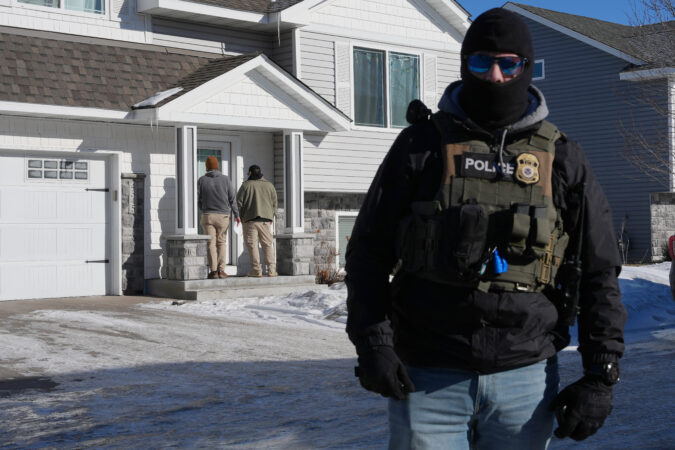
On Wednesday afternoon in the Minneapolis suburb of Brooklyn Center, half a dozen agents went to a house in a small residential neighborhood.
One agent knocked on the door of the home repeatedly. Another told the AP they were seeking a man who had been twice deported and was convicted of domestic abuse. The agent said the man had run into the home and the agents lacked a judicial warrant to get inside.
Some federal immigration officers are asserting sweeping power to forcibly enter people’s homes without a judge’s warrant and instead are using a more narrow administrative warrant to arrest migrants considered illegally present or otherwise deportable. The key difference is whether agents can forcibly enter a private property to make an arrest, as they were captured on video doing in Minneapolis earlier this month.
A handful of activists blew whistles at the agents in Brooklyn Center. One agent said: “They’d rather call the police on us than to help us. Go figure.”
As the agents were preparing to leave, a woman called out to them saying, “You need to know they’re good neighbors.”
Kari Rod told the AP that she didn’t know these neighbors well, but they had come to her garage sale, kept their yard clean, and waved hello when she drove by. She didn’t believe enforcement agents to be speaking the truth about whom they arrest, including another neighbor whom she said was deported to Laos last summer.
“I don’t trust a single thing they said about who they are,” Rod said. “From my interactions, I know them way better than anyone else does, any one of those federal agents.”
Immigrants are ‘still very worried’
Many immigrant families are still fearful of leaving their homes, and Latino businesses are still closed, said Daniel Hernandez, who owns the Minneapolis grocery store Colonial Market. He also runs a popular Facebook page geared toward informing the Hispanic community in the Twin Cities.
While Colonial Market is open, all but one of the dozen immigrant-run businesses that rented space inside to sell clothes, jewelry, and toys have closed since late December, and none has plans to reopen, Hernandez said.
“The reality is the community is still very worried and afraid,” Hernandez said.
Hernandez referenced Border Patrol commander Gregory Bovino, who helped lead the administration’s crackdown in the Twin Cities and who has reportedly been assigned elsewhere.
Bovino “was removed, but the tactics so far are still the same,” Hernandez said. “Nobody now is trusting the government with those changes.”
Judge warns ICE about not complying with federal orders
In Minnesota federal court, the issue of ICE not complying with court orders came to the fore as Chief Judge Patrick Schiltz said the agency had violated 96 court orders in 74 cases since Jan. 1.
“This list should give pause to anyone — no matter his or her political beliefs — who cares about the rule of law,” he wrote. “ICE has likely violated more court orders in January 2026 than some federal agencies have violated in their entire existence.”
Schiltz earlier this week ordered ICE’s acting director to personally appear in his courtroom Friday after the agency failed to obey an order to release an Ecuadorian man from detention in Texas. The judge canceled the order after the agency freed the man.
The judge, who was appointed by President George W. Bush, warned ICE that future noncompliance may result in future orders requiring the personal appearances of Acting Director Todd Lyons or other government officials.
ICE didn’t immediately respond to an email seeking comment.
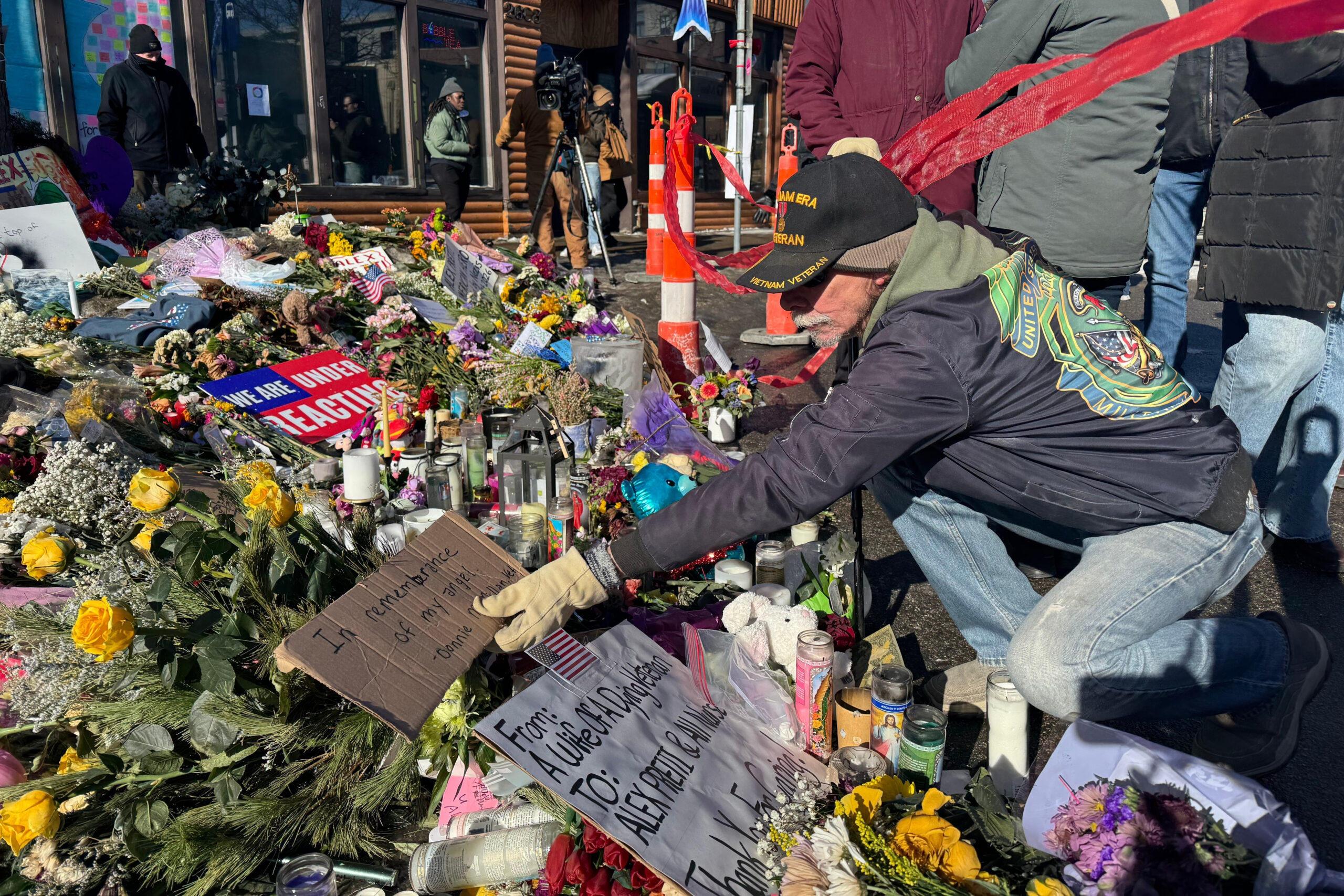
Vietnam War veteran Donnie McMillan places a sign that says “In remembrance of my angel” at a memorial set up at the location where VA nurse Alex Pretti was shot by federal agents in Minneapolis.
Veteran visits sidewalk memorial
Elsewhere on Wednesday, Donnie McMillan placed a cardboard sign reading “In remembrance of my angel” at the makeshift memorial where Alex Pretti was shot.
The Vietnam veteran knelt to pay his respects and saluted to honor the nurse whom he said he remembered seeing during his frequent visits to the VA hospital where Pretti worked.
“I feel like I’ve lost an angel right here,” McMillan, 71, said, pointing to the growing sidewalk memorial covered in flowers, candles, and signs.
“This is not the way we should operate,” McMillan said. “I respect everybody, but I respect my angel more, and now he’s no longer with us.”
Also Wednesday, the Department of Homeland Security said two federal agents involved in Pretti’s death have been on leave since Saturday, when the shooting happened.
“What is unfolding in our state is not accidental. It is part of a coordinated effort to target Black and brown, immigrant and Muslim communities through fear, racial profiling, and intimidation,” Omar said. ”This administration’s immigration agenda is not about law enforcement — it is about making people feel they do not belong.”
The Trump administration on Wednesday announced criminal charges against 16 people in Minneapolis whom it accused of assaulting officers or interfering with federal immigration enforcement operations as tensions in the city continue to escalate.
Attorney General Pam Bondi announced the Justice Department prosecutions in a social media post, naming those who were charged and indicating she expects more arrests.
“I’ve said it before and I’ll say it again: NOTHING will stop President Trump and this Department of Justice from enforcing the law,” Bondi wrote on X, adding that she was in Minneapolis.
Already this month, federal prosecutors had charged 17 people in Minneapolis with crimes tied to protests or related to the administration’s surge in immigration enforcement.
Bondi’s defiant posture came despite what appeared to be a shift in tone from President Donald Trump and other senior aides amid widespread outrage over immigration officers’ fatal shootings of two U.S. citizens in the city this month. Authorities said the two federal agents who fired at Alex Pretti, 37, on Saturday have been placed on administrative leave, per standard agency protocol.
Those developments came a day after the Department of Homeland Security provided the first official timeline of the deadly encounter in a statement sent to some members of Congress. The document, which was based on preliminary review, made no mention of Pretti brandishing a weapon, contradicting Trump administration comments in the immediate aftermath of the shooting, when senior officials described Pretti as a direct threat to federal agents and officers.
The Trump administration has begun to back away from some of its inflammatory rhetoric about the shooting and replaced Greg Bovino, the Border Patrol commander who was overseeing the Minneapolis operation, with border czar Tom Homan.
“I think the whole thing is terrible,” Trump said Tuesday in an interview with Fox News when asked about events in Minnesota over the past week and Pretti’s killing. “I don’t like the fact that he was carrying a gun that was fully loaded. … Bottom line, it was terrible.”
The news that two immigration agents involved in Pretti’s shooting are on leave undercuts Bovino’s previous claim that “all agents that were involved in that scene are working, not in Minneapolis, but in other locations.”
The broader shift in the White House’s tone on Pretti’s killing comes as a growing number of Republicans challenge the Trump administration’s handling of the shooting and become more critical of Homeland Security Secretary Kristi L. Noem. It also reflects concern that without a significant course correction, Republicans are likely to lose control of Congress in November’s midterm elections.
Stephen Miller, Trump’s White House deputy chief of staff, called Pretti an “assassin” in the immediate aftermath of his killing. On Tuesday, Miller said the administration was evaluating whether Customs and Border Protection “may not have been following” official protocol before the shooting.
Noem also initially portrayed the circumstances surrounding the fatal shootings of both Pretti and Renée Good in Minneapolis as assaults on federal law enforcement, despite video evidence to the contrary.
A woman who said she filmed Pretti’s shooting rebutted DHS’s initial claims that Pretti had brandished a weapon or was acting in a threatening manner.
Speaking to CNN’s Anderson Cooper on Tuesday, Stella Carlson, who estimated she was no more than 10 feet from Pretti when he was shot, said he was filming immigration enforcement personnel and trying to direct traffic.
Carlson said she got out of her car and started filming Pretti, whom she had never met, as he directed traffic. She said that Pretti was acting “calm” and “definitely without threat,” and that she did not see him brandish a weapon. “If I had, I maybe wouldn’t have stayed so close” to him, she said.
Pretti’s death has prompted bipartisan calls for an independent investigation. Top Justice Department officials said previously that they saw no basis for a civil rights investigation into Good’s Jan. 7 shooting. The department, however, has sought to pursue an investigation into Good’s partner, the Washington Post has reported.
On Tuesday, Rep. Ilhan Omar (D., Minn.), a frequent target of the Trump administration, was attacked during a town-hall meeting and Immigration and Customs Enforcement agents tried to enter the Ecuadoran Consulate before being turned away.
A man used a syringe to spray an unknown liquid in Omar’s direction, police said, shortly after Omar called on Noem to “resign or face impeachment.” The man, later identified as 55-year-old Anthony Kazmierczak, was immediately tackled and arrested, and Omar later said she was “OK.”
A third round of “No Kings” protests is coming this spring, with organizers saying they are planning their largest demonstrations yet across the United States to oppose what they describe as authoritarianism under President Donald Trump.
Previous rallies have drawn millions of people, and organizers said they expect even greater numbers on March 28 in the wake of Trump’s immigration crackdown in Minneapolis, where violent clashes have led to the death of two people.
“We expect this to be the largest protest in American history,” Ezra Levin, co-executive director of the nonprofit Indivisible, told the Associated Press ahead of Wednesday’s announcement. He predicted that as many as 9 million people will turn out.
“No Kings” protests, which are organized by a constellation of groups around the country, have been a focal point for outrage over Trump’s attempts to consolidate and expand his power.
“This is in large part a response to a combination of the heinous attacks on our democracy and communities coming from the regime, and a sense that nobody’s coming to save us,” Levin said.
Last year, Trump said he felt attendees were “not representative of the people of our country,” and he insisted that “I’m not a king.”
‘No Kings’ shifts focus after Minneapolis deaths
The latest round of protests had been in the works before the crackdown in Minneapolis. However, the killing of two people by federal agents in recent weeks has refocused plans.
Levin said they want to show “support for Minnesota and immigrant communities all over” and oppose “the secret police force that is murdering Americans and infringing on their basic constitutional rights.”
“And what we know is, the only way to defend those rights is to exercise them, and you do that in nonviolent but forceful ways, and that’s what I expect to see in ‘No Kings’ three,” Levin said.
Trump has broadly defended his aggressive deportation campaign and blamed local officials for refusing to cooperate. However, he’s more recently signaled a shift in response to bipartisan concern over the killing of Alex Pretti in Minneapolis on Saturday.
Previous ‘No Kings’ protests have drawn millions across the U.S.
In June, the first “No Kings” rallies were organized in nearly 2,000 locations nationwide, including cities, towns and community spaces. Those protests followed unrest over federal immigration raids and Trump’s deployment of the National Guard and Marines to Los Angeles, where tensions escalated with protesters blocking a freeway and setting vehicles on fire.
They were organized also in large part to protest a military parade in the nation’s capital that marked the Army’s 250th anniversary and coincided with Trump’s birthday. “No Kings” organizers at the time called the parade a “coronation” that was symbolic of what they characterized as Trump’s growing authoritarian overreach.
In response, some conservative politicians condemned the protests as “Hate America” rallies.
During a second round of protests in October, organizers said demonstrations were held in about 2,700 cities and towns across the country. At the time, Levin pointed to Trump’s sweeping immigration crackdown, his unprecedented promises to use federal power to influence midterm elections, restrictions on press freedom and retribution against political opponents, steps he said cumulatively represented a direct threat to constitutionally protected rights.
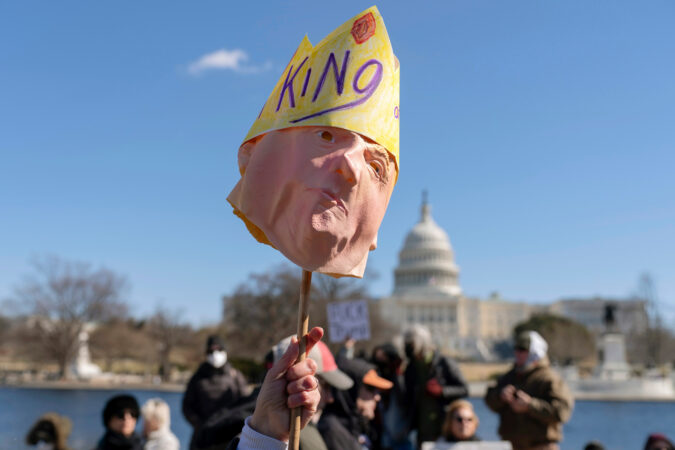
On social media, both Trump and the official White House account mocked the protests, posting computer-generated images of the president wearing a crown.
The big protest days are headline-grabbing moments, but Levin said groups like his are determined to keep up steady trainings and intermediate-level organizing in hopes of growing sustainable resistance to the Trump administration’s actions.
“This isn’t about Democrats versus Republicans. This is about do we have a democracy at all, and what are we going to tell our kids and our grandkids about what we did in this moment?” Levin said. ”I think that demands the kind of persistent engagement. ”
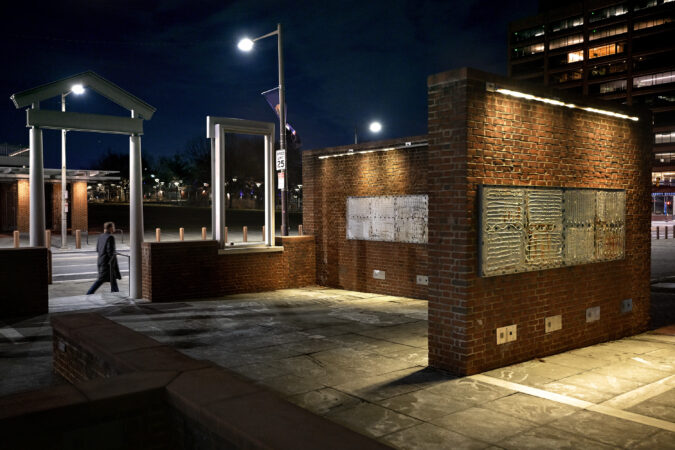
The exhibits will remain in the park service’s custody at the center, down the street from the President’s House, pending the outcome of the City of Philadelphia’s federal lawsuit against the Department of Interior and the National Park Service for taking down the exhibits.
But the center said it has no role in storing the exhibits.
“The storage facility [where the exhibits are being kept] is entirely under control and operation of the Park Service,” said a spokesperson for the Constitution Center, adding that the center does not have possession of or access to the space.
Mayor Cherelle L. Parker’s administration is seeking an injunction to return the exhibits to the President’s House, which aims to educate visitors on the horrors of slavery and memorializes the nine people George Washington enslaved at the site during the founding of the United States.
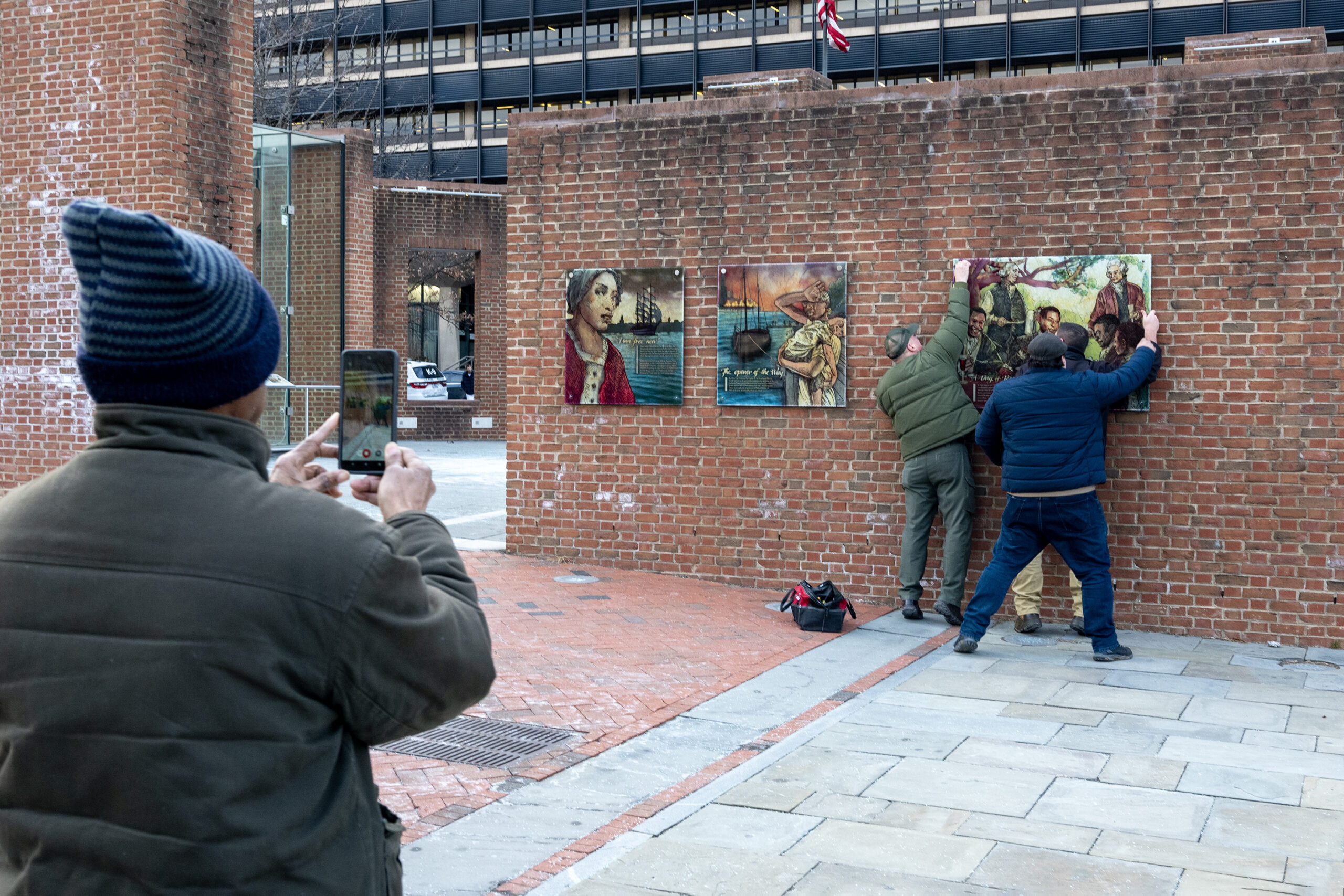
Jali Wicker records NPS workers remove interpretive panels at the President’s House site in Independence National Historical Park Thursday, Jan. 22, 2026. More than a dozen educational displays and illustrations about slavery were removed from the site, which serves as a memorial to the nine people George Washington enslaved there during the founding of America.
The location of the removed exhibits was revealed Wednesday in a motion objecting to the city’s injunction. The motion was filed by U.S. attorneys and assistant Attorney General Brett Shumate, representing Interior Secretary Doug Burgum, acting National Park Service Director Jessica Bowron, and their respective agencies.
The legal filing also provides further details into what transpired last Thursday when park service employees removed exhibits about slavery at the President’s House.
Park service employees dismantled the exhibit after Bowron ordered Steve Sims, the park service’s acting regional director, to have workers remove the panels and turn off video displays at the site, according to the filing. Sims said the takedown was carried out the same day that Bowron requested it.
There is also a remaining sign made of wood in a metal structure that was not removed last week because additional tools were needed.
“When and if NPS removes the sign, it will be stored with the other panels,” Sims said in a declaration included in the legal filing.
The footprints embedded in the site and the Memorial Wall featuring the names of the nine people Washington enslaved will stay at the President’s House, he said.
Last year, Burgum and President Donald Trump ordered content at national parks that could “inappropriately disparage Americans past or living” to be reviewed and potentially removed.
In addition to the actions in Philadelphia, the National Park Service has reportedly removed signage about the mistreatment of Native Americans from the Grand Canyon, among other changes implemented under the orders.
Tuesday’s filing previews the Trump administration’s legal argument for a hearing scheduled Friday on Philadelphia’s suit, which could be used in other cases around the country.
The attorneys claim in the filing that this case is “fundamentally a question of Government speech,” and they accuse the city of trying to “censor” the federal government.
“Such interests are especially weighty where, as here, the City effectively seeks to compel the Federal government to engage in speech that it does not wish to convey,” the attorneys wrote.
The city’s suit has received legal backing from Gov. Josh Shapiro and the Avenging the Ancestors Coalition, an advocacy group that helped establish the President’s House in the early 2000s.
The exhibit takedown has been a heartbreak for those who helped develop the site and for Philadelphians who have left artwork memorializing what the site used to be.
In a video posted to social media Tuesday, Parker said that her administration would keep “fighting” to have the panels restored to the site as the city prepares to play a central role in the nation’s 250th anniversary celebrations in July.
“This history is a critical part of our nation’s origins, and it deserves to be seen and heard, not just by the people of Philadelphia, but by every person who comes to Philadelphia from around our nation and the world to see and learn from, especially as we celebrate our Semiquincentennial 250th birthday, I want the world to know you cannot erase our history,” she said.
This story has been updated to include a comment from the National Constitution Center.
ATLANTA — The FBI on Wednesday searched the election office of a Georgia county that has been central to right-wing conspiracy theories over President Donald Trump’s 2020 election loss, acting just one week after the Republican leader predicted prosecutions over a contest he has baselessly insisted was tainted by widespread fraud.
The search at Fulton County’s main election facility in Union City sought records related to the 2020 election, county spokesperson Jessica Corbitt-Dominguez said. It appeared to be the most public step by law enforcement to pursue Trump’s claims of a stolen election, grievances rejected time and again by courts and state and federal officials, who found no evidence of fraud that would have altered the outcome.
It also unfolds against the backdrop of FBI and Justice Department efforts to investigate perceived political enemies of Trump, including former FBI Director James Comey and New York Attorney General Letitia James.
Trump has for years focused on Fulton, Georgia’s most populous county and a Democratic stronghold, as a key example of what he claims went wrong in the 2020 election. His pressure campaign there culminated in a sweeping state indictment accusing him and 18 others of illegally trying to overturn the vote.
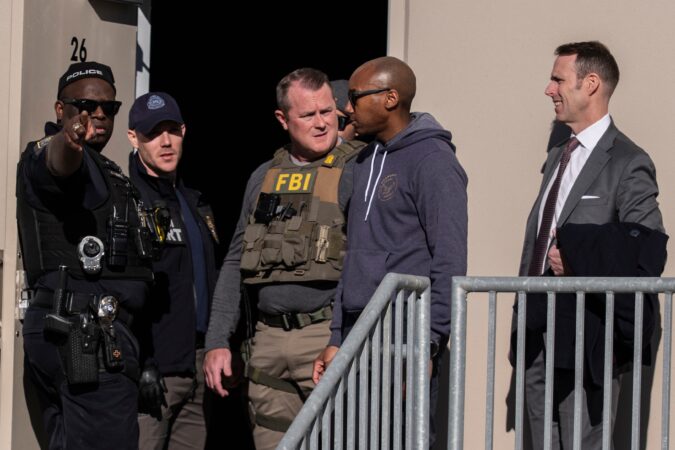
An FBI spokesperson said agents were “executing a court authorized law enforcement action” at the county’s main election office in Union City, just south of Atlanta. The spokesperson declined to provide any further information, citing an ongoing matter.
Corbitt-Dominguez said a warrant “sought a number of records related to 2020 elections,” but declined to comment further because the search was still underway.
The Justice Department had no immediate comment.
Trump has long insisted that the 2020 election was stolen even though judges across the country and his own attorney general said they found no evidence of widespread fault that tipped the contest in Democrat Joe Biden’s favor.
The president has made Georgia, one of the battleground states he lost in 2020, a central target for his complaints about the election and memorably pushed its secretary of state to help “find” enough votes to overturn the contest.
Last week, in reference to the 2020 election, he asserted that “people will soon be prosecuted for what they did.” It was not clear what in particular he was referring to.
Fulton County District Attorney Fani Willis in August 2023 obtained an indictment against Trump and 18 others, accusing them of participating in a wide-ranging scheme to illegally try to overturn the results of the 2020 presidential election. That case was dismissed in November after courts barred Willis and her office from pursuing it because of an “appearance of impropriety” stemming from a romantic relationship she had with a prosecutor she had hired to lead the case.
The FBI last week moved to replace its top agent in Atlanta, Paul W. Brown, according to people familiar with the matter who spoke on condition of anonymity to discuss a nonpublic personnel decision. It was not immediately clear why the move, which was not publicized by the FBI, was made.
The Department of Justice last month sued the clerk of the Fulton County superior and magistrate courts in federal court seeking access to documents from the 2020 election in the county. The lawsuit said the department sent a letter to the clerk, Che Alexander, but that she had failed to produce the requested documents.
Alexander has filed a motion to dismiss the suit. The Justice Department complaint says that the purpose of its request was “ascertaining Georgia’s compliance with various federal election laws.” It also says the attorney general is trying to help the State Election Board with its “transparency efforts under Georgia law.”
A three-person conservative majority on the State Election Board has repeatedly sought to reopen a case alleging wrongdoing by Fulton County during the 2020 election. It passed a resolution in July seeking assistance from the U.S. attorney general to access voting materials.
The state board sent subpoenas to the county board for various election documents last year and again on Oct. 6. The October subpoena requested “all used and void ballots, stubs of all ballots, signature envelopes, and corresponding envelope digital files from the 2020 General Election in Fulton County.” A fight over the state board’s efforts to enforce the 2024 subpoena is currently tied up in court.
The Justice Department sent a letter to the county election board Oct. 30 citing the federal Civil Rights Act and asking for all records responsive to the October subpoena from the State Election Board. Lawyers for the county election board responded about two weeks later, saying that the records are held by the county court clerk. They also attached a letter the clerk sent to the State Election Board saying that the records are under seal in accordance with state law and can’t be released without a court order.
The Justice Department said it then sent a letter to Alexander, the clerk, on Nov. 21 requesting the documents and that she failed to respond.
The department is asking a judge to declare that the clerk’s “refusal to provide the election records upon a demand by the Attorney General” violates the Civil Rights Act. It is also asking the judge to order Alexander to produce the requested records within five days of a court order.
The State Election Board in May 2024 heard a case that alleged documentation was missing for thousands of votes in the recount of the presidential contest in the 2020 election. After a presentation by a lawyer and an investigator for the secretary of state’s office, a response from the county and a lengthy discussion among the board members, the board voted to issue a letter of reprimand to the county.
Shortly after that vote, there was a shift in power on the board, and the newly cemented conservative majority sought to reopen the case. The lone Democrat on the board and the chair have repeatedly objected, arguing the case is closed and citing multiple reviews that have found that while the county’s 2020 elections were sloppy and poorly managed there was no evidence of intentional wrongdoing.